EP3762271B1 - Procédé permettant de faire fonctionner un véhicule automobile muni d'un système de pilotage automatique et véhicule automobile - Google Patents
Procédé permettant de faire fonctionner un véhicule automobile muni d'un système de pilotage automatique et véhicule automobile Download PDFInfo
- Publication number
- EP3762271B1 EP3762271B1 EP19709014.5A EP19709014A EP3762271B1 EP 3762271 B1 EP3762271 B1 EP 3762271B1 EP 19709014 A EP19709014 A EP 19709014A EP 3762271 B1 EP3762271 B1 EP 3762271B1
- Authority
- EP
- European Patent Office
- Prior art keywords
- recommendation
- driver
- information
- activation
- motor vehicle
- Prior art date
- Legal status (The legal status is an assumption and is not a legal conclusion. Google has not performed a legal analysis and makes no representation as to the accuracy of the status listed.)
- Active
Links
Images

Classifications
-
- B—PERFORMING OPERATIONS; TRANSPORTING
- B60—VEHICLES IN GENERAL
- B60W—CONJOINT CONTROL OF VEHICLE SUB-UNITS OF DIFFERENT TYPE OR DIFFERENT FUNCTION; CONTROL SYSTEMS SPECIALLY ADAPTED FOR HYBRID VEHICLES; ROAD VEHICLE DRIVE CONTROL SYSTEMS FOR PURPOSES NOT RELATED TO THE CONTROL OF A PARTICULAR SUB-UNIT
- B60W50/00—Details of control systems for road vehicle drive control not related to the control of a particular sub-unit, e.g. process diagnostic or vehicle driver interfaces
- B60W50/08—Interaction between the driver and the control system
- B60W50/14—Means for informing the driver, warning the driver or prompting a driver intervention
-
- B—PERFORMING OPERATIONS; TRANSPORTING
- B60—VEHICLES IN GENERAL
- B60K—ARRANGEMENT OR MOUNTING OF PROPULSION UNITS OR OF TRANSMISSIONS IN VEHICLES; ARRANGEMENT OR MOUNTING OF PLURAL DIVERSE PRIME-MOVERS IN VEHICLES; AUXILIARY DRIVES FOR VEHICLES; INSTRUMENTATION OR DASHBOARDS FOR VEHICLES; ARRANGEMENTS IN CONNECTION WITH COOLING, AIR INTAKE, GAS EXHAUST OR FUEL SUPPLY OF PROPULSION UNITS IN VEHICLES
- B60K35/00—Instruments specially adapted for vehicles; Arrangement of instruments in or on vehicles
- B60K35/20—Output arrangements, i.e. from vehicle to user, associated with vehicle functions or specially adapted therefor
- B60K35/21—Output arrangements, i.e. from vehicle to user, associated with vehicle functions or specially adapted therefor using visual output, e.g. blinking lights or matrix displays
- B60K35/22—Display screens
-
- B—PERFORMING OPERATIONS; TRANSPORTING
- B60—VEHICLES IN GENERAL
- B60K—ARRANGEMENT OR MOUNTING OF PROPULSION UNITS OR OF TRANSMISSIONS IN VEHICLES; ARRANGEMENT OR MOUNTING OF PLURAL DIVERSE PRIME-MOVERS IN VEHICLES; AUXILIARY DRIVES FOR VEHICLES; INSTRUMENTATION OR DASHBOARDS FOR VEHICLES; ARRANGEMENTS IN CONNECTION WITH COOLING, AIR INTAKE, GAS EXHAUST OR FUEL SUPPLY OF PROPULSION UNITS IN VEHICLES
- B60K35/00—Instruments specially adapted for vehicles; Arrangement of instruments in or on vehicles
- B60K35/20—Output arrangements, i.e. from vehicle to user, associated with vehicle functions or specially adapted therefor
- B60K35/26—Output arrangements, i.e. from vehicle to user, associated with vehicle functions or specially adapted therefor using acoustic output
-
- B—PERFORMING OPERATIONS; TRANSPORTING
- B60—VEHICLES IN GENERAL
- B60K—ARRANGEMENT OR MOUNTING OF PROPULSION UNITS OR OF TRANSMISSIONS IN VEHICLES; ARRANGEMENT OR MOUNTING OF PLURAL DIVERSE PRIME-MOVERS IN VEHICLES; AUXILIARY DRIVES FOR VEHICLES; INSTRUMENTATION OR DASHBOARDS FOR VEHICLES; ARRANGEMENTS IN CONNECTION WITH COOLING, AIR INTAKE, GAS EXHAUST OR FUEL SUPPLY OF PROPULSION UNITS IN VEHICLES
- B60K35/00—Instruments specially adapted for vehicles; Arrangement of instruments in or on vehicles
- B60K35/20—Output arrangements, i.e. from vehicle to user, associated with vehicle functions or specially adapted therefor
- B60K35/28—Output arrangements, i.e. from vehicle to user, associated with vehicle functions or specially adapted therefor characterised by the type of the output information, e.g. video entertainment or vehicle dynamics information; characterised by the purpose of the output information, e.g. for attracting the attention of the driver
-
- B—PERFORMING OPERATIONS; TRANSPORTING
- B60—VEHICLES IN GENERAL
- B60K—ARRANGEMENT OR MOUNTING OF PROPULSION UNITS OR OF TRANSMISSIONS IN VEHICLES; ARRANGEMENT OR MOUNTING OF PLURAL DIVERSE PRIME-MOVERS IN VEHICLES; AUXILIARY DRIVES FOR VEHICLES; INSTRUMENTATION OR DASHBOARDS FOR VEHICLES; ARRANGEMENTS IN CONNECTION WITH COOLING, AIR INTAKE, GAS EXHAUST OR FUEL SUPPLY OF PROPULSION UNITS IN VEHICLES
- B60K35/00—Instruments specially adapted for vehicles; Arrangement of instruments in or on vehicles
- B60K35/20—Output arrangements, i.e. from vehicle to user, associated with vehicle functions or specially adapted therefor
- B60K35/29—Instruments characterised by the way in which information is handled, e.g. showing information on plural displays or prioritising information according to driving conditions
-
- B—PERFORMING OPERATIONS; TRANSPORTING
- B60—VEHICLES IN GENERAL
- B60W—CONJOINT CONTROL OF VEHICLE SUB-UNITS OF DIFFERENT TYPE OR DIFFERENT FUNCTION; CONTROL SYSTEMS SPECIALLY ADAPTED FOR HYBRID VEHICLES; ROAD VEHICLE DRIVE CONTROL SYSTEMS FOR PURPOSES NOT RELATED TO THE CONTROL OF A PARTICULAR SUB-UNIT
- B60W40/00—Estimation or calculation of non-directly measurable driving parameters for road vehicle drive control systems not related to the control of a particular sub unit, e.g. by using mathematical models
- B60W40/08—Estimation or calculation of non-directly measurable driving parameters for road vehicle drive control systems not related to the control of a particular sub unit, e.g. by using mathematical models related to drivers or passengers
- B60W40/09—Driving style or behaviour
-
- B—PERFORMING OPERATIONS; TRANSPORTING
- B60—VEHICLES IN GENERAL
- B60W—CONJOINT CONTROL OF VEHICLE SUB-UNITS OF DIFFERENT TYPE OR DIFFERENT FUNCTION; CONTROL SYSTEMS SPECIALLY ADAPTED FOR HYBRID VEHICLES; ROAD VEHICLE DRIVE CONTROL SYSTEMS FOR PURPOSES NOT RELATED TO THE CONTROL OF A PARTICULAR SUB-UNIT
- B60W50/00—Details of control systems for road vehicle drive control not related to the control of a particular sub-unit, e.g. process diagnostic or vehicle driver interfaces
- B60W50/0097—Predicting future conditions
-
- B—PERFORMING OPERATIONS; TRANSPORTING
- B60—VEHICLES IN GENERAL
- B60W—CONJOINT CONTROL OF VEHICLE SUB-UNITS OF DIFFERENT TYPE OR DIFFERENT FUNCTION; CONTROL SYSTEMS SPECIALLY ADAPTED FOR HYBRID VEHICLES; ROAD VEHICLE DRIVE CONTROL SYSTEMS FOR PURPOSES NOT RELATED TO THE CONTROL OF A PARTICULAR SUB-UNIT
- B60W50/00—Details of control systems for road vehicle drive control not related to the control of a particular sub-unit, e.g. process diagnostic or vehicle driver interfaces
- B60W50/08—Interaction between the driver and the control system
- B60W50/082—Selecting or switching between different modes of propelling
-
- B—PERFORMING OPERATIONS; TRANSPORTING
- B60—VEHICLES IN GENERAL
- B60W—CONJOINT CONTROL OF VEHICLE SUB-UNITS OF DIFFERENT TYPE OR DIFFERENT FUNCTION; CONTROL SYSTEMS SPECIALLY ADAPTED FOR HYBRID VEHICLES; ROAD VEHICLE DRIVE CONTROL SYSTEMS FOR PURPOSES NOT RELATED TO THE CONTROL OF A PARTICULAR SUB-UNIT
- B60W60/00—Drive control systems specially adapted for autonomous road vehicles
- B60W60/005—Handover processes
- B60W60/0051—Handover processes from occupants to vehicle
-
- B—PERFORMING OPERATIONS; TRANSPORTING
- B60—VEHICLES IN GENERAL
- B60W—CONJOINT CONTROL OF VEHICLE SUB-UNITS OF DIFFERENT TYPE OR DIFFERENT FUNCTION; CONTROL SYSTEMS SPECIALLY ADAPTED FOR HYBRID VEHICLES; ROAD VEHICLE DRIVE CONTROL SYSTEMS FOR PURPOSES NOT RELATED TO THE CONTROL OF A PARTICULAR SUB-UNIT
- B60W60/00—Drive control systems specially adapted for autonomous road vehicles
- B60W60/005—Handover processes
- B60W60/0057—Estimation of the time available or required for the handover
-
- B—PERFORMING OPERATIONS; TRANSPORTING
- B60—VEHICLES IN GENERAL
- B60W—CONJOINT CONTROL OF VEHICLE SUB-UNITS OF DIFFERENT TYPE OR DIFFERENT FUNCTION; CONTROL SYSTEMS SPECIALLY ADAPTED FOR HYBRID VEHICLES; ROAD VEHICLE DRIVE CONTROL SYSTEMS FOR PURPOSES NOT RELATED TO THE CONTROL OF A PARTICULAR SUB-UNIT
- B60W60/00—Drive control systems specially adapted for autonomous road vehicles
- B60W60/005—Handover processes
- B60W60/0059—Estimation of the risk associated with autonomous or manual driving, e.g. situation too complex, sensor failure or driver incapacity
-
- B—PERFORMING OPERATIONS; TRANSPORTING
- B60—VEHICLES IN GENERAL
- B60K—ARRANGEMENT OR MOUNTING OF PROPULSION UNITS OR OF TRANSMISSIONS IN VEHICLES; ARRANGEMENT OR MOUNTING OF PLURAL DIVERSE PRIME-MOVERS IN VEHICLES; AUXILIARY DRIVES FOR VEHICLES; INSTRUMENTATION OR DASHBOARDS FOR VEHICLES; ARRANGEMENTS IN CONNECTION WITH COOLING, AIR INTAKE, GAS EXHAUST OR FUEL SUPPLY OF PROPULSION UNITS IN VEHICLES
- B60K2360/00—Indexing scheme associated with groups B60K35/00 or B60K37/00 relating to details of instruments or dashboards
- B60K2360/16—Type of output information
- B60K2360/172—Driving mode indication
-
- B—PERFORMING OPERATIONS; TRANSPORTING
- B60—VEHICLES IN GENERAL
- B60K—ARRANGEMENT OR MOUNTING OF PROPULSION UNITS OR OF TRANSMISSIONS IN VEHICLES; ARRANGEMENT OR MOUNTING OF PLURAL DIVERSE PRIME-MOVERS IN VEHICLES; AUXILIARY DRIVES FOR VEHICLES; INSTRUMENTATION OR DASHBOARDS FOR VEHICLES; ARRANGEMENTS IN CONNECTION WITH COOLING, AIR INTAKE, GAS EXHAUST OR FUEL SUPPLY OF PROPULSION UNITS IN VEHICLES
- B60K2360/00—Indexing scheme associated with groups B60K35/00 or B60K37/00 relating to details of instruments or dashboards
- B60K2360/16—Type of output information
- B60K2360/175—Autonomous driving
-
- B—PERFORMING OPERATIONS; TRANSPORTING
- B60—VEHICLES IN GENERAL
- B60K—ARRANGEMENT OR MOUNTING OF PROPULSION UNITS OR OF TRANSMISSIONS IN VEHICLES; ARRANGEMENT OR MOUNTING OF PLURAL DIVERSE PRIME-MOVERS IN VEHICLES; AUXILIARY DRIVES FOR VEHICLES; INSTRUMENTATION OR DASHBOARDS FOR VEHICLES; ARRANGEMENTS IN CONNECTION WITH COOLING, AIR INTAKE, GAS EXHAUST OR FUEL SUPPLY OF PROPULSION UNITS IN VEHICLES
- B60K2360/00—Indexing scheme associated with groups B60K35/00 or B60K37/00 relating to details of instruments or dashboards
- B60K2360/18—Information management
- B60K2360/182—Distributing information between displays
-
- B—PERFORMING OPERATIONS; TRANSPORTING
- B60—VEHICLES IN GENERAL
- B60W—CONJOINT CONTROL OF VEHICLE SUB-UNITS OF DIFFERENT TYPE OR DIFFERENT FUNCTION; CONTROL SYSTEMS SPECIALLY ADAPTED FOR HYBRID VEHICLES; ROAD VEHICLE DRIVE CONTROL SYSTEMS FOR PURPOSES NOT RELATED TO THE CONTROL OF A PARTICULAR SUB-UNIT
- B60W50/00—Details of control systems for road vehicle drive control not related to the control of a particular sub-unit, e.g. process diagnostic or vehicle driver interfaces
- B60W2050/0062—Adapting control system settings
- B60W2050/0075—Automatic parameter input, automatic initialising or calibrating means
-
- B—PERFORMING OPERATIONS; TRANSPORTING
- B60—VEHICLES IN GENERAL
- B60W—CONJOINT CONTROL OF VEHICLE SUB-UNITS OF DIFFERENT TYPE OR DIFFERENT FUNCTION; CONTROL SYSTEMS SPECIALLY ADAPTED FOR HYBRID VEHICLES; ROAD VEHICLE DRIVE CONTROL SYSTEMS FOR PURPOSES NOT RELATED TO THE CONTROL OF A PARTICULAR SUB-UNIT
- B60W50/00—Details of control systems for road vehicle drive control not related to the control of a particular sub-unit, e.g. process diagnostic or vehicle driver interfaces
- B60W50/08—Interaction between the driver and the control system
- B60W50/14—Means for informing the driver, warning the driver or prompting a driver intervention
- B60W2050/146—Display means
-
- B—PERFORMING OPERATIONS; TRANSPORTING
- B60—VEHICLES IN GENERAL
- B60W—CONJOINT CONTROL OF VEHICLE SUB-UNITS OF DIFFERENT TYPE OR DIFFERENT FUNCTION; CONTROL SYSTEMS SPECIALLY ADAPTED FOR HYBRID VEHICLES; ROAD VEHICLE DRIVE CONTROL SYSTEMS FOR PURPOSES NOT RELATED TO THE CONTROL OF A PARTICULAR SUB-UNIT
- B60W2420/00—Indexing codes relating to the type of sensors based on the principle of their operation
- B60W2420/40—Photo, light or radio wave sensitive means, e.g. infrared sensors
- B60W2420/403—Image sensing, e.g. optical camera
-
- B—PERFORMING OPERATIONS; TRANSPORTING
- B60—VEHICLES IN GENERAL
- B60W—CONJOINT CONTROL OF VEHICLE SUB-UNITS OF DIFFERENT TYPE OR DIFFERENT FUNCTION; CONTROL SYSTEMS SPECIALLY ADAPTED FOR HYBRID VEHICLES; ROAD VEHICLE DRIVE CONTROL SYSTEMS FOR PURPOSES NOT RELATED TO THE CONTROL OF A PARTICULAR SUB-UNIT
- B60W2520/00—Input parameters relating to overall vehicle dynamics
-
- B—PERFORMING OPERATIONS; TRANSPORTING
- B60—VEHICLES IN GENERAL
- B60W—CONJOINT CONTROL OF VEHICLE SUB-UNITS OF DIFFERENT TYPE OR DIFFERENT FUNCTION; CONTROL SYSTEMS SPECIALLY ADAPTED FOR HYBRID VEHICLES; ROAD VEHICLE DRIVE CONTROL SYSTEMS FOR PURPOSES NOT RELATED TO THE CONTROL OF A PARTICULAR SUB-UNIT
- B60W2520/00—Input parameters relating to overall vehicle dynamics
- B60W2520/10—Longitudinal speed
-
- B—PERFORMING OPERATIONS; TRANSPORTING
- B60—VEHICLES IN GENERAL
- B60W—CONJOINT CONTROL OF VEHICLE SUB-UNITS OF DIFFERENT TYPE OR DIFFERENT FUNCTION; CONTROL SYSTEMS SPECIALLY ADAPTED FOR HYBRID VEHICLES; ROAD VEHICLE DRIVE CONTROL SYSTEMS FOR PURPOSES NOT RELATED TO THE CONTROL OF A PARTICULAR SUB-UNIT
- B60W2540/00—Input parameters relating to occupants
- B60W2540/043—Identity of occupants
-
- B—PERFORMING OPERATIONS; TRANSPORTING
- B60—VEHICLES IN GENERAL
- B60W—CONJOINT CONTROL OF VEHICLE SUB-UNITS OF DIFFERENT TYPE OR DIFFERENT FUNCTION; CONTROL SYSTEMS SPECIALLY ADAPTED FOR HYBRID VEHICLES; ROAD VEHICLE DRIVE CONTROL SYSTEMS FOR PURPOSES NOT RELATED TO THE CONTROL OF A PARTICULAR SUB-UNIT
- B60W2540/00—Input parameters relating to occupants
- B60W2540/22—Psychological state; Stress level or workload
-
- B—PERFORMING OPERATIONS; TRANSPORTING
- B60—VEHICLES IN GENERAL
- B60W—CONJOINT CONTROL OF VEHICLE SUB-UNITS OF DIFFERENT TYPE OR DIFFERENT FUNCTION; CONTROL SYSTEMS SPECIALLY ADAPTED FOR HYBRID VEHICLES; ROAD VEHICLE DRIVE CONTROL SYSTEMS FOR PURPOSES NOT RELATED TO THE CONTROL OF A PARTICULAR SUB-UNIT
- B60W2540/00—Input parameters relating to occupants
- B60W2540/229—Attention level, e.g. attentive to driving, reading or sleeping
-
- B—PERFORMING OPERATIONS; TRANSPORTING
- B60—VEHICLES IN GENERAL
- B60W—CONJOINT CONTROL OF VEHICLE SUB-UNITS OF DIFFERENT TYPE OR DIFFERENT FUNCTION; CONTROL SYSTEMS SPECIALLY ADAPTED FOR HYBRID VEHICLES; ROAD VEHICLE DRIVE CONTROL SYSTEMS FOR PURPOSES NOT RELATED TO THE CONTROL OF A PARTICULAR SUB-UNIT
- B60W2540/00—Input parameters relating to occupants
- B60W2540/30—Driving style
-
- B—PERFORMING OPERATIONS; TRANSPORTING
- B60—VEHICLES IN GENERAL
- B60W—CONJOINT CONTROL OF VEHICLE SUB-UNITS OF DIFFERENT TYPE OR DIFFERENT FUNCTION; CONTROL SYSTEMS SPECIALLY ADAPTED FOR HYBRID VEHICLES; ROAD VEHICLE DRIVE CONTROL SYSTEMS FOR PURPOSES NOT RELATED TO THE CONTROL OF A PARTICULAR SUB-UNIT
- B60W2552/00—Input parameters relating to infrastructure
-
- B—PERFORMING OPERATIONS; TRANSPORTING
- B60—VEHICLES IN GENERAL
- B60W—CONJOINT CONTROL OF VEHICLE SUB-UNITS OF DIFFERENT TYPE OR DIFFERENT FUNCTION; CONTROL SYSTEMS SPECIALLY ADAPTED FOR HYBRID VEHICLES; ROAD VEHICLE DRIVE CONTROL SYSTEMS FOR PURPOSES NOT RELATED TO THE CONTROL OF A PARTICULAR SUB-UNIT
- B60W2552/00—Input parameters relating to infrastructure
- B60W2552/05—Type of road, e.g. motorways, local streets, paved or unpaved roads
-
- B—PERFORMING OPERATIONS; TRANSPORTING
- B60—VEHICLES IN GENERAL
- B60W—CONJOINT CONTROL OF VEHICLE SUB-UNITS OF DIFFERENT TYPE OR DIFFERENT FUNCTION; CONTROL SYSTEMS SPECIALLY ADAPTED FOR HYBRID VEHICLES; ROAD VEHICLE DRIVE CONTROL SYSTEMS FOR PURPOSES NOT RELATED TO THE CONTROL OF A PARTICULAR SUB-UNIT
- B60W2555/00—Input parameters relating to exterior conditions, not covered by groups B60W2552/00, B60W2554/00
- B60W2555/20—Ambient conditions, e.g. wind or rain
-
- B—PERFORMING OPERATIONS; TRANSPORTING
- B60—VEHICLES IN GENERAL
- B60W—CONJOINT CONTROL OF VEHICLE SUB-UNITS OF DIFFERENT TYPE OR DIFFERENT FUNCTION; CONTROL SYSTEMS SPECIALLY ADAPTED FOR HYBRID VEHICLES; ROAD VEHICLE DRIVE CONTROL SYSTEMS FOR PURPOSES NOT RELATED TO THE CONTROL OF A PARTICULAR SUB-UNIT
- B60W2556/00—Input parameters relating to data
- B60W2556/10—Historical data
-
- B—PERFORMING OPERATIONS; TRANSPORTING
- B60—VEHICLES IN GENERAL
- B60W—CONJOINT CONTROL OF VEHICLE SUB-UNITS OF DIFFERENT TYPE OR DIFFERENT FUNCTION; CONTROL SYSTEMS SPECIALLY ADAPTED FOR HYBRID VEHICLES; ROAD VEHICLE DRIVE CONTROL SYSTEMS FOR PURPOSES NOT RELATED TO THE CONTROL OF A PARTICULAR SUB-UNIT
- B60W2556/00—Input parameters relating to data
- B60W2556/45—External transmission of data to or from the vehicle
- B60W2556/50—External transmission of data to or from the vehicle of positioning data, e.g. GPS [Global Positioning System] data
Definitions
- the invention relates to a method for operating a motor vehicle which has an autopilot system designed for fully automatic control of the motor vehicle, for which technical activatability information is determined depending on a current and/or upcoming operating situation described by driving situation data and/or operating state data of the motor vehicle and system limit information describing the area of application of the autopilot system, wherein the motor vehicle further comprises a display device with a first output element which displays the activatability of the autopilot system in accordance with the technical activatability information.
- the invention also relates to a motor vehicle.
- Such piloted driving functions or autopilot systems cannot be activated in all operating situations in which a motor vehicle may find itself, since, for example, a traffic jam pilot should be limited to traffic jam situations and a motorway pilot to motorways with corresponding speed ranges.
- the areas of application of such autopilot systems are therefore described by system limits, which can be stored using corresponding system limit information.
- the traffic jam pilot has various technical reasons for preventing activation due to its design, including that no vehicle in front was detected, that no lane markings were detected, that the vehicle in front is traveling faster than 60 km/h, that the wrong road class is present (not a motorway), that pedestrians were detected in the area, that a toll station is ahead, and the like.
- WO 2015/049231 A1 relates to a method for a driver assistance system of a vehicle, which is designed to control the vehicle at least partially automatically.
- a start of an autopilot route section is determined in a route planned for the vehicle, along which the driver assistance system can control the vehicle automatically.
- a distance between the current position of the vehicle and the start of the autopilot section is determined and displayed in the vehicle, whereby this distance can be displayed as a kilometer indication, as a graphical representation of the planned route or as the time until the autopilot section is reached.
- An instrument cluster shows whether and for how long the autopilot function is available. This means that technical activation information is also determined for the future in this publication.
- DE 10 2014 221 132 A1 relates to a method and a device for displaying the availability of a first driving mode of a vehicle.
- the vehicle In the first driving mode, the vehicle is driven at least partially automatically. From environmental data of the vehicle's surroundings, a start of a route section is predicted from which the first driving mode is available. The predicted start of the route section is shown on a display element, and the predicted start and/or the predicted end of the route section can also be indicated.
- EP 2 531 814 B1 relates to a driver assistance system and a method for driver assistance, in which the complexity of a section of road ahead is used to check whether largely automatic vehicle guidance is possible so that the driver can carry out a tertiary task or tertiary activity.
- US 2014/0156133 A1 concerns switching back and forth between an autonomous and a manual mode. After a driver requests to switch to autonomous mode, a large number of checks are carried out and when predetermined conditions are met, the system switches to autonomous mode.
- Such technical availability displays for autopilot systems have various disadvantages. For example, frequently changing availability displays are issued, particularly in the case of activation information based on the current operating situation, so that there is a risk that the driver will no longer pay attention to the display after a certain point in time. In any case, such availability displays are often only short-lived, so that it is difficult for the driver to predict whether the piloted driving function will be used sensibly, although the suggestions cited at the beginning showing the duration of availability can be useful here.
- Another disadvantage of the availability display based on activation information is that it is also displayed at times when the driver has no interest in using the piloted driving function of the autopilot system. In other operating situations, however, no availability is displayed, even though use of the piloted driving function is desired and would also be possible by slightly changing the driving style.
- the invention is therefore based on the object of specifying an improved display concept for piloted driving functions of an autopilot system in motor vehicles.
- driver-related recommendation information is determined depending on the operating situation and preferences regarding the autopilot system and/or driver data describing the driver's state with regard to vehicle control, depending on which a second output element of the display device is controlled, which displays an activation recommendation in accordance with the recommendation information, wherein the activatability information and the recommendation information are cyclically determined and updated in parallel.
- driver-related recommendation information which describes at least one activation recommendation for the piloted driving function or a deactivation recommendation for the piloted driving function.
- This can be displayed via at least one corresponding, second output element of the display device in addition to the technical activatability information.
- the result is a multi-level availability display with additional usage recommendations for the piloted driving function of the autopilot system, whereby ultimately, in addition to the operating status data and driving situation data describing the operating situation, the system limit information for the technical activation information and situational information on the current driver status or on the previous usage behavior of the driver or other drivers in comparable situations are brought together for the driver-related recommendation information.
- an activation recommendation is only displayed for sections of the route for which the autopilot system is applicable according to the activation information. This means that an activation recommendation is only issued if the piloted driving function of the autopilot system can also be activated, so that the driver is not confused. Accordingly, it can be provided that a deactivation recommendation is only issued if the piloted driving function of the autopilot system is also active.
- predictive data relating to a route section ahead are used as driving situation data and/or operating state data, in particular predictive route data.
- technical activatability information and driver-related recommendation information can also be determined for route sections ahead of the motor vehicle, whereby such predictive route data can be obtained from various sources.
- the use of digital map material from a navigation system has the particular advantage that the route sections or route segments recorded therein can be assigned additional information or attributes, from which, together with the system boundary information and the driver data, appropriate conclusions can be drawn to determine the technical activatability information or the driver-related recommendation information.
- additional information can also be determined if the predictive route data is at least partially derived from sensor data from environmental sensors of the motor vehicle, for example comprising the sensor data from a camera aimed at the area in front of the motor vehicle.
- the future route be derived from such sensor data, but it is also conceivable to obtain additional information on this future route.
- predictive route data from the navigation system and predictive route data derived from sensor data from the motor vehicle are particularly preferably combined in order to obtain current additional information on route sections ahead.
- Other sources of additional information on currently traveled and/or ahead route sections also include traffic information, which can be provided, for example, via radio stations and/or the Internet.
- useful driving situation data that describes the operating situation include weather information, which can also be obtained from sensor data from environmental sensors of the motor vehicle and/or via corresponding communication connections, in particular the Internet.
- Operating status data of the motor vehicle can be obtained, for example, from operating sensors and/or from other information sources within the motor vehicle, in particular from control units, and, in addition to current dynamic information of the motor vehicle, can of course also include currently active vehicle systems and their parameters as well as other control information.
- Possibilities for determining the technical activation information, especially for upcoming route sections, are currently Technology, as shown by way of example at the beginning, is generally known and can also be used within the scope of the present invention.
- a comparison can be made with corresponding system limit information, for example with regard to the speed of the motor vehicle and a permitted speed range of the piloted driving function of the autopilot system.
- system limit information for example with regard to the speed of the motor vehicle and a permitted speed range of the piloted driving function of the autopilot system.
- more complex criteria and/or evaluations are also conceivable, for example with regard to the complexity of the driving situation.
- the driver data can preferably be driver-specific or at least vehicle-specific in terms of the driver data describing the driver's preferences.
- the driver can be specifically provided that the driver is identified at the start of the journey, for example using a driver-specific key, using biometric data and/or using a user input.
- a driver profile with corresponding driver data regarding the driver's preferences regarding the piloted driving function of the autopilot system can then be assigned to the driver and stored accordingly.
- Corresponding possibilities have been described in many different ways in the prior art, for example with regard to the adjustment of safety systems and/or driving dynamics systems to a current driver.
- the activatability information and/or the recommendation information are determined comprising at least one time information, in particular time information describing a start of activatability and/or an end of the area of use or a time/place of a recommendation.
- time information can also be spatial information, for example a distance or location, which can be converted into a time information (and vice versa), as shown in the documents cited at the beginning, so that, for example, if the length of a section of road on which the piloted driving function can be used, is known, it can be estimated how long the piloted driving function can be expected to be active. In this way, relevant additional knowledge is generated, in particular using predictive route data, and preferably also passed on to the driver.
- the time information and/or output information derived therefrom is output by means of the display device.
- the technical activation information in addition to a symbol and/or text that represents the basic technical activation, corresponding time information or output information derived therefrom can be displayed, for example of the type "Autopilot available: in 10 minutes” or "Autopilot available: for 17 km".
- the same can be provided with regard to the recommendation information, so that there can be a display of the type: "Activation of the autopilot recommended.
- the sensible usage time is 10 minutes/20 km.”
- a display of the remaining autopilot driving time is particularly useful here, whereby, in particular in the case of an estimate, the time information and/or the output information can also be displayed as an interval, for example as "2 - 3 minutes".
- the recommendation information comprises at least one recommendation level describing a recommendation level, depending on which the output of the activation recommendation is adapted, in particular different second output elements and/or output control parameters are assigned to different recommendation levels. are assigned.
- a route-section-related activation recommendation determined on the basis of the driver-related suitability of a route section can be assigned a lower recommendation level than an activation recommendation related to a current activity and/or a topicality-related activation recommendation related to a current state of the driver.
- Activation recommendations related to topicality are preferably more clearly perceptible and/or issued for a shorter period of time, since they relate to current information, in particular a current event.
- two activation recommendations and/or deactivation recommendations of different recommendation levels can also be present at the same time.
- the recommendation with a lower recommendation level can be displayed permanently on a second output element and the recommendation with a higher recommendation level can be displayed briefly via a further second output element, for example an acoustic output device. This is particularly useful for topicality-related recommendations, since these may relate to a temporary state.
- the display of an activation recommendation and/or a deactivation recommendation takes place at least at the beginning of a section of the route to which it relates.
- an activation recommendation and a deactivation recommendation can be issued in a meaningful context in a way that is immediately and intuitively understandable for the driver, whereby in this case, in the case of an additional advance and/or permanent display of an activation recommendation and/or deactivation recommendation, the output at the beginning of the corresponding section of the route can take place by highlighting this already existing output, for example a flashing transition from an advance notice to a permanent activation recommendation for the section of the route, and/or by an additional output.
- a recommendation of a lower recommendation level can also be issued permanently, while the recommendation of higher
- a recommendation of a higher level of recommendation in particular a recommendation based on current events, can be given for a short time at the beginning of the route section in addition, in particular in a more conspicuous manner.
- an activation recommendation and/or a deactivation recommendation is preferably only generated via the second output element if the technical activation criteria are also met. This then means that in addition to the display of the technical activation, an additional output is generated if there are indications that a piloted driving function would also be desired or useful for the current driver in the current operating situation.
- the activation recommendation when an activation state that makes sense for the driver in the given situation is reached, the activation recommendation can be issued and vice versa the deactivation recommendation. It is also preferred if the display of an activation recommendation, particularly one that is related to current events, is limited to a predetermined period of time, for example 5 seconds. In this way, the driver's attention is attracted at the beginning of the section of the route where activation makes sense overall, but he is not further distracted by the display. This is preferably the case with recommendations with a higher level of recommendation.
- a particularly advantageous embodiment of the invention provides that the second output element comprises an acoustic output means, via which the activation recommendation is acoustically output.
- an acoustic indication can be given by means of a voice output, for example of the type "Would you like to switch on the motorway pilot now?". This is particularly useful, even if background information, as described below, is also required. explained in more detail, should be issued, as this simulates an apparently understanding, thinking conversation partner.
- a continuously visually issued activation recommendation of a lower recommendation level can be supplemented by a recommendation of a higher recommendation level that is issued at least acoustically and/or more conspicuously, especially for a short time.
- a response from the driver is recorded using an acoustic recording device and used to derive control information for the autopilot system, in particular for activating or deactivating the autopilot system.
- a voice output is made for an activation recommendation or a deactivation recommendation, to also receive a voice response from the driver using a suitable recording device, for example an interior microphone that may be present in a hands-free system, in order to make it as easy as possible to enter a corresponding activation request from the driver.
- a suitable recording device for example an interior microphone that may be present in a hands-free system
- the method according to the invention if there is no activatability information, but recommendation information indicating an activation recommendation, it can be checked by evaluating the operating situation whether at least one recommendable driving intervention by the driver leads to the creation of activatability, wherein if a recommendable driving intervention can be determined, driver information describing this is output via the second output element and/or a further output element.
- the at least one driving intervention can in particular be a lane change and/or a change in road class and/or a speed change, in particular -reduction, whereby in particular in the case of a change of road class, a route comprising the target road class is determined and recommended using a navigation system of the motor vehicle.
- Such a design can also be based on recommendation levels, so that, for example, such a check for recommendable driving interventions is only carried out in the case of activation recommendations with a higher recommendation level.
- the system limit information describes the use of the piloted driving function only on certain lanes of a road and the motor vehicle is moving on a correspondingly impermissible lane, so that the technical activatability information indicates that the piloted driving function cannot be activated
- a corresponding note can be issued as recommendation information, in particular acoustically and/or visually as text and/or as a graphic, for example: "To activate the motorway pilot, please change to the right lane first".
- recommendation information is when the motor vehicle currently exceeds a maximum speed for using the piloted driving function according to system limit information, for example, when driving faster than 130 km/h with an autopilot.
- system limit information for example, when driving faster than 130 km/h with an autopilot.
- a note such as “To activate the motorway pilot, please first reduce the driving speed to below 130 km/h" can be issued.
- a particularly advantageous embodiment also results if the recommendation information contains background information describing the reason for an activation recommendation and/or a deactivation recommendation is comprehensively determined and the background information is provided with the respective recommendation.
- the reason for the recommendation can therefore be given, for example "You can use this to conveniently and securely process your emails" or "We will shortly be entering a tunnel”.
- the driver is given an easy-to-understand explanation of why an activation or deactivation recommendation is being given at this particular time. This can create a kind of "aha effect" for the driver and give him the impression that the autopilot system is "thinking for itself", so to speak.
- the recommendation information is determined by evaluating historical data describing driver behavior in the past. This means that it is analyzed how the current driver in particular, but possibly also other drivers, have behaved in the past with regard to the autopilot system in various operating situations, whereby such historical data does not necessarily have to be limited to the driver's own motor vehicle, but can be. In this way, particularly with regard to the current driver, the system described here can, so to speak, adapt to the driver and anticipate his preferences with regard to the autopilot system and its piloted driving function. Corresponding historical data can, for example, be collected within the motor vehicle itself by collecting activation and deactivation events, in particular also in response to activation and deactivation recommendations issued.
- an operating situation to be analyzed is assigned to at least one operating situation class, for which historical data indicating the driver's preferred behavior is available, which is used to determine the recommendation information.
- operating situations can be summarized into operating situation classes, for example "driving through a tunnel on a motorway" and the like.
- preferences for the various operating situation classes can be determined and used to determine the recommendation information.
- Designs are also conceivable in which an operating situation can be assigned to different operating situation classes and the preferred behaviors, weighted if necessary, are combined to determine recommendation information.
- At least one operating situation class describes route sections on which the driver has used or deactivated the autopilot system in the past, and/or route characteristics and/or environmental characteristics for which the driver has activated or deactivated the autopilot system in the past, and/or time periods in which the driver has activated or deactivated the autopilot system in the past, and/or a number of people in the motor vehicle for which the driver has activated or deactivated the autopilot system in the past, and/or a lane on which the driver has activated or deactivated the autopilot system in the past.
- the driver has deliberately deactivated the piloted driving function several times in corresponding operating situations, for example when driving through tunnels and/or uphill/downhill gradients (detection, for example, via a navigation system or generally predictive route data), when driving in adverse weather conditions such as Rain, snowfall and/or black ice (detection via windshield wiper activity, a rain sensor, weather data from the Internet and/or car-to-car information), when driving in the dark (detection via a light sensor, for example), but also for certain, defined sections of the route, which in turn can be tracked, for example, via a navigation system in conjunction with a GNSS sensor, in particular a GPS sensor.
- adverse weather conditions such as Rain, snowfall and/or black ice
- the driver's preference for using the piloted driving function can also depend on the number of people in the vehicle if the driver has previously only used the piloted driving function when he was alone in the vehicle.
- the presence of other people in the vehicle can be determined, for example, via seat occupancy sensors, seat belt fastening sensors and the like.
- the driver's past behavior regarding the use of the piloted driving function in relation to lanes can also be analyzed. For example, if the driver is currently driving in the overtaking lane of a multi-lane highway and has only ever used the piloted driving function in the rightmost lane or in a single lane, an activation or deactivation recommendation can be derived or suppressed accordingly.
- Information about lanes can be determined based on data from a camera aimed at the area in front of the vehicle and/or from corresponding radar sensors and/or based on digital map material from a navigation system (number of lanes).
- the historical data can also describe a temporal preference profile, for example by statistically analyzing the periods in which the driver prefers to use the piloted driving function of the autopilot system. For example, it can be analyzed on which days of the week and/or at which times the piloted driving function is more likely to be used or not used in order to take this into account when determining the recommendation information. In particular, information from a appropriate timer, in particular a clock.
- a further specific embodiment of the present invention provides that the recommendation information is determined by evaluating activity data describing activities currently being carried out or to be carried out by the driver. If the driver has already started typical secondary activities that would make the use of the piloted driving function particularly useful, or if such secondary activities are pending, for example because a particularly large number of emails have been received and/or the driver's calendar shows a telephone conference, this can result in an activation recommendation; in the same way, ending such secondary activities can lead to a deactivation recommendation. In concrete terms, it can therefore be provided, for example, that an activation recommendation is generated for activity data describing an activity that is not to be carried out while driving the vehicle.
- Such activities include, for example, writing/reading text messages, editing calendar entries, conducting Internet research, watching a film and the like.
- the activity data can be determined, for example, by recording user inputs on a user interface of the motor vehicle, an interior microphone, in particular the aforementioned acoustic recording means, and/or operating data of a mobile device coupled to the motor vehicle, for example a smartphone.
- the recommendation information is determined by evaluating attention data describing a current distraction and/or attention of the driver.
- image data showing the driver's eyes and/or data about the duration of the current journey and/or a time and/or information about the monotony of a section of the route and/or attention data relating to the distraction, in particular determined by means of an acoustic recording device are used as attention data relating to fatigue.
- Information about a conversation the driver is having can be used. For example, if the driver is showing symptoms of incipient tiredness or lack of concentration, using the piloted driving function can seem particularly useful.
- a driver's state of tiredness can be determined, for example, via an interior camera or its image data, in particular as eyelid closure detection.
- a long journey, a late hour and/or a monotonous route can also be signs of tiredness and/or lack of concentration on the part of the driver.
- It is particularly advantageous to link it to a driver assistance system for recommending breaks as has already been proposed in the prior art.
- driver assistance systems also analyze driver data and use this to derive a break recommendation to be issued if the driver's tiredness or attention makes this seem sensible.
- the driver assistance system for recommending breaks can therefore provide useful, already evaluated data for determining the recommendation information.
- the above-mentioned configurations for determining recommendation information are preferably used in combination.
- activation recommendations determined on the basis of activity data and/or driver data can be assigned higher recommendation levels than activation recommendations determined on the basis of historical data.
- assignments to recommendation levels are also possible. It is conceivable that these are based more on a general analysis of the operating state, for example whether the recommendation trigger is short-term or rather permanent and/or which safety criteria are met.
- an activation recommendation related to it can also be assigned a time period that can be linked to the time information, in particular for the activatability information, in order to determine the activation recommendation and/or assign it to a recommendation level. If the driver plans, for example, to watch a film or to continue watching it, a longer period of technical availability should be available for this to be worthwhile, for example at least 10 to 20 minutes as a time period.
- An SMS is written more quickly, so that here, for example, technical activation for one to three minutes as a time period can be sufficient.
- An activation recommendation can advantageously include background information in this context, so that, for example, an acoustic output such as "You could activate the autopilot for around 15 minutes to continue watching your film” can be made. However, if the piloted driving function is only available for a short time, an activation recommendation for the film cannot be determined or only with a very low level of recommendation.
- the first output element and the second output element are each assigned to different display assemblies and/or display locations of the display device. It is particularly advantageous to use a first output element that is assigned to a combination display of the motor vehicle, for example behind the steering wheel, and a second output element that is arranged on a center console or a navigation display, in particular on a display there. In this way, the output elements are not only content-related (technical availability - driver-related recommendation), but also spatially separated, so that the different content is still accessible to the driver even if the design is similar.
- a symbol in particular an icon, that can be backlit and/or colored and/or supplemented can be used as the first output element.
- the second output element can preferably be implemented as part of a display, which can also be assigned to the navigation system or can be a multi-function display.
- a display that can also be used by a navigation system makes it possible, for example, to highlight sections of the route on which the use of the piloted driving function is recommended.
- a corresponding display of the recommendation information can be shown by the text "piloted driving function: recommended".
- such a display is also suitable for the output of time information.
- the invention also relates to a motor vehicle, having an autopilot system designed for fully automatic control of the motor vehicle, a display device with a first output element indicating the activatability of the autopilot system and a second output element, and a control device designed to carry out the method according to the invention. All statements relating to the method according to the invention can be transferred analogously to the motor vehicle according to the invention, with which the advantages already mentioned can also be obtained.
- the present invention makes it possible to achieve a higher acceptance and comprehensibility of the piloted driving function, to increase the benefit for the driver and to avoid driver annoyance.
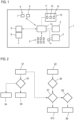
- Fig. 1 shows a schematic diagram of a motor vehicle 1 according to the invention.
- the motor vehicle 1 has an autopilot system 2 designed for fully automatic guidance of the motor vehicle 1 within certain system boundaries described by system boundary information, which can be activated or deactivated by a driver via corresponding operating means (not shown in detail here) when available.
- the motor vehicle also has a navigation system 3 with a corresponding geodetic position sensor 4, a plurality of environmental sensors 5, interior sensors 6, in this case comprising an interior camera 7 and a recording means 8 designed as an interior microphone, and further vehicle systems 9, also comprising intrinsic sensors that can provide operating state data of the motor vehicle in the current operating situation.
- Driving situation data which also describe the current operating situation, are provided in particular by the navigation system 3 and its digital map material as well as the environmental sensors 5 or the evaluation of their sensor data.
- the motor vehicle 1 also has a display device 10, which in the present case comprises several output elements 11, 12 and 13, which will be explained in more detail below.
- a control device 14 is provided, which can also comprise a control unit of the autopilot system 2 and is designed to carry out the method according to the invention.
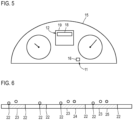
- Fig. 2 Two types of information regarding the activation/deactivation of the autopilot system 1 are cyclically determined and updated in parallel.
- a determination of technical activatability information describing the basic technical activatability based on the system boundary information takes place, where, as is generally known, the current operating situation and future operating situations, insofar as predictive route data is known in sufficient quantities for this, for example due to the environmental sensors 5 and the navigation system 3, are checked to see whether the area of application of the piloted driving function of the autopilot system 2 described by the system limits of the system limit information is given.
- the technical activatability information indicates precisely this.
- the operating situation is described by operating data of the motor vehicle 1 and driving situation data, which can contain a large amount of information, in particular with regard to the route currently being traveled and the route ahead (predictive route data), the weather conditions and the traffic conditions.
- the motor vehicle 1 can also have a communication device (not shown in detail here) in order to communicate on the Internet and/or with other motor vehicles in order to receive corresponding driving situation data.
- step S2 parallel to step S1, further information is determined, namely, in addition to the technical activatability information, driver-related recommendation information that describes an activation recommendation and/or a deactivation recommendation based on the driver's preferences regarding the autopilot system 2 and the driver's state related to vehicle control.
- driver-related recommendation information that describes an activation recommendation and/or a deactivation recommendation based on the driver's preferences regarding the autopilot system 2 and the driver's state related to vehicle control.
- Both the activatability information and the recommendation information are additionally determined using time information, which ultimately describes the extent of the route sections for which the technical activatability is given or activation is recommended.
- the time information can indicate a time and/or distance until the activatability/activation or deactivation recommendation and/or a spatial and/or temporal duration of the activatability/activation recommendation.
- recommendation information As part of the recommendation information, background information is always determined that describes a reason for the activation recommendation or deactivation recommendation, as will be explained below by way of example.
- recommendations in particular at least activation recommendations, are also assigned recommendation levels that indicate a degree of recommendation, to which different output types can be assigned. There can also be several recommendations at one time.
- driver data Various types of data are used as driver data to determine the recommendation information.
- this is history data describing the driver's behavior in the past, whereby in step S2 an operating situation to be analyzed is assigned to at least one operating situation class for which history data indicating a preferred behavior of the driver is available, which is used to determine the recommendation information.
- the history data describes cases in which the driver has consciously activated or deactivated the piloted driving function. For example, despite the technical ability to activate the piloted driving function, the driver may not want the piloted driving function when driving through tunnels, uphill and/or downhill, in adverse weather conditions, in the dark or for certain defined sections of the route, which can be mapped accordingly using operating situation classes.
- Tunnel passages and uphill/downhill gradients can be recognized, for example, from predictive route data, in particular from the navigation system 3; adverse weather conditions may result from the operation of a windshield wiper and/or from sensor data from a rain sensor and/or from weather data from the Internet and/or car-to-car information.
- Sensor data from a light sensor can describe the brightness outside the motor vehicle, while defined route sections result from the navigation system 3 taking into account the position sensor 4.
- Other operating situation classes can, for example, relate to the number of people in the motor vehicle. If, for example, there are drivers who prefer to use piloted driving functions when there are several people in the motor vehicle, this can be determined accordingly, with the presence of passengers in the motor vehicle being detected, for example, via seat occupancy sensors, seat belt fastening sensors and the like. Preferences with regard to certain lanes can also be mapped, with the lane currently being driven in being detected, for example, by a camera aimed at the area in front of the motor vehicle 1 or radar sensors as environmental sensors 5, while the number of existing lanes can be determined, for example, from data from the navigation system 3 and/or again from the camera aimed at the area in front.
- Further driver data used in step S2 to determine the recommendation information include activity data describing activities currently being carried out or to be carried out by the driver. For example, if it is determined that the driver has already started typical secondary activities that make the use of the piloted driving function particularly useful, a corresponding activation recommendation can be generated. Secondary activities that should not be carried out by the driver while driving the vehicle include, for example, writing and/or reading text messages, editing calendar entries, Internet research and/or watching a film. Corresponding operating data of the motor vehicle can be inferred, for example, from the driver's operating actions, information from a coupled mobile device, in particular a smartphone, and/or the acoustic recording device 8.
- An activity can be assigned a time period that is used to determine an activation recommendation per se and/or a degree of recommendation in the context of a length of technical activation.
- descriptive time information of the activity information can be set. For example, it can be determined whether the activity can be reasonably carried out within the availability range.
- the recommendation information is also determined by evaluating attention data relating to the driver, which describes a current distraction and/or attention of the driver.
- attention data relating to the driver
- the state of fatigue can be determined, for example, via an image analysis of the driver's eyes (lid closure), with further indications being a long journey time, a late hour and a monotonous route (data from the navigation system 3); particularly preferably, input data from a driver assistance system is used to recommend a break as another vehicle system 9.
- Distraction can also be caused by a conversation with a telephone partner and/or a passenger, whereby the acoustic recording device 8 (interior microphone), seat occupancy sensors, seat belt fastening sensors and/or a coupled mobile device (smartphone) can be used for detection.
- the acoustic recording device 8 internal microphone
- seat occupancy sensors seat occupancy sensors
- seat belt fastening sensors seat belt fastening sensors
- a coupled mobile device smarttphone
- activation recommendations with a higher level of recommendation can arise, which are related to a current, short-term and/or more safety-critical operating state and can be added to a lower-level activation recommendation, for example for a section of route.
- Such recommendations can also be described as longer-term and topical.
- the technical activatability information determined in step S1 is output by means of a first output element 11 of the display device 10 of the motor vehicle 1.
- a step S3 it is checked whether or when a technical activatability of the autopilot system 2 will be given, so that, for example, an activatability can be displayed in step S4 and a non-activatability in step S5.
- An activatability information output in step S4 can also relate to an imminently possible technical activatability, for example by using the time information and outputting it on the first output element 11.
- a step S6 first checks whether there is an activation recommendation and/or a deactivation recommendation for the current and/or a future section of the route. If this is the case, a step S7 first checks whether the corresponding section of the route can also be technically activated. If this is not the case in step S7, a check is carried out in step S8 to see whether the current operating situation allows at least one recommended driving intervention by the driver that leads to the technical activation being established.
- a driving intervention can include, for example, a lane change or a speed reduction in order to ensure that the technical activation is established very quickly if the piloted driving function can only be used in certain speed ranges or on certain lanes.
- a check can also be carried out in advance, for example by recommending a change in road class, for example from a country road to a motorway, in order to use the autopilot, for example in the case of a motorway pilot.
- a corresponding alternative route can then be determined and output using the navigation system 3 of the motor vehicle 1.
- a corresponding driver information describing the driving intervention is generated and output using the output element 13, which is also used here as a second output element and is designed as an acoustic output means.
- Activation recommendations and deactivation recommendations can be output in a step S10 via the second output elements 12, 13, whereby the output element 12 is an optical output element and the output element 13 is an acoustic output means.
- the output of an activation recommendation or a deactivation recommendation is expediently carried out at the beginning of a section of the route to which it relates, depending on the recommendation level, for example limited to a predetermined period of time, here five seconds, or permanently.
- the background information determined is also output, preferably by means of voice output via the second display element 13 designed as an acoustic output means.
- an activation recommendation related to a longer section of the route can be permanently displayed visually and supplemented by an activation recommendation with a higher degree of activation, which is output in particular acoustically. This results in outputs such as "Would you like to switch on the motorway pilot now? You could use it to process your emails conveniently and safely.” or "Would you like to deactivate the motorway pilot now? We will shortly be entering a tunnel.” (In the last case, the historical data showed that the driver was reluctant to use the motorway pilot in tunnels.)
- a first display concept for the optical output of the technical activatability information and the recommendation information is shown as an example in Figure 3 shown.
- the first output element 11 used is a symbol 16 that is integrated into a combination instrument 15 located behind the steering wheel and that can be backlit. If the symbol 16 is backlit in green, the piloted driving function is activated; if it is backlit in white, it can be activated; if it is not visible, there is no technical activation.
- a yellow backlight in conjunction with a decreasing bar display (based on the time information) can be used if activation is in advance.
- the second output element 12 is provided as a text field 18 of a display 19, on which data from the navigation system 3 can also be arranged.
- the output of activation recommendations/deactivation recommendations there is supplemented by the acoustic output means, which can ultimately be arranged in any desired manner, as the second output element 13.
- the driver can also respond verbally to an acoustic output in this case, for which purpose the recording means 8 (interior microphone) is used to record a verbal response from the driver, which can then be evaluated to form corresponding control information for the autopilot system 2.
- the acoustic output means (output element 13) and the acoustic recording means 8 (interior microphone) can also form parts of a hands-free device.
- Fig. 4 finally shows an integration of time information 20 into a display 21.
- the frame of the display "2 to 3 minutes" can be green when the autopilot is activated and there is a remaining activation time, and yellow when activation is possible/activation is recommended. This can of course also be further explained by other output components.
- the first output element 11 and the optical second output element 12 are integrated within the instrument cluster 15, but spatially separated, since a display 19 of the navigation system or a multifunction display is also realized there.
- Fig. 6 shows a possible time sequence for the output of the technical activatability and activation/deactivation recommendations.
- the technical availability is given according to the activatability information, so that at least at the times 22 the first output element 11 is activated to indicate this change, if necessary also as in Fig. 3 shown preparatory.
- Time points 23 show activation recommendations lower Activation levels that, for example, are derived from the historical data and refer to a longer stretch of road.
- the corresponding output preferably only visual, can be permanent for the duration of the activation recommendation.
- an activation recommendation with a higher recommendation level is added, i.e. a second recommendation level, for example because the driver has started or wants to start an activity that can be carried out more safely with the automated driving function activated.
- this further activation recommendation is at least acoustically output, for example: "If you now activate the autopilot, you can carry out the activity.”
- Time 25 marks an example of a deactivation recommendation, since at that time, for example, the vehicle is entering a tunnel.
Landscapes
- Engineering & Computer Science (AREA)
- Transportation (AREA)
- Mechanical Engineering (AREA)
- Automation & Control Theory (AREA)
- Chemical & Material Sciences (AREA)
- Combustion & Propulsion (AREA)
- Human Computer Interaction (AREA)
- Physics & Mathematics (AREA)
- Mathematical Physics (AREA)
- Navigation (AREA)
- Traffic Control Systems (AREA)
Claims (15)
- Procédé de fonctionnement d'un véhicule automobile (1) qui présente un système de pilotage automatique (2) formé pour le guidage complètement automatique du véhicule automobile (1), pour lequel en fonction d'une situation de fonctionnement actuelle et/ou précédente, décrite par des données de situation de conduite et/ou des données d'état de fonctionnement du véhicule automobile (1) et d'une information de limite du système décrivant la plage de fonctionnement du système de pilotage automatique (2), une information de caractère d'activation technique est déterminée, dans lequel le véhicule automobile (1) présente de plus un dispositif d'affichage (10) avec un premier élément de sortie (11) indiquant le caractère d'activation du système de pilotage automatique (2) selon l'information de caractère d'activation technique,
caractérisé en ce que
outre l'information de caractère d'activation technique en fonction de la situation de fonctionnement et de préférences relatives au système de pilotage automatique (2) et/ou de données de conducteur décrivant l'état du conducteur relatif à la conduite du véhicule, une information de recommandation liée au conducteur est déterminée, en fonction de laquelle un second élément de sortie (12, 13) indiquant une recommandation d'activation selon l'information de recommandation du dispositif d'affichage (10) est commandé, dans lequel l'information de caractère d'activation et l'information de recommandation sont déterminées et actualisées en parallèle de manière cyclique. - Procédé selon la revendication 1,
caractérisé en ce que
une recommandation d'activation est indiquée uniquement pour des sections d'itinéraire, pour lesquelles la plage de fonctionnement est présente selon l'information de caractère d'activation. - Procédé selon l'une quelconque des revendications précédentes,
caractérisé en ce que
l'information de recommandation comprend au moins une étape de recommandation décrivant un degré de recommandation, en fonction de laquelle la sortie de la recommandation d'activation est adaptée, en particulier à différentes étapes sont associés respectivement différents seconds éléments de sortie et/ou paramètres de commande de sortie. - Procédé selon la revendication 3,
caractérisé en ce que
un degré de recommandation plus faible qu'une recommandation d'activation liée à l'actualité liée à une activité actuelle et/ou à un état actuel du conducteur est associé à une recommandation d'activation liée à la section d'itinéraire, déterminée en raison d'une aptitude liée au conducteur d'une section d'itinéraire. - Procédé selon l'une quelconque des revendications précédentes,
caractérisé en ce que
l'affichage d'une recommandation d'activation liée à l'actualité en particulier est effectué au moins à un début d'une section d'itinéraire, à laquelle elle est liée. - Procédé selon la revendication 5,
caractérisé en ce que
l'affichage d'une recommandation d'activation liée à l'actualité en particulier est sorti limité à une période prédéterminée, en particulier à 5 s et/ou le second élément de sortie (12, 13) comprend un moyen de sortie (13) acoustique, par le biais duquel la recommandation d'activation en particulier liée à l'actualité est sortie de manière acoustique. - Procédé selon la revendication 6,
caractérisé en ce que
lors d'une sortie acoustique, une réponse du conducteur est détectée avec un moyen d'enregistrement (8) et est utilisée pour la déduction d'une information de commande pour le système de pilotage automatique (2), en particulier pour l'activation ou la désactivation du système de pilotage automatique (2). - Procédé selon l'une quelconque des revendications précédentes,
caractérisé en ce que
pour une information de caractère d'activation n'affichant aucun caractère d'activation mais une information de recommandation affichant une recommandation d'activation, il est vérifié par évaluation de la situation de fonctionnement si au moins une intervention du conducteur recommandable du conducteur mène à l'établissement du caractère d'activation, dans lequel pour l'intervention du conducteur pouvant être déterminée, une information de conducteur décrivant celle-ci est sortie par le biais du second élément de sortie (12, 13) et/ou d'un autre élément de sortie (11, 12, 13). - Procédé selon la revendication 8,
caractérisé en ce que
l'au moins une intervention du conducteur concerne un changement de voie et/ou le changement d'un type de route et/ou une réduction de vitesse, dans lequel en particulier dans le cas d'un changement de type de route au moyen d'un système de navigation (3) du véhicule automobile (1), une route comprenant le type de route cible est déterminée et recommandée. - Procédé selon l'une quelconque des revendications précédentes,
caractérisé en ce que
l'information de recommandation est déterminée comprenant une information de contexte décrivant la raison pour une recommandation d'activation et l'information de contexte est sortie avec la recommandation respective. - Procédé selon l'une quelconque des revendications précédentes,
caractérisé en ce que
l'information de recommandation est déterminée par évaluation des données d'historique décrivant le comportement du conducteur dans le passé et/ou des données d'activité décrivant des activités du conducteur réalisées ou à réaliser actuellement et/ou des données d'attention décrivant une déviation actuelle et/ou une attention du conducteur. - Procédé selon la revendication 11,
caractérisé en ce que
une situation de fonctionnement à analyser est associée à au moins une classe de situation de fonctionnement, pour laquelle des données d'historique affichant un comportement de préférence du conducteur sont présentes, lesquelles sont utilisées pour la détermination de l'information de recommandation. - Procédé selon la revendication 11 ou 12,
caractérisé en ce que
pour des données d'activité ne décrivant pas une activité à réaliser pendant la conduite du véhicule, une recommandation d'activation est générée. - Procédé selon l'une quelconque des revendications 11 à 13,
caractérisé en ce que
comme données d'attention concernant la fatigue, les données d'image montrant des yeux du conducteur et/ou des données sur la durée du trajet actuel et/ou un horaire et/ou des informations sur la monotonie d'une section d'itinéraire et/ou comme données d'attention concernant la déviation, des informations sur une conversation menée du conducteur déterminées en particulier au moyen d'un ou du moyen d'enregistrement (8) acoustique sont utilisées. - Véhicule automobile (1) présentant un système de pilotage automatique (2) formé pour la conduite complètement automatique du véhicule automobile (1), un dispositif d'affichage (10) avec un premier élément de sortie (11) affichant un caractère d'activation du système de pilotage automatique (2) et un second élément de sortie (12, 13) et un dispositif de commande (14) formé pour la mise en oeuvre d'un procédé selon l'une quelconque des revendications précédentes.
Applications Claiming Priority (2)
| Application Number | Priority Date | Filing Date | Title |
|---|---|---|---|
| DE102018203426.5A DE102018203426A1 (de) | 2018-03-07 | 2018-03-07 | Verfahren zum Betrieb eines Kraftfahrzeugs mit einem Autopilotsystem und Kraftfahrzeug |
| PCT/EP2019/055263 WO2019170576A1 (fr) | 2018-03-07 | 2019-03-04 | Procédé permettant de faire fonctionner un véhicule automobile muni d'un système de pilotage automatique et véhicule automobile |
Publications (2)
| Publication Number | Publication Date |
|---|---|
| EP3762271A1 EP3762271A1 (fr) | 2021-01-13 |
| EP3762271B1 true EP3762271B1 (fr) | 2024-11-06 |
Family
ID=65685339
Family Applications (1)
| Application Number | Title | Priority Date | Filing Date |
|---|---|---|---|
| EP19709014.5A Active EP3762271B1 (fr) | 2018-03-07 | 2019-03-04 | Procédé permettant de faire fonctionner un véhicule automobile muni d'un système de pilotage automatique et véhicule automobile |
Country Status (5)
| Country | Link |
|---|---|
| US (1) | US11767025B2 (fr) |
| EP (1) | EP3762271B1 (fr) |
| CN (1) | CN112041215B (fr) |
| DE (1) | DE102018203426A1 (fr) |
| WO (1) | WO2019170576A1 (fr) |
Families Citing this family (25)
| Publication number | Priority date | Publication date | Assignee | Title |
|---|---|---|---|---|
| DE102018208593A1 (de) * | 2018-05-30 | 2019-12-05 | Continental Teves Ag & Co. Ohg | Verfahren zur Überprüfung, ob ein Wechsel des Fahrmodus sicher erfolgen kann |
| DE102018126834A1 (de) * | 2018-10-26 | 2020-04-30 | Bayerische Motoren Werke Aktiengesellschaft | Verfahren und Steuereinheit zur Anpassung eines zumindest teilweise automatisiert fahrenden Fahrzeugs an einen Nutzer |
| US11235768B2 (en) * | 2019-07-25 | 2022-02-01 | Ford Global Technologies, Llc | Detection of vehicle operating conditions |
| DE102019218747A1 (de) * | 2019-12-03 | 2021-06-10 | Volkswagen Aktiengesellschaft | Verfahren und Vorrichtung zur vorausschauenden Müdigkeitserkennung eines Fahrers von einem Fahrzeug vor und während einer Fahrt, System, Fahrzeug |
| JP7375678B2 (ja) * | 2020-06-02 | 2023-11-08 | トヨタ自動車株式会社 | 車両制御方法、車両制御プログラム、及び車両制御システム |
| KR20220055214A (ko) * | 2020-10-26 | 2022-05-03 | 현대자동차주식회사 | 운전자 보조 시스템 및 그를 가지는 차량 |
| DE102020128852A1 (de) | 2020-11-03 | 2022-05-05 | Bayerische Motoren Werke Aktiengesellschaft | Verfahren, Vorrichtung, Computerprogramm und computerlesbares Speichermedium zur Steuerung einer Bereitstellung einer Vorschlagsinformation an einen Fahrzeuginsassen eines Fahrzeuges |
| DE102020214969A1 (de) | 2020-11-27 | 2022-06-02 | Volkswagen Aktiengesellschaft | Verfahren und Vorrichtung zum Betreiben eines Fahrzeugs mit einer automatischen Fahrfunktion |
| JP7491203B2 (ja) * | 2020-12-09 | 2024-05-28 | トヨタ自動車株式会社 | 制御装置、システム、車両、プロブラム及び制御装置の動作方法 |
| JP2022140013A (ja) * | 2021-03-12 | 2022-09-26 | 本田技研工業株式会社 | 制御装置 |
| CN113299099A (zh) * | 2021-05-21 | 2021-08-24 | 广州小鹏汽车科技有限公司 | 一种行车辅助方法和装置 |
| DE102021122050A1 (de) * | 2021-08-26 | 2023-03-02 | Bayerische Motoren Werke Aktiengesellschaft | Verfahren und Vorrichtung zur Steuerung der Verfügbarkeit einer Fahrerassistenzfunktion |
| CN113619609A (zh) * | 2021-09-18 | 2021-11-09 | 北京声智科技有限公司 | 一种危险提示方法、装置、电子设备和计算机可读介质 |
| FR3129128A1 (fr) * | 2021-11-16 | 2023-05-19 | Renault S.A.S | Procédé et système de gestion d’un système multi-modes d’un véhicule automobile |
| US11584542B1 (en) | 2021-12-27 | 2023-02-21 | Beta Air, Llc | Systems and methods for optimization of lag for a pilot intervention |
| DE102022102782A1 (de) * | 2022-02-07 | 2023-08-10 | Bayerische Motoren Werke Aktiengesellschaft | Fahrassistenzsystem und Verfahren zum Betreiben eines Fahrassistenzsystems |
| FR3134061A1 (fr) * | 2022-03-29 | 2023-10-06 | Psa Automobiles Sa | Procédé et dispositif de contrôle d’un ensemble de systèmes d’aide à la conduite d’un véhicule en fonction du type de route |
| US20230311898A1 (en) * | 2022-03-30 | 2023-10-05 | Rivian Ip Holdings, Llc | Recommending activities for occupants during vehicle servicing |
| DE102022109626A1 (de) | 2022-04-21 | 2023-10-26 | Bayerische Motoren Werke Aktiengesellschaft | Automatische Steuerung eines Kraftfahrzeugs |
| DE102022001383A1 (de) * | 2022-04-22 | 2023-10-26 | Mercedes-Benz Group AG | Fahrzeug und Verfahren zur Ausgabe von Empfehlungen an eine fahrzeugführende Person zur Übernahme einer Fahrzeugsteuerung |
| DE102022122832A1 (de) | 2022-09-08 | 2024-03-14 | ASFINAG Maut Service GmbH | Verfahren zum Betreiben eines zumindest teilautomatisiert geführten Kraftfahrzeugs |
| CN115994233B (zh) * | 2022-12-27 | 2023-09-12 | 安徽江淮汽车集团股份有限公司 | 基于驾驶模式与空闲时长的多媒体推荐方法 |
| DE102023101537A1 (de) * | 2023-01-23 | 2024-07-25 | Dr. Ing. H.C. F. Porsche Aktiengesellschaft | Verfahren, System und Computerprogrammprodukt zum autonomen oder teilautonomen Betreiben eines Kraftfahrzeugs |
| DE102023106656B3 (de) | 2023-03-16 | 2024-06-06 | Cariad Se | Verfahren zum Erzeugen einer Aktivierungsinformation betreffend einer Freigabe eines autonomen Fahrmodus eines Fahrzeugs, sowie elektronisches Überprüfungssystem und Fahrzeug |
| DE102024201963A1 (de) * | 2024-03-01 | 2025-09-04 | Volkswagen Aktiengesellschaft | Verfahren und Vorrichtung zur Wiedergabe von Informations- und/oder Unterhaltungsinhalten an Fahrzeuginsassen |
Family Cites Families (30)
| Publication number | Priority date | Publication date | Assignee | Title |
|---|---|---|---|---|
| US6856680B2 (en) * | 2001-09-24 | 2005-02-15 | Rockwell Electronic Commerce Technologies, Llc | Contact center autopilot algorithms |
| DE10326593A1 (de) * | 2003-06-13 | 2004-12-30 | Daimlerchrysler Ag | Verfahren zur Fahrerinformation |
| US20070063834A1 (en) * | 2005-08-15 | 2007-03-22 | Motorola, Inc. | Method and apparatus to reduce loss or damage to remote control devices |
| DE102006057153A1 (de) | 2005-12-01 | 2007-06-06 | Robert Bosch Gmbh | Fahrerassistenzsystem und Verfahren zum Unterstützen eines Kraftfahrzeugnutzers |
| DE102010001579A1 (de) | 2010-02-04 | 2011-08-04 | Robert Bosch GmbH, 70469 | Fahrerassistenzsystem und Verfahren zur Fahrerassistenz |
| US9132913B1 (en) * | 2013-09-26 | 2015-09-15 | Rockwell Collins, Inc. | Simplified auto-flight system coupled with a touchscreen flight control panel |
| US9188985B1 (en) | 2012-09-28 | 2015-11-17 | Google Inc. | Suggesting a route based on desired amount of driver interaction |
| DE102012219923A1 (de) * | 2012-10-31 | 2014-04-30 | Bayerische Motoren Werke Aktiengesellschaft | Fahrzeugassistenzvorrichtung |
| DE102012023245A1 (de) | 2012-11-27 | 2014-06-12 | Audi Ag | Verfahren zum Betrieb eines Fahrerassistenzsystems eines Kraftfahrzeugs und Kraftfahrzeug |
| US8825258B2 (en) * | 2012-11-30 | 2014-09-02 | Google Inc. | Engaging and disengaging for autonomous driving |
| DE102013008605A1 (de) | 2013-05-16 | 2014-11-20 | Audi Ag | Navigationshilfe für ein Kraftfahrzeug mit Autopiloten |
| US9037315B2 (en) * | 2013-06-06 | 2015-05-19 | Raytheon Company | Air vehicle control system and method |
| US9126694B2 (en) * | 2013-07-15 | 2015-09-08 | Honeywell International Inc. | Display systems and methods for providing displays having an integrated autopilot functionality |
| DE102013216263A1 (de) * | 2013-08-16 | 2015-02-19 | Continental Automotive Gmbh | Anordnung zur Steuerung eines hochautomatisierten Fahrens eines Fahrzeugs |
| KR101542964B1 (ko) | 2013-09-26 | 2015-08-12 | 현대자동차 주식회사 | 자동차의 기능 안내 시스템 |
| DE102013219887A1 (de) * | 2013-10-01 | 2015-04-02 | Volkswagen Aktiengesellschaft | Verfahren für ein Fahrerassistenzsystem eines Fahrzeugs |
| DE102013110852A1 (de) | 2013-10-01 | 2015-04-16 | Volkswagen Aktiengesellschaft | Verfahren für ein Fahrerassistenzsystem eines Fahrzeugs |
| US10073453B2 (en) * | 2014-01-31 | 2018-09-11 | Flir Systems, Inc. | Autopilot autorelease systems and methods |
| EP2949536B1 (fr) * | 2014-05-30 | 2016-10-05 | Honda Research Institute Europe GmbH | Procédé pour commander un système d'assistance au conducteur |
| DE102014221132B4 (de) | 2014-10-17 | 2019-09-12 | Volkswagen Aktiengesellschaft | Verfahren und Vorrichtung zum Anzeigen einer Verfügbarkeit eines ersten Fahrmodus eines Fahrzeugs |
| EP3241086B1 (fr) * | 2014-12-31 | 2024-01-10 | Teledyne Flir, LLC | Systèmes et procédés de commande de pilote automatique adaptatif |
| CA2975288A1 (fr) * | 2015-01-29 | 2016-08-04 | Rocky Mountain Equipment Canada Ltd. | Systeme de communication destine a etre utilise avec des vehicules aeriens sans pilote |
| JP6426025B2 (ja) * | 2015-02-20 | 2018-11-21 | クラリオン株式会社 | 情報処理装置 |
| DE102015004469A1 (de) * | 2015-04-04 | 2016-08-25 | Audi Ag | Verfahren zur Information eines Fahrers beim vollautomatischen Betrieb eines Kraftfahrzeugs |
| DE102015223656A1 (de) | 2015-11-30 | 2017-06-01 | Bayerische Motoren Werke Aktiengesellschaft | Fahrerassistenzsystem und -Verfahren zur Fahrspurempfehlung |
| EP3187952A1 (fr) * | 2015-12-28 | 2017-07-05 | Flir Systems, Inc. | Systèmes et procédés de coupure automatique de pilote automatique |
| US9711851B1 (en) * | 2016-02-04 | 2017-07-18 | Proxy Technologies, Inc. | Unmanned vehicle, system and method for transmitting signals |
| US10011285B2 (en) * | 2016-05-23 | 2018-07-03 | Toyota Motor Engineering & Manufacturing North America, Inc. | Device, system, and method for pictorial language for autonomous vehicle |
| US10926408B1 (en) * | 2018-01-12 | 2021-02-23 | Amazon Technologies, Inc. | Artificial intelligence system for efficiently learning robotic control policies |
| US11150653B1 (en) * | 2019-04-10 | 2021-10-19 | Rockwell Collins, Inc. | Autopilot availability for reduced crew operations system and method |
-
2018
- 2018-03-07 DE DE102018203426.5A patent/DE102018203426A1/de not_active Withdrawn
-
2019
- 2019-03-04 WO PCT/EP2019/055263 patent/WO2019170576A1/fr not_active Ceased
- 2019-03-04 US US16/978,526 patent/US11767025B2/en active Active
- 2019-03-04 EP EP19709014.5A patent/EP3762271B1/fr active Active
- 2019-03-04 CN CN201980016189.4A patent/CN112041215B/zh active Active
Also Published As
| Publication number | Publication date |
|---|---|
| CN112041215B (zh) | 2023-09-05 |
| WO2019170576A9 (fr) | 2020-10-29 |
| CN112041215A (zh) | 2020-12-04 |
| WO2019170576A1 (fr) | 2019-09-12 |
| US11767025B2 (en) | 2023-09-26 |
| DE102018203426A1 (de) | 2019-09-12 |
| EP3762271A1 (fr) | 2021-01-13 |
| US20210016789A1 (en) | 2021-01-21 |
Similar Documents
| Publication | Publication Date | Title |
|---|---|---|
| EP3762271B1 (fr) | Procédé permettant de faire fonctionner un véhicule automobile muni d'un système de pilotage automatique et véhicule automobile | |
| DE112016006157B4 (de) | Informationsbereitstellungsvorrichtung, Informationsbereitstellungsserver und Informationsbereitstellungsverfahren | |
| EP3425442B1 (fr) | Procédé d'enrichissement d'un champ de vision d'un conducteur d'un véhicule avec des informations additionnelles, dispositif d'utilisation dans un véhicule observateur, ainsi que véhicule automobile | |
| DE102018008045B4 (de) | Verfahren und Einrichtung zur Steuerung von Anzeigeinhalten auf einem Ausgabemittel eines Fahrzeugs | |
| DE102018001375A1 (de) | Fahrzeugfahrassistenzsystem, Fahrzeugfahrassistenzverfahren und Computerprogrammprodukt | |
| DE102018208703A1 (de) | Verfahren zur Berechnung einer "augmented reality"-Einblendung für die Darstellung einer Navigationsroute auf einer AR-Anzeigeeinheit, Vorrichtung zur Durchführung des Verfahrens sowie Kraftfahrzeug und Computerprogramm | |
| EP2983937B1 (fr) | Procédé et dispositif de conduite proactive de dialogue | |
| DE102010043682A1 (de) | Verfahren und Vorrichtung zum Ermitteln einer Zielführungsroute für ein Fahrzeug zwischen einem Startort und einem Zielort mit Ankunft an dem Zielort innerhalb eines vorbestimmten Zeitintervalls | |
| EP2420800B1 (fr) | Technique de signalisation d'appels téléphoniques lors de la conduite de routes | |
| DE102013003042A1 (de) | System zur Gewinnung von Regelsätzen für eine Kraftfahrzeugautomatisierung | |
| DE102015223248A1 (de) | Verfahren für ein Fahrerassistenzsystem | |
| DE102017213177A1 (de) | Verfahren zum Betreiben eines Bildschirms eines Kraftfahrzeugs sowie Kraftfahrzeug | |
| DE202014001053U1 (de) | Fahrerassistenzsystem für ein Fahrzeug und Fahrzeug | |
| EP4532287A1 (fr) | Procédé pour aider un conducteur lors de l'utilisation d'une fonction d'aide à la conduite dans un véhicule à moteur, et véhicule à moteur | |
| DE102014003781B4 (de) | Fahrerassistenzsystem für ein Kraftfahrzeug und zugehöriges Betriebsverfahren | |
| DE102017217131B3 (de) | Verfahren zur Unterstützung einer Parkplatzsuche für einen Fahrzeugführer eines Lastkraftwagens sowie ein System, welches dazu eingerichtet ist, ein solches Verfahren durchzuführen | |
| DE102018133442A1 (de) | Verfahren zum Ausgeben von Informationen in einem Fahrzeug und Vorrichtung zum Steuern einer Ausgabe von Informationen in einem Fahrzeug | |
| DE102017008863A1 (de) | Verfahren zum Betrieb eines autonom fahrenden Fahrzeugs mit einer an den Verkehr angepassten Fahrweise | |
| DE102017213981A1 (de) | Verfahren zur Unterstützung eines Anwenders eines Fahrzeugs durch Visualisierung eines Fahrzeugsollpositionsverlaufs | |
| DE102016003018A1 (de) | Navigationsvorrichtung und Verfahren zum Planen und Durchführen einer Tour | |
| DE102010030257A1 (de) | Fahrerassistenzverfahren sowie Fahrerassistenzeinrichtung | |
| DE102011121043A1 (de) | Verfahren zum Betreiben einer Kommunikationseinrichtungeines Fahrzeugs und Fahrzeug mit einer Vorrichtung zum Betreiben der Kommunikationseinrichtung | |
| DE102012014191A1 (de) | Verfahren zur Bestimmung des Nutzerverhaltens eines Kraftfahrzeugsystems | |
| WO2007017325A2 (fr) | Procede de selection d'informations d'apres le contexte et procede de representation de ces informations | |
| DE102014213287A1 (de) | Navigationsverfahren |
Legal Events
| Date | Code | Title | Description |
|---|---|---|---|
| STAA | Information on the status of an ep patent application or granted ep patent |
Free format text: STATUS: UNKNOWN |
|
| STAA | Information on the status of an ep patent application or granted ep patent |
Free format text: STATUS: THE INTERNATIONAL PUBLICATION HAS BEEN MADE |
|
| PUAI | Public reference made under article 153(3) epc to a published international application that has entered the european phase |
Free format text: ORIGINAL CODE: 0009012 |
|
| STAA | Information on the status of an ep patent application or granted ep patent |
Free format text: STATUS: REQUEST FOR EXAMINATION WAS MADE |
|
| 17P | Request for examination filed |
Effective date: 20201007 |
|
| AK | Designated contracting states |
Kind code of ref document: A1 Designated state(s): AL AT BE BG CH CY CZ DE DK EE ES FI FR GB GR HR HU IE IS IT LI LT LU LV MC MK MT NL NO PL PT RO RS SE SI SK SM TR |
|
| AX | Request for extension of the european patent |
Extension state: BA ME |
|
| DAV | Request for validation of the european patent (deleted) | ||
| DAX | Request for extension of the european patent (deleted) | ||
| STAA | Information on the status of an ep patent application or granted ep patent |
Free format text: STATUS: EXAMINATION IS IN PROGRESS |
|
| 17Q | First examination report despatched |
Effective date: 20230102 |
|
| P01 | Opt-out of the competence of the unified patent court (upc) registered |
Effective date: 20230529 |
|
| GRAP | Despatch of communication of intention to grant a patent |
Free format text: ORIGINAL CODE: EPIDOSNIGR1 |
|
| STAA | Information on the status of an ep patent application or granted ep patent |
Free format text: STATUS: GRANT OF PATENT IS INTENDED |
|
| RIC1 | Information provided on ipc code assigned before grant |
Ipc: B60K 35/29 20240101ALI20240805BHEP Ipc: B60K 35/28 20240101ALI20240805BHEP Ipc: B60W 50/08 20200101ALI20240805BHEP Ipc: B60W 50/00 20060101ALI20240805BHEP Ipc: B60W 50/14 20200101AFI20240805BHEP |
|
| INTG | Intention to grant announced |
Effective date: 20240826 |
|
| GRAS | Grant fee paid |
Free format text: ORIGINAL CODE: EPIDOSNIGR3 |
|
| GRAA | (expected) grant |
Free format text: ORIGINAL CODE: 0009210 |
|
| STAA | Information on the status of an ep patent application or granted ep patent |
Free format text: STATUS: THE PATENT HAS BEEN GRANTED |
|
| AK | Designated contracting states |
Kind code of ref document: B1 Designated state(s): AL AT BE BG CH CY CZ DE DK EE ES FI FR GB GR HR HU IE IS IT LI LT LU LV MC MK MT NL NO PL PT RO RS SE SI SK SM TR |
|
| REG | Reference to a national code |
Ref country code: GB Ref legal event code: FG4D Free format text: NOT ENGLISH |
|
| REG | Reference to a national code |
Ref country code: CH Ref legal event code: EP |
|
| REG | Reference to a national code |
Ref country code: DE Ref legal event code: R096 Ref document number: 502019012435 Country of ref document: DE |
|
| REG | Reference to a national code |
Ref country code: IE Ref legal event code: FG4D Free format text: LANGUAGE OF EP DOCUMENT: GERMAN |
|
| REG | Reference to a national code |
Ref country code: LT Ref legal event code: MG9D |
|
| REG | Reference to a national code |
Ref country code: NL Ref legal event code: MP Effective date: 20241106 |
|
| PG25 | Lapsed in a contracting state [announced via postgrant information from national office to epo] |
Ref country code: HR Free format text: LAPSE BECAUSE OF FAILURE TO SUBMIT A TRANSLATION OF THE DESCRIPTION OR TO PAY THE FEE WITHIN THE PRESCRIBED TIME-LIMIT Effective date: 20241106 Ref country code: IS Free format text: LAPSE BECAUSE OF FAILURE TO SUBMIT A TRANSLATION OF THE DESCRIPTION OR TO PAY THE FEE WITHIN THE PRESCRIBED TIME-LIMIT Effective date: 20250306 Ref country code: PT Free format text: LAPSE BECAUSE OF FAILURE TO SUBMIT A TRANSLATION OF THE DESCRIPTION OR TO PAY THE FEE WITHIN THE PRESCRIBED TIME-LIMIT Effective date: 20250306 |
|
| PG25 | Lapsed in a contracting state [announced via postgrant information from national office to epo] |
Ref country code: NL Free format text: LAPSE BECAUSE OF FAILURE TO SUBMIT A TRANSLATION OF THE DESCRIPTION OR TO PAY THE FEE WITHIN THE PRESCRIBED TIME-LIMIT Effective date: 20241106 Ref country code: FI Free format text: LAPSE BECAUSE OF FAILURE TO SUBMIT A TRANSLATION OF THE DESCRIPTION OR TO PAY THE FEE WITHIN THE PRESCRIBED TIME-LIMIT Effective date: 20241106 |
|
| PG25 | Lapsed in a contracting state [announced via postgrant information from national office to epo] |
Ref country code: BG Free format text: LAPSE BECAUSE OF FAILURE TO SUBMIT A TRANSLATION OF THE DESCRIPTION OR TO PAY THE FEE WITHIN THE PRESCRIBED TIME-LIMIT Effective date: 20241106 |
|
| PG25 | Lapsed in a contracting state [announced via postgrant information from national office to epo] |
Ref country code: ES Free format text: LAPSE BECAUSE OF FAILURE TO SUBMIT A TRANSLATION OF THE DESCRIPTION OR TO PAY THE FEE WITHIN THE PRESCRIBED TIME-LIMIT Effective date: 20241106 |
|
| PG25 | Lapsed in a contracting state [announced via postgrant information from national office to epo] |
Ref country code: NO Free format text: LAPSE BECAUSE OF FAILURE TO SUBMIT A TRANSLATION OF THE DESCRIPTION OR TO PAY THE FEE WITHIN THE PRESCRIBED TIME-LIMIT Effective date: 20250206 |
|
| PG25 | Lapsed in a contracting state [announced via postgrant information from national office to epo] |
Ref country code: GR Free format text: LAPSE BECAUSE OF FAILURE TO SUBMIT A TRANSLATION OF THE DESCRIPTION OR TO PAY THE FEE WITHIN THE PRESCRIBED TIME-LIMIT Effective date: 20250207 Ref country code: LV Free format text: LAPSE BECAUSE OF FAILURE TO SUBMIT A TRANSLATION OF THE DESCRIPTION OR TO PAY THE FEE WITHIN THE PRESCRIBED TIME-LIMIT Effective date: 20241106 |
|
| PG25 | Lapsed in a contracting state [announced via postgrant information from national office to epo] |
Ref country code: PL Free format text: LAPSE BECAUSE OF FAILURE TO SUBMIT A TRANSLATION OF THE DESCRIPTION OR TO PAY THE FEE WITHIN THE PRESCRIBED TIME-LIMIT Effective date: 20241106 |
|
| PG25 | Lapsed in a contracting state [announced via postgrant information from national office to epo] |
Ref country code: RS Free format text: LAPSE BECAUSE OF FAILURE TO SUBMIT A TRANSLATION OF THE DESCRIPTION OR TO PAY THE FEE WITHIN THE PRESCRIBED TIME-LIMIT Effective date: 20250206 |
|
| PG25 | Lapsed in a contracting state [announced via postgrant information from national office to epo] |
Ref country code: SM Free format text: LAPSE BECAUSE OF FAILURE TO SUBMIT A TRANSLATION OF THE DESCRIPTION OR TO PAY THE FEE WITHIN THE PRESCRIBED TIME-LIMIT Effective date: 20241106 |
|
| PG25 | Lapsed in a contracting state [announced via postgrant information from national office to epo] |
Ref country code: DK Free format text: LAPSE BECAUSE OF FAILURE TO SUBMIT A TRANSLATION OF THE DESCRIPTION OR TO PAY THE FEE WITHIN THE PRESCRIBED TIME-LIMIT Effective date: 20241106 |
|
| PG25 | Lapsed in a contracting state [announced via postgrant information from national office to epo] |
Ref country code: EE Free format text: LAPSE BECAUSE OF FAILURE TO SUBMIT A TRANSLATION OF THE DESCRIPTION OR TO PAY THE FEE WITHIN THE PRESCRIBED TIME-LIMIT Effective date: 20241106 |
|
| PG25 | Lapsed in a contracting state [announced via postgrant information from national office to epo] |
Ref country code: RO Free format text: LAPSE BECAUSE OF FAILURE TO SUBMIT A TRANSLATION OF THE DESCRIPTION OR TO PAY THE FEE WITHIN THE PRESCRIBED TIME-LIMIT Effective date: 20241106 |
|
| PG25 | Lapsed in a contracting state [announced via postgrant information from national office to epo] |
Ref country code: SK Free format text: LAPSE BECAUSE OF FAILURE TO SUBMIT A TRANSLATION OF THE DESCRIPTION OR TO PAY THE FEE WITHIN THE PRESCRIBED TIME-LIMIT Effective date: 20241106 |
|
| PG25 | Lapsed in a contracting state [announced via postgrant information from national office to epo] |
Ref country code: CZ Free format text: LAPSE BECAUSE OF FAILURE TO SUBMIT A TRANSLATION OF THE DESCRIPTION OR TO PAY THE FEE WITHIN THE PRESCRIBED TIME-LIMIT Effective date: 20241106 |
|
| PG25 | Lapsed in a contracting state [announced via postgrant information from national office to epo] |
Ref country code: IT Free format text: LAPSE BECAUSE OF FAILURE TO SUBMIT A TRANSLATION OF THE DESCRIPTION OR TO PAY THE FEE WITHIN THE PRESCRIBED TIME-LIMIT Effective date: 20241106 |
|
| REG | Reference to a national code |
Ref country code: DE Ref legal event code: R097 Ref document number: 502019012435 Country of ref document: DE |
|
| PG25 | Lapsed in a contracting state [announced via postgrant information from national office to epo] |
Ref country code: SE Free format text: LAPSE BECAUSE OF FAILURE TO SUBMIT A TRANSLATION OF THE DESCRIPTION OR TO PAY THE FEE WITHIN THE PRESCRIBED TIME-LIMIT Effective date: 20241106 |
|
| PLBE | No opposition filed within time limit |
Free format text: ORIGINAL CODE: 0009261 |
|
| STAA | Information on the status of an ep patent application or granted ep patent |
Free format text: STATUS: NO OPPOSITION FILED WITHIN TIME LIMIT |
|
| PG25 | Lapsed in a contracting state [announced via postgrant information from national office to epo] |
Ref country code: MC Free format text: LAPSE BECAUSE OF FAILURE TO SUBMIT A TRANSLATION OF THE DESCRIPTION OR TO PAY THE FEE WITHIN THE PRESCRIBED TIME-LIMIT Effective date: 20241106 |
|
| 26N | No opposition filed |
Effective date: 20250807 |
|
| REG | Reference to a national code |
Ref country code: CH Ref legal event code: H13 Free format text: ST27 STATUS EVENT CODE: U-0-0-H10-H13 (AS PROVIDED BY THE NATIONAL OFFICE) Effective date: 20251023 |
|
| PG25 | Lapsed in a contracting state [announced via postgrant information from national office to epo] |
Ref country code: LU Free format text: LAPSE BECAUSE OF NON-PAYMENT OF DUE FEES Effective date: 20250304 |
|
| REG | Reference to a national code |
Ref country code: BE Ref legal event code: MM Effective date: 20250331 |
|
| PG25 | Lapsed in a contracting state [announced via postgrant information from national office to epo] |
Ref country code: BE Free format text: LAPSE BECAUSE OF NON-PAYMENT OF DUE FEES Effective date: 20250331 |
|
| PG25 | Lapsed in a contracting state [announced via postgrant information from national office to epo] |
Ref country code: CH Free format text: LAPSE BECAUSE OF NON-PAYMENT OF DUE FEES Effective date: 20250331 |
|
| PG25 | Lapsed in a contracting state [announced via postgrant information from national office to epo] |
Ref country code: IE Free format text: LAPSE BECAUSE OF NON-PAYMENT OF DUE FEES Effective date: 20250304 |
|
| PGFP | Annual fee paid to national office [announced via postgrant information from national office to epo] |
Ref country code: GB Payment date: 20260324 Year of fee payment: 8 |
|
| PGFP | Annual fee paid to national office [announced via postgrant information from national office to epo] |
Ref country code: DE Payment date: 20260331 Year of fee payment: 8 |
|
| PGFP | Annual fee paid to national office [announced via postgrant information from national office to epo] |
Ref country code: FR Payment date: 20260324 Year of fee payment: 8 |