EP3763314B1 - Systeme und vorrichtungen zur behandlung von lungentumoren - Google Patents
Systeme und vorrichtungen zur behandlung von lungentumoren Download PDFInfo
- Publication number
- EP3763314B1 EP3763314B1 EP19189086.2A EP19189086A EP3763314B1 EP 3763314 B1 EP3763314 B1 EP 3763314B1 EP 19189086 A EP19189086 A EP 19189086A EP 3763314 B1 EP3763314 B1 EP 3763314B1
- Authority
- EP
- European Patent Office
- Prior art keywords
- ablation
- lung
- conductive fluid
- flow rate
- electrode
- Prior art date
- Legal status (The legal status is an assumption and is not a legal conclusion. Google has not performed a legal analysis and makes no representation as to the accuracy of the status listed.)
- Active
Links
Images












Classifications
-
- A—HUMAN NECESSITIES
- A61—MEDICAL OR VETERINARY SCIENCE; HYGIENE
- A61B—DIAGNOSIS; SURGERY; IDENTIFICATION
- A61B18/00—Surgical instruments, devices or methods for transferring non-mechanical forms of energy to or from the body
- A61B18/04—Surgical instruments, devices or methods for transferring non-mechanical forms of energy to or from the body by heating
- A61B18/12—Surgical instruments, devices or methods for transferring non-mechanical forms of energy to or from the body by heating by passing a current through the tissue to be heated, e.g. high-frequency current
- A61B18/14—Probes or electrodes therefor
- A61B18/1477—Needle-like probes
-
- A—HUMAN NECESSITIES
- A61—MEDICAL OR VETERINARY SCIENCE; HYGIENE
- A61B—DIAGNOSIS; SURGERY; IDENTIFICATION
- A61B18/00—Surgical instruments, devices or methods for transferring non-mechanical forms of energy to or from the body
- A61B18/04—Surgical instruments, devices or methods for transferring non-mechanical forms of energy to or from the body by heating
- A61B18/12—Surgical instruments, devices or methods for transferring non-mechanical forms of energy to or from the body by heating by passing a current through the tissue to be heated, e.g. high-frequency current
- A61B18/14—Probes or electrodes therefor
- A61B18/1492—Probes or electrodes therefor having a flexible, catheter-like structure, e.g. for heart ablation
-
- A—HUMAN NECESSITIES
- A61—MEDICAL OR VETERINARY SCIENCE; HYGIENE
- A61B—DIAGNOSIS; SURGERY; IDENTIFICATION
- A61B18/00—Surgical instruments, devices or methods for transferring non-mechanical forms of energy to or from the body
- A61B18/18—Surgical instruments, devices or methods for transferring non-mechanical forms of energy to or from the body by applying electromagnetic radiation, e.g. microwaves
- A61B18/1815—Surgical instruments, devices or methods for transferring non-mechanical forms of energy to or from the body by applying electromagnetic radiation, e.g. microwaves using microwaves
-
- A—HUMAN NECESSITIES
- A61—MEDICAL OR VETERINARY SCIENCE; HYGIENE
- A61B—DIAGNOSIS; SURGERY; IDENTIFICATION
- A61B34/00—Computer-aided surgery; Manipulators or robots specially adapted for use in surgery
- A61B34/20—Surgical navigation systems; Devices for tracking or guiding surgical instruments, e.g. for frameless stereotaxis
-
- A—HUMAN NECESSITIES
- A61—MEDICAL OR VETERINARY SCIENCE; HYGIENE
- A61B—DIAGNOSIS; SURGERY; IDENTIFICATION
- A61B18/00—Surgical instruments, devices or methods for transferring non-mechanical forms of energy to or from the body
- A61B2018/00053—Mechanical features of the instrument of device
- A61B2018/00059—Material properties
- A61B2018/00071—Electrical conductivity
- A61B2018/00077—Electrical conductivity high, i.e. electrically conducting
-
- A—HUMAN NECESSITIES
- A61—MEDICAL OR VETERINARY SCIENCE; HYGIENE
- A61B—DIAGNOSIS; SURGERY; IDENTIFICATION
- A61B18/00—Surgical instruments, devices or methods for transferring non-mechanical forms of energy to or from the body
- A61B2018/00053—Mechanical features of the instrument of device
- A61B2018/00214—Expandable means emitting energy, e.g. by elements carried thereon
- A61B2018/0022—Balloons
-
- A—HUMAN NECESSITIES
- A61—MEDICAL OR VETERINARY SCIENCE; HYGIENE
- A61B—DIAGNOSIS; SURGERY; IDENTIFICATION
- A61B18/00—Surgical instruments, devices or methods for transferring non-mechanical forms of energy to or from the body
- A61B2018/00053—Mechanical features of the instrument of device
- A61B2018/00273—Anchoring means for temporary attachment of a device to tissue
- A61B2018/00279—Anchoring means for temporary attachment of a device to tissue deployable
- A61B2018/00285—Balloons
-
- A—HUMAN NECESSITIES
- A61—MEDICAL OR VETERINARY SCIENCE; HYGIENE
- A61B—DIAGNOSIS; SURGERY; IDENTIFICATION
- A61B18/00—Surgical instruments, devices or methods for transferring non-mechanical forms of energy to or from the body
- A61B2018/00315—Surgical instruments, devices or methods for transferring non-mechanical forms of energy to or from the body for treatment of particular body parts
- A61B2018/00541—Lung or bronchi
-
- A—HUMAN NECESSITIES
- A61—MEDICAL OR VETERINARY SCIENCE; HYGIENE
- A61B—DIAGNOSIS; SURGERY; IDENTIFICATION
- A61B18/00—Surgical instruments, devices or methods for transferring non-mechanical forms of energy to or from the body
- A61B2018/00571—Surgical instruments, devices or methods for transferring non-mechanical forms of energy to or from the body for achieving a particular surgical effect
- A61B2018/00577—Ablation
-
- A—HUMAN NECESSITIES
- A61—MEDICAL OR VETERINARY SCIENCE; HYGIENE
- A61B—DIAGNOSIS; SURGERY; IDENTIFICATION
- A61B18/00—Surgical instruments, devices or methods for transferring non-mechanical forms of energy to or from the body
- A61B2018/00571—Surgical instruments, devices or methods for transferring non-mechanical forms of energy to or from the body for achieving a particular surgical effect
- A61B2018/0063—Sealing
-
- A—HUMAN NECESSITIES
- A61—MEDICAL OR VETERINARY SCIENCE; HYGIENE
- A61B—DIAGNOSIS; SURGERY; IDENTIFICATION
- A61B18/00—Surgical instruments, devices or methods for transferring non-mechanical forms of energy to or from the body
- A61B2018/00636—Sensing and controlling the application of energy
- A61B2018/00642—Sensing and controlling the application of energy with feedback, i.e. closed loop control
- A61B2018/00648—Sensing and controlling the application of energy with feedback, i.e. closed loop control using more than one sensed parameter
-
- A—HUMAN NECESSITIES
- A61—MEDICAL OR VETERINARY SCIENCE; HYGIENE
- A61B—DIAGNOSIS; SURGERY; IDENTIFICATION
- A61B18/00—Surgical instruments, devices or methods for transferring non-mechanical forms of energy to or from the body
- A61B2018/00636—Sensing and controlling the application of energy
- A61B2018/00696—Controlled or regulated parameters
- A61B2018/00744—Fluid flow
-
- A—HUMAN NECESSITIES
- A61—MEDICAL OR VETERINARY SCIENCE; HYGIENE
- A61B—DIAGNOSIS; SURGERY; IDENTIFICATION
- A61B18/00—Surgical instruments, devices or methods for transferring non-mechanical forms of energy to or from the body
- A61B2018/00636—Sensing and controlling the application of energy
- A61B2018/00773—Sensed parameters
- A61B2018/00791—Temperature
-
- A—HUMAN NECESSITIES
- A61—MEDICAL OR VETERINARY SCIENCE; HYGIENE
- A61B—DIAGNOSIS; SURGERY; IDENTIFICATION
- A61B18/00—Surgical instruments, devices or methods for transferring non-mechanical forms of energy to or from the body
- A61B2018/00636—Sensing and controlling the application of energy
- A61B2018/00773—Sensed parameters
- A61B2018/00875—Resistance or impedance
-
- A—HUMAN NECESSITIES
- A61—MEDICAL OR VETERINARY SCIENCE; HYGIENE
- A61B—DIAGNOSIS; SURGERY; IDENTIFICATION
- A61B18/00—Surgical instruments, devices or methods for transferring non-mechanical forms of energy to or from the body
- A61B2018/00982—Surgical instruments, devices or methods for transferring non-mechanical forms of energy to or from the body combined with or comprising means for visual or photographic inspections inside the body, e.g. endoscopes
-
- A—HUMAN NECESSITIES
- A61—MEDICAL OR VETERINARY SCIENCE; HYGIENE
- A61B—DIAGNOSIS; SURGERY; IDENTIFICATION
- A61B18/00—Surgical instruments, devices or methods for transferring non-mechanical forms of energy to or from the body
- A61B18/04—Surgical instruments, devices or methods for transferring non-mechanical forms of energy to or from the body by heating
- A61B18/12—Surgical instruments, devices or methods for transferring non-mechanical forms of energy to or from the body by heating by passing a current through the tissue to be heated, e.g. high-frequency current
- A61B18/14—Probes or electrodes therefor
- A61B2018/1472—Probes or electrodes therefor for use with liquid electrolyte, e.g. virtual electrodes
-
- A—HUMAN NECESSITIES
- A61—MEDICAL OR VETERINARY SCIENCE; HYGIENE
- A61B—DIAGNOSIS; SURGERY; IDENTIFICATION
- A61B34/00—Computer-aided surgery; Manipulators or robots specially adapted for use in surgery
- A61B34/20—Surgical navigation systems; Devices for tracking or guiding surgical instruments, e.g. for frameless stereotaxis
- A61B2034/2046—Tracking techniques
- A61B2034/2055—Optical tracking systems
-
- A—HUMAN NECESSITIES
- A61—MEDICAL OR VETERINARY SCIENCE; HYGIENE
- A61B—DIAGNOSIS; SURGERY; IDENTIFICATION
- A61B2218/00—Details of surgical instruments, devices or methods for transferring non-mechanical forms of energy to or from the body
- A61B2218/001—Details of surgical instruments, devices or methods for transferring non-mechanical forms of energy to or from the body having means for irrigation and/or aspiration of substances to and/or from the surgical site
- A61B2218/002—Irrigation
-
- A—HUMAN NECESSITIES
- A61—MEDICAL OR VETERINARY SCIENCE; HYGIENE
- A61B—DIAGNOSIS; SURGERY; IDENTIFICATION
- A61B34/00—Computer-aided surgery; Manipulators or robots specially adapted for use in surgery
- A61B34/10—Computer-aided planning, simulation or modelling of surgical operations
Definitions
- the present disclosure is directed generally to devices and methods for ablating malignant lung tumors and more particularly to ablating lung tumors with an approach through the patient's airway.
- NSCLC Non-small cell lung cancer
- Early NSCLC refers to cancer that has not spread widely outside of its site of origin. The earlier lung cancer is detected and treated, the better the outcome.
- the current standard treatment for early lung cancer consists of the surgical removal of as much of the cancer as possible followed by chemotherapy and/or radiation therapy.
- Surgical removal of a lung or lobe is the gold standard treatment for treating stage 1 or 2 non-small-cell-lung-cancer (NSCLC).
- NSCLC non-small-cell-lung-cancer
- COPD Chronic Obstructive Pulmonary Disease
- Percutaneous pulmonary radiofrequency ablation with a needle electrode inserted through the chest wall under CT guidance has become an increasingly adopted treatment option for primary and metastatic lung tumours.
- the immediate technical success rate is over 95%, with a low periprocedural mortality rate and 8 to 12% major complication rate.
- Pneumothorax represents the most frequent complication but requires a chest tube drain in less than 10% of cases. Sustained complete tumour response has been reported in 85% to 90% of target lesions.
- Bronchoscopic ablation of lung tumors is perceived by many as the next frontier in non-surgical thermal tumor ablation but has been held back by lack of specialized equipment for creation of large enough volume of destroyed tissue at the targeted site.
- This limitation is additionally challenged by the necessity to operate through the working channel of the bronchoscope, by the difficulty of endoscopically navigating the ablation electrodes to targeted tumors and by the specific properties of lung tissue that is amply perfused by blood flow, cooled by perfusion, evaporation and convection, and incorporates a large volume of air that increases the RF path electrical impedance and can also deform the volume of targeted tissue in phase with breathing.
- the latter consideration led to research preference being given to microwave energy, since microwave energy travels through air well.
- WO2019051251A1 and CN10109464186A disclose ablation devices with injection of hypertonic saline for treatment of lung tumors.
- the devices In light of the foregoing there remains a need for improvements to RF energy delivery methods and devices that prove suitability for bronchoscope-delivered ablation of lung tumors. It is further desired for the devices to be flexible and relatively soft and fit in working channels that are small in diameter, preferable less than 2 mm, in order to reach tumors that are closer to the periphery of the lung.
- a system for treatment of a target region of lung tissue according to the invention is disclosed in any one of the appended claims. Any methods disclosed hereinafter do not form part of the scope of the invention, and are mentioned for illustrative purposes only.
- the present disclosure is directed generally to devices and methods for ablating malignant lung tumors and more particularly to ablating lung tumors with an approach through the patient's airway.
- An approach through the patient's airway may also be referred to as a transbronchial or endobronchial approach and comprises delivering medical devices through passageways by which air passes through the nose or mouth to the alveoli of the lungs.
- the term airway refers to any of the anatomical lumens of the respiratory system through which air passes including the trachea, bronchi, and bronchioles.
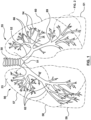
- Figure 1 is a schematic illustration of part of a patient's respiratory system including the trachea 50, carina of trachea 51, left main bronchus 52, right main bronchus 53, bronchioles 54, alveoli (not shown, residing in bunches at the end of bronchioles), left lung 55, right lung 56.
- the right main bronchus subdivides into three secondary bronchi 62 (also known as lobar bronchi), which deliver oxygen to the three lobes of the right lung - the superior lobe 57, middle lobe 58, and inferior lobe 59.
- the left main bronchus divides into two secondary 66 or lobar bronchi to deliver air to the two lobes of the left lung - the superior 60 and the inferior 61 lobes.
- the secondary bronchi divide further into tertiary bronchi 69, (also known as segmental bronchi), each of which supplies a bronchopulmonary segment.
- a bronchopulmonary segment is a division of a lung separated from the rest of the lung by a septum of connective tissue (not shown).
- the tertiary bronchi 69 divide into many primary bronchioles 70, which divide into terminal bronchioles 71, each of which then gives rise to several respiratory bronchioles 72, which go on to divide into two to eleven alveolar ducts 73.
- Alveolar sacs are made up of several alveoli 74.
- the alveolus 74 is the basic anatomical unit of gas exchange in the lung.
- Figure 2 also shows a peripherally located tumor 80 positioned in a space external to and amongst the bronchioles.
- a targeted tumor 80 may reside peripherally, centrally, or within a lymph node or airway wall of a lung or mediastinum.
- Non-small cell lung cancer accounts for about 85 percent of lung cancers and includes: Adenocarcinoma, the most common form of lung cancer in the United States among both men and women, are formed from glandular structures in epithelial tissue and usually forms in peripheral areas of the lung; Squamous cell carcinoma, which accounts for 25 percent of all lung cancers and is more typically centrally located; Large cell carcinoma, which accounts for about 10 percent of NSCLC tumors.
- Adenocarcinoma the most common form of lung cancer in the United States among both men and women, are formed from glandular structures in epithelial tissue and usually forms in peripheral areas of the lung
- Squamous cell carcinoma which accounts for 25 percent of all lung cancers and is more typically centrally located
- Large cell carcinoma which accounts for about 10 percent of NSCLC tumors.
- the focus of this disclosure is on treating NSCLC, which may occur peripherally among bronchioles, centrally among bronchi, or in lymph nodes.
- the devices, systems and methods disclosed herein may also be used for abl
- An aspect of the disclosure provides a method for treating a lung tumor of a patient.
- a pathway to a point of interest in a lung of a patient is generated. It is anticipated that in the majority of patients with a solitary nodule an airway can be identified on CT leading to the target suitable for positioning of an ablation energy delivery element proximate, for example within 1 cm, of the target.
- a pre-acquired CT as a map a flexible instrument can be threaded through the airways by a bronchoscopist using known and existing tools.
- an extended working channel is advanced through the airway into the lung and along the pathway to the point of interest. The extended working channel is positioned in a substantially fixed orientation at the point of interest.
- Anchoring mechanisms may be used to secure stability of the channel.
- a catheter may be advanced though the extended working channel to the targeted region of the lung.
- a working channel may be for example a lumen through a delivery sheath or through a bronchoscope, both of which may be steerable or incorporate a guidewire lumen.
- a delivery sheath may be an endobronchial ultrasound delivery sheath that generates and ultrasound image of tissue around the distal end of the sheath.
- a portion of the lung containing the targeted region may be occluded and at least having its corresponding air volume reduced, for example by occluding an airway feeding the portion (e.g., using at least an occluding element such as a balloon on the catheter or delivery sheath) and applying negative pressure to the lung portion or other means for collapsing a portion of lung disclosed herein.
- electrodes on the catheter may be used to measure tissue impedance or phase. A complete collapse of the targeted lung portion is not necessary. Experimental observations show that an air volume reduction in the targeted lung portion, which produces a 5 to 20% decrease in the respective bipolar impedance, is sufficient for the purpose of facilitating effective ablation energy delivery.
- the lung tissue is treated with the ablation catheter at the targeted region of the lung by injecting hypertonic saline, or other types of biocompatible conductive salts or solutions (e.g. calcium chloride, magnesium chloride, sodium carbonate, sodium chloride, sodium citrate, sodium hydroxide, or sodium nitrate, etc.), through the catheter in to the targeted portion of lung and applying RF energy from one or more electrodes on the catheter.
- hypertonic saline e.g. calcium chloride, magnesium chloride, sodium carbonate, sodium chloride, sodium citrate, sodium hydroxide, or sodium nitrate, etc.
- more than one ablation catheter may be delivered to the targeted region of lung and an RF circuit may be made between electrode(s) on a first catheter to electrode(s) on a second catheter.
- RF electrodes are used to deliver ablation energy.
- An extended working channel may be positioned within a patient, optionally through a bronchoscope or as part of a bronchoscope.
- a locatable guide may be positioned within the extended working channel for positioning the extended working channel to the point of interest.
- Biopsy tools may be advanced to the point of interest. Prior to advancing the biopsy tool through the extended working channel, the locatable guide may be removed from the extended working channel.
- navigation-guided extended working channels may be used in conjunction with 3-D navigation systems, such those offered by Veran Medical or superDimension TM (Medtronic), or robotically delivered bronchoscopic working channels may be used, such as those offered by Intuitive Surgical or Auris Health.
- the navigated instrument e.g.
- the catheter of this disclosure may be fitted with shape sensors, such as Fiber Bragg Grating (FBG) sensors.
- FBG Fiber Bragg Grating
- the use of such shape sensors inside ablation catheters is described in " FBG Sensor for Contact Level Monitoring and Prediction of Perforation in Cardiac Ablation" by Ho et al. Sensors 2012, 12, 1002-1013 .
- the lung tissue may be biopsied. If the biopsy is confirmed positive, then the lung tissue may be ablated.
- the biopsy tool is retracted and replaced with an ablation catheter or tool comprising at least one energy delivery element. This method may facilitate positioning of the energy delivery elements of the ablation catheter or tool at the same place where the biopsy is taken.
- the placement of the ablation catheter at the point of interest may be confirmed, for example visually using a bronchoscope and identifying the point of interest with respect to elements of the airway.
- the lung tissue or tumor may be penetrated at the point of interest. Effective treatment of the lung tissue may be confirmed, for example by obtaining a post ablation biopsy or assessing the impedance or phase of the treated tissue using electrodes or sensors on the ablation catheter.
- trachea is the beginning point and if a pulmonary parenchymal nodule is the targeted end-point, then appropriate software can interrogate the three-dimensional image data set and provide a pathway or several pathways through the adjacent airways to the target.
- the bronchoscopist can follow this pathway during a real or navigational bronchoscopy procedure and the correct airway pathway to the nodule can be quickly cannulated using a wire, a bronchoscope and a thin wall polymer tube or channel or sensed/navigational bronchoscopy instruments.
- Ultrathin bronchoscopes can be used in a similar manner. In conjunction with navigational bronchoscopy tools, using these sorts of approaches, majority of peripheral lung lesions can be destroyed.
- a typical diagnostic bronchoscope has an outer diameter of 5.0 to 5.5 mm and an operating channel of 2.0 to 2.2 mm. This caliber channel admits most cytology brushes, bronchial biopsy forceps, and transbronchial aspiration needles with sheathed outer diameters between 1.8 and 2.0 mm.
- Smaller bronchoscopes in the range of 3.0 to 4.0 mm at the outer diameter and correspondingly smaller channels, are usually given a "P" designation (for pediatrics), but they can be used in the adult airways.
- Newer generations of slim video and fiberoptic bronchoscopes have a 2.0 mm operating channel with a 4.0 mm outer diameter.
- the one disadvantage of these bronchoscopes is the sacrifice of a smaller image area because of fewer optical bundles.
- the ultrathin bronchoscopes generally have outer diameters smaller than 3 mm.
- Olympus models BF-XP40 and BF-XP160F Olympus America, Center Valley, PA
- bronchoscopes Special instruments (e.g., reusable cytology brush and forceps) of the proper calibre are available for tissue sampling.
- Current generations of video bronchoscopes are all built with a 60 cm working length. These bronchoscopes are suitable for accessing distal airways to place the guide wire over which a delivery channel or an energy delivery catheter can be exchanged.
- Navigation bronchoscopy consists of two primary phases: planning and navigation.
- planning phase previously acquired CT scans are utilized to mark and plan pathways to targets within the lung.
- these previously planned targets and pathways are displayed and can be utilized for navigation and access deep within the lung.
- Upon arriving at the target NB enables multiple applications all within the same procedure.
- CT scans of the patient's chest are loaded into proprietary software that reconstructs the patient's airways in multiple 3D images.
- the physician utilizes these images to mark target locations and plan pathways to these target locations within the lungs.
- the physician navigates a sensed probe and extended working channel to the desired target location(s). Once at the desired location, the physician locks the extended working channel in place and the sensed probe is removed.
- the extended working channel provides access to the target nodule for bronchoscopic tools or catheters.
- the lungs are divided into five lobes as shown in figure 1 , including the right upper lobe 57, right middle lobe 58, right lower lobe 59, left upper lobe 60, and left lower lobe 61.
- the lobes are in turn divided into segments.
- Each lobe or segment is generally autonomous and receives its own bronchus and pulmonary artery branch. If an airway supplying a lobe or a segment is occluded with a one-way valve or occluded with an obturator and the air is sucked out it will collapse or reduce in volume leading to local tissue compression under the pressure exerted by the rest of the lung.
- lung tissue is intrinsically highly compliant, compressible and ultimately collapsible. Atelectasis refers to a complete or partial collapse of a lung, lobe or portion of a lung. When an airway is blocked, there is no, or reduced, negative pressure delivered to that target portion of the lung. Therefore, the neighboring portions or segments compress it and remove the entrapped air.
- vacuum suction may be applied through a lumen in the blocking device (e.g. balloon). The vacuum can be used to further remove the air out of the targeted lung portion. As a result, further or more efficient collapsing may be achieved.
- the phrase "collapsing a portion of lung” refers to compressing or reducing the corresponding air volume or shrinking the portion of lung and complete collapse is not necessarily the intention. Without more air, the sac shrinks. It is understood that in some cases collateral ventilation may re-inflate the collapsed segment but it is expected that tissue shrinking from building up heat and continuous suction can overcome, at least partially, the re-inflation of the target area. Balloons may be used to seal the entry to a target airway when inflated. A lumen through the balloon may be used to provide the additional vacuum suction.
- Lung compliance is an important characteristic of the lung. Different pathologies affect compliance. Particularly relevant to cancer ablation are the observations that: fibrosis is associated with a decrease in pulmonary compliance; emphysema/COPD may be associated with an increase in pulmonary compliance due to the loss of alveolar and elastic tissue; and pulmonary surfactant increases compliance by decreasing the surface tension of water.
- the internal surface of the alveolus is covered with a thin coat of fluid.
- the water in this fluid has a high surface tension and provides a force that could collapse the alveolus.
- the presence of surfactant in this fluid breaks up the surface tension of water, making it less likely that the alveolus can collapse inward.
- Atelectasis clinically defined as collapse of the lung area visible on X-ray, is generally not desired.
- localized lung collapse can be beneficial in the treatment of emphysema and, as the authors propose, targeted lung cancer ablation.
- Electrodes positioned in airways surrounding the tumor may be drawn closer to the tumor, thereby improving concentration of ablative energy or increasing efficacy of ablating the tumor; air will be removed from the collapsed, or shrunk lung tissue supplied by the airway making the delivery of ablative energy and the thermal propagation more efficient; collapse of the segment may lead to hypoxia that provoke regional hypoxic pulmonary vasoconstriction and ischemia of the lung segment which reduces metabolic cooling and improves efficient utilization of the thermal energy; the spread of irrigation fluid, such as hypertonic saline, may be confined to the targeted area, thereby providing virtual-electrode ablation outcomes mostly to the target region.
- irrigation fluid such as hypertonic saline
- Bronchial air volume reduction via vacuum application to the catheter is, typically, sufficient in improving the electrical contact between the RF electrode and the bronchial wall. This, in turn, increases the safety and reduces the ineffectiveness of energy delivery which may be caused by evaporation of irrigation fluid (caused by overheating) or by its inadvertent spread to neighboring tissues; and electrode contact with tissue may be more consistent or have greater surface area of contact.
- ablative energy such as radiofrequency electrical energy may be delivered by a computer-controlled ablation console and collapsing the lung portion may improve temperature-controlled ablation performance by increasing contact stability and pressure between the tissue and electrode(s).
- temperature sensor(s) positioned in or on the electrode(s) may provide more accurate temperature feedback to the computer-controlled ablation console used to control the energy delivery parameters such as RF power, RF power ramp up slope, or duration, while increased contact stability and pressure may allow increased stability of thermal and electrical conduction allowing the temperature sensor(s) to have a more accurate representation of temperature of the tissue around the electrode. Consequently, the ablative energy delivered to the targeted lung tissue and tumor may be optimized and the temperature of the targeted tissue may be heated to an intended temperature set point in an effective and safe manner.
- Air volume reduction in one lobe or a segment or other section of a lung defined by morphology of airways and air supply by airways can be impeded by collateral interlobular ventilation that is common in patients with incomplete interlobar fissures and partially damaged and destroyed lung.
- Alternative methods of segmental or lobar collapse can be employed by heating lung tissue or injecting chemicals, foam or hot steam into the targeted segment or the targeted lobe. For example, injection of hot steam into a contained space like lobe or segment results in collapsing the space.
- the nature of the lung is such that when a segment is collapsed, pressurized adjacent segments compress it and fill the volume vacated by the collapsed space.
- an entire lung can be temporarily collapsed using a technique of independent lung ventilation.
- Lungs are intubated and ventilated by separate endotracheal tubes with obturators of the two main bronchi.
- a patient that is healthy enough to tolerate it can breathe using mechanical ventilation of only one lung while the contralateral lung is being collapsed and operated on.
- Electrodes can be positioned prior to deflating and collapsing the lung. In this case collateral ventilation will not have much effect on the ability of the operator to collapse the lung.
- Air in the lung's airway is a very poor thermal conductor and electrical conductor. Collapsing the airways (e.g., by occluding airflow or with other methods described herein) deflates them, which enhances the permeability of RF through the previously aerated tissue. We therefore propose reducing the air volume in a target lung portion as a means to facilitate improved energy delivery through electrodes combined with a device such as an endobronchial catheter.
- a balloon e.g., filled with liquid or air
- another space occluder, a deployable valve, injected steam, a fan, glue injection, or stent could be used to occlude the airway to reduce the air volume of a specific lung portion encompassing or next to the targeted tumor.
- the balloon for example, may be used to occlude a portion of the airway and as the airway is blocked, the blood absorbs the gas inside the alveoli thus reducing the air volume.
- the entrapped air may be sucked out using vacuum pressure through a lumen in the catheter. The suction may be applied for 30 s to 10 min, depending on the level of shrinkage or collapse desired. If the airway is deprived of air the alveoli shrink.
- blood, fluids and mucus may fill, at least partially, the previously aerated space, allowing the space to conduct RF energy and heat more effectively.
- a procedural method of ablating a lung tumor comprising collapsing a targeted portion of the lung with a catheter configured to occlude an airway and ablate tissue may comprise the following steps: identifying the location of a targeted tumor in a lung (e.g., using medical imaging technology such as CT); Generating a 3D navigation map by registering the medical images with navigation technology; delivering a bronchoscope through the patient's airway placing the distal end in a vicinity of the targeted lung portion optionally using 3D navigation or electromagnetic navigation assistance; taking a biopsy to confirm tumor position; lubricate the bronchoscope, occlusion-ablation catheter and endotracheal tube lumen; placing the occlusion-ablation catheter through the bronchoscope working channel; steering the catheter's distal region to the targeted site navigating (e.g.
- the ablation electrode as close to the tumor as possible optionally comprising delivering the catheter over a guidewire; optionally confirming electrode position or contact using impedance measured from the electrode, imaging or EM navigation; optionally positioning the occlusion balloon in the airway proximal to the ablation site; inflating the occlusion balloon while visualizing with the bronchoscope's lens; optionally allowing air volume reduction in the targeted portion of lung as air is absorbed or apply other bronchial air volume reduction steps as disclosed herein (e.g., apply suction to remove air from the targeted lung portion); optionally monitoring electrical impedance of tissue (e.g., between the RF electrode(s) and a grounding pad, or between bipolar RF electrodes) wherein a stable, consistent impedance indicates the bronchial air volume has been reduced, thus making greater tissue contact with the electrode(s) (e.g., in a study conducted by the authors impedance dropped about 24% to 38% when the electrode(s) (e.g., in
- subsequent ablations may be made at different locations by moving the ablation electrode to the subsequent location. If previously collapsed, it may be necessary to let the lung portion inflate before moving the ablation electrode if it is difficult to relocate the electrode while the lung portion is collapsed. In some situations, it may be possible to keep the lung portion deflated and optionally infused with conductive fluid while relocating the electrode(s).
- fiduciary markers may be placed in or around the tumor to later locate the tumor using CT to determine if it was successfully ablated or to apply a subsequent ablation.
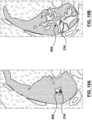
- FIGs 18A and 18B are illustrations of CT images of a lung during animal studies and show examples of situations where there were varying degrees of bronchial air volume reduction.
- vacuum suction was less efficient in relatively reducing the bronchial air volume.
- the zone of white opacity 800 (which indicates a volume of lung tissue affected by the removal of bronchial air) is limited in size, concentrated only in the space surrounding the RF electrode 234. This observation correlated very well with the relative drop in the catheter bipolar impedance (measured between proximal electrode 237 and RF electrode 234 - see Figure 4A ).
- the bipolar impedance was 590 ⁇ .
- Fig. 18B shows a situation where catheter vacuum suction was more successful in reducing the bronchial air volume.
- the zone of white opacity 800 is spread, encompassing a larger zone around the catheter RF electrode 234. This observation also correlated well with the change measured in catheter bipolar impedance.
- the bipolar impedance read 670 ⁇ .
- the bipolar impedance dropped to 400 ⁇ , which represents a 40% drop from the baseline.
- a bipolar-impedance drop from baseline in the range of 5 to 50% is typically sufficient in supporting improved electrical contact between the bronchial wall and the RF electrode 234.
- the release of 23.4% hypertonic saline at a rate of 5 ml/min for a duration of 5 s decreased the catheter bipolar impedance down to 140 ⁇ and 130 ⁇ , respectively.
- the bipolar impedance should be decreased to less than 300 ⁇ .
- the larger bronchial air volume reduction ( Figure 18B ), which resulted in improved RF electrode contact, produced a larger ablation volume (listed in Table 1 as Width_1, Width_2, and Length).
- the increased ablation volume was not a sole consequence of the larger bronchial air volume reduction.
- Increased hypertonic saline flow rates likely the result of local blood and air flow conditions, created a larger virtual RF electrode.
- the larger virtual RF electrode as expected, contributed to forming a larger ablation zone.
- Conductive fluid may be delivered (e.g., via an lumen of an ablation catheter) to the airway in the targeted portion of lung to enhance RF ablation.
- the delivery of conductive fluid may be a volume infusion of hypertonic saline (e.g., hypertonic saline having concentrations in a range of 5% to 30%) to enhance endobronchial lung tumor ablation by ablating a larger volume of tissue (e.g., ablations greater than or equal to 1.5 cm in diameter).
- Other conductive fluids may be used.
- several biocompatible aqueous conductive solutions e.g., conductive solutions that are not per se lethal or toxic to the living body
- calcium chloride magnesium chloride, or sodium hydroxide
- a conductive fluid may have a high viscosity or may be injected in a low viscosity state to a target region and transition to a higher viscosity state in the targeted region of the body.
- ionic salts such as NaCl or others, such as those listed above, may be mixed with a reverse phase transition polymer and water, which may transition to higher viscosity when transitioned from below body temperature to body temperature.
- the polymer with appropriate characteristics may be one such as a block-co-polymer PLGA-PEG-PLGA consisting of polyethylene glycol, which is covalently esterified by an FDA-approved poly lactic-co-glycolic acid on both ends.
- polymers may be based on polyethylene glycol, albumin, silk, wool, chitosan, alginate, pectin, DNA, cellulose, polysialic acids, dendritic polylysine, poly (lactic-co-glycolic) acid (PLGA), gellan, polysaccharides and poly-aspartic acid, and combinations thereof.
- the mixture may be designed to preserve the high electrical conductivity of the hypertonic saline base, while adding the higher viscosity properties of the polymer. This way, better control can be asserted over the spread of the conductive fluid.
- the polymer may be biodegradable, biocompatible or bioabsorbable.
- the ionic component may include for example, M.sup.+X.sup.- or M.sup.2+Y.sup.2-, where M belongs to alkaline or alkaline earth metal such as Li, Na, K, Rb, Cs and X represents halogens, acetate and other equivalent counter balance to M.sup.+, and Y can be X.sub.2 or mixed halogens, acetates, carbonate, sulfate, phosphate and other equivalent counter balance to M.sup.2+, as well as formic acid, glycolic acid, lactic acid, propionic acid, caproic acid, oxalic acid, malic acid, citric acid, benzoic acid, uric acid and their corresponding conjugate bases.
- M belongs to alkaline or alkaline earth metal such as Li, Na, K, Rb, Cs and X represents halogens, acetate and other equivalent counter balance to M.sup.+
- Y can be X.
- a conductive fluid may further comprise ingredients such as pharmaceutical agents (e.g., anticancer or antibiotic) to aid tissue healing or further treatment of cancerous cells, or radiopaque contrast.
- the volume infused may be sufficient to infuse beyond the targeted airway and in to the alveoli and lung parenchyma. This is achieved by conducting the delivered ablation energy (e.g., RF or microwave) to more tissue than the surface of the electrode contacts, thus, in effect, increasing the effective electrode size (i.e. creating a virtual electrode) and creating more stable and consistent electrical contact with the tissue.
- a conductive fluid such as hypertonic saline, or others listed above, may also make ablation energy delivery more efficient, as less power is lost in saline and more delivered to the tissue.
- hypertonic saline Less power is lost into hypertonic saline compared to physiological saline because hypertonic saline has a significantly increased electrical conductivity, and therefore lower contact impedance. With less power being lost into hypertonic saline, the boiling point is less likely to be reached. Therefore, ablations produced with hypertonic saline in a lung portion with reduced bronchial air volume tend to not show char formation and yet produce larger lesions. Injection of conductive fluid may be done with methods and devices as described herein for injection and optional concomitant retraction of fluid and optionally with collapsing of the targeted lung portion around the electrode(s).
- FIG. 4A An example of a device 220 configured to occlude the targeted portion of lung to collapse the lung portion and ablate with an irrigated electrode is shown in Figure 4A and comprises at least one electrode 234 with at least one irrigation port 235.
- Table 1 the greater hypertonic saline flow rate during the 6 minute RF delivery described in Fig. 18B resulted in a larger ablation volume.
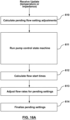
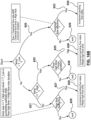
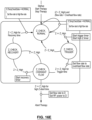
- the flow of hypertonic saline during RF delivery is controlled by the algorithm aspect of this disclosure. While the algorithm intends to optimize the overall amount of hypertonic saline, a minimum amount is required in order to produce ablation volumes of sizes suitable to treat lung cancer.
- the low flow rate of 0.5 ml/min from the case described in Figure 18A resulted in a smaller ablation volume. It is preferred to achieve, during RF delivery, flow rates in excess of 0.2 to 0.5 ml/min. Hypertonic saline flow rate above a maximum (e.g., a maximum of about 15 ml/min) may not result in larger ablation volumes, as the saline will reach a point when it ineffectively dissipates the RF energy. Hence, the algorithm of Figure 17A will optimize the hypertonic saline flow rate to keep its overall volume below a maximum, yet larger than the minimum described above.
- Hypertonic saline flow rates in the range of 0.2 to 5 ml/min, preferably in the range of 1.5 to 2.5 ml/min, are expected to be effective in producing sufficiently large ablation volumes.
- An average flow rate of conductive fluid maintained during the treatment session may be in a range of 0.1 to 15 ml/min.
- HTS hypertonic saline
- other biocompatible, conductive, aqueous solutions may be employed. A higher osmolarity will support better diffusivity of ions across cellular membranes.
- Hot hypertonic saline (HTS), or any other hot solution from those discussed above, has better performances in the osmosis or diffusion to transport HTS with respect to cells, and can increase promotion of cell dehydration.
- the increased extra-cellular salinity results in loss of water content from within neighboring cells.
- the hot HTS bolsters the cell desiccation effects produced by the delivery of RF energy.
- the HTS with a concentration above 5%, for example 10% can be infused to the target space and then, as RF currents travel through it into tissue, reaches up to certain temperatures, for example in a range of 60°C to 115°C, by the electrodes located on the distal area of the catheter.
- the sequestered portion of the lung can be irrigated with heated HTS from the irrigation port on the catheter directly.
- the sequestered portion can be exposed to heat and HTS for a duration of at least 2 minutes, or for a duration in a range of 30 seconds to 30 minutes accordingly, after which the HTS and the local area can be cooled down by shutting down the electrodes, irrigating or replacing with room temperature saline, or evacuated from the irrigation port directly.
- the procedure can be repeated until desired ablation results are achieved. It should be expected that increasing temperature can increase diffusivity of HTS and thus the ability to transport HTS into the cells, and it could be a highly potential direction that the infusing of heated HTS or other salines may have beneficial effect of killing tumor cells.
- Figures 19A and 19B are images of dissected lung tissue from animal studies and show examples of necrosis development in lung tissue as a result of hypertonic saline infusion and RF energy application.
- Figure 19A shows a case of 23.4% hypertonic saline infusion at a rate of 3 ml/min for 10 min. No RF energy was applied. Hypertonic saline was delivered into the lower left lung of an animal. The animal was survived for 1 month. Histopathology was performed subsequently. The gross pathology view shown in Fig. 19A reveals a necrotic spot 805 of about 0.5 mm in size.
- the necrotic spot 805 was likely somewhat larger acutely, after infusion, but it was then gradually reabsorbed by the animal's body over the course of one month. There were no concerning safety issues noted in this animal. Blood electrolytes, such a Na level, were unchanged with respect to pre-procedure baseline. Blood pressure and other vitals were all normal. No bacterial colonies were observed at high-magnification histopathology. Yet, the presence of the small necrotic spot is indicative of the potential therapeutic effects of hypertonic saline. When combined with delivery of RF energy, the therapeutic effect of hypertonic saline increases.
- the combined effect of RF energy and hypertonic saline resulted in a necrotic zone 806 of about 5 mm, about ten times the size of that in Fig. 19A .
- the same amount of 23.4% hypertonic saline was delivered to the lower right lung in the case of Figure 19B as in that of Figure 19A .
- the same flow rate of 3 ml/min for 10 min was used.
- 10 W of RF power were applied for 90 seconds during the period of saline delivery.
- the same animal was treated as in the case of Figure 19A .
- the combined effect of RF energy and infusion of hypertonic saline can result in an increased zone of necrosis and thus an increased therapeutic outcome when ablating tissue in the lung such as tumors.
- the composition of the conductive fluid may be adjustable such that electrical or thermal conductivity or viscosity of the HTS may be adjusted.
- a conductive fluid source may comprise multiple sources that may be combined to adjust properties of the conductive fluid that is injected into the target region of the lung.
- a software driven controller may be programmed to mix a predetermined or automatically determined ratio of the multiple sources before or during injection of the combined fluids into a natural airway of the lung at the target region to be ablated.
- separate pumps may be activated at a controlled rate and duration to selectively take a desired amount of each of the multiple sources.
- the multiple fluids may be pumped to a mixing chamber prior to delivering the combined fluid through the device to the target region, or they may be concurrently or sequentially delivered directly to the target region.
- Automatic determination of a ratio of multiple sources may be calculated by the controller using input from sensors, for example located on the distal region of the device.
- the controller may adjust ablation energy delivery parameters (e.g., flow rate of conductive fluid, ablation energy power, set temperature, ramp rate, duration) based on varying properties of the conductive fluid such as conductivity, viscosity, temperature, or pressure.
- ablation energy delivery parameters e.g., flow rate of conductive fluid, ablation energy power, set temperature, ramp rate, duration
- adjusting at least one of the flow rate or the conductivity of the conductive fluid may include adjusting at least one of the flow rate or the conductivity to maintain the values detected by a temperature sensor within a determined temperature range, optionally wherein the determined temperature range is between 60 and 115 °C, or above a certain temperature threshold, optionally wherein the preferred temperature threshold is 75 - 105 °C, for example between 85 - 99 °C.
- a system is configured to adjust the conductivity of the conductive fluid in the range between 10 mS/cm and 450 mS/cm at a reference fluid temperature of 25 °C.
- hypertonic saline, or any other aqueous solutions from those discussed above e.g. calcium chloride, magnesium chloride, sodium hydroxide, etc.
- the permeated saline in lung parenchyma may replace the alveolar air and spread to the surrounding alveoli through Kohn's pores and Lambert's ducts.
- Perfused hypertonic saline could be doped with nonionic iodinated contrast agent to render it visible on computed tomography (CT).
- CT computed tomography
- Other conductive irrigation fluids could be imagined such as aluminum sulfate. Creating a flow of the conductive fluid with the use of suction during ablation to continuously replenish irrigation sitting in the ablation zone could further facilitate tumor ablation by removing heat generated in the fluid.
- a non-flowing conductive fluid pooled in the targeted lung tissue could facilitate production of a lesion sufficient to ablate a targeted lung tumor.
- a desired ablation volume which may be for example a function of tumor size, distance between the targeted tumor and RF electrodes, or proximity to vulnerable non-target structures, may determine if infusion of a conductive fluid is flowing or stagnant, wherein stagnant infusion may be used for smaller ablations and flowing infusion may be used for larger ablations and optionally a greater flow rate or cooling of injected liquid may be used for even larger ablations.
- Conductive fluid can be infused before the start of ablation to prepare the lung for ablation and allow for the fluid to flow into the tissue. Delivering conductive fluid such as hypertonic saline may allow the ablation energy console to operate at a wider range of power levels as necessary to achieve therapeutic goals.
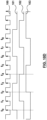
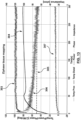
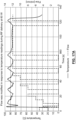
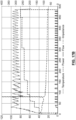
- Figure 13 illustrates an example of proximal electrode temperature 303, irrigated distal electrode temperature 304, power 305, impedance 306 and phase 307 ranges achieved by infusing hypertonic saline at a rate of 1 ml/min.
- the temperature may be regulated within a range above 60°C but below 115°C (e.g., below 105°C, below 100°C), although it may fluctuate outside such range for limited periods of time (e.g., less than 1 second, less than 2 seconds, less than 3 seconds).
- a conductive fluid may be injected through a needle catheter positioned in an airway into the parenchyma or tumor, which may deliver the conductive fluid to the target site more effectively or more selectively.
- the needle may further comprise an RF electrode with an associated temperature and impedance sensor that may be used to deliver RF energy directly to the parenchyma near the tumor or inside the tumor.
- the conductive fluid such as hypertonic saline solution infusion may be titrated to adjust the size of ablation.
- hypertonic saline flow rates between 0.2 to 5 ml/min are expected to contribute to the formation of sufficiently large ablation volume, while keeping the patient's electrolytes, blood pressure and fluid loading within normal and safe ranges. Titration may be done by adjusting the saline concentration, the volume of hypertonic saline infused, or by adjusting the position of the occluding structure to block off a different size of lung portion.
- a higher saline concentration is more electrically conductive and may generate a larger lesion.
- a greater volume of infused saline may spread to a greater volume of tissue creating a larger lesion.
- a larger portion of lung that is occluded may accept a larger amount of infused hypertonic saline, which may result in a larger lesion.
- RF delivery parameters may be adjusted in accordance with hypertonic saline titration. For example, salinity of irrigation fluid may be increased in response to undesired fluctuations in impedance values.
- FIG. 3 An example of a device 220 configured to be delivered through a working channel, occlude a targeted portion of lung, reduce air volume in the targeted portion of lung, deliver conductive solution into the targeted portion of lung, monitor tissue properties, and ablate a tumor is shown in Figure 3 .
- the device of Figure 3 is shown in situ in Figure 4A .
- the device 220 has an elongated shaft 229 having a proximal region intended to remain outside the patient's body and a distal region 215 intended to be delivered through a working channel to a target region of a lung proximal to a targeted lung tumor.
- the distal region 215 is configured to be delivered through a working channel (e.g., working channel 225 of a bronchoscope 221 or a lumen of a sheath 213 that may be delivered through the working channel of a bronchoscope).
- a working channel e.g., working channel 225 of a bronchoscope 221 or a lumen of a sheath 213 that may be delivered through the working channel of a bronchoscope.
- a common bronchoscope working channel may have an inner diameter of 2.8 mm and a length of 60 cm.
- a delivery sheath 213 adapted for delivery through a 2.8 mm bronchoscope working channel may have an outer diameter less than 2.8 mm, preferably about 1.95 mm +/- 0.05 mm, an inner diameter approximately 0.45 mm less than the outer diameter, preferably about 1.5 mm +/- 0.05 mm, and a length greater than the brochoscope's length (e.g., greater than 60 cm, preferably about 105 cm). Other dimensions may be applicable for similar catheters adapted to fit through different sized bronchoscope working channels.
- a device 220 may have a maximum diameter smaller than the inner diameter of the sheath 213 through which it is delivered, for example less than or equal to 2 mm (e.g., less than or equal to 1.5 mm, preferably 1.4 mm +/- 0.05 mm).
- the device 220 may have a length greater than the length of the delivery sheath, for example greater than or equal to 50 cm (e.g., greater than or equal to 60 cm, greater than or equal to 105 cm, preferably about 127 cm).
- the Shaft 229 of the device 220 may be made for example from an elongate tube of Pebax 720 having an outer diameter of about 1.35 mm.
- the shaft may be a flexible shaft capable of traversing a bend such that a bend in the shaft has a radius of curvature of as little as 7 mm.
- the shaft may contain a wire braid to provide flexible, pushable, kink resistant, and torquable functions.
- the device 220 may have a guidewire lumen 236 (e.g., a polyimide tube with an inner diameter of 0.015" running through a lumen in the shaft 229) so the device may be delivered over a guidewire 227 or so a component such as a stiffening wire or tumor perforating wire or fiberoptic wire or other device can be delivered through the lumen.
- a guidewire lumen 236 e.g., a polyimide tube with an inner diameter of 0.015" running through a lumen in the shaft 229
- a tumor-perforating-wire 248 having a sharp distal tip 249 may be advanced through a guidewire lumen 236 to protrude from the distal end of the catheter 220 to facilitate puncture through tissue such as a tumor 80 that is blocking or encroaching into an airway.
- the device 220 shown in Figure 4B is the same as the device of Figure 4A except that it has a tapered distal end 247 with a lumen 236 exiting the point of the tapered distal end 247.
- the tapered distal end 247 may be used as a dilator that can enter a hole in tissue created by the tumor-perforating-wire 248 and expand the hole so the ablation electrode 234 can be advanced into or through the hole.
- the tumor-perforating-wire 248 may have a depth marker on its proximal region to indicate when the sharp distal tip 249 is near the distal end of the catheter 247.
- the tumor-perforating-wire 248 is made from a material the is radiopaque or has a radiopaque marker near its sharp distal tip 249.
- the catheter 220 may be advanced through a patient's airways without a tumor-perforating-wire 248, which allows the catheter 220 to be more flexible facilitating passage over tight bends.
- a guidewire may be used to facilitate delivery of the catheter. If the targeted tumor is at least partly in the airway blocking the catheter from further advancement the tumor-perforating-wire 248 may be advanced through the lumen 236 until the sharp distal tip 247 is near the opening, optionally as indicated by the depth marker. The sharp distal tip 247 is then advanced into or through the tumor, optionally under fluoroscopic guidance or other medical imaging or robotic guidance to monitor advancement and avoid a risk of puncturing the pleura or other non-target tissue.
- the tumor-perforating-wire 248 may be configured to only advance a predetermined distance (e.g., up to about 3 cm, up to about 2 cm, up to about 1 cm, up to about 5 mm) from the distal end of the catheter 220.
- the catheter 220 may be advanced such that the tapered tip 247 dilates the hole in the tumor made by the tumor-perforating-wire 248 and the ablation electrode 234 enters the tumor 80.
- the tumor-perforating-wire 248 may be removed prior to delivering ablation energy.
- a shaft-stiffening wire may be advanced through a lumen in the shaft, for example a guidewire lumen 236, to increase stiffness of the catheter during positioning.
- the catheter shaft may be quite flexible so it can pass over an airway bend with a radius of curvature as little as 7 mm but may require more stiffness at times when advancing to avoid kinking.
- the sheath 213 may have depth markers 415 positioned along its length or portion of its length (e.g., at least on the proximal 5 cm and distal 5 cm of the sheath length) and spaced at regular intervals (e.g., spaced at 1 cm center to center with a width of about 1 mm).
- the shaft 229 of the embodiment shown in Figure 4A or the shaft 429, 529 of other embodiments shown in Figures 5A or 5B may have depth markers 416 positioned along its length or portion of its length (e.g., at least on the proximal 5 cm and distal 5 cm of the shaft length) and spaced at regular intervals (e.g., spaced at 1 cm center to center with a width of about 1 mm).
- the depth markers may be added to the sheath or shaft using methods known in the art such as pad printing or laser etching.
- a physician may position a working channel (e.g., bronchoscope working channel) in a patient's lung and use the depth markers on the sheath or shaft relative to the working channel to determine placement of the ablation electrode or obturator relative to the working channel.
- a working channel e.g., bronchoscope working channel
- the device 220 is configured to temporarily at least partially occlude an airway that feeds the targeted lung portion.
- the device 220 has an occlusion element such as an inflatable balloon or obturator 231.
- the elongated shaft 229 comprises a lumen 222 (e.g., a polyimide tube with an inner diameter of 0.015" running through a lumen in the shaft 229) with a port 232 positioned in the obturator 231 for inflating and deflating the obturator.
- the obturator 231 may be a balloon (e.g., compliant balloon) sized to occlude the airway or a range of airway diameters (e.g., diameters in a range of 3 mm to 10 mm).
- the obturator 231 may be inflated by injecting fluid (e.g., gas such as air, or liquid such as water or saline, or contrast solution) through the lumen 222 and into the obturator 231.
- fluid may be injected manually with a syringe connected to a proximal region of the device 220 and fluid pressure may be contained by closing lock stop valve.
- the obturator may be deflated for removal by opening the lock stop valve and pulling the inflation fluid from the balloon using the syringe.
- a system for operating the device may comprise a pump to inject or remove fluid to inflate or deflate the balloon.
- a second port in fluid communication with a second lumen may be positioned in the obturator to allow inflation fluid to be removed from the obturator as it is being injected so as to maintain inflation pressure but allow fluid to be circulated in the obturator, which may help to keep the temperature of the obturator cooler than ablation temperature and avoid a risk of thermally damaging the obturator.
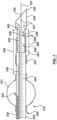
- the obturator 231 shown in Figure 3 and 4 or similar obturators 431, 481 shown in Figure 5A , 531, 581 shown in Figure 5B , 231 shown in Figure 7 may be compliant, semi-compliant, or non-compliant inflatable balloons, preferably compliant balloons made from a material capable of avoiding damage at temperatures up to at least 120°C for at least 30 minutes and withstand inflation with 1 cc of air for at least 30 minutes.
- a suitable example of a compliant balloon material is silicone, which may safely endure temperature in an operational range of body temperature up to about 140°C.
- balloon material may be 40A silicone with a wall thickness of 0.0015" +/- 0.001" formed at 0.1" diameter for reliable low-pressure inflation to 12 mm in width.
- Balloon obturators may be attached to the shaft 229 in a stretched configuration (e.g., stretched 2 times the relaxed length) and bonded at both ends with adhesive such as cyanoacrylate.
- Optional heat shrink collars e.g., PET may be added over the bonded ends of the balloon for added strength.
- Inflatable balloon obturators of any embodiments disclosed herein may be somewhat spherical like the balloon 402 shown in Figure 14A , for example having a length 400 in a range of 5 mm to 30 mm (e.g., 12 mm) and a diameter 401 of similar dimension in a range of 1 mm to 30 mm (e.g., 12 mm) in an inflated ex-vivo state.
- inflatable balloons may be elongated or sausage-shaped like the balloon 403 shown in Figure 14B for example, having a length 404 in a range of 5 mm to 30 mm (e.g., in a range of 10 to 20 mm) and a diameter 405 of smaller dimension in a range of 1 mm to 30 mm (e.g., in a range of 4 mm to 20 mm, about 12 mm) in an inflated ex-vivo state.
- the elongated balloon 403 may provide a better fluid seal of the airway and may maintain position better during use compared to a spherical-shaped balloon 402.
- the balloon is no longer than 30 mm (e.g., no longer than 25 mm, no longer than 20 mm).
- inflatable balloon obturators of any embodiments disclosed herein may be somewhat tapered like the balloon 408 shown in Figure 14C , for example having a length 409 in a range of 5 mm to 30 mm and a first diameter 410 in a range of 1 mm to 30 mm (e.g., 12 mm) tapering down to a second diameter 411 in a range of 0 mm to 20 mm (e.g., about 2 mm) in an inflated ex-vivo state wherein the first diameter (i.e., the larger end of the tapered balloon 408) is further away from the ablation electrode than the second diameter.
- This tapered balloon shape may improve the ability of the airway and lung tissue to collapse toward the ablation electrode when vacuum is applied to the airway in use, while allowing a functional seal of the airway.
- an occlusion balloon 423 as shown in Figure 14D may have an elongated shape with a proximal section 412, a distal section 413 and a waist 414 therebetween.
- the proximal section 412 of the balloon 423 may have a width 418 in a range of 1 mm to 30 mm (e.g., about 12 mm);
- the distal section 413 may have a width 419 in a range of 1 mm to 20 mm (e.g., about 10 mm);
- the waist 414 may have a width 421 that is less than the widths 418 and 419, for example in a range of 1 mm to 19 mm (e.g., about 8 mm).
- the distal section width 419 may be smaller than the proximal section width 418.
- One way to create this shape of balloon is to make the balloon material slightly thicker in the waist region 414. This balloon configuration may occlude an airway and be especially beneficial if positioned near an opening of a target bronchus wherein the distal section 413 may be placed in the target bronchus while the proximal section 412 is placed to seal the opening of the target bronchus.
- the occlusion balloon 231 may be a different form of occlusion structure such as a deployable valve, or a deployable stent with an occluding material such as PTFE.
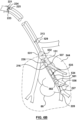
- FIG 4A illustrates the ablation apparatus 220 shown in Figure 3 introduced into a selected airway 151 comprising an elongated shaft 229, a space occluder (e.g., an obturator) 231 positioned on a distal region of the shaft to occlude the airway, at least one air removal port 235 in fluid communication with a lumen (not shown) that is connectable at the proximal region of the catheter to a suction device (e.g., vacuum pump) to remove air from the airway 151 distal to the obturator 231 to collapse the targeted portion, segment or lobe of the lung.
- a device 220 has four air removal ports 235 each having a diameter of 0.017".
- Air may be removed from the targeted lung portion by applying negative pressure (e.g., with the suction device) to the lumen that is in communication with the air removal port 235, that pulls air from the lung portion through the lumen to a proximal region of the apparatus external to the patient.
- the air removal port 235 is the same port through which a conductive fluid (e.g., hypertonic saline) may be delivered.
- a conductive fluid e.g., hypertonic saline
- air may be removed from the targeted portion of lung by applying suction to a different lumen such as guidewire lumen 236 or an additional lumen (not shown) having an exit port on the shaft 229 distal to the obturator 231.
- Alternative methods of at least partially collapsing a targeted portion of lung are described herein.
- the device 220 shown in Figures 3 and 4A further comprises a distal electrode 234 positioned on the distal region 215 of the device 220 and connected to a conductor 238 (e.g., copper wire 32 AWG) that runs through the shaft 229 of the device to the proximal region where it is connectable to an energy delivery console for delivery of RF ablation energy.
- a conductor 238 e.g., copper wire 32 AWG
- a sufficient electrical insulation should be provided to insulate and avoid dielectric stress between conductors and electrodes.
- ablation energy delivery RF voltages of 300V at a frequency in a range of 300 kHz to 1 MHz may be applied.
- a minimum dielectric strength may be about 2000 V/mm.
- electrical insulation may be provided by insulation on the conductors and the shaft material.
- a dielectric material such as a UV cured adhesive may be injected into a lumen in the shaft 229 that carries conductors at least in the distal region of the device proximate the distal electrode 234 to increase dielectric strength between the distal electrode 234 and proximal electrode 237.
- the distal electrode 234 may be cylindrical in shape and have a diameter in a range of 0.5 mm to 2 mm (e.g., about 1.35 mm) and a length in a range of 3 mm to 20 mm (e.g., in a range of 3 mm to 10 mm, about 5 mm).
- An optional proximal electrode 237 is positioned on the shaft 229 distal to the obturator 231 (e.g., a distance 239 in a range of 1 mm to 8 mm, about 5 mm) and proximal to the distal electrode 234 (e.g., a distance 240 in a range of 5 to 15 mm, about 10 mm).
- the optional proximal electrode 237 may have a length in a range of 0.5 mm to 5 mm, preferably 1 mm +/- 0.25 mm and an outer diameter in a range of 0.5 mm to 2 mm (e.g., about 1.35 mm).
- the total distance 245 between the distal electrode 234 and the obturator 231 may be in a range of 1 mm to 40 mm (e.g., in a range of 5 mm to 30 mm, in a range of 10 mm to 20 mm, about 16 mm +/- 2 mm), which may allow the distal electrode 234 to heat adjacent tissue and conductive fluid without risking thermal damage to the obturator 231 or which may avoid a risk of the obturator negatively influencing the ability to create a sizable ablation zone 244 around the ablation electrode 234.
- the proximal electrode 237 is connected to a conductor 241 (e.g., 32 AWG copper conductor) running through the shaft 229 to the proximal region of the catheter where it is connectable to an energy delivery console.
- a conductor 241 e.g., 32 AWG copper conductor
- the distal 234 and proximal 237 electrodes may be used together to complete an electrical circuit used to measure or monitor electrical impedance or phase of the tissue proximate to the two electrodes.
- the impedance or phase may be used to assess the state of bronchial air volume reduction during a step of air volume reduction in the lung portion or during ablation energy delivery, or to assess degree of infusion of conductive fluid into the targeted lung portion, or to assess degree of ablation of tissue proximate the electrodes.
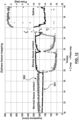
- FIG. 12 shows representative values of impedance 300 and phase 301 at 480 kHz under various tissue contact scenarios including "normal tissue contact”, “strong tissue contact” following collapse of the targeted lung portion, and "saline” after hypertonic saline was injected into the targeted airway.
- the electrical impedance shows a steady and consistent decrease during a first portion of an RF application.
- the consistent and stable behavior of electrical impedance may be used to indicate to a user that the targeted airway has collapsed providing greater tissue contact.
- the ablation catheter has an ablation electrode 234 and distal to the ablation electrode is a short section of shaft with a guidewire port 236.
- an ablation catheter may be absent a guidewire lumen.
- an ablation catheter may be absent the short section of shaft distal to the ablation electrode 234 and the catheter may terminate in the ablation electrode, which may have a hemispherical distal tip.
- Hypertonic saline refers to any saline solution with a concentration of sodium chloride (NaCl) higher than physiologic (0.9%). Commonly used preparations include 2%, 3%, 5%, 7%, and 23% NaCl and are generally available in sterile bags or bottles through the hospital pharmacy. It is used in medical practice for its osmotic, rather than conductive qualities (e.g. to reduce edema). As discussed, other aqueous solutions can be used (e.g. calcium chloride, magnesium chloride, sodium hydroxide, etc.).
- Conductive fluid may be delivered to the targeted lung portion through irrigation ports 235 in the electrode(s) 234 or additionally or alternatively through an infusion lumen (not shown) exiting the device 220 distal to the occlusion balloon 231 that may or may not exit through ports in an electrode.
- the infusion lumen runs from the irrigation ports (e.g., 235) through the shaft 229 to the proximal region of the device where it is connectable to a conductive fluid supply and optionally pump.
- the guidewire lumen 236 may be used to infuse the conductive fluid.
- the previously aerated space may be infused with an electrically conductive fluid such as hypertonic.
- an electrically conductive fluid such as hypertonic.
- hypertonic saline may enhance RF delivery based on the virtual electrode effect.
- RF ablation energy may be delivered from an energy delivery console to the distal electrode 234.
- a temperature sensor 242 e.g., T-Type thermocouple
- thermocouple wire 243 running through the shaft 229 to the proximal region of the device 220 where it is connectable to an energy delivery console.
- the temperature sensor 242 may be used to monitor electrode 234 temperature during energy delivery in which it is used as a parameter to control energy delivery (e.g., temperature controlled power delivery to meet a set point temperature in a range of 45°C to 115°C, preferably between 50°C and 95°C, or constant power controlled power delivery with a maximum temperature in a range of 45°C to 115°C, preferably between 50 to 95°C, depending on specific local conditions to avoid over heating).
- control energy delivery e.g., temperature controlled power delivery to meet a set point temperature in a range of 45°C to 115°C, preferably between 50°C and 95°C, or constant power controlled power delivery with a maximum temperature in a range of 45°C to 115°C, preferably between 50 to 95°C, depending on specific local conditions to avoid over heating.
- a return electrode to complete the electrical circuit may be a dispersive electrode positioned on the patient's skin wherein the RF energy conducts through tissue between the distal electrode 234 and the dispersive electrode.
- the proximal electrode 237 may also be used to delivery ablation energy or to complete the electrical circuit (e.g., bipolar mode).
- a bronchoscope 221 having a lens 224 and light 223 is positioned in a patient's airway and a catheter 220 configured for airway occlusion and tumor ablation is delivered through the bronchoscope's working channel 225 to a targeted portion of lung 226 (e.g., a lung portion, lobe, or segment).
- a guidewire 227 may comprise a navigation sensor 228, or the distal end of the ablation catheter may comprise a navigation sensor 246 (see Figure 3 ) (e.g., virtual bronchoscopy, electromagnetic, 3D electromagnetic, ultrasound) which may be positioned at a targeted position using a 3D navigation system and the catheter 220 may be advanced over the guidewire via guidewire lumen 236.
- the catheter 220 may be telescopic wherein the distance from the obturator 231 and distal electrode is adjustable and may comprise a first elongated shaft 229 with an occlusion balloon 231 mounted to the distal region of the shaft 229 that is inflated by injecting fluid (e.g., air, sterile water, saline) through a lumen in the first shaft in fluid communication with a balloon inflation port 232 located inside the balloon.
- the first shaft 229 comprises a lumen 233 through which a second shaft 230 comprising at least one ablation electrode 234 may be telescopically advanced.
- an ablation electrode may be positioned on the first shaft distal to the occlusion balloon with a fixed or adjustable distance between the balloon and electrode(s) as shown in Figure 3 .
- a telescopic or adjustable distance between the balloon and electrode may advantageously allow placement of the electrode next to the tumor and placement of the occluding balloon at a desired position, which may depend on the geometry of the airway, the size of targeted lung portion, or the size of tumor.
- the second shaft 230 may be deflectable or rotatable with respect to the first shaft 229.
- the ablation electrode(s) 234 may optionally comprise at least one irrigation port 235 for irrigating the electrode.
- a fiberoptic lens may be positioned on the elongated shaft 229 distal to the occlusion structure, which may be used to visualize the airway distal to the occlusion structure. This may facilitate for example confirmation of airway shrinking, position of the electrode(s), or injury to the airway while the occlusion structure is deployed.
- the electrode is irrigated by injecting fluid through ports 235 the fluid may be retracted by applying suction to the guidewire lumen 236 to create a flow of fluid.
- An expandable occlusion element such as the occlusion balloon 231 shown in Figure 4A may allow the catheter to be used in a range of airway sizes by expanding the occlusion element until it occludes the airway.
- an expandable occlusion element may be left unexpanded if it can be wedged into the narrow airway enough to occlude it.
- the catheter 600 may omit an expandable occlusion element and the shaft 601 can be used to wedge into the airway to occlude it.
- the ablation catheter 600 may have a tapered shaft section 254 that is part of the distal region of the catheter and proximal to the electrodes 237 and 234.
- the tapered shaft section 254 may help to seal the airway as it is advanced into the airway having a luminal diameter 603 that is less than or equal to the shaft diameter 602.
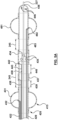
- the device 420 can have two occlusion elements such as inflatable balloons or obturators 431, 481.
- One occlusion element is located proximal to the ablation electrodes, and the other is distal to the electrodes.
- the elongated shaft 429 comprises two lumens 422, 483 (e.g., a polyimide tube with an inner diameter of 0.015" running through a lumen in the shaft 429) with the corresponding ports 432, 482 positioned in the obturators 431, 481 for inflating and deflating the obturators.
- the obturator 431 or 481 may be a balloon (e.g., compliant balloon) sized to occlude the airway or a range of airway diameters (e.g., diameters in a range of 3 mm to 10 mm).
- the distance between the distal obturator and the proximal obturator is prefixed in this embodiment.
- the distance between the balloons may be in a range of 20 mm to 40 mm.
- the obturators 431, 481 may be inflated by injecting fluid (e.g., gas such as air, or liquid such as water or saline, or contrast solution) through the lumens 422, 483 and into the corresponding obturators 431, 481.
- fluid e.g., gas such as air, or liquid such as water or saline, or contrast solution
- fluid may be injected manually with a syringe connected to a proximal region of the device 420 and fluid pressure may be contained by closing lock stop valve.
- the obturators may be deflated for removal by opening the lock stop valve and pulling the inflation fluid from the balloon(s) using the syringe.
- a system for operating the device may comprise a pump to inject or remove fluid to inflate or deflate the balloons simultaneously or separately.
- the occlusion balloon 431 or 481 may be a different form of occlusion structure such as a deployable valve, or a deployable stent with an occluding material such as PTFE.
- Figure 6A illustrates the ablation apparatus 420 shown in Figure 5A introduced into a selected airway 151 comprising an elongated shaft 429, a proximal obturator 431 and a distal obturator 481 proximal and distal to the electrodes respectively (both of them are positioned on a distal region of the shaft to occlude the airway), an air removal port 435 in fluid communication with a lumen (not shown) that is connectable at the proximal region of the device to a suction device (e.g., vacuum pump) to remove air from the airway segment between the obturators 431, 481 to collapse the targeted portion, segment or lobe of the lung.
- a suction device e.g., vacuum pump
- Air may be removed from the targeted lung portion by applying negative pressure (e.g., with the suction device) to the lumen that is in communication with the air removal port 43 5, that pulls air from the lung portion through the lumen to a proximal region of the apparatus external to the patient.
- the air removal port 435 is the same port through which a conductive fluid (e.g., hypertonic saline) may be delivered.
- a conductive fluid e.g., hypertonic saline
- air may be removed from the targeted portion of lung by applying suction to a different lumen such as guidewire lumen 436 or an additional lumen (not shown) having an exit port on the shaft 429 between the obturators 431, 481.
- Alternative methods of at least partially collapsing a targeted portion of lung are described herein.
- Conductive fluid may be delivered to the targeted lung portion through irrigation ports 435 in the electrode 434 or additionally or alternatively through an infusion lumen (not shown) exiting the device 420 distal to the occlusion balloon 431 that may or may not exit through ports in an electrode.
- the infusion lumen runs from the irrigation ports (e.g., 435) through the shaft 429 to the proximal region of the device where it is connectable to a conductive fluid supply and optionally pump.
- a bronchoscope 221 having a lens 224 and light 223 is positioned in a patient's airway and a catheter 420 configured for airway occlusion and tumor ablation is delivered through the bronchoscope's working channel 225 to a targeted portion of lung 226 (e.g., a lung portion, lobe, or segment).
- a guidewire 227 may comprise a navigation sensor 228, or the distal end of the ablation catheter may comprise a navigation sensor 446 (in Figure 5A ) (e.g., virtual bronchoscopy, electromagnetic, 3D electromagnetic, ultrasound) which may be positioned at a targeted position using a 3D navigation system and the catheter 420 may be advanced over the guidewire via guidewire lumen 436.
- the catheter 520 may be telescopic wherein the distance from the proximal obturator 531 and distal electrode is adjustable (e.g., from a first distance in a range of 20 to 40 mm up to a second distance in a range of 30 mm to 70 mm) and may comprise a first elongated shaft 529 with a proximal occlusion balloon 531 mounted to the distal region of the shaft 529 that is inflated by injecting fluid (e.g., air, sterile water, saline) through a lumen 522 in the first shaft in fluid communication with the balloon inflation port 532 located inside the proximal balloon.
- the first shaft 529 comprises a lumen 533 through which a second shaft 230 comprising at least one ablation electrode 534 and the distal balloon 581 may together be telescopically advanced.
- the second shaft 230 comprises a lumen 583 (e.g., a polyimide tube with an inner diameter of 0.015" running through a lumen in the second shaft 230) with the corresponding ports 582 positioned in the obturators 581 for inflating and deflating the obturators.
- the obturator 581 may be a balloon (e.g., compliant balloon) sized to occlude the airway or a range of airway diameters (e.g., diameters in a range of 3 mm to 10 mm).
- Figure 6B illustrates the ablation apparatus 520 shown in Figure 5B introduced into a selected airway 151 comprising an elongated first shaft 529 and the second shaft 230, a proximal obturator 531 and a distal obturator 581 proximal and distal to the electrodes respectively, an air removal port 535 in fluid communication with a lumen (not shown) that is connectable at the proximal region of the device to a suction device (e.g., vacuum pump) to remove air from the airway segment between the obturators 531, 581 to collapse the targeted portion, segment or lobe of the lung.
- a suction device e.g., vacuum pump
- Air may be removed from the targeted lung portion by applying negative pressure (e.g., with the suction device) to the lumen that is in communication with the air removal port 535, that pulls air from the lung portion through the lumen to a proximal region of the apparatus external to the patient.
- the air removal port 535 is the same port through which a conductive fluid (e.g., hypertonic saline) may be delivered.
- a conductive fluid e.g., hypertonic saline
- air may be removed from the targeted portion of lung by applying suction to a different lumen such as guidewire lumen 536 or an additional lumen (not shown) having an exit port on the second shaft 230 between the obturators 531, 581.
- Alternative methods of at least partially collapsing a targeted portion of lung are described herein.
- Conductive fluid may be delivered to the targeted lung portion through irrigation ports 535 in the electrode 534 or additionally or alternatively through an infusion lumen (not shown) exiting the device 520 distal to the occlusion balloon 531 that may or may not exit through ports in an electrode.
- the infusion lumen runs from the irrigation ports (e.g., 535) through the second shaft 230 to the proximal region of the device where it is connectable to a conductive fluid supply and optionally pump.
- a telescopic or adjustable distance between the proximal balloon and the electrode(s), or between the proximal balloon and the distal balloon, may advantageously allow placement of the electrode next to the tumor and placement of the occluding balloons at a desired position, which may depend on the geometry of the airway, the size of targeted lung portion, or the size of tumor.
- the adjustable distance between the proximal obturator and the distal obturator allows a more specific segment of an airway to be isolated, so any risk or unwanted influence related to the operations, such as air evacuation, fluid infusion or ablation, will be significantly reduced or minimized.
- the second shaft 230 may be deflectable or rotatable with respect to the first shaft 529.
- the ablation electrode(s) 534 may optionally comprise at least one irrigation port 535 for irrigating the electrode.
- a method may be performed of ablating lung tumor cells by sequestering a target portion of lung proximate the tumor cells, delivering hypertonic saline (HTS) to the sequestered portion of lung, and applying heat to the sequestered portion of lung.
- the HTS may have a sodium (NaCl) concentration of at least 3% w/v (e.g., in a range of 3% to 30% w/v, in a range of 5% to 25% w/v)
- the HTS may be heated in a target region of the lung to a range of 60 to 115°Celsius.
- the heat may be applied by delivering radiofrequency (RF) electrical current from an RF electrode on the catheter to the HTS liquid injected into a natural airway of the lung that is near the lung tumor.
- RF radiofrequency
- the target region of lung may be exposed to heat and HTS for a duration of in a range of 30 seconds to 30 minutes (e.g., a range of 1 to 30 minutes, a range of 1 to 15 minutes, a range of 2 to 10 minutes).
- the application of RF energy into the liquid effectively uses the liquid as a virtual electrode to deliver energy to ablate tumor cells.
- the HTS solutions conducts the RF energy to the lung tissue which causes the tissue to heat. Also, some of the RF energy heats the liquid such that the heated liquid can ablate tumor cells.
- the target portion of lung is sequestered by inflating a first occluding balloon in a natural airway, wherein the balloon is proximal to the target portion of lung.
- a second (distal) occluding balloon in the airway distal to ablation electrode may also be used to occlude the airway.
- the one or both balloons occlude the natural airway form a portion of the airway in which the HTS solution is injected and suppress flow of the liquid outside of that portion of the airway.
- a fiberoptic lens may be positioned on the first elongated shaft 529 distal to the proximal occlusion structure and another lens may be positioned on the second shaft 230 distal to the distal occlusion structure, which may be used to visualize the airway distal to the selected occlusion structure(s). This may also facilitate, for example, confirmation of airway shrinking, position of the electrode(s), or injury to the airway while the occlusion structure is deployed.
- a lung portion may be collapsed by creating a limited, controlled pneumothorax by placing a needle in the pleural space (e.g., in a pleural recess), which can facilitate collapsing the targeted lung portion.
- Thoracentesis a.k.a. pleural tap
- a dispersive return electrode may be inserted through the pleural tap and positioned on the lung to direct RF current preferentially toward the return electrode.
- a pleural tap may be used to deliver cold fluid such as physiological saline or sterile water to thermally protect areas from ablation, in particular when the tumor is at the periphery of the lung and there is a risk of ablating visceral pleura or organs such as the heart, esophagus, nerves, diaphragm or other important non-target tissues.
- cold fluid such as physiological saline or sterile water
- the at least one RF electrode 234 of the embodiment shown in Figures 3 or 4A may be at least one needle electrode 250 used to puncture through the airway wall or through a tumor to position the RF electrode 250 in the targeted tumor 80 or in lung parenchyma near the tumor.
- the needle electrode 250 may have irrigation ports 251 in fluid communication with an irrigation lumen passing through the shaft 229 to the proximal region of the catheter.
- the needle electrode 250 may have a length in a range of 3 to 20 mm (e.g., 5 to 15 mm, about 7 mm), and a diameter in a range of 0.5 mm to 2 mm (e.g., about 1.35 mm).
- the needle electrode may have a guide wire lumen 252 (e.g., having an inner diameter of 0.015" to 0.030") allowing the device to be delivered over a guidewire 228.
- the tip 253 of the needle electrode 250 may be sharp so it can puncture through the airway wall or tumor, for example the tip 253 may be bevel cut as shown or other sharp profile such as pencil tip.
- conductive fluid e.g., 5 to 30% hypertonic saline
- the device 255 may be delivered over a guidewire that is left in place in lung parenchyma or a tumor following a biopsy so the needle electrode 250 can easily be placed in the same location that the biopsy was taken.
- the distal region 256 of the device 255 having a needle electrode 250 may have a spring loaded mechanism with a spring 257 and an engagement lock 258 that holds the needle electrode 250 in a first spring loaded position and when the lock 258 is released by an actuator on the proximal region of the device 255 the spring 257 pushes a shaft 259 on which the needle electrode 250 is mounted thus extending a distance 260 from a spring loaded state (e.g., 5 to 10 mm) to a deployed state (e.g., an increase of 5 to 15 mm).
- the momentum provided by releasing the spring-loaded mechanism may facilitate puncture of the airway wall by the needle electrode 250.
- the engagement lock 258 may be a mechanical mechanism such as a pivoting lever that mates with an element firmly connected to the distal shaft 259.
- the pivoting lever may be connected to a pull wire 261 that runs through the device shaft 229 to the proximal region of the device where it may be connected to an actuator that may be used to apply tension to the pull wire to release the lock mechanism 258.
- a lung cancer ablation catheter capable of puncturing through an airway wall may have an RF perforation electrode on its tip (e.g., 0.5 mm diameter, 1 mm length) and the outer diameter of the shaft may taper from the RF perforation electrode diameter to the diameter of a distal ablation electrode (e.g., about 1.5 mm).
- An RF perforation electrode may be connectable to an energy delivery console that has an RF perforation mode.
- RF perforation electrodes and energy delivery profiles are known for example in the field of cardiac procedures such as septum perforation.
- the distal region of device having needle electrodes may be deflectable which may facilitate directing the sharp tip toward an airway wall in order to puncture through the wall or into a tumor and place the needle electrode 250 in lung parenchyma near or in a lung tumor or within the tumor itself.
- the proximal electrode 237 may be used to deliver ablative RF energy in addition to, instead of, or in conjunction with the distal electrode 250.
- the proximal electrode 237 may optionally have irrigation ports 263 in fluid communication with an irrigation lumen (not shown) that passes through the shaft 229 to the proximal region of the device 255 where the lumen is connectable to a conductive fluid source or pump.
- the irrigation ports 263 and 251 on the proximal electrode 237 and distal electrode 250 may be connected to the same irrigation lumen or separate lumens for delivery of conductive fluid.
- conductive fluid may be delivered from either ports 251 or 263, preferably from both, into the lung parenchyma or tumor and/or into airways distal the obturator 231.
- RF energy may be delivered to the two electrodes 237 and 250 in dual-channel monopolar RF mode.
- each channel may have a completed circuit with a dispersive electrode on the patient's skin or in the body and channels may float with respect to one another.
- an ablation energy console may delivery RF energy to the two electrodes 250 and 237 in bipolar mode.
- FIG. 9 shows two catheters 100 and 101 with energy delivery electrodes 102 and 103 as an example that can be introduced separately using a flexible bronchoscope 221 and positioned with the electrodes terminating in two separate airways on two sides of the targeted tumor 80.
- the apparatus may include an occlusion catheter 270 that may be delivered through a working channel 225 of a bronchoscope 221 or optionally through a delivery sheath 213.
- the occlusion catheter 270 may comprise an obturator 271 such as a compliant balloon mounted to the shaft of the occlusion catheter 270.
- An inflation lumen passes through the occlusion catheter shaft and exits a port 272 within the obturator to deploy or inflate the obturator 271.
- the shaft of the occlusion catheter 270 may comprise two or more ablation catheter lumens 273 and 274 that exit the shaft distal to the obturator 271.
- Alternative forms of occlusion elements may be envisioned as disclosed herein.
- the catheters 100 and 101 may be delivered through the lumens 273 and 274 to the airway distal of the obturator.
- Lumens 273 and 274 may each have a valve that seals around delivered catheters 100 and 101 to contain low pressure or conductive fluid in the target region of the lung portion.
- the catheters may be delivered over a guide wire 104 via guide wire lumens 106 and 107.
- the electrodes may be connected to electrical conductors that pass through the catheter shafts to a proximal region of the catheter for example terminating in an electrical connector, which may be electrically connected to an RF generator for example using a connector cable.
- Each catheter can incorporate more than one electrode that can be energized together or separately.
- each catheter may have an impedance and phase monitoring electrode 275 and 276 for monitoring tissue impedance and phase between distal electrode 103 and impedance electrode 276 or distal electrode 102 and impedance electrode 275 to assess collapse of airways, infusion of conductive fluid, tissue properties, or degree of ablation of tissue.
- Conductive fluid 216 may be injected into the targeted lung portion that is occluded with obturator 271 through irrigation holes 277 or 278 in electrodes 102 and 103.
- the electrodes of the catheters may be positioned at a desired location in an airway by delivering the catheters 100 and 101 over a guide wire 104 laid down for example using an ultrathin bronchoscope.
- Catheters 100 and 101 may comprise a guidewire lumen 106 and 107 and be adapted for over-the-wire (OTW) exchange.
- OGW over-the-wire
- Currently available devices may be used to navigate to desired positions in the patient's airway.
- electromagnetic navigation bronchoscopy is a medical procedure utilizing electromagnetic technology designed to localize and guide endoscopic tools or catheters through the bronchial pathways of the lung.
- Virtual Bronchoscopy (VB) is a three-dimensional, computer-generated technique that produces endobronchial images from spiral CT data.
- a virtual, three-dimensional bronchial map from a recently computed tomography (CT) chest scan and disposable catheter set physicians can navigate to a desired location within the lung to biopsy lesions, take samples from lymph nodes, insert markers to guide radiotherapy or guide brachytherapy catheters.
- CT computed tomography
- Such existing technology may be used to plan for a procedure, diagnose a tumor with a biopsy, or place a guidewire for positioning one or more treatment catheters.
- the ultrathin bronchoscope can be withdrawn with the wire left in place and an electrode catheter may be exchanged over the wire.
- electromagnetic navigation bronchoscopy may be used with similar results.
- the multiple catheters may alternatively have a dual balloon structure, which is similar to the devices shown in Figure 5A or 5B .
- catheters with electrodes, or balloon elements can be placed in the described fashion by exchanging a bronchoscope for catheter over the wire. After the tumor is thus surrounded by energy delivery elements and the bronchoscope and guide wire are removed, the proximal ends of catheters can be connected to the RF generator outside of the body.
- the technology subject of the present disclosure can also be used to ablate lymph nodes, should biopsy results indicate lymph node metastases.
- Radiopaque markers on the guide wire or catheter can be used to position the electrodes at the precise desired location.
- the RF electrodes may be radiopaque.
- Any of the ablation catheters disclosed herein may comprise a retention or anchoring mechanism at a distal region of the catheter to ensure its energy delivery element(s) stay in a desired position and avoid accidental dislodgement in particular when the patient breathes or coughs.
- a retention or anchoring mechanism may comprise a section of the catheter that adopts a predefined non-linear shape (not shown), an inflatable balloon, spring loaded or wire activated splines, a stent, or deployable barbs positioned on the distal region of the catheter.
- the ablation catheters may comprise a substance delivery lumen, which may be used to deliver substances into the airway such as drugs, contrast media to visualize the anatomy using fluoroscopy, and substances that induce lung collapse.
- the guide wire lumen may function as the substance delivery lumen when the guide wire is removed, which may allow the catheter's diameter to be minimized.
- the ablation catheters may comprise an irrigation delivery lumen used to infuse irrigation fluid into the airway surrounding the electrodes to prevent charring and impedance rise and enable bigger lesion creation.
- the irrigation delivery lumen may be the same lumen as the substance delivery lumen or guide wire lumen.
- FIG. 10A three RF electrodes labelled E1, E2 and E3 are positioned in three separate airways labeled B1, B2 and B3.
- the three electrodes may be delivered on separate catheters, such as the catheter embodiment shown in Figure 9 .
- Multiphasic RF ablation waveforms may be used to set a rotating ablating electrical field, which delivers ablating energy to the tumor in a more localized modality.
- Figure 10B illustrates a multiphasic RF waveform that may be used to ablate a targeted tumor encompassed by multiple RF electrodes, wherein RF1 is an RF signal delivered to electrode E1, RF2 is delivered to electrode E2, and RF3 is delivered to electrode E3.
- waveforms RF1, RF2 and RF3 are 120° phase shifted apart.
- Application of such phased-shifted waveforms creates a rotating multipolar ablation field, which enhances the coverage of the tumor space and has the potential of providing more uniform lesions.
- phased RF ablation works similarly to bipolar ablation, except that electrical currents flow from or to a multitude of electrodes in a sequence dictated by phase differences.
- Each electrode is driven by an RF source having a different phase.
- the RF voltage resulting between each pair of electrodes (e.g., E1-E2, E2-E3 and E3-E1) drives RF current to flow in more uniform heating patterns in the tumor space.
- Power levels range between 1 to 200 W, with durations between 30 seconds to 30 minutes.
- Temperature sensors may be employed with an intent to control local temperature values around a user-defined target. Temperature of such targets may vary in a range of 60 to 115°C, preferably in a range of 50 to 80°C.
- RF generators capable of delivering phased ablation energy may have additional RF output stages.
- Figure 10C shows an example of a multiphasic RF energy supply 175 where each output 177 has an independently controlled phase. The phase of RF signals at each output may be controlled by separate RF power supplies 176, or alternatively a central microcontroller, via software, or by hardware, for example by dividing a digital clock of a higher frequency, as shown in Figure 10D .
- a digital clock may comprise a base frequency 180 having a period (e.g., from t0 to 11) that is one sixth the period of frequencies 181, 182, and 183, which are delivered to the ablation electrodes and offset by one base period.
- each electrode E1, E2, and E3 (and respective RF output voltages VRF1, VRF2 and VRF3) may complete an electrical circuit with a dispersive ground pad connected to ground voltage VGND at a terminal 178 of the RF energy supply 175.
- An alternative embodiment may comprise greater than three electrodes and waveforms or less than three (e.g., two electrodes and waveforms).
- An example of bipolar or multipolar RF ablation parameters that an RF console delivers to multiple electrodes, or to multiple balloons, or to combinations of balloon and electrode energy elements, may comprise power in a range of 1 to 200 W for a duration of 30 seconds to 30 minutes.
- Tissue impedance may be expected to be in a range of 30 to 1000 ohms and the system may terminate or reduce power delivery if a high impedance (e.g., above 1000 ohms) is detected to avoid tissue char or uncontrolled ablation due to overheating, poor electrode contact with an airway wall. After desiccated tissue is rehydrated naturally or by irrigation, energy delivery can automatically resume.
- Impedance monitoring may also be used during energy delivery to determine if tissue temperature has raised sufficiently for an effective tumor ablation and instigate completion of energy delivery.
- the parameters may be used in a multiphasic RF ablation waveform or monophasic waveform.
- an ablation energy console may delivery ablation energy to multiple RF electrodes (e.g., on a single ablation device or on separate ablation devices) in multichannel monopolar mode and independent waveforms (e.g., VRF1, VRF2, etc. shown in Figure 10C ) may be in-phase.
- multiple RF electrodes e.g., on a single ablation device or on separate ablation devices
- independent waveforms e.g., VRF1, VRF2, etc. shown in Figure 10C
- Devices for Endobronchial lung tumor ablation such as those disclosed herein (e.g., device 220, 255, or 270) may be part of a system 290 as shown in Figure 11 further comprising an computerized ablation energy (e.g., RF) console 291 comprising a programmable controller with software 292, a conductive fluid supply 293 and pump 294, a vacuum pump 295, an obturator inflator 296 (e.g., insulflator, syringe with valve 297, motorized pump, motorized valve to pressurized fluid) and associated connector cables and tubes to connect the proximal region of the device to the console, pump, or vacuum pump.
- RF computerized ablation energy
- console 291 comprising a programmable controller with software 292, a conductive fluid supply 293 and pump 294, a vacuum pump 295, an obturator inflator 296 (e.g., insulflator, syringe with valve 297, motorized pump,
- the system 290 may include more than one ablation device for example multiple ablation devices 100 and 101 deliverable through an occlusion catheter 270 as shown in Figure 9 , or multiple ablation devices such as 220 or 255.
- the system 290 may also include a guidewire 227, a delivery sheath 213, a dispersive grounding pad, or a bronchoscope 221.
- the ablation console 291 may further comprise an impedance and phase monitoring circuit and software 298 that is connectable to electrodes on ablation device (220, 255, 270), measures impedance and phase and displays their values to user.
- an impedance and phase monitoring circuit and software 298 may be in a separate component, which may be connected to the ablation console to input measured impedance or phase to control algorithms of the Ablation console software 292.
- a system may include an ablation console 291, a pump 294, controller software 292, and optionally impedance and phase monitoring circuit and software 298, or any combination thereof. Furthermore, the ablation console 291, a pump 294, controller software 292, and optionally impedance and phase monitoring circuit and software 298 may be provided separately.
- the software 292 may include an algorithm that controls the vacuum pump 295 to remove air from the targeted lung portion.
- the vacuum pump may have a pressure sensor that indicates the difference in pressure between atmosphere and the targeted lung portion.
- the vacuum pump may apply a maximum negative pressure difference in a range of 1 to 5 atm and the algorithm may input the pressure difference and shut off the vacuum pump when the pressure difference reaches the maximum negative pressure difference, at which time the vacuum pump may be signalled to seal air flow from the lung portion to maintain the pressure in the lung, for example by closing a valve.
- the system may have an automatically controlled switching valve that switches fluid communication from the vacuum pump to infusion pump, for example once the algorithm detects sufficient lung portion collapse either via pressure sensor signal or tissue impedance and phase associated with the distal and proximal electrodes on the device (e.g., 220, 255, or 270).
- the software 292 may control the ablation console 291 to deliver electrical waveforms (e.g., low power high frequency current over a range of frequency) to the distal and proximal electrode to monitor tissue impedance or phase during operation of the vacuum pump 295 and control the vacuum pump to stop when an impedance drop signifies lung collapse.
- electrical waveforms e.g., low power high frequency current over a range of frequency
- the software 292 may control the pump 294 to pump conductive fluid from the fluid supply 293 to the device and into the targeted lung portion and optionally may deliver electrical waveforms to concurrently monitor impedance or phase to assess infusion.
- infusion may continue (e.g., at a rate of about 5 mL/min) during delivery of ablation energy from the console 291.
- the software 292 may further control ablation energy delivery profiles including safety monitoring of temperature and impedance.
- negative pressure may be manually applied to remove air from the targeted lung portion by drawing air through the catheter (e.g. through irrigation ports 235 and irrigation lumen) with a manual suction tool.
- the manual suction tool may be a syringe and may further have two check valves that allow air to be pulled from the catheter when the syringe is drawn and ejected to atmosphere when the syringe is depressed.
- a pressure sensor may be positioned in the irrigation lumen.
- a physician may position the ablation catheter in a patient's lung, deploy the obturator, then manually apply suction to the manual suction tool while monitoring bipolar impedance measured by delivering low electrical current and measuring tissue impedance between the proximal and distal electrodes, and optionally pressure measured by the pressure sensor.
- a 5% to 20% drop in impedance may indicate the airway has sufficiently collapsed to proceed.
- a user may hold the suction tool in a static setting while monitoring impedance or pressure.
- a stable impedance or pressure may indicate that the targeted lung portion remains sufficiently collapsed.
- a rise in the impedance or pressure during this stage may indicate that the obturator is not sufficiently occluding the airway and the user may remedy by repositioning, examining, or reinflating the obturator.
- a user may initiate an algorithm (e.g., by pressing an actuator on the ablatio console) when they are satisfied the targeted lung portion is sufficiently collapsed. If suction is applied automatically by an algorithm of the software 292 the algorithm may send a user message indicating the impedance or pressure drop during the suction stage is sufficient to proceed to ablation and the user may active the ablation stage (e.g., by pressing an actuator on the ablatio console) allowing the algorithm to continue.
- an algorithm e.g., by pressing an actuator on the ablatio console
- An algorithm of the software 292 may direct the flow rate of infused conductive fluid by controlling the speed of the pump.
- the algorithm of the software 292 may enter a priming stage that instructs the pump 294 to deliver conductive fluid from the conductive fluid source 293 without delivering ablative RF energy to prime the infusion lumen with conductive fluid and ensure at least a small amount of conductive fluid is in the airway of the targeted lung portion before ablative RF energy begins to be delivered.
- the priming stage may include infusion of conductive fluid at a rate of 5 mL/min for 5 seconds or until measured impedance drops another 10% to 20% up to a maximum duration (e.g., 15 seconds).
- a drop in impedance of at least 10% may indicate that the irrigation is working properly. If impedance does not drop during this priming stage the algorithm may send a user error message indicating a possible problem with irrigation, the fluid pump, or the conductive fluid supply. If an impedance drop (e.g. of at value in a range of 10% to 20%) is measured during the priming stage the algorithm may continue to an ablation RF delivery stage.
- an impedance drop e.g. of at value in a range of 10% to 20%
- the rate of irrigation of conductive fluid may begin at 0 mL/min as ablative RF begins to be delivered. This may help to minimize the amount of conductive fluid delivered.
- temperature monitored by a temperature sensor 242, 442, 542, 262 associated with the ablation electrode 234, 434, 534, 250 may be input into the control algorithm and when the temperature increases to a predefined upper threshold temperature (e.g., 95°C) irrigation flow may be turned on (e.g., at a rate of 5 mL/min) while continuing to deliver RF energy at a consistent power.
- a predefined upper threshold temperature e.g. 95°C
- irrigation flow may be turned on (e.g., at a rate of 5 mL/min) while continuing to deliver RF energy at a consistent power.
- the irrigation is expected cool the ablation electrode keeping it below the upper temperature threshold.
- irrigation flow may be instructed to stop or decrease, while maintaining constant RF power, allowing temperature to rise.
- the algorithm may continue to adjust flowrate to keep the temperature within the upper and lower thresholds until a preset ablation duration is reached or other termination trigger occurs.
- Other termination triggers may include the user manually terminating the ablation by depressing the ablation RF power actuator or an automatic shutoff error triggered by the algorithm.
- Automatic shutoff errors may be caused by an inability to maintain temperature within the upper and lower thresholds, failure of a component of the system (e.g., insufficient conductive fluid supply, pump malfunction, valve malfunction).
- Ablation duration may be in a range of 30 seconds to 30 minutes and optionally may be chosen by a physician based on desired ablation size.
- the authors have empirically demonstrated that using 5% HTS with an ablation electrode 234 that is 5 mm long and 1.5 mm diameter a 5 minute ablation generates a spherical ablation approximately 1.5 - 2 cm in diameter; at least 7 minutes results in a 2 - 2.5 cm diameter ablation; at least 10 minutes results in a 2.5 - 3 cm ablation; at least 15 minutes results in a 3 cm, or larger, diameter ablation.
- a physician may choose the appropriate ablation duration to encompass the tumor and input the duration to the algorithm using a user interface on the console 291.
- the algorithm may display on the user interface the chosen duration and estimated ablation diameter according to the input duration.
- a physician may input a desired ablation dimension (e.g., diameter) to the algorithm and the duration may be calculated and displayed.
- a physician may create a treatment plan depending on the size of the targeted tumor and location of the tumor.
- the treatment plan may include desired ablation size and placement in the airway relative to the tumor and optionally may include multiple ablations from different target positions in the lung to ablate the tumor from multiple directions if a single ablation is not estimated to completely encompass the tumor.
- suction may be activated by the algorithm to remove the conductive fluid that was infused.
- the software 292 may control rate of delivery of conductive fluid (e.g., via pump speed) during delivery of ablation energy based on electrode temperature feedback from a temperature sensor (e.g., 242, 262) to obtain a temperature set point. For example, a constant power may be delivered and a constant infusion flow rate may be delivered and as a temperature set point is approached power, flow rate or a combination of both may be titrated to achieve the temperature set point. If actual electrode temperature is below the set point, infusion rate may be decreased and/or power may be increased. If actual electrode temperature is above the set point, infusion rate may be increased and/or power may be decreased.
- a temperature sensor e.g., 242, 262
- the obturator inflation pressure may be monitored by a pressure sensor 425 positioned in the obturator inflation lumen between the obturator inflator 296 or valve 297 and the obturator 231, 431, 481, 531, 581.
- Obturator inflation pressure may be input and monitored by the software algorithm 292 and optionally used by the algorithm for example to display the pressure on a user interface, as a requirement to begin vacuum suction (e.g., balloon inflation pressure may need to be above a predefined threshold such as 2 ATM), or as detection of a failure mode (e.g., sudden drop in balloon inflation pressure may indicate rupture of the obturator which may trigger termination of RF delivery).
- a conductive fluid such as hypertonic saline may have a boiling temperature higher than 100°C, which may allow greater ablation energy to be deposited into the conductive fluid as well as a higher fluid temperature to facilitate ablation of target tissue. This may be particularly valuable when delivering thermal and electrical energy through cartilaginous airway walls to ablate a tumor, since the airway walls have a relatively low thermal and electrical conductivity and tumor ablation requires a large ablation.
- a conductive fluid such as 20% hypertonic saline may have a boiling temperature in a range of about 105°C to 110°C.
- Generating steam and trapping it in the target region of the lung with the occluding device may increase the vapor pressure of the conductive fluid and, thereby, further raise its boiling point, which may allow greater ablation energy to be delivered.
- Exposing the airway cartilaginous wall to temperatures around 100°C for an extended period of time, for example 2 to 10 minutes, provides the advantage of softening its consistency and of allowing conductive fluid to better infiltrate and advance towards the targeted lung tissue.
- An energy delivery console may comprise an energy delivery control algorithm that allows temperature set point that is within a close range about the boiling point of the conductive fluid at the pressure of the fluid in the target region.
- an algorithm may have a steam-producing phase that delivers energy with a temperature set point suitable to generate steam (e.g., if 20% hypertonic saline is the conductive fluid, a temperature set point for a steam-producing phase may be in a range of 100°C to 110°C, preferably around 105°C).
- a temperature set point for a steam-producing phase may be in a range of 100°C to 110°C, preferably around 105°C).
- the ablation of targeted lung tissue may be performed at such increased temperature setpoint and last for a duration of 1 to 10 minutes.
- the steam-producing phase may have a predefined duration (e.g., up to 2 minutes) or be controlled by monitoring impedance between electrodes in which spikes of high impedance may indicate steam production.
- phases of steam production may be alternated with ablation phases of decreased temperature set points.
- energy delivery in the first 2 minutes may be performed with a 105°C set point, in the subsequent 2 minutes with a 85°C set point, in the subsequent 2 minutes with a 105°C set point and so on until the ablation duration (e.g., a total duration in a range of 8 to 15 minutes or about 10 minutes) expires or the therapeutic goal is achieved (e.g. moving average impedance increases over a targeted threshold).
- the ablation duration e.g., a total duration in a range of 8 to 15 minutes or about 10 minutes
- the therapeutic goal e.g. moving average impedance increases over a targeted threshold.
- a pressure sensor on the distal region of the device may be used to input a pressure signal to the controller and a rise in pressure can indicate adequate steam production.
- a steam-producing phase may involve heating the conductive fluid by delivering ablation energy from the ablation elements or alternatively by delivering thermal energy from a direct heat resistive coil positioned on the device distal to the occluding device.
- a direct heat resistive coil may be an electrically resistive metal with an electrical insulation (e.g., polyimide, Parylene) coiled around the device shaft, which heats the conductive fluid by thermal conduction only.
- a steam-producing phase may be followed by a tumor ablation phase that may have a temperature set point that is lower than the set point of the steam-producing phase, as presented above.
- a control algorithm may use a target set temperature in a range of 85°C to 115°C, preferably 90°C to 105°C, to remain below the boiling point of the conductive fluid.
- a set temperature may be in a range of 105°C to 115°C, provided that sufficient safety mechanisms are designed into the system, such as fast RF energy shut-offs triggered by rapidly rising impedance, temperature or sudden changes in the electrical phase (i.e., the phase between the ablating current and ablating voltage).
- electrical impedance and phase may be measured between the proximal and distal electrodes or between either of these and a dispersive electrode (e.g., grounding pad positioned on the skin).
- Impedance spectroscopy may be calculated by a software algorithm in the ablation console 291 to characterize the tissue near the impedance monitoring electrode(s) through which electrical current is delivered.
- the tissue may be characterized to identify cancerous tissue compared to ablated cancerous tissue compared to normal tissue.
- an ablation catheter may have a third electrode 537 positioned distal to the ablation electrode 234 in addition to a proximal electrode 237.
- the third electrode 537 may be positioned on a first side (e.g., distal side) of the targeted tumor 80 while the proximal electrode 237 is positioned on a second side (e.g., proximal side) of the tumor 80, which may position the ablation electrode 234 between the two impedance monitoring electrodes 237 and 537, for example within the tumor 80.
- electrical current passed between the electrodes 237 and 537 for monitoring impedance and phase may pass directly through the tumor 80 as represented by dashed line 540.
- the system may use various means of irrigating the ablation element.
- Peristaltic pumps, infusion pumps, inflators/deflators may be used.
- irrigation flow rates may be controlled indirectly, by controlling the rotational speed of the pump head.
- the pump is calibrated so to produce a coefficient to convert its rotational speed to an irrigation volume. For example, rotational speeds in the range of 20 - 100 rpm may be used to generate flow rates in the range of 2 - 10 ml/min. In this example the conversion coefficient to convert from rotational speed to irrigation volume would be. 1 mL/min/rpm.
- the controller may control the volume of a bolus of hypertonic solution (or of any of the other aqueous solutions discussed above).
- a bolus of volume of 10 ml is equivalent to an irrigation rate of 2 ml/min activated for 5 min.
- Bolus volumes up to 60 ml may be used.
- a pump control algorithm may be part of the software 292 stored in the ablation console 291 for controlling the pump 294 for delivering conductive fluid from the conductive fluid supply 293 to the catheter 220, 255, 270 ( Figure 11 ).
- This algorithm may function to operate the pump during the priming stage and ablation stage to maintain temperature within a target range.
- the said temperature may be measured by a temperature sensor in the ablation electrode 234 and may be representative of the tissue temperature.
- the said temperature may also represent the electrode temperature or the temperature of the conductive fluid contacting the ablation electrode.
- this invention controls the pump flow with the triple objective of maintaining the said temperature within a range known to be therapeutically effective, of avoiding sudden impedance and temperature rises and of optimizing the amount of hypertonic infused into patient's lungs.
- a PID controller would typically decide to control the flow within a substantially constant, or tight, range if the temperature reached levels within the therapeutic range.
- the controller according to the current invention controls the flow between in low and high flow values even if said temperature has already reached its targeted range.
- the controller according to the current disclosure introduces flow variability into the system on purpose, with the objective of minimizing the overall amount of infused hypertonic saline within an effective operational range.
- Those of skill in the art may decide to use ramped flow rates, rather than fixed low-high flow rates. Rather than increasing the flow, for example, from a low value to a high value, a gradual increase may be employed.
- various predictive algorithms may be employed to control flow rates. If the system senses a rapidly increasing temperature, the flow rate could be adjusted higher in anticipation of the temperature rise, so avoid overheating conditions. Similarly, if the system senses a rapidly dropping temperature, it could reduce the flow to lower rates, so to avoid large temperature fluctuation.
- Modified PID algorithms can also be used by using a nonlinear flow adjustment in response to the error value (i.e. difference between actual and set flow rates). Same control concepts may be used if the controlled parameter is a hypertonic saline bolus volume.
- the Pump Control Algorithm runs every time a new Impedance or Temperature Data input is received from the ablation console. Impedance inputs may arrive at intervals of 40 milliseconds. Temperature Data inputs may arrive at intervals of 10 milliseconds.
- the algorithm is illustrated in the flow chart shown in Figure 16A and in finer details in Figures 16B , 16C , and 16D .
- the output of the pump control algorithm is a commanded flow rate.
- the algorithm may make decisions related to managing overheating or high-impedance situations. In such situations, power may be temporarily adjusted down so to bring temperature and impedance back in their normal ranges. Alternatively, the algorithm may decide to terminate delivery of energy if overheat or high-impedance conditions persist for predetermined durations of time.
- the algorithm calculates whether the High Flow Rate and Overheat Flow Rate settings need to be adjusted.
- the algorithm runs the main pump control state machine, box 611.
- the state machine selects one of three flow rates to be sent to the pump: Low Flow Rate, High Flow Rate, and Overheat/Over-impedance Flow Rate. Additionally, pre- and post-cool flow rates may be used for the purpose of enhancing the airway-electrode electrical contact and of cooling off the airway after ablation, respectively.
- the output of the state machine is a numeric value, in mL/min, not an enumeration. When the state machine selects a flow rate, it outputs the current setting corresponding to the flow rate.
- the state machine selects the Overheat/Over-impedance Flow Rate and the current setting for Overheat/Over-impedance Flow Rate is 6 mL/min, the state machine outputs 6 mL/min.
- the description herein uses identical flow rates for overheat and over-impedance conditions. Without departing from the scope of this disclosure, different overheat and over-impedance flow rate values may be used. This will be called the state machine (SM) commanded flow rate.
- SM state machine
- the controller may command the pump to increase flow rates to Overheat or to Over-impedance Flow Rate values. By doing so, the system attempts to prevent overheating of tissue or boiling of hypertonic saline. Once flow is increased to these higher levels, the controller may decide to maintain it to such levels for a period of time, even if the overheat or over-impedance conditions have cleared. By doing so, the controller attempts to reduce chances of recurring overheat or over-impedance conditions.
- SM state-machine
- the SM commanded flow rate is equal to the Low Flow Rate, it will not be modified here because the Low Flow Rate setting is not dynamically changed.
- the output of this section will be called the commanded flow rate. This is what is sent to control the pump.
- T_High threshold flow is controlled to High Flow by elements 611, 612, 613 and 614 of the state machine.
- T_Low threshold flow is controlled to Low Flow by the same elements in Figure 16A .
- the High Flow and Low Flow levels can be adjusted automatically by the controller/state machine, or manually be the user.
- the controller determines that a High Flow level, after a period of time (which can be manually or automatically programmed), was ineffective in reducing the said temperature to levels below T_Low then the controller can automatically increase High Flow to higher rates so that the cooling becomes more effective. Conversely, when the cooling is very effective, the controller may decide to reduce High Flow to lower levels, to minimize the amount of infused hypertonic saline.
- FIG. 16B A more detailed view of the step of calculating pending flow settings adjustments 610 and 611 ( Figure 16A ) is shown in Figure 16B .
- the rationale is: if the High flow rate had been higher, it may have been possible to avoid going into the overheat temperature range.
- the state machine decides the current Flow high rate is ineffective in returning temperature to T_Low, 625. As a consequence, the flow settings are incremented, 626. If temperature ⁇ T_High, but it does not decrease to below T_Low within a sufficiently long time (i.e. stays between T_Low and T_High for too long), the state machine decides that the current High flow was ineffective, 627. As a result, the flow settings are incremented, 628. Otherwise the flow rate settings are not incremented 629.
- T_Low 85°C
- T_High 95°C
- Flow_Low 0 mL/min
- Flow_High 4 mL/min
- Flow_high_time 5 s.
- T_Low may be in a range of 60°C to 95°C
- T_High may be in a range of 75°C to 105°C
- Flow_Low may be in a range of 0 to 5 mL/min
- Flow_High may be in a range of 2 to 16 mL/min
- Flow_high_time may be in a range of 1 to 30 seconds.
- the overall state machine of the system is illustrated in more detail in Figure 16C .
- the four states in the state machine include: IDLE 630, PRECOOL 631, NORMALCOOL 632, and POSTCOOL 633.
- the solid arrows represent transitions between states. The conditions that cause the transitions are shown as text written directly on the arrows. For example, the transition "Normeur time exceeded" 634 indicates that when the NORMALCOOL state duration has exceeded the normalcool time setting, the state machine transitions to the POSTCOOL state 633.
- the boxes attached to the transitions with small circles represent actions performed when the state machine undergoes a transition. For example, the transition action box 635 containing the text "Turn RF power off" indicates that when the state machine transitions from NORMALCOOL 632 to POSTCOOL 633 the RF power is turned off.
- the NORMALCOOL state 632 is the most complex state in the state machine. Its details are shown in Figures 16A and 16B . In this state, the system is delivering RF energy to the catheter. Every time the NORMALCOOL state is run, it also checks for Overheat 637 ( Figure 16D ) and for Over-impedance 638 ( Figure 16E ) conditions. During a simple temperature control sub-operation 636 if temperature is too high, flow rate is increased; if too low, flow rate is decreased. However, if the sub-state machine 636 determines that temperature or impedance have reached Overheat or Over-impedance conditions, it calls on sub-state machines 637 and 638, respectively.
- T_Overheat may be set to 105°C and Overheat_Flow may equal 12 mL/min, but other values can be considered as well.
- T_Overheat may be in a range of 85 to 115°C; Overheat_Flow may be in a range of 4 to 14 mL/min. Since this state machine runs after the simple temperature control 636, it can override its results. It also can abort therapy if temperature exceeds T_overheat for too long. More details of this temperature state machine are shown in Figure 16D .
- the state machine alters the pump flow rate based on measured monopolar impedance. Its objective is to increase flow rates so to keep the impedance ⁇ Z_high.
- Z_high may as effectively be within a range of 300 - 1500 ⁇ .
- the parameter Over_impedance_Flow may as effectively be in the range of 6 - 20 ml/min. Since this statement executes after the temperature state machine 637, it may override the temperature state machine's results to increase flow rate. However, it will not override with a lower flow rate. More details of this impedance state machine are shown in Figure 16E .
- FIG 17A illustrates the results of an implementation of the state diagrams presented in Figures 16A to 16E , where temperature 505 and flow rate 506 are plotted against time.
- RF ablation energy is initiated at 5s at a constant power of 60 W for 2 minutes. Prior to this between 0 s and 5 s during Precool stage the pump turns on at a flow rate of 5 mL/min, which primes the system and delivers a small amount of hypertonic saline through the ablation electrode and into the airway.
- NormalCool state was entered, RF began to be delivered (i.e., power was increased from 0 to 60 W), flow rate was 0, and the normalcool timer was started. The temperature increased quickly and reached the upper threshold (T_High) of 95°C.
- the flow rate remains at 0 mL/min as temperature increases but is below T_High.
- temperature reaches the upper threshold (T_High) triggering the flow to become the overheat flow rate of 4 mL/min for a duration of 5 s (high flow minimum duration).
- T_High the upper threshold
- FIG. 17B shows the system behavior when power was ramped up gradually. Rather than applying a power step (e.g. 0 to 60 W), in Fig. 17B power was gradually increased from 40 W to a steady value of approximately 75 W. In such a control scenario, power could be maintained at 40 W for the first 30 s, then increased to 50 W for the next 30 s and so on until the target maximum power level is reached.
- a power step e.g. 0 to 60 W
- power was gradually increased from 40 W to a steady value of approximately 75 W.
- power could be maintained at 40 W for the first 30 s, then increased to 50 W for the next 30 s and so on until the target maximum power level is reached.
- the advantage of such power control algorithm stems from that is reduces the probability of tissue popping or tissue cavities. Both tissue popping and cavities represent a potential safety concern as they could lead to pneumothoraces.
- the system(s), catheter(s) and apparatus described above and/or claimed may use at least one controller.
- This controller may comprise a digital processor (CPU) with memory (or memories), an analogical type circuit, or a combination of one or more digital processing units with one or more analogical processing circuits.
- CPU digital processor
- memory or memories
- an analogical type circuit or a combination of one or more digital processing units with one or more analogical processing circuits.
- the controller is "configured” or "programmed” to execute certain steps. This may be achieved in practice by any means which allow configuring or programming the controller.
- a controller comprising one or more CPUs
- one or more programs are stored in an appropriate memory.
- the program or programs containing instructions which, when executed by the controller, cause the controller to execute the steps described and/or claimed in connection with the controller.
- the circuitry of the controller is designed to include circuitry configured, in use, to process electric signals, such as to then execute the controller steps herein disclosed and/or claimed.
Landscapes
- Health & Medical Sciences (AREA)
- Surgery (AREA)
- Life Sciences & Earth Sciences (AREA)
- Engineering & Computer Science (AREA)
- Heart & Thoracic Surgery (AREA)
- General Health & Medical Sciences (AREA)
- Veterinary Medicine (AREA)
- Public Health (AREA)
- Nuclear Medicine, Radiotherapy & Molecular Imaging (AREA)
- Biomedical Technology (AREA)
- Animal Behavior & Ethology (AREA)
- Medical Informatics (AREA)
- Molecular Biology (AREA)
- Physics & Mathematics (AREA)
- Otolaryngology (AREA)
- Plasma & Fusion (AREA)
- Cardiology (AREA)
- Electromagnetism (AREA)
- Robotics (AREA)
- Surgical Instruments (AREA)
Claims (23)
- System zur Behandlung eines Zielbereichs von Lungengewebe, welches die transbronchiale Ablation eines Lungentumors umfasst, wobei das System umfasst:einen Durchflussregler (294), welcher dazu eingerichtet ist, zwischen einer Quelle für leitfähiges Fluid und einem Auslass für leitfähiges Fluid angeordnet zu sein, welcher an oder in der Nähe des Zielbereichs von Lungengewebe positionierbar ist, wobei der Durchflussregler (294) ferner dazu eingerichtet ist, eine Durchflussrate oder eine Bolusmenge des leitfähigen Fluids zu steuern, welches von der Fluidquelle kommt und dem Auslass für leitfähiges Fluid zugeführt wird;eine Steuerung (291), welche dazu eingerichtet ist, den Durchflussregler (294) zu steuern, und dazu eingerichtet ist, Werte zu empfangen, welche von einem Sensor (242; 262; 442; 542) detektiert werden, wobei der Sensor Werte eines Steuerparameters detektiert, welcher für eine physikalische Eigenschaft repräsentativ ist, welche mindestens eine von: Temperatur (T), Druck (P), elektrische Impedanz (Z) und elektrische Leitfähigkeit (C) von Material ist, welches im oder in der Nähe des Zielbereichs von Lungengewebe vorhanden ist;wobei die Steuerung (291) dazu eingerichtet ist:einen oder mehrere der Werte des Steuerparameters zu empfangen; den Durchflussregler (294) basierend auf dem einen oder mehreren der Werte des Steuerparameters zu steuern, um die Gesamtmenge von leitfähigem Fluid auf Niveaus zu optimieren, welche zum Behandeln von Lungenkrebs geeignet sind,dadurch gekennzeichnet, dass das Steuern des Durchflussreglers (294) ein Ausführen eines Steuerzyklus umfasst, umfassend:Steuern des Durchflussreglers (294) in einem Modus hoher Zufuhr, in welchem die Durchflussrate des leitfähigen Fluids, welches dem Auslass für leitfähiges Fluid zugeführt wird, nicht geringer ist als eine eingestellte hohe Durchflussrate, oder die Bolusmenge von leitfähigem Fluid, welches dem Auslass für leitfähiges Fluid zugeführt wird, nicht geringer ist als eine eingestellte hohe Bolusmenge, undSteuern des Durchflussreglers (294) in einem Modus niedriger Zufuhr, in welchem die Durchflussrate des leitfähigen Fluids, welches dem Auslass für leitfähiges Fluid zugeführt wird, nicht größer ist als eine eingestellte niedrige Durchflussrate, welche kleiner ist als die eingestellte hohe Durchflussrate, oder die Bolusmenge des leitfähigen Fluids, welches dem Auslass für leitfähiges Fluid zugeführt wird, nicht größer ist als eine eingestellte niedrige Bolusmenge, welche kleiner ist als die eingestellte hohe Bolusmenge.
- System nach Anspruch 1, wobei die eingestellte niedrige Durchflussrate weniger ist als die Hälfte der eingestellten hohen Durchflussrate, oder die eingestellte niedrige Bolusmenge weniger ist als die Hälfte der eingestellten hohen Bolusmenge.
- System nach Anspruch 1 oder 2, wobei die eingestellte niedrige Durchflussrate in einem Bereich von 0 bis 5 ml/min oder die eingestellte niedrige Bolusmenge in einem Bereich von 0 bis 10 ml liegt; und/oder wobei die eingestellte hohe Durchflussrate in einem Bereich von 2 bis 16 ml/min oder die eingestellte hohe Bolusmenge in einem Bereich von 0,3 bis 60 ml liegt.
- System nach einem der vorhergehenden Ansprüche, wobei Steuern des Durchflussreglers (294) ferner wiederholtes Ausführen des Steuerzyklus umfasst,und/oder wobei die Steuerung (291) dazu eingerichtet ist, den Steuerzyklus mindestens zweimal während einer gleichen Behandlungssitzung zu wiederholen;und/oder wobei die Steuerung (291) dazu eingerichtet ist, eine gleiche Behandlungssitzung auszuführen, welche eine Vielzahl von Zeitintervallen umfasst, wobei der Durchflussregler (294) auf einen Modus niedriger Zufuhr eingestellt ist, welche von Zeitintervallen interkaliert sind, wobei der Durchflussregler (294) auf einen Modus hoher Zufuhr eingestellt ist, wodurch die Gesamtmenge von leitfähigem Fluid, welche über die Behandlungssitzung zugeführt wird, reduziert wird, während die detektierten Werte des Parameters aufrechterhalten werden.
- System nach einem der vorhergehenden Ansprüche, ferner umfassend mindestens ein Ablationselement (234; 250; 434; 534), welches an der Zielregion des Lungengewebes positionierbar ist und mit einer Ablationsquelle verbindbar ist, und wobei die Steuerung (291) dazu eingerichtet ist, die Ablationsquelle zu steuern, um Ablationsenergie dem mindestens einen Ablationselement (234; 250; 434; 534) zuzuführen.
- System nach Anspruch 5, wobei die Steuerung (291) dazu eingerichtet ist, die Ablationsquelle zu steuern, um die Ablationsenergie in einem Bereich von 20 bis 200 W zuzuführen und/oder wobei die Steuerung (291) dazu eingerichtet ist, die Ablationsquelle zu steuern, um die Ablationsenergie für einen Zeitraum von 30 bis 1800 Sekunden zuzuführen.
- System nach einem der beiden vorangehenden Ansprüche, wobei die Steuerung (291) dazu eingerichtet ist, Strom, welcher von der Ablationsenergiequelle bereitgestellt wird, von einem Anfangswert auf einen Regelwert zu erhöhen, während eines Anfangsteils einer/der Behandlungssitzung, welcher optional zwischen 10% und 30% der gesamten Behandlungssitzung dauert; undwobei die Steuerung (291) dazu eingerichtet ist, Strom, welcher von der Ablationsenergiequelle bereitgestellt wird, während eines Hauptteils der Behandlungssitzung, welcher dem Anfangsteil der Behandlungssitzung folgt, auf dem Regelwert aufrechtzuerhalten, und wobei der Anfangswert zwischen 20 W und 80 W umfasst ist und der Regelwert zwischen 20 W und 200 W umfasst ist,wobei optional der Anfangswert kleiner als 80% des Regelwertes, mehr optional kleiner als 50% des Regelwertes.
- System nach einem der vorhergehenden Ansprüche, wobei die Steuerung (291) dazu eingerichtet ist, den Durchflussregler (294) zu steuern, um zu bewirken, dass: ein maximales Volumen an leitfähigem Fluid, welches während der Behandlungssitzung zugeführt wird, zwischen 0,3 ml und 60 ml umfasst ist, und/oder eine durchschnittliche Durchflussrate von leitfähigem Fluid, welche während der Behandlungssitzung aufrechterhalten wird, 0,1 bis 15 ml/min beträgt, insbesondere wobei die Steuerung (291) dazu eingerichtet ist, die Stromzufuhr von der Ablationsenergiequelle automatisch zu stoppen und/oder den Durchflussregler (294) automatisch anzuweisen, Zufuhr von leitfähigem Fluid zu stoppen, wenn das Maximum an zugeführtem leitfähigem Fluid erreicht wurde.
- System nach einem der vorangehenden Ansprüche, wobei der Steuerzyklus Verifizieren umfasst, ob einer oder mehrere der erfassten Werte des Steuerparameters unter einen eingestellten niedrigen Schwellenwert fallen, und wobei das Steuern des Durchflussreglers (294) in den Modus niedriger Zufuhr ausgeführt wird, wenn der eine oder mehrere erfasste Werte des Steuerparameters unter den eingestellten niedrigen Schwellenwert fallen.
- System nach einem der vorangehenden Ansprüche, wobei der Steuerzyklus Verifizieren umfasst, ob ein oder mehrere erfasste Werte des Steuerparameters einen eingestellten hohen Schwellenwert überschreiten, und wobei das Steuern des Durchflussreglers (294) in den Modus hoher Zufuhr ausgeführt wird, wenn der eine oder die mehreren erfassten Werte des Steuerparameters den eingestellten hohen Schwellenwert überschreiten.
- System nach einem der vorhergehenden Ansprüche, wobei der Steuerzyklus umfasst: periodisches Verifizieren, ob einer oder mehrere der erfassten Werte des Steuerparameters unter einen eingestellten niedrigen Schwellenwert fallen, und Umschalten des Durchflussreglers (294) von dem Modus hoher Zufuhr auf den Modus niedriger Zufuhr als Reaktion auf den einen oder mehrere erfasste Werte des Steuerparameters, welche unter den eingestellten niedrigen Schwellenwert fallen.
- System nach einem der vorhergehenden Ansprüche, wobei der Steuerzyklus umfasst: periodisches Verifizieren, ob ein oder mehrere erfasste Werte des Steuerparameters einen eingestellten hohen Schwellenwert überschreiten, Umschalten des Durchflussreglers (294) von einem Modus niedriger Zufuhr auf einen Modus hoher Zufuhr, wenn der eine oder mehrere erfasste Werte des Steuerparameters den eingestellten hohen Schwellenwert überschreiten.
- System nach einem der vorhergehenden Ansprüche, wobei die Steuerung (291) dazu eingerichtet ist, den Durchflussregler (294) im Modus hoher Zufuhr oder im Modus niedriger Zufuhr für ein jeweiliges Zeitintervall zu steuern, und wobei eine Dauer der jeweiligen Zeitintervalle entweder vorbestimmt oder durch die Detektion eines auslösenden Ereignisses bestimmt ist.
- System nach Anspruch 13, wobei die Steuerung (291) dazu eingerichtet ist, die Dauer des jeweiligen Zeitintervalls durch Detektion des auslösenden Ereignisses zu bestimmen, wobei die Detektion des auslösenden Ereignisses eines oder mehrere von:Detektion, dass ein oder mehrere Werte des erfassten Parameters einen eingestellten sehr hohen Schwellenwert überschreiten,Detektion, dass ein oder mehrere Werte des erfassten Parameters den eingestellten hohen Schwellenwert überschreiten, undDetektion, dass ein oder mehrere Werte des erfassten Parameters unter einen eingestellten niedrigen Schwellenwert fallen, umfasst.
- System nach einem der vorhergehenden Ansprüche, wobei der Zyklus eine Subroutine umfasst, umfassend:einen weiteren Schritt des Verifizierens, ob ein oder mehrere Werte des erfassten Parameters unter oder über den eingestellten niedrigen Schwellenwert fallen,für den Fall, dass ein oder mehrere Werte des Parameters, welche in dem weiteren Schritt des Verifizierens erfasst werden, innerhalb eines Zeitintervalls zwischen 0,1 bis 10 Sekunden rapide unter den eingestellten niedrigen Schwellenwert fallen, Zuweisen eines verringerten Wertes zu der eingestellten hohen Durchflussrate oder zu der eingestellten hohen Bolusmenge, undWiederholen des Steuerns des Durchflussreglers (294) in den Modus hoher Zufuhr unter Verwenden des verringerten Wertes der eingestellten hohen Durchflussrate oder des verringerten Wertes der eingestellten hohen Bolusmenge.
- System nach einem der vorhergehenden Ansprüche, wobei der Schritt des Steuerns des Durchflussreglers (294) in den Modus hoher Zufuhr umfasst:einen weiteren Schritt des Verifizierens, ob ein oder mehrere Werte des erfassten Parameters unter oder über den eingestellten niedrigen Schwellenwert fallen,für den Fall, dass ein oder mehrere Werte des Parameters, welche in dem weiteren Schritt des Verifizierens erfasst werden, für einen Zeitintervall zwischen 1 und 30 Sekunden über dem eingestellten niedrigen Schwellenwert bleiben, Zuweisen eines erhöhten Wertes zu der eingestellten hohen Durchflussrate oder zu der eingestellten hohen Bolusmenge, undWiederholen des Steuerns des Durchflussreglers (294) in den Modus hoher Zufuhr unter Verwenden des erhöhten Wertes der eingestellten hohen Durchflussrate oder des erhöhten Wertes der eingestellten hohen Bolusmenge.
- System nach einem der vorhergehenden Ansprüche, wobei die physikalische Eigenschaft die Temperatur des Materials ist, welches am oder in der Nähe des Zielbereichs vorliegt, und wobei die Steuerung (291) die Zyklen des Durchflussregler (294) so steuert, dass die erfasste Temperatur in einem Intervall zwischen 60°C und 115°C aufrechterhalten wird.
- System nach einem der vorhergehenden Ansprüche, wobei der Zyklus umfasst:Bestimmen eines Auftretens eines sicherheitsrelevanten Ereignisses, wenn der eine oder die mehreren Parameterwerte über einem eingestellten überhohen Schwellenwert liegen, welcher größer als der hohe Schwellenwert ist;in Reaktion auf eine Bestimmung eines sicherheitsrelevanten Zustandes:Strom, welcher der Ablationsenergiequelle zugeführt wird, temporär reduzieren und/oderden Durchflussregler (294) in einen Modus sehr hoher Zufuhr steuern, in welchem die Durchflussrate des leitfähigen Fluids, welches dem Auslass für leitfähiges Fluid zugeführt wird, mindestens eine eingestellte sehr hohe Durchflussrate ist, welche größer ist als die eingestellte hohe Durchflussrate, oder die Bolusmenge des leitfähigen Fluids, welches dem Auslass für leitfähiges Fluid zugeführt wird, mindestens eine eingestellte sehr hohe Bolusmenge, welche größer ist als die hohe Bolusmenge.
- System nach einem der vorhergehenden Ansprüche, umfassend:- mindestens einen flexiblen Schaft, welcher dazu eingerichtet ist, sich durch einen Atemweg einer Lunge vorwärts zu bewegen, und einen aktiven Abschnitt aufweist, welcher am Zielbereich des Lungengewebes positionierbar ist und das mindestens eine Ablationselement (234; 250; 434; 534) umfasst,wobei der mindestens eine Sensor (242; 262; 442; 542) von dem aktiven Abschnitt des flexiblen Schafts getragen wird und an dem Zielbereich des Lungengewebes positionierbar ist oder wobei der mindestens eine Sensor (242; 262; 442; 542) dazu eingerichtet ist, in Übereinstimmung mit einem Volumen, welches den aktiven Abschnitt des flexiblen Schafts umgibt, angeordnet zu sein,wobei der Auslass für leitfähiges Fluid von dem aktiven Abschnitt des flexiblen Schafts getragen wird oder wobei der Auslass für leitfähiges Fluid dazu eingerichtet ist, in Übereinstimmung mit dem Volumen, welches den aktiven Abschnitt des flexiblen Schafts umgibt, angeordnet zu sein; und- mindestens einen Raumverschluss, welcher am oder in der Nähe zum aktiven Abschnitt des flexiblen Schafts wirksam ist, insbesondere am oder in der Nähe zum distalen Endabschnitt des flexiblen Schafts, wobei der Raumverschluss von einer röhrenförmigen Hülle oder einem Bronchoskop getragen wird, welche/s den flexiblen Schaft aufnimmt, oder wobei der mindestens eine Raumverschluss direkt von dem flexiblen Schaft oder von einem anderen Schaft getragen wird.
- System nach Anspruch 19, wobei der Verschluss einen einsetzbaren Verschlussballon umfasst, welcher dazu eingerichtet ist, sich auszudehnen, um einen Teil des Atemweges zu verschließen, wobei der Verschlussballon eines oder mehrere der folgenden Merkmale aufweist:- eine erste Querschnittsbreite von 1 bis 30 mm,- eine Länge in einem Bereich von 5 bis 30 mm,- die erste Querschnittsbreite befindet sich in einem proximalen Bereich des einsetzbaren Verschlussballons,- eine zweite Querschnittsbreite in einem Bereich von 1 bis 30 mm an einem distalen Bereich des Ballons,- eine Querschnittsbreite zwischen der ersten und zweiten Querschnittsbreite, geringer als sowohl die erste als auch die zweite Querschnittsbreite.
- System nach Anspruch 19 oder 20, umfassend mindestens eine Ansaugöffnung am distalen Endabschnitt des flexiblen Schafts, welche dazu eingerichtet ist, in Fluidverbindung mit einer Vakuumquelle angeordnet zu sein, um Luft von einem Lungenvolumen zu aspirieren, welches den distalen Endabschnitt des Schafts umgibt, wobei die mindestens eine Ansaugöffnung distal in Bezug auf den Raumverschluss angeordnet ist; wobei das System optional einen zusätzlichen Raumverschluss umfasst, welcher am oder proximal zum distalen Endabschnitt des Schafts wirksam ist;wobei der mindestens eine Auslass für leitfähiges Fluid distal in Bezug auf den Raumverschluss oder zwischen dem Raumverschluss und dem zusätzlichen Raumverschluss angeordnet ist.wobei der mindestens eine Sensor (242; 262; 442; 542) distal zum Raumverschluss oder zwischen dem Raumverschluss und dem zusätzlichen Raumverschluss angeordnet ist.
- System nach einem der Ansprüche 19-21, wobei der flexible Schaft eines oder mehrere der folgenden Merkmale aufweist:- einen äußeren Durchmesser von weniger als oder gleich 2 mm;- mindestens ein Teil des flexiblen Schafts ist in der Lage, sich zu drehen, so dass eine Biegung in dem Schaft einen Krümmungsradius von mindestens 7 mm aufweist;- eine Länge von mindestens 50 cm;und wobei das Ablationselement (234; 250; 434; 534) mindestens eine Elektrode umfasst, gekennzeichnet durch eines oder mehrere der folgenden Merkmale:- Gesamtoberfläche nicht größer als 120 mm2;- Durchmesser in einem Bereich von 0,5 bis 2 mm;- Länge in einem Bereich von 3 bis 20 mm.
- System nach Anspruch 22, wobei das mindestens eine Ablationselement (234; 250; 434; 534) mindestens zwei Elektroden umfasst, wobei ein Abstand zwischen Elektroden zwischen fünf und fünfzehn mm beträgt.
Priority Applications (2)
| Application Number | Priority Date | Filing Date | Title |
|---|---|---|---|
| PCT/US2020/019784 WO2020185399A2 (en) | 2019-03-08 | 2020-02-26 | Systems, devices and methods for treating lung tumors |
| CN202080033223.1A CN113795212A (zh) | 2019-03-08 | 2020-02-26 | 治疗肺部肿瘤的系统、装置和方法 |
Applications Claiming Priority (1)
| Application Number | Priority Date | Filing Date | Title |
|---|---|---|---|
| US201962872598P | 2019-07-10 | 2019-07-10 |
Publications (2)
| Publication Number | Publication Date |
|---|---|
| EP3763314A1 EP3763314A1 (de) | 2021-01-13 |
| EP3763314B1 true EP3763314B1 (de) | 2024-10-09 |
Family
ID=67614413
Family Applications (1)
| Application Number | Title | Priority Date | Filing Date |
|---|---|---|---|
| EP19189086.2A Active EP3763314B1 (de) | 2019-03-08 | 2019-07-30 | Systeme und vorrichtungen zur behandlung von lungentumoren |
Country Status (2)
| Country | Link |
|---|---|
| US (1) | US20210007796A1 (de) |
| EP (1) | EP3763314B1 (de) |
Families Citing this family (29)
| Publication number | Priority date | Publication date | Assignee | Title |
|---|---|---|---|---|
| US9700365B2 (en) | 2008-10-06 | 2017-07-11 | Santa Anna Tech Llc | Method and apparatus for the ablation of gastrointestinal tissue |
| US11806066B2 (en) | 2018-06-01 | 2023-11-07 | Santa Anna Tech Llc | Multi-stage vapor-based ablation treatment methods and vapor generation and delivery systems |
| US20240398462A1 (en) | 2018-06-01 | 2024-12-05 | Aqua Medical, Inc. | Duodenal Ablation with Improved Depth and Consistency of Ablation |
| EP4021326A4 (de) * | 2019-08-28 | 2023-09-13 | Santa Anna Tech LLC | Systeme und verfahren zur prostatagewebeablation |
| JPWO2021075229A1 (de) * | 2019-10-16 | 2021-04-22 | ||
| WO2021075230A1 (ja) * | 2019-10-16 | 2021-04-22 | 株式会社カネカ | 医療器具セット、及びその使用方法 |
| CN215340440U (zh) | 2020-02-28 | 2021-12-28 | 巴德阿克塞斯系统股份有限公司 | 电学和光学连接系统及光学连接系统 |
| WO2021174117A1 (en) | 2020-02-28 | 2021-09-02 | Bard Access Systems, Inc. | Catheter with optic shape sensing capabilities |
| US12232818B2 (en) | 2020-03-03 | 2025-02-25 | Bard Access Systems, Inc. | System and method for optic shape sensing and electrical signal conduction |
| CN113456054B (zh) | 2020-03-30 | 2025-08-12 | 巴德阿克塞斯系统股份有限公司 | 光学和电气诊断系统及其方法 |
| WO2022046443A1 (en) * | 2020-08-28 | 2022-03-03 | Zidan Medical., Inc. | Systems and devices for treating lung tumors |
| EP4229456A1 (de) | 2020-10-13 | 2023-08-23 | Bard Access Systems, Inc. | Desinfektionsabdeckungen für funktionelle verbinder medizinischer vorrichtungen und verfahren dafür |
| CN216558785U (zh) | 2020-11-18 | 2022-05-17 | 巴德阿克塞斯系统股份有限公司 | 光纤管心针保持器 |
| EP4247247B1 (de) | 2020-11-24 | 2025-12-24 | Bard Access Systems, Inc. | Durch steuerbare faseroptische formmessung aktiviertes längliches medizinisches instrument |
| EP4401659A1 (de) | 2021-09-16 | 2024-07-24 | Bard Access Systems, Inc. | Austauschbare faserverbindungsschnittstelle mit hohem paarungszyklus |
| CN116407247A (zh) * | 2021-12-29 | 2023-07-11 | 杭州堃博生物科技有限公司 | 流速控制方法、电子装置及计算机可读存储介质 |
| US12318149B2 (en) | 2022-03-08 | 2025-06-03 | Bard Access Systems, Inc. | Medical shape sensing devices and systems |
| US12426956B2 (en) | 2022-03-16 | 2025-09-30 | Bard Access Systems, Inc. | Medical system and method for monitoring medical device insertion and illumination patterns |
| US12089815B2 (en) | 2022-03-17 | 2024-09-17 | Bard Access Systems, Inc. | Fiber optic medical systems and devices with atraumatic tip |
| CN114680831B (zh) * | 2022-03-22 | 2025-03-11 | 上海交通大学 | 基于fbg的血管狭窄感知系统 |
| US12605116B2 (en) | 2022-04-11 | 2026-04-21 | Bard Access Systems, Inc. | Fiber optic medical systems and devices with electrical tip |
| US12575893B2 (en) * | 2022-06-24 | 2026-03-17 | Bard Access Systems, Inc. | Shape sensing fiber optic tip protection systems and devices |
| US12564340B2 (en) | 2022-07-12 | 2026-03-03 | Bard Access Systems, Inc. | Eccentric single-core fiber-optic enabled medical device |
| US20260034354A1 (en) * | 2022-08-09 | 2026-02-05 | Autonomix Medical, Inc. | Medical devices configured for therapeutic electroporation of biologic tissues |
| EP4349287A1 (de) | 2022-10-07 | 2024-04-10 | Erbe Elektromedizin GmbH | Ablationsinstrument |
| EP4349288A1 (de) | 2022-10-07 | 2024-04-10 | Erbe Elektromedizin GmbH | Ablationssonde mit innerer kühlung |
| WO2025136821A1 (en) * | 2023-12-22 | 2025-06-26 | Mediview Xr, Inc. | System and method for image-guided endoluminal intervention using registered extended reality visualization |
| WO2025193517A1 (en) * | 2024-03-15 | 2025-09-18 | CRC EP, Inc. | Ablation catheter movement detection based on impedance values |
| CN121059917B (zh) * | 2025-09-01 | 2026-02-24 | 中国人民解放军总医院第五医学中心 | 一种用于电动吸引器的负压控制优化方法 |
Citations (1)
| Publication number | Priority date | Publication date | Assignee | Title |
|---|---|---|---|---|
| WO2019051251A1 (en) * | 2017-09-08 | 2019-03-14 | Zidan Medical, Inc. | DEVICES AND METHODS FOR THE TREATMENT OF LUNG CANCER |
Family Cites Families (5)
| Publication number | Priority date | Publication date | Assignee | Title |
|---|---|---|---|---|
| WO1999035986A1 (en) * | 1998-01-14 | 1999-07-22 | Conway-Stuart Medical, Inc. | Electrosurgical apparatus for treating gastroesophageal reflux disease (gerd) and method |
| US8251070B2 (en) * | 2000-03-27 | 2012-08-28 | Asthmatx, Inc. | Methods for treating airways |
| WO2003075796A2 (en) | 2002-03-08 | 2003-09-18 | Emphasys Medical, Inc. | Methods and devices for inducing collapse in lung regions fed by collateral pathways |
| US7862562B2 (en) * | 2005-02-25 | 2011-01-04 | Boston Scientific Scimed, Inc. | Wrap based lesion formation apparatus and methods configured to protect non-target tissue |
| CN109464186B (zh) * | 2017-09-08 | 2023-12-22 | 泽丹医疗股份有限公司 | 治疗肺部肿瘤的装置和方法 |
-
2019
- 2019-07-24 US US16/521,115 patent/US20210007796A1/en not_active Abandoned
- 2019-07-30 EP EP19189086.2A patent/EP3763314B1/de active Active
Patent Citations (1)
| Publication number | Priority date | Publication date | Assignee | Title |
|---|---|---|---|---|
| WO2019051251A1 (en) * | 2017-09-08 | 2019-03-14 | Zidan Medical, Inc. | DEVICES AND METHODS FOR THE TREATMENT OF LUNG CANCER |
Also Published As
| Publication number | Publication date |
|---|---|
| US20210007796A1 (en) | 2021-01-14 |
| EP3763314A1 (de) | 2021-01-13 |
Similar Documents
| Publication | Publication Date | Title |
|---|---|---|
| EP3763314B1 (de) | Systeme und vorrichtungen zur behandlung von lungentumoren | |
| US12408978B2 (en) | Devices and methods for treating lung tumors | |
| US20230355300A1 (en) | Systems, devices and methods for treating lung tumors with a robotically delivered catheter | |
| US20250090224A1 (en) | Systems, methods and devices for treatment of target tissue | |
| WO2019051251A1 (en) | DEVICES AND METHODS FOR THE TREATMENT OF LUNG CANCER | |
| AU2015236268B2 (en) | Injectate delivery devices, systems and methods | |
| US20230301711A1 (en) | Systems and devices for treating lung tumors | |
| CN109464187B (zh) | 治疗肺部肿瘤的装置和方法 | |
| WO2020185399A2 (en) | Systems, devices and methods for treating lung tumors | |
| US20240115310A1 (en) | Systems, devices and methods for treating lung tumor | |
| CN110151298A (zh) | 治疗肺部肿瘤的装置和方法 |
Legal Events
| Date | Code | Title | Description |
|---|---|---|---|
| PUAI | Public reference made under article 153(3) epc to a published international application that has entered the european phase |
Free format text: ORIGINAL CODE: 0009012 |
|
| STAA | Information on the status of an ep patent application or granted ep patent |
Free format text: STATUS: THE APPLICATION HAS BEEN PUBLISHED |
|
| AK | Designated contracting states |
Kind code of ref document: A1 Designated state(s): AL AT BE BG CH CY CZ DE DK EE ES FI FR GB GR HR HU IE IS IT LI LT LU LV MC MK MT NL NO PL PT RO RS SE SI SK SM TR |
|
| AX | Request for extension of the european patent |
Extension state: BA ME |
|
| STAA | Information on the status of an ep patent application or granted ep patent |
Free format text: STATUS: REQUEST FOR EXAMINATION WAS MADE |
|
| 17P | Request for examination filed |
Effective date: 20210623 |
|
| RBV | Designated contracting states (corrected) |
Designated state(s): AL AT BE BG CH CY CZ DE DK EE ES FI FR GB GR HR HU IE IS IT LI LT LU LV MC MK MT NL NO PL PT RO RS SE SI SK SM TR |
|
| RAP3 | Party data changed (applicant data changed or rights of an application transferred) |
Owner name: ZIDAN MEDICAL, INC. |
|
| GRAP | Despatch of communication of intention to grant a patent |
Free format text: ORIGINAL CODE: EPIDOSNIGR1 |
|
| RIC1 | Information provided on ipc code assigned before grant |
Ipc: A61B 18/00 20060101ALN20240325BHEP Ipc: A61B 18/14 20060101AFI20240325BHEP |
|
| STAA | Information on the status of an ep patent application or granted ep patent |
Free format text: STATUS: GRANT OF PATENT IS INTENDED |
|
| RIC1 | Information provided on ipc code assigned before grant |
Ipc: A61B 18/00 20060101ALN20240402BHEP Ipc: A61B 18/14 20060101AFI20240402BHEP |
|
| RIC1 | Information provided on ipc code assigned before grant |
Ipc: A61B 18/00 20060101ALN20240418BHEP Ipc: A61B 18/14 20060101AFI20240418BHEP |
|
| INTG | Intention to grant announced |
Effective date: 20240502 |
|
| GRAS | Grant fee paid |
Free format text: ORIGINAL CODE: EPIDOSNIGR3 |
|
| GRAA | (expected) grant |
Free format text: ORIGINAL CODE: 0009210 |
|
| STAA | Information on the status of an ep patent application or granted ep patent |
Free format text: STATUS: THE PATENT HAS BEEN GRANTED |
|
| AK | Designated contracting states |
Kind code of ref document: B1 Designated state(s): AL AT BE BG CH CY CZ DE DK EE ES FI FR GB GR HR HU IE IS IT LI LT LU LV MC MK MT NL NO PL PT RO RS SE SI SK SM TR |
|
| REG | Reference to a national code |
Ref country code: CH Ref legal event code: EP |
|
| REG | Reference to a national code |
Ref country code: DE Ref legal event code: R096 Ref document number: 602019059957 Country of ref document: DE |
|
| REG | Reference to a national code |
Ref country code: IE Ref legal event code: FG4D |
|
| REG | Reference to a national code |
Ref country code: LT Ref legal event code: MG9D |
|
| REG | Reference to a national code |
Ref country code: NL Ref legal event code: MP Effective date: 20241009 |
|
| REG | Reference to a national code |
Ref country code: AT Ref legal event code: MK05 Ref document number: 1729726 Country of ref document: AT Kind code of ref document: T Effective date: 20241009 |
|
| PG25 | Lapsed in a contracting state [announced via postgrant information from national office to epo] |
Ref country code: NL Free format text: LAPSE BECAUSE OF FAILURE TO SUBMIT A TRANSLATION OF THE DESCRIPTION OR TO PAY THE FEE WITHIN THE PRESCRIBED TIME-LIMIT Effective date: 20241009 |
|
| PG25 | Lapsed in a contracting state [announced via postgrant information from national office to epo] |
Ref country code: NL Free format text: LAPSE BECAUSE OF FAILURE TO SUBMIT A TRANSLATION OF THE DESCRIPTION OR TO PAY THE FEE WITHIN THE PRESCRIBED TIME-LIMIT Effective date: 20241009 |
|
| PG25 | Lapsed in a contracting state [announced via postgrant information from national office to epo] |
Ref country code: HR Free format text: LAPSE BECAUSE OF FAILURE TO SUBMIT A TRANSLATION OF THE DESCRIPTION OR TO PAY THE FEE WITHIN THE PRESCRIBED TIME-LIMIT Effective date: 20241009 Ref country code: IS Free format text: LAPSE BECAUSE OF FAILURE TO SUBMIT A TRANSLATION OF THE DESCRIPTION OR TO PAY THE FEE WITHIN THE PRESCRIBED TIME-LIMIT Effective date: 20250209 Ref country code: PT Free format text: LAPSE BECAUSE OF FAILURE TO SUBMIT A TRANSLATION OF THE DESCRIPTION OR TO PAY THE FEE WITHIN THE PRESCRIBED TIME-LIMIT Effective date: 20250210 |
|
| PG25 | Lapsed in a contracting state [announced via postgrant information from national office to epo] |
Ref country code: FI Free format text: LAPSE BECAUSE OF FAILURE TO SUBMIT A TRANSLATION OF THE DESCRIPTION OR TO PAY THE FEE WITHIN THE PRESCRIBED TIME-LIMIT Effective date: 20241009 |
|
| PG25 | Lapsed in a contracting state [announced via postgrant information from national office to epo] |
Ref country code: BG Free format text: LAPSE BECAUSE OF FAILURE TO SUBMIT A TRANSLATION OF THE DESCRIPTION OR TO PAY THE FEE WITHIN THE PRESCRIBED TIME-LIMIT Effective date: 20241009 |
|
| PG25 | Lapsed in a contracting state [announced via postgrant information from national office to epo] |
Ref country code: ES Free format text: LAPSE BECAUSE OF FAILURE TO SUBMIT A TRANSLATION OF THE DESCRIPTION OR TO PAY THE FEE WITHIN THE PRESCRIBED TIME-LIMIT Effective date: 20241009 |
|
| PG25 | Lapsed in a contracting state [announced via postgrant information from national office to epo] |
Ref country code: NO Free format text: LAPSE BECAUSE OF FAILURE TO SUBMIT A TRANSLATION OF THE DESCRIPTION OR TO PAY THE FEE WITHIN THE PRESCRIBED TIME-LIMIT Effective date: 20250109 |
|
| PG25 | Lapsed in a contracting state [announced via postgrant information from national office to epo] |
Ref country code: AT Free format text: LAPSE BECAUSE OF FAILURE TO SUBMIT A TRANSLATION OF THE DESCRIPTION OR TO PAY THE FEE WITHIN THE PRESCRIBED TIME-LIMIT Effective date: 20241009 Ref country code: LV Free format text: LAPSE BECAUSE OF FAILURE TO SUBMIT A TRANSLATION OF THE DESCRIPTION OR TO PAY THE FEE WITHIN THE PRESCRIBED TIME-LIMIT Effective date: 20241009 Ref country code: GR Free format text: LAPSE BECAUSE OF FAILURE TO SUBMIT A TRANSLATION OF THE DESCRIPTION OR TO PAY THE FEE WITHIN THE PRESCRIBED TIME-LIMIT Effective date: 20250110 |
|
| PG25 | Lapsed in a contracting state [announced via postgrant information from national office to epo] |
Ref country code: PL Free format text: LAPSE BECAUSE OF FAILURE TO SUBMIT A TRANSLATION OF THE DESCRIPTION OR TO PAY THE FEE WITHIN THE PRESCRIBED TIME-LIMIT Effective date: 20241009 |
|
| PG25 | Lapsed in a contracting state [announced via postgrant information from national office to epo] |
Ref country code: RS Free format text: LAPSE BECAUSE OF FAILURE TO SUBMIT A TRANSLATION OF THE DESCRIPTION OR TO PAY THE FEE WITHIN THE PRESCRIBED TIME-LIMIT Effective date: 20250109 |
|
| PG25 | Lapsed in a contracting state [announced via postgrant information from national office to epo] |
Ref country code: SM Free format text: LAPSE BECAUSE OF FAILURE TO SUBMIT A TRANSLATION OF THE DESCRIPTION OR TO PAY THE FEE WITHIN THE PRESCRIBED TIME-LIMIT Effective date: 20241009 |
|
| PG25 | Lapsed in a contracting state [announced via postgrant information from national office to epo] |
Ref country code: DK Free format text: LAPSE BECAUSE OF FAILURE TO SUBMIT A TRANSLATION OF THE DESCRIPTION OR TO PAY THE FEE WITHIN THE PRESCRIBED TIME-LIMIT Effective date: 20241009 |
|
| REG | Reference to a national code |
Ref country code: DE Ref legal event code: R097 Ref document number: 602019059957 Country of ref document: DE |
|
| PG25 | Lapsed in a contracting state [announced via postgrant information from national office to epo] |
Ref country code: EE Free format text: LAPSE BECAUSE OF FAILURE TO SUBMIT A TRANSLATION OF THE DESCRIPTION OR TO PAY THE FEE WITHIN THE PRESCRIBED TIME-LIMIT Effective date: 20241009 |
|
| PG25 | Lapsed in a contracting state [announced via postgrant information from national office to epo] |
Ref country code: RO Free format text: LAPSE BECAUSE OF FAILURE TO SUBMIT A TRANSLATION OF THE DESCRIPTION OR TO PAY THE FEE WITHIN THE PRESCRIBED TIME-LIMIT Effective date: 20241009 |
|
| PG25 | Lapsed in a contracting state [announced via postgrant information from national office to epo] |
Ref country code: SK Free format text: LAPSE BECAUSE OF FAILURE TO SUBMIT A TRANSLATION OF THE DESCRIPTION OR TO PAY THE FEE WITHIN THE PRESCRIBED TIME-LIMIT Effective date: 20241009 |
|
| PG25 | Lapsed in a contracting state [announced via postgrant information from national office to epo] |
Ref country code: CZ Free format text: LAPSE BECAUSE OF FAILURE TO SUBMIT A TRANSLATION OF THE DESCRIPTION OR TO PAY THE FEE WITHIN THE PRESCRIBED TIME-LIMIT Effective date: 20241009 |
|
| PG25 | Lapsed in a contracting state [announced via postgrant information from national office to epo] |
Ref country code: IT Free format text: LAPSE BECAUSE OF FAILURE TO SUBMIT A TRANSLATION OF THE DESCRIPTION OR TO PAY THE FEE WITHIN THE PRESCRIBED TIME-LIMIT Effective date: 20241009 |
|
| PLBE | No opposition filed within time limit |
Free format text: ORIGINAL CODE: 0009261 |
|
| STAA | Information on the status of an ep patent application or granted ep patent |
Free format text: STATUS: NO OPPOSITION FILED WITHIN TIME LIMIT |
|
| PG25 | Lapsed in a contracting state [announced via postgrant information from national office to epo] |
Ref country code: SE Free format text: LAPSE BECAUSE OF FAILURE TO SUBMIT A TRANSLATION OF THE DESCRIPTION OR TO PAY THE FEE WITHIN THE PRESCRIBED TIME-LIMIT Effective date: 20241009 |
|
| 26N | No opposition filed |
Effective date: 20250710 |
|
| PGFP | Annual fee paid to national office [announced via postgrant information from national office to epo] |
Ref country code: DE Payment date: 20250827 Year of fee payment: 7 |
|
| PGFP | Annual fee paid to national office [announced via postgrant information from national office to epo] |
Ref country code: GB Payment date: 20250728 Year of fee payment: 7 |
|
| PGFP | Annual fee paid to national office [announced via postgrant information from national office to epo] |
Ref country code: FR Payment date: 20250825 Year of fee payment: 7 |
|
| REG | Reference to a national code |
Ref country code: CH Ref legal event code: H13 Free format text: ST27 STATUS EVENT CODE: U-0-0-H10-H13 (AS PROVIDED BY THE NATIONAL OFFICE) Effective date: 20260224 |
|
| PG25 | Lapsed in a contracting state [announced via postgrant information from national office to epo] |
Ref country code: LU Free format text: LAPSE BECAUSE OF NON-PAYMENT OF DUE FEES Effective date: 20250730 |
|
| REG | Reference to a national code |
Ref country code: BE Ref legal event code: MM Effective date: 20250731 |
|
| PG25 | Lapsed in a contracting state [announced via postgrant information from national office to epo] |
Ref country code: BE Free format text: LAPSE BECAUSE OF NON-PAYMENT OF DUE FEES Effective date: 20250731 |