EP3763473A1 - Joining structure and joining method - Google Patents
Joining structure and joining method Download PDFInfo
- Publication number
- EP3763473A1 EP3763473A1 EP18908403.1A EP18908403A EP3763473A1 EP 3763473 A1 EP3763473 A1 EP 3763473A1 EP 18908403 A EP18908403 A EP 18908403A EP 3763473 A1 EP3763473 A1 EP 3763473A1
- Authority
- EP
- European Patent Office
- Prior art keywords
- protrusion
- outer peripheral
- welded
- overlapping portion
- peripheral portion
- Prior art date
- Legal status (The legal status is an assumption and is not a legal conclusion. Google has not performed a legal analysis and makes no representation as to the accuracy of the status listed.)
- Granted
Links
Images

Classifications
-
- B—PERFORMING OPERATIONS; TRANSPORTING
- B23—MACHINE TOOLS; METAL-WORKING NOT OTHERWISE PROVIDED FOR
- B23K—SOLDERING OR UNSOLDERING; WELDING; CLADDING OR PLATING BY SOLDERING OR WELDING; CUTTING BY APPLYING HEAT LOCALLY, e.g. FLAME CUTTING; WORKING BY LASER BEAM
- B23K26/00—Working by laser beam, e.g. welding, cutting or boring
- B23K26/20—Bonding
- B23K26/21—Bonding by welding
- B23K26/24—Seam welding
- B23K26/242—Fillet welding, i.e. involving a weld of substantially triangular cross section joining two parts
-
- B—PERFORMING OPERATIONS; TRANSPORTING
- B23—MACHINE TOOLS; METAL-WORKING NOT OTHERWISE PROVIDED FOR
- B23K—SOLDERING OR UNSOLDERING; WELDING; CLADDING OR PLATING BY SOLDERING OR WELDING; CUTTING BY APPLYING HEAT LOCALLY, e.g. FLAME CUTTING; WORKING BY LASER BEAM
- B23K26/00—Working by laser beam, e.g. welding, cutting or boring
- B23K26/20—Bonding
- B23K26/21—Bonding by welding
- B23K26/24—Seam welding
- B23K26/244—Overlap seam welding
-
- B—PERFORMING OPERATIONS; TRANSPORTING
- B23—MACHINE TOOLS; METAL-WORKING NOT OTHERWISE PROVIDED FOR
- B23K—SOLDERING OR UNSOLDERING; WELDING; CLADDING OR PLATING BY SOLDERING OR WELDING; CUTTING BY APPLYING HEAT LOCALLY, e.g. FLAME CUTTING; WORKING BY LASER BEAM
- B23K26/00—Working by laser beam, e.g. welding, cutting or boring
- B23K26/20—Bonding
- B23K26/32—Bonding taking account of the properties of the material involved
- B23K26/323—Bonding taking account of the properties of the material involved involving parts made of dissimilar metallic material
-
- B—PERFORMING OPERATIONS; TRANSPORTING
- B23—MACHINE TOOLS; METAL-WORKING NOT OTHERWISE PROVIDED FOR
- B23K—SOLDERING OR UNSOLDERING; WELDING; CLADDING OR PLATING BY SOLDERING OR WELDING; CUTTING BY APPLYING HEAT LOCALLY, e.g. FLAME CUTTING; WORKING BY LASER BEAM
- B23K2103/00—Materials to be soldered, welded or cut
- B23K2103/18—Dissimilar materials
Definitions
- the present disclosure relates to a joining structure and a joining method.
- PATENT DOCUMENT 1 International Patent Publication No. WO2017/170517
- the present disclosure has been devised and it is therefore an object of the present disclosure to restrain the occurrence of an electrolytic corrosion in a portion in which metal materials of the same type and a material of a different type overlap.
- Each aspect of the present disclosure is directed to a joining structure including a first member formed of a metal material, a second member formed of a metal material of a same type as that of the first member which can be welded to the first member, and a third member formed of a material that is difficult to weld to the first member and the second member, the first member, the second member, and the third member being jointed to each other, and the following solutions have been devised.
- a first aspect is characterized in that, in the joining structure, a protrusion is provided in at least one of the first member and the second member, a through portion in which the protrusion is inserted is formed in the third member, the first member and the second member are welded to each other via the through portion with the third member interposed therebetween in a region corresponding to the protrusion, and each of an outer peripheral portion of an overlapping portion of the first member and the third member and an outer peripheral portion of an overlapping portion of the second member and the third member is welded.
- the first member and the second member are formed of metal materials of the same type and the third member is formed of a material of a different type which is difficult to weld to the first member and the second member.
- the first member and the second member are welded to each other via the through portion with the third member interposed therebetween in the region corresponding to the protrusion.
- each of the respective outer peripheral portions of the overlapping portion of the first member and the third member and the overlapping portion of and the second member and the third member is welded.
- a second aspect is characterized in that, in the joining structure of the first aspect, the regions of the first member and the second member corresponding to the protrusion, the outer peripheral portion of the overlapping portion of the first member and the third member, and the outer peripheral portion of the overlapping portion of the second member and the third member are laser-welded to each.
- joining of the first member, the second member, and the third member may be performed by laser welding.
- a third aspect is characterized in that, in the joining structure of the second aspect, the regions of the first member and the second member corresponding to the protrusion, the outer peripheral portion of the overlapping portion of the first member and the third member, and the outer peripheral portion of the overlapping portion of the second member and the third member are laser-welded to each by radiating laser light from either of one member side among the first member, the second member, and the third member, which is formed of a material having a high laser absorption rate.
- the laser light may be radiated from either of one member side among the first member, the second member, and the third member, which is formed of a material having a high laser absorption rate.
- welding may be performed by radiating the laser light from a side in which the first material and the second member are provided, because the soft steel material has a lower reflectance to the laser light than that of the aluminum material, that is, the soft steel material has a higher laser absorption rate than that of the aluminum material.
- energy of the laser light can be efficiently absorbed, and the first member, the second member, and the third member can be sufficiently melted.
- a fourth aspect is characterized in that, in the joining structure of the first aspect, the regions of the first member and the second member corresponding to the protrusion are laser-welded, and the outer peripheral portion of the overlapping portion of the first member and the third member and the outer peripheral portion of the overlapping portion of the second member and the third member is welded using a filler material to each.
- joining of the first member and the second member may be performed by laser welding, and joining of the outer peripheral portion of the first member and the third member and joining of the outer peripheral portion of the second member and the third member may be performed by welding using a filler material, such as, for example, arc welding or laser filler welding.
- a filler material such as, for example, arc welding or laser filler welding.
- a fifth aspect is directed to a joining method, in which a first member formed of a metal material, a second member formed of a metal material of a same type as that of the first member which can be welded to the first member, and a third member formed of a material that is difficult to weld to the first member and the second member are joined to each other, at least one of the first member and the second member being configured such that a protrusion is provided therein, the third member being configured such that a through portion in which the protrusion is inserted is formed therein, and is characterized by including steps of inserting the protrusion in the through portion of the third member and interposing the third member between the first member and the second member, welding the first member and the second member to each other via the through portion by radiating laser light to a region corresponding to the protrusion, and welding each of an outer peripheral portion of an overlapping portion of the first member and the third member and an outer peripheral portion of an overlapping portion of the second member and the third member.
- the first member and the second member are formed of metal materials of the same type and the third member is formed of a material of a different type which is difficult to weld to the first member and the second member.
- the first member and the second member are welded to each other via the through portion with the third member interposed therebetween in the region corresponding to the protrusion.
- each of the respective outer peripheral portions of the overlapping portion of the first member and the third member and the overlapping portion of and the second member and the third member is welded.
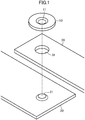
- a first member 10, a second member 20, and a third member 30 are disposed in a state in which the third member 30 is interposed between the first member 10 and the second member 20.
- the first member 10 is a disk-like member formed of a metal material, and a first protrusion 11 having an embossed shape is formed so as to be tapered and protrude toward the second member 20 in a central portion of the first member 10.
- the second member 20 is a plate-like member formed of a metal material of the same type as that of the first member 10 which can be welded to the first member 10, and a second protrusion 21 having an embossed shape is formed so as to be tapered and protrude toward the first member 10 therein.
- the third member 30 is a plate-like member formed of a material that is difficult to weld to the first member 10 and the second member 20, and a through hole 31 as a through portion is formed therein. Note that, although the through hole 31 is provided as the through portion, the through portion may be a through groove. In performing joining, the third member 30 that is a material of a different type is disposed so as to be interposed between the first member 10 and the second member 20 that are metal materials of the same type.
- the first protrusion 11 and the second protrusion 21 are disposed so as to be inserted in the through hole 31 of the third member 30 and to face to each other.
- the first protrusion 11 and the second protrusion 21 are inserted in the through hole 31 of the third member 30, and therefore, the through hole 31 has an effect of restraining relative positional displacement of the first member 10 and the second member 20 with respect to the through hole 31.
- the first protrusion 11 that a mark of a laser irradiation position and propriety of a bead forming position can be visually checked.
- the "metal materials of the same type” mean metals that can be welded to each other and may be not only the same material but also metal materials, such as ferrous metal materials, nonferrous metal materials, or the like, which have a good weld joining property.
- the "metal materials of the same type” mean materials of the same type which have good compatibility in welding.
- combinations of the first member 10 and the second member 20 in performing welding are as follows.
- ferrous metal materials there are combinations of soft steel and soft steel, stainless and stainless, soft steel and high tensile steel, high tensile steel and high tensile steel, and the like.
- nonferrous metal materials there are combinations of aluminum and aluminum, aluminum and aluminum alloy, aluminum alloy and aluminum alloy, and the like.
- the third member 30 as a material of a different type is a different material from those of the first member 10 and the second member 20 as metal materials of the same type and is a material that is difficult to weld to the first member 10 and the second member 20.
- the third member 30 as a material of a different type is a nonferrous metal material, such as a copper material, an aluminum material, or the like, which has a low laser light absorptivity and is difficult to laser-weld.
- a material of a different type from the metal materials include a resin material, such as carbon fiber reinforced plastics (CFRP), polyethylene terephthalate (PET), or the like.
- the first protrusion 11 and the second protrusion 21 are inserted in the through hole 31 of the third member 30 and are disposed so as to face to each other in a plate-thickness direction with a predetermined space therebetween.
- joining of the first member 10 and the second member 20 is performed by laser welding.
- laser welding is performed by radiating laser light L in a circular shape toward a region corresponding to the first protrusion 11, that is, a region (a joinable range) that can be irradiated with the laser light L, from an upper side of the first member 10 in the plate-thickness direction.
- the laser light L is radiated in the plate-thickness direction in a state before welding in which the gap exists, the first member 10 and the second member 20 as metal materials of the same type are melt and jointed to each other and then solidified and shrunk, and the third member 30 as a material of a different type interposed therebetween is compressed and fixed.
- the third member 30 that is a material of a different type is interposed between the first member 10 and the second member 20 that are metal materials of the same type, there is a probability that moisture enters a portion in which the first member 10, the second member 20, and the third member 30 overlap, so that an electrolytic corrosion occurs.
- each of an outer peripheral portion of an overlapping portion of the first member 10 and the third member 30 and an outer peripheral portion of an overlapping portion of the second member 20 and the third member 30 is welded.
- the laser light L is radiated in a circular shape from the upper side of the first member 10 in the plate-thickness direction along the outer peripheral portion of the overlapping portion of the first member 10 and the third member 30.
- the first member 10 and the third member 30 are melted to form the welded portion 40, and a sealed joining structure in which a gap between the first member 10 and the third member 30 in an overlapping direction is filled can be achieved.
- the first member 10, the second member 20, and the third member 30 may be melted and jointed to each other, for example, radiating the laser light L such that the laser light L reaches the third member 3.
- laser welding is performed by radiating the laser light L from a side which is formed of a material having a high laser absorption rate.
- the second member 20 is formed of a soft steel material and the third member 30 is formed of an aluminum material
- laser welding is performed by radiating the laser light L in a quadrangular shape from a lower side of the second member 20 in the plate-thickness direction along the outer peripheral potion of the overlapping portion of the first member 10 and the third member 30, because the soft steel material has a lower reflectance to the laser light L than that of the aluminum material, that is, the soft steel material has a higher laser absorption rate than that of the aluminum material.
- energy of the laser light L can be efficiently absorbed, and the second member 20 and the third member 30 can be sufficiently melted.
- a penetration depth d from an overlapping surface of the third member 30 located in an opposite side to a side that is irradiated with the laser light L may be a depth that is equal to or larger than 20% of a plate thickness t of the third member 30.
- the laser light L can be kept from passing through the third member 30 and airtightness can be ensured. Note that similar applies to the penetration depths in the first member 10 and the third member 30.
- FIG. 6 is a cross-sectional view illustrating a joining structure after welding according to a second embodiment.
- the same components as those in the first embodiment will be denoted by the same reference symbols as those in the first embodiment and only different points will be described below.
- the welded portion 40 is formed by radiating the laser light L in a circular shape to a region corresponding to the first protrusion 11 and the second protrusion 21 from an upper side in the plate-thickness direction.
- the first member 10 and the second member 20 are laser-welded.
- the outer peripheral portion of the overlapping portion of the first member 10 and the third member 30 is welded using a filler material. Specifically, arc welding or laser filler welding is performed along an outer peripheral corner portion of the overlapping portion of the first member 10 and the third member 30. Note that, in a case in which the first member 10 is a soft steel material and the third member 30 is an aluminum material, it is necessary to use a filler material exclusively used for materials of different types with which the soft steel material and the aluminum material can be welded.
- the outer peripheral portion of the overlapping portion of the second member 20 and the third member 30 is welded using a filler material. Specifically, arc welding or laser filler welding is performed along an outer peripheral corner of the overlapping portion of the second member 20 and the third member 30.
- a sealed joining structure in which the gap between the second member 20 and the third member 30 in the overlapping direction is filled with the welded portion 45 formed of the filler material that has been melt and jointed can be achieved.
- the first protrusion 11 and the second protrusion 21 have the same shape, but the first protrusion 11 and the second protrusion 21 may have different shapes. Moreover, a protrusion is provided in each of both the first member 10 and the second member 20, but a protrusion may be provided only one of the first member 10 and the second member 20.
- the laser light L is radiated from a side in which the first member 10 is provided, but the laser light L may be radiated from a side in which the second member 20 is provided.
- the materials of the first member 10 and the second member 20 are metal materials of the same type and, for example, a case in which a soft steel material is used for each of the first member 10 and the second member 20 has been described.
- different materials may be used for the first member 10 and the second member 20 as long as the materials are metal materials of the same type which can be welded to each other and can achieve an enough joining strength.
- arc welding or laser filler welding using a filler material is performed on the outer peripheral portion of the overlapping portion of the first member 10 and the third member 30 and the outer peripheral portion of the overlapping portion of the second member 20 and the third member 30.
- the present disclosure is not limited to this form.
- the outer peripheral corner portion may be melted, and thus, the first member 10 and the third member 30 may be welded. Note that, for the outer peripheral corner portion of the overlapping portion of the second member 20 and the third member 30, welding may be performed in a similar manner.
- the present disclosure As described above, according to the present disclosure, a highly practical effect that the occurrence of an electrolytic corrosion in a portion in which metal materials of the same type and a material of a different type overlap can be restrained is achieved, and therefore, the present disclosure is very useful and has high industrial applicability.
Landscapes
- Physics & Mathematics (AREA)
- Optics & Photonics (AREA)
- Engineering & Computer Science (AREA)
- Plasma & Fusion (AREA)
- Mechanical Engineering (AREA)
- Laser Beam Processing (AREA)
Abstract
Description
- The present disclosure relates to a joining structure and a joining method.
- Conventionally, joining structures in which a first material and a second material that are formed of metal materials of the same type which can be welded to each other are welded in a state in which a third material that is difficult to weld to the first material and the second material is interposed between the first material and the second material, and thus, the third material as a material of a different type is compressed and fixed have been known (see, for example, Patent Document 1).
- PATENT DOCUMENT 1: International Patent Publication No.
WO2017/170517 - Incidentally, in a joining structure in which a material of a different type is interposed between metal materials of the same type, there is a probability that moisture enters the joining structure from outside through a gap between the material of the different type and each of the metal materials of the same type in an overlapping direction. In some cases, the moisture that has entered in the joining structure causes an electrolytic corrosion to occur in a portion in which the material of the different type and the metal materials of the same type overlap, and thus, a joining strength is reduced.
- In view of the foregoing, the present disclosure has been devised and it is therefore an object of the present disclosure to restrain the occurrence of an electrolytic corrosion in a portion in which metal materials of the same type and a material of a different type overlap.
- Each aspect of the present disclosure is directed to a joining structure including a first member formed of a metal material, a second member formed of a metal material of a same type as that of the first member which can be welded to the first member, and a third member formed of a material that is difficult to weld to the first member and the second member, the first member, the second member, and the third member being jointed to each other, and the following solutions have been devised.
- That is, a first aspect is characterized in that, in the joining structure, a protrusion is provided in at least one of the first member and the second member, a through portion in which the protrusion is inserted is formed in the third member, the first member and the second member are welded to each other via the through portion with the third member interposed therebetween in a region corresponding to the protrusion, and each of an outer peripheral portion of an overlapping portion of the first member and the third member and an outer peripheral portion of an overlapping portion of the second member and the third member is welded.
- According to the first aspect, the first member and the second member are formed of metal materials of the same type and the third member is formed of a material of a different type which is difficult to weld to the first member and the second member. The first member and the second member are welded to each other via the through portion with the third member interposed therebetween in the region corresponding to the protrusion. For the first member and the third member, and the second member and the third member, each of the respective outer peripheral portions of the overlapping portion of the first member and the third member and the overlapping portion of and the second member and the third member is welded.
- Thus, the occurrence of an electrolytic corrosion in a portion in which the first member and the second member that are metal materials of the same type and the third member that is a material of a different type overlap can be restrained.
- Specifically, by welding each of the outer peripheral portion of the overlapping portion of the first member and the third member and the outer peripheral portion of the overlapping portion of the second member and the third member, a sealed joining structure in which a gap between the first member, the second member, and the third member in an overlapping direction is filled can be achieved.
- With the above described configuration, invasion of moisture into the overlapping portions of the first member, the second member, and the third member from outside can be restrained. Thus, the occurrence of an electrolytic corrosion in the overlapping portions of the first member, the second member, and the third member can be restrained and the joining strength can be ensured.
- A second aspect is characterized in that, in the joining structure of the first aspect, the regions of the first member and the second member corresponding to the protrusion, the outer peripheral portion of the overlapping portion of the first member and the third member, and the outer peripheral portion of the overlapping portion of the second member and the third member are laser-welded to each.
- According to the second aspect, joining of the first member, the second member, and the third member may be performed by laser welding.
- A third aspect is characterized in that, in the joining structure of the second aspect, the regions of the first member and the second member corresponding to the protrusion, the outer peripheral portion of the overlapping portion of the first member and the third member, and the outer peripheral portion of the overlapping portion of the second member and the third member are laser-welded to each by radiating laser light from either of one member side among the first member, the second member, and the third member, which is formed of a material having a high laser absorption rate.
- According to the third aspect, the laser light may be radiated from either of one member side among the first member, the second member, and the third member, which is formed of a material having a high laser absorption rate. For example, in a case in which the first member and the second material are formed of a soft steel material and the third member is formed of an aluminum material, welding may be performed by radiating the laser light from a side in which the first material and the second member are provided, because the soft steel material has a lower reflectance to the laser light than that of the aluminum material, that is, the soft steel material has a higher laser absorption rate than that of the aluminum material. Thus, energy of the laser light can be efficiently absorbed, and the first member, the second member, and the third member can be sufficiently melted.
- A fourth aspect is characterized in that, in the joining structure of the first aspect, the regions of the first member and the second member corresponding to the protrusion are laser-welded, and the outer peripheral portion of the overlapping portion of the first member and the third member and the outer peripheral portion of the overlapping portion of the second member and the third member is welded using a filler material to each.
- According to the fourth aspect, joining of the first member and the second member may be performed by laser welding, and joining of the outer peripheral portion of the first member and the third member and joining of the outer peripheral portion of the second member and the third member may be performed by welding using a filler material, such as, for example, arc welding or laser filler welding.
- A fifth aspect is directed to a joining method, in which a first member formed of a metal material, a second member formed of a metal material of a same type as that of the first member which can be welded to the first member, and a third member formed of a material that is difficult to weld to the first member and the second member are joined to each other, at least one of the first member and the second member being configured such that a protrusion is provided therein, the third member being configured such that a through portion in which the protrusion is inserted is formed therein, and is characterized by including steps of inserting the protrusion in the through portion of the third member and interposing the third member between the first member and the second member, welding the first member and the second member to each other via the through portion by radiating laser light to a region corresponding to the protrusion, and welding each of an outer peripheral portion of an overlapping portion of the first member and the third member and an outer peripheral portion of an overlapping portion of the second member and the third member.
- According to the fifth aspect, the first member and the second member are formed of metal materials of the same type and the third member is formed of a material of a different type which is difficult to weld to the first member and the second member. The first member and the second member are welded to each other via the through portion with the third member interposed therebetween in the region corresponding to the protrusion. For the first member and the third member, and the second member and the third member, each of the respective outer peripheral portions of the overlapping portion of the first member and the third member and the overlapping portion of and the second member and the third member is welded.
- Thus, the occurrence of an electrolyte corrosion in the portions in which the first member and the second member that are metal materials of the same type and the third member that is a material of a different type overlap can be restrained.
- According to the aspects of the present disclosure, it is possible to restrain the occurrence of an electrolytic corrosion in a portion in which metal materials of the same type and a material of a different type overlap.
-
- [
FIG. 1] FIG. 1 is a perspective view illustrating a configuration of first to third members according to a first embodiment. - [
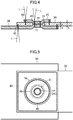
FIG. 2] FIG. 2 is a cross-sectional view illustrating a joining structure before welding. - [
FIG. 3] FIG. 3 is a plan view illustrating the joining structure before welding. - [
FIG. 4] FIG. 4 is a cross-sectional view illustrating the joining structure after welding. - [
FIG. 5] FIG. 5 is a plan view of illustrating the joining structure after welding. - [
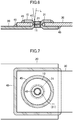
FIG. 6] FIG. 6 is a cross-sectional view illustrating a joining structure after welding according to a second embodiment. - [
FIG. 7] FIG. 7 is a plan view illustrating the joining structure after welding. - [
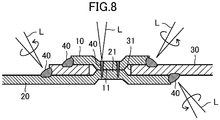
FIG. 8] FIG. 8 a cross-sectional view illustrating a joining structure after welding according to another embodiment. - Embodiments of the present disclosure will be described below with reference to the accompanying drawings. Note that the following description of preferred embodiments describes mere examples by nature and is not intended to limit the scope, application, or use of the present disclosure.
- As illustrated in
FIG. 1 to FIG. 3 , in a joining structure according to this embodiment, in performing joining, afirst member 10, asecond member 20, and athird member 30 are disposed in a state in which thethird member 30 is interposed between thefirst member 10 and thesecond member 20. - The
first member 10 is a disk-like member formed of a metal material, and afirst protrusion 11 having an embossed shape is formed so as to be tapered and protrude toward thesecond member 20 in a central portion of thefirst member 10. - The
second member 20 is a plate-like member formed of a metal material of the same type as that of thefirst member 10 which can be welded to thefirst member 10, and asecond protrusion 21 having an embossed shape is formed so as to be tapered and protrude toward thefirst member 10 therein. - The
third member 30 is a plate-like member formed of a material that is difficult to weld to thefirst member 10 and thesecond member 20, and a throughhole 31 as a through portion is formed therein. Note that, although thethrough hole 31 is provided as the through portion, the through portion may be a through groove. In performing joining, thethird member 30 that is a material of a different type is disposed so as to be interposed between thefirst member 10 and thesecond member 20 that are metal materials of the same type. - In this case, the
first protrusion 11 and thesecond protrusion 21 are disposed so as to be inserted in the throughhole 31 of thethird member 30 and to face to each other. Thus, thefirst protrusion 11 and thesecond protrusion 21 are inserted in the throughhole 31 of thethird member 30, and therefore, the throughhole 31 has an effect of restraining relative positional displacement of thefirst member 10 and thesecond member 20 with respect to thethrough hole 31. There is also an advantage of thefirst protrusion 11 that a mark of a laser irradiation position and propriety of a bead forming position can be visually checked. - As used herein, the "metal materials of the same type" mean metals that can be welded to each other and may be not only the same material but also metal materials, such as ferrous metal materials, nonferrous metal materials, or the like, which have a good weld joining property. In other words, the "metal materials of the same type" mean materials of the same type which have good compatibility in welding.
- Specifically, combinations of the
first member 10 and thesecond member 20 in performing welding are as follows. For example, as combinations of ferrous metal materials, there are combinations of soft steel and soft steel, stainless and stainless, soft steel and high tensile steel, high tensile steel and high tensile steel, and the like. As combinations of nonferrous metal materials, there are combinations of aluminum and aluminum, aluminum and aluminum alloy, aluminum alloy and aluminum alloy, and the like. - The
third member 30 as a material of a different type is a different material from those of thefirst member 10 and thesecond member 20 as metal materials of the same type and is a material that is difficult to weld to thefirst member 10 and thesecond member 20. - For example, in a case in which the
first member 10 and thesecond member 20 as metal materials of the same type are ferrous metal materials, thethird member 30 as a material of a different type is a nonferrous metal material, such as a copper material, an aluminum material, or the like, which has a low laser light absorptivity and is difficult to laser-weld. For example, examples of a material of a different type from the metal materials include a resin material, such as carbon fiber reinforced plastics (CFRP), polyethylene terephthalate (PET), or the like. - In this case, as illustrated in
FIG. 2 , before welding thefirst member 10 and thesecond member 20, thefirst protrusion 11 and thesecond protrusion 21 are inserted in the throughhole 31 of thethird member 30 and are disposed so as to face to each other in a plate-thickness direction with a predetermined space therebetween. - As illustrated in
FIG. 4 and FIG. 5 , joining of thefirst member 10 and thesecond member 20 is performed by laser welding. Specifically, laser welding is performed by radiating laser light L in a circular shape toward a region corresponding to thefirst protrusion 11, that is, a region (a joinable range) that can be irradiated with the laser light L, from an upper side of thefirst member 10 in the plate-thickness direction. - When the laser light L is radiated in a circular shape to the
first protrusion 11 to perform laser welding, a weldedportion 40 is formed during welding. At this time, a molten metal of the weldedportion 40 of thefirst member 10 and thesecond member 20 is solidified and shrunk, and therefore, a gap between thefirst protrusion 11 and thesecond protrusion 21 is reduced. - As described above, in the region corresponding to the
first protrusion 11 which is irradiated with the laser light L, the laser light L is radiated in the plate-thickness direction in a state before welding in which the gap exists, thefirst member 10 and thesecond member 20 as metal materials of the same type are melt and jointed to each other and then solidified and shrunk, and thethird member 30 as a material of a different type interposed therebetween is compressed and fixed. - Incidentally, in the joining structure in which the
third member 30 that is a material of a different type is interposed between thefirst member 10 and thesecond member 20 that are metal materials of the same type, there is a probability that moisture enters a portion in which thefirst member 10, thesecond member 20, and thethird member 30 overlap, so that an electrolytic corrosion occurs. - Therefore, in this embodiment, each of an outer peripheral portion of an overlapping portion of the
first member 10 and thethird member 30 and an outer peripheral portion of an overlapping portion of thesecond member 20 and thethird member 30 is welded. - Specifically, as illustrated in
FIG. 4 and FIG. 5 , the laser light L is radiated in a circular shape from the upper side of thefirst member 10 in the plate-thickness direction along the outer peripheral portion of the overlapping portion of thefirst member 10 and thethird member 30. Thus, thefirst member 10 and thethird member 30 are melted to form the weldedportion 40, and a sealed joining structure in which a gap between thefirst member 10 and thethird member 30 in an overlapping direction is filled can be achieved. - Note that, although, in an example illustrated in
FIG. 4 , only the outer peripheral portion of the overlapping portion of thefirst member 10 and thethird member 30 is laser-welded, thefirst member 10, thesecond member 20, and thethird member 30 may be melted and jointed to each other, for example, radiating the laser light L such that the laser light L reaches the third member 3. - For the outer peripheral portion of the overlapping portion of the
second member 20 and thethird member 30, laser welding is performed by radiating the laser light L from a side which is formed of a material having a high laser absorption rate. - For example, in a case in which the
second member 20 is formed of a soft steel material and thethird member 30 is formed of an aluminum material, laser welding is performed by radiating the laser light L in a quadrangular shape from a lower side of thesecond member 20 in the plate-thickness direction along the outer peripheral potion of the overlapping portion of thefirst member 10 and thethird member 30, because the soft steel material has a lower reflectance to the laser light L than that of the aluminum material, that is, the soft steel material has a higher laser absorption rate than that of the aluminum material. Thus, energy of the laser light L can be efficiently absorbed, and thesecond member 20 and thethird member 30 can be sufficiently melted. - Then, the outer peripheral portion of the overlapping portion of the
second member 20 and thethird member 30 is melted to form the weldedportion 40 and a sealed joining structure in which a gap between thesecond member 20 and thethird member 30 in the overlapping direction is filled can be achieved. - Note that, although compatibility of the
second member 20 and thethird member 30 in terms of the weld joining property is poor, it is merely needed to ensure airtightness, and therefore, a very high joining strength of this portion is not required. - Therefore, a penetration depth d from an overlapping surface of the
third member 30 located in an opposite side to a side that is irradiated with the laser light L may be a depth that is equal to or larger than 20% of a plate thickness t of thethird member 30. Thus, the laser light L can be kept from passing through thethird member 30 and airtightness can be ensured. Note that similar applies to the penetration depths in thefirst member 10 and thethird member 30. - With the above described configuration, invasion of moisture into the overlapping portions of the
first member 10, thesecond member 20, and thethird member 30 from outside can be restrained. Thus, in the overlapping portions of thefirst member 10, thesecond member 20, and thethird member 30, the occurrence of an electrolytic corrosion can be restrained and the joining strength can be ensured. -
FIG. 6 is a cross-sectional view illustrating a joining structure after welding according to a second embodiment. The same components as those in the first embodiment will be denoted by the same reference symbols as those in the first embodiment and only different points will be described below. - As illustrated in
FIG. 6 and FIG. 7 , the weldedportion 40 is formed by radiating the laser light L in a circular shape to a region corresponding to thefirst protrusion 11 and thesecond protrusion 21 from an upper side in the plate-thickness direction. Thus, thefirst member 10 and thesecond member 20 are laser-welded. - The outer peripheral portion of the overlapping portion of the
first member 10 and thethird member 30 is welded using a filler material. Specifically, arc welding or laser filler welding is performed along an outer peripheral corner portion of the overlapping portion of thefirst member 10 and thethird member 30. Note that, in a case in which thefirst member 10 is a soft steel material and thethird member 30 is an aluminum material, it is necessary to use a filler material exclusively used for materials of different types with which the soft steel material and the aluminum material can be welded. - Thus, a sealed joining structure in which the gap between the
first member 10 and thethird member 30 in the overlapping direction is filled with a weldedportion 45 formed of the filler material that has been melt and jointed can be achieved. - Similarly, the outer peripheral portion of the overlapping portion of the
second member 20 and thethird member 30 is welded using a filler material. Specifically, arc welding or laser filler welding is performed along an outer peripheral corner of the overlapping portion of thesecond member 20 and thethird member 30. Thus, a sealed joining structure in which the gap between thesecond member 20 and thethird member 30 in the overlapping direction is filled with the weldedportion 45 formed of the filler material that has been melt and jointed can be achieved. - With the above described configuration, invasion of moisture into the overlapping portions of the
first member 10, thesecond member 20, and thethird member 30 from outside can be restrained. Thus, the occurrence of an electrolytic corrosion in the overlapping portions of thefirst member 10, thesecond member 20, and thethird member 30 can be restrained and the joining strength can be ensured. - Each of the above described embodiments may have a following configuration.
- In the above described embodiments, the
first protrusion 11 and thesecond protrusion 21 have the same shape, but thefirst protrusion 11 and thesecond protrusion 21 may have different shapes. Moreover, a protrusion is provided in each of both thefirst member 10 and thesecond member 20, but a protrusion may be provided only one of thefirst member 10 and thesecond member 20. As for a laser radiation direction, the laser light L is radiated from a side in which thefirst member 10 is provided, but the laser light L may be radiated from a side in which thesecond member 20 is provided. - In the above described embodiments, the materials of the
first member 10 and thesecond member 20 are metal materials of the same type and, for example, a case in which a soft steel material is used for each of thefirst member 10 and thesecond member 20 has been described. However, different materials may be used for thefirst member 10 and thesecond member 20 as long as the materials are metal materials of the same type which can be welded to each other and can achieve an enough joining strength. - In the second embodiment, arc welding or laser filler welding using a filler material is performed on the outer peripheral portion of the overlapping portion of the
first member 10 and thethird member 30 and the outer peripheral portion of the overlapping portion of thesecond member 20 and thethird member 30. However, the present disclosure is not limited to this form. - For example, as illustrated in
FIG. 8 , by radiating the laser light L from a diagonal direction along the outer peripheral corner portion of the overlapping portion of thefirst member 10 and thethird member 30 while moving the laser light L such that the laser light L turns in a spin orbit, the outer peripheral corner portion may be melted, and thus, thefirst member 10 and thethird member 30 may be welded. Note that, for the outer peripheral corner portion of the overlapping portion of thesecond member 20 and thethird member 30, welding may be performed in a similar manner. - As described above, according to the present disclosure, a highly practical effect that the occurrence of an electrolytic corrosion in a portion in which metal materials of the same type and a material of a different type overlap can be restrained is achieved, and therefore, the present disclosure is very useful and has high industrial applicability.
-
- 10
- First member
- 11
- First protrusion
- 20
- Second member
- 21
- Second protrusion
- 30
- Third member
- 31
- Through hole (through portion)
- L
- Laser light
Claims (5)
- A joining structure, comprising:a first member formed of a metal material;a second member formed of a metal material of a same type as that of the first member which can be welded to the first member; anda third member formed of a material that is difficult to weld to the first member and the second member,the first member, the second member, and the third member being jointed to each other,
whereina protrusion is provided in at least one of the first member and the second member,a through portion in which the protrusion is inserted is formed in the third member,the first member and the second member are welded to each other via the through portion with the third member interposed therebetween in a region corresponding to the protrusion, andeach of an outer peripheral portion of an overlapping portion of the first member and the third member and an outer peripheral portion of an overlapping portion of the second member and the third member is welded. - The joining structure of claim 1, wherein
the regions of the first member and the second member corresponding to the protrusion, the outer peripheral portion of the overlapping portion of the first member and the third member, and the outer peripheral portion of the overlapping portion of the second member and the third member are laser-welded to each. - The joining structure of claim 2, wherein
the regions of the first member and the second member corresponding to the protrusion, the outer peripheral portion of the overlapping portion of the first member and the third member, and the outer peripheral portion of the overlapping portion of the second member and the third member are laser-welded to each by radiating laser light from either of one member side among the first member, the second member, and the third member, which is formed of a material having a high laser absorption rate. - The joining structure of claim 1, wherein
the regions of the first member and the second member corresponding to the protrusion are laser-welded, and
the outer peripheral portion of the overlapping portion of the first member and the third member and the outer peripheral portion of the overlapping portion of the second member and the third member is welded using a filler material to each. - A joining method,
in which a first member formed of a metal material, a second member formed of a metal material of a same type as that of the first member which can be welded to the first member, and a third member formed of a material that is difficult to weld to the first member and the second member are joined to each other,
at least one of the first member and the second member being configured such that a protrusion is provided therein,
the third member being configured such that a through portion in which the protrusion is inserted is formed therein,
the joining method comprising steps of:inserting the protrusion in the through portion of the third member and interposing the third member between the first member and the second member;welding the first member and the second member to each other via the through portion by radiating laser light to a region corresponding to the protrusion; andwelding each of an outer peripheral portion of an overlapping portion of the first member and the third member and an outer peripheral portion of an overlapping portion of the second member and the third member.
Applications Claiming Priority (2)
| Application Number | Priority Date | Filing Date | Title |
|---|---|---|---|
| JP2018038911 | 2018-03-05 | ||
| PCT/JP2018/041378 WO2019171659A1 (en) | 2018-03-05 | 2018-11-07 | Joining structure and joining method |
Publications (3)
| Publication Number | Publication Date |
|---|---|
| EP3763473A1 true EP3763473A1 (en) | 2021-01-13 |
| EP3763473A4 EP3763473A4 (en) | 2021-04-28 |
| EP3763473B1 EP3763473B1 (en) | 2026-04-29 |
Family
ID=67847029
Family Applications (1)
| Application Number | Title | Priority Date | Filing Date |
|---|---|---|---|
| EP18908403.1A Active EP3763473B1 (en) | 2018-03-05 | 2018-11-07 | Joining structure and joining method |
Country Status (5)
| Country | Link |
|---|---|
| US (1) | US11806809B2 (en) |
| EP (1) | EP3763473B1 (en) |
| JP (1) | JP7186370B2 (en) |
| CN (1) | CN111819025B (en) |
| WO (1) | WO2019171659A1 (en) |
Families Citing this family (3)
| Publication number | Priority date | Publication date | Assignee | Title |
|---|---|---|---|---|
| EP3623094A1 (en) * | 2016-03-30 | 2020-03-18 | Panasonic Intellectual Property Management Co., Ltd. | Joint structure |
| EP3957425A4 (en) * | 2019-04-19 | 2022-06-22 | Panasonic Intellectual Property Management Co., Ltd. | Junction structure |
| CN114555279B (en) * | 2019-12-13 | 2024-06-11 | 新电元工业株式会社 | Welding method and welding structure |
Family Cites Families (17)
| Publication number | Priority date | Publication date | Assignee | Title |
|---|---|---|---|---|
| JPS587850B2 (en) * | 1977-10-03 | 1983-02-12 | トヨタ自動車株式会社 | Joint structure of metal and non-metal materials |
| US5448831A (en) * | 1993-11-08 | 1995-09-12 | Ap Parts Manufacturing Company | Method of manufacturing a stamp formed muffler with hermetically sealed laminated outer shell |
| JP3763525B2 (en) * | 2002-03-29 | 2006-04-05 | 本田技研工業株式会社 | Welding method and welding apparatus |
| JP2006035285A (en) * | 2004-07-29 | 2006-02-09 | Nissan Motor Co Ltd | Lap joining method of different materials by high energy beam and lap joining member |
| JP4645298B2 (en) * | 2005-05-16 | 2011-03-09 | 日産自動車株式会社 | Laser welding method and laser welding structure |
| WO2007108079A1 (en) * | 2006-03-17 | 2007-09-27 | Kabushiki Kaisha Kobe Seiko Sho | Filler metal for bonding different materials and method of bonding different materials |
| JP4957093B2 (en) | 2006-06-29 | 2012-06-20 | 日産自動車株式会社 | Dissimilar metal joining method |
| US7666541B2 (en) * | 2006-11-03 | 2010-02-23 | The Gillette Company | Ultrasonic metal welding techniques and batteries manufactured using such techniques |
| DE102007002856B4 (en) * | 2007-01-15 | 2012-02-09 | Edag Gmbh & Co. Kgaa | Device for flanging and welding or soldering of components |
| US7819452B2 (en) * | 2008-05-12 | 2010-10-26 | United States Council For Automotive Research | Automotive structural joint and method of making same |
| JP6022402B2 (en) | 2013-05-22 | 2016-11-09 | 株式会社神戸製鋼所 | Rivet joint structure and manufacturing method thereof |
| JP5729429B2 (en) * | 2013-07-29 | 2015-06-03 | トヨタ自動車株式会社 | Junction structure and method of manufacturing junction structure |
| US10384296B2 (en) | 2014-12-15 | 2019-08-20 | Arconic Inc. | Resistance welding fastener, apparatus and methods for joining similar and dissimilar materials |
| JP7012205B2 (en) | 2016-03-30 | 2022-01-28 | パナソニックIpマネジメント株式会社 | Joined structure |
| WO2017170517A1 (en) | 2016-03-30 | 2017-10-05 | パナソニックIpマネジメント株式会社 | Laser welding method |
| JP6799758B2 (en) | 2016-03-30 | 2020-12-16 | パナソニックIpマネジメント株式会社 | Joint structure |
| JP2018051570A (en) * | 2016-09-26 | 2018-04-05 | 株式会社神戸製鋼所 | Spot welding method for joining dissimilar materials, joining auxiliary member, and dissimilar material welding joint |
-
2018
- 2018-11-07 EP EP18908403.1A patent/EP3763473B1/en active Active
- 2018-11-07 WO PCT/JP2018/041378 patent/WO2019171659A1/en not_active Ceased
- 2018-11-07 JP JP2020504775A patent/JP7186370B2/en active Active
- 2018-11-07 CN CN201880090763.6A patent/CN111819025B/en active Active
-
2020
- 2020-09-03 US US17/011,557 patent/US11806809B2/en active Active
Also Published As
| Publication number | Publication date |
|---|---|
| JP7186370B2 (en) | 2022-12-09 |
| US20200398378A1 (en) | 2020-12-24 |
| EP3763473B1 (en) | 2026-04-29 |
| WO2019171659A1 (en) | 2019-09-12 |
| CN111819025B (en) | 2022-08-09 |
| EP3763473A4 (en) | 2021-04-28 |
| CN111819025A (en) | 2020-10-23 |
| US11806809B2 (en) | 2023-11-07 |
| JPWO2019171659A1 (en) | 2021-03-04 |
Similar Documents
| Publication | Publication Date | Title |
|---|---|---|
| US11806809B2 (en) | Joining structure and joining method | |
| US20210388859A1 (en) | Joint structure | |
| CN110234463B (en) | Joint structure | |
| US20140124489A1 (en) | Hybrid Welding Method of Laser Welding and Arc Welding for T-Joint | |
| WO2018056172A1 (en) | Spot welding method for joining different materials, joining assistance member, and different material welded joint | |
| EP3437786A1 (en) | Joint structure | |
| EP3438473B1 (en) | Joint structure | |
| JP7349688B2 (en) | Bonding structure and bonding method | |
| JP4232024B2 (en) | Weld bead structure and welding method | |
| JP7546208B2 (en) | Joint structure | |
| JP7325021B2 (en) | Joining structure and joining method | |
| JP2009202226A (en) | Welding structure of low-output laser beam | |
| JPH10230379A (en) | Manufacturing method of aluminum alloy container |
Legal Events
| Date | Code | Title | Description |
|---|---|---|---|
| STAA | Information on the status of an ep patent application or granted ep patent |
Free format text: STATUS: THE INTERNATIONAL PUBLICATION HAS BEEN MADE |
|
| PUAI | Public reference made under article 153(3) epc to a published international application that has entered the european phase |
Free format text: ORIGINAL CODE: 0009012 |
|
| STAA | Information on the status of an ep patent application or granted ep patent |
Free format text: STATUS: REQUEST FOR EXAMINATION WAS MADE |
|
| 17P | Request for examination filed |
Effective date: 20200904 |
|
| AK | Designated contracting states |
Kind code of ref document: A1 Designated state(s): AL AT BE BG CH CY CZ DE DK EE ES FI FR GB GR HR HU IE IS IT LI LT LU LV MC MK MT NL NO PL PT RO RS SE SI SK SM TR |
|
| AX | Request for extension of the european patent |
Extension state: BA ME |
|
| A4 | Supplementary search report drawn up and despatched |
Effective date: 20210325 |
|
| RIC1 | Information provided on ipc code assigned before grant |
Ipc: B23K 26/323 20140101AFI20210319BHEP Ipc: B23K 26/244 20140101ALI20210319BHEP Ipc: B23K 26/242 20140101ALI20210319BHEP Ipc: B23K 103/18 20060101ALN20210319BHEP |
|
| DAV | Request for validation of the european patent (deleted) | ||
| DAX | Request for extension of the european patent (deleted) | ||
| STAA | Information on the status of an ep patent application or granted ep patent |
Free format text: STATUS: EXAMINATION IS IN PROGRESS |
|
| 17Q | First examination report despatched |
Effective date: 20230817 |
|
| RIC1 | Information provided on ipc code assigned before grant |
Ipc: B23K 103/18 20060101ALN20250410BHEP Ipc: B23K 26/242 20140101ALI20250410BHEP Ipc: B23K 26/244 20140101ALI20250410BHEP Ipc: B23K 26/323 20140101AFI20250410BHEP |
|
| GRAP | Despatch of communication of intention to grant a patent |
Free format text: ORIGINAL CODE: EPIDOSNIGR1 |
|
| STAA | Information on the status of an ep patent application or granted ep patent |
Free format text: STATUS: GRANT OF PATENT IS INTENDED |
|
| RIC1 | Information provided on ipc code assigned before grant |
Ipc: B23K 103/18 20060101ALN20250430BHEP Ipc: B23K 26/242 20140101ALI20250430BHEP Ipc: B23K 26/244 20140101ALI20250430BHEP Ipc: B23K 26/323 20140101AFI20250430BHEP |
|
| INTG | Intention to grant announced |
Effective date: 20250603 |
|
| GRAJ | Information related to disapproval of communication of intention to grant by the applicant or resumption of examination proceedings by the epo deleted |
Free format text: ORIGINAL CODE: EPIDOSDIGR1 |
|
| STAA | Information on the status of an ep patent application or granted ep patent |
Free format text: STATUS: EXAMINATION IS IN PROGRESS |
|
| INTC | Intention to grant announced (deleted) | ||
| GRAP | Despatch of communication of intention to grant a patent |
Free format text: ORIGINAL CODE: EPIDOSNIGR1 |
|
| STAA | Information on the status of an ep patent application or granted ep patent |
Free format text: STATUS: GRANT OF PATENT IS INTENDED |
|
| RIC1 | Information provided on ipc code assigned before grant |
Ipc: B23K 26/323 20140101AFI20251027BHEP Ipc: B23K 26/244 20140101ALI20251027BHEP Ipc: B23K 26/242 20140101ALI20251027BHEP Ipc: B23K 103/18 20060101ALN20251027BHEP |
|
| RIC1 | Information provided on ipc code assigned before grant |
Ipc: B23K 26/323 20140101AFI20251112BHEP Ipc: B23K 26/244 20140101ALI20251112BHEP Ipc: B23K 26/242 20140101ALI20251112BHEP Ipc: B23K 103/18 20060101ALN20251112BHEP |
|
| INTG | Intention to grant announced |
Effective date: 20251120 |
|
| GRAS | Grant fee paid |
Free format text: ORIGINAL CODE: EPIDOSNIGR3 |
|
| GRAA | (expected) grant |
Free format text: ORIGINAL CODE: 0009210 |
|
| STAA | Information on the status of an ep patent application or granted ep patent |
Free format text: STATUS: THE PATENT HAS BEEN GRANTED |
|
| AK | Designated contracting states |
Kind code of ref document: B1 Designated state(s): AL AT BE BG CH CY CZ DE DK EE ES FI FR GB GR HR HU IE IS IT LI LT LU LV MC MK MT NL NO PL PT RO RS SE SI SK SM TR |
|
| REG | Reference to a national code |
Ref country code: CH Ref legal event code: F10 Free format text: ST27 STATUS EVENT CODE: U-0-0-F10-F00 (AS PROVIDED BY THE NATIONAL OFFICE) Effective date: 20260429 |