EP3763588B1 - Freizeitfahrzeug - Google Patents
Freizeitfahrzeug Download PDFInfo
- Publication number
- EP3763588B1 EP3763588B1 EP18908983.2A EP18908983A EP3763588B1 EP 3763588 B1 EP3763588 B1 EP 3763588B1 EP 18908983 A EP18908983 A EP 18908983A EP 3763588 B1 EP3763588 B1 EP 3763588B1
- Authority
- EP
- European Patent Office
- Prior art keywords
- engine
- state
- electric motor
- vehicle
- mode
- Prior art date
- Legal status (The legal status is an assumption and is not a legal conclusion. Google has not performed a legal analysis and makes no representation as to the accuracy of the status listed.)
- Active
Links
Images






Classifications
-
- B—PERFORMING OPERATIONS; TRANSPORTING
- B62—LAND VEHICLES FOR TRAVELLING OTHERWISE THAN ON RAILS
- B62J—CYCLE SADDLES OR SEATS; AUXILIARY DEVICES OR ACCESSORIES SPECIALLY ADAPTED TO CYCLES AND NOT OTHERWISE PROVIDED FOR, e.g. ARTICLE CARRIERS OR CYCLE PROTECTORS
- B62J45/00—Electrical equipment arrangements specially adapted for use as accessories on cycles, not otherwise provided for
- B62J45/20—Cycle computers as cycle accessories
-
- B—PERFORMING OPERATIONS; TRANSPORTING
- B60—VEHICLES IN GENERAL
- B60K—ARRANGEMENT OR MOUNTING OF PROPULSION UNITS OR OF TRANSMISSIONS IN VEHICLES; ARRANGEMENT OR MOUNTING OF PLURAL DIVERSE PRIME-MOVERS IN VEHICLES; AUXILIARY DRIVES FOR VEHICLES; INSTRUMENTATION OR DASHBOARDS FOR VEHICLES; ARRANGEMENTS IN CONNECTION WITH COOLING, AIR INTAKE, GAS EXHAUST OR FUEL SUPPLY OF PROPULSION UNITS IN VEHICLES
- B60K6/00—Arrangement or mounting of plural diverse prime-movers for mutual or common propulsion, e.g. hybrid propulsion systems comprising electric motors and internal combustion engines
- B60K6/20—Arrangement or mounting of plural diverse prime-movers for mutual or common propulsion, e.g. hybrid propulsion systems comprising electric motors and internal combustion engines the prime-movers consisting of electric motors and internal combustion engines, e.g. HEVs
- B60K6/22—Arrangement or mounting of plural diverse prime-movers for mutual or common propulsion, e.g. hybrid propulsion systems comprising electric motors and internal combustion engines the prime-movers consisting of electric motors and internal combustion engines, e.g. HEVs characterised by apparatus, components or means specially adapted for HEVs
- B60K6/38—Arrangement or mounting of plural diverse prime-movers for mutual or common propulsion, e.g. hybrid propulsion systems comprising electric motors and internal combustion engines the prime-movers consisting of electric motors and internal combustion engines, e.g. HEVs characterised by apparatus, components or means specially adapted for HEVs characterised by the driveline clutches
- B60K6/387—Actuated clutches, i.e. clutches engaged or disengaged by electric, hydraulic or mechanical actuating means
-
- B—PERFORMING OPERATIONS; TRANSPORTING
- B60—VEHICLES IN GENERAL
- B60K—ARRANGEMENT OR MOUNTING OF PROPULSION UNITS OR OF TRANSMISSIONS IN VEHICLES; ARRANGEMENT OR MOUNTING OF PLURAL DIVERSE PRIME-MOVERS IN VEHICLES; AUXILIARY DRIVES FOR VEHICLES; INSTRUMENTATION OR DASHBOARDS FOR VEHICLES; ARRANGEMENTS IN CONNECTION WITH COOLING, AIR INTAKE, GAS EXHAUST OR FUEL SUPPLY OF PROPULSION UNITS IN VEHICLES
- B60K6/00—Arrangement or mounting of plural diverse prime-movers for mutual or common propulsion, e.g. hybrid propulsion systems comprising electric motors and internal combustion engines
- B60K6/20—Arrangement or mounting of plural diverse prime-movers for mutual or common propulsion, e.g. hybrid propulsion systems comprising electric motors and internal combustion engines the prime-movers consisting of electric motors and internal combustion engines, e.g. HEVs
- B60K6/42—Arrangement or mounting of plural diverse prime-movers for mutual or common propulsion, e.g. hybrid propulsion systems comprising electric motors and internal combustion engines the prime-movers consisting of electric motors and internal combustion engines, e.g. HEVs characterised by the architecture of the hybrid electric vehicle
- B60K6/46—Series type
-
- B—PERFORMING OPERATIONS; TRANSPORTING
- B60—VEHICLES IN GENERAL
- B60K—ARRANGEMENT OR MOUNTING OF PROPULSION UNITS OR OF TRANSMISSIONS IN VEHICLES; ARRANGEMENT OR MOUNTING OF PLURAL DIVERSE PRIME-MOVERS IN VEHICLES; AUXILIARY DRIVES FOR VEHICLES; INSTRUMENTATION OR DASHBOARDS FOR VEHICLES; ARRANGEMENTS IN CONNECTION WITH COOLING, AIR INTAKE, GAS EXHAUST OR FUEL SUPPLY OF PROPULSION UNITS IN VEHICLES
- B60K6/00—Arrangement or mounting of plural diverse prime-movers for mutual or common propulsion, e.g. hybrid propulsion systems comprising electric motors and internal combustion engines
- B60K6/20—Arrangement or mounting of plural diverse prime-movers for mutual or common propulsion, e.g. hybrid propulsion systems comprising electric motors and internal combustion engines the prime-movers consisting of electric motors and internal combustion engines, e.g. HEVs
- B60K6/42—Arrangement or mounting of plural diverse prime-movers for mutual or common propulsion, e.g. hybrid propulsion systems comprising electric motors and internal combustion engines the prime-movers consisting of electric motors and internal combustion engines, e.g. HEVs characterised by the architecture of the hybrid electric vehicle
- B60K6/48—Parallel type
-
- B—PERFORMING OPERATIONS; TRANSPORTING
- B60—VEHICLES IN GENERAL
- B60K—ARRANGEMENT OR MOUNTING OF PROPULSION UNITS OR OF TRANSMISSIONS IN VEHICLES; ARRANGEMENT OR MOUNTING OF PLURAL DIVERSE PRIME-MOVERS IN VEHICLES; AUXILIARY DRIVES FOR VEHICLES; INSTRUMENTATION OR DASHBOARDS FOR VEHICLES; ARRANGEMENTS IN CONNECTION WITH COOLING, AIR INTAKE, GAS EXHAUST OR FUEL SUPPLY OF PROPULSION UNITS IN VEHICLES
- B60K6/00—Arrangement or mounting of plural diverse prime-movers for mutual or common propulsion, e.g. hybrid propulsion systems comprising electric motors and internal combustion engines
- B60K6/20—Arrangement or mounting of plural diverse prime-movers for mutual or common propulsion, e.g. hybrid propulsion systems comprising electric motors and internal combustion engines the prime-movers consisting of electric motors and internal combustion engines, e.g. HEVs
- B60K6/50—Architecture of the driveline characterised by arrangement or kind of transmission units
- B60K6/54—Transmission for changing ratio
- B60K6/547—Transmission for changing ratio the transmission being a stepped gearing
-
- B—PERFORMING OPERATIONS; TRANSPORTING
- B60—VEHICLES IN GENERAL
- B60L—PROPULSION OF ELECTRICALLY-PROPELLED VEHICLES; SUPPLYING ELECTRIC POWER FOR AUXILIARY EQUIPMENT OF ELECTRICALLY-PROPELLED VEHICLES; ELECTRODYNAMIC BRAKE SYSTEMS FOR VEHICLES IN GENERAL; MAGNETIC SUSPENSION OR LEVITATION FOR VEHICLES; MONITORING OPERATING VARIABLES OF ELECTRICALLY-PROPELLED VEHICLES; ELECTRIC SAFETY DEVICES FOR ELECTRICALLY-PROPELLED VEHICLES
- B60L15/00—Methods, circuits, or devices for controlling the traction-motor speed of electrically-propelled vehicles
- B60L15/20—Methods, circuits, or devices for controlling the traction-motor speed of electrically-propelled vehicles for control of the vehicle or its driving motor to achieve a desired performance, e.g. speed, torque, programmed variation of speed
- B60L15/2045—Methods, circuits, or devices for controlling the traction-motor speed of electrically-propelled vehicles for control of the vehicle or its driving motor to achieve a desired performance, e.g. speed, torque, programmed variation of speed for optimising the use of energy
-
- B—PERFORMING OPERATIONS; TRANSPORTING
- B60—VEHICLES IN GENERAL
- B60L—PROPULSION OF ELECTRICALLY-PROPELLED VEHICLES; SUPPLYING ELECTRIC POWER FOR AUXILIARY EQUIPMENT OF ELECTRICALLY-PROPELLED VEHICLES; ELECTRODYNAMIC BRAKE SYSTEMS FOR VEHICLES IN GENERAL; MAGNETIC SUSPENSION OR LEVITATION FOR VEHICLES; MONITORING OPERATING VARIABLES OF ELECTRICALLY-PROPELLED VEHICLES; ELECTRIC SAFETY DEVICES FOR ELECTRICALLY-PROPELLED VEHICLES
- B60L50/00—Electric propulsion with power supplied within the vehicle
- B60L50/10—Electric propulsion with power supplied within the vehicle using propulsion power supplied by engine-driven generators, e.g. generators driven by combustion engines
- B60L50/16—Electric propulsion with power supplied within the vehicle using propulsion power supplied by engine-driven generators, e.g. generators driven by combustion engines with provision for separate direct mechanical propulsion
-
- B—PERFORMING OPERATIONS; TRANSPORTING
- B60—VEHICLES IN GENERAL
- B60W—CONJOINT CONTROL OF VEHICLE SUB-UNITS OF DIFFERENT TYPE OR DIFFERENT FUNCTION; CONTROL SYSTEMS SPECIALLY ADAPTED FOR HYBRID VEHICLES; ROAD VEHICLE DRIVE CONTROL SYSTEMS FOR PURPOSES NOT RELATED TO THE CONTROL OF A PARTICULAR SUB-UNIT
- B60W10/00—Conjoint control of vehicle sub-units of different type or different function
- B60W10/02—Conjoint control of vehicle sub-units of different type or different function including control of driveline clutches
-
- B—PERFORMING OPERATIONS; TRANSPORTING
- B60—VEHICLES IN GENERAL
- B60W—CONJOINT CONTROL OF VEHICLE SUB-UNITS OF DIFFERENT TYPE OR DIFFERENT FUNCTION; CONTROL SYSTEMS SPECIALLY ADAPTED FOR HYBRID VEHICLES; ROAD VEHICLE DRIVE CONTROL SYSTEMS FOR PURPOSES NOT RELATED TO THE CONTROL OF A PARTICULAR SUB-UNIT
- B60W10/00—Conjoint control of vehicle sub-units of different type or different function
- B60W10/04—Conjoint control of vehicle sub-units of different type or different function including control of propulsion units
- B60W10/06—Conjoint control of vehicle sub-units of different type or different function including control of propulsion units including control of combustion engines
-
- B—PERFORMING OPERATIONS; TRANSPORTING
- B60—VEHICLES IN GENERAL
- B60W—CONJOINT CONTROL OF VEHICLE SUB-UNITS OF DIFFERENT TYPE OR DIFFERENT FUNCTION; CONTROL SYSTEMS SPECIALLY ADAPTED FOR HYBRID VEHICLES; ROAD VEHICLE DRIVE CONTROL SYSTEMS FOR PURPOSES NOT RELATED TO THE CONTROL OF A PARTICULAR SUB-UNIT
- B60W10/00—Conjoint control of vehicle sub-units of different type or different function
- B60W10/04—Conjoint control of vehicle sub-units of different type or different function including control of propulsion units
- B60W10/08—Conjoint control of vehicle sub-units of different type or different function including control of propulsion units including control of electric propulsion units, e.g. motors or generators
-
- B—PERFORMING OPERATIONS; TRANSPORTING
- B60—VEHICLES IN GENERAL
- B60W—CONJOINT CONTROL OF VEHICLE SUB-UNITS OF DIFFERENT TYPE OR DIFFERENT FUNCTION; CONTROL SYSTEMS SPECIALLY ADAPTED FOR HYBRID VEHICLES; ROAD VEHICLE DRIVE CONTROL SYSTEMS FOR PURPOSES NOT RELATED TO THE CONTROL OF A PARTICULAR SUB-UNIT
- B60W10/00—Conjoint control of vehicle sub-units of different type or different function
- B60W10/24—Conjoint control of vehicle sub-units of different type or different function including control of energy storage means
- B60W10/26—Conjoint control of vehicle sub-units of different type or different function including control of energy storage means for electrical energy, e.g. batteries or capacitors
-
- B—PERFORMING OPERATIONS; TRANSPORTING
- B60—VEHICLES IN GENERAL
- B60W—CONJOINT CONTROL OF VEHICLE SUB-UNITS OF DIFFERENT TYPE OR DIFFERENT FUNCTION; CONTROL SYSTEMS SPECIALLY ADAPTED FOR HYBRID VEHICLES; ROAD VEHICLE DRIVE CONTROL SYSTEMS FOR PURPOSES NOT RELATED TO THE CONTROL OF A PARTICULAR SUB-UNIT
- B60W20/00—Control systems specially adapted for hybrid vehicles
- B60W20/10—Controlling the power contribution of each of the prime movers to meet required power demand
-
- B—PERFORMING OPERATIONS; TRANSPORTING
- B60—VEHICLES IN GENERAL
- B60W—CONJOINT CONTROL OF VEHICLE SUB-UNITS OF DIFFERENT TYPE OR DIFFERENT FUNCTION; CONTROL SYSTEMS SPECIALLY ADAPTED FOR HYBRID VEHICLES; ROAD VEHICLE DRIVE CONTROL SYSTEMS FOR PURPOSES NOT RELATED TO THE CONTROL OF A PARTICULAR SUB-UNIT
- B60W20/00—Control systems specially adapted for hybrid vehicles
- B60W20/10—Controlling the power contribution of each of the prime movers to meet required power demand
- B60W20/13—Controlling the power contribution of each of the prime movers to meet required power demand in order to stay within battery power input or output limits; in order to prevent overcharging or battery depletion
-
- B—PERFORMING OPERATIONS; TRANSPORTING
- B60—VEHICLES IN GENERAL
- B60W—CONJOINT CONTROL OF VEHICLE SUB-UNITS OF DIFFERENT TYPE OR DIFFERENT FUNCTION; CONTROL SYSTEMS SPECIALLY ADAPTED FOR HYBRID VEHICLES; ROAD VEHICLE DRIVE CONTROL SYSTEMS FOR PURPOSES NOT RELATED TO THE CONTROL OF A PARTICULAR SUB-UNIT
- B60W20/00—Control systems specially adapted for hybrid vehicles
- B60W20/10—Controlling the power contribution of each of the prime movers to meet required power demand
- B60W20/15—Control strategies specially adapted for achieving a particular effect
- B60W20/17—Control strategies specially adapted for achieving a particular effect for noise reduction
-
- B—PERFORMING OPERATIONS; TRANSPORTING
- B60—VEHICLES IN GENERAL
- B60W—CONJOINT CONTROL OF VEHICLE SUB-UNITS OF DIFFERENT TYPE OR DIFFERENT FUNCTION; CONTROL SYSTEMS SPECIALLY ADAPTED FOR HYBRID VEHICLES; ROAD VEHICLE DRIVE CONTROL SYSTEMS FOR PURPOSES NOT RELATED TO THE CONTROL OF A PARTICULAR SUB-UNIT
- B60W20/00—Control systems specially adapted for hybrid vehicles
- B60W20/10—Controlling the power contribution of each of the prime movers to meet required power demand
- B60W20/15—Control strategies specially adapted for achieving a particular effect
- B60W20/19—Control strategies specially adapted for achieving a particular effect for achieving enhanced acceleration
-
- B—PERFORMING OPERATIONS; TRANSPORTING
- B60—VEHICLES IN GENERAL
- B60W—CONJOINT CONTROL OF VEHICLE SUB-UNITS OF DIFFERENT TYPE OR DIFFERENT FUNCTION; CONTROL SYSTEMS SPECIALLY ADAPTED FOR HYBRID VEHICLES; ROAD VEHICLE DRIVE CONTROL SYSTEMS FOR PURPOSES NOT RELATED TO THE CONTROL OF A PARTICULAR SUB-UNIT
- B60W50/00—Details of control systems for road vehicle drive control not related to the control of a particular sub-unit, e.g. process diagnostic or vehicle driver interfaces
- B60W50/08—Interaction between the driver and the control system
- B60W50/082—Selecting or switching between different modes of propelling
-
- B—PERFORMING OPERATIONS; TRANSPORTING
- B60—VEHICLES IN GENERAL
- B60W—CONJOINT CONTROL OF VEHICLE SUB-UNITS OF DIFFERENT TYPE OR DIFFERENT FUNCTION; CONTROL SYSTEMS SPECIALLY ADAPTED FOR HYBRID VEHICLES; ROAD VEHICLE DRIVE CONTROL SYSTEMS FOR PURPOSES NOT RELATED TO THE CONTROL OF A PARTICULAR SUB-UNIT
- B60W50/00—Details of control systems for road vehicle drive control not related to the control of a particular sub-unit, e.g. process diagnostic or vehicle driver interfaces
- B60W50/08—Interaction between the driver and the control system
- B60W50/085—Changing the parameters of the control units, e.g. changing limit values, working points by control input
-
- B—PERFORMING OPERATIONS; TRANSPORTING
- B62—LAND VEHICLES FOR TRAVELLING OTHERWISE THAN ON RAILS
- B62J—CYCLE SADDLES OR SEATS; AUXILIARY DEVICES OR ACCESSORIES SPECIALLY ADAPTED TO CYCLES AND NOT OTHERWISE PROVIDED FOR, e.g. ARTICLE CARRIERS OR CYCLE PROTECTORS
- B62J43/00—Arrangements of batteries
-
- B—PERFORMING OPERATIONS; TRANSPORTING
- B62—LAND VEHICLES FOR TRAVELLING OTHERWISE THAN ON RAILS
- B62J—CYCLE SADDLES OR SEATS; AUXILIARY DEVICES OR ACCESSORIES SPECIALLY ADAPTED TO CYCLES AND NOT OTHERWISE PROVIDED FOR, e.g. ARTICLE CARRIERS OR CYCLE PROTECTORS
- B62J45/00—Electrical equipment arrangements specially adapted for use as accessories on cycles, not otherwise provided for
- B62J45/40—Sensor arrangements; Mounting thereof
- B62J45/41—Sensor arrangements; Mounting thereof characterised by the type of sensor
- B62J45/414—Acceleration sensors
-
- B—PERFORMING OPERATIONS; TRANSPORTING
- B62—LAND VEHICLES FOR TRAVELLING OTHERWISE THAN ON RAILS
- B62M—RIDER PROPULSION OF WHEELED VEHICLES OR SLEDGES; POWERED PROPULSION OF SLEDGES OR SINGLE-TRACK CYCLES; TRANSMISSIONS SPECIALLY ADAPTED FOR SUCH VEHICLES
- B62M7/00—Motorcycles characterised by position of motor or engine
-
- B—PERFORMING OPERATIONS; TRANSPORTING
- B60—VEHICLES IN GENERAL
- B60K—ARRANGEMENT OR MOUNTING OF PROPULSION UNITS OR OF TRANSMISSIONS IN VEHICLES; ARRANGEMENT OR MOUNTING OF PLURAL DIVERSE PRIME-MOVERS IN VEHICLES; AUXILIARY DRIVES FOR VEHICLES; INSTRUMENTATION OR DASHBOARDS FOR VEHICLES; ARRANGEMENTS IN CONNECTION WITH COOLING, AIR INTAKE, GAS EXHAUST OR FUEL SUPPLY OF PROPULSION UNITS IN VEHICLES
- B60K6/00—Arrangement or mounting of plural diverse prime-movers for mutual or common propulsion, e.g. hybrid propulsion systems comprising electric motors and internal combustion engines
- B60K6/20—Arrangement or mounting of plural diverse prime-movers for mutual or common propulsion, e.g. hybrid propulsion systems comprising electric motors and internal combustion engines the prime-movers consisting of electric motors and internal combustion engines, e.g. HEVs
- B60K6/42—Arrangement or mounting of plural diverse prime-movers for mutual or common propulsion, e.g. hybrid propulsion systems comprising electric motors and internal combustion engines the prime-movers consisting of electric motors and internal combustion engines, e.g. HEVs characterised by the architecture of the hybrid electric vehicle
- B60K6/48—Parallel type
- B60K2006/4825—Electric machine connected or connectable to gearbox input shaft
-
- B—PERFORMING OPERATIONS; TRANSPORTING
- B60—VEHICLES IN GENERAL
- B60L—PROPULSION OF ELECTRICALLY-PROPELLED VEHICLES; SUPPLYING ELECTRIC POWER FOR AUXILIARY EQUIPMENT OF ELECTRICALLY-PROPELLED VEHICLES; ELECTRODYNAMIC BRAKE SYSTEMS FOR VEHICLES IN GENERAL; MAGNETIC SUSPENSION OR LEVITATION FOR VEHICLES; MONITORING OPERATING VARIABLES OF ELECTRICALLY-PROPELLED VEHICLES; ELECTRIC SAFETY DEVICES FOR ELECTRICALLY-PROPELLED VEHICLES
- B60L2200/00—Type of vehicles
- B60L2200/12—Bikes
-
- B—PERFORMING OPERATIONS; TRANSPORTING
- B60—VEHICLES IN GENERAL
- B60L—PROPULSION OF ELECTRICALLY-PROPELLED VEHICLES; SUPPLYING ELECTRIC POWER FOR AUXILIARY EQUIPMENT OF ELECTRICALLY-PROPELLED VEHICLES; ELECTRODYNAMIC BRAKE SYSTEMS FOR VEHICLES IN GENERAL; MAGNETIC SUSPENSION OR LEVITATION FOR VEHICLES; MONITORING OPERATING VARIABLES OF ELECTRICALLY-PROPELLED VEHICLES; ELECTRIC SAFETY DEVICES FOR ELECTRICALLY-PROPELLED VEHICLES
- B60L2240/00—Control parameters of input or output; Target parameters
- B60L2240/10—Vehicle control parameters
- B60L2240/12—Speed
-
- B—PERFORMING OPERATIONS; TRANSPORTING
- B60—VEHICLES IN GENERAL
- B60L—PROPULSION OF ELECTRICALLY-PROPELLED VEHICLES; SUPPLYING ELECTRIC POWER FOR AUXILIARY EQUIPMENT OF ELECTRICALLY-PROPELLED VEHICLES; ELECTRODYNAMIC BRAKE SYSTEMS FOR VEHICLES IN GENERAL; MAGNETIC SUSPENSION OR LEVITATION FOR VEHICLES; MONITORING OPERATING VARIABLES OF ELECTRICALLY-PROPELLED VEHICLES; ELECTRIC SAFETY DEVICES FOR ELECTRICALLY-PROPELLED VEHICLES
- B60L2240/00—Control parameters of input or output; Target parameters
- B60L2240/40—Drive Train control parameters
- B60L2240/42—Drive Train control parameters related to electric machines
- B60L2240/423—Torque
-
- B—PERFORMING OPERATIONS; TRANSPORTING
- B60—VEHICLES IN GENERAL
- B60L—PROPULSION OF ELECTRICALLY-PROPELLED VEHICLES; SUPPLYING ELECTRIC POWER FOR AUXILIARY EQUIPMENT OF ELECTRICALLY-PROPELLED VEHICLES; ELECTRODYNAMIC BRAKE SYSTEMS FOR VEHICLES IN GENERAL; MAGNETIC SUSPENSION OR LEVITATION FOR VEHICLES; MONITORING OPERATING VARIABLES OF ELECTRICALLY-PROPELLED VEHICLES; ELECTRIC SAFETY DEVICES FOR ELECTRICALLY-PROPELLED VEHICLES
- B60L2240/00—Control parameters of input or output; Target parameters
- B60L2240/40—Drive Train control parameters
- B60L2240/44—Drive Train control parameters related to combustion engines
- B60L2240/441—Speed
-
- B—PERFORMING OPERATIONS; TRANSPORTING
- B60—VEHICLES IN GENERAL
- B60L—PROPULSION OF ELECTRICALLY-PROPELLED VEHICLES; SUPPLYING ELECTRIC POWER FOR AUXILIARY EQUIPMENT OF ELECTRICALLY-PROPELLED VEHICLES; ELECTRODYNAMIC BRAKE SYSTEMS FOR VEHICLES IN GENERAL; MAGNETIC SUSPENSION OR LEVITATION FOR VEHICLES; MONITORING OPERATING VARIABLES OF ELECTRICALLY-PROPELLED VEHICLES; ELECTRIC SAFETY DEVICES FOR ELECTRICALLY-PROPELLED VEHICLES
- B60L2240/00—Control parameters of input or output; Target parameters
- B60L2240/40—Drive Train control parameters
- B60L2240/44—Drive Train control parameters related to combustion engines
- B60L2240/443—Torque
-
- B—PERFORMING OPERATIONS; TRANSPORTING
- B60—VEHICLES IN GENERAL
- B60L—PROPULSION OF ELECTRICALLY-PROPELLED VEHICLES; SUPPLYING ELECTRIC POWER FOR AUXILIARY EQUIPMENT OF ELECTRICALLY-PROPELLED VEHICLES; ELECTRODYNAMIC BRAKE SYSTEMS FOR VEHICLES IN GENERAL; MAGNETIC SUSPENSION OR LEVITATION FOR VEHICLES; MONITORING OPERATING VARIABLES OF ELECTRICALLY-PROPELLED VEHICLES; ELECTRIC SAFETY DEVICES FOR ELECTRICALLY-PROPELLED VEHICLES
- B60L2250/00—Driver interactions
- B60L2250/12—Driver interactions by confirmation, e.g. of the input
-
- B—PERFORMING OPERATIONS; TRANSPORTING
- B60—VEHICLES IN GENERAL
- B60L—PROPULSION OF ELECTRICALLY-PROPELLED VEHICLES; SUPPLYING ELECTRIC POWER FOR AUXILIARY EQUIPMENT OF ELECTRICALLY-PROPELLED VEHICLES; ELECTRODYNAMIC BRAKE SYSTEMS FOR VEHICLES IN GENERAL; MAGNETIC SUSPENSION OR LEVITATION FOR VEHICLES; MONITORING OPERATING VARIABLES OF ELECTRICALLY-PROPELLED VEHICLES; ELECTRIC SAFETY DEVICES FOR ELECTRICALLY-PROPELLED VEHICLES
- B60L2250/00—Driver interactions
- B60L2250/18—Driver interactions by enquiring driving style
-
- B—PERFORMING OPERATIONS; TRANSPORTING
- B60—VEHICLES IN GENERAL
- B60L—PROPULSION OF ELECTRICALLY-PROPELLED VEHICLES; SUPPLYING ELECTRIC POWER FOR AUXILIARY EQUIPMENT OF ELECTRICALLY-PROPELLED VEHICLES; ELECTRODYNAMIC BRAKE SYSTEMS FOR VEHICLES IN GENERAL; MAGNETIC SUSPENSION OR LEVITATION FOR VEHICLES; MONITORING OPERATING VARIABLES OF ELECTRICALLY-PROPELLED VEHICLES; ELECTRIC SAFETY DEVICES FOR ELECTRICALLY-PROPELLED VEHICLES
- B60L2260/00—Operating Modes
- B60L2260/20—Drive modes; Transition between modes
- B60L2260/26—Transition between different drive modes
-
- B—PERFORMING OPERATIONS; TRANSPORTING
- B60—VEHICLES IN GENERAL
- B60L—PROPULSION OF ELECTRICALLY-PROPELLED VEHICLES; SUPPLYING ELECTRIC POWER FOR AUXILIARY EQUIPMENT OF ELECTRICALLY-PROPELLED VEHICLES; ELECTRODYNAMIC BRAKE SYSTEMS FOR VEHICLES IN GENERAL; MAGNETIC SUSPENSION OR LEVITATION FOR VEHICLES; MONITORING OPERATING VARIABLES OF ELECTRICALLY-PROPELLED VEHICLES; ELECTRIC SAFETY DEVICES FOR ELECTRICALLY-PROPELLED VEHICLES
- B60L2270/00—Problem solutions or means not otherwise provided for
- B60L2270/10—Emission reduction
- B60L2270/14—Emission reduction of noise
- B60L2270/142—Emission reduction of noise acoustic
-
- B—PERFORMING OPERATIONS; TRANSPORTING
- B60—VEHICLES IN GENERAL
- B60W—CONJOINT CONTROL OF VEHICLE SUB-UNITS OF DIFFERENT TYPE OR DIFFERENT FUNCTION; CONTROL SYSTEMS SPECIALLY ADAPTED FOR HYBRID VEHICLES; ROAD VEHICLE DRIVE CONTROL SYSTEMS FOR PURPOSES NOT RELATED TO THE CONTROL OF A PARTICULAR SUB-UNIT
- B60W2300/00—Indexing codes relating to the type of vehicle
- B60W2300/36—Cycles; Motorcycles; Scooters
-
- B—PERFORMING OPERATIONS; TRANSPORTING
- B60—VEHICLES IN GENERAL
- B60W—CONJOINT CONTROL OF VEHICLE SUB-UNITS OF DIFFERENT TYPE OR DIFFERENT FUNCTION; CONTROL SYSTEMS SPECIALLY ADAPTED FOR HYBRID VEHICLES; ROAD VEHICLE DRIVE CONTROL SYSTEMS FOR PURPOSES NOT RELATED TO THE CONTROL OF A PARTICULAR SUB-UNIT
- B60W2510/00—Input parameters relating to a particular sub-units
- B60W2510/06—Combustion engines, Gas turbines
- B60W2510/0638—Engine speed
-
- B—PERFORMING OPERATIONS; TRANSPORTING
- B60—VEHICLES IN GENERAL
- B60W—CONJOINT CONTROL OF VEHICLE SUB-UNITS OF DIFFERENT TYPE OR DIFFERENT FUNCTION; CONTROL SYSTEMS SPECIALLY ADAPTED FOR HYBRID VEHICLES; ROAD VEHICLE DRIVE CONTROL SYSTEMS FOR PURPOSES NOT RELATED TO THE CONTROL OF A PARTICULAR SUB-UNIT
- B60W2510/00—Input parameters relating to a particular sub-units
- B60W2510/24—Energy storage means
- B60W2510/242—Energy storage means for electrical energy
- B60W2510/244—Charge state
-
- B—PERFORMING OPERATIONS; TRANSPORTING
- B60—VEHICLES IN GENERAL
- B60W—CONJOINT CONTROL OF VEHICLE SUB-UNITS OF DIFFERENT TYPE OR DIFFERENT FUNCTION; CONTROL SYSTEMS SPECIALLY ADAPTED FOR HYBRID VEHICLES; ROAD VEHICLE DRIVE CONTROL SYSTEMS FOR PURPOSES NOT RELATED TO THE CONTROL OF A PARTICULAR SUB-UNIT
- B60W2520/00—Input parameters relating to overall vehicle dynamics
- B60W2520/10—Longitudinal speed
-
- B—PERFORMING OPERATIONS; TRANSPORTING
- B60—VEHICLES IN GENERAL
- B60W—CONJOINT CONTROL OF VEHICLE SUB-UNITS OF DIFFERENT TYPE OR DIFFERENT FUNCTION; CONTROL SYSTEMS SPECIALLY ADAPTED FOR HYBRID VEHICLES; ROAD VEHICLE DRIVE CONTROL SYSTEMS FOR PURPOSES NOT RELATED TO THE CONTROL OF A PARTICULAR SUB-UNIT
- B60W2540/00—Input parameters relating to occupants
- B60W2540/10—Accelerator pedal position
-
- B—PERFORMING OPERATIONS; TRANSPORTING
- B60—VEHICLES IN GENERAL
- B60W—CONJOINT CONTROL OF VEHICLE SUB-UNITS OF DIFFERENT TYPE OR DIFFERENT FUNCTION; CONTROL SYSTEMS SPECIALLY ADAPTED FOR HYBRID VEHICLES; ROAD VEHICLE DRIVE CONTROL SYSTEMS FOR PURPOSES NOT RELATED TO THE CONTROL OF A PARTICULAR SUB-UNIT
- B60W2540/00—Input parameters relating to occupants
- B60W2540/215—Selection or confirmation of options
-
- Y—GENERAL TAGGING OF NEW TECHNOLOGICAL DEVELOPMENTS; GENERAL TAGGING OF CROSS-SECTIONAL TECHNOLOGIES SPANNING OVER SEVERAL SECTIONS OF THE IPC; TECHNICAL SUBJECTS COVERED BY FORMER USPC CROSS-REFERENCE ART COLLECTIONS [XRACs] AND DIGESTS
- Y02—TECHNOLOGIES OR APPLICATIONS FOR MITIGATION OR ADAPTATION AGAINST CLIMATE CHANGE
- Y02T—CLIMATE CHANGE MITIGATION TECHNOLOGIES RELATED TO TRANSPORTATION
- Y02T10/00—Road transport of goods or passengers
- Y02T10/60—Other road transportation technologies with climate change mitigation effect
- Y02T10/62—Hybrid vehicles
-
- Y—GENERAL TAGGING OF NEW TECHNOLOGICAL DEVELOPMENTS; GENERAL TAGGING OF CROSS-SECTIONAL TECHNOLOGIES SPANNING OVER SEVERAL SECTIONS OF THE IPC; TECHNICAL SUBJECTS COVERED BY FORMER USPC CROSS-REFERENCE ART COLLECTIONS [XRACs] AND DIGESTS
- Y02—TECHNOLOGIES OR APPLICATIONS FOR MITIGATION OR ADAPTATION AGAINST CLIMATE CHANGE
- Y02T—CLIMATE CHANGE MITIGATION TECHNOLOGIES RELATED TO TRANSPORTATION
- Y02T10/00—Road transport of goods or passengers
- Y02T10/60—Other road transportation technologies with climate change mitigation effect
- Y02T10/64—Electric machine technologies in electromobility
-
- Y—GENERAL TAGGING OF NEW TECHNOLOGICAL DEVELOPMENTS; GENERAL TAGGING OF CROSS-SECTIONAL TECHNOLOGIES SPANNING OVER SEVERAL SECTIONS OF THE IPC; TECHNICAL SUBJECTS COVERED BY FORMER USPC CROSS-REFERENCE ART COLLECTIONS [XRACs] AND DIGESTS
- Y02—TECHNOLOGIES OR APPLICATIONS FOR MITIGATION OR ADAPTATION AGAINST CLIMATE CHANGE
- Y02T—CLIMATE CHANGE MITIGATION TECHNOLOGIES RELATED TO TRANSPORTATION
- Y02T10/00—Road transport of goods or passengers
- Y02T10/60—Other road transportation technologies with climate change mitigation effect
- Y02T10/70—Energy storage systems for electromobility, e.g. batteries
-
- Y—GENERAL TAGGING OF NEW TECHNOLOGICAL DEVELOPMENTS; GENERAL TAGGING OF CROSS-SECTIONAL TECHNOLOGIES SPANNING OVER SEVERAL SECTIONS OF THE IPC; TECHNICAL SUBJECTS COVERED BY FORMER USPC CROSS-REFERENCE ART COLLECTIONS [XRACs] AND DIGESTS
- Y02—TECHNOLOGIES OR APPLICATIONS FOR MITIGATION OR ADAPTATION AGAINST CLIMATE CHANGE
- Y02T—CLIMATE CHANGE MITIGATION TECHNOLOGIES RELATED TO TRANSPORTATION
- Y02T10/00—Road transport of goods or passengers
- Y02T10/60—Other road transportation technologies with climate change mitigation effect
- Y02T10/7072—Electromobility specific charging systems or methods for batteries, ultracapacitors, supercapacitors or double-layer capacitors
-
- Y—GENERAL TAGGING OF NEW TECHNOLOGICAL DEVELOPMENTS; GENERAL TAGGING OF CROSS-SECTIONAL TECHNOLOGIES SPANNING OVER SEVERAL SECTIONS OF THE IPC; TECHNICAL SUBJECTS COVERED BY FORMER USPC CROSS-REFERENCE ART COLLECTIONS [XRACs] AND DIGESTS
- Y02—TECHNOLOGIES OR APPLICATIONS FOR MITIGATION OR ADAPTATION AGAINST CLIMATE CHANGE
- Y02T—CLIMATE CHANGE MITIGATION TECHNOLOGIES RELATED TO TRANSPORTATION
- Y02T10/00—Road transport of goods or passengers
- Y02T10/60—Other road transportation technologies with climate change mitigation effect
- Y02T10/72—Electric energy management in electromobility
Definitions
- the present invention relates to a hybrid leisure vehicle equipped with an electric motor and an engine.
- Hybrid motorcycle which includes an engine configured as an internal combustion engine and an electric motor running on electricity supplied from a battery (see Patent Literature 1, for example).
- Hybrid systems include: a parallel hybrid system configured such that power generated by an electric motor and an engine can be transmitted as vehicle drive power to a drive wheel; and a series hybrid system configured such that power generated by an electric motor is transmitted as vehicle drive power to a drive wheel while an engine serves to drive an electricity generator for charging a battery.
- PTL 2 which forms the basis for the preamble of claim 1, discloses a method for recovering energy during braking of a vehicle.
- the vehicle has at least one rotatable ground engaging member, a generator operatively connected to the at least one rotatable ground engaging member, and at least one energy storage device coupled to the generator.
- the method has the steps of: determining a speed of the vehicle; determining a desired slip of the at least one rotatable ground engaging member based at least in part on the speed of the vehicle; and applying a braking torque to the at least one rotatable ground engaging member using the generator based at least in part on the desired slip.
- PTL 3 discloses a hybrid vehicle comprising an engine, a generator for generating electric power using power of the engine, a battery for storing the electric power generated by the generator, a motor for generating power using electric power from at least one of the generator and the battery to drive a drive wheel, an external output terminal to which an external device is connectable, and a controller configured to adjust the electric power from at least one of the generator and the battery and to output the electric power to the external output terminal as supply electric power for the external device.
- a hybrid motorcycle can be operated in the following three states: a state where the engine is at rest and the electric motor is in operation; a state where the electric motor is at rest and the engine is in operation; and a state where both the electric motor and the engine are in operation.
- the hybrid vehicle is equipped with a controller preprogrammed to select an appropriate state from the above three states depending on vehicle-related parameters (such as the acceleration demand and the remaining battery capacity).
- the user can freely change the states of the electric motor and engine from an operating state to a non-operating state and vice versa depending on the usage environment or the user's preference. In this case, however, a state selection inappropriate for the vehicle may be made. In order to ensure an appropriate state selection for the vehicle and at the same time enable a state change matched to the usage environment or the user's preference, the user needs to possess a plurality of vehicles having different characteristics (settings).
- a leisure vehicle is a hybrid leisure vehicle equipped with an electric motor and an engine, the hybrid leisure vehicle including: an accelerator sensor that is configured to detect an operation amount of an accelerator operation member operated by a user; a controller that includes a processor and a memory and that is configured to control the electric motor and the engine based on a detection signal of the accelerator sensor; and a selection input device connected to the controller and operated by the user, wherein the memory stores a plurality of mode programs each of which specifies how to change states of the electric motor and the engine depending on vehicle-related parameters, and the processor being configured to select a mode program from the plurality of mode programs in response to an input provided by the user to the selection input device, and to control the electric motor and the engine according to the selected mode program.
- the plurality of mode programs includes a fuel economy priority mode program according to which when a predetermined travel condition is satisfied, the engine is stopped and power generated by the electric motor is transmitted to a drive wheel.
- the plurality of mode programs further includes an engine priority mode program according to which the engine always runs and, under any travel conditions, power generated by the engine is transmitted to the drive wheel.
- the vehicle when a required torque is less than a threshold, the vehicle is under an EV state irrespective of an engine speed, and when the required torque is equal to or higher than the first threshold but lower than a road load curve representing a steady torque required during travel of the vehicle and the engine speed is higher than a predetermined value, the vehicle switches from the EV state to a HEV state, and when the required torque is equal to or higher than the threshold and equal to or higher than the road load curve, the vehicle switches from the HEV state to an EG state.
- the EV state is a state where the engine is stopped and where power generated by the electric motor is transmitted to the drive wheel.
- the HEV state is a state where power generated by the engine and power generated by the electric motor are transmitted to the drive wheel.
- the EG state is a state where the electric motor is stopped or in a free-running state and where power generated by the engine is transmitted to the drive wheel.
- the plurality of programs are provided each of which specifies how to change the state of the electric motor (examples of the state include a driving state, a regeneration state, and a stopped state) and the state of the engine (examples of the state include an ON state and an OFF state) depending on the vehicle-related parameters (such as the required torque and the engine speed)
- the states of the electric motor and the engine can be changed in a wide variety of patterns depending on the vehicle-related parameters, and at the same time an appropriate state selection for the hybrid leisure vehicle can be ensured in each mode program.
- the user can freely modify the vehicle characteristics depending on the user's preference or the usage environment by selecting one of the plurality of mode programs at the user's discretion.
- the fuel economy priority mode program gives priority to travel not using the engine but the electric motor
- the user can, in a particular usage environment, allow the vehicle to travel without engine noise by making a selection at the user's discretion.
- the plurality of mode programs may include: an engine-driven mode program according to which when a predetermined third travel condition is satisfied, power generated by the engine is transmitted to the drive wheel and the electric motor is stopped; and an electricity generation priority mode program according to which when the third travel condition is satisfied, power generated by the engine is transmitted to the drive wheel and is used to allow the electric motor to operate for regeneration.
- the engine is controlled to increase its produced positive torque by an amount corresponding to a negative torque produced by the electric motor, so that the engine can operate in a high-efficiency zone.
- the plurality of mode programs may include: a sharp acceleration-enabled mode program according to which when a predetermined acceleration condition is satisfied, a torque transmitted from the engine to the drive wheel is increased and the electric motor is switched from a regeneration state to a vehicle drive assist state where the electric motor provides vehicle drive power; and another mode program according to which a process is performed when the acceleration condition is satisfied, the process being different from that performed according to the sharp acceleration-enabled mode program.
- the electric motor is switched from a negative torque state (regeneration state) to a positive torque state (driving state), and thus sharp acceleration can be achieved by exploiting the change in torque of the electric motor from a negative one to a positive one.
- the vehicle may have a configuration in which: according to the sharp acceleration-enabled mode program, when the acceleration condition is satisfied, power generated from acceleration of the engine is transmitted to the drive wheel, and the electric motor is switched from the regeneration state to a driving state where power generated by the electric motor is transmitted to the drive wheel; and according to the other mode program, when the acceleration condition is satisfied, the electric motor is kept in the regeneration state or stopped and a torque transmitted from the engine to the drive wheel is increased.
- the vehicle may have a configuration in which the engine is disposed so as to be able to drive an electricity generator that charges a battery, and the plurality of mode programs includes: a charging priority mode program according to which if a remaining capacity of the battery decreases to less than a predetermined threshold when the vehicle is at rest, the electricity generator is driven by starting the engine in a state where a power transmission route between the engine and the drive wheel is cut; and a noise prevention mode program according to which even if the remaining capacity of the battery decreases to less than the threshold when the vehicle is at rest, the state of the engine is kept the same as before the remaining capacity of the battery decreases to less than the threshold.
- a charging priority mode program according to which if a remaining capacity of the battery decreases to less than a predetermined threshold when the vehicle is at rest, the electricity generator is driven by starting the engine in a state where a power transmission route between the engine and the drive wheel is cut
- a noise prevention mode program according to which even if the remaining capacity of the battery decreases to less than the threshold
- the noise prevention mode program even if the remaining battery capacity decreases when the vehicle is at rest, the decrease in remaining capacity does not lead to production of sound derived from sharp acceleration of the engine for electricity generation. As such, sudden noise emission can be prevented when the vehicle is at rest.
- the plurality of mode programs may include: a first parallel drive mode program according to which when a predetermined fourth travel condition is satisfied, power generated by the engine is transmitted to the drive wheel, and power generated by the electric motor is transmitted to the drive wheel in a first pattern; and a second parallel drive mode program according to which when the fourth travel condition is satisfied, power generated by the engine is transmitted to the drive wheel, and the electric motor is allowed to operate in a second pattern different from the first pattern.
- the hybrid vehicle may have a configuration in which, in the second pattern, power generated by the electric motor is transmitted to the drive wheel more intermittently than in the first pattern.
- the present invention makes it possible to ensure an appropriate state selection for a hybrid leisure vehicle and at the same time allow the user of the vehicle to freely modify the vehicle characteristics depending on the user's preference or the usage environment.
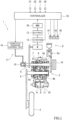
- FIG. 1 is a block diagram of a parallel hybrid motorcycle 1 according to Embodiment 1. While in the present embodiment the motorcycle is described as an example of the leisure vehicle of the present invention, the leisure vehicle may be another type of vehicle such as a utility vehicle. As shown in FIG. 1 , the motorcycle 1 includes an engine E (internal combustion engine) serving both as a drive source for travel and as a drive source for electricity generation and an electric motor M serving both as a drive source for travel and as an electricity generator. That is, the engine E is a vehicle drive engine that generates vehicle drive power transmitted to a drive wheel 2, and the motorcycle 1 employs a parallel hybrid system.
- engine E internal combustion engine
- the motorcycle 1 includes a transmission 3 that changes the speed of rotation produced by power from the engine E and the electric motor M and that transmits the resulting rotation to the drive wheel 2.
- the transmission 3 is, for example, a dog clutch transmission, and includes an input shaft 4 and an output shaft 5.
- the input shaft 4 receives power from the engine E and the electric motor M.
- the output shaft 5 transmits power to the drive wheel 2 through an output transmission mechanism 7 (e.g., a chain or a belt).
- the input shaft 4 is coupled to the output shaft 5 via a plurality of gear trains 6 with different reduction ratios so as to be capable of power transmission to the output shaft 5.
- shift forks 8 to 10 are slidably supported by a support shaft 7 disposed parallel to the input shaft 4 and the output shaft 5.
- a first end of the shift fork 8 is connected to a dog gear 6a of the input shaft 4, and first ends of the other shift forks 9 and 10 are connected to dog gears 6b and 6c of the output shaft 5.
- Second ends of the shift forks 8 to 10, which are opposite to the first ends, are fitted in guide grooves G of a shift drum 11.
- the shift drum 11 is rotated in response to an operation of a shift operation member (not shown) by the user, the shift forks 8 to 10 guided by the guide grooves G respectively cause the dog gears 6a to 6c to slide along the output shaft 5, thus bringing one of the gear trains 6 that has a desired reduction ratio into a power transmission state.
- a power transmission route with a desired shift position is selected.
- the shift operation member is, for example, a shift pedal operated by a foot of the user.
- the electric motor M is configured to generate power from electricity supplied from a battery 12 through an inverter 13, and is further configured to generate electricity from power transmitted from the input shaft 4 of the transmission 3 and charge the battery 12.
- the electric motor M is connected to the input shaft 4 of the transmission 3 via a power transmission mechanism (e.g., a gear or a belt). That is, the electric motor M is connected to the input shaft 4 through a different power transmission route than the engine E.
- the engine E includes a crankshaft Ea, which is connected to the input shaft 4 of the transmission 3 via a main clutch 14 (e.g., a multi-plate clutch) so as to be capable of power transmission to the input shaft 4.
- the main clutch 14 is mounted on one end of the input shaft 4.
- On the other end of the input shaft 4 is mounted a hydraulic cylinder 15.
- To the hydraulic cylinder 15 is connected a hydraulic pressure control unit 16. Once a clutch actuation command is input to the hydraulic pressure control unit 16, the hydraulic pressure control unit 16 applies a hydraulic pressure equal to or higher than a predetermined level to the hydraulic cylinder 15, and the hydraulic cylinder 15 applies clutch actuation power to the main clutch 14 through a rod inserted in the input shaft 4, so that the main clutch 14 is brought into a disengaged state.
- the hydraulic pressure control unit 16 stops applying the hydraulic pressure to the hydraulic cylinder 15, so that the main clutch 14 is brought into an engaged state. That is, the hydraulic cylinder 15 and the hydraulic pressure control unit 16 constitute a clutch actuator 17.
- FIG. 2 is a block diagram of a control system of the motorcycle 1 of FIG. 1 .
- the motorcycle 1 is equipped with a controller 18.
- the controller 18 receives output signals such as those from a battery management unit 20, an accelerator sensor 21, a vehicle speed sensor 22, an engine speed sensor 23, and a selection input button 24 (selection input device).
- the battery management unit 20 detects the remaining capacity and voltage of the battery 12.
- the accelerator sensor 21 detects the operation amount of an accelerator operation member (not shown) operated by the user (the operation amount corresponds to an acceleration/deceleration demand).
- the vehicle speed sensor 22 detects the travel speed of the motorcycle 1.
- the engine speed sensor 23 detects the rotational speed of the crankshaft Ea of the engine E.
- the selection input button 24 is operated by the user to input a mode selection, and outputs information indicating the selected mode to the controller 18.
- the selection input button 24 is mounted on a handlebar (not shown) of the motorcycle 1, and input to the selection input button 24 is enabled when the key position of a master key cylinder (not shown) is at an ON position.
- the controller 18 includes a processor, a volatile memory, a non-volatile memory, and an I/O interface as hardware components.
- the controller 18 includes a mode program storage section 31, a required torque calculation section 32, a mode program execution section 33, a motor control section 34, an engine control section 35, and a clutch control section 36 as functional components.
- the mode program storage section 31 is implemented by the non-volatile memory.
- the required torque calculation section 32, mode program execution section 33, motor control section 34, engine control section 35, and clutch control section 36 are implemented by receiving information such as those provided from the battery management unit 20, accelerator sensor 21, vehicle speed sensor 22, engine speed sensor 23, and selection input button 24 through the I/O interface and executing processing procedures using the volatile memory according to programs stored in the non-volatile memory with reference to the received information.
- the mode program storage section 31 stores in advance a plurality of mode programs each of which specifies how to change the states of the electric motor M and the engine E depending on the vehicle-related parameters (such as the required torque and the engine speed).
- the required torque calculation section 32 determines the level of an acceleration demand (or a deceleration demand) of the user based on an output signal from the accelerator sensor 21, determines the travel state of the motorcycle 1 based on output signals such as those from the vehicle speed sensor 22 and the engine speed sensor 23, and calculates the torque required to be transmitted to the drive wheel 2 in order to adapt the travel state of the motorcycle 1 to the acceleration or deceleration demand of the user (this torque is referred to as the required torque).
- the mode program execution section 33 retrieves, from the mode program storage section 31, a mode program associated with the mode selected by the user using the selection input button 24.
- the mode program execution section 33 outputs operation command values to the motor control section 34, engine control section 35, and clutch control section 36 according to the retrieved mode program and based on the required torque calculated by the required torque calculation section 32.
- the motor control section 34 controls the operation of the electric motor M by controlling the inverter 13 in response to a command received from the mode program execution section 33.
- the engine control section 35 controls the operation of the engine E by controlling a fuel injector 41, an ignition device 42, and a throttle device 43 in response to a command received from the mode program execution section 33.
- the clutch control section 36 controls the clutch actuator 17 in response to a command received from the mode program execution section 33. While in the present embodiment the controller 18 consists of a single controller, a functionally distributed system composed of a plurality of controllers may be employed.
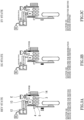
- FIGS. 3A to 3C illustrate power transmission states in different modes of the motorcycle 1 of FIG. 1 .
- the power transmission states of the motorcycle 1 include an engine-motor travel state (HEV state), an engine travel state (EG state), and a motor travel state (EV state). Selection among these power transmission states is made according to the mode programs stored in the mode program storage section 31.
- HEV state engine-motor travel state
- EG state engine travel state
- EV state motor travel state
- the main clutch 14 is in an engaged state, the electric motor M is in a driving state, and the engine E is in a driving state. That is, in the HEV state, vehicle drive power is transmitted to the drive wheel 2 from both the engine E and the electric motor M.
- the main clutch 14 is in an engaged state, the electric motor M is in a regeneration state, and the engine E is in a driving state. That is, in the EG state, vehicle drive power is transmitted to the drive wheel 2 only from the engine E, and the electric motor M receives power transmitted from the engine E through the input shaft 4 and generates electricity.
- the electric motor M need not be in a regeneration state but may be brought into a free-running state (state where the motor circuit is opened to prevent a resistance caused by generation of electromotive force).
- the main clutch 14 is in a disengaged state, the electric motor M is in a driving state, and the engine E is in a stopped state. That is, in the EV state, vehicle drive power is transmitted to the drive wheel 2 only from the electric motor M.
- FIG. 4 illustrates the different modes of the motorcycle 1 of FIG. 1 .
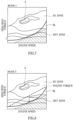
- FIGS. 5 to 8 are maps which respectively show the required torque versus engine speed relationships in the modes 1, 2, 4, and 5 shown in FIG. 4 .
- the contour line represents the thermal efficiency of the engine E
- the reference sign X designates a region where the highest efficiency is exhibited.
- the curve designated by the reference sign RL represents a steady torque required during travel of the vehicle, and this steady torque is referred to as "road load”.
- the maps of FIGS. 5 to 8 are stored as a part of the mode programs in the mode program storage section 31. These maps are assigned HEV, EG, and EV zones.
- the motorcycle when a predetermined first travel condition is satisfied, the motorcycle is brought into the EV state where the engine E is stopped and where power generated by the electric motor M is transmitted to the drive wheel 2.
- a predetermined second travel condition is satisfied, the motorcycle is brought into the HEV state where power generated by the engine E and power generated by the electric motor M are transmitted to the drive wheel 2.
- a predetermined third travel condition is satisfied, the motorcycle is brought into the EG state where the electric motor M is stopped or in a free-running state and where power generated by the engine E is transmitted to the drive wheel 2.
- the motorcycle when the required torque calculated by the required torque calculation section 32 is a low torque less than a predetermined threshold T (EV zone), the motorcycle is brought into the EV state irrespective of the engine speed since the thermal efficiency of the engine E is low.
- a predetermined threshold T EV zone
- the required torque is equal to or higher than the threshold T but lower than the value of the road load curve RL (HEV zone) and the engine speed is higher than a predetermined value
- the motorcycle is brought into the HEV state.
- the required torque is equal to or higher than the threshold T and equal to or higher than the value of the road load curve RL (EG zone)
- the motorcycle is brought into the EG state since the thermal efficiency of the engine E is high.
- the program for the mode 1 is a fuel economy priority mode program because of the presence of the EV zone where the engine E is not used. Since the fuel economy priority mode program includes the EV zone where travel not using the engine E but the electric motor M is given priority, the user can, in a particular usage environment, allow the vehicle to travel without engine noise by selecting the mode 1.
- the program for the mode 1 serves also as an engine-driven mode program since, according to this program, the motorcycle is brought into the EG state when the required torque is equal to or higher than the value of the road load curve RL.
- the mode 2 is the same as the mode 1 in regard to the EV zone and HEV zone, but differs from the mode 1 in the process performed in the EG zone.
- the required torque calculated by the required torque calculation section 32 is equal to or higher than the threshold T and equal to or higher than the value of the road load curve RL
- power generated by the engine E is transmitted to the drive wheel 2 and is used to allow the electric motor M to operate for regeneration (electricity generation).
- the engine E is controlled to increase its produced positive torque by an amount corresponding to a negative torque produced from regeneration by the electric motor M, so that the engine E can operate in a zone where the thermal efficiency of the engine E is high.
- the program for the mode 2 is an electricity generation priority mode program.
- the mode 4 includes the HEV zone and the EG zone but is devoid of the EV zone.
- the motorcycle is, even in the zone where the required torque is lower than the threshold T, not driven solely by the electric motor M. That is, the program for the mode 4 is an engine priority mode program.
- the mode 5 is the same as the mode 4 in regard to the absence of the EV zone and to the process performed in the HEV zone, but differs in the process performed in the EG zone just as does the mode 2 compared to the mode 1.
- the required torque calculated by the required torque calculation section 32 is equal to or higher than the value of the road load curve RL, power generated by the engine E is transmitted to the drive wheel 2 and is used to allow the electric motor M to operate for regeneration (electricity generation).
- the engine E is controlled to increase its produced positive torque by an amount corresponding to a negative torque produced from regeneration by the electric motor M, so that the engine E can operate in a zone where the thermal efficiency of the engine E is high.
- the program for the mode 5 is an electricity generation priority mode program.
- how to change the operation of the electric motor M and engine E is determined based on the required torque calculated with reference to the amount of accelerator operation, the vehicle speed, and the engine speed. Another factor may be used as a basis for determining how to change the operation of the electric motor M and engine E.
- how to change the operation of the electric motor M and engine E may be determined based on vehicle-related parameters such as the characteristics of the road on which the motorcycle 1 is traveling (e.g., the slope and shape of the road), the number of occupants, the type of the road surface (e.g., a paved road surface, an unpaved road surface, or a snow-covered road surface), values detected by acceleration rate sensors such as an IMU, the remaining battery capacity, and various control commands (e.g., an ABS command and a cruise control command).
- vehicle-related parameters such as the characteristics of the road on which the motorcycle 1 is traveling (e.g., the slope and shape of the road), the number of occupants, the type of the road surface (e.g., a paved road surface, an unpaved road surface, or a snow-covered road surface), values detected by acceleration rate sensors such as an IMU, the remaining battery capacity, and various control commands (e.g., an ABS command and a cruise control command).
- FIG. 9A is a timing chart for a situation where sharp acceleration is demanded in the modes 2 and 5 shown in FIG. 4
- FIG. 9B is a timing chart for a situation where sharp acceleration is demanded in the modes 3 and 6 shown in FIG. 4
- the mode program execution section 33 instructs the engine control section 35 to increase the torque of the engine E and accelerate the drive wheel and instructs the motor control section 34 to switch the electric motor M from the regeneration state to a stopped state (or a free-running state) or keep the electric motor M in the regeneration state.
- the sharp acceleration condition is that the user has operated the accelerator operation member to make a sharp acceleration and the accelerator sensor 21 has detected an increase in throttle opening degree which is equal to or greater than a predetermined value.
- the torque of the engine E may be unchanged or decreased, and the drive wheel 2 may be accelerated by torque transmission from the electric motor M to the drive wheel 2.
- the programs for the modes 3 and 6 are sharp acceleration-enabled mode programs.
- the mode 3 is the same as the mode 1, except for the process performed during sharp acceleration.
- the mode 6 is the same as the mode 4, except for the process performed during sharp acceleration.
- the electric motor M is not in the regeneration state immediately before the sharp acceleration condition is satisfied; thus, it is advantageous that when the sharp acceleration condition is satisfied, the electric motor M be accelerated or kept in the same state as immediately before the satisfaction of the sharp acceleration condition.
- a hybrid vehicle incorporating a plurality of mode programs but also a common hybrid vehicle can employ the above process in which, when the sharp acceleration condition is satisfied with the electric motor M in the regeneration state, the torque transmitted from the engine E to the drive wheel 2 is increased to accelerate the drive wheel and the electric motor M is switched from the regeneration state to the driving state to add a torque to the drive wheel 2.
- FIG. 10A is a timing chart for a first parallel drive mode
- FIG. 10B is a timing chart for a second parallel drive mode.
- the first parallel drive mode as shown in FIG. 10A , when the drive wheel 2 is determined to have slipped based on, for example, the fact that the difference in rotational speed between the front and rear wheels is detected to have exceeded a predetermined threshold, the torque of the engine E is corrected to a smaller value to facilitate recovery of traction. When it is determined that the slip has been resolved, the decreasing correction to the torque of the engine E is stopped.
- the torque of the engine E is corrected to a smaller value, and the electric motor M is intermittently (or periodically) operated to intermittently (or periodically) transmit power to the drive wheel 2, thereby facilitating quick recovery of traction.
- the decreasing correction to the torque of the engine E and the intermittent operation of the electric motor M are stopped. This process can increase the number of choices of travel feeling.
- the operation pattern of the electric motor M in the first parallel drive mode and the operation pattern of the electric motor M in the second parallel drive mode may vary from those described above, as long as the operation pattern in the first parallel drive mode and the operation pattern in the second parallel drive mode are different from each other under the same travel condition.
- a negative part of the periodically fluctuating torque of the engine E may be canceled by a positive torque of the electric motor M to reduce the total torque fluctuation, or a positive torque of the electric motor M may be added to a positive part of the periodically fluctuating torque of the engine E to increase the total torque fluctuation.
- the operation status of the electric motor M and engine E can be changed in a wide variety of patterns depending on the vehicle-related parameters, and at the same time an appropriate state selection for the hybrid motorcycle 1 can be ensured in each mode program.
- the user can freely modify the characteristics of the hybrid motorcycle 1 depending on the user's preference or the usage environment by selecting one of the plurality of mode programs at the user's discretion.
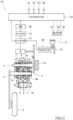
- FIG. 11 is a block diagram of a series hybrid motorcycle 101 according to Embodiment 2 not forming part of the invention.
- the motorcycle 101 includes the engine E (internal combustion engine) as a drive source for electricity generation and the electric motor M as a drive source for travel. That is, the engine E is an electricity generation engine for driving an electricity generator 50 that generates electricity to be supplied to the electric motor M and charges the battery 12, and the motorcycle 101 employs a series hybrid system.
- the engine E internal combustion engine
- the electric motor M as a drive source for travel. That is, the engine E is an electricity generation engine for driving an electricity generator 50 that generates electricity to be supplied to the electric motor M and charges the battery 12, and the motorcycle 101 employs a series hybrid system.
- a controller 118 receives information about the battery 12 from the battery management unit 20.
- the controller 118 receives detection information such as those from the accelerator sensor 21, the vehicle speed sensor 22, a motor speed sensor 123, and the selection input button 24. Based on the received information, the controller 118 controls the inverter 13 for control of the electric motor M, and controls the fuel injector 41, ignition device 42, and throttle device 43 of the engine E.
- the controller 118 includes a storage section storing a plurality of mode programs, a mode program execution section that executes a mode program retrieved from the storage section, a motor control section, and an engine control section.
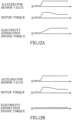
- FIG. 12A is a timing chart for a situation where the motorcycle 101 of FIG. 11 is shifted from steady travel to accelerating travel in an electricity generation priority mode
- FIG. 12B is a timing chart for a situation where the motorcycle 101 is shifted from steady travel to accelerating travel in a silence priority mode.
- the electricity generation priority mode program has been selected, as shown in FIG. 12A , when the operation amount detected by the accelerator sensor 21 increases from an amount smaller than a predetermined amount and exceeds the predetermined amount (namely, when the user performs a given acceleration operation on the accelerator operation member), the torque of the engine E for electricity generation is increased and the battery 12 is charged to address an increased electricity consumption due to an increase in the torque of the electric motor M.
- the silence priority mode program when the operation amount detected by the accelerator sensor 21 increases from an amount smaller than a predetermined amount and exceeds the predetermined amount (namely, when the user performs a given acceleration operation on the accelerator operation member), the torque of the engine E is kept the same as immediately before (before the operation amount exceeds the predetermined amount).
- the silence priority mode program even when the user gives an acceleration command, any sound derived from acceleration of the engine E for electricity generation is not produced, and noise emission can be prevented.
- FIG. 13A is a timing chart for a situation where the electricity consumption of the motorcycle 101 of FIG. 11 increases when the motorcycle 101 is at rest in a charging priority mode
- FIGS. 13B and 13C are each a timing chart for a situation where the electricity consumption of the motorcycle 101 increases when the motorcycle 101 is at rest in a noise prevention mode.
- the engine E is started if the remaining capacity of the battery 12 decreases to less than a predetermined threshold when the motorcycle 101 is at rest.
- the noise prevention mode program has ben selected, as shown in FIGS. 13B and 13C , even if the remaining capacity of the battery 12 decreases to less than the threshold when the motorcycle 101 is at rest, the state of the engine E is kept the same as before the remaining capacity of the battery 12 decreases to less than the threshold.
- the noise prevention mode program even if the remaining capacity of the battery 12 decreases when the motorcycle 101 is at rest, the decrease in remaining capacity does not lead to production of sound derived from sharp acceleration of the engine E for electricity generation. As such, sudden noise emission can be prevented when the vehicle is at rest. While in the examples described above the charging priority mode program and the noise prevention mode program are employed in a series hybrid vehicle, these modes may be employed in a parallel hybrid vehicle.
Landscapes
- Engineering & Computer Science (AREA)
- Mechanical Engineering (AREA)
- Transportation (AREA)
- Chemical & Material Sciences (AREA)
- Combustion & Propulsion (AREA)
- Automation & Control Theory (AREA)
- Human Computer Interaction (AREA)
- Power Engineering (AREA)
- Electric Propulsion And Braking For Vehicles (AREA)
- Hybrid Electric Vehicles (AREA)
- Control Of Driving Devices And Active Controlling Of Vehicle (AREA)
Claims (1)
- Hybrid-Freizeitfahrzeug (1), das mit einem Elektromotor (M) und einem Verbrennungsmotor (E) ausgestattet ist, das Hybrid-Freizeitfahrzeug (1) umfassend:einen Beschleunigungssensor (21), der konfiguriert ist, um einen Betätigungsgrad eines Beschleunigungsbetätigungsbauteils, das durch einen Benutzer betätigt wird, zu erkennen;eine Steuerung (18), die einen Prozessor und einen Speicher umfasst und die konfiguriert ist, um den Elektromotor (M) und den Verbrennungsmotor (E) basierend auf einem Erkennungssignal des Beschleunigungssensors (21) zu steuern; undeine Auswahleingabevorrichtung (24), die mit der Steuerung (18) verbunden ist und durch den Benutzer betätigt wird, wobeider Speicher eine Vielzahl von Modusprogrammen speichert, von denen jedes angibt, wie Zustände des Elektromotors (M) und des Verbrennungsmotors (E) in Abhängigkeit von fahrzeugbezogenen Parametern geändert werden sollen, undwobei der Prozessor konfiguriert ist, um als Reaktion auf eine Eingabe, die durch den Benutzer an die Auswahleingabevorrichtung (24) bereitgestellt wird, ein Modusprogramm aus der Vielzahl von Modusprogrammen auszuwählen und den Elektromotor (M) und den Verbrennungsmotor (E) entsprechend dem ausgewählten Modusprogramm zu steuern, wobei die Vielzahl von Modusprogrammen ein Modusprogramm mit Kraftstoffeinsparungspriorität einschließt, gemäß dem, wenn eine vorbestimmte Fahrtbedingung erfüllt ist, der Verbrennungsmotor (E) gestoppt und Leistung, die durch den Elektromotor (M) erzeugt wird, auf ein Antriebsrad (2) übertragen wird,dadurch gekennzeichnet, dass:die Vielzahl von Modusprogrammen ferner ein Verbrennungsmotorprioritätsmodusprogramm einschließt, gemäß dem der Verbrennungsmotor (E) immer läuft und unter beliebigen Fahrtbedingungen, Leistung, die durch den Verbrennungsmotor (E) erzeugt wird, auf das Antriebsrad (2) übertragen wird; undin dem Modusprogramm mit Kraftstoffeinsparungspriorität, wenn ein erforderliches Drehmoment kleiner als ein Schwellenwert ist, das Fahrzeug (1) in einem EV-Zustand ist, unabhängig von einer Motordrehzahl, und wenn das erforderliche Drehmoment gleich oder höher als der Schwellenwert, aber niedriger als eine Straßenlastkurve ist, die ein während der Fahrt des Fahrzeugs erforderliches stationäres Drehmoment darstellt, und die Motordrehzahl höher als ein vorbestimmter Wert ist, das Fahrzeug (1) von dem EV-Zustand in einen HEV-Zustand wechselt, und wenn das erforderliche Drehmoment gleich oder höher als der Schwellenwert und gleich oder höher als die Straßenlastkurve ist, das Fahrzeug (1) von dem HEV-Zustand in einen EG-Zustand wechselt,der EV-Zustand ein Zustand ist, in dem der Verbrennungsmotor (E) gestoppt ist und Leistung, die durch den Elektromotor (M) erzeugt wird, auf das Antriebsrad (2) übertragen wird,der HEV-Zustand ein Zustand ist, in dem Leistung, die durch den Verbrennungsmotor (E) erzeugt wird, und Leistung, die durch den Elektromotor (M) erzeugt wird, auf das Antriebsrad (2) übertragen werden, undder EG-Zustand ein Zustand ist, in dem der Elektromotor (M) gestoppt ist oder sich in einem Freilaufzustand befindet und in dem Leistung, die durch den Verbrennungsmotor (E) erzeugt wird, auf das Antriebsrad (2) übertragen wird.
Applications Claiming Priority (1)
| Application Number | Priority Date | Filing Date | Title |
|---|---|---|---|
| PCT/JP2018/008782 WO2019171496A1 (ja) | 2018-03-07 | 2018-03-07 | レジャービークル |
Publications (3)
| Publication Number | Publication Date |
|---|---|
| EP3763588A1 EP3763588A1 (de) | 2021-01-13 |
| EP3763588A4 EP3763588A4 (de) | 2021-09-22 |
| EP3763588B1 true EP3763588B1 (de) | 2024-09-11 |
Family
ID=67845565
Family Applications (1)
| Application Number | Title | Priority Date | Filing Date |
|---|---|---|---|
| EP18908983.2A Active EP3763588B1 (de) | 2018-03-07 | 2018-03-07 | Freizeitfahrzeug |
Country Status (5)
| Country | Link |
|---|---|
| US (1) | US12017723B2 (de) |
| EP (1) | EP3763588B1 (de) |
| JP (1) | JP6991437B2 (de) |
| CN (1) | CN111491837B (de) |
| WO (1) | WO2019171496A1 (de) |
Families Citing this family (12)
| Publication number | Priority date | Publication date | Assignee | Title |
|---|---|---|---|---|
| DE102018208425B4 (de) * | 2018-05-28 | 2026-01-29 | Bayerische Motoren Werke Aktiengesellschaft | Antriebsstrang für ein Kraftfahrzeug, insbesondere für einen Kraftwagen, sowie Verfahren zum Betreiben eines solchen Antriebsstrangs |
| US12130122B1 (en) | 2021-08-13 | 2024-10-29 | Oshkosh Defense, Llc | Military vehicle with battery armor |
| US12060053B1 (en) | 2021-08-13 | 2024-08-13 | Oshkosh Defense, Llc | Military vehicle with control modes |
| US12311754B1 (en) | 2021-08-13 | 2025-05-27 | Oshkosh Defense, Llc | Power export system for a military vehicle |
| US12083995B1 (en) | 2021-08-13 | 2024-09-10 | Oshkosh Defense, Llc | Power export system for a military vehicle |
| US11498409B1 (en) | 2021-08-13 | 2022-11-15 | Oshkosh Defense, Llc | Electrified military vehicle |
| US12583309B1 (en) | 2021-08-13 | 2026-03-24 | Oshkosh Defense, Llc | Hybrid power system for a military vehicle |
| US12319160B1 (en) | 2021-08-13 | 2025-06-03 | Oshkosh Defense, Llc | Convoy operations for electrified military vehicles |
| US12358361B1 (en) | 2021-08-13 | 2025-07-15 | Oshkosh Defense, Llc | Electrified military vehicle with electric weaponry support system |
| US12030479B1 (en) | 2021-08-13 | 2024-07-09 | Oshkosh Defense, Llc | Prioritized charging of an energy storage system of a military vehicle |
| US12351028B1 (en) | 2021-08-13 | 2025-07-08 | Oshkosh Defense, Llc | Military vehicle with modular battery units |
| US11383694B1 (en) | 2021-08-13 | 2022-07-12 | Oshkosh Defense, Llc | Electrified military vehicle |
Citations (6)
| Publication number | Priority date | Publication date | Assignee | Title |
|---|---|---|---|---|
| US5826671A (en) * | 1995-12-27 | 1998-10-27 | Toyota Jidosha Kabushiki Kaisha | Apparatus for controlling hybrid vehicle and method of the same |
| EP0925979A2 (de) * | 1997-12-25 | 1999-06-30 | Nissan Motor Co., Ltd. | Fahrzeugantrieb |
| US20110040434A1 (en) * | 2009-08-05 | 2011-02-17 | Kokusan Denki Co., Ltd. | Motorcycle |
| WO2011088876A1 (de) * | 2010-01-23 | 2011-07-28 | Bayerische Motoren Werke Aktiengesellschaft | Verfahren zur ermittlung eines soll-getriebegangs fuer ein hybridfahrzeug |
| GB2517469A (en) * | 2013-08-21 | 2015-02-25 | Jaguar Land Rover Ltd | Hybrid electric vehicle controller and method |
| US20180050686A1 (en) * | 2016-08-17 | 2018-02-22 | GM Global Technology Operations LLC | Hybrid Vehicle Propulsion Systems And Methods |
Family Cites Families (13)
| Publication number | Priority date | Publication date | Assignee | Title |
|---|---|---|---|---|
| JP3190887B2 (ja) * | 1997-07-03 | 2001-07-23 | 日野自動車株式会社 | ハイブリッド自動車 |
| JP4460331B2 (ja) | 2004-03-08 | 2010-05-12 | ヤマハ発動機株式会社 | 自動二輪車 |
| TWI302501B (en) * | 2005-02-15 | 2008-11-01 | Honda Motor Co Ltd | Power control unit |
| JP2007008349A (ja) * | 2005-06-30 | 2007-01-18 | Yamaha Motor Co Ltd | ハイブリッド車両 |
| JP2007055324A (ja) | 2005-08-22 | 2007-03-08 | Toyota Motor Corp | 自動車およびその制御方法 |
| JP2009153281A (ja) | 2007-12-20 | 2009-07-09 | Denso Corp | 電動車両の制御装置 |
| JP4957538B2 (ja) * | 2007-12-27 | 2012-06-20 | アイシン・エィ・ダブリュ株式会社 | コンバータ装置,回転電機制御装置および駆動装置 |
| JP5808187B2 (ja) * | 2011-07-29 | 2015-11-10 | 川崎重工業株式会社 | 乗物用制御装置、該制御装置を備えた乗物及びその制御方法 |
| US9352737B2 (en) | 2012-10-08 | 2016-05-31 | Ford Global Technologies, Llc | Method and system for operating a hybrid powertrain |
| JP6060839B2 (ja) * | 2013-07-17 | 2017-01-18 | トヨタ自動車株式会社 | ハイブリッド車両の制御装置 |
| RU2670503C2 (ru) * | 2013-09-26 | 2018-10-23 | Ниссан Мотор Ко., Лтд. | Устройство управления для гибридного транспортного средства |
| JP6263087B2 (ja) * | 2014-05-30 | 2018-01-17 | 川崎重工業株式会社 | 船舶のハイブリッド推進システムおよびその制御方法 |
| US10272913B2 (en) * | 2015-06-17 | 2019-04-30 | Consortium de Recherche BRP—Universite de Sherbrooke S.E.N.C. | Regenerative braking system and method |
-
2018
- 2018-03-07 JP JP2020504555A patent/JP6991437B2/ja active Active
- 2018-03-07 EP EP18908983.2A patent/EP3763588B1/de active Active
- 2018-03-07 CN CN201880083809.1A patent/CN111491837B/zh active Active
- 2018-03-07 US US16/962,468 patent/US12017723B2/en active Active
- 2018-03-07 WO PCT/JP2018/008782 patent/WO2019171496A1/ja not_active Ceased
Patent Citations (6)
| Publication number | Priority date | Publication date | Assignee | Title |
|---|---|---|---|---|
| US5826671A (en) * | 1995-12-27 | 1998-10-27 | Toyota Jidosha Kabushiki Kaisha | Apparatus for controlling hybrid vehicle and method of the same |
| EP0925979A2 (de) * | 1997-12-25 | 1999-06-30 | Nissan Motor Co., Ltd. | Fahrzeugantrieb |
| US20110040434A1 (en) * | 2009-08-05 | 2011-02-17 | Kokusan Denki Co., Ltd. | Motorcycle |
| WO2011088876A1 (de) * | 2010-01-23 | 2011-07-28 | Bayerische Motoren Werke Aktiengesellschaft | Verfahren zur ermittlung eines soll-getriebegangs fuer ein hybridfahrzeug |
| GB2517469A (en) * | 2013-08-21 | 2015-02-25 | Jaguar Land Rover Ltd | Hybrid electric vehicle controller and method |
| US20180050686A1 (en) * | 2016-08-17 | 2018-02-22 | GM Global Technology Operations LLC | Hybrid Vehicle Propulsion Systems And Methods |
Also Published As
| Publication number | Publication date |
|---|---|
| US12017723B2 (en) | 2024-06-25 |
| JPWO2019171496A1 (ja) | 2020-10-22 |
| WO2019171496A1 (ja) | 2019-09-12 |
| JP6991437B2 (ja) | 2022-01-12 |
| EP3763588A4 (de) | 2021-09-22 |
| CN111491837A (zh) | 2020-08-04 |
| US20210070388A1 (en) | 2021-03-11 |
| EP3763588A1 (de) | 2021-01-13 |
| CN111491837B (zh) | 2023-09-19 |
Similar Documents
| Publication | Publication Date | Title |
|---|---|---|
| EP3763588B1 (de) | Freizeitfahrzeug | |
| US9145130B2 (en) | Vehicle travel control device | |
| EP1987995B1 (de) | Vorrichtung und Verfahren zur Antriebssteuerung eines Hybridfahrzeugs | |
| US10525968B2 (en) | Method for controlling a drive device of a hybrid vehicle and hybrid vehicle | |
| US8849486B2 (en) | Vehicle and method of controlling the same | |
| US9026291B2 (en) | Vehicle hybrid drive device | |
| CN101208229B (zh) | 混合动力车辆及其控制方法 | |
| US9267481B2 (en) | Hybrid vehicle engine start control system | |
| US10160347B2 (en) | Electric motor vehicle and operating method for an electric motor vehicle | |
| US9074683B2 (en) | Gear shift indication device | |
| US20130218394A1 (en) | Vehicle hybrid drive device | |
| US9227620B2 (en) | Engine start control device and engine start control method for hybrid electric vehicle | |
| EP2247479A1 (de) | Steuerungsvorrichtung und verfahren zur steuerung eines hybridfahrzeugs | |
| JP2007069804A (ja) | ハイブリッド車両のエンジン始動応答改善装置 | |
| JP2009278840A (ja) | 電動車両の回生制動制御装置 | |
| US7219497B2 (en) | Hybrid car and control method of the same | |
| JP2012091573A (ja) | トルク制御装置及びトルク制御方法 | |
| JP2007331599A (ja) | ハイブリッド車両の伝動状態切り替え制御装置 | |
| CN118004136A (zh) | 一种车辆模式切换控制方法、装置、车辆及介质 | |
| KR102237064B1 (ko) | 하이브리드 차량 및 그 제어 방법 | |
| JP7813102B2 (ja) | 車両用制御装置 | |
| KR102383229B1 (ko) | 클러치 페달 학습 방법 및 장치 | |
| JP5151702B2 (ja) | 複合ブレーキの協調制御装置 | |
| JP2021049947A (ja) | ハイブリッド車両の制御装置 | |
| EP3828047B1 (de) | Steuerungsvorrichtung und steuerungsverfahren für hybridfahrzeug |
Legal Events
| Date | Code | Title | Description |
|---|---|---|---|
| STAA | Information on the status of an ep patent application or granted ep patent |
Free format text: STATUS: THE INTERNATIONAL PUBLICATION HAS BEEN MADE |
|
| PUAI | Public reference made under article 153(3) epc to a published international application that has entered the european phase |
Free format text: ORIGINAL CODE: 0009012 |
|
| STAA | Information on the status of an ep patent application or granted ep patent |
Free format text: STATUS: REQUEST FOR EXAMINATION WAS MADE |
|
| 17P | Request for examination filed |
Effective date: 20200831 |
|
| AK | Designated contracting states |
Kind code of ref document: A1 Designated state(s): AL AT BE BG CH CY CZ DE DK EE ES FI FR GB GR HR HU IE IS IT LI LT LU LV MC MK MT NL NO PL PT RO RS SE SI SK SM TR |
|
| AX | Request for extension of the european patent |
Extension state: BA ME |
|
| DAV | Request for validation of the european patent (deleted) | ||
| DAX | Request for extension of the european patent (deleted) | ||
| A4 | Supplementary search report drawn up and despatched |
Effective date: 20210824 |
|
| RIC1 | Information provided on ipc code assigned before grant |
Ipc: B60W 10/26 20060101ALI20210818BHEP Ipc: B60W 10/02 20060101ALI20210818BHEP Ipc: B60W 50/08 20200101ALI20210818BHEP Ipc: B60W 20/19 20160101ALI20210818BHEP Ipc: B60W 20/13 20160101ALI20210818BHEP Ipc: B60W 20/10 20160101ALI20210818BHEP Ipc: B60K 6/387 20071001ALI20210818BHEP Ipc: B60L 50/10 20190101ALI20210818BHEP Ipc: B60W 20/17 20160101ALI20210818BHEP Ipc: B60W 10/08 20060101ALI20210818BHEP Ipc: B60K 6/547 20071001ALI20210818BHEP Ipc: B60K 6/48 20071001ALI20210818BHEP Ipc: B60K 6/46 20071001ALI20210818BHEP Ipc: B60W 10/06 20060101AFI20210818BHEP |
|
| STAA | Information on the status of an ep patent application or granted ep patent |
Free format text: STATUS: EXAMINATION IS IN PROGRESS |
|
| RAP1 | Party data changed (applicant data changed or rights of an application transferred) |
Owner name: KAWASAKI MOTORS, LTD. |
|
| 17Q | First examination report despatched |
Effective date: 20220502 |
|
| GRAP | Despatch of communication of intention to grant a patent |
Free format text: ORIGINAL CODE: EPIDOSNIGR1 |
|
| STAA | Information on the status of an ep patent application or granted ep patent |
Free format text: STATUS: GRANT OF PATENT IS INTENDED |
|
| INTG | Intention to grant announced |
Effective date: 20240503 |
|
| GRAS | Grant fee paid |
Free format text: ORIGINAL CODE: EPIDOSNIGR3 |
|
| GRAA | (expected) grant |
Free format text: ORIGINAL CODE: 0009210 |
|
| STAA | Information on the status of an ep patent application or granted ep patent |
Free format text: STATUS: THE PATENT HAS BEEN GRANTED |
|
| AK | Designated contracting states |
Kind code of ref document: B1 Designated state(s): AL AT BE BG CH CY CZ DE DK EE ES FI FR GB GR HR HU IE IS IT LI LT LU LV MC MK MT NL NO PL PT RO RS SE SI SK SM TR |
|
| REG | Reference to a national code |
Ref country code: GB Ref legal event code: FG4D |
|
| REG | Reference to a national code |
Ref country code: CH Ref legal event code: EP |
|
| REG | Reference to a national code |
Ref country code: DE Ref legal event code: R096 Ref document number: 602018074402 Country of ref document: DE |
|
| REG | Reference to a national code |
Ref country code: IE Ref legal event code: FG4D |
|
| REG | Reference to a national code |
Ref country code: LT Ref legal event code: MG9D |
|
| PG25 | Lapsed in a contracting state [announced via postgrant information from national office to epo] |
Ref country code: NO Free format text: LAPSE BECAUSE OF FAILURE TO SUBMIT A TRANSLATION OF THE DESCRIPTION OR TO PAY THE FEE WITHIN THE PRESCRIBED TIME-LIMIT Effective date: 20241211 |
|
| REG | Reference to a national code |
Ref country code: NL Ref legal event code: MP Effective date: 20240911 |
|
| PG25 | Lapsed in a contracting state [announced via postgrant information from national office to epo] |
Ref country code: FI Free format text: LAPSE BECAUSE OF FAILURE TO SUBMIT A TRANSLATION OF THE DESCRIPTION OR TO PAY THE FEE WITHIN THE PRESCRIBED TIME-LIMIT Effective date: 20240911 Ref country code: GR Free format text: LAPSE BECAUSE OF FAILURE TO SUBMIT A TRANSLATION OF THE DESCRIPTION OR TO PAY THE FEE WITHIN THE PRESCRIBED TIME-LIMIT Effective date: 20241212 |
|
| PG25 | Lapsed in a contracting state [announced via postgrant information from national office to epo] |
Ref country code: BG Free format text: LAPSE BECAUSE OF FAILURE TO SUBMIT A TRANSLATION OF THE DESCRIPTION OR TO PAY THE FEE WITHIN THE PRESCRIBED TIME-LIMIT Effective date: 20240911 |
|
| PG25 | Lapsed in a contracting state [announced via postgrant information from national office to epo] |
Ref country code: LV Free format text: LAPSE BECAUSE OF FAILURE TO SUBMIT A TRANSLATION OF THE DESCRIPTION OR TO PAY THE FEE WITHIN THE PRESCRIBED TIME-LIMIT Effective date: 20240911 |
|
| PG25 | Lapsed in a contracting state [announced via postgrant information from national office to epo] |
Ref country code: HR Free format text: LAPSE BECAUSE OF FAILURE TO SUBMIT A TRANSLATION OF THE DESCRIPTION OR TO PAY THE FEE WITHIN THE PRESCRIBED TIME-LIMIT Effective date: 20240911 |
|
| PG25 | Lapsed in a contracting state [announced via postgrant information from national office to epo] |
Ref country code: RS Free format text: LAPSE BECAUSE OF FAILURE TO SUBMIT A TRANSLATION OF THE DESCRIPTION OR TO PAY THE FEE WITHIN THE PRESCRIBED TIME-LIMIT Effective date: 20241211 Ref country code: ES Free format text: LAPSE BECAUSE OF FAILURE TO SUBMIT A TRANSLATION OF THE DESCRIPTION OR TO PAY THE FEE WITHIN THE PRESCRIBED TIME-LIMIT Effective date: 20240911 |
|
| PG25 | Lapsed in a contracting state [announced via postgrant information from national office to epo] |
Ref country code: RS Free format text: LAPSE BECAUSE OF FAILURE TO SUBMIT A TRANSLATION OF THE DESCRIPTION OR TO PAY THE FEE WITHIN THE PRESCRIBED TIME-LIMIT Effective date: 20241211 Ref country code: NO Free format text: LAPSE BECAUSE OF FAILURE TO SUBMIT A TRANSLATION OF THE DESCRIPTION OR TO PAY THE FEE WITHIN THE PRESCRIBED TIME-LIMIT Effective date: 20241211 Ref country code: LV Free format text: LAPSE BECAUSE OF FAILURE TO SUBMIT A TRANSLATION OF THE DESCRIPTION OR TO PAY THE FEE WITHIN THE PRESCRIBED TIME-LIMIT Effective date: 20240911 Ref country code: HR Free format text: LAPSE BECAUSE OF FAILURE TO SUBMIT A TRANSLATION OF THE DESCRIPTION OR TO PAY THE FEE WITHIN THE PRESCRIBED TIME-LIMIT Effective date: 20240911 Ref country code: GR Free format text: LAPSE BECAUSE OF FAILURE TO SUBMIT A TRANSLATION OF THE DESCRIPTION OR TO PAY THE FEE WITHIN THE PRESCRIBED TIME-LIMIT Effective date: 20241212 Ref country code: FI Free format text: LAPSE BECAUSE OF FAILURE TO SUBMIT A TRANSLATION OF THE DESCRIPTION OR TO PAY THE FEE WITHIN THE PRESCRIBED TIME-LIMIT Effective date: 20240911 Ref country code: ES Free format text: LAPSE BECAUSE OF FAILURE TO SUBMIT A TRANSLATION OF THE DESCRIPTION OR TO PAY THE FEE WITHIN THE PRESCRIBED TIME-LIMIT Effective date: 20240911 Ref country code: BG Free format text: LAPSE BECAUSE OF FAILURE TO SUBMIT A TRANSLATION OF THE DESCRIPTION OR TO PAY THE FEE WITHIN THE PRESCRIBED TIME-LIMIT Effective date: 20240911 |
|
| REG | Reference to a national code |
Ref country code: AT Ref legal event code: MK05 Ref document number: 1722444 Country of ref document: AT Kind code of ref document: T Effective date: 20240911 |
|
| PG25 | Lapsed in a contracting state [announced via postgrant information from national office to epo] |
Ref country code: NL Free format text: LAPSE BECAUSE OF FAILURE TO SUBMIT A TRANSLATION OF THE DESCRIPTION OR TO PAY THE FEE WITHIN THE PRESCRIBED TIME-LIMIT Effective date: 20240911 |
|
| PG25 | Lapsed in a contracting state [announced via postgrant information from national office to epo] |
Ref country code: IS Free format text: LAPSE BECAUSE OF FAILURE TO SUBMIT A TRANSLATION OF THE DESCRIPTION OR TO PAY THE FEE WITHIN THE PRESCRIBED TIME-LIMIT Effective date: 20250111 Ref country code: PT Free format text: LAPSE BECAUSE OF FAILURE TO SUBMIT A TRANSLATION OF THE DESCRIPTION OR TO PAY THE FEE WITHIN THE PRESCRIBED TIME-LIMIT Effective date: 20250113 |
|
| PG25 | Lapsed in a contracting state [announced via postgrant information from national office to epo] |
Ref country code: RO Free format text: LAPSE BECAUSE OF FAILURE TO SUBMIT A TRANSLATION OF THE DESCRIPTION OR TO PAY THE FEE WITHIN THE PRESCRIBED TIME-LIMIT Effective date: 20240911 Ref country code: SM Free format text: LAPSE BECAUSE OF FAILURE TO SUBMIT A TRANSLATION OF THE DESCRIPTION OR TO PAY THE FEE WITHIN THE PRESCRIBED TIME-LIMIT Effective date: 20240911 |
|
| PG25 | Lapsed in a contracting state [announced via postgrant information from national office to epo] |
Ref country code: EE Free format text: LAPSE BECAUSE OF FAILURE TO SUBMIT A TRANSLATION OF THE DESCRIPTION OR TO PAY THE FEE WITHIN THE PRESCRIBED TIME-LIMIT Effective date: 20240911 Ref country code: AT Free format text: LAPSE BECAUSE OF FAILURE TO SUBMIT A TRANSLATION OF THE DESCRIPTION OR TO PAY THE FEE WITHIN THE PRESCRIBED TIME-LIMIT Effective date: 20240911 |
|
| PG25 | Lapsed in a contracting state [announced via postgrant information from national office to epo] |
Ref country code: CZ Free format text: LAPSE BECAUSE OF FAILURE TO SUBMIT A TRANSLATION OF THE DESCRIPTION OR TO PAY THE FEE WITHIN THE PRESCRIBED TIME-LIMIT Effective date: 20240911 Ref country code: PL Free format text: LAPSE BECAUSE OF FAILURE TO SUBMIT A TRANSLATION OF THE DESCRIPTION OR TO PAY THE FEE WITHIN THE PRESCRIBED TIME-LIMIT Effective date: 20240911 |
|
| PG25 | Lapsed in a contracting state [announced via postgrant information from national office to epo] |
Ref country code: SK Free format text: LAPSE BECAUSE OF FAILURE TO SUBMIT A TRANSLATION OF THE DESCRIPTION OR TO PAY THE FEE WITHIN THE PRESCRIBED TIME-LIMIT Effective date: 20240911 Ref country code: IT Free format text: LAPSE BECAUSE OF FAILURE TO SUBMIT A TRANSLATION OF THE DESCRIPTION OR TO PAY THE FEE WITHIN THE PRESCRIBED TIME-LIMIT Effective date: 20240911 |
|
| REG | Reference to a national code |
Ref country code: DE Ref legal event code: R097 Ref document number: 602018074402 Country of ref document: DE |
|
| PG25 | Lapsed in a contracting state [announced via postgrant information from national office to epo] |
Ref country code: DK Free format text: LAPSE BECAUSE OF FAILURE TO SUBMIT A TRANSLATION OF THE DESCRIPTION OR TO PAY THE FEE WITHIN THE PRESCRIBED TIME-LIMIT Effective date: 20240911 |
|
| PLBE | No opposition filed within time limit |
Free format text: ORIGINAL CODE: 0009261 |
|
| STAA | Information on the status of an ep patent application or granted ep patent |
Free format text: STATUS: NO OPPOSITION FILED WITHIN TIME LIMIT |
|
| 26N | No opposition filed |
Effective date: 20250612 |
|
| PG25 | Lapsed in a contracting state [announced via postgrant information from national office to epo] |
Ref country code: SE Free format text: LAPSE BECAUSE OF FAILURE TO SUBMIT A TRANSLATION OF THE DESCRIPTION OR TO PAY THE FEE WITHIN THE PRESCRIBED TIME-LIMIT Effective date: 20240911 |
|
| PG25 | Lapsed in a contracting state [announced via postgrant information from national office to epo] |
Ref country code: MC Free format text: LAPSE BECAUSE OF FAILURE TO SUBMIT A TRANSLATION OF THE DESCRIPTION OR TO PAY THE FEE WITHIN THE PRESCRIBED TIME-LIMIT Effective date: 20240911 |
|
| REG | Reference to a national code |
Ref country code: CH Ref legal event code: H13 Free format text: ST27 STATUS EVENT CODE: U-0-0-H10-H13 (AS PROVIDED BY THE NATIONAL OFFICE) Effective date: 20251023 |
|
| PG25 | Lapsed in a contracting state [announced via postgrant information from national office to epo] |
Ref country code: LU Free format text: LAPSE BECAUSE OF NON-PAYMENT OF DUE FEES Effective date: 20250307 |
|
| GBPC | Gb: european patent ceased through non-payment of renewal fee |
Effective date: 20250307 |
|
| REG | Reference to a national code |
Ref country code: BE Ref legal event code: MM Effective date: 20250331 |
|
| PG25 | Lapsed in a contracting state [announced via postgrant information from national office to epo] |
Ref country code: GB Free format text: LAPSE BECAUSE OF NON-PAYMENT OF DUE FEES Effective date: 20250307 |
|
| PG25 | Lapsed in a contracting state [announced via postgrant information from national office to epo] |
Ref country code: BE Free format text: LAPSE BECAUSE OF NON-PAYMENT OF DUE FEES Effective date: 20250331 |
|
| PG25 | Lapsed in a contracting state [announced via postgrant information from national office to epo] |
Ref country code: CH Free format text: LAPSE BECAUSE OF NON-PAYMENT OF DUE FEES Effective date: 20250331 |
|
| PG25 | Lapsed in a contracting state [announced via postgrant information from national office to epo] |
Ref country code: IE Free format text: LAPSE BECAUSE OF NON-PAYMENT OF DUE FEES Effective date: 20250307 |
|
| PGFP | Annual fee paid to national office [announced via postgrant information from national office to epo] |
Ref country code: DE Payment date: 20260128 Year of fee payment: 9 |
|
| PGFP | Annual fee paid to national office [announced via postgrant information from national office to epo] |
Ref country code: FR Payment date: 20260209 Year of fee payment: 9 |