EP3763677A1 - Zinnoxidpulver - Google Patents
Zinnoxidpulver Download PDFInfo
- Publication number
- EP3763677A1 EP3763677A1 EP18909201.8A EP18909201A EP3763677A1 EP 3763677 A1 EP3763677 A1 EP 3763677A1 EP 18909201 A EP18909201 A EP 18909201A EP 3763677 A1 EP3763677 A1 EP 3763677A1
- Authority
- EP
- European Patent Office
- Prior art keywords
- stannous oxide
- ppm
- less
- oxide powder
- content
- Prior art date
- Legal status (The legal status is an assumption and is not a legal conclusion. Google has not performed a legal analysis and makes no representation as to the accuracy of the status listed.)
- Withdrawn
Links
Images



Classifications
-
- C—CHEMISTRY; METALLURGY
- C01—INORGANIC CHEMISTRY
- C01G—COMPOUNDS CONTAINING METALS NOT COVERED BY SUBCLASSES C01D OR C01F
- C01G19/00—Compounds of tin
- C01G19/02—Oxides
-
- C—CHEMISTRY; METALLURGY
- C25—ELECTROLYTIC OR ELECTROPHORETIC PROCESSES; APPARATUS THEREFOR
- C25D—PROCESSES FOR THE ELECTROLYTIC OR ELECTROPHORETIC PRODUCTION OF COATINGS; ELECTROFORMING; APPARATUS THEREFOR
- C25D3/00—Electroplating: Baths therefor
- C25D3/02—Electroplating: Baths therefor from solutions
- C25D3/30—Electroplating: Baths therefor from solutions of tin
- C25D3/32—Electroplating: Baths therefor from solutions of tin characterised by the organic bath constituents used
-
- C—CHEMISTRY; METALLURGY
- C01—INORGANIC CHEMISTRY
- C01P—INDEXING SCHEME RELATING TO STRUCTURAL AND PHYSICAL ASPECTS OF SOLID INORGANIC COMPOUNDS
- C01P2004/00—Particle morphology
- C01P2004/51—Particles with a specific particle size distribution
-
- C—CHEMISTRY; METALLURGY
- C01—INORGANIC CHEMISTRY
- C01P—INDEXING SCHEME RELATING TO STRUCTURAL AND PHYSICAL ASPECTS OF SOLID INORGANIC COMPOUNDS
- C01P2004/00—Particle morphology
- C01P2004/60—Particles characterised by their size
- C01P2004/61—Micrometer sized, i.e. from 1-100 micrometer
-
- C—CHEMISTRY; METALLURGY
- C01—INORGANIC CHEMISTRY
- C01P—INDEXING SCHEME RELATING TO STRUCTURAL AND PHYSICAL ASPECTS OF SOLID INORGANIC COMPOUNDS
- C01P2006/00—Physical properties of inorganic compounds
- C01P2006/11—Powder tap density
-
- C—CHEMISTRY; METALLURGY
- C01—INORGANIC CHEMISTRY
- C01P—INDEXING SCHEME RELATING TO STRUCTURAL AND PHYSICAL ASPECTS OF SOLID INORGANIC COMPOUNDS
- C01P2006/00—Physical properties of inorganic compounds
- C01P2006/12—Surface area
-
- C—CHEMISTRY; METALLURGY
- C01—INORGANIC CHEMISTRY
- C01P—INDEXING SCHEME RELATING TO STRUCTURAL AND PHYSICAL ASPECTS OF SOLID INORGANIC COMPOUNDS
- C01P2006/00—Physical properties of inorganic compounds
- C01P2006/80—Compositional purity
-
- C—CHEMISTRY; METALLURGY
- C01—INORGANIC CHEMISTRY
- C01P—INDEXING SCHEME RELATING TO STRUCTURAL AND PHYSICAL ASPECTS OF SOLID INORGANIC COMPOUNDS
- C01P2006/00—Physical properties of inorganic compounds
- C01P2006/80—Compositional purity
- C01P2006/82—Compositional purity water content
Definitions
- the present invention relates to stannous oxide powder.
- an insoluble electrode platinum, noble metal oxide, or the like
- stannous oxide is often added as a supplement for tin ions that are consumed from an electrolyte.
- Stannous oxide (SnO) has a higher dissolution rate than that of stannic oxide (SnO 2 ), which can allow easy production of a supplying solution.
- Patent Literature 1 Japanese Patent Application Publication No. 2016-153361 A discloses a technique for improving the solubility of stannous oxide by increasing specific surface areas of particles of stannous oxide powder to have a shape with plate-like protrusions.
- Patent Literature 2 Japanese Patent Application Publication No. 2016-172885 A discloses a technique for maintaining the solubility while preventing the oxidation, by molding stannous oxide into a tablet mixed with an antioxidant.
- the addition of the antioxidant is effective in terms of prevention of oxidation.
- the antioxidant is not added, because the antioxidant is an impurity even if it is for preventing the oxidation.
- an object of the present invention is to provide stannous oxide that can be suitably used for supplying tin ions, and has improved solubility while at the same time having improved oxidation resistance.
- stannous oxide powder as described below has improved solubility while at the same time having improved oxidation resistance, and have arrived at the present invention.
- the present invention includes the following aspect (1):
- the stannous oxide powder according to the present invention has improved solubility and also has improved oxidation resistance, and it can be suitably used as stannous oxide powder for supplying tin ions.
- the stannous oxide powder according to the present invention relates to: a stannous oxide powder comprising stannous oxide and inevitable impurities, the stannous oxide powder having:
- the stannous oxide powder can be prepared by carrying out a step of subjecting stannous sulfate to neutralization reaction with ammonium carbonate or ammonium bicarbonate in an aqueous solution to precipitate stannous oxide, under the following conditions.
- the neutralization reaction is carried out by adding an aqueous stannous sulfate solution to an aqueous ammonium carbonate or ammonium bicarbonate solution.
- the addition of the aqueous stannous sulfate solution can be carried out by a known means, for example, a means such as dropping, injecting, and spraying.
- the aqueous solution is optionally stirred during the neutralization reaction. The stirring can be carried out by known means.
- the neutralization reaction is carried out in an aqueous solution, for example in a range of from pH 7.0 to pH 8.0.
- the pH can be adjusted, for example, by adding ammonium carbonate, ammonium bicarbonate, or aqueous ammonia.
- the pH may be adjusted by blowing carbon dioxide into the reaction solution.
- the pH value is preferably maintained in the above range through two stage temperature adjustment as described later.
- the temperature of the solution subjected to the neutralization reaction is adjusted in two stages. That is, the reaction temperature is adjusted in two stages: a temperature at which the neutralization reaction is allowed to proceed by dropping the stannous sulfate solution and the aqueous ammonium carbonate or ammonium bicarbonate solution (a first stage reaction temperature); and a temperature at which the neutralization reaction is maintained after the end of the dropping (a second stage reaction temperature).
- the temperature during dropping, i.e., the first stage temperature can be from 60 to 70 °C, for example.
- the dropping time, i.e., a retention time of the first stage temperature can be from 1 to 5 hours, for example.
- the retention temperature after dropping, i.e., the second stage temperature can be from 70 to 80 °C, for example.
- the retention time after dropping, i.e., the retention time of the second stage temperature can be from 0.5 to 2 hours, for example.
- a concentration of ammonium bicarbonate can be, for example, in a range of from 80 to 200 g/L.
- the aqueous ammonium carbonate solution is used in the neutralization reaction, it can be suitably used in the same concentration range as that of ammonium bicarbonate.
- a concentration of tin in the aqueous stannous sulfate solution can be, for example, in a range of from 20 to 100 g/L.
- stannous oxide is deposited and precipitated.
- the resulting precipitate can be subjected to solid-liquid separation to obtain stannous oxide powder.
- the solid-liquid separation can be carried out by a known means such as suction, squeeze filtration, decantation, and centrifugation.
- the stannous oxide powder may be washed as desired, for example, in combination with a separating means such as centrifugation.
- Stannous oxide (SnO) powder obtained by the present invention is composed of stannous oxide and inevitable impurities, and can have, for example, a stannous oxide content of 99.99% by mass or more, more preferably 99.995% by mass or more, for example, in a range of from 99.99 to 99.995% by mass, preferably from 99.99 to 99.999% by mass.
- the content of impurities as described later can be determined by means of an ICP mass spectrometer (commonly known as ICP-MS), an ICP optical emission spectrometer (commonly known as ICP-OES), a flame atomic absorption spectrometer (commonly known as AAS), a chlorine/sulfur analyzer/total organic halogen analyzer (commonly known as TOX) and a carbon/sulfur analyzer (commonly known as LECO).
- ICP mass spectrometer commonly known as ICP-MS
- ICP optical emission spectrometer commonly known as ICP-OES
- AAS flame atomic absorption spectrometer
- TOX chlorine/sulfur analyzer/total organic halogen analyzer
- LECO carbon/sulfur analyzer
- a Cl content (chlorine content) of the stannous oxide powder can be, for example, less than 5 ppm, and preferably 1 ppm or less, and more preferably less than 1 ppm, as a content excluding moisture contained in a water content as separately described.
- the stannous oxide according to the present invention can allow a significantly decreased Cl content because the use of a hydrochloric acid-based aqueous solution is avoided in the production.
- the Cl content can be measured by TOX (TOX-2100H from Mitsubishi Chemical Analytech Co., Ltd.).
- a S content (sulfur content) of the stannous oxide powder can be, for example, less than 20 ppm, and preferably 10 ppm or less, and more preferably less than 10 ppm, as a content excluding moisture contained in a water content as separately described.
- the stannous oxide according to the present invention can allow a significantly decreased S content despite the use of the aqueous sulfate solution in the production.
- the S content can be measured by LECO (CSLS600 available LECO JAPAN CORPORATION).
- a Na content (sodium content) of the stannous oxide powder can be, for example, 5 ppm or less, and preferably 1 ppm or less, and more preferably less than 1 ppm (less than the detection limit), as a content excluding moisture contained in a water content as separately described.
- a K content (potassium content) of the stannous oxide can be, for example, 5 ppm or less, and preferably 1 ppm or less, and more preferably less than 1 ppm (less than the detection limit).
- the stannous oxide according to the present invention can allow significantly decreased Na and K contents because the use of sodium-containing materials and potassium-containing materials is avoided in the production.
- the Na and K contents can be measured by AAS (AA240FS available from Agilent Technologies).
- the impurities in the stannous oxide powder can have, as contents excluding moisture contained in water contents as separately described, the following contents as those measured by ICP-MS (SPQ 9700 from Hitachi High-Tech Science Co., Ltd.) for Ag, As, Bi, Cd, Cr, Cu, In, Mg, Mn, Pb, Sb, Th, Tl, U and Zn, and the following contents measured by ICP-OES (SPS 3500 DD from Hitachi High-Tech Science Co., Ltd.) for Ca, Co, Fe, Ni, and P:
- the Ag content is 1 ppm or less, preferably less than 1 ppm (less than the detection limit);
- the As content is 1 ppm or less, preferably less than 1 ppm (less than the detection limit);
- the Bi content is less than 1 ppm, preferably less than 1 ppm (less than the detection limit);
- the Ca content is 1 ppm or less, preferably less than 1 ppm (less than the detection limit);
- a secondary particle of the stannous oxide powder has for example, a spherical shape and a combined shape thereof.
- the stannous oxide powder can have a moisture content (a water content) in a range of, for example, from 1 to 10% by weight, preferably from 1 to 5% by weight, more preferably from 1 to 4% by weight.
- the water content according to the present invention can be measured by weight loss in dry.
- the stannous oxide powder can have a specific surface area of, for example, 1.0 m 2 /g or less, preferably 0.5 m 2 /g or less, for example from 0.1 to 1.0 m 2 /g, preferably from 0.1 to 0.9 m 2 /g, more preferably from 0.2 to 0.5 m 2 /g.
- the specific surface area according to the present invention can be measured by Monosorb MS-21 from QUANTA CHROME.
- the stannous oxide powder can have a TAP density, for example in a range of from 1.0 to 4.0 g/cm 3 , preferably from 2.0 to 3.0 g/cm 3 .
- the TAP density according to the present invention can be measured by TAPDENSER KYT-4000K from SEISHIN ENTERPRISES Co., Ltd.
- the stannous oxide powder can have a 50% particle size (D50), for example in a range of from 20 to 60 ⁇ m, preferably from 30 to 60 ⁇ m, from 30 to 50 ⁇ m, more preferably from 40 to 60 ⁇ m.
- the 50% particle size (D50) according to the present invention can be measured by MT 3300 EX2 from MicrotracBell Corp.
- a half width of the particle size distribution of the stannous oxide powder can be, for example, 50 ⁇ m or less, preferably 40 ⁇ m or less, more preferably 30 ⁇ m or less, further preferably 25 ⁇ m or less, for example, 1 ⁇ m or more, or 5 ⁇ m or more, for example, in a range of from 5 to 40 ⁇ m, preferably from 5 to 30 ⁇ m, more preferably from 5 to 25 ⁇ m, or preferably from 10 to 25 ⁇ m.
- the half width as used herein refers to a value expressed by a unit of length, which represents a difference value between a higher particle size side and a lower particle size side in the frequency of half of the maximum occurrence frequency in a graph of the particle size distribution, and which represents a degree of the expanse of a mountain shape. It means that as this value is lower, a variation in the particle size is less, and the sizes of the individual particles are more uniform.
- the stannous oxide powder according to the present invention has improved solubility and can be suitably used for supplying a plating solution.
- the solubility as used herein refers to solubility in a methanesulfonic acid solution.
- the solubility can be obtained as solubility under conditions of Examples as described later. That is, the solubility can be quantified by adding and dissolving 100 g/L of stannous oxide to and in a solution having a methanesulfonic acid concentration of 100 g/L and measuring a time (dissolution time) until the black color of stannous oxide disappears to become colorless and transparent or pale yellow color.
- the improved solubility can refer to a case where a turbidity after dissolution is 20 degrees and the dissolution time is 30 seconds or less, and a particularly improved solubility can refer to a case where the dissolution time is preferably 20 seconds or less, more preferably 10 seconds or less.
- the index can be a turbidity after dissolving tin oxide in methanesulfonic acid and allowing it to stand for 5 minutes.
- the turbidity is "20 degrees" in pure water (colorless and transparent), and the maximum value is "500 degrees”.
- the turbidity of the solution of the stannous oxide powder according to the present invention can be "20 degrees”.
- the turbidity can be measured with a turbidity meter, and examples of the turbidity meter include a digital turbidity meter 500G (model TB-500G) from Kyoritsu Chemical-Check Lab., Corp.
- the stannous oxide powder according to the present invention has improved oxidation resistance and can maintain improved solubility even after storage for a long period of time, and it can be suitably used for supplying a plating solution.
- the oxidation resistance as used herein means that it is difficult to generate muddiness when preparing a plating solution.
- the stannous oxide powder according to the present invention has improved oxidation resistance.
- the term "improved oxidation resistance" specifically means that after being stored at an ordinarily temperature and under an ordinarily pressure for 24 hours, a turbidity is 20 degrees or less for a dissolving time of 30 seconds or less in the above dissolution test.
- the obtained stannous oxide powder can be rapidly vacuum-packed in an aluminum laminate bag to form a stannous oxide powder vacuum package.
- a known aluminum laminate packaging material can be used.
- any known means can be used as long as it does not impair the characteristics of the stannous oxide powder according to the present invention.
- the present invention may include the following aspects:
- reaction mother solution (175 g/L of ammonium bicarbonate).
- the solution temperature during the dropping reaction was maintained at 65 °C to 70 °C in an oil bath (first stage heat-maintaining temperature).
- the dropping was carried out using an electromagnetic metering pump over about 2 hours.
- stirring was carried out using a stirrer.
- the acidic tin sulfate solution was introduced, so that the pH was decreased. Therefore, ammonium bicarbonate crystals were optionally added such that the pH could be maintained at 7.0 to 7.5.
- the temperature was raised to 75 to 80 °C and maintained for about 1 hour (second stage heat-maintaining temperature). Suction filtration was then carried out to perform solid-liquid separation. Further, 30 L of pure water was poured from above to wash the solid. After washing, the solid was not dried, and was double-vacuum-packed in an aluminum laminate bag as it was.
- the resulting particulate stannous oxide was evaluated as follows.
- the impurity content was analyzed using ICP-MS, ICP-OES, AAS, TOX, LECO and the like.
- the water content was analyzed using a dryer and an electronic balance.
- the specific surface area was measured using Monosorb MS-21 from QUANTA CHROME.
- the TAP density was measured using TAPDENSER KYT-4000K from SEISHIN ENTERPRISE CO., LTD.
- the particle size was measured by MT 3300 EX2 from MicrotrackBEL Co., Ltd.
- the solubility of the resulting particulate stannous oxide was evaluated by determining a dissolution time as follows: 7.5 mL of 96% methanesulfonic acid was collected and dilute to 50 mL with pure water. 5.0 g of stannous oxide was rapidly introduced into an aqueous methanesulfonic acid solution in a 50 mL beaker, and the time from introduction to dissolution was measured while stirring the solution with a stirrer at 500 rpm. The solution temperature at this time was 23 °C. Based on visual observation that black muddiness became colorless and transparent, it was determined that the dissolution was completed, and the time was measured.
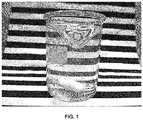
- FIG. 1 shows an appearance of the solution after dissolution in the dissolution test.
- the resulting particulate stannous oxide was observed by SEM (Electron Microscope S-3000 N from Hitachi High-Technologies Corporation). A SEM image of stannous oxide is shown in FIG. 2 .
- Example 2 particulate stannous oxide was obtained in the same procedure as that of Example 1 with the exception that the conditions were changed as follows: That is, in Example 1, the introduced amount of ammonium bicarbonate for obtaining the reaction mother solution was increased so as to obtain 195 g/L of ammonium bicarbonate. Further, the solution was heated and maintained at 60 °C to 65 °C, the solution temperature during the dropping reaction was maintained at 60 °C to 65 °C (first stage heat-maintaining temperature), and the dropping was carried out over about 3 hours. At the end of the dropping, the temperature was raised to 70 to 75 °C and further maintained for about 2 hours (second heat-maintaining temperature).
- stannous oxide available from JX Metals Trading Co., Ltd.
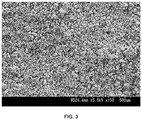
- JX Metals Trading Co., Ltd. was prepared and evaluated in the same procedure as that of Example 1. The results are summarized in Table 1. Further, an SEM image of the stannous oxide is shown in FIG. 3 .
- Example 1 Ag, As, Bi, Ca, Cd, Co, Cr, Cu, Fe, In, K, Mg, Mn, Na, Ni, Pb, Th, Tl, U, 0.30 2.63 37.8 10 seconds 3 Zn ⁇ 1 ppm P ⁇ 10 ppm 20 degrees Cl ⁇ 1 ppm Sb: 1.6 ppm
- Example 2 Ag, As, Bi, Ca, Cd, Co, Cr, Cu, Fe, In, K, Mg, Mn, Na, Ni, Pb, Th, Tl, U, 0.34 2.63 41.2 10 seconds 2 Zn ⁇ 1 ppm 20 degrees P ⁇ 10 ppm Cl ⁇ 1 ppm Sb: 1.1 ppm Comparative Example 1 Co: 1.6 ppm, Cu: 2.3 ppm, Fe: 11 ppm, K ⁇ 1
- Example 1 The stannous oxide obtained in Example 1 was double-vacuum-packed in an aluminum laminate bag and stored at a temperature of 40°C for 3 months. The solubility was then evaluated in the same procedure as above, indicating that the dissolution time and the turbidity were 8 seconds and 20 degrees, respectively. That is, it was revealed that even after storage for 3 months, substantially no decrease in the solubility was observed, and the stannous oxide had improved oxidation resistance.
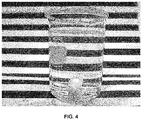
- Example 1 The stannous oxide obtained in each of Example 1 and Comparative Example 1 was stored at room temperature in the atmosphere for 24 hours in order to compare sensitivities to the oxidation. The solubility was then evaluated in the same procedure as above. The results are summarized in Table 2 below. The upper row in Table 2 is the dissolution time (second) and the lower row is the turbidity (degree) of the solution. Appearances of the solutions in the dissolution test are shown in FIG. 4 (Example 1) and FIG. 5 (Comparative Example 1). Table 2 Before Storage 24 Hours after Storage at Room Temperature Example 1 8 seconds 10 seconds 20 degrees 20 degrees Comparative Example 1 35 seconds 35 seconds 20 degrees 40 degrees
- Example there was no change in turbidity after dissolution even after storage for 24 hours, whereas in Comparative Example, the muddiness was generated after storage for 24 hours, and that even after storage for 24 hours, the stannous oxide powder according to Example did not undergo any oxidation to the extent that it appeared in the turbidity after dissolution, whereas Comparative Example underwent the oxidation to the extent that it appeared in the turbidity after dissolution.
- a stannous oxide powder having improved solubility and also improved oxidation resistance can be provided.
- the present invention is an industrially useful invention.
Landscapes
- Chemical & Material Sciences (AREA)
- Organic Chemistry (AREA)
- Inorganic Chemistry (AREA)
- Engineering & Computer Science (AREA)
- Chemical Kinetics & Catalysis (AREA)
- Electrochemistry (AREA)
- Materials Engineering (AREA)
- Metallurgy (AREA)
- Inorganic Compounds Of Heavy Metals (AREA)
- Cosmetics (AREA)
Applications Claiming Priority (2)
| Application Number | Priority Date | Filing Date | Title |
|---|---|---|---|
| JP2018039002 | 2018-03-05 | ||
| PCT/JP2018/045006 WO2019171692A1 (ja) | 2018-03-05 | 2018-12-06 | 酸化第一錫粉末 |
Publications (2)
| Publication Number | Publication Date |
|---|---|
| EP3763677A1 true EP3763677A1 (de) | 2021-01-13 |
| EP3763677A4 EP3763677A4 (de) | 2021-06-30 |
Family
ID=67847153
Family Applications (1)
| Application Number | Title | Priority Date | Filing Date |
|---|---|---|---|
| EP18909201.8A Withdrawn EP3763677A4 (de) | 2018-03-05 | 2018-12-06 | Zinnoxidpulver |
Country Status (7)
| Country | Link |
|---|---|
| US (1) | US11981581B2 (de) |
| EP (1) | EP3763677A4 (de) |
| JP (1) | JP7282074B2 (de) |
| KR (1) | KR102355206B1 (de) |
| CN (1) | CN111836781A (de) |
| TW (1) | TWI690490B (de) |
| WO (1) | WO2019171692A1 (de) |
Cited By (3)
| Publication number | Priority date | Publication date | Assignee | Title |
|---|---|---|---|---|
| EP3828517A4 (de) * | 2018-07-25 | 2022-04-20 | JX Nippon Mining & Metals Corporation | Zinn(ii)-oxidpulver |
| US11981581B2 (en) | 2018-03-05 | 2024-05-14 | Jx Metals Corporation | Stannous oxide powder |
| US12297121B2 (en) | 2017-11-15 | 2025-05-13 | Jx Advanced Metals Corporation | Stannous oxide powder and method for producing same |
Family Cites Families (24)
| Publication number | Priority date | Publication date | Assignee | Title |
|---|---|---|---|---|
| JPH0244773B2 (ja) | 1984-04-17 | 1990-10-05 | Sumitomo Metal Mining Co | Sankadaiichisuzunoseizohoho |
| JPS6252130A (ja) * | 1985-08-30 | 1987-03-06 | Sumitomo Metal Mining Co Ltd | 酸に易溶性の球状酸化第一錫の製造方法 |
| JPH11310415A (ja) * | 1998-04-27 | 1999-11-09 | Mitsubishi Materials Corp | 高純度酸化錫とその製造方法 |
| JP4540213B2 (ja) * | 2000-10-31 | 2010-09-08 | 株式会社トクヤマ | 錫系酸化物及びその製造方法 |
| AU2007217870B2 (en) | 2006-02-16 | 2011-07-21 | Brigham Young University | Preparation of uniform nanoparticles of ultra-high purity metal oxides, mixed metal oxides, metals, and metal alloys |
| JP4975367B2 (ja) * | 2006-05-10 | 2012-07-11 | Jx日鉱日石金属株式会社 | 高純度酸化第一錫、同粉末及び高純度酸化第一錫の製造方法 |
| JP5104253B2 (ja) | 2007-11-30 | 2012-12-19 | 三菱マテリアル株式会社 | Sn合金めっき液へのSn成分補給用酸化第一錫粉末 |
| JP2009132570A (ja) | 2007-11-30 | 2009-06-18 | Mitsubishi Materials Corp | 酸化第一錫粉末の製造方法 |
| JP5301370B2 (ja) * | 2008-07-02 | 2013-09-25 | 石原産業株式会社 | 酸化スズ粒子及びその製造方法 |
| CN101367543B (zh) | 2008-09-17 | 2011-02-02 | 广东光华科技股份有限公司 | 一种高纯度氧化亚锡的制备方法 |
| JP5818196B2 (ja) | 2010-09-01 | 2015-11-18 | 株式会社 ナノ・キューブ・ジャパン | 酸化スズ超微粒子の製造方法 |
| EP2664581B1 (de) | 2011-01-11 | 2019-10-09 | Nippon Sheet Glass Company, Limited | Plättchenförmige mesoporöse partikel und herstellungsverfahren dafür |
| US8277774B2 (en) | 2011-01-27 | 2012-10-02 | Honeywell International | Method for the preparation of high purity stannous oxide |
| JP5807377B2 (ja) | 2011-05-10 | 2015-11-10 | 三菱マテリアル株式会社 | Sn合金めっき液へのSn成分補給用酸化第一錫粉末及びその製造方法 |
| JP6121090B2 (ja) * | 2011-05-10 | 2017-04-26 | 三菱マテリアル株式会社 | Sn合金めっき液へのSn成分補給用酸化第一錫粉末の製造方法及び該方法により製造された酸化第一錫粉末 |
| JP6095929B2 (ja) | 2011-09-30 | 2017-03-15 | ダウ グローバル テクノロジーズ エルエルシー | 複数のSnOフレーク |
| JP6569237B2 (ja) * | 2014-03-06 | 2019-09-04 | 三菱マテリアル株式会社 | 酸化第一錫の製造方法、Snめっき液の製造方法 |
| JP6657991B2 (ja) | 2015-02-16 | 2020-03-04 | 三菱マテリアル株式会社 | 酸化第一錫粉末及び酸化第一錫粉末の製造方法 |
| JP6384369B2 (ja) | 2015-03-16 | 2018-09-05 | 三菱マテリアル株式会社 | Sn合金めっき用Sn補給剤 |
| KR101945145B1 (ko) * | 2016-03-14 | 2019-02-01 | 제이엑스금속주식회사 | 산화물 소결체 |
| CN106587139B (zh) | 2016-12-12 | 2018-06-26 | 北京科技大学 | 一种微米级SnO方形片的制备方法 |
| WO2019097831A1 (ja) * | 2017-11-15 | 2019-05-23 | Jx金属株式会社 | 酸化第一錫及びその製造方法 |
| EP3763677A4 (de) | 2018-03-05 | 2021-06-30 | JX Nippon Mining & Metals Corporation | Zinnoxidpulver |
| EP3828517B1 (de) | 2018-07-25 | 2025-10-15 | JX Advanced Metals Corporation | Zinn(ii)-oxidpulver |
-
2018
- 2018-12-06 EP EP18909201.8A patent/EP3763677A4/de not_active Withdrawn
- 2018-12-06 US US16/978,439 patent/US11981581B2/en active Active
- 2018-12-06 CN CN201880090566.4A patent/CN111836781A/zh active Pending
- 2018-12-06 JP JP2020504792A patent/JP7282074B2/ja active Active
- 2018-12-06 KR KR1020207028240A patent/KR102355206B1/ko active Active
- 2018-12-06 WO PCT/JP2018/045006 patent/WO2019171692A1/ja not_active Ceased
- 2018-12-21 TW TW107146399A patent/TWI690490B/zh active
Cited By (4)
| Publication number | Priority date | Publication date | Assignee | Title |
|---|---|---|---|---|
| US12297121B2 (en) | 2017-11-15 | 2025-05-13 | Jx Advanced Metals Corporation | Stannous oxide powder and method for producing same |
| US11981581B2 (en) | 2018-03-05 | 2024-05-14 | Jx Metals Corporation | Stannous oxide powder |
| EP3828517A4 (de) * | 2018-07-25 | 2022-04-20 | JX Nippon Mining & Metals Corporation | Zinn(ii)-oxidpulver |
| US11772981B2 (en) | 2018-07-25 | 2023-10-03 | Jx Metals Corporation | Stannous oxide powder |
Also Published As
| Publication number | Publication date |
|---|---|
| US20210047198A1 (en) | 2021-02-18 |
| WO2019171692A1 (ja) | 2019-09-12 |
| KR102355206B1 (ko) | 2022-02-08 |
| TW201938492A (zh) | 2019-10-01 |
| EP3763677A4 (de) | 2021-06-30 |
| CN111836781A (zh) | 2020-10-27 |
| JPWO2019171692A1 (ja) | 2021-02-25 |
| JP7282074B2 (ja) | 2023-05-26 |
| KR20200127230A (ko) | 2020-11-10 |
| TWI690490B (zh) | 2020-04-11 |
| US11981581B2 (en) | 2024-05-14 |
Similar Documents
| Publication | Publication Date | Title |
|---|---|---|
| EP3828517B1 (de) | Zinn(ii)-oxidpulver | |
| EP3763677A1 (de) | Zinnoxidpulver | |
| EP3712114B1 (de) | Zinnoxid und verfahren zu seiner herstellung | |
| EP2762450A1 (de) | Kupferoxidpulver und verfahren zu seiner herstellung | |
| EP2017227A1 (de) | Verfahren zur bearbeitung arsenhaltiger lösungen | |
| US10392262B2 (en) | Stannous oxide powder and method for producing stannous oxide powder | |
| EP2042472A1 (de) | Eisenarsenatpulver | |
| WO2016133017A1 (ja) | 酸化第一錫粉末及び酸化第一錫粉末の製造方法 | |
| JP2015190053A (ja) | 不純物の混入なく酸化を抑制する錫めっき方法 |
Legal Events
| Date | Code | Title | Description |
|---|---|---|---|
| STAA | Information on the status of an ep patent application or granted ep patent |
Free format text: STATUS: THE INTERNATIONAL PUBLICATION HAS BEEN MADE |
|
| PUAI | Public reference made under article 153(3) epc to a published international application that has entered the european phase |
Free format text: ORIGINAL CODE: 0009012 |
|
| STAA | Information on the status of an ep patent application or granted ep patent |
Free format text: STATUS: REQUEST FOR EXAMINATION WAS MADE |
|
| 17P | Request for examination filed |
Effective date: 20201001 |
|
| AK | Designated contracting states |
Kind code of ref document: A1 Designated state(s): AL AT BE BG CH CY CZ DE DK EE ES FI FR GB GR HR HU IE IS IT LI LT LU LV MC MK MT NL NO PL PT RO RS SE SI SK SM TR |
|
| AX | Request for extension of the european patent |
Extension state: BA ME |
|
| DAV | Request for validation of the european patent (deleted) | ||
| DAX | Request for extension of the european patent (deleted) | ||
| A4 | Supplementary search report drawn up and despatched |
Effective date: 20210531 |
|
| RIC1 | Information provided on ipc code assigned before grant |
Ipc: C01G 19/02 20060101AFI20210525BHEP |
|
| STAA | Information on the status of an ep patent application or granted ep patent |
Free format text: STATUS: THE APPLICATION IS DEEMED TO BE WITHDRAWN |
|
| 18D | Application deemed to be withdrawn |
Effective date: 20220104 |