EP3764263B1 - Évaluation de l'efficacité des contrôles de sécurité dans les réseaux d'entreprise à l'aide de valeurs graphiques - Google Patents
Évaluation de l'efficacité des contrôles de sécurité dans les réseaux d'entreprise à l'aide de valeurs graphiques Download PDFInfo
- Publication number
- EP3764263B1 EP3764263B1 EP20185251.4A EP20185251A EP3764263B1 EP 3764263 B1 EP3764263 B1 EP 3764263B1 EP 20185251 A EP20185251 A EP 20185251A EP 3764263 B1 EP3764263 B1 EP 3764263B1
- Authority
- EP
- European Patent Office
- Prior art keywords
- security
- aag
- graph
- impact
- security controls
- Prior art date
- Legal status (The legal status is an assumption and is not a legal conclusion. Google has not performed a legal analysis and makes no representation as to the accuracy of the status listed.)
- Active
Links
Images


Classifications
-
- G—PHYSICS
- G06—COMPUTING OR CALCULATING; COUNTING
- G06F—ELECTRIC DIGITAL DATA PROCESSING
- G06F21/00—Security arrangements for protecting computers, components thereof, programs or data against unauthorised activity
- G06F21/50—Monitoring users, programs or devices to maintain the integrity of platforms, e.g. of processors, firmware or operating systems
- G06F21/57—Certifying or maintaining trusted computer platforms, e.g. secure boots or power-downs, version controls, system software checks, secure updates or assessing vulnerabilities
- G06F21/577—Assessing vulnerabilities and evaluating computer system security
-
- H—ELECTRICITY
- H04—ELECTRIC COMMUNICATION TECHNIQUE
- H04L—TRANSMISSION OF DIGITAL INFORMATION, e.g. TELEGRAPHIC COMMUNICATION
- H04L63/00—Network architectures or network communication protocols for network security
- H04L63/14—Network architectures or network communication protocols for network security for detecting or protecting against malicious traffic
- H04L63/1433—Vulnerability analysis
-
- H—ELECTRICITY
- H04—ELECTRIC COMMUNICATION TECHNIQUE
- H04L—TRANSMISSION OF DIGITAL INFORMATION, e.g. TELEGRAPHIC COMMUNICATION
- H04L63/00—Network architectures or network communication protocols for network security
- H04L63/20—Network architectures or network communication protocols for network security for managing network security; network security policies in general
- H04L63/205—Network architectures or network communication protocols for network security for managing network security; network security policies in general involving negotiation or determination of the one or more network security mechanisms to be used, e.g. by negotiation between the client and the server or between peers or by selection according to the capabilities of the entities involved
-
- G—PHYSICS
- G06—COMPUTING OR CALCULATING; COUNTING
- G06F—ELECTRIC DIGITAL DATA PROCESSING
- G06F2221/00—Indexing scheme relating to security arrangements for protecting computers, components thereof, programs or data against unauthorised activity
- G06F2221/21—Indexing scheme relating to G06F21/00 and subgroups addressing additional information or applications relating to security arrangements for protecting computers, components thereof, programs or data against unauthorised activity
- G06F2221/2139—Recurrent verification
Definitions
- Computer networks are susceptible to attack by malicious users (e.g., hackers).
- hackers can infiltrate computer networks of enterprises (enterprise networks) in an effort to obtain sensitive information (e.g., user credentials, payment information, address information, social security numbers) and/or to take over control of one or more systems.
- sensitive information e.g., user credentials, payment information, address information, social security numbers
- enterprises use security systems to monitor occurrences of potentially adverse events occurring within a network, and alert security personnel to such occurrences.
- one or more security controls can be implemented to mitigate risk presented by a vulnerability.
- implementing security controls requires expenditure of time and technical resources (e.g., processors, memory, bandwidth). Implementing ineffective security controls not only results in failing to mitigate the vulnerability, leaving the enterprise network susceptible to risk, it also results in wasted and/or inefficient use of technical resources.
- US 2019/052663 discloses an apparatus for enhancing network security, which includes: an information collection unit for collecting information about states of hosts that form a network and information about connectivity in the network; an attack surface analysis unit for analyzing attack surfaces by creating an attack graph using the information about the states and the information about connectivity; a security-enhancing strategy establishment unit for establishing a security-enhancing strategy based on the attack graph; and a security-enhancing strategy implementation unit for delivering a measure based on the security-enhancing strategy to a corresponding host, thereby taking a security-enhancing measure.
- EP 2385676 discloses a method for adapting security policies of an information system infrastructure in view of attacks, wherein it comprises the steps of: storing potential attacks and their associated risks in a data repository; storing curative security policies in response of the potential attacks in a data repository; monitoring entering contents representing data streams of the information system; detecting at least one attack in the information system; assessing a success probability parameter of the at least one detected attack and its associated cost impact parameter; assessing an activation impact parameter of at least one curative security policy in response to the at least one detected attack and its associated cost impact parameter; and deciding of the activation or deactivation of a curative security policy in function of the success probability parameter of the, at least one, detected attack, of the activation impact parameter of at least one curative security policy and of the cost impact parameters of both the detected at least one attack and the at least one curative security policy.
- Implementations of the present disclosure are directed to security controls for enterprise-wide cyber-security. More particularly, implementations of the present disclosure are directed to executing one or more security controls and evaluating effectiveness of the one or more security controls in mitigating vulnerabilities within an enterprise network. In some examples, implementations of the present disclosure are provided within an agile security platform that determines asset vulnerability of enterprise-wide assets including cyber-intelligence and discovery aspects of enterprise information technology (IT) systems and operational technology (OT) systems, asset value, potential for asset breach and criticality of attack paths towards target(s) including hacking analytics of enterprise IT/OT systems.
- IT information technology
- OT operational technology
- the invention comprises actions including receiving, from an agile security platform, analytical attack graph (AAG) data representative of one or more AAGs, each AAG representing one or more lateral paths within an enterprise network for reaching a target asset from one or more assets within the enterprise network, determining, for each instance of a plurality of instances of the AAG, a graph value representing a measure of hackability of the enterprise network at respective times, providing a profile of the enterprise network based on a set of graph values determined for instances of the AAG, the profile representing changes in graph values over time, implementing one or more security controls in the enterprise network, determining, based on the profile, changes in the graph values in response to implementing the one or more security controls and thereby determining an effectiveness of the one or more security controls, wherein the one or more security controls are determined to be ineffective in response to graph values in the set of graph values increasing over time after implementation of the one or more security controls and selectively executing one or more remedial actions in response to the effectiveness.
- AAG analytical attack graph
- the present disclosure also provides a computer-readable storage medium coupled to one or more processors and having instructions stored thereon which, when executed by the one or more processors, cause the one or more processors to perform operations in accordance with implementations of the methods provided herein.
- the present disclosure further provides a system for implementing the methods provided herein.
- the system includes one or more processors, and a computer-readable storage medium coupled to the one or more processors having instructions stored thereon which, when executed by the one or more processors, cause the one or more processors to perform operations in accordance with implementations of the methods provided herein.
- Implementations of the present disclosure are directed to security controls for enterprise-wide cyber-security. More particularly, implementations of the present disclosure are directed to executing one or more security controls and evaluating effectiveness of the one or more security controls in mitigating vulnerabilities within an enterprise network. In some examples, implementations of the present disclosure are provided within an agile security platform that determines asset vulnerability of enterprise-wide assets including cyber-intelligence and discovery aspects of enterprise information technology (IT) systems and operational technology (OT) systems, asset value, potential for asset breach and criticality of attack paths towards target(s) including hacking analytics of enterprise IT/OT systems.
- IT information technology
- OT operational technology
- actions include receiving, from an agile security platform, analytical attack graph (AAG) data representative of one or more AAGs, each AAG representing one or more lateral paths within an enterprise network for reaching a target asset from one or more assets within the enterprise network, determining, for each instance of a plurality of instances of the AAG, a graph value representing a measure of hackability of the enterprise network at respective times, providing a profile of the enterprise network based on a set of graph values determined for instances of the AAG, the profile representing changes in graph values over time, determining an effectiveness of one or more security controls based on the profile, and selectively executing one or more remedial actions in response to the effectiveness.
- AAG analytical attack graph
- Computer networks are susceptible to attack by malicious users (e.g., hackers).
- hackers can infiltrate computer networks of enterprises (enterprise networks) in an effort to obtain sensitive information (e.g., user credentials, payment information, address information, social security numbers) and/or to take over control of one or more systems.
- sensitive information e.g., user credentials, payment information, address information, social security numbers
- enterprises use security systems to monitor occurrences of potentially adverse events occurring within a network, or existing malicious software, and alert security personnel to such occurrences.
- one or more security controls can be implemented to mitigate risk presented by a vulnerability.
- implementing security controls requires expenditure of time and technical resources (e.g., processors, memory, bandwidth). Implementing ineffective security controls not only results in failing to mitigate the vulnerability, leaving the enterprise network susceptible to risk, it also results in wasted and/or inefficient use of technical resources.
- implementations of the present disclosure are directed to executing one or more security controls within an enterprise network and generating graph values to determine asset vulnerability of enterprise-wide assets.
- the graph values are determined based on analytical attack graphs (AAGs).
- Implementations of the present disclosure also provide time-based graphs to monitor effectiveness of security control.
- Example improvement includes, without limitation, more efficient use of technical resources and reducing risk to enterprise networks. For example, by determining effectiveness of security controls in accordance with implementations of the present disclosure, more efficient use of technical resources within the enterprise network can be achieved by avoiding or removing ineffective security controls and/or implementing security controls that are effective in addressing vulnerabilities.
- the graph value approach of the present disclosure based on AAGs, enables operators to accurately quantify risk within enterprise networks at varying levels of granularity (e.g., down to individual security controls), enabling efficient use of technical resources in mitigating vulnerabilities in enterprise networks.
- implementations of the present disclosure are rooted in computer technology in order to overcome problems specifically arising in the realm of computer networks.
- an agile security platform executes implementations of the present disclosure as described herein. It is appreciated, however, that implementations of the present disclosure can be realized using any appropriate security platform.
- the agile security platform enables continuous cyber and enterprise-operations alignment controlled by risk management.
- the agile security platform improves decision-making by helping enterprises to prioritize security actions that are most critical to their operations.
- the agile security platform combines methodologies from agile software development lifecycle, IT management, development operations (DevOps), and analytics that use artificial intelligence (AI).
- agile security automation bots continuously analyze attack probability, predict impact, and recommend prioritized actions for cyber risk reduction. In this manner, the agile security platform enables enterprises to increase operational effectiveness and availability, maximize existing cyber-security resources, reduce additional cyber-security costs, and grow organizational cyber resilience.
- the agile security platform provides for discovery of IT/OT supporting elements within an enterprise, which elements can be referred to as configuration items (CI). Further, the agile security platform can determine how these CIs are connected to provide a CI network topology. In some examples, the CIs are mapped to processes and services of the enterprise, to determine which CIs support which services, and at what stage of an operations process. In this manner, a services CI topology is provided.
- CI configuration items
- the specific vulnerabilities and improper configurations of each CI are determined and enable a list of risks to be mapped to the specific IT/OT network of the enterprise.
- the agile security platform of the present disclosure can determine what a malicious user (hacker) could do within the enterprise network, and whether the malicious user can leverage additional elements in the network such as scripts, CI configurations, and the like. Accordingly, the agile security platform enables analysis of the ability of a malicious user to move inside the network, namely, lateral movement within the network. This includes, for example, how a malicious user could move from one CI to another CI, what CI (logical or physical) can be damaged, and, consequently, damage to a respective service provided by the enterprise.
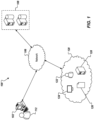
- FIG. 1 depicts an example architecture 100 in accordance with implementations of the present disclosure.
- the example architecture 100 includes a client device 102, a network 106, and a server system 108.
- the server system 108 includes one or more server devices and databases (e.g., processors, memory).
- a user 112 interacts with the client device 102.
- the client device 102 can communicate with the server system 108 over the network 106.
- the client device 102 includes any appropriate type of computing device such as a desktop computer, a laptop computer, a handheld computer, a tablet computer, a personal digital assistant (PDA), a cellular telephone, a network appliance, a camera, a smart phone, an enhanced general packet radio service (EGPRS) mobile phone, a media player, a navigation device, an email device, a game console, or an appropriate combination of any two or more of these devices or other data processing devices.
- PDA personal digital assistant
- EGPS enhanced general packet radio service
- the network 106 can include a large computer network, such as a local area network (LAN), a wide area network (WAN), the Internet, a cellular network, a telephone network (e.g., PSTN) or an appropriate combination thereof connecting any number of communication devices, mobile computing devices, fixed computing devices and server systems.
- LAN local area network
- WAN wide area network
- PSTN public switched telephone network
- the server system 108 includes at least one server and at least one data store.
- the server system 108 is intended to represent various forms of servers including, but not limited to a web server, an application server, a proxy server, a network server, and/or a server pool.
- server systems accept requests for application services and provides such services to any number of client devices (e.g., the client device 102 over the network 106).
- client devices e.g., the client device 102 over the network 106.
- the server system 108 can host an agile security platform.
- an enterprise network 120 is depicted.
- the enterprise network 120 represents a network implemented by an enterprise to perform its operations.
- the enterprise network 120 represents on-premise systems (e.g., local and/or distributed), cloud-based systems, and/or combinations thereof.
- the enterprise network 120 includes IT systems and OT systems.
- IT systems include hardware (e.g., computing devices, servers, computers, mobile devices) and software used to store, retrieve, transmit, and/or manipulate data within the enterprise network 120.
- OT systems include hardware and software used to monitor and detect or cause changes in processes within the enterprise network 120 as well as store, retrieve, transmit, and/or manipulate data.
- the enterprise network 120 includes multiple assets.
- Example assets include, without limitation, users 122, computing devices 124, electronic documents 126, and servers 128.
- the agile security platform is hosted within the server system 108, and monitors and acts on the enterprise network 120, as described herein. More particularly, and as described in further detail herein, one or more AAGs representative of the enterprise network are generated in accordance with implementations of the present disclosure. For example, the agile security platform detects IT/OT assets and generates an asset inventory and network maps, as well as processing network information to discover vulnerabilities in the enterprise network 120. The agile security platform executes the resource-efficient AAG generation of the present disclosure based on the network information.
- the agile security platform provides one or more dashboards, alerts, notifications and the like to cyber-security personnel that enable the cyber-security personnel to react to and remediate security relevant events.
- the user 112 can include a cyber-security expert that views and responds to dashboards, alerts, and/or notifications of the agile security platform using the client device 102.
- the agile security platform operates over multiple phases.
- Example phases include an asset discovery, anomaly detection, and vulnerability analysis phase, a cyber resilience risk analysis phase, and a cyber resilience risk recommendation phase.
- anomaly detection, and vulnerability analysis phase discovering what vulnerabilities exit across the vertical stack and the relevant use cases is imperative to be conducted from the enterprise IT to the control systems.
- a focus of this phase is to generate the security backlog of issues, and potential remediations.
- the agile security platform addresses lateral movements across the stack.
- communication channels e.g., email, TCP/IP
- operation systems vulnerabilities are addressed within the context of a service (e.g., a service that the enterprise offers to customers), and a cyber kill chain to a target in the operation vertical, generating operation disturbance by manipulation of data.
- a CI assists in mapping dependencies between IT/OT elements within a configuration management DB (CMDB).
- CMDB configuration management DB
- SCI security CI maps historical security issues of a certain managed security element and is mapped into a security aspect of a digital twin.
- a stack of technologies is defined, and is configured in a plug-in reference architecture (replaceable and extensible) manner.
- the stack addresses different aspects of monitoring, harvesting, and alerting of information within different aggregations views (dashboards) segmented according to owners and relevant IT and security users.
- An example view includes a health metric inserted within the dashboard of an enterprise application.
- the health metric indicates the security condition of the underlying service and hence, the reliability of the provided data and information. Similar to risks that can be driven by labor, inventory, or energy, security risk concern can be presented and evaluated in the operations-level, drilled-through for additional transparency of the issue, and can be optimally remediated by allocating investments to automation or to security and IT personal with adequate operations awareness.
- each vulnerability may have several remediations, and each has a cost associated with it, either per internal personnel time, transaction, service, or retainer, as well as the deferred cost of not acting on the issue.
- a focus of this phase is to enable economical decision-making of security investments, either to be conducted by the IT and security team or directly by automation, and according to risk mitigation budget.
- observing a single-issue type and its remediations does not reflect the prioritization between multiple vulnerabilities.
- Traditional systems are based on global risk assessment, yet the context in which the SCI is part of is missing.
- the overall risk of a process matters differently for each enterprise.
- remediation would occur according to gradual hardening of a process according to prioritization, driven in importance and responsibility by the enterprise, not by gradual hardening of all devices, for example, in the organization according to policy, without understanding of the impact on separated operational processes.
- Hardening of a system should be a decision of the enterprise to drive security alignment with the enterprise.
- a focus is to simplify approved changes and actions by proactive automation.
- the action of IT remediation of security issues is either done by the security team (such as awareness and training), by creating a ticket in the IT service system (call for patch managements), and/or by tools that are triggered by security and monitored by IT (automatic deployment of security policies, change of authentication and authorization, self-service access control management, etc.).
- Some operations can be conducted in a disconnected mode, such as upgrading firmware on an IoT device, in which the operator needs to access the device directly.
- the entire changes are constantly assessed by the first phase of discovery phase, and re-projected as a metric in a context. Progress tracking of these changes should also occur in a gradual manner, indicating maintenance scheduling on similar operational processes, hence, driving recommendations for frequent actions that can be automated, and serve as candidates to self-managed by the operations owners and systems users.
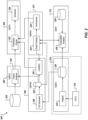
- FIG. 2 depicts an example conceptual architecture 200 of an agile security (AgiSec) platform.
- the AgiSec platform of FIG. 2 is discussed in detail in U.S. App. No. 16/375,965, filed on April 5, 2019 , and entitled Leveraging Attack Graphs of Agile Security Platform, the disclosure of which is expressly incorporated herein by reference in the entirety.
- the conceptual architecture 200 depicts a set of security services of the AgiSec platform, which include: an agile security prioritization (AgiPro) service 204, an agile security business impact (AgiBuiz) service 206, an agile security remediation (AgiRem) service 210, an agile security hacker lateral movement (AgiHack) service 208, an agile security intelligence (AgiInt) service 212, and an agile security discovery (AgiDis) service 214.
- the conceptual architecture 200 also includes an operations knowledge base 202 that stores historical data provided for an enterprise network (e.g., the enterprise network 120).
- the AgiDis service 214 includes an adaptor 234, and an asset/vulnerabilities knowledge base 235.
- the adaptor 234 is specific to an asset discovery tool (ADT) 216. Although a single ADT 216 is depicted, multiple ADTs can be provided, each ADT being specific to an IT/OT site within the enterprise network. Because each adaptor 234 is specific to an ADT 216, multiple adaptors 234 are provided in the case of multiple ADTs 216.
- ADT asset discovery tool
- the AgiDis service 214 detects IT/OT assets through the adaptor 234 and respective ADT 216.
- the AgiDis service 214 provides both active and passive scanning capabilities to comply with constraints, and identifies device and service vulnerabilities, improper configurations, and aggregate risks through automatic assessment.
- the discovered assets can be used to generate an asset inventory, and network maps.
- the AgiDis service 214 can be used to discover assets in the enterprise network, and a holistic view of network and traffic patterns. More particularly, the AgiDis service 214 discovers assets, their connectivity, and their specifications and stores this information in the asset/vulnerabilities knowledge base 235. In some implementations, this is achieved through passive network scanning and device fingerprinting through the adaptor 234 and ADT 216.
- the AgiDis service 214 provides information about device models.
- the AgiInt service 212 includes a vulnerability analytics module 236 and a threat intelligence knowledge base 238 (e.g., CVE, CAPEC, CWE, iDefence API, vendor-specific databases).
- the AgiInt service 212 discovers vulnerabilities in the enterprise network based on data provided from the AgiDis service 214.
- the vulnerability analytics module 236 processes data provided from the AgiDis service 214 to provide information regarding possible impacts of each vulnerability and remediation options (e.g., permanent fix, temporary patch, workaround) for defensive actions.
- the vulnerability analytics module 236 can include an application programming interface (API) that pulls out discovered vulnerabilities and identifies recommended remediations using threat intelligence feeds.
- API application programming interface
- the AgiInt service 212 maps vulnerabilities and threats to discovered IT/OT assets. The discovered vulnerabilities are provided back to the AgiDis service 214 and are stored in the asset/vulnerabilities knowledge base 235 with their respective assets.
- the AgiHack service 208 includes an analytical attack graph (AAG) generator 226, an AAG database 228, and an analytics module 230.
- AAG analytical attack graph
- the AgiHack service 208 generates AAGs using the resource-efficient AAG generation of the present disclosure, and evaluates hacking exploitation complexity.
- the AgiHack service 208 understands attack options, leveraging the vulnerabilities to determine how a hacker would move inside the network and identify targets for potential exploitation.
- the AgiHack service 208 proactively explores adversarial options and creates AAGs representing possible attack paths from the adversary's perspective.
- the AgiHack service 208 provides rule-based processing of data provided from the AgiDis service 214 to explore all attack paths an adversary can take from any asset to move laterally towards any target (e.g., running critical operations).
- multiple AAGs are provided, each AAG corresponding to a respective target within the enterprise network. Further, the AgiHack service 208 identifies possible impacts on the targets.
- the AAG generator 226 uses data from the asset/vulnerabilities knowledge base 236 of the AgiDis service 214, and generates an AAG.
- the AAG graphically depicts, for a respective target, all possible impacts that may be caused by a vulnerability or network/system configuration, as well as all attack paths from anywhere in the network to the respective target.
- the analytics module 230 processes an AAG to identify and extract information regarding critical nodes, paths for every source-destination pair (e.g., shortest, hardest, stealthiest), most critical paths, and critical vulnerabilities, among other features of the AAG. If remediations are applied within the enterprise network, the AgiHack service 208 updates the AAG.
- the AgiRem service 210 includes a graph explorer 232 and a summarizer 234.
- the AgiRem service 210 provides remediation options to avoid predicted impacts.
- the AgiRem service 210 provides options to reduce lateral movement of hackers within the network and to reduce the attack surface.
- the AgiRem service 210 predicts the impact of asset vulnerabilities on the critical processes and adversary capabilities along kill chain/attack paths and identifies the likelihood of attack paths to access critical assets and prioritizes the assets (e.g., based on shortest, easiest, stealthiest).
- the AgiRem service 210 identifies remediation actions by exploring attack graph and paths.
- the AgiRem service 210 can execute a cyber-threat analysis framework that characterizes adversarial behavior in a multi-stage cyber-attack process, as described in further detail herein.
- the AgiRem service 210 provides a list of efficient and effective remediation recommendations using data from the vulnerability analytics module 236 of the AgiInt service 212.
- the graph explorer 232 analyzes each feature (e.g., nodes, edges between nodes, properties) to identify any condition (e.g., network/system configuration and vulnerabilities) that can lead to cyber impacts. Such conditions can be referred to as issues.
- the AgiRem service 210 retrieves remediation recommendations and courses of action (CoA) from the AgiInt service 212, and/or a security knowledge base (not shown).
- the graph explorer 232 provides feedback to the analytics module 230 for re-calculating critical nodes/assets/paths based on remediation options.
- the summarizer engine 234 is provided as a natural language processing (NLP) tool that extracts concise and salient text from large/unstructured threat intelligence feeds. In this manner, the AgiSec platform can convey information to enable users (e.g., security teams) to understand immediate remediation actions corresponding to each issue.
- NLP natural language processing
- the AgiBuiz service 206 includes an impact analyzer 220.
- the AgiBuiz service 206 associates services that are provided by the enterprise with IT/OT assets, generates a security map, identifies and highlights risks and possible impacts on enterprise operations and industrial processes, and conducts what-if prediction analyses of potential security actions remediations on service health levels.
- the AgiBuiz service 206 identifies risk for each impact predicted by the AgiHack service 208.
- the impact analyzer 220 interprets cyber risks and possible impacts (e.g., financial risk) based on the relative importance of each critical asset and its relative value within the entirety of the enterprise operations.
- the impact analyzer 220 processes one or more models to compare the financial risks caused by cyber attacks with those caused by system unavailability due to shutdown time for replacing/patching critical assets.
- the AgiPro service 204 includes a prioritizing engine 222 and a scheduler 224. In some implementations, the AgiPro service 204 prioritizes the remediation recommendations based on their impact on the AAG size reduction and risk reduction on the value. In some examples, the AgiPro service 204 determines where the enterprise should preform security enforcement first, in order to overall reduce the risks discovered above, and evaluate and probability to perform harm based on the above lateral movements by moving from one CI to another. In some examples, the AgiPro service 204 prioritizes remediation actions based on financial risks or other implications, provides risk reduction recommendations based on prioritized remediations, and identifies and tracks applied remediations for risks based on recommendations.
- the prioritizing engine 222 uses the calculated risks (e.g., risks to regular functionality and unavailability of operational processes) and the path analysis information from the analytics module 230 to prioritize remediation actions that reduce the risk, while minimizing efforts and financial costs.
- the scheduler 224 incorporates the prioritized CoAs with operational maintenance schedules to find the optimal time for applying each CoA that minimizes its interference with regular operational tasks.
- the AgiSec platform of the present disclosure provides tools that enable user interaction with multi-dimensional (e.g., 2D, 3D) visualizations of computational graph data and its derived computed attributes.
- multi-dimensional e.g., 2D, 3D
- topological heat maps can be provided and represent ranks and values of the derived attributes in order to expediate search capabilities over big data.
- the tools also enable searching for key attributes of critical nodes, nodes representing CIs.
- these visualizations are provided within a computer or immersive environment, such as augmented reality (AR), mixed reality (MR), or virtual reality (VR).
- AR augmented reality
- MR mixed reality
- VR virtual reality
- the visualizations of the present disclosure improve the ability of an automated (employing contour lines) or human interactive (based on segmented regional selection) to employ search and filtering capabilities on big data graph topology aimed at quickly identifying quickly critical nodes in the graph which its derived (computed) attributes serve as the search criteria.
- the attributes to be highlighted differ and are configurable, as such, different contour lines appear based on different criteria.
- the perceived importance of an attribute relative to other attributes can be controlled in view of a scenario, vertical importance, or any domainspecific consideration, through weighed attributes.
- similar contour lines can be identified in other nearby nodes on the graph. For an immersive visualization experience, matching leading contour lines can show hidden paths, or pattern of similar geometric shape and form, hence drive improved comprehension for humans.
- a critical node in the context of cyber security, can represent a CI that is a key junction for lateral movements within a segmented network. Namely, once acquired as a target, the cardinal node can trigger multiple new attack vectors.
- Cardinal nodes can also be referred to as "cardinal faucet nodes.” Another node will be one that many hackers' lateral movements can reach, yet it cannot lead to an additional node. Such nodes can be referred to as "cardinal sink nodes.”
- cardinal faucet nodes Another node will be one that many hackers' lateral movements can reach, yet it cannot lead to an additional node.
- Such nodes can be referred to as "cardinal sink nodes.”
- the more edges from a cardinal faucet node to other nodes the higher the faucet attribute is.
- the more incoming edges to a cardinal node the higher the sink attribute is.
- a node has both sink and faucet values in correlation, the more overall cardinal this node becomes to the entire examined graph topology and is defined as a critical target to be acquired since it provides control over multiple nodes in the graphs.
- the search for a faucet attribute is more important than a sink attribute. Such as a case of finding what node to block first to prevent a segregation of an attack outbreak. In case of finding what is very hard to protect, the more sink attributes matter more.
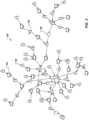
- FIG. 3 depicts an example visualization 300 of a portion of an enterprise network.
- the visualization 300 is provided based on the network topology of the enterprise network.
- the AgiHack service 208 of FIG. 2 can generate one or more visualizations based on information provided from the AgiDis service 214.
- a visualization includes nodes and edges (also referred to as arches) between nodes.
- a node can be associated with a semantic type.
- example semantic types can include, without limitation, computer 302, user 304, file 306, and key 308.
- an edge can include an incoming (sink) edge (e.g., an edge leading into a node from another node) or an outgoing (faucet) edge (e.g., an edge leading from a node to another node).
- each edge can be associated with a respective activity.
- example activities can include, without limitation, logon (credentials), operating system access, and memory access.
- each edge can be associated with a respective weight. In some examples, the weight of an edge can be determined based on one or more features of the edge.
- Example features can include a traffic bandwidth of the edge (e.g., how much network traffic can travel along the edge), a speed of the edge (e.g., how quickly traffic can travel from one node to another node along the edge), a difficulty to use the edge (e.g., network configuration required to use the edge), and a cost to use the edge (e.g., in terms of technical resources, or financial cost).
- a traffic bandwidth of the edge e.g., how much network traffic can travel along the edge
- a speed of the edge e.g., how quickly traffic can travel from one node to another node along the edge
- a difficulty to use the edge e.g., network configuration required to use the edge
- a cost to use the edge e.g., in terms of technical resources, or financial cost.
- the weights of the edges are determined relative to each other (e.g., are normalized to 1).
- each node can be associated with a set of attributes.
- Example attributes can include, without limitation, the semantic type of the node, a number of incoming edges, a number of outgoing edges, a type of each of the edges, a weight of each of the edges, and the like.
- one or more values for a node can be determined based on the set of attributes of the node, as described in further detail herein.
- the example visualization 300 includes tens of nodes (approximately 70 nodes in the example of FIG. 3 ). It is contemplated, however, that a visualization can include hundreds, or thousands of nodes.
- the example visualization 300 is generated based on one or more filter parameters.
- a user can define filter parameters that can be used to identify cardinal nodes within an enterprise network, and segments of the enterprise network that may be relevant to a cardinal node.
- a node 320 can be determined to be a cardinal node based on one or more filter parameters (e.g., no outgoing edges, and more than three incoming edges).
- other depicted nodes include nodes along lateral paths that lead to a cardinal node.
- the node 320 can represent administrator credentials, a relatively high-value target within an enterprise network, and all other edges and nodes define the paths within the enterprise network that lead to the node 320. While the enterprise network can include hundreds, or thousands of nodes and edges, the example visualization 300 is provided based on identification of the node 320 as the cardinal node (e.g., based on filter parameters) and all paths of the enterprise network that lead to the node 320. In this manner, the portion 320 provides a more easily consumable visualization than depicting an entirety of the enterprise network.
- other nodes besides the cardinal node can be identified as relatively important nodes (e.g., relative to other depicted nodes).
- the relative importance of a node can be determined based on attack paths that lead to a cardinal node.
- a node 322 can be determined to be a relatively important node. Starting from the node 322, there is a single attack path to the node 320. However, there are approximately ten different attack paths that the node 322 is included in. Consequently, security resources could be concentrated on the node 322, as opposed to nodes upstream of the node 322 in the multiple attack paths. In this manner, security resources can more efficiently protect the node 320, as described in further detail herein.
- enterprise networks can change over time. That is, there is a multi-dimensional aspect to enterprise networks with one dimension including time.
- the node 320 can be considered a cardinal node based on the filter parameters.
- the node 320 might no longer be considered a cardinal node.
- values of attributes may have changed for nodes, some nodes may have been removed from the network (e.g., computers retired, users removed), and/or some nodes may have been added to the network (e.g., new computers/users).
- implementations of the present disclosure are directed to providing attack graphs to determine asset vulnerability of enterprise-wide assets and providing time-based graph values to monitor effectiveness of security controls.
- enterprises implement different cyber security controls in order to mitigate and avoid exposure to cyber security risks.
- defensive solutions e.g., anti-virus and EDRs, operator behavioral policies, best practices
- cyber security controls can also be referred to herein as controls, security controls, security measures, remedial measures, and the like.
- Example security control include, without limitation, those provided in the ISO/IEC 27001.
- MITRE ATT&K tactic T11751 can be considered, which defines a lateral movement of a hacker from one machine to another by utilizing MS Windows Distributed COM (DCOM) infrastructure.
- DCOM MS Windows Distributed COM
- an adversary must acquire a user account with certain privileges. Such an account should be from a member of the DCOM group on a host machine. Consequently, the hacker can perform a Remote Procedure Call (RPC) over the network to a target machine.
- RPC Remote Procedure Call
- the target machine must be listening on a predefined set of ports supported by DCOM infrastructure.
- MITRE offers several tactics that we map to ISO/IEC 27001 standard.
- MITRE T1175 requirements are to implement three mitigations, in which a security expert may need to implement several security controls.
- the security expert may opt to implement an Access Control Policy (A911), an Access to Networks and Network Services Policy (A912), and a Segregation in Networks Policy (A1313).
- A911 Access Control Policy
- A912 Access to Networks and Network Services Policy
- A1313 Segregation in Networks Policy
- the conditional logic is an AND relation between the policies.
- implementations of the present disclosure provide for measuring effectiveness of security controls over time, reporting effectiveness and tracing gaps to a granular level (e.g., individual security controls).
- each vulnerability security issue
- a graph value (GV) that represents the "hackability" of a network represented by an AAG is determined by summing up the complexity of all of the different lateral movements and offensive actions possible in an instance of the AAG.
- an instance of an AAG is an AAG at a specific time.
- an AAG is generated by a cyber-security platform, such as the AgiSec platform described herein.
- n and
- m .
- AAGs are described in further detail below.
- a set of GVs can be calculated for an enterprise network over time to assess the effectiveness of one or more security controls that are implemented to address a vulnerability.
- each GV in the set of GVs is determined for a respective AAG.
- granularity is achieved based on a size of the AAG. For example, the larger the AAG (e.g., representing multiple components within the enterprise network), the less granular the respective GV is. That is, the larger the AAG, the more components and security controls are accounted for in the resulting GV. Accordingly, the smaller the AAG (e.g., representing few components or a single component within the enterprise network), the more granular the respective GV is. That is, the smaller the AAG, the fewer components and security controls are accounted for in the resulting GV.
- a set of AAGs can be provided for an enterprise network, each AAG being generated at a respective time.
- AAGs can be generated at a pre-defined period of time (e.g., hourly, daily, weekly) to provide the set of AAGs.
- a GV is calculated for each AAG to provide the set of GVs.
- the GV value for a respective AAG is calculated in response to generation of the respective AAG.
- GVs are generated at the same rate (e.g., pre-defined period of time) as AAGs.
- the GVs in the set of GVs can be monitored over time to determine an effectiveness of the one or more security controls. In some examples, if the effectiveness does not meet an expected effectiveness, one or more additional security controls can be implemented. In some examples, if the effectiveness does not meet an expected effectiveness, the one or more security controls that had been originally implemented can be halted and/or reversed.
- a graph is plotted that depicts the hackability (graph value) over time, and the graph can be used to monitor and evaluate changes (e.g., in security controls).
- ascents/descents/plateaus on the graph can be correlated to the vulnerabilities that affect the hackability level. For example, a continuous ascent over time indicates that vulnerabilities are piling up and not being treated by security controls or security controls are failing. As another example, a plateau can indicate that a specific vulnerability type is not being addressed by a security control or that a security control is failing to appropriately address the vulnerability. Accordingly, implementations of the present disclosure transform security operations from tactical responses to a strategical process. Further, implementations of the present disclosure enable optimization of security investments by creating smart insights regarding the utilization of current controls and optimization of security operations.
- implementations of the present disclosure provide a graph value ( GV ) as a metric that represents a risk that a process ( P ) is facing. That is, GV represent how difficult it is to compromise one or more assets in a network that would be detrimental to the process.
- an AAG is used to determine a set of assets (e.g., one or more assets) that support the process. For each asset, possible impacts on the asset and how much risk each impact would cause on the entire process are also determined.
- N the number of impacts in the AAG
- i ⁇ [1.. N ]
- EV i an Eigenvector centrality for the impact with index i
- H i a hardness (difficulty) of arriving from outside (e.g., through the Internet into the network) to impact i
- ⁇ is an empirically chosen value (e.g., 7) used to normalize the value of the power of e.
- GV is calculated on the AAG based on rule nodes and impact nodes, as described in further detail herein.
- the Eigenvector centrality is a measure of the influence a node has on a network (e.g., if a node is pointed to by many nodes (which also have high Eigenvector centrality) then that node will have high eigenvector centrality).
- configuration nodes of the AAG are not used in determining GV (e.g., configuration nodes provide metadata for rule nodes).
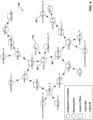
- FIG. 4 depicts an example AAG 400 in accordance with implementations of the present disclosure.
- the example AAG 400 includes configuration nodes 402, rule nodes 404, and impact nodes 406.
- the example AAG 400 is referenced here by way of non-limiting example in describing implementations of the present disclosure.
- the AAG can include different node types to show how a set of network and system configurations result in unauthorized actions to specific targets.
- the example AAG 400 is depicted in a database structure (e.g., Neo4j graph database structure).
- Nodes in an AAG are of different types: circular nodes representing system or network configurations that are the conditions that provide possibilities for actions by an attacker; hexagonal nodes representing reasoning rules that represent the attack methodology leveraged by an attacker to achieve a particular goal; and square nodes that represent an impact as a sub-goal for a certain action an attacker could take.
- An AAG includes two types of edges: configuration-to-rule edges that represent logical AND (i.e., all configuration conditions have to be true to cause the impact; and rule-to-impact edges that represent logical OR (i.e., the impact happens if at least one rule is satisfied).
- an AAG is created by taking into account the configurations directed by some rules in order to make some impacts on the target network.
- c j ⁇ V, ⁇ c j is ⁇ configuration ⁇ , I ⁇ i j
- i j ⁇ V, ⁇ i j is an impact ⁇ , and R ⁇ r j
- r j ⁇ V, ⁇ r j is ⁇ rule ⁇ . Consequently, the combination of these sets accounts for all vertices of the graph G (i.e., V ⁇ C, I, R ⁇ ) .
- AAGs can be used in cyber-threat analysis to determine attack paths of external attackers into and through a computer network.
- Example use of AAGs in mitigating attacks on computer networks is described in further detail in commonly assigned U.S. App. No. 16/554,846, entitled Generating Attack Graphs in Agile Security Platforms, and filed on August 29, 2019 .
- implementations of the present disclosure are directed to determining effectiveness of security controls in addressing vulnerabilities based on GV s calculated based on AAGs. Implementations of the present disclosure are described in further detail herein with example reference to the AAG 400 of FIG. 4 . It is contemplated, however, that implementations of the present disclosure can be realized with any appropriate AAG.
- a three-node sub-network which supports a process, for which a set of GVs is to be determined.
- the sub-network includes a workstation (Workstation) that is supporting the process, and a file access (accessFile) and a code execution (codeExecution) put risk on the workstation.
- the risk reflects the risk of malicious intrusion to the workstation through each of the file access and the code execution.
- risk can be partitioned among impacts (e.g., accessFile, codeExecution).
- a first impact e.g., accessFile
- a second impact e.g., codeExecution
- the sum of the risks can be less than, equal, or greater than 100%.
- the risk is 100%. For purposes of illustration, and by non-limiting example, it is provided that the summation of the risks of all impacts is equal to 100%.
- the hardness factor represents a difficulty to cause the impact.
- H i is calculated for all of the impacts.
- the hardness ( H i ) of all entry point impacts (e.g., those starting with attackerLocated, such as the node 408 of FIG. 4 ) using the hardness value of a respective rule that is provided by an attack generation engine (e.g., a provided rule engine).
- an attack generation engine e.g., a provided rule engine.
- the hardness of all reasoning rules is equal to 1.
- a graph value ( GV ) is calculated for each instance of an AAG, an instance corresponding to a respective time.
- a profile of GVs can be provided as a plot of GVs over time. That is, the hardness values of respective impacts can be used to calculate each GV (for a respective instance of an AAG) (e.g., using Equation 1 provided above).
- each vulnerability (security issue) issue can be tagged to a corresponding security control, and a time at which the security control was implemented is known. Consequently, implementation of the security control (and, hence, the respective vulnerability) can be referenced to the profile of the GV to determine whether the GV changed (e.g., in response to the security control).
- one or more security controls can be implemented in response to a vulnerability identified within an enterprise network.
- a set of AAGs can be generated, each AAG being generated at a respective time, and a GV is calculated for each AAG to provide a set of GVs.
- the GVs can be monitored over time to determine whether the one or more security controls are effective in addressing the vulnerability (e.g., mitigating risk presented by the vulnerability).
- one or more additional security controls can be implemented.
- the one or more security controls that had been originally implemented can be halted and/or reversed.
- determining effectiveness is by using regular trends analysis of propagating graphs. Namely, analysis of shapes: diverging, converging, or maintaining shapes. Analysis of frequency of changes and analysis of magnitude can be used as well as a combination of the above-defined patterns.
- Each system user can define their level of threshold or trend that they would like to monitor and observe. For example, the rate of change of the GV be determined for a period of time, and if the rate exceeds a threshold rate an indication of effectiveness can be provided (e.g., ineffective if GV increasing (heightened alert for rate of increase exceeding a threshold level; effective, if GV decreasing). As another example, some matching to determine whether the profile (e.g., as depicted in FIG. 5 below) matches a first profile indicating effective, or a second profile indicating ineffective (or danger).
- FIG. 5 depicts example network security profiles 500, 502, 504, 506 determined in accordance with implementations of the present disclosure.
- Each of the security profiles is provided as a plot of GVs over time and represent the effectiveness (or lack thereof) of security controls on the network.
- the network security profile 500 indicates that the GV is relatively constant over time at a relatively high-level. This can indicate that security controls are not effective in mitigating the relatively high risk within the enterprise network, because the GVs do not decrease over time.
- one or more additional security controls can be implemented and/or the one or more security controls that had been originally implemented can be halted and/or reversed.
- the network security profile 502 indicates that the GVs are climbing without response and/or any response is slow. This can indicate that security controls are not efficient in mitigating the risk within the enterprise network.
- one or more additional security controls can be implemented and/or the one or more security controls that had been originally implemented can be halted and/or reversed.
- the network security profile 504 indicates that the GV s rapidly decrease as threats within the enterprise network arise. For example, at each peak, or sometime prior to each peak, a security control can be implemented to address a vulnerability.
- the network security profile 504 can indicate that security controls are effective in mitigating the risk within the enterprise network.
- the network security profile 506 indicates that the GV temporarily decreases as threats appear, but again increases each time indicating that the risk is increasing faster than response and the risk is accumulating. This can indicate that security controls are not effective in mitigating the risk within the enterprise network.
- one or more additional security controls can be implemented and/or the one or more security controls that had been originally implemented can be halted and/or reversed.
- FIG. 6 depicts an example process 600 that can be executed in accordance with implementations of the present disclosure.
- the example process 600 may be performed using one or more computer-executable programs executed using one or more computing devices.
- the example process 600 can be performed for security of enterprise networks.
- a vulnerability is determined (602). For example, a vulnerability associated with a component in an enterprise network can be identified. This can be achieved, for example, by the AgiInt service 212, which discovers vulnerabilities in the enterprise network based on data provided from the AgiDis service 214, as described herein with reference to FIG. 2 .
- One or more security controls are implemented (604). For example, for a given vulnerability, one or more security controls that are designed to address the vulnerability can be implemented. This can be achieved, for example, by the AgiPro service 204, as described herein with reference to FIG. 2 .
- An example security control can include, without limitation, executing a patch to an operating system within the enterprise network to address a security hole.
- An AAG is received (606).
- an AAG is generated and is representative of a relevant portion of the enterprise network.
- the relevant portion of the enterprise network includes components that are associated with the one or more security controls that had been implemented (e.g., a component, on which a security control is implemented; a component affected by a security control).
- a GV is determined (608). For example, and as described herein, a GV is calculated for the AAG using Equation 1. The GV is included in a set of GVs that is to be used to determine the effectiveness of the one or more security controls.
- a sufficient number of GVs need be included in the set of GVs in order to accurately access effectiveness of the one or more security controls. For example, a single GV would be insufficient to accurately access effectiveness of the one or more security controls.
- whether sufficient data is available can be determined based on a number of GV s included in the set of GVs. For example, if the number of GVs included in the set of GV s meets a threshold number, it can be determined that sufficient data is available. In some examples, whether sufficient data is available can be determined based on a time since the one or more security controls were implemented.
- the example process loops back 600 to receive a next AAG (e.g., for next time period) and respective GV.
- a profile is provided (612). For example, and as described herein, a profile can be generated based on the set of GVs, the profile indicating a change in GVs over time. It is determined whether the one or more security controls are effective in addressing the vulnerability (614). For example, and as described herein with reference to FIG. 5 , the profile indicates an effectiveness of the one or more security controls. In some examples, if the profile indicates that the GV s increase over time, the one or more security controls are determined to be ineffective. In some examples, if the profile indicates that the GV s decrease over time, the one or more security controls are determined to be ineffective.
- Example remedial measures can include, without limitation, rolling back at least one security control of the one or more security controls, implementing at least one additional security control. If the one or more security controls are effective in addressing the vulnerability, operation of the enterprise network continues (618). In some examples, GV s can continue to be determined as the enterprise network continues to operate in order to assess any instances of deterioration of security controls over a longer period of time that could indicate vulnerabilities arising within the enterprise network.
- Implementations and all of the functional operations described in this specification may be realized in digital electronic circuitry, or in computer software, firmware, or hardware, including the structures disclosed in this specification and their structural equivalents, or in combinations of one or more of them. Implementations may be realized as one or more computer program products, i.e., one or more modules of computer program instructions encoded on a computer readable medium for execution by, or to control the operation of, data processing apparatus.
- the computer readable medium may be a machine-readable storage device, a machine-readable storage substrate, a memory device, a composition of matter effecting a machine-readable propagated signal, or a combination of one or more of them.
- the term "computing system” encompasses all apparatus, devices, and machines for processing data, including by way of example a programmable processor, a computer, or multiple processors or computers.
- the apparatus may include, in addition to hardware, code that creates an execution environment for the computer program in question (e.g., code) that constitutes processor firmware, a protocol stack, a database management system, an operating system, or a combination of one or more of them.
- a propagated signal is an artificially generated signal (e.g., a machine-generated electrical, optical, or electromagnetic signal) that is generated to encode information for transmission to suitable receiver apparatus.
- a computer program (also known as a program, software, software application, script, or code) may be written in any appropriate form of programming language, including compiled or interpreted languages, and it may be deployed in any appropriate form, including as a stand-alone program or as a module, component, subroutine, or other unit suitable for use in a computing environment.
- a computer program does not necessarily correspond to a file in a file system.
- a program may be stored in a portion of a file that holds other programs or data (e.g., one or more scripts stored in a markup language document), in a single file dedicated to the program in question, or in multiple coordinated files (e.g., files that store one or more modules, sub programs, or portions of code).
- a computer program may be deployed to be executed on one computer or on multiple computers that are located at one site or distributed across multiple sites and interconnected by a communication network.
- the processes and logic flows described in this specification may be performed by one or more programmable processors executing one or more computer programs to perform functions by operating on input data and generating output.
- the processes and logic flows may also be performed by, and apparatus may also be implemented as, special purpose logic circuitry (e.g., an FPGA (field programmable gate array) or an ASIC (application specific integrated circuit)).
- special purpose logic circuitry e.g., an FPGA (field programmable gate array) or an ASIC (application specific integrated circuit)
- processors suitable for the execution of a computer program include, by way of example, both general and special purpose microprocessors, and any one or more processors of any appropriate kind of digital computer.
- a processor will receive instructions and data from a read only memory or a random access memory or both.
- Elements of a computer can include a processor for performing instructions and one or more memory devices for storing instructions and data.
- a computer will also include, or be operatively coupled to receive data from or transfer data to, or both, one or more mass storage devices for storing data (e.g., magnetic, magneto optical disks, or optical disks).
- mass storage devices for storing data (e.g., magnetic, magneto optical disks, or optical disks).
- a computer need not have such devices.
- a computer may be embedded in another device (e.g., a mobile telephone, a personal digital assistant (PDA), a mobile audio player, a Global Positioning System (GPS) receiver).
- Computer readable media suitable for storing computer program instructions and data include all forms of non-volatile memory, media and memory devices, including by way of example semiconductor memory devices (e.g., EPROM, EEPROM, and flash memory devices); magnetic disks (e.g., internal hard disks or removable disks); magneto optical disks; and CD ROM and DVD-ROM disks.
- semiconductor memory devices e.g., EPROM, EEPROM, and flash memory devices
- magnetic disks e.g., internal hard disks or removable disks
- magneto optical disks e.g., CD ROM and DVD-ROM disks.
- the processor and the memory may be supplemented by, or incorporated in, special purpose logic circuitry.
- implementations may be realized on a computer having a display device (e.g., a CRT (cathode ray tube), LCD (liquid crystal display), LED (light-emitting diode) monitor, for displaying information to the user and a keyboard and a pointing device (e.g., a mouse or a trackball), by which the user may provide input to the computer.
- a display device e.g., a CRT (cathode ray tube), LCD (liquid crystal display), LED (light-emitting diode) monitor
- a keyboard and a pointing device e.g., a mouse or a trackball
- Other kinds of devices may be used to provide for interaction with a user as well; for example, feedback provided to the user may be any appropriate form of sensory feedback (e.g., visual feedback, auditory feedback, or tactile feedback); and input from the user may be received in any appropriate form, including acoustic, speech, or tactile input.
- Implementations may be realized in a computing system that includes a back end component (e.g., as a data server), or that includes a middleware component (e.g., an application server), or that includes a front end component (e.g., a client computer having a graphical user interface or a Web browser through which a user may interact with an implementation), or any appropriate combination of one or more such back end, middleware, or front end components.
- the components of the system may be interconnected by any appropriate form or medium of digital data communication (e.g., a communication network). Examples of communication networks include a local area network (“LAN”) and a wide area network (“WAN”) (e.g., the Internet).
- LAN local area network
- WAN wide area network
- the computing system may include clients and servers.
- a client and server are generally remote from each other and typically interact through a communication network.
- the relationship of client and server arises by virtue of computer programs running on the respective computers and having a client-server relationship to each other.
Landscapes
- Engineering & Computer Science (AREA)
- Computer Security & Cryptography (AREA)
- Computer Hardware Design (AREA)
- General Engineering & Computer Science (AREA)
- Computing Systems (AREA)
- Signal Processing (AREA)
- Computer Networks & Wireless Communication (AREA)
- Software Systems (AREA)
- Theoretical Computer Science (AREA)
- Physics & Mathematics (AREA)
- General Physics & Mathematics (AREA)
- Data Exchanges In Wide-Area Networks (AREA)
- Management, Administration, Business Operations System, And Electronic Commerce (AREA)
Claims (15)
- Procédé mis en oeuvre par ordinateur pour la sécurité des réseaux d'entreprise, le procédé étant exécuté par un ou plusieurs processeurs et comprenant :la réception, en provenance d'une plateforme de sécurité agile, de données de graphique d'attaque analytique (AAG) représentatives d'un ou plusieurs AAG, chaque AAG représentant un ou plusieurs chemins latéraux au sein d'un réseau d'entreprise pour atteindre un actif cible parmi un ou plusieurs actifs au sein du réseau d'entreprise ;la détermination, pour chaque instance d'une pluralité d'instances de l'AAG, d'une valeur graphique représentant une mesure de capacité de détournement du réseau d'entreprise à des instants respectifs ;la fourniture d'un profil du réseau d'entreprise sur la base d'un ensemble de valeurs graphiques déterminées pour des instances de l'AAG, le profil représentant des changements dans les valeurs graphiques au fil du temps ;la mise en oeuvre d'un ou plusieurs contrôles de sécurité dans le réseau d'entreprise ;la détermination, sur la base du profil, de changements dans les valeurs graphiques en réponse à la mise en oeuvre de l'un ou plusieurs contrôles de sécurité et, de ce fait la détermination d'une efficacité de l'un ou plusieurs contrôles de sécurité, dans lequel l'un ou plusieurs contrôles de sécurité sont déterminés comme étant inefficaces en réponse au fait que des valeurs graphiques dans l'ensemble de valeurs graphiques augmentent au fil du temps après la mise en oeuvre de l'un ou plusieurs contrôles de sécurité ; etl'exécution sélective d'une ou plusieurs actions correctives en réponse à l'efficacité.
- Procédé selon la revendication 1, dans lequel chaque valeur graphique dans l'ensemble de valeurs graphiques est calculée comme suit :

- Procédé selon la revendication 2, dans lequel Hi est calculé comme suit :

i est une valeur de dureté représentant une difficulté à respecter une règle (R) pour arriver à l'impact i à partir de l'impact i - 1. - Procédé selon la revendication 2, dans lequel Hi est calculé comme suit :
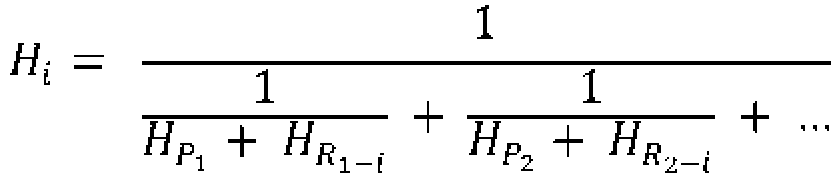
1 et H P2 sont les valeurs de dureté des chemins respectifs jusqu'à l'impact i au sein de l'AAG respectif indiquant une difficulté à se déplacer le long des chemins respectifs, et H R1-i et H R2-i sont les valeurs de dureté des règles respectives (R) pour arriver à l'impact i au sein de l'AAG respectif indiquant une difficulté à respecter les règles respectives pour se déplacer le long des chemins respectifs. - Procédé selon l'une quelconque des revendications précédentes, dans lequel l'une ou plusieurs actions correctives comprennent une ou plusieurs opérations parmi l'annulation d'au moins un contrôle de sécurité de l'un ou plusieurs contrôles de sécurité, et la mise en oeuvre d'au moins un contrôle de sécurité supplémentaire.
- Procédé selon l'une quelconque des revendications précédentes, dans lequel la détermination de l'efficacité de l'un ou plusieurs contrôles de sécurité est basée au moins en partie sur les taux de changement des valeurs graphiques dans l'ensemble de valeurs graphiques.
- Procédé selon l'une quelconque des revendications précédentes, dans lequel la détermination de l'efficacité de l'un ou plusieurs contrôles de sécurité comprend l'analyse de la forme du profil.
- Procédé selon l'une quelconque des revendications précédentes, dans lequel l'un ou plusieurs contrôles de sécurité comprennent un ou plusieurs contrôles de sécurité prévus dans la norme ISO/IEC 27001.
- Support(s) de stockage lisible(s) par ordinateur non transitoire(s) couplé(s) à l'un ou plusieurs processeurs et sur le(s)quel(s) sont stockées des instructions qui, lorsqu'elles sont exécutées par l'un ou plusieurs processeurs, amènent l'un ou plusieurs processeurs à réaliser le procédé selon l'une ou plusieurs des revendications précédentes.
- Système, comprenant :un ou plusieurs processeurs ; etun dispositif de stockage lisible par ordinateur couplé à l'un ou plusieurs processeurs et sur lequel sont stockées des instructions qui, lorsqu'elles sont exécutées par l'un ou plusieurs processeurs, amènent l'un ou plusieurs processeurs à réaliser les opérations de sécurité de réseaux d'entreprise, les opérations comprenant :la réception, en provenance d'une plateforme de sécurité agile, de données de graphique d'attaque analytique (AAG) représentatives d'un ou plusieurs AAG, chaque AAG représentant un ou plusieurs chemins latéraux au sein d'un réseau d'entreprise pour atteindre un actif cible parmi un ou plusieurs actifs au sein du réseau d'entreprise ;la détermination, pour chaque instance d'une pluralité d'instances de l'AAG, d'une valeur graphique représentant une mesure de capacité de détournement du réseau d'entreprise à des instants respectifs ;la fourniture d'un profil du réseau d'entreprise sur la base d'un ensemble de valeurs graphiques déterminées pour des instances de l'AAG, le profil représentant des changements dans les valeurs graphiques au fil du temps ;la mise en oeuvre d'un ou plusieurs contrôles de sécurité dans le réseau d'entreprise ;la détermination, sur la base du profil, de changements dans les valeurs graphiques en réponse à la mise en oeuvre de l'un ou plusieurs contrôles de sécurité et de ce fait la détermination d'une efficacité de l'un ou plusieurs contrôles de sécurité sur la base du profil,dans lequel l'un ou plusieurs contrôles de sécurité sont déterminés comme étant inefficace en réponse au fait que des valeurs graphiques dans l'ensemble de valeurs de graphique augmentent au fil du temps après la mise en oeuvre de l'un ou plusieurs contrôles de sécurité ; etl'exécution sélective d'une ou plusieurs actions correctives en réponse à l'efficacité.
- Système selon la revendication 10, dans lequel chaque valeur graphique dans l'ensemble de valeurs graphiques est calculée comme suit :

- Système selon la revendication 11, dans lequel Hi est calculé comme suit :

i est une valeur de dureté représentant une difficulté à respecter une règle (R) pour arriver à l'impact i à partir de l'impact i - 1. - Système selon la revendication 11, dans lequel Hi est calculé comme suit :

1 et H P2 sont les valeurs de dureté des chemins respectifs jusqu'à l'impact i au sein de l'AAG respectif indiquant une difficulté à se déplacer le long des chemins respectifs, et HR1-i et HR2-i sont les valeurs de dureté des règles respectives (R) pour arriver à l'impact i dans l'AAG respectif indiquant une difficulté à respecter les règles pour se déplacer le long des chemins respectifs. - Système selon l'une quelconque des revendications 10 à 13, dans lequel l'une ou plusieurs actions correctives comprennent une ou plusieurs opérations parmi l'annulation d'au moins un contrôle de sécurité de l'un ou plusieurs contrôles de sécurité et la mise en oeuvre d'au moins un contrôle de sécurité supplémentaire.
- Système selon l'une quelconque des revendications 10 à 14, dans lequel la détermination de l'efficacité de l'un ou plusieurs contrôles de sécurité est basée au moins en partie sur les taux de changement des valeurs graphiques dans l'ensemble de valeurs graphiques.
Applications Claiming Priority (1)
| Application Number | Priority Date | Filing Date | Title |
|---|---|---|---|
| US201962873530P | 2019-07-12 | 2019-07-12 |
Publications (2)
| Publication Number | Publication Date |
|---|---|
| EP3764263A1 EP3764263A1 (fr) | 2021-01-13 |
| EP3764263B1 true EP3764263B1 (fr) | 2024-09-11 |
Family
ID=71575176
Family Applications (1)
| Application Number | Title | Priority Date | Filing Date |
|---|---|---|---|
| EP20185251.4A Active EP3764263B1 (fr) | 2019-07-12 | 2020-07-10 | Évaluation de l'efficacité des contrôles de sécurité dans les réseaux d'entreprise à l'aide de valeurs graphiques |
Country Status (2)
| Country | Link |
|---|---|
| US (1) | US11695795B2 (fr) |
| EP (1) | EP3764263B1 (fr) |
Families Citing this family (43)
| Publication number | Priority date | Publication date | Assignee | Title |
|---|---|---|---|---|
| US11159555B2 (en) * | 2018-12-03 | 2021-10-26 | Accenture Global Solutions Limited | Generating attack graphs in agile security platforms |
| US11283825B2 (en) | 2018-12-03 | 2022-03-22 | Accenture Global Solutions Limited | Leveraging attack graphs of agile security platform |
| US11281806B2 (en) | 2018-12-03 | 2022-03-22 | Accenture Global Solutions Limited | Generating attack graphs in agile security platforms |
| US11184385B2 (en) | 2018-12-03 | 2021-11-23 | Accenture Global Solutions Limited | Generating attack graphs in agile security platforms |
| US11876824B2 (en) | 2020-06-25 | 2024-01-16 | Accenture Global Solutions Limited | Extracting process aware analytical attack graphs through logical network analysis |
| US11411976B2 (en) | 2020-07-09 | 2022-08-09 | Accenture Global Solutions Limited | Resource-efficient generation of analytical attack graphs |
| US12034756B2 (en) | 2020-08-28 | 2024-07-09 | Accenture Global Solutions Limited | Analytical attack graph differencing |
| US11973790B2 (en) | 2020-11-10 | 2024-04-30 | Accenture Global Solutions Limited | Cyber digital twin simulator for automotive security assessment based on attack graphs |
| US20220171848A1 (en) * | 2020-11-30 | 2022-06-02 | University Of South Carolina | System and Method for Synthesizing Dynamic Ensemble-Based Defenses to Counter Adversarial Attacks |
| US12284200B2 (en) | 2021-02-18 | 2025-04-22 | Accenture Global Solutions Limited | Automated prioritization of process-aware cyber risk mitigation |
| US11930046B2 (en) * | 2021-06-17 | 2024-03-12 | Xerox Corporation | System and method for determining vulnerability metrics for graph-based configuration security |
| WO2023283357A1 (fr) * | 2021-07-07 | 2023-01-12 | Darktrace, Inc. | Priorisation intelligente d'évaluation et de remédiation de vulnérabilités et d'expositions communes pour des nœuds de réseau |
| US12278819B1 (en) | 2021-07-16 | 2025-04-15 | Wiz, Inc. | Cybersecurity threat detection utilizing unified identity mapping and permission detection |
| US12505200B2 (en) | 2022-05-23 | 2025-12-23 | Wiz, Inc. | Techniques for improved virtual instance inspection utilizing disk cloning |
| US20230161614A1 (en) | 2021-11-24 | 2023-05-25 | Wiz, Inc. | Detecting vulnerabilities in configuration code of a cloud environment utilizing infrastructure as code |
| US12278840B1 (en) | 2021-07-16 | 2025-04-15 | Wiz, Inc. | Efficient representation of multiple cloud computing environments through unified identity mapping |
| US12579251B2 (en) | 2021-11-24 | 2026-03-17 | Wiz, Inc. | System and method for detecting excessive permissions in identity and access management |
| US11880250B2 (en) | 2021-07-21 | 2024-01-23 | Accenture Global Solutions Limited | Optimizing energy consumption of production lines using intelligent digital twins |
| US12231461B2 (en) | 2021-08-12 | 2025-02-18 | Accenture Global Solutions Limited | Prioritizing security controls using a cyber digital twin simulator |
| US12355798B2 (en) | 2021-08-25 | 2025-07-08 | Accenture Global Solutions Limited | Automated prioritization of cyber risk mitigation by simulating exploits |
| US12223074B2 (en) | 2021-09-17 | 2025-02-11 | Xerox Corporation | System and method for securing windows discretionary access control |
| US12284216B2 (en) | 2021-09-17 | 2025-04-22 | Xerox Corporation | System and method for synthesizing role-based access control assignments per a policy |
| US11627155B1 (en) * | 2021-09-20 | 2023-04-11 | Normalyze, Inc. | Cloud infrastructure detection with resource path tracing |
| US12124585B1 (en) * | 2021-10-25 | 2024-10-22 | Netformx | Risk assessment management |
| US12367441B2 (en) * | 2021-10-28 | 2025-07-22 | Risklens, Llc | Method and apparatus for determining effectiveness of cybersecurity risk controls |
| US12489781B2 (en) * | 2021-11-24 | 2025-12-02 | Wiz, Inc. | Techniques for lateral movement detection in a cloud computing environment |
| US11936785B1 (en) | 2021-12-27 | 2024-03-19 | Wiz, Inc. | System and method for encrypted disk inspection utilizing disk cloning techniques |
| US12531881B2 (en) | 2022-01-31 | 2026-01-20 | Wiz, Inc. | Detection of cybersecurity threats utilizing established baselines |
| US11841945B1 (en) | 2022-01-31 | 2023-12-12 | Wiz, Inc. | System and method for cybersecurity threat detection utilizing static and runtime data |
| DE102022203086A1 (de) * | 2022-03-29 | 2023-10-05 | Volkswagen Aktiengesellschaft | Risikoanalyse eines verteilten Untersuchungsgegenstands |
| US12289336B2 (en) | 2022-04-08 | 2025-04-29 | Accenture Global Solutions Limited | Ontology-based risk propagation over digital twins |
| US12443720B2 (en) | 2022-08-10 | 2025-10-14 | Wiz, Inc. | Techniques for detecting applications paths utilizing exposure analysis |
| US11936693B2 (en) | 2022-04-13 | 2024-03-19 | Wiz, Inc. | System and method for applying a policy on a network path |
| US12395488B2 (en) | 2022-04-13 | 2025-08-19 | Wiz, Inc. | Techniques for analyzing external exposure in cloud environments |
| US12238132B2 (en) | 2022-04-22 | 2025-02-25 | Xerox Corporation | Method and system for facilitating a ranking score using attack volume to find optimal configurations |
| US12470591B2 (en) | 2022-05-18 | 2025-11-11 | Accenture Global Solutions Limited | Analytical attack graph abstraction for resource-efficiencies |
| US12506755B2 (en) | 2022-05-23 | 2025-12-23 | Wiz, Inc. | Technology discovery techniques in cloud computing environments utilizing disk cloning |
| US12287899B2 (en) | 2022-05-23 | 2025-04-29 | Wiz, Inc. | Techniques for detecting sensitive data in cloud computing environments utilizing cloning |
| US12061719B2 (en) | 2022-09-28 | 2024-08-13 | Wiz, Inc. | System and method for agentless detection of sensitive data in computing environments |
| US12335296B2 (en) | 2022-06-15 | 2025-06-17 | Accenture Global Solutions Limited | Automated cyber-security attack method prediction using detected vulnerabilities |
| US12495058B1 (en) * | 2022-06-30 | 2025-12-09 | Wiz, Inc. | System and method for detecting vulnerability of data in a cloud computing environment |
| US12476994B2 (en) | 2023-01-19 | 2025-11-18 | Accenture Global Solutions Limited | Automated cybersecurity vulnerability prioritization |
| WO2024156170A1 (fr) * | 2023-06-01 | 2024-08-02 | Zte Corporation | Procédé, dispositif et produit-programme informatique pour une évaluation de sécurité de réseau |
Family Cites Families (138)
| Publication number | Priority date | Publication date | Assignee | Title |
|---|---|---|---|---|
| US5485455A (en) | 1994-01-28 | 1996-01-16 | Cabletron Systems, Inc. | Network having secure fast packet switching and guaranteed quality of service |
| US6279113B1 (en) | 1998-03-16 | 2001-08-21 | Internet Tools, Inc. | Dynamic signature inspection-based network intrusion detection |
| US6487666B1 (en) | 1999-01-15 | 2002-11-26 | Cisco Technology, Inc. | Intrusion detection signature analysis using regular expressions and logical operators |
| US6952779B1 (en) | 2002-10-01 | 2005-10-04 | Gideon Cohen | System and method for risk detection and analysis in a computer network |
| US8359650B2 (en) | 2002-10-01 | 2013-01-22 | Skybox Secutiry Inc. | System, method and computer readable medium for evaluating potential attacks of worms |
| US7194769B2 (en) | 2003-12-11 | 2007-03-20 | Massachusetts Institute Of Technology | Network security planning architecture |
| US20060037077A1 (en) | 2004-08-16 | 2006-02-16 | Cisco Technology, Inc. | Network intrusion detection system having application inspection and anomaly detection characteristics |
| US7540025B2 (en) | 2004-11-18 | 2009-05-26 | Cisco Technology, Inc. | Mitigating network attacks using automatic signature generation |
| US7703138B2 (en) | 2004-12-29 | 2010-04-20 | Intel Corporation | Use of application signature to identify trusted traffic |
| US7904962B1 (en) | 2005-03-10 | 2011-03-08 | George Mason Intellectual Properties, Inc. | Network attack modeling, analysis, and response |
| US8438643B2 (en) | 2005-09-22 | 2013-05-07 | Alcatel Lucent | Information system service-level security risk analysis |
| US8429746B2 (en) | 2006-05-22 | 2013-04-23 | Neuraliq, Inc. | Decoy network technology with automatic signature generation for intrusion detection and intrusion prevention systems |
| US20080044018A1 (en) | 2006-07-31 | 2008-02-21 | Scrimsher John P | Method and system to detect and prevent computer network intrusion |
| US8407164B2 (en) | 2006-10-02 | 2013-03-26 | The Trustees Of Columbia University In The City Of New York | Data classification and hierarchical clustering |
| US8176561B1 (en) | 2006-12-14 | 2012-05-08 | Athena Security, Inc. | Assessing network security risk using best practices |
| US7908660B2 (en) | 2007-02-06 | 2011-03-15 | Microsoft Corporation | Dynamic risk management |
| US8392997B2 (en) | 2007-03-12 | 2013-03-05 | University Of Southern California | Value-adaptive security threat modeling and vulnerability ranking |
| EP1993255B1 (fr) | 2007-05-18 | 2009-04-15 | Sap Ag | Procédé et système pour protéger un message d'une attaque XML lors d'un échange dans un système de réseau distribué et décentralisé |
| WO2008142710A2 (fr) | 2007-05-24 | 2008-11-27 | Iviz Techno Solutions Pvt. Ltd | Procédé et système pour simuler une attaque de pirate sur un réseau |
| US8209738B2 (en) | 2007-05-31 | 2012-06-26 | The Board Of Trustees Of The University Of Illinois | Analysis of distributed policy rule-sets for compliance with global policy |
| KR100974888B1 (ko) | 2007-11-26 | 2010-08-11 | 한국전자통신연구원 | 비정상 트래픽 탐지 장치 및 방법 |
| US9479405B1 (en) | 2008-04-17 | 2016-10-25 | Narus, Inc. | Transaction based network application signatures for text based protocols |
| US20090307772A1 (en) | 2008-05-21 | 2009-12-10 | Honeywell International Inc. | framework for scalable state estimation using multi network observations |
| WO2009152282A1 (fr) | 2008-06-10 | 2009-12-17 | Object Security Llc | Conformité, évaluation, accréditation et surveillance guidées par des modèles |
| EP2136581A1 (fr) | 2008-06-16 | 2009-12-23 | Koninklijke KPN N.V. | Protection d'un dispositif mobile contre une attaque de refus de service |
| US20090319248A1 (en) | 2008-06-18 | 2009-12-24 | Eads Na Defense Security And Systems | Systems and methods for a simulated network traffic generator |
| US20100058456A1 (en) | 2008-08-27 | 2010-03-04 | Sushil Jajodia | IDS Sensor Placement Using Attack Graphs |
| US8881288B1 (en) | 2008-10-28 | 2014-11-04 | Intelligent Automation, Inc. | Graphical models for cyber security analysis in enterprise networks |
| WO2011017566A1 (fr) | 2009-08-05 | 2011-02-10 | Core Sdi, Incorporated | Système et procédé pour étendre un essai dintrusion automatisé afin de développer une stratégie de sécurité économique et intelligente |
| WO2011031777A2 (fr) | 2009-09-08 | 2011-03-17 | Core Sdi, Incorporated | Système et procédé pour planifier une attaque probabiliste |
| EP2385676B1 (fr) | 2010-05-07 | 2019-06-26 | Alcatel Lucent | Procédé d'adaptation de politiques de sécurité d'une infrastructure de système d'informations |
| US20130097125A1 (en) | 2011-10-12 | 2013-04-18 | Vmware, Inc. | Automated analysis of unstructured data |
| US20150047026A1 (en) | 2012-03-22 | 2015-02-12 | Los Alamos National Security, Llc | Anomaly detection to identify coordinated group attacks in computer networks |
| US9203861B2 (en) | 2012-12-18 | 2015-12-01 | George Mason University | Methods and systems for determining hardening strategies |
| WO2014130015A1 (fr) | 2013-02-19 | 2014-08-28 | The University Of Tulsa | Procédé de mise en conformité pour un système cyber-physique |
| US10599623B2 (en) | 2013-03-15 | 2020-03-24 | Locus Lp | Matching multidimensional projections of functional space |
| US10425429B2 (en) | 2013-04-10 | 2019-09-24 | Gabriel Bassett | System and method for cyber security analysis and human behavior prediction |
| EP2816773B1 (fr) | 2013-06-18 | 2018-10-03 | Alcatel Lucent | Procédé de calcul et d'analyse de risques et dispositif correspondant |
| US9166997B1 (en) | 2013-09-19 | 2015-10-20 | Symantec Corporation | Systems and methods for reducing false positives when using event-correlation graphs to detect attacks on computing systems |
| US10616258B2 (en) | 2013-10-12 | 2020-04-07 | Fortinet, Inc. | Security information and event management |
| US9436490B2 (en) | 2014-01-13 | 2016-09-06 | Cisco Technology, Inc. | Systems and methods for testing WAAS performance for virtual desktop applications |
| US9563771B2 (en) | 2014-01-22 | 2017-02-07 | Object Security LTD | Automated and adaptive model-driven security system and method for operating the same |
| US9256739B1 (en) | 2014-03-21 | 2016-02-09 | Symantec Corporation | Systems and methods for using event-correlation graphs to generate remediation procedures |
| US9485262B1 (en) | 2014-03-28 | 2016-11-01 | Juniper Networks, Inc. | Detecting past intrusions and attacks based on historical network traffic information |
| WO2015160367A1 (fr) | 2014-04-18 | 2015-10-22 | Hewlett-Packard Development Company, L.P. | Supervision pré-cognitive d'informations et d'événements de sécurité |
| US9762603B2 (en) | 2014-05-10 | 2017-09-12 | Informatica Llc | Assessment type-variable enterprise security impact analysis |
| US9491051B2 (en) | 2014-05-29 | 2016-11-08 | Cisco Technology, Inc. | Centralized adjustment of data rates in mesh networks |
| US9736173B2 (en) | 2014-10-10 | 2017-08-15 | Nec Corporation | Differential dependency tracking for attack forensics |
| US9992219B1 (en) | 2014-11-13 | 2018-06-05 | National Technology & Engineering Solutions Of Sandia, Llc | Framework and methodology for supply chain lifecycle analytics |
| US9648036B2 (en) | 2014-12-29 | 2017-05-09 | Palantir Technologies Inc. | Systems for network risk assessment including processing of user access rights associated with a network of devices |
| WO2017078986A1 (fr) | 2014-12-29 | 2017-05-11 | Cyence Inc. | Analyse de diversité comprenant des méthodologies de rétroaction utilisables |
| US10708296B2 (en) | 2015-03-16 | 2020-07-07 | Threattrack Security, Inc. | Malware detection based on training using automatic feature pruning with anomaly detection of execution graphs |
| US20160292599A1 (en) | 2015-04-06 | 2016-10-06 | Fmr Llc | Analyzing and remediating operational risks in production computing systems |
| US9742788B2 (en) | 2015-04-09 | 2017-08-22 | Accenture Global Services Limited | Event correlation across heterogeneous operations |
| US9712554B2 (en) | 2015-04-09 | 2017-07-18 | Accenture Global Services Limited | Event correlation across heterogeneous operations |
| US9633306B2 (en) | 2015-05-07 | 2017-04-25 | Siemens Healthcare Gmbh | Method and system for approximating deep neural networks for anatomical object detection |
| WO2016190868A1 (fr) | 2015-05-28 | 2016-12-01 | Hewlett Packard Enterprise Development Lp | Traitement de données de réseau au moyen d'une structure de données graphiques |
| US10095878B2 (en) | 2015-06-02 | 2018-10-09 | ALTR Solutions, Inc. | Internal controls engine and reporting of events generated by a network or associated applications |
| US10129097B2 (en) | 2015-06-02 | 2018-11-13 | ALTR Solutions, Inc. | GUI and high-level API wrapper for software defined networking and software defined access for controlling network routing and rules |
| US20210173711A1 (en) | 2015-10-28 | 2021-06-10 | Qomplx, Inc. | Integrated value chain risk-based profiling and optimization |
| US10609079B2 (en) | 2015-10-28 | 2020-03-31 | Qomplx, Inc. | Application of advanced cybersecurity threat mitigation to rogue devices, privilege escalation, and risk-based vulnerability and patch management |
| US11184401B2 (en) | 2015-10-28 | 2021-11-23 | Qomplx, Inc. | AI-driven defensive cybersecurity strategy analysis and recommendation system |
| US11323484B2 (en) | 2015-10-28 | 2022-05-03 | Qomplx, Inc. | Privilege assurance of enterprise computer network environments |
| US11025674B2 (en) | 2015-10-28 | 2021-06-01 | Qomplx, Inc. | Cybersecurity profiling and rating using active and passive external reconnaissance |
| US10432660B2 (en) | 2015-10-28 | 2019-10-01 | Qomplx, Inc. | Advanced cybersecurity threat mitigation for inter-bank financial transactions |
| US10735456B2 (en) | 2015-10-28 | 2020-08-04 | Qomplx, Inc. | Advanced cybersecurity threat mitigation using behavioral and deep analytics |
| US11089045B2 (en) | 2015-10-28 | 2021-08-10 | Qomplx, Inc. | User and entity behavioral analysis with network topology enhancements |
| US10708156B2 (en) | 2015-12-04 | 2020-07-07 | Ca, Inc. | Event-triggered, graph-centric predictive cache priming |
| EP3206368B1 (fr) | 2016-02-10 | 2020-08-05 | Accenture Global Solutions Limited | Système d'analyse de la telemétarie pour la détection de l'anomalité du processus physique |
| US10958667B1 (en) | 2016-06-03 | 2021-03-23 | Mcafee Llc | Determining computing system incidents using node graphs |
| FR3053491A1 (fr) * | 2016-07-01 | 2018-01-05 | Orange | Procede et dispositif de surveillance de la securite d'un systeme d'information |
| EP3282668B1 (fr) | 2016-08-12 | 2020-10-21 | Tata Consultancy Services Limited | Évaluation de risque global dans un réseau dynamique hétérogène |
| US10536472B2 (en) | 2016-08-15 | 2020-01-14 | International Business Machines Corporation | Cognitive analysis of security data with signal flow-based graph exploration |
| US10771492B2 (en) | 2016-09-22 | 2020-09-08 | Microsoft Technology Licensing, Llc | Enterprise graph method of threat detection |
| US10855706B2 (en) | 2016-10-11 | 2020-12-01 | Battelle Memorial Institute | System and methods for automated detection, reasoning and recommendations for resilient cyber systems |
| US10848515B1 (en) | 2016-12-02 | 2020-11-24 | University Of South Florida | Predictive model for overall network security risk |
| US10581893B2 (en) | 2016-12-06 | 2020-03-03 | Brigham Young University (Byu) | Modeling of attacks on cyber-physical systems |
| US11146578B2 (en) | 2016-12-16 | 2021-10-12 | Patternex, Inc. | Method and system for employing graph analysis for detecting malicious activity in time evolving networks |
| US10721262B2 (en) | 2016-12-28 | 2020-07-21 | Palantir Technologies Inc. | Resource-centric network cyber attack warning system |
| US10367837B2 (en) | 2017-01-25 | 2019-07-30 | International Business Machines Corporation | Optimizing security analyses in SaaS environments |
| US10659488B1 (en) | 2017-02-28 | 2020-05-19 | University Of South Florida | Statistical predictive model for expected path length |
| US20180255076A1 (en) | 2017-03-02 | 2018-09-06 | ResponSight Pty Ltd | System and Method for Cyber Security Threat Detection |
| US10462169B2 (en) | 2017-04-29 | 2019-10-29 | Splunk Inc. | Lateral movement detection through graph-based candidate selection |
| US10505954B2 (en) | 2017-06-14 | 2019-12-10 | Microsoft Technology Licensing, Llc | Detecting malicious lateral movement across a computer network |
| US10904282B2 (en) | 2017-08-08 | 2021-01-26 | American International Group, Inc. | System and method for assessing cybersecurity risk of computer network |
| KR102153926B1 (ko) * | 2017-08-10 | 2020-09-10 | 한국전자통신연구원 | 네트워크 보안 강화 장치 및 그 방법 |
| US10447721B2 (en) | 2017-09-13 | 2019-10-15 | Xm Cyber Ltd. | Systems and methods for using multiple lateral movement strategies in penetration testing |
| US10812499B2 (en) | 2017-11-09 | 2020-10-20 | Accenture Global Solutions Limited | Detection of adversary lateral movement in multi-domain IIOT environments |
| US10756983B2 (en) | 2017-12-08 | 2020-08-25 | Apstra, Inc. | Intent-based analytics |
| US10839084B2 (en) | 2017-12-14 | 2020-11-17 | Forescout Technologies, Inc. | Contextual risk monitoring |
| US11539748B2 (en) * | 2018-01-23 | 2022-12-27 | Zeronorth, Inc. | Monitoring and reporting enterprise level cybersecurity remediation |
| US10642840B1 (en) | 2018-03-07 | 2020-05-05 | Amazon Technologies, Inc. | Filtered hash table generation for performing hash joins |
| WO2019186719A1 (fr) | 2018-03-27 | 2019-10-03 | 日本電気株式会社 | Système d'évaluation de sécurité, procédé d'évaluation de sécurité et programme |
| US10771488B2 (en) | 2018-04-10 | 2020-09-08 | Cisco Technology, Inc. | Spatio-temporal anomaly detection in computer networks using graph convolutional recurrent neural networks (GCRNNs) |
| US10984122B2 (en) | 2018-04-13 | 2021-04-20 | Sophos Limited | Enterprise document classification |
| US11295261B2 (en) | 2018-05-25 | 2022-04-05 | Deepwell Dtx | FDA compliant quality system to risk-mitigate, develop, and maintain software-based medical systems |
| US10291645B1 (en) | 2018-07-09 | 2019-05-14 | Kudu Dynamics LLC | Determining maliciousness in computer networks |
| US11050770B2 (en) | 2018-08-02 | 2021-06-29 | Bae Systems Information And Electronic Systems Integration Inc. | Network defense system and method thereof |
| US10860339B2 (en) | 2018-08-03 | 2020-12-08 | Dell Products L.P. | Autonomous creation of new microservices and modification of existing microservices |
| US10868825B1 (en) | 2018-08-14 | 2020-12-15 | Architecture Technology Corporation | Cybersecurity and threat assessment platform for computing environments |
| US11038900B2 (en) | 2018-09-04 | 2021-06-15 | Cisco Technology, Inc. | Structural command and control detection of polymorphic malware |
| US10382473B1 (en) | 2018-09-12 | 2019-08-13 | Xm Cyber Ltd. | Systems and methods for determining optimal remediation recommendations in penetration testing |
| KR102143786B1 (ko) | 2018-09-21 | 2020-08-28 | 한국전자통신연구원 | 시멘틱 공격그래프 생성 방법 및 장치 |
| US10785122B2 (en) | 2018-10-05 | 2020-09-22 | Cisco Technology, Inc. | Canary release validation mechanisms for a containerized application or service mesh |
| US10956566B2 (en) | 2018-10-12 | 2021-03-23 | International Business Machines Corporation | Multi-point causality tracking in cyber incident reasoning |
| US11258827B2 (en) | 2018-10-19 | 2022-02-22 | Oracle International Corporation | Autonomous monitoring of applications in a cloud environment |
| US11252175B2 (en) | 2018-10-26 | 2022-02-15 | Accenture Global Solutions Limited | Criticality analysis of attack graphs |
| US12299619B2 (en) | 2018-11-28 | 2025-05-13 | Merck Sharp & Dohme Llc | Adaptive enterprise risk evaluation |
| US11159555B2 (en) | 2018-12-03 | 2021-10-26 | Accenture Global Solutions Limited | Generating attack graphs in agile security platforms |
| US11283825B2 (en) * | 2018-12-03 | 2022-03-22 | Accenture Global Solutions Limited | Leveraging attack graphs of agile security platform |
| US11281806B2 (en) | 2018-12-03 | 2022-03-22 | Accenture Global Solutions Limited | Generating attack graphs in agile security platforms |
| US11277432B2 (en) | 2018-12-03 | 2022-03-15 | Accenture Global Solutions Limited | Generating attack graphs in agile security platforms |
| US11184385B2 (en) | 2018-12-03 | 2021-11-23 | Accenture Global Solutions Limited | Generating attack graphs in agile security platforms |
| US11128654B1 (en) | 2019-02-04 | 2021-09-21 | Architecture Technology Corporation | Systems and methods for unified hierarchical cybersecurity |
| US11283824B1 (en) | 2019-02-05 | 2022-03-22 | Cytellix Corporation | Real-time cybersecurity status system with event ticker |
| US10447727B1 (en) | 2019-02-27 | 2019-10-15 | Cyberark Software Ltd. | Predicting and addressing harmful or sensitive network activity |
| US11734636B2 (en) * | 2019-02-27 | 2023-08-22 | University Of Maryland, College Park | System and method for assessing, measuring, managing, and/or optimizing cyber risk |
| US11146583B2 (en) | 2019-05-01 | 2021-10-12 | Qatar Foundation For Education, Science And Community Development | Threat-specific security risk evaluation for networked systems |
| US11496353B2 (en) * | 2019-05-30 | 2022-11-08 | Samsung Electronics Co., Ltd. | Root cause analysis and automation using machine learning |
| US12120142B2 (en) | 2019-06-11 | 2024-10-15 | Nec Corporation | Analysis apparatus, analysis system, analysis method, and non-transitory computer readable medium storing program |
| US11277431B2 (en) | 2019-06-27 | 2022-03-15 | Forescout Technologies, Inc. | Comprehensive risk assessment |
| US10873533B1 (en) | 2019-09-04 | 2020-12-22 | Cisco Technology, Inc. | Traffic class-specific congestion signatures for improving traffic shaping and other network operations |
| US11201893B2 (en) | 2019-10-08 | 2021-12-14 | The Boeing Company | Systems and methods for performing cybersecurity risk assessments |
| US11438373B2 (en) | 2020-01-09 | 2022-09-06 | Cymulate Ltd. | Monitoring for security threats from lateral movements |
| US11544527B2 (en) | 2020-02-06 | 2023-01-03 | International Business Machines Corporation | Fuzzy cyber detection pattern matching |
| EP3872665B1 (fr) * | 2020-02-28 | 2025-11-26 | Accenture Global Solutions Limited | Simulateur de jumeau numérique cyber pour les exigences relatives aux contrôles de sécurité |
| IL273321A (en) | 2020-03-16 | 2021-09-30 | Otorio Ltd | A system and method for reducing risk in an operational network |
| US11349863B2 (en) | 2020-04-27 | 2022-05-31 | WootCloud Inc. | Assessing computer network risk |
| US11876824B2 (en) | 2020-06-25 | 2024-01-16 | Accenture Global Solutions Limited | Extracting process aware analytical attack graphs through logical network analysis |
| US11483213B2 (en) | 2020-07-09 | 2022-10-25 | Accenture Global Solutions Limited | Enterprise process discovery through network traffic patterns |
| US11411976B2 (en) | 2020-07-09 | 2022-08-09 | Accenture Global Solutions Limited | Resource-efficient generation of analytical attack graphs |
| US20220051111A1 (en) | 2020-08-17 | 2022-02-17 | Accenture Global Solutions Limited | Knowledge graph enhancement by prioritizing cardinal nodes |
| US12034756B2 (en) * | 2020-08-28 | 2024-07-09 | Accenture Global Solutions Limited | Analytical attack graph differencing |
| US11831675B2 (en) * | 2020-10-26 | 2023-11-28 | Accenture Global Solutions Limited | Process risk calculation based on hardness of attack paths |
| US11973790B2 (en) | 2020-11-10 | 2024-04-30 | Accenture Global Solutions Limited | Cyber digital twin simulator for automotive security assessment based on attack graphs |
| US12284200B2 (en) * | 2021-02-18 | 2025-04-22 | Accenture Global Solutions Limited | Automated prioritization of process-aware cyber risk mitigation |
| US11880250B2 (en) | 2021-07-21 | 2024-01-23 | Accenture Global Solutions Limited | Optimizing energy consumption of production lines using intelligent digital twins |
| US12231461B2 (en) * | 2021-08-12 | 2025-02-18 | Accenture Global Solutions Limited | Prioritizing security controls using a cyber digital twin simulator |
-
2020
- 2020-07-10 EP EP20185251.4A patent/EP3764263B1/fr active Active
- 2020-07-10 US US16/925,583 patent/US11695795B2/en active Active
Also Published As
| Publication number | Publication date |
|---|---|
| US20210014265A1 (en) | 2021-01-14 |
| EP3764263A1 (fr) | 2021-01-13 |
| US11695795B2 (en) | 2023-07-04 |
Similar Documents
| Publication | Publication Date | Title |
|---|---|---|
| US11695795B2 (en) | Evaluating effectiveness of security controls in enterprise networks using graph values | |
| US11822702B2 (en) | Generating attack graphs in agile security platforms | |
| US11811816B2 (en) | Generating attack graphs in agile security platforms | |
| US11757921B2 (en) | Leveraging attack graphs of agile security platform | |
| US11831675B2 (en) | Process risk calculation based on hardness of attack paths | |
| US11838310B2 (en) | Generating attack graphs in agile security platforms | |
| EP3664411B1 (fr) | Génération de graphiques d'attaque dans des plateformes de sécurité agiles | |
| EP4047870B1 (fr) | Prioritisation automatisée d'atténuation des cyberrisques liés aux processus | |
| US11252175B2 (en) | Criticality analysis of attack graphs | |
| US12355798B2 (en) | Automated prioritization of cyber risk mitigation by simulating exploits | |
| US11876824B2 (en) | Extracting process aware analytical attack graphs through logical network analysis | |
| US11838307B2 (en) | Resource-efficient generation of analytical attack graphs |
Legal Events
| Date | Code | Title | Description |
|---|---|---|---|
| PUAI | Public reference made under article 153(3) epc to a published international application that has entered the european phase |
Free format text: ORIGINAL CODE: 0009012 |
|
| STAA | Information on the status of an ep patent application or granted ep patent |
Free format text: STATUS: THE APPLICATION HAS BEEN PUBLISHED |
|
| AK | Designated contracting states |
Kind code of ref document: A1 Designated state(s): AL AT BE BG CH CY CZ DE DK EE ES FI FR GB GR HR HU IE IS IT LI LT LU LV MC MK MT NL NO PL PT RO RS SE SI SK SM TR |
|
| AX | Request for extension of the european patent |
Extension state: BA ME |
|
| STAA | Information on the status of an ep patent application or granted ep patent |
Free format text: STATUS: REQUEST FOR EXAMINATION WAS MADE |
|
| 17P | Request for examination filed |
Effective date: 20210622 |
|
| RBV | Designated contracting states (corrected) |
Designated state(s): AL AT BE BG CH CY CZ DE DK EE ES FI FR GB GR HR HU IE IS IT LI LT LU LV MC MK MT NL NO PL PT RO RS SE SI SK SM TR |
|
| STAA | Information on the status of an ep patent application or granted ep patent |
Free format text: STATUS: EXAMINATION IS IN PROGRESS |
|
| 17Q | First examination report despatched |
Effective date: 20230216 |
|
| GRAP | Despatch of communication of intention to grant a patent |
Free format text: ORIGINAL CODE: EPIDOSNIGR1 |
|
| STAA | Information on the status of an ep patent application or granted ep patent |
Free format text: STATUS: GRANT OF PATENT IS INTENDED |
|
| RIC1 | Information provided on ipc code assigned before grant |
Ipc: H04L 9/40 20220101ALI20240320BHEP Ipc: G06F 21/57 20130101AFI20240320BHEP |
|
| INTG | Intention to grant announced |
Effective date: 20240408 |
|
| GRAS | Grant fee paid |
Free format text: ORIGINAL CODE: EPIDOSNIGR3 |
|
| GRAA | (expected) grant |
Free format text: ORIGINAL CODE: 0009210 |
|
| STAA | Information on the status of an ep patent application or granted ep patent |
Free format text: STATUS: THE PATENT HAS BEEN GRANTED |
|
| AK | Designated contracting states |
Kind code of ref document: B1 Designated state(s): AL AT BE BG CH CY CZ DE DK EE ES FI FR GB GR HR HU IE IS IT LI LT LU LV MC MK MT NL NO PL PT RO RS SE SI SK SM TR |
|
| P01 | Opt-out of the competence of the unified patent court (upc) registered |
Free format text: CASE NUMBER: APP_45314/2024 Effective date: 20240805 |
|
| REG | Reference to a national code |
Ref country code: GB Ref legal event code: FG4D |
|
| REG | Reference to a national code |
Ref country code: CH Ref legal event code: EP |
|
| REG | Reference to a national code |
Ref country code: DE Ref legal event code: R096 Ref document number: 602020037427 Country of ref document: DE |
|
| REG | Reference to a national code |
Ref country code: IE Ref legal event code: FG4D |
|
| REG | Reference to a national code |
Ref country code: LT Ref legal event code: MG9D |
|
| PG25 | Lapsed in a contracting state [announced via postgrant information from national office to epo] |
Ref country code: NO Free format text: LAPSE BECAUSE OF FAILURE TO SUBMIT A TRANSLATION OF THE DESCRIPTION OR TO PAY THE FEE WITHIN THE PRESCRIBED TIME-LIMIT Effective date: 20241211 |
|
| REG | Reference to a national code |
Ref country code: NL Ref legal event code: MP Effective date: 20240911 |
|
| PG25 | Lapsed in a contracting state [announced via postgrant information from national office to epo] |
Ref country code: GR Free format text: LAPSE BECAUSE OF FAILURE TO SUBMIT A TRANSLATION OF THE DESCRIPTION OR TO PAY THE FEE WITHIN THE PRESCRIBED TIME-LIMIT Effective date: 20241212 Ref country code: FI Free format text: LAPSE BECAUSE OF FAILURE TO SUBMIT A TRANSLATION OF THE DESCRIPTION OR TO PAY THE FEE WITHIN THE PRESCRIBED TIME-LIMIT Effective date: 20240911 |
|
| PG25 | Lapsed in a contracting state [announced via postgrant information from national office to epo] |
Ref country code: BG Free format text: LAPSE BECAUSE OF FAILURE TO SUBMIT A TRANSLATION OF THE DESCRIPTION OR TO PAY THE FEE WITHIN THE PRESCRIBED TIME-LIMIT Effective date: 20240911 |
|
| PG25 | Lapsed in a contracting state [announced via postgrant information from national office to epo] |
Ref country code: LV Free format text: LAPSE BECAUSE OF FAILURE TO SUBMIT A TRANSLATION OF THE DESCRIPTION OR TO PAY THE FEE WITHIN THE PRESCRIBED TIME-LIMIT Effective date: 20240911 |
|
| PG25 | Lapsed in a contracting state [announced via postgrant information from national office to epo] |
Ref country code: HR Free format text: LAPSE BECAUSE OF FAILURE TO SUBMIT A TRANSLATION OF THE DESCRIPTION OR TO PAY THE FEE WITHIN THE PRESCRIBED TIME-LIMIT Effective date: 20240911 |
|
| PG25 | Lapsed in a contracting state [announced via postgrant information from national office to epo] |
Ref country code: RS Free format text: LAPSE BECAUSE OF FAILURE TO SUBMIT A TRANSLATION OF THE DESCRIPTION OR TO PAY THE FEE WITHIN THE PRESCRIBED TIME-LIMIT Effective date: 20241211 Ref country code: ES Free format text: LAPSE BECAUSE OF FAILURE TO SUBMIT A TRANSLATION OF THE DESCRIPTION OR TO PAY THE FEE WITHIN THE PRESCRIBED TIME-LIMIT Effective date: 20240911 |
|
| PG25 | Lapsed in a contracting state [announced via postgrant information from national office to epo] |
Ref country code: RS Free format text: LAPSE BECAUSE OF FAILURE TO SUBMIT A TRANSLATION OF THE DESCRIPTION OR TO PAY THE FEE WITHIN THE PRESCRIBED TIME-LIMIT Effective date: 20241211 Ref country code: NO Free format text: LAPSE BECAUSE OF FAILURE TO SUBMIT A TRANSLATION OF THE DESCRIPTION OR TO PAY THE FEE WITHIN THE PRESCRIBED TIME-LIMIT Effective date: 20241211 Ref country code: LV Free format text: LAPSE BECAUSE OF FAILURE TO SUBMIT A TRANSLATION OF THE DESCRIPTION OR TO PAY THE FEE WITHIN THE PRESCRIBED TIME-LIMIT Effective date: 20240911 Ref country code: HR Free format text: LAPSE BECAUSE OF FAILURE TO SUBMIT A TRANSLATION OF THE DESCRIPTION OR TO PAY THE FEE WITHIN THE PRESCRIBED TIME-LIMIT Effective date: 20240911 Ref country code: GR Free format text: LAPSE BECAUSE OF FAILURE TO SUBMIT A TRANSLATION OF THE DESCRIPTION OR TO PAY THE FEE WITHIN THE PRESCRIBED TIME-LIMIT Effective date: 20241212 Ref country code: FI Free format text: LAPSE BECAUSE OF FAILURE TO SUBMIT A TRANSLATION OF THE DESCRIPTION OR TO PAY THE FEE WITHIN THE PRESCRIBED TIME-LIMIT Effective date: 20240911 Ref country code: ES Free format text: LAPSE BECAUSE OF FAILURE TO SUBMIT A TRANSLATION OF THE DESCRIPTION OR TO PAY THE FEE WITHIN THE PRESCRIBED TIME-LIMIT Effective date: 20240911 Ref country code: BG Free format text: LAPSE BECAUSE OF FAILURE TO SUBMIT A TRANSLATION OF THE DESCRIPTION OR TO PAY THE FEE WITHIN THE PRESCRIBED TIME-LIMIT Effective date: 20240911 |
|
| REG | Reference to a national code |
Ref country code: AT Ref legal event code: MK05 Ref document number: 1723327 Country of ref document: AT Kind code of ref document: T Effective date: 20240911 |
|
| PG25 | Lapsed in a contracting state [announced via postgrant information from national office to epo] |
Ref country code: NL Free format text: LAPSE BECAUSE OF FAILURE TO SUBMIT A TRANSLATION OF THE DESCRIPTION OR TO PAY THE FEE WITHIN THE PRESCRIBED TIME-LIMIT Effective date: 20240911 |
|
| PG25 | Lapsed in a contracting state [announced via postgrant information from national office to epo] |
Ref country code: PT Free format text: LAPSE BECAUSE OF FAILURE TO SUBMIT A TRANSLATION OF THE DESCRIPTION OR TO PAY THE FEE WITHIN THE PRESCRIBED TIME-LIMIT Effective date: 20250113 Ref country code: IS Free format text: LAPSE BECAUSE OF FAILURE TO SUBMIT A TRANSLATION OF THE DESCRIPTION OR TO PAY THE FEE WITHIN THE PRESCRIBED TIME-LIMIT Effective date: 20250111 |
|
| PG25 | Lapsed in a contracting state [announced via postgrant information from national office to epo] |
Ref country code: RO Free format text: LAPSE BECAUSE OF FAILURE TO SUBMIT A TRANSLATION OF THE DESCRIPTION OR TO PAY THE FEE WITHIN THE PRESCRIBED TIME-LIMIT Effective date: 20240911 Ref country code: SM Free format text: LAPSE BECAUSE OF FAILURE TO SUBMIT A TRANSLATION OF THE DESCRIPTION OR TO PAY THE FEE WITHIN THE PRESCRIBED TIME-LIMIT Effective date: 20240911 |
|
| PG25 | Lapsed in a contracting state [announced via postgrant information from national office to epo] |
Ref country code: EE Free format text: LAPSE BECAUSE OF FAILURE TO SUBMIT A TRANSLATION OF THE DESCRIPTION OR TO PAY THE FEE WITHIN THE PRESCRIBED TIME-LIMIT Effective date: 20240911 Ref country code: AT Free format text: LAPSE BECAUSE OF FAILURE TO SUBMIT A TRANSLATION OF THE DESCRIPTION OR TO PAY THE FEE WITHIN THE PRESCRIBED TIME-LIMIT Effective date: 20240911 |
|
| PG25 | Lapsed in a contracting state [announced via postgrant information from national office to epo] |
Ref country code: CZ Free format text: LAPSE BECAUSE OF FAILURE TO SUBMIT A TRANSLATION OF THE DESCRIPTION OR TO PAY THE FEE WITHIN THE PRESCRIBED TIME-LIMIT Effective date: 20240911 Ref country code: PL Free format text: LAPSE BECAUSE OF FAILURE TO SUBMIT A TRANSLATION OF THE DESCRIPTION OR TO PAY THE FEE WITHIN THE PRESCRIBED TIME-LIMIT Effective date: 20240911 |
|
| PG25 | Lapsed in a contracting state [announced via postgrant information from national office to epo] |
Ref country code: IT Free format text: LAPSE BECAUSE OF FAILURE TO SUBMIT A TRANSLATION OF THE DESCRIPTION OR TO PAY THE FEE WITHIN THE PRESCRIBED TIME-LIMIT Effective date: 20240911 Ref country code: SK Free format text: LAPSE BECAUSE OF FAILURE TO SUBMIT A TRANSLATION OF THE DESCRIPTION OR TO PAY THE FEE WITHIN THE PRESCRIBED TIME-LIMIT Effective date: 20240911 |
|
| REG | Reference to a national code |
Ref country code: DE Ref legal event code: R097 Ref document number: 602020037427 Country of ref document: DE |
|
| PG25 | Lapsed in a contracting state [announced via postgrant information from national office to epo] |
Ref country code: DK Free format text: LAPSE BECAUSE OF FAILURE TO SUBMIT A TRANSLATION OF THE DESCRIPTION OR TO PAY THE FEE WITHIN THE PRESCRIBED TIME-LIMIT Effective date: 20240911 |
|
| PGFP | Annual fee paid to national office [announced via postgrant information from national office to epo] |
Ref country code: GB Payment date: 20250529 Year of fee payment: 6 |
|
| PGFP | Annual fee paid to national office [announced via postgrant information from national office to epo] |
Ref country code: FR Payment date: 20250610 Year of fee payment: 6 |
|
| PLBE | No opposition filed within time limit |
Free format text: ORIGINAL CODE: 0009261 |
|
| STAA | Information on the status of an ep patent application or granted ep patent |
Free format text: STATUS: NO OPPOSITION FILED WITHIN TIME LIMIT |
|
| PGFP | Annual fee paid to national office [announced via postgrant information from national office to epo] |
Ref country code: IE Payment date: 20250610 Year of fee payment: 6 |
|
| 26N | No opposition filed |
Effective date: 20250612 |
|
| PG25 | Lapsed in a contracting state [announced via postgrant information from national office to epo] |
Ref country code: SE Free format text: LAPSE BECAUSE OF FAILURE TO SUBMIT A TRANSLATION OF THE DESCRIPTION OR TO PAY THE FEE WITHIN THE PRESCRIBED TIME-LIMIT Effective date: 20240911 |
|
| PGFP | Annual fee paid to national office [announced via postgrant information from national office to epo] |
Ref country code: DE Payment date: 20250604 Year of fee payment: 6 |
|
| REG | Reference to a national code |
Ref country code: CH Ref legal event code: H13 Free format text: ST27 STATUS EVENT CODE: U-0-0-H10-H13 (AS PROVIDED BY THE NATIONAL OFFICE) Effective date: 20260224 |
|
| PG25 | Lapsed in a contracting state [announced via postgrant information from national office to epo] |
Ref country code: LU Free format text: LAPSE BECAUSE OF NON-PAYMENT OF DUE FEES Effective date: 20250710 |
|
| REG | Reference to a national code |
Ref country code: BE Ref legal event code: MM Effective date: 20250731 |
|
| PG25 | Lapsed in a contracting state [announced via postgrant information from national office to epo] |
Ref country code: BE Free format text: LAPSE BECAUSE OF NON-PAYMENT OF DUE FEES Effective date: 20250731 |
|
| PG25 | Lapsed in a contracting state [announced via postgrant information from national office to epo] |
Ref country code: CH Free format text: LAPSE BECAUSE OF NON-PAYMENT OF DUE FEES Effective date: 20250731 |