EP3764657A1 - Verfahren und vorrichtung zur trageeerkennung, am körper tragbare vorrichtung und speichermedium - Google Patents
Verfahren und vorrichtung zur trageeerkennung, am körper tragbare vorrichtung und speichermedium Download PDFInfo
- Publication number
- EP3764657A1 EP3764657A1 EP18944371.6A EP18944371A EP3764657A1 EP 3764657 A1 EP3764657 A1 EP 3764657A1 EP 18944371 A EP18944371 A EP 18944371A EP 3764657 A1 EP3764657 A1 EP 3764657A1
- Authority
- EP
- European Patent Office
- Prior art keywords
- detected
- linear combination
- operation behavior
- combination data
- state
- Prior art date
- Legal status (The legal status is an assumption and is not a legal conclusion. Google has not performed a legal analysis and makes no representation as to the accuracy of the status listed.)
- Pending
Links
Images




Classifications
-
- H—ELECTRICITY
- H04—ELECTRIC COMMUNICATION TECHNIQUE
- H04R—LOUDSPEAKERS, MICROPHONES, GRAMOPHONE PICK-UPS OR LIKE ACOUSTIC ELECTROMECHANICAL TRANSDUCERS; ELECTRIC HEARING AIDS; PUBLIC ADDRESS SYSTEMS
- H04R1/00—Details of transducers, loudspeakers or microphones
- H04R1/10—Earpieces; Attachments therefor ; Earphones; Monophonic headphones
-
- G—PHYSICS
- G01—MEASURING; TESTING
- G01V—GEOPHYSICS; GRAVITATIONAL MEASUREMENTS; DETECTING MASSES OR OBJECTS; TAGS
- G01V3/00—Electric or magnetic prospecting or detecting; Measuring magnetic field characteristics of the earth, e.g. declination, deviation
- G01V3/08—Electric or magnetic prospecting or detecting; Measuring magnetic field characteristics of the earth, e.g. declination, deviation operating with magnetic or electric fields produced or modified by objects or geological structures or by detecting devices
- G01V3/088—Electric or magnetic prospecting or detecting; Measuring magnetic field characteristics of the earth, e.g. declination, deviation operating with magnetic or electric fields produced or modified by objects or geological structures or by detecting devices operating with electric fields
-
- G—PHYSICS
- G01—MEASURING; TESTING
- G01V—GEOPHYSICS; GRAVITATIONAL MEASUREMENTS; DETECTING MASSES OR OBJECTS; TAGS
- G01V9/00—Prospecting or detecting by methods not provided for in groups G01V1/00 - G01V8/00
-
- G—PHYSICS
- G06—COMPUTING OR CALCULATING; COUNTING
- G06F—ELECTRIC DIGITAL DATA PROCESSING
- G06F1/00—Details not covered by groups G06F3/00 - G06F13/00 and G06F21/00
- G06F1/16—Constructional details or arrangements
- G06F1/1613—Constructional details or arrangements for portable computers
- G06F1/163—Wearable computers, e.g. on a belt
-
- G—PHYSICS
- G06—COMPUTING OR CALCULATING; COUNTING
- G06F—ELECTRIC DIGITAL DATA PROCESSING
- G06F3/00—Input arrangements for transferring data to be processed into a form capable of being handled by the computer; Output arrangements for transferring data from processing unit to output unit, e.g. interface arrangements
- G06F3/01—Input arrangements or combined input and output arrangements for interaction between user and computer
- G06F3/03—Arrangements for converting the position or the displacement of a member into a coded form
- G06F3/041—Digitisers, e.g. for touch screens or touch pads, characterised by the transducing means
- G06F3/044—Digitisers, e.g. for touch screens or touch pads, characterised by the transducing means by capacitive means
-
- H—ELECTRICITY
- H04—ELECTRIC COMMUNICATION TECHNIQUE
- H04R—LOUDSPEAKERS, MICROPHONES, GRAMOPHONE PICK-UPS OR LIKE ACOUSTIC ELECTROMECHANICAL TRANSDUCERS; ELECTRIC HEARING AIDS; PUBLIC ADDRESS SYSTEMS
- H04R1/00—Details of transducers, loudspeakers or microphones
- H04R1/10—Earpieces; Attachments therefor ; Earphones; Monophonic headphones
- H04R1/1041—Mechanical or electronic switches, or control elements
-
- H—ELECTRICITY
- H04—ELECTRIC COMMUNICATION TECHNIQUE
- H04R—LOUDSPEAKERS, MICROPHONES, GRAMOPHONE PICK-UPS OR LIKE ACOUSTIC ELECTROMECHANICAL TRANSDUCERS; ELECTRIC HEARING AIDS; PUBLIC ADDRESS SYSTEMS
- H04R1/00—Details of transducers, loudspeakers or microphones
- H04R1/10—Earpieces; Attachments therefor ; Earphones; Monophonic headphones
- H04R1/1016—Earpieces of the intra-aural type
-
- H—ELECTRICITY
- H04—ELECTRIC COMMUNICATION TECHNIQUE
- H04R—LOUDSPEAKERS, MICROPHONES, GRAMOPHONE PICK-UPS OR LIKE ACOUSTIC ELECTROMECHANICAL TRANSDUCERS; ELECTRIC HEARING AIDS; PUBLIC ADDRESS SYSTEMS
- H04R2420/00—Details of connection covered by H04R, not provided for in its groups
- H04R2420/07—Applications of wireless loudspeakers or wireless microphones
-
- H—ELECTRICITY
- H04—ELECTRIC COMMUNICATION TECHNIQUE
- H04R—LOUDSPEAKERS, MICROPHONES, GRAMOPHONE PICK-UPS OR LIKE ACOUSTIC ELECTROMECHANICAL TRANSDUCERS; ELECTRIC HEARING AIDS; PUBLIC ADDRESS SYSTEMS
- H04R29/00—Monitoring arrangements; Testing arrangements
Definitions
- the wearable device that performs wear detection through the single-channel solution has low accuracy in wearing detection, and especially, when the wearable devices is exposed to water or sweat, misjudgment problems such as mis-wearing and mis-dropping are easy to occur during the wearing detection.
- Embodiments of the present application provide a wearing detection method and apparatus, a wearable device, and a storage medium to improve wearing detection accuracy of the wearable device.
- An embodiment of the present application further provides a wearable device, including: a device body, and at least two positions in the device body are provided with capacitive sensors, and the device body further includes a processor and a memory, where the processor is connected to the capacitive sensors at the at least two positions and the processor is also connected to the memory; the memory is configured to store program instructions; and the processor is configured to execute the wearing detection method for a wearable device when calling the program instructions stored in the memory.
- the following embodiments of the present application provide a wearing detection method, which can be applied to any wearable device such as a smart bracelet, a smart watch, an earphone, and a hearing aid device.
- the wearable device is the earphone, it may be a wired earphone or a wireless earphone.
- it may be an earphone that uses Bluetooth technology to transmit data, that is, a Bluetooth earphone; it may also be an earphone that uses infrared technology to transmit data, that is, an infrared earphone; it may also be a 2.4G earphone that uses 2.4G frequency band wireless technology to transmit data.
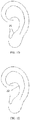
- FIG. 1D is a schematic diagram of a contact position between a sensor at a position of the earphone and an ear according to the embodiment of the present application.
- FIG. 1E is a schematic diagram of a contact position between a sensor at another position of the earphone and an ear according to the embodiment of the present application.
- a sensor 112 is provided at the position near the end of the earphone stem 12 in the earphone body 11 shown in FIG. 1C , and the position near the end of the earphone stem 12 may correspond to a first position 21 in the ear.
- the earphone When the earphone is in a wearing state, that is, located in the ear, the earphone may contact the first position 21 in the ear.
- a position range of mis-touching or mis-dropping is usually limited, if the distance between the at least two positions is greater than or equal to the pre-set distance, then based on detection data of the sensors at the at least two position, a wearing operation of the earphone may be determined, which could avoid misjudgment problems such as mis-touching or mis-dropping more effectively.
- the sensor 112 disposed at each position may be a sensor for wearing detection. Detection data of the sensor 112 at each position may be the detection data of any physical quantity.
- the sensor may also be called a wearing detection sensor or a wearing sensor.
- the sensor is a capacitive sensor, that is, its detection data is capacitive data.
- the processor may be connected to the sensor at each position in the earphone body 11 to acquire detection data of the sensor at each position, and then determine an operation behavior that changes an earphone state according to the detection data of the sensors at the at least two positions.
- the earphone is only a possible example of the wearable device. If it is another wearable device, at least two positions of that wearable device may be provided with sensors, and the at least two positions may be at least two positions on a wearing contact surface of the wearable device.
- the appearance of the earphone shown in FIG. 1A is only a possible example. In practical applications, the earphone may have other appearances, which is not limited by the present invention.
- the positions of the sensors 112 in the earphone body 11 of the earphone shown in FIGS. 1B and 1C are only some examples of possible positions. In practical applications, the sensor may also be arranged at other positions in the earphone body 11, which is not limited in the present application.
- the FIGS. 1D and 1E are only the schematic diagrams of the contact positions between the sensors 112 in the earphone body 11 and the inside of the ear, and the contact positions may also be other examples, which is not limited by the present invention.
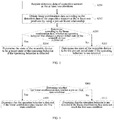
- FIG. 2 is a first flow chart of a wearing detection method for a wearable device according to an embodiment of the application.
- the wearable device may be, for example, the earphone shown in FIGS. 1A-1C described above. Since earplugs of the earphones are usually used in pairs, the wearing detection method may be realized by a pre-set earplug of the earphone through software and/or hardware, or by either earplug in the earphone through software and/or hardware, or by both earplugs in the earphone through software and/or hardware.
- S201 Acquire detection data of capacitive sensors at the at least two positions.
- a processor of the wearable device may acquire detection data of a capacitive sensor at each position.
- the detection data of the capacitive sensor at each position may be data obtained by sampling a detection signal of the capacitive sensor at each position.
- the capacitive sensor at each position may transmit the detection signal to an analog front-end (Analog Front-End, referred to as AFE) circuit connected to the capacitive sensor at each position in the wearable device, and the AFE circuit connected to the capacitive sensor at each position transmits the detection signal to an analog to digital converter (Analog to Digital Converter, referred to as ADC), and the ADC converts the detection signal of the capacitive sensor at each position to obtain a digital signal, which is the detection data.
- the processor may obtain the detection data of the capacitive sensor at each position from the ADC.
- S202 Obtain linear combination data according to the detection data of the capacitive sensors at the at least two positions by using a pre-set linear relationship.
- S203 Determine, according to the linear combination data, whether an operating behavior that changes a pre-set initial state of the wearable device is detected.
- S204 Determine the state of the wearable device to be a target state of the operating behavior if the operating behavior is detected.
- the state of the wearable device may be determined to be the target state of the operation behavior according to the operation behavior, that is, the state of the wearable device may be switched from the pre-set initial state to the target state of the operation behavior.
- operations in the non-wearing state can also be performed, such as stopping playing audio data, stopping receiving audio data, and stopping sending audio data, or, stopping detection of a biometric signal, etc.
- the wearing detection method for a wearable device may be referred to as wearing detection based on a multi-channel solution. For example, if the number of positions where the capacitive sensors are provided in the wearable device is 2, the wearing detection of the multi-channel solution may be referred to as the wearing detection method of a dual-channel solution.
- the wearable devices is exposed to water or sweat, etc., or the wearable device is placed on a desktop or a metal conductor, or the wearable device is held in the hand, or the wearable device is placed in a pocket or in other extreme application situations, only the detection data of the capacitive sensors in some positions will be changed, but not the detection data of the capacitive sensors in all positions will be changed.
- the linear combination data obtained based on the detection data of the capacitive sensors at the at least two positions can effectively reflect a correlation between the detection data of the capacitive sensors at respective positions of the at least two positions.
- the sensor at each position is a capacitive sensor, and the detection data may be a capacitive value. Then, determining whether an operation behavior that changes the pre-set initial state of the wearable device is detected based on the detected capacitive values of the capacitive sensors at the at least two positions, and then determining the state of the wearable device according to the detection result of the operation behavior, can save economic costs and realize rapid iterative mass production of the capacitive sensors in the wearable device.
- obtaining linear combination data according to the detection data of the capacitive sensors at the at least two positions by using a pre-set linear relationship, detecting an operation behavior that changes a pre-set initial state of the wearable device according to the linear combination data, and then determining a state of the wearable devices can effectively avoid mis-judgement problems of mis-wearing or mis-dropping in wearing detection under some extreme application situations, such as the wearable device being exposed to water or sweat, etc., or, the wearable device being placed on a desktop or a metal conductor, or the wearing device being held in a hand or placed in a pocket, thereby improving the wearing detection accuracy of the wearable device.
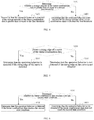
- linear combination data of the single sampling may be obtained, and S301 is executed to determine whether the linear combination data of the single sampling reaches the first state condition. If the linear combination data of the single sampling reaches the first state condition, it may be determined that the operation behavior is detected.
- the pre-set initial state is the non-wearing state, that is, an off-ear state
- the target state of the operation behavior is the wearing state, that is, an in-ear state, that is, the operation behavior is an in-ear operation
- the first state condition is a condition to enter the in-ear state from the off-ear state.
- the wearing detection method for a wearable device can determine that the operation behavior is detected when the linear combination data obtained from the detection data of the capacitive sensors at the at least two positions reaches the first state condition, and determine that the operation behavior is not detected if the linear combination data does not reach the first state condition, and then determine the state of the wearable according to a detection result of the operation behavior, which effectively avoids mis-judgement problems of mis-wearing or mis-dropping in wearing detection under some extreme application situations, such as the wearable device being exposed to water or sweat, or, the wearable device being placed on a desktop or a metal conductor, or the wearing device being held in a hand or placed in a pocket, thereby improving the wearing detection accuracy of the wearable device.
- FIG. 4 is a third flowchart of a wearing detection method for a wearable device according to an embodiment of the present application.
- This method can be a possible example of the method shown in FIG. 3 , where the pre-set initial state of the wearable device is the non-wearing state, and the target state of the operation behavior is the wearing state.
- determining whether the linear combination data reaches the first state condition in S301 may include: S401: Determine whether a change amount of the linear combination data is greater than or equal to a pre-set first threshold.
- the change amount of the linear combination data is greater than or equal to the first threshold, it may be determined that the linear combination data satisfies a wearing state condition, and thus it can be determined that the operation behavior is detected.
- determining that the operation behavior is not detected if the linear combination data does not reach the first state condition in the S303 may include: S403: Determine that the operation behavior is not detected if the change amount of the linear combination data is less than the first threshold.
- the method according to the embodiment of the present application can determine that the operation behavior is detected when the rising edge of the curve of the linear combination data obtained based on the detection data of the capacitive sensors at the at least two positions is detected, and determine that the operation behavior is not detected when the rising edge of the curve of the linear combination data is not detected, and then determine the state of the wearable device, which effectively avoid mis-judgement problems of mis-wearing or mis-dropping in wearing detection under some extreme application situations, such as the wearable device being exposed to water or sweat, etc., or, the wearable device being placed on a desktop or a metal conductor, or the wearing device being held in a hand or placed in a pocket, thereby improving the wearing detection accuracy of the wearable device.
- linear combination data of the multiple samplings may be obtained, and S602 is executed respectively to determine whether the linear combination data of the multiple samplings all reach the second state condition. If the linear combination data of the multiple samplings all reach the second state condition, it may be determined that the operation behavior is detected.
- determining that the operation behavior is detected if the linear combination data reaches the second state condition in the S602 may include: S802: Determine that the operation behavior is detected if the falling edge of the curve is detected.
- the operation behavior is detected to be an operation behavior of entering the non-wearing state.
- S902 Sample, according to a pre-set sampling period, first detection signals of the capacitive sensors at the two positions, to obtain a first sampling capacitance value of the capacitive sensor at each position, and obtain a first linear combination capacitance value according to the first sampling capacitance values of the capacitive sensors at the two positions.
- a first sampling capacitance value of the first sensor obtained in an nth sampling may be expressed as C1n0; a first sampling capacitance value of the second sensor obtained in the nth sampling may be expressed as C2n0.
- a first linear combination capacitance value obtained based on the first sampling capacitance of the first sensor sampled at the nth sampling and the first sampling capacitance of the second sensor sampled at the nth sampling may be expressed as C3n0.
- the C3n0 may be obtained according to CInO and C2n0 by using a pre-set linear relationship.
- a first capacitance value change amount of the first sensor may be obtained according to the first sampling capacitance value and the first initial capacitance value of the first sensor.
- a first capacitance value change amount of the second sensor may be obtained according to the first sampling capacitance value and the first initial capacitance value of the second sensor.
- a rising edge of a curve of the first linear combination capacitance value may be detected. If the rising edge of the curve is detected, it may be determined that the in-ear operation behavior of the wireless earphone is detected.
- a falling edge of a curve of the second linear combination capacitance value may be detected. If the falling edge of the curve is detected, it may be determined that the off-ear operation behavior of the wireless earphone is detected.
- S908 If the off-ear operation behavior of the wireless earphone is detected, determine the state of the wireless earphone to be an off-ear state.
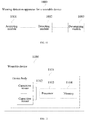
- FIG. 10 is a schematic structural diagram of a wearing detection apparatus for a wearable device according to an embodiment of the present application. At least two positions of the wearable device are provided with capacitive sensors. As shown in FIG. 10 , a wearing detection apparatus for a wearable device 1000 may include:
- the pre-set initial state is a non-wearing state
- the target state of the operation behavior is a wearing state.
- the detecting module 1002 is specifically configured to determine whether the linear combination data reaches a first state condition; determine the operation behavior is detected if the linear combination data reaches the first state condition; and determine the operation behavior is not detected if the linear combination data does not reach the first state condition.
- the detecting module 1002 is specifically configured to detect a rising edge of a curve of the linear combination data; determine the operation behavior is detected if the rising edge of the curve is detected; and determine the operation behavior is not detected if the rising edge of the curve is not detected.
- the pre-set initial state is a wearing state
- the target state of the operation behavior is a non-wearing state.
- the detecting module 1002 is specifically configured to determine whether the linear combination data reaches a pre-set second state condition; determine the operation behavior is detected if the linear combination data reaches the second state condition; and determine the operation behavior is not detected if the linear combination data does not reach the second state condition.
- the detecting module 1002 is specifically configured to determine whether the change amount of the linear combination data is less than or equal to a pre-set second threshold; determine the operation behavior is detected if the change amount of the linear combination data is less than or equal to the second threshold; and determine the operation behavior is not detected if the change amount of the linear combination data is greater than the second threshold.
- the detecting module 1002 is specifically configured to detect a falling edge of a curve of the linear combination data; determine the operation behavior is detected if the falling edge of the curve is detected; and determine the operation behavior is not detected if the falling edge of the curve is not detected.
- the memory 1104 is configured to store program instructions.
- the processor 1103 is configured to execute the wearing detection method for a wearable device according to any one of FIGS. 2 to 9 when calling the program instructions stored in the memory.
- the foregoing program may be stored in a computer readable storage medium. When the program is executed, the steps of the method embodiments are performed.
- the foregoing storage medium a ROM, a RAM, a magnetic disk, or an optical disk and other media that can store program codes.
Landscapes
- Engineering & Computer Science (AREA)
- Physics & Mathematics (AREA)
- Theoretical Computer Science (AREA)
- General Engineering & Computer Science (AREA)
- General Physics & Mathematics (AREA)
- Acoustics & Sound (AREA)
- Signal Processing (AREA)
- Human Computer Interaction (AREA)
- Life Sciences & Earth Sciences (AREA)
- Computer Hardware Design (AREA)
- General Life Sciences & Earth Sciences (AREA)
- Geophysics (AREA)
- Remote Sensing (AREA)
- Electromagnetism (AREA)
- Geology (AREA)
- Environmental & Geological Engineering (AREA)
- Measurement Of The Respiration, Hearing Ability, Form, And Blood Characteristics Of Living Organisms (AREA)
- User Interface Of Digital Computer (AREA)
- Measurement And Recording Of Electrical Phenomena And Electrical Characteristics Of The Living Body (AREA)
Applications Claiming Priority (1)
| Application Number | Priority Date | Filing Date | Title |
|---|---|---|---|
| PCT/CN2018/123844 WO2020132931A1 (zh) | 2018-12-26 | 2018-12-26 | 佩戴检测方法、装置、可穿戴设备及存储介质 |
Publications (2)
| Publication Number | Publication Date |
|---|---|
| EP3764657A1 true EP3764657A1 (de) | 2021-01-13 |
| EP3764657A4 EP3764657A4 (de) | 2021-04-28 |
Family
ID=66499454
Family Applications (1)
| Application Number | Title | Priority Date | Filing Date |
|---|---|---|---|
| EP18944371.6A Pending EP3764657A4 (de) | 2018-12-26 | 2018-12-26 | Verfahren und vorrichtung zur trageeerkennung, am körper tragbare vorrichtung und speichermedium |
Country Status (5)
| Country | Link |
|---|---|
| US (1) | US11115748B2 (de) |
| EP (1) | EP3764657A4 (de) |
| KR (1) | KR102348191B1 (de) |
| CN (1) | CN109792573B (de) |
| WO (1) | WO2020132931A1 (de) |
Families Citing this family (63)
| Publication number | Priority date | Publication date | Assignee | Title |
|---|---|---|---|---|
| USD681015S1 (en) * | 2012-09-08 | 2013-04-30 | Apple Inc. | Earphone |
| USD801314S1 (en) * | 2016-09-06 | 2017-10-31 | Apple Inc. | Pair of earphones |
| WO2018053677A1 (zh) * | 2016-09-20 | 2018-03-29 | 华为技术有限公司 | 智能设备佩戴检测方法及智能设备 |
| CN112188338B (zh) * | 2019-07-04 | 2024-12-24 | 缤特力股份有限公司 | 一种耳机及激活耳机的方法 |
| CN110737026A (zh) * | 2019-10-31 | 2020-01-31 | 歌尔科技有限公司 | 一种设备佩戴检测方法、装置、设备及可读存储介质 |
| CN111093133B (zh) * | 2019-12-13 | 2021-11-30 | 上海传英信息技术有限公司 | 无线设备控制方法、装置及计算机可读存储介质 |
| JP1691641S (de) * | 2020-04-29 | 2021-08-02 | ||
| USD941276S1 (en) * | 2020-05-08 | 2022-01-18 | Navajo Manufacturing Company, Inc. | Earbud |
| CN114003124B (zh) * | 2020-07-28 | 2022-11-01 | 荣耀终端有限公司 | 确定可穿戴设备的穿戴状态的方法和电子设备 |
| CN111795756A (zh) * | 2020-08-07 | 2020-10-20 | Oppo广东移动通信有限公司 | 可穿戴设备的佩戴检测方法、装置和存储介质 |
| USD914648S1 (en) * | 2020-08-15 | 2021-03-30 | Wenjie ZHOU | Earphone |
| USD930621S1 (en) * | 2020-08-17 | 2021-09-14 | Shenzhen Nearbyexpress Technology Development Company Limited | Earphones |
| USD930623S1 (en) * | 2020-08-20 | 2021-09-14 | Shenzhen Nearbyexpress Technology Development Company Limited | Earphone and earphone box |
| CN112083789A (zh) * | 2020-09-01 | 2020-12-15 | Oppo广东移动通信有限公司 | 可穿戴设备的控制方法、装置、存储介质及可穿戴设备 |
| USD976871S1 (en) * | 2020-09-18 | 2023-01-31 | Dongguan Pinmi Electronic Technology Co., Ltd | Earphone |
| USD963613S1 (en) * | 2020-09-30 | 2022-09-13 | Shenzhen Zio Communication Technology Co., Ltd. | Earphone |
| USD931838S1 (en) * | 2020-10-27 | 2021-09-28 | Xiuhong Deng | Earphones with charging case |
| USD920957S1 (en) * | 2020-11-17 | 2021-06-01 | Shenzhen Doageas Technology Limited | Wireless speaker |
| USD917427S1 (en) * | 2020-11-17 | 2021-04-27 | Shenzhen Doageas Technology Limited | Wireless speaker |
| USD920293S1 (en) * | 2020-11-26 | 2021-05-25 | Shenzhen Sixpipes Technology Co., Ltd | Wireless earphone |
| USD916058S1 (en) * | 2020-12-08 | 2021-04-13 | Shenzhen Xinzhengyu Technology Co., Ltd. | Earphone |
| USD914652S1 (en) * | 2020-12-15 | 2021-03-30 | Shenzhen Sixpipes Technology Co., Ltd | Wireless earphone |
| USD925500S1 (en) * | 2021-01-13 | 2021-07-20 | Shenzhen Sixpipes Technology Co., Ltd | Wireless earphone |
| CN112911484A (zh) * | 2021-01-27 | 2021-06-04 | 维沃移动通信有限公司 | 耳机状态检测方法及装置 |
| CN114847892B (zh) * | 2021-02-04 | 2025-06-13 | 华为技术有限公司 | 可穿戴设备及佩戴状态检测方法 |
| KR20220116384A (ko) * | 2021-02-09 | 2022-08-23 | 선전 구딕스 테크놀로지 컴퍼니, 리미티드 | 압력 검출 모듈 및 전자기기 |
| EP4068800A4 (de) | 2021-02-09 | 2022-10-05 | Shenzhen Goodix Technology Co., Ltd. | Druckerkennungsmodul und elektronische vorrichtung |
| EP4047946A1 (de) | 2021-02-17 | 2022-08-24 | Nokia Technologies Oy | Vermeiden der ungewollten betätigung von berührungssensoren an ohrhörern |
| TWD218851S (zh) | 2021-03-17 | 2022-05-11 | 大陸商北京小米移動軟件有限公司 | 耳機 |
| USD942427S1 (en) * | 2021-04-12 | 2022-02-01 | Shenzhen Shengyuansheng Technology Co., Ltd. | Earphone |
| USD947818S1 (en) * | 2021-04-23 | 2022-04-05 | Shenzhen George Zebra Network Technology Co., Ltd. | Wireless headset |
| USD946555S1 (en) * | 2021-05-20 | 2022-03-22 | Shenzhen Sixpipes Technology Co., Ltd | Wireless earphone |
| JP1723108S (ja) * | 2021-06-01 | 2022-08-23 | イヤホン | |
| CN113473292B (zh) * | 2021-06-29 | 2024-02-06 | 芯海科技(深圳)股份有限公司 | 一种状态检测方法、耳机及计算机可读存储介质 |
| CN113377237A (zh) * | 2021-06-30 | 2021-09-10 | 歌尔科技有限公司 | 一种防误触方法、可穿戴设备及存储介质 |
| USD998562S1 (en) * | 2021-07-02 | 2023-09-12 | Haimei Xu | Bluetooth earphone charging case |
| USD1015306S1 (en) * | 2021-07-19 | 2024-02-20 | Zound Industries International Ab | Earbud |
| USD952611S1 (en) * | 2021-07-21 | 2022-05-24 | Shenzhen Beatime Technology Co., Ltd | Pair of wireless earphones |
| CN113794971A (zh) * | 2021-07-29 | 2021-12-14 | RealMe重庆移动通信有限公司 | 耳机、耳机的控制方法、装置及存储介质 |
| CN113784267A (zh) * | 2021-08-09 | 2021-12-10 | 深圳曦华科技有限公司 | 一种左右耳检测方法及系统 |
| USD984422S1 (en) * | 2021-08-12 | 2023-04-25 | Shenzhen Na Yin Technology CO., LTD. | Earphones and charging case set |
| USD986224S1 (en) * | 2021-08-12 | 2023-05-16 | Shenzhen Na Yin Technology CO., LTD. | Earphones and charging case set |
| USD991912S1 (en) * | 2021-08-13 | 2023-07-11 | Shenzhen Grandsun Electronic Co., Ltd. | Wireless earphone |
| CN113759439B (zh) * | 2021-08-20 | 2024-08-23 | 深圳曦华科技有限公司 | 可穿戴设备、佩戴检测方法、装置及存储介质 |
| USD994634S1 (en) * | 2021-08-20 | 2023-08-08 | Guangdong Xizhongxi Technology Co., Ltd. | Earphones |
| USD1003868S1 (en) * | 2021-09-02 | 2023-11-07 | Haimei Xu | Earphones with charging case |
| USD1003867S1 (en) * | 2021-11-03 | 2023-11-07 | Haimei Xu | Earphones with charging case |
| CN114095821A (zh) * | 2021-11-10 | 2022-02-25 | 广东粤港澳大湾区硬科技创新研究院 | 一种无低功耗唤醒芯片耳机唤醒语音助手的方法 |
| US12228644B2 (en) | 2021-11-16 | 2025-02-18 | Samsung Electronics Co., Ltd. | Method for sensing wearing of electronic device and electronic device applied the same |
| CN114554383B (zh) * | 2022-02-28 | 2023-08-08 | 恒玄科技(上海)股份有限公司 | 一种入耳检测方法及装置、无线耳机、存储介质 |
| CN114630242B (zh) * | 2022-03-23 | 2024-04-09 | 歌尔股份有限公司 | 耳机佩戴检测方法、耳机及存储介质 |
| CN114827805B (zh) * | 2022-03-29 | 2025-06-24 | 歌尔股份有限公司 | 耳机佩戴状态的检测方法、装置、耳机及可读存储介质 |
| USD1019613S1 (en) * | 2022-09-16 | 2024-03-26 | Tozo Inc | Set of earphones and charging case |
| USD1042411S1 (en) * | 2022-11-02 | 2024-09-17 | Shenzhen KingAnDa Technology Development Co., LTD | Combined earphones with charging case |
| USD986860S1 (en) * | 2022-11-04 | 2023-05-23 | Shen Zhen Ocen Technology Co. Ltd | Earphone |
| USD985542S1 (en) * | 2022-11-04 | 2023-05-09 | Shen Zhen Ocen Technology Co. Ltd | Earphone |
| USD989748S1 (en) * | 2022-11-25 | 2023-06-20 | Zhijun Wu | Earphone |
| USD993941S1 (en) * | 2022-11-25 | 2023-08-01 | Zhijun Wu | Earphone |
| USD977461S1 (en) * | 2022-12-02 | 2023-02-07 | Shenzhen Shengling Technology Co., Ltd | Earphone |
| USD1043622S1 (en) * | 2023-03-28 | 2024-09-24 | Shenzhen Ego Ark Technology Co., LTD. | Wireless earphones and case |
| CN116942097A (zh) * | 2023-07-24 | 2023-10-27 | 上海艾为电子技术股份有限公司 | 确定穿戴式设备状态的方法、穿戴式设备及存储介质 |
| USD1061476S1 (en) * | 2023-08-11 | 2025-02-11 | Samsung Electronics Co., Ltd. | Wireless earphone |
| JP1783023S (ja) * | 2023-10-27 | 2024-10-24 | イヤホン |
Family Cites Families (22)
| Publication number | Priority date | Publication date | Assignee | Title |
|---|---|---|---|---|
| KR20070025167A (ko) * | 2005-08-31 | 2007-03-08 | 엘지전자 주식회사 | 이동 통신 단말기의 오디오 볼륨 조정 장치 및 방법 |
| US8045727B2 (en) * | 2005-09-30 | 2011-10-25 | Atmel Corporation | Headset power management |
| KR20070066385A (ko) * | 2005-12-22 | 2007-06-27 | 남승현 | 정전용량 감지센서를 이용한 자동제어 이어폰 시스템 |
| KR101207386B1 (ko) * | 2011-03-10 | 2012-12-04 | 위드로봇 주식회사 | 착용감지 시스템 및 그 제공방법 |
| US8907867B2 (en) * | 2012-03-21 | 2014-12-09 | Google Inc. | Don and doff sensing using capacitive sensors |
| CN103002373B (zh) * | 2012-11-19 | 2015-05-27 | 青岛歌尔声学科技有限公司 | 一种耳机和一种检测耳机佩戴状态的方法 |
| US9781521B2 (en) * | 2013-04-24 | 2017-10-03 | Oticon A/S | Hearing assistance device with a low-power mode |
| JP2018502636A (ja) * | 2014-12-18 | 2018-02-01 | コーニンクレッカ フィリップス エヌ ヴェKoninklijke Philips N.V. | ヘッドマウント式コンピュータ装置、その方法及びコンピュータプログラム製品 |
| US9838775B2 (en) * | 2015-09-16 | 2017-12-05 | Apple Inc. | Earbuds with biometric sensing |
| CN105491483B (zh) * | 2015-11-30 | 2018-11-02 | 歌尔股份有限公司 | 用于耳机的佩戴状态检测方法、系统及耳机 |
| US10516930B2 (en) * | 2016-07-07 | 2019-12-24 | Bragi GmbH | Comparative analysis of sensors to control power status for wireless earpieces |
| CN106291121B (zh) * | 2016-07-29 | 2023-10-13 | 歌尔股份有限公司 | 一种可穿戴设备的佩戴状态检测方法和可穿戴设备 |
| CN106792314B (zh) * | 2016-12-29 | 2019-06-18 | 歌尔科技有限公司 | 一种贴耳式头戴耳机及其佩戴状态的检测方法 |
| CN107065016B (zh) * | 2017-03-01 | 2019-04-12 | 歌尔科技有限公司 | 一种用于头戴式耳机的佩戴检测方法、装置及头戴式耳机 |
| US10045111B1 (en) * | 2017-09-29 | 2018-08-07 | Bose Corporation | On/off head detection using capacitive sensing |
| CN108702567B (zh) * | 2017-11-27 | 2020-08-21 | 深圳市汇顶科技股份有限公司 | 耳机、检测耳机的佩戴状态的方法和电子设备 |
| CN108848427A (zh) * | 2018-04-26 | 2018-11-20 | Oppo广东移动通信有限公司 | 佩戴状态检测方法及相关设备 |
| CN108810693B (zh) * | 2018-05-28 | 2020-07-10 | Oppo广东移动通信有限公司 | 一种可穿戴设备及其设备控制装置、方法 |
| CN108810788B (zh) * | 2018-06-12 | 2021-09-03 | 歌尔科技有限公司 | 一种无线耳机的佩戴情况检测方法、装置及无线耳机 |
| US10812888B2 (en) * | 2018-07-26 | 2020-10-20 | Bose Corporation | Wearable audio device with capacitive touch interface |
| CN209134600U (zh) * | 2018-09-25 | 2019-07-19 | 深圳市汇顶科技股份有限公司 | 一种耳机 |
| CN109725716A (zh) * | 2018-11-30 | 2019-05-07 | 歌尔科技有限公司 | 一种ar眼镜的佩戴检测方法、装置及ar眼镜 |
-
2018
- 2018-12-26 KR KR1020207028751A patent/KR102348191B1/ko active Active
- 2018-12-26 WO PCT/CN2018/123844 patent/WO2020132931A1/zh not_active Ceased
- 2018-12-26 CN CN201880002958.0A patent/CN109792573B/zh active Active
- 2018-12-26 EP EP18944371.6A patent/EP3764657A4/de active Pending
-
2020
- 2020-09-29 US US17/036,284 patent/US11115748B2/en active Active
Also Published As
| Publication number | Publication date |
|---|---|
| CN109792573A (zh) | 2019-05-21 |
| US20210014603A1 (en) | 2021-01-14 |
| WO2020132931A1 (zh) | 2020-07-02 |
| CN109792573B (zh) | 2020-11-03 |
| KR20200128728A (ko) | 2020-11-16 |
| KR102348191B1 (ko) | 2022-01-06 |
| US11115748B2 (en) | 2021-09-07 |
| EP3764657A4 (de) | 2021-04-28 |
Similar Documents
| Publication | Publication Date | Title |
|---|---|---|
| US11115748B2 (en) | Wearing detection method and apparatus, wearable device and storage medium | |
| US9374647B2 (en) | Method and apparatus using head movement for user interface | |
| US8405528B2 (en) | Gesture based smart headphone | |
| US8315406B2 (en) | Music reproducing system and information processing method | |
| EP2990943B1 (de) | Steuerungsverfahren und -system für intelligentes endgerät | |
| JP6196398B2 (ja) | タッチボタン及び指紋認証を実現する装置、方法、端末機器、並びにプログラム及び記録媒体 | |
| EP3001422A1 (de) | Automatisierte steuerung eines medienspielers auf basis physiologischer parameter eines benutzers | |
| KR20170092668A (ko) | 스피치-기반 디바이스들을 위한 외부의 시각적 상호작용들 | |
| CN106210954B (zh) | 基于耳机的终端设备操控方法和耳机 | |
| EP3253069B1 (de) | Verfahren und vorrichtung zum verhindern von kopfhörerrauschen | |
| US9332331B2 (en) | Data processing method and an electronic apparatus | |
| KR102389646B1 (ko) | 히어러블 디바이스의 제어를 위한 음향 제스처 검출 | |
| US10250982B2 (en) | Sound source apparatus | |
| US11226698B2 (en) | Inconspicuous sensing system across multiple surfaces | |
| EP3561642A1 (de) | Informationsverarbeitungsvorrichtung und verfahren zur steuerung davon | |
| CN110995930B (zh) | 音频设备控制方法、装置和电子设备 | |
| US20200007976A1 (en) | Headphones | |
| US12474888B2 (en) | Audio routing determination for speaker devices | |
| KR102223653B1 (ko) | 음성 신호 처리 장치 및 방법, 그리고 단말 | |
| KR20150084388A (ko) | 자동 제어 가능한 음향 기기 | |
| CN109348329B (zh) | 一种耳机及音频信号的输出方法 | |
| KR20150145671A (ko) | 마이크를 이용한 기기의 제어 장치와 방법 | |
| CN113495633B (zh) | 用于求取用户输入的方法和媒体设备 | |
| US20250106578A1 (en) | Converting stereo audio content to mono audio content based on earphone usage | |
| CN121603828A (zh) | 耳机控制方法、装置、耳机及介质 |
Legal Events
| Date | Code | Title | Description |
|---|---|---|---|
| STAA | Information on the status of an ep patent application or granted ep patent |
Free format text: STATUS: THE INTERNATIONAL PUBLICATION HAS BEEN MADE |
|
| PUAI | Public reference made under article 153(3) epc to a published international application that has entered the european phase |
Free format text: ORIGINAL CODE: 0009012 |
|
| STAA | Information on the status of an ep patent application or granted ep patent |
Free format text: STATUS: REQUEST FOR EXAMINATION WAS MADE |
|
| 17P | Request for examination filed |
Effective date: 20201008 |
|
| AK | Designated contracting states |
Kind code of ref document: A1 Designated state(s): AL AT BE BG CH CY CZ DE DK EE ES FI FR GB GR HR HU IE IS IT LI LT LU LV MC MK MT NL NO PL PT RO RS SE SI SK SM TR |
|
| AX | Request for extension of the european patent |
Extension state: BA ME |
|
| A4 | Supplementary search report drawn up and despatched |
Effective date: 20210329 |
|
| RIC1 | Information provided on ipc code assigned before grant |
Ipc: H04R 1/10 20060101AFI20210323BHEP Ipc: H04R 5/04 20060101ALI20210323BHEP Ipc: H04R 29/00 20060101ALN20210323BHEP |
|
| DAV | Request for validation of the european patent (deleted) | ||
| DAX | Request for extension of the european patent (deleted) | ||
| STAA | Information on the status of an ep patent application or granted ep patent |
Free format text: STATUS: EXAMINATION IS IN PROGRESS |
|
| 17Q | First examination report despatched |
Effective date: 20230322 |