EP3764708A1 - Verfahren zur übertragung von daten auf einem bandbreitenteil, endgerät und netzwerkvorrichtung - Google Patents
Verfahren zur übertragung von daten auf einem bandbreitenteil, endgerät und netzwerkvorrichtung Download PDFInfo
- Publication number
- EP3764708A1 EP3764708A1 EP18908532.7A EP18908532A EP3764708A1 EP 3764708 A1 EP3764708 A1 EP 3764708A1 EP 18908532 A EP18908532 A EP 18908532A EP 3764708 A1 EP3764708 A1 EP 3764708A1
- Authority
- EP
- European Patent Office
- Prior art keywords
- bwp
- priority
- uplink
- terminal device
- uci
- Prior art date
- Legal status (The legal status is an assumption and is not a legal conclusion. Google has not performed a legal analysis and makes no representation as to the accuracy of the status listed.)
- Withdrawn
Links
- 238000000034 method Methods 0.000 title claims abstract description 66
- 230000008054 signal transmission Effects 0.000 claims abstract description 75
- 230000011664 signaling Effects 0.000 claims description 89
- 238000004891 communication Methods 0.000 claims description 35
- 230000004913 activation Effects 0.000 claims description 12
- 230000015654 memory Effects 0.000 claims description 12
- 238000004590 computer program Methods 0.000 claims description 10
- 230000003213 activating effect Effects 0.000 claims description 4
- 230000005540 biological transmission Effects 0.000 description 44
- 101000741965 Homo sapiens Inactive tyrosine-protein kinase PRAG1 Proteins 0.000 description 20
- 102100038659 Inactive tyrosine-protein kinase PRAG1 Human genes 0.000 description 20
- 239000000969 carrier Substances 0.000 description 16
- 239000011159 matrix material Substances 0.000 description 4
- 238000010586 diagram Methods 0.000 description 3
- 238000005516 engineering process Methods 0.000 description 2
- 238000007792 addition Methods 0.000 description 1
- 230000010365 information processing Effects 0.000 description 1
- 230000003287 optical effect Effects 0.000 description 1
- 238000006467 substitution reaction Methods 0.000 description 1
Images

Classifications
-
- H—ELECTRICITY
- H04—ELECTRIC COMMUNICATION TECHNIQUE
- H04W—WIRELESS COMMUNICATION NETWORKS
- H04W72/00—Local resource management
- H04W72/04—Wireless resource allocation
- H04W72/044—Wireless resource allocation based on the type of the allocated resource
- H04W72/0453—Resources in frequency domain, e.g. a carrier in FDMA
-
- H—ELECTRICITY
- H04—ELECTRIC COMMUNICATION TECHNIQUE
- H04L—TRANSMISSION OF DIGITAL INFORMATION, e.g. TELEGRAPHIC COMMUNICATION
- H04L5/00—Arrangements affording multiple use of the transmission path
- H04L5/0001—Arrangements for dividing the transmission path
- H04L5/0003—Two-dimensional division
- H04L5/0005—Time-frequency
- H04L5/0007—Time-frequency the frequencies being orthogonal, e.g. OFDM(A) or DMT
- H04L5/001—Time-frequency the frequencies being orthogonal, e.g. OFDM(A) or DMT the frequencies being arranged in component carriers
-
- H—ELECTRICITY
- H04—ELECTRIC COMMUNICATION TECHNIQUE
- H04L—TRANSMISSION OF DIGITAL INFORMATION, e.g. TELEGRAPHIC COMMUNICATION
- H04L5/00—Arrangements affording multiple use of the transmission path
- H04L5/003—Arrangements for allocating sub-channels of the transmission path
- H04L5/0053—Allocation of signalling, i.e. of overhead other than pilot signals
-
- H—ELECTRICITY
- H04—ELECTRIC COMMUNICATION TECHNIQUE
- H04L—TRANSMISSION OF DIGITAL INFORMATION, e.g. TELEGRAPHIC COMMUNICATION
- H04L5/00—Arrangements affording multiple use of the transmission path
- H04L5/0091—Signalling for the administration of the divided path, e.g. signalling of configuration information
- H04L5/0096—Indication of changes in allocation
- H04L5/0098—Signalling of the activation or deactivation of component carriers, subcarriers or frequency bands
-
- H—ELECTRICITY
- H04—ELECTRIC COMMUNICATION TECHNIQUE
- H04W—WIRELESS COMMUNICATION NETWORKS
- H04W52/00—Power management, e.g. Transmission Power Control [TPC] or power classes
- H04W52/04—Transmission power control [TPC]
- H04W52/06—TPC algorithms
- H04W52/14—Separate analysis of uplink or downlink
- H04W52/146—Uplink power control
-
- H—ELECTRICITY
- H04—ELECTRIC COMMUNICATION TECHNIQUE
- H04W—WIRELESS COMMUNICATION NETWORKS
- H04W52/00—Power management, e.g. Transmission Power Control [TPC] or power classes
- H04W52/04—Transmission power control [TPC]
- H04W52/30—Transmission power control [TPC] using constraints in the total amount of available transmission power
- H04W52/32—TPC of broadcast or control channels
- H04W52/325—Power control of control or pilot channels
-
- H—ELECTRICITY
- H04—ELECTRIC COMMUNICATION TECHNIQUE
- H04W—WIRELESS COMMUNICATION NETWORKS
- H04W72/00—Local resource management
- H04W72/20—Control channels or signalling for resource management
- H04W72/21—Control channels or signalling for resource management in the uplink direction of a wireless link, i.e. towards the network
-
- H—ELECTRICITY
- H04—ELECTRIC COMMUNICATION TECHNIQUE
- H04W—WIRELESS COMMUNICATION NETWORKS
- H04W72/00—Local resource management
- H04W72/20—Control channels or signalling for resource management
- H04W72/23—Control channels or signalling for resource management in the downlink direction of a wireless link, i.e. towards a terminal
-
- H—ELECTRICITY
- H04—ELECTRIC COMMUNICATION TECHNIQUE
- H04W—WIRELESS COMMUNICATION NETWORKS
- H04W72/00—Local resource management
- H04W72/50—Allocation or scheduling criteria for wireless resources
- H04W72/56—Allocation or scheduling criteria for wireless resources based on priority criteria
Definitions
- the present invention relates to the field of information processing technologies and, in particular, to a method for transmitting data on a bandwidth part, a terminal device, a network device and a computer storage medium.
- one carrier can contain up to four bandwidth parts (Bandwidth Parts, BWPs), and the network side can dynamically activate some of the BWPs for data transmission or reference signal transmission.
- BWPs Bandwidth Parts
- Different BWPs can have different allocated bandwidths and be used for data transmission of different service types. For example, one BWP can be used for eMBB data transmission, and another BWP can be used for URLLC data transmission.
- the terminal needs to preferentially guarantee the transmission performance of high-priority data.
- the current protocol cannot distinguish the priorities of different BWPs, and the transmission performance of high-priority data cannot be guaranteed preferentially.
- the BWP is activated through DCI, data of which service type is transmitted on a BWP is dynamically scheduled by the network side, and the priority needs to be indicated by the same dynamic signaling, which however is not supported by the current technology.
- embodiments of the present invention provide a method for transmitting data on a bandwidth part, a terminal device, a network device and a computer storage medium.
- An embodiment of the present invention provides a method for transmitting data on a bandwidth part, which is applied to a terminal device, where the method includes:
- An embodiment of the present invention provides a method for transmitting data on a bandwidth part, which is applied to a network device, where the method includes:
- An embodiment of the present invention provides a terminal device, where the terminal device includes:
- An embodiment of the present invention provides a network device, where the network device includes:
- An embodiment of the present invention provides a terminal device, including: a processor and a memory for storing a computer program that is capable of running on the processor, where the processor is used to execute steps of the above methods when running the computer program.
- An embodiment of the present invention provides a network device, including: a processor and a memory for storing a computer program that is capable of running on the processor, where the processor is used to execute steps of the above methods when running the computer program.
- An embodiment of this present invention provides a computer storage medium, having computer-executable instructions stored thereon, which when executed, implement the method steps of the above methods.
- the priorities of different BWPs can be determined, so that the signal transmissions or the UCI reporting in the BWPs can be determined according to the priorities, and then the transmission performance of high-priority services can be guaranteed.
- An embodiment of the present invention provides a method for transmitting data on a bandwidth part, which is applied to a terminal device. As shown in FIG. 1 , the method includes:
- the "at least one" may be one or more.
- the determining the priority of the at least one BWP includes: determining the priority of the at least one BWP according to priority information indicated by a network side through higher layer signaling or downlink control information DCI signaling. Specifically, the terminal determines the priority of the at least one BWP according to priority information indicated by the network side through higher layer signaling or DCI signaling.
- the network side can pre-configure N BWPs through RRC signaling, where N is an integer greater than 1. Further, the network side can activate M of the BWPs through MAC signaling or DCI signaling, where M is a positive integer less than or equal to N.
- the at least one BWP may be the N BWPs or the M BWPs.
- the priority information of each BWP can be configured through corresponding higher layer signaling.
- the priority information of the activated BWP can be indicated through corresponding activation signaling (such as a bit or bits in DCI).
- the network side can configure N BWPs with priorities of 0, 1... N-1, respectively, and the BWP with the priority of 0 has the highest priority, and so on.
- the terminal determines the priority of the at least one BWP according to a rule agreed in advance with the network side.
- the preset rule may be to determine the priority of the at least one BWP according to the index, bandwidth or subcarrier interval of the BWP.
- the preset rule can be set according to actual needs: a BWP with a lower BWP index has a higher priority, or the larger (or smaller) the bandwidth occupied by a BWP, the higher the priority of this BWP.
- the at least one BWP is generally the BWP(s) on a same carrier, that is, the priority of the BWP is the priority on the carrier where it is located. If the terminal is configured with multiple carriers, and each carrier contains at least one BWP, then when obtaining the priorities of BWPs on different carriers, the terminal can first compare the priorities between the carriers, and then compare the priorities between the BWPs within the carrier; or the priorities of the BWPs can be directly compared with each other, and if the BWP priorities are the same, then the priorities between the carriers are further compared.
- step 102 according to the priority of the at least one BWP, performing the signal transmission in the at least part of the at least one BWP, or, reporting the uplink control information UCI corresponding to the at least part of the at least one BWP, includes the following multiple scenarios.
- the determining, according to the priority of the at least one BWP, the transmit power for performing the uplink signal transmission on the at least part of the at least one BWP includes: allocating, according to the priority of the at least part of the at least one BWP, the transmit power for the signal transmission on the at least part of the at least one BWP in the order of priority from high to low, when it is needed to simultaneously perform the uplink signal transmission on the at least part of the at least one BWP and when a sum of the transmit power of the uplink signal transmission on the at least part of the at least one BWP is greater than a maximum allowed transmit power.
- the terminal allocates, according to the priorities of the multiple BWPs, the transmit power for the signal transmissions on the multiple BWPs in the order of priorities from high to low.
- the uplink signal here may be uplink data (PUSCH), uplink control information (PUCCH) or uplink reference signal (SRS, DMRS, PTRS, etc.).
- PUSCH uplink data
- PUCCH uplink control information
- SRS uplink reference signal
- DMRS DMRS
- PTRS PTRS
- the terminal device may preferentially guarantee the transmit power of the data on the BWP with a higher priority, and reduces the transmit power of the data on the BWP with a lower priority. If the transmit power on the low-priority BWP is reduced to 0, the terminal does not need to send data on this BWP, that is, the data transmission is discarded.
- the determining, according to the priority of the at least one BWP, the transmit power for performing the uplink signal transmission on the at least part of the at least one BWP can also include: determining, according to the priority of the at least one BWP, a maximum allowed transmit power for performing an uplink signal transmission on each BWP of the at least one BWP.
- the maximum allowed transmit power corresponding to a BWP with a higher priority may be higher than that corresponding to a BWP with a lower priority.
- the values of the maximum transmit power corresponding to different priorities may be agreed upon in advance by the network side and the terminal.
- Second Scenario Determining, according to the priority of the at least one BWP, whether to report the UCI in the at least part of the at least one BWP, when the at least one BWP is an uplink BWP.
- the terminal determines, according to the priority of the at least one BWP, whether to report the UCI in at least one BWP of the at least one BWP.
- the terminal can select one uplink BWP with the highest priority or the lowest priority according to the priorities of multiple uplink BWPs corresponding to the multiple downlink BWPs to report the UCI corresponding to the multiple downlink BWPs, and does not report UCI in other uplink BWPs.
- the UCI can be transmitted on the BWP with a higher priority, thereby ensuring the transmission performance of the UCI.
- Third Scenario Determining, according to the priority of the at least one BWP, whether to report the UCI corresponding to the at least part of the at least one BWP, when the at least one BWP is a downlink BWP.
- the terminal determines, according to the priority of the at least one BWP, whether to report UCI corresponding to at least one BWP of the at least one BWP.
- the determining, according to the priority of the at least one BWP, whether to report the UCI corresponding to the at least part of the at least one BWP includes: if there is a conflict between UCI corresponding to at least part of the at least one downlink BWP, the terminal preferentially transmits the UCI corresponding to a downlink BWP with a higher priority.
- the terminal needs to transmit the ACK/NACK corresponding to K downlink BWPs with the highest priority through the PUCCH according to the priority order of the N downlink BWPs, where K is less than or equal to N.
- the terminal should report only the CSI corresponding to the downlink BWP with a higher priority, and discard the CSI corresponding to the downlink BWP with a lower priority.
- the ACK/NACK or CSI required for high-priority data or services can be preferentially transmitted, thereby ensuring the transmission performance of high-priority data and services.
- the UCI may be ACK/NACK or channel state information CSI or reference signal received power RSRP.
- the CSI may be at least one of a CSI-RS resource indicator CRI, a rank indicator RI, a precoding matrix indicator PMI, a channel quality indicator CQI, a strongest layer indicator LI, and so on.
- the performing the signal transmission in the at least part of the at least one BWP according to the priority of the at least one BWP includes: determining, according to the priority of the at least one BWP, whether to send or receive a reference signal in the at least part of the at least one BWP.
- the determining, according to the priority of the at least one BWP, whether to send or receive the reference signal in the at least part of the at least one BWP includes: if an uplink reference signal needs to be sent simultaneously on the at least one BWP and different beams are configured for uplink reference signal transmissions on different BWPs, sending an uplink reference signal on only a BWP with the highest priority, or sending the uplink reference signal on the at least one BWP using a beam which is used for sending an uplink reference signal on a BWP with the highest priority.
- the terminal needs to send uplink reference signals simultaneously on multiple BWPs, and different beams are configured for uplink reference signal transmissions on different BWPs, then the terminal sends the uplink reference signal only on the BWP with the highest priority, or, the terminal sends the uplink reference signals on the multiple BWPs using a beam which is used for sending the uplink reference signal on the BWP with the highest priority.
- the terminal does not transmit the corresponding uplink reference signals on the BWPs other than the BWP with the highest priority.
- the terminal can simultaneously transmit the uplink reference signals on the at least one BWP.
- the determining, according to the priority of the at least one BWP, whether to send or receive the reference signal in the at least part of the at least one BWP includes: if downlink reference signals need to be received simultaneously on the at least one BWP and different beams need to be used to receive downlink reference signals on different BWPs, receiving a downlink reference signal on only a BWP with the highest priority, or receiving the downlink reference signals on the at least one BWP using a beam which is used for receiving a downlink reference signal on a BWP with the highest priority.
- the terminal does not receive the corresponding downlink reference signals on the BWPs other than the BWP with the highest priority.
- the terminal can simultaneously receive the downlink reference signals on the at least one BWP.
- a beam used for receiving a signal can also be described as a spatial domain reception filter (Spatial domain reception filter) used for receiving a signal.
- a beam used for sending a signal can also be described as a spatial domain transmission filter (Spatial domain transmission filter) used for sending a signal. That two signals use different beams can be expressed as that the two signals use different spatial domain transmission filters. That two signals use the same beam or spatial domain transmission filter to send the signals can also be called that the two signals are quasi-co-located for spatial reception parameters.
- the reference signals required for high-priority data or services can be preferentially sent or received, thereby ensuring the transmission performance of high-priority data and services.
- the priorities of different BWPs could be determined, so that the signal transmissions or the UCI reporting in the BWPs can be determined according to the priorities, and then the transmission performance of high-priority services can be guaranteed.
- An embodiment of the present invention provides a method for transmitting data on a bandwidth part, which is applied to a network device. As shown in FIG. 2 , the method includes:
- the "at least one" may be one or more.
- the configuring the priority of the at least one bandwidth part BWP for the terminal device includes: indicating priority information through higher layer signaling or DCI signaling, to configure the priority of the at least one BWP for the terminal device.
- the priority of the at least one BWP is determined according to priority information indicated by the network side through higher layer signaling or DCI signaling.
- the network side can pre-configure N BWPs through RRC signaling, where N is an integer greater than 1. Further, the network side can activate M of the BWPs through MAC signaling or DCI signaling, where M is a positive integer less than or equal to N.
- the at least one BWP may be the N BWPs or the M BWPs.
- the priority information of each BWP can be configured through corresponding higher layer signaling.
- the priority information of the activated BWP can be indicated through corresponding activation signaling (such as a bit or bits in DCI).
- the network side can configure N BWPs with priorities of 0, 1 ... N-1, respectively, where the BWP with the priority of 0 has the highest priority, and so on.
- the priority of the at least one BWP is determined according to a rule agreed upon in advance.
- the preset rule may be used to determine the priority of the at least one BWP according to the index, bandwidth or subcarrier interval of the BWP. For example, it can be set according to actual needs: a BWP with a lower BWP index has a higher priority, or the larger (or smaller) the bandwidth occupied by a BWP, the higher the priority of this BWP.
- the at least one BWP is generally the BWP(s) on a same carrier, that is, the priority of the BWP is the priority on the carrier where it is located. If the terminal is configured with multiple carriers, and each carrier contains at least one BWP, then when obtaining the priorities of BWPs on different carriers, the terminal can first compare the priorities between the carriers, and then compare the priorities between the BWPs within the carrier; or the priorities of the BWPs can be directly compared with each other, and if the BWP priorities are the same, then the priorities between the carriers are further compared.
- step 202 according to the priority of the at least one BWP, performing the signal transmission in the at least part of the at least one BWP, or, receiving the uplink control information UCI which is reported by the terminal device and corresponds to at least part of the at least one BWP, includes the following scenarios.
- the terminal determines, according to the priority of the at least one BWP, whether to report the UCI in at least one BWP of the at least one BWP.
- the terminal can select one uplink BWP with the highest priority or the lowest priority according to the priorities of multiple uplink BWPs corresponding to the multiple downlink BWPs to report the UCI corresponding to the multiple downlink BWPs, and does not to report UCI in other uplink BWPs.
- the UCI can be transmitted on the BWPs with a higher priority, thereby ensuring the transmission performance of the UCI.
- Second Scenario Determining, according to the priority of the at least one BWP, whether to receive the UCI which is reported by the terminal device and corresponds to the at least part of the at least one BWP, when the at least one BWP is a downlink BWP.
- the terminal determines, according to the priority of the at least one BWP, whether to report UCI corresponding to at least one BWP of the at least one BWP.
- the determining, according to the priority of the at least one BWP, whether to report the UCI corresponding to the at least part of the at least one BWP includes: if there is a conflict between UCI corresponding to at least part of the at least one downlink BWP in the at least one downlink BWP is conflict, the terminal preferentially transmits the UCI corresponding to a downlink BWP with a higher priority.
- the terminal needs to transmit the ACK/NACK corresponding to K downlink BWPs with the highest priority through the PUCCH according to the priority order of the N downlink BWPs, where K is less than or equal to N.
- the terminal should report only the CSI corresponding to the downlink BWP with a higher priority, and discard the CSI corresponding to the downlink BWP with a lower priority.
- the ACK/NACK or CSI required for high-priority data or services can be preferentially transmitted, thereby ensuring the transmission performance of high-priority data and services.
- the UCI may be ACK/NACK or channel state information CSI or reference signal received power RSRP.
- the CSI may be at least one of a CSI-RS resource indicator CRI, a rank indicator RI, a precoding matrix indicator PMI, a channel quality indicator CQI, a strongest layer indicator LI, and so on.
- the performing the signal transmission in the at least part of the at least one BWP according to the priority of the at least one BWP includes: determining, according to the priority of the at least one BWP, whether to send or receive a reference signal in the at least part of the at least one BWP.
- the determining, according to the priority of the at least one BWP, whether to send or receive the reference signal in the at least part of the at least one BWP includes: if uplink reference signals need to be sent simultaneously on the at least one BWP and different beams are configured for uplink reference signal transmissions on different BWPs, sending an uplink reference signal on only a BWP with the highest priority, or sending the uplink reference signals on the at least one BWP using a beam which is used for sending an uplink reference signal on a BWP with the highest priority.
- the terminal needs to send uplink reference signals simultaneously on multiple BWPs, and different beams are configured for uplink reference signal transmissions on different BWPs, then the terminal sends the uplink reference signal only on the BWP with the highest priority, or, the terminal sends the uplink reference signals on the multiple BWPs using a beam which is used for sending the uplink reference signal on the BWP with the highest priority.
- the terminal does not transmit the corresponding uplink reference signals on the BWPs other than the BWP with the highest priority.
- the terminal can simultaneously transmit the uplink reference signals on the at least one BWP.
- the determining, according to the priority of the at least one BWP, whether to send or receive the reference signal in the at least part of the at least one BWP includes: if downlink reference signals need to be received simultaneously on the at least one BWP and different beams need to be used to receive downlink reference signals on different BWPs, receiving a downlink reference signal on only a BWP with the highest priority, or receiving the downlink reference signals on the at least one BWP using a beam which is used for receiving a downlink reference signal on a BWP with the highest priority.
- the terminal does not receive the corresponding downlink reference signals on the BWPs other than the BWP with the highest priority.
- the terminal can simultaneously receive the downlink reference signals on the at least one BWP.
- a beam used for receiving a signal can also be described as a spatial domain reception filter (Spatial domain reception filter) used for receiving a signal.
- a beam used for sending a signal can also be described as a spatial domain transmission filter (Spatial domain transmission filter) used for sending a signal. That two signals use different beams can be expressed as that the two signals use different spatial domain transmission filters. That two signals use the same beam or spatial domain transmission filter to send the signals can also be called that the two signals are quasi-co-located for spatial reception parameters.
- the reference signals required for high-priority data or services can be preferentially sent or received, thereby ensuring the transmission performance of high-priority data and services.
- the priorities of different BWPs could be determined, so that the signal transmissions or the UCI reporting in the BWPs can be determined according to the priorities, and then the transmission performance of high-priority services can be guaranteed.
- An embodiment of the present invention provides a terminal device, as shown in FIG. 3 , including:
- the "at least one" may be one or more.
- the first processing unit 31 determines the priority of the at least one BWP according to priority information indicated by a network side through higher layer signaling or downlink control information DCI signaling. Specifically, the terminal determines the priority of the at least one BWP according to priority information indicated by the network side through higher layer signaling or DCI signaling.
- the network side can pre-configure N BWPs through RRC signaling, where N is an integer greater than 1. Further, the network side can activate M of the BWPs through MAC signaling or DCI signaling, where M is a positive integer less than or equal to N.
- the at least one BWP may be the N BWPs or the M BWPs.
- the priority information of each BWP can be configured through corresponding higher layer signaling.
- the priority information of the activated BWP can be indicated through corresponding activation signaling (such as a bit or bits in DCI).
- the network side can configure N BWPs with priorities of 0, 1... N-1, respectively, where the BWP with the priority of 0 has the highest priority, and so on.
- the first processing unit 31 determines the priority of the at least one BWP based on a preset rule.
- the terminal determines the priority of the at least one BWP according to a rule agreed in advance with the network side.
- the preset rule may be to determine the priority of the at least one BWP according to the index, bandwidth or subcarrier interval of the BWP. For example, it can be set according to actual needs: a BWP with a lower BWP index has a higher priority, or the larger (or smaller) the bandwidth occupied by a BWP, the higher the priority of this BWP.
- the at least one BWP is generally the BWP(s) on a same carrier, that is, the priority of the BWP is the priority on the carrier where it is located. If the terminal is configured with multiple carriers, and each carrier contains at least one BWP, then when obtaining the priorities of BWPs on different carriers, the terminal can first compare the priorities between the carriers, and then compare the priorities between the BWPs within the carrier; or the priorities of the BWPs can be directly compared with each other, and if the BWP priorities are the same, then the priorities between the carriers are further compared.
- performing the signal transmission in the at least part of the at least one BWP, or, reporting the uplink control information UCI corresponding to the at least part of the at least one BWP includes the following multiple scenarios.
- the first communication unit 32 determines, according to the priority of the at least one BWP, a transmit power for performing an uplink signals transmission on the at least part of the at least one BWP, when the at least one BWP is an uplink BWP.
- the first communication unit 32 allocates, according to the priority of the at least part of the at least one BWP, the transmit power for the signal transmission on the at least part of the at least one BWP in the order of priority from high to low, when it is needed to simultaneously perform the uplink signal transmission on the at least part of the at least one BWP and when a sum of the transmit power of the uplink signal transmission on the at least part of the at least one BWP is greater than a maximum allowed transmit power.
- the terminal allocates, according to the priorities of the multiple BWPs, transmit power for the signal transmissions on the multiple BWPs in the order of priorities from high to low.
- the uplink signal here may be uplink data (PUSCH), uplink control information (PUCCH) or uplink reference signal (SRS, DMRS, PTRS, etc.).
- PUSCH uplink data
- PUCCH uplink control information
- SRS uplink reference signal
- DMRS DMRS
- PTRS PTRS
- the terminal device preferentially guarantee the transmit power of the data on the BWP with a higher priority, and reduces the transmit power of the data on the BWP with a lower priority. If the transmit power on the low-priority BWP is reduced to 0, the terminal does not need to send data on this BWP, that is, the data transmission is discarded.
- the first communication unit 32 determines, according to the priority of the at least one BWP, a maximum allowed transmit power for performing an uplink signal transmission on each BWP of the at least one BWP.
- the maximum allowed transmit power corresponding to a BWP with a higher priority may be higher than that corresponding to a BWP with a lower priority.
- the values of the maximum transmit power corresponding to different priorities may be agreed in advance by the network side and the terminal.
- the first communication unit 32 determines, according to the priority of the at least one BWP, whether to report the UCI in the at least part of the at least one BWP, when the at least one BWP is an uplink BWP.
- the at least one BWP is an uplink BWP
- the terminal determines, according to the priority of the at least one BWP, whether to report the UCI in at least one BWP of the at least one BWP.
- the terminal can select one uplink BWP with the highest priority or the lowest priority according to the priorities of multiple uplink BWPs corresponding to the multiple downlink BWPs to report the UCI corresponding to the multiple downlink BWPs, and does not to report UCI in other uplink BWPs.
- the UCI can be transmitted on the BWPs with a higher priority, thereby ensuring the transmission performance of the UCI.
- the first communication unit 32 determines, according to the priority of the at least one BWP, whether to report the UCI corresponding to the at least part of the at least one BWP, when the at least one BWP is a downlink BWP.
- the terminal determines, according to the priority of the at least one BWP, whether to report UCI corresponding to at least one BWP of the at least one BWP.
- the terminal if there is a conflict between UCI corresponding to at least part of the at least one downlink BWP, the terminal preferentially transmits the UCI corresponding to a downlink BWP with a higher priority.
- the terminal needs to transmit the ACK/NACK corresponding to K downlink BWPs with the highest priority through the PUCCH according to the priority order of the N downlink BWPs, where K is less than or equal to N.
- the terminal should report only the CSI corresponding to the downlink BWP with a higher priority, and discard the CSI corresponding to the downlink BWP with a lower priority.
- the ACK/NACK or CSI required for high-priority data or services can be preferentially transmitted, thereby ensuring the transmission performance of high-priority data and services.
- the UCI may be ACK/NACK or channel state information CSI or reference signal received power RSRP.
- the CSI may be at least one of a CSI-RS resource indicator CRI, a rank indicator RI, a precoding matrix indicator PMI, a channel quality indicator CQI, a strongest layer indicator LI, and so on.
- the first communication unit 32 determines, according to the priority of the at least one BWP, whether to send or receive a reference signal in the at least part of the at least one BWP.
- the first communication unit 32 sends an uplink reference signal on only a BWP with the highest priority, or sends the uplink reference signals on the at least one BWP using a beam which is used for sending an uplink reference signal on the BWP with the highest priority.
- the terminal needs to send uplink reference signals simultaneously on multiple BWPs, and different beams are configured for uplink reference signal transmissions on different BWPs, then the terminal sends the uplink reference signal only on the BWP with the highest priority, or, the terminal sends the uplink reference signals on the multiple BWPs using a beam which is used for sending the uplink reference signal on the BWP with the highest priority.
- the terminal does not transmit the corresponding uplink reference signals on the BWPs other than the BWP with the highest priority.
- the terminal can simultaneously transmit the uplink reference signals on the at least one BWP.
- the first communication unit 32 receives a downlink reference signal on only a BWP with the highest priority, or receiving the downlink reference signals on the at least one BWP using a beam which is used for receiving downlink reference signal on a BWP with the highest priority.
- the terminal does not receive the corresponding downlink reference signals on the BWPs other than the BWP with the highest priority.
- the terminal can simultaneously receive the downlink reference signals on the at least one BWP.
- a beam used for receiving a signal can also be described as a spatial domain reception filter (Spatial domain reception filter) used for receiving a signal.
- a beam used for sending a signal can also be described as a spatial domain transmission filter (Spatial domain transmission filter) used for sending a signal. That two signals use different beams can be expressed as that the two signals using different spatial domain transmission filters. That two signals use the same beam or spatial domain transmission filter to send the signals can also be called that the two signals are quasi-co-located for spatial reception parameters.
- the reference signals required for high-priority data or services can be preferentially sent or received, thereby ensuring the transmission performance of high-priority data and services.
- the priorities of different BWPs could be determined, so that the signal transmissions or the UCI reporting in the BWPs can be determined according to the priorities, and then the transmission performance of high-priority services can be guaranteed.
- An embodiment of the present invention provides a network device, as shown in FIG. 4 , including:
- the at least one may be one or more.
- the second processing unit 41 indicates priority information through higher layer signaling or DCI signaling, to configure the priority of the at least one BWP for the terminal device.
- the priority of the at least one BWP is determined according to priority information indicated by the network side through higher layer signaling or DCI signaling.
- the network side can pre-configure N BWPs through RRC signaling, where N is an integer greater than 1. Further, the network side can activate M of the BWPs through MAC signaling or DCI signaling, where M is a positive integer less than or equal to N.
- the at least one BWP may be the N BWPs or the M BWPs.
- the priority information of each BWP can be configured through corresponding higher layer signaling.
- the priority information of the activated BWP can be indicated through corresponding activation signaling (such as a bit or bits in DCI).
- the network side can configure N BWPs with priorities of 0, 1... N-1, respectively, where the BWP with the priority of 0 has the highest priority, and so on.
- the second processing unit 41 determines the priority of the at least one BWP based on a preset rule.
- the network side determines the priority of the at least one BWP according to a rule agreed in advance with the terminal.
- the preset rule may be to determine the priority of the at least one BWP according to the index, bandwidth or subcarrier interval of the BWP. For example, it can be set according to actual needs: a BWP with a lower BWP index has a higher priority, or the larger (or smaller) the bandwidth occupied by a BWP, the higher the priority of this BWP.
- the at least one BWP is generally the BWP(s) on a same carrier, that is, the priority of the BWP is the priority on the carrier where it is located. If the terminal is configured with multiple carriers, and each carrier contains at least one BWP, then when obtaining the priorities of BWPs on different carriers, the terminal can first compare the priorities between the carriers, and then compare the priorities between the BWPs within the carrier; or the priorities of the BWPs can be directly compared with each other, and if the BWP priorities are the same, then the priorities between the carriers are further compared.
- performing the signal transmission in the at least part of the at least one BWP, or, receiving the uplink control information UCI which is reported by the terminal device and corresponds to at least part of the at least one BWP further includes the following scenarios.
- the second communication unit 42 determines, according to the priority of the at least one BWP, whether to receive the UCI reported by the terminal device in the at least part of the at least one BWP, when the at least one BWP is an uplink BWP.
- the terminal determines, according to the priority of the at least one BWP, whether to report the UCI in at least one BWP of the at least one BWP.
- the terminal can select one uplink BWP with the highest priority or the lowest priority according to the priorities of multiple uplink BWPs corresponding to the multiple downlink BWPs to report the UCI corresponding to the multiple downlink BWPs, and does not to report UCI in other uplink BWPs.
- the UCI can be transmitted on the BWPs with a higher priority, thereby ensuring the transmission performance of the UCI.
- the second communication unit 42 determines, according to the priority of the at least one BWP, whether to receive the UCI which is reported by the terminal device and corresponds to the at least part of the at least one BWP, when the at least one BWP is a downlink BWP.
- the terminal determines, according to the priority of the at least one BWP, whether to report UCI corresponding to at least one BWP of the at least one BWP.
- the terminal preferentially transmits the UCI corresponding to a downlink BWP with a higher priority.
- the terminal needs to transmit the ACK/NACK corresponding to K downlink BWPs with the highest priority through the PUCCH according to the priority order of the N downlink BWPs, where K is less than or equal to N.
- the terminal should report only the CSI corresponding to the downlink BWP with a higher priority, and discard the CSI corresponding to the downlink BWP with a lower priority.
- the ACK/NACK or CSI required for high-priority data or services can be preferentially transmitted, thereby ensuring the transmission performance of high-priority data and services.
- the UCI may be ACK/NACK or channel state information CSI or reference signal received power RSRP.
- the CSI may be at least one of a CSI-RS resource indicator CRI, a rank indicator RI, a precoding matrix indicator PMI, a channel quality indicator CQI, a strongest layer indicator LI, and so on.
- the second communication unit 42 determines, according to the priority of the at least one BWP, whether to send or receive a reference signal in the at least part of the at least one BWP.
- the determining, according to the priority of the at least one BWP, whether to send or receive the reference signal in the at least part of the at least one BWP includes: if uplink reference signals need to be sent simultaneously on the at least one BWP and different beams are configured for uplink reference signal transmissions on different BWPs, sending an uplink reference signal on only a BWP with the highest priority, or sending the uplink reference signals on the at least one BWP using a beam which is used for sending an uplink reference signal on a BWP with the highest priority.
- the terminal needs to send uplink reference signals simultaneously on multiple BWPs, and different beams are configured for uplink reference signal transmissions on different BWPs, then the terminal sends the uplink reference signal only on the BWP with the highest priority, or, the terminal sends the uplink reference signals on the multiple BWPs using a beam which is used for sending the uplink reference signal on the BWP with the highest priority.
- the terminal does not transmit the corresponding uplink reference signals on the BWPs other than the BWP with the highest priority.
- the terminal can simultaneously transmit the uplink reference signals on the at least one BWP.
- the second communication unit 42 receives a downlink reference signal on only a BWP with the highest priority, or receives the downlink reference signals on the at least one BWP using a beam which is used for receiving a downlink reference signal on a BWP with the highest priority.
- the terminal does not receive the corresponding downlink reference signals on the BWPs other than the BWP with the highest priority.
- the terminal needs to simultaneously receive the downlink reference signals on at least one BWP, and the downlink reference signals on different BWPs are received using the same beam, the terminal can simultaneously receive the downlink reference signals on the at least one BWP.
- a beam used for receiving a signal can also be described as a spatial domain reception filter (Spatial domain reception filter) used for receiving a signal.
- a beam used for sending a signal can also be described as a spatial domain transmission filter (Spatial domain transmission filter) used for sending a signal. That two signals use different beams can be expressed as that the two signals use different spatial domain transmission filters. That two signals use the same beam or spatial domain transmission filter to send the signals and can also be called that the two signals are quasi-co-located for spatial reception parameters.
- the reference signals required for high-priority data or services can be preferentially sent or received, thereby ensuring the transmission performance of high-priority data and services.
- the priorities of different BWPs could be determined, so that the signal transmissions or the UCI reporting in the BWPs can be determined according to the priorities, and then the transmission performance of high-priority services can be guaranteed.
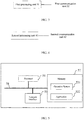
- An embodiment of the present invention also provides a hardware architecture of a terminal device or a network device, as shown in FIG. 5 , including: at least one processor 51, a memory 52, and at least one network interface 53.
- the various components are coupled together via a bus system 54. Understandably, the bus system 54 is used to implement connection and communication between these components.
- the bus system 54 also includes a power bus, a control bus, and a status signal bus. However, for clarity, various buses are marked as the bus system 54 in FIG. 5 .
- the memory 52 in the embodiment of the present invention may be a volatile memory or a nonvolatile memory, or may include both volatile and nonvolatile memories.
- the memory 52 stores the following elements, executable modules or data structures, or their subsets, or their extensions: an operating system 521 and an application 522.
- the processor 51 is used to be able to process the method steps of the foregoing first embodiment, which will not be repeated here.
- An embodiment of the present invention provides a computer storage medium that stores computer-executable instructions. When the computer-executable instructions are executed, the method steps of the foregoing embodiment one are implemented.
- the above apparatuses in the embodiments of the present invention are implemented in the form of software functional modules and sold or used as an independent product, they may also be stored in a computer-readable storage medium. Based on such understanding, the essence, or the part contributing to the prior art, of the technical solutions of the embodiments of the present invention can be embodied in the form of software product.
- the computer software product is stored in a storage medium, and includes several instructions to cause a computer device (which may be a personal computer, server, or network device, etc.) to perform all or part of the methods described in the embodiments of the present invention.
- the foregoing storage medium includes various media that can store program codes, such as a U disk, a mobile hard disk, a read-only memory (ROM, Read Only Memory), a magnetic disk, or an optical disk.
- program codes such as a U disk, a mobile hard disk, a read-only memory (ROM, Read Only Memory), a magnetic disk, or an optical disk.
- an embodiment of the present invention also provides a computer storage medium in which a computer program is stored, and the computer program is used to execute the methods for transmitting data on bandwidth part of the embodiment of the present invention.
Landscapes
- Engineering & Computer Science (AREA)
- Signal Processing (AREA)
- Computer Networks & Wireless Communication (AREA)
- Mobile Radio Communication Systems (AREA)
Applications Claiming Priority (1)
| Application Number | Priority Date | Filing Date | Title |
|---|---|---|---|
| PCT/CN2018/078345 WO2019169588A1 (zh) | 2018-03-07 | 2018-03-07 | 一种在带宽部分上传输数据的方法、终端设备及网络设备 |
Publications (2)
| Publication Number | Publication Date |
|---|---|
| EP3764708A1 true EP3764708A1 (de) | 2021-01-13 |
| EP3764708A4 EP3764708A4 (de) | 2021-03-10 |
Family
ID=67845491
Family Applications (1)
| Application Number | Title | Priority Date | Filing Date |
|---|---|---|---|
| EP18908532.7A Withdrawn EP3764708A4 (de) | 2018-03-07 | 2018-03-07 | Verfahren zur übertragung von daten auf einem bandbreitenteil, endgerät und netzwerkvorrichtung |
Country Status (6)
| Country | Link |
|---|---|
| US (1) | US11576177B2 (de) |
| EP (1) | EP3764708A4 (de) |
| KR (1) | KR20200128716A (de) |
| CN (1) | CN111819895A (de) |
| AU (1) | AU2018412119A1 (de) |
| WO (1) | WO2019169588A1 (de) |
Families Citing this family (6)
| Publication number | Priority date | Publication date | Assignee | Title |
|---|---|---|---|---|
| US11985546B2 (en) * | 2018-01-15 | 2024-05-14 | Sony Group Corporation | Network node, a wireless communications device and methods therein for accessing an unlicensed radio frequency band |
| CN110519793B (zh) * | 2018-05-22 | 2021-10-22 | 维沃移动通信有限公司 | 测量上报方法、测量配置方法、终端和网络侧设备 |
| EP3813432B1 (de) * | 2018-06-21 | 2023-07-12 | Guangdong Oppo Mobile Telecommunications Corp., Ltd. | Verfahren zur verarbeitung von bandbreitenteilen, endgerät und netzwerkvorrichtung |
| EP3811552A1 (de) * | 2018-07-26 | 2021-04-28 | Sony Corporation | Kommunikationsvorrichtungen, infrastrukturausrüstung und verfahren |
| WO2021247224A1 (en) * | 2020-06-04 | 2021-12-09 | Qualcomm Incorporated | Sounding reference signal configurations for subband full duplex operation in new radio |
| CN114615746A (zh) * | 2022-01-20 | 2022-06-10 | 山东浪潮科学研究院有限公司 | 一种bwp优先级调度方法及系统 |
Family Cites Families (8)
| Publication number | Priority date | Publication date | Assignee | Title |
|---|---|---|---|---|
| WO2016169599A1 (en) * | 2015-04-23 | 2016-10-27 | Telefonaktiebolaget Lm Ericsson (Publ) | Resource reallocation |
| CN106572538B (zh) * | 2015-10-13 | 2020-10-23 | 华为技术有限公司 | 一种通信的方法、设备及系统 |
| CN106255215B (zh) * | 2016-08-05 | 2019-12-10 | 宇龙计算机通信科技(深圳)有限公司 | 通信方法及通信装置 |
| CN107733616A (zh) * | 2016-08-12 | 2018-02-23 | 中兴通讯股份有限公司 | 一种业务处理方法及装置 |
| CN107770794B (zh) * | 2016-08-15 | 2023-05-09 | 华为技术有限公司 | 一种网络切片配置方法及装置 |
| AU2017427721A1 (en) * | 2017-08-16 | 2019-12-19 | Guangdong Oppo Mobile Telecommunications Corp., Ltd. | Signal transmission method and terminal device |
| CN111543069B (zh) * | 2017-11-14 | 2024-06-07 | 诺基亚技术有限公司 | 空闲模式和非活动模式下的bwp处理 |
| US11229031B2 (en) * | 2017-12-16 | 2022-01-18 | Lg Electronics Inc. | Uplink control information transmitting method in wireless communication system and device using method |
-
2018
- 2018-03-07 EP EP18908532.7A patent/EP3764708A4/de not_active Withdrawn
- 2018-03-07 KR KR1020207028490A patent/KR20200128716A/ko not_active Withdrawn
- 2018-03-07 CN CN201880090793.7A patent/CN111819895A/zh active Pending
- 2018-03-07 AU AU2018412119A patent/AU2018412119A1/en not_active Abandoned
- 2018-03-07 WO PCT/CN2018/078345 patent/WO2019169588A1/zh not_active Ceased
-
2020
- 2020-09-04 US US17/013,072 patent/US11576177B2/en active Active
Also Published As
| Publication number | Publication date |
|---|---|
| US11576177B2 (en) | 2023-02-07 |
| WO2019169588A1 (zh) | 2019-09-12 |
| KR20200128716A (ko) | 2020-11-16 |
| CN111819895A (zh) | 2020-10-23 |
| AU2018412119A1 (en) | 2020-10-15 |
| US20200404661A1 (en) | 2020-12-24 |
| EP3764708A4 (de) | 2021-03-10 |
Similar Documents
| Publication | Publication Date | Title |
|---|---|---|
| US11758540B2 (en) | Multiplexing method of uplink control information (UCI) for ultra-reliable and low latency communications (URLLC) | |
| EP3764708A1 (de) | Verfahren zur übertragung von daten auf einem bandbreitenteil, endgerät und netzwerkvorrichtung | |
| JP6845277B2 (ja) | 適応的に構成されたtdd通信システムのためのサウンディング参照信号の送信 | |
| US9887825B2 (en) | Method, base station and user equipment for transmitting channel quality information | |
| US11076364B2 (en) | Power determining method, user equipment, and base station | |
| JP6571012B2 (ja) | 適応的に構成されたtdd通信システムのためのチャンネル状態情報 | |
| EP2858445B1 (de) | Uplink-Steuerungsinformationsübertragung | |
| RU2571096C2 (ru) | Способ и устройство для передачи данных | |
| CN109150458B (zh) | 控制信息传输方法及装置 | |
| CN110505711B (zh) | 处理调度请求的方法、设备、装置及介质 | |
| JP2020536419A (ja) | リソース割り当て特定方法、リソース割り当て指示方法、端末およびネットワーク側機器 | |
| KR20130099172A (ko) | 업링크 사운딩 기준 신호를 트리거하고 송신하기 위한 방법 및 장치 | |
| KR20220098280A (ko) | Dci 내의 정보 필드 값 결정 방법 및 장치 | |
| US20230024879A1 (en) | Indication information transmission method and communication device | |
| CN109803365B (zh) | 一种功率控制方法、装置、设备及计算机可读存储介质 | |
| JP6567779B2 (ja) | 上りリンク制御情報uciを伝送するための方法及び装置 | |
| KR101145489B1 (ko) | 무선통신 시스템에서의 하향 링크 패킷 스케쥴링 방법 및 그 장치 | |
| EP3952557A1 (de) | Kanalqualitätmeldeverfahren und -vorrichtung für direkte verbindung, speichermedium und benutzergerät | |
| CN115549879B (zh) | 一种用于数据传输的方法及装置、通信设备、存储介质 | |
| CN110890952A (zh) | Pucch资源的确定方法及装置、存储介质、终端、基站 | |
| CN113015256B (zh) | 一种信息处理方法、装置、设备及计算机可读存储介质 | |
| WO2024171552A1 (ja) | 上りリンク制御情報の効率的な送信のための端末装置、基地局装置、制御方法、及びプログラム |
Legal Events
| Date | Code | Title | Description |
|---|---|---|---|
| STAA | Information on the status of an ep patent application or granted ep patent |
Free format text: STATUS: THE INTERNATIONAL PUBLICATION HAS BEEN MADE |
|
| PUAI | Public reference made under article 153(3) epc to a published international application that has entered the european phase |
Free format text: ORIGINAL CODE: 0009012 |
|
| STAA | Information on the status of an ep patent application or granted ep patent |
Free format text: STATUS: REQUEST FOR EXAMINATION WAS MADE |
|
| 17P | Request for examination filed |
Effective date: 20201007 |
|
| AK | Designated contracting states |
Kind code of ref document: A1 Designated state(s): AL AT BE BG CH CY CZ DE DK EE ES FI FR GB GR HR HU IE IS IT LI LT LU LV MC MK MT NL NO PL PT RO RS SE SI SK SM TR |
|
| AX | Request for extension of the european patent |
Extension state: BA ME |
|
| A4 | Supplementary search report drawn up and despatched |
Effective date: 20210210 |
|
| RIC1 | Information provided on ipc code assigned before grant |
Ipc: H04L 5/00 20060101ALI20210204BHEP Ipc: H04W 72/04 20090101AFI20210204BHEP Ipc: H04W 72/10 20090101ALI20210204BHEP |
|
| DAV | Request for validation of the european patent (deleted) | ||
| DAX | Request for extension of the european patent (deleted) | ||
| STAA | Information on the status of an ep patent application or granted ep patent |
Free format text: STATUS: EXAMINATION IS IN PROGRESS |
|
| 17Q | First examination report despatched |
Effective date: 20221207 |
|
| STAA | Information on the status of an ep patent application or granted ep patent |
Free format text: STATUS: THE APPLICATION HAS BEEN WITHDRAWN |
|
| 18W | Application withdrawn |
Effective date: 20230407 |