EP3765105B1 - Procédé de préparation de tissu biologique pour implantation chirurgicale - Google Patents
Procédé de préparation de tissu biologique pour implantation chirurgicale Download PDFInfo
- Publication number
- EP3765105B1 EP3765105B1 EP20702807.7A EP20702807A EP3765105B1 EP 3765105 B1 EP3765105 B1 EP 3765105B1 EP 20702807 A EP20702807 A EP 20702807A EP 3765105 B1 EP3765105 B1 EP 3765105B1
- Authority
- EP
- European Patent Office
- Prior art keywords
- biological tissue
- tissue
- solution
- ethanol
- biological
- Prior art date
- Legal status (The legal status is an assumption and is not a legal conclusion. Google has not performed a legal analysis and makes no representation as to the accuracy of the status listed.)
- Active
Links
Images




Classifications
-
- A—HUMAN NECESSITIES
- A61—MEDICAL OR VETERINARY SCIENCE; HYGIENE
- A61L—METHODS OR APPARATUS FOR STERILISING MATERIALS OR OBJECTS IN GENERAL; DISINFECTION, STERILISATION OR DEODORISATION OF AIR; CHEMICAL ASPECTS OF BANDAGES, DRESSINGS, ABSORBENT PADS OR SURGICAL ARTICLES; MATERIALS FOR BANDAGES, DRESSINGS, ABSORBENT PADS OR SURGICAL ARTICLES
- A61L2/00—Disinfection or sterilisation of materials or objects, in general; Accessories therefor
- A61L2/16—Disinfection or sterilisation of materials or objects, in general; Accessories therefor using chemical substances
- A61L2/18—Liquid substances
- A61L2/186—Peroxide solutions
-
- A—HUMAN NECESSITIES
- A61—MEDICAL OR VETERINARY SCIENCE; HYGIENE
- A61L—METHODS OR APPARATUS FOR STERILISING MATERIALS OR OBJECTS IN GENERAL; DISINFECTION, STERILISATION OR DEODORISATION OF AIR; CHEMICAL ASPECTS OF BANDAGES, DRESSINGS, ABSORBENT PADS OR SURGICAL ARTICLES; MATERIALS FOR BANDAGES, DRESSINGS, ABSORBENT PADS OR SURGICAL ARTICLES
- A61L2/00—Disinfection or sterilisation of materials or objects, in general; Accessories therefor
- A61L2/16—Disinfection or sterilisation of materials or objects, in general; Accessories therefor using chemical substances
- A61L2/20—Gaseous substances, e.g. vapours
- A61L2/206—Ethylene oxide
-
- A—HUMAN NECESSITIES
- A61—MEDICAL OR VETERINARY SCIENCE; HYGIENE
- A61L—METHODS OR APPARATUS FOR STERILISING MATERIALS OR OBJECTS IN GENERAL; DISINFECTION, STERILISATION OR DEODORISATION OF AIR; CHEMICAL ASPECTS OF BANDAGES, DRESSINGS, ABSORBENT PADS OR SURGICAL ARTICLES; MATERIALS FOR BANDAGES, DRESSINGS, ABSORBENT PADS OR SURGICAL ARTICLES
- A61L27/00—Materials for grafts or prostheses or for coating grafts or prostheses
- A61L27/36—Materials for grafts or prostheses or for coating grafts or prostheses containing ingredients of undetermined constitution or reaction products thereof, e.g. transplant tissue, natural bone, extracellular matrix
- A61L27/3604—Materials for grafts or prostheses or for coating grafts or prostheses containing ingredients of undetermined constitution or reaction products thereof, e.g. transplant tissue, natural bone, extracellular matrix characterised by the human or animal origin of the biological material, e.g. hair, fascia, fish scales, silk, shellac, pericardium, pleura, renal tissue, amniotic membrane, parenchymal tissue, fetal tissue, muscle tissue, fat tissue, enamel
- A61L27/3625—Vascular tissue, e.g. heart valves
-
- A—HUMAN NECESSITIES
- A61—MEDICAL OR VETERINARY SCIENCE; HYGIENE
- A61L—METHODS OR APPARATUS FOR STERILISING MATERIALS OR OBJECTS IN GENERAL; DISINFECTION, STERILISATION OR DEODORISATION OF AIR; CHEMICAL ASPECTS OF BANDAGES, DRESSINGS, ABSORBENT PADS OR SURGICAL ARTICLES; MATERIALS FOR BANDAGES, DRESSINGS, ABSORBENT PADS OR SURGICAL ARTICLES
- A61L27/00—Materials for grafts or prostheses or for coating grafts or prostheses
- A61L27/36—Materials for grafts or prostheses or for coating grafts or prostheses containing ingredients of undetermined constitution or reaction products thereof, e.g. transplant tissue, natural bone, extracellular matrix
- A61L27/3683—Materials for grafts or prostheses or for coating grafts or prostheses containing ingredients of undetermined constitution or reaction products thereof, e.g. transplant tissue, natural bone, extracellular matrix subjected to a specific treatment prior to implantation, e.g. decellularising, demineralising, grinding, cellular disruption/non-collagenous protein removal, anti-calcification, crosslinking, supercritical fluid extraction, enzyme treatment
- A61L27/3687—Materials for grafts or prostheses or for coating grafts or prostheses containing ingredients of undetermined constitution or reaction products thereof, e.g. transplant tissue, natural bone, extracellular matrix subjected to a specific treatment prior to implantation, e.g. decellularising, demineralising, grinding, cellular disruption/non-collagenous protein removal, anti-calcification, crosslinking, supercritical fluid extraction, enzyme treatment characterised by the use of chemical agents in the treatment, e.g. specific enzymes, detergents, capping agents, crosslinkers, anticalcification agents
-
- A—HUMAN NECESSITIES
- A61—MEDICAL OR VETERINARY SCIENCE; HYGIENE
- A61L—METHODS OR APPARATUS FOR STERILISING MATERIALS OR OBJECTS IN GENERAL; DISINFECTION, STERILISATION OR DEODORISATION OF AIR; CHEMICAL ASPECTS OF BANDAGES, DRESSINGS, ABSORBENT PADS OR SURGICAL ARTICLES; MATERIALS FOR BANDAGES, DRESSINGS, ABSORBENT PADS OR SURGICAL ARTICLES
- A61L27/00—Materials for grafts or prostheses or for coating grafts or prostheses
- A61L27/50—Materials characterised by their function or physical properties, e.g. injectable or lubricating compositions, shape-memory materials, surface modified materials
-
- A—HUMAN NECESSITIES
- A61—MEDICAL OR VETERINARY SCIENCE; HYGIENE
- A61L—METHODS OR APPARATUS FOR STERILISING MATERIALS OR OBJECTS IN GENERAL; DISINFECTION, STERILISATION OR DEODORISATION OF AIR; CHEMICAL ASPECTS OF BANDAGES, DRESSINGS, ABSORBENT PADS OR SURGICAL ARTICLES; MATERIALS FOR BANDAGES, DRESSINGS, ABSORBENT PADS OR SURGICAL ARTICLES
- A61L2400/00—Materials characterised by their function or physical properties
- A61L2400/02—Treatment of implants to prevent calcification or mineralisation in vivo
-
- A—HUMAN NECESSITIES
- A61—MEDICAL OR VETERINARY SCIENCE; HYGIENE
- A61L—METHODS OR APPARATUS FOR STERILISING MATERIALS OR OBJECTS IN GENERAL; DISINFECTION, STERILISATION OR DEODORISATION OF AIR; CHEMICAL ASPECTS OF BANDAGES, DRESSINGS, ABSORBENT PADS OR SURGICAL ARTICLES; MATERIALS FOR BANDAGES, DRESSINGS, ABSORBENT PADS OR SURGICAL ARTICLES
- A61L2430/00—Materials or treatment for tissue regeneration
- A61L2430/20—Materials or treatment for tissue regeneration for reconstruction of the heart, e.g. heart valves
-
- A—HUMAN NECESSITIES
- A61—MEDICAL OR VETERINARY SCIENCE; HYGIENE
- A61L—METHODS OR APPARATUS FOR STERILISING MATERIALS OR OBJECTS IN GENERAL; DISINFECTION, STERILISATION OR DEODORISATION OF AIR; CHEMICAL ASPECTS OF BANDAGES, DRESSINGS, ABSORBENT PADS OR SURGICAL ARTICLES; MATERIALS FOR BANDAGES, DRESSINGS, ABSORBENT PADS OR SURGICAL ARTICLES
- A61L2430/00—Materials or treatment for tissue regeneration
- A61L2430/40—Preparation and treatment of biological tissue for implantation, e.g. decellularisation, cross-linking
Definitions
- the present invention is directed at a method for treating biological tissue and a biological tissue obtained by the treatment method, and specifically at a method for treating biological tissue so as to suppress the calcification, risk of biofilm adherent over pericardium and strength reduction of the tissue due to treatment.
- the invention is also directed at bioprosthesis and transcatheter heart valves containing the biological tissue.
- Biological tissues are widely used to make prosthetic replacements for heart valves and blood vessels as well as for transcatheter heart valves. They are connective tissues comprising collagen as the main component. Among these tissues, bovine pericardium is one of the most widely employed. Pericardial tissue is the sac surrounding the heart which provides a natural barrier to infection for the heart and prevents adhesion to the surrounding tissue. The pericardium also serves mechanical roles, for example, by preventing over dilation of the heart, maintaining the correct anatomical position of the heart, and regulating the pressure to volume ratio in the left ventricle during diastole. The structure of the tissue determines its behaviour under loading in both conditions physiologic to the pericardium and as a prosthetic device.
- a biological tissue such as e.g. bovine or porcine pericardium or a heart valve, is chemically treated to improve its mechanical performance and immunogenic properties, reduce thrombogenicity and degradation, preserve sterility, and prolong the allowable storage period.
- US 2008 / 0102439 A1 is directed to the preparation or storage of biological tissues, in particular mammalian tissue, used for surgical implantation, wherein said preparation method comprises contacting the biological tissue with a non-aqueous treatment solution comprising a polyhydric alcohol, such as glycerol, and a C1-C3 alcohol, and removing a portion of the treatment solution from the solution-treated biological tissue.
- a non-aqueous treatment solution comprising a polyhydric alcohol, such as glycerol, and a C1-C3 alcohol
- the tissue of the mammal is selected from the group consisting of pericardium, aortic and pulmonary roots and valves, tendons, ligaments, skin, dura and peritoneum.
- US 2018 / 0133365 A1 introduced a preparation method of a dry animal-derived collagen fiber tissue material comprising the steps of rinsing of an animal-derived collagen fiber tissue material that has been treated with a crosslinking agent, immersion of the rinsed tissue material in a non-aqueous alcoholic solution for dehydration, successive immersion of the tissue material that has been dehydrated with the non-aqueous alcoholic solution in saccharide solutions of different gradients of concentrations for gradient dehydration, taking out and drying of the gradient dehydrated tissue material, hermetic packaging of the dried tissue material and sterilization.
- US 2011 / 0300625 A1 describes a method of preparing a tissue, in particular a pericardium tissue, wherein the method comprises providing a section of tissue harvested from a mammalian organism, and causing osmotic shocking of the section of tissue by performing multiple rinses of the section of tissue with distilled water, and further rinsing the section of tissue with isopropyl alcohol and contacting the section of tissue with one of a formalin solution or a glutaraldehyde solution.
- US 5 413 798 discloses a process for preparing bovine pericard materials and the use of the materials thus prepared as transplants or implants in human medicine and veterinary medicine.
- said document describes the process for treating bovine pericard tissue comprising the steps of wet-chemical processing the pericard tissue, drying the pericard tissue and sterilizing the pericard tissue, wherein the wet-chemical processing comprises separating from the surface of said tissue any adherent fat and basal membrane, contacting said tissue with an aqueous alkaline solution, contacting said tissue with a solution of a metal-ion complexing agent containing disodium EDTA and contacting said tissue with an aqueous buffer solution having a pH of 4.5 to 6.0 and rinsing with water.
- WO 01 / 41828 describes a method for treating a biomaterial comprising contacting the biomaterial with an anticalcification treatment solution, said anticalcification treatment solution being selected from a group consisting of higher alcohol solutions, polyol solutions and polar aprotic organic solvent solutions.
- US 2001 / 0023372 A1 discloses a method of preparing a tissue component for dry storage comprising providing an animal tissue component, treating said tissue component with an aqueous treatment solution comprising a dimensional stabilizer such as glycerol or a derivative thereof, storing said treated tissue component in a container that is essentially free of liquid.
- a dimensional stabilizer such as glycerol or a derivative thereof
- each of the above mentioned patent applications have been made to develop a biological tissue which can be used as bioprosthetic devices that can be stored dry before used for clinical applications.
- tissue preparation methods there are certain disadvantageous associated with the above mentioned tissue preparation methods.
- a biological tissue especially aldehyde fixed tissue, is susceptible to the formation of degenerative calcific deposits.
- Calcification, in particular pathologic calcification, of soft biological tissues due to deposition of calcium phosphate mineral salts in an implanted tissue is undesirable and the deposition of the calcific deposits can have severe consequences on device performance. Calcification of implants can lead to stiffening, structural instability and ultimately to device failure.
- bioprosthetic heart valves are composed of stent-mounted glutaraldehyde-fixed bovine pericardial tissue. Glutaraldehyde fixation effectively crosslinks the collagen in the tissue and to a great extent eliminates the immunogenicity and thrombogenicity of the bioprosthesis.
- Glutaraldehyde fixation effectively crosslinks the collagen in the tissue and to a great extent eliminates the immunogenicity and thrombogenicity of the bioprosthesis.
- a large amount of bioprosthetic heart valves fail due to pathologic calcification of the valve causing tissue stiffening and tearing.
- a method of treating biological tissue comprising the steps of:
- the method further comprises steps (3a) and/or (5a) of contacting the biological tissue with ethanol within a concentration of at least 70% by volume.
- the crosslinking agent used according to the claimed method is glutaraldehyde, for example having a concentration selected in the range of 0.1% to 5.0% by volume.
- the biological tissue according to the claimed method is bovine or porcine pericardium or a heart valve.
- the saline solution according to the claimed method is an aqueous solution comprising 0.9% of sodium chloride by volume.
- the concentration of hydrogen peroxide in step (2) according to the claimed method is from 0.05 to 5.0% by volume.
- a volume ratio of glycerol to ethanol in step (4) according to the claimed method is from 1:5 to 5:1.
- the concentration of EDTA in steps (3) and (4) according to the claimed method is of 0.01% to 10.0 % by weight.
- the method further comprises the steps of (6) drying the biological tissue, (7) placing the biological tissue in a package, (8) sealing the package and (9) sterilizing the package.
- steps (1) to (9) are carried out in a continuous way, i.e. one after another or sequentially.
- the sterilizing of the package comprising the biological tissue according to the claimed method is carried out by exposing the package to ethylene oxide gas.
- the steps (1) to (7) of the claimed method are carried out at a temperature of 10°C to 25°C, preferably at a temperature of 15°C to 25°C, more preferably at a temperature of 18°C to 22°C.
- steps (4) and (5) of the claimed method are carried out while stirring for at least 60 minutes.
- the present invention relates to a biological tissue comprising a biological tissue prepared according to the claimed method.
- the present invention is directed at a method of treating biological tissue.
- the method provides biological tissue containing such treated tissue in ready-to-use form for surgical implantations.
- biological tissue is used herein to refer generally to treated or untreated collagen-containing biologically-derived human or animal materials.
- a pericardium or a heart valve as an animal biological tissue material, in particular obtained from a porcine or bovine heart, that has been treated with the crosslinking agent.
- the natural human heart valves are identified as the aortic, mitral, tricuspid and pulmonary valves.
- Pericardium tissue or heart valve tissues are used to replace damaged or diseased heart valves and to replace any of the above mentioned naturally occurring valves.
- the biological tissues produced according to the inventive method are used for construction of a "bioprosthetic device” or a “bioprosthesis” having a function much like a natural human heart valve, with the bioprosthetic imitating the natural action of the flexible heart valve leaflets.
- Tissue type heart valves are also significantly difficult and time consuming to manufacture, because they must be manufactured to exact standards and tolerances in order to function for years within the dynamic environment of a living patient's heart.
- the primary component of the biological tissues is collagen.
- Collagen molecules consist of three chains of polyamino acids arranged in a trihelical configuration ending in non-helical carboxyl and amino termini. These collagen molecules assemble to form microfibrils, which in turn assemble into fibrils, resulting in collagen fibers. Because collagenous tissues degrade rapidly upon implantation into a host recipient, it is necessary to stabilize the tissue if it is to be used for clinical applications. Chemical stabilization by tissue cross-linking, also known as tissue fixation, has been achieved using a variety of compounds.
- chemical fixation has employed polyfunctional molecules having two or more reactive groups capable of forming irreversible and stable intramolecular and intermolecular chemical bonds with the reactive amino acid side groups being present on the collagen molecules.
- glutaraldehyde which has an aldehyde at each end of a linear aliphatic chain.
- the aldehyde groups of glutaraldehyde and other like molecules react under physiological conditions with the primary amine groups of collagen molecules to cross-link the material.
- Glutaraldehyde cross linked tissue produced in this way exhibits increased resistance to enzymatic degradation, reduced immunogenicity and increased stability.
- One embodiment of the present invention utilized soaking of the biological tissue treated with a crosslinking agent with a saline solution.
- a crosslinking agent is glutaraldehyde which is preferably used in biochemical and medicine applications as an amine-reactive homobifunctional crosslinker.
- glutaraldehyde treatment produces stable cross-links in cellular and extra-cellular matrix proteins which substantially reduced graft immunogenicity.
- tissue has altered mechanical property, early mechanical failure, cytotoxicity, and incomplete suppression of immunological recognition. Besides this severe calcification was noticed in glutaraldehydetreated bovine pericardium.
- An emerging alternative to glutaraldehyde treatment is further treatment according to the method of the present invention, i.e. a method allowing to reduce calcification of biological tissue.
- the crosslinking agent in an amount of from 0.1% to 5.0 % by volume, more preferably from 0.2% to 3.0% by volume, further preferably from 0.3% to 2.0% by volume and especially preferably from 0.5% to 1.0% by volume.
- a soaking of the biological tissue with an aqueous saline solution comprising 0.9% of sodium chloride (9.0 g per litre) is carried out.
- a solution is also commonly named as normal saline, physiological saline or isotonic saline solution.
- the soaked biological tissue is contacted with an aqueous solution comprising Hydrogen Peroxide.
- concentration of hydrogen peroxide is from 0.05% by volume to 5.0% by volume, preferably from 0.1% by volume to 3.0% by volume, more preferably from 0.2% by volume to 2.0% by volume.
- the biological tissue is contacted with an aqueous solution comprising PBS and EDTA.
- the term "contacting" means treating, immersion, exposing to, rinsing of the biological tissue used in the inventive method.
- PBS is directed to a phosphate buffered saline having a pH of 7.4 and containing water based salt solution of disodium hydrogen phosphate, sodium chloride and, in some formulations, potassium chloride and potassium dihydrogen phosphate.
- PBS is used in biological and medical applications, such as washing cells, transportation of tissues and dilutions, because PBS closely mimics the pH, osmolarity, and ion concentrations of the human body.
- aqueous solution refers to a solution comprising a substance or a compound and water that has been purified to remove contaminants which are able to influence the end product.
- distilled water double distilled water or deionized water is used in a method of the present invention.
- EDTA is used herein to refer to ethylenediaminetetraacetic acid which is a complexing chelating agent being able to sequester metal ions especially like Fe 2+ /Fe 3+ , Al 3+ , Mg 2+ , Ca 2+ , Mn 2+ , Zn 2+ and others and to remove them from the solution forming so called EDTA-complexes.
- EDTA binds to calcium ions on the outer shell of hydroxyapatite crystals which are formed from calcium phosphate crystals thereby chelating and removing calcium ions from the crystals, causing the tissue material to shrink thus demineralizing the material.
- the EDTA treatment can reduce calcium level in biological tissues, especially in bovine or porcine pericardium or a heart valve preferably by 20%, more preferably by 30%, further preferably by 40% and especially preferably by 50%. Further, it is preferable to use EDTA in combination with PBS in order to increase demineralization and compatibility with a human body.
- EDTA in particular in steps (3) and (4), having a concentration of more than 0.01% by weight, preferably of more than 0.05% by weight, more preferably of more than 0.10% by weight, still preferably of more than 0.15% by weight, and of less than 10.0% by weight, preferably of less than 8.0% by weight, more preferably of less than 6.0% by weight, still preferably of less than 5.0% by weight, further preferably of less than 3.0% by weight. Still further in the present invention, it is preferably to use disodium EDTA.
- the biological tissue is contacted with a solution comprising glycerol, ethanol and EDTA, and in a fifth step the biological tissue is contacted with a glycerol solution in order to further reduce calcification of biological tissue and to dehydrate the biological tissue.
- a solution comprising glycerol, ethanol and EDTA
- a glycerol solution in order to further reduce calcification of biological tissue and to dehydrate the biological tissue.
- the biological tissues After the biological tissues have been processed through steps (1) to (3) of the method of the present invention, they undergo the treatment in a solution comprising glycerol, ethanol and EDTA.
- the organic solvents like ethanol or glycerol or a mixture of ethanol and glycerol can be similarly used for this purpose.
- the treatment with at least 70% ethanol, preferably with at least 80% ethanol, more preferably with at least 90% ethanol extracts phospholipids from the tissue while also causing a change in collagen conformation that increases bioprosthesis resistance to collagenase.
- ethanol treatment allows extracting almost all phospholipids and cholesterols from the bioprosthesis, thus eliminating calcification of the biological tissue cells. Additionally, ethanol treatment also prevents adsorption of phospholipids and cholesterols from the solution.
- the method by which glycerol fixes biological tissue is not jet fully understood, but a 98% concentration, preferably 99% concentration, is sufficient to treat the biological tissue to make the tissue more biocompatible and resistant to calcification.
- glycerol glycerol
- a volume ratio of glycerol to ethanol is preferably from 1:5 to 5:1, more preferably from 1:4 to 4:1, still preferably from 1:3 to 3:1, further preferably from 1:2 to 2:1.
- the biological tissues are then removed from the solution and placed in glycerol for further dehydration for at least 60 minutes, preferably for at least 75 minutes, more preferably for at least 90 minutes, at room temperature, in particular at a temperature of 10°C to 25°C, preferably at a temperature of 15°C to 25°C, more preferably at a temperature of 18°C to 22°C, under stirring of not more than 500 rpm, preferably of not more than 300 rpm, more preferably of not more than 50 rpm.
- the additional step, in particular step (3a) is preferably carried out before contacting the biological tissue with a solution comprising glycerol, ethanol and EDTA. It is further preferably to carry out another additional step (5a) of contacting the biological tissue with ethanol after the step of contacting the biological tissue with a glycerol and before the step of drying the biological tissue. It is still further preferably to carry out an additional step (3a) and/or (5a) using a mixture of ethanol and EDTA having a concentration as in step (3) or (4).
- the biological tissues are removed from the solution and exposed to ambient air or an inert environment, e.g. nitrogen, at room temperature and humidity so as not to adversely affect tissue properties.
- the drying is performed in a clean room at ambient conditions for at least 12 hours, preferably for at least 16 hours, still preferably for at least 20 hours.
- the drying is performed under high efficiency particulate air (HEPA) filter, in particular under HEPA conditions in a clean room.
- HEPA high efficiency particulate air
- ambient conditions is directed to the ambient temperature of more than 10°C, preferably of more than 12°C, more preferably of more than 14°C, especially preferably of more than 18°C, and preferably of less than 25°C, more preferably of less than 23°C, further preferably of less than 22°C. Further in the present invention it is preferably to carry out each of steps (1) to (7) at the ambient conditions as described above.
- the treated and dried biological tissues are then packaged in a container or package essentially free of liquid for subsequent surgical implantation.
- essentially free of liquid means a non-fluid environment in which the presence of water or other substances is limited to approximately the content of such substances in ambient air.
- One preferred method is to apply a vacuum to the package to minimize the level of oxygen, and one may additionally utilize a backfill of an inert gas, such as nitrogen.
- an inert gas such as nitrogen
- the packaged treated tissue can then be sterilized by a gaseous sterilization process or by an exposure to ionizing radiation.
- the package members are formed from a material that is impenetrable to micro-organisms such as bacteria and fungi. After the tissue or bioprosthetic device containing such tissue is placed in the chamber and/or sterilized, the chamber is sealed.
- Sterilization by exposure to ionizing radiation or sterilizing gas, particularly by exposure to ethylene oxide gas is within the skill of the art.
- biological tissues are sterilized by exposing the biological tissue to sterilizing gas, in particular to ethylene oxide gas (ETO).
- ETO ethylene oxide gas
- Sterilizing with ETO method is usually carried out at a temperature between 37°C and 55°C, gas mixture comprising at least 10% of ethylene oxide and for at least 60 minutes.
- the resulting product is a substantially sterile and sealed implantable tissue present in a substantially dry form. It is especially well-suited for surgical implantation into human patients for the treatment of any number of diseases or conditions.
- the biological tissue Prior to surgical implantation, the biological tissue is removed from the package, and the tissue component optionally rehydrated by exposure to an aqueous solution, preferably a sterile aqueous solution.
- the tissue can be rehydrated by multiple soakings in a sterile solution such as physiologic saline.
- the glycerol and ethanol in the tissue can be easily washed off by saline.
- the described method provides a biological tissue having dimensional stability and which is essentially ready for surgical implantation into a patient, i.e. so called ready-to-use form.
- Biological tissues treated in accordance with the method of the present invention will typically return to a size that is at least 95%, more preferably at least 97%, further preferably at least 99% of its original hydrated size.
- the biological tissues prepared in accordance with the inventive method are ready-to-use for surgical implantation as an implantable bioprosthetic device, in particular in transcatheter heart valves.
- a pericardium or a heart valve as a biological tissue.
- the pericardium or heart valve tissue can be processed according to the method of the present invention prior to their use for surgical implantation.
- the bovine pericardium obtained from a certified abattoir undergoes the procedures of cleaning, trimming and crosslinking with glutaraldehyde before the use in a method of the present invention.
- the invention is further directed at bioprosthesis and transcatheter heart valves containing the biological tissue.
- the present invention relates to a biological tissue comprising a biological tissue prepared according to the claimed method.
- the present invention relates to a biological tissue prepared according to the claimed method for surgical implantation as well as to the biological tissue for use as a bioprosthesis and in transcatheter heart valves.
- bioprostheses means a device derived from processed biological tissue to be used for implantation into humans.
- the development of such devices originated as an attempt to circumvent some of the clinical complications associated with the early development of the mechanical heart valve, and has since resulted in a rapid proliferation of bioprosthetic devices for a variety of applications.
- examples of some of the bioprostheses currently used or under development include heart valves, vascular grafts, biohybrid vascular grafts, ligament substitutes, pericardial patches and others.
- the tissue was immersed in 99% per volume ethanol (Sigma-Aldrich) at 22°C temperature for 60 seconds with intense stirring, and then immersed in a mixture of glycerol/ethanol (50/50) and 0.5% by weight EDTA (Sigma-Aldrich) at 22°C temperature for 60 minutes with slow stirring. Further, the tissue was immersed in glycerol 99% (Sigma-Aldrich) at 22°C temperature for 120 minutes with slow stirring. Next, the tissue was soaked with absolute ethanol 99% per volume (Sigma-Aldrich) and 0.5% by weight EDTA at 22°C temperature during 60 seconds with intense stirring.
- the tissue undergoes a procedure of solvent evaporation under HEPA filtered air insufflation during 18 hours at 18°C temperature. Then, the tissue was packed at double Tyvek pouch and ETO sterilized (55°C, 4 hours ETO exposition) at Sterium Company.
- Example 180702-2 40 membranes with 1 ⁇ 1cm of a biological tissue selected from bovine pericardium "sample 180702-2" has been prepared according to procedure described in Example 1-1.
- Bovine pericardium membranes from Examples 1-1 to 1-3 (number of samples: 180702-2 and 180702-1 are according to the present invention, and 180803-1 is a comparative example) were soaked in saline solution for 2 minutes and then immersed in a Simulated Body Fluid (SBF), which is a solution with ionic concentration similar to that of human blood plasma such as demonstrated in Table 3, maintained under the same physiological conditions of pH and temperature (pH 7.4 and temperature of 36.5°C). The immersion time varied between 1 and 30 days.
- SBF Simulated Body Fluid
- the samples were digested in a closed flask conductive heating system called CHDS.
- the calibration curve was prepared from the Specsol ® 1000 mg. L -1 standard solution to contain 0.0 - 20 mg. L -1 Ca.
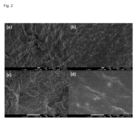
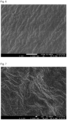
- SEM Scanning electron microscope
- 75 units of a biological tissue selected from bovine pericardium (P+F Brasil) and fixed in the presence of glutaraldehyde (Sigma-Aldrich, 0.625% by volume) has been placed in a cold 0.9% saline solution (JP Farma) and after that in an aqueous solution comprising PBS (Sigma-Aldrich) of pH 7.4 and EDTA (Sigma-Aldrich, 0.2% by weight) for 3 minutes with following rinsing with ethanol (Sigma-Aldrich, 70% by volume).
- PBS Sigma-Aldrich
- EDTA Sigma-Aldrich, 0.2% by weight
- the tissue was contacted with a mixture of glycerol (Sigma-Aldrich, 99%), ethanol and EDTA solution (70% Glycerol, 29.8% Ethanol and 0.2% EDTA solution) at an ambient temperature for at least 90 minutes. After that the tissue has been immersed in glycerol for at least 90 minutes while stirring and with following rinsing with ethanol. Then the tissue was carefully removed from the solution and dried by air. After 16 hours of drying the tissue was examined with regard to rehydration and mechanical stability.
- glycerol Sigma-Aldrich, 99%
- ethanol and EDTA solution 70% Glycerol, 29.8% Ethanol and 0.2% EDTA solution
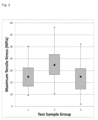
- tensile strength The mechanical properties of a material, in particular tensile strength, were tested under strain-stress evaluation using Universal Testing Machine (Oswaldo Filizzola, model AME-2kN).
- the tensile strength of the test bovine pericardium samples of different preparation steps is shown in Fig. 3 , wherein group 1 corresponds to standard pericardium, group 2 corresponds to dry pericardium and group 3 corresponds to dried and rehydrated pericardium.
- the tissue was contacted with a mixture of glycerol (Sigma-Aldrich, 99%), ethanol and EDTA solution (70% Glycerol, 29.8% Ethanol and 0.2% EDTA solution) at an ambient temperature for at least 90 minutes. After that the tissue has been immersed in glycerol for at least 90 minutes while stirring and with following rinsing with ethanol.
- glycerol Sigma-Aldrich, 99%
- EDTA solution 70% Glycerol, 29.8% Ethanol and 0.2% EDTA solution
- Table 2 demonstrates the calcium content of these samples to standard glutaraldehyde preserved bovine pericardium.
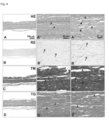
- the collagen fibre integrity was studied by histological evaluation using stain to examine the collagen fibre preservation after drying process in a bovine pericardium sample.
- the images have been obtained using Eclipse E-200 (Nikon) together with video digital full HD Lite 1080p (Tucsen).
- the results have been compared with a standard glutaraldehyde preserved material sample.
- the examination was made using different stains as demonstrated in Fig. 4 (dried bovine pericardium) and Fig. 5 (standard bovine pericardium), wherein HE means Hematoxylin, RE means Resorcine-Orcein, TM means Masson's trichrome and TG means Go-mory's trichrome (all stains were provided by Merck).
- Fig. 4 demonstrates a microscopic picture (without light field microscopy) of crosssectional histological sections of the PF180611-Std 05 membrane stained by the hematoxylin and eosin (HE, A-A "), resorcinine-orcein (RE, B-B “), trichrome of Mallory (TM, C-C ”) and Gomori trichrome (TG, D-D").
- the following parts of the dried bovine pericardium sample can be observed: the thick collagen fibers (smaller black arrows), elastic fibers in transverse or longitudinal sections (large black arrows), remnants of cell nuclei (arrowheads). There is no remnants of vascular elements presented in this picture.
- the scale shows the actual magnification of the photomicrographs.
- Fig. 5 demonstrates a microscopic picture (without light field microscopy) of crosssectional histological sections of the PF180801-3-DRY05 membrane stained by the hematoxylin and eosin (HE, A-A "), resorcinine-orcein (RE, B-B “), trichrome of Mallory (TM, C-C ”) and Gomori trichrome (TG, D-D").
- the following parts of the standard bovine pericardium sample can be observed: the thick collagen fibers (smaller black arrows), elastic fibers in transverse or longitudinal sections (large black arrows), remnants of cell nuclei (arrowheads) and remnants of vascular elements (large head and pointed arrows).
- the scale shows the actual magnification of the photomicrographs.
Landscapes
- Health & Medical Sciences (AREA)
- Life Sciences & Earth Sciences (AREA)
- Chemical & Material Sciences (AREA)
- Engineering & Computer Science (AREA)
- Biomedical Technology (AREA)
- Chemical Kinetics & Catalysis (AREA)
- Epidemiology (AREA)
- Veterinary Medicine (AREA)
- Public Health (AREA)
- General Health & Medical Sciences (AREA)
- Animal Behavior & Ethology (AREA)
- Medicinal Chemistry (AREA)
- Dermatology (AREA)
- Oral & Maxillofacial Surgery (AREA)
- Transplantation (AREA)
- Botany (AREA)
- Molecular Biology (AREA)
- General Chemical & Material Sciences (AREA)
- Cardiology (AREA)
- Vascular Medicine (AREA)
- Heart & Thoracic Surgery (AREA)
- Zoology (AREA)
- Urology & Nephrology (AREA)
- Materials For Medical Uses (AREA)
Claims (12)
- Procédé de traitement d'un tissu biologique comprenant les étapes consistant à :(1) imprégner le tissu biologique traité avec un agent réticulant avec une solution saline :(2) mettre en contact le tissu biologique traité avec une solution aqueuse comprenant un peroxyde d'hydrogène ;(3) mettre en contact le tissu biologique avec une solution aqueuse comprenant un PBS et un EDTA ;(4) mettre en contact le tissu biologique avec une solution comprenant un glycérol, un éthanol et un EDTA ; et(5) mettre en contact le tissu biologique traité avec une solution de glycérol.
- Procédé selon la revendication 1, dans lequel le procédé comprend en outre les étapes (3a) et/ou (5a) consistant à mettre en contact le tissu biologique avec un éthanol dans une concentration d'au moins 70 % par volume.
- Procédé selon la revendication 1 ou 2, dans lequel l'agent réticulant est un glutaraldéhyde.
- Procédé selon l'une quelconque des revendications 1 à 3, dans lequel le tissu biologique est un péricarde bovin ou porcin ou une valvule cardiaque.
- Procédé selon l'une quelconque des revendications 1 à 4, dans lequel la solution saline est une solution aqueuse comprenant 0,9 % de chlorure de sodium.
- Procédé selon l'une quelconque des revendications 1 à 5, dans lequel un rapport volumique glycérol:éthanol dans l'étape (4) est de 1:5 à 5:1.
- Procédé selon l'une quelconque des revendications 1 à 6, dans lequel l'EDTA dans les étapes (3) et (4) a une concentration de 0,01 % à 10,0 % en poids, ou dans lequel le peroxyde d'hydrogène dans l'étape (2) a une concentration de 0,05 % à 5,0 % en volume.
- Procédé selon l'une quelconque des revendications 1 à 7, dans lequel le procédé comprend en outre l'étape (6) consistant à sécher le tissu biologique, l'étape (7) consistant à placer le tissu biologique dans un conditionnement, l'étape (8) consistant à sceller le conditionnement et l'étape (9) consistant à stériliser le conditionnement.
- Procédé selon la revendication 8, dans lequel l'étape consistant à stériliser le conditionnement comprenant le tissu biologique est exécutée en exposant le conditionnement à un gaz d'oxyde d'éthylène.
- Procédé selon l'une quelconque des revendications 1 à 9, en particulier selon la revendication 8, dans lequel les étapes (1) à (5) sont exécutées à une température de 10 °C à 25 °C, en particulier dans lequel les étapes (6) et (7) sont exécutées à une température de 10 °C à 25 °C.
- Procédé selon l'une quelconque des revendications 1 à 10, dans lequel les étapes (4) et (5) sont exécutées avec une agitation pendant au moins 60 minutes.
- Tissu biologique comprenant un tissu biologique préparé selon l'une quelconque des revendications 1 à 11.
Applications Claiming Priority (2)
| Application Number | Priority Date | Filing Date | Title |
|---|---|---|---|
| EP19155986.3A EP3693030A1 (fr) | 2019-02-07 | 2019-02-07 | Procédé de préparation de tissu biologique pour implantation chirurgicale |
| PCT/EP2020/053001 WO2020161243A1 (fr) | 2019-02-07 | 2020-02-06 | Procédé de préparation de tissu biologique pour implantation chirurgicale |
Publications (3)
| Publication Number | Publication Date |
|---|---|
| EP3765105A1 EP3765105A1 (fr) | 2021-01-20 |
| EP3765105B1 true EP3765105B1 (fr) | 2024-09-25 |
| EP3765105C0 EP3765105C0 (fr) | 2024-09-25 |
Family
ID=65363163
Family Applications (2)
| Application Number | Title | Priority Date | Filing Date |
|---|---|---|---|
| EP19155986.3A Withdrawn EP3693030A1 (fr) | 2019-02-07 | 2019-02-07 | Procédé de préparation de tissu biologique pour implantation chirurgicale |
| EP20702807.7A Active EP3765105B1 (fr) | 2019-02-07 | 2020-02-06 | Procédé de préparation de tissu biologique pour implantation chirurgicale |
Family Applications Before (1)
| Application Number | Title | Priority Date | Filing Date |
|---|---|---|---|
| EP19155986.3A Withdrawn EP3693030A1 (fr) | 2019-02-07 | 2019-02-07 | Procédé de préparation de tissu biologique pour implantation chirurgicale |
Country Status (6)
| Country | Link |
|---|---|
| US (1) | US12558456B2 (fr) |
| EP (2) | EP3693030A1 (fr) |
| JP (1) | JP7448491B2 (fr) |
| KR (1) | KR102897784B1 (fr) |
| CN (1) | CN112236175B (fr) |
| WO (1) | WO2020161243A1 (fr) |
Families Citing this family (5)
| Publication number | Priority date | Publication date | Assignee | Title |
|---|---|---|---|---|
| CN113423363A (zh) * | 2020-11-13 | 2021-09-21 | P+F产品功能公司 | 自膨式支架和支架组 |
| EP4046600B1 (fr) * | 2021-02-18 | 2026-02-11 | CV Cardiovascular GmbH | Endoprothèse aortique |
| EP4046602A1 (fr) | 2021-02-18 | 2022-08-24 | P+F Products + Features GmbH | Endoprothèse auto-extensible pour artère pulmonaire |
| KR102788140B1 (ko) | 2021-09-17 | 2025-03-31 | 주식회사 엘지에너지솔루션 | 전지셀의 임피던스 측정 충방전지그 |
| CN114209886B (zh) * | 2021-11-09 | 2022-12-02 | 江苏臻亿医疗科技有限公司 | 一种生物组织材料及其制备方法 |
Family Cites Families (22)
| Publication number | Priority date | Publication date | Assignee | Title |
|---|---|---|---|---|
| US5746775A (en) * | 1988-04-01 | 1998-05-05 | The Board Of Regent6S Of The University Of Michigan | Method of making calcification-resistant bioprosthetic tissue |
| DE3835237C1 (fr) | 1988-10-15 | 1989-12-28 | B. Braun Melsungen Ag, 3508 Melsungen, De | |
| DE69019512T2 (de) * | 1989-02-17 | 1996-02-15 | Baxter Int | Verhinderung von verkalkung in bioprosthetischen implantaten. |
| CA2335152C (fr) | 1998-05-14 | 2008-11-18 | The Cleveland Clinic Foundation | Traitement de tissus animaux implantables pour l'entreposage a sec |
| EP1051206B1 (fr) | 1998-12-01 | 2008-08-20 | Cook Biotech, Inc. | Dispositif medical comprenant un biomateriau collagenique multi-forme |
| US6479079B1 (en) | 1999-12-13 | 2002-11-12 | Sulzer Carbomedics Inc. | Anticalcification treatments for fixed biomaterials |
| EP1755379B1 (fr) | 2004-04-20 | 2013-03-27 | RTI Biologics, Inc. | Processus et appareil de traitement d'implants |
| US20060095021A1 (en) | 2004-11-02 | 2006-05-04 | Casas-Bejar Jesus W | Introduction of agent with medical device |
| US8007992B2 (en) | 2006-10-27 | 2011-08-30 | Edwards Lifesciences Corporation | Method of treating glutaraldehyde-fixed pericardial tissue with a non-aqueous mixture of glycerol and a C1-C3 alcohol |
| WO2009089110A2 (fr) * | 2008-01-04 | 2009-07-16 | Boston Scientific Scimed, Inc. | Procédés de réparation et de régénération de la moelle osseuse |
| EP2542668A2 (fr) | 2010-03-01 | 2013-01-09 | Colibri Heart Valve LLC | Tissus pour greffes et implants prothétiques, et procédés associés |
| EP3028672A1 (fr) | 2010-03-01 | 2016-06-08 | Colibri Heart Valve LLC | Valvule cardiaque pouvant être posée par voie percutanée et procédés associés |
| CN102946916B (zh) * | 2010-06-17 | 2015-03-18 | 爱德华兹生命科学公司 | 通过化学修饰抗原性碳水化合物稳定生物假体组织的方法 |
| MX368000B (es) | 2012-03-22 | 2019-09-13 | Trb Chemedica Int S A | Composición de colágeno y ácido hialurónico para la reparación de ligamento o tendón. |
| CN103432627B (zh) * | 2013-08-26 | 2015-03-25 | 北京瑞健高科生物科技有限公司 | 一种制备动物脱细胞组织基质材料的方法及其制备的组织基质材料 |
| DE102014102503A1 (de) * | 2014-02-26 | 2015-08-27 | Tutogen Medical Gmbh | Verfahren zur Konservierung von tierischem und insbesondere porcinem Knorpelgewebe |
| CN106190949B (zh) | 2015-05-08 | 2020-04-10 | 上海微创心通医疗科技有限公司 | 一种干态动物源性胶原纤维组织材料及其制备方法和生物假体 |
| US11737867B2 (en) * | 2015-11-03 | 2023-08-29 | Biotronik Ag | Method for reducing paravalvular leaks with decellularized tissue |
| EP4122507B1 (fr) * | 2017-06-29 | 2024-04-17 | St. Jude Medical, Cardiology Division, Inc. | Procédé de préparation d'une valvule cardiaque bioprosthétique résistant à la calcification |
| CN113423363A (zh) * | 2020-11-13 | 2021-09-21 | P+F产品功能公司 | 自膨式支架和支架组 |
| EP4046602A1 (fr) * | 2021-02-18 | 2022-08-24 | P+F Products + Features GmbH | Endoprothèse auto-extensible pour artère pulmonaire |
| EP4046600B1 (fr) * | 2021-02-18 | 2026-02-11 | CV Cardiovascular GmbH | Endoprothèse aortique |
-
2019
- 2019-02-07 EP EP19155986.3A patent/EP3693030A1/fr not_active Withdrawn
-
2020
- 2020-02-06 CN CN202080002849.6A patent/CN112236175B/zh active Active
- 2020-02-06 WO PCT/EP2020/053001 patent/WO2020161243A1/fr not_active Ceased
- 2020-02-06 US US17/428,760 patent/US12558456B2/en active Active
- 2020-02-06 KR KR1020207036453A patent/KR102897784B1/ko active Active
- 2020-02-06 JP JP2020573519A patent/JP7448491B2/ja active Active
- 2020-02-06 EP EP20702807.7A patent/EP3765105B1/fr active Active
Also Published As
| Publication number | Publication date |
|---|---|
| US12558456B2 (en) | 2026-02-24 |
| JP2022519407A (ja) | 2022-03-24 |
| KR20210124886A (ko) | 2021-10-15 |
| CN112236175A (zh) | 2021-01-15 |
| JP7448491B2 (ja) | 2024-03-12 |
| WO2020161243A1 (fr) | 2020-08-13 |
| US20220072202A1 (en) | 2022-03-10 |
| BR112020023977A2 (pt) | 2021-02-23 |
| KR102897784B1 (ko) | 2025-12-08 |
| EP3765105A1 (fr) | 2021-01-20 |
| EP3693030A1 (fr) | 2020-08-12 |
| EP3765105C0 (fr) | 2024-09-25 |
| CN112236175B (zh) | 2024-06-04 |
Similar Documents
| Publication | Publication Date | Title |
|---|---|---|
| EP3765105B1 (fr) | Procédé de préparation de tissu biologique pour implantation chirurgicale | |
| CA2666485C (fr) | Tissu biologique pour implantation chirurgicale | |
| US10722613B2 (en) | Method of preparing calcification-resistant bioprosthetic tissue | |
| EP2250886B1 (fr) | Procédé de traitement de tissus biologiques | |
| CA2817732C (fr) | Processus de double reticulation devant favoriser la durabilite post-implantation de tissus bio-prosthetiques | |
| US20110221096A1 (en) | Thin Collagen Tissue for medical device applications | |
| RU2827554C2 (ru) | Способ получения биологической ткани для хирургической имплантации | |
| HK40043705A (en) | Method for preparing biological tissue for surgical implantation | |
| HK40043705B (zh) | 制备用於外科手术植入的生物组织的方法 | |
| BR112020023977B1 (pt) | Método para preparar tecido biológico para implante cirúrgico | |
| WO2011115612A1 (fr) | Tissu collagène mince pour des applications de dispositifs médicaux | |
| US9555162B2 (en) | Phospholipid reduction in biological tissue |
Legal Events
| Date | Code | Title | Description |
|---|---|---|---|
| STAA | Information on the status of an ep patent application or granted ep patent |
Free format text: STATUS: UNKNOWN |
|
| STAA | Information on the status of an ep patent application or granted ep patent |
Free format text: STATUS: THE INTERNATIONAL PUBLICATION HAS BEEN MADE |
|
| PUAI | Public reference made under article 153(3) epc to a published international application that has entered the european phase |
Free format text: ORIGINAL CODE: 0009012 |
|
| STAA | Information on the status of an ep patent application or granted ep patent |
Free format text: STATUS: REQUEST FOR EXAMINATION WAS MADE |
|
| 17P | Request for examination filed |
Effective date: 20201016 |
|
| AK | Designated contracting states |
Kind code of ref document: A1 Designated state(s): AL AT BE BG CH CY CZ DE DK EE ES FI FR GB GR HR HU IE IS IT LI LT LU LV MC MK MT NL NO PL PT RO RS SE SI SK SM TR |
|
| AX | Request for extension of the european patent |
Extension state: BA ME |
|
| STAA | Information on the status of an ep patent application or granted ep patent |
Free format text: STATUS: EXAMINATION IS IN PROGRESS |
|
| 17Q | First examination report despatched |
Effective date: 20220304 |
|
| DAV | Request for validation of the european patent (deleted) | ||
| DAX | Request for extension of the european patent (deleted) | ||
| GRAP | Despatch of communication of intention to grant a patent |
Free format text: ORIGINAL CODE: EPIDOSNIGR1 |
|
| STAA | Information on the status of an ep patent application or granted ep patent |
Free format text: STATUS: GRANT OF PATENT IS INTENDED |
|
| INTG | Intention to grant announced |
Effective date: 20240701 |
|
| GRAS | Grant fee paid |
Free format text: ORIGINAL CODE: EPIDOSNIGR3 |
|
| GRAA | (expected) grant |
Free format text: ORIGINAL CODE: 0009210 |
|
| STAA | Information on the status of an ep patent application or granted ep patent |
Free format text: STATUS: THE PATENT HAS BEEN GRANTED |
|
| AK | Designated contracting states |
Kind code of ref document: B1 Designated state(s): AL AT BE BG CH CY CZ DE DK EE ES FI FR GB GR HR HU IE IS IT LI LT LU LV MC MK MT NL NO PL PT RO RS SE SI SK SM TR |
|
| REG | Reference to a national code |
Ref country code: GB Ref legal event code: FG4D |
|
| REG | Reference to a national code |
Ref country code: CH Ref legal event code: EP |
|
| REG | Reference to a national code |
Ref country code: DE Ref legal event code: R096 Ref document number: 602020038255 Country of ref document: DE |
|
| REG | Reference to a national code |
Ref country code: IE Ref legal event code: FG4D |
|
| U01 | Request for unitary effect filed |
Effective date: 20240925 |
|
| U07 | Unitary effect registered |
Designated state(s): AT BE BG DE DK EE FI FR IT LT LU LV MT NL PT RO SE SI Effective date: 20241004 |
|
| PG25 | Lapsed in a contracting state [announced via postgrant information from national office to epo] |
Ref country code: NO Free format text: LAPSE BECAUSE OF FAILURE TO SUBMIT A TRANSLATION OF THE DESCRIPTION OR TO PAY THE FEE WITHIN THE PRESCRIBED TIME-LIMIT Effective date: 20241225 |
|
| PG25 | Lapsed in a contracting state [announced via postgrant information from national office to epo] |
Ref country code: GR Free format text: LAPSE BECAUSE OF FAILURE TO SUBMIT A TRANSLATION OF THE DESCRIPTION OR TO PAY THE FEE WITHIN THE PRESCRIBED TIME-LIMIT Effective date: 20241226 |
|
| PG25 | Lapsed in a contracting state [announced via postgrant information from national office to epo] |
Ref country code: RS Free format text: LAPSE BECAUSE OF FAILURE TO SUBMIT A TRANSLATION OF THE DESCRIPTION OR TO PAY THE FEE WITHIN THE PRESCRIBED TIME-LIMIT Effective date: 20241225 |
|
| PG25 | Lapsed in a contracting state [announced via postgrant information from national office to epo] |
Ref country code: RS Free format text: LAPSE BECAUSE OF FAILURE TO SUBMIT A TRANSLATION OF THE DESCRIPTION OR TO PAY THE FEE WITHIN THE PRESCRIBED TIME-LIMIT Effective date: 20241225 Ref country code: NO Free format text: LAPSE BECAUSE OF FAILURE TO SUBMIT A TRANSLATION OF THE DESCRIPTION OR TO PAY THE FEE WITHIN THE PRESCRIBED TIME-LIMIT Effective date: 20241225 Ref country code: GR Free format text: LAPSE BECAUSE OF FAILURE TO SUBMIT A TRANSLATION OF THE DESCRIPTION OR TO PAY THE FEE WITHIN THE PRESCRIBED TIME-LIMIT Effective date: 20241226 |
|
| U20 | Renewal fee for the european patent with unitary effect paid |
Year of fee payment: 6 Effective date: 20250226 |
|
| PG25 | Lapsed in a contracting state [announced via postgrant information from national office to epo] |
Ref country code: IS Free format text: LAPSE BECAUSE OF FAILURE TO SUBMIT A TRANSLATION OF THE DESCRIPTION OR TO PAY THE FEE WITHIN THE PRESCRIBED TIME-LIMIT Effective date: 20250125 |
|
| PG25 | Lapsed in a contracting state [announced via postgrant information from national office to epo] |
Ref country code: SM Free format text: LAPSE BECAUSE OF FAILURE TO SUBMIT A TRANSLATION OF THE DESCRIPTION OR TO PAY THE FEE WITHIN THE PRESCRIBED TIME-LIMIT Effective date: 20240925 |
|
| PG25 | Lapsed in a contracting state [announced via postgrant information from national office to epo] |
Ref country code: ES Free format text: LAPSE BECAUSE OF FAILURE TO SUBMIT A TRANSLATION OF THE DESCRIPTION OR TO PAY THE FEE WITHIN THE PRESCRIBED TIME-LIMIT Effective date: 20240925 |
|
| PG25 | Lapsed in a contracting state [announced via postgrant information from national office to epo] |
Ref country code: PL Free format text: LAPSE BECAUSE OF FAILURE TO SUBMIT A TRANSLATION OF THE DESCRIPTION OR TO PAY THE FEE WITHIN THE PRESCRIBED TIME-LIMIT Effective date: 20240925 Ref country code: CZ Free format text: LAPSE BECAUSE OF FAILURE TO SUBMIT A TRANSLATION OF THE DESCRIPTION OR TO PAY THE FEE WITHIN THE PRESCRIBED TIME-LIMIT Effective date: 20240925 |
|
| PG25 | Lapsed in a contracting state [announced via postgrant information from national office to epo] |
Ref country code: SK Free format text: LAPSE BECAUSE OF FAILURE TO SUBMIT A TRANSLATION OF THE DESCRIPTION OR TO PAY THE FEE WITHIN THE PRESCRIBED TIME-LIMIT Effective date: 20240925 |
|
| PLBE | No opposition filed within time limit |
Free format text: ORIGINAL CODE: 0009261 |
|
| STAA | Information on the status of an ep patent application or granted ep patent |
Free format text: STATUS: NO OPPOSITION FILED WITHIN TIME LIMIT |
|
| 26N | No opposition filed |
Effective date: 20250626 |
|
| PG25 | Lapsed in a contracting state [announced via postgrant information from national office to epo] |
Ref country code: MC Free format text: LAPSE BECAUSE OF FAILURE TO SUBMIT A TRANSLATION OF THE DESCRIPTION OR TO PAY THE FEE WITHIN THE PRESCRIBED TIME-LIMIT Effective date: 20240925 |
|
| PG25 | Lapsed in a contracting state [announced via postgrant information from national office to epo] |
Ref country code: HR Free format text: LAPSE BECAUSE OF FAILURE TO SUBMIT A TRANSLATION OF THE DESCRIPTION OR TO PAY THE FEE WITHIN THE PRESCRIBED TIME-LIMIT Effective date: 20240925 |
|
| PG25 | Lapsed in a contracting state [announced via postgrant information from national office to epo] |
Ref country code: IE Free format text: LAPSE BECAUSE OF NON-PAYMENT OF DUE FEES Effective date: 20250206 |
|
| REG | Reference to a national code |
Ref country code: CH Ref legal event code: U11 Free format text: ST27 STATUS EVENT CODE: U-0-0-U10-U11 (AS PROVIDED BY THE NATIONAL OFFICE) Effective date: 20260301 |
|
| U20 | Renewal fee for the european patent with unitary effect paid |
Year of fee payment: 7 Effective date: 20260227 |
|
| PGFP | Annual fee paid to national office [announced via postgrant information from national office to epo] |
Ref country code: GB Payment date: 20260220 Year of fee payment: 7 |
|
| PGFP | Annual fee paid to national office [announced via postgrant information from national office to epo] |
Ref country code: CH Payment date: 20260301 Year of fee payment: 7 |