EP3765113B1 - Systèmes de prévention de l'insuffisance cardiaque droite - Google Patents
Systèmes de prévention de l'insuffisance cardiaque droite Download PDFInfo
- Publication number
- EP3765113B1 EP3765113B1 EP19714063.5A EP19714063A EP3765113B1 EP 3765113 B1 EP3765113 B1 EP 3765113B1 EP 19714063 A EP19714063 A EP 19714063A EP 3765113 B1 EP3765113 B1 EP 3765113B1
- Authority
- EP
- European Patent Office
- Prior art keywords
- lvad
- controller
- pressure
- estimated
- deviation
- Prior art date
- Legal status (The legal status is an assumption and is not a legal conclusion. Google has not performed a legal analysis and makes no representation as to the accuracy of the status listed.)
- Active
Links
Images






Classifications
-
- A—HUMAN NECESSITIES
- A61—MEDICAL OR VETERINARY SCIENCE; HYGIENE
- A61B—DIAGNOSIS; SURGERY; IDENTIFICATION
- A61B5/00—Measuring for diagnostic purposes; Identification of persons
- A61B5/74—Details of notification to user or communication with user or patient; User input means
- A61B5/742—Details of notification to user or communication with user or patient; User input means using visual displays
-
- A—HUMAN NECESSITIES
- A61—MEDICAL OR VETERINARY SCIENCE; HYGIENE
- A61B—DIAGNOSIS; SURGERY; IDENTIFICATION
- A61B5/00—Measuring for diagnostic purposes; Identification of persons
- A61B5/02—Detecting, measuring or recording for evaluating the cardiovascular system, e.g. pulse, heart rate, blood pressure or blood flow
- A61B5/021—Measuring pressure in heart or blood vessels
- A61B5/0215—Measuring pressure in heart or blood vessels by means inserted into the body
-
- A—HUMAN NECESSITIES
- A61—MEDICAL OR VETERINARY SCIENCE; HYGIENE
- A61B—DIAGNOSIS; SURGERY; IDENTIFICATION
- A61B5/00—Measuring for diagnostic purposes; Identification of persons
- A61B5/74—Details of notification to user or communication with user or patient; User input means
- A61B5/7405—Details of notification to user or communication with user or patient; User input means using sound
-
- A—HUMAN NECESSITIES
- A61—MEDICAL OR VETERINARY SCIENCE; HYGIENE
- A61B—DIAGNOSIS; SURGERY; IDENTIFICATION
- A61B5/00—Measuring for diagnostic purposes; Identification of persons
- A61B5/74—Details of notification to user or communication with user or patient; User input means
- A61B5/7455—Details of notification to user or communication with user or patient; User input means characterised by tactile indication, e.g. vibration or electrical stimulation
-
- A—HUMAN NECESSITIES
- A61—MEDICAL OR VETERINARY SCIENCE; HYGIENE
- A61M—DEVICES FOR INTRODUCING MEDIA INTO, OR ONTO, THE BODY; DEVICES FOR TRANSDUCING BODY MEDIA OR FOR TAKING MEDIA FROM THE BODY; DEVICES FOR PRODUCING OR ENDING SLEEP OR STUPOR
- A61M60/00—Blood pumps; Devices for mechanical circulatory actuation; Balloon pumps for circulatory assistance
- A61M60/10—Location thereof with respect to the patient's body
- A61M60/122—Implantable pumps or pumping devices, i.e. the blood being pumped inside the patient's body
- A61M60/126—Implantable pumps or pumping devices, i.e. the blood being pumped inside the patient's body implantable via, into, inside, in line, branching on, or around a blood vessel
- A61M60/148—Implantable pumps or pumping devices, i.e. the blood being pumped inside the patient's body implantable via, into, inside, in line, branching on, or around a blood vessel in line with a blood vessel using resection or like techniques, e.g. permanent endovascular heart assist devices
-
- A—HUMAN NECESSITIES
- A61—MEDICAL OR VETERINARY SCIENCE; HYGIENE
- A61M—DEVICES FOR INTRODUCING MEDIA INTO, OR ONTO, THE BODY; DEVICES FOR TRANSDUCING BODY MEDIA OR FOR TAKING MEDIA FROM THE BODY; DEVICES FOR PRODUCING OR ENDING SLEEP OR STUPOR
- A61M60/00—Blood pumps; Devices for mechanical circulatory actuation; Balloon pumps for circulatory assistance
- A61M60/10—Location thereof with respect to the patient's body
- A61M60/122—Implantable pumps or pumping devices, i.e. the blood being pumped inside the patient's body
- A61M60/165—Implantable pumps or pumping devices, i.e. the blood being pumped inside the patient's body implantable in, on, or around the heart
- A61M60/178—Implantable pumps or pumping devices, i.e. the blood being pumped inside the patient's body implantable in, on, or around the heart drawing blood from a ventricle and returning the blood to the arterial system via a cannula external to the ventricle, e.g. left or right ventricular assist devices
-
- A—HUMAN NECESSITIES
- A61—MEDICAL OR VETERINARY SCIENCE; HYGIENE
- A61M—DEVICES FOR INTRODUCING MEDIA INTO, OR ONTO, THE BODY; DEVICES FOR TRANSDUCING BODY MEDIA OR FOR TAKING MEDIA FROM THE BODY; DEVICES FOR PRODUCING OR ENDING SLEEP OR STUPOR
- A61M60/00—Blood pumps; Devices for mechanical circulatory actuation; Balloon pumps for circulatory assistance
- A61M60/20—Type thereof
- A61M60/205—Non-positive displacement blood pumps
- A61M60/216—Non-positive displacement blood pumps including a rotating member acting on the blood, e.g. impeller
- A61M60/221—Non-positive displacement blood pumps including a rotating member acting on the blood, e.g. impeller the blood flow through the rotating member having both radial and axial components, e.g. mixed flow pumps
-
- A—HUMAN NECESSITIES
- A61—MEDICAL OR VETERINARY SCIENCE; HYGIENE
- A61M—DEVICES FOR INTRODUCING MEDIA INTO, OR ONTO, THE BODY; DEVICES FOR TRANSDUCING BODY MEDIA OR FOR TAKING MEDIA FROM THE BODY; DEVICES FOR PRODUCING OR ENDING SLEEP OR STUPOR
- A61M60/00—Blood pumps; Devices for mechanical circulatory actuation; Balloon pumps for circulatory assistance
- A61M60/20—Type thereof
- A61M60/205—Non-positive displacement blood pumps
- A61M60/216—Non-positive displacement blood pumps including a rotating member acting on the blood, e.g. impeller
- A61M60/226—Non-positive displacement blood pumps including a rotating member acting on the blood, e.g. impeller the blood flow through the rotating member having mainly radial components
- A61M60/232—Centrifugal pumps
-
- A—HUMAN NECESSITIES
- A61—MEDICAL OR VETERINARY SCIENCE; HYGIENE
- A61M—DEVICES FOR INTRODUCING MEDIA INTO, OR ONTO, THE BODY; DEVICES FOR TRANSDUCING BODY MEDIA OR FOR TAKING MEDIA FROM THE BODY; DEVICES FOR PRODUCING OR ENDING SLEEP OR STUPOR
- A61M60/00—Blood pumps; Devices for mechanical circulatory actuation; Balloon pumps for circulatory assistance
- A61M60/20—Type thereof
- A61M60/205—Non-positive displacement blood pumps
- A61M60/216—Non-positive displacement blood pumps including a rotating member acting on the blood, e.g. impeller
- A61M60/237—Non-positive displacement blood pumps including a rotating member acting on the blood, e.g. impeller the blood flow through the rotating member having mainly axial components, e.g. axial flow pumps
-
- A—HUMAN NECESSITIES
- A61—MEDICAL OR VETERINARY SCIENCE; HYGIENE
- A61M—DEVICES FOR INTRODUCING MEDIA INTO, OR ONTO, THE BODY; DEVICES FOR TRANSDUCING BODY MEDIA OR FOR TAKING MEDIA FROM THE BODY; DEVICES FOR PRODUCING OR ENDING SLEEP OR STUPOR
- A61M60/00—Blood pumps; Devices for mechanical circulatory actuation; Balloon pumps for circulatory assistance
- A61M60/50—Details relating to control
-
- A—HUMAN NECESSITIES
- A61—MEDICAL OR VETERINARY SCIENCE; HYGIENE
- A61M—DEVICES FOR INTRODUCING MEDIA INTO, OR ONTO, THE BODY; DEVICES FOR TRANSDUCING BODY MEDIA OR FOR TAKING MEDIA FROM THE BODY; DEVICES FOR PRODUCING OR ENDING SLEEP OR STUPOR
- A61M60/00—Blood pumps; Devices for mechanical circulatory actuation; Balloon pumps for circulatory assistance
- A61M60/50—Details relating to control
- A61M60/508—Electronic control means, e.g. for feedback regulation
- A61M60/515—Regulation using real-time patient data
- A61M60/531—Regulation using real-time patient data using blood pressure data, e.g. from blood pressure sensors
-
- A—HUMAN NECESSITIES
- A61—MEDICAL OR VETERINARY SCIENCE; HYGIENE
- A61M—DEVICES FOR INTRODUCING MEDIA INTO, OR ONTO, THE BODY; DEVICES FOR TRANSDUCING BODY MEDIA OR FOR TAKING MEDIA FROM THE BODY; DEVICES FOR PRODUCING OR ENDING SLEEP OR STUPOR
- A61M60/00—Blood pumps; Devices for mechanical circulatory actuation; Balloon pumps for circulatory assistance
- A61M60/80—Constructional details other than related to driving
- A61M60/855—Constructional details other than related to driving of implantable pumps or pumping devices
- A61M60/871—Energy supply devices; Converters therefor
- A61M60/88—Percutaneous cables
-
- A—HUMAN NECESSITIES
- A61—MEDICAL OR VETERINARY SCIENCE; HYGIENE
- A61M—DEVICES FOR INTRODUCING MEDIA INTO, OR ONTO, THE BODY; DEVICES FOR TRANSDUCING BODY MEDIA OR FOR TAKING MEDIA FROM THE BODY; DEVICES FOR PRODUCING OR ENDING SLEEP OR STUPOR
- A61M2205/00—General characteristics of the apparatus
- A61M2205/02—General characteristics of the apparatus characterised by a particular materials
- A61M2205/0244—Micromachined materials, e.g. made from silicon wafers, microelectromechanical systems [MEMS] or comprising nanotechnology
-
- A—HUMAN NECESSITIES
- A61—MEDICAL OR VETERINARY SCIENCE; HYGIENE
- A61M—DEVICES FOR INTRODUCING MEDIA INTO, OR ONTO, THE BODY; DEVICES FOR TRANSDUCING BODY MEDIA OR FOR TAKING MEDIA FROM THE BODY; DEVICES FOR PRODUCING OR ENDING SLEEP OR STUPOR
- A61M2205/00—General characteristics of the apparatus
- A61M2205/18—General characteristics of the apparatus with alarm
-
- A—HUMAN NECESSITIES
- A61—MEDICAL OR VETERINARY SCIENCE; HYGIENE
- A61M—DEVICES FOR INTRODUCING MEDIA INTO, OR ONTO, THE BODY; DEVICES FOR TRANSDUCING BODY MEDIA OR FOR TAKING MEDIA FROM THE BODY; DEVICES FOR PRODUCING OR ENDING SLEEP OR STUPOR
- A61M2205/00—General characteristics of the apparatus
- A61M2205/33—Controlling, regulating or measuring
- A61M2205/3331—Pressure; Flow
-
- A—HUMAN NECESSITIES
- A61—MEDICAL OR VETERINARY SCIENCE; HYGIENE
- A61M—DEVICES FOR INTRODUCING MEDIA INTO, OR ONTO, THE BODY; DEVICES FOR TRANSDUCING BODY MEDIA OR FOR TAKING MEDIA FROM THE BODY; DEVICES FOR PRODUCING OR ENDING SLEEP OR STUPOR
- A61M2205/00—General characteristics of the apparatus
- A61M2205/33—Controlling, regulating or measuring
- A61M2205/3331—Pressure; Flow
- A61M2205/3334—Measuring or controlling the flow rate
-
- A—HUMAN NECESSITIES
- A61—MEDICAL OR VETERINARY SCIENCE; HYGIENE
- A61M—DEVICES FOR INTRODUCING MEDIA INTO, OR ONTO, THE BODY; DEVICES FOR TRANSDUCING BODY MEDIA OR FOR TAKING MEDIA FROM THE BODY; DEVICES FOR PRODUCING OR ENDING SLEEP OR STUPOR
- A61M2205/00—General characteristics of the apparatus
- A61M2205/50—General characteristics of the apparatus with microprocessors or computers
-
- A—HUMAN NECESSITIES
- A61—MEDICAL OR VETERINARY SCIENCE; HYGIENE
- A61M—DEVICES FOR INTRODUCING MEDIA INTO, OR ONTO, THE BODY; DEVICES FOR TRANSDUCING BODY MEDIA OR FOR TAKING MEDIA FROM THE BODY; DEVICES FOR PRODUCING OR ENDING SLEEP OR STUPOR
- A61M2205/00—General characteristics of the apparatus
- A61M2205/58—Means for facilitating use, e.g. by people with impaired vision
- A61M2205/581—Means for facilitating use, e.g. by people with impaired vision by audible feedback
-
- A—HUMAN NECESSITIES
- A61—MEDICAL OR VETERINARY SCIENCE; HYGIENE
- A61M—DEVICES FOR INTRODUCING MEDIA INTO, OR ONTO, THE BODY; DEVICES FOR TRANSDUCING BODY MEDIA OR FOR TAKING MEDIA FROM THE BODY; DEVICES FOR PRODUCING OR ENDING SLEEP OR STUPOR
- A61M2205/00—General characteristics of the apparatus
- A61M2205/58—Means for facilitating use, e.g. by people with impaired vision
- A61M2205/582—Means for facilitating use, e.g. by people with impaired vision by tactile feedback
-
- A—HUMAN NECESSITIES
- A61—MEDICAL OR VETERINARY SCIENCE; HYGIENE
- A61M—DEVICES FOR INTRODUCING MEDIA INTO, OR ONTO, THE BODY; DEVICES FOR TRANSDUCING BODY MEDIA OR FOR TAKING MEDIA FROM THE BODY; DEVICES FOR PRODUCING OR ENDING SLEEP OR STUPOR
- A61M2205/00—General characteristics of the apparatus
- A61M2205/58—Means for facilitating use, e.g. by people with impaired vision
- A61M2205/583—Means for facilitating use, e.g. by people with impaired vision by visual feedback
-
- A—HUMAN NECESSITIES
- A61—MEDICAL OR VETERINARY SCIENCE; HYGIENE
- A61M—DEVICES FOR INTRODUCING MEDIA INTO, OR ONTO, THE BODY; DEVICES FOR TRANSDUCING BODY MEDIA OR FOR TAKING MEDIA FROM THE BODY; DEVICES FOR PRODUCING OR ENDING SLEEP OR STUPOR
- A61M2230/00—Measuring parameters of the user
- A61M2230/30—Blood pressure
Definitions
- This application relates generally to systems for preventing the onset or worsening of right heart failure in patients with implanted ventricular assist devices, and more particularly to identifying patients at risk for right heart failure following implantation of a ventricular assist device based on pulmonary artery pressure measurement and/or trends and adjusting therapy to prevent or reduce the onset or worsening of right heart failure in such patients.
- Ventricular assist devices are implantable blood pumps used for both short-term (i.e., days, months) and long-term applications (i.e., years or a lifetime) where a patient's heart is incapable of providing adequate circulation, commonly referred to as heart failure or congestive heart failure.
- EP 3 213 781 A1 discloses a biomedical apparatus comprising a blood pump for pumping blood of a human through a secondary intra- or extracorporeal blood circuit. According to the American Heart Association, more than five million Americans are living with heart failure, with about 670,000 new cases diagnosed every year. People with heart failure often have shortness of breath and fatigue. Years of living with blocked arteries or high blood pressure can leave your heart too weak to pump enough blood to your body. As symptoms worsen, advanced heart failure develops.
- a patient suffering from heart failure may use a VAD while awaiting a heart transplant or as a long term destination therapy.
- a patient may use a VAD while recovering from heart surgery.
- a VAD can supplement a weak heart (i.e. , partial support) or can effectively replace the natural heart's function.
- VADs can be implanted in the patient's body and powered by an electrical power source inside or outside the patient's body.
- RHF right heart failure
- the present invention provides improved systems for identifying patients at risk for new or worsening RHF following LVAD implantation and adjusting therapy to prevent such onset or worsening of RHF and to reduce mortality risks.
- the present invention is generally related to systems for preventing onset or worsening of RHF in patients with implanted ventricular assist devices. More particularly, the present invention relates to identifying patients at risk for RHF following implantation of a ventricular assist device based on pulmonary artery (PA) pressure measurement and/or trends (e.g. a PA pressure profile or curve) and adjusting therapy (e.g., blood pump operating parameter) to prevent or reduce the onset or worsening of RHF in such patients, improve patient outcomes, and reduce mortality risks associated with VAD implantation.
- PA pulmonary artery
- a method of identifying a patient at risk for RHF following implant of a blood pump is provided based on PA pressure trends.
- a method of preventing onset and/or worsening of RHF based on PA pressure trends is provided for patients with implanted blood pumps.
- a blood pump system may monitor physiological parameters (e.g., PA pressure trends) of the patient and may adjust a pumping operation (e.g., speed, mode, flow rate, or the like) in response to the monitored parameters and/or may report the monitored parameters to a physician or clinician to adjust the pumping.
- physiological parameters e.g., PA pressure trends
- a pumping operation e.g., speed, mode, flow rate, or the like
- Pulmonary artery pressure measurements can provide a host of valuable data that may be directly applicable for determining a patient's hemodynamic state, identifying patients at risk for RHF, and optimizing blood pump settings or parameters to prevent onset or worsening of RHF. For example, based on historical data collected from patients that responded well to LVAD therapy, a transient period was observed in the first couple weeks post-LVAD implant during which PA pressures were significantly reduced compared to pre-LVAD implant levels. This transient period was followed by a plateau of PA pressures (e.g., stabilization onto lower pressures compared to pre-LVAD implant levels), called a stable period. An ideal PA pressure curve or profile may be derived from this historical pressure data of patients that responded well to LVAD therapy.
- a pressure curve or profile derived from PA pressure measurements of a current patient following LVAD implant may then be compared to the ideal PA pressure curve. Clinicians may then use this data, depending on differences between the curves (e.g., the stabilization of PA pressures outside a pre-determined target zone or designated time period), to identify a patient at risk for new or worsening RHF and adjust LVAD therapy accordingly (e.g., increase or decrease LVAD flow rate or change heart failure medications) to optimize treatment to prevent such onset or worsening of RHF in the patient.
- LVAD therapy e.g., increase or decrease LVAD flow rate or change heart failure medications
- a method for reducing risk of right heart failure (RHF) in a patient following implantation of a blood pump system includes receiving a plurality of pulmonary artery (PA) pressure measurements or PA trending data, fitting a regression model to the plurality of PA pressure measurements or PA trending data, and determining a deviation between at least one estimated parameter and at least one ideal parameter.
- the at least one estimated parameter is computed from the regression model.
- the method further includes adjusting at least one operating parameter of a blood pump based on the determined deviation.
- the method may include identifying if a patient is at risk for RHF based on the received plurality of PA pressure measurements or PA trending data.
- the at least one operating parameter may be adjusted only if the patient is identified at risk for RHF.
- the method may further include determining a goodness of fit of the regression model and comparing the goodness of fit of the regression model to a threshold value prior to determining the deviation between the at least one estimated and ideal parameters.
- the method may also include collecting additional PA pressure measurements or PA trending data when the goodness of fit exceeds the threshold value.
- the method may only include determining the deviation between the at least one estimated and ideal parameters when the goodness of fit is less than the threshold value.
- At least one ideal parameter is computed by fitting the regression model to historical PA pressure measurements or PA trending data of a patient population.
- the plurality of PA pressure measurements or PA trending data are received only during a transient period of time following implantation of the blood pump.
- the transient period of time may last for less than about 20 days following implantation of the blood pump prior to transitioning to a stable or steady state period.
- Determining the deviation between the at least one estimated and ideal parameters may include computing a deviation between an estimated steady state pressure and an ideal steady state pressure.
- Adjusting the at least one operating parameter of the blood pump includes increasing a flow rate when the determined deviation between the at least one estimated steady state pressure and the at least one ideal steady state pressure exceeds a threshold value. Adjusting the at least one operating parameter of the blood pump may include decreasing a flow rate when the computed deviation between the estimated steady state pressure and the ideal steady state pressure is less than a threshold value.
- Adjusting the at least one operating parameter of the blood pump may include adjusting at least one of a flow rate, pump speed, or a pumping operation mode. Further, adjusting the pumping operation mode may include adjusting at least one of continuous pumping or pulsatile pumping.
- the plurality of PA pressure measurements or PA trending data may be wirelessly transmitted by a MEMS based pressure sensor implanted within the pulmonary artery or an interrogation unit associated therewith.
- the method may include determining a responsiveness of the patient to the blood pump system based on the determined deviation prior to adjusting the at least one operating parameter of the blood pump.
- the PA trending data may include a PA pressure profile or curve.
- the at least one estimated and ideal parameters may include at least one of a pressure or time parameter.
- the pressure parameter may be a steady state or stabilization period pressure and the time parameter may be a transient duration period.
- At least one of an external heart blood pump controller, an implantable heart blood pump controller, or an external computing device are disclosed which may be configured to carry out steps of the method. At least one of an external heart blood pump controller, an implantable heart blood pump controller, or an external computing device may be separate devices from the blood pump or pressure sensor.
- Adjustment of the at least one operating parameter of the blood pump may stabilize PA pressure during a transient period of time.
- the method may include outputting at least one of a visual, audio, or haptic alert prior to adjustment of the at least one operating parameter of the blood pump.
- a method for reducing risk of right heart failure (RHF) in a patient following implantation of a blood pump system includes: receiving a plurality of pulmonary artery (PA) pressure measurements or PA trending data; fitting a regression model to the plurality of PA pressure measurements or PA trending data; determining a deviation between at least one estimated parameter and at least one ideal parameter, wherein the at least one estimated parameter is computed from the regression model; and outputting an alert to adjust at least one operating parameter of a blood pump based on the determined deviation.
- the method may include outputting at least one of the plurality of PA pressure measurements, PA trending data, or determined deviation onto a display.
- a method for reducing risk of right heart failure (RHF) in a patient following implantation of a blood pump system includes: receiving a plurality of pulmonary artery (PA) pressure measurements from a pressure sensor positioned in the PA of a patient; estimating a steady state pressure of the patient from the plurality of PA pressure measurements; determining a deviation between the estimated steady state pressure and an ideal steady state pressure; and adjusting at least one operating parameter of a blood pump based on the determined deviation.
- PA pulmonary artery
- a left ventricular assist device (LVAD) system configured to reduce a risk of right heart failure (RHF) in a patient following implantation of an LVAD in the patient and includes: an LVAD, an implantable cardiac electronic device, and a controller operably coupled with the LVAD and configured to receive a plurality of pulmonary artery (PA) pressure measurements or PA trending data from the implantable cardiac electronic device; fit a regression model to the plurality of PA pressure measurements or PA trending data; determine a deviation between at least one estimated parameter and at least one ideal parameter, wherein the at least one estimated parameter is computed from the regression model; and adjust at least one operating parameter of the LVAD based on the determined deviation.
- PA pulmonary artery
- the controller includes at least one of an external heart blood pump controller, an implantable heart blood pump controller, or external computing device.
- the implantable cardiac electronic device may include a pressure sensor.
- the system includes an interrogation unit configured to interrogate the implantable cardiac electronic device. The interrogation unit may be operably coupled to the controller.
- At least one of the controller, implantable cardiac electronic device, or interrogation unit are in electrical communication with a power source. Two or more of the controller, implantable cardiac electronic device, or interrogation unit share a power source. In certain embodiments, the controller and implantable cardiac electronic device are configured to communicate wirelessly.
- the controller is configured to determine a goodness of fit of the regression model and compare the goodness of fit of the regression model to a threshold value prior to determining the deviation between the at least one estimated and ideal parameters.
- the controller may be configured to collect additional PA pressure measurements or PA trending data when the goodness of fit exceeds the threshold value.
- the controller is configured to only determine the deviation between the at least one estimated and ideal parameters when the goodness of fit is less than the threshold value.
- the plurality of PA pressure measurements or PA trending data are configured to be received by the controller only during a transient period of time following implantation of the blood pump.
- the controller is configured to determine the deviation between the at least one estimated and ideal parameters by computing a deviation between an estimated steady state pressure and an ideal steady state pressure.
- the controller is configured to increase a flow rate when the determined deviation between the at least one estimated steady state pressure and the at least one ideal steady state pressure exceeds a threshold value.
- the controller is configured to decrease a flow rate when the computed deviation between the estimated steady state pressure and the ideal steady state pressure is less than a threshold value.
- the controller is configured to adjust the at least one operating parameter of the blood pump by adjusting at least one of a flow rate, pump speed, or a pumping operation mode.
- the controller includes a display and is configured to output at least one of a visual, audio, or haptic alert prior to adjustment of the at least one operating parameter of the blood pump.
- the controller may include an interrogation unit configured to interrogate the implantable cardiac electronic device.
- the controller may include a processor, memory, antenna, or transceiver.
- the memory is configured to store at least one of the PA pressure measurements, PA trend data, ideal parameter, or threshold values.
- the controller is configured as a first controller operably coupled to a second controller, wherein the first controller is configured to receive the PA pressure measurements or PA trend data and the second controller is configured to adjust the at least one operating parameter of the blood pump.
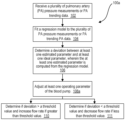
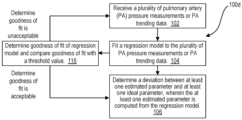
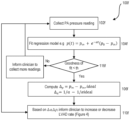
- FIGS 1A-1F illustrate exemplary methods 100a-100f for preventing onset or worsening RHF following implant of a LVAD according to some embodiments.
- exemplary method 100a may include receiving a plurality of PA pressure measurements or PA pressure trending data 102 of a patient with an implanted LVAD. These measurements or data may be received from or collected by an implantable cardiac medical device (e.g., a pressure sensor) implanted within the pulmonary artery of the patient as described in more detail below.
- an implantable cardiac medical device e.g., a pressure sensor
- the regression model p ( t ) p ⁇ + e - ⁇ t ( p 0 - p ⁇ ) is one example of a model that may be used. In other embodiments, other models, logistic or similar curves, may be used or applied with the embodiments described herein. For example, linear or sigmoidal-type regression models may be used.
- the method 100a may further include determining (e.g., computing or calculating) deviation(s) (e.g., ⁇ p , ⁇ ⁇ ) between at least one of the estimated parameters ( e.g., p ⁇ , 1/ ⁇ ) and at least one of ideal parameters ( e.g., p ⁇ ,ideal , 1/ ⁇ ideal ) 106.
- the estimated parameters are computed from the regression model as applied to the received plurality of PA pressure measurements or PA pressure trending data. For example, ( e.g., p ⁇ , 1/ ⁇ ) are estimated from the regression model ( e.g., by maximizing likelihood or minimizing L2 error).
- ideal parameters can be computed by fitting the regression model to the PA pressure trend data or measurements from a patient population (e.g., historical data from a patient population) that responded well following implant of an LVAD, as discussed in more detail below.
- ideal parameters may be estimated directly from historical patient population data without fitting or applying a regression model (e.g., from mean stabilization period pressure data) to the historical patient population data.
- the ideal parameters or threshold values as described herein may be stored in, for example, a database, computer memory, or look up table that may be accessible by a clinician, patient, processor, controller, or other computing device.
- the method 100a includes adjusting at least one operating parameter of a blood pump based on the determined deviation 108a.
- Adjusting at least one operating parameter of the blood pump may include adjusting one or more of: a pumping speed, flow rate (e.g., increasing or decreasing flow rate), or a pumping operation mode (e.g., pulsatile or continuous mode) based on the calculated or computed deviations to optimize LVAD therapy 110 ( e.g., prevent onset or worsening of RHF).
- Adjusting one pumping parameter may adjust another parameter. For example, adjusting flow rate may adjust pumping speed and vice versa. Examples of pump operating parameters and adjustment that can be included in the present application are described in U.S. Patent No. 8,506,471 .
- method 100a may include a step of determining if the deviation exceeds a threshold value as described below, and increasing the flow rate if the deviation exceeds the threshold value 110.
- the method 100a may include a step of determining if the deviation is less than the threshold value as described below, and decreasing the flow rate if the deviation is less than the threshold 111.
- a method may include determining if a deviation falls within certain thresholds and not adjusting an operating parameter of the pump if the deviation falls within the thresholds, if for example, the patient is identified as being responsive to LVAD therapy or not at risk for RHF (see Figure 1C ).
- a controller or other computing device may be provided to adjust the operating parameter as described in more detail below.
- an exemplary method 100b may include outputting an alert (e.g., to a clinician) to adjust an operating parameter of the pump or to identify that the patient is at risk for onset or worsening RHF 108b. For example, if the determined deviations are greater than or less than certain threshold values as described in more detail below, the method may include outputting such an alert.
- This alert or notification may occur prior to adjusting the at least one operating parameter of the blood pump in step 108a of method 100a.
- a clinician adjusts the operating parameter in response to the alert.
- a controller or other computing device is configured to adjust the operating parameter in response to the alert.
- the alert or notification includes a visual, audio, or haptic alert.
- an exemplary method 100c may include determining whether a patient is responsive to LVAD therapy post implantation 112 or be identified as not at risk for RHF 114 based on the determined deviation (e.g., step 106) if the deviation falls within certain threshold values as discussed in more detail below. If it is determined that the patient is responsive to LVAD therapy post implantation or is identified as not at risk for RHF, then no change or adjustment to the operating parameter of the blood pump is made 108c.
- an exemplary method 100d may include determining a goodness of fit (e.g., variability or goodness of fit error) of the regression model and comparing the goodness of fit to an acceptable threshold value 116.
- the goodness of fit is determined prior to determining a deviation between estimated and ideal parameters ( e.g., step 106).
- the goodness of fit of the regression model refers to the extent to which observed data fits or corresponds to the data from the assumed model ( e.g., how well the PA pressure measurements or trend data fit the regression or assumed model).
- the goodness of fit is greater than the acceptable threshold value (e.g., variability is unacceptable)
- more data is collected (e.g., steps 102, 104, and 116 may be repeated) until the goodness of fit is less than the acceptable threshold (e.g., variability is acceptable).
- a clinician may be notified or informed to wait for or receive more pressure measurements. If the goodness of fit is less than the acceptable threshold, the method may proceed to the step of determining the deviation between estimated and ideal parameters (e.g., step 106) and subsequent other steps (e.g., one or more of steps 108a-1 14).
- an exemplary method 100e may include receiving a plurality of PA pressure measurements from a pressure sensor positioned in the PA of a patient 102e, estimating a steady state pressure of the patient from the plurality of PA pressure measurements 103, determining a deviation between the estimated steady state pressure and an ideal steady state pressure 106e, and adjusting at least one operating parameter of a blood pump based on the determined deviation 108.
- method 100f is illustrated configured in accordance with the embodiments described herein. Any of the steps of methods 100a-100f described above may be repeated to identify whether further adjustment, goodness of fit, PA pressure measurements or trend data is required. As such, method 100 may be an iterative process with one or more steps repeated as necessary.
- the methods 100a-100f may include alerting or informing the clinician to adjust the pumping operation based on a comparison between the calculated deviations and a lookup table or database (e.g., of deviation thresholds calculated from a patient population with known flow rates and responses), as discussed in more detail below.
- the methods may also include alerting or informing the clinician to change or adjust medications (e.g., diuretics, inotropes) based on the calculated or computed deviations instead of or in addition to adjusting the pumping operation of the LVAD. While the methods herein may refer to identifying, notifying or adjusting, by a clinician, any of the embodiments may include identifying, notifying, or adjusting by a patient instead of or in addition to the clinician.
- a controller or other suitable computing device is configured to implement any of the steps described herein (e.g., in methods 100a-100f) instead of or in addition to the patient or clinician as described in more detail below.
- PA pressure data or measurements While referring specifically to PA pressure data or measurements, other data in addition to or in combination with PA pressure may be received, collected, compared, or evaluated to determine whether to adjust an operating parameter of a blood pump to reduce onset of RHF.
- Such other data or measurements may include heart rate, diastolic or systolic right heart volume, or ejection fraction.
- Figure 2 illustrates an exemplary graph of "Mean PA Pressure vs. Time” of historical patient data pre- and post-LVAD implant.
- Curve “A” represents an average of the historical data points (e.g., shown in gray).
- PA pressures tend to decrease substantially within a couple weeks following implantation of the LVAD and stabilize or plateau onto a lower value compared to pre-LVAD implant levels.
- the first period of time when PA pressures tend to decrease substantially following implant may be referred to herein and identified in Figure 2 as a "transient period”.
- the second period of time after the transient period when PA pressures stabilize or plateau may be referred to herein and is identified as a "stable period”.
- the PA pressure measurements, trending data, and curves are described in terms of mean PA pressure, diastolic or systolic PA pressure measurements or curves may also be used in the embodiments described herein.
- Patients may show different transient period durations and different PA pressures in the stable period following LVAD implant. Differences in transient period duration or PA pressures in the stable period may be correlated to LVAD flow rates, and may also be used as a surrogate or proxy for a patient's right heart status or responsiveness to LVAD therapy. For example, LVAD patients for whom PA pressures stabilized within a pre-determined target zone (e.g., about 15 to about 35 mmHG) or within a designated time zone ( e.g., less than about 15 to 20 days) may have a reduced risk of RHF and associated mortality compared to those patients for whom the PA pressures have not stabilized within the designated time period or have stabilized outside of the predetermined target zone.
- a pre-determined target zone e.g., about 15 to about 35 mmHG
- a designated time zone e.g., less than about 15 to 20 days
- the transient and stable periods for each patient following LVAD implant may be identified as disclosed herein. Further, based on PA pressure measurements (e.g., received from a PA sensor during the transient period, stable period, or both), a clinician may be notified of or alerted to a patient's status as to whether the patient has stabilized or appears to be stabilizing into a high, medium, or low PA pressure range. For example, patients who stabilize or appear to be stabilizing into particularly high stabilization PA pressures (e.g., greater than about 35 mmHG) may indicate high afterload on a right ventricle of the patient, which may accelerate RHF in the patient.
- PA pressures e.g., greater than about 35 mmHG
- Adjusting a pump operating parameter or LVAD therapy may relieve the increased afterload on the patient's right ventricle and prevent onset or worsening of RHF as discussed below.
- low stabilization PA pressures e.g., less than about 15 mmHG
- Decreasing flow rate in this context may be helpful to prevent onset or worsening of RHF.
- patients at risk for onset or worsening of RHF may be identified, clinicians informed or alerted, and pump operating parameters or LVAD therapy adjusted accordingly to optimize treatment and improve patient outcomes, as discussed in more detail below.
- Non-responsive patients may also be identified (e.g., if time to stabilization is either too short or too long relative to an ideal time constant or period). Further, in some embodiments, patients responsive to LVAD therapy or not at risk of RHF may be identified, where no adjustment of pump operating parameters or LVAD therapy is necessitated. The patient may continue to be monitored to see if adjustment of pump operating parameters or LVAD therapy is necessitated at a later time.
- an ideal PA pressure profile or curve (e.g., identified as PIdeal) is shown.
- Ideal parameters e.g., p ⁇ ,ideal , 1/ ⁇ ideal ) may then be estimated from the regression model.
- p ⁇ ,ideal e.g., an ideal steady state pressure in the stable period
- 1/ ⁇ ideal e.g., an ideal length of the transient period or the time at which the transient period transitions to the stable period
- 1/ ⁇ ideal may be between about 0 to 5 days, about 0 to 7 days, about 5 to 10 days, about 10 to 15 days, or about 15 to 20 days.
- 1/ ⁇ ideal may also be less than about 20 days, less than about 15 days, less than about 10 days, less than about 5 days, or other values as determined.
- the clinician may balance or be notified to balance the patient's preload and afterload (e.g., by adjusting pumping operation parameter of the LVAD or medications administered to the patient) to prevent onset or worsening of RHF in the patient.
- the clinician may adjust (e.g., increase or decrease) flow rate of the LVAD to keep or maintain estimated parameters p ⁇ , 1/ ⁇ of a patient within a desirable range of ideal parameters p ⁇ ,ideal , 1/ ⁇ ideal , ( e.g., as discussed in more detail below with reference to Figure 3 ).
- the flow rate is adjusted to keep or maintain both p ⁇ ,1/ ⁇ within a desirable range of p ⁇ ,ideal , 1/ ⁇ ideal .
- the flow rate can also be adjusted to keep or maintain only p ⁇ within a desirable range of p ⁇ ,ideal as preventing RHF may be primarily dependent on maintaining estimated steady state or stable period PA pressure within an ideal PA pressure range.
- the flow rate can also be adjusted to keep or maintain only 1/ ⁇ within a desirable range of 1/ ⁇ ideal as preventing RHF may be primarily dependent on maintaining an estimated transient period duration within a designated time period.
- Actual measured steady state or stable period pressure or time constant of a patient can be collected or received and compared to ideal parameters ( e.g., as described above) and a pump operation parameter adjusted to prevent onset or worsening of RHF in the patient
- LVAD flow rates may be increased or decreased based on the determined deviations ⁇ p , ⁇ ⁇ between the estimated parameters p ⁇ , 1/ ⁇ of a patient's PA pressure curve (e.g., two different patient curves are identified as P1 and P2, respectively) and the estimated ideal parameters p ⁇ ,ideal , 1/ ⁇ ideal of the ideal PA pressure curve ( e.g., identified as PIdeal).
- a goodness of fit of the regression model is obtained and compared to a goodness of fit threshold. Parameters p ⁇ , 1/ ⁇ may then be estimated from the regression model if the goodness of fit is less than the threshold.
- MSE Mean squared error
- Deviation threshold values (e.g., ⁇ th p 0 , ⁇ th p 1 , ⁇ th p 2 , ⁇ th ⁇ 0 , ⁇ th ⁇ 1 , ⁇ th ⁇ 2 ) between the estimated parameters of a patient's PA pressure curve and an ideal PA pressure curve may be used to determine whether a pump operating parameter (e.g., LVAD flow rate) is increased or decreased and subsequently, relative rates of increase or decrease, as discussed below.
- the deviation threshold values may also be determined or set by historical data of known flow rates and responses of patients following LVAD implant. For example, as discussed above, an ideal stable period or steady state pressure p ⁇ ,ideal may be determined to be between about 15-35 mmHG.
- threshold values ⁇ th p 0 may then be set to, for example, about 10 mmHG ( e.g., such that + th p 0 is about 35 mm HG and - th p 0 is about 15 mm HG, respectively).
- Threshold values ⁇ th p 1 may then be set nominally to another about 5 mmHG, about 10 mmHG, or another suitable value from ⁇ th p 0 .
- threshold values ⁇ th p 2 may also be set nominally to another about 5 mmHG, about 10 mmHG, or another suitable value from ⁇ th p 1 .
- Threshold values, ⁇ th ⁇ 0 , ⁇ th ⁇ 1 , ⁇ th ⁇ 2 may be determined or established in a similar manner. For example, ideal time constant or time when the transient period transitions to the stable period ( e.g., as discussed above), 1/ ⁇ ideal , may be set based on historical data ( e.g., to about 15 days corresponding to "0" on the X-axis). The threshold values ⁇ th ⁇ 0 , ⁇ th ⁇ 1 , ⁇ th ⁇ 2 may then be set based off 1/ ⁇ ideal .
- both patient PA pressure curves P1 and P2 have deviations ⁇ p that fall within thresholds ⁇ th p 0 .
- LVAD flow rate adjustment or other pump operating parameter may not be necessary or required.
- the patient may be responding adequately following LVAD implant or is not at risk of RHF and adjustment is not necessary to prevent onset or worsening of RHF.
- LVAD adjustment or status of the patient following implant may be primarily dependent on the deviation ⁇ p . Regardless of the deviation ⁇ ⁇ , adjusting LVAD therapy may not be necessary because deviation ⁇ p is within certain thresholds.
- Deviation ⁇ p may also be within certain thresholds that may require increasing LVAD flow rate or other pump operating parameter.
- the relative amount (e.g., level) of increase in flow rate may depend on or be governed by one or both values of deviations ⁇ p , ⁇ ⁇ .
- deviation ⁇ p may be between threshold values ( e.g., + th p 0 ⁇ ⁇ p ⁇ + th p 2 ).
- particularly high stabilization PA pressures e.g., greater than about 35 mmHG
- Adjusting a pump operating parameter or LVAD therapy may relieve increased afterload on the patient's right ventricle and prevent onset or worsening of RHF when deviation ⁇ p falls within such thresholds.
- a larger relative increase in flow rate may be required for a deviation ⁇ p between threshold values (e.g. , ⁇ th p 1 ⁇ ⁇ p ⁇ + th p 2 ) relative to a deviation ⁇ p between thresholds (e.g.
- a smaller relative increase in flow rate may be required for a deviation ⁇ p ( e.g., ⁇ th p 1 ⁇ ⁇ p ⁇ + th p 2 ) and a deviation ⁇ ⁇ between threshold values ( e.g., + th ⁇ 1 ⁇ ⁇ ⁇ ⁇ + th ⁇ 2 ) relative to a deviation ⁇ ⁇ between threshold values ( e . g ., +th ⁇ 0 ⁇ ⁇ ⁇ ⁇ + th ⁇ 1 ) .
- Deviation ⁇ p may also be within certain threshold values that may require decreasing LVAD flow rate or other pump operating parameter.
- the relative amount of decrease in flow rate may depend on or be governed by one or both values of deviations ⁇ p , ⁇ ⁇ .
- deviation ⁇ p may be between threshold values ( e.g., -th p 2 ⁇ ⁇ p ⁇ - th p 0 ).
- threshold values e.g., -th p 2 ⁇ ⁇ p ⁇ - th p 0 .
- low stabilization PA pressures e.g., less than about 15 mmHG
- Adjusting LVAD therapy by decreasing flow rate may be helpful to prevent onset or worsening of RHF when deviation ⁇ p falls within such threshold values.
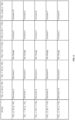
- a larger relative decrease in flow rate may be required for a deviation ⁇ p between threshold values ( e. g., -th p 2 ⁇ ⁇ p ⁇ -th p 1 ) relative to a deviation ⁇ p between threshold values ( e. g., -th p , ⁇ ⁇ p ⁇ - th p 0 ) as illustrated in Figure 3 and the corresponding table of Figure 4 .
- relative decrease in flow rate may also depend on deviation ⁇ ⁇ .
- a smaller relative decrease in flow rate may be required for a deviation ⁇ p ( e.g. , -th p 2 ⁇ ⁇ p ⁇ - th p 1 ) and a deviation ⁇ ⁇ between thresholds ( e. g., -th ⁇ 2 ⁇ ⁇ ⁇ ⁇ -th ⁇ 1 ) relative to a deviation ⁇ ⁇ between thresholds ( e . g., -th ⁇ 1 ⁇ ⁇ ⁇ ⁇ -th ⁇ 0 ).
- FIG. 5 illustrates a left ventricular assist device (LVAD) system 500 according to the invention that may be configured to carry out any steps of methods 100a-100f of Figures 1A-1F (e.g. , to receive patient PA pressure measurements or trending data, identify or alert a clinician of a patient at risk of onset or worsening RHF, determine deviations, apply or fit regression models, determine goodness of fit, adjust a pump operating parameter or LVAD therapy to prevent onset or worsening of RHF, or determine a patient is not at risk of RHF or is responsive to LVAD therapy.
- Left ventricular assist device (LVAD) system 500 includes a left ventricular assist device 502, an implantable cardiac electronic device and a controller 503 operably coupled to the pump.
- the pump 502 can be configured similar to an LVAD described in U.S. Patent Publication 2015/0290374 ; U.S. Patent Publication 2014/0188148 ; U.S. Patent No.: 9,091,271 ; U.S. Patent No. 8,794,989 , U.S. Patent No. 8,682,431 ; and/or U.S. Patent No. 8,894,561 .
- the blood pump 502 includes a housing 504. Housing 504 encloses a motor and rotor. Pump 502 and controller 503 may be powered by a power supply 505 (e.g., a battery).
- a power supply 505 e.g., a battery
- Controller 503 may be an external controller (e.g., coupled to the blood pump 502 by a percutaneous cable 506, wirelessly, or the like) or an implantable, on-board controller of blood pump 502.
- controller 503 may be a separate external or implantable computing device (e.g., mobile tablet, laptop, mobile phone, desktop).
- controller 503 include two or more control units (e.g., external, implanted, or both).
- the pump 502 may include an inflow 508 coupled to a chamber of the heart (illustrated as the left ventricle, but other chambers may be cannulated by inflow 508) and an outflow 510.
- the blood pump system 500 further includes one or more implantable cardiac electronic devices (e.g., pressure sensors 512) configured to be implanted within the PA of the patient to collect, receive, or transmit PA pressure measurements (e.g., readings, signals).
- the PA pressure sensor may be automatically ( e.g., programmed) or manually interrogated to collect PA pressure measurements or PA trending data.
- the PA pressure sensor may transmit ( e.g., wired or wirelessly) the PA pressure data to an interrogation unit, the controller, or other computing device as discussed in more detail below.
- the system 500 may include an external interrogation circuit or unit 520 configured to interrogate pressure sensor 512 for PA pressure measurements.
- the pressure sensor 512 may be operably coupled (wired or wirelessly) with interrogation unit 520.
- the interrogation unit 520 is a hand-held unit.
- the interrogation unit 520 may include a transceiver 522, an antenna 524, and a microprocessor 526 for generating, receiving, and analyzing signals (e.g., PA pressure measurements) from sensor 512 as discussed in more detail below.
- the antenna 524 may be integrated within a housing of the interrogation unit 520 or may be detachable such that it may be positioned on a patient's body in proximity to sensor 512.
- the interrogation unit 520 may include a power supply 528 configured to provide power to the unit 520 or may be operably coupled to the power supply 505 of the pump 502 or controller 503. In some embodiments, the interrogation unit 520 is integrated with the controller 503. In some embodiments, the interrogation unit 520 is electronically coupled to the controller 503 wirelessly or by wires.
- the antenna 524 of the interrogation unit 520 may be used to interrogate sensor 512 (e.g., generate and receive signals from the sensor 512).
- the sensor 512 may be a passive sensor without a battery or other power source.
- the sensor 512 includes a battery or other power source and actively sends PA signals to the interrogation unit 520.
- the interrogation unit 520 is programmed to interrogate sensor 512 at pre-set intervals during a transient period following LVAD implant ( e.g., multiple times a day for about 15-20 days) to collect or receive desired PA pressure measurements according to method 100.
- a patient or clinician may manually operate the interrogation unit 512 to collect or receive such PA pressure measurements according to a pre-determined schedule from the pressure sensor 512.
- the interrogation unit 520 may be programmed to analyze or process the collected PA pressure measurements (e.g., fit a regression model, determine goodness of fit, estimate a PA pressure curve and associated parameters, calculate deviations, compare deviations with thresholds).
- the interrogation unit 520 may send the measurements to the controller 503 to perform the data analysis.
- a clinician or patient may perform ( e.g., manually) one or more of any of the method steps as discussed above (e.g., fitting a regression model, determining goodness of fit, estimating a PA pressure curve and associated parameters, calculating deviations, comparing deviations with thresholds).
- PA pressure measurements or data may serve as a proxy for the patient's right heart status.
- the interrogation unit 520 may then adjust flow rate or other pump parameter of the blood pump 502 in response to the PA pressure measurements and analysis. For example, based on deviations ⁇ p , ⁇ ⁇ between the estimated parameters p ⁇ , ⁇ from a PA measurement curve of a patient and estimated parameters p ⁇ ,ideal , ⁇ ideal from an ideal PA measurement curve derived from historical data of previous patients, a flow rate or other operating parameter of the blood pump 502 may be adjusted ( e.g., increased or decreased) to prevent RHF as discussed above.
- the interrogation unit 520 includes a display 530 configured to display one or more of the PA pressure measurements, PA pressure curves, goodness of fit, estimated parameters, calculated deviations, or amount of required flow rate adjustment.
- the interrogation unit 520 may also be configured to identify or alert a clinician or patient that a patient is at risk of RHF or to inform or recommend that the LVAD flow rate should be adjusted ( e.g., via the display, or with a visual, haptic, or audible signal).
- data or signals from the interrogation unit 520 may be transferred or uploaded to a separate computing device (e.g., desktop, laptop, micro-PC, mobile phone, mobile tablet, controller 203) for further review, analysis, or processing (e.g., fit a regression model, determine goodness of fit, estimate a PA pressure curve and associated parameters, calculate deviations, compare deviations with thresholds).
- a separate computing device e.g., desktop, laptop, micro-PC, mobile phone, mobile tablet, controller 203
- analysis, or processing e.g., fit a regression model, determine goodness of fit, estimate a PA pressure curve and associated parameters, calculate deviations, compare deviations with thresholds.
- Data, alerts, or recommendations may also be displayed on a separate display or monitor (e.g., of the separate computing device) for viewing or analysis by a patient or clinician.
- the clinician, patient, interrogation unit, or separate computing device may access historical data of ideal parameters or thresholds from a database or lookup table for review, analysis, or processing.
- the interrogation unit, or separate computing device may include memory for storing such information.
- the interrogation unit 520 or pressure sensor 512 may be integrated or operably coupled to the pump 502 or external controller 503. As discussed above, for example, the interrogation unit 520 may be powered by the power supply 505 of the pump 502 and controller 503. In some embodiments, data, alerts, or recommendations may be transmitted to and displayed on a display of the controller 503 directly from the interrogation unit 520 or indirectly from an intermediate device (e.g., second controller or other computing device). In some embodiments, the interrogation unit 520 is housed in a same housing as the external controller 503.
- the interrogation unit 520 or pressure sensor 512 may be integrated or operably coupled with the pump 502 or external controller 503 such that a closed-loop system is provided.
- the blood pump system 500 may be programmed or set to adjust flow rate of the LVAD as necessary to prevent onset or worsening of RHF following implant.
- the interrogation unit 520 may interrogate the sensor 512 to generate and receive PA pressure measurements according to a pre-determined or preprogrammed schedule.
- the interrogation unit 520 may then process or analyze the PA pressure measurements as described herein and instruct the controller 503 to adjust the flow rate or other operating parameter of the pump 502 based on the PA pressure measurements and analysis as discussed above. The process may then be repeated until further LVAD flow rate is not required or a patient is not at risk of RHF.
- the PA pressure measurements may be sent or uploaded to the controller 503 or other separate computing device for processing.
- the controller 503 may be configured to carry out any of the steps as described above with respect to methods described herein.
- the controller 503 may be configured to receive a plurality of pulmonary artery (PA) pressure measurements or PA trending data from an implantable cardiac electronic device; fit a regression model to the plurality of PA pressure measurements or PA trending data; determine a deviation between at least one estimated parameter and at least one ideal parameter, wherein the at least one estimated parameter is computed from the regression model; or adjust at least one operating parameter of the blood pump based on the determined deviation.
- the controller 503 may be integrated with the interrogation unit as discussed above.
- the controller 503 may include a processor, memory, transceiver, antenna, for carrying out steps of the methods as described herein.
- a closed-loop system may be provided such that the controller 503 is operably coupled to the pump, pressure sensor, or interrogation unit.
- blood pump 502 is generally illustrated as a centrifugal blood pump, it should be understood that blood pump may have other configurations (e.g., axial flow or mixed flow blood pumps).
- One or more computing devices may be adapted to provide desired functionality by accessing software instructions rendered in a computer-readable form.
- any suitable programming, scripting, or other type of language or combinations of languages may be used to implement the teachings contained herein.
- software need not be used exclusively, or at all.
- some embodiments of the methods and systems set forth herein may also be implemented by hard-wired logic or other circuitry, including but not limited to application-specific circuits. Combinations of computer-executed software and hard-wired logic or other circuitry may be suitable as well.
- the methods disclosed herein may be executed by one or more suitable computing devices.
- Such system(s) may comprise one or more computing devices adapted to perform one or more embodiments of the methods disclosed herein.
- such devices may access one or more computer-readable media that embody computer-readable instructions which, when executed by at least one computer, cause the at least one computer to implement the methods of the present subject matter.
- the computing device(s) may comprise circuitry that renders the device(s) operative to implement one or more of the methods of the present subject matter.
- Any suitable computer-readable medium or media may be used to implement or practice the presently-disclosed subject matter, including but not limited to, diskettes, drives, and other magnetic-based storage media, optical storage media, including disks ( e.g., CD-ROMS, DVD-ROMS, variants thereof, etc.), flash, RAM, ROM, and other memory devices, and the like.
Landscapes
- Health & Medical Sciences (AREA)
- Heart & Thoracic Surgery (AREA)
- Engineering & Computer Science (AREA)
- Life Sciences & Earth Sciences (AREA)
- Cardiology (AREA)
- General Health & Medical Sciences (AREA)
- Veterinary Medicine (AREA)
- Biomedical Technology (AREA)
- Public Health (AREA)
- Animal Behavior & Ethology (AREA)
- Anesthesiology (AREA)
- Hematology (AREA)
- Mechanical Engineering (AREA)
- Medical Informatics (AREA)
- Physics & Mathematics (AREA)
- Biophysics (AREA)
- Pathology (AREA)
- Molecular Biology (AREA)
- Surgery (AREA)
- Vascular Medicine (AREA)
- Physiology (AREA)
- External Artificial Organs (AREA)
Claims (14)
- Système (500) de dispositif d'assistance ventriculaire gauche (DAVG) configuré pour réduire un risque d'insuffisance cardiaque droite (RHF) chez un patient suite à l'implantation d'un DAVG chez le patient, le système (500) de dispositif d'assistance ventriculaire gauche (DAVG) comprenant :un DAVG (502) ;un dispositif électronique cardiaque implantable ;un dispositif de commande (503) fonctionnellement lié au DAVG (502) et configuré pour :recevoir une pluralité de mesures de pression artérielle pulmonaire (PA) ou de données de tendance de PA en provenance du dispositif électronique cardiaque implantable ;caractérisé en ce que le dispositif de commande (503) est en outre configuré pour :adapter un modèle de régression à la pluralité de mesures de pression PA ou de données de tendance de PA ;déterminer un écart entre au moins un paramètre estimé et au moins un paramètre idéal, le paramètre estimé, au moins au nombre de un, étant calculé à partir du modèle de régression ; etajuster au moins un paramètre de fonctionnement du DAVG (502) sur la base de l'écart déterminé.
- Système (500) de DAVG de la revendication 1, dans lequel le dispositif de commande (503) comprend au moins un élément parmi un dispositif de commande externe de pompe à sang cardiaque, un dispositif de commande implantable de pompe à sang cardiaque, ou un dispositif de calcul externe.
- Système (500) de DAVG de l'une quelconque des revendications 1 ou 2, dans lequel le dispositif électronique cardiaque implantable comprend un capteur de pression (512).
- Système (500) de DAVG de l'une quelconque des revendications 1 à 3, comprenant en outre une unité d'interrogation (520) configurée pour interroger le dispositif électronique cardiaque implantable.
- Système (500) de DAVG de la revendication 4, dans lequel au moins deux éléments ou plus parmi le dispositif de commande (503), le dispositif électronique cardiaque implantable, ou l'unité d'interrogation (520) partagent une source d'alimentation.
- Système (500) de DAVG de l'une quelconque des revendications 1 à 5, dans lequel le dispositif de commande (503) est configuré pour déterminer un degré d'ajustement du modèle de régression et comparer le degré d'ajustement du modèle de régression à une valeur seuil avant de déterminer l'écart entre le paramètre estimé, au moins au nombre de un, et le paramètre idéal, au moins au nombre de un.
- Système (500) de DAVG de la revendication 6, dans lequel le dispositif de commande (503) est configuré pour collecter des mesures de pression PA ou des données de tendance de PA supplémentaires lorsque le degré d'ajustement dépasse la valeur seuil.
- Système (500) de DAVG de la revendication 6, dans lequel le dispositif de commande (503) est configuré pour ne déterminer l'écart entre le paramètre estimé, au moins au nombre de un, et le paramètre idéal, au moins au nombre de un, que lorsque le degré d'ajustement est inférieur à la valeur seuil.
- Système (500) de DAVG de l'une quelconque des revendications 1 à 8, dans lequel la pluralité de mesures de pression PA ou de données de tendance de PA sont configurées pour être reçues par le dispositif de commande (503) uniquement pendant une période transitoire suivant l'implantation du DAVG (502).
- Système (500) de DAVG de l'une quelconque des revendications 1 à 9, dans lequel le dispositif de commande (503) est configuré pour déterminer l'écart entre le paramètre estimé, au moins au nombre de un, et le paramètre idéal, au moins au nombre de un, en calculant un écart entre une pression estimée à l'état stable et une pression idéale à l'état stable.
- Système (500) de DAVG de l'une quelconque des revendications 1 à 10, dans lequel le dispositif de commande (503) est configuré pour accroître un débit lorsque l'écart déterminé entre la pression estimée à l'état stable, au moins au nombre de une, et la pression idéale à l'état stable, au moins au nombre de une, dépasse une valeur seuil.
- Système (500) de DAVG de l'une quelconque des revendications 1 à 11, dans lequel le dispositif de commande (503) est configuré pour réduire un débit lorsque l'écart calculé entre la pression estimée à l'état stable et la pression idéale à l'état stable est inférieur à une valeur seuil.
- Système (500) de DAVG de l'une quelconque des revendications 1 à 12, dans lequel le dispositif de commande (503) est configuré pour ajuster le paramètre de fonctionnement du DAVG (502), au moins au nombre de un, en ajustant au moins un élément parmi un débit, une vitesse de pompe, ou un mode de fonctionnement de pompage.
- Système (500) de DAVG de l'une quelconque des revendications 1 à 13, dans lequel le modèle de régression est défini par p(t) = p∞ + e-αt(p0 - p∞), où :p(t) sont les mesures de pression PA ou les données de tendance de PA reçues après l'implantation du DAVG (502) ;p0 est une pression PA de base estimée avant l'implantation du DAVG (502) ;p ∞ est la pression estimée à l'état stable ; etα est une constante de temps estimée.
Priority Applications (1)
| Application Number | Priority Date | Filing Date | Title |
|---|---|---|---|
| EP24200500.7A EP4461341A3 (fr) | 2018-03-15 | 2019-03-15 | Procédés et systèmes pour prévenir une insuffisance cardiaque droite |
Applications Claiming Priority (2)
| Application Number | Priority Date | Filing Date | Title |
|---|---|---|---|
| US201862643545P | 2018-03-15 | 2018-03-15 | |
| PCT/US2019/022547 WO2019178519A1 (fr) | 2018-03-15 | 2019-03-15 | Procédés et systèmes de prévention de l'insuffisance cardiaque droite |
Related Child Applications (2)
| Application Number | Title | Priority Date | Filing Date |
|---|---|---|---|
| EP24200500.7A Division EP4461341A3 (fr) | 2018-03-15 | 2019-03-15 | Procédés et systèmes pour prévenir une insuffisance cardiaque droite |
| EP24200500.7A Division-Into EP4461341A3 (fr) | 2018-03-15 | 2019-03-15 | Procédés et systèmes pour prévenir une insuffisance cardiaque droite |
Publications (2)
| Publication Number | Publication Date |
|---|---|
| EP3765113A1 EP3765113A1 (fr) | 2021-01-20 |
| EP3765113B1 true EP3765113B1 (fr) | 2024-10-30 |
Family
ID=65952211
Family Applications (2)
| Application Number | Title | Priority Date | Filing Date |
|---|---|---|---|
| EP24200500.7A Pending EP4461341A3 (fr) | 2018-03-15 | 2019-03-15 | Procédés et systèmes pour prévenir une insuffisance cardiaque droite |
| EP19714063.5A Active EP3765113B1 (fr) | 2018-03-15 | 2019-03-15 | Systèmes de prévention de l'insuffisance cardiaque droite |
Family Applications Before (1)
| Application Number | Title | Priority Date | Filing Date |
|---|---|---|---|
| EP24200500.7A Pending EP4461341A3 (fr) | 2018-03-15 | 2019-03-15 | Procédés et systèmes pour prévenir une insuffisance cardiaque droite |
Country Status (3)
| Country | Link |
|---|---|
| US (2) | US11517740B2 (fr) |
| EP (2) | EP4461341A3 (fr) |
| WO (1) | WO2019178519A1 (fr) |
Families Citing this family (46)
| Publication number | Priority date | Publication date | Assignee | Title |
|---|---|---|---|---|
| DE102016209871A1 (de) | 2016-06-06 | 2017-12-07 | Robert Bosch Gmbh | Stanzvorrichtung und Verfahren zum Stanzen eines Lumens und Implantieren einer Implantateinrichtung |
| JP2020528307A (ja) * | 2017-07-17 | 2020-09-24 | ライブメトリック (メディカル) エス.エー.Livemetric (Medical) S.A. | ウェアラブルデバイスを使用した、心室補助デバイス調整のための方法およびシステム |
| DE102018201030B4 (de) | 2018-01-24 | 2025-10-16 | Kardion Gmbh | Magnetkuppelelement mit magnetischer Lagerungsfunktion |
| DE102018206724A1 (de) | 2018-05-02 | 2019-11-07 | Kardion Gmbh | Energieübertragungssystem und Verfahren zur drahtlosen Energieübertragung |
| DE102018206727A1 (de) | 2018-05-02 | 2019-11-07 | Kardion Gmbh | Energieübertragungssystem und Empfangseinheit zur drahtlosen transkutanen Energieübertragung |
| DE102018206754A1 (de) | 2018-05-02 | 2019-11-07 | Kardion Gmbh | Verfahren und Vorrichtung zur Bestimmung der Temperatur an einer Oberfläche sowie Verwendung des Verfahrens |
| DE102018206731A1 (de) | 2018-05-02 | 2019-11-07 | Kardion Gmbh | Vorrichtung zur induktiven Energieübertragung in einen menschlichen Körper und Verwendung der Vorrichtung |
| DE102018206750A1 (de) | 2018-05-02 | 2019-11-07 | Kardion Gmbh | Vorrichtung zur induktiven Energieübertragung in einen menschlichen Körper und deren Verwendung |
| DE102018206725A1 (de) | 2018-05-02 | 2019-11-07 | Kardion Gmbh | Empfangseinheit, Sendeeinheit, Energieübertragungssystem und Verfahren zur drahtlosen Energieübertragung |
| DE102018207611A1 (de) | 2018-05-16 | 2019-11-21 | Kardion Gmbh | Rotorlagerungssystem |
| DE102018207594A1 (de) | 2018-05-16 | 2019-11-21 | Kardion Gmbh | Rotor, Magnetkupplungsvorrichtung, Elektromotor für ein Herzunterstützungssystem, Pumpeneinheit für ein Herzunterstützungssystem sowie Verfahren zum Herstellen eines Rotors |
| DE102018207575A1 (de) | 2018-05-16 | 2019-11-21 | Kardion Gmbh | Magnetische Stirndreh-Kupplung zur Übertragung von Drehmomenten |
| DE102018208539A1 (de) | 2018-05-30 | 2019-12-05 | Kardion Gmbh | Motorgehäusemodul zum Abdichten eines Motorraums eines Motors eines Herzunterstützungssystems und Herzunterstützungssystem und Verfahren zum Montieren eines Herzunterstützungssystems |
| DE102018208550A1 (de) | 2018-05-30 | 2019-12-05 | Kardion Gmbh | Leitungsvorrichtung zum Leiten eines Blutstroms für ein Herzunterstützungssystem, Herzunterstützungssystem und Verfahren zum Herstellen einer Leitungsvorrichtung |
| DE102018208555A1 (de) | 2018-05-30 | 2019-12-05 | Kardion Gmbh | Vorrichtung zum Verankern eines Herzunterstützungssystems in einem Blutgefäß, Verfahren zum Betreiben und Herstellverfahren zum Herstellen einer Vorrichtung und Herzunterstützungssystem |
| DE102018208541A1 (de) | 2018-05-30 | 2019-12-05 | Kardion Gmbh | Axialpumpe für ein Herzunterstützungssystem und Verfahren zum Herstellen einer Axialpumpe für ein Herzunterstützungssystem |
| DE102018208549A1 (de) | 2018-05-30 | 2019-12-05 | Kardion Gmbh | Elektronikmodul für ein Herzunterstützungssystem und Verfahren zum Herstellen eines Elektronikmoduls für ein Herzunterstützungssystem |
| DE102018208538A1 (de) | 2018-05-30 | 2019-12-05 | Kardion Gmbh | Intravasale Blutpumpe und Verfahren zur Herstellung von elektrischen Leiterbahnen |
| DE102018208862A1 (de) | 2018-06-06 | 2019-12-12 | Kardion Gmbh | Implantierbares, vaskuläres Unterstützungssystem |
| DE102018208870A1 (de) | 2018-06-06 | 2019-12-12 | Kardion Gmbh | Verfahren zur Bestimmung eines Fluid-Volumenstroms durch ein implantiertes, vaskuläres Unterstützungssystem |
| DE102018208945A1 (de) | 2018-06-06 | 2019-12-12 | Kardion Gmbh | Analysevorrichtung und Verfahren zum Analysieren einer Viskosität eines Fluids |
| DE102018208929A1 (de) | 2018-06-06 | 2019-12-12 | Kardion Gmbh | Verfahren zur Bestimmung einer Strömungsgeschwindigkeit eines durch ein implantiertes, vaskuläres Unterstützungssystem strömenden Fluids |
| DE102018208879A1 (de) | 2018-06-06 | 2020-01-30 | Kardion Gmbh | Verfahren zur Bestimmung eines Fluid-Gesamtvolumenstroms im Bereich eines implantierten, vaskuläres Unterstützungssystems |
| DE102018208899A1 (de) | 2018-06-06 | 2019-12-12 | Kardion Gmbh | Verfahren zum Ermitteln der Schallgeschwindigkeit in einem Fluid im Bereich eines implantierten, vaskulären Unterstützungssystems |
| DE102018208933A1 (de) | 2018-06-06 | 2019-12-12 | Kardion Gmbh | Verfahren zur Bestimmung einer Strömungsgeschwindigkeit eines durch ein implantiertes, vaskuläres Unterstützungssystem strömenden Fluids |
| DE102018208913A1 (de) | 2018-06-06 | 2019-12-12 | Kardion Gmbh | Verfahren zum Betreiben eines implantierten, ventrikulären Unterstützungssystems |
| DE102018208892A1 (de) | 2018-06-06 | 2019-12-12 | Kardion Gmbh | Sensorkopfvorrichtung für ein minimalinvasives Herzunterstützungssystem und Verfahren zum Herstellen einer Sensorkopfvorrichtung für ein Herzunterstützungssystem |
| DE102018208936A1 (de) | 2018-06-06 | 2019-12-12 | Kardion Gmbh | Bestimmvorrichtung und Verfahren zum Bestimmen einer Viskosität eines Fluids |
| DE102018208931A1 (de) | 2018-06-06 | 2019-12-12 | Kardion Gmbh | Vorrichtung zum Bestimmen eines Herzzeitvolumens für ein Herzunterstützungssystem, Herzunterstützungssystem und Verfahren zum Bestimmen eines Herzzeitvolumens |
| DE102018210058A1 (de) | 2018-06-21 | 2019-12-24 | Kardion Gmbh | Statorschaufelvorrichtung zur Strömungsführung eines aus einer Austrittsöffnung eines Herzunterstützungssystems ausströmenden Fluids, Herzunterstützungssystem mit Statorschaufelvorrichtung, Verfahren zum Betreiben einer Statorschaufelvorrichtung und Herstellverfahren |
| DE102018210076A1 (de) | 2018-06-21 | 2019-12-24 | Kardion Gmbh | Verfahren und Vorrichtung zum Erkennen eines Verschleißzustands eines Herzunterstützungssystems, Verfahren und Vorrichtung zum Betreiben eines Herzunterstützungssystems und Herzunterstützungssystem |
| DE102018211297A1 (de) | 2018-07-09 | 2020-01-09 | Kardion Gmbh | Herzunterstützungssystem und Verfahren zur Überwachung der Integrität einer Haltestruktur eines Herzunterstützungssystems |
| DE102018211327A1 (de) | 2018-07-10 | 2020-01-16 | Kardion Gmbh | Laufrad für ein implantierbares, vaskuläres Unterstützungssystem |
| DE102018211328A1 (de) | 2018-07-10 | 2020-01-16 | Kardion Gmbh | Laufradgehäuse für ein implantierbares, vaskuläres Unterstützungssystem |
| DE102018212153A1 (de) | 2018-07-20 | 2020-01-23 | Kardion Gmbh | Zulaufleitung für eine Pumpeneinheit eines Herzunterstützungssystems, Herzunterstützungssystem und Verfahren zum Herstellen einer Zulaufleitung für eine Pumpeneinheit eines Herzunterstützungssystems |
| EP3833410B1 (fr) | 2018-08-07 | 2025-10-08 | Kardion GmbH | Dispositif de support destiné à un dispositif d'assistance ventriculaire et procédé destiné à rincer un espace dans un dispositif de support pour un dispositif d'assistance ventriculaire |
| DE102018213350A1 (de) | 2018-08-08 | 2020-02-13 | Kardion Gmbh | Vorrichtung und Verfahren zur Überwachung eines Gesundheitszustands des Patienten |
| JP7686647B2 (ja) * | 2019-12-20 | 2025-06-02 | ティーシー1 エルエルシー | パーソナライズされた心血管分析のためのシステム及び方法 |
| DE102020102474A1 (de) | 2020-01-31 | 2021-08-05 | Kardion Gmbh | Pumpe zum Fördern eines Fluids und Verfahren zum Herstellen einer Pumpe |
| AU2021340802A1 (en) | 2020-09-14 | 2023-05-18 | Kardion Gmbh | Cardiovascular support pump having an impeller with a variable flow area |
| US11699551B2 (en) | 2020-11-05 | 2023-07-11 | Kardion Gmbh | Device for inductive energy transmission in a human body and use of the device |
| AU2021383931A1 (en) | 2020-11-20 | 2023-07-06 | Kardion Gmbh | Mechanical circulatory support system with guidewire aid |
| EP4251257B1 (fr) * | 2021-03-17 | 2025-08-20 | 3R Life Sciences Corporation | Dispositif de pompe à sang para-aortique |
| CN116997383A (zh) * | 2021-03-17 | 2023-11-03 | 怡忠生命科学有限公司 | 主动脉旁血泵装置 |
| CN115177860B (zh) * | 2022-09-08 | 2022-12-06 | 深圳核心医疗科技有限公司 | 性能调整方法及装置 |
| KR20250110254A (ko) * | 2022-11-07 | 2025-07-18 | 아비오메드, 인크. | 혈역학적 신호 또는 지표의 보조 디스플레이를 위한 시스템 및 방법 |
Family Cites Families (84)
| Publication number | Priority date | Publication date | Assignee | Title |
|---|---|---|---|---|
| US3911897A (en) | 1974-04-05 | 1975-10-14 | Jr Frank A Leachman | Heart assist device |
| US5139517A (en) | 1989-11-08 | 1992-08-18 | Corral David F | Orthotopic intraventricular heart pump |
| EP0532144B1 (fr) | 1991-09-12 | 1999-02-24 | BIOTRONIK Mess- und Therapiegeräte GmbH & Co Ingenieurbüro Berlin | Système de thérapie cardiaque |
| US5503615A (en) | 1994-08-26 | 1996-04-02 | Goldstein; Bernard | Implantable cardiac ventricular assist device and controller thereof |
| US5888242A (en) | 1996-11-01 | 1999-03-30 | Nimbus, Inc. | Speed control system for implanted blood pumps |
| US6111520A (en) | 1997-04-18 | 2000-08-29 | Georgia Tech Research Corp. | System and method for the wireless sensing of physical properties |
| US6889082B2 (en) | 1997-10-09 | 2005-05-03 | Orqis Medical Corporation | Implantable heart assist system and method of applying same |
| US6278379B1 (en) | 1998-04-02 | 2001-08-21 | Georgia Tech Research Corporation | System, method, and sensors for sensing physical properties |
| DE59915262D1 (de) | 1998-07-10 | 2011-06-01 | Levitronix Llc | Verfahren zur Bestimmung des Druckverlustes und des Durchflusses durch eine Pumpe |
| US8244370B2 (en) | 2001-04-13 | 2012-08-14 | Greatbatch Ltd. | Band stop filter employing a capacitor and an inductor tank circuit to enhance MRI compatibility of active medical devices |
| US6585635B1 (en) | 1999-09-17 | 2003-07-01 | Core Medical, Inc. | Method and system for pericardial modification |
| GB0023412D0 (en) | 2000-09-23 | 2000-11-08 | Khaghani Asghar | Aortic counterpulsator |
| SE523852C2 (sv) | 2001-04-10 | 2004-05-25 | Azad Al-Najjar | Hjärtprotes |
| US7853325B2 (en) | 2001-04-13 | 2010-12-14 | Greatbatch Ltd. | Cylindrical bandstop filters for medical lead systems |
| US8145324B1 (en) | 2001-04-13 | 2012-03-27 | Greatbatch Ltd. | Implantable lead bandstop filter employing an inductive coil with parasitic capacitance to enhance MRI compatibility of active medical devices |
| US8712544B2 (en) | 2001-04-13 | 2014-04-29 | Greatbatch Ltd. | Electromagnetic shield for a passive electronic component in an active medical device implantable lead |
| US6643420B2 (en) | 2001-12-28 | 2003-11-04 | Digital Optics Corp. | Optical subassembly |
| US7396327B2 (en) | 2002-01-07 | 2008-07-08 | Micromed Technology, Inc. | Blood pump system and method of operation |
| US6855115B2 (en) | 2002-01-22 | 2005-02-15 | Cardiomems, Inc. | Implantable wireless sensor for pressure measurement within the heart |
| US7029433B2 (en) | 2002-03-16 | 2006-04-18 | Chang Sheldon S | Device for cardiac restoration |
| US20050159639A1 (en) * | 2002-05-15 | 2005-07-21 | Mikhail Skliar | Physiologically based control system and method for using the same |
| US6772011B2 (en) | 2002-08-20 | 2004-08-03 | Thoratec Corporation | Transmission of information from an implanted medical device |
| AU2002951685A0 (en) | 2002-09-30 | 2002-10-17 | Ventrassist Pty Ltd | Physiological demand responsive control system |
| US6887207B2 (en) * | 2003-02-26 | 2005-05-03 | Medtronic, Inc. | Methods and apparatus for estimation of ventricular afterload based on ventricular pressure measurements |
| US7245117B1 (en) | 2004-11-01 | 2007-07-17 | Cardiomems, Inc. | Communicating with implanted wireless sensor |
| US20050071001A1 (en) | 2003-09-30 | 2005-03-31 | Robert Jarvik | Artificial heart power and control system |
| ES2561354T3 (es) | 2003-10-31 | 2016-02-25 | Sunshine Heart Company Pty Ltd | Sistema de control de sincronización |
| US7520850B2 (en) | 2003-11-19 | 2009-04-21 | Transoma Medical, Inc. | Feedback control and ventricular assist devices |
| PL1715902T3 (pl) | 2004-01-08 | 2017-01-31 | Sullivan, Paul Joseph | Urządzenie do nieniszczącego przetłaczania płynu |
| US8271093B2 (en) | 2004-09-17 | 2012-09-18 | Cardiac Pacemakers, Inc. | Systems and methods for deriving relative physiologic measurements using a backend computing system |
| CA2599965C (fr) | 2005-03-04 | 2014-05-06 | Cardiomems, Inc. | Communication avec un capteur sans fil implante |
| US20080097226A1 (en) * | 2005-06-09 | 2008-04-24 | Mcconnell Patrick I | Evaluation of cardiac function using left ventricular pressure during LVAD support |
| US7742815B2 (en) * | 2005-09-09 | 2010-06-22 | Cardiac Pacemakers, Inc. | Using implanted sensors for feedback control of implanted medical devices |
| US9358400B2 (en) | 2005-10-14 | 2016-06-07 | Pacesetter, Inc. | Leadless cardiac pacemaker |
| US20070142923A1 (en) | 2005-11-04 | 2007-06-21 | Ayre Peter J | Control systems for rotary blood pumps |
| US8224462B2 (en) | 2005-11-11 | 2012-07-17 | Greatbatch Ltd. | Medical lead system utilizing electromagnetic bandstop filters |
| EP1979021B1 (fr) | 2006-01-30 | 2019-07-24 | 3R International Co., Ltd | Dispositif d'assistance bi-ventriculaire a double pulsation |
| AU2007201127B2 (en) | 2006-03-23 | 2012-02-09 | Thoratec Corporation | System For Preventing Diastolic Heart Failure |
| US20100268333A1 (en) | 2009-04-16 | 2010-10-21 | Gohean Jeffrey R | System and method for controlling pump |
| DE102006035548B4 (de) | 2006-07-27 | 2009-02-12 | Deutsches Zentrum für Luft- und Raumfahrt e.V. | Kunstherz |
| US7963905B2 (en) | 2006-10-11 | 2011-06-21 | Thoratec Corporation | Control system for a blood pump |
| AU2008261920A1 (en) | 2007-06-06 | 2008-12-18 | Worldheart Corporation | Wearable VAD controller with reserve battery |
| US8352032B2 (en) * | 2007-11-01 | 2013-01-08 | Cardiac Pacemakers, Inc. | Monitoring right ventricular hemodynamic function during pacing optimization |
| US8562507B2 (en) | 2009-02-27 | 2013-10-22 | Thoratec Corporation | Prevention of aortic valve fusion |
| US9399091B2 (en) * | 2009-09-30 | 2016-07-26 | Medtronic, Inc. | System and method to regulate ultrafiltration |
| EP2525870B1 (fr) | 2010-01-19 | 2019-03-13 | Heartware, Inc. | Vad à réactivité physiologique |
| DE102010011798B4 (de) | 2010-03-17 | 2017-07-13 | Fresenius Medical Care Deutschland Gmbh | Verfahren und Vorrichtung zur Druck- oder Volumenstrombestimmung von medizinischen Fluiden |
| US20110270331A1 (en) | 2010-04-02 | 2011-11-03 | Sunshine Heart Company Pty Ltd | Combination heart assist systems, methods, and devices |
| WO2012024493A1 (fr) | 2010-08-20 | 2012-02-23 | Thoratec Corporation | Pompe sanguine implantable |
| WO2012040551A1 (fr) | 2010-09-24 | 2012-03-29 | Thoratec Corporation | Génération d'impulsion artificielle |
| US8901775B2 (en) | 2010-12-10 | 2014-12-02 | Everheart Systems, Inc. | Implantable wireless power system |
| US8543205B2 (en) | 2010-10-12 | 2013-09-24 | Nanostim, Inc. | Temperature sensor for a leadless cardiac pacemaker |
| US8608636B2 (en) | 2010-11-12 | 2013-12-17 | Libraheart, Inc.V | Ventricular assist device cannula and ventricular assist device including the same |
| US8794989B2 (en) | 2010-12-08 | 2014-08-05 | Thoratec Corporation | Modular driveline |
| US8892204B2 (en) * | 2010-12-17 | 2014-11-18 | Medtronic, Inc. | Aortic pacing to control cardiac afterload |
| WO2012112378A2 (fr) | 2011-02-18 | 2012-08-23 | Vascor Inc. | Systèmes d'assistance circulatoire |
| EP2570143B1 (fr) | 2011-09-14 | 2014-01-15 | BIOTRONIK SE & Co. KG | Appareil thérapeutique cardiaque implantable |
| EP2806911B1 (fr) | 2012-01-24 | 2016-12-28 | Thoratec Corporation | Ensemble câble de transmission |
| EP3159023B1 (fr) | 2012-03-05 | 2017-11-29 | Tc1 Llc | Methode de calibrage de pompes medicales implantables |
| WO2013184932A1 (fr) | 2012-06-06 | 2013-12-12 | Heartware, Inc. | Algorithme de modification de vitesse pour une pompe à sang à écoulement continu |
| WO2014015300A1 (fr) | 2012-07-19 | 2014-01-23 | Regents Of The University Of Minnesota | Dispositif d'assistance cardiaque avec analyse d'onde d'impulsion |
| CN104768589B (zh) | 2012-09-05 | 2017-04-19 | 哈特威尔公司 | 集成流传感器的vad |
| US9090271B2 (en) | 2012-10-24 | 2015-07-28 | Progress Rail Services Corporation | System and method for characterizing dragging equipment |
| US20140188148A1 (en) | 2012-12-27 | 2014-07-03 | Pieter W.C.J. le Blanc | Surgical tunneler |
| EP2796156A1 (fr) | 2013-04-24 | 2014-10-29 | ETH Zurich | Appareil biomédical destiné à pomper le sang d'un patient humain ou animal par un circuit sanguin intra ou extracorporel secondaire |
| US10052420B2 (en) | 2013-04-30 | 2018-08-21 | Tc1 Llc | Heart beat identification and pump speed synchronization |
| US9592327B2 (en) | 2013-09-06 | 2017-03-14 | Cardiac Pacemakers, Inc. | Systems and methods for heart failure management |
| CN104511060A (zh) | 2013-10-03 | 2015-04-15 | 北京精密机电控制设备研究所 | 血泵控制系统及血泵系统 |
| EP3131596B1 (fr) | 2014-04-15 | 2020-07-22 | Tc1 Llc | Procédés et systèmes pour commander une pompe pour le sang |
| EP2962710A1 (fr) | 2014-07-03 | 2016-01-06 | Berlin Heart GmbH | Procédé et système d'assistance ventriculaire destinés à déterminer une pression d'évacuation |
| US9623161B2 (en) | 2014-08-26 | 2017-04-18 | Tc1 Llc | Blood pump and method of suction detection |
| US20160058930A1 (en) | 2014-08-26 | 2016-03-03 | Thoratec Corporation | Blood pump and method of suction detection |
| EP3261713B1 (fr) | 2015-02-24 | 2019-08-14 | Heartware, Inc. | Pompe d'assistance circulatoire pour le traitement d'une bradycardie |
| US9901666B2 (en) | 2015-07-20 | 2018-02-27 | Tc1 Llc | Flow estimation using hall-effect sensors for measuring impeller eccentricity |
| EP3324840A4 (fr) | 2015-07-20 | 2019-03-20 | Tc1 Llc | Tensiomètre pour l'estimation de débit |
| EP3397299B1 (fr) | 2015-12-28 | 2023-02-22 | Heartware, Inc. | Testeur de contrôleur de dispositif d'assistance ventriculaire (vad, ventricular assistance device) |
| CN108430532B (zh) | 2015-12-28 | 2020-12-11 | 心脏器械股份有限公司 | 具有自适应启动的泵电机控制 |
| EP3413899A4 (fr) * | 2016-02-12 | 2019-10-02 | Mallinckrodt Hospital Products IP Limited | Utilisation et surveillance de l'oxyde nitrique inhalé avec des dispositifs d'assistance ventriculaire gauche |
| EP3213781A1 (fr) * | 2016-03-02 | 2017-09-06 | ETH Zurich | Appareil biomédical avec une pompe sanguine régulée en pression |
| US20180050348A1 (en) | 2016-08-19 | 2018-02-22 | Mark Whitney | Quench water hydrocyclone |
| EP3600477B1 (fr) | 2017-03-29 | 2022-10-26 | Tc1 Llc | Architecture de communication pour systèmes de traitement cardiaque |
| EP3600478B1 (fr) | 2017-03-29 | 2024-06-26 | Tc1 Llc | Dispositif d'assistance ventriculaire à détection de pression |
| EP3928830B1 (fr) | 2017-03-29 | 2024-07-10 | Tc1 Llc | Ajustement de protocole sur la base d'un rythme cardiaque irrégulier |
| CN115814262B (zh) * | 2017-06-09 | 2025-09-16 | 阿比奥梅德公司 | 用于调节血液泵支持的对心脏参数的确定 |
-
2019
- 2019-03-15 EP EP24200500.7A patent/EP4461341A3/fr active Pending
- 2019-03-15 WO PCT/US2019/022547 patent/WO2019178519A1/fr not_active Ceased
- 2019-03-15 US US16/354,922 patent/US11517740B2/en active Active
- 2019-03-15 EP EP19714063.5A patent/EP3765113B1/fr active Active
-
2022
- 2022-10-19 US US17/969,604 patent/US12390170B2/en active Active
Also Published As
| Publication number | Publication date |
|---|---|
| EP4461341A2 (fr) | 2024-11-13 |
| WO2019178519A1 (fr) | 2019-09-19 |
| EP3765113A1 (fr) | 2021-01-20 |
| US11517740B2 (en) | 2022-12-06 |
| EP4461341A3 (fr) | 2025-01-15 |
| US20190282743A1 (en) | 2019-09-19 |
| US20230096753A1 (en) | 2023-03-30 |
| US12390170B2 (en) | 2025-08-19 |
Similar Documents
| Publication | Publication Date | Title |
|---|---|---|
| EP3765113B1 (fr) | Systèmes de prévention de l'insuffisance cardiaque droite | |
| EP3938002B1 (fr) | Procédé de surveillance d'états de santé d'un patient portant une pompe sanguine implantable | |
| US11854697B2 (en) | Systems and methods for managing and analyzing data generated by an implantable device | |
| JP7339258B2 (ja) | 患者の健康状態を予測するためのシステムおよび方法 | |
| US20230263955A1 (en) | Closed loop control and signal attenuation detection | |
| US11083843B2 (en) | Closed loop control system with safety parameters and methods | |
| US10493202B2 (en) | Robust closed loop control and methods | |
| EP3154609B1 (fr) | Système de surveillance et d'administration d'un médicament à un patient et procédé l'utilisant pour minimiser les risques associés à une thérapie automatisée | |
| EP2401003B1 (fr) | Système de pompe à sang permettant un sevrage contrôlé | |
| US20100222635A1 (en) | Maximizing blood pump flow while avoiding left ventricle collapse | |
| CA3034358C (fr) | Systemes et procedes de gestion et d'analyse de donnees generees au moyen d'un dispositif implantable | |
| HK40112182A (en) | Systems and methods for predicting patient health status | |
| HK40038610A (en) | Systems and methods for predicting patient health status |
Legal Events
| Date | Code | Title | Description |
|---|---|---|---|
| STAA | Information on the status of an ep patent application or granted ep patent |
Free format text: STATUS: UNKNOWN |
|
| STAA | Information on the status of an ep patent application or granted ep patent |
Free format text: STATUS: THE INTERNATIONAL PUBLICATION HAS BEEN MADE |
|
| PUAI | Public reference made under article 153(3) epc to a published international application that has entered the european phase |
Free format text: ORIGINAL CODE: 0009012 |
|
| STAA | Information on the status of an ep patent application or granted ep patent |
Free format text: STATUS: REQUEST FOR EXAMINATION WAS MADE |
|
| 17P | Request for examination filed |
Effective date: 20201008 |
|
| AK | Designated contracting states |
Kind code of ref document: A1 Designated state(s): AL AT BE BG CH CY CZ DE DK EE ES FI FR GB GR HR HU IE IS IT LI LT LU LV MC MK MT NL NO PL PT RO RS SE SI SK SM TR |
|
| AX | Request for extension of the european patent |
Extension state: BA ME |
|
| RIN1 | Information on inventor provided before grant (corrected) |
Inventor name: AGARWAL, RAHUL Inventor name: CONNOLLY, ALLISON Inventor name: NABUTOVSKY, YELENA Inventor name: PRILLINGER, JULIE |
|
| DAV | Request for validation of the european patent (deleted) | ||
| DAX | Request for extension of the european patent (deleted) | ||
| P01 | Opt-out of the competence of the unified patent court (upc) registered |
Effective date: 20230616 |
|
| REG | Reference to a national code |
Ref country code: DE Ref legal event code: R079 Free format text: PREVIOUS MAIN CLASS: A61M0001100000 Ipc: A61M0060178000 Ref country code: DE Ref legal event code: R079 Ref document number: 602019061096 Country of ref document: DE Free format text: PREVIOUS MAIN CLASS: A61M0001100000 Ipc: A61M0060178000 |
|
| GRAP | Despatch of communication of intention to grant a patent |
Free format text: ORIGINAL CODE: EPIDOSNIGR1 |
|
| STAA | Information on the status of an ep patent application or granted ep patent |
Free format text: STATUS: GRANT OF PATENT IS INTENDED |
|
| RIC1 | Information provided on ipc code assigned before grant |
Ipc: A61M 60/88 20210101ALI20240424BHEP Ipc: A61M 60/531 20210101ALI20240424BHEP Ipc: A61M 60/237 20210101ALI20240424BHEP Ipc: A61M 60/232 20210101ALI20240424BHEP Ipc: A61M 60/221 20210101ALI20240424BHEP Ipc: A61M 60/178 20210101AFI20240424BHEP |
|
| INTG | Intention to grant announced |
Effective date: 20240528 |
|
| GRAS | Grant fee paid |
Free format text: ORIGINAL CODE: EPIDOSNIGR3 |
|
| GRAA | (expected) grant |
Free format text: ORIGINAL CODE: 0009210 |
|
| STAA | Information on the status of an ep patent application or granted ep patent |
Free format text: STATUS: THE PATENT HAS BEEN GRANTED |
|
| AK | Designated contracting states |
Kind code of ref document: B1 Designated state(s): AL AT BE BG CH CY CZ DE DK EE ES FI FR GB GR HR HU IE IS IT LI LT LU LV MC MK MT NL NO PL PT RO RS SE SI SK SM TR |
|
| REG | Reference to a national code |
Ref country code: GB Ref legal event code: FG4D |
|
| REG | Reference to a national code |
Ref country code: CH Ref legal event code: EP |
|
| REG | Reference to a national code |
Ref country code: IE Ref legal event code: FG4D |
|
| REG | Reference to a national code |
Ref country code: DE Ref legal event code: R096 Ref document number: 602019061096 Country of ref document: DE |
|
| REG | Reference to a national code |
Ref country code: LT Ref legal event code: MG9D |
|
| REG | Reference to a national code |
Ref country code: NL Ref legal event code: MP Effective date: 20241030 |
|
| PG25 | Lapsed in a contracting state [announced via postgrant information from national office to epo] |
Ref country code: IS Free format text: LAPSE BECAUSE OF FAILURE TO SUBMIT A TRANSLATION OF THE DESCRIPTION OR TO PAY THE FEE WITHIN THE PRESCRIBED TIME-LIMIT Effective date: 20250228 Ref country code: HR Free format text: LAPSE BECAUSE OF FAILURE TO SUBMIT A TRANSLATION OF THE DESCRIPTION OR TO PAY THE FEE WITHIN THE PRESCRIBED TIME-LIMIT Effective date: 20241030 Ref country code: PT Free format text: LAPSE BECAUSE OF FAILURE TO SUBMIT A TRANSLATION OF THE DESCRIPTION OR TO PAY THE FEE WITHIN THE PRESCRIBED TIME-LIMIT Effective date: 20250228 |
|
| PG25 | Lapsed in a contracting state [announced via postgrant information from national office to epo] |
Ref country code: FI Free format text: LAPSE BECAUSE OF FAILURE TO SUBMIT A TRANSLATION OF THE DESCRIPTION OR TO PAY THE FEE WITHIN THE PRESCRIBED TIME-LIMIT Effective date: 20241030 Ref country code: NL Free format text: LAPSE BECAUSE OF FAILURE TO SUBMIT A TRANSLATION OF THE DESCRIPTION OR TO PAY THE FEE WITHIN THE PRESCRIBED TIME-LIMIT Effective date: 20241030 |
|
| REG | Reference to a national code |
Ref country code: AT Ref legal event code: MK05 Ref document number: 1736333 Country of ref document: AT Kind code of ref document: T Effective date: 20241030 |
|
| PG25 | Lapsed in a contracting state [announced via postgrant information from national office to epo] |
Ref country code: BG Free format text: LAPSE BECAUSE OF FAILURE TO SUBMIT A TRANSLATION OF THE DESCRIPTION OR TO PAY THE FEE WITHIN THE PRESCRIBED TIME-LIMIT Effective date: 20241030 |
|
| PG25 | Lapsed in a contracting state [announced via postgrant information from national office to epo] |
Ref country code: ES Free format text: LAPSE BECAUSE OF FAILURE TO SUBMIT A TRANSLATION OF THE DESCRIPTION OR TO PAY THE FEE WITHIN THE PRESCRIBED TIME-LIMIT Effective date: 20241030 |
|
| PG25 | Lapsed in a contracting state [announced via postgrant information from national office to epo] |
Ref country code: NO Free format text: LAPSE BECAUSE OF FAILURE TO SUBMIT A TRANSLATION OF THE DESCRIPTION OR TO PAY THE FEE WITHIN THE PRESCRIBED TIME-LIMIT Effective date: 20250130 |
|
| PG25 | Lapsed in a contracting state [announced via postgrant information from national office to epo] |
Ref country code: AT Free format text: LAPSE BECAUSE OF FAILURE TO SUBMIT A TRANSLATION OF THE DESCRIPTION OR TO PAY THE FEE WITHIN THE PRESCRIBED TIME-LIMIT Effective date: 20241030 Ref country code: LV Free format text: LAPSE BECAUSE OF FAILURE TO SUBMIT A TRANSLATION OF THE DESCRIPTION OR TO PAY THE FEE WITHIN THE PRESCRIBED TIME-LIMIT Effective date: 20241030 Ref country code: GR Free format text: LAPSE BECAUSE OF FAILURE TO SUBMIT A TRANSLATION OF THE DESCRIPTION OR TO PAY THE FEE WITHIN THE PRESCRIBED TIME-LIMIT Effective date: 20250131 |
|
| PG25 | Lapsed in a contracting state [announced via postgrant information from national office to epo] |
Ref country code: PL Free format text: LAPSE BECAUSE OF FAILURE TO SUBMIT A TRANSLATION OF THE DESCRIPTION OR TO PAY THE FEE WITHIN THE PRESCRIBED TIME-LIMIT Effective date: 20241030 |
|
| PG25 | Lapsed in a contracting state [announced via postgrant information from national office to epo] |
Ref country code: RS Free format text: LAPSE BECAUSE OF FAILURE TO SUBMIT A TRANSLATION OF THE DESCRIPTION OR TO PAY THE FEE WITHIN THE PRESCRIBED TIME-LIMIT Effective date: 20250130 |
|
| PG25 | Lapsed in a contracting state [announced via postgrant information from national office to epo] |
Ref country code: SM Free format text: LAPSE BECAUSE OF FAILURE TO SUBMIT A TRANSLATION OF THE DESCRIPTION OR TO PAY THE FEE WITHIN THE PRESCRIBED TIME-LIMIT Effective date: 20241030 |
|
| PG25 | Lapsed in a contracting state [announced via postgrant information from national office to epo] |
Ref country code: DK Free format text: LAPSE BECAUSE OF FAILURE TO SUBMIT A TRANSLATION OF THE DESCRIPTION OR TO PAY THE FEE WITHIN THE PRESCRIBED TIME-LIMIT Effective date: 20241030 |
|
| PG25 | Lapsed in a contracting state [announced via postgrant information from national office to epo] |
Ref country code: EE Free format text: LAPSE BECAUSE OF FAILURE TO SUBMIT A TRANSLATION OF THE DESCRIPTION OR TO PAY THE FEE WITHIN THE PRESCRIBED TIME-LIMIT Effective date: 20241030 |
|
| PG25 | Lapsed in a contracting state [announced via postgrant information from national office to epo] |
Ref country code: RO Free format text: LAPSE BECAUSE OF FAILURE TO SUBMIT A TRANSLATION OF THE DESCRIPTION OR TO PAY THE FEE WITHIN THE PRESCRIBED TIME-LIMIT Effective date: 20241030 |
|
| PG25 | Lapsed in a contracting state [announced via postgrant information from national office to epo] |
Ref country code: SK Free format text: LAPSE BECAUSE OF FAILURE TO SUBMIT A TRANSLATION OF THE DESCRIPTION OR TO PAY THE FEE WITHIN THE PRESCRIBED TIME-LIMIT Effective date: 20241030 |
|
| PG25 | Lapsed in a contracting state [announced via postgrant information from national office to epo] |
Ref country code: CZ Free format text: LAPSE BECAUSE OF FAILURE TO SUBMIT A TRANSLATION OF THE DESCRIPTION OR TO PAY THE FEE WITHIN THE PRESCRIBED TIME-LIMIT Effective date: 20241030 |
|
| PG25 | Lapsed in a contracting state [announced via postgrant information from national office to epo] |
Ref country code: IT Free format text: LAPSE BECAUSE OF FAILURE TO SUBMIT A TRANSLATION OF THE DESCRIPTION OR TO PAY THE FEE WITHIN THE PRESCRIBED TIME-LIMIT Effective date: 20241030 |
|
| REG | Reference to a national code |
Ref country code: DE Ref legal event code: R097 Ref document number: 602019061096 Country of ref document: DE |
|
| PLBE | No opposition filed within time limit |
Free format text: ORIGINAL CODE: 0009261 |
|
| STAA | Information on the status of an ep patent application or granted ep patent |
Free format text: STATUS: NO OPPOSITION FILED WITHIN TIME LIMIT |
|
| PG25 | Lapsed in a contracting state [announced via postgrant information from national office to epo] |
Ref country code: SE Free format text: LAPSE BECAUSE OF FAILURE TO SUBMIT A TRANSLATION OF THE DESCRIPTION OR TO PAY THE FEE WITHIN THE PRESCRIBED TIME-LIMIT Effective date: 20241030 |
|
| 26N | No opposition filed |
Effective date: 20250731 |
|
| PG25 | Lapsed in a contracting state [announced via postgrant information from national office to epo] |
Ref country code: MC Free format text: LAPSE BECAUSE OF FAILURE TO SUBMIT A TRANSLATION OF THE DESCRIPTION OR TO PAY THE FEE WITHIN THE PRESCRIBED TIME-LIMIT Effective date: 20241030 |
|
| REG | Reference to a national code |
Ref country code: CH Ref legal event code: H13 Free format text: ST27 STATUS EVENT CODE: U-0-0-H10-H13 (AS PROVIDED BY THE NATIONAL OFFICE) Effective date: 20251023 |
|
| PG25 | Lapsed in a contracting state [announced via postgrant information from national office to epo] |
Ref country code: LU Free format text: LAPSE BECAUSE OF NON-PAYMENT OF DUE FEES Effective date: 20250315 |
|
| REG | Reference to a national code |
Ref country code: BE Ref legal event code: MM Effective date: 20250331 |
|
| PG25 | Lapsed in a contracting state [announced via postgrant information from national office to epo] |
Ref country code: FR Free format text: LAPSE BECAUSE OF NON-PAYMENT OF DUE FEES Effective date: 20250331 |
|
| PG25 | Lapsed in a contracting state [announced via postgrant information from national office to epo] |
Ref country code: BE Free format text: LAPSE BECAUSE OF NON-PAYMENT OF DUE FEES Effective date: 20250331 |
|
| PG25 | Lapsed in a contracting state [announced via postgrant information from national office to epo] |
Ref country code: CH Free format text: LAPSE BECAUSE OF NON-PAYMENT OF DUE FEES Effective date: 20250331 |
|
| PG25 | Lapsed in a contracting state [announced via postgrant information from national office to epo] |
Ref country code: IE Free format text: LAPSE BECAUSE OF NON-PAYMENT OF DUE FEES Effective date: 20250315 |
|
| PGFP | Annual fee paid to national office [announced via postgrant information from national office to epo] |
Ref country code: GB Payment date: 20260211 Year of fee payment: 8 |
|
| PGFP | Annual fee paid to national office [announced via postgrant information from national office to epo] |
Ref country code: DE Payment date: 20260213 Year of fee payment: 8 |