EP3767536B1 - Code latent pour adaptation de domaines non supervisée - Google Patents
Code latent pour adaptation de domaines non supervisée Download PDFInfo
- Publication number
- EP3767536B1 EP3767536B1 EP19305943.3A EP19305943A EP3767536B1 EP 3767536 B1 EP3767536 B1 EP 3767536B1 EP 19305943 A EP19305943 A EP 19305943A EP 3767536 B1 EP3767536 B1 EP 3767536B1
- Authority
- EP
- European Patent Office
- Prior art keywords
- target
- encoder
- source
- neural network
- domain
- Prior art date
- Legal status (The legal status is an assumption and is not a legal conclusion. Google has not performed a legal analysis and makes no representation as to the accuracy of the status listed.)
- Active
Links
Images


Classifications
-
- G—PHYSICS
- G06—COMPUTING OR CALCULATING; COUNTING
- G06V—IMAGE OR VIDEO RECOGNITION OR UNDERSTANDING
- G06V10/00—Arrangements for image or video recognition or understanding
- G06V10/70—Arrangements for image or video recognition or understanding using pattern recognition or machine learning
- G06V10/82—Arrangements for image or video recognition or understanding using pattern recognition or machine learning using neural networks
-
- G—PHYSICS
- G06—COMPUTING OR CALCULATING; COUNTING
- G06F—ELECTRIC DIGITAL DATA PROCESSING
- G06F17/00—Digital computing or data processing equipment or methods, specially adapted for specific functions
- G06F17/10—Complex mathematical operations
- G06F17/18—Complex mathematical operations for evaluating statistical data, e.g. average values, frequency distributions, probability functions, regression analysis
-
- G—PHYSICS
- G06—COMPUTING OR CALCULATING; COUNTING
- G06F—ELECTRIC DIGITAL DATA PROCESSING
- G06F18/00—Pattern recognition
- G06F18/20—Analysing
- G06F18/24—Classification techniques
-
- G—PHYSICS
- G06—COMPUTING OR CALCULATING; COUNTING
- G06F—ELECTRIC DIGITAL DATA PROCESSING
- G06F18/00—Pattern recognition
- G06F18/20—Analysing
- G06F18/24—Classification techniques
- G06F18/241—Classification techniques relating to the classification model, e.g. parametric or non-parametric approaches
- G06F18/2413—Classification techniques relating to the classification model, e.g. parametric or non-parametric approaches based on distances to training or reference patterns
-
- G—PHYSICS
- G06—COMPUTING OR CALCULATING; COUNTING
- G06N—COMPUTING ARRANGEMENTS BASED ON SPECIFIC COMPUTATIONAL MODELS
- G06N3/00—Computing arrangements based on biological models
- G06N3/02—Neural networks
- G06N3/04—Architecture, e.g. interconnection topology
- G06N3/045—Combinations of networks
- G06N3/0455—Auto-encoder networks; Encoder-decoder networks
-
- G—PHYSICS
- G06—COMPUTING OR CALCULATING; COUNTING
- G06N—COMPUTING ARRANGEMENTS BASED ON SPECIFIC COMPUTATIONAL MODELS
- G06N3/00—Computing arrangements based on biological models
- G06N3/02—Neural networks
- G06N3/04—Architecture, e.g. interconnection topology
- G06N3/0464—Convolutional networks [CNN, ConvNet]
-
- G—PHYSICS
- G06—COMPUTING OR CALCULATING; COUNTING
- G06N—COMPUTING ARRANGEMENTS BASED ON SPECIFIC COMPUTATIONAL MODELS
- G06N3/00—Computing arrangements based on biological models
- G06N3/02—Neural networks
- G06N3/04—Architecture, e.g. interconnection topology
- G06N3/0475—Generative networks
-
- G—PHYSICS
- G06—COMPUTING OR CALCULATING; COUNTING
- G06N—COMPUTING ARRANGEMENTS BASED ON SPECIFIC COMPUTATIONAL MODELS
- G06N3/00—Computing arrangements based on biological models
- G06N3/02—Neural networks
- G06N3/08—Learning methods
- G06N3/084—Backpropagation, e.g. using gradient descent
-
- G—PHYSICS
- G06—COMPUTING OR CALCULATING; COUNTING
- G06N—COMPUTING ARRANGEMENTS BASED ON SPECIFIC COMPUTATIONAL MODELS
- G06N3/00—Computing arrangements based on biological models
- G06N3/02—Neural networks
- G06N3/08—Learning methods
- G06N3/0895—Weakly supervised learning, e.g. semi-supervised or self-supervised learning
-
- G—PHYSICS
- G06—COMPUTING OR CALCULATING; COUNTING
- G06N—COMPUTING ARRANGEMENTS BASED ON SPECIFIC COMPUTATIONAL MODELS
- G06N3/00—Computing arrangements based on biological models
- G06N3/02—Neural networks
- G06N3/08—Learning methods
- G06N3/09—Supervised learning
-
- G—PHYSICS
- G06—COMPUTING OR CALCULATING; COUNTING
- G06N—COMPUTING ARRANGEMENTS BASED ON SPECIFIC COMPUTATIONAL MODELS
- G06N3/00—Computing arrangements based on biological models
- G06N3/02—Neural networks
- G06N3/08—Learning methods
- G06N3/094—Adversarial learning
-
- G—PHYSICS
- G06—COMPUTING OR CALCULATING; COUNTING
- G06N—COMPUTING ARRANGEMENTS BASED ON SPECIFIC COMPUTATIONAL MODELS
- G06N3/00—Computing arrangements based on biological models
- G06N3/02—Neural networks
- G06N3/08—Learning methods
- G06N3/096—Transfer learning
-
- G—PHYSICS
- G06—COMPUTING OR CALCULATING; COUNTING
- G06V—IMAGE OR VIDEO RECOGNITION OR UNDERSTANDING
- G06V10/00—Arrangements for image or video recognition or understanding
- G06V10/70—Arrangements for image or video recognition or understanding using pattern recognition or machine learning
- G06V10/764—Arrangements for image or video recognition or understanding using pattern recognition or machine learning using classification, e.g. of video objects
Definitions
- the present disclosure relates to image classification for computer vision applications.
- the present disclosure relates to classifying images using an improved unsupervised domain adaptation technique.
- Deep neural networks including deep convolutional neural networks (CNN) has boosted a large number of computer vision applications.
- Significant advances that deep neural networks have achieved in various computer vision applications are to a large extent due to the availability of large-scaled labeled data.
- the manual annotation of massive training data for various applications remains expensive.
- neural networks trained on one set of images do not generalize well to novel sets of images and tasks. This is due to domain shift, the differences between the data distributions of the two domains from which the sets of images are sampled.
- a neural network trained on synthetic images of objects will not generalize well to photographs of the objects in the real world that include different backgrounds as well as light and shadow.
- the aim of domain adaptation is to generalize the learned knowledge from a labeled source domain to a new unlabeled domain, called the target domain.
- Unsupervised domain adaptation aims at compensating the data shift between different domains by learning domain-invariant feature representations using labeled data of the source domain and unlabeled data of the target domain.
- Deep networks contribute to UDA by disentangling explanatory factors of variations underlying domains to learn more transferable features.
- Features are transferable (or domain invariant) if they are designed in such a way they can be used in both source and target domains without an accuracy drop.
- labeled source images X s having labels Y s are drawn from a source domain distribution p s ( x, y ) and unlabeled target images X t are drawn from a target domain distribution p t ( x ) . Due to the domain shift, the data distributions of the source domain and the target domain are different, i.e. p s ( x ) ⁇ p t ( x ) . Moreover, the label space, Y s , formed by source labels Y s is often different from the target label space, Y t .
- MMD maximum mean discrepancy
- Another approach is to align representations in source and target domains using optimal transportation or by associating source and target data in an embedding space ( P. Häusser et al, "Associative domain adaptation", IEEE International Conference on Computer Vision, ICCV, pp. 2784-2792, 2017 ).
- a third family of methods is based on adversarial learning ( Y. Ganin et al., "Domain adversarial training of neural networks", Journal of Machine Learning Research, 2016 ; E. Tzeng et al., “Adversarial discriminative domain adaptation", Conference on Computer Vision and Pattern Recognition, CVPR, pp. 2962-2971, 2017 ).
- GAN Generative Adversarial Networks
- Tzeng et al "Adversarial Discriminative Domain Adaptation", arxiv.org, February 17, 2017, DOI: 10.1109/CVPR.2017.316 proposes an unsupervised domain adaptation method that combines adversarial learning with discriminative feature learning.
- a discriminative mapping of target images to the source feature space is learned by fooling a domain discriminator that tries to distinguish the encoded target images from source examples.
- a source encoder CNN is first pre-trained using labeled source image examples.
- adversarial adaptation is performed by learning a target encoder CNN such that a discriminator that sees encoded source and target examples cannot reliably predict their domain label.
- target images are mapped with the target encoder to the shared feature space and classified by the source classifier
- generative adversarial nets can be extended to a conditional model if both the generator and discriminator are conditioned on some extra information y.
- y could be any kind of auxiliary information, such as class labels or data from other modalities.
- the conditioning can be performed by feeding y into both the discriminator and the generator as an additional input layer
- Class imbalance occurs when each class does not make up an equal portion of the dataset.
- Early methods to address the class imbalance in domain adaptation were based on projecting source and target data into a subspace and selecting a set of source subspaces that are most relevant to the target domain.
- Yosinski et al. J. Yosinski et al., "How transferable are features in deep neural networks?”, NIPS 2014 ). Specifically, it deploys two domain classifiers, where the activations of first domain classifier are used as an indicator of the importance of each source sample to the target domain. By using these activations as weights, the weighted source samples and target samples are fed into the second domain classifier for optimizing the feature extractor.
- Selection bias refers to the difference between the training and the test data. Specifically, selection bias causes the distribution of collected data used in training data to deviate from the overall distribution. Most predictive models are sensitive to selection bias and current approaches try to correct this bias by adding pseudo-labeled data to the training sample, while instance weighting is used to make training samples similar to the distribution observed in the test data.
- the iterative self-training procedure where the problem is formulated as latent variable loss minimization, can be solved by alternatively generating pseudo labels on target data and retraining the model with these labels ( Y. Zou et al., "Unsupervised domain adaptation for semantic segmentation via class-balanced self-training", The European Conference on Computer Vision (ECCV), September 2018 ).
- ECCV European Conference on Computer Vision
- Semi-supervised learning can correct modest selection bias, but if the domain gap is too wide, initial predictions in the target domain will be poor, and there is a high risk to increase bias during the training rather than decrease it.
- Class imbalance may be measured as the Kullback-Leibler (KL) divergence of target class distribution p t ( x ) from the source class distribution p s ( y ).
- KL divergence of 0 indicates similar behavior of two different distributions, while a KL divergence of 1 indicates that the two distributions behave in such a different manner that the expectation given the first distribution approaches zero.
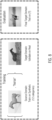
- FIG. 1 illustrates the impact of class imbalance on the performance of three prior art domain adaptation methods: optimal transport ( N. Courty et al., "Optimal Transport for Domain Adaptation", IEEE Transactions on Pattern Analysis and Machine Intelligence, 39(9): 1853-1865, September 2017 ), adversarial discriminative domain adaptation (ADDA) ( E. Tzeng et al., "Simultaneous deep transfer across domains and tasks", Proceedings of ICCV, (IEEE), pp. 4068-4076, 2015 ) and correlation alignment (COREL) ( B. Sun et al., “Correlation Alignment for Unsupervised Domain Adaptation", arXiv: 1612.01939 [cs], December 2016 ). Specifically, FIG.
- optimal transport N. Courty et al., "Optimal Transport for Domain Adaptation", IEEE Transactions on Pattern Analysis and Machine Intelligence, 39(9): 1853-1865, September 2017
- ADDA adversarial discriminative domain adaptation
- COREL correlation alignment
- the first approach is based on the source classifier. In all domain adaptation families, methods count on the source classifier to correctly predict the soft target labels. However, if the gap between source and target is too large, iterative optimization with soft labels often suffer from estimation error, bad initialization and convergence to local minima.
- the second approach is to count on the discriminator and its activations as an indicator for re-weighting the source instances.
- the class imbalance it is hard to distinguish between a poor domain discriminator and a low class probability in the target domain.
- the present disclosure provides for improved image classification by addressing the problem of severe class imbalance in unsupervised domain adaptation, when the class spaces in source and target domains diverge considerably.
- a new approach to class imbalance that uses latent codes in the adversarial domain adaptation setting is provided, where the latent codes can be used to disentangle the salient structure of the target domain and to identify under-represented classes.
- the latent code construction can be learned jointly with the learning of the domain invariant domain representation and used for accurately estimating the target labels.
- the new approach generalizes the absence of some classes in the target domain to the continuous space of divergences between class distributions.
- a computer-implemented method of training a target encoder for classifying images into one of a plurality of categories using a classifier trained on images from a source domain comprises: generating, by a pre-trained source encoder, a source encoder representation for each image of a labeled set of source images from the source domain; generating by the target encoder, a target encoder representation for each image of an unlabeled set of target images from a target domain; inputting, into a generative adversarial network, the source encoder representations, the target encoder representations, and latent code representing the plurality of categories, wherein the generative adversarial network is configured to output a first prediction indicating whether each of the source encoder representations and each of the target encoder representations originate from the source domain or the target domain, and wherein the generative adversarial network is further configured to output a second prediction of the latent code for each of the source encoder representations and each of the target encoder representations; and training the target encoder and the
- the method further comprises classifying a target image using the trained target encoder and the classifier, wherein the classifier is trained using supervised learning on the labeled set of source images.
- Classifying a target image using the trained target encoder and the classifier may comprise: inputting a target image into the trained target encoder; generating a target encoder representation of the target image; inputting the target encoder representation of the target image into the trained classifier; and classifying the image by the trained classifier into one of the plurality of categories.
- the method further comprises pre-training the source encoder and the classifier by: inputting the source encoder representations and source labels into the classifier; and pre-training the source encoder and the classifier by repeatedly updating parameters of the source encoder and the classifier until the classification loss function reaches a minimum.
- the generative adversarial network comprises a generator neural network, a discriminator neural network and an auxiliary neural network.
- the inputting, into the generative adversarial network, the source encoder representations, the target encoder representations, and the latent code comprises inputting, into the generator neural network, the source encoder representations combined with the latent code and the target encoder representations combined with the latent code.
- the method comprises computing, by the generator neural network, joint hidden representations for each of the source encoder representations and each of the target encoder representations, each joint hidden representation based on a combination of the latent code and a respective one of the source encoder representations and the target encoder representations; inputting, into the domain discriminator neural network, the joint hidden representations, wherein the domain discriminator neural network is configured to output the first prediction; and inputting, into the auxiliary neural network, the joint hidden representations, wherein the auxiliary neural network is configured to output the second prediction.
- a computer-readable storage medium having computer-executable instructions stored thereon is provided. When executed by one or more processors, the computer-executable instructions perform the method of training a target encoder described above.
- an apparatus comprising processing circuitry.
- the processing circuitry is configured to perform the method of training a target encoder described above.
- Described herein are systems and methods for image classification. For purposes of explanation, numerous examples and specific details are set forth in order to provide a thorough understanding of the described embodiments. Embodiments as defined by the claims may include some or all of the features in these examples alone or in combination with other features described below, and may further include modifications and equivalents of the features and concepts described herein.
- the illustrative embodiments will be described with reference to the drawings wherein like elements and structures are indicated by like reference numbers. Further, where an embodiment is a method, steps and elements of the method may be combinable in parallel or sequential execution. As far as they are not contradictory, all embodiments described below can be combined with each other.
- labeled source images X s having labels Y s are drawn from a source domain distribution p s ( x, y ) and unlabeled target images X t are drawn from a target domain distribution p t ( x ), where p s ( x ) ⁇ p t ( x ) .
- the label space, Y s formed by source labels Y s is different from the target label space, Y t , where Y t ⁇ Y s , and where the presence of some classes in the target domain is unknown. Consequently, attention is paid to the class imbalance when the target class distribution, p t ( y ), is very different from the source class distribution, p s ( y ).
- no difference is made between the under-represented and absent classes.
- ADDA adversarial domain adaptation
- a domain classifier is combined with domain representation learning to form an adversarial domain adaptation network.
- the main idea here is to learn both class discriminative and domain invariant representations, where the loss of the label predictor of the source image is minimized while the loss of the domain classifier is maximized.
- E s is the source encoder
- E t is the target encoder
- D is the domain classifier.
- D corresponds to the discriminator in the original GAN, configured to discriminate between the source and the target domains, with all the source images labelled as 1 and all the target images labelled as 0. Maximizing the minimax loss with respect to D yields a tighter lower bound on the true domain distribution divergence, while minimizing the minimax loss with respect to E s , E t , minimizes the distribution divergence in the feature space.
- the network Since no labeled images are available in the target domain, the network is trained in two stages. First, it learns the source encoding E s , along with a source classifier, C. Then it learns how to adapt that model to the target domain. The main goal is to regularize the learning of the source and target encoders, E s and E t , so as to minimize the distance between the source and target encoded distributions, E s ( x ) and E t ( x ) .
- Source and target encoders are designed to capture domain specific representations.
- the source discriminative model C ( E s ( x )) is trained for the image classification task by learning the parameters of the source encoder, E s , and the classifier, C, using the standard supervised loss for a source domain classification task.
- a domain adversarial loss is used to reduce the discrepancy between the two domains by optimizing the target encoder, E t , and the discriminator, D.
- There are various different choices of adversarial loss functions, they all train the adversarial discriminator using the domain classification loss, L adv D : min E t max D L adv D ⁇ E x ⁇ p s x log D E s x ⁇ E x ⁇ p t x log 1 ⁇ D E t x
- This loss function has the same properties as the minimax loss but provides stronger gradients to the target mapping. The stronger gradients allow the target encoder to better converge to the optimum.
- the source encoder E s trained at the first stage is often used as an initialization of the target encoder E t .
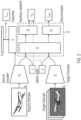
- FIG. 2 illustrates a block diagram of a Latent code Adversarial Domain Adaptation (LADA) network in accordance with an embodiment.
- the LADA network comprises: a source coder (E s ), a target encoder (Et), a classifier (C), a latent code (c) and a generative adversarial network (A).
- E s source coder
- Et target encoder
- C classifier
- A a generative adversarial network
- one or more of the components of the LADA network i.e. the source coder (E s ), the target encoder (E t ), the classifier (C) and the generative adversarial network (A)
- CNN convolutional neural networks
- the encoders i.e. the source encoder (E s ) and the target encoder (Et) are each configured to map the source image to their respective encoder feature representation.
- the encoders are configured to generate and output a respective encoder representation of the input source image.
- the respective encoder representations are then output to the generative adversarial network (A) along with the latent code (c).
- the generative adversarial network (A) comprises a generator neural network (G), a domain discriminator neural network (D), and an auxiliary neural network (Q).
- the source encoder representations and the target encoder representations are each combined with the latent code (c), where the generator neural network (G) is configured to receive, as input, the source encoder representations combined with the latent code (c) and the target encoder representations combined with the latent code (c).
- the generator neural network (G) is then configured to generate joint hidden representations based on the input received from the source encoder (E s ) and the target encoder (E t ).
- the joint hidden representations are output, by the generator neural network (G), to the discriminator neural network (D) and the auxiliary neural network (Q).
- the generator neural network is a convolutional neural network comprising three hidden layers with a ReLU (Rectified Linear Unit) activation function.
- the layer sizes may be 256, 128 and 64 neurons, respectively.
- the discriminator neural network (D) is configured to discriminate between the source domain and the target domain.
- the discriminator neural network is configured to predict whether each joint hidden representation received from the generator neural network (G) is associated with the source domain or the target domain.
- the latent code (c) enables disentangling of the salient structure of the target domain to boost discriminative learning of the target encoder (Et) and the domain discriminator neural network (D).
- Latent code is a vector describing the specific features that should be in an image. For example, points, edges and objects are types of features that may be distinguished in an image.
- the latent code (c) is sampled from a distribution P, which can be a pre-defined distribution or given from a data collection.
- the latent code represents the plurality of categories, K, into which the images are to be classified. In this case, the latent code comprises a uniform categorical code with K categories.
- the auxiliary network (Q) is included for the latent code reconstruction. Specifically, the auxiliary network (Q) is configured to predict, given each joint hidden representation, a probability distribution, Q(c
- the auxiliary neural network (Q) and the domain discriminator neural network (D) share most convolutional layers, where the convolutional layers shared by the auxiliary neural network (Q) and the domain discriminator neural network (D) correspond to the convolutional layers of the generator neural network (G).
- the output of the generator neural network (G) is mapped to fully connected layers for the discriminator and the auxiliary function with 2 and N c variables, respectively, where N c is the number of source classes.
- the auxiliary neural network (Q) is one final fully connected layer with a softmax function to output parameters for the probability distribution Q(c
- the LADA network is trained so that, after training, the target encoder (Et) and the classifier (C) are able to classify images into one of a plurality of categories.
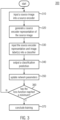
- FIG. 3 is a process flow diagram of an exemplary method 300 of a first training stage for training the LADA network of FIG. 2 in accordance with an embodiment.
- the first training stage may also be referred to as the pre-training stage.
- a source image is input into the source encoder (E s ).
- the source image is a first image of a labeled set of source images (X s ), having source labels (Y s ), from the source domain distribution ( p s ( x , y )).
- the source encoder (E s ) then generates a source encoder representation of the source image (step 320).
- the classifier (C) is configured to receive the generated source encoder representations and source image labels (Y s ) as input.
- the source image labels may correspond to one or more categories of a plurality of categories for a corresponding image.
- the source image labels correspond to objects shown in the corresponding images e.g. "chair”, “table”, “horse”, “aeroplane” etc.
- the generated source encoder representation and the corresponding source label is input into the classifier (C).
- the classifier (C) is configured to classify source images into one of a plurality of categories (K).
- the classifier outputs for the source encoder representation input at step 330, a prediction of the category. Since the source images are labeled, the classification objective function is a loss function ( ) associated with the cost of incorrect category predictions.
- the learnable parameters of the source encoder neural network (E s ) and the learnable parameters of the classifier (C) are updated by backpropagation of the relative gradients of the loss function with respect to the learnable parameters.
- the learnable parameters include the weights and, optionally, the biases of the neurons in the neural networks.
- the source encoder (E s ) and the classifier (C) are trained by repeating steps 310 through 350 for each of the sources images in the set until it is determined at step 360 that the classification loss function ( ) has reached a minimum (i.e. that is close to zero).
- pre-training the source encoder (E s ) and the classifier (C) comprises minimizing the classification loss function ( ) .
- the first (pre-training) stage is concluded at step 370.
- the parameters of the source encoder are fixed. In another embodiment, the parameters of the source encoder are not fixed after pre-training and are updated during the second training stage.
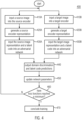
- FIG. 4 is a process flow diagram of an exemplary method 400 of a second training stage for training the LADA network of FIG. 2 in accordance with an embodiment.
- the target encoder (Et) is trained for classifying images into one of a plurality of categories using the classifier (C), pre-trained in accordance with the embodiment illustrated by FIG. 3 .
- a source image is input into the pre-trained source encoder (E s ).
- the source encoder (E s ) was pre-trained according to the method described with respect to FIG. 3 .
- the source image is sampled from a labeled set of source images (X s ), having source labels (Y s ), from the source domain distribution ( p s ( x, y )) .
- the set of source images is the same as the set of source images used during the pre-training stage. In other embodiments, the set of source images is a different set of source images than the set of source images used during the pre-training stage.
- the pre-trained source encoder (E s ) generates a source encoder representation of the source image input into the pre-trained source encoder (E s ).
- the source encoder representation is then output to the adversarial neural network (A). More specifically, as will be discussed with regard to FIG. 5 below, the generated source encoder representation is output to the generator neural network (G).
- the target encoder (Et) is configured to receive, as input, a set of unlabeled target images (X t ) from the target domain distribution, where the target domain distribution is different from the source domain distribution, as discussed above. Specifically, at step 410B, the target encoder (Et) receives a target image.
- the set of source images (X s ) may comprise synthetic images and the set of target images (Xt) may comprise real images (e.g. photographs).
- the set of source images (X s ) and the set of target images (X t ) may both comprise real images.
- the set of source images (X s ) and the set of target images (X t ) may have different resolutions (e.g. the source images may comprise high-resolution images and the target images may comprise low-resolution images).
- the set of source images (X s ) and the set of target images (X t ) may have been taken in different lighting conditions (e.g. the source images may comprise images taken in bright light conditions and the target images may comprise images taken in low light conditions).
- the target encoder (E t ) is configured to generate, for each input image, a target encoder representation.
- the target encoder generates a target encoder representation of the target image.
- the target encoder learnable parameters are initialized using the parameters of the pre-trained source encoder. In other words, the initial weights and biases of the target encoder are the same as those of the pre-trained source encoder.
- Target encoder representations generated by the target encoder (Et) are then output to the adversarial neural network (A).
- the source encoder representation or the target encoder representation combined with latent code (c) is input into the generative adversarial network (A).
- the target encoder representations are input to the generator neural network (G).
- the generative adversarial network (A) is configured to output a first prediction (also referred to a domain discrimination prediction) indicating whether an input encoder representation originates from the source domain or the target domain.
- the generative adversarial network (A) is further configured to output a second prediction of the latent code (also referred to as a latent code prediction).
- the first prediction is computed and output by the discriminator neural network (D) and the second prediction is computed and output by the auxiliary network (Q).
- the generative adversarial network (A) outputs a first prediction indicating whether the source encoder representation input at step 430A or whether the target encoder representation input at step 430B originates from the source domain or the target domain. In other words, the generative adversarial network (A) predicts whether the input is based on a source encoder representation or a target encoder representation.
- the generative adversarial network (A) outputs a second prediction of the latent code (c) for the source encoder representation input at step 430A or the target encoder representation input at step 430B.
- the generative adversarial network (A) is configured to predict the latent code (c).
- the second prediction is a probability distribution of the likelihood of latent code (c) given the input encoder representation E(x), i.e. the likelihood of the latent code input at step 430A or 430B belonging to one of the categories K.
- the loss function is based on the difference between the actual input (the latent code (c)) and the reconstructed input (the second prediction). In other words, the loss function is based on whether the actual input and the reconstructed input are the same or not.
- the learnable parameters i.e. the weight and, optionally, the biases
- the target encoder (Et) and the generative adversarial network (A) are updated by backpropagation.
- the target encoder (Et) and the generative adversarial network (A) are trained by repeating steps 410 through 450 for each of the source images in the set of source images and for each of the target images in the set of target images until the first loss function and the second loss function have reached a minimum (step 460). Once it is determined at step 460 that the first loss function and the second loss function have been minimized, the second training stage is concluded at step 470.
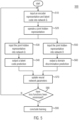
- FIG. 5 is a process flow diagram illustrating in more detail the operation of the generative adversarial network (A) described in FIG. 4 with regard to its component networks (i.e., the generator neural network (G), the domain discriminator neural network (D) and the auxiliary network (Q)), in accordance with an embodiment.
- the generative adversarial network A described in FIG. 4 with regard to its component networks (i.e., the generator neural network (G), the domain discriminator neural network (D) and the auxiliary network (Q)), in accordance with an embodiment.
- an encoder representation i.e. a source encoder representation or a target encoder representation
- the generator neural network (G) is configured to generate a joint hidden representation for each input, z.
- the joint hidden representations computed by the generator neural network (G) are then output to the auxiliary neural network (Q) and to the discriminator neural network (D).
- the generator network (G) can ignore the latent code (c) by finding the trivial solution satisfying P G ( x
- c ) P G ( x ) .
- the latent code is made meaningful by maximizing the mutual information, I ( c; G ( z )), between the latent code and the output, G(z).
- This mutual information cannot be calculated explicitly, so a lower bound is approximated using standard variational arguments.
- This consists of introducing an auxiliary distribution Q(c
- the mutual information I ( c; z s ) between the latent codes c and the labeled source images may be increased by using the source labels (Y s ) as latent codes.
- Training the auxiliary neural network Q on labeled source images enables to encode the semantic meaning of the source labels via the latent code (c) by means of increasing the mutual information I ( c; z s ) .
- the generator G acquires the source label information indirectly by increasing I ( c; z t ) and learns to utilize the encoded representations of the target images.
- the joint hidden representation generated by the generator neural network (G) at step 520 is input into the auxiliary neural network (Q).
- the auxiliary neural network (Q) outputs a prediction of the latent code (c) for each of the joint hidden representations. Said prediction is the second (latent code) prediction discussed with regard to step 440 of FIG. 4 above.
- the auxiliary network (Q) outputs, for the joint hidden representation, a probability distribution for the latent code given the respective joint hidden representation.
- auxiliary loss function i.e., the loss function to be minimized when training the auxiliary network (Q)
- min Q L Q ⁇ E c ⁇ P , x ⁇ p d x log Q c E x , c + H c
- the entropy H(c) is assumed to be constant and it is omitted from the auxiliary loss function for simplicity.
- the latent code (c) is sampled from a distribution P which is assumed to be fixed during the training. If the distribution is not fixed, the term H(c) should be differentiable as the regularization term in the auxiliary loss function in equation (5), where the regularization term H(c) smooths out extreme values of the first (main) term.
- the joint hidden representation generated by the generator neural network at step 520 is input into the domain discriminator neural network (D).
- the domain discriminator neural network (D) predicts, for each joint hidden representation, whether the joint hidden representation is based on a source encoder representation or a target encoder representation. Said prediction is the first (domain discrimination) prediction discussed with regard to step 440 of FIG. 4 above.
- the target encoder (Et) and the domain discriminator neural networks (D) are trained adversarially. Therefore, during training, the aim is to maximize the loss function for the domain discriminator neural network (D) and to minimize the loss function for the target encoder (E t ). If the domain discriminator neural network (D) is trained using the adversarial loss function ( ) with inverted labels, the optimization can be split into two independent objectives, one for the domain discriminator neural network (D) and one for the target encoder (E t ).
- Step 570 based on the loss functions in equations (5) to (7), the learnable parameters (i.e., the weights and, optionally, the biases) of the target encoder (Et), the domain discriminator neural network (D), the auxiliary neural network (D) and the generator network (G) are updated by backpropagation of the gradients of the loss functions.
- Step 570 corresponds to step 450 in FIG. 4 .
- the target encoder (Et), the domain discriminator neural network (D), the auxiliary neural network (D) and the generator network (G) are trained by repeating steps 510 through 570 for each of the source images in the set of source images and for each of the target images in the set of target images until each of the loss functions in equations (5) to (7) has reached a minimum.
- the second training stage is concluded at step 590. Steps 580 and 590 correspond to steps 460 and 470 in FIG. 4 , respectively.
- the parameters of the pre-trained source encoder are fixed once the first training stage is complete, before training the target encoder and generative adversarial network at the second training stage.
- This method of training the LADA network may be referred to as two-stage training or LADA-2.
- the parameters of the pre-trained source encoder are not fixed once the first training stage is complete and the parameters of the pre-trained source encoder are updated during the second training stage.
- This method of training the LADA network may be referred to as the three-player training mode or LADA-3.
- the source encoder (E s ) and the classifier (C) are trained during a first training stage as described with respect to FIG. 3 above. Then, during the second training stage, as described with respect to FIGS. 4 and 5 , the source encoder (E s ), the target encoder (Et) and the domain discriminator neural network (D) are trained jointly, by minimizing all the LADA losses given in equations (5) to (7), as will be described in more detail below.
- the parameters of the source encoder (Et) are used to initialize the parameters of the target encoder (Et) for the second training stage.
- the classification loss function ( ) the domain adversarial loss function ( ) and the auxiliary loss function ( ) are alternately minimized.
- the classification loss function ( ) for each source image input into the source encoder at step 410A and for each target image input into the target encoder at step 410B, the classification loss function ( ) , the domain adversarial loss function ( ) and the auxiliary loss function ( ) are each minimized in turn. This allows backpropagation of the gradients of the auxiliary loss function ( ) to the source encoder (E s ).
- the source encoder (E s ) may evolve, sometimes paying a price of doing less well on source images, towards a better domain invariant representation and latent code re-construction in the auxiliary network (Q).
- the target encoder (Et) and the classifier (C), which are now trained, can be used to classify new (test) images.
- the latent code construction is learned by the auxiliary neural network (Q)
- Q can be used to predict the target labels.
- Q does not duplicate the source classifier C because it counts on the generative adversarial network to be able to uncover the salient structure of the target domain.
- the trained target encoder and classifier are used to classify images from that target domain.
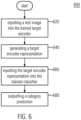
- FIG. 6 illustrates an exemplary method 600 of using the target encoder (Et) and the classifier (C) trained in accordance with the methods described with regard to FIGS. 3 to 5 to classify images from the target domain.
- the target encoder (Et) and the classifier (C) may be referred to as the trained target encoder and the trained classifier, respectively.
- a target image (also referred to as a test image) is input into the trained target encoder.
- the target image is an image from the target domain that has not been used during training.
- the trained target encoder generates and outputs a target encoder representation of the target image.
- the target encoder representation of the test image is then input into the trained classifier (step 660).
- the trained classifier then classifies the target image into one of the plurality of categories and outputs, a step 680, a prediction of the category of the test image.
- the LADA network of FIG. 2 is implemented using the TensorFlow Library 1.5 with CUDA 9.1.
- the LADA network is trained on source images (X s ) conditioned on their class labels (Y s ) and unlabeled target images (X t ).
- Both the source encoder (E s ) and the target encoder (Et) are fully connected layers.
- Domain encoded representations i.e. the source encoder representation and the target encoder representation
- latent code are mapped to the generator neural network (G), as disclosed above, where the generator neural network (G) is composed of three hidden layers with a ReLU activation function. In an embodiment, the layer sizes are 256, 128 and 64 neurons, respectively.
- the output of the generator neural network (G) is then mapped to fully connected layers for the domain discriminator neural network (D) and the auxiliary neural network (Q), having 2 and N c variables, respectively, where N c is the number of source classes.
- the model is trained using stochastic gradient descent (Adam optimizer) with mini-batches of size 32 and an initial learning rate of 0.01 at both stages. Dropout with probability of 0.5 is applied to both domain encoders (E s and E t ) and to the generator neural network (G). This means that, during training, individual nodes of the encoders (E s and E t ) and the generator neural network (G), along with their respective incoming and outgoing connections, are temporarily dropped out of the network with a probability of 0.5, so that a reduced network is left.
- the classification accuracy on target images is used as the evaluation metric, as will be discussed in more detail below.
- the Kullback-Leibler (KL) divergence is used to measure the divergence of target class distribution p t ( y ) from the source one p s ( y ).
- the class imbalance ratio CI ( t,s) is defined as KL ( y t
- the severe class imbalance is modeled by a controlled sampling from the target collection.
- a Random CI sampling protocol which is an extension of the two-class selective bias protocol described in L. Ziang et al, "MentorNet: Regularizing Very Deep Neural Networks on Corrupted Labels", arXiv:1712.05055, December 2017 , to the multiclass setting, is adopted.
- a KL divergence generator is run and target subsets sampled in such a way that CI(t,s) values follow a uniform distribution, CI ( t,s ) Unif(0,1).
- CI values in the (0,1) range By varying CI values in the (0,1) range, a better idea of how unsupervised domain adaptation methods resist to the class imbalance is obtained.
- the baseline is to disregard the latent codes in the LADA network by setting all latent codes to 0. This network is denoted LADA-0.
- the first training option concerns the distribution P for sampling latent codes c. Due to the semi-supervised latent codes in the auxiliary neural network (Q), we use the coupled sampling for the source encoder (E s ) i.e., when sampling the source domain as input to the generator neural network (G), x ⁇ p s ( x ) , c ⁇ , the encoded representation E s ( x ) of source instance x is coupled with the latent code c which is the corresponding labels y s .
- LADA-T combines the classifier (C) and auxiliary neural network (Q) to estimate the target class distribution p ⁇ t ( Y ) .
- C classifier
- Q auxiliary neural network
- the second training option is on the second stage of LADA training.
- the three-player mode (LADA-3) is also considered, which allows to backpropagate the auxiliary loss to the source encoder and can learn better domain invariant representations.
- class probabilities for target images p C ( y
- predicted by classifier C can be complemented with the p Q ( y
- the product rule commonly used in the class imbalance case (where some classes have very low probabilities), p ( y
- x ) p C ( y
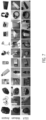
- Office31 is a standard dataset for comparing visual domain adaptation methods. It includes 4652 images from three domains, Amazon, DSLR and Webcam, with 31 classes in each domain. All domains in the collection are well-aligned.
- the VisDA dataset was developed for the Visual Domain Adaptation Challenge 2017, with the main focus on the simulation-to-reality shift.
- the goal is to first train a model on simulated, synthetic data in the source domain and then adapt it to perform well on real image data in the unlabeled test domain.
- the VisDA dataset is currently one of the largest for cross-domain classification, with over 280K source and 55K target images across 12 categories.
- ResNet-50 models are pre-trained on the very large public ImageNet collection and then fine-tuned on a smaller image collection using 2084 deep convolutional activation features as image representations.
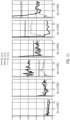
- the classification accuracy for the six Office31 domain adaptation tasks was computed. For each task, the average over 50 runs was taken with the uniformly distributed CI values, when training LADA-30, LADA-3U and LADA-3T models. Accuracy curves for the six domain adaptation tasks were averaged and are shown in FIG. 9 . All three LADA versions perform similarly when CI values are inferior to 0.5. Their performance is comparable to the state of the art methods. In the class alignment case, they are compared to ADDA and Conditional Domain Adversarial Network (CDAN). In the partial domain adaptation case, they are compared to the weighted ADDA (ADDA10), Selective Adversarial Networks (SAN10) and Partial Adversarial Domain Adaptation (PADA10).
- ADDA weighted ADDA
- SAN10 Selective Adversarial Networks
- PADA10 Partial Adversarial Domain Adaptation
- LADA-U and LADA-T behave on average as good or better than methods specifically developed for the partial domain adaptation.
- the LADA methods however make no assumption on the absence of some classes; they treat equally cases when the classes are under-represented or absent.
- FIG. 10 illustrates the classification accuracy for the VisDa dataset.
- the VisDA dataset is used to run an ablation study and investigate the different options of LADA training; the evaluation results are shown in FIG. 10 .
- LADA-3 to LADA-2 and the baseline are compared. As FIG. 10 shows,
- LADA-0 does not resist to the severe class imbalance.
- the difference between LADA-2 and LADA-3 is small but statistically significant. Specifically, LADA-2 does not change the parameters of the source encoder while LADA-3 allows some small modifications.
- the three-player training allows to maintain the target accuracy, for the price of performing slightly worse on source samples.
- the classifier can benefit from the disentangling of the target domain with the auxiliary network (Q).
- improvement in the target domain (which is more important) can be obtained for the price of slightly worse performance in the source domain (which is less important because, without the domain adaptation task, the good original source encoder trained in the first training stage is always available).
- FIG. 11 illustrates the KL divergence between the true and estimated target class distributions for different CI values.
- LADA-U Given an initial CI value, LADA-U is trained and how the target class estimation p ⁇ t ( y ) diverges from the true target class distribution p t ( y ) is measured.
- the KL divergence is used to measure it, KL ( p ⁇ t ( y ) ⁇ p t ( y ))(thick solid line).
- the divergence of p t ( y ) from the source distribution p s ( y ) (thin solid line) is also tracked.
- FIG. 11 reports LADA-U performance on the class imbalance reduction, with the starting CI values growing from 0.1 to 0.9 (dashed line). It is able to reduce the divergence between p ⁇ t ( y ) and p t ( y ) in most cases. However, there exists an incompressible divergence that none of the models seems to be able to break up.
- Some or all of the method steps may be implemented by a computer in that they are executed by (or using) a processor, a microprocessor, an electronic circuit or processing circuitry.
- the embodiments described above may be implemented in hardware or in software.
- the implementation can be performed using a non-transitory storage medium such as a computer-readable storage medium, for example a floppy disc, a DVD, a Blu-Ray, a CD, a ROM, a PROM, and EPROM, an EEPROM or a FLASH memory.
- a computer-readable storage medium for example a floppy disc, a DVD, a Blu-Ray, a CD, a ROM, a PROM, and EPROM, an EEPROM or a FLASH memory.
- Such computer-readable media can be any available media that can be accessed by a general-purpose or special-purpose computer system.
- embodiments can be implemented as a computer program product with a program code or computer-executable instructions, the program code or computer-executable instructions being operative for performing one of the methods when the computer program product runs on a computer.
- the program code or the computer-executable instructions may, for example, be stored on a computer-readable storage medium.
- a storage medium (or a data carrier, or a computer-readable medium) comprises, stored thereon, the computer program or the computer-executable instructions for performing one of the methods described herein when it is performed by a processor.
- an apparatus comprises one or more processors and the storage medium mentioned above.
- an apparatus comprises means, for example processing circuitry like e.g. a processor communicating with a memory, the means being configured to, or adapted to, perform one of the methods described herein.
- processing circuitry like e.g. a processor communicating with a memory, the means being configured to, or adapted to, perform one of the methods described herein.
- a further embodiment comprises a computer having installed thereon the computer program or instructions for performing one of the methods described herein.
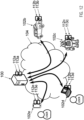
- FIG. 12 which comprises server 100 and one or more client devices 102 that communicate over a network 104 (which may be wireless and/or wired) such as the Internet for data exchange.
- Server 100 and the client devices 102 include a data processor 112 and memory 113 such as a hard disk.
- the client devices 102 may be any device that communicates with server 100, including autonomous vehicle 102b, robot 102c, computer 102d, or cell phone 102e.
- the training and classifying methods according to the embodiments of FIGS. 3 to 6 may be performed at server 100. In other embodiments, the training and classifying methods according to the embodiments of FIGS. 3 to 6 may be performed at client device 102. In yet other embodiments, the training and classifying methods may be performed at a different server or on a plurality of servers in a distributed manner.
Landscapes
- Engineering & Computer Science (AREA)
- Theoretical Computer Science (AREA)
- Physics & Mathematics (AREA)
- General Physics & Mathematics (AREA)
- Data Mining & Analysis (AREA)
- Evolutionary Computation (AREA)
- Artificial Intelligence (AREA)
- Software Systems (AREA)
- Computing Systems (AREA)
- General Health & Medical Sciences (AREA)
- Health & Medical Sciences (AREA)
- General Engineering & Computer Science (AREA)
- Life Sciences & Earth Sciences (AREA)
- Mathematical Physics (AREA)
- Biomedical Technology (AREA)
- Biophysics (AREA)
- Computational Linguistics (AREA)
- Molecular Biology (AREA)
- Computer Vision & Pattern Recognition (AREA)
- Databases & Information Systems (AREA)
- Medical Informatics (AREA)
- Multimedia (AREA)
- Bioinformatics & Cheminformatics (AREA)
- Bioinformatics & Computational Biology (AREA)
- Evolutionary Biology (AREA)
- Computational Mathematics (AREA)
- Mathematical Analysis (AREA)
- Mathematical Optimization (AREA)
- Pure & Applied Mathematics (AREA)
- Operations Research (AREA)
- Probability & Statistics with Applications (AREA)
- Algebra (AREA)
- Image Analysis (AREA)
Claims (14)
- Procédé mis en œuvre sur un ordinateur d'entraînement d'un codeur cible (Et) pour classifier des images dans une d'une pluralité de catégories au moyen d'un classificateur (C) entraîné sur des images (Xs) issues d'un domaine source, le procédé comprenant :une génération (420A), par un codeur source pré-entraîné (Es), d'une représentation de codeur source pour chaque image d'un ensemble étiqueté d'images source (Xs) issues du domaine source, dans lequel le codeur source (Es) est entraîné conjointement avec le classificateur (C) sur les images (Xs) et leurs étiquettes correspondantes (Ys) ;une génération (420B), par le codeur cible (Et), d'une représentation par codeur cible pour chaque image d'un ensemble non étiqueté d'images cible (Xt) issues du domaine cible ;caractérisé par :une entrée (43OA, 430B), dans un réseau antagoniste génératif (A), des représentations de codeur source, des représentations de codeur cible et d'un code latent (c),le code latent représentant la pluralité de catégories dans lesquelles les images sont à classifier, dans lequel chacune des représentations de codeur source est combinée avec le code latent et chacune des représentations de code cible est combinée avec le code latent, dans lequel un réseau neural discriminant (D) du réseau antagoniste génératif (A) est configuré pour produire (440 ; 560) une première prédiction indiquant si chacune des représentations de codeur source et chacune des représentations de codeur cible sont ou non issues du domaine source ou du domaine cible, et dans lequel un réseau neuronal auxiliaire (Q) du réseau antagoniste génératif (A) est configuré pour produire (440 ; 540) une deuxième prédiction d'une probabilité du code latent (c) selon une respective de chacune des représentations de codeur source et chacune des représentations de codeur cible ;un entraînement antagoniste du codeur cible (Et) et du réseau neuronal discriminant (D) en mettant à jour de manière répétée des paramètres du codeur cible (Et) et du réseau neuronal discriminant (D) au moyen de fonctions de perte antagonistes respectives selon la première prédiction ; et un entraînement du réseau neuronal auxiliaire (Q) au moyen d'une fonction de perte reposant sur la deuxième prédiction.
- Le procédé de la revendication 1, comprenant en outre :
une classification d'une image cible en utilisant le codeur cible entraîné (Et) et le classificateur (C), dans lequel le classificateur est entrainé au moyen d'un apprentissage supervisé sur l'ensemble étiqueté d'images source. - Le procédé de la revendication 2, dans lequel une classification d'une image cible en utilisant le codeur cible entraîné (Et) et le classificateur (C), comprend :une entrée d'une image cible dans le codeur cible entraîné (Et) ;une génération d'une représentation de codeur cible de l'image cible ;une entrée de la représentation de codeur cible de l'image cible dans le classificateur entraîné (C) ; etune classification de l'image par le classificateur entraîné (C) dans une de la pluralité de catégories.
- Le procédé de l'une des revendications précédentes, comprenant en outre un pré-entraînement du codeur source (Es) et du classificateur (C) par :une entrée des représentations de codeur source et d'étiquettes source (Ys) dans le classificateur (C) ; etun pré-entraînement du codeur source (Es) et du classificateur (C) en mettant à jour de manière répétée des paramètres du codeur source et du classificateur jusqu'à ce que la fonction de perte de classification atteigne un minimum.
- Le procédé de la revendication 4, dans lequel les paramètres du codeur source pré-entraîné (Es) ne sont pas fixes après le pré-entraînement, et
dans lequel le procédé comprend en outre un entraînement du codeur source pré-entraîné (Es) conjointement avec le codeur cible (Et) et le réseau antagoniste génératif (A) en mettant à jour de manière répétée des paramètres du codeur source (Es), du codeur cible (Et) et du réseau antagoniste génératif (A) jusqu'à ce que la fonction de perte de classification, la première fonction de perte et la deuxième fonction de perte atteignent un minimum. - Le procédé de l'une des revendications 1 à 4, dans lequel les paramètres du codeur source pré-entraîné (Es) sont fixes après le pré-entraînement.
- Le procédé de l'une des revendications précédentes, dans lequel des paramètres du codeur cible (Et) sont initialisés au moyen de paramètres du codeur source pré-entraîné (Es).
- Le procédé de l'une des revendications précédentes, dans lequel le réseau antagoniste génératif (A) comprend un réseau neuronal générateur (G), le réseau neuronal discriminant (D) et le réseau neuronal auxiliaire (Q), et
le procédé comprenant en outre :un calcul (520), par le réseau neuronal générateur (G), de représentations cachées jointes pour chacune des représentations de codeur source et chacune des représentations de codeur cible, chaque représentation cachée jointe selon une combinaison du code latent (c) et une respective des représentations de codeur source et des représentations de codeur cible ;une entrée (550), dans le réseau neuronal discriminant de domaine (D), des représentations cachées jointes ; etune entrée (530), dans le réseau neuronal auxiliaire (Q), des représentations cachées jointes. - Le procédé de la revendication 8, dans lequel le réseau neuronal générateur (G) est un réseau neuronal à convolution comprenant trois couches cachées avec activation ReLu.
- Le procédé de la revendication 8 ou 9, dans lequel le réseau neuronal discriminant de domaine (D) est un réseau neuronal à convolution comprenant au moins une couche totalement connectée.
- Le procédé de l'une des revendications 8 à 10, dans lequel une sortie, par le réseau neuronal auxiliaire (Q), d'une prédiction du code latent (c) pour chacune des représentations cachées jointes comprend une sortie d'une distribution de probabilité pour le code latent selon la représentation jointe respective.
- Le procédé de la revendication 11, dans lequel le réseau neuronal auxiliaire (Q) est un réseau neuronal à convolution comprenant une couche totalement connectée finale avec une fonction softmax pour produire en sortie des paramètres pour la distribution de probabilité.
- Support de stockage lisible par un ordinateur ayant stocké en son sein des instructions exécutables par un ordinateur, qui, lorsqu'exécutées par un ou plusieurs processeurs exécutent le procédé de l'une des revendications 1 à 12.
- Appareil comprenant un circuit de traitement, le circuit de traitement étant configuré pour exécuter le procédé de l'une des revendications 1 à 12.
Priority Applications (2)
| Application Number | Priority Date | Filing Date | Title |
|---|---|---|---|
| EP19305943.3A EP3767536B1 (fr) | 2019-07-17 | 2019-07-17 | Code latent pour adaptation de domaines non supervisée |
| US16/860,727 US11494660B2 (en) | 2019-07-17 | 2020-04-28 | Latent code for unsupervised domain adaptation |
Applications Claiming Priority (1)
| Application Number | Priority Date | Filing Date | Title |
|---|---|---|---|
| EP19305943.3A EP3767536B1 (fr) | 2019-07-17 | 2019-07-17 | Code latent pour adaptation de domaines non supervisée |
Publications (2)
| Publication Number | Publication Date |
|---|---|
| EP3767536A1 EP3767536A1 (fr) | 2021-01-20 |
| EP3767536B1 true EP3767536B1 (fr) | 2025-02-19 |
Family
ID=68426364
Family Applications (1)
| Application Number | Title | Priority Date | Filing Date |
|---|---|---|---|
| EP19305943.3A Active EP3767536B1 (fr) | 2019-07-17 | 2019-07-17 | Code latent pour adaptation de domaines non supervisée |
Country Status (2)
| Country | Link |
|---|---|
| US (1) | US11494660B2 (fr) |
| EP (1) | EP3767536B1 (fr) |
Families Citing this family (40)
| Publication number | Priority date | Publication date | Assignee | Title |
|---|---|---|---|---|
| US11664820B2 (en) * | 2019-09-25 | 2023-05-30 | Nokia Technologies Oy | Domain adaptation |
| TWI786346B (zh) * | 2019-11-14 | 2022-12-11 | 財團法人資訊工業策進會 | 遷移式模型訓練系統以及方法 |
| EP3872695B1 (fr) * | 2020-02-28 | 2025-09-24 | Toyota Jidosha Kabushiki Kaisha | Procédé et système d'adaptation d'un modèle initial d'un réseau neuronal |
| US11823379B2 (en) * | 2020-08-05 | 2023-11-21 | Ping An Technology (Shenzhen) Co., Ltd. | User-guided domain adaptation for rapid annotation from user interactions for pathological organ segmentation |
| US20220188621A1 (en) * | 2020-12-10 | 2022-06-16 | Ford Global Technologies, Llc | Generative domain adaptation in a neural network |
| CN113011456B (zh) * | 2021-02-05 | 2022-07-15 | 中国科学技术大学 | 用于图像分类的基于类别自适应模型的无监督域适应方法 |
| US20220261657A1 (en) * | 2021-02-17 | 2022-08-18 | International Business Machines Corporation | Monte-carlo adversarial autoencoder for multi-source domain adaptation |
| CN112861977B (zh) * | 2021-02-19 | 2024-01-26 | 中国人民武装警察部队工程大学 | 迁移学习数据处理方法、系统、介质、设备、终端及应用 |
| US11763135B2 (en) * | 2021-03-01 | 2023-09-19 | Robert Bosch Gmbh | Concept-based adversarial generation method with steerable and diverse semantics |
| US12394190B2 (en) | 2021-03-24 | 2025-08-19 | Samsung Electronics Co., Ltd. | Method and apparatus for classifying images using an artificial intelligence model |
| CN112966821A (zh) * | 2021-03-30 | 2021-06-15 | 北京致远慧图科技有限公司 | 模型的数据域扩张方法、装置、电子设备及计算机可读存储介质 |
| CN113159199B (zh) * | 2021-04-27 | 2022-12-27 | 广东工业大学 | 一种基于结构特征增强和类中心匹配的跨域图像分类方法 |
| CN115687987A (zh) * | 2021-07-28 | 2023-02-03 | 华为技术有限公司 | 检测对抗攻击的方法和装置 |
| CN113762466B (zh) * | 2021-08-02 | 2023-06-20 | 国网河南省电力公司信息通信公司 | 电力物联网流量分类方法及装置 |
| CN113837071B (zh) * | 2021-09-23 | 2024-02-02 | 重庆大学 | 基于多尺度权重选择对抗网络的部分迁移故障诊断方法 |
| CN113988291B (zh) * | 2021-10-26 | 2024-06-04 | 支付宝(杭州)信息技术有限公司 | 用户表征网络的训练方法及装置 |
| EP4441699A4 (fr) * | 2021-11-30 | 2025-01-08 | NEC Corporation | Appareil de formation, appareil de classification, procédé de formation et procédé de classification |
| US20220092400A1 (en) * | 2021-12-06 | 2022-03-24 | Intel Corporation | Method and system of highly efficient neural network image processing |
| US12217484B2 (en) * | 2021-12-16 | 2025-02-04 | Naver Corporation | Method of unsupervised domain adaptation in ordinal regression |
| CN114816983B (zh) * | 2022-03-10 | 2024-11-08 | 南京邮电大学 | 一种基于混合项目对抗学习的跨项目软件缺陷预测方法 |
| JP2023144562A (ja) * | 2022-03-28 | 2023-10-11 | 富士通株式会社 | 機械学習プログラム,データ処理プログラム,情報処理装置,機械学習方法およびデータ処理方法 |
| US11907186B2 (en) * | 2022-04-21 | 2024-02-20 | Bank Of America Corporation | System and method for electronic data archival in a distributed data network |
| CN117036658A (zh) * | 2022-04-29 | 2023-11-10 | 华为技术有限公司 | 一种图像处理方法及相关设备 |
| CN114627390B (zh) * | 2022-05-12 | 2022-08-16 | 北京数慧时空信息技术有限公司 | 一种改进的主动学习遥感样本标记方法 |
| CN115019366B (zh) * | 2022-05-25 | 2025-05-27 | 杭州电子科技大学 | 一种基于神经过程的自动微表情分类模型训练方法 |
| CN115187840B (zh) * | 2022-06-20 | 2025-11-18 | 支付宝(杭州)信息技术有限公司 | 训练关系识别模型、进行图分析的方法及装置 |
| CN115205527B (zh) * | 2022-06-29 | 2025-10-10 | 陕西师范大学 | 一种基于域适应和超分辨率的遥感图像双向语义分割方法 |
| JP2024050111A (ja) * | 2022-09-29 | 2024-04-10 | 株式会社日立ソリューションズ | 画像認識装置、画像認識方法 |
| SE2230332A1 (en) * | 2022-10-17 | 2024-04-18 | Atlas Copco Ind Technique Ab | Estimation of class-imbalance in training data of an iterative learning process |
| US20240282117A1 (en) * | 2023-02-22 | 2024-08-22 | Gm Cruise Holdings Llc | Approximately-paired simulation-to-real image translation |
| US20240296334A1 (en) * | 2023-03-03 | 2024-09-05 | International Business Machines Corporation | Machine learning model training with adversarial learning and triplet loss regularization |
| CN116360429B (zh) * | 2023-03-10 | 2025-05-27 | 大连理工大学 | 一种基于自适应判别器的自动驾驶决策方法 |
| CN116721343B (zh) * | 2023-06-06 | 2025-12-12 | 武汉工程大学 | 一种基于深度卷积神经网络的跨域田间棉铃识别方法 |
| CN116824338A (zh) * | 2023-07-05 | 2023-09-29 | 江苏优普纳科技有限公司 | 基于对抗式迁移学习的生成粗糙度预测模型的方法及系统 |
| CN116883751B (zh) * | 2023-07-18 | 2026-01-02 | 安徽大学 | 基于原型网络对比学习的无监督领域自适应图像识别方法 |
| CN117251719B (zh) * | 2023-07-31 | 2025-11-11 | 西北工业大学 | 一种基于改进域自适应的智能水下噪声识别分类方法 |
| CN117421244B (zh) * | 2023-11-17 | 2024-05-24 | 北京邮电大学 | 多源跨项目软件缺陷预测方法、装置及存储介质 |
| CN117793266B (zh) * | 2023-12-07 | 2025-06-17 | 天津大学 | 一种基于域间隙的图像通用加密方法 |
| CN117593594B (zh) * | 2024-01-18 | 2024-04-23 | 合肥综合性国家科学中心人工智能研究院(安徽省人工智能实验室) | 基于一致性对齐的脑部mri图像分类方法、设备和介质 |
| CN118154997B (zh) * | 2024-05-10 | 2024-08-09 | 国网江西省电力有限公司南昌供电分公司 | 一种绝缘子质量检测方法 |
Family Cites Families (23)
| Publication number | Priority date | Publication date | Assignee | Title |
|---|---|---|---|---|
| US8126197B2 (en) * | 2007-11-29 | 2012-02-28 | Certifi-Media Inc. | Method for image quality assessment using quality vectors |
| US8380647B2 (en) * | 2009-08-14 | 2013-02-19 | Xerox Corporation | Training a classifier by dimension-wise embedding of training data |
| KR20120118781A (ko) * | 2011-04-19 | 2012-10-29 | 삼성전자주식회사 | 다시점 비디오를 위한 단일화된 스케일러블 비디오 부호화 방법 및 그 장치, 다시점 비디오를 위한 단일화된 스케일러블 비디오 복호화 방법 및 그 장치 |
| PH12018500454B1 (en) * | 2015-09-03 | 2024-02-28 | Mediatek Inc | Method and apparatus of nueral network based processing in video coding |
| EP3371749B1 (fr) * | 2015-11-06 | 2024-10-30 | Google LLC | Régularisation de modèles d'apprentissage machine |
| CN109643383B (zh) * | 2016-07-28 | 2023-09-01 | 谷歌有限责任公司 | 域分离神经网络 |
| GB201615051D0 (en) * | 2016-09-05 | 2016-10-19 | Kheiron Medical Tech Ltd | Multi-modal medical image procesing |
| WO2018093182A1 (fr) * | 2016-11-16 | 2018-05-24 | Samsung Electronics Co., Ltd. | Procédé de gestion d'images et appareil associé |
| JP6883787B2 (ja) * | 2017-09-06 | 2021-06-09 | パナソニックIpマネジメント株式会社 | 学習装置、学習方法、学習プログラム、推定装置、推定方法、及び推定プログラム |
| EP3750320B1 (fr) * | 2018-02-09 | 2023-11-08 | Fraunhofer-Gesellschaft zur Förderung der angewandten Forschung e.V. | Filtre en boucle adaptatif avec de multiples classifications basées sur des caractéristiques |
| KR102606200B1 (ko) * | 2018-03-06 | 2023-11-24 | 삼성전자주식회사 | 전자 장치 및 그 제어 방법 |
| US20210125004A1 (en) * | 2018-06-07 | 2021-04-29 | Element Ai Inc. | Automated labeling of data with user validation |
| JP7139749B2 (ja) * | 2018-07-23 | 2022-09-21 | 日本電信電話株式会社 | 画像認識学習装置、画像認識装置、方法、及びプログラム |
| EP3620989A1 (fr) * | 2018-09-07 | 2020-03-11 | Panasonic Intellectual Property Corporation of America | Méthode de traitement d'informations, appareil de traitement d'informations et programme |
| US10832083B1 (en) * | 2019-04-23 | 2020-11-10 | International Business Machines Corporation | Advanced image recognition for threat disposition scoring |
| EP3731154A1 (fr) * | 2019-04-26 | 2020-10-28 | Naver Corporation | Formation d'un réseau neuronal convolutionnel pour la récupération d'images à l'aide d'une fonction de perte de classement par ordre de liste |
| CN110188172B (zh) * | 2019-05-31 | 2022-10-28 | 清华大学 | 基于文本的事件检测方法、装置、计算机设备及存储介质 |
| EP4006830B1 (fr) * | 2019-07-25 | 2026-03-18 | FUJIFILM Corporation | Dispositif, procédé, et programme d'apprentissage, dispositif, procédé, et programme d'extraction de zone d'intérêt, et modèle d'extraction appris |
| US20210073396A1 (en) * | 2019-09-05 | 2021-03-11 | Everalbum, Inc. | System and Method for Secure Image Embeddings |
| US11936864B2 (en) * | 2019-11-07 | 2024-03-19 | Bitmovin, Inc. | Fast multi-rate encoding for adaptive streaming using machine learning |
| US11408746B2 (en) * | 2019-12-04 | 2022-08-09 | Toyota Connected North America, Inc. | Systems and methods for generating attributes-based recommendations |
| US11887310B2 (en) * | 2020-05-15 | 2024-01-30 | Apple Inc. | Interactive image segmentation |
| US11989262B2 (en) * | 2020-10-01 | 2024-05-21 | Nvidia Corporation | Unsupervised domain adaptation with neural networks |
-
2019
- 2019-07-17 EP EP19305943.3A patent/EP3767536B1/fr active Active
-
2020
- 2020-04-28 US US16/860,727 patent/US11494660B2/en active Active
Non-Patent Citations (1)
| Title |
|---|
| XI CHEN ET AL: "InfoGAN: Interpretable Representation Learning by Information Maximizing Generative Adversarial Nets", ARXIV.ORG, CORNELL UNIVERSITY LIBRARY, 201 OLIN LIBRARY CORNELL UNIVERSITY ITHACA, NY 14853, 12 June 2016 (2016-06-12), XP080707424, DOI: HTTPS://ARXIV.ORG/PDF/1606.03657.PDF * |
Also Published As
| Publication number | Publication date |
|---|---|
| EP3767536A1 (fr) | 2021-01-20 |
| US20210019629A1 (en) | 2021-01-21 |
| US11494660B2 (en) | 2022-11-08 |
Similar Documents
| Publication | Publication Date | Title |
|---|---|---|
| EP3767536B1 (fr) | Code latent pour adaptation de domaines non supervisée | |
| US11270124B1 (en) | Temporal bottleneck attention architecture for video action recognition | |
| Iscen et al. | Label propagation for deep semi-supervised learning | |
| CN109891897B (zh) | 用于分析媒体内容的方法 | |
| Fu et al. | Fast crowd density estimation with convolutional neural networks | |
| WO2018121690A1 (fr) | Procédé et dispositif de détection d'attribut d'objet, procédé et dispositif d'apprentissage de réseau neuronal et procédé et dispositif de détection zonale | |
| CN102799900B (zh) | 一种基于检测中支持在线聚类学习的对象跟踪方法 | |
| US20240320493A1 (en) | Improved Two-Stage Machine Learning for Imbalanced Datasets | |
| CN117152606A (zh) | 一种基于置信度动态学习的遥感图像跨域小样本分类方法 | |
| CN113902944B (zh) | 模型的训练及场景识别方法、装置、设备及介质 | |
| CN111126576A (zh) | 一种深度学习的新型训练策略 | |
| US12450875B2 (en) | Method and apparatus for training relationship recognition model and method and apparatus for analyzing image | |
| CN116232699B (zh) | 细粒度网络入侵检测模型的训练方法和网络入侵检测方法 | |
| US20230297823A1 (en) | Method and system for training a neural network for improving adversarial robustness | |
| CN116468948B (zh) | 支持检测未知类的城市垃圾增量学习检测方法及系统 | |
| CN110827265A (zh) | 基于深度学习的图片异常检测方法 | |
| CN116263785A (zh) | 跨领域文本分类模型的训练方法、分类方法和装置 | |
| CN107993311B (zh) | 一种用于半监督人脸识别门禁系统的代价敏感隐语义回归方法 | |
| Liu et al. | Zero-shot object detection by semantics-aware detr with adaptive contrastive loss | |
| Raisi et al. | Investigation of deep learning optimization algorithms in scene text detection | |
| CN120448765A (zh) | 一种基于域适应与领域对抗训练的特征选择方法及系统 | |
| CN119649136A (zh) | 一种小样本图像检测模型的训练方法和图像检测方法 | |
| CN117409295A (zh) | 一种基于YOLOv7的小目标检测方法、装置、存储介质及系统 | |
| Wang et al. | Automatic Label Assignment for Object Detection | |
| Ratre et al. | Deep imbalanced data learning approach for video anomaly detection |
Legal Events
| Date | Code | Title | Description |
|---|---|---|---|
| PUAI | Public reference made under article 153(3) epc to a published international application that has entered the european phase |
Free format text: ORIGINAL CODE: 0009012 |
|
| STAA | Information on the status of an ep patent application or granted ep patent |
Free format text: STATUS: THE APPLICATION HAS BEEN PUBLISHED |
|
| AK | Designated contracting states |
Kind code of ref document: A1 Designated state(s): AL AT BE BG CH CY CZ DE DK EE ES FI FR GB GR HR HU IE IS IT LI LT LU LV MC MK MT NL NO PL PT RO RS SE SI SK SM TR |
|
| AX | Request for extension of the european patent |
Extension state: BA ME |
|
| STAA | Information on the status of an ep patent application or granted ep patent |
Free format text: STATUS: REQUEST FOR EXAMINATION WAS MADE |
|
| 17P | Request for examination filed |
Effective date: 20210720 |
|
| RBV | Designated contracting states (corrected) |
Designated state(s): AL AT BE BG CH CY CZ DE DK EE ES FI FR GB GR HR HU IE IS IT LI LT LU LV MC MK MT NL NO PL PT RO RS SE SI SK SM TR |
|
| STAA | Information on the status of an ep patent application or granted ep patent |
Free format text: STATUS: EXAMINATION IS IN PROGRESS |
|
| 17Q | First examination report despatched |
Effective date: 20221216 |
|
| REG | Reference to a national code |
Ref country code: DE Ref legal event code: R079 Free format text: PREVIOUS MAIN CLASS: G06K0009620000 Ref country code: DE Ref legal event code: R079 Ref document number: 602019066104 Country of ref document: DE Free format text: PREVIOUS MAIN CLASS: G06K0009620000 Ipc: G06V0010764000 |
|
| GRAP | Despatch of communication of intention to grant a patent |
Free format text: ORIGINAL CODE: EPIDOSNIGR1 |
|
| STAA | Information on the status of an ep patent application or granted ep patent |
Free format text: STATUS: GRANT OF PATENT IS INTENDED |
|
| RIC1 | Information provided on ipc code assigned before grant |
Ipc: G06F 18/2413 20230101ALI20240902BHEP Ipc: G06V 10/82 20220101ALI20240902BHEP Ipc: G06V 10/764 20220101AFI20240902BHEP |
|
| INTG | Intention to grant announced |
Effective date: 20240917 |
|
| RAP3 | Party data changed (applicant data changed or rights of an application transferred) |
Owner name: NAVER CORPORATION |
|
| RAP3 | Party data changed (applicant data changed or rights of an application transferred) |
Owner name: NAVER CORPORATION |
|
| GRAS | Grant fee paid |
Free format text: ORIGINAL CODE: EPIDOSNIGR3 |
|
| GRAA | (expected) grant |
Free format text: ORIGINAL CODE: 0009210 |
|
| STAA | Information on the status of an ep patent application or granted ep patent |
Free format text: STATUS: THE PATENT HAS BEEN GRANTED |
|
| AK | Designated contracting states |
Kind code of ref document: B1 Designated state(s): AL AT BE BG CH CY CZ DE DK EE ES FI FR GB GR HR HU IE IS IT LI LT LU LV MC MK MT NL NO PL PT RO RS SE SI SK SM TR |
|
| REG | Reference to a national code |
Ref country code: GB Ref legal event code: FG4D |
|
| REG | Reference to a national code |
Ref country code: CH Ref legal event code: EP |
|
| REG | Reference to a national code |
Ref country code: IE Ref legal event code: FG4D |
|
| REG | Reference to a national code |
Ref country code: DE Ref legal event code: R096 Ref document number: 602019066104 Country of ref document: DE |
|
| REG | Reference to a national code |
Ref country code: NL Ref legal event code: MP Effective date: 20250219 |
|
| PG25 | Lapsed in a contracting state [announced via postgrant information from national office to epo] |
Ref country code: RS Free format text: LAPSE BECAUSE OF FAILURE TO SUBMIT A TRANSLATION OF THE DESCRIPTION OR TO PAY THE FEE WITHIN THE PRESCRIBED TIME-LIMIT Effective date: 20250519 |
|
| PG25 | Lapsed in a contracting state [announced via postgrant information from national office to epo] |
Ref country code: FI Free format text: LAPSE BECAUSE OF FAILURE TO SUBMIT A TRANSLATION OF THE DESCRIPTION OR TO PAY THE FEE WITHIN THE PRESCRIBED TIME-LIMIT Effective date: 20250219 |
|
| PG25 | Lapsed in a contracting state [announced via postgrant information from national office to epo] |
Ref country code: PL Free format text: LAPSE BECAUSE OF FAILURE TO SUBMIT A TRANSLATION OF THE DESCRIPTION OR TO PAY THE FEE WITHIN THE PRESCRIBED TIME-LIMIT Effective date: 20250219 |
|
| PG25 | Lapsed in a contracting state [announced via postgrant information from national office to epo] |
Ref country code: ES Free format text: LAPSE BECAUSE OF FAILURE TO SUBMIT A TRANSLATION OF THE DESCRIPTION OR TO PAY THE FEE WITHIN THE PRESCRIBED TIME-LIMIT Effective date: 20250219 |
|
| REG | Reference to a national code |
Ref country code: LT Ref legal event code: MG9D |
|
| PG25 | Lapsed in a contracting state [announced via postgrant information from national office to epo] |
Ref country code: IS Free format text: LAPSE BECAUSE OF FAILURE TO SUBMIT A TRANSLATION OF THE DESCRIPTION OR TO PAY THE FEE WITHIN THE PRESCRIBED TIME-LIMIT Effective date: 20250619 Ref country code: NO Free format text: LAPSE BECAUSE OF FAILURE TO SUBMIT A TRANSLATION OF THE DESCRIPTION OR TO PAY THE FEE WITHIN THE PRESCRIBED TIME-LIMIT Effective date: 20250519 |
|
| PG25 | Lapsed in a contracting state [announced via postgrant information from national office to epo] |
Ref country code: NL Free format text: LAPSE BECAUSE OF FAILURE TO SUBMIT A TRANSLATION OF THE DESCRIPTION OR TO PAY THE FEE WITHIN THE PRESCRIBED TIME-LIMIT Effective date: 20250219 |
|
| PG25 | Lapsed in a contracting state [announced via postgrant information from national office to epo] |
Ref country code: HR Free format text: LAPSE BECAUSE OF FAILURE TO SUBMIT A TRANSLATION OF THE DESCRIPTION OR TO PAY THE FEE WITHIN THE PRESCRIBED TIME-LIMIT Effective date: 20250219 |
|
| PG25 | Lapsed in a contracting state [announced via postgrant information from national office to epo] |
Ref country code: LV Free format text: LAPSE BECAUSE OF FAILURE TO SUBMIT A TRANSLATION OF THE DESCRIPTION OR TO PAY THE FEE WITHIN THE PRESCRIBED TIME-LIMIT Effective date: 20250219 Ref country code: PT Free format text: LAPSE BECAUSE OF FAILURE TO SUBMIT A TRANSLATION OF THE DESCRIPTION OR TO PAY THE FEE WITHIN THE PRESCRIBED TIME-LIMIT Effective date: 20250620 |
|
| PG25 | Lapsed in a contracting state [announced via postgrant information from national office to epo] |
Ref country code: BG Free format text: LAPSE BECAUSE OF FAILURE TO SUBMIT A TRANSLATION OF THE DESCRIPTION OR TO PAY THE FEE WITHIN THE PRESCRIBED TIME-LIMIT Effective date: 20250219 Ref country code: GR Free format text: LAPSE BECAUSE OF FAILURE TO SUBMIT A TRANSLATION OF THE DESCRIPTION OR TO PAY THE FEE WITHIN THE PRESCRIBED TIME-LIMIT Effective date: 20250520 |
|
| REG | Reference to a national code |
Ref country code: AT Ref legal event code: MK05 Ref document number: 1769073 Country of ref document: AT Kind code of ref document: T Effective date: 20250219 |
|
| PG25 | Lapsed in a contracting state [announced via postgrant information from national office to epo] |
Ref country code: SE Free format text: LAPSE BECAUSE OF FAILURE TO SUBMIT A TRANSLATION OF THE DESCRIPTION OR TO PAY THE FEE WITHIN THE PRESCRIBED TIME-LIMIT Effective date: 20250219 |
|
| PG25 | Lapsed in a contracting state [announced via postgrant information from national office to epo] |
Ref country code: SM Free format text: LAPSE BECAUSE OF FAILURE TO SUBMIT A TRANSLATION OF THE DESCRIPTION OR TO PAY THE FEE WITHIN THE PRESCRIBED TIME-LIMIT Effective date: 20250219 |
|
| PG25 | Lapsed in a contracting state [announced via postgrant information from national office to epo] |
Ref country code: DK Free format text: LAPSE BECAUSE OF FAILURE TO SUBMIT A TRANSLATION OF THE DESCRIPTION OR TO PAY THE FEE WITHIN THE PRESCRIBED TIME-LIMIT Effective date: 20250219 |
|
| PGFP | Annual fee paid to national office [announced via postgrant information from national office to epo] |
Ref country code: DE Payment date: 20250725 Year of fee payment: 7 |
|
| PG25 | Lapsed in a contracting state [announced via postgrant information from national office to epo] |
Ref country code: IT Free format text: LAPSE BECAUSE OF FAILURE TO SUBMIT A TRANSLATION OF THE DESCRIPTION OR TO PAY THE FEE WITHIN THE PRESCRIBED TIME-LIMIT Effective date: 20250219 |
|
| PGFP | Annual fee paid to national office [announced via postgrant information from national office to epo] |
Ref country code: GB Payment date: 20250725 Year of fee payment: 7 |
|
| PG25 | Lapsed in a contracting state [announced via postgrant information from national office to epo] |
Ref country code: AT Free format text: LAPSE BECAUSE OF FAILURE TO SUBMIT A TRANSLATION OF THE DESCRIPTION OR TO PAY THE FEE WITHIN THE PRESCRIBED TIME-LIMIT Effective date: 20250219 |
|
| PGFP | Annual fee paid to national office [announced via postgrant information from national office to epo] |
Ref country code: FR Payment date: 20250729 Year of fee payment: 7 |
|
| PG25 | Lapsed in a contracting state [announced via postgrant information from national office to epo] |
Ref country code: EE Free format text: LAPSE BECAUSE OF FAILURE TO SUBMIT A TRANSLATION OF THE DESCRIPTION OR TO PAY THE FEE WITHIN THE PRESCRIBED TIME-LIMIT Effective date: 20250219 Ref country code: CZ Free format text: LAPSE BECAUSE OF FAILURE TO SUBMIT A TRANSLATION OF THE DESCRIPTION OR TO PAY THE FEE WITHIN THE PRESCRIBED TIME-LIMIT Effective date: 20250219 |
|
| PG25 | Lapsed in a contracting state [announced via postgrant information from national office to epo] |
Ref country code: RO Free format text: LAPSE BECAUSE OF FAILURE TO SUBMIT A TRANSLATION OF THE DESCRIPTION OR TO PAY THE FEE WITHIN THE PRESCRIBED TIME-LIMIT Effective date: 20250219 |
|
| PG25 | Lapsed in a contracting state [announced via postgrant information from national office to epo] |
Ref country code: SK Free format text: LAPSE BECAUSE OF FAILURE TO SUBMIT A TRANSLATION OF THE DESCRIPTION OR TO PAY THE FEE WITHIN THE PRESCRIBED TIME-LIMIT Effective date: 20250219 |
|
| REG | Reference to a national code |
Ref country code: DE Ref legal event code: R097 Ref document number: 602019066104 Country of ref document: DE |
|
| PLBE | No opposition filed within time limit |
Free format text: ORIGINAL CODE: 0009261 |
|
| STAA | Information on the status of an ep patent application or granted ep patent |
Free format text: STATUS: NO OPPOSITION FILED WITHIN TIME LIMIT |
|
| REG | Reference to a national code |
Ref country code: CH Ref legal event code: L10 Free format text: ST27 STATUS EVENT CODE: U-0-0-L10-L00 (AS PROVIDED BY THE NATIONAL OFFICE) Effective date: 20251231 |
|
| 26N | No opposition filed |
Effective date: 20251120 |
|
| REG | Reference to a national code |
Ref country code: CH Ref legal event code: H13 Free format text: ST27 STATUS EVENT CODE: U-0-0-H10-H13 (AS PROVIDED BY THE NATIONAL OFFICE) Effective date: 20260224 |
|
| PG25 | Lapsed in a contracting state [announced via postgrant information from national office to epo] |
Ref country code: LU Free format text: LAPSE BECAUSE OF NON-PAYMENT OF DUE FEES Effective date: 20250717 |
|
| REG | Reference to a national code |
Ref country code: BE Ref legal event code: MM Effective date: 20250731 |
|
| PG25 | Lapsed in a contracting state [announced via postgrant information from national office to epo] |
Ref country code: BE Free format text: LAPSE BECAUSE OF NON-PAYMENT OF DUE FEES Effective date: 20250731 |
|
| PG25 | Lapsed in a contracting state [announced via postgrant information from national office to epo] |
Ref country code: CH Free format text: LAPSE BECAUSE OF NON-PAYMENT OF DUE FEES Effective date: 20250731 |