EP3767579A1 - Système de notification de soins de santé sensible au contexte - Google Patents
Système de notification de soins de santé sensible au contexte Download PDFInfo
- Publication number
- EP3767579A1 EP3767579A1 EP20191537.8A EP20191537A EP3767579A1 EP 3767579 A1 EP3767579 A1 EP 3767579A1 EP 20191537 A EP20191537 A EP 20191537A EP 3767579 A1 EP3767579 A1 EP 3767579A1
- Authority
- EP
- European Patent Office
- Prior art keywords
- patient
- healthcare
- information
- user device
- proximity
- Prior art date
- Legal status (The legal status is an assumption and is not a legal conclusion. Google has not performed a legal analysis and makes no representation as to the accuracy of the status listed.)
- Granted
Links
Images




Classifications
-
- G—PHYSICS
- G16—INFORMATION AND COMMUNICATION TECHNOLOGY [ICT] SPECIALLY ADAPTED FOR SPECIFIC APPLICATION FIELDS
- G16H—HEALTHCARE INFORMATICS, i.e. INFORMATION AND COMMUNICATION TECHNOLOGY [ICT] SPECIALLY ADAPTED FOR THE HANDLING OR PROCESSING OF MEDICAL OR HEALTHCARE DATA
- G16H10/00—ICT specially adapted for the handling or processing of patient-related medical or healthcare data
- G16H10/60—ICT specially adapted for the handling or processing of patient-related medical or healthcare data for patient-specific data, e.g. for electronic patient records
-
- G—PHYSICS
- G16—INFORMATION AND COMMUNICATION TECHNOLOGY [ICT] SPECIALLY ADAPTED FOR SPECIFIC APPLICATION FIELDS
- G16H—HEALTHCARE INFORMATICS, i.e. INFORMATION AND COMMUNICATION TECHNOLOGY [ICT] SPECIALLY ADAPTED FOR THE HANDLING OR PROCESSING OF MEDICAL OR HEALTHCARE DATA
- G16H40/00—ICT specially adapted for the management or administration of healthcare resources or facilities; ICT specially adapted for the management or operation of medical equipment or devices
- G16H40/40—ICT specially adapted for the management or administration of healthcare resources or facilities; ICT specially adapted for the management or operation of medical equipment or devices for the management of medical equipment or devices, e.g. scheduling maintenance or upgrades
-
- G—PHYSICS
- G16—INFORMATION AND COMMUNICATION TECHNOLOGY [ICT] SPECIALLY ADAPTED FOR SPECIFIC APPLICATION FIELDS
- G16H—HEALTHCARE INFORMATICS, i.e. INFORMATION AND COMMUNICATION TECHNOLOGY [ICT] SPECIALLY ADAPTED FOR THE HANDLING OR PROCESSING OF MEDICAL OR HEALTHCARE DATA
- G16H40/00—ICT specially adapted for the management or administration of healthcare resources or facilities; ICT specially adapted for the management or operation of medical equipment or devices
- G16H40/60—ICT specially adapted for the management or administration of healthcare resources or facilities; ICT specially adapted for the management or operation of medical equipment or devices for the operation of medical equipment or devices
Definitions
- the present application is a continuation-in-part of co-pending U.S. Patent Application Serial No. 09/860,865 , entitled “Distributed Remote Asset and Medication Management Drug Delivery System,” filed on May 18, 2001, which claims priority to U.S. Provisional Patent Application Serial No. 60/205,125 , entitled “Distributed remote asset and medication management drug delivery system (DRAMMDDS),” filed on May 18, 2000, both of which are hereby incorporated by reference in their entirety for all purposes.
- the present application is also a continuation-in-part of co-pending U.S. Patent Application Serial No. 10/361,704 , entitled “Medication Management and Event Logger and Analysis System,” filed on February 9, 2003, which is hereby incorporated by reference in its entirety for all purposes.
- the present description relates generally to a notification system, and more particularly, but not exclusively, to a context-aware healthcare notification system.
- Healthcare facilities such as hospitals, may utilize many different user devices, healthcare devices, and/or healthcare systems to facilitate with providing healthcare to patients.
- a healthcare facility may utilize healthcare systems to facilitate with providing healthcare to patients, such as through physician order entry systems, pharmacy information systems, hospital information systems, etc.
- the healthcare facility may also utilize healthcare devices to facilitate with providing healthcare to patients, such as infusion devices, dispensing devices, respiratory devices, etc.
- the healthcare facility may utilize user devices to facilitate with providing healthcare to patients, such as computing stations that are located throughout the health facility, personal digital assistants (PDAs) that are carried by health care professionals, etc.
- PDAs personal digital assistants
- the healthcare facility may be unable to provide relevant information from the healthcare systems and healthcare devices to the user devices in a timely manner.
- the disclosed subject matter relates to a user device for facilitating healthcare.
- the user device may include a processor and a memory.
- the memory may include instructions that, when executed by the processor, cause the processor to: determine when the user device is within proximity of at least one healthcare device, receive information pertaining to the at least one healthcare device when the device is within the proximity of the at least one healthcare device, and display at least a portion of the received information.
- the disclosed subject matter also relates to a user device for facilitating healthcare that includes a wireless interface, a receiver, a processor, and a display.
- the wireless interface may be configured to determine when the user device is located within a proximity of a patient.
- the receiver may be configured to receive information related to the patient when the user device is located within the proximity of the patient.
- the processor may be configured to determine whether the information indicates that corrective action is required.
- the display may be configured to display at least a portion of the information when the information indicates that corrective action is required.
- the disclosed subject matter also relates to a method for providing for providing context sensitive information to a user device.
- the method includes determining, by a user device, that the user device is within a proximity of a patient or a healthcare device.
- the method further includes receiving, by the device, information that relates to the patient or the healthcare device and determining, by the device, whether the information indicates that corrective action is required or a safety issue exists.
- the method further includes displaying, by the device, at least a portion of the information when the information indicates that the corrective action is required or the safety issue exists.
- the disclosed subject matter also relates to a system.
- the system includes one or more processors and a memory.
- the memory includes instructions that, when executed by the one or more processors, cause the one or more processors to: determine when a user device is within a proximity of at least one healthcare device or at least one patient, receive first information related to the at least one healthcare device or the at least one patient from a plurality of healthcare systems over a communication network, when the user device is determined to be within the proximity of the at least one healthcare device or the at least one patient, and transmit, to the user device over the communication network, at least a portion of the first information related to the at least one healthcare device or the at least one patient.
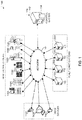
- FIG. 1 illustrates an example network environment 100 in which a context-aware healthcare notification system may be implemented in accordance with one or more embodiments. Not all of the depicted components may be required, however, and one or more embodiments may include additional components not shown in the figure. Variations in the arrangement and type of the components may be made without departing from the spirit or scope of the claims as set forth herein. Additional, different or fewer components may be provided.
- the network environment 100 includes network 105, a control system 110, one or more healthcare systems 120A-D, one or more healthcare devices 130A-F, and one or more user devices 140A-C.
- the control system 110, healthcare systems 120A-D, healthcare devices 130A-F, and/or user devices 140A-C may be communicatively coupled to one another, such as by the network 105.
- one or more of the control system 110, healthcare systems 120A-D, healthcare devices 130A-F, or user devices 140A-C may be directly coupled to one another.
- there may be a number of other devices connected to the network 105 such as additional healthcare systems, e.g. other clinical and/or logistical systems, additional healthcare devices, external systems, computing devices, mobile devices, etc.
- the control system 110, one or more healthcare systems 120A-D, one or more healthcare devices 130A-F, and/or one or more user devices 140A-C may be, or may include all or part of, the electronic system that is discussed further below with respect to Fig. 11 .
- the network 105 may be a communication network, such as a public communication network (such as the Internet, cellular data network, dialup modems over a telephone network), a private communications network (such as private local area network ("LAN”), leased lines), etc.
- the network 105 may also include, but is not limited to, any one or more of the following network topologies, including a bus network, a star network, a ring network, a mesh network, a star-bus network, a tree or hierarchical network, and the like.
- the connections of the network 105 may be wired or wireless.
- one or more of the control system 110, healthcare systems 120A-D, healthcare devices 130A-F, and/or user devices 140A-C may transmit wireless signals over the network 105, such as radio frequency (RF) signals, infrared (IR) signals, Bluetooth signals, or any other means capable of carrying information in a wireless manner between devices having appropriate transmitters and/or receivers.
- RF radio frequency
- IR infrared
- Bluetooth or any other means capable of carrying information in a wireless manner between devices having appropriate transmitters and/or receivers.
- the control system 110 may be a single computing device such as a computer server.
- the control system 110 may represent one or more computing devices (such as a cloud of computers and/or a distributed system) that are communicatively coupled, such as communicatively coupled over the network 105, and that collectively, or individually, perform one or more functions that can be performed server-side, such as receiving messages, transmitting messages, storing messaging, receiving control commands, providing user interfaces, transmitting notifications, etc.
- the one or more computing devices of the control system 110 may be geographically collocated and/or the one or more computing devices of the control system 110 may be disparately located.
- the control system 110 may be coupled with various databases, such as data store 114, storage services, or other computing devices.
- control system 110 and the coupled databases, storage services, or other computing devices may be geographically collocated, or may be disparately located.
- control system 110 includes a processing device 112 and a data store 114.
- the processing device 112 executes computer instructions stored in the data store 114.
- the data store 114 may store the computer instructions on non-transitory computer-readable medium.
- the one or more healthcare systems 120A-D may be any systems that facilitate with providing healthcare, and/or provide healthcare.
- the healthcare system 120A is a hospital information system (HIS)
- the healthcare system 120B is a physician order entry (POE) system
- the healthcare system 120C is a pharmacy information system (PIS)
- the healthcare system 120D is a laboratory information system (LIS).
- the HIS may, for example, store information pertaining to the administration of the healthcare facility, such as a hospital.
- the HIS may provide, and/or may interface with a server that provides, billing and accounting functions.
- the POE system may be used, for example, by physicians to enter orders for patients, such as orders for medications to be administered to patients, that are then transmitted to the PIS.
- the PIS may store, for example, information pertaining to a pharmacy of a healthcare facility, such as outstanding orders, filled orders, patient medical profiles/histories, etc.
- the PIS may provide a library of drug allergies and adverse drug interactions against which each incoming order, or prescription, is checked as part of the order entering/drug dispensing process to identify possible allergies and adverse drug interactions and help in preventing administration of drugs to a patient where the patient might be injured by the prescribed course of therapy.
- the PIS may check to determine if any therapies are being duplicated, such as where two or more drugs might be used to treat a diagnosed disease, whether they are synergistic or antagonistic, and whether the prescribed therapy should be modified accordingly.
- the LIS may store laboratory results, such as for tests performed to facilitate with providing healthcare to patients.
- the healthcare devices 130A-F may include infusion devices, such as infusion pumps, drug delivery devices, dispensing devices, such as automated dispensing machines, smart beds, monitoring devices, respiratory devices, such as ventilators, waste devices, such as drug disposal devices, or generally any device that may facilitate with providing healthcare and/or may provide healthcare.
- the healthcare devices 130A-F may include a processor and memory. Alternatively, or in addition, the healthcare devices 130A-F may be communicatively coupled to a device that includes a processor and a memory, such as via a serial port.
- the healthcare devices 130A-F may include Pyxis MedstationsTM to store and dispense medications at the nurses stations, providing distributed access to the medications needed to treat patients, Pyxis® Anesthesia Systems to store and manage the medications used by anesthesiologists in the operating room, Pyxis SpecialtyStationsTM to store specific medications and supplies in individual treatment areas, and Pyxis OncologyStationsTM in oncology departments to manage the specialized and hazardous medications used to treat cancer.
- the healthcare devices 130A-F may also include waste devices that accept and store wasted medications, e.g. excess medications, from healthcare professionals and track the amount of medications wasted by healthcare professionals.
- one or more of the waste devices may be a Pyxis EcoStationTM system.
- the user devices 140A-C may be electronic devices such as laptop or desktop computers, mobile phones, personal digital assistants ("PDAs"), portable media players, tablet computers, televisions or other displays, or other appropriate computing devices that can be used to display user interfaces that facilitate providing healthcare to patients, such as user interfaces that display information related to providing healthcare to patients and/or user interfaces that allow a healthcare professional, such as a doctor or nurse, access, create, and/or modify information related to providing healthcare to patients, such as modifying a schedule for preparing IVs in the PIS.
- Example user interfaces are discussed further below with respect to Figs. 7-10 . In the example of Fig.
- the user device 140A is depicted as a mobile phone
- the user device 140B is depicted as a desktop computer
- the user device 140C is depicted as a personal digital assistant ("PDA"), e.g. a tablet device.
- PDA personal digital assistant
- the user devices 140A-C may include a processor and a memory.
- the user devices 140A-C may be, may include, and/or may be communicatively coupled to, a Medical Transaction Carrier (MTC).
- MTC Medical Transaction Carrier
- the user devices 140A-C, and/or the MTCs included therein and/or communicatively coupled thereto, may be configured to initiate communication with the control system 110, and/or any of the healthcare devices 130A-F, when the user devices 140A-C are located within a proximity, e.g. a predetermined distance, of any of the healthcare devices 130A-F, and/or within a proximity of one or more patients.
- a proximity e.g. a predetermined distance
- control system 110 and/or any of the healthcare devices 130A-F, may be configured to initiate communication with the user devices 140A-C, and/or the MTCs included therein and/or communicatively coupled thereto, when the user devices 140A-C are located within a proximity, e.g. a predetermined distance, of any of the healthcare devices 130A-F, and/or within a proximity of one or more patients.
- a proximity e.g. a predetermined distance, of any of the healthcare devices 130A-F, and/or within a proximity of one or more patients.
- the user devices 140A-C, and/or the MTCs included therein and/or communicatively coupled thereto may be configured to initiate communication with any of the healthcare systems 120A-D when the user devices 140A-C are located within a proximity, e.g. a predetermined distance, of any of the healthcare devices 130A-F, and/or within a proximity of one or more patients.
- any of the healthcare systems 120A-D may be configured to initiate communication with the user devices 140A-C, and/or the MTCs included therein and/or communicatively coupled thereto, when the user devices 140A-C are located within a proximity, e.g. a predetermined distance, of any of the healthcare devices 130A-F, and/or within a proximity of one or more patients.
- the control system 110, the healthcare systems 120A-D, the healthcare devices 130A-F, and/or the user devices 140A-C may transmit electronic data streams to one another over the network 105.
- the messages may relate to healthcare that is being facilitated by any of the healthcare systems 120A-D, the healthcare devices 130A-F, and/or the user devices 140A-C.
- a message may include an order for a medication that is transmitted from a POE system to a PIS.
- at least a portion of the message may later be transmitted by the PIS to a healthcare device 130A, such as to indicate that the ordered medication should be administered to the patient.
- a message may relate to the progress of the delivery of medication, such as by one or more of the healthcare devices 130A-F.
- the healthcare device 130A may transmit a message to the PIS that indicates the progress of delivering the medication by the healthcare device 130A to the patient.
- the message may indicate that the healthcare device 130A has started delivering the medication, the healthcare device 130A has delivered an indicated amount of the medication, or the healthcare device 130A has completed the delivery of the medication.
- the control system 110 may provide user identity and notification systems.
- the control system 110 may authenticate users and may control the access of a user, or a group of users. For example, a physician may be allowed to input orders into a POE system, while a nurse may only be allowed to view the orders in the POE system.
- the control system 110 may provide different views of information, e.g. information received from one or more of the healthcare systems 120A-D and/or the healthcare devices 130A-F, to different users based on the users' access privileges.
- the control system 110 may also provide user interfaces to users, such as via the user devices 140A-C, and may manage the users' interactions with the user interfaces.
- control system 110 may provide information for a patient to a user device 140A to be displayed on one of the user interfaces when the control system 110 determines that the user device 140A is within a proximity of the patient and/or within a proximity of one of the healthcare devices 130A-F that is providing, and/or facilitating with providing, healthcare to the patient.
- An example process of a context-aware notification system is discussed further below with respect to Fig. 4 .
- the user device 140A may determine that it is located within a proximity of a patient and/or within a proximity of one of the healthcare devices 130A-F. The user device 140A may then transmit an indication to the control system 110 indicating that the user device 140A is located within the proximity of the patient and/or the one of the healthcare devices 130A-F. In response thereto, the control system 110 may transmit information to the user device 140A that pertains to the patient and/or the one of the healthcare devices 130A-F. Example processes for one or more of the user devices 140A-C in a context-aware notification system are discussed further below with respect to Figs. 5 and 6 .
- the control system 110 may also transmit notifications to one or more of the users, such as via the user devices 140A-C.
- the control system 110 may transmit a notification to a user device 140A being accessed by a user, e.g. a user device 140A that the user has authenticated on, when the control system 110 determines that the user is within proximity of a patient who may need care, e.g. a patient that is receiving healthcare from one of the healthcare devices 130A-F that may be experiencing an error.
- one or more of the notifications may be transmitted to the user devices 140A-C via a user interface.
- the notification may cause a graphical indicator to be presented on a user interface being displayed on a user device 140A.
- Example user interfaces for presenting notifications are discussed further below with respect to Figs. 7 and 10 .
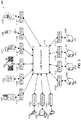
- FIG. 2 illustrates an example messaging architecture 200 in which a context-aware healthcare notification system may be implemented in accordance with one or more embodiments. Not all of the depicted components may be required, however, and one or more embodiments may include additional components not shown in the figure. Variations in the arrangement and type of the components may be made without departing from the spirit or scope of the claims as set forth herein. Additional, different or fewer components may be provided.
- the messaging architecture 200 includes the control system 110, one or more healthcare systems 120A-D, one or more healthcare devices 130A-F, and one or more user devices 140A-C.
- the control system 110, healthcare systems 120A-D, healthcare devices 130A-F, and user devices 140A-C may be communicably coupled to one another, such as by the network 105 shown in Fig. 1 .
- the one or more healthcare systems 120A-D, one or more healthcare devices 130A-F, and one or more user devices 140A-C may include, and/or may be coupled to, interfaces 210A-M.
- the interfaces 210A-M may be adapters that are utilized by the one or more healthcare systems 120A-D, one or more healthcare devices 130A-F, and one or more user devices 140A-C to transmit messages to one another via the control system 110.
- the interfaces 210A-M may be, and/or may include, the adapters described in U.S. Patent Application Serial No. 13/421,776 , entitled “Scalable Communication System,” filed on March 15, 2012, which is hereby incorporated by reference in its entirety for all purposes.
- messages transmitted by the healthcare systems 120A-D, the healthcare devices 130A-F, and/or the user devices 140A-C may be routed through the control system 110, e.g. via the interfaces 210A-M.
- the control system 110 may forward the message to the interface 210H, which provides the message to the healthcare system 120C.
- control system 110 may store the messages, such as in the data store 114, for further processing, such as to identify whether to transmit any information indicated in the messages to one or more of the user devices 140A-C, such as via a notification and/or via a user interface.
- the control system 110 may include an interface system that receives the messages from one or more of the healthcare systems 120A-D, the healthcare devices 130A-F, and/or the user devices 140A-C, via the interfaces 210A-M.
- the interface system may provide the interfaces 210A-M to the one or more of the healthcare systems 120A-D, the healthcare devices 130A-F, and the user devices 140A-C, and the one or more of the healthcare systems 120A-D, the healthcare devices 130A-F, and the user devices 140A-C may transmit messages to the interface system by utilizing the interfaces 210A-M.
- the interface system receives the messages in a first external format, e.g. a format native to the transmitting device and/or system, converts the messages into an internal messaging format, e.g. for processing and storing the messages, converts the messages into a second external format, e.g. a format native to the receiving device and/or system, and then transmits the messages in the second external format to the receiving device.
- a first external format may be the same as the second external format.
- the interface system may be implemented as described, for example, in U.S. Patent Application Serial No. 13/421,776 , entitled “Scalable Communication System,” filed on March 15, 2012, which has been incorporated by reference in its entirety for all purposes.
- one or more of the healthcare systems 120A-D, the healthcare devices 130A-F, and/or the user devices 140A-C may communicate with the control system 110 without utilizing the interfaces 210A-M.
- one or more of the healthcare systems 120A-D, the healthcare devices 130A-F, and/or the user devices 140A-C may transmit messages directly to one another, e.g. without routing the messages through the control system 110.
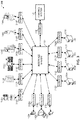
- FIG. 3 illustrates an alternative example messaging architecture 300 in which a context-aware healthcare notification system may be implemented in accordance with one or more embodiments. Not all of the depicted components may be required, however, and one or more embodiments may include additional components not shown in the figure. Variations in the arrangement and type of the components may be made without departing from the spirit or scope of the claims as set forth herein. Additional, different or fewer components may be provided.
- the messaging architecture 300 includes an interface system 320, the control system 110, one or more healthcare systems 120A-D, one or more healthcare devices 130A-F, and one or more user devices 140A-C.
- the control system 110, interface system 320, healthcare systems 120A-D, healthcare devices 130A-F, and user devices 140A-C may be communicably coupled to one another, such as by the network 105 shown in Fig. 1 .
- the one or more healthcare systems 120A-D, one or more healthcare devices 130A-F, and one or more user devices 140A-C may include, and/or may be coupled to, interfaces 210A-M.
- the control system 110 may include, and/or may be communicatively coupled to, the interface 310.
- the interfaces 210A-M, 310 may be adapters that are utilized by the one or more healthcare systems 120A-D, one or more healthcare devices 130A-F, one or more user devices 140A-C, and control system 110 to transmit messages to one another via the interface system 320.
- the interfaces 210A-M, 310 may be, and/or may include, the adapters described in U.S. Patent Application Serial No. 13/421,776 , entitled "Scalable Communication System,” filed on March 15, 2012, which was previously incorporated by reference in its entirety for all purposes.
- the interface system 320 may be separate from the control system 110, e.g. such that messages to/from the control system 110 are routed through the interface system 320.
- the control system 110 and the interface system 320 may be separate devices, such as separate servers, or the control system 110 and the interface system 320 may be and/or may include distinct hardware on the same device.
- the control system 110 may receive messages directly from the interface system 320, e.g. without the use of the interface 310.
- messages are routed through the interface system 320, rather than through the control system 110, as previously discussed with respect to Fig. 2 .
- one or more of the healthcare systems 120A-D, the healthcare devices 130A-F, the user devices 140A-C, and/or the control system 110 may communicate with the interface system 320 without utilizing the interfaces 210A-M, 310.
- one or more of the healthcare systems 120A-D, the healthcare devices 130A-F, the user devices 140A-C, and/or the control system 110 may transmit messages directly to one another, e.g. without routing the messages through the interface system 320.
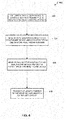
- FIG. 4 illustrates a flow diagram of an example process 400 for a context-aware healthcare notification system in accordance with one or more embodiments.
- the example process 400 is described herein with reference to the control system 110 of the example network environment 100 of Fig. 1 ; however, the example process 400 is not limited to the control system 110 of the example network environment 100 of Fig. 1 .
- the example process 400 may be performed by the interface system 320 of Fig. 3 and/or any of the healthcare systems 120A-D of Fig. 1 .
- the blocks of the example process 400 are described herein as occurring in serial fashion, or linearly. However, multiple blocks of the example process 400 may occur in parallel.
- the blocks of the example process 400 need not be performed in the order shown and/or one or more of the blocks of the example process 400 need not be performed.
- the control system 110 determines that one of the user devices 140A-C, such as the user device 140A, is located within a proximity of one of the healthcare devices 130A-F, such as the healthcare device 130A, and/or within a proximity of a patient, such as a patient for whom healthcare is being provided by, and/or facilitated by, one of the healthcare devices 130A-F, such as the healthcare device 130A.
- the control system 110 may receive an indication from the user device 140A, and/or one or more of the healthcare devices 130A-F, indicating that the user device 140A is located within a proximity of one of the healthcare devices 130A-F and/or one or more patients.
- the healthcare device 130A may be configured to determine when one of the user devices 140A-C is located within a proximity of the healthcare device 130A, e.g. by detecting one or more wireless signals transmitted by the user devices 140A-C, such as Infrared signals, wireless Ethernet signals, Bluetooth signals, or generally any wireless signals that are transmissible by the user devices 140A-C.
- the healthcare device 130A may include an induction coil, and the healthcare device 130A may be configured to utilize the induction coil to determine whether the healthcare device 130A can interface with any of the user devices 140A-C.
- the control system 110 may determine that the user device 140A is located within a proximity of the healthcare device 130A based at least in part on information and/or signals that are received, directly or indirectly, from the user device 140A and/or the healthcare device 130A. For example, the control system 110 may utilize triangulation or other positioning techniques to determine the locations of the user device 140A and/or the healthcare device 130A based on wireless signals received from the user device 140A and/or the healthcare device 130A. Alternatively, or in addition, the control system 110 may receive information from one or more of the healthcare systems 120A-D that indicates the location of the healthcare device 130A, such as over the network 105. The control system 110 may then determine the location of the user device 140A and/or whether the user device 140A is located within a proximity of the location of the healthcare device 130A.
- the healthcare device 130A may store an identifier of a patient for whom the healthcare device 130A is providing healthcare, and/or facilitating with providing healthcare.
- the healthcare device 130A may provide the control system 110 with an identifier of a patient that may be located within a proximity of the user device 140A, e.g. when the healthcare device 130A is located within the proximity of the user device 140A.
- the control system 110 may retrieve an identifier of the patient for whom the healthcare device 130A is providing, and/or facilitating with providing, healthcare from one or more of the healthcare systems 140A-D.
- the patients may be provided with a patient information device, such as a wristband, necklace, ankle band, etc., that may be, or may include, an active embedded computer and/or a passive device, such as a radio frequency identification device.
- the patient information device may be responsive to devices located throughout the healthcare facility, such as readers or wireless transmitter/receivers, to provide the identity of the patient associated with the patient information device, and/or other information, when the patient information device is queried, e.g. activated, by the devices.
- any of the healthcare devices 130A-F, and/or any of the user devices 140A-C may include the devices that query, e.g. activate, the patient information device and receive the patient identifiers from the patient information devices.
- the devices that are located throughout the hospital may receive identifiers of proximally located patients, e.g. patients that are located within a proximity of the devices, and the devices may transmit the identifiers of the patients to the control system 110, such as over the network 105.
- the control system 110 may retrieve the locations of the devices from one or more of the healthcare systems 120A-D, such as a hospital information system, and the control system 110 may determine the approximate locations of the patients based on the location of the devices that transmitted the identifiers of the patients.
- the control system 110 may then determine whether any of the user devices 140A-C are located within a proximity of the approximate locations of any of the patients.
- the control system 110 may receive information from one or more of the healthcare systems 120A-D that is related to the healthcare device 130A that is located within a proximity of the user device 140A, and/or that is related to any patients that are located within a proximity of the user device 140A.
- the control system 110 may receive information from one or more of the healthcare systems 120A-D over the network 105.
- the received information may include information regarding medications being provided to a patient, such as from the pharmacy information system, lab results for a patient, such as from a laboratory information system, a medical history and/or profile of the patient, such as from the pharmacy information system and/or a hospital information system, the status of medications being prepared for the patient, such as from a pharmacy information system, maintenance and/or calibration information related to the healthcare device 130A, and/or generally any information that may be provided by any of the healthcare systems 120A-D.
- the control system 110 may not receive any information from any of the healthcare systems 120A-D, e.g. the control system 110 may, in one or more embodiments, skip block 404.
- the control system 110 may receive information from the healthcare device 130A that is located within a proximity of the user device 140A.
- the received information may be related to the healthcare device 130A, and/or the received information may be related to any patients that are located within a proximity of the user device 140A.
- the control system 110 may receive information from the healthcare device 130A over the network 105.
- the information may include information related to the progress of delivering a medication to a patient, such as from an infusion pump, information related to the monitoring of a vital sign of a patient, such as from a monitoring device, information related to the progress of a respiratory protocol being implemented for the patient, such as from a respiratory device, or generally any information that may be received from the healthcare device 130A.
- the control system 110 may not receive any information from the healthcare device 130A, e.g. the control system 110 may, in one or more embodiments, skip block 406.
- the control system 110 transmits at least a portion of the information received from one or more of the healthcare systems 120A-D, and/or the healthcare device 130A, to the user device 140A.
- the control system 110 may transmit at least a portion of the received information to the user device 140A over the network 105.
- the user device 140A may display the at least the portion information, e.g. to a healthcare professional, such as a physician or a nurse, as is discussed further below with respect to Figs. 5-6 .
- control system 110 may process the information received from the one or more healthcare systems 120A-D, and/or the healthcare device 130A, such as to generate workflow information, control information, or other information that can be generated from processing the received information.
- the control system 110 may then transmit the processed information, and/or the information generated at least in part from processing the received information, to the user device 140A.
- the control system 110 may process the received information to determine whether any corrective actions are required, any safety issues exists, and/or any errors exists.
- control system 110 may transmit an indication of the corrective action, the safety issue, and/or the error to the user device 140A, such as via an alert and/or notification.
- the control system 110 may process the information received from the one or more healthcare systems 120A-D, and/or the healthcare device 130A, in addition to information received from the user device 140A, in order to provide context to an alert and/or notification.
- the control system 110 may utilize information such as the proximity of the user device 140A to the healthcare device 130A, a condition of a patient whom the healthcare device 130A is providing healthcare, a type of medication being administered to the patient, or generally any other received information, to provide context to an alert and/or notification. For example, if the processed information indicates that a healthcare professional is standing next to the healthcare device 130A, then the control system 110 may cause a visual alert to be displayed to the healthcare professional, rather than an audible alert.
- control system 110 may provide a notification to a healthcare professional who is caring for the patient but is located remotely from the infusion pump, rather than any healthcare professional who is located proximally to the infusion pump.
- control system 110 may delay alarms on the healthcare devices 130A-F, and/or may allow a healthcare professional to indicate that they will respond to an alarm within a configurable amount of time. For example, if a healthcare professional indicates that they will respond to an alarm of a healthcare device 130A within a configurable amount of time, the control system 110 may cause the healthcare device 130A to not generate the alarm unless the configurable amount of time has elapsed and the healthcare professional has not responded to the alarm.
- a healthcare professional may remotely determine, such as via one of the user devices 140A-C, that an action should be taken by a pump, such as restarting the pump when the volume counts down to zero, and adding a small amount of volume to allow the infusion to restart and to provide an associated nurse with a more convenient time to address the infusion, e.g. to change to a new bag.
- a healthcare professional may be able to address an alarm of a healthcare device 130A remotely, such as via one of the user devices 140A-C.
- the control system 110, and/or a drug library may store actions that may be taken remotely, e.g.
- control system 110 may allow different actions to be performed remotely, via reprogramming a healthcare device 130A, based on one or more of: the type of drug being administered by the healthcare device 130A, the type of alarm being generated by the healthcare device 130A, the patient care area where the healthcare device 130A is located, and/or generally any characteristics associated with the healthcare device 130A and/or the patient.
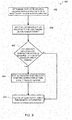
- FIG. 5 illustrates a flow diagram of an example process 500 for a user device 140A in a context-aware healthcare notification system in accordance with one or more embodiments.
- the example process 500 is described herein with reference to the user device 140A of the example network environment 100 of Fig. 1 ; however, the example process 500 is not limited to the user device 140A of the example network environment 100 of Fig. 1 .
- the blocks of the example process 500 are described herein as occurring in serial fashion, or linearly. However, multiple blocks of the example process 500 may occur in parallel.
- the blocks of the example process 500 need not be performed in the order shown and/or one or more of the blocks of the example process 500 need not be performed.
- a user device 140A determines that it is located within a proximity of a healthcare device and/or a patient.
- the user device 140A may include a device that is configured to query patient information devices that, for example, may be worn by patients.
- the user device 140A may determine that it is located within a proximity of a patient when the user device 140A receives a response from a queried patient information device of a patient.
- the user device 140A may determine that it is located within a proximity of a healthcare device 130A based on wireless signals received from the healthcare device 130A, and/or a device or wireless interface coupled thereto.
- the wireless signals may include, e.g., Infrared signals, Bluetooth signals, wireless Ethernet signals, and/or generally any wireless signals.
- the user device 140A may measure the strength of a signal received from the healthcare device 130A, such as for a wireless Ethernet signal and/or other long range wireless signals, and/or the user device 140A may determine whether it receives any signal from the healthcare device 130A, such as for Infrared signals, Bluetooth signals, and/or other short range wireless signals.
- the user device 140A may include an induction coil that may be utilized by the user device 140A to determine whether the user device 140A can interface with the healthcare device 130A, such as via radio frequency identification.
- the user device 140A may transmit an indication to the control system 110, the interface system 320, and/or any of the healthcare systems 120A-D, when the user device 140A determines that it is located within a proximity of the healthcare device 130A.
- the user device 140A may receive an indication from the control system 110, the healthcare device 130A, the interface system 320, and/or any of the healthcare systems 120A-D, that indicates that the user device 140A is located within a proximity of the healthcare device 130A and/or one or more patients. In this instance, the user device 140A may determine that it is located within a proximity of the healthcare device 130A and/or the one or more patients based at least in part on the received indication.
- the user device 140A receives information that relates to the proximally located healthcare device 130A and/or the one or more proximally located patients.
- the user device 140A may receive the information from the control system 110, such as over the network 105.
- the user device 140A may receive the information from one or more of the healthcare systems 120A-D and/or the interface system 320, such as over the network 105.
- the user device 140A determines whether the received information indicates that corrective action is required, a safety issue exists, or an error exists with respect to the healthcare device 130A and/or the one or more proximally located patients.
- the control system 110 may determine that corrective action is required, a safety issue exists, and/or an error exists, and the received information may indicate the corrective action, safety issue and/or error determined by the control system 110, such as a safety issue or error with respect to delivery protocols, drug interactions, etc.
- the user device 140A determines that corrective action is required, a safety issue exists, and/or an error exists, the user device 140A moves to block 508.
- the user device 140A displays an alert, or notification, that indicates the required corrective action, safety issue, and/or error.
- the user device 140A may display a graphical indicator to indicate the existence of a required corrective action, a safety issue, or an error, with respect to the healthcare device 130A and/or the one or more proximally located patients, such as the asterisk ("*") indicator discussed below with respect to Figs. 7 and 10 .
- the user device 140A determines that the received information does not indicate that a corrective action is required, a safety issue exists, and/or an error exists, the user device 140A moves to block 510.
- the user device 140A displays at least a portion of the received information.
- the user device 140A may display at least a portion of the received information via one or more of the user interfaces that are discussed further below with respect to Figs. 7-10 .
- the user device 140A may not display the at least the portion of the received information until prompted by a user, such as a healthcare professional interacting with the user device 140A.
- the user device 140A may display a notification to the healthcare professional that indicates that the received information is available, and that requests whether the healthcare professional would like the user device 140A to display the at least the portion of the received information on a screen of the user device 140A, and/or on a display or monitor proximally located to the user device 140A.
- FIG. 6 illustrates a flow diagram of an example process 600 for a user device 140A in a context-aware healthcare notification system in accordance with one or more embodiments.
- the example process 600 is described herein with reference to the user device 140A of the example network environment 100 of Fig. 1 ; however, the example process 600 is not limited to the user device 140A of the example network environment 100 of Fig. 1 .
- the blocks of the example process 600 are described herein as occurring in serial fashion, or linearly. However, multiple blocks of the example process 600 may occur in parallel.
- the blocks of the example process 600 need not be performed in the order shown and/or one or more of the blocks of the example process 600 need not be performed.
- the user device 140A receives an indication that it is located within a proximity of a healthcare device 130A and/or of one or more patients.
- the user device 140A may receive the indication from the control system 110, the healthcare device 130A, the interface system 320, and/or any of the healthcare systems 120A-D, such as over the network 105.
- the indication may be a wireless signal generated by the healthcare device 130A, and/or a device that is communicatively coupled thereto, that is detected by the user device 140A, such as an Infrared signal, a Bluetooth signal, a radio frequency identification signal, or generally any wireless signal.
- the user device 140A receives information that relates to the healthcare device 130A and/or the one or more proximally located patients.
- the user device 140A may, e.g., receive the information from one or more of the control system 110, the healthcare systems 120A-D, and/or the interface system 320, such as over the network 105.
- the user device 140A may display at least a portion of the received information, such as via one or more of the user interfaces that are discussed below with respect to Figs. 7-10 .
- a user interacting with the user device 140A such as a healthcare professional, may utilize the displayed information to facilitate with providing healthcare to a patient.
- the healthcare professional may utilize the user interface to adjust a parameter associated with providing healthcare to the patient, such as a rate at which a medication is being administered to the patient by the healthcare device 130A, the scheduled time that a medication will be prepared for the patient by the pharmacy, e.g. via the pharmacy information system, or generally any parameter that relates to providing healthcare to the patient that may be configurable via the user device 140A, such as over the network 105.
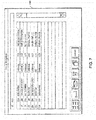
- FIG. 7 illustrates an example user interface 700 that may be implemented in a context-aware healthcare notification system in accordance with one or more embodiments. Not all of the depicted components may be required, however, and one or more embodiments may include additional components not shown in the figure. Variations in the arrangement and type of the components may be made without departing from the spirit or scope of the claims as set forth herein. Additional, different or fewer components may be provided.
- the user interface 700 may display information relating to in-progress actions being performed by one or more of the healthcare devices 130A-F, such as medical orders being administered. For example, the user interface 700 displays a report of IVs that are being administered by, and/or with the facilitation of, one or more of the healthcare devices 130A-F. In one or more embodiments, the administrations of medical orders that will terminate within a preselected time period may be distinguished on the user interface 700 from other administrations by color highlighting or other means. The user interface 700 may further display the time remaining, medication, and patient name, as well as buttons for program control. In one or more embodiments, the user interface 700 may display pending infusions or infusions scheduled to begin within a preselected time period.
- the user interface 700 may be provided by the control system 110, and/or one or more of the healthcare systems 120A-D, for display on a screen, such as a screen of one or more of the user devices 140A-C, and/or a screen or monitor associated with one or more of the healthcare systems 120A-D.
- the control system 110 may receive messages from one or more of the healthcare devices 130A-F related to actions being performed by the one or more healthcare devices 130A-F.
- the control system 110 may parse the received messages to obtain the information displayed on the user interface 700, and/or the received messages may be displayed on the user interface 700.
- the information displayed on the user interface 700 may be updated in real-time as the control system 110 and/or one or more of the healthcare systems 120A-D receives messages from the healthcare devices 130A-F, such as while orders are being administered to patients.
- the user interface 700 may be used to modify the preparation of medications, such as by scheduling and/or rescheduling, the preparation of medications.
- the user interface 700 may also display notifications, and/or alerts, such as when a healthcare professional is associated with a user device 140A that is displaying the user interface 700.
- the notifications may be indicated by an asterisk ("*").
- the healthcare professional may select information that is displayed with an asterisk, such as by touching or clicking on the information, to receive additional information regarding the notification.
- one or more of the alerts and/or notifications may only be displayed when the healthcare professional is proximally located to the one or more healthcare devices 130A-F to which the alerts and/or notifications pertain.
- FIG. 8 illustrates an example user interface 800 that may be implemented in a context-aware healthcare notification system in accordance with one or more embodiments. Not all of the depicted components may be required, however, and one or more embodiments may include additional components not shown in the figure. Variations in the arrangement and type of the components may be made without departing from the spirit or scope of the claims as set forth herein. Additional, different or fewer components may be provided.
- the user interface 800 may display information relating to a patient, such as information received from one or more of the healthcare systems 120A-C and/or one or more of the healthcare devices 130A-F.
- the displayed information may include information related to medications and/or infusions, such as IVs, that are scheduled for the patient, and the information may be received from the healthcare system 120C.
- the information may further include information related to medications and/or infusions that are being administered to the patient, and this information may be received from one or more of the healthcare devices 130A-F.
- the user interface 800 displays information related to scheduled medications and IVs for an identified patient.
- the user interface 800 may be color coded to indicate the status and schedule of each medication administration. For example, a medication delivery window extending from thirty minutes prior and thirty minutes after the scheduled administration time may be indicated by a yellow band on the user interface 800.
- the user interface 800 may be provided by the control system 110, and/or one or more of the healthcare systems 120A-D, for display on a screen, such as a screen of one or more of the user devices 140A-C, and/or a screen or monitor associated with one or more of the healthcare systems 120A-D.
- the control system 110 may receive messages from one or more of the healthcare systems 120A-D, and/or one or more of the healthcare devices 130A-F, that relate to a patient.
- the control system 110 may parse the received messages to obtain the information displayed on the user interface 800, and/or the received messages may be displayed on the user interface 800.
- the user interface 800 may automatically be provided to the user device 140A of a healthcare professional when the healthcare professional is located within a proximity of the patient and/or within a proximity of one or more healthcare devices 130A-F that are providing, and/or facilitating with providing, healthcare to the patient.
- the user device 140A of a healthcare professional may automatically display, and/or prepare for display, information related to an identified patient when the healthcare professional is within proximity of the patient, such as at the bedside of the patient. Accordingly, the information displayed on the user interface 800 may change as the healthcare professional moves throughout the healthcare facility.
- the user device 140A may receive information for displaying the user interface 800 when the healthcare professional is proximally located to the patient, but the user device 140A may not display the user interface 800 until prompted by the healthcare professional.
- the user device 140A may receive the information for displaying the user interface 800 and may then display a notification to the healthcare professional indicating that the information is available, and requesting whether the healthcare professional would like the user interface 800 to be displayed on the user device 140A and/or on a display or monitor proximally located to the user device 140A.
- the information displayed on the user interface 800 may be updated in real-time as the control system 110 and/or one or more of the healthcare systems 120A-D receives messages from the healthcare devices 130A-F, such as while orders are being administered to the patient.
- the user interface 800 may be used to schedule and/or reschedule, the preparation of medications, such as by the healthcare system 120C.
- the information displayed on the user interface 800 may be updated in real-time as the control system 110 and/or one or more of the healthcare systems 120A-D receives messages from the healthcare devices 130A-F and/or the healthcare systems 120A-D, such as while orders are being administered to patients, while orders are being prepared for administration to patients, and/or when orders are received from a physician order entry system.
- the user interface 800 may be used to verify the administration of orders, such as a healthcare professional verifying that a medication scheduled for administration and/or a medication being administered coincides with the ordered medication.
- a healthcare professional may be able to select, such as touch or click on, an order and the user interface 800 may display a picture of the medication being administered, or about to be administered.
- FIG. 9 illustrates an example user interface 900 that may be implemented in a context-aware healthcare notification system in accordance with one or more embodiments. Not all of the depicted components may be required, however, and one or more embodiments may include additional components not shown in the figure. Variations in the arrangement and type of the components may be made without departing from the spirit or scope of the claims as set forth herein. Additional, different or fewer components may be provided.
- the user interface 900 may display information to an identified healthcare professional that relates to in-progress actions being performed by, and/or with the facilitation of, one or more of the healthcare devices 130A-F, and for which the healthcare professional is facilitating and/or monitoring.
- the user interface 900 may also display information to the identified healthcare professional that relates to future actions to be performed by, and/or with the facilitation of, one or more of the healthcare devices 130A-F, and for which the healthcare professional is facilitating and/or monitoring.
- the user interface 900 may display information related to in-progress or future actions that are being performed proximally to the user device 140A, and a healthcare professional accessing the user device 140A.
- the user interface 900 displays a report of IVs that are being administered by one or more of the healthcare devices 130A-F.
- the user interface 900 may include scheduling of medication administrations to ensure proper medication of the patient while distributing the workload over a period of time to ensure that all medication is given promptly.
- the user interface 900 may be provided by the control system 110, and/or one or more of the healthcare systems 120A-D, for display on a screen, such as a screen of one or more of a user devices 140A being accessed by a healthcare professional, and/or a screen or monitor associated with one or more of the healthcare systems 120A-D.
- the control system 110 may receive messages from one or more of the healthcare systems 120A-D, and/or one or more of the healthcare devices 130A-F, that relate to in-progress actions and/or future actions that are being performed with the facilitation of the healthcare professional, and/or that are being performed proximally to the healthcare professional, as indicated by the location of the user device 140A.
- the control system 110 may parse the received messages to obtain the information displayed on the user interface 900, and/or the received messages may be displayed on the user interface 900.
- the user interface 900 may automatically be provided to the user device 140A of a healthcare professional when the healthcare professional is located within a proximity of the patient and/or within a proximity of one or more healthcare devices 130A-F that are providing, and/or facilitating with providing, healthcare to one or more patients.
- the user device 140A of a healthcare professional may automatically display, and/or prepare for display, information related to in-progress and/or future actions that are being performed, and/or will be performed, proximally to the location of the healthcare professional. Accordingly, the information displayed on the user interface 900 may change as the healthcare professional moves throughout the healthcare facility.
- the user device 140A may receive information for displaying the user interface 900 when the healthcare professional is proximally located to in-progress, or future actions, but the user device 140A may not display the user interface 900 until prompted by the healthcare professional.
- the user device 140A may receive the information for displaying the user interface 900 and may then display a notification to the healthcare professional indicating that the information is available, and requesting whether the healthcare professional would like the user interface 900 to be displayed on the user device 140A and/or on a display or monitor proximally located to the user device 140A.
- the information displayed on the user interface 900 may be updated in real-time as the control system 110 and/or one or more of the healthcare systems 120A-D receives messages from the healthcare devices 130A-F, such as while orders are being administered to patients.
- the user interface 900 may be used to verify the administration of orders, such as a healthcare professional verifying that a medication scheduled for administration and/or a medication being administered coincides with the ordered medication.
- a healthcare professional may be able to select, such as touch or click on, an order and the user interface 900 may display a picture of the medication being administered, or about to be administered.
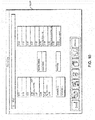
- FIG. 10 illustrates an example user interface 1000 that may be implemented in a context-aware healthcare notification system in accordance with one or more embodiments. Not all of the depicted components may be required, however, and one or more embodiments may include additional components not shown in the figure. Variations in the arrangement and type of the components may be made without departing from the spirit or scope of the claims as set forth herein. Additional, different or fewer components may be provided.
- the user interface 1000 may display information relating to patients in a healthcare facility and/or in an area of a healthcare facility, such as alerts or notifications related to healthcare being administered to patients in a healthcare facility.
- the user interface 1000 may display a graphical representation of each room in an area of the healthcare facility, the name of the patient occupying each room, if any, and any alerts or notifications that apply to any of the displayed patients.
- an alert or notification is indicated by an asterisk ("*"); however, any other graphical indicator may be used to indicate an alert and/or notification.
- the user interface 1000 may be provided by the control system 110, and/or one or more of the healthcare systems 120A-D, for display on a screen, such as a screen of one or more of the user devices 140A-C, and/or a screen or monitor associated with one or more of the healthcare systems 120A-D.
- the control system 110 may receive messages from one or more of the healthcare devices 130A-F related to actions being performed by the or more healthcare devices 130A-F.
- the control system 110 may parse the received messages to determine whether any alerts and/or notifications should be displayed via the user interface 1000, such as whether any discrepancies and/or errors are identified from the received messages.
- the user interface 1000 may automatically be provided to the user device 140A of a healthcare professional when the healthcare professional is located within a proximity of the area of the healthcare facility represented on the user interface 1000.
- the user device 140A of a healthcare professional may automatically display, and/or prepare for display, the user interface 1000 when a healthcare professional is proximally located to the represented area. Accordingly, the information displayed on the user interface 1000 may change as the healthcare professional moves throughout the healthcare facility.
- the user device 140A may receive information for displaying the user interface 1000 when the healthcare professional is located proximally to the represented area, but the user device 140A may not display the user interface 1000 until prompted by the healthcare professional.
- the user device 140A may receive the information for displaying the user interface 1000 and may then display a notification to the healthcare professional indicating that the information is available, and requesting whether the healthcare professional would like the user interface 1000 to be displayed on the user device 140A and/or on a display or monitor proximally located to the user device 140A.
- the information displayed on the user interface 1000 may be updated in real-time as the control system 110 and/or one or more of the healthcare systems 120A-D receives messages from the healthcare devices 130A-F, such as while orders are being administered to patients.
- the user interface 1000 may display the status of each patient's infusion, and when an alert occurs, the box representing the patient's room flashes red to attract attention to the alert. Accordingly, a healthcare professional accessing the user interface 1000 may be able to quickly and easily identify the patient from the user interface, such as at a nursing station, and take appropriate action to address the condition causing the alert. In one or more embodiments, certain alerts that have been identified as particularly important events may be displayed on multiple screens throughout the healthcare facility, such as in the pharmacy.
- the user interface 1000 may also be used for updating administrative records of the healthcare facility. For example, if a patient changes rooms, a healthcare professional can transmit a notification of the room change to the control system 110 by selecting the patient's name, and dragging that patient to the new room. In addition, the user interface 1000 may be updated to reflect the room change.
- FIG. 11 conceptually illustrates electronic system 1100 with which one or more embodiments of the subject technology may be implemented.
- Electronic system 1100 can be, or can include, the control system 110, the interface system 320, one or more of the healthcare systems 120A-D, one or more of the healthcare devices 130A-F, one or more of the user devices 140A-C, a desktop computer, a laptop computer, a tablet computer, a phone, a personal digital assistant (PDA), and/or generally any electronic device that transmits signals over a network.
- PDA personal digital assistant
- Such an electronic system includes various types of computer readable media and interfaces for various other types of computer readable media.
- Electronic system 1100 includes bus 1108, processing unit(s) 1112, system memory 1104, read-only memory (ROM) 1110, permanent storage device 1102, input device interface 1114, output device interface 1106, and network interface 1116, or subsets and variations thereof.
- ROM read-only memory
- Bus 1108 collectively represents all system, peripheral, and chipset buses that communicatively connect the numerous internal devices of electronic system 1100.
- bus 1108 communicatively connects processing unit(s) 1112 with ROM 1110, system memory 1104, and permanent storage device 1102. From these various memory units, processing unit(s) 1112 retrieves instructions to execute and data to process in order to execute the processes of the subject disclosure.
- the processing unit(s) can be a single processor or a multi-core processor in different embodiments.
- ROM 1110 stores static data and instructions that are needed by processing unit(s) 1112 and other modules of the electronic system.
- Permanent storage device 1102 is a read-and-write memory device. This device is a non-volatile memory unit that stores instructions and data even when electronic system 1100 is off.
- One or more embodiments of the subject disclosure use a mass-storage device (such as a magnetic or optical disk and its corresponding disk drive) as permanent storage device 1102.
- system memory 1104 is a read-and-write memory device. However, unlike storage device 1102, system memory 1104 is a volatile read-and-write memory, such as random access memory. System memory 1104 stores any of the instructions and data that processing unit(s) 1112 needs at runtime. In one or more embodiments, the processes of the subject disclosure are stored in system memory 1104, permanent storage device 1102, and/or ROM 1110. From these various memory units, processing unit(s) 1112 retrieves instructions to execute and data to process in order to execute the processes of one or more embodiments.
- Bus 1108 also connects to input and output device interfaces 1114 and 1106.
- Input device interface 1114 enables a user to communicate information and select commands to the electronic system.
- Input devices used with input device interface 1114 include, for example, alphanumeric keyboards and pointing devices (also called “cursor control devices").
- Output device interface 1106 enables, for example, the display of images generated by electronic system 1100.
- Output devices used with output device interface 1106 include, for example, printers and display devices, such as a liquid crystal display (LCD), a light emitting diode (LED) display, an organic light emitting diode (OLED) display, a flexible display, a flat panel display, a solid state display, a projector, or any other device for outputting information.
- LCD liquid crystal display
- LED light emitting diode
- OLED organic light emitting diode
- One or more embodiments may include devices that function as both input and output devices, such as a touchscreen.
- feedback provided to the user can be any form of sensory feedback, such as visual feedback, auditory feedback, or tactile feedback; and input from the user can be received in any form, including acoustic, speech, or tactile input.
- bus 1108 also couples electronic system 1100 to a network (not shown) through network interface 1116.
- the computer can be a part of a network of computers (such as a local area network (“LAN”), a wide area network (“WAN”), or an Intranet, or a network of networks, such as the Internet. Any or all components of electronic system 1100 can be used in conjunction with the subject disclosure.
- Examples of computer readable media include, but are not limited to, RAM, ROM, read-only compact discs (CD-ROM), recordable compact discs (CD-R), rewritable compact discs (CD-RW), read-only digital versatile discs (e.g., DVD-ROM, dual-layer DVD-ROM), a variety of recordable/rewritable DVDs (e.g., DVD-RAM, DVD-RW, DVD+RW, etc.), flash memory (e.g., SD cards, mini-SD cards, micro-SD cards, etc.), magnetic and/or solid state hard drives, ultra density optical discs, any other optical or magnetic media, and floppy disks.
- RAM random access memory
- ROM read-only compact discs
- CD-R recordable compact discs
- CD-RW rewritable compact discs
- read-only digital versatile discs e.g., DVD-ROM, dual-layer DVD-ROM
- flash memory e.g., SD cards, mini-SD cards, micro
- the computer readable media does not include carrier waves and electronic signals passing wirelessly or over wired connections, or any other ephemeral signals.
- the computer readable media may be entirely restricted to tangible, physical objects that store information in a form that is readable by a computer.
- the computer readable media is non-transitory computer readable media, computer readable storage media, or non-transitory computer readable storage media.
- a computer program product (also known as a program, software, software application, script, or code) can be written in any form of programming language, including compiled or interpreted languages, declarative or procedural languages, and it can be deployed in any form, including as a stand alone program or as a module, component, subroutine, object, or other unit suitable for use in a computing environment.
- a computer program may, but need not, correspond to a file in a file system.
- a program can be stored in a portion of a file that holds other programs or data (e.g., one or more scripts stored in a markup language document), in a single file dedicated to the program in question, or in multiple coordinated files (e.g., files that store one or more modules, sub programs, or portions of code).
- a computer program can be deployed to be executed on one computer or on multiple computers that are located at one site or distributed across multiple sites and interconnected by a communication network.
- ASICs application specific integrated circuits
- FPGAs field programmable gate arrays
- integrated circuits execute instructions that are stored on the circuit itself.
- any specific order or hierarchy of blocks in the processes disclosed is an illustration of example approaches. Based upon design preferences, it is understood that the specific order or hierarchy of blocks in the processes may be rearranged, or that all illustrated blocks be performed. Any of the blocks may be performed simultaneously. In one or more embodiments, multitasking and parallel processing may be advantageous. Moreover, the separation of various system components in the embodiments described above should not be understood as requiring such separation in all embodiments, and it should be understood that the described program components and systems can generally be integrated together in a single software product or packaged into multiple software products.
- the phrase "at least one of' preceding a series of items, with the term “and” or “or” to separate any of the items, modifies the list as a whole, rather than each member of the list (i.e., each item).
- phrases “at least one of A, B, and C” or “at least one of A, B, or C” each refer to only A, only B, or only C; any combination of A, B, and C; and/or at least one of each of A, B, and C.
- a processor configured to monitor and control an operation or a component may also mean the processor being programmed to monitor and control the operation or the processor being operable to monitor and control the operation.
- a processor configured to execute code can be construed as a processor programmed to execute code or operable to execute code.
- a phrase such as "an aspect” does not imply that such aspect is essential to the subject technology or that such aspect applies to all configurations of the subject technology.
- a disclosure relating to an aspect may apply to all configurations, or one or more configurations.
- An aspect may provide one or more examples of the disclosure.
- a phrase such as an "aspect” may refer to one or more aspects and vice versa.
- a phrase such as an "embodiment” does not imply that such embodiment is essential to the subject technology or that such embodiment applies to all configurations of the subject technology.
- a disclosure relating to an embodiment may apply to all embodiments, or one or more embodiments.
- An embodiment may provide one or more examples of the disclosure.
- a phrase such an "embodiment” may refer to one or more embodiments and vice versa.
- a phrase such as a "configuration” does not imply that such configuration is essential to the subject technology or that such configuration applies to all configurations of the subject technology.
- a disclosure relating to a configuration may apply to all configurations, or one or more configurations.
- a configuration may provide one or more examples of the disclosure.
- a phrase such as a "configuration” may refer to one or more configurations and vice versa.
Landscapes
- Engineering & Computer Science (AREA)
- Health & Medical Sciences (AREA)
- General Health & Medical Sciences (AREA)
- Biomedical Technology (AREA)
- Epidemiology (AREA)
- Medical Informatics (AREA)
- Primary Health Care (AREA)
- Public Health (AREA)
- General Business, Economics & Management (AREA)
- Business, Economics & Management (AREA)
- Measuring And Recording Apparatus For Diagnosis (AREA)
- Medical Treatment And Welfare Office Work (AREA)
- Telephonic Communication Services (AREA)
- Alarm Systems (AREA)
- Accommodation For Nursing Or Treatment Tables (AREA)
Applications Claiming Priority (3)
| Application Number | Priority Date | Filing Date | Title |
|---|---|---|---|
| US13/802,446 US11087873B2 (en) | 2000-05-18 | 2013-03-13 | Context-aware healthcare notification system |
| EP14775918.7A EP2973368B1 (fr) | 2013-03-13 | 2014-03-10 | Système de notification de soins de santé sensible au contexte |
| PCT/US2014/022835 WO2014159283A1 (fr) | 2013-03-13 | 2014-03-10 | Système de notification de soins de santé sensible au contexte |
Related Parent Applications (1)
| Application Number | Title | Priority Date | Filing Date |
|---|---|---|---|
| EP14775918.7A Division EP2973368B1 (fr) | 2013-03-13 | 2014-03-10 | Système de notification de soins de santé sensible au contexte |
Publications (3)
| Publication Number | Publication Date |
|---|---|
| EP3767579A1 true EP3767579A1 (fr) | 2021-01-20 |
| EP3767579B1 EP3767579B1 (fr) | 2024-08-07 |
| EP3767579C0 EP3767579C0 (fr) | 2024-08-07 |
Family
ID=51625137
Family Applications (2)
| Application Number | Title | Priority Date | Filing Date |
|---|---|---|---|
| EP14775918.7A Active EP2973368B1 (fr) | 2013-03-13 | 2014-03-10 | Système de notification de soins de santé sensible au contexte |
| EP20191537.8A Active EP3767579B1 (fr) | 2013-03-13 | 2014-03-10 | Système de notification de soins de santé sensible au contexte |
Family Applications Before (1)
| Application Number | Title | Priority Date | Filing Date |
|---|---|---|---|
| EP14775918.7A Active EP2973368B1 (fr) | 2013-03-13 | 2014-03-10 | Système de notification de soins de santé sensible au contexte |
Country Status (6)
| Country | Link |
|---|---|
| EP (2) | EP2973368B1 (fr) |
| CN (1) | CN105190679A (fr) |
| AU (2) | AU2014241022B2 (fr) |
| CA (1) | CA2901024C (fr) |
| ES (1) | ES2831803T3 (fr) |
| WO (1) | WO2014159283A1 (fr) |
Families Citing this family (3)
| Publication number | Priority date | Publication date | Assignee | Title |
|---|---|---|---|---|
| CA2974080A1 (fr) * | 2015-01-21 | 2016-07-28 | Smiths Medical Asd, Inc. | Commande de dispositif medical |
| GB201607981D0 (en) * | 2016-05-06 | 2016-06-22 | Vicentra B V | Communication handling |
| US12456554B1 (en) | 2024-04-18 | 2025-10-28 | T-Mobile Usa, Inc. | 5G network slicing connections in a healthcare management system |
Citations (4)
| Publication number | Priority date | Publication date | Assignee | Title |
|---|---|---|---|---|
| US20040128162A1 (en) * | 2002-12-27 | 2004-07-01 | Schlotterbeck David L. | Medication management system |
| EP1750573A1 (fr) * | 2004-05-13 | 2007-02-14 | Philips Intellectual Property & Standards GmbH | Commande d'acces en fonction du lieu |
| US20090043253A1 (en) * | 2005-10-11 | 2009-02-12 | Blake Podaima | Smart medical compliance method and system |
| US20120185267A1 (en) * | 2010-01-22 | 2012-07-19 | Deka Products Limited Partnership | System, Method, and Apparatus for Electronic Patient Care |
Family Cites Families (13)
| Publication number | Priority date | Publication date | Assignee | Title |
|---|---|---|---|---|
| JP4555919B2 (ja) * | 1997-03-17 | 2010-10-06 | ノンインベイシブ モニタリング システムズ インコーポレイテッド | 生理的サインのフィードバックシステム |
| US20020077849A1 (en) * | 2000-01-28 | 2002-06-20 | Baruch Howard M. | System and method for improving efficiency of health care |
| US8715177B2 (en) * | 2000-10-06 | 2014-05-06 | Ip Holdings, Inc. | Intelligent drug delivery appliance |
| US7490021B2 (en) * | 2003-10-07 | 2009-02-10 | Hospira, Inc. | Method for adjusting pump screen brightness |
| US20060122481A1 (en) * | 2004-11-22 | 2006-06-08 | Crispian Lee Sievenpiper | System and method for location based remote services |
| KR101091056B1 (ko) * | 2009-05-22 | 2011-12-08 | 동서대학교산학협력단 | 약물 투여 모니터링 장치 및 그 방법 |
| WO2011074744A1 (fr) * | 2009-12-18 | 2011-06-23 | 주식회사 제윤 | Système et procédé de gestion d'administration de médicament pour la gestion en temps réel de l'administration de médicament à des patients |
| US10911515B2 (en) * | 2012-05-24 | 2021-02-02 | Deka Products Limited Partnership | System, method, and apparatus for electronic patient care |
| US9113776B2 (en) * | 2010-09-28 | 2015-08-25 | Anaesthesia Associates Of Massachusetts, P.C. | Systems and methods for secure portable patient monitoring |
| KR20120076615A (ko) * | 2010-12-07 | 2012-07-09 | 삼성전자주식회사 | 건강관리시스템 및 이를 이용한 건강관리방법 |
| EP2663359B1 (fr) * | 2011-01-16 | 2017-11-01 | Q-Core Medical Ltd. | Méthodes, appareil et systèmes de communication, commande et localisation d'un dispositif médical |
| ES2910426T3 (es) * | 2011-12-21 | 2022-05-12 | Deka Products Lp | Sistema, procedimiento y aparato para el cuidado electrónico de pacientes |
| EP3511943B1 (fr) * | 2012-12-21 | 2026-04-29 | DEKA Products Limited Partnership | Système, procédé et appareil de soins électroniques aux patients |
-
2014
- 2014-03-10 CA CA2901024A patent/CA2901024C/fr active Active
- 2014-03-10 EP EP14775918.7A patent/EP2973368B1/fr active Active
- 2014-03-10 EP EP20191537.8A patent/EP3767579B1/fr active Active
- 2014-03-10 CN CN201480015093.3A patent/CN105190679A/zh active Pending
- 2014-03-10 WO PCT/US2014/022835 patent/WO2014159283A1/fr not_active Ceased
- 2014-03-10 ES ES14775918T patent/ES2831803T3/es active Active
- 2014-03-10 AU AU2014241022A patent/AU2014241022B2/en active Active
-
2020
- 2020-05-26 AU AU2020203449A patent/AU2020203449B2/en active Active
Patent Citations (4)
| Publication number | Priority date | Publication date | Assignee | Title |
|---|---|---|---|---|
| US20040128162A1 (en) * | 2002-12-27 | 2004-07-01 | Schlotterbeck David L. | Medication management system |
| EP1750573A1 (fr) * | 2004-05-13 | 2007-02-14 | Philips Intellectual Property & Standards GmbH | Commande d'acces en fonction du lieu |
| US20090043253A1 (en) * | 2005-10-11 | 2009-02-12 | Blake Podaima | Smart medical compliance method and system |
| US20120185267A1 (en) * | 2010-01-22 | 2012-07-19 | Deka Products Limited Partnership | System, Method, and Apparatus for Electronic Patient Care |
Also Published As
| Publication number | Publication date |
|---|---|
| CA2901024A1 (fr) | 2014-10-02 |
| ES2831803T3 (es) | 2021-06-09 |
| EP2973368B1 (fr) | 2020-08-19 |
| CA2901024C (fr) | 2025-06-10 |
| EP2973368A1 (fr) | 2016-01-20 |
| EP2973368A4 (fr) | 2016-10-12 |
| EP3767579B1 (fr) | 2024-08-07 |
| CN105190679A (zh) | 2015-12-23 |
| AU2014241022B2 (en) | 2020-02-27 |
| EP3767579C0 (fr) | 2024-08-07 |
| AU2014241022A1 (en) | 2015-09-10 |
| AU2020203449A1 (en) | 2020-06-11 |
| WO2014159283A1 (fr) | 2014-10-02 |
| AU2020203449B2 (en) | 2022-03-31 |
Similar Documents
| Publication | Publication Date | Title |
|---|---|---|
| US11823791B2 (en) | Context-aware healthcare notification system | |
| US11610658B2 (en) | Variable dose dispensing system | |
| US20130197927A1 (en) | Healthcare validation system | |
| US20130197929A1 (en) | Healthcare communication system | |
| US20130204637A1 (en) | Pharmacy workflow management system | |
| US20150363563A1 (en) | Methods and systems for automated deployment of remote measurement, patient monitoring, and home care and multi-media collaboration services in health care and telemedicine | |
| US12548664B2 (en) | Adaptive control of medical devices based on clinician interactions | |
| AU2020203449B2 (en) | Context-aware healthcare notification system | |
| AU2014248942A1 (en) | Pharmacy workflow management system | |
| EP4402685B1 (fr) | Transfert automatique des paramètres des dispositifs médicaux | |
| WO2014159286A1 (fr) | Système de communications pour soins de santé | |
| WO2014159284A1 (fr) | Système de validation de soins de santé | |
| CN120898250A (zh) | 用于自动协议引导的系统和方法 |
Legal Events
| Date | Code | Title | Description |
|---|---|---|---|
| PUAI | Public reference made under article 153(3) epc to a published international application that has entered the european phase |
Free format text: ORIGINAL CODE: 0009012 |
|
| STAA | Information on the status of an ep patent application or granted ep patent |
Free format text: STATUS: THE APPLICATION HAS BEEN PUBLISHED |
|
| AC | Divisional application: reference to earlier application |
Ref document number: 2973368 Country of ref document: EP Kind code of ref document: P |
|
| AK | Designated contracting states |
Kind code of ref document: A1 Designated state(s): AL AT BE BG CH CY CZ DE DK EE ES FI FR GB GR HR HU IE IS IT LI LT LU LV MC MK MT NL NO PL PT RO RS SE SI SK SM TR |
|
| STAA | Information on the status of an ep patent application or granted ep patent |
Free format text: STATUS: REQUEST FOR EXAMINATION WAS MADE |
|
| STAA | Information on the status of an ep patent application or granted ep patent |
Free format text: STATUS: EXAMINATION IS IN PROGRESS |
|
| 17P | Request for examination filed |
Effective date: 20210720 |
|
| RBV | Designated contracting states (corrected) |
Designated state(s): AL AT BE BG CH CY CZ DE DK EE ES FI FR GB GR HR HU IE IS IT LI LT LU LV MC MK MT NL NO PL PT RO RS SE SI SK SM TR |
|
| 17Q | First examination report despatched |
Effective date: 20210818 |
|
| GRAP | Despatch of communication of intention to grant a patent |
Free format text: ORIGINAL CODE: EPIDOSNIGR1 |
|
| STAA | Information on the status of an ep patent application or granted ep patent |
Free format text: STATUS: GRANT OF PATENT IS INTENDED |
|
| INTG | Intention to grant announced |
Effective date: 20240305 |
|
| RAP3 | Party data changed (applicant data changed or rights of an application transferred) |
Owner name: CAREFUSION 303, INC. |
|
| GRAS | Grant fee paid |
Free format text: ORIGINAL CODE: EPIDOSNIGR3 |
|
| GRAA | (expected) grant |
Free format text: ORIGINAL CODE: 0009210 |
|
| STAA | Information on the status of an ep patent application or granted ep patent |
Free format text: STATUS: THE PATENT HAS BEEN GRANTED |
|
| AC | Divisional application: reference to earlier application |
Ref document number: 2973368 Country of ref document: EP Kind code of ref document: P |
|
| AK | Designated contracting states |
Kind code of ref document: B1 Designated state(s): AL AT BE BG CH CY CZ DE DK EE ES FI FR GB GR HR HU IE IS IT LI LT LU LV MC MK MT NL NO PL PT RO RS SE SI SK SM TR |
|
| REG | Reference to a national code |
Ref country code: GB Ref legal event code: FG4D |
|
| RIN1 | Information on inventor provided before grant (corrected) |
Inventor name: GARIBALDI, FEDERICO Inventor name: VANDERVEEN, TIMOTHY W. |
|
| REG | Reference to a national code |
Ref country code: CH Ref legal event code: EP |
|
| REG | Reference to a national code |
Ref country code: DE Ref legal event code: R096 Ref document number: 602014090683 Country of ref document: DE |
|
| REG | Reference to a national code |
Ref country code: IE Ref legal event code: FG4D |
|
| U01 | Request for unitary effect filed |
Effective date: 20240903 |
|
| U07 | Unitary effect registered |
Designated state(s): AT BE BG DE DK EE FI FR IT LT LU LV MT NL PT RO SE SI Effective date: 20240917 |
|
| PG25 | Lapsed in a contracting state [announced via postgrant information from national office to epo] |
Ref country code: NO Free format text: LAPSE BECAUSE OF FAILURE TO SUBMIT A TRANSLATION OF THE DESCRIPTION OR TO PAY THE FEE WITHIN THE PRESCRIBED TIME-LIMIT Effective date: 20241107 |
|
| PG25 | Lapsed in a contracting state [announced via postgrant information from national office to epo] |
Ref country code: PL Free format text: LAPSE BECAUSE OF FAILURE TO SUBMIT A TRANSLATION OF THE DESCRIPTION OR TO PAY THE FEE WITHIN THE PRESCRIBED TIME-LIMIT Effective date: 20240807 Ref country code: GR Free format text: LAPSE BECAUSE OF FAILURE TO SUBMIT A TRANSLATION OF THE DESCRIPTION OR TO PAY THE FEE WITHIN THE PRESCRIBED TIME-LIMIT Effective date: 20241108 |
|
| PG25 | Lapsed in a contracting state [announced via postgrant information from national office to epo] |
Ref country code: IS Free format text: LAPSE BECAUSE OF FAILURE TO SUBMIT A TRANSLATION OF THE DESCRIPTION OR TO PAY THE FEE WITHIN THE PRESCRIBED TIME-LIMIT Effective date: 20241207 |
|
| PG25 | Lapsed in a contracting state [announced via postgrant information from national office to epo] |
Ref country code: HR Free format text: LAPSE BECAUSE OF FAILURE TO SUBMIT A TRANSLATION OF THE DESCRIPTION OR TO PAY THE FEE WITHIN THE PRESCRIBED TIME-LIMIT Effective date: 20240807 |
|
| PG25 | Lapsed in a contracting state [announced via postgrant information from national office to epo] |
Ref country code: RS Free format text: LAPSE BECAUSE OF FAILURE TO SUBMIT A TRANSLATION OF THE DESCRIPTION OR TO PAY THE FEE WITHIN THE PRESCRIBED TIME-LIMIT Effective date: 20241107 Ref country code: ES Free format text: LAPSE BECAUSE OF FAILURE TO SUBMIT A TRANSLATION OF THE DESCRIPTION OR TO PAY THE FEE WITHIN THE PRESCRIBED TIME-LIMIT Effective date: 20240807 |
|
| PG25 | Lapsed in a contracting state [announced via postgrant information from national office to epo] |
Ref country code: RS Free format text: LAPSE BECAUSE OF FAILURE TO SUBMIT A TRANSLATION OF THE DESCRIPTION OR TO PAY THE FEE WITHIN THE PRESCRIBED TIME-LIMIT Effective date: 20241107 Ref country code: PL Free format text: LAPSE BECAUSE OF FAILURE TO SUBMIT A TRANSLATION OF THE DESCRIPTION OR TO PAY THE FEE WITHIN THE PRESCRIBED TIME-LIMIT Effective date: 20240807 Ref country code: NO Free format text: LAPSE BECAUSE OF FAILURE TO SUBMIT A TRANSLATION OF THE DESCRIPTION OR TO PAY THE FEE WITHIN THE PRESCRIBED TIME-LIMIT Effective date: 20241107 Ref country code: IS Free format text: LAPSE BECAUSE OF FAILURE TO SUBMIT A TRANSLATION OF THE DESCRIPTION OR TO PAY THE FEE WITHIN THE PRESCRIBED TIME-LIMIT Effective date: 20241207 Ref country code: HR Free format text: LAPSE BECAUSE OF FAILURE TO SUBMIT A TRANSLATION OF THE DESCRIPTION OR TO PAY THE FEE WITHIN THE PRESCRIBED TIME-LIMIT Effective date: 20240807 Ref country code: GR Free format text: LAPSE BECAUSE OF FAILURE TO SUBMIT A TRANSLATION OF THE DESCRIPTION OR TO PAY THE FEE WITHIN THE PRESCRIBED TIME-LIMIT Effective date: 20241108 Ref country code: ES Free format text: LAPSE BECAUSE OF FAILURE TO SUBMIT A TRANSLATION OF THE DESCRIPTION OR TO PAY THE FEE WITHIN THE PRESCRIBED TIME-LIMIT Effective date: 20240807 |
|
| U20 | Renewal fee for the european patent with unitary effect paid |
Year of fee payment: 12 Effective date: 20250210 |
|
| PG25 | Lapsed in a contracting state [announced via postgrant information from national office to epo] |
Ref country code: SM Free format text: LAPSE BECAUSE OF FAILURE TO SUBMIT A TRANSLATION OF THE DESCRIPTION OR TO PAY THE FEE WITHIN THE PRESCRIBED TIME-LIMIT Effective date: 20240807 |
|
| PG25 | Lapsed in a contracting state [announced via postgrant information from national office to epo] |
Ref country code: CZ Free format text: LAPSE BECAUSE OF FAILURE TO SUBMIT A TRANSLATION OF THE DESCRIPTION OR TO PAY THE FEE WITHIN THE PRESCRIBED TIME-LIMIT Effective date: 20240807 |
|
| PG25 | Lapsed in a contracting state [announced via postgrant information from national office to epo] |
Ref country code: SK Free format text: LAPSE BECAUSE OF FAILURE TO SUBMIT A TRANSLATION OF THE DESCRIPTION OR TO PAY THE FEE WITHIN THE PRESCRIBED TIME-LIMIT Effective date: 20240807 |
|
| PLBE | No opposition filed within time limit |
Free format text: ORIGINAL CODE: 0009261 |
|
| STAA | Information on the status of an ep patent application or granted ep patent |
Free format text: STATUS: NO OPPOSITION FILED WITHIN TIME LIMIT |
|
| 26N | No opposition filed |
Effective date: 20250508 |
|
| PG25 | Lapsed in a contracting state [announced via postgrant information from national office to epo] |
Ref country code: MC Free format text: LAPSE BECAUSE OF FAILURE TO SUBMIT A TRANSLATION OF THE DESCRIPTION OR TO PAY THE FEE WITHIN THE PRESCRIBED TIME-LIMIT Effective date: 20240807 |
|
| REG | Reference to a national code |
Ref country code: CH Ref legal event code: H13 Free format text: ST27 STATUS EVENT CODE: U-0-0-H10-H13 (AS PROVIDED BY THE NATIONAL OFFICE) Effective date: 20251023 |
|
| PG25 | Lapsed in a contracting state [announced via postgrant information from national office to epo] |
Ref country code: CH Free format text: LAPSE BECAUSE OF NON-PAYMENT OF DUE FEES Effective date: 20250331 |
|
| PG25 | Lapsed in a contracting state [announced via postgrant information from national office to epo] |
Ref country code: IE Free format text: LAPSE BECAUSE OF NON-PAYMENT OF DUE FEES Effective date: 20250310 |
|
| U20 | Renewal fee for the european patent with unitary effect paid |
Year of fee payment: 13 Effective date: 20260219 |
|
| PGFP | Annual fee paid to national office [announced via postgrant information from national office to epo] |
Ref country code: GB Payment date: 20260220 Year of fee payment: 13 |