EP3767860B1 - Informationsverarbeitungsverfahren und -vorrichtung - Google Patents
Informationsverarbeitungsverfahren und -vorrichtung Download PDFInfo
- Publication number
- EP3767860B1 EP3767860B1 EP18913618.7A EP18913618A EP3767860B1 EP 3767860 B1 EP3767860 B1 EP 3767860B1 EP 18913618 A EP18913618 A EP 18913618A EP 3767860 B1 EP3767860 B1 EP 3767860B1
- Authority
- EP
- European Patent Office
- Prior art keywords
- resource
- resource allocation
- resource blocks
- random access
- allocation field
- Prior art date
- Legal status (The legal status is an assumption and is not a legal conclusion. Google has not performed a legal analysis and makes no representation as to the accuracy of the status listed.)
- Active
Links
Images



Classifications
-
- H—ELECTRICITY
- H04—ELECTRIC COMMUNICATION TECHNIQUE
- H04W—WIRELESS COMMUNICATION NETWORKS
- H04W72/00—Local resource management
- H04W72/04—Wireless resource allocation
- H04W72/044—Wireless resource allocation based on the type of the allocated resource
- H04W72/0446—Resources in time domain, e.g. slots or frames
-
- H—ELECTRICITY
- H04—ELECTRIC COMMUNICATION TECHNIQUE
- H04L—TRANSMISSION OF DIGITAL INFORMATION, e.g. TELEGRAPHIC COMMUNICATION
- H04L5/00—Arrangements affording multiple use of the transmission path
- H04L5/003—Arrangements for allocating sub-channels of the transmission path
- H04L5/0037—Inter-user or inter-terminal allocation
-
- H—ELECTRICITY
- H04—ELECTRIC COMMUNICATION TECHNIQUE
- H04L—TRANSMISSION OF DIGITAL INFORMATION, e.g. TELEGRAPHIC COMMUNICATION
- H04L5/00—Arrangements affording multiple use of the transmission path
- H04L5/003—Arrangements for allocating sub-channels of the transmission path
- H04L5/0044—Allocation of payload; Allocation of data channels, e.g. PDSCH or PUSCH
-
- H—ELECTRICITY
- H04—ELECTRIC COMMUNICATION TECHNIQUE
- H04L—TRANSMISSION OF DIGITAL INFORMATION, e.g. TELEGRAPHIC COMMUNICATION
- H04L5/00—Arrangements affording multiple use of the transmission path
- H04L5/0091—Signalling for the administration of the divided path, e.g. signalling of configuration information
- H04L5/0094—Indication of how sub-channels of the path are allocated
-
- H—ELECTRICITY
- H04—ELECTRIC COMMUNICATION TECHNIQUE
- H04W—WIRELESS COMMUNICATION NETWORKS
- H04W72/00—Local resource management
- H04W72/04—Wireless resource allocation
- H04W72/044—Wireless resource allocation based on the type of the allocated resource
- H04W72/0453—Resources in frequency domain, e.g. a carrier in FDMA
-
- H—ELECTRICITY
- H04—ELECTRIC COMMUNICATION TECHNIQUE
- H04W—WIRELESS COMMUNICATION NETWORKS
- H04W72/00—Local resource management
- H04W72/20—Control channels or signalling for resource management
- H04W72/23—Control channels or signalling for resource management in the downlink direction of a wireless link, i.e. towards a terminal
-
- H—ELECTRICITY
- H04—ELECTRIC COMMUNICATION TECHNIQUE
- H04W—WIRELESS COMMUNICATION NETWORKS
- H04W74/00—Wireless channel access
- H04W74/08—Non-scheduled access, e.g. ALOHA
- H04W74/0833—Random access procedures, e.g. with 4-step access
-
- H—ELECTRICITY
- H04—ELECTRIC COMMUNICATION TECHNIQUE
- H04L—TRANSMISSION OF DIGITAL INFORMATION, e.g. TELEGRAPHIC COMMUNICATION
- H04L1/00—Arrangements for detecting or preventing errors in the information received
- H04L1/08—Arrangements for detecting or preventing errors in the information received by repeating transmission, e.g. Verdan system
Definitions
- Embodiments of this application relate to the communications field, and in particular, to an information processing method and a device.
- wireless communications systems are applied and deployed on a large scale, and may provide a plurality of users with various types of communication, for example, a voice, data, and a multimedia service.
- uplink user data may be transmitted by using the third message, namely, a Msg3, in a random access process, and a media access control (medium access control, MAC) random access response (random access responses, RAR) is used.
- a media access control (medium access control, MAC) random access response random access responses, RAR
- Coverage enhancement modes of a terminal device may include a coverage enhancement mode A (CE mode A) and a coverage enhancement mode B (CE mode B).
- the coverage enhancement mode A is used for a smaller coverage enhancement degree.
- the coverage enhancement mode B is used for a larger coverage enhancement degree.
- a value range of a modulation and coding scheme (modulation and coding scheme, MCS) is 0 to 15.
- MCS modulation and coding scheme
- a value range of the MCS is 0 to 10.
- QPSK quadrature phase shift keying
- QAM 16-quadrature amplitude modulation
- 3GPP contribution R1-1708198 “On early data transmission for eFeMTC", Huawei et al, RAN WG1, 6 May 2017 , discusses aspects of early data transmission.
- Embodiments not falling within the scope of the claims are exemplary only.
- Embodiments of this application provide an information processing method and a device, so that a status on a network side can be considered as much as possible, and a waste of transmission resources can be avoided.
- Embodiments of this application provide an information processing method and a device, so that a status on a network side can be considered as much as possible, and a waste of transmission resources can be avoided.
- the resource allocation field is not limited to 5 bits do not form part of the claimed invention.
- the technical solutions in the embodiments of the present invention may be applied to various communications systems for data processing, for example, a code division multiple access (code division multiple access, CDMA) system, a time division multiple access (time division multiple access, TDMA) system, a frequency division multiple access (frequency division multiple access, FDMA) system, an orthogonal frequency division multiple access (orthogonal frequency-division multiple access, OFDMA) system, a single-carrier frequency division multiple access (single carrier FDMA, SC-FDMA) system, and another system.
- code division multiple access code division multiple access
- TDMA time division multiple access
- FDMA frequency division multiple access
- OFDMA orthogonal frequency division multiple access
- SC-FDMA single-carrier frequency division multiple access
- Wireless technologies such as universal terrestrial radio access (universal terrestrial radio access, UTRA) and CDMA2000 may be implemented in the CDMA system.
- UTRA may include a wideband CDMA (wideband CDMA, WCDMA) technology and another variant technology of CDMA.
- CDMA2000 may cover interim standard (interim standard, IS) 2000 (IS-2000), IS-95, and IS-856 standards.
- a wireless technology such as global system for mobile communications (global system for mobile communication, GSM) may be implemented in the TDMA system
- Wireless technologies such as evolved universal terrestrial radio access (evolved UTRA, E-UTRA), ultra mobile broadband (ultra mobile broadband, UMB), IEEE 802.11 (Wi-Fi), IEEE 802.16 (WiMAX), IEEE 802.20, and Flash OFDM may be implemented in the OFDMA system.
- the UTRA and the E-UTRA are evolved versions of the UMTS.
- 3GPP is a new version of UMTS using E-UTRA in long term evolution (long term evolution, LTE) and various versions evolved based on LTE.
- a 5th generation (5 Generation, "5G” for short) communications system and a new radio (New Radio, "NR” for short) system are next-generation communications systems that are under research.
- the communications system may alternatively be applicable to a future-oriented communications technology, which is applicable to the technical solutions provided in the embodiments of the present invention.
- a system architecture and a service scenario that are described in the embodiments of the present invention are intended to describe the technical solutions in the embodiments of the present invention more clearly, and do not constitute a limitation on the technical solutions provided in the embodiments of the present invention.
- a person of ordinary skill in the art may know that, with evolution of a network architecture and emergence of a new service scenario, the technical solutions provided in the embodiments of the present invention are also applicable to similar technical problems.
- FIG. 1 is a schematic structural diagram of a possible radio access network (radio access network, RAN for short) according to an embodiment of this application.
- the RAN may be a base station access system on a 2G network (to be specific, the RAN includes a base station and a base station controller), may be a base station access system on a 3G network (to be specific, the RAN includes a base station and an RNC), may be a base station access system on a 4G network (to be specific, the RAN includes an eNB and an RNC), or may be a base station access system on a 5G network.
- the RAN includes one or more network devices 20.
- the network device 20 may be any type of device having a wireless transceiver function, or a chip disposed in a device having a wireless transceiver function.
- the network device 20 includes but is not limited to a base station (for example, a base station BS, a NodeB NodeB, an evolved NodeB eNodeB or eNB, a gNodeB gNodeB or gNB in a 5th generation 5G communications system, a base station in a future communications system, an access node in a Wi-Fi system, a wireless relay node, or a wireless backhaul node) and the like.
- a base station for example, a base station BS, a NodeB NodeB, an evolved NodeB eNodeB or eNB, a gNodeB gNodeB or gNB in a 5th generation 5G communications system, a base station in a future communications system, an
- the base station may be a macro base station, a micro base station, a picocell base station, a small cell, a relay station, or the like.
- a plurality of base stations may support a network using the foregoing one or more technologies or a future evolved network.
- the core network may support the network using the foregoing one or more technologies or the future evolved network.
- the base station may include one or more co-site or non-co-site transmission reception points (Transmission receiving point, TRP).
- the network device 20 may alternatively be a radio controller, a central unit (centralized unit, CU), a distributed unit (distributed unit, DU), or the like in a cloud radio access network (cloud radio access network, CRAN) scenario.
- cloud radio access network cloud radio access network, CRAN
- the network device may alternatively be a server, a wearable device, a vehicle-mounted device, or the like. That the network device 20 is a base station is used as an example for description below.
- the plurality of network devices 20 may be base stations of a same type or base stations of different types.
- the base station may communicate with terminal devices 1 to 6, or may communicate with terminal devices 1 to 6 by using a relay station.
- the terminal devices 1 to 6 may support communication with a plurality of base stations using different technologies.
- the terminal device may support communication with a base station supporting an LTE network, may support communication with a base station supporting the 5G network, or may support a dual-connection to a base station supporting an LTE network and a base station supporting the 5G network.
- the terminal is connected to a radio access network (radio access network, RAN) node of a wireless network.
- the RAN node is a gNB, a transmission reception point (transmission reception point, TRP), an evolved NodeB (evolved NodeB, eNB), a radio network controller (radio network controller, RNC), a NodeB (NodeB, NB), a base station controller (base station controller, BSC), a base transceiver station (base transceiver station, BTS), a home base station (for example, a home evolved NodeB or a home NodeB, HNB), a baseband unit (base band unit, BBU), or a wireless fidelity (wireless fidelity, Wi-Fi) access point (access point, AP).
- RNC radio network controller
- NodeB NodeB
- BSC base station controller
- BTS base transceiver station
- BTS home base station
- a home base station for example, a home evolved NodeB or
- the network device may include a central unit (centralized unit, CU) node or a distributed unit (distributed unit, DU) node, or may be a RAN device including a CU node and a DU node.
- CU central unit
- DU distributed unit
- the terminal devices 1 to 6 each are also referred to as user equipment (user equipment, UE), a mobile station (mobile station, MS), a mobile terminal (mobile terminal, MT), a terminal, or the like.
- the terminal devices 1 to 6 each are a device that provides a voice and/or data connectivity for a user or a chip disposed in the device, for example, a handheld device or a vehicle-mounted device that has a wireless connection function.
- the terminal device is a mobile phone (mobile phone), a tablet computer, a notebook computer, a palmtop computer, a mobile internet device (mobile internet device, MID), a wearable device, a virtual reality (virtual reality, VR) device, an augmented reality (augmented reality, AR) device, a wireless terminal in industrial control (industrial control), a wireless terminal in self driving (self driving), a wireless terminal in remote medical surgery (remote medical surgery), a wireless terminal in a smart grid (smart grid), a wireless terminal in transportation safety (transportation safety), a wireless terminal in a smart city (smart city), or a wireless terminal in a smart home (smart home).
- a smart grid smart grid
- transportation safety transportation safety
- smart city smart city
- smart home smart home
- a communications system includes the base station and the UE 1 to the UE 6.
- the base station sends one or more of system information, an RAR message, and a paging message to one or more of the UE 1 to the UE 6.
- a communications system also includes the UE 4 to the UE 6.
- the UE 5 may function as a base station. The UE 5 may send one or more of system information, control information, and a paging message to one or more of the UE 4 and the UE 6.
- FIG. 2 is a schematic flowchart of interaction between a network device and a terminal device according to a claimed embodiment of this application.
- the information processing method provided in the embodiments of this application mainly includes the following steps.
- the network device determines a resource block that is allocated to a terminal device and that is used to send a first message 3 (Msg3) or a second message 3, where the second message 3 is used for data transmission.
- Msg3 first message 3
- second message 3 is used for data transmission.
- the third message (namely, a message 3, which may also be referred to as a Msg3) in a random access process may carry user data.
- the message 3 may support early data transmission (early data transmission, EDT).
- Corresponding resources may be configured for a plurality of types of messages that may be sent by the terminal device.
- messages 3 in the random access process may be classified into at least two different types such as the first message 3 and the second message 3. Therefore, the terminal device may send two different messages 3, and the network device may configure corresponding resources for the different messages 3 that are sent.
- the first message 3 may be a normal message 3, for example, a message 3 not for early data transmission.
- the second message 3 is a message 3 for early data transmission.
- the data herein may be service data of the terminal device.
- the network device allocates specific resources based on different messages 3 sent by the terminal device.
- the network device may allocate, to the terminal device, a physical resource block (physical resource block, PRB) quantity used for the first message 3 and a start resource block index, or the network device may allocate, to the terminal device, a physical resource block quantity for the second message 3 and a start resource block index.
- a physical resource block may also be referred to as a resource block for short.
- the network device determines a random access response grant, where the random access response grant includes a resource allocation field, and the resource allocation field indicates the resource block allocated to the terminal device.
- the network device After the network device determines to configure the resources for the different messages 3 sent by the terminal device, the network device needs to indicate resource configuration statuses for the different messages 3 to the terminal device, and the network device may generate the random access response grant.
- the random access response grant may also be referred to as an uplink grant (UL grant).
- the random access response grant may be used for scheduling of the message 3.
- the random access response grant includes the resource allocation field.
- the resource allocation field indicates the resource block allocated to the terminal device.
- the resource allocation field may be a message 3 physical uplink shared channel resource allocation (Msg3 PUSCH Resource allocation) field in the random access response grant.
- the random access response grant generated by the network device may be used for the scheduling of the message 3.
- the resource allocation field in the random access response grant may indicate different content.
- the resource allocation field includes four bits, the resource allocation field performs resource indication in narrowband based on an uplink resource allocation type 0 (type 0), and the resource allocation field is capable of indicating resource allocation of one of one resource block, two resource blocks, three resource blocks, and six resource blocks in the narrowband; or when the random access response grant is used for scheduling of the second message 3, the resource allocation field includes N bits, where N is a positive integer, and the resource allocation field is at least capable of indicating resource allocation of one of two resource blocks, three resource blocks, and six resource blocks in narrowband.
- the resource allocation field comprises 5 bits, and the resource allocation field is capable of indicating resource allocation of one of two resource blocks, three resource blocks, four resource blocks, five resource blocks and six resource blocks in narrowband.
- N is not equal to 5
- the resource allocation field for the second Msg 3 is not at least capable of indicating resource allocation of two, three, four, five or six resource blocks, are not claimed as part of the invention.
- the resource allocation field when the random access response grant is used for the scheduling of the first message 3, the resource allocation field includes the four bits, and is capable of indicating 16 states.
- a resource indicator value (resource indication value, RIV) in an uplink resource allocation manner of the uplink resource allocation type 0 (Type 0) may be 0 to 15.
- the resource allocation field performs resource indication in the narrowband based on the uplink resource allocation type 0.
- the narrowband generally includes six consecutive resource blocks.
- the resource allocation field configured by the network device is capable of indicating the resource allocation of one of the one resource block, the two resource blocks, the three resource blocks, and the six resource blocks in the narrowband.
- "is capable of indicating” means that the resource allocation field may indicate resource allocation of at least one of the following resource block quantities: the one resource block, the two resource blocks, the three resource blocks, and the six resource blocks.
- the resource allocation field includes the N bits, and a value of N may be determined based on a specific scenario of resource transmission.
- N is a positive integer
- the value of N may be 4, 5, or the like.
- the resource allocation field configured by the network device is at least capable of indicating the resource allocation of one of the two resource blocks, the three resource blocks, and the six resource blocks in the narrowband.
- “is at least capable of indicating” means that the resource allocation field may indicate resource allocation of at least one of the following resource block quantities: the two resource blocks, the three resource blocks, and the six resource blocks.
- the resource allocation field is further capable of indicating resource allocation of another quantity of resource blocks.
- the resource allocation field is further capable of indicating resource allocation of four resource blocks and/or five resource blocks in the narrowband, or the resource allocation field is further capable of indicating resource allocation of one resource block in the narrowband.
- the network device sends the random access response grant to the terminal device.
- the network device may send the random access response grant to the terminal device.
- the random access response grant includes the resource allocation field.
- the resource allocation field indicates the resource block allocated to the terminal device.
- the terminal receives the random access response grant sent by the network device.
- the random access response grant includes the resource allocation field.
- the resource allocation field indicates the resource block allocated to the terminal device.
- the terminal device first receives the random access response grant sent by the network device. For example, the terminal device receives, in a random access process, a media access control (Medium Access Control, MAC) random access response (Random Access Responses, RAR) message sent by the network device. The terminal device obtains the random access response grant from the MAC RAR message.
- MAC Media Access Control
- RAR Random Access Responses
- the terminal device determines, based on the resource allocation field, the resource block allocated to the terminal device.
- the terminal device After the terminal device receives the random access response grant, the terminal device obtains the resource allocation field from the random access response grant. It can be learned from the description of the resource allocation field configured by the network device in the foregoing content that the resource allocation field indicates resource blocks allocated by the network device for the different messages 3.
- the resource allocation field when the random access response grant is used for the scheduling of the first message 3, the resource allocation field includes the four bits, the resource allocation field performs resource indication in the narrowband based on the uplink resource allocation type 0 (type 0), and the resource allocation field is capable of indicating the resource allocation of one of the one resource block, the two resource blocks, the three resource blocks, and the six resource blocks in the narrowband; or when the random access response grant is used for the scheduling of the second message 3, the resource allocation field includes the N bits, where N is a positive integer, and the resource allocation field is at least capable of indicating the resource allocation of one of the two resource blocks, the three resource blocks, and the six resource blocks in the narrowband.
- the terminal device may further determine, based on the obtained random access response grant, a message 3 scheduled by using the random access response grant. For different messages 3 scheduled by using the random access response grant, step 206 and step 208 may be respectively triggered to be performed in a subsequent embodiment.
- the terminal device sends the first message 3 to the network device on the allocated resource block.
- the terminal device may determine, by using the resource allocation field, a resource block allocated by the network device for the first message 3, and the terminal device sends the first message 3 by using the resource block.
- the network device receives, on the allocated resource block, the first message 3 sent by the terminal device.
- the terminal device sends the second message 3 to the network device on the allocated resource block.
- the terminal device may determine, by using the resource allocation field, a resource block allocated by the network device for the second message 3, and the terminal device sends the second message 3 by using the resource block.
- the network device receives, on the allocated resource block, the second message 3 sent by the terminal device.
- the network device allocates the corresponding resources for the different messages 3 that need to be scheduled, and uses the resource allocation field to indicate resource allocation statuses that occur when the different messages 3 are scheduled.
- the resource allocation field includes the four bits, and the resource allocation field performs resource indication in the narrowband based on the uplink resource allocation type 0, and the resource allocation field is capable of indicating the resource allocation of one of the one resource block, the two resource blocks, the three resource blocks, and the six resource blocks in the narrowband.
- the resource allocation field includes the N bits, where N is a positive integer, and the resource allocation field is at least capable of indicating the resource allocation of one of the two resource blocks, the three resource blocks, and the six resource blocks in the narrowband.
- the network device allocates the specific resource blocks for the different messages 3 that need to be scheduled. For example, when the first message 3 is scheduled, the network device may perform resource allocation based on one of the one resource block, the two resource blocks, the three resource blocks, and the six resource blocks. When the second message 3 is scheduled, the network device may perform resource allocation based on one of the two resource blocks, the three resource blocks, and the six resource blocks. In this way, a resource allocation problem during scheduling of the different messages 3 is resolved.
- the terminal device may send the messages 3 based on the resource blocks allocated by the network device for the different messages 3. This improves resource utilization and a system capacity.
- an embodiment of this application provides an information processing method, including the following steps.
- the terminal device receives a random access response grant sent by the network device, where the random access response grant includes a resource allocation field, and the resource allocation field indicates a resource block allocated to the terminal device, where
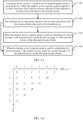
- FIG. 3-b is a schematic diagram of resource indicator values corresponding to resource block quantities and start resource block indexes according to this embodiment of this application.
- the resource allocation field includes four bits, and is capable of indicating 16 states.
- a RIV in an uplink resource allocation manner of the uplink resource allocation type 0 may be 0 to 15.
- a PRB quantity that is for a Msg3 and that may be supported when the terminal device uses a Mode A is 1, 2, 3 and 6.
- a "Msg3 PUSCH Resource allocation" field includes only four bits, 16 states, namely, RIVs 0 to 15, can be indicated.
- the resource allocation field includes the N bits.
- a value of N may be determined based on a scenario.
- the value of N is 4 or 5.
- the resource allocation field is at least capable of indicating the resource allocation of one of the two resource blocks, the three resource blocks, and the six resource blocks in the narrowband.
- the resource allocation field may indicate allocation of four resource blocks in the narrowband, but does not indicate one resource block. Because the second message 3 carries uplink data, fewer resources (for example, one resource block) are not conducive to data transmission. In this way, a possibility of resource allocation can be reduced, and spectrum efficiency, a data transmission rate, and a system capacity can be improved.
- the resource allocation field is further capable of indicating resource allocation of four resource blocks and/or five resource blocks in the narrowband; or the resource allocation field is further capable of indicating resource allocation of one resource block in the narrowband.
- the resource allocation field further indicates resource allocation of the four resource blocks, further indicates resource allocation of the five resource blocks, or further indicates resource allocation of the four resource blocks and/or the five resource blocks.
- the resource allocation field may further indicate the resource allocation of the one resource block in the narrowband.
- a quantity, of resource blocks indicated by the resource allocation field, configured by the network device may be determined based on an application scenario. For example, the network device determines the quantity based on current network load.
- resource allocation field is further capable of indicating resource allocation of four resource blocks and/or five resource blocks in the narrowband includes:
- the resource allocation field may occupy four bits in the random access response grant.
- the resource allocation field may be a "Msg3 PUSCH Resource allocation" field in a UL grant in a MAC RAR.
- the resource allocation field occupies four bits.
- the resource allocation field is only capable of indicating the resource allocation of one of the two resource blocks, the three resource blocks, the four resource blocks, the five resource blocks, and the six resource blocks in the narrowband. "Is only capable of indicating” means that a resource block quantity allocated by the network device is only capable of being selected from the two resource blocks, the three resource blocks, the four resource blocks, the five resource blocks, and the six resource blocks in the narrowband.
- the resource allocation field is only capable of indicating the resource allocation of one of the one resource block, the two resource blocks, the three resource blocks, the four resource blocks, the five resource blocks, and the six resource blocks in the narrowband.
- "Is only capable of indicating” means that a resource block quantity allocated by the network device is only capable of being selected from the one resource block, the two resource blocks, the three resource blocks, the four resource blocks, the five resource blocks, and the six resource blocks in the narrowband.
- the resource allocation field may alternatively occupy five bits.
- N is equal to 5
- the resource allocation field performs resource allocation in the narrowband based on the uplink resource allocation type 0. In this embodiment of this application, when different bits are configured for the resource allocation field, a specific quantity of resource blocks may be indicated.
- the network device may indicate a specific quantity of allocated resource blocks by using a bit value of the resource allocation field, so that the terminal device determines, by parsing the bit value of the resource allocation field, a resource block quantity allocated by the network device for the second message 3, and uplink transmission of the second message 3 is ensured.
- the terminal device determines, based on the resource allocation field, the resource block allocated to the terminal device.
- the terminal device After obtaining the random access response grant, the terminal device parses the resource allocation field included in the random access response grant, to determine the resource block allocated by the network device to the terminal device. For different messages 3 scheduled by using the random access response grant, the network device may allocate corresponding resources.
- the resource allocation field is only capable of indicating the resource allocation of one of the two resource blocks, the three resource blocks, the four resource blocks, the five resource blocks, and the six resource blocks in the narrowband, that the terminal device determines, based on the resource allocation field, the resource block allocated to the terminal device in step 302 includes:
- the resource allocation field may indicate resource allocation solutions of a total of five lengths, namely, a resource block quantity 2, 3, 4, 5, and 6, and a remaining state is unused.
- RIV_EDT resource indicator value
- RIV_EDT 6 to 20
- RIV_legacy resource indicator value
- RIV_EDT RIV_legacy+6.
- Msg3 PUSCH Resource allocation in the UL grant in the MAC RAR indicates RIV legacy.
- actual RIV_EDT is 6 plus a RIV legacy value indicated by using four bits.
- the base station indicates, in the UL grant, that a RIV value is 12, and a RIV value received by the UE is also 12.
- a value of RIV_EDT is 18.
- the UE determines the allocated resource based on RIV_EDT.
- the terminal device when the terminal device uses the Mode A, one or more or all of six states indicating resource allocation of one PRB are used to indicate four PRBs and five PRBs. In this way, DCI overheads are not additionally increased.
- the base station and a UE side may perform a mapping relationship between RIV_EDT and RIVlegacy.
- the network device may allocate fewer than six PRBs. For example, the network device may allocate four or five PRBs to the UE to transmit the second message 3, so that resource allocation of four PRBs and five PRBs is supported in the Mode A, resource utilization is improved, a system capacity is improved, and scheduling flexibility of the base station is improved.
- the resource allocation field is only capable of indicating the resource allocation of one of the two resource blocks, the three resource blocks, the four resource blocks, the five resource blocks, and the six resource blocks in the narrowband, that the terminal device determines, based on the resource allocation field, the resource block allocated to the terminal device in step 302 includes:
- the network device indicates the third resource indicator value to the terminal device by using the resource allocation field, and the terminal device may determine, with reference to the foregoing formulas by using the third resource indicator value, the resource block quantity and the start resource block index that are allocated by the network device.
- "Meets" in "a correspondence between the third resource indicator value and both the allocated resource block quantity and the allocated start resource block index meets the correspondence shown in the following formula" is not limited to a same representation form, and for example, may alternatively be in a form such as a table.
- the formulas used in the foregoing embodiment are merely an implementation. Equivalent variations based on the formulas may alternatively be used to calculate the third resource indicator value. This is not limited herein.
- the resource allocation field is only capable of indicating the resource allocation of one of the two resource blocks, the three resource blocks, the four resource blocks, the five resource blocks, and the six resource blocks in the narrowband, that the terminal device determines, based on the resource allocation field, the resource block allocated to the terminal device in step 302 includes:
- the network device indicates the fourth resource indicator value to the terminal device by using the resource allocation field, and the terminal device may determine, with reference to the foregoing formulas by using the fourth resource indicator value, the resource block quantity and the start resource block index that are allocated by the network device.
- "Meets" in "a correspondence between the fourth resource indicator value and both the allocated resource block quantity and the allocated start resource block index meets the correspondence shown in the following formula" is not limited to a same representation form, and for example, may alternatively be in a form such as a table.
- the formulas used in the foregoing embodiment are merely an implementation. Equivalent variations based on the formulas may alternatively be used to calculate the third resource indicator value. This is not limited herein.
- the resource allocation field when N is equal to 4, and the resource allocation field is only capable of indicating resource allocation of the one resource block, the two resource blocks, the three resource blocks, the four resource blocks, the five resource blocks, or the six resource blocks in the narrowband, the resource allocation field indicates the one resource block in the narrowband; and only one of bit states of the resource allocation field is used to allocate the one resource block.
- the resource allocation field includes four bits is used as an example, and only one of all the bit states of the resource allocation field is capable of indicating that one resource block is allocated. For example, as shown in FIG. 3-b , when the quantity of resource blocks is 1, values of a RIV is 0, 1, 2, 3, 4, and 5.
- the network device may use one or more or all of the six states indicating the one PRB to indicate the four PRBs and the five PRBs. For example, if the network device uses five of the six states of one PRB to indicate the four PRBs and the five PRBs, one bit state still remains in the one PRB, and the remaining bit state may still be used to indicate one resource block.
- the resource allocation field provided in this embodiment of this application may be used to indicate the resource allocation of the one resource block, the two resource blocks, the three resource blocks, the four resource blocks, the five resource blocks, or the six resource blocks in the narrowband.
- the network device may indicate the terminal device to transmit the second message 3 by using resource blocks of different sizes, to improve resource utilization and a system capacity.
- only the one of bit states of the resource allocation field is used to allocate the one resource block, that the terminal device determines, based on the resource allocation field, the resource block allocated to the terminal device in step 302 includes:
- only the one bit state is 0000, and an allocated start resource block index in the resource allocation field is 5.
- Another bit state of the resource allocation field may alternatively be used to indicate one resource block.
- only one bit state 1111 is used to indicate one resource block. This is not limited herein.
- the resource allocation field is further capable of indicating the resource allocation of the one resource block in the narrowband, and that the resource allocation field indicates resource allocation in the narrowband includes: the resource allocation field is only capable of indicating resource allocation of one of the one resource block, the two resource blocks, the three resource blocks, and the six resource blocks in the narrowband. That the terminal device determines the allocated resource block based on the resource allocation field in step 302 includes: when the resource allocation field indicates the resource allocation of the one resource block in the narrowband, determining, by the terminal device, that the allocated resource block is one resource block, and determining a size of a transport block for the second message 3 based on K resource blocks, where K is a pre-specified positive integer greater than 1. In this way, the terminal can determine a larger TBS, which helps support transmission of a larger data block, and improves transmission flexibility of the second message 3.
- the network device may indicate allocation of one resource block by using the resource allocation field.
- the terminal device may determine, by parsing the resource allocation field, that the network device allocates one resource block for the second message 3.
- a size of a transport block for the second message 3 that needs to be sent by the terminal device is no longer determined based on the one resource block indicated by the network device.
- the size of the transport block for the second message 3 is determined by using the K resource blocks.
- K is a pre-specified positive integer greater than 1.
- a value of K may be determined based on an application scenario, and for example, may be determined based on a size of a message 3 encoded by the terminal device.
- the terminal device determines a value of K according to an indication of the network device.
- the terminal device may further determine, based on the obtained random access response grant, a message 3 scheduled by using the random access response grant. For different messages 3 scheduled by using the random access response grant, step 303 and step 308 may be respectively triggered to be performed in a subsequent embodiment.
- the terminal device sends the first message 3 to the network device on the allocated resource block.
- the resource allocation field is only capable of indicating the resource allocation of one of the two resource blocks, the three resource blocks, the four resource blocks, the five resource blocks, and the six resource blocks in the narrowband, that the terminal device determines, based on the resource allocation field, the resource block allocated to the terminal device includes:
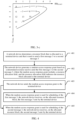
- FIG. 3-c is another schematic diagram of resource indicator values corresponding to resource block quantities and start resource block indexes according to this embodiment of this application.
- the following formulas are used to support resource allocation of two to six resource blocks.
- a specific correspondence between a RIV value and both a start point and a length is shown in the following formulas.
- the resource block allocated to the terminal device includes: a mapping relationship between both a start position of the resource block and a resource block quantity and a resource indicator value RIV meets a mapping relationship in the following table: Length (RB) Mapping relationship between a RIV and a starting point 2 RIV values 0 to 4 correspond to in starting points 0 to 4 in narrowband 3 RIV values 6 to 9 correspond to the starting points 0 to 3 in the narrowband 4 RIV values 12 to 14 correspond to the starting points 0 to 2 in the narrowband 5 RIV values 10 and 11 correspond to the starting points 1 and 0 in the narrowband 6 A RIV value 5 corresponds to the starting point 0 in the narrowband
- the resource allocation field is only capable of indicating the resource allocation of one of the two resource blocks, the three resource blocks, the four resource blocks, the five resource blocks, and the six resource blocks in the narrowband.
- the four bits correspond to 16 bit states.
- Fourteen bit states indicate fourteen types of resource allocations.
- Resource allocation of two, three, four, five, and six consecutive resource blocks in the narrowband, included in the fourteen types of resource allocation are specifically: 0 and 1; 1 and 2; 2 and 3; 3 and 4; 4 and 5; 0, 1, and 2; 1, 2, and 3; 2, 3, and 4; 3, 4, and 5; 0, 1, 2, and 3; 1, 2, 3, and 4; 2, 3, 4, and 5; 0, 1, 2, 3, and 4; 1, 2, 3, 4, and 5; and 0, 1, 2, 3, 4, and 5.
- 0, 1, 2, 3, 4, and 5 represent resource block indexes in the narrowband.
- the four bits correspond to 16 bit states.
- Fifteen bit states indicate fifteen types of resource allocation.
- Resource allocation of one, two, three, four, five, or six consecutive resource blocks in the narrowband, included in the fifteen types of resource allocation are specifically: 0 or 5; 0 and 1; 1 and 2; 2 and 3; 3 and 4; 4 and 5; 0, 1, and 2; 1, 2, and 3; 2, 3, and 4; 3, 4, and 5; 0, 1, 2, and 3; 1, 2, 3, and 4; 2, 3, 4, and 5; 0, 1, 2, 3, and 4; 1, 2, 3, 4, and 5; and 0, 1, 2, 3, 4, and 5.
- 0, 1, 2, 3, 4, and 5 represent resource block indexes in the narrowband.
- the network device allocates the corresponding resources for the different messages 3 that need to be scheduled, and uses the resource allocation field to indicate resource allocation statuses that occur when the different messages 3 are scheduled.
- the resource allocation field includes the four bits, the resource allocation field performs resource indication in the narrowband based on the uplink resource allocation type 0, and the resource allocation field is capable of indicating the resource allocation of one of the one resource block, the two resource blocks, the three resource blocks, and the six resource blocks in the narrowband; or when the random access response grant is used for the scheduling of the second message 3, the resource allocation field includes the N bits, where N is a positive integer, and the resource allocation field is at least capable of indicating the resource allocation of one of the two resource blocks, the three resource blocks, and the six resource blocks in the narrowband.
- the network device allocates the specific resource blocks for the different messages 3 that need to be scheduled. For example, when the first message 3 is scheduled, the network device may perform resource allocation based on one of the one resource block, the two resource blocks, the three resource blocks, and the six resource blocks. When the second message 3 is scheduled, the network device may perform resource allocation based on one of the two resource blocks, the three resource blocks, and the six resource blocks. In this way, a resource allocation problem during scheduling of the different messages 3 is resolved.
- the terminal device may send the messages 3 based on the resource blocks allocated by the network device for the different messages 3. This improves resource utilization and a system capacity.
- an embodiment of this application provides an information processing method, including the following steps.
- the network device determines a resource block that is allocated to the terminal device and that is used to send a first message 3 or a second message 3, where the second message 3 is used for data transmission.
- a message 3 in a random access process may carry user data.
- the message 3 may support EDT.
- Corresponding resources may be configured for a plurality of types of messages that may be sent by the terminal device. For example, messages 3 in the random access process may be classified into at least two different types such as the first message 3 and the second message 3. Therefore, the terminal device may send two different messages 3, and the network device may configure corresponding resources for the different messages 3 that are sent.
- the network device generates a random access response grant based on a determined resource used to send the first message 3 or the second message 3, where the random access response grant includes a resource allocation field, and the resource allocation field indicates the resource block allocated to the terminal device.
- the resource allocation field includes four bits, the resource allocation field performs resource indication in narrowband based on an uplink resource allocation type 0, and the resource allocation field is capable of indicating resource allocation of one of one resource block, two resource blocks, three resource blocks, and six resource blocks in the narrowband; or when the random access response grant is used for scheduling of the second message 3, the resource allocation field includes N bits, where N is a positive integer, and the resource allocation field is at least capable of indicating resource allocation of one of two resource blocks, three resource blocks, and six resource blocks in narrowband.
- the resource allocation field is further capable of indicating resource allocation of four resource blocks and/or five resource blocks in the narrowband; or the resource allocation field is further capable of indicating resource allocation of one resource block in the narrowband.
- resource allocation field is further capable of indicating resource allocation of four resource blocks and/or five resource blocks in the narrowband includes:
- N when N is equal to 4, and the resource allocation field is only capable of indicating the resource allocation of one of the two resource blocks, the three resource blocks, the four resource blocks, the five resource blocks, and the six resource blocks in the narrowband, that the network device generates a random access response grant based on a determined resource used to send the first message 3 or the second message 3 in step 402 includes:
- N when N is equal to 4, and the resource allocation field is only capable of indicating the resource allocation of one of the two resource blocks, the three resource blocks, the four resource blocks, the five resource blocks, and the six resource blocks in the narrowband, that the network device generates a random access response grant based on a determined resource used to send the first message 3 or the second message 3 in step 402 includes:
- N when N is equal to 4, and the resource allocation field is only capable of indicating the resource allocation of one of the two resource blocks, the three resource blocks, the four resource blocks, the five resource blocks, and the six resource blocks in the narrowband, that the network device generates a random access response grant based on a determined resource used to send the first message 3 or the second message 3 in step 402 includes:
- the resource allocation field is only capable of indicating resource allocation of the one resource block, the two resource blocks, the three resource blocks, the four resource blocks, the five resource blocks, or the six resource blocks in the narrowband, only one of bit states of the resource allocation field is used to allocate the one resource block.
- that the network device generates a random access response grant based on a determined resource used to send the first message 3 or the second message 3 in step 402 includes:
- the bit state is 0000
- an allocated start resource block index in the resource allocation field is 5.
- the resource allocation field is further capable of indicating the resource allocation of the one resource block in the narrowband, and that the resource allocation field indicates resource allocation in the narrowband includes: the resource allocation field is only capable of indicating resource allocation of one of the one resource block, the two resource blocks, the three resource blocks, and the six resource blocks in the narrowband.
- the network device determines that the allocated resource block is one resource block, and determines a size of a transport block for the second message 3 based on K resource blocks, where K is a pre-specified positive integer greater than 1.
- the network device sends the random access response grant to the terminal device.
- step 404 and step 405 may be respectively triggered to be performed in a subsequent embodiment.
- the network device receives, on the allocated resource block, the first message 3 sent by the terminal device.
- the network device receives, on the allocated resource block, the second message 3 sent by the terminal device.
- the network device allocates the corresponding resources for the different messages 3 that need to be scheduled, and uses the resource allocation field to indicate resource allocation statuses that occur when the different messages 3 are scheduled.
- the resource allocation field includes the four bits, the resource allocation field performs resource indication in the narrowband based on the uplink resource allocation type 0, and the resource allocation field is capable of indicating the resource allocation of one of the one resource block, the two resource blocks, the three resource blocks, and the six resource blocks in the narrowband; or when the random access response grant is used for the scheduling of the second message 3, the resource allocation field includes the N bits, where N is a positive integer, and the resource allocation field is at least capable of indicating the resource allocation of one of the two resource blocks, the three resource blocks, and the six resource blocks in the narrowband.
- the network device allocates the specific resource blocks for the different messages 3 that need to be scheduled. For example, when the first message 3 is scheduled, the network device may perform resource allocation based on the one resource block, the two resource blocks, the three resource blocks, or the six resource blocks. When the second message 3 is scheduled, the network device may perform resource allocation based on the two resource blocks, the three resource blocks, or the six resource blocks. In this way, a resource allocation problem during scheduling of the different messages 3 is resolved.
- the terminal device may send the messages 3 based on the resource blocks allocated by the network device for the different messages 3. This improves resource utilization and a system capacity.
- An embodiment of this application further provides an information processing method.
- the information processing method includes:
- the network device generates the random access response grant.
- the network device determines a message 3 that may be sent by the terminal device.
- the network device indicates, by using the indication field in the random access response grant, to schedule different messages.
- the indication field may indicate to schedule a first message 3 or a second message 3.
- the terminal device determines, based on the indication field configured by the network device, the Msg3 that needs to be scheduled, so that the terminal device may send the message 3 of a specified type according to a requirement of the network device.
- the terminal device is at a coverage enhancement level 0, a coverage enhancement level 1, or a coverage enhancement mode A;
- the random access response grant does not include one or more of the channel state information request field, the uplink delay field, the modulation and coding scheme field, or the repetition quantity field. Therefore, the random access response grant may include the indication field, an original message length of the random access response grant is not increased, which has a backward compatibility feature.
- the network device may reduce an original bit quantity of the modulation and coding scheme field, the repetition quantity field, the transmit power control field, the message 3 or message 4 control channel narrowband index field in the random access response grant, to use the random access response grant to carry the indication field.
- the terminal device is at a coverage enhancement level 2, a coverage enhancement level 3, or a coverage enhancement mode B;
- the random access response grant when a bit state of the indication field belongs to a first bit state set, the random access response grant is used to schedule the first message 3; or when a bit state of the indication field belongs to a second bit state set, the random access response grant is used to schedule the Msg3.
- the indication field is one or more of a modulation and coding scheme field, a message 3 or message 4 control channel narrowband index field, a transport block size field, an uplink delay field, a repetition quantity field, or a transmit power control field.
- the random access response grant when a TBS value indicated by the indication field is greater than a first threshold, the random access response grant is used to schedule a Msg3; or when a TBS value indicated by the indication field is greater than or equal to a first threshold, the random access response grant is used to schedule the Msg3.
- the first threshold is a pre-specified value or a value configured by using radio resource control signaling.
- An embodiment of this application further provides an information processing method.
- the method includes:
- the network device generates the random access response grant.
- the network device determines a message 3 that may be sent by the terminal device.
- the network device indicates, by using the indication field in the random access response grant, to schedule different messages.
- the indication field may indicate to schedule a first message 3 or a second message 3.
- the terminal device determines, based on the indication field configured by the network device, the Msg3 that needs to be scheduled, so that the terminal device may send the message 3 of a specified type according to a requirement of the network device.
- the terminal device is at a coverage enhancement level 0, a coverage enhancement level 1, or a coverage enhancement mode A;
- the random access response grant does not include one or more of the channel state information request field, the uplink delay field, the modulation and coding scheme field, or the repetition quantity field. Therefore, the random access response grant may include the indication field, an original message length of the random access response grant is not increased, which has a backward compatibility feature.
- the network device may reduce an original bit quantity of the modulation and coding scheme field, the repetition quantity field, the transmit power control field, the message 3 or message 4 control channel narrowband index field in the random access response grant, to use the random access response grant to carry the indication field.
- the terminal device is at a coverage enhancement level 2, a coverage enhancement level 3, or a coverage enhancement mode B;
- the random access response grant when a bit state of the indication field belongs to a first bit state set, the random access response grant is used to schedule the first message 3; or when a bit state of the indication field belongs to a second bit state set, the random access response grant is used to schedule the Msg3.
- the indication field is one or more of a modulation and coding scheme field, a message 3 or message 4 control channel narrowband index field, a transport block size field, an uplink delay field, a repetition quantity field, or a transmit power control field.
- the random access response grant when a TBS value indicated by the indication field is greater than a first threshold, the random access response grant is used to schedule a Msg3; or when a TBS value indicated by the indication field is greater than or equal to a first threshold, the random access response grant is used to schedule the Msg3.
- the first threshold is a pre-specified value or a value configured by using radio resource control signaling.
- An embodiment of this application provides an information processing method.
- the information processing method includes:
- the resource allocation field is further capable of indicating resource allocation of one resource block in the narrowband, and the resource allocation field indicates only resource allocation of the one resource block or the two resource blocks in the narrowband.
- a transport block size is determined based on K resource blocks, where K is a pre-specified positive integer greater than 3.
- K is equal to 4, or K is equal to 5.
- the information processing method includes:
- resource allocation indicated by a "Msg3 PUSCH Resource allocation" field in a UL grant in a MAC RAR is as follows:
- Embodiment 1 The resource allocation indicates more resource allocation solutions of two overlapping PRBs, and three remaining states are unused. Value of resource allocation field Allocated resource blocks '000' 0 and 1 '001' 1 and 2 '010' 2 and 3 '011' 3 and 4 '100' 4 and 5 '101' unused '110' unused '111' unused.
- Embodiment 2 The resource allocation indicates more resource allocation solutions of two overlapping PRBs and two non-overlapping PRBs.
- the resource allocation indicates more resource allocation solutions of two overlapping PRBs and three overlapping PRBs.
- the resource allocation indicates more resource allocation solutions of two overlapping PRBs, two non-overlapping PRBs, and three overlapping PRBs.
- the resource allocation indicates more resource allocation solutions of two overlapping PRBs and three non-overlapping PRBs.
- the resource allocation indicates more resource allocation solutions of two overlapping PRBs, three non-overlapping PRBs, and four non-overlapping PRBs.
- the resource allocation indicates more resource allocation solutions of two overlapping PRBs, three non-overlapping PRBs, four non-overlapping PRBs, five non-overlapping PRBs, and six non-overlapping PRBs.
- an embodiment of this application provides a network device 500, including:
- resource allocation field is further capable of indicating resource allocation of four resource blocks and/or five resource blocks in the narrowband includes:
- the resource allocation field when N is equal to 4, the resource allocation field is only capable of indicating resource allocation of the one resource block, the two resource blocks, the three resource blocks, the four resource blocks, the five resource blocks, or the six resource blocks in the narrowband, the resource allocation field indicates the one resource block in the narrowband; and only one of bit states of the resource allocation field is used to allocate the one resource block.
- the bit state is 0000
- an allocated start resource block index in the resource allocation field is 5.
- the resource allocation field is further capable of indicating the resource allocation of the one resource block in the narrowband, and that the resource allocation field indicates resource allocation in the narrowband includes: the resource allocation field is only capable of indicating resource allocation of one of the one resource block, the two resource blocks, the three resource blocks, and the six resource blocks in the narrowband; and the processing module is configured to: when the resource allocation field indicates the resource allocation of the one resource block in the narrowband, determine, by the terminal device, that the allocated resource block is one resource block, and determine a size of a transport block for the second message 3 based on K resource blocks, where K is a pre-specified positive integer greater than 1.
- an embodiment of this application provides a network device 600, including:
- resource allocation field is further capable of indicating resource allocation of four resource blocks and/or five resource blocks in the narrowband includes:
- the resource allocation field when N is equal to 4, the resource allocation field is only capable of indicating resource allocation of the one resource block, the two resource blocks, the three resource blocks, the four resource blocks, the five resource blocks, or the six resource blocks in the narrowband, the resource allocation field indicates the one resource block in the narrowband; and only one of bit states of the resource allocation field is used to allocate the one resource block.
- the bit state is 0000
- an allocated start resource block index in the resource allocation field is 5.
- the resource allocation field is further capable of indicating the resource allocation of the one resource block in the narrowband, and that the resource allocation field indicates resource allocation in the narrowband includes: the resource allocation field is only capable of indicating resource allocation of one of the one resource block, the two resource blocks, the three resource blocks, and the six resource blocks in the narrowband.
- An embodiment of the present invention further provides a computer storage medium.
- the computer storage medium stores a program. When the program is executed, one or more or all steps recorded in the foregoing method embodiments are performed.
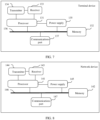
- FIG. 7 is a schematic structural diagram of another device according to an embodiment of this application.
- the device is a terminal device.
- the terminal device may include a processor 131 (for example, a CPU), a memory 132, a transmitter 134, and a receiver 133.
- the transmitter 134 and the receiver 133 are coupled to the processor 131.
- the processor 131 controls a sending action of the transmitter 134 and a receiving action of the receiver 133.
- the memory 132 may include a high-speed RAM memory, or may further include a nonvolatile memory NVM, for example, at least one magnetic disk memory.
- the memory 132 may store various instructions, to implement various processing functions and method steps in the embodiments of this application.
- the terminal device in this embodiment of this application may further include one or more of a power supply 135, a communications bus 136, and a communications port 137.
- the receiver 133 and the transmitter 134 may be integrated into a transceiver of the terminal device, or may be a receive antenna and a transmit antenna that are independent of each other on the terminal device.
- the communications bus 136 is configured to implement communication connection between elements.
- the communications port 137 is configured to implement connection and communication between the terminal device and another peripheral.
- the memory 132 is configured to store computer executable program code.
- the program code includes an instruction.
- the instruction enables the processor 131 to perform a processing action of the terminal device in the foregoing method embodiment, and enables the transmitter 134 to perform a sending action of the terminal device in the foregoing method embodiment.
- An implementation principle and a technical effect of this embodiment are similar to those of the foregoing method embodiment, and details are not described herein again.
- FIG. 8 is a schematic structural diagram of another device according to an embodiment of this application.
- the device is a network device.
- the network device may include a processor (for example, a CPU) 141, a memory 142, a receiver 143, and a transmitter 144.
- the receiver 143 and the transmitter 144 are coupled to the processor 141.
- the processor 141 controls a receiving action of the receiver 143 and a sending action of the transmitter 144.
- the memory 142 may include a high-speed RAM memory, or may further include a nonvolatile memory NVM, for example, at least one magnetic disk memory.
- the memory 142 may store various instructions, to implement various processing functions and method steps in the embodiments of this application.
- the network device in this embodiment of this application may further include one or more of a power supply 145, a communications bus 146, and a communications port 147.
- the receiver 143 and the transmitter 144 may be integrated into a transceiver of the network device, or may be a receive antenna and a transmit antenna that are independent of each other on the network device.
- the communications bus 146 is configured to implement communication connection between elements.
- the communications port 147 is configured to implement connection and communication between the network device and another peripheral.
- the memory 142 is configured to store computer executable program code.
- the program code includes an instruction.
- the instruction enables the processor 141 to perform a processing action of the network device in the foregoing method embodiment, and enables the transmitter 144 to perform a sending action of the network device in the foregoing method embodiment.
- An implementation principle and a technical effect of this embodiment are similar to those of the foregoing method embodiment, and details are not described herein again.
- the apparatus when the apparatus is a chip in a terminal.
- the chip includes a processing unit and a communications unit.
- the processing unit may be, for example, a processor.
- the communications unit may be, for example, an input/output interface, a pin, or a circuit.
- the processing unit may execute a computer-executable instruction stored in a storage unit, so that the chip in the terminal performs the information processing method in any design of the first aspect.
- the storage unit is a storage unit in the chip, for example, a register or a buffer, or the storage unit may be a storage unit in the terminal but outside the chip, for example, a read-only memory (read-only memory, ROM), another type of static storage device capable of storing static information and instructions, or a random access memory (random access memory, RAM).
- ROM read-only memory
- RAM random access memory
- the processor mentioned anywhere above may be a general-purpose central processing unit (CPU), a microprocessor, an application-specific integrated circuit (application-specific integrated circuit, ASIC), or one or more integrated circuits for controlling program execution of the information processing method according to the first aspect.
- CPU central processing unit
- ASIC application-specific integrated circuit
- the apparatus embodiments described above are merely examples.
- the units described as separate parts may or may not be physically separate, and parts displayed as units may or may not be physical units, may be located in one position, or may be distributed on a plurality of network units. Some or all the modules may be selected according to actual needs to achieve the objectives of the solutions of the embodiments.
- connection relationships between modules indicate that the modules have communication connections with each other, which may be specifically implemented as one or more communications buses or signal cables. A person of ordinary skill in the art may understand and implement the embodiments of this application without creative efforts.
- this application may be implemented by using software in addition to necessary universal hardware, or by using dedicated hardware, including a dedicated integrated circuit, a dedicated CPU, a dedicated memory, a dedicated component, and the like.
- dedicated hardware including a dedicated integrated circuit, a dedicated CPU, a dedicated memory, a dedicated component, and the like.
- any functions that can be performed by a computer program can be easily implemented by using corresponding hardware.
- a specific hardware structure used to achieve a same function may be in various forms, for example, in a form of an analog circuit, a digital circuit, or a dedicated circuit.
- software program implementation is a better implementation in more cases. Based on such an understanding, the technical solutions in this application essentially or the part contributing to the prior art may be implemented in a form of a software product.
- the software product is stored in a readable storage medium, such as a floppy disk of a computer, a USB flash drive, a removable hard disk, a read-only memory (ROM, Read-Only Memory), a random access memory (RAM, Random Access Memory), a magnetic disk, or an optical disc, and includes several instructions for instructing a computer device (which may be a personal computer, a server, a network device, and the like) to perform the methods in the embodiments of this application.
- a computer device which may be a personal computer, a server, a network device, and the like
- All or some of the foregoing embodiments may be implemented by using software, hardware, firmware, or any combination thereof.
- the embodiments may be implemented completely or partially in a form of a computer program product.
- the computer program product includes one or more computer instructions.
- the computer may be a general-purpose computer, a dedicated computer, a computer network, or another programmable apparatus.
- the computer instructions may be stored in a computer-readable storage medium, or may be transmitted from a computer-readable storage medium to another computer-readable storage medium.
- the computer instructions may be transmitted from a website, computer, server, or data center to another website, computer, server, or data center in a wired (for example, a coaxial cable, an optical fiber, or a digital subscriber line (DSL)) or wireless (for example, infrared, radio, or microwave) manner.
- a wired for example, a coaxial cable, an optical fiber, or a digital subscriber line (DSL)
- wireless for example, infrared, radio, or microwave
- the computer-readable storage medium may be any usable medium accessible by a computer, or a data storage device, such as a server or a data center, integrating one or more usable media.
- the usable medium may be a magnetic medium (for example, a floppy disk, a hard disk, or a magnetic tape), an optical medium (for example, a DVD), a semiconductor medium (for example, a solid-state drive Solid State Disk (SSD)), or the like.
Landscapes
- Engineering & Computer Science (AREA)
- Signal Processing (AREA)
- Computer Networks & Wireless Communication (AREA)
- Mobile Radio Communication Systems (AREA)
Claims (7)
- Informationsverarbeitungsverfahren, umfassend:Empfangen (204), von einem Endgerät, einer Direktzugriffsantwortgewährung, die durch eine Netzwerkvorrichtung gesendet wird, wobei die Direktzugriffsantwortgewährung ein Ressourcenzuweisungsfeld umfasst und das Ressourcenzuweisungsfeld einen Ressourcenblock, der dem Endgerät zugewiesenen ist, angibt, wobeiwenn die Direktzugriffsantwortgewährung zum Planen einer ersten Nachricht 3, Msg3, verwendet wird, das Ressourcenzuweisungsfeld vier Bits umfasst, das Ressourcenzuweisungsfeld eine Ressourcenangabe in einem Schmalband basierend auf einer Uplink-Ressourcenzuweisung des Typs 0 durchführt und das Ressourcenzuweisungsfeld in der Lage ist, Ressourcenzuweisung eines von einem Ressourcenblock, zwei Ressourcenblöcken, drei Ressourcenblöcken und sechs Ressourcenblöcken in dem Schmalband anzugeben, und die erste Msg3 nicht zur Datenübertragung verwendet wird;wenn die Direktzugriffsantwortgewährung zum Planen einer zweiten Msg3 verwendet wird, das Ressourcenzuweisungsfeld 5 Bits umfasst, wobei das Ressourcenzuweisungsfeld in der Lage ist, die Ressourcenzuweisung eines von zwei Ressourcenblöcken, drei Ressourcenblöcken, vier Ressourcenblöcken, fünf Ressourcenblöcken und sechs Ressourcenblöcken in dem Schmalband anzugeben und die zweite Msg3 zur Datenübertragung verwendet wird;Bestimmen (205), durch das Endgerät basierend auf dem Ressourcenzuweisungsfeld, des Ressourcenblocks, der dem Endgerät zugewiesen ist; undSenden (206), durch das Endgerät, der ersten Msg3 an die Netzwerkvorrichtung in dem zugewiesenen Ressourcenblock, wenn die Direktzugriffsantwortgewährung zum Planen der ersten Msg3 verwendet wird;Senden (208), durch das Endgerät, der zweiten Msg3 an die Netzwerkvorrichtung in dem zugewiesenen Ressourcenblock, wenn die Direktzugriffsantwortgewährung zum Planen der zweiten Msg3 verwendet wird;wobei, wenn das Ressourcenzuweisungsfeld 5 Bits umfasst, das Ressourcenzuweisungsfeld eine Ressourcenzuweisung in dem Schmalband basierend auf der Uplink-Ressourcenzuweisung des Typs 0 durchführt; undwobei sich die erste Msg3 von der zweiten Msg3 unterscheidet.
- Verfahren nach Anspruch 1,
wobei das Ressourcenzuweisungsfeld nur dazu in der Lage ist, die Ressourcenzuweisung eines von einem Ressourcenblock, den zwei Ressourcenblöcken, den drei Ressourcenblöcken, den vier Ressourcenblöcken, den fünf Ressourcenblöcken und den sechs Ressourcenblöcken in dem Schmalband anzugeben. - Informationsverarbeitungsverfahren, umfassend:Bestimmen (201), durch eine Netzwerkvorrichtung, eines Ressourcenblocks, der einem Endgerät zugewiesen ist und zum Senden einer ersten Nachricht 3, Msg3, oder einer zweiten Msg3 verwendet wird, wobei die zweite Msg3 zur Datenübertragung verwendet wird;Bestimmen (202), durch die Netzwerkvorrichtung, einer Direktzugriffsantwortgewährung, wobei die Direktzugriffsantwortgewährung ein Ressourcenzuweisungsfeld umfasst und das Ressourcenzuweisungsfeld den Ressourcenblock, der dem Endgerät zugewiesenen ist, angibt, wobeiwenn die Direktzugriffsantwortgewährung zum Planen der ersten Msg3 verwendet wird, das Ressourcenzuweisungsfeld vier Bits umfasst, das Ressourcenzuweisungsfeld eine Ressourcenangabe in einem Schmalband basierend auf einer Uplink-Ressourcenzuweisung des Typs 0 durchführt und das Ressourcenzuweisungsfeld in der Lage ist, Ressourcenzuweisung eines von einem Ressourcenblock, zwei Ressourcenblöcken, drei Ressourcenblöcken und sechs Ressourcenblöcken in dem Schmalband anzugeben, und die erste Msg3 nicht zur Datenübertragung verwendet wird;wenn die Direktzugriffsantwortgewährung zum Planen der zweiten Msg3 verwendet wird, das Ressourcenzuweisungsfeld 5 Bits umfasst und das Ressourcenzuweisungsfeld in der Lage ist, die Ressourcenzuweisung eines von zwei Ressourcenblöcken, drei Ressourcenblöcken, vier Ressourcenblöcken, fünf Ressourcenblöcken und sechs Ressourcenblöcken in dem Schmalband anzugeben;Senden, durch die Netzwerkvorrichtung, der Direktzugriffsantwortgewährung an das Endgerät; undEmpfangen (207), durch die Netzwerkvorrichtung in dem zugewiesenen Ressourcenblock, wenn die Direktzugriffsantwortgewährung zum Planen der ersten Msg3 verwendet wird, der ersten Msg3, die durch das Endgerät gesendet wird;Empfangen (209), durch die Netzwerkvorrichtung in dem zugewiesenen Ressourcenblock, wenn die Direktzugriffsantwortgewährung zum Planen der zweiten Msg3 verwendet wird, der zweiten Msg3, die durch das Endgerät gesendet wird;wobei, wenn das Ressourcenzuweisungsfeld 5 Bits umfasst, das Ressourcenzuweisungsfeld eine Ressourcenzuweisung in dem Schmalband basierend auf der Uplink-Ressourcenzuweisung des Typs 0 durchführt; undwobei sich die erste Msg3 von der zweiten Msg3 unterscheidet.
- Verfahren nach Anspruch 3,
wobei das Ressourcenzuweisungsfeld nur dazu in der Lage ist, die Ressourcenzuweisung eines von einem Ressourcenblock, den zwei Ressourcenblöcken, den drei Ressourcenblöcken, den vier Ressourcenblöcken, den fünf Ressourcenblöcken und den sechs Ressourcenblöcken in dem Schmalband anzugeben. - Endgerät, umfassend einen Prozessor und einen Speicher, wobei der Prozessor und der Speicher miteinander kommunizieren;der Speicher dazu konfiguriert ist, eine Anweisung zu speichern; undder Prozessor dazu konfiguriert ist, die in dem Speicher gespeicherte Anweisung auszuführen, um das Verfahren nach einem der Ansprüche 1 bis 2 durchzuführen.
- Netzwerkvorrichtung, umfassend einen Prozessor und einen Speicher, wobei der Prozessor und der Speicher miteinander kommunizieren;der Speicher dazu konfiguriert ist, eine Anweisung zu speichern; undder Prozessor dazu konfiguriert ist, die in dem Speicher gespeicherte Anweisung auszuführen, um das Verfahren nach einem der Ansprüche 3 bis 4 durchzuführen.
- Computerprogrammprodukt, umfassend Anweisungen, wobei, wenn das Computerprogrammprodukt auf einem Endgerät läuft, das Endgerät in die Lage versetzt wird, das Verfahren nach einem der Ansprüche 1 bis 2 durchzuführen, und wenn das Computerprogrammprodukt auf einer Netzwerkvorrichtung läuft, die Netzwerkvorrichtung in die Lage versetzt wird, das Verfahren nach einem der Ansprüche 3 bis 4 durchzuführen.
Applications Claiming Priority (2)
| Application Number | Priority Date | Filing Date | Title |
|---|---|---|---|
| PCT/CN2018/082050 WO2019191995A1 (zh) | 2018-04-04 | 2018-04-04 | 一种信息处理方法和设备 |
| PCT/CN2018/086619 WO2019192053A1 (zh) | 2018-04-04 | 2018-05-11 | 一种信息处理方法和设备 |
Publications (3)
| Publication Number | Publication Date |
|---|---|
| EP3767860A1 EP3767860A1 (de) | 2021-01-20 |
| EP3767860A4 EP3767860A4 (de) | 2021-04-14 |
| EP3767860B1 true EP3767860B1 (de) | 2024-09-25 |
Family
ID=68099816
Family Applications (1)
| Application Number | Title | Priority Date | Filing Date |
|---|---|---|---|
| EP18913618.7A Active EP3767860B1 (de) | 2018-04-04 | 2018-05-11 | Informationsverarbeitungsverfahren und -vorrichtung |
Country Status (4)
| Country | Link |
|---|---|
| US (1) | US11533761B2 (de) |
| EP (1) | EP3767860B1 (de) |
| CN (1) | CN111971922B (de) |
| WO (2) | WO2019191995A1 (de) |
Families Citing this family (2)
| Publication number | Priority date | Publication date | Assignee | Title |
|---|---|---|---|---|
| EP3780860B1 (de) * | 2018-05-11 | 2025-04-23 | Huawei Technologies Co., Ltd. | Informationsübertragungsverfahren, endgerätevorrichtung und netzwerkvorrichtung |
| WO2021114203A1 (en) * | 2019-12-13 | 2021-06-17 | Qualcomm Incorporated | Joint msg3 repetition factor and tpc indication |
Family Cites Families (15)
| Publication number | Priority date | Publication date | Assignee | Title |
|---|---|---|---|---|
| US8526304B2 (en) * | 2007-12-20 | 2013-09-03 | Zte Corporation | Processing method for resource request in NGN |
| KR100939722B1 (ko) * | 2008-08-11 | 2010-02-01 | 엘지전자 주식회사 | 데이터 전송 방법 및 이를 위한 사용자 기기 |
| CN104185293B (zh) * | 2013-05-24 | 2017-09-15 | 普天信息技术研究院有限公司 | 一种随机接入信令流程的资源分配方法 |
| RU2628020C1 (ru) * | 2013-11-01 | 2017-08-14 | Хуавей Текнолоджиз Ко., Лтд. | Способ произвольного доступа и соответствующая аппаратура |
| US11057921B2 (en) * | 2014-10-01 | 2021-07-06 | Samsung Electronics Co., Ltd. | System and method for improving spectral efficiency and coverage for user equipments |
| CN105992383B (zh) * | 2015-01-29 | 2021-06-22 | 中兴通讯股份有限公司 | 随机接入响应消息发送方法和节点 |
| CN106664720B (zh) * | 2015-04-10 | 2019-10-22 | 华为技术有限公司 | 一种随机接入响应消息的传输方法和基站以及用户设备 |
| MX376676B (es) * | 2015-09-25 | 2025-03-04 | Ericsson Telefon Ab L M | Métodos que proveen concesiones de enlace ascendente, incluyendo la configuración de dominio de tiempo y las terminales inalámbricas y redes de nodos relacionados. |
| CN108604941A (zh) * | 2015-11-24 | 2018-09-28 | 联发科技(新加坡)私人有限公司 | 上报传输模式的方法以及用户设备 |
| US10231198B2 (en) * | 2016-03-31 | 2019-03-12 | Lg Electronics Inc. | Method and user equipment for receiving downlink signal, and method and base station for transmitting downlink signal |
| WO2017176033A1 (ko) * | 2016-04-04 | 2017-10-12 | 삼성전자 주식회사 | 무선 통신 시스템에서 랜덤 액세스 응답 메시지를 디코딩하는 방법 및 장치 |
| CN107466113B (zh) * | 2016-06-03 | 2020-04-21 | 北京佰才邦技术有限公司 | 一种Msg3传输方法、装置和相关设备 |
| CN118201098A (zh) * | 2018-01-24 | 2024-06-14 | 瑞典爱立信有限公司 | 用于随机接入期间数据传输中的msg3的多个tbs |
| WO2019158686A1 (en) * | 2018-02-16 | 2019-08-22 | Telefonaktiebolaget Lm Ericsson (Publ) | Resource block assignment for msg3 transmission |
| EP4123949A1 (de) * | 2018-02-16 | 2023-01-25 | Telefonaktiebolaget LM Ericsson (publ) | Mechanismus zur zeitressourcenzuordnungssignalisierung für msg3-übertragung |
-
2018
- 2018-04-04 WO PCT/CN2018/082050 patent/WO2019191995A1/zh not_active Ceased
- 2018-05-11 WO PCT/CN2018/086619 patent/WO2019192053A1/zh not_active Ceased
- 2018-05-11 CN CN201880091832.5A patent/CN111971922B/zh active Active
- 2018-05-11 EP EP18913618.7A patent/EP3767860B1/de active Active
-
2020
- 2020-10-05 US US17/063,362 patent/US11533761B2/en active Active
Also Published As
| Publication number | Publication date |
|---|---|
| US20210022190A1 (en) | 2021-01-21 |
| EP3767860A1 (de) | 2021-01-20 |
| WO2019191995A1 (zh) | 2019-10-10 |
| CN111971922A (zh) | 2020-11-20 |
| WO2019192053A1 (zh) | 2019-10-10 |
| CN111971922B (zh) | 2021-12-10 |
| EP3767860A4 (de) | 2021-04-14 |
| US11533761B2 (en) | 2022-12-20 |
Similar Documents
| Publication | Publication Date | Title |
|---|---|---|
| US12004228B2 (en) | Information transmission method, terminal device, and network device | |
| CN111867116B (zh) | 一种通信方法及装置 | |
| US12003466B2 (en) | Resource allocation method and device in TDD system | |
| US11564246B2 (en) | Information transmission method, communications device, and network device | |
| US11533761B2 (en) | Information processing method and device | |
| US20210021390A1 (en) | Data sending method, information sending method, and apparatus | |
| US11477777B2 (en) | Information transmission method and device | |
| US11968668B2 (en) | Data transmission method and device | |
| US11477793B2 (en) | Information transmission method and device | |
| US11412483B2 (en) | Information sending method, information receiving method, and device | |
| WO2024168640A1 (zh) | 传输方法、装置、设备、存储介质及产品 |
Legal Events
| Date | Code | Title | Description |
|---|---|---|---|
| STAA | Information on the status of an ep patent application or granted ep patent |
Free format text: STATUS: THE INTERNATIONAL PUBLICATION HAS BEEN MADE |
|
| PUAI | Public reference made under article 153(3) epc to a published international application that has entered the european phase |
Free format text: ORIGINAL CODE: 0009012 |
|
| STAA | Information on the status of an ep patent application or granted ep patent |
Free format text: STATUS: REQUEST FOR EXAMINATION WAS MADE |
|
| 17P | Request for examination filed |
Effective date: 20201012 |
|
| AK | Designated contracting states |
Kind code of ref document: A1 Designated state(s): AL AT BE BG CH CY CZ DE DK EE ES FI FR GB GR HR HU IE IS IT LI LT LU LV MC MK MT NL NO PL PT RO RS SE SI SK SM TR |
|
| AX | Request for extension of the european patent |
Extension state: BA ME |
|
| A4 | Supplementary search report drawn up and despatched |
Effective date: 20210317 |
|
| RIC1 | Information provided on ipc code assigned before grant |
Ipc: H04L 5/00 20060101AFI20210311BHEP Ipc: H04W 74/08 20090101ALI20210311BHEP Ipc: H04W 72/04 20090101ALI20210311BHEP Ipc: H04W 72/12 20090101ALI20210311BHEP Ipc: H04L 1/08 20060101ALI20210311BHEP |
|
| DAV | Request for validation of the european patent (deleted) | ||
| DAX | Request for extension of the european patent (deleted) | ||
| STAA | Information on the status of an ep patent application or granted ep patent |
Free format text: STATUS: EXAMINATION IS IN PROGRESS |
|
| 17Q | First examination report despatched |
Effective date: 20220228 |
|
| GRAP | Despatch of communication of intention to grant a patent |
Free format text: ORIGINAL CODE: EPIDOSNIGR1 |
|
| STAA | Information on the status of an ep patent application or granted ep patent |
Free format text: STATUS: GRANT OF PATENT IS INTENDED |
|
| RIC1 | Information provided on ipc code assigned before grant |
Ipc: H04L 1/08 20060101ALN20240403BHEP Ipc: H04W 72/23 20230101ALI20240403BHEP Ipc: H04W 74/0833 20240101ALI20240403BHEP Ipc: H04L 5/00 20060101AFI20240403BHEP |
|
| RIC1 | Information provided on ipc code assigned before grant |
Ipc: H04L 1/08 20060101ALN20240411BHEP Ipc: H04W 72/23 20230101ALI20240411BHEP Ipc: H04W 74/0833 20240101ALI20240411BHEP Ipc: H04L 5/00 20060101AFI20240411BHEP |
|
| INTG | Intention to grant announced |
Effective date: 20240503 |
|
| GRAS | Grant fee paid |
Free format text: ORIGINAL CODE: EPIDOSNIGR3 |
|
| GRAA | (expected) grant |
Free format text: ORIGINAL CODE: 0009210 |
|
| STAA | Information on the status of an ep patent application or granted ep patent |
Free format text: STATUS: THE PATENT HAS BEEN GRANTED |
|
| AK | Designated contracting states |
Kind code of ref document: B1 Designated state(s): AL AT BE BG CH CY CZ DE DK EE ES FI FR GB GR HR HU IE IS IT LI LT LU LV MC MK MT NL NO PL PT RO RS SE SI SK SM TR |
|
| REG | Reference to a national code |
Ref country code: GB Ref legal event code: FG4D |
|
| REG | Reference to a national code |
Ref country code: CH Ref legal event code: EP |
|
| REG | Reference to a national code |
Ref country code: DE Ref legal event code: R096 Ref document number: 602018074837 Country of ref document: DE |
|
| REG | Reference to a national code |
Ref country code: IE Ref legal event code: FG4D |
|
| REG | Reference to a national code |
Ref country code: LT Ref legal event code: MG9D |
|
| PG25 | Lapsed in a contracting state [announced via postgrant information from national office to epo] |
Ref country code: NO Free format text: LAPSE BECAUSE OF FAILURE TO SUBMIT A TRANSLATION OF THE DESCRIPTION OR TO PAY THE FEE WITHIN THE PRESCRIBED TIME-LIMIT Effective date: 20241225 |
|
| PG25 | Lapsed in a contracting state [announced via postgrant information from national office to epo] |
Ref country code: GR Free format text: LAPSE BECAUSE OF FAILURE TO SUBMIT A TRANSLATION OF THE DESCRIPTION OR TO PAY THE FEE WITHIN THE PRESCRIBED TIME-LIMIT Effective date: 20241226 Ref country code: FI Free format text: LAPSE BECAUSE OF FAILURE TO SUBMIT A TRANSLATION OF THE DESCRIPTION OR TO PAY THE FEE WITHIN THE PRESCRIBED TIME-LIMIT Effective date: 20240925 |
|
| PG25 | Lapsed in a contracting state [announced via postgrant information from national office to epo] |
Ref country code: BG Free format text: LAPSE BECAUSE OF FAILURE TO SUBMIT A TRANSLATION OF THE DESCRIPTION OR TO PAY THE FEE WITHIN THE PRESCRIBED TIME-LIMIT Effective date: 20240925 |
|
| PG25 | Lapsed in a contracting state [announced via postgrant information from national office to epo] |
Ref country code: LV Free format text: LAPSE BECAUSE OF FAILURE TO SUBMIT A TRANSLATION OF THE DESCRIPTION OR TO PAY THE FEE WITHIN THE PRESCRIBED TIME-LIMIT Effective date: 20240925 |
|
| PG25 | Lapsed in a contracting state [announced via postgrant information from national office to epo] |
Ref country code: RS Free format text: LAPSE BECAUSE OF FAILURE TO SUBMIT A TRANSLATION OF THE DESCRIPTION OR TO PAY THE FEE WITHIN THE PRESCRIBED TIME-LIMIT Effective date: 20241225 |
|
| REG | Reference to a national code |
Ref country code: NL Ref legal event code: MP Effective date: 20240925 |
|
| PG25 | Lapsed in a contracting state [announced via postgrant information from national office to epo] |
Ref country code: RS Free format text: LAPSE BECAUSE OF FAILURE TO SUBMIT A TRANSLATION OF THE DESCRIPTION OR TO PAY THE FEE WITHIN THE PRESCRIBED TIME-LIMIT Effective date: 20241225 Ref country code: NO Free format text: LAPSE BECAUSE OF FAILURE TO SUBMIT A TRANSLATION OF THE DESCRIPTION OR TO PAY THE FEE WITHIN THE PRESCRIBED TIME-LIMIT Effective date: 20241225 Ref country code: LV Free format text: LAPSE BECAUSE OF FAILURE TO SUBMIT A TRANSLATION OF THE DESCRIPTION OR TO PAY THE FEE WITHIN THE PRESCRIBED TIME-LIMIT Effective date: 20240925 Ref country code: GR Free format text: LAPSE BECAUSE OF FAILURE TO SUBMIT A TRANSLATION OF THE DESCRIPTION OR TO PAY THE FEE WITHIN THE PRESCRIBED TIME-LIMIT Effective date: 20241226 Ref country code: FI Free format text: LAPSE BECAUSE OF FAILURE TO SUBMIT A TRANSLATION OF THE DESCRIPTION OR TO PAY THE FEE WITHIN THE PRESCRIBED TIME-LIMIT Effective date: 20240925 Ref country code: BG Free format text: LAPSE BECAUSE OF FAILURE TO SUBMIT A TRANSLATION OF THE DESCRIPTION OR TO PAY THE FEE WITHIN THE PRESCRIBED TIME-LIMIT Effective date: 20240925 |
|
| REG | Reference to a national code |
Ref country code: AT Ref legal event code: MK05 Ref document number: 1727550 Country of ref document: AT Kind code of ref document: T Effective date: 20240925 |
|
| PG25 | Lapsed in a contracting state [announced via postgrant information from national office to epo] |
Ref country code: NL Free format text: LAPSE BECAUSE OF FAILURE TO SUBMIT A TRANSLATION OF THE DESCRIPTION OR TO PAY THE FEE WITHIN THE PRESCRIBED TIME-LIMIT Effective date: 20240925 |
|
| PG25 | Lapsed in a contracting state [announced via postgrant information from national office to epo] |
Ref country code: PT Free format text: LAPSE BECAUSE OF FAILURE TO SUBMIT A TRANSLATION OF THE DESCRIPTION OR TO PAY THE FEE WITHIN THE PRESCRIBED TIME-LIMIT Effective date: 20250127 Ref country code: IS Free format text: LAPSE BECAUSE OF FAILURE TO SUBMIT A TRANSLATION OF THE DESCRIPTION OR TO PAY THE FEE WITHIN THE PRESCRIBED TIME-LIMIT Effective date: 20250125 |
|
| PG25 | Lapsed in a contracting state [announced via postgrant information from national office to epo] |
Ref country code: RO Free format text: LAPSE BECAUSE OF FAILURE TO SUBMIT A TRANSLATION OF THE DESCRIPTION OR TO PAY THE FEE WITHIN THE PRESCRIBED TIME-LIMIT Effective date: 20240925 Ref country code: SM Free format text: LAPSE BECAUSE OF FAILURE TO SUBMIT A TRANSLATION OF THE DESCRIPTION OR TO PAY THE FEE WITHIN THE PRESCRIBED TIME-LIMIT Effective date: 20240925 |
|
| PG25 | Lapsed in a contracting state [announced via postgrant information from national office to epo] |
Ref country code: ES Free format text: LAPSE BECAUSE OF FAILURE TO SUBMIT A TRANSLATION OF THE DESCRIPTION OR TO PAY THE FEE WITHIN THE PRESCRIBED TIME-LIMIT Effective date: 20240925 |
|
| PG25 | Lapsed in a contracting state [announced via postgrant information from national office to epo] |
Ref country code: EE Free format text: LAPSE BECAUSE OF FAILURE TO SUBMIT A TRANSLATION OF THE DESCRIPTION OR TO PAY THE FEE WITHIN THE PRESCRIBED TIME-LIMIT Effective date: 20240925 Ref country code: AT Free format text: LAPSE BECAUSE OF FAILURE TO SUBMIT A TRANSLATION OF THE DESCRIPTION OR TO PAY THE FEE WITHIN THE PRESCRIBED TIME-LIMIT Effective date: 20240925 |
|
| PG25 | Lapsed in a contracting state [announced via postgrant information from national office to epo] |
Ref country code: PL Free format text: LAPSE BECAUSE OF FAILURE TO SUBMIT A TRANSLATION OF THE DESCRIPTION OR TO PAY THE FEE WITHIN THE PRESCRIBED TIME-LIMIT Effective date: 20240925 Ref country code: CZ Free format text: LAPSE BECAUSE OF FAILURE TO SUBMIT A TRANSLATION OF THE DESCRIPTION OR TO PAY THE FEE WITHIN THE PRESCRIBED TIME-LIMIT Effective date: 20240925 |
|
| PG25 | Lapsed in a contracting state [announced via postgrant information from national office to epo] |
Ref country code: SK Free format text: LAPSE BECAUSE OF FAILURE TO SUBMIT A TRANSLATION OF THE DESCRIPTION OR TO PAY THE FEE WITHIN THE PRESCRIBED TIME-LIMIT Effective date: 20240925 Ref country code: IT Free format text: LAPSE BECAUSE OF FAILURE TO SUBMIT A TRANSLATION OF THE DESCRIPTION OR TO PAY THE FEE WITHIN THE PRESCRIBED TIME-LIMIT Effective date: 20240925 |
|
| REG | Reference to a national code |
Ref country code: DE Ref legal event code: R097 Ref document number: 602018074837 Country of ref document: DE |
|
| PGFP | Annual fee paid to national office [announced via postgrant information from national office to epo] |
Ref country code: DE Payment date: 20250402 Year of fee payment: 8 |
|
| PG25 | Lapsed in a contracting state [announced via postgrant information from national office to epo] |
Ref country code: DK Free format text: LAPSE BECAUSE OF FAILURE TO SUBMIT A TRANSLATION OF THE DESCRIPTION OR TO PAY THE FEE WITHIN THE PRESCRIBED TIME-LIMIT Effective date: 20240925 |
|
| PLBE | No opposition filed within time limit |
Free format text: ORIGINAL CODE: 0009261 |
|
| STAA | Information on the status of an ep patent application or granted ep patent |
Free format text: STATUS: NO OPPOSITION FILED WITHIN TIME LIMIT |
|
| 26N | No opposition filed |
Effective date: 20250626 |
|
| PG25 | Lapsed in a contracting state [announced via postgrant information from national office to epo] |
Ref country code: SE Free format text: LAPSE BECAUSE OF FAILURE TO SUBMIT A TRANSLATION OF THE DESCRIPTION OR TO PAY THE FEE WITHIN THE PRESCRIBED TIME-LIMIT Effective date: 20240925 |
|
| REG | Reference to a national code |
Ref country code: CH Ref legal event code: H13 Free format text: ST27 STATUS EVENT CODE: U-0-0-H10-H13 (AS PROVIDED BY THE NATIONAL OFFICE) Effective date: 20251223 |
|
| PG25 | Lapsed in a contracting state [announced via postgrant information from national office to epo] |
Ref country code: HR Free format text: LAPSE BECAUSE OF FAILURE TO SUBMIT A TRANSLATION OF THE DESCRIPTION OR TO PAY THE FEE WITHIN THE PRESCRIBED TIME-LIMIT Effective date: 20240925 Ref country code: LU Free format text: LAPSE BECAUSE OF NON-PAYMENT OF DUE FEES Effective date: 20250511 |
|
| PG25 | Lapsed in a contracting state [announced via postgrant information from national office to epo] |
Ref country code: CH Free format text: LAPSE BECAUSE OF NON-PAYMENT OF DUE FEES Effective date: 20250531 |
|
| GBPC | Gb: european patent ceased through non-payment of renewal fee |
Effective date: 20250511 |
|
| REG | Reference to a national code |
Ref country code: BE Ref legal event code: MM Effective date: 20250531 |
|
| PG25 | Lapsed in a contracting state [announced via postgrant information from national office to epo] |
Ref country code: MC Free format text: LAPSE BECAUSE OF FAILURE TO SUBMIT A TRANSLATION OF THE DESCRIPTION OR TO PAY THE FEE WITHIN THE PRESCRIBED TIME-LIMIT Effective date: 20240925 |
|
| PG25 | Lapsed in a contracting state [announced via postgrant information from national office to epo] |
Ref country code: GB Free format text: LAPSE BECAUSE OF NON-PAYMENT OF DUE FEES Effective date: 20250511 |
|
| PG25 | Lapsed in a contracting state [announced via postgrant information from national office to epo] |
Ref country code: IE Free format text: LAPSE BECAUSE OF NON-PAYMENT OF DUE FEES Effective date: 20250511 |
|
| PG25 | Lapsed in a contracting state [announced via postgrant information from national office to epo] |
Ref country code: BE Free format text: LAPSE BECAUSE OF NON-PAYMENT OF DUE FEES Effective date: 20250531 |
|
| PG25 | Lapsed in a contracting state [announced via postgrant information from national office to epo] |
Ref country code: FR Free format text: LAPSE BECAUSE OF NON-PAYMENT OF DUE FEES Effective date: 20250531 |