EP3767895A1 - Procédé et système d'interaction audio et vidéo entre une pluralité de groupes - Google Patents
Procédé et système d'interaction audio et vidéo entre une pluralité de groupes Download PDFInfo
- Publication number
- EP3767895A1 EP3767895A1 EP19797153.4A EP19797153A EP3767895A1 EP 3767895 A1 EP3767895 A1 EP 3767895A1 EP 19797153 A EP19797153 A EP 19797153A EP 3767895 A1 EP3767895 A1 EP 3767895A1
- Authority
- EP
- European Patent Office
- Prior art keywords
- group
- session
- user
- audio
- virtual
- Prior art date
- Legal status (The legal status is an assumption and is not a legal conclusion. Google has not performed a legal analysis and makes no representation as to the accuracy of the status listed.)
- Granted
Links
Images
Classifications
-
- H—ELECTRICITY
- H04—ELECTRIC COMMUNICATION TECHNIQUE
- H04L—TRANSMISSION OF DIGITAL INFORMATION, e.g. TELEGRAPHIC COMMUNICATION
- H04L12/00—Data switching networks
- H04L12/02—Details
- H04L12/16—Arrangements for providing special services to substations
- H04L12/18—Arrangements for providing special services to substations for broadcast or conference, e.g. multicast
- H04L12/1813—Arrangements for providing special services to substations for broadcast or conference, e.g. multicast for computer conferences, e.g. chat rooms
- H04L12/1818—Conference organisation arrangements, e.g. handling schedules, setting up parameters needed by nodes to attend a conference, booking network resources, notifying involved parties
-
- H—ELECTRICITY
- H04—ELECTRIC COMMUNICATION TECHNIQUE
- H04N—PICTORIAL COMMUNICATION, e.g. TELEVISION
- H04N21/00—Selective content distribution, e.g. interactive television or video on demand [VOD]
- H04N21/20—Servers specifically adapted for the distribution of content, e.g. VOD servers; Operations thereof
- H04N21/25—Management operations performed by the server for facilitating the content distribution or administrating data related to end-users or client devices, e.g. end-user or client device authentication, learning user preferences for recommending movies
- H04N21/254—Management at additional data server, e.g. shopping server, rights management server
- H04N21/2541—Rights Management
-
- H—ELECTRICITY
- H04—ELECTRIC COMMUNICATION TECHNIQUE
- H04L—TRANSMISSION OF DIGITAL INFORMATION, e.g. TELEGRAPHIC COMMUNICATION
- H04L12/00—Data switching networks
- H04L12/02—Details
- H04L12/16—Arrangements for providing special services to substations
- H04L12/18—Arrangements for providing special services to substations for broadcast or conference, e.g. multicast
- H04L12/1813—Arrangements for providing special services to substations for broadcast or conference, e.g. multicast for computer conferences, e.g. chat rooms
- H04L12/1822—Conducting the conference, e.g. admission, detection, selection or grouping of participants, correlating users to one or more conference sessions, prioritising transmission
-
- H—ELECTRICITY
- H04—ELECTRIC COMMUNICATION TECHNIQUE
- H04L—TRANSMISSION OF DIGITAL INFORMATION, e.g. TELEGRAPHIC COMMUNICATION
- H04L65/00—Network arrangements, protocols or services for supporting real-time applications in data packet communication
- H04L65/1066—Session management
- H04L65/1083—In-session procedures
- H04L65/1093—In-session procedures by adding participants; by removing participants
-
- H—ELECTRICITY
- H04—ELECTRIC COMMUNICATION TECHNIQUE
- H04L—TRANSMISSION OF DIGITAL INFORMATION, e.g. TELEGRAPHIC COMMUNICATION
- H04L65/00—Network arrangements, protocols or services for supporting real-time applications in data packet communication
- H04L65/40—Support for services or applications
- H04L65/401—Support for services or applications wherein the services involve a main real-time session and one or more additional parallel real-time or time sensitive sessions, e.g. white board sharing or spawning of a subconference
- H04L65/4015—Support for services or applications wherein the services involve a main real-time session and one or more additional parallel real-time or time sensitive sessions, e.g. white board sharing or spawning of a subconference where at least one of the additional parallel sessions is real time or time sensitive, e.g. white board sharing, collaboration or spawning of a subconference
-
- H—ELECTRICITY
- H04—ELECTRIC COMMUNICATION TECHNIQUE
- H04L—TRANSMISSION OF DIGITAL INFORMATION, e.g. TELEGRAPHIC COMMUNICATION
- H04L65/00—Network arrangements, protocols or services for supporting real-time applications in data packet communication
- H04L65/40—Support for services or applications
- H04L65/403—Arrangements for multi-party communication, e.g. for conferences
-
- H—ELECTRICITY
- H04—ELECTRIC COMMUNICATION TECHNIQUE
- H04N—PICTORIAL COMMUNICATION, e.g. TELEVISION
- H04N21/00—Selective content distribution, e.g. interactive television or video on demand [VOD]
- H04N21/20—Servers specifically adapted for the distribution of content, e.g. VOD servers; Operations thereof
- H04N21/25—Management operations performed by the server for facilitating the content distribution or administrating data related to end-users or client devices, e.g. end-user or client device authentication, learning user preferences for recommending movies
- H04N21/258—Client or end-user data management, e.g. managing client capabilities, user preferences or demographics, processing of multiple end-users preferences to derive collaborative data
- H04N21/25866—Management of end-user data
- H04N21/25875—Management of end-user data involving end-user authentication
-
- H—ELECTRICITY
- H04—ELECTRIC COMMUNICATION TECHNIQUE
- H04N—PICTORIAL COMMUNICATION, e.g. TELEVISION
- H04N21/00—Selective content distribution, e.g. interactive television or video on demand [VOD]
- H04N21/40—Client devices specifically adapted for the reception of or interaction with content, e.g. set-top-box [STB]; Operations thereof
- H04N21/47—End-user applications
- H04N21/478—Supplemental services, e.g. displaying phone caller identification, shopping application
- H04N21/4788—Supplemental services, e.g. displaying phone caller identification, shopping application communicating with other users, e.g. chatting
Definitions
- the present disclosure relates to Internet technology, especially to a method and a system for multi-group audio-video interaction.
- the group mode has become a currently popular mode of audio-video interaction.
- users in a group can perform audio-video interaction with each other as well as with administrators of other groups.
- an administrator of the group 1 may send an audio-video interaction invitation to an audio-video interaction system of a service provider. Then, the audio-video interaction system may determine an administrator of a target group corresponding to the audio-video interaction invitation, disconnect audio-video interaction of the administrator of the target group, and add the administrator of the target group to the group 1. Afterward, an audio-video server may pull an audio-video stream of a user that performs audio-video interaction in the group 1 and an audio-video stream of the administrator of the target group, and send the audio-video streams to the audio-video interaction system. And the audio-video interaction system transmits the audio-video streams to the user that performs audio-video interaction in the group 1 and the administrator of the target group.
- some embodiments of the present disclosure provide a method and a system for multi-group audio-video interaction.
- a method for multi-group audio-video interaction includes:
- a method for multi-group audio-video interaction applied to a group management layer includes:
- a method for multi-group audio-video interaction applied to an access layer includes:
- a system for multi-group audio-video interaction includes a group management layer configured to perform the method described in the second aspect and an access layer configured to perform the method described in the third aspect.
- a server in a fifth aspect, includes a processor and a memory.
- the memory stores at least one instruction, at least one program, a code set or an instruction set, and the at least one instruction, the at least one program, the code set or the instruction set are loaded and executed by the processor to implement the method for multi-group audio-video interaction described in the first aspect.
- a computer readable storage medium stores at least one instruction, at least one program, a code set or an instruction set, and the at least one instruction, the at least one program, the code set or the instruction set are loaded and executed by the processor to implement the method for multi-group audio-video interaction described in the first aspect.
- an audio-video interaction system receives a virtual group creation request initiated by a first user, creates a first virtual group, and determines a first session group to which the first user belongs; the audio-video interaction system associates the first session group with the first virtual group, and adds all session users in the first session group to the first virtual group; the audio-video interaction system determines a second session group to which the second user belongs, when a virtual group join request for the first virtual group initiated by a second user is received; the audio-video interaction system associates the second session group with the first virtual group, and adds all session users in the second session group to the first virtual group; and the audio-video interaction system sends a user list of the second session group to other session users that are in the first virtual group and not in the second session group, to enable the other session users not in the second session group to incrementally pull and play an audio-video stream according to the user list.
- the audio-video interaction system may associate a plurality of session groups that perform cross-group audio-video interaction to a same virtual group, and add session users in the plurality of session groups that perform cross-group audio-video interaction to the virtual group, so that the cross-group audio-video interaction can be realized between all session users in each session group, and a plurality of users may simultaneously interact with each other, thereby effectively improving user experience.
- each session user in the virtual group may directly pull and play audio-video streams of all session users that participate in the cross-group audio-video interaction, without disconnecting the interaction connection of the original session group, thereby further improving user experience.
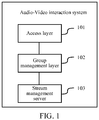
- An embodiment of the present disclosure provides a method for multi-group audio-video interaction, and the method may be applied to an audio-video interaction system shown in FIG. 1 .
- the audio-video interaction system may include an access layer 101, a group management layer 102 and a stream management server 103.
- the access layer 101 and the group management layer 102 may both be independent servers, or may be different components on a same server, or may be a service cluster including a plurality of servers.
- the audio-video interaction system may perform, based on a group operation request initiated by a session user, corresponding processing on a session group or a virtual group corresponding to the group operation request, and pull and play, for each session user in the session group and the virtual group, an audio-video stream of the session user by the stream management server 103.
- the access layer 101 may be configured to receive a group operation request for a session group or a virtual group sent by a session user, and forward the group operation request to the group management layer.
- the group management layer may be configured to receive the group operation request sent by the access layer 101, and manage the session group or the virtual group corresponding to the group operation request.
- the stream management server 103 may perform operations such as pulling, processing and pushing the audio-video stream of the session user.
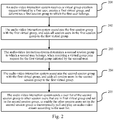
- Steps of a method for multi-group audio-video interaction as shown in FIG. 2 are described in detail below with reference to specific embodiments.
- the content may be as follows.
- an audio-video interaction system receives a virtual group creation request initiated by a first user, creates a first virtual group, and determines a first session group to which the first user belongs.
- the session user may create a session group and invite the other session users to join the session group, so that each session user in the session group may pull audio-video streams of the other session users in the session group and create a corresponding interaction window for each of the other session users to play the corresponding audio-video stream.
- the audio-video interaction system may store a group number or a virtual group number which corresponds to the session group or the virtual group, and a user list which corresponds to the session group and includes user identifiers, stream-pulling addresses, and other related information of all session users in the session group. As shown in FIG.
- a session user (which may be referred to as a first user) in the session group may send, based on an HTTP RESTful API, a virtual group creation request to the audio-video interaction system, and the audio-video interaction system may create a corresponding virtual group (which may be referred to as a first virtual group). Then, the first user may send an audio-video interaction invitation to session users in the one or more other session groups, to enable the other session groups to join the first virtual group.
- the first user may send the virtual group creation request to the audio-video interaction system, and after receiving the virtual group creation request initiated by the first user, the audio-video interaction system may create a first virtual group corresponding to the virtual group creation request, generate a virtual group number corresponding to the first virtual group, and feed back the virtual group number to the first user.
- the audio-video interaction system may also determine a session group (which may be referred to as a first session group) to which the first user belongs.
- step 202 the audio-video interaction system associates the first session group with the first virtual group, and adds all session users in the first session group to the first virtual group.
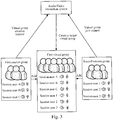
- the audio-video interaction system may associate the first session group with the first virtual group. Specifically, a group number of the first session group is first obtained, and the group number of the first session group is associated with a virtual group number of the first virtual group. Then, as shown in FIG. 3 , the audio-video interaction system may add all session users in the first session group to the first virtual group, that is, to enable each session user in the first session group to receive an audio-video stream of each of other session users in the first virtual group, create a corresponding interaction window for each of the other session users in the first virtual group to play the audio-video stream, and upload the audio-video stream to the first virtual group.
- step 203 when receiving a virtual group join request for the first virtual group initiated by a second user, the audio-video interaction system determines a second session group to which the second user belongs.
- a session user (which may be referred to as a second user) in the another session group may initiate a virtual group join request for the first virtual group to the audio-video interaction system, and after receiving the virtual group join request, the audio-video interaction system may determine a session group (which may be referred to as a second session group) to which the second user belongs. It can be understood that the second user may request to join the first virtual group by searching for the virtual group number of the first virtual group, or request to join the first virtual group after receiving an audio-video interaction invitation initiated by a session user in the first session group.
- step 204 the audio-video interaction system associates the second session group with the first virtual group, and adds all session users in the second session group to the first virtual group.
- the audio-video interaction system may obtain a group number of the second session group, and associate a group number of the second session group with the group number of the first virtual group. Then, as shown in FIG. 3 , the audio-video interaction system may add all session users in the second session group to the first virtual group, that is, to enable each session user in the second session group to receive an audio-video stream of each of other session users that are in the first virtual group and not in the second session group, create a corresponding interaction window for each of the other session users in the first virtual group to play the audio-video stream, and upload the audio-video stream to the first virtual group.
- the audio-video interaction system sends a user list of the second session group to other session users that are in first virtual group and not in the second session group, to enable the other session users not in the second session group to incrementally pull and play an audio-video stream according to the user list.
- the audio-video interaction system may obtains a user list of the second session group, where the user list at least includes user identifiers, stream-pulling addresses, and other user information of all the session users in the second session group. Then, the audio-video interaction system may generate a notification message carrying the user list of the second session group, and send the notification message to the other session users that are in the first virtual group and not in the second session group.
- the other session users that are in the first virtual group and not in the second session group may incrementally pull an audio-video stream of each session user in the user list of the second session group, and create a corresponding interaction window for each session user in the user list of the second session group to play the audio-video stream, thereby achieving seamless switching from a scenario in which session users in a single session group perform audio-video interaction with each other to a scenario in which session users in different groups perform cross-group audio-video interaction with each other.
- the audio-video interaction system may remove, based on a virtual group exit request of a session user, all session users in a session group to which the session user belongs from a virtual group.
- Corresponding processing may be as follows: when receiving a virtual group exit request for the first virtual group initiated by a third user, the audio-video interaction system determines a third session group to which the third user belongs; the audio-video interaction system dissociates the third session group from the first virtual group, and removes all session users in the third session group from the first virtual group; and the audio-video interaction system sends a user list of the third session group to other session users that are in the first virtual group and not in the third session group, to enable the other session users not in the third session group to stop pulling an audio-video stream of the third session group.
- a session group (which may be referred to as a third session group) in the first virtual group needs to exit from the first virtual group
- a session user (which may be referred to as a third user) in the third session group may send a virtual group exit request for the first virtual group to the audio-video interaction system.
- the audio-video interaction system may determine the third session group to which the third user belongs.
- the audio-video interaction system may obtain a group number of the third session group, dissociate the group number of the third session group from the virtual group number of the first virtual group, and remove all session users in the third session group from the first virtual group.
- the audio-video interaction system may obtain a user list of the third session group, generate a notification message including the user list of the third session group, and send the notification message to other session users that are in the first virtual group and not in the third session group, to enable the other session users that are in the first virtual group and not in the third session group to stop pulling audio-video streams of session users in the third session group, and delete interaction windows corresponding to session users in the third session group.
- the session user of the third session group may have a single-group session based on an existing group session manner, that is, delete interaction windows of other session users that are not in the third session group, stop pulling corresponding audio-video streams, and only pull and play audio-video streams of session users in the third session group.
- the audio-video interaction system may destruct the first virtual group according to a virtual group destruction request of a session user.
- Corresponding processing may be as follows: when receiving a virtual group destruction request for the first virtual group initiated by a fourth user, the audio-video interaction system determines all session groups that have been associated with first virtual group, and dissociates the first virtual group from all the session groups; and the audio-video interaction system deletes user data corresponding to the first virtual group, and sends a virtual group destruction message to each session user in the first virtual group, to enable each session user to stop pulling audio-video streams of other session groups in the first virtual group.
- a session user (such as a fourth user) in the first virtual group may request to destruct the first virtual group.
- the fourth user may send a virtual group destruction request for the first virtual group to the audio-video interaction system.
- the audio-video interaction system may determine the first virtual group corresponding to the virtual group destruction request and group numbers of all session groups that have been associated with the virtual group number of the first virtual group, and dissociate the group numbers of all the session groups that have been associated with the virtual group number of the first virtual group from the virtual group number of the first virtual group.
- the audio-video interaction system may delete all user data such as a user list corresponding to the first virtual group, and send a destruction message for the first virtual group to each session user in the first virtual group.
- each of session users in each session group that originally belong to the first virtual group deletes interaction windows of all session users that are not in the session group to which the session user belongs, and stops pulling corresponding audio-video streams. That is, session users in each session group may still have a single-group session based on an existing group session manner, and only pull and play audio-video streams of session users in the session group to which the session user belongs.
- the audio-video interaction system may add a session user that newly joins a session group to a virtual group associated with the session group.
- Corresponding processing may be as follows: when receiving a join request for a target session group initiated by a target user, the audio-video interaction system adds the target user to the target session group; if the target session group is associated with a virtual group, the audio-video interaction system adds the target user to a second virtual group associated with the target session group; and the audio-video interaction system sends a join message of the target user to other session users that are in the second virtual group and not in the target session group, to enable the other session users not in the target session group to pull and play an audio-video stream of the target user.
- a session user (which may be referred to as a target user) wants to join a session group (which may be referred to as a target session group)
- the session user may send a join request for the target session group to the audio-video interaction system, and after receiving the join request, the audio-video interaction system may add the target user to the target session group.
- other session users in the target session group than the target user may pull an audio-video stream of the target user, and create an interaction window for the target user to play the corresponding audio-video stream.
- the target user may also pull audio-video streams of all session users in the target session group except the target user, and create an interaction window for each session user in the target session group except the target user to play the corresponding audio-video stream. Then, the audio-video interaction system may obtain a group number of the target session group, and determine whether the group number of the target session group is associated with a virtual group number, to determine whether the target session group is associated with a virtual group.
- the audio-video interaction system may add the target user to the virtual group (which may be referred to as a second virtual group) associated with the target session group, and generate a join message including a user identifier, a stream-pulling address and other user information of the target user and send the join message to other session users that are in the second virtual group and not in the target session group, to enable the other session users that are in the second virtual group and not in the target session group to pull an audio-video stream of the target user, and create an interaction window for the target user to play the audio-video stream of the target user.
- the virtual group which may be referred to as a second virtual group
- a join message including a user identifier, a stream-pulling address and other user information of the target user
- send the join message to other session users that are in the second virtual group and not in the target session group, to enable the other session users that are in the second virtual group and not in the target session group to pull an audio-video stream of the target user, and create an interaction window for the target user
- the audio-video interaction system may remove users that exit a session group from a virtual group associated with the session group.
- Corresponding processing may be as follows: when receiving an exit request for a target session group initiated by a target user, the audio-video interaction system removes the target user from the target session group; if the target session group is associated with a virtual group, the audio-video interaction system removes the target user from a second virtual group associated with the target session group; and the audio-video interaction system sends an exit message of the target user to other session users that are in the second virtual group and not in the target session group, to enable the other session users not in the target session group to stop pulling an audio-video stream of the target user.
- the target user may send an exit request for a target session group to the audio-video interaction system, and after receiving the exit request, the audio-video interaction system may remove the target user from the target session group. Then, the audio-video interaction system may determine whether the target session group is associated with a virtual group, and if the target session group is associated with a virtual group, the audio-video interaction system may also remove the target user from the second virtual group associated with the target session group, and generate an exit message including a user identifier, a stream-pulling address and other user information of the target user and send the exit message to other session users that are in the second virtual group and not in the target session group, to enable each of the other session users that are not in the target session group to stop pulling an audio-video stream of the target user, and delete an interaction window corresponding to the target user.
- the target user may stop pulling audio-video streams of all session users, and delete all interaction windows.
- the audio-video interaction system may determine whether the session user has exited according to a keep-alive state of a session user.
- Corresponding processing may be as follows: The audio-video interaction system detects a keep-alive state of a target user; if the keep-alive state of the target user is non-alive, the audio-video interaction system determines that the target user has exited, and removes the target user from the target session group and stops detection; if the target session group is associated with a virtual group, the audio-video interaction system removes the target user from the second virtual group associated with the target session group; and the audio-video interaction system sends an exit message of the target user to other session users that are in the second virtual group and not in the target session group, to enable the other session users not in the target session group to stop pulling an audio-video stream of the target user.
- the audio-video interaction system may detect a keep-alive state of the target user, so as to determine whether the target user has exited from the target session group according to the keep-alive state of the target user. If detecting that the state of the target user is alive, the audio-video interaction system normally pulls and pushes the audio-video streams. If detecting that the state of the target user is non-alive, for example, that a network fault or a program fault occurs, the audio-video interaction system determines that the target user has exited, and then may remove the target user from the target session group and stop detection.
- the audio-video interaction system may further determine whether the target session group is associated with a virtual group, and if the target session group is associated with a virtual group, the audio-video interaction system may remove the target user from the second virtual group associated with the target session group, and generate an exit message of the target user and send the exit message to other session users that are in the second virtual group and not in the target session group, to enable each of the other session users that are not in the target session group to stop pulling an audio-video stream of the target user, and delete an interaction window corresponding to the target user.
- the target user may stop pulling audio-video streams of all session users, and delete all interaction windows.
- the audio-video interaction system may perform permission verification on a session user initiating a group operation request, to determine whether to respond to the group operation request.
- Corresponding processing may be as follows: the audio-video interaction system receives a group operation request initiated by a session user, and performs permission verification on the session user; and if the verification succeeds, the audio-video interaction system performs processing corresponding to the group operation request, to respond to the group operation request; or if the verification fails, the audio-video interaction system rejects the group operation request.
- the group operation request at least includes a virtual group creation request, a virtual group join request, a virtual group exit request, a virtual group destruction request, and a join request and an exit request for a session group.
- the audio-video interaction system may perform permission verification on the session user to verify, for example, whether the session user has group operation permission corresponding to the session group or whether a parameter corresponding to the session user is normal. For example, for the virtual group creation request, the audio-video interaction system may verify whether the session user is an administrator of the session group, and whether the session user has permission to create a virtual group.
- the audio-video interaction system may perform, according to different group operation requests initiated by the session user, corresponding processing procedures to respond to the group operation requests initiated by the user; or if the session user does not pass the permission verification, the audio-video interaction system may reject the group operation request initiated by the user, and sends, to the session user based on WebSocket, a feedback indicating that the session user does not have permission to perform this operation.
- the audio-video interaction system may discard group operation request that the user repeatedly sends in a short period of time.
- Corresponding processing may be as follows: the audio-video interaction system receives a group operation request initiated by a session user, and determines whether the same group operation request initiated by the session user has been received within a preset historical time period. If the same group operation request initiated by the session user has been received within the preset historical time period, the audio-video interaction system discards the group operation request; or if no same group operation request initiated by the session has been received within the preset historical time period, the audio-video interaction system performs the permission verification on the session user.
- the audio-video interaction system may first determine whether the same group operation request initiated by the session user has been received within a preset historical time period before the moment at which the group operation request is received.
- the audio-video interaction system may determine that the group operation request is repeatedly sent, and discard the group operation request; or if no same group operation request initiated by the session user has been received within the preset historical time period before the moment at which the group operation request is received, the audio-video interaction system may perform permission processing on the session.
- an audio-video interaction system receives a virtual group creation request initiated by a first user, creates a first virtual group, and determines a first session group to which the first user belongs; the audio-video interaction system associates the first session group with the first virtual group, and adds all session users in the first session group to the first virtual group; when receiving a virtual group join request for the first virtual group initiated by a second user, the audio-video interaction system determines a second session group to which the second user belongs; the audio-video interaction system associates the second session group with the first virtual group, and adds all session users in the second session group to the first virtual group; and the audio-video interaction system sends a user list of the second session group to other session users that are in the first virtual group and not in the second session group, to enable the other session users not in the second session group to incrementally pull and play an audio-video stream according to the user list.
- the audio-video interaction system may associate a plurality of session groups that perform cross-group audio-video interaction to a same virtual group, and add session users in the plurality of session groups that perform cross-group audio-video interaction to the virtual group, so that the cross-group audio-video interaction can be realized between all session users in each session group, and a plurality of users may simultaneously interact with each other, thereby effectively improving user experience.
- each session user in the virtual group may directly pull and play audio-video streams of all session users that participate in the cross-group audio-video interaction, without disconnecting the interaction connections of the original session groups, thereby further improving user experience.
- an embodiment of the present disclosure further provides a group management layer, and the group management layer is configured to:
- the group management layer is further configured to:
- the group management layer is further configured to:
- the group management layer is further configured to:
- the group management layer is further configured to:
- an embodiment of the present disclosure further provides an access layer, and the access layer is configured to:
- the group operation request at least includes a virtual group creation request, a virtual group join request, a virtual group exit request and a virtual group destruction request, and a join request and an exit request for a session group.
- the access layer is further configured to: detect a keep-alive state of a target user, and if the keep-alive state of the target user is non-alive, determine that the target user has exited, and send an exit request for the session group of the target user to the group management layer.
- the access layer is specifically configured to:
- the virtual group request queue and the session group request queue may be respectively configured to store a group operation request for the virtual group and a group operation request for the session group, and the group management layer may access the virtual group request queue and the session group request queue.
- the access layer is specifically configured to:
- an embodiment of the present disclosure further provides a system for multi-group audio-video interaction, and the system includes the group management layer and the access layer.
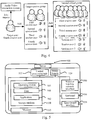
- FIG. 5 is a schematic structural diagram of a server according to an embodiment of the present disclosure.
- the server 500 may vary greatly due to different configurations or performance, and may include one or more central processing units (CPU) 522 (for example, one or more processors) and memories 532, and one or more storage media 530 (for example, one or more mass storage devices) storing application programs 542 or data 544.
- the memory 532 and the storage medium 530 may be transitory or persistent storage.
- the program stored in the storage medium 530 may include one or more modules (not shown), and each module may include a series of instructions and operations for the ingress acceleration node 500.
- the central processing unit 522 may be configured to communicate with the storage medium 530, and execute, on the server 500, a series of instructions and operations in the storage medium 530.
- the server 500 may further include one or more power supplies 529, one or more wired or wireless network interfaces 550, one or more input/output interfaces 558, one or more keyboards 556, and/or one or more operating systems 541, for example, Windows Server, Mac OS X, Unix, Linux, or FreeBSD.
- the server 500 may include a memory and one or more programs, where the one or more programs are stored in the memory, and one or more processors, where the one or more processors are configured to execute the one or more programs including instructions for performing the method for multi-group audio-video interaction.
- the storage medium may be a read-only memory, a disk, or a compact disc.
Landscapes
- Engineering & Computer Science (AREA)
- Multimedia (AREA)
- Signal Processing (AREA)
- Computer Networks & Wireless Communication (AREA)
- Databases & Information Systems (AREA)
- General Engineering & Computer Science (AREA)
- Computer Security & Cryptography (AREA)
- Business, Economics & Management (AREA)
- General Business, Economics & Management (AREA)
- Computer Graphics (AREA)
- Telephonic Communication Services (AREA)
- Information Transfer Between Computers (AREA)
Applications Claiming Priority (2)
| Application Number | Priority Date | Filing Date | Title |
|---|---|---|---|
| CN201910414946.5A CN110198489B (zh) | 2019-05-17 | 2019-05-17 | 一种多群组音视频互动方法及系统 |
| PCT/CN2019/090341 WO2020232758A1 (fr) | 2019-05-17 | 2019-06-06 | Procédé et système d'interaction audio et vidéo entre une pluralité de groupes |
Publications (3)
| Publication Number | Publication Date |
|---|---|
| EP3767895A1 true EP3767895A1 (fr) | 2021-01-20 |
| EP3767895A4 EP3767895A4 (fr) | 2021-06-16 |
| EP3767895B1 EP3767895B1 (fr) | 2022-04-13 |
Family
ID=67751540
Family Applications (1)
| Application Number | Title | Priority Date | Filing Date |
|---|---|---|---|
| EP19797153.4A Not-in-force EP3767895B1 (fr) | 2019-05-17 | 2019-06-06 | Procédé et système d'interaction audio et vidéo entre une pluralité de groupes |
Country Status (4)
| Country | Link |
|---|---|
| US (1) | US10893237B2 (fr) |
| EP (1) | EP3767895B1 (fr) |
| CN (1) | CN110198489B (fr) |
| WO (1) | WO2020232758A1 (fr) |
Families Citing this family (8)
| Publication number | Priority date | Publication date | Assignee | Title |
|---|---|---|---|---|
| CN110635921B (zh) * | 2019-09-10 | 2022-05-03 | 惠州市脉链科技有限公司 | 基于群组的交互方法、装置、设备及可读介质 |
| CN110795004B (zh) * | 2019-10-31 | 2024-04-09 | 上海掌门科技有限公司 | 一种社交的方法与设备 |
| CN113271425A (zh) * | 2021-04-19 | 2021-08-17 | 瑞芯微电子股份有限公司 | 一种基于虚拟设备的互动系统和方法 |
| CN112995660B (zh) * | 2021-04-25 | 2021-08-03 | 浙江华创视讯科技有限公司 | 一种视频会议使用条件的测试方法及装置 |
| US12445506B1 (en) * | 2022-12-16 | 2025-10-14 | Amazon Technologies, Inc. | Communication escalation for a communication session |
| US12301758B1 (en) | 2022-12-16 | 2025-05-13 | Amazon Technologies, Inc. | Context data attachment for interface-based communication sessions |
| CN118363711A (zh) * | 2023-01-18 | 2024-07-19 | 锐捷网络股份有限公司 | 一种虚拟设备隔离方法、装置及电子设备 |
| CN116887491A (zh) * | 2023-06-21 | 2023-10-13 | 江门市征极光兆科技有限公司 | 一种幻彩氛围灯远程互动方法及系统 |
Family Cites Families (23)
| Publication number | Priority date | Publication date | Assignee | Title |
|---|---|---|---|---|
| US20020019829A1 (en) * | 2000-03-21 | 2002-02-14 | Ehud Shapiro | Community co-presence system and method having virtual groups |
| US7478129B1 (en) * | 2000-04-18 | 2009-01-13 | Helen Jeanne Chemtob | Method and apparatus for providing group interaction via communications networks |
| US20020091872A1 (en) * | 2000-11-29 | 2002-07-11 | Bourke-Dunphy Erin M. | Virtualization of an integrated system across one or more computers |
| US7444315B2 (en) * | 2004-08-12 | 2008-10-28 | Sap Aktiengesellschaft | Virtual community generation |
| CN100456682C (zh) * | 2005-07-30 | 2009-01-28 | 腾讯科技(深圳)有限公司 | 群组通信系统及其建立讨论组的方法 |
| US20070220092A1 (en) * | 2006-02-14 | 2007-09-20 | Snapvine, Inc. | System, apparatus and method for enabling mobility to virtual communities via personal and group forums |
| US9112746B2 (en) * | 2006-04-05 | 2015-08-18 | Cisco Technology, Inc. | Method and system for managing virtual talk groups |
| CN101106536B (zh) * | 2006-07-15 | 2011-04-13 | 华为技术有限公司 | 一种建立群组会话的方法 |
| CN100411461C (zh) * | 2006-07-20 | 2008-08-13 | 华为技术有限公司 | 一种PoC群组会话的实现方法及装置 |
| US20100095009A1 (en) * | 2006-10-02 | 2010-04-15 | Nokia Corporation | Method, System, and Devices for Network Sharing or Searching Of Resources |
| US9104407B2 (en) * | 2009-05-28 | 2015-08-11 | Red Hat, Inc. | Flexible cloud management with power management support |
| US20120284637A1 (en) * | 2011-05-02 | 2012-11-08 | John Edward Boyer | Unified Virtual Group Calendar System |
| US20130339438A1 (en) * | 2011-12-02 | 2013-12-19 | Qualcomm Incorporated | Systems and methods for group based access control of machine to machine devices |
| US9007427B2 (en) * | 2011-12-14 | 2015-04-14 | Verizon Patent And Licensing Inc. | Method and system for providing virtual conferencing |
| US8886782B2 (en) * | 2012-05-03 | 2014-11-11 | Nokia Corporation | Method and apparatus for binding devices into one or more groups |
| US8477176B1 (en) * | 2012-07-19 | 2013-07-02 | Google Inc. | System and method for automatically suggesting or inviting a party to join a multimedia communications session |
| CN103888344B (zh) * | 2014-03-20 | 2017-07-14 | 小米科技有限责任公司 | 群组创建方法、群组退出方法和装置 |
| US9706049B2 (en) * | 2015-10-02 | 2017-07-11 | Avaya Inc. | Outbound internal calls initiated on behalf of a group of users |
| CN105530165B (zh) * | 2015-12-08 | 2019-07-02 | 小米科技有限责任公司 | 用于即时聊天的方法及装置 |
| CN106302121A (zh) * | 2016-08-15 | 2017-01-04 | 百度在线网络技术(北京)有限公司 | 群组的管理方法及装置 |
| US20180063041A1 (en) * | 2016-08-26 | 2018-03-01 | International Business Machines Corporation | Building a virtual group for chatting groups in an instant messaging client |
| US20190279317A1 (en) * | 2017-02-15 | 2019-09-12 | Cherise Marissa Burton | Travel Planning Resource Mobile Application |
| US10341129B2 (en) * | 2017-08-19 | 2019-07-02 | Johnson Manuel-Devadoss | Method and system to provide the trending news stories to the plurality of groups based on the plurality of group members existing conversations |
-
2019
- 2019-05-17 CN CN201910414946.5A patent/CN110198489B/zh not_active Expired - Fee Related
- 2019-06-06 WO PCT/CN2019/090341 patent/WO2020232758A1/fr not_active Ceased
- 2019-06-06 EP EP19797153.4A patent/EP3767895B1/fr not_active Not-in-force
- 2019-11-19 US US16/689,072 patent/US10893237B2/en not_active Expired - Fee Related
Also Published As
| Publication number | Publication date |
|---|---|
| CN110198489B (zh) | 2021-07-09 |
| WO2020232758A1 (fr) | 2020-11-26 |
| EP3767895A4 (fr) | 2021-06-16 |
| CN110198489A (zh) | 2019-09-03 |
| EP3767895B1 (fr) | 2022-04-13 |
| US20200366868A1 (en) | 2020-11-19 |
| US10893237B2 (en) | 2021-01-12 |
Similar Documents
| Publication | Publication Date | Title |
|---|---|---|
| US10893237B2 (en) | Method and system for multi-group audio-video interaction | |
| CN111414208B (zh) | 应用程序的启动方法、装置及设备 | |
| US9299111B2 (en) | Efficient presence distribution mechanism for a large enterprise | |
| US9742667B2 (en) | Packet processing method, device and system | |
| US9571417B2 (en) | Processing resource access request in network | |
| US12225132B2 (en) | Cybersecurity guard for core network elements | |
| CN111478781B (zh) | 一种消息广播的方法和装置 | |
| US20240397372A1 (en) | Data processing method and apparatus, computer-readable medium, and electronic device | |
| CN101304389A (zh) | 报文处理方法、装置和系统 | |
| WO2017185615A1 (fr) | Procédé de détermination d'état de service de dispositif de traitement de service et dispositif d'ordonnancement | |
| WO2020082839A1 (fr) | Procédé de traitement de message, dispositif associé et support de stockage informatique | |
| US11057475B2 (en) | Methods, apparatus and systems for resuming transmission link | |
| US11537422B2 (en) | Virtual machine migration downtime reduction using a multicast address | |
| US20140095604A1 (en) | Managing an electronic conference session | |
| WO2015158058A1 (fr) | Procédé et système de mise en œuvre de sauvegarde et de récupération d'appel | |
| CN112738153A (zh) | 业务系统中的网关选择方法、系统、装置、服务器及介质 | |
| CN112217735A (zh) | 信息同步方法与负载均衡系统 | |
| CN114844910B (zh) | 分布式存储系统的数据传输方法、系统、设备及介质 | |
| CN113472736B (zh) | 一种内外网数据传输的方法、装置、设备及可读介质 | |
| CN112969048B (zh) | 基于视联网的视频会议管控方法、系统和装置 | |
| CN111327543A (zh) | 报文转发方法及装置、存储介质、电子装置 | |
| CN115904727A (zh) | 一种业务服务的管理方法、装置、系统及存储介质 | |
| CN109327730B (zh) | 一种数据包下载的方法和装置 | |
| CN110493555B (zh) | 请求处理方法、用户终端、核心服务器、设备及存储介质 | |
| CN115776527A (zh) | 消息发送方法、装置、设备及存储介质 |
Legal Events
| Date | Code | Title | Description |
|---|---|---|---|
| STAA | Information on the status of an ep patent application or granted ep patent |
Free format text: STATUS: UNKNOWN |
|
| STAA | Information on the status of an ep patent application or granted ep patent |
Free format text: STATUS: THE INTERNATIONAL PUBLICATION HAS BEEN MADE |
|
| PUAI | Public reference made under article 153(3) epc to a published international application that has entered the european phase |
Free format text: ORIGINAL CODE: 0009012 |
|
| STAA | Information on the status of an ep patent application or granted ep patent |
Free format text: STATUS: REQUEST FOR EXAMINATION WAS MADE |
|
| 17P | Request for examination filed |
Effective date: 20191111 |
|
| AK | Designated contracting states |
Kind code of ref document: A1 Designated state(s): AL AT BE BG CH CY CZ DE DK EE ES FI FR GB GR HR HU IE IS IT LI LT LU LV MC MK MT NL NO PL PT RO RS SE SI SK SM TR |
|
| AX | Request for extension of the european patent |
Extension state: BA ME |
|
| RIC1 | Information provided on ipc code assigned before grant |
Ipc: H04L 12/58 20060101AFI20210210BHEP Ipc: H04N 21/4788 20110101ALI20210210BHEP Ipc: H04L 12/18 20060101ALI20210210BHEP |
|
| A4 | Supplementary search report drawn up and despatched |
Effective date: 20210518 |
|
| RIC1 | Information provided on ipc code assigned before grant |
Ipc: H04L 12/58 20060101AFI20210511BHEP Ipc: H04L 12/18 20060101ALI20210511BHEP Ipc: H04N 21/4788 20110101ALI20210511BHEP |
|
| REG | Reference to a national code |
Ref country code: DE Ref legal event code: R079 Ref document number: 602019013755 Country of ref document: DE Free format text: PREVIOUS MAIN CLASS: H04L0012580000 Ipc: H04L0012180000 |
|
| GRAP | Despatch of communication of intention to grant a patent |
Free format text: ORIGINAL CODE: EPIDOSNIGR1 |
|
| STAA | Information on the status of an ep patent application or granted ep patent |
Free format text: STATUS: GRANT OF PATENT IS INTENDED |
|
| GRAS | Grant fee paid |
Free format text: ORIGINAL CODE: EPIDOSNIGR3 |
|
| RIC1 | Information provided on ipc code assigned before grant |
Ipc: H04L 12/18 20060101AFI20220202BHEP |
|
| GRAA | (expected) grant |
Free format text: ORIGINAL CODE: 0009210 |
|
| STAA | Information on the status of an ep patent application or granted ep patent |
Free format text: STATUS: THE PATENT HAS BEEN GRANTED |
|
| DAV | Request for validation of the european patent (deleted) | ||
| DAX | Request for extension of the european patent (deleted) | ||
| INTG | Intention to grant announced |
Effective date: 20220223 |
|
| AK | Designated contracting states |
Kind code of ref document: B1 Designated state(s): AL AT BE BG CH CY CZ DE DK EE ES FI FR GB GR HR HU IE IS IT LI LT LU LV MC MK MT NL NO PL PT RO RS SE SI SK SM TR |
|
| REG | Reference to a national code |
Ref country code: GB Ref legal event code: FG4D |
|
| REG | Reference to a national code |
Ref country code: CH Ref legal event code: EP |
|
| REG | Reference to a national code |
Ref country code: DE Ref legal event code: R096 Ref document number: 602019013755 Country of ref document: DE |
|
| REG | Reference to a national code |
Ref country code: IE Ref legal event code: FG4D |
|
| REG | Reference to a national code |
Ref country code: AT Ref legal event code: REF Ref document number: 1484248 Country of ref document: AT Kind code of ref document: T Effective date: 20220515 |
|
| REG | Reference to a national code |
Ref country code: LT Ref legal event code: MG9D |
|
| REG | Reference to a national code |
Ref country code: NL Ref legal event code: MP Effective date: 20220413 |
|
| REG | Reference to a national code |
Ref country code: AT Ref legal event code: MK05 Ref document number: 1484248 Country of ref document: AT Kind code of ref document: T Effective date: 20220413 |
|
| PG25 | Lapsed in a contracting state [announced via postgrant information from national office to epo] |
Ref country code: NL Free format text: LAPSE BECAUSE OF FAILURE TO SUBMIT A TRANSLATION OF THE DESCRIPTION OR TO PAY THE FEE WITHIN THE PRESCRIBED TIME-LIMIT Effective date: 20220413 |
|
| PG25 | Lapsed in a contracting state [announced via postgrant information from national office to epo] |
Ref country code: SE Free format text: LAPSE BECAUSE OF FAILURE TO SUBMIT A TRANSLATION OF THE DESCRIPTION OR TO PAY THE FEE WITHIN THE PRESCRIBED TIME-LIMIT Effective date: 20220413 Ref country code: PT Free format text: LAPSE BECAUSE OF FAILURE TO SUBMIT A TRANSLATION OF THE DESCRIPTION OR TO PAY THE FEE WITHIN THE PRESCRIBED TIME-LIMIT Effective date: 20220816 Ref country code: NO Free format text: LAPSE BECAUSE OF FAILURE TO SUBMIT A TRANSLATION OF THE DESCRIPTION OR TO PAY THE FEE WITHIN THE PRESCRIBED TIME-LIMIT Effective date: 20220713 Ref country code: LT Free format text: LAPSE BECAUSE OF FAILURE TO SUBMIT A TRANSLATION OF THE DESCRIPTION OR TO PAY THE FEE WITHIN THE PRESCRIBED TIME-LIMIT Effective date: 20220413 Ref country code: HR Free format text: LAPSE BECAUSE OF FAILURE TO SUBMIT A TRANSLATION OF THE DESCRIPTION OR TO PAY THE FEE WITHIN THE PRESCRIBED TIME-LIMIT Effective date: 20220413 Ref country code: GR Free format text: LAPSE BECAUSE OF FAILURE TO SUBMIT A TRANSLATION OF THE DESCRIPTION OR TO PAY THE FEE WITHIN THE PRESCRIBED TIME-LIMIT Effective date: 20220714 Ref country code: FI Free format text: LAPSE BECAUSE OF FAILURE TO SUBMIT A TRANSLATION OF THE DESCRIPTION OR TO PAY THE FEE WITHIN THE PRESCRIBED TIME-LIMIT Effective date: 20220413 Ref country code: ES Free format text: LAPSE BECAUSE OF FAILURE TO SUBMIT A TRANSLATION OF THE DESCRIPTION OR TO PAY THE FEE WITHIN THE PRESCRIBED TIME-LIMIT Effective date: 20220413 Ref country code: BG Free format text: LAPSE BECAUSE OF FAILURE TO SUBMIT A TRANSLATION OF THE DESCRIPTION OR TO PAY THE FEE WITHIN THE PRESCRIBED TIME-LIMIT Effective date: 20220713 Ref country code: AT Free format text: LAPSE BECAUSE OF FAILURE TO SUBMIT A TRANSLATION OF THE DESCRIPTION OR TO PAY THE FEE WITHIN THE PRESCRIBED TIME-LIMIT Effective date: 20220413 |
|
| PG25 | Lapsed in a contracting state [announced via postgrant information from national office to epo] |
Ref country code: RS Free format text: LAPSE BECAUSE OF FAILURE TO SUBMIT A TRANSLATION OF THE DESCRIPTION OR TO PAY THE FEE WITHIN THE PRESCRIBED TIME-LIMIT Effective date: 20220413 Ref country code: PL Free format text: LAPSE BECAUSE OF FAILURE TO SUBMIT A TRANSLATION OF THE DESCRIPTION OR TO PAY THE FEE WITHIN THE PRESCRIBED TIME-LIMIT Effective date: 20220413 Ref country code: LV Free format text: LAPSE BECAUSE OF FAILURE TO SUBMIT A TRANSLATION OF THE DESCRIPTION OR TO PAY THE FEE WITHIN THE PRESCRIBED TIME-LIMIT Effective date: 20220413 Ref country code: IS Free format text: LAPSE BECAUSE OF FAILURE TO SUBMIT A TRANSLATION OF THE DESCRIPTION OR TO PAY THE FEE WITHIN THE PRESCRIBED TIME-LIMIT Effective date: 20220813 |
|
| REG | Reference to a national code |
Ref country code: DE Ref legal event code: R119 Ref document number: 602019013755 Country of ref document: DE |
|
| PG25 | Lapsed in a contracting state [announced via postgrant information from national office to epo] |
Ref country code: SM Free format text: LAPSE BECAUSE OF FAILURE TO SUBMIT A TRANSLATION OF THE DESCRIPTION OR TO PAY THE FEE WITHIN THE PRESCRIBED TIME-LIMIT Effective date: 20220413 Ref country code: SK Free format text: LAPSE BECAUSE OF FAILURE TO SUBMIT A TRANSLATION OF THE DESCRIPTION OR TO PAY THE FEE WITHIN THE PRESCRIBED TIME-LIMIT Effective date: 20220413 Ref country code: RO Free format text: LAPSE BECAUSE OF FAILURE TO SUBMIT A TRANSLATION OF THE DESCRIPTION OR TO PAY THE FEE WITHIN THE PRESCRIBED TIME-LIMIT Effective date: 20220413 Ref country code: MC Free format text: LAPSE BECAUSE OF FAILURE TO SUBMIT A TRANSLATION OF THE DESCRIPTION OR TO PAY THE FEE WITHIN THE PRESCRIBED TIME-LIMIT Effective date: 20220413 Ref country code: EE Free format text: LAPSE BECAUSE OF FAILURE TO SUBMIT A TRANSLATION OF THE DESCRIPTION OR TO PAY THE FEE WITHIN THE PRESCRIBED TIME-LIMIT Effective date: 20220413 Ref country code: DK Free format text: LAPSE BECAUSE OF FAILURE TO SUBMIT A TRANSLATION OF THE DESCRIPTION OR TO PAY THE FEE WITHIN THE PRESCRIBED TIME-LIMIT Effective date: 20220413 Ref country code: CZ Free format text: LAPSE BECAUSE OF FAILURE TO SUBMIT A TRANSLATION OF THE DESCRIPTION OR TO PAY THE FEE WITHIN THE PRESCRIBED TIME-LIMIT Effective date: 20220413 |
|
| REG | Reference to a national code |
Ref country code: CH Ref legal event code: PL |
|
| PLBE | No opposition filed within time limit |
Free format text: ORIGINAL CODE: 0009261 |
|
| STAA | Information on the status of an ep patent application or granted ep patent |
Free format text: STATUS: NO OPPOSITION FILED WITHIN TIME LIMIT |
|
| REG | Reference to a national code |
Ref country code: BE Ref legal event code: MM Effective date: 20220630 |
|
| 26N | No opposition filed |
Effective date: 20230116 |
|
| PG25 | Lapsed in a contracting state [announced via postgrant information from national office to epo] |
Ref country code: AL Free format text: LAPSE BECAUSE OF FAILURE TO SUBMIT A TRANSLATION OF THE DESCRIPTION OR TO PAY THE FEE WITHIN THE PRESCRIBED TIME-LIMIT Effective date: 20220413 |
|
| PG25 | Lapsed in a contracting state [announced via postgrant information from national office to epo] |
Ref country code: LU Free format text: LAPSE BECAUSE OF NON-PAYMENT OF DUE FEES Effective date: 20220606 Ref country code: LI Free format text: LAPSE BECAUSE OF NON-PAYMENT OF DUE FEES Effective date: 20220630 Ref country code: IE Free format text: LAPSE BECAUSE OF NON-PAYMENT OF DUE FEES Effective date: 20220606 Ref country code: FR Free format text: LAPSE BECAUSE OF NON-PAYMENT OF DUE FEES Effective date: 20220613 Ref country code: CH Free format text: LAPSE BECAUSE OF NON-PAYMENT OF DUE FEES Effective date: 20220630 |
|
| PG25 | Lapsed in a contracting state [announced via postgrant information from national office to epo] |
Ref country code: SI Free format text: LAPSE BECAUSE OF FAILURE TO SUBMIT A TRANSLATION OF THE DESCRIPTION OR TO PAY THE FEE WITHIN THE PRESCRIBED TIME-LIMIT Effective date: 20220413 Ref country code: DE Free format text: LAPSE BECAUSE OF NON-PAYMENT OF DUE FEES Effective date: 20230103 Ref country code: BE Free format text: LAPSE BECAUSE OF NON-PAYMENT OF DUE FEES Effective date: 20220630 |
|
| PG25 | Lapsed in a contracting state [announced via postgrant information from national office to epo] |
Ref country code: IT Free format text: LAPSE BECAUSE OF FAILURE TO SUBMIT A TRANSLATION OF THE DESCRIPTION OR TO PAY THE FEE WITHIN THE PRESCRIBED TIME-LIMIT Effective date: 20220413 |
|
| GBPC | Gb: european patent ceased through non-payment of renewal fee |
Effective date: 20230606 |
|
| PG25 | Lapsed in a contracting state [announced via postgrant information from national office to epo] |
Ref country code: MK Free format text: LAPSE BECAUSE OF FAILURE TO SUBMIT A TRANSLATION OF THE DESCRIPTION OR TO PAY THE FEE WITHIN THE PRESCRIBED TIME-LIMIT Effective date: 20220413 Ref country code: CY Free format text: LAPSE BECAUSE OF FAILURE TO SUBMIT A TRANSLATION OF THE DESCRIPTION OR TO PAY THE FEE WITHIN THE PRESCRIBED TIME-LIMIT Effective date: 20220413 Ref country code: GB Free format text: LAPSE BECAUSE OF NON-PAYMENT OF DUE FEES Effective date: 20230606 |
|
| PG25 | Lapsed in a contracting state [announced via postgrant information from national office to epo] |
Ref country code: HU Free format text: LAPSE BECAUSE OF FAILURE TO SUBMIT A TRANSLATION OF THE DESCRIPTION OR TO PAY THE FEE WITHIN THE PRESCRIBED TIME-LIMIT; INVALID AB INITIO Effective date: 20190606 |
|
| PG25 | Lapsed in a contracting state [announced via postgrant information from national office to epo] |
Ref country code: TR Free format text: LAPSE BECAUSE OF FAILURE TO SUBMIT A TRANSLATION OF THE DESCRIPTION OR TO PAY THE FEE WITHIN THE PRESCRIBED TIME-LIMIT Effective date: 20220413 |
|
| PG25 | Lapsed in a contracting state [announced via postgrant information from national office to epo] |
Ref country code: MT Free format text: LAPSE BECAUSE OF FAILURE TO SUBMIT A TRANSLATION OF THE DESCRIPTION OR TO PAY THE FEE WITHIN THE PRESCRIBED TIME-LIMIT Effective date: 20220413 |
|
| PG25 | Lapsed in a contracting state [announced via postgrant information from national office to epo] |
Ref country code: BG Free format text: LAPSE BECAUSE OF FAILURE TO SUBMIT A TRANSLATION OF THE DESCRIPTION OR TO PAY THE FEE WITHIN THE PRESCRIBED TIME-LIMIT Effective date: 20220413 |
|
| PG25 | Lapsed in a contracting state [announced via postgrant information from national office to epo] |
Ref country code: BG Free format text: LAPSE BECAUSE OF FAILURE TO SUBMIT A TRANSLATION OF THE DESCRIPTION OR TO PAY THE FEE WITHIN THE PRESCRIBED TIME-LIMIT Effective date: 20220413 |