EP3767965A1 - Application web client avec convertisseur de protocole de flux continu intégré - Google Patents
Application web client avec convertisseur de protocole de flux continu intégré Download PDFInfo
- Publication number
- EP3767965A1 EP3767965A1 EP19187357.9A EP19187357A EP3767965A1 EP 3767965 A1 EP3767965 A1 EP 3767965A1 EP 19187357 A EP19187357 A EP 19187357A EP 3767965 A1 EP3767965 A1 EP 3767965A1
- Authority
- EP
- European Patent Office
- Prior art keywords
- web browser
- client web
- streaming protocol
- media
- client
- Prior art date
- Legal status (The legal status is an assumption and is not a legal conclusion. Google has not performed a legal analysis and makes no representation as to the accuracy of the status listed.)
- Ceased
Links
Images
Classifications
-
- H—ELECTRICITY
- H04—ELECTRIC COMMUNICATION TECHNIQUE
- H04N—PICTORIAL COMMUNICATION, e.g. TELEVISION
- H04N21/00—Selective content distribution, e.g. interactive television or video on demand [VOD]
- H04N21/40—Client devices specifically adapted for the reception of or interaction with content, e.g. set-top-box [STB]; Operations thereof
- H04N21/43—Processing of content or additional data, e.g. demultiplexing additional data from a digital video stream; Elementary client operations, e.g. monitoring of home network or synchronising decoder's clock; Client middleware
- H04N21/436—Interfacing a local distribution network, e.g. communicating with another STB or one or more peripheral devices inside the home
- H04N21/4363—Adapting the video stream to a specific local network, e.g. a Bluetooth® network
-
- H—ELECTRICITY
- H04—ELECTRIC COMMUNICATION TECHNIQUE
- H04L—TRANSMISSION OF DIGITAL INFORMATION, e.g. TELEGRAPHIC COMMUNICATION
- H04L65/00—Network arrangements, protocols or services for supporting real-time applications in data packet communication
- H04L65/60—Network streaming of media packets
- H04L65/65—Network streaming protocols, e.g. real-time transport protocol [RTP] or real-time control protocol [RTCP]
-
- H—ELECTRICITY
- H04—ELECTRIC COMMUNICATION TECHNIQUE
- H04L—TRANSMISSION OF DIGITAL INFORMATION, e.g. TELEGRAPHIC COMMUNICATION
- H04L65/00—Network arrangements, protocols or services for supporting real-time applications in data packet communication
- H04L65/60—Network streaming of media packets
- H04L65/75—Media network packet handling
- H04L65/756—Media network packet handling adapting media to device capabilities
-
- H—ELECTRICITY
- H04—ELECTRIC COMMUNICATION TECHNIQUE
- H04L—TRANSMISSION OF DIGITAL INFORMATION, e.g. TELEGRAPHIC COMMUNICATION
- H04L65/00—Network arrangements, protocols or services for supporting real-time applications in data packet communication
- H04L65/60—Network streaming of media packets
- H04L65/75—Media network packet handling
- H04L65/764—Media network packet handling at the destination
-
- H—ELECTRICITY
- H04—ELECTRIC COMMUNICATION TECHNIQUE
- H04L—TRANSMISSION OF DIGITAL INFORMATION, e.g. TELEGRAPHIC COMMUNICATION
- H04L67/00—Network arrangements or protocols for supporting network services or applications
- H04L67/01—Protocols
- H04L67/02—Protocols based on web technology, e.g. hypertext transfer protocol [HTTP]
-
- H—ELECTRICITY
- H04—ELECTRIC COMMUNICATION TECHNIQUE
- H04L—TRANSMISSION OF DIGITAL INFORMATION, e.g. TELEGRAPHIC COMMUNICATION
- H04L69/00—Network arrangements, protocols or services independent of the application payload and not provided for in the other groups of this subclass
- H04L69/08—Protocols for interworking; Protocol conversion
Definitions
- the present invention generally relates to the streaming media from a server to a client web browser over a communication network. More particularly, the invention relates to a service broker comprised in a client web application of the client web browser and a computer-implemented method performed by the respective service broker.
- File downloading is a process in which the end-user obtains the entire file for the media content before watching or listening to it.
- streaming media refers to the process of delivering or obtaining media content over a communication network by allowing viewers to start watching media content without the need to completely download the media content beforehand.
- Live streaming more particularly corresponds to the delivery of media content in real-time over the Internet much as a media content providers broadcasts live media content via live signals. Streaming of digital video and/or digital audio via online streaming platforms such as YouTube, Spotify, Netflix, etc. is widely popular nowadays. It is estimated that by 2020, live streaming will account for more than 80% of all Internet traffic worldwide.
- a media content provider such as a Content Distribution Network, also referred to as CDN
- video player applications such as for example a video player application comprised in a web browser, running on a PC, a tablet, a smartphone, a set-up box, a TV etc.
- HLS HTTP Live Streaming protocol
- Apple Inc. an HTTP-based adaptive bitrate streaming communications protocol implemented by Apple Inc. as part of its QuickTime, Safari, OS X, and iOS software. HLS works by breaking the overall stream into a sequence of small HTTP-based file downloads, each download representing one short chunk of an overall potentially unbounded media stream comprising for example audio and video.
- media content providers wishing to deliver live media content to Safari on iOS must use the HLS implementation for playback within the iOS environment.
- all media content providers are forced to use the HLS protocol natively implemented within Safari to deliver media content to the iOS environment. This increases the complexity and the cost involved with the delivery of media content as media content providers must deliver the media content in a plurality of streaming protocols over the internet.
- clients of the media content must interact with one or more streaming protocols natively implemented within a web browser instead of being able to bring their own implementation. This results in the need to re-implement certain business rules and integrations with other services such as DRM, analytics or advertisement services.
- Streaming media content to video player applications therefore remains challenging, especially in terms of compatibility with some web browsers supporting only natively implemented streaming protocols.
- the above defined objectives are realized by a computer-implemented method for streaming media from a remote server in a client web browser supporting an operating streaming protocol, wherein the method is implemented within a client web application comprised in the client web browser and wherein the method comprises the following steps:
- the computer-implemented method according to the present invention solves the mismatch or incompatibility between the native streaming protocol in which the media to be streamed is implemented and the operating streaming protocol of the client web browser.
- an alternative streaming protocol different from the operating streaming protocol of the client web browser, can then be used for media streaming platforms with limited streaming support in a completely transparent manner.
- the client web browser does not receive data communications implemented in a native streaming protocol different from the operating streaming protocol of the client web browser but instead receives data communications which are implemented in an operating streaming protocol of the client web browser.
- the client web browser further generates data communications which are implemented in an operating streaming protocol of the client web browser without taking other possible streaming protocols into account when requesting streaming of the media.
- the remote server does not receive data communications implemented in an operating streaming protocol of the client web browser but instead receives data communications which are implemented in one or more of its own native streaming protocol different from an operating streaming protocol of the client web browser.
- the remote server further generates data communications which are implemented in one or more of its own native streaming protocol without taking an operating streaming protocol of the client web browser into account when receiving a request to stream the media.
- business logic can be built on top of the computer-implemented method, which can then be used for data gathering on the data communications exchanged between the remote server and one or more client web applications comprised in one or more client web browsers.
- certain capabilities such as DRM playback are also available. This way, it is possible with the computer-implemented method according to the present invention to fully mediate between a remote server and a client web browser in a fully transparent manner.
- the computer-implemented method according to the present invention allows streaming media over a communication network such as the internet, from a remote media service, for example from a remote server, to a client, and more particularly to a client web browser supporting an operating streaming protocol.
- This computer-implemented method fulfils data communications between the remote server and the client web browser by transforming, i.e. converting the data communications from the client web browser implemented in an operating streaming protocol to data communications implemented in a native streaming protocol different from the operating streaming protocol of the client web browser, and by further transforming the data communications from the remote server implemented in a native streaming protocol different from an operating streaming protocol of the client web browser to data communications implemented in an operating streaming protocol of the client web browser.
- the computer-implemented method mediates data communications between the remote server and the client web browser by fulfilling a streaming protocol transformation to issue data communications in line with the operating streaming protocol of the client web browser and to transform data communications from the remote server in response to the data communications generated by the client web browser into data communications applicable for the operating streaming protocol of the client web browser.
- the computer-implemented method according to the present invention is preferably implemented within a client web application comprised in the client web browser.
- a client web application, or web application, or web app is a client-server computer program which the client runs in a web browser.
- common web applications for example include webmail, online retail sales, etc..
- responsive web design can be used to design a web application - whether a conventional website or a single-page application viewable on small screens and work well with touchscreens for use in a tablet or a smartphone
- progressive web applications are web applications that load like regular web pages or websites but can offer the user functionality such as working offline, push notifications, and device hardware access traditionally available only to native mobile applications
- native apps or "mobile apps” run directly on a mobile device, just as a conventional software application runs directly on a desktop computer, without a web browser, and potentially without the need for Internet connectivity
- hybrid apps embed a mobile web site inside a native app, possibly using a hybrid framework.
- the media received by a client is a combination of ordered still pictures or frames that are decoded or decompressed and played one after the other within the client web browser.
- the client web browser is implemented in a media client, or client device, which may be any device capable of receiving a digital representation of such media over a communication network and capable of decoding the representation into a sequence of frames that can be displayed on a screen to a user.
- client devices that are suitable as a media client are desktop and laptop computers, smartphones, tablets, setup boxes and TVs.
- a media client may also refer to a media player application running on any of such devices.
- Streaming of media refers to the concept that the client web browser can request the media from a remote media service such as for example a remote server and start the playback of the media upon receiving the first frames without having received all the frames of the compete stream of media.
- a streaming service is then a remote service that can provide such media streaming upon request of the client web browser to the remote server over a communication network, for example over the Internet, over a Wide Area Network (WAN) or a Local Area Network (LAN).
- WAN Wide Area Network
- LAN Local Area Network
- the steps of the computer-implemented method according to the present invention may be performed within a browser application such as for example Google Chrome, Mozilla Firefox, Internet Explorer, Safari, Microsoft Edge, Opera, etc..
- the steps may also be performed within any computer application that uses a browser engine such as for example Gecko, WebKit, Blink, Trident and EdgeHTML.
- Such browser application or application having a browser engine may be provided on capable devices such as for example a desktop or laptop computer, tablet device, smartphone, television, and a digital media player (DMP).
- DMP digital media player
- the performed steps may further be embedded within the application code of the browser engine thereby providing standard support for the described streaming. When a browser or browser engine provides such standard support, then it is sufficient to provide a single reference of the media content to the media client.
- this reference may be provided to the media client in the form of a URL on a web page.
- all or part of the steps may be provided for execution within the media client, i.e. the program code for performing these steps are loaded from an external location.
- the necessary program code for executing the step may be provided within the downloaded webpage or referred to from within the webpage.
- the program code may further be formatted in a standard format such as JavaScript, a high-level, interpreted programming language that conforms to the ECMAScript specification.
- Data communications are for example one or more requests from the client web application to stream media from one or more remote servers.
- Data communications are for example one or more responses generated by one or more remote servers to one or more requests of one or more client web applications for media.
- the step of intercepting the data communications comprises intercepting a request generated in the operating streaming protocol to stream the media in the client web browser; and the step of converting the data communications comprises converting the request into a native streaming protocol different from the operating streaming protocol of the client web browser.
- the computer-implemented method further comprises the steps of intercepting and handling data communications between a remote server from which media must be streamed and the client web browser.
- the computer-implemented method further comprises the steps of fetching and processing the data communications exchanged between a remote server from which media must be streamed and the client web browser.
- a remote server does not directly receive a request generated in the operating streaming protocol to stream the media in the client web browser.
- the remote server receives a converted request which was generated from the request converted into a native streaming protocol different from the operating streaming protocol of the client web browser. This way, the conversion or transformation or translation of the request from one streaming protocol into a different streaming protocol is fully transparent to the client web browser and to the remote server.
- the method further comprises the step of transmitting the request converted into a native streaming protocol different from the operating streaming protocol of the client web browser to the remote server.
- the step of intercepting the data communications comprises generating a response to the request to stream the media from the remote server in the client web browser; and the step of converting the data communications comprises converting the response into the operating streaming protocol of the client web browser when the response is implemented in a native streaming protocol different from the operating streaming protocol of the client web browser, thereby allowing the media to be streamed in the client web browser.
- the computer-implemented method further comprises the steps of generating and/or handling data communications in response to a request to stream media from the remote server in the client web browser.
- the computer-implemented method further comprises the steps of fetching and/or emulating a response of one or more remote servers to the request to stream media from the one or more remote server in the client web browser.
- the computer-implemented method further comprises the step of converting the response into an operating streaming protocol of the client web browser when the response is implemented in a native streaming protocol different from the operating streaming protocol of the client web browser.
- the web client browser does not directly receive a response of a remote server in a native streaming protocol, but instead receives a response converted from a native streaming protocol different from an operating streaming protocol of the client web browser into an operating streaming protocol of the client web browser.
- the conversion or transformation or translation of the response from one streaming protocol into a different streaming protocol is fully transparent to the client web browser and to the remote server.
- the computer-implemented method further comprises the step of generating and/or handling data communications in response to a request to stream media from the remote server in the client web browser by fetching the response from a cache.
- the method further comprises the step of transmitting to the client web browser the response converted into the operating streaming protocol of the client web browser when the response is implemented in a native streaming protocol different from the operating streaming protocol of the client web browser.
- a service worker for streaming media from a remote server in a client web browser supporting an operating streaming protocol wherein the service worker is supported by a client web application of the client web browser and wherein the service worker is configured to:
- the service worker according to the present invention solves the mismatch or incompatibility between the native streaming protocol in which the media to be streamed is implemented and the operating streaming protocol of the client web browser.
- an alternative streaming protocol different from the operating streaming protocol of the client web browser, can then be used for media streaming platforms with limited streaming support in a completely transparent manner.
- the client web browser does not receive data communications implemented in a native streaming protocol different from the operating streaming protocol of the client web browser but instead receives data communications which are implemented in an operating streaming protocol of the client web browser.
- the client web browser further generates data communications which are implemented in an operating streaming protocol of the client web browser without taking other possible streaming protocols into account when requesting streaming of the media.
- the remote server does not receive data communications implemented in an operating streaming protocol of the client web browser but instead receives data communications which are implemented in one or more of its own native streaming protocol different from an operating streaming protocol of the client web browser.
- the remote server further generates data communications which are implemented in one or more of its own native streaming protocol without taking an operating streaming protocol of the client web browser into account when receiving a request to stream the media.
- business logic can be built on top of the computer-implemented method, which can then be used for data gathering on the data communications exchanged between the remote server and one or more client web applications comprised in one or more client web browsers.
- certain capabilities such as DRM playback are also available. This way, it is possible with the computer-implemented method according to the present invention to fully mediate between a remote server and a client web browser in a fully transparent manner.
- a service worker is for example a script that a client web browser runs in the background, separate from a web page.
- the service worker further comprises a cache configured to manage a cache of requests and/or responses.
- a service worker is for example a JavaScript Worker, which can communicate with web pages it controls by responding to messages sent via for example the postMessage interface.
- a service worker allows controlling how requests from one or more web client browsers and the corresponding responses are handled.
- a service worker is intercepting data communications between a remote server and a client web browser when data communications are exchanged between the remote server and the client web browser. In other words, a service worker has a lifecycle that is completely separate from a web page of the client web browser.
- the service worker is configured to:
- the service worker is further configured to intercept and handle data communications between a remote server from which media must be streamed and the client web browser.
- the service worker is further configured to fetch and process the data communications exchanged between a remote server from which media must be streamed and the client web browser.
- a remote server does not directly receive a request generated in the operating streaming protocol to stream the media in the client web browser.
- the service worker is configured to directly receive the request and is further configured to process the request by converting the request when the request is not implemented in a native streaming protocol handled by the remote server.
- the service worker is further configured to transmit the converted request to the remote server.
- the remote server then receives a converted request which was generated by the service worker from the request converted into a native streaming protocol different from the operating streaming protocol of the client web browser. This way, the conversion or transformation or translation of the request from one streaming protocol into a different streaming protocol is fully transparent to the client web browser and to the remote server.
- the service worker is further configured to transmit the request converted into a native streaming protocol different from the operating streaming protocol of the client web browser to the remote server.
- the service worker is configured to:
- the service worker is further configured to generate and/or handle data communications in response to a request to stream media from the remote server in the client web browser.
- the service worker is further configured to fetch and/or emulate a response of one or more remote servers to the request to stream media from the one or more remote server in the client web browser.
- the service worker is then further configured to convert the response into an operating streaming protocol of the client web browser when the response is implemented in a native streaming protocol different from the operating streaming protocol of the client web browser.
- the web client browser does not directly receive a response of a remote server in a native streaming protocol, but instead receives a response converted by the service worker from a native streaming protocol different from an operating streaming protocol of the client web browser into an operating streaming protocol of the client web browser.
- the service worker further comprises a cache and can be further configured to fetch the response to the request to stream media from the one or more remote server in the client web browser from the cache.
- the service worker is further configured to transmit to the client web browser the response converted into the operating streaming protocol of the client web browser when the response is implemented in a native streaming protocol different from the operating streaming protocol of the client web browser.
- the operating streaming protocol is a HTTP Live Streaming protocol.
- An operating streaming protocol is for example a HTTP Live Streaming protocol.
- the HTTP Live Streaming protocol is supported by Safari developed by Apple Inc. Based on standard HTTP transactions, HTTP Live Streaming can traverse any firewall that lets through standard HTTP traffic, unlike UDP-based protocols such as RTP. This also allows content to be offered from conventional HTTP servers and delivered over widely available HTTP-based content delivery networks.
- the native streaming protocol is for example one or more of the following: MPEG DASH, Adobe HTTP HDS Dynamic Streaming, Smooth Streaming from Microsoft, Real-Time Messaging Protocol or RTMP.
- a native streaming protocol is for example a HTML5 streaming protocol.
- a native streaming protocol is for example MPEG DASH which is an adaptive bitrate streaming technique that enables high quality streaming of media content over the Internet delivered from conventional HTTP web servers.
- the service worker is comprised in the client web browser.
- the disclosure relates to a media client comprising at least one processor and at least one memory including computer program code, the at least one memory and computer program code configured to, with the at least one processor, cause the controller to perform the method according to the first example aspect.
- the disclosure relates to a computer program product comprising computer-executable instructions for causing a media client to perform at least the method according to the first aspect of the disclosure.
- the disclosure relates to a computer readable storage medium comprising computer-executable instructions for performing the method according to the first aspect of the disclosure when the program is run on a computer.
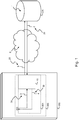
- a service worker 10 is supported by a client web application 301 comprised in a client web browser 300 running on a client device 302.
- the client device 302 may be a computer, a tablet, a smartphone or any other computing device provided with internet connectivity.
- Media 1 such as for example audio and/or video is stored and/or available on a remote server 200.
- the client web browser 300 supports an operating streaming protocol 30.
- the client web browser 300 is configured to stream media 1 from the remote server 200 over a communication network 6 such as for example the internet.
- the service worker 10 intercepts data communications 2;3 between the remote server 200 and the client web browser 300 for streaming the media 1 in the client web browser 300.
- the service worker 10 further converts the data communications 2;3 into and respectively from the operating streaming protocol 30 when the data communications 2;3 are implemented in a native streaming protocol 20 different from the operating streaming protocol 30 of the client web browser 300, thereby allowing the media 1 to be streamed in the client web browser 300. More particularly, the service worker 10 intercepts a request 3 generated in the operating streaming protocol 30 to stream the media 1 in the client web browser 300. The service worker 10 then converts the request 3 generated in the operating streaming protocol 30 into a native streaming protocol 20 different from the operating streaming protocol 30 of the client web browser 300 when the request 3 is not generated in a native streaming protocol that can be interpreted by the remote server 200, thereby generating a converted request 5 for streaming the media 1.
- the service worker 10 then transmits the converted request 5 to the remote server 200 on which the media 1 is stored.
- the converted request 5 is implemented in a native streaming protocol 20 which can be interpreted by the remote server 200.
- a response 2 to the converted request 5 to stream the media 1 from the remote server 200 in the client web browser 300 is generated.
- the service worker 10 intercepts the response 2 to the converted request 5 to stream the media 1 from the remote server 200 in the client web browser 300.
- the service worker 10 converts the response 2 into the operating streaming protocol 30 of the client web browser 300 when the response 2 is implemented in a native streaming protocol 20 different from the operating streaming protocol 30 of the client web browser 300, thereby generating a converted response 4.
- the server worker 10 then transmits the converted response 4 to the client web browser 300, thereby allowing the media 1 to be streamed in the client web browser 300.
- An operating streaming protocol of the client web browser 300 is for example a HTTP Live Streaming protocol.
- a native streaming protocol is for example one or more of the following: MPEG DASH, Adobe HTTP HDS Dynamic Streaming, Smooth Streaming from Microsoft, Real-Time Messaging Protocol or RTMP.
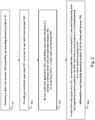
- the method comprises step 401 of providing a client web browser 300 supporting an operating streaming protocol 30.
- An operating streaming protocol of the client web browser 300 is for example a HTTP Live Streaming protocol.
- the method further comprises step 402 which comprises providing a client web application 301 comprised in the client web browser 300.
- the method further comprises intercepting, in the client web application 301, data communications 2;3 between a remote server 200 on which media 1 is stored or available and the client browser 300 for streaming media 1 in the client web browser 300.
- step 404 the method further comprises converting, in the client web application 301, the data communications 2;3 into and respectively from the operating streaming protocol 30 when the data communications 2;3 are implemented in a native streaming protocol 20 different from the operating streaming protocol 30 of the client web browser 300.
- a native streaming protocol is for example one or more of the following: MPEG DASH, Adobe HTTP HDS Dynamic Streaming, Smooth Streaming from Microsoft, Real-Time Messaging Protocol or RTMP.
- step 403 comprises intercepting a request 3 generated in the operating streaming protocol 30 to stream the media 1 in the client web browser 300.
- step 404 comprises converting the request 3 into a native streaming protocol 20 different from the operating streaming protocol of the client web browser 300, wherein the native streaming protocol 20 can be interpreted by the remote server 200, thereby generating a converted request to stream the media 1 in the client web browser 300 and further comprises transmitting the converted request to the remote server 200.
- step 403 comprises intercepting a response 2 to the request 3 to stream the media 1 in the client web browser 300
- step 404 comprises converting the response 2 into the operating streaming protocol 30 of the client web browser 300 when the response 2 is implemented in a native streaming protocol 20 different from the operating streaming protocol of the client web browser 300, thereby generating a converted response to the request 3 to stream the media 1 in the client web browser 300 and further comprises transmitting the converted response to the client web browser, thereby allowing the media 1 to be streamed in the client web browser 300.
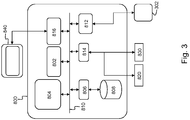
- Fig. 3 shows a suitable computing system 800 enabling the performance of the described steps according to the various embodiments.
- Computing system 800 may in general be formed as a suitable general-purpose computer and comprise a bus 810, a processor 802, a local memory 804, one or more optional input interfaces 814, one or more optional output interfaces 816, a communication interface 812, a storage element interface 806, and one or more storage elements 808.
- Bus 810 may comprise one or more conductors that permit communication among the components of the computing system 800.
- Processor 802 may include any type of conventional processor or microprocessor that interprets and executes programming instructions.
- Local memory 804 may include a random-access memory (RAM) or another type of dynamic storage device that stores information and instructions for execution by processor 802 and/or a read only memory (ROM) or another type of static storage device that stores static information and instructions for use by processor 802.
- Input interface 814 may comprise one or more conventional mechanisms that permit an operator or user to input information to the computing device 800, such as a keyboard 820, a mouse 830, a pen, voice recognition and/or biometric mechanisms, a camera, etc.
- Output interface 816 may comprise one or more conventional mechanisms that output information to the operator or user, such as a display 840, etc.
- Communication interface 812 may comprise any transceiver-like mechanism such as for example one or more Ethernet interfaces that enables computing system 800 to communicate with other devices and/or systems, for example with other computing devices 302.
- the communication interface 812 of computing system 800 may be connected to such another computing system by means of a local area network (LAN) or a wide area network (WAN) such as for example the internet.
- Storage element interface 806 may comprise a storage interface such as for example a Serial Advanced Technology Attachment (SATA) interface or a Small Computer System Interface (SCSI) for connecting bus 810 to one or more storage elements 808, such as one or more local disks, for example SATA disk drives, and control the reading and writing of data to and/or from these storage elements 808.
- SATA Serial Advanced Technology Attachment
- SCSI Small Computer System Interface
- computing system 500 could thus correspond to the circuitry for executing the steps of the media client 302.
- circuitry may refer to one or more or all of the following:
- circuitry also covers an implementation of merely a hardware circuit or processor (or multiple processors) or portion of a hardware circuit or processor and its (or their) accompanying software and/or firmware.
- circuitry also covers, for example and if applicable to the particular claim element, a baseband integrated circuit or processor integrated circuit for a mobile device or a similar integrated circuit in a server, a cellular network device, or other computing or network device.
- top, bottom, over, under, and the like are introduced for descriptive purposes and not necessarily to denote relative positions. It is to be understood that the terms so used are interchangeable under appropriate circumstances and embodiments of the invention are capable of operating according to the present invention in other sequences, or in orientations different from the one(s) described or illustrated above.
Landscapes
- Engineering & Computer Science (AREA)
- Multimedia (AREA)
- Computer Networks & Wireless Communication (AREA)
- Signal Processing (AREA)
- Computer Security & Cryptography (AREA)
- Information Transfer Between Computers (AREA)
Priority Applications (3)
| Application Number | Priority Date | Filing Date | Title |
|---|---|---|---|
| EP19187357.9A EP3767965A1 (fr) | 2019-07-19 | 2019-07-19 | Application web client avec convertisseur de protocole de flux continu intégré |
| PCT/EP2020/069331 WO2021013557A1 (fr) | 2019-07-19 | 2020-07-09 | Application web client avec convertisseur de protocole de diffusion en continu intégré |
| US17/625,612 US20220263882A1 (en) | 2019-07-19 | 2020-07-09 | A service worker and the related method |
Applications Claiming Priority (1)
| Application Number | Priority Date | Filing Date | Title |
|---|---|---|---|
| EP19187357.9A EP3767965A1 (fr) | 2019-07-19 | 2019-07-19 | Application web client avec convertisseur de protocole de flux continu intégré |
Publications (1)
| Publication Number | Publication Date |
|---|---|
| EP3767965A1 true EP3767965A1 (fr) | 2021-01-20 |
Family
ID=67438211
Family Applications (1)
| Application Number | Title | Priority Date | Filing Date |
|---|---|---|---|
| EP19187357.9A Ceased EP3767965A1 (fr) | 2019-07-19 | 2019-07-19 | Application web client avec convertisseur de protocole de flux continu intégré |
Country Status (3)
| Country | Link |
|---|---|
| US (1) | US20220263882A1 (fr) |
| EP (1) | EP3767965A1 (fr) |
| WO (1) | WO2021013557A1 (fr) |
Cited By (2)
| Publication number | Priority date | Publication date | Assignee | Title |
|---|---|---|---|---|
| EP4216555A1 (fr) * | 2022-01-24 | 2023-07-26 | THEO Technologies | Procédé mis en ouvre par ordinateur pour le traitement de requêtes et de réponses de transmission en continu |
| US20250141947A1 (en) * | 2023-10-30 | 2025-05-01 | Microsoft Technology Licensing, Llc | Media server proxy that switches streaming media protocols |
Citations (5)
| Publication number | Priority date | Publication date | Assignee | Title |
|---|---|---|---|---|
| GB2330502A (en) * | 1997-08-28 | 1999-04-21 | Ibm | Client-side asynchronous form management |
| US20120151080A1 (en) * | 2010-12-14 | 2012-06-14 | of California | Media Repackaging Systems and Software for Adaptive Streaming Solutions, Methods of Production and Uses Thereof |
| US8719437B1 (en) * | 2009-08-13 | 2014-05-06 | Avvasi Inc. | Enabling streaming to a media player without native streaming support |
| US20150288736A1 (en) * | 2014-04-03 | 2015-10-08 | Cisco Technology Inc. | Method for Enabling Use of HLS as a Common Intermediate Format |
| US20150382034A1 (en) * | 2014-06-27 | 2015-12-31 | Satellite Technologies, Llc | Method and system for real-time transcoding of mpeg-dash on-demand media segments while in transit from content host to dash client |
Family Cites Families (6)
| Publication number | Priority date | Publication date | Assignee | Title |
|---|---|---|---|---|
| US6542967B1 (en) * | 1999-04-12 | 2003-04-01 | Novell, Inc. | Cache object store |
| US8243924B2 (en) * | 2007-06-29 | 2012-08-14 | Google Inc. | Progressive download or streaming of digital media securely through a localized container and communication protocol proxy |
| US9819762B2 (en) * | 2015-06-26 | 2017-11-14 | Cloudflare, Inc. | Method and apparatus for reducing loading time of web pages |
| US10735375B2 (en) * | 2017-06-28 | 2020-08-04 | Sap Se | Web application security with service worker |
| US10999399B2 (en) * | 2017-08-02 | 2021-05-04 | Sap Se | Offline use of network application |
| US10416992B2 (en) * | 2017-09-27 | 2019-09-17 | Whatsapp Inc. | Techniques for web application updates |
-
2019
- 2019-07-19 EP EP19187357.9A patent/EP3767965A1/fr not_active Ceased
-
2020
- 2020-07-09 US US17/625,612 patent/US20220263882A1/en active Pending
- 2020-07-09 WO PCT/EP2020/069331 patent/WO2021013557A1/fr not_active Ceased
Patent Citations (5)
| Publication number | Priority date | Publication date | Assignee | Title |
|---|---|---|---|---|
| GB2330502A (en) * | 1997-08-28 | 1999-04-21 | Ibm | Client-side asynchronous form management |
| US8719437B1 (en) * | 2009-08-13 | 2014-05-06 | Avvasi Inc. | Enabling streaming to a media player without native streaming support |
| US20120151080A1 (en) * | 2010-12-14 | 2012-06-14 | of California | Media Repackaging Systems and Software for Adaptive Streaming Solutions, Methods of Production and Uses Thereof |
| US20150288736A1 (en) * | 2014-04-03 | 2015-10-08 | Cisco Technology Inc. | Method for Enabling Use of HLS as a Common Intermediate Format |
| US20150382034A1 (en) * | 2014-06-27 | 2015-12-31 | Satellite Technologies, Llc | Method and system for real-time transcoding of mpeg-dash on-demand media segments while in transit from content host to dash client |
Non-Patent Citations (1)
| Title |
|---|
| ANONYMOUS: "Progressive web app - Wikipedia", 15 July 2019 (2019-07-15), pages 1 - 6, XP093116505, Retrieved from the Internet <URL:https://en.wikipedia.org/w/index.php?title=Progressive_web_app&oldid=906384401> [retrieved on 20240108] * |
Cited By (3)
| Publication number | Priority date | Publication date | Assignee | Title |
|---|---|---|---|---|
| EP4216555A1 (fr) * | 2022-01-24 | 2023-07-26 | THEO Technologies | Procédé mis en ouvre par ordinateur pour le traitement de requêtes et de réponses de transmission en continu |
| US20250141947A1 (en) * | 2023-10-30 | 2025-05-01 | Microsoft Technology Licensing, Llc | Media server proxy that switches streaming media protocols |
| US12477026B2 (en) * | 2023-10-30 | 2025-11-18 | Microsoft Technology Licensing, Llc | Media server proxy that switches streaming media protocols |
Also Published As
| Publication number | Publication date |
|---|---|
| US20220263882A1 (en) | 2022-08-18 |
| WO2021013557A1 (fr) | 2021-01-28 |
Similar Documents
| Publication | Publication Date | Title |
|---|---|---|
| US11336910B2 (en) | Method and system for implementing split and parallelized encoding or transcoding of audio and video content | |
| EP2957103B1 (fr) | Distribution de vidéo basée sur le nuage | |
| KR101942269B1 (ko) | 웹 브라우저에서 미디어를 재생하고 탐색하는 장치 및 방법 | |
| US11089349B2 (en) | Apparatus and method for playing back and seeking media in web browser | |
| US9807146B2 (en) | System and method for providing cloud based user interfaces | |
| US20170245022A1 (en) | Splicing method and splicing system for http live streaming media fragment | |
| US9654809B2 (en) | Method and system for providing live television and video-on-demand content to subscribers | |
| US20050204393A1 (en) | Home network server | |
| WO2019006185A1 (fr) | Système et procédés de services d'application en réseau orchestrés | |
| US10419798B2 (en) | Method and apparatus for just-in-time transcoding | |
| US20120151080A1 (en) | Media Repackaging Systems and Software for Adaptive Streaming Solutions, Methods of Production and Uses Thereof | |
| US9912996B2 (en) | System and method for providing cloud based user interfaces | |
| KR20180019575A (ko) | 미디어―시간이 맞춰진 웹 상호작용들 | |
| CN112449250B (zh) | 一种视频资源的下载方法、装置、设备和介质 | |
| US20220263882A1 (en) | A service worker and the related method | |
| US20140141875A1 (en) | Temporary modification for extending functionality of computer games and software applications. | |
| CN105812839B (zh) | 视频流数据获取、页面数据传输方法、系统及网络服务器 | |
| US20250379893A1 (en) | Computer implemented method for processing streaming requests and responses | |
| US20200186874A1 (en) | Media player with integrated wireless video link capability & method and system for implementing video tuning and wireless video communication | |
| US8868785B1 (en) | Method and apparatus for displaying multimedia content | |
| CN106030564A (zh) | 基于云流提供图像数据的方法及其设备和系统 | |
| US10447751B2 (en) | Parallel transcoding directly from file identifier | |
| CN116261021B (zh) | 一种视频流播放方法、装置、电子设备及存储介质 | |
| US20190158898A1 (en) | Hybrid transmission protocol | |
| EP3189666B1 (fr) | Des tetes partielles pour la configuration d'un systeme |
Legal Events
| Date | Code | Title | Description |
|---|---|---|---|
| PUAI | Public reference made under article 153(3) epc to a published international application that has entered the european phase |
Free format text: ORIGINAL CODE: 0009012 |
|
| STAA | Information on the status of an ep patent application or granted ep patent |
Free format text: STATUS: THE APPLICATION HAS BEEN PUBLISHED |
|
| AK | Designated contracting states |
Kind code of ref document: A1 Designated state(s): AL AT BE BG CH CY CZ DE DK EE ES FI FR GB GR HR HU IE IS IT LI LT LU LV MC MK MT NL NO PL PT RO RS SE SI SK SM TR |
|
| AX | Request for extension of the european patent |
Extension state: BA ME |
|
| STAA | Information on the status of an ep patent application or granted ep patent |
Free format text: STATUS: REQUEST FOR EXAMINATION WAS MADE |
|
| 17P | Request for examination filed |
Effective date: 20210720 |
|
| RBV | Designated contracting states (corrected) |
Designated state(s): AL AT BE BG CH CY CZ DE DK EE ES FI FR GB GR HR HU IE IS IT LI LT LU LV MC MK MT NL NO PL PT RO RS SE SI SK SM TR |
|
| STAA | Information on the status of an ep patent application or granted ep patent |
Free format text: STATUS: EXAMINATION IS IN PROGRESS |
|
| 17Q | First examination report despatched |
Effective date: 20220602 |
|
| P01 | Opt-out of the competence of the unified patent court (upc) registered |
Effective date: 20230515 |
|
| P02 | Opt-out of the competence of the unified patent court (upc) changed |
Effective date: 20230830 |
|
| APBK | Appeal reference recorded |
Free format text: ORIGINAL CODE: EPIDOSNREFNE |
|
| APBN | Date of receipt of notice of appeal recorded |
Free format text: ORIGINAL CODE: EPIDOSNNOA2E |
|
| APAV | Appeal reference deleted |
Free format text: ORIGINAL CODE: EPIDOSDREFNE |
|
| APBR | Date of receipt of statement of grounds of appeal recorded |
Free format text: ORIGINAL CODE: EPIDOSNNOA3E |
|
| APAF | Appeal reference modified |
Free format text: ORIGINAL CODE: EPIDOSCREFNE |
|
| RAP1 | Party data changed (applicant data changed or rights of an application transferred) |
Owner name: DOLBY INTERNATIONAL AB |
|
| APBT | Appeal procedure closed |
Free format text: ORIGINAL CODE: EPIDOSNNOA9E |
|
| STAA | Information on the status of an ep patent application or granted ep patent |
Free format text: STATUS: THE APPLICATION HAS BEEN REFUSED |
|
| 18R | Application refused |
Effective date: 20251107 |