EP3768023B1 - Procédé et terminal de transmission de données - Google Patents
Procédé et terminal de transmission de données Download PDFInfo
- Publication number
- EP3768023B1 EP3768023B1 EP20194585.4A EP20194585A EP3768023B1 EP 3768023 B1 EP3768023 B1 EP 3768023B1 EP 20194585 A EP20194585 A EP 20194585A EP 3768023 B1 EP3768023 B1 EP 3768023B1
- Authority
- EP
- European Patent Office
- Prior art keywords
- data
- time
- time resource
- terminal
- sps
- Prior art date
- Legal status (The legal status is an assumption and is not a legal conclusion. Google has not performed a legal analysis and makes no representation as to the accuracy of the status listed.)
- Active
Links
Images


Classifications
-
- H—ELECTRICITY
- H04—ELECTRIC COMMUNICATION TECHNIQUE
- H04W—WIRELESS COMMUNICATION NETWORKS
- H04W72/00—Local resource management
- H04W72/04—Wireless resource allocation
- H04W72/044—Wireless resource allocation based on the type of the allocated resource
- H04W72/0446—Resources in time domain, e.g. slots or frames
-
- H—ELECTRICITY
- H04—ELECTRIC COMMUNICATION TECHNIQUE
- H04W—WIRELESS COMMUNICATION NETWORKS
- H04W72/00—Local resource management
- H04W72/20—Control channels or signalling for resource management
- H04W72/23—Control channels or signalling for resource management in the downlink direction of a wireless link, i.e. towards a terminal
-
- H—ELECTRICITY
- H04—ELECTRIC COMMUNICATION TECHNIQUE
- H04L—TRANSMISSION OF DIGITAL INFORMATION, e.g. TELEGRAPHIC COMMUNICATION
- H04L5/00—Arrangements affording multiple use of the transmission path
- H04L5/003—Arrangements for allocating sub-channels of the transmission path
- H04L5/0053—Allocation of signalling, i.e. of overhead other than pilot signals
-
- H—ELECTRICITY
- H04—ELECTRIC COMMUNICATION TECHNIQUE
- H04W—WIRELESS COMMUNICATION NETWORKS
- H04W72/00—Local resource management
- H04W72/02—Selection of wireless resources by user or terminal
-
- H—ELECTRICITY
- H04—ELECTRIC COMMUNICATION TECHNIQUE
- H04W—WIRELESS COMMUNICATION NETWORKS
- H04W72/00—Local resource management
- H04W72/12—Wireless traffic scheduling
-
- H—ELECTRICITY
- H04—ELECTRIC COMMUNICATION TECHNIQUE
- H04W—WIRELESS COMMUNICATION NETWORKS
- H04W72/00—Local resource management
- H04W72/12—Wireless traffic scheduling
- H04W72/1263—Mapping of traffic onto schedule, e.g. scheduled allocation or multiplexing of flows
- H04W72/1268—Mapping of traffic onto schedule, e.g. scheduled allocation or multiplexing of flows of uplink data flows
-
- H—ELECTRICITY
- H04—ELECTRIC COMMUNICATION TECHNIQUE
- H04W—WIRELESS COMMUNICATION NETWORKS
- H04W72/00—Local resource management
- H04W72/20—Control channels or signalling for resource management
- H04W72/21—Control channels or signalling for resource management in the uplink direction of a wireless link, i.e. towards the network
-
- H—ELECTRICITY
- H04—ELECTRIC COMMUNICATION TECHNIQUE
- H04W—WIRELESS COMMUNICATION NETWORKS
- H04W72/00—Local resource management
- H04W72/20—Control channels or signalling for resource management
Definitions
- Embodiments of the disclosure relate to the field of communications, and more particularly to a data communication method, a terminal and a non-transitory computer-readable storage medium.
- an end-to-end transmission delay of real-time remote computing for mobile terminals is required to be shorter than 10ms
- a transmission delay of traffic efficiency and safety is required to be shorter than 5ms
- another service may require a shorter transmission delay.
- TTI Transmission Time Interval
- LTE-A Rel-13 LTE-Advanced Release 13
- a short TTI has the advantage of shortening of the transmission delay, however, at the corresponding cost of high control signaling overhead and low spectrum efficiency.
- resources may be wasted.
- the terminal may be dynamically scheduled to use different TTI lengths, that is, a short TTI is used for transmission of a short-delay service, and a conventional TTI is used when another service is transmitted. Therefore, LTE-A Rel-13 makes such a requirement that compatibility with the existing LTE system should be ensured on a carrier supporting short-TTI transmission, that is, compatibility with a 1ms TTI is required.
- an LTE system supports two different data scheduling manners, i.e., semi-persistent scheduling (SPS) and dynamic scheduling (DS), where SPS means that a base station indicates terminals scheduling information through high-layer signaling, including: a scheduling period, a physical resource location and a modulation and scheduling level, and after the base station sends Downlink Control Information (DCI) to the terminal to trigger the terminal for SPS, the terminal performs data communication on the same frequency resource at a fixed interval.
- DCI Downlink Control Information
- DS means that whenever the base station determines to perform a burst of data communication, the base station sends a piece of DCI to the terminal, and the terminal performs data communication on a corresponding time-frequency resource according to an indication of the DCI, where DS has no fixed period.
- DS and SPS correspond to the same TTI.
- time-frequency resources corresponding to DS and SPS are overlapped, since DS and SPS correspond to the same TTI, data incoming time, base station scheduling time, data processing time and the like corresponding to DS and SPS are all the same, a terminal may merge original SPS data and DS data together for communication. For example, the terminal merges all of the data for communication on the time-frequency resource corresponding to DS. That is, in an SPS transmission subframe, if the terminal receives DS, the DS data is received or sent (the base station packs the SPS data into the DS data).
- a first aspect provides a data communication method, comprising: communicating, by a terminal, first semi-persistent scheduling, SPS, data on first time resource within a time unit, wherein the time unit is a time slot, the first time resource is not overlapped with a second time resource within the time unit, the second time resource is configured for the terminal to communicate second dynamic scheduling, DS, data, the first data is transmitted at a transmission time interval, TTI, smaller than or equal to a length of the time unit, and the second data is transmitted at a TTI smaller than or equal to the length of the time unit.
- a second aspect provides a data communication method, comprising: communicating, by a terminal, first semi-persistent scheduling, SPS, data on first time resource within a time unit, but not transmitting second dynamic scheduling, DS, data, wherein the time unit is a time slot, the first time resource is overlapped with a second time resource within the time unit, the second time resource is configured for the terminal to communicate the second DS data, the first data is transmitted at a transmission time interval, TTI, smaller than or equal to a length of the time unit, and the second data is transmitted at a TTI smaller than or equal to the length of the time unit.
- a third aspect provides a terminal, comprising: a transceiver, configured to communicate first semi-persistent scheduling, SPS, data on first time resource within a time unit, wherein the time unit is a time slot, the first time resource is not overlapped with a second time resource within the time unit, the second time resource is configured for the terminal to communicate second dynamic scheduling, DS, data, the first data is transmitted at a transmission time interval, TTI, smaller than or equal to a length of the time unit, and the second data is transmitted at a TTI smaller than or equal to the length of the time unit.
- a fourth aspect provides a terminal, comprising: a transceiver, configured to communicate first semi-persistent scheduling, SPS, data on first time resource within a time unit, but not transmit second dynamic scheduling, DS, data, wherein the time unit is a time slot, the first time resource is overlapped with a second time resource within the time unit, the second time resource is configured for the terminal to communicate the second DS data, the first data is transmitted at a transmission time interval, TTI, smaller than or equal to a length of the time unit, and the second data is transmitted at a TTI smaller than or equal to the length of the time unit.
- TTI transmission time interval
- the terminal supports communication with different TTIs
- the base station indicates the terminal to communicate the first SPS data at the first TTI and communicate the second DS data at the second TTI on the target time unit of the target carrier
- at least one of the first data or the second data is determined to be communicated according to the respective locations of the first time resource occupied for SPS transmission and the second time resource occupied for DS transmission in the target time unit, so that DS and SPS under different TTIs are implemented.
- a part may be, but not limited to, a process running on a processor, the processor, an object, an executable file, an execution thread, a program and/or a computer. It is graphically represented that all applications running on computing equipment and the computing equipment may be parts. One or more parts may reside in a process and/or an execution thread, and the parts may be located on a computer and/or distributed between two or more computers. In addition, these parts may be executed from various computer-readable media on which various data structures are stored.
- the parts may communicate through local and/or remote processes according to, for example, signals with one or more data groups (for example, data from two parts interacting with each other in a local system, a distributed system and/or a network, for example, the Internet interacting with another system through a signal).
- data groups for example, data from two parts interacting with each other in a local system, a distributed system and/or a network, for example, the Internet interacting with another system through a signal.
- GSM Global System of Mobile Communication
- CDMA Code Division Multiple Access
- WCDMA Wideband CDMA
- GPRS General Packet Radio Service
- LTE LTE
- FDD Frequency Division Duplex
- TDD Time Division Duplex
- UMTS Universal Mobile Telecommunication System
- WiMAX Worldwide Interoperability for Microwave Access
- the terminal may communicate with one or more core networks through a Radio Access Network (RAN), and the terminal may refer to User Equipment (UE), an access terminal, a user unit, a subscriber station, a mobile radio station, a mobile station, a remote station, a remote terminal, mobile equipment, a user terminal, a terminal, wireless communication equipment, a user agent or a user device.
- RAN Radio Access Network
- UE User Equipment
- the access terminal may be a cellular telephone, a cordless telephone, a Session Initiation Protocol (SIP) telephone, a Wireless Local Loop (WLL) station, a Personal Digital Assistant (PDA), handheld equipment with a wireless communication function, computing equipment, or other processing equipment connected to a wireless modem, vehicle-mounted equipment, wearable equipment, a terminal in a future 5G network and the like.
- SIP Session Initiation Protocol
- WLL Wireless Local Loop
- PDA Personal Digital Assistant
- the base station may be equipment configured to communicate with the terminal, and for example, may be a Base Transceiver Station (BTS) in a GSM or CDMA, may also be a NodeB (NB) in a WCDMA system, and may further be an Evolutional Node B (eNB or eNodeB) in an LTE system.
- BTS Base Transceiver Station
- NB NodeB
- eNB Evolutional Node B
- the base station may be a relay station, an access point, vehicle-mounted equipment, wearable equipment, network-side equipment in the future 5G network and the like.
- Typical transmission delays for Downlink (DL) transmission in Release 8 (Rel 8) and Release 9 (Rel 9) of an LTE system are listed in Table 1.
- Delays generated by processes incoming data and data decoding in UE are mainly related to a length of a TTI. Therefore, one of key technologies for reducing the transmission delay is shortening the TTI.
- the length of a TTI is 1ms, and LTE-A Rel-13 has determined to start making researches on data transmission with a shorter TTI.
- a short TTI has the advantage of shortening of the transmission delay, however, at the corresponding cost of high control signaling overhead and low spectrum efficiency.
- resources may be wasted.
- the terminal may be dynamically scheduled to use different TTI lengths, that is, a short TTI is used for transmission of a short-delay service, and a conventional TTI is used when another service is transmitted. Therefore, LTE-A Rel-13 makes such a requirement that compatibility with the existing LTE system should be ensured on a carrier supporting short-TTI transmission, that is, compatibility with a 1ms TTI is required.
- an LTE system supports two different data scheduling manners, i.e., Semi-Persistent Scheduling (SPS) and dynamic scheduling (DS), where SPS means that a base station indicates terminals scheduling information through high-layer signaling, including: a scheduling period, a physical resource location and a modulation and scheduling level, and after the base station sends Downlink Control Information (DCI) to the terminal to trigger the terminal for SPS, the terminal performs data communication on the same frequency resource at a fixed interval.
- SPS Semi-Persistent Scheduling
- DS dynamic scheduling
- DS means that whenever the base station determines to perform a burst of data communication, the base station sends a piece of DCI to the terminal, and the terminal performs data communication on a corresponding time-frequency resource according to an indication of the DCI, where DS has no fixed period.
- DS and SPS correspond to the same TTI.
- time-frequency resources corresponding to DS and SPS are overlapped, since DS and SPS correspond to the same TTI, data incoming time, base station scheduling time, data processing time and the like corresponding to DS and SPS are all the same, a terminal may merge original SPS data and DS data together for communication. For example, the terminal merges all of the data for communication on the time-frequency resource corresponding to DS. That is, in an SPS transmission subframe, if the terminal receives DS, the DS data is received or sent (the base station packs the SPS data into the DS data).
- the embodiments of the disclosure provide a mechanism to implement data communication in the LTE system when DS and SPS correspond to different TTIs.
- a time unit may be a frame, a subframe, a timeslot or a symbol.
- the time unit may be a subframe.
- a target time unit is called as a target subframe.
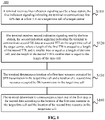
- FIG. 1 illustrates a data communication method 100 according to the disclosure.
- the method 100 includes the following operations.
- a terminal receives first indication signaling sent by a base station.
- the first indication signaling indicates the terminal to communicate first SPS data at a first TTI on a target time unit of a target carrier.
- the terminal receives second indication signaling sent by the base station.
- the second indication signaling indicates the terminal to communicate second DS data at a second TTI on the target time unit of the target carrier.
- a length of the first TTI is unequal to a length of the second TTI, moreover, the length of the first TTI is smaller than or equal to a length of the time unit, and the length of the second TTI is smaller than or equal to the length of the time unit.
- the terminal determines a location of a first time resource occupied by SPS transmission in the target time unit and a location of a second time resource occupied by DS transmission in the target time unit.
- the terminal determines to communicate at least one of the first data or the second data according to the location of the first time resource in the target time unit and the location of the second time resource in the target time unit.
- the terminal executing the method 100 may support communication with TTIs of different lengths.
- the base station sends the first indication signaling to the terminal, the first indication signaling indicating the terminal to perform SPS.
- the terminal performs data communication on the same frequency resource at a fixed interval. Therefore, the terminal performs SPS data communication on some time-frequency resources at fixed locations.
- one of these fixed time-frequency resources, in the frequency domain corresponds to the target carrier, and in the time domain, corresponds to a target subframe.
- the terminal occupies the first time resource in the target subframe to communicate the first SPS data at the first TTI on the target subframe of the target carrier.
- the first indication signaling is DCI
- the first DCI includes information indicative of the target carrier and the target subframe.
- the terminal determines the specific location of the first time resource occupied by SPS transmission in the target subframe.
- the base station sends the second indication signaling to the terminal, the second indication signaling indicating the terminal to communicate the second DS data at the second TTI on the target subframe of the target carrier.
- the terminal receives the second indication signaling of the base station.
- the indication signaling is DCI
- the DCI includes information indicative of the target carrier and the target subframe.
- the terminal determines the location of the second time resource occupied by DS transmission in the target subframe.
- the length of the first TTI is unequal to the length of the second TTI, moreover, the length of the first TTI is smaller than or equal to the length of the time unit (the subframe), and the length of the second TTI is smaller than or equal to the length of the time unit (the subframe).
- the terminal controls communication of the first data and the second data, or, in other words, determines to communicate at least one of the first data or the second data according to the location of the first time resource occupied by the first SPS data in the target subframe and the location of the second time resource occupied by the second DS data in the target subframe.
- communication of the first SPS data includes sending of a first SPS scheduling PUSCH, and here, the first SPS PUSCH is called as an SPS-PUSCH for short.
- Communication of the second DS data includes sending of a second DS PUSCH, and here, the second DS PUSCH is called as a dyn-PUSCH.
- communication of the first SPS data includes reception of a first SPS PDSCH, and here, the first SPS PDSCH is called as an SPS-PDSCH for short.
- Communication of the second DS data includes reception of a second DS PDSCH, and here, the second DS PDSCH is called as a dyn-PDSCH for short.
- the terminal supports communication with different TTIs
- the base station indicates the terminal to communicate the first SPS data at the first TTI and communicate the second DS data at the second TTI on the target time unit of the target carrier
- at least one of the first data or the second data is determined to be communicated according to the respective locations of the first time resource occupied for SPS transmission and the second time resource occupied for DS transmission in the target time unit, so that DS and SPS at different TTIs are implemented.
- the target subframe may include time resources occupied to transmit PDCCHs and time resources occupied to transmit data, and both the first time resource and the second time resource belong to time resources occupied to transmit data.
- the length of the first TTI is 1ms, and the length of the second TTI is smaller than 1ms.
- the operation that the terminal determines to communicate at least one of the first data or the second data according to the location of the first time resource in the target time unit and the location of the second time resource in the target time unit in S140 includes that: when the first time resource and the second time resource are overlapped in the target time unit, the terminal determines only to occupy the first time resource to communicate the first data.
- a schematic diagram of data communication according to the embodiment is illustrated in FIG. 2 .
- the length of the first TTI is 1ms (that is, an existing TTI is adopted for communication of the SPS-PUSCH/SPS-PDSCH), and the SPS-PUSCH/SPS-PDSCH is specifically communicated on the first time resource.
- the base station dynamically schedules the terminal to occupy the second time resource to communicate the dyn-PUSCH/dyn-PDSCH at the second TTI (the length of the second TTI is smaller than 1ms) in the target subframe of the target carrier.
- the terminal determines the locations of the first time resource and the second time resource. When the first time resource and the second time resource are overlapped in the target subframe, the terminal only occupies the first time resource to communicate the SPS-PUSCH/SPS-PDSCH, and does not communicate the dyn-PUSCH/dyn-PDSCH.
- the length of the first TTI is 1ms, and the length of the second TTI is smaller than 1ms.
- the operation that the terminal determines to communicate at least one of the first data or the second data according to the location of the first time resource in the target time unit and the location of the second time resource in the target time unit in S140 includes that: when the first time resource and the second time resource are overlapped in the target time unit and a starting time location of the first time resource is the same as a starting time location of the second time resource, the terminal determines only to occupy the second time resource to communicate the second data.
- the starting time location of the second time resource may only be the same as the starting time location of the first time resource or after the starting time location of the first time resource.
- the condition that the starting time location of the first time resource is the same as the starting time location of the second time resource is discussed in this embodiment.
- a schematic diagram of data communication according to the embodiment is illustrated in FIG. 3 .
- the length of the first TTI is 1ms (that is, the existing TTI is adopted for communication of the SPS-PUSCH/SPS-PDSCH), and the SPS-PUSCH/SPS-PDSCH is specifically communicated on the first time resource.
- the base station dynamically schedules the terminal to occupy the second time resource to communicate the dyn-PUSCH/dyn-PDSCH at the second TTI (the length of the second TTI is smaller than 1ms) in the target subframe of the target carrier.
- the terminal determines the locations of the first time resource and the second time resource.
- the terminal When the starting time location of the second time resource is the same as the starting time location of the time resource occupied for data communication and the first time resource and the second time resource are overlapped in the target subframe, the terminal only occupies the second time resource to communicate the dyn-PUSCH/dyn-PDSCH, and does not communicate the SPS-PUSCH/SPS-PDSCH.
- the length of the first TTI is 1ms, and the length of the second TTI is smaller than 1ms.
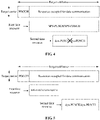
- the operation that the terminal determines to communicate at least one of the first data or the second data according to the location of the first time resource in the target time unit and the location of the second time resource in the target time unit in S140 includes that: when the first time resource and the second time resource are overlapped in the target time unit and the starting time location of the second time resource is after the starting time location of the first time resource, the terminal determines only to occupy the first time resource to communicate the first data.
- a schematic diagram of data communication according to the disclosure is illustrated in FIG. 4 .
- the length of the first TTI is 1ms (that is, the existing TTI is adopted for communication of the SPS-PUSCH/SPS-PDSCH), and the SPS-PUSCH/SPS-PDSCH is specifically communicated on the first time resource.
- the base station dynamically schedules the terminal to occupy the second time resource to communicate the dyn-PUSCH/dyn-PDSCH at the second TTI (the length of the second TTI is smaller than 1ms) in the target subframe of the target carrier.
- the terminal determines the locations of the first time resource and the second time resource.
- the terminal When the starting time location of the second time resource is after the starting time location of the time resource occupied for data communication and the first time resource and the second time resource are overlapped in the target subframe, the terminal only occupies the first time resource to communicate the SPS-PUSCH/SPS-PDSCH, and does not communicate the dyn-PUSCH/dyn-PDSCH.
- the length of the first TTI is smaller than 1ms, and the length of the second TTI is smaller than 1ms.
- the operation that the terminal determines to communicate at least one of the first data or the second data according to the location of the first time resource in the target time unit and the location of the second time resource in the target time unit in S140 includes that: when the first time resource and the second time resource are not overlapped in the target time unit, the terminal determines to occupy the first time resource to communicate the first data and occupy the second time resource to communicate the second data.
- a schematic diagram of data communication according to the disclosure is illustrated in FIG. 5 .
- the length of the first TTI is 1ms
- the SPS-PUSCH/SPS-PDSCH is specifically communicated on the first time resource.
- the base station dynamically schedules the terminal to occupy the second time resource to communicate the dyn-PUSCH/dyn-PDSCH at the second TTI (the length of the second TTI is smaller than 1ms) on the target subframe of the target carrier.
- the terminal determines the locations of the first time resource and the second time resource.
- the terminal occupies the first time resource to communicate the SPS-PUSCH/SPS-PDSCH, and the terminal occupies the second time resource to communicate the dyn-PUSCH/dyn-PDSCH.
- the length of the first TTI is smaller than 1ms, and the length of the second TTI is smaller than 1ms.
- the operation that the terminal determines to communicate at least one of the first data or the second data according to the location of the first time resource in the target time unit and the location of the second time resource in the target time unit in S140 includes that: when the first time resource and the second time resource are overlapped in the target time unit, the terminal determines only to occupy the first time resource to communicate the first data.
- a schematic diagram of data communication according to the disclosure is illustrated in FIG. 6 .
- the length of the first TTI is smaller than 1ms, and the SPS-PUSCH/SPS-PDSCH is specifically communicated on the first time resource.
- the base station dynamically schedules the terminal to occupy the second time resource to communicate the dyn-PUSCH/dyn-PDSCH at the second TTI (the length of the second TTI is smaller than 1ms) in the target subframe of the target carrier.
- the terminal determines the locations of the first time resource and the second time resource. When the first time resource and the second time resource are overlapped in the target subframe, the terminal only occupies the first time resource to communicate theSPS-PUSCH/SPS-PDSCH, and does not communicate the dyn-PUSCH/dyn-PDSCH.
- the length of the first TTI is smaller than 1ms
- the length of the second TTI is smaller than 1ms.
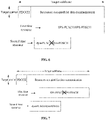
- the operation that the terminal determines to communicate at least one of the first data or the second data according to the location of the first time resource in the target time unit and the location of the second time resource in the target time unit in S140 includes that: when the first time resource and the second time resource are overlapped in the target time unit and the starting time location of the first time resource is after the starting time location of the second time resource, the terminal determines only to occupy the second time resource to communicate the second data.
- a schematic diagram of data communication according to the disclosure is illustrated in FIG. 7 .
- the length of the first TTI is smaller than 1ms, and the SPS-PUSCH/SPS-PDSCH is specifically communicated on the first time resource.
- the base station dynamically schedules the terminal to occupy the second time resource to communicate the dyn-PUSCH/dyn-PDSCH at the second TTI (the length of the second TTI is smaller than 1ms) in the target subframe of the target carrier.
- the terminal determines the locations of the first time resource and the second time resource.
- the terminal When the first time resource and the second time resource are overlapped in the target subframe and the starting time location of the first time resource is after the starting time location of the second time resource, the terminal only occupies the second time resource to communicate the dyn-PUSCH/dyn-PDSCH, and does not communicate the SPS-PUSCH/SPS-PDSCH.
- the length of the first TTI is smaller than 1ms, and the length of the second TTI is smaller than 1ms.
- the operation that the terminal determines to communicate at least one of the first data or the second data according to the location of the first time resource in the target time unit and the location of the second time resource in the target time unit in S140 includes that: when the first time resource and the second time resource are overlapped in the target time unit and the starting time location of the second time resource is after the starting time location of the first time resource, the terminal determines only to occupy the first time resource to communicate the first data.
- FIG. 8 A schematic diagram of data communication according to the disclosure is illustrated in FIG. 8 .
- the length of the first TTI is smaller than 1ms, and the SPS-PUSCH/SPS-PDSCH is specifically communicated on the first time resource.
- the base station dynamically schedules the terminal to occupy the second time resource to communicate the dyn-PUSCH/dyn-PDSCH at the second TTI (the length of the second TTI is smaller than 1ms) in the target subframe of the target carrier.
- the terminal determines the locations of the first time resource and the second time resource.
- the terminal When the first time resource and the second time resource are overlapped in the target subframe and the starting time location of the second time resource is after the starting time location of the first time resource, the terminal only occupies the first time resource to communicate the SPS-PUSCH/SPS-PDSCH, and does not communicate the dyn-PUSCH/dyn-PDSCH.
- FIG. 9 illustrates a schematic block diagram of a terminal 200 according to the disclosure.
- the terminal 200 includes a receiving module 210 and a processing module 220.
- the receiving module 210 may be configured to receive first indication signaling sent by a base station, the first indication signaling indicating the terminal to communicate first SPS data at a first TTI on a target time unit of a target carrier.
- the receiving module 210 may be further configured to receive second indication signaling sent by the base station, the second indication signaling indicating the terminal to communicate second DS data at a second TTI on the target time unit of the target carrier, where a length of the first TTI is unequal to a length of the second TTI, the length of the first TTI is smaller than or equal to a length of the time unit, and the length of the second TTI is smaller than or equal to the length of the time unit.
- the processing module 220 may be configured to determine a location of a first time resource occupied by SPS transmission in the target time unit and a location of a second time resource occupied by DS transmission in the target time unit.
- the processing module 220 may further be configured to determine to communicate at least one of the first data or the second data according to the location of the first time resource in the target time unit and the location of the second time resource in the target time unit.
- the terminal supports communication at different TTIs
- the base station indicates the terminal to communicate the first SPS data at the first TTI and communicate the second DS data at the second TTI on the target time unit of the target carrier, and at least one of the first data or the second data is determined to be communicated according to the respective locations of the first time resource occupied for SPS transmission and the second time resource occupied for DS transmission in the target time unit, so that DS and SPS at respective different TTIs are implemented.
- communication of the first SPS data includes sending of a first SPS scheduling PUSCH, and communication of the second DS data includes sending of a second DS PUSCH; or communication of the first SPS data includes reception of a first SPS PDSCH, and communication of the second DS data includes reception of a second DS PDSCH.
- the time unit may be a subframe
- the processing module 220 may specifically be configured to, when the first time resource and the second time resource are overlapped in the target time unit, determine, by the terminal, only to occupy the first time resource to communicate the first data.
- the processing module 220 may specifically be configured to, when the first time resource and the second time resource are overlapped in the target time unit and a starting time location of the first time resource is the same as a starting time location of the second time resource or the starting time location of the first time resource is after the starting time location of the second time resource, determine, by the terminal, only to occupy the second time resource to communicate the second data.
- the processing module 220 may specifically be configured to, when the first time resource and the second time resource are overlapped in the target time unit and the starting time location of the second time resource is after the starting time location of the first time resource, determine, by the terminal, only to occupy the first time resource to communicate the first data.
- the processing module 220 may specifically be configured to, when the first time resource and the second time resource are not overlapped in the target time unit, determine, by the terminal, to occupy the first time resource to communicate the first data and occupy the second time resource to communicate the second data.
- a terminal 300 may include a processor 310, a transceiver 320 and a memory 330, wherein the memory 330 may be configured to store a code executed by the processor 310 and the like.
- the components in the terminal 300 are coupled together through a bus system 340, where the bus system 340 includes a data bus, and further includes a power bus, a control bus and a state signal bus.
- the bus system 340 includes a data bus, and further includes a power bus, a control bus and a state signal bus.
- the terminal 200 illustrated in FIG. 9 and the terminal 300 illustrated in FIG. 10 may implement each process implemented in the disclosure in FIG. 1 to FIG. 8 , which will not be elaborated herein to avoid repetition.
- the method of the disclosure may be applied to a processor or implemented by the processor.
- the processor may be an integrated circuit chip with a signal processing capability. In an implementation process, each step of the method embodiments may be completed by an integrated logical circuit of hardware in the processor or an instruction in a software form.
- the processor may be a universal processor, a Digital Signal Processor (DSP), an Application Specific Integrated Circuit (ASIC), a Field Programmable Gate Array (FPGA) or another programmable logical device, discrete gate or transistor logical device and discrete hardware component.
- DSP Digital Signal Processor
- ASIC Application Specific Integrated Circuit
- FPGA Field Programmable Gate Array
- Each method, step and logical block diagram disclosed in the embodiments of the disclosure may be implemented or executed.
- the universal processor may be a microprocessor or the processor may also be any conventional processor and the like.
- the operations of the method disclosed in combination with the embodiments of the disclosure may be directly embodied to be executed and completed by a hardware decoding processor or executed and completed by a combination of hardware and software modules in the decoding processor.
- the software module may be located in a mature storage medium in this field such as a Random Access Memory (RAM), a flash memory, a Read-Only Memory (ROM), a Programmable ROM (PROM) or Electrically Erasable PROM (EEPROM) and a register.
- RAM Random Access Memory
- ROM Read-Only Memory
- PROM Electrically Erasable PROM
- the storage medium is located in a memory, and the processor reads information in the memory, and completes the operations of the methods in combination with hardware.
- the memory in the disclosure may be a volatile memory or a nonvolatile memory, or may include both the volatile and nonvolatile memories, wherein the nonvolatile memory may be a ROM, a PROM, an Erasable PROM (EPROM), an EEPROM or a flash memory.
- the volatile memory may be a RAM, and is used as an external high-speed cache.
- RAMs in various forms may be adopted, such as a Static RAM (SRAM), a Dynamic RAM (DRAM), a Synchronous DRAM (SDRAM), a Double Data Rate SDRAM (DDRSDRAM), an Enhanced SDRAM (ESDRAM), a Synchlink DRAM (SLDRAM) and a Direct Rambus RAM (DR RAM).
- SRAM Static RAM
- DRAM Dynamic RAM
- SDRAM Synchronous DRAM
- DDRSDRAM Double Data Rate SDRAM
- ESDRAM Enhanced SDRAM
- SLDRAM Synchlink DRAM
- DR RAM Direct Rambus RAM
- the disclosed system, device and method may be implemented in another manner.
- the device embodiment described above is only schematic, and for example, division of the units is only logic function division, and other division manners may be adopted during practical implementation.
- multiple units or components may be combined or integrated into another system, or some characteristics may be neglected or not executed.
- coupling or direct coupling or communication connection between each displayed or discussed component may be indirect coupling or communication connection, implemented through some interfaces, of the device or the units, and may be electrical and mechanical or adopt other forms.
- the units described as separate parts may or may not be physically separated, and parts displayed as units may or may not be physical units, and namely may be located in the same place, or may also be distributed to multiple network units. Part or all of the units may be selected to achieve the purpose of the solutions of the embodiments according to a practical requirement.
- each function unit in each embodiment of the disclosure may be integrated into a processing unit, each unit may also exist independently, and two or more than two unit may also be integrated into a unit.
- the function When being implemented in form of software function unit and sold or used as an independent product, the function may also be stored in a computer-readable storage medium.
- the technical solutions of the disclosure substantially or parts making contributions to a conventional art or part of the technical solutions may be embodied in form of software product, and the computer software product is stored in a storage medium, including a plurality of instructions configured to enable a piece of computer equipment (which may be a personal computer, a server, network equipment or the like) to execute all or part of the operations of the method in each embodiment of the disclosure.
- the abovementioned storage medium includes: various media capable of storing program codes such as a U disk, a mobile hard disk, a ROM, a RAM, a magnetic disk or an optical disk.
Landscapes
- Engineering & Computer Science (AREA)
- Signal Processing (AREA)
- Computer Networks & Wireless Communication (AREA)
- Mobile Radio Communication Systems (AREA)
Claims (9)
- Procédé de communication de données, comprenant :
la communication, par un terminal (200, 300), de premières données d'ordonnancement semi-persistent, SPS, sur une première ressource de temps au sein d'une unité de temps, dans lequel l'unité de temps est un créneau de temps, la première ressource de temps n'est pas en chevauchement avec une seconde ressource de temps au sein de l'unité de temps, la seconde ressource de temps est configurée pour que le terminal (200, 300) communique des secondes données d'ordonnancement dynamique, DS, les premières données sont transmises, à un intervalle de temps de transmission, TTI, inférieur ou égal à une longueur de l'unité de temps, et les secondes données sont transmises, à un TTI inférieur ou égal à la longueur de l'unité de temps. - Procédé selon la revendication 1, comprenant en outre :
la communication, par le terminal (200, 300), des secondes données sur la seconde ressource de temps. - Procédé selon la revendication 1, dans lequelles premières données de SPS comprennent un premier canal partagé de liaison montante physique, PUSCH, de SPS, les secondes données de DS comprennent un second PUSCH de DS ; oules premières données de SPS comprennent un premier canal partagé de liaison descendante physique, PDSCH, de SPS, et les secondes données de DS comprennent un second PDSCH de DS.
- Procédé de communication de données, comprenant :
la communication, par un terminal (200, 300), de premières données d'ordonnancement semi-persistent, SPS, sur une première ressource de temps au sein d'une unité de temps, et non la transmission de secondes données d'ordonnancement dynamique, DS, dans lequel l'unité de temps est un créneau de temps, la première ressource de temps est en chevauchement avec une seconde ressource de temps au sein de l'unité de temps, la seconde ressource de temps est configurée pour que le terminal (200, 300) communique les secondes données de DS, les premières données sont transmises, à un intervalle de temps de transmission, TTI, inférieur ou égal à une longueur de l'unité de temps, et les secondes données sont transmises, à un TTI inférieur ou égal à la longueur de l'unité de temps. - Terminal (300), comprenant :
un transmetteur-récepteur (320), configuré pour communiquer des premières données d'ordonnancement semi-persistent, SPS, sur une première ressource de temps au sein d'une unité de temps, dans lequel l'unité de temps est un créneau de temps, la première ressource de temps n'est pas en chevauchement avec une seconde ressource de temps au sein de l'unité de temps, la seconde ressource de temps est configurée pour que le terminal communique des secondes données d'ordonnancement dynamique, DS, les premières données sont transmises, à un intervalle de temps de transmission, TTI, inférieur ou égal à une longueur de l'unité de temps, et les secondes données sont transmises, à un TTI inférieur ou égal à la longueur de l'unité de temps. - Terminal (300) selon la revendication 5, dans lequel le transmetteur-récepteur (320) est en outre configuré pour :
communiquer les secondes données sur la seconde ressource de temps. - Terminal (300) selon la revendication 5, dans lequelles premières données de SPS comprennent un premier canal partagé de liaison montante physique, PUSCH, de SPS, les secondes données de DS comprennent un second PUSCH de DS ; oules premières données de SPS comprennent un premier canal partagé de liaison descendante physique, PDSCH, de SPS, et les secondes données de DS comprennent un second PDSCH de DS.
- Terminal (300), comprenant :
un transmetteur-récepteur (320), configuré pour communiquer des premières données d'ordonnancement semi-persistent, SPS, sur une première ressource de temps au sein d'une unité de temps, et ne pas transmettre des secondes données d'ordonnancement dynamique, DS, dans lequel l'unité de temps est un créneau de temps, la première ressource de temps est en chevauchement avec une seconde ressource de temps au sein de l'unité de temps, la seconde ressource de temps est configurée pour que le terminal communique les secondes données de DS, les premières données sont transmises, à un intervalle de temps de transmission, TTI, inférieur ou égal à une longueur de l'unité de temps, et les secondes données sont transmises, à un TTI inférieur ou égal à la longueur de l'unité de temps. - Support de stockage non transitoire lisible par ordinateur ayant des instructions stockées sur celui-ci, les instructions, lorsqu'elles sont exécutées par un processeur (310), font en sorte que le processeur (310) réalise des actions du procédé selon l'une quelconque des revendications 1 à 4.
Priority Applications (1)
| Application Number | Priority Date | Filing Date | Title |
|---|---|---|---|
| EP20194585.4A EP3768023B1 (fr) | 2016-01-25 | 2016-01-25 | Procédé et terminal de transmission de données |
Applications Claiming Priority (3)
| Application Number | Priority Date | Filing Date | Title |
|---|---|---|---|
| PCT/CN2016/071960 WO2017127974A1 (fr) | 2016-01-25 | 2016-01-25 | Procédé de transmission de données, et terminal |
| EP20194585.4A EP3768023B1 (fr) | 2016-01-25 | 2016-01-25 | Procédé et terminal de transmission de données |
| EP16886861.0A EP3361803B1 (fr) | 2016-01-25 | 2016-01-25 | Procédé de transmission de données, et terminal |
Related Parent Applications (2)
| Application Number | Title | Priority Date | Filing Date |
|---|---|---|---|
| EP16886861.0A Division EP3361803B1 (fr) | 2016-01-25 | 2016-01-25 | Procédé de transmission de données, et terminal |
| EP16886861.0A Division-Into EP3361803B1 (fr) | 2016-01-25 | 2016-01-25 | Procédé de transmission de données, et terminal |
Publications (2)
| Publication Number | Publication Date |
|---|---|
| EP3768023A1 EP3768023A1 (fr) | 2021-01-20 |
| EP3768023B1 true EP3768023B1 (fr) | 2022-08-24 |
Family
ID=59396860
Family Applications (2)
| Application Number | Title | Priority Date | Filing Date |
|---|---|---|---|
| EP16886861.0A Active EP3361803B1 (fr) | 2016-01-25 | 2016-01-25 | Procédé de transmission de données, et terminal |
| EP20194585.4A Active EP3768023B1 (fr) | 2016-01-25 | 2016-01-25 | Procédé et terminal de transmission de données |
Family Applications Before (1)
| Application Number | Title | Priority Date | Filing Date |
|---|---|---|---|
| EP16886861.0A Active EP3361803B1 (fr) | 2016-01-25 | 2016-01-25 | Procédé de transmission de données, et terminal |
Country Status (12)
| Country | Link |
|---|---|
| US (2) | US10716131B2 (fr) |
| EP (2) | EP3361803B1 (fr) |
| JP (1) | JP6736668B2 (fr) |
| KR (1) | KR20180108563A (fr) |
| CN (3) | CN112135352A (fr) |
| DK (1) | DK3361803T3 (fr) |
| ES (1) | ES2857550T3 (fr) |
| HU (1) | HUE052746T2 (fr) |
| PL (1) | PL3361803T3 (fr) |
| PT (1) | PT3361803T (fr) |
| TW (1) | TWI720119B (fr) |
| WO (1) | WO2017127974A1 (fr) |
Families Citing this family (17)
| Publication number | Priority date | Publication date | Assignee | Title |
|---|---|---|---|---|
| CN112135352A (zh) | 2016-01-25 | 2020-12-25 | Oppo广东移动通信有限公司 | 传输数据的方法和终端 |
| US10728922B2 (en) | 2016-04-12 | 2020-07-28 | Motorola Mobility Llc | Scheduling of transmission time intervals |
| CN107371246B (zh) * | 2016-05-13 | 2020-01-10 | 电信科学技术研究院 | 一种业务数据的传输方法、终端及网络侧设备 |
| CN109691189A (zh) * | 2016-09-14 | 2019-04-26 | 株式会社Ntt都科摩 | 用户终端以及无线通信方法 |
| KR20180049748A (ko) * | 2016-11-03 | 2018-05-11 | 삼성전자주식회사 | 무선 셀룰라 통신 시스템에서 제어신호 검출 방법 및 장치 |
| CN110178423B (zh) * | 2016-11-03 | 2023-12-22 | 皇家飞利浦有限公司 | 用于提供增强的sps控制和切换后的连续sps的用户设备、基站、无线通信网络、数据信号和方法 |
| JP7268955B2 (ja) * | 2017-03-24 | 2023-05-08 | ソニーグループ株式会社 | 端末装置、通信方法、及びプログラム |
| US11026238B2 (en) | 2017-05-05 | 2021-06-01 | Telefonaktiebolaget Lm Ericsson (Publ) | Method and device for configuring semi-persistent scheduling |
| EP3735080A4 (fr) | 2017-12-29 | 2020-12-23 | Beijing Xiaomi Mobile Software Co., Ltd. | Procédé et dispositif d'émission et procédé et dispositif de réception |
| CN110662304A (zh) * | 2018-06-29 | 2020-01-07 | 中兴通讯股份有限公司 | 业务信道的传输方法、设备以及计算机可读存储介质 |
| US12010528B2 (en) | 2018-11-01 | 2024-06-11 | Lg Electronics Inc. | Method for transmitting PUSCH in wireless communication system, and device therefor |
| US11641684B2 (en) * | 2019-08-09 | 2023-05-02 | Qualcomm Incorporated | Handling single uplink transmissions in a dual connectivity mode |
| US11277844B2 (en) * | 2019-08-16 | 2022-03-15 | Qualcomm Incorporated | Coordination of semi-persistent scheduling downlink transmissions and dynamic downlink transmissions |
| WO2021062790A1 (fr) * | 2019-09-30 | 2021-04-08 | 华为技术有限公司 | Procédé et appareil de transmission de données |
| JP7307855B2 (ja) * | 2019-10-11 | 2023-07-12 | テレフオンアクチーボラゲット エルエム エリクソン(パブル) | 無線通信ネットワークにおける設定ダウンリンク送信および動的ダウンリンク送信をハンドリングする方法および装置 |
| CN119728033A (zh) | 2020-04-10 | 2025-03-28 | 中兴通讯股份有限公司 | Harq-ack码本产生方法 |
| CN116133133A (zh) * | 2021-11-12 | 2023-05-16 | 大唐移动通信设备有限公司 | 业务发送和接收方法、装置及存储介质 |
Family Cites Families (30)
| Publication number | Priority date | Publication date | Assignee | Title |
|---|---|---|---|---|
| CN101488906B (zh) | 2008-01-14 | 2011-12-07 | 中兴通讯股份有限公司 | 实时业务传输的资源分配方法、实时业务传输方法 |
| US8520525B2 (en) * | 2008-02-14 | 2013-08-27 | Intel Mobile Communications GmbH | Method of transmitting data and communication device |
| PL2327181T3 (pl) | 2008-09-19 | 2012-10-31 | Ericsson Telefon Ab L M | Sposoby i urządzenia w systemie telekomunikacyjnym |
| CN101742427B (zh) | 2008-11-19 | 2013-04-24 | 华为技术有限公司 | 发送、接收和传输业务数据的方法、装置和系统 |
| EP2237633A1 (fr) * | 2009-04-03 | 2010-10-06 | Panasonic Corporation | Rapport de statut de tampon dans un système de communication mobile |
| EP2244515A1 (fr) * | 2009-04-23 | 2010-10-27 | Panasonic Corporation | Procédure de priorisation de canal logique pour générer plusieurs blocs de transport de liaison montante |
| CN102014508B (zh) * | 2009-09-04 | 2013-08-07 | 中兴通讯股份有限公司 | 一种半静态调度重激活的方法及基站 |
| EP2793420B1 (fr) * | 2010-01-07 | 2019-05-29 | Samsung Electronics Co., Ltd | Équipement utilisateur, station de base et procédé permettant d'améliorer les caractéristiques des signaux de référence de liaison montante |
| CN102083209B (zh) * | 2010-02-11 | 2014-03-12 | 电信科学技术研究院 | 多载波系统中的数据传输方法、系统和设备 |
| US9191966B2 (en) * | 2010-03-30 | 2015-11-17 | Intel Mobile Communications GmbH | Communication device and method for communicating in a communication mode using a frequency range according to a frame structure |
| US8755355B2 (en) * | 2010-05-26 | 2014-06-17 | Telefonaktiebolaget L M Ericsson (Publ) | Methods and systems for user equipment positioning using intercell interference coordination |
| TW201206105A (en) * | 2010-06-25 | 2012-02-01 | Htc Corp | Method of handling downlink control information indication and related communication device |
| CN102469567B (zh) * | 2010-11-05 | 2015-02-25 | 鼎桥通信技术有限公司 | 增强专用信道物理上行信道的功率授权的修正方法 |
| CN102036404B (zh) * | 2010-12-24 | 2013-08-28 | 华为技术有限公司 | 一种数据发送方法和用户设备 |
| US9374820B2 (en) | 2011-11-22 | 2016-06-21 | Telefonaktiebolaget Lm Ericsson (Publ) | Dynamic temporary block flow scheduling |
| CN102595611B (zh) * | 2012-02-24 | 2014-10-29 | 电信科学技术研究院 | 控制信道分配方法与装置 |
| CN102636404B (zh) | 2012-04-23 | 2015-05-27 | 北京华夏力鸿商品检验有限公司 | 一种车载煤炭质量检测方法及装置 |
| CN102665183B (zh) | 2012-04-23 | 2014-12-17 | 东南大学 | 一种在无线系统中传输m2m业务的自适应帧长计算方法 |
| EP2966890B1 (fr) | 2013-04-02 | 2020-06-10 | Huawei Technologies Co., Ltd. | Procédé et dispositif de transmission de données et équipement utilisateur |
| CN104427626B (zh) * | 2013-08-23 | 2018-02-23 | 普天信息技术有限公司 | 半静态调度方法和系统 |
| CN103619037B (zh) * | 2013-12-10 | 2016-06-15 | 重庆邮电大学 | 一种解决lte系统中半静态和动态调度资源冲突的方法 |
| US10200137B2 (en) * | 2013-12-27 | 2019-02-05 | Huawei Technologies Co., Ltd. | System and method for adaptive TTI coexistence with LTE |
| WO2015147474A1 (fr) * | 2014-03-27 | 2015-10-01 | 주식회사 케이티 | Procédé pour régler la transmission d'un canal partagé de liaison montante et la réception d'un canal partagé de liaison descendante, et appareil associé |
| CN104022856B (zh) | 2014-06-23 | 2017-09-29 | 天津大学 | 一种td‑lte系统中减小业务延迟的tti绑定方法 |
| WO2016041203A1 (fr) * | 2014-09-19 | 2016-03-24 | Telefonaktiebolaget L M Ericsson (Publ) | Procédés et dispositifs pour libération sps de liaison montante |
| CN104378185B (zh) | 2014-12-04 | 2017-07-11 | 武汉虹信通信技术有限责任公司 | 一种用于lte系统中子帧绑定的调度方法及装置 |
| CN107926016B (zh) * | 2015-09-25 | 2022-08-02 | 苹果公司 | 支持针对不同传输时间间隔的半持续调度 |
| CN105246164A (zh) * | 2015-10-27 | 2016-01-13 | 魅族科技(中国)有限公司 | 用于超密集网络的数据传输方法及数据传输装置 |
| CN112135352A (zh) | 2016-01-25 | 2020-12-25 | Oppo广东移动通信有限公司 | 传输数据的方法和终端 |
| US10341061B2 (en) * | 2016-03-30 | 2019-07-02 | Qualcomm Incorporated | Hybrid automatic repeat request timing for reduced transmission time intervals |
-
2016
- 2016-01-25 CN CN202010914958.7A patent/CN112135352A/zh not_active Withdrawn
- 2016-01-25 ES ES16886861T patent/ES2857550T3/es active Active
- 2016-01-25 WO PCT/CN2016/071960 patent/WO2017127974A1/fr not_active Ceased
- 2016-01-25 KR KR1020187009741A patent/KR20180108563A/ko not_active Withdrawn
- 2016-01-25 US US15/771,319 patent/US10716131B2/en active Active
- 2016-01-25 EP EP16886861.0A patent/EP3361803B1/fr active Active
- 2016-01-25 JP JP2018517561A patent/JP6736668B2/ja active Active
- 2016-01-25 PL PL16886861T patent/PL3361803T3/pl unknown
- 2016-01-25 HU HUE16886861A patent/HUE052746T2/hu unknown
- 2016-01-25 PT PT168868610T patent/PT3361803T/pt unknown
- 2016-01-25 CN CN202010914707.9A patent/CN112135351B/zh active Active
- 2016-01-25 EP EP20194585.4A patent/EP3768023B1/fr active Active
- 2016-01-25 CN CN201680055461.6A patent/CN108141849B/zh active Active
- 2016-01-25 DK DK16886861.0T patent/DK3361803T3/da active
-
2017
- 2017-01-25 TW TW106103051A patent/TWI720119B/zh active
-
2020
- 2020-06-01 US US16/889,443 patent/US11229046B2/en active Active
Also Published As
| Publication number | Publication date |
|---|---|
| US11229046B2 (en) | 2022-01-18 |
| PL3361803T3 (pl) | 2021-06-14 |
| JP2019507964A (ja) | 2019-03-22 |
| JP6736668B2 (ja) | 2020-08-05 |
| US20180324839A1 (en) | 2018-11-08 |
| US20200296757A1 (en) | 2020-09-17 |
| HK1249693A1 (zh) | 2018-11-02 |
| HUE052746T2 (hu) | 2021-05-28 |
| EP3361803A4 (fr) | 2019-05-01 |
| PT3361803T (pt) | 2021-03-03 |
| WO2017127974A1 (fr) | 2017-08-03 |
| CN108141849B (zh) | 2020-10-02 |
| EP3361803A1 (fr) | 2018-08-15 |
| EP3361803B1 (fr) | 2021-01-13 |
| EP3768023A1 (fr) | 2021-01-20 |
| CN112135351B (zh) | 2022-04-15 |
| DK3361803T3 (da) | 2021-03-15 |
| TW201728146A (zh) | 2017-08-01 |
| ES2857550T3 (es) | 2021-09-29 |
| CN108141849A (zh) | 2018-06-08 |
| US10716131B2 (en) | 2020-07-14 |
| CN112135351A (zh) | 2020-12-25 |
| CN112135352A (zh) | 2020-12-25 |
| KR20180108563A (ko) | 2018-10-04 |
| TWI720119B (zh) | 2021-03-01 |
Similar Documents
| Publication | Publication Date | Title |
|---|---|---|
| EP3768023B1 (fr) | Procédé et terminal de transmission de données | |
| US20210076376A1 (en) | Data transmission method, terminal device, and network device | |
| EP3934356B1 (fr) | Procédé de transmission de données, dispositif terminal et dispositif de réseau | |
| CA3088226A1 (fr) | Procede de configuration de ressource, et appareil de communication | |
| EP3965505B1 (fr) | Procédé de détermination des ressources de transmission, équipement terminal et dispositif réseau | |
| CN111279782B (zh) | 数据传输的方法和终端设备 | |
| EP3288304B1 (fr) | Appareil de transmission de données | |
| CN107294688A (zh) | 数据传输的方法以及基站 | |
| JP7146775B2 (ja) | 情報伝送方法及び装置 | |
| EP3840269A1 (fr) | Procédé d'indication de ressource, dispositif et support d'enregistrement | |
| EP3883164B1 (fr) | Procédé de communication destiné à un système d'agrégation de porteuse, terminal, et appareil de réseau | |
| HK1249693B (zh) | 传输数据的方法和终端 | |
| HK40014738B (zh) | 信息传输的方法和设备 | |
| HK1251372B (zh) | 数据传输的方法、终端设备及网络设备 |
Legal Events
| Date | Code | Title | Description |
|---|---|---|---|
| PUAI | Public reference made under article 153(3) epc to a published international application that has entered the european phase |
Free format text: ORIGINAL CODE: 0009012 |
|
| STAA | Information on the status of an ep patent application or granted ep patent |
Free format text: STATUS: THE APPLICATION HAS BEEN PUBLISHED |
|
| AC | Divisional application: reference to earlier application |
Ref document number: 3361803 Country of ref document: EP Kind code of ref document: P |
|
| AK | Designated contracting states |
Kind code of ref document: A1 Designated state(s): AL AT BE BG CH CY CZ DE DK EE ES FI FR GB GR HR HU IE IS IT LI LT LU LV MC MK MT NL NO PL PT RO RS SE SI SK SM TR |
|
| STAA | Information on the status of an ep patent application or granted ep patent |
Free format text: STATUS: REQUEST FOR EXAMINATION WAS MADE |
|
| 17P | Request for examination filed |
Effective date: 20210719 |
|
| RBV | Designated contracting states (corrected) |
Designated state(s): AL AT BE BG CH CY CZ DE DK EE ES FI FR GB GR HR HU IE IS IT LI LT LU LV MC MK MT NL NO PL PT RO RS SE SI SK SM TR |
|
| GRAP | Despatch of communication of intention to grant a patent |
Free format text: ORIGINAL CODE: EPIDOSNIGR1 |
|
| STAA | Information on the status of an ep patent application or granted ep patent |
Free format text: STATUS: GRANT OF PATENT IS INTENDED |
|
| INTG | Intention to grant announced |
Effective date: 20220530 |
|
| GRAS | Grant fee paid |
Free format text: ORIGINAL CODE: EPIDOSNIGR3 |
|
| GRAA | (expected) grant |
Free format text: ORIGINAL CODE: 0009210 |
|
| STAA | Information on the status of an ep patent application or granted ep patent |
Free format text: STATUS: THE PATENT HAS BEEN GRANTED |
|
| AC | Divisional application: reference to earlier application |
Ref document number: 3361803 Country of ref document: EP Kind code of ref document: P |
|
| AK | Designated contracting states |
Kind code of ref document: B1 Designated state(s): AL AT BE BG CH CY CZ DE DK EE ES FI FR GB GR HR HU IE IS IT LI LT LU LV MC MK MT NL NO PL PT RO RS SE SI SK SM TR |
|
| REG | Reference to a national code |
Ref country code: CH Ref legal event code: EP |
|
| REG | Reference to a national code |
Ref country code: DE Ref legal event code: R096 Ref document number: 602016074594 Country of ref document: DE |
|
| REG | Reference to a national code |
Ref country code: IE Ref legal event code: FG4D |
|
| REG | Reference to a national code |
Ref country code: AT Ref legal event code: REF Ref document number: 1514572 Country of ref document: AT Kind code of ref document: T Effective date: 20220915 |
|
| REG | Reference to a national code |
Ref country code: LT Ref legal event code: MG9D |
|
| REG | Reference to a national code |
Ref country code: NL Ref legal event code: MP Effective date: 20220824 |
|
| PG25 | Lapsed in a contracting state [announced via postgrant information from national office to epo] |
Ref country code: SE Free format text: LAPSE BECAUSE OF FAILURE TO SUBMIT A TRANSLATION OF THE DESCRIPTION OR TO PAY THE FEE WITHIN THE PRESCRIBED TIME-LIMIT Effective date: 20220824 Ref country code: RS Free format text: LAPSE BECAUSE OF FAILURE TO SUBMIT A TRANSLATION OF THE DESCRIPTION OR TO PAY THE FEE WITHIN THE PRESCRIBED TIME-LIMIT Effective date: 20220824 Ref country code: PT Free format text: LAPSE BECAUSE OF FAILURE TO SUBMIT A TRANSLATION OF THE DESCRIPTION OR TO PAY THE FEE WITHIN THE PRESCRIBED TIME-LIMIT Effective date: 20221226 Ref country code: NO Free format text: LAPSE BECAUSE OF FAILURE TO SUBMIT A TRANSLATION OF THE DESCRIPTION OR TO PAY THE FEE WITHIN THE PRESCRIBED TIME-LIMIT Effective date: 20221124 Ref country code: NL Free format text: LAPSE BECAUSE OF FAILURE TO SUBMIT A TRANSLATION OF THE DESCRIPTION OR TO PAY THE FEE WITHIN THE PRESCRIBED TIME-LIMIT Effective date: 20220824 Ref country code: LV Free format text: LAPSE BECAUSE OF FAILURE TO SUBMIT A TRANSLATION OF THE DESCRIPTION OR TO PAY THE FEE WITHIN THE PRESCRIBED TIME-LIMIT Effective date: 20220824 Ref country code: LT Free format text: LAPSE BECAUSE OF FAILURE TO SUBMIT A TRANSLATION OF THE DESCRIPTION OR TO PAY THE FEE WITHIN THE PRESCRIBED TIME-LIMIT Effective date: 20220824 Ref country code: FI Free format text: LAPSE BECAUSE OF FAILURE TO SUBMIT A TRANSLATION OF THE DESCRIPTION OR TO PAY THE FEE WITHIN THE PRESCRIBED TIME-LIMIT Effective date: 20220824 |
|
| REG | Reference to a national code |
Ref country code: AT Ref legal event code: MK05 Ref document number: 1514572 Country of ref document: AT Kind code of ref document: T Effective date: 20220824 |
|
| PG25 | Lapsed in a contracting state [announced via postgrant information from national office to epo] |
Ref country code: PL Free format text: LAPSE BECAUSE OF FAILURE TO SUBMIT A TRANSLATION OF THE DESCRIPTION OR TO PAY THE FEE WITHIN THE PRESCRIBED TIME-LIMIT Effective date: 20220824 Ref country code: IS Free format text: LAPSE BECAUSE OF FAILURE TO SUBMIT A TRANSLATION OF THE DESCRIPTION OR TO PAY THE FEE WITHIN THE PRESCRIBED TIME-LIMIT Effective date: 20221224 Ref country code: HR Free format text: LAPSE BECAUSE OF FAILURE TO SUBMIT A TRANSLATION OF THE DESCRIPTION OR TO PAY THE FEE WITHIN THE PRESCRIBED TIME-LIMIT Effective date: 20220824 Ref country code: GR Free format text: LAPSE BECAUSE OF FAILURE TO SUBMIT A TRANSLATION OF THE DESCRIPTION OR TO PAY THE FEE WITHIN THE PRESCRIBED TIME-LIMIT Effective date: 20221125 |
|
| PG25 | Lapsed in a contracting state [announced via postgrant information from national office to epo] |
Ref country code: SM Free format text: LAPSE BECAUSE OF FAILURE TO SUBMIT A TRANSLATION OF THE DESCRIPTION OR TO PAY THE FEE WITHIN THE PRESCRIBED TIME-LIMIT Effective date: 20220824 Ref country code: RO Free format text: LAPSE BECAUSE OF FAILURE TO SUBMIT A TRANSLATION OF THE DESCRIPTION OR TO PAY THE FEE WITHIN THE PRESCRIBED TIME-LIMIT Effective date: 20220824 Ref country code: ES Free format text: LAPSE BECAUSE OF FAILURE TO SUBMIT A TRANSLATION OF THE DESCRIPTION OR TO PAY THE FEE WITHIN THE PRESCRIBED TIME-LIMIT Effective date: 20220824 Ref country code: DK Free format text: LAPSE BECAUSE OF FAILURE TO SUBMIT A TRANSLATION OF THE DESCRIPTION OR TO PAY THE FEE WITHIN THE PRESCRIBED TIME-LIMIT Effective date: 20220824 Ref country code: CZ Free format text: LAPSE BECAUSE OF FAILURE TO SUBMIT A TRANSLATION OF THE DESCRIPTION OR TO PAY THE FEE WITHIN THE PRESCRIBED TIME-LIMIT Effective date: 20220824 Ref country code: AT Free format text: LAPSE BECAUSE OF FAILURE TO SUBMIT A TRANSLATION OF THE DESCRIPTION OR TO PAY THE FEE WITHIN THE PRESCRIBED TIME-LIMIT Effective date: 20220824 |
|
| REG | Reference to a national code |
Ref country code: DE Ref legal event code: R097 Ref document number: 602016074594 Country of ref document: DE |
|
| PG25 | Lapsed in a contracting state [announced via postgrant information from national office to epo] |
Ref country code: SK Free format text: LAPSE BECAUSE OF FAILURE TO SUBMIT A TRANSLATION OF THE DESCRIPTION OR TO PAY THE FEE WITHIN THE PRESCRIBED TIME-LIMIT Effective date: 20220824 Ref country code: EE Free format text: LAPSE BECAUSE OF FAILURE TO SUBMIT A TRANSLATION OF THE DESCRIPTION OR TO PAY THE FEE WITHIN THE PRESCRIBED TIME-LIMIT Effective date: 20220824 |
|
| P01 | Opt-out of the competence of the unified patent court (upc) registered |
Effective date: 20230412 |
|
| PG25 | Lapsed in a contracting state [announced via postgrant information from national office to epo] |
Ref country code: AL Free format text: LAPSE BECAUSE OF FAILURE TO SUBMIT A TRANSLATION OF THE DESCRIPTION OR TO PAY THE FEE WITHIN THE PRESCRIBED TIME-LIMIT Effective date: 20220824 |
|
| PLBE | No opposition filed within time limit |
Free format text: ORIGINAL CODE: 0009261 |
|
| STAA | Information on the status of an ep patent application or granted ep patent |
Free format text: STATUS: NO OPPOSITION FILED WITHIN TIME LIMIT |
|
| 26N | No opposition filed |
Effective date: 20230525 |
|
| PG25 | Lapsed in a contracting state [announced via postgrant information from national office to epo] |
Ref country code: SI Free format text: LAPSE BECAUSE OF FAILURE TO SUBMIT A TRANSLATION OF THE DESCRIPTION OR TO PAY THE FEE WITHIN THE PRESCRIBED TIME-LIMIT Effective date: 20220824 |
|
| REG | Reference to a national code |
Ref country code: CH Ref legal event code: PL |
|
| PG25 | Lapsed in a contracting state [announced via postgrant information from national office to epo] |
Ref country code: LU Free format text: LAPSE BECAUSE OF NON-PAYMENT OF DUE FEES Effective date: 20230125 |
|
| REG | Reference to a national code |
Ref country code: BE Ref legal event code: MM Effective date: 20230131 |
|
| PG25 | Lapsed in a contracting state [announced via postgrant information from national office to epo] |
Ref country code: LI Free format text: LAPSE BECAUSE OF NON-PAYMENT OF DUE FEES Effective date: 20230131 Ref country code: CH Free format text: LAPSE BECAUSE OF NON-PAYMENT OF DUE FEES Effective date: 20230131 |
|
| PG25 | Lapsed in a contracting state [announced via postgrant information from national office to epo] |
Ref country code: BE Free format text: LAPSE BECAUSE OF NON-PAYMENT OF DUE FEES Effective date: 20230131 |
|
| PG25 | Lapsed in a contracting state [announced via postgrant information from national office to epo] |
Ref country code: IE Free format text: LAPSE BECAUSE OF NON-PAYMENT OF DUE FEES Effective date: 20230125 |
|
| REG | Reference to a national code |
Ref country code: DE Ref legal event code: R081 Ref document number: 602016074594 Country of ref document: DE Owner name: TOYOTA JIDOSHA K.K., TOYOTA-SHI, JP Free format text: FORMER OWNER: GUANGDONG OPPO MOBILE TELECOMMUNICATIONS CORP., LTD., DONGGUAN, GUANGDONG, CN |
|
| REG | Reference to a national code |
Ref country code: GB Ref legal event code: 732E Free format text: REGISTERED BETWEEN 20240321 AND 20240327 |
|
| PG25 | Lapsed in a contracting state [announced via postgrant information from national office to epo] |
Ref country code: IT Free format text: LAPSE BECAUSE OF FAILURE TO SUBMIT A TRANSLATION OF THE DESCRIPTION OR TO PAY THE FEE WITHIN THE PRESCRIBED TIME-LIMIT Effective date: 20220824 |
|
| PG25 | Lapsed in a contracting state [announced via postgrant information from national office to epo] |
Ref country code: MC Free format text: LAPSE BECAUSE OF FAILURE TO SUBMIT A TRANSLATION OF THE DESCRIPTION OR TO PAY THE FEE WITHIN THE PRESCRIBED TIME-LIMIT Effective date: 20220824 |
|
| PG25 | Lapsed in a contracting state [announced via postgrant information from national office to epo] |
Ref country code: MC Free format text: LAPSE BECAUSE OF FAILURE TO SUBMIT A TRANSLATION OF THE DESCRIPTION OR TO PAY THE FEE WITHIN THE PRESCRIBED TIME-LIMIT Effective date: 20220824 |
|
| PG25 | Lapsed in a contracting state [announced via postgrant information from national office to epo] |
Ref country code: BG Free format text: LAPSE BECAUSE OF FAILURE TO SUBMIT A TRANSLATION OF THE DESCRIPTION OR TO PAY THE FEE WITHIN THE PRESCRIBED TIME-LIMIT Effective date: 20220824 |
|
| PG25 | Lapsed in a contracting state [announced via postgrant information from national office to epo] |
Ref country code: BG Free format text: LAPSE BECAUSE OF FAILURE TO SUBMIT A TRANSLATION OF THE DESCRIPTION OR TO PAY THE FEE WITHIN THE PRESCRIBED TIME-LIMIT Effective date: 20220824 |
|
| PG25 | Lapsed in a contracting state [announced via postgrant information from national office to epo] |
Ref country code: CY Free format text: LAPSE BECAUSE OF FAILURE TO SUBMIT A TRANSLATION OF THE DESCRIPTION OR TO PAY THE FEE WITHIN THE PRESCRIBED TIME-LIMIT; INVALID AB INITIO Effective date: 20160125 |
|
| PG25 | Lapsed in a contracting state [announced via postgrant information from national office to epo] |
Ref country code: HU Free format text: LAPSE BECAUSE OF FAILURE TO SUBMIT A TRANSLATION OF THE DESCRIPTION OR TO PAY THE FEE WITHIN THE PRESCRIBED TIME-LIMIT; INVALID AB INITIO Effective date: 20160125 |
|
| REG | Reference to a national code |
Ref country code: DE Ref legal event code: R084 Ref document number: 602016074594 Country of ref document: DE |
|
| PG25 | Lapsed in a contracting state [announced via postgrant information from national office to epo] |
Ref country code: TR Free format text: LAPSE BECAUSE OF FAILURE TO SUBMIT A TRANSLATION OF THE DESCRIPTION OR TO PAY THE FEE WITHIN THE PRESCRIBED TIME-LIMIT Effective date: 20220824 |
|
| PGFP | Annual fee paid to national office [announced via postgrant information from national office to epo] |
Ref country code: GB Payment date: 20251204 Year of fee payment: 11 |
|
| PGFP | Annual fee paid to national office [announced via postgrant information from national office to epo] |
Ref country code: FR Payment date: 20251128 Year of fee payment: 11 |
|
| REG | Reference to a national code |
Ref country code: GB Ref legal event code: 746 Effective date: 20260112 |
|
| PGFP | Annual fee paid to national office [announced via postgrant information from national office to epo] |
Ref country code: DE Payment date: 20251203 Year of fee payment: 11 |