EP3770148B1 - Rezeptorinhibitor, pharmazeutische zusammensetzung damit und verwendung davon - Google Patents
Rezeptorinhibitor, pharmazeutische zusammensetzung damit und verwendung davon Download PDFInfo
- Publication number
- EP3770148B1 EP3770148B1 EP19771519.6A EP19771519A EP3770148B1 EP 3770148 B1 EP3770148 B1 EP 3770148B1 EP 19771519 A EP19771519 A EP 19771519A EP 3770148 B1 EP3770148 B1 EP 3770148B1
- Authority
- EP
- European Patent Office
- Prior art keywords
- group
- alkylene
- optionally substituted
- alkyl
- compound
- Prior art date
- Legal status (The legal status is an assumption and is not a legal conclusion. Google has not performed a legal analysis and makes no representation as to the accuracy of the status listed.)
- Active
Links
Classifications
-
- C—CHEMISTRY; METALLURGY
- C07—ORGANIC CHEMISTRY
- C07D—HETEROCYCLIC COMPOUNDS
- C07D241/00—Heterocyclic compounds containing 1,4-diazine or hydrogenated 1,4-diazine rings
- C07D241/36—Heterocyclic compounds containing 1,4-diazine or hydrogenated 1,4-diazine rings condensed with carbocyclic rings or ring systems
- C07D241/38—Heterocyclic compounds containing 1,4-diazine or hydrogenated 1,4-diazine rings condensed with carbocyclic rings or ring systems with only hydrogen or carbon atoms directly attached to the ring nitrogen atoms
-
- A—HUMAN NECESSITIES
- A61—MEDICAL OR VETERINARY SCIENCE; HYGIENE
- A61K—PREPARATIONS FOR MEDICAL, DENTAL OR TOILETRY PURPOSES
- A61K31/00—Medicinal preparations containing organic active ingredients
- A61K31/33—Heterocyclic compounds
- A61K31/395—Heterocyclic compounds having nitrogen as a ring hetero atom, e.g. guanethidine or rifamycins
- A61K31/495—Heterocyclic compounds having nitrogen as a ring hetero atom, e.g. guanethidine or rifamycins having six-membered rings with two or more nitrogen atoms as the only ring heteroatoms, e.g. piperazine or tetrazines
- A61K31/4995—Pyrazines or piperazines forming part of bridged ring systems
-
- A—HUMAN NECESSITIES
- A61—MEDICAL OR VETERINARY SCIENCE; HYGIENE
- A61K—PREPARATIONS FOR MEDICAL, DENTAL OR TOILETRY PURPOSES
- A61K31/00—Medicinal preparations containing organic active ingredients
- A61K31/33—Heterocyclic compounds
- A61K31/395—Heterocyclic compounds having nitrogen as a ring hetero atom, e.g. guanethidine or rifamycins
- A61K31/55—Heterocyclic compounds having nitrogen as a ring hetero atom, e.g. guanethidine or rifamycins having seven-membered rings, e.g. azelastine, pentylenetetrazole
-
- A—HUMAN NECESSITIES
- A61—MEDICAL OR VETERINARY SCIENCE; HYGIENE
- A61K—PREPARATIONS FOR MEDICAL, DENTAL OR TOILETRY PURPOSES
- A61K31/00—Medicinal preparations containing organic active ingredients
- A61K31/33—Heterocyclic compounds
- A61K31/395—Heterocyclic compounds having nitrogen as a ring hetero atom, e.g. guanethidine or rifamycins
- A61K31/55—Heterocyclic compounds having nitrogen as a ring hetero atom, e.g. guanethidine or rifamycins having seven-membered rings, e.g. azelastine, pentylenetetrazole
- A61K31/551—Heterocyclic compounds having nitrogen as a ring hetero atom, e.g. guanethidine or rifamycins having seven-membered rings, e.g. azelastine, pentylenetetrazole having two nitrogen atoms, e.g. dilazep
-
- A—HUMAN NECESSITIES
- A61—MEDICAL OR VETERINARY SCIENCE; HYGIENE
- A61K—PREPARATIONS FOR MEDICAL, DENTAL OR TOILETRY PURPOSES
- A61K31/00—Medicinal preparations containing organic active ingredients
- A61K31/33—Heterocyclic compounds
- A61K31/395—Heterocyclic compounds having nitrogen as a ring hetero atom, e.g. guanethidine or rifamycins
- A61K31/55—Heterocyclic compounds having nitrogen as a ring hetero atom, e.g. guanethidine or rifamycins having seven-membered rings, e.g. azelastine, pentylenetetrazole
- A61K31/553—Heterocyclic compounds having nitrogen as a ring hetero atom, e.g. guanethidine or rifamycins having seven-membered rings, e.g. azelastine, pentylenetetrazole having at least one nitrogen and one oxygen as ring hetero atoms, e.g. loxapine, staurosporine
-
- A—HUMAN NECESSITIES
- A61—MEDICAL OR VETERINARY SCIENCE; HYGIENE
- A61K—PREPARATIONS FOR MEDICAL, DENTAL OR TOILETRY PURPOSES
- A61K31/00—Medicinal preparations containing organic active ingredients
- A61K31/33—Heterocyclic compounds
- A61K31/395—Heterocyclic compounds having nitrogen as a ring hetero atom, e.g. guanethidine or rifamycins
- A61K31/55—Heterocyclic compounds having nitrogen as a ring hetero atom, e.g. guanethidine or rifamycins having seven-membered rings, e.g. azelastine, pentylenetetrazole
- A61K31/554—Heterocyclic compounds having nitrogen as a ring hetero atom, e.g. guanethidine or rifamycins having seven-membered rings, e.g. azelastine, pentylenetetrazole having at least one nitrogen and one sulfur as ring hetero atoms, e.g. clothiapine, diltiazem
-
- A—HUMAN NECESSITIES
- A61—MEDICAL OR VETERINARY SCIENCE; HYGIENE
- A61P—SPECIFIC THERAPEUTIC ACTIVITY OF CHEMICAL COMPOUNDS OR MEDICINAL PREPARATIONS
- A61P1/00—Drugs for disorders of the alimentary tract or the digestive system
-
- A—HUMAN NECESSITIES
- A61—MEDICAL OR VETERINARY SCIENCE; HYGIENE
- A61P—SPECIFIC THERAPEUTIC ACTIVITY OF CHEMICAL COMPOUNDS OR MEDICINAL PREPARATIONS
- A61P1/00—Drugs for disorders of the alimentary tract or the digestive system
- A61P1/04—Drugs for disorders of the alimentary tract or the digestive system for ulcers, gastritis or reflux esophagitis, e.g. antacids, inhibitors of acid secretion, mucosal protectants
-
- A—HUMAN NECESSITIES
- A61—MEDICAL OR VETERINARY SCIENCE; HYGIENE
- A61P—SPECIFIC THERAPEUTIC ACTIVITY OF CHEMICAL COMPOUNDS OR MEDICINAL PREPARATIONS
- A61P11/00—Drugs for disorders of the respiratory system
-
- A—HUMAN NECESSITIES
- A61—MEDICAL OR VETERINARY SCIENCE; HYGIENE
- A61P—SPECIFIC THERAPEUTIC ACTIVITY OF CHEMICAL COMPOUNDS OR MEDICINAL PREPARATIONS
- A61P17/00—Drugs for dermatological disorders
- A61P17/06—Antipsoriatics
-
- A—HUMAN NECESSITIES
- A61—MEDICAL OR VETERINARY SCIENCE; HYGIENE
- A61P—SPECIFIC THERAPEUTIC ACTIVITY OF CHEMICAL COMPOUNDS OR MEDICINAL PREPARATIONS
- A61P19/00—Drugs for skeletal disorders
- A61P19/02—Drugs for skeletal disorders for joint disorders, e.g. arthritis, arthrosis
-
- A—HUMAN NECESSITIES
- A61—MEDICAL OR VETERINARY SCIENCE; HYGIENE
- A61P—SPECIFIC THERAPEUTIC ACTIVITY OF CHEMICAL COMPOUNDS OR MEDICINAL PREPARATIONS
- A61P25/00—Drugs for disorders of the nervous system
-
- A—HUMAN NECESSITIES
- A61—MEDICAL OR VETERINARY SCIENCE; HYGIENE
- A61P—SPECIFIC THERAPEUTIC ACTIVITY OF CHEMICAL COMPOUNDS OR MEDICINAL PREPARATIONS
- A61P25/00—Drugs for disorders of the nervous system
- A61P25/02—Drugs for disorders of the nervous system for peripheral neuropathies
-
- A—HUMAN NECESSITIES
- A61—MEDICAL OR VETERINARY SCIENCE; HYGIENE
- A61P—SPECIFIC THERAPEUTIC ACTIVITY OF CHEMICAL COMPOUNDS OR MEDICINAL PREPARATIONS
- A61P25/00—Drugs for disorders of the nervous system
- A61P25/04—Centrally acting analgesics, e.g. opioids
-
- A—HUMAN NECESSITIES
- A61—MEDICAL OR VETERINARY SCIENCE; HYGIENE
- A61P—SPECIFIC THERAPEUTIC ACTIVITY OF CHEMICAL COMPOUNDS OR MEDICINAL PREPARATIONS
- A61P25/00—Drugs for disorders of the nervous system
- A61P25/14—Drugs for disorders of the nervous system for treating abnormal movements, e.g. chorea, dyskinesia
-
- A—HUMAN NECESSITIES
- A61—MEDICAL OR VETERINARY SCIENCE; HYGIENE
- A61P—SPECIFIC THERAPEUTIC ACTIVITY OF CHEMICAL COMPOUNDS OR MEDICINAL PREPARATIONS
- A61P25/00—Drugs for disorders of the nervous system
- A61P25/14—Drugs for disorders of the nervous system for treating abnormal movements, e.g. chorea, dyskinesia
- A61P25/16—Anti-Parkinson drugs
-
- A—HUMAN NECESSITIES
- A61—MEDICAL OR VETERINARY SCIENCE; HYGIENE
- A61P—SPECIFIC THERAPEUTIC ACTIVITY OF CHEMICAL COMPOUNDS OR MEDICINAL PREPARATIONS
- A61P25/00—Drugs for disorders of the nervous system
- A61P25/18—Antipsychotics, i.e. neuroleptics; Drugs for mania or schizophrenia
-
- A—HUMAN NECESSITIES
- A61—MEDICAL OR VETERINARY SCIENCE; HYGIENE
- A61P—SPECIFIC THERAPEUTIC ACTIVITY OF CHEMICAL COMPOUNDS OR MEDICINAL PREPARATIONS
- A61P25/00—Drugs for disorders of the nervous system
- A61P25/20—Hypnotics; Sedatives
-
- A—HUMAN NECESSITIES
- A61—MEDICAL OR VETERINARY SCIENCE; HYGIENE
- A61P—SPECIFIC THERAPEUTIC ACTIVITY OF CHEMICAL COMPOUNDS OR MEDICINAL PREPARATIONS
- A61P25/00—Drugs for disorders of the nervous system
- A61P25/28—Drugs for disorders of the nervous system for treating neurodegenerative disorders of the central nervous system, e.g. nootropic agents, cognition enhancers, drugs for treating Alzheimer's disease or other forms of dementia
-
- A—HUMAN NECESSITIES
- A61—MEDICAL OR VETERINARY SCIENCE; HYGIENE
- A61P—SPECIFIC THERAPEUTIC ACTIVITY OF CHEMICAL COMPOUNDS OR MEDICINAL PREPARATIONS
- A61P29/00—Non-central analgesic, antipyretic or antiinflammatory agents, e.g. antirheumatic agents; Non-steroidal antiinflammatory drugs [NSAID]
-
- A—HUMAN NECESSITIES
- A61—MEDICAL OR VETERINARY SCIENCE; HYGIENE
- A61P—SPECIFIC THERAPEUTIC ACTIVITY OF CHEMICAL COMPOUNDS OR MEDICINAL PREPARATIONS
- A61P35/00—Antineoplastic agents
-
- A—HUMAN NECESSITIES
- A61—MEDICAL OR VETERINARY SCIENCE; HYGIENE
- A61P—SPECIFIC THERAPEUTIC ACTIVITY OF CHEMICAL COMPOUNDS OR MEDICINAL PREPARATIONS
- A61P35/00—Antineoplastic agents
- A61P35/02—Antineoplastic agents specific for leukemia
-
- A—HUMAN NECESSITIES
- A61—MEDICAL OR VETERINARY SCIENCE; HYGIENE
- A61P—SPECIFIC THERAPEUTIC ACTIVITY OF CHEMICAL COMPOUNDS OR MEDICINAL PREPARATIONS
- A61P37/00—Drugs for immunological or allergic disorders
- A61P37/02—Immunomodulators
- A61P37/06—Immunosuppressants, e.g. drugs for graft rejection
-
- A—HUMAN NECESSITIES
- A61—MEDICAL OR VETERINARY SCIENCE; HYGIENE
- A61P—SPECIFIC THERAPEUTIC ACTIVITY OF CHEMICAL COMPOUNDS OR MEDICINAL PREPARATIONS
- A61P37/00—Drugs for immunological or allergic disorders
- A61P37/08—Antiallergic agents
-
- A—HUMAN NECESSITIES
- A61—MEDICAL OR VETERINARY SCIENCE; HYGIENE
- A61P—SPECIFIC THERAPEUTIC ACTIVITY OF CHEMICAL COMPOUNDS OR MEDICINAL PREPARATIONS
- A61P7/00—Drugs for disorders of the blood or the extracellular fluid
-
- A—HUMAN NECESSITIES
- A61—MEDICAL OR VETERINARY SCIENCE; HYGIENE
- A61P—SPECIFIC THERAPEUTIC ACTIVITY OF CHEMICAL COMPOUNDS OR MEDICINAL PREPARATIONS
- A61P9/00—Drugs for disorders of the cardiovascular system
-
- C—CHEMISTRY; METALLURGY
- C07—ORGANIC CHEMISTRY
- C07D—HETEROCYCLIC COMPOUNDS
- C07D403/00—Heterocyclic compounds containing two or more hetero rings, having nitrogen atoms as the only ring hetero atoms, not provided for by group C07D401/00
- C07D403/02—Heterocyclic compounds containing two or more hetero rings, having nitrogen atoms as the only ring hetero atoms, not provided for by group C07D401/00 containing two hetero rings
- C07D403/06—Heterocyclic compounds containing two or more hetero rings, having nitrogen atoms as the only ring hetero atoms, not provided for by group C07D401/00 containing two hetero rings linked by a carbon chain containing only aliphatic carbon atoms
-
- C—CHEMISTRY; METALLURGY
- C07—ORGANIC CHEMISTRY
- C07D—HETEROCYCLIC COMPOUNDS
- C07D413/00—Heterocyclic compounds containing two or more hetero rings, at least one ring having nitrogen and oxygen atoms as the only ring hetero atoms
- C07D413/02—Heterocyclic compounds containing two or more hetero rings, at least one ring having nitrogen and oxygen atoms as the only ring hetero atoms containing two hetero rings
- C07D413/06—Heterocyclic compounds containing two or more hetero rings, at least one ring having nitrogen and oxygen atoms as the only ring hetero atoms containing two hetero rings linked by a carbon chain containing only aliphatic carbon atoms
-
- C—CHEMISTRY; METALLURGY
- C07—ORGANIC CHEMISTRY
- C07D—HETEROCYCLIC COMPOUNDS
- C07D417/00—Heterocyclic compounds containing two or more hetero rings, at least one ring having nitrogen and sulfur atoms as the only ring hetero atoms, not provided for by group C07D415/00
- C07D417/02—Heterocyclic compounds containing two or more hetero rings, at least one ring having nitrogen and sulfur atoms as the only ring hetero atoms, not provided for by group C07D415/00 containing two hetero rings
- C07D417/06—Heterocyclic compounds containing two or more hetero rings, at least one ring having nitrogen and sulfur atoms as the only ring hetero atoms, not provided for by group C07D415/00 containing two hetero rings linked by a carbon chain containing only aliphatic carbon atoms
-
- C—CHEMISTRY; METALLURGY
- C07—ORGANIC CHEMISTRY
- C07D—HETEROCYCLIC COMPOUNDS
- C07D471/00—Heterocyclic compounds containing nitrogen atoms as the only ring hetero atoms in the condensed system, at least one ring being a six-membered ring with one nitrogen atom, not provided for by groups C07D451/00 - C07D463/00
- C07D471/02—Heterocyclic compounds containing nitrogen atoms as the only ring hetero atoms in the condensed system, at least one ring being a six-membered ring with one nitrogen atom, not provided for by groups C07D451/00 - C07D463/00 in which the condensed system contains two hetero rings
- C07D471/08—Bridged systems
-
- C—CHEMISTRY; METALLURGY
- C07—ORGANIC CHEMISTRY
- C07D—HETEROCYCLIC COMPOUNDS
- C07D487/00—Heterocyclic compounds containing nitrogen atoms as the only ring hetero atoms in the condensed system, not provided for by groups C07D451/00 - C07D477/00
- C07D487/02—Heterocyclic compounds containing nitrogen atoms as the only ring hetero atoms in the condensed system, not provided for by groups C07D451/00 - C07D477/00 in which the condensed system contains two hetero rings
- C07D487/08—Bridged systems
-
- C—CHEMISTRY; METALLURGY
- C07—ORGANIC CHEMISTRY
- C07D—HETEROCYCLIC COMPOUNDS
- C07D519/00—Heterocyclic compounds containing more than one system of two or more relevant hetero rings condensed among themselves or condensed with a common carbocyclic ring system not provided for in groups C07D453/00 or C07D455/00
-
- C—CHEMISTRY; METALLURGY
- C07—ORGANIC CHEMISTRY
- C07F—ACYCLIC, CARBOCYCLIC OR HETEROCYCLIC COMPOUNDS CONTAINING ELEMENTS OTHER THAN CARBON, HYDROGEN, HALOGEN, OXYGEN, NITROGEN, SULFUR, SELENIUM OR TELLURIUM
- C07F9/00—Compounds containing elements of Groups 5 or 15 of the Periodic Table
- C07F9/02—Phosphorus compounds
- C07F9/547—Heterocyclic compounds, e.g. containing phosphorus as a ring hetero atom
- C07F9/6561—Heterocyclic compounds, e.g. containing phosphorus as a ring hetero atom containing systems of two or more relevant hetero rings condensed among themselves or condensed with a common carbocyclic ring or ring system, with or without other non-condensed hetero rings
Definitions
- the present invention relates to an angiotensin II type 2 (AT 2 ) receptor inhibitor, a pharmaceutical composition comprising the same, and its use for the prophylaxis or the treatment of an AT 2 receptor-mediated disorder or a symptom associated therewith.
- AT 2 angiotensin II type 2
- A-II receptors There are two known subtypes of angiotensin II (A-II) receptors, namely AT 1 and AT 2 subtypes.
- A-II receptors are mainly of AT 2 subtypes.
- AT 2 -specific inhibitors are valuable in the treatment of various cerebrovascular, cognitive, and central nervous system (CNS) diseases.
- CNS central nervous system
- AT 2 receptors are found in neuronal tumor cells and transformed human nerve cells.
- AT 2 receptors have also been implicated in the differentiation and regeneration of neuronal tissue, and the maintenance of bone mass.
- AT 2 receptor antagonism is associated with the treatment of pain, particularly inflammatory pain and neuropathic pain, two types of pain which are difficult to treat or relieve.
- Impaired nerve conduction velocity is also associated with nerve damage and has been implicated in peripheral neuropathies, Carpal Tunnel Syndrome, ulnar neuropathy, Guillain-Barré Syndrome, fascioscapulohumeral muscle dystrophy and spinal disc herniation. Impaired nerve conduction velocity may lead to diminished reflex responses and altered peripheral sensation, such as parathesia and in some cases pain.
- AT 2 receptor inhibitors have been shown to restore nerve conduction velocity.
- AT 2 receptor inhibitors have been shown to have anti-proliferative activity.
- Osteoporosis is a significant problem in older populations, especially in postmenopausal women.
- the current therapies for osteoporosis rely on calcium supplementation.
- the control the bone formation and bone resorption is complex.
- AT 2 receptor inhibitors have been shown to increase bone mass.
- AT 2 receptor inhibitors may be useful therapeutics in diseases characterized by aberrant nerve regeneration.
- AT 2 receptors are also found in the reproductive organs of female mammals, including uterus and ovaries. The role of angiotensin II in the processes leading to ovulation has been reported.
- WO 9220661 discloses certain diacylpiperazines defined by a general structure (1) which are: angiotensin II (A-II) antagonists selective for the type 2 (AT2) subtype useful in the treatment of cerebrovascular, cognitive, and CNS disorders; tachykinin receptor antagonists useful in the treatment of inflammatory diseases and pain or migraine; and calcium channel blockers useful in the treatment of cardiovascular conditions such as angina, hypertension or ischemia.
- A-II angiotensin II
- AT2 type 2
- tachykinin receptor antagonists useful in the treatment of inflammatory diseases and pain or migraine
- calcium channel blockers useful in the treatment of cardiovascular conditions such as angina, hypertension or ischemia.
- L-159,686 [(S)-1,4-bis(N,N-diphenylcarbamoyl)piperazine-2-carboxylic acid; AT2 IC50 1.5 nM, AT1 IC50 >100,000 nM] is reported to have sufficient oral bioavailability and half-life in rats for use as an in vivo pharmacological tool.
- the present invention provides a compound for use as an AT 2 receptor inhibitor, which exhibits excellent inhibitory activity on AT 2 receptors and excellent properties such as better physicochemical properties (e.g., solubility, physical and/or chemical stability), improved pharmacokinetic properties (e.g., improved bioavailability, proper half-life and duration of action), and improved safety (low toxicity and/or less side effects, wide therapeutic window). More particularly, the compound of the present invention has selective inhibitory activity on AT 2 receptors, compared to AT 1 receptors.
- An aspect of the present invention provides a compound or a pharmaceutically acceptable salt, ester, stereoisomer, polymorph, solvate, N-oxide, isotopically labeled compound thereof, wherein the compound has a structure of formula (IV) or formula (V): wherein:
- Another aspect of the present invention provides a pharmaceutical composition
- a pharmaceutical composition comprising a prophylactically or therapeutically effective amount of the compound of the present invention or a pharmaceutically acceptable salt, ester, stereoisomer, polymorph, solvate, N-oxide, or isotopically labeled compound thereof, and one or more pharmaceutically acceptable carriers, and the pharmaceutical composition is preferably in the form of a solid, semi-solid, liquid, or gas preparation.
- Another aspect of the present invention provides use of the compound of the present invention or a pharmaceutically acceptable salt, ester, stereoisomer, polymorph, solvate, N-oxide, or isotopically labeled compound thereof, or the pharmaceutical composition of the present invention in the manufacture of a medicament for use as an AT 2 receptor inhibitor.
- Another aspect of the present invention provides the compound of the present invention or a pharmaceutically acceptable salt, ester, stereoisomer, polymorph, solvate, N-oxide, or isotopically labeled compound thereof, or the pharmaceutical composition of the present invention for use as an AT 2 receptor inhibitor.
- the present invention enables the prophylaxis or the treatment of an AT 2 receptor-mediated disorder or a symptom associated therewith, comprising administering to a subject in need thereof an effective amount of the compound of the present invention or a pharmaceutically acceptable salt, ester, stereoisomer, polymorph, solvate, N-oxide, or isotopically labeled compound thereof, or the pharmaceutical composition of the present invention.
- the present invention enables a method for regulating a reproductive function associated with AT 2 receptors in a female patient, comprising administering to a subject in need thereof an effective amount of the compound of the present invention or a pharmaceutically acceptable salt, ester, stereoisomer, polymorph, solvate, N-oxide, or isotopically labeled compound thereof, or the pharmaceutical composition of the present invention.
- alkylene refers to a saturated divalent hydrocarbyl, preferably refers to a saturated divalent hydrocarbyl having 1, 2, 3, 4, 5 or 6 carbon atoms, e.g., methylene, ethylene, propylene or butylene.
- alkyl is defined as a linear or branched saturated aliphatic hydrocarbon. In some embodiments, alkyl has 1-12, particularly 1-8 (“C 1-8 alkyl”) carbon atoms, e.g., 1-6 ("C 1-6 alkyl”), 1-4 (“C 1-4 alkyl”) carbon atoms, more particularly, 1, 2, 3, 4, 5, 6, 7 or 8 carbon atoms.
- C 1-8 alkyl refers to a linear or branched group having 1-8 carbon atoms (such as methyl, ethyl, n-propyl, isopropyl, n-butyl, isobutyl, sec-butyl, tert -butyl, n-pentyl, isopentyl, neopentyl, or 1-hexyl, 2-hexyl, 3-hexyl, 2-methyl-2-pentyl, 3-methyl-2-pentyl, 4-methyl-2-pentyl, 3-methyl-3-pentyl, 2-methyl-3-pentyl, 2,3-dimethyl-2-butyl, 3,3-dimethyl-2-butyl, 1-heptyl, 1-octyl), which is optionally substituted with one or more (e.g., 1 to 3) suitable substituents such as halogen (in which case the group may be referred to as "halogen (in which case the group may be referred
- C 1-4 alkyl refers to a linear or branched aliphatic hydrocarbon chain having 1-4 carbon atoms (i.e., methyl, ethyl, n-propyl, isopropyl, n-butyl, isobutyl, sec-butyl or tert-butyl).
- alkenyl refers to a linear or branched monovalent hydrocarbyl having a double bond and 2-8 carbon atoms (“C 2-8 alkenyl", such as "C 2-6 alkenyl”).
- the alkenyl is e.g., vinyl, 1-propenyl, 2-propenyl, 2-butenyl, 3-butenyl, 2-pentenyl, 3-pentenyl, 4-pentenyl, 2-hexenyl, 3-hexenyl, 4-hexenyl, 5-hexenyl, 2-methyl-2-propenyl, 4-methyl-3-pentenyl, heptenyl and octenyl.
- the compound of the present invention contains an alkenylene group, the compound may exist as the pure E (enthafen) form, the pure Z (zusammen) form, or any mixture thereof.
- alkynyl refers to a monovalent hydrocarbyl containing one or more triple bond, and preferably having 2, 3, 4, 5, 6, 7 or 8 carbon atoms, e.g., ethynyl, 1-propynyl, 2-propynyl, 2-butynyl, 3-butynyl, 2-pentynyl, 3-pentynyl, 4-pentynyl, 2-hexynyl, 3-hexynyl.
- cyclic hydrocarbylene refers to a saturated (i.e., “cycloalkylene” and “cycloalkyl”) or unsaturated (i.e., having one or more double and/or triple bonds in the ring) monocyclic or polycyclic hydrocarbon ring having e.g., 3-10 (suitably having 3-8, and more suitably having 3-6, such as 5-6 or 5-7) ring carbon atoms, including but not limited to cyclopropyl(ene) (ring), cyclobutyl(ene) (ring), cyclopentyl(ene) (ring), cyclohexyl(ene) (ring), cycloheptyl(ene) (ring), cyclooctyl(ene) (ring), cyclononyl(ene) (ring), cyclohexenyl(ene) (ring), and the like.
- heterocyclyl refers to a saturated (i.e., heterocycloalkyl) or partially unsaturated (i.e., having one or more double and/or triple bonds in the ring) monocyclic or bicyclic group having e.g. 3-10 (suitably having 3-8, and more suitably having 3-6; or suitably having 8-10, and more suitably having 9 or 10) ring atoms, wherein at least one ring atom is a heteroatom selected from the group consisting of N, O and S, and the remaining ring atoms are C.
- 3- to 10-membered heterocyclyl(ene) of “3- to 10-membered heterocycle” refers to saturated or partially unsaturated monocyclic or bicyclic heterocyclyl(ene) or heterocycle having 2-9 (e.g., 2, 3, 4, 5, 6, 7, 8 or 9) ring carbon atoms and one or more (e.g., 1, 2, 3, or 4) heteroatoms independently selected from the group consisting of N, O and S.
- Examples of monocyclic heterocyclylene, heterocyclyl and heterocycle include, but are not limited to oxiranyl(ene), aziridinyl(ene), azetidinyl(ene), oxetanyl(ene), tetrahydrofuranyl(ene), dioxolinyl(ene), pyrrolidinyl(ene), pyrrolidonyl(ene), imidazolidinyl(ene), pyrazolidinyl(ene), pyrrolinyl(ene), tetrahydropyranyl(ene), piperidinyl(ene), morpholinyl(ene), dithianyl(ene), thiomorpholinyl(ene), piperazinyl(ene) or trithianyl(ene).
- monocyclic heterocycle and heterocyclyl include but are not limited to: tetrahydrofuranyl, tetrahydrothienyl, pyrrolidinyl (e.g. pyrrolidin-1-yl), oxazolidinyl, thiazolidinyl, imidazolidinyl, 1,3-dioxolanyl, 1,3-oxathiolanyl, piperidinyl, piperazinyl, morpholinyl (such as morpholino)), thiomorpholinyl, tetrahydro-2H-pyranyl, tetrahydro-2H-thiopyranyl, 1,3-oxazinanyl (1,3-oxazinane), 1,3-thiazinanyl (1,3-thiazinane), hexahydropyrimidyl, 1,3-oxathianyl (1,3-oxathiane), 1,4-oxathianyl (1,4-o
- Bicyclic heterocyclylene, heterocyclyl and heterocycle include spiro ring systems, fused (e.g., benzo-fused) systems, or bridged systems.
- the benzo-fused heterocyclylene, heterocyclyl and heterocycle refer to the above-mentioned monocyclic heterocyclylene, heterocyclyl and heterocycle fused to benzene, for example, a benzo derivative of a saturated or partially unsaturated monocyclic group with 3-6 (suitably with 4-6, more suitably 5-6) ring atoms, in which 1, 2, 3 or 4 ring atoms are heteroatoms selected from N, O and S and the remaining ring atoms are C (i.e., "7- to 10-membered benzo fused heterocyclylene, heterocyclyl and heterocycle"), including, for example, 2,3-dihydrobenzofuranyl(ene) 1,3-dihydroisobenzofuranyl(ene) 2,3-dihydrobenzo [c
- aryl(ene) and aromatic ring refer to an all-carbon monocyclic or fusedring polycyclic aromatic group having a conjugated ⁇ electron system.
- C 6-10 aryl(ene) and C 6-10 aromatic ring refer to an aromatic group containing 6 to 10 carbon atoms, such as phenyl(ene) (benzene ring) or naphthyl(ene) (naphthalene ring).
- Aryl(ene) or aromatic ring is optionally substituted with one or more (such as 1 to 3) suitable substituents (e.g., halogen, -OH, -CN, -NOz, and C 1-6 alkyl, etc .) .
- suitable substituents e.g., halogen, -OH, -CN, -NOz, and C 1-6 alkyl, etc .
- heteroaryl(ene) and “heteroaromatic ring” refer to a monocyclic, bicyclic or tricyclic aromatic ring system having 5, 6, 8, 9, 10, 11, 12, 13 or 14 ring atoms, particularly 1 or 2 or 3 or 4 or 5 or 6 or 9 or 10 carbon atoms, and containing at least one heteroatom (such as O, N, or S), which can be same to different. Moreover, in each case, it can be benzo-fused.
- heteroaryl(ene) or “heteroaromatic ring” is selected from the group consisting of thienyl(ene), furyl(ene), pyrrolyl(ene), oxazolyl(ene), thiazolyl(ene), imidazolyl(ene), pyrazolyl(ene) (e.g., 1-pyrazolyl, 3-pyrazolyl, 4-pyrazolyl and 5-pyrazolyl), isoxazolyl(ene), isothiazolyl(ene), oxadiazolyl(ene), triazolyl(ene), tetrazolyl(ene) (e.g.
- heteroaryl(ene) or “heteroaromatic ring” also include pyrrolopyrimidinyl, pyrrolopyridyl, pyrazolopyrimidinyl, pyrazolopyridyl, imidazopyridyl, purinyl, and the like.
- aralkyl preferably means aryl or heteroaryl substituted alkyl, wherein aryl, heteroaryl and alkyl are as defined herein. Normally, the aryl group may have 6-14 carbon atoms, the heteroaryl group may have 5-14 ring atoms, and the alkyl group may have 1-6 carbon atoms. Exemplary aralkyl group includes, but is not limited to, benzyl, phenylethyl, phenylpropyl, phenylbutyl.
- halo or halogen are defined to include F, Cl, Br, or I.
- the nitrogen containing heterocycle is attached to the rest of the molecule through the nitrogen atom and any other ring atom in said nitrogen containing heterocycle.
- the nitrogen containing heterocycle is optionally benzo-fused, and is preferably attached to the rest of the molecule through the nitrogen atom in said nitrogen containing heterocycle and any carbon atom in the fused benzene ring.
- substituted means that one or more (e.g., one, two, three, or four) hydrogens on the designated atom is replaced with a selection from the indicated group, provided that the designated atom's normal valency under the existing circumstances is not exceeded, and that the substitution results in a stable compound. Combinations of substituents and/or variables are permissible only if such combinations result in stable compounds.
- substituent may be either (1) not substituted, or (2) substituted. If a carbon of a substituent is described as being optionally substituted with one or more of a list of substituents, one or more of the hydrogens on the carbon (to the extent there are any) may separately and/or together be replaced with an independently selected optional substituent. If a nitrogen of a substituent is described as being optionally substituted with one or more from a list of substituents, one or more of the hydrogens on the nitrogen (to the extent there are any) may each be replaced with an independently selected optional substituent.
- each substituent is selected independent of the other(s). Each substituent therefore may be identical to or different from the other substituent(s).
- one or more means one or more than one (e.g., 2, 3, 4, 5 or 10) as reasonable.
- the point of attachment of a substituent can be from any suitable position of the substituent.
- the present invention also includes all pharmaceutically acceptable isotopically labeled compounds, which are identical to those of the present invention except that one or more atoms are replaced with an atom having the same atomic number, but an atomic mass or mass number different from the atomic mass or mass number which predominates in nature.
- isotopes suitable for inclusion in the compound of the present invention include, but are not limited to, isotopes of hydrogen, such as 2 H, 3 H; carbon, such as 11 C, 13 C, and 14 C; chlorine, such as 36 Cl; fluorine, such as 18 F; iodine, such as 123 I and 125 I; nitrogen, such as 13 N and 15 N; oxygen, such as 15 O, 17 O, and 18 O; phosphorus, such as 32 P; and sulfur, such as 35 S.
- isotopically labeled compounds of the present invention for example those incorporating a radioactive isotope, are useful in drug and/or substrate tissue distribution studies (e.g., assays).
- the radioactive isotopes tritium, i.e., 3 H, and carbon-14, i.e., 14 C, are particularly useful for this purpose in view of their ease of incorporation and ready means of detection. Substitution with positron-emitting isotopes, such as 11 C, 18 F, 15 O and 13 N, can be useful in positron emission tomography (PET) studies for examining substrate receptor occupancy.
- Isotopically labeled compounds of the present invention can generally be prepared by processes analogous to those described in the accompanying Schemes and/or in the Examples and Preparations, by using an appropriate isotopically labeled reagent in place of the non-labeled reagent previously employed.
- Pharmaceutically acceptable solvates in accordance with the invention include those wherein the solvent of crystallization may be isotopically substituted, e.g., D 2 O, acetone- d 6 , or DMSO- d 6 .
- stereoisomer refers to isomers with at least one asymmetric center.
- a compound having one or more (e.g., one, two, three or four) asymmetric centers can give rise to a racemic mixture, single enantiomer, diastereomer mixture and individual diastereomer.
- Certain individual molecules may exist as geometric isomers (cis/trans).
- the compound of the present invention may exist as a mixture of two or more structurally different forms in rapid equilibrium (generally referred to as tautomer).
- Typical examples of a tautomer include a keto-enol tautomer, phenol-keto tautomer, nitroso-oxime tautomer, imine-enamine tautomer and the like.
- the carbon-carbon bonds of the compound of the present invention may be depicted herein using a solid line ( ), a solid wedge ( ), or a dotted wedge ( ).
- a solid line to depict bonds to asymmetric carbon atoms is meant to indicate that all possible stereoisomers (e.g., specific enantiomers, racemic mixtures, etc .) at that carbon atom are included.
- the use of either a solid or dotted wedge to depict bonds to asymmetric carbon atoms is meant to indicate that the stereoisomer shown is present.
- solid and dotted wedges are used to define relative stereochemistry, rather than absolute stereochemistry.
- the compound of the present invention can exist as stereoisomers, which include cis and trans isomers, optical isomers such as R and S enantiomers, diastereomers, geometric isomers, rotational isomers, conformational isomers, atropisomers, and mixtures thereof.
- the compound of the present invention may exhibit more than one type of isomerism, and consist of mixtures thereof (such as racemates and diastereomeric pairs).
- the present invention includes all possible crystalline forms or polymorphs of the compound of the present invention, either as a single polymorph, or as a mixture of more than one polymorphs, in any ratio.
- certain compounds of the present invention can be used for the treatment in a free from, or where appropriate, in a form of a pharmaceutically acceptable derivative.
- the pharmaceutically acceptable derivative includes, but is not limited to a pharmaceutically acceptable salt, ester, solvate, N-oxide, metabolite or prodrug, which can directly or indirectly provide the compound of the present invention or a metabolite or residue thereof after being administered to a patient in need thereof. Therefore, "the compound of the present invention” mentioned herein also means to encompass various derivative forms of the compound as mentioned above.
- a pharmaceutically acceptable salt of the compound of the present invention includes an acid addition salt and a base addition salt thereof.
- a suitable acid addition salt is formed from an acid which forms a pharmaceutically acceptable salt.
- Specific examples include acetate, adipate, aspartate, benzoate, besylate, bicarbonate/carbonate, bisulfate/sulfate, borate, camphorsulfonate, citrate, cyclamate, edisylate, esylate, formate, fumarate, gluceptate, gluconate, glucuronate, hexafluorophosphate, hibenzate, hydrochloride/chloride, hydrobromide/bromide, hydroiodide/iodide, isethionate, lactate, malate, maleate, malonate, mesylate, methylsulfate, naphthylate, 2-napsylate, nicotinate, nitrate, orotate, oxalate, palmitate, pamoate, phosphate/hydrogen phosphate/dihydrogen phosphate, pyrog
- a suitable base addition salt is formed from a base which forms a pharmaceutically acceptable salt.
- Specific examples include aluminum, arginine, benzathine, calcium, choline, diethylamine, diolamine, glycine, lysine, magnesium, meglumine, olamine, potassium, sodium, tromethamine and zinc salts.
- esters refers to those derived from the compounds of the various formulae in the present application, which include physiologically-hydrolyzable esters (which may be hydrolyzed under physiological conditions to release the compounds of the present invention in the form of free acids or alcohols).
- the compound of the present invention itself may be an ester as well.
- the compound of the present invention can exist as a solvate (preferably a hydrate), wherein the compound of the present invention contains a polar solvent, in particular water, methanol or ethanol for example, as a structural element of the crystal lattice of the compound.
- a polar solvent in particular water, methanol or ethanol for example, as a structural element of the crystal lattice of the compound.
- the amount of the polar solvent, in particular water may exist in a stoichiometric or non-stoichiometric ratio.
- N-oxides of heterocycles and tertiary amines are well known to a person skilled in the art, and they include the oxidation of heterocycles and tertiary amines with peroxy acids such as peracetic acid and m-chloroperbenzoic acid (MCPBA), hydrogen peroxide, alkyl hydroperoxides such as tert -butyl hydroperoxide, sodium perborate, and dioxiranes such as dimethyldioxirane.
- MCPBA m-chloroperbenzoic acid
- alkyl hydroperoxides such as tert -butyl hydroperoxide
- sodium perborate sodium perborate
- dioxiranes such as dimethyldioxirane
- metabolite of the compound of the present invention namely a substance formed in vivo upon administration of the compound of the present invention.
- Such a product may result e.g., from the oxidation, reduction, hydrolysis, amidation, de-amidation, esterification, enzymolysis, and the like, of the administered compound.
- a prodrug of the compound of the invention which is certain derivative of the compound of the invention that may have little or no pharmacological activity itself, but can, when administered into or onto the body, be converted into the compound of the invention having the desired activity, for example, by hydrolytic cleavage.
- such prodrug will be a functional derivative of the compound which is readily converted in vivo into the compound with desired therapeutic activity. Further information on the use of the prodrug may be found in " Pro-drugs as Novel Delivery Systems", Vol. 14, ACS Symposium Series (T. Higuchi and V. Stella ).
- the prodrug can, for example, be produced by replacing appropriate functionalities present in the compound of the present invention with certain moieties known to those skilled in the art as “pro-moieties” as described, for example, in “ Design of Prodrugs” by H. Bundgaard (Elsevier, 1985 ).
- any of the processes for preparation of the compound of the present invention it may be necessary and/or desirable to protect sensitive or reactive groups on any of the molecules concerned, thereby resulting in the chemically protected form of the compound of the present invention.
- This may be achieved by means of conventional protecting groups, e.g., those described in T.W. Greene & P.G.M. Wuts, Protective Groups in Organic Synthesis, John Wiley & Sons, 1991 .
- the protecting groups may be removed at a convenient subsequent stage using methods known from the art.
- the present invention provides a compound of formula (1) or a pharmaceutically acceptable salt, ester, stereoisomer, polymorph, solvate, N-oxide, isotopically labeled compound thereof as described below.
- the compound of the present invention has selective inhibitory activity on AT 2 receptors, compared to AT 1 receptors.
- the present invention provides a pharmaceutical composition
- a pharmaceutical composition comprising a prophylactically or therapeutically effective amount of the compound of the present invention or a pharmaceutically acceptable salt, ester, stereoisomer, polymorph, solvate, N-oxide, or isotopically labeled compound thereof, and one or more pharmaceutically acceptable carriers, and the pharmaceutical composition is preferably in the form of a solid, semi-solid, liquid, or gas preparation.
- the pharmaceutical composition can further comprise one or more additional therapeutic agents.
- the present invention provides the compound of the present invention or a pharmaceutically acceptable salt, ester, stereoisomer, polymorph, solvate, N-oxide, or isotopically labeled compound thereof, or the pharmaceutical composition of the present invention, for use as an angiotensin II type 2 (AT 2 ) receptor inhibitor.
- AT 2 angiotensin II type 2
- the present invention provides the compound of the present invention or a pharmaceutically acceptable salt, ester, stereoisomer, polymorph, solvate, N-oxide, or isotopically labeled compound thereof, or the pharmaceutical composition of the present invention for use as an angiotensin II type 2 (AT 2 ) receptor inhibitor.
- AT 2 angiotensin II type 2
- the present invention enables a method for the prophylaxis or the treatment of an AT 2 receptor-mediated disorder or a symptom associated therewith, comprising administering to a subject in need thereof an effective amount of the compound of the present invention or a pharmaceutically acceptable salt, ester, stereoisomer, polymorph, solvate, N-oxide, or isotopically labeled compound thereof, or the pharmaceutical composition of the present invention.
- the AT2 receptor-mediated disorder is selected from cerebrovascular disorders (including cerebrovascular spasm and cerebral ischemia); cognitive disorders (including amnesia, senile dementia, AIDS related dementia and Down's syndrome); central nervous system diseases or disorders (including addiction such as alcholism, anxiety, depression or dysthymic disorders, epilepsy, hyperactivity, pain, Parkinson's disease, psychosis, sleep disorders, irregular autonomic function, and tardive dyskinesia, schizophrenia, demyelinating diseases such as multiple sclerosis and amyotrophic lateral sclerosis); respiratory diseases (including bronchospasm, asthma, chronic obstructive airways disease), neural tumors; inflammatory diseases (including inflammatory bowel disease and osteoarthritis); gastrointestinal (GI) diseases or disorders (including ulcerative colitis, Crohn's disease and incontinence); disorders of blood flow caused by vasodilation; hypersensitivity disorders (including allergies such as eczema, rhinitis and contact dermatitis); vasodil
- the AT2 receptor-mediated disorder is selected from
- the present invention enables a method for regulating a reproductive function associated with AT 2 receptors in a female patient, comprising administering to a subject in need thereof an effective amount of the compound of the present invention or a pharmaceutically acceptable salt, ester, stereoisomer, polymorph, solvate, N-oxide, or isotopically labeled compound thereof, or the pharmaceutical composition of the present invention.
- the reproductive function is selected from the menstrual cycle, fertility, and hormonal balances of the estrus cycle.
- pharmaceutically acceptable carrier refers to a diluent, auxiliary material, excipient, or vehicle with which a therapeutic is administered, and it is, within the scope of sound medical judgment, suitable for contact with the tissues of human beings and animals without excessive toxicity, irritation, allergic response, or other problem or complication, commensurate with a reasonable benefit/risk ratio.
- the pharmaceutically acceptable carrier which can be employed in the pharmaceutical composition of the present invention includes, but is not limited to sterile liquids, such as water and oils, including those of petroleum, animal, vegetable or synthetic origin, such as peanut oil, soybean oil, mineral oil, sesame oil and the like. Water is an exemplary carrier when the pharmaceutical composition is administered intravenously. Physiological salines as well as aqueous dextrose and glycerol solutions can also be employed as liquid carriers, particularly for injectable solutions.
- Suitable pharmaceutical excipients include starch, glucose, lactose, sucrose, gelatin, maltose, chalk, silica gel, sodium stearate, glycerol monostearate, talc, sodium chloride, dried skim milk, glycerol, propylene glycol, water, ethanol and the like.
- the pharmaceutical composition if desired, can also contain minor amounts of wetting or emulsifying agents, or pH buffering agents.
- Oral formulations can include standard carriers such as pharmaceutical grades of mannitol, lactose, starch, magnesium stearate, sodium saccharine, cellulose, magnesium carbonate, etc. Examples of suitable pharmaceutical carriers are described in e.g. Remington's Pharmaceutical Sciences (1990 ).
- the pharmaceutical composition of the present invention can act systemically and/or topically. To this end, it can be administered through a suitable route, such as through injection, (intravenous, intraarterial, subcutaneous, intraperitoneal, intramuscular injection, including dripping), or transdermal administration, or administered via oral, buccal, nasal, transmucosal, topical, as an ophthalmic formulation, or via inhalation.
- a suitable route such as through injection, (intravenous, intraarterial, subcutaneous, intraperitoneal, intramuscular injection, including dripping), or transdermal administration, or administered via oral, buccal, nasal, transmucosal, topical, as an ophthalmic formulation, or via inhalation.
- the pharmaceutical composition of the present invention can be administered in a suitable dosage form.
- Such dosage forms include, but are not limited to tablets, capsules, lozenges, hard candies, powders, sprays, creams, salves, suppositories, gels, pastes, lotions, ointments, aqueous suspensions, injectable solutions, elixirs, and syrups.
- the term "effective amount” refers to the amount of a compound being administered which will relieve to some extent one or more of the symptoms of the disorder being treated.
- Dosage regimens may be adjusted to provide the optimum desired response. For example, a single bolus may be administered, several divided doses may be administered over time, or the dose may be proportionally reduced or increased as indicated by the exigencies of the therapeutic situation. It is to be noted that dosage values may vary with the type and severity of the condition to be alleviated, and may include single or multiple doses. It is to be further understood that for any particular subject, specific dosage regimens should be adjusted over time according to the individual need and the professional judgment of the person administering or supervising the administration of the composition.
- an effective dosage is in the range of about 0.0001 to about 50 mg per kg body weight per day, for example about 0.01 to about 10 mg/kg/day, in single or divided doses. For a 70 kg human, this would amount to about 0.007 mg to about 3500 mg/day, for example about 0.7 mg to about 700 mg/day.
- dosage levels below the lower limit of the aforesaid range may be more than adequate, while in other cases, still larger doses may be employed without causing any harmful side effect, provided that such larger doses are first divided into several small doses for administration throughout the day.
- the content or dosage of the compound of the present invention in the pharmaceutical composition is about 0.01 mg to about 1000 mg, suitably 0.1-500 mg, preferably 0.5-300 mg, more preferably 1-150 mg, particularly preferably 1-50 mg, e.g., 1.5 mg, 2 mg, 4 mg, 10 mg, 25 mg, etc.
- treating means reversing, alleviating, inhibiting the progress of, or preventing the disorder or condition to which such term applies, or one or more symptoms of such disorder or condition.
- the term "subject” includes a human or non-human animal.
- An exemplary human subject includes a human subject having a disease (such as one described herein) (referred to as a patient), or a normal subject.
- non-human animal as used herein includes all vertebrates, such as non-mammals (e.g. birds, amphibians, reptiles) and mammals, such as non-human primates, livestock and/or domesticated animals (such as sheep, dog, cat, cow, pig and the like).
- the pharmaceutical composition of the present invention can further comprise one or more additional therapeutic agents or prophylactic agents.
- the LC-MS assay was conducted on Agilent LC-MS-1110 liquid chromatography-mass spectrometer, Agilent LC-MS-6110 liquid chromatography-mass spectrometer, Agilent LC-MS-6120 liquid chromatography-mass spectrometer (Manufacturer: Agilent) or Shimadzu LC-MS-2020.
- Thin layer chromatography was performed with Huanghai HSGF 254 (5 ⁇ 20 cm) silica gel plates, and preparative thin layer chromatography was performed with GF 254 (0.4 ⁇ 0.5 nm) silica gel plates produced in Yantai.
- reaction was monitored by thin layer chromatography (TLC) or LC-MS, the developing solvent system included dichloromethane and methanol system, n-hexane and ethyl acetate system, as well as petroleum ether and ethyl acetate system, and was adjusted (by adjusting the volume ratio of the solvents, or by adding triethylamine, etc. ) according to the polarity of the compound to be separated.
- the microwave reaction was conducted by CEM Discovery Sp (400 W, RT ⁇ 300 °C) microwave reactor.
- Silica gel (200-300 mesh) produced by Yucheng Chemical Co., Ltd was normally employed as a stationary phase in column chromatography.
- the eluent system included dichloromethane and methanol system, as well as n-hexane and ethyl acetate system, and was adjusted (by adjusting the volume ratio of the solvents, or by adding triethylamine, etc. ) according to the polarity of the compound to be separated.
- reaction temperature was room temperature (20°C ⁇ 30°C).
- the reagents employed in the Examples were purchased from companies such as Aldrich Chemical Company, Shanghai Bide Pharmatech Co. Ltd., Beijing Greenchem Co. Ltd., Shanghai Shaoyuan Co. Ltd. or Ables Technology Co. Ltd. etc.
- Table 2 The intermediates in Table 2 were prepared by methods similar to that described in the Intermediate Preparation Example 2.
- Table 2 Compound Structure Compound Name Starting material or reaction condition different from that in Intermediate Preparation Example 2 Characterization data (1S,2R,SR)-ethyl 3,8-diazabicyclo[3.2.]octa ne-2-carboxylate Compound 5 of Intermediate Preparation Example 2 was replaced with Compound 5 *.
- the filtrate was concentrated under reduced pressure, and the crude product was subjected to separation by reversed phase chromatography (acetonitrile/water (0.1% trifluoroacetic acid solution) 60/40-70/30) to obtain the target compound C1 (15 mg, a light yellow solid, yield: 31 %).
- Table 3 The compounds in Table 3 were prepared by methods similar to that described in Example 1.
- Table 4 The compounds in Table 4 were prepared by methods similar to that described in Example 2.
- step 2 Compound 7 of Example 2 was replaced with the reaction time was 48 hours, and the reaction temperature was 40°C. Compound 11 in step 4 was replaced with benzyl chloroformate.
- step 2 of Example 2 4-dimethylaminopyridine was added, Compound 7 was replaced with and the reaction time was 48 hours and the reaction temperature was 40°C. Compound 11 in step 4 was replaced with Di-pentyl amine.
- Table 5 The compounds in Table 5 were prepared by methods similar to that described in Example 3.
- Compound 6 # in step 1 of Example 3 was replaced with compound 5 .
- Example 5 preparation of (1R,2S,SS)-3-(2,2-diphenylacetyl)-8-(phenoxycarbonyl)-3,8-diazabicyclo[3.2.1]octane-2-carboxylic acid (C79) and (1R,2S,SS)-8-(benzyl(methyl)carbamoyl)-3-(2,2-diphenylacetyl)-3,8-diazabicyclo[3.2.1]octane-2-carboxylic acid (C82)
- Table 7 The compounds in Table 7 were prepared by methods similar to that described in Example 5.
- Compound 16 in step 5b of Example 5 was replaced with benzylamine. The reaction in step 5a did not take place.
- step 1 of Example 5 was replaced with compound 5 # .
- step 5a the phenyl chloroformate was replaced with benzyl chloroformate; the reaction temperature was 50°C and the reaction time was 48 hours. The reaction time in step 6 was 16 hours. The reaction in step 5b did not take place.
- step 5a of Example 5 Compound 20 was replaced with Compound 23, phenyl chloroformate was replaced with 2-chloropyrimidine, TEA was replaced with DIPEA, and DCM was replaced with NMP; and the reaction condition was changed to reacting at 130°C for 16 hours. The reaction in step 5b did not take place.
- step 5a of Example 5 Compound 20 was replaced with Compound 23, phenyl chloroformate was replaced with TEA was replaced with DIPEA and DCM was replaced with NMP; and the reaction condition was changed to reacting at 130°C for 16 hours. The reaction in step 5b did not take place.
- Example 7 preparation of (1R,2R,5S)-ethyl 8-((R)-2-(dimethylamino)-3-phenylpropanoyl)-3-(diphenylcarbamoyl)-3,8-diazabicyclo[3.2.1]octane-2-carboxylate (C270-1) and (1R,2R,5S)-ethyl 8-((S)-2-(dimethylamino)-3-phenylpropanoyl)-3-(diphenylcarbamoyl)-3,8-diazabicyclo[3.2.1]octane-2-carboxylate (C269-1)
- Table 8 The compounds in Table 8 were prepared by methods similar to that described in Example 9.
- the benzyl bromide in step 6 of Example 9 was replaced with 3-chlorobenzyl bromide.
- Example 10 preparation of (1S,3S,4R)-5-(benzylamino)-2-(2,2-diphenylacetyl)-2-azabicyclo[2.2. 2]octane-3-carboxylic acid (C28S) and (1S,3S,4R)-5-(benzyl(methyl)amino)-2-(2,2-diphenylacetyl)-2-azabicyclo[2.2.2]octane-3-carboxylic acid (C295)
- Table 9 The compound in Table 9 was prepared by a method similar to that described in Example 10.
- Example 12 preparation of (1S,3S,4R)-5-benzamido-2-(2,2-diphenylacetyl)-2-azabicyclo[2.2.2] octane-3-carboxylic acid (C286)
- Example 13 preparation of (1S,3S,4R)-5-((4,4-dimethylpenta-2-alkyne-1-yl)(methyl)amino)-2-(2,2-diphenyl)-2-azabicyclo[2.2.2]octane-3-carboxylic acid (C298)
- Example 14 preparation of (1S,3S,4R)-2-(2,2-diphenylacetyl)-5-((3-(4-fluorophenyl)prop-2-yn-1-yl)(methyl)amino)-2-azabicyclo[2.2.2]octane-3-carboxylic acid (C299)
- Example 16 preparation of (1R,2S,SS)-8-((4-allylbenzyl)(methyl)carbamoyl)-3-(diphenylcarbam oyl)-3,8-diazabicyclo[3.2.1]octane-2-carboxylic acid (C235) and (1R,2S,SS)-3-(diphenylcarbamoyl)-8-(methyl(4-propylbenzyl)carbamoyl)-3,8-diazabicyclo[3.2.1]octane-2-carboxylic acid (C236)
Landscapes
- Health & Medical Sciences (AREA)
- Chemical & Material Sciences (AREA)
- Organic Chemistry (AREA)
- General Health & Medical Sciences (AREA)
- Life Sciences & Earth Sciences (AREA)
- Medicinal Chemistry (AREA)
- Pharmacology & Pharmacy (AREA)
- Animal Behavior & Ethology (AREA)
- Public Health (AREA)
- Veterinary Medicine (AREA)
- Engineering & Computer Science (AREA)
- Bioinformatics & Cheminformatics (AREA)
- Nuclear Medicine, Radiotherapy & Molecular Imaging (AREA)
- General Chemical & Material Sciences (AREA)
- Chemical Kinetics & Catalysis (AREA)
- Neurology (AREA)
- Biomedical Technology (AREA)
- Neurosurgery (AREA)
- Epidemiology (AREA)
- Immunology (AREA)
- Heart & Thoracic Surgery (AREA)
- Cardiology (AREA)
- Molecular Biology (AREA)
- Biochemistry (AREA)
- Hematology (AREA)
- Psychology (AREA)
- Pain & Pain Management (AREA)
- Pulmonology (AREA)
- Rheumatology (AREA)
- Psychiatry (AREA)
- Dermatology (AREA)
- Anesthesiology (AREA)
- Transplantation (AREA)
- Diabetes (AREA)
- Hospice & Palliative Care (AREA)
- Oncology (AREA)
- Physical Education & Sports Medicine (AREA)
- Orthopedic Medicine & Surgery (AREA)
- Pharmaceuticals Containing Other Organic And Inorganic Compounds (AREA)
- Nitrogen Condensed Heterocyclic Rings (AREA)
Claims (37)
- Verbindung oder ein pharmazeutisch annehmbares Salz, Ester, Stereoisomer, Polymorph, Solvat, N-Oxid, eine isotopenmarkierte Verbindung davon, wobei die Verbindung eine Struktur der Formel (IV) oder der Formel (V) aufweist:
 U ausgewählt ist aus der Gruppe bestehend aus einer Einfachbindung; C1-3-Alkylen, wobei 1 oder 2 CH2-Einheiten gegebenenfalls durch eine Gruppe ersetzt sind, die unabhängig ausgewählt ist aus der Gruppe bestehend aus O, S und NR10; und C2-3-Alkenylen, wobei eine beliebige der CH-Einheiten, die eine C=C-Doppelbindung bilden, gegebenenfalls durch N ersetzt ist;R1a , R1b , X1 und X4 wie folgt definiert sind:1) R1a , R1b zusammen mit X1, an das sie gebunden sind, eine gesättigte oder teilweise ungesättigte cyclische C3-10-Kohlenwasserstoffgruppe, eine gesättigte oder teilweise ungesättigte 3- bis 10-gliedrige heterocyclische Gruppe, ein C6-10-Aryl oder ein 5- bis 14-gliedriges Heteroaryl bilden; und
X4 eine direkte Bindung ist;
oder2) R1a ausgewählt ist aus der Gruppe bestehend aus C1-8-Alkyl, C2-8-Alkenyl und C2-8-Alkinyl, wobei eine der CH2-Einheiten in dem C1-8-Alkyl, C2-8-Alkenyl und C2-8-Alkinyl gegebenenfalls durch O oder S ersetzt ist; einer gesättigten oder teilweise ungesättigten cyclischen C3-10-Kohlenwasserstoffgruppe; einer gesättigten oder teilweise ungesättigten 3- bis 10-gliedrigen heterocyclischen Gruppe; C6-10-Aryl; 5- bis 14-gliedrigem Heteroaryl; -C1-6-Alkylen-gesättigten oder teilweise ungesättigten cyclischen C3-10-Kohlenwasserstoffgruppe; -C1-6-Alkylen-gesättigten oder teilweise ungesättigten 3- bis 10-gliedrigen heterocyclischen Gruppe; -C1-6-Alkylen-C6-10-Aryl; und -C1-6-Alkylen-(5- bis 14-gliedrigem Heteroaryl);R1b nicht existiert oder ausgewählt ist aus der Gruppe bestehend aus H und R1a;X1 nicht existiert oder CR10 oder N ist;oderR1b und X1 zusammen eine gesättigte oder teilweise ungesättigte zweiwertige cyclische C3-10-Kohlenwasserstoffgruppe oder eine gesättigte oder teilweise ungesättigte zweiwertige 3- bis 10-gliedrige heterocyclische Gruppe bilden;X4 ausgewählt ist aus der Gruppe bestehend aus einer direkten Bindung; C(=O); S(=O)y; O; S; NR10; und -OC(=O)-, -SC(=O)-, -O-S(=O)y-, -NR10-C(=O)- und -NR10-S(=O)y-, wobei O, S, NR10 mit X1 verbunden sind; bevorzugt eine direkte Bindung ist, C(=O), S(=O)y, -OC(=O)-, -O-S(=O)y-, -NR10-C(=O)- oder -NR10-S(=O)y-;vorausgesetzt, dass: wenn X4 eine direkte Bindung ist, X1 CR10 oder N ist;oder3) R1a und R1b jeweils unabhängig voneinander eine cyclische C3-10-Kohlenwasserstoffgruppe, eine 3- bis 10-gliedrige heterocyclische Gruppe, C6-10-Aryl oder 5- bis 14-gliedriges Heteroaryl sind, und ein verfügbares Ringatom an R1a mit einem verfügbaren Ringatom an R1b über eine Y-Gruppe verbunden ist, sodass R1a und R1b zusammen mit X1, an das sie gebunden sind, ein gegebenenfalls substituiertes gesättigtes oder teilweise ungesättigtes kondensiertes Ringsystem bilden, das 3 oder mehr Ringe enthält;X1 CR10 oder N ist;X4 ausgewählt ist aus der Gruppe bestehend aus C(=O) ; S(=O)y; O; S; NR10; und -OC(=O) -, -SC(=O) -, -O-S(=O)y-, -NR10-C(=O)- und -NR10-S(=O)y-, wobei O, S, NR10 mit X1 verbunden sind; bevorzugt C(=O) oder S(=O)y ist; undY ausgewählt ist aus der Gruppe bestehend aus einer Einfachbindung; C1-3-Alkylen, wobei 1 oder 2 CH2-Einheiten gegebenenfalls durch eine Gruppe ersetzt sind, die unabhängig ausgewählt ist aus der Gruppe bestehend aus O, S und NR10; und C2-3-Alkenylen, wobei eine beliebige der CH-Einheiten, die eine C=C-Doppelbindung bilden, gegebenenfalls durch N ersetzt ist;R2a, R2b und X2 wie folgt definiert sind:(2) R2a ausgewählt ist aus der Gruppe bestehend aus C1-8-Alkyl, C2-8-Alkenyl und C2-8-Alkinyl; einer gesättigten oder teilweise ungesättigten cyclischen C3-10-Kohlenwasserstoffgruppe; einer gesättigten oder teilweise ungesättigten 3- bis 10-gliedrigen heterocyclischen Gruppe; C6-10-Aryl; 5- bis 14-gliedrigem Heteroaryl; -C1-6-Alkylen-gesättigten oder teilweise ungesättigten cyclischen C3-10-Kohlenwasserstoffgruppe; -C1-6-Alkylen-gesättigten oder teilweise ungesättigten 3- bis 10-gliedrigen heterocyclischen Gruppe; -C1-6-Alkylen-C6-10-Aryl; und -C1-6-Alkylen-(5- bis 14-gliedrigem Heteroaryl);R2b nicht existiert oder ausgewählt ist aus der Gruppe, bestehend aus H; C1-8-Alkyl, C2-8-Alkenyl und C2-8-Alkinyl, wobei eine der CH2-Einheiten in dem C1-8-Alkyl, C2-8-Alkenyl und C2-8-Alkinyl gegebenenfalls durch O oder S ersetzt ist; einer gesättigten oder teilweise ungesättigten cyclischen C3-10-Kohlenwasserstoffgruppe; einer gesättigten oder teilweise ungesättigten 3- bis 10-gliedrigen heterocyclischen Gruppe; C6-10-Aryl; 5- bis 14-gliedrigem Heteroaryl; -C1-6-Alkylen-gesättigten oder teilweise ungesättigten C3-10 cyclischen Kohlenwasserstoffgruppe; -C1-6-Alkylen-gesättigten oder teilweise ungesättigten 3- bis 10-gliedrigen heterocyclischen Gruppe; -C1-6-Alkylen-C6-10-Aryl; und -C1-6-Alkylen-(5- bis 14-gliedrigem Heteroaryl);X2 nicht existiert oder CR10 oder N ist;oderR2b und X2 zusammen eine gesättigte oder teilweise ungesättigte zweiwertige cyclische C3-10-Kohlenwasserstoffgruppe oder eine gesättigte oder teilweise ungesättigte zweiwertige 3- bis 10-gliedrige heterocyclische Gruppe bilden;oder(3) R2a und R2b jeweils unabhängig voneinander eine cyclische C3-10-Kohlenwasserstoffgruppe, eine 3- bis 10-gliedrige heterocyclische Gruppe, C6-10-Aryl oder 5- bis 14-gliedriges Heteroaryl sind, und ein verfügbares Ringatom an R2a mit einem verfügbaren Ringatom an R2b über eine Z-Gruppe verbunden ist, sodass R2a und R2b zusammen mit X2, an das sie gebunden sind, ein gegebenenfalls substituiertes gesättigtes oder teilweise ungesättigtes kondensiertes Ringsystem bilden, das 3 oder mehr Ringe enthält;X2 CR10 oder N ist; undZ ausgewählt ist aus der Gruppe bestehend aus einer Einfachbindung; C1-3-Alkylen, wobei 1 oder 2 CH2-Einheiten gegebenenfalls durch eine Gruppe ersetzt sind, die unabhängig ausgewählt ist aus der Gruppe bestehend aus O, S und NR10; und C2-3-Alkenylen, wobei eine beliebige der CH-Einheiten, die eine C=C-Doppelbindung bilden, gegebenenfalls durch N ersetzt ist; R3 ausgewählt ist aus der Gruppe bestehend aus 5- bis 14-gliedrigem Heteroaryl, -P(O)(OR11)(OR12) und -C(=O)OR21;R4 und R10 jeweils unabhängig voneinander ausgewählt sind aus der Gruppe bestehend aus H, Halogen, Cyano, Nitro, C1-6-Alkyl, C2-6-Alkenyl, C2-6-Alkinyl, einer cyclischen C3-10-Kohlenwasserstoffgruppe, einer 3- bis 10-gliedrigen heterocyclischen Gruppe, C6-10-Aryl, 5- bis 14-gliedrigem Heteroaryl, C6-12-Aralkyl, -OR11, -SR11, -P(O)(OR11)(OR12), -OC(=O)R11, -C(=O)R11, -C(=O)OR11, -C(=O)NR11R12, -C(=O)NR11S(=O)yNR11R12, -C(=O)NR11S(=O)yR12, -S(=O)yR11, -S(=O)yOR11, -S(=O)yNR11R12, -S(=O)yNR21S(=O)zOR12, -S(=O)yNR21C(=O)R12, -S(=O)yNR21C(=O)OR12, -NR11R12, -NR11-C(=O) R12, -NR11-C(=O)OR12, -NR21-S(=O)y-R12, -NR11-C(=O)-NR11R12, -C1-6-Alkylen-R11, -C1-6-Alkylen-OR11, -C1-6-Alkylen-OC(=O)R11, -C1-6-Alkylen -C(=O)OR11, -C1-6-Alkylen-S(=O)xR11, -C1-6-Alkylen-S(=O)yOR11, -C1-6-Alkylen-OC(=O)NR11R12, -C1-6-Alkylen-C(=O)NR11R12, -C1-6-Alkylen-C(=O)NR21-S(=O)yR12, -C1-6-Alkylen-NR11-C(=O)NR11R12, -C1-6-Alkylen-OS(=O)yR11, -C1-6-Alkylen-OS(=O)yNR11R12, -C1-6-Alkylen-S(=O)yNR11R12, -C1-6-Alkylen-NR11-S(=O)yNR11R12, -C1-6-Alkylen-NR11R12 und -O-C1-6-Alkylen-NR11R12;R11 und R12 bei jedem Vorkommen jeweils unabhängig voneinander ausgewählt sind aus der Gruppe bestehend aus H, C1-6-Alkyl, C2-6-Alkenyl, C2-6-Alkinyl, C1-6-Alkyl-O-, C1-6-Alkyl-S-, -S-, einer cyclischen C3-10-Kohlenwasserstoffgruppe, einer 3- bis 10-gliedrigen heterocyclischen Gruppe, C6-10-Aryl, 5- bis 14-gliedrigem Heteroaryl und C6-12-Aralkyl;h und k jeweils unabhängig voneinander 1, 2, 3, 4, 5 oder 6 sind;das/die oben genannte Alkyl, Alkylen, Alkenyl, Alkenylen, Alkinyl, cyclische Kohlenwasserstoffgruppe, heterocyclische Gruppe, Aryl, Heteroaryl und Aralkyl bei jedem Vorkommen jeweils gegebenenfalls durch 1, 2, 3 oder mehr R13 substituiert sind, wobei das R13, bei jedem Vorkommen, unabhängig ausgewählt ist aus der Gruppe, bestehend aus Halogen, Cyano, Nitro, C1-6-Alkyl, C2-6-Alkenyl, C2-6-Alkinyl, einer cyclischen C3-10-Kohlenwasserstoffgruppe, einer 3- bis 10-gliedrigen heterocyclischen Gruppe, C6-10-Aryl, 5- bis 14-gliedrigem Heteroaryl, C6-12-Aralkyl, --OR11, -SR11, -P (O)R11R12, -OC(=O)R11, -C(=O)R11, -C(=O) OR11, -C(=O)NR11R12, -C(=O)NR11S(=O)yNR11R12, -C(=O)NR11S(=O)yR12, -S(=O)yR11, -S(=O)yOR21, -S(=O)yNR11R12, -S(=O)yNR21S(=O)zOR12, -S(=O)yNR11C(=O) R12, -S(=O)yNR11C(=O)OR12, -NR11R12, -NR11-C(=O)R12, -NR11-C(=O)OR12, -NR21-S(=O)y-R12, -NR11-C(=O)-NR11R12, -C1-e-Alkylen-R11, -C1-6-Alkylen-OR11, -C1-6-Alkylen-OC (=O)R11, -C1-6-Alkylen-C(=O)OR11, -C1-6-Alkylen-S(=O) xR11, -C1-6-Alkylen-S(=O)yOR11, -C1-6-Alkylen-OC (=O)NR11R12, -C1-6-Alkylen-C(=O)NR11R12, -C1-6-Alkylen-C(=O)NR21-S(=O)yR12, -C1-6-Alkylen-NR11-C(=O)NR11R12, -C1-6-Alkylen-OS(=O) yR11, -C1-6-Alkylen-OS(=O)yNR11R12, -C1-6-Alkylen-S(=O) yNR11R12, -C1-6-Alkylen-NR11-S(=O)yNR21R12, -C1-6-Alkylen-NR11R12 und -O-C1-6-Alkylen-NR11R12, und wobei das/die für den Substituenten R13 genannte Alkyl, Alkylen, cyclische Kohlenwasserstoffgruppe, heterocyclische Gruppe, Aryl, Heteroaryl und Aralkyl gegebenenfalls durch 1, 2, 3 oder mehr Substituenten weiter substituiert sind, die unabhängig voneinander aus der Gruppe ausgewählt sind bestehend aus Halogen, OH, Oxo, Amino, Cyano, Nitro, C1-6-Alkyl, halogeniertem C1-6-Alkyl, Hydroxy-C1-6-Alkyl, einer cyclischen C3-6-Kohlenwasserstoffgruppe, einer 3- bis 10-gliedrigen heterocyclischen Gruppe, C6-10-Aryl, 5- bis 14-gliedrigem Heteroaryl und C6-12-Aralkyl; und wobei die heterocyclische Gruppe, Aryl oder Heteroaryl, wenn sie ein Substituent sind, mit dem Rest des Moleküls über ein Ring-C-Atom oder, wenn möglich, über ein Ring-N-Atom verbunden sind;x bei jedem Vorkommen unabhängig 0, 1 oder 2 ist;y und z bei jedem Vorkommen jeweils unabhängig voneinander 1 oder 2 sind. - Verbindung nach Anspruch 1 oder ein pharmazeutisch annehmbares Salz, Ester, Stereoisomer, Polymorph, Solvat, N-Oxid, eine isotopenmarkierte Verbindung davon, wobei:R4 und R10 jeweils unabhängig voneinander ausgewählt sind aus der Gruppe bestehend aus H, Halogen, Cyano, Nitro, C1-6-Alkyl, C2-6-Alkenyl, C2-6-Alkinyl, einer cyclischen C3-10-Kohlenwasserstoffgruppe, einer 3- bis 10-gliedrigen heterocyclischen Gruppe, C6-10-Aryl, 5- bis 14-gliedrigem Heteroaryl, C6-12-Aralkyl, -OR11, -SR11, -OC(=O)R11, -C(=O)R11, -C(=O)OR11, -C(=O)NR11R12, -C (=O)NR11S(=O)yNR11R12, -C(=O)NR11S(=O)yR12, -S(=O) yR11, -S(=O) yOR11, -S(=O)yNR11R12, -S(=O)yNR21S(=O)zOR12, -S(=O)yNR11C(=O)R12, -S(=O) yNR11C(=O)OR12, -NR11R12, -NR11-C(=O)R12, -NR11-C(=O)OR12, -NR21-S(=O)y-R12, -NR11-C(=O)-NR11R12, -C1-6-Alkylen-R11, -C1-6-Alkylen-OR11, -C1-6-Alkylen-OC (=O)R11, -C1-6-Alkylen-C(=O)OR11, -C1-6-Alkylen-S(=O)xR11, -C1-6-Alkylen-S(=O)yOR21, -C1-6-Alkylen-OC (=O)NR11R12, -C1-6-Alkylen-C(=O)NR11R12, -C1-6-Alkylen-C(=O)NR21-S(=O)yR12, -C1-6-Alkylen-NR11-C(=O)NR11R12, -C1-6-Alkylen-OS(=O) yR11, -C1-6-Alkylen-OS(=O)yNR11R12, -C1-6-Alkylen-S(=O)yNR11R12, -C1-6-Alkylen NR21-S(=O)yNR11R12, -C1-6-Alkylen-NR11R12, und -O-C1-6-Alkylen-NR11R12; undR13 bei jedem Vorkommen unabhängig ausgewählt ist aus der Gruppe bestehend aus Halogen, Cyano, Nitro, C1-6-Alkyl, einer cyclischen C3-10-Kohlenwasserstoffgruppe, einer 3- bis 10-gliedrigen heterocyclischen Gruppe, C6-10-Aryl, 5- bis 14-gliedrigem Heteroaryl, C6-12-Aralkyl, -OR11, -SR11, -OC(=O)R11, -C(=O)R11, -C(=O)OR11, -C(=O)NR11R12, -C(=O)NR11S(=O)yNR11R12, -C(=O)NR11S(=O)yR12, -S(=O)yR11, -S(=O) yOR11, -S(=O)yNR11R12, -S(=O)yNR21S(=O)zOR12, -S(=O)yNR11C(=O)R12, -S(=O)yNR11C(=O)OR12, -NR11R12, -NR11-C(=O)R12, -NR11-C(=O)OR12, -NR21-S(=O)y-R12, -NR11-C(=O)-NR11R12, -C1-6-Alkylen-R11, -C1-6-Alkylen-OR11, -C1-6-Alkylen-OC (=O)R11, -C1-6-Alkylen-C(=O)OR11, -C1-6-Alkylen-S(=O)xR11, -C1-6-Alkylen-S(=O)yOR11, -C1-6-Alkylen-OC (=O)NR11R12, -C1-6-Alkylen-C(=O)NR11R12, -C1-6-Alkylen-C(=O)NR21-S(=O)yR12, -C1-6-Alkylen-NR11-C(=O)NR11R12, -C1-6-Alkylen-OS(=O)yR11, -C1-6-Alkylen-OS(=O)yNR11R12, -C1-6-Alkylen-S(=O)yNR11R12, -C1-6-Alkylen-NR11-S(=O)yNR11R12, -C1-6-Alkylen-NR11R12, und -O-C1-6-Alkylen-NR11R12, und wobei das/die für den Substituenten R13 genannte Alkyl, Alkylen, cyclische Kohlenwasserstoffgruppe, heterocyclische Gruppe, Aryl, Heteroaryl und Aralkyl gegebenenfalls weiter durch 1, 2, 3 oder mehr Substituenten substituiert sind, die unabhängig voneinander ausgewählt sind aus der Gruppe bestehend aus Halogen, OH, Oxo, Amino, Cyano, Nitro, C1-6-Alkyl, halogeniertem C1-6-Alkyl, einer cyclischen C3-6-Kohlenwasserstoffgruppe, einer 3- bis 10-gliedrigen heterocyclischen Gruppe, C6-10-Aryl, 5- bis 14-gliedrigem Heteroaryl und C6-12-Aralkyl; und wobei die heterocyclische Gruppe, Aryl oder Heteroaryl, wenn sie ein Substituent ist, mit dem Rest des Moleküls über ein Ring-C-Atom oder, wenn möglich, über ein Ring-N-Atom verbunden ist.
- Verbindung nach Anspruch 1 oder 2 oder ein pharmazeutisch annehmbares Salz, Ester, Stereoisomer, Polymorph, Solvat, N-Oxid, eine isotopenmarkierte Verbindung davon, wobei U eine Einfachbindung, NR10, O, S, Methylen, Ethylen, -CH2-O-, -O-CH2-, -CH2-S-, -S-CH2-, -CH2-NR10-, -NR10-CH2-, -CH=CH-, -CH=N- oder -N=CH- ist; bevorzugt U eine Einfachbindung, Methylen oder Ethylen ist; und/oderR3 ein 5- bis 7-gliedriges Heteroaryl oder -C(=O)OR11 ist; bevorzugt ein 5- bis 6-gliedriges Heteroaryl oder -C(=O)OR11 ist; bevorzugter ein 5- bis 6-gliedriges Heteroaryl (wie Thienyl, Furyl, Pyrrolyl, Oxazolyl, Thiazolyl, Imidazolyl, Pyrazolyl, Isoxazolyl, Isothiazolyl, Oxadiazolyl, Triazolyl, Tetrazolyl, Thiadiazolyl, Pyridyl, Pyr , Pyrimidinyl, Pyrazinyl oder Triazinyl) oder -C(=O)OR11; noch bevorzugter Tetrazolyl wie 1-Tetrazolyl oder 5-Tetrazolyl oder COOH, COOCH3 oder COOCH2CH3 ist; oderR3 -P(O)(OR11)(OR12) ist, bevorzugt -P(O)(OH)2, -P(O)(OH) (OC1-6-Alkyl) oder -P(O)(OC1-6-Alkyl)2, bevorzugt -P(O)(OH)2, -P(O)(OH)(OC1-3-Alkyl) oder -P(O)(OC1-3-Alkyl)2, bevorzugter -P(O)(OH)2, -P(O)(OH) (OCH3) oder -P(O)(OH) (OCH2CH3) ist; und/oderR4 und R10 bei jedem Vorkommen jeweils unabhängig voneinander H, F, Cl, Br, I, Amino, Cyano, Nitro, C1-4-Alkyl, eine cyclische C5-7-Kohlenwasserstoffgruppe, eine 5- bis 7-gliedrige monocyclische heterocyclische Gruppe, Phenyl, 5- bis 6-gliedriges Heteroaryl , -OR11, -SR11, -OC(=O)R11, -C (=O) OR11, -C(=O)NR11R12, -C(=O)NR11S(=O)yNR11R12, -C(=O)NR11S(=O)yR12, -S(=O)yOR11, -S(=O)yNR11R12, -S(=O)yNR11C(=O)R12, -S(=O)yNR11C(=O)OR12, -C1-4-Alkylen-OR11, -C1-4-Alkylen-OC(=O)R11, -C1-4-Alkylen-C(=O)OR11, -C1-4-Alkylen-S(=O)yOR11, -C1-4-Alkylen-OC(=O)NR11R12, -C1-4-Alkylen-C(=O)NR11R12, -C1-4-Alkylen-OS(=O)yR11 oder -C1-4-Alkylen-S(=O)yNR11R12; bevorzugt H, F, Cl, Br, I, OH, Amino, Cyano, Nitro oder C1-4-Alkyl (z. B. Methyl) sind; und/oderR11 und R12 bei jedem Vorkommen jeweils unabhängig voneinander ausgewählt sind aus der Gruppe bestehend aus H, C1-4-Alkyl, einer cyclischen C3-7-Kohlenwasserstoffgruppe, einer 5- bis 7-gliedrigen monocyclischen heterocyclischen Gruppe, Phenyl, 5- bis 6-gliedrigem Heteroaryl; bevorzugt ausgewählt sind aus der Gruppe bestehend aus H und C1-4-Alkyl; wobei das Alkyl, die cyclische Kohlenwasserstoffgruppe, die heterocyclische Gruppe, das Phenyl und das Heteroaryl jeweils gegebenenfalls durch 1, 2, 3 oder mehr R13 substituiert sind.
- Verbindung nach einem der Ansprüche 1 bis 3 oder ein pharmazeutisch annehmbares Salz, Ester, Stereoisomer, Polymorph, Solvat, N-Oxid, isotopenmarkierte Verbindung davon, wobeiR13 bei jedem Vorkommen unabhängig ausgewählt ist aus der Gruppe bestehend aus F, Cl, Br, I, Amino, Cyano, Nitro, C1-4-Alkyl, einer cyclischen C3-7-Kohlenwasserstoffgruppe, einer 5- bis 7-gliedrigen monocyclischen heterocyclischen Gruppe, Phenyl, 5- bis 6-gliedrigem Heteroaryl, C6-12-Aralkyl, -OR11, -SR11, -OC(=O)R11, -C (=O) OR11, -C(=O)NR11R12, -C(=O)NR11S(=O)yNR11R12, -C(=O)NR11S(=O)yR12, -S(=O)yOR11, -S(=O)yNR11R12, -S(=O)yNR11C(=O)R12, -S (=O)yNR11C(=O)OR12, -C1-4-Alkylen-R11, -C1-4-Alkylen-OR11, -C1-4-Alkylen-OC(=O)R11, -C1-4-Alkylen-C(=O)OR11, -C1-4-Alkylen-S(=O)yOR11, -C1-4-Alkylen-OC(=O)NR11R12, -C1-4-Alkylen-C(=O)NR11R12, -C1-4-Alkylen-OS(=O)yR11 oder -C1-4-Alkylen-S(=O)yNR11R12; bevorzugt F, Cl, Br, I, Amino, Cyano, Nitro, C1-4-Alkyl, -OR11 (bevorzugt ist R11 ein C1-6-Alkyl, gegebenenfalls substituiert durch 1, 2, 3 oder mehr Halogene, bevorzugter ein C1-3-Alkyl, gegebenenfalls substituiert durch 1, 2 oder 3 F oder Cl), -SR11 (bevorzugt ist R11 ein C1-6-Alkyl, gegebenenfalls substituiert durch 1, 2, 3 oder mehr Halogene), bevorzugter C1-3-Alkyl, gegebenenfalls substituiert durch 1, 2 oder 3 F oder Cl, oder Phenyl ist; und
bevorzugt, wobei das Alkyl, Alkylen, die cyclische Kohlenwasserstoffgruppe, die heterocyclische Gruppe, Phenyl und Heteroaryl gegebenenfalls weiter substituiert sind durch 1, 2, 3 oder mehr Substituenten, unabhängig ausgewählt aus der Gruppe bestehend aus F, Cl, Br, I, OH, Oxo, Amino, Cyano, Nitro, C1-4-Alkyl, halogeniertem C1-4-Alkyl, einer cyclischen C5-6-Kohlenwasserstoffgruppe, einer 5- bis 7-gliedrigen monocyclischen heterocyclischen Gruppe, Phenyl, 5- bis 6-gliedrigem Heteroaryl; bevorzugt F, Cl, OH, Amino, Cyano, Nitro, C1-4-Alkyl und halogeniertem C1-4-Alkyl; oderR13 bei jedem Vorkommen unabhängig ausgewählt ist aus der Gruppe bestehend aus-P(O)R11R12, wobei bevorzugt R11 und R12 bei jedem Vorkommen jeweils unabhängig voneinander ein C1-6-Alkyl, gegebenenfalls substituiert durch 1, 2, 3 oder mehr Halogene, bevorzugt ein C1-3-Alkyl, gegebenenfalls substituiert durch 1, 2 oder 3 F oder Cl, bevorzugter Methyl, Ethyl, Propyl oder Isopropyl, bevorzugter Methyl sind; undeiner cyclischen C3-10-Kohlenwasserstoffgruppe oder einer 3- bis 10-gliedrigen heterocyclischen Gruppe, die durch C1-6-Alkyl substituiert ist, bevorzugt einer cyclischen C3-7-Kohlenwasserstoffgruppe oder einer 4- bis 7-gliedrigen heterocyclischen Gruppe, die durch C1-6-Alkyl substituiert ist, bevorzugt einer cyclischen C5-7-Kohlenwasserstoffgruppe oder einer 5- bis 7-gliedrigen monocyclischen heterocyclischen Gruppe, die durch C1-3-Alkyl substituiert ist, wobei das Alkyl gegebenenfalls durch 1, 2, 3 oder mehr OH oder Halogene substituiert ist, bevorzugt gegebenenfalls substituiert durch 1, 2 oder 3 OH, F oder Cl. - Verbindung nach einem der Ansprüche 1 bis 4 oder ein pharmazeutisch annehmbares Salz, Ester, Stereoisomer, Polymorph, Solvat, N-Oxid, isotopenmarkierte Verbindung davon, wobeiR1a , R1b zusammen mit X1, an die sie gebunden sind, eine Gruppe bilden, die gegebenenfalls durch 1, 2, 3 oder mehr R13 substituiert ist und ausgewählt ist aus der Gruppe bestehend aus einer cyclischen C5-7-Kohlenwasserstoffgruppe; einer 5- bis 10-gliedrigen heterocyclischen Gruppe; C6-10-Aryl; und 5- bis 10-gliedrigem Heteroaryl; undX4 eine direkte Bindung ist.
- Verbindung nach Anspruch 5 oder ein pharmazeutisch annehmbares Salz, Ester, Stereoisomer, Polymorph, Solvat, N-Oxid, eine isotopenmarkierte Verbindung davon, wobeiR1a , R1b zusammen mit X1, an das sie gebunden sind, eine Gruppe bilden, die gegebenenfalls mit 1, 2, 3 oder mehr R13 substituiert ist und ausgewählt ist aus der Gruppe bestehend aus einer cyclischen C5-7 Kohlenwasserstoffgruppe; einer 5-, 6- oder 7-gliedrigen monocyclischen heterocyclischen Gruppe; und Phenyl; oderR1a, R1b zusammen mit X1, an das sie gebunden sind, eine Gruppe bilden, die gegebenenfalls durch 1, 2, 3 oder mehr R13 substituiert ist und aus der Gruppe ausgewählt ist bestehend aus 5- bis 10-gliedrigem Heteroaryl (wie 5- bis 6-gliedrigem Heteroaryl), wobei das Heteroaryl bevorzugt ausgewählt ist aus der Gruppe bestehend aus Pyrrolyl, Pyrazolyl, Imidazolyl, Triazolyl, Pyridyl, Pyrimidinyl, Pyrazinyl, Pyridazinyl, Triazinyl, Indolyl, Isoindolyl, Indazolyl, Benzimidazolyl, Benzotriazolyl, Chinolinyl, Isochinolinyl, Chinazolinyl, Chinoxalinyl, Pyrrolopyrimidinyl, Pyrrolopyridyl, Pyrazolopyrimidinyl, Pyrazolopyridyl, Imidazopyridyl, Purinyl; bevorzugt ausgewählt ist aus der Gruppe bestehend aus Pyrazolyl, Pyrimidinyl, Chinazolinyl und Pyrazolopyrimidinyl; bevorzugter ausgewählt ist aus der Gruppe bestehend aus
 bevorzugt wobeiR13 ein C1-4-Alkyl, C6-10-Aryl oder -C1-4-Alkylen-R11 ist, das gegebenenfalls durch 1, 2 oder 3 Substituenten substituiert ist, die unabhängig voneinander aus der Gruppe ausgewählt sind bestehend aus Halogen, OH, Amino, Cyano, C1-4-Alkyl und Phenyl; und wobei R11 aus der Gruppe ausgewählt ist bestehend aus einer cyclischen C5-7-Kohlenwasserstoffgruppe, einer 5-bis 7-gliedrigen monocyclischen heterocyclischen Gruppe, Phenyl und 5- bis 6-gliedrigem Heteroaryl;
bevorzugt R13 ein C1-4-Alkyl, Phenyl oder -C1-4-Alkylenphenyl ist, das gegebenenfalls durch 1, 2 oder 3 Substituenten substituiert ist, die unabhängig voneinander aus der Gruppe ausgewählt sind bestehend aus F, Cl, Br, C1-4-Alkyl und Phenyl; oderR13 ein Phenyl ist, gegebenenfalls substituiert durch 1, 2 oder 3 Substituenten, die unabhängig ausgewählt sind aus der Gruppe bestehend aus F, Cl, Br und C1-4 Alkyl;
bevorzugt R13 ein Phenyl oder Fluorphenyl (bevorzugt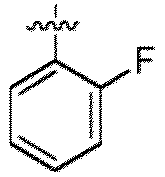 R13 ein C1-4-Alkyl oder -C1-4-Alkylenphenyl ist, das gegebenenfalls durch 1, 2 oder 3 Substituenten substituiert ist, die unabhängig voneinander ausgewählt sind aus der Gruppe bestehend aus C1-4-Alkyl und Phenyl;
bevorzugt R13 Methyl oder -CH2-Phenyl ist; oderR1a , R1b zusammen mit X1, an das sie gebunden sind, eine Gruppe bilden, ausgewählt aus der Gruppe bestehend aus Phenyl,
- Verbindung nach einem der Ansprüche 1 bis 4 oder ein pharmazeutisch annehmbares Salz, Ester, Stereoisomer, Polymorph, Solvat, N-Oxid, isotopenmarkierte Verbindung davon, wobeiR1a eine Gruppe ist, die gegebenenfalls durch 1, 2, 3 oder mehr R13 substituiert ist und ausgewählt ist aus der Gruppe bestehend aus C1-6-Alkyl, C2-6-Alkenyl, C2-6-Alkinyl, einer cyclischen C3-7-Kohlenwasserstoffgruppe, einer 4- bis 7-gliedrigen monocyclischen heterocyclischen Gruppe, einer 8- bis 10-gliedrigen benzokondensierten heterocyclischen Gruppe, Phenyl, 5- bis 10-gliedrigem Heteroaryl, C1-3-Alkylen-cyclischen-C3-7-Kohlenwasserstoffgruppe, -C1-3-Alkylen-(5-bis 7-gliedrigen monocyclischen heterocyclischen Gruppe), -C1-3-Alkylen-(8- bis 10-gliedrigen benzokondensierten heterocyclischen Gruppe) , -C1-3-Alkylenphenyl und -C1-3-Alkylen- (5-bis 10-gliedriges Heteroaryl); bevorzugt aus der Gruppe bestehend aus C1-6-Alkyl, C2-6-Alkenyl, C2-6-Alkinyl, einer cyclischen C5-7-Kohlenwasserstoffgruppe, einer 4- bis 7-gliedrigen monocyclischen heterocyclischen Gruppe (einschließlich einer 5-, 6- oder 7-gliedrigen monocyclischen heterocyclischen Gruppe), einer 8- bis 10-gliedrigen benzokondensierten heterocyclischen Gruppe, Phenyl, 5- bis 10-gliedrigem Heteroaryl (einschließlich 5- bis 6-gliedrigem Heteroaryl), -C1-3-Alkylen-cyclischen-C3-7-Kohlenwasserstoffgruppe, -C1-3-Alkylen- (5- bis 7-gliedrigen monocyclischen heterocyclischen Gruppe), -C1-3-Alkylenphenyl und -C1-3-Alkylen- (5- bis 6-gliedrigem Heteroaryl);
bevorzugt, wobei R13 ausgewählt ist aus der Gruppe bestehend aus C1-4-Alkyl-O-, Halogen (einschließlich F, Cl, Br und I) und C1-4-Alkyl oder Phenyl, das gegebenenfalls durch 1, 2 oder 3 Substituenten substituiert ist, die unabhängig voneinander ausgewählt sind aus Halogen; undR1b nicht existiert oder ausgewählt ist aus der Gruppe bestehend aus H und R1a. - Verbindung nach einem der Ansprüche 1 bis 4 und 7 oder ein pharmazeutisch annehmbares Salz, Stereoisomer, Polymorph, Solvat, N-Oxid, eine isotopenmarkierte Verbindung davon, wobei R1b nicht existiert und X1 nicht existiert.
- Verbindung nach Anspruch 8 oder ein pharmazeutisch annehmbares Salz, Ester, Stereoisomer, Polymorph, Solvat, N-Oxid, eine isotopenmarkierte Verbindung davon, wobei X4 ausgewählt ist aus der Gruppe bestehend aus C(=O), S(=O)y, -O-C(=O)-, -S-C(=O)-, -O-S(=O)y-, -NR10-C(=O) - und -NR10-S(=O)y-, bevorzugt C(=O), -O-C(=O)- oder -NR10-C(=O) - ist.
- Verbindung nach einem der Ansprüche 7 bis 9 oder ein pharmazeutisch annehmbares Salz, Ester, Stereoisomer, Polymorph, Solvat, N-Oxid, isotopenmarkierte Verbindung davon, wobeiR1a eine Gruppe ist, ausgewählt aus der Gruppe bestehend aus einer gegebenenfalls substituierten cyclischen C3-7-Kohlenwasserstoffgruppe, einer gegebenenfalls substituierten 4- bis 7-gliedrigen monocyclischen heterocyclischen Gruppe, einer gegebenenfalls substituierten 8- bis 10-gliedrigen benzokondensierten heterocyclischen Gruppe, einem gegebenenfalls substituierten Phenyl, einem gegebenenfalls 5- bis 10-gliedrigem Heteroaryl, -gegebenenfalls substituiertem C1-3-Alkylen-(gegebenenfalls substituierten cyclischen C3-7-Kohlenwasserstoffgruppe), -gegebenenfalls substituiertem C1-3-Alkylen-(gegebenenfalls substituierten 5- bis 7-gliedrigen monocyclischen heterocyclischen Gruppe), -gegebenenfalls substituiertem C1-3-Alkylen- (gegebenenfalls substituierten 8- bis 10-gliedrigen benzokondensierten heterocyclischen Gruppe), -gegebenenfalls substituiertem C1-3-Alkylen-gegebenenfalls substituiertem Phenyl und -gegebenenfalls substituiertem C1-3-Alkylen-(gegebenenfalls substituiertem 5- bis 10-gliedrigem Heteroaryl);bevorzugt R1a eine Gruppe ist, ausgewählt aus der Gruppe bestehend aus einer gegebenenfalls substituierten cyclischen C3-7-Kohlenwasserstoffgruppe, einer gegebenenfalls substituierten 4- bis 7-gliedrigen monocyclischen heterocyclischen Gruppe, einer gegebenenfalls substituierten 8- bis 10-gliedrigen benzokondensierten heterocyclischen Gruppe, gegebenenfalls substituiertem Phenyl, gegebenenfalls substituiertem 5- bis 10-gliedrigem Heteroaryl, -C1-3-Alkylen- (gegebenenfalls substituierten cyclischen C3-7-Kohlenwasserstoffgruppe), -C1-3-Alkylen-(gegebenenfalls substituierten 5- bis 7-gliedrigen monocyclischen heterocyclischen Gruppe), -C1-3-Alkylen- (gegebenenfalls substituierten 8- bis 10-gliedrigen benzokondensierten heterocyclischen Gruppe), -gegebenenfalls substituiertem C1-3-Alkylen-gegebenenfalls substituiertem Phenyl und -C1-3-Alkylen- (gegebenenfalls substituiertem 5- bis 10-gliedrigem Heteroaryl);wobei der Begriff "gegebenenfalls substituiert" eine Substitution durch 1, 2, 3 oder mehr R13 bedeutet;R1b nicht existiert;X1 nicht existiert; undX4 ausgewählt ist aus der Gruppe bestehend aus C(=O), S(=O)y, -OC (=O) - und -NR10-C(=O) - und -NR10-S(=O)y-, wobei R10 bevorzugt H oder C1-6-Alkylen ist; bevorzugt X4 ausgewählt ist aus der Gruppe bestehend aus C(=O), S(=O)y und -O-C(=O)-, und wobei y bevorzugt 2 ist.
- Verbindung nach Anspruch 9 oder ein pharmazeutisch annehmbares Salz, Ester, Stereoisomer, Polymorph, Solvat, N-Oxid, eine isotopenmarkierte Verbindung davon, wobeiR1a eine Gruppe ist, ausgewählt aus der Gruppe bestehend aus einer gegebenenfalls substituierten 5-, 6- oder 7-gliedrigen monocyclischen heterocyclischen Gruppe, einem gegebenenfalls substituierten Phenyl und - gegebenenfalls substituiertem C1-3-Alkylen-gegebenenfalls substituiertem Phenyl;bevorzugt eine Gruppe, ausgewählt aus der Gruppe bestehend aus einer gegebenenfalls substituierten 5-, 6- oder 7-gliedrigen monocyclischen heterocyclischen Gruppe, einem gegebenenfalls substituierten Phenyl und -C1-3-Alkylen-gegebenenfalls substituiertem Phenyl; oderR1a eine Gruppe ist, ausgewählt aus der Gruppe bestehend auseiner gegebenenfalls substituierten cyclischen C3-7-Kohlenwasserstoffgruppe, wobei die cyclische Kohlenwasserstoffgruppe beispielsweise Cyclopropyl, Cyclobutyl, Cyclopentyl oder Cyclohexyl ist;einer gegebenenfalls substituierten 4- bis 7-gliedrigen monocyclischen heterocyclischen Gruppe, wobei die heterocyclische Gruppe beispielsweise

 einer gegebenenfalls substituierten 8- bis 10-gliedrigen benzokondensierten heterocyclischen Gruppe, wobei die heterocyclische Gruppe beispielsweise
 einem gegebenenfalls substituiertem Phenyl;- gegebenenfalls substituiertem C1-3-Alkylen-gegebenenfalls substituiertem Phenyl;einem gegebenenfalls substituierten 5- bis 10-gliedrigem Heteroaryl und -C1-3-Alkylen- (gegebenenfalls substituiertem 5- bis 10-gliedrigem Heteroaryl), wobei das Heteroaryl beispielsweise:


 wobei der Begriff "gegebenenfalls substituiert" eine Substitution durch 1, 2, 3 oder mehr R13 bedeutet,bevorzugt, wobei R13 ausgewählt ist aus der Gruppe bestehend aus Halogen, OH, -NR11R12, Cyano und C1-4-Alkyl; und Phenyl, einer 5-, 6- oder 7-gliedrigen monocyclischen heterocyclischen Gruppe und 5- bis 6-gliedrigem Heteroaryl, die gegebenenfalls mit 1, 2 oder 3 Substituenten substituiert sind, die unabhängig voneinander ausgewählt sind aus der Gruppe, bestehend aus Halogen, OH, -NR11R12, Cyano und C1-4-Alkyl, und wobei R11 und R12 jeweils unabhängig voneinander ausgewählt sind aus der Gruppe, bestehend aus H und C1-4-Alkyl (bevorzugt Methyl);bevorzugt R13 ausgewählt ist aus der Gruppe bestehend aus F, Cl, Br, -N(CH3)2 und C1-4-Alkyl; und Phenyl, einer 5- bis 7-gliedrigen monocyclischen heterocyclischen Gruppe (wie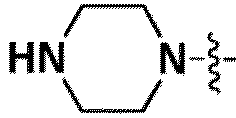
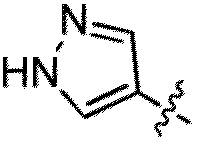 bevorzugter R1a ausgewählt ist aus der Gruppe bestehend aus Cyclopropyl, Cyclobutyl, Cyclopentyl, Cyclohexyl, Phenyl,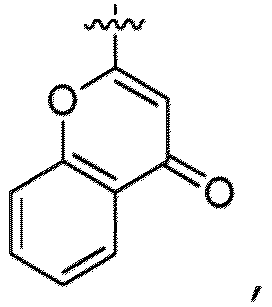
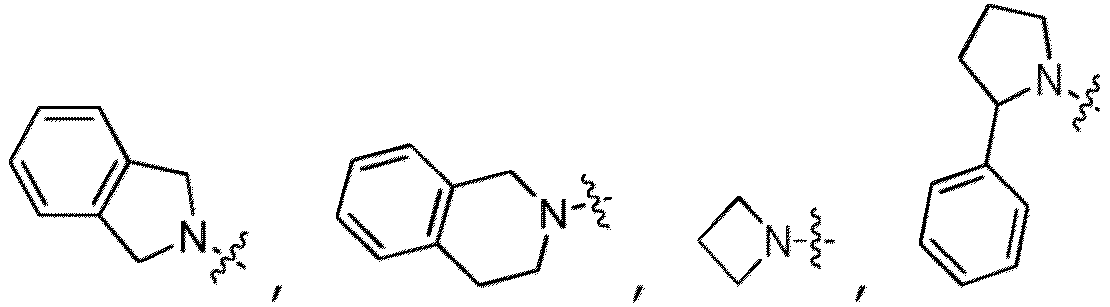
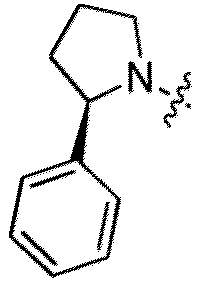


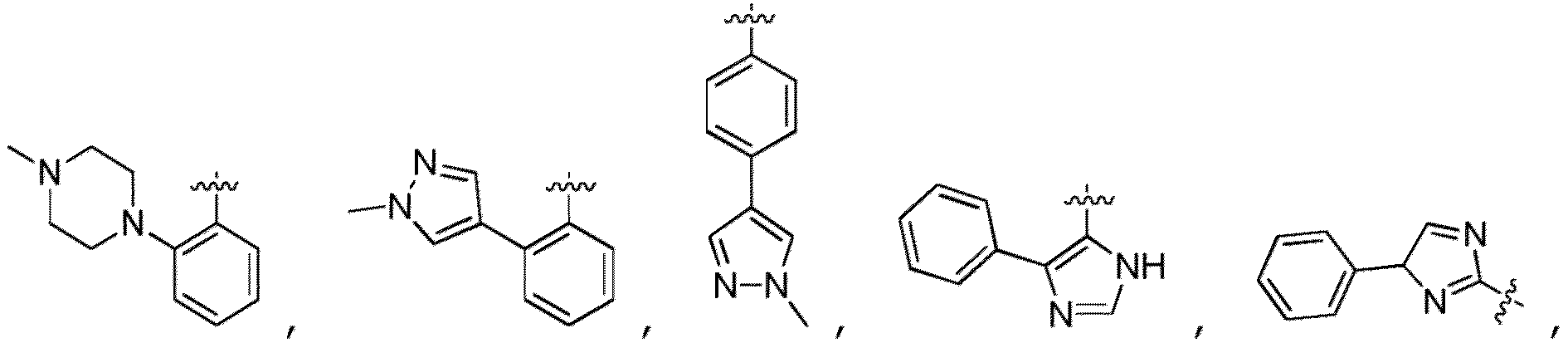


 X4 ausgewählt ist aus der Gruppe bestehend aus C(=O), S(=O)y und -O-C(=O)-, und wobei y bevorzugt 2 ist; und/oderR3 COOH oder
- Verbindung nach Anspruch 8 oder ein pharmazeutisch annehmbares Salz, Ester, Stereoisomer, Polymorph, Solvat, N-Oxid, eine isotopenmarkierte Verbindung davon, wobei X4 eine direkte Bindung ist; und
bevorzugt, in diesem Fall, R1a -C1-3-Alkylenphenyl, bevorzugt -CH2-Phenyl ist. - Verbindung nach Anspruch 9 oder ein pharmazeutisch annehmbares Salz, Ester, Stereoisomer, Polymorph, Solvat, N-Oxid, eine isotopenmarkierte Verbindung davon, wobei:R1a ausgewählt ist aus der Gruppe bestehend aus C2-6-Alkenyl (bevorzugt Vinyl, 1-Propenyl oder 2-Propenyl) und C2-6-Alkinyl (bevorzugt Ethinyl, 1-Propinyl oder 2-Propinyl), die gegebenenfalls durch 1, 2, 3 oder mehr R13 substituiert sind; bevorzugt, wobei R13 ausgewählt ist aus der Gruppe bestehend aus Phenyl und 5- bis 6-gliedrigem Heteroaryl, die gegebenenfalls substituiert sind durch 1, 2 oder 3 Substituenten, die unabhängig ausgewählt sind aus der Gruppe bestehend aus Halogen, OH, Amino, Cyano und C1-4-Alkyl ;bevorzugt R13 ein Phenyl oder Pyridyl ist, das gegebenenfalls durch 1, 2 oder 3 Substituenten substituiert ist, die unabhängig voneinander aus der Gruppe ausgewählt sind bestehend aus F, Cl und Br; undX4 C(=O) oder -O-C(=O)- ist; oderbevorzugt R1a ausgewählt ist aus der Gruppe bestehend aus


- Verbindung nach einem der Ansprüche 1 bis 4 und 7 oder ein pharmazeutisch annehmbares Salz, Stereoisomer, Polymorph, Solvat, N-Oxid, eine isotopenmarkierte Verbindung davon, wobei X1 CR10 oder N ist.
- Verbindung nach Anspruch 14 oder ein pharmazeutisch annehmbares Salz, Ester, Stereoisomer, Polymorph, Solvat, N-Oxid, eine isotopenmarkierte Verbindung davon, wobei X4 eine direkte Bindung ist;bevorzugt, in diesem Fall,R1a ausgewählt ist aus der Gruppe bestehend aus C2-6-Alkenyl (wie Vinyl, 1-Propenyl oder 2-Propenyl) und C2-6-Alkinyl (wie Ethinyl, 1-Propinyl oder 2-Propinyl), die gegebenenfalls durch 1, 2, 3 oder mehr R13 substituiert sind; und/oderR1b ausgewählt ist aus der Gruppe bestehend aus C1-4-Alkyl, gegebenenfalls substituiert durch 1, 2, 3 oder mehr R13;bevorzugt, wobei R13 ausgewählt ist aus der Gruppe bestehend aus C1-4-Alkyl, Phenyl und 5- bis 6-gliedrigem Heteroaryl, die gegebenenfalls durch 1, 2 oder 3 Substituenten substituiert sind, die unabhängig ausgewählt sind aus der Gruppe bestehend aus Halogen, OH, Amino, Cyano und C1-4-Alkyl;bevorzugt R13 ein C1-4-Alkyl oder Phenyl ist, das gegebenenfalls durch 1, 2 oder 3 Substituenten substituiert ist, die unabhängig voneinander aus der Gruppe ausgewählt sind bestehend aus F, Cl und Br;bevorzugter R13 ein C1-4-Alkyl (wie Methyl, Ethyl, Propyl, Isopropyl oder tert-Butyl); oder ein Phenyl ist, gegebenenfalls substituiert durch 1, 2 oder 3 Substituenten, die unabhängig voneinander ausgewählt sind aus der Gruppe bestehend aus F, Cl und Br;bevorzugt R1a

 R1b Methyl, Ethyl, n-Propyl oder Isopropyl ist;
und/oderX1 CH oder N ist, bevorzugt CH. - Verbindung nach Anspruch 14 oder ein pharmazeutisch annehmbares Salz, Ester, Stereoisomer, Polymorph, Solvat, N-Oxid, eine isotopenmarkierte Verbindung davon, wobei X4 ausgewählt ist aus der Gruppe bestehend aus C(=O), S(=O)y, -O-C(=O)-, -S-C(=O)-, -O-S(=O)y-, -NR10-C(=O)- oder -NR10-S(=O)y-, bevorzugt C(=O), -O-C(=O)- oder -NR10-C(=O)- ist.
- Verbindung nach einem der Ansprüche 14 bis 16 oder ein pharmazeutisch annehmbares Salz, Ester, Stereoisomer, Polymorph, Solvat, N-Oxid, eine isotopenmarkierte Verbindung davon, wobei R1b ausgewählt ist aus der Gruppe bestehend aus H und R1a und X1 bevorzugt CH ist.
- Verbindung nach Anspruch 16 oder ein pharmazeutisch annehmbares Salz, Ester, Stereoisomer, Polymorph, Solvat, N-Oxid, eine isotopenmarkierte Verbindung davon, wobei:R1a eine Gruppe ist, ausgewählt aus der Gruppe bestehend aus einer gegebenenfalls substituierten cyclischen C3-7-Kohlenwasserstoffgruppe, einer gegebenenfalls substituierten 4- bis 7-gliedrigen monocyclischen heterocyclischen Gruppe, einer gegebenenfalls substituierten 8- bis 10-gliedrigen benzokondensierten heterocyclischen Gruppe, einem gegebenenfalls substituierten Phenyl , gegebenenfalls substituiertem 5- bis 10-gliedrigem Heteroaryl, gegebenenfalls substituiertem C1-3-Alkylen-(gegebenenfalls substituierten cyclischen C3-7-Kohlenwasserstoffgruppe), gegebenenfalls substituiertem C1-3-Alkylen-(gegebenenfalls substituierten 5- bis 7-gliedrigen monocyclischen heterocyclischen Gruppe), gegebenenfalls substituiertem C1-3-Alkylen- (gegebenenfalls substituierten 8- bis 10-gliedrigen benzokondensierten heterocyclischen Gruppe), -gegebenenfalls substituiertem C1-3-Alkylen-gegebenenfalls substituiertem Phenyl und -gegebenenfalls substituiertem C1-3-Alkylen-(gegebenenfalls substituiertem 5- bis 10-gliedrigem Heteroaryl);bevorzugt R1a eine Gruppe ist, ausgewählt aus der Gruppe bestehend aus einer gegebenenfalls substituierten cyclischen C3-7-Kohlenwasserstoffgruppe, einer gegebenenfalls substituierten 4- bis 7-gliedrigen monocyclischen heterocyclischen Gruppe, einer gegebenenfalls substituierten 8- bis 10-gliedrigen benzokondensierten heterocyclischen Gruppe , einem gegebenenfalls substituierten Phenyl, einem gegebenenfalls substituierten 5- bis 10-gliedrigen Heteroaryl, -C1-3-Alkylen- (gegebenenfalls substituierten cyclischen C3-7-Kohlenwasserstoffgruppe), -C1-3-Alkylen-(gegebenenfalls substituierten 5- bis 7-gliedrigen monocyclischen heterocyclischen Gruppe), -C1-3-Alkylen- (gegebenenfalls substituierten 8- bis 10-gliedrigen benzokondensierten heterocyclischen Gruppe), -C1-3-Alkylen-gegebenenfalls substituiertem Phenyl und -C1-3-Alkylen- (gegebenenfalls substituiertem 5- bis 10-gliedrigem Heteroaryl); oderR1a eine Gruppe ist, ausgewählt aus der Gruppe bestehend auseinem gegebenenfalls substituiertem Phenyl;-C1-3-Alkylen- (gegebenenfalls substituierten C3-7-cyclischen Kohlenwasserstoffgruppe), wobei die cyclische Kohlenwasserstoffgruppe beispielsweise Cyclopropyl, Cyclobutyl, Cyclopentyl oder Cyclohexyl ist;-C1-3-Alkylen-(gegebenenfalls substituierten 8- bis 10-gliedrigen benzokondensierten heterocyclischen Gruppe), wobei die heterocyclische Gruppe beispielsweise

 -C1-3 Alkylen-gegebenenfalls substituiertem Phenyl;einem gegebenenfalls substituierten 5- bis 10-gliedrigem Heteroaryl und -C1-3-Alkylen- (gegebenenfalls substituiertem 5- bis 10-gliedrigem Heteroaryl), wobei das Heteroaryl beispielsweise


 wobei der Begriff "gegebenenfalls substituiert" eine Substitution durch 1, 2, 3 oder mehr R13 bedeutet;bevorzugt, wobei R13 ausgewählt ist aus der Gruppe bestehend aus Halogen, -OR11 (bevorzugt R11 C1-6-Alkyl, gegebenenfalls substituiert mit 1, 2, 3 oder mehr Halogenen, bevorzugter C1-3-Alkyl, gegebenenfalls substituiert mit 1, 2 oder 3 F oder Cl), -NR11R12, Cyano- und einer cyclischen C3-7 Kohlenwasserstoffgruppe; und C1-4-Alkyl, C2-4-Alkenyl und C2-4-Alkinyl, gegebenenfalls substituiert durch 1, 2, 3 oder mehrere Halogene, und wobei R11 und R12 jeweils unabhängig voneinander ausgewählt sind aus der Gruppe bestehend aus H und C1-4-Alkyl (bevorzugt Methyl);bevorzugt, R13 ausgewählt ist aus der Gruppe bestehend aus F, Cl, Br, OH, -OC1-4-Alkyl, -N(C1-4-Alkyl)2, Cyano, einer cyclischen C3-7-Kohlenwasserstoffgruppe, C2-4-Alkenyl und C2-4-Alkinyl; und C1-4-Alkyl gegebenenfalls substituiert durch 1, 2, 3 oder mehr F, Cl oder Br;bevorzugter R13 ausgewählt ist aus der Gruppe bestehend aus F, Cl, Br, -OCH3, -N(CH3)2, Cyano, Cyclopropyl, Vinyl, 1-Propenyl, 2-Propenyl, Ethinyl, 1-Propenyl, 2-Propenyl, Methyl, Ethyl, n-Propyl, Isopropyl, tert-Butyl und CF3; oderR13 bei jedem Vorkommen unabhängig ausgewählt ist aus der Gruppe bestehend aus-P(O)R11R12, wobei bevorzugt R11 und R12 bei jedem Vorkommen jeweils unabhängig voneinander ein C1-6-Alkyl, gegebenenfalls substituiert durch 1, 2, 3 oder mehr Halogene, bevorzugt ein C1-3-Alkyl, gegebenenfalls substituiert durch 1, 2 oder 3 F oder Cl, bevorzugter Methyl, Ethyl, Propyl oder Isopropyl, bevorzugter Methyl sind; und
einer cyclischen C3-10-Kohlenwasserstoffgruppe oder einer 3- bis 10-gliedrigen heterocyclischen Gruppe, die durch C1-6-Alkyl substituiert ist, bevorzugt einer cyclischen C3-7-Kohlenwasserstoffgruppe oder einer 4- bis 7-gliedrigen heterocyclischen Gruppe, die durch C1-6-Alkyl substituiert ist, bevorzugt einer cyclischen C5-7-Kohlenwasserstoffgruppe oder einer 5- bis 7-gliedrigen monocyclischen heterocyclischen Gruppe, die durch C1-3-Alkyl substituiert ist, wobei das Alkyl gegebenenfalls durch 1, 2, 3 oder mehr OH oder Halogene substituiert ist, bevorzugt gegebenenfalls substituiert durch 1, 2 oder 3 OH, F oder Cl; oderR1a ausgewählt ist aus der Gruppe, bestehend aus


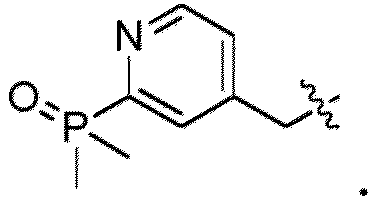
- Verbindung nach einem der Ansprüche 18 oder ein pharmazeutisch annehmbares Salz, Ester, Stereoisomer, Polymorph, Solvat, N-Oxid, eine isotopenmarkierte Verbindung davon, wobei R1b eine Gruppe ist, ausgewählt aus der Gruppe bestehend aus H, einem gegebenenfalls substituierten C1-4-Alkyl , einer gegebenenfalls substituierten cyclischen C3-7-Kohlenwasserstoffgruppe, einem gegebenenfalls substituierten Phenyl, einem gegebenenfalls substituierten C1-3-Alkylen-(gegebenenfalls substituierten C3-7-cyclischen Kohlenwasserstoffgruppe) und einem gegebenenfalls substituierten C1-3-Alkylen-gegebenenfalls substituiertem Phenyl;bevorzugt R1b eine Gruppe ist, ausgewählt aus der Gruppe, bestehend aus H, einem gegebenenfalls substituierten C1-4-Alkyl, einer gegebenenfalls substituierten cyclischen C3-7-Kohlenwasserstoffgruppe, einem gegebenenfalls substituierten Phenyl, -C1-3-Alkylen- (gegebenenfalls substituierten cyclischen C3-7-Kohlenwasserstoffgruppe) und -C1-3-Alkylen-gegebenenfalls substituiertem Phenyl;bevorzugter R1b eine Gruppe ist, ausgewählt aus der Gruppe bestehend ausH, Phenyl;einem gegebenenfalls substituiertem C1-4-Alkyl, wobei das Alkyl beispielsweise Methyl, Ethyl oder Isopropyl ist;einer gegebenenfalls substituierten cyclischen C3-7-Kohlenwasserstoffgruppe und -C1-3-Alkylen- (C3-7-Kohlenwasserstoffgruppe), wobei die cyclische Kohlenwasserstoffgruppe beispielsweise Cyclopropyl, Cyclobutyl, Cyclopentyl oder Cyclohexyl ist; und-C1-3-Alkylen-Phenyl; undwobei der Begriff "gegebenenfalls substituiert" eine Substitution durch 1, 2, 3 oder mehr R13 bedeutet;wobei R13 bevorzugt ausgewählt ist aus der Gruppe bestehend aus Halogen und C1-4-Alkyl, bevorzugter ausgewählt ist aus der Gruppe bestehend aus F, Cl, Br und Methyl; bevorzugter R1b ausgewählt ist aus der Gruppe bestehend aus H, Methyl, Ethyl, Isopropyl, CF3CH2, Cyclopropyl,


- Verbindung nach einem der Ansprüche 18 bis 19 oder ein pharmazeutisch annehmbares Salz, Ester, Stereoisomer, Polymorph, Solvat, N-Oxid, eine isotopenmarkierte Verbindung davon, wobei X1 CH oder N, bevorzugt N, ist; und/oder X4 ausgewählt ist aus der Gruppe bestehend aus C(=O) und S(=O)y, und wobei y bevorzugt 2 ist; und/oder
R3 COOH oder
- Verbindung nach einem der Ansprüche 1 bis 20 oder ein pharmazeutisch annehmbares Salz, Ester, Stereoisomer, Polymorph, Solvat, N-Oxid, eine isotopenmarkierte Verbindung davon, wobei:R2a ausgewählt ist aus der Gruppe bestehend aus einem gegebenenfalls substituierten Phenyl und -gegebenenfalls substituiertem C1-3-Alkylen-gegebenenfalls substituiertem Phenyl;bevorzugt R2a ausgewählt ist aus der Gruppe bestehend aus einem gegebenenfalls substituierten Phenyl und -C1-3 Alkylen-gegebenenfalls substituiertem Phenyl; und/oderR2b ausgewählt ist aus der Gruppe bestehend aus einem gegebenenfalls substituierten C1-4-Alkyl, einem gegebenenfalls substituierten Phenyl und -gegebenenfalls substituiertem C1-3-Alkylen-gegebenenfalls substituiertem Phenyl;bevorzugt R2b ausgewählt ist aus der Gruppe bestehend aus C1-4-Alkyl, einem gegebenenfalls substituierten Phenyl und -C1-3-Alkylen-gegebenenfalls substituiertem Phenyl;wobei der Begriff "gegebenenfalls substituiert" eine Substitution durch 1, 2, 3 oder mehr R13 bedeutet;bevorzugt, wobei R13 ausgewählt ist aus der Gruppe bestehend aus Halogen und -OR11, und wobei R11 ausgewählt ist aus C1-4-Alkyl (bevorzugt Methyl);bevorzugt R13 ausgewählt ist aus der Gruppe bestehend aus F, Cl, Br und -OCH3;bevorzugter R2a ausgewählt ist aus der Gruppe bestehend aus Phenyl,
 R2b ausgewählt ist aus der Gruppe bestehend aus Methyl, Phenyl,
- Verbindung nach einem der Ansprüche 18 bis 21 oder ein pharmazeutisch annehmbares Salz, Ester, Stereoisomer, Polymorph, Solvat, N-Oxid, eine isotopenmarkierte Verbindung davon, wobei die Verbindung eine Struktur der Formel (II) oder Formel (III) aufweist:

- Verbindung nach einem der Ansprüche 1 bis 4 oder ein pharmazeutisch annehmbares Salz, Ester, Stereoisomer, Polymorph, Solvat, N-Oxid, isotopenmarkierte Verbindung davon, wobeiR1a eine Gruppe ist, die gegebenenfalls durch 1, 2, 3 oder mehr R13 substituiert ist und ausgewählt ist aus der Gruppe bestehend aus C1-6 Alkyl, C2-6-Alkenyl, C2-6 Alkinyl, einer cyclischen C5-7 Kohlenwasserstoffgruppe, einer 5-, 6- oder 7-gliedrigen monocyclischen heterocyclischen Gruppe, einer 8- bis 10-gliedrigen benzokondensierten heterocyclischen Gruppe, Phenyl, 5- bis 6-gliedrigem Heteroaryl, -C1-3-Alkylen-cyclischen-C3-7-Kohlenwasserstoffgruppe, -C1-3-Alkylen- (5- bis 7-gliedrigen monocyclischen heterocyclischen Gruppe), -C1-3-Alkylenphenyl und -C1-3-Alkylen- (5- bis 6-gliedrigem Heteroaryl),
bevorzugt, wobei R13 ausgewählt ist aus der Gruppe bestehend aus C1-4-Alkyl-O-, Halogen (einschließlich F, Cl, Br und I) und C1-4-Alkyl oder Phenyl, das gegebenenfalls durch 1, 2 oder 3 Substituenten substituiert ist, die unabhängig voneinander ausgewählt sind aus Halogen; und;R1b und X1 zusammen eine zweiwertige cyclische C5-7-Kohlenwasserstoffgruppe oder eine zweiwertige 5-, 6- oder 7-gliedrige monocyclische heterocyclische Gruppe bilden; oderbevorzugt R1a Phenyl ist; undR1b und X1 zusammen X4 ausgewählt ist aus der Gruppe, bestehend aus C (=O) und S(=O)y.
 - Verbindung nach einem der Ansprüche 1 bis 23 oder ein pharmazeutisch annehmbares Salz, Ester, Stereoisomer, Polymorph, Solvat, N-Oxid oder eine isotopenmarkierte Verbindung davon, wobei












- Verbindung nach einem der Ansprüche 1 bis 4 oder ein pharmazeutisch annehmbares Salz, Ester, Stereoisomer, Polymorph, Solvat, N-Oxid oder eine isotopenmarkierte Verbindung davon, wobei Y eine Einfachbindung, NR10, O, S, Methylen, Ethylen, -CH2-O-, -O-CH2-, -CH2-S-, -S-CH2-, -CH2-NR10-, -NR10-CH2-, -CH=CH-, -CH=N- oder -N=CH- ist; und/oderdas gegebenenfalls substituierte gesättigte oder teilweise ungesättigte kondensierte Ringsystem, das 3 oder mehr Ringe umfasst und durch R1a und R1b zusammen mit X1, an das sie gebunden sind, gebildet wird, eine Struktur der Formel (a) aufweist:
 wobei:Ring A und Ring B jeweils unabhängig voneinander eine cyclische C3-10-Kohlenwasserstoffgruppe, eine 3- bis 10-gliedrige heterocyclische Gruppe, ein C6-10-Aryl oder ein 5- bis 14-gliedriges Heteroaryl, bevorzugt eine cyclische C5-7-Kohlenwasserstoffgruppe (wie Cyclopentyl oder Cyclohexyl), 5- bis 7-gliedrige monocyclische heterocyclische Gruppe, Phenyl oder 5- bis 6-gliedriges Heteroaryl sind;"- - - - - -" eine Einfachbindung oder eine Doppelbindung darstellt;bevorzugt das kondensierte Ringsystem eine Struktur der Formel (1) oder Formel (2) aufweist:
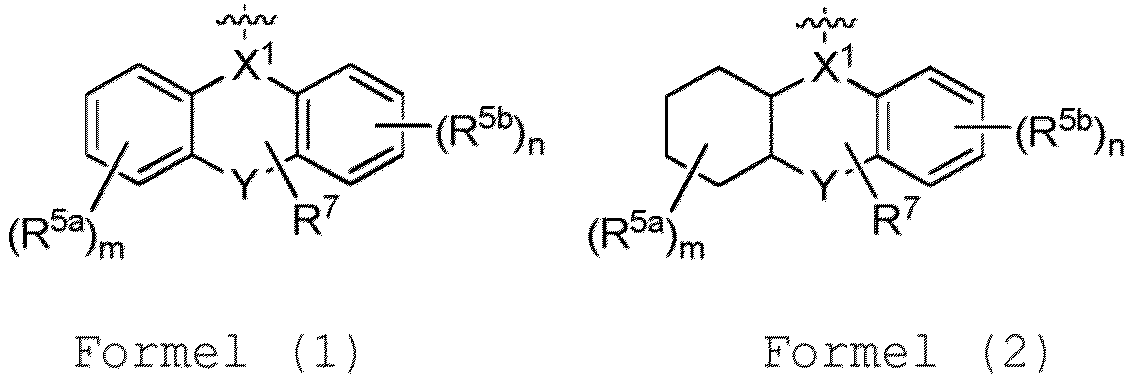 wobeiR5a und R5b bei jedem Vorkommen jeweils unabhängig voneinander R10 sind;R7 nicht existiert oder R10 ist; undm und n bei jedem Vorkommen jeweils unabhängig voneinander 0, 1, 2 oder 3 sind;bevorzugter die Gruppe der Formel (1) eine Struktur aufweist, die ausgewählt ist aus der Gruppe bestehend aus


 die Gruppe der Formel (2) eine Struktur aufweist, die ausgewählt ist aus der Gruppe bestehend aus

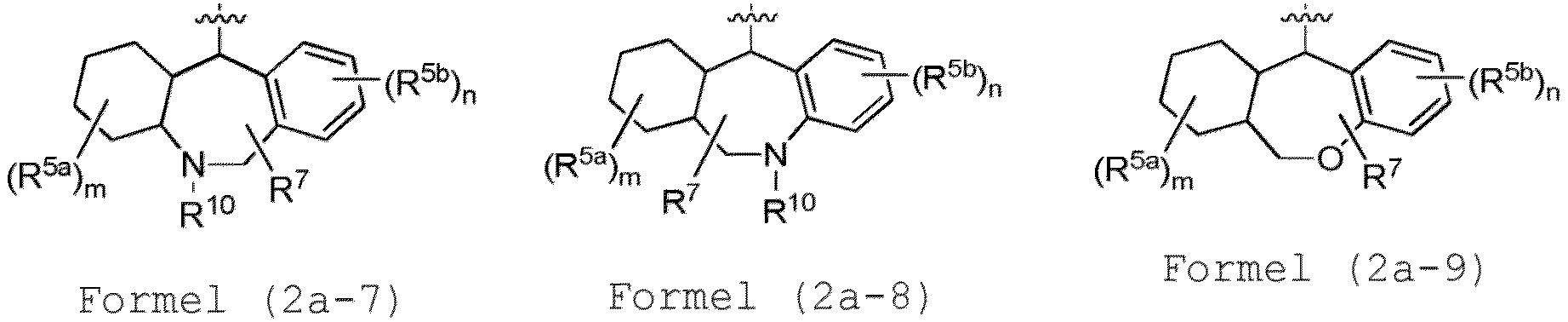


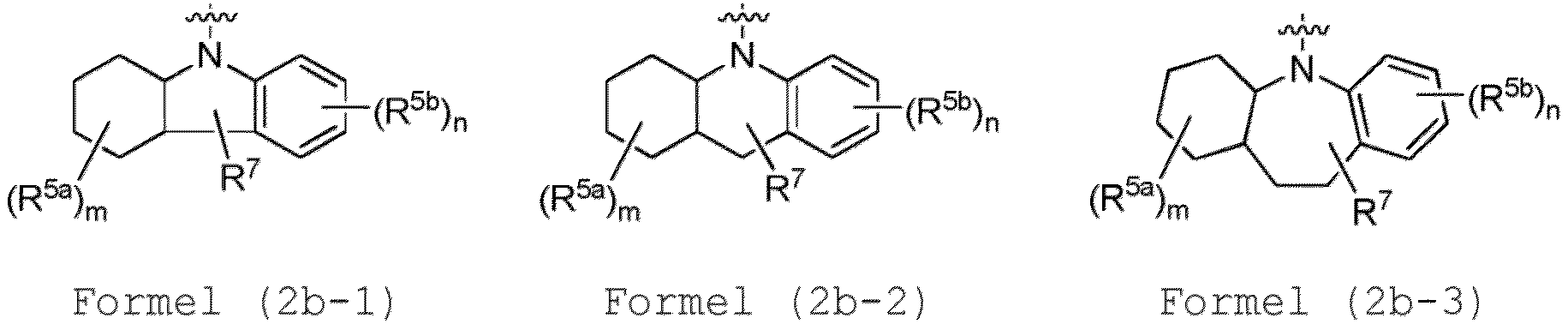

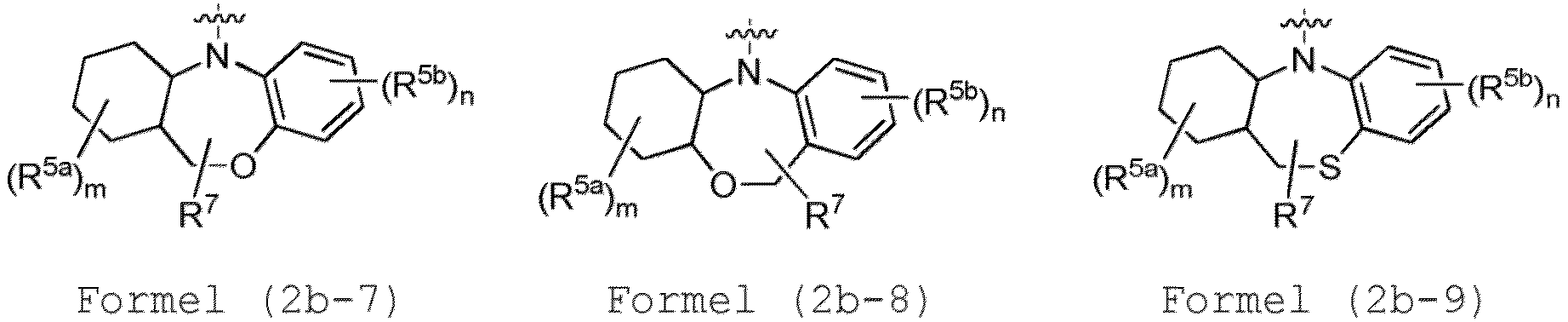


- Verbindung nach einem der Ansprüche 1 bis 20 und 23 bis 25 oder ein pharmazeutisch annehmbares Salz, Ester, Stereoisomer, Polymorph, Solvat, N-Oxid, eine isotopenmarkierte Verbindung davon, wobeiR2a eine Gruppe ist, die gegebenenfalls durch 1, 2, 3 oder mehr R13 substituiert ist und ausgewählt ist aus der Gruppe bestehend aus C1-6 Alkyl, C2-6-Alkenyl, C2-6 Alkinyl, einer cyclischen C5-7 Kohlenwasserstoffgruppe, einer 5-, 6- oder 7-gliedrigen monocyclischen heterocyclischen Gruppe, einer 8- bis 10-gliedrigen benzokondensierten heterocyclischen Gruppe, Phenyl, 5- bis 6-gliedrigem Heteroaryl, -C1-3-Alkylen-cyclischen-C3-7-Kohlenwasserstoffgruppe, -C1-3-Alkylen-(5- bis 7-gliedrigen monocyclischen heterocyclischen Gruppe), -C1-3-Alkylenphenyl und -C1-3-Alkylen- (5- bis 6-gliedrigem Heteroaryl),bevorzugt, wobei R13 ausgewählt ist aus der Gruppe bestehend aus C1-4-Alkyl-O-, Halogen (einschließlich F, Cl, Br und I) und C1-4-Alkyl oder Phenyl, das gegebenenfalls durch 1, 2 oder 3 Substituenten substituiert ist, die unabhängig voneinander ausgewählt sind aus Halogen; undR2b nicht existiert oder ausgewählt ist aus der Gruppe bestehend aus H und R2a.
- Verbindung nach einem der Ansprüche 1 bis 20, 23 bis 26 oder ein pharmazeutisch annehmbares Salz, Ester, Stereoisomer, Polymorph, Solvat, N-Oxid, eine isotopenmarkierte Verbindung davon, wobei R2b nicht existiert und X2 nicht existiert.
- Verbindung nach einem der Ansprüche 26 bis 27 oder ein pharmazeutisch annehmbares Salz, Ester, Stereoisomer, Polymorph, Solvat, N-Oxid, isotopenmarkierte Verbindung davon, wobeiR2a eine Gruppe ist, ausgewählt aus der Gruppe bestehend aus einer gegebenenfalls substituierten 5-, 6- oder 7-gliedrigen monocyclischen heterocyclischen Gruppe, einem gegebenenfalls substituierten Phenyl, und -gegebenenfalls substituiertem C1-3-Alkylen-gegebenenfalls substituiertem Phenyl, wobei der Begriff "gegebenenfalls substituiert" eine Substitution durch 1, 2, 3 oder mehr R13 bedeutet;R2b nicht existiert; undX2 nicht existiert.
- Verbindung nach einem der Ansprüche 1 bis 26 oder ein pharmazeutisch annehmbares Salz, Ester, Stereoisomer, Polymorph, Solvat, N-Oxid, eine isotopenmarkierte Verbindung davon, wobei X2 CR10 oder N ist und wobei R10 bevorzugt H, OH oder C1-4-Alkyl (wie Methyl) ist; und/oder
R2b ausgewählt ist aus der Gruppe bestehend aus H und R2a, und X2 bevorzugt CH ist. - Verbindung nach einem der Ansprüche 1 bis 20 und 23 bis 25 oder ein pharmazeutisch annehmbares Salz, Ester, Stereoisomer, Polymorph, Solvat, N-Oxid, eine isotopenmarkierte Verbindung davon, wobeiR2a eine Gruppe ist, die gegebenenfalls durch 1, 2, 3 oder mehr R13 substituiert ist und ausgewählt ist aus der Gruppe bestehend aus C1-6 Alkyl, C2-6-Alkenyl, C2-6 Alkinyl, einer cyclischen C5-7 Kohlenwasserstoffgruppe, einer 5-, 6- oder 7-gliedrigen monocyclischen heterocyclischen Gruppe, einer 8- bis 10-gliedrigen benzokondensierten heterocyclischen Gruppe, Phenyl, 5- bis 6-gliedrigem Heteroaryl, -C1-3-Alkylen-cyclischen-C3-7-Kohlenwasserstoffgruppe, -C1-3-Alkylen-(5- bis 7-gliedrigen monocyclischen heterocyclischen Gruppe), -C1-3-Alkylenphenyl und -C1-3-Alkylen- (5- bis 6-gliedrigem Heteroaryl),
bevorzugt, wobei R13 ausgewählt ist aus der Gruppe bestehend aus C1-4-Alkyl-O-, Halogen (einschließlich F, Cl, Br und I) und C1-4-Alkyl oder Phenyl, das gegebenenfalls durch 1, 2 oder 3 Substituenten substituiert ist, die unabhängig voneinander ausgewählt sind aus Halogen; undR2b und X2 zusammen eine zweiwertige cyclische C5-7-Kohlenwasserstoffgruppe oder eine zweiwertige 5-, 6- oder 7-gliedrige monocyclische heterocyclische Gruppe bilden. - Verbindung nach einem der Ansprüche 1 bis 20 und 23 bis 30 oder ein pharmazeutisch annehmbares Salz, Ester, Stereoisomer, Polymorph, Solvat, N-Oxid oder eine isotopenmarkierte Verbindung davon, wobei


- Verbindung nach einem der Ansprüche 1 bis 20 und Ansprüchen 23 bis 25 oder ein pharmazeutisch annehmbares Salz, Ester, Stereoisomer, Polymorph, Solvat, N-Oxid oder eine isotopenmarkierte Verbindung davon, wobei Z eine Einfachbindung, NR10, O, S, Methylen, Ethylen, -CH2-O-, -O-CH2-, -CH2-S-, -S-CH2-, -CH2-NR10-, -NR10-CH2-, -CH=CH-, -CH=N- oder -N=CH- ist; und/oderdas gegebenenfalls substituierte gesättigte oder teilweise ungesättigte kondensierte Ringsystem, das 3 oder mehr Ringe umfasst und durch R2a und R2b zusammen mit X2, an das sie gebunden sind, gebildet wird, eine Struktur der Formel (b) aufweist:
 wobei:Ring C und Ring D jeweils unabhängig voneinander eine cyclische C3-10-Kohlenwasserstoffgruppe, eine 3- bis 10-gliedrige heterocyclische Gruppe, ein C6-10-Aryl oder 5- bis 14-gliedriges Heteroaryl, bevorzugt eine cyclische C5-7-Kohlenwasserstoffgruppe, eine 5- bis 7-gliedrige monocyclische heterocyclische Gruppe, Phenyl oder 5- bis 6-gliedriges Heteroaryl sind;"- - - - - -" eine Einfachbindung oder eine Doppelbindung darstellt;bevorzugt das kondensierte Ringsystem eine Struktur der Formel (3) oder Formel (4) aufweist:
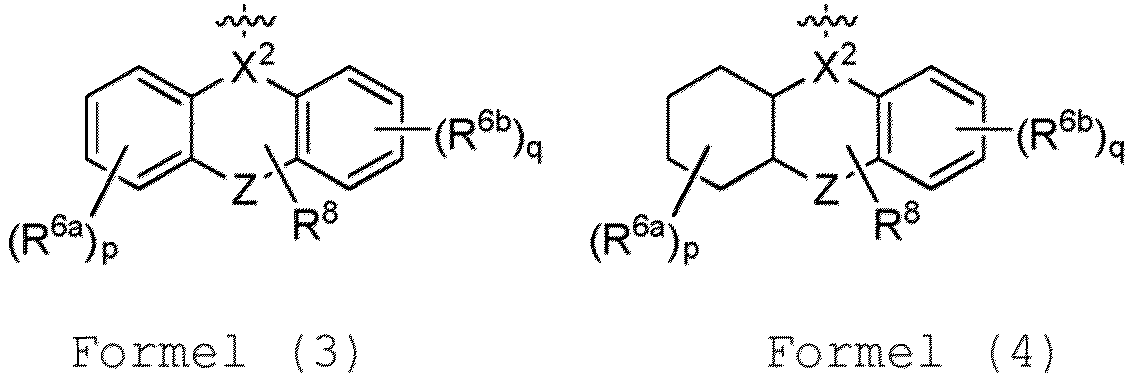 wobeiR6a und R6b bei jedem Vorkommen jeweils unabhängig voneinander R10 sind;R8 nicht existiert oder R10 ist; undp und q bei jedem Vorkommen jeweils unabhängig voneinander 0, 1, 2 oder 3 sind.
 - Verbindung nach einem der Ansprüche 1 bis 25 und 32 oder ein pharmazeutisch annehmbares Salz, Ester, Stereoisomer, Polymorph, Solvat, N-Oxid, eine isotopenmarkierte Verbindung davon, wobei X2 bei jedem Vorkommen unabhängig CR10 oder N ist und wobei R10 H, OH, Amino oder C1-4-Alkyl (wie Methyl) ist;bevorzugt in diesem Fall die Gruppe der Formel (3) eine Struktur aufweist, die ausgewählt ist aus der Gruppe bestehend aus


 die Gruppe der Formel (4) eine Struktur aufweist, die ausgewählt ist aus der Gruppe bestehend aus


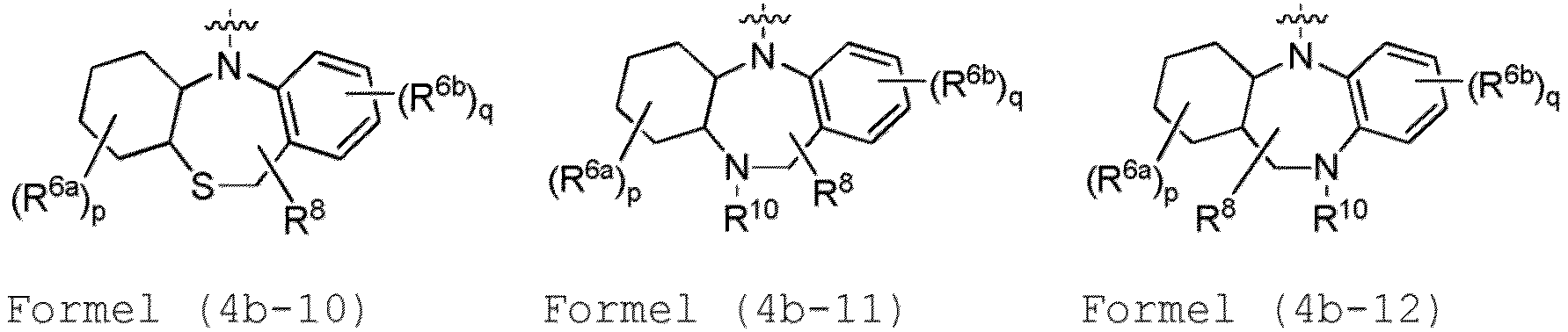
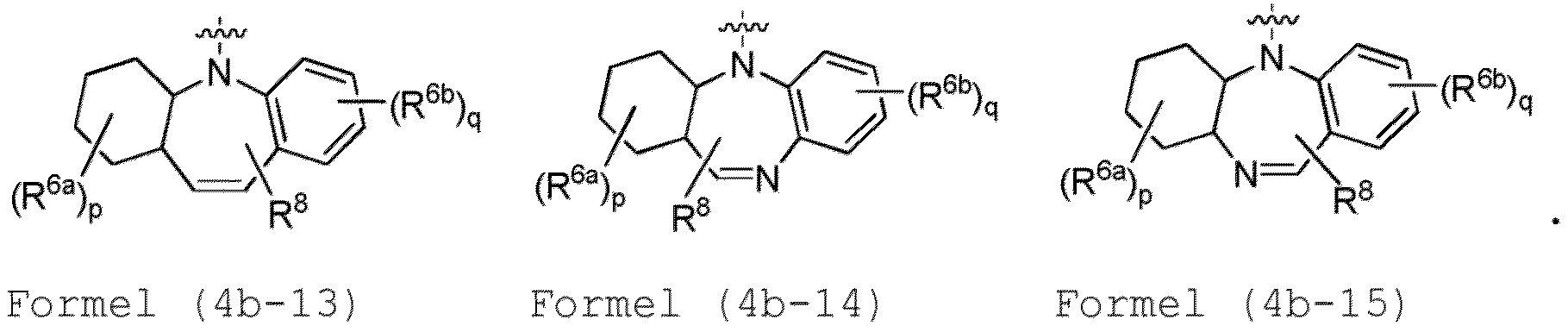
- Verbindung nach einem der Ansprüche 1 bis 21 und 23 bis 33 oder ein pharmazeutisch annehmbares Salz, Ester, Stereoisomer, Polymorph, Solvat, N-Oxid, eine isotopenmarkierte Verbindung davon, wobei die Verbindung eine Struktur der Formel (a-1), (a-2), (a-3), (a-4), (a-5), (a-6), (a-7) oder (a-8) aufweist:


- Verbindung mit der Struktur


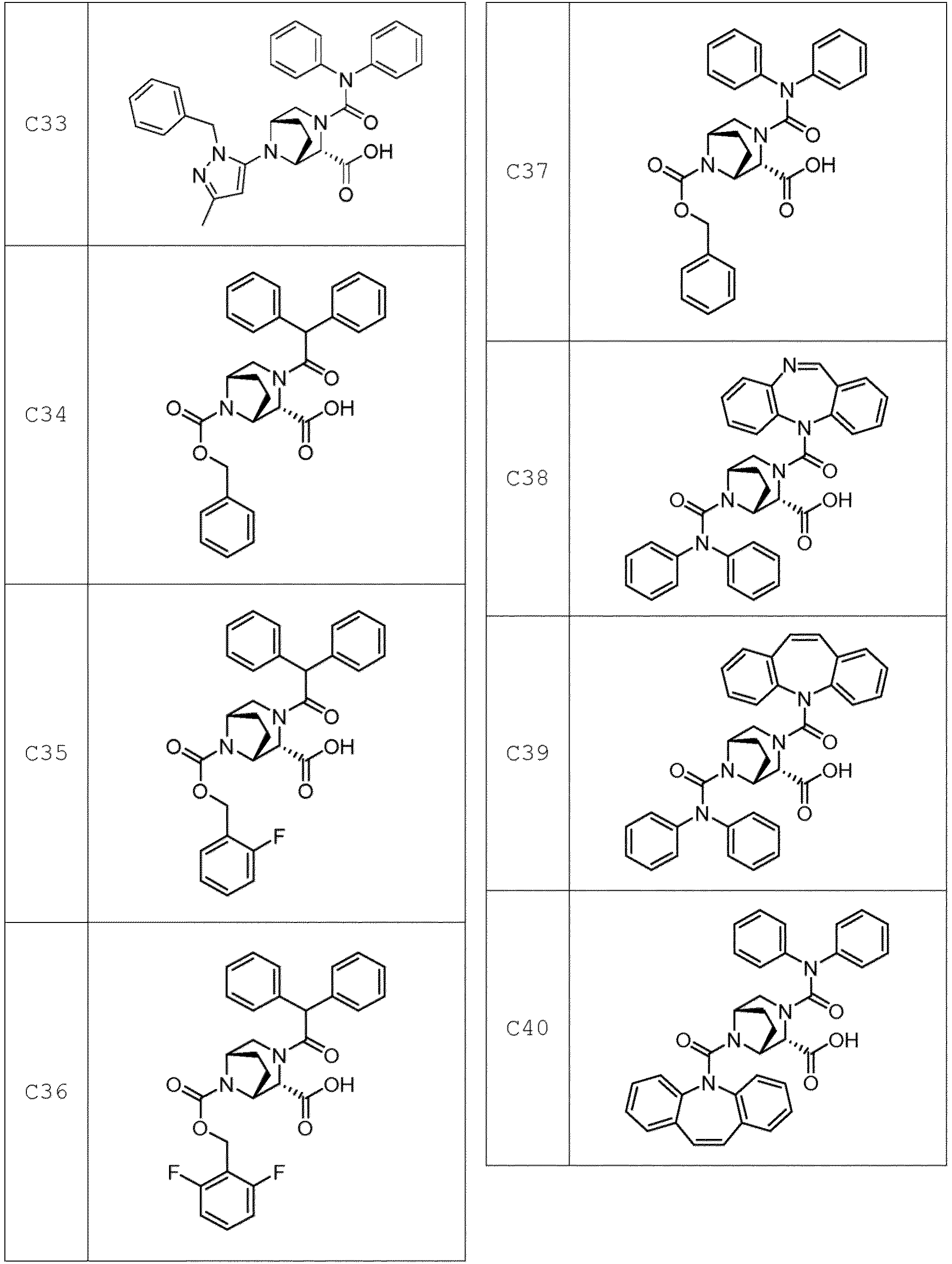


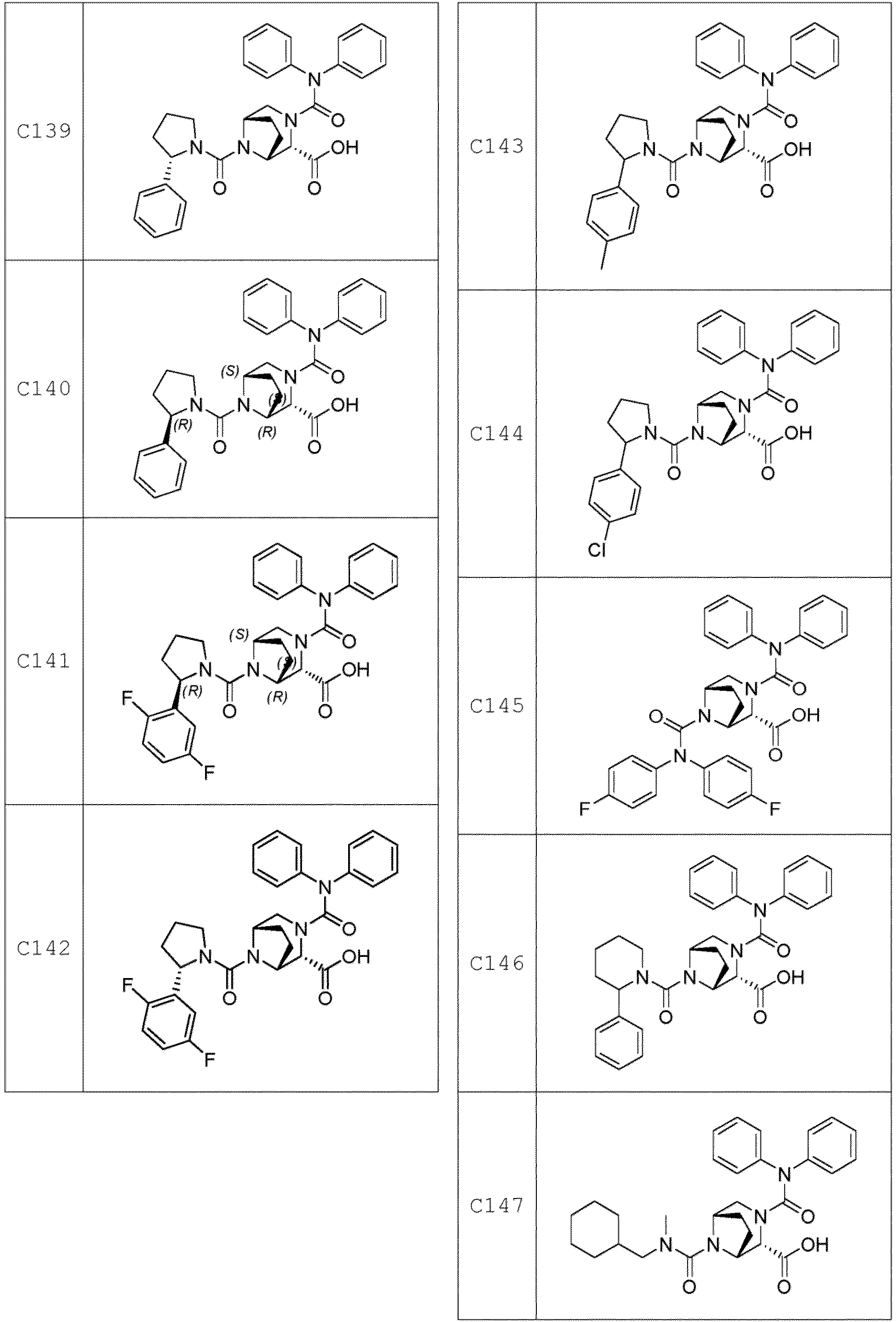


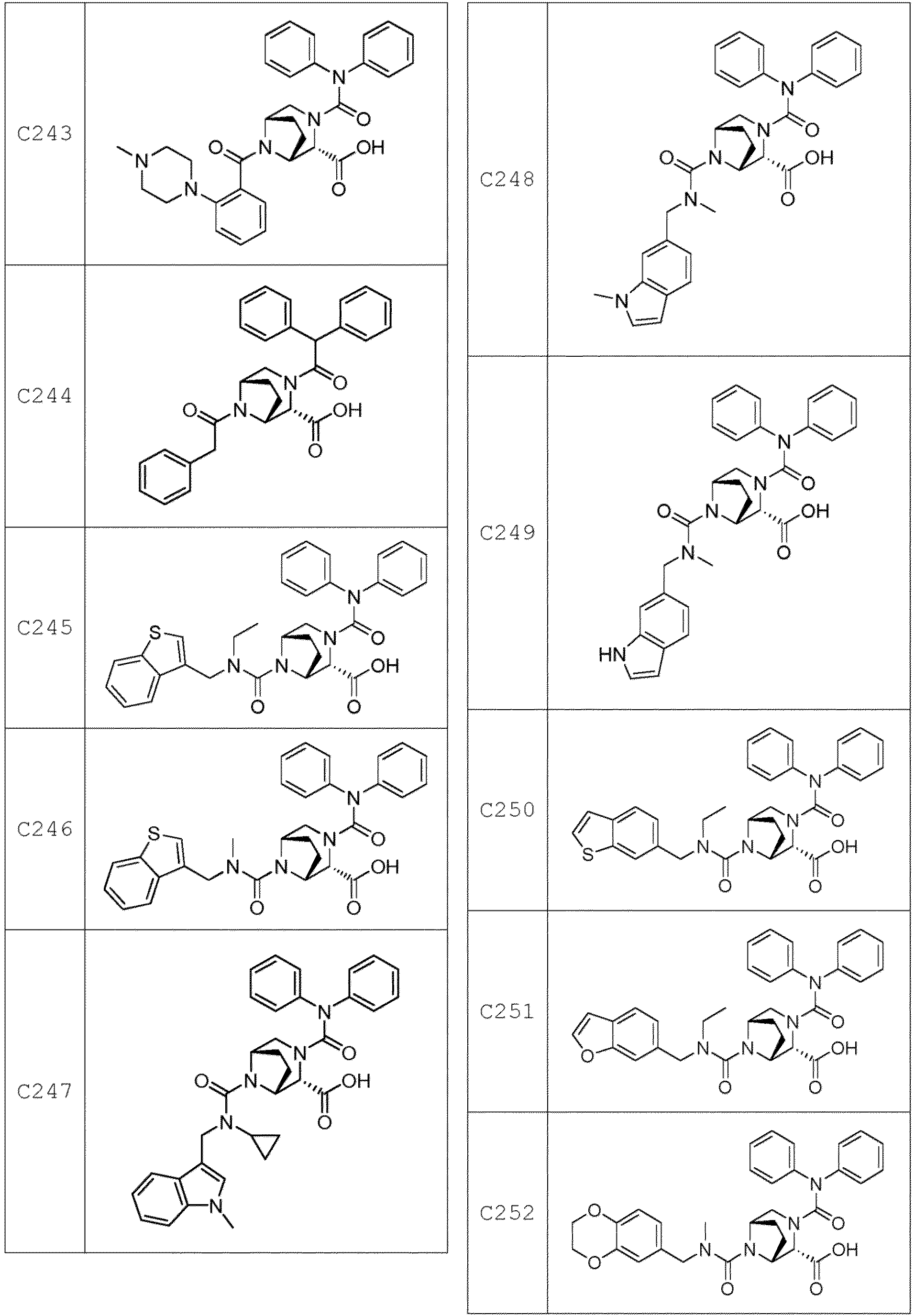

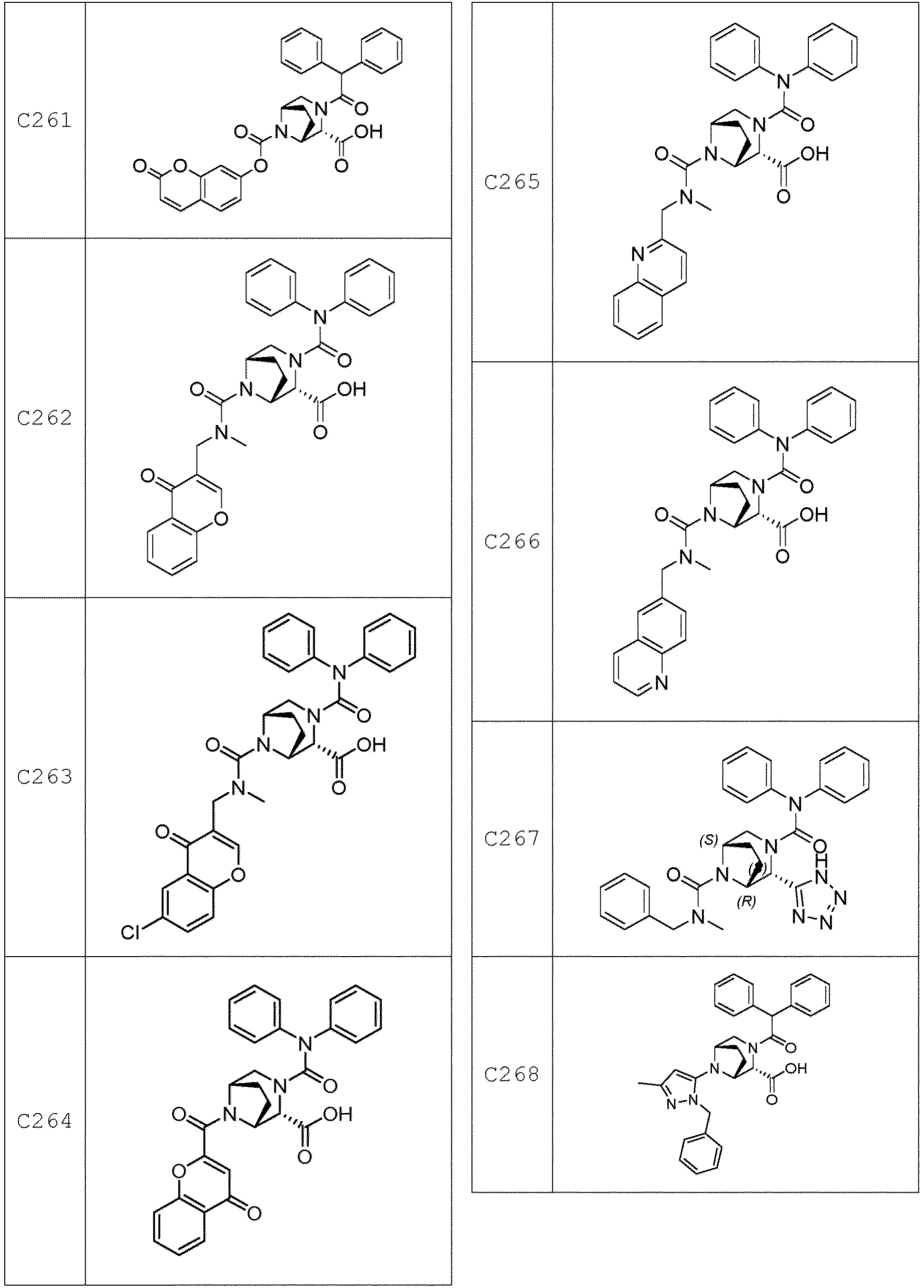


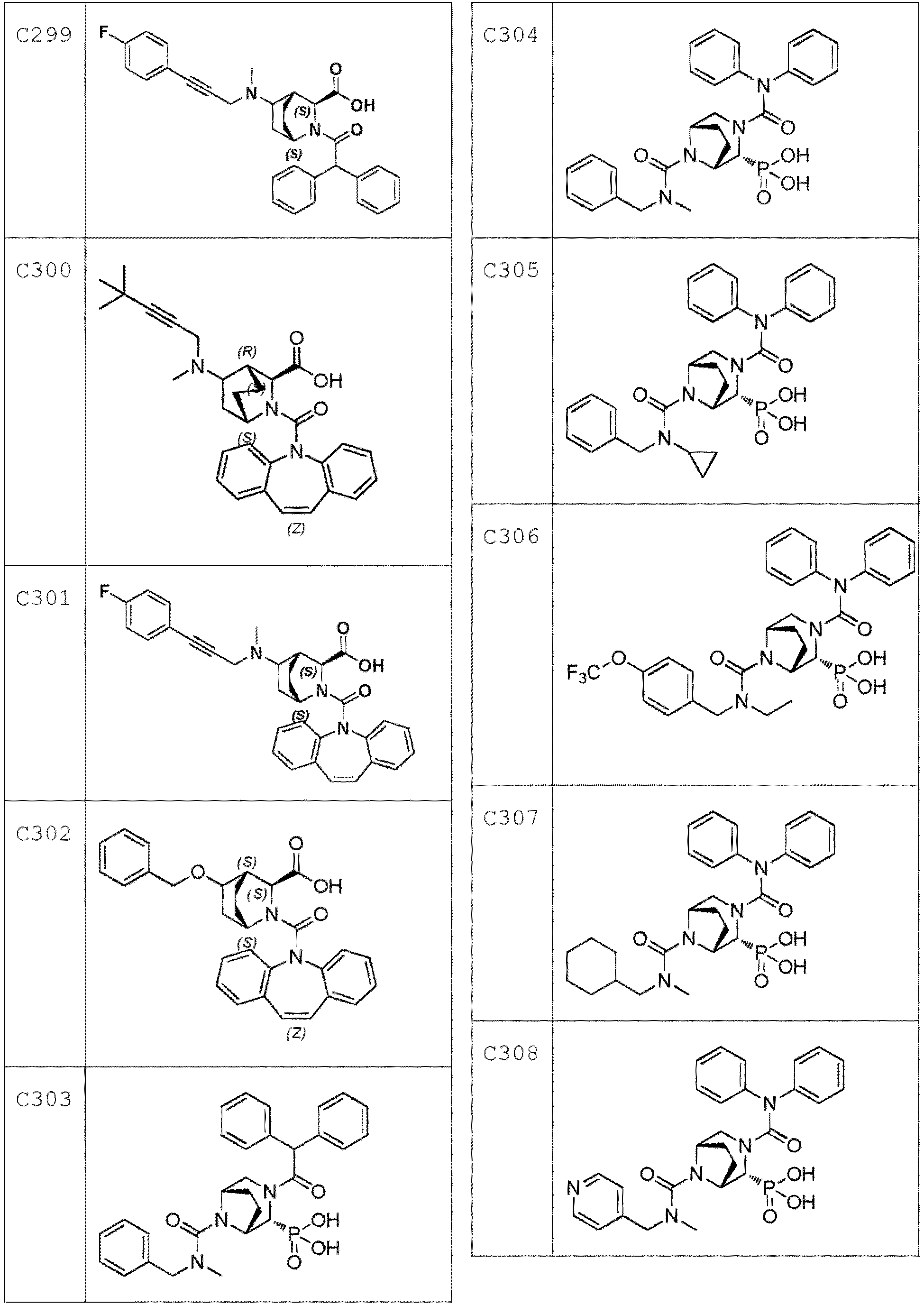
 oder ein pharmazeutisch annehmbares Salz, Ester, Stereoisomer, Polymorph, Solvat, N-Oxid, eine isotopenmarkierte Verbindung davon.
- Pharmazeutische Zusammensetzung, umfassend eine prophylaktisch oder therapeutisch wirksame Menge einer Verbindung nach einem der Ansprüche 1 bis 35 oder ein pharmazeutisch annehmbares Salz, Ester, Stereoisomer, Polymorph, Solvat, N-Oxid, eine isotopenmarkierte Verbindung davon und einen pharmazeutisch annehmbaren Träger, wobei die pharmazeutische Zusammensetzung bevorzugt in Form einer festen, halbfesten, flüssigen oder gasförmigen Zubereitung vorliegt.
- Verbindung nach einem der Ansprüche 1 bis 35 oder ein pharmazeutisch annehmbares Salz, Ester, Stereoisomer, Polymorph, Solvat, N-Oxid, eine isotopenmarkierte Verbindung davon oder die pharmazeutische Zusammensetzung nach Anspruch 36 zur Verwendung bei der Regulierung einer mit AT2-Rezeptoren assoziierten Reproduktionsfunktion (einschließlich Menstruationszyklus, Fruchtbarkeit und Hormonhaushalt des Östruszyklus) bei einer Patientin, die dieser bedarf; oderzur Verwendung als Angiotensin-II-Typ-2-(AT2)-Rezeptor-Inhibitor, bevorzugt als selektiver AT2-Rezeptor-Inhibitor; oderzur Verwendung bei der Prophylaxe oder Behandlung einer AT2-Rezeptor-vermittelten Störung oder eines damit verbundenen Symptoms,bevorzugt die AT2-Rezeptor-vermittelte Störung ausgewählt ist auszerobrovaskulären Erkrankungen (einschließlich zerebrovaskulärer Spasmen und zerebraler Ischämie); kognitiven Erkrankungen (einschließlich Amnesie, Altersdemenz, AIDS-bedingter Demenz und Down-Syndrom); Erkrankungen oder Störungen des zentralen Nervensystems (einschließlich Süchten wie Alkoholismus, Angstzustände, Depressionen oder dysthymische Störungen, Epilepsie, Hyperaktivität, Schmerzen, Parkinson-Krankheit, Psychosen, Schlafstörungen, unregelmäßige autonome Funktionen und tardive Dyskinesie, Schizophrenie, demyelinisierende Erkrankungen wie Multiple Sklerose und amyotrophe Lateralsklerose); Atemwegserkrankungen (einschließlich Bronchospasmus, Asthma, chronisch obstruktive Atemwegserkrankung), Neuraltumoren; entzündlichen Erkrankungen (einschließlich entzündlicher Darmerkrankungen und Osteoarthritis); Magen-Darm-Erkrankungen oder -Störungen (einschließlich Colitis ulcerosa, Morbus Crohn und Inkontinenz); Durchblutungsstörungen aufgrund von Gefäßerweiterung; Überempfindlichkeitsstörungen (einschließlich Allergien wie Ekzeme, Rhinitis und Kontaktdermatitis); vasospastischen Erkrankungen (einschließlich Angina, Migräne und Morbus Raynaud); fibrosierenden und kollagenen Erkrankungen (einschließlich Sklerodermie und eosinophile Fasziolose); Reflexdystrophie des sympathischen Nervensystems (einschließlich Schulter-Hand-Syndrom); stressbedingten somatischen Störungen; peripherer Neuropathie; Neuralgie; Autoimmunerkrankungen (einschließlich systemischer Lupus erythematodes, rheumatoide Arthritis, Psoriasis und Transplantat-gegen-Wirt-Krankheit); und rheumatischen Erkrankungen (einschließlich Fibrositis);neuropathischen Erkrankungen (einschließlich primärer Neuropathie und sekundärer Neuropathie, wie z. B. periphere Neuropathie) oder damit verbundener Symptome (einschließlich Hyperästhesie, Hyperalgesie, Allodynie, spontane brennende Schmerzen, Taubheit, Schwäche, brennende Schmerzen, stechende Schmerzen und Verlust der Reflexe), bevorzugt neuropathische Schmerzen; wobei die sekundäre Neuropathie diabetische Neuropathie, Herpes-Zoster-bedingte Neuropathie, urämische Neuropathie , Amyloidose-Neuropathie, HIV-sensorische Neuropathien, erbliche motorische und sensorische Neuropathien, erbliche sensorische Neuropathien, erbliche sensorische und autonome Neuropathien, erbliche Neuropathien mit Ulzeromutilation, Nitrofurantoin-Neuropathie, tomakulöse Neuropathie, durch Nährstoffmangel verursachte Neuropathie, durch Nierenversagen verursachte Neuropathie und komplexes regionales Schmerzsyndrom, durch repetitive Tätigkeiten (wie Tippen oder Fließbandarbeit) ; periphere Neuropathien durch antiretrovirale Medikamente (wie Zalcitabin und Didanosin), Antibiotika (wie Metronidazol und Isoniazid), Goldverbindungen, Chemotherapeutika (wie Vincristin), Alkohol, Blei, Arsen, Quecksilber und Organophosphat-Pestizide; periphere Neuropathien im Zusammenhang mit Infektionsprozessen (wie Guillain-Barré-Syndrom);einer durch neuronale Überempfindlichkeit gekennzeichneten Erkrankung, einschließlich einer hyperalgetischen Erkrankung, wie Fibromyalgie und Reizdarmsyndrom;einer mit einer anomalen Nervenregeneration verbundenen Erkrankung, einschließlich neuronaler Überempfindlichkeit, Brustschmerzen, interstitieller Zystitis, Vulvodynie, einer durch Chemotherapie verursachten Neuropathie;Entzündungsschmerz, der durch Erkrankungen verursacht werden kann, die durch Entzündung gekennzeichnet sind (einschließlich Verbrennungen wie chemische, Reibungs- oder thermische Verbrennungen; Autoimmunerkrankungen wie rheumatoide Arthritis; entzündliche Darmerkrankungen wie Morbus Crohn und Kolitis; Osteoarthritis, Karditis, Dermatitis, Myositis, Neuritis und Kollagenosen);Beeinträchtigung der Nervenleitgeschwindigkeit, die mit einer neuropathischen Erkrankung wie oben beschrieben (z. B. einer peripheren Neuropathie) sowie mit dem Karpaltunnelsyndrom, der ulnaren Neuropathie, dem Guillain-Barré-Syndrom, der fazioskapulohumeralen Muskeldystrophie und der Bandscheibenhernie verbunden sein kann;einer zellproliferativen Störung, einschließlich einer Krebserkrankung (einschließlich Leukämie, Melanom, Prostatakrebs, Brustkrebs, Eierstockkrebs, Basalzellkarzinom, Plattenepithelkarzinom, Sarkom, Fibrosarkom, Dickdarmkrebs, Lungenkrebs); und einer nicht krebsartigen proliferativen Störung (einschließlich dermatologischer Störungen wie Warzen, Keloide, Psoriasis, Wucherungen und auch die Reduzierung von Narbengewebe und kosmetische Veränderungen) undeiner mit einem Ungleichgewicht zwischen Knochenresorption und Knochenbildung verbundenen Erkrankung, einschließlich Osteoporose.
Applications Claiming Priority (2)
| Application Number | Priority Date | Filing Date | Title |
|---|---|---|---|
| CN201810244703 | 2018-03-23 | ||
| PCT/CN2019/079226 WO2019179515A1 (zh) | 2018-03-23 | 2019-03-22 | 受体抑制剂、包含其的药物组合物及其用途 |
Publications (4)
| Publication Number | Publication Date |
|---|---|
| EP3770148A1 EP3770148A1 (de) | 2021-01-27 |
| EP3770148A4 EP3770148A4 (de) | 2022-01-05 |
| EP3770148B1 true EP3770148B1 (de) | 2024-10-02 |
| EP3770148C0 EP3770148C0 (de) | 2024-10-02 |
Family
ID=67988152
Family Applications (1)
| Application Number | Title | Priority Date | Filing Date |
|---|---|---|---|
| EP19771519.6A Active EP3770148B1 (de) | 2018-03-23 | 2019-03-22 | Rezeptorinhibitor, pharmazeutische zusammensetzung damit und verwendung davon |
Country Status (9)
| Country | Link |
|---|---|
| US (3) | US11453690B2 (de) |
| EP (1) | EP3770148B1 (de) |
| JP (1) | JP7438962B2 (de) |
| KR (1) | KR102875747B1 (de) |
| CN (2) | CN111801318B (de) |
| AU (2) | AU2019236882B2 (de) |
| CA (1) | CA3094001C (de) |
| ES (1) | ES2989550T3 (de) |
| WO (1) | WO2019179515A1 (de) |
Families Citing this family (10)
| Publication number | Priority date | Publication date | Assignee | Title |
|---|---|---|---|---|
| US9730677B2 (en) | 2011-05-17 | 2017-08-15 | Koninklijke Philips Electronics N.V. | Matrix ultrasound probe with passive heat dissipation |
| CA3094001C (en) * | 2018-03-23 | 2024-01-23 | Beijing Tide Pharmaceutical Co., Ltd. | Receptor inhibitor, pharmaceutical composition comprising same, and use thereof |
| IL326597A (en) | 2019-10-07 | 2026-04-01 | Contineum Therapeutics Inc | Muscarinic M1 acetylcholine receptor antagonists |
| US11752149B2 (en) | 2019-12-02 | 2023-09-12 | Pipeline Therapeutics, Inc. | Muscarinic acetylcholine M1 receptor antagonists |
| KR20240029051A (ko) | 2021-07-02 | 2024-03-05 | 상하이 드 노보 파마테크 컴퍼니 리미티드 | Kras g12d 억제제 및 이의 용도 |
| US20240368133A1 (en) | 2021-07-30 | 2024-11-07 | Confo Therapeutics N.V. | Compounds for the Treatment of Pain, in Particular, Neuropathic Pain, and/or Other Diseases or Disorders that are Associated with AT2R and/or AT2R Mediated Signaling |
| EP4471037A1 (de) | 2022-01-30 | 2024-12-04 | Shanghai Pharmaceuticals Holding Co., Ltd. | Chinolinverbindung und verwendung davon |
| WO2025153011A1 (zh) * | 2024-01-17 | 2025-07-24 | 北京泰德制药股份有限公司 | 血管紧张素ii受体拮抗剂及其用于治疗周围神经病理性疼痛的用途 |
| TW202543628A (zh) * | 2024-04-03 | 2025-11-16 | 大陸商北京泰德製藥股份有限公司 | 血管緊張素ii 2型受體拮抗劑及其用於治療癌性疼痛的用途 |
| WO2026086860A1 (zh) * | 2024-10-24 | 2026-04-30 | 北京泰德制药股份有限公司 | At2受体抑制剂的盐、其固体形式及其制备方法和用途 |
Family Cites Families (11)
| Publication number | Priority date | Publication date | Assignee | Title |
|---|---|---|---|---|
| WO1992020661A1 (en) * | 1991-05-22 | 1992-11-26 | Merck & Co., Inc. | N, n-diacylpiperazines |
| US5348955A (en) * | 1993-06-22 | 1994-09-20 | Merck & Co., Inc. | N,N-diacylpiperazines |
| WO2006066361A1 (en) | 2004-12-24 | 2006-06-29 | The University Of Queensland | Method of treatment or prophylaxis |
| AU2007229322B2 (en) * | 2006-03-20 | 2012-04-05 | Novartis Ag | Method of treatment or prophylaxis inflammatory pain |
| CN102311439B (zh) * | 2010-07-02 | 2015-11-25 | 上海药明康德新药开发有限公司 | 1-取代-3,8-二氮杂双环[3.2.1]辛烷衍生物及制备方法 |
| CN102875556B (zh) * | 2011-07-12 | 2016-03-30 | 天津药明康德新药开发有限公司 | (4s)-1-取代-2,5-二氮杂双环[2,2,1]庚烷衍生物及制备方法 |
| PL2800738T3 (pl) | 2012-01-06 | 2020-10-19 | Novartis Ag | Związki heterocykliczne i sposoby ich stosowania |
| WO2013110135A1 (en) | 2012-01-25 | 2013-08-01 | Spinifex Pharmaceuticals Pty Ltd | Heterocyclic compounds and methods for their use |
| CN106831787B (zh) | 2017-01-20 | 2018-10-23 | 成都倍特药业有限公司 | 用作布鲁顿酪氨酸激酶抑制剂的化合物及其制备方法和应用 |
| EP3768256A4 (de) * | 2018-03-19 | 2021-11-24 | Emory University | Pan-tropische eingangsinhibitoren |
| CA3094001C (en) * | 2018-03-23 | 2024-01-23 | Beijing Tide Pharmaceutical Co., Ltd. | Receptor inhibitor, pharmaceutical composition comprising same, and use thereof |
-
2019
- 2019-03-22 CA CA3094001A patent/CA3094001C/en active Active
- 2019-03-22 EP EP19771519.6A patent/EP3770148B1/de active Active
- 2019-03-22 ES ES19771519T patent/ES2989550T3/es active Active
- 2019-03-22 US US17/040,569 patent/US11453690B2/en active Active
- 2019-03-22 AU AU2019236882A patent/AU2019236882B2/en active Active
- 2019-03-22 WO PCT/CN2019/079226 patent/WO2019179515A1/zh not_active Ceased
- 2019-03-22 CN CN201980016552.2A patent/CN111801318B/zh active Active
- 2019-03-22 CN CN202311688389.9A patent/CN117645606A/zh active Pending
- 2019-03-22 KR KR1020207030718A patent/KR102875747B1/ko active Active
- 2019-03-22 JP JP2020549744A patent/JP7438962B2/ja active Active
-
2022
- 2022-05-25 US US17/752,960 patent/US12180243B2/en active Active
-
2023
- 2023-10-25 AU AU2023254923A patent/AU2023254923B2/en active Active
-
2024
- 2024-10-31 US US18/932,687 patent/US20250066398A1/en active Pending
Also Published As
| Publication number | Publication date |
|---|---|
| JP7438962B2 (ja) | 2024-02-27 |
| CN111801318B (zh) | 2024-01-02 |
| WO2019179515A1 (zh) | 2019-09-26 |
| EP3770148A4 (de) | 2022-01-05 |
| EP3770148C0 (de) | 2024-10-02 |
| CA3094001C (en) | 2024-01-23 |
| AU2019236882A1 (en) | 2020-10-15 |
| US20230106958A1 (en) | 2023-04-06 |
| JP2021518368A (ja) | 2021-08-02 |
| EP3770148A1 (de) | 2021-01-27 |
| AU2023254923B2 (en) | 2025-11-27 |
| CA3094001A1 (en) | 2019-09-26 |
| US20250066398A1 (en) | 2025-02-27 |
| CN111801318A (zh) | 2020-10-20 |
| KR102875747B1 (ko) | 2025-10-22 |
| US11453690B2 (en) | 2022-09-27 |
| KR20210010444A (ko) | 2021-01-27 |
| US12180243B2 (en) | 2024-12-31 |
| AU2023254923A1 (en) | 2023-11-16 |
| AU2019236882B2 (en) | 2023-08-10 |
| ES2989550T3 (es) | 2024-11-27 |
| CN117645606A (zh) | 2024-03-05 |
| US20210054007A1 (en) | 2021-02-25 |
Similar Documents
| Publication | Publication Date | Title |
|---|---|---|
| KR102875747B1 (ko) | 수용체 억제제, 이를 포함하는 약학적 조성물 및 이의 용도 | |
| AU2020394444B2 (en) | Substituted macrocyclic compounds and related methods of treatment | |
| EP3634404B1 (de) | Pyrazol-magl-hemmer | |
| AU2021409403A1 (en) | Substituted macrocyclic compounds and related methods of treatment | |
| EP3712144B1 (de) | P2x3- und/oder p2x2/3-rezeptor-antagonist, pharmazeutische zusammensetzung damit und verwendung davon | |
| EP4423068B1 (de) | Rxfp1-agonisten | |
| JP7814359B2 (ja) | 受容体阻害剤、同阻害剤を含む医薬組成物及びその使用 | |
| CA3260221A1 (en) | Substituted Fused Bicyclic Compounds and Associated Treatment Processes | |
| HK40029777A (en) | Receptor inhibitor, pharmaceutical composition comprising same, and use thereof | |
| CN117659022A (zh) | 脲基取代吡啶类化合物、包含其的药物组合物及其医药用途 | |
| HK40029777B (zh) | 受体抑制剂、包含其的药物组合物及其用途 | |
| HK40032239A (en) | Receptor inhibitors, pharmaceutical compositions comprising the same and use thereof | |
| HK40032239B (en) | Receptor inhibitors, pharmaceutical compositions comprising the same and use thereof | |
| HK40079910A (en) | Arylmethylene heterocyclic compounds as kv1.3 potassium shaker channel blockers |
Legal Events
| Date | Code | Title | Description |
|---|---|---|---|
| STAA | Information on the status of an ep patent application or granted ep patent |
Free format text: STATUS: THE INTERNATIONAL PUBLICATION HAS BEEN MADE |
|
| PUAI | Public reference made under article 153(3) epc to a published international application that has entered the european phase |
Free format text: ORIGINAL CODE: 0009012 |
|
| STAA | Information on the status of an ep patent application or granted ep patent |
Free format text: STATUS: REQUEST FOR EXAMINATION WAS MADE |
|
| 17P | Request for examination filed |
Effective date: 20201016 |
|
| AK | Designated contracting states |
Kind code of ref document: A1 Designated state(s): AL AT BE BG CH CY CZ DE DK EE ES FI FR GB GR HR HU IE IS IT LI LT LU LV MC MK MT NL NO PL PT RO RS SE SI SK SM TR |
|
| AX | Request for extension of the european patent |
Extension state: BA ME |
|
| DAV | Request for validation of the european patent (deleted) | ||
| DAX | Request for extension of the european patent (deleted) | ||
| REG | Reference to a national code |
Ref country code: DE Ref legal event code: R079 Free format text: PREVIOUS MAIN CLASS: C07D0241380000 Ipc: C07D0471080000 Ref document number: 602019059758 Country of ref document: DE |
|
| A4 | Supplementary search report drawn up and despatched |
Effective date: 20211206 |
|
| RIC1 | Information provided on ipc code assigned before grant |
Ipc: A61P 25/00 20060101ALI20211130BHEP Ipc: A61P 9/00 20060101ALI20211130BHEP Ipc: A61K 31/498 20060101ALI20211130BHEP Ipc: C07F 9/6561 20060101ALI20211130BHEP Ipc: C07D 487/08 20060101ALI20211130BHEP Ipc: C07D 471/08 20060101AFI20211130BHEP |
|
| STAA | Information on the status of an ep patent application or granted ep patent |
Free format text: STATUS: EXAMINATION IS IN PROGRESS |
|
| 17Q | First examination report despatched |
Effective date: 20231103 |
|
| GRAP | Despatch of communication of intention to grant a patent |
Free format text: ORIGINAL CODE: EPIDOSNIGR1 |
|
| STAA | Information on the status of an ep patent application or granted ep patent |
Free format text: STATUS: GRANT OF PATENT IS INTENDED |
|
| INTG | Intention to grant announced |
Effective date: 20240425 |
|
| GRAS | Grant fee paid |
Free format text: ORIGINAL CODE: EPIDOSNIGR3 |
|
| GRAA | (expected) grant |
Free format text: ORIGINAL CODE: 0009210 |
|
| STAA | Information on the status of an ep patent application or granted ep patent |
Free format text: STATUS: THE PATENT HAS BEEN GRANTED |
|
| AK | Designated contracting states |
Kind code of ref document: B1 Designated state(s): AL AT BE BG CH CY CZ DE DK EE ES FI FR GB GR HR HU IE IS IT LI LT LU LV MC MK MT NL NO PL PT RO RS SE SI SK SM TR |
|
| REG | Reference to a national code |
Ref country code: GB Ref legal event code: FG4D |
|
| REG | Reference to a national code |
Ref country code: CH Ref legal event code: EP |
|
| REG | Reference to a national code |
Ref country code: IE Ref legal event code: FG4D |
|
| REG | Reference to a national code |
Ref country code: DE Ref legal event code: R096 Ref document number: 602019059758 Country of ref document: DE |
|
| U01 | Request for unitary effect filed |
Effective date: 20241009 |
|
| REG | Reference to a national code |
Ref country code: ES Ref legal event code: FG2A Ref document number: 2989550 Country of ref document: ES Kind code of ref document: T3 Effective date: 20241127 |
|
| U07 | Unitary effect registered |
Designated state(s): AT BE BG DE DK EE FI FR IT LT LU LV MT NL PT RO SE SI Effective date: 20241029 |
|
| U20 | Renewal fee for the european patent with unitary effect paid |
Year of fee payment: 7 Effective date: 20250205 |
|
| PG25 | Lapsed in a contracting state [announced via postgrant information from national office to epo] |
Ref country code: HR Free format text: LAPSE BECAUSE OF FAILURE TO SUBMIT A TRANSLATION OF THE DESCRIPTION OR TO PAY THE FEE WITHIN THE PRESCRIBED TIME-LIMIT Effective date: 20241002 Ref country code: IS Free format text: LAPSE BECAUSE OF FAILURE TO SUBMIT A TRANSLATION OF THE DESCRIPTION OR TO PAY THE FEE WITHIN THE PRESCRIBED TIME-LIMIT Effective date: 20250202 |
|
| PG25 | Lapsed in a contracting state [announced via postgrant information from national office to epo] |
Ref country code: NO Free format text: LAPSE BECAUSE OF FAILURE TO SUBMIT A TRANSLATION OF THE DESCRIPTION OR TO PAY THE FEE WITHIN THE PRESCRIBED TIME-LIMIT Effective date: 20250102 |
|
| PG25 | Lapsed in a contracting state [announced via postgrant information from national office to epo] |
Ref country code: GR Free format text: LAPSE BECAUSE OF FAILURE TO SUBMIT A TRANSLATION OF THE DESCRIPTION OR TO PAY THE FEE WITHIN THE PRESCRIBED TIME-LIMIT Effective date: 20250103 |
|
| PG25 | Lapsed in a contracting state [announced via postgrant information from national office to epo] |
Ref country code: CZ Free format text: LAPSE BECAUSE OF FAILURE TO SUBMIT A TRANSLATION OF THE DESCRIPTION OR TO PAY THE FEE WITHIN THE PRESCRIBED TIME-LIMIT Effective date: 20241002 Ref country code: PL Free format text: LAPSE BECAUSE OF FAILURE TO SUBMIT A TRANSLATION OF THE DESCRIPTION OR TO PAY THE FEE WITHIN THE PRESCRIBED TIME-LIMIT Effective date: 20241002 |
|
| PG25 | Lapsed in a contracting state [announced via postgrant information from national office to epo] |
Ref country code: RS Free format text: LAPSE BECAUSE OF FAILURE TO SUBMIT A TRANSLATION OF THE DESCRIPTION OR TO PAY THE FEE WITHIN THE PRESCRIBED TIME-LIMIT Effective date: 20250102 |
|
| PG25 | Lapsed in a contracting state [announced via postgrant information from national office to epo] |
Ref country code: SM Free format text: LAPSE BECAUSE OF FAILURE TO SUBMIT A TRANSLATION OF THE DESCRIPTION OR TO PAY THE FEE WITHIN THE PRESCRIBED TIME-LIMIT Effective date: 20241002 |
|
| PGFP | Annual fee paid to national office [announced via postgrant information from national office to epo] |
Ref country code: ES Payment date: 20250411 Year of fee payment: 7 |
|
| PGFP | Annual fee paid to national office [announced via postgrant information from national office to epo] |
Ref country code: CH Payment date: 20250401 Year of fee payment: 7 |
|
| PG25 | Lapsed in a contracting state [announced via postgrant information from national office to epo] |
Ref country code: SK Free format text: LAPSE BECAUSE OF FAILURE TO SUBMIT A TRANSLATION OF THE DESCRIPTION OR TO PAY THE FEE WITHIN THE PRESCRIBED TIME-LIMIT Effective date: 20241002 |
|
| PLBE | No opposition filed within time limit |
Free format text: ORIGINAL CODE: 0009261 |
|
| STAA | Information on the status of an ep patent application or granted ep patent |
Free format text: STATUS: NO OPPOSITION FILED WITHIN TIME LIMIT |
|
| 26N | No opposition filed |
Effective date: 20250703 |
|
| PG25 | Lapsed in a contracting state [announced via postgrant information from national office to epo] |
Ref country code: MC Free format text: LAPSE BECAUSE OF FAILURE TO SUBMIT A TRANSLATION OF THE DESCRIPTION OR TO PAY THE FEE WITHIN THE PRESCRIBED TIME-LIMIT Effective date: 20241002 |
|
| U20 | Renewal fee for the european patent with unitary effect paid |
Year of fee payment: 8 Effective date: 20260209 |
|
| REG | Reference to a national code |
Ref country code: CH Ref legal event code: U11 Free format text: ST27 STATUS EVENT CODE: U-0-0-U10-U11 (AS PROVIDED BY THE NATIONAL OFFICE) Effective date: 20260401 |
|
| PGFP | Annual fee paid to national office [announced via postgrant information from national office to epo] |
Ref country code: GB Payment date: 20260106 Year of fee payment: 8 |
|
| PGFP | Annual fee paid to national office [announced via postgrant information from national office to epo] |
Ref country code: IE Payment date: 20260102 Year of fee payment: 8 |