EP3770280A1 - Procédé pour la fabrication d'acier de haute pureté - Google Patents
Procédé pour la fabrication d'acier de haute pureté Download PDFInfo
- Publication number
- EP3770280A1 EP3770280A1 EP19770761.5A EP19770761A EP3770280A1 EP 3770280 A1 EP3770280 A1 EP 3770280A1 EP 19770761 A EP19770761 A EP 19770761A EP 3770280 A1 EP3770280 A1 EP 3770280A1
- Authority
- EP
- European Patent Office
- Prior art keywords
- molten steel
- treatment
- added
- steel
- addition
- Prior art date
- Legal status (The legal status is an assumption and is not a legal conclusion. Google has not performed a legal analysis and makes no representation as to the accuracy of the status listed.)
- Granted
Links
Images



Classifications
-
- C—CHEMISTRY; METALLURGY
- C21—METALLURGY OF IRON
- C21C—PROCESSING OF PIG-IRON, e.g. REFINING, MANUFACTURE OF WROUGHT-IRON OR STEEL; TREATMENT IN MOLTEN STATE OF FERROUS ALLOYS
- C21C5/00—Manufacture of carbon-steel, e.g. plain mild steel, medium carbon steel or cast steel or stainless steel
- C21C5/28—Manufacture of steel in the converter
-
- C—CHEMISTRY; METALLURGY
- C21—METALLURGY OF IRON
- C21C—PROCESSING OF PIG-IRON, e.g. REFINING, MANUFACTURE OF WROUGHT-IRON OR STEEL; TREATMENT IN MOLTEN STATE OF FERROUS ALLOYS
- C21C7/00—Treating molten ferrous alloys, e.g. steel, not covered by groups C21C1/00 - C21C5/00
- C21C7/04—Removing impurities by adding a treating agent
- C21C7/06—Deoxidising, e.g. killing
-
- B—PERFORMING OPERATIONS; TRANSPORTING
- B22—CASTING; POWDER METALLURGY
- B22D—CASTING OF METALS; CASTING OF OTHER SUBSTANCES BY THE SAME PROCESSES OR DEVICES
- B22D1/00—Treatment of fused masses in the ladle or the supply runners before casting
-
- C—CHEMISTRY; METALLURGY
- C21—METALLURGY OF IRON
- C21C—PROCESSING OF PIG-IRON, e.g. REFINING, MANUFACTURE OF WROUGHT-IRON OR STEEL; TREATMENT IN MOLTEN STATE OF FERROUS ALLOYS
- C21C7/00—Treating molten ferrous alloys, e.g. steel, not covered by groups C21C1/00 - C21C5/00
- C21C7/0075—Treating in a ladle furnace, e.g. up-/reheating of molten steel within the ladle
-
- C—CHEMISTRY; METALLURGY
- C21—METALLURGY OF IRON
- C21C—PROCESSING OF PIG-IRON, e.g. REFINING, MANUFACTURE OF WROUGHT-IRON OR STEEL; TREATMENT IN MOLTEN STATE OF FERROUS ALLOYS
- C21C7/00—Treating molten ferrous alloys, e.g. steel, not covered by groups C21C1/00 - C21C5/00
- C21C7/04—Removing impurities by adding a treating agent
- C21C7/064—Dephosphorising; Desulfurising
-
- C—CHEMISTRY; METALLURGY
- C21—METALLURGY OF IRON
- C21C—PROCESSING OF PIG-IRON, e.g. REFINING, MANUFACTURE OF WROUGHT-IRON OR STEEL; TREATMENT IN MOLTEN STATE OF FERROUS ALLOYS
- C21C7/00—Treating molten ferrous alloys, e.g. steel, not covered by groups C21C1/00 - C21C5/00
- C21C7/10—Handling in a vacuum
Definitions
- the present disclosure relates to a method of producing steel with a low amount of oxide-based nonmetallic inclusions, namely, high-cleanliness steel, and particularly relates to a method of producing calcium-added steel.
- high-strength steel pipes or tubes for use in oil well pipes or tubes, etc. are used in acidified severe environments (sour environments) containing hydrogen sulfide of corrosive gas, and therefore are required to have excellent hydrogen-induced cracking resistance (HIC resistance) and sulfide stress corrosion cracking resistance (SSC resistance).
- HIC resistance hydrogen-induced cracking resistance
- SSC resistance sulfide stress corrosion cracking resistance
- MnS sulfide
- HIC resistance and SSC resistance For improvement in HIC resistance and SSC resistance, it is necessary to not only reduce the amount of oxide-based nonmetallic inclusions in the molten steel stage, but also reduce sulfide, such as MnS, which precipitates and crystallizes during solidification of molten steel, and render it harmless.
- MnS is known to be harmful to HIC resistance and SSC resistance, because MnS has high stretching property and, in the subsequent rolling of the steel, stretches to become a hydrogen storage site.
- a commonly known effective measure for this is to add Ca-containing metal in the molten steel stage to change MnS to CaS.
- Method of adding Ca-containing metal and its addition amounts the following techniques are known.
- JP 2002-60893 A (PTL 1) describes a production method for steel for an oil well having excellent sulfide stress corrosion cracking resistance, wherein Ca or a Ca-containing substance is added to molten steel after tapping of the molten steel from a converter and before casting so that the Ca content in the molten steel will be 0.0005 mass% to 0.005 mass%, and S, Al, Ca, and T.[O] (total oxygen) in the steel are controlled to satisfy the following formula: ⁇ 0.005 ⁇ Ca / 40 ⁇ S / 32 ⁇ sol . Al ⁇ T . O ⁇ 1000000 ⁇ 0.0042 .
- JP 2011-89180 A (PTL 2) describes a smelting method for steel material for a high-strength and high-corrosion-resistance oil well pipe or tube, wherein T.[O] in molten steel is measured after completion of secondary refining and, before starting pouring the molten steel into a tundish of a continuous caster, Ca is added in an addition amount calculated based on the measured value to control inclusions.
- JP 2010-209372 A (PTL 3) describes the following production method for clean steel having excellent sulfide corrosion cracking resistance: In a process of adding Al to molten steel to deoxidize the molten steel during or after tapping of the molten steel from a converter to a ladle, first adding CaO-containing flux to the molten steel in the ladle to perform desulfurization treatment and adding Ca-containing metal during the desulfurization treatment, thereafter subjecting the molten steel in the ladle to vacuum degassing treatment and further adding Ca-containing metal to the molten steel in the ladle after the vacuum degassing treatment, and thereafter casting the molten steel, pure content of Ca in the Ca-containing metal in the desulfurization treatment is adjusted depending on the Al concentration and the total oxygen concentration in the molten steel.
- the techniques described in PTL 1 to PTL 3 each define the addition amount of Ca-containing metal for the purpose of improving HIC resistance and SSC resistance from this perspective.
- the techniques described in PTL 1 to PTL 3 define the respective addition methods or addition amounts based on the concept that, assuming only Al 2 O 3 -based inclusions are present before Ca addition, the Al 2 O 3 -based inclusions react with Ca and as a result change to appropriate CaO-Al 2 O 3 -based inclusions.
- the steel is usually produced by the following process: First, Si and Al are added to molten steel in a converter or a ladle subsequent to the converter, to perform deoxidation treatment. Following this, CaO-containing flux is added to the molten steel in the ladle, to perform ladle refining (desulfurization treatment) using a ladle furnace (LF). Next, vacuum degassing treatment by an RH vacuum degasser is performed.
- Ca addition Ca-containing metal to the molten steel
- the molten steel is transferred from the ladle to a tundish, and continuously cast to form cast steel.
- Al 2 O 3 -based inclusions are predominant immediately after the deoxidation treatment.
- Steel for a high-strength seamless pipe, a line pipe, etc. used in a sour environment is required to have high strength, and thus typically has a composition having a Si content of 0.1 % or more.
- Si component it is common to add a large amount of a FeSi alloy simultaneously with Al as a deoxidizer and then add, in the ladle that receives the molten steel tapped from the converter or in the subsequent LF treatment and vacuum degassing, the FeSi alloy to the molten steel several times so as to achieve the target Si content.
- the inclusion composition at the end of the ladle refining tends to be not Al 2 O 3 -based inclusions alone but have changed to CaO-MgO-Al 2 O 3 -based inclusions containing CaO and MgO.
- the foregoing problem is more likely to occur in a rimmed steel tapping process of adding deoxidizers such as Si and Al in the ladle subsequent to the converter (i.e. tapping without killing a converter) than in a killed steel tapping process of adding deoxidizers such as Si and Al in the converter (i.e. tapping with killing).
- the foregoing problem is particularly noticeable in the case where the FeSi alloy for Si component adjustment is added in the latter half of the ladle refining (LF) or in the vacuum degassing treatment. Analysis results in these cases indicate that the Ca concentration in the molten steel after the vacuum degassing treatment and before the Ca treatment increased to about 5 ppm to 10 ppm.
- a method of producing high-cleanliness steel comprises: adding deoxidizers to molten steel in a converter to subject the molten steel to deoxidation treatment; performing ladle refining of adding CaO-containing flux to the molten steel and of subjecting the molten steel to desulfurization treatment using a ladle furnace; thereafter subjecting the molten steel to vacuum degassing treatment using a vacuum degasser; thereafter adding Ca-containing metal to the molten steel; and thereafter continuously casting the molten steel.
- Types of deoxidation treatment include killed steel tapping treatment of adding deoxidizers such as Si and Al in a converter (i.e. tapping with killing) as illustrated in FIG. 1A as an example and rimmed steel tapping treatment of adding deoxidizers such as Si and Al in ladle refining or vacuum degassing treatment after converter refining (i.e. tapping without killing a converter) as illustrated in FIG. 1B as an example.
- the killed steel tapping treatment is used as the deoxidation treatment.
- the Ca concentration in the molten steel cannot be limited to 0.0004 % or less between the converter treatment and the vacuum degassing treatment, the inclusion composition after Ca addition cannot be controlled within a 1600 °C liquid phase composition range, and many large inclusions of 5 ⁇ m or more in diameter form, as described later. This causes nozzle clogging and insufficient SSC resistance.
- the deoxidation treatment can be performed by a typical method of adding deoxidizers such as Si and Al to molten steel.
- a deoxidation product formed as a result of the deoxidation treatment is Al 2 O 3 (alumina).
- the Ca concentration in the molten steel cannot be limited to 0.0004 % or less between the converter treatment and the vacuum degassing treatment, the inclusion composition after Ca addition cannot be stably controlled within the 1600 °C liquid phase composition range, and many large inclusions of 5 ⁇ m or more in diameter form. This causes nozzle clogging and insufficient SSC resistance.
- the interval between the Si addition and the Al addition in the deoxidation treatment is not limited, but is preferably 1 minute or more and 10 minutes or less. If the interval is less than 1 minute, the effects according to the present disclosure may not be achieved sufficiently. If the interval is more than 10 minutes, giant SiO 2 -MnO(-CaO) oxide may grow.
- the ladle refining includes heating stirring treatment of introducing gas into the molten steel while heating the molten steel by arc discharge using a ladle furnace (LF).
- CaO-containing flux is added to the molten steel, and desulfurization treatment is performed.
- the flux include quicklime (CaO) alone and a mixture of quicklime and Al 2 O 3 or SiO 2 as a slag formation accelerator for CaO.
- the vacuum degassing treatment can be performed, for example, using a typical device such as a RH vacuum degasser.
- the treatment time of the ladle refining and the treatment time of the vacuum degassing treatment are not limited, and may be set as appropriate depending on the contents of O and S before the treatment with respect to the target contents of O and S.
- the treatment time of the ladle refining is about 30 minutes to 60 minutes
- the treatment time of the vacuum degassing treatment is about 10 minutes to 40 minutes.
- the chemical composition of the molten steel is eventually adjusted to the target chemical composition as a result of adding an alloy in the vacuum degassing treatment.
- Mn and Si components typically the elements are added in large amounts simultaneously with Al as a deoxidizer and then added several times until the ladle refining or the vacuum degassing treatment ends to achieve the target content.
- Si it is important to, in the case of additionally adding Si for chemical composition adjustment, add Si until the end of the first half of the ladle refining and not in the latter half of the ladle refining and in the vacuum degassing.
- the target Si content in the molten steel from the converter treatment to the vacuum degassing can be continuously maintained at a low concentration of 4 ppm or less, and high-cleanliness steel having superior SSC resistance can be produced.
- the additional Si is preferably added within 10 minutes from the treatment start of the ladle refining.
- Ca-containing metal is added to the molten steel.
- the method of adding Ca is not limited.
- a commonly used method involves adding, to the molten steel, a massive alloy containing Ca: 70 mass% and Si: 30 mass% or a wire obtained by wrapping it in a Fe hoop.
- a Ca alloy reacts vigorously with the molten steel and thus tends to form a molten steel reoxidation product when added. It is therefore preferable to ensure perfect argon sealing upon the addition.
- the Ca addition after the vacuum degassing treatment may be performed in a ladle of the RH vacuum degasser, following the vacuum degassing treatment. However, it is preferable to transfer the molten steel to a ladle dedicated to Ca treatment and then add Ca to the molten steel in the ladle.
- the converter treatment time was 60 minutes, and a FeSi alloy of 2.2 kg/ton-steel was added 50 minutes after the treatment start and then Al of 3.5 kg/ton-steel was added 5 minutes later.
- the treatment time of the LF process was 30 minutes, and a FeSi alloy of 1.8 kg/ton-steel was added 10 minutes after the treatment start as additional Si for chemical composition adjustment. Si was not added in the latter half of the LF process and in the RH process. After the RH process, Ca was added to the molten steel.
- Si and Al as deoxidizers were not added in the converter.
- the treatment time of the subsequent LF process was 45 minutes, and a FeSi alloy of 2.2 kg/ton-steel as deoxidizer Si was added simultaneously with Al of 3.5 kg/ton-steel 5 minutes after the treatment start. Further, an additional FeSi alloy was added for chemical composition adjustment 2 minutes after the start of the RH treatment. After the RH process, Ca was added to the molten steel.
- the molten steel components were analyzed by Quantovac rapid analysis.
- the inclusions were studied using a PSEM device produced by Aspex Corporation. Specifically, first, a molten steel sample was collected from a depth position of 2 m or more from the bath surface, and subjected to resin embedding and polishing to produce a sample for SEM observation. SEM observation was performed on the sample, and the compositions of all inclusions of 5 ⁇ m or more in inclusion diameter in an observation field of 15 mm ⁇ 15 mm were determined using an EDX and their average was calculated. In the case where the inclusion cross-sectional shape was anisotropic, the square root of the product of the major axis and the minor axis of an ellipse enclosing the cross-section was taken to be the inclusion diameter.
- Composition of inclusions are influenced by reactions among oxides produced by deoxidizer (Al, Si, Mn, etc.) and elements entering from slag, and strongly deoxidizier (Ca, Mg, Ti, etc.) contained in alloyes. Lastly, Ca treatment is performed in order to suppress MnS inclusions which form during solidification, as a result of which an oxide with high CaO content or a CaS-based sulfide is formed.
- Si addition (4) is typically performed by adding a FeSi alloy for Si component adjustment.
- Atypical FeSi alloy inevitably contains about 0.3 % to 1.5 % of Ca component, and a slight amount of Ca component is added to the molten steel as a result of the Si addition, so that CaO-Al 2 O 3 -based inclusions form.
- Another method for Si addition that can be used is to add an alloy such as a SiMn alloy or Si scrap within a range in which the permissible amounts of other components such as Mn are not exceeded.
- Inclusions after each of ladle refining (LF) and vacuum degassing (RH) (5) are a mixture of the foregoing MgO ⁇ Al 2 O 3 inclusions and CaO ⁇ Al 2 O 3 inclusions and exist as CaO-MgO-Al 2 O 3 -based inclusions. Considerable variations in composition were recognized, as described later.
- Ca treatment (6) is performed by charging the ladle after the vacuum degassing mainly with a CaSi alloy.
- Ca is added to the molten steel so as to be 10 ppm or more.
- the foregoing CaO-MgO-Al 2 O 3 -based inclusions become CaS sulfide or CaO-Al 2 O 3 -based inclusions with little MgO content.
- FIG. 2 illustrates changes in Ca concentration in molten steel in each of the comparative methods 1 and 2 and the disclosed method.
- the average value of 22 charges is plotted.
- the disclosed method and the comparative method 2 the average value of five charges is plotted.
- the Ca analysis value before Ca addition is a low value of 4 ppm or less in the disclosed method, whereas the Ca analysis value varies greatly from 5 ppm to 15 ppm in the comparative methods 1 and 2.
- FeSi In the case where FeSi is added after or simultaneously with Al, on the other hand, in a state in which oxygen in the steel decreases rapidly due to Al deoxidation and Al 2 O 3 inclusions are formed, Ca reacts with Al 2 O 3 inclusions and exists stably as CaO ⁇ Al 2 O 3 -based inclusions. In rimmed steel tapping, FeSi tends to be added several times in ladle refining (LF) and vacuum degassing (RH) for chemical composition adjustment, and, at each addition, a slight amount of Ca component enters the molten steel.
- LF ladle refining
- RH vacuum degassing
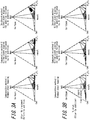
- FIG. 3A illustrates results of studying, in a plurality of charges, the average composition of CaO-MgO-Al 2 O 3 -based inclusions in each molten steel sample collected after RH treatment and before Ca addition.
- FIG. 3B illustrates results of studying, in each charge in FIG. 3A , the average composition of CaO-MgO-Al 2 O 3 -based inclusions in each molten steel sample collected in the tundish after Ca addition.
- the inclusion composition before Ca addition was a uniform composition with very little variations, containing MgO- ⁇ Al 2 O 3 component as a main component and containing 10 wt% to 20 wt% of CaO. Consequently, the inclusion composition of the tundish-collected sample after Ca treatment was able to be controlled within the 1600 °C liquid phase range.
- the composition varied greatly and CaO-Al 2 O 3 inclusions of a high CaO composition with a high melting point formed.
- the inclusion composition is therefore important to control the inclusion composition to be an inclusion composition of CaO ⁇ Al 2 O 3 to 3CaO ⁇ Al 2 O 3 and preferably an inclusion composition of 12CaO ⁇ 7Al 2 O 3 .
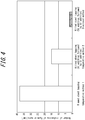
- FIG. 4 illustrates results of studying the inclusion cleanliness of each tundish-collected sample used in FIG. 3B .
- the number of inclusions of 5 ⁇ m or more in diameter was considerably improved by the disclosed method as compared with the comparative methods 1 and 2. It seems that, with the disclosed method, the average composition of inclusions after Ca addition was able to be controlled within the 1600 °C liquid phase range, so that flotation and removal of inclusions were facilitated.
- the appropriate range of the Ca addition amount in the Ca treatment was determined by studying Ca addition conditions and sulfide stress corrosion cracking (SSC) test results beforehand.
- FIG. 5 illustrates the relationship between the atomic concentration ratio (ACR value) in the tundish when performing Ca addition after vacuum degassing treatment (RH) and the fail rate in an SSC test in the disclosed method.
- ACR value atomic concentration ratio
- RH vacuum degassing treatment
- ACR atomic concentration ratio
- the ACR value is an index used to control MnS sulfide which crystallizes during solidification and CaS sulfide, CaO oxide, and calcium aluminate inclusion (CaO-Al 2 O 3 ) composition which form during excessive Ca addition. It is commonly known that the formation of MnS sulfide can be effectively suppressed when ACR ⁇ 1.0, and the formation of CaO-CaS inclusions caused by excessive Ca addition can be suppressed when ACR ⁇ 3.0.
- the composition of MgO-CaO-Al 2 O 3 -based inclusions before Ca addition is controlled to be in a less varying state, to enable more accurate control of the subsequent oxide composition and sulfide composition. Moreover, clogging of a tundish immersion nozzle caused by inclusions can be prevented, and the formation of inclusions, such as oxide and sulfide, harmful to SSC resistance can be sufficiently suppressed.
- the use of the presently disclosed technique makes it possible to produce a steel pipe or tube having excellent SSC resistance without clogging of an immersion nozzle caused by inclusions, and achieves production cost reduction and yield rate stabilization.
- Table 1 lists the steel tapping form (killed steel tapping or rimmed steel tapping) in the production, the FeSi alloy addition timing, the Ca concentration in the molten steel before Ca treatment, the molten steel components in the tundish after Ca treatment, and the ACR value.
- the converter treatment time was 60 minutes.
- Si and Al were added to the molten steel in the converter, to perform deoxidation treatment.
- the addition order is shown in Table 1.
- Al In the case of adding Al after adding FeSi, a FeSi alloy of 2.2 kg/ton-steel was added 50 minutes after the start of converter treatment, and then Al of 3.5 kg/ton-steel was added 5 minutes later.
- CaO-Al 2 O 3 -SiO 2 -based flux was added to the molten steel to perform ladle refining (desulfurization treatment) using an LF.
- the treatment time of the LF process was 45 minutes.
- Si was added in the LF first half
- Si was added 5 minutes after the start of LF treatment.
- Si was added 30 minutes after the start of LF treatment.
- a uniaxial tensile test was conducted for 720 hours by applying, to each sample, stress of 85 % of the minimum yield point in a NACE test liquid in which hydrogen sulfide of 1 atm had been saturated.
- the SSC test was conducted on six samples for each condition, and the rate of the number of samples that successfully passed the test without fracturing until the end of 720 hours is shown in Table 1 as the pass rate. A pass rate of 100 % is evaluated as good SSC resistance.
- the state of clogging was determined from the opening degree (hereafter referred to as "SN opening") of a sliding nozzle in an upper part of an immersion nozzle for pouring molten steel from the tundish into the mold.
- SN opening the opening degree of a sliding nozzle in an upper part of an immersion nozzle for pouring molten steel from the tundish into the mold.
- the SN opening approaches 100 % by an inner-mold bath surface level automatic control function.
- operation with an SN opening of 60 % to 70 % corresponds to a stable casting state, but the SN opening sharply increases to 80 % to 100 % if nozzle clogging occurs.
- Steel sample IDs A, B, and C satisfied all conditions according to the present disclosure, and were good in both SSC resistance and immersion nozzle clogging degree.
- Steel sample ID D is an example in which the ACR value was less than the lower limit of the preferred range, and clogging of the immersion nozzle caused by inclusions of CaO ⁇ 6Al 2 O 3 to CaO ⁇ 2Al 2 O 3 composition of a high melting point with a low CaO weight ratio increased and the SSC test result worsened a little.
- Steel sample ID E is an example in which the ACR value was more than the upper limit of the preferred range, and the SSC test result decreased to 50 % (three out of six samples fractured) due to an increase of CaO-CaS-based inclusions.
- Steel sample ID F is a comparative example in which the FeSi addition timing did not satisfy the conditions according to the present disclosure, and also the Ca concentration before Ca treatment was more than the upper limit of the preferred range, so that the SSC test result decreased to 33 % (four out of six samples fractured).
- Steel sample ID G had the same results as steel sample ID F.
- Steel sample IDs H to L are comparative examples in which rimmed steel tapping (non-deoxidized steel tapping) was used and the FeSi addition timing did not satisfy the conditions according to the present disclosure, and also the Ca concentration before Ca treatment was high, so that the SSC test result was low.
- Steel sample ID M is a comparative example in which the addition order of FeSi and Al did not satisfy the conditions according to the present disclosure, and also the Ca concentration before Ca treatment was high, so that the SSC test result was below the levels of steel sample IDs A, B, and C.
Landscapes
- Chemical & Material Sciences (AREA)
- Engineering & Computer Science (AREA)
- Materials Engineering (AREA)
- Metallurgy (AREA)
- Organic Chemistry (AREA)
- Mechanical Engineering (AREA)
- Manufacturing & Machinery (AREA)
- Treatment Of Steel In Its Molten State (AREA)
Applications Claiming Priority (2)
| Application Number | Priority Date | Filing Date | Title |
|---|---|---|---|
| JP2018057080 | 2018-03-23 | ||
| PCT/JP2019/011852 WO2019182056A1 (fr) | 2018-03-23 | 2019-03-20 | Procédé pour la fabrication d'acier de haute pureté |
Publications (3)
| Publication Number | Publication Date |
|---|---|
| EP3770280A4 EP3770280A4 (fr) | 2021-01-27 |
| EP3770280A1 true EP3770280A1 (fr) | 2021-01-27 |
| EP3770280B1 EP3770280B1 (fr) | 2023-05-10 |
Family
ID=67987249
Family Applications (1)
| Application Number | Title | Priority Date | Filing Date |
|---|---|---|---|
| EP19770761.5A Active EP3770280B1 (fr) | 2018-03-23 | 2019-03-20 | Procédé pour la fabrication d'acier de haute pureté |
Country Status (4)
| Country | Link |
|---|---|
| EP (1) | EP3770280B1 (fr) |
| JP (1) | JP6648866B1 (fr) |
| KR (1) | KR102410083B1 (fr) |
| WO (1) | WO2019182056A1 (fr) |
Families Citing this family (4)
| Publication number | Priority date | Publication date | Assignee | Title |
|---|---|---|---|---|
| CN114318108A (zh) * | 2021-12-02 | 2022-04-12 | 包头钢铁(集团)有限责任公司 | 一种超低铝高纯工业纯铁生产方法 |
| CN114292982B (zh) * | 2022-01-04 | 2023-04-28 | 马鞍山钢铁股份有限公司 | 一种新能源汽车电池壳用钢砂眼缺陷的控制方法 |
| CN116770009A (zh) * | 2023-07-19 | 2023-09-19 | 中国第一重型机械股份公司 | 一种大型碳锰钢管板钢锭及其生产方法 |
| CN118345299B (zh) * | 2024-04-19 | 2025-01-24 | 华北理工大学 | 一种大于1000MPa低碳高铝耐磨钢连铸坯的生产方法 |
Family Cites Families (8)
| Publication number | Priority date | Publication date | Assignee | Title |
|---|---|---|---|---|
| JP3250459B2 (ja) * | 1996-06-25 | 2002-01-28 | 住友金属工業株式会社 | 溶接部の低温靱性に優れた耐hic鋼およびその製造方法 |
| JPH10237533A (ja) * | 1997-02-27 | 1998-09-08 | Sumitomo Metal Ind Ltd | 耐hic鋼の製造方法 |
| JP3666372B2 (ja) | 2000-08-18 | 2005-06-29 | 住友金属工業株式会社 | 耐硫化物応力腐食割れ性に優れた油井用鋼とその製造方法 |
| JP4571994B2 (ja) * | 2008-07-15 | 2010-10-27 | 新日本製鐵株式会社 | 低炭素鋼の連続鋳造方法 |
| JP5458607B2 (ja) | 2009-03-09 | 2014-04-02 | Jfeスチール株式会社 | 耐硫化物腐食割れ性に優れた清浄鋼の製造方法 |
| JP5397154B2 (ja) | 2009-10-23 | 2014-01-22 | 新日鐵住金株式会社 | 高強度・高耐食性油井管用鋼材の溶製方法 |
| CN104018091B (zh) * | 2014-06-18 | 2016-11-23 | 江苏省沙钢钢铁研究院有限公司 | 一种钢筋及其制备方法 |
| JP6642174B2 (ja) * | 2016-03-24 | 2020-02-05 | 日本製鉄株式会社 | 高炭素溶鋼の連続鋳造方法 |
-
2019
- 2019-03-20 KR KR1020207028831A patent/KR102410083B1/ko active Active
- 2019-03-20 EP EP19770761.5A patent/EP3770280B1/fr active Active
- 2019-03-20 JP JP2019546944A patent/JP6648866B1/ja active Active
- 2019-03-20 WO PCT/JP2019/011852 patent/WO2019182056A1/fr not_active Ceased
Also Published As
| Publication number | Publication date |
|---|---|
| KR102410083B1 (ko) | 2022-06-16 |
| JP6648866B1 (ja) | 2020-02-14 |
| JPWO2019182056A1 (ja) | 2020-04-30 |
| EP3770280A4 (fr) | 2021-01-27 |
| EP3770280B1 (fr) | 2023-05-10 |
| KR20200124753A (ko) | 2020-11-03 |
| WO2019182056A1 (fr) | 2019-09-26 |
Similar Documents
| Publication | Publication Date | Title |
|---|---|---|
| EP3770280B1 (fr) | Procédé pour la fabrication d'acier de haute pureté | |
| CN101784680B (zh) | 抗硫性能优异的钢管用钢的制造方法 | |
| CA2798852C (fr) | Acier pour tuyau en acier ayant une excellente resistance a fissuration provoquee par hydrogene sulfure | |
| EP2110454B1 (fr) | Acier forgé et produits forgés obtenus à partir de celui-ci | |
| NO337650B1 (no) | Stål for stålrør | |
| KR102565782B1 (ko) | 용강으로의 Ca 첨가 방법 | |
| JP2019039021A (ja) | Ni−Cr−Mo−Nb合金およびその製造方法 | |
| CN108893683A (zh) | 一种抗硫管线钢及其生产方法 | |
| JP2018034189A (ja) | 硫黄添加鋼の連続鋳造ノズルの閉塞防止方法 | |
| WO2005014872A1 (fr) | Acier non oxydable duplex et procede de production correspondant | |
| JP5616283B2 (ja) | Fe−Ni−Cr−Mo合金およびその製造方法 | |
| JP7260731B2 (ja) | 高清浄鋼とその精錬方法 | |
| CN102015156B (zh) | 低碳钢铸片的制造方法 | |
| KR101239459B1 (ko) | 니오븀이 첨가된 스테인리스강의 제조방법 | |
| JP6579147B2 (ja) | 高清浄度鋼の製造方法 | |
| JPH10237533A (ja) | 耐hic鋼の製造方法 | |
| JP5056826B2 (ja) | 連続鋳造用鋼およびその製造方法 | |
| JP2005307234A (ja) | 耐リジング性,表面性状に優れたフェライト系ステンレス鋼板及びその製造方法 | |
| JP2020084250A (ja) | 継目無鋼管用鋼材 | |
| JP3726562B2 (ja) | 耐水素誘起割れ性に優れた鋼の溶製法 | |
| JP7248153B2 (ja) | 鋳片の製造方法 | |
| JP6086036B2 (ja) | 溶接熱影響部靱性に優れた厚板鋼材とその溶製方法 | |
| JP2025066507A (ja) | 炭素鋼鋳片、および炭素鋼鋳片の製造方法 | |
| JP5135923B2 (ja) | Sus301のバネ用オーステナイト系ステンレス鋼 | |
| JP2004238707A (ja) | 低Al溶鋼のCa処理方法 |
Legal Events
| Date | Code | Title | Description |
|---|---|---|---|
| STAA | Information on the status of an ep patent application or granted ep patent |
Free format text: STATUS: THE INTERNATIONAL PUBLICATION HAS BEEN MADE |
|
| PUAI | Public reference made under article 153(3) epc to a published international application that has entered the european phase |
Free format text: ORIGINAL CODE: 0009012 |
|
| STAA | Information on the status of an ep patent application or granted ep patent |
Free format text: STATUS: REQUEST FOR EXAMINATION WAS MADE |
|
| 17P | Request for examination filed |
Effective date: 20201002 |
|
| A4 | Supplementary search report drawn up and despatched |
Effective date: 20201202 |
|
| AK | Designated contracting states |
Kind code of ref document: A1 Designated state(s): AL AT BE BG CH CY CZ DE DK EE ES FI FR GB GR HR HU IE IS IT LI LT LU LV MC MK MT NL NO PL PT RO RS SE SI SK SM TR |
|
| AX | Request for extension of the european patent |
Extension state: BA ME |
|
| DAV | Request for validation of the european patent (deleted) | ||
| DAX | Request for extension of the european patent (deleted) | ||
| STAA | Information on the status of an ep patent application or granted ep patent |
Free format text: STATUS: EXAMINATION IS IN PROGRESS |
|
| 17Q | First examination report despatched |
Effective date: 20210824 |
|
| RIC1 | Information provided on ipc code assigned before grant |
Ipc: C21C 7/10 20060101ALI20221110BHEP Ipc: C21C 7/064 20060101ALI20221110BHEP Ipc: C21C 7/00 20060101ALI20221110BHEP Ipc: C21C 5/28 20060101ALI20221110BHEP Ipc: C21C 7/06 20060101AFI20221110BHEP |
|
| GRAP | Despatch of communication of intention to grant a patent |
Free format text: ORIGINAL CODE: EPIDOSNIGR1 |
|
| STAA | Information on the status of an ep patent application or granted ep patent |
Free format text: STATUS: GRANT OF PATENT IS INTENDED |
|
| INTG | Intention to grant announced |
Effective date: 20221222 |
|
| RIN1 | Information on inventor provided before grant (corrected) |
Inventor name: ARAMAKI, NORICHIKA Inventor name: TANAKA, MASAHITO Inventor name: SHIRASAKI, KIMIHITO Inventor name: OKATSU, MITSUHIRO Inventor name: FUKAMI, MASAYUKI Inventor name: ITO, YOICHI |
|
| GRAS | Grant fee paid |
Free format text: ORIGINAL CODE: EPIDOSNIGR3 |
|
| GRAA | (expected) grant |
Free format text: ORIGINAL CODE: 0009210 |
|
| STAA | Information on the status of an ep patent application or granted ep patent |
Free format text: STATUS: THE PATENT HAS BEEN GRANTED |
|
| AK | Designated contracting states |
Kind code of ref document: B1 Designated state(s): AL AT BE BG CH CY CZ DE DK EE ES FI FR GB GR HR HU IE IS IT LI LT LU LV MC MK MT NL NO PL PT RO RS SE SI SK SM TR |
|
| REG | Reference to a national code |
Ref country code: GB Ref legal event code: FG4D |
|
| REG | Reference to a national code |
Ref country code: AT Ref legal event code: REF Ref document number: 1566720 Country of ref document: AT Kind code of ref document: T Effective date: 20230515 Ref country code: CH Ref legal event code: EP |
|
| REG | Reference to a national code |
Ref country code: DE Ref legal event code: R096 Ref document number: 602019028801 Country of ref document: DE |
|
| REG | Reference to a national code |
Ref country code: IE Ref legal event code: FG4D |
|
| REG | Reference to a national code |
Ref country code: LT Ref legal event code: MG9D |
|
| REG | Reference to a national code |
Ref country code: NL Ref legal event code: MP Effective date: 20230510 |
|
| REG | Reference to a national code |
Ref country code: AT Ref legal event code: MK05 Ref document number: 1566720 Country of ref document: AT Kind code of ref document: T Effective date: 20230510 |
|
| PG25 | Lapsed in a contracting state [announced via postgrant information from national office to epo] |
Ref country code: SE Free format text: LAPSE BECAUSE OF FAILURE TO SUBMIT A TRANSLATION OF THE DESCRIPTION OR TO PAY THE FEE WITHIN THE PRESCRIBED TIME-LIMIT Effective date: 20230510 Ref country code: PT Free format text: LAPSE BECAUSE OF FAILURE TO SUBMIT A TRANSLATION OF THE DESCRIPTION OR TO PAY THE FEE WITHIN THE PRESCRIBED TIME-LIMIT Effective date: 20230911 Ref country code: NO Free format text: LAPSE BECAUSE OF FAILURE TO SUBMIT A TRANSLATION OF THE DESCRIPTION OR TO PAY THE FEE WITHIN THE PRESCRIBED TIME-LIMIT Effective date: 20230810 Ref country code: NL Free format text: LAPSE BECAUSE OF FAILURE TO SUBMIT A TRANSLATION OF THE DESCRIPTION OR TO PAY THE FEE WITHIN THE PRESCRIBED TIME-LIMIT Effective date: 20230510 Ref country code: ES Free format text: LAPSE BECAUSE OF FAILURE TO SUBMIT A TRANSLATION OF THE DESCRIPTION OR TO PAY THE FEE WITHIN THE PRESCRIBED TIME-LIMIT Effective date: 20230510 Ref country code: AT Free format text: LAPSE BECAUSE OF FAILURE TO SUBMIT A TRANSLATION OF THE DESCRIPTION OR TO PAY THE FEE WITHIN THE PRESCRIBED TIME-LIMIT Effective date: 20230510 |
|
| PG25 | Lapsed in a contracting state [announced via postgrant information from national office to epo] |
Ref country code: RS Free format text: LAPSE BECAUSE OF FAILURE TO SUBMIT A TRANSLATION OF THE DESCRIPTION OR TO PAY THE FEE WITHIN THE PRESCRIBED TIME-LIMIT Effective date: 20230510 Ref country code: PL Free format text: LAPSE BECAUSE OF FAILURE TO SUBMIT A TRANSLATION OF THE DESCRIPTION OR TO PAY THE FEE WITHIN THE PRESCRIBED TIME-LIMIT Effective date: 20230510 Ref country code: LV Free format text: LAPSE BECAUSE OF FAILURE TO SUBMIT A TRANSLATION OF THE DESCRIPTION OR TO PAY THE FEE WITHIN THE PRESCRIBED TIME-LIMIT Effective date: 20230510 Ref country code: LT Free format text: LAPSE BECAUSE OF FAILURE TO SUBMIT A TRANSLATION OF THE DESCRIPTION OR TO PAY THE FEE WITHIN THE PRESCRIBED TIME-LIMIT Effective date: 20230510 Ref country code: IS Free format text: LAPSE BECAUSE OF FAILURE TO SUBMIT A TRANSLATION OF THE DESCRIPTION OR TO PAY THE FEE WITHIN THE PRESCRIBED TIME-LIMIT Effective date: 20230910 Ref country code: HR Free format text: LAPSE BECAUSE OF FAILURE TO SUBMIT A TRANSLATION OF THE DESCRIPTION OR TO PAY THE FEE WITHIN THE PRESCRIBED TIME-LIMIT Effective date: 20230510 Ref country code: GR Free format text: LAPSE BECAUSE OF FAILURE TO SUBMIT A TRANSLATION OF THE DESCRIPTION OR TO PAY THE FEE WITHIN THE PRESCRIBED TIME-LIMIT Effective date: 20230811 |
|
| PG25 | Lapsed in a contracting state [announced via postgrant information from national office to epo] |
Ref country code: FI Free format text: LAPSE BECAUSE OF FAILURE TO SUBMIT A TRANSLATION OF THE DESCRIPTION OR TO PAY THE FEE WITHIN THE PRESCRIBED TIME-LIMIT Effective date: 20230510 |
|
| PG25 | Lapsed in a contracting state [announced via postgrant information from national office to epo] |
Ref country code: SK Free format text: LAPSE BECAUSE OF FAILURE TO SUBMIT A TRANSLATION OF THE DESCRIPTION OR TO PAY THE FEE WITHIN THE PRESCRIBED TIME-LIMIT Effective date: 20230510 |
|
| PG25 | Lapsed in a contracting state [announced via postgrant information from national office to epo] |
Ref country code: SM Free format text: LAPSE BECAUSE OF FAILURE TO SUBMIT A TRANSLATION OF THE DESCRIPTION OR TO PAY THE FEE WITHIN THE PRESCRIBED TIME-LIMIT Effective date: 20230510 Ref country code: SK Free format text: LAPSE BECAUSE OF FAILURE TO SUBMIT A TRANSLATION OF THE DESCRIPTION OR TO PAY THE FEE WITHIN THE PRESCRIBED TIME-LIMIT Effective date: 20230510 Ref country code: RO Free format text: LAPSE BECAUSE OF FAILURE TO SUBMIT A TRANSLATION OF THE DESCRIPTION OR TO PAY THE FEE WITHIN THE PRESCRIBED TIME-LIMIT Effective date: 20230510 Ref country code: EE Free format text: LAPSE BECAUSE OF FAILURE TO SUBMIT A TRANSLATION OF THE DESCRIPTION OR TO PAY THE FEE WITHIN THE PRESCRIBED TIME-LIMIT Effective date: 20230510 Ref country code: DK Free format text: LAPSE BECAUSE OF FAILURE TO SUBMIT A TRANSLATION OF THE DESCRIPTION OR TO PAY THE FEE WITHIN THE PRESCRIBED TIME-LIMIT Effective date: 20230510 Ref country code: CZ Free format text: LAPSE BECAUSE OF FAILURE TO SUBMIT A TRANSLATION OF THE DESCRIPTION OR TO PAY THE FEE WITHIN THE PRESCRIBED TIME-LIMIT Effective date: 20230510 |
|
| REG | Reference to a national code |
Ref country code: DE Ref legal event code: R097 Ref document number: 602019028801 Country of ref document: DE |
|
| PLBE | No opposition filed within time limit |
Free format text: ORIGINAL CODE: 0009261 |
|
| STAA | Information on the status of an ep patent application or granted ep patent |
Free format text: STATUS: NO OPPOSITION FILED WITHIN TIME LIMIT |
|
| 26N | No opposition filed |
Effective date: 20240213 |
|
| PG25 | Lapsed in a contracting state [announced via postgrant information from national office to epo] |
Ref country code: SI Free format text: LAPSE BECAUSE OF FAILURE TO SUBMIT A TRANSLATION OF THE DESCRIPTION OR TO PAY THE FEE WITHIN THE PRESCRIBED TIME-LIMIT Effective date: 20230510 |
|
| PG25 | Lapsed in a contracting state [announced via postgrant information from national office to epo] |
Ref country code: SI Free format text: LAPSE BECAUSE OF FAILURE TO SUBMIT A TRANSLATION OF THE DESCRIPTION OR TO PAY THE FEE WITHIN THE PRESCRIBED TIME-LIMIT Effective date: 20230510 Ref country code: IT Free format text: LAPSE BECAUSE OF FAILURE TO SUBMIT A TRANSLATION OF THE DESCRIPTION OR TO PAY THE FEE WITHIN THE PRESCRIBED TIME-LIMIT Effective date: 20230510 |
|
| REG | Reference to a national code |
Ref country code: CH Ref legal event code: PL |
|
| PG25 | Lapsed in a contracting state [announced via postgrant information from national office to epo] |
Ref country code: BG Free format text: LAPSE BECAUSE OF FAILURE TO SUBMIT A TRANSLATION OF THE DESCRIPTION OR TO PAY THE FEE WITHIN THE PRESCRIBED TIME-LIMIT Effective date: 20230510 |
|
| PG25 | Lapsed in a contracting state [announced via postgrant information from national office to epo] |
Ref country code: LU Free format text: LAPSE BECAUSE OF NON-PAYMENT OF DUE FEES Effective date: 20240320 |
|
| PG25 | Lapsed in a contracting state [announced via postgrant information from national office to epo] |
Ref country code: MC Free format text: LAPSE BECAUSE OF FAILURE TO SUBMIT A TRANSLATION OF THE DESCRIPTION OR TO PAY THE FEE WITHIN THE PRESCRIBED TIME-LIMIT Effective date: 20230510 |
|
| GBPC | Gb: european patent ceased through non-payment of renewal fee |
Effective date: 20240320 |
|
| PG25 | Lapsed in a contracting state [announced via postgrant information from national office to epo] |
Ref country code: MC Free format text: LAPSE BECAUSE OF FAILURE TO SUBMIT A TRANSLATION OF THE DESCRIPTION OR TO PAY THE FEE WITHIN THE PRESCRIBED TIME-LIMIT Effective date: 20230510 Ref country code: LU Free format text: LAPSE BECAUSE OF NON-PAYMENT OF DUE FEES Effective date: 20240320 Ref country code: BG Free format text: LAPSE BECAUSE OF FAILURE TO SUBMIT A TRANSLATION OF THE DESCRIPTION OR TO PAY THE FEE WITHIN THE PRESCRIBED TIME-LIMIT Effective date: 20230510 |
|
| REG | Reference to a national code |
Ref country code: BE Ref legal event code: MM Effective date: 20240331 |
|
| PG25 | Lapsed in a contracting state [announced via postgrant information from national office to epo] |
Ref country code: BE Free format text: LAPSE BECAUSE OF NON-PAYMENT OF DUE FEES Effective date: 20240331 |
|
| PG25 | Lapsed in a contracting state [announced via postgrant information from national office to epo] |
Ref country code: GB Free format text: LAPSE BECAUSE OF NON-PAYMENT OF DUE FEES Effective date: 20240320 |
|
| PG25 | Lapsed in a contracting state [announced via postgrant information from national office to epo] |
Ref country code: FR Free format text: LAPSE BECAUSE OF NON-PAYMENT OF DUE FEES Effective date: 20240331 |
|
| PG25 | Lapsed in a contracting state [announced via postgrant information from national office to epo] |
Ref country code: IE Free format text: LAPSE BECAUSE OF NON-PAYMENT OF DUE FEES Effective date: 20240320 |
|
| PG25 | Lapsed in a contracting state [announced via postgrant information from national office to epo] |
Ref country code: IE Free format text: LAPSE BECAUSE OF NON-PAYMENT OF DUE FEES Effective date: 20240320 Ref country code: GB Free format text: LAPSE BECAUSE OF NON-PAYMENT OF DUE FEES Effective date: 20240320 Ref country code: FR Free format text: LAPSE BECAUSE OF NON-PAYMENT OF DUE FEES Effective date: 20240331 Ref country code: BE Free format text: LAPSE BECAUSE OF NON-PAYMENT OF DUE FEES Effective date: 20240331 Ref country code: CH Free format text: LAPSE BECAUSE OF NON-PAYMENT OF DUE FEES Effective date: 20240331 |
|
| PG25 | Lapsed in a contracting state [announced via postgrant information from national office to epo] |
Ref country code: CY Free format text: LAPSE BECAUSE OF FAILURE TO SUBMIT A TRANSLATION OF THE DESCRIPTION OR TO PAY THE FEE WITHIN THE PRESCRIBED TIME-LIMIT; INVALID AB INITIO Effective date: 20190320 |
|
| PG25 | Lapsed in a contracting state [announced via postgrant information from national office to epo] |
Ref country code: HU Free format text: LAPSE BECAUSE OF FAILURE TO SUBMIT A TRANSLATION OF THE DESCRIPTION OR TO PAY THE FEE WITHIN THE PRESCRIBED TIME-LIMIT; INVALID AB INITIO Effective date: 20190320 |
|
| PG25 | Lapsed in a contracting state [announced via postgrant information from national office to epo] |
Ref country code: TR Free format text: LAPSE BECAUSE OF FAILURE TO SUBMIT A TRANSLATION OF THE DESCRIPTION OR TO PAY THE FEE WITHIN THE PRESCRIBED TIME-LIMIT Effective date: 20230510 |
|
| PGFP | Annual fee paid to national office [announced via postgrant information from national office to epo] |
Ref country code: DE Payment date: 20260128 Year of fee payment: 8 |