EP3770593A1 - Verwendung einer vorrichtung mit einer porösen elektrode und einer elektrisch isolierenden porösen schicht zur entfernung von sauerstoff in kontakt mit einer arbeitselektrode - Google Patents
Verwendung einer vorrichtung mit einer porösen elektrode und einer elektrisch isolierenden porösen schicht zur entfernung von sauerstoff in kontakt mit einer arbeitselektrode Download PDFInfo
- Publication number
- EP3770593A1 EP3770593A1 EP19188711.6A EP19188711A EP3770593A1 EP 3770593 A1 EP3770593 A1 EP 3770593A1 EP 19188711 A EP19188711 A EP 19188711A EP 3770593 A1 EP3770593 A1 EP 3770593A1
- Authority
- EP
- European Patent Office
- Prior art keywords
- electrode
- electrically insulating
- oxygen
- porous layer
- contact
- Prior art date
- Legal status (The legal status is an assumption and is not a legal conclusion. Google has not performed a legal analysis and makes no representation as to the accuracy of the status listed.)
- Withdrawn
Links
Images

Classifications
-
- G—PHYSICS
- G01—MEASURING; TESTING
- G01N—INVESTIGATING OR ANALYSING MATERIALS BY DETERMINING THEIR CHEMICAL OR PHYSICAL PROPERTIES
- G01N27/00—Investigating or analysing materials by the use of electric, electrochemical, or magnetic means
- G01N27/26—Investigating or analysing materials by the use of electric, electrochemical, or magnetic means by investigating electrochemical variables; by using electrolysis or electrophoresis
- G01N27/416—Systems
- G01N27/48—Systems using polarography, i.e. measuring changes in current under a slowly-varying voltage
-
- G—PHYSICS
- G01—MEASURING; TESTING
- G01N—INVESTIGATING OR ANALYSING MATERIALS BY DETERMINING THEIR CHEMICAL OR PHYSICAL PROPERTIES
- G01N27/00—Investigating or analysing materials by the use of electric, electrochemical, or magnetic means
- G01N27/26—Investigating or analysing materials by the use of electric, electrochemical, or magnetic means by investigating electrochemical variables; by using electrolysis or electrophoresis
- G01N27/403—Cells and electrode assemblies
- G01N27/404—Cells with anode, cathode and cell electrolyte on the same side of a permeable membrane which separates them from the sample fluid, e.g. Clark-type oxygen sensors
-
- G—PHYSICS
- G01—MEASURING; TESTING
- G01N—INVESTIGATING OR ANALYSING MATERIALS BY DETERMINING THEIR CHEMICAL OR PHYSICAL PROPERTIES
- G01N27/00—Investigating or analysing materials by the use of electric, electrochemical, or magnetic means
- G01N27/26—Investigating or analysing materials by the use of electric, electrochemical, or magnetic means by investigating electrochemical variables; by using electrolysis or electrophoresis
- G01N27/28—Electrolytic cell components
- G01N27/30—Electrodes, e.g. test electrodes; Half-cells
- G01N27/327—Biochemical electrodes, e.g. electrical or mechanical details for in vitro measurements
- G01N27/3271—Amperometric enzyme electrodes for analytes in body fluids, e.g. glucose in blood
- G01N27/3273—Devices therefor, e.g. test element readers, circuitry
-
- G—PHYSICS
- G01—MEASURING; TESTING
- G01N—INVESTIGATING OR ANALYSING MATERIALS BY DETERMINING THEIR CHEMICAL OR PHYSICAL PROPERTIES
- G01N33/00—Investigating or analysing materials by specific methods not covered by groups G01N1/00 - G01N31/00
- G01N33/0004—Gaseous mixtures, e.g. polluted air
- G01N33/0009—General constructional details of gas analysers, e.g. portable test equipment
- G01N33/0011—Sample conditioning
- G01N33/0014—Sample conditioning by eliminating a gas
Definitions
- the present invention concerns the use of a device comprising a porous electrode and an electrically insulating porous layer to remove oxygen in contact with a working electrode.
- the present invention also concerns the use of said device in contact to said working electrode to detect and/or quantify an analyte in presence of oxygen.
- Electrochemical techniques offer the advantage of being label-free, rapid, simple and cost-efficient. Nevertheless, an intrinsic problem in electroanalytical detection is that the analytical current is the sum of all (possibly interfering) currents of the electroactive species present in solution, including oxygen from air. Moreover, oxygen can be competing during the detection of some species, e.g. low metal concentration, leading to a degradation of the analytical performances of the sensor.
- oxygen is soluble in water and is therefore likely to be found in aqueous solutions that are in contact or have been in contact with air.
- Chemical deoxygenation is based on chemicals reacting with oxygen.
- ascorbic acid has been used as a reducing agent to remove interfering oxygen for the greenhouse gas nitrous oxide (N 2 O) detection which is very sensible toward dioxygen.
- Other oxygen scavengers like sodium thiosulfate (Na 2 S 2 O 3 ), phosphines, also proved its efficient ability for this purpose.
- the sensing of H 2 O 2 could be done under both air-saturated and O 2 -saturated solution at polyaniline modified Pt electrode by adding Na 2 S 2 O 3 with concentration below 1 mM.
- phosphines soluble in organic solvents showed a high sensitivity and long response time.
- devices, uses and processes of the invention enable to only remove oxygen in an area confined to the surface of the sensor, quickly allowing an oxygen concentration close to zero in this area, and therefore optimal operation of the sensor, without the need to consume all the oxygen in the solution (which is difficult to achieve and in any case more time consuming and more expensive).
- the removal of oxygen is paired with the formation of water only, with no formation of unwanted compounds like H 2 O 2 .
- the present invention relates to the use of a device comprising :
- the present invention relates to a process of reducing or removing oxygen from a solution in contact with a working electrode comprising the steps of:
- the present invention relates to the use of a device comprising :
- the present invention relates to a process of detecting and/or quantifying an analyte dissolved in a solution further comprising oxygen, comprising the steps of:
- the porous electrode is a second working electrode.
- the porous electrode is a working electrode enabling the reduction of dissolved oxygen into water
- the first working electrode is a working electrode as well known by the skilled person in the art, in particular in the context of electroanalysis of a given analyte, within a electrochemical sensor, of electrochemical conversion, for example NAD(P)+ regeneration, or as a biocathode, for example for the nitrate reduction.
- the porous electrode is constituted of or comprises a metal and/or carbon.
- the porous electrode is constituted of or comprises at least one porous, electrically conductive material, in particular chosen from metal grids, metal meshes, metal nets, metal lattices, carbon papers, more particularly graphitized or carbonized carbon fiber papers, metallized carbon paper, carbon fiber nonwovens, woven carbon fiber fabrics, carbon or graphite felts, beds of carbon or graphite particles, or combinations thereof.
- the porous electrode may be constituted of or comprised a plurality of the above-mentioned materials, for example a plurality of metal grids, more particularly 2 or 3 stacked metal, for example Pt, grids.
- the metal is chosen from the group comprising platinum, stainless steel, palladium, rhodium, ruthenium, gold or combinations thereof.
- the metal of the porous electrode is constituted of or comprises a platinum or stainless steel grid or mesh.
- the carbon is chosen from carbon papers.
- the carbon is chosen from the group comprising metal modified carbon papers, in particular platinum modified carbon papers, more particularly platinum coated carbon papers.
- the metal the porous electrode may be constituted of or comprise a plurality of modified carbon papers, in particular platinum modified carbon papers, more particularly platinum coated carbon papers, for example 2 or 3.
- the thickness of the porous electrode is comprised from about 1 to about 1000 ⁇ m, in particular from about 10 to about 200 ⁇ m, more particularly from about 50 to about 100 ⁇ m.
- the size of the pores of the porous electrode is comprised from 1 to 500 ⁇ m in particular from about 10 to about 250 ⁇ m.
- the size of the pores of the porous electrode is comprised from 1 to 500 ⁇ m in particular from about 10 to about 250 ⁇ m, and the thickness of the porous electrode is comprised from 2 to 10 times the size of the pores of the porous electrode, notably from 2 to 5 times.
- the electrically insulating porous layer is constituted of or comprises a polymer, or an inorganic material.
- the electrically insulating porous layer is constituted of or comprises a membrane, grid, mesh, woven fiber fabric, fiber nonwoven, in particular a polymer membrane or a polymer grid, more particularly a polyamide grid.
- Said membrane is for example a membrane for filtration, as well known by the skilled person in the art.
- the polymer is chosen from polyamide, polyimide, polyester, polyethylene, polytetrafluoroethylene.
- the inorganic material is chosen from glass, in particular sintered glass, and ceramics, in particular sintered ceramics, said ceramics being notably made from clay, quartz, alumina, feldspar or their mixtures.
- the thickness of the electrically insulating porous layer is comprised from about 10 nm to about 500 ⁇ m, in particular from about 1 ⁇ m to about 200 ⁇ m, more particularly from about 10 to about 100 ⁇ m, even more particularly from about 50 to about 100 ⁇ m.
- the size of the pores of the electrically insulating porous layer is comprised from 0.002 to 500 ⁇ m, in particular from about 0.1 ⁇ m to about 100 ⁇ m.
- the size of the pores of the electrically insulating porous layer is comprised from 0.002 to 500 ⁇ m, in particular from about 0.1 ⁇ m to about 100 ⁇ m, and the thickness of the electrically insulating porous layer is comprised from 2 to 10 times the size of the pores of the electrically insulating porous layer, notably from 2 to 5 times.
- the applied potential is a potential that enables the conversion of dioxygen into water thanks to the porous electrode ("second working electrode").
- This applied potential is easily determined by the skilled person in the art, for example by varying said potential and note the values that enable a good conversion of dioxygen into water.
- the potential applied during step b) is a fixed potential.
- the potential applied during step b) is a potential comprised from 2 to -1 V, in particular vs. Ag/AgCl, more particularly of about 0.6 to about - 0.8 V vs. Ag/AgCl.
- the potential may be of about -0.7 V vs Ag/AgCl for a stainless steel based porous electrode ("second working electrode"), or of about -0.4 to about -0.3 V vs Ag/AgCl for a platinum based porous electrode ("second working electrode").
- the analyte is chosen from:
- the working electrode is a porous working electrode.
- the present invention concerns a device comprising:
- the present invention concerns a process of preparation of a device as define above, comprising:
- the two steps can be performed in any order, in particular in the order as mentioned above.
- the two contacting steps can be performed by any mechanical methods known by the skilled person in the art, for example by mechanical pressing, gluing or using an adhesive, preferably on the periphery of the device to obtain.
- the term “about” refers to a range of values of ⁇ 10% of a specific value.
- the expression “approximately 100 ⁇ m” includes values of 100 ⁇ m ⁇ 10%, i.e. values from 90 ⁇ m to 110 ⁇ m.
- a range of values in the form "x-y” or “x to y”, or “x through y”, include integers x, y, and the integers therebetween.
- the phrases “1-6", or “1 to 6” or “1 through 6” are intended to include the integers 1, 2, 3, 4, 5, and 6.
- Preferred embodiments include each individual integer in the range, as well as any subcombination of integers.
- preferred integers for "1-6” can include 1, 2, 3, 4, 5, 6, 1-2, 1-3, 1-4, 1-5, 2-3, 2-4, 2-5, 2-6, etc.
- porous is in particular meant a material containing pores, arranged in such a way that a liquid, in particular an aqueous solution, is able to circulate through the material.
- pore is in particular meant a cavity in a material, said cavity being for example located within the material, or in contact with one or more of the surfaces of the material.
- Example 1 An electrochemistry cell according to the invention for the oxygen removal
- Stainless steel (SS) and Platinum (Pt) grid were purchased from Goodfellow SARL with purity of 99.9 %.
- Membrane filters (DVPP), glassy carbon (GCE) electrode were bought from Merck Milipore and Sigradur HTWHochtemperatur-Werkstoffe, Germany, respectively.
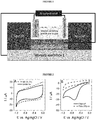
- the electrochemistry cell was composed of four electrodes and fabricated from Teflon material with cylindered form as depicted in Figure 1 .
- the WE1 and WE2 were separated by a DVPP membrane filter with diameter of 0.5 cm and pore size at 0.65 ⁇ m.
- glassy carbon was firstly wet-polished by SiC grinding paper ( ⁇ 4000, Struers, Denmark) for 1 min, then cleaned with ethanol and distilled water under ultrasonic condition.
- SS or Pt grid was used as WE2 material, Ag/AgCl as reference electrode and a steel auxiliary bar as counter electrode.
- the connection of WE2 was done via Pt wire, or copper tape for WE1.
- O 2 removal was controlled by scanning WE1 from 0 V to -1.2 V versus ( vs .) Ag/AgCl in the absence and presence of WE2.
- the applied potential at WE2 was chosen depending on the O 2 reduction peak observed on WE2 by performing the experiment with three electrodes, including working electrode (SS or Pt grid), reference electrode (Ag/AgCl) and counter electrode (steel bar).
- SS or Pt grid working electrode
- reference electrode Ag/AgCl
- counter electrode steel bar
- a 10 mL aqueous solution of KCl (0.1 M) was utilized as supporting electrolyte.
- the cyclic voltammogram (CV) was recorded on a Palm Sens 3 potentiostat at a scan rate of 100 mV s -1 .
- the oxygen removal was investigated by scanning WE1 (Glassy carbon) in the absence or presence of SS as WE2 at fixed potential. Without applying WE2, a broad oxygen reduction in the range -0.4 V -> -0.8 V was observed on WE1. However, once the second electrode was polarized at potential of -0.7 V, the reduction wave on WE1 was very straight with complete disappearance of oxygen peak. The experiment was repeated by stirring solution in 30 min and done again the polarization steps. The similar behavior was repeatable from the first cycle to third cycles and fifth cycle. The obtained results confirmed strongly that the oxygen was nearly removed totally at surface of WE2 and prevented from reaching WE1. The comparison experiment was performed under nitrogen atmosphere. The oxygen consumption at WE2 was even better than by nitrogen saturation where a small peak with very low current was observed around -0.5 V on Figure 2A .
- Paraquat (1,1-dimethyl-4,4 bipyridinium dichloride) is a cationic redox chemical compound of the viologen family, highly soluble in water. Paraquat is used as herbicide to control broad leaf weeds in agricultural practices since the 1960s. It is used worldwide in more than 100 countries but is banned in European Union. It causes severe toxicity to living organisms by damaging the lungs, kidneys, liver and heart. It is also reported to cause Parkinson's disease. Therefore, it is necessary to detect this compound at small concentration in aqueous medium. At low concentration, paraquat is detected by electrochemical method via running the cycle voltammograms.
- the paraquat at concentration of 20 ⁇ M was detected under air on a silica thin film modified GCE (WE1) using designed electrochemistry cell with the polarization of Pt as WE2 at fixed potential of -0.5 V, as described in Example 1.
- Sodium nitrate (0.07 M) was used as electrolyte.
- the attained result was compared with the one done under N 2 saturation or without applying WE2.
- the CV was also recorded on a Palm Sens 3 potentiostat at a scan rate of 20 mV s -1 . All potentials in this study were quoted with respect to the Ag/AgCl.
- Example 3 Electrochemical oxygen filter according to the invention for the detection of cadmium
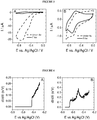
- Figure 4A reports the tentative of electrochemical detection of cadmium in solution by scanning chronopotentiometry in the presence of oxygen.
- the sensor was introduced in solution and a potential of -0.75 V (vs. Ag/AgCl) was applied to the electrode for 45 s before scanning chronopotentiometry.
- the result of this experiment is a graph that link dt/dE versus the electrode potential.
- the introduction of 4x10 -8 mol/L cadmium modifies slightly the profile of the curve, with a sharp increase of the signal between -0.4 and -0.45 V, but no peak related to cadmium was observed.
- Figure 4B reports a similar experiment performed with the oxygen filter made of Pt grids and a Nylon grid according to the invention.
- the experiment in the absence of cadmium shows that the sharp increase of signal is observed at -0.65 V, a potential lower than the one measured in the absence of oxygen filtration. This is due to the low concentration of oxygen when the oxygen filter is used. This low concentration of oxygen allows to detect 4x10 -8 mol/L cadmium at -0.5 V. Moreover, the peak intensity of this signal at -0.5 V is increasing linearly with the concentration of cadmium.
- Example 4 NAD + detection and NAD(P)H regeneration using a platinum grid based oxygen filter according to the invention
- NAD(P)H Coenzyme/cofactor, ⁇ -nicotinamide adenine dinucleotide NAD(P)H, has been widely used in biocatalysts as a hydride source for the synthesis of chiral compounds.
- NAD(P)H played the role of a reductant that is in situ oxidized to NAD(P) + , and the conversion occurs stoichiometrically.
- the development of regeneration approaches for continuous recycling of this cofactor is very crucial for practical application.
- the NAD(P)H regeneration requests transfer of two electrons and a proton to NAD(P) + from the hydride donors.
- the electrochemical NAD(P)H regeneration strategy presents some remarkable advantages relevant to its potentially low cost and without reducing agent addition which is important for the product isolation.
- the interfering oxygen removal is essential to expel the O 2 reduction process occurred at the same catalytic potential range on carbon electrodes, which hinders the NAD(P)H regeneration.
- the oxygen elimination methods of the prior art e.g. physical (bubbling nitrogen/argon flow in the solution), chemical (adding oxygen reducing agent such as ascorbic acid (C 6 H 8 O 6 )] kill total oxygen species in reaction area and cannot be applied for the electroenzymatic synthesis demanding the O 2 supply.
- Platinum grid 99.9 % and polyamide - Nylon grid (39 ⁇ m wire diameter, 50 ⁇ m nominal space) were purchased from Goodfellow, England.
- Multi-walled carbon nanotubes > 95%, ⁇ 6-9nm, L 5 ⁇ m).
- the oxygen removal from aqueous medium was carried out in an open cylindrical electrochemical reactor.
- GCE glassy carbon
- WE2 platinum grid
- a Bucky paper electrode immobilized with [Cp ⁇ Rh(bpy)Cl] + (BP-Bpy-Rh) was prepared following the protocol published by Zhang et al. ("Electrocatalytic biosynthesis using a bucky paper functionalized by [Cp ⁇ Rh(bpy)Cl]+ and a renewable enzymatic layer," ChemCatChem, 2018 ). This functionalized electrode was used for NADH or NADPH regeneration by observation of the catalytic peak on BP-Bpy-Rh during NAD + /NADP + addition. This reaction is very sensitive with O 2 presence, so it is essential to avoid completely the oxygen presence. The oxygen removal was also carried out by applying a constant potential (-0.4 V vs.
- DSDH D-sorbitol dehydrogenase
- silica gel which called DSDH sol was deposited on microfiber filter layer.
- the DSDH sol was synthesized by stirring overnight a mixture of 0.13 g GPS, 0.18 g TEOS with 0.5 mL water and 0.625 mL 0.01 M HCl. The day after, the sol was diluted three times before mixing 40 ⁇ L this aliquot with 20 ⁇ L of PEI (20%), 20 ⁇ L of H 2 O and 30 ⁇ L of DSDH stock solution.
- the oxygen presence was detected on WE1, and oxygen was consumed at WE2.
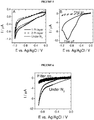
- Figure 5A displayed the complete oxygen elimination by applying a constant reduction potential (-0.4 V) at WE2 with one Pt layer or two Pt layers. This elimination was realized under N 2 bubbling with the absence of O 2 peak on WE1 (GCE).
- [Cp ⁇ Rh(bpy)Cl] + was chosen as an efficient non-enzymatic catalyst.
- the immobilization of [Cp ⁇ Rh(bpy)Cl] + on the surface of bucky paper (BP) was achieved via electro-grafting and complexation steps.
- the Rh(III) on the surface of electrode was reduced to Rh(I).
- the oxygen presence could be detected while performing NAD + reduction reaction, and NADH regeneration could be performed under air medium by using the cell of the invention for O 2 removal at WE2.
- Example 5 NADH regeneration on Rh-based electrode using a platinum modified carbon paper based oxygen filter of the invention
- Carbon paper (CP, thickness 80 ⁇ m, CeTech GDS090) were bought from FuelCellStore.
- Sodium hexachloro-platinate (IV) hexahydrate Na 2 PtCl 6 .6H 2 O, 98%), multi-walled carbon nanotubes (MWCNT, > 95%, ⁇ 6-9nm, L 5 ⁇ m, were obtained from Sigma-Aldrich.
- Nylon grid 39 ⁇ m wire diameter, 50 ⁇ m nominal space, Goodfellow
- platinum grid (0.04 mm wire diameter, 0.12 mm nominal space, Goodfellow) were used without any purification.
- the commercial CP was firstly cleaned in an ultrasonic bath with the mixture of ethanol/H 2 O0 to eliminate any impurity resulting from the industrial manufacturing process. In addition, the cleaning step helped to reduce the hydrophobicity of CP, which was necessary for Pt deposition in next step occurred in aqueous medium.
- This pretreated carbon felt was denoted as raw CP.
- the Pt was electrodeposited on the surface of CP by the method of CV running 30 cycles from 0 to -1 V vs. Ag/AgCl at a scan rate of 20 mV s -1 in Na 2 PtCl 6 solution under nitrogen atmosphere to avoid the oxygen reduction reaction (ORR).
- the process was recorded on a Autolab (PGSTAT 100) using a three-electrode system with the CP as working electrode, an Ag/AgCl/1 M KCl (purchased from Metrohm, Switzerland) as reference electrode and platinum grid as counter electrode. After the electrodeposition step, the sample was rinsed and dried at 70 °C. The as-prepared sample was labeled as « Carbon paper + Pt » or Pt@CP.
- the oxygen filter system was an electrochemical Teflon cylinder cell with round working area of 16.61 mm 2 . It was compacted of Pt@CP (working electrode 2, WE2), Nylon separator, glassy carbon (working electrode 1, WE1). An Ag/AgCl/1 M KCl and platinum grid as reference electrode and counter electrode, respectively were played in the solution of KCl 100 mM. In this system, WE2 played the role of oxygen filter which prevented O 2 molecules passing from solution to WE1. The experiment was perform under convection by stirring at a rate of 800 rpm. The oxygen presence at the surface of WE1 was detected by running experiment from 0 V to -0.9 V vs. Ag/AgCl, and applying a reduction potential at WE2. To evaluate the efficiency of oxygen filter, different parameters were evaluated, including : various amount of Pt deposited on carbon paper, potential valued applied on WE2, number of Pt@CP. The O 2 removal by using the filter was confirmed by repeating the experiment under nitrogen bubbling.
- BP Bucky paper electrode
- BP-Bpy-Rh a Bucky paper electrode
- WE1 was BP-Bpy-Rh
- WE2 was Pt@CP and reference electrode as well as counter electrode were kept unchanged.
- the formed NADH concentration was identified by absorbance at 340 nm by UV-Vis spectroscopy. UV-Vis spectra have been recorded on a Cary 60 Scan UV-Vis spectrophotometer.
- the NADH regeneration was repeated under nitrogen and air atmosphere (without applying WE2) to compare the faraday efficiency of the transformation.
- the oxygen removal was performed in a four-electrode cell, including platinum grid (counter electrode), Ag/AgCl/1 M KCl (reference electrode), glassy carbon (GCE, working electrode 1), and Pt@CP or Pt grid (working electrode 2).
- Applying a reduction potential (-0.4 V) at WE2 could eliminate completely interference oxygen.
- the O 2 absence on WE1 was confirmed by running CV from 0 V to -0.9 V at a scan rate of 5 mV s -1 in 100 mM KCl under convection.
- By disconnecting WE2 oxygen presented in the solution under air passed easily to WE2 as well as nylon separator and came to the surface of GCE. Therefore, a huge reduction current was observed around -0.6 V to -0.8 V vs. Ag/AgCl which was assigned for ORR.
- the catalytic current to 1 mM of NAD + addition was kept at the same level for both cases of using filter and under N 2 atmosphere. It was noticed that the catalytic current by using oxygen filter was more stable that N 2 bubbling, which confirmed the better performance for O 2 removal.
- the produced NADH was calculated by measuring the absorbance at 340 nm using UV-Vis spectroscopy ( Figure 7C ). The NADH production was done in three mediums like using filter, under N 2 atmosphere, and under air that meant disconnected with WE2. The formed NADH was measured after 20 min adding of 4 mM NAD + in PBS solution. The O 2 presence at the surface of WE1 in case of without using filter, hinder significantly the NADH regeneration.
- Platinum particles were grown successfully on the surface of carbon paper electrode via electrochemical method by running CV Na 2 PtCl 6 solution with 30 cycles from 0 to -1 V vs. Ag/AgCl.
- the Pt deposited on CP was confirm by various physical characterization such as SEM, XRD and EDX.
- the electrochemical performance toward the ORR was improved by Pt modification and 0.4 mg cm -2 was chosen as the optimal Pt amount.
- the fabricated Pt@CP was used as material for oxygen filter in a four-electrode cell. Total interference oxygen was removed at filter which was compacted by two Pt@CP layers at applied potential of -0.4 V vs. Ag/AgCl.
Landscapes
- Health & Medical Sciences (AREA)
- Chemical & Material Sciences (AREA)
- Life Sciences & Earth Sciences (AREA)
- General Physics & Mathematics (AREA)
- Pathology (AREA)
- Immunology (AREA)
- Physics & Mathematics (AREA)
- Analytical Chemistry (AREA)
- Biochemistry (AREA)
- General Health & Medical Sciences (AREA)
- Electrochemistry (AREA)
- Chemical Kinetics & Catalysis (AREA)
- Molecular Biology (AREA)
- Engineering & Computer Science (AREA)
- Hematology (AREA)
- Combustion & Propulsion (AREA)
- Food Science & Technology (AREA)
- Medicinal Chemistry (AREA)
- Catalysts (AREA)
- Electrolytic Production Of Non-Metals, Compounds, Apparatuses Therefor (AREA)
Priority Applications (4)
| Application Number | Priority Date | Filing Date | Title |
|---|---|---|---|
| EP19188711.6A EP3770593A1 (de) | 2019-07-26 | 2019-07-26 | Verwendung einer vorrichtung mit einer porösen elektrode und einer elektrisch isolierenden porösen schicht zur entfernung von sauerstoff in kontakt mit einer arbeitselektrode |
| US17/630,267 US20220283111A1 (en) | 2019-07-26 | 2020-07-10 | Use of a device comprising a porous electrode and an electrically insulating porous la yer to remove oxygen in contact with a working electrode |
| EP20740581.2A EP4004532A1 (de) | 2019-07-26 | 2020-07-10 | Verwendung einer vorrichtung mit einer porösen elektrode und einer elektrisch isolierenden porösen schicht zur entfernung von sauerstoff in kontakt mit einer arbeitselektrode |
| PCT/EP2020/069576 WO2021018550A1 (en) | 2019-07-26 | 2020-07-10 | Use of a device comprising a porous electrode and an electrically insulating porous layer to remove oxygen in contact with a working electrode |
Applications Claiming Priority (1)
| Application Number | Priority Date | Filing Date | Title |
|---|---|---|---|
| EP19188711.6A EP3770593A1 (de) | 2019-07-26 | 2019-07-26 | Verwendung einer vorrichtung mit einer porösen elektrode und einer elektrisch isolierenden porösen schicht zur entfernung von sauerstoff in kontakt mit einer arbeitselektrode |
Publications (1)
| Publication Number | Publication Date |
|---|---|
| EP3770593A1 true EP3770593A1 (de) | 2021-01-27 |
Family
ID=67439142
Family Applications (2)
| Application Number | Title | Priority Date | Filing Date |
|---|---|---|---|
| EP19188711.6A Withdrawn EP3770593A1 (de) | 2019-07-26 | 2019-07-26 | Verwendung einer vorrichtung mit einer porösen elektrode und einer elektrisch isolierenden porösen schicht zur entfernung von sauerstoff in kontakt mit einer arbeitselektrode |
| EP20740581.2A Pending EP4004532A1 (de) | 2019-07-26 | 2020-07-10 | Verwendung einer vorrichtung mit einer porösen elektrode und einer elektrisch isolierenden porösen schicht zur entfernung von sauerstoff in kontakt mit einer arbeitselektrode |
Family Applications After (1)
| Application Number | Title | Priority Date | Filing Date |
|---|---|---|---|
| EP20740581.2A Pending EP4004532A1 (de) | 2019-07-26 | 2020-07-10 | Verwendung einer vorrichtung mit einer porösen elektrode und einer elektrisch isolierenden porösen schicht zur entfernung von sauerstoff in kontakt mit einer arbeitselektrode |
Country Status (3)
| Country | Link |
|---|---|
| US (1) | US20220283111A1 (de) |
| EP (2) | EP3770593A1 (de) |
| WO (1) | WO2021018550A1 (de) |
Cited By (1)
| Publication number | Priority date | Publication date | Assignee | Title |
|---|---|---|---|---|
| CN114682215A (zh) * | 2022-04-02 | 2022-07-01 | 安徽芈源环保科技有限公司 | 一种仿生结构狗尾草状复合纳米吸附材料及其制备方法 |
Citations (3)
| Publication number | Priority date | Publication date | Assignee | Title |
|---|---|---|---|---|
| US4419021A (en) * | 1980-02-04 | 1983-12-06 | Matsushita Electric Industrial Co., Ltd. | Multi-functional sensing or measuring system |
| US4891574A (en) * | 1987-12-23 | 1990-01-02 | Mitchell Instruments Ltd. | Hygrometer with plural measuring bones and redundancy system circuit |
| US20180088072A1 (en) * | 2015-05-08 | 2018-03-29 | Forschungszentrum Juelich Gmbh | Method for Producing a Device for Electrochemical Detection of Molecules by Way of Redox Cycling, Device Therefor and the Use Thereof |
Family Cites Families (4)
| Publication number | Priority date | Publication date | Assignee | Title |
|---|---|---|---|---|
| WO2004036041A2 (en) * | 2002-10-18 | 2004-04-29 | Eksigent Technologies, Llc | Electrokinetic devices |
| US7235164B2 (en) * | 2002-10-18 | 2007-06-26 | Eksigent Technologies, Llc | Electrokinetic pump having capacitive electrodes |
| JP6414058B2 (ja) * | 2013-06-04 | 2018-10-31 | 日本電気株式会社 | 電極用バインダー組成物および電極 |
| GB201714645D0 (en) * | 2017-09-12 | 2017-10-25 | Osmotex Ag | Method |
-
2019
- 2019-07-26 EP EP19188711.6A patent/EP3770593A1/de not_active Withdrawn
-
2020
- 2020-07-10 US US17/630,267 patent/US20220283111A1/en not_active Abandoned
- 2020-07-10 WO PCT/EP2020/069576 patent/WO2021018550A1/en not_active Ceased
- 2020-07-10 EP EP20740581.2A patent/EP4004532A1/de active Pending
Patent Citations (3)
| Publication number | Priority date | Publication date | Assignee | Title |
|---|---|---|---|---|
| US4419021A (en) * | 1980-02-04 | 1983-12-06 | Matsushita Electric Industrial Co., Ltd. | Multi-functional sensing or measuring system |
| US4891574A (en) * | 1987-12-23 | 1990-01-02 | Mitchell Instruments Ltd. | Hygrometer with plural measuring bones and redundancy system circuit |
| US20180088072A1 (en) * | 2015-05-08 | 2018-03-29 | Forschungszentrum Juelich Gmbh | Method for Producing a Device for Electrochemical Detection of Molecules by Way of Redox Cycling, Device Therefor and the Use Thereof |
Non-Patent Citations (4)
| Title |
|---|
| LIN ZHANG ET AL: "Electrocatalytic Biosynthesis using a Bucky Paper Functionalized by [Cp*Rh(bpy)Cl] + and a Renewable Enzymatic Layer", CHEMCATCHEM, vol. 10, no. 18, 20 September 2018 (2018-09-20), DE, pages 4067 - 4073, XP055654304, ISSN: 1867-3880, DOI: 10.1002/cctc.201800681 * |
| NICOLAS PLUMERÉ: "Interferences from oxygen reduction reactions in bioelectroanalytical measurements: the case study of nitrate and nitrite biosensors", ANALYTICAL AND BIOANALYTICAL CHEMISTRY, vol. 405, no. 11, 8 March 2013 (2013-03-08), DE, pages 3731 - 3738, XP055654450, ISSN: 1618-2642, DOI: 10.1007/s00216-013-6827-z * |
| WENJING KANG ET AL: "Determination of Lead with a Copper-Based Electrochemical Sensor", ANALYTICAL CHEMISTRY, vol. 89, no. 6, 3 March 2017 (2017-03-03), US, pages 3345 - 3352, XP055654548, ISSN: 0003-2700, DOI: 10.1021/acs.analchem.6b03894 * |
| ZHANG ET AL.: "Electrocatalytic biosynthesis using a bucky paper functionalized by [Cp*Rh(bpy)Cl]+ and a renewable enzymatic layer", CHEMCATCHEM, 2018 |
Cited By (1)
| Publication number | Priority date | Publication date | Assignee | Title |
|---|---|---|---|---|
| CN114682215A (zh) * | 2022-04-02 | 2022-07-01 | 安徽芈源环保科技有限公司 | 一种仿生结构狗尾草状复合纳米吸附材料及其制备方法 |
Also Published As
| Publication number | Publication date |
|---|---|
| WO2021018550A1 (en) | 2021-02-04 |
| EP4004532A1 (de) | 2022-06-01 |
| US20220283111A1 (en) | 2022-09-08 |
Similar Documents
| Publication | Publication Date | Title |
|---|---|---|
| Chen et al. | Ultrafine palladium nanoparticles grown on graphene nanosheets for enhanced electrochemical sensing of hydrogen peroxide | |
| Zhou et al. | Highly ordered mesoporous carbons as electrode material for the construction of electrochemical dehydrogenase-and oxidase-based biosensors | |
| Nguyen et al. | Nickel/cobalt oxide-decorated 3D graphene nanocomposite electrode for enhanced electrochemical detection of urea | |
| Li et al. | A comparative study of nonenzymatic electrochemical glucose sensors based on Pt-Pd nanotube and nanowire arrays | |
| Fang et al. | A non-enzymatic hydrogen peroxide sensor based on poly (vinyl alcohol)–multiwalled carbon nanotubes–platinum nanoparticles hybrids modified glassy carbon electrode | |
| Zuo et al. | An electrochemical biosensor for determination of ascorbic acid by cobalt (II) phthalocyanine–multi-walled carbon nanotubes modified glassy carbon electrode | |
| Babu et al. | Freestanding and binder free PVdF-HFP/Ni-Co nanofiber membrane as a versatile platform for the electrocatalytic oxidation and non-enzymatic detection of urea | |
| Savari et al. | High sensitivity amperometric and voltammetric determination of persulfate with neutral red/nickel oxide nanowires modified carbon paste electrodes | |
| Unnikrishnan et al. | Electrochemically synthesized Pt–MnO2 composite particles for simultaneous determination of catechol and hydroquinone | |
| Fujishima et al. | Electroanalysis of dopamine and NADH at conductive diamond electrodes | |
| Sharifi et al. | Electrocatalytic activity of nickel oxide nanoparticles as mediatorless system for NADH and ethanol sensing at physiological pH solution | |
| Hua et al. | Glucose sensor based on an electrochemical reduced graphene oxide-poly (l-lysine) composite film modified GC electrode | |
| Abdelwahab et al. | Nonenzymatic H2O2 sensing based on silver nanoparticles capped polyterthiophene/MWCNT nanocomposite | |
| Zhu et al. | Electrocatalytic oxidation of NADH with Meldola's blue functionalized carbon nanotubes electrodes | |
| Palanisamy et al. | Highly sensitive and selective amperometric nitrite sensor based on electrochemically activated graphite modified screen printed carbon electrode | |
| Devasenathipathy et al. | A sensitive and selective enzyme-free amperometric glucose biosensor using a composite from multi-walled carbon nanotubes and cobalt phthalocyanine | |
| Wang et al. | Simultaneous electrochemical determination of dihydroxybenzene isomers based on the hydrophilic carbon nanoparticles and ferrocene-derivative mediator dual sensitized graphene composite | |
| Gholivand et al. | Amperometric sensor based on a graphene/copper hexacyanoferrate nano-composite for highly sensitive electrocatalytic determination of captopril | |
| Zhang et al. | A polyaniline microtube platform for direct electron transfer of glucose oxidase and biosensing applications | |
| Zhao et al. | Amperometric detection of hydrazine utilizing synergistic action of prussian blue@ silver nanoparticles/graphite felt modified electrode | |
| Yasmin et al. | Nitrogen-doped graphene supported cobalt oxide for sensitive determination of dopamine in presence of high level ascorbic acid | |
| Guler et al. | A novel nonenzymatic hydrogen peroxide amperometric sensor based on Pd@ CeO2-NH2 nanocomposites modified glassy carbon electrode | |
| Zhong et al. | A novel substitution-sensing for hydroquinone and catechol based on a poly (3-aminophenylboronic acid)/MWCNTs modified electrode | |
| Saghatforoush et al. | Deposition of new thia-containing Schiff-base iron (III) complexes onto carbon nanotube-modified glassy carbon electrodes as a biosensor for electrooxidation and determination of amino acids | |
| Sun et al. | An amperometric enzyme electrode and its biofuel cell based on a glucose oxidase-poly (3-anilineboronic acid)-Pd nanoparticles bionanocomposite for glucose biosensing |
Legal Events
| Date | Code | Title | Description |
|---|---|---|---|
| PUAI | Public reference made under article 153(3) epc to a published international application that has entered the european phase |
Free format text: ORIGINAL CODE: 0009012 |
|
| STAA | Information on the status of an ep patent application or granted ep patent |
Free format text: STATUS: THE APPLICATION HAS BEEN PUBLISHED |
|
| AK | Designated contracting states |
Kind code of ref document: A1 Designated state(s): AL AT BE BG CH CY CZ DE DK EE ES FI FR GB GR HR HU IE IS IT LI LT LU LV MC MK MT NL NO PL PT RO RS SE SI SK SM TR |
|
| AX | Request for extension of the european patent |
Extension state: BA ME |
|
| STAA | Information on the status of an ep patent application or granted ep patent |
Free format text: STATUS: REQUEST FOR EXAMINATION WAS MADE |
|
| 17P | Request for examination filed |
Effective date: 20210713 |
|
| RBV | Designated contracting states (corrected) |
Designated state(s): AL AT BE BG CH CY CZ DE DK EE ES FI FR GB GR HR HU IE IS IT LI LT LU LV MC MK MT NL NO PL PT RO RS SE SI SK SM TR |
|
| STAA | Information on the status of an ep patent application or granted ep patent |
Free format text: STATUS: EXAMINATION IS IN PROGRESS |
|
| 17Q | First examination report despatched |
Effective date: 20220802 |
|
| STAA | Information on the status of an ep patent application or granted ep patent |
Free format text: STATUS: THE APPLICATION IS DEEMED TO BE WITHDRAWN |
|
| 18D | Application deemed to be withdrawn |
Effective date: 20221213 |