EP3770899A1 - Procédé et dispositif de commande de luminosité d'écran, et dispositif terminal - Google Patents
Procédé et dispositif de commande de luminosité d'écran, et dispositif terminal Download PDFInfo
- Publication number
- EP3770899A1 EP3770899A1 EP19800575.3A EP19800575A EP3770899A1 EP 3770899 A1 EP3770899 A1 EP 3770899A1 EP 19800575 A EP19800575 A EP 19800575A EP 3770899 A1 EP3770899 A1 EP 3770899A1
- Authority
- EP
- European Patent Office
- Prior art keywords
- brightness
- display
- value
- values
- gamma correction
- Prior art date
- Legal status (The legal status is an assumption and is not a legal conclusion. Google has not performed a legal analysis and makes no representation as to the accuracy of the status listed.)
- Pending
Links
Images



Classifications
-
- G—PHYSICS
- G09—EDUCATION; CRYPTOGRAPHY; DISPLAY; ADVERTISING; SEALS
- G09G—ARRANGEMENTS OR CIRCUITS FOR CONTROL OF INDICATING DEVICES USING STATIC MEANS TO PRESENT VARIABLE INFORMATION
- G09G3/00—Control arrangements or circuits, of interest only in connection with visual indicators other than cathode-ray tubes
- G09G3/20—Control arrangements or circuits, of interest only in connection with visual indicators other than cathode-ray tubes for presentation of an assembly of a number of characters, e.g. a page, by composing the assembly by combination of individual elements arranged in a matrix no fixed position being assigned to or needed to be assigned to the individual characters or partial characters
- G09G3/22—Control arrangements or circuits, of interest only in connection with visual indicators other than cathode-ray tubes for presentation of an assembly of a number of characters, e.g. a page, by composing the assembly by combination of individual elements arranged in a matrix no fixed position being assigned to or needed to be assigned to the individual characters or partial characters using controlled light sources
- G09G3/30—Control arrangements or circuits, of interest only in connection with visual indicators other than cathode-ray tubes for presentation of an assembly of a number of characters, e.g. a page, by composing the assembly by combination of individual elements arranged in a matrix no fixed position being assigned to or needed to be assigned to the individual characters or partial characters using controlled light sources using electroluminescent panels
- G09G3/32—Control arrangements or circuits, of interest only in connection with visual indicators other than cathode-ray tubes for presentation of an assembly of a number of characters, e.g. a page, by composing the assembly by combination of individual elements arranged in a matrix no fixed position being assigned to or needed to be assigned to the individual characters or partial characters using controlled light sources using electroluminescent panels semiconductive, e.g. using light-emitting diodes [LED]
- G09G3/3208—Control arrangements or circuits, of interest only in connection with visual indicators other than cathode-ray tubes for presentation of an assembly of a number of characters, e.g. a page, by composing the assembly by combination of individual elements arranged in a matrix no fixed position being assigned to or needed to be assigned to the individual characters or partial characters using controlled light sources using electroluminescent panels semiconductive, e.g. using light-emitting diodes [LED] organic, e.g. using organic light-emitting diodes [OLED]
- G09G3/3225—Control arrangements or circuits, of interest only in connection with visual indicators other than cathode-ray tubes for presentation of an assembly of a number of characters, e.g. a page, by composing the assembly by combination of individual elements arranged in a matrix no fixed position being assigned to or needed to be assigned to the individual characters or partial characters using controlled light sources using electroluminescent panels semiconductive, e.g. using light-emitting diodes [LED] organic, e.g. using organic light-emitting diodes [OLED] using an active matrix
- G09G3/3258—Control arrangements or circuits, of interest only in connection with visual indicators other than cathode-ray tubes for presentation of an assembly of a number of characters, e.g. a page, by composing the assembly by combination of individual elements arranged in a matrix no fixed position being assigned to or needed to be assigned to the individual characters or partial characters using controlled light sources using electroluminescent panels semiconductive, e.g. using light-emitting diodes [LED] organic, e.g. using organic light-emitting diodes [OLED] using an active matrix with pixel circuitry controlling the voltage across the light-emitting element
-
- G—PHYSICS
- G09—EDUCATION; CRYPTOGRAPHY; DISPLAY; ADVERTISING; SEALS
- G09G—ARRANGEMENTS OR CIRCUITS FOR CONTROL OF INDICATING DEVICES USING STATIC MEANS TO PRESENT VARIABLE INFORMATION
- G09G3/00—Control arrangements or circuits, of interest only in connection with visual indicators other than cathode-ray tubes
- G09G3/20—Control arrangements or circuits, of interest only in connection with visual indicators other than cathode-ray tubes for presentation of an assembly of a number of characters, e.g. a page, by composing the assembly by combination of individual elements arranged in a matrix no fixed position being assigned to or needed to be assigned to the individual characters or partial characters
- G09G3/22—Control arrangements or circuits, of interest only in connection with visual indicators other than cathode-ray tubes for presentation of an assembly of a number of characters, e.g. a page, by composing the assembly by combination of individual elements arranged in a matrix no fixed position being assigned to or needed to be assigned to the individual characters or partial characters using controlled light sources
- G09G3/30—Control arrangements or circuits, of interest only in connection with visual indicators other than cathode-ray tubes for presentation of an assembly of a number of characters, e.g. a page, by composing the assembly by combination of individual elements arranged in a matrix no fixed position being assigned to or needed to be assigned to the individual characters or partial characters using controlled light sources using electroluminescent panels
- G09G3/32—Control arrangements or circuits, of interest only in connection with visual indicators other than cathode-ray tubes for presentation of an assembly of a number of characters, e.g. a page, by composing the assembly by combination of individual elements arranged in a matrix no fixed position being assigned to or needed to be assigned to the individual characters or partial characters using controlled light sources using electroluminescent panels semiconductive, e.g. using light-emitting diodes [LED]
- G09G3/3208—Control arrangements or circuits, of interest only in connection with visual indicators other than cathode-ray tubes for presentation of an assembly of a number of characters, e.g. a page, by composing the assembly by combination of individual elements arranged in a matrix no fixed position being assigned to or needed to be assigned to the individual characters or partial characters using controlled light sources using electroluminescent panels semiconductive, e.g. using light-emitting diodes [LED] organic, e.g. using organic light-emitting diodes [OLED]
- G09G3/3225—Control arrangements or circuits, of interest only in connection with visual indicators other than cathode-ray tubes for presentation of an assembly of a number of characters, e.g. a page, by composing the assembly by combination of individual elements arranged in a matrix no fixed position being assigned to or needed to be assigned to the individual characters or partial characters using controlled light sources using electroluminescent panels semiconductive, e.g. using light-emitting diodes [LED] organic, e.g. using organic light-emitting diodes [OLED] using an active matrix
-
- G—PHYSICS
- G09—EDUCATION; CRYPTOGRAPHY; DISPLAY; ADVERTISING; SEALS
- G09G—ARRANGEMENTS OR CIRCUITS FOR CONTROL OF INDICATING DEVICES USING STATIC MEANS TO PRESENT VARIABLE INFORMATION
- G09G5/00—Control arrangements or circuits for visual indicators common to cathode-ray tube indicators and other visual indicators
- G09G5/10—Intensity circuits
-
- G—PHYSICS
- G09—EDUCATION; CRYPTOGRAPHY; DISPLAY; ADVERTISING; SEALS
- G09G—ARRANGEMENTS OR CIRCUITS FOR CONTROL OF INDICATING DEVICES USING STATIC MEANS TO PRESENT VARIABLE INFORMATION
- G09G2320/00—Control of display operating conditions
- G09G2320/02—Improving the quality of display appearance
- G09G2320/0233—Improving the luminance or brightness uniformity across the screen
-
- G—PHYSICS
- G09—EDUCATION; CRYPTOGRAPHY; DISPLAY; ADVERTISING; SEALS
- G09G—ARRANGEMENTS OR CIRCUITS FOR CONTROL OF INDICATING DEVICES USING STATIC MEANS TO PRESENT VARIABLE INFORMATION
- G09G2320/00—Control of display operating conditions
- G09G2320/02—Improving the quality of display appearance
- G09G2320/0271—Adjustment of the gradation levels within the range of the gradation scale, e.g. by redistribution or clipping
- G09G2320/0276—Adjustment of the gradation levels within the range of the gradation scale, e.g. by redistribution or clipping for the purpose of adaptation to the characteristics of a display device, i.e. gamma correction
-
- G—PHYSICS
- G09—EDUCATION; CRYPTOGRAPHY; DISPLAY; ADVERTISING; SEALS
- G09G—ARRANGEMENTS OR CIRCUITS FOR CONTROL OF INDICATING DEVICES USING STATIC MEANS TO PRESENT VARIABLE INFORMATION
- G09G2320/00—Control of display operating conditions
- G09G2320/02—Improving the quality of display appearance
- G09G2320/0285—Improving the quality of display appearance using tables for spatial correction of display data
-
- G—PHYSICS
- G09—EDUCATION; CRYPTOGRAPHY; DISPLAY; ADVERTISING; SEALS
- G09G—ARRANGEMENTS OR CIRCUITS FOR CONTROL OF INDICATING DEVICES USING STATIC MEANS TO PRESENT VARIABLE INFORMATION
- G09G2320/00—Control of display operating conditions
- G09G2320/06—Adjustment of display parameters
- G09G2320/0606—Manual adjustment
-
- G—PHYSICS
- G09—EDUCATION; CRYPTOGRAPHY; DISPLAY; ADVERTISING; SEALS
- G09G—ARRANGEMENTS OR CIRCUITS FOR CONTROL OF INDICATING DEVICES USING STATIC MEANS TO PRESENT VARIABLE INFORMATION
- G09G2320/00—Control of display operating conditions
- G09G2320/06—Adjustment of display parameters
- G09G2320/0626—Adjustment of display parameters for control of overall brightness
-
- G—PHYSICS
- G09—EDUCATION; CRYPTOGRAPHY; DISPLAY; ADVERTISING; SEALS
- G09G—ARRANGEMENTS OR CIRCUITS FOR CONTROL OF INDICATING DEVICES USING STATIC MEANS TO PRESENT VARIABLE INFORMATION
- G09G2320/00—Control of display operating conditions
- G09G2320/06—Adjustment of display parameters
- G09G2320/0673—Adjustment of display parameters for control of gamma adjustment, e.g. selecting another gamma curve
-
- G—PHYSICS
- G09—EDUCATION; CRYPTOGRAPHY; DISPLAY; ADVERTISING; SEALS
- G09G—ARRANGEMENTS OR CIRCUITS FOR CONTROL OF INDICATING DEVICES USING STATIC MEANS TO PRESENT VARIABLE INFORMATION
- G09G2340/00—Aspects of display data processing
- G09G2340/16—Determination of a pixel data signal depending on the signal applied in the previous frame
Definitions
- This application relates to the display field, and in particular, to a method and an apparatus for controlling brightness of a display, and a terminal device.
- An organic light emitting diode display device has advantages such as self-illuminating, thin, high contrast, and wide viewing angle, and is mainly developed and used in a next-generation mobile phone panel.
- An active-matrix organic light emitting diode (Active-matrix organic light emitting diode, AMOLED) has become a development focus due to good pliability of the active-matrix organic light emitting diode.
- a brightness adjustment range of a display is divided to include a plurality of different brightness adjustment points, and an independent correspondence is configured for each brightness adjustment point.
- the correspondence may represent a mapping relationship between original input data for display on the display and output data corresponding to brightness at each brightness adjustment point, and is usually stored in a form of a lookup table.
- a lookup table corresponding to each brightness adjustment point may be considered as an independent memory or register.
- corresponding input data for display can be obtained based on a lookup table corresponding to the brightness adjustment point.
- output data is obtained through gamma (Gamma) correction, so that the display displays an output.
- each existing correspondence can be obtained only through an independent measurement procedure, and a plurality of memories are required to store a plurality of correspondences. This causes relatively high costs.
- the corresponding input data for display needs to be obtained in a manner such as linear interpolation. Consequently, the display displays inaccurate brightness.
- This application provides a method and an apparatus for controlling brightness of a display, and a terminal device, to display accurate brightness during brightness adjustment, and occupy relatively few hardware resources.
- this application provides a method for controlling brightness of a display, including: first determining a first brightness value corresponding to the display at a current brightness adjustment level; then determining, based on a preset gamma correction lookup table, a first input grayscale value corresponding to the first brightness value, where the gamma correction lookup table is a gamma correction relationship between a brightness value of the display and an initial input grayscale value of the display at a specified brightness adjustment level; and finally controlling a display brightness value of the display based on the first input grayscale value.
- the display includes a mura mura region. If a brightness value corresponding to each pixel on the display at an initial brightness adjustment level is a second brightness value, before the determining a first brightness value corresponding to the display at a current brightness adjustment level, the method further includes: before demura is performed for the display, first determining, based on the preset gamma correction lookup table, a second input grayscale value corresponding to the second brightness value; and then controlling a display brightness value of each pixel on the display based on the second input grayscale value.
- gamma correction is performed for the display including the mura region; and in a brightness adjustment process, gamma correction is performed for the display for which a demura operation has been performed.
- This can ensure uniform brightness on the display, and can enable the display to display accurate brightness in the entire brightness adjustment process.
- the gamma correction that is performed before the demura is performed based on the same gamma correction lookup table in the brightness adjustment process. This can implement relatively good hardware integration, reduce used storage space, and reduce hardware costs.
- the gamma correction lookup table includes any one of the following: a plurality of discrete grayscale values and a plurality of brightness values, where a quantity of the grayscale values is equal to a quantity of the brightness values, the grayscale values one-to-one correspond to the brightness values, and the quantity of the discrete grayscale values is equal to a total quantity of grayscale values of the display; or a plurality of discrete grayscale values and a plurality of brightness values, where a quantity of the grayscale values is equal to a quantity of the brightness values, the grayscale values one-to-one correspond to the brightness values, and the quantity of the discrete grayscale values is less than a total quantity of grayscale values of the display.
- current hardware may be used to store and express a limited quantity of correspondences between integer grayscale values and corresponding brightness values. This can accurately represent a correspondence between an input grayscale value and a brightness value, and can reduce used hardware resources such as memory space or a processing capability.
- two-dimensional coordinate points constituted by the discrete grayscale values and brightness values that one-to-one correspond to the discrete grayscale values are all located on a gamma curve, where a horizontal coordinate of the gamma curve represents a grayscale value, and a vertical coordinate of the gamma curve represents a brightness value.
- a horizontal coordinate of the gamma curve represents a grayscale value
- a vertical coordinate of the gamma curve represents a brightness value.
- a current brightness value of the display at the current brightness adjustment level and a previous brightness value of the display at a previous brightness adjustment level satisfy a preset condition, where the current brightness value and the previous brightness value correspond to a same input grayscale value, the preset condition is that a ratio of a difference between brightness values at adjacent levels to the previous brightness value satisfies the Webber law, and the difference between the brightness values is a difference between the current brightness value and the previous brightness value.
- the preset condition is that a ratio of a difference between brightness values at adjacent levels to the previous brightness value satisfies the Webber law, and the difference between the brightness values is a difference between the current brightness value and the previous brightness value.
- a maximum brightness value supported by the display at the specified brightness adjustment level is greater than a maximum brightness value supported by the display at the current brightness adjustment level.
- a brightness value corresponding to each pixel at this level is included in the gamma correction relationship between the brightness value of the pixel on the display and the input grayscale value of the pixel at the specified brightness adjustment level.
- the specified brightness adjustment level is a maximum level supported when brightness of the display is adjusted.
- the determining, based on a preset gamma correction lookup table, an input grayscale value corresponding to a brightness value specifically includes: first determining the initial input grayscale value corresponding to the display when the brightness value of the display is the corresponding brightness value at the current brightness adjustment level; and then replacing the initial input grayscale value with the input grayscale value determined based on the gamma correction lookup table, and using the input grayscale value as the input grayscale value corresponding to the brightness value.
- correspondences between the plurality of grayscale values and the plurality of brightness values in the gamma correction lookup table satisfy a gamma correction formula, where the brightness value is used as an input of the gamma correction formula, and the grayscale value is used as an output of the gamma correction formula.
- the determining, based on a preset gamma correction lookup table, an input grayscale value corresponding to a brightness value specifically includes: calculating, based on the plurality of brightness values and the gamma correction formula, a plurality of grayscale values that one-to-one correspond to the plurality of brightness values.
- a group of discrete data includes correspondences between all integer grayscale values and corresponding brightness values. This implements higher precision of the determined input grayscale value, and implements higher brightness adjustment precision for the display.
- the determining, based on a preset gamma correction lookup table, a first input grayscale value corresponding to the first brightness value includes: first obtaining, from the gamma correction lookup table, a brightness value closest to the first brightness value at the current brightness adjustment level; and then using a grayscale value corresponding to the brightness value closest to the first brightness value at the current brightness adjustment level as the first input grayscale value corresponding to the first brightness value.
- the method further includes: rounding the calculated grayscale value, and using a result obtained after the rounding as the first input grayscale value corresponding to the first brightness value.
- the determining, based on a preset gamma correction lookup table, an input grayscale value corresponding to a brightness value of the display specifically includes: first determining, based on the gamma correction lookup table, two brightness values directly adjacent to the first brightness value at the current brightness adjustment level; then establishing a linear interpolation equation based on the two directly adjacent brightness values and grayscale values corresponding to the two brightness values; and finally obtaining, according to the linear interpolation equation and the first brightness value at the current brightness adjustment level, the first input grayscale value corresponding to the first brightness value.
- the used preset gamma correction lookup table includes only a limited quantity of correspondences between input grayscale values and brightness values, and other correspondences not included in the preset gamma correction lookup table are obtained through simple linear interpolation calculation. In this way, precision of an input grayscale value is relatively high, a calculation speed is high, and processor overheads are relatively low.
- the method before the determining a first brightness value of a display at a current brightness adjustment level, the method further includes: receiving a brightness adjustment signal, where the brightness adjustment signal is used to indicate to adjust the brightness of the display to the current brightness adjustment level.
- this application further provides an apparatus for controlling brightness of a display, including: a brightness determining module, configured to determine a first brightness value corresponding to the display at a current brightness adjustment level; a first gamma gamma correction module, configured to determine, based on a preset gamma correction lookup table, a first input grayscale value corresponding to the first brightness value, where the gamma correction lookup table is a gamma correction relationship between a brightness value of the display and an initial input grayscale value of the display at a specified brightness adjustment level; and a brightness adjustment module, configured to control a display brightness value of the display based on the first input grayscale value.
- the display includes a mura mura region. If a brightness value corresponding to each pixel on the display at an initial brightness adjustment level is a second brightness value, the apparatus further includes: a second gamma correction module, where the second gamma correction module is configured to: before demura is performed for the display, determine, based on the preset gamma correction lookup table, a second input grayscale value corresponding to the second brightness value when a brightness value of the display at an initial level is the second brightness value. The second gamma correction module is further configured to control display brightness of each pixel on the display based on the second input grayscale value. In addition, the apparatus further includes a mura correction module, configured to perform the demura for the display.
- gamma correction is performed for the display including the mura region; and in a brightness adjustment process, gamma correction is performed for the display for which a demura operation has been performed.
- This can ensure uniform brightness on the display, and can enable the display to display accurate brightness in the entire brightness adjustment process.
- the gamma correction that is performed before the demura is performed based on the same gamma correction lookup table in the brightness adjustment process. This can implement relatively good hardware integration, reduce used storage space, reduce hardware costs, and provide relatively good hardware integration.
- the gamma correction lookup table includes any one of the following: a plurality of discrete grayscale values and a plurality of brightness values, where a quantity of the grayscale values is equal to a quantity of the brightness values, the grayscale values one-to-one correspond to the brightness values, and the quantity of the discrete grayscale values is equal to a total quantity of grayscale values of the display; or a plurality of discrete grayscale values and a plurality of brightness values, where a quantity of the grayscale values is equal to a quantity of the brightness values, the grayscale values one-to-one correspond to the brightness values, and the quantity of the discrete grayscale values is less than a total quantity of grayscale values of the display.
- current hardware may be used to store and express a limited quantity of correspondences between integer grayscale values and corresponding brightness values. This can accurately represent a correspondence between an input grayscale value and a brightness value, and can reduce used hardware resources such as memory space or a processing capability.
- two-dimensional coordinate points constituted by the discrete grayscale values and brightness values that one-to-one correspond to the discrete grayscale values are all located on a gamma curve, where a horizontal coordinate of the gamma curve represents a grayscale value, and a vertical coordinate of the gamma curve represents a brightness value.
- a current brightness value of the display at the current brightness adjustment level and a previous brightness value of the display at a previous brightness adjustment level satisfy a preset condition, where the current brightness value and the previous brightness value correspond to a same input grayscale value, the preset condition is that a ratio of a difference between brightness values at adjacent levels to the previous brightness value satisfies the Webber law, and the difference between the brightness values is a difference between the current brightness value and the previous brightness value.
- the preset condition is that a ratio of a difference between brightness values at adjacent levels to the previous brightness value satisfies the Webber law, and the difference between the brightness values is a difference between the current brightness value and the previous brightness value.
- a maximum brightness value supported by the display at the specified brightness adjustment level is greater than a maximum brightness value supported by the display at the current brightness adjustment level.
- a brightness value corresponding to each pixel at this level is included in the gamma correction relationship between the brightness value of the pixel on the display and the input grayscale value of the pixel at the specified brightness adjustment level.
- the specified brightness adjustment level is a maximum level supported when brightness of the display is adjusted.
- the first gamma module is specifically configured to: first determine the initial input grayscale value corresponding to the display when the brightness value of the display is the corresponding first brightness value at the current brightness adjustment level; and then replace the initial input grayscale value with the input grayscale value determined based on the gamma correction lookup table, and use the input grayscale value as the first input grayscale value corresponding to the first brightness value.
- correspondences between the plurality of grayscale values and the plurality of brightness values in the gamma correction lookup table satisfy a gamma correction formula, where the brightness value is used as an input of the gamma correction formula, and the grayscale value is used as an output of the gamma correction formula; and the control apparatus further includes a gamma correction lookup table obtaining module, specifically configured to calculate, based on the plurality of brightness values and the correction formula, a plurality of grayscale values that one-to-one correspond to the plurality of brightness values.
- a group of discrete data includes correspondences between all integer grayscale values and corresponding brightness values. This implements higher precision of the determined input grayscale value, and implements higher brightness adjustment precision for the display.
- the first gamma correction module is further configured to: first obtain, from the gamma correction lookup table, a brightness value closest to the first brightness value at the current brightness adjustment level; and then use a grayscale value corresponding to the brightness value closest to the first brightness value at the current brightness adjustment level as the first input grayscale value corresponding to the first brightness value.
- the first gamma correction module is specifically configured to: first determine, based on the gamma correction lookup table, two brightness values directly adjacent to the first brightness value at the current brightness adjustment level; then establish a linear interpolation equation based on the two directly adjacent brightness values and grayscale values corresponding to the two brightness values; and finally obtain, according to the linear interpolation equation and the first brightness value at the current brightness adjustment level, the first input grayscale value corresponding to the first brightness value.
- current hardware may be used to store and express a limited quantity of correspondences between integer grayscale values and corresponding brightness values. This can accurately represent a correspondence between an input grayscale value and a brightness value, and can reduce used hardware resources such as memory space or a processing capability.
- this application provides a terminal device.
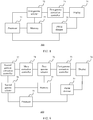
- the terminal device includes a processor, a first gamma selector, a first gamma correction controller, and a display.
- the processor is configured to determine a first brightness value corresponding to the display at a current brightness adjustment level.
- the first gamma selector is configured to determine, based on a preset gamma correction lookup table, a first input grayscale value corresponding to the first brightness value, where the gamma correction lookup table is a gamma correction relationship between a brightness value of the display and an initial input grayscale value of the display at a specified brightness adjustment level.
- the first gamma correction controller is configured to control a display brightness value of the display based on the first input grayscale value.
- the display includes a mura mura region. If a brightness value corresponding to each pixel on the display at an initial brightness adjustment level is a second brightness value, the terminal device further includes a second gamma selector and a second gamma correction controller.
- the second gamma selector is configured to: before demura is performed for the display, determine, based on the preset gamma correction lookup table, a second input grayscale value corresponding to the second brightness value.
- the second gamma correction controller is further configured to control a display brightness value of each pixel on the display based on the second input grayscale value.
- gamma correction is performed for the display including the mura region; and in a brightness adjustment process, gamma correction is performed for the display for which a demura operation has been performed.
- This can ensure uniform brightness on the display, and can enable the display to display accurate brightness in the entire brightness adjustment process.
- the gamma correction that is performed before the demura is performed based on the same gamma correction lookup table in the brightness adjustment process. This can implement relatively good hardware integration, reduce used storage space, reduce hardware costs, and provide relatively good hardware integration.
- the terminal device further includes a memory, configured to store the preset gamma correction lookup table.
- the gamma correction controller includes a voltage generator and a brightness controller.
- the voltage generator is configured to generate a reference voltage based on an input grayscale value.
- the brightness controller is configured to control, based on the reference voltage, the display to display brightness with a brightness value corresponding to the input grayscale value.
- a display When a display performs display, because sensitivities of human eyes to different brightness are different, or the display has a photoelectric characteristic, brightness of an image displayed by the display is usually inconsistent with original brightness of an original input image, and there is a specific deviation. In this case, an image output by the display is distorted compared with an input image. Consequently, a color displayed by the display is greatly different from a color of the input image, or the display displays an image that is excessively bright or excessively dark. For example, when the color displayed by the display changes from black to white, an input grayscale value of the display also needs to change. However, this change is not linear. Due to a physical characteristic of the display, if the input grayscale value changes linearly, an output brightness value does not change linearly.
- the input grayscale value of the display needs to be corrected, in other words, a gamma correction process needs to be performed for the display, so that the display displays expected brightness.
- Gamma correction is performed for the display, so that a variation relationship between an input grayscale value of the display and an output brightness value of the display satisfies a correspondence curve, where the curve is a gamma curve.
- the display can display preset brightness and a preset color.
- the gamma curve is used to correct the brightness of the display, if the overall brightness of the display changes or input and output characteristics of a pixel on the display change, overall display of the brightness of the display is affected. Therefore, the brightness of the display needs to be corrected to ensure that the display displays proper brightness.
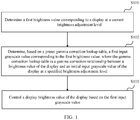
- FIG. 1 is a schematic flowchart of a method for controlling brightness of a display according to Embodiment 1 of this application. As shown in FIG. 1 , the method for controlling brightness of a display provided in this embodiment may specifically include the following steps.
- S101 Determine a first brightness value corresponding to the display at a current brightness adjustment level.
- the display may have a plurality of different brightness adjustment levels, and ranges of brightness that can be displayed by the display are different at different brightness adjustment levels.
- a maximum brightness value of the display is 500 nits (nit). Assuming that the display has five different brightness adjustment levels, a brightness value of the display at a first brightness adjustment level ranges from 0 to 100 nits, a brightness value of the display at a second brightness adjustment level ranges from 0 to 200 nits, ..., and a brightness value of the display at a fifth brightness adjustment level ranges from 0 to 500 nits.
- the five brightness adjustment levels of the display may correspond to five ticks on a brightness bar of the display.
- the rightmost tick on the brightness bar of the display corresponds to the fifth brightness adjustment level
- a tick that is left by one tick from the rightmost tick corresponds to the fourth brightness adjustment level
- the leftmost tick on the brightness bar of the display corresponds to the first brightness adjustment level (in this case, a range of brightness that can be displayed is the smallest, and the brightness of the display is the lowest).
- brightness values corresponding to a region with a same brightness degree vary with the different brightness adjustment levels.
- An image is displayed based on a relative brightness relationship between all pixels on the display.
- a same illuminance ratio is still maintained between the pixels on the display based on a same displayed image at the different brightness adjustment levels of the display, so that the entire displayed image can retain original image features such as a texture and a pattern when the brightness adjustment level changes.
- a brightness adjustment level of the display is changed, a brightness value of each pixel at the brightness adjustment level also varies with the level.
- brightness values of all the pixels are also independent of each other, and vary only with a brightness adjustment level of the display.
- all the pixels on the display each have an independent first brightness value.
- brightness values of all the pixels may be the same or different. Specifically, when the display displays a same image, if the brightness adjustment level of the display is adjusted, a brightness value corresponding to a maximum input grayscale value of the display may be first determined, and a brightness value, obtained through adjustment, corresponding to another grayscale value of each pixel is determined based on a specific ratio or another positive correlation relationship.
- the first brightness value of each pixel may have a positive correlation relationship with the brightness adjustment level of the display.
- the first brightness value changes in a same change direction as the brightness adjustment level of the display.
- the first brightness value of each pixel increases accordingly.
- the brightness adjustment level of the display is changed from a level indicating a bright image to a level indicating a dark image, the first brightness value of each pixel decreases accordingly.
- S102 Determine, based on a preset gamma correction lookup table, a first input grayscale value corresponding to the first brightness value, where the gamma correction lookup table is a gamma correction relationship between a brightness value of the display and an initial input grayscale value of the display at a specified brightness adjustment level.
- specific brightness values are correspondingly controlled in a manner such as by applying different drive voltages, so that the display properly displays an image.
- an image output by the display is distorted compared with an input image due to sensitivities of human eyes or a photoelectric characteristic of the display.
- a color displayed by the display is greatly different from a color of the input image, or brightness of the display is different from original brightness of the input image.
- an input grayscale value of the display needs to be corrected.
- the input grayscale value of the display may be changed by changing a voltage input to the display.
- the voltage input to the display may be corrected, so that the brightness value of the image displayed by the display is equal to or in a linear relationship with the brightness value of the image that is actually input.
- gamma correction may be performed on a relationship between the output brightness value of the display and the input grayscale value of the display, to adjust a response curve between an input and an output of the display, to correct a brightness deviation of the image actually displayed by the display.
- gamma correction relationships between brightness values of all the pixels on the display and input grayscale values of all the pixels may be continuous or discrete.
- correspondences between brightness values of all the pixels and input grayscale values of all the pixels satisfy a same response curve, namely, a gamma curve.
- the gamma curve may be used to represent correspondences between brightness values of all the pixels and input grayscale values of all the pixels at the level, to form gamma correction relationships between the brightness values and the input grayscale values.
- a horizontal coordinate of the gamma curve may represent an input grayscale value
- a vertical coordinate of the gamma curve may represent a brightness value.
- an input grayscale value corresponding to the brightness can be found on the gamma curve. In this way, both the brightness values of all the pixels and the corresponding input grayscale values of all the pixels are continuous.
- an input grayscale value corresponding to a brightness value of a pixel needs to be obtained based on the brightness value, a corresponding accurate input grayscale value can be found.
- the display is limited by hardware factors such as storage space and panel precision, and therefore, input grayscale values of a display panel are usually discrete positive integers.
- correspondences between the brightness values of all the pixels on the display and the input grayscale values of all the pixels usually do not form a continuous curve, but are some discrete points on the gamma curve. Therefore, correspondences between brightness values of all the pixels and input grayscale values of all the pixels at a brightness adjustment level may be represented by using a group of discrete data.
- Each brightness value and an input grayscale value corresponding to the brightness value may be represented as a discrete point on the gamma curve.
- two-dimensional coordinate points constituted by discrete grayscale values and brightness values that one-to-one correspond to the grayscale values are all located on the gamma curve.
- the horizontal coordinate of the gamma curve may still represent a grayscale value
- the vertical coordinate of the gamma curve may still represent a brightness value.
- a quantity of discrete points in the group of data may be a total quantity of grayscale values that can be displayed by the display.
- the grayscale value that can be displayed by the display is any integer ranging from 0 to 255, namely, in a total of 256 integers.
- 256 groups of discrete data may be stored in a preset correspondence table, and correspond to 256 discrete points on the gamma curve.
- the grayscale value that can be displayed by the display is any integer ranging from 0 to 1023, namely, in a total of 1204 integers.
- 1024 groups of discrete data may be stored in a preset gamma correction relationship table, and correspond to 1024 discrete points on the gamma curve.
- a data format in the preset gamma correction relationship table may be (CodeO, Lum).
- Code0 represents an input grayscale value of a pixel, and corresponds to the horizontal coordinate of the gamma curve; and Lum represents a brightness value corresponding to the input grayscale value Code0 of the pixel, and corresponds to the vertical coordinate of the gamma curve.
- an input grayscale value can be obtained from the gamma correction relationship table based on a corresponding known brightness value, or a brightness value can be obtained from the gamma correction relationship table based on a corresponding known grayscale value.
- a quantity of grayscale values is equal to a limited value.
- the preset gamma correction relationship table includes only some of all the grayscale values that can be displayed by the display and brightness values corresponding to the some grayscale values.
- the preset gamma correction relationship table may include only 30 gamma correction relationships between input grayscale values and brightness values.
- a gamma correction relationship that is between a grayscale value and a corresponding brightness value and that is other than the 30 gamma correction relationships between the input grayscale values and the brightness values may be obtained through calculation based on the existing gamma correction relationships between the brightness values and the grayscale values in the group of data. Specifically, a remaining gamma correction relationship may be obtained in a manner such as interpolation calculation.
- this manner further reduce required hardware resources because there are few gamma correction relationships.
- a result close to an actual correspondence can be obtained in the manner such as interpolation calculation, and relatively accurate correction can be implemented.
- correct gamma correction relationships between the input grayscale values of all the pixels on the display and the output brightness values of all the pixels may usually be obtained in a plurality of manners.
- the gamma correction lookup table may be used to determine the gamma correction relationship between the output brightness of the display and the input grayscale value of the display.
- the gamma correction lookup table usually includes the initial input grayscale value of the display and the corresponding brightness value of the display.
- the gamma correction lookup table is a mapping table between the initial input grayscale value of the display and the corresponding brightness value of the display.
- the gamma correction lookup table may be used to obtain an input grayscale value corresponding to a specific brightness value of the display, or obtain an output brightness value corresponding to a specific grayscale value.
- the gamma correction lookup table may be usually obtained in a manner of on-site measurement on a production line. Specifically, at a measurement position on the production line, an external device such as an image generator may be used to input a preset input grayscale value for a display, and a sampling device may be used to sample and measure a corresponding brightness value of the display.
- input grayscale values of the display have different grayscale levels.
- an input grayscale value may be any value ranging from 0 to 255.
- each different input grayscale corresponds to one output brightness value.
- the gamma correction lookup table may store relationships between all input grayscale values of the display and corresponding output brightness values of the display.
- a grayscale value of the display may have different bits, for example, 8 bits (8 bits) or 10 bits (10 bits).
- an input grayscale value of the pixel may be any integer ranging from 0 to 255.
- the gamma correction lookup table may store gamma correction relationships between different input grayscale values and different output brightness values, so that input grayscale values corresponding to a pixel are found based on different output brightness values, and a parameter such as a voltage corresponding to the pixel is further adjusted.
- the gamma correction lookup table usually includes only a gamma correction relationship between an initial input grayscale value of the display and a brightness value of the display at one brightness adjustment level.
- the gamma correction lookup table may be the gamma correction relationship between the brightness value of the display and the initial input grayscale value of the display at the specified brightness adjustment level.
- the brightness adjustment level mainly means that a specific correspondence exists between the initial input grayscale value of the display and a pre-specified brightness value of the display when the display is at the level, so that the entire display maintains a brightness level range.
- the brightness adjustment level is changed, there is a different brightness value at a new brightness adjustment level based on a same initial input grayscale value corresponding to a pixel. This can enable the display to display a same image in different brightness statuses.
- the gamma correction lookup table may include two groups of data, and each piece of data in a first group of data corresponds to one piece of data in a second group of data.
- a brightness value can be found from the gamma correction lookup table based on a corresponding input grayscale value, or an input grayscale value can be found from the gamma correction lookup table based on a corresponding brightness value.
- the display when the display displays a uniform pure-color image, all the pixels on the display have a same brightness value, in other words, all the pixels display same brightness. Correspondingly, all the pixels have a same initial input grayscale value.
- the uniform pure-color image is an image whose pixels all have a same pixel value.
- different pixels on the display when the display displays a non-uniform image, different pixels on the display usually have different input grayscale values, to present bright and dark textures of the image. In this case, the different grayscale values also correspond to different brightness values. In other words, the different pixels on the display have different brightness.
- the non-uniform image is an image with at least one color.
- the non-uniform image may have relatively rich texture features.
- the following describes a general process of determining, based on the preset gamma gamma correction lookup table, the input grayscale value corresponding to the brightness value of the display at the specified brightness adjustment level by using an example in which the display displays a uniform pure-color image, for example, a uniform pure-white image.
- a current brightness value of the display is a brightness value corresponding to a maximum grayscale value that can be displayed by the display.
- An input grayscale value corresponding to the brightness value is determined for each pixel based on the gamma correction lookup table, and the found grayscale value is used as an actual input grayscale value of the pixel on the display, where the actual input grayscale value is a grayscale value that each pixel on the display should have for displaying the brightness value of the pixel at the specified brightness adjustment level, so that actual brightness of the display does not deviate from desired brightness.
- the display displays the uniform pure-color image, brightness values of all the pixels on the display are equal in an ideal case.
- Initial input grayscale values corresponding to output brightness values in the ideal case are determined based on the gamma correction lookup table, and the grayscale values are used as inputs for all the pixels, so that actual brightness values of the display are equal to the brightness values in the ideal case.
- the input grayscale values of all the pixels may be adjusted by changing a value of a voltage used to drive all the pixels on the display to emit light. For example, the input grayscale values of all the pixels may be increased or decreased by increasing or decreasing a voltage input to the display.
- the input grayscale values corresponding to the brightness are also different.
- brightness that each pixel on the display expects to display is determined
- a grayscale value corresponding to the brightness that each pixel expects to display is correspondingly found from the gamma correction lookup table, and the found input grayscale value is used as an actual input grayscale value of the display.
- a voltage for driving each pixel on the display is controlled, so that the input grayscale value of the display is the grayscale value found from the gamma correction lookup table.
- the brightness value of each pixel on the display is the same as a brightness value of the input image. In this way, brightness deviation does not occur. For example, a phenomenon that the displayed image is excessively dark or excessively bright or has non-uniform brightness does not occur.
- a current brightness value of the display at the current brightness adjustment level and a previous brightness value of the display at a previous brightness adjustment level usually need to satisfy a specific preset condition.
- the current brightness value and the previous brightness value correspond to a same input grayscale value.
- the brightness of the display can transition evenly.
- a ratio of a difference between brightness values at adjacent levels to the previous brightness value satisfies the Webber law (Web-Fechner Law), and the difference between the brightness values is a difference between the current brightness value and the previous brightness value.
- the brightness of the display may change within a specific brightness adjustment range. Due to a hardware limitation and the like, the brightness of the display is not adjusted smoothly. Instead, the brightness adjustment range is divided to include several brightness adjustment points at equal intervals. Each brightness adjustment point corresponds to one independent brightness value. Different brightness adjustment points are sequentially traversed during the display adjustment, and corresponding brightness of the display is sequentially displayed as brightness values at the different brightness adjustment points.
- the brightness values of the display that correspond to a same input grayscale value at the two different levels may be brightness values at two adjacent brightness adjustment points.
- the difference between the brightness values of the display at the two different brightness adjustment levels is excessively large, when the display is adjusted between the two adjacent brightness adjustment points, a difference between the brightness values at the two adjacent brightness adjustment points is quite large. Consequently, the brightness of the display presents a jump effect, and visual experience of a user is severely affected.
- a threshold of a difference perceived by human eyes varies with a stimulus. Therefore, to prevent a phenomenon such as flickering from occurring on the display during the brightness adjustment, a brightness change amount between the two adjacent brightness adjustment points needs to be reduced to a degree at which human eyes do not perceive a dramatic change.
- the ratio of the difference between the brightness values that is, the difference between the current brightness value and the previous brightness value, to the previous brightness value of the display at the previous brightness adjustment level is less than a specific threshold.
- the difference between the brightness values of the display at the two different brightness adjustment levels varies with the brightness value, corresponding to the same grayscale value, at the level before the brightness adjustment. A larger brightness value of the display indicates higher brightness of the display.
- the current brightness value and the previous brightness value are respectively maximum brightness of the display at the current brightness adjustment level and the previous brightness adjustment level.
- the threshold may be 0.017.
- the ratio of the difference between the brightness values at the two adjacent brightness adjustment points to the previous brightness value of the display at the previous brightness adjustment level is less than or equal to 0.017.
- This can implement a relatively smooth brightness adjustment process when the brightness of the display is adjusted, and human eyes are not likely to perceive a jump with a unit brightness change amount.
- a maximum brightness value at the level before the brightness adjustment is L
- the ratio of the difference ⁇ L between the brightness values to L ( ⁇ L/L) is less than or equal to 0.017
- a difference between brightness values at every two adjacent brightness adjustment points should be less than or equal to 0.017 times a brightness value corresponding to a same preset grayscale value at a level before brightness adjustment, that is, L N - L N-1 ⁇ 0.017 * L N .
- a brightness change between every two brightness adjustment points reaches a degree at which human eyes are not likely to perceive a dramatic change, and human eyes are not likely to perceive a dramatic change in the brightness of the display in the entire process of adjusting the brightness of the display from initial brightness to the expected brightness. This ensures visual experience of a user.
- the maximum brightness value of the display at the current brightness adjustment level is 0.983 times the maximum brightness value at the level before the brightness adjustment.
- other brightness values of the display are also 0.983 times the brightness value at the level before the brightness adjustment.
- a gamma correction relationship or a gamma correction lookup table at a specified brightness adjustment level may be used to determine a grayscale value corresponding to brightness of any pixel on the display at the current brightness adjustment level.
- a maximum brightness value supported by the display at the specified brightness adjustment level may be greater than the maximum brightness value of the display at the current brightness adjustment level.
- the specified brightness adjustment level may be a maximum level supported when the brightness is adjusted.
- the maximum brightness value supported by the display at the specified brightness adjustment level reflects a maximum brightness value that can be reached by the display, regardless of a specific brightness adjustment level to which the display is adjusted, a brightness value of each pixel at this level is included in the gamma correction relationship between the brightness value of the pixel on the display and the input grayscale value of the pixel at the specified brightness adjustment level.
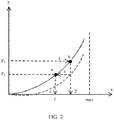
- a gamma curve after the brightness adjustment level is changed is not the same as a gamma curve before the brightness adjustment. For example, as shown in FIG.
- a solid curve is the gamma curve before the brightness adjustment level is changed
- a dashed-line curve is the gamma curve after the brightness adjustment level is changed.
- a gamma correction relationship between an input grayscale value of each pixel on the display and a brightness value of each pixel needs to be corrected, so that gamma correction relationships between input grayscale values and brightness values at different brightness adjustment levels all satisfy gamma curves.
- the same initial grayscale value input for all the pixels on the display correspond to different brightness values at the different brightness adjustment levels.
- an input grayscale value of a pixel is 1023 and a brightness value of the pixel at a previous brightness adjustment level is 500 nits (corresponding to a y coordinate 500 on the solid curve).
- an input grayscale value is also 1023 at a brightness adjustment level after the adjustment
- a brightness value needs to be adjusted accordingly, so that the input grayscale value and a brightness value at a level after the adjustment can also satisfy a gamma curve (corresponding to the dashed-line curve in Figure 2 ).
- the brightness value after the adjustment is 0.983 times the previous brightness value.
- the input grayscale value is 1023
- the brightness value is 491.5 nits (corresponding to a y coordinate 491.5 on the dashed-line curve).
- FIG. 2 also shows only the gamma curves at the two different brightness adjustment levels.
- each brightness adjustment level of the display corresponds to a different gamma curve.
- measurement needs to be performed for the display at each brightness adjustment level to obtain a gamma curve corresponding to the level, and the gamma curve is stored in a register or a memory.
- this operation occupies a plurality of production lines for performing measurement, occupies measurement resources, occupies a large amount of storage space, and increases hardware costs.
- a gamma curve corresponding to input grayscale values of all the pixels on the display and brightness values of all the pixels at only one specified brightness adjustment level may be measured, and a gamma curve corresponding to input grayscale values and brightness values at another brightness adjustment level is calculated based on the gamma curve. This reduces resources used for measurement on the production lines, and reduces hardware resources used for storage.
- a level corresponding to a maximum brightness value of the display may be selected as the specified brightness adjustment level, and a gamma correction relationship between an input grayscale value of the display and a brightness value of the display is obtained through measurement at the brightness adjustment level, to obtain a gamma curve.
- the gamma curve includes all brightness values from a minimum brightness value to the maximum brightness value of the display. After the level is adjusted, a brightness value of the display is less than the brightness value at the specified brightness adjustment level. Therefore, the brightness value of the display and a corresponding input grayscale value of the display can still be found on the gamma curve.
- the gamma curve corresponding to the maximum brightness value at the brightness adjustment level may be prestored in a memory or a register; and after the brightness adjustment level is changed, a gamma curve corresponding to an input grayscale value and a brightness value at another brightness adjustment level is calculated based on the prestored gamma curve. In this way, a correspondence between the input grayscale value and the brightness value at the another level is corrected.
- correspondences between brightness values of all the pixels on the display and input grayscale values of all the pixels may be continuous or discrete. Therefore, when the display is at a brightness adjustment level, correspondences between brightness values of all the pixels and input grayscale values of all the pixels may satisfy a same curve, that is, the foregoing gamma curve.
- the gamma curve may be used to represent gamma correction relationships between brightness values of all the pixels and output grayscale values of all the pixels at the brightness adjustment level. In this case, regardless of specific brightness of each pixel, an input grayscale value corresponding to the brightness can be found on the gamma curve.
- discrete data may be used to represent a gamma correction lookup table between the brightness values of all the pixels and the input grayscale values of all the pixels at a brightness adjustment level.
- Each brightness value and an input grayscale value corresponding to the brightness value may be represented as a discrete point on the gamma curve.
- the gamma correction lookup table may include a plurality of discrete grayscale values and a plurality of brightness values, where a quantity of the grayscale values is equal to a quantity of the brightness values, the grayscale values one-to-one correspond to the brightness values, and the quantity of the discrete grayscale values is equal to a total quantity of grayscale values of the display.
- an input grayscale value can be obtained from the gamma correction lookup table based on a corresponding known brightness value, or a brightness value can be obtained from the gamma correction lookup table based on a corresponding known grayscale value.
- an input grayscale value corresponding to the brightness value may be obtained in a manner such as interpolation calculation based on an existing brightness value and grayscale value.
- a group of discrete data is also used to express the gamma correction relationships between the brightness values of all the pixels on the display and the input grayscale values of all the pixels in the gamma correction lookup table.
- the group of discrete data includes only some correspondences in all correspondences. Remaining unknown correspondences in all the correspondences may be obtained based on the correspondences between the brightness values and the grayscale values that are included in the group of data.
- the gamma correction lookup table also includes a plurality of discrete grayscale values and a plurality of brightness values, a quantity of the grayscale values is equal to a quantity of the brightness values, the grayscale values one-to-one correspond to the brightness values, and the quantity of the discrete grayscale values is less than a total quantity of grayscale values of the display.
- the remaining correspondences may be obtained in a manner such as interpolation calculation.
- some gamma correction relationships included in the group of discrete data are usually represented as discrete points distributed at equal intervals on the gamma curve.
- FIG. 2 is still used as an example for description.
- the solid curve represents the gamma curve that is obtained at the specified brightness adjustment level based on the input grayscale value and the brightness value that is measured on the production line.
- a maximum brightness value of the display is 500 nits.
- a brightness adjustment level corresponding to 500 nits is selected as the specified brightness adjustment level. Because the maximum brightness value of the display corresponds to a maximum input grayscale value, for example, the grayscale value is 1023, a gamma curve at the specified brightness adjustment level indicates a gamma correction relationship between the grayscale value 1023 and the brightness value 500 nits.
- a maximum brightness value of the display is changed to 491.5 nits.
- a gamma correction relationship between an initial input grayscale value and a brightness value should satisfy the gamma curve shown as the dashed-line curve in FIG. 2 .
- the gamma curve shown as the dashed-line curve does not exist actually (the gamma curve is neither actually obtained through measurement nor stored in a memory or a register).
- an input grayscale value corresponding to the brightness value 491.5 nits should be 1015.
- the found value 1015 is used as an actual input grayscale value of a pixel whose initial input grayscale value is 1023. In other words, 1023 is replaced with 1015, so that the brightness value at the level after the adjustment is 491.5 nits.
- the gamma curve after the brightness adjustment level is changed is neither obtained through actual measurement nor stored in a memory, but is obtained through a series of calculations.
- a limited quantity of gamma correction relationships between input grayscale values and brightness values need to be calculated.
- correspondences between the input grayscale values and the brightness values are represented as some discrete points on the gamma curve.
- the brightness value is not 491.5 nits.
- an original input image source is a picture of a panda
- an input grayscale value corresponding to a region in which white hair of the panda is located is 1023.
- a brightness value in the white hair region corresponding to the initial grayscale value 1023 is 500 nits.
- a brightness value in the white hair region corresponding to the initial grayscale value 1023 should be changed to 491.5 nits. If correction is not performed, brightness corresponding to 491.5 nits cannot be actually displayed in the white hair region corresponding to the initial input grayscale value 1023.
- a grayscale value that needs to be input for outputting 491.5 nits is 1015.
- 1015 is used as a grayscale value corresponding to the white hair region in the image source, to be actually input for the pixel on the display.
- the brightness value corresponding to the grayscale value 1023 in the image source is 491.5 nits in the region.
- 1023 is the initial input grayscale value corresponding to the white hair region in the image source
- 1015 is the actual input grayscale value corresponding to the white hair region.
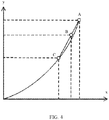
- an initial input grayscale value is CodeO
- an actual input grayscale value is Code1.
- a vertical coordinate of the gamma curve represents the brightness value Lum
- Code1 is used as a grayscale value, namely, a first input grayscale value, that corresponds to Code0 and that is actually input for a pixel, so that a brightness value of the pixel may be Lum, namely, a first brightness value corresponding to the first input grayscale value.
- the first grayscale value that is input and that corresponds to the first brightness value should be a grayscale value, that is, Code1, that should actually be input for the pixel.
- Different input grayscale values correspond to different drive voltages, and the display also displays different brightness.
- a voltage used to drive the pixel is not a voltage value corresponding to CodeO, but a voltage value corresponding to Code1.
- a difference between the brightness values of the display when the brightness of the display is changed from the specified brightness adjustment level to the current brightness adjustment level may be a fixed value.
- the brightness adjustment point on the brightness bar on the display also moves by one tick.
- the maximum brightness value of the display is changed from 500 nits to 491.5 nits.
- the initial input grayscale value Code0 of the display remains unchanged, but the actual corresponding input grayscale value Code1 needs to be changed to another grayscale value, to display brightness with a brightness value corresponding to the another grayscale value.
- the gamma correction relationship may be a gamma correction lookup table.
- the gamma correction lookup table may include a continuous gamma curve, or may be represented as some discrete points on the gamma curve.
- the preset gamma correction lookup table may alternatively be used to obtain a first input grayscale value that each pixel on the display should have for displaying a first brightness value at the current brightness adjustment level.
- S103 Control a display brightness value of the display based on the first input grayscale value.
- the grayscale value may be used as the actual input grayscale value, namely, the first input grayscale value, that each pixel on the display should have for displaying the corresponding first brightness value at the current brightness adjustment level.
- an initial grayscale value of each pixel of the source image is replaced with the actual grayscale value.
- each pixel on the display may display new brightness based on a change in overall brightness of the display, so that the display properly displays the image based on new overall brightness.
- an input grayscale value that the pixel should have for displaying the new brightness may be found based on the existing preset gamma correction lookup table, and the input grayscale value is used to replace an initial grayscale value of the display for the source image, so that overall brightness of the image can be changed while the features such as the texture and the pattern of the source image are retained.
- the same gamma correction lookup table is used in the entire gamma correction process.
- the method for controlling brightness of a display in this embodiment can significantly reduce occupied storage space on hardware, and further reduce manufacturing costs.
- a gamma correction lookup table corresponding to another brightness value in the display brightness method in this embodiment, regardless of a specific brightness adjustment level to which the display is adjusted, a corresponding input can be obtained through calculation based on the preset gamma correction lookup table. This implements relatively high correction precision.
- the method for controlling brightness of a display includes: first determining a brightness value corresponding to the display at the current brightness adjustment level; then determining, based on the preset gamma gamma correction lookup table, an input grayscale value corresponding to the brightness value, where the gamma correction lookup table is the gamma correction relationship between the brightness value of the display and the initial input grayscale value of the display at the specified brightness adjustment level; and finally controlling brightness of the display based on the input grayscale value.
- a correspondence between a brightness value and an input grayscale value at another brightness adjustment level can be obtained based on the gamma correction relationship between the brightness value and the input grayscale value at the specified brightness adjustment level, and gamma correction can be performed, based on the gamma correction relationship at the specified brightness adjustment level, on brightness of the display at the another brightness adjustment level, without a need to store a gamma correction relationship at the another level.
- a series of discrete points may usually be used to represent correspondences between brightness values of all the pixels on the display and input grayscale values of all the pixels.
- a 10-bit (10-bit) display is used as an example.
- the gamma correction lookup table may be used to represent the correspondences between the brightness values and the input grayscale values.
- the gamma correction lookup table may include a plurality of discrete grayscale values and a plurality of brightness values, where a quantity of the grayscale values is equal to a quantity of the brightness values, the grayscale values one-to-one correspond to the brightness values, and the quantity of the discrete grayscale values is equal to a total quantity of grayscale values of the display.
- step S102 in the foregoing embodiment when the first input grayscale value corresponding to the first brightness value at the current brightness adjustment level is determined based on the preset gamma gamma correction lookup table, the first input grayscale value corresponding to the first brightness value at the current brightness adjustment level may be obtained based on the gamma correction relationships represented by these discrete points.
- correspondences between the plurality of grayscale values and the plurality of brightness values in the gamma correction lookup table may satisfy a gamma correction formula, where the brightness value is used as an input of the gamma correction formula, and the grayscale value is used as an output of the gamma correction formula.
- the step of determining, based on a preset gamma correction lookup table, a first input grayscale value corresponding to the first brightness value at the current brightness adjustment level may specifically include the following step: calculating, based on the plurality of brightness values and the gamma correction formula, a plurality of grayscale values that one-to-one correspond to the plurality of brightness values.
- the grayscale values and the brightness values in the gamma correction lookup table are all located on a gamma curve.
- a grayscale value corresponding to a brightness value can be obtained through calculation according to the gamma correction formula corresponding to the gamma curve.
- the gamma correction formula corresponding to the gamma curve is usually a power function.
- the plurality of brightness values of the display may be first obtained, and the plurality of grayscale values required for displaying the brightness values may be obtained based on the brightness values and according to the gamma correction formula.
- a maximum brightness value of the display may be 500 nits or 800 nits.
- a dimension of each brightness value may usually be eliminated.
- an absolute value relationship between the maximum brightness value of the display at the specified brightness adjustment level and the maximum brightness value of the display at the current brightness adjustment level, and an absolute value relationship between a first brightness value corresponding to a pixel at the current brightness adjustment level and a brightness value of the pixel at the specified brightness adjustment level are changed to relative value relationships, to eliminate impact caused by different dimensions. This simplifies a calculation process, and improves accuracy of a result.
- normalization processing may be performed on a first brightness value corresponding to any pixel in all the pixels at the current brightness adjustment level.
- a normalized brightness value is a dimensionless value.
- the dimensionless value may be directly substituted into the gamma correction formula, to obtain a relative ratio relationship between the first brightness value of the pixel at the current brightness adjustment level and a brightness value of the pixel at the specified brightness adjustment level.
- the brightness value at the specified brightness adjustment level may usually be simplified into a dimensionless number, to facilitate subsequent calculation.
- the display may display a pure-color image.
- a brightness value of each pixel on the display may be the maximum brightness value of the display at the specified brightness adjustment level.
- a grayscale value corresponding to the normalized first brightness value at the current brightness adjustment level may be determined as a first input grayscale value corresponding to the any pixel.
- the grayscale value corresponding to the dimensionless value can be calculated based on the preset gamma correction lookup table, where the grayscale value is a corresponding actual input grayscale value, namely, the first input grayscale value, that the pixel should have for displaying the corresponding first brightness value and that exists when the display is at the current brightness adjustment level.
- an input grayscale value in the gamma correction lookup table is used as a horizontal coordinate
- a corresponding output brightness value is used as a vertical coordinate
- the curve is the gamma curve corresponding to the gamma correction lookup table, and relationships between all grayscale values and brightness values in the preset gamma correction lookup table satisfy a power function relationship.
- a grayscale value corresponding to a second preset brightness value may be obtained based on the power function relationship in the gamma correction lookup table.
- the curve corresponding to the gamma correction lookup table is shown in FIG. 2 .
- a horizontal axis in FIG. 2 represents an input grayscale value
- a vertical axis in FIG. 2 represents an output brightness value
- a gamma correction curve is shown as the solid curve in FIG. 2 .
- f may be determined as the input grayscale value corresponding to the any pixel.
- the gamma value in the preset gamma correction lookup table is a gamma value on the response curve.
- ⁇ 2.2, or the like.
- a total quantity of grayscale levels indicates a total quantity of grayscale values based on a grayscale from black to white (corresponding to binary numbers of 0 and 1). For example, when an input grayscale value is an 8-bit value, there are 256, that is, 0 to 255, grayscale values. A grayscale value 0 corresponds to black, and a grayscale value 255 corresponds to white. When an input grayscale value is a 10-bit value, there are 1024 grayscale values.
- a grayscale value 0 corresponds to black
- a grayscale value 1023 corresponds to white.
- a result obtained through calculation according to the gamma correction formula may be a decimal, while grayscale values stored in the gamma correction lookup table are all integers.
- the step of determining, based on a preset gamma correction lookup table, a first input grayscale value corresponding to the first brightness value may further specifically include: first obtaining, from the gamma correction lookup table, a brightness value closest to the first brightness value at the current brightness adjustment level; and then using a grayscale value corresponding to the brightness value closest to the preset brightness value as the first input grayscale value corresponding to the first brightness value.
- 1015 is the first input grayscale value corresponding to the normalized first brightness value at the current brightness adjustment level, and the first brightness value at the current brightness adjustment level may be approximately displayed based on a point indicating the grayscale value 1015 in all the discrete points.
- the preset gamma correction lookup table includes a relatively large quantity of grayscale values (for example, the 10-bit display has 1024 different grayscale values), a difference between brightness values corresponding to two adjacent grayscale values is relatively small. This can reduce used hardware resources such as memory space or a processing capability, and can relatively accurately represent a correspondence between an input grayscale value and a brightness value.
- the maximum brightness value of the display is 500 nits.
- an input grayscale value corresponding to a pixel with the brightness value of 500 nits is 1023, and an input grayscale value corresponding to another brightness value of a pixel at this level may be obtained based on a gamma curve at this level.
- a gamma curve corresponding to the specified brightness adjustment level may be the gamma curve shown as the solid curve in FIG. 2 .
- a vertical coordinate of a point b on the gamma curve represents a brightness value F 1 of a pixel at the specified brightness adjustment level, where it is assumed that the pixel has the same maximum brightness value as the display, that is, 500 nits, at the specified brightness adjustment level; and a horizontal coordinate of a point a represents a grayscale value corresponding to the brightness value F 1 of the pixel at the specified brightness adjustment level. It is easily understood that the grayscale value is 1023, as shown by the arrow 1.
- a gamma curve corresponding to the display may be the gamma curve shown as the dashed-line curve. It should be understood that when the brightness adjustment level of the display is changed, a gamma curve corresponding to an input grayscale value of a pixel and a brightness value of the pixel is also changed, in other words, different levels correspond to different gamma curves. In this embodiment of this application, there is only one gamma curve.
- the brightness value of the pixel is changed accordingly, and is changed to the brightness value F 2 at the current brightness adjustment level, as shown by the arrow 2 in FIG. 2 .
- the brightness value F 2 at the current brightness adjustment level is the same as the maximum brightness value of the display at the current brightness adjustment level, that is, 491.5 nits.
- the maximum brightness value of the display is changed to 491.5 nits.
- the input grayscale value is 1023
- the corresponding brightness value is 491.5 nits.
- the gamma curve corresponding to the level at which the maximum brightness value is 491.5 nits does not actually exist.
- a specific actual input grayscale value corresponding to the brightness value displayed as 491.5 nits needs to be obtained based on the gamma curve corresponding to the specified brightness adjustment level at which the maximum brightness value is 500 nits, namely, based on the solid curve in FIG.
- a point that is, the point a in FIG. 2 , that corresponds to the new brightness value F 2 of the pixel at the current brightness adjustment level and that is on the gamma correction curve at the specified brightness adjustment level of the display needs to be used to obtain an input grayscale value corresponding to the brightness value F 2 at the current brightness adjustment level.
- the point a is shown by the arrow 3.
- a vertical coordinate of the point a represents the brightness value F 2 at the current brightness adjustment level, for example, both the point a and the display have the maximum brightness value of 491.5 nits at the current brightness adjustment level; and the horizontal coordinate of the point a represents the grayscale value f corresponding to the brightness value of the pixel at the current brightness adjustment level after the brightness adjustment level of the display is adjusted.
- the horizontal coordinate of the point a may be obtained based on a position of the point a on the gamma correction curve.
- the horizontal coordinate of the point a is 1015, namely, the grayscale value f corresponding to the brightness value of the pixel at the current brightness adjustment level, as shown by the arrow 4.
- 1015 can be used as an actual input grayscale value of a pixel when the pixel displays brightness of 491.5 nits.
- an actual first input grayscale value corresponding to a first brightness value of another pixel on the display at the current brightness adjustment level may also be determined according to a same method.
- the grayscale value of each pixel on the display usually has a range.
- the grayscale value is less than or equal to a maximum grayscale value.
- all points on the curve are located on the left of a vertical line whose horizontal coordinate is equal to the maximum grayscale value max
- the maximum grayscale value is usually a grayscale value that is input when the display displays an all-white image.
- the correspondences between the input grayscale values of the display and the brightness values of the display always satisfy the gamma curve, and a grayscale color shift is prevented from occurring on brightness of the display during the adjustment.
- only one group of discrete data is required to represent the correspondences between the input grayscale values and the brightness values, and an actual input grayscale value that the display should have for displaying desired brightness after the brightness adjustment level of the display is changed is determined based on the group of discrete data. This reduces used storage space, and reduces hardware costs.
- a group of discrete data includes the correspondences between all the integer grayscale values and the corresponding brightness values. This implements higher precision of the determined input grayscale value, and implements higher brightness adjustment precision for the display.
- the preset gamma correction lookup table usually includes a limited quantity of discrete values. For example, only 30 typical correspondences between input grayscale values and brightness values may be measured. In this case, the preset correspondences are 30 groups of discrete points, and the 30 groups of discrete points are all located on a same gamma curve. Optionally, the preset correspondences may be referred to as the gamma correction lookup table. Optionally, the 30 groups of discrete points may be distributed on the gamma curve at equal intervals.
- the gamma correction lookup table includes a plurality of grayscale values and corresponding brightness values, a quantity of grayscale values is less than a total quantity of grayscale values that can be displayed by the display.
- the brightness adjustment level of the display is adjusted from the specified brightness adjustment level to the current brightness adjustment level, the brightness value of each pixel on the display at the current brightness adjustment level may not be included in the preset gamma correction table.
- step S102 that is, determining, based on a preset gamma correction lookup table, an input grayscale value corresponding to the brightness value at the current brightness adjustment level, in the method for controlling brightness of a display in Embodiment 1 is performed, a linear interpolation method may alternatively be used to calculate the grayscale value.
- FIG. 3 is a schematic flowchart of determining a first input grayscale value corresponding to a first brightness value at a current brightness adjustment level according to an embodiment of this application.
- the step of determining, based on a preset gamma correction lookup table, an input grayscale value corresponding to the brightness value at the current brightness adjustment level may specifically include the following steps.
- S201 Determine, based on the gamma correction lookup table, two brightness values directly adjacent to the first brightness value at the current brightness adjustment level.
- the preset gamma correction lookup table includes only some of all gamma correction relationships between output brightness values and input grayscale values. If the display is adjusted from a specified brightness adjustment level to the current brightness adjustment level, and a first brightness value corresponding to a pixel at the current brightness adjustment level is not included in the some gamma correction relationships, a grayscale value approximate to a first input grayscale value corresponding to the first brightness value at the current brightness adjustment level may be obtained according to the linear interpolation method, and the approximate grayscale value is used as an actual input grayscale value of the display. In this way, the display can display proper brightness at the current brightness adjustment level.
- the correspondences between the brightness values and the grayscale values in the gamma correction lookup table are all located on one gamma curve.
- a straight line may be used to approximately replace the arc segment; and a brightness value and a grayscale value that satisfy a linear equation for the straight line may also be approximately located on the gamma curve.
- several appropriate known correspondences between brightness values and grayscale values may be selected from the gamma correction lookup table.
- two correspondences between output brightness values and input grayscale values may be selected, and linear interpolation calculation is performed based on the correspondences.
- the two brightness values directly adjacent to the first brightness value at the current brightness adjustment level may be selected.
- the two brightness values are directly adjacent to the first brightness value at the current brightness adjustment level, in other words, the first brightness value at the current brightness adjustment level is located between the two brightness values; and the two brightness values are brightness values that are from the gamma correction lookup table and that are adjacent to the first brightness value at the current brightness adjustment level.
- S202 Establish a linear interpolation equation based on the two directly adjacent brightness values and grayscale values corresponding to the two brightness values.
- a linear interpolation equation that approximately satisfies a corresponding arc segment on the gamma curve may be established based on the two brightness values and the corresponding grayscale values.
- the linear equation is a monadic equation, and there is only one variable and one dependent variable. Based on a proper brightness value and a proper grayscale value, the linear equation can also approximately satisfy a relationship between the first brightness value and a corresponding first input grayscale value at the current brightness adjustment level.
- the linear equation may be used as the linear interpolation equation. For example, when the display is adjusted from the specified brightness adjustment level to the current brightness adjustment level, the linear interpolation equation can be established based on the two directly adjacent brightness values and the corresponding grayscale values.
- one of the brightness value and the grayscale value may be used as a variable of the equation, and the other is used as a dependent variable of the equation.
- a plurality of correspondences including a correspondence between the maximum brightness value of the display and the corresponding grayscale value of the display at the specified brightness adjustment level are substituted into the linear interpolation equation, to reversely derive a specific expression of the linear interpolation equation.
- the maximum brightness value of the display at the specified brightness adjustment level and the corresponding grayscale value may be used as a first group of variable and dependent variable, and a brightness value that is adjacent to the first brightness value at the current brightness adjustment level and that is less than the first brightness value and a corresponding grayscale value are selected from the preset gamma correction lookup table and used as a second group of variable and dependent variable; and the first group of variable and dependent variable and the second group of variable and dependent variable are used as known parameters of the equation, and an original parameter in the equation is used as a to-be-calculated value for calculation.
- a specific value of the original parameter in the equation can be reversely derived from a plurality of groups of variables and dependent variables. After the specific value of the parameter is substituted into the equation, the linear interpolation equation can be obtained.
- the following describes a process of obtaining the linear interpolation equation by using an example.
- FIG. 4 is a schematic diagram of a gamma curve corresponding to a gamma correction lookup table in a method for controlling brightness of a display according to an embodiment of this application. As shown in FIG.
- both brightness values and grayscale values in the preset gamma correction lookup table are located on a same gamma curve, where a horizontal coordinate of the gamma curve represents an input grayscale value, and a vertical coordinate of the gamma curve represents a brightness value.
- a vertical coordinate and a horizontal coordinate of a point A on the gamma curve respectively represent the maximum brightness value of the display and the corresponding grayscale value of the display at the specified brightness adjustment level
- a vertical coordinate and a horizontal coordinate of a point B on the gamma curve respectively represent the brightness value of each pixel on the display at the specified brightness adjustment level and a grayscale value corresponding to the brightness value.
- a point C may be selected on the gamma curve.
- a vertical coordinate of the point C represents the other adjacent brightness value in the two directly adjacent brightness values
- a horizontal coordinate of the point C represents a grayscale value corresponding to the other adjacent brightness value.
- a first brightness value of each pixel on the display at the current brightness adjustment level is located between the two directly adjacent brightness values. Therefore, the point B is also located between the point A and the point C. If a straight line is drawn based on the point A and the point C, the point B is also approximately located on the straight line. In this way, an equation expression of the straight line can be calculated based on the coordinates of the point A and the point C, and the equation expression is used as a linear interpolation equation for calculating the coordinates of the point B.
- Y 1 represents the maximum brightness value of the display at the specified brightness adjustment level
- X 1 represents the grayscale value corresponding to the maximum brightness value of the display at the specified brightness adjustment level
- Y 2 represents the brightness value corresponding to the point C
- X 2 represents the grayscale value corresponding to the point C.
- the straight line represented by the linear interpolation equation includes the point A and the point C. Therefore, the horizontal coordinate and vertical coordinate of the point A and the horizontal coordinate and vertical coordinate of the point C can be substituted into the linear interpolation equation, to calculate values of a and b.
- a may be used to represent the slope of the straight line represented by the linear interpolation equation
- b may be used to represent the intercept, on the y axis, of the straight line represented by the linear interpolation equation
- the linear interpolation equation is established based on the actual values of a and b.
- the straight line represented by the linear interpolation equation can be used to approximately simulate an arc segment between the point A and the point C on the gamma curve.
- S203 Obtain, according to the linear interpolation equation and the first brightness value at the current brightness adjustment level, the first input grayscale value corresponding to the first brightness value.
- a first brightness value of any pixel in all the pixels at the current brightness adjustment level may be used as a variable and substituted into the linear interpolation equation, and a calculated dependent variable of the equation may be approximately equal to a first input grayscale value corresponding to the first brightness value of the pixel at the current brightness adjustment level, as shown in step S303.
- points whose vertical coordinates represent the first brightness value at the current brightness adjustment level and whose horizontal coordinates represent the first input grayscale value corresponding to the first brightness value at the current brightness adjustment level are all located on the straight line whose slop is a and whose intercept on the y axis is b.
- the grayscale value corresponding to the any pixel in all the pixels may be directly calculated according to the formula. The foregoing processing is performed on each pixel on the display, to obtain a first input grayscale value that should be input for each pixel when the display is at the current brightness adjustment level.
- the linear interpolation equation may alternatively be established according to another linear interpolation algorithm, a specific expression of the linear interpolation equation is determined based on the relationships between the input grayscale values and the brightness values in the preset gamma correction lookup table, a first input grayscale value corresponding to the first brightness value at the current brightness adjustment level is calculated according to the linear interpolation equation, and the first input grayscale value is used as the first input grayscale value corresponding to the first brightness value of the any pixel in all the pixels at the current brightness adjustment level.
- the input grayscale value of the display and the brightness value of the display always satisfy the gamma curve, and in the adjustment process, a grayscale color shift and flickering are prevented from occurring on the display.
- this method only the gamma correction relationship at the specified brightness adjustment level is required, to determine a correspondence between a brightness value and an input grayscale value at the another brightness adjustment level, and perform, based on the gamma correction relationship at the specified brightness adjustment level, gamma correction on brightness displayed by the display at the another brightness adjustment level, without a need to store a gamma correction relationship at the another level. This reduces used storage space, and reduces hardware costs.
- the used preset gamma correction lookup table includes only the limited quantity of correspondences between the input grayscale values and the brightness values, and other correspondences not included in the preset gamma correction lookup table are obtained through simple linear interpolation calculation. In this way, precision of an input grayscale value is relatively high, a calculation speed is high, and processor overheads are relatively low.
- the display is a display such as an AMOLED
- a light emitting characteristic of a pixel is changed during production of an AMOLED display panel due to a process (for example, an evaporation process in which uniformity of a coating layer on the entire panel and a coating layer thickness are controlled).
- a process for example, an evaporation process in which uniformity of a coating layer on the entire panel and a coating layer thickness are controlled.
- a current flowing through the pixel is different. Consequently, a brightness mura (Mura) phenomenon occurs when the pixel on the display performs display.
- compensation namely, a demura step, further needs to be performed for the display to eliminate the mura phenomenon.
- FIG. 5 is a schematic flowchart of another method for controlling brightness of a display according to an embodiment of this application.
- the method for controlling brightness of a display may further include the following steps.
- S301 Before demura is performed for the display, determine, based on a preset gamma correction lookup table, a second input grayscale value corresponding to the second brightness value.
- an image output by the display is distorted compared with an input image due to sensitivities of human eyes or a photoelectric characteristic of the display.
- an input grayscale value of the display needs to be corrected.
- gamma correction may be performed on each pixel on the display based on the preset gamma correction lookup table, to obtain an input grayscale value of the pixel when a brightness value of the pixel on the display at a specified brightness adjustment level is the second brightness value. This can correct a brightness deviation of the image actually displayed by the display.
- second brightness values of all pixels on the display at the initial brightness adjustment level are the same, for example, are a maximum brightness value of the display at the initial brightness adjustment level
- the display displays a pure-color image.
- the second input grayscale value corresponding to the maximum brightness value of each pixel when the display is at the initial brightness adjustment level can be determined based on the preset gamma correction lookup table.
- S302 Control a display brightness value of each pixel on the display based on the second input grayscale value.
- the input grayscale value of each pixel may be determined as the second input grayscale value.
- each pixel on the display should display brightness with the second brightness value corresponding to the second input grayscale value. In this way, brightness of each pixel can be controlled based on the second input grayscale value, so that the display performs display.
- the display includes the mura region, in other words, pixels whose brightness values are unequal exist in all the pixels, and therefore, demura adjustment needs to be performed, so that all the pixels maintain uniform brightness during display of the image.
- the mura phenomenon may occur on the display, when the same grayscale value is input for all the pixels on the display, brightness presented in some regions or by some pixels may be different from brightness output by other pixels. In this case, a demura step needs to be performed, so that a same brightness value can be correspondingly output for the same input grayscale value of all the pixels on the display. Because mura compensation is based on brightness data obtained after the gamma correction, in a compensation step, the gamma correction needs to be performed for all the pixels on the display based on the preset gamma correction lookup table, so that the output brightness value of the display and the input grayscale value of the display satisfy a gamma curve after a step.
- an actual corresponding brightness value is usually obtained when a specified grayscale value, for example, the second input grayscale value, is input for each pixel; or an input grayscale value corresponding to each pixel is usually obtained when the pixel outputs brightness with a specific brightness value, for example, with the maximum brightness value of the display at the initial brightness adjustment level; and the compensation is performed based on a relationship between the grayscale value of each pixel and the brightness value of the pixel, so that input and output features of all the pixels on the display are the same.
- the same second input grayscale value may usually be input for all the pixels on the display.
- brightness output by the display should be the same, and is the second brightness value.
- a device such as a high power camera may be used to photograph the display to obtain actual brightness of each pixel on the display. If the mura phenomenon occurs on the display, brightness of a pixel in a region in which the mura phenomenon occurs is different from brightness of a pixel outside the region.
- compensation data for example, a mura compensation table, may be used to compensate for the brightness of each pixel, so that the entire display can display uniform brightness.
- the compensation data may include coordinates of a to-be-compensated pixel on the display and a correspondence between grayscale values before and after the compensation when the pixel displays uniform brightness.
- the brightness value of each pixel on the display may be set to the maximum brightness value corresponding to the display at the initial brightness adjustment level, that is, brightness of the display when the display displays an all-white color at the brightness adjustment level.
- the mura compensation data may be used to change or replace an input grayscale value of the pixel in the mura region. In this way, the pixel in the mura region can output same brightness as a pixel in another region.
- S303 Determine a first brightness value corresponding to the display at the current brightness adjustment level.
- the display can display uniform brightness. Then, a corresponding first brightness value of each pixel for performing proper display at the current brightness adjustment level may be determined based on the current brightness adjustment level.
- S304 Determine, based on the preset gamma gamma correction lookup table, a first input grayscale value corresponding to the first brightness value, where the gamma correction lookup table is a gamma correction relationship between a brightness value of the display and an initial input grayscale value of the display at a specified brightness adjustment level.
- the brightness of each pixel on the display also needs to be changed accordingly, to ensure correct display of an image.
- the first input grayscale value that each pixel on the display should have for displaying the first brightness value at the current brightness adjustment level needs to be re-determined based on a feature of a gamma curve between an input and an output of the display.
- a relationship between an input grayscale value and an output brightness value of the display may be obtained based on the preset gamma correction lookup table.
- the preset gamma correction lookup table may further be used to obtain the first input grayscale value that needs to be actually input for each pixel on the display to maintain the corresponding first brightness value at the current brightness adjustment level.
- An actual input grayscale value of each pixel on the display may be calculated according to a formula based on the preset gamma correction lookup table.
- S305 Control a display brightness value of the display based on the first input grayscale value.
- the first input grayscale value may be used as an actual input for each pixel, and accurate brightness is output based on the preset gamma correction lookup table, so that the image is accurately displayed when the display is adjusted to the current brightness adjustment level.
- all the pixels on the display initially need to output the same second grayscale value; then, mura compensation is performed to enable all the pixels on the display to present the same brightness; and finally, when the brightness of the display is adjusted, accurate correspondences between input grayscale values and output brightness values of all the pixels are obtained after the brightness of the display is changed, so that image brightness that is displayed by the display is the same as image brightness that is expected to be displayed by the display.
- the brightness of the display is corrected based on the same preset gamma correction lookup table before and after the mura compensation step. This can maintain uniform brightness on the display by performing the mura compensation step, and controls the brightness of the display.
- the brightness control method in this embodiment requires only the same preset gamma correction lookup table, and the preset gamma correction lookup table can be integrated into a same hardware architecture. This implements relatively good integration.
- gamma correction is performed for the display including the mura region; and in a brightness adjustment process, gamma correction is performed for the display for which a demura operation has been performed.
- This can ensure uniform brightness on the display, and can enable the display to display accurate brightness in the entire brightness adjustment process.
- the gamma correction that is performed before the demura is performed based on the same gamma correction lookup table in the brightness adjustment process. This can implement relatively good hardware integration, reduce used storage space, reduce hardware costs, and provide relatively good hardware integration.
- An embodiment of this application further provides an apparatus for controlling brightness of a display, to perform the method for controlling brightness of a display in the foregoing embodiments.
- the apparatus 100 for controlling brightness of a display provided in this embodiment may include:
- the gamma correction lookup table may include a plurality of discrete grayscale values and a plurality of brightness values, where a quantity of the grayscale values is equal to a quantity of the brightness values, the grayscale values one-to-one correspond to the brightness values, and the quantity of the discrete grayscale values is equal to a total quantity of grayscale values of the display.
- the gamma correction lookup table may include a plurality of discrete grayscale values and a plurality of brightness values, where a quantity of the grayscale values is equal to a quantity of the brightness values, the grayscale values one-to-one correspond to the brightness values, and the quantity of discrete grayscale values is less than a total quantity of grayscale values of the display.
- two-dimensional coordinate points constituted by the discrete grayscale values and brightness values that one-to-one correspond to the discrete grayscale values are all located on a gamma curve, where a horizontal coordinate of the gamma curve represents a grayscale value, and a vertical coordinate of the gamma curve represents a brightness value.
- a current brightness value of the display at the current brightness adjustment level and a previous brightness value of the display at a previous brightness adjustment level satisfy a preset condition, where the current brightness value and the previous brightness value correspond to a same input grayscale value, the preset condition is that a ratio of a difference between brightness values at adjacent levels to the previous brightness value satisfies the Webber law, and the difference between the brightness values is a difference between the current brightness value and the previous brightness value.
- a maximum brightness value supported by the display at the specified brightness adjustment level is greater than a maximum brightness value supported by the display at the current brightness adjustment level.
- the specified brightness adjustment level is a maximum level supported when brightness of the display is adjusted.
- the first gamma module 62 is specifically configured to: first determine the initial input grayscale value corresponding to the display when the brightness value of the display is the corresponding first brightness value at the current brightness adjustment level; and then replace the initial input grayscale value with the input grayscale value determined based on the gamma correction lookup table, and use the input grayscale value as the first input grayscale value corresponding to the first brightness value.
- the control apparatus may further include a gamma correction lookup table obtaining module 66, configured to calculate, based on the plurality of brightness values and the correction formula, a plurality of grayscale values that one-to-one correspond to the plurality of brightness values.
- the first gamma correction module 62 is further configured to: first obtain, from the gamma correction lookup table, a brightness value closest to the first brightness value at the current brightness adjustment level, and then use a grayscale value corresponding to the brightness value closest to the first brightness value at the current brightness adjustment level as the first input grayscale value corresponding to the first brightness value.
- the first gamma correction module 62 is specifically configured to: first determine, based on the gamma correction lookup table, two brightness values directly adjacent to the first brightness value at the current brightness adjustment level; then establish a linear interpolation equation based on the two directly adjacent brightness values and grayscale values corresponding to the two brightness values; and finally obtain, according to the linear interpolation equation and the first brightness value at the current brightness adjustment level, the first input grayscale value corresponding to the first brightness value.
- an initial brightness value of each pixel on the display is preset to a second brightness value
- the obtaining module 62 is further configured to: determine, based on the preset gamma correction lookup table, a corresponding second input grayscale value that exists when a brightness value corresponding to the initial brightness adjustment level is the second brightness value; and then use the second input grayscale value as an input grayscale value of each pixel on the display.
- FIG. 7 shows another apparatus 200 for controlling brightness of a display. Similar to the apparatus 100 for controlling brightness of a display in FIG. 7 , the apparatus 200 for controlling brightness of a display also includes the foregoing modules, and the apparatus 200 for controlling brightness of a display may further include: a second gamma correction module 64, configured to: before demura is performed for the display, determine, based on the preset gamma correction lookup table, a second input grayscale value corresponding to the second brightness value.
- a second gamma correction module 64 configured to: before demura is performed for the display, determine, based on the preset gamma correction lookup table, a second input grayscale value corresponding to the second brightness value.
- the second gamma correction module 64 is further configured to use the second input grayscale value as an input grayscale value of each pixel on the display.
- the apparatus further includes a mura correction module 65, configured to perform the demura for the display.
- a mura correction module 65 configured to perform the demura for the display.
- division into the modules of the apparatuses in FIG. 6 and FIG. 7 is merely logical function division, and in an actual implementation, all or some of the modules may be integrated into one physical entity, or the modules may be physically separate.
- all of the modules may be implemented in a form of software invoked by a processing element or in a form of hardware.
- some of the modules may be implemented in a form of software invoked by a processing element, and some of the modules may be implemented in a form of hardware.
- the first gamma correction module 62 may be a processing element that is separately disposed, or may be integrated into a chip of the apparatus.
- the first gamma correction module 62 may be stored in a memory of the apparatus in a form of a program, and invoked by a processing element of the apparatus to perform a function of the first gamma correction module 62. Implementations of other modules are similar. In addition, all or some of the modules may be integrated, or may be implemented independently.
- the processing element may be an integrated circuit and has a signal processing capability. In an implementation process, steps in the foregoing methods or the foregoing units may be implemented by a hardware integrated logic circuit in the processing element, or by instructions in a form of software.
- the modules may be configured as one or more integrated circuits for implementing the foregoing methods, for example, one or more application-specific integrated circuits (application-specific integrated circuit, ASIC), one or more digital signal processors (digital signal processor, DSP), or one or more field programmable gate arrays (field programmable gate array, FPGA).
- ASIC application-specific integrated circuit
- DSP digital signal processor
- FPGA field programmable gate array
- FPGA field programmable gate array
- the processing element may be a general-purpose processor, for example a central processing unit (central processing unit, CPU) or another processor that can invoke the program.
- these modules may be integrated together, and implemented in a form of a system-on-a-chip (system-on-a-chip, SOC).
- FIG. 8 is a schematic diagram of a hardware structure of a terminal device according to an embodiment of this application.
- the terminal device 300 includes a processor 71, a first gamma selector 72, a first gamma correction controller 73, and a display 74.
- the processor 71 is configured to determine a first brightness value corresponding to the display 74 at a current brightness adjustment level.
- the first gamma selector 72 is configured to determine, based on a preset gamma correction lookup table, a first input grayscale value corresponding to the first brightness value, where the gamma correction lookup table is a gamma correction relationship between a brightness value of the display and an initial input grayscale value of the display at a specified brightness adjustment level.
- the first gamma correction controller 73 is configured to control a display brightness value of the display based on the first input grayscale value.
- the terminal device in this embodiment can execute the method for controlling brightness of a display in the foregoing embodiments.
- Specific processes and steps of the method for controlling brightness of a display have been described in the foregoing embodiments. Details are not described herein again.
- the first gamma selector 72 may determine, based on the preset gamma correction lookup table, the first input grayscale value corresponding to the first brightness value, and then the first gamma correction controller 73 controls the display brightness value of the display 74 based on the first input grayscale value.
- a specific function of the first gamma selector 72 is similar to the function of the first gamma correction module 62 in the foregoing embodiment, and a specific function of the first gamma correction controller 73 is similar to the function of the brightness adjustment module 63 in the foregoing embodiment. Details are not described herein again.
- the first gamma selector 72 may be integrated into the processor 71, or may be a hardware logic circuit or a hardware circuit independent of the processor 71.
- the first gamma correction controller 73 may usually be hardware, for example, a drive circuit, independent of the processor 71.
- the terminal device 300 may further include a memory 75.
- the memory 75 is configured to store the preset gamma correction lookup table.
- the display 74 is usually constituted by an organic light emitting display (Organic Light Emitting Display, OLED for short) or an active-matrix organic light emitting diode (Active-matrix organic light emitting diode, AMOLED).
- OLED Organic Light Emitting Display
- AMOLED Active-matrix organic light emitting diode
- the first gamma correction controller in the terminal device may generate a corresponding drive voltage based on the input grayscale value obtained by the first gamma selector. When different voltages are applied to the display, different brightness may be displayed. In this way, a brightness value corresponding to the input grayscale value is displayed.
- the first gamma correction controller 73 may include a voltage generator and a brightness controller.
- the voltage generator can be configured to generate a corresponding reference voltage based on an input grayscale value; and the brightness controller may be configured to control, based on the reference voltage, the display to display brightness with a brightness value corresponding to the input grayscale value.
- the input grayscale value is usually a digital signal.
- the voltage generator 731 may be a digital-to-analog converter (Digital to analog converter, DAC).
- the digital-to-analog converter is configured to convert the input grayscale value into an analog reference voltage value.
- the brightness controller 732 can control the brightness value of the display based on the reference voltage, so that the display displays corresponding brightness after being powered on.
- the digital-to-analog converter can convert the input grayscale value into an actual reference voltage value.
- the reference voltage value corresponding to the input grayscale value varies with the input grayscale value. In this way, the display may emit light with different brightness based on different reference voltage values and current values, to display an actual image.
- Data and a signal may be transmitted between the processor 71, the first gamma selector 72, the first gamma correction controller 73, and the memory 75 through a communications bus or another data path. Because the memory 75, the processor 71, the first gamma selector 72, and the first gamma correction controller 73 are electrically connected to each other, the preset gamma correction lookup table stored in the memory 75 may be transmitted to the first gamma selector 72, so that the first gamma selector 72 searches the preset gamma correction lookup table for an input grayscale value of each pixel after a brightness adjustment level of the display 74 is changed, and the first gamma correction controller 73 controls, based on the input grayscale value, a display brightness value and the like of each pixel on the display 74.
- the processor 71 is usually a control center of the terminal device, and may be directly connected to different hardware components such as the memory 75 through the communications bus.
- the processor 71 performs various functions of the terminal device and processes data by running or executing a software program and/or a module and invoking data stored in the memory, to complete an operation for controlling brightness of the display.
- the processor 71 may be a microcontroller unit (Microcontroller Unit, MCU), a central processing unit (central processing unit, CPU), or an independent system-on-a-chip (system-on-a-chip, SOC), or may be one or more integrated circuits configured to implement the foregoing method, for example, one or more specific integrated circuits (application-specific integrated circuit, ASIC), one or more microprocessors (digital signal processor, DSP), or one or more field programmable gate arrays (field programmable gate array, FPGA).
- MCU microcontroller Unit
- CPU central processing unit
- SOC system-on-a-chip
- ASIC application-specific integrated circuit
- DSP digital signal processor
- FPGA field programmable gate array
- the processor 71 may include one or more processing units. Different processing units are configured to respectively execute the foregoing different instructions and programs, to respectively perform different functions.
- the memory 75 may be a read-only memory (read-only memory, ROM) or another type of static storage device that can store static information and instructions, or a random access memory (random access memory, RAM) or another type of dynamic storage device that can store information and instructions, or may be an electrically erasable programmable read-only memory (electrically erasable programmable read-only memory, EEPROM), a compact disc read-only memory (compact disc read-only memory, CD-ROM) or another compact disc storage, an optical disc storage (including a compact disc, a laser disc, an optical disc, a digital versatile disc, a Blu-ray disc, and the like), a magnetic disk storage medium or another magnetic storage device, or any other medium that can be configured to carry or store expected program code in a form of an instruction or a data structure and that can be accessed by a computer.
- the memory 75 is not limited thereto.
- the memory 74 may exist independently, and is connected to the processor 71 and the first gamma selector 72 through
- the memory 75 may be further configured to store application program code for executing the solutions of this application, and the processor 71 controls the execution.
- the processor 71 is configured to execute the application program code stored in the memory 75, to implement the method for controlling brightness of a display provided in the foregoing embodiments of this application.
- FIG. 9 shows another terminal device. Similar to the terminal device in FIG. 8 , the terminal device 400 also includes the processor 71, the first gamma selector 72, the first gamma correction controller 73, and the display 74.
- the terminal device 400 may further include a second gamma selector 76 and a second gamma correction controller 77.
- the second gamma selector 76 is configured to: before demura is performed for the display 74, determine, based on a preset gamma correction lookup table, a second input grayscale value corresponding to the second brightness value.
- the second gamma correction controller 77 is configured to control a display brightness value of each pixel on the display based on the second input grayscale value.
- functions of the second gamma selector 76 and the second gamma correction controller 77 are the same as those of the second gamma correction module in the foregoing embodiment. Details are not described herein again.
- the second gamma selector 76 may be integrated into the processor 71, or may be hardware independent of the processor 71.
- the second gamma correction controller 77 is usually hardware, for example, a drive circuit, independent of the processor 71.
- the terminal device 400 needs to cooperate with another external device to obtain mura compensation data.
- the external device usually includes a sensor element configured to sense actual brightness of the display 75.
- the sensor element may be a high power camera.
- the second gamma selector 76 determines, based on the preset gamma correction lookup table, the second grayscale value corresponding to the second brightness value, and the second gamma correction controller 77 controls the display brightness value of each pixel based on the second input grayscale value.
- the sensor element measures the actual brightness of the display 75
- the terminal device 400 may obtain the mura compensation data, for example, a mura compensation table, based on a relationship between the actual brightness of the display 75 and an input grayscale value, and compensate for, based on the mura compensation table, brightness of each pixel on the display 75, so that the entire display 75 can display uniform brightness.
- the brightness value of each pixel on the display 75 may maintain the second brightness value.
- the terminal device 400 may include a mura correction controller 78 that is specially configured to obtain the mura compensation data and perform mura compensation.
- the mura correction controller 78 may be integrated into the processor 71, or may be independent hardware, an independent circuit, or the like.
- the second gamma correction controller 76 may also include a voltage generator and a brightness controller.
- the voltage generator can be configured to generate a corresponding reference voltage based on an input grayscale value; and the brightness controller may be configured to control, based on the reference voltage, the display to display brightness with a brightness value corresponding to the input grayscale value.
- the terminal apparatus may further include an I/O subsystem that is configured to connect the external device and the terminal apparatus.
- the I/O subsystem may be configured to exchange data with the external device, to implement input and output of data collected by the external device, control a working status of the external device, and so on.
- the terminal device further includes a pulse width modulation (Pulse Width Modulation, PWM) dimmer 79.
- PWM Pulse Width Modulation
- the PWM dimmer 79 can modulate on/off of an internal switch device such as a transistor gate or a MOS transistor base, to generate a series of pulses with an equal width, and implement different equivalent analog output by changing a width or duty cycle of a pulse, thereby adjusting output brightness of the display 75.
- the PWM dimmer 79 is electrically connected to the display 75.
- the PWM dimmer 79 may receive a digital signal from a control chip, and convert the digital signal into pulses with different widths or duty cycles. This is equivalent to outputting voltage signals with different amplitudes.
- Each pixel on the display 75 displays different brightness based on the different amplitudes of the voltage signals. This implements brightness adjustment and proper display of an image.
- the PWM dimmer 79 may be electrically connected to the processor 71, or may be used as a part of a gamma correction controller, to adjust, based on data such as the input grayscale value, the brightness of the display 75.
- All or some of the foregoing embodiments may be implemented by using software, hardware, firmware, or any combination thereof.
- a software program is used to implement the embodiments, the embodiments may all or partially be implemented in a form of a computer program product.
- the computer program product includes one or more computer instructions.
- the computer program instructions When the computer program instructions are loaded and executed on a computer, the procedures or functions according to the embodiments of this application are all or partially generated.
- the computer may be a general-purpose computer, a dedicated computer, a computer network, or other programmable apparatuses.
- the computer instructions may be stored in a computer-readable storage medium or may be transmitted from a computer-readable storage medium to another computer-readable storage medium.
- the computer instructions may be transmitted from a website, computer, server, or data center to another website, computer, server, or data center in a wired (for example, a coaxial cable, an optical fiber, or a digital subscriber line (digital subscriber line, DSL)) or wireless (for example, infrared, radio, or microwave) manner.
- the computer-readable storage medium may be any usable medium accessible by a computer, or a data storage device, such as a server or a data center, integrating one or more usable media.
- the usable medium may be a magnetic medium (for example, a floppy disk, a hard disk, or a magnetic tape), an optical medium (for example, a DVD), a semiconductor medium (for example, a solid-state drive (solid state disk, SSD)), or the like.
- a magnetic medium for example, a floppy disk, a hard disk, or a magnetic tape
- an optical medium for example, a DVD
- a semiconductor medium for example, a solid-state drive (solid state disk, SSD)
Landscapes
- Engineering & Computer Science (AREA)
- Physics & Mathematics (AREA)
- Computer Hardware Design (AREA)
- General Physics & Mathematics (AREA)
- Theoretical Computer Science (AREA)
- Control Of Indicators Other Than Cathode Ray Tubes (AREA)
- Liquid Crystal Display Device Control (AREA)
Applications Claiming Priority (2)
| Application Number | Priority Date | Filing Date | Title |
|---|---|---|---|
| CN201810438207.5A CN110473502A (zh) | 2018-05-09 | 2018-05-09 | 屏幕亮度的控制方法、装置及终端设备 |
| PCT/CN2019/084324 WO2019214449A1 (fr) | 2018-05-09 | 2019-04-25 | Procédé et dispositif de commande de luminosité d'écran, et dispositif terminal |
Publications (2)
| Publication Number | Publication Date |
|---|---|
| EP3770899A1 true EP3770899A1 (fr) | 2021-01-27 |
| EP3770899A4 EP3770899A4 (fr) | 2021-08-11 |
Family
ID=68468411
Family Applications (1)
| Application Number | Title | Priority Date | Filing Date |
|---|---|---|---|
| EP19800575.3A Pending EP3770899A4 (fr) | 2018-05-09 | 2019-04-25 | Procédé et dispositif de commande de luminosité d'écran, et dispositif terminal |
Country Status (4)
| Country | Link |
|---|---|
| US (1) | US11200844B2 (fr) |
| EP (1) | EP3770899A4 (fr) |
| CN (2) | CN119541396A (fr) |
| WO (1) | WO2019214449A1 (fr) |
Families Citing this family (45)
| Publication number | Priority date | Publication date | Assignee | Title |
|---|---|---|---|---|
| CN112397036B (zh) * | 2019-08-14 | 2022-05-24 | 京东方科技集团股份有限公司 | 时序控制器、液晶显示装置及显示驱动方法 |
| WO2021056315A1 (fr) * | 2019-09-26 | 2021-04-01 | 京东方科技集团股份有限公司 | Procédé de réglage gamma, appareil de réglage gamma et système de réglage gamma |
| CN110992879B (zh) * | 2019-12-11 | 2022-07-15 | 易诚高科(大连)科技有限公司 | 一种基于OLED电气特性评估的DeMURA数据采集寻优方法 |
| KR102692177B1 (ko) * | 2019-12-26 | 2024-08-06 | 주식회사 엘엑스세미콘 | 무라 보상 회로 및 그를 채용한 디스플레이를 위한 구동 장치 |
| CN113257162B (zh) * | 2020-02-12 | 2022-12-27 | 北京小米移动软件有限公司 | 屏幕的亮度调节方法、装置和存储介质 |
| CN111243525B (zh) * | 2020-03-10 | 2021-12-10 | 昇显微电子(苏州)有限公司 | 一种根据显示亮度自适应调整Demura的方法和装置 |
| CN113450713B (zh) * | 2020-03-25 | 2022-08-12 | 北京小米移动软件有限公司 | 屏幕显示方法及装置、灰阶映射信息生成方法及装置 |
| CN115398521A (zh) * | 2020-03-31 | 2022-11-25 | 西安诺瓦星云科技股份有限公司 | 图像处理的系统、方法和装置 |
| CN111521375B (zh) | 2020-04-23 | 2021-07-06 | 惠州市华星光电技术有限公司 | 伽马值的确定方法及装置 |
| WO2021217647A1 (fr) * | 2020-04-30 | 2021-11-04 | 华为技术有限公司 | Procédé et appareil de traitement de couleurs d'une image |
| CN115552506A (zh) * | 2020-05-18 | 2022-12-30 | 华为技术有限公司 | 一种显示屏亮度调节方法及装置 |
| CN113948033B (zh) * | 2020-07-15 | 2023-01-17 | 厦门凌阳华芯科技股份有限公司 | 一种led显示屏的高精度pwm驱动方法、装置及介质 |
| CN114464127A (zh) * | 2020-11-02 | 2022-05-10 | 鸿富泰精密电子(烟台)有限公司 | 显示面板Mura补偿方法、系统、电子装置及存储介质 |
| US11508273B2 (en) * | 2020-11-12 | 2022-11-22 | Synaptics Incorporated | Built-in test of a display driver |
| CN114613315A (zh) * | 2020-12-09 | 2022-06-10 | 深圳市奥拓电子股份有限公司 | 一种伽马曲线学习方法及led显示控制器 |
| CN112738492B (zh) * | 2020-12-23 | 2022-08-26 | 杭州海康威视数字技术股份有限公司 | 图像帧显示方法、装置、电子设备及存储介质 |
| CN112687242B (zh) * | 2020-12-31 | 2022-04-19 | Oppo广东移动通信有限公司 | 显示面板的显示调节方法、显示调节装置及电子设备 |
| CN114860183A (zh) * | 2021-02-04 | 2022-08-05 | 深圳Tcl数字技术有限公司 | 显示器亮度控制方法、装置、终端及计算机可读存储介质 |
| US11928795B2 (en) | 2021-03-03 | 2024-03-12 | Google Llc | Filtering pulse-width modulated (PWM) noise from a fingerprint image captured with an optical under-display fingerprint sensor (UDFPS) |
| CN113140196B (zh) * | 2021-04-19 | 2022-06-10 | Oppo广东移动通信有限公司 | 显示模组的补偿方法、装置、电子设备和可读存储介质 |
| CN113593495B (zh) * | 2021-07-23 | 2022-11-15 | 北京字节跳动网络技术有限公司 | 校准方法、装置和电子设备 |
| CN113674703B (zh) * | 2021-08-12 | 2022-12-06 | Tcl华星光电技术有限公司 | 背光模块亮度校正方法、其显示装置、及其亮度校正装置 |
| CN113643663B (zh) * | 2021-08-13 | 2022-12-02 | 京东方科技集团股份有限公司 | 一种像素驱动电路、显示面板及驱动方法 |
| CN113543405B (zh) * | 2021-09-15 | 2021-12-24 | 广州中大中鸣科技有限公司 | 一种基于led灯具显示帧间动态灰阶重建的方法、装置 |
| US11842678B2 (en) | 2021-10-12 | 2023-12-12 | Google Llc | High-brightness mode on an OLED display |
| CN113936612A (zh) * | 2021-11-01 | 2022-01-14 | 中航华东光电有限公司 | 基于标定的亮度值设置液晶屏背光亮度的装置和方法 |
| DE102022128666A1 (de) * | 2021-12-09 | 2023-06-15 | Lg Display Co., Ltd. | Verfahren zum Ausgleichen einer Anzeigevorrichtung |
| CN114244969B (zh) * | 2021-12-21 | 2024-03-15 | 上海集成电路装备材料产业创新中心有限公司 | 一种图像亮度校正方法和硬件系统 |
| CN114141212A (zh) * | 2021-12-29 | 2022-03-04 | 上海立可芯半导体科技有限公司 | 一种手机LCD屏幕的Gamma校正系数计算方法 |
| KR20230131373A (ko) * | 2022-03-04 | 2023-09-13 | 삼성디스플레이 주식회사 | 표시 장치 및 영상 데이터의 보상 방법 |
| CN114743486B (zh) * | 2022-04-26 | 2025-07-25 | 云谷(固安)科技有限公司 | 一种显示面板的伽马调节方法及装置 |
| US11810531B1 (en) * | 2022-04-28 | 2023-11-07 | Pixelworks Semiconductor Technology (Shanghai) Co., Ltd. | Methods and systems for calibrating and controlling a display device |
| CN115188326B (zh) * | 2022-06-08 | 2025-09-09 | 云谷(固安)科技有限公司 | 显示屏的显示驱动方法、装置、设备及介质 |
| CN115171606A (zh) * | 2022-07-27 | 2022-10-11 | 京东方科技集团股份有限公司 | 图像调整方法、装置、电子设备及存储介质 |
| CN115376449B (zh) * | 2022-08-26 | 2025-12-09 | 固安翌光科技有限公司 | 一种像素化车灯控制方法、装置、介质以及电子设备 |
| KR20240038216A (ko) * | 2022-09-15 | 2024-03-25 | 삼성디스플레이 주식회사 | 표시 패널 구동부 및 이를 이용한 표시 패널의 구동 방법 |
| CN115620661B (zh) * | 2022-09-29 | 2026-03-10 | Tcl华星光电技术有限公司 | 显示面板的补偿方法及补偿装置 |
| CN115942127B (zh) * | 2022-11-30 | 2026-02-06 | 合肥维信诺科技有限公司 | 显示面板的补偿基础数据的获取方法、获取装置、获取系统和存储介质 |
| KR20240118466A (ko) * | 2023-01-27 | 2024-08-05 | 엘지디스플레이 주식회사 | 광학 보상 시스템 및 방법 |
| CN117496859B (zh) * | 2023-05-31 | 2025-06-27 | 武汉华星光电技术有限公司 | 显示装置 |
| CN117037709A (zh) * | 2023-08-10 | 2023-11-10 | 合肥维信诺科技有限公司 | 显示面板控制方法、装置、计算机设备和存储介质 |
| US12406633B2 (en) * | 2024-01-26 | 2025-09-02 | Dell Products L.P. | Enhanced color gamut performance of a liquid crystal display |
| TWI903744B (zh) * | 2024-09-06 | 2025-11-01 | 友達光電股份有限公司 | 顯示裝置 |
| CN119418628A (zh) * | 2024-12-10 | 2025-02-11 | 维沃移动通信有限公司 | 色彩校正方法、装置、设备及介质 |
| CN119811283A (zh) * | 2025-01-17 | 2025-04-11 | 昆山国显光电有限公司 | 显示面板的补偿方法、装置、设备、介质及产品 |
Family Cites Families (22)
| Publication number | Priority date | Publication date | Assignee | Title |
|---|---|---|---|---|
| US6043797A (en) * | 1996-11-05 | 2000-03-28 | Clarity Visual Systems, Inc. | Color and luminance control system for liquid crystal projection displays |
| US6727959B2 (en) * | 1999-11-22 | 2004-04-27 | Conexant Systems, Inc. | System of and method for gamma correction of real-time video |
| KR20050123158A (ko) * | 2003-04-18 | 2005-12-29 | 코닌클리케 필립스 일렉트로닉스 엔.브이. | 액정 디스플레이 감마 보정 |
| TWI236656B (en) * | 2004-01-19 | 2005-07-21 | Vastview Tech Inc | Method and device of compensating brightness for LCD |
| KR100624136B1 (ko) | 2005-08-22 | 2006-09-13 | 삼성에스디아이 주식회사 | 자동밝기 조절장치를 포함하는 유기 전계발광 표시장치 |
| TWI315151B (en) * | 2006-11-10 | 2009-09-21 | Ind Tech Res Inst | System and method of performing multi-scaled clocks for dynamic gamma correction |
| CN102013246B (zh) * | 2009-09-07 | 2013-09-18 | 群康科技(深圳)有限公司 | 显示装置的伽马对应表的建立方法 |
| CN103390395A (zh) * | 2012-05-09 | 2013-11-13 | 厦门毅想通信研发中心有限公司 | 一种对显示器的亮度进行调整的方法和电子设备 |
| US9524676B2 (en) * | 2013-06-24 | 2016-12-20 | Apple Inc. | Organic light-emitting diode display with burn-in reduction capabilities |
| US9396684B2 (en) * | 2013-11-06 | 2016-07-19 | Apple Inc. | Display with peak luminance control sensitive to brightness setting |
| KR102281099B1 (ko) * | 2014-12-10 | 2021-07-26 | 삼성디스플레이 주식회사 | 표시 장치, 이의 구동 방법 및 이를 위한 비젼 검사 장치 |
| US10089959B2 (en) * | 2015-04-24 | 2018-10-02 | Apple Inc. | Display with continuous profile peak luminance control |
| KR102247526B1 (ko) * | 2015-07-10 | 2021-05-03 | 삼성전자주식회사 | 디스플레이 장치 및 그 제어 방법 |
| CN107180616A (zh) * | 2016-03-11 | 2017-09-19 | 青岛海信电器股份有限公司 | 一种消除显示设备Mura的方法、消除显示设备Mura装置和显示设备 |
| CN105590587B (zh) * | 2016-03-24 | 2017-11-07 | 京东方科技集团股份有限公司 | 一种用于显示模组的伽马校正方法和装置 |
| CN105741762B (zh) * | 2016-03-31 | 2018-01-30 | 深圳市华星光电技术有限公司 | 消除OLED显示面板Mura的方法 |
| CN105913815B (zh) * | 2016-04-15 | 2018-06-05 | 深圳市华星光电技术有限公司 | 显示面板Mura现象补偿方法 |
| CN105976760B (zh) * | 2016-06-30 | 2018-12-04 | 维沃移动通信有限公司 | 一种终端屏幕的亮度调节方法及移动终端 |
| US10699662B2 (en) * | 2016-09-12 | 2020-06-30 | Novatek Microelectronics Corp. | Integrated circuit for driving display panel and method thereof |
| CN106782307B (zh) * | 2017-01-25 | 2019-07-05 | 上海天马有机发光显示技术有限公司 | 一种oled显示面板的灰阶补偿方法以及灰阶补偿系统 |
| CN107274833B (zh) * | 2017-07-31 | 2019-07-09 | 京东方科技集团股份有限公司 | 亮度调节方法、亮度调节装置、显示模组和显示装置 |
| CN107784975B (zh) * | 2017-10-25 | 2020-04-10 | 武汉华星光电半导体显示技术有限公司 | Amoled显示装置的亮度和色度自动调整方法及系统 |
-
2018
- 2018-05-09 CN CN202411678212.5A patent/CN119541396A/zh active Pending
- 2018-05-09 CN CN201810438207.5A patent/CN110473502A/zh active Pending
-
2019
- 2019-04-25 WO PCT/CN2019/084324 patent/WO2019214449A1/fr not_active Ceased
- 2019-04-25 EP EP19800575.3A patent/EP3770899A4/fr active Pending
-
2020
- 2020-11-04 US US17/089,680 patent/US11200844B2/en active Active
Also Published As
| Publication number | Publication date |
|---|---|
| US11200844B2 (en) | 2021-12-14 |
| EP3770899A4 (fr) | 2021-08-11 |
| CN119541396A (zh) | 2025-02-28 |
| US20210049966A1 (en) | 2021-02-18 |
| WO2019214449A1 (fr) | 2019-11-14 |
| CN110473502A (zh) | 2019-11-19 |
Similar Documents
| Publication | Publication Date | Title |
|---|---|---|
| US11200844B2 (en) | Method and apparatus for controlling brightness of display, and terminal device | |
| CN113228152B (zh) | 控制屏幕亮度的装置及方法 | |
| CN107610649B (zh) | 一种显示面板的光学补偿方法及装置 | |
| US9208718B2 (en) | Method of compensating gamma reference voltages | |
| CN111754946B (zh) | 画质优化方法、显示装置及计算机可读存储介质 | |
| CN110197641B (zh) | 面板驱动电压调整方法、显示设备和具有存储功能的装置 | |
| CN114387919B (zh) | 过驱动方法及装置、显示设备、电子设备、存储介质 | |
| CN111243512A (zh) | 一种灰阶数据补偿方法、装置和驱动芯片 | |
| CN105981094A (zh) | Oled显示系统和方法 | |
| KR20150139014A (ko) | 감마 보정 방법 및 이를 채용한 표시 장치 | |
| CN113920917A (zh) | 显示面板补偿方法及补偿装置 | |
| CN114299858A (zh) | 补偿显示装置的亮度与色度的方法及相关设备 | |
| CN115985216A (zh) | 亮度补偿方法以及亮度补偿装置 | |
| CN113035152B (zh) | 显示面板的灰阶亮度调节方法及其装置 | |
| CN118334995A (zh) | 显示面板的补偿参数确定方法、装置、显示面板补偿方法 | |
| CN116860143A (zh) | 一种图像显示处理方法及装置 | |
| CN110021268B (zh) | Oled的显示控制方法和装置 | |
| CN118800184B (zh) | 灰阶补偿方法、灰阶补偿装置及显示装置 | |
| JP2016167026A (ja) | 補正値生成装置及び補正値生成方法 | |
| CN119229797A (zh) | 一种数字驱动显示面板的校正方法和装置 | |
| KR20200040325A (ko) | 표시 장치 및 이의 구동 방법 | |
| CN118506712B (zh) | 像素补偿方法、设备及存储介质 | |
| CN101751892A (zh) | 液晶显示装置 | |
| CN117975907B (zh) | 一种提升低亮度Demura效果的方法和装置 | |
| CN119296481A (zh) | AMOLED面板的Demura补偿数据生成方法及相关设备 |
Legal Events
| Date | Code | Title | Description |
|---|---|---|---|
| STAA | Information on the status of an ep patent application or granted ep patent |
Free format text: STATUS: THE INTERNATIONAL PUBLICATION HAS BEEN MADE |
|
| PUAI | Public reference made under article 153(3) epc to a published international application that has entered the european phase |
Free format text: ORIGINAL CODE: 0009012 |
|
| STAA | Information on the status of an ep patent application or granted ep patent |
Free format text: STATUS: REQUEST FOR EXAMINATION WAS MADE |
|
| 17P | Request for examination filed |
Effective date: 20201023 |
|
| AK | Designated contracting states |
Kind code of ref document: A1 Designated state(s): AL AT BE BG CH CY CZ DE DK EE ES FI FR GB GR HR HU IE IS IT LI LT LU LV MC MK MT NL NO PL PT RO RS SE SI SK SM TR |
|
| AX | Request for extension of the european patent |
Extension state: BA ME |
|
| RIC1 | Information provided on ipc code assigned before grant |
Ipc: G09G 5/10 20060101AFI20210331BHEP Ipc: G09G 3/3225 20160101ALI20210331BHEP |
|
| A4 | Supplementary search report drawn up and despatched |
Effective date: 20210709 |
|
| RIC1 | Information provided on ipc code assigned before grant |
Ipc: G09G 5/10 20060101AFI20210705BHEP Ipc: G09G 3/3225 20160101ALI20210705BHEP |
|
| DAV | Request for validation of the european patent (deleted) | ||
| DAX | Request for extension of the european patent (deleted) | ||
| RAP3 | Party data changed (applicant data changed or rights of an application transferred) |
Owner name: HUAWEI TECHNOLOGIES CO., LTD. |
|
| STAA | Information on the status of an ep patent application or granted ep patent |
Free format text: STATUS: EXAMINATION IS IN PROGRESS |
|
| 17Q | First examination report despatched |
Effective date: 20230316 |