EP3771148A1 - Procédé de configuration automatique, noeud de travail de groupe, groupe, réseau, programme informatique et support lisible par ordinateur - Google Patents
Procédé de configuration automatique, noeud de travail de groupe, groupe, réseau, programme informatique et support lisible par ordinateur Download PDFInfo
- Publication number
- EP3771148A1 EP3771148A1 EP19188242.2A EP19188242A EP3771148A1 EP 3771148 A1 EP3771148 A1 EP 3771148A1 EP 19188242 A EP19188242 A EP 19188242A EP 3771148 A1 EP3771148 A1 EP 3771148A1
- Authority
- EP
- European Patent Office
- Prior art keywords
- network
- control module
- working node
- stack
- agent
- Prior art date
- Legal status (The legal status is an assumption and is not a legal conclusion. Google has not performed a legal analysis and makes no representation as to the accuracy of the status listed.)
- Withdrawn
Links
Images

Classifications
-
- H—ELECTRICITY
- H04—ELECTRIC COMMUNICATION TECHNIQUE
- H04L—TRANSMISSION OF DIGITAL INFORMATION, e.g. TELEGRAPHIC COMMUNICATION
- H04L41/00—Arrangements for maintenance, administration or management of data switching networks, e.g. of packet switching networks
- H04L41/12—Discovery or management of network topologies
-
- G—PHYSICS
- G06—COMPUTING OR CALCULATING; COUNTING
- G06F—ELECTRIC DIGITAL DATA PROCESSING
- G06F9/00—Arrangements for program control, e.g. control units
- G06F9/06—Arrangements for program control, e.g. control units using stored programs, i.e. using an internal store of processing equipment to receive or retain programs
- G06F9/44—Arrangements for executing specific programs
- G06F9/455—Emulation; Interpretation; Software simulation, e.g. virtualisation or emulation of application or operating system execution engines
- G06F9/45533—Hypervisors; Virtual machine monitors
- G06F9/45558—Hypervisor-specific management and integration aspects
-
- G—PHYSICS
- G06—COMPUTING OR CALCULATING; COUNTING
- G06F—ELECTRIC DIGITAL DATA PROCESSING
- G06F9/00—Arrangements for program control, e.g. control units
- G06F9/06—Arrangements for program control, e.g. control units using stored programs, i.e. using an internal store of processing equipment to receive or retain programs
- G06F9/44—Arrangements for executing specific programs
- G06F9/455—Emulation; Interpretation; Software simulation, e.g. virtualisation or emulation of application or operating system execution engines
- G06F9/45533—Hypervisors; Virtual machine monitors
- G06F9/45558—Hypervisor-specific management and integration aspects
- G06F2009/4557—Distribution of virtual machine instances; Migration and load balancing
-
- G—PHYSICS
- G06—COMPUTING OR CALCULATING; COUNTING
- G06F—ELECTRIC DIGITAL DATA PROCESSING
- G06F9/00—Arrangements for program control, e.g. control units
- G06F9/06—Arrangements for program control, e.g. control units using stored programs, i.e. using an internal store of processing equipment to receive or retain programs
- G06F9/44—Arrangements for executing specific programs
- G06F9/455—Emulation; Interpretation; Software simulation, e.g. virtualisation or emulation of application or operating system execution engines
- G06F9/45533—Hypervisors; Virtual machine monitors
- G06F9/45558—Hypervisor-specific management and integration aspects
- G06F2009/45591—Monitoring or debugging support
-
- G—PHYSICS
- G06—COMPUTING OR CALCULATING; COUNTING
- G06F—ELECTRIC DIGITAL DATA PROCESSING
- G06F9/00—Arrangements for program control, e.g. control units
- G06F9/06—Arrangements for program control, e.g. control units using stored programs, i.e. using an internal store of processing equipment to receive or retain programs
- G06F9/44—Arrangements for executing specific programs
- G06F9/455—Emulation; Interpretation; Software simulation, e.g. virtualisation or emulation of application or operating system execution engines
- G06F9/45533—Hypervisors; Virtual machine monitors
- G06F9/45558—Hypervisor-specific management and integration aspects
- G06F2009/45595—Network integration; Enabling network access in virtual machine instances
-
- H—ELECTRICITY
- H04—ELECTRIC COMMUNICATION TECHNIQUE
- H04L—TRANSMISSION OF DIGITAL INFORMATION, e.g. TELEGRAPHIC COMMUNICATION
- H04L41/00—Arrangements for maintenance, administration or management of data switching networks, e.g. of packet switching networks
- H04L41/40—Arrangements for maintenance, administration or management of data switching networks, e.g. of packet switching networks using virtualisation of network functions or resources, e.g. SDN or NFV entities
Definitions
- the invention relates to a method for automatically configuring a working node of a cluster.
- the invention also relates to a cluster working node, a cluster, a network, a computer program and a computer-readable medium.
- containers In the area of general IT, so-called container technology has proven itself.
- Software or application containers in the present case also referred to as containers for short, are generally "encapsulated" units that can be executed independently of one another, regardless of where they are located. Similar to virtual machines, containers are a kind of container for applications in which they can run. While virtual machines represent an entire computer environment, however, the containers usually only contain the important data that are required for the execution of the respective application or applications.
- the container technologies or containerization make it possible in particular to pack a software or application in a container that includes everything it needs to run, for example program code, runtime, system tools and / or system libraries.
- the container technologies and containerization allow functions to be packaged, transported and finally rolled out in the operative area simply and conveniently.
- Classic areas of application of containers, for example, applications such as a database or a web front end can be conveniently packaged.
- Examples of software for container virtualization / containerization are for example “Docker” or “rkt” (pronounced “rocket”, see for example https://coreos.com/rkt/ and https://www.docker.com or EP 3 267 351 A1 to Docker).
- An example of an orchestration system / tool or orchestration software for containers is given by “Kubernetes” (see for example https://kubernetes.io/ and https://de.wikipedia.org/wiki/Kubernetes)
- containers or so-called “pods” can be orchestrated, which represent the smallest usable unit.
- Pods are the worker processes that run on cluster work nodes, also known as "nodes”.
- a working node / node / node (terms are used synonymously in the present case) can be given, for example, by a physical or also a virtual machine of a cluster.
- the workloads can be distributed to the available working nodes of a cluster in the form of software containers or pods. Furthermore, the container and node availability can be checked and, for example, disrupted containers can be restarted automatically.
- the cluster with its work nodes is usually controlled by at least one controller or master, in the case of Kubernetes via at least one so-called "Kubernetes master".
- the working nodes of a cluster can be arranged spatially distributed.
- a fully planned and statically executed cluster network is no longer sufficient on its own.
- individual workloads in the cluster can set up and interconnect the networks they need themselves within certain framework conditions.
- different workloads such as digital images, industrial edge applications, and the like
- One aspect here is to capture the network structure between (!) The individual work nodes and to do this in a technically and organizationally advantageous form that takes into account the dynamics of clusters in terms of their self-service and modular configuration.
- account must be taken of the fact that the connection of individual work nodes takes place, for example, via meshed overlays (such as VPN, ...) and at the same time several, isolated plant networks or plant network segments are brought up to the various work nodes.
- Device world the individual devices (such as today's Profinet devices) are equipped with the protocol or protocols required for topology detection and the associated software.
- LLDP IEEE standard 802.1AB
- SNMP Simple Network Management Protocol, see, for example, the Requests for Comments of the IETF RFC 1901, 1905 and 1906. While LLDP manages the mutual transmission of system information between devices that are directly neighboring via a link, SNMP enables this information learned in the devices to be read out via their respective neighbors across the network.
- Virtual VM world here, analogous to the previous physical device world, the VM is upgraded with the necessary protocols and software.
- the necessary software can either be installed (and integrated) "traditionally” in the form of operating system packages or "modern” in the form of independent containers. In doing so, these containers isolate their software packages and processes within the VM, but use the so-called "host IP stack" of the operating system in the VM.
- the basic idea of the present invention consists in automatically assigning neighboring detection agents dynamically and in particular activating them independently of a special container and orchestration system, specifically depending on the actual physical interfaces and their assignment to, in particular, "virtualized" network Stacks.
- the neighbor detection agent (s) can provide or implement or realize at least one protocol for detecting the network topology; they serve in particular to enable topology detection tools known from the prior art, such as on the basis of PRONETA or LLDP, the network topology can (also) be recorded at the level of the work nodes without the explicit, fixed integration of the protocols and software in the work nodes being necessary as before.
- the PRONETA mentioned as an example is an Industrial Ethernet Analyzer Tool from Siemens AG for PROFINET networks (see, for example, the one at https://cache.industry.siemens.com/dl/files/624/67460624/att_ 13917 / v5 / 67460624_proneta_documentation_de.pdf available manual).
- the neighbor detection agent or agents which can also be referred to as neighborhood detection agents or NDAs for short, are preferably virtual network functions, in particular services for other network subscribers different from the working node or nodes.
- the neighboring detection agent or agents are preferably functional units that are implemented, for example, by software.
- VDI guideline VDI / VDE 2653 can be agents according to the definition of the VDI guideline VDI / VDE 2653, which reads: "A technical agent is a delimitable (hardware or / and software) unit with defined goals. A technical agent strives to achieve these goals to achieve through independent behavior and thereby interacts with its environment and other agents.
- the aim of the procedure according to the invention is, in particular, the physical or equivalent virtual networking between network participants (such as automation devices, VMs, ...), for example via the protocol LLDP to be determined.
- the neighbor detection agents are preferably pure software agents.
- LLDP agents LLDP daemons
- LLDP daemons which are used in connection with LLDP
- agent control module which can also be referred to as "NDA controller” or NDAC for short.
- the agent control modules themselves can, for example, be automatically distributed to the working nodes and kept up-to-date by the orchestration system of a cluster (such as Kubernetes).
- the agent control module can be provided by the orchestration system on the working node.
- the method according to the invention can of course be carried out for several, possibly all, working nodes of a cluster. Accordingly, several nodes of a cluster can be assigned or have an agent control module. Each cluster work node of the cluster or each cluster work node in the network is preferably assigned an agent control module or each node has one and is automatically configured in the manner according to the invention.
- the agent control module used according to the invention preferably determines or monitors the system configuration, in particular the system configuration in relation to the existing physical network interfaces of the (respective) work node.
- the agent control module of the respective working node which is expediently separate from the orchestration system, detects the “physical” network interfaces of the node to which it is assigned, on which it is preferably provided or implemented.
- Physical network interfaces are preferably those to which at least one hardware driver is assigned or which each require at least one hardware driver.
- Physical network interfaces can be not only hardware network interfaces, but also virtual physical network interfaces.
- the agent control module accordingly preferably detects hardware network interfaces and / or virtual physical network interfaces as physical network interfaces of the working node.
- Virtual physical network interfaces are provided, for example, by hypervisors for virtual machines (VMs) (for hypervisors see, for example, https://de.wikipedia.org/wiki/Hypervisor).
- VMs virtual machines
- hypervisors see, for example, https://de.wikipedia.org/wiki/Hypervisor.
- a virtual physical network interface within the meaning of the present Application is in particular one that requires driver software, in particular at least one hardware driver, from the point of view of the operating system.
- a network interface is preferred for which at least one driver of its own, preferably at least one operating system driver, is provided.
- Virtual interfaces which for example connect a virtual machine to other VMs or the outside world, are also considered to be "physical" interfaces in the sense of the present application, in contrast to the (non-physical) virtual network interfaces that are directly integrated into the Linux kernel such as VETH, Ethernet bridge interfaces and the like that do not require their own driver, but are already an intrinsic part of the operating system.
- the Linux kernel such as VETH, Ethernet bridge interfaces and the like that do not require their own driver, but are already an intrinsic part of the operating system.
- a physical network interface can be, for example, an upstream interface that is to be or is connected to an upstream, for example company network (segment) of a user, or a downstream interface that is connected to a subordinate network ( segment), in particular cell or production network (segment), to be connected or connected, or a WLAN interface that is to be connected or connected to a wireless network.
- upstream for example company network (segment) of a user
- a downstream interface that is connected to a subordinate network ( segment), in particular cell or production network (segment), to be connected or connected, or a WLAN interface that is to be connected or connected to a wireless network.
- the monitoring or recording of the physical network interfaces takes place not only in the so-called "host” and its network, for example IP stack in the host network namespace (English: Network namespace) itself, but also via all other network, for example IP stacks in other network namespaces.
- the "procfs" file system can be used in conjunction with the RTNETLINK API, procfs in particular for capturing virtual IP stacks and RTNETLINK for capturing the network interfaces.
- a physical network interface can be detected by the agent control module, for example, when the working node is started up and / or when it is added during operation of the working node or also changes the network stack, i.e. it is omitted for one network stack and new for another come in addition. It should be noted that when the node and / or the assigned agent control module is commissioned for the first time, all physical interfaces present at this point in time (from the perspective of the module) will generally represent newly added interfaces that are recorded by the module for the first time (can).
- At least one physical network interface is added several times over the operating time of a work node and / or is moved from one network stack or namespace to another and / or several physical network interfaces are recorded for the first time when a work node is started up. Then a neighbor detection agent is preferably provided for the detected interface each time by the agent control module - if there is a need.
- the neighbor detection agents provide at least one protocol means in particular or includes in particular that, when they are executed, they send messages belonging to at least one protocol, for example LLDP, to neighbors and receive them from neighbors.
- at least one protocol can be or can be implemented in software (see, for example, https://en.wikipedia.org/wiki/Communication_protocol).
- the protocol provided by the at least one neighbor detection agent or information exchanged via it is / are then expediently used to determine the network topology, in particular between the (respective) working node and other participants in the network, in particular other working nodes in the cluster.
- a topology discovery entity can determine which neighbor detection agents are present and can query their neighborhood information, those that were sent via the messages and / or those that were received via messages.
- a topology detection entity can contact the agent control module of the (respective) node for the determination of the neighbor detection agents.
- the agent control module installs (for example, via Docker API) the required neighboring detection agents or creates them for the recognized physical network interfaces. This is done on demand, especially if it has not yet been done.
- the module can create its own NDA per individual physical network interface or also its own NDA per network, for example IP stack with at least one physical network interface.
- the assigned agent control module before the provision of the at least one neighbor detection -Agenten checks whether at least one neighbor detection agent is already provided for the detected interface or the network stack to which it belongs, and the agent control module only for the case that this is not the case for the detected interface or the associated network stack provides at least one neighbor detection agent.
- the invention offers several advantages. On the one hand, it allows the actual status of the network topology in industrial clusters, including clusters with workloads of digital twins, to be recorded easily during operation, instead of a planned and possibly incomplete or faulty target configuration based on planning documents and configuration files .
- the actual state reflects the actual sum of several individual and possibly mutually independent partial configurations (partial workloads) of the cluster communication.
- the procedure according to the invention is independent of the individual containers and orchestration systems and in particular also independent of the life cycle of a container and cluster configuration.
- An automatic adaptation to the current configuration of a working node with regard to physical interfaces (including virtual physical, in particular VM interfaces) is achieved and only the precisely required neighborhood detector agents are used provided and these can also be removed again independently / automatically.
- TSN Time Sensitive Networking
- IEEE 802.1 Q IEEE 802.1 Qcc
- IEEE 802.1 AS-REV Time Sensitive Networking
- agent control module dynamic and adapted activation and deactivation of neighboring detection agents, in particular on the basis of the current system configuration, by means of independent NDA containers dynamically linked to virtual IP stacks is possible.
- a preferred embodiment of the invention is characterized in that the agent control module is informed, in particular, of the presence of one or more physical interfaces when a work node is started up and / or the addition and / or removal of one or more physical network interfaces during operation of a node in that an operating system preferably running on the node reports a corresponding event to the agent control module, preferably as a plug-and-play event.
- the neighboring detection agent or agents provided by the agent control module comprise one or more software containers or are given by one or more software containers.
- the host network stack is, in particular, the network stack of a host network namespace of the working node and the further network stack or stacks are in particular the network stacks of further network namespaces of the working node.
- the host network stack and / or the further network stack or stacks are preferably virtual network stacks.
- the host network stack and / or the further network stack (s) are preferably IP stacks.
- Namespaces are to be understood in particular as a feature of the kernel of an operating system, such as Linux, that allows kernel resources to be partitioned, for example in such a way that a process or a group of processes sees part of the resources and another process or another group of processes another part of the resources.
- the network stack (translated into German: network stack) can be virtualized via network namespaces.
- each network interface (physical or virtual) is present in exactly one network namespace and can be moved between the namespaces.
- Each network namespace usually has its own set of IP addresses, its own routing table, socket listing, connection tracking table, firewall and other network-related resources.
- the destruction of a network namespace usually destroys all virtual interfaces in it and moves all physical interfaces in it back to the original network namespace (host network namespace).
- the host network namespace is to be understood in particular as the namespace with which the operating system of the working node starts.
- the host network namespace can also be referred to as the root network namespace.
- the host network namespace and the further network namespace (s) are preferably each assigned at least one process and / or container and / or pod different from a neighboring detection agent.
- the at least one neighboring detection agent provided by the agent control module is also activated.
- the activation of the at least one neighbor detection agent then preferably includes starting at least one container of this and that the container is connected to that network namespace that belongs to the network stack to which the detected interface is assigned.
- one or more neighboring detection agents provide at least one virtual network function.
- one or more neighbor detection agents can comprise at least one process or be given by at least one process. Activating the (respective) neighbor detection agent then preferably includes starting the at least one process.
- One or more neighbor detection agents furthermore preferably include at least one service for other subscribers in the network outside the work node or are provided by at least one service for other subscribers outside the work node.
- the agent control module configures at least one neighboring detection agent, which it has or is providing for a detected interface or the associated network stack, for the detected interface.
- the agent control module defines a unique identity for at least one detected interface. This is particularly useful if the interfaces are not assigned a globally unique identifier but, for example, a unique identifier only at the level of the neighboring detection agents. This can be, for example, the name of the respective network interface as it is assigned by the operating system, e.g. Linux kernel of the node.
- Each neighbor detection agent is preferably assigned a unique identifier, for example a UUID.
- the agent control module can generate a unique identifier from the unique identifier of the respective neighbor detection agent and the non-globally unique identifier of the respective interface, for example ⁇ NDA identifier, interface identifier>.
- a network topology recognition protocol or tool for example PRONETA or LLDP, can then distinguish the physical interface from other physical interfaces. In particular, it can later uniquely assign the various physical network interfaces to the individual work nodes.
- the agent control module can preferably record all elements assigned to the host network stack and the further network stack or stacks, in particular processes and / or pods and / or containers. In particular, to determine whether the respective network stack is actively being used or whether elements assigned to it have already been terminated.
- the agent control module detects that all elements assigned to a network stack, in particular processes and / or pods and / or containers, with the exception of at least one neighbor detection agent assigned to this has ended, the at least one neighbor detection agent is removed.
- the agent control module of the work node according to the invention is designed and / or set up accordingly in an advantageous development.
- the agent control module records all active elements, in particular processes, containers and / or pods, assigned to a network, in particular an IP stack or network namespace. With this information, the module can recognize whether a certain network stack is currently actively in use or whether the processes / containers / pods assigned to the stack have already been terminated. In this case, the agent control module also explicitly removes the neighboring detection agent (s) assigned to the stack or interfaces of this, insofar as this (s) was previously installed. This ensures that the operating system releases the virtual stack with its physical network interface, which is usually not done as long as at least one assigned process (or container / pod with at least one process) still exists.
- s neighboring detection agent
- This "clean-up mechanism” ensures that, independently of the orchestration and container systems, it is ensured that the dynamic reconfiguration of network stacks and the connected networks and interfaces is still possible without hindrance, without “remaining” neighboring detection agents later Accidentally block reconfigurations.
- Another object of the invention is a cluster work node which is designed and / or set up to carry out the method according to the invention.
- a cluster work node can, for example, be a (separate) device or a (separate) hardware component.
- a work node is present as a "software work node", for example in the form of a computer program or a computer program collection, which is stored on a device designed for its execution, such as a PC or other computing device or any other device.
- agent control module it also applies that this can be implemented in software or hardware or a combination of software and hardware.
- a working node according to the invention can comprise or be given by at least one virtual machine (VM).
- VM virtual machine
- a work node can, for example, also be integrated into an automation component, for example a controller, or into another device, both in the form of hardware and software. It is also possible that a working node according to the invention is assigned to at least one automation component.
- a cluster work node can also be provided by or comprise an appropriately set up industrial computer or PC.
- the working node according to the invention is particularly preferably an edge device, in particular an industrial edge device.
- An edge device is preferably to be understood as a device that executes the or at least one function of edge computing (for edge computing see e.g. https://de.wikipedia.org/wiki/Edge_Computing).
- An industrial edge device can, for example, be an industrial computer that performs an edge computing function.
- the working node according to the invention is designed and / or set up in an advantageous embodiment to implement one or more of the features described above.
- the agent control module is preferably designed and / or set up accordingly.
- the invention also relates to a cluster comprising at least a few, preferably several, working nodes according to the invention.
- the invention also relates, in particular, to an industrial network which comprises at least one working node according to the invention.
- the network preferably comprises a plurality of working nodes according to the invention belonging to a cluster or forming a cluster.
- Another object of the present invention is a computer program comprising program code means which, when the program is executed on at least one computer, cause the at least one computer to carry out the steps of the method according to the invention.
- the invention also relates to a computer-readable medium which comprises instructions which, when they are executed on at least one computer, cause the at least one computer to carry out the steps of the method according to the invention.
- a computer can be part of a node according to the invention or a node according to the invention can be provided by a computer, for example an industrial computer - possibly with edge device functionality.
- the computer-readable medium can be, for example, a CD-ROM or DVD or a USB or flash memory. It should be noted that a computer-readable medium should not be understood exclusively as a physical medium, but that such a medium can also be present, for example, in the form of a data stream and / or a signal that represents a data stream.
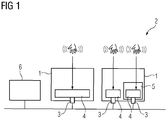
- the figure shows a purely schematic partial representation of an industrial network in which several working nodes 1 of a cluster 2 participate.
- the nodes 1 are provided by industrial edge devices, specifically industrial PCs that take on an edge computing function.
- nodes 1 can also be provided by virtual machines (VMs) that are implemented, for example, on a powerful industrial PC with several CPUs or on a blade PC, especially together with other elements and, for example, in an air-conditioned data center, etc.
- VMs virtual machines
- each working node has one or more network interfaces 3, which can include physical network interfaces 3, specifically hardware network interfaces and / or virtual physical network interfaces 3.
- Each of the working nodes 1 has undergone a manual configuration, which is indicated by the sketched hands and arrows below in the Figure 1 is indicated. Via the manual configuration, the nodes 1 have been equipped with the protocols required for topology detection and the associated software. The protocols together with the associated software are indicated in the figure by block elements provided with the reference number 4.
- the in Figure 1 Right node 1 also includes a container or pod 5.
- topology acquisition can then take place.
- LLDP see IEEE 802.1AB
- SNMP see, for example, the Requests for Comments of IETF RFC 1901, 1905 and 1906
- LLDP see IEEE 802.1AB
- SNMP see, for example, the Requests for Comments of IETF RFC 1901, 1905 and 1906
- a topology acquisition can then take place.
- the reciprocal transmission of system information between nodes 1 directly adjacent through a link is accomplished via LLDP, and SNMP enables this information learned in node 1 to be read out via their respective neighbors across the network.
- a topology scanner 6 is shown, which handles the latter.
- Manual configuration can be dispensed with by performing an exemplary embodiment of the method according to the invention for automatically configuring the working nodes of a cluster.
- the modules 7 of the nodes 1 are implemented in software and on the node itself.
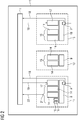
- Each node 1 of the cluster 2 has an agent control module 7, as shown in FIG Figure 2 can be seen.
- the agent control module 7 of the respective node 1 monitors which physical network interfaces 3 the respective node 1 has.
- Physical network interfaces are both hardware network interfaces and virtual physical interfaces, such as those provided by hypervisors for virtual machines (VMs).
- VMs virtual machines
- Each node 1 has, as in Figure 2 Shown by way of example, a host network stack, specifically a host IP stack 8 and further network stacks, specifically IP stacks 9, 19. At node 1 according to Figure 2 In addition to the host IP stack 8, two further IP stacks 9, 10 are also present, whereby this is to be understood purely as an example and a different number can also be present.
- the host IP stack 8 is the network stack of a host network namespace 11 of the respective working node 1 and the further IP stacks 9, 10 are the network stacks of further network namespaces 12, 13 of the respective node 1.
- the host IP Stack 8 and the further IP stacks 9, 10 are virtual network stacks in the present case.
- Namespaces 11-13 are a feature of the kernel of the operating system of the respective node 1, such as Linux, to be understood that it allows kernel resources to be partitioned, for example in such a way that a process or a group of processes part of the Resources sees and another process or group of processes sees another part of the resources.
- the network stack can be visualized via network namespaces. Under the host network namespace 8 is present to understand the namespace with which the operating system of the respective work node 1 starts.
- software containers 14, in the case of IP stacks 9 and 10 or namespaces 12 and 13 grouped in pods 15, are assigned to each IP stack 8-10 or to each network namespace 11-13.
- the host IP stack 8 or host network namespace 11 are in accordance with the example Figure 2 also processes 16 assigned. It should be noted that this distribution is to be understood purely as an example and a different number (including zero) of containers 14, pods 15 and processes 16 can also be assigned to each stack 8-10 or namespace 11-13.
- the monitoring or detection of the physical network interfaces 3 by the agent control module 7 takes place not only in the so-called "host” and its IP stack 8 in the host network namespace 11 itself, but also via all other IP stacks 9, 10 in further network namespaces 12, 13.
- the "procfs" file system is used in conjunction with the RTNETLINK API.
- the detected interface sees the agent control module 7 for the at least one detected interface 3 or for the network stack 8-10, to which the at least one detected interface 3 belongs, if necessary automatically at least one neighbor detection agent 17 (NDA for short) that is formed and / or set up is to provide at least one protocol that enables the detection of the network topology.
- NDA neighbor detection agent
- the LLDP protocol can be provided for the detection of neighbors via the neighbor detection agent which is then, for example, an LLDP agent.
- the fact that the neighbor detection agents 17 provide at least one protocol means in particular or includes in particular that, when they are executed, they send messages belonging to at least one protocol, for example LLDP, to neighbors and receive them from neighbors.
- agent control module 7 records the physical network interfaces 3 in the stacks 8-10 is shown in FIG Figure 2 illustrated by an arrow 18 pointing from the respective interface 3 to the module 7.
- the agent control module 7 is the new addition of one or more physical network interfaces 3 and / or the change of one or more physical network interfaces 3 from one network stack or network namespace to another preferably communicated by an operating system running on the node 1 reports a corresponding event to the agent control module 7, preferably as a plug-and-play event.
- Each neighboring detection agent or NDA 17 is given in the present case by a software container.
- the respective agent control module 7 installs, for example via Docker API, the required NDAs 17 on demand, in particular if they are not yet available.
- the provision or installation of the NDAs 17 by the module 7 is in FIG Figure 2 illustrated by an arrow 19 each pointing from the module 7 to the respective NDA 17.
- the NDA containers 17 come from a container repository 20 which is only available in the Figure 3 is shown.
- a repository 20 is in particular a set of images of the same name with different tags, mostly versions.
- images are memory images of a container.
- An image is usually portable, can be saved in repositories and shared with other users.
- Several containers can always be started from an image for images and repositories, see for example https://de.wikipedia.org/wiki/Docker_(Software)).
- the fact that the NDAs 17 originate from the container repository 20 is illustrated by the dashed arrows connecting the NDAs 17 and the container repository 20.
- agent control modules 7 themselves also originate from the container repository 20. These are automatically distributed to the work nodes 1 by the orchestration system of the cluster 2, which is provided by Kubernetes in the present case, and can also be kept up-to-date by this. The fact that the modules 7 also come from the container repository 20 is shown in FIG Figure 2 illustrated by further dashed arrows.
- the module 7 can create its own NDA 17 per individual physical network interface 3 or also its own NDA 17 per IP stack 8-10 with at least one physical network interface 3.
- the respective agent control module 7 checks before Provide, in particular install, a neighbor detection agent 17, preferably whether at least one neighbor detection agent 17 is already provided for the detected interface 3 or the network stack 8-10 to which it belongs and only sees it in case that this is not the case, at least one neighbor detection agent 17 for this or the associated IP stack 8-10.
- the respective agent control module 7 also defines a unique identity for the physical interface 3 detected by it.
- a network topology identification protocol or tool for example PRONETA or LLDP, differentiate the respective physical interface 3 from other physical interfaces 3 in particular. In particular, it can later uniquely assign the various physical network interfaces 3 to the individual working nodes 1.
- the agent control module 7 also activates the NDAs 17 provided by it, in particular installed ones, the activation comprising the starting of the respective NDA container.
- the respective container forming an NDA 17 is also connected by the module 7 to that network namespace 11-13 which belongs to the network stack 8-10 to which the respective detected interface 3 is assigned.
- NDA container 17 which is provided for the interface 3 recorded in the host IP stack 8 or host namespace 11 is connected to the host namespace 8 and that NDA container 17 which is used for the other IP stack 10 or further namespace 13 captured interface 3 provided is connected to further namespace 13.
- the NDAs 17 provide the protocols and information so that the network topology at the level of the work nodes 1 (VMs, physical edge devices) can be recorded using existing tools such as LLDP or PRONETA, without the need for a manual, explicit one as before , Fixed integration of the protocols and software in the work node 1 is necessary.
- the NDAs 17 are primarily virtual network functions, that is, services for other participants in the network outside of the respective work node 1.
- the protocols made available by the NDAs 17 or information exchanged / made available via them are then used to determine the network topology between the working nodes 1 of the cluster.
- the protocols made available by the NDAs 17 or information exchanged / made available via them are then used to determine the network topology between the working nodes 1 of the cluster.
- a topology scanner 6 means of a topology scanner 6. This is for the Case of the nodes 1 configured according to the invention in Figure 3 indicated.
- the topology scanner 6 can, for example, determine which neighbor detection agents 17 are present and can query their neighborhood information. In particular, that neighbor information that was sent by the agent 17 via protocol, in particular LLDP messages, and / or that which was received by the agent 17 via protocol, in particular LLDP, messages can be queried.
- the topology scanner 6 can contact the agent control module 7 of the (respective) node 1 to determine the neighboring detection agents 17.
- the respective agent control module 7 also detects all the elements assigned to the 8 host network stack and the further network stacks 9, 10 of the respective node 1, in particular processes 16 and / or pods 15 and / or containers 14 to determine whether the respective network stack 8-10 is actively in use or elements 14, 15, 16 assigned to it have already been terminated. This capture is in the Figure 2 indicated by curly brackets 21 including elements of the host IP stack 8 or host network namespace 11 and an arrow 22 from this to the module 7.
- an agent control module 7 detects that all elements 14, 15, 16 assigned to a network stack 8-10 (with the exception of the neighboring detection agent or agents 17 provided) have ended, the or The neighboring detection agents 17 are removed again, expediently those that were provided by the module 7.
- the respective module 7 can thus recognize whether a specific network stack 8-10 of its node 1 is currently actively in use or whether the processes 16, containers 14 and / or pods 15 assigned to the stack 8-10 have already ended. In this case, the module 7 also explicitly removes the one or those assigned to the stack or interfaces thereof Neighbor detection agent 17. This ensures that the operating system releases the virtual stack 8-10 with its physical network interfaces 3, which as a rule does not take place as long as at least one assigned process (or container / pod with at least one process) still exists .
- This "clean-up mechanism” ensures that, independently of the orchestration and container systems, it is ensured that the dynamic reconfiguration of network stacks and the connected networks and interfaces continues to be possible without hindrance, without the need for "remaining" neighboring detection agents 17 accidentally block subsequent reconfigurations.
- the described procedure according to the invention offers many advantages. On the one hand, it allows the actual status of the network topology in industrial clusters 2, including clusters with workloads of digital twins, to be recorded easily during operation, instead of a planned and possibly incomplete or faulty target configuration based on planning documents and Configuration files.
- the actual state reflects the actual Sum of several individual and possibly independent partial configurations (partial workloads) of the cluster communication.
- the procedure according to the invention is independent of the individual containers 14 and orchestration systems and in particular also independent of the life cycle of a container and cluster configuration.
- An automatic adaptation to the current configuration of a working node 1 with regard to physical interfaces 3 is achieved and only the precisely required neighborhood detector agents 17 are provided and these can also be independent / automatic removed again.
- FIG. 3 The industrial network shown, which comprises several cluster working nodes according to the invention, is an embodiment of an industrial network according to the invention.
Landscapes
- Engineering & Computer Science (AREA)
- Software Systems (AREA)
- Computer Networks & Wireless Communication (AREA)
- Signal Processing (AREA)
- Theoretical Computer Science (AREA)
- Physics & Mathematics (AREA)
- General Engineering & Computer Science (AREA)
- General Physics & Mathematics (AREA)
- Computer And Data Communications (AREA)
Priority Applications (1)
| Application Number | Priority Date | Filing Date | Title |
|---|---|---|---|
| EP19188242.2A EP3771148A1 (fr) | 2019-07-25 | 2019-07-25 | Procédé de configuration automatique, noeud de travail de groupe, groupe, réseau, programme informatique et support lisible par ordinateur |
Applications Claiming Priority (1)
| Application Number | Priority Date | Filing Date | Title |
|---|---|---|---|
| EP19188242.2A EP3771148A1 (fr) | 2019-07-25 | 2019-07-25 | Procédé de configuration automatique, noeud de travail de groupe, groupe, réseau, programme informatique et support lisible par ordinateur |
Publications (1)
| Publication Number | Publication Date |
|---|---|
| EP3771148A1 true EP3771148A1 (fr) | 2021-01-27 |
Family
ID=67438829
Family Applications (1)
| Application Number | Title | Priority Date | Filing Date |
|---|---|---|---|
| EP19188242.2A Withdrawn EP3771148A1 (fr) | 2019-07-25 | 2019-07-25 | Procédé de configuration automatique, noeud de travail de groupe, groupe, réseau, programme informatique et support lisible par ordinateur |
Country Status (1)
| Country | Link |
|---|---|
| EP (1) | EP3771148A1 (fr) |
Cited By (4)
| Publication number | Priority date | Publication date | Assignee | Title |
|---|---|---|---|---|
| CN115225482A (zh) * | 2022-06-10 | 2022-10-21 | 中电云数智科技有限公司 | 一种基于Kubernetes进行Pod容器网络配置的方法及装置 |
| CN115314376A (zh) * | 2022-08-01 | 2022-11-08 | 北京金山云网络技术有限公司 | 集群中网络插件部署方法和装置、电子设备和存储介质 |
| EP4123986A1 (fr) * | 2021-07-20 | 2023-01-25 | Siemens Aktiengesellschaft | Procédé d'ajustement automatique de la configuration interne d'une interface réseau externe, produit-programme informatique et dispositif |
| CN116614509A (zh) * | 2023-05-26 | 2023-08-18 | 天翼数字生活科技有限公司 | 一种集群的负载均衡方法、装置、设备和存储介质 |
Citations (5)
| Publication number | Priority date | Publication date | Assignee | Title |
|---|---|---|---|---|
| US20160119188A1 (en) * | 2014-10-24 | 2016-04-28 | International Business Machines Corporation | End host physical connection on a switch port using multiple ethernet frames |
| US20170026301A1 (en) * | 2015-07-22 | 2017-01-26 | The Regents Of The University Of Colorado, A Body Corporate | Stateless network functions |
| EP3267351A1 (fr) | 2016-07-07 | 2018-01-10 | Gemalto Sa | Procede pour gerer une image docker de façon securisee |
| US20180349033A1 (en) * | 2017-06-06 | 2018-12-06 | Cisco Technology, Inc. | Orchestrator agnostic application container visibility |
| US20190132283A1 (en) * | 2017-10-27 | 2019-05-02 | Dell Products L.P. | System and Method of Utilizing Multiple Networks |
-
2019
- 2019-07-25 EP EP19188242.2A patent/EP3771148A1/fr not_active Withdrawn
Patent Citations (5)
| Publication number | Priority date | Publication date | Assignee | Title |
|---|---|---|---|---|
| US20160119188A1 (en) * | 2014-10-24 | 2016-04-28 | International Business Machines Corporation | End host physical connection on a switch port using multiple ethernet frames |
| US20170026301A1 (en) * | 2015-07-22 | 2017-01-26 | The Regents Of The University Of Colorado, A Body Corporate | Stateless network functions |
| EP3267351A1 (fr) | 2016-07-07 | 2018-01-10 | Gemalto Sa | Procede pour gerer une image docker de façon securisee |
| US20180349033A1 (en) * | 2017-06-06 | 2018-12-06 | Cisco Technology, Inc. | Orchestrator agnostic application container visibility |
| US20190132283A1 (en) * | 2017-10-27 | 2019-05-02 | Dell Products L.P. | System and Method of Utilizing Multiple Networks |
Cited By (7)
| Publication number | Priority date | Publication date | Assignee | Title |
|---|---|---|---|---|
| EP4123986A1 (fr) * | 2021-07-20 | 2023-01-25 | Siemens Aktiengesellschaft | Procédé d'ajustement automatique de la configuration interne d'une interface réseau externe, produit-programme informatique et dispositif |
| WO2023001437A1 (fr) * | 2021-07-20 | 2023-01-26 | Siemens Aktiengesellschaft | Procédé d'adaptation automatique de la configuration interne d'une interface de réseau externe, produit-programme informatique et dispositif |
| CN115225482A (zh) * | 2022-06-10 | 2022-10-21 | 中电云数智科技有限公司 | 一种基于Kubernetes进行Pod容器网络配置的方法及装置 |
| CN115225482B (zh) * | 2022-06-10 | 2023-10-20 | 中电云数智科技有限公司 | 一种基于Kubernetes进行Pod容器网络配置的方法及装置 |
| CN115314376A (zh) * | 2022-08-01 | 2022-11-08 | 北京金山云网络技术有限公司 | 集群中网络插件部署方法和装置、电子设备和存储介质 |
| CN115314376B (zh) * | 2022-08-01 | 2024-01-19 | 北京金山云网络技术有限公司 | 集群中网络插件部署方法和装置、电子设备和存储介质 |
| CN116614509A (zh) * | 2023-05-26 | 2023-08-18 | 天翼数字生活科技有限公司 | 一种集群的负载均衡方法、装置、设备和存储介质 |
Similar Documents
| Publication | Publication Date | Title |
|---|---|---|
| EP1456753B1 (fr) | Systeme et procede de modelisation et/ou de realisation d'applications logiciel, notamment d'applications mes | |
| EP2162805B1 (fr) | Dispositif pour commander une machine et système de télécommunication | |
| DE112014002799B4 (de) | Bereitstellen einer sicheren Kundendomäne in einer virtualisierten Mehr-Mieter-Umgebung | |
| EP3637684A1 (fr) | Procédé de configuration automatique d'un système, système, programme informatique et support lisible par ordinateur | |
| EP3607701B1 (fr) | Attribution de ressources numériques dans un réseau informatique modulaire local (edge cloud) | |
| EP2648094B1 (fr) | Procédé et système de production d'un code source pour un programme informatique pour l'exécution et la simulation d'un processus | |
| DE102014118293A1 (de) | System und Verfahren zur Überwachung eines Produktionssystems | |
| EP1634176B1 (fr) | Dispositif cluster | |
| DE19780639C2 (de) | Arbeitsübernahmesystem | |
| DE102013209934B4 (de) | Starten oder Stoppen virtueller Server in angemessener Reihenfolge | |
| DE102021123358B3 (de) | Steuervorrichtung, Steuerverfahren und Computerprogramm für eine Verteilung von Rechen-Funktionsblöcken auf Recheneinheiten eines Fahrzeugs | |
| DE112014004208T5 (de) | Integrationsverfahren und -System | |
| DE112010005509T5 (de) | Robotersystemsteuerverfahren und eine Vorrichtung davon | |
| DE112012006909B4 (de) | Steuersystem-Verwaltungsvorrichtung | |
| EP3715986A1 (fr) | Procédé de configuration automatique d'un appareil d'automatisation, appareil d'automatisation, réseau, programme informatique et support lisible par ordinateur | |
| EP2557464A1 (fr) | Procédé destiné au fonctionnement d'un système d'automatisation | |
| EP3813315A1 (fr) | Procédé de diagnostic du trafic de données, procédé de détermination d'une configuration, grappe, programme informatique et support lisible par ordinateur | |
| EP3705993B1 (fr) | Système et procédé de détection et d'identification des n uds de calcul dans un réseau | |
| DE102006052757B4 (de) | Verfahren zum Betrieb eines Automatisierungsgerätes mit einer Verarbeitungseinheit mit mehreren Verarbeitungskernen | |
| WO2021037378A1 (fr) | Procédé de marquage automatique, noeud de travail de groupe, groupe, réseau, programme informatique et support lisible par ordinateur | |
| WO2021037379A1 (fr) | Procédé pour faire fonctionner un groupe, noeud de travail de groupe, groupe, réseau, programme d'ordinateur et support lisible par ordinateur | |
| EP2224301A1 (fr) | Arrangement d'automatisation doté d'un composant d'automatisation industriel et procédé d'administration d'un composant d'automatisation industriel | |
| DE102006046717A1 (de) | Dynamisch migrierende Kanäle | |
| DE102018008635A1 (de) | Steuersystem | |
| DE102011085755B4 (de) | Verfahren zum Betrieb eines Automatisierungsgeräts zum Zugriff auf eine Dokumentationsablage |
Legal Events
| Date | Code | Title | Description |
|---|---|---|---|
| PUAI | Public reference made under article 153(3) epc to a published international application that has entered the european phase |
Free format text: ORIGINAL CODE: 0009012 |
|
| STAA | Information on the status of an ep patent application or granted ep patent |
Free format text: STATUS: THE APPLICATION HAS BEEN PUBLISHED |
|
| AK | Designated contracting states |
Kind code of ref document: A1 Designated state(s): AL AT BE BG CH CY CZ DE DK EE ES FI FR GB GR HR HU IE IS IT LI LT LU LV MC MK MT NL NO PL PT RO RS SE SI SK SM TR |
|
| AX | Request for extension of the european patent |
Extension state: BA ME |
|
| STAA | Information on the status of an ep patent application or granted ep patent |
Free format text: STATUS: THE APPLICATION IS DEEMED TO BE WITHDRAWN |
|
| 18D | Application deemed to be withdrawn |
Effective date: 20210728 |