EP3772065A1 - Procédé de génération de variantes d'une protéine - Google Patents
Procédé de génération de variantes d'une protéine Download PDFInfo
- Publication number
- EP3772065A1 EP3772065A1 EP19189259.5A EP19189259A EP3772065A1 EP 3772065 A1 EP3772065 A1 EP 3772065A1 EP 19189259 A EP19189259 A EP 19189259A EP 3772065 A1 EP3772065 A1 EP 3772065A1
- Authority
- EP
- European Patent Office
- Prior art keywords
- protein
- seq
- ligand
- variant
- activity
- Prior art date
- Legal status (The legal status is an assumption and is not a legal conclusion. Google has not performed a legal analysis and makes no representation as to the accuracy of the status listed.)
- Withdrawn
Links
Images
Classifications
-
- C—CHEMISTRY; METALLURGY
- C07—ORGANIC CHEMISTRY
- C07K—PEPTIDES
- C07K14/00—Peptides having more than 20 amino acids; Gastrins; Somatostatins; Melanotropins; Derivatives thereof
- C07K14/435—Peptides having more than 20 amino acids; Gastrins; Somatostatins; Melanotropins; Derivatives thereof from animals; from humans
- C07K14/705—Receptors; Cell surface antigens; Cell surface determinants
- C07K14/70571—Receptors; Cell surface antigens; Cell surface determinants for neuromediators, e.g. serotonin receptor, dopamine receptor
-
- C—CHEMISTRY; METALLURGY
- C07—ORGANIC CHEMISTRY
- C07K—PEPTIDES
- C07K14/00—Peptides having more than 20 amino acids; Gastrins; Somatostatins; Melanotropins; Derivatives thereof
- C07K14/435—Peptides having more than 20 amino acids; Gastrins; Somatostatins; Melanotropins; Derivatives thereof from animals; from humans
- C07K14/705—Receptors; Cell surface antigens; Cell surface determinants
- C07K14/72—Receptors; Cell surface antigens; Cell surface determinants for hormones
- C07K14/723—G protein coupled receptor, e.g. TSHR-thyrotropin-receptor, LH/hCG receptor, FSH receptor
-
- G—PHYSICS
- G16—INFORMATION AND COMMUNICATION TECHNOLOGY [ICT] SPECIALLY ADAPTED FOR SPECIFIC APPLICATION FIELDS
- G16B—BIOINFORMATICS, i.e. INFORMATION AND COMMUNICATION TECHNOLOGY [ICT] SPECIALLY ADAPTED FOR GENETIC OR PROTEIN-RELATED DATA PROCESSING IN COMPUTATIONAL MOLECULAR BIOLOGY
- G16B15/00—ICT specially adapted for analysing two-dimensional [2D] or three-dimensional [3D] molecular structures, e.g. structural or functional relations or structure alignment
- G16B15/20—Protein or domain folding
-
- G—PHYSICS
- G16—INFORMATION AND COMMUNICATION TECHNOLOGY [ICT] SPECIALLY ADAPTED FOR SPECIFIC APPLICATION FIELDS
- G16B—BIOINFORMATICS, i.e. INFORMATION AND COMMUNICATION TECHNOLOGY [ICT] SPECIALLY ADAPTED FOR GENETIC OR PROTEIN-RELATED DATA PROCESSING IN COMPUTATIONAL MOLECULAR BIOLOGY
- G16B15/00—ICT specially adapted for analysing two-dimensional [2D] or three-dimensional [3D] molecular structures, e.g. structural or functional relations or structure alignment
- G16B15/30—Drug targeting using structural data; Docking or binding prediction
Definitions
- the present invention relates to a method for generating variants of a protein.
- the invention also concern a computer implemented program to carry out said method.
- the invention further concerns variant of a protein obtained by the method according to the present invention and polynucleotide encoding said variant.
- membrane receptors sense extracellular stimuli and transduce these signals into intracellular signaling responses. Subtle differences in protein sequence often give rise to profound changes in signaling response with no obvious connection to their structure.
- Allostery is a fundamental property that enables long-range communication between distant sites on a molecule. Allostery is known either for protein membrane receptor or soluble protein. It is at the origin of a large diversity of regulatory mechanisms of biological molecular functions but its biophysical underpinnings remain poorly understood. Allosteric communications are thought to be primarily mediated by intraprotein networks of coupled residues (i.e. allosteric residues) physically connecting extracellular and intracellular regions of the protein. Long-range structural coupling can promote the effective communication between distant protein sites through the propagation of even small changes in local structure and dynamics.
- the invention concerns a method for generating variants of a protein based on a native protein regulated by allosteric pathway, the method comprising:
- a protein regulated by allosteric pathways for instance a membrane receptor or a soluble protein, can adopt either an active conformation or an inactive conformation for both ligand free and ligand bound states.
- the switch between active and inactive conformation involves smaller scale movements of individual amino acid named herein as microswitch.
- a microswitch corresponds to one amino-acid at one specific position. Since, there are 20 possible amino-acids, the present invention can select 20 different possible microswitches at a given site.
- microswitches at several sites can be designed simultaneously.
- the present invention also concerns combinations of microswitches comprising several single amino acids.
- one microswitch is coupled to another microswitch pairwise.
- one microswitch can be paired with more than one microswitch.
- the present invention allows generating variants of a protein by selective mutation of microswitches, preferably of at least one pair of coupled microswitch.
- One aim of the invention is to select variant with microswitch that shifts the stability or the structural coupling of specific protein conformations.
- variants with increased constitutive activity i.e. activity in ligand free state, namely stability microswitch
- the point is to make more stabilizing contacts in the active versus the inactive ligand-free conformations.
- point amino acid mutation on stability microswitch allows to modulate the fraction of time the protein spends in each state.
- variants with enhanced signaling response to ligand can be engineered by introducing the appropriate mutation of the identified microswitch to increase ligand/protein binding and/or signal transduction, for instance ligand/receptor.
- point amino acid mutation allows to modulate selectively the responses to ligands by enhancing or decreasing the protein allosteric sensing properties.
- ⁇ G-coupling is computed.
- Correl_dyn is the dynamic correlation between microswitches i and j calculated using an elastic network model of the protein.
- a change in ligand-induced activity of the variant compared to the native protein is determined by comparison between the ⁇ L coupling of the variant compared to the one of the native protein.
- the ⁇ L activity of the variant is calculated by
- ⁇ L activity of the variant is superior to ⁇ L activity of the native protein, it means the variant exhibits an increased sensitivity to ligand binding compared to the native protein. If ⁇ L activity of the variant is inferior to ⁇ L activity of the native protein, it means the variant exhibits a decreased sensitivity to ligand binding compared to the native protein.
- ⁇ G-stability For stability microswitch, a score named ⁇ G-stability is computed. ⁇ G-stability is computed by the sum of all interactions between the residues of the protein in a specific conformation and in absence of ligand (i.e. the total free energy of the system). In other words, the ⁇ G-stability is computed from the free energy difference between each conformation in the absence of ligand.
- a change in ligand-free activity of the variant compared to the native protein is determined by comparison between the ⁇ L stability of the variant compared to the one of the native protein.
- the ⁇ L activity of the variant is calculated by
- ⁇ L activity of the variant is superior to ⁇ L activity of the native protein, it means the variant exhibits an increased stability compared to the native protein when bound to the ligand. If ⁇ L activity of the variant is inferior to ⁇ L activity of the native protein, it means the variant exhibits a decreased stability compared to the native protein when bound to the ligand.
- F variant ⁇ L activity stability + ⁇ C activity coupling
- the variation of allosteric coupling of said variant is chosen among :
- said microswitch is identified by molecular dynamic simulations, for instance long time scale molecular dynamics.
- Molecular dynamic simulations are for instance described in Battacharya et al, Biophysical Journal, July 2014, 107(2), 422-434 .
- pairs of residues with high dynamic correlations or Mutual Information located on either binding sites (i.e. extracellular and intracellular) of the receptor are identified from the simulation trajectories.
- Pathways linking these sites through non-covalent interactions with other residues are identified that maximize the mutual information between all the connected residues in the pathway. For instance, allosteric microswitches are defined as the residues involved in multiple pathways.
- the 3D structures of the native protein is generated by homology modeling based on at least one homolog protein.
- the present invention can be applied to any protein with available homolog protein.
- the present invention is not limited to protein for which 3D data structure are available. For instance, so far, less than 5% of all GPCRs have been structurally characterized. Using homology modeling enables to expand the structural coverage and provide reliable structural models for close to 40% of all GPCRs.
- said in silico mutations process is based on random mutagenesis using genetic algorithm.
- the Genetic algorithm evolves an initial population of protein sequences to optimize its fitness over multiple generations using two genetic operators: point mutagenesis and cross over recombination between 2 sequences. For a given population of sequences, the GA will calculate the fitness for each sequence. Then, it will create a new population of sequences defining the subsequent generation by preferentially selecting and modifying a subset of the current sequences that have the highest fitness.
- the probabilities for point mutagenesis and cross over recombination by the GA are defined by the user beforehand.
- the protein is chosen among protein membrane receptor or soluble protein.
- a protein membrane receptor i.e. membrane receptor, is defined as protein receptor embedded in a cellular membrane.
- a soluble protein can also bind a ligand, but the soluble protein is not embedded in the cellular membrane.
- said receptor regulated by allosteric pathway is chosen among GPCR.
- the method could be applied to other families of multi-pass and single-pass receptors including Cytokine, Tyrosine kinases but also transporters, channels.
- the method further comprises a validation step for testing, preferably in vitro and/or in cellulo testing, preferably in vitro, preferably in cellulo, the predicted activity of the selected variant. It allows to improve the success rate of computational techniques. For instance, the present invention achieves about 80% success rate.
- a validation step helps to identify and rank the designed protein based on their measured activities. The validation step could also help increasing the success rate by incorporating the result of the validation step to proofread or improve the method according to the present invention, for instance the generation of in silico mutation.
- the feedback from the experiments is advantageous as it enables to optimize the computational approach and parameters guiding the calculations.
- the method is arranged for generating a variant of protein with an improved parameter for the ligand compared to the one of said ligand with the native protein, said parameter being chosen among sensitivity (defined as the capacity of the ligand to activate the protein), selectivity, affinity, in particular sensitivity.
- the method is arranged for generating a variant of protein designed for interacting with a ligand distinct from or identical to the ligand interacting with the native protein.
- the present invention enables the design of protein (for instance receptor or biosensor) with fine-tuned properties to a large diversity of ligands without having to design protein (for instance receptor or biosensor) from scratch which is very challenging.
- design protein for instance receptor or biosensor
- the present invention achieves high success rate and efficiency and can be applied to design protein (for instance receptor or biosensor) for a large variety of ligands and signals.
- the invention also concerns a computer implemented program comprising instructions which, when the program is executed by a computer, cause the computer to carry out the method according to the present invention.
- the invention further relates to a data processing apparatus comprising means for carrying out the method according to the present invention.
- the invention further relates to a protein, or an active fragment or variant thereof, obtained by the method according to the present invention, wherein the sequence of said protein, or active fragment or variant thereof, comprises at least one mutation in the microswitch region.
- the ligand sensing and/or signaling response is modified when compared to the native sequence of said protein.
- the ligand sensing and/or signaling response is enhanced or decreased when compared to the native sequence of said protein.
- the invention also relates to a polynucleotide encoding a protein, or an active fragment or analog thereof, according to the present invention.
- a "fragment" of a protein, peptide or polypeptide of the invention refers to a sequence containing less amino acids in length than the protein, peptide or polypeptide of the invention. This sequence can be used as long as it exhibits the same properties, i.e. is biologically active, as the native sequence from which it derives.
- analog refers to a protein, peptide or polypeptide of the invention having an amino acid sequence that differ to some extent from a native sequence peptide, that is an amino acid sequence that varies from the native sequence by amino acid substitutions, whereby one or more amino acids are substituted by another with same characteristics and conformational roles.
- the amino acid sequence analogs possess substitutions, deletions, and/or insertions at certain positions within the amino acid sequence of the native amino acid sequence. Substitutions can be conservative or non-conservative. Conservative amino acid substitutions are known in the art, and include amino acid substitutions in which one amino acid having certain physical and/or chemical properties is exchanged for another amino acid that has the same chemical or physical properties.
- the conservative amino acid substitution may be an acidic amino acid substituted for another acidic amino acid (e.g., Asp or Glu), an amino acid with a nonpolar side chain substituted for another amino acid with a nonpolar side chain (e.g., Ala, Gly, Val, lie, Leu, Met, Phe, Pro, Trp, Val, etc.), a basic amino acid substituted for another basic amino acid (Lys, Arg, etc.), an amino acid with a polar side chain substituted for another amino acid with a polar side chain (Asn, Cys, Gin, Ser, Thr, Tyr, etc.), etc.
- the substitutions, deletions, and/or insertions at certain positions within the amino acid sequence of the amino acid sequence occur in a region that is different from the microswitch region.
- sequences of such analogs will have a high degree of sequence homology to the reference sequence, e.g., sequence homology of more than 50%, generally more than 60%-70%, even more particularly 80%-85% or more, such as at least 90%-95% or more, when the two sequences are aligned.
- Both the analog and fragment of the protein of the invention can include synthetic, non-standard and/or naturally-occurring amino acid sequences (including D-forms and/or retro-inverso isomers) derivable from the naturally occurring amino acid sequence of the protein of the invention.
- the replacement amino acid may be a basic non-standard amino acid, (e.g. L-Ornithine, L-2-amino-3-guanidinopropionic acid, or D-isomers of Lysine, Arginine and Ornithine).
- Methods for introducing non-standard amino acids into proteins are known in the art, and include recombinant protein synthesis using E. coli auxotrophic expression hosts.
- Non-naturally occurring amino acids include, without limitation, trans-3-methylproline, 2,4-methano-proline, cis-4-hydroxyproline, trans-4-hydroxy-proline, N-methylglycine, allo-threonine, methyl-threonine, hydroxy-ethylcysteine, hydroxyethylhomo-cysteine, nitro-glutamine, homoglutamine, pipecolic acid, tert-leucine, norvaline, 2-azaphenylalanine, 3-azaphenyl-alanine, 4-azaphenyl-alanine, and 4-fluorophenylalanine.
- Several methods are known in the art for incorporating non-naturally occurring amino acid residues into proteins.
- the present invention also contemplates one or more polynucleotide(s) encoding a protein, or an active fragment or analog thereof, of the invention.
- the present invention also contemplates a gene delivery vector or expression vector or gene therapy vector, preferably in the form of a plasmid or a vector, which comprises one or more polynucleotide(s) encoding a protein, or an active fragment or analog thereof of the invention.
- a "vector” is capable of transferring nucleic acid sequences to target cells (e.g., viral vectors, non-viral vectors, particulate carriers, and liposomes).
- target cells e.g., viral vectors, non-viral vectors, particulate carriers, and liposomes.
- expression vector e.g., viral vectors, non-viral vectors, particulate carriers, and liposomes.
- expression vector refers to any vector that is effective to incorporate and express one or more nucleic acid(s), in a cell, preferably under the regulation of a promoter.
- a cloning or expression vector may comprise additional elements, for example, regulatory and/or post-transcriptional regulatory elements in addition to a promoter.
- the promoter can be inducible and/or cell type-specific for specific expression in a tissue (e.g. neurons such as dopaminergic or serotoninergic neurons, glial cells, ).
- Suitable vectors include derivatives of SV40 and known bacterial plasmids, e. g., E. coli plasmids col El, pCRI, pBR322, pLive, pMB9 and their derivatives, plasmids such as RP4; phage DNAs, e. g., the numerous derivatives of phage X, e. g., NM989, and other phage DNA, e.
- known bacterial plasmids e. g., E. coli plasmids col El, pCRI, pBR322, pLive, pMB9 and their derivatives, plasmids such as RP4; phage DNAs, e. g., the numerous derivatives of phage X, e. g., NM989, and other phage DNA, e.
- plasmids such as the 2 ⁇ plasmid or derivatives thereof
- vectors useful in eukaryotic cells such as vectors useful in insect or mammalian cells
- vectors derived from combinations of plasmids and phage DNAs such as plasmids that have been modified to employ phage DNA or other expression control sequences
- Various viral vectors are used for delivering nucleic acid to cells in vitro or in vivo.
- Non-limiting examples are vectors based on Herpes Viruses, Pox- viruses, Adeno-associated virus, Lentivirus, and others.
- all of them are suited to deliver the expression cassette comprising one or more polynucleotide(s) encoding the peptides of the invention, variants or fragments thereof and a promoter, optionally an inducible and/or cell type-specific promoter.
- a host cell comprising a plasmid or vector of the invention or one or more nucleic acid(s) encoding the peptides of the invention, analogs or fragments thereof.
- the host cell can be any prokaryotic or eukaryotic cell, preferably the host cell is a eukaryotic cell, most preferably the host cell is a mammalian cell. Even more preferably, the host cell is a human neuronal or glial cell.
- the invention further provides pharmaceutical compositions comprising a therapeutically effective amount of i) a plasmid or a vector of the invention, or iii) a host cell of the invention, and a pharmaceutically acceptable excipient, diluent, carrier, salt and/or additive.
- the vector is a gene delivery vector for site-directed mutagenesis, preferably a viral vector issued for delivering a gene editing system (CRISP, TALEN, etc...) comprising i) at least one sgRNA, or crRNA and tracrRNA, targeting the genomic sequence (target DNA) encoding the protein of interest, and ii) and a structure-guided endonuclease such as an RNA-guided endonuclease.
- RNA-guided endonuclease can be employed as long as it is effective for specifically binding a target DNA of the invention and it may be selected from the non-limiting group comprising Cas9, Cpf1, and FEN-1.
- the RNA-guided endonuclease is Cas9.
- the invention provides a method of treating and/or preventing a disease such as e.g. a neurodegenerative disease or condition, or an associated symptom, in a subject in need thereof, the method comprising administering to said subject a pharmaceutical composition of the invention.
- a disease such as e.g. a neurodegenerative disease or condition, or an associated symptom
- the protein of the invention is selected from the group comprising from SEQ ID No. 1, SEQ ID No 2, SEQ ID No. 3, SEQ ID No. 4, SEQ ID No. 5, SEQ ID No. 6, SEQ ID No. 7, SEQ ID No. 8, SEQ ID No. 9, SEQ ID No. 10, SEQ ID No. 11, SEQ ID No. 12, SEQ ID No. 13, SEQ ID No. 14, SEQ ID No. 15, SEQ ID No. 16, SEQ ID No. 17, SEQ ID No. 18, SEQ ID No. 19, SEQ ID No. 20, SEQ ID No. 21, SEQ ID No. 22, SEQ ID No. 23, SEQ ID No. 24, SEQ ID No. 25, SEQ ID No. 26, SEQ ID No. 27, SEQ ID No. 28, SEQ ID No. 29, SEQ ID No. 30, or active fragment or analog thereof, or any combination thereof.
- the protein of the invention is characterized in that the ligand sensing and/or signaling response is modified when compared to the native sequence of said protein, or active fragment or analog thereof.
- the ligand sensing and/or signaling response is enhanced or decreased when compared to the native sequence of said protein, or active fragment or analog thereof.
- the present invention is applied on GPCR to generate variants of GPCR but the invention is not limited to this class of receptor.
- the present invention can also be applied to other class of protein receptor.
- GPCRs are prime examples of signal transduction across biological membranes. These receptors have evolved to activate several key intracellular pathways and physiological processes in response to a large diversity of extracellular stimuli. GPCR dysfunctions including misfolding, stability loss, and altered signaling activity are often associated with serious diseases. Furthermore, drugs triggering severe side-effects have been found to activate undesired signaling pathways. Hence, the mapping of receptor stability and signal transduction pathways determinants would greatly enhance the development of effective therapies and personalized medicine approaches but has remained very challenging.
- the point was to generate (in other words engineer) dopamine D2 receptor variants.
- the 3D structures of ligand free and ligand bound states were engineered by homology modeling.
- the closest structurally characterized homologs available were used as templates to model the inactive and active state.
- the inactive state conformations were modeled starting from the X-ray structure of the antagonist bound dopamine D3 receptor (DRD3, PDBID: 3PBL) sharing 48% sequence identity with D2.
- the active state conformations were modeled from the active state GPCR structures of two distant homologs: opsin (23% sequence identity with D2) bound to Gt (PDBID: 3CAP, 3DQB) and beta-2 adrenergic receptor (26% sequence identity with D2) in complex with ligand agonist and heterotrimeric Gs (PDBID: 3SN6).
- Models of D2 inactive and active states were generated without bound ligand or G protein using the homology mode of RosettaMembrane.
- Ligand-bound D2 models were generated by performing ligand docking simulations onto the inactive and active state ligand free D2 models obtained as described above.
- the ligand conformer libraries were generated using Omega (OpenEye Inc.) with default parameters from Rosetta ARLS.
- Ligand docking was performed using a combination of Monte Carlo moves, sidechain repacking, and gradient-based minimization with the Rosetta all-atom potential developed for protein-ligand docking. Receptor backbone and sidechain torsions along with ligand torsions, position, and orientation were optimized simultaneously.
- All ligand-bound receptor models for a given state i.e. inactive or active
- the selected ligand bound models were then clustered based on structural similarity of the bound ligand conformation.
- the representative model of the largest cluster was selected corresponding to the ligand bound model of the D2 receptor in a given state; i.e. ligand-bound D2 inactive and ligand-bound D2 active state conformations.
- Allosteric site(s), i.e. microswitches, were defined by mapping the allosteric residues identified using Molecular Dynamics simulations performed on the homologous B2AR receptor onto the above-mentioned D2 structures.
- GPCR structures are composed of 3 main regions: the extracellular ligand binding pocket, the intracellular G-protein binding domain and the "transmission" transmembrane (TM) region which connects the two binding regions and allows them to communicate.
- GPCRs typically switch from inactive to active state conformations upon activating agonist ligand and G-protein binding at the extracellular and intracellular domains, respectively.
- the structural rearrangements upon receptor activation involve large intracellular reorientations of transmembrane helices (TMH), notably TMH6 and TMH7 and smaller scale movements of individual amino-acids named microswitch across the entire TM domain.
- TMH transmembrane helices
- the TM domain of the selected ligand free and ligand bound models were scanned to identify microswitches with novel allosteric properties at the position 205. Usually, larger number of positions are designed simultaneously.
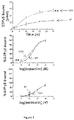
- the protein obtained by the method of the invention should have an increased constitutive activity compared to the native receptor. This prediction was confirmed by in vitro testing where this increased of constitutive activity was observed experimentally (top panel of Figure 1.
- Figure 1 shows the in vitro measurements of D2 activation. top. constitutive (time course); bottom. Agonist induced (dose response) as percent of maximal dopamine induced D2 WT activity. ** two-sided unpaired t-test: p ⁇ 0.05.). Therefore, the present invention allows to generate a D2 receptor stabilized in specific states, here in state A.
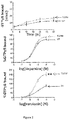
- ligand dopamine and serotonin
- Figure 2 shows the in vitro measurements of D2 activation. top. constitutive (time course); bottom. Agonist induced (dose response) as percent of maximal dopamine induced D2 WT activity. ** two-sided unpaired t-test: p ⁇ 0.05.). Therefore, the present invention allows to generate a D2 receptor with an increased sensitivity for both dopamine and serotonin ligands.
Landscapes
- Health & Medical Sciences (AREA)
- Life Sciences & Earth Sciences (AREA)
- Chemical & Material Sciences (AREA)
- General Health & Medical Sciences (AREA)
- Engineering & Computer Science (AREA)
- Organic Chemistry (AREA)
- Physics & Mathematics (AREA)
- Biophysics (AREA)
- Spectroscopy & Molecular Physics (AREA)
- Bioinformatics & Cheminformatics (AREA)
- Medicinal Chemistry (AREA)
- Theoretical Computer Science (AREA)
- Immunology (AREA)
- Evolutionary Biology (AREA)
- Bioinformatics & Computational Biology (AREA)
- Medical Informatics (AREA)
- Crystallography & Structural Chemistry (AREA)
- Proteomics, Peptides & Aminoacids (AREA)
- Molecular Biology (AREA)
- Cell Biology (AREA)
- Biotechnology (AREA)
- Toxicology (AREA)
- Zoology (AREA)
- Gastroenterology & Hepatology (AREA)
- Biochemistry (AREA)
- Genetics & Genomics (AREA)
- Neurology (AREA)
- Biomedical Technology (AREA)
- Pharmacology & Pharmacy (AREA)
- Endocrinology (AREA)
- Peptides Or Proteins (AREA)
Priority Applications (4)
| Application Number | Priority Date | Filing Date | Title |
|---|---|---|---|
| EP19189259.5A EP3772065A1 (fr) | 2019-07-31 | 2019-07-31 | Procédé de génération de variantes d'une protéine |
| EP20742760.0A EP4004925B1 (fr) | 2019-07-31 | 2020-07-24 | Procédé de génération de variantes d'une protéine |
| PCT/EP2020/070907 WO2021018756A1 (fr) | 2019-07-31 | 2020-07-24 | Procédé de génération de variants d'une protéine |
| US17/631,640 US20230227534A1 (en) | 2019-07-31 | 2020-07-24 | Method for generating variants of a protein |
Applications Claiming Priority (1)
| Application Number | Priority Date | Filing Date | Title |
|---|---|---|---|
| EP19189259.5A EP3772065A1 (fr) | 2019-07-31 | 2019-07-31 | Procédé de génération de variantes d'une protéine |
Publications (1)
| Publication Number | Publication Date |
|---|---|
| EP3772065A1 true EP3772065A1 (fr) | 2021-02-03 |
Family
ID=67513455
Family Applications (1)
| Application Number | Title | Priority Date | Filing Date |
|---|---|---|---|
| EP19189259.5A Withdrawn EP3772065A1 (fr) | 2019-07-31 | 2019-07-31 | Procédé de génération de variantes d'une protéine |
Country Status (1)
| Country | Link |
|---|---|
| EP (1) | EP3772065A1 (fr) |
Citations (5)
| Publication number | Priority date | Publication date | Assignee | Title |
|---|---|---|---|---|
| WO2002018590A2 (fr) * | 2000-08-30 | 2002-03-07 | John Hopkins University School Of Medicine | Identification de recepteurs et de canaux ioniques actives |
| WO2010149964A2 (fr) * | 2009-06-22 | 2010-12-29 | Heptares Therapeutics Limited | Proteines mutantes et leurs procedes de production |
| US20110053261A1 (en) * | 2008-02-05 | 2011-03-03 | Zymeworks Inc. | Methods for determining correlated residues in a protein or other biopolymer using molecular dynamics |
| WO2014198528A2 (fr) * | 2013-06-11 | 2014-12-18 | Paul Scherrer Institut | Procédé de détermination de liaison ligand mutable-gpcr à une résolution d'un seul acide aminé et paires de ligand muté et de gpcr |
| US20190147985A1 (en) * | 2016-05-05 | 2019-05-16 | Gregory R. Bowman | Methods of protein docking and rational drug design |
-
2019
- 2019-07-31 EP EP19189259.5A patent/EP3772065A1/fr not_active Withdrawn
Patent Citations (5)
| Publication number | Priority date | Publication date | Assignee | Title |
|---|---|---|---|---|
| WO2002018590A2 (fr) * | 2000-08-30 | 2002-03-07 | John Hopkins University School Of Medicine | Identification de recepteurs et de canaux ioniques actives |
| US20110053261A1 (en) * | 2008-02-05 | 2011-03-03 | Zymeworks Inc. | Methods for determining correlated residues in a protein or other biopolymer using molecular dynamics |
| WO2010149964A2 (fr) * | 2009-06-22 | 2010-12-29 | Heptares Therapeutics Limited | Proteines mutantes et leurs procedes de production |
| WO2014198528A2 (fr) * | 2013-06-11 | 2014-12-18 | Paul Scherrer Institut | Procédé de détermination de liaison ligand mutable-gpcr à une résolution d'un seul acide aminé et paires de ligand muté et de gpcr |
| US20190147985A1 (en) * | 2016-05-05 | 2019-05-16 | Gregory R. Bowman | Methods of protein docking and rational drug design |
Non-Patent Citations (3)
| Title |
|---|
| BATTACHARYA ET AL., BIOPHYSICAL JOURNAL, vol. 107, no. 2, July 2014 (2014-07-01), pages 422 - 434 |
| MAJESKE N ET AL: "Elucidating Which Pairwise Mutations Affect Protein Stability: An Exhaustive Big Data Approach", 2017 IEEE 41ST ANNUAL COMPUTER SOFTWARE AND APPLICATIONS CONFERENCE (COMPSAC), IEEE, vol. 1, 23 July 2018 (2018-07-23), pages 508 - 515, XP033409512, ISSN: 0730-3157, ISBN: 978-1-5386-2667-2, [retrieved on 20180608], DOI: 10.1109/COMPSAC.2018.00078 * |
| WHITE K L ET AL: "Structural Connection between Activation Microswitch and Allosteric Sodium Site in GPCR Signaling", STRUCTURE, vol. 26, no. 2, 1 February 2018 (2018-02-01), AMSTERDAM, NL, pages 259 - 269.e5, XP055663000, ISSN: 0969-2126, DOI: 10.1016/j.str.2017.12.013 * |
Similar Documents
| Publication | Publication Date | Title |
|---|---|---|
| Gouldson et al. | Domain swapping in G-protein coupled receptor dimers. | |
| Fanelli et al. | Computational modeling approaches to structure− function analysis of G protein-coupled receptors | |
| Fujita et al. | Heteromers of μ‐δ opioid receptors: new pharmacology and novel therapeutic possibilities | |
| Gahbauer et al. | Closely related, yet unique: Distinct homo-and heterodimerization patterns of G protein coupled chemokine receptors and their fine-tuning by cholesterol | |
| Pedragosa-Badia et al. | Pancreatic polypeptide is recognized by two hydrophobic domains of the human Y4 receptor binding pocket | |
| EP3122767B1 (fr) | Protéines membranaires hydrosolubles et leurs procédés de préparation et d'utilisation | |
| Zaucha et al. | Mutations in transmembrane proteins: diseases, evolutionary insights, prediction and comparison with globular proteins | |
| Zhang et al. | Structural basis of G protein–Coupled receptor CMKLR1 activation and signaling induced by a chemerin-derived agonist | |
| Brancaccio et al. | Ligand-based NMR study of CXC chemokine receptor type 4 (CXCR4)–ligand interactions on living cancer cells | |
| Dalton et al. | Computational analysis of negative and positive allosteric modulator binding and function in metabotropic glutamate receptor 5 (in) activation | |
| Xu et al. | Structure and activity studies of disulfide-deficient analogues of αO-conotoxin GeXIVA | |
| Uba et al. | Activation mechanism of corticotrophin releasing factor receptor type 1 elucidated using molecular dynamics simulations | |
| Launay et al. | Modeling of mammalian olfactory receptors and docking of odorants | |
| Xu et al. | Mutagenesis and computational modeling of human G-protein-coupled receptor Y2 for neuropeptide Y and peptide YY | |
| Yokoi et al. | Molecular dynamics simulations for the determination of the characteristic structural differences between inactive and active states of wild type and mutants of the orexin2 receptor | |
| Sanches et al. | Interaction of the inhibitory peptides ShK and HmK with the voltage-gated potassium channel KV1. 3: role of conformational dynamics | |
| Ma et al. | Cryo-EM structures of ClC-2 chloride channel reveal the blocking mechanism of its specific inhibitor AK-42 | |
| Liu et al. | Structure of G protein-coupled receptor GPR1 bound to full-length chemerin adipokine reveals a chemokine-like reverse binding mode | |
| Li et al. | Critical extracellular Ca2+ dependence of the binding between PTH1R and a G-protein peptide revealed by MD simulations | |
| Lindner et al. | GPC receptors and not ligands decide the binding mode in neuropeptide Y multireceptor/multiligand system | |
| Kumar et al. | GDP release from the open conformation of Gα requires allosteric signaling from the agonist-bound human β2 adrenergic receptor | |
| Mehboob et al. | Vertebrate specific oncogenic TAC1 has unconventional networking properties | |
| Yang et al. | Molecular characterization of human melanocortin-5 receptor ligand–receptor interaction | |
| Zhang et al. | Probing allosteric regulation mechanism of W7. 35 on agonist-induced activity for μOR by mutation simulation | |
| Kneissl et al. | Revisiting automated G-protein coupled receptor modeling: the benefit of additional template structures for a neurokinin-1 receptor model |
Legal Events
| Date | Code | Title | Description |
|---|---|---|---|
| PUAI | Public reference made under article 153(3) epc to a published international application that has entered the european phase |
Free format text: ORIGINAL CODE: 0009012 |
|
| STAA | Information on the status of an ep patent application or granted ep patent |
Free format text: STATUS: THE APPLICATION HAS BEEN PUBLISHED |
|
| AK | Designated contracting states |
Kind code of ref document: A1 Designated state(s): AL AT BE BG CH CY CZ DE DK EE ES FI FR GB GR HR HU IE IS IT LI LT LU LV MC MK MT NL NO PL PT RO RS SE SI SK SM TR |
|
| AX | Request for extension of the european patent |
Extension state: BA ME |
|
| STAA | Information on the status of an ep patent application or granted ep patent |
Free format text: STATUS: THE APPLICATION IS DEEMED TO BE WITHDRAWN |
|
| 18D | Application deemed to be withdrawn |
Effective date: 20210804 |