EP3774786B1 - Verfahren zur herstellung eines 2,4,5-trisubstituierten 1,2,4-triazolons - Google Patents
Verfahren zur herstellung eines 2,4,5-trisubstituierten 1,2,4-triazolons Download PDFInfo
- Publication number
- EP3774786B1 EP3774786B1 EP19715094.9A EP19715094A EP3774786B1 EP 3774786 B1 EP3774786 B1 EP 3774786B1 EP 19715094 A EP19715094 A EP 19715094A EP 3774786 B1 EP3774786 B1 EP 3774786B1
- Authority
- EP
- European Patent Office
- Prior art keywords
- compound
- optionally
- acid
- formula
- cancer
- Prior art date
- Legal status (The legal status is an assumption and is not a legal conclusion. Google has not performed a legal analysis and makes no representation as to the accuracy of the status listed.)
- Active
Links
Images




Classifications
-
- C—CHEMISTRY; METALLURGY
- C07—ORGANIC CHEMISTRY
- C07D—HETEROCYCLIC COMPOUNDS
- C07D249/00—Heterocyclic compounds containing five-membered rings having three nitrogen atoms as the only ring hetero atoms
- C07D249/02—Heterocyclic compounds containing five-membered rings having three nitrogen atoms as the only ring hetero atoms not condensed with other rings
- C07D249/08—1,2,4-Triazoles; Hydrogenated 1,2,4-triazoles
- C07D249/10—1,2,4-Triazoles; Hydrogenated 1,2,4-triazoles with hetero atoms or with carbon atoms having three bonds to hetero atoms with at the most one bond to halogen, e.g. ester or nitrile radicals, directly attached to ring carbon atoms
- C07D249/12—Oxygen or sulfur atoms
-
- A—HUMAN NECESSITIES
- A61—MEDICAL OR VETERINARY SCIENCE; HYGIENE
- A61K—PREPARATIONS FOR MEDICAL, DENTAL OR TOILETRY PURPOSES
- A61K31/00—Medicinal preparations containing organic active ingredients
- A61K31/33—Heterocyclic compounds
- A61K31/395—Heterocyclic compounds having nitrogen as a ring hetero atom, e.g. guanethidine or rifamycins
- A61K31/41—Heterocyclic compounds having nitrogen as a ring hetero atom, e.g. guanethidine or rifamycins having five-membered rings with two or more ring hetero atoms, at least one of which being nitrogen, e.g. tetrazole
- A61K31/4196—1,2,4-Triazoles
-
- A—HUMAN NECESSITIES
- A61—MEDICAL OR VETERINARY SCIENCE; HYGIENE
- A61P—SPECIFIC THERAPEUTIC ACTIVITY OF CHEMICAL COMPOUNDS OR MEDICINAL PREPARATIONS
- A61P35/00—Antineoplastic agents
-
- C—CHEMISTRY; METALLURGY
- C07—ORGANIC CHEMISTRY
- C07D—HETEROCYCLIC COMPOUNDS
- C07D405/00—Heterocyclic compounds containing both one or more hetero rings having oxygen atoms as the only ring hetero atoms, and one or more rings having nitrogen as the only ring hetero atom
- C07D405/02—Heterocyclic compounds containing both one or more hetero rings having oxygen atoms as the only ring hetero atoms, and one or more rings having nitrogen as the only ring hetero atom containing two hetero rings
- C07D405/12—Heterocyclic compounds containing both one or more hetero rings having oxygen atoms as the only ring hetero atoms, and one or more rings having nitrogen as the only ring hetero atom containing two hetero rings linked by a chain containing hetero atoms as chain links
-
- C—CHEMISTRY; METALLURGY
- C07—ORGANIC CHEMISTRY
- C07B—GENERAL METHODS OF ORGANIC CHEMISTRY; APPARATUS THEREFOR
- C07B2200/00—Indexing scheme relating to specific properties of organic compounds
- C07B2200/13—Crystalline forms, e.g. polymorphs
Definitions
- the present invention provides a method for the preparation of a 2,4,5-trisubstituted 1,2,4-triazolone compound, novel intermediate compounds and their use in the methods for the preparation of said 2,4,5-trisubstituted 1,2,4-triazolone compound.
- AML Acute myeloid leukemia
- APL acute promyelocytic leukemia
- DHODH is located in the mitochondria and the enzyme responsible for the 4th and rate limiting step in de novo pyrimidine synthesis converting dihydroorotate to orotate (Dihydroorotatubiquinone oxidoreductase links mitochondria in the biosynthesis of pyrimidine nucleotides, Löffler M. et al, Molecular and Cellular Biochemistry 1997, 174, 125-129 ).
- DHODH is highly important for cellular proliferation.
- the enzyme is considered an attractive drug target for cancer, immunological, parasitic and viral diseases.
- DHODH inhibitors are known from CN103006645 and J.Med.Chem. 2013, 56(8), 3148-3167, Munier et al.
- tert-Butyl benzoates of general formula (III) can be prepared from benzoic acid derivatives of general formula (II) according to procedures available from the public domain, as understandable to the person skilled in the art.
- the tert-butyl benzoates of general formula (III) can be prepared from benzoic acid derivatives of general formula (II) by in situ formation of the the corresponding acid chlorides and subsequent reaction with tert-butanol.
- In situ formation of acid chlorides from benzoic acids of general formula (II) can be accomplished, for example by using oxalyl chloride or thionyl chloride, both reagents used in the presence of catalytic amount of N,N-dimethylformamide.
- tert-butyl benzoates of general formula (V) can be accomplished by the reaction of triazolinones of general formula (IV) with tert-butyl benzoates of general formula (III) in the presence of a base.
- a base 1,8-diazabicyclo[5.4.0]undec-7-ene as organic base in acetonitrile at 80°C was considered preferable.
- benzoic acids of general formula (VIII) can be accomplished by reaction of tert-butyl benzoates of general formula (V) with alcohols of general formula (VI) in the presence of a base, and subsequent saponification of the resulting ester of general formula (VII).
- tert-butyl benzoates of general formula (V) with alcohols of general formula (VI) can also result in transesterification, such as the tert-butoxide moiety of the tert-butyl benzoates of general formula (V) can be replaced by the alkoxide R 3 CH(CH 3 )O moiety of the alcohols of general formula (VI).
- subsequent ester hydrolysis is required.
- Ester hydrolysis can be achieved by various methods which are well known to the person skilled in the art, for example by treatment of the esters with lithium hydroxide, sodium hydroxide or potassium hydroxide, in sovents, such as, for example water, 1,4-dioxane, ethanol or tetrahydrofuran or mixtures thereof.
- the compounds of general formula (I) can be prepared by the reaction of the benzoic acids of general formula (VIII) with amines of general formula (X) either by
- Nitriles of general formula (XII) can be prepared from nitriles of general formula (XI) and with alcohols of general formula (VI) according to procedures available from the public domain, as understandable to the person skilled in the art. Alternatively, for alcohols of sufficiently high acidity the use of potassium carbonate was preferable.
- benzoates of general formula (XIII) can be accomplished by hydrolysis of nitriles of general formula XII using strong acids or bases. sodium hydroxide in ethanol at 90°C was indicated preferable.
- the compounds of general formula (XV) can be prepared by the reaction of the benzoic acids of general formula (XIII) with amines of general formula (X) either by
- Nitriles of general formula (XVII) can be prepared from nitriles of general formula (XVI) and triazolinones of general formula (IV) in the presence of a base.
- the use of potassium carbonate as base in acetonitrile at 80°C was considered preferable.
- benzoates of general formula (XVIII) can be accomplished by hydrolysis of nitriles of general formula XVII using strong acids or bases.
- the use of sodium hydroxide in ethanol at 85 °C was considered preferable.
- the compounds of general formula (XIX) can be prepared by the reaction of the benzoic acids of general formula (XVIII) with amines of general formula (X) by amide coupling. Suitable coupling reagents are proposed.
- the formation of compounds of of general formula (I) can be accomplished by reaction of amides of general formula (XIX) and alcohols of general formula (VI) in the presence of a base.
- Bases that can be employed for the reaction of amides of general formula (XIX) with alcohols of general formula (VI) are for example sodium hydride, sodium tert-butanolate, potassium tert-butanolate, or cesium carbonate.
- Sodium hydride was considered to be preferably used as organic base.
- Compound (I) may be synthesized according to one of the routes mentioned above but all of these synthetic routes suffer from significant disadvantages which pose especially problems at larger scale: For industrial implementation and the production of larger kilogram amounts, the preparative processes and routes described above are suitable to only a limited extent. Employing suitable building blocks to synthesize Compound (I), the most significant drawbacks can be summarized as follows:
- the object of the present invention is to provide a method for preparation of Compound (I) which was not provided by the state of the art and at the same time does not suffer from the disadvantages as outlined above.
- references to methods of treatment or the use of the compounds as drugs or for a treatment in the description are to be interpreted as references to the compounds or pharmaceutical compositions for use in a method for treatment of the human (or animal) body by therapy.
- the invention provides a method of preparing Compound (I) according to claim 1.
- the present invention provides methods for the preparation of Compound (I) comprising the step of allowing an intermediate compound of formula (A7) :
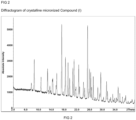
- a second aspect of the invention provides a crystalline form A of Compound (I) characterized by a X-ray powder diffractogram measured at 25°C and with Cu-K alpha 1 as radiation source displaying at least the following reflections, quoted as 2 ⁇ value ⁇ 0.2°:17.2, 18.3, 19.1, 21.0, 25.2.
- a third aspect of the invention provides an intermediate compound (A9):
- a fourth aspect of the invention provides an intermediate compound (A7):
- a fifth aspect of the invention provides an intermediate compound (A6):
- a sixth aspect of the invention provides an intermediate compound (A5)
- a seventh aspect of the invention provides an intermediate compound of formula (A4)
- Described herein is a crystalline form of Compound (I), N -(2-chloro-6-fluorophenyl)-4-[4-ethyl-3-(hydroxymethyl)-5-oxo-4,5-dihydro-1 H -1,2,4-triazol-1-yl]-5-fluoro-2- ⁇ [(2 S )-1,1,1-trifluoropropan-2-yl]oxy ⁇ benzamide, which is the crystalline form A, a process for its preparation and pharmaceutical compositions comprising said crystalline form and said crystalline form for use in the treatment of hyperproliferative disorders, especially cancer.
- activation of the carboxylic acid group means addition of any reagent facilitating amide coupling which is known by the skilled person, such as e.g. COMU ® (1-Cyano-2-ethoxy-2-oxoethylidenaminooxy)dimethylamino-morpholino-carbenium hexafluorophosphate), HATU (O-(7-Azabenzotriazole-1-yl)-N,N,N',N'-tetramethyluronium-hexafluorphosphate), HBTU (2-(1H-benzotriazole-1-yl)-1,1,3,3-tetramethyluronium-hexafluorophosphate), TBTU (2-(1H-benzotriazole-1-yl)-1,1,3,3-tetramethyluronium tetrafluoroborate), carbonyl diimidazole, carbodiimides, 2-chloro-1-methylpyridinium io
- crystallization means any procedure known to the person with ordinary skill to let a product initially obtained as an oil or a mixture containing side products to crystallize, e.g. by dissolving, cooling, or adding another solvent in which the product is not soluble, or adding some crude crystals or evaporating part of the solvent.
- internal temperature means the temperature as measured from inside a reaction mixture.
- purification includes destination, crystallization, recrystallization and chromatography.
- pharmaceutically acceptable salt refers to an inorganic or organic acid addition salt of a compound of the present invention.
- pharmaceutically acceptable salt refers to an inorganic or organic acid addition salt of a compound of the present invention.
- S. M. Berge, et al. “Pharmaceutical Salts,” J. Pharm. Sci. 1977, 66, 1-19 .
- room temperature is meant to be within a range of 20°-24°C.
- short period of time in the context of a chemical synthesis means 5-30 min, preferably 10-20 min.
- suitable agents in the context of the preparation of an intermediate acid cloride (A8) includes but is not limited to, phosphoryl chloride, Ghosez's reagent (1-chloro-N,N,2-trimethyl-1-propenylamine).
- sulfonic acids includes for example methanesulfonic acid, p-toluenesulfonic acid, Dowex resin.
- the term "usual work-up” or “isolation” means isolating the reaction product from the reaction mixture by methods of a person skilled in the art comprising but not limited to steps like e.g. separating organic phase from aqueous phase, drying the organic phase with e.g. alkali sulfates such as sodium sulfate or potassium sulfate, or magnesium sulfate or calcium sulfate, filtering and evaporating the solvent to obtain crude product, dissolving again the crude product and cooling down to crystallize and optionally add further steps of purification. If these steps are expressly mentioned, the method may be part of the invention.
- aprotic solvents for the process may be, for example, ethers such as diethyl ether, tert-butyl methyl ether, tetrahydrofuran (THF), 1,4-dioxane or 1,2-dimethoxyethane, hydrocarbons such as benzene, toluene, xylene, hexane or cyclohexane, halogenated hydrocarbons such as dichloromethane, trichloromethane, carbon tetrachloride, 1,2-dichloroethane, trichloroethylene or chlorobenzene, or other solvents such as acetone, acetonitrile, ethyl acetate, pyridine, dimethylsulfoxide (DMSO), N,N-dimethylformamide (DMF) or N methylpyrrolidinone (NMP). It is also possible to use mixtures of these solvents.
- ethers such as diethyl ether,
- the object of the invention is achieved by the provision of the following method as described herein.
- a suitably hydroxy-protected compound (A4) (component C) is added to the central tetra substituted phenyl ring, 3,4,5-trifluorobenzonitrile , then the alcohol substituent (component B) is added resulting in an intermediate compound of formula (A6) which is oxidized to arrive at compound (A8) and subsequently forming the amide with the dihalogenated second phenyl ring (component A).
- Butyl-hydroxyacetete was reacted with 3,4-dihydro-2H-pyran under appropriate acidic conditions, e.g. p-toluenesufonic acid, pyridinium p-toluenesulfonate (PPTS), hydrochloric acid, preferably p-toluenesufonic acid, (or other suitable agents as described in: Protective Groups in Organic Synthesis ISBNs: 0-471-16019-9 (Hardback); 0-471-22057-4 (Electronic), pp. 49) in an aprotic solvent, e.g. toluene, dichloromethane, preferably dichloromethane at a temperature range of 20°-41°C.
- aprotic solvent e.g. toluene, dichloromethane, preferably dichloromethane at a temperature range of 20°-41°C.
- the crude product (A1) as obtained by usual drying process and evaporation of the organic phase may be purified by destination in vacuum (boiling point 79°-85°C at ca. 0.5 mbar) or may preferably be used as crude product for the following reaction step.
- a reactor is charged with dichloromethane, butyl-hydroxyacetate is added at room temperature, subsequently 4-toluolsulfonic acid is added at room temperature and subsequently 3,4-dihydro-2H-pyran is added and the reaction mixture is stirred and cooled to room temperature.
- Step 2 (A1) to (A2)
- A1 is reacted with hydrazine hydrate at slight reflux conditions.
- the reaction can optionally be optionally run in a suitable solvent, e.g. methanol, n-butanol.
- the mixture subsequently is cooled to room temperature and preferably directly introduced into the next step.
- the product (A2, see also DE 2156472 ) may optionally be optained by aqueous work-up with a suitable solvent, e.g. toluene, tert-butyl methyl ether.
- Step 3 (A2) to (A3)
- An aqueous mixture is produced of the crude product (A2) and water and is cooled to about 8°-15°C. Ethylisocyanate is added slowly. Then the reaction mixture is allowed to warm to room temperature and the thus resulting mixture is directly used for the following step or may be isolated by filtration.
- Step 4 (A3) to (A4)
- an aqueous solution of sodium hydroxide preferably a solution containing 50% sodium hydroxide, is added slowly keeping the temperature of the mixture at room temperature.
- the reaction mixture is heated, preferably to 75°-79°C, most preferably to 79°C (reflux).
- a suitable solvent is added, preferably dichloromethane, and the suspension is stirred for an additional short period of time and subsequently a usual work-up is performed.
- the resulting residue is dissolved in e.g. cyclohexane, diisopropyl ether, preferably diisopropyl ether and slowly cooled to 20°-25°C.
- the product crystallizes well and can be isolated by filtration, while relevant impurities remain in the mother liquor and are thus separated.
- Intermediate (A4) is new and thus one aspect of the invention is the intermediate (A4) as well as its use for the preparation of Compound (I).
- Step 5 (A4) to (A5)
- the mixture was stirred at 60°-82°C, preferably at 70°-73°C for a time period of 18-28h, preferably 20h, and allowed to cool to room temperature. Water was added and the mixture again stirred for 10-20 min, preferably for 15 min.
- a work-up as known by a person with ordinary skill in the art was performed.
- the Intermediate compound (A5) was dissolved in a polar aprotic solvent, e.g. DMSO, acetonitrile, preferably in acetonitrile, (S)-1,1,1-trifluoro-2-propanol and potassium phosphate were added.
- a polar aprotic solvent e.g. DMSO
- acetonitrile preferably in acetonitrile
- (S)-1,1,1-trifluoro-2-propanol and potassium phosphate were added.
- the mixure was heated to 70°-90°C, preferably to 73°C and stirred for a time period of 16h-32h, preferably for 24h, then cooled to room temperature, water was added and the mixture stirred for an additional short period of time.
- the usual work-up was performed.
- the crude product was used for the following reaction step without further purification, optionally purification can be achieved using preparative chromatography.
- Step 7 (A6) to (A7)
- Crude (A6) was dissolved in a polar protic solvent, such as methanol, ethanol, propanol, preferably ethanol, an aqueous hydroxide solution formed by a strong base such as e.g. alkali hydroxides, such as sodium hydroxide, potassium hydroxide, or an other hydroxide such as e.g. alkaline earth hydroxides, such as calcium hydroxide or magnesium hydroxide, preferably sodium hydroxide, at a concentration of 1N-4N, preferably 2N, was added and the mixture stirred at 65°-80°C, preferably at 70°C, for a time period of 24h-40h, preferably for 28h.
- a polar protic solvent such as methanol, ethanol, propanol, preferably ethanol
- an aqueous hydroxide solution formed by a strong base such as e.g. alkali hydroxides, such as sodium hydroxide, potassium hydroxide, or an other hydroxide such as e.g.
- the mixture was acidified to pH3-6, preferably pH4 using a strong protic acid such as HNO 3 , sulfonic acids, CH 3 COOH, acetic acid, citric acid and H 2 SO 4 , hydrochloric acid, preferably hydrochloric acid, at any suitable concentration, specifically at a concentration equal to the concentration of the hydroxide solution used, preferably a 2N hydrochloric acid, and a suitable non-water miscible solvent was added, e.g. ethyl acetate, tert -butyl methyl ether, preferably tert -butyl methyl ether, and the mixture stirred for a short period of time. The usual work-up was performed.
- a strong protic acid such as HNO 3 , sulfonic acids, CH 3 COOH, acetic acid, citric acid and H 2 SO 4
- hydrochloric acid preferably hydrochloric acid
- any suitable concentration specifically at a concentration equal to the concentration of the hydroxide solution used
- a first vessel intermediate (A7) was dissolved in a suitable aprotic solvent, such as toluene, dichloromethane, preferably dichoromethane, at 0-25°C, preferably at room temperature.
- a suitable aprotic solvent such as toluene, dichloromethane, preferably dichoromethane
- 1-Chloro-N,N,2-trimethyl-1-propenylamine was added and the mixture stirred for 30min to 2h, preferably 30min.
- the so obtained crude product solution of (A8) was combined with a solution of the second vessel described below.
- 2-chloro-6-fluoroaniline (1.2 to 10 molar equivalents to (A7), preferably 1.5 equivalents) was dissolved in a suitable aprotic solvent, such as dichloromethane, toluene, preferably dichoromethane. Pyridine was added and the mixture was cooled to 0°-5°C.
- the contents of the first vessel was slowly added to the second vessel prepared as described and the resulting complete mixture stirred for about an hour, subsequently warmed up to room temperature, optionally by heating. To this mixture water was added, the mixture again stirred for a short period of time and a usual work-up performed.
- the crude product so obtained was diluted with dichloromethane and [a] filtered through silica gel. The filtrate was evaporated and the crude product (A9) used for the next step.
- the crude product was [b] further purified by silica gel chromatography with n-heptane/ethyl acetate as eluent. The combined product-containing fractions were evaporated to obtain purified product (A9).
- A7 was dissolved in a suitable aprotic solvent, such as e.g. acetonitrile, toluene/acetonitrile, dichloromethane, preferably dichoromethane, and pyridine and 2-chloro-fluoroaniline were added at room temperature.
- a suitable aprotic solvent such as e.g. acetonitrile, toluene/acetonitrile, dichloromethane, preferably dichoromethane, and pyridine and 2-chloro-fluoroaniline were added at room temperature.
- a suitable coupling agent (carboxylic acid activating agent), e. g.
- COMU ® propylphosphonic anhydride (T3P ® ), 2-Bromo-1-ethyl-pyridinium tetrafluoroborate, 2-Chloro-1-methylpyridinium iodide, preferably COMU ® was added, the mixture was heated (30-40°C), preferably 40°C and stirred for 1-4 days, preferably 4 days. After cooling the usual work-up was performed and crude (A9) was obtained.
- Step 8a Intermediate compound (A9) as obtained in Step 8a) was placed in a polar protic solvent, such as methanol, ethanol, propanol, preferably ethanol, (alternatively (A9) obtained from 8b) can be used), a strong protic acid was added, e. g. toluenesulfonic acid, acetic acid, sulfuric acid, hydrochloric acid, phosporous acid, preferably 85% phosporous acid was added and the mixture heated at 50°-60°C, preferably at 57°-60°C for 1-24h, more specifically for 16-21h, preferably over night.
- a polar protic solvent such as methanol, ethanol, propanol, preferably ethanol
- a strong protic acid was added, e. g. toluenesulfonic acid, acetic acid, sulfuric acid, hydrochloric acid, phosporous acid, preferably 85% phosporous acid was added and the mixture heated at 50°-60°C
- the mixture was cooled to room temperature, a strong protic acid such as sulfonic acids, acetic acid, sulfuric acid, phosphoric acid, hydrochloric acid, preferably hydrochloric acid, at any suitable concentration, optionally a non-polar solvent such as diisopropylether was added as well as aqueous sodium chloride.
- a strong protic acid such as sulfonic acids, acetic acid, sulfuric acid, phosphoric acid, hydrochloric acid, preferably hydrochloric acid, at any suitable concentration
- a non-polar solvent such as diisopropylether
- the isolated crude solid was [a] suspended in a suitable solvent such as ethanol, n-butanol, acetone, diisopropyl ether, 2-butanone, preferably 2-butanone, heated to 55°-60°C, preferably to 60°C and again filtered, the filter cake washed and the combined filtrates evaporated to yield Compound (I).
- a suitable solvent such as ethanol, n-butanol, acetone, diisopropyl ether, 2-butanone, preferably 2-butanone
- the crude product was [b] further purified by silica gel chromatography with n-heptane/5-50% acetone as eluent.
- the combined product-containing fractions were evaporated to obtain purified Compound (I).
- Compound (A7) as obtained above from step 7 is suspended in a suitable aprotic solvent such as e. g. acetonitrile, dichloromethane, tetrahydrofuran preferably acetonitrile, and pyridine (3 or more molar equivalents to (A7), preferably 3.5 equivalents) and 2-chloro-6-fluoroaniline (1.2 to 10 molar equivalents to (A7), preferably 1.5 equivalents were added at room temperature.
- the solution was cooled to 0°-5°C and phosphoryl chloride (1 or or more molar equivalents to (A7), preferably 1.1 equivalents) was added over a short period of time.
- the reaction mixture was stirred for about 60min, methanol and 85% phosphoric acid were addded and the resulting mixture was heated to about 60°C and stirred again, that time for about 2h. Subsequently the solvent was removed, the remaining residue was cooled to room temperature and stirred for about 16h. The resulting mixture was further cooled to 0°-5°C, stirred for additional 2h and the solid isolated, optionally washed one or more times and dried. Optionally further purification could be achieved by suspending the solid in anhydrous ethanol, heating to 60°C, filtering, optionally washing the filter cake, combining the filtrates, removing part of the solvent by destination, cooling the mixture, optionally seeding the the mixture and cooling further to about 0°-5°C.
- the Compound (I) was otained as a solid.
- micronization is performed according to the conditions as disclosed in example 9, more specifically according to example 9-1 or 9-2.
- One embodiment of the invention provides a process for the preparation of compound (I) as disclosed infra comprising a step where compound (I) is micronized.
- One embodiment of the invention is Compound (I) in its micronized form.
- a further embodiment of the invention is Compound (I) in its micronized form having a particle size of 0.1 ⁇ m-100 ⁇ m (X10-X90).
- a further embodiment of the invention is Compound (I) in its micronized form having a particle size of 0.3 ⁇ m-100 ⁇ m (X10-X90).
- a further embodiment of the invention is Compound (I) in its micronized form having a particle size of 0.3 ⁇ m-20 ⁇ m (X10-X90).
- a further embodiment of the invention is Compound (I) in its micronized form having a particle size of 0.3 ⁇ m - 5 ⁇ m (X10-X90).
- a further embodiment of the invention is Compound (I) in its micronized form having a particle size of 0.6 ⁇ m - 4 ⁇ m (X10-X90).
- a further embodiment of the invention is Compound (I) in its micronized form having a particle size of 0.6 ⁇ m - 3.8 ⁇ m (X10-X90).
- a further embodiment of the invention is Compound (I) in its micronized form having a particle size of 0.6 ⁇ m - 3 ⁇ m (X10-X90).
- THP as hydroxy protecting group shows superior performance throughout the entire process. It supports results well reproducible transformations and allows for solid key intermediates that are easiliy isolated in high yield and excellent purity.
- THP hydroxy protecting group
- the invention provides a method of preparing Compound (I) comprising the step of allowing an intermediate compound of formula (A7) : to react with a compound of formula (xxx7) : optionally in a suitable aprotic solvent, such as acetonitrile, by addition of a suitable base, optionally under activiation of the carboxylic acid group or by generation of an acid chloride using a suitable reagent, and either adding one or more reagents for cleaving the protecting group or isolating compound (A9) and subsequently adding one or more reagents for cleaving the protecting group, thereby providing Compound (I) :
- a suitable aprotic solvent such as acetonitrile
- the invention provides a method of preparing Compound (I) wherein PG is a tetrahydropyranylether and further comprising acidic conditions as reagents for cleaving the protecting group tetrahydropyranylether.
- the invention provides a method of preparing Compound (I), wherein the acidic conditions for cleaving the THP ether are accomplished by addition of phosphoric acid and an alcohol, e.g. methanol, ethanol or 2-propanol.
- an alcohol e.g. methanol, ethanol or 2-propanol.
- the invention provides a method of preparing Compound (I), wherein the acidic conditions for cleaving the THP ether are accomplished by addition of phosphoric acid and methanol.
- the invention provides a method of preparing Compound (I), comprising the step of allowing an intermediate compound of formula (A7) to react with a compound of formula (xxx7) giving a compound of formula (A9) wherein the suitable base is pyridine.
- the invention provides a method of preparing Compound (I) comprising the step of allowing an intermediate compound of formula (A7) to react with a compound of formula (xxx7) giving a compound of formula (A9), further comprising activation of the carboxylic acid or generation of an acid chloride of formula (A8).
- the invention provides a method of preparing Compound (I) comprising the step of allowing an intermediate compound of formula (A7) to react with a compound of formula (xxx7) giving a compound of formula (A9), further comprising generation of an acid chloride of formula (A8).
- the invention provides a method of preparing Compound (I) wherein the reagent for activation of A7 is phosphoryl chloride.
- the invention provides a method of preparing Compound (I) wherein the acid chloride or an activated acid is generated in situ.
- the invention provides a method of preparing Compound (I) comprising isolating compound (A9) and subsequently cleaving the protecting group.
- the invention provides a method of preparing Compound (I) comprising the step of allowing an intermediate compound of formula (A7) to react with a compound of formula (xxx7) giving Compound (I), whereby the reaction is carried out as a one-pot-reaction.
- the invention provides a method of preparing Compound (I) comprising a one-pot reaction starting from compound (A7) to
- the invention provides a method of preparing Compound (I) further comprising a step for isolation of Compound (I).
- the invention provides a method of preparing Compound (I) further comprising a step for purification of Compound (I).
- the invention provides a method of preparing Compound (I), further comprising a micronization step.
- the invention provides a method of preparing Compound (I) further comprising a step for isolation and purification of Compound (I).
- Described herein is a method of preparing Compound (I), comprising a step of converting a compound of formula (A6) to a compound of formula (A7) optionally in a polar protic solvent such as an alcohol and by further addition of an aqueous alkaline metal hydroxide or alkaline earth metal hydroxide solution and optionally isolating compound (A7).
- a polar protic solvent such as an alcohol
- the invention provides a method of preparing Compound (I), further comprising a step of converting a compound of formula (A6) to a compound of formula (A7) optionally in a polar protic solvent such as an alcohol and by further addition of an aqueous alkaline metal hydroxide or alkaline earth metal hydroxide solution and optionally isolating compound (A7).
- a polar protic solvent such as an alcohol
- Described herein is a method of preparing Compound (I), comprising a step of reacting a compound (A5) with a compound (xxx6) optionally in a polar aprotic solvent, such as acetonitrile, and by addition of an alkaline metal phosphate, such as potassiumphosphate, thereby giving a compound of formula (A6)
- the invention provides a method of preparing Compound (I), further comprising a step of reacting a compound (A5) with a compound (xxx6) optionally in a polar aprotic solvent, such as acetonitrile, and by addition of an alkaline metal phosphate, such as potassiumphosphate, thereby giving a compound of formula (A6)
- Described herein is a method of preparing Compound (I), comprising a step of reacting a compound of formula (A4) optionally in a polar aprotic solvent, such as acetonitrile, with 2,4,5-trifluorobenzonitrile (xxx5) thereby giving a compound of formula (A5)
- the invention provides a method of preparing Compound (I), further comprising a step of reacting a compound of formula (A4) optionally in a polar aprotic solvent, such as acetonitrile, with 2,4,5-trifluorobenzonitrile (xxx5) thereby giving a compound of formula (A5)
- Described herein is a method of preparing Compound (I), said method comprising the step of allowing an intermediate compound of formula (A7) :
- the present invention provides a method of preparing Compound (I), said method comprising the step of allowing an intermediate compound of formula (A7) :
- the present invention provides a method of preparing Compound (I), said method comprising the step of allowing an intermediate compound of formula (A7) :
- Described herein is a method of preparing Compound (I), said method comprising the step of allowing an intermediate compound of formula (A7):
- the present invention provides a method of preparing Compound (I), said method comprising the step of allowing an intermediate compound of formula (A7):
- the present invention provides a method of preparing Compound (I), said method comprising the step of allowing an intermediate compound of formula (A7):
- Described herein is a method of preparing Compound (I) as defined supra, said method comprising the step of allowing an intermediate compound of formula (A7) :
- the present invention provides a method of preparing Compound (I) as defined supra, said method comprising the step of allowing an intermediate compound of formula (A7) :
- the present invention provides a method of preparing Compound (I) as defined supra, said method comprising the step of allowing an intermediate compound of formula (A7) :
- Described herein is a method of preparing Compound (I) as defined supra, said method comprising the step of allowing an intermediate compound of formula (A7) : to react with a compound of formula (xxx7) : optionally in a solvent, by addition of a suitable base, optionally under activation of the carboxylic acid group or generation of an intermediate acid chloride using a suitable agent, such as e.g. 1-Chloro-N,N,2-trimethyl-1-propenylamine, phosphoryl chloride, optionally isolating said acid chloride, optionally adding one or more reagents for cleaving the protecting group under acidic conditions, e.g. by addition of a strong protic acid, such as phosphoric acid, thereby providing Compound (I) :
- the present invention provides a method of preparing Compound (I) as defined supra, said method comprising the step of allowing an intermediate compound of formula (A7) : to react with a compound of formula (xxx7) : optionally in a solvent, by addition of a suitable base, optionally under activation of the carboxylic acid group or generation of an intermediate acid chloride using a suitable agent, such as e.g. 1-Chloro-N,N,2-trimethyl-1-propenylamine, phosphoryl chloride, optionally isolating said acid chloride, optionally adding one or more reagents for cleaving the protecting group under acidic conditions, e.g. by addition of a strong protic acid, such as phosphoric acid, thereby providing Compound (I) :
- a suitable agent such as e.g. 1-Chloro-N,N,2-trimethyl-1-propenylamine, phosphoryl chloride
- the present invention provides a method of preparing Compound (I) as defined supra, said method comprising the step of allowing an intermediate compound of formula (A7) : to react with a compound of formula (xxx7) : optionally in a solvent, by addition of a suitable base, optionally under activation of the carboxylic acid group or generation of an intermediate acid chloride using a suitable agent, such as e.g. 1-Chloro-N,N,2-trimethyl-1-propenylamine, phosphoryl chloride, optionally isolating said acid chloride, optionally adding one or more reagents for cleaving the protecting group under acidic conditions, e.g. by addition of a strong protic acid, such as phosphoric acid, thereby providing Compound (I).
- a suitable agent such as e.g. 1-Chloro-N,N,2-trimethyl-1-propenylamine, phosphoryl chloride
- Described herein is a method of preparing Compound (I) as defined supra, said method comprising the step of allowing an intermediate compound of formula (A7) : to react with a compound of formula (xxx7) : optionally in a solvent, by addition of a suitable base, optionally under activation of the carboxylic acid group or generation of an intermediate acid chloride using a suitable agent, such as e.g. 1-Chloro-N,N,2-trimethyl-1-propenylamine, phosphoryl chloride, optionally adding one or more reagents for cleaving the protecting group under acidic conditions, e.g. by addition of a strong protic acid, such as phosphoric acid, thereby providing Compound (I) : optionally further comprising one or more purification steps selected from e.g. chromatography, crystallization, recrystallization.
- a suitable agent such as e.g. 1-Chloro-N,N,2-trimethyl-1-propenylamine, phosphoryl chloride
- the present invention provides a method of preparing Compound (I) as defined supra, said method comprising the step of allowing an intermediate compound of formula (A7) : to react with a compound of formula (xxx7) : optionally in a solvent, by addition of a suitable base, optionally under activation of the carboxylic acid group or generation of an intermediate acid chloride using a suitable agent, such as e.g. 1-Chloro-N,N,2-trimethyl-1-propenylamine, phosphoryl chloride, optionally adding one or more reagents for cleaving the protecting group under acidic conditions, e.g. by addition of a strong protic acid, such as phosphoric acid, thereby providing Compound (I) : optionally further comprising one or more purification steps selected from e.g. chromatography, crystallization, recrystallization.
- a suitable agent such as e.g. 1-Chloro-N,N,2-trimethyl-1-propenylamine, phosphoryl chloride
- the present invention provides a method of preparing Compound (I) as defined supra, said method comprising the step of allowing an intermediate compound of formula (A7) : to react with a compound of formula (xxx7) : optionally in a solvent, by addition of a suitable base, optionally under activation of the carboxylic acid group or generation of an intermediate acid chloride using a suitable agent, such as e.g. 1-Chloro-N,N,2-trimethyl-1-propenylamine, phosphoryl chloride, optionally adding one or more reagents for cleaving the protecting group under acidic conditions, e.g. by addition of a strong protic acid, such as phosphoric acid, thereby providing Compound (I) : optionally further comprising one or more purification steps selected from e.g. chromatography, crystallization, recrystallization.
- a suitable agent such as e.g. 1-Chloro-N,N,2-trimethyl-1-propenylamine, phosphoryl chloride
- Described herein is a method of preparing Compound (I) said method comprising the step of allowing an intermediate compound of formula (A7) :
- the present invention provides a method of preparing Compound (I) said method comprising the step of allowing an intermediate compound of formula (A7) :
- the present invention provides a method of preparing Compound (I) said method comprising the step of allowing an intermediate compound of formula (A7) :
- Described herein is a method of preparing Compound (I) said method comprising the step of converting said Compound (I) into, an N-oxide or salt or a salt of an N-oxide using the corresponding (i) solvents and/or (ii) bases or acids
- Described herein is a method of preparing Compound (I) said method comprising the step of converting said Compound (I) into a salt using the corresponding (i) solvents and/or (ii) bases or acids
- Compound (I) can be converted to any salt, preferably pharmaceutically acceptable salt, as described herein, by any method which is known to the person skilled in the art. Similarly, any salt of a Compound (I) can be converted into the free compound, by any method which is known to the person skilled in the art.
- Compound (I) it is possible Compound (I) to exist in free form, e.g . as a free base, or as a free acid, or as a zwitterion, or to exist in the form of a salt.
- Said salt may be any salt, either an organic or inorganic addition salt, particularly any pharmaceutically acceptable organic or inorganic addition salt, which is customarily used in pharmacy, or which is used, for example, for isolating or purifying the compounds of the present invention.
- a suitable pharmaceutically acceptable salt of Compound (I) may be, for example, an acid-addition salt of a compound of the present invention bearing a nitrogen atom, in a chain or in a ring, for example, which is sufficiently basic, such as an acid-addition salt with an inorganic acid, or "mineral acid", such as hydrochloric, hydrobromic, hydroiodic, sulfuric, sulfamic, bisulfuric, phosphoric, or nitric acid, for example, or with an organic acid, such as formic, acetic, acetoacetic, pyruvic, trifluoroacetic, propionic, butyric, hexanoic, heptanoic, undecanoic, lauric, benzoic, salicylic, 2-(4-hydroxybenzoyl)-benzoic, camphoric, cinnamic, cyclopentanepropionic, digluconic, 3-hydroxy-2-naphthoic, nicot
- an alkali metal salt for example a sodium or potassium salt, an alkaline earth metal salt, for example a calcium, magnesium or strontium salt, or an aluminium or a zinc salt, or an ammonium salt derived from ammonia or from an organic primary, secondary or tertiary amine having 1 to 20 carbon atoms, such as ethylamine, diethylamine, triethylamine, ethyldiisopropylamine, monoethanolamine, diethanolamine, triethanolamine, dicyclohexylamine, dimethylaminoethanol, diethylaminoethanol, tris(hydroxymethyl)aminomethane, procaine, dibenzylamine, N -methylmorpholine, arginine, lysine, 1,2-ethylenediamine, N -methylpiperidine, N -methyl-glucamine, N , N -dimethyl-glucamine,
- an acid addition salt of Compound (I) may be prepared by reaction of Compound (I) with the appropriate inorganic or organic acid via any of a number of known methods.
- alkali and alkaline earth metal salts of an acidic part of Compound (I) may be prepared by reacting Compound (I) with the appropriate base via a variety of known methods.
- the present invention includes all possible salts Compounds (I) as single salt, or as any mixture of said salts, in any ratio.
- Described herein is a method of preparing Compound (I) as defined supra, said method comprising the step of allowing an intermediate compound of formula (A7) :
- the present invention provides a method of preparing Compound (I) as defined supra, said method comprising the step of allowing an intermediate compound of formula (A7) :
- the present invention provides a method of preparing Compound (I) as defined supra, said method comprising the step of allowing an intermediate compound of formula (A7) :
- the present invention provides a method of preparing Compound (I) as defined infra, said method comprising the step of micronizing Compound (I).
- the suitable base is pyridine.
- Described herein is a method of preparing Compound (I) as defined supra, said method comprising the step of allowing an intermediate compound of formula (A7) :
- the present invention provides a method of preparing Compound (I) as defined supra, said method comprising the step of allowing an intermediate compound of formula (A7) :
- the present invention provides a method of preparing Compound (I) as defined supra, said method comprising the step of allowing an intermediate compound of formula (A7) :
- Described herein is a method of preparing Compound (I) as defined supra, said method comprising the step of allowing an intermediate compound of formula (A7) :
- the present invention provides a method of preparing Compound (I) as defined supra, said method comprising the step of allowing an intermediate compound of formula (A7) :
- the present invention provides a method of preparing Compound (I) as defined supra, said method comprising the step of allowing an intermediate compound of formula (A7) :
- the present invention provides a method of preparing Compound (I) as defined supra, said method comprising acid chloride formation or carboxylic acid activation in situ.
- a further embodiment of any of the aspects and embodiments as defined herein is that the solvent used is a polar solvent, such as e.g. DMSO, CH 3 CN, preferably CH 3 CN, during formation of the acid chloride.
- a polar solvent such as e.g. DMSO, CH 3 CN, preferably CH 3 CN
- a further embodiment of any of the aspects and embodiments as defined herein is that an alcohol, such as methanol or ethanol, preferably ethanol is used to obtain purified Compound (I).
- an alcohol such as methanol or ethanol, preferably ethanol is used to obtain purified Compound (I).
- a further embodiment of the aspects and embodiments as defined herein is that the reaction of (A7) to (A8) to (A9) to Compound (I) is done in one reaction vessel without isolation of neither (A8) nor (A9).
- a further embodiment of the aspects and embodiments as defined herein is that the reaction of (A7) to (A8) to (A9) to Compound (I) is done in one reaction vessel without isolation of neither (A8) nor (A9) and (A8) or similarily activated carboxylic acid are generated in situ.
- reaction of (A7) to (A8) to (A9) is done in one reaction vessel without isolation of (A8).
- reaction of (A7) to (A8) to (A9) is done in one reaction vessel without isolation of (A8) and (A8) or similarily activated carboxylic acid are generated in situ.
- An embodiment of the present invention are the methods of preparing Compound (I), said methods comprising the steps as described in the Experimental Section herein.
- an embodiment of the present invention are intermediate compounds which are useful for the preparation of Compound (I), especially compounds (A4), (A5), (A6), (A7), (A8) and (A9).
- PG is a protecting group selected from Tetrahydropyranyl (THP), Tetrahydrofuranyl (THF), 1-Ethoxyethyl (EE), tert-Butyl (t-Bu), tert-Butoxymethyl, Methoxyethoxymethyl (MEM).
- the invention provides the intermediate compound (A9) :
- PG is a protecting group selected from .
- Tetrahydropyranyl THP
- Tetrahydrofuranyl THF
- 1-Ethoxyethyl EE
- t-Bu tert-Butoxymethyl
- Methoxyethoxymethyl MEM
- the invention provides the intermediate compound (A7) :
- PG is a protecting group selected from Tetrahydropyranyl (THP), Tetrahydrofuranyl (THF), 1-Ethoxyethyl (EE), tert-Butyl (t-Bu), tert-Butoxymethyl, Methoxyethoxymethyl (MEM).
- the invention provides the intermediate compound (A6) :
- PG is a protecting group selected from Tetrahydropyranyl (THP), Tetrahydrofuranyl (THF), 1-Ethoxyethyl (EE), tert-Butyl (t-Bu), tert-Butoxymethyl, Methoxyethoxymethyl (MEM).
- the invention provides the intermediate compound (A5) :
- the present invention provides the use of said intermediate compounds for the preparation of Compound (I) as defined supra.
- the present invention provides any sub-combination within any embodiment or aspect of the present invention of the process as defined herein.
- Described herein is the crystalline form of Compound (I), N-(2-chloro-6-fluorophenyl)-4-[4-ethyl-3-(hydroxymethyl)-5-oxo-4,5-dihydro-1H-1,2,4-triazol-1-yl]-5-fluoro-2- ⁇ [(2S)-1,1,1-trifluoropropan-2-yl]oxy ⁇ benzamide, which is the crystalline form A.
- a second aspect of the invention provides a crystalline form A of Compound (I) characterized by a X-ray powder diffractogram measured at 25°C and with Cu-K alpha 1 as radiation source displaying at least the following reflections, quoted as 2 ⁇ value ⁇ 0.2°:17.2, 18.3, 19.1, 21.0, 25.2.
- Compound (I) having a particle size of 0.1 ⁇ m - 100 ⁇ m (X10-X90).
- Compound (I) having a particle size of 0.3 ⁇ m - 20 ⁇ m (X10-X90).
- micronized particles of Compound (I) within a size range of (X10-X90): 0.6 - 3.8 ⁇ m
- micronized particles of Compound (I) within a size range of (X10-X90): 0.6 - 3 ⁇ m
- the crystalline form A of Compound (I) shows beneficial properties over its amorphous form with regard to:
- the crystalline form A of Compound (I) can be characterized unambiguously by an Infrared spectrum which displays at least the following bands: 1699, 1688, 1511, preferably at least the following reflections: 1699, 1511, 1453, 1246, 1202 cm-1, more preferably at least the following reflections: 3382, 3265, 1699, 1688, 1511, 1453, 1202 cm -1 , most preferably at least the following reflections: [3382, 3265, 1699, 1688, 1511, 1453, 1246, 1202, 1095 and 1049 cm -1 each quoted as Band maxima (cm -1 ).
- the crystalline form A of Compound (I) can also be characterized unambiguously by the Infrared Spectrum as shown in Figure 1 .
- At least the 3 most intense and/or characteristic bands of the Infrared spectrum of crystalline form A of compound (I) are observed at: 1699, 1688, 1511.
- At least the 5 most intense and/or characteristic bands of crystalline form A of compound (I) are observed at: 1699, 1688, 1511, 1453, 1202.
- At least the 7 most intense and/or characteristic bands of crystalline form A of compound (I) are observed at: 3382, 3265, 1699, 1688, 1511, 1453, 1202.
- At least the 10 most intense and/or characteristic bands of crystalline form A of compound (I) are observed at: 3382, 3265, 1699, 1688, 1511, 1453, 1246, 1202, 1095 and 1049 cm -1 .
- crystalline form A of Compound (I) characterized by its X-ray powder diffractogram measured at 25°C and with Cu-K alpha 1 as radiation source displaying at least the reflections as indicated in the experimental section.
- the crystalline form A of the compound of formula (I) can be characterized unambiguously by a X-Ray powder diffractogram (at 25°C and with Cu-K alpha 1 as radiation source) which displays preferably at least the following reflections: 17.2, 18.3, 19.1, 21.0, 22.5 and 25.2, , more preferably at least the following reflections: 8.6, 17.2, 18.3, 19.1, 21.0, 22.5, 25.2; most preferably at least the following reflections: 8.6, 17.2, 18.3, 19.1, 20.6, 21.0, 22.5, 25.2, 25.9 and 29.4 each quoted as 2 ⁇ value ⁇ 0.2°.
- the crystalline form A of Compound (I) can also be characterized unambiguously by the X-Ray powder diffractogram (at 25°C and with Cu-K alpha 1 as radiation source) as shown in Figure 2 .
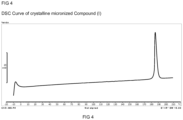
- the crystalline form A of Compound (I) can also be characterized unambiguously by the DSC curve of crystalline micronized Compound (I) as shown in Figure 4 .
- the crystalline form A of the Compound (I) according to the invention can be used alone or in combination with pharmaceutical acceptable excipients.
- the crystalline form A is therefore suitable for use in the pharmaceutical field, in particular suitable for pharmaceutical compositions
- one embodiment of the invention is the use of crystalline from A for the preparation of a pharmaceutical composition.
- composition comprising crystalline form A of Compound (I)
- a further aspect of the invention is a pharmaceutical composition
- a pharmaceutical composition comprising crystalline form A of Compound (I) and optionally comprising further pharmaceutically acceptable excipients.
- a yet further apsect of the inventon is the use of crystalline form A of Compound (I) for the preparation of a pharmaceutical composition.
- Another aspect of the invention is the a pharmaceutical composition mentioned herein for use in the treatment of a hyperproliferative disease, such as cancer.
- Described herein is the use of a pharmaceutical composition mentioned herein for for the preparation of a medicament for the treatment of a hyperproliferative disease, such as cancer.
- a yet further aspect of the invention is a pharmaceutical composition
- crystalline form A of Compound (I) and optionally comprising further pharmaceutically acceptable excipients for use in the treatment of cancer, wherein the cancer disease is selected from cancers of breast; brain; digestive tract; eye; head and neck; haematological malignancies including leukemias, lymphomas, multiple myeolomas; liver; parathyroid and their distant metastases; respiratory tract; reproductive organs; urinary tract; sarcomas; skin; thyroid.
- a preferred embodiment of the present invention is a pharmaceutical composition
- a pharmaceutical composition comprising crystalline form A of the Compound (I) mainly and optionally further pharmaceutically acceptable excipients not further comprising significant fractions of another form of the Compound (I).
- Compound (I) can have systemic and/or local activity.
- they can be administered in a suitable manner, such as, for example, via the oral, parenteral, pulmonary, nasal, sublingual, lingual, buccal, rectal, vaginal, dermal, transdermal, conjunctival, otic route or as an implant or stent.
- Compound (I) for these administration routes, it is possible for Compound (I) to be administered in suitable administration forms.
- the compounds according to the invention for oral administration, it is possible to formulate the compounds according to the invention to dosage forms known in the art that deliver Compound (I) rapidly and/or in a modified manner, such as, for example, tablets (uncoated or coated tablets, for example with enteric or controlled release coatings that dissolve with a delay or are insoluble), orally-disintegrating tablets, films/wafers, films/lyophylisates, capsules (for example hard or soft gelatine capsules), sugar-coated tablets, granules, pellets, powders, emulsions, suspensions, aerosols or solutions. It is possible to incorporate the compounds according to the invention in crystalline and/or amorphised and/or dissolved form into said dosage forms.
- Parenteral administration can be effected with avoidance of an absorption step (for example intravenous, intraarterial, intracardial, intraspinal or intralumbal) or with inclusion of absorption (for example intramuscular, subcutaneous, intracutaneous, percutaneous or intraperitoneal).
- absorption step for example intravenous, intraarterial, intracardial, intraspinal or intralumbal
- absorption for example intramuscular, subcutaneous, intracutaneous, percutaneous or intraperitoneal.
- Administration forms which are suitable for parenteral administration are, inter alia, preparations for injection and infusion in the form of solutions, suspensions, emulsions, lyophylisates or sterile powders.
- Examples which are suitable for other administration routes are pharmaceutical forms for inhalation [inter alia powder inhalers, nebulizers], nasal drops, nasal solutions, nasal sprays; tablets/films/wafers/capsules for lingual, sublingual or buccal administration; suppositories; eye drops, eye ointments, eye baths, ocular inserts, ear drops, ear sprays, ear powders, ear-rinses, ear tampons; vaginal capsules, aqueous suspensions (lotions, mixturae agitandae), lipophilic suspensions, emulsions, ointments, creams, transdermal therapeutic systems (such as, for example, patches), milk, pastes, foams, dusting powders, implants or stents.
- inhalation inter alia powder inhalers, nebulizers
- nasal drops nasal solutions, nasal sprays
- tablets/films/wafers/capsules for lingual, sublingual or buccal
- Compound (I) can be incorporated into the stated administration forms. This can be effected in a manner known per se by mixing with pharmaceutically suitable (acceptable) excipients.
- pharmaceutically suitable excipients include, inter alia,
- the crystalline form A of the Compound (I), according to the invention may have useful pharmacological properties and may be employed for use in the prevention and treatment of disorders in humans and animals, more specifically for use in the treatment of hyperproliferative diseases such as cancer.
- the crystalline forms of Compound (I) can be for use in the treatment of hyperproliferative disorders, especially cancer.
- Described herein is a method for the treatment and/or prophylaxis of diseases, in particular hyperproliferative diseases, particularly cancer, using an effective amount of crystalline form A of Compound (I).
- Described herein is a method for the treatment and/or prophylaxis of a hyperproliferative disease, such as cancer using an effective amount of crystalline form A of Compound (I).
- Hyperproliferative disorders include, but are not limited to, for example : psoriasis, keloids, and other hyperplasias affecting the skin, benign prostate hyperplasia (BPH), solid tumours, such as cancers of the breast, respiratory tract, brain, reproductive organs, digestive tract, urinary tract, eye, liver, skin, head and neck, thyroid, parathyroid and their distant metastases.
- BPH benign prostate hyperplasia
- solid tumours such as cancers of the breast, respiratory tract, brain, reproductive organs, digestive tract, urinary tract, eye, liver, skin, head and neck, thyroid, parathyroid and their distant metastases.
- Those disorders also include sarcomas, and haematological malignancies including but not limited to leukemias, lymphomas, multiple myeolomas.
- One aspect of the invention is the use of crystalline form A of Compound (I) either as obtained by chemical reaction as described herein and optionally crystallization and/or recrystallization and/or in its micronized form for use in the treatment of cancer.
- One aspect of the invention is crystalline form A of Compound (I) either as obtained by chemical reaction as described herein and optionally crystallization and/or recrystallization and/or in its micronized form for use in the treatment of cancer.
- breast cancers include, but are not limited to, invasive ductal carcinoma, invasive lobular carcinoma, ductal carcinoma in situ, and lobular carcinoma in situ.
- cancers of the respiratory tract include, but are not limited to, small-cell and non-small-cell lung carcinoma, as well as bronchial adenoma and pleuropulmonary blastoma.
- brain cancers include, but are not limited to, brain stem and hypophtalmic glioma, glioma, glioblastoma, cerebellar and cerebral astrocytoma, medulloblastoma, ependymoma, as well as neuroectodermal and pineal tumour.
- Tumours of the male reproductive organs include, but are not limited to, prostate and testicular cancer.
- Tumours of the female reproductive organs include, but are not limited to, endometrial, cervical, ovarian, vaginal, and vulvar cancer, as well as sarcoma of the uterus.
- Tumours of the digestive tract include, but are not limited to, anal, colon, colorectal, oesophageal, gallbladder, gastric, pancreatic, rectal, small-intestine, and salivary gland cancers.
- Tumours of the urinary tract include, but are not limited to, bladder, penile, kidney, renal pelvis, ureter, urethral and human papillary renal cancers.
- Eye cancers include, but are not limited to, intraocular melanoma and retinoblastoma.
- liver cancers include, but are not limited to, hepatocellular carcinoma (liver cell carcinomas with or without fibrolamellar variant), cholangiocarcinoma (intrahepatic bile duct carcinoma), and mixed hepatocellular cholangiocarcinoma.
- Skin cancers include, but are not limited to, squamous cell carcinoma, Kaposi's sarcoma, malignant melanoma, Merkel cell skin cancer, and non-melanoma skin cancer.
- Head-and-neck cancers include, but are not limited to, laryngeal, hypopharyngeal, nasopharyngeal, oropharyngeal cancer, lip and oral cavity cancer and squamous cell.
- Lymphomas include, but are not limited to, AIDS-related lymphoma, chronic lymphocytic lymphoma (CLL), non-Hodgkin's lymphoma (NHL), T-non-Hodgkin lymphoma (T-NHL), subtypes of NHL such as Diffuse Large Cell Lymphoma (DLBCL), activated B-cell DLBCL, germinal center B-cell lymphoma DLBCL, double-hit lymphoma and double-expressor lymphoma; anaplastic large cell lymphoma, B-cell lymphoma, cutaneous T-cell lymphoma, Burkitt's lymphoma, follicular lymphoma, hairy cell lymphoma, Hodgkin's disease, mantle cell lymphoma (MCL), lymphoma of the central nervous system, small lymphocytic lymphoma and chronic lymphocytic lymphoma and Sezary syndrome.
- CLL chronic lymphocytic
- Sarcomas include, but are not limited to, sarcoma of the soft tissue, gliosarcoma, osteosarcoma, malignant fibrous histiocytoma, lymphosarcoma, and rhabdomyosarcoma.
- Leukemias include, but are not limited to acute lymphoblastic leukemia, acute myeloid leukemia, (acute) T-cell leukemia, acute lymphoblastic leukemia, acute lymphocytic leukemia (ALL) , acute monocytic leukemia (AML), acute promyelocytic leukemia (APL), bisphenotypic B myelomonocytic leukemia, chronic lymphocytic leukemia, chronic myelogenous leukemia, chronic myeloid leukemia (CML), chronic myelomonocytic leukemia (CMML), large granular lymphocytic leukemia, plasma cell leukemia, and also myelodysplastic syndrome (MDS), which can develop into an acute myeloid leukemia.
- ALL acute lymphoblastic leukemia
- ALL acute lymphoblastic leukemia
- ALL acute monocytic leukemia
- APL acute promyelocytic leukemia
- Inhibition of DHODH can also lead to differentiation of tumor initiating cells in hematological and solid cancers, especially leukemias.
- the present invention also provides Compound (I) for use in methods of treating angiogenic disorders including diseases associated with excessive and/or abnormal angiogenesis.
- Inappropriate and ectopic expression of angiogenesis can be deleterious to an organism.
- a number of pathological conditions are associated with the growth of extraneous blood vessels. These include, for example, diabetic retinopathy, ischemic retinal-vein occlusion, and retinopathy of prematurity [Aiello et al., New Engl. J. Med., 1994, 331, 1480 ; Peer et al., Lab. Invest., 1995, 72, 638], age-related macular degeneration (AMD) [Lopez et al., Invest. Ophthalmol. Vis.
- AMD age-related macular degeneration
- neovascular glaucoma neovascular glaucoma
- psoriasis retrolental fibroplasias
- angiofibroma inflammation
- RA rheumatoid arthritis
- restenosis in-stent restenosis
- vascular graft restenosis etc.
- the increased blood supply associated with cancerous and neoplastic tissue encourages growth, leading to rapid tumour enlargement and metastasis.
- the growth of new blood and lymph vessels in a tumour provides an escape route for renegade cells, encouraging metastasis and the consequence spread of the cancer.
- compounds of general formula (I) of the present invention can be for use to treat and/or prevent any of the aforementioned angiogenesis disorders, for example by inhibiting and/or reducing blood vessel formation; by inhibiting, blocking, reducing, decreasing, etc. endothelial cell proliferation, or other types involved in angiogenesis, as well as causing cell death or apoptosis of such cell types.
- Described herein is a method for controlling cancer (e.g ., through treatment, prophylaxis, etc.) in a subject (e.g ., human, rat, etc.) by administering an effective amount of crystalline form A of Compound (I) either as obtained by chemical reaction as described herein and optionally crystallization or recrystallization or in its micronized form, or a pharmaceutically acceptable salt thereof, to the subject.
- a subject e.g ., human, rat, etc.
- an effective amount of crystalline form A of Compound (I) either as obtained by chemical reaction as described herein and optionally crystallization or recrystallization or in its micronized form, or a pharmaceutically acceptable salt thereof, to the subject.
- the subject may be administered a medicament, comprising crystalline form A of Compound (I) either as obtained by chemical reaction as described herein and optionally crystallization or recrystallization or in its micronized form and one or more pharmaceutically acceptable excipients.
- the subject may be administered a medicament, comprising crystalline form A of Compound (I) either as obtained by chemical reaction as described herein and optionally crystallization or recrystallization or in its micronized form and one or more pharmaceutically acceptable carriers, excipients and/or diluents.
- crystalline form A of Compound (I) is for use in a method of treatment and/or prophylaxis of a hyperproliferative disorder in a subject, said use may comprise administering to the subject an effective amount of crystalline form A of Compound (I) either as obtained by chemical reaction as described herein and optionally crystallization or recrystallization or in its micronized form.
- the hyperproliferative disorder may be, for example, cancer, the cancer types as defined supra, more particularly leukemia, lymphoma, solid tumors, such as e.g. brain cancer, colorectal carcinoma, lung cancer, ovarian cancer, pancreatic cancer, renal cancer, even more particularly e.g. acute myeloid leukemia, colorectal carcinoma, leukemia, lung cancer, lymphoma, multiple myeloma, ovarian cancer, pancreatic cancer and renal cell carcinoma.
- leukemia lymphoma
- solid tumors such as e.g. brain cancer, colorectal carcinoma, lung cancer, ovarian cancer, pancreatic cancer, renal cancer, even more particularly e.g. acute myeloid leukemia, colorectal carcinoma, leukemia, lung cancer, lymphoma, multiple myeloma, ovarian cancer, pancreatic cancer and renal cell carcinoma.
- the hyperproliferative disorder may be, for example, cancer
- the cancer types are selected from acute myeloid leukemia, breast cancer, colorectal carcinoma, gastric cancer, gliosarcoma, head & neck cancer, hepatocellular carcinoma, leukemia, lung cancer, lymphoma, multiple myeloma, neuroblastoma, ovarian cancer, pancreatic cancer, prostate cancer, renal cell carcinoma, and sarcoma.
- the hyperproliferative disorder may be, for example, cancer, more particularly lymphoma, wherein the lymphoma is selected from the group AIDS-related lymphoma, chronic lymphocytic lymphoma (CLL), non-Hodgkin's lymphoma (NHL), T-non-Hodgkin lymphoma (T-NHL), subtypes of NHL such as Diffuse Large Cell Lymphoma (DLBCL), activated B-cell DLBCL, germinal center B-cell DLBCL, double-hit lymphoma and double-expressor lymphoma; anaplastic large cell lymphoma, B-cell lymphoma, cutaneous T-cell lymphoma, Burkitt lymphoma, follicular lymphoma, hairy cell lymphoma, Hodgkin's disease, mantle cell lymphoma (MCL), lymphoma of the central nervous system, small lymphocytic lymphoma and chronic lymphocytic lympho
- the hyperproliferative disorder may be, for example, cancer, more particularly leukemia, wherein the leukemia is selected from the group acute lymphoblastic leukemia, acute myeloid leukemia, (acute) T-cell leukemia, acute lymphoblastic leukemia, acute lymphocytic leukemia, acute monocytic leukemia, acute promyelocytic leukemia, bisphenotypic B myelomonocytic leukemia, chronic lymphocytic leukemia, chronic myelogenous leukemia, chronic myeloid leukemia, chronic myelomonocytic leukemia, large granular lymphocytic leukemia, plasma cell leukemia, and also myelodysplastic syndrome, which can develop into an acute myeloid leukemia.
- the leukemia is selected from the group acute lymphoblastic leukemia, acute myeloid leukemia, (acute) T-cell leukemia, acute lymphoblastic leukemia, acute lymphoc
- crystalline form A of Compound (I) is for use in a method of treatment and/or prophylaxis of a hyperproliferative disorder in a subject, said use may comprise administering to the subject an effective amount of crystalline form A of Compound (I) either as obtained by chemical reaction as described herein and optionally crystallization or recrystallization or in its micronized form.
- the hyperproliferative disorder may be, for example, cancer (e.g ., lung cancer, acute myeloid leukemia, acute promyelocytic leukemia (APL), mixed-lineage leukemia (MLL), chronic myeloid leukemia (CML), myelodysplastic syndrome (MDS), lymphoma, glioblastoma, prostate cancer, or any other cancer indication as defined herein ).
- cancer e.g ., lung cancer, acute myeloid leukemia, acute promyelocytic leukemia (APL), mixed-lineage leukemia (MLL), chronic myeloid leukemia (CML), myelodysplastic syndrome (MDS), lymphoma, glioblastoma, prostate cancer, or any other cancer indication as defined herein ).
- cancer e.g ., lung cancer, acute myeloid leukemia, acute promyelocytic leukemia (APL), mixed-lineage leukemia (MLL), chronic myeloid leukemia
- crystalline form A of Compound (I) either as obtained by chemical reaction as described herein and optionally crystallization or recrystallization or in its micronized form, or a pharmaceutically acceptable salt thereof, for the preparation of a medicament for the treatment or prophylaxis of a disease.
- the present invention provides crystalline form A of Compound (I) either as obtained by chemical reaction as described herein and optionally crystallization or recrystallization or in its micronized form, or a pharmaceutically acceptable salt thereof, for use in the treatment of cancer, which cancer is selected from acute myeloid leukemia, colorectal carcinoma, leukemia, lung cancer, lymphoma, multiple myeloma, ovarian cancer, pancreatic cancer and renal cell carcinoma.
- Described herein are methods of treatment of cancer comprising adminstering crystalline form A of Compound (I) either as obtained by chemical reaction as described herein and optionally crystallization or recrystallization or in its micronized form or a pharmaceutically acceptable salt, polymorph, metabolite, hydrate, solvate or ester thereof, where the cancer is selected from acute myeloid leukemia, colorectal carcinoma, leukemia, lung cancer, lymphoma, multiple myeloma, ovarian cancer, pancreatic cancer and renal cell carcinoma.
- the present invention provides crystalline form A of Compound (I) either as obtained by chemical reaction as described herein and optionally crystallization or recrystallization or in its micronized form, or a pharmaceutically acceptable salt thereof, for use in the treatment of cancer, which cancer is selected from acute myeloid leukemia, breast cancer, brain cancer, colorectal carcinoma, gastric cancer, gliosarcoma, head & neck cancer, hepatocellular carcinoma, leukemia, lung cancer, lymphoma, multiple myeloma, neuroblastoma, ovarian cancer, pancreatic cancer, prostate cancer, renal cell carcinoma, and sarcoma.
- cancer which cancer is selected from acute myeloid leukemia, breast cancer, brain cancer, colorectal carcinoma, gastric cancer, gliosarcoma, head & neck cancer, hepatocellular carcinoma, leukemia, lung cancer, lymphoma, multiple myeloma, neuroblastoma, ovarian cancer, pancreatic cancer, prostate cancer, renal cell
- Described herein are methods for the treatment of cancer comprising adminstering crystalline form A of Compound (I) either as obtained by chemical reaction as described herein and optionally crystallization or recrystallization or in its micronized form or a pharmaceutically acceptable salt thereof, where the cancer is selected from acute myeloid leukemia, brain cancer, breast cancer, colorectal carcinoma, gastric cancer, gliosarcoma, head & neck cancer, hepatocellular carcinoma, leukemia, lung cancer, lymphoma, multiple myeloma, neuroblastoma, ovarian cancer, pancreatic cancer, prostate cancer, renal cell carcinoma, and sarcoma.
- the cancer is selected from acute myeloid leukemia, brain cancer, breast cancer, colorectal carcinoma, gastric cancer, gliosarcoma, head & neck cancer, hepatocellular carcinoma, leukemia, lung cancer, lymphoma, multiple myeloma, neuroblastoma, ovarian cancer, pancreatic cancer, prostate
- the present invention provides crystalline form A of Compound (I) either as obtained by chemical reaction as described herein and optionally crystallization or recrystallization or in its micronized form, or a pharmaceutically acceptable salt thereof, for use in the treatment of cancer, which cancer is selected from acute T-cell lymphoblastic leukemia, acute promyelocytic leukemia, acute myeloid leukemia, anaplastic large cell lymphoma, biphenotypic B myelomonocytic leukemia, B-cell lymphoma, breast cancer, Burkitt lymphoma, chronic myeloid leukemia, colorectal carcinoma, gastric cancer, gliosarcoma, head & neck cancer, hepatocellular carcinoma, lung cancer, multiple myeloma, neuroblastoma, ovarian cancer, pancreatic cancer, prostate cancer, renal cell carcinoma, sarcoma and T-cell lymphoma.
- cancer which cancer is selected from acute T-cell lymphoblastic leukemia, acute promy
- Described herein are methods of treatment of cancer comprising adminstering crystalline form A of Compound (I) either as obtained by chemical reaction as described herein and optionally crystallization or recrystallization or in its micronized form or a pharmaceutically acceptable salt thereof,where the cancer is selected from acute T-cell lymphoblastic leukemia, acute promyelocytic leukemia, acute myeloid leukemia, anaplastic large cell lymphoma, biphenotypic B myelomonocytic leukemia, B-cell lymphoma, brain cancer, breast cancer, Burkitt lymphoma, chronic myeloid leukemia, colorectal carcinoma, gastric cancer, gliosarcoma, head & neck cancer, hepatocellular carcinoma, lung cancer, multiple myeloma, neuroblastoma, ovarian cancer, pancreatic cancer, prostate cancer, renal cell carcinoma, sarcoma and T-cell lymphoma.
- the cancer is selected from acute T-cell lymphoblastic le
- the present invention provides crystalline form A of Compound (I) either as obtained by chemical reaction as described herein and optionally crystallization or recrystallization or in its micronized form, or a pharmaceutically acceptable salt thereof, for use in the treatment of cancer, which cancer is selected from lung cancer, leukemia, acute myeloid leukemia, gliosarcoma, colorectal carcinoma, head & neck cancer, hepatocellular carcinoma, multiple myeloma, lymphoma, breast cancer, neuroblastoma, ovarian cancer, gastric cancer, pancreatic cancer, prostate cancer, renal cell carcinoma, and sarcoma.
- cancer which cancer is selected from lung cancer, leukemia, acute myeloid leukemia, gliosarcoma, colorectal carcinoma, head & neck cancer, hepatocellular carcinoma, multiple myeloma, lymphoma, breast cancer, neuroblastoma, ovarian cancer, gastric cancer, pancreatic cancer, prostate cancer, renal cell carcinoma, and sar
- the present invention provides crystalline form A of Compound (I) either as obtained by chemical reaction as described herein and optionally crystallization or recrystallization or in its micronized form, or a pharmaceutically acceptable salt thereof, for use in the treatment of cancer, which cancer is selected from leukemias, lymphomas, sarcomas and solid tumors.
- Described herein are methods for the treatment of cancer comprising adminstering crystalline form A of Compound (I) either as obtained by chemical reaction as described herein and optionally crystallization or recrystallization or in its micronized form or a pharmaceutically acceptable salt thereof, wherein the cancer is selected from leukemias, lymphomas, sarcomas and solid tumors.
- the present invention provides crystalline form A of Compound (I) either as obtained by chemical reaction as described herein and optionally crystallization or recrystallization or in its micronized form or a pharmaceutically acceptable salt thereof, for use in the treatment of cancer and methods of treating cancer, which cancer is selected from colorectal cancer, leukemia and lymphoma.
- cancer is selected from colorectal cancer, leukemia and lymphoma.
- methods for the treatment of cancer comprising adminstering crystalline form A of Compound (I) either as obtained by chemical reaction as described herein and optionally crystallization or recrystallization or in its micronized form or a pharmaceutically acceptable salt thereof, wherein the cancer is selected from colorectal cancer, leukemia and lymphoma.
- the present invention provides crystalline form A of Compound (I) either as obtained by chemical reaction as described herein and optionally crystallization or recrystallization or in its micronized form, or a pharmaceutically acceptable salt thereof, for use in the treatment of cancer and methods of treating cancer, which cancer is selected from colorectal cancer, leukemia and lymphoma.
- Described herein are methods of treatment of cancer comprising adminstering crystalline form A of Compound (I) either as obtained by chemical reaction as described herein and optionally crystallization or recrystallization or in its micronized form or a pharmaceutically acceptable salt thereof, wherein the cancer is selected from colorectal cancer, leukemia and lymphoma.
- the present invention provides crystalline form A of Compound (I) either as obtained by chemical reaction as described herein and optionally crystallization or recrystallization or in its micronized form, or a pharmaceutically acceptable salt thereof, for use in the treatment of one or more cancer types and methods of treating one or more cancer types, where cancer is selected from ALL, AML, APL, CMML, DLBCL, MDS, MCL, T-NHL, colorectal cancer, melanoma and ovarian cancer.
- Described herein are methods for the treatment of cancer comprising adminstering crystalline form A of Compound (I) either as obtained by chemical reaction as described herein and optionally crystallization or recrystallization or in its micronized form or a pharmaceutically acceptable salt thereof, where the cancer is selected from ALL, AML, APL, CMML, DLBCL, MDS, MCL, T-NHL, colorectal cancer, melanoma and ovarian cancer.
- the present invention provides crystalline form A of Compound (I) either as obtained by chemical reaction as described herein and optionally crystallization or recrystallization or in its micronized form, or a pharmaceutically acceptable salt thereof, for use in the treatment of one or more cancer types, where cancer is selected from
- Described herein is a method for the treatment of cancer comprising administering an effective amount of crystalline form A of Compound (I) either as obtained by chemical reaction as described herein and optionally crystallization or recrystallization or in its micronized form where the cancer is selected from
- the present invention provides a method for inhibiting cell proliferation or viability in a cancer cell, the method comprising contacting the cell with crystalline form A of Compound (I) either as obtained by chemical reaction as described herein and optionally crystallization or recrystallization or in its micronized form herein, thereby inhibiting cell proliferation or viability.
- the present invention provides a method for inhibiting Dihydroorotate Dehydrogenase (DHODH) enzymatic activity, the method comprising contacting DHODH crystalline form A of Compound (I) either as obtained by chemical reaction as described herein and optionally crystallization or recrystallization or in its micronized form, thereby inhibiting DHODH enzymatic activity.
- DHODH Dihydroorotate Dehydrogenase
- Described herein is a method for treating lymphoma in a subject, the method comprising administering to the subject an effective amount of crystalline form A of Compound (I) either as obtained by chemical reaction as described herein and optionally crystallization or recrystallization or in its micronized form, thereby treating the lymphoma.
- lymphoma is selected from the group AIDS-related lymphoma, chronic lymphocytic lymphoma (CLL), non-Hodgkin's lymphoma (NHL), T-non-Hodgkin lymphoma (T-NHL), subtypes of NHL such as Diffuse Large Cell Lymphoma (DLBCL), activated B-cell DLBCL, germinal center B-cell DLBCL, double-hit lymphoma and double-expressor lymphoma; anaplastic large cell lymphoma, B-cell lymphoma, cutaneous T-cell lymphoma, Burkitt lymphoma, follicular lymphoma, hairy cell lymphoma, Hodgkin's disease, mantle cell lymphoma (MCL), lymphoma of the central nervous system, small lymphocytic lymphoma and chronic lymphocytic lymphoma.
- CLL chronic lymphocytic lymphoma
- NHL non-Hodgkin'
- Described herein is a method for treating leukemia in a subject, the method comprising administering to the subject an effective amount of crystalline form A of Compound (I) either as obtained by chemical reaction as described herein and optionally crystallization or recrystallization or in its micronized form, thereby treating the leukemia.
- Described herein is a method for treating leukemia mentioned above, wherein the leukemia is selected from the group acute lymphoblastic leukemia, acute myeloid leukemia, (acute) T-cell leukemia, acute lymphoblastic leukemia, acute lymphocytic leukemia, acute monocytic leukemia, acute promyelocytic leukemia, bisphenotypic B myelomonocytic leukemia, chronic lymphocytic leukemia, chronic myelogenous leukemia, chronic myeloid leukemia, chronic myelomonocytic leukemia, large granular lymphocytic leukemia, plasma cell leukemia, and also myelodysplastic syndrome, which can develop into an acute myeloid leukemia.
- acute lymphoblastic leukemia acute myeloid leukemia
- acute lymphocytic leukemia acute monocytic leukemia
- acute promyelocytic leukemia acute promyelocytic le
- a yet further embodiment is the pharmaceutical composition comprising the crystalline form A of Compound (I) for use in the treament of hyperproliferative diseases, more particularly cancer.
- a yet further embodiment is the pharmaceutical composition comprising the crystalline form of Compound (I) for use in the treament of
- a yet further embodiment is the use of the pharmaceutical composition comprising the crystalline form of Compound (I) having a particle size of 0.1 ⁇ m -100 ⁇ m, preferably 0.1 ⁇ m -50 ⁇ m, more preferably 0.3 ⁇ m-20 ⁇ m for use in the treament of cancer.
- a yet further embodiment is the use of the pharmaceutical composition comprising the crystalline form of Compound (I) having a particle size of 0.3 ⁇ m - 4 ⁇ m.
- a yet further embodiment is the use of the pharmaceutical composition comprising the crystalline form of Compound (I) having a particle size of 0.6 ⁇ m - 3.8 ⁇ m.
- a yet further embodiment is the use of the pharmaceutical composition comprising the crystalline form of Compound (I) having a particle size of 0.6 ⁇ m - 3 ⁇ m.
- the crystalline form A of the Compound (I) according to the invention can be used alone or in combination with other active substances if necessary.
- one aspect of the invention is the use of crystalline form A of Compound (I) for the preparation of a pharmaceutical composition optionally further comprising pharmaceutically acceptable excipients and further comprising:
- the present invention further relates to medicinal products containing the crystalline form A of Compound (I) according to the invention and one or more further active substances, e.g. anti-cancer agents, in particular for use in the treatment and/or prophylaxis of the aforementioned diseases.
- one or more further active substances e.g. anti-cancer agents
- 131I-chTNT abarelix, abemaciclib, abiraterone, acalabrutinib, aclarubicin, adalimumab, ado-trastuzumab emtansine, afatinib, aflibercept, aldesleukin, alectinib, alemtuzumab, alendronic acid, alitretinoin, altretamine, amifostine, aminoglutethimide, hexyl aminolevulinate, amrubicin, amsacrine, anastrozole, ancestim, anethole dithiolethione, anetumab ravtansine, angiotensin II, antithrombin III, apalutamide, aprepitant, arcitumomab, arglabin, arsenic trioxide, asparaginase, atezolizum
- kits comprising Compound (I) in crystalline form A optionally in micronized form together with further anti-cancer agents.
- NMR peak forms are stated as they appear in the spectra, possible higher order effects have not been considered.
- Chemical names were generated using the ACD/Name software from ACD/Labs. In some cases generally accepted names of commercially available reagents were used in place of ACD/Name generated names.
- the compounds and intermediates produced according to the methods of the invention may require purification. Purification of organic compounds is well known to the person skilled in the art and there may be several ways of purifying the same compound. In some cases, no purification may be necessary. In some cases, the compounds may be purified by crystallization.
- impurities may be stirred out using a suitable solvent.
- the compounds may be purified by chromatography, particularly flash column chromatography, using for example prepacked silica gel cartridges, e.g. Biotage SNAP cartidges KP-Sil ® or KP-NH ® in combination with a Biotage autopurifier system (SP4 ® or Isolera Four ® ) and eluents such as gradients of hexane/ethyl acetate or DCM/methanol.
- SP4 ® or Isolera Four ® Biotage autopurifier system
- eluents such as gradients of hexane/ethyl acetate or DCM/methanol.
- purification methods as described above can provide those compounds of the present invention which possess a sufficiently basic or acidic functionality in the form of a salt, such as, in the case of a compound of the present invention which is sufficiently basic, a trifluoroacetate or formate salt for example, or, in the case of a compound of the present invention which is sufficiently acidic, an ammonium salt for example.
- a salt of this type can either be transformed into its free base or free acid form, respectively, by various methods known to the person skilled in the art, or be used as salts in subsequent biological assays. It is to be understood that the specific form (e.g. salt, free base etc.) of a compound of the present invention as isolated and as described herein is not necessarily the only form in which said compound can be applied to a biological assay in order to quantify the specific biological activity.
- Particle size distributions were obtained from Laser light diffraction measurements of particle size.
- X followed by a number is the notation used for the particle diameter corresponding to a certain percentage of the cumulative undersize distribution (on a volume basis).
- [y ⁇ m] X90 is the particle diameter y below which 90% of the particle population lies.
- Basis for the calculation is the instrumental set-up as disclosed in examples 9-1 and 9-2.
- Butyl-hydroxyacetate (xxx1) was initially charged to 2250 ml dichloromethane. 4-Toluolsulfonic acid monohydrate 5.5 g (0.03 mol) was added at 20°C. 3,4-Dihydro-2H-pyran (309 g, 3.68 mol) (xxx2) was added over a period of 30 min at an internal temperature below 35°C. The mixture was subsequently cooled to 22°C and stirred further for 16 h.
- the cloudy aqueous phase was filtered, the filter residue was washed two times with dichloromethane (100 mL each), the filtrate was combined and the resulting second organic phase was separated (1000 ml).
- Compound (A8) was obtained as an intermediate of the process as described below under Method A and Method B without being isolated nor purified and introduced directly in the following reaction step to obtain compound (A9).
- 2-chloro-6-fluoroaniline (2.5 g, 223 mmol, CAS-no. 363-51-9 obtained from Combiblocks, catalogue product code OS-7812; alternatively a preparation of 2-chloro-6-fluoroaniline is described in US 4,089,958 , example XVIII) was dissolved in dichloromethane (370 mL). Pyridine was added (120 mL, 149 mol) and the mixture was cooled to 0-5°C. The contents of the first vessel was added slowly (ca. 30 min) to the second vessel and the resulting mixture was stirred for 1 h.
- the product obtained after recrystallization was micronized in an air jet mill.
- micronized particles of Compound (I) within a size range of 0.6 ⁇ m - 3.8 ⁇ m (X10-X90).
- micronized particles of Compound (I) within a size range of (X10/X50/X90): 0.6/1.4/3.8 ⁇ m
- the product as obtained is characterized by a specific finderprint of impurities.
- Such fingerprint comprises and
- micronized material 92% yield: a) Device Used Device Mill 50 mm spiral jet mill (Bayer design) Grinding chamber lining (material) PTFE Injector motive nozzle (diameter) 0.9 mm Grinding nozzle (diameter) 0.75 mm, Collecting nozzle (diameter) 2.5 mm PTFE Outlet opening (diameter) 12 mm PTFE b) Grinding Parameters Grinding Parameter Actual value Grinding air pressure [bar] 5 Product throughput [kg/h] 0.9 Total grinding time [min] 35 c) The micronized product obtained has the following properties: Three samples have been taken and analyzed. The following parameters are mean values from the three measurements:
- the Instrumental set-up for the IR measurement of Compound (I) in order to obtain the bands listed in table 1 and the IR spectrum as a graph as disclosed in FIG1 is the following:
- the Instrumental set-up for the IR measurement of Compound (I) in order to obtain the bands listed in table 1 and the IR spectrum as a graph as disclosed in FIG.1A is the following: Instrumental set-up for the IR measurement of a sample of the product of example 9-1, Sample preparation: None Apparatus: FT-IR Spectrometer (Bruker alpha with ATR attachment) Scans: 24 Resolution: 4 cm-1 Technique: attenuated total reflectance
- the instrumental set-up for obtaining the diffractogram is: Sample preparation: The powder is prepared as a thin layer between two films of Compound (I) obtained in example 9-2.
- Apparatus X-ray powder diffractometer (STOE STADI P) Generator: 40 kV / 40 mA Detector: linear position sensitive detector Radiation: germanium-monochromatized CuK ⁇ 1 -radiation Technique: transmission Scanning range: 2° ⁇ 2 ⁇ ⁇ 40° Stepwidth: 0.5° Measuring time: 15 sec/step
- thermogravimetric Analysis (TGA) Curve of Compound (I) obtained in example 9-2 is disclosed in FIG 3 .
- the Instrumental set-up for obtaining a TGA curve is the following: Sample preparation: The powder is crimped in a 100 ⁇ l aluminum pan and lid. The lid is pierced directly prior to the start of the experiment. Apparatus: Thermogravimetric Analyser (Mettler Toledo TGA/DSC1) Temperature range: 25 - 210 °C Heating rate: 10 K.min -1 Gas: Nitrogen Gas flow: 50 ml.min -1
- Sample preparation The powder is crimped in a 400 ⁇ l aluminum pan and with a pierced lid.
- Apparatus Differential Scanning Calorimeter (Mettler Toledo DSC822e) Temperature range: -10 - 210 °C Heating rate: 20 K.min -1 Gas: Nitrogen Gas flow: 50 ml.min -1
- Compound (I) (200 mg, 0.38 mmol) was dissolved in pyridine (1.5 mL). The solution was filtered (0.2 ⁇ m ReZist ® Filter, Whatman) and transferred to a second Vial. The solvent was evaporated at 115°C using a heat gun or can alternatively be obtained by evaporation in vacuum at 85°C/5mbar to give the amorphous form of Compound (I) as solidified oil or foam.
- the Instrumental set-up for the IR measurement of amorpous Compound (I) in order to obtain the bands listed in table 3 and the IR spectrum as a graph as disclosed in FIG5 is the following: Sample preparation: A small amount of Compound (I) was manually milled by using a mortar and pestle. Apparatus: Thermo Scientific Nicolet iS10 Scans: 64 Resolution: 2 cm-1 Technique: FTIR
- FIG 6 shows the X-ray powder diffractogram of the amorphous phase.
- DSC Differentiation Scanning Calorimetry
Landscapes
- Chemical & Material Sciences (AREA)
- Organic Chemistry (AREA)
- Health & Medical Sciences (AREA)
- General Health & Medical Sciences (AREA)
- Veterinary Medicine (AREA)
- Pharmacology & Pharmacy (AREA)
- Life Sciences & Earth Sciences (AREA)
- Animal Behavior & Ethology (AREA)
- Medicinal Chemistry (AREA)
- Public Health (AREA)
- Chemical Kinetics & Catalysis (AREA)
- General Chemical & Material Sciences (AREA)
- Nuclear Medicine, Radiotherapy & Molecular Imaging (AREA)
- Epidemiology (AREA)
- Pharmaceuticals Containing Other Organic And Inorganic Compounds (AREA)
- Nitrogen Condensed Heterocyclic Rings (AREA)
- Plural Heterocyclic Compounds (AREA)
- Organic Low-Molecular-Weight Compounds And Preparation Thereof (AREA)
Claims (28)
- Verfahren zur Herstellung einer Verbindung (I), umfassend den Schritt des Zulassens einer Zwischenverbindung der Formel (A7.1):
 wobei PG eine Schutzgruppe ist, ausgewählt aus einer Tetrahydropyranylgruppe (THP), einer Tetrahydrofuranylgruppe (THF) und einer 1-Ethoxyethylgruppe (EE),um mit einer Verbindung der Formel (xxx7) zu reagieren:
 optional in einem geeigneten aprotischen Lösungsmittel, durch Zugabe von Pyridin, optional unter Aktivierung der Carbonsäuregruppe oder durch Erzeugung eines intermediären Säurechlorids mit einem geeigneten Reagenz, und entweder Zugabe eines oder mehrerer Reagenzien zur Abspaltung der Schutzgruppe oder Isolierung der Verbindung (A9.1)
 wodurch Verbindung (I) bereitgestellt wird.
- Verfahren zur Herstellung der Verbindung (I) nach Anspruch 1, umfassend den Schritt des Zulassens einer Zwischenverbindung der Formel (A7):
 um mit einer Verbindung der Formel (xxx7) zu reagieren:
 optional in einem geeigneten aprotischen Lösungsmittel, ausgewählt aus Acetonitril, Toluol/Acetonitril, Dichlormethan und Tetrahydrofuran durch Zugabe von Pyridin, durch Zugabe eines Kupplungsreagenz, ausgewählt aus (1-Cyano-2-ethoxy-2-oxoethylidenaminooxy) dimethylamino-morpholino-carbenium-hexafluorophosphat, Propylphosphonsäureanhydrid, 2-Brom-1-ethyl-pyridinium-tetrafluoroborat, 2-Chlor-1-methylpyridiniumiodid und Phosphorylchlorid zur Aktivierung der Carbonsäuregruppe oder durch Erzeugung eines Säurechlorids, Zugabe eines geeigneten Reagenz, ausgewählt aus 1-Chlor-N,N ,2-trimethyl-1-propenylamin und Phosphorylchlorid, und entweder Zugabe eines oder mehrerer Reagenzien zur Abspaltung der Schutzgruppe, was direkt zur Verbindung der Formel (I) oder zur Isolierung der Verbindung (A9) führt
 und anschließend Zugabe eines oder mehrerer Reagenzien ausgewählt aus Toluolsulfonsäure, Essigsäure, Schwefelsäure, Salzsäure und Phosphorsäure zur Abspaltung der Schutzgruppe,wodurch Verbindung (I) bereitgestellt wird:
- Verfahren nach Anspruch 1 oder 2, wobei PG ein Tetrahydropyranylether ist und ferner saure Bedingungen als Reagenzien zum Abspalten der Schutzgruppe Tetrahydropyranylether umfasst.
- Verfahren nach Anspruch 3, wobei die sauren Bedingungen durch Zugabe von Phosphorsäure und Methanol erreicht werden.
- Verfahren nach den Ansprüchen 1 bis 4, wobei die Verbindung der Formel (A7.1) mit der Verbindung der Formel (xxx7) durch Erzeugung eines Säurechlorids reagiert oder wobei die Zugabe des Pyridins als letzte Komponente zur Reaktionsmischung der Verbindung der Formel (A7.1) und der Verbindung der Formel (xxx7) erfolgt.
- Verfahren nach Anspruch 5, wobei das Reagenz zur Erzeugung des Säurechlorids Phosphorylchlorid ist.
- Verfahren nach den Ansprüchen 1 bis 6, wobei das Säurechlorid oder eine aktivierte Säure in situ erzeugt wird.
- Verfahren nach Anspruch 2, umfassend einen Kristallisationsschritt nach der Abspaltung der Schutzgruppe.
- Verfahren nach den Ansprüchen 1 bis 8, umfassend eine Ein-Topf-Reaktion aus Verbindung (A7)

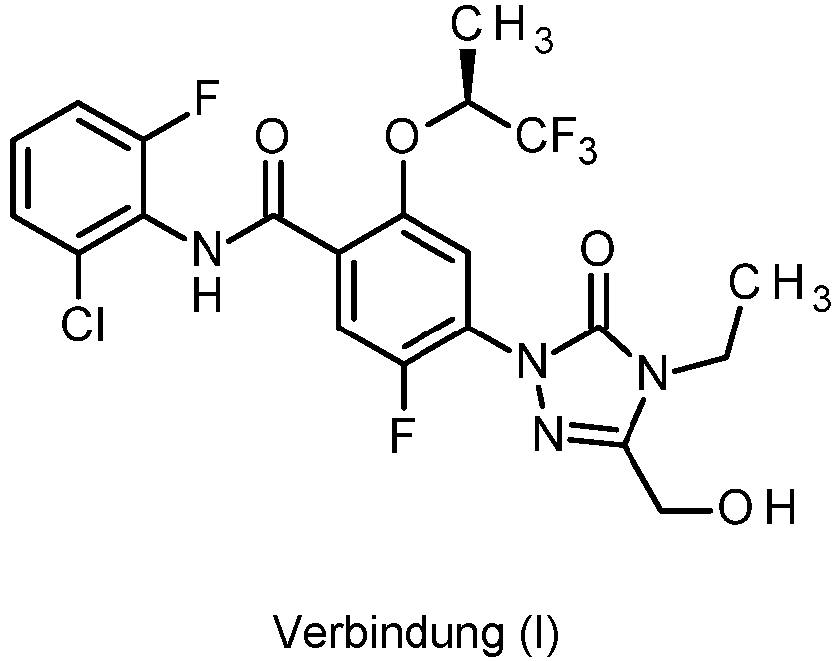
- Verfahren nach den Ansprüchen 1 bis 9, ferner umfassend einen Schritt zur Isolierung der Verbindung (I).
- Verfahren nach Anspruch 10, ferner umfassend einen Schritt zur Reinigung der Verbindung (I).
- Verfahren nach den Ansprüchen 1 bis 11, ferner umfassend einen Mikronisierungsschritt.
- Verfahren nach den Ansprüchen 1 bis 12, ferner umfassend einen Schritt der Umwandlung einer Verbindung der Formel (A6)
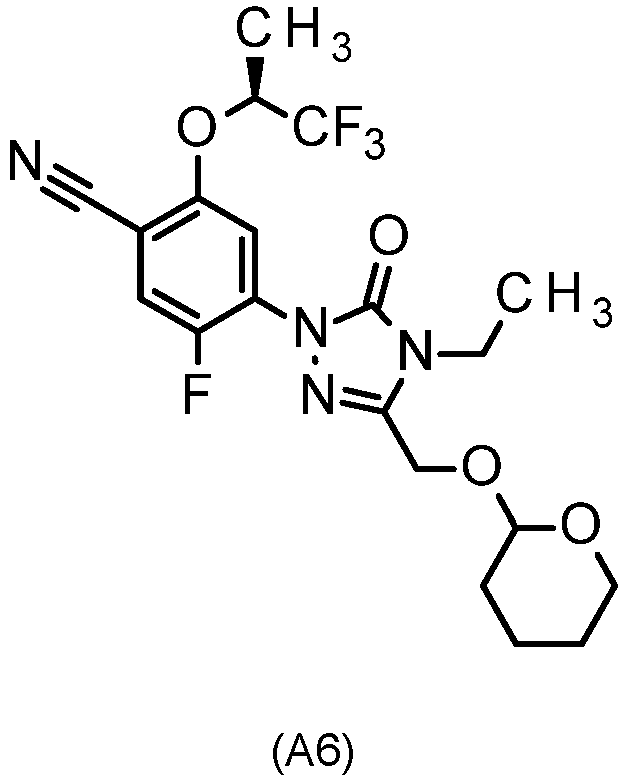

- Verfahren nach Anspruch 1 bis 13, ferner umfassend einen Schritt des Reagierens einer Verbindung (A5)
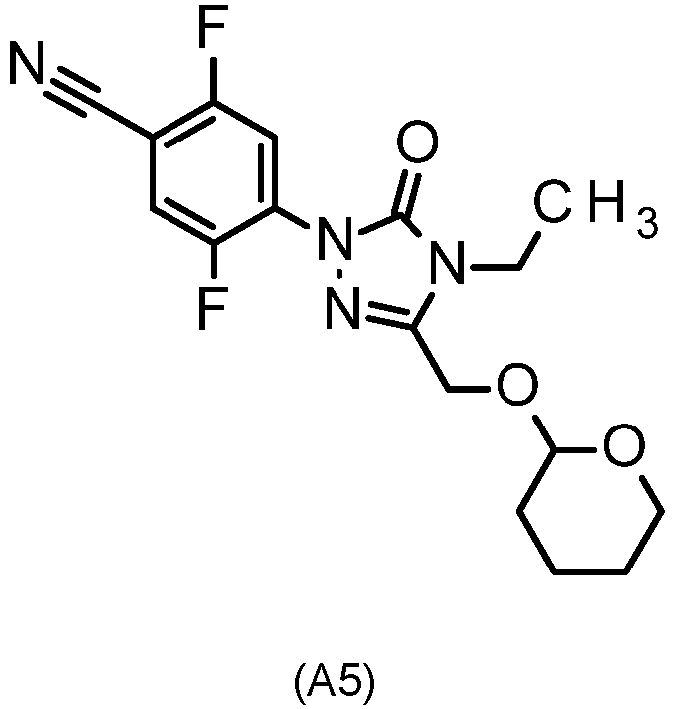


- Verfahren nach Anspruch 1 bis 14, ferner umfassend einen Schritt des Reagierens einer Verbindung der Formel (A4)


- Eine kristalline Form A der Verbindung (I).

- Pharmazeutische Zusammensetzung, die die kristalline Form A der Verbindung (I) nach Anspruch 16 und optional weitere pharmazeutisch verträgliche Arzneistoffträger umfasst.
- Pharmazeutische Zusammensetzung nach Anspruch 17 zur Verwendung bei der Behandlung einer hyperproliferativen Erkrankung, wie Krebs.
- Pharmazeutische Zusammensetzung zur Verwendung nach Anspruch 18, wobei die Krebserkrankung ausgewählt ist aus Krebserkrankungen der Brust; des Gehirns; des Verdauungstraktes; des Auges; des Kopfes und des Halses; hämatologischer Malignome, einschließlich Leukämien, Lymphomen, multipler Myolome; der Leber; der Nebenschilddrüse und ihrer Fernmetastasen; der Atemwege; der Fortpflanzungsorgane; der Harnwege; der Sarkome; der Haut; der Schilddrüse.
- Verwendung der kristallinen Form A der Verbindung (I) nach Anspruch 16 zur Herstellung einer pharmazeutischen Zusammensetzung nach Anspruch 17.
- Verwendung der kristallinen Form A der Verbindung (I) nach Anspruch 16 zur Herstellung einer pharmazeutischen Zusammensetzung nach Anspruch 17, ferner umfassend:• einen oder mehrere weitere Wirkstoffe, insbesondere Antikrebsmittel.
- Pharmazeutische Zusammensetzung nach Anspruch 17, ferner umfassend einen oder mehrere weitere Wirkstoffe, insbesondere Antikrebsmittel, zur Verwendung bei der Behandlung von Krebs.
- Eine Zwischenverbindung (A9):

- Eine Zwischenverbindung (A7):

- Eine Zwischenverbindung (A6):

- Eine Zwischenverbindung (A5).

- Eine Zwischenverbindung der Formel (A4).

- Verwendung von Zwischenverbindungen der Ansprüche 23 bis 27 zur Herstellung von

Applications Claiming Priority (3)
| Application Number | Priority Date | Filing Date | Title |
|---|---|---|---|
| EP18166552 | 2018-04-10 | ||
| EP18212916 | 2018-12-17 | ||
| PCT/EP2019/058389 WO2019197239A1 (en) | 2018-04-10 | 2019-04-03 | Method for the preparation of a 2,4,5-trisubstituted 1,2,4-triazolone |
Publications (2)
| Publication Number | Publication Date |
|---|---|
| EP3774786A1 EP3774786A1 (de) | 2021-02-17 |
| EP3774786B1 true EP3774786B1 (de) | 2024-12-25 |
Family
ID=66001239
Family Applications (1)
| Application Number | Title | Priority Date | Filing Date |
|---|---|---|---|
| EP19715094.9A Active EP3774786B1 (de) | 2018-04-10 | 2019-04-03 | Verfahren zur herstellung eines 2,4,5-trisubstituierten 1,2,4-triazolons |
Country Status (17)
| Country | Link |
|---|---|
| US (1) | US11365179B2 (de) |
| EP (1) | EP3774786B1 (de) |
| JP (1) | JP7476107B2 (de) |
| KR (1) | KR20200141066A (de) |
| CN (1) | CN112236426B (de) |
| AU (1) | AU2019251694A1 (de) |
| BR (1) | BR112020020596A2 (de) |
| CA (1) | CA3096477A1 (de) |
| CL (1) | CL2020002598A1 (de) |
| CO (1) | CO2020012574A2 (de) |
| IL (1) | IL277860A (de) |
| JO (1) | JOP20200256A1 (de) |
| MX (1) | MX2020010655A (de) |
| PE (1) | PE20210159A1 (de) |
| SG (1) | SG11202009943QA (de) |
| TW (1) | TW201945346A (de) |
| WO (1) | WO2019197239A1 (de) |
Families Citing this family (7)
| Publication number | Priority date | Publication date | Assignee | Title |
|---|---|---|---|---|
| WO2018077944A2 (en) * | 2016-10-27 | 2018-05-03 | Bayer Aktiengesellschaft | 4,5-annulated 1,2,4-triazolones |
| JOP20190094A1 (ar) | 2016-10-27 | 2019-04-25 | Broad Inst Inc | مركبات 1، 2، 4-تريازولون تحمل ثلاثة بدائل عند المواقع 2، 4، 5 مفيدة كمثبطات لديهيدروجيناز ثنائي هيدرو أوروتات (dhodh) |
| WO2022012548A1 (en) * | 2020-07-14 | 2022-01-20 | Nanjing Zhengxiang Pharmaceuticals Co., Ltd. | Compounds as dhodh inhibitors |
| CN111773214B (zh) * | 2020-07-17 | 2021-04-20 | 中国人民解放军军事科学院军事医学研究院 | 2,4,5-三取代的1,2,4-三唑酮在制备抗病毒药物中的用途 |
| CN116444525B (zh) * | 2023-03-27 | 2024-11-12 | 四川青木制药有限公司 | 一种盐酸泊那替尼a晶型的制备方法 |
| EP4714438A1 (de) * | 2024-09-20 | 2026-03-25 | UMC Utrecht Holding B.V. | Verwendung von dhodh-inhibitoren bei der behandlung von smarcb1-mutantem assoziierten krebs |
| WO2026062223A1 (en) * | 2024-09-20 | 2026-03-26 | Prinses Máxima Centrum Voor Kinderoncologie B.V. | Use of dhodh-inhibitors for the treatment of cmarcb1 -mutant associated cancer |
Family Cites Families (15)
| Publication number | Priority date | Publication date | Assignee | Title |
|---|---|---|---|---|
| DE2156472A1 (de) | 1970-11-23 | 1972-05-31 | Ciba-Geigy Ag, Basel (Schweiz) | Verfahren zur Herstellung von neuen Diazepinderivaten |
| US4089958A (en) | 1976-12-20 | 1978-05-16 | American Home Products Corporation | 2,3,4,4A-Tetrahydro-1H-pyrazino[1,2]quinoxalin-5(6)-ones and derivatives thereof |
| CA2109524A1 (en) * | 1991-05-10 | 1992-11-11 | Prasun K. Chakravarty | Acidic aralkyl triazole derivatives active as angiotensin ii antagonists |
| DE19627901A1 (de) | 1996-07-11 | 1998-01-15 | Bayer Ag | Substituierte aromatische Carbonylverbindungen und ihre Derivate |
| DE19816882A1 (de) | 1998-04-17 | 1999-10-21 | Boehringer Ingelheim Pharma | Triazolone mit neuroprotektiver Wirkung |
| AR022889A1 (es) | 1999-03-12 | 2002-09-04 | Bayer Cropscience Ag | Agente desfoliante |
| KR20100124262A (ko) * | 2008-02-13 | 2010-11-26 | 에자이 알앤드디 매니지먼트 가부시키가이샤 | 비시클로아민 유도체 |
| MX2011006084A (es) | 2008-12-08 | 2011-09-06 | Sirtris Pharmaceuticals Inc | Isoindolinona y analogos relacionados como moduladores de sirtuina. |
| JP5868575B2 (ja) | 2010-04-15 | 2016-02-24 | 浜松ホトニクス株式会社 | 接続基板 |
| CN103006645A (zh) | 2011-09-27 | 2013-04-03 | 华东理工大学 | 2-氨基苯并噻唑衍生物作为dhodh抑制剂的应用 |
| TWI568722B (zh) | 2012-06-15 | 2017-02-01 | 葛蘭馬克製藥公司 | 作爲mPGES-1抑制劑之三唑酮化合物 |
| CA2892919A1 (en) | 2012-12-05 | 2014-06-12 | Merck Sharp & Dohme Corp. | Process for making reverse transcriptase inhibitors |
| US20160251341A1 (en) | 2015-02-27 | 2016-09-01 | Verseon Corporation | Substituted triazole compounds as serine protease inhibitors |
| WO2018077944A2 (en) | 2016-10-27 | 2018-05-03 | Bayer Aktiengesellschaft | 4,5-annulated 1,2,4-triazolones |
| JOP20190094A1 (ar) | 2016-10-27 | 2019-04-25 | Broad Inst Inc | مركبات 1، 2، 4-تريازولون تحمل ثلاثة بدائل عند المواقع 2، 4، 5 مفيدة كمثبطات لديهيدروجيناز ثنائي هيدرو أوروتات (dhodh) |
-
2019
- 2019-04-01 TW TW108111523A patent/TW201945346A/zh unknown
- 2019-04-03 CN CN201980037684.3A patent/CN112236426B/zh active Active
- 2019-04-03 PE PE2020001572A patent/PE20210159A1/es unknown
- 2019-04-03 JP JP2020555437A patent/JP7476107B2/ja active Active
- 2019-04-03 KR KR1020207031949A patent/KR20200141066A/ko not_active Withdrawn
- 2019-04-03 WO PCT/EP2019/058389 patent/WO2019197239A1/en not_active Ceased
- 2019-04-03 MX MX2020010655A patent/MX2020010655A/es unknown
- 2019-04-03 BR BR112020020596-6A patent/BR112020020596A2/pt not_active Application Discontinuation
- 2019-04-03 AU AU2019251694A patent/AU2019251694A1/en not_active Abandoned
- 2019-04-03 SG SG11202009943QA patent/SG11202009943QA/en unknown
- 2019-04-03 CA CA3096477A patent/CA3096477A1/en active Pending
- 2019-04-03 JO JOP/2020/0256A patent/JOP20200256A1/ar unknown
- 2019-04-03 EP EP19715094.9A patent/EP3774786B1/de active Active
- 2019-04-03 US US17/046,143 patent/US11365179B2/en active Active
-
2020
- 2020-10-07 IL IL277860A patent/IL277860A/en unknown
- 2020-10-08 CL CL2020002598A patent/CL2020002598A1/es unknown
- 2020-10-08 CO CONC2020/0012574A patent/CO2020012574A2/es unknown
Also Published As
| Publication number | Publication date |
|---|---|
| CN112236426A (zh) | 2021-01-15 |
| US11365179B2 (en) | 2022-06-21 |
| AU2019251694A1 (en) | 2020-10-22 |
| WO2019197239A1 (en) | 2019-10-17 |
| CL2020002598A1 (es) | 2020-12-04 |
| KR20200141066A (ko) | 2020-12-17 |
| CO2020012574A2 (es) | 2020-10-30 |
| PE20210159A1 (es) | 2021-01-26 |
| CA3096477A1 (en) | 2019-10-17 |
| JP2021521166A (ja) | 2021-08-26 |
| MX2020010655A (es) | 2020-10-28 |
| US20210032212A1 (en) | 2021-02-04 |
| TW201945346A (zh) | 2019-12-01 |
| BR112020020596A2 (pt) | 2021-01-12 |
| SG11202009943QA (en) | 2020-11-27 |
| JP7476107B2 (ja) | 2024-04-30 |
| IL277860A (en) | 2020-11-30 |
| JOP20200256A1 (ar) | 2020-10-08 |
| CN112236426B (zh) | 2024-07-05 |
| EP3774786A1 (de) | 2021-02-17 |
Similar Documents
| Publication | Publication Date | Title |
|---|---|---|
| US11365179B2 (en) | Method for the preparation of a 2,4,5-trisubstituted 1,2,4-triazolone | |
| US11130745B2 (en) | 2,4,5-trisubstituted 1,2,4-triazolones useful as inhibitors of DHODH | |
| EP3532474B1 (de) | 4,5-anellierte 1,2,4-triazolone | |
| WO2018153970A1 (en) | Solid forms of 2-[(3r)-3-methylmorpholin-4-yl]-4-(1-methyl-1h-pyrazol-5-yl)-8-(1h-pyrazol-5-yl)-1,7-naphthyridine | |
| EP3553052A1 (de) | 5-oxo-4,5-dihydro-1h-1,2,4-triazol-derivate zur behandlung von krebs | |
| EP3464288B1 (de) | [8-(phenylsulfonyl)-3,8-diazabicyclo[3.2.1]oct-3-yl] (1h-1,2,3-triazol-4-yl)methanones | |
| US20250170136A1 (en) | 1,2,4-triazin-3(2h)-one compounds for the treatment of hyperproliferative diseases | |
| EP3383865B1 (de) | Furanderivate als hemmer von atad2 | |
| US20190307728A1 (en) | Methods of treatment with a 2,4,5-trisubstituted 1,2,4-triazolone | |
| US20220098201A1 (en) | The monohydrate of rogaratinib hydrochloride and solid states thereof | |
| WO2020157188A1 (en) | Dihydrooxadiazinones for the treatment of hyperproliferative diseases | |
| KR20240134962A (ko) | 암 치료를 위한 바이사이클릭 트리아진 유도체 | |
| HK40039560A (en) | Method for the preparation of a 2,4,5-trisubstituted 1,2,4-triazolone | |
| US11161825B2 (en) | 4-oxo-2,3,4,5-tetrahydro-1H-1,5-benzodiazepine-7-carboxamides | |
| CA3270230A1 (en) | Crystalline forms of her2/mutegfr inhibitors and process for their preparation | |
| HK40039560B (zh) | 制备2,4,5-三取代的1,2,4-三唑酮的方法 | |
| EP4289829A1 (de) | Kristalline formen von (6s)-5-[4'-fluor-2-(trifluormethyl)biphenyl-4-yl]-6-methyl-3,6-dihydro-2h-1,3,4-oxadiazin-2-on | |
| WO2026047020A1 (en) | Crystalline forms of her2/mutegfr inhibitors and process for their preparation | |
| EP3555075A1 (de) | [4-(phenylsulfonyl)piperazin-1-yl](1h-1,2,3-triazol-4-yl)methanone | |
| CA3047191A1 (en) | [4-(phenylsulfonyl)piperazin-1-yl](1h-1,2,3-triazol-4-yl)methanones |
Legal Events
| Date | Code | Title | Description |
|---|---|---|---|
| STAA | Information on the status of an ep patent application or granted ep patent |
Free format text: STATUS: UNKNOWN |
|
| STAA | Information on the status of an ep patent application or granted ep patent |
Free format text: STATUS: THE INTERNATIONAL PUBLICATION HAS BEEN MADE |
|
| PUAI | Public reference made under article 153(3) epc to a published international application that has entered the european phase |
Free format text: ORIGINAL CODE: 0009012 |
|
| STAA | Information on the status of an ep patent application or granted ep patent |
Free format text: STATUS: REQUEST FOR EXAMINATION WAS MADE |
|
| 17P | Request for examination filed |
Effective date: 20201110 |
|
| AK | Designated contracting states |
Kind code of ref document: A1 Designated state(s): AL AT BE BG CH CY CZ DE DK EE ES FI FR GB GR HR HU IE IS IT LI LT LU LV MC MK MT NL NO PL PT RO RS SE SI SK SM TR |
|
| AX | Request for extension of the european patent |
Extension state: BA ME |
|
| DAV | Request for validation of the european patent (deleted) | ||
| RAX | Requested extension states of the european patent have changed |
Extension state: BA Payment date: 20201110 |
|
| STAA | Information on the status of an ep patent application or granted ep patent |
Free format text: STATUS: EXAMINATION IS IN PROGRESS |
|
| 17Q | First examination report despatched |
Effective date: 20230116 |
|
| GRAP | Despatch of communication of intention to grant a patent |
Free format text: ORIGINAL CODE: EPIDOSNIGR1 |
|
| STAA | Information on the status of an ep patent application or granted ep patent |
Free format text: STATUS: GRANT OF PATENT IS INTENDED |
|
| INTG | Intention to grant announced |
Effective date: 20240718 |
|
| GRAS | Grant fee paid |
Free format text: ORIGINAL CODE: EPIDOSNIGR3 |
|
| GRAA | (expected) grant |
Free format text: ORIGINAL CODE: 0009210 |
|
| STAA | Information on the status of an ep patent application or granted ep patent |
Free format text: STATUS: THE PATENT HAS BEEN GRANTED |
|
| AK | Designated contracting states |
Kind code of ref document: B1 Designated state(s): AL AT BE BG CH CY CZ DE DK EE ES FI FR GB GR HR HU IE IS IT LI LT LU LV MC MK MT NL NO PL PT RO RS SE SI SK SM TR |
|
| REG | Reference to a national code |
Ref country code: GB Ref legal event code: FG4D |
|
| REG | Reference to a national code |
Ref country code: CH Ref legal event code: EP |
|
| REG | Reference to a national code |
Ref country code: DE Ref legal event code: R096 Ref document number: 602019063923 Country of ref document: DE |
|
| REG | Reference to a national code |
Ref country code: IE Ref legal event code: FG4D |
|
| REG | Reference to a national code |
Ref country code: LT Ref legal event code: MG9D |
|
| PG25 | Lapsed in a contracting state [announced via postgrant information from national office to epo] |
Ref country code: FI Free format text: LAPSE BECAUSE OF FAILURE TO SUBMIT A TRANSLATION OF THE DESCRIPTION OR TO PAY THE FEE WITHIN THE PRESCRIBED TIME-LIMIT Effective date: 20241225 |
|
| PG25 | Lapsed in a contracting state [announced via postgrant information from national office to epo] |
Ref country code: BG Free format text: LAPSE BECAUSE OF FAILURE TO SUBMIT A TRANSLATION OF THE DESCRIPTION OR TO PAY THE FEE WITHIN THE PRESCRIBED TIME-LIMIT Effective date: 20241225 |
|
| PG25 | Lapsed in a contracting state [announced via postgrant information from national office to epo] |
Ref country code: NO Free format text: LAPSE BECAUSE OF FAILURE TO SUBMIT A TRANSLATION OF THE DESCRIPTION OR TO PAY THE FEE WITHIN THE PRESCRIBED TIME-LIMIT Effective date: 20250325 |
|
| PG25 | Lapsed in a contracting state [announced via postgrant information from national office to epo] |
Ref country code: LV Free format text: LAPSE BECAUSE OF FAILURE TO SUBMIT A TRANSLATION OF THE DESCRIPTION OR TO PAY THE FEE WITHIN THE PRESCRIBED TIME-LIMIT Effective date: 20241225 Ref country code: GR Free format text: LAPSE BECAUSE OF FAILURE TO SUBMIT A TRANSLATION OF THE DESCRIPTION OR TO PAY THE FEE WITHIN THE PRESCRIBED TIME-LIMIT Effective date: 20250326 |
|
| PG25 | Lapsed in a contracting state [announced via postgrant information from national office to epo] |
Ref country code: RS Free format text: LAPSE BECAUSE OF FAILURE TO SUBMIT A TRANSLATION OF THE DESCRIPTION OR TO PAY THE FEE WITHIN THE PRESCRIBED TIME-LIMIT Effective date: 20250325 |
|
| REG | Reference to a national code |
Ref country code: NL Ref legal event code: MP Effective date: 20241225 |
|
| PG25 | Lapsed in a contracting state [announced via postgrant information from national office to epo] |
Ref country code: NL Free format text: LAPSE BECAUSE OF FAILURE TO SUBMIT A TRANSLATION OF THE DESCRIPTION OR TO PAY THE FEE WITHIN THE PRESCRIBED TIME-LIMIT Effective date: 20241225 |
|
| REG | Reference to a national code |
Ref country code: AT Ref legal event code: MK05 Ref document number: 1754080 Country of ref document: AT Kind code of ref document: T Effective date: 20241225 |
|
| PG25 | Lapsed in a contracting state [announced via postgrant information from national office to epo] |
Ref country code: SM Free format text: LAPSE BECAUSE OF FAILURE TO SUBMIT A TRANSLATION OF THE DESCRIPTION OR TO PAY THE FEE WITHIN THE PRESCRIBED TIME-LIMIT Effective date: 20241225 |
|
| PG25 | Lapsed in a contracting state [announced via postgrant information from national office to epo] |
Ref country code: PL Free format text: LAPSE BECAUSE OF FAILURE TO SUBMIT A TRANSLATION OF THE DESCRIPTION OR TO PAY THE FEE WITHIN THE PRESCRIBED TIME-LIMIT Effective date: 20241225 |
|
| PGFP | Annual fee paid to national office [announced via postgrant information from national office to epo] |
Ref country code: DE Payment date: 20250429 Year of fee payment: 7 |
|
| PG25 | Lapsed in a contracting state [announced via postgrant information from national office to epo] |
Ref country code: ES Free format text: LAPSE BECAUSE OF FAILURE TO SUBMIT A TRANSLATION OF THE DESCRIPTION OR TO PAY THE FEE WITHIN THE PRESCRIBED TIME-LIMIT Effective date: 20241225 |
|
| PGFP | Annual fee paid to national office [announced via postgrant information from national office to epo] |
Ref country code: GB Payment date: 20250428 Year of fee payment: 7 |
|
| PG25 | Lapsed in a contracting state [announced via postgrant information from national office to epo] |
Ref country code: IS Free format text: LAPSE BECAUSE OF FAILURE TO SUBMIT A TRANSLATION OF THE DESCRIPTION OR TO PAY THE FEE WITHIN THE PRESCRIBED TIME-LIMIT Effective date: 20250425 |
|
| PG25 | Lapsed in a contracting state [announced via postgrant information from national office to epo] |
Ref country code: PT Free format text: LAPSE BECAUSE OF FAILURE TO SUBMIT A TRANSLATION OF THE DESCRIPTION OR TO PAY THE FEE WITHIN THE PRESCRIBED TIME-LIMIT Effective date: 20250428 |
|
| PG25 | Lapsed in a contracting state [announced via postgrant information from national office to epo] |
Ref country code: EE Free format text: LAPSE BECAUSE OF FAILURE TO SUBMIT A TRANSLATION OF THE DESCRIPTION OR TO PAY THE FEE WITHIN THE PRESCRIBED TIME-LIMIT Effective date: 20241225 |
|
| PGFP | Annual fee paid to national office [announced via postgrant information from national office to epo] |
Ref country code: FR Payment date: 20250425 Year of fee payment: 7 |
|
| PG25 | Lapsed in a contracting state [announced via postgrant information from national office to epo] |
Ref country code: AT Free format text: LAPSE BECAUSE OF FAILURE TO SUBMIT A TRANSLATION OF THE DESCRIPTION OR TO PAY THE FEE WITHIN THE PRESCRIBED TIME-LIMIT Effective date: 20241225 Ref country code: RO Free format text: LAPSE BECAUSE OF FAILURE TO SUBMIT A TRANSLATION OF THE DESCRIPTION OR TO PAY THE FEE WITHIN THE PRESCRIBED TIME-LIMIT Effective date: 20241225 |
|
| PG25 | Lapsed in a contracting state [announced via postgrant information from national office to epo] |
Ref country code: SK Free format text: LAPSE BECAUSE OF FAILURE TO SUBMIT A TRANSLATION OF THE DESCRIPTION OR TO PAY THE FEE WITHIN THE PRESCRIBED TIME-LIMIT Effective date: 20241225 |
|
| PG25 | Lapsed in a contracting state [announced via postgrant information from national office to epo] |
Ref country code: CZ Free format text: LAPSE BECAUSE OF FAILURE TO SUBMIT A TRANSLATION OF THE DESCRIPTION OR TO PAY THE FEE WITHIN THE PRESCRIBED TIME-LIMIT Effective date: 20241225 |
|
| PG25 | Lapsed in a contracting state [announced via postgrant information from national office to epo] |
Ref country code: IT Free format text: LAPSE BECAUSE OF FAILURE TO SUBMIT A TRANSLATION OF THE DESCRIPTION OR TO PAY THE FEE WITHIN THE PRESCRIBED TIME-LIMIT Effective date: 20241225 |
|
| PG25 | Lapsed in a contracting state [announced via postgrant information from national office to epo] |
Ref country code: SE Free format text: LAPSE BECAUSE OF FAILURE TO SUBMIT A TRANSLATION OF THE DESCRIPTION OR TO PAY THE FEE WITHIN THE PRESCRIBED TIME-LIMIT Effective date: 20241225 |
|
| REG | Reference to a national code |
Ref country code: DE Ref legal event code: R097 Ref document number: 602019063923 Country of ref document: DE |
|
| PG25 | Lapsed in a contracting state [announced via postgrant information from national office to epo] |
Ref country code: DK Free format text: LAPSE BECAUSE OF FAILURE TO SUBMIT A TRANSLATION OF THE DESCRIPTION OR TO PAY THE FEE WITHIN THE PRESCRIBED TIME-LIMIT Effective date: 20241225 |
|
| PLBE | No opposition filed within time limit |
Free format text: ORIGINAL CODE: 0009261 |
|
| STAA | Information on the status of an ep patent application or granted ep patent |
Free format text: STATUS: NO OPPOSITION FILED WITHIN TIME LIMIT |
|
| REG | Reference to a national code |
Ref country code: CH Ref legal event code: L10 Free format text: ST27 STATUS EVENT CODE: U-0-0-L10-L00 (AS PROVIDED BY THE NATIONAL OFFICE) Effective date: 20251105 |
|
| REG | Reference to a national code |
Ref country code: CH Ref legal event code: H13 Free format text: ST27 STATUS EVENT CODE: U-0-0-H10-H13 (AS PROVIDED BY THE NATIONAL OFFICE) Effective date: 20251125 |
|
| 26N | No opposition filed |
Effective date: 20250926 |
|
| PG25 | Lapsed in a contracting state [announced via postgrant information from national office to epo] |
Ref country code: LU Free format text: LAPSE BECAUSE OF NON-PAYMENT OF DUE FEES Effective date: 20250403 |
|
| PG25 | Lapsed in a contracting state [announced via postgrant information from national office to epo] |
Ref country code: MC Free format text: LAPSE BECAUSE OF FAILURE TO SUBMIT A TRANSLATION OF THE DESCRIPTION OR TO PAY THE FEE WITHIN THE PRESCRIBED TIME-LIMIT Effective date: 20241225 |
|
| REG | Reference to a national code |
Ref country code: BE Ref legal event code: MM Effective date: 20250430 |
|
| PG25 | Lapsed in a contracting state [announced via postgrant information from national office to epo] |
Ref country code: BE Free format text: LAPSE BECAUSE OF NON-PAYMENT OF DUE FEES Effective date: 20250430 |
|
| PG25 | Lapsed in a contracting state [announced via postgrant information from national office to epo] |
Ref country code: CH Free format text: LAPSE BECAUSE OF NON-PAYMENT OF DUE FEES Effective date: 20250430 |
|
| PG25 | Lapsed in a contracting state [announced via postgrant information from national office to epo] |
Ref country code: IE Free format text: LAPSE BECAUSE OF NON-PAYMENT OF DUE FEES Effective date: 20250403 |
|
| PG25 | Lapsed in a contracting state [announced via postgrant information from national office to epo] |
Ref country code: HR Free format text: LAPSE BECAUSE OF FAILURE TO SUBMIT A TRANSLATION OF THE DESCRIPTION OR TO PAY THE FEE WITHIN THE PRESCRIBED TIME-LIMIT Effective date: 20241225 |