EP3774936B1 - Procédé sans solvant pour fonctionnaliser des polymères à base d'isobutylène - Google Patents
Procédé sans solvant pour fonctionnaliser des polymères à base d'isobutylène Download PDFInfo
- Publication number
- EP3774936B1 EP3774936B1 EP19717095.4A EP19717095A EP3774936B1 EP 3774936 B1 EP3774936 B1 EP 3774936B1 EP 19717095 A EP19717095 A EP 19717095A EP 3774936 B1 EP3774936 B1 EP 3774936B1
- Authority
- EP
- European Patent Office
- Prior art keywords
- isobutylene
- polymer
- functionalized
- para
- poly
- Prior art date
- Legal status (The legal status is an assumption and is not a legal conclusion. Google has not performed a legal analysis and makes no representation as to the accuracy of the status listed.)
- Active
Links
Images


Classifications
-
- C—CHEMISTRY; METALLURGY
- C08—ORGANIC MACROMOLECULAR COMPOUNDS; THEIR PREPARATION OR CHEMICAL WORKING-UP; COMPOSITIONS BASED THEREON
- C08F—MACROMOLECULAR COMPOUNDS OBTAINED BY REACTIONS ONLY INVOLVING CARBON-TO-CARBON UNSATURATED BONDS
- C08F8/00—Chemical modification by after-treatment
- C08F8/34—Introducing sulfur atoms or sulfur-containing groups
-
- C—CHEMISTRY; METALLURGY
- C08—ORGANIC MACROMOLECULAR COMPOUNDS; THEIR PREPARATION OR CHEMICAL WORKING-UP; COMPOSITIONS BASED THEREON
- C08F—MACROMOLECULAR COMPOUNDS OBTAINED BY REACTIONS ONLY INVOLVING CARBON-TO-CARBON UNSATURATED BONDS
- C08F8/00—Chemical modification by after-treatment
- C08F8/30—Introducing nitrogen atoms or nitrogen-containing groups
- C08F8/32—Introducing nitrogen atoms or nitrogen-containing groups by reaction with amines
-
- B—PERFORMING OPERATIONS; TRANSPORTING
- B01—PHYSICAL OR CHEMICAL PROCESSES OR APPARATUS IN GENERAL
- B01J—CHEMICAL OR PHYSICAL PROCESSES, e.g. CATALYSIS OR COLLOID CHEMISTRY; THEIR RELEVANT APPARATUS
- B01J31/00—Catalysts comprising hydrides, coordination complexes or organic compounds
- B01J31/02—Catalysts comprising hydrides, coordination complexes or organic compounds containing organic compounds or metal hydrides
- B01J31/0234—Nitrogen-, phosphorus-, arsenic- or antimony-containing compounds
- B01J31/0235—Nitrogen containing compounds
- B01J31/0239—Quaternary ammonium compounds
-
- B—PERFORMING OPERATIONS; TRANSPORTING
- B01—PHYSICAL OR CHEMICAL PROCESSES OR APPARATUS IN GENERAL
- B01J—CHEMICAL OR PHYSICAL PROCESSES, e.g. CATALYSIS OR COLLOID CHEMISTRY; THEIR RELEVANT APPARATUS
- B01J37/00—Processes, in general, for preparing catalysts; Processes, in general, for activation of catalysts
- B01J37/04—Mixing
-
- C—CHEMISTRY; METALLURGY
- C08—ORGANIC MACROMOLECULAR COMPOUNDS; THEIR PREPARATION OR CHEMICAL WORKING-UP; COMPOSITIONS BASED THEREON
- C08F—MACROMOLECULAR COMPOUNDS OBTAINED BY REACTIONS ONLY INVOLVING CARBON-TO-CARBON UNSATURATED BONDS
- C08F2810/00—Chemical modification of a polymer
- C08F2810/50—Chemical modification of a polymer wherein the polymer is a copolymer and the modification is taking place only on one or more of the monomers present in minority
Definitions
- the present disclosure generally relates to the preparation of functionalized olefins, and more particularly relates to solvent-free process for functionalizing isobutylene-based polymer.
- Grafting polyolefins with a functional group can deliver certain desired physical properties such as impact resistance and thermostability to a polymer resin.
- grafting methodologies can chemically modify the macromolecular backbone of the polyolefin in order to introduce active sites capable of functionality.
- the number of side-groups or side-chains grafted to the macromolecule is controlled by the number of active sites.
- Functionalized olefins can be synthesized through an atom-transfer radical-polymerization reaction together with anionic and cationic grafting techniques. Also, in solution, functionalized polymers can be produced by nucleophilic substitution processing. See e.g., Canadian Patent No. 2009681 A1 (where the reaction was performed in the presence of a solvent). Further, under solvent-free conditions and through an irreversible ionomer synthesis, ionomer derivatives of brominated poly(isobutylene-co-isoprene) rubber ("BIIR”) have been prepared via alkylation of PPh 3 , imidazole and 2-[2-(dimethylamino)ethoxy]ethanol. Parent, S. et al., Auto-Catalytic Chemistry for the Solvent-free Synthesis of Isobutylene-rich Ionomers, Green Chem. 2011, 13, 2818 .
- BIIR brominated poly(isobutylene-co-isoprene) rubber
- Patent application publication WO2007/016770 describes the modification of halobutyl elastomers under solven free conditions with a phase transfer catalyst.
- the present methods comprise the step of reacting a polymer with at least one nucleophile in a nucleophilic substitution reaction performed without a solvent (also referred to herein as “substantially free of solvent”) to produce a functionalized polymer.
- a solvent also referred to herein as “substantially free of solvent”
- substantially free of solvent refers to less than 0.1 wt % solvent, based on the total weight of the polymer and at least one nucleophile.
- the nucleophile can be selected from the group consisting of thioacetate, phenoxide, alkoxide, carboxylate, thiolate, thiocarboxylate, dithiocarboxylate, thiourea, thiocarbamate, dithiocarbamate, xanthate, thiocyanate.
- the nucleophilic substitution reaction is performed in the presence of a phase transfer catalyst.
- the phase transfer catalyst is a compound of a formula R4N+Br-.
- the methods can also comprise the step of cooling the functionalized polymer to about 23°C to about 25°C.
- the phase transfer catalyst can be selected from the group of ammonium salts, heterocyclic ammonium salts, phosphonium salts, DL- ⁇ -Tocopherol methoxypolyethylene glycol succinate, DL- ⁇ -Tocopherolmethoxypolyethylene glycol succinate solution.
- the phase transfer catalyst is tetrabutylammonium or tetrabutylammonium bromide (TBAB).
- the functionalized polymers are the thioacetate functionalized poly(isobutylene-co-para-methylstyrene) and poly(isobutylene-co-isoprene).
- the functionalized polymer are the mercaptothiazole functionalized poly(isobutylene-co-para-methylstyrene) and poly(isobutylene-co-isoprene).
- the polymer is brominated poly(isobutylene-co-para-methylstyrene) or BISMSM and brominated poly(isobutylene-co-isoprene) or bromobutyl.
- the melt salt can be potassium thioacetate and/or sodium mercapthiazole.
- BIMSM and halobutyl rubber are mixed with thioalkylate and mercaptothiazole to produce functionalized poly(isobutylene-co-para-methylstyrene) and functionalized poly(isobutylene-co-isoprene).
- the polymer is halogenated isoolefin polymer and/or halobutyl rubber.
- the temperature of the nucleophilic substitution reaction is between about 70°C to 160°C.
- the reaction time of the nucleophilic substitution is approximately 10 to 30 minutes.
- alkyl refers to a paraffinic hydrocarbon group which may be derived from an alkane by dropping one or more hydrogens from the formula, such as, for example, a methyl group (CH 3 ), or an ethyl group (CH 3 CH 2 ).
- R 1 is hydrogen
- R 2 is an alkyl group.
- a "linear alpha-olefin” is an alpha-olefin defined in this paragraph wherein R 1 is hydrogen, and R 2 is hydrogen or a linear alkyl group.
- bromobutyl or “bromobutyl polymer” refers to brominated isobutylene-isoprene or brominated isobutylene-isoprene rubber ("BIIR") as manufactured by ExxonMobil Chemical, a family of butyl rubbers used in a variety of consumer applications including tires and various medical applications.
- BIIR brominated isobutylene-isoprene or brominated isobutylene-isoprene rubber
- Bromobutyl 2222 also known as BIIR 2222, refers to a brominated copolymer of isobutylene and isoprene having a specific gravity of 0.93; a Mooney viscosity target of 32, a minimum of 28, and a maximum of 36; a bromine composition target of 1.03%, a minimum of 0.93%, and a maximum of 1.13%; and a calcium composition target of 0.15%, a minimum of 0.12%, and a maximum of 0.18%.
- isoolefin refers to a C 4 to C 7 compound and includes, but is not limited to, isobutylene, isobutene 2-methyl-1-butene, 3-methyl-1-butene, 2-methyl-2-butene, and 4-methyl-1-pentene.
- the multiolefin is a C 4 to C 14 conjugated diene such as isoprene, butadiene, 2,3-dimethyl-1,3-butadiene, myrcene, 6,6-dimethyl-fulvene, cyclopentadiene, hexadiene and piperylene.
- An exemplary polymer can be obtained by reacting 92 to 99.5 wt % of isobutylene with 0.5 to 8 wt % isoprene, or reacting 95 to 99.5 wt % isobutylene with from 0.5 to 5.0 wt % isoprene.
- olefin refers to a linear, branched, or cyclic compound comprising carbon and hydrogen and having a hydrocarbon chain containing at least one carbon-to-carbon double bond in the structure thereof, where the carbon-to-carbon double bond does not constitute a part of an aromatic ring.
- olefin is intended to embrace all structural isomeric forms of olefins, unless it is specified to mean a single isomer or the context clearly indicates otherwise.
- a "polymer” has two or more of the same or different “mer” units.
- a “homopolymer” is a polymer having mer units that are the same.
- a “copolymer” is a polymer having two or more mer units which are different from each other. Copolymer means polymers having more than one type of monomer, including interpolymers, terpolymers, or higher order polymers.
- a “terpolymer” is a polymer having three mer units that are different from each other. "Different” in reference to mer units indicates that the mer units differ from each other by at least one atom or are different isomerically. The terms polyolefin and polymer are sometimes used interchangeably herein.
- copolymer refers to random polymers of C 4 to C 7 isoolefins derived units and alkylstyrene.
- a copolymer can contain at least 85% by weight of the isoolefin, about 8 to about 12% by weight alkylstyrene, and about 1.1 to about 1.5 wt % of a halogen.
- a copolymer can be a random elastomeric copolymer of a C 4 to C 7 alpha-olefin and a methylstyrene containing at about 8 to about 12% by weight methylstyrene, and 1.1 to 1.5 wt % bromine or chlorine.
- random copolymers of isobutylene and para-methylstyrene can contain from about 4 to about 10 mol % para-methylstyrene wherein up to 25 mol % of the methyl substituent groups present on the benzyl ring contain a bromine or chlorine atom, such as a bromine atom (para-(bromomethylstyrene)), as well as acid or ester functionalized versions thereof.
- copolymers can be substantially free of ring halogen or halogen in the polymer backbone chain.
- the random polymer is a copolymer of C 4 to C 7 isoolefin derived units (or isomonoolefin), para-methylstyrene derived units and para-(halomethylstyrene) derived units, wherein the para-(halomethylstyrene) units are present in the polymer from about 10 to about 22 mol % based on the total number of para-methylstyrene, and wherein the para-methylstyrene derived units are present from 8 to 12 wt % based on the total weight of the polymer or from 9 to 10.5 wt %.
- para-(halomethylstyrene) can be para-(bromomethylstyrene).
- comonomers can be linear or branched.
- Linear comonomers include, but are not limited to, ethylene or C 4 to Cs ⁇ -olefins, 1-butene, 1-hexene, and 1-octene.
- Branched comonomers include 4-methyl-1-pentene, 3-methyl-1-pentene, and 3,5,5-trimethyl-1-hexene.
- Comonomers include styrene.
- EXXPRO TM refers to a brominated isobutylene para methyl styrene (BIMSM) rubber or isobutylene-co-para-methyl-styrene based elastomer, produced by catalytic polymerization of isobutylene and isoprene and manufactured by ExxonMobil useful in a variety of consumer applications including tires and medical tube stoppers.
- BIMSM brominated isobutylene para methyl styrene
- ExxonMobil useful in a variety of consumer applications including tires and medical tube stoppers.
- rubber includes, but is not limited to, a composition having at least one or more of an isobutylene-based polymer such as star-branched brominated butyl (polyisobutylene/isoprene copolymer), halogenated poly(isobutylene-co-p-methylstyrene), terpolymers of isobutylene derived units, p-methylstyrene derived units, p-bromomethylstyrene derived units (BrIBMS), halogenated isoprene, halogenated isobutylene copolymers, halogenated terpolymer of isobutylene/isoprene/para-alkylstyrene polychloroprene, and halomethylated aromatic interpolymers as described in U.S.
- an isobutylene-based polymer such as star-branched brominated butyl (polyisobutylene/isoprene cop
- Patent Nos. 5,162,445 , 4,074,035 , and 4,395,506 and mixtures of any of the above.
- rubber means and includes, but is not limited to, brominated butyl rubber, chlorinated butyl rubber, star-branched polyisobutylene rubber and halogenated rubbers are also described in U.S. Patent Nos. 4,703,091 and 4,632,963 .
- halogenated butyl rubber refers to both butyl rubber and so-called “star-branched” butyl rubber.
- the halogenated rubber can be a halogenated copolymer of a C 4 (as noted sometimes as “C4") to C 7 (also noted sometimes as “C7") isoolefin and a multiolefin.
- the halogenated rubber component can be a blend of a polydiene or block copolymer, and a copolymer of a C 4 to C 7 isoolefin and a conjugated, or a "star-branched" butyl polymer.
- the halogenated butyl polymer can be described as a halogenated elastomer comprising C 4 to C 7 isoolefin derived units, multi-olefin derived units, and halogenated multiolefin derived units, and includes both "halogenated butyl rubber” and so called “halogenated star-branched” butyl rubber.
- rubber can be a halogenated rubber or halogenated butyl rubber such as brominated butyl rubber or chlorinated butyl rubber.
- halogenated butyl rubbers General properties and processing of halogenated butyl rubbers is described in THE VANDERBILT RUBBER HANDBOOK 105-122 (R. F. Ohm ed., R.T. Vanderbilt Co., Inc. 1990 ), and in RUBBER TECHNOLOGY 311-321 (1995 ).
- Butyl rubbers, halogenated butyl rubbers, and star-branched butyl rubbers are described by E. Kresge and H. C. Wang in 8 KIRK-OTHMER ENCYCLOPEDIA OF CHEMICAL TECHNOLOGY 934-955 (John Wiley & Sons, Inc. 4th ed. 1993 ).
- Halogenated butyl rubber can be produced from the halogenation of butyl rubber. Halogenation can be carried out by any means, and the invention is not herein limited by the halogenation process. Methods of halogenating polymers such as butyl polymers are disclosed in U.S. Patent Nos. 2,631,984 , 3,099,644 , 4,554,326 , 4,681,921 , 4,650,831 , 4,384,072 , 4,513,116 and 5,681,901 . The halogen can be in the so called II and III structures as discussed in, for example, RUBBER TECHNOLOGY at 298-299 (1995 ).
- the butyl rubber can be halogenated in hexane diluent at from 40 to 60°C using bromine (Br 2 ) or chlorine (Ch) as the halogenation agent.
- the halogenated butyl rubber has a Mooney viscosity of from 20 to 70 (ML 1+8 at 125°C), or from 25 to 55.
- the halogen content is from 0.1 to 10 wt % based in on the weight of the halogenated butyl rubber or from 0.5 to 5 wt %.
- the halogen wt % of the halogenated butyl rubber is from 1 to 2.2 wt %.
- Star-branched halogenated butyl rubber (“SBHR”) is a composition of a butyl rubber, either halogenated or not, and a polydiene or block copolymer, either halogenated or not. This halogenation process is described in detail in U.S. Patent Nos. 4,074,035 , 5,071,913, 5,286,804 , 5,182,333 and 6,228,978 .
- the secondary polymer is not limited by the method of forming the SBHR.
- polydienes/block copolymer or branching agents
- polydienes are typically cationically reactive and are present during the polymerization of the butyl or halogenated butyl rubber, or can be blended with the butyl or halogenated butyl rubber to form the SBHR.
- the branching agent or polydiene can be any suitable branching agent, and the invention is not limited to the type of polydiene used to make the SBHR.
- the SBHR is typically a composition of butyl or halogenated butyl rubber and a copolymer of a polydiene and a partially hydrogenated polydiene selected from the group including styrene, polybutadiene, polyisoprene, polypiperylene, natural rubber, styrene-butadiene rubber, ethylene-propylene diene rubber, styrene-butadiene-styrene and styreneisoprene-styrene block copolymers.
- These polydienes are present, based on the monomer wt %, greater than 0.3 wt %, or from 0.3 to 3 wt % or from 0.4 to 2.7 wt %.
- a commercial SBHR is Bromobutyl 6222 (ExxonMobil Chemical Company), having a Mooney viscosity (ML 1+8 at 125°C, ASTM 1646, modified) of from 27 to 37, and a bromine content of from 2.2 to 2.6 wt % relative to the SBHR. Further, cure characteristics of Bromobutyl 6222 are as follows: MH is from 24 to 38 dNm, ML is from 6 to 16 dNm (ASTM D2084, modified).
- An exemplary halogenated butyl rubber is Bromobutyl 2222 (ExxonMobil Chemical Company). Its Mooney viscosity is from 27 to 37 (ML 1+8 at 125°C, ASTM 1646, modified), and the bromine content is from 1.8 to 2.2 wt % relative to the Bromobutyl 2222. Further, cure characteristics of Bromobutyl 2222 are as follows: MH is from 28 to 40 dNm, ML is from 7 to 18 dNm (ASTM D2084, modified). Another commercial available halogenated butyl rubber used as the secondary polymer is Bromobutyl 2255 (ExxonMobil Chemical Company).
- Mooney viscosity is from 41 to 51 (ML 1+8 at 125°C, ASTM 1646, modified), and the bromine content is from 1.8 to 2.2 wt %.
- cure characteristics of Bromobutyl 2255 are as follows: MH is from 34 to 48 dNm, ML is from 11 to 21 dNm (ASTM D2084, modified).
- the olefin polymerization feeds employed in producing halogenated butyl rubber include those olefinic compounds conventionally used in the preparation of butyl-type rubber polymers.
- the butyl polymers are prepared by reacting a co-monomer mixture, the mixture having at least one (1) C 4 to C 7 isoolefin monomer component such as isobutylene with (2) a multi-olefin, or conjugated diene, monomer component.
- the isoolefin is in a range from 70 to 99.5 wt % by weight of the total comonomer mixture, or 85 to 99.5 wt %.
- the conjugated diene component is present in the comonomer mixture from 30 to 0.5 wt % or from 15 to 0.5 wt %. From 8 to 0.5 wt % of the co-monomer mixture is conjugated diene.
- Isobutylene-based polymers described herein can be a copolymer such as isobutylene polymerized with co-monomers (other than isoprene) such as isobutylene co-para-methyl styrene copolymer (also referred to as isobutylene co-para-methyl styrene elastomer) and halogenated versions of the same.
- isobutylene-based polymers include isobutylene-isoprene elastomers such as butyl ("IIR"), halogenated elastomers such as bromobutyl ("BIIR”), chlorobutyl (“CIIR”), star branched bromobutyl (“SBB”), and star branched chlorobutyl (“SBC”) and brominated isobutylene para-methyl styrene (“BIMSM”).
- Isobutylene co-para-methyl styrene elastomer and brominated isobutylene para-methyl styrene are currently sold under the trade name of EXXPRO TM .
- functionalized polyolefins are functionalized polymers (also referred to sometimes as functionalized olefins) having one or more polar and nonpolar functionalities, i.e., specific groups or moieties of atoms or bonds within the molecules that are responsible for the characteristic chemical reactions of the molecules.
- the functional group can undergo the same or similar chemical reaction regardless of the size of the polymer backbone, allowing for systematic prediction of chemical reactions and polymer behavior as well as design of chemical synthesis.
- atoms of the functional groups are typically linked to each other and the polymer by covalent bonds. The reactivity of a functional group can be modified by other functional groups nearby.
- Randomly functionalized polyolefins have differing types, location and amount of functionality on the polyolefin backbone. Categories of functionalized polyolefin include randomly functionalized polyolefins and graft polyolefins. Using a post-functionalization technique, the functionality (moiety or chemical group) is attached onto a preexisting polymer backbone.
- nucleophilic substitution is typically carried out in the presence of a solvent such as THF, toluene or xylene:
- the present methods are directed to post-polymerization modification of a polymer comprising the step of reacting the polymer with at least one nucleophile selected from the group consisting of thioacetate, phenoxide, alkoxide, carboxylate, thiolate, thiocarboxylate, dithiocarboxylate, thiourea, thiocarbamate, dithiocarbamate, xanthate, thiocyanate, in a nucleophilic substitution reaction performed without a solvent to produce a functionalized polymer.
- the mixing step of the present methodology can be performed in the presence of a metal salt such as potassium thioaceate and mercapthiazole.
- the mixing step of the present methodology is performed in the presence of a phase transfer catalyst such as an ammonium salt, a heterocyclic ammonium salt, a phosphonium salt, DL- ⁇ -Tocopherol methoxypolyethylene glycol succinate, and/or DL- ⁇ -Tocopherolmethoxypolyethylene glycol succinate solution.
- a phase transfer catalyst such as an ammonium salt, a heterocyclic ammonium salt, a phosphonium salt, DL- ⁇ -Tocopherol methoxypolyethylene glycol succinate, and/or DL- ⁇ -Tocopherolmethoxypolyethylene glycol succinate solution.
- ammonium salts include, but are not limited to, tetrabutylammonium bromide, benzalkonium chloride, benzyldimethyldecylammonium chloride, benzyldimethyldodecylammonium chloride, benzyldimethylhexadecylammonium chloride, benzyldimethyl(2-hydroxyethyl)ammonium chloride, benzyldimethyloctylammonium chloride, benzyldimethyltetradecylammonium chloride anhydrous, benzyldimethyltetradecylammonium chloride dihydrate, benzyldodecyldimethylammonium bromide, benzyldodecyldimethylammonium bromide, benzyltributylammonium bromide, benzyltributylammonium chloride, benzyltributylammonium chlor
- the polymers which can be modified include, but are not limited to, halogenated isoolefin polymers, halobutyl rubber, star-branched bromobutyl, brominated poly(isobutylene-co-para-methylstyrene) ("BIMSM”), and brominated isobutylene-isoprene-para-methylstyrene terpolymers.
- BIMSM brominated poly(isobutylene-co-para-methylstyrene)
- brominated isobutylene-isoprene-para-methylstyrene terpolymers brominated isobutylene-isoprene-para-methylstyrene terpolymers.
- the experiment was performed in a Brabender Intelli-torque internal mixer using roller type 6 blades.
- the mixer temperature was set to between 70°C to 120°C.
- 60 g of BIMSM EXXPRO-NPX1602, Experimental product from ExxonMobil Chemical
- 1.78 g of potassium thioacetate was added to the mixer.
- the mixing speed was set to 60 rpm and allowed to mix for 15 minutes.
- the final mix was removed from the mixer and cooled to about 23°C to about 25°C by pressing between two Teflon sheets in a Carver press.
- the final product of Example 1 was approximately 24% converted as shown by 1H-NMR analysis as shown in Fig. 1 .
- Each of the reactive mixing examples were performed in a Brabender Intelli-torque internal mixer using roller type 6 blades.
- the mixer temperature was set to between 70°C to 120°C.
- 60 g of BIMSM (EXXPRO-NPX1602, Experimental product from ExxonMobil Chemical) and a series of BIMSM with varying Br content was added to mixer and allowed to flux for 30 seconds at 25 rpm, 0.45 g (0.11 mole equivalent to PMS-Br) of tetrabutyl ammonium bromide (TBAB) and 1.78 g of potassium thioacetate were added together to the mixer.
- the mixing speed was set to 60 rpm and allowed to mix for 15 minutes.
- Example 1 1.3 0 1.2 24
- Example 2 1.3 0.12 1.2 99
- Example 3 1.52 0.1 1.29 97
- Example 4 1.61 0.09 1.25 91
- Example 5 1.86 0.08 1.29 94
- Example 6 1.89 0.08 1.28 97
- Example 7 1.25 0.12 1.3 91
- the experiment was performed in a Brabender Intelli-torque internal mixer using roller type 6 blades.
- the mixer temperature was set to between 120°C to 150°C.
- 60 g of Bromobutyl 2222 was added to mixer and allowed to flux for 30 seconds at 25 rpm. 1.78 g (ca. 1.26 mol. equiv. to allylic-Br) was added to the mixer.
- the mixing speed was set to 60 rpm and allowed to mix for 15 minutes.
- the final mix was removed from the mixer and cooled to about 23°C to about 25°C by pressing between two Teflon sheets in a Carver press.
- the final product was approximately 25% converted as shown by 1 H-NMR analysis as shown in Fig. 3 .
- the reactive mixing experiment was performed in a Brabender Intelli-torque internal mixer using roller type 6 blades.
- the mixer temperature was set between 120°C to 150°C.
- 60 g of Bromobutyl 2222 was added to mixer and allowed to flux for 30 seconds at 25 rpm, 0.45 g (0.11 mol. equiv. to PMS-Br) of tetrabutyl ammonium bromide ("TBAB”) and 1.69 - 1.78 g (1.20 - 1.26 mol. equiv. to allylic-Br) of potassium thioacetate.
- the mixing speed was set to 60 rpm and allowed to mix for 15 minutes.
- the final mix was removed from the mixer and cooled to about 23°C to about 25°C by pressing between two Teflon sheets in a Carver press.
- the final product was obtained in quantitative yield with > 88% conversion by 1 H-NMR analysis as shown in Fig. 3 .
- the final mix was removed from the mixer and cooled to about 23°C to about 25°C by pressing between two Teflon sheets in a Carver press.
- the final product was obtained in quantitative yield with >92% conversion by 1 H-NMR analysis as shown in Fig. 4 .
- the mixing experiments were performed in a Brabender Intelli-torque internal mixer using roller type 6 blades.
- the mixer temperature was set to between 70°C to 120°C.
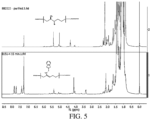
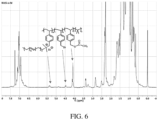
- 60 g of Bromobutyl 2222 was added to mixer and allowed to flux for 30 seconds at 25 rpm, 0.45 g (0.11 mol. equiv. to PMS-Br) of tetrabutyl ammonium bromide ("TBAB”) and 2.94g (1.20 mol. equiv. to PMS-Br) of sodium mercaptobenzothiazole.
- the mixing speed was set to 60 rpm and allowed to mix for 15 minutes.
Landscapes
- Chemical & Material Sciences (AREA)
- General Chemical & Material Sciences (AREA)
- Health & Medical Sciences (AREA)
- Chemical Kinetics & Catalysis (AREA)
- Medicinal Chemistry (AREA)
- Polymers & Plastics (AREA)
- Organic Chemistry (AREA)
- Addition Polymer Or Copolymer, Post-Treatments, Or Chemical Modifications (AREA)
Claims (12)
- Procédé de modification post-polymérisation d'un polymère, comprenant les étapes de :(a) mise en réaction d'un polymère avec au moins un nucléophile dans une réaction de substitution nucléophile en la présence d'un catalyseur de transfert de phases ; et(b) récupération d'un polymère fonctionnalisé ;la réaction étant sensiblement exempte d'un solvant et la température de la réaction de substitution nucléophile étant comprise entre environ 70 °C et environ 160 °C et la durée de réaction de la réaction de substitution nucléophile étant d'environ 10 minutes à environ 30 minutes.
- Procédé selon la revendication 1, le nucléophile étant choisi dans le groupe constitué par thioacétate, phénoxyde, alcoxyde, carboxylate, thiolate, thiocarboxylate, dithiocarboxylate, thiourée, thiocarbamate, dithiocarbamate, xanthate, thiocyanate et des combinaisons correspondantes.
- Procédé selon une quelconque revendication précédente, comprenant en outre l'étape de mélange d'un sel métallique ou d'un sel cationique organique avec le polymère.
- Procédé selon une quelconque revendication précédente, comprenant en outre l'étape de refroidissement du polymère fonctionnalisé jusqu'à une température d'environ 22 °C à environ 25 °C.
- Procédé selon une quelconque revendication précédente, le catalyseur de transfert de phases étant choisi dans le groupe constitué par :- des sels d'ammonium, préférablement un halogénure de tétrabutylammonium dans lequel l'halogénure du tétrabutylammonium est choisi dans le groupe constitué par fluorure, chlorure, bromure et iodure ;- des sels d'ammonium hétérocycliques,- des sels de phosphonium,- succinate de DL-α-tocophérol et de méthoxypolyéthylène glycol,- une solution de succinate de DL-α-tocophérol et de méthoxypolyéthylène glycol, et ;- des combinaisons correspondantes.
- Procédé selon une quelconque revendication précédente, le polymère étant une isooléfine halogénée, préférablement un poly(isobutylène-co-para-méthylstyrène) bromé ou un poly(isobutylène-co-isoprène) bromé.
- Procédé selon une quelconque revendication précédente, le polymère fonctionnalisé étant un poly(isobutylène-co-para-méthylstyrène) fonctionnalisé par thioacétate.
- Procédé selon l'une quelconque des revendications 1 à 6, le polymère fonctionnalisé étant un poly(isobutylène-co-para-méthylstyrène) fonctionnalisé par mercaptobenzothiazole.
- Procédé selon l'une quelconque des revendications 1 à 6, le polymère fonctionnalisé étant un poly(isobutylène-co-isoprène) fonctionnalisé par thioacétate.
- Procédé selon l'une quelconque des revendications 1 à 6, le polymère fonctionnalisé étant un poly(isobutylène-co-isoprène) fonctionnalisé par mercaptobenzothiazole.
- Procédé selon l'une quelconque des revendications 1 à 6, le polymère fonctionnalisé étant mélangé avec un réactif thioalkylate et un réactif mercaptobenzothiazole pour préparer un poly(isobutylène-co-para-méthylstyrène) et un poly(isobutylène-co-isoprène) fonctionnalisés.
- Procédé selon l'une quelconque des revendications 1 à 6, le polymère étant un caoutchouc d'halogénobutyle.
Applications Claiming Priority (3)
| Application Number | Priority Date | Filing Date | Title |
|---|---|---|---|
| US201862651964P | 2018-04-03 | 2018-04-03 | |
| EP18172743 | 2018-05-16 | ||
| PCT/US2019/024914 WO2019195111A1 (fr) | 2018-04-03 | 2019-03-29 | Processus sans solvant pour la fonctionnalisation de polymères à base d'isobutylène |
Publications (2)
| Publication Number | Publication Date |
|---|---|
| EP3774936A1 EP3774936A1 (fr) | 2021-02-17 |
| EP3774936B1 true EP3774936B1 (fr) | 2024-09-04 |
Family
ID=66102829
Family Applications (1)
| Application Number | Title | Priority Date | Filing Date |
|---|---|---|---|
| EP19717095.4A Active EP3774936B1 (fr) | 2018-04-03 | 2019-03-29 | Procédé sans solvant pour fonctionnaliser des polymères à base d'isobutylène |
Country Status (6)
| Country | Link |
|---|---|
| US (1) | US11649303B2 (fr) |
| EP (1) | EP3774936B1 (fr) |
| JP (1) | JP7077421B2 (fr) |
| CN (2) | CN112074546B (fr) |
| SG (1) | SG11202009506SA (fr) |
| WO (1) | WO2019195111A1 (fr) |
Families Citing this family (1)
| Publication number | Priority date | Publication date | Assignee | Title |
|---|---|---|---|---|
| CN114867614B (zh) * | 2019-12-17 | 2025-03-07 | 埃克森美孚化学专利公司 | 用于改进不混溶四季胎面的轮胎性能的官能化聚合物胎面添加剂 |
Family Cites Families (27)
| Publication number | Priority date | Publication date | Assignee | Title |
|---|---|---|---|---|
| FR65758E (fr) | 1950-04-18 | 1956-03-12 | ||
| US3099644A (en) | 1959-10-06 | 1963-07-30 | Exxon Research Engineering Co | Continuous chlorination and bromination of butyl rubber |
| US3645935A (en) * | 1968-04-23 | 1972-02-29 | Cities Service Co | Mercapto carboxylic acid modified butyl rubber |
| GB1482839A (en) * | 1974-10-29 | 1977-08-17 | Sanyo Trading Co | Vulcanisable rubber compositions and vulcanised rubber prepared therefrom |
| US4074035A (en) | 1975-04-22 | 1978-02-14 | Exxon Research & Engineering Co. | Halomethylated aromatic interpolymers |
| GB1604395A (en) | 1977-10-08 | 1981-12-09 | Dunlop Ltd | Elastomer compositions and tyre treads comprising them |
| JPS5714636A (en) | 1980-06-13 | 1982-01-25 | Exxon Research Engineering Co | Chlorinated butyl rubber/brominated butyl rubber blend compound with improved adhesive properties |
| US4384072A (en) | 1981-09-30 | 1983-05-17 | Exxon Research & Engineering Co. | Process for the manufacture of halogenated elastomers |
| US4513116A (en) | 1983-04-01 | 1985-04-23 | Exxon Research And Engineering Co. | Process for the manufacture of halogenated polymers |
| US4554326A (en) | 1983-04-01 | 1985-11-19 | Exxon Research & Engineering Co. | Process for the manufacture of halogenated polymers |
| US4703091A (en) | 1984-04-05 | 1987-10-27 | Exxon Research & Engineering Co. | Halogenated butyl rubber |
| US4681921A (en) | 1984-04-05 | 1987-07-21 | Exxon Research & Engineering Co. | Process for preparing improved halogenated butyl rubber |
| US4632963A (en) | 1984-04-05 | 1986-12-30 | Exxon Research & Engineering Co. | Halogenated butyl rubber |
| US5162445A (en) * | 1988-05-27 | 1992-11-10 | Exxon Chemical Patents Inc. | Para-alkylstyrene/isoolefin copolymers and functionalized copolymers thereof |
| US5071913A (en) | 1987-12-11 | 1991-12-10 | Exxon Chemical Patents Inc. | Rubbery isoolefin polymers exhibiting improved processability |
| US5182333A (en) | 1987-12-11 | 1993-01-26 | Exxon Chemical Patents Inc. | Production of rubbery isoolefin polymers |
| ATE143981T1 (de) | 1989-10-03 | 1996-10-15 | Exxon Chemical Patents Inc | Durch nukleophile substitution hergestellte funktionalisierte copolymere von para-alkylstyrol und isoolefinen |
| US5286804A (en) | 1991-09-17 | 1994-02-15 | Exxon Chemical Patents Inc. | Halogenation of star-branched butyl rubber with improved neutralization |
| US5681901A (en) | 1996-07-24 | 1997-10-28 | Exxon Chemical Patents Inc. | Process for halogenating isomonoolefin copolymers |
| JP3971481B2 (ja) * | 1997-03-07 | 2007-09-05 | 新日本石油株式会社 | ゴム加硫用メルカプトポリブテニル誘導体、それを含むゴム加硫用組成物および加硫ゴム組成物 |
| US6228978B1 (en) | 1997-06-25 | 2001-05-08 | Exxon Mobil Chemical Patents Inc | Star-branched polymer with dendrimer core |
| JP2000026542A (ja) * | 1998-07-07 | 2000-01-25 | Yokohama Rubber Co Ltd:The | 硫黄加硫可能なブチルゴムおよびそれを含むゴム組成物 |
| US7019058B2 (en) * | 2000-10-11 | 2006-03-28 | Exxonmobil Chemical Patents, Inc. | Halogenated elastomeric compositions having enhanced viscosity |
| KR101297451B1 (ko) * | 2005-08-05 | 2013-08-27 | 란세스 인크. | 할로부틸 엘라스토머의 개질 방법 |
| US8765863B2 (en) * | 2007-11-14 | 2014-07-01 | Exxonmobil Chemical Patents Inc. | Triethylamine functionalized elastomer in barrier applications |
| DE112013005852T5 (de) * | 2012-12-06 | 2015-08-20 | The Yokohama Rubber Co., Ltd. | Thioester-modifiziertes Polymer, Verfahren zur Herstellung desselben und Kautschukzusammensetzung, die dasselbe enthält |
| TW201500384A (zh) * | 2013-02-12 | 2015-01-01 | Lanxess Inc | 丁基橡膠離子聚合物-熱塑性接枝共聚物及其製造方法 |
-
2019
- 2019-03-29 EP EP19717095.4A patent/EP3774936B1/fr active Active
- 2019-03-29 SG SG11202009506SA patent/SG11202009506SA/en unknown
- 2019-03-29 CN CN201980030530.1A patent/CN112074546B/zh active Active
- 2019-03-29 US US17/040,322 patent/US11649303B2/en active Active
- 2019-03-29 JP JP2020554202A patent/JP7077421B2/ja not_active Expired - Fee Related
- 2019-03-29 CN CN202311427040.XA patent/CN117362503A/zh active Pending
- 2019-03-29 WO PCT/US2019/024914 patent/WO2019195111A1/fr not_active Ceased
Also Published As
| Publication number | Publication date |
|---|---|
| CN112074546B (zh) | 2024-05-28 |
| JP7077421B2 (ja) | 2022-05-30 |
| US20210017304A1 (en) | 2021-01-21 |
| JP2021518478A (ja) | 2021-08-02 |
| CN112074546A (zh) | 2020-12-11 |
| US11649303B2 (en) | 2023-05-16 |
| SG11202009506SA (en) | 2020-10-29 |
| CN117362503A (zh) | 2024-01-09 |
| WO2019195111A1 (fr) | 2019-10-10 |
| EP3774936A1 (fr) | 2021-02-17 |
Similar Documents
| Publication | Publication Date | Title |
|---|---|---|
| EP1820808A1 (fr) | Procédé pour l'halogénation de caoutchouc butyle sans agents de neutralisation acide | |
| JP5904951B2 (ja) | ハロブチルアイオノマーの製造方法 | |
| CN103228681B (zh) | 包含侧链乙烯基的磷离子交联聚合物及其制备方法 | |
| EP3774936B1 (fr) | Procédé sans solvant pour fonctionnaliser des polymères à base d'isobutylène | |
| EP3774959B1 (fr) | Polymères à base d'isobutylène avec des substituants de chaîne latérale oléfiniques et compositions durcissables les contenant | |
| US9540455B2 (en) | Process for preparing cured polymers | |
| US12006393B2 (en) | Thioacetate functionalized isobutylene-based polymers and curable compositions containing the same | |
| US9790297B2 (en) | Azidated copolymers and processes for preparing same | |
| WO2014205568A1 (fr) | Procédés de préparation de copolymères azidés | |
| CA2557225A1 (fr) | Elastomeres halogenobutyles |
Legal Events
| Date | Code | Title | Description |
|---|---|---|---|
| STAA | Information on the status of an ep patent application or granted ep patent |
Free format text: STATUS: UNKNOWN |
|
| STAA | Information on the status of an ep patent application or granted ep patent |
Free format text: STATUS: THE INTERNATIONAL PUBLICATION HAS BEEN MADE |
|
| PUAI | Public reference made under article 153(3) epc to a published international application that has entered the european phase |
Free format text: ORIGINAL CODE: 0009012 |
|
| STAA | Information on the status of an ep patent application or granted ep patent |
Free format text: STATUS: REQUEST FOR EXAMINATION WAS MADE |
|
| 17P | Request for examination filed |
Effective date: 20201103 |
|
| AK | Designated contracting states |
Kind code of ref document: A1 Designated state(s): AL AT BE BG CH CY CZ DE DK EE ES FI FR GB GR HR HU IE IS IT LI LT LU LV MC MK MT NL NO PL PT RO RS SE SI SK SM TR |
|
| AX | Request for extension of the european patent |
Extension state: BA ME |
|
| DAV | Request for validation of the european patent (deleted) | ||
| DAX | Request for extension of the european patent (deleted) | ||
| STAA | Information on the status of an ep patent application or granted ep patent |
Free format text: STATUS: EXAMINATION IS IN PROGRESS |
|
| 17Q | First examination report despatched |
Effective date: 20230831 |
|
| GRAP | Despatch of communication of intention to grant a patent |
Free format text: ORIGINAL CODE: EPIDOSNIGR1 |
|
| STAA | Information on the status of an ep patent application or granted ep patent |
Free format text: STATUS: GRANT OF PATENT IS INTENDED |
|
| INTG | Intention to grant announced |
Effective date: 20240403 |
|
| P01 | Opt-out of the competence of the unified patent court (upc) registered |
Effective date: 20240528 |
|
| GRAS | Grant fee paid |
Free format text: ORIGINAL CODE: EPIDOSNIGR3 |
|
| GRAA | (expected) grant |
Free format text: ORIGINAL CODE: 0009210 |
|
| STAA | Information on the status of an ep patent application or granted ep patent |
Free format text: STATUS: THE PATENT HAS BEEN GRANTED |
|
| AK | Designated contracting states |
Kind code of ref document: B1 Designated state(s): AL AT BE BG CH CY CZ DE DK EE ES FI FR GB GR HR HU IE IS IT LI LT LU LV MC MK MT NL NO PL PT RO RS SE SI SK SM TR |
|
| REG | Reference to a national code |
Ref country code: GB Ref legal event code: FG4D |
|
| REG | Reference to a national code |
Ref country code: CH Ref legal event code: EP |
|
| REG | Reference to a national code |
Ref country code: IE Ref legal event code: FG4D |
|
| REG | Reference to a national code |
Ref country code: DE Ref legal event code: R096 Ref document number: 602019058262 Country of ref document: DE |
|
| REG | Reference to a national code |
Ref country code: LT Ref legal event code: MG9D |
|
| REG | Reference to a national code |
Ref country code: NL Ref legal event code: MP Effective date: 20240904 |
|
| PG25 | Lapsed in a contracting state [announced via postgrant information from national office to epo] |
Ref country code: NO Free format text: LAPSE BECAUSE OF FAILURE TO SUBMIT A TRANSLATION OF THE DESCRIPTION OR TO PAY THE FEE WITHIN THE PRESCRIBED TIME-LIMIT Effective date: 20241204 |
|
| PG25 | Lapsed in a contracting state [announced via postgrant information from national office to epo] |
Ref country code: GR Free format text: LAPSE BECAUSE OF FAILURE TO SUBMIT A TRANSLATION OF THE DESCRIPTION OR TO PAY THE FEE WITHIN THE PRESCRIBED TIME-LIMIT Effective date: 20241205 Ref country code: PL Free format text: LAPSE BECAUSE OF FAILURE TO SUBMIT A TRANSLATION OF THE DESCRIPTION OR TO PAY THE FEE WITHIN THE PRESCRIBED TIME-LIMIT Effective date: 20240904 Ref country code: FI Free format text: LAPSE BECAUSE OF FAILURE TO SUBMIT A TRANSLATION OF THE DESCRIPTION OR TO PAY THE FEE WITHIN THE PRESCRIBED TIME-LIMIT Effective date: 20240904 |
|
| PG25 | Lapsed in a contracting state [announced via postgrant information from national office to epo] |
Ref country code: BG Free format text: LAPSE BECAUSE OF FAILURE TO SUBMIT A TRANSLATION OF THE DESCRIPTION OR TO PAY THE FEE WITHIN THE PRESCRIBED TIME-LIMIT Effective date: 20240904 |
|
| PG25 | Lapsed in a contracting state [announced via postgrant information from national office to epo] |
Ref country code: LV Free format text: LAPSE BECAUSE OF FAILURE TO SUBMIT A TRANSLATION OF THE DESCRIPTION OR TO PAY THE FEE WITHIN THE PRESCRIBED TIME-LIMIT Effective date: 20240904 |
|
| PG25 | Lapsed in a contracting state [announced via postgrant information from national office to epo] |
Ref country code: HR Free format text: LAPSE BECAUSE OF FAILURE TO SUBMIT A TRANSLATION OF THE DESCRIPTION OR TO PAY THE FEE WITHIN THE PRESCRIBED TIME-LIMIT Effective date: 20240904 |
|
| PG25 | Lapsed in a contracting state [announced via postgrant information from national office to epo] |
Ref country code: ES Free format text: LAPSE BECAUSE OF FAILURE TO SUBMIT A TRANSLATION OF THE DESCRIPTION OR TO PAY THE FEE WITHIN THE PRESCRIBED TIME-LIMIT Effective date: 20240904 Ref country code: RS Free format text: LAPSE BECAUSE OF FAILURE TO SUBMIT A TRANSLATION OF THE DESCRIPTION OR TO PAY THE FEE WITHIN THE PRESCRIBED TIME-LIMIT Effective date: 20241204 |
|
| PG25 | Lapsed in a contracting state [announced via postgrant information from national office to epo] |
Ref country code: RS Free format text: LAPSE BECAUSE OF FAILURE TO SUBMIT A TRANSLATION OF THE DESCRIPTION OR TO PAY THE FEE WITHIN THE PRESCRIBED TIME-LIMIT Effective date: 20241204 Ref country code: PL Free format text: LAPSE BECAUSE OF FAILURE TO SUBMIT A TRANSLATION OF THE DESCRIPTION OR TO PAY THE FEE WITHIN THE PRESCRIBED TIME-LIMIT Effective date: 20240904 Ref country code: NO Free format text: LAPSE BECAUSE OF FAILURE TO SUBMIT A TRANSLATION OF THE DESCRIPTION OR TO PAY THE FEE WITHIN THE PRESCRIBED TIME-LIMIT Effective date: 20241204 Ref country code: LV Free format text: LAPSE BECAUSE OF FAILURE TO SUBMIT A TRANSLATION OF THE DESCRIPTION OR TO PAY THE FEE WITHIN THE PRESCRIBED TIME-LIMIT Effective date: 20240904 Ref country code: HR Free format text: LAPSE BECAUSE OF FAILURE TO SUBMIT A TRANSLATION OF THE DESCRIPTION OR TO PAY THE FEE WITHIN THE PRESCRIBED TIME-LIMIT Effective date: 20240904 Ref country code: GR Free format text: LAPSE BECAUSE OF FAILURE TO SUBMIT A TRANSLATION OF THE DESCRIPTION OR TO PAY THE FEE WITHIN THE PRESCRIBED TIME-LIMIT Effective date: 20241205 Ref country code: FI Free format text: LAPSE BECAUSE OF FAILURE TO SUBMIT A TRANSLATION OF THE DESCRIPTION OR TO PAY THE FEE WITHIN THE PRESCRIBED TIME-LIMIT Effective date: 20240904 Ref country code: ES Free format text: LAPSE BECAUSE OF FAILURE TO SUBMIT A TRANSLATION OF THE DESCRIPTION OR TO PAY THE FEE WITHIN THE PRESCRIBED TIME-LIMIT Effective date: 20240904 Ref country code: BG Free format text: LAPSE BECAUSE OF FAILURE TO SUBMIT A TRANSLATION OF THE DESCRIPTION OR TO PAY THE FEE WITHIN THE PRESCRIBED TIME-LIMIT Effective date: 20240904 |
|
| REG | Reference to a national code |
Ref country code: AT Ref legal event code: MK05 Ref document number: 1720329 Country of ref document: AT Kind code of ref document: T Effective date: 20240904 |
|
| PG25 | Lapsed in a contracting state [announced via postgrant information from national office to epo] |
Ref country code: NL Free format text: LAPSE BECAUSE OF FAILURE TO SUBMIT A TRANSLATION OF THE DESCRIPTION OR TO PAY THE FEE WITHIN THE PRESCRIBED TIME-LIMIT Effective date: 20240904 |
|
| PG25 | Lapsed in a contracting state [announced via postgrant information from national office to epo] |
Ref country code: PT Free format text: LAPSE BECAUSE OF FAILURE TO SUBMIT A TRANSLATION OF THE DESCRIPTION OR TO PAY THE FEE WITHIN THE PRESCRIBED TIME-LIMIT Effective date: 20250106 Ref country code: IS Free format text: LAPSE BECAUSE OF FAILURE TO SUBMIT A TRANSLATION OF THE DESCRIPTION OR TO PAY THE FEE WITHIN THE PRESCRIBED TIME-LIMIT Effective date: 20250104 |
|
| PG25 | Lapsed in a contracting state [announced via postgrant information from national office to epo] |
Ref country code: RO Free format text: LAPSE BECAUSE OF FAILURE TO SUBMIT A TRANSLATION OF THE DESCRIPTION OR TO PAY THE FEE WITHIN THE PRESCRIBED TIME-LIMIT Effective date: 20240904 Ref country code: SM Free format text: LAPSE BECAUSE OF FAILURE TO SUBMIT A TRANSLATION OF THE DESCRIPTION OR TO PAY THE FEE WITHIN THE PRESCRIBED TIME-LIMIT Effective date: 20240904 |
|
| PG25 | Lapsed in a contracting state [announced via postgrant information from national office to epo] |
Ref country code: EE Free format text: LAPSE BECAUSE OF FAILURE TO SUBMIT A TRANSLATION OF THE DESCRIPTION OR TO PAY THE FEE WITHIN THE PRESCRIBED TIME-LIMIT Effective date: 20240904 Ref country code: AT Free format text: LAPSE BECAUSE OF FAILURE TO SUBMIT A TRANSLATION OF THE DESCRIPTION OR TO PAY THE FEE WITHIN THE PRESCRIBED TIME-LIMIT Effective date: 20240904 |
|
| PG25 | Lapsed in a contracting state [announced via postgrant information from national office to epo] |
Ref country code: CZ Free format text: LAPSE BECAUSE OF FAILURE TO SUBMIT A TRANSLATION OF THE DESCRIPTION OR TO PAY THE FEE WITHIN THE PRESCRIBED TIME-LIMIT Effective date: 20240904 |
|
| PG25 | Lapsed in a contracting state [announced via postgrant information from national office to epo] |
Ref country code: SK Free format text: LAPSE BECAUSE OF FAILURE TO SUBMIT A TRANSLATION OF THE DESCRIPTION OR TO PAY THE FEE WITHIN THE PRESCRIBED TIME-LIMIT Effective date: 20240904 Ref country code: IT Free format text: LAPSE BECAUSE OF FAILURE TO SUBMIT A TRANSLATION OF THE DESCRIPTION OR TO PAY THE FEE WITHIN THE PRESCRIBED TIME-LIMIT Effective date: 20240904 |
|
| REG | Reference to a national code |
Ref country code: DE Ref legal event code: R097 Ref document number: 602019058262 Country of ref document: DE |
|
| PG25 | Lapsed in a contracting state [announced via postgrant information from national office to epo] |
Ref country code: DK Free format text: LAPSE BECAUSE OF FAILURE TO SUBMIT A TRANSLATION OF THE DESCRIPTION OR TO PAY THE FEE WITHIN THE PRESCRIBED TIME-LIMIT Effective date: 20240904 |
|
| PLBE | No opposition filed within time limit |
Free format text: ORIGINAL CODE: 0009261 |
|
| STAA | Information on the status of an ep patent application or granted ep patent |
Free format text: STATUS: NO OPPOSITION FILED WITHIN TIME LIMIT |
|
| 26N | No opposition filed |
Effective date: 20250605 |
|
| PG25 | Lapsed in a contracting state [announced via postgrant information from national office to epo] |
Ref country code: SE Free format text: LAPSE BECAUSE OF FAILURE TO SUBMIT A TRANSLATION OF THE DESCRIPTION OR TO PAY THE FEE WITHIN THE PRESCRIBED TIME-LIMIT Effective date: 20240904 |
|
| PG25 | Lapsed in a contracting state [announced via postgrant information from national office to epo] |
Ref country code: MC Free format text: LAPSE BECAUSE OF FAILURE TO SUBMIT A TRANSLATION OF THE DESCRIPTION OR TO PAY THE FEE WITHIN THE PRESCRIBED TIME-LIMIT Effective date: 20240904 |
|
| REG | Reference to a national code |
Ref country code: CH Ref legal event code: H13 Free format text: ST27 STATUS EVENT CODE: U-0-0-H10-H13 (AS PROVIDED BY THE NATIONAL OFFICE) Effective date: 20251023 |
|
| PG25 | Lapsed in a contracting state [announced via postgrant information from national office to epo] |
Ref country code: LU Free format text: LAPSE BECAUSE OF NON-PAYMENT OF DUE FEES Effective date: 20250329 |
|
| GBPC | Gb: european patent ceased through non-payment of renewal fee |
Effective date: 20250329 |
|
| REG | Reference to a national code |
Ref country code: BE Ref legal event code: MM Effective date: 20250331 |
|
| PG25 | Lapsed in a contracting state [announced via postgrant information from national office to epo] |
Ref country code: GB Free format text: LAPSE BECAUSE OF NON-PAYMENT OF DUE FEES Effective date: 20250329 |
|
| PG25 | Lapsed in a contracting state [announced via postgrant information from national office to epo] |
Ref country code: FR Free format text: LAPSE BECAUSE OF NON-PAYMENT OF DUE FEES Effective date: 20250331 |
|
| PG25 | Lapsed in a contracting state [announced via postgrant information from national office to epo] |
Ref country code: BE Free format text: LAPSE BECAUSE OF NON-PAYMENT OF DUE FEES Effective date: 20250331 |
|
| PG25 | Lapsed in a contracting state [announced via postgrant information from national office to epo] |
Ref country code: CH Free format text: LAPSE BECAUSE OF NON-PAYMENT OF DUE FEES Effective date: 20250331 |
|
| PG25 | Lapsed in a contracting state [announced via postgrant information from national office to epo] |
Ref country code: IE Free format text: LAPSE BECAUSE OF NON-PAYMENT OF DUE FEES Effective date: 20250329 |
|
| PGFP | Annual fee paid to national office [announced via postgrant information from national office to epo] |
Ref country code: DE Payment date: 20260320 Year of fee payment: 8 |