EP3777174B1 - Bi-prédiction pondérée adaptative basée sur un modèle pour codage vidéo - Google Patents
Bi-prédiction pondérée adaptative basée sur un modèle pour codage vidéo Download PDFInfo
- Publication number
- EP3777174B1 EP3777174B1 EP19775251.2A EP19775251A EP3777174B1 EP 3777174 B1 EP3777174 B1 EP 3777174B1 EP 19775251 A EP19775251 A EP 19775251A EP 3777174 B1 EP3777174 B1 EP 3777174B1
- Authority
- EP
- European Patent Office
- Prior art keywords
- block
- weight
- template
- prediction
- current block
- Prior art date
- Legal status (The legal status is an assumption and is not a legal conclusion. Google has not performed a legal analysis and makes no representation as to the accuracy of the status listed.)
- Active
Links
Images





Classifications
-
- H—ELECTRICITY
- H04—ELECTRIC COMMUNICATION TECHNIQUE
- H04N—PICTORIAL COMMUNICATION, e.g. TELEVISION
- H04N19/00—Methods or arrangements for coding, decoding, compressing or decompressing digital video signals
- H04N19/10—Methods or arrangements for coding, decoding, compressing or decompressing digital video signals using adaptive coding
- H04N19/134—Methods or arrangements for coding, decoding, compressing or decompressing digital video signals using adaptive coding characterised by the element, parameter or criterion affecting or controlling the adaptive coding
- H04N19/157—Assigned coding mode, i.e. the coding mode being predefined or preselected to be further used for selection of another element or parameter
- H04N19/159—Prediction type, e.g. intra-frame, inter-frame or bidirectional frame prediction
-
- H—ELECTRICITY
- H04—ELECTRIC COMMUNICATION TECHNIQUE
- H04N—PICTORIAL COMMUNICATION, e.g. TELEVISION
- H04N19/00—Methods or arrangements for coding, decoding, compressing or decompressing digital video signals
- H04N19/10—Methods or arrangements for coding, decoding, compressing or decompressing digital video signals using adaptive coding
- H04N19/102—Methods or arrangements for coding, decoding, compressing or decompressing digital video signals using adaptive coding characterised by the element, parameter or selection affected or controlled by the adaptive coding
- H04N19/103—Selection of coding mode or of prediction mode
- H04N19/105—Selection of the reference unit for prediction within a chosen coding or prediction mode, e.g. adaptive choice of position and number of pixels used for prediction
-
- H—ELECTRICITY
- H04—ELECTRIC COMMUNICATION TECHNIQUE
- H04N—PICTORIAL COMMUNICATION, e.g. TELEVISION
- H04N19/00—Methods or arrangements for coding, decoding, compressing or decompressing digital video signals
- H04N19/10—Methods or arrangements for coding, decoding, compressing or decompressing digital video signals using adaptive coding
- H04N19/134—Methods or arrangements for coding, decoding, compressing or decompressing digital video signals using adaptive coding characterised by the element, parameter or criterion affecting or controlling the adaptive coding
- H04N19/136—Incoming video signal characteristics or properties
- H04N19/137—Motion inside a coding unit, e.g. average field, frame or block difference
-
- H—ELECTRICITY
- H04—ELECTRIC COMMUNICATION TECHNIQUE
- H04N—PICTORIAL COMMUNICATION, e.g. TELEVISION
- H04N19/00—Methods or arrangements for coding, decoding, compressing or decompressing digital video signals
- H04N19/10—Methods or arrangements for coding, decoding, compressing or decompressing digital video signals using adaptive coding
- H04N19/169—Methods or arrangements for coding, decoding, compressing or decompressing digital video signals using adaptive coding characterised by the coding unit, i.e. the structural portion or semantic portion of the video signal being the object or the subject of the adaptive coding
- H04N19/17—Methods or arrangements for coding, decoding, compressing or decompressing digital video signals using adaptive coding characterised by the coding unit, i.e. the structural portion or semantic portion of the video signal being the object or the subject of the adaptive coding the unit being an image region, e.g. an object
- H04N19/176—Methods or arrangements for coding, decoding, compressing or decompressing digital video signals using adaptive coding characterised by the coding unit, i.e. the structural portion or semantic portion of the video signal being the object or the subject of the adaptive coding the unit being an image region, e.g. an object the region being a block, e.g. a macroblock
-
- H—ELECTRICITY
- H04—ELECTRIC COMMUNICATION TECHNIQUE
- H04N—PICTORIAL COMMUNICATION, e.g. TELEVISION
- H04N19/00—Methods or arrangements for coding, decoding, compressing or decompressing digital video signals
- H04N19/10—Methods or arrangements for coding, decoding, compressing or decompressing digital video signals using adaptive coding
- H04N19/169—Methods or arrangements for coding, decoding, compressing or decompressing digital video signals using adaptive coding characterised by the coding unit, i.e. the structural portion or semantic portion of the video signal being the object or the subject of the adaptive coding
- H04N19/184—Methods or arrangements for coding, decoding, compressing or decompressing digital video signals using adaptive coding characterised by the coding unit, i.e. the structural portion or semantic portion of the video signal being the object or the subject of the adaptive coding the unit being bits, e.g. of the compressed video stream
-
- H—ELECTRICITY
- H04—ELECTRIC COMMUNICATION TECHNIQUE
- H04N—PICTORIAL COMMUNICATION, e.g. TELEVISION
- H04N19/00—Methods or arrangements for coding, decoding, compressing or decompressing digital video signals
- H04N19/50—Methods or arrangements for coding, decoding, compressing or decompressing digital video signals using predictive coding
- H04N19/503—Methods or arrangements for coding, decoding, compressing or decompressing digital video signals using predictive coding involving temporal prediction
- H04N19/51—Motion estimation or motion compensation
- H04N19/577—Motion compensation with bidirectional frame interpolation, i.e. using B-pictures
Definitions
- Inter prediction such as inter bi-prediction, predicts a current block using reference blocks in other frames in video coding frameworks.
- a transcoder Given a current block being decoded from a current frame using bi-prediction, a transcoder copies two inter predicted reference blocks from two reference frames and blends the reference blocks together to generate a prediction block for the current block being decoded.
- the prediction block is used as a prediction for the current block.
- the transcoder calculates a residual, which is a difference between the prediction block and the current block.
- the transcoder sends the residual in the encoded bitstream to a decoder instead of the pixel values for the current block.
- Video content contains many kinds of variations in different characteristics, such as luminance variations.
- the variations may introduce bias into the inter prediction.
- the luminance variation in one of the inter predicted blocks from the current block may reduce the prediction accuracy, which reduces the final compression efficiency.
- that reference block may not be a good prediction of the current block.
- the residual of the difference between the current block and the prediction block is larger, which uses more bandwidth in the encoded bitstream.
- JEM 5 Joint Exploration Test Model 5
- JVET Joint Video Exploration Team
- JVET-E1001-v2 Joint Exploration Model 5
- the document describes inter alia Local Illumination Compensation (LIC) based on a linear model for illumination changes, using a scaling factor and an offset.
- LIC Local Illumination Compensation
- a least square error method is employed to derive these parameters by using the neighboring samples of the current coding unit and their corresponding reference samples.
- Peng Y. et al "Localized Weighted Prediction for Video Coding, Proceedings of the IEEE International Symposium Circuits and Systems (ISCAS), Kobe, Japan, 23 to 26 May 2005 , describes a compression method for handling local brightness variations in video sequences. The method does not explicitly code and transmit the weighting parameters used to predict the current block. Instead, the correlation of the current block with its spatial neighbors and temporal predictors.
- US 2012/236943 describes a video encoding method including selecting a plurality of reference blocks based on a plurality of motion vectors and setting weights assigned to the plurality of reference blocks independently for each of a plurality of regions of a current block in order to predict and encode the current block.
- the claimed invention relates to template based adaptive weighting method, the related computer-readable storage medium, and the related apparatus, as defined by the independent claims. Particular embodiments are defined by the dependent claims. Other methods mentioned in the application help to understand the invention.
- Some embodiments use a bi-prediction process that weights the reference blocks differently when generating a prediction block that is used to predict a current block of pixels.
- a first template region such as an L-shaped region, of decoded neighboring pixels to a current block and template regions for the reference blocks that are being used to predict the current block are identified.
- the templates are used to calculate the weights that are used to blend the reference blocks to generate a prediction block when using bi-prediction.
- the weights may be calculated by a transcoder and signaled to the decoder, or may be calculated by the decoder.
- the pixels of the current block are not known by the decoder and cannot be used to generate the weights.
- characteristics of the templates such as the luminance of the templates, may be a good representation of the luminance of the current block and the reference blocks, respectively.
- the luminance may be the intensity of light and may change across the current block and at least one of the reference blocks.
- the transcoder or decoder can change the weights adaptively according to the luminance difference between the current block and each of the reference blocks. Specifically, a weight for a reference block may be smaller if there is bigger luminance gap between the current block and a first reference block compared to a second reference block and the current block.
- a weight for a first reference block may be larger if there is smaller luminance gap between the current block and a second reference block compared to the first reference block and the current block.
- FIG. 1 depicts a simplified system 100 for using weighted bi-prediction according to some embodiments.
- System 100 transcodes a source video asset, which may be any type of video, such as for a television show, movie, or video clip.
- the source video may need to be transcoded into one or more formats, such as one or more bitrates.
- a server system 102 sends an encoded bitstream to client 104.
- server system 102 may be sending a video to a client 104 for playback.
- Transcoder 106 may be a software video processor/transcoder configured on a computer processing unit (CPU), a hardware accelerated video processor/transcoder with a graphical processing unit (GPU), a field programmable gate array (FPGA), and/or a hardware processor/transcoder implemented in an application-specific integrated circuit (ASIC).
- Transcoding may be the conversion from one digital format to another digital format. Transcoding may involve decoding the source format and encoding the source video into another digital format, or converting the source content into videos with a specific resolution, framerate, bitrate, codec, etc. Also, encoding may be the conversion of analog source content and to a digital format. As used, the term transcoding may include encoding.
- a transcoder bi-prediction block 108 performs a bi-prediction process for a current block of a current frame.
- Inter-prediction uses reference blocks from frames other than the current frame.
- Bi-prediction uses a first reference block from a first frame and a second reference block from a second frame to predict the current block.
- the first frame is before the current frame and the second frame is after the current frame; however, the first frame and the second frame may be both before the current frame or both after the current frame.
- Transcoder bi-prediction block 108 identifies a first reference block in a first reference frame and a second reference block in a second reference frame using a motion search process. After identifying the first reference block and the second reference block, transcoder bi-prediction block 108 may perform different processes based on whether the adaptive weight calculation will be performed on the transcoder side or the decoder side. If on the decoder side, transcoder bi-prediction block 108 determines signaling values for the bi-prediction mode. The signaling values may be the values for a first motion vector that points from the current block to the first reference block and a second motion vector that points from the current block to the second reference block.
- Transcoder bi-prediction block 108 calculates a prediction block by blending pixel values from the reference blocks with equal weight. Then, transcoder bi-prediction block 108 calculates a residual of the difference between the current block and the prediction block and inserts the residual into the encoded bitstream. The number of bits for the residual is expected to be less than the number of bits required to signal pixel values for the current block. Also, transcoder bi-prediction block 108 inserts a flag with a value that indicates that the adaptive weight bi-prediction mode should be used in the decoding process.
- Client 104 includes a decoder 112 that decodes the encoded bitstream.
- a decoder bi-prediction block 110 may blend pixels of reference blocks to generate a prediction block for a current block being decoded.
- Decoder 112 then uses the prediction block to decode the current block by applying the residual to the prediction block to calculate the pixel values for the current block.
- decoder bi-prediction block 110 may adaptively determine weights that are used to blend pixels of the reference blocks. Then, decoder bi-prediction block 110 generates the prediction block using the weights and pixel values for the reference blocks. Decoder bi-prediction block 110 decodes the current block by applying the residual to the prediction block.
- the adaptive weight calculation may be performed on the transcoder side or the decoder side. If the adaptive weight calculation is performed on the transcoder side, transcoder bi-prediction block 108 may adaptively determine weights that are used to blend pixels of reference blocks for a current block being decoded. Then, transcoder bi-prediction block 108 inserts the values for the weights into the encoded bitstream in addition to the motion vectors. Transcoder bi-prediction block 108 may insert a value for the flag that indicates adaptive weight bi-prediction is not performed in the decoding process. Decoder 112 uses the values to adjust the weights to blend pixels of references blocks for a current block being decoded.
- FIG. 2 shows an example of bi-prediction according to some embodiments.
- Transcoder 106 transcodes a current frame 204. In the transcoding process, transcoder 106 decodes previously transcoded frames to use in the transcoded process of other frames. Here, transcoder 106 has already transcoded and then decoded reference frame 202 (reference frame 0) and reference frame 206 (reference frame 1). Transcoder 106 selects motion vectors (MV) to reference the positions of the reference blocks that are used to predict the current block C. Transcoder 106 may use various motion search methods to select the motion vectors for the reference blocks.
- MV motion vectors
- transcoder 106 may insert the motion vectors to use in the encoded bitstream along with a flag with a value that indicates whether or not to use adaptive weight bi-prediction on the decoder side. As discussed above, transcoder 106 also generates a prediction block and a residual. The prediction block and resulting residual may be different depending on whether the adaptive weight calculation is performed on the decoder side or the transcoder side.
- Decoder 112 receives the encoded bitstream and starts decoding frames. Using the example in FIG. 2 , decoder 112 is decoding a current frame 204. Decoder 112 has already decoded reference frame 202 (reference frame 0) and reference frame 206 (reference frame 1). Decoder 112 uses motion vectors (MV) to select the positions of the reference blocks that are used to predict the current block C. For example, transcoder 106 may have inserted the motion vectors for the current block in the encoded bitstream. A motion vector MV0 208-1 points to a reference block R0 210-1 in reference frame 0 and a motion vector MV1 208-2 points to a reference block R1 210-2 in reference frame 1. Decoder 112 generates a prediction block from reference block R0 and reference block R1, and applies the residual to the prediction block to decode the current block.
- MV motion vectors
- Transcoder 106 or decoder 112 uses the pixels of reference block R0 and reference block R1 to predict the pixels of current block C 212.
- the values of "1 ⁇ 2" in the equation weight the pixels of reference block R0 and reference block R1 equally. Accordingly, the pixels of reference block R0 and reference block R1 are given equal weight to predict the pixels of current block C.
- characteristics such as luminance conditions, change across current block and reference blocks
- bias will be introduced by the fixed weight blending of the pixels.
- other characteristics may be used, such as local complexity (e.g., pixel variance, pixel local entropy, amount of edges, and volume of gradient), texture similarity (e.g., edge directions), color difference, temporal distance (e.g., a difference of frame counter in playback order, or difference of time stamps), coding parameters such as a quantization parameter (QP), block size, coding mode (e.g., inter coding motion information, and intra coding motion information), etc.
- QP quantization parameter
- block size e.g., inter coding motion information, and intra coding motion information
- coding mode e.g., inter coding motion information, and intra coding motion information
- Luminance variation is common in video, such as changes in light conditions (e.g., flashes, fluorescent changes), movement of objects (e.g., from sunshine to shadows), and fade in and fade out shot and scene changes that are added in post processing. Given the frequency of luminance variation, the possibility of the luminance variation affecting prediction accuracy is high.
- Transcoder 106 or decoder 112 may use an adaptive weighted blending of the weights in the bi-prediction process.
- FIG. 3 depicts an example of an equation that uses adaptive weighted blending of the weights in the bi-prediction process according to some embodiments.
- a first weight w 0 is a weight for pixels of the first reference block R0 and at 302-2, a second weight w 1 is a weight for pixels of the second reference block R1.
- the prediction block C i,j is a combination of the weight w 0 multiplied by the pixels of the reference block R0 and the weight w 1 multiplied by the pixels of the reference block R1.
- Transcoder 106 or decoder 112 may adaptively adjust the weights of w 0 and w 1 based on the variation of a characteristic between reference block R0 and the current block and between reference block R1 and the current block. For example, transcoder 106 or decoder 112 determines if the luminance of reference block R0 is closer to the luminance of current block C than the luminance of reference block R1 to the luminance of current block C. If so, then transcoder 106 or decoder 112 increases the value for weight w 0 and decreases the weight w 1 .
- transcoder 106 or decoder 112 decreases the value for weight w 0 and increases the weight w 1 .
- the change in the value of the weights may make the blended luminance of the current block C more accurate because the luminance of the reference block that is closer to the luminance of the current block is weighted higher.
- the bi-prediction accuracy and compression efficiency increases because the prediction block includes values that are closer to the current block.
- Transcoder 106 or decoder 112 determines the weights adaptively using templates. Both scenarios are described with respect to FIG. 4.
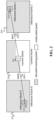
- FIG. 4 depicts an example of using templates to determine the weights according to some embodiments.
- transcoder 106 is transcoding a current frame 204.
- Transcoder 106 has transcoded and then decoded some blocks in current frame 204 that are represented with shading at 408 and has not decoded some blocks that are represented without shading at 410.
- Transcoder 106 has already decoded reference frame 202 (reference frame 0) and reference frame 206 (reference frame 1).
- Transcoder 106 determines a shape, such as a L shape of decoded existing pixels at 402.
- the L shaped region is a template of a width W and a height H.
- the L shaped region may be neighboring pixels to a current block 212 of MxN size being decoded. Although an L shaped region is described, other types of shapes may be used, such as the width of the template may not go beyond the top side of the current block.
- Transcoder 106 identifies a template 406-1 in the reference frame 0 based on reference block 0 and a template 406-2 in the reference frame 1 based on reference block 1.
- Template 406-1 and template 406-2 may have the same dimensions as template 402, such as the WxH dimensions.
- template 406-1 and template 406-2 may also be positioned the same relative to reference blocks 0 and 1, respectively, such as forming an L-shape template next to the left and top sides of the reference blocks 0 and 1, respectively.
- Transcoder 106 uses template 406-1 in the reference frame 0, template 402 for the current block, and template 406-2 in the reference frame 1 to adaptively determine the weights. Transcoder 106 uses the templates because current block 0 has not been transcoded yet. Transcoder 106 may use the templates to generate the weights, but may not need to use templates because transcoder 106 knows the decoded values for the current block and the reference blocks. This ensures that both transcoder 106 and decoder 112 use the same process and generating identical results. Thus, transcoder 106 uses decoded pixels in the current frame to determine the values of the weights. In the process, transcoder 106 selects the reference frames to use, such as reference frame 0 and reference frame 1.
- transcoder 106 selects the motion vectors for the current block being transcoded.
- the motion vectors identify the positions of the reference blocks R0 and R1.
- Transcoder 106 then selects templates. For example, transcoder 106 selects an L shaped region around the reference block R0 and R1 as the templates 406-1 and 406-2, respectively. Also, transcoder 106 selects a similarly shaped template 402 for the current block.
- Transcoder 106 then uses templates 402, 406-1, and 406-2 to determine the values of the weights. For example, transcoder 106 uses the templates 402, 406-1, and 406-2 to determine a luminance variation. As mentioned above, transcoder 106 uses the L shaped region instead of the pixels inside of the current block being decoded because transcoder 106 does not know the luminance of the current block due to the current block not having been transcoded yet. However, the luminance of the neighboring pixels in the L shaped region may be similar to the luminance of the current block in most cases.
- Transcoder 106 then adaptively calculates the weights for the reference blocks, the process of which will be described in more detail below.
- Transcoder 106 may insert values for the weights in the encoded bitstream along with the motion vectors and a flag with a value that indicates the adaptive weighted bi-prediction is being used.
- the flag may be set to a first value when the adaptive weighted bi-prediction is being used and a second value when fixed weighted bi-prediction is being used, wherein the fixed weighted bi-prediction is not covered by the claimed invention.
- decoder 112 uses the weights to blend the pixels of the reference blocks. For example, pixels of one of the reference blocks may be weighted higher than pixels of the other reference block to create the prediction block.
- Decoder 112 also calculates the weights in the decoder side scenario.
- decoder 112 receives the encoded bitstream and is decoding a current frame 204.
- Decoder 112 has decoded some blocks in current frame 204 that are represented with shading at 408 and has not decoded some blocks that are represented without shading at 410.
- Decoder 112 has already decoded reference frame 202 (reference frame 0) and reference frame 206 (reference frame 1).
- Decoder 112 determines a shape, such as a L shape of decoded existing pixels at 402.
- the L shaped region is a template of a width W and a height H.
- the L shaped region may be neighboring pixels to a current block 212 of MxN size being decoded. Although an L shaped region is described, other types of shapes may be used, such as the width of the template may not go beyond the top side of the current block.
- Decoder 112 identifies a template 406-1 in the reference frame 0 based on reference block 0 and a template 406-2 in the reference frame 1 based on reference block 1.
- Template 406-1 and template 406-2 may have the same dimensions as template 402, such as the WxH dimensions.
- template 406-1 and template 406-2 may also be positioned the same relative to reference blocks 0 and 1, such as forming an L-shape template next to the left and top sides of the reference blocks 0 and 1, respectively.
- Decoder 112 uses template 406-1 in the reference frame 0, template 402 for the current block, and template 406-2 in the reference frame 1 to adaptively determine the weights.
- the templates are used because current block 0 has not been decoded yet.
- decoder 112 uses decoded pixels in the current frame to determine the values of the weights.
- decoder 112 receives the encoded bitstream, which indicates the reference frames to use via motion vectors, such as reference frame 0 and reference frame 1. Then, decoder 112 uses the motion vectors to select the positions of the reference blocks R0 and R1. After determining the reference blocks, decoder 112 selects templates. For example, decoder 112 selects an L shaped region around the reference block R0 and the reference block R1 as the templates 406-1 and 406-2, respectively. Also, decoder 112 selects a similarly shaped template 402 for the current block.
- Decoder 112 then uses templates 402, 406-1, and 406-2 to determine the values of the weights. For example, decoder 112 uses the templates 402, 406-1, and 406-2 to determine the luminance variation. As mentioned above, decoder 112 uses the L shaped region instead of the pixels inside of the current block being decoded because decoder 112 does not know the luminance of the current block due to the current block having not yet been decoded. However, the luminance of the neighboring pixels in the L shaped region may be similar to the luminance of the current block in most cases.
- transcoder 106 or decoder 112 calculates the weights.
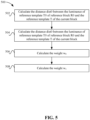
- FIG. 5 depicts a simplified flowchart 500 of a method for calculating the weights according to some embodiments.
- luminance is described, transcoder 106 or decoder 112 may use other characteristics to determine the weights. Also, other methods for calculating the distance may be used.
- transcoder 106 or decoder 112 calculates the weight w 0 .
- the distance distl is divided by the sum of the distance distl and distance dist0. If the distance distl is larger, then the weight w 0 will be larger. This means that when the distance between the current template T and the template T1 of reference block R1 is larger, then the weight of reference block R0 is larger because reference block R0 is closer in luminance to the current block.
- transcoder 106 or decoder 112 calculates the weight w 1 .
- Transcoder 106 or decoder 112 calculates the weight w 1 using a contribution of the distance dist0 to the total distance of distance dist0 and distance distl.
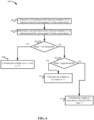
- FIG. 6 depicts a simplified flowchart 600 of another example of calculating the weights according to some embodiments.
- transcoder 106 or decoder 112 selects one weight of w 0 or w 1 instead of adaptively calculating both the weight values. This may occur when one of the differences between the reference block and the current block is large, such as above a threshold value. The large difference indicates that the luminance of the reference block may not be close to the current block and thus may not be used. This results in a single direction prediction being used instead of bi-prediction.
- decoder 112 makes the decision to use a uni-prediction even though transcoder 106 used bi-prediction in the transcoding process.
- transcoder 106 or decoder 112 determines a first distance dist0 between template T0 of reference block R0 and template T of the current block. Transcoder 106 or decoder 112 may calculate the distance dist0 similar to described above. At 604, transcoder 106 or decoder 112 determines a second distance dist1 between template T1 of reference block R1 and template T of the current block. Transcoder 106 or decoder 112 may calculate the distance dist1 similar to described above.
- Using luminance values for pixels that are close to the current block being decoded may be a more accurate prediction of luminance of the current block compared to using a frame level luminance.
- the frame level luminance may use a single value of luminance for a frame because a comparison between pixels in the current block and pixels in the reference blocks cannot be used because the current block has not been decoded yet.
- Transcoder 106 or decoder 112 uses the L-shape template to perform a transcoder side or a decoder side search for the neighboring pixels and use the weighted prediction to change the blending process of bi-prediction.
- a prediction block may be more representative of the current block.
- the use of the templates allows transcoder 106 or decoder 112 to reflect the luminance differences at the block level and not the frame level. This improves the prediction and thus the compression of the current block.
- FIG. 7 depicts an example of a transcoding system according to some embodiments.
- a video codec framework includes a set of fundamental components: block partitioning, inter and intra prediction, transform and quantization, and entropy coding.
- Transcoder 106 receives a frame of a video, which is firstly split into non-overlapping coding blocks for further processing. To cope with different video content characteristics, complex regions will be covered by partitions with smaller sizes, while simple regions will be covered by larger partitions. Multiple block patterns and shapes are may be both used together, for example quad-tree pattern, triple-tree pattern, and binary-tree pattern can be all used together, while square blocks and rectangular blocks can also be used together.
- Prediction is used to remove the redundancy of a video signal. By subtracting the predicted pixel values from the pixels being processed, the amplitude of a residual signal can be significantly reduced, thus the resulting bitstream size can be reduced.
- An intra prediction block 710 which is using reference pixels in the current frame, aims to reduce the spatial redundancy within the frame.
- An inter prediction block 712 which is using reference pixels from neighboring frames, attempts to remove the temporal redundancy between frames.
- a motion estimation and compensation block 716 may be a sub-module of inter prediction at the transcoder side, which captures the motion trace of objects among adjacent frames and generates reference pixels for inter prediction.
- a transform and quantization block 704 uses the residual pixels after intra or inter prediction.
- Transform and quantization block 704 performs a transform operation that represents the residual signal in a frequency domain. Considering the human visual system is more sensitive on low frequency components of video signal than the high frequency components, quantization is designed to further compress the residual signal by reducing the precision on high frequency signals.
- transcoder 106 contains decoding modules to make sure both transcoder 106 and decoder 112 are using identical mathematical processes.
- an inverse transform and inverse quantization block 708 is similar to the same block on the decoder side. Inverse transform and inverse quantization block 708 reconstructs pixels using the intra and inter prediction.
- An in-loop filter 714 removes any visual artifacts that are introduced by the above-mentioned processes.
- Various filtering methods are applied on the reconstructed frame in a cascaded way to reduce different artifacts, including but not limited to the blocking artifacts, mosquito artifacts, color banding effects, etc.
- An entropy encoding block 706 may further compress the bitstream using a model-based method.
- Transcoder 106 transmits the resulting encoded bitstream to decoder 112 over a network or other types of medium.
- FIG. 8 depicts an example of a decoding system according to some embodiments.
- Decoder 112 receives the encoded bitstream and inputs it into an entropy decoding block 802 to recover the information needed for decoding process.
- a decoded frame can be decoded by using an inverse transform and inverse quantization block 804, an intra prediction block 806 or inter prediction block 808, motion compensation block 810, and in-loop filtering block 812 in the same way to build a decoded frame.
- Some embodiments may be implemented in a non-transitory computer-readable storage medium for use by or in connection with the instruction execution system, apparatus, system, or machine.
- the computer-readable storage medium contains instructions for controlling a computer system to perform a method described by some embodiments.
- the computer system may include one or more computing devices.
- the instructions, when executed by one or more computer processors, may be configured to perform that which is described in some embodiments.
Landscapes
- Engineering & Computer Science (AREA)
- Multimedia (AREA)
- Signal Processing (AREA)
- Compression Or Coding Systems Of Tv Signals (AREA)
Claims (12)
- Un procédé, comprenant le fait de :sélectionner, par un dispositif informatique, un premier bloc de référence (210-1) dans une première trame ou encore image (frame) de référence (202) et un deuxième bloc de référence (210-2) dans une deuxième image de référence (206), le premier bloc de référence (210-1) et le deuxième bloc de référence (210-2) étant utilisés pour prédire un bloc actuel (212) dans une image actuelle (204) ;sélectionner, par le dispositif informatique, un premier modèle (406-1) dans la première image de référence (202) comprenant des pixels voisins décodés du premier bloc de référence (210-1), un deuxième modèle (406-2) dans la deuxième image de référence (206) comprenant des pixels voisins décodés du deuxième bloc de référence (210-2), et un troisième modèle (402) dans l'image actuelle (204) comprenant des pixels voisins décodés du bloc actuel (212) ;comparer, par le dispositif informatique, une caractéristique du premier modèle (406-1) à une caractéristique du troisième modèle (402) pour générer une première valeur de différence dist0 ;comparer une caractéristique du deuxième modèle (406-2) à la caractéristique du troisième modèle (402) pour générer une deuxième valeur de différence dist1 ;calculer, par le dispositif informatique, une première pondération w0 pour le premier bloc de référence (210-1) et une deuxième pondération w1 pour le deuxième bloc de référence (210-2) sur la base de la première valeur de différence et de la deuxième valeur de différence ;calculer de manière adaptative, par le dispositif informatique, un bloc de prédiction pour le bloc actuel (212) à l'aide de la première pondération et de la deuxième pondération ; et deutiliser, par le dispositif informatique, le bloc de prédiction comme prédiction pour le bloc actuel (212) dans un processus de transcodage vidéo ou un processus de décodage vidéo associé au bloc actuel (212),caractérisé en ce que l'étape de calcul, par le dispositif informatique, de la première pondération w0 et de la deuxième pondération w1 comprend le fait de :calculer la pondération w0 en utilisant une contribution de la distance dist1 à la distance totale de dist0 et dist1, et decalculer la pondération w1 en utilisant une contribution de la distance dist0 à la distance totale de dist0 et dist1.
- Le procédé d'après la revendication 1, sachant que le calcul adaptatif du bloc de prédiction comprend le fait de :appliquer la première pondération au premier bloc de référence (210-1) pour générer un premier résultat ;appliquer la deuxième pondération au deuxième bloc de référence (210-2) pour générer un deuxième résultat ; etfusionner le premier résultat et le deuxième résultat pour générer le bloc de prédiction.
- Le procédé d'après la revendication 2, sachant que le fusionnement du premier résultat et du deuxième résultat comprend le fait de :fusionner les premières valeurs de pixel du premier résultat avec les deuxièmes valeurs de pixel du deuxième résultat pour générer des troisièmes valeurs de pixel pour le bloc de prédiction, et, facultativement,sachant que le fait de fusionner comprend le fait de calculer une somme des premières valeurs de pixel et des deuxièmes valeurs de pixel.
- Le procédé d'après la revendication 2, sachant que :l'application de la première pondération au premier bloc de référence (210-1) comprend l'application de la première pondération à des pixels du premier bloc de référence (210-1) ; et quel'application de la deuxième pondération au deuxième bloc de référence (210-2) comprend l'application de la deuxième pondération à des pixels du deuxième bloc de référence ( 210-2).
- Le procédé d'après la revendication 1, sachant que le procédé comprend en outre le fait d'inclure un drapeau ou encore indicateur (flag) qui est réglé sur une première valeur pour indiquer que le bloc actuel (212) utilise un processus de bi-prédiction à pondération adaptative, ou qui est réglé sur une deuxième valeur pour indiquer que le bloc actuel (212) utilise un processus de bi-prédiction à pondération fixe.
- Le procédé d'après la revendication 1, sachant que le fait de comparer la caractéristique comprend le fait de :comparer la caractéristique en utilisant une première distance par pixel entre des pixels correspondants dans le premier modèle (406-1) et le troisième modèle (402), et une deuxième distance par pixel entre des pixels correspondants dans le deuxième modèle (406-2) et le troisième modèle (402), et, facultativement,sachant que le fait de comparer la caractéristique comprend le fait de :calculer un premier rapport en utilisant la deuxième distance par pixel divisée par la somme de la première distance par pixel et de la deuxième distance par pixel ;calculer un deuxième rapport en utilisant la première distance par pixel divisée par la somme de la première distance par pixel et de la deuxième distance par pixel ; et deutiliser le premier rapport pour déterminer la première pondération et le deuxième rapport pour déterminer la deuxième pondération.
- Le procédé d'après la revendication 1, comprenant en outre le fait de :inclure la première pondération et la deuxième pondération dans un flux binaire codé envoyé à un décodeur (112) pour être utilisé dans le décodage du bloc actuel (212), ou deutiliser le bloc de prédiction pour calculer un résidu (residual) qui est une différence entre le bloc de prédiction et le bloc actuel (212), et d'inclure le résidu dans un flux binaire codé.
- Le procédé d'après la revendication 1, comprenant en outre le fait de :
appliquer un résidu provenant d'un flux binaire codé au bloc de prédiction pour déterminer des valeurs de pixel pour le bloc actuel (212). - Le procédé d'après la revendication 1, sachant que la caractéristique est la luminance.
- Un support de stockage non transitoire lisible par ordinateur contenant des instructions qui, lorsqu'elles sont exécutées par un système informatique, amènent le système informatique à effectuer les étapes suivantes :sélectionner un premier bloc de référence (210-1) dans une première trame ou encore image (frame) de référence (202) et un deuxième bloc de référence (210-2) dans une deuxième image de référence (206), le premier bloc de référence (210-1) et le deuxième bloc de référence (210-2) étant utilisés pour prédire un bloc actuel (212) dans une image actuelle (204) ;sélectionner un premier modèle (406-1) dans la première image de référence (202) comprenant des pixels voisins décodés du premier bloc de référence (210-1), un deuxième modèle (406-2) dans la deuxième image de référence (206) comprenant des pixels voisins décodés du deuxième bloc de référence (210-2), et un troisième modèle (402) dans l'image actuelle (204) comprenant des pixels voisins décodés du bloc actuel (212) ;comparer une caractéristique du premier modèle (406-1) à une caractéristique du troisième modèle (402) pour générer une première valeur de différence dist0 ;comparer une caractéristique du deuxième modèle (406-2) à la caractéristique du troisième modèle (402) pour générer une deuxième valeur de différence dist 1 ;calculer une première pondération w0 pour le premier bloc de référence (210-1) et une deuxième pondération w1 pour le deuxième bloc de référence (210-2) sur la base de la première valeur de différence et de la deuxième valeur de différence ;calculer de manière adaptative un bloc de prédiction pour le bloc actuel (212) à l'aide de la première pondération et de la deuxième pondération ;utiliser le bloc de prédiction comme prédiction pour le bloc actuel (212) dans un processus de transcodage vidéo ou un processus de décodage vidéo associé au bloc actuel (212),caractérisé en ce que l'étape de calcul de la première pondération w0 et de la deuxième pondération w1 comprend le fait de :calculer la pondération w0 en utilisant une contribution de la distance dist1 à la distance totale de dist0 et dist1, et decalculer la pondération w1 en utilisant une contribution de la distance dist0 à la distance totale de dist0 et dist1.
- Le support de stockage non transitoire lisible par ordinateur d'après la revendication 10, sachant que les instructions qu'il contient amènent en outre le système informatique à calculer de manière adaptative le bloc de prédiction en :appliquant la première pondération au premier bloc de référence (210-1) pour générer un premier résultat ;appliquant la deuxième pondération au deuxième bloc de référence (210-2) pour générer un deuxième résultat ; et enfusionnant le premier résultat et le deuxième résultat pour générer le bloc de prédiction.
- Un appareil comprenant :un ou plusieurs processeurs informatiques ; etun support de stockage non transitoire lisible par ordinateur d'après l'une quelconque des revendications de 10 à 11.
Applications Claiming Priority (2)
| Application Number | Priority Date | Filing Date | Title |
|---|---|---|---|
| US201862650864P | 2018-03-30 | 2018-03-30 | |
| PCT/US2019/025043 WO2019191714A1 (fr) | 2018-03-30 | 2019-03-29 | Bi-prédiction pondérée adaptative basée sur un modèle pour codage vidéo |
Publications (3)
| Publication Number | Publication Date |
|---|---|
| EP3777174A1 EP3777174A1 (fr) | 2021-02-17 |
| EP3777174A4 EP3777174A4 (fr) | 2021-12-22 |
| EP3777174B1 true EP3777174B1 (fr) | 2024-12-18 |
Family
ID=68054063
Family Applications (1)
| Application Number | Title | Priority Date | Filing Date |
|---|---|---|---|
| EP19775251.2A Active EP3777174B1 (fr) | 2018-03-30 | 2019-03-29 | Bi-prédiction pondérée adaptative basée sur un modèle pour codage vidéo |
Country Status (3)
| Country | Link |
|---|---|
| US (1) | US10869042B2 (fr) |
| EP (1) | EP3777174B1 (fr) |
| WO (1) | WO2019191714A1 (fr) |
Families Citing this family (5)
| Publication number | Priority date | Publication date | Assignee | Title |
|---|---|---|---|---|
| EP3777174B1 (fr) * | 2018-03-30 | 2024-12-18 | Hulu, LLC | Bi-prédiction pondérée adaptative basée sur un modèle pour codage vidéo |
| US12041265B2 (en) * | 2018-07-16 | 2024-07-16 | Electronics And Telecommunications Research Institute | Image encoding/decoding method and apparatus, and recording medium in which bitstream is stored |
| US11936877B2 (en) * | 2021-04-12 | 2024-03-19 | Qualcomm Incorporated | Template matching based affine prediction for video coding |
| US12081736B2 (en) * | 2021-04-26 | 2024-09-03 | Tencent America LLC | Bi-prediction without signaling cu-level weights |
| US12568241B2 (en) * | 2023-02-10 | 2026-03-03 | Tencent America LLC | Bi-prediction with CU level weight (BCW) |
Family Cites Families (6)
| Publication number | Priority date | Publication date | Assignee | Title |
|---|---|---|---|---|
| US20060093038A1 (en) | 2002-12-04 | 2006-05-04 | Boyce Jill M | Encoding of video cross-fades using weighted prediction |
| KR101408698B1 (ko) * | 2007-07-31 | 2014-06-18 | 삼성전자주식회사 | 가중치 예측을 이용한 영상 부호화, 복호화 방법 및 장치 |
| KR101444675B1 (ko) * | 2011-07-01 | 2014-10-01 | 에스케이 텔레콤주식회사 | 영상 부호화 및 복호화 방법과 장치 |
| US10356416B2 (en) * | 2015-06-09 | 2019-07-16 | Qualcomm Incorporated | Systems and methods of determining illumination compensation status for video coding |
| CN107787582A (zh) | 2015-06-10 | 2018-03-09 | 三星电子株式会社 | 使用用于自适应加权预测的语法信令对图像进行编码或解码的方法和设备 |
| EP3777174B1 (fr) * | 2018-03-30 | 2024-12-18 | Hulu, LLC | Bi-prédiction pondérée adaptative basée sur un modèle pour codage vidéo |
-
2019
- 2019-03-29 EP EP19775251.2A patent/EP3777174B1/fr active Active
- 2019-03-29 WO PCT/US2019/025043 patent/WO2019191714A1/fr not_active Ceased
- 2019-03-29 US US16/370,257 patent/US10869042B2/en active Active
Also Published As
| Publication number | Publication date |
|---|---|
| WO2019191714A1 (fr) | 2019-10-03 |
| EP3777174A1 (fr) | 2021-02-17 |
| EP3777174A4 (fr) | 2021-12-22 |
| US20190306512A1 (en) | 2019-10-03 |
| US10869042B2 (en) | 2020-12-15 |
Similar Documents
| Publication | Publication Date | Title |
|---|---|---|
| US12126825B2 (en) | Block size restrictions for DMVR | |
| US10869042B2 (en) | Template based adaptive weighted bi-prediction for video coding | |
| US10091500B2 (en) | Video coding method using at least evaluated visual quality and related video coding apparatus | |
| EP1246131B1 (fr) | Réduction des oscillations amorties dans les images décompressées par filtrage à posteriori et dispositif à cet effet | |
| EP3416386B1 (fr) | Décisions de codeur basées sur un algorithme de hachage pour un codage vidéo | |
| US11202070B2 (en) | Parallel bi-directional intra-coding of sub-partitions | |
| CN110800302A (zh) | 用于视频编解码的帧内-帧间预测的方法及装置 | |
| US20140321552A1 (en) | Optimization of Deblocking Filter Parameters | |
| US20070140352A1 (en) | Temporal and spatial analysis of a video macroblock | |
| US11800088B2 (en) | Template refined bi-prediction for video coding using anchor point | |
| US9838690B1 (en) | Selective prediction signal filtering | |
| US12149729B2 (en) | Selective template matching in video coding | |
| US9294676B2 (en) | Choosing optimal correction in video stabilization | |
| EP3544301B1 (fr) | Dispositif de codage d'image animée, dispositif de décodage d'image animée, et programme | |
| CN111327950B (zh) | 一种视频转码方法及装置 | |
| US20190273920A1 (en) | Apparatuses and Methods for Encoding and Decoding a Video Coding Block of a Video Signal | |
| US8780987B1 (en) | Method and apparatus for encoding video by determining block resolution | |
| US8275033B2 (en) | Picture mode selection for video transcoding | |
| US20140056348A1 (en) | Methods and device for reconstructing and coding an image block | |
| HK1153596B (en) | Method and apparatus for controlling loop filtering or post filtering in block based motion compensated video coding |
Legal Events
| Date | Code | Title | Description |
|---|---|---|---|
| STAA | Information on the status of an ep patent application or granted ep patent |
Free format text: STATUS: THE INTERNATIONAL PUBLICATION HAS BEEN MADE |
|
| PUAI | Public reference made under article 153(3) epc to a published international application that has entered the european phase |
Free format text: ORIGINAL CODE: 0009012 |
|
| STAA | Information on the status of an ep patent application or granted ep patent |
Free format text: STATUS: REQUEST FOR EXAMINATION WAS MADE |
|
| 17P | Request for examination filed |
Effective date: 20201001 |
|
| AK | Designated contracting states |
Kind code of ref document: A1 Designated state(s): AL AT BE BG CH CY CZ DE DK EE ES FI FR GB GR HR HU IE IS IT LI LT LU LV MC MK MT NL NO PL PT RO RS SE SI SK SM TR |
|
| AX | Request for extension of the european patent |
Extension state: BA ME |
|
| DAV | Request for validation of the european patent (deleted) | ||
| DAX | Request for extension of the european patent (deleted) | ||
| A4 | Supplementary search report drawn up and despatched |
Effective date: 20211124 |
|
| RIC1 | Information provided on ipc code assigned before grant |
Ipc: H04N 19/137 20140101ALI20211118BHEP Ipc: H04N 19/103 20140101ALI20211118BHEP Ipc: H04N 19/176 20140101ALI20211118BHEP Ipc: H04N 19/577 20140101ALI20211118BHEP Ipc: H04N 19/105 20140101ALI20211118BHEP Ipc: H04N 19/52 20140101AFI20211118BHEP |
|
| STAA | Information on the status of an ep patent application or granted ep patent |
Free format text: STATUS: EXAMINATION IS IN PROGRESS |
|
| 17Q | First examination report despatched |
Effective date: 20230510 |
|
| P01 | Opt-out of the competence of the unified patent court (upc) registered |
Effective date: 20230426 |
|
| GRAP | Despatch of communication of intention to grant a patent |
Free format text: ORIGINAL CODE: EPIDOSNIGR1 |
|
| STAA | Information on the status of an ep patent application or granted ep patent |
Free format text: STATUS: GRANT OF PATENT IS INTENDED |
|
| INTG | Intention to grant announced |
Effective date: 20240723 |
|
| GRAS | Grant fee paid |
Free format text: ORIGINAL CODE: EPIDOSNIGR3 |
|
| GRAA | (expected) grant |
Free format text: ORIGINAL CODE: 0009210 |
|
| STAA | Information on the status of an ep patent application or granted ep patent |
Free format text: STATUS: THE PATENT HAS BEEN GRANTED |
|
| AK | Designated contracting states |
Kind code of ref document: B1 Designated state(s): AL AT BE BG CH CY CZ DE DK EE ES FI FR GB GR HR HU IE IS IT LI LT LU LV MC MK MT NL NO PL PT RO RS SE SI SK SM TR |
|
| REG | Reference to a national code |
Ref country code: CH Ref legal event code: EP |
|
| REG | Reference to a national code |
Ref country code: DE Ref legal event code: R096 Ref document number: 602019063705 Country of ref document: DE |
|
| REG | Reference to a national code |
Ref country code: IE Ref legal event code: FG4D |
|
| REG | Reference to a national code |
Ref country code: LT Ref legal event code: MG9D |
|
| PG25 | Lapsed in a contracting state [announced via postgrant information from national office to epo] |
Ref country code: HR Free format text: LAPSE BECAUSE OF FAILURE TO SUBMIT A TRANSLATION OF THE DESCRIPTION OR TO PAY THE FEE WITHIN THE PRESCRIBED TIME-LIMIT Effective date: 20241218 |
|
| PG25 | Lapsed in a contracting state [announced via postgrant information from national office to epo] |
Ref country code: FI Free format text: LAPSE BECAUSE OF FAILURE TO SUBMIT A TRANSLATION OF THE DESCRIPTION OR TO PAY THE FEE WITHIN THE PRESCRIBED TIME-LIMIT Effective date: 20241218 |
|
| PG25 | Lapsed in a contracting state [announced via postgrant information from national office to epo] |
Ref country code: BG Free format text: LAPSE BECAUSE OF FAILURE TO SUBMIT A TRANSLATION OF THE DESCRIPTION OR TO PAY THE FEE WITHIN THE PRESCRIBED TIME-LIMIT Effective date: 20241218 |
|
| PG25 | Lapsed in a contracting state [announced via postgrant information from national office to epo] |
Ref country code: NO Free format text: LAPSE BECAUSE OF FAILURE TO SUBMIT A TRANSLATION OF THE DESCRIPTION OR TO PAY THE FEE WITHIN THE PRESCRIBED TIME-LIMIT Effective date: 20250318 |
|
| REG | Reference to a national code |
Ref country code: NL Ref legal event code: MP Effective date: 20241218 |
|
| PG25 | Lapsed in a contracting state [announced via postgrant information from national office to epo] |
Ref country code: LV Free format text: LAPSE BECAUSE OF FAILURE TO SUBMIT A TRANSLATION OF THE DESCRIPTION OR TO PAY THE FEE WITHIN THE PRESCRIBED TIME-LIMIT Effective date: 20241218 Ref country code: GR Free format text: LAPSE BECAUSE OF FAILURE TO SUBMIT A TRANSLATION OF THE DESCRIPTION OR TO PAY THE FEE WITHIN THE PRESCRIBED TIME-LIMIT Effective date: 20250319 |
|
| PG25 | Lapsed in a contracting state [announced via postgrant information from national office to epo] |
Ref country code: RS Free format text: LAPSE BECAUSE OF FAILURE TO SUBMIT A TRANSLATION OF THE DESCRIPTION OR TO PAY THE FEE WITHIN THE PRESCRIBED TIME-LIMIT Effective date: 20250318 |
|
| PG25 | Lapsed in a contracting state [announced via postgrant information from national office to epo] |
Ref country code: NL Free format text: LAPSE BECAUSE OF FAILURE TO SUBMIT A TRANSLATION OF THE DESCRIPTION OR TO PAY THE FEE WITHIN THE PRESCRIBED TIME-LIMIT Effective date: 20241218 |
|
| REG | Reference to a national code |
Ref country code: AT Ref legal event code: MK05 Ref document number: 1753211 Country of ref document: AT Kind code of ref document: T Effective date: 20241218 |
|
| PG25 | Lapsed in a contracting state [announced via postgrant information from national office to epo] |
Ref country code: SM Free format text: LAPSE BECAUSE OF FAILURE TO SUBMIT A TRANSLATION OF THE DESCRIPTION OR TO PAY THE FEE WITHIN THE PRESCRIBED TIME-LIMIT Effective date: 20241218 |
|
| PG25 | Lapsed in a contracting state [announced via postgrant information from national office to epo] |
Ref country code: PL Free format text: LAPSE BECAUSE OF FAILURE TO SUBMIT A TRANSLATION OF THE DESCRIPTION OR TO PAY THE FEE WITHIN THE PRESCRIBED TIME-LIMIT Effective date: 20241218 |
|
| PG25 | Lapsed in a contracting state [announced via postgrant information from national office to epo] |
Ref country code: ES Free format text: LAPSE BECAUSE OF FAILURE TO SUBMIT A TRANSLATION OF THE DESCRIPTION OR TO PAY THE FEE WITHIN THE PRESCRIBED TIME-LIMIT Effective date: 20241218 |
|
| PG25 | Lapsed in a contracting state [announced via postgrant information from national office to epo] |
Ref country code: IS Free format text: LAPSE BECAUSE OF FAILURE TO SUBMIT A TRANSLATION OF THE DESCRIPTION OR TO PAY THE FEE WITHIN THE PRESCRIBED TIME-LIMIT Effective date: 20250418 |
|
| PG25 | Lapsed in a contracting state [announced via postgrant information from national office to epo] |
Ref country code: PT Free format text: LAPSE BECAUSE OF FAILURE TO SUBMIT A TRANSLATION OF THE DESCRIPTION OR TO PAY THE FEE WITHIN THE PRESCRIBED TIME-LIMIT Effective date: 20250421 |
|
| PG25 | Lapsed in a contracting state [announced via postgrant information from national office to epo] |
Ref country code: EE Free format text: LAPSE BECAUSE OF FAILURE TO SUBMIT A TRANSLATION OF THE DESCRIPTION OR TO PAY THE FEE WITHIN THE PRESCRIBED TIME-LIMIT Effective date: 20241218 |
|
| PG25 | Lapsed in a contracting state [announced via postgrant information from national office to epo] |
Ref country code: RO Free format text: LAPSE BECAUSE OF FAILURE TO SUBMIT A TRANSLATION OF THE DESCRIPTION OR TO PAY THE FEE WITHIN THE PRESCRIBED TIME-LIMIT Effective date: 20241218 Ref country code: AT Free format text: LAPSE BECAUSE OF FAILURE TO SUBMIT A TRANSLATION OF THE DESCRIPTION OR TO PAY THE FEE WITHIN THE PRESCRIBED TIME-LIMIT Effective date: 20241218 |
|
| PG25 | Lapsed in a contracting state [announced via postgrant information from national office to epo] |
Ref country code: SK Free format text: LAPSE BECAUSE OF FAILURE TO SUBMIT A TRANSLATION OF THE DESCRIPTION OR TO PAY THE FEE WITHIN THE PRESCRIBED TIME-LIMIT Effective date: 20241218 |
|
| PG25 | Lapsed in a contracting state [announced via postgrant information from national office to epo] |
Ref country code: CZ Free format text: LAPSE BECAUSE OF FAILURE TO SUBMIT A TRANSLATION OF THE DESCRIPTION OR TO PAY THE FEE WITHIN THE PRESCRIBED TIME-LIMIT Effective date: 20241218 |
|
| PG25 | Lapsed in a contracting state [announced via postgrant information from national office to epo] |
Ref country code: IT Free format text: LAPSE BECAUSE OF FAILURE TO SUBMIT A TRANSLATION OF THE DESCRIPTION OR TO PAY THE FEE WITHIN THE PRESCRIBED TIME-LIMIT Effective date: 20241218 |
|
| PG25 | Lapsed in a contracting state [announced via postgrant information from national office to epo] |
Ref country code: SE Free format text: LAPSE BECAUSE OF FAILURE TO SUBMIT A TRANSLATION OF THE DESCRIPTION OR TO PAY THE FEE WITHIN THE PRESCRIBED TIME-LIMIT Effective date: 20241218 |
|
| REG | Reference to a national code |
Ref country code: DE Ref legal event code: R097 Ref document number: 602019063705 Country of ref document: DE |
|
| PG25 | Lapsed in a contracting state [announced via postgrant information from national office to epo] |
Ref country code: DK Free format text: LAPSE BECAUSE OF FAILURE TO SUBMIT A TRANSLATION OF THE DESCRIPTION OR TO PAY THE FEE WITHIN THE PRESCRIBED TIME-LIMIT Effective date: 20241218 |
|
| PG25 | Lapsed in a contracting state [announced via postgrant information from national office to epo] |
Ref country code: MC Free format text: LAPSE BECAUSE OF FAILURE TO SUBMIT A TRANSLATION OF THE DESCRIPTION OR TO PAY THE FEE WITHIN THE PRESCRIBED TIME-LIMIT Effective date: 20241218 |
|
| PLBE | No opposition filed within time limit |
Free format text: ORIGINAL CODE: 0009261 |
|
| REG | Reference to a national code |
Ref country code: CH Ref legal event code: H13 Free format text: ST27 STATUS EVENT CODE: U-0-0-H10-H13 (AS PROVIDED BY THE NATIONAL OFFICE) Effective date: 20251024 |
|
| STAA | Information on the status of an ep patent application or granted ep patent |
Free format text: STATUS: NO OPPOSITION FILED WITHIN TIME LIMIT |
|
| PG25 | Lapsed in a contracting state [announced via postgrant information from national office to epo] |
Ref country code: LU Free format text: LAPSE BECAUSE OF NON-PAYMENT OF DUE FEES Effective date: 20250329 |
|
| 26N | No opposition filed |
Effective date: 20250919 |
|
| REG | Reference to a national code |
Ref country code: BE Ref legal event code: MM Effective date: 20250331 |
|
| PG25 | Lapsed in a contracting state [announced via postgrant information from national office to epo] |
Ref country code: BE Free format text: LAPSE BECAUSE OF NON-PAYMENT OF DUE FEES Effective date: 20250331 |
|
| PG25 | Lapsed in a contracting state [announced via postgrant information from national office to epo] |
Ref country code: CH Free format text: LAPSE BECAUSE OF NON-PAYMENT OF DUE FEES Effective date: 20250331 |
|
| PG25 | Lapsed in a contracting state [announced via postgrant information from national office to epo] |
Ref country code: IE Free format text: LAPSE BECAUSE OF NON-PAYMENT OF DUE FEES Effective date: 20250329 |
|
| PGFP | Annual fee paid to national office [announced via postgrant information from national office to epo] |
Ref country code: GB Payment date: 20260220 Year of fee payment: 8 |
|
| PGFP | Annual fee paid to national office [announced via postgrant information from national office to epo] |
Ref country code: DE Payment date: 20260219 Year of fee payment: 8 |
|
| PGFP | Annual fee paid to national office [announced via postgrant information from national office to epo] |
Ref country code: FR Payment date: 20260219 Year of fee payment: 8 |
|
| PG25 | Lapsed in a contracting state [announced via postgrant information from national office to epo] |
Ref country code: CY Free format text: LAPSE BECAUSE OF FAILURE TO SUBMIT A TRANSLATION OF THE DESCRIPTION OR TO PAY THE FEE WITHIN THE PRESCRIBED TIME-LIMIT Effective date: 20241218 |
|
| PG25 | Lapsed in a contracting state [announced via postgrant information from national office to epo] |
Ref country code: LT Free format text: LAPSE BECAUSE OF FAILURE TO SUBMIT A TRANSLATION OF THE DESCRIPTION OR TO PAY THE FEE WITHIN THE PRESCRIBED TIME-LIMIT Effective date: 20241218 |
|
| PG25 | Lapsed in a contracting state [announced via postgrant information from national office to epo] |
Ref country code: TR Free format text: LAPSE BECAUSE OF FAILURE TO SUBMIT A TRANSLATION OF THE DESCRIPTION OR TO PAY THE FEE WITHIN THE PRESCRIBED TIME-LIMIT Effective date: 20241218 |