EP3777295B1 - Procédés et appareil pour catégoriser des dispositifs sans fil - Google Patents
Procédés et appareil pour catégoriser des dispositifs sans fil Download PDFInfo
- Publication number
- EP3777295B1 EP3777295B1 EP18914435.5A EP18914435A EP3777295B1 EP 3777295 B1 EP3777295 B1 EP 3777295B1 EP 18914435 A EP18914435 A EP 18914435A EP 3777295 B1 EP3777295 B1 EP 3777295B1
- Authority
- EP
- European Patent Office
- Prior art keywords
- information
- network
- wireless devices
- category
- wireless
- Prior art date
- Legal status (The legal status is an assumption and is not a legal conclusion. Google has not performed a legal analysis and makes no representation as to the accuracy of the status listed.)
- Active
Links
Images








Classifications
-
- H—ELECTRICITY
- H04—ELECTRIC COMMUNICATION TECHNIQUE
- H04W—WIRELESS COMMUNICATION NETWORKS
- H04W24/00—Supervisory, monitoring or testing arrangements
- H04W24/10—Scheduling measurement reports ; Arrangements for measurement reports
-
- H—ELECTRICITY
- H04—ELECTRIC COMMUNICATION TECHNIQUE
- H04W—WIRELESS COMMUNICATION NETWORKS
- H04W24/00—Supervisory, monitoring or testing arrangements
- H04W24/08—Testing, supervising or monitoring using real traffic
-
- G—PHYSICS
- G06—COMPUTING OR CALCULATING; COUNTING
- G06N—COMPUTING ARRANGEMENTS BASED ON SPECIFIC COMPUTATIONAL MODELS
- G06N20/00—Machine learning
-
- G—PHYSICS
- G08—SIGNALLING
- G08G—TRAFFIC CONTROL SYSTEMS
- G08G5/00—Traffic control systems for aircraft
- G08G5/20—Arrangements for acquiring, generating, sharing or displaying traffic information
- G08G5/26—Transmission of traffic-related information between aircraft and ground stations
-
- G—PHYSICS
- G08—SIGNALLING
- G08G—TRAFFIC CONTROL SYSTEMS
- G08G5/00—Traffic control systems for aircraft
- G08G5/50—Navigation or guidance aids
- G08G5/55—Navigation or guidance aids for a single aircraft
-
- H—ELECTRICITY
- H04—ELECTRIC COMMUNICATION TECHNIQUE
- H04B—TRANSMISSION
- H04B7/00—Radio transmission systems, i.e. using radiation field
- H04B7/02—Diversity systems; Multi-antenna system, i.e. transmission or reception using multiple antennas
- H04B7/04—Diversity systems; Multi-antenna system, i.e. transmission or reception using multiple antennas using two or more spaced independent antennas
- H04B7/06—Diversity systems; Multi-antenna system, i.e. transmission or reception using multiple antennas using two or more spaced independent antennas at the transmitting station
- H04B7/0613—Diversity systems; Multi-antenna system, i.e. transmission or reception using multiple antennas using two or more spaced independent antennas at the transmitting station using simultaneous transmission
- H04B7/0615—Diversity systems; Multi-antenna system, i.e. transmission or reception using multiple antennas using two or more spaced independent antennas at the transmitting station using simultaneous transmission of weighted versions of same signal
- H04B7/0619—Diversity systems; Multi-antenna system, i.e. transmission or reception using multiple antennas using two or more spaced independent antennas at the transmitting station using simultaneous transmission of weighted versions of same signal using feedback from receiving side
- H04B7/0621—Feedback content
- H04B7/0626—Channel coefficients, e.g. channel state information [CSI]
-
- H—ELECTRICITY
- H04—ELECTRIC COMMUNICATION TECHNIQUE
- H04L—TRANSMISSION OF DIGITAL INFORMATION, e.g. TELEGRAPHIC COMMUNICATION
- H04L5/00—Arrangements affording multiple use of the transmission path
- H04L5/003—Arrangements for allocating sub-channels of the transmission path
- H04L5/0048—Allocation of pilot signals, i.e. of signals known to the receiver
- H04L5/0051—Allocation of pilot signals, i.e. of signals known to the receiver of dedicated pilots, i.e. pilots destined for a single user or terminal
-
- H—ELECTRICITY
- H04—ELECTRIC COMMUNICATION TECHNIQUE
- H04W—WIRELESS COMMUNICATION NETWORKS
- H04W24/00—Supervisory, monitoring or testing arrangements
- H04W24/02—Arrangements for optimising operational condition
-
- H—ELECTRICITY
- H04—ELECTRIC COMMUNICATION TECHNIQUE
- H04W—WIRELESS COMMUNICATION NETWORKS
- H04W8/00—Network data management
- H04W8/22—Processing or transfer of terminal data, e.g. status or physical capabilities
-
- B—PERFORMING OPERATIONS; TRANSPORTING
- B64—AIRCRAFT; AVIATION; COSMONAUTICS
- B64U—UNMANNED AERIAL VEHICLES [UAV]; EQUIPMENT THEREFOR
- B64U10/00—Type of UAV
- B64U10/10—Rotorcrafts
- B64U10/13—Flying platforms
-
- B—PERFORMING OPERATIONS; TRANSPORTING
- B64—AIRCRAFT; AVIATION; COSMONAUTICS
- B64U—UNMANNED AERIAL VEHICLES [UAV]; EQUIPMENT THEREFOR
- B64U2101/00—UAVs specially adapted for particular uses or applications
- B64U2101/20—UAVs specially adapted for particular uses or applications for use as communications relays, e.g. high-altitude platforms
-
- G—PHYSICS
- G06—COMPUTING OR CALCULATING; COUNTING
- G06F—ELECTRIC DIGITAL DATA PROCESSING
- G06F2218/00—Aspects of pattern recognition specially adapted for signal processing
- G06F2218/12—Classification; Matching
-
- G—PHYSICS
- G08—SIGNALLING
- G08G—TRAFFIC CONTROL SYSTEMS
- G08G5/00—Traffic control systems for aircraft
- G08G5/50—Navigation or guidance aids
- G08G5/57—Navigation or guidance aids for unmanned aircraft
Definitions
- Embodiments described herein relate to methods and apparatus for determining which of a first category associated with a first wireless device behaviour and a second category associated with a second wireless device behaviour each of a plurality of wireless devices fall into.
- LTE Long Term Evolution
- Some objectives may be to, firstly, identify potential enhancements to LTE so that it is better suited to provide connectivity and positioning services to aerial wireless devices in the identified deployment scenarios.
- interference mitigation solutions for improving system-level performance solutions for detecting whether uplink signals from an air-borne wireless device increases interference in multiple neighbour cells, and solutions for identifying if enhancements in terms of cell selection and handover efficiency as well as robustness in handover signalling can be achieved.
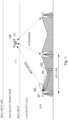
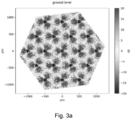
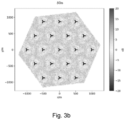
- Figures 2a , 2b and 2c show that the coverage area of a base station in the sky may be fragmented into several discontinuous areas, while the coverage area of a base station on the ground may usually be an approximate closed set. Also, for an aerial wireless device a cell which appears as the best cell may be further away from the aerial wireless device compared to the best cell for terrestrial wireless devices, as illustrated in Figure 1 . In Figures 2a , 2b and 2c , locations that are served by the same base station are shaded in the same grey tone, assuming that wireless devices connect to the strongest or best cell.
- Figure 2a illustrates the scenario at ground level.
- Figure 2b illustrates the scenario at 50m above ground level.
- Figure 2c illustrates the scenario at 300m above ground level.
- Aerial wireless devices that provide a video-feed to its flight controller over the mobile network for extended flying range may implicate high uplink streaming for the network.
- Such aerial devices are appearing more and more due to the application opportunities provided by extended range.
- the mobile operators are likely to put the aerial wireless devices into separate service category associating different policies on them.
- SIM Subscriber Identity Module
- "rogue" aerial wireless devices may be considered as any flying wireless device that either is not registered with the network or does not support aerial wireless device related radio access capacities.
- a legacy wireless device may be attached to an aerial vehicle and may be flown around within the network.
- the flying terrestrial wireless device attached to the aerial vehicle may generate excessive interference within the network and may not be allowed by regulations in some regions. This phenomenon is being observed in the field and has drawn much attention from mobile operators. It is critical to identify these unlicensed rogue aerial wireless devices from the perspective of the operator and for the purpose of security measures.
- the method comprises determining based on binary classification of a first information which of the wireless devices meet all of at least one primary criterion; wherein the first information comprises one or more measurements of timing advance (TA) measurements, an amount of requested uplink resources; uplink signal strength measurements; handover statistics; line of sight detection in downlink; transmitting a request for second information to the wireless devices that meet all of the at least one primary criterion; wherein the second information comprises one or more of measurements on dedicated uplink pilot transmissions, sounding reference signal, SRS, a Random Access Channel (RACH)) transmissions and their respective measurements in neighboring base stations, periodic downlink measurement reports comprising measurements of reference signal received power from different cells; channel state information reference signal, CSI-RS, related measurement reports; receiving second information from each of the wireless device that meet all of the at least one primary criterion; determining based on binary classification of the second information which of the wireless devices that meet all of the at least one primary criterion also meet all of at least one secondary criterion; and classifying the wireless devices
- a network node in a communications network for determining which of a first category associated with a first wireless device behaviour and a second category associated with a second wireless device behaviour each of a plurality of wireless devices fall into.
- the network node comprising processing circuitry configured to determine based on binary classification of a first information which of the wireless devices meet all of at least one primary criterion; wherein the first information comprises one or more measurements of timing advance (TA) measurements, an amount of requested uplink resources; uplink signal strength measurements; handover statistics; line of sight detection in downlink; transmit a request for a second information to the wireless devices that meet all of the at least one primary criterion; wherein the second information comprises one or more of measurements on dedicated uplink pilot transmissions, sounding reference signal, SRS, a Random Access Channel (RACH)) transmissions and their respective measurements in neighboring base stations, periodic downlink measurement reports comprising measurements of reference signal received power from different cells; channel state information reference signal, CSI-RS, related measurement reports; receive the second
- TA timing advance
- the invention describes a framework for efficient detection of wireless devices in a particular category, such as aerial wireless devices, by using a layered detection procedure in order to avoid conducting unnecessary measurements and computations.
- the idea is to have a two-step procedure.
- the first step comprises performing a crude classification which does not require dedicated measurements to be performed by the wireless devices, and is preferably simple to process computationally.
- the first step should produce a subset of wireless devices in the wireless device population.
- the second step comprising instructing the subset of wireless devices to collect dedicated measurements to perform an accurate classification.
- the embodiments described herein are be illustrated with a drone (or aerial wireless device) detection problem.
- the methods and apparatus described herein may equally be used for other types of classification, for example classifying wireless devices be their speed.
- Embodiments described herein are described within the context of Long Term Evolution (LTE), i.e. E-UTRAN. However, it will be appreciated that the methods and apparatus described herein are equally applicable to wireless access networks and wireless devices or user equipments (UEs) implementing other access technologies and standards. LTE is used as an example technology within which the invention is suitable, and using LTE in the description therefore is particularly useful for understanding the problem and solutions solving the problem.
- LTE Long Term Evolution
- the invention comprises a two-stage procedure which involves two sets of criteria, primary criteria and secondary criteria, both solving the same binary classification problem, for example distinguishing between drone and non-drone (regular) wireless devices.
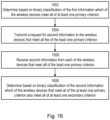
- the basic flowchart is summarized in the figure 5 .
- the primary criteria and secondary criteria are generated using machine learning.
- Figure 5 illustrates a method performed by a network node for for determining which of a first category associated with a first wireless device behaviour and a second category associated with a second wireless device behaviour each of the wireless devices fall into.
- the first wireless device behaviour may comprise behaviour expected from drone wireless devices and the second wireless device behaviour may comprise behaviour expected from non-drone wireless devices.
- the examples described below relate to drones being the first category, and non-drones being the second category. However, it will be appreciated that other categories may equally be used.
- the first stage of the process provides a crude classification of the wireless devices in the population.
- this first stage comprises step 100 as illustrated in Figure 5 .
- step 100 the network node, for every wireless device in the wireless device population of interest, performs a first basic classification procedure. For example, the network node determine based on binary classification of first information which of the wireless devices meet all of at least one primary criterion.
- the at least one primary criterion may be generated using a simple machine learning model, which may be trained based measurements that are already available to the network.
- the at least one primary criterion may be generated using machine learning based on training information of a same type as the first information.
- the first information comprise measurements such as timing advance (TA) measurements, uplink data streams, and uplink signal strength measurements.
- the at least one primary criterion may comprise a criterion for each type of first information.
- this relationship between the probability of misclassifying a drone wireless device as a non-drone wireless devices and misclassifying a non-drone wireless device as a drone is represented by the ratio between the true positive rate (TPR) and false positive rate (FPR), where a high value of TPR corresponds to low probability of classifying a drone wireless device a no-drone wireless device.
- TPR true positive rate
- FPR false positive rate
- Such a classifier will have a low risk of missing drone wireless devices and will reduce the size of the set of wireless devices to consider as being drone wireless devices in step 110 of Figure 5 , as will be described later.
- the at least one primary criterion are such that wireless devices meeting all of the at least one primary criterion have a first false positive rate and a first true positive rate of being in the first category.
- this classification could be based on first information comprising the amount of uplink resources requested by the wireless device, where for example those wireless devices having larger uplink resource requests are classified as drones and the others are not.
- this classification could be based on first information comprising the line of sight (LOS) detection in downlink, where for example those wireless devices having at most a rank-1/2 transmission are classified as drones and the others are not (where the number of ranks depends on how the polarizations are used).
- this classification could be based on first information comprising handover statistics of the wireless devices, where for example, those wireless devices that are handed over from a particular cell or list of cells are classified as drones and the others are not.
- the first information may be already available to the network in some way.
- the first information may comprise an indication, from the NDA (Network Data Analytics) functionality in the core network, indicating explicitly to the network node that the requested service from a wireless device is of a drone type (based on the application data analysis). It is to be noted that in any of these methods, the wireless device may not be expected to perform and report any additional or dedicated measurements than the ones that it performs for its usual operation in order for the network node to receive the first information.
- NDA Network Data Analytics
- Steps 110, 120 and 130 comprise the second "stage" of the process in which the network node instructs the subset of wireless devices produced by the first step in step 100, i.e. the wireless devices that meet all of the at least one primary criterion, to collect dedicated measurements to perform an accurate classification using at least one secondary criterion.
- step 110 the network node transmits a request for second information to the wireless devices that meet all of the at least one primary criterion.
- the second information comprise explicitly ordered measurements, such as dedicated uplink pilot (for example, sounding reference signal (SRS), or a Random Access Channel (RACH)) transmissions and their respective measurements in the neighboring base stations and/or periodic downlink measurement reporting including measured reference signal received power (RSRP) values from different cells or channel state information reference signal (CSI-RS) related measurement reports (CSI-RS reports for serving cell and CSI-IM related reports for neighbor cells), or a combination of the above.
- RSRP measured reference signal received power
- CSI-RS channel state information reference signal
- step 120 the network node receives the second information from each of the wireless devices that meet all of the at least one primary criterion.
- the network node determines based on binary classification of the second information which of the wireless devices that meet the at least one primary criterion also meet at least one secondary criterion.
- step 130 also takes into consideration the first information in combination with the second information when determining which of the wireless devices that meet the at least one primary criterion also meet at least one secondary criterion.
- the at least one secondary criterion may be generated using machine learning based on training information of a same type as the second information.
- the machine learning model used to generate the secondary criterion may be more advanced than the machine learning model used to generate the primary criterion.
- the model used to generate the at least one secondary criterion may be executed on a smaller set of wireless devices than the population of wireless device that was filtered in the first step using the at least one primary criterion, this model can afford to be more accurate as the load on the network will be smaller as not so many wireless devices are being evaluated.
- the purpose of the secondary criterion is to provide a more accurate classification of the wireless devices than the primary criterion.
- the at least one secondary criterion may produce a larger area under the ROC curve when classifying wireless devices, and operate at a point where the probability of classifying a non-drone wireless device as a drone is very small with the sacrifice of a slightly increased probability of classifying a drone wireless device as a non-drone wireless device (small false positive rate (FPR) at the cost of a lower true positive rate (TPR)).
- FPR small false positive rate
- TPR true positive rate
- the at least one secondary criterion are such that wireless devices meeting all of the at least one secondary criterion have a second false positive rate and a second true positive rate for being in the first category, wherein the second false positive rate is lower than the first false positive rate and the second true positive rate is lower than or equal to the first true positive rate.
- the true positive rate and false positive rates may be computed based on all the wireless devices in the considered population.
- the network node classifies the wireless devices that meet both all of the at least one primary criterion and all of the at least one secondary criterion into the first category, for example as drone wireless devices.
- the results from the second step can be used to exclude/include particular wireless devices in future detection procedures, for example to avoid repetitive explicit measurements from a wireless device which has already been classified as a non-drone wireless device, or to perform more measurements to accumulate a stronger certainty that a wireless device is a drone wireless device.
- the at least one primary criterion used in step 100 may be further reinforced/tuned based on the outcome of the steps 130 and/or 140. As step 100 is very conservative in nature, and steps 130 and/or 140 are very accurate, any learnings from steps 130 and/or 130 regarding the primary criterion used in step 100 may further reduce the number of wireless devices which require evaluation in steps 110 to 130 by increasing the accuracy of step 100.
- the at least one primary criterion are adapted based on the outcome of the classification in step 140.
- the network node may continually update the at least one primary criterion using machine learning based on wireless devices classified into the second category on the basis of not meeting the secondary criterion.
- the two-step procedure illustrated in Figure 5 may therefore be very efficient in terms of overhead and at the same time be very accurate when determining whether a wireless device falls into a first category or into a second category.
- this idea is not restricted to drone and non-drone detection but can also be used for other types of detection/classification where the two-step procedure can provide a more efficient classification. For example, for wireless device speed classification.
- the first category i.e. high speed or a second category, i.e. normal speed based on first information comprising the number of handovers/cell reselections in the past 'X' seconds, wherein wireless devices having more than 'N' handovers/re-selections in the past 'X' seconds may meet the primary criterion.
- the decision may be further reinforced based on second information comprising the time series of RSRP values in for example, an RRC_CONNECTED mode, wherein those wireless devices who have a 'larger' rate of change of RSRP may be determined to meet all of the at least one secondary criterion and may then be classified as high speed wireless devices in the first category.
- the method as illustrated in Figure 6 may be performed by a network node.
- step 601 the network node determined whether the wireless device meets all of the at least one primary criterion. This step is performed based on first information already available to the network node relating to the wireless device
- step 601 the network node determines that the wireless device does not meet all of the at least one primary criterion, the network classifies the wireless device into the second category in step 602.
- step 601 the network node determines that the wireless device does meet all of the at least one primary criterion, the network requests and receives secondary information from the wireless device in step 603.
- step 604 the network node determines whether the wireless device meets all of the at least one secondary criterion based on the second information.
- step 604 the network node determines that the wireless device does not meet all of the at least one secondary criterion, the network node classifies the wireless device into the second category in step 605.
- step 604 the network node determines that the wireless device does meet all of the at least one secondary criterion, the network node classifies the wireless device into the first category in step 606.
- the network may decide to provide adjusted or altered services to a wireless device in a particular category, for example to avoid excess interference produced by drone wireless devices at high altitudes.
- the network node may adjust a communications service provided to each wireless device based on the category that each wireless device is classified into.
- the categories may be split down further by for example, repeating the method for wireless devices in a first category to separate the wireless devices in the first category into a third and fourth category.
- the network node may comprise any suitable network node, or may be a virtual node.
- the network node comprises a base station.
- the network node comprises a Network Data Analytics node in the core network.
- Embodiments disclosed herein therefore provide a multi-stage layered approach to efficiently classify wireless devices into different categories without requiring a heavy load on the network.
- the first stage of the detection can be a simple machine learning model, or some predefined rules based on statistics to exclude wireless devices that are easily classifiable as not being part of a first category, which in examples above is a drone wireless devices category.
- the second step comprises a ML model focusing on accuracy for effective classification, where a more advanced procedure may be employed on a smaller set of wireless devices and a very accurate determination of whether a wireless device is classified as being part of the first category (drone UE).
- the example scenario in the embodiments above describe classification of wireless devices as being drone/non-drone, however, the principle may be applied to any such classification problems.
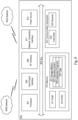
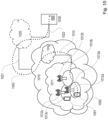
- a wireless network such as the example wireless network illustrated in Figure 7 .
- the wireless network of Figure 7 only depicts network 706, network nodes 760 and 760b, and WDs 710, 710b, and 710c.
- a wireless network may further include any additional elements suitable to support communication between wireless devices or between a wireless device and another communication device, such as a landline telephone, a service provider, or any other network node or end device.
- network node 760 and wireless device (WD) 710 are depicted with additional detail.
- the wireless device 710 may comprise an aerial wireless device, for example a drone as illustrated in Figure 1 .
- the network node 760 may be a network node as described in the above embodiments, and may for example be configured to carry out a method as described with respect to Figures 6 and 7 .
- the wireless network may provide communication and other types of services to one or more wireless devices to facilitate the wireless devices' access to and/or use of the services provided by, or via, the wireless network.
- the wireless network may comprise and/or interface with any type of communication, telecommunication, data, cellular, and/or radio network or other similar type of system.
- the wireless network may be configured to operate according to specific standards or other types of predefined rules or procedures.
- particular embodiments of the wireless network may implement communication standards, such as Global System for Mobile Communications (GSM), Universal Mobile Telecommunications System (UMTS), Long Term Evolution (LTE), and/or other suitable 2G, 3G, 4G, or 5G standards; wireless local area network (WLAN) standards, such as the IEEE 802.11 standards; and/or any other appropriate wireless communication standard, such as the Worldwide Interoperability for Microwave Access (WiMax), Bluetooth, Z-Wave and/or ZigBee standards.
- GSM Global System for Mobile Communications
- UMTS Universal Mobile Telecommunications System
- LTE Long Term Evolution
- WLAN wireless local area network
- WiMax Worldwide Interoperability for Microwave Access
- Bluetooth Z-Wave and/or ZigBee standards.
Landscapes
- Engineering & Computer Science (AREA)
- Signal Processing (AREA)
- Computer Networks & Wireless Communication (AREA)
- Physics & Mathematics (AREA)
- General Physics & Mathematics (AREA)
- Theoretical Computer Science (AREA)
- Software Systems (AREA)
- Aviation & Aerospace Engineering (AREA)
- Data Mining & Analysis (AREA)
- Evolutionary Computation (AREA)
- Medical Informatics (AREA)
- Computer Vision & Pattern Recognition (AREA)
- Computing Systems (AREA)
- General Engineering & Computer Science (AREA)
- Mathematical Physics (AREA)
- Artificial Intelligence (AREA)
- Databases & Information Systems (AREA)
- Mobile Radio Communication Systems (AREA)
Claims (11)
- Procédé, dans un nœud de réseau (760, 760b) d'un réseau de communication, permettant de déterminer, parmi une première catégorie associée au comportement d'un premier dispositif sans fil et une seconde catégorie associée au comportement d'un second dispositif sans fil, à laquelle appartient chacun d'une pluralité de dispositifs sans fil (103, 710), le procédé comprend :la détermination (100), sur la base d'une classification binaire de première information, lesquels des dispositifs sans fil (103, 710) satisfont à au moins un critère principal ; dans lequel la première information comprenant une ou plusieurs mesures d'avance temporelle, TA, une quantité de ressources de liaison montantes demandées ; des mesures de l'intensité du signal de liaison montante ; des statistiques de transfert ; la détection de la ligne de visée en liaison descendante ;la transmission (110) d'une demande pour une seconde information aux dispositifs sans fil (103, 710) qui satisfont à au moins un critère principal ; dans lequel la seconde information comprend une ou plusieurs mesures sur des transmissions pilotes dédiées en liaison montante, un signal de référence de sondage, SRS, des transmissions de canal d'accès aléatoire, RACH, et leurs mesures respectives dans les stations de base voisines, des rapports de mesure périodiques de la liaison descendante comprenant des mesures de la puissance reçue du signal de référence provenant de différentes cellules ; des rapports de mesure associés au signal de référence d'information d'état de canal, CSI-RS ;la réception (120) de la seconde information de chaque dispositif sans fil (103, 710) qui satisfait à l'ensemble de l'au moins un critère principal ;la détermination (130), sur la base d'une classification binaire de la seconde information, lesquels des dispositifs sans fil (103, 710) satisfont à l'ensemble de l'au moins un critère principal et satisfont également à au moins un critère secondaire ; etla classification (140) des dispositifs sans fil (103, 710) qui satisfont à la fois à l'au moins un critère principal et à l'ensemble de l'au moins un critère secondaire dans la première catégorie, dans lequel la première catégorie comprend une catégorie de drone et la seconde comprend une catégorie de non-drone.
- Procédé selon la revendication 1, dans lequel l'étape de détermination (130) desquels des dispositifs sans fil (103, 710) qui satisfont à l'ensemble de l'au moins un critère principal et qui satisfont également à l'ensemble de l'au moins un critère secondaire est également basée sur la première information.
- Procédé selon la revendication 2, dans lequel l'au moins un critère principal est tel que les dispositifs sans fil (103, 710) qui satisfont à l'ensemble de l'au moins un critère principal présentent un premier taux de faux positifs et un premier taux de vrais positifs d'appartenir à la première catégorie.
- Procédé selon la revendication 3, dans lequel l'au moins un critère secondaire est tel que les dispositifs sans fil (103, 710) qui satisfont à l'ensemble de l'au moins un critère secondaire présentent un second taux de faux positifs et un second taux de vrais positifs d'appartenir à la première catégorie, dans lequel
le second taux de faux positifs étant inférieur au premier taux de faux positifs et le second taux de vrais positifs étant inférieur ou égal au premier taux de vrais positifs. - Procédé selon la revendication 4, dans lequel les taux de vrais positifs et de faux positifs sont calculés pour tous les dispositifs sans fil (103, 710).
- Procédé selon l'une quelconque des revendications 1 à 5, comprenant en outre :
la classification des dispositifs sans fil (103, 710) ne qui satisfont pas à l'ensemble de tous les critères principaux dans la seconde catégorie et/ou la classification des dispositifs sans fil (103, 710) qui ne satisfont pas à l'ensemble de l'au moins un critère secondaire dans la seconde catégorie. - Procédé selon l'une quelconque des revendications 1 à 6, comprenant en outre la génération de l'au moins un critère principal par apprentissage automatique à partir d'informations d'apprentissage d'un même type que la première information.
- Procédé selon l'une quelconque des revendications 1 à 7, comprenant en outre la génération de l'au moins un critère secondaire par apprentissage automatique, basé sur des informations d'apprentissage d'un même type que la seconde information, et la mise à jour continue de l'au moins un critère principal par apprentissage automatique, basé sur les dispositifs sans fil (103, 710) classifiés dans la seconde catégorie lorsqu'ils ne satisfont pas à l'ensemble de l'au moins un critère secondaire.
- Procédé selon l'une quelconque des revendications 1 à 5 ou 8, dans lequel la première information comprend des informations réseau fournies au réseau dans le cadre du fonctionnement normal du premier dispositif sans fil (103, 710).
- Procédé selon l'une quelconque des revendications 1 à 5, dans lequel un service de communication sans fil fourni à chaque dispositif sans fil (103, 710) est ajusté en fonction de la catégorie dans lequel chaque dispositif sans fil (103, 710) est classifié.
- Nœud de réseau (760, 760b) dans un réseau de communication, permettant de déterminer à laquelle d'une première catégorie associée au comportement d'un premier dispositif sans fil (103, 710) et d'une seconde catégorie associée au comportement d'un second dispositif sans fil appartient chaque dispositif sans fil (103, 710), le nœud de réseau (760, 760b) comprend un circuit de traitement configuré pour :déterminer (100), sur la base d'une classification binaire de première information, lesquels des dispositifs sans fil (103, 710) satisfont à au moins un critère principal ; dans lequel la première information comprend une ou plusieurs mesures d'avance temporelle, TA, une quantité de ressources de liaison montante demandées ; des mesures de force de signal de liaison montante ; des statistiques de transfert ; une détection de ligne de visée en liaison descendante ;transmettre (110) une demande de seconde information aux dispositifs sans fil (103, 710) qui satisfont à l'ensemble de l'au moins un critère principal ; dans lequel la seconde information comprend une ou plusieurs mesures sur des transmissions pilotes de liaison montante dédiées, un signal de référence de sondage, SRS, des transmissions de canal d'accès aléatoire, RACH, et leurs mesures respectives dans des stations de base voisines, des rapports de mesure de liaison descendante périodiques comprenant des mesures de puissance de signal de référence reçue en provenance de différentes cellules ; des rapports de mesure associés de signal de référence d'informations d'état de canal, CSI-RS ;recevoir (120) la seconde information de chacun des dispositifs sans fil (103, 710) qui satisfont à l'ensemble de l'au moins un critère principal ;déterminer (130) sur la base de la classification binaire de la seconde information lesquels des dispositifs sans fil (103, 710) qui satisfont à l'ensemble de l'au moins un critère principal et qui satisfont également à l'ensemble de l'au moins un critère secondaire ; etclassifier (140) les dispositifs sans fil (103, 710) qui satisfont à la fois à l'ensemble de l'au moins un critère principal et à l'ensemble de l'au moins un critère secondaire dans la première catégorie, dans lequel la première catégorie comprend une catégorie de drone et la seconde catégorie comprenant une catégorie de non-drone.
Applications Claiming Priority (2)
| Application Number | Priority Date | Filing Date | Title |
|---|---|---|---|
| US201862657169P | 2018-04-13 | 2018-04-13 | |
| PCT/SE2018/050967 WO2019199214A1 (fr) | 2018-04-13 | 2018-09-21 | Procédés et appareil pour catégoriser des dispositifs sans fil |
Publications (3)
| Publication Number | Publication Date |
|---|---|
| EP3777295A1 EP3777295A1 (fr) | 2021-02-17 |
| EP3777295A4 EP3777295A4 (fr) | 2022-01-05 |
| EP3777295B1 true EP3777295B1 (fr) | 2025-06-25 |
Family
ID=68164302
Family Applications (1)
| Application Number | Title | Priority Date | Filing Date |
|---|---|---|---|
| EP18914435.5A Active EP3777295B1 (fr) | 2018-04-13 | 2018-09-21 | Procédés et appareil pour catégoriser des dispositifs sans fil |
Country Status (4)
| Country | Link |
|---|---|
| US (1) | US11930383B2 (fr) |
| EP (1) | EP3777295B1 (fr) |
| CN (1) | CN111771392B (fr) |
| WO (1) | WO2019199214A1 (fr) |
Families Citing this family (8)
| Publication number | Priority date | Publication date | Assignee | Title |
|---|---|---|---|---|
| US11665576B2 (en) * | 2018-08-10 | 2023-05-30 | Verizon Patent And Licensing Inc. | Systems and methods for wireless low latency traffic scheduler |
| US12133187B2 (en) * | 2020-01-23 | 2024-10-29 | Qualcomm Incorporated | Timing advance command implementations for preconfigured uplink resource transmissions |
| CN111443731B (zh) * | 2020-04-15 | 2021-06-18 | 北京邮电大学 | 一种无人机控制方法、装置及控制设备 |
| US11652538B2 (en) * | 2021-03-31 | 2023-05-16 | AT&T Technical Services Company, Inc. | Reducing uplink interference induced by aerial user equipment |
| EP4075838B1 (fr) * | 2021-04-13 | 2025-09-24 | Telia Company AB | Gestion d'un abonnement |
| US20230254931A1 (en) * | 2022-01-17 | 2023-08-10 | Nokia Technologies Oy | Apparatus, methods, and computer programs |
| CN114615641B (zh) * | 2022-03-03 | 2025-09-12 | 上海旷雀科技有限公司 | 高空平台设备协同管理方法、系统和电子设备 |
| CN115396975B (zh) * | 2022-08-26 | 2023-05-16 | 北京理工大学 | 无人机集群系统网络化低延时高速数据传输方法 |
Family Cites Families (29)
| Publication number | Priority date | Publication date | Assignee | Title |
|---|---|---|---|---|
| US8737989B2 (en) * | 2008-08-29 | 2014-05-27 | Apple Inc. | Methods and apparatus for machine-to-machine based communication service classes |
| US9253594B2 (en) * | 2013-03-06 | 2016-02-02 | Qualcomm Incorporated | Dynamic characterization of mobile devices in network-based wireless positioning systems |
| US20140274049A1 (en) * | 2013-03-12 | 2014-09-18 | Qualcomm Incorporated | Method and apparatus for ue measurement assisted handover classification |
| EP3116254A4 (fr) | 2014-03-07 | 2017-08-23 | Nec Corporation | Système de réseau, dispositif d'analyse, procédé de traitement d'informations de mesures, et support d'enregistrement |
| US9754496B2 (en) * | 2014-09-30 | 2017-09-05 | Elwha Llc | System and method for management of airspace for unmanned aircraft |
| US10575205B2 (en) * | 2014-10-20 | 2020-02-25 | Qualcomm Incorporated | Transport block size determination |
| US10162351B2 (en) * | 2015-06-05 | 2018-12-25 | At&T Intellectual Property I, L.P. | Remote provisioning of a drone resource |
| WO2017139001A2 (fr) * | 2015-11-24 | 2017-08-17 | Droneshield, Llc | Détection et classification de drone avec compensation pour des sources de fouillis d'arrière-plan |
| US9918235B2 (en) * | 2015-11-24 | 2018-03-13 | Verizon Patent And Licensing Inc. | Adaptive antenna operation for UAVs using terrestrial cellular networks |
| WO2017119829A1 (fr) * | 2016-01-08 | 2017-07-13 | Telefonaktiebolaget Lm Ericsson (Publ) | Instauration d'une rétroaction d'état de canal pour transmission multi-utilisateur dans un système de communication sans fil |
| US10013884B2 (en) * | 2016-07-29 | 2018-07-03 | International Business Machines Corporation | Unmanned aerial vehicle ad-hoc clustering and collaboration via shared intent and operator discovery |
| US10204521B2 (en) * | 2016-08-31 | 2019-02-12 | At&T Intellectual Property I, L.P. | Method and system on dynamic control of UAVs using software defined networks |
| EP3522573B1 (fr) * | 2016-09-27 | 2021-07-28 | Sony Group Corporation | Rapport de mesure d'un drone contrôlé par une combinaison d'altitude et de vitesse |
| US10558186B2 (en) * | 2016-10-13 | 2020-02-11 | Farrokh Mohamadi | Detection of drones |
| US10455520B2 (en) * | 2017-03-30 | 2019-10-22 | At&T Intellectual Property I, L.P. | Altitude based device management in a wireless communications system |
| US11240779B2 (en) * | 2017-06-30 | 2022-02-01 | Telefonaktiebolaget Lm Ericsson (Publ) | Methods of identifying aerial user equipment in cellular networks |
| CN108702665B (zh) * | 2017-08-04 | 2022-03-11 | 北京小米移动软件有限公司 | 一种测量上报方法及装置 |
| US11122486B2 (en) * | 2017-08-11 | 2021-09-14 | Kyocera Corporation | Method for sending uplink interference indicator from neighbor cells to unmanned aerial vehicles |
| CN109392145A (zh) * | 2017-08-11 | 2019-02-26 | 索尼公司 | 无线通信系统中的装置和方法、计算机可读存储介质 |
| CN109547971A (zh) * | 2017-09-21 | 2019-03-29 | 索尼公司 | 无线通信系统中的装置和方法、计算机可读存储介质 |
| EP3462646A1 (fr) * | 2017-09-27 | 2019-04-03 | Fraunhofer-Gesellschaft zur Förderung der angewandten Forschung e.V. | Équipements utilisateurs volants de gestion de réseau sans fil |
| BR112020006519B1 (pt) * | 2017-11-03 | 2024-02-27 | Ipcom Gmbh & Co. Kg | Método para permitir que uma máquina móvel forneça informações a um dispositivo de um destinatário |
| JP6971410B2 (ja) * | 2017-11-16 | 2021-11-24 | 京セラ株式会社 | 無人航空機によるダウンリンク信号のアップリンク干渉に基づく監視 |
| US11137761B2 (en) * | 2017-11-20 | 2021-10-05 | At&T Intellectual Property I, L.P. | Object modeling with adversarial learning |
| CN110138519A (zh) * | 2018-02-02 | 2019-08-16 | 索尼公司 | 无线通信系统中的装置和方法、计算机可读存储介质 |
| US10484892B2 (en) * | 2018-02-20 | 2019-11-19 | Verizon Patent And Licensing Inc. | Contextualized network optimization |
| US20190306675A1 (en) * | 2018-03-29 | 2019-10-03 | Intel Corporation | Detecting and mitigating drone interference |
| US11212728B2 (en) * | 2018-04-04 | 2021-12-28 | T-Mobile Usa, Inc. | Behavior-based UAV detection for communication networks |
| JP2021119643A (ja) * | 2018-04-05 | 2021-08-12 | ソニーグループ株式会社 | 無線通信装置、通信装置および通信制御方法 |
-
2018
- 2018-09-21 EP EP18914435.5A patent/EP3777295B1/fr active Active
- 2018-09-21 US US16/963,943 patent/US11930383B2/en active Active
- 2018-09-21 CN CN201880090268.5A patent/CN111771392B/zh active Active
- 2018-09-21 WO PCT/SE2018/050967 patent/WO2019199214A1/fr not_active Ceased
Also Published As
| Publication number | Publication date |
|---|---|
| CN111771392A (zh) | 2020-10-13 |
| WO2019199214A1 (fr) | 2019-10-17 |
| US20210044995A1 (en) | 2021-02-11 |
| CN111771392B (zh) | 2024-04-19 |
| US11930383B2 (en) | 2024-03-12 |
| EP3777295A4 (fr) | 2022-01-05 |
| EP3777295A1 (fr) | 2021-02-17 |
Similar Documents
| Publication | Publication Date | Title |
|---|---|---|
| US12507107B2 (en) | Measurement reporting configuration for aiding the sorting of beam/cell level measurements | |
| US12245086B2 (en) | Efficient 3D mobility support using reinforcement learning | |
| EP3918838B1 (fr) | Déclenchement de mobilité conditionnelle sur la base d'informations de faisceau | |
| US12457534B2 (en) | Measurement reporting for conditional handover candidates | |
| US20230412513A1 (en) | Providing distributed ai models in communication networks and related nodes/devices | |
| US11265801B2 (en) | Information exchange for initial user equipment access | |
| EP3777295B1 (fr) | Procédés et appareil pour catégoriser des dispositifs sans fil | |
| US20240314666A1 (en) | Procedural options for cho in non-terrestrial networks | |
| EP3912393A1 (fr) | Procédures d'ue permettant de réduire une mesure rsrp/rsrq dans un mode veille rrc et un état inactif | |
| US20200396691A1 (en) | Transmit Power Control in a Wireless Communications Network | |
| US20230057057A1 (en) | Methods of managing communication based on information defining an operational environment and related nodes | |
| US20250338340A1 (en) | Cell id selection in multi cell id scenarios | |
| US12294552B2 (en) | Method and device for providing resource status information | |
| US20210385801A1 (en) | Self-Optimizing Repetitions in Power Limited RATs | |
| WO2021198730A1 (fr) | Procédés de génération et de déploiement de configurations de réseau et nœuds de gestion associés, programmes informatiques, et produits-programmes informatiques | |
| EP3777321A1 (fr) | Procédés de fourniture d'indication d'état aérien, dispositifs sans fil et noeuds de réseau associés | |
| US11882457B2 (en) | Baseband processing capability handling in split deployment |
Legal Events
| Date | Code | Title | Description |
|---|---|---|---|
| STAA | Information on the status of an ep patent application or granted ep patent |
Free format text: STATUS: THE INTERNATIONAL PUBLICATION HAS BEEN MADE |
|
| PUAI | Public reference made under article 153(3) epc to a published international application that has entered the european phase |
Free format text: ORIGINAL CODE: 0009012 |
|
| STAA | Information on the status of an ep patent application or granted ep patent |
Free format text: STATUS: REQUEST FOR EXAMINATION WAS MADE |
|
| 17P | Request for examination filed |
Effective date: 20200708 |
|
| AK | Designated contracting states |
Kind code of ref document: A1 Designated state(s): AL AT BE BG CH CY CZ DE DK EE ES FI FR GB GR HR HU IE IS IT LI LT LU LV MC MK MT NL NO PL PT RO RS SE SI SK SM TR |
|
| AX | Request for extension of the european patent |
Extension state: BA ME |
|
| DAV | Request for validation of the european patent (deleted) | ||
| DAX | Request for extension of the european patent (deleted) | ||
| A4 | Supplementary search report drawn up and despatched |
Effective date: 20211208 |
|
| RIC1 | Information provided on ipc code assigned before grant |
Ipc: H04W 8/22 20090101ALN20211202BHEP Ipc: B64C 39/02 20060101ALN20211202BHEP Ipc: H04W 8/24 20090101ALI20211202BHEP Ipc: G08G 5/00 20060101ALI20211202BHEP Ipc: H04W 24/08 20090101AFI20211202BHEP |
|
| STAA | Information on the status of an ep patent application or granted ep patent |
Free format text: STATUS: EXAMINATION IS IN PROGRESS |
|
| 17Q | First examination report despatched |
Effective date: 20230301 |
|
| RIC1 | Information provided on ipc code assigned before grant |
Ipc: H04W 8/22 20090101ALN20250303BHEP Ipc: B64C 39/02 20060101ALN20250303BHEP Ipc: G08G 5/55 20250101ALI20250303BHEP Ipc: H04W 8/24 20090101ALI20250303BHEP Ipc: G08G 5/26 20250101ALI20250303BHEP Ipc: H04W 24/08 20090101AFI20250303BHEP |
|
| GRAP | Despatch of communication of intention to grant a patent |
Free format text: ORIGINAL CODE: EPIDOSNIGR1 |
|
| STAA | Information on the status of an ep patent application or granted ep patent |
Free format text: STATUS: GRANT OF PATENT IS INTENDED |
|
| RIC1 | Information provided on ipc code assigned before grant |
Ipc: H04W 8/22 20090101ALN20250331BHEP Ipc: B64C 39/02 20060101ALN20250331BHEP Ipc: G08G 5/55 20250101ALI20250331BHEP Ipc: H04W 8/24 20090101ALI20250331BHEP Ipc: G08G 5/26 20250101ALI20250331BHEP Ipc: H04W 24/08 20090101AFI20250331BHEP |
|
| INTG | Intention to grant announced |
Effective date: 20250414 |
|
| GRAS | Grant fee paid |
Free format text: ORIGINAL CODE: EPIDOSNIGR3 |
|
| GRAA | (expected) grant |
Free format text: ORIGINAL CODE: 0009210 |
|
| STAA | Information on the status of an ep patent application or granted ep patent |
Free format text: STATUS: THE PATENT HAS BEEN GRANTED |
|
| AK | Designated contracting states |
Kind code of ref document: B1 Designated state(s): AL AT BE BG CH CY CZ DE DK EE ES FI FR GB GR HR HU IE IS IT LI LT LU LV MC MK MT NL NO PL PT RO RS SE SI SK SM TR |
|
| REG | Reference to a national code |
Ref country code: GB Ref legal event code: FG4D |
|
| REG | Reference to a national code |
Ref country code: CH Ref legal event code: EP |
|
| REG | Reference to a national code |
Ref country code: CH Ref legal event code: EP |
|
| REG | Reference to a national code |
Ref country code: IE Ref legal event code: FG4D |
|
| REG | Reference to a national code |
Ref country code: DE Ref legal event code: R096 Ref document number: 602018083044 Country of ref document: DE |
|
| PG25 | Lapsed in a contracting state [announced via postgrant information from national office to epo] |
Ref country code: FI Free format text: LAPSE BECAUSE OF FAILURE TO SUBMIT A TRANSLATION OF THE DESCRIPTION OR TO PAY THE FEE WITHIN THE PRESCRIBED TIME-LIMIT Effective date: 20250625 |
|
| REG | Reference to a national code |
Ref country code: LT Ref legal event code: MG9D |
|
| PG25 | Lapsed in a contracting state [announced via postgrant information from national office to epo] |
Ref country code: NO Free format text: LAPSE BECAUSE OF FAILURE TO SUBMIT A TRANSLATION OF THE DESCRIPTION OR TO PAY THE FEE WITHIN THE PRESCRIBED TIME-LIMIT Effective date: 20250925 Ref country code: GR Free format text: LAPSE BECAUSE OF FAILURE TO SUBMIT A TRANSLATION OF THE DESCRIPTION OR TO PAY THE FEE WITHIN THE PRESCRIBED TIME-LIMIT Effective date: 20250926 |
|
| PG25 | Lapsed in a contracting state [announced via postgrant information from national office to epo] |
Ref country code: BG Free format text: LAPSE BECAUSE OF FAILURE TO SUBMIT A TRANSLATION OF THE DESCRIPTION OR TO PAY THE FEE WITHIN THE PRESCRIBED TIME-LIMIT Effective date: 20250625 |
|
| PG25 | Lapsed in a contracting state [announced via postgrant information from national office to epo] |
Ref country code: HR Free format text: LAPSE BECAUSE OF FAILURE TO SUBMIT A TRANSLATION OF THE DESCRIPTION OR TO PAY THE FEE WITHIN THE PRESCRIBED TIME-LIMIT Effective date: 20250625 |
|
| PG25 | Lapsed in a contracting state [announced via postgrant information from national office to epo] |
Ref country code: RS Free format text: LAPSE BECAUSE OF FAILURE TO SUBMIT A TRANSLATION OF THE DESCRIPTION OR TO PAY THE FEE WITHIN THE PRESCRIBED TIME-LIMIT Effective date: 20250925 |
|
| PG25 | Lapsed in a contracting state [announced via postgrant information from national office to epo] |
Ref country code: LV Free format text: LAPSE BECAUSE OF FAILURE TO SUBMIT A TRANSLATION OF THE DESCRIPTION OR TO PAY THE FEE WITHIN THE PRESCRIBED TIME-LIMIT Effective date: 20250625 |
|
| REG | Reference to a national code |
Ref country code: NL Ref legal event code: MP Effective date: 20250625 |
|
| PG25 | Lapsed in a contracting state [announced via postgrant information from national office to epo] |
Ref country code: NL Free format text: LAPSE BECAUSE OF FAILURE TO SUBMIT A TRANSLATION OF THE DESCRIPTION OR TO PAY THE FEE WITHIN THE PRESCRIBED TIME-LIMIT Effective date: 20250625 |
|
| PG25 | Lapsed in a contracting state [announced via postgrant information from national office to epo] |
Ref country code: PT Free format text: LAPSE BECAUSE OF FAILURE TO SUBMIT A TRANSLATION OF THE DESCRIPTION OR TO PAY THE FEE WITHIN THE PRESCRIBED TIME-LIMIT Effective date: 20251027 |
|
| REG | Reference to a national code |
Ref country code: AT Ref legal event code: MK05 Ref document number: 1807925 Country of ref document: AT Kind code of ref document: T Effective date: 20250625 |
|
| PG25 | Lapsed in a contracting state [announced via postgrant information from national office to epo] |
Ref country code: IS Free format text: LAPSE BECAUSE OF FAILURE TO SUBMIT A TRANSLATION OF THE DESCRIPTION OR TO PAY THE FEE WITHIN THE PRESCRIBED TIME-LIMIT Effective date: 20251025 |
|
| PG25 | Lapsed in a contracting state [announced via postgrant information from national office to epo] |
Ref country code: AT Free format text: LAPSE BECAUSE OF FAILURE TO SUBMIT A TRANSLATION OF THE DESCRIPTION OR TO PAY THE FEE WITHIN THE PRESCRIBED TIME-LIMIT Effective date: 20250625 Ref country code: SM Free format text: LAPSE BECAUSE OF FAILURE TO SUBMIT A TRANSLATION OF THE DESCRIPTION OR TO PAY THE FEE WITHIN THE PRESCRIBED TIME-LIMIT Effective date: 20250625 |
|
| PG25 | Lapsed in a contracting state [announced via postgrant information from national office to epo] |
Ref country code: CZ Free format text: LAPSE BECAUSE OF FAILURE TO SUBMIT A TRANSLATION OF THE DESCRIPTION OR TO PAY THE FEE WITHIN THE PRESCRIBED TIME-LIMIT Effective date: 20250625 |
|
| PG25 | Lapsed in a contracting state [announced via postgrant information from national office to epo] |
Ref country code: PL Free format text: LAPSE BECAUSE OF FAILURE TO SUBMIT A TRANSLATION OF THE DESCRIPTION OR TO PAY THE FEE WITHIN THE PRESCRIBED TIME-LIMIT Effective date: 20250625 |
|
| PG25 | Lapsed in a contracting state [announced via postgrant information from national office to epo] |
Ref country code: EE Free format text: LAPSE BECAUSE OF FAILURE TO SUBMIT A TRANSLATION OF THE DESCRIPTION OR TO PAY THE FEE WITHIN THE PRESCRIBED TIME-LIMIT Effective date: 20250625 |
|
| PG25 | Lapsed in a contracting state [announced via postgrant information from national office to epo] |
Ref country code: SK Free format text: LAPSE BECAUSE OF FAILURE TO SUBMIT A TRANSLATION OF THE DESCRIPTION OR TO PAY THE FEE WITHIN THE PRESCRIBED TIME-LIMIT Effective date: 20250625 |
|
| PG25 | Lapsed in a contracting state [announced via postgrant information from national office to epo] |
Ref country code: ES Free format text: LAPSE BECAUSE OF FAILURE TO SUBMIT A TRANSLATION OF THE DESCRIPTION OR TO PAY THE FEE WITHIN THE PRESCRIBED TIME-LIMIT Effective date: 20250625 |
|
| PG25 | Lapsed in a contracting state [announced via postgrant information from national office to epo] |
Ref country code: RO Free format text: LAPSE BECAUSE OF FAILURE TO SUBMIT A TRANSLATION OF THE DESCRIPTION OR TO PAY THE FEE WITHIN THE PRESCRIBED TIME-LIMIT Effective date: 20250625 |
|
| PG25 | Lapsed in a contracting state [announced via postgrant information from national office to epo] |
Ref country code: DK Free format text: LAPSE BECAUSE OF FAILURE TO SUBMIT A TRANSLATION OF THE DESCRIPTION OR TO PAY THE FEE WITHIN THE PRESCRIBED TIME-LIMIT Effective date: 20250625 |
|
| PG25 | Lapsed in a contracting state [announced via postgrant information from national office to epo] |
Ref country code: IT Free format text: LAPSE BECAUSE OF FAILURE TO SUBMIT A TRANSLATION OF THE DESCRIPTION OR TO PAY THE FEE WITHIN THE PRESCRIBED TIME-LIMIT Effective date: 20250625 |
|
| PLBE | No opposition filed within time limit |
Free format text: ORIGINAL CODE: 0009261 |
|
| STAA | Information on the status of an ep patent application or granted ep patent |
Free format text: STATUS: NO OPPOSITION FILED WITHIN TIME LIMIT |