EP3779568A1 - Verfahren zum entwurf und verfahren zur herstellung eines brillenglaspaares sowie brillenlinsenpaar - Google Patents
Verfahren zum entwurf und verfahren zur herstellung eines brillenglaspaares sowie brillenlinsenpaar Download PDFInfo
- Publication number
- EP3779568A1 EP3779568A1 EP19775162.1A EP19775162A EP3779568A1 EP 3779568 A1 EP3779568 A1 EP 3779568A1 EP 19775162 A EP19775162 A EP 19775162A EP 3779568 A1 EP3779568 A1 EP 3779568A1
- Authority
- EP
- European Patent Office
- Prior art keywords
- eye
- accommodation
- response
- spectacle lens
- difference
- Prior art date
- Legal status (The legal status is an assumption and is not a legal conclusion. Google has not performed a legal analysis and makes no representation as to the accuracy of the status listed.)
- Pending
Links
- 238000000034 method Methods 0.000 title claims abstract description 164
- 238000004519 manufacturing process Methods 0.000 title 1
- 230000004308 accommodation Effects 0.000 claims abstract description 211
- 230000004044 response Effects 0.000 claims abstract description 165
- 230000008569 process Effects 0.000 claims abstract description 121
- 210000001508 eye Anatomy 0.000 claims description 201
- 238000005259 measurement Methods 0.000 claims description 24
- 230000000750 progressive effect Effects 0.000 claims description 12
- 210000000695 crystalline len Anatomy 0.000 description 208
- 201000009310 astigmatism Diseases 0.000 description 17
- 230000004438 eyesight Effects 0.000 description 17
- 208000001491 myopia Diseases 0.000 description 16
- 230000008859 change Effects 0.000 description 9
- 230000004418 eye rotation Effects 0.000 description 4
- 239000000758 substrate Substances 0.000 description 3
- 230000000694 effects Effects 0.000 description 2
- 210000000873 fovea centralis Anatomy 0.000 description 2
- 210000005252 bulbus oculi Anatomy 0.000 description 1
- 230000004927 fusion Effects 0.000 description 1
- 238000012986 modification Methods 0.000 description 1
- 230000004048 modification Effects 0.000 description 1
- 230000000007 visual effect Effects 0.000 description 1
Images


Classifications
-
- G—PHYSICS
- G02—OPTICS
- G02C—SPECTACLES; SUNGLASSES OR GOGGLES INSOFAR AS THEY HAVE THE SAME FEATURES AS SPECTACLES; CONTACT LENSES
- G02C7/00—Optical parts
- G02C7/02—Lenses; Lens systems ; Methods of designing lenses
- G02C7/024—Methods of designing ophthalmic lenses
- G02C7/027—Methods of designing ophthalmic lenses considering wearer's parameters
-
- G—PHYSICS
- G02—OPTICS
- G02C—SPECTACLES; SUNGLASSES OR GOGGLES INSOFAR AS THEY HAVE THE SAME FEATURES AS SPECTACLES; CONTACT LENSES
- G02C7/00—Optical parts
- G02C7/02—Lenses; Lens systems ; Methods of designing lenses
- G02C7/024—Methods of designing ophthalmic lenses
- G02C7/028—Special mathematical design techniques
-
- G—PHYSICS
- G02—OPTICS
- G02C—SPECTACLES; SUNGLASSES OR GOGGLES INSOFAR AS THEY HAVE THE SAME FEATURES AS SPECTACLES; CONTACT LENSES
- G02C7/00—Optical parts
- G02C7/02—Lenses; Lens systems ; Methods of designing lenses
- G02C7/06—Lenses; Lens systems ; Methods of designing lenses bifocal; multifocal ; progressive
-
- G—PHYSICS
- G02—OPTICS
- G02C—SPECTACLES; SUNGLASSES OR GOGGLES INSOFAR AS THEY HAVE THE SAME FEATURES AS SPECTACLES; CONTACT LENSES
- G02C7/00—Optical parts
- G02C7/02—Lenses; Lens systems ; Methods of designing lenses
- G02C7/06—Lenses; Lens systems ; Methods of designing lenses bifocal; multifocal ; progressive
- G02C7/061—Spectacle lenses with progressively varying focal power
Definitions
- an example of the present invention aims to provide a technique suitable for binocular vision when a wearer uses a pair of spectacle lenses.
- the present invention has been devised to achieve the above object.
- a power difference unit: diopter (D)
- a second aspect of the present invention is an aspect according to the first aspect, wherein, in the designing process, a spectacle lens for an eye with a smaller response of accommodation between the response of accommodation of the right eye and the response of accommodation of the left eye is provided with a larger power difference than a spectacle lens for an eye with a larger response of accommodation, the power difference different from a prescription value.
- a fifth aspect of the present invention is an aspect according to the third or fourth aspect, wherein, in the designing process, a difference ⁇ PE (where ⁇ PE > 0) between the power error PE R of the right-eye spectacle lens and the power error PE L of the left-eye spectacle lens is 80% to 120% of the difference ⁇ AC (where ⁇ AC > 0) between the response of accommodation AC R of the right eye and the response of accommodation AC L of the left eye.
- a ninth aspect of the present invention is an aspect according to any one of the third to eighth aspects, wherein the response of accommodation of the right eye and the response of accommodation of the left eye of the wearer are actually measured values obtained as results of performing measurement on each eye of the wearer to obtain (applied accommodation AC N - applied accommodation AC F ) .
- a tenth aspect of the present invention is an aspect according to any one of the third to ninth aspects, wherein the designing process includes:
- a twelfth aspect of the present invention is a pair of spectacle lenses including a right-eye spectacle lens and a left-eye spectacle lens, both the spectacle lenses being single-focus lenses, wherein a difference between a power error (unit: diopter (D)) at a position T1 of a rotation angle ⁇ (15 degrees ⁇ ⁇ ⁇ 40 degrees) in a first spectacle lens and a power error at a position T2 of the rotation angle ⁇ in a second spectacle lens is 0.15 D or more.
- D diopter
- a thirteenth aspect of the present invention is an aspect according to the twelfth aspect, wherein a power error at the position T2 in the first spectacle lens is within ⁇ 0.10 D, and a power error at the position T1 in the second spectacle lens is 0.15 D or more.
- a fifteenth aspect of the present invention is an aspect according to the fourteenth aspect, wherein it is preferable that a power difference different from a prescription value at the position T2 in the first spectacle lens be within ⁇ 0.10 D, and a power difference different from a prescription value at the position T1 in the second spectacle lens be 0.15 D or more.
- the twelfth to fifteenth aspects are also characterized as a designing method and a producing method of a spectacle lens.
- the above-described respective aspects may be appropriately combined with the following aspects.
- a positive power error is provided to a spectacle lens for an eye with a smaller response of accommodation between the response of accommodation AC R of the right eye and the response of accommodation AC L of the left eye.
- a difference ⁇ PE (where ⁇ PE > 0) between the power error PE R of the right-eye spectacle lens and the power error PE L of the left-eye spectacle lens is 95% to 105% of the difference ⁇ AC (where ⁇ AC > 0) between the response of accommodation AC R of the right eye and the response of accommodation AC L of the left eye.
- the power error in the designing process is a value at a position of a rotation angle ⁇ (20 degrees ⁇ ⁇ ⁇ 35 degrees).
- the power difference provided in the designing process is obtained from an aspherical surface design of a single-focus lens.
- the power difference provided in the designing process is obtained by setting an addition power of a progressive addition lens.
- the position T1 and the position T2 may be set as near power measurement positions, and the power error may be calculated as a value obtained by subtracting a power at a distance power measurement position from a power at the near power measurement position. Then, each of the above-described suitable examples may be applied to the case of the pair of progressive addition lenses.
- a pair of spectacle lenses including a right-eye spectacle lens and a left-eye spectacle lens, wherein a difference is 0.15 D or more, the difference between a power difference (unit: diopter (D)) at a position T1 of a rotation angle ⁇ (15 degrees ⁇ ⁇ ⁇ 40 degrees) in a first spectacle lens, the power difference different from a prescription value, and a power difference at a position T2 of the rotation angle ⁇ in a second spectacle lens, the power difference different from a prescription value.
- a power difference unit: diopter (D)
- a difference is 0.50 D or less and preferably 0.25 D or less, the difference between a power difference (unit: diopter (D)) different from a prescription value at a near power measurement position T1 in a first spectacle lens and a power difference different from a prescription value at a near power measurement position T2 in the second spectacle lens.
- a power difference unit: diopter (D)
- a power error at the position T1 in the second spectacle lens is 0.50 D or less, and preferably 0.25 D or less.
- a point in the outside world that forms an image at the fovea centralis in an unaccommodated state is referred to as a far point of accommodation.
- a point that forms an image at the fovea centralis in a state where an eye is maximally accommodated is referred to as a near point of accommodation.
- the amount of accommodation that needs to be changed for an eye of the subject that is, a difference between a required accommodation amount for distance vision and a required accommodation amount for near vision is referred to as a stimulus of accommodation (unit: D).
- the stimulus of accommodation needs to be set so as not to exceed the amplitude of accommodation.
- the eye of the subject is not always actually accommodated for all stimuli of accommodation.
- a difference between the amount actually accommodated by the eye of the subject, that is, an applied accommodation during distance vision with respect to a predetermined distance, and an applied accommodation during near vision with respect to a distance closer than that in the distance vision is referred to as a response of accommodation (unit: D).
- the required accommodation amount expresses a distance from a presented visual target to an eye to be examined in diopters.
- the applied accommodation is the amount actually accommodated by the eye to be examined with respect to the required accommodation amount.
- a designing method of a pair of spectacle lenses including a right-eye spectacle lens and a left-eye spectacle lens including a designing process of designing a pair of spectacle lenses so as to provide a power difference that compensates for a difference between a response of accommodation of a right eye and a response of accommodation of a left eye of a wearer of the spectacle lenses (hereinafter, also simply referred to as the wearer).
- a power difference to be corrected is a difference between a response of accommodation AC L of a left eye and a response of accommodation AC R of a right eye.
- the response of accommodation of the right eye is a difference AC R between an applied accommodation AC FR of the right eye of the wearer exhibited when the wearer views an object at a distance f and an applied accommodation AC NR of the right eye of the wearer exhibited when viewing an object at a distance n shorter than the distance f.
- the response of accommodation of the left eye is a difference AC L between an applied accommodation AC FL of the left eye of the wearer exhibited when the wearer views the object at the distance f and an applied accommodation AC NL of the left eye of the wearer exhibited when viewing the object at the distance n shorter than the distance f.
- the present embodiment is characterized mainly by compensating the difference ⁇ AC between AC R and AC L , that is, the difference between the responses of accommodation of the left and right eyes with a difference ⁇ PE between a power error PE R (unit: D) of the right-eye spectacle lens and a power error PE L (unit: D) of the left-eye spectacle lens.
- This term "compensate” means to set the power error PE L of the left-eye spectacle lens to be larger than the power error PE R of the right-eye spectacle lens, for example, when the response of accommodation AC L of the left eye is smaller than the response of accommodation AC R of the right eye.
- calculation (AC R - AC L in the above example) is performed such that ⁇ AC becomes positive.
- calculation (PE L - PE R in the above example) is performed such that the difference ⁇ PE between the power error of the left-eye spectacle lens and the power error of the right-eye spectacle lens becomes positive.
- This difference ⁇ PE in power error corresponds to the power difference that compensates for the difference between the response of accommodation of the right eye and the response of accommodation of the left eye of the wearer.
- the power error PE is a difference between an average power, which is an average of a power in a meridional direction at a predetermined position on a spectacle lens (a position corresponding to a rotation angle ⁇ of an eyeball of the wearer) and a power in a sagittal direction, and a vertex power at a lens center (rotation angle of 0°).
- an astigmatism is a difference between the power in the meridional direction and the power in the sagittal direction.
- a pair of spectacle lenses suitable for binocular vision can be provided even when the response of accommodation differs between the left eye and the right eye.
- the reason is as follows. A quality of an image perceived by light incident on the left eye and a quality of an image perceived by light incident on the right eye differ due in part to the difference between the responses of accommodation of the left and right eyes.
- the difference between the responses of accommodation of the left and right eyes is compensated for by using the pair of spectacle lenses of the present embodiment, and the qualities of the images of the left and right eyes are improved so as to match.
- a positive power error to a spectacle lens for an eye with a smaller response of accommodation between the response of accommodation AC R of the right eye and the response of accommodation AC L of the left eye. According to this configuration, it is possible to set a power error of a spectacle lens for an eye with a larger response of accommodation to be substantially zero. Then, the positive power error may be provided to the spectacle lens for the eye with the smaller response of accommodation.
- the designing process preferably designs the pair of spectacle lenses by setting the difference ⁇ PE between the power error PE R at a position having a predetermined rotation angle on the right-eye spectacle lens and the power error PE L at a position having the predetermined rotation angle on the left-eye spectacle lens based on the difference ⁇ AC between the response of accommodation AC R of the right eye and the response of accommodation AC L of the left eye of the wearer.
- the difference ⁇ AC between the responses of accommodation of the left and right eyes is accurately compensated for, and the qualities of the images of the left and right eyes is improved so as to match.
- the designing process preferably designs the pair of spectacle lenses so as to set the difference ⁇ PE between the power error PE R at a position having a predetermined rotation angle on the right-eye spectacle lens and the power error PE L at a position having the predetermined rotation angle on the left-eye spectacle lens to be approximate to the difference ⁇ AC between the response of accommodation AC R of the right eye and the response of accommodation AC L of the left eye of the wearer.
- the difference ⁇ AC between the responses of accommodation of the left and right eyes is more accurately compensated for, and the qualities of the images of the left and right eyes is improved so as to match.
- the difference ⁇ PE (in this case, ⁇ PE > 0) between the power error PE R of the right-eye spectacle lens and the power error PE L of the left-eye spectacle lens is preferably 80% to 120% of the difference (in this case, ⁇ AC > 0) between the response of accommodation AC R of the right eye and the response of accommodation AC L of the left eye.
- the range is more preferably 90% to 110%, and extremely preferably 95% to 105%.
- the ⁇ PE provided in the designing process has a tolerance preferably within ⁇ 0.25 D with respect to AAC, more preferably ⁇ 0.15 D, and even more preferably ⁇ 0.12D.
- a value obtained by subtracting a power error at a position T2 having a rotation angle ⁇ in a spectacle lens for an eye with a larger response of accommodation from a power error at a position T1 of the rotation angle ⁇ (for example, 15 degrees ⁇ ⁇ ⁇ 40 degrees) in a spectacle lens for an eye with a smaller response of accommodation, to be 0.15 D or more.
- An upper limit of the value is not particularly limited. However, it is generally preferable that the power error itself be small. Therefore, the value is set to preferably 0.50 D or less, and more preferably 0.25 D or less.
- ⁇ 20 degrees or 30 degrees is set in the present embodiment for the power difference provided in the designing process, but a value at a position of 20 degrees ⁇ ⁇ ⁇ 35 degrees may be used, and the invention is not limited thereto.
- the power error at the position T2 in the spectacle lens for the eye with the larger response of accommodation may be set within ⁇ 0.10 D, and the power error at the position T1 in the spectacle lens for the eye with the smaller response of accommodation may be set to be 0.15 D or more. Note that it is generally preferable that the power error itself be small. Therefore, the power error at the position T1 is set to preferably 0.50 D or less, and more preferably 0.25 D or less.
- Fig. 1 is a flowchart of the designing method of a pair of spectacle lenses in the case of providing each process according to the present embodiment.
- ⁇ S4> is a base curve selection process of selecting a base curve according to a prescription in the spectacle lens for each eye.
- the designing process preferably includes:
- the following process is preferably performed. It is preferable to change an aspherical surface design in the aspherical surface designing process is changed after changing a base curve selected in the base curve selection process, and then, perform the determination process again. Alternatively, it is preferable to change an aspherical surface design in the aspherical surface designing process, and then, perform the determination process again. With this configuration, it is possible to reliably and extremely suitably provide the pair of spectacle lenses suitable for the binocular vision even when the response of accommodation differs between the left eye and the right eye.
- the aspherical surface designing process, and the determination process is merely a suitable example.
- a base curve determined in advance may be used regardless of the prescription, instead of selecting the base curve according to the prescription.
- the aspherical surface designing process the aspherical surface design may be performed on a surface on the selected base curve side, performed on a surface that is not on the base curve side, or performed on both the surfaces.
- the determination process becomes unnecessary if it is known in advance that the above requirement of falling within the range of 80% to 120% is satisfied.
- the base curve selection process, the aspherical surface designing process, and the determination process may be adopted in an appropriately combined manner instead of adopting all the processes or adopting none of the processes.
- the process of acquiring the power errors (PE R and PE L ) in the respective spectacle lenses and acquiring the difference ⁇ PE therebetween has been expressed to be included in the determination process, but the process ⁇ S6> may be performed separately from the determination process.
- the difference in power error for near vision is calculated in Fig. 1 , it is not inhibited to calculate a difference in power error when viewing a distance farther than the near vision (for example, intermediate vision or distance vision set by a spectacle lens).
- a process ⁇ S1> of acquiring a prescription value (Sph, Cyl, Ax, or the like) of the wearer may be provided before the designing process.
- a process ⁇ S2> of acquiring a target distance for near vision when the wearer wears the spectacle lens may be provided.
- a process ⁇ S3> of acquiring the responses of accommodation AC R and AC L of the respective eyes may be provided.
- the distance f for distance vision and the distance n for near vision at the time of obtaining the response of accommodation of each eye may be arbitrary.
- the distance n for near vision may be a target distance for the near vision set by a spectacle lens (for example, 40 cm).
- the distance f for distance vision is not particularly limited.
- the distance f for distance vision may be a distance of 1 m or more (for example, 5 m) or may be infinity.
- the response of accommodation AC R of the right eye and the response of accommodation AC L of the left eye of the wearer are preferably actually measured values obtained as results of performing measurement on the wearer to obtain AC R and AC L .
- the pair of spectacle lenses suitable for binocular vision can be provided for each wearer even if the response of accommodation differs between the left and right eyes.
- the pair of spectacle lenses is, for example, a single-focus lens.
- the power error provided in the designing process may be obtained from the aspherical surface design of the single-focus lens.
- a technical idea of the present invention is reflected not only in the designing method of a pair of spectacle lenses but also in a producing method.
- a main technical characteristic is the producing method of a pair of spectacle lenses including: a designing process of designing a pair of spectacle lenses using the designing method of a pair of spectacle lenses; and a producing process of producing the pair of spectacle lenses based on the content designed in the designing process. Note that it is sufficient to adopt a known method for the specific content of the producing process.
- a main technical characteristic is the pair of spectacle lenses including a right-eye spectacle lens and a left-eye spectacle lens, in which a difference ⁇ PE between a power error at a position T1 of a rotation angle ⁇ (15 degrees ⁇ ⁇ ⁇ 40 degrees) in a first spectacle lens and a power error at a position T2 of the rotation angle ⁇ in a second spectacle lens is 0.15 D or more.
- the value ⁇ PE is set to preferably 0.50 D or less, and more preferably 0.25 D or less.
- a power error at the position T2 in the first spectacle lens be within ⁇ 0.10 D and a power error at the position T1 in the second spectacle lens be 0.15 D or more.
- the power error at the position T1 is set to preferably 0.50 D or less, and more preferably 0.25 D or less.
- the surface for the aspherical surface design in the spectacle lens may be an object-side surface, an eyeball-side surface, or both the surfaces.
- the power error which compensates for the difference between the response of accommodation of the right eye and the response of accommodation of the left eye of the wearer is provided in the pair of spectacle lenses and it is possible to provide the pair of spectacle lenses suitable for binocular vision.
- a value of Sph -3.00 D was obtained as a prescription value for a wearer (No. 1) of a pair of spectacle lenses which are single-focus lenses.
- a value of 400 mm (40 cm) was acquired as a target distance (that is, the target distance for near vision) of the pair of spectacle lenses for the wearer.
- AC R and AC L were measured for the wearer in the present example.
- a response of accommodation AC R of a right eye and a response of accommodation AC L of a left eye were acquired, and a difference ⁇ AC between the responses of accommodation of the left and right eyes was acquired.
- a designing process is performed.
- the design was performed such that a refractive index of a lens substrate is 1.662 and a center thickness is 1.1 mm.
- the rotation angle ⁇ for viewing a near position was set to 20 degrees.
- 1 curve (BC 1.0) was set as the base curve based on the above-described spectacle prescription.
- an aspherical surface design was performed. Specifically, first, the aspherical surface design was performed on a right-eye spectacle lens with the response of accommodation larger than that of the left eye such that the power error was almost zero (hereinafter referred to as power error-oriented). Results thereof are illustrated in Fig. 2 .
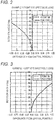
- Fig. 2 is a graph showing a power error and an astigmatism in the right-eye spectacle lens in Example 1, in which the horizontal axis represents D (1 scale is 0.25 D) and the vertical axis represents a rotation angle (1 scale is 5 degrees). Note that the astigmatism tends to increase when trying to make the power error substantially zero. Conversely, the power error tends to increase when trying to make the astigmatism substantially zero.
- Fig. 3 is a graph showing a power error and an astigmatism in the left-eye spectacle lens in Example 1, in which the horizontal axis represents D (one scale is 0.25 D) and the vertical axis represents a rotation angle (one scale is 5 degrees).
- a value of Sph +2.00 D was obtained as a prescription value for a wearer (No. 2) of a pair of spectacle lenses which are single-focus lenses.
- a value of 400 mm (40 cm) was acquired as a target distance (that is, the target distance for near vision) of the pair of spectacle lenses for the wearer.
- AC R and AC L were measured for the wearer in the present example.
- a response of accommodation AC R of a right eye and a response of accommodation AC L of a left eye were acquired, and a difference ⁇ AC between the responses of accommodation of the left and right eyes was acquired.
- the design was performed such that a refractive index of a lens substrate is 1.662 and a center thickness is 6.0 mm.
- the rotation angle ⁇ for viewing a near position was set to 30 degrees.
- 6 curve (BC 6.0) was set as the base curve based on the above-described spectacle prescription.
- an aspherical surface design was performed. Specifically, first, the aspherical surface design was performed on a right-eye spectacle lens with the response of accommodation larger than that of the left eye such that the power error was almost zero (hereinafter referred to as power error-oriented). Results thereof are illustrated in Fig. 4 .
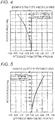
- Fig. 4 is a graph showing a power error and an astigmatism in the right-eye spectacle lens in Example 2, in which the horizontal axis represents D (1 scale is 0.25 D) and the vertical axis represents a rotation angle (1 scale is 5 degrees). Note that the astigmatism tends to increase when trying to make the power error substantially zero. Conversely, the power error tends to increase when trying to make the astigmatism substantially zero.
- Fig. 5 is a graph showing a power error and an astigmatism in the left-eye spectacle lens in Example 2, in which the horizontal axis represents D (one scale is 0.25 D) and the vertical axis represents a rotation angle (one scale is 5 degrees).
- a value of Sph 0.00 D was obtained as a prescription value for a wearer (No. 3) of a pair of spectacle lenses which are progressive addition lenses (progressive multifocal lens).
- a value of 1.00 D was obtained as an increment from a power at a distance power measurement position to a power at a near power measurement position, that is, an addition power.
- a response of accommodation AC R of a right eye and a response of accommodation AC L of a left eye were acquired, and a difference ⁇ AC between the responses of accommodation of the left and right eyes was acquired separately from the above-described acquisition process.
- AC R and AC L were measured for the wearer.
- Various conditions at that time were the same as those in Example 1.
- the wearer (No. 3) of the present example had the larger response of accommodation in the right eye.
- a designing process is performed.
- the design was performed such that a refractive index of a lens substrate is 1.662 and a center thickness is 1.1 mm.
- 1 curve (BC 1.0) was set as the base curve based on the above-described spectacle prescription.
- a progressive design corresponds to an aspherical surface design.
- a rotation angle of the wearer at this time is 0 degrees.
- a rotation angle of the wearer at this time is about 30 degrees.
- Fig. 6 is a graph showing a power change in a right-eye spectacle lens (broken line) and a left-eye spectacle lens (solid line) in Example 3, in which the horizontal axis represents D (1 scale is 0.25 D), and the vertical axis represents a Y coordinate on the principal meridian (1 scale is 5mm).
Landscapes
- Physics & Mathematics (AREA)
- Health & Medical Sciences (AREA)
- Ophthalmology & Optometry (AREA)
- General Health & Medical Sciences (AREA)
- General Physics & Mathematics (AREA)
- Optics & Photonics (AREA)
- Mathematical Physics (AREA)
- Eyeglasses (AREA)
Applications Claiming Priority (2)
| Application Number | Priority Date | Filing Date | Title |
|---|---|---|---|
| JP2018059280A JP7126842B2 (ja) | 2018-03-27 | 2018-03-27 | 一対の眼鏡レンズの設計方法、製造方法、および一対の眼鏡レンズ |
| PCT/JP2019/012706 WO2019189091A1 (ja) | 2018-03-27 | 2019-03-26 | 一対の眼鏡レンズの設計方法、製造方法、および一対の眼鏡レンズ |
Publications (2)
| Publication Number | Publication Date |
|---|---|
| EP3779568A1 true EP3779568A1 (de) | 2021-02-17 |
| EP3779568A4 EP3779568A4 (de) | 2021-12-29 |
Family
ID=68061631
Family Applications (1)
| Application Number | Title | Priority Date | Filing Date |
|---|---|---|---|
| EP19775162.1A Pending EP3779568A4 (de) | 2018-03-27 | 2019-03-26 | Verfahren zum entwurf und verfahren zur herstellung eines brillenglaspaares sowie brillenlinsenpaar |
Country Status (4)
| Country | Link |
|---|---|
| US (1) | US11428954B2 (de) |
| EP (1) | EP3779568A4 (de) |
| JP (1) | JP7126842B2 (de) |
| WO (1) | WO2019189091A1 (de) |
Families Citing this family (1)
| Publication number | Priority date | Publication date | Assignee | Title |
|---|---|---|---|---|
| JP7505995B2 (ja) * | 2021-01-27 | 2024-06-25 | ホヤ レンズ タイランド リミテッド | 眼鏡レンズの設計方法、製造方法、及び設計システム |
Family Cites Families (15)
| Publication number | Priority date | Publication date | Assignee | Title |
|---|---|---|---|---|
| DE375491C (de) | 1922-03-16 | 1923-09-08 | Walther Thorner Dr | Beidaeugiges Augenglas zum gleichzeitigen Gebrauch fuer Naehe und Ferne |
| US4923296A (en) * | 1988-07-14 | 1990-05-08 | Erickson Paul M | Oriented simultaneous vision bifocal contact lenses or the like utilizing introaocular suppression of blur |
| US6318857B1 (en) * | 1998-12-09 | 2001-11-20 | Asahi Kogaku Kogyo Kabushiki Kaisha | Variable power spectacles |
| US7242522B2 (en) * | 2003-03-24 | 2007-07-10 | Pentax Corporation | Binocular magnifying glasses |
| DE112008000055A5 (de) * | 2007-01-25 | 2009-12-10 | Rodenstock Gmbh | Bezugspunkte für Orthostellung |
| JP2011203705A (ja) | 2010-03-01 | 2011-10-13 | Seiko Epson Corp | 眼鏡レンズ及びその設計方法 |
| US8113655B1 (en) * | 2010-07-22 | 2012-02-14 | Albert Tyrin | Training method for accommodative and vergence systems, and multifocal lenses therefor |
| JP5897260B2 (ja) * | 2011-02-24 | 2016-03-30 | イーエイチエス レンズ フィリピン インク | 累進屈折力レンズおよびその設計方法 |
| JP5872785B2 (ja) * | 2011-04-07 | 2016-03-01 | イーエイチエス レンズ フィリピン インク | 累進屈折力レンズの設計方法 |
| CN104428708B (zh) * | 2012-07-09 | 2016-09-07 | Hoya株式会社 | 眼镜用镜片及其设计方法、眼镜用镜片的制造方法 |
| JPWO2014097853A1 (ja) * | 2012-12-19 | 2017-01-12 | Hoya株式会社 | 眼鏡レンズの製造装置及び製造方法 |
| JP5525114B1 (ja) * | 2013-02-19 | 2014-06-18 | 株式会社メニコン | 老視用コンタクトレンズセット |
| US9465237B2 (en) * | 2013-12-27 | 2016-10-11 | Intel Corporation | Automatic focus prescription lens eyeglasses |
| ES2977458T3 (es) | 2014-09-22 | 2024-08-23 | Hoya Lens Thailand Ltd | Procedimiento de diseño y fabricación de una lente de potencia progresiva |
| JP5987101B1 (ja) * | 2015-11-12 | 2016-09-06 | 正純 逢坂 | 累進多焦点レンズの設計方法 |
-
2018
- 2018-03-27 JP JP2018059280A patent/JP7126842B2/ja active Active
-
2019
- 2019-03-26 WO PCT/JP2019/012706 patent/WO2019189091A1/ja not_active Ceased
- 2019-03-26 EP EP19775162.1A patent/EP3779568A4/de active Pending
- 2019-03-26 US US16/641,788 patent/US11428954B2/en active Active
Also Published As
| Publication number | Publication date |
|---|---|
| JP7126842B2 (ja) | 2022-08-29 |
| US11428954B2 (en) | 2022-08-30 |
| WO2019189091A1 (ja) | 2019-10-03 |
| US20200249499A1 (en) | 2020-08-06 |
| EP3779568A4 (de) | 2021-12-29 |
| JP2019174506A (ja) | 2019-10-10 |
Similar Documents
| Publication | Publication Date | Title |
|---|---|---|
| JP6069296B2 (ja) | 累進多焦点眼用レンズ | |
| CN102460273B (zh) | 基于模糊认知感定制的渐变眼镜片的制造 | |
| US8079705B2 (en) | Production of an ophthalmic element adapted for foveal and peripheral vision | |
| US10247962B2 (en) | Method of calculating an optical system of a progressive addition ophthalmic lens being arranged to output a supplementary image | |
| US8876288B2 (en) | Progressive multifocal ophthalmic lens | |
| CN102483527B (zh) | 根据模糊认知感制造定制的眼镜片 | |
| EP2791730B1 (de) | Verfahren zur bestimmung eines progressiven brillenglases und halbfertiger brillenglasrohlingssatz | |
| US9429770B2 (en) | Progressive addition lens | |
| EP3362846B1 (de) | Ophthalmische progressive zusatzlinse für einen kurzsichtigen altersweitsichtigen träger; verfahren zur bereitstellung solch einer linse | |
| US11428954B2 (en) | Designing method and producing method of pair of spectacle lenses, and pair of spectacle lenses | |
| US8757799B2 (en) | Progressive multifocal ophthalmic lens | |
| EP3109692B1 (de) | Brillenglasbereitstellungssystem, programm dafür, prismenzahlbestimmungsvorrichtung, prismenzahlbestimmungsverfahren und verfahren zur herstellung einer brillenglases | |
| US10852565B2 (en) | Ophthalmic progressive addition lens for a myopic and presbyopic wearer and method for providing same | |
| CN107077005B (zh) | 一副眼科镜片的光学设计方法及如此获得的一副眼科镜片 | |
| WO2017064037A1 (en) | An ophthalmic progressive addition lens for a farsighted and presbyopic wearer; method for providing such a lens | |
| JP2007504485A (ja) | エラー対策を施したプログレッシブガラスの設計 | |
| US20150055082A1 (en) | Progressive Ophthalmic Surface |
Legal Events
| Date | Code | Title | Description |
|---|---|---|---|
| STAA | Information on the status of an ep patent application or granted ep patent |
Free format text: STATUS: THE INTERNATIONAL PUBLICATION HAS BEEN MADE |
|
| PUAI | Public reference made under article 153(3) epc to a published international application that has entered the european phase |
Free format text: ORIGINAL CODE: 0009012 |
|
| STAA | Information on the status of an ep patent application or granted ep patent |
Free format text: STATUS: REQUEST FOR EXAMINATION WAS MADE |
|
| 17P | Request for examination filed |
Effective date: 20200221 |
|
| AK | Designated contracting states |
Kind code of ref document: A1 Designated state(s): AL AT BE BG CH CY CZ DE DK EE ES FI FR GB GR HR HU IE IS IT LI LT LU LV MC MK MT NL NO PL PT RO RS SE SI SK SM TR |
|
| AX | Request for extension of the european patent |
Extension state: BA ME |
|
| DAV | Request for validation of the european patent (deleted) | ||
| DAX | Request for extension of the european patent (deleted) | ||
| A4 | Supplementary search report drawn up and despatched |
Effective date: 20211130 |
|
| RIC1 | Information provided on ipc code assigned before grant |
Ipc: G02C 13/00 20060101ALI20211124BHEP Ipc: G02C 7/06 20060101ALI20211124BHEP Ipc: G02C 7/02 20060101AFI20211124BHEP |
|
| STAA | Information on the status of an ep patent application or granted ep patent |
Free format text: STATUS: EXAMINATION IS IN PROGRESS |
|
| 17Q | First examination report despatched |
Effective date: 20241128 |