EP3779671A1 - Interopérabilité multi-langues - Google Patents
Interopérabilité multi-langues Download PDFInfo
- Publication number
- EP3779671A1 EP3779671A1 EP19217442.3A EP19217442A EP3779671A1 EP 3779671 A1 EP3779671 A1 EP 3779671A1 EP 19217442 A EP19217442 A EP 19217442A EP 3779671 A1 EP3779671 A1 EP 3779671A1
- Authority
- EP
- European Patent Office
- Prior art keywords
- language
- dataset
- data
- delegate
- representation
- Prior art date
- Legal status (The legal status is an assumption and is not a legal conclusion. Google has not performed a legal analysis and makes no representation as to the accuracy of the status listed.)
- Granted
Links
Images



Classifications
-
- G—PHYSICS
- G06—COMPUTING OR CALCULATING; COUNTING
- G06F—ELECTRIC DIGITAL DATA PROCESSING
- G06F8/00—Arrangements for software engineering
- G06F8/30—Creation or generation of source code
- G06F8/36—Software reuse
-
- G—PHYSICS
- G06—COMPUTING OR CALCULATING; COUNTING
- G06F—ELECTRIC DIGITAL DATA PROCESSING
- G06F16/00—Information retrieval; Database structures therefor; File system structures therefor
- G06F16/20—Information retrieval; Database structures therefor; File system structures therefor of structured data, e.g. relational data
- G06F16/25—Integrating or interfacing systems involving database management systems
- G06F16/254—Extract, transform and load [ETL] procedures, e.g. ETL data flows in data warehouses
-
- G—PHYSICS
- G06—COMPUTING OR CALCULATING; COUNTING
- G06F—ELECTRIC DIGITAL DATA PROCESSING
- G06F16/00—Information retrieval; Database structures therefor; File system structures therefor
- G06F16/20—Information retrieval; Database structures therefor; File system structures therefor of structured data, e.g. relational data
- G06F16/23—Updating
- G06F16/2379—Updates performed during online database operations; commit processing
-
- G—PHYSICS
- G06—COMPUTING OR CALCULATING; COUNTING
- G06F—ELECTRIC DIGITAL DATA PROCESSING
- G06F16/00—Information retrieval; Database structures therefor; File system structures therefor
- G06F16/90—Details of database functions independent of the retrieved data types
- G06F16/903—Querying
- G06F16/90335—Query processing
-
- G—PHYSICS
- G06—COMPUTING OR CALCULATING; COUNTING
- G06F—ELECTRIC DIGITAL DATA PROCESSING
- G06F9/00—Arrangements for program control, e.g. control units
- G06F9/06—Arrangements for program control, e.g. control units using stored programs, i.e. using an internal store of processing equipment to receive or retain programs
- G06F9/44—Arrangements for executing specific programs
- G06F9/451—Execution arrangements for user interfaces
-
- G—PHYSICS
- G06—COMPUTING OR CALCULATING; COUNTING
- G06F—ELECTRIC DIGITAL DATA PROCESSING
- G06F9/00—Arrangements for program control, e.g. control units
- G06F9/06—Arrangements for program control, e.g. control units using stored programs, i.e. using an internal store of processing equipment to receive or retain programs
- G06F9/46—Multiprogramming arrangements
- G06F9/54—Interprogram communication
- G06F9/541—Interprogram communication via adapters, e.g. between incompatible applications
-
- G—PHYSICS
- G06—COMPUTING OR CALCULATING; COUNTING
- G06F—ELECTRIC DIGITAL DATA PROCESSING
- G06F8/00—Arrangements for software engineering
- G06F8/30—Creation or generation of source code
Definitions
- This disclosure relates to approaches for improving interoperability between different data analysis workbooks that use incompatible programming languages or application programming interfaces.
- Users of a data platform system can analyze and manipulate data using a system comprising distributed computing engines for processing and analyzing large amounts of data, such as Apache Spark.
- a system comprising distributed computing engines for processing and analyzing large amounts of data, such as Apache Spark.
- users need to provide instructions for analyzing and manipulating data using application programming interfaces (APIs) that are specific to programming languages, such as Python, R, and SQL.
- APIs application programming interfaces
- users are typically prevented from accessing and sharing information (e.g., data, code) across different programming languages and APIs.
- Various embodiments of the present disclosure can include systems, methods, and non-transitory computer readable media configured to provide an interface for accessing a data analysis workbook through which data can be accessed and manipulated using a plurality of programming languages and/or application programming interfaces (APIs).
- Input data on which one or more data transformations are to be performed within the data analysis workbook can be accessed, wherein the input data corresponds to a first object representation of a dataset, and wherein the one or more data transformations require the dataset to be a different, second object representation of the dataset.
- the second object representation of the dataset can be extracted from the first object representation of the dataset through a first language delegate that manages data associated with the first object representation.
- the one or more data transformations can be applied to the extracted second object representation of the dataset through a different, second language delegate that manages data associated with the second object representation.
- a language delegate is associated with a programming language, and wherein the language delegate is configured to cache objects that are compatible with the programming language.
- the language delegate is configured to convert objects that are compatible with the programming language to different objects that are compatible with different programming languages or APIs.
- different language delegates manage different object representations of a same object, and wherein the different object representations reference a same base object stored by a global dataset store.
- the systems, methods, and non-transitory computer readable media are configured to determine that the first object representation of the dataset is cached by the first language delegate based at least in part on a global object cache and provide a request to the first language delegate to convert the first object representation of the dataset to the second object representation of the dataset.
- systems, methods, and non-transitory computer readable media are configured to provide the second object representation of the dataset to the second language delegate for caching.
- the global object cache maintains information describing objects cached by at least the first language delegate and the second language delegate.
- applying the one or more data transformations to the extracted second object representation of the dataset further comprises providing an instruction to the second language delegate to execute the one or more data transformations based on the second object representation of the dataset, wherein the second object representation is accessed from a local cache managed by the second language delegate.
- the data analysis workbook supports at least a PySpark API, a pandas API, a SparkR API, an R API and a Spark_SQL API.
- the data analysis workbook supports at least a Python programming language, an R programming language, and an SQL programming language.
- a workbook means a data analysis workbook, which may be an application, or sheet or page within an application, that enables users to load and manipulate datasets and which may enable running one or more data analysis programs or scripts on all or some of the data of the datasets, e.g. to produce graphical output.
- Workbooks may also include text, equations, and/or mark-up language snippets (e.g. HTML snippets). The text, equations, and/or mark-up language, when rendered, may be used to explain the data analysis scripts, the datasets and/or the graphical output.
- a workbook may also be referred to as 'notebook' or 'notebook document'.
- each workbook can support a single programming language and framework for processing and analyzing large amounts of data through a distributed system, such as Apache Spark.
- a PySpark workbook can support the Python programming language and a PySpark application programming interface (API) for analyzing and manipulating data through Apache Spark.
- the PySpark workbook can access data from a data store (e.g., a database table) and can convert that data to a format recognized by the PySpark API (e.g., a PySpark dataframe, object).
- the PySpark workbook can include various operations for analyzing and manipulating the data as a PySpark dataframe.
- a SparkR workbook can support the R programming language and a SparkR API for processing data through Apache Spark.
- the SparkR workbook can access the data from the datastore (e.g., a database table) and can convert that data to a format recognized by the SparkR API (e.g., a SparkR dataframe).
- the SparkR workbook can include various operations for analyzing and manipulating the data as a SparkR dataframe.
- restricting workbooks to a particular programming language and framework can prevent users from sharing information (e.g., data objects, code snippets, code templates) between different types of workbooks. This limitation can result in users having to perform additional operations to force compatibility between workbooks.
- users may need to write repeated snippets of code to coerce dataframes associated with one type of API framework to be recognized and processed using a different type of API framework.
- a user accessing a pandas workbook may need to write code to convert pandas dataframes to PySpark dataframes to ensure their compatibility.
- Such conventional approaches suffer from a number of drawbacks. First, these conventional approaches fail to provide a unified, consistent type space of supported languages and object classes. Second, these approaches fail to provide a consistent user experience around supported object classes and accept interconversions. Third, these conventional approaches require a forced separation between PySpark and pandas workbook types, which both rely on the Python programming language.
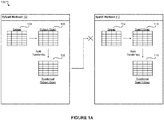
- FIGURE 1A illustrates an example 100 of a first type of workbook 102 and a different, second type of workbook 112.
- the first type of workbook 102 corresponds to a PySpark workbook that relies on the Python programming language and the PySpark API framework while the second type of workbook 112 corresponds to a SparkR workbook that relies on the R programming language and the SparkR API framework.
- a dataset 104 can be accessed from a datastore for analysis and manipulation using the PySpark workbook 102.
- the PySpark workbook 102 is typically compatible with data read as PySpark dataframes but not with other types of objects, such as pandas and SparkR dataframes.
- the PySpark workbook 102 can read the dataset 104 as a PySpark dataframe 106.
- a user interacting with the PySpark workbook 102 can apply code or transformations to the PySpark dataframe 106 to output a transformed PySpark dataframe 108.
- the outputted PySpark dataframe 108 can be read and processed by other PySpark workbooks but not with workbooks that rely on different programming languages and/or API frameworks.
- the outputted PySpark dataframe 108 is not compatible with the SparkR workbook 112 that relies on the R programming language and the SparkR API framework.
- a user seeking to access and manipulate the transformed PySpark dataframe 108 within the SparkR workbook 112 would not be permitted to do so.
- the user may need to recreate the PySpark dataframe 108 as a SparkR dataframe through the SparkR workbook 112 before the PySpark dataframe 108 can be processed using the R programming language and the SparkR API.
- the dataset 104 may be read as a SparkR dataframe 116 within the SparkR workbook 112. Once read, similar transformations can be applied to the SparkR dataframe 116 to produce a SparkR dataframe 118 on which operations can be performed using the R programming language and the SparkR API.
- a user seeking to access and manipulate the transformed PySpark dataframe 108 within the SparkR workbook 112 may need to write snippets of code that convert (or wrap) the PySpark dataframe 108 to a SparkR dataframe.
- Such conventional approaches are undesirable because they introduce barriers that prevent interoperability between workbooks of different programming languages and/or API frameworks, thereby limiting collaboration between users of different programming languages and/or API frameworks.
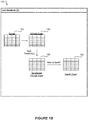
- FIGURE 1B illustrates an example 150 of a code workbook 152 through which a user can access and analyze different representations of data.
- the workbook 152 can permit interoperability between different programming languages and API frameworks.
- a dataset 154 (e.g., a database table) can be accessed from a datastore for analysis and manipulation using the code workbook 152.
- the dataset 154 may be read as a PySpark dataframe 156 on which various transformations can be applied using the Python programming language to produce a transformed PySpark dataframe 158.
- the PySpark dataframe 158 can be accessed as a different type of object which can be shared with other users and workbooks regardless of their compatibility with the Python programming language or the PySpark API.
- the user interacting with the code workbook 152 may decide to apply a template-based transformation to the PySpark dataframe 158.
- the template-based transformation may be created using the R programming language and the SparkR API.
- the user can select an option to read the PySpark dataframe 158 as a SparkR dataframe 160 on which the template-based transformation associated with the R programming language can be applied.
- the claimed solution thus permits users to seamlessly access and manipulate different representations of data across disparate programming languages and API frameworks, which would typically not be permitted under conventional approaches.
- FIGURE 2 illustrates an example environment 200, in accordance with various embodiments.
- the example environment 200 can include at least a computing system 202 and at least one computing device 220.
- the computing system 202 and the computing device 220 can each include one or more processors and memory.
- the processors can be configured to perform various operations by interpreting machine-readable instructions.
- the computing system 202 can access one or more data stores 230.
- a data store may be any device in which data can be stored and from which data can be retrieved.
- the data stores 230 may store and manage various data as raw data, datasets, database tables based on some schema, or as objects in one or more object graphs.
- an object graph may be made up of a number of objects that serve as containers for data.
- the object graph can also identify various relationships between objects, for example, using edges (or links) that connect objects.
- Each object can include a number of object components including, for example, a properties component that includes structured pieces of information, a media component that includes binary attachments of data (e.g., text documents, images, videos, etc.), a notes component (e.g., a free text container), and one or more respective links (or edges) that associate the object with other objects in the object graph.
- the object graph can include different types of objects.
- an object may represent an entity (e.g., person(s), place(s), thing(s), etc.), an activity (e.g., event, incident, etc.), a document, or multimedia, to name some examples.
- the computing system 202, the computing device 220, and the data stores 230 may be accessible either directly or over a network 250.
- the network 250 may be any wired or wireless network through which data can be sent and received (e.g., the Internet, local area network, etc.).
- the computing system 202 can be configured to process requests received from the computing device 220. For example, the requests may be generated by a user operating the computing device 220 or from software applications running on the computing device 220. In various embodiments, such requests can be for interacting with one or more data analysis workbooks, as provided by a workbook engine 204.
- the workbook engine 204 can include an interface engine 206, a language delegate engine 208, a data management engine 210, an object cache engine 212, and an execution engine 214.
- the interface engine 206, language delegate engine 208, data management engine 210, object cache engine 212, and execution engine 214 can be executed by the processor(s) of the computing system 202 to perform various operations.
- the interface engine 206, language delegate engine 208, data management engine 210, object cache engine 212, and execution engine 214 can be implemented, in whole or in part, as software that is capable of running on one or more computing devices or systems.
- the interface engine 206, language delegate engine 208, data management engine 210, object cache engine 212, and execution engine 214 may be implemented as or within a software application running on one or more computing devices (e.g., user or client devices) and/or one or more servers (e.g., cloud servers). In some instances, various aspects of the interface engine 206, language delegate engine 208, data management engine 210, object cache engine 212, and execution engine 214 may be implemented in one or more computing systems and/or devices.
- the interface engine 206 can be configured to generate and provide an interface (e.g., graphical user interface) through which various information can be accessed and visualized.
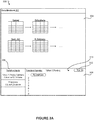
- the interface engine 206 can provide an interface 302 as shown in the example 300 of FIGURE 3A .
- the interface 302 can be accessed using a software application (e.g., data analysis application, web browser, etc.) running on the computing system 202 and through a display screen associated with the computing system 202.
- the interface 302 can be accessed through a software application running on the computing device 220 which permits user interaction with one or more workbooks stored and accessible through the computing system 202 over one or more networks.
- the interface 302 can provide users with the ability to access and manipulate various types of data that would otherwise not be compatible with one another.
- a user interacting with the interface 302 can access different types of data objects, such as PySpark dataframes, pandas dataframes, SparkR dataframes, and Spark_SQL dataframes, to name some examples.
- the interface 302 includes at least a first region 304 for visualizing and manipulating data.
- the interface 302 also includes a second region 306 for accessing inputs (e.g., datasets) as various objects (e.g., PySpark objects, pandas objects, SparkR objects, Spark_SQL objects, R Data Frame objects etc.).
- the interface 302 includes a third region 308 for inputting or providing code (or code templates) to be applied to various types of objects.
- the third region 308 can provide options 310 for selecting different programming languages and APIs that can be used to access and manipulate data.
- a user of the interface 302 can select between the Python, R, and SQL programming languages. Further, the user of the interface 302 can select between the PySpark, pandas, SparkR, R and Spark_SQL APIs.
- the interface 302 and underlying technologies can be adapted to support other programming languages and APIs.
- the user can also select a run option 312 to execute code (or code templates) written in various programming languages on objects of various types. For instance, the user can access a Spark_SQL object representation of a given dataset as a SparkR object.
- the interface 302 is supported by a number of language delegates that each manage data and conversions related to a particular programming language and/or API framework, as described below in reference to the language delegate engine 208.
- Language delegates may be programs, functions, or scripts, or a language delegate may be a reference to a function, method or script.
- Language delegates may be programming constructs configured to or adapted for implement events and/or callback methods.
- language delegates may be properties of one or more functions, objects or methods that delegate functionality to another function, object or method. These language delegates permit interoperability between different programming languages and representations of data, e.g. representations of data created or otherwise accessed via a given API, that would otherwise not be compatible with one another.
- the language delegate engine 208 can be configured to manage language delegates for each supported programming language (e.g., Python, R, SQL, etc.) to permit interoperability between different programming languages and representations of data (e.g., PySpark, pandas, SparkR, R Data Frame and Spark_SQL objects).
- each language delegate maintains a respective key-value object store of native data objects as well as conversion logic to convert between different types of native data objects.
- a Python language delegate 322 associated with the Python programming language can maintain a key-value object store 324 of cached native data objects, including PySpark dataframes and pandas dataframes.
- the object store 324 can key objects based on a globally recognized object identifier. Further, each keyed object can be identified based on its object type (e.g., PySpark dataframe, pandas dataframe, etc.).
- object type e.g., PySpark dataframe, pandas dataframe, etc.
- the object store 324 for the Python programming language is shown as having cached at least a first object with an identifier of "1" corresponding to a PySpark dataframe and a second object with an identifier of "7" corresponding to a pandas dataframe.
- the Python language delegate 322 can also access conversion logic 326 to execute conversions between object types.
- the conversion logic 326 associated with the Python language delegate 322 can convert an object from a PySpark representation to a pandas representation based on first conversion logic, a PySpark representation to a SparkR representation based on second conversion logic, and a PySpark representation to a Spark_SQL representation based on third conversion logic.
- Such conversion logic can include software code and conventional API calls to enable conversion from one representation to another.
- the object may be converted to a pandas representation so the object can be processed using the pandas API framework.
- the object may be converted to a SparkR representation so the object can be processed using the R programming language and SparkR API framework.
- the object may be converted to a Spark_SQL representation so the object can be processed using the SQL programming language and Spark_SQL API framework.
- the conversion logic 326 associated with the Python language delegate 322 can also convert an object from a pandas representation to a PySpark representation, a pandas representation to a SparkR representation, and a pandas representation to a Spark_SQL representation.
- multiple language delegates may be used to execute conversions between object types.
- each language delegate may be associated with conversion logic that permits conversions that are unique to that language delegate.
- a Python language delegate may be associated with conversion logic to convert an object from a PySpark representation to a pandas representation, a pandas representation to a PySpark representation, a PySpark representation to a Spark_SQL representation, and a pandas representation to a Spark_SQL representation.
- an R language delegate may be associated with conversion logic to convert an object from a Spark_SQL representation to a SparkR representation.
- an object may be converted from a PySpark representation to a SparkR representation by involving both the Python language delegate and the R language delegate and their respective conversion logic.
- the Python language delegate can convert the object from a PySpark representation to a Spark_SQL representation.
- FIGURE 3B also illustrates an example R language delegate 328 associated with the R programming language.
- the R language delegate 328 can maintain a key-value object store 330 of cached native data objects including SparkR dataframes and R Data Frames.
- the object store 330 can key objects based on a globally recognized object identifier and each object can be identified based on its type (e.g., SparkR dataframe or R Data Frame).
- the object store 330 for the R programming language is shown as having cached at least a first object with an identifier of "1" which corresponds to a SparkR dataframe and a second object with an identifier of "3" which also corresponds to a SparkR dataframe.
- the R language delegate 328 can also access conversion logic 332 to execute conversions between object types.
- the conversion logic 332 associated with the R language delegate 328 can convert an object from a SparkR representation to an R Data Frame representation, a SparkR representation to a PySpark representation, a SparkR representation to a pandas representation, and a SparkR representation to a Spark_SQL representation.
- the object may be converted to a PySpark representation so the object can be processed using the Python programming language and the PySpark API framework.
- the object may be converted to a pandas representation so the object can be processed using the Python programming language and the pandas API framework.
- the object may be converted to a Spark_SQL representation so the object can be processed using the SQL programming language and Spark_SQL API framework.
- Other types of language delegates are contemplated.
- the language delegate engine 208 can manage an SQL language delegate associated with the SQL programming language.
- the SQL language delegate can similarly maintain a key-value object store of cached native data objects including Spark_SQL dataframes.
- the object store can also key objects based on a globally recognized object identifier and each object can be identified based on its type (e.g., Spark_SQL dataframe).
- the SQL language delegate can also access conversion logic to execute conversions between object types. For example, the conversion logic associated with the SQL language delegate can convert an object from a Spark_SQL representation to a PySpark representation, a Spark_SQL representation to a pandas representation, and a Spark_SQL representation to a SparkR representation.
- the object may be converted to a PySpark representation so the object can be processed using the Python programming language and the PySpark API framework.
- the object may be converted to a pandas representation so the object can be processed using the Python programming language and the pandas API framework.
- the object may be converted to a SparkR representation so the object can be processed using the R programming language and SparkR API framework. Again, many variations are possible.
- each object representation cached by a language delegate corresponds to data managed by a global dataset store 334, as illustrated in FIGURE 3B .
- the global dataset store 334 can be managed by the data management engine 210.
- the global dataset store 334 can store and manage data (or datasets) accessed from various datastores (e.g., the data stores 230 of FIGURE 2 ) as Spark Dataset ⁇ Row> objects.
- a dataset accessed through a given workbook can be obtained from one or more datastores (e.g., the datastores 320 of FIGURE 2 ) and added to the global dataset store 334 as a Spark Dataset ⁇ Row> object.
- Each language delegate can then access the dataset from the global dataset store 334 as a Spark Dataset ⁇ Row> object.
- each language delegate can consume Spark Dataset ⁇ Row> references from the global dataset store 334 and wrap them in native wrappers so Spark objects can be read as different objects. For example, a user interacting with a workbook may want to read a dataset having an object identifier of "1" for analysis as a PySpark object.
- the Python language delegate 322 can access the dataset from the global dataset store 334 as a Spark Dataset ⁇ Row> object 336.
- the Python language delegate 322 can apply a native wrapper to the Spark Dataset ⁇ Row> object 336 to produce a PySpark representation 338 of the Spark Dataset ⁇ Row> object 336.
- a user interacting with a workbook may want to read the dataset having an object identifier of "1" for analysis as a SparkR object.
- the R language delegate 328 can access the dataset from the global dataset store 334 as a Spark Dataset ⁇ Row> object 336.
- the R language delegate 328 can apply a native wrapper to the Spark Dataset ⁇ Row> object 336 to produce a SparkR representation 340 of the Spark Dataset ⁇ Row> object 336.
- the global dataset store 334 thus provides a centralized location for reading and writing Spark Dataset ⁇ Row> objects from data sources (e.g., the data stores 230 of FIGURE 2 ). Each language delegate can rely on the global dataset store 334 when accessing data which helps ensure that all language delegates and their corresponding object representations reference the same base object representation (e.g., Spark Dataset ⁇ Row> object).
- This architecture can also help coordinate dataset cache persistence settings.
- any outputs e.g., transformations, modifications, etc.
- any outputs generated from base objects (or Spark Dataset ⁇ Row> objects) are registered with the data management engine 210 (e.g., object identifier and type) which allows the outputs to be available as inputs for downstream operations and/or writes.
- such operations can include transformations that produce new datasets (e.g., map, filter, aggregate, etc.) and actions that trigger some computation and return results (e.g., count, show, etc.).
- the data management engine 210 can maintain provenance records for base objects that are imported into the global dataset store from various data sources (e.g., the data stores 230 of FIGURE 2 ).
- a computer-implemented method comprising: providing, by a computing system, an interface for accessing a data analysis workbook through which data can be accessed and manipulated using a plurality of programming languages.
- the method may also comprise accessing, by the computing system, input data on which one or more data transformations are to be performed within the data analysis workbook, wherein the input data corresponds to a first object representation of a dataset, and wherein the one or more data transformations require the dataset to be a different, second object representation of the dataset.
- the method may also comprise updating, by the computing system, a base object representation of the dataset to correspond with the first object representation of the dataset using a first language delegate that manages data associated with the first object representation.
- the method may also comprise extracting, by the computing system, the second object representation of the dataset using a different, second language delegate that manages data associated with the second object representation.
- the method may also comprise applying, by the computing system, the one or more data transformations to the extracted second object representation of the dataset.
- the base object representation of the dataset may be stored by a global dataset store.
- the base object representation of the dataset may be cached by a global object cache.
- the first object representation may be configured to be used with a first programming language and the second object representation may be configured to be used with a different, second programming language.
- the first language delegate may be configured to cache object representations compatible with the first programming language in a first local cache
- the second language delegate may be configured to cache object representations compatible with the second programming language in a second local cache.
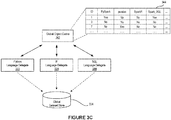
- the object cache engine 212 can be configured to manage a global object cache of the various types of objects that are cached independently by language delegates.
- the object cache engine 212 can handle all logic associated with cached object lifecycle management.
- the object cache engine 212 can manage a global object cache 342 which stores example information 344 mapping object identifiers to native objects that are managed by different language delegates, as illustrated in the example of FIGURE 3C .
- the information 344 indicates that a cached PySpark representation of object identifier "1" is available and accessible through the Python language delegate 322 which manages both PySpark and pandas objects. Further, the information 344 indicates that a cached Spark_SQL representation of object identifier "1" is available and accessible through a SQL language delegate 346 which manages Spark_SQL objects. The information 344 also indicates that pandas and SparkR object representations for object identifier "1" are not available through corresponding language delegates.
- the information 344 is provided merely as an example of the types of information that can be managed by the global object cache 342 and, naturally, variations are contemplated.
- the object cache engine 212 can issue commands to individual language delegates through a language-specific bridge.
- the object cache engine 212 can use Py4J for Python to interact with the Python language delegate 322 and Gateway Server for R to interact with the R language delegate 328.
- the object cache engine 212 can handle concurrent access, modification, and eviction of objects included in the global object cache 342.
- the object cache engine 212 can also mirror such commands through creation, conversion, and deletion calls made to individual language delegates to keep their caches synchronized.
- the object cache engine 212 can perform such operations using a high-performance caching library, such as the Caffeine library for Java.
- the execution engine 214 can be configured to execute workbook operations.
- the execution engine 214 can interact with other engines included in the workbook engine 204 to execute operations.
- a user interacting with a workbook can specify an input to be accessed as a particular type of object.
- the user may submit a request 352 to extract an object 7 as a PySpark object, as illustrated in the example of FIGURE 3D .
- the execution engine 214 can determine that a pandas representation of the object 7 is available.
- the execution engine 214 can instruct the Python language delegate 322 to extract and return the pandas object as a PySpark object 354.
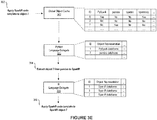
- the user may submit a request 362 to apply a SparkR code template to an object 7, as illustrated in the example of FIGURE 3E .
- the execution engine 214 can determine that a pandas representation of the object 7 is available.
- the execution engine 214 can instruct the Python language delegate 322 to extract and return the pandas object as a SparkR object 364.
- the extracted SparkR object can be cached by the R language delegate 328 and used when executing the transformation 366.
- the execution engine 214 can also interact with the object cache engine 212 to update the global object cache 342 so the extracted SparkR version of object 7 is registered and available for downstream operations.
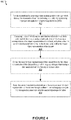
- FIGURE 4 illustrates a flowchart of an example method 400, according to various embodiments of the present disclosure.
- the method 400 may be implemented in various environments including, for example, the environment 100 of FIGURE 1 .
- the operations of method 400 presented below are intended to be illustrative. Depending on the implementation, the example method 400 may include additional, fewer, or alternative steps performed in various orders or in parallel.
- the example method 400 may be implemented in various computing systems or devices including one or more processors.
- an interface for accessing a data analysis workbook through which data can be accessed and manipulated using a plurality of programming languages and application programming interfaces (APIs) can be provided.
- input data on which one or more data transformations are to be performed within the data analysis workbook can be accessed.
- the input data can correspond to a first object representation of a dataset.
- the one or more data transformations can require the dataset to be a different, second object representation of the dataset.
- the second object representation of the dataset can be extracted from the first object representation of the dataset through a first language delegate that manages data associated with the first object representation.
- the one or more data transformations can be applied to the extracted second object representation of the dataset through a different, second language delegate that manages data associated with the second object representation.
- the techniques described herein are implemented by one or more special-purpose computing devices.
- the special-purpose computing devices may be hard-wired to perform the techniques, or may include circuitry or digital electronic devices such as one or more application-specific integrated circuits (ASICs) or field programmable gate arrays (FPGAs) that are persistently programmed to perform the techniques, or may include one or more hardware processors programmed to perform the techniques pursuant to program instructions in firmware, memory, other storage, or a combination.
- ASICs application-specific integrated circuits
- FPGAs field programmable gate arrays
- Such special-purpose computing devices may also combine custom hard-wired logic, ASICs, or FPGAs with custom programming to accomplish the techniques.
- the special-purpose computing devices may be desktop computer systems, server computer systems, portable computer systems, handheld devices, networking devices or any other device or combination of devices that incorporate hard-wired and/or program logic to implement the techniques.
- Computing device(s) are generally controlled and coordinated by operating system software, such as iOS, Android, Chrome OS, Windows XP, Windows Vista, Windows 7, Windows 8, Windows Server, Windows CE, Unix, Linux, SunOS, Solaris, iOS, Blackberry OS, VxWorks, or other compatible operating systems.
- operating system software such as iOS, Android, Chrome OS, Windows XP, Windows Vista, Windows 7, Windows 8, Windows Server, Windows CE, Unix, Linux, SunOS, Solaris, iOS, Blackberry OS, VxWorks, or other compatible operating systems.
- the computing device may be controlled by a proprietary operating system.
- Conventional operating systems control and schedule computer processes for execution, perform memory management, provide file system, networking, I/O services, and provide a user interface functionality, such as a graphical user interface ("GUI”), among other things.
- GUI graphical user interface
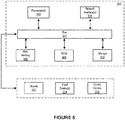
- FIGURE 5 is a block diagram that illustrates a computer system 500 upon which any of the embodiments described herein may be implemented.
- the computer system 500 includes a bus 502 or other communication mechanism for communicating information, one or more hardware processors 504 coupled with bus 502 for processing information.
- Hardware processor(s) 504 may be, for example, one or more general purpose microprocessors.
- the computer system 500 also includes a main memory 506, such as a random access memory (RAM), cache and/or other dynamic storage devices, coupled to bus 502 for storing information and instructions to be executed by processor 504.
- Main memory 506 also may be used for storing temporary variables or other intermediate information during execution of instructions to be executed by processor 504.
- Such instructions when stored in storage media accessible to processor 504, render computer system 500 into a special-purpose machine that is customized to perform the operations specified in the instructions.
- the computer system 500 further includes a read only memory (ROM) 508 or other static storage device coupled to bus 502 for storing static information and instructions for processor 504.
- ROM read only memory
- a storage device 510 such as a magnetic disk, optical disk, or USB thumb drive (Flash drive), etc., is provided and coupled to bus 502 for storing information and instructions.
- the computer system 500 may be coupled via bus 502 to a display 512, such as a cathode ray tube (CRT) or LCD display (or touch screen), for displaying information to a computer user.
- a display 512 such as a cathode ray tube (CRT) or LCD display (or touch screen)
- An input device 514 is coupled to bus 502 for communicating information and command selections to processor 504.
- cursor control 516 is Another type of user input device, such as a mouse, a trackball, or cursor direction keys for communicating direction information and command selections to processor 504 and for controlling cursor movement on display 512.
- This input device typically has two degrees of freedom in two axes, a first axis (e.g., x) and a second axis (e.g., y), that allows the device to specify positions in a plane.
- a first axis e.g., x
- a second axis e.g., y
- the same direction information and command selections as cursor control may be implemented via receiving touches on a touch screen without a cursor.
- the computing system 500 may include a user interface module to implement a GUI that may be stored in a mass storage device as executable software codes that are executed by the computing device(s).
- This and other modules may include, by way of example, components, such as software components, object-oriented software components, class components and task components, processes, functions, attributes, procedures, subroutines, segments of program code, drivers, firmware, microcode, circuitry, data, databases, data structures, tables, arrays, and variables.
- module refers to logic embodied in hardware or firmware, or to a collection of software instructions, possibly having entry and exit points, written in a programming language, such as, for example, Java, C or C++.
- a software module may be compiled and linked into an executable program, installed in a dynamic link library, or may be written in an interpreted programming language such as, for example, BASIC, Perl, or Python. It will be appreciated that software modules may be callable from other modules or from themselves, and/or may be invoked in response to detected events or interrupts.
- Software modules configured for execution on computing devices may be provided on a computer readable medium, such as a compact disc, digital video disc, flash drive, magnetic disc, or any other tangible medium, or as a digital download (and may be originally stored in a compressed or installable format that requires installation, decompression or decryption prior to execution).
- Such software code may be stored, partially or fully, on a memory device of the executing computing device, for execution by the computing device.
- Software instructions may be embedded in firmware, such as an EPROM.
- hardware modules may be comprised of connected logic units, such as gates and flip-flops, and/or may be comprised of programmable units, such as programmable gate arrays or processors.
- the modules or computing device functionality described herein are preferably implemented as software modules, but may be represented in hardware or firmware. Generally, the modules described herein refer to logical modules that may be combined with other modules or divided into sub-modules despite their physical organization or storage.
- the computer system 500 may implement the techniques described herein using customized hard-wired logic, one or more ASICs or FPGAs, firmware and/or program logic which in combination with the computer system causes or programs computer system 500 to be a special-purpose machine. According to one embodiment, the techniques herein are performed by computer system 500 in response to processor(s) 504 executing one or more sequences of one or more instructions contained in main memory 506. Such instructions may be read into main memory 506 from another storage medium, such as storage device 510. Execution of the sequences of instructions contained in main memory 506 causes processor(s) 504 to perform the process steps described herein. In alternative embodiments, hard-wired circuitry may be used in place of or in combination with software instructions.
- non-transitory media refers to any media that store data and/or instructions that cause a machine to operate in a specific fashion. Such non-transitory media may comprise non-volatile media and/or volatile media.
- Non-volatile media includes, for example, optical or magnetic disks, such as storage device 510.
- Volatile media includes dynamic memory, such as main memory 506.
- non-transitory media include, for example, a floppy disk, a flexible disk, hard disk, solid state drive, magnetic tape, or any other magnetic data storage medium, a CD-ROM, any other optical data storage medium, any physical medium with patterns of holes, a RAM, a PROM, and EPROM, a FLASH-EPROM, NVRAM, any other memory chip or cartridge, and networked versions of the same.
- Non-transitory media is distinct from but may be used in conjunction with transmission media.
- Transmission media participates in transferring information between non-transitory media.
- transmission media includes coaxial cables, copper wire and fiber optics, including the wires that comprise bus 502.
- transmission media can also take the form of acoustic or light waves, such as those generated during radio-wave and infra-red data communications.
- Various forms of media may be involved in carrying one or more sequences of one or more instructions to processor 504 for execution.
- the instructions may initially be carried on a magnetic disk or solid state drive of a remote computer.
- the remote computer can load the instructions into its dynamic memory and send the instructions over a telephone line using a modem.
- a modem local to computer system 500 can receive the data on the telephone line and use an infra-red transmitter to convert the data to an infra-red signal.
- An infra-red detector can receive the data carried in the infra-red signal and appropriate circuitry can place the data on bus 502.
- Bus 502 carries the data to main memory 506, from which processor 504 retrieves and executes the instructions.
- the instructions received by main memory 506 may retrieves and executes the instructions.
- the instructions received by main memory 506 may optionally be stored on storage device 510 either before or after execution by processor 504.
- the computer system 500 also includes a communication interface 518 coupled to bus 502.
- Communication interface 518 provides a two-way data communication coupling to one or more network links that are connected to one or more local networks.
- communication interface 518 may be an integrated services digital network (ISDN) card, cable modem, satellite modem, or a modem to provide a data communication connection to a corresponding type of telephone line.
- ISDN integrated services digital network
- communication interface 518 may be a local area network (LAN) card to provide a data communication connection to a compatible LAN (or WAN component to communicated with a WAN).
- LAN local area network
- Wireless links may also be implemented.
- communication interface 518 sends and receives electrical, electromagnetic or optical signals that carry digital data streams representing various types of information.
- a network link typically provides data communication through one or more networks to other data devices.
- a network link may provide a connection through local network to a host computer or to data equipment operated by an Internet Service Provider (ISP).
- ISP Internet Service Provider
- the ISP in turn provides data communication services through the world wide packet data communication network now commonly referred to as the "Internet”.
- Internet Internet
- Local network and Internet both use electrical, electromagnetic or optical signals that carry digital data streams.
- the signals through the various networks and the signals on network link and through communication interface 518, which carry the digital data to and from computer system 500, are example forms of transmission media.
- the computer system 500 can send messages and receive data, including program code, through the network(s), network link and communication interface 518.
- a server might transmit a requested code for an application program through the Internet, the ISP, the local network and the communication interface 518.
- the received code may be executed by processor 504 as it is received, and/or stored in storage device 510, or other non-volatile storage for later execution.
- Engines may constitute either software engines (e.g., code embodied on a machine-readable medium) or hardware engines.
- a "hardware engine” is a tangible unit capable of performing certain operations and may be configured or arranged in a certain physical manner.
- one or more computer systems e.g., a standalone computer system, a client computer system, or a server computer system
- one or more hardware engines of a computer system e.g., a processor or a group of processors
- software e.g., an application or application portion
- a hardware engine may be implemented mechanically, electronically, or any suitable combination thereof.
- a hardware engine may include dedicated circuitry or logic that is permanently configured to perform certain operations.
- a hardware engine may be a special-purpose processor, such as a Field-Programmable Gate Array (FPGA) or an Application Specific Integrated Circuit (ASIC).
- a hardware engine may also include programmable logic or circuitry that is temporarily configured by software to perform certain operations.
- a hardware engine may include software executed by a general-purpose processor or other programmable processor. Once configured by such software, hardware engines become specific machines (or specific components of a machine) uniquely tailored to perform the configured functions and are no longer general-purpose processors. It will be appreciated that the decision to implement a hardware engine mechanically, in dedicated and permanently configured circuitry, or in temporarily configured circuitry (e.g., configured by software) may be driven by cost and time considerations.
- hardware engine should be understood to encompass a tangible entity, be that an entity that is physically constructed, permanently configured (e.g., hardwired), or temporarily configured (e.g., programmed) to operate in a certain manner or to perform certain operations described herein.
- “hardware-implemented engine” refers to a hardware engine. Considering embodiments in which hardware engines are temporarily configured (e.g., programmed), each of the hardware engines need not be configured or instantiated at any one instance in time. For example, where a hardware engine comprises a general-purpose processor configured by software to become a special-purpose processor, the general-purpose processor may be configured as respectively different special-purpose processors (e.g., comprising different hardware engines) at different times. Software accordingly configures a particular processor or processors, for example, to constitute a particular hardware engine at one instance of time and to constitute a different hardware engine at a different instance of time.
- Hardware engines can provide information to, and receive information from, other hardware engines. Accordingly, the described hardware engines may be regarded as being communicatively coupled. Where multiple hardware engines exist contemporaneously, communications may be achieved through signal transmission (e.g., over appropriate circuits and buses) between or among two or more of the hardware engines. In embodiments in which multiple hardware engines are configured or instantiated at different times, communications between such hardware engines may be achieved, for example, through the storage and retrieval of information in memory structures to which the multiple hardware engines have access. For example, one hardware engine may perform an operation and store the output of that operation in a memory device to which it is communicatively coupled. A further hardware engine may then, at a later time, access the memory device to retrieve and process the stored output. Hardware engines may also initiate communications with input or output devices, and can operate on a resource (e.g., a collection of information).
- a resource e.g., a collection of information
- processors may be temporarily configured (e.g., by software) or permanently configured to perform the relevant operations. Whether temporarily or permanently configured, such processors may constitute processor-implemented engines that operate to perform one or more operations or functions described herein.
- processor-implemented engine refers to a hardware engine implemented using one or more processors.
- the methods described herein may be at least partially processor-implemented, with a particular processor or processors being an example of hardware.
- a particular processor or processors being an example of hardware.
- the operations of a method may be performed by one or more processors or processor-implemented engines.
- the one or more processors may also operate to support performance of the relevant operations in a "cloud computing" environment or as a "software as a service” (SaaS).
- SaaS software as a service
- at least some of the operations may be performed by a group of computers (as examples of machines including processors), with these operations being accessible via a network (e.g., the Internet) and via one or more appropriate interfaces (e.g., an Application Program Interface (API)).
- API Application Program Interface
- processors or processor-implemented engines may be located in a single geographic location (e.g., within a home environment, an office environment, or a server farm). In other example embodiments, the processors or processor-implemented engines may be distributed across a number of geographic locations.
- an "engine,” “system,” “data store,” and/or “database” may comprise software, hardware, firmware, and/or circuitry.
- one or more software programs comprising instructions capable of being executable by a processor may perform one or more of the functions of the engines, data stores, databases, or systems described herein.
- circuitry may perform the same or similar functions.
- Alternative embodiments may comprise more, less, or functionally equivalent engines, systems, data stores, or databases, and still be within the scope of present embodiments.
- the functionality of the various systems, engines, data stores, and/or databases may be combined or divided differently.
- Open source software is defined herein to be source code that allows distribution as source code as well as compiled form, with a well-publicized and indexed means of obtaining the source, optionally with a license that allows modifications and derived works.
- the data stores described herein may be any suitable structure (e.g., an active database, a relational database, a self-referential database, a table, a matrix, an array, a flat file, a documented-oriented storage system, a non-relational No-SQL system, and the like), and may be cloud-based or otherwise.
- suitable structure e.g., an active database, a relational database, a self-referential database, a table, a matrix, an array, a flat file, a documented-oriented storage system, a non-relational No-SQL system, and the like
- cloud-based or otherwise e.g., an active database, a relational database, a self-referential database, a table, a matrix, an array, a flat file, a documented-oriented storage system, a non-relational No-SQL system, and the like
- the term "or" may be construed in either an inclusive or exclusive sense. Moreover, plural instances may be provided for resources, operations, or structures described herein as a single instance. Additionally, boundaries between various resources, operations, engines, engines, and data stores are somewhat arbitrary, and particular operations are illustrated in a context of specific illustrative configurations. Other allocations of functionality are envisioned and may fall within a scope of various embodiments of the present disclosure. In general, structures and functionality presented as separate resources in the example configurations may be implemented as a combined structure or resource. Similarly, structures and functionality presented as a single resource may be implemented as separate resources. These and other variations, modifications, additions, and improvements fall within a scope of embodiments of the present disclosure as represented by the appended claims. The specification and drawings are, accordingly, to be regarded in an illustrative rather than a restrictive sense.
Landscapes
- Engineering & Computer Science (AREA)
- Theoretical Computer Science (AREA)
- Software Systems (AREA)
- General Engineering & Computer Science (AREA)
- Databases & Information Systems (AREA)
- Physics & Mathematics (AREA)
- General Physics & Mathematics (AREA)
- Data Mining & Analysis (AREA)
- Computational Linguistics (AREA)
- Human Computer Interaction (AREA)
- Information Retrieval, Db Structures And Fs Structures Therefor (AREA)
Applications Claiming Priority (2)
| Application Number | Priority Date | Filing Date | Title |
|---|---|---|---|
| US201962886810P | 2019-08-14 | 2019-08-14 | |
| US16/600,409 US11334591B2 (en) | 2019-08-14 | 2019-10-11 | Multi-language object cache |
Publications (2)
| Publication Number | Publication Date |
|---|---|
| EP3779671A1 true EP3779671A1 (fr) | 2021-02-17 |
| EP3779671B1 EP3779671B1 (fr) | 2024-04-17 |
Family
ID=69055640
Family Applications (1)
| Application Number | Title | Priority Date | Filing Date |
|---|---|---|---|
| EP19217442.3A Active EP3779671B1 (fr) | 2019-08-14 | 2019-12-18 | Interopérabilité multi-langues |
Country Status (2)
| Country | Link |
|---|---|
| US (3) | US11334591B2 (fr) |
| EP (1) | EP3779671B1 (fr) |
Families Citing this family (7)
| Publication number | Priority date | Publication date | Assignee | Title |
|---|---|---|---|---|
| US11334591B2 (en) | 2019-08-14 | 2022-05-17 | Palantir Technologies Inc. | Multi-language object cache |
| CN113672402B (zh) * | 2021-07-22 | 2024-06-04 | 杭州未名信科科技有限公司 | 一种基于Py4j服务的在线数据处理方法、装置、存储介质及终端 |
| CN114528263A (zh) * | 2022-02-11 | 2022-05-24 | 上海森亿医疗科技有限公司 | 基于不同计算机语言的数据处理方法、系统、介质及设备 |
| US20240037095A1 (en) * | 2022-07-29 | 2024-02-01 | Sigma Computing, Inc. | Dynamic dimension binding for workbook elements |
| US12499129B1 (en) * | 2024-04-02 | 2025-12-16 | Sigma Computing, Inc. | Executing workbook code within a cloud-based data warehouse |
| US12400149B1 (en) | 2024-04-22 | 2025-08-26 | Sas Institute Inc. | Systems and methods for parallel exploration of a hyperparameter search space |
| US12307291B1 (en) * | 2024-04-22 | 2025-05-20 | Sas Institute Inc. | Systems and methods for executing an analytical operation across a plurality of computer processes |
Citations (3)
| Publication number | Priority date | Publication date | Assignee | Title |
|---|---|---|---|---|
| US20160012350A1 (en) * | 2014-07-12 | 2016-01-14 | Microsoft Technology Licensing, Llc | Interoperable machine learning platform |
| US20170090893A1 (en) * | 2015-09-29 | 2017-03-30 | Skytree, Inc. | Interoperability of Transforms Under a Unified Platform and Extensible Transformation Library of Those Interoperable Transforms |
| EP3258440A1 (fr) * | 2016-06-14 | 2017-12-20 | General Electric Company | Cadre d'analyse de données de transport prenant en charge des langages de programmation supplémentaires |
Family Cites Families (9)
| Publication number | Priority date | Publication date | Assignee | Title |
|---|---|---|---|---|
| US7472399B2 (en) * | 2001-04-26 | 2008-12-30 | Iona Technologies, Plc | Method and system for a client invoking on an interface defined in a first notation to invoke an object having an interface defined in a second notation |
| US8079027B2 (en) * | 2006-09-08 | 2011-12-13 | Via Technologies, Inc. | Programming language translation systems and methods |
| US20100114628A1 (en) * | 2008-11-06 | 2010-05-06 | Adler Sharon C | Validating Compliance in Enterprise Operations Based on Provenance Data |
| US9355109B2 (en) * | 2010-06-11 | 2016-05-31 | The Research Foundation For The State University Of New York | Multi-tier caching |
| RU2732585C2 (ru) * | 2010-07-09 | 2020-09-22 | Виза Интернэшнл Сервис Ассосиэйшн | Шлюзовой уровень абстракции |
| US9063998B2 (en) * | 2012-10-18 | 2015-06-23 | Oracle International Corporation | Associated information propagation system |
| US9686086B1 (en) * | 2014-12-01 | 2017-06-20 | Arimo, Inc. | Distributed data framework for data analytics |
| US20180349433A1 (en) * | 2017-05-30 | 2018-12-06 | General Electric Company | Agnostic data frame for data backend |
| US11334591B2 (en) | 2019-08-14 | 2022-05-17 | Palantir Technologies Inc. | Multi-language object cache |
-
2019
- 2019-10-11 US US16/600,409 patent/US11334591B2/en active Active
- 2019-12-18 EP EP19217442.3A patent/EP3779671B1/fr active Active
-
2022
- 2022-05-17 US US17/746,875 patent/US12189646B2/en active Active
-
2024
- 2024-12-31 US US19/007,133 patent/US20250139116A1/en active Pending
Patent Citations (3)
| Publication number | Priority date | Publication date | Assignee | Title |
|---|---|---|---|---|
| US20160012350A1 (en) * | 2014-07-12 | 2016-01-14 | Microsoft Technology Licensing, Llc | Interoperable machine learning platform |
| US20170090893A1 (en) * | 2015-09-29 | 2017-03-30 | Skytree, Inc. | Interoperability of Transforms Under a Unified Platform and Extensible Transformation Library of Those Interoperable Transforms |
| EP3258440A1 (fr) * | 2016-06-14 | 2017-12-20 | General Electric Company | Cadre d'analyse de données de transport prenant en charge des langages de programmation supplémentaires |
Non-Patent Citations (1)
| Title |
|---|
| SALUCCI LUCA ET AL: "Lightweight Multi-language Bindings for Apache Spark", 9 August 2016, PERVASIVE: INTERNATIONAL CONFERENCE ON PERVASIVE COMPUTING; [LECTURE NOTES IN COMPUTER SCIENCE; LECT.NOTES COMPUTER], SPRINGER, BERLIN, HEIDELBERG, PAGE(S) 281 - 292, ISBN: 978-3-642-17318-9, XP047352642 * |
Also Published As
| Publication number | Publication date |
|---|---|
| US11334591B2 (en) | 2022-05-17 |
| US12189646B2 (en) | 2025-01-07 |
| US20220277016A1 (en) | 2022-09-01 |
| EP3779671B1 (fr) | 2024-04-17 |
| US20210049182A1 (en) | 2021-02-18 |
| US20250139116A1 (en) | 2025-05-01 |
Similar Documents
| Publication | Publication Date | Title |
|---|---|---|
| US12189646B2 (en) | Multi-language object cache | |
| US11269914B2 (en) | Systems and methods for data analysis and visualization and managing data conflicts | |
| US9852196B2 (en) | ETL tool interface for remote mainframes | |
| US9922108B1 (en) | Systems and methods for facilitating data transformation | |
| US11809418B2 (en) | Approaches for generating queries | |
| US11803532B2 (en) | Integrated data analysis | |
| US10942732B1 (en) | Integration test framework | |
| US20200134213A1 (en) | Approaches for managing restrictions for middleware applications | |
| US11874849B2 (en) | Systems and methods for creating a data layer based on content from data sources | |
| US11301499B2 (en) | Systems and methods for providing an object platform for datasets | |
| US10552524B1 (en) | Systems and methods for in-line document tagging and object based data synchronization | |
| US11521100B1 (en) | Systems and methods for customizing a process of inference running | |
| US11586802B2 (en) | Parameterized states for customized views of resources | |
| US11461355B1 (en) | Ontological mapping of data |
Legal Events
| Date | Code | Title | Description |
|---|---|---|---|
| PUAI | Public reference made under article 153(3) epc to a published international application that has entered the european phase |
Free format text: ORIGINAL CODE: 0009012 |
|
| STAA | Information on the status of an ep patent application or granted ep patent |
Free format text: STATUS: THE APPLICATION HAS BEEN PUBLISHED |
|
| AK | Designated contracting states |
Kind code of ref document: A1 Designated state(s): AL AT BE BG CH CY CZ DE DK EE ES FI FR GB GR HR HU IE IS IT LI LT LU LV MC MK MT NL NO PL PT RO RS SE SI SK SM TR |
|
| AX | Request for extension of the european patent |
Extension state: BA ME |
|
| STAA | Information on the status of an ep patent application or granted ep patent |
Free format text: STATUS: REQUEST FOR EXAMINATION WAS MADE |
|
| 17P | Request for examination filed |
Effective date: 20210817 |
|
| RBV | Designated contracting states (corrected) |
Designated state(s): AL AT BE BG CH CY CZ DE DK EE ES FI FR GB GR HR HU IE IS IT LI LT LU LV MC MK MT NL NO PL PT RO RS SE SI SK SM TR |
|
| STAA | Information on the status of an ep patent application or granted ep patent |
Free format text: STATUS: EXAMINATION IS IN PROGRESS |
|
| 17Q | First examination report despatched |
Effective date: 20211130 |
|
| RAP3 | Party data changed (applicant data changed or rights of an application transferred) |
Owner name: PALANTIR TECHNOLOGIES INC. |
|
| GRAP | Despatch of communication of intention to grant a patent |
Free format text: ORIGINAL CODE: EPIDOSNIGR1 |
|
| STAA | Information on the status of an ep patent application or granted ep patent |
Free format text: STATUS: GRANT OF PATENT IS INTENDED |
|
| RIC1 | Information provided on ipc code assigned before grant |
Ipc: G06F 8/30 20180101ALN20231023BHEP Ipc: G06F 9/451 20180101ALI20231023BHEP Ipc: G06F 16/903 20190101ALI20231023BHEP Ipc: G06F 8/36 20180101AFI20231023BHEP |
|
| INTG | Intention to grant announced |
Effective date: 20231108 |
|
| GRAS | Grant fee paid |
Free format text: ORIGINAL CODE: EPIDOSNIGR3 |
|
| GRAA | (expected) grant |
Free format text: ORIGINAL CODE: 0009210 |
|
| STAA | Information on the status of an ep patent application or granted ep patent |
Free format text: STATUS: THE PATENT HAS BEEN GRANTED |
|
| AK | Designated contracting states |
Kind code of ref document: B1 Designated state(s): AL AT BE BG CH CY CZ DE DK EE ES FI FR GB GR HR HU IE IS IT LI LT LU LV MC MK MT NL NO PL PT RO RS SE SI SK SM TR |
|
| P01 | Opt-out of the competence of the unified patent court (upc) registered |
Effective date: 20240308 |
|
| REG | Reference to a national code |
Ref country code: GB Ref legal event code: FG4D |
|
| REG | Reference to a national code |
Ref country code: CH Ref legal event code: EP |
|
| REG | Reference to a national code |
Ref country code: DE Ref legal event code: R096 Ref document number: 602019050371 Country of ref document: DE |
|
| REG | Reference to a national code |
Ref country code: IE Ref legal event code: FG4D |
|
| REG | Reference to a national code |
Ref country code: LT Ref legal event code: MG9D |
|
| REG | Reference to a national code |
Ref country code: NL Ref legal event code: MP Effective date: 20240417 |
|
| REG | Reference to a national code |
Ref country code: AT Ref legal event code: MK05 Ref document number: 1677888 Country of ref document: AT Kind code of ref document: T Effective date: 20240417 |
|
| PG25 | Lapsed in a contracting state [announced via postgrant information from national office to epo] |
Ref country code: NL Free format text: LAPSE BECAUSE OF FAILURE TO SUBMIT A TRANSLATION OF THE DESCRIPTION OR TO PAY THE FEE WITHIN THE PRESCRIBED TIME-LIMIT Effective date: 20240417 |
|
| PG25 | Lapsed in a contracting state [announced via postgrant information from national office to epo] |
Ref country code: NL Free format text: LAPSE BECAUSE OF FAILURE TO SUBMIT A TRANSLATION OF THE DESCRIPTION OR TO PAY THE FEE WITHIN THE PRESCRIBED TIME-LIMIT Effective date: 20240417 |
|
| PG25 | Lapsed in a contracting state [announced via postgrant information from national office to epo] |
Ref country code: IS Free format text: LAPSE BECAUSE OF FAILURE TO SUBMIT A TRANSLATION OF THE DESCRIPTION OR TO PAY THE FEE WITHIN THE PRESCRIBED TIME-LIMIT Effective date: 20240817 |
|
| PG25 | Lapsed in a contracting state [announced via postgrant information from national office to epo] |
Ref country code: BG Free format text: LAPSE BECAUSE OF FAILURE TO SUBMIT A TRANSLATION OF THE DESCRIPTION OR TO PAY THE FEE WITHIN THE PRESCRIBED TIME-LIMIT Effective date: 20240417 |
|
| PG25 | Lapsed in a contracting state [announced via postgrant information from national office to epo] |
Ref country code: HR Free format text: LAPSE BECAUSE OF FAILURE TO SUBMIT A TRANSLATION OF THE DESCRIPTION OR TO PAY THE FEE WITHIN THE PRESCRIBED TIME-LIMIT Effective date: 20240417 Ref country code: FI Free format text: LAPSE BECAUSE OF FAILURE TO SUBMIT A TRANSLATION OF THE DESCRIPTION OR TO PAY THE FEE WITHIN THE PRESCRIBED TIME-LIMIT Effective date: 20240417 |
|
| PG25 | Lapsed in a contracting state [announced via postgrant information from national office to epo] |
Ref country code: GR Free format text: LAPSE BECAUSE OF FAILURE TO SUBMIT A TRANSLATION OF THE DESCRIPTION OR TO PAY THE FEE WITHIN THE PRESCRIBED TIME-LIMIT Effective date: 20240718 |
|
| PG25 | Lapsed in a contracting state [announced via postgrant information from national office to epo] |
Ref country code: PT Free format text: LAPSE BECAUSE OF FAILURE TO SUBMIT A TRANSLATION OF THE DESCRIPTION OR TO PAY THE FEE WITHIN THE PRESCRIBED TIME-LIMIT Effective date: 20240819 |
|
| PG25 | Lapsed in a contracting state [announced via postgrant information from national office to epo] |
Ref country code: ES Free format text: LAPSE BECAUSE OF FAILURE TO SUBMIT A TRANSLATION OF THE DESCRIPTION OR TO PAY THE FEE WITHIN THE PRESCRIBED TIME-LIMIT Effective date: 20240417 |
|
| PG25 | Lapsed in a contracting state [announced via postgrant information from national office to epo] |
Ref country code: AT Free format text: LAPSE BECAUSE OF FAILURE TO SUBMIT A TRANSLATION OF THE DESCRIPTION OR TO PAY THE FEE WITHIN THE PRESCRIBED TIME-LIMIT Effective date: 20240417 |
|
| PG25 | Lapsed in a contracting state [announced via postgrant information from national office to epo] |
Ref country code: PL Free format text: LAPSE BECAUSE OF FAILURE TO SUBMIT A TRANSLATION OF THE DESCRIPTION OR TO PAY THE FEE WITHIN THE PRESCRIBED TIME-LIMIT Effective date: 20240417 |
|
| PG25 | Lapsed in a contracting state [announced via postgrant information from national office to epo] |
Ref country code: LV Free format text: LAPSE BECAUSE OF FAILURE TO SUBMIT A TRANSLATION OF THE DESCRIPTION OR TO PAY THE FEE WITHIN THE PRESCRIBED TIME-LIMIT Effective date: 20240417 |
|
| PG25 | Lapsed in a contracting state [announced via postgrant information from national office to epo] |
Ref country code: PT Free format text: LAPSE BECAUSE OF FAILURE TO SUBMIT A TRANSLATION OF THE DESCRIPTION OR TO PAY THE FEE WITHIN THE PRESCRIBED TIME-LIMIT Effective date: 20240819 Ref country code: PL Free format text: LAPSE BECAUSE OF FAILURE TO SUBMIT A TRANSLATION OF THE DESCRIPTION OR TO PAY THE FEE WITHIN THE PRESCRIBED TIME-LIMIT Effective date: 20240417 Ref country code: NO Free format text: LAPSE BECAUSE OF FAILURE TO SUBMIT A TRANSLATION OF THE DESCRIPTION OR TO PAY THE FEE WITHIN THE PRESCRIBED TIME-LIMIT Effective date: 20240717 Ref country code: LV Free format text: LAPSE BECAUSE OF FAILURE TO SUBMIT A TRANSLATION OF THE DESCRIPTION OR TO PAY THE FEE WITHIN THE PRESCRIBED TIME-LIMIT Effective date: 20240417 Ref country code: IS Free format text: LAPSE BECAUSE OF FAILURE TO SUBMIT A TRANSLATION OF THE DESCRIPTION OR TO PAY THE FEE WITHIN THE PRESCRIBED TIME-LIMIT Effective date: 20240817 Ref country code: HR Free format text: LAPSE BECAUSE OF FAILURE TO SUBMIT A TRANSLATION OF THE DESCRIPTION OR TO PAY THE FEE WITHIN THE PRESCRIBED TIME-LIMIT Effective date: 20240417 Ref country code: GR Free format text: LAPSE BECAUSE OF FAILURE TO SUBMIT A TRANSLATION OF THE DESCRIPTION OR TO PAY THE FEE WITHIN THE PRESCRIBED TIME-LIMIT Effective date: 20240718 Ref country code: FI Free format text: LAPSE BECAUSE OF FAILURE TO SUBMIT A TRANSLATION OF THE DESCRIPTION OR TO PAY THE FEE WITHIN THE PRESCRIBED TIME-LIMIT Effective date: 20240417 Ref country code: ES Free format text: LAPSE BECAUSE OF FAILURE TO SUBMIT A TRANSLATION OF THE DESCRIPTION OR TO PAY THE FEE WITHIN THE PRESCRIBED TIME-LIMIT Effective date: 20240417 Ref country code: BG Free format text: LAPSE BECAUSE OF FAILURE TO SUBMIT A TRANSLATION OF THE DESCRIPTION OR TO PAY THE FEE WITHIN THE PRESCRIBED TIME-LIMIT Effective date: 20240417 Ref country code: AT Free format text: LAPSE BECAUSE OF FAILURE TO SUBMIT A TRANSLATION OF THE DESCRIPTION OR TO PAY THE FEE WITHIN THE PRESCRIBED TIME-LIMIT Effective date: 20240417 Ref country code: RS Free format text: LAPSE BECAUSE OF FAILURE TO SUBMIT A TRANSLATION OF THE DESCRIPTION OR TO PAY THE FEE WITHIN THE PRESCRIBED TIME-LIMIT Effective date: 20240717 |
|
| PG25 | Lapsed in a contracting state [announced via postgrant information from national office to epo] |
Ref country code: DK Free format text: LAPSE BECAUSE OF FAILURE TO SUBMIT A TRANSLATION OF THE DESCRIPTION OR TO PAY THE FEE WITHIN THE PRESCRIBED TIME-LIMIT Effective date: 20240417 |
|
| REG | Reference to a national code |
Ref country code: DE Ref legal event code: R097 Ref document number: 602019050371 Country of ref document: DE |
|
| PG25 | Lapsed in a contracting state [announced via postgrant information from national office to epo] |
Ref country code: EE Free format text: LAPSE BECAUSE OF FAILURE TO SUBMIT A TRANSLATION OF THE DESCRIPTION OR TO PAY THE FEE WITHIN THE PRESCRIBED TIME-LIMIT Effective date: 20240417 |
|
| PG25 | Lapsed in a contracting state [announced via postgrant information from national office to epo] |
Ref country code: CZ Free format text: LAPSE BECAUSE OF FAILURE TO SUBMIT A TRANSLATION OF THE DESCRIPTION OR TO PAY THE FEE WITHIN THE PRESCRIBED TIME-LIMIT Effective date: 20240417 |
|
| PG25 | Lapsed in a contracting state [announced via postgrant information from national office to epo] |
Ref country code: SK Free format text: LAPSE BECAUSE OF FAILURE TO SUBMIT A TRANSLATION OF THE DESCRIPTION OR TO PAY THE FEE WITHIN THE PRESCRIBED TIME-LIMIT Effective date: 20240417 Ref country code: RO Free format text: LAPSE BECAUSE OF FAILURE TO SUBMIT A TRANSLATION OF THE DESCRIPTION OR TO PAY THE FEE WITHIN THE PRESCRIBED TIME-LIMIT Effective date: 20240417 |
|
| PG25 | Lapsed in a contracting state [announced via postgrant information from national office to epo] |
Ref country code: SM Free format text: LAPSE BECAUSE OF FAILURE TO SUBMIT A TRANSLATION OF THE DESCRIPTION OR TO PAY THE FEE WITHIN THE PRESCRIBED TIME-LIMIT Effective date: 20240417 |
|
| PG25 | Lapsed in a contracting state [announced via postgrant information from national office to epo] |
Ref country code: SM Free format text: LAPSE BECAUSE OF FAILURE TO SUBMIT A TRANSLATION OF THE DESCRIPTION OR TO PAY THE FEE WITHIN THE PRESCRIBED TIME-LIMIT Effective date: 20240417 Ref country code: SK Free format text: LAPSE BECAUSE OF FAILURE TO SUBMIT A TRANSLATION OF THE DESCRIPTION OR TO PAY THE FEE WITHIN THE PRESCRIBED TIME-LIMIT Effective date: 20240417 Ref country code: RO Free format text: LAPSE BECAUSE OF FAILURE TO SUBMIT A TRANSLATION OF THE DESCRIPTION OR TO PAY THE FEE WITHIN THE PRESCRIBED TIME-LIMIT Effective date: 20240417 Ref country code: EE Free format text: LAPSE BECAUSE OF FAILURE TO SUBMIT A TRANSLATION OF THE DESCRIPTION OR TO PAY THE FEE WITHIN THE PRESCRIBED TIME-LIMIT Effective date: 20240417 Ref country code: DK Free format text: LAPSE BECAUSE OF FAILURE TO SUBMIT A TRANSLATION OF THE DESCRIPTION OR TO PAY THE FEE WITHIN THE PRESCRIBED TIME-LIMIT Effective date: 20240417 Ref country code: CZ Free format text: LAPSE BECAUSE OF FAILURE TO SUBMIT A TRANSLATION OF THE DESCRIPTION OR TO PAY THE FEE WITHIN THE PRESCRIBED TIME-LIMIT Effective date: 20240417 |
|
| PG25 | Lapsed in a contracting state [announced via postgrant information from national office to epo] |
Ref country code: IT Free format text: LAPSE BECAUSE OF FAILURE TO SUBMIT A TRANSLATION OF THE DESCRIPTION OR TO PAY THE FEE WITHIN THE PRESCRIBED TIME-LIMIT Effective date: 20240417 |
|
| PLBE | No opposition filed within time limit |
Free format text: ORIGINAL CODE: 0009261 |
|
| STAA | Information on the status of an ep patent application or granted ep patent |
Free format text: STATUS: NO OPPOSITION FILED WITHIN TIME LIMIT |
|
| 26N | No opposition filed |
Effective date: 20250120 |
|
| PG25 | Lapsed in a contracting state [announced via postgrant information from national office to epo] |
Ref country code: SI Free format text: LAPSE BECAUSE OF FAILURE TO SUBMIT A TRANSLATION OF THE DESCRIPTION OR TO PAY THE FEE WITHIN THE PRESCRIBED TIME-LIMIT Effective date: 20240417 |
|
| PG25 | Lapsed in a contracting state [announced via postgrant information from national office to epo] |
Ref country code: MC Free format text: LAPSE BECAUSE OF FAILURE TO SUBMIT A TRANSLATION OF THE DESCRIPTION OR TO PAY THE FEE WITHIN THE PRESCRIBED TIME-LIMIT Effective date: 20240417 |
|
| PG25 | Lapsed in a contracting state [announced via postgrant information from national office to epo] |
Ref country code: LU Free format text: LAPSE BECAUSE OF NON-PAYMENT OF DUE FEES Effective date: 20241218 |
|
| PG25 | Lapsed in a contracting state [announced via postgrant information from national office to epo] |
Ref country code: SE Free format text: LAPSE BECAUSE OF FAILURE TO SUBMIT A TRANSLATION OF THE DESCRIPTION OR TO PAY THE FEE WITHIN THE PRESCRIBED TIME-LIMIT Effective date: 20240417 |
|
| REG | Reference to a national code |
Ref country code: BE Ref legal event code: MM Effective date: 20241231 |
|
| PG25 | Lapsed in a contracting state [announced via postgrant information from national office to epo] |
Ref country code: BE Free format text: LAPSE BECAUSE OF NON-PAYMENT OF DUE FEES Effective date: 20241231 |
|
| PG25 | Lapsed in a contracting state [announced via postgrant information from national office to epo] |
Ref country code: IE Free format text: LAPSE BECAUSE OF NON-PAYMENT OF DUE FEES Effective date: 20241218 |
|
| REG | Reference to a national code |
Ref country code: CH Ref legal event code: U11 Free format text: ST27 STATUS EVENT CODE: U-0-0-U10-U11 (AS PROVIDED BY THE NATIONAL OFFICE) Effective date: 20260101 |
|
| PGFP | Annual fee paid to national office [announced via postgrant information from national office to epo] |
Ref country code: DE Payment date: 20251126 Year of fee payment: 7 |
|
| PGFP | Annual fee paid to national office [announced via postgrant information from national office to epo] |
Ref country code: GB Payment date: 20251120 Year of fee payment: 7 |
|
| PGFP | Annual fee paid to national office [announced via postgrant information from national office to epo] |
Ref country code: FR Payment date: 20251119 Year of fee payment: 7 |
|
| PGFP | Annual fee paid to national office [announced via postgrant information from national office to epo] |
Ref country code: CH Payment date: 20260101 Year of fee payment: 7 |