EP3780496A1 - Procédé et appareil de programmation d'extraction de caractéristiques - Google Patents
Procédé et appareil de programmation d'extraction de caractéristiques Download PDFInfo
- Publication number
- EP3780496A1 EP3780496A1 EP19793921.8A EP19793921A EP3780496A1 EP 3780496 A1 EP3780496 A1 EP 3780496A1 EP 19793921 A EP19793921 A EP 19793921A EP 3780496 A1 EP3780496 A1 EP 3780496A1
- Authority
- EP
- European Patent Office
- Prior art keywords
- information
- network device
- indication information
- data
- feature
- Prior art date
- Legal status (The legal status is an assumption and is not a legal conclusion. Google has not performed a legal analysis and makes no representation as to the accuracy of the status listed.)
- Granted
Links
Images





Classifications
-
- G—PHYSICS
- G06—COMPUTING OR CALCULATING; COUNTING
- G06F—ELECTRIC DIGITAL DATA PROCESSING
- G06F18/00—Pattern recognition
- G06F18/20—Analysing
- G06F18/21—Design or setup of recognition systems or techniques; Extraction of features in feature space; Blind source separation
-
- H—ELECTRICITY
- H04—ELECTRIC COMMUNICATION TECHNIQUE
- H04L—TRANSMISSION OF DIGITAL INFORMATION, e.g. TELEGRAPHIC COMMUNICATION
- H04L41/00—Arrangements for maintenance, administration or management of data switching networks, e.g. of packet switching networks
- H04L41/14—Network analysis or design
- H04L41/145—Network analysis or design involving simulating, designing, planning or modelling of a network
-
- G—PHYSICS
- G06—COMPUTING OR CALCULATING; COUNTING
- G06F—ELECTRIC DIGITAL DATA PROCESSING
- G06F18/00—Pattern recognition
- G06F18/20—Analysing
- G06F18/21—Design or setup of recognition systems or techniques; Extraction of features in feature space; Blind source separation
- G06F18/211—Selection of the most significant subset of features
-
- G—PHYSICS
- G06—COMPUTING OR CALCULATING; COUNTING
- G06F—ELECTRIC DIGITAL DATA PROCESSING
- G06F18/00—Pattern recognition
- G06F18/20—Analysing
- G06F18/21—Design or setup of recognition systems or techniques; Extraction of features in feature space; Blind source separation
- G06F18/214—Generating training patterns; Bootstrap methods, e.g. bagging or boosting
-
- G—PHYSICS
- G06—COMPUTING OR CALCULATING; COUNTING
- G06F—ELECTRIC DIGITAL DATA PROCESSING
- G06F18/00—Pattern recognition
- G06F18/20—Analysing
- G06F18/24—Classification techniques
- G06F18/241—Classification techniques relating to the classification model, e.g. parametric or non-parametric approaches
- G06F18/2411—Classification techniques relating to the classification model, e.g. parametric or non-parametric approaches based on the proximity to a decision surface, e.g. support vector machines
-
- G—PHYSICS
- G06—COMPUTING OR CALCULATING; COUNTING
- G06N—COMPUTING ARRANGEMENTS BASED ON SPECIFIC COMPUTATIONAL MODELS
- G06N20/00—Machine learning
-
- G—PHYSICS
- G06—COMPUTING OR CALCULATING; COUNTING
- G06N—COMPUTING ARRANGEMENTS BASED ON SPECIFIC COMPUTATIONAL MODELS
- G06N3/00—Computing arrangements based on biological models
- G06N3/02—Neural networks
- G06N3/08—Learning methods
-
- H—ELECTRICITY
- H04—ELECTRIC COMMUNICATION TECHNIQUE
- H04L—TRANSMISSION OF DIGITAL INFORMATION, e.g. TELEGRAPHIC COMMUNICATION
- H04L41/00—Arrangements for maintenance, administration or management of data switching networks, e.g. of packet switching networks
- H04L41/16—Arrangements for maintenance, administration or management of data switching networks, e.g. of packet switching networks using machine learning or artificial intelligence
-
- H—ELECTRICITY
- H04—ELECTRIC COMMUNICATION TECHNIQUE
- H04L—TRANSMISSION OF DIGITAL INFORMATION, e.g. TELEGRAPHIC COMMUNICATION
- H04L41/00—Arrangements for maintenance, administration or management of data switching networks, e.g. of packet switching networks
- H04L41/40—Arrangements for maintenance, administration or management of data switching networks, e.g. of packet switching networks using virtualisation of network functions or resources, e.g. SDN or NFV entities
Definitions
- This application relates to the field of communications technologies, and in particular, to a feature engineering orchestration method and apparatus.
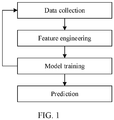
- machine learning may roughly include several steps of data collection, feature engineering (feature engineering), model training, and a prediction.
- the data collection means that various types of raw data are obtained from an object that generates a data source, and are stored in a database or a memory for data training or a prediction.
- the feature engineering means that relatively simple processing such as structuring, deduplication, and denoising may be performed on raw data, and then operations such as feature extraction and correlation analysis may be performed on processed data to obtain feature data.
- a model training process means that a proper algorithm, feature data, and the like are selected for training to obtain a model. Common algorithms include regression, a decision tree, a neural network, a support vector machine (support vector machine, SVM), a Bayes classifier, and the like.
- a prediction process new sample data is input into the model obtained through the training, and a corresponding output result may be obtained based on the model. Based on different algorithms, the output result may be a specific value, or may be a classification result. The output result is prediction content obtained through the machine learning.
- a base station sends raw data to an access network data analysis (RAN data analysis, RANDA) network element, and the RANDA network element performs feature engineering, training, and prediction functions.
- RANDA access network data analysis
- RANDA access network data analysis
- UPF user plane function
- NWDA network data analysis
- the base station and the UPF need to report a large amount of raw data, imposing a relatively high requirement on transmission performance.
- a transport network may fail to meet a transmission requirement, and network resources are also wasted.
- This application provides a feature engineering orchestration method and apparatus, to perform feature engineering and model training on data in a communications network.
- this application provides a feature engineering orchestration method, including: receiving, by a first network device, first indication information from a second network device, where the first indication information may include first method indication information and first data type indication information; performing, by the first network device by using a method indicated by the first method indication information, feature extraction on data indicated by the first data type indication information, to obtain corresponding feature data; sending, by the first network device, the obtained feature data to the second network device; and performing, by the second network device, model training based on the received feature data.
- the first network device may perform the feature extraction according to the method indicated by the second network device, and send the extracted feature data to the second network device.
- the first network device does not need to send a large amount of raw data to the second network device, so that transmission pressure can be reduced, a transmission requirement for a transport network can be reduced, and a computation amount of the second network device can be shared, thereby helping improve model training efficiency.
- the second network device may be a central unit (centralized unit, CU), and the first network device may be a distributed unit (distributed unit, DU).
- the second network device may be RANDA network element, and the first network device may be a CU, a DU, or a general NodeB (general NodeB, gNB).
- the second network device may be NWDA network element, and the first network device may be a UPF, an access management function (access management function, AMF), a session management function (session management function, SMF), or a policy control function (policy control function, PCF).
- the second network device may be an analysis and modeling function (analysis and modeling function, A&MF), and the first network device may be a data service function (data service function, DSF).
- the first indication information may further include first method parameter information.
- the first method parameter information is information about a parameter required when the method indicated by the first method indication information is used.
- the second network device when indicating a first method, the second network device further needs to indicate a parameter required when the method is used. For example, if indicating the first network device to perform normalization processing on data, the second network device may further indicate a maximum threshold and a minimum threshold of normalized data.
- the second network device may further send, to the first network device, model information obtained through training.
- the first network device further performs a data prediction based on the received model information.
- the first network device needs to report a large amount of raw data, so that the second network device performs a data prediction.
- the first network device only needs to perform the data prediction based on the model information sent by the second network device, so that the first network device can be prevented from sending a large amount of data, thereby reducing a requirement for a transport network.
- the second network device may further send, to a third network device, model information obtained through training.
- the third network device performs a data prediction based on the received model information.
- the second network device may be an A&MF
- the first network device may be a DSF
- the third network device may be a model execution function (model execution function, MEF).
- the model information includes model algorithm information and input feature information of a model.
- the input feature information is used to obtain an input feature vector, and the input feature vector and the model algorithm information are used for the data prediction.
- the input feature information may further include second method indication information and second data type indication information.
- the first network device may perform, by using a method indicated by the second method indication information, feature extraction on data indicated by the second data type indication information, to obtain the input feature vector, and then obtain a data prediction result based on the input feature vector and the model algorithm information.
- the third network device may send the input feature information to the first network device.
- the first network device performs, by using a method indicated by the second method indication information, feature extraction on data indicated by the second data type indication information, to obtain the input feature vector, and sends the input feature vector to the third network device.
- the third network device obtains a data prediction result based on the input feature vector and the model algorithm information.
- the input feature information further includes second method parameter information
- the second method parameter information is information about a parameter required when the method indicated by the second method indication information is used.
- an embodiment of this application provides a first network device, including a receiving module, a processing module, and a sending module.
- the receiving module, the processing module, and the sending module are configured to perform functions performed by the first network device in any possible implementation of the first aspect.
- an embodiment of this application provides a second network device, including a sending module, a receiving module, and a processing module.
- the sending module, the receiving module, and the processing module are configured to perform functions performed by the second network device in any possible implementation of the first aspect.
- an embodiment of this application provides a first network device, including a processor, a memory, and a communications interface.
- the memory is configured to store a program
- the processor invokes the program stored in the memory, to perform, by using the communications interface, functions performed by the first network device in any possible implementation of the first aspect.
- an embodiment of this application provides a second network device, including a processor, a memory, and a communications interface.
- the memory is configured to store a program
- the processor invokes the program stored in the memory, to perform, by using the communications interface, functions performed by the second network device in any possible implementation of the first aspect.
- an embodiment of this application provides a communications system, which includes the first network device according to the second aspect and the second network device according to the third aspect or may include the first network device according to the fourth aspect and the second network device according to the fifth aspect.
- an embodiment of this application provides a computer-readable storage medium, where the computer-readable storage medium stores a computer instruction, and when the instruction is run on a computer, the computer is enabled to perform the method in any implementation of the first aspect.
- an embodiment of this application provides a computer program product including an instruction, where when the computer program product runs on a computer, the computer is enabled to perform the method in the foregoing aspects.
- a communications network may analyze and predict data in a machine learning manner, to optimize a network.
- a large amount of raw data is generated by a base station and a UPF, but the base station and the UPF do not have a capability of analyzing and processing data. Therefore, the base station may send the large amount of raw data to RANDA network element, and the UPF may send the large amount of raw data to NWDA network element.
- the RANDA network element and the NWDA network element perform feature engineering and model training on the obtained raw data to obtain a model used for a data prediction, and then perform the data prediction based on new raw data sent by the base station or the UPF and by using the model obtained through training.
- the base station or the UPF needs to report a large amount of raw data in a model training and prediction process, relatively high pressure is imposed on a transport network, and the transport network may fail to meet a transmission requirement for the transport network.
- an embodiment of this application provides a feature engineering orchestration method, used to perform feature engineering and model training on data in a communications network, to reduce transmission pressure.
- the feature engineering orchestration method provided in this embodiment of this application may be applied to a 3/4/5G mobile communications network or another future communications network.
- the method may be applied to a radio access network (radio access network, RAN), or may be applied to a core network (core network, CN).
- radio access network radio access network
- core network core network
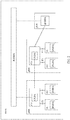
- FIG. 2 is a schematic diagram of an example of a RAN architecture, in a 5G communications network, that can be applied to embodiments of this application.
- a general NodeB (general NodeB, gNB) included in a RAN may include a CU and a plurality of DUs, or may be an integrated gNB, that is, a gNB that does not include a DU.
- the gNB may generate a large amount of raw data, which may be used for feature engineering, training, and a prediction.
- a data analysis (data analysis, DA) unit may be disposed in the gNB.
- a data analysis unit disposed in the DU may be referred to as DUDA, and may be configured to perform statistical analysis, feature extraction, and the like on data in the DU.
- a data analysis unit disposed in the CU may be referred to as CUDA, and may be configured to: perform statistical analysis on data generated by the CU and data reported by the DU, and perform model training and the like based on the data.
- a data analysis unit disposed in the integrated gNB may be referred to as gNBDA, and may be configured to perform statistical analysis, feature extraction, and the like on data generated by the integrated gNB.
- the CUDA, the DUDA, and the gNBDA may be logical units in the gNB.
- a data analysis unit referred to as RANDA network element
- RANDA network element may be further disposed in the radio access network, and may further perform statistics collection and analysis on data reported by the DUDA, the CUDA, and the gNBDA and perform model training and the like based on the data. Because the data obtained by the RANDA network element may be different from the data obtained by the CUDA, a model trained by the RANDA network element may also be different from a model trained by the CUDA.
- the RANDA network element may be a logical unit disposed in the gNB or another device, or may be an independent device. This is not limited in this application.
- FIG. 3 is a schematic diagram of an example of a CN architecture, in a 5G communications network, that can be applied to embodiments of this application.
- a UPF may generate a large amount of raw data, which may be used for feature engineering, training, and a prediction.
- NWDA network element may perform analysis, processing and model training on the data.
- An AMF is mainly responsible for UE access and mobility management, NAS message routing, SMF selection, and the like.
- An SMF is mainly responsible for session management, such as session creation/modification/deletion, UPF selection, and user-plane tunnel information allocation and management.
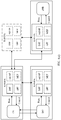
- FIG. 4(a) is a schematic diagram of an example of another RAN architecture, in a 5G communications network, that can be applied to embodiments of this application.
- RANDA network element in a RAN may be a distributed logical unit that is distributed in a CU, a DU, a gNB, or an independent network device.
- the RANDA network element may include a DSF, used to provide a data service; an A&MF, used to perform analysis and modeling based on data provided by the DSF; and an MEF, used to perform a prediction based on a model obtained through A&MF training.
- the RANDA network element may further include an adaptive policy function (adaptive policy function, APF), used to provide an intelligent collaboration service.
- APF adaptive policy function
- Function modules of the RANDA network element that are disposed in the CU, the DU, and the gNB may communicate with the CU, the DU, and the gNB.
- the RANDA network element may send control information to the DU, to obtain raw data in the DU.
- a part or all of the function modules of the RANDA network element may be disposed in each DU, CU, gNB, or another network device based on an actual requirement.
- the DSF is disposed in the DU, the CU, and the gNB, so that the DSF can easily obtain raw data from the CU, the DU, and the gNB.
- the A&MF may be disposed in the CU, so that the CU can perform model training based on data reported by the DU and data generated by the CU.
- FIG. 4(b) is a schematic diagram of an example of another CN architecture, in a 5G communications network, that can be applied to embodiments of this application.
- NWDA network element may be a distributed logical unit that is distributed in a UPF or another network element.
- the NWDA network element may also include a DSF, an A&MF, an MEF, and an APF, which have similar functions to those of corresponding modules in a RAN architecture. Details are not described herein again.
- the method may include the following steps.
- Step 501 A second network device sends first indication information to a first network device, where the first indication information may include first method indication information and first data type indication information.
- the second network device may be a CU, and the first network device may be a DU; or the second network device may be RANDA network element, and the first network device may be a CU, a DU, or a gNB.
- the second network device may be NWDA network element, and the first network device may be a UPF, an AMF, an SMF, or a PCF.
- the second network device may be an A&MF
- the first network device may be a DSF
- the first indication information is used to subscribe to, from the first network device, feature information required by the second network device, that is, indicate the first network device to: perform, by using a method indicated by the first method indication information, feature extraction on data indicated by the first data type indication information, to obtain feature data, and send the obtained feature data to the second network device.
- a common feature engineering method may be shown in FIG. 6 .
- the method indicated by the first method indication information namely, a "feature method indication” in FIG. 6
- the first data type indication information indicates data of a reference signal received power (reference signal receiving power, RSRP)
- RSRP reference signal receiving power
- the method indicated by the first method indication information is calculating a minimum value
- the first data type indication information indicates an RSRP for a station 1 (namely, a received power that is reported by a terminal and that is of a reference signal sent by the station 1, and a station may be a cell, a base station, or the like)
- an RSRP for a station 2 indicates that the second network device requests to subscribe to a minimum value of RSRPs measured by the terminal for the three stations.
- each method may be numbered in advance.
- the first method indication information may be indicated by using a corresponding method number.
- a number 1 means calculating an averaging value
- a number 2 means calculating a minimum value
- a number 3 means calculating a maximum value.
- feature extraction may be performed without a method parameter, for example, calculating the maximum value and calculating the minimum value.
- some method parameters further need to be provided to implement corresponding feature extraction. For example, when "min-max normalization” is applied for normalization, whether to normalize a value of data to a value between 0 and 1 or normalize a value of data to a value between 0 and 100 further needs to be determined. In other words, a minimum threshold and a maximum threshold further need to be determined.
- a discrete interval further needs to be determined to discretize data.
- the data may be discretized to several value intervals of [-150, -130], [-130, -110], [-110, -90], and [-90, -70], and then an amount of data that falls within each value interval is counted.
- the second network device may send the first indication information including first method parameter information to the first network device, so that the first network device can implement the feature extraction.
- the first indication information includes the following information: the first method indication information, where an indicated method is the min-max normalization; the first data type indication information, indicating the data of the RSRP; and the first method parameter information, indicating that a minimum value is 0 and a maximum value is 1.
- a parameter corresponding to each method may also be agreed on in advance and configured in the first network device.
- the first indication information sent by the second network device may not necessarily carry the method parameter indication information.
- a number 1 indicates that a method is the min-max normalization, a minimum value is 0, and a maximum value is 1; and a number 2 indicates that a method is the min-max normalization, a minimum value is 0, and a maximum value is 100.
- a number 1 indicates that a method is calculating the averaging value, and a data type is the data of the RSRP; and a number 2 indicates that a method is calculating the averaging value, and a data type is an air interface transmission rate.
- different numbers may correspond to different combinations of methods, data types, and method parameters, which are not described one by one herein.
- Step 502 The first network device performs, by using the method indicated by the first method indication information, the feature extraction on the data indicated by the first data type indication information, to obtain the feature data.
- the first network device may periodically and repeatedly perform the foregoing steps, or may perform the foregoing steps after new data indicated by a first data type is generated.
- the first network device may return, to the second network device, response information indicating whether the feature extraction can be performed based on the first indication information.
- the first network device and the second network device agree on 10 methods in advance, which respectively correspond to numbers 1 to 10.
- the second network device can support a new method 11 after being upgraded, but the first network device is not upgraded, is not configured with an algorithm corresponding to the method 11, and cannot perform the feature extraction by using the method 11.
- the first network device may send response information to the second network device, to indicate that the feature extraction indicated by the first indication information is not supported.
- Step 503 The first network device sends the obtained feature data to the second network device.
- the first network device may periodically send obtained feature data to the second network device based on an indication that is agreed on in advance or that is of the second network device, or send new feature data to the second network device in a timely manner after obtaining the new feature data.
- Step 504 The second network device performs model training based on the feature data.
- the second network device may perform the model training based on a preset algorithm and the feature data sent by the first network device, to obtain a model used for a data prediction.
- the second network device may send, to the first network device or a third network device, model information obtained through the training, so that the first network device or the third network device can perform a data prediction based on the model information, to avoid a problem that the first network device still needs to send a large amount of raw data to the second network device in a data prediction process, further reduce pressure on a transport network, and further share a computation amount of the second network device, thereby helping improve system efficiency.
- model information sent by the second network device may further include model algorithm information and input feature information.
- the input feature information is used to indicate how to obtain an input feature vector, and the obtained input feature vector and the model algorithm information are used for the data prediction.
- the first network device may perform the data prediction based on the generated new data and the model information.
- this process avoids sending of the large amount of raw data to the second network device, thereby reducing the pressure on the transport network; on the other hand, the second network device can locally perform the feature extraction on the raw data, and perform the prediction based on the extracted feature vector. This helps reduce duration of the prediction process, so that a prediction result of a network can be relatively quickly obtained, and the network can be optimized in a timely manner.
- the third network device may send the input feature information to the first network device.
- the first network device performs the feature extraction on the raw data based on the input feature information, and sends the extracted input feature vector to the third network device.
- the third network device performs the data prediction based on the input feature vector and the model algorithm information. Compared with a prediction process in the prior art, this process avoids reporting of the large amount of raw data, and reduces transmission pressure on the transport network.
- the input feature information may include second method indication information and second data type indication information, and is used to indicate to perform, by using a method indicated by the second method indication information, feature extraction on data indicated by the second data type indication information, to obtain the input feature vector.
- second indication information may also include second method parameter information, namely, information about a parameter required when the method indicated by the second method indication information is used.
- the feature engineering orchestration method provided in the embodiments of this application may be applied to a RAN.
- the second network device may be a CU
- the first network device may be a DU.
- a specific implementation process may include the following steps.
- Step 701 The CU sends a network data subscribe message (network data subscribe message) to the DU, where the network data subscribe message includes first indication information.
- the first indication information includes first method indication information and first data type indication information.
- the CU may send the network data subscribe message including the first indication information, or may send another message including the first indication information, or send the first indication information by using one piece of independent signaling.
- Step 702A The DU sends a network data subscribe response (network data subscribe response) to the CU, to notify the CU of whether the DU can perform feature extraction based on the first indication information.
- a network data subscribe response network data subscribe response
- the foregoing response may further include indication information of an unsupported method or an unsupported data type.
- step 702B continues to be performed.
- Step 702B The DU performs the feature extraction based on the first indication information, and sends obtained feature data to the CU.
- Step 703 The CU performs model training based on the feature data sent by the DU, and sends a model feature install message (model feature install message) including obtained model information to the DU.
- the model information may include model algorithm information and input feature information.
- the input feature information is used to indicate how to obtain an input feature vector, and the input feature vector and the model algorithm information are used for a data prediction.
- the input feature information includes second method indication information and second data type indication information.
- Step 704 The DU sends a model feature install response (model feature install response) to the CU, to notify the CU of whether the DU can perform the data prediction based on the model information.
- the foregoing response may further include indication information of an unsupported method or an unsupported data type.
- step 705 continues to be performed.
- Step 705 The DU obtains the input feature vector based on the input feature information, and performs the prediction based on the input feature vector and the model algorithm information.
- the second network device may be RANDA network element
- the first network device may be a CU, a DU, or a gNB.
- a specific implementation process may include the following steps.
- Step 801 The RANDA network element sends a network data subscribe message to the CU/DU/gNB, where the message includes first indication information, and the first indication information may include first method indication information and first data type indication information.
- Step 802A The CU/DU/gNB sends a network data subscribe response to the RANDA network element, to notify the RANDA network element of whether the CU/DU/gNB can perform feature extraction based on the first indication information.
- step 802B continues to be performed.
- Step 802B The CU/DU/gNB performs the feature extraction based on the first indication information, and sends obtained feature data to the RANDA network element.
- Step 803 The RANDA network element performs model training based on the feature data, and sends a model feature install message including obtained model information to the CU/DU/gNB.
- the model information may include model algorithm information and input feature information.
- Step 804 The CU/DU/gNB sends a model feature install response to the RANDA network element, to notify the RANDA network element of whether the CU/DU/gNB can perform a data prediction based on the model algorithm information and the input feature information.
- step 805 continues to be performed.
- Step 805 The CU/DU/gNB obtains an input feature vector based on the input feature information, and performs the prediction based on the input feature vector and the model algorithm information.
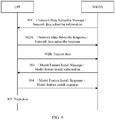
- the second network device may be NWDA network element
- the first network device may be a UPF, an AMF, an SMF, or a PCF.
- a specific implementation process may include the following steps.
- Step 901 The NWDA network element sends a network data subscribe message to the UPF, where the message includes first indication information, and the first indication information may include first method indication information and first data type indication information.
- Step 902A The UPF sends a network data subscribe response to the NWDA network element, to notify the NWDA network element of whether the UPF can perform feature extraction based on the first indication information.
- step 902B may continue to be performed.
- Step 902B The UPF performs the feature extraction based on the first indication information, and sends obtained feature data to the NWDA network element.
- Step 903 The NWDA network element performs model training based on the feature data, and sends a model feature install message including obtained model information to the UPF.
- the model information includes model algorithm information and input feature information.
- Step 904 The UPF sends a model feature install response to the NWDA network element, to notify the NWDA network element of whether the UPF can perform a data prediction based on the model algorithm information and the input feature information.
- step 905 continues to be performed.
- Step 905 The UPF obtains an input feature vector based on the input feature information, and performs the prediction based on the input feature vector and the model algorithm information.
- the feature engineering orchestration method provided in the embodiment of this application may be further applied to the architecture shown in FIG. 4(a) or FIG. 4(b) .
- the second network device is an A&MF
- the first network device is a DSF.
- the third network device that performs a data prediction based on the model may be an MEF.
- a CN scenario is used as an example.
- NWDA network element is disposed, a function module DSF of the NWDA network element may be disposed in the UPF, so that the DSF can easily obtain raw data generated by the UPF.
- the A&MF and the MEF may be disposed in the UPF, or may be disposed in another network device, or may be disposed in an independent network device based on requirements of different scenarios.
- a specific process may be shown in FIG. 10 , and may include the following steps.
- Step 1001 The A&MF sends a network data subscribe message to the DSF, where the message includes first indication information, and the first indication information may include first method indication information and first data type indication information.
- the first indication information may further include first method parameter information.
- Step 1002A The DSF sends a network data subscribe response to the A&MF, to notify the A&MF of whether the DSF can perform feature extraction based on the first indication information.
- the foregoing response may include indication information of an unsupported method or an unsupported data type.
- step 1002B continues to be performed.
- Step 1002B The DSF performs, by using a method indicated by the first method indication information, the feature extraction on data indicated by the first data type indication information, and sends obtained feature data to the A&MF.
- Step 1003 The A&MF performs model training based on the feature data sent by the DSF, and sends a model feature install message including obtained model information to the MEF.
- the model information includes model algorithm information and input feature information.
- the input feature information may include second method indication information and second data type indication information. Further, the input feature information may further include second method parameter information, namely, information about a parameter required when a method indicated by the second method indication information is used.
- Step 1004 The MEF sends a feature vector subscribe message (feature vector subscribe message) to the DSF, where the message includes the input feature information, to subscribe to an input feature vector from the DSF.
- a feature vector subscribe message feature vector subscribe message
- Step 1005A The DSF sends a feature vector subscribe response (feature vector subscribe response) to the MEF, to notify the MEF of whether the DSF can obtain the input feature vector based on the input feature information.
- feature vector subscribe response feature vector subscribe response
- the foregoing response may further include the indication information of the unsupported method or the unsupported data type.
- the response returned to the MEF may carry the indication information of the unsupported method.
- step 1005B continues to be performed.
- Step 1005B The DSF obtains the input feature vector based on the input feature information, and sends the obtained input feature vector to the MEF.
- the DSF may perform, by using the method indicated by the second method indication information, the feature extraction on data indicated by the second data type indication information, to obtain the input feature vector.
- Step 1006 The MEF performs a data prediction based on the model algorithm information sent by the A&MF and the input feature vector sent by the DSF.
- the first network device may perform the feature extraction according to the method indicated by the second network device, and send the extracted feature data to the second network device, so that the first network device does not need to send a large amount of raw data to the second network device, network transmission pressure can be reduced, a requirement for a transport network can be reduced, and a computation amount of the second network device can be shared, thereby helping improve model training efficiency. Further, the first network device may further perform the data prediction based on the model information sent by the second network device.
- the first network device may further obtain the input feature vector based on the input feature information sent by the third network device, and send the input feature vector to the first network device or the third network device, to avoid transmitting of the large amount of raw data in a data prediction process, thereby further reducing the network transmission pressure.
- FIG. 11 is a schematic structural diagram of a first network device according to an embodiment of this application.
- the first network device includes a receiving module 1101, a processing module 1102, and a sending module 1103.
- the first network device may be an independent device, or may be a function module disposed in another device.
- a DSF may be disposed in a DU, a CU, a gNB, and a UPF as a function module.
- the receiving module 1101 is configured to receive first indication information from a second network device, where the first indication information includes first method indication information and first data type indication information.
- the processing module 1102 is configured to perform, by using a method indicated by the first method indication information, feature extraction on data indicated by the first data type indication information, to obtain feature data.
- the sending module 1103 is configured to send the feature data to the second network device.
- the first indication information further includes first method parameter information
- the first method parameter information is information about a parameter required when the method indicated by the first method indication information is used.
- the receiving module 1101 is further configured to receive model information from the second network device, where the model information is obtained by performing model training based on the feature data.
- the processing module 1102 is further configured to perform a data prediction based on the model information.
- the model information includes model algorithm information and input feature information of the model.
- the processing module 1102 is specifically configured to: obtain an input feature vector based on the input feature information, and then perform the data prediction based on the input feature vector and the model algorithm information.
- the input feature information includes second method indication information and second data type indication information.
- the processing module 1102 is specifically configured to perform, by using a method indicated by the second method indication information, feature extraction on data indicated by the second data type indication information, to obtain the input feature vector.
- the input feature information further includes second method parameter information
- the second method parameter information is information about a parameter required when the method indicated by the second method indication information is used.
- the receiving module 1101 is further configured to receive second indication information from a third network device, where the second indication information includes third method indication information and third data type indication information.
- the processing module 1102 is further configured to perform, by using a method indicated by the third method indication information, feature extraction on data indicated by the third data type indication information, to obtain an input feature vector.
- the sending module 1103 is further configured to send the input feature vector to the third network device.
- the input feature information further includes third method parameter information
- the third method parameter information is information about a parameter required when the method indicated by the third method indication information is used.
- an embodiment of this application provides a second network device, configured to implement a method procedure of the second network device in the foregoing method embodiments.
- the second network device includes a sending module, a receiving module, and a processing module.
- a connection manner between the foregoing modules is similar to the connection manner in FIG. 11 .
- the second network device may be an independent device, or may be a function module disposed in another device.
- the second network device is a function module
- the second network device and a first network device may be disposed in a same device.
- a DSF and an A&MF may be disposed in a CU.
- the sending module is configured to send first indication information to the first network device, where the first indication information includes first method indication information and first data type indication information.
- the receiving module is configured to receive feature data from the first network device, where the feature data is obtained by performing, by using a method indicated by the first method indication information, feature extraction on data indicated by the first data type indication information.
- the processing module is configured to perform model training based on the feature data.
- the sending module is further configured to send, to the first network device, model information obtained through training, where the model information is used for a data prediction.
- the sending module is further configured to send, to a third network device, model information obtained through training, where the model information is used for a data prediction.
- the model information includes model algorithm information and input feature information.
- the input feature information is used to obtain an input feature vector, and the input feature vector and the model algorithm information are used for the data prediction.
- the input feature information includes second method indication information and second data type indication information, and is used to indicate to perform, by using a method indicated by the second method indication information, feature extraction on data indicated by the second data type indication information, to obtain the input feature vector.
- the input feature information further includes second method parameter information
- the second method parameter information is information about a parameter required when the method indicated by the second method indication information is used.
- the first indication information further includes first method parameter information
- the first method parameter information is information about a parameter required when the method indicated by the first method indication information is used.
- an embodiment of this application provides a third network device, configured to implement a method procedure of the third network device in the foregoing method embodiments.
- the third network device includes a receiving module, a sending module, and a processing module.
- a connection manner between the foregoing modules is similar to the connection manner in FIG. 11 .
- the third network device may be an independent device, or may be a function module disposed in another device.
- the third network device and a first network device or a second network device may be disposed in a same device.
- a DSF and an MEF may be disposed in a DU, or a DSF, an A&MF, and an MEF may be disposed in a CU.
- the receiving module is configured to receive model information sent by the second network device, where the model information includes model algorithm information and input feature information of the model.
- the sending module is configured to send the input feature information to the first network device.
- the receiving module is further configured to receive an input feature vector determined by the first network device based on the input feature information.
- the processing module is configured to obtain a data prediction result based on the input feature vector and the model algorithm information.
- the input feature information includes second method indication information and second data type indication information, and is used to indicate to perform, by using a method indicated by the second method indication information, feature extraction on data indicated by the second data type indication information, to obtain the input feature vector.
- the input feature information further includes second method parameter information
- the second method parameter information is information about a parameter required when the method indicated by the second method indication information is used.
- an embodiment of this application provides a first network device, configured to implement functions performed by the first network device in the foregoing method embodiments.
- a hardware structure of the first network device may be shown in FIG. 12 , and includes at least one processor 1201, a communications bus 1202, a memory 1203, and at least one communications interface 1204.
- the processor 1201 may be a general-purpose central processing unit (central processing unit, CPU), a microprocessor, an application-specific integrated circuit (application-specific integrated circuit, ASIC), or one or more integrated circuits for controlling program execution of the solutions of this application.
- CPU central processing unit
- ASIC application-specific integrated circuit
- the communications bus 1202 may include a path in which information is transmitted between the foregoing components.
- the communications interface 1204 is configured to communicate with another device or a communications network, such as the Ethernet, a radio access network (radio access network, RAN), or a wireless local area network (wireless local area networks, WLAN) by using any apparatus such as a transceiver.
- a communications network such as the Ethernet, a radio access network (radio access network, RAN), or a wireless local area network (wireless local area networks, WLAN) by using any apparatus such as a transceiver.
- the memory 1203 may be a read-only memory (read-only memory, ROM) or another type of static storage device that can store static information and instructions; or a random access memory (random access memory, RAM) or another type of dynamic storage device that can store information and instructions.
- ROM read-only memory
- RAM random access memory
- the memory 1203 may alternatively be an electrically erasable programmable read-only memory (electrically erasable programmable read-only memory, EEPROM), a compact disc read-only memory (compact disc read-only memory, CD-ROM) or another compact disc storage, optical disc storage (including a compact disc, a laser disc, an optical disc, a digital versatile disc, a Blu-ray disc, and the like), a magnetic disk storage medium or another magnetic storage device, or any other medium that can be used to carry or store expected program code in a form of an instruction or a data structure and that is accessible by a computer, but is not limited thereto.
- the memory may exist independently, and is connected to the processor by using a bus.
- the memory may alternatively be integrated with the processor.
- the memory 1203 is configured to store application program code for performing the solutions of this application, and the processor 1201 controls the execution.
- the processor 1201 is configured to execute the application program code stored in the memory 1203, to implement the feature engineering orchestration methods provided in the foregoing embodiments of this application.
- the processor 1201 may perform a related function in the feature engineering orchestration methods provided in the foregoing embodiments of this application, and the communications interface 1204 is responsible for communication with the another device or the communications network. This is not specifically limited in this embodiment of this application.
- the processor 1201 may include one or more CPUs.
- the first network device may include a plurality of processors.
- Each of the processors may be a single-core (single-CPU) processor, or may be a multi-core (multi-CPU) processor.
- the processor herein may be one or more devices, circuits, and/or processing cores configured to process data (for example, a computer program instruction).
- an embodiment of this application provides a second network device, configured to implement functions performed by the second network device in the foregoing method embodiments.
- the second network device may include at least one processor, a communications bus, a memory, and at least one communications interface.
- the foregoing components refer to FIG. 12 .
- the processor may be a general-purpose central processing unit, a microprocessor, an application-specific integrated circuit, or one or more integrated circuits for controlling program execution of the solutions of this application.
- the communications bus may include a path in which information is transmitted between the foregoing components.
- the communications interface is configured to communicate with another device or a communications network, such as the Ethernet, a radio access network, or a wireless local area network by using any apparatus such as a transceiver.
- a communications network such as the Ethernet, a radio access network, or a wireless local area network
- the memory may be a read-only memory or another type of static storage device that can store static information and instructions; or a random access memory or another type of dynamic storage device that can store information and instructions.
- the memory may alternatively be an electrically erasable programmable read-only memory, a compact disc read-only memory or another compact disc storage, optical disc storage (including a compact disc, a laser disc, an optical disc, a digital versatile disc, a Blu-ray disc, and the like), a magnetic disk storage medium or another magnetic storage device, or any other medium that can be used to carry or store expected program code in a form of an instruction or a data structure and that is accessible by a computer, but is not limited thereto.
- the memory may exist independently, and is connected to the processor by using a bus.
- the memory may alternatively be integrated with the processor.
- the memory is configured to store application program code for performing the solutions of this application, and the processor controls the execution.
- the processor is configured to execute the application program code stored in the memory, to implement the feature engineering orchestration methods provided in the foregoing embodiments of this application.
- the processor may perform a related function in the feature engineering orchestration methods provided in the foregoing embodiments of this application, and the communications interface is responsible for communication with the another device or the communications network. This is not specifically limited in this embodiment of this application.
- the processor may include one or more CPUs.
- the second network device may include a plurality of processors.
- Each of the processors may be a single-core processor, or may be a multi-core processor.
- the processor herein may be one or more devices, circuits, and/or processing cores configured to process data (for example, a computer program instruction).
- an embodiment of this application provides a third network device, configured to implement functions performed by the third network device in the foregoing method embodiments.
- the third network device may include at least one processor, a communications bus, a memory, and at least one communications interface.
- the foregoing components refer to FIG. 12 .
- the processor may be a general-purpose central processing unit, a microprocessor, an application-specific integrated circuit, or one or more integrated circuits for controlling program execution of the solutions of this application.
- the communications bus may include a path in which information is transmitted between the foregoing components.
- the communications interface is configured to communicate with another device or a communications network, such as the Ethernet, a radio access network, or a wireless local area network by using any apparatus such as a transceiver.
- a communications network such as the Ethernet, a radio access network, or a wireless local area network
- the memory may be a read-only memory or another type of static storage device that can store static information and instructions; or a random access memory or another type of dynamic storage device that can store information and instructions.
- the memory may alternatively be an electrically erasable programmable read-only memory, a compact disc read-only memory or another compact disc storage, optical disc storage (including a compact disc, a laser disc, an optical disc, a digital versatile disc, a Blu-ray disc, and the like), a magnetic disk storage medium or another magnetic storage device, or any other medium that can be used to carry or store expected program code in a form of an instruction or a data structure and that is accessible by a computer, but is not limited thereto.
- the memory may exist independently, and is connected to the processor by using a bus.
- the memory may alternatively be integrated with the processor.
- the memory is configured to store application program code for performing the solutions of this application, and the processor controls the execution.
- the processor is configured to execute the application program code stored in the memory, to implement the feature engineering orchestration methods provided in the foregoing embodiments of this application.
- the processor may perform a related function in the feature engineering orchestration methods provided in the foregoing embodiments of this application, and the communications interface is responsible for communication with the another device or the communications network. This is not specifically limited in this embodiment of this application.
- the processor may include one or more CPUs.
- the third network device may include a plurality of processors.
- Each of the processors may be a single-core processor, or may be a multi-core processor.
- the processor herein may be one or more devices, circuits, and/or processing cores configured to process data (for example, a computer program instruction).
- this application further provides a communications system, including the first network device and the second network device, or may include the first network device, the second network device, and the third network device.
- All or some of the foregoing embodiments may be implemented by using software, hardware, firmware, or any combination thereof.
- a software program is used to implement the embodiments, the embodiments may be implemented completely or partially in a form of a computer program product.
- the computer program product includes one or more computer instructions.
- the computer program instructions When the computer program instructions are loaded and executed on a computer, the procedure or functions according to the embodiments of this application are all or partially generated.
- the computer may be a general-purpose computer, a dedicated computer, a computer network, or another programmable apparatus.
- the computer instructions may be stored in a computer-readable storage medium or may be transmitted from a computer-readable storage medium to another computer-readable storage medium.
- the computer instructions may be transmitted from a website, computer, server, or data center to another website, computer, server, or data center in a wired (for example, a coaxial cable, an optical fiber, or a digital subscriber line (digital subscriber line, DSL)) or wireless (for example, infrared, radio, or microwave) manner.
- the computer-readable storage medium may be any usable medium accessible by a computer, or a data storage device, such as a server or a data center, integrating one or more usable media.
- the usable medium may be a magnetic medium (for example, a floppy disk, a hard disk, or a magnetic tape), an optical medium (for example, a DVD), a semiconductor medium (for example, a solid-state drive (solid state disk, SSD)), or the like.
- a magnetic medium for example, a floppy disk, a hard disk, or a magnetic tape
- an optical medium for example, a DVD
- a semiconductor medium for example, a solid-state drive (solid state disk, SSD)
Landscapes
- Engineering & Computer Science (AREA)
- Theoretical Computer Science (AREA)
- Data Mining & Analysis (AREA)
- Artificial Intelligence (AREA)
- Evolutionary Computation (AREA)
- Physics & Mathematics (AREA)
- General Physics & Mathematics (AREA)
- Computer Vision & Pattern Recognition (AREA)
- General Engineering & Computer Science (AREA)
- Signal Processing (AREA)
- Computer Networks & Wireless Communication (AREA)
- Software Systems (AREA)
- Life Sciences & Earth Sciences (AREA)
- Bioinformatics & Computational Biology (AREA)
- Evolutionary Biology (AREA)
- Bioinformatics & Cheminformatics (AREA)
- Medical Informatics (AREA)
- Computing Systems (AREA)
- Mathematical Physics (AREA)
- Biomedical Technology (AREA)
- Health & Medical Sciences (AREA)
- Biophysics (AREA)
- Computational Linguistics (AREA)
- General Health & Medical Sciences (AREA)
- Molecular Biology (AREA)
- Databases & Information Systems (AREA)
- Mobile Radio Communication Systems (AREA)
- Data Exchanges In Wide-Area Networks (AREA)
- Telephonic Communication Services (AREA)
Priority Applications (1)
| Application Number | Priority Date | Filing Date | Title |
|---|---|---|---|
| EP23186158.4A EP4307634A1 (fr) | 2018-04-28 | 2019-04-22 | Procédé et appareil de programmation d'extraction de caractéristiques |
Applications Claiming Priority (2)
| Application Number | Priority Date | Filing Date | Title |
|---|---|---|---|
| CN201810399920.3A CN110430068B (zh) | 2018-04-28 | 2018-04-28 | 一种特征工程编排方法及装置 |
| PCT/CN2019/083744 WO2019206100A1 (fr) | 2018-04-28 | 2019-04-22 | Procédé et appareil de programmation d'extraction de caractéristiques |
Related Child Applications (2)
| Application Number | Title | Priority Date | Filing Date |
|---|---|---|---|
| EP23186158.4A Division-Into EP4307634A1 (fr) | 2018-04-28 | 2019-04-22 | Procédé et appareil de programmation d'extraction de caractéristiques |
| EP23186158.4A Division EP4307634A1 (fr) | 2018-04-28 | 2019-04-22 | Procédé et appareil de programmation d'extraction de caractéristiques |
Publications (3)
| Publication Number | Publication Date |
|---|---|
| EP3780496A1 true EP3780496A1 (fr) | 2021-02-17 |
| EP3780496A4 EP3780496A4 (fr) | 2021-05-19 |
| EP3780496B1 EP3780496B1 (fr) | 2023-08-23 |
Family
ID=68294413
Family Applications (2)
| Application Number | Title | Priority Date | Filing Date |
|---|---|---|---|
| EP23186158.4A Pending EP4307634A1 (fr) | 2018-04-28 | 2019-04-22 | Procédé et appareil de programmation d'extraction de caractéristiques |
| EP19793921.8A Active EP3780496B1 (fr) | 2018-04-28 | 2019-04-22 | Procédé et appareil de programmation d'extraction de caractéristiques |
Family Applications Before (1)
| Application Number | Title | Priority Date | Filing Date |
|---|---|---|---|
| EP23186158.4A Pending EP4307634A1 (fr) | 2018-04-28 | 2019-04-22 | Procédé et appareil de programmation d'extraction de caractéristiques |
Country Status (5)
| Country | Link |
|---|---|
| US (2) | US12368647B2 (fr) |
| EP (2) | EP4307634A1 (fr) |
| KR (1) | KR102470712B1 (fr) |
| CN (2) | CN113159145B (fr) |
| WO (1) | WO2019206100A1 (fr) |
Cited By (2)
| Publication number | Priority date | Publication date | Assignee | Title |
|---|---|---|---|---|
| EP4187421A4 (fr) * | 2020-08-14 | 2023-12-27 | Huawei Technologies Co., Ltd. | Procédé de transmission d'informations multimédia et dispositif électronique |
| EP4539418A4 (fr) * | 2022-07-05 | 2025-08-06 | Huawei Tech Co Ltd | Procédé de communication et appareil |
Families Citing this family (10)
| Publication number | Priority date | Publication date | Assignee | Title |
|---|---|---|---|---|
| CN113873538B (zh) * | 2020-06-30 | 2025-05-06 | 华为技术有限公司 | 一种模型数据传输方法及通信装置 |
| WO2022061940A1 (fr) * | 2020-09-28 | 2022-03-31 | 华为技术有限公司 | Procédé de transmission de données de modèle et appareil de communication |
| CN112668723B (zh) * | 2020-12-29 | 2024-01-02 | 杭州海康威视数字技术股份有限公司 | 一种机器学习方法及系统 |
| CN115146691A (zh) * | 2021-03-30 | 2022-10-04 | 华为技术有限公司 | 管控模型训练的方法及装置、系统 |
| CN115589599B (zh) * | 2021-06-23 | 2026-04-03 | 华为技术有限公司 | 传输信息的方法和装置 |
| WO2024067248A1 (fr) * | 2022-09-30 | 2024-04-04 | 华为技术有限公司 | Procédé et appareil d'acquisition d'ensemble de données d'entraînement |
| WO2025030014A2 (fr) * | 2023-08-02 | 2025-02-06 | Jpmorgan Chase Bank, N.A. | Système et procédé de génération de prévisions chronologiques sur la base de données probabilistes |
| WO2025076680A1 (fr) * | 2023-10-10 | 2025-04-17 | Qualcomm Incorporated | Gestion de réseau central d'intelligence artificielle au niveau d'un équipement d'utilisateur |
| CN120234608A (zh) * | 2023-12-29 | 2025-07-01 | 华为技术有限公司 | 模型数据获取方法及装置、系统 |
| CN120434678A (zh) * | 2024-02-02 | 2025-08-05 | 华为技术有限公司 | 一种通信方法、通信装置及通信系统 |
Family Cites Families (29)
| Publication number | Priority date | Publication date | Assignee | Title |
|---|---|---|---|---|
| US20040064450A1 (en) * | 2002-09-30 | 2004-04-01 | Kabushiki Kaisha Toshiba | Method for preparing data to be analyzed, data analysis method, data analysis device, data preparation program, data analysis program, data prediction device, data prediction method, data prediction program and computer |
| CN101030835B (zh) * | 2007-02-09 | 2010-08-18 | 华为技术有限公司 | 检测特征获取装置和方法 |
| US8213951B2 (en) * | 2008-12-23 | 2012-07-03 | At & T Mobility Ii Llc | Using mobile communication devices to facilitate coordinating use of resources |
| US9104189B2 (en) * | 2009-07-01 | 2015-08-11 | Mario E. Berges Gonzalez | Methods and apparatuses for monitoring energy consumption and related operations |
| EP2602750A4 (fr) * | 2010-08-04 | 2016-04-27 | Nec Corp | Dispositif d'extraction de caractéristique d'action, système d'extraction de caractéristique d'action, procédé d'extraction de caractéristique d'action et programme d'extraction de caractéristique d'action |
| SG192002A1 (en) * | 2011-01-26 | 2013-08-30 | Google Inc | Dynamic predictive modeling platform |
| US9519043B2 (en) * | 2011-07-21 | 2016-12-13 | At&T Mobility Ii Llc | Estimating network based locating error in wireless networks |
| CN103260187B (zh) * | 2012-02-20 | 2016-03-02 | 华为技术有限公司 | 内容编码预同步的方法、设备及系统 |
| US9324041B2 (en) * | 2014-01-19 | 2016-04-26 | SparkBeyond Ltd. | Function stream based analysis |
| US10043194B2 (en) * | 2014-04-04 | 2018-08-07 | International Business Machines Corporation | Network demand forecasting |
| CN104809518A (zh) * | 2015-04-29 | 2015-07-29 | 重庆大学 | 一种基于支持向量机的岩体冲击地压声发射预测方法 |
| US9911290B1 (en) * | 2015-07-25 | 2018-03-06 | Gary M. Zalewski | Wireless coded communication (WCC) devices for tracking retail interactions with goods and association to user accounts |
| CN105224623B (zh) * | 2015-09-22 | 2019-06-18 | 北京百度网讯科技有限公司 | 数据模型的训练方法及装置 |
| US10541903B2 (en) * | 2015-10-02 | 2020-01-21 | Futurewei Technologies, Inc. | Methodology to improve the anomaly detection rate |
| US20170193392A1 (en) * | 2015-12-31 | 2017-07-06 | Linkedin Corporation | Automated machine learning tool |
| CN106980623B (zh) * | 2016-01-18 | 2020-02-21 | 华为技术有限公司 | 一种数据模型的确定方法及装置 |
| US10057367B2 (en) * | 2016-03-02 | 2018-08-21 | Huawei Technologies Canada Co., Ltd. | Systems and methods for data caching in a communications network |
| CN107168965B (zh) * | 2016-03-07 | 2021-01-12 | 阿里巴巴集团控股有限公司 | 特征工程策略确定方法及装置 |
| US10509791B2 (en) * | 2016-03-08 | 2019-12-17 | Facebook, Inc. | Statistical feature engineering of user attributes |
| CN107733672A (zh) * | 2016-08-12 | 2018-02-23 | 南京中兴软件有限责任公司 | 故障处理方法、装置及控制器 |
| CN106778259B (zh) * | 2016-12-28 | 2020-01-10 | 北京明朝万达科技股份有限公司 | 一种基于大数据机器学习的异常行为发现方法及系统 |
| CN106534220A (zh) * | 2016-12-30 | 2017-03-22 | 北京奇虎科技有限公司 | 一种流数据的双向传输方法和装置 |
| CN107204010B (zh) * | 2017-04-28 | 2019-11-19 | 中国科学院计算技术研究所 | 一种单目图像深度估计方法与系统 |
| CN107180628A (zh) * | 2017-05-19 | 2017-09-19 | 百度在线网络技术(北京)有限公司 | 建立声学特征提取模型的方法、提取声学特征的方法、装置 |
| US10039016B1 (en) * | 2017-06-14 | 2018-07-31 | Verizon Patent And Licensing Inc. | Machine-learning-based RF optimization |
| CN107741899B (zh) * | 2017-10-16 | 2021-07-27 | 北京小米移动软件有限公司 | 处理终端数据的方法、装置及系统 |
| CN110210506B (zh) * | 2018-04-04 | 2023-10-20 | 腾讯科技(深圳)有限公司 | 基于大数据的特征处理方法、装置和计算机设备 |
| EP3895376B1 (fr) * | 2018-12-11 | 2023-10-18 | Telefonaktiebolaget Lm Ericsson (Publ) | Système et procédé d'amélioration de performance de modèle d'apprentissage automatique dans un réseau de communication |
| US20220329524A1 (en) * | 2021-04-12 | 2022-10-13 | Subex Assurance Llp | Intelligent Capacity Planning and Optimization |
-
2018
- 2018-04-28 CN CN202110375153.4A patent/CN113159145B/zh active Active
- 2018-04-28 CN CN201810399920.3A patent/CN110430068B/zh not_active Expired - Fee Related
-
2019
- 2019-04-22 KR KR1020207033491A patent/KR102470712B1/ko active Active
- 2019-04-22 WO PCT/CN2019/083744 patent/WO2019206100A1/fr not_active Ceased
- 2019-04-22 EP EP23186158.4A patent/EP4307634A1/fr active Pending
- 2019-04-22 EP EP19793921.8A patent/EP3780496B1/fr active Active
-
2020
- 2020-10-26 US US17/080,588 patent/US12368647B2/en active Active
-
2025
- 2025-07-03 US US19/259,440 patent/US20250330385A1/en active Pending
Cited By (2)
| Publication number | Priority date | Publication date | Assignee | Title |
|---|---|---|---|---|
| EP4187421A4 (fr) * | 2020-08-14 | 2023-12-27 | Huawei Technologies Co., Ltd. | Procédé de transmission d'informations multimédia et dispositif électronique |
| EP4539418A4 (fr) * | 2022-07-05 | 2025-08-06 | Huawei Tech Co Ltd | Procédé de communication et appareil |
Also Published As
| Publication number | Publication date |
|---|---|
| KR20210005120A (ko) | 2021-01-13 |
| EP3780496B1 (fr) | 2023-08-23 |
| WO2019206100A1 (fr) | 2019-10-31 |
| CN110430068A (zh) | 2019-11-08 |
| EP3780496A4 (fr) | 2021-05-19 |
| KR102470712B1 (ko) | 2022-11-25 |
| US12368647B2 (en) | 2025-07-22 |
| CN110430068B (zh) | 2021-04-09 |
| US20210042578A1 (en) | 2021-02-11 |
| EP4307634A1 (fr) | 2024-01-17 |
| US20250330385A1 (en) | 2025-10-23 |
| CN113159145A (zh) | 2021-07-23 |
| CN113159145B (zh) | 2024-10-22 |
Similar Documents
| Publication | Publication Date | Title |
|---|---|---|
| US20250330385A1 (en) | Feature engineering orchestration method and apparatus | |
| US12511579B2 (en) | Method, apparatus, and computing device for constructing prediction model, and storage medium | |
| CN114268640B (zh) | 云边协同的工业物联网智能路由系统 | |
| US11374876B2 (en) | Intelligent cloud platform to host resource efficient edge network function | |
| US20200401945A1 (en) | Data Analysis Device and Multi-Model Co-Decision-Making System and Method | |
| CN111132190A (zh) | 基站负荷预警方法、装置 | |
| WO2019153878A1 (fr) | Procédé de traitement de données fondé sur l'apprentissage automatique, et dispositif associé | |
| CN112929187A (zh) | 网络切片管理方法、装置和系统 | |
| CN116916343A (zh) | 一种通信方法、装置和存储介质 | |
| JP2017530482A (ja) | 計算リソースの新たな構成を決定するための構成方法、機器、システム及びコンピュータ可読媒体 | |
| WO2025031515A1 (fr) | Procédé et appareil de délestage de calcul multitâche multiutilisateur avec prédiction de débit, et support | |
| US20260039565A1 (en) | Devices, methods and computer-readable media for activation of artificial intelligence and/or machine learning capabilities | |
| CN115843050A (zh) | 网络切片配置方法及系统、计算机可存储介质 | |
| CN117082477A (zh) | 任务处理方法和装置、系统、存储介质及电子设备 | |
| CN117389721A (zh) | 一种基于时序调用图的无服务系统自适应扩缩容方法和装置 | |
| WO2021259286A1 (fr) | Procédé et appareil de traitement de service de tranche, dispositif de réseau et support d'enregistrement lisible | |
| WO2022258169A1 (fr) | Appareil, procédé et programme d'ordinateur permettant de coordonner des boucles fermées interdépendantes | |
| KR102923062B1 (ko) | 엣지 컴퓨팅 환경의 자원 관리 방법 및 장치 | |
| CN117615408A (zh) | 网络性能监控方法及装置、电子设备和存储介质 | |
| CN120712761A (zh) | 用于避免网络中的性能退化的方法和装置 | |
| EP3787330B1 (fr) | Architecture de réseau pour améliorer la gestion de la qualité de service | |
| WO2026085875A1 (fr) | Procédé de commutation de tâche, appareil, dispositif électronique et support de stockage | |
| CN119783852A (zh) | 模型微调方法、装置、程序产品与电子设备 | |
| Samson | PREDICTIVE MACHINE LEARNING MODELS FOR CRITICAL MESSAGE IDENTIFICATION IN OFFLINE MESH COMMUNICATION NETWORKS | |
| WO2026047617A1 (fr) | Système et procédé d'exposition d'entités de réseau d'accès radio à des entités d'intelligence artificielle |
Legal Events
| Date | Code | Title | Description |
|---|---|---|---|
| STAA | Information on the status of an ep patent application or granted ep patent |
Free format text: STATUS: THE INTERNATIONAL PUBLICATION HAS BEEN MADE |
|
| PUAI | Public reference made under article 153(3) epc to a published international application that has entered the european phase |
Free format text: ORIGINAL CODE: 0009012 |
|
| STAA | Information on the status of an ep patent application or granted ep patent |
Free format text: STATUS: REQUEST FOR EXAMINATION WAS MADE |
|
| 17P | Request for examination filed |
Effective date: 20201111 |
|
| AK | Designated contracting states |
Kind code of ref document: A1 Designated state(s): AL AT BE BG CH CY CZ DE DK EE ES FI FR GB GR HR HU IE IS IT LI LT LU LV MC MK MT NL NO PL PT RO RS SE SI SK SM TR |
|
| AX | Request for extension of the european patent |
Extension state: BA ME |
|
| A4 | Supplementary search report drawn up and despatched |
Effective date: 20210419 |
|
| RIC1 | Information provided on ipc code assigned before grant |
Ipc: H04L 12/24 20060101AFI20210413BHEP Ipc: G06N 20/00 20190101ALI20210413BHEP |
|
| DAV | Request for validation of the european patent (deleted) | ||
| DAX | Request for extension of the european patent (deleted) | ||
| REG | Reference to a national code |
Ref country code: DE Ref legal event code: R079 Free format text: PREVIOUS MAIN CLASS: H04L0012240000 Ipc: H04L0041140000 Ref document number: 602019035725 Country of ref document: DE |
|
| GRAP | Despatch of communication of intention to grant a patent |
Free format text: ORIGINAL CODE: EPIDOSNIGR1 |
|
| STAA | Information on the status of an ep patent application or granted ep patent |
Free format text: STATUS: GRANT OF PATENT IS INTENDED |
|
| RIC1 | Information provided on ipc code assigned before grant |
Ipc: G06N 20/00 20190101ALI20230216BHEP Ipc: H04L 41/40 20220101ALI20230216BHEP Ipc: H04L 41/16 20220101ALI20230216BHEP Ipc: H04L 41/14 20220101AFI20230216BHEP |
|
| INTG | Intention to grant announced |
Effective date: 20230306 |
|
| GRAS | Grant fee paid |
Free format text: ORIGINAL CODE: EPIDOSNIGR3 |
|
| GRAA | (expected) grant |
Free format text: ORIGINAL CODE: 0009210 |
|
| STAA | Information on the status of an ep patent application or granted ep patent |
Free format text: STATUS: THE PATENT HAS BEEN GRANTED |
|
| AK | Designated contracting states |
Kind code of ref document: B1 Designated state(s): AL AT BE BG CH CY CZ DE DK EE ES FI FR GB GR HR HU IE IS IT LI LT LU LV MC MK MT NL NO PL PT RO RS SE SI SK SM TR |
|
| REG | Reference to a national code |
Ref country code: GB Ref legal event code: FG4D |
|
| REG | Reference to a national code |
Ref country code: CH Ref legal event code: EP |
|
| REG | Reference to a national code |
Ref country code: IE Ref legal event code: FG4D |
|
| REG | Reference to a national code |
Ref country code: DE Ref legal event code: R096 Ref document number: 602019035725 Country of ref document: DE |
|
| REG | Reference to a national code |
Ref country code: LT Ref legal event code: MG9D |
|
| REG | Reference to a national code |
Ref country code: NL Ref legal event code: MP Effective date: 20230823 |
|
| REG | Reference to a national code |
Ref country code: AT Ref legal event code: MK05 Ref document number: 1603878 Country of ref document: AT Kind code of ref document: T Effective date: 20230823 |
|
| PG25 | Lapsed in a contracting state [announced via postgrant information from national office to epo] |
Ref country code: GR Free format text: LAPSE BECAUSE OF FAILURE TO SUBMIT A TRANSLATION OF THE DESCRIPTION OR TO PAY THE FEE WITHIN THE PRESCRIBED TIME-LIMIT Effective date: 20231124 |
|
| PG25 | Lapsed in a contracting state [announced via postgrant information from national office to epo] |
Ref country code: IS Free format text: LAPSE BECAUSE OF FAILURE TO SUBMIT A TRANSLATION OF THE DESCRIPTION OR TO PAY THE FEE WITHIN THE PRESCRIBED TIME-LIMIT Effective date: 20231223 |
|
| PG25 | Lapsed in a contracting state [announced via postgrant information from national office to epo] |
Ref country code: SE Free format text: LAPSE BECAUSE OF FAILURE TO SUBMIT A TRANSLATION OF THE DESCRIPTION OR TO PAY THE FEE WITHIN THE PRESCRIBED TIME-LIMIT Effective date: 20230823 Ref country code: RS Free format text: LAPSE BECAUSE OF FAILURE TO SUBMIT A TRANSLATION OF THE DESCRIPTION OR TO PAY THE FEE WITHIN THE PRESCRIBED TIME-LIMIT Effective date: 20230823 Ref country code: PT Free format text: LAPSE BECAUSE OF FAILURE TO SUBMIT A TRANSLATION OF THE DESCRIPTION OR TO PAY THE FEE WITHIN THE PRESCRIBED TIME-LIMIT Effective date: 20231226 Ref country code: NO Free format text: LAPSE BECAUSE OF FAILURE TO SUBMIT A TRANSLATION OF THE DESCRIPTION OR TO PAY THE FEE WITHIN THE PRESCRIBED TIME-LIMIT Effective date: 20231123 Ref country code: NL Free format text: LAPSE BECAUSE OF FAILURE TO SUBMIT A TRANSLATION OF THE DESCRIPTION OR TO PAY THE FEE WITHIN THE PRESCRIBED TIME-LIMIT Effective date: 20230823 Ref country code: LV Free format text: LAPSE BECAUSE OF FAILURE TO SUBMIT A TRANSLATION OF THE DESCRIPTION OR TO PAY THE FEE WITHIN THE PRESCRIBED TIME-LIMIT Effective date: 20230823 Ref country code: LT Free format text: LAPSE BECAUSE OF FAILURE TO SUBMIT A TRANSLATION OF THE DESCRIPTION OR TO PAY THE FEE WITHIN THE PRESCRIBED TIME-LIMIT Effective date: 20230823 Ref country code: IS Free format text: LAPSE BECAUSE OF FAILURE TO SUBMIT A TRANSLATION OF THE DESCRIPTION OR TO PAY THE FEE WITHIN THE PRESCRIBED TIME-LIMIT Effective date: 20231223 Ref country code: HR Free format text: LAPSE BECAUSE OF FAILURE TO SUBMIT A TRANSLATION OF THE DESCRIPTION OR TO PAY THE FEE WITHIN THE PRESCRIBED TIME-LIMIT Effective date: 20230823 Ref country code: GR Free format text: LAPSE BECAUSE OF FAILURE TO SUBMIT A TRANSLATION OF THE DESCRIPTION OR TO PAY THE FEE WITHIN THE PRESCRIBED TIME-LIMIT Effective date: 20231124 Ref country code: FI Free format text: LAPSE BECAUSE OF FAILURE TO SUBMIT A TRANSLATION OF THE DESCRIPTION OR TO PAY THE FEE WITHIN THE PRESCRIBED TIME-LIMIT Effective date: 20230823 Ref country code: AT Free format text: LAPSE BECAUSE OF FAILURE TO SUBMIT A TRANSLATION OF THE DESCRIPTION OR TO PAY THE FEE WITHIN THE PRESCRIBED TIME-LIMIT Effective date: 20230823 |
|
| PG25 | Lapsed in a contracting state [announced via postgrant information from national office to epo] |
Ref country code: PL Free format text: LAPSE BECAUSE OF FAILURE TO SUBMIT A TRANSLATION OF THE DESCRIPTION OR TO PAY THE FEE WITHIN THE PRESCRIBED TIME-LIMIT Effective date: 20230823 |
|
| PG25 | Lapsed in a contracting state [announced via postgrant information from national office to epo] |
Ref country code: ES Free format text: LAPSE BECAUSE OF FAILURE TO SUBMIT A TRANSLATION OF THE DESCRIPTION OR TO PAY THE FEE WITHIN THE PRESCRIBED TIME-LIMIT Effective date: 20230823 |
|
| PG25 | Lapsed in a contracting state [announced via postgrant information from national office to epo] |
Ref country code: SM Free format text: LAPSE BECAUSE OF FAILURE TO SUBMIT A TRANSLATION OF THE DESCRIPTION OR TO PAY THE FEE WITHIN THE PRESCRIBED TIME-LIMIT Effective date: 20230823 Ref country code: RO Free format text: LAPSE BECAUSE OF FAILURE TO SUBMIT A TRANSLATION OF THE DESCRIPTION OR TO PAY THE FEE WITHIN THE PRESCRIBED TIME-LIMIT Effective date: 20230823 Ref country code: ES Free format text: LAPSE BECAUSE OF FAILURE TO SUBMIT A TRANSLATION OF THE DESCRIPTION OR TO PAY THE FEE WITHIN THE PRESCRIBED TIME-LIMIT Effective date: 20230823 Ref country code: EE Free format text: LAPSE BECAUSE OF FAILURE TO SUBMIT A TRANSLATION OF THE DESCRIPTION OR TO PAY THE FEE WITHIN THE PRESCRIBED TIME-LIMIT Effective date: 20230823 Ref country code: DK Free format text: LAPSE BECAUSE OF FAILURE TO SUBMIT A TRANSLATION OF THE DESCRIPTION OR TO PAY THE FEE WITHIN THE PRESCRIBED TIME-LIMIT Effective date: 20230823 Ref country code: CZ Free format text: LAPSE BECAUSE OF FAILURE TO SUBMIT A TRANSLATION OF THE DESCRIPTION OR TO PAY THE FEE WITHIN THE PRESCRIBED TIME-LIMIT Effective date: 20230823 Ref country code: SK Free format text: LAPSE BECAUSE OF FAILURE TO SUBMIT A TRANSLATION OF THE DESCRIPTION OR TO PAY THE FEE WITHIN THE PRESCRIBED TIME-LIMIT Effective date: 20230823 |
|
| REG | Reference to a national code |
Ref country code: DE Ref legal event code: R097 Ref document number: 602019035725 Country of ref document: DE |
|
| PG25 | Lapsed in a contracting state [announced via postgrant information from national office to epo] |
Ref country code: IT Free format text: LAPSE BECAUSE OF FAILURE TO SUBMIT A TRANSLATION OF THE DESCRIPTION OR TO PAY THE FEE WITHIN THE PRESCRIBED TIME-LIMIT Effective date: 20230823 |
|
| PLBE | No opposition filed within time limit |
Free format text: ORIGINAL CODE: 0009261 |
|
| STAA | Information on the status of an ep patent application or granted ep patent |
Free format text: STATUS: NO OPPOSITION FILED WITHIN TIME LIMIT |
|
| 26N | No opposition filed |
Effective date: 20240524 |
|
| PG25 | Lapsed in a contracting state [announced via postgrant information from national office to epo] |
Ref country code: SI Free format text: LAPSE BECAUSE OF FAILURE TO SUBMIT A TRANSLATION OF THE DESCRIPTION OR TO PAY THE FEE WITHIN THE PRESCRIBED TIME-LIMIT Effective date: 20230823 |
|
| PG25 | Lapsed in a contracting state [announced via postgrant information from national office to epo] |
Ref country code: BG Free format text: LAPSE BECAUSE OF FAILURE TO SUBMIT A TRANSLATION OF THE DESCRIPTION OR TO PAY THE FEE WITHIN THE PRESCRIBED TIME-LIMIT Effective date: 20230823 |
|
| PG25 | Lapsed in a contracting state [announced via postgrant information from national office to epo] |
Ref country code: MC Free format text: LAPSE BECAUSE OF FAILURE TO SUBMIT A TRANSLATION OF THE DESCRIPTION OR TO PAY THE FEE WITHIN THE PRESCRIBED TIME-LIMIT Effective date: 20230823 |
|
| PG25 | Lapsed in a contracting state [announced via postgrant information from national office to epo] |
Ref country code: MC Free format text: LAPSE BECAUSE OF FAILURE TO SUBMIT A TRANSLATION OF THE DESCRIPTION OR TO PAY THE FEE WITHIN THE PRESCRIBED TIME-LIMIT Effective date: 20230823 Ref country code: BG Free format text: LAPSE BECAUSE OF FAILURE TO SUBMIT A TRANSLATION OF THE DESCRIPTION OR TO PAY THE FEE WITHIN THE PRESCRIBED TIME-LIMIT Effective date: 20230823 |
|
| REG | Reference to a national code |
Ref country code: CH Ref legal event code: PL |
|
| PG25 | Lapsed in a contracting state [announced via postgrant information from national office to epo] |
Ref country code: LU Free format text: LAPSE BECAUSE OF NON-PAYMENT OF DUE FEES Effective date: 20240422 |
|
| GBPC | Gb: european patent ceased through non-payment of renewal fee |
Effective date: 20240422 |
|
| REG | Reference to a national code |
Ref country code: BE Ref legal event code: MM Effective date: 20240430 |
|
| PG25 | Lapsed in a contracting state [announced via postgrant information from national office to epo] |
Ref country code: LU Free format text: LAPSE BECAUSE OF NON-PAYMENT OF DUE FEES Effective date: 20240422 |
|
| PG25 | Lapsed in a contracting state [announced via postgrant information from national office to epo] |
Ref country code: BE Free format text: LAPSE BECAUSE OF NON-PAYMENT OF DUE FEES Effective date: 20240430 |
|
| PG25 | Lapsed in a contracting state [announced via postgrant information from national office to epo] |
Ref country code: GB Free format text: LAPSE BECAUSE OF NON-PAYMENT OF DUE FEES Effective date: 20240422 |
|
| PG25 | Lapsed in a contracting state [announced via postgrant information from national office to epo] |
Ref country code: GB Free format text: LAPSE BECAUSE OF NON-PAYMENT OF DUE FEES Effective date: 20240422 Ref country code: BE Free format text: LAPSE BECAUSE OF NON-PAYMENT OF DUE FEES Effective date: 20240430 Ref country code: CH Free format text: LAPSE BECAUSE OF NON-PAYMENT OF DUE FEES Effective date: 20240430 |
|
| PG25 | Lapsed in a contracting state [announced via postgrant information from national office to epo] |
Ref country code: IE Free format text: LAPSE BECAUSE OF NON-PAYMENT OF DUE FEES Effective date: 20240422 |
|
| PGFP | Annual fee paid to national office [announced via postgrant information from national office to epo] |
Ref country code: DE Payment date: 20250305 Year of fee payment: 7 |
|
| PG25 | Lapsed in a contracting state [announced via postgrant information from national office to epo] |
Ref country code: CY Free format text: LAPSE BECAUSE OF FAILURE TO SUBMIT A TRANSLATION OF THE DESCRIPTION OR TO PAY THE FEE WITHIN THE PRESCRIBED TIME-LIMIT; INVALID AB INITIO Effective date: 20190422 |
|
| PG25 | Lapsed in a contracting state [announced via postgrant information from national office to epo] |
Ref country code: HU Free format text: LAPSE BECAUSE OF FAILURE TO SUBMIT A TRANSLATION OF THE DESCRIPTION OR TO PAY THE FEE WITHIN THE PRESCRIBED TIME-LIMIT; INVALID AB INITIO Effective date: 20190422 |
|
| PGFP | Annual fee paid to national office [announced via postgrant information from national office to epo] |
Ref country code: FR Payment date: 20260309 Year of fee payment: 8 |