EP3780687B1 - Sensordatenschutzmanagement - Google Patents
Sensordatenschutzmanagement Download PDFInfo
- Publication number
- EP3780687B1 EP3780687B1 EP19191433.2A EP19191433A EP3780687B1 EP 3780687 B1 EP3780687 B1 EP 3780687B1 EP 19191433 A EP19191433 A EP 19191433A EP 3780687 B1 EP3780687 B1 EP 3780687B1
- Authority
- EP
- European Patent Office
- Prior art keywords
- sensor
- resolution
- sensors
- access point
- lowering
- Prior art date
- Legal status (The legal status is an assumption and is not a legal conclusion. Google has not performed a legal analysis and makes no representation as to the accuracy of the status listed.)
- Active
Links
Images


Classifications
-
- G—PHYSICS
- G01—MEASURING; TESTING
- G01S—RADIO DIRECTION-FINDING; RADIO NAVIGATION; DETERMINING DISTANCE OR VELOCITY BY USE OF RADIO WAVES; LOCATING OR PRESENCE-DETECTING BY USE OF THE REFLECTION OR RERADIATION OF RADIO WAVES; ANALOGOUS ARRANGEMENTS USING OTHER WAVES
- G01S19/00—Satellite radio beacon positioning systems; Determining position, velocity or attitude using signals transmitted by such systems
- G01S19/01—Satellite radio beacon positioning systems transmitting time-stamped messages, e.g. GPS [Global Positioning System], GLONASS [Global Orbiting Navigation Satellite System] or GALILEO
- G01S19/13—Receivers
- G01S19/24—Acquisition or tracking or demodulation of signals transmitted by the system
- G01S19/26—Acquisition or tracking or demodulation of signals transmitted by the system involving a sensor measurement for aiding acquisition or tracking
-
- H—ELECTRICITY
- H04—ELECTRIC COMMUNICATION TECHNIQUE
- H04W—WIRELESS COMMUNICATION NETWORKS
- H04W12/00—Security arrangements; Authentication; Protecting privacy or anonymity
- H04W12/02—Protecting privacy or anonymity, e.g. protecting personally identifiable information [PII]
-
- G—PHYSICS
- G06—COMPUTING OR CALCULATING; COUNTING
- G06N—COMPUTING ARRANGEMENTS BASED ON SPECIFIC COMPUTATIONAL MODELS
- G06N20/00—Machine learning
-
- H—ELECTRICITY
- H04—ELECTRIC COMMUNICATION TECHNIQUE
- H04W—WIRELESS COMMUNICATION NETWORKS
- H04W4/00—Services specially adapted for wireless communication networks; Facilities therefor
-
- H—ELECTRICITY
- H04—ELECTRIC COMMUNICATION TECHNIQUE
- H04W—WIRELESS COMMUNICATION NETWORKS
- H04W48/00—Access restriction; Network selection; Access point selection
- H04W48/16—Discovering, processing access restriction or access information
-
- H—ELECTRICITY
- H04—ELECTRIC COMMUNICATION TECHNIQUE
- H04W—WIRELESS COMMUNICATION NETWORKS
- H04W12/00—Security arrangements; Authentication; Protecting privacy or anonymity
- H04W12/60—Context-dependent security
- H04W12/63—Location-dependent; Proximity-dependent
-
- H—ELECTRICITY
- H04—ELECTRIC COMMUNICATION TECHNIQUE
- H04W—WIRELESS COMMUNICATION NETWORKS
- H04W4/00—Services specially adapted for wireless communication networks; Facilities therefor
- H04W4/02—Services making use of location information
-
- H—ELECTRICITY
- H04—ELECTRIC COMMUNICATION TECHNIQUE
- H04W—WIRELESS COMMUNICATION NETWORKS
- H04W4/00—Services specially adapted for wireless communication networks; Facilities therefor
- H04W4/02—Services making use of location information
- H04W4/025—Services making use of location information using location based information parameters
- H04W4/027—Services making use of location information using location based information parameters using movement velocity, acceleration information
-
- H—ELECTRICITY
- H04—ELECTRIC COMMUNICATION TECHNIQUE
- H04W—WIRELESS COMMUNICATION NETWORKS
- H04W4/00—Services specially adapted for wireless communication networks; Facilities therefor
- H04W4/30—Services specially adapted for particular environments, situations or purposes
- H04W4/38—Services specially adapted for particular environments, situations or purposes for collecting sensor information
-
- H—ELECTRICITY
- H04—ELECTRIC COMMUNICATION TECHNIQUE
- H04W—WIRELESS COMMUNICATION NETWORKS
- H04W4/00—Services specially adapted for wireless communication networks; Facilities therefor
- H04W4/70—Services for machine-to-machine communication [M2M] or machine type communication [MTC]
-
- H—ELECTRICITY
- H04—ELECTRIC COMMUNICATION TECHNIQUE
- H04W—WIRELESS COMMUNICATION NETWORKS
- H04W4/00—Services specially adapted for wireless communication networks; Facilities therefor
- H04W4/80—Services using short range communication, e.g. near-field communication [NFC], radio-frequency identification [RFID] or low energy communication
Definitions
- the present disclosure relates to management of privacy aspects relating to wireless local area network sensor data.
- User devices may be furnished with plural sensors, which are enabled to produce sensor data indicating values of a property corresponding to the sensor.
- temperature is a property that a temperature sensor measures
- video is a property that a video-enabled camera sensor captures.
- Users may carry user devices with them during the day, which creates a need to manage access to sensor data produced by sensors of user devices, since unlimited access to such sensor data would create privacy risks which the user may choose to avoid, or avoiding which are necessary for the safety of the user. For example, it may be possible to determine, from a location sensor's sensor data where a user has been during the day, unless access to such sensor data is controlled.
- Document US2017/169242 A1 discloses a method and device for sensor access authority, wherein an access authority of an application program to a second sensor is adjusted when its access authority to a first sensor is adjusted.
- the first and second sensors have a corresponding relation in that the second sensor can at least partially detect information detected by the first sensor.
- a method comprising processing an instruction to limit an accuracy of a first sensor in accordance with a resolution requirement of a property measured by the first sensor, determining, using a sensor management dataset, at least two second sensors which are capable of estimating the property, and causing lowering, responsive to the instruction, of resolution of data produced by the at least two second sensors, the extent of resolution lowering being determined based on the resolution requirement and the sensor management dataset.
- an apparatus comprising means for processing an instruction to limit an accuracy of a first sensor in accordance with a resolution requirement of a property measured by the first sensor, determining, using a sensor management dataset, at least two second sensors which are capable of estimating the property, and causing lowering, responsive to the instruction, of resolution of data produced by the at least two second sensors, the extent of resolution lowering being determined based on the resolution requirement and the sensor management dataset.
- a non-transitory computer readable medium having stored thereon a set of computer readable instructions that, when executed by at least one processor, cause an apparatus to perform at least processing an instruction to limit an accuracy of a first sensor in accordance with a resolution requirement of a property measured by the first sensor, determining, using a sensor management dataset, at least two second sensors which are capable of estimating the property, and causing lowering, responsive to the instruction, of resolution of data produced by the at least two second sensors, the extent of resolution lowering being determined based on the resolution requirement and the sensor management dataset.
- the at least two second sensors comprise a wireless local area network receiver
- the lowering of resolution comprises adding access point names not detected to a list of access point names detected by the wireless local area network receiver, or deleting all access point names from a list of access point names detected by the wireless local area network receiver.
- a device may respond to an instruction to limit an accuracy of a first sensor by limiting the resolution, or resolutions, of at least two second sensors, the second sensors including a wireless local area network receiver.
- This provides the beneficial effect, that the increase in privacy sought by limiting the accuracy of the first sensor is really obtained, and the limitation applied to the accuracy of the first sensor cannot be circumvented by using the second sensors, in the event the property measured by the first sensor may be measured, or inferred, from sensor data produced by the second sensors.
- the at least two second sensors may be determined from an identity of the first sensor with reference to a sensor management dataset, which may be pre-configured or produced or modified using a machine learning mechanism, for example.
- an extent of resolution limitation to be applied to each of the at least two second sensors may be determined with reference to both the sensor management dataset and the extent to which the accuracy of the first sensor is to be limited.
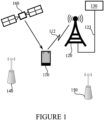
- FIGURE 1 illustrates an example system in accordance with at least some embodiments of the present invention.
- mobile device 110 which will be herein referred to as a mobile 110 for brevity.
- Mobile 110 may comprise, for example, a user equipment of a cellular communication system, an Internet of Things node, an automobile control device, a smart watch, an item of smart jewellery or an augmented reality headset, for example.
- mobile 110 comprises a device which comprises plural sensors, each sensor being enabled to measure a property, such as acceleration, rotation, sound, temperature or location of mobile 110, for example.
- device 110 is in fact not a mobile device, where the sensor suite of the device does not then need to comprise a location sensor, but comprises a microphone configured to record sound, for example. In the following this device will, however, be referred to as mobile 110 to assist in understanding principles underlying the present disclosure.
- mobile 110 is a smartphone, which is configured to communicate via base node 120 over wireless link 112.
- Base node 120 may be interfaced with a network node 130 via connection 123.
- Base node 120 and mobile 110 are here enabled to interoperate using a suitable cellular communication standard, such as long term evolution, LTE, or fifth generation, 5G, which is also known as new radio, NR.
- Wireless link 112 may have an uplink for conveying information from mobile 110 to base node 120, and/or a downlink for conveying information from base node 120 to mobile 110.
- the cellular communication system in which base node 120 and network node 130 are comprised in may be capable of determining a location of mobile 110, for example, mobile 110 may request, and responsively be provided with, an estimate of the location of mobile 110.
- the system may determine the location by triangulation and/or time distance of arrival, TDOA, mechanisms, for example.
- mobile 110 is enabled to detect wireless local area network, WLAN, access points 140 and 150.
- WLAN access points may have access point names.
- these access point names are known as service set identities, SSIDs.
- Mobile 110 may be able to determine an estimate of its location by collecting a set of access point names detectable from its present location. If locations of access points associated with the detected access point names are known, a location estimate for mobile 110 may be determined as a location, where the set of access point names detected may all be detectable.
- mobile 110 is equipped with a satellite positioning receiver.
- This receiver is configured to receive signals from at least one satellite positioning constellation, such as global positioning system, GPS, GLONASS or the Galileo satellite constellation.
- satellite positioning constellation such as global positioning system, GPS, GLONASS or the Galileo satellite constellation.
- Mobile 110 may determine an estimate of its location based on receiving signals from the at least one satellite constellation. Such a location estimate may be expressed as geo-coordinates, for example.
- Mobile 110 may receive, for example from a user, or a cellular operator, an instruction to limit an accuracy of a first sensor of mobile 110.
- the instruction may relate to limiting an accuracy at which geo-coordinates are recorded from the satellite positioning receiver, or an accuracy at which sound is recorded by a microphone of mobile 110.
- the instruction may relate directly to the property being measured, for example location or sound, in which case the instruction is determined to relate to the sensor primarily used to measure the property in question.
- an instruction to the effect location should be recorded less accurately may be seen as an instruction to limit accuracy of the satellite positioning receiver, or an instruction to the effect sound recording accuracy should be limited may be seen as an instruction to limit accuracy of the microphone.
- the instruction may limit the accuracy of the satellite positioning receiver to a granularity of 500 meters or one kilometre, for example.
- the accuracy of the microphone may be limited by reducing the sensitivity, to eliminate lower sound levels from recorded speech. Eliminating the lower sound levels would have the effect of no longer recording speech more than a few meters away from mobile 110.
- the limitation may take the form of a resolution requirement, for example the afore-mentioned 500 meters or one kilometre, or a sound-level limit in the case of the microphone data.
- the resolution requirement may specify a resolution limit to be applied to sensor data generated by the first sensor.
- An accuracy of sensor data may be limited in accordance with the resolution requirement by quantizing the sensor data, and/or by adding noise to the data produced sensor data.
- the extent of quantization, and/or the amplitude of the added noise may be selected in dependence of the resolution requirement, to achieve the intended limitation in accuracy.
- mobile 110 has at least two second sensors which are usable in measuring, or at least inferring, the same property.
- a satellite positioning receiver may be a primary sensor used in determining a location of mobile 110
- the location may be measured also in other ways, such as by requesting from the cellular network, where mobile 110 is cellular-enabled.
- a location may be inferred from sensor data of sensors not configured to measure location, such as from acceleration sensor data, from gyroscope sensor data, or from the set of detectable access point names.
- the property primarily measured by the first sensor may be inferred from at least two of the second sensors when their sensor data is taken together, but not in isolation of each other.
- the microphone may be the primary sensor for recording sound
- some aspects of sound may be inferred from accelerometer sensor data.
- Some events are multi-sensorial in nature, for example a lightning strike may be primarily determined using a microphone based on its loud sound, but the same lightning strike is also detectable from its flash, observable with a camera sensor.
- a second sensor may be capable of estimating the property, either by measuring it in case the sensor is configured to measure the property, or by inferring it in case the second sensor is not configured to measure the property, but is configured to measure a related property.
- a sensor management dataset may be used to determine at least two second sensors which are usable in estimating the property which is affected by the instruction to limit the accuracy of the first sensor.
- the sensor management dataset may comprise a mapping from a set of first sensors to sets of second sensors, that is, a set of one-to-many associations which enable determining two or more second sensors, from an identity of the first sensor.
- the mapping may be a mapping from the satellite positioning receiver to a group comprising the cellular communication system location query process, the acceleration sensor, the gyroscope, and the set of detectable access point names from the WLAN transceiver.
- Resolutions of the determined second sensors, or at least a subset of them, may be lowered to enforce the privacy restriction applied to the first sensor as a response to the instruction.
- An extent of resolution lowering in the second sensors may be determined based on the resolution requirement relating to the first sensor and the sensor management dataset.
- the sensor management dataset may enable determining, for each resolution requirement relating to the first sensor, an extent to which resolution(s) of the second sensors must be reduced, so that the second sensors cannot be used to obtain a value of the property primarily measured by the first sensor, which would be more accurate than the resolution requirement relating to the first sensor.
- the resolution of the second sensors may be lowered by the amount determined using the sensor management dataset, to obtain confidence the privacy requirement relating to the first sensor will be respected in the multi-sensor device 110. This lowering may be achieved using quantizing or noise addition, as was the case for the first sensor.
- the second sensors comprise a wireless local area network receiver, and mobile 110 or another node performing the method is configured to cause the lowering of resolution by adding access point names not detected to a set of access point names detected by the wireless local area network receiver.
- mobile 110 may be configured to compile a set of detected access points by adding access point names other than the names of access points 140 and 150 to the set of detected access point names. This has the effect of making a location determining process based on the detected access points less precise, since the added access point names are names of access points further away than access points 140 and 150. Thus the area where mobile 110 may be seems larger, as it would cover also areas nearer these further access points.
- the access point names to be added to the set may be obtained from historical information, or a database of access points and their locations, such that access point names of access points near the actually detected access points are added to the set.
- a number of access point names not factually detected that are to be added to the set of detected access point names may be determined based on the resolution requirement relating to the first sensor and the sensor management dataset. The less accurate the allowed location information, the more access point names may be added to the set, to correspondingly lower the location determination resolution of the local area wireless network receiver of mobile 110.
- a precise location determination based on the set of detected access point names may be prevented by blanking the set of detected access point names by deleting all access point names from the set.
- the determining of the second sensors and the extent of resolution lowering needed in the second sensors may be performed in mobile 110, or, in some embodiments, a separate device stores the sensor management dataset and performs these determinations as a response to being provided a copy of the instruction to limit the accuracy of the first sensor.
- This separate device such as a server, may then advise mobile 110 concerning the extent of resolution lowering in the at least one second sensor.
- the sensor management dataset may be determined by the manufacturer of mobile 110, for example, and stored in mobile 110 in connection with manufacture.
- the manufacturer may obtain the contents of the sensor management dataset by performing automated test series, for example, as is known in the art.
- this dataset may be determined using an optimization process in mobile 110 or another device, performing the sensor resolution limitation process disclosed herein.
- the optimization process may employ a machine learning process.
- such an optimization process may be run on a training dataset comprising sensor data values from the second sensors, where a target of the optimization process is the sensor data value measured by the first sensor measuring the property that the first sensor is the primary sensor for.
- the optimization process is a regression task.
- Machine learning algorithms may be applied to the regression task, wherein machine learning algorithms may be based on regression trees, boosted regression trees, and/or convolutional neural networks, for example.
- mobile 110 is configured to generate or modify the sensor management dataset dynamically as a response to the instruction to limit the accuracy of the first sensor. At least some such embodiments are described in connection with FIGURE 2 .
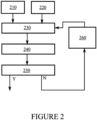
- FIGURE 2 illustrates a process in accordance with at least some embodiments of the present invention.
- the illustrated process may be performed by mobile 110, for example.
- the process takes as input a resolution requirement 210 applying to the first sensor, setting a resolution limit to sensor data to be produced by the first sensor.
- a further input is data 220, which characterizes physical performance capabilities of sensors comprised in mobile 110.
- Data 220 may be provided in advance by the manufacturer of the device, for example by storing it in the device in connection with manufacturer.
- phase 230 an optimization process, such as a machine learning process, is trained with data 220.
- the process is trained to estimate the property primarily measured by the first sensor based on output of the at least one second sensor.
- the data 220 may be split into a training set and a test set.
- the training of phase 230 is to take place using the training set, and evaluation is to be performed using the test set, which the optimization process has not seen yet during training.
- phase 240 the performance of the test set is assessed.
- phase 250 it is determined, whether the estimation error of the algorithm is larger than the resolution requirement pertaining to the first sensor. If this is the case, labelled "Y", the process ends and the resolution(s) of the second sensor(s) is lowered in accordance with the parameters in use.
- phase 260 the resolution of one or more second sensor is lowered, for example by adding noise to its output or quantizing its output. Subsequently, the process reverts to phase 230, as is illustrated in FIGURE 2 .
- this level, or levels are taken into use in the actual second sensor(s).
- machine learning algorithms may be used. At least 2-3 machine learning algorithms may be used, for example. Examples of such algorithms include boosted regression trees, such as XGBoost, deep neural networks, such as convolutional neural networks, and nearest neighbour regression. If these algorithms fail to estimate the primary sensor property within the allowed residual resolution, it is not very likely that the secondary sensor measurements will reveal too much information, to some margin. Additionally, one may also include measures from statistics or information theory.
- the sensor output is the occurrence of a particular event.
- a synthetic sensor may measure if the user is home or that the user has turned on a tap in the house, or the afore-mentioned lightning strike.
- the target in the dataset of FIGURE 2 is a binary variable indicating the occurrence of the event.
- the machine learning task in the synthetic-sensor case is a classification task.
- the following table is an example data set, which mobile 110 may create to estimate a second sensor property: c1 c2 c3 c4 Target 0.20 0.60 0.30 home_net (10.4, 10.3) 0.21 0.51 0.32 home_net (10.1, 10.2) () () () () () () 0.19 0.31 0.22 office_net (9.1, 10.4)
- the dataset of the table has four columns that correspond to the measurements of the second sensors. Furthermore, the dataset also has a column (target) for the primary sensor measurement of the first sensor, satellite positioning location. Each row corresponds to a set of second sensor measurement together with a primary sensor measurement taken at a certain time instance. Note that the dataset in the table may have one or multiple columns that correspond to non-numerical variables or categorical variables. There are several known ways to deal with such variables.
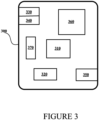
- FIGURE 3 illustrates an example apparatus capable of supporting at least some embodiments of the present invention.
- device 300 which may comprise, for example, a device such as mobile 110 of FIGURE 1 .
- processor 310 which may comprise, for example, a single- or multi-core processor wherein a single-core processor comprises one processing core and a multi-core processor comprises more than one processing core.
- Processor 310 may comprise, in general, a control device.
- Processor 310 may comprise more than one processor.
- Processor 310 may be a control device.
- a processing core may comprise, for example, a Cortex-A8 processing core manufactured by ARM Holdings or a Steamroller processing core designed by Advanced Micro Devices Corporation.
- Processor 310 may comprise at least one Qualcomm Snapdragon and/or Intel Atom processor.
- Processor 310 may comprise at least one application-specific integrated circuit, ASIC.
- Processor 310 may comprise at least one field-programmable gate array, FPGA.
- Processor 310 may be means for performing method steps in device 300, such as storing, determining and causing lowering, for example.
- Processor 310 may be configured, at least in part by computer instructions, to perform actions.
- a processor may comprise circuitry, or be constituted as circuitry or circuitries, the circuitry or circuitries being configured to perform phases of methods in accordance with embodiments described herein.
- circuitry may refer to one or more or all of the following: (a) hardware-only circuit implementations, such as implementations in only analog and/or digital circuitry, and (b) combinations of hardware circuits and software, such as, as applicable: (i) a combination of analog and/or digital hardware circuit(s) with software/firmware and (ii) any portions of hardware processor(s) with software (including digital signal processor(s)), software, and memory(ies) that work together to cause an apparatus, such as a mobile phone or server, to perform various functions) and (c) hardware circuit(s) and or processor(s), such as a microprocessor(s) or a portion of a microprocessor(s), that requires software (e.g., firmware) for operation, but the software may not be present when it is not needed for operation.
- firmware firmware
- circuitry also covers an implementation of merely a hardware circuit or processor (or multiple processors) or portion of a hardware circuit or processor and its (or their) accompanying software and/or firmware.
- circuitry also covers, for example and if applicable to the particular claim element, a baseband integrated circuit or processor integrated circuit for a mobile device or a similar integrated circuit in server, a cellular network device, or other computing or network device.
- Device 300 may comprise memory 320.
- Memory 320 may comprise random-access memory and/or permanent memory.
- Memory 320 may comprise at least one RAM chip.
- Memory 320 may comprise solid-state, magnetic, optical and/or holographic memory, for example.
- Memory 320 may be at least in part accessible to processor 310.
- Memory 320 may be at least in part comprised in processor 310.
- Memory 320 may be means for storing information.
- Memory 320 may comprise computer instructions that processor 310 is configured to execute. When computer instructions configured to cause processor 310 to perform certain actions are stored in memory 320, and device 300 overall is configured to run under the direction of processor 310 using computer instructions from memory 320, processor 310 and/or its at least one processing core may be considered to be configured to perform said certain actions.
- Memory 320 may be at least in part comprised in processor 310.
- Memory 320 may be at least in part external to device 300 but accessible to device 300.
- Device 300 may comprise a transmitter 330.
- Device 300 may comprise a receiver 340.
- Transmitter 330 and receiver 340 may be configured to transmit and receive, respectively, information in accordance with at least one cellular or non-cellular standard.
- Transmitter 330 may comprise more than one transmitter.
- Receiver 340 may comprise more than one receiver.
- Transmitter 330 and/or receiver 340 may be configured to operate in accordance with global system for mobile communication, GSM, wideband code division multiple access, WCDMA, 5G, long term evolution, LTE, IS-95, wireless local area network, WLAN, Ethernet and/or worldwide interoperability for microwave access, WiMAX, standards, for example.
- Device 300 may comprise a near-field communication, NFC, transceiver 350.
- NFC transceiver 350 may support at least one NFC technology, such as NFC, Bluetooth, Wibree or similar technologies.
- Device 300 may comprise user interface, UI, 360.
- UI 360 may comprise at least one of a display, a keyboard, a touchscreen, a vibrator arranged to signal to a user by causing device 300 to vibrate, a speaker and a microphone.
- a user may be able to operate device 300 via UI 360, for example to accept incoming telephone calls, to originate telephone calls or video calls, to browse the Internet, to manage digital files stored in memory 320 or on a cloud accessible via transmitter 330 and receiver 340, or via NFC transceiver 350, and/or to play games.
- Device 300 may comprise sensor suite 370.
- Sensor suite 370 may comprise plural sensors which are disposed in device 300.
- Such sensors may include, as discussed herein above, at least one or at least two of an acceleration sensor, a gyroscope, a camera, a satellite positioning receiver, a microphone, a wireless local area radio transceiver and/or other sensors, depending on the specific embodiment.
- Processor 310 may be furnished with a transmitter arranged to output information from processor 310, via electrical leads internal to device 300, to other devices comprised in device 300.
- a transmitter may comprise a serial bus transmitter arranged to, for example, output information via at least one electrical lead to memory 320 for storage therein.
- the transmitter may comprise a parallel bus transmitter.
- processor 310 may comprise a receiver arranged to receive information in processor 310, via electrical leads internal to device 300, from other devices comprised in device 300.
- Such a receiver may comprise a serial bus receiver arranged to, for example, receive information via at least one electrical lead from receiver 340 for processing in processor 310.
- the receiver may comprise a parallel bus receiver.
- Device 300 may comprise further devices not illustrated in FIGURE 3 .
- device 300 may comprise at least one digital camera.
- Some devices 300 may comprise a back-facing camera and a front-facing camera, wherein the back-facing camera may be intended for digital photography and the front-facing camera for video telephony.
- Device 300 may comprise a fingerprint sensor arranged to authenticate, at least in part, a user of device 300.
- device 300 lacks at least one device described above.
- some devices 300 may lack a NFC transceiver 350.
- Processor 310, memory 320, transmitter 330, receiver 340, NFC transceiver 350, UI 360 and/or sensor suite 370 may be interconnected by electrical leads internal to device 300 in a multitude of different ways.
- each of the aforementioned devices may be separately connected to a master bus internal to device 300, to allow for the devices to exchange information.
- this is only one example and depending on the embodiment various ways of interconnecting at least two of the aforementioned devices may be selected without departing from the scope of the present invention.
- FIGURE 4 illustrates signalling in accordance with at least some embodiments of the present invention.
- On the vertical axes are disposed, from the left UI 360, processor 310, the first sensor “1 st " and the second sensors, "2 nd “. Time advances from the top toward the bottom.
- a user inputs, using UI 360, an instruction to limit an accuracy of the first sensor in accordance with a first resolution requirement, which applies to a property measured by the first sensor.
- processor 310 applies the resolution requirement to the first sensor. This may comprise processor 310 instructing the first sensor to send lower-resolution sensor data to processor 310, or it may be an internal phase of processor 310 to only store sensor data received from the first sensor at the lowered resolution.
- Phase 430 comprises determining which sensors of mobile 110 are the second sensors, and the extent of resolution lowering to be applied to each second sensor, based on the sensor management dataset, as described herein above.
- the sensor management dataset may be pre-calculated and stored, or, as described herein above, it may at least in part be dynamically determined as a response to the instruction of phase 410, using an optimization process, which may comprise using at least one machine learning algorithm.
- Phases 440 comprise processor 310 applying the lowered resolution requirement(s) to the second sensors. As was the case for the first sensor, this may comprise an instruction to the second sensors to send lowered-resolution sensor data, as illustrated, or an internal phase of processor 310 to only store sensor data from the second sensor(s) at the lowered resolution. As described above, restricting the second-sensor resolution comprises manipulating a list of detected access point names.
- Phases 420 on the one and phases 430 and 440 on the other hand may take place in either order, or substantially simultaneously.
- processor 310 indicates to UI 360 that the resolution requirement if the instruction has been applied, wherein the indication may comprise indications concerning lowered resolution in the second sensor(s).
- UI 360 provides the indication of optional phase 450 to the user.
- FIGURE 5 is a flow graph of a method in accordance with at least some embodiments of the present invention.
- the phases of the illustrated method may be performed in mobile 110, or in a control device configured to control the functioning thereof, when installed therein.
- the phases of the illustrated method may be performed in a server.
- the sensor management dataset need not be handled in mobile 110.
- Phase 510 comprises processing an instruction to limit an accuracy of a first sensor in accordance with a resolution requirement of a property measured by the first sensor.
- Phase 520 comprises determining, using a sensor management dataset, second sensors which is capable of estimating the property.
- phase 530 comprises causing lowering of resolution of data produced by the second sensors, the extent of resolution lowering to be applied to each of the at least one second sensor being determined based on the resolution requirement and the sensor management dataset.
- Restricting the second-sensor resolution comprises manipulating a list of detected access point names
- At least some embodiments of the present invention find industrial application in safeguarding user privacy.
Landscapes
- Engineering & Computer Science (AREA)
- Computer Networks & Wireless Communication (AREA)
- Signal Processing (AREA)
- Theoretical Computer Science (AREA)
- Physics & Mathematics (AREA)
- Remote Sensing (AREA)
- Radar, Positioning & Navigation (AREA)
- General Physics & Mathematics (AREA)
- Software Systems (AREA)
- Computer Security & Cryptography (AREA)
- Medical Informatics (AREA)
- Computing Systems (AREA)
- General Engineering & Computer Science (AREA)
- Artificial Intelligence (AREA)
- Mathematical Physics (AREA)
- Evolutionary Computation (AREA)
- Data Mining & Analysis (AREA)
- Computer Vision & Pattern Recognition (AREA)
- Telephone Function (AREA)
- Mobile Radio Communication Systems (AREA)
Claims (12)
- Vorrichtung (110, 300), die Mittel (310, 320) für Folgendes umfasst:- Verarbeiten einer Anweisung zum Begrenzen einer Genauigkeit eines ersten Sensors gemäß einer Auflösungsanforderung einer Eigenschaft, die vom ersten Sensor gemessen wird,- Bestimmen von mindestens zwei zweiten Sensoren, die in der Lage sind, die Eigenschaft zu schätzen, unter Verwendung eines Sensorverwaltungsdatensatzes, und- Veranlassen des Verringerns einer Auflösung von Daten, die von den mindestens zwei zweiten Sensoren produziert werden, in Reaktion auf die Anweisung, wobei das Ausmaß einer Auflösungsverringerung auf Basis der Auflösungsanforderung und des Sensorverwaltungsdatensatzes bestimmt wird, wobei die Eigenschaft ein Standort ist und wobei die mindestens zwei zweiten Sensoren einen Empfänger eines drahtlosen lokalen Netzwerks umfassen, und wobei die Vorrichtung dazu ausgelegt ist, das Verringern einer Auflösung durch Hinzufügen von nicht detektierten Zugangspunktnamen zu einer Liste von Zugangspunktnamen, die vom Empfänger des drahtlosen lokalen Netzwerks detektiert werden, oder durch Löschen von allen Zugangspunktnamen aus einer Liste von Zugangspunktnamen, die vom Empfänger des drahtlosen lokalen Netzwerks detektiert werden, zu veranlassen.
- Vorrichtung (110, 300) nach Anspruch 1, wobei der erste Sensor einen Sensor umfasst, der in der Lage ist, einen Standort zu bestimmen.
- Vorrichtung (110, 300) nach Anspruch 2, wobei der erste Sensor einen Satellitenpositionsbestimmungsempfänger umfasst.
- Vorrichtung (110, 300) nach Anspruch 2 oder 3, wobei die mindestens zwei zweiten Sensoren ferner mindestens eines von Folgendem umfassen: einen Beschleunigungssensor, ein Gyroskop und einen zweiten Empfänger eines drahtlosen lokalen Netzwerks.
- Vorrichtung (110, 300) nach einem der Ansprüche 1 bis 4, wobei die Vorrichtung ferner dazu ausgelegt ist, durch Veranlassen von mindestens einem von Folgendem die Verringerung der Auflösung zu veranlassen: Quantisierung der von den mindestens zwei zweiten Sensoren produzierten Daten und Hinzufügen von Rauschen zu dem produzierten Daten durch die mindestens zwei zweiten Sensoren.
- Vorrichtung (110, 300) nach einem der Ansprüche 1 bis 5, wobei die Vorrichtung ferner dazu ausgelegt ist, den Sensorverwaltungsdatensatz unter Verwendung von mindestens einem Maschinenlernalgorithmus zu bestimmen oder zu aktualisieren.
- Vorrichtung (110, 300) nach Anspruch 6, wobei der mindestens eine Maschinenlernalgorithmus mindestens eines von Folgendem umfasst: einen Boosted Regression Tree, ein neuronales Faltungsnetzwerk und einen Regressionsalgorithmus des nächsten Nachbarn.
- Verfahren, das von einer Vorrichtung durchgeführt wird und Folgendes umfasst:- Verarbeiten (510) einer Anweisung zum Begrenzen einer Genauigkeit eines ersten Sensors gemäß einer Auflösungsanforderung einer Eigenschaft, die vom ersten Sensor gemessen wird,- Bestimmen (520) von mindestens zwei zweiten Sensoren, die in der Lage sind, die Eigenschaft zu schätzen, unter Verwendung eines Sensorverwaltungsdatensatzes, und- Veranlassen des Verringerns (530) einer Auflösung von Daten, die von den mindestens zwei zweiten Sensoren produziert werden, in Reaktion auf die Anweisung, wobei das Ausmaß einer Auflösungsverringerung auf Basis der Auflösungsanforderung und des Sensorverwaltungsdatensatzes bestimmt wird, wobei die Eigenschaft ein Standort ist und wobei die mindestens zwei zweiten Sensoren einen Empfänger eines drahtlosen lokalen Netzwerks umfassen und wobei das Verfahren das Verringern einer Auflösung durch Hinzufügen von nicht detektierten Zugangspunktnamen zu einer Liste von Zugangspunktnamen, die vom Empfänger des drahtlosen lokalen Netzwerks detektiert werden, oder durch Löschen von allen Zugangspunktnamen aus einer Liste von Zugangspunktnamen, die vom Empfänger des drahtlosen lokalen Netzwerks detektiert werden, veranlasst.
- Verfahren nach Anspruch 8, wobei der erste Sensor umfasst, der in der Lage ist, einen Standort zu bestimmen.
- Verfahren nach Anspruch 8, wobei die mindestens zwei zweiten Sensoren ferner mindestens eines von Folgendem umfassen: einen Beschleunigungssensor, ein Gyroskop und einen zweiten Empfänger eines drahtlosen lokalen Netzwerks.
- Verfahren nach einem der Ansprüche 8 bis 10, wobei das Veranlassen des Verringerns der Auflösung ferner durch Veranlassen von mindestens einem von Folgendem erreicht wird: Quantisierung der von den mindestens zwei zweiten Sensoren produzierten Daten und Hinzufügen von Rauschen zu dem produzierten Daten durch die mindestens zwei zweiten Sensoren.
- Nichttransitorisches computerlesbares Medium, auf dem ein Satz von computerlesbaren Anweisungen gespeichert ist, die, wenn sie von mindestens einem Prozessor ausgeführt werden, eine Vorrichtung zu veranlassen, mindestens Folgendes durchzuführen:- Verarbeiten (510) einer Anweisung zum Begrenzen einer Genauigkeit eines ersten Sensors gemäß einer Auflösungsanforderung einer Eigenschaft, die vom ersten Sensor gemessen wird,- Bestimmen (520) von mindestens zwei zweiten Sensoren, die in der Lage sind, die Eigenschaft zu schätzen, unter Verwendung eines Sensorverwaltungsdatensatzes, und- Veranlassen des Verringerns (530) einer Auflösung von Daten, die von den mindestens zwei zweiten Sensoren produziert werden, in Reaktion auf die Anweisung, wobei das Ausmaß einer Auflösungsverringerung auf Basis der Auflösungsanforderung und des Sensorverwaltungsdatensatzes bestimmt wird, wobei die Eigenschaft ein Standort ist und wobei die mindestens zwei zweiten Sensoren einen Empfänger eines drahtlosen lokalen Netzwerks umfassen und wobei die computerlesbaren Anweisungen dazu ausgelegt ist, das Verringern einer Auflösung durch Hinzufügen von nicht detektierten Zugangspunktnamen zu einer Liste von Zugangspunktnamen, die vom Empfänger des drahtlosen lokalen Netzwerks detektiert werden, oder durch Löschen von allen Zugangspunktnamen aus einer Liste von Zugangspunktnamen, die vom Empfänger des drahtlosen lokalen Netzwerks detektiert werden, zu veranlassen.
Priority Applications (2)
| Application Number | Priority Date | Filing Date | Title |
|---|---|---|---|
| EP19191433.2A EP3780687B1 (de) | 2019-08-13 | 2019-08-13 | Sensordatenschutzmanagement |
| US16/945,201 US12013469B2 (en) | 2019-08-13 | 2020-07-31 | Sensor privacy management |
Applications Claiming Priority (1)
| Application Number | Priority Date | Filing Date | Title |
|---|---|---|---|
| EP19191433.2A EP3780687B1 (de) | 2019-08-13 | 2019-08-13 | Sensordatenschutzmanagement |
Publications (2)
| Publication Number | Publication Date |
|---|---|
| EP3780687A1 EP3780687A1 (de) | 2021-02-17 |
| EP3780687B1 true EP3780687B1 (de) | 2024-06-12 |
Family
ID=67658701
Family Applications (1)
| Application Number | Title | Priority Date | Filing Date |
|---|---|---|---|
| EP19191433.2A Active EP3780687B1 (de) | 2019-08-13 | 2019-08-13 | Sensordatenschutzmanagement |
Country Status (2)
| Country | Link |
|---|---|
| US (1) | US12013469B2 (de) |
| EP (1) | EP3780687B1 (de) |
Family Cites Families (14)
| Publication number | Priority date | Publication date | Assignee | Title |
|---|---|---|---|---|
| US5786790A (en) * | 1997-02-27 | 1998-07-28 | Northrop Grumman Corporation | On-the-fly accuracy enhancement for civil GPS receivers |
| US6934631B2 (en) * | 2003-08-13 | 2005-08-23 | Trimble Navigation Limited | Method for standard positioning service and precise positioning service cooperative operation |
| US20090191892A1 (en) * | 2008-01-25 | 2009-07-30 | Garmin Ltd. | Integrating position-determining and wi-fi functions |
| US8803737B2 (en) * | 2008-02-29 | 2014-08-12 | Apple Inc. | Location determination |
| US8072371B2 (en) * | 2008-05-23 | 2011-12-06 | Qualcomm Incorporated | Multiple-mode location determining methods and systems |
| US8638229B2 (en) * | 2008-05-29 | 2014-01-28 | Garmin Switzerland Gmbh | Swim watch |
| US8310394B2 (en) * | 2010-03-08 | 2012-11-13 | Deutsche Telekom Ag | Apparatus, method, manufacture, and system for sensing substitution for location-based applications |
| EP2558877A4 (de) * | 2010-04-12 | 2013-10-30 | Nokia Corp | Auswahl eines relativen positionierungsverfahrens |
| US9470529B2 (en) * | 2011-07-14 | 2016-10-18 | Microsoft Technology Licensing, Llc | Activating and deactivating sensors for dead reckoning |
| US9721105B2 (en) * | 2012-01-18 | 2017-08-01 | Nokia Technologies Oy | Method and apparatus for generating privacy ratings for applications |
| US9344990B1 (en) * | 2012-12-03 | 2016-05-17 | Sprint Communications Company L.P. | Device location accuracy metrics for applications on wireless communication devices |
| US10621629B2 (en) * | 2015-12-11 | 2020-04-14 | Paypal, Inc. | Exercise motivating fitness tracker |
| CN106372491B (zh) * | 2015-12-15 | 2021-03-02 | 北京智谷睿拓技术服务有限公司 | 传感器访问权限管理方法和设备 |
| US11310339B2 (en) * | 2018-02-05 | 2022-04-19 | Sony Network Communications Europe B.V. | Selecting a positioning technique based on the accuracy |
-
2019
- 2019-08-13 EP EP19191433.2A patent/EP3780687B1/de active Active
-
2020
- 2020-07-31 US US16/945,201 patent/US12013469B2/en active Active
Also Published As
| Publication number | Publication date |
|---|---|
| EP3780687A1 (de) | 2021-02-17 |
| US20210048538A1 (en) | 2021-02-18 |
| US12013469B2 (en) | 2024-06-18 |
Similar Documents
| Publication | Publication Date | Title |
|---|---|---|
| US11523252B2 (en) | Positioning method, terminal, and server | |
| US10798581B2 (en) | Internet of things location spoofing detection | |
| US8472980B2 (en) | Flexible architecture for location based crowdsourcing of contextual data | |
| CN114430814B (zh) | 用于用户设备定位的方法、装置和计算机程序 | |
| WO2023236979A1 (zh) | 定位模型的选择方法、终端及网络侧设备 | |
| AU2016204607B2 (en) | Determining location of a user device | |
| JP5388221B2 (ja) | パターン分類を使用した、無線端末が屋内にあるかどうかの推定 | |
| EP2677337B1 (de) | Verfahren und Vorrichtung zur Bereitstellung einer semantischen Position in einer elektronischen Vorrichtung | |
| US10038973B2 (en) | Method and system for determining a positioning interval of a mobile terminal | |
| US12279178B2 (en) | Automated cell azimuth estimation and validation | |
| US20180332557A1 (en) | New access point setup | |
| US20140171104A1 (en) | Mobile Communication System | |
| US12143811B2 (en) | Privacy management | |
| US9277527B2 (en) | Wireless access node calibration capability for improved mobile wireless device location accuracy | |
| US12013469B2 (en) | Sensor privacy management | |
| US11297594B2 (en) | Automated cell location estimation and validation | |
| CN108476487B (zh) | 电子装置和托管位置服务的服务器 | |
| US11200409B2 (en) | Utilizing an array of cameras including IoT sensors with cameras to search for objects via a wireless communication network | |
| US20180081026A1 (en) | Last mile positioning of a mobile communication device | |
| CN116939478A (zh) | 验证终端位置的方法、终端及网络侧设备 | |
| CN105991732A (zh) | 一种地理位置信息获取的方法和装置 | |
| WO2016200619A1 (en) | Method and system for determining a positioning interval of a mobile terminal | |
| CN121037766A (zh) | 通信方法及通信装置 |
Legal Events
| Date | Code | Title | Description |
|---|---|---|---|
| PUAI | Public reference made under article 153(3) epc to a published international application that has entered the european phase |
Free format text: ORIGINAL CODE: 0009012 |
|
| STAA | Information on the status of an ep patent application or granted ep patent |
Free format text: STATUS: THE APPLICATION HAS BEEN PUBLISHED |
|
| AK | Designated contracting states |
Kind code of ref document: A1 Designated state(s): AL AT BE BG CH CY CZ DE DK EE ES FI FR GB GR HR HU IE IS IT LI LT LU LV MC MK MT NL NO PL PT RO RS SE SI SK SM TR |
|
| AX | Request for extension of the european patent |
Extension state: BA ME |
|
| STAA | Information on the status of an ep patent application or granted ep patent |
Free format text: STATUS: REQUEST FOR EXAMINATION WAS MADE |
|
| 17P | Request for examination filed |
Effective date: 20210803 |
|
| RBV | Designated contracting states (corrected) |
Designated state(s): AL AT BE BG CH CY CZ DE DK EE ES FI FR GB GR HR HU IE IS IT LI LT LU LV MC MK MT NL NO PL PT RO RS SE SI SK SM TR |
|
| STAA | Information on the status of an ep patent application or granted ep patent |
Free format text: STATUS: EXAMINATION IS IN PROGRESS |
|
| 17Q | First examination report despatched |
Effective date: 20220624 |
|
| GRAP | Despatch of communication of intention to grant a patent |
Free format text: ORIGINAL CODE: EPIDOSNIGR1 |
|
| STAA | Information on the status of an ep patent application or granted ep patent |
Free format text: STATUS: GRANT OF PATENT IS INTENDED |
|
| RIC1 | Information provided on ipc code assigned before grant |
Ipc: H04W 4/02 20180101ALN20231219BHEP Ipc: H04W 4/00 20180101ALI20231219BHEP Ipc: H04W 12/02 20090101AFI20231219BHEP |
|
| INTG | Intention to grant announced |
Effective date: 20240122 |
|
| GRAS | Grant fee paid |
Free format text: ORIGINAL CODE: EPIDOSNIGR3 |
|
| GRAA | (expected) grant |
Free format text: ORIGINAL CODE: 0009210 |
|
| STAA | Information on the status of an ep patent application or granted ep patent |
Free format text: STATUS: THE PATENT HAS BEEN GRANTED |
|
| AK | Designated contracting states |
Kind code of ref document: B1 Designated state(s): AL AT BE BG CH CY CZ DE DK EE ES FI FR GB GR HR HU IE IS IT LI LT LU LV MC MK MT NL NO PL PT RO RS SE SI SK SM TR |
|
| REG | Reference to a national code |
Ref country code: GB Ref legal event code: FG4D |
|
| REG | Reference to a national code |
Ref country code: CH Ref legal event code: EP |
|
| REG | Reference to a national code |
Ref country code: DE Ref legal event code: R096 Ref document number: 602019053472 Country of ref document: DE |
|
| REG | Reference to a national code |
Ref country code: IE Ref legal event code: FG4D |
|
| PG25 | Lapsed in a contracting state [announced via postgrant information from national office to epo] |
Ref country code: BG Free format text: LAPSE BECAUSE OF FAILURE TO SUBMIT A TRANSLATION OF THE DESCRIPTION OR TO PAY THE FEE WITHIN THE PRESCRIBED TIME-LIMIT Effective date: 20240612 |
|
| PG25 | Lapsed in a contracting state [announced via postgrant information from national office to epo] |
Ref country code: FI Free format text: LAPSE BECAUSE OF FAILURE TO SUBMIT A TRANSLATION OF THE DESCRIPTION OR TO PAY THE FEE WITHIN THE PRESCRIBED TIME-LIMIT Effective date: 20240612 Ref country code: HR Free format text: LAPSE BECAUSE OF FAILURE TO SUBMIT A TRANSLATION OF THE DESCRIPTION OR TO PAY THE FEE WITHIN THE PRESCRIBED TIME-LIMIT Effective date: 20240612 |
|
| REG | Reference to a national code |
Ref country code: LT Ref legal event code: MG9D |
|
| PG25 | Lapsed in a contracting state [announced via postgrant information from national office to epo] |
Ref country code: GR Free format text: LAPSE BECAUSE OF FAILURE TO SUBMIT A TRANSLATION OF THE DESCRIPTION OR TO PAY THE FEE WITHIN THE PRESCRIBED TIME-LIMIT Effective date: 20240913 |
|
| REG | Reference to a national code |
Ref country code: NL Ref legal event code: MP Effective date: 20240612 |
|
| PG25 | Lapsed in a contracting state [announced via postgrant information from national office to epo] |
Ref country code: ES Free format text: LAPSE BECAUSE OF FAILURE TO SUBMIT A TRANSLATION OF THE DESCRIPTION OR TO PAY THE FEE WITHIN THE PRESCRIBED TIME-LIMIT Effective date: 20240612 |
|
| PG25 | Lapsed in a contracting state [announced via postgrant information from national office to epo] |
Ref country code: LV Free format text: LAPSE BECAUSE OF FAILURE TO SUBMIT A TRANSLATION OF THE DESCRIPTION OR TO PAY THE FEE WITHIN THE PRESCRIBED TIME-LIMIT Effective date: 20240612 |
|
| PG25 | Lapsed in a contracting state [announced via postgrant information from national office to epo] |
Ref country code: NO Free format text: LAPSE BECAUSE OF FAILURE TO SUBMIT A TRANSLATION OF THE DESCRIPTION OR TO PAY THE FEE WITHIN THE PRESCRIBED TIME-LIMIT Effective date: 20240912 Ref country code: LV Free format text: LAPSE BECAUSE OF FAILURE TO SUBMIT A TRANSLATION OF THE DESCRIPTION OR TO PAY THE FEE WITHIN THE PRESCRIBED TIME-LIMIT Effective date: 20240612 Ref country code: HR Free format text: LAPSE BECAUSE OF FAILURE TO SUBMIT A TRANSLATION OF THE DESCRIPTION OR TO PAY THE FEE WITHIN THE PRESCRIBED TIME-LIMIT Effective date: 20240612 Ref country code: GR Free format text: LAPSE BECAUSE OF FAILURE TO SUBMIT A TRANSLATION OF THE DESCRIPTION OR TO PAY THE FEE WITHIN THE PRESCRIBED TIME-LIMIT Effective date: 20240913 Ref country code: FI Free format text: LAPSE BECAUSE OF FAILURE TO SUBMIT A TRANSLATION OF THE DESCRIPTION OR TO PAY THE FEE WITHIN THE PRESCRIBED TIME-LIMIT Effective date: 20240612 Ref country code: ES Free format text: LAPSE BECAUSE OF FAILURE TO SUBMIT A TRANSLATION OF THE DESCRIPTION OR TO PAY THE FEE WITHIN THE PRESCRIBED TIME-LIMIT Effective date: 20240612 Ref country code: BG Free format text: LAPSE BECAUSE OF FAILURE TO SUBMIT A TRANSLATION OF THE DESCRIPTION OR TO PAY THE FEE WITHIN THE PRESCRIBED TIME-LIMIT Effective date: 20240612 Ref country code: RS Free format text: LAPSE BECAUSE OF FAILURE TO SUBMIT A TRANSLATION OF THE DESCRIPTION OR TO PAY THE FEE WITHIN THE PRESCRIBED TIME-LIMIT Effective date: 20240912 |
|
| PG25 | Lapsed in a contracting state [announced via postgrant information from national office to epo] |
Ref country code: NL Free format text: LAPSE BECAUSE OF FAILURE TO SUBMIT A TRANSLATION OF THE DESCRIPTION OR TO PAY THE FEE WITHIN THE PRESCRIBED TIME-LIMIT Effective date: 20240612 |
|
| REG | Reference to a national code |
Ref country code: AT Ref legal event code: MK05 Ref document number: 1695208 Country of ref document: AT Kind code of ref document: T Effective date: 20240612 |
|
| PG25 | Lapsed in a contracting state [announced via postgrant information from national office to epo] |
Ref country code: NL Free format text: LAPSE BECAUSE OF FAILURE TO SUBMIT A TRANSLATION OF THE DESCRIPTION OR TO PAY THE FEE WITHIN THE PRESCRIBED TIME-LIMIT Effective date: 20240612 |
|
| PG25 | Lapsed in a contracting state [announced via postgrant information from national office to epo] |
Ref country code: PT Free format text: LAPSE BECAUSE OF FAILURE TO SUBMIT A TRANSLATION OF THE DESCRIPTION OR TO PAY THE FEE WITHIN THE PRESCRIBED TIME-LIMIT Effective date: 20241014 |
|
| PG25 | Lapsed in a contracting state [announced via postgrant information from national office to epo] |
Ref country code: PT Free format text: LAPSE BECAUSE OF FAILURE TO SUBMIT A TRANSLATION OF THE DESCRIPTION OR TO PAY THE FEE WITHIN THE PRESCRIBED TIME-LIMIT Effective date: 20241014 |
|
| PG25 | Lapsed in a contracting state [announced via postgrant information from national office to epo] |
Ref country code: PL Free format text: LAPSE BECAUSE OF FAILURE TO SUBMIT A TRANSLATION OF THE DESCRIPTION OR TO PAY THE FEE WITHIN THE PRESCRIBED TIME-LIMIT Effective date: 20240612 |
|
| PG25 | Lapsed in a contracting state [announced via postgrant information from national office to epo] |
Ref country code: EE Free format text: LAPSE BECAUSE OF FAILURE TO SUBMIT A TRANSLATION OF THE DESCRIPTION OR TO PAY THE FEE WITHIN THE PRESCRIBED TIME-LIMIT Effective date: 20240612 |
|
| PG25 | Lapsed in a contracting state [announced via postgrant information from national office to epo] |
Ref country code: IS Free format text: LAPSE BECAUSE OF FAILURE TO SUBMIT A TRANSLATION OF THE DESCRIPTION OR TO PAY THE FEE WITHIN THE PRESCRIBED TIME-LIMIT Effective date: 20241012 Ref country code: AT Free format text: LAPSE BECAUSE OF FAILURE TO SUBMIT A TRANSLATION OF THE DESCRIPTION OR TO PAY THE FEE WITHIN THE PRESCRIBED TIME-LIMIT Effective date: 20240612 |
|
| PG25 | Lapsed in a contracting state [announced via postgrant information from national office to epo] |
Ref country code: CZ Free format text: LAPSE BECAUSE OF FAILURE TO SUBMIT A TRANSLATION OF THE DESCRIPTION OR TO PAY THE FEE WITHIN THE PRESCRIBED TIME-LIMIT Effective date: 20240612 |
|
| PG25 | Lapsed in a contracting state [announced via postgrant information from national office to epo] |
Ref country code: SK Free format text: LAPSE BECAUSE OF FAILURE TO SUBMIT A TRANSLATION OF THE DESCRIPTION OR TO PAY THE FEE WITHIN THE PRESCRIBED TIME-LIMIT Effective date: 20240612 Ref country code: RO Free format text: LAPSE BECAUSE OF FAILURE TO SUBMIT A TRANSLATION OF THE DESCRIPTION OR TO PAY THE FEE WITHIN THE PRESCRIBED TIME-LIMIT Effective date: 20240612 |
|
| PG25 | Lapsed in a contracting state [announced via postgrant information from national office to epo] |
Ref country code: SM Free format text: LAPSE BECAUSE OF FAILURE TO SUBMIT A TRANSLATION OF THE DESCRIPTION OR TO PAY THE FEE WITHIN THE PRESCRIBED TIME-LIMIT Effective date: 20240612 |
|
| PG25 | Lapsed in a contracting state [announced via postgrant information from national office to epo] |
Ref country code: SM Free format text: LAPSE BECAUSE OF FAILURE TO SUBMIT A TRANSLATION OF THE DESCRIPTION OR TO PAY THE FEE WITHIN THE PRESCRIBED TIME-LIMIT Effective date: 20240612 Ref country code: SK Free format text: LAPSE BECAUSE OF FAILURE TO SUBMIT A TRANSLATION OF THE DESCRIPTION OR TO PAY THE FEE WITHIN THE PRESCRIBED TIME-LIMIT Effective date: 20240612 Ref country code: RO Free format text: LAPSE BECAUSE OF FAILURE TO SUBMIT A TRANSLATION OF THE DESCRIPTION OR TO PAY THE FEE WITHIN THE PRESCRIBED TIME-LIMIT Effective date: 20240612 Ref country code: PL Free format text: LAPSE BECAUSE OF FAILURE TO SUBMIT A TRANSLATION OF THE DESCRIPTION OR TO PAY THE FEE WITHIN THE PRESCRIBED TIME-LIMIT Effective date: 20240612 Ref country code: IS Free format text: LAPSE BECAUSE OF FAILURE TO SUBMIT A TRANSLATION OF THE DESCRIPTION OR TO PAY THE FEE WITHIN THE PRESCRIBED TIME-LIMIT Effective date: 20241012 Ref country code: EE Free format text: LAPSE BECAUSE OF FAILURE TO SUBMIT A TRANSLATION OF THE DESCRIPTION OR TO PAY THE FEE WITHIN THE PRESCRIBED TIME-LIMIT Effective date: 20240612 Ref country code: CZ Free format text: LAPSE BECAUSE OF FAILURE TO SUBMIT A TRANSLATION OF THE DESCRIPTION OR TO PAY THE FEE WITHIN THE PRESCRIBED TIME-LIMIT Effective date: 20240612 Ref country code: AT Free format text: LAPSE BECAUSE OF FAILURE TO SUBMIT A TRANSLATION OF THE DESCRIPTION OR TO PAY THE FEE WITHIN THE PRESCRIBED TIME-LIMIT Effective date: 20240612 |
|
| PG25 | Lapsed in a contracting state [announced via postgrant information from national office to epo] |
Ref country code: IT Free format text: LAPSE BECAUSE OF FAILURE TO SUBMIT A TRANSLATION OF THE DESCRIPTION OR TO PAY THE FEE WITHIN THE PRESCRIBED TIME-LIMIT Effective date: 20240612 |
|
| REG | Reference to a national code |
Ref country code: DE Ref legal event code: R097 Ref document number: 602019053472 Country of ref document: DE |
|
| REG | Reference to a national code |
Ref country code: CH Ref legal event code: PL |
|
| PG25 | Lapsed in a contracting state [announced via postgrant information from national office to epo] |
Ref country code: DK Free format text: LAPSE BECAUSE OF FAILURE TO SUBMIT A TRANSLATION OF THE DESCRIPTION OR TO PAY THE FEE WITHIN THE PRESCRIBED TIME-LIMIT Effective date: 20240612 |
|
| PG25 | Lapsed in a contracting state [announced via postgrant information from national office to epo] |
Ref country code: LU Free format text: LAPSE BECAUSE OF NON-PAYMENT OF DUE FEES Effective date: 20240813 |
|
| PLBE | No opposition filed within time limit |
Free format text: ORIGINAL CODE: 0009261 |
|
| STAA | Information on the status of an ep patent application or granted ep patent |
Free format text: STATUS: NO OPPOSITION FILED WITHIN TIME LIMIT |
|
| PG25 | Lapsed in a contracting state [announced via postgrant information from national office to epo] |
Ref country code: CH Free format text: LAPSE BECAUSE OF NON-PAYMENT OF DUE FEES Effective date: 20240831 Ref country code: MC Free format text: LAPSE BECAUSE OF FAILURE TO SUBMIT A TRANSLATION OF THE DESCRIPTION OR TO PAY THE FEE WITHIN THE PRESCRIBED TIME-LIMIT Effective date: 20240612 |
|
| 26N | No opposition filed |
Effective date: 20250313 |
|
| REG | Reference to a national code |
Ref country code: BE Ref legal event code: MM Effective date: 20240831 |
|
| PG25 | Lapsed in a contracting state [announced via postgrant information from national office to epo] |
Ref country code: BE Free format text: LAPSE BECAUSE OF NON-PAYMENT OF DUE FEES Effective date: 20240831 |
|
| PG25 | Lapsed in a contracting state [announced via postgrant information from national office to epo] |
Ref country code: IE Free format text: LAPSE BECAUSE OF NON-PAYMENT OF DUE FEES Effective date: 20240813 |
|
| PG25 | Lapsed in a contracting state [announced via postgrant information from national office to epo] |
Ref country code: SE Free format text: LAPSE BECAUSE OF FAILURE TO SUBMIT A TRANSLATION OF THE DESCRIPTION OR TO PAY THE FEE WITHIN THE PRESCRIBED TIME-LIMIT Effective date: 20240612 |
|
| PGFP | Annual fee paid to national office [announced via postgrant information from national office to epo] |
Ref country code: DE Payment date: 20250702 Year of fee payment: 7 |
|
| PGFP | Annual fee paid to national office [announced via postgrant information from national office to epo] |
Ref country code: GB Payment date: 20250703 Year of fee payment: 7 |
|
| PGFP | Annual fee paid to national office [announced via postgrant information from national office to epo] |
Ref country code: FR Payment date: 20250703 Year of fee payment: 7 |
|
| PG25 | Lapsed in a contracting state [announced via postgrant information from national office to epo] |
Ref country code: CY Free format text: LAPSE BECAUSE OF FAILURE TO SUBMIT A TRANSLATION OF THE DESCRIPTION OR TO PAY THE FEE WITHIN THE PRESCRIBED TIME-LIMIT; INVALID AB INITIO Effective date: 20190813 |
|
| PG25 | Lapsed in a contracting state [announced via postgrant information from national office to epo] |
Ref country code: HU Free format text: LAPSE BECAUSE OF FAILURE TO SUBMIT A TRANSLATION OF THE DESCRIPTION OR TO PAY THE FEE WITHIN THE PRESCRIBED TIME-LIMIT; INVALID AB INITIO Effective date: 20190813 |