EP3780770A1 - Verfahren zum bwp-betrieb und benutzergerät mit verwendung davon - Google Patents
Verfahren zum bwp-betrieb und benutzergerät mit verwendung davon Download PDFInfo
- Publication number
- EP3780770A1 EP3780770A1 EP20190644.3A EP20190644A EP3780770A1 EP 3780770 A1 EP3780770 A1 EP 3780770A1 EP 20190644 A EP20190644 A EP 20190644A EP 3780770 A1 EP3780770 A1 EP 3780770A1
- Authority
- EP
- European Patent Office
- Prior art keywords
- bwp
- dormant
- signaling
- switch
- dormant state
- Prior art date
- Legal status (The legal status is an assumption and is not a legal conclusion. Google has not performed a legal analysis and makes no representation as to the accuracy of the status listed.)
- Granted
Links
Images









Classifications
-
- H—ELECTRICITY
- H04—ELECTRIC COMMUNICATION TECHNIQUE
- H04W—WIRELESS COMMUNICATION NETWORKS
- H04W72/00—Local resource management
- H04W72/04—Wireless resource allocation
- H04W72/044—Wireless resource allocation based on the type of the allocated resource
- H04W72/0453—Resources in frequency domain, e.g. a carrier in FDMA
-
- H—ELECTRICITY
- H04—ELECTRIC COMMUNICATION TECHNIQUE
- H04W—WIRELESS COMMUNICATION NETWORKS
- H04W72/00—Local resource management
- H04W72/04—Wireless resource allocation
- H04W72/044—Wireless resource allocation based on the type of the allocated resource
-
- H—ELECTRICITY
- H04—ELECTRIC COMMUNICATION TECHNIQUE
- H04W—WIRELESS COMMUNICATION NETWORKS
- H04W36/00—Hand-off or reselection arrangements
- H04W36/0005—Control or signalling for completing the hand-off
-
- H—ELECTRICITY
- H04—ELECTRIC COMMUNICATION TECHNIQUE
- H04W—WIRELESS COMMUNICATION NETWORKS
- H04W36/00—Hand-off or reselection arrangements
- H04W36/06—Reselecting a communication resource in the serving access point
-
- H—ELECTRICITY
- H04—ELECTRIC COMMUNICATION TECHNIQUE
- H04W—WIRELESS COMMUNICATION NETWORKS
- H04W52/00—Power management, e.g. Transmission Power Control [TPC] or power classes
- H04W52/02—Power saving arrangements
- H04W52/0203—Power saving arrangements in the radio access network or backbone network of wireless communication networks
- H04W52/0206—Power saving arrangements in the radio access network or backbone network of wireless communication networks in access points, e.g. base stations
-
- H—ELECTRICITY
- H04—ELECTRIC COMMUNICATION TECHNIQUE
- H04W—WIRELESS COMMUNICATION NETWORKS
- H04W72/00—Local resource management
- H04W72/20—Control channels or signalling for resource management
- H04W72/21—Control channels or signalling for resource management in the uplink direction of a wireless link, i.e. towards the network
-
- H—ELECTRICITY
- H04—ELECTRIC COMMUNICATION TECHNIQUE
- H04W—WIRELESS COMMUNICATION NETWORKS
- H04W72/00—Local resource management
- H04W72/50—Allocation or scheduling criteria for wireless resources
- H04W72/54—Allocation or scheduling criteria for wireless resources based on quality criteria
- H04W72/542—Allocation or scheduling criteria for wireless resources based on quality criteria using measured or perceived quality
-
- H—ELECTRICITY
- H04—ELECTRIC COMMUNICATION TECHNIQUE
- H04W—WIRELESS COMMUNICATION NETWORKS
- H04W76/00—Connection management
- H04W76/20—Manipulation of established connections
- H04W76/27—Transitions between radio resource control [RRC] states
-
- H—ELECTRICITY
- H04—ELECTRIC COMMUNICATION TECHNIQUE
- H04W—WIRELESS COMMUNICATION NETWORKS
- H04W72/00—Local resource management
- H04W72/20—Control channels or signalling for resource management
- H04W72/23—Control channels or signalling for resource management in the downlink direction of a wireless link, i.e. towards a terminal
-
- Y—GENERAL TAGGING OF NEW TECHNOLOGICAL DEVELOPMENTS; GENERAL TAGGING OF CROSS-SECTIONAL TECHNOLOGIES SPANNING OVER SEVERAL SECTIONS OF THE IPC; TECHNICAL SUBJECTS COVERED BY FORMER USPC CROSS-REFERENCE ART COLLECTIONS [XRACs] AND DIGESTS
- Y02—TECHNOLOGIES OR APPLICATIONS FOR MITIGATION OR ADAPTATION AGAINST CLIMATE CHANGE
- Y02D—CLIMATE CHANGE MITIGATION TECHNOLOGIES IN INFORMATION AND COMMUNICATION TECHNOLOGIES [ICT], I.E. INFORMATION AND COMMUNICATION TECHNOLOGIES AIMING AT THE REDUCTION OF THEIR OWN ENERGY USE
- Y02D30/00—Reducing energy consumption in communication networks
- Y02D30/70—Reducing energy consumption in communication networks in wireless communication networks
Definitions
- the disclosure related to a method for bandwidth part (BWP) operating and a user equipment (UE) using the same.
- BWP bandwidth part
- UE user equipment
- a UE may be configured with multiple serving cells, wherein different states (e.g., activated state, de-activated state, and/or dormant state) could be configured for each of the serving cells.
- FIG. 1 is a schematic diagram of a UE configured with multiple serving cells, wherein the serving cells including a primary cell (PCell) CC#0 operated in the activated state, a secondary cell (SCell) CC#1 operated in the de-activated state, and a SCell CC#2 operated in the dormant state, wherein the serving cells are controlled by a base station (e.g., eNB).
- PCell primary cell
- SCell secondary cell
- SCell SCell
- CC#2 operated in the dormant state
- the SCell in the dormant state may be activated rapidly.
- an activation delay of a SCell in the dormant state may be reduced from 34ms to 8ms comparing with the legacy mechanism.
- FIG. 2 is a schematic diagram of a state transition of a SCell. If a SCell (except the SCell configured with physical uplink control channel (PUCCH)) is in dormant state, the SCell may be deactivated by the media access control (MAC) entity upon a timer (i.e., dormantSCellDeactivationTimer) of the SCell expiry, wherein the same initial timer value, configured by a radio resource control (RRC) message, may be applied to each instance of the timer.
- MAC media access control
- RRC radio resource control
- NR 5G New Radio
- 3GPP 3rd Generation Partnership Project
- a concept of BWP operation (also referred to as BWP adaption), which is not considered in Long-Term Evolution (LTE) standard, is introduced in NR standard.
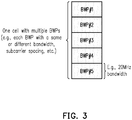
- a cell may be configured with multiple BWPs, as shown in FIG. 3.
- FIG. 3 is a schematic diagram a cell configured with multiple BWPs, wherein each of the BWPs may be configured with the same or different bandwidth or subcarrier spacing. In order to select an appropriate BWP from multiple BWPs, a method for BWP operation is required.
- BWP bandwidth part
- the first BWP is one of a dormant BWP or a non-dormant BWP
- the second BWP is the other one of the dormant BWP or the non-dormant BWP.
- the signaling indicates the second BWP and the second BWP is one of a dormant BWP or a non-dormant BWP.
- the method further comprising: switching to the second BWP from the first BWP according the signaling, wherein the first BWP is a dormant BWP and the signaling indicates that the second BWP is a non-dormant BWP.
- the method further comprising: stopping a timer, not monitoring a PDCCH, performing CSI measurement and stopping uplink transmission for the serving cell when staying in the first BWP, wherein the first BWP is a dormant BWP.
- the method further comprising: switching to the second BWP from the first BWP according the signaling, wherein the second BWP is a dormant BWP; and stopping a timer, not monitoring a PDCCH, performing CSI measurement and stopping uplink transmission for the serving cell.
- the second BWP is a pre-configured BWP.
- the step of determining whether to switch to the second BWP from the first BWP according to the signaling comprising: determining not to switch to the second BWP in response to the signaling indicating the UE to stay in one of a non-dormant BWP or a dormant BWP, wherein the first BWP is corresponded to the one of the non-dormant BWP or the dormant BWP; or determining to switch to the second BWP in response to the signaling indicating the UE to stay in the one of the non-dormant BWP or the dormant BWP, wherein the first BWP is corresponded to the other one of the non-dormant BWP or the dormant BWP.
- the method further comprising: staying in the first BWP in response to determining not to switch to the second BWP.
- the method further comprising: stopping a timer in response to determining not to switch to the second BWP from the first BWP.
- the method further comprising: switching to the second BWP.
- the method further comprising: stopping a timer in response to switching to the second BWP, wherein the second BWP is a dormant BWP.
- the step of determining whether to switch to the second BWP from the first BWP according to the signaling comprising: determining whether to switch to the second BWP in response to at least one of the followings: entering a dormancy behaviour, a timer expiry, or entering a non-dormancy behaviour.
- the method further comprising: determining the second BWP from a plurality of BWPs according to at least one of the followings: a power of the UE, a bandwidth of the second BWP, a subcarrier spacing of the second BWP, a BWP identity (ID) of the second BWP, a CORESET ID corresponding to the second BWP, a search space ID corresponding to the second BWP, or a physical downlink control channel (PDCCH) monitoring occasion of the second BWP.
- a power of the UE a bandwidth of the second BWP, a subcarrier spacing of the second BWP, a BWP identity (ID) of the second BWP, a CORESET ID corresponding to the second BWP, a search space ID corresponding to the second BWP, or a physical downlink control channel (PDCCH) monitoring occasion of the second BWP.
- ID BWP identity
- CORESET ID a CORESET ID corresponding to the second
- the method further comprising: receiving a second signaling, wherein the second BWP is determined according to the second signaling.
- the second signaling comprises a BWP identity (ID) of the second BWP, wherein the second BWP is determined according to the BWP ID.
- ID BWP identity
- the second signaling comprises a BWP hopping pattern corresponding to one or more BWPs, wherein the second BWP is determined according to the BWP hopping pattern.
- the method further comprising: transmitting a channel state information report comprising a BWP identity (ID) of the dormant BWP.
- ID BWP identity
- the method further comprising: generating a channel state information report by receiving a channel state information (CSI) reference signal or performing a CSI measurement during staying in the dormant BWP.
- CSI channel state information
- the method further comprising: running a BWP inactivity timer; and determining not to switch to the second BWP in response to the BWP inactivity timer expiry.
- the method further comprising: receiving a second signaling after switching to the second BWP; and starting running a timer in response to the second signaling.
- the processor is coupled to the transceiver, wherein the processor is configured to: receive a signaling; and determine whether to switch to a second BWP from the first BWP according to the signaling.
- the disclosure is directed to a method for BWP operating in a serving cell by a UE while the UE or the serving cell entering a dormant state (e.g., entering a dormant BWP, entering a dormancy behaviour) or leaving a dormant state (e.g., entering a non-dormant BWP, entering a non-dormancy behaviour), wherein the serving cell may be a SCell.
- UE dormancy/non-dormancy behaviour for SCells may be introduced.
- the UE may perform uplink (UL) or downlink (DL) communication and may perform channel state information (CSI) measurement.
- CSI channel state information
- the UE may perform CSI measurement or may feedback CSI report without monitoring the physical downlink control channel (PDCCH) of the SCell.
- the CSI report for the SCell may be feedback according to the periodicity indicated by cqiRepoertPeriodic-SCell-r15 message.
- a sounding reference signal may not be transmitted on the SCell
- a PDCCH may not be monitored on the SCell by the UE
- a PDCCH may not be monitored for the SCell by the UE
- a PUCCH may not be transmitted on the SCell
- UL transmission may not be performed on a UL shared channel (UL-SCH), a random access channel (RACH), or a PUCCH of the SCell by the UE.
- UL-SCH UL shared channel
- RACH random access channel
- FIG. 4 is a schematic diagram of BWP configuration for a cell in the dormant state according to an embodiment of the disclosure.
- the UE may be configured with one or more BWPs for each cell (e.g., SCell) via a higher layer signaling (e.g., a RRC message or a MAC CE (e.g., hibernation MAC CE)) or a physical layer signaling (e.g., a downlink control information (DCI)), but the disclosure is not limited thereto.
- a higher layer signaling e.g., a RRC message or a MAC CE (e.g., hibernation MAC CE)
- DCI downlink control information
- a BWP configuration for the SCell in dormant state may be provided to the UE by a higher layer signaling (e.g., a RRC message or a MAC CE (e.g., hibernation MAC CE)) or a physical layer signaling (e.g., a downlink control information (DCI)).
- the BWP configuration may comprise, for example, a first dormant BWP, a BWP hopping pattern, or a wake-up BWP (e.g., a non-dormant BWP).
- the first dormant BWP is the first BWP which the UE may stay or hibernate for CSI measurement/feedback upon the SCell (or the UE) entering the dormant state.
- the BWP hopping pattern may correspond to one or more BWPs which may be required by the UE so as to perform CSI measurement/feedback during the dormant state.
- the wake-up BWP is the BWP which the UE may stay upon the SCell (or the UE) leaving the dormant state (i.e., entering a non-dormancy behaviour).
- the UE may monitor a DL signal (e.g., physical downlink control channel (PDCCH), reference signal, or synchronization signal block (SSB)) while staying in the wake-up BWP.
- a DL signal e.g., physical downlink control channel (PDCCH), reference signal, or synchronization signal block (SSB)
- a timer such as a BWP inactivity timer of the SCell may start or re-start upon receiving a signaling via the PDCCH on the wake-up BWP.
- the UE may switch from a non-default BWP to a default BWP in response to the BWP inactivity timer expiry.
- the UE may receive a signaling and may determine whether to switch from the current BWP (i.e., the BWP the UE staying in currently) of the SCell to another BWP of the SCell according to the signaling, wherein the signaling may be transmitted via a higher layer signaling (e.g., a RRC message or a MAC CE (e.g., hibernation MAC CE)) or a physical layer signaling (e.g., a downlink control information (DCI)).
- a higher layer signaling e.g., a RRC message or a MAC CE (e.g., hibernation MAC CE)
- a physical layer signaling e.g., a downlink control information (DCI)
- FIG. 5 is a schematic diagram of BWP operation for the UE upon the SCell entering the dormant state according to an embodiment of the disclosure.
- the UE may receive a signaling, such as RRC message, MAC CE (e.g., hibernation MAC CE), or DCI, for dormancy indication.
- the DCI may indicate the UE to stay in one of a dormant BWP or a non-dormant. For example, a DCI with bit value "0" may indicate the UE to stay in an active DL BWP provided by a dormant BWP for the UE for each activated SCell in the corresponding group of configured SCells.
- a DCI with bit value "1" may indicate the UE to stay in an active DL BWP provided by a first-non-dormant-BWP-ID-for_DCI-inside-active-time (or provided by a non-dormant BWP) for the UE for each activated SCell in the corresponding group of configured SCells.
- the UE may determine whether to switch to another BWP according to the received signaling upon entering the dormant state.
- the UE may determine to switch to the default BWP (or dormant BWP, hibernate BWP) according to the DCI in response to entering the dormant state (e.g., the dormancy behaviour) from the activated state (e.g., the non-dormancy behaviour).
- the UE may switch from BWP#3 (i.e., active BWP) to BWP#1 (i.e., default BWP, dormant BWP or hibernate BWP) upon entering the dormant state.
- the UE may switch to a first active (DL) BWP or an initial (DL) BWP instead of switching to the default BWP upon entering the dormant state, the disclosure is not limit thereto.
- a timer such as a BWP inactivity timer may stop or suspend in response to the UE switching to the default BWP or the dormant BWP.
- the BWP inactivity timer may start or re-start in response to the UE switching to a BWP which is not the default BWP upon entering the dormant state.
- the UE may determine not to switch from the current BWP to another BWP after receiving the DCI for dormancy indication. That is, the UE may stay in the same BWP upon entering the dormant state.
- FIG. 6 is a schematic diagram of BWP operation for the UE upon the SCell entering the dormant state according to another embodiment of the disclosure.
- the base station e.g., gNB
- the base station may or may not transmit a BWP ID of a BWP to the UE after the SCell entering the dormant state so as to indicate the UE to stay in the BWP.
- the UE may receive a signaling while staying in a non-dormant BWP (e.g., active BWP). If the signaling indicates the UE to stay in a non-dormant BWP, the UE may determine not to switch to another BWP since the current BWP is already a non-dormant BWP.
- a non-dormant BWP e.g., active BWP
- a timer such as a BWP inactivity timer of the SCell (or the UE) may be configured to run.
- the UE may determine not to switch to another BWP upon the SCell entering the dormant state, and the BWP inactivity timer may stop or suspend upon the SCell entering the dormant state.
- the BWP inactivity timer may stop or suspend upon the UE entering the dormant BWP or the SCell entering the dormant state.
- the UE may hibernate in BWP#3 which is the same BWP the UE staying in before the SCell entering the dormant state.
- the UE may hibernate in BWP#3 until leaving the dormant state or receiving further indication from the base station (e.g., gNB).
- FIG. 8 is a schematic diagram of operation of BWP inactivity timer upon the SCell entering the dormant state according to another embodiment of the disclosure.
- the UE may determine hibernate in BWP#3 upon entering the dormant state, wherein BWP#3 is the same BWP the UE staying in before the SCell entering the dormant state.
- the BWP inactivity timer may keep running upon the SCell entering the dormant state if the current BWP (i.e., BWP#3) is not a default BWP. Then, the UE may switch from BWP#3 to a default BWP (i.e., BWP#1) in response to the BWP inactivity timer expiry, or the UE may switch from BWP#3 to another BWP in response to leaving the dormant state or receiving a further indication. In an embodiment, the BWP inactivity timer may be ignored by the UE. That is, the UE may determine to switch to or stay in a BWP without a considering the BWP inactivity timer.
- FIG. 9 is a schematic diagram of BWP operation for the UE upon the SCell entering the dormant state according to the other embodiment of the disclosure.
- the UE may receive a signaling such as a higher layer signaling (e.g., a RRC message or a MAC CE (e.g., hibernation MAC CE)) or a physical layer signaling (e.g., a downlink control information (DCI)).
- the signaling may indicate the UE a pre-configured BWP (i.e., BWP#4) by a BWP ID associated with the SCell ID.
- the UE may switch from the current BWP to the pre-configured BWP according to the indication upon entering to the dormant state. For example, the UE may switch from BWP#3 (i.e., active BWP) to BWP#4 upon entering the dormant state.
- BWP#3 i.e., active BWP
- a timer such as a BWP inactivity timer of the SCell (or the UE) may be configured to run during the activated state.
- the UE may determine not to switch to another BWP upon the SCell entering the dormant state, and the BWP inactivity timer may stop or suspend upon the SCell entering the dormant state.
- a timer such as a BWP inactivity timer may stop or suspend upon the SCell entering the dormant state or the UE switching to the pre-configured BWP (i.e., BWP#4 or a dormant BWP).
- the UE may hibernate in BWP#4 which is the same BWP the UE staying in before the SCell entering the dormant state.
- the UE may hibernate in BWP#4 until leaving the dormant state or receiving further indication from the base station.
- a signaling indicating the UE to stay in a dormant BWP may be received by the UE. Since BWP#4 is already a dormant BWP, the UE may not switch to another BWP in response to receiving the signaling.
- a timer such as a BWP inactivity timer of the SCell (or the UE) may be configured to run.
- the BWP inactivity timer may keep running.
- FIG. 11 is a schematic diagram of operation of BWP inactivity timer upon the UE switching to a pre-configured BWP according to another embodiment of the disclosure.
- the BWP inactivity timer may keep running upon the UE entering the dormant state and switching to the pre-configured BWP (i.e., BWP#4).
- the UE may hibernate in BWP#4, then the UE may switch to a default BWP (i.e., BWP#1) after the BWP inactivity timer expiry.
- the UE may hibernate in the default BWP until leaving the dormant state or receiving further indication from the base station.
- the BWP inactivity timer may be ignored by the UE. That is, the UE may determine to switch to or stay in in a BWP without considering the BWP inactivity timer.
- FIG. 12 is a schematic diagram of performing CSI measurement during the dormant state according to an embodiment of the disclosure.
- the UE may receive an indication (e.g., explicit indication or implicit indication) including a CSI configuration or a BWP hopping pattern, and determine said BWP according to the received indication.
- an indication e.g., explicit indication or implicit indication
- the UE may hibernate in the BWP and perform CSI measurement or feedback a CSI report to the base station on the BWP, wherein the CSI measurement or the CSI report feedback may be performed according to the CSI configuration or the BWP hopping pattern.
- the CSI report may include, for example, a channel quality index (CQI), a precoding matrix indicator (PMI), a rank indication (RI), a precoding type indicator (PTI), or a CSI reference signal resource indicator (CRI), but the disclosure is not limited thereto.
- CQI channel quality index
- PMI precoding matrix indicator
- RI rank indication
- PTI precoding type indicator
- CRI CSI reference signal resource indicator
- the UE may determine a BWP to hibernate in according to a BWP hopping pattern during the dormant state.
- FIG. 13 is a schematic diagram of performing CSI measurement based on a BWP hopping pattern according to an embodiment of the disclosure.
- the BWP hopping pattern corresponding to one or more BWPs may be indicated to the UE via a signaling such as a MAC CE or a DCI (e.g., one or more bits).
- a plurality of BWP hopping patterns may be pre-configured to the UE.
- the UE may select a BWP hopping pattern from the plurality of BWP hopping patterns according to the MAC CE or DCI.
- the BWP hopping pattern may include pre-configured hopping rule such as a BWP switching sequence.
- the UE may switch from a current BWP to another BWP according to the BWP switching sequence during the dormant state. For example, the UE may switch to BWP#1, BWP#2, BWP#3, BWP#4, and BWP#5 sequentially according to the BWP hopping rule, and may receive a CSI-RS, perform CSI measurement, or feedback CSI report while staying in each of the BWP, wherein each of the BWPs may be configured with one or more CSI resources (e.g., time or frequency resources).
- CSI resources e.g., time or frequency resources
- the UE may apply the BWP hopping pattern in response to, for example, a transition to a dormant state, an expiry of a BWP inactivity timer, a stopping of a BWP inactivity timer, a starting of a pre-configured timer, an expiry of a pre-configured timer, or a reception of an triggering indication (e.g., form PCell or SpCell), but the disclosure is not limited thereto.
- the BWP hopping pattern may be associated with a CSI resource configuration, a CSI report configuration (e.g., per cell or per BWP), a BWP ID, or a CORESET ID.
- the UE may provide a CSI feedback to the gNB via the PCell or the SpCell according to the CSI report configuration.
- a hopping timer may be configured for a BWP hopping pattern.
- the hopping timer may start in response to the UE being able to receive CSI-RS or perform CSI measurement.
- the hopping timer may re-start upon the UE receiving a gNB indication (e.g., via a RRC message, a MAC CE, or a DCI).
- the UE may perform CSI measurement for a hibernate BWP if the hopping timer is running.
- the UE may perform BWP switching according to a BWP hopping pattern (e.g., based on a BWP ID or pre-configuration), a gNB indication (e.g., via a RRC message, a MAC CE, or a DCI), or a UE preference (e.g., switching to a random BWP) upon the hopping timer expiry.
- the hopping timer may be associated with system frame number or system frame slot.
- the UE may determine a BWP to hibernate in according to its own decision.
- FIG. 14 is a schematic diagram of performing CSI measurement based on a decision of the UE according to an embodiment of the disclosure.
- the UE may be configured with CSI resource (e.g., time or frequency resource) per BWP, and may be configured with a CSI report configuration.
- the UE may feedback CSI report according to the CSI report configuration via the CSI resource.
- the CSI report configuration may indicate the UE to feedback CSI report via periodic and/or physical resource.
- the CSI report configuration may be further re-configurated by the PCell.
- the UE may perform CSI measurement or feedback CSI report based on an indication or a user preference.
- the UE may determine whether to switch from the current BWP to another BWP according to the user preference. For example, in order to save power, the UE may determine to switch to a BWP with lesser bandwidth to hibernate.
- a CSI report feedback from the UE to the base station may include a BWP ID or a CSI-ResourceConfigld message.
- the base station may identify which BWP the UE perform CSI measurement for according to the BWP ID.
- the CSI-ResourceConfigld message may include an ID corresponding to a CSI resource configuration which may be associated with a BWP and/or a cell.
- the CSI resource configuration may indicate the UE to feedback a CSI report including a BWP ID and/or a cell ID.
- the UE may determine a BWP to hibernate in according to an explicit indication during the dormant state.
- FIG. 15 is a schematic diagram of performing CSI measurement based on an explicit indication according to an embodiment of the disclosure.
- the base station may determine a BWP of the SCell for the UE to perform BWP switching/adaption, and may transmit an explicit indication comprising information of the BWP to the UE, wherein the BWP may be determined according to traffic characteristic, service type, load balance, data volume, channel quality, or CSI acquisition, but the disclosure is not limited thereto.
- the base station may be aware of a channel quality of a BWP of a SCell is under a quality level, and may indicate the UE to perform CSI measurement/feedback for the BWP by transmitting the explicit indication.
- the explicit indication may include a BWP ID associated with a SCell (or a SCell ID).
- the UE may determine the BWP to hibernate in according to the BWP ID. For example, the UE may switch from BWP#3 to BWP#1 in response to receiving an explicit indication which includes a BWP ID of BWP#1.
- the explicit indication may be transmitted to the UE via a higher layer signaling (e.g., a RRC message or a MAC CE (e.g., hibernation MAC CE)) or a physical layer signaling (e.g., a downlink control information (DCI)).
- a RRC message received by the UE may include a SCell ID, a dormant BWP ID, and a CSI configuration.
- the UE may determine to switch to a BWP corresponding to the dormant BWP ID for CSI measurement or CSI feedback.
- the CSI configuration may include a CQI-ReportPeriodic message which may be associated with a periodic reporting configuration or a channel quality index (CQI) format indicator, wherein the periodic reporting configuration may indicate a time interval for the UE to feedback CSI report to the base station.
- a MAC CE received by the UE may include a SCell ID field and a BWP ID field, as shown in table 1. Table 1 C 7 C 6 C 5 C 4 C 3 C 2 C 1 C 0 B 7 B 6 B 5 B 4 B 3 B 2 B 1 B 0
- the SCell field may include byte C 0 , C 1 , C 2 , C 3 , C 4 , C 5 , C 6 , and C 7 which respectively indicate the dormant/activated status of the SCells with index 0, 1, 2, 3, 4, 5, 6, and 7.
- SCell e.g., SCell with index 1
- SCell may be configured with 4 BWPs.
- the BWP ID field may include byte B 0 , B 1 , B 2 , and B 3 corresponding to SCell with index 1, wherein byte B 0 , B 1 , B 2 , and B 3 may respectively indicate the dormant status of the BWPs with BWP index 0, 1, 2, and 3.
- another SCell (e.g., SCell with index 2) may be configured with 4 BWPs.
- the BWP ID field may include byte B 4 , B 5 , B 6 , and B 7 corresponding to SCell with SCell index 2, wherein byte B 4 , B 5 , B 6 , and B 7 may respectively indicate the dormant status of the BWPs with BWP index 4, 5, 6, and 7.
- the UE may determine a BWP to hibernate in according to a BWP inactivity timer during the dormant state.
- FIG. 16 is a schematic diagram of performing CSI measurement based on BWP inactivity timer according to an embodiment of the disclosure.
- a timer such as a BWP inactivity timer initialed before the UE entering the dormant state may keep running upon the UE entering the dormant state.
- the UE may switch to a specific BWP such as a default BWP. Referring to FIG.
- the UE may stay in BWP#3 (e.g., active BWP) upon entering the dormant stat and may perform CSI measurement or feedback CSI report for BWP#3.
- the UE may switch from BWP#3 to BWP#1 (e.g., default BWP) and may perform CSI measurement or feedback CSI report for BWP#1.
- the UE may not switch to BWP#1 in response to the BWP inactivity timer expiry, even if BWP#1 (e.g., default BWP) is not a dormant BWP. That is, the BWP inactivity timer may not be used for state transition (or BWP switching) if the default BWP is not a dormant BWP.
- the UE may determine to switch from a dormant BWP to an active BWP (or wake-up BWP) according to an explicit indication.
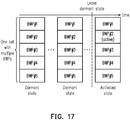
- FIG. 17 is a schematic diagram of BWP operation for the UE upon the SCell leaving the dormant state based on an explicit indication according to an embodiment of the disclosure.
- the UE may be configured, by a signaling, to leave the dormant state and enter the activated state, wherein the signaling may be pre-configured to the UE or be dynamic indicated to the UE.
- the signaling may comprise an ID of a SCell, a SCell state (e.g., dormant, activated, or de-activated state), or an ID of a wake-up BWP.
- the signaling may indicate a wake-up BWP (or non-dormant BWP).
- the UE may determine a wake-up BWP from a plurality of BWPs according to the signaling.
- the UE may switch from the dormant BWP to the wake-up BWP upon leaving the dormant state.
- the signaling may be a higher layer signaling (e.g., a RRC message or a MAC CE (e.g., hibernation MAC CE)) or a physical layer signaling (e.g., a downlink control information (DCI)) from PCell or SpCell.
- the signaling is a RRC message and the signaling may indicate an ID of a SCell, an ID of a first dormant BWP, an ID of a wake-up BWP, a BWP hopping pattern, or a CSI configuration.
- the signaling is a MAC CE and the signaling may indicate a dormant/activated status of a SCell with a SCell index, may indicate a dormant status of a BWP with a BWP ID, or may indicate an activated status of a BWP with a BWP ID.
- a MAC CE may correspond to a SCell configured with 4 BWPs, as shown in table 2, wherein byte C 0 , C 1 , C 2 , and C 3 may respectively indicate the dormant status of the BWPs with BWP ID 0, 1, 2, and 3, and byte C 4 , C 5 , C 6 , and C 7 may respectively indicate the activated status of the BWPs with BWP ID 0, 1, 2, and 3.
- byte C 0 may be set to "1" to indicate that the BWP with BWP ID 0 is the first dormant BWP upon the UE entering the dormant state.
- Byte C 4 may be set to "1" to indicate that the BWP with BWP ID 0 is the wake-up BWP upon the UE leaving the dormant state and entering the activated state.
- the UE may determine to switch from a dormant BWP to an active BWP (or wake-up BWP) according to an implicit indication.
- the UE may determine to switch, upon leaving the dormant state, to a BWP which is the same as the BWP the UE staying in before entering the dormant state according to a BWP ID of the BWP.
- FIG. 18 is a schematic diagram of BWP operation for the UE upon the SCell leaving the dormant state based on an implicit indication according to an embodiment of the disclosure. Referring to FIG. 18 , the UE may stay in BWP#2 before entering the dormant state, and may switch back to BWP#2 upon leaving the dormant state.
- the UE may determine to switch, upon leaving the dormant state, to a BWP corresponding to a first active BWP (e.g., firstActiveDownlinkBWP or firstActiveUplinkBWP), an initial BWP, or a default BWP configured by a signaling such as a RRC message.
- a first active BWP e.g., firstActiveDownlinkBWP or firstActiveUplinkBWP
- an initial BWP e.g., an initial BWP
- a default BWP configured by a signaling such as a RRC message.
- the UE may determine to switch, upon leaving the dormant state, to a BWP based on a BWP hopping pattern. For example, the UE may apply the BWP hopping pattern upon leaving the dormant state. The UE may switch to a BWP corresponding to the BWP hopping pattern in response to applying the BWP hopping pattern.
- the UE may determine to switch, upon leaving the dormant state, to a BWP based on a subcarrier spacing. For example, the UE may switch to a BWP corresponding to a largest or smallest subcarrier spacing.
- the UE may determine to switch, upon leaving the dormant state, to a BWP based on a BWP ID corresponding to a latest CSI report or a latest PDCCH monitoring occasion. For example, the UE may switch, upon leaving the dormant state, to a BWP with a lowest or highest BWP ID.
- FIG. 19 is a schematic diagram of BWP operation for the UE upon the SCell leaving the dormant state based on a PDCCH monitoring occasion according to an embodiment of the disclosure.
- the UE served by the serving cell may choose, from multiple BWPs, a BWP as the wake-up BWP according to the latest PDCCH monitoring occasion.
- each of the BWPs of the serving cell may be configured with at least one PDCCH monitoring occasion. If a specific BWP is configured with a PDCCH monitoring occasion which is the latest PDCCH monitoring occasion after the serving cell leaving the dormant state, the UE may choose the specific BWP as the wake-up BWP. Referring to FIG.
- the UE may choose BWP#1 as the wake-up BWP.
- the UE may choose BWP#1 as the wake-up BWP.
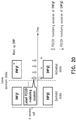
- FIG. 20 is a schematic diagram of BWP operation for the UE upon the SCell leaving the dormant state based on a PDCCH monitoring occasion and a BWP ID according to an embodiment of the disclosure.
- the UE may choose a wake-up BWP from the multiple BWPs according to a BWP ID.
- the UE may choose a BWP with the highest or lowest BWP ID as the wake-up BWP.
- the latest PDCCH monitoring occasion after the serving cell leaving the dormant state is corresponded to both BWP#1 and BWP#2.
- the latest PDCCH monitoring occasion of BWP#1 may overlap with the latest PDCCH monitoring occasion of BWP#2 in time.
- the UE may choose BWP#1 instead of BWP#2 as the wake-up BWP in response to BWP#1 having the lowest BWP ID or in response to the BWP ID of BWP#1 is lower than the BWP ID of BWP#2.
- FIG. 21 is a schematic diagram of BWP operation for the UE upon the SCell leaving the dormant state based on a bandwidth of a BWP according to an embodiment of the disclosure.
- the UE may switch, upon leaving the dormant state, to a BWP based on a bandwidth of the BWP. For example, the UE may switch, upon leaving the dormant state, to a BWP with a largest or smallest bandwidth.
- the UE may choose BWP#2 instead of BWP#1 as the wake-up BWP in response to BWP#2 has the largest bandwidth.
- FIG. 22 is a schematic diagram of BWP operation for the UE upon the SCell leaving the dormant state based on a CORESET ID of a BWP according to an embodiment of the disclosure.
- the UE may switch, upon leaving the dormant state, to a BWP with the highest or lowest CORESET ID.
- the UE may choose BWP#1 instead of BWP#2 as the wake-up BWP in response to BWP#1 has the lowest CORESET ID.
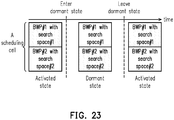
- FIG. 23 is a schematic diagram of BWP operation for the UE upon the SCell leaving the dormant state based on a search space of a BWP according to an embodiment of the disclosure.
- the UE may switch, upon leaving the dormant state, to a BWP corresponding to at least one search space ID, wherein the at least one search space ID is same as the search space ID corresponding to an active BWP which the UE stay in before entering the dormant state.
- the UE may stay in BWP#1 of the scheduling cell before entering the dormant state, wherein BWP#1 may correspond to search space#1.
- the UE may determine BWP#1 as wake-up BWP according to search space#1.
- FIG. 24 is a schematic diagram of operation of timers upon entering or leaving the dormant state according to an embodiment of the disclosure.
- the inter-action between the timers in MAC layer needs to be considered for transiting the SCell to the dormant state.
- a first timer such as a BWP inactivity timer of the SCell may run when the SCell or the UE operating in a non-default BWP.
- the BWP inactivity timer expiry, the UE may switch to a specific BWP such as a default BWP.
- the BWP inactivity timer may implicitly or explicitly be indicated to run, stop, or suspend upon the SCell entering the dormant state, and may implicitly or explicitly be indicated to start, re-start, or resume upon the SCell leaving the dormant state and entering the activated state.
- a second timer such as a dormantSCellDeactivationTimer may start running upon the SCell entering the dormant state.
- the dormantSCellDeactivationTimer expiry, the SCell or the UE may enter the deactivated state.
- the status of the BWP inactivity timer and the dormantSCellDeactivationTimer may be considered separately by the SCell or by the UE, as shown in table 3.
- BWP inactivity timer dormantSCellDeactivationTimer UE may running running Keep staying in the dormant state running expiry enter the deactivated state (or leave the dormant state) expiry running perform BWP switching (to default BWP) and stay in the dormant state expiry expiry enter the deactivated state (or leave the dormant state)
- FIG. 25 is a schematic diagram of operation of timers upon entering the dormant state according to an embodiment of the disclosure.
- the BWP inactivity timer may run while the UE is in the activated state. That is, the BWP inactivity timer may run while the UE staying in the non-dormant BWP.
- the UE in the activated state may receive a signaling such as a MAC CE.
- the UE may transmit an acknowledgement (ACK) in response to the MAC CE.
- ACK acknowledgement
- the UE may wait for a time gap (e.g., greater than or equal to 0 ms) so that the base station (e.g., gNB) and the UE may reach common understanding during the time gap.
- the BWP inactivity timer may stop or suspend
- the dormantSCellDeactivationTimer may start running, and the UE may be transited from the activated state to the dormant state.
- the dormantSCellDeactivationTimer may start running upon the UE switching from the activated state to the dormant state.
- the time gap may be pre-determined for the base station and the UE to reach common understanding while performing state transition.
- FIG. 26 is a schematic diagram of operation of timers upon entering the dormant state according to another embodiment of the disclosure.
- the BWP inactivity timer may run while the UE is in the activated state.
- the UE in the activated state may receive a signaling such as a MAC CE, wherein the MAC CE may indicate the UE to enter the dormant state.
- the BWP inactivity timer may stop or suspend, the dormantSCellDeactivationTimer may start running, and the UE may be transited from the activated state to the dormant state. That is, the dormantSCellDeactivationTimer may start running upon the UE switching to a dormant BWP. If the UE determine to stay in the same BWP upon entering the dormant state from the activated state, the UE may be transited from the activated state to the dormant state right after the reception of the MAC CE.
- FIG. 27 is a schematic diagram of operation of timers upon entering the dormant state according to the other embodiment of the disclosure.
- the BWP inactivity timer may run while the UE is in the activated state.
- the UE in the activated state may receive a signaling such as a MAC CE, wherein the MAC CE may indicate the UE to enter the dormant state.
- the BWP inactivity timer may keep running and the UE may be transited from the activated state to the dormant state.
- the dormantSCellDeactivationTimer may start running and the UE may switch to a default BWP.
- the UE may switch to, for example, a default BWP, a first dormant BWP, or a BWP determined according to UE preference (e.g., no BWP switching). In an embodiment, the UE may not perform BWP switching if the BWP inactivity timer expires.
- FIG. 28 is a schematic diagram of operation of timer upon leaving the dormant state according to an embodiment of the disclosure.
- the UE in the dormant state may receive a signaling (e.g., MAC CE or DCI), wherein the signaling may indicate the UE a BWP and may indicate the UE to leave the dormant state.
- the signaling may be carried by a physical downlink shared channel (PDSCH) or a PDCCH.
- PDSCH physical downlink shared channel
- PDCCH Physical Downlink shared channel
- the UE may switch to the indicated BWP (e.g., wake-up BWP or non-dormant BWP) upon leaving the dormant state according to the signaling.
- the indicated BWP e.g., wake-up BWP or non-dormant BWP
- a timer such as a BWP inactivity timer, if configured, may resume, start, or re-start after the UE transmitting a hybrid automatic repeat request acknowledgement (HARQ-ACK) corresponding to the MAC CE (e.g., hibernation MAC CE) for a timer interval T, wherein the timer interval may be greater than or equal to 0 ms.
- HARQ-ACK hybrid automatic repeat request acknowledgement
- FIG. 29 is a schematic diagram of operation of timer upon leaving the dormant state according to another embodiment of the disclosure.
- the UE in the dormant state may receive a signaling (e.g., MAC CE or DCI), wherein the signaling may indicate the UE a BWP and may indicate the UE to leave the dormant state.
- the signaling may be carried by a PDSCH or a PDCCH.
- the UE may switch to the indicated BWP (e.g., wake-up BWP) upon leaving the dormant state according to the signaling.
- a timer such as a BWP inactivity timer, if configured, may resume, start, or re-start in response to the UE receiving a DCI after leaving the dormant state.
- a time gap may be pre-determined for gNB and UE to reach common understanding in state transition and the validation of gNB indication (e.g., UE may be expected to receive).
- the time gap may be between the time point of receiving (e.g., by the UE) the MAC CE (e.g., hibernate MAC CE) to the time point after transmitting the corresponding ACK for a time interval.
- the time gap may be between the time point of receiving (e.g., by the UE) the MAC CE (e.g., hibernate MAC CE) to the time point of receiving (e.g., by the UE) the PDCCH (e.g., DCI).
- a UE may resume, start, or re-start the BWP inactivity timer associated with the active (DL) BWP upon receiving a PDCCH on the active BWP, wherein the PDCCH may be addressed to cell radio network temporary identifier (C-RNTI) or configured scheduling radio network temporary identifier (CS-RNTI) which indicates the reception of downlink assignment or uplink grant.
- C-RNTI cell radio network temporary identifier
- CS-RNTI configured scheduling radio network temporary identifier
- a UE may resume, start, or re-start the BWP inactivity timer associated with the active (DL) BWP upon receiving a PDCCH associated with the active BWP (e.g., the PDCCH may be received on a BWP different from said active BWP), wherein the PDCCH may be addressed to cell radio network temporary identifier (C-RNTI) or configured scheduling radio network temporary identifier (CS-RNTI) which indicates the reception of downlink assignment or uplink grant.
- C-RNTI cell radio network temporary identifier
- CS-RNTI configured scheduling radio network temporary identifier
- the UE may resume, start, or re-start the BWP inactivity timer associated with the active (DL) BWP upon receiving a MAC packet data unit (PDU), wherein the PDU may be transmitted via a configured uplink grant or a configured downlink assignment.
- PDU MAC packet data unit
- FIG. 30 is a schematic diagram of a UE 100 according to another embodiment of the disclosure.
- the UE 100 may include a processor 110, a storage medium 120, and a transceiver 130.
- the processor 110 is coupled to the storage medium 120 and the transceiver 130 and is configured to at least to implement the method used by a UE to perform BWP switching or state transition as described in FIG. 4-29 as well as its exemplary embodiment and alternative variations.
- the processor 110 could be implemented by using programmable units such as a microprocessor, a micro-controller, a DSP chips, FPGA, etc.
- the functions of the processor 110 may also be implemented with separate electronic devices or ICs. It should be noted that the functions of processor 110 may be implemented with either hardware or software.
- the storage medium 120 may be, for example, any type of fixed or removable random access memory (RAM), a read-only memory (ROM), a flash memory, a hard disk drive (HDD), a solid state drive (SSD) or similar element, or a combination thereof, configured to record a plurality of modules or various applications executable by the processor 110.
- RAM fixed or removable random access memory
- ROM read-only memory
- HDD hard disk drive
- SSD solid state drive
- the transceiver 130 may be configured to transmit and receive signals respectively in the radio frequency or in the mmWave frequency.
- the transceiver 130 may also perform operations such as low noise amplifying, impedance matching, frequency mixing, up or down frequency conversion, filtering, amplifying, and so forth.
- the transceiver 130 may include one or more digital-to-analog (D/A) converters or analog-to-digital (A/D) converters which are configured to convert from an analog signal format to a digital signal format during uplink signal processing and from a digital signal format to an analog signal format during downlink signal processing.
- the transceiver 130 may include an antenna array which may include one or multiple antennas to transmit and receive omni-directional antenna beams or directional antenna beams.
- FIG. 31 is a flowchart of a method for BWP operating according to an embodiment of the disclosure, wherein the method may be implemented by the UE 100 in a first BWP.
- the UE 100 may receive a signaling.
- the UE 100 may determine whether to switch to a second BWP from the first BWP according to the signaling.
- the present disclosure is suitable for being used by a UE served by a SCell with multiple BWPs.
- the UE may determine the BWP to switch to upon the network transitions the SCell to enter or leave the dormant state according to the present disclosure.
- the BWP inactivity timer may be configured to run, stop, or suspend upon entering the dormant state, and may be configured to start, re-start, or resume upon leaving the dormant state (e.g., entering the activated state).
Landscapes
- Engineering & Computer Science (AREA)
- Computer Networks & Wireless Communication (AREA)
- Signal Processing (AREA)
- Quality & Reliability (AREA)
- Mobile Radio Communication Systems (AREA)
Applications Claiming Priority (2)
| Application Number | Priority Date | Filing Date | Title |
|---|---|---|---|
| US201962886362P | 2019-08-14 | 2019-08-14 | |
| US16/990,950 US11582745B2 (en) | 2019-08-14 | 2020-08-11 | Method for BWP operating and user equipment using the same |
Publications (2)
| Publication Number | Publication Date |
|---|---|
| EP3780770A1 true EP3780770A1 (de) | 2021-02-17 |
| EP3780770B1 EP3780770B1 (de) | 2024-01-24 |
Family
ID=72050696
Family Applications (1)
| Application Number | Title | Priority Date | Filing Date |
|---|---|---|---|
| EP20190644.3A Active EP3780770B1 (de) | 2019-08-14 | 2020-08-12 | Verfahren zum bwp-betrieb und benutzergerät mit verwendung davon |
Country Status (4)
| Country | Link |
|---|---|
| US (1) | US11582745B2 (de) |
| EP (1) | EP3780770B1 (de) |
| CN (1) | CN112399510B (de) |
| TW (1) | TWI753533B (de) |
Cited By (5)
| Publication number | Priority date | Publication date | Assignee | Title |
|---|---|---|---|---|
| US11368956B2 (en) * | 2018-04-05 | 2022-06-21 | Qualcomm Incorporated | Radio link management under bandwidth part switching |
| EP4055753A1 (de) * | 2019-11-07 | 2022-09-14 | Telefonaktiebolaget LM Ericsson (publ) | Signalisierung eines ruhenden bandbreitenteils |
| EP4024996A4 (de) * | 2019-10-03 | 2022-10-19 | LG Electronics Inc. | Betriebsverfahren bei ruhendem bandbreitenteil in einem drahtlosen kommunikationssystem und endgerät damit |
| WO2022240658A1 (en) * | 2021-05-11 | 2022-11-17 | Qualcomm Incorporated | Serving synchronization signal block (ssb) indication for beam switching and bandwidth part (bwp) switching |
| US12177824B2 (en) | 2021-05-11 | 2024-12-24 | Qualcomm Incorporated | Serving synchronization signal block (SSB) indication for beam switching and bandwidth part (BWP) switching |
Families Citing this family (17)
| Publication number | Priority date | Publication date | Assignee | Title |
|---|---|---|---|---|
| CN114258708B (zh) * | 2019-08-17 | 2023-12-29 | 中兴通讯股份有限公司 | 用于降低无线设备功耗的信令方法 |
| KR20220051203A (ko) | 2019-08-17 | 2022-04-26 | 지티이 코포레이션 | 전력 절약 모드에서 무선 디바이스의 전력 소비를 감소시키기 위한 시그널링 방법 |
| KR102943254B1 (ko) * | 2019-10-03 | 2026-03-25 | 샤프 가부시키가이샤 | 전력 절감 동작들을 위한 방법들 및 장치들 |
| US20220312470A1 (en) * | 2019-10-03 | 2022-09-29 | Lg Electronics Inc. | Operation method in dormant bwp based on initial access, and terminal using method |
| KR102893226B1 (ko) * | 2019-10-03 | 2025-12-01 | 엘지전자 주식회사 | 무선 통신 시스템에서 drx 동작 및 휴면 bwp에서의 동작 방법 및 상기 방법을 이용하는 단말 |
| WO2021075704A1 (ko) * | 2019-10-17 | 2021-04-22 | 엘지전자 주식회사 | 대역폭 파트 운용 방법 |
| KR102921267B1 (ko) * | 2019-12-24 | 2026-02-03 | 삼성전자 주식회사 | 무선 통신 시스템에서 단말의 전력 소모 감소 방법 및 장치 |
| CN115066955A (zh) * | 2020-02-06 | 2022-09-16 | 三星电子株式会社 | 在无线通信系统中配置带宽的方法和装置 |
| JP2023046416A (ja) * | 2020-02-27 | 2023-04-05 | 株式会社Nttドコモ | 端末及び通信方法 |
| US11582796B2 (en) * | 2020-05-15 | 2023-02-14 | Qualcomm Incorporated | Listen-before-talk (LBT) failure detection in dormant cell and outside discontinuous reception (DRX) active time |
| US20230115663A1 (en) * | 2020-05-25 | 2023-04-13 | Qualcomm Incorporated | Duplex communications over bandwidth parts |
| EP4233429A4 (de) * | 2020-10-22 | 2024-07-10 | Apple Inc. | Systeme und verfahren zur scg-aktivierung und -deaktivierung |
| US12108377B2 (en) * | 2020-10-23 | 2024-10-01 | Apple Inc. | Enhancement to bandwidth part (BWP) switching for secondary cell (SCell) |
| CN115119254B (zh) * | 2021-03-08 | 2025-03-07 | 中国移动通信有限公司研究院 | 测量方法、装置、设备及可读存储介质 |
| US12574194B2 (en) * | 2021-11-11 | 2026-03-10 | Qualcomm Incorporated | Bandwidth part switch with wake up signal |
| TWI798028B (zh) | 2022-03-17 | 2023-04-01 | 仁寶電腦工業股份有限公司 | 頻寬分配系統及方法 |
| CN116347622A (zh) * | 2023-03-29 | 2023-06-27 | 联想(北京)有限公司 | 一种网络侧网元控制方法、装置及服务器 |
Citations (3)
| Publication number | Priority date | Publication date | Assignee | Title |
|---|---|---|---|---|
| US20190103954A1 (en) * | 2017-10-02 | 2019-04-04 | Qualcomm Incorporated | Bandwidth part activation, deactivation, and switching in wireless communications |
| US20190124558A1 (en) * | 2017-10-25 | 2019-04-25 | Qualcomm Incorporated | Secondary cell activation and deactivation enhancements in new radio |
| EP3478019A1 (de) * | 2017-10-26 | 2019-05-01 | Comcast Cable Communications LLC | Aktivierung und deaktivierung einer konfigurierten berechtigung |
Family Cites Families (19)
| Publication number | Priority date | Publication date | Assignee | Title |
|---|---|---|---|---|
| WO2015166893A1 (ja) | 2014-04-28 | 2015-11-05 | シャープ株式会社 | 端末装置、通信方法、および集積回路 |
| CN109586881B (zh) * | 2017-09-29 | 2021-11-12 | 株式会社Kt | 用于在新无线电中切换带宽部分的方法和装置 |
| US10693620B2 (en) | 2017-10-27 | 2020-06-23 | Ofinno, Llc | Bandwidth part configuration and operation |
| EP4412312A3 (de) * | 2017-11-13 | 2024-10-30 | NEC Corporation | Drahtloses endgerät, funkzugangsnetzwerkknoten und verfahren dafür |
| CN111345058B (zh) * | 2017-11-16 | 2024-05-24 | 瑞典爱立信有限公司 | 无线电链路监测/无线电链路故障重新配置的方法和装置 |
| CN109803386B (zh) * | 2017-11-16 | 2024-03-22 | 夏普株式会社 | 带宽配置方法和电子设备 |
| US11246122B2 (en) * | 2018-01-11 | 2022-02-08 | Htc Corporation | Device and method for handling bandwidth parts |
| US11006445B2 (en) * | 2018-02-08 | 2021-05-11 | Ofinno, Llc | Confirmation mechanism for CSI report activation and deactivation |
| US11297674B2 (en) | 2018-02-14 | 2022-04-05 | Samsung Electronics Co., Ltd. | Method and apparatus for power savings at a user equipment |
| US10912026B2 (en) | 2018-03-21 | 2021-02-02 | Mediatek Singapore Pte. Ltd. | Power-efficient mechanism for multi-link operation in mobile communications |
| WO2019190245A1 (en) | 2018-03-28 | 2019-10-03 | Samsung Electronics Co., Ltd. | Apparatus and method for measurement in wireless communication system |
| CN110324856B (zh) | 2018-03-30 | 2021-01-08 | 维沃移动通信有限公司 | 确定定时关系的方法和设备 |
| US12089220B2 (en) | 2018-07-19 | 2024-09-10 | Comcast Cable Communications, Llc | Resource management for wireless communications using a power saving state |
| US11895582B2 (en) * | 2018-07-24 | 2024-02-06 | Ofinno, Llc | Power saving operations in a wireless communication system |
| US11558814B2 (en) * | 2019-01-11 | 2023-01-17 | Qualcomm Incorporated | Secondary cell dormancy for new radio carrier aggregation |
| US11363625B2 (en) * | 2019-03-28 | 2022-06-14 | Ofinno, Llc | Bandwidth part operation in new radio |
| CN113329449B (zh) * | 2019-05-30 | 2023-05-12 | Oppo广东移动通信有限公司 | 一种bwp的管理方法及装置、终端 |
| EP4011128B1 (de) * | 2019-09-30 | 2023-03-08 | Ofinno, LLC | Energiespar- und zelldormanzbetrieb |
| KR102930706B1 (ko) * | 2021-01-15 | 2026-02-25 | 아서스테크 컴퓨터 인코포레이션 | 무선 통신 시스템에서 ue 상태 전환을 제어하기 위한 방법 및 장치 |
-
2020
- 2020-08-11 US US16/990,950 patent/US11582745B2/en active Active
- 2020-08-12 EP EP20190644.3A patent/EP3780770B1/de active Active
- 2020-08-14 TW TW109127684A patent/TWI753533B/zh active
- 2020-08-14 CN CN202010817913.8A patent/CN112399510B/zh active Active
Patent Citations (3)
| Publication number | Priority date | Publication date | Assignee | Title |
|---|---|---|---|---|
| US20190103954A1 (en) * | 2017-10-02 | 2019-04-04 | Qualcomm Incorporated | Bandwidth part activation, deactivation, and switching in wireless communications |
| US20190124558A1 (en) * | 2017-10-25 | 2019-04-25 | Qualcomm Incorporated | Secondary cell activation and deactivation enhancements in new radio |
| EP3478019A1 (de) * | 2017-10-26 | 2019-05-01 | Comcast Cable Communications LLC | Aktivierung und deaktivierung einer konfigurierten berechtigung |
Non-Patent Citations (2)
| Title |
|---|
| "3rd Generation Partnership Project; Technical Specification Group Radio Access Network; NR; Medium Access Control (MAC) protocol specification (Release 15)", 29 June 2019 (2019-06-29), XP051754812, Retrieved from the Internet <URL:http://www.3gpp.org/ftp/3guInternal/3GPP_ultimate_versions_to_be_transposed/sentToDpc/38321-f60.zip> [retrieved on 20190629] * |
| NEC: "Measurement for fast SCell activation", vol. RAN WG2, no. Reno, USA; 20190513 - 20190517, 13 May 2019 (2019-05-13), XP051729096, Retrieved from the Internet <URL:http://www.3gpp.org/ftp/Meetings%5F3GPP%5FSYNC/RAN2/Docs/R2%2D1905593%2Ezip> [retrieved on 20190513] * |
Cited By (6)
| Publication number | Priority date | Publication date | Assignee | Title |
|---|---|---|---|---|
| US11368956B2 (en) * | 2018-04-05 | 2022-06-21 | Qualcomm Incorporated | Radio link management under bandwidth part switching |
| EP4024996A4 (de) * | 2019-10-03 | 2022-10-19 | LG Electronics Inc. | Betriebsverfahren bei ruhendem bandbreitenteil in einem drahtlosen kommunikationssystem und endgerät damit |
| EP4055753A1 (de) * | 2019-11-07 | 2022-09-14 | Telefonaktiebolaget LM Ericsson (publ) | Signalisierung eines ruhenden bandbreitenteils |
| US12438685B2 (en) | 2019-11-07 | 2025-10-07 | Telefonaktiebolaget Lm Ericsson (Publ) | Signaling of dormant bandwidth part |
| WO2022240658A1 (en) * | 2021-05-11 | 2022-11-17 | Qualcomm Incorporated | Serving synchronization signal block (ssb) indication for beam switching and bandwidth part (bwp) switching |
| US12177824B2 (en) | 2021-05-11 | 2024-12-24 | Qualcomm Incorporated | Serving synchronization signal block (SSB) indication for beam switching and bandwidth part (BWP) switching |
Also Published As
| Publication number | Publication date |
|---|---|
| US20210051640A1 (en) | 2021-02-18 |
| TW202107909A (zh) | 2021-02-16 |
| CN112399510A (zh) | 2021-02-23 |
| TWI753533B (zh) | 2022-01-21 |
| CN112399510B (zh) | 2024-07-12 |
| EP3780770B1 (de) | 2024-01-24 |
| US11582745B2 (en) | 2023-02-14 |
Similar Documents
| Publication | Publication Date | Title |
|---|---|---|
| EP3780770B1 (de) | Verfahren zum bwp-betrieb und benutzergerät mit verwendung davon | |
| US12170959B2 (en) | Terminal power saving method, power saving apparatus, information sending method and apparatus, storage medium, and electronic device | |
| CN113906789B (zh) | 下一代无线网络中用于省电状态下的用户设备的调度方法和用户设备 | |
| US11122647B2 (en) | Enhanced node B, user equipment and methods for discontinuous reception in inter-eNB carrier aggregation | |
| EP3824562B1 (de) | Verfahren und vorrichtungen zum betrieb mehrerer antennenpaneele | |
| WO2020199121A1 (en) | Control information processing | |
| US10165617B2 (en) | Methods of adapting receiver configuration for control channel reception based on DRX status | |
| US9204392B2 (en) | Mobile communication method and radio terminal | |
| EP2826316B1 (de) | Aktualisierung von zeitvorlauf ohne starten eines diskontinuierlichen empfangsaktivitätszeitgebers | |
| KR20250171444A (ko) | 무선 송수신 장치(wtru) 전력 제어를 위한 방법 및 장치 | |
| EP3433966B1 (de) | Uplink-kanal-qualitätsmessung unter verwendung eines hilfsrahmens mit hochintensiven referenzsignalfolgen | |
| US10764131B2 (en) | Methods of adapting receiver configuration for control channel reception based on data reception | |
| WO2022234835A1 (ja) | ユーザ装置、基地局、及び通信制御方法 | |
| WO2022234834A1 (ja) | 通信装置、基地局、及び方法 | |
| US12047213B2 (en) | Method of configuring a PUSCH repetition and user equipment using the same | |
| WO2022234838A1 (ja) | 通信装置、基地局、及び方法 | |
| CA3143610C (en) | Terminal power saving method, power saving apparatus, information sending method and apparatus, storage medium, and electronic device | |
| RU2781561C1 (ru) | Обработка информации управления | |
| HK1254504B (zh) | 用户设备的装置和计算机可读存储介质 | |
| HK1254504A1 (en) | An apparatus of user equipment (ue) and a computer-readable storage medium |
Legal Events
| Date | Code | Title | Description |
|---|---|---|---|
| PUAI | Public reference made under article 153(3) epc to a published international application that has entered the european phase |
Free format text: ORIGINAL CODE: 0009012 |
|
| STAA | Information on the status of an ep patent application or granted ep patent |
Free format text: STATUS: REQUEST FOR EXAMINATION WAS MADE |
|
| 17P | Request for examination filed |
Effective date: 20200812 |
|
| AK | Designated contracting states |
Kind code of ref document: A1 Designated state(s): AL AT BE BG CH CY CZ DE DK EE ES FI FR GB GR HR HU IE IS IT LI LT LU LV MC MK MT NL NO PL PT RO RS SE SI SK SM TR |
|
| AX | Request for extension of the european patent |
Extension state: BA ME |
|
| RBV | Designated contracting states (corrected) |
Designated state(s): AL AT BE BG CH CY CZ DE DK EE ES FI FR GB GR HR HU IE IS IT LI LT LU LV MC MK MT NL NO PL PT RO RS SE SI SK SM TR |
|
| STAA | Information on the status of an ep patent application or granted ep patent |
Free format text: STATUS: EXAMINATION IS IN PROGRESS |
|
| 17Q | First examination report despatched |
Effective date: 20220114 |
|
| GRAP | Despatch of communication of intention to grant a patent |
Free format text: ORIGINAL CODE: EPIDOSNIGR1 |
|
| STAA | Information on the status of an ep patent application or granted ep patent |
Free format text: STATUS: GRANT OF PATENT IS INTENDED |
|
| INTG | Intention to grant announced |
Effective date: 20231009 |
|
| GRAS | Grant fee paid |
Free format text: ORIGINAL CODE: EPIDOSNIGR3 |
|
| GRAA | (expected) grant |
Free format text: ORIGINAL CODE: 0009210 |
|
| STAA | Information on the status of an ep patent application or granted ep patent |
Free format text: STATUS: THE PATENT HAS BEEN GRANTED |
|
| AK | Designated contracting states |
Kind code of ref document: B1 Designated state(s): AL AT BE BG CH CY CZ DE DK EE ES FI FR GB GR HR HU IE IS IT LI LT LU LV MC MK MT NL NO PL PT RO RS SE SI SK SM TR |
|
| REG | Reference to a national code |
Ref country code: GB Ref legal event code: FG4D |
|
| REG | Reference to a national code |
Ref country code: CH Ref legal event code: EP |
|
| REG | Reference to a national code |
Ref country code: DE Ref legal event code: R096 Ref document number: 602020024727 Country of ref document: DE |
|
| REG | Reference to a national code |
Ref country code: IE Ref legal event code: FG4D |
|
| REG | Reference to a national code |
Ref country code: LT Ref legal event code: MG9D |
|
| REG | Reference to a national code |
Ref country code: NL Ref legal event code: MP Effective date: 20240124 |
|
| PG25 | Lapsed in a contracting state [announced via postgrant information from national office to epo] |
Ref country code: NL Free format text: LAPSE BECAUSE OF FAILURE TO SUBMIT A TRANSLATION OF THE DESCRIPTION OR TO PAY THE FEE WITHIN THE PRESCRIBED TIME-LIMIT Effective date: 20240124 |
|
| PG25 | Lapsed in a contracting state [announced via postgrant information from national office to epo] |
Ref country code: NL Free format text: LAPSE BECAUSE OF FAILURE TO SUBMIT A TRANSLATION OF THE DESCRIPTION OR TO PAY THE FEE WITHIN THE PRESCRIBED TIME-LIMIT Effective date: 20240124 |
|
| PG25 | Lapsed in a contracting state [announced via postgrant information from national office to epo] |
Ref country code: IS Free format text: LAPSE BECAUSE OF FAILURE TO SUBMIT A TRANSLATION OF THE DESCRIPTION OR TO PAY THE FEE WITHIN THE PRESCRIBED TIME-LIMIT Effective date: 20240524 |
|
| PG25 | Lapsed in a contracting state [announced via postgrant information from national office to epo] |
Ref country code: LT Free format text: LAPSE BECAUSE OF FAILURE TO SUBMIT A TRANSLATION OF THE DESCRIPTION OR TO PAY THE FEE WITHIN THE PRESCRIBED TIME-LIMIT Effective date: 20240124 |
|
| PG25 | Lapsed in a contracting state [announced via postgrant information from national office to epo] |
Ref country code: GR Free format text: LAPSE BECAUSE OF FAILURE TO SUBMIT A TRANSLATION OF THE DESCRIPTION OR TO PAY THE FEE WITHIN THE PRESCRIBED TIME-LIMIT Effective date: 20240425 |
|
| REG | Reference to a national code |
Ref country code: AT Ref legal event code: MK05 Ref document number: 1653123 Country of ref document: AT Kind code of ref document: T Effective date: 20240124 |
|
| PG25 | Lapsed in a contracting state [announced via postgrant information from national office to epo] |
Ref country code: RS Free format text: LAPSE BECAUSE OF FAILURE TO SUBMIT A TRANSLATION OF THE DESCRIPTION OR TO PAY THE FEE WITHIN THE PRESCRIBED TIME-LIMIT Effective date: 20240424 Ref country code: HR Free format text: LAPSE BECAUSE OF FAILURE TO SUBMIT A TRANSLATION OF THE DESCRIPTION OR TO PAY THE FEE WITHIN THE PRESCRIBED TIME-LIMIT Effective date: 20240124 |
|
| PG25 | Lapsed in a contracting state [announced via postgrant information from national office to epo] |
Ref country code: ES Free format text: LAPSE BECAUSE OF FAILURE TO SUBMIT A TRANSLATION OF THE DESCRIPTION OR TO PAY THE FEE WITHIN THE PRESCRIBED TIME-LIMIT Effective date: 20240124 |
|
| PG25 | Lapsed in a contracting state [announced via postgrant information from national office to epo] |
Ref country code: AT Free format text: LAPSE BECAUSE OF FAILURE TO SUBMIT A TRANSLATION OF THE DESCRIPTION OR TO PAY THE FEE WITHIN THE PRESCRIBED TIME-LIMIT Effective date: 20240124 |
|
| PG25 | Lapsed in a contracting state [announced via postgrant information from national office to epo] |
Ref country code: RS Free format text: LAPSE BECAUSE OF FAILURE TO SUBMIT A TRANSLATION OF THE DESCRIPTION OR TO PAY THE FEE WITHIN THE PRESCRIBED TIME-LIMIT Effective date: 20240424 Ref country code: NO Free format text: LAPSE BECAUSE OF FAILURE TO SUBMIT A TRANSLATION OF THE DESCRIPTION OR TO PAY THE FEE WITHIN THE PRESCRIBED TIME-LIMIT Effective date: 20240424 Ref country code: LT Free format text: LAPSE BECAUSE OF FAILURE TO SUBMIT A TRANSLATION OF THE DESCRIPTION OR TO PAY THE FEE WITHIN THE PRESCRIBED TIME-LIMIT Effective date: 20240124 Ref country code: IS Free format text: LAPSE BECAUSE OF FAILURE TO SUBMIT A TRANSLATION OF THE DESCRIPTION OR TO PAY THE FEE WITHIN THE PRESCRIBED TIME-LIMIT Effective date: 20240524 Ref country code: HR Free format text: LAPSE BECAUSE OF FAILURE TO SUBMIT A TRANSLATION OF THE DESCRIPTION OR TO PAY THE FEE WITHIN THE PRESCRIBED TIME-LIMIT Effective date: 20240124 Ref country code: GR Free format text: LAPSE BECAUSE OF FAILURE TO SUBMIT A TRANSLATION OF THE DESCRIPTION OR TO PAY THE FEE WITHIN THE PRESCRIBED TIME-LIMIT Effective date: 20240425 Ref country code: FI Free format text: LAPSE BECAUSE OF FAILURE TO SUBMIT A TRANSLATION OF THE DESCRIPTION OR TO PAY THE FEE WITHIN THE PRESCRIBED TIME-LIMIT Effective date: 20240124 Ref country code: ES Free format text: LAPSE BECAUSE OF FAILURE TO SUBMIT A TRANSLATION OF THE DESCRIPTION OR TO PAY THE FEE WITHIN THE PRESCRIBED TIME-LIMIT Effective date: 20240124 Ref country code: BG Free format text: LAPSE BECAUSE OF FAILURE TO SUBMIT A TRANSLATION OF THE DESCRIPTION OR TO PAY THE FEE WITHIN THE PRESCRIBED TIME-LIMIT Effective date: 20240124 Ref country code: AT Free format text: LAPSE BECAUSE OF FAILURE TO SUBMIT A TRANSLATION OF THE DESCRIPTION OR TO PAY THE FEE WITHIN THE PRESCRIBED TIME-LIMIT Effective date: 20240124 |
|
| PG25 | Lapsed in a contracting state [announced via postgrant information from national office to epo] |
Ref country code: PL Free format text: LAPSE BECAUSE OF FAILURE TO SUBMIT A TRANSLATION OF THE DESCRIPTION OR TO PAY THE FEE WITHIN THE PRESCRIBED TIME-LIMIT Effective date: 20240124 Ref country code: PT Free format text: LAPSE BECAUSE OF FAILURE TO SUBMIT A TRANSLATION OF THE DESCRIPTION OR TO PAY THE FEE WITHIN THE PRESCRIBED TIME-LIMIT Effective date: 20240524 |
|
| PG25 | Lapsed in a contracting state [announced via postgrant information from national office to epo] |
Ref country code: SE Free format text: LAPSE BECAUSE OF FAILURE TO SUBMIT A TRANSLATION OF THE DESCRIPTION OR TO PAY THE FEE WITHIN THE PRESCRIBED TIME-LIMIT Effective date: 20240124 Ref country code: PT Free format text: LAPSE BECAUSE OF FAILURE TO SUBMIT A TRANSLATION OF THE DESCRIPTION OR TO PAY THE FEE WITHIN THE PRESCRIBED TIME-LIMIT Effective date: 20240524 Ref country code: PL Free format text: LAPSE BECAUSE OF FAILURE TO SUBMIT A TRANSLATION OF THE DESCRIPTION OR TO PAY THE FEE WITHIN THE PRESCRIBED TIME-LIMIT Effective date: 20240124 Ref country code: LV Free format text: LAPSE BECAUSE OF FAILURE TO SUBMIT A TRANSLATION OF THE DESCRIPTION OR TO PAY THE FEE WITHIN THE PRESCRIBED TIME-LIMIT Effective date: 20240124 |
|
| PG25 | Lapsed in a contracting state [announced via postgrant information from national office to epo] |
Ref country code: DK Free format text: LAPSE BECAUSE OF FAILURE TO SUBMIT A TRANSLATION OF THE DESCRIPTION OR TO PAY THE FEE WITHIN THE PRESCRIBED TIME-LIMIT Effective date: 20240124 |
|
| PG25 | Lapsed in a contracting state [announced via postgrant information from national office to epo] |
Ref country code: SM Free format text: LAPSE BECAUSE OF FAILURE TO SUBMIT A TRANSLATION OF THE DESCRIPTION OR TO PAY THE FEE WITHIN THE PRESCRIBED TIME-LIMIT Effective date: 20240124 |
|
| PG25 | Lapsed in a contracting state [announced via postgrant information from national office to epo] |
Ref country code: EE Free format text: LAPSE BECAUSE OF FAILURE TO SUBMIT A TRANSLATION OF THE DESCRIPTION OR TO PAY THE FEE WITHIN THE PRESCRIBED TIME-LIMIT Effective date: 20240124 Ref country code: CZ Free format text: LAPSE BECAUSE OF FAILURE TO SUBMIT A TRANSLATION OF THE DESCRIPTION OR TO PAY THE FEE WITHIN THE PRESCRIBED TIME-LIMIT Effective date: 20240124 |
|
| REG | Reference to a national code |
Ref country code: DE Ref legal event code: R097 Ref document number: 602020024727 Country of ref document: DE |
|
| PG25 | Lapsed in a contracting state [announced via postgrant information from national office to epo] |
Ref country code: SK Free format text: LAPSE BECAUSE OF FAILURE TO SUBMIT A TRANSLATION OF THE DESCRIPTION OR TO PAY THE FEE WITHIN THE PRESCRIBED TIME-LIMIT Effective date: 20240124 |
|
| PG25 | Lapsed in a contracting state [announced via postgrant information from national office to epo] |
Ref country code: SM Free format text: LAPSE BECAUSE OF FAILURE TO SUBMIT A TRANSLATION OF THE DESCRIPTION OR TO PAY THE FEE WITHIN THE PRESCRIBED TIME-LIMIT Effective date: 20240124 Ref country code: SK Free format text: LAPSE BECAUSE OF FAILURE TO SUBMIT A TRANSLATION OF THE DESCRIPTION OR TO PAY THE FEE WITHIN THE PRESCRIBED TIME-LIMIT Effective date: 20240124 Ref country code: EE Free format text: LAPSE BECAUSE OF FAILURE TO SUBMIT A TRANSLATION OF THE DESCRIPTION OR TO PAY THE FEE WITHIN THE PRESCRIBED TIME-LIMIT Effective date: 20240124 Ref country code: DK Free format text: LAPSE BECAUSE OF FAILURE TO SUBMIT A TRANSLATION OF THE DESCRIPTION OR TO PAY THE FEE WITHIN THE PRESCRIBED TIME-LIMIT Effective date: 20240124 Ref country code: CZ Free format text: LAPSE BECAUSE OF FAILURE TO SUBMIT A TRANSLATION OF THE DESCRIPTION OR TO PAY THE FEE WITHIN THE PRESCRIBED TIME-LIMIT Effective date: 20240124 |
|
| PLBE | No opposition filed within time limit |
Free format text: ORIGINAL CODE: 0009261 |
|
| STAA | Information on the status of an ep patent application or granted ep patent |
Free format text: STATUS: NO OPPOSITION FILED WITHIN TIME LIMIT |
|
| PG25 | Lapsed in a contracting state [announced via postgrant information from national office to epo] |
Ref country code: IT Free format text: LAPSE BECAUSE OF FAILURE TO SUBMIT A TRANSLATION OF THE DESCRIPTION OR TO PAY THE FEE WITHIN THE PRESCRIBED TIME-LIMIT Effective date: 20240124 |
|
| PG25 | Lapsed in a contracting state [announced via postgrant information from national office to epo] |
Ref country code: IT Free format text: LAPSE BECAUSE OF FAILURE TO SUBMIT A TRANSLATION OF THE DESCRIPTION OR TO PAY THE FEE WITHIN THE PRESCRIBED TIME-LIMIT Effective date: 20240124 |
|
| 26N | No opposition filed |
Effective date: 20241025 |
|
| REG | Reference to a national code |
Ref country code: CH Ref legal event code: PL |
|
| PG25 | Lapsed in a contracting state [announced via postgrant information from national office to epo] |
Ref country code: LU Free format text: LAPSE BECAUSE OF NON-PAYMENT OF DUE FEES Effective date: 20240812 |
|
| PG25 | Lapsed in a contracting state [announced via postgrant information from national office to epo] |
Ref country code: CH Free format text: LAPSE BECAUSE OF NON-PAYMENT OF DUE FEES Effective date: 20240831 Ref country code: SI Free format text: LAPSE BECAUSE OF FAILURE TO SUBMIT A TRANSLATION OF THE DESCRIPTION OR TO PAY THE FEE WITHIN THE PRESCRIBED TIME-LIMIT Effective date: 20240124 Ref country code: MC Free format text: LAPSE BECAUSE OF FAILURE TO SUBMIT A TRANSLATION OF THE DESCRIPTION OR TO PAY THE FEE WITHIN THE PRESCRIBED TIME-LIMIT Effective date: 20240124 |
|
| REG | Reference to a national code |
Ref country code: BE Ref legal event code: MM Effective date: 20240831 |
|
| PG25 | Lapsed in a contracting state [announced via postgrant information from national office to epo] |
Ref country code: BE Free format text: LAPSE BECAUSE OF NON-PAYMENT OF DUE FEES Effective date: 20240831 |
|
| PG25 | Lapsed in a contracting state [announced via postgrant information from national office to epo] |
Ref country code: IE Free format text: LAPSE BECAUSE OF NON-PAYMENT OF DUE FEES Effective date: 20240812 |
|
| PGFP | Annual fee paid to national office [announced via postgrant information from national office to epo] |
Ref country code: DE Payment date: 20250827 Year of fee payment: 6 |
|
| PGFP | Annual fee paid to national office [announced via postgrant information from national office to epo] |
Ref country code: GB Payment date: 20250827 Year of fee payment: 6 |
|
| PGFP | Annual fee paid to national office [announced via postgrant information from national office to epo] |
Ref country code: FR Payment date: 20250825 Year of fee payment: 6 |
|
| PG25 | Lapsed in a contracting state [announced via postgrant information from national office to epo] |
Ref country code: RO Free format text: LAPSE BECAUSE OF FAILURE TO SUBMIT A TRANSLATION OF THE DESCRIPTION OR TO PAY THE FEE WITHIN THE PRESCRIBED TIME-LIMIT Effective date: 20240124 |
|
| PG25 | Lapsed in a contracting state [announced via postgrant information from national office to epo] |
Ref country code: CY Free format text: LAPSE BECAUSE OF FAILURE TO SUBMIT A TRANSLATION OF THE DESCRIPTION OR TO PAY THE FEE WITHIN THE PRESCRIBED TIME-LIMIT; INVALID AB INITIO Effective date: 20200812 |
|
| PG25 | Lapsed in a contracting state [announced via postgrant information from national office to epo] |
Ref country code: HU Free format text: LAPSE BECAUSE OF FAILURE TO SUBMIT A TRANSLATION OF THE DESCRIPTION OR TO PAY THE FEE WITHIN THE PRESCRIBED TIME-LIMIT; INVALID AB INITIO Effective date: 20200812 |