EP3783364A2 - Biomarqueur de substitution pour évaluer l'accumulation de peptide d'amyloïde intracérébrale beta et son procédé d'analyse - Google Patents
Biomarqueur de substitution pour évaluer l'accumulation de peptide d'amyloïde intracérébrale beta et son procédé d'analyse Download PDFInfo
- Publication number
- EP3783364A2 EP3783364A2 EP20199160.1A EP20199160A EP3783364A2 EP 3783364 A2 EP3783364 A2 EP 3783364A2 EP 20199160 A EP20199160 A EP 20199160A EP 3783364 A2 EP3783364 A2 EP 3783364A2
- Authority
- EP
- European Patent Office
- Prior art keywords
- app672
- seq
- level
- group
- cerebral
- Prior art date
- Legal status (The legal status is an assumption and is not a legal conclusion. Google has not performed a legal analysis and makes no representation as to the accuracy of the status listed.)
- Withdrawn
Links
Images







Classifications
-
- G—PHYSICS
- G01—MEASURING; TESTING
- G01N—INVESTIGATING OR ANALYSING MATERIALS BY DETERMINING THEIR CHEMICAL OR PHYSICAL PROPERTIES
- G01N33/00—Investigating or analysing materials by specific methods not covered by groups G01N1/00 - G01N31/00
- G01N33/48—Biological material, e.g. blood, urine; Haemocytometers
- G01N33/50—Chemical analysis of biological material, e.g. blood, urine; Testing involving biospecific ligand binding methods; Immunological testing
- G01N33/53—Immunoassay; Biospecific binding assay; Materials therefor
- G01N33/5308—Immunoassay; Biospecific binding assay; Materials therefor for analytes not provided for elsewhere, e.g. nucleic acids, uric acid, worms, mites
-
- G—PHYSICS
- G01—MEASURING; TESTING
- G01N—INVESTIGATING OR ANALYSING MATERIALS BY DETERMINING THEIR CHEMICAL OR PHYSICAL PROPERTIES
- G01N33/00—Investigating or analysing materials by specific methods not covered by groups G01N1/00 - G01N31/00
- G01N33/48—Biological material, e.g. blood, urine; Haemocytometers
- G01N33/50—Chemical analysis of biological material, e.g. blood, urine; Testing involving biospecific ligand binding methods; Immunological testing
- G01N33/68—Chemical analysis of biological material, e.g. blood, urine; Testing involving biospecific ligand binding methods; Immunological testing involving proteins, peptides or amino acids
- G01N33/6893—Chemical analysis of biological material, e.g. blood, urine; Testing involving biospecific ligand binding methods; Immunological testing involving proteins, peptides or amino acids related to diseases not provided for elsewhere
- G01N33/6896—Neurological disorders, e.g. Alzheimer's disease
-
- G—PHYSICS
- G01—MEASURING; TESTING
- G01N—INVESTIGATING OR ANALYSING MATERIALS BY DETERMINING THEIR CHEMICAL OR PHYSICAL PROPERTIES
- G01N33/00—Investigating or analysing materials by specific methods not covered by groups G01N1/00 - G01N31/00
- G01N33/48—Biological material, e.g. blood, urine; Haemocytometers
- G01N33/50—Chemical analysis of biological material, e.g. blood, urine; Testing involving biospecific ligand binding methods; Immunological testing
- G01N33/53—Immunoassay; Biospecific binding assay; Materials therefor
-
- G—PHYSICS
- G01—MEASURING; TESTING
- G01N—INVESTIGATING OR ANALYSING MATERIALS BY DETERMINING THEIR CHEMICAL OR PHYSICAL PROPERTIES
- G01N2333/00—Assays involving biological materials from specific organisms or of a specific nature
- G01N2333/435—Assays involving biological materials from specific organisms or of a specific nature from animals; from humans
- G01N2333/46—Assays involving biological materials from specific organisms or of a specific nature from animals; from humans from vertebrates
- G01N2333/47—Assays involving proteins of known structure or function as defined in the subgroups
- G01N2333/4701—Details
- G01N2333/4709—Amyloid plaque core protein
-
- G—PHYSICS
- G01—MEASURING; TESTING
- G01N—INVESTIGATING OR ANALYSING MATERIALS BY DETERMINING THEIR CHEMICAL OR PHYSICAL PROPERTIES
- G01N2800/00—Detection or diagnosis of diseases
- G01N2800/52—Predicting or monitoring the response to treatment, e.g. for selection of therapy based on assay results in personalised medicine; Prognosis
-
- G—PHYSICS
- G01—MEASURING; TESTING
- G01N—INVESTIGATING OR ANALYSING MATERIALS BY DETERMINING THEIR CHEMICAL OR PHYSICAL PROPERTIES
- G01N2800/00—Detection or diagnosis of diseases
- G01N2800/56—Staging of a disease; Further complications associated with the disease
Definitions
- the present invention pertains to the brain neuroscience field and the clinical medicine field, and relates to a surrogate biomarker for evaluating a cerebral amyloid ⁇ peptide (A ⁇ ) accumulation state, and a method for analysis thereof. More specifically, the present invention relates to a surrogate biomarker for evaluating a cerebral A ⁇ accumulation state using, as an index, a level of A ⁇ and A ⁇ -like peptide generated by decomposition of amyloid precursor protein (APP) in a living body-derived sample, and a method for analysis thereof.
- APP amyloid precursor protein
- the biomarker of the present invention is a marker to be used for, for example, presymptomatic diagnosis, screening for subjects of developing preventive intervention (pre-emptive therapeutic drug administration etc.) and evaluation of drug efficacy of therapeutic drugs and prophylactic drugs regarding Alzheimer's disease.
- Alzheimer's disease is a principal cause of dementia, and occupies 50 to 60% of the entire dementia.
- the number of patients suffering from dementia was more than or equal to 24 million in the world in 2001, and is estimated to reach 81 million in 2040 (Non-Patent Document 1). It is considered that A ⁇ is deeply involved in development of Alzheimer's disease.
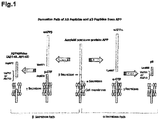
- a ⁇ is produced as a result of proteolysis of amyloid precursor protein (APP) which is a single-pass transmembrane protein and is composed of 770 amino acid residues, by ⁇ -secretase and ⁇ -secretase (see Fig. 1 ).
- APP amyloid precursor protein
- Non-Patent Document 2 Appearance of senile plaques due to aggregation of A ⁇ accompanying fibrosis triggers aggregation and accumulation of tau protein inside neurocytes to cause nerve malfunction and neuronal cell death. It is considered that this results in extreme deterioration of the cognitive ability. It has long been known that A ⁇ mainly consists of 40 mer (A ⁇ 1-40) and 42 mer (A ⁇ 1-42) and migrates into cerebrospinal fluid (CSF) and blood. Further, in recent years, existence of A ⁇ -like peptides having lengths different from those of A ⁇ 1-40 and A ⁇ 1-42 in CSF has been reported (Non-Patent Document 2).
- Alzheimer's disease develops latently and advances slowly. Diagnosis of Alzheimer's disease is made by performing ADAS-cog, MMSE, DemTect, SKT, or a test of cognitive function such as a clock drawing test for examining the clinical symptom, and examination of image findings of magnetic resonance imaging diagnosis (MRI), positron emission tomography (PET) and the like in combination. While MRI is an image diagnostic method capable of detecting cerebral degenerative atrophy, cerebral atrophy is not specific for Alzheimer's disease. Meanwhile, as an image diagnostic method that visualizes retention of a ligand molecule that specifically detects A ⁇ deposits (PiB: Pittsburgh compound-B), PiB-PET has been known.
- MRI magnetic resonance imaging diagnosis
- PET positron emission tomography
- PiB-PET thioflavin T-analogue
- a biomarker in blood or cerebrospinal fluid (CSF) is a useful index capable of detecting the development and progression of a disease on the molecular level.
- CSF cerebrospinal fluid
- a decrease in concentration of A ⁇ 1-42 in CSF or concentration ratio of A ⁇ 1-42/A ⁇ 1-40, and an increase in total tau value or phosphorylation tau value are reported to be a useful diagnostic marker (Patent Document 1: JP-A-2010-19864 , Non-Patent Document 3).
- collection of CSF is highly invasive, and is not suited as a method that allows the citizen to widely have the examination.
- Non-Patent Document 3 the reason for this has not been elucidated.
- Patent Document 2 JP-A-2013-63976 discloses a monoclonal antibody that does not recognize a soluble A ⁇ monomer, but specifically binds only to a soluble A ⁇ oligomer, and also discloses a diagnostic method of Alzheimer's disease using the antibody.
- the paragraph [0104] of the publication discloses a method in which when the ratio of A ⁇ oligomer to A ⁇ monomer in a sample of a subject is higher than that of a normal healthy person, the subject is determined as being a candidate for Alzheimer's disease.
- Non-Patent Document 4 discloses existence of 22 kinds of APP-derived A ⁇ and A ⁇ -like peptides in human plasma by combination of immunoprecipitation and a mass spectrometer, and also discloses a method for quantifying these A ⁇ and A ⁇ -like peptides.
- PiB-PET is effective for detecting A ⁇ accumulation, it requires high examination cost and long time for executing the examination, and thus is not a diagnostic method that allows for a majority of elderly people to easily undergo the examination. Therefore, a simplified analytical method capable of detecting increase in A ⁇ accumulation before exteriorization of clinical symptoms has been demanded.
- an examination method using a biomarker existing in blood or cerebrospinal fluid (CSF) as an index is an effective method capable of conveniently detecting the development and progression of a disease on the molecular level.
- Patent Document 1 and Non-Patent Document 3 described above have reported that in Alzheimer's disease, a decrease in concentration of A ⁇ 1-42 in CSF or concentration ratio of A ⁇ 1-42/A ⁇ 1-40, and an increase in total tau value or phosphorylation tau value are useful diagnostic markers. On the other hand, however, Non-Patent Document 3 has also reported that the relationship between blood A ⁇ 1-42 concentration and AD development is low unlike the case of CSF A ⁇ 1-42.
- Non-Patent Document 4 a method for quantifying these peptides has been developed.
- An object of the present invention is to provide a biomarker for evaluating a cerebral A ⁇ accumulation state using an amyloid precursor protein (APP) -derived peptide in a living body-derived sample as an index, and a method for analysis thereof.
- an object of the present invention is to provide a biomarker for evaluating a cerebral A ⁇ accumulation state using amyloid precursor protein (APP)-derived A ⁇ and A ⁇ -like peptide in a blood sample as an index, and a method for analysis thereof.
- APP amyloid precursor protein
- an object of the present invention to provide a marker to be used for, for example, presymptomatic diagnosis, screening for subjects of developing preventive intervention (pre-emptive therapeutic drug administration etc.) and evaluation of drug efficacy of therapeutic drugs and prophylactic drugs regarding Alzheimer's disease, and a method for analysis thereof.
- a ⁇ is used as an abbreviation of an amyloid ⁇ peptide. That is, “A ⁇ ” includes A ⁇ 1-40 and A ⁇ 1-42.
- a Peptide other than the A ⁇ generated by cleavage of amyloid precursor protein (APP) may be referred to as an A ⁇ -like peptide.
- a ⁇ and an A ⁇ -like peptide that are generated by cleavage of amyloid precursor protein (APP) may be referred to as "APP-derived peptide”.
- the present invention includes the following aspects.
- the term "level of marker” basically means a concentration, but may be other units applied correspondingly to concentration by a person skilled in the art.
- the term "test subject” includes human, and mammals other than human (rat, dog, cat etc.).
- the living body-derived sample is disposed of rather than being returned to the test subject (for example, subject) from which the biological sample is derived.
- the medical intervention includes administration of a therapeutic drug or a prophylactic drug, dietetic therapy, exercise therapy, learning therapy, surgical operation and the like.
- the present invention provides a marker for determining a cerebral A ⁇ accumulation state of a test subject, including a combination of APP672-713 (A ⁇ 1-42) (SEQ ID NO.: 6) and at least one selected from the group consisting of APP669-711 (SEQ ID NO.: 7), APP672-709 (A ⁇ 1-38) (SEQ ID NO.: 1), APP674-711 (A ⁇ 3-40) (SEQ ID NO.: 2), APP672-710 (A ⁇ 1-39) (SEQ ID NO.: 3), APP672-711 (A ⁇ 1-40) (SEQ ID NO.: 4), and OxAPP672-711 (OxA ⁇ 1-40) (SEQ ID NO.: 5) in a living body-derived sample. Also, the present invention provides a method for analysis of the marker.
- the present invention is applicable to detection of not only the advanced stage of Alzheimer's disease in which cerebral A ⁇ is excessively accumulated and a cognitive functional disorder has appeared, but also the early stage of Alzheimer's disease in which cerebral A ⁇ is excessively accumulated but a cognitive functional disorder has not been appeared.
- the living body-derived sample not only blood, but also cerebrospinal fluid (CSF), urine, body secreting fluid, feces, saliva, and sputum can be used. Therefore, in the stage where the preventive method and the pre-emptive therapeutic method for Alzheimer's disease have established, analysis of a cerebral A ⁇ accumulation state for a person having normal cognitive function in a general medical examination, a complete physical examination and the like is effective for presymptomatic diagnosis of Alzheimer's disease.
- CSF cerebrospinal fluid
- the present invention By applying the present invention before and after a medical intervention performed for the test subject, it is possible to evaluate the drug efficacy of a therapeutic drug or a prophylactic drug for Alzheimer's disease, or to evaluate the efficacy of other treatment. Also, the present invention is useful for follow-up of a patient suffering from Alzheimer's disease.
- the test subject includes human, and mammals other than human (rat, dog, cat etc.).
- mammals other than human rat, dog, cat etc.
- the description will be made mainly for the case of human, but the same applies to mammals other than human.
- the subject may be any individuals including a person expected to be a normal healthy person regardless of past clinical history.
- a cerebral A ⁇ accumulation state can be determined in a general medical examination, or a complete physical examination, preferably by a blood test, and the method is particularly effective for early detection/diagnosis of Alzheimer's disease.
- the method of the present invention can assist the diagnosis of Alzheimer's disease.
- the marker of the present invention can be detected and analyzed in a living body-derived sample of a subject. Therefore, in the method of the present invention, a level of a marker in a living body-derived sample of a subject is analyzed.
- the living body-derived sample can be selected from body fluids such as blood, cerebrospinal fluid (CSF), urine, body secreting fluid, saliva, and sputum; and feces.
- body fluids such as blood, cerebrospinal fluid (CSF), urine, body secreting fluid, saliva, and sputum; and feces.
- CSF cerebrospinal fluid
- urine body secreting fluid
- saliva saliva
- sputum feces
- feces feces.
- blood is preferred for diagnosis and presymptomatic diagnosis of Alzheimer's disease in a general medical examination, a complete physical examination or the like.
- the blood sample is a sample that is directly subjected to a measurement step of marker level, and includes whole blood, plasma, serum and the like.
- the blood sample can be prepared by appropriately treating whole blood collected from a test subject.
- the treatment performed in the case of preparing a blood sample from collected whole blood is not particularly limited, and any treatment that is clinically acceptable may be performed. For example, centrifugal separation or the like may be performed.
- the blood sample subjected to the measurement step may be appropriately stored at a low temperature such as freezing in the intermediate stage of the preparation step or in the post stage of the preparation step.
- the living body-derived sample such as a blood sample is disposed of rather than being returned to the subject from which it is derived.
- the marker of the present invention includes a combination of APP672-713 (A ⁇ 1-42) (SEQ ID NO.: 6) and at least one selected from the group consisting of APP669-711 (SEQ ID NO.: 7), APP672-709 (A ⁇ 1-38) (SEQ ID NO.: 1), APP674-711 (A ⁇ 3-40) (SEQ ID NO.: 2), APP672-710 (A ⁇ 1-39) (SEQ ID NO. : 3), APP672-711 (A ⁇ 1-40) (SEQ ID NO.: 4), and OxAPP672-711 (OxA ⁇ 1-40) (SEQ ID NO.: 5) in a living body-derived sample.
- APP672-713 A ⁇ 1-42
- APP672-709 A ⁇ 1-38
- APP674-711 A ⁇ 3-40
- APP672-710 A ⁇ 1-39
- SEQ ID NO. : 3 APP672-711
- OxAPP672-711 OxA ⁇ 1-40
- Amyloid precursor protein is a single-pass transmembrane protein and is composed of 770 amino acid residues.
- Amyloid precursor protein (APP) is proteolyzed by ⁇ secretase and ⁇ secretase, and an amyloid ⁇ peptide (A ⁇ ) is produced by the proteolysis.
- APP672-713 and A ⁇ 1-42 indicate the same peptide (SEQ ID NO.: 6).
- APP672-711 and A ⁇ 1-40 indicate the same peptide (SEQ ID NO.: 4).
- Table 1 shows amino acid sequences of APP-derived peptides
- Table 2 shows theoretical average masses of the same. For these peptides, analysis of a marker for determining a cerebral A ⁇ accumulation state was performed.
- SEQ ID NO. APP-derived peptides Sequence 1 APP672-709(A ⁇ 1-38) DAEFRHDSGYEVHHQKLVFFAEDVGSNKGAIIGLMVGG 2 APP674-711 (A ⁇ 3-40) EFRHDSGYEVHHQKLVFFAEDVGSNKGAIIGLMVGGVV 3 APP672-710(A ⁇ 1-39) DAEFRHDSGYEVHHQKLVFFAEDVGSNKGAIIGLMVGGV 4 APP672-711(A ⁇ 1-40) DAEFRHDSGYEVHHQKLVFF71EDVGSNKGAIIGLMVGGW 5 OxAPP672-711 DAEFRHDSGYEVHHQKLVFFAEDVGSNKGAIIGL M VGGVV (OxA ⁇ 1-40) 6 APP672-7
- OxAPP672-711 (OxA ⁇ 1-40) of SEQ ID NO. : 17 indicates a peptide oxidized at Met 706 in APP672-711 (A ⁇ 1-40) of SEQ ID NO.: 16.
- the markers of the present invention may include mutation of familial Alzheimer's disease in the amino acid sequence that is generally known.
- Leuven mutation Amino acid E at APP682 is mutated into K.
- a method for analyzing the marker of the present invention includes:
- a method for analyzing the marker of the present invention includes:
- the term "level of marker” basically means a concentration, but may be other units applied correspondingly to concentration by a person skilled in the art, for example, a detected ion intensity in the mass spectrometry.
- the concentration of the marker in the living body-derived sample is analyzed by comparing a measurement value and a standard value.
- the measurement value and the standard value to be compared are values based on the living body-derived samples prepared in the same conditions (pretreatment condition, storage condition and the like) .
- the standard level of the marker a measurement value for a person having normal cognitive function who is negative for cerebral A ⁇ accumulation NC- can be used.
- a concentration standard value established for a person having normal cognitive function who is negative for intracerebral A ⁇ accumulation NC- may be used as the standard level of the marker.
- a marker is measured, preferably, by test based on biological molecule specific affinity.
- the test based on biological molecule specific affinity is a method well known to a person skilled in the art and is not particularly limited, but is preferably an immunoassay.
- Specific examples of the immunoassay include competitive and non-competitive assays such as western blotting, radioimmunoassay, ELISA (Enzyme-Linked ImmunoSorbent Assay) (sandwich immunoassay, competitive assay, and direct binding assay are included), immunoprecipitation, precipitation reaction, immunodiffusion, immunoagglutination measurement, complement-binding reaction analysis, immunoradiometric assay, fluorescence immunoassay, and protein A immunoassay.
- an antibody that binds to the marker in a living body-derived sample is detected.
- the measurement of the marker may be performed by using an immunoglobulin having an antigen binding site capable of recognizing an amyloid precursor protein (APP) -derived peptide, or an antibody-immobilizing carrier prepared by using an immunoglobulin fragment having an antigen binding site capable of recognizing an amyloid precursor protein (APP)-derived peptide.
- an antibody-immobilizing carrier prepared by using an immunoglobulin fragment having an antigen binding site capable of recognizing an amyloid precursor protein (APP)-derived peptide.
- a peptide in the sample can be detected by a mass spectrometer (Immunoprecipitation-Mass Spectrometry: IP-MS).
- a blood sample derived from a test subject is subjected to detection of a marker containing APP672-713 (A ⁇ 1-42) (SEQ ID NO. : 6) to obtain a measurement level of APP672-713 (A ⁇ 1-42) in the blood sample; and an amount of cerebral A ⁇ accumulation of the test subject is determined to be larger than an amount of cerebral A ⁇ accumulation of a person having normal cognitive function NC- who is negative for cerebral A ⁇ accumulation, when the measurement level of APP672-713 (A ⁇ 1-42) of the test subject is lower than a standard level which is a level of APP672-713 (A ⁇ 1-42) of the person having normal cognitive function NC-.
- the amount of a matter indicated by % is based on weight when the matter is a subject, and based on volume when the matter is liquid unless otherwise indicated.
- Plasma samples of cases classified into groups of NC-, NC+, MCI, and AD were prepared at National Center for Geriatrics and Gerontology.
- PiB-PET images of the brains of the subjects were acquired.
- the PiB accumulation amount of the cerebral cortex is larger than or equivalent to the non-specific PiB accumulation amount of the white matter, the subject was determined as positive.
- the subject was determined as negative.
- the cognitive impairment was determined in conformity with the NIA-AA criteria published in 2011.
- Table 3 shows the feature and the number of cases of each group. [Table 3] Outline of Clinical Sample Group n PiB-PET Dementia NC- 22 - - NC+ 11 + - MCI 12 + + AD 17 + ++
- a blood marker showing variation in measurement level in the NC+ group which is determined as positive for cerebral A ⁇ accumulation although does not have a cognitive impairment in comparison with the NC- group, is effective for diagnosis.
- F(ab') 2 fractions of 6E10 and 4G8 were respectively reduced by 30 mM cysteamine to obtain F(ab'). Then 5 ⁇ L (amount of beads 150 ⁇ g) of amino magnetic beads (Dynabeads M-270 Amine: Invitrogen) was prepared, and PEG and the beads were covalently bound by causing NHS groups of SM (PEG) 24 to react with amino groups bound onto the surface of the beads at room temperature for 30 minutes.
- SM amino magnetic beads
- each 0.25 ⁇ g of 6E10 F (ab') and 4G8 F(ab') were added at the same time, and they were caused to react at room temperature for 2 hours to covalently bind a maleimide group and a thiol group. Finally, 0.4 mM L-cysteine was caused to react at room temperature for 30 minutes to block maleimide groups.
- the prepared antibody-immobilizing beads were stored at 4°C before use.
- a ⁇ 1-38 As an internal standard peptide, A ⁇ 1-38 (referred to as SIL-A ⁇ 1-38) that is a stable isotope-labeled AnaSpec (San Jose, CA, USA) was used. In SIL-A ⁇ 1-38, carbon atoms in Phe and Ile are substituted by 13 C. After dissolving a dry product of SIL-A ⁇ 1-38 in 50 mM NaOH, size exclusion chromatography (SEC) was performed by a Prominence HPLC System (Shimadzu Corp, Kyoto, Japan) installed with a COSMOSIL(R) 5Diol-120-II [7.5 mm I.D. x 600 mm] column (Nacalai Tesque, Kyoto).
- SEC size exclusion chromatography
- IP-MS was performed by using antibody-immobilizing beads with the use of SIL-A ⁇ 1-38 as the internal standard peptide.
- a binding buffer (0.2%(w/v) n-Dodecyl- ⁇ -D-maltoside (DDM), 0.2%(w/v) n-Nonyl- ⁇ -D-thiomaltoside (NTM), 800 mM GlcNAc, 100 mM Tris-HCl, 300 mM NaCl, pH 7.4) containing 10 pM SIL-A ⁇ 1-38 was mixed.
- the precipitate contained in the plasma sample was centrifugally removed by using Ultrafree-MC, DV 0.65 ⁇ m, centrifugal filter devices.
- Protein G Plus Agarose 50% slurry; Pierce, Rockford, IL
- a washing buffer (0.1%(w/v) DDM, 0.1% (w/v) NTM, 50 mM Tris-HCl, 150 mM NaCl, pH 7.4
- the plasma sample was mixed into 150 ⁇ g of antibody-immobilizing beads that was washed twice with an OTG-glycine buffer (1% n-Octyl- ⁇ -D-thioglucoside (OTG), 50 mM glycine, pH 2.8) and three times with 100 ⁇ L of a washing buffer, and the mixture was incubated at 4°C for 1 hour to capture A ⁇ and A ⁇ -like peptides. Thereafter, the beads were washed once with 500 ⁇ L of a washing buffer, four times with 100 ⁇ L of a washing buffer, and twice with 20 ⁇ L of 50 mM ammonium acetate.
- OTG-glycine buffer 1% n-Octyl- ⁇ -D-thioglucoside (OTG), 50 mM glycine, pH 2.8
- a ⁇ and As-like peptides captured on the antibody-immobilizing beads were eluted with 2.5 ⁇ L of 70% acetonitrile containing 5 mM hydrochloric acid. Each 0.5 ⁇ L of the eluate was dropped into 4 wells on a ⁇ Focus MALDI plateTM 900 ⁇ m. After mixing 0.5 ⁇ L of a matrix solution (0.5 mg/mL CHCA, 0.2% (w/v) MDPNA), measurement was performed by Linear TOF MS.
- a matrix solution 0.5 mg/mL CHCA, 0.2% (w/v) MDPNA
- the number of data of peak intensity ratio used for averaging of a certain peptide is four at maximum, the number of data decreases when the peak intensity is less than the detection limit (S/N ⁇ 3), or an outlier arises.
- the intensity ratio at the peak is defined as not detectable (N/D) in the immunoprecipitation at that time.
- Fig. 2 is a box-and-whisker plot showing the intensity ratio of APP672-713 (A ⁇ 1-42) to the internal standard SIL-A ⁇ 1-38 in each group for APP672-713 (A ⁇ 1-42).
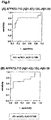
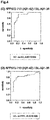
- Fig. 3(A), Fig. 3(B) , Fig. 4(C), and Fig. 4(D) each show an ROC curve of each group (NC+, MCI, AD, PiB+) versus NC- group for APP672-713 (A ⁇ 1-42)/SIL-A ⁇ 1-38.
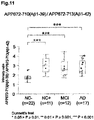
- the range indicated by the box in each group represents the intensity ratio contribution range (quartile range) of the samples whose concentration is rated between 25 to 75% of all specimens
- the horizontal lines shown above and below the box respectively indicate the maximum value and the minimum value of the samples within the range from the upper end and the lower end of the box to 1.5 times the quartile range
- the horizontal bar in the box indicates the median of the intensity ratio
- the intensity ratio APP672-713 (A ⁇ 1-42) /SIL-A ⁇ 1-38 decreased in NC+, MCI, and AD with a statistical significant difference in comparison with NC-.
- NC- vs PiB+ 0.808 revealed that the performance capable of detecting the subject who is positive for cerebral A ⁇ accumulation is relatively high. Accordingly, this suggests that APP672-713 (A ⁇ 1-42) is a blood marker capable of estimating a cerebral A ⁇ accumulation state, and thus it has the possibility capable of being used for assisting diagnosis of Alzheimer's disease.
- Fig. 5 is a box-and-whisker plot showing the intensity ratio of APP672-709 (A ⁇ 1-38) to APP672-713 (A ⁇ 1-42) in each group.
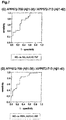
- Fig. 6(A), Fig. 6(B) , Fig. 7(C), and Fig. 7(D) each show an ROC curve of each group (NC+, MCI, AD, PiB+) versus NC- group for APP672-709 (A ⁇ 1-38)/APP672-713 (A ⁇ 1-42).
- Fig. 8 is a box-and-whisker plot showing the intensity ratio of APP674-711 (A ⁇ 3-40) to APP672-713 (A ⁇ 1-42) in each group.
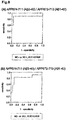
- Fig. 9(A), Fig. 9(B) , Fig. 10(C), and Fig. 10(D) each show an ROC curve of each group (NC+, MCI, AD, PiB+) versus NC- group for APP674-711 (A ⁇ 3-40)/APP672-713 (A ⁇ 1-42).
- Fig. 11 is a box-and-whisker plot showing the intensity ratio of APP672-710 (A ⁇ 1-39) to APP672-713 (A ⁇ 1-42) in each group.
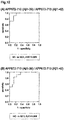
- Fig. 12(A), Fig. 12(B) , Fig. 13(C), and Fig. 13(D) each show an ROC curve of each group (NC+, MCI, AD, PiB+) versus NC- group for APP672-710 (A ⁇ 1-39)/APP672-713 (A ⁇ 1-42).
- Fig. 14 is a box-and-whisker plot showing the intensity ratio of APP672-711 (A ⁇ 1-40) to APP672-713 (A ⁇ 1-42) in each group.
- Fig. 15(A), Fig. 15(B) , Fig. 16(C), and Fig. 16(D) each show an ROC curve of each group (NC+, MCI, AD, PiB+) versus NC- group for APP672-711 (A ⁇ 1-40)/APP672-713 (A ⁇ 1-42).
- Fig. 17 is a box-and-whisker plot showing the intensity ratio of OxAPP672-711 (OxA ⁇ 1-40) to APP672-713 (A ⁇ 1-42) in each group.
- Fig. 18 (A), Fig. 18(B) , Fig. 19(C), and Fig. 19(D) each show an ROC curve of each group (NC+, MCI, AD, PiB+) versus NC-group for OxAPP672-711 (OxA ⁇ 1-40)/APP672-71 (A ⁇ 1-42).
- Fig. 20 is a box-and-whisker plot showing the intensity ratio of APP669-711 to APP672-713 (A ⁇ 1-42) in each group.
- Fig. 21(A), Fig. 21(B) , Fig. 22(C), and Fig. 22(D) each show an ROC curve of each group (NC+, MCI, AD, PiB+) versus NC- group for APP669-711/APP672-713 (A ⁇ 1-42).
- ROC curves of NC+, MCI, AD, and PiB+ groups versus NC- group were prepared.
- AUC of NC+, MCI, AD versus NC- group was 0.930 or more in the ROC curve of APP669-711/APP672-713 (A ⁇ 1-42) in particular, revealing that the ability capable of discrimination between NC- and NC+, NC- and MCI, and NC- and AD is very high.
- NC- vs PiB+ 0.969 also revealed that the performance capable of detecting the subject who is positive for cerebral A ⁇ accumulation is very high. Accordingly, this suggests that these six kinds of ratios are blood markers capable of estimating a cerebral A ⁇ accumulation state, and thus they have a possibility capable of being used for assisting diagnosis of Alzheimer's disease.
- Cut-off point cut-off point
- Positive Predictive Value PPV number of true positive / number of true positive + number of false positive
- Negative Predictive Value NPV number of true negative / number of true negative + number of false negative
- Accuracy number of true positive + number of true negative / number of total cases .
- APP669-711/APP672-713 shows very high numerical values in all of Specificity, Sensitivity, Positive Predictive Value (PPV), Negative Predictive Value (NPV), and Accuracy, revealing that it has high ability capable of discriminating between NC- and NC+, MCI, AD, and PiB+, and in particular, it is effective for determination of positivity of cerebral A ⁇ accumulation.
- the very high ability capable of discrimination between NC-, and NC+, MCI, and AD also indicates the applicability to assist diagnosis of Alzheimer's disease.
- Cerebral A ⁇ accumulation is an important pathological index for Alzheimer's disease, and excessive accumulation of A ⁇ is known to begin far in advance of exteriorization of dementia.
- PiB is a radioactive agent that specifically binds with A ⁇ aggregate, and by measuring accumulation of PiB with the use of PET, it is possible to form an image of the cerebral A ⁇ accumulation.
- Fig. 23 is a scatter diagram for a total of 62 cases, in which the horizontal axis represents the PiB accumulation mean value (mcSUVR) and the vertical axis represents APP669-711/APP672-713 (A ⁇ 1-42) ratio.
- the PiB accumulation mean value was measured by quantifying PiB accumulation of the cortex, and determining accumulation ratio of the cerebrum on the basis of the cerebellum. Correlation between APP669-711/APP672-713 (A ⁇ 1-42) ratio obtained by IP-MS and PiB accumulation mean value (mcSUVR) obtained by PET was evaluated with Pearson product-moment correlation coefficient. As a result, the correlation coefficient (r) was 0.687, p ⁇ 0.001 ( Fig. 23 ).
- the marker of the present invention is useful as a blood marker for determining a cerebral A ⁇ accumulation state. This also has indicated the applicability to assist diagnosis of Alzheimer's disease and to presymptomatically diagnose Alzheimer's disease.
Landscapes
- Health & Medical Sciences (AREA)
- Life Sciences & Earth Sciences (AREA)
- Engineering & Computer Science (AREA)
- Immunology (AREA)
- Biomedical Technology (AREA)
- Molecular Biology (AREA)
- Chemical & Material Sciences (AREA)
- Hematology (AREA)
- Urology & Nephrology (AREA)
- Food Science & Technology (AREA)
- General Physics & Mathematics (AREA)
- Cell Biology (AREA)
- Biotechnology (AREA)
- Medicinal Chemistry (AREA)
- Physics & Mathematics (AREA)
- Analytical Chemistry (AREA)
- Biochemistry (AREA)
- General Health & Medical Sciences (AREA)
- Microbiology (AREA)
- Pathology (AREA)
- Neurology (AREA)
- Neurosurgery (AREA)
- Proteomics, Peptides & Aminoacids (AREA)
- Tropical Medicine & Parasitology (AREA)
- Investigating Or Analysing Biological Materials (AREA)
- Other Investigation Or Analysis Of Materials By Electrical Means (AREA)
- Peptides Or Proteins (AREA)
Priority Applications (1)
| Application Number | Priority Date | Filing Date | Title |
|---|---|---|---|
| EP21208943.7A EP4040157A1 (fr) | 2014-05-22 | 2015-05-19 | Biomarqueur de substitution pour évaluer l'accumulation de peptide d'amyloïde intracérébrale beta et son procédé d'analyse |
Applications Claiming Priority (4)
| Application Number | Priority Date | Filing Date | Title |
|---|---|---|---|
| JP2014106560 | 2014-05-22 | ||
| EP19166974.6A EP3540442B1 (fr) | 2014-05-22 | 2015-05-19 | Biomarqueur de substitution pour évaluation de l'accumulation intracérébrale de peptide bêta-amyloïde et procédé d'analyse associé |
| PCT/JP2015/064386 WO2015178398A1 (fr) | 2014-05-22 | 2015-05-19 | BIOMARQUEUR DE SUBSTITUTION POUR ÉVALUATION DE L'ACCUMULATION DE PEPTIDE β-AMYLOÏDE INTRACÉRÉBRALE ET MÉTHODE D'ANALYSE ASSOCIÉE |
| EP15796166.5A EP3147668B1 (fr) | 2014-05-22 | 2015-05-19 | Biomarqueur de substitution pour évaluation de l'accumulation de peptide -amyloïde beta intracérébrale et méthode d'analyse associée |
Related Parent Applications (3)
| Application Number | Title | Priority Date | Filing Date |
|---|---|---|---|
| EP15796166.5A Division EP3147668B1 (fr) | 2014-05-22 | 2015-05-19 | Biomarqueur de substitution pour évaluation de l'accumulation de peptide -amyloïde beta intracérébrale et méthode d'analyse associée |
| EP19166974.6A Division EP3540442B1 (fr) | 2014-05-22 | 2015-05-19 | Biomarqueur de substitution pour évaluation de l'accumulation intracérébrale de peptide bêta-amyloïde et procédé d'analyse associé |
| EP19166974.6A Division-Into EP3540442B1 (fr) | 2014-05-22 | 2015-05-19 | Biomarqueur de substitution pour évaluation de l'accumulation intracérébrale de peptide bêta-amyloïde et procédé d'analyse associé |
Related Child Applications (1)
| Application Number | Title | Priority Date | Filing Date |
|---|---|---|---|
| EP21208943.7A Division EP4040157A1 (fr) | 2014-05-22 | 2015-05-19 | Biomarqueur de substitution pour évaluer l'accumulation de peptide d'amyloïde intracérébrale beta et son procédé d'analyse |
Publications (2)
| Publication Number | Publication Date |
|---|---|
| EP3783364A2 true EP3783364A2 (fr) | 2021-02-24 |
| EP3783364A3 EP3783364A3 (fr) | 2021-05-19 |
Family
ID=54554066
Family Applications (5)
| Application Number | Title | Priority Date | Filing Date |
|---|---|---|---|
| EP15796166.5A Active EP3147668B1 (fr) | 2014-05-22 | 2015-05-19 | Biomarqueur de substitution pour évaluation de l'accumulation de peptide -amyloïde beta intracérébrale et méthode d'analyse associée |
| EP19166974.6A Active EP3540442B1 (fr) | 2014-05-22 | 2015-05-19 | Biomarqueur de substitution pour évaluation de l'accumulation intracérébrale de peptide bêta-amyloïde et procédé d'analyse associé |
| EP20199160.1A Withdrawn EP3783364A3 (fr) | 2014-05-22 | 2015-05-19 | Biomarqueur de substitution pour évaluer l'accumulation de peptide d'amyloïde intracérébrale beta et son procédé d'analyse |
| EP21208943.7A Pending EP4040157A1 (fr) | 2014-05-22 | 2015-05-19 | Biomarqueur de substitution pour évaluer l'accumulation de peptide d'amyloïde intracérébrale beta et son procédé d'analyse |
| EP19166955.5A Withdrawn EP3540441A1 (fr) | 2014-05-22 | 2015-05-19 | Biomarqueur de substitution pour évaluer l'accumulation de peptide d'amyloïde intracérébrale ss et son procédé d'analyse |
Family Applications Before (2)
| Application Number | Title | Priority Date | Filing Date |
|---|---|---|---|
| EP15796166.5A Active EP3147668B1 (fr) | 2014-05-22 | 2015-05-19 | Biomarqueur de substitution pour évaluation de l'accumulation de peptide -amyloïde beta intracérébrale et méthode d'analyse associée |
| EP19166974.6A Active EP3540442B1 (fr) | 2014-05-22 | 2015-05-19 | Biomarqueur de substitution pour évaluation de l'accumulation intracérébrale de peptide bêta-amyloïde et procédé d'analyse associé |
Family Applications After (2)
| Application Number | Title | Priority Date | Filing Date |
|---|---|---|---|
| EP21208943.7A Pending EP4040157A1 (fr) | 2014-05-22 | 2015-05-19 | Biomarqueur de substitution pour évaluer l'accumulation de peptide d'amyloïde intracérébrale beta et son procédé d'analyse |
| EP19166955.5A Withdrawn EP3540441A1 (fr) | 2014-05-22 | 2015-05-19 | Biomarqueur de substitution pour évaluer l'accumulation de peptide d'amyloïde intracérébrale ss et son procédé d'analyse |
Country Status (7)
| Country | Link |
|---|---|
| US (1) | US11231413B2 (fr) |
| EP (5) | EP3147668B1 (fr) |
| JP (3) | JP6410810B2 (fr) |
| CN (1) | CN106574930B (fr) |
| AU (2) | AU2015262399B9 (fr) |
| ES (2) | ES2933952T3 (fr) |
| WO (1) | WO2015178398A1 (fr) |
Families Citing this family (25)
| Publication number | Priority date | Publication date | Assignee | Title |
|---|---|---|---|---|
| CN108027376B (zh) * | 2015-09-16 | 2021-04-02 | 株式会社岛津制作所 | 评价脑内的淀粉样蛋白β蓄积状态的多重生物标记物及其分析方法 |
| KR102064060B1 (ko) * | 2017-03-23 | 2020-02-11 | 서울대학교산학협력단 | 뇌의 베타 아밀로이드 축적 감별용 혈중 바이오마커 |
| JP7434144B2 (ja) * | 2018-02-27 | 2024-02-20 | 株式会社島津製作所 | APP669-xのN末端を特異的に認識する抗体、及び免疫測定法 |
| JP7156081B2 (ja) * | 2019-02-20 | 2022-10-19 | 株式会社島津製作所 | 認知機能の指標化方法 |
| JP7207517B2 (ja) * | 2019-03-01 | 2023-01-18 | 株式会社島津製作所 | App669-711の測定方法、及び測定用キット |
| JP7543251B2 (ja) * | 2019-03-29 | 2024-09-02 | 味の素株式会社 | アミロイドベータの脳内への蓄積の評価を補助する方法、算出方法、評価装置、算出装置、評価プログラム、算出プログラム、記録媒体、評価システムおよび端末装置 |
| US12461092B2 (en) | 2019-04-26 | 2025-11-04 | Shimadzu Corporation | Screening method for APP cleavage activity-controlling substances of ADAMTS4 |
| JP7334781B2 (ja) * | 2019-06-28 | 2023-08-29 | 株式会社島津製作所 | アミロイドβの脳内蓄積状態評価方法及び評価装置 |
| CN114026109A (zh) * | 2019-07-05 | 2022-02-08 | 株式会社岛津制作所 | β淀粉样蛋白的单克隆抗体、和使用该抗体的β淀粉样蛋白相关肽的测定方法 |
| WO2021009074A1 (fr) | 2019-07-12 | 2021-01-21 | Adx Neurosciences Nv | Nouveaux marqueurs utilisés en tant que prédicteurs précoces de la maladie d'alzheimer |
| DE102020114278A1 (de) | 2020-05-28 | 2021-12-02 | Forschungszentrum Jülich GmbH | Bestimmung krankheitsspezifischer Protein-Aggregate in Stuhlproben |
| WO2022030032A1 (fr) | 2020-08-07 | 2022-02-10 | 株式会社 島津製作所 | Procédé de correction de différences de machine pour appareil de spectrométrie de masse |
| JP7342821B2 (ja) | 2020-09-01 | 2023-09-12 | 株式会社島津製作所 | 分析作業支援装置及び分析作業支援ソフトウェア |
| EP4290229A4 (fr) | 2021-02-08 | 2024-12-04 | Shimadzu Corporation | Procédé d'analyse |
| WO2022176612A1 (fr) | 2021-02-22 | 2022-08-25 | 株式会社 島津製作所 | Agent d'étalonnage utilisable dans un spectromètre de masse et procédé associé de production |
| CN116868057A (zh) | 2021-02-25 | 2023-10-10 | 株式会社岛津制作所 | 肽测定中的品质管理用标准溶液及肽测定的品质管理 |
| CN117157526A (zh) | 2021-04-05 | 2023-12-01 | 株式会社岛津制作所 | 标准曲线的制作方法及β淀粉样蛋白相关肽的测定方法 |
| WO2022239537A1 (fr) | 2021-05-14 | 2022-11-17 | 株式会社島津製作所 | Procédé d'analyse d'un peptide apparenté à la neurogranine |
| US20250123296A1 (en) | 2021-07-21 | 2025-04-17 | Shimadzu Corporation | A Beta Biomarker of Alzheimer’s Disease Model Mouse and Analysis Method Thereof |
| CN118541601A (zh) | 2022-01-13 | 2024-08-23 | 株式会社岛津制作所 | 神经颗粒蛋白相关肽的分析方法 |
| EP4535003A4 (fr) * | 2022-05-24 | 2026-05-06 | Shimadzu Corp | Procédé de préparation d'une solution d'échantillon contenant un peptide associé à la neurogranine, et procédé d'analyse d'un peptide associé à la neurogranine |
| JP7758344B2 (ja) | 2022-10-03 | 2025-10-22 | 有限会社 坂本薬草園 | アルツハイマー型認知症抑制剤およびその製造方法 |
| WO2024185667A1 (fr) | 2023-03-03 | 2024-09-12 | 株式会社島津製作所 | Procédé d'estimation d'état neurodégénératif cérébral |
| JPWO2024185666A1 (fr) | 2023-03-03 | 2024-09-12 | ||
| WO2025183053A1 (fr) * | 2024-02-29 | 2025-09-04 | 株式会社島津製作所 | Procédé de spectrométrie de masse pour modification et/ou fragmentation post-traductionnelle de protéine tau dans un fluide biologique |
Citations (2)
| Publication number | Priority date | Publication date | Assignee | Title |
|---|---|---|---|---|
| JP2010019864A (ja) | 1998-07-03 | 2010-01-28 | Innogenetics Nv | 神経変性の分別診断 |
| JP2013063976A (ja) | 2008-02-08 | 2013-04-11 | Immunas Pharma Inc | Aβオリゴマーに特異的に結合する抗体およびその利用 |
Family Cites Families (14)
| Publication number | Priority date | Publication date | Assignee | Title |
|---|---|---|---|---|
| KR19990036439A (ko) * | 1995-08-16 | 1999-05-25 | 게리 디. 스트리트, 스티븐 엘. 네스비트 | βΑ4 펩티드의 응집도 결정 방법 |
| US20040014142A1 (en) | 1998-07-03 | 2004-01-22 | Innogenetics N.V. | Differential diagnosis of neurodegeneration |
| CN1635119A (zh) * | 2003-12-25 | 2005-07-06 | 张小如 | 一种生产老年性痴呆致病物质淀粉样变多肽β(Aβ)的方法及其产物 |
| UY29504A1 (es) * | 2005-04-29 | 2006-10-31 | Rinat Neuroscience Corp | Anticuerpos dirigidos contra el péptido amiloide beta y métodos que utilizan los mismos. |
| EP1865326B1 (fr) | 2006-06-08 | 2011-09-07 | FU Berlin | Analyse de diagnostic de la maladie d'Alzheimer basée sur la détermination du rapport de produits de division secrétase Aß |
| WO2008058760A1 (fr) * | 2006-11-17 | 2008-05-22 | Friedrich-Alexander-Universität Erlangen-Nürnberg | Méthode pour établir un diagnostic différentiel de démences |
| JP4983803B2 (ja) * | 2006-11-29 | 2012-07-25 | 株式会社島津製作所 | 免疫沈降を用いた生体試料の質量分析法 |
| TW200907056A (en) * | 2007-03-28 | 2009-02-16 | Astrazeneca Ab | New method |
| ITMI20071975A1 (it) * | 2007-10-12 | 2009-04-13 | Fond I R C C S Istituto Neur O | Prodotti e loro uso per la diagnosi prevenzione e-o cura di patologie umane e-o animali caraterizzate dalla anomala deposizione di sostanza b-amiloide e-o similamiloide in organi e tesstui umani e-o animali e metodo di screening per la determinazione |
| JP2010001986A (ja) | 2008-06-20 | 2010-01-07 | Nsk Ltd | 一方向クラッチ内蔵型回転伝達装置 |
| BR112012014060B8 (pt) * | 2009-12-11 | 2021-07-27 | Araclon Biotech Sl | método para o diagnóstico da doença de alzheimer em um sujeito, para detecção da disfunção cognitiva branda ou para diferenciar a doença de alzheimer da disfunção cognitiva branda |
| AU2012359020B2 (en) | 2011-12-19 | 2017-04-13 | The Washington University | Methods for diagnosing Alzheimer's disease |
| US10942190B2 (en) | 2014-01-21 | 2021-03-09 | Shimadzu Corporation | Measurement method for amyloid precursor protein cleavage peptides |
| JP6424757B2 (ja) | 2015-07-14 | 2018-11-21 | 株式会社島津製作所 | ポリペプチドの質量分析方法 |
-
2015
- 2015-05-19 AU AU2015262399A patent/AU2015262399B9/en active Active
- 2015-05-19 EP EP15796166.5A patent/EP3147668B1/fr active Active
- 2015-05-19 CN CN201580040000.7A patent/CN106574930B/zh active Active
- 2015-05-19 US US15/313,376 patent/US11231413B2/en active Active
- 2015-05-19 JP JP2016521119A patent/JP6410810B2/ja active Active
- 2015-05-19 EP EP19166974.6A patent/EP3540442B1/fr active Active
- 2015-05-19 EP EP20199160.1A patent/EP3783364A3/fr not_active Withdrawn
- 2015-05-19 WO PCT/JP2015/064386 patent/WO2015178398A1/fr not_active Ceased
- 2015-05-19 ES ES19166974T patent/ES2933952T3/es active Active
- 2015-05-19 ES ES15796166T patent/ES2769048T3/es active Active
- 2015-05-19 EP EP21208943.7A patent/EP4040157A1/fr active Pending
- 2015-05-19 EP EP19166955.5A patent/EP3540441A1/fr not_active Withdrawn
-
2018
- 2018-09-21 JP JP2018177878A patent/JP2019053063A/ja active Pending
-
2020
- 2020-07-07 JP JP2020117196A patent/JP7008268B2/ja active Active
-
2021
- 2021-03-05 AU AU2021201434A patent/AU2021201434B2/en active Active
Patent Citations (2)
| Publication number | Priority date | Publication date | Assignee | Title |
|---|---|---|---|---|
| JP2010019864A (ja) | 1998-07-03 | 2010-01-28 | Innogenetics Nv | 神経変性の分別診断 |
| JP2013063976A (ja) | 2008-02-08 | 2013-04-11 | Immunas Pharma Inc | Aβオリゴマーに特異的に結合する抗体およびその利用 |
Non-Patent Citations (4)
| Title |
|---|
| BLENNOW KDE LEON MJZETTERBERG H.: "Alzheimer's disease", LANCET, vol. 368, no. 9533, 29 July 2006 (2006-07-29), pages 387 - 403 |
| HAMPEL HSHEN YWALSH DMAISEN PSHAW LMZETTERBERG HTROJANOWSKI JQBLENNOW K: "Biological markers of amyloid beta-related mechanisms in Alzheimer's disease", EXP NEUROL, vol. 223, no. 2, June 2010 (2010-06-01), pages 334 - 46, XP027038373 |
| KANEKO NYAMAMOTO RSATO TATANAKA K.: "Identification and quantification of amyloid beta-related peptides in human plasma using matrix-assisted laser desorption/ionization time-of-flight mass spectrometry", PROC JPN ACAD SER B PHYS BIOL SCI, vol. 90, no. 3, 2014, pages 104 - 17 |
| PORTELIUS EWESTMAN-BRINKMALM AZETTERBERG HBLENNOW K.: "Determination of beta-amyloid peptide signatures in cerebrospinal fluid using immunoprecipitation-mass spectrometry", J PROTEOME RES, vol. 5, no. 4, April 2006 (2006-04-01), pages 1010 - 6, XP002550741, DOI: 10.1021/pr050475v |
Also Published As
| Publication number | Publication date |
|---|---|
| AU2021201434B2 (en) | 2023-02-23 |
| EP3147668A4 (fr) | 2018-04-18 |
| JP7008268B2 (ja) | 2022-01-25 |
| AU2015262399B2 (en) | 2021-07-01 |
| EP3540442A1 (fr) | 2019-09-18 |
| JP2020193200A (ja) | 2020-12-03 |
| AU2015262399A2 (en) | 2017-01-19 |
| JPWO2015178398A1 (ja) | 2017-04-20 |
| EP3147668B1 (fr) | 2019-12-11 |
| EP3540441A1 (fr) | 2019-09-18 |
| US20170184573A1 (en) | 2017-06-29 |
| JP6410810B2 (ja) | 2018-10-24 |
| AU2021201434A1 (en) | 2021-03-25 |
| CN106574930B (zh) | 2019-09-03 |
| JP2019053063A (ja) | 2019-04-04 |
| ES2933952T3 (es) | 2023-02-15 |
| WO2015178398A1 (fr) | 2015-11-26 |
| ES2769048T3 (es) | 2020-06-24 |
| EP4040157A1 (fr) | 2022-08-10 |
| EP3147668A1 (fr) | 2017-03-29 |
| EP3783364A3 (fr) | 2021-05-19 |
| CN106574930A (zh) | 2017-04-19 |
| AU2015262399B9 (en) | 2021-07-22 |
| EP3540442B1 (fr) | 2022-10-05 |
| AU2015262399A1 (en) | 2016-12-22 |
| US11231413B2 (en) | 2022-01-25 |
Similar Documents
| Publication | Publication Date | Title |
|---|---|---|
| AU2021201434B2 (en) | Surrogate biomarker for evaluating intracerebral amyloid beta peptide accumulation and method for analysis thereof | |
| AU2019205010B2 (en) | Multiplex biomarker for use in evaluation of state of accumulation of amyloid B in brain, and analysis method for said evaluation | |
| US20230243853A1 (en) | Method of identifying biomarkers of neurological diseases and diagnosis of neurological diseases | |
| US20080171394A1 (en) | Method For Diagnosing Multiple Sclerosis | |
| JP7457300B2 (ja) | 神経変性疾患の診断用ペプチドマーカー | |
| WO2006108051A2 (fr) | Compositions et methodes pour le diagnostic et le traitement de la maladie d'alzheimer | |
| JP2023536162A (ja) | 神経変性疾患の診断と予後推定におけるマーカーとしてのp53の翻訳後修飾 | |
| EP4375661A1 (fr) | BIOMARQUEUR D'Aß EN SOURIS DE MODÈLE DE MALADIE D'ALZHEIMER (MA) ET MÉTHODE ASSOCIÉE D'ANALYSE |
Legal Events
| Date | Code | Title | Description |
|---|---|---|---|
| PUAI | Public reference made under article 153(3) epc to a published international application that has entered the european phase |
Free format text: ORIGINAL CODE: 0009012 |
|
| STAA | Information on the status of an ep patent application or granted ep patent |
Free format text: STATUS: THE APPLICATION HAS BEEN PUBLISHED |
|
| AC | Divisional application: reference to earlier application |
Ref document number: 3540442 Country of ref document: EP Kind code of ref document: P Ref document number: 3147668 Country of ref document: EP Kind code of ref document: P |
|
| AK | Designated contracting states |
Kind code of ref document: A2 Designated state(s): AL AT BE BG CH CY CZ DE DK EE ES FI FR GB GR HR HU IE IS IT LI LT LU LV MC MK MT NL NO PL PT RO RS SE SI SK SM TR |
|
| PUAL | Search report despatched |
Free format text: ORIGINAL CODE: 0009013 |
|
| AK | Designated contracting states |
Kind code of ref document: A3 Designated state(s): AL AT BE BG CH CY CZ DE DK EE ES FI FR GB GR HR HU IE IS IT LI LT LU LV MC MK MT NL NO PL PT RO RS SE SI SK SM TR |
|
| RIC1 | Information provided on ipc code assigned before grant |
Ipc: G01N 33/68 20060101AFI20210415BHEP |
|
| STAA | Information on the status of an ep patent application or granted ep patent |
Free format text: STATUS: THE APPLICATION IS DEEMED TO BE WITHDRAWN |
|
| 18D | Application deemed to be withdrawn |
Effective date: 20211120 |