EP3783502B1 - System für persistente anwendungsprogrammdatenobjekte - Google Patents
System für persistente anwendungsprogrammdatenobjekte Download PDFInfo
- Publication number
- EP3783502B1 EP3783502B1 EP19193230.0A EP19193230A EP3783502B1 EP 3783502 B1 EP3783502 B1 EP 3783502B1 EP 19193230 A EP19193230 A EP 19193230A EP 3783502 B1 EP3783502 B1 EP 3783502B1
- Authority
- EP
- European Patent Office
- Prior art keywords
- delta
- store
- objects
- application program
- data store
- Prior art date
- Legal status (The legal status is an assumption and is not a legal conclusion. Google has not performed a legal analysis and makes no representation as to the accuracy of the status listed.)
- Active
Links
Images



Classifications
-
- G—PHYSICS
- G06—COMPUTING OR CALCULATING; COUNTING
- G06F—ELECTRIC DIGITAL DATA PROCESSING
- G06F16/00—Information retrieval; Database structures therefor; File system structures therefor
- G06F16/20—Information retrieval; Database structures therefor; File system structures therefor of structured data, e.g. relational data
- G06F16/23—Updating
- G06F16/2358—Change logging, detection, and notification
-
- G—PHYSICS
- G06—COMPUTING OR CALCULATING; COUNTING
- G06F—ELECTRIC DIGITAL DATA PROCESSING
- G06F11/00—Error detection; Error correction; Monitoring
- G06F11/07—Responding to the occurrence of a fault, e.g. fault tolerance
- G06F11/14—Error detection or correction of the data by redundancy in operations
- G06F11/1471—Error detection or correction of the data by redundancy in operations involving logging of persistent data for recovery
-
- G—PHYSICS
- G06—COMPUTING OR CALCULATING; COUNTING
- G06F—ELECTRIC DIGITAL DATA PROCESSING
- G06F16/00—Information retrieval; Database structures therefor; File system structures therefor
- G06F16/20—Information retrieval; Database structures therefor; File system structures therefor of structured data, e.g. relational data
- G06F16/21—Design, administration or maintenance of databases
- G06F16/219—Managing data history or versioning
-
- G—PHYSICS
- G06—COMPUTING OR CALCULATING; COUNTING
- G06F—ELECTRIC DIGITAL DATA PROCESSING
- G06F11/00—Error detection; Error correction; Monitoring
- G06F11/07—Responding to the occurrence of a fault, e.g. fault tolerance
- G06F11/14—Error detection or correction of the data by redundancy in operations
- G06F11/1474—Error detection or correction of the data by redundancy in operations in transactions
-
- G—PHYSICS
- G06—COMPUTING OR CALCULATING; COUNTING
- G06F—ELECTRIC DIGITAL DATA PROCESSING
- G06F2201/00—Indexing scheme relating to error detection, to error correction, and to monitoring
- G06F2201/80—Database-specific techniques
-
- G—PHYSICS
- G06—COMPUTING OR CALCULATING; COUNTING
- G06F—ELECTRIC DIGITAL DATA PROCESSING
- G06F2201/00—Indexing scheme relating to error detection, to error correction, and to monitoring
- G06F2201/82—Solving problems relating to consistency
-
- G—PHYSICS
- G06—COMPUTING OR CALCULATING; COUNTING
- G06F—ELECTRIC DIGITAL DATA PROCESSING
- G06F2201/00—Indexing scheme relating to error detection, to error correction, and to monitoring
- G06F2201/835—Timestamp
Definitions
- the disclosure relates to the storing of data objects of application programs and more particularly to techniques for quick and consistent analysis or recovery of data of a previous state.
- enterprise software also known as enterprise application software (EAS)
- EAS enterprise application software
- control software used in the context of monitoring and/or controlling an industrial manufacturing workflow
- EAS enterprise application software
- they reflect the current state of parts of a company or of a process whose consistency and actuality is of utmost importance.
- the manufacturing of products in an industrial manufacturing workflow based on an "internet of things" approach is associated with the need to generate, monitor and control a huge number of data objects representing real objects or parts thereof and their dynamically changing state.
- US patent application 2015/0149704 describes a method for high performance transactional processing. For each data change occurring transaction created as part of a write operation initiated for one or more tables in a mainmemory-based DBMS, a transaction log entry is written to a private log buffer corresponding to the transaction. All transaction log entries in the private log buffer are flushed to a global log buffer upon completion of the transaction to which the private log buffer correspond.
- Hibernate for mapping an object-oriented domain model of the data objects to database and table schemas of the relational database used for persisting the data of the application program.
- Hibernate maps Java classes to database tables, and maps Java data types to SQL data types. Hibernate generates SQL calls and relieves the developer from the manual handling and object conversion of the result set.
- database tables comprise multiple indices, dependencies, secondary keys and constraints. Any INSERT operation needs to be performed in accordance with these constraints and cross-table interdependencies and involves an update of indices.
- re-applying re-doing
- all data changes specified e.g. in a log is often highly time consuming and computationally demanding.
- Deactivating the constraints and inter-dependency checks might increase performance but might also result in the corruption of the data of the database by storing incomplete or inconsistent data records.
- the log file comprising the data changes may be too big to fit into memory and the parsing of the log file may also take a considerable amount of time.
- a reconstruction operation using such a legacy backup scenario would require a considerable time, e.g. several hours or even days, if the amount of the data stored in the database is large.
- the application program would need to be suspended in order to ensure no new data is generated that needs to be persisted.
- This "down time" period may be inacceptable in many application scenarios, in particular in cases when the application program controls an industrial manufacturing workflow, any downtime of the application program and/or the OLTP program used for storing a current state of the program imposes significant costs on the owner of the workflow.
- the creation of a transactional context is triggered by an action performed within the application program where the data object changes are performed.
- the creation and management of the integrated transactions can be closely linked to the creation, deletion and/or modification of data objects in the application program by a developer at design time of the application program.
- the begin and end of the integrated transactions may hence correspond closely to the workflows and functions implemented in the application program.
- the data content of the delta store is ensured to always be transactionally consistent with the state of the DOs in the application program and hence can be used as a basis for reconstructing the state of the application program at an arbitrary moment in time.
- mission critical application programs can be provided whose state at an arbitrarily selected time can quickly and consistently be reconstructed.
- any DO state changes are, according to embodiments, automatically persisted in the delta store within a transactional context and preferably in real-time, the data content of the delta store can be used for a fast and consistent recovery of the application program at an arbitrary time in the past.
- the application program can be used in many mission critical scenarios such as for control of fly-by-wire aircraft, anti-lock brakes on a vehicle, internet-of-things based industrial production processes, enterprise application programs and the like.
- embodiments of the invention may provide for an automated logging method that does not require an explicit, manual and hence error prone specification of reporting routines in the source code of the application program.
- An increasing proportion of manufacturing processes are fully automated or largely automated, with object-oriented, complex software programs for monitoring and control playing an important role. Those complex software programs generate an immense amount of structured data, and it is often not possible to predict already at design time of a software application which specific aspects and routines are particularly error prone or relevant for the user for other reasons.
- any data change operation performed in the application program is reflected in a delta object that is persisted in the delta store, an automated change log is created at a highly fine-granular level that is ensured to cover any change of a data object of the application program.
- the stored sequence of delta objects may enable an automated, semi-automated or manual inspection and analysis of the data object changes occurring in an application program over time, and hence may allow the identification of trends, of errors, of cause-and-effect relationships at an arbitrarily chosen level of granularity.
- any change operation performed within the application program during the whole lifetime of the application program i.e., the total time in which the application program is instantiated, i.e. "running" is automatically persisted in the form of delta objects in the delta store and is, according to embodiments, in addition propagated to an OLTP data store for updating the OLTP data store.
- the data object changes induced by every change operation performed in the application program on any one of the data objects of the application program is represented in a delta object that is stored in the delta store (provided that the integrated transaction within which the change operation is performed, and within which the delta object is created and stored commits successfully).
- the delta store is a data store used for storing delta objects.
- the "append only" delta store can be a data store managed by a queuing system and/or managed by a streaming application.
- the delta store is a data store that is free of cross-table and inner-table constraints, in particular uniqueness constraints imposed by relational database management systems for primary key columns.
- the delta store is a data store managed by a queuing system.
- the streaming application comprises a windowing function.
- the windowing function is used for defining a timeframe (eg. time window) which is used for neartime analytics and / or data recovery.
- a timeframe eg. time window
- the windowing function provides a standardized SQL query interface to the stored delta objects for neartime adhoc queries and reports.
- the method comprises changing the state of the application program (or a copy/new instance thereof) to a state that is identical to the state of the application program at an arbitrarily selected time in the past.
- the changing of the state comprises:
- the reconstruction of the application program (or a new instance thereof) at the selected time can be performed, for example, for crash recovery purposes, for increasing the robustness of the system against failures by providing multiple redundant copies of the application program, but also for performing debugging or testing purposes.
- control parameter value e.g. which temperature
- provides the best result at a particular state in the workflow e.g. a complex chemical process involving multiple sequentially executed reaction processes.
- the computer-implemented method further comprises:
- the updating of the OLTP-data store with the one or more DO changes created by the one or more data change operations performed within the particular one of the integrated transactions is executed within the said integrated transaction.
- the updating of the OLTP-data store with the one or more DO changes can be performed continuously to ensure that any data object change occurring after the OLTP data store was initially provided is updated such that it now also reflects these DO changes and hence continues to reflect the latest state of the application program.
- These features may be advantageous, as they may ensure that the data content of the OLTP data store is always available in a current, consistent state, whereby the OLTP data store preserves its OLTP capabilities and whereby in addition the data content of the OLTP data store at an arbitrarily selected time in the past can quickly be recovered by processing the delta objects stored in the delta store.
- the delta store preferably maintains the storage locations assigned to the individual delta objects in the moment of the physical write process.
- the chronological order of the physical write operations for storing individual delta objects is reflected by the series of adjacent storage areas to which the delta objects are stored.
- the recovery of the state of the OLTP data store can be performed very fast.
- the computer-implemented method further comprises providing an OLTP-data store copy at a time referred to as copy time.
- the OLTP data store copy comprises the latest state of all DOs of the application program at the copy time.
- the method comprises: after the copy time, continuously updating the OLTP-data store copy with delta object copies created after the copy time such that the updated OLTP-data store copy comprises and represents the latest state of all DOs of the application program.
- the framework may traverse and parse delta objects in order to extract OLTP data store update commands from the delta objects and use the data store update commands for updating the OLTP data store copy.
- the OLTP data store copy can have the same or a different structure as the original OLTP data store copy.
- OLTP data store copy is ensured to reflect the latest state of the DOs of the application program without applying any REDO or UNDO operations. This means that the OLTP data store copy continuously updated with copies of delta objects can immediately be used as a replacement for the original OLTP data store, e.g. for disaster recovery purposes.
- the OLTP data store copy is used for replacing the OLTP data store immediately and fully automatically in the case of a failure of the OLTP data store that is continuously updated by the framework.
- the delta object copies are transferred to the remote OLTP data store copy via a network asynchronously (asynchronous in respect to the delta objects stored in the delta store).
- the reconstruction of the state of the application program at a selected time covers two aspects: in a first aspect, the state of the OLTP data store at the selected time is reconstructed based e.g. on UNDO or REDO commands derived from delta objects. These REDO or UNDO commands are performed within a transactional context (i.e., within reconstruction transactions) which corresponds to the borders of the integrated transactions indicated in the delta store.
- the state of the application program is reconstructed from the reconstructed OLTP data store, e.g. based on an object-oriented domain model that maps data structures in the OLTP data store to data objects, attributes and object associations.
- the reconstruction of the application program from the OLTP data store can be performed outside of a transactional context.
- It can be performed after the reconstruction of the state of the OLTP data store has completed or, more preferably, is performed in parallel to the reconstruction of the OLTP data store, whereby each commit of a reconstruction transaction, the state of the data objects modified by the committed reconstruction transaction is updated.
- Performing the change operations, creating and storing the delta objects and optionally also performing the updating of the OLTP data store within a plurality of integrated transactions spanning at least the application program, the software performing the storing operations in the delta store and optionally also the software in charge of updating the OLTP data store may be advantageous as the said operations are all performed in accordance with the ACID criteria: a change of one or more data objects or classes (including classes implementing method interfaces provided by the framework) performed within a given integrated transaction may ensure that changes of data objects or classes in the application program which are not successfully propagated to the OLTP data store via the OLTP data store updates or that fail to be persisted in the delta store in the form of delta objects are revoked in the application program.
- the delta objects can be stored as key-value pairs in the delta store, whereby a combination of the transaction-ID and the timestamp of the delta object are used as key and the delta object is used as value.
- all property values of the delta object can be stored in an XML object or a JSON object. This embodiment may ease the development of software programs and modules used for parsing the delta objects and creating REDO or UNDO operations adapted to re-apply or undo data object changes encoded in the delta object.
- the sequential scanning of the delta objects does not require the loading of large log files or large backup tables into the main memory which often makes state of the art recovery approaches very slow.
- the delta objects are stored ensures they are provided in the order needed for a transactionally consistent OLTP data store recovery, it is not necessary to load the totality of delta objects into memory all at once. Rather, it is sufficient to process the delta object sequentially and hence with minimum memory consumption.
- This may greatly facilitate transaction management and may ensure data consistency at a very low level of a software system architecture: as any call to a particular method provided e.g. by the framework will inherently begin a new transactional context and as the transactional context will be terminated with a commit (or a failure) automatically when the called function returns, the programmer of the application program is freed of the burden to explicitly begin and commit (or roll back) individual transactions.
- This may increase the quality of the application program and speed up the software development process as any manually defined, explicit transaction handling may result in inconsistences, e.g. when the developer forgets to close a transactional context.
- the creation and storing of the delta objects within the integrated transactions is implemented in the framework.
- the program logic of the framework encoding the creation and storing of the delta objects within the integrated transactions is hidden from the application program and is accessible only via an interface.
- the interface allows the application program to trigger the begin of an integrated transaction and allow the application program to indicate which and how many change operations performed in the application program belong to this integrated transaction.
- the interface does not allow the application program to see or directly interact with the program logic used by the framework for creating and persisting the delta objects.
- the framework is configured for continuously updating an OLTP data store with data changes performed in the application program within transactional context defined by the integrated transactions, the interface does not allow the application program to access ("see") or directly interact with the program logic used by the framework for performing these updates.
- the program logic of the framework for creating and storing delta objects and, optionally, for repeatedly updating an OLTP data store, and for maintaining and controlling the integrated transactions e.g. determining if the storing of delta objects and/or if an updated was performed successfully and, if not, performing revocation actions
- the integrated transactions e.g. determining if the storing of delta objects and/or if an updated was performed successfully and, if not, performing revocation actions
- the application program developer is merely able (and required to implement) calls to functions provided by the framework in order to begin a transactional context that is managed by framework-internal routines ant that automatically terminates (with a commit or roll back action) when the called transaction returns.
- framework-internal routines ant that automatically terminates (with a commit or roll back action) when the called transaction returns.
- the program logic of the framework is encapsulated and can be easily replaced, amended or updated without the need to amend any code in the application program.
- framework-internal routines for creating, storing, reading and/or parsing delta objects, for updating the OLTP data store, for generating reports based on traversed delta objects or for recreating an instance of an application program or an OLTP data store at a selected time can be replaced, amended or updated without the need to amend any code in the application program.
- the task of handling and persisting changes of a data objects of the application program and/or the task of using the stored delta objects and/or an OLTP data store for analysis and recovery purposes is delegated completely to the framework which is accessed by the application program only via a defined interface.
- the interface may comprise small set of interface classes and/or methods which hide implementation details from the application program.
- the change operations are operations performed within the application program, and hence represent functions and routines that are inherently linked to the data processing workflow performed by the application. Any data object change is automatically communicated from the application program to the framework and will be processed by the framework in a transaction-based manner .
- Any data object change is automatically communicated from the application program to the framework and will be processed by the framework in a transaction-based manner .
- a programmer and software developer may fully concentrate on the development of the code that performs the actual data processing task, e.g. the control of a particular machine, and does not have to care about transaction management and does not have to write complex code in order to define when a transactional context should be created and when a transaction should commit.
- the data change operations can simply be provided as arguments to a function (e.g. a Java lambda function) that triggers the creation of a respective integrated transaction in the framework.
- the function can be provided by the framework which may also comprise more complex transaction management logic.
- Providing the data change operations as arguments to a function provided by the framework may have the advantage that a programmer will be automatically protected from forgetting to close a transactional context that was created previously, or implements data object change operations that are not persisted in the delta store or OLTP data store.
- the compiler will ensure that the begin and end point of a series of data change operations will always be encapsulated in an integration transaction context. If the brackets are not closed in the source code, the compiler will throw an error.
- any operation performed in the application program which changes one or more data objects e.g. setting an attribute value, creating a new data object, deleting an existing data object
- changes a class used as template for instantiating a data object automatically triggers the creation and begin of a respective integrated transaction and the successful completion of the said change operation within the application program triggers a commit event for the said transaction.
- the delta objects are stored in the delta store in accordance with the chronological order of the commit events of the integrated transactions comprising the delta objects. For example, once all change operations which have to be performed in the application program within a given integrated transaction have completed, the integrated transaction is ready for commit and the framework starts persisting the delta objects of this integrated transaction in the delta store and, optionally, starts updating the OLTP data store with these changes. When the persisting of the delta object and the optional updating of the OLTP data store with the changes has successfully been executed, the integrated transaction that was "ready for commit" now actually commits. No other integrated transaction is allowed to store delta objects in the delta store unless the transaction that was ready for commit prior to this integrated transaction has successfully committed.
- the delta store is used for reconstructing the state of the OLTP data store at an arbitrarily selected time.
- the reconstruction can be performed by an OLTP data store reconstruction program.
- the framework or any other software application program can implement the functionality of the OLTP data store reconstruction program described herein for various embodiments of the invention.
- the creation of the delta objects is performed by the framework.
- the framework is further configured for sorting the delta objects in accordance with the order of integrated transaction "commit-ready" events and, within a given integrated transaction context, in accordance with the order of timestamps contained in the delta objects as described herein for embodiments of the invention.
- the framework is further configured for continuously updating the OLTP data store such that any DO change induced in the application program by one or more change operations is reflected in the OLTP data store and thus that the data content of the OLTP data store always reflects the latest state of the DOs in the application program.
- the framework is interoperable with the application program.
- the framework is configured to manage the creation, commit and/or roll back of the integrated transaction, to perform the storing of the delta objects in the delta store and optionally also the updating of an OLTP database with data object change.
- the implementation of the said management and storing tasks is encapsulated and hidden from the application program such that the implementation of these tasks in the framework can be modified or exchanged without requiring a modification of the source code of the application program.
- the execution of any one of the DO change operations in the application program automatically induces the creation of a delta object being indicative of the change performed on the DO object.
- the framework comprises a function that is accessible to data objects of the application program for triggering the creation of an integrated transaction, whereby the created integrated transaction automatically terminates (with a commit or roll back event) when the called function returns.
- the framework is configured to automatically update the object-oriented domain model in response to receiving an indication of a data object change operation that is a class change operation.
- the object-oriented domain model may assign a particular table to a particular data object class and may assign a column of this table to each attribute of this class.
- the table is used for storing class instances of this class, whereby each attribute value is stored in a respectively assigned column.
- the updating of the object-oriented domain model may comprise adding an additional column to the table and updating the mapping. This may provide a high degree of flexibility, because it allows changing the class structure of the application program at runtime without the need to manually modify the object-oriented domain model used for updating the OLTP data store.
- the framework comprises a plurality of different interface methods respectively representing one out of a plurality of different predefined data change operations.
- the execution of any one of the change operations in the application program automatically induces the execution of the one of the interface methods representing the type of the said data change operations.
- Each interface method is configured to automatically create a data change operation type-specific delta object being indicative of the change performed on the DO object.
- the plurality of DOs and their associations are defined in accordance with an object-oriented domain model.
- the storing of the DOs in the OLTP data store is performed by the framework such that the DOs and their attributes are stored in accordance with an object-relational mapping of the object-oriented domain model to a database schema of the OLTP data store.
- the framework can be used as persistence framework for persisting delta objects and DO changes both to the delta store and the OLTP data store.
- the framework can be configured to handle object-relational impedance mismatch problems by replacing direct, persistent database accesses with high-level object handling functions.
- the framework according to embodiments of the invention is more strongly connected to change operations performed in the application program as the change operations use interface methods provided by the framework.
- any change of a data object and even changes to classes used as templates for creating the data objects will inherently be communicated to the framework and as the framework comprises program code for creating and persisting the delta objects and for performing the OLTP data store updates, it is ensured that any change to the DO objects and/or class structures is immediately and automatically propagated to the OLTP data store without requiring a user to manually adapt the object-relational mapping between DOs and the data structures of the OLTP data store used for storing the latest state of the DOs of the application program.
- the state of the OLTP data store can be quickly reconstructed in real-time at an arbitrary time in the past, thereby enabling a user e.g. to perform error analysis of an industrial production pipeline or any other kind of analysis that spans a period of time.
- the state of an application program is synchronized with the state of the data content of the OLTP data store selected by the user via the GUI.
- This may be advantageous as the user is enabled to set the state of a complex application program easily and in real time to an arbitrarily selected time in the past. This may allow performing complex error analysis tasks, performing an analysis regarding the behavior of the application program in response to different input data and many other use-case scenarios.
- the user's selection of a point in the graphical representation of the timeline, the respective reconstruction of the OLTP data store and the updating of the graphical representation of the timeline being performed within a session context of the user interacting with the GUI, wherein the reconstruction of the OLTP data store is performed on a session-based copy of the OLTP data store, the lifetime of the session-based OLTP data store copy being limited to the session context of the user.
- the session-based dynamic reconstruction of an application program can be used, for example, for the purpose of debugging the application program and/or for testing how the application program or a system controlled by the application program behaved at a particular time in the past.
- different input data can be entered into the previous version and respective instance of the application program than the input data actually provided at that previous time in order to assess the impact of the entered data on the process outcome.
- Providing session-based versions of the application program ensures that other users currently using this application program are nod adversely affected as the reconstruction of the application program state at the selected time was performed on a newly created, session-bound instance of the application program.
- the invention relates to a computer readable medium as specified in claim 19 comprising instructions that when executed by a processor causes the processor to execute a method for persisting data objects of an application program according to any one of the embodiments described herein.
- the framework is operatively coupled to an application program comprising a plurality of data objects - "Dos".
- the framework further comprises an interface to a delta store and is configured for:
- a "computer system” as used herein is a machine or a set of machines that can be instructed to carry out sequences of arithmetic or logical operations automatically via computer programming. Modern computers have the ability to follow generalized sets of operations, called “programs”, “software programs” or “software applications”. These programs enable computers to perform a wide range of tasks.
- a computer system includes hardware (in particularly, one or more CPUs and memory), an operating system (main software), and additional software programs and/or peripheral equipment.
- the computer system can also be a group of computers that are connected and work together, in particular a computer network or computer cluster, e.g. a cloud computer system.
- a "computer system” as used herein can refer to a monolithic, standard computer system, e.g. a single server computer, or a network of computers, e.g. a clout computer system.
- a "change operation" as used herein is any operation performed by and/or within an application program that creates a new data object of the application program (e.g. based on a class acting as a template for a new data object instance), and/or that modifies an existing data object of the application program (e.g. changes the value of a data object attribute) and/or that deletes an existing data object of the application program (e.g. changes the value of a data object attribute).
- a "transaction” as used herein is an atomic change of state of data.
- a transaction is a set of one or more data processing operations performed as an individual, indivisible unit of work. Each transaction must succeed or fail as a complete unit. It can never be only partially complete.
- Transaction processing systems e.g. OLTP data stores, consist of computer hardware and software hosting a transaction-oriented controller that performs the routine transactions necessary to conduct a particular task such as manufacturing, process control, shipping, etc.
- a "commit ready time" of an integrated transaction as used herein is the time when all data change operations to be performed the application program within this integrated transaction have been performed but the integrated transaction has not yet committed. This means that at the commit ready time, the delta objects reflecting the said data changes need to be stored to the delta store and optionally also the OLTP data store needs to be updated with these changes.
- the framework is configured to ensure that the integrated transaction commits only after a successful storing of all delta objects in the delta store and, according to some embodiments, after a successful updating of the OLTP data store with the data changes. Accordingly, a "commit ready event" is an event that the framework is notified of the commit-ready-time of an integrated transaction.
- the software that creates the delta objects uses XA to create integrated transactional contexts by instantiating an XA transaction manager using a library or separate service.
- the transaction manager tracks the participants in the transaction (i.e. the various data stores to which the framework writes, i.e., the delta store and optionally also the OLTP data store), and works with them to carry out the two-phase commit.
- the XA transaction manager is separate from an application's interactions with servers.
- XA maintains a log of its decisions to commit or roll back, which it can use to recover in case of a system outage.
- An "integrated transaction" is a transaction in accordance with the ACID criteria that covers at least operations performed within the application program and storing operations performed within a software used for storing the delta objects in the delta store.
- the transaction in addition covers storing operations performed within a software used for updating an OLTP data store with the data object changes.
- the integrated transactions are implemented based on the two-phase-commit protocol.
- other protocols can be used ensuring that all operations performed in the application program, the storing operations in the delta store and, optionally, the storing operations in the OLTP data store, which are performed within the same integrated transaction, are performed according to the "all or nothing principle": either they are all performed successfully (commit event), or they are all not performed or rolled back (failure/roll back event).
- ACID Integrated Security
- Consistency Consistency
- Isolation Isolation
- Durability is a set of properties of transactions intended to guarantee validity even in the event of errors, power failures, etc.
- a sequence of operations performed in one or more different applications e.g. data object changes within an application program and storing operations performed by one or more software programs maintaining a data store
- all operations contained within a transaction represents a single logical operation on the data.
- the creation of a new data object, the assignment of new attribute values to various attributes of the new data object and the storing of each delta object representing one of the said data object changes can be performed within a single transaction referred herein as "integrated transaction" as the transaction comprises operations performed in two or more different software programs.
- a “data object”, also referred herein as "DO”, as used herein is a data object within a software application.
- a DO is an instance of a class written in an object-oriented programming language such as, for example, Java.
- a DO can be a Java bean.
- a DO can comprise one or more variables, also referred to as "properties” or “attributes”, and respective data values.
- Some DOs may merely comprise one or more variables and may be used for holding a set of instance variables and/or associations with other DOs, thereby weaving a network of objects representing the object relationships.
- DOs may in addition or exclusively comprise one or more methods, also referred to as "functions", for manipulating the variable values of other DOs and/or for performing any other kind of data processing task, e.g. for monitoring or controlling an industrial production workflow, for aggregating the data contained in a plurality of other DOs, for selecting one or more DOs fulfilling a particular criterion, for creating new DOs and/or for deleting DOs.
- functions for manipulating the variable values of other DOs and/or for performing any other kind of data processing task, e.g. for monitoring or controlling an industrial production workflow, for aggregating the data contained in a plurality of other DOs, for selecting one or more DOs fulfilling a particular criterion, for creating new DOs and/or for deleting DOs.
- the creation of a new DO is implemented as the creation of a new instance of a class and the deletion of an existing DO is implemented as the deletion of an instance of a class.
- a "class” as used herein is an extensible program-code-template for creating objects, providing initial values for state (member variables) and implementations of behavior (member functions or methods).
- the class name is used as the name for the class (the template itself), the name for the default constructor of the class (a subroutine that creates objects), and as the type of objects generated by instantiating the class; these distinct concepts are easily conflated.
- an object is created by a constructor of the class, the resulting object is called an instance of the class, and the member variables specific to the object are called instance variables, to contrast with the class variables shared across the class.
- classes can only be declared at compile-time, not at runtime of the application program. In other languages, classes can be declared and their structure modified at runtime of the application program.
- an "application program” or "application software” as used herein is software designed to perform a group of coordinated functions, tasks, or activities for the benefit of one or more users and/or for the benefit of an organization, e.g. a company.
- Examples of an application include a word processor, a spreadsheet, an accounting application, a web browser, an email client, a media player, a file viewer, an aeronautical flight simulator, or a maintenance or control program for a manufacturing process.
- the application program is a complex application program, e.g. an application program written in an object-oriented programming language such as Java and comprising thousands or even millions of DOs.
- the application program can be an enterprise application software (EAS).
- EAS refers to a collection of computer programs with complex applications, tools for modeling how the entire organization works, and development tools for building applications unique to the organization.
- An EAS is intended to solve an enterprise-wide problem and aims to improve the enterprise's productivity and efficiency by providing technical control logic support functionality.
- EAS is computer software used to satisfy the needs of an organization rather than individual users. Such organizations include businesses, e.g. the mining, manufacturing, agricultural, energy, and service industries, and governments.
- the application program can be an EAS configured to monitor or control one or more industrial production processes, e.g. in the context of the internet of things.
- the application program is a software program configured to display, manipulate, and store large amounts of often complex data and to support and/or automate industrial production processes or other processes with that data.
- the application program can perform manufacturing functions and/or many other functions such as order processing, procurement, production scheduling, customer information management, energy management, and accounting. It is typically hosted on servers and may provide simultaneous services to a large number of users, typically over a computer network.
- the application program can be an enterprise resources planning (ERP) system, an EAS, or a customer relationship management (CRM) software.
- ERP enterprise resources planning
- EAS EAS
- CRM customer relationship management
- a “data store” as used herein is a repository for storing and managing collections of data.
- a data store can be an in-memory data repository or, more preferably, a nonvolatile, persistent data repository.
- a data store can be a database, i.e., a collection of data managed by a database management system (DBMS), but also simpler store types such as files, directories, directory services, etc.
- DBMS can be, for example, a DBMS configured for managing relational databases, object-oriented databases, NoSQL databases, key-value databases, wide column stores, etc.
- An "Online transaction processing (OLTP) data store” as used herein is a data store, in particular but not necessarily a DBMS, configured for supporting transaction-oriented applications and processes.
- an OLTP data store is a OLTP-capable data store.
- the OLTP data store can be an in-memory data store or a nonvolatile data store.
- the OLTP data store can be configured to respond in real-time to requests of one or more users or client applications.
- An OLTP data store is a data store optimized for efficient, high throughput write operations such as INSERT and UPDATE database operations in the context of an OLTP-DBMS. According to embodiments, the OLTP data store is able to serve hundreds or even thousands of clients concurrently.
- a “streaming application” as used herein is software configured to allow other applications to exploit a parallel processing of data.
- a streaming application is configured to allow other applications to exploit a parallel storing of data on many different physical data stores.
- the bottleneck of data storing tasks is disc access performance, not CPU or memory capacity.
- a software application that allows parallel write (and read) operatins to many separate physical data stores which are managed in the form of a single logical "delta store" may have the advantage of a particularly high performance.
- the framework that creates the delta objects and that may optionally in addition be configured to continuously update the OLTP data store may act as a producer that provides a stream of delta objects to the streaming application and that in addition acts as a consumer that receives a series of delta objects obtained by the streaming application sequentially scanning and traversing the delta store, e.g. for the purposes of using the read delta objects to reconstruct the state of the OLTP data store at a selected time.
- Figure 1 is a flowchart of a method for persisting data objects of an application program that can be implemented, for example, in a computer system depicted in the block diagram of figure 2 . In the following, the method of figure 1 and the system of figure 2 will be described together.
- an application program 226 comprising a plurality of data objects, e.g. Java objects.
- the application program 226 can be instantiated on a computer system 200 comprising one or more processors 214 and a main memory 212.
- the providing of the application program can comprise instantiating the application program the first time or any later moment in time that is to be used as basis for storing any future DO changes in the form of delta objects in the delta store.
- the application program 226 can be based on an object-relational model of the world, wherein objects of different types such as "person”, “intermediary product”, “supplier”, “consumable”, “final product” or “vehicle” are specified in the form of Java classes acting as template for the creation (instantiation) of hundreds, thousands or even millions of class instances ("Java objects", “data objects") 202, 204.
- Java objects "data objects"
- the number of data objects created, the attribute values of the data objects and the time when the data objects are created, modified and deleted depend on the class used as template for data object instantiation, on the workflow, various input parameters and other circumstances.
- change operations 206, 208 are performed on data objects in the application program.
- a change operation can be an operation that creates, modifies and/or deletes data objects in the application program.
- a change operation can also be an operation that creates, modifies and/or deletes a class used as template for instantiating one or more of the data objects.
- Each delta object is descriptive of one or more changes of one of the DOs caused by one of the change operations and comprises at least a timestamp indicating the time of the one change operation.
- Figure 2 shows two change operations 206, 208 corresponding to the assignment of the new value for the variable "color" and "sensor type" in data objects 202 and 204.
- Each change of a data object 202, 204 is automatically recognized by the framework 210.
- the framework creates a respective delta object 216, 218.
- the DO change operations 206, 208 and the creation of a respective delta object is performed within one or more integrated transactions covering at least the application program, the framework and the delta store 224.
- the stream of delta objects 222 is stored in the delta store 224.
- the framework 210 can be used for storing the stream of delta objects into the delta store, e.g. directly or by providing the stream of delta objects to a streaming application configured to store the delta objects in the delta store.
- the delta store stores and maintains any data record in such a way that data records (e.g. delta objects) are stored in sequentially adjacent physical storage areas in accordance with the chronological order of physically writing the data records on the delta store.
- Figure 3 illustrates the writing process in greater detail.
- the data content of the delta store is transactionally consistent with the application program.
- the delta objects are directly read from the delta store and transformed into UNDO operations that are applied in the application program or a copy thereof that also represents the latest state of the application program for quickly reconstructing the state of the application program at a selected time in the past.
- the data changes are in addition propagated to and persisted in an OLTP data store.
- the OLTP data store may be used as data source for one or more clients and/or can be used for reconstructing the state of the application program at a selected time in the past.
- the optional steps involved in the provisioning and updating of the OLTP data store are indicated in Figure 1 by dotted lines.
- an OLTP data store 220 is provided that comprises the latest state of each of the data objects of the application program and hence reflects the latest state of the application program at the time when the OLTP data store is provided.
- the providing of the OLTP data store be performed upon providing (e.g. installing, and/or instantiating) the application program and in this case the OLTP data store reflect the state of the data objects of the application program at the time of providing the application program.
- the OLTP data store can be instantiated on the computer system 200 hosting the application program and the framework or on a remote computer system, e.g. a remote database server connected to the computer system hosting the application program via a network.
- the computer system 200 can be considered as a distributed computer system comprising multiple sub- systems.
- this step can be performed when the application program is initially synchronized with and persisted in the OLTP data store as to ensure that the OLTP data store comprises and represents the current state of the data objects of the application program.
- the OLTP data store is repeatedly updated such that the data content of the OLTP data store reflects the changes of the data objects caused by the change operations 206, 208.
- the framework 210 can perform conventional SQL CREATE, UPDATE, INSERT or DELETE queries in order to store the changes in the data objects 202, 204 in the OLTP data store 220.
- Step 108 is therefore actually not a single step, but rather a repeatedly executed update routine that ensures that any change of a DO introduced in the application program by a DO change operation is propagated to the OLTP data store.
- step 104 does typically not represent a single step but rather a series of steps respectively involving a change operation performed on one or more DOs after the OLTP data store was provided in step 104.
- the OLTP data store provides OLTP capability to the system meaning that one or more client systems or client applications can access the state of the DOs as reflected in the OLTP data store in real time.
- the last/current state of any DO in the application program is always stored in this OLTP data store and optionally made accessible to one or more clients via this OLTP data store.
- any change applied to a data object in the application program is propagated to the OLTP data store such that the OLTP data store always reflects the latest state of the data objects of the application program and hence always reflects the latest state of the application program itself.
- the change operations in the application program, the write commands in the OLTP data store (e.g. INSERT SQL commands), and write operations performed on the delta store are performed within an integrated transactional context, to ensure that the data content of the application program, the OLTP data store and the delta store is always in a consistent state.
- a data change operation 206 applied on data objects 202 can involve the change of a particular attribute value.
- the color of a data object representing an intermediate product may have assigned a NULL value upon instantiation.
- the assignment of the color value "green” in the application program can trigger a manufacturing step of painting or varnishing the intermediate product in "green”.
- a further data change operation 208 is applied on data object 204.
- the same variable, e.g. color could be set to a particular value, e.g. "blue”, or a different variable, e.g. "sensor type", being indicative of the type of sensor to be activated in the product, can be set to a new value (e.g. from "type I" to "type II”).
- the OLTP data store 220 can concurrently be accessed by a plurality of client applications which may operate on and require the latest state of the DOs of the application program (not shown). For example, a program for automatically ordering new consumables may repeatedly access the OLTP data store in order to determine the number and type of consumables still available and in order to determine whether it is necessary to automatically place an order for new consumables.
- the OLTP data store only comprises and reflects the latest state of the DOs of the application program. Hence, in case the OLTP data store crashes and/or becomes inconsistent, the OLTP data store may not comprise history data allowing to reconstruct the OLTP data store at a desired time in the past when the data was still consistent.
- the framework may use the delta objects in the delta store for creating REDO or UNDO operations which re-apply or und the DO changes specified in a delta object and apply the UNDO or REDO functions on the OLTP data store or a backup copy thereof created previously.
- Both the delta objects and the data records in the OLTP data store comprise or are stored in association with an identifier of the DO whose changes they respectively reflect.
- the change operations 206, 208 are performed at runtime of the application program 226. According to embodiments, it is possible to instantiate and close the application program repeatedly without any limiting effect on the reconstructability of the state of the OLTP data store. According to embodiments, the closing and re-instantiation of the application program 226 has an impact on transaction borders because the closing of the application triggers a commit event for all currently executed transactions and the closing process is delayed until all ongoing transactions have committed. Otherwise, the instantiation and closing the application does not have an effect on the way data is persisted to the OLTP data store and the delta store.
- each change operation performed in the application program corresponds to one delta object created in the framework, and each integrated transaction covers one or more change operations and the creation and storing of the respective delta objects.
- a single delta object can be indicative of multiple data changes and respective change operations.
- the numerical ratio between change operations and respective delta objects may vary in dependence of the implementation, but a 1:1 ratio eases the data exchange between the application program and the framework.
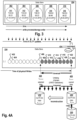
- Figure 3 illustrates the data content of a delta store 224.
- the delta store comprises one or more physical data storage devices each comprising a plurality of data storage areas 302-310 respectively used for storing a delta object.
- a series of delta objects 311-316 is stored on the delta store 224 such that the chronological order of physical write operations corresponds to and is reflected by the sequence of adjacent storage areas 302-310 to which the delta objects are written. The sequence is maintained by the delta store. This means that the physical storage location of a particular delta object does not change over time e.g. because of a storage optimization, defragmentation and/or swapping operation performed by the operating system or another program.
- the delta objects 311, 312 belong to a first integrated transaction T33 while delta objects 313-316 belong to a second integrated transaction T46.
- Delta object 311 has the oldest timestamp of all delta objects of transaction T33, namely March 21, 2019, 00:21.
- Transaction T33 is ready for commit before transaction T46, therefore the delta objects 311, 312 are written to the delta store before the delta objects 313-316 of transaction T46 although the timestamp of delta object 313 is older than timestamp of delta object 312.
- the chronological order of physically storing the delta objects in the delta store in the embodiment depicted in figure 3 is represented by the time arrow below, meaning that the more to the left of the time arrow, the earlier the delta object is written to the delta store.
- Storing Delta objects in adjacent physical storage areas in accordance with the order of write operations may be advantageous, because the read/write head of the one or more physical storage devices constituting the delta store 224 can sequentially traverses and read the delta objects either in the original order of the delta object writing process (here: from left to right) or in reverse order (here: from right to left) very quickly, because the read/write head does not have to "jump" to distant storage locations as indicated by pointers or other types of links.
- the read/write head can quickly traverse the delta store 224 depicted in figure 3 from right to left, whereby the data object changes indicated in each traversed delta object are used to automatically extract an UNDO operation that is performed on the OLTP data store, thereby reverting the current state of the OLTP data store to a previous state in a step-wise manner, wherein each traversed delta object represents a step.
- the stepwise reversal is performed such that the UNDO operations (corresponding to traversed delta objects) are grouped into "UNDO transactions".
- Each UNDO transaction comprises one or more UNDO operations corresponding to respective delta objects, whereby the begin event of each undo transaction corresponds to the commit event of the respective integrated transaction within which the delta objects used for creating the UNDO transaction were originally created and persisted, and whereby the commit event of each undo transaction is identical to the begin event of this integrated transaction.
- the traversal of the delta store by the read/write head from right to left would comprise reading and parsing delta object 316 first and creating a first UNDO operation, then reading and parsing delta object 314 and creating a second UNDO operation and then reading and parsing delta object 313 and creating a third UNDO operation.
- the first, second and third UNDO operations are bundled into a first UNDO transaction and executed together on the OLTP data store in accordance with the ACID principles.
- the delta object 312 is read and parsed for creating a fourth UNDO operation and delta object 311 is read and parsed for creating a fifth UNDO operation.
- the fourth and fifth UNDO operations are performed within a second UNDO transaction on the OLTP data store after a successful commit of the first UNDO transaction.
- An "UNDO operation” as used herein is a command or function created based on DO change information stored in a delta object and that, if applied on any data entity (e.g. a data object or class or database record) representing the DO whose changes are reflected in this delta object, revokes these changes in the data entity.
- any data entity e.g. a data object or class or database record
- the read/write head can quickly traverse the delta store 224 depicted in figure 3 from left to right, whereby the data object changes indicated in each traversed delta object are used to automatically extract a REDO operation that is performed on the old version of the OLTP data store (the "backup"), until a desired state of the OLTP data store, e.g. the current state of the OLTP data store or the state at any other, arbitrarily selected time, is obtained.
- the REDO operations for recreating the OLTP data store at a selected time can be performed in a step-wise manner, wherein each traversed delta object represents a step.
- the stepwise reconstruction of the OLTP data store is performed such that the REDO operations (corresponding to traversed delta objects) are grouped into "REDO transactions".
- Each REDO transaction comprises one or more REDO operations.
- Each REDO transaction comprises one or more REDO operations corresponding to respective delta objects, whereby the begin event of each REDO transaction is identical to the begin event of the respective integrated transaction within which the delta objects used for creating the REDO transaction were originally created and persisted, and whereby the commit event of each REDO transaction is identical to the commit event of this integrated transaction.
- a "REDO operation” as used herein is a command or function created based on DO change information stored in a delta object and that, if applied on any data entity (e.g. a data object or class or database record) representing the DO whose changes are reflected in this delta object, re-applies these changes on the data entity.
- any data entity e.g. a data object or class or database record
- the framework can be configured to create and execute an UNDO command as follwos:
- the read/write head can very quickly read out and immediately process all information required for the reconstruction (also referred to as "restoring") of the application program and/or the OLTP data store by performing a sequential scanning of the physical storage medium.
- Embodiments of the invention may allow reconstructing the state of an application program and/or of an OLTP data store used for persisting the latest state of the application program very quickly, e.g. within a few seconds.
- the data changes stored in 5000 integrated transactions could be restored in an OLTP data store within only one second on a computer system having standard hardware equipment. This is because the reconstruction is based on a sequential scanning of adjacent physical storage areas and the immediate application of information obtained by linearly scanning of one or more storage devices.
- data obtained in the scanning process is already organized in the form of transactions whose "borders" (begin and commit events) correspond to integrated transactions having been used for applying and persisting delta object changes originally.
- the "borders" of an integrated transaction can be derived from the transaction-IDs of the traversed delta objects.
- the UNDO/REDO operations obtained during the scanning process can immediately performed on an OLTP data store in a transaction-based manner, thereby ensuring that the state of the OLTP data store is reconstructed in a consistent manner in accordance with the ACID criteria.
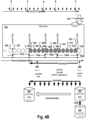
- Figure 4A illustrates a process of reconstructing the content of an OLTP data store based on a first reconstruction approach that comprises traversing delta objects and performing UNDO operations.
- the reconstruction of the application program can be performed analogously to the reconstruction of the OLTP data store described in figures 4 and 5 based on UNDO or REDO operations obtained by parsing delta objects, but in this case the created UNDO/REDO operations are less generic and more difficult to create as they have to manipulate data objects of an application program at runtime and hence cannot make use of generic data manipulation languages such as SQL.
- the reconstruction of the data content of the OLTP data store at an arbitrarily selected time is performed starting from a current version of the OLTP data store.
- a time specification is received that corresponds to a state of a OLTP data store that is to be reconstructed.
- This time can be an arbitrarily selected time and is referred herein as "selected time".
- a user or an application program can send a command or a request 434 that is indicative of a selected time 426 in the past.
- the receiving of the selected time 426 can trigger the reconstruction process.
- the time when the selected time is received and/or when the reconstruction process starts is referred to as "current time" 428.
- a copy 430 of the original OLTP data store 220 can be created, whereby the data content of the copy 430 as well as the original OLTP data store 220 respectively reflect the current state of the data objects of the application program 226.
- the reconstruction of the state of OLTP data store 220 at the selected time 426 can be performed on the copy 430. Alternatively, it can be performed on the original OLTP data store 220 (e.g. in case it is not necessary to maintain the current state of the OLTP data store for some reason). For the sake of simplicity, the following description is based on the assumption that the reconstruction is performed based on the OLTP data store copy 430 but the reconstruction process could likewise be performed on the original OLTP data store 220.
- the delta store 224 comprises a plurality of delta objects 402-424. The earlier the delta objects have been stored in the delta store, the further to the left they appear in the box 224 in Figure 4A , which represents the delta store. The later the delta objects have been stored in the delta store, the further to the right they appear in the box 224.
- a data store reconstruction software e.g. a program module of a streaming framework, a program module of the framework 210 used for creating the delta objects or any other type of application program, is configured to traverse the delta store 224 from right to left until the one 408 of the delta objects is reached that is the first delta object physically stored in the delta store after the selected time 426.
- delta objects 424, 422, 420, 418, 416, 414, 412, 410 and 408 are traversed, but not delta object 406 or any delta object 402, 404 further to the left.
- Each traversed delta object comprises an indication, e.g. an identifier, of the one of the data objects of the application that was changed and whose change is represented by this delta object, and comprises of one or more attributes which where amended by this change.
- the attribute value before the change event and after the change event is specified in the delta object.
- the delta object comprises a class-ID of the changed class and indicates the structure of the class before and after the change such that the state of the changed aspect of the class before and after the change can be derived from the delta object.
- the OLTP data store reconstruction software is configured to parse each delta object and to create one or more "UNDO operations" that are respectively configured to undo the changes reflected by the said, parsed delta objects.
- a stream of UNDO operations is created and automatically applied on the current copy 430 of the OLTP data store.
- a restored (or "reconstructed") version 432 of the OLTP data store is created in a very fast, and memory-saving manner, as the delta objects can be processed and loaded into memory sequentially.
- the re-created copy 432 represents the state of the OLTP data store 220 at the selected time 426.
- the described data store reconstruction approach may be advantageous as this approach for reconstructing an OLTP data store may be much faster than existing, log-based data store recovery approaches, because the UNDO operations can be performed immediately on the OLTP data store copy 432 while sequentially processing delta objects which are stored in a sequence of adjacent physical storage areas in a transactional context that ensures data consistency. There is no need that a read-write head of a physical data storage device jumps to different, spaced apart storage regions in order to collect all information needed for reconstruction the OLTP data store.
- Figure 4B illustrates a process of reconstructing the content of an OLTP data store that is also based on the first reconstruction approach that comprises traversing delta objects and performing UNDO operations.
- the approach depicted in figure 4B ensures that the OLTP data store is reconstructed in a consistent state by taking into account the transactional context within which the delta objects were created and stored.
- the data store reconstruction program receives an indication 434 of a selected time 426, e.g. a request of a user input via a GUI to set the state of the OLTP data store to a time of interest in the past.
- the data store reconstruction program identifies the one 476 of the delta objects in the delta store belonging to the most recently committed integrated transaction TR44 and that in addition is the most recently stored delta object of all delta objects 470-476 within the said integrated transaction TR44.
- Delta objects having already been stored in the delta store but having been created in a not-yet committed integrated transaction are not traversed but rather ignored as it is currently not known whether or not the transaction will successfully commit or whether the delta object will be deleted in case the transaction fails.
- each delta object can comprise an ID of the integrated transaction within which it was created and persisted. All delta objects belonging to the same transaction are stored in adjacent storage areas in the delta store. So the question when a particular transaction committed and a new one begun can be quickly and automatically determined by sequentially scanning and processing the delta objects in the delta store. When the transaction-ID of a currently processed delta object differs from the transaction-ID of the previously processed delta object, a transaction border was passed where one transaction committed. It should be noted that the timestamps of the delta objects are strictly chronological only within the border of a transaction.
- the reconstruction comprises sequentially traversing the delta objects in the delta store until a downstream-termination delta object 456 is reached.
- the downstream-termination delta object is the one of the delta objects that belongs to the one TR42 of the integrated transactions having committed first after the selected time 426 and that was first stored in the delta store after the select time, the traversing including the downstream-termination delta object and comprising sequentially undoing all DO changes specified in the traversed delta objects 456-476 in the OLTP data store 220 or in a copy 430 thereof.
- the downstream-termination delta object may have a timestamp that is before the selected time 426 in case the commit event of the transaction TR42 comprising the downstream-termination delta object is later than the selected time. This is to ensure that the reconstructed OLTP data store only comprises data being descriptive of the data objects of the application program that was already "visible" to application-internal program routines at the selected time. Non-committed data object changes are hidden from other data objects in the application program to ensure that any data object change is first persisted to the OLTP data store and data store 224 and only after a successful commit is subject to further changes performed within a different transactional context.
- the data store reconstruction software is configured to parse, when traversing the delta objects 476 to 456 each delta object and to create one or more "UNDO operations" that are respectively configured to undo the changes reflected by the traversed delta objects.
- the state of the resulting OLTP data store 432 corresponds to the state of the OLTP data store at the selected time.
- the OLTP data store 432 does not comprise the changes specified in the delta objects 456, 458 as these delta objects belong to a transaction TR42 not having committed at the selected time.
- the restored (or "reconstructed") version 432 of the OLTP data store is created in a very fast and consistent manner, whereby the delta objects can be traversed sequentially without loading the whole content of the store 224 into memory.
- all UNDO operations derived from delta objects having been created and stored in the same integrated transaction are executed on the OLTP data store in the reconstruction process within a respective reconstruction transaction.
- the UNDO operations extracted from delta objects 470-476 can be performed in a first OLTP- data store reconstruction transaction RTR44 (not shown)
- the UNDO operations extracted from delta objects 464-468 can be performed in a second reconstruction transaction RTR43
- the UNDO operations extracted from delta objects 456-462 can be performed in a third reconstruction transaction RTR42.
- the order of performing the UNDO operations corresponds to the direction of the delta object traversal.
- an UNDO operation reversing the data object changes specified in delta object 468 is performed on the data content of the OLTP data store 430, then an UNDO operation reversing the data object changes specified in delta object 466 is performed on the OLTP data store 430, and then an UNDO operation reversing the data object changes specified in delta object 464 is performed on the OLTP data store 430.
- the way the delta objects and OLTP data store updates are stored and the way they are reconstructed inherently ensures transactional consistency of the reconstructed OLTP data store.
- the OLTP data store is free of cross-table constraints.
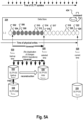
- Figure 5A illustrates a process of reconstructing the content of an OLTP data store based on a second reconstruction approach that comprises traversing delta objects and performing REDO operations.
- the reconstruction of the data content of the OLTP data store 220 at an arbitrarily selected time 426 is performed starting from an old version of the OLTP data store 220.
- the old version can be an OLTP data store backup copy 532 that was created at a backup time 530 as a copy of the original OLTP data store 538.
- a time specification 434 is received that specifies the time corresponding to the state of an OLTP data store that is to be reconstructed.
- This time can be an arbitrarily selected time and is referred herein as "selected time” 526.
- the time when the selected time is received and/or when the reconstruction process starts is referred to as "current time” 528.
- the reconstruction of the state of OLTP data store 220 at the selected time 526 can be performed on the backup copy 532 created at a "backup time" 530.
- the OLTP data store or a software maintaining the OLTP data store can be configured to create backup copies of the OLTP data store repeatedly, e.g. once every hour, or every day, or every week, etc. In case the OLTP data store is to be reconstructed as it was at the selected time, the one of the backup copies having been created most recently before the selected time is selected as a basis for the data store reconstruction.
- the delta store 224 comprises a plurality of data objects 502-524. The earlier the delta objects have been stored in the delta store, the further to the left they appear in the box 224 which represents the delta store. The later the delta objects have been stored in the delta store, the further to the right they appear in the box 224.
- a data store reconstruction software is configured to traverse the delta store 224 from left starting with delta object 504 to right until delta object 514 is reached.
- delta objects 504 - 514 are traversed, but not delta object 502 or any delta object 516-524 further to the right.
- Each traversed delta object comprises an indication of the one of the data objects of the application that was changed and one or more attributes and attribute values as described with reference to figure 4 .
- the data store reconstruction software is configured to parse each delta object and to create one or more "REDO operations" that are respectively configured to re-apply the changes reflected by this delta object on a backup copy of the OLTP data store 220.
- a stream of REDO operations is created and automatically applied on the backup 532 of the OLTP data store.
- a reconstructed version 536 of the OLTP data store is created in a very fast, memory-saving manner.
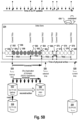
- Figure 5B illustrates a process of reconstructing the content of an OLTP data store that is also based on the second reconstruction approach that comprises traversing delta objects and performing REDO operations.
- the approach depicted in figure 5B ensures that the OLTP data store is reconstructed in a consistent state by taking into account the transactional context within which the delta objects were created and stored.
- FIG 5B The features and steps depicted in figure 5B are basically identical to the features and steps described already for figure 5A . The only difference is that the transactional context is taken into account when identifying the delta objects to be traversed and used for reconstructing the OLTP data store.
- Figure 5B illustrates that the integrated transactions are taken into account both when updating the OLTP data store and when storing the delta objects in the delta store.
- the transaction boundaries are indicated by vertical dotted lines with ends bounded by black circles.
- the order of physical storing operations which store the delta objects in delta store 224 and the order of the updating operations which update data records in the OLTP data store is done according to the chronology of commit-ready events of the individual transactions TR51-TR55. For example, all delta objects created within transaction TR51 are first written to delta store 224 and the OLTP data store is updated within the same transaction TR51. Then, all delta objects 560-564 that were created within transaction TR52 are written to the delta store 224 and the corresponding updates of the OLTP data store are performed within the same transaction TR52.
- delta objects 566-570 that were created within transaction TR53 are written to the delta store 224 and the corresponding updates of the OLTP data store are also carried out within the same transaction TR53. And so on.
- the number of delta objects per transaction can vary. It is also possible that each delta object corresponds to its own transaction.
- the borders of the transactions can be explicitly stored, for example in the form of special "begin transaction flags" and “commit transaction flags", which contain an ID of the respective started or committed transaction. Alternatively or additionally, it is also possible that the borders of the transactions are implicitly stored, for example in the form of transaction IDs, which are contained in each of the delta objects and in each case denote the transaction within which the delta object was created.
- the data store reconstruction program (e.g. the framework having created the delta objects) or another program creates a backup 532, i.e., a copy, of the OLTP data store 220 at a time referred to as backup time 530.
- the backup can be created once in a day, or once in a week.
- the data store reconstruction program receives an indication 434 of a selected time 426, e.g. a request of a user input via a GUI to set the state of the OLTP data store to a time of interest in the past.
- the data store reconstruction program identifies the one of the backups having been created most recently before the selected time (in case multiple backups created at different backup times exist).
- the data store reconstruction program reconstructs the state of the OLTP data store at the selected time.
- the reconstruction comprises identifying the one 554 of the delta objects in the delta store belonging to the one TR51 of the integrated transactions having committed first after the backup time and that was first stored in the delta store after the backup time.
- the data store reconstruction program then sequentially traverses the delta objects 554-564 in the delta store until an upstream-termination delta object 564 is reached.
- the upstream-termination delta object is the one of the delta objects that belongs to the one TR52 of the integrated transactions that was last committed before the selected time and that was last stored in the delta store before the selected time.
- the traversing includes the upstream-termination delta object and comprises sequentially applying all data object changes specified in the traversed delta objects on the backup 532.
- these data object changes can be applied by creating REDO operations based on the information contained in the traversed delta objects and applying the REDO operations on the OLTP data store 532.
- the upstream-termination delta object 564 may have a timestamp that is before the selected time 426 in case the commit event of the transaction TR42 comprising the downstream-termination delta object is later than the selected time. This is to ensure that the reconstructed OLTP data store only comprises data being descriptive of the data objects of the application program that was already "visible” to application-internal program routines at the selected time.
- the data store reconstruction software is configured to parse, when traversing the delta objects 554 to 564 each delta object and to create one or more "REDO operations" that are respectively configured to re-apply the changes reflected by the traversed delta objects on the backup copy 532.
- the state of the resulting OLTP data store 536 corresponds to the state of the OLTP data store 220 at the selected time.
- the OLTP data store 536 does not comprise the changes specified in the delta object 556 as this delta object belong to a transaction TR53 not having committed at the selected time.
- the restored (or "reconstructed") version 536 of the OLTP data store is created in a very fast and consistent manner, whereby the delta objects can be traversed sequentially without loading the whole content of the store 224 into memory.
- all REDO operations derived from delta objects having been created and stored in the same integrated transaction are executed on the OLTP data store in the reconstruction process within a respective transaction (also referred to as "reconstruction transaction").
- the REDO operations extracted from delta objects 554, 556, 558 can be performed in a first OLTP-data store reconstruction transaction RTR51 (not shown), and the REDO operations extracted from delta objects 560-564 can be performed in a second reconstruction transaction RTR52.
- the order of performing the REDO operations corresponds to the direction of the delta object traversal.
- a REDO operation reversing the data object changes specified in delta object 560 is performed on the data content of the backup 532, then an REDO operation reversing the data object changes specified in delta object 562, and then a REDO operation reversing the data object changes specified in delta object 564 is performed.
- the way the delta objects and OLTP data store updates are stored and the way they are reconstructed inherently ensures transactional consistency of the reconstructed OLTP data store.
- the OLTP data store is free of cross-table constraints.
- This approach for reconstructing an OLTP data store may be much faster than existing, log-based database recovery approaches, because the REDO operations can be performed immediately on the OLTP data store copy 532 in such a way that they are transactionally safe and the data content of the reconstructed OLTP data store is consistent.
- the OLTP data store backup 532 and/or any copy of the data store 220 used as basis for reconstructing the OLTP data store at a selected time 526 is free of cross-table constraints (e.g. uniqueness constraints, primary key constraints and/or secondary key constraints) or the cross-table constraints are the activated or ignored during the data store reconstruction process. This may further increase performance.
- cross-table constraints e.g. uniqueness constraints, primary key constraints and/or secondary key constraints
- figures 4A , 4B , 5A and 5B respectively show only a small number of delta objects.
- embodiments of the invention allow traversing delta objects created within several thousand integrated transactions and applying the respectively created undo transaction within a single second.
- Figure 6 depicts a GUI 600 for real-time selection of the time and state of the data content of an OLTP data store, e.g. a relational OLTP database.
- the GUI 600 can be a graphical user interface of an application program for inspecting and/or using one or more databases, e.g. databases comprising technical data generated by various machines of different industrial manufacturing pipelines.
- This application program can be interoperable with the framework and use the framework for quickly reconstructing the state of the OLTP database at a time of interest.
- the databases to be inspected can comprise a first database and a second database.
- the data content of the first database represents the current state of the totality of data objects of a first control application program configured for monitoring and controlling a first industrial manufacturing pipeline, e.g.
- the data content of the second database represents the current state of the totality of data objects of a second control application program configured for monitoring and controlling a second industrial manufacturing pipeline, e.g. for medical injection needles of a different size or type.
- the GUI 600 comprises a first tab 602 for searching the first database and a second tab 604 for searching the second database for one or more keywords.
- the first tab is currently selected and comprises a first area on the left side of the tab 602 with a graphical representation of a timescale 608 ranging e.g. from 1925 to today (some day in August 2019) and a search field 612 enabling the user to enter one or more search terms to be searched in the first database.
- the graphical representation of the timescale comprises a slider element 606 that indicates the currently selected time, in this case, April 01, 2019.
- a second area on the right side of the tab 602 comprises a result of the current search entered by a user in search field 612.
- the selectable slider 606 enables a user to select a time of interest by moving the selectable GUI element 606 to the left or to the right along the graphical representation of the timescale. For example, when the program is started and the GUI is shown the first time, the slider 606 can be positioned at the right and of the timescale.
- the user may not be interested in the current state, but rather may be interested in a situation as of April 1, 2019.
- the user may suspect that a new machine installed on that date is responsible for a particular production defect and may be interested in machine parameters from that date.
- the user may select the time of interest via the slider 606.
- the release of the slider may automatically trigger the reconstruction of the state of the database to a state as of the selected time, i.e., April 1, 2019.
- the reconstruction is performed as described herein for embodiments of the invention and is illustrated, for example, in figures 4 and 5 .
- the reconstruction can be performed very fast, e.g. within a few seconds, also for large databases provided database backups have been created frequently.
- an indication of the date corresponding to the reconstructed state of the database is indicated 610, 614 in the graphical user interface, e.g. in the left side such pane or in the right side result pane.
- Sequentially traversing delta objects stored in a delta store for reconstructing the content of an OLTP data store at the time of interest, and reconstructing also the state of the totality of data objects of an application program at the selected time may be advantageous as the high speed and scalability of this approach allows for a real-time or at least near-term selection of the data store state of interest.
- GUI in combination with the high-speed data store reconstruction procedure as described herein for embodiments and examples of the invention can be particularly advantageous for analyses of a temporal evolution of a particular aspect of the object under investigation.
- An increasing proportion of manufacturing processes are fully automated or largely automated, with object-oriented, complex software programs for monitoring and control playing an important role.
- Those complex software programs generate an immense amount of structured data, often stored in an OLTP data store.
- these OLTP data stores only contain the latest state of the data objects of the application program, so that historical analyses are not possible.
- these would be very important e.g. with regard to the recognition of errors and their causes in the production process, with regard to the recognition of optimization potentials and others.
- Using a GUI that enables a user to change the state of an OLTP data store reflecting the state of an application program in real time may enable an automated, semi-automated or manual inspection and analysis of the state of this application program at many different points in time, and hence may allow the identification of trends, of errors, of cause-and-effect relationships at an arbitrarily chosen level of granularity.
- Programming the application program such that it interoperates with a framework 210 that does not only update the OLTP data store but that in addition automatically creates and stores delta objects upon every data object change may ensure that every single, small change of the state of the application program or one of its data objects is persisted and can be used for reconstructing and/or analyzing the state of the application program quickly and easily.
- the programmer is freed of the burden of developing and implementing explicit report routines within the application program itself.
- Figure 7 illustrates the data content of five different types 702-710 of delta objects.
- the framework used for creating the delta objects comprises a set of predefined templates for each of a plurality of supported types of delta objects.
- a template can be a combination of a Java interface method and a Java class file that implements this interface method and that can be used for creating delta objects which comprise the property values defined for this template.
- the framework comprises a template for the "createObjectDeltaObject” delta object type 702, a template for the "deleteObjectDeltaObject” delta object type 704, a template for the "changePropertyDeltaObject” delta object type 706, a template for the "addObjectAssociationDel-taObject” delta object type 708, and a template for the "removeObjectAssocia-tionDeltaObject” delta object type 710.
- any creation of a new data object in the application program 226 triggers the creation of a new delta object of type 702 by the framework.
- Each delta object of type 702 comprises an indication of its type (“createObjectDeltaObject”) that may also reflect the type of data change operation performed in the application program that triggered the creation of this delta object.
- each delta object of type 702 comprises a timestamp being indicative of the time of creating the new data object in the application program, a transaction-ID being indicative of the integrated transaction within which the data change operation occurred and within which the delta object was created, an object-type being indicative of the type of data object that was created (e.g. "customer") and a unique identifier (object-ID) of the new data object that was created (here: a new instance of the class "customer").
- Each delta object of type 704 comprises an indication of its type (“deleteObjectDeltaObject”) that also reflects the type of data change operation performed in the application program that triggered the creation of this delta object.
- Each delta object of type 704 comprises the information described already for delta object type 702, i.e., a timestamp, a transaction-ID, the object-type and an object-ID.
- each delta object of type 704 comprises a list of properties and associations and respective data values (“list of P&A”) representing the latest state of this data object and its associations at the time when it was deleted.
- Each delta object of type 706 comprises an indication of its type (“changePropertyDeltaObject") that reflects the type of data change operation performed in the application program that triggered the creation of this delta object.
- Each delta object of type 706 comprises the information described already for delta object type 702, i.e.., a timestamp, a transaction-ID, the object-type and an object-ID.
- each delta object of type 706 comprises an identifier of the property whose change triggered the creation of this delta object and comprises the new value that was assigned to this property upon this change.
- Each delta object of type 708 comprises an indication of its type (“addObjectAssoci-ationDeltaObject”) that reflects the type of data change operation performed in the application program that triggered the creation of this delta object (here: the adding of an association between two data objects to one of the two data objects).
- Each delta object of type 708 comprises the information described already for delta object type 702, i.e.., a timestamp, a transaction-ID, the object-type and an object-ID in respect to the data object to whom the association was assigned.
- each delta object of type 708 comprises an identifier or name of the association that was added to the data object and an identifier of the other data object that was linked to the above-mentioned data object by adding the association.
- a data object in an association of a particular association type has a certain position in the list of associated objects - e.g. at position 5. This is expressed by the "AddedObjectldPosition”. Additional association types and their changes can also be stored as delta objects.
- Each delta object of type 710 comprises an indication of its type ("removeObject-FromAssociationDeltaObject") that reflects the type of data change operation performed in the application program that triggered the creation of this delta object (here: the removing of a data object from an association between two data objects).
- Each delta object of type 710 comprises the information described already for delta object type 702, i.e.., a timestamp, a transaction-ID, the object-type and an object-ID in respect to the data object from which the association was removed.
- each delta object of type 710 comprises an identifier or name of the association that was removed and an identifier of the other data object that was linked to the above-mentioned data object by the removed association.
- each template should specify the information that is required for enabling a program that reads and parses the delta objects (e.g. the framework 210) to create UNDO or REDO operations which re-execute or undo the data object changes specified in the delta objects.
- a changePropertyDeltaObject instance may comprise the property value of the data object before the change operation took effect in addition to the new property values.
- the set of delta object types supported by the framework in addition comprises delta object types for creating a new class, for deleting an existing class and/or for modifying the structure of an existing class, e.g. adding a new property to an existing class and/or for removing a property of an existing class.
- a delta object of the type "changeObjectDeltaObject” can be created in response to a command "customer.name().set("test”);” performed by a data object of the application program.
- the execution of the method “set("test")” induces a call of an abstract interface method "changeObjectDeltaObject” 706 provided by the framework.
- the interface method for creating a new delta object of type 706 can be, for example:
- the interface method createChangePropertyDeltaObject may be called automatically whenever a DO in the application program sets a data value of another DO.
- the interface method may be implemented by one or more classes provided by the framework (not shown).
- Figure 8 illustrates the creation of delta objects by the framework 210 as implemented in some embodiments of the invention.
- the attributes of the data objects in the application program 226 are not implemented in the form of primitive data types such as String, Integer, Float, Boolean etc. but rather in the form of a generic data object and a respective class (referred to in the following as "Property") that is functionally linked to the framework 210.
- the framework can comprise the class "Property” and may be used as a class library during the development and programming of the application program 226.
- all properties of all data objects of the application program 226 are instances of the class "Property” or inherit some features and/or functions provided by an abstract class “Property”, whereby the "Property” class is provided by the framework 210.
- This feature may be highly advantageous as any property change within the application program 226 is automatically communicated to the framework 210 that is in charge of instantiating a new delta object instance based on the respective type of data change operation and that is in charge of specifying in this new delta object which property of the DO was modified and the new property value (at least for all data change operation types involved with modifying the type and or value of a property (or "attribute") of a DO.
- any new property is an instance of the PROPERTY class provided by the framework, the framework inherently "knows" when a property value of a DO is changed in the application program.
- delta objects that are automatically created by the framework in response to any data change operation that involves the creation of a new Property class instance implicitly represents the most fine granular change log one could think of.
- the delta store can be used as an automatically generated complete log or report that can be evaluated by analytical programs developed in respect to any analytical question that may be of interest for an operator of the application program.
- the framework may offer the great advantage that a programmer who uses this framework when creating an application program does not have to worry about and does not have to write explicit routines or modules to ensure that all changes to data objects and/or associations and/or classes within the application program at runtime are fully persisted.
- the programmer only has to make sure that the operations that cause the changes in the data objects, associations and/or classes in the application program use classes and/or interfaces provided by the framework, so that the framework is automatically notified of any change to a DO, DO association or class in the application program and hence can automatically create respective delta objects and persist them in the delta store and optionally also update an OLTP data store such that the OLTP store always represents the latest state of the application program.
- a framework 210 according to embodiments of the invention provide for an industrialization and automation of large parts of the software development process, whereby the quality, reliability and completeness of persisting and reporting the state of an application program is greatly facilitated.
- ExampleNeu interface and a class implementing the ExampleClassic instance can be comprised in and be provided by the application program while the class Property is provided by the framework.
- the Property class provided by the framework comprises a "set” method that is called whenever a new Instance of this Property is created and assigned to a Porperty instance in the application program.
- the call to this "set" method of a Property class instance triggers the creation of a delta object.
- Access to one of its attributes (properties) (here: the first name) of any DO bein an instance of the ExampleNew implementing class can be performed e.g. by the following method calls:
- uow is an ojbect provided by the framework that is in charge of creating and managing an individual integrated transaction.
- the call to the setter method of the Property (here: firstName().set("Peter”)) in the application program fully automatically triggers the creation of a delta object of the type changeObjectDeltaObject in the framework.
- the application program 226 at runtime comprises DO 802, an instance of the car class whose attribute values 804, 806, 808 indicate that the color of this car is cherry-red, the year of registration is 2012 and that the car is owned by a person named "Smith".
- the attributes of this car instance can be modified by other DOs, e.g. DO 814 being an instance of the "person” class and representing a person having the function of a fleet manager (attribute 816), by executing the following methods calls specified in source code 818: BO1.setOwner("Lee”); and BO1.setColor("green”).
- the framework comprises, for each of a plurality of predefined data change events, a respective template class (e.g.: an interface class) and/or an interface method for creating delta objects.
- the framework can comprise one or more generic interface classes 824 respectively comprising one or more generic interface methods 826-838 for creating new data objects 826, modifying a property of an existing DO 830, deleting an existing DO 826, deleting 832 a class at runtime of the application program, creating 834 a class at runtime of the application program and modifying 836, 838 the structure of a class at runtime of the application program.
- DO 814 may in addition call the method BO1.setColor("green”). This call triggers the creation of a Property instance for the new color "green” and the creation of a new delta object 842 in the framework.
- Figure 9 illustrates the management of integrated transactions by the framework 120 in interoperation with the application program 226.
- integrated transactions are generated, managed and closed after a commit event by the framework, whereby operations executed within the application program serve as triggers for beginning and/or terminating an integrated transaction.
- the framework 210 can implement a function being able to receive one or more method calls as argument.
- Each call to this function by a DO of the application program triggers the creation of an integrated transaction whose existence is bound to the execution of the called function.
- the method calls provided as arguments are data change operations (e.g. the creation of a new DO, the modification of a property of an existing DO, the deletion of an existing DO, the creation of a class, the deletion of a class, the modification of a class).
- the programmer is not required to explicitly open or close a transactional context or to explicitly assign data change operations to a particular integrated transaction. Providing the data change operations as an argument to the function of the interface is all that is required.
- the function that is adapted to receive the one or more data change operations as arguments can be a function of a functional interface.
- this function can be a so-called Lambda function, whereby each call of a Lambda function is carried out within a respective integrated transaction.
- the application program or a data object contained therein can call a lambda function of the framework for the first time and thus trigger the generation of a first integrated transaction T1 by the framework.
- the A1 attribute of car data object 673 is changed in the application program, and later the A2 attribute of the same data object is changed.
- a further attribute A4 in car data object 866 is changed and finally attribute A5 of car data object 673 is changed.
- the changes made to data objects within the transactional context of T1 within the application program are represented in Figure 9 by a first line 850.
- Closing the call of the lambda function within the application program represents a trigger event that triggers a commit event for the integrated transaction T1, represented by the concentric double circle, within the framework.
- the application program may in addition can call another lambda function of the framework, thereby triggering the generation of a second integrated transaction T2 whose transactional context is represented by line 852.
- the transactional context T2 After the transactional context T2 has been opened, the A1 attribute of car data object 556 is changed in the application program, and later the A2 attribute of car data object 445 is changed. Closing the call of the other lambda function within the application program represents a trigger event that triggers a commit event for the integrated transaction T2.
- the application program may in addition can call a still further lambda function of the framework, thereby triggering the generation of a third integrated transaction T3 whose transactional context is represented by line 854.
- car data object 673 is deleted in the application program, and the still further lambda function is closed, thereby triggering a commit event for the integrated transaction T3.
- the framework can manage a variety of different integrated transactions for the same application program simultaneously. It is possible to start one integrated transaction while another is not yet finished.
- the framework ensures that there are no conflicts and that two transactions do not manipulate the same data object at the same time.
- a transaction is committed by the framework only if all delta objects created within this transaction are successfully stored in the delta memory (not shown here).
- the events shown on line 856 are listed in the chronological order of the corresponding data object changes and the time stamps of the respectively created delta objects.
- Each change of a date object corresponds to an event EV, which in turn triggers the creation of a delta object, which in turn contains an identifier of the integrated transaction within which the delta object was created.
- the sequence of the creation of the delta objects in the framework does not necessarily correspond to the chronological sequence of the physical storage of the delta objects in the delta store. Rather, the framework is configured to perform the storing of the delta objects according to the order of their commit-ready events, so that the time stamps of the delta objects stored in the delta store 224 are strictly chronologically ordered only within a certain transnational context.
- delta store 224 since the commit-erady-event of transaction T2 occurs earlier than that of transaction T1, the corresponding delta objects EV2 and EV4 of transaction T2 are also stored before the delta objects EV1, EV3, EV5, EV6 of transaction T1, although the transactional context of T1 begins earlier than that of T2.
- the chronological order of the expected commit events is derivable from and determined by the source code of the application program, in which the individual lambda functions are called in one or more different threads, whereby within a thread the opening of a new transactional context is only possible after the completion of an open lambda function call.
- the framework comprises a module 910 for creating delta objects and for storing the delta objects in a delta store.
- the module 910 can comprise a set of classes or interfaces for each of a plurality of different predefined data object, data object association and/or class change operations.
- the framework can in addition comprise a module 914 for managing integrated transactions and sub-transactions for storing delta objects created within an integrated transaction to the delta store and/or for updating an OLTP data store with change information regarding changed data objects, associations and/or classes in the application program.
- the framework can in addition comprise a module 912 for analyzing the delta store 224 for generating one or more different reports or other forms of analytical results.
- the framework can comprise a module 902 for continuously updating an OLTP data store with data object changes occurring in the application program, thereby ensuring that the OLTP data store always comprises the latest state of the application program.
- the OLTP data store updating can be performed by sub-module 906 making use of an object-oriented domain model 904 which maps data object types to respective data structures in the OLTP data store.
- object-oriented domain model 904 maps data object types to respective data structures in the OLTP data store.
- all data object instances of a particular object type are stored in a single respective table. This may be advantageous as complex cross-table constraints may be avoided.
- the framework comprises a module 908 configured for reconstructing the state of the OLTP data store at an arbitrary selected time from the delta store in combination with the current version of the OLTP data store or a backup copy of the OLTP data store created previously.
- the framework comprises a module 916 configured for reconstructing the state of the application program 226 at an arbitrary selected time from the delta store in combination with the current OLTP data store or a backup copy of the OLTP data store created previously.
- Figure 11 illustrates the creation and management of an integrated transaction according to an embodiment of the invention.
- the framework 210 is configured to generate an integrated transaction 951 (begin event) in response to the reception of a trigger signal 950, for example the call of a particular framework function (e.g. a Java lambda function) by a data object of the application program 226.
- a trigger signal 950 for example the call of a particular framework function (e.g. a Java lambda function) by a data object of the application program 226.
- the call may include one or more data object change operations 950, 952, 954 as function argument.
- Each of the said data change operations changes a data object, an association of data objects and/or a class of the application program 226 at runtime of the application program. These changes are not immediately visible within the application for other data objects (indicated by the dashed outline of the data object change events 950-954).
- framework 210 initiates the creation of a sub-transaction 960, also referred to as a "delta-sub-transaction".
- a delta-sub-transaction is a transaction to be executed within the context of an integrated transaction, whereby the delta-sub-transaction comprises storing all delta objects created in the said integrated transaction 951 in the delta store 224 in accordance with the ACID criteria.
- OLTP sub transaction is a transaction to be executed within the context of an integrated transaction, whereby the OLTP-sub-transaction comprises updating the OLTP data store with all changes 950, 952, 954 made in the application program within the said integrated transaction 951, whereby all update steps performed within an OLTP sub-transaction are executed in accordance with the ACID criteria.
- the framework 210 causes a commit event for the integrated transaction 951.
- This commit event represented by the concentric double circle at the end of the integrated transaction 951, causes that all changes of data objects, associations and classes, which were carried out in data change operations 950, 952 and 954, now also occur within the application program, too, and are visible for other data objects and routines of the application program.
- the application program 226 can be written in the object oriented programming language Java and the framework 210 comprises a plurality of interface methods in the form of Java lambda functions (also referred to as "lambda expressions").
- Lambda functions have been added in Java 8.
- Lambda functions basically express instances of functional interfaces (an interface with a single abstract method is called functional interface.
- An example is java.lang.Runnable).
- Lambda expressions implement the only abstract function and therefore implement functional interfaces.
- Lambda functions enable to treat functionality as a method argument, or code as data. They can be created without belonging to any class.
- a lambda function can be passed around as if it was an object and executed on demand.
- Lambda expressions basically express instances of functional interfaces (An interface with a single abstract method, an example is java.lang.Runnable). Lambda expressions implement the only abstract function and therefore implement functional interfaces.
- the call "("add_data", (uow) -> ⁇ " - a so-called lambda function in Java - opens a transaction context of an integrated transaction.
- the call can be made by a data object of the application program but the called lambda function itself is provided preferably as part of the framework 210.
- the term “uow” here represents a name of an individual integrated transaction to receive the data, in this case "unit of work”.
- the name and/or ID of the transaction may in some embodiment be provided as an argument of the method call.
- customer.name().set("test”); sets the property name of the customer to "test” and a Property object is created internally in the framework.
- This Property object has a 'set' method which comprises the new name "test” and comprises an identifier of the integrated transaction uow or is otherwise assigned to the integrated transaction uow. when the lambda function is left (terminates), the integrated transaction uow is automatically closed and committed by the framework - and in case of an error all changes are discarded.
- the lambda function (which provides the uow transaction context) is implemented by the framework 210.
- an abstract driver interface for the delta store is called by the framework and a delta-sub-transaction is opened.
- the stream of delta objects created in the integrated transaction uow is transferred to and saved in the delta store. If the storing in the delta store was successful, the delta-sub-transaction commits and the framework opens/begins a further sub-transaction on the OLTP data store for propagating all data object/association and/or class changes introduced in the application program within the integrated transaction to the OLTP data store. If all the said updates are performed successfully, the OLTP sub-transaction commits and closes.
- repository is the framework-service that is configured to control the creation, maintenance, commit and rollback of the integrated transactions and all sub-transactions.
- the name "uow”/"UnitOfWork” is an identifier of a particular integrated transaction.
- a delta object with the attributes timestamp, class in the example: Customer. class
- object-ID is created for the type "createObjectDeltaObject", e.g. an instance of the createObjectDeltaObject 702 template depicted in figure 7 .
- the command "customer.name().set("test”);” induces the creation of a delta object of the type "changePropertyDeltaObject” comprising a timestamp, an object-ID, a property-ID and the new property value.
- the command "customer.name().set("test”);” induces the creation of a delta object of type "changePropertyDeltaObject", e.g. an instance of the changePropertyDeltaObject 706 template depicted in figure 7 .
Landscapes
- Engineering & Computer Science (AREA)
- Theoretical Computer Science (AREA)
- Databases & Information Systems (AREA)
- Physics & Mathematics (AREA)
- General Engineering & Computer Science (AREA)
- General Physics & Mathematics (AREA)
- Data Mining & Analysis (AREA)
- Quality & Reliability (AREA)
- Information Retrieval, Db Structures And Fs Structures Therefor (AREA)
Claims (19)
- Computerimplementiertes Verfahren zur Persistierung von Datenobjekten (202, 204) eines Anwendungsprogramms (226), wobei das Verfahren umfasst:- Bereitstellen (102) eines Anwendungsprogramms (226), das eine Mehrzahl von Datenobjekten (202, 204) - DOs - umfasst, wobei das Anwendungsprogramm in einer objektorientierten Programmiersprache geschrieben ist, wobei die Mehrzahl von DOs mindestens Tausende von DOs umfasst, wobei die DOs dynamisch miteinander interagieren, während der Laufzeit des Anwendungsprogramms instanziiert, modifiziert und gelöscht werden und in dem Anwendungsprogramm implementierte Workflows und Services darstellen und steuern, wobei jedes DO ein Datenobjekt innerhalb des Anwendungsprogramms ist, wobei jedes DO eine Instanz einer Klasse ist, die in der objektorientierten Programmiersprache geschrieben ist;- Ausführen (106) von Änderungsoperationen (206, 208), die jeweils mindestens eines von den DOs in dem Anwendungsprogramm erzeugen, modifizieren und/oder löschen, wobei die Änderungsoperationen die Erzeugung von Deltaobjekten (216, 218) auslösen, wobei jedes Deltaobjekt eine oder mehrere, durch eine der Änderungsoperationen bewirkte DO-Änderungen beschreibt;- Speichern der Deltaobjekte in einem als "Deltaspeicher" bezeichneten Datenspeicher (224), wobei der Deltaspeicher ein Datenspeicher ist, der dazu eingerichtet ist, die Deltaobjekte auf solche Weise zu speichern und zu bewahren, dass sie gemäß der chronologischen Reihenfolge, in der die Deltaobjekte physisch in den Deltaspeicher geschrieben werden, in aneinandergereihten, einander benachbarten physischen Speicherbereichen gespeichert werden,wobei das Anwendungsprogramm konfiguriert ist, die Erzeugung einer oder mehrerer integrierter Transaktionen zu initiieren und die Änderungsoperationen innerhalb der einen oder der mehreren integrierten Transaktionen auszuführen, wodurch die Erzeugung und die Speicherung derjenigen von den Deltaobjekten, die eine oder mehrere Änderungsoperationen innerhalb einer bestimmten von den integrierten Transaktionen beschreiben, innerhalb dieser integrierten Transaktion durchgeführt werden, undwobei eine integrierte Transaktion eine Transaktion gemäß den Kriterien von AKID - Atomarität, Konsistenz, Isolation, Dauerhaftigkeit - ist, die zumindest für innerhalb des Anwendungsprogramms ausgeführte Operationen und für Speicherungsoperationen gelten, die innerhalb einer zum Speichern der Deltaobjekte in dem Deltaspeicher verwendeten Software ausgeführt werden,wobei das Verfahren ferner umfasst:- Bereitstellen eines OLTP-Datenspeichers, der den aktuellen Zustand aller DOs des Anwendungsprogramms vor der Ausführung der Änderungsoperationen umfasst; und- Aktualisieren des OLTP-Datenspeichers auf solche Weise, dass der aktualisierte OLTP-Datenspeicher die durch die Änderungsoperationen bewirkten Änderungen an den DOs wiedergibt;wobei das Aktualisieren des OLTP-Datenspeichers mit der einen oder den mehreren DO-Änderungen, die durch die eine oder die mehreren, innerhalb der einen bestimmten von den integrierten Transaktionen ausgeführten Datenänderungsoperationen erzeugt worden sind, innerhalb dieser integrierten Transaktion durchgeführt wird,wobei das Verfahren ferner umfasst:- Anzeigen einer GUI (600), wobei die GUI mindestens ein GUI-Element (606) umfasst, das einem Anwender ermöglicht, einen Punkt auf einer grafischen Darstellung einer Zeitachse (608) auszuwählen;- Empfangen einer Angabe (434) einer ausgewählten Zeit (426, 526);- als Reaktion auf das Empfangen der Auswahl des Anwenders bezüglich des Punktes auf der Zeitachse mit dem GUI-Element: Rekonstruieren des OLTP-Datenspeichers zu der ausgewählten Zeit, wobei die ausgewählte Zeit die Zeit ist, die von dem Anwender mit dem GUI-Element ausgewählt wurde; und- als Reaktion auf die Fertigstellung der Rekonstruktion: automatisch Aktualisieren der GUI auf solche Weise, dass die GUI anzeigt (610, 614), dass der Zustand des rekonstruierten OLTP-Datenspeichers der Zustand des OLTP-Datenspeichers zu der ausgewählten Zeit ist,- wobei der Zustand des Anwendungsprogramms mit dem Zustand des Dateninhalts des OLTP-Datenspeichers, der von dem Anwender über die GUI ausgewählt wurde, synchronisiert wird,wobei die Rekonstruktion des OLTP-Datenspeichers zu der ausgewählten Zeit umfasst:∘ Identifizieren desjenigen (476) von den Deltaobjekten in dem Deltaspeicher, das zu der zuletzt festgeschriebenen integrierten Transaktion (TR44) gehört und bei dem es sich um das zuletzt gespeicherte Deltaobjekt (476) von allen Deltaobjekten (470-476) innerhalb dieser integrierten Transaktion (TR44) handelt; und, beginnend mit dem identifizierten Deltaobjekt, Durchlaufen der Deltaobjekte in dem Deltaspeicher der Reihe nach, bis ein downstream abgeschlossenes Deltaobjekt (456) erreicht wird, wobei das downstream abgeschlossene Deltaobjekt dasjenige von den Deltaobjekten ist, das zu derjenigen (TR42) von den integrierten Transaktionen gehört, die nach der ausgewählten Zeit (426) als erste festgeschrieben wurde, und das nach der ausgewählten Zeit als erstes in dem Deltaspeicher gespeichert wurde, wobei das Durchlaufen das downstream abgeschlossene Deltaobjekt einschließt und ein Rückgängigmachen aller DO-Änderungen, die in den durchlaufenen Deltaobjekten (456-476) in dem OLTP-Datenspeicher (220) oder in einer Kopie (430) davon spezifiziert sind, der Reihe nach umfasst; oder∘ Identifizieren desjenigen (554) von den Deltaobjekten in dem Deltaspeicher, das zu derjenigen (TR51) von den integrierten Transaktionen gehört, die nach einer Sicherungszeit als erste festgeschrieben wurde, und das nach der Sicherungszeit als erstes in dem Deltaspeicher gespeichert wurde, wobei die Sicherungszeit die Zeit ist, in der eine Sicherung (532) des OLTP-Datenspeichers erzeugt wurde; und, beginnend mit dem identifizierten Deltaobjekt (554), Durchlaufen der Deltaobjekte (554-564) in dem Deltaspeicher der Reihe nach, bis ein upstream abgeschlossenes Deltaobjekt (564) erreicht wird, wobei das upstream abgeschlossene Deltaobjekt dasjenige von den Deltaobjekten ist, das zu derjenigen (TR52) von den integrierten Transaktionen gehört, die vor der ausgewählten Zeit als letzte festgeschrieben wurde, und das vor der ausgewählten Zeit als letztes in dem Deltaspeicher gespeichert wurde, wobei das Durchlaufen das upstream abgeschlossene Deltaobjekt einschließt und ein Anwenden aller in den durchlaufenen Deltaobjekten spezifizierten DO-Änderungen auf die Sicherung (532) der Reihe nach umfasst.
- Computerimplementiertes Verfahren nach Anspruch 1, wobei der Deltaspeicher ein "Append-only"-Datenspeicher ist.
- Computerimplementiertes Verfahren nach einem der vorangehenden Ansprüche,- wobei der Deltaspeicher ein Datenspeicher ist, der von einer Streaming-Anwendung und/oder von einem Warteschlangensystem verwaltet wird; und/oder- wobei der Deltaspeicher ein logischer Datenspeicher ist, der eine Mehrzahl von physischen Speichereinheiten umfasst; und/oder- wobei der Deltaspeicher frei von UNIQUE-Constraints ist, die vor der Speicherung eines Deltaobjekts überprüft werden müssen.
- Computerimplementiertes Verfahren nach einem der vorangehenden Ansprüche, ferner umfassend:- Durchlaufen von zumindest einigen von den Deltaobjekten in dem Deltaspeicher zum automatischen Extrahieren von UNDO- und REDO-Operationen aus den durchlaufenen Deltaobjekten, wobei die Identität der durchlaufenen Deltaobjekte von der ausgewählten Zeit abhängt;- Verwenden der extrahierten UNDO- oder REDO-Operationen zum Rekonstruieren des Zustands des Anwendungsprogramms zu der ausgewählten Zeit.
- Computerimplementiertes Verfahren nach einem der vorangehenden Ansprüche, ferner umfassend:- Bereitstellen einer OLTP-Datenspeicherkopie zu einer Zeit, die als Kopierzeit bezeichnet wird, wobei die OLTP-Datenspeicherkopie den aktuellen Zustand aller DOs des Anwendungsprogramms zu der Kopierzeit umfasst;- nach der Kopierzeit: kontinuierliches Aktualisieren der OLTP-Datenspeicherkopie mit nach der Kopierzeit erzeugten Deltaobjektkopien, so dass die aktualisierte OLTP-Datenspeicherkopie den aktuellen Zustand aller DOs des Anwendungsprogramms umfasst;- wobei das Aktualisieren der OLTP-Datenspeicherkopie mit den Kopien der Deltaobjekte, die innerhalb von irgendeiner bestimmten von den integrierten Transaktionen erzeugt wurden, innerhalb dieser integrierten Transaktion durchgeführt wird.
- Computerimplementiertes Verfahren nach einem der vorangehenden Ansprüche, ferner umfassend:- Bereitstellen eines Eingangsdatenspeichers, wobei der Eingangsdatenspeicher der OLTP-Datenspeicher (220) oder eine Kopie oder Version (432, 536) davon ist, wobei der Eingangsdatenspeicher den Zustand der DOs des Anwendungsprogramms zu einer jetzigen oder früheren Zeit wiedergibt;- Empfangen einer Angabe (434) einer ausgewählten Zeit (426);- Rekonstruieren des Zustands eines Eingangsdatenspeichers auf solche Weise, dass er den Zustand der DOs des Anwendungsprogramms zu der ausgewählten Zeit wiedergibt;- Erzeugen einer neuen Instanz des Anwendungsprogramms, deren Zustand den Zustand des Anwendungsprogramms zu der ausgewählten Zeit wiedergibt, wobei die Erzeugung umfasst:o Lesen von Daten, die den Zustand der Mehrzahl von Datenobjekten des Anwendungsprogramms zu der ausgewählten Zeit beschreiben, aus dem Eingangsdatenspeicher; undo Erzeugen der DOs der neuen Instanz des Anwendungsprogramms und der Assoziationen zwischen diesen DOs gemäß den gelesenen Daten, wobei diese DOs und DO-Assoziationen gemäß einer vordefinierten objektrelationalen Abbildung eines objektorientierten Domänenmodells auf ein Datenbankschema des Eingangsdatenspeichers erzeugt werden.
- Computerimplementiertes Verfahren nach einem der vorangehenden Ansprüche,- wobei jede integrierte Transaktion einen integrierten Transaktionskontext definiert, in dem:o ein Fehlschlag einer Speicherung eines Deltaobjekts in dem Deltaspeicher innerhalb der integrierten Transaktion und/odero ein Fehlschlag einer Ausführung einer Aktualisierung eines OLTP-Datenspeichers, die eine DO-Änderung in dem Anwendungsprogramm wiedergibt, innerhalb der integrierten Transaktion und/odero ein Fehlschlag einer Ausführung einer Änderungsoperation an einem DO in dem Anwendungsprogramm innerhalb der integrierten Transaktion Folgendes hervorruft:o eine Umkehrung aller in dieser integrierten Transaktion bereits ausgeführten DO-Änderungen in dem Anwendungsprogramm; undo eine Umkehrung aller in dieser integrierten Transaktion bereits ausgeführten Aktualisierungen des OLTP-Datenspeichers; und∘ eine Löschung aller Deltaobjekte, die in dieser integrierten Transaktion bereits in den Deltaspeicher geschrieben wurden.
- Computerimplementiertes Verfahren nach einem der Ansprüche, wobei jedes von den in dem Deltaspeicher gespeicherten Deltaobjekten eine Kennung der integrierten Transaktion, innerhalb von der das Deltaobjekt erzeugt wurde, umfasst oder assoziiert mit einer solchen gespeichert wird.
- Verfahren nach Anspruch 8, wobei das Anwendungsprogramm für eine gleichzeitige Verwendung durch mehrere Anwender konfiguriert ist, wodurch die Erzeugung von ersten von den integrierten Transaktionen durch einen ersten von den mehreren Anwendern ausgelöst wird, die Erzeugung von zweiten von den integrierten Transaktionen durch einen zweiten von den mehreren Anwendern ausgelöst wird, wobei das Speichern der Deltaobjekte in dem Deltaspeicher das Speichern einer Kennung des ersten Anwenders, assoziiert mit den innerhalb der ersten von den Transaktionen erzeugten Deltaobjekten und das Speichern einer Kennung des zweiten Anwenders, assoziiert mit den innerhalb der zweiten von den Transaktionen erzeugten Deltaobjekten umfasst.
- Computerimplementiertes Verfahren nach einem der Ansprüche, wobei der Beginn von jeder von der einen oder den mehreren integrierten Transaktionen durch einen Aufruf einer Funktion ausgelöst wird, wobei die Durchführung der aufgerufenen Funktion ein Ausführen der einen oder der mehreren Änderungsoperationen umfasst, die innerhalb der integrierten Transaktion, deren Beginn durch den Aufruf ausgelöst wurde, auszuführen sind, wobei der Aufruf vorzugsweise in einem Datenobjekt des Anwendungsprogramms ausgeführt wird und die Funktion in einem Framework (210) ausgeführt wird, das mit dem Anwendungsprogramm interoperabel ist.
- Computerimplementiertes Verfahren nach Anspruch 10, wobei die eine oder die mehreren Datenänderungsoperationen, die innerhalb derjenigen von den integrierten Transaktionen auszuführen sind, deren Beginn durch den Aufruf der Funktion ausgelöst wird, als Funktionsargumente für die Funktion bereitgestellt werden.
- Computerimplementiertes Verfahren nach einem der Ansprüche, wobei die Deltaobjekte gemäß der chronologischen Reihenfolge der Festschreibungsereignisse der integrierten Transaktionen, welche die jeweiligen Deltaobjekte umfassen, in dem Deltaspeicher gespeichert werden.
- Computerimplementiertes Verfahren nach einem der Ansprüche, ferner umfassend:- Bereitstellen eines Framework (210), das mit dem Anwendungsprogramm interoperabel ist, wobei das Framework konfiguriert ist zum Verwalten der Erzeugung, Festschreibung und/oder Annullierung der integrierten Transaktion, zum Ausführen der Speicherung der Deltaobjekte in dem Deltaspeicher und optional auch der Aktualisierung einer OLTP-Datenbank mit Datenobjektänderungen, wodurch die Implementierung dieser Verwaltungs- und Speicherungsaufgaben verkapselt und vor dem Anwendungsprogramm verborgen wird, so dass die Implementierung modifiziert oder ausgetauscht werden kann, ohne dass dies eine Modifizierung des Quellcodes des Anwendungsprogramms erfordert, wobei die Durchführung von irgendeiner von den DO-Änderungsoperationen in dem Anwendungsprogramm automatisch die Erzeugung eines Deltaobjekts hervorruft, das die von dem DO-Objekt ausgeführte Änderung angibt.
- Computerimplementiertes Verfahren nach einem der vorangehenden Ansprüche, wobei die Datenänderungsoperationen eine Klassenänderungsoperation umfassen, wobei eine Klassenänderungsoperation die Erzeugung, Löschung oder strukturelle Modifizierung einer Klasse ist, die als Template für einen klassenspezifischen Typ von Datenobjekten wirkt, wobei die von der Klassenänderungsoperation hervorgerufenen Änderungen in einem oder mehreren von den Deltaobjekten wiedergegeben werden.
- Computerimplementiertes Verfahren nach Anspruch 14 oder 15,- wobei die Mehrzahl von DOs und ihre Assoziationen gemäß einem objektorientierten Domänenmodell definiert werden; und- wobei das Speichern der DOs in dem OLTP-Datenspeicher durch das Framework auf solche Weise ausgeführt wird, dass die DOs und ihre Attribute gemäß einer objektrelationalen Abbildung des objektorientierten Domänenmodells auf ein Datenbankschema des OLTP-Datenspeichers gespeichert werden.
- Computerimplementiertes Verfahren nach einem der vorangehenden Ansprüche, wobei die Anwenderauswahl eines Punkts in der grafischen Darstellung der Zeitachse, die entsprechende Rekonstruktion des OLTP-Datenspeichers und die Aktualisierung der grafischen Darstellung der Zeitachse mehrmals in Echtzeit ausgeführt werden.
- Computerimplementiertes Verfahren nach einem der vorangehenden Ansprüche, wobei die Auswahl eines Punkts in der grafischen Darstellung der Zeitachse durch den Anwender, die entsprechende Rekonstruktion des OLTP-Datenspeichers und die Aktualisierung der grafischen Darstellung der Zeitachse innerhalb eines Sitzungskontextes des mit der GUI interagierenden Anwenders ausgeführt werden, wobei die Rekonstruktion des OLTP-Datenspeichers an einer sitzungsbasierten Kopie des OLTP-Datenspeichers ausgeführt wird, wobei die Lebenszeit der sitzungsbasierten Kopie des OLTP-Datenspeichers auf den Sitzungskontext des Anwenders beschränkt ist.
- Computersystem (200), umfassend:- einen Datenspeicher (224), der als "Deltaspeicher" bezeichnet wird;- ein Anwendungsprogramm (226), das eine Mehrzahl von Datenobjekten - DOs (202, 204) - umfasst, wobei das Anwendungsprogramm konfiguriert ist, Änderungsoperationen (206, 208) auszuführen (106), die jeweils mindestens eines von den DOs in dem Anwendungsprogramm erzeugen, modifizieren und/oder löschen, wobei das Anwendungsprogramm konfiguriert ist, die Erzeugung einer oder mehrerer integrierter Transaktionen zu initiieren und die Operationen innerhalb der einen oder der mehreren integrierten Transaktionen auszuführen, wobei das Anwendungsprogramm in einer objektorientierten Programmiersprache geschrieben ist, wobei die Mehrzahl von DOs mindestens Tausende von DOs umfasst, wobei die DOs dynamisch miteinander interagieren, während der Laufzeit des Anwendungsprogramms instanziiert, modifiziert und gelöscht werden und in dem Anwendungsprogramm implementierte Workflows und Services darstellen und steuern, wobei jedes DO eine Instanz einer Klasse ist, die in der objektorientierten Programmiersprache geschrieben ist;- ein Software-Programm (210), konfiguriert zum:o Erzeugen von Deltaobjekten (216, 218) als Reaktion auf die Ausführung der einen oder der mehreren Änderungsoperationen, wobei jedes Deltaobjekt eine oder mehrere, von einer der Änderungsoperationen bewirkte DO-Änderungen beschreibt;o Speichern der Deltaobjekte in dem Deltaspeicher (224), wobei der Deltaspeicher ein Datenspeicher ist, der dazu eingerichtet ist, die Deltaobjekte auf solche Weise zu speichern und zu bewahren, dass sie gemäß der chronologischen Reihenfolge, in der die Deltaobjekte physisch in den Deltaspeicher geschrieben werden, in aneinandergereihten, einander benachbarten physischen Speicherbereichen gespeichert werden,wodurch die Erzeugung und Speicherung derjenigen von den Deltaobjekten, die eine oder mehrere Änderungsoperationen innerhalb einer bestimmten von den integrierten Transaktionen beschreiben, innerhalb dieser integrierten Transaktion durchgeführt werden, undwobei eine integrierte Transaktion eine Transaktion gemäß den Kriterien von AKID - Atomarität, Konsistenz, Isolation, Dauerhaftigkeit - ist, die zumindest für innerhalb des Anwendungsprogramms ausgeführte Operationen und für Speicherungsoperationen gelten, die innerhalb einer zum Speichern der Deltaobjekte in dem Deltaspeicher verwendeten Software ausgeführt werden; und- einen OLTP-Datenspeicher (220), der den aktuellen Zustand der DOs des Anwendungsprogramms vor der Ausführung der Änderungsoperationen umfasst;
wobei das Software-Programm konfiguriert ist, um den OLTP-Datenspeicher auf solche Weise zu aktualisieren, dass der aktualisierte OLTP-Datenspeicher die durch die Änderungsoperationen bewirkten Änderungen der DOs wiedergibt, wobei das Aktualisieren des OLTP-Datenspeichers mit der einen oder den mehreren DO-Änderungen, die durch die eine oder die mehreren, innerhalb der bestimmten einen von den integrierten Transaktionen ausgeführten Datenänderungsoperationen erzeugt werden, innerhalb dieser integrierten Transaktion ausgeführt wird;- eine angezeigte GUI (600), wobei die GUI mindestens ein GUI-Element (606) umfasst, das einem Anwender ermöglicht, einen Punkt auf einer grafischen Darstellung einer Zeitachse (608) auszuwählen;wobei das Computersystem konfiguriert ist, um als Reaktion auf das Empfangen der Auswahl des Punktes auf der Zeitachse durch den Anwender mit dem GUI-Element die Rekonstruktion des OLTP-Datenspeichers zu der ausgewählten Zeit auszuführen, wobei die ausgewählte Zeit die von dem Anwender mit dem GUI-Element ausgewählte Zeit ist; undals Reaktion auf die Fertigstellung der Rekonstruktion automatisch die GUI auf solche Weise zu aktualisieren, dass die GUI anzeigt (610, 614), dass der Zustand des rekonstruierten OLTP-Datenspeichers der Zustand des OLTP-Datenspeichers zu der ausgewählten Zeit ist,wobei der Zustand des Anwendungsprogramms mit dem Zustand des Dateninhalts des OLTP-Datenspeichers, der von dem Anwender über die GUI ausgewählt wurde, synchronisiert wird,wobei die Rekonstruktion des OLTP-Datenspeichers zu der ausgewählten Zeit umfasst:∘ Identifizieren desjenigen (476) von den Deltaobjekten in dem Deltaspeicher, das zu der zuletzt festgeschriebenen integrierten Transaktion (TR44) gehört und bei dem es sich um das zuletzt gespeicherte Deltaobjekt (476) von allen Deltaobjekten (470-476) innerhalb dieser integrierten Transaktion (TR44) handelt; und, beginnend mit dem identifizierten Deltaobjekt, Durchlaufen der Deltaobjekte in dem Deltaspeicher der Reihe nach, bis ein downstream abgeschlossenes Deltaobjekt (456) erreicht wird, wobei das downstream abgeschlossene Deltaobjekt dasjenige von den Deltaobjekten ist, das zu derjenigen (TR42) von den integrierten Transaktionen gehört, die nach der ausgewählten Zeit (426) als erste festgeschrieben wurde, und das nach der ausgewählten Zeit als erstes in dem Deltaspeicher gespeichert wurde, wobei das Durchlaufen das downstream abgeschlossene Deltaobjekt einschließt und ein Rückgängigmachen aller DO-Änderungen, die in den durchlaufenen Deltaobjekten (456-476) in dem OLTP-Datenspeicher (220) oder in einer Kopie (430) davon spezifiziert sind, der Reihe nach umfasst; odero Identifizieren desjenigen (554) von den Deltaobjekten in dem Deltaspeicher, das zu derjenigen (TR51) von den integrierten Transaktionen gehört, die nach einer Sicherungszeit als erste festgeschrieben wurde, und das nach der Sicherungszeit als erstes in dem Deltaspeicher gespeichert wurde, wobei die Sicherungszeit die Zeit ist, in der eine Sicherung (532) des OLTP-Datenspeichers erzeugt wurde; und, beginnend mit dem identifizierten Deltaobjekt (554): Durchlaufen der Deltaobjekte (554-564) in dem Deltaspeicher der Reihe nach, bis ein upstream abgeschlossenes Deltaobjekt (564) erreicht wird, wobei das upstream abgeschlossene Deltaobjekt dasjenige von den Deltaobjekten ist, das zu derjenigen (TR52) von den integrierten Transaktionen gehört, die vor der ausgewählten Zeit als letzte festgeschrieben wurde, und das vor der ausgewählten Zeit als letztes in dem Deltaspeicher gespeichert wurde, wobei das Durchlaufen das upstream abgeschlossene Deltaobjekt einschließt und ein Anwenden aller in den durchlaufenen Deltaobjekten spezifizierten DO-Änderungen der Reihe nach auf die Sicherung (532) umfasst. - Computerlesbares Speichermedium, das computerinterpretierbare Befehle umfasst, die, wenn sie von einem Prozessor durchgeführt werden, bewirken, dass der Prozessor ein Framework (210) und einen OLTP-Datenspeicher (220) bereitstellt, wobei das Framework operativ mit einem Anwendungsprogramm (226) gekoppelt ist, das eine Mehrzahl von Datenobjekten - DOs (202, 204) - umfasst, wobei das Framework ferner eine Schnittstelle mit einem Deltaspeicher (224) umfasst, wobei das Anwendungsprogramm in einer objektorientierten Programmiersprache geschrieben ist, wobei die Mehrzahl von DOs mindestens Tausende von DOs umfasst, wobei die DOs dynamisch miteinander interagieren, während der Laufzeit des Anwendungsprogramms instanziiert, modifiziert und gelöscht werden und in dem Anwendungsprogramm implementierte Workflows und Services darstellen und steuern, wobei jedes DO ein Datenobjekt innerhalb des Anwendungsprogramms ist, wobei jedes DO eine Instanz einer Klasse ist, die in der objektorientierten Programmiersprache geschrieben ist, wobei das Framework konfiguriert ist zum:∘ Empfangen einer Angabe von Änderungsoperationen (206, 208), die jeweils mindestens eines von den DOs in dem Anwendungsprogramm erzeugen, modifizieren und/oder aus dem Anwendungsprogramm löschen;o Erzeugen von Deltaobjekten (216, 218) als Reaktion auf das Empfangen, wobei jedes Deltaobjekt eine oder mehrere, von einer der Änderungsoperationen bewirkte DO-Änderungen beschreibt;o Speichern der Deltaobjekte in dem Deltaspeicher (224), wobei der Deltaspeicher ein Datenspeicher ist, der dazu eingerichtet ist, die Deltaobjekte auf solche Weise zu speichern und zu bewahren, dass sie gemäß der chronologischen Reihenfolge, in der die Deltaobjekte physisch in den Deltaspeicher geschrieben werden, in aneinandergereihten, einander benachbarten physischen Speicherbereichen gespeichert werden,wodurch die Erzeugung und Speicherung derjenigen von den Deltaobjekten, die eine oder mehrere Änderungsoperationen innerhalb einer bestimmten einen von den integrierten Transaktionen beschreiben, innerhalb dieser integrierten Transaktion ausgeführt werden, undwobei eine integrierte Transaktion eine Transaktion gemäß den Kriterien von AKID - Atomarität, Konsistenz, Isolation, Dauerhaftigkeit - ist, die zumindest für innerhalb des Anwendungsprogramms ausgeführte Operationen und für Speicherungsoperationen gelten, die innerhalb des zum Speichern der Datenobjekte in dem Deltaspeicher verwendeten Framework (210) ausgeführt werden,wobei das Framework (210) ferner konfiguriert ist, den OLTP-Datenspeicher auf solche Weise zu aktualisieren, dass der aktualisierte OLTP-Datenspeicher die von den Änderungsoperationen bewirkten Änderungen der DOs wiedergibt, wobei das Aktualisieren des OLTP-Datenspeichers mit der einen oder den mehreren DO-Änderungen, die durch die eine oder die mehreren, innerhalb der einen bestimmten von den integrierten Transaktionen ausgeführten Datenänderungsoperationen erzeugt werden, innerhalb dieser integrierten Transaktionen ausgeführt wird,wobei die computerinterpretierbaren Befehle, wenn sie von dem Prozessor durchgeführt werden, den Prozessor zu Folgendem veranlassen:- Anzeigen einer GUI (600), wobei die GUI mindestens ein GUI-Element (606) umfasst, das einem Anwender ermöglicht, einen Punkt auf einer grafischen Darstellung einer Zeitachse (608) auszuwählen;- als Reaktion auf das Empfangen der Auswahl des Anwenders bezüglich des Punktes auf der Zeitachse mit dem GUI-Element: Ausführen der Rekonstruktion des OLTP-Datenspeichers zu der ausgewählten Zeit gemäß Anspruch 6 oder 7, wobei die ausgewählte Zeit die von dem Anwender mit dem GUI-Element ausgewählte Zeit ist; undals Reaktion auf die Fertigstellung der Rekonstruktion: automatisch Aktualisieren der GUI auf solche Weise, dass die GUI anzeigt (610, 614), dass der Zustand des rekonstruierten OLTP-Datenspeichers der Zustand des OLTP-Datenspeichers zu der ausgewählten Zeit ist,wobei der Zustand des Anwendungsprogramms mit dem Zustand des Dateninhalts des OLTP-Datenspeichers, der von dem Anwender über die GUI ausgewählt wurde, synchronisiert wird,wobei die Rekonstruktion des OLTP-Datenspeichers zu der ausgewählten Zeit umfasst:o Identifizieren desjenigen (476) von den Deltaobjekten in dem Deltaspeicher, das zu der zuletzt festgeschriebenen integrierten Transaktion (TR44) gehört und bei dem es sich um das zuletzt gespeicherte Deltaobjekt (476) von allen Deltaobjekten (470-476) innerhalb dieser integrierten Transaktion (TR44) handelt; und, beginnend mit dem identifizierten Deltaobjekt, Durchlaufen der Deltaobjekte in dem Deltaspeicher der Reihe nach, bis ein downstream abgeschlossenes Deltaobjekt (456) erreicht wird, wobei das downstream abgeschlossene Deltaobjekt dasjenige von den Deltaobjekten ist, das zu derjenigen (TR42) von den integrierten Transaktionen gehört, die nach der ausgewählten Zeit (426) als erste festgeschrieben wurde, und das nach der ausgewählten Zeit als erstes in dem Deltaspeicher gespeichert wurde, wobei das Durchlaufen das downstream abgeschlossene Deltaobjekt einschließt und ein Rückgängigmachen aller DO-Änderungen, die in den durchlaufenen Deltaobjekten (456-476) in dem OLTP-Datenspeicher (220) oder in einer Kopie (430) davon spezifiziert sind, der Reihe nach umfasst; odero Identifizieren desjenigen (554) von den Deltaobjekten in dem Deltaspeicher, das zu derjenigen (TR51) von den integrierten Transaktionen gehört, die nach einer Sicherungszeit als erste festgeschrieben wurde, und das nach der Sicherungszeit als erstes in dem Deltaspeicher gespeichert wurde, wobei die Sicherungszeit die Zeit ist, in der eine Sicherung (532) des OLTP-Datenspeichers erzeugt wurde; und, beginnend mit dem identifizierten Deltaobjekt (554), Durchlaufen der Deltaobjekte (554-564) in dem Deltaspeicher der Reihe nach, bis ein upstream abgeschlossenes Deltaobjekt (564) erreicht wird, wobei das upstream abgeschlossene Deltaobjekt dasjenige von den Deltaobjekten ist, das zu derjenigen (TR52) von den integrierten Transaktionen gehört, die vor der ausgewählten Zeit als letzte festgeschrieben wurde, und das vor der ausgewählten Zeit als letztes in dem Deltaspeicher gespeichert wurde, wobei das Durchlaufen das upstream abgeschlossene Deltaobjekt einschließt und ein Anwenden aller in den durchlaufenen Deltaobjekten spezifizierten DO-Änderungen der Reihe nach auf die Sicherung (532) umfasst.
Priority Applications (4)
| Application Number | Priority Date | Filing Date | Title |
|---|---|---|---|
| EP19193230.0A EP3783502B1 (de) | 2019-08-23 | 2019-08-23 | System für persistente anwendungsprogrammdatenobjekte |
| EP19220089.7A EP3846045B8 (de) | 2019-08-23 | 2019-12-30 | Archivierung von daten in einem delta-speicher |
| PCT/EP2020/073378 WO2021037686A1 (en) | 2019-08-23 | 2020-08-20 | Archiving data in a delta store |
| PCT/EP2020/073376 WO2021037684A1 (en) | 2019-08-23 | 2020-08-20 | System for persisting application program data objects |
Applications Claiming Priority (1)
| Application Number | Priority Date | Filing Date | Title |
|---|---|---|---|
| EP19193230.0A EP3783502B1 (de) | 2019-08-23 | 2019-08-23 | System für persistente anwendungsprogrammdatenobjekte |
Publications (3)
| Publication Number | Publication Date |
|---|---|
| EP3783502A1 EP3783502A1 (de) | 2021-02-24 |
| EP3783502B1 true EP3783502B1 (de) | 2025-06-25 |
| EP3783502C0 EP3783502C0 (de) | 2025-06-25 |
Family
ID=67770354
Family Applications (2)
| Application Number | Title | Priority Date | Filing Date |
|---|---|---|---|
| EP19193230.0A Active EP3783502B1 (de) | 2019-08-23 | 2019-08-23 | System für persistente anwendungsprogrammdatenobjekte |
| EP19220089.7A Active EP3846045B8 (de) | 2019-08-23 | 2019-12-30 | Archivierung von daten in einem delta-speicher |
Family Applications After (1)
| Application Number | Title | Priority Date | Filing Date |
|---|---|---|---|
| EP19220089.7A Active EP3846045B8 (de) | 2019-08-23 | 2019-12-30 | Archivierung von daten in einem delta-speicher |
Country Status (1)
| Country | Link |
|---|---|
| EP (2) | EP3783502B1 (de) |
Families Citing this family (4)
| Publication number | Priority date | Publication date | Assignee | Title |
|---|---|---|---|---|
| CN113347035B (zh) * | 2021-05-31 | 2022-09-13 | 中国工商银行股份有限公司 | 一种以太网交换机配置持久化方法及装置 |
| CN113407662B (zh) * | 2021-08-19 | 2021-12-14 | 深圳市明源云客电子商务有限公司 | 敏感词识别方法、系统及计算机可读存储介质 |
| CN115640322A (zh) * | 2022-10-26 | 2023-01-24 | 中盈优创资讯科技有限公司 | 一种基于Geode的大数据查询服务方法及系统 |
| CN119988084B (zh) * | 2025-04-17 | 2025-07-01 | 珠海妙存科技有限公司 | 闪存数据存储方法、闪存数据读取方法及闪存 |
Family Cites Families (4)
| Publication number | Priority date | Publication date | Assignee | Title |
|---|---|---|---|---|
| US9563655B2 (en) | 2013-03-08 | 2017-02-07 | Oracle International Corporation | Zero and near-zero data loss database backup and recovery |
| US9558229B2 (en) * | 2013-11-26 | 2017-01-31 | Sap Se | Transaction private log buffering for high performance of transaction processing |
| US9971821B1 (en) | 2015-02-17 | 2018-05-15 | Cohesity, Inc. | Search and analytics for a storage systems |
| CN106326457B (zh) * | 2016-08-29 | 2019-04-30 | 山大地纬软件股份有限公司 | 基于大数据的人社人员档案袋数据库的构建方法及系统 |
-
2019
- 2019-08-23 EP EP19193230.0A patent/EP3783502B1/de active Active
- 2019-12-30 EP EP19220089.7A patent/EP3846045B8/de active Active
Also Published As
| Publication number | Publication date |
|---|---|
| EP3846045A1 (de) | 2021-07-07 |
| EP3846045B8 (de) | 2024-05-29 |
| EP3846045B1 (de) | 2024-04-03 |
| EP3846045C0 (de) | 2024-04-03 |
| EP3783502A1 (de) | 2021-02-24 |
| EP3783502C0 (de) | 2025-06-25 |
Similar Documents
| Publication | Publication Date | Title |
|---|---|---|
| US11151079B2 (en) | Merging database operations for serializable transaction execution | |
| US4878167A (en) | Method for managing reuse of hard log space by mapping log data during state changes and discarding the log data | |
| Margara et al. | A model and survey of distributed data-intensive systems | |
| EP3783502B1 (de) | System für persistente anwendungsprogrammdatenobjekte | |
| US11720482B1 (en) | Retrying failed test cases in software testing using parallel threads | |
| WO2021037684A1 (en) | System for persisting application program data objects | |
| Machireddy | Data quality management and performance optimization for enterprise-scale etl pipelines in modern analytical ecosystems | |
| US20100318494A1 (en) | Conversion of an application database to minimize time in single-user access mode | |
| Kraft et al. | Apiary: A DBMS-Integrated transactional Function-as-a-Service framework | |
| US12198076B2 (en) | Service management in a DBMS | |
| de la Rúa Martínez et al. | The hopsworks feature store for machine learning | |
| US11537508B1 (en) | Software testing in parallel threads with a record-locking database | |
| EP4040305A1 (de) | Datenverarbeitungssteuerungssystem | |
| Jindal et al. | Production Experiences from Computation Reuse at Microsoft. | |
| Sotolongo et al. | Streaming Democratized: Ease Across the Latency Spectrum with Delayed View Semantics and Snowflake Dynamic Tables | |
| US11714745B1 (en) | Software testing in parallel with different database instances | |
| England et al. | Microsoft SQL Server 2005 performance optimization and tuning handbook | |
| Schneider | SAP Performance Optimization Guide | |
| Xiao et al. | A process history capture system for analysis of data dependencies in concurrent process execution | |
| Zhu | Towards Automated Online Schema Evolution | |
| Ghanta | SAGA and CQRS Implementation Techniques for Distributed Transaction Management | |
| Mertens | Reengineering Theodolite with the Java Operator SDK | |
| Ang et al. | BranchBench: Aligning Database Branching with Agentic Demands | |
| Ahonen | Real-time streaming data pipelines in Databricks using Spark Structured Streaming | |
| Sherratt et al. | Eventual consistency formalized |
Legal Events
| Date | Code | Title | Description |
|---|---|---|---|
| PUAI | Public reference made under article 153(3) epc to a published international application that has entered the european phase |
Free format text: ORIGINAL CODE: 0009012 |
|
| STAA | Information on the status of an ep patent application or granted ep patent |
Free format text: STATUS: THE APPLICATION HAS BEEN PUBLISHED |
|
| AK | Designated contracting states |
Kind code of ref document: A1 Designated state(s): AL AT BE BG CH CY CZ DE DK EE ES FI FR GB GR HR HU IE IS IT LI LT LU LV MC MK MT NL NO PL PT RO RS SE SI SK SM TR |
|
| AX | Request for extension of the european patent |
Extension state: BA ME |
|
| STAA | Information on the status of an ep patent application or granted ep patent |
Free format text: STATUS: REQUEST FOR EXAMINATION WAS MADE |
|
| 17P | Request for examination filed |
Effective date: 20210223 |
|
| RBV | Designated contracting states (corrected) |
Designated state(s): AL AT BE BG CH CY CZ DE DK EE ES FI FR GB GR HR HU IE IS IT LI LT LU LV MC MK MT NL NO PL PT RO RS SE SI SK SM TR |
|
| STAA | Information on the status of an ep patent application or granted ep patent |
Free format text: STATUS: EXAMINATION IS IN PROGRESS |
|
| 17Q | First examination report despatched |
Effective date: 20220329 |
|
| RAP3 | Party data changed (applicant data changed or rights of an application transferred) |
Owner name: SPICTER AG |
|
| RAP1 | Party data changed (applicant data changed or rights of an application transferred) |
Owner name: SOE CONSULTING GMBH Owner name: SPICTER AG |
|
| GRAP | Despatch of communication of intention to grant a patent |
Free format text: ORIGINAL CODE: EPIDOSNIGR1 |
|
| STAA | Information on the status of an ep patent application or granted ep patent |
Free format text: STATUS: GRANT OF PATENT IS INTENDED |
|
| RIC1 | Information provided on ipc code assigned before grant |
Ipc: G06F 16/21 20190101ALI20250219BHEP Ipc: G06F 11/14 20060101ALI20250219BHEP Ipc: G06F 16/23 20190101AFI20250219BHEP |
|
| INTG | Intention to grant announced |
Effective date: 20250319 |
|
| GRAS | Grant fee paid |
Free format text: ORIGINAL CODE: EPIDOSNIGR3 |
|
| GRAA | (expected) grant |
Free format text: ORIGINAL CODE: 0009210 |
|
| STAA | Information on the status of an ep patent application or granted ep patent |
Free format text: STATUS: THE PATENT HAS BEEN GRANTED |
|
| AK | Designated contracting states |
Kind code of ref document: B1 Designated state(s): AL AT BE BG CH CY CZ DE DK EE ES FI FR GB GR HR HU IE IS IT LI LT LU LV MC MK MT NL NO PL PT RO RS SE SI SK SM TR |
|
| REG | Reference to a national code |
Ref country code: GB Ref legal event code: FG4D |
|
| REG | Reference to a national code |
Ref country code: CH Ref legal event code: EP |
|
| REG | Reference to a national code |
Ref country code: CH Ref legal event code: EP |
|
| REG | Reference to a national code |
Ref country code: IE Ref legal event code: FG4D |
|
| REG | Reference to a national code |
Ref country code: DE Ref legal event code: R096 Ref document number: 602019071471 Country of ref document: DE |
|
| U01 | Request for unitary effect filed |
Effective date: 20250725 |
|
| U07 | Unitary effect registered |
Designated state(s): AT BE BG DE DK EE FI FR IT LT LU LV MT NL PT RO SE SI Effective date: 20250731 |
|
| PG25 | Lapsed in a contracting state [announced via postgrant information from national office to epo] |
Ref country code: GR Free format text: LAPSE BECAUSE OF FAILURE TO SUBMIT A TRANSLATION OF THE DESCRIPTION OR TO PAY THE FEE WITHIN THE PRESCRIBED TIME-LIMIT Effective date: 20250926 Ref country code: NO Free format text: LAPSE BECAUSE OF FAILURE TO SUBMIT A TRANSLATION OF THE DESCRIPTION OR TO PAY THE FEE WITHIN THE PRESCRIBED TIME-LIMIT Effective date: 20250925 |
|
| PGFP | Annual fee paid to national office [announced via postgrant information from national office to epo] |
Ref country code: GB Payment date: 20250820 Year of fee payment: 7 |
|
| PG25 | Lapsed in a contracting state [announced via postgrant information from national office to epo] |
Ref country code: HR Free format text: LAPSE BECAUSE OF FAILURE TO SUBMIT A TRANSLATION OF THE DESCRIPTION OR TO PAY THE FEE WITHIN THE PRESCRIBED TIME-LIMIT Effective date: 20250625 |
|
| PGFP | Annual fee paid to national office [announced via postgrant information from national office to epo] |
Ref country code: CH Payment date: 20250901 Year of fee payment: 7 |
|
| PG25 | Lapsed in a contracting state [announced via postgrant information from national office to epo] |
Ref country code: RS Free format text: LAPSE BECAUSE OF FAILURE TO SUBMIT A TRANSLATION OF THE DESCRIPTION OR TO PAY THE FEE WITHIN THE PRESCRIBED TIME-LIMIT Effective date: 20250925 |
|
| U20 | Renewal fee for the european patent with unitary effect paid |
Year of fee payment: 7 Effective date: 20250924 |
|
| PG25 | Lapsed in a contracting state [announced via postgrant information from national office to epo] |
Ref country code: IS Free format text: LAPSE BECAUSE OF FAILURE TO SUBMIT A TRANSLATION OF THE DESCRIPTION OR TO PAY THE FEE WITHIN THE PRESCRIBED TIME-LIMIT Effective date: 20251025 |
|
| PG25 | Lapsed in a contracting state [announced via postgrant information from national office to epo] |
Ref country code: SM Free format text: LAPSE BECAUSE OF FAILURE TO SUBMIT A TRANSLATION OF THE DESCRIPTION OR TO PAY THE FEE WITHIN THE PRESCRIBED TIME-LIMIT Effective date: 20250625 |
|
| PG25 | Lapsed in a contracting state [announced via postgrant information from national office to epo] |
Ref country code: CZ Free format text: LAPSE BECAUSE OF FAILURE TO SUBMIT A TRANSLATION OF THE DESCRIPTION OR TO PAY THE FEE WITHIN THE PRESCRIBED TIME-LIMIT Effective date: 20250625 |
|
| PG25 | Lapsed in a contracting state [announced via postgrant information from national office to epo] |
Ref country code: PL Free format text: LAPSE BECAUSE OF FAILURE TO SUBMIT A TRANSLATION OF THE DESCRIPTION OR TO PAY THE FEE WITHIN THE PRESCRIBED TIME-LIMIT Effective date: 20250625 |
|
| PG25 | Lapsed in a contracting state [announced via postgrant information from national office to epo] |
Ref country code: SK Free format text: LAPSE BECAUSE OF FAILURE TO SUBMIT A TRANSLATION OF THE DESCRIPTION OR TO PAY THE FEE WITHIN THE PRESCRIBED TIME-LIMIT Effective date: 20250625 |
|
| PG25 | Lapsed in a contracting state [announced via postgrant information from national office to epo] |
Ref country code: ES Free format text: LAPSE BECAUSE OF FAILURE TO SUBMIT A TRANSLATION OF THE DESCRIPTION OR TO PAY THE FEE WITHIN THE PRESCRIBED TIME-LIMIT Effective date: 20250625 |
|
| PG25 | Lapsed in a contracting state [announced via postgrant information from national office to epo] |
Ref country code: MC Free format text: LAPSE BECAUSE OF FAILURE TO SUBMIT A TRANSLATION OF THE DESCRIPTION OR TO PAY THE FEE WITHIN THE PRESCRIBED TIME-LIMIT Effective date: 20250625 |