EP3783704A1 - Composite soufre-carbone et son procédé de production, et électrode positive de batterie au lithium-soufre et batterie au lithium-soufre comprenant ledit composite - Google Patents
Composite soufre-carbone et son procédé de production, et électrode positive de batterie au lithium-soufre et batterie au lithium-soufre comprenant ledit composite Download PDFInfo
- Publication number
- EP3783704A1 EP3783704A1 EP19830666.4A EP19830666A EP3783704A1 EP 3783704 A1 EP3783704 A1 EP 3783704A1 EP 19830666 A EP19830666 A EP 19830666A EP 3783704 A1 EP3783704 A1 EP 3783704A1
- Authority
- EP
- European Patent Office
- Prior art keywords
- sulfur
- positive electrode
- lithium
- electrolyte solution
- carbon composite
- Prior art date
- Legal status (The legal status is an assumption and is not a legal conclusion. Google has not performed a legal analysis and makes no representation as to the accuracy of the status listed.)
- Granted
Links
Images

Classifications
-
- H—ELECTRICITY
- H01—ELECTRIC ELEMENTS
- H01M—PROCESSES OR MEANS, e.g. BATTERIES, FOR THE DIRECT CONVERSION OF CHEMICAL ENERGY INTO ELECTRICAL ENERGY
- H01M4/00—Electrodes
- H01M4/02—Electrodes composed of, or comprising, active material
- H01M4/36—Selection of substances as active materials, active masses, active liquids
- H01M4/58—Selection of substances as active materials, active masses, active liquids of inorganic compounds other than oxides or hydroxides, e.g. sulfides, selenides, tellurides, halogenides or LiCoFy; of polyanionic structures, e.g. phosphates, silicates or borates
- H01M4/583—Carbonaceous material, e.g. graphite-intercalation compounds or CFx
-
- H—ELECTRICITY
- H01—ELECTRIC ELEMENTS
- H01M—PROCESSES OR MEANS, e.g. BATTERIES, FOR THE DIRECT CONVERSION OF CHEMICAL ENERGY INTO ELECTRICAL ENERGY
- H01M4/00—Electrodes
- H01M4/02—Electrodes composed of, or comprising, active material
- H01M4/36—Selection of substances as active materials, active masses, active liquids
- H01M4/362—Composites
-
- H—ELECTRICITY
- H01—ELECTRIC ELEMENTS
- H01M—PROCESSES OR MEANS, e.g. BATTERIES, FOR THE DIRECT CONVERSION OF CHEMICAL ENERGY INTO ELECTRICAL ENERGY
- H01M4/00—Electrodes
- H01M4/02—Electrodes composed of, or comprising, active material
- H01M4/36—Selection of substances as active materials, active masses, active liquids
- H01M4/362—Composites
- H01M4/364—Composites as mixtures
-
- H—ELECTRICITY
- H01—ELECTRIC ELEMENTS
- H01M—PROCESSES OR MEANS, e.g. BATTERIES, FOR THE DIRECT CONVERSION OF CHEMICAL ENERGY INTO ELECTRICAL ENERGY
- H01M10/00—Secondary cells; Manufacture thereof
- H01M10/05—Accumulators with non-aqueous electrolyte
- H01M10/052—Li-accumulators
-
- H—ELECTRICITY
- H01—ELECTRIC ELEMENTS
- H01M—PROCESSES OR MEANS, e.g. BATTERIES, FOR THE DIRECT CONVERSION OF CHEMICAL ENERGY INTO ELECTRICAL ENERGY
- H01M10/00—Secondary cells; Manufacture thereof
- H01M10/05—Accumulators with non-aqueous electrolyte
- H01M10/056—Accumulators with non-aqueous electrolyte characterised by the materials used as electrolytes, e.g. mixed inorganic/organic electrolytes
- H01M10/0564—Accumulators with non-aqueous electrolyte characterised by the materials used as electrolytes, e.g. mixed inorganic/organic electrolytes the electrolyte being constituted of organic materials only
- H01M10/0566—Liquid materials
- H01M10/0569—Liquid materials characterised by the solvents
-
- H—ELECTRICITY
- H01—ELECTRIC ELEMENTS
- H01M—PROCESSES OR MEANS, e.g. BATTERIES, FOR THE DIRECT CONVERSION OF CHEMICAL ENERGY INTO ELECTRICAL ENERGY
- H01M10/00—Secondary cells; Manufacture thereof
- H01M10/36—Accumulators not provided for in groups H01M10/05-H01M10/34
-
- H—ELECTRICITY
- H01—ELECTRIC ELEMENTS
- H01M—PROCESSES OR MEANS, e.g. BATTERIES, FOR THE DIRECT CONVERSION OF CHEMICAL ENERGY INTO ELECTRICAL ENERGY
- H01M4/00—Electrodes
- H01M4/02—Electrodes composed of, or comprising, active material
- H01M4/04—Processes of manufacture in general
- H01M4/0402—Methods of deposition of the material
- H01M4/0404—Methods of deposition of the material by coating on electrode collectors
-
- H—ELECTRICITY
- H01—ELECTRIC ELEMENTS
- H01M—PROCESSES OR MEANS, e.g. BATTERIES, FOR THE DIRECT CONVERSION OF CHEMICAL ENERGY INTO ELECTRICAL ENERGY
- H01M4/00—Electrodes
- H01M4/02—Electrodes composed of, or comprising, active material
- H01M4/04—Processes of manufacture in general
- H01M4/043—Processes of manufacture in general involving compressing or compaction
- H01M4/0433—Molding
-
- H—ELECTRICITY
- H01—ELECTRIC ELEMENTS
- H01M—PROCESSES OR MEANS, e.g. BATTERIES, FOR THE DIRECT CONVERSION OF CHEMICAL ENERGY INTO ELECTRICAL ENERGY
- H01M4/00—Electrodes
- H01M4/02—Electrodes composed of, or comprising, active material
- H01M4/04—Processes of manufacture in general
- H01M4/0471—Processes of manufacture in general involving thermal treatment, e.g. firing, sintering, backing particulate active material, thermal decomposition, pyrolysis
-
- H—ELECTRICITY
- H01—ELECTRIC ELEMENTS
- H01M—PROCESSES OR MEANS, e.g. BATTERIES, FOR THE DIRECT CONVERSION OF CHEMICAL ENERGY INTO ELECTRICAL ENERGY
- H01M4/00—Electrodes
- H01M4/02—Electrodes composed of, or comprising, active material
- H01M4/13—Electrodes for accumulators with non-aqueous electrolyte, e.g. for lithium-accumulators; Processes of manufacture thereof
-
- H—ELECTRICITY
- H01—ELECTRIC ELEMENTS
- H01M—PROCESSES OR MEANS, e.g. BATTERIES, FOR THE DIRECT CONVERSION OF CHEMICAL ENERGY INTO ELECTRICAL ENERGY
- H01M4/00—Electrodes
- H01M4/02—Electrodes composed of, or comprising, active material
- H01M4/13—Electrodes for accumulators with non-aqueous electrolyte, e.g. for lithium-accumulators; Processes of manufacture thereof
- H01M4/136—Electrodes based on inorganic compounds other than oxides or hydroxides, e.g. sulfides, selenides, tellurides, halogenides or LiCoFy
-
- H—ELECTRICITY
- H01—ELECTRIC ELEMENTS
- H01M—PROCESSES OR MEANS, e.g. BATTERIES, FOR THE DIRECT CONVERSION OF CHEMICAL ENERGY INTO ELECTRICAL ENERGY
- H01M4/00—Electrodes
- H01M4/02—Electrodes composed of, or comprising, active material
- H01M4/36—Selection of substances as active materials, active masses, active liquids
-
- H—ELECTRICITY
- H01—ELECTRIC ELEMENTS
- H01M—PROCESSES OR MEANS, e.g. BATTERIES, FOR THE DIRECT CONVERSION OF CHEMICAL ENERGY INTO ELECTRICAL ENERGY
- H01M4/00—Electrodes
- H01M4/02—Electrodes composed of, or comprising, active material
- H01M4/36—Selection of substances as active materials, active masses, active liquids
- H01M4/362—Composites
- H01M4/366—Composites as layered products
-
- H—ELECTRICITY
- H01—ELECTRIC ELEMENTS
- H01M—PROCESSES OR MEANS, e.g. BATTERIES, FOR THE DIRECT CONVERSION OF CHEMICAL ENERGY INTO ELECTRICAL ENERGY
- H01M4/00—Electrodes
- H01M4/02—Electrodes composed of, or comprising, active material
- H01M4/36—Selection of substances as active materials, active masses, active liquids
- H01M4/38—Selection of substances as active materials, active masses, active liquids of elements or alloys
-
- H—ELECTRICITY
- H01—ELECTRIC ELEMENTS
- H01M—PROCESSES OR MEANS, e.g. BATTERIES, FOR THE DIRECT CONVERSION OF CHEMICAL ENERGY INTO ELECTRICAL ENERGY
- H01M4/00—Electrodes
- H01M4/02—Electrodes composed of, or comprising, active material
- H01M4/62—Selection of inactive substances as ingredients for active masses, e.g. binders, fillers
-
- H—ELECTRICITY
- H01—ELECTRIC ELEMENTS
- H01M—PROCESSES OR MEANS, e.g. BATTERIES, FOR THE DIRECT CONVERSION OF CHEMICAL ENERGY INTO ELECTRICAL ENERGY
- H01M4/00—Electrodes
- H01M4/02—Electrodes composed of, or comprising, active material
- H01M4/62—Selection of inactive substances as ingredients for active masses, e.g. binders, fillers
- H01M4/621—Binders
- H01M4/622—Binders being polymers
-
- H—ELECTRICITY
- H01—ELECTRIC ELEMENTS
- H01M—PROCESSES OR MEANS, e.g. BATTERIES, FOR THE DIRECT CONVERSION OF CHEMICAL ENERGY INTO ELECTRICAL ENERGY
- H01M4/00—Electrodes
- H01M4/02—Electrodes composed of, or comprising, active material
- H01M4/62—Selection of inactive substances as ingredients for active masses, e.g. binders, fillers
- H01M4/621—Binders
- H01M4/622—Binders being polymers
- H01M4/623—Binders being polymers fluorinated polymers
-
- H—ELECTRICITY
- H01—ELECTRIC ELEMENTS
- H01M—PROCESSES OR MEANS, e.g. BATTERIES, FOR THE DIRECT CONVERSION OF CHEMICAL ENERGY INTO ELECTRICAL ENERGY
- H01M4/00—Electrodes
- H01M4/02—Electrodes composed of, or comprising, active material
- H01M4/62—Selection of inactive substances as ingredients for active masses, e.g. binders, fillers
- H01M4/624—Electric conductive fillers
- H01M4/625—Carbon or graphite
-
- H—ELECTRICITY
- H01—ELECTRIC ELEMENTS
- H01M—PROCESSES OR MEANS, e.g. BATTERIES, FOR THE DIRECT CONVERSION OF CHEMICAL ENERGY INTO ELECTRICAL ENERGY
- H01M4/00—Electrodes
- H01M4/02—Electrodes composed of, or comprising, active material
- H01M4/64—Carriers or collectors
- H01M4/66—Selection of materials
- H01M4/661—Metal or alloys, e.g. alloy coatings
-
- H—ELECTRICITY
- H01—ELECTRIC ELEMENTS
- H01M—PROCESSES OR MEANS, e.g. BATTERIES, FOR THE DIRECT CONVERSION OF CHEMICAL ENERGY INTO ELECTRICAL ENERGY
- H01M50/00—Constructional details or processes of manufacture of the non-active parts of electrochemical cells other than fuel cells, e.g. hybrid cells
- H01M50/40—Separators; Membranes; Diaphragms; Spacing elements inside cells
- H01M50/409—Separators, membranes or diaphragms characterised by the material
- H01M50/411—Organic material
- H01M50/414—Synthetic resins, e.g. thermoplastics or thermosetting resins
- H01M50/417—Polyolefins
-
- H—ELECTRICITY
- H01—ELECTRIC ELEMENTS
- H01M—PROCESSES OR MEANS, e.g. BATTERIES, FOR THE DIRECT CONVERSION OF CHEMICAL ENERGY INTO ELECTRICAL ENERGY
- H01M4/00—Electrodes
- H01M4/02—Electrodes composed of, or comprising, active material
- H01M2004/021—Physical characteristics, e.g. porosity, surface area
-
- H—ELECTRICITY
- H01—ELECTRIC ELEMENTS
- H01M—PROCESSES OR MEANS, e.g. BATTERIES, FOR THE DIRECT CONVERSION OF CHEMICAL ENERGY INTO ELECTRICAL ENERGY
- H01M4/00—Electrodes
- H01M4/02—Electrodes composed of, or comprising, active material
- H01M2004/026—Electrodes composed of, or comprising, active material characterised by the polarity
- H01M2004/028—Positive electrodes
-
- H—ELECTRICITY
- H01—ELECTRIC ELEMENTS
- H01M—PROCESSES OR MEANS, e.g. BATTERIES, FOR THE DIRECT CONVERSION OF CHEMICAL ENERGY INTO ELECTRICAL ENERGY
- H01M2300/00—Electrolytes
- H01M2300/0017—Non-aqueous electrolytes
- H01M2300/0025—Organic electrolyte
-
- H—ELECTRICITY
- H01—ELECTRIC ELEMENTS
- H01M—PROCESSES OR MEANS, e.g. BATTERIES, FOR THE DIRECT CONVERSION OF CHEMICAL ENERGY INTO ELECTRICAL ENERGY
- H01M4/00—Electrodes
- H01M4/02—Electrodes composed of, or comprising, active material
- H01M4/13—Electrodes for accumulators with non-aqueous electrolyte, e.g. for lithium-accumulators; Processes of manufacture thereof
- H01M4/137—Electrodes based on electro-active polymers
-
- H—ELECTRICITY
- H01—ELECTRIC ELEMENTS
- H01M—PROCESSES OR MEANS, e.g. BATTERIES, FOR THE DIRECT CONVERSION OF CHEMICAL ENERGY INTO ELECTRICAL ENERGY
- H01M4/00—Electrodes
- H01M4/02—Electrodes composed of, or comprising, active material
- H01M4/13—Electrodes for accumulators with non-aqueous electrolyte, e.g. for lithium-accumulators; Processes of manufacture thereof
- H01M4/139—Processes of manufacture
- H01M4/1393—Processes of manufacture of electrodes based on carbonaceous material, e.g. graphite-intercalation compounds or CFx
-
- H—ELECTRICITY
- H01—ELECTRIC ELEMENTS
- H01M—PROCESSES OR MEANS, e.g. BATTERIES, FOR THE DIRECT CONVERSION OF CHEMICAL ENERGY INTO ELECTRICAL ENERGY
- H01M4/00—Electrodes
- H01M4/02—Electrodes composed of, or comprising, active material
- H01M4/13—Electrodes for accumulators with non-aqueous electrolyte, e.g. for lithium-accumulators; Processes of manufacture thereof
- H01M4/139—Processes of manufacture
- H01M4/1397—Processes of manufacture of electrodes based on inorganic compounds other than oxides or hydroxides, e.g. sulfides, selenides, tellurides, halogenides or LiCoFy
-
- H—ELECTRICITY
- H01—ELECTRIC ELEMENTS
- H01M—PROCESSES OR MEANS, e.g. BATTERIES, FOR THE DIRECT CONVERSION OF CHEMICAL ENERGY INTO ELECTRICAL ENERGY
- H01M4/00—Electrodes
- H01M4/02—Electrodes composed of, or comprising, active material
- H01M4/13—Electrodes for accumulators with non-aqueous electrolyte, e.g. for lithium-accumulators; Processes of manufacture thereof
- H01M4/139—Processes of manufacture
- H01M4/1399—Processes of manufacture of electrodes based on electro-active polymers
-
- Y—GENERAL TAGGING OF NEW TECHNOLOGICAL DEVELOPMENTS; GENERAL TAGGING OF CROSS-SECTIONAL TECHNOLOGIES SPANNING OVER SEVERAL SECTIONS OF THE IPC; TECHNICAL SUBJECTS COVERED BY FORMER USPC CROSS-REFERENCE ART COLLECTIONS [XRACs] AND DIGESTS
- Y02—TECHNOLOGIES OR APPLICATIONS FOR MITIGATION OR ADAPTATION AGAINST CLIMATE CHANGE
- Y02E—REDUCTION OF GREENHOUSE GAS [GHG] EMISSIONS, RELATED TO ENERGY GENERATION, TRANSMISSION OR DISTRIBUTION
- Y02E60/00—Enabling technologies; Technologies with a potential or indirect contribution to GHG emissions mitigation
- Y02E60/10—Energy storage using batteries
Definitions
- the present invention relates to a sulfur-carbon composite, and a positive electrode for a lithium-sulfur battery and a lithium-sulfur battery comprising the same.
- a lithium-sulfur battery using sulfur-based compound as a positive electrode active material is attracting attention as a secondary battery that satisfies this demand.
- the lithium-sulfur battery is a secondary battery that uses a sulfur-based compound comprising a sulfur-sulfur bond as a positive electrode active material and uses a carbon-based material which is capable of intercalating/deintercalating lithium metal or lithium ion, or silicon or tin etc. which forms an alloy with lithium, as a negative electrode active material.
- sulfur accepts the electrons and thus the reduction reaction proceeds, and at the negative electrode, oxidation reaction occurs while lithium is ionized.
- sulfur before discharging has an annular S 8 , and during the reduction reaction (discharging), as the sulfur-sulfur bond is cut off, the oxidation number of sulfur decreases, and during the oxidation reaction (charging), as the sulfur-sulfur bond is re-formed, electrical energy is stored and generated using an oxidation-reduction reaction in which the oxidation number of sulfur increases.
- the theoretical discharging capacity of the lithium-sulfur battery is 1,675 mAh/g, and its theoretical energy density is 2,600 Wh/kg. Since the theoretical energy density of the lithium-sulfur battery is about 5 times higher than that of the lithium ion battery (about 570Wh/kg) currently under study, the lithium-sulfur battery is a battery capable of realizing high capacity, high energy density and long life.
- the lithium-sulfur battery can be used as a source of energy for medium to large-sized devices such as electric vehicles as well as portable electronic devices and thus are being studied extensively.
- sulfur used as a positive electrode active material in a lithium-sulfur battery has an electric conductivity of 5 X 10 -30 S/cm, which is a nonconductor having no electrical conductivity, and thus there is a problem that it is difficult to transfer electrons generated by an electrochemical reaction. Therefore, sulfur is composited into a sulfur-carbon composite in combination with a conductive material such as carbon capable of providing an electrochemical reaction site and then used.
- lithium-sulfur battery has not yet been commercialized. This is due to the fact that sulfur which is a positive electrode active material expands in its volume due to the reduction reaction, or lithium polysulfides which are intermediate products during the reduction reaction are leached into the electrolyte solution, so that sulfur is lost and no longer participates in the charging/discharging reaction of the battery. Therefore, various techniques for improving the stability and electrochemical reactivity of the sulfur-carbon composite have been proposed.
- the positive electrode is rolled, but there is a problem that the adhesive force between the positive electrode active material and the current collector is lowered during rolling. Also, problems of the dissolution of lithium polysulfide and the wetting of the electrolyte solution occurred, and thus there is a problem that the performance of the battery deteriorates because the reactivity is significantly lowered at the initial and high rate charging/discharging. The above problems are still not solved.
- Korean Patent Publication No. 10-2015-0015644 Korean Patent Publication No. 10-2015-0015644 .
- the present invention provides a sulfur-carbon composite comprising a porous carbon material; a coating layer on a surface of the porous carbon material, the coating layer comprising a compound having electrolyte solution impregnation property; and sulfur.
- the present invention provides a method for preparing a sulfur-carbon composite comprising the steps of:
- the present invention provides a positive electrode for lithium-sulfur battery comprising a positive electrode current collector; and a positive electrode active material layer on the positive electrode current collector, wherein the positive electrode active material layer comprises the sulfur-carbon composite of the present invention, a conductive material, and a binder.
- the present invention provides a lithium-sulfur battery comprising a positive electrode; a negative electrode; a separator interposed between the positive electrode and the negative electrode; and an electrolyte solution, wherein the positive electrode is the positive electrode of the present invention.
- the sulfur-carbon composite of the present invention facilitates the movement of lithium ions by having a coating layer comprising a compound with electrolyte solution impregnation property on the porous carbon material and thus forming a migration path of an electrolyte solution, so that the performance and lifetime characteristics of a lithium-sulfur battery comprising a positive electrode with low porosity can be improved, and the adhesive force to the positive electrode current collector can be improved.
- composite refers to a material that two or more materials are combined to express a more effective function while forming physically and chemically different phases to each other.
- electrolyte solution impregnation property or “electrolyte solution impregnation ability” as used herein refers to the ability to carry and hold the electrolyte solution, and is distinguished from temporary contact or taking of the relevant substance or ingredient in that it impregnates the electrolyte solution homogeneously over a long period of time.
- the lithium-sulfur battery among various secondary batteries is gaining popularity as a next-generation battery, due to the advantages that the lithium-sulfur battery has high discharge capacity and theoretical energy density, and sulfur, which is used as a positive electrode active material, is abundant in reserves, low cost, and environmentally friendly.
- lithium polysulfides which are intermediate products of the reduction reaction of sulfur lithium polysulfide with high oxidation number of sulfur (Li 2 S x , usually x > 4) is a strong polar material that is easily dissolved in an electrolyte solution containing a hydrophilic organic solvent and is leached out of the reaction zone of the positive electrode, so that it is no longer able to participate in the electrochemical reaction.
- the lithium-sulfur battery comprising the electrode with low porosity manufactured by rolling has a problem that lithium ions are not easily migrated and thus the reactivity is greatly lowered at initial and high rate charging/discharging.
- the electrode with low porosity manufactured by rolling has a problem that the positive electrode active material layer detaches from the electrode due to a weak adhesive force between the current collector and the positive electrode active material layer, thereby being difficult to manufacture the electrode.
- the present invention is intended to provide a sulfur-carbon composite which is capable of improving the lifetime characteristic of the lithium-sulfur battery comprising the positive electrode with low porosity and has excellent adhesive force to the current collector even in the positive electrode with low porosity.
- the present invention relates to a sulfur-carbon composite comprising a porous carbon material; a coating layer on a surface of the porous carbon material, said coating layer comprising a compound with electrolyte solution impregnation property; and sulfur.
- the porous carbon material of the present invention comprises the coating layer containing the compound with electrolyte solution impregnation property on its surface.
- the electrolyte solution impregnated with the compound having electrolyte solution impregnation property maintains a stable interface inside the sulfur-carbon composite, that is, between the sulfur and the carbon material. Accordingly, the accessibility of the electrolyte solution to the inside of the active material is improved and the electrochemical reactivity of the sulfur can be increased by the help of the electrolyte solution.
- the migration path of the electrolyte solution is formed in the sulfur-carbon composite to facilitate the migration of lithium ions, thereby maintaining the reactivity of the lithium-sulfur battery and improving the lifetime characteristic thereof.
- the coating layer it is possible to improve the adhesive force of the positive electrode active material to the current collector even in the case of the positive electrode with low porosity, so that the problems such as detachment of the positive electrode active material in the rolling process for manufacturing the electrode with low porosity can be solved, thereby facilitating manufacture of the positive electrode with low porosity.
- the low porosity means that the porosity is 68% or less.
- the sulfur-carbon composite means that the porous carbon material having the coating layer and the sulfur, are in a mixed state.
- the compound with electrolyte solution impregnation property is not miscible with the electrolyte solution or the solvent used in the preparation of the slurry for the positive electrode, and the compound may have at least one form selected from the group consisting of polymer, oligomer, and monomolecular forms.
- the polymer may comprise at least one selected from the group consisting of polyvinylidene fluoride, polyvinylidene fluoride-hexafluoropropylene, perfluoroalkyl, fluoroethylene propylene, ethylene tetrafluoroethylene, and polytetrafluoroethylene.
- the electrolyte solution comprises a lithium salt and a solvent.
- the solvent of the electrolyte solution in which the polymer has impregnation ability may comprise at least one selected from the group consisting of an ether-based compound and a carbonate-based compound.
- the ether-based compound may comprise at least one selected from the group consisting of dimethyl ether, diethyl ether, dipropyl ether, methylethyl ether, methylpropyl ether, ethylpropyl ether, dimethoxyethane, diethoxyethane, methoxyethoxyethane, diethylene glycol dimethyl ether, diethylene glycol diethyl ether, diethylene glycol methylethyl ether, triethylene glycol dimethyl ether, triethylene glycol diethyl ether, triethylene glycol methylethyl ether, tetraethylene glycol dimethyl ether, tetraethylene glycol diethyl ether, tetraethylene glycol methylethyl ether, polyethylene glycol dimethyl ether, polyethylene glycol diethyl ether, polyethylene glycol methylethyl ether, 1,3-dioxolane, tetrahydrofuran, and 2-methylt
- the carbonate-based compound may be a cyclic carbonate compound or a linear carbonate compound.
- the cyclic carbonate compound may comprise at least one selected from the group consisting of ethylene carbonate (EC), propylene carbonate (PC), 1,2-butylene carbonate, 2,3-butylene carbonate, 1,2-pentylene carbonate, 2,3-pentylene carbonate, vinylene carbonate, vinylethylene carbonate, and halides thereof.
- halides comprise, but are not limited to, fluoroethylene carbonate (FEC) and the like.
- the linear carbonate may comprise, but is not limited to, at least one selected from the group consisting of dimethyl carbonate (DMC), diethyl carbonate (DEC), dipropyl carbonate, ethylmethylcarbonate (EMC), methyl propyl carbonate, and ethyl propyl carbonate.
- DMC dimethyl carbonate
- DEC diethyl carbonate
- EMC ethylmethylcarbonate
- propyl carbonate methyl propyl carbonate
- ethyl propyl carbonate ethyl propyl carbonate
- the lithium salt may be used without limitation as long as it is commonly used in an electrolyte solution for a lithium-sulfur battery.
- the lithium salt may comprise at least one selected from the group consisting of LiSCN, LiBr, LiI, LiPF 6 , LiBF 4 , LiB 10 Cl 10 , LiSO 3 CF 3 , LiCl, LiClO 4 , LiSO 3 CH 3 , LiB(Ph) 4 , LiC(SO 2 CF 3 ) 3 , LiN(SO 2 CF 3 ) 2 , LiCF 3 CO 2 , LiAsF 6 , LiSbF 6 , LiAlCl 4 , LiFSI, lithium chloroborane, lithium lower aliphatic carboxylate and the like.
- the concentration of the lithium salt in the electrolyte solution may be 0.2 to 2 M, specifically 0.6 to 2 M, more specifically 0.7 to 1.7 M. If the concentration of the lithium salt is less than 0.2 M, the conductivity of the electrolyte solution may be lowered and the performance of the electrolyte solution may be deteriorated. If the concentration exceeds 2 M, the viscosity of the electrolyte solution may be increased to lower the mobility of the lithium ion.
- the electrolyte solution impregnation ability of the polymer having the electrolyte solution impregnation property to the electrolyte solution containing the ether-based compound or the carbonate-based compound as a solvent may be 200% or more, preferably 260 to 600%.
- the electrolyte solution impregnation ability can be measured by preparing the membrane using the compound with electrolyte solution impregnation property, and then calculating the weight difference between before and after immersion in the electrolyte solution.
- the compound membrane is prepared by dissolving the compound having an electrolyte solution impregnation property in a suitable solvent, preferably a mixed solvent of ethanol and acetone, casting, and then drying. The prepared compound membrane was immersed at 25 °C for 48 hours to allow the coated compound to be saturated with the electrolyte solution, and the weight at this time was designated as the weight after immersion.
- the compound with electrolyte solution impregnation property may be present in an amount of 0.5% by weight to 5% by weight, preferably 1% by weight to 3% by weight based on a total weight of the sulfur-carbon composite. If the compound is present in an amount of less than 0.5% by weight, the formation of the coating layer on the porous carbon material is insufficient, so that the lifetime characteristic of the lithium-sulfur battery comprising the positive electrode with low porosity cannot be improved, and the adhesive force of the positive electrode active material to the current collector does not increase in the positive electrode with low porosity. If the compound is present in an amount exceeding 5% by weight, the function as a positive electrode active material and battery performance may be adversely affected.
- the porous carbon material provides a framework in which sulfur which is a positive electrode active material can be uniformly and stably immobilized, and supplements the electrical conductivity of sulfur to enable the electrochemical reaction to proceed smoothly.
- the porous carbon material can be generally produced by carbonizing precursors of various carbon materials.
- the porous carbon material may comprise uneven pores therein, the average diameter of the pores is in the range of 1 to 200 nm, and the porosity may be in the range of 10 to 90% of the total volume of the porosity. If the average diameter of the pores is less than the above range, the pore size is only at the molecular level and impregnation with sulfur is impossible. On the contrary, if the average diameter of the pores exceeds the above range, the mechanical strength of the porous carbon is weakened, which is not preferable for application to the manufacturing process of the electrode.
- the shape of the porous carbon material is in the form of sphere, rod, needle, plate, tube, and bulk, and can be used without limitation as long as it is commonly used in a lithium-sulfur battery.
- the porous carbon material may have a porous structure or a high specific surface area, and may be any of those conventionally used in the art.
- the porous carbon material may be, but is not limited to, at least one selected from the group consisting of graphite; graphene; carbon blacks such as Denka black, acetylene black, Ketjen black, channel black, furnace black, lamp black, and thermal black; carbon nanotubes (CNTs) such as single wall carbon nanotube (SWCNT) and multiwall carbon nanotubes (MWCNT); carbon fibers such as graphite nanofiber (GNF), carbon nanofiber (CNF), and activated carbon fiber (ACF); natural graphite, artificial graphite, expanded graphite, and activated carbon.
- the porous carbon material may be carbon nanotubes.
- inorganic sulfur (S 8 ) can be used.
- the weight ratio of the porous carbon material comprising the coating layer described above and sulfur may be 1 : 9 to 5 : 5, preferably 2 : 8 to 3 : 7. If sulfur is less than the above range, the amount of the binder required for preparing the slurry for the positive electrode is increased as the content of the porous carbon material is increased. The increase of the amount of the binder eventually increases the sheet resistance of the electrode, and acts as an insulator to block the electron pass, which may degrade the cell performance. On the contrary, if sulfur exceeds the above weight ratio range, since sulfur is agglomerated together and thus it can be difficult for the sulfur to participate directly in the electrode reaction.
- the sulfur-carbon composite comprises 50 to 90% by weight of sulfur, 6 to 45% by weight of the porous carbon material and 0.5 to 5% by weight of the compound with electrolyte solution impregnation property relative to the total weight of the sulfur-carbon composite. If the content in the sulfur-carbon composite falls within the above range, the lifetime characteristic of the lithium-sulfur battery comprising the positive electrode with low porosity described above can be improved, and the adhesive force of the positive electrode active material to the current collector can be increased.
- sulfur is located on at least one of the inner and outer surfaces of the pores of the porous carbon material, and at this time, sulfur may be present in the area of less than 100%, preferably 1 to 95%, more preferably 60 to 90% of the entire inner and outer surfaces of the porous carbon material.
- sulfur is within the above range on the surface of the porous carbon material, it can exhibit the maximum effect in terms of the electron transfer area and the wettability of the electrolyte solution.
- the electron transfer contact area can be increased during the charging/discharging process.
- the porous carbon material is completely covered with sulfur, so that the wettability of the electrolyte solution is deteriorated and the contact property with the electrically conductive material contained in the electrode is decreased, and thus the electrons are not transmitted and it cannot participate in the reaction.
- the present invention also relates to a method for preparing the sulfur-carbon composite.
- the method for preparing the sulfur-carbon composite according to the present invention comprises the steps of:
- the step (a) is a step of forming the coating layer of the compound having electrolyte solution impregnation property on a surface of the porous carbon material, and may be carried out through a process of adding the porous conductive material to the solution in which the compound having electrolyte solution impregnation property is dissolved, stirring the solution, and then filtering and drying the solution, or may be carried out by any method known in the art.
- the solvent of the solution in which the compound with electrolyte solution impregnation property is dissolved is not particularly limited as long as it can dissolve the polymer, but it is preferably a mixed solvent of ethanol and acetone.
- the step (b) may be carried out through a process of mixing the porous carbon material coated with the compound having electrolyte solution impregnation property and sulfur, and heating and molding the resulted mixture, or may be carried out by any method known in the art.
- the mixing is for increasing the mixing degree among the above-described materials and can be carried out by using a stirring apparatus which is conventionally used in the art. At this time, the mixing period of time and the mixing rate can also be selectively controlled depending on the content and condition of the raw materials.
- the heating temperature may be a temperature at which sulfur is melted, specifically, 120 to 180 °C, preferably 150 to 180°C. If the heating temperature is lower than 120 °C, the sulfur is not sufficiently melted and thus the sulfur-carbon composite structure may not be formed properly. If the heating temperature exceeds 180 °C, it is difficult to obtain the desired effect because the coated compound does not remain. In addition, the heating period of time can be controlled depending on the content of sulfur.
- step (b) the sulfur-carbon composites in which the surface of the porous carbon material comprises the coating layer comprising the compound with electrolyte solution impregnation property can be prepared.
- the sulfur-carbon composite of the present invention is a sulfur-carbon composite in which a coating layer of the compound with electrolyte solution impregnation property is formed on the surface of the porous carbon material, wherein the sulfur-carbon composite is prepared by mixing the porous carbon material comprising the coating layer and sulfur. Therefore, the sulfur-carbon composite of the present invention can be coated with the polymer having electrolyte solution impregnation property at a higher concentration than the case of coating the compound having electrolyte solution impregnation property after the manufacture of the sulfur-carbon composite, and thus the lithium-sulfur battery comprising the same can exhibit an effect of not generating an overvoltage.
- the sulfur impregnated in the inside can be eluted to the outside by the solution in which the compound having electrolyte solution impregnation property is dissolved.
- the sulfur-carbon composite of the present invention has stability without causing the above-mentioned problem.
- the present invention relates to a positive electrode for a lithium-sulfur battery comprising a positive electrode current collector; and a positive electrode active material layer on the positive electrode current collector, wherein the positive electrode active material layer comprises the sulfur-carbon composite of the present invention described above, a conductive material, and a binder.
- the positive electrode has a low porosity, and the porosity of the positive electrode may be 68% or less, preferably 50 to 68%.
- the porosity as described above, the energy density per volume can be increased and the minimum impregnation amount of the electrolyte solution is reduced, so that the energy density per mass can be increased.
- the adhesive force of the positive electrode active material layer to the positive electrode current collector can be 2 gf/cm or more, preferably 2 gf/cm to 15 gf/cm.
- the adhesive force between the positive electrode current collector and the positive electrode active material layer is poor, and thus it is not easy to manufacture the electrode, and the activity of the positive electrode is not excellent.
- the sulfur-carbon composite comprising the coating layer which contains the compound with electrolyte solution impregnation property on the surface of the porous carbon material, it is also possible to increase the adhesive force between the positive electrode current collector and the positive electrode active material layer even in the positive electrode with low porosity, thereby improving the characteristics of the lithium-sulfur battery.
- the positive electrode current collector generally has a thickness of 3 to 500 ⁇ m and is not particularly limited as long as it has high conductivity without causing chemical changes in the battery.
- an electrically conductive material such as stainless steel, aluminum, copper, or titanium, etc., can be used as the positive electrode current collector.
- the positive electrode current collector may be formed in various forms such as film, sheet, foil, net, porous body, foam, or nonwoven fabric.
- the conductive material is not particularly limited as long as it has electrical conductivity without causing chemical changes in the battery, and carbon black-based materials such as Super-P, Denka black, acetylene black, Ketjen black, channel black, furnace black, lamp black, thermal black, and carbon black; carbon derivatives such as carbon nanotube or fullerene; conductive fibers such as carbon fiber or metal fiber; carbon fluoride; metal powders such as aluminum, and nickel powder; and conductive polymers such as polyaniline, polythiophene, polyacetylene, and polypyrrole may be used alone or in combination.
- carbon black-based materials such as Super-P, Denka black, acetylene black, Ketjen black, channel black, furnace black, lamp black, thermal black, and carbon black
- carbon derivatives such as carbon nanotube or fullerene
- conductive fibers such as carbon fiber or metal fiber
- carbon fluoride metal powders such as aluminum, and nickel powder
- conductive polymers such as polyaniline, polythiophene
- the content of the conductive material may be 0.01 to 30% by weight based on the total weight of the mixture comprising the positive electrode active material.
- the binder is a component that maintains a positive electrode active material on a positive electrode current collector and has the function of organically connecting between positive electrode active materials.
- the binder may be, for example, polyvinylidene fluoride, polyvinyl alcohol, carboxymethylcellulose, starch, hydroxypropyl cellulose, regenerated cellulose, polyvinylpyrrolidone, tetrafluoroethylene, polyethylene, polypropylene, ethylene propylene diene rubber (EPDM), sulfonated-EPDM, styrenebutadiene rubber, fluorine rubber, various copolymers thereof and the like.
- the content of the binder may be 0.5 to 30% by weight based on the total weight of the mixture comprising the positive electrode active material. If the content of the binder is less than 0.5% by weight, the physical properties of the positive electrode may be deteriorated and the active material and the electrically conductive material in the positive electrode may be detached. If the content of the binder exceeds 30% by weight, the ratio of the active material and the electrically conductive material in the positive electrode may be relatively decreased, thereby reducing the capacity of the battery.
- the positive electrode active material layer is formed by forming a positive electrode active material in the form of a slurry, wherein a binder is dissolved in a solvent for preparing a slurry, and then an electrically conductive material is dispersed thereto.
- the solvent for preparing the slurry is preferably one which can uniformly disperse the positive electrode active material, the binder, and the electrically conductive material, and is easily evaporated.
- the solvent for preparing the slurry may typically be acetonitrile, methanol, ethanol, tetrahydrofuran, water, isopropyl alcohol, and the like.
- a slurry for the positive electrode is prepared by uniformly dispersing the sulfur-carbon composite, or the electrically conductive material, optionally along with the additives, to a solvent.
- the amounts of the solvent contained in the slurry, the sulfur-carbon composite, or optionally the additives are not particularly important in the present application, and are sufficient only if the slurry has an appropriate viscosity to facilitate coating of the slurry.
- the positive electrode current collector can be coated with the slurry and then rolled to produce a positive electrode for a lithium-sulfur battery.
- the slurry may be coated on the current collector in a suitable thickness depending on the viscosity of the slurry and the thickness of the positive electrode to be formed.
- the slurry may further be dried before rolling, and the drying may be performed at a temperature of about 80 °C.
- a positive electrode is prepared by rolling, and the rolling may be performed by a method known in the art, for example, by a roll pressing method.
- the present invention relates to a lithium-sulfur battery comprising a positive electrode; a negative electrode; a separator interposed between the positive electrode and the negative electrode; and an electrolyte solution, wherein the positive electrode is the positive electrode of the present invention described above.
- the negative electrode may be composed of a current collector and a negative electrode active material layer formed on one or both sides thereof. Also, the negative electrode may be a lithium metal plate.
- the current collector is for supporting the negative electrode active material and is not particularly limited as long as it is electrochemically stable in the voltage range of the lithium secondary battery while having excellent conductivity.
- copper, stainless steel, aluminum, nickel, titanium, palladium, sintered carbon; copper or stainless steel surface-treated with carbon, nickel, silver or the like; aluminum-cadmium alloy or the like may be used as the current collector.
- the negative electrode current collector can enhance the bonding force with the negative electrode active material by having fine irregularities formed on its surface, and may be formed in various forms such as film, sheet, foil, mesh, net, porous body, foam, or nonwoven fabric.
- the negative electrode active material may comprise a material capable of reversibly intercalating or deintercalating lithium ion, a material capable of reacting with lithium ion to reversibly form lithium containing compounds, or lithium metal or lithium alloy.
- the material capable of reversibly intercalating or deintercalating lithium ion can be, for example, crystalline carbon, amorphous carbon, or a mixture thereof.
- the material capable of reacting with lithium ion to reversibly form lithium containing compounds may be, for example, tin oxide, titanium nitrate or silicon.
- the lithium alloy may be, for example, an alloy of lithium (Li) and a metal selected from the group consisting of sodium (Na), potassium (K), rubidium (Rb), cesium (Cs), francium (Fr), beryllium (Be), magnesium (Mg), calcium (Ca), strontium (Sr), barium (Ba), radium (Ra), aluminum (Al), and tin (Sn).
- a metal selected from the group consisting of sodium (Na), potassium (K), rubidium (Rb), cesium (Cs), francium (Fr), beryllium (Be), magnesium (Mg), calcium (Ca), strontium (Sr), barium (Ba), radium (Ra), aluminum (Al), and tin (Sn).
- a separator may be further included between the positive electrode and negative electrode described above.
- the separator separates or insulates the positive electrode and the negative electrode from each other and allows the lithium ion to be transported between the positive electrode and the negative electrode.
- the separator may be made of a porous nonconductive or insulating material.
- Such separator may be an independent member such as a film or a coating layer added to the positive electrode and/or the negative electrode.
- Materials for forming the separator include, but are not limited to, polyolefins such as polyethylene and polypropylene, glass fiber filters, and ceramic materials, and the thickness of the separator may be from about 5 to about 50 ⁇ m, preferably from about 5 to about 25 ⁇ m.
- the electrolyte solution is located between the positive electrode and the negative electrode, and the lithium-sulfur battery of the present invention uses the electrolyte solution described above.
- the lithium-sulfur battery according to the present invention can be subjected to lamination (stacking) and folding processes of the separator and the electrode in addition to a general winding process.
- the shape of the lithium-sulfur battery is not particularly limited, and may be various shapes such as a cylindrical shape, a laminate shape, and a coin shape.
- 0.5 g of carbon nanotubes was added to a solution prepared by dissolving polyvinylidene fluoride-hexafluoropropylene (Sigma Aldrich), which is a polymer having electrolyte solution impregnation property, to a mixed solvent of acetone and ethanol in an amount of 1.25% based on the total weight of the sulfur-carbon composite, and then the resulting solution was stirred at 25 °C and dried for 12 hours to form a polyvinylidene fluoride-hexafluoropropylene coating layer on the surface of the porous carbon material.
- the weight ratio of polyvinylidene fluoride-hexafluoropropylene : porous carbon material was 1 : 20.
- the porous carbon material refers to the total weight of the carbon nanotubes.
- the sulfur-carbon composite thus prepared, the conductive material, and the binder were mixed at a weight ratio of 90 : 5 : 5 of sulfur-carbon composite : the conductive material : the binder to prepare a slurry for forming a positive electrode active material layer, and then coated it on the current collector of aluminum foil with a thickness of 20 ⁇ m and dried at a temperature of 80 °C to produce a positive electrode for a lithium-sulfur battery.
- carbon black was used as a conductive material
- styrene butadiene rubber and carboxymethyl cellulose were used as binders.
- a positive electrode for a lithium-sulfur battery was prepared in the same manner as in Example 1, except that polyvinylidene fluoride (Sigma Aldrich) is used as a polymer having electrolyte solution impregnation property.
- polyvinylidene fluoride Sigma Aldrich
- a positive electrode for a lithium-sulfur battery was prepared in the same manner as in Example 1, except that carbon nanotube without the coating layer is used.
- carbon nanotubes were added to a solution prepared by dissolving polyvinylidene fluoride-hexafluoropropylene (Sigma Aldrich), which is a polymer having electrolyte solution impregnation property, to a mixed solvent of acetone and ethanol in an amount of 1.25% based on the total weight of the sulfur-carbon composite, and then the resulting solution was stirred at 25 °C and dried for 12 hours to form a polymer coating layer on the surface of the porous carbon material.
- polyvinylidene fluoride-hexafluoropropylene Sigma Aldrich
- the sulfur-carbon composite thus prepared, the conductive material, and the binder were mixed at a weight ratio of 90 : 5 : 5 of the sulfur-carbon composite : the conductive material : the binder to prepare a slurry for forming a positive electrode active material layer, and then coated it on the current collector of aluminum foil with a thickness of 20 ⁇ m and dried at a temperature of 80 °C to produce a positive electrode for a lithium-sulfur battery.
- carbon black was used as a conductive material
- styrene butadiene rubber and carboxymethyl cellulose were used as binders.
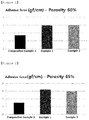
- the positive electrodes for the lithium-sulfur battery prepared in Examples 1 and 2 and Comparative Example 1 were rolled at different roll-pressing gaps to produce positive electrodes for the lithium-sulfur batteries with porosities of 60%, 65%, and 72%, respectively.
- the adhesive forces of the positive electrode for the lithium-sulfur battery of Examples 1 and 2, and Comparative Example 1 with porosities of 60%, 65%, and 72% were measured.
- the adhesive force of the positive electrode was measured by calculating the force when the positive electrode active material layer is dropped by pulling the electrode in a direction of 90 degrees using a Peel test equipment.
- the adhesive force refers to the adhesive force of the positive electrode active material layer to the positive electrode current collector.
- Table 1 (unit : gf/cm)
- Example 1 Example 2 Comparative Example 1 60% 2.95 3 1.75 65% 3.25 3 1.52 72% 1.15 0.82 0.95
- the sulfur-carbon composite of the present invention can increase the adhesive force between the positive electrode current collector and the positive electrode active material layer in the positive electrode with low porosity.
- the positive electrodes of Examples 1 and 2 and Comparative Examples 1 and 2 having a porosity of 68% were used.
- a lithium-sulfur battery coin cell was manufactured using polyethylene as a separator and a lithium foil with a thickness of 150 ⁇ m as a negative electrode. At this time, the coin cell was manufactured using the electrolyte solution prepared by dissolving 1 M LiFSI and 1% LiNO 3 in the organic solvent of diethylene glycol dimethyl ether.
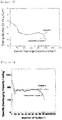
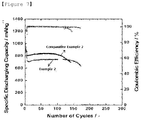
- the manufactured coin cell was measured for capacity from 1.8 to 2.5 V using a charging-discharging measuring device (LAND CT-2001A, Wuhan, China). Specifically, the initial charging/discharging was performed at 0.1 C/0.1 C and then the charging/discharging cycles at 0.3 C/0.5 C were repeated 120 times to measure the discharging capacity.
- a charging-discharging measuring device LAND CT-2001A, Wuhan, China.
- Example 1 As a result, the coin cell capacity of Example 1 was superior to that of Comparative Example 1 ( FIG. 5 ).
- the lithium-sulfur battery comprising the sulfur-carbon composite of the present invention has excellent performance and particularly excellent lifetime characteristic.
Landscapes
- Chemical & Material Sciences (AREA)
- Chemical Kinetics & Catalysis (AREA)
- Electrochemistry (AREA)
- General Chemical & Material Sciences (AREA)
- Engineering & Computer Science (AREA)
- Composite Materials (AREA)
- Manufacturing & Machinery (AREA)
- Inorganic Chemistry (AREA)
- Materials Engineering (AREA)
- Physics & Mathematics (AREA)
- Condensed Matter Physics & Semiconductors (AREA)
- General Physics & Mathematics (AREA)
- Battery Electrode And Active Subsutance (AREA)
- Secondary Cells (AREA)
- Carbon And Carbon Compounds (AREA)
Applications Claiming Priority (2)
| Application Number | Priority Date | Filing Date | Title |
|---|---|---|---|
| KR1020180076514A KR102468500B1 (ko) | 2018-07-02 | 2018-07-02 | 황-탄소 복합체, 이를 포함하는 리튬-황 전지용 양극 및 리튬-황 전지 |
| PCT/KR2019/006705 WO2020009333A1 (fr) | 2018-07-02 | 2019-06-04 | Composite soufre-carbone et son procédé de production, et électrode positive de batterie au lithium-soufre et batterie au lithium-soufre comprenant ledit composite |
Publications (3)
| Publication Number | Publication Date |
|---|---|
| EP3783704A1 true EP3783704A1 (fr) | 2021-02-24 |
| EP3783704A4 EP3783704A4 (fr) | 2021-07-28 |
| EP3783704B1 EP3783704B1 (fr) | 2026-03-04 |
Family
ID=69060670
Family Applications (1)
| Application Number | Title | Priority Date | Filing Date |
|---|---|---|---|
| EP19830666.4A Active EP3783704B1 (fr) | 2018-07-02 | 2019-06-04 | Composite soufre-carbone et son procédé de production, et électrode positive de batterie au lithium-soufre et batterie au lithium-soufre comprenant ledit composite |
Country Status (6)
| Country | Link |
|---|---|
| US (1) | US12107269B2 (fr) |
| EP (1) | EP3783704B1 (fr) |
| JP (1) | JP7080347B2 (fr) |
| KR (1) | KR102468500B1 (fr) |
| CN (1) | CN112189269B (fr) |
| WO (1) | WO2020009333A1 (fr) |
Families Citing this family (9)
| Publication number | Priority date | Publication date | Assignee | Title |
|---|---|---|---|---|
| KR102876036B1 (ko) * | 2020-07-01 | 2025-10-23 | 주식회사 엘지에너지솔루션 | 리튬-황 전지용 양극 및 이의 제조방법 |
| US20230361277A1 (en) * | 2021-05-07 | 2023-11-09 | Lg Energy Solution, Ltd. | Positive electrode for lithium secondary battery, manufacturing method thereof and lithium secondary battery comprising same |
| JP7538946B2 (ja) | 2021-05-25 | 2024-08-22 | エルジー エナジー ソリューション リミテッド | フィルム型正極製造装置、この製造方法、及びこれを含むリチウム二次電池、電池モジュール及び電池パック |
| KR102864163B1 (ko) * | 2021-06-15 | 2025-09-24 | 주식회사 엘지에너지솔루션 | 리튬-황 전지용 양극 및 이를 포함하는 리튬-황 전지 |
| KR20230091667A (ko) * | 2021-12-16 | 2023-06-23 | 주식회사 엘지에너지솔루션 | 리튬 이차전지용 양극 제조 장치 및 이의 제조 방법, 및 이를 포함하는 리튬 이차전지 |
| JP7667290B2 (ja) * | 2022-04-08 | 2025-04-22 | エルジー エナジー ソリューション リミテッド | リチウム硫黄電池用正極材及びこれを含むリチウム硫黄電池 |
| JP2024148448A (ja) * | 2023-04-05 | 2024-10-18 | Tdk株式会社 | リチウム二次電池及びその製造方法 |
| US20240343928A1 (en) * | 2023-04-13 | 2024-10-17 | Molecular Rebar Design, Llc | Coatings with Discrete Carbon Nanotubes for Energy Storage and Additive Manufacturing |
| CN119750555B (zh) * | 2025-03-05 | 2026-01-02 | 江苏大学 | 硫掺杂无定型碳纳米片的制备方法及应用于钠离子电池负极 |
Family Cites Families (21)
| Publication number | Priority date | Publication date | Assignee | Title |
|---|---|---|---|---|
| KR100373835B1 (ko) * | 2000-09-01 | 2003-02-26 | 삼성에스디아이 주식회사 | 리튬 설퍼 2차 전지 |
| JP4030397B2 (ja) | 2002-05-23 | 2008-01-09 | 三洋電機株式会社 | 非水電解質二次電池 |
| KR100454030B1 (ko) * | 2002-08-07 | 2004-10-20 | 삼성에스디아이 주식회사 | 리튬-황 전지용 양극, 이의 제조 방법 및 이를 포함하는리튬-황 전지 |
| KR100551007B1 (ko) | 2003-10-23 | 2006-02-13 | 삼성에스디아이 주식회사 | 리튬 이차 전지 |
| CN104170128A (zh) | 2012-03-14 | 2014-11-26 | 巴斯夫欧洲公司 | 复合材料、其生产及其在电化学电池中的用途 |
| US20130244097A1 (en) * | 2012-03-14 | 2013-09-19 | Basf Se | Composite materials, production thereof and use thereof in electrochemical cells |
| EP2743288A1 (fr) | 2012-12-12 | 2014-06-18 | Basf Se | Procédé de fabrication de polyéthylénimines sans chlorure |
| KR101501267B1 (ko) | 2013-07-31 | 2015-03-12 | 주식회사 포스코 | 리튬-설퍼 전지용 양극재, 이의 제조 방법 및 리튬 설퍼 전지 |
| WO2015016496A1 (fr) | 2013-08-01 | 2015-02-05 | 주식회사 엘지화학 | Anode pour batterie lithium-soufre et procédé de fabrication de celle-ci |
| KR101526677B1 (ko) | 2013-08-07 | 2015-06-05 | 현대자동차주식회사 | 리튬황 배터리를 위한 유황 양극 |
| WO2015023154A1 (fr) * | 2013-08-16 | 2015-02-19 | 주식회사 엘지화학 | Anode pour batterie au lithium-soufre et son procédé de préparation |
| KR101829101B1 (ko) | 2014-09-30 | 2018-02-13 | 주식회사 엘지화학 | 리튬-설퍼 전지용 양극 활물질 및 이의 제조 방법 |
| KR101790833B1 (ko) | 2014-10-31 | 2017-10-26 | 주식회사 엘지화학 | 전해질 담지층을 적용한 리튬-황 전지 구조 |
| US10050265B2 (en) * | 2014-12-18 | 2018-08-14 | Samsung Electronics Co., Ltd. | Positive electrode having sulfur contained in pores between nanocarbon structures, alkali metal-sulfur battery including the same, and method of preparing the positive electrode |
| JP6448352B2 (ja) * | 2014-12-18 | 2019-01-09 | 株式会社アルバック | アルカリ金属−硫黄電池用正極及びこれを備えた二次電池の製造方法 |
| KR101686640B1 (ko) | 2015-05-14 | 2016-12-14 | 부산대학교 산학협력단 | 고분자 코팅층을 갖는 질소도핑된 그래핀-유황 복합체의 제조방법, 이에 의하여 제조된 복합체 및 이를 이용한 리튬-황 이차전지 |
| US10405293B2 (en) | 2015-08-25 | 2019-09-03 | Lg Electronics Inc. | Method for receiving or transmitting reference signal for location determination in wireless communication system and device for same |
| KR102003304B1 (ko) | 2016-08-10 | 2019-07-24 | 주식회사 엘지화학 | 폴리이미드를 포함하는 양극 활물질, 이의 제조방법 및 이를 포함하는 리튬-황 전지 |
| KR102006727B1 (ko) * | 2016-11-02 | 2019-08-02 | 주식회사 엘지화학 | 황-탄소 복합체 및 이를 포함하는 리튬-황 전지 |
| KR102624230B1 (ko) | 2016-12-28 | 2024-01-12 | 한화오션 주식회사 | 육상 플랜트 블록 제작 방법 및 그 방법에 의해 제조된 육상 플랜트 |
| KR102229450B1 (ko) | 2017-11-03 | 2021-03-17 | 주식회사 엘지화학 | 황-탄소 복합체 및 이를 포함하는 리튬-황 전지 |
-
2018
- 2018-07-02 KR KR1020180076514A patent/KR102468500B1/ko active Active
-
2019
- 2019-06-04 EP EP19830666.4A patent/EP3783704B1/fr active Active
- 2019-06-04 WO PCT/KR2019/006705 patent/WO2020009333A1/fr not_active Ceased
- 2019-06-04 US US17/052,307 patent/US12107269B2/en active Active
- 2019-06-04 JP JP2020560319A patent/JP7080347B2/ja active Active
- 2019-06-04 CN CN201980034545.5A patent/CN112189269B/zh active Active
Also Published As
| Publication number | Publication date |
|---|---|
| KR102468500B1 (ko) | 2022-11-17 |
| CN112189269B (zh) | 2025-05-30 |
| WO2020009333A1 (fr) | 2020-01-09 |
| JP2021521600A (ja) | 2021-08-26 |
| US12107269B2 (en) | 2024-10-01 |
| EP3783704B1 (fr) | 2026-03-04 |
| KR20200003575A (ko) | 2020-01-10 |
| EP3783704A4 (fr) | 2021-07-28 |
| US20210242463A1 (en) | 2021-08-05 |
| JP7080347B2 (ja) | 2022-06-03 |
| CN112189269A (zh) | 2021-01-05 |
Similar Documents
| Publication | Publication Date | Title |
|---|---|---|
| EP3783704B1 (fr) | Composite soufre-carbone et son procédé de production, et électrode positive de batterie au lithium-soufre et batterie au lithium-soufre comprenant ledit composite | |
| KR102006727B1 (ko) | 황-탄소 복합체 및 이를 포함하는 리튬-황 전지 | |
| EP3675248B1 (fr) | Composite soufre-carbone et batterie lithium-soufre le comprenant | |
| EP3813156B1 (fr) | Batterie secondaire au lithium-soufre | |
| EP4138169B1 (fr) | Batterie secondaire au lithium | |
| EP3783703B1 (fr) | Composite soufre-carbone, son procédé de production, et électrode positive de batterie au lithium-soufre et batterie au lithium-soufre le comprenant | |
| US20240038989A1 (en) | Sulfur-Carbon Composite, Method for Preparing Same and Lithium Secondary Battery Comprising Same | |
| KR102690260B1 (ko) | 황-탄소 복합체 및 이를 포함하는 리튬-황 전지 | |
| KR102904723B1 (ko) | 리튬 디플루오로(옥살라토)보레이트를 함유하는 전해질을 포함하는 리튬-황 이차전지 | |
| KR102854275B1 (ko) | 에틸렌 설파이트를 함유하는 전해질을 포함하는 리튬-황 이차전지 | |
| EP4117075B1 (fr) | Batterie secondaire au lithium-soufre comprenant un électrolyte contenant du carbonate cyclique | |
| KR20190056321A (ko) | 황-탄소 복합체, 그의 제조방법 및 이를 포함하는 리튬 이차전지 | |
| KR20190060240A (ko) | 이산화망간(MnO2)이 코팅된 황-탄소 복합체 및 이의 제조방법 | |
| EP4191736B1 (fr) | Batterie secondaire au lithium | |
| EP4250389A1 (fr) | Cathode pour batterie rechargeable au lithium et batterie rechargeable au lithium la comprenant | |
| KR102904724B1 (ko) | 리튬 비스(옥살레이트)보레이트를 함유하는 전해질을 포함하는 리튬-황 이차전지 | |
| EP4117074B1 (fr) | Batterie secondaire au lithium-soufre comprenant un électrolyte contenant un sel de lithium à base de borate | |
| EP4195310A1 (fr) | Électrode positive pour une batterie au lithium-soufre et batterie au lithium-soufre la comprenant | |
| KR102848101B1 (ko) | 에틸렌 설페이트를 함유하는 전해질을 포함하는 리튬-황 이차전지 | |
| KR102848100B1 (ko) | 비닐렌 카보네이트를 함유하는 전해질을 포함하는 리튬-황 이차전지 | |
| KR102848099B1 (ko) | 플루오로에틸렌 카보네이트를 함유하는 전해질을 포함하는 리튬-황 이차전지 | |
| KR20230011237A (ko) | 리튬 이차전지 |
Legal Events
| Date | Code | Title | Description |
|---|---|---|---|
| STAA | Information on the status of an ep patent application or granted ep patent |
Free format text: STATUS: THE INTERNATIONAL PUBLICATION HAS BEEN MADE |
|
| PUAI | Public reference made under article 153(3) epc to a published international application that has entered the european phase |
Free format text: ORIGINAL CODE: 0009012 |
|
| STAA | Information on the status of an ep patent application or granted ep patent |
Free format text: STATUS: REQUEST FOR EXAMINATION WAS MADE |
|
| 17P | Request for examination filed |
Effective date: 20201117 |
|
| AK | Designated contracting states |
Kind code of ref document: A1 Designated state(s): AL AT BE BG CH CY CZ DE DK EE ES FI FR GB GR HR HU IE IS IT LI LT LU LV MC MK MT NL NO PL PT RO RS SE SI SK SM TR |
|
| AX | Request for extension of the european patent |
Extension state: BA ME |
|
| A4 | Supplementary search report drawn up and despatched |
Effective date: 20210625 |
|
| RIC1 | Information provided on ipc code assigned before grant |
Ipc: H01M 4/36 20060101AFI20210621BHEP Ipc: H01M 4/38 20060101ALI20210621BHEP Ipc: H01M 4/62 20060101ALI20210621BHEP Ipc: H01M 4/13 20100101ALI20210621BHEP Ipc: H01M 10/052 20100101ALI20210621BHEP Ipc: H01M 10/0569 20100101ALI20210621BHEP Ipc: H01M 4/583 20100101ALI20210621BHEP |
|
| DAV | Request for validation of the european patent (deleted) | ||
| DAX | Request for extension of the european patent (deleted) | ||
| RAP1 | Party data changed (applicant data changed or rights of an application transferred) |
Owner name: LG ENERGY SOLUTION LTD. |
|
| RAP3 | Party data changed (applicant data changed or rights of an application transferred) |
Owner name: LG ENERGY SOLUTION, LTD. |
|
| GRAP | Despatch of communication of intention to grant a patent |
Free format text: ORIGINAL CODE: EPIDOSNIGR1 |
|
| STAA | Information on the status of an ep patent application or granted ep patent |
Free format text: STATUS: GRANT OF PATENT IS INTENDED |
|
| INTG | Intention to grant announced |
Effective date: 20250925 |
|
| P01 | Opt-out of the competence of the unified patent court (upc) registered |
Free format text: CASE NUMBER: UPC_APP_0016543_3783704/2025 Effective date: 20251210 |
|
| GRAS | Grant fee paid |
Free format text: ORIGINAL CODE: EPIDOSNIGR3 |
|
| GRAA | (expected) grant |
Free format text: ORIGINAL CODE: 0009210 |
|
| STAA | Information on the status of an ep patent application or granted ep patent |
Free format text: STATUS: THE PATENT HAS BEEN GRANTED |
|
| AK | Designated contracting states |
Kind code of ref document: B1 Designated state(s): AL AT BE BG CH CY CZ DE DK EE ES FI FR GB GR HR HU IE IS IT LI LT LU LV MC MK MT NL NO PL PT RO RS SE SI SK SM TR |
|
| REG | Reference to a national code |
Ref country code: CH Ref legal event code: F10 Free format text: ST27 STATUS EVENT CODE: U-0-0-F10-F00 (AS PROVIDED BY THE NATIONAL OFFICE) Effective date: 20260304 Ref country code: GB Ref legal event code: FG4D |
|
| REG | Reference to a national code |
Ref country code: DE Ref legal event code: R096 Ref document number: 602019082143 Country of ref document: DE |
|
| REG | Reference to a national code |
Ref country code: IE Ref legal event code: FG4D |