EP3785154B1 - Systèmes et procédés pour fournir un accès à distance à un bureau par l'intermédiaire de deux facteurs d'authentification, de proximité et de reconnaissance faciale - Google Patents
Systèmes et procédés pour fournir un accès à distance à un bureau par l'intermédiaire de deux facteurs d'authentification, de proximité et de reconnaissance faciale Download PDFInfo
- Publication number
- EP3785154B1 EP3785154B1 EP19727761.9A EP19727761A EP3785154B1 EP 3785154 B1 EP3785154 B1 EP 3785154B1 EP 19727761 A EP19727761 A EP 19727761A EP 3785154 B1 EP3785154 B1 EP 3785154B1
- Authority
- EP
- European Patent Office
- Prior art keywords
- user
- computing device
- mobile device
- client computing
- session
- Prior art date
- Legal status (The legal status is an assumption and is not a legal conclusion. Google has not performed a legal analysis and makes no representation as to the accuracy of the status listed.)
- Active
Links
Images


Classifications
-
- G—PHYSICS
- G06—COMPUTING OR CALCULATING; COUNTING
- G06F—ELECTRIC DIGITAL DATA PROCESSING
- G06F21/00—Security arrangements for protecting computers, components thereof, programs or data against unauthorised activity
- G06F21/30—Authentication, i.e. establishing the identity or authorisation of security principals
- G06F21/31—User authentication
- G06F21/32—User authentication using biometric data, e.g. fingerprints, iris scans or voiceprints
-
- G—PHYSICS
- G06—COMPUTING OR CALCULATING; COUNTING
- G06F—ELECTRIC DIGITAL DATA PROCESSING
- G06F9/00—Arrangements for program control, e.g. control units
- G06F9/06—Arrangements for program control, e.g. control units using stored programs, i.e. using an internal store of processing equipment to receive or retain programs
- G06F9/44—Arrangements for executing specific programs
- G06F9/451—Execution arrangements for user interfaces
- G06F9/452—Remote windowing, e.g. X-Window System, desktop virtualisation
-
- H—ELECTRICITY
- H04—ELECTRIC COMMUNICATION TECHNIQUE
- H04L—TRANSMISSION OF DIGITAL INFORMATION, e.g. TELEGRAPHIC COMMUNICATION
- H04L63/00—Network architectures or network communication protocols for network security
- H04L63/08—Network architectures or network communication protocols for network security for authentication of entities
- H04L63/0807—Network architectures or network communication protocols for network security for authentication of entities using tickets, e.g. Kerberos
-
- H—ELECTRICITY
- H04—ELECTRIC COMMUNICATION TECHNIQUE
- H04L—TRANSMISSION OF DIGITAL INFORMATION, e.g. TELEGRAPHIC COMMUNICATION
- H04L63/00—Network architectures or network communication protocols for network security
- H04L63/08—Network architectures or network communication protocols for network security for authentication of entities
- H04L63/0815—Network architectures or network communication protocols for network security for authentication of entities providing single-sign-on or federations
-
- H—ELECTRICITY
- H04—ELECTRIC COMMUNICATION TECHNIQUE
- H04L—TRANSMISSION OF DIGITAL INFORMATION, e.g. TELEGRAPHIC COMMUNICATION
- H04L63/00—Network architectures or network communication protocols for network security
- H04L63/08—Network architectures or network communication protocols for network security for authentication of entities
- H04L63/0823—Network architectures or network communication protocols for network security for authentication of entities using certificates
-
- H—ELECTRICITY
- H04—ELECTRIC COMMUNICATION TECHNIQUE
- H04L—TRANSMISSION OF DIGITAL INFORMATION, e.g. TELEGRAPHIC COMMUNICATION
- H04L63/00—Network architectures or network communication protocols for network security
- H04L63/08—Network architectures or network communication protocols for network security for authentication of entities
- H04L63/0861—Network architectures or network communication protocols for network security for authentication of entities using biometrical features, e.g. fingerprint, retina-scan
-
- H—ELECTRICITY
- H04—ELECTRIC COMMUNICATION TECHNIQUE
- H04L—TRANSMISSION OF DIGITAL INFORMATION, e.g. TELEGRAPHIC COMMUNICATION
- H04L63/00—Network architectures or network communication protocols for network security
- H04L63/10—Network architectures or network communication protocols for network security for controlling access to devices or network resources
- H04L63/102—Entity profiles
-
- H—ELECTRICITY
- H04—ELECTRIC COMMUNICATION TECHNIQUE
- H04L—TRANSMISSION OF DIGITAL INFORMATION, e.g. TELEGRAPHIC COMMUNICATION
- H04L63/00—Network architectures or network communication protocols for network security
- H04L63/10—Network architectures or network communication protocols for network security for controlling access to devices or network resources
- H04L63/107—Network architectures or network communication protocols for network security for controlling access to devices or network resources wherein the security policies are location-dependent, e.g. entities privileges depend on current location or allowing specific operations only from locally connected terminals
-
- H—ELECTRICITY
- H04—ELECTRIC COMMUNICATION TECHNIQUE
- H04L—TRANSMISSION OF DIGITAL INFORMATION, e.g. TELEGRAPHIC COMMUNICATION
- H04L63/00—Network architectures or network communication protocols for network security
- H04L63/12—Applying verification of the received information
-
- H—ELECTRICITY
- H04—ELECTRIC COMMUNICATION TECHNIQUE
- H04L—TRANSMISSION OF DIGITAL INFORMATION, e.g. TELEGRAPHIC COMMUNICATION
- H04L67/00—Network arrangements or protocols for supporting network services or applications
- H04L67/01—Protocols
- H04L67/02—Protocols based on web technology, e.g. hypertext transfer protocol [HTTP]
- H04L67/025—Protocols based on web technology, e.g. hypertext transfer protocol [HTTP] for remote control or remote monitoring of applications
-
- H—ELECTRICITY
- H04—ELECTRIC COMMUNICATION TECHNIQUE
- H04L—TRANSMISSION OF DIGITAL INFORMATION, e.g. TELEGRAPHIC COMMUNICATION
- H04L67/00—Network arrangements or protocols for supporting network services or applications
- H04L67/01—Protocols
- H04L67/10—Protocols in which an application is distributed across nodes in the network
- H04L67/1097—Protocols in which an application is distributed across nodes in the network for distributed storage of data in networks, e.g. transport arrangements for network file system [NFS], storage area networks [SAN] or network attached storage [NAS]
-
- H—ELECTRICITY
- H04—ELECTRIC COMMUNICATION TECHNIQUE
- H04L—TRANSMISSION OF DIGITAL INFORMATION, e.g. TELEGRAPHIC COMMUNICATION
- H04L67/00—Network arrangements or protocols for supporting network services or applications
- H04L67/14—Session management
-
- H—ELECTRICITY
- H04—ELECTRIC COMMUNICATION TECHNIQUE
- H04L—TRANSMISSION OF DIGITAL INFORMATION, e.g. TELEGRAPHIC COMMUNICATION
- H04L67/00—Network arrangements or protocols for supporting network services or applications
- H04L67/14—Session management
- H04L67/141—Setup of application sessions
-
- H—ELECTRICITY
- H04—ELECTRIC COMMUNICATION TECHNIQUE
- H04L—TRANSMISSION OF DIGITAL INFORMATION, e.g. TELEGRAPHIC COMMUNICATION
- H04L67/00—Network arrangements or protocols for supporting network services or applications
- H04L67/50—Network services
- H04L67/52—Network services specially adapted for the location of the user terminal
-
- H—ELECTRICITY
- H04—ELECTRIC COMMUNICATION TECHNIQUE
- H04L—TRANSMISSION OF DIGITAL INFORMATION, e.g. TELEGRAPHIC COMMUNICATION
- H04L9/00—Cryptographic mechanisms or cryptographic arrangements for secret or secure communications; Network security protocols
- H04L9/32—Cryptographic mechanisms or cryptographic arrangements for secret or secure communications; Network security protocols including means for verifying the identity or authority of a user of the system or for message authentication, e.g. authorization, entity authentication, data integrity or data verification, non-repudiation, key authentication or verification of credentials
- H04L9/321—Cryptographic mechanisms or cryptographic arrangements for secret or secure communications; Network security protocols including means for verifying the identity or authority of a user of the system or for message authentication, e.g. authorization, entity authentication, data integrity or data verification, non-repudiation, key authentication or verification of credentials involving a third party or a trusted authority
- H04L9/3213—Cryptographic mechanisms or cryptographic arrangements for secret or secure communications; Network security protocols including means for verifying the identity or authority of a user of the system or for message authentication, e.g. authorization, entity authentication, data integrity or data verification, non-repudiation, key authentication or verification of credentials involving a third party or a trusted authority using tickets or tokens, e.g. Kerberos
-
- H—ELECTRICITY
- H04—ELECTRIC COMMUNICATION TECHNIQUE
- H04W—WIRELESS COMMUNICATION NETWORKS
- H04W12/00—Security arrangements; Authentication; Protecting privacy or anonymity
- H04W12/06—Authentication
-
- H—ELECTRICITY
- H04—ELECTRIC COMMUNICATION TECHNIQUE
- H04L—TRANSMISSION OF DIGITAL INFORMATION, e.g. TELEGRAPHIC COMMUNICATION
- H04L2463/00—Additional details relating to network architectures or network communication protocols for network security covered by H04L63/00
- H04L2463/082—Additional details relating to network architectures or network communication protocols for network security covered by H04L63/00 applying multi-factor authentication
Definitions
- the present disclosure relates generally to computing systems. More particularly, the present disclosure relates to implementing systems and methods for providing remote desktop access using proximity and facial recognition as a two-factor authentication.
- Remote desktops are often used by business entities to allow employees access to various software applications and services.
- the user Prior to establishing a session with a remote server, the user is authenticated for purposes of ensuring that only authorized personal obtain access to certain resources.
- the user authentication involves using either (a) a user's proximity to a thin client or (b) facial recognition. The user authentication needs to be performed each time the user attempts to obtain access to a thin client.
- US 2013/268767 A1 (SCHRECKER SVEN [US]) 10 October 2013 (2013-10-10) discloses a bluetooth token, either wearable or included in a mobile phone or a thumbdrive storing user data.
- the token stores authentication data which are needed to connect to a cloud service (media storage, email, ).
- the authentication data are sent from the token and forwarded by the client to the server (these may be encrypted by the token with the server public key).
- GUID globally-unique user identifier
- a session can thus be transferred between two clients or concurrent sessions established. Continuous or recurring authentication possible.
- the client may use two factor authentication by combining it with a facial recognition or PIN or fingerprint.
- the session is paused when the client detects that the token cannot be reached.
- the present disclosure concerns implementing systems and methods for obtaining access to a session with a remote cloud service server.
- the methods comprise: detecting when a mobile device is in proximity to a first client computing device (e.g., using a beacon); receiving, by the first client computing device, a user unique identifier and/or a partial or full session token sent from the mobile device; initiating facial recognition operations in response to the first client computing device's reception of the user unique identifier; and/or performing the facial recognition operations by the first client computing device.
- the facial recognition operations comprise: capturing an image of the mobile device's user; and analyzing the image to obtain a user name associated with the facial features represented therein.
- the username is obtained by: comparing facial features of the image to a facial feature database including facial feature information for a plurality of individuals; detecting a match of the image's facial features and the facial features associated with an individual of the plurality of individuals; and retrieving the user name associated with the individual having the matching facial features
- a manual user input based authentication scheme e.g., by entering a username and/or password into the first computing device.
- the user is authenticated once by the mobile device prior to obtaining access to a first session at a first time using the first computing device and access to a second session at a second time using a second different computing device.
- the user may be periodically authenticated by the mobile device in accordance with a timing scheme of a certificate issued to the mobile device.
- the methods comprise: receiving, by a first computing device, first authentication information; receiving, by a second computing device, second authentication information that is different than the first authentication information; analyzing the second authentication information to verify that the user identified thereby is the same as the user identified by the first authentication information; generating a full resource token based on the first authentication information and the second authentication information, when a verification has been made that the users identified by the first and second authentication information are the same; and providing access to the resource using the full resource token.
- the present solution concerns systems and methods for providing remote desktop access using proximity and facial recognition as a two-factor authentication.
- a user authenticates once on his(her) mobile device (e.g., a smart phone).
- a client computing device e.g., a thin client
- the mobile device transmits a unique identifier for the user (e.g., a username) to the client computing device.
- the client computing device then initiates facial recognition operations thereof.
- the user's face is recognized on the client computing device.
- the client computing device obtains a username associated with user's face in a datastore.
- the username is compared to the user's unique identifier received from the mobile device. If a match exists, the user's remote session is launched on the client computing device.
- the present solution has many novel features. For example, existing conventional solutions only use one or the other (i.e., proximity or facial recognition), rather than a combination of the two as is done in the present solution. In the present case, users must only authenticate a single time, and then (s)he is able to move from client computing device to client computing device in a secure and efficient manner. This is not the case in conventional systems.
- the present solution also eliminates the need to distinguish client computing devices that are in close proximity to each other if only beacon authentication was used (i.e., no added Personal Identification Number (“PIN”) required).
- PIN Personal Identification Number
- the present solution overcomes various drawbacks of conventional authentication solutions. For example, the present solution solves the problem of security issues that may arise with facial recognition. As mentioned above, facial recognition can be spoofed if one holds up a picture of someone else's face. Likewise, proximity alone may be insecure due to the possibility of the session accidently launching on an unwanted terminal when the user is simply walking by. Lastly, the present solution minimizes the time that it takes to authenticate and launch a session which is extremely crucial in environments such as hospitals where time is critical.
- the present solution solves the problem of facial recognition being insecure by ensuring that the user's face is not only visible but is also within proximity of the client computing device. Likewise, if proximity is used in combination with facial recognition, sessions will not accidentally launch when the user is passing by because the user's face must also be seen at the client computing device. A user will only have to authenticate once to his(her) mobile device, and then (s)he can move from client computing device to client computing device without having to type in credentials or a pin each time to access his(her) remote session. Once the user is within proximity of the client computing device and the client computing device recognizes the user's face as the user who approached it, the session will simply launch (only consisting of a few seconds).
- the present solution does not require having to tap a badge or enter a pin number into the client computing device. Accordingly, the present solution saves the user time by being able to simply walk up to the client computing device to authenticate and launch a session rather than having to use peripherals to gain access.
- system 100 implements methods for establishing a remote session with a remote cloud service server 108.
- system 100 comprises a customer facility 140 and a cloud service provider facility 142.
- the customer facility 140 comprises one or more buildings of a customer, such as a business organization (e.g., a hospital).
- the customer has at least one end user 102.
- the end user can include, but is not limited to, an employee.
- the end user 102 uses the client computing devices 104 1 -104 N (e.g., thin clients) for a variety of purposes, such as accessing and using cloud services provided by a cloud service provider.
- the client computing devices 104 1 -104 N are configured to facilitate access to applications and virtual desktops without interruptions resulting from connectivity loss. Accordingly, the client computing devices 104 1 -104 N have installed thereon and execute various software applications. These software applications include, but are not limited to, Web Browsers 116 1 -116 N and/or Web Receivers 118 1 -118 N . Web Browsers and Web Receivers are well known in the art, and therefore will not be described herein. Any known or to be known Web Browser and Web Receiver can be used herein without limitation.
- the Web Receivers 118 1 -118 N can respectively include, but are not limited to, Citrix Receivers available from Citrix Systems, Inc. of Florida and Citrix Receivers for a web site available from Citrix Systems, Inc. of Florida.
- Citrix Receivers comprise client software that is required to access applications and full desktops hosted by servers remote from client devices. The present solution is not limited in this regard.
- the client computing devices 104 1 -104 N also have various information stored internally. This information includes, but is not limited to, account records 120 1 -120 N .
- the client computing devices 104 1 -104 N are able to communicate with each other via an Intranet and with external devices via the Internet.
- the Intranet and Internet are shown in FIG. 1 as a network 120.
- the external devices include one or more cloud service servers 108 located at the cloud service provider facility 142.
- the cloud service provider facility 142 comprises one or more buildings of a cloud service provider.
- the server(s) 108 is(are) configured to facilitate access to applications and virtual desktops without interruptions resulting from connectivity loss. Accordingly, the server 108 has installed thereon and executes various software applications.
- the software applications include, but are not limited to, a StoreFront and a Desktop Delivery Controller ("DDC").
- StoreFronts and DDCs are well known in the art, and therefore will not be described herein. Any known or to be known StoreFront and/or DDC can be employed herein.
- the server 108 is also configured to access the datastore 110 in which publishing information 160 is stored, and is also able to write/read from the datastore(s) 110.
- the publishing information 160 includes, but is not limited to, software applications, code, media content (e.g., text, images, videos, etc.), and/or user authentication information (e.g., a user name and/or facial feature information).
- a two-factor authentication process is performed for authenticating an end user prior to establishing a session between a client computing device 104 1 -104 N and the cloud service server 108.
- the two-factors used herein comprise the end user's proximity to the client computing device and the facial recognition of the end user.
- the mobile device 106 transmits a unique identifier for the end user 102 (e.g., a username) to the client computing device 104 1 -104 N .
- the client computing device 104 1 -104 N then initiates its facial recognition operations. Facial recognition operations are well known in the art, and therefore will not be described in detail herein. Any known or to be known facial recognition operations can be used herein without limitation.
- the facial recognition operations involve: capturing an image of the end user's face; and perform image processing to recognize the end user's face by the client computing device. The end user's face is recognized by comparing selected facial features from the captured image and a face database.
- the client computing device then obtains a username stored in datastore 110 so as to be associated with the face database (e.g., information specifying facial features of the user's face).
- the username is compared to the user's unique identifier received from the mobile device 106. If a match exists, the user's remote session is launched on the client computing device 104 1 -104 N .
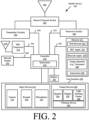
- Mobile device 106 may include more or less components than those shown in FIG. 2 . However, the components shown are sufficient to disclose an illustrative embodiment implementing the present solution. Some or all of the components of the mobile device 106 can be implemented in hardware, software and/or a combination of hardware and software.
- the hardware includes, but is not limited to, one or more electronic circuits.
- the electronic circuits can include, but are not limited to, passive components (e.g., resistors and capacitors) and/or active components (e.g., amplifiers and/or microprocessors).
- the passive and/or active components can be adapted to, arranged to and/or programmed to perform one or more of the methodologies, procedures, or functions described herein.
- the mobile device 106 can include, but is not limited to, a notebook computer, a personal digital assistant, a cellular phone or a mobile phone with smart device functionality (e.g., a Smartphone).
- the mobile device 106 comprises an antenna 602 for receiving and transmitting Radio Frequency ("RF") signals.
- a receive/transmit (“Rx/Tx") switch 204 selectively couples the antenna 202 to the transmitter circuitry 206 and the receiver circuitry 208 in a manner familiar to those skilled in the art.
- the receiver circuitry 208 demodulates and decodes the RF signals received from an external device.
- the receiver circuitry 208 is coupled to a controller (or microprocessor) 210 via an electrical connection 234.
- the receiver circuitry 208 provides the decoded signal information to the controller 210.
- the controller 210 uses the decoded RF signal information in accordance with the function(s) of the mobile device 106.
- the controller 210 also provides information to the transmitter circuitry 206 for encoding and modulating information into RF signals. Accordingly, the controller 210 is coupled to the transmitter circuitry 206 via an electrical connection 238.
- the transmitter circuitry 206 communicates the RF signals to the antenna 202 for transmission to an external device via the Rx/Tx switch 204.
- the mobile device 106 also comprises an antenna 240 coupled to a Short Range Communications ("SRC") transceiver 214 for receiving SRC signals.
- SRC transceivers are well known in the art, and therefore will not be described in detail herein. However, it should be understood that the SRC transceiver 214 processes the SRC signals to extract information therefrom.
- the SRC transceiver 214 may process the SRC signals in a manner defined by the SRC application 254 installed on the mobile device 106.
- the SRC application 254 can include, but is not limited to, a Commercial Off the Shelf (“COTS”) application (e.g., a Bluetooth application).
- COTS Commercial Off the Shelf
- the SRC transceiver 214 is coupled to the controller 210 via an electrical connection 236.
- the controller uses the extracted information in accordance with the function(s) of the mobile device 106.
- the extracted information can include a unique identifier received from a client computing device 104 1 , ..., 104 N of FIG. 1 .
- the unique identifier can be used by the mobile device 106 to initiate or enable user authentication functions thereof as described herein.
- the user authentication functions can involve: obtaining a unique identifier for the user (e.g., unique identifier 260 ) via a user-software interaction or via a datastore read operation; and communicating the unique identifier to a remote cloud service server (e.g., cloud service server 108 of FIG. 1 ).
- a remote cloud service server e.g., cloud service server 108 of FIG. 1
- the controller 210 may store received and extracted information in memory 212 of the mobile device 106. Accordingly, the memory 212 is connected to and accessible by the controller 210 through electrical connection 242.
- the memory 212 may be a volatile memory and/or a non-volatile memory.
- memory 212 can include, but is not limited to, a Random Access Memory (“RAM”), a Dynamic RAM (“DRAM”), a Read Only Memory (“ROM”) and a flash memory.
- RAM Random Access Memory
- DRAM Dynamic RAM
- ROM Read Only Memory
- flash memory may also comprise unsecure memory and/or secure memory.
- the memory 212 can be used to store various other types of data 260 therein, such as authentication information, cryptographic information, location information, and various work order related information.
- the mobile device 106 also may comprise a barcode reader 232.
- Barcode readers are well known in the art, and therefore will not be described herein. However, it should be understood that the barcode reader 232 is generally configured to scan a barcode and process the scanned barcode to extract information therefrom. The barcode reader 232 may process the barcode in a manner defined by the barcode application 256 installed on the mobile device 106. Additionally, the barcode scanning application can use camera 218 to capture the barcode image for processing. The barcode application 256 can include, but is not limited to, a COTS application.
- the barcode reader 232 provides the extracted information to the controller 210. As such, the barcode reader 232 is coupled to the controller 210 via an electrical connection 260. The controller 210 uses the extracted information in accordance with the function(s) of the mobile device 106. For example, the extracted information can be used by mobile device 106 to enable user authentication functionalities thereof.
- one or more sets of instructions 250 are stored in memory 212.
- the instructions may include customizable instructions and non-customizable instructions.
- the instructions 250 can also reside, completely or at least partially, within the controller 210 during execution thereof by mobile device 106.
- the memory 212 and the controller 210 can constitute machine-readable media.
- the term "machine-readable media”, as used herein, refers to a single medium or multiple media that stores one or more sets of instructions 250.
- the term “machine-readable media”, as used here, also refers to any medium that is capable of storing, encoding or carrying the set of instructions 250 for execution by the mobile device 106 and that causes the mobile device 106 to perform one or more of the methodologies of the present disclosure.
- the controller 210 is also connected to a user interface 230.
- the user interface 230 comprises input devices 216, output devices 224 and software routines (not shown in FIG. 2 ) configured to allow a user to interact with and control software applications (e.g., software applications 252-256 and other software applications) installed on the mobile device 106.
- Such input and output devices may include, but are not limited to, a display 228, a speaker 226, a keypad 220, a directional pad (not shown in FIG. 2 ), a directional knob (not shown in FIG. 2 ), a microphone 222, and a camera 218.
- the display 228 may be designed to accept touch screen inputs.
- user interface 230 can facilitate a user software interaction for launching applications (e.g., software applications 252-256 and other software applications) installed on the mobile device 106.
- the user interface 230 can facilitate a user-software interactive session for: initiating communications with an external device; writing data to and reading data from memory 212; and/or initiating user authentication operations for authenticating a user such that a remote session between a nearby client computing device and a remote cloud service server.
- the display 228, keypad 220, directional pad (not shown in FIG. 2 ) and directional knob (not shown in FIG. 2 ) can collectively provide a user with a means to initiate one or more software applications or functions of the mobile device 106.
- the application software 252-258 can facilitate the data exchange (a) a user and the mobile device 106, and/or (b) the mobile device 106 and a client computing device 104 1 , ..., 104 N .
- the application software 252-256 performs one or more of the following: facilitated verification of the identity of a user of mobile device 106 via an two-factor authentication process; and/or present information to the user indicating this his/her identity has or has not been verified.
- FIG. 3 there is provided an illustration of an exemplary architecture for a computing device 300.
- Computing devices 104 1 -104 N and/or server(s) 108 of FIG. 1 are the same as or similar to computing device 300. As such, the discussion of computing device 300 is sufficient for understanding these components of system 100.
- the present solution is used in a client-server architecture. Accordingly, the computing device architecture shown in FIG. 3 is sufficient for understanding the particulars of client computing devices and servers.
- Computing device 300 may include more or less components than those shown in FIG. 3 . However, the components shown are sufficient to disclose an illustrative solution implementing the present solution.
- the hardware architecture of FIG. 3 represents one implementation of a representative computing device configured to enable watermarking of graphics, as described herein. As such, the computing device 300 of FIG. 3 implements at least a portion of the method(s) described herein.
- the hardware includes, but is not limited to, one or more electronic circuits.
- the electronic circuits can include, but are not limited to, passive components (e.g., resistors and capacitors) and/or active components (e.g., amplifiers and/or microprocessors).
- the passive and/or active components can be adapted to, arranged to and/or programmed to perform one or more of the methodologies, procedures, or functions described herein.
- the computing device 300 comprises a user interface 302, a Central Processing Unit (“CPU”) 306, a system bus 310, a memory 312 connected to and accessible by other portions of computing device 300 through system bus 310, and hardware entities 314 connected to system bus 310.
- the user interface can include input devices and output devices, which facilitate user-software interactions for controlling operations of the computing device 300.
- the input devices include, but are not limited, a physical and/or touch keyboard 350.
- the input devices can be connected to the computing device 300 via a wired or wireless connection (e.g., a Bluetooth ® connection).
- the output devices include, but are not limited to, a speaker 352, a display 354, and/or light emitting diodes 356.
- Hardware entities 314 perform actions involving access to and use of memory 312, which can be a Radom Access Memory (“RAM”), a disk driver and/or a Compact Disc Read Only Memory (“CD-ROM”).
- Hardware entities 314 can include a disk drive unit 316 comprising a computer-readable storage medium 318 on which is stored one or more sets of instructions 320 (e.g., software code) configured to implement one or more of the methodologies, procedures, or functions described herein.
- the instructions 320 can also reside, completely or at least partially, within the memory 312 and/or within the CPU 306 during execution thereof by the computing device 300.
- the memory 312 and the CPU 306 also can constitute machine-readable media.
- machine-readable media refers to a single medium or multiple media (e.g., a centralized or distributed database, and/or associated caches and servers) that store the one or more sets of instructions 320.
- machine-readable media also refers to any medium that is capable of storing, encoding or carrying a set of instructions 320 for execution by the computing device 300 and that cause the computing device 300 to perform any one or more of the methodologies of the present disclosure.
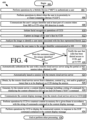
- Method 400 comprises a plurality of operations 402-436.
- the present solution is not limited to the order of operations 402-436 shown in FIG. 4 .
- the operations of 402-436 can be performed in a different order (than that shown) in accordance with a given application.
- method 400 begins with 402 and continues with 404 where a mobile device (e.g., mobile device 106 of FIG. 1 ) performs operations to authenticate a user (e.g., end user 102 of FIG. 1 ).
- the user authentication is achieved by: receiving a user-software interaction for inputting user authentication information (e.g., a pin and/or password); and comparing the inputted user authentication information to pre-stored user authentication information. If the inputted and pre-stored user authentication information match each other, then the user's identity is authenticated or verified by the mobile device.
- user authentication information e.g., a pin and/or password
- the user authentication operations of 404 only need to be performed once for purposes of providing the user access to a session with a remote cloud service server (e.g., cloud service server 108 of FIG. 1 ) via any one of a plurality of client computing devices (e.g., client computing devices 104 1 , .. ., 104 N of FIG. 1 ) employing a two-factor authentication process.
- a remote cloud service server e.g., cloud service server 108 of FIG. 1
- client computing devices e.g., client computing devices 104 1 , .. ., 104 N of FIG. 1
- the mobile device's authentication of 404 may be performed in accordance with rules or a timing scheme specified by an issued certification (e.g., daily, weekly, monthly, yearly, each time a user moves from one location to another location, and/or each time the user enters a given area or location).
- the client computing device comprises an iBeacon that transmits a beacon signal comprising a first unique identifier (e.g., a Universal Unique Identifier ("UUID”) for a business entity and a second unique identifier (e.g., an IP address of the computing device).
- a first unique identifier e.g., a Universal Unique Identifier ("UUID)
- UUID Universal Unique Identifier
- the mobile device When the mobile device is in range of the iBeacon, it receives the beacon signal. A detection is made that the user is in proximity of the CCD when the mobile device receives a beacon signal having the first unique identifier.
- the present solution is not limited to the particulars of this example. Additionally or alternatively, the operations of 406 involve: (A) detecting when there is a break in a beam emitted by a beam brake sensor; and/or (B) prompting the user to place the mobile device in proximity of the client computing device, and detecting when the mobile device is in proximity to the client computing device.
- the user's unique identifier and at least part of a session token is communicated from the mobile device to the client computing device, as shown by 408.
- this communication is achieved using a beacon response signal or a SRC (e.g., a Bluetooth communication).
- the present solution is not limited to the particulars of this example.
- the partial session token can be used by the client computing device to obtain a full session token. Session tokens are well known in the art, and therefore will not be described herein. Any known or to be known session token (partial or full) can be used herein without limitation.
- Facial recognition operations of the client computing device are initiated in 410 responsive to the client computing device's reception of the user's unique identifier in 408. Facial recognition operations are well known in the art, and therefore will not be described in detail here. Any known or to be known facial recognition technique can be used herein without limitation. For example, in some scenarios, the facial recognition is achieved by performing operations in 412-414 by the client computing device to: capture an image of the user's face; and analyze the image to identify a user name associated with the face represented in the captured image.
- the user name is identified by: comparing facial features of the captured image to a facial feature database including facial feature information for a plurality of individuals; detecting a match of the captured image's facial features and those associated with one of the individuals; and retrieving a user name associated with the individual having the matching facial features.
- the present solution is not limited to the particulars of this example.
- next 416 the user name is compared to the unique identifier communicated in 408. If a match does not exist between the user name and unique identifier [418:NO], then method 400 continues with 420 where the user is notified that (s)he has been denied access to the client computing device. Subsequently, 436 is performed. In 436, method 400 ends or other processing is performed (e.g., the computing device provides the user with another way to be authenticated for purposes of accessing a session, such as via a user-software interaction for inputting a username and password).
- method 400 continues with 422 where the user is automatically authenticated with a remote cloud service server (e.g., cloud service server 108 of FIG. 1 ) using the partial or full session token obtained in 408.
- a session is launched with the remote cloud service server, as shown by 424.
- the cloud service server receives graphics from the datastore, as shown by 426.
- the cloud service server performs operations to generate a content display message.
- the content display message comprises a string of commands for displaying the content obtained in 426 and an End-Of-Frame ("EOF") command.
- the content display message is communicated from the cloud service server (e.g., cloud service server 108 of FIG. 1 ) to the client computing device (e.g., to the Web Receiver 118 1 of FIG. 1 ) in 430.
- the client computing device performs operations to construct content in memory for a given frame in accordance with the string of commands contained in the content display message.
- the client computing device displays the constructed content in response to the EOF command.
- 436 is performed where method 400 ends or other processing is performed (e.g., return to 404, 406 or 426).
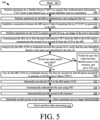
- Method 500 comprises a plurality of operations 502-530.
- the present solution is not limited to the order of operations 502-530 shown in FIG. 5 .
- the operations of 502-530 can be performed in a different order (than that shown) in accordance with a given application.
- method 500 begins with 502 and continues with 504 where a MD (e.g., MD 106 of FIG. 1 ) performs operations to acquire first Authentication Information ("AI") from a user thereof.
- the first AI can include, but is not limited to, a username, a password, an access code, a certificate, a pin, biometric information, or another authentication information required by a user authentication process employed by the MD.
- user authentication processes are well known in the art, and therefore will not be described herein. Any known or to be known user authentication process can be used herein without limitation.
- the MD uses the first AI to authenticate the user.
- a connection is established between the MD and a CCD (e.g., CCD 104 1 of FIG. 1 ) in proximity to the MD.
- CCD e.g., CCD 104 1 of FIG. 1
- the CCD performs operations in 510 to acquire second AI.
- the second AI can include, but is not limited to, a username, a password, an access code, a certificate, a pin, biometric information, smart card information, or another authentication information required by a user authentication process employed by the MD.
- information is exchanged between the MD and the CCD.
- the first AI and/or first Security Information (“SI") derived from the first AI is communicated from the MD to the CCD.
- the second AI or second SI derived from the second AI is communicated from the CCD to the MD.
- the first and second SI can include, but is not limited to, a hash of the AI, a secondary token unlocked by the AI, and/or a ticket from a credential service.
- the first and second AI is analyzed in 514 to verify that the users identified thereby are the same. In some scenarios, this verification is made by comparing the first AI directly to the second AI to determine if a match exists therebetween. In other scenarios, this verification is made by: obtaining first user identification information contained in the first AI; obtaining second user identification information stored in a remote datastore (e.g., datastore 110 of FIG. 1 ) using the second AI; and comparing the first and second user identification information to determine if a match exists therebetween. In yet other scenarios, this verification is made by: obtaining third user identification information contained in the second AI; obtaining fourth user identification information stored in a remote datastore (e.g., datastore 110 of FIG. 1 ) using the first AI; and comparing the third and fourth user identification information to determine if a match exists therebetween. The present solution is not limited to the particulars of these scenarios.
- method 500 continues with 518 where the user is notified that (s)he has been denied access to the client computing device. This notification can be provided ot the user via the MD and/or the CCD. Subsequently, 528 is performed. In 528, method 500 ends or other processing is performed (e.g., the computing device provides the user with another way to be authenticated for purposes of accessing a session, such as via a user-software interaction for inputting a username and password).
- method 500 continues with 520 where operations are performed by the MD, CCD or a credential service (e.g., provide by cloud service server 108 of FIG. 1 ) to generate a Full Resource Token ("FRT") based on the first AI, the second AI, the first SI and/or the second SI.
- FRT Full Resource Token
- Techniques for generating tokens are well known in the art, and therefore will not be described herein. Any known or to be known technique for generating tokens can be used herein without limitation.
- the FRI is then optionally provided to the MD and/or CCD as shown by 522.
- the FRT is used to authenticate the user.
- the user is provided access to the resource (e.g., a cloud based service or medical record) as shown by 526.
- the access is revoked in optional 528 (e.g., when constraints are no longer satisfied (such as when the doctor leaves an office)).
- 530 is performed where method 500 ends or other processing is performed.
Landscapes
- Engineering & Computer Science (AREA)
- Computer Security & Cryptography (AREA)
- Computer Networks & Wireless Communication (AREA)
- Signal Processing (AREA)
- General Engineering & Computer Science (AREA)
- Computer Hardware Design (AREA)
- Computing Systems (AREA)
- Theoretical Computer Science (AREA)
- Software Systems (AREA)
- Physics & Mathematics (AREA)
- General Physics & Mathematics (AREA)
- Health & Medical Sciences (AREA)
- Biomedical Technology (AREA)
- General Health & Medical Sciences (AREA)
- Human Computer Interaction (AREA)
- Telephonic Communication Services (AREA)
Claims (17)
- Procédé permettant d'obtenir un accès à une session auprès d'un serveur de service en nuage distant par l'intermédiaire d'un premier dispositif informatique client
et d'empêcher le lancement involontaire de la session sur le premier dispositif informatique client, dans lequel le procédé utilise un dispositif mobile capable de transmettre un identifiant unique d'utilisateur au premier dispositif informatique client lorsqu'un utilisateur portant le dispositif mobile passe à côté du premier dispositif informatique client, le procédé comprenant :la réception, par le premier dispositif informatique client, de l'identifiant unique d'utilisateur provenant du dispositif mobile situé à proximité du premier dispositif informatique client, l'identifiant unique d'utilisateur étant un premier nom d'utilisateur identifiant un utilisateur du dispositif mobile ;le lancement d'opérations de reconnaissance faciale par le premier dispositif informatique client suite à la réception de l'identifiant unique d'utilisateur et en réponse à celle-ci, les opérations de reconnaissance faciale comprenantla capture, par le premier dispositif informatique client, d'une image de l'utilisateur du dispositif mobile, et l'analyse de l'image pour obtenir un second nom d'utilisateur stocké dans un magasin de données associé aux caractéristiques faciales représentées dans l'image ;le fait de déterminer, par le premier dispositif informatique client, que le second nom d'utilisateur obtenu au cours des opérations de reconnaissance faciale correspond au premier nom d'utilisateur reçu du dispositif mobile ; et le lancement automatique d'une première session auprès du serveur de service en nuage distant après le fait de déterminer que le second nom d'utilisateur obtenu au cours des opérations de reconnaissance faciale correspond au premier nom d'utilisateur reçu du dispositif mobile. - Procédé selon la revendication 1, comprenant en outre la réception, par le premier dispositif informatique client, d'un jeton de session partiel ou complet envoyé à partir du dispositif mobile avec l'identifiant unique d'utilisateur.
- Procédé selon la revendication 2, comprenant en outre l'utilisation du jeton de session partiel ou complet pour authentifier davantage l'utilisateur auprès du serveur de service en nuage distant lorsqu'il est déterminé que le second nom d'utilisateur correspond au premier identifiant unique d'utilisateur.
- Procédé selon la revendication 1, dans lequel l'utilisateur accède à la première session sans entrer d'informations d'identification dans le premier dispositif informatique client.
- Procédé selon la revendication 1, dans lequel l'utilisateur est authentifié une fois par le dispositif mobile avant d'obtenir l'accès à la première session à un premier moment à l'aide du premier dispositif informatique client et avant d'obtenir l'accès à une seconde session à un second moment à l'aide d'un second dispositif informatique client différent.
- Procédé selon la revendication 5, dans lequel l'utilisateur est périodiquement authentifié par le dispositif mobile conformément à un schéma temporel d'un certificat délivré au dispositif mobile.
- Procédé selon la revendication 1, comprenant en outre la détection du moment où le dispositif mobile est à proximité du premier dispositif informatique client à l'aide d'un signal de balise transmis par le premier dispositif informatique client.
- Procédé selon la revendication 1, dans lequel le second nom d'utilisateur est obtenu au cours de l'analyse par :la comparaison de caractéristiques faciales de l'image à une base de données de caractéristiques faciales comprenant des informations sur les caractéristiques faciales d'une pluralité d'individus ;la détection d'une correspondance entre les caractéristiques faciales de l'image et les caractéristiques faciales associées à un individu parmi la pluralité d'individus ; etla récupération du second nom d'utilisateur associé à l'individu dont les caractéristiques faciales correspondent.
- Procédé selon la revendication 1, comprenant en outre l'octroi d'une permission à l'utilisateur d'accéder à la première session à l'aide d'un système d'authentification basé sur l'entrée manuelle de l'utilisateur si le second nom d'utilisateur ne correspond pas au premier nom d'utilisateur.
- Système comprenant :un processeur ; etun support de stockage non transitoire lisible par ordinateur comprenant des instructions de programmation configurées pour amener le processeur à mettre en oeuvre un procédé permettant d'obtenir un accès à une session auprès d'un serveur de service en nuage distant par l'intermédiaire d'un premier dispositif informatique client et d'empêcher le lancement involontaire de la session sur le premier dispositif informatique client, dans lequel le procédé utilise un dispositif mobile capable de transmettre un identifiant unique d'utilisateur au premier dispositif informatique client lorsqu'un utilisateur portant le dispositif mobile passe à côté du premier dispositif informatique client, dans lequel les instructions de programmation comprennent des instructions pour :recevoir un identifiant unique d'utilisateur d'un dispositif mobile situé à proximité du processeur, l'identifiant unique d'utilisateur étant un premier nom d'utilisateur identifiant un utilisateur du dispositif mobile ;lancer des opérations de reconnaissance faciale suite à la réception de l'identifiant unique d'utilisateur, les opérations de reconnaissance faciale comprenantla capture par le premier dispositif informatique client d'une image de l'utilisateur du dispositif mobile, etl'analyse de l'image pour obtenir un second nom d'utilisateur qui est stocké dans un magasin de données associé aux caractéristiques faciales représentées dans cette image ;déterminer si le second nom d'utilisateur obtenu au cours des opérations de reconnaissance faciale correspond au premier nom d'utilisateur reçu du dispositif mobile ;et lancer automatiquement une première session auprès du serveur de service en nuage distant après le fait de déterminer que le second nom d'utilisateur obtenu au cours des opérations de reconnaissance faciale correspond au premier nom d'utilisateur reçu du dispositif mobile.
- Système selon la revendication 10, dans lequel les instructions de programmation comprennent en outre des instructions pour recevoir un jeton de session partiel ou complet envoyé par le dispositif mobile avec l'identifiant unique d'utilisateur.
- Système selon la revendication 11, dans lequel les instructions de programmation comprennent en outre des instructions pour utiliser le jeton de session partiel ou complet afin d'authentifier davantage l'utilisateur auprès du serveur de service en nuage distant lorsqu'il est déterminé que le second nom d'utilisateur correspond au premier nom d'utilisateur.
- Système selon la revendication 10, dans lequel l'utilisateur obtient l'accès à la première session sans entrer d'informations d'identification dans le système.
- Système selon la revendication 10, dans lequel l'utilisateur est authentifié une fois par le dispositif mobile avant d'obtenir l'accès à la première session à un premier moment à l'aide d'un premier dispositif informatique client et avant d'obtenir l'accès à une seconde session à un second moment à l'aide d'un second dispositif informatique client différent.
- Système selon la revendication 14, dans lequel l'utilisateur est périodiquement authentifié par le dispositif mobile conformément à un schéma temporel d'un certificat délivré au dispositif mobile.
- Système selon la revendication 10, comprenant en outre un iBeacon pour transmettre un signal de balise configuré pour faciliter la détection du moment où le dispositif mobile est à proximité du système.
- Système selon la revendication 10, dans lequel le second nom d'utilisateur est obtenu par :la comparaison de caractéristiques faciales de l'image à une base de données de caractéristiques faciales comprenant des informations sur les caractéristiques faciales d'une pluralité d'individus ;la détection d'une correspondance entre les caractéristiques faciales de l'image et les caractéristiques faciales associées à un individu parmi la pluralité d'individus ; etla récupération du second nom d'utilisateur associé à l'individu dont les caractéristiques faciales correspondent.
Applications Claiming Priority (2)
| Application Number | Priority Date | Filing Date | Title |
|---|---|---|---|
| US15/959,531 US11063935B2 (en) | 2018-04-23 | 2018-04-23 | Systems and methods for providing remote desktop access |
| PCT/US2019/028449 WO2019209677A1 (fr) | 2018-04-23 | 2019-04-22 | Systèmes et procédés pour fournir un accès à distance à un bureau par l'intermédiaire de deux facteurs d'authentification, de proximité et de reconnaissance faciale |
Publications (2)
| Publication Number | Publication Date |
|---|---|
| EP3785154A1 EP3785154A1 (fr) | 2021-03-03 |
| EP3785154B1 true EP3785154B1 (fr) | 2024-10-09 |
Family
ID=66677205
Family Applications (1)
| Application Number | Title | Priority Date | Filing Date |
|---|---|---|---|
| EP19727761.9A Active EP3785154B1 (fr) | 2018-04-23 | 2019-04-22 | Systèmes et procédés pour fournir un accès à distance à un bureau par l'intermédiaire de deux facteurs d'authentification, de proximité et de reconnaissance faciale |
Country Status (3)
| Country | Link |
|---|---|
| US (1) | US11063935B2 (fr) |
| EP (1) | EP3785154B1 (fr) |
| WO (1) | WO2019209677A1 (fr) |
Families Citing this family (10)
| Publication number | Priority date | Publication date | Assignee | Title |
|---|---|---|---|---|
| US9378350B2 (en) | 2013-03-15 | 2016-06-28 | Airwatch Llc | Facial capture managing access to resources by a device |
| ES2979285T3 (es) * | 2017-04-10 | 2024-09-25 | Inventio Ag | Procedimiento de registro y control de entrada de visitantes |
| US11288347B2 (en) * | 2019-03-07 | 2022-03-29 | Paypal, Inc. | Login from an alternate electronic device |
| US11509642B2 (en) * | 2019-08-21 | 2022-11-22 | Truist Bank | Location-based mobile device authentication |
| FR3111721B1 (fr) * | 2020-06-17 | 2023-08-11 | Idemia Identity & Security France | Procédé d’authentification d’un utilisateur sur un équipement client |
| US11552943B2 (en) * | 2020-11-13 | 2023-01-10 | Cyberark Software Ltd. | Native remote access to target resources using secretless connections |
| US12229301B2 (en) * | 2021-05-05 | 2025-02-18 | EMC IP Holding Company LLC | Access control of protected data using storage system-based multi-factor authentication |
| WO2023224932A1 (fr) | 2022-05-16 | 2023-11-23 | Apple Inc. | Configuration transitoire d'applications sur des dispositifs communs |
| US11818180B1 (en) | 2022-05-16 | 2023-11-14 | Apple Inc. | Transient setup of applications on communal devices |
| US12067750B2 (en) * | 2022-10-27 | 2024-08-20 | The Government of the United States of America, as represented by the Secretary of Homeland Security | Methods and systems for establishing accurate phenotype metrics |
Family Cites Families (6)
| Publication number | Priority date | Publication date | Assignee | Title |
|---|---|---|---|---|
| US7478068B2 (en) * | 2001-06-14 | 2009-01-13 | Sony Corporation | System and method of selecting consumer profile and account information via biometric identifiers |
| US20050210270A1 (en) * | 2004-03-19 | 2005-09-22 | Ceelox, Inc. | Method for authenticating a user profile for providing user access to restricted information based upon biometric confirmation |
| US20060092266A1 (en) * | 2004-10-31 | 2006-05-04 | Morgan Jeffrey A | High resolution image management for devices using low bandwidth communication |
| US8819445B2 (en) | 2012-04-09 | 2014-08-26 | Mcafee, Inc. | Wireless token authentication |
| US9813904B2 (en) * | 2013-08-30 | 2017-11-07 | Dell Products, Lp | System and method of secure logon for shared devices |
| TWI584146B (zh) * | 2014-08-29 | 2017-05-21 | 鴻海精密工業股份有限公司 | 基於人臉識別的整合登錄系統及方法 |
-
2018
- 2018-04-23 US US15/959,531 patent/US11063935B2/en active Active
-
2019
- 2019-04-22 EP EP19727761.9A patent/EP3785154B1/fr active Active
- 2019-04-22 WO PCT/US2019/028449 patent/WO2019209677A1/fr not_active Ceased
Non-Patent Citations (1)
| Title |
|---|
| ANONYMOUS: "Multi-factor authentication - Wikipedia", 13 April 2018 (2018-04-13), XP055893548, Retrieved from the Internet <URL:https://en.wikipedia.org/w/index.php?title=Multi-factor_authentication&oldid=836192629> [retrieved on 20220218] * |
Also Published As
| Publication number | Publication date |
|---|---|
| US20190327227A1 (en) | 2019-10-24 |
| WO2019209677A1 (fr) | 2019-10-31 |
| EP3785154A1 (fr) | 2021-03-03 |
| US11063935B2 (en) | 2021-07-13 |
Similar Documents
| Publication | Publication Date | Title |
|---|---|---|
| EP3785154B1 (fr) | Systèmes et procédés pour fournir un accès à distance à un bureau par l'intermédiaire de deux facteurs d'authentification, de proximité et de reconnaissance faciale | |
| US8646056B2 (en) | User-friendly multifactor mobile authentication | |
| US10050952B2 (en) | Smart phone login using QR code | |
| KR101706173B1 (ko) | 모바일 애플리케이션을 보안하기 위한 방법 및 장치 | |
| KR100992573B1 (ko) | 휴대단말기를 이용한 인증 방법 및 시스템 | |
| US9578022B2 (en) | Multi-factor authentication techniques | |
| KR101214839B1 (ko) | 인증 방법 및 그 시스템 | |
| US20160248764A1 (en) | Systems and methods for credential management between electronic devices | |
| KR101937136B1 (ko) | 다중 생체 인식을 이용한 본인 인증 시스템 및 방법 | |
| US10891599B2 (en) | Use of state objects in near field communication (NFC) transactions | |
| CN112840339A (zh) | 对数据和设备功能性的渐进访问 | |
| JP2016511855A (ja) | 安全ログインシステム及び方法、そのための装置 | |
| US20070094715A1 (en) | Two-factor authentication using a remote control device | |
| US20180211258A1 (en) | System and method for secure personal information retrieval | |
| US20170331821A1 (en) | Secure gateway system and method | |
| CN116964987A (zh) | 建立认证持续性 | |
| US20180249312A1 (en) | Mobile Device as a Form of Identification via Bluetooth | |
| JP2023538860A (ja) | 短距離トランシーバを介した検証済みメッセージングのためのシステムおよび方法 | |
| KR102308859B1 (ko) | 생체 정보 기반 대리 인증 서비스 시스템 및 방법 | |
| US11915507B2 (en) | Location- and identity-referenced authentication method and communication system | |
| EP4727065A1 (fr) | Systèmes et procédés d'authentification sécurisée d'utilisateur avec clés de passage sur des dispositifs informatiques partagés | |
| TW202405680A (zh) | 使用者登入及權限管理之方法及系統 | |
| JP6778988B2 (ja) | 認証情報生成プログラム、認証情報生成装置、及び認証情報生成方法 | |
| US11716331B2 (en) | Authentication method, an authentication device and a system comprising the authentication device | |
| US12309585B1 (en) | Systems and methods for user authentication on shared mobile devices |
Legal Events
| Date | Code | Title | Description |
|---|---|---|---|
| STAA | Information on the status of an ep patent application or granted ep patent |
Free format text: STATUS: UNKNOWN |
|
| STAA | Information on the status of an ep patent application or granted ep patent |
Free format text: STATUS: THE INTERNATIONAL PUBLICATION HAS BEEN MADE |
|
| PUAI | Public reference made under article 153(3) epc to a published international application that has entered the european phase |
Free format text: ORIGINAL CODE: 0009012 |
|
| STAA | Information on the status of an ep patent application or granted ep patent |
Free format text: STATUS: REQUEST FOR EXAMINATION WAS MADE |
|
| 17P | Request for examination filed |
Effective date: 20200825 |
|
| AK | Designated contracting states |
Kind code of ref document: A1 Designated state(s): AL AT BE BG CH CY CZ DE DK EE ES FI FR GB GR HR HU IE IS IT LI LT LU LV MC MK MT NL NO PL PT RO RS SE SI SK SM TR |
|
| AX | Request for extension of the european patent |
Extension state: BA ME |
|
| DAV | Request for validation of the european patent (deleted) | ||
| DAX | Request for extension of the european patent (deleted) | ||
| STAA | Information on the status of an ep patent application or granted ep patent |
Free format text: STATUS: EXAMINATION IS IN PROGRESS |
|
| 17Q | First examination report despatched |
Effective date: 20211001 |
|
| P01 | Opt-out of the competence of the unified patent court (upc) registered |
Effective date: 20230521 |
|
| REG | Reference to a national code |
Ref country code: DE Ref legal event code: R079 Ipc: H04L0009400000 Ref country code: DE Ref legal event code: R079 Ref document number: 602019060053 Country of ref document: DE Free format text: PREVIOUS MAIN CLASS: G06F0021320000 Ipc: H04L0009400000 |
|
| GRAP | Despatch of communication of intention to grant a patent |
Free format text: ORIGINAL CODE: EPIDOSNIGR1 |
|
| STAA | Information on the status of an ep patent application or granted ep patent |
Free format text: STATUS: GRANT OF PATENT IS INTENDED |
|
| RIC1 | Information provided on ipc code assigned before grant |
Ipc: G06F 21/32 20130101ALI20240429BHEP Ipc: H04W 12/06 20090101ALI20240429BHEP Ipc: H04L 67/141 20220101ALI20240429BHEP Ipc: H04L 67/1097 20220101ALI20240429BHEP Ipc: H04L 67/025 20220101ALI20240429BHEP Ipc: H04L 67/52 20220101ALI20240429BHEP Ipc: H04L 9/40 20220101AFI20240429BHEP |
|
| INTG | Intention to grant announced |
Effective date: 20240517 |
|
| RIN1 | Information on inventor provided before grant (corrected) |
Inventor name: SUMMERS, JACOB J. Inventor name: MCBRIDE, JOHN Inventor name: FLECK, CHRISTOPHER Inventor name: MATHUR, JYOTI Inventor name: SHI, YUFENG Inventor name: TOBKES, RACHELLE |
|
| GRAS | Grant fee paid |
Free format text: ORIGINAL CODE: EPIDOSNIGR3 |
|
| GRAA | (expected) grant |
Free format text: ORIGINAL CODE: 0009210 |
|
| STAA | Information on the status of an ep patent application or granted ep patent |
Free format text: STATUS: THE PATENT HAS BEEN GRANTED |
|
| AK | Designated contracting states |
Kind code of ref document: B1 Designated state(s): AL AT BE BG CH CY CZ DE DK EE ES FI FR GB GR HR HU IE IS IT LI LT LU LV MC MK MT NL NO PL PT RO RS SE SI SK SM TR |
|
| REG | Reference to a national code |
Ref country code: CH Ref legal event code: EP |
|
| REG | Reference to a national code |
Ref country code: DE Ref legal event code: R096 Ref document number: 602019060053 Country of ref document: DE |
|
| REG | Reference to a national code |
Ref country code: IE Ref legal event code: FG4D |
|
| REG | Reference to a national code |
Ref country code: LT Ref legal event code: MG9D |
|
| REG | Reference to a national code |
Ref country code: NL Ref legal event code: MP Effective date: 20241009 |
|
| REG | Reference to a national code |
Ref country code: AT Ref legal event code: MK05 Ref document number: 1731796 Country of ref document: AT Kind code of ref document: T Effective date: 20241009 |
|
| PG25 | Lapsed in a contracting state [announced via postgrant information from national office to epo] |
Ref country code: NL Free format text: LAPSE BECAUSE OF FAILURE TO SUBMIT A TRANSLATION OF THE DESCRIPTION OR TO PAY THE FEE WITHIN THE PRESCRIBED TIME-LIMIT Effective date: 20241009 |
|
| PG25 | Lapsed in a contracting state [announced via postgrant information from national office to epo] |
Ref country code: NL Free format text: LAPSE BECAUSE OF FAILURE TO SUBMIT A TRANSLATION OF THE DESCRIPTION OR TO PAY THE FEE WITHIN THE PRESCRIBED TIME-LIMIT Effective date: 20241009 |
|
| PG25 | Lapsed in a contracting state [announced via postgrant information from national office to epo] |
Ref country code: IS Free format text: LAPSE BECAUSE OF FAILURE TO SUBMIT A TRANSLATION OF THE DESCRIPTION OR TO PAY THE FEE WITHIN THE PRESCRIBED TIME-LIMIT Effective date: 20250209 Ref country code: PT Free format text: LAPSE BECAUSE OF FAILURE TO SUBMIT A TRANSLATION OF THE DESCRIPTION OR TO PAY THE FEE WITHIN THE PRESCRIBED TIME-LIMIT Effective date: 20250210 Ref country code: HR Free format text: LAPSE BECAUSE OF FAILURE TO SUBMIT A TRANSLATION OF THE DESCRIPTION OR TO PAY THE FEE WITHIN THE PRESCRIBED TIME-LIMIT Effective date: 20241009 |
|
| PG25 | Lapsed in a contracting state [announced via postgrant information from national office to epo] |
Ref country code: FI Free format text: LAPSE BECAUSE OF FAILURE TO SUBMIT A TRANSLATION OF THE DESCRIPTION OR TO PAY THE FEE WITHIN THE PRESCRIBED TIME-LIMIT Effective date: 20241009 |
|
| PG25 | Lapsed in a contracting state [announced via postgrant information from national office to epo] |
Ref country code: BG Free format text: LAPSE BECAUSE OF FAILURE TO SUBMIT A TRANSLATION OF THE DESCRIPTION OR TO PAY THE FEE WITHIN THE PRESCRIBED TIME-LIMIT Effective date: 20241009 |
|
| PG25 | Lapsed in a contracting state [announced via postgrant information from national office to epo] |
Ref country code: ES Free format text: LAPSE BECAUSE OF FAILURE TO SUBMIT A TRANSLATION OF THE DESCRIPTION OR TO PAY THE FEE WITHIN THE PRESCRIBED TIME-LIMIT Effective date: 20241009 |
|
| PG25 | Lapsed in a contracting state [announced via postgrant information from national office to epo] |
Ref country code: NO Free format text: LAPSE BECAUSE OF FAILURE TO SUBMIT A TRANSLATION OF THE DESCRIPTION OR TO PAY THE FEE WITHIN THE PRESCRIBED TIME-LIMIT Effective date: 20250109 |
|
| PG25 | Lapsed in a contracting state [announced via postgrant information from national office to epo] |
Ref country code: LV Free format text: LAPSE BECAUSE OF FAILURE TO SUBMIT A TRANSLATION OF THE DESCRIPTION OR TO PAY THE FEE WITHIN THE PRESCRIBED TIME-LIMIT Effective date: 20241009 Ref country code: GR Free format text: LAPSE BECAUSE OF FAILURE TO SUBMIT A TRANSLATION OF THE DESCRIPTION OR TO PAY THE FEE WITHIN THE PRESCRIBED TIME-LIMIT Effective date: 20250110 Ref country code: AT Free format text: LAPSE BECAUSE OF FAILURE TO SUBMIT A TRANSLATION OF THE DESCRIPTION OR TO PAY THE FEE WITHIN THE PRESCRIBED TIME-LIMIT Effective date: 20241009 |
|
| PG25 | Lapsed in a contracting state [announced via postgrant information from national office to epo] |
Ref country code: PL Free format text: LAPSE BECAUSE OF FAILURE TO SUBMIT A TRANSLATION OF THE DESCRIPTION OR TO PAY THE FEE WITHIN THE PRESCRIBED TIME-LIMIT Effective date: 20241009 |
|
| PG25 | Lapsed in a contracting state [announced via postgrant information from national office to epo] |
Ref country code: RS Free format text: LAPSE BECAUSE OF FAILURE TO SUBMIT A TRANSLATION OF THE DESCRIPTION OR TO PAY THE FEE WITHIN THE PRESCRIBED TIME-LIMIT Effective date: 20250109 |
|
| PG25 | Lapsed in a contracting state [announced via postgrant information from national office to epo] |
Ref country code: SM Free format text: LAPSE BECAUSE OF FAILURE TO SUBMIT A TRANSLATION OF THE DESCRIPTION OR TO PAY THE FEE WITHIN THE PRESCRIBED TIME-LIMIT Effective date: 20241009 |
|
| PGFP | Annual fee paid to national office [announced via postgrant information from national office to epo] |
Ref country code: DE Payment date: 20250319 Year of fee payment: 7 |
|
| PG25 | Lapsed in a contracting state [announced via postgrant information from national office to epo] |
Ref country code: DK Free format text: LAPSE BECAUSE OF FAILURE TO SUBMIT A TRANSLATION OF THE DESCRIPTION OR TO PAY THE FEE WITHIN THE PRESCRIBED TIME-LIMIT Effective date: 20241009 |
|
| REG | Reference to a national code |
Ref country code: DE Ref legal event code: R097 Ref document number: 602019060053 Country of ref document: DE |
|
| PG25 | Lapsed in a contracting state [announced via postgrant information from national office to epo] |
Ref country code: EE Free format text: LAPSE BECAUSE OF FAILURE TO SUBMIT A TRANSLATION OF THE DESCRIPTION OR TO PAY THE FEE WITHIN THE PRESCRIBED TIME-LIMIT Effective date: 20241009 |
|
| PG25 | Lapsed in a contracting state [announced via postgrant information from national office to epo] |
Ref country code: RO Free format text: LAPSE BECAUSE OF FAILURE TO SUBMIT A TRANSLATION OF THE DESCRIPTION OR TO PAY THE FEE WITHIN THE PRESCRIBED TIME-LIMIT Effective date: 20241009 |
|
| PG25 | Lapsed in a contracting state [announced via postgrant information from national office to epo] |
Ref country code: SK Free format text: LAPSE BECAUSE OF FAILURE TO SUBMIT A TRANSLATION OF THE DESCRIPTION OR TO PAY THE FEE WITHIN THE PRESCRIBED TIME-LIMIT Effective date: 20241009 |
|
| PG25 | Lapsed in a contracting state [announced via postgrant information from national office to epo] |
Ref country code: CZ Free format text: LAPSE BECAUSE OF FAILURE TO SUBMIT A TRANSLATION OF THE DESCRIPTION OR TO PAY THE FEE WITHIN THE PRESCRIBED TIME-LIMIT Effective date: 20241009 |
|
| PG25 | Lapsed in a contracting state [announced via postgrant information from national office to epo] |
Ref country code: IT Free format text: LAPSE BECAUSE OF FAILURE TO SUBMIT A TRANSLATION OF THE DESCRIPTION OR TO PAY THE FEE WITHIN THE PRESCRIBED TIME-LIMIT Effective date: 20241009 |
|
| PLBE | No opposition filed within time limit |
Free format text: ORIGINAL CODE: 0009261 |
|
| STAA | Information on the status of an ep patent application or granted ep patent |
Free format text: STATUS: NO OPPOSITION FILED WITHIN TIME LIMIT |
|
| PG25 | Lapsed in a contracting state [announced via postgrant information from national office to epo] |
Ref country code: SE Free format text: LAPSE BECAUSE OF FAILURE TO SUBMIT A TRANSLATION OF THE DESCRIPTION OR TO PAY THE FEE WITHIN THE PRESCRIBED TIME-LIMIT Effective date: 20241009 |
|
| 26N | No opposition filed |
Effective date: 20250710 |
|
| REG | Reference to a national code |
Ref country code: CH Ref legal event code: H13 Free format text: ST27 STATUS EVENT CODE: U-0-0-H10-H13 (AS PROVIDED BY THE NATIONAL OFFICE) Effective date: 20251125 |
|
| PG25 | Lapsed in a contracting state [announced via postgrant information from national office to epo] |
Ref country code: LU Free format text: LAPSE BECAUSE OF NON-PAYMENT OF DUE FEES Effective date: 20250422 |
|
| PG25 | Lapsed in a contracting state [announced via postgrant information from national office to epo] |
Ref country code: MC Free format text: LAPSE BECAUSE OF FAILURE TO SUBMIT A TRANSLATION OF THE DESCRIPTION OR TO PAY THE FEE WITHIN THE PRESCRIBED TIME-LIMIT Effective date: 20241009 |
|
| REG | Reference to a national code |
Ref country code: BE Ref legal event code: MM Effective date: 20250430 |
|
| PG25 | Lapsed in a contracting state [announced via postgrant information from national office to epo] |
Ref country code: BE Free format text: LAPSE BECAUSE OF NON-PAYMENT OF DUE FEES Effective date: 20250430 |
|
| PG25 | Lapsed in a contracting state [announced via postgrant information from national office to epo] |
Ref country code: CH Free format text: LAPSE BECAUSE OF NON-PAYMENT OF DUE FEES Effective date: 20250430 |
|
| PGFP | Annual fee paid to national office [announced via postgrant information from national office to epo] |
Ref country code: GB Payment date: 20260319 Year of fee payment: 8 |
|
| PG25 | Lapsed in a contracting state [announced via postgrant information from national office to epo] |
Ref country code: IE Free format text: LAPSE BECAUSE OF NON-PAYMENT OF DUE FEES Effective date: 20250422 |
|
| PGFP | Annual fee paid to national office [announced via postgrant information from national office to epo] |
Ref country code: FR Payment date: 20260319 Year of fee payment: 8 |