EP3785456B1 - Mise à jour d'un module d'identité d'abonné - Google Patents
Mise à jour d'un module d'identité d'abonné Download PDFInfo
- Publication number
- EP3785456B1 EP3785456B1 EP19735419.4A EP19735419A EP3785456B1 EP 3785456 B1 EP3785456 B1 EP 3785456B1 EP 19735419 A EP19735419 A EP 19735419A EP 3785456 B1 EP3785456 B1 EP 3785456B1
- Authority
- EP
- European Patent Office
- Prior art keywords
- sim
- update
- communication module
- identifier
- shared key
- Prior art date
- Legal status (The legal status is an assumption and is not a legal conclusion. Google has not performed a legal analysis and makes no representation as to the accuracy of the status listed.)
- Active
Links
Images




Classifications
-
- H—ELECTRICITY
- H04—ELECTRIC COMMUNICATION TECHNIQUE
- H04W—WIRELESS COMMUNICATION NETWORKS
- H04W12/00—Security arrangements; Authentication; Protecting privacy or anonymity
- H04W12/30—Security of mobile devices; Security of mobile applications
- H04W12/35—Protecting application or service provisioning, e.g. securing SIM application provisioning
-
- H—ELECTRICITY
- H04—ELECTRIC COMMUNICATION TECHNIQUE
- H04W—WIRELESS COMMUNICATION NETWORKS
- H04W4/00—Services specially adapted for wireless communication networks; Facilities therefor
- H04W4/60—Subscription-based services using application servers or record carriers, e.g. SIM application toolkits
-
- H—ELECTRICITY
- H04—ELECTRIC COMMUNICATION TECHNIQUE
- H04L—TRANSMISSION OF DIGITAL INFORMATION, e.g. TELEGRAPHIC COMMUNICATION
- H04L9/00—Cryptographic mechanisms or cryptographic arrangements for secret or secure communications; Network security protocols
- H04L9/08—Key distribution or management, e.g. generation, sharing or updating, of cryptographic keys or passwords
- H04L9/0861—Generation of secret information including derivation or calculation of cryptographic keys or passwords
-
- H—ELECTRICITY
- H04—ELECTRIC COMMUNICATION TECHNIQUE
- H04W—WIRELESS COMMUNICATION NETWORKS
- H04W12/00—Security arrangements; Authentication; Protecting privacy or anonymity
- H04W12/02—Protecting privacy or anonymity, e.g. protecting personally identifiable information [PII]
-
- H—ELECTRICITY
- H04—ELECTRIC COMMUNICATION TECHNIQUE
- H04W—WIRELESS COMMUNICATION NETWORKS
- H04W12/00—Security arrangements; Authentication; Protecting privacy or anonymity
- H04W12/06—Authentication
- H04W12/069—Authentication using certificates or pre-shared keys
-
- H—ELECTRICITY
- H04—ELECTRIC COMMUNICATION TECHNIQUE
- H04W—WIRELESS COMMUNICATION NETWORKS
- H04W12/00—Security arrangements; Authentication; Protecting privacy or anonymity
- H04W12/60—Context-dependent security
- H04W12/69—Identity-dependent
-
- H—ELECTRICITY
- H04—ELECTRIC COMMUNICATION TECHNIQUE
- H04W—WIRELESS COMMUNICATION NETWORKS
- H04W12/00—Security arrangements; Authentication; Protecting privacy or anonymity
- H04W12/60—Context-dependent security
- H04W12/69—Identity-dependent
- H04W12/72—Subscriber identity
-
- H—ELECTRICITY
- H04—ELECTRIC COMMUNICATION TECHNIQUE
- H04L—TRANSMISSION OF DIGITAL INFORMATION, e.g. TELEGRAPHIC COMMUNICATION
- H04L2209/00—Additional information or applications relating to cryptographic mechanisms or cryptographic arrangements for secret or secure communication H04L9/00
- H04L2209/80—Wireless
-
- H—ELECTRICITY
- H04—ELECTRIC COMMUNICATION TECHNIQUE
- H04W—WIRELESS COMMUNICATION NETWORKS
- H04W12/00—Security arrangements; Authentication; Protecting privacy or anonymity
- H04W12/04—Key management, e.g. using generic bootstrapping architecture [GBA]
-
- H—ELECTRICITY
- H04—ELECTRIC COMMUNICATION TECHNIQUE
- H04W—WIRELESS COMMUNICATION NETWORKS
- H04W12/00—Security arrangements; Authentication; Protecting privacy or anonymity
- H04W12/06—Authentication
-
- H—ELECTRICITY
- H04—ELECTRIC COMMUNICATION TECHNIQUE
- H04W—WIRELESS COMMUNICATION NETWORKS
- H04W8/00—Network data management
- H04W8/18—Processing of user or subscriber data, e.g. subscribed services, user preferences or user profiles; Transfer of user or subscriber data
- H04W8/20—Transfer of user or subscriber data
- H04W8/205—Transfer to or from user equipment or user record carrier
Definitions
- the present disclosure relates to updating a subscriber identity module (SIM) on a host device.
- SIM subscriber identity module
- OTA Over-The-Air
- SMS Short Message Service
- HTTP OTA is a technology which enables the delivery of remote management commands to the SIM card over an IP network instead of using the predecessor technology, SMS OTA.
- Document US 2016/379006 is a relevant prior-art using the Bearer Independent Protocol (BIP) for managing a UICC.
- BIP Bearer Independent Protocol
- the inventor has recognised that many manufacturers of SIM-enabled communication modules chose not to implement the necessary support for HTTP OTA through implementation of BIP in the communication module. This is due to various reasons including increased cost and effort for development and test of the communication module. On the other hand, the support for HTTP OTA through BIP was implemented quite rapidly in the new UICC cards by SIM vendors.
- embodiments of the present disclosure implement a software agent which can help to securely channel the OTA commands to the SIM card found inside a legacy communication module by taking over the HTTP part and using the hosted SIM (UICC, eUICC, iUICC or SoftSIM) as a secure element to establish a secure communication channel.
- UICC eUICC, iUICC or SoftSIM
- a method of deriving a shared key for use in communicating with a network entity comprising: requesting a SIM identifier of a subscriber identity module (SIM) on the host device from a communication module of the host device, wherein the communication module does not support bearer independent protocol; receiving the SIM identifier from the communication module and deriving an agent identifier from the SIM identifier; transmitting the agent identifier and the SIM identifier over a network to the network entity; receiving, via said network, a random value from the network entity; supplying the random value to the communication module to initiate a SIM authentication procedure, and in reply receive an authentication response from the communication module; and deriving the shared key from the authentication response.
- SIM subscriber identity module
- a method of updating a subscriber identity module,SIM, on a host device wherein the method is performed by an agent on the host device and comprises: deriving a pre-shared key , said deriving comprising: requesting a SIM identifier of the SIM via a communication module of the host device, wherein the communication module does not support bearer independent protocol; receiving the SIM identifier from the SIM via the communication module and deriving an agent identifier from the SIM identifier; transmitting the agent identifier and the SIM identifier over a network to a SIM update server; receiving, via said network, a random value from the SIM update server; supplying the random value to the SIM via the communication module to initiate a SIM authentication procedure, and in reply receive an authentication response from the SIM via the communication module; and deriving the pre-shared key from the authentication response; transmitting an update request message over said network to the SIM update server, wherein the update request message comprises said agent identifier and is encrypted prior to transmission using the
- the authentication response may comprise a signed response and a cipher key.
- Deriving the pre-shared key from the authentication response may comprise using at least one of the signed response and the cipher key to derive the pre-shared key.
- Deriving the pre-shared key from the authentication response may comprise using the random value to derive the pre-shared key.
- Deriving the pre-shared key from the authentication response may comprise concatenating the cipher key with itself to generate a concatenated result and applying a bitwise XOR operation on the concatenated result and the random value to derive the pre-shared key.
- the update data may be encrypted with a symmetric cryptographic key stored by the SIM.
- the update request message may comprise the SIM identifier.
- the method may further comprise: in response to transmitting the update data to the communication module: receiving an execution result from the SIM via the communications module; and transmitting a further update request message over said network to the SIM update server, the update request message conveying the execution result, wherein the update request message is encrypted prior to transmission using the pre-shared key.
- An Attention (AT) Command may be used for at least one of: said requesting a SIM identifier of the SIM from a communication module of the host device; said supplying the random value to the communication module to initiate a SIM authentication procedure; and said transmitting the update data to the communication module.
- An application programming interface provided by the communication module may be used for at least one of: said requesting a SIM identifier of the SIM from a communication module of the host device; said supplying the random value to the communication module to initiate a SIM authentication procedure; and said transmitting the update data to the communication module.
- Deriving an agent identifier from the SIM identifier may comprise appending a prefix to the SIM identifier.
- the deriving a pre-shared key may be triggered based on one of: (i) detecting a user input on the host device; (ii) receiving a session initiation message, via said network, from the SIM update server; and (iii) detecting an expiry of a predetermined time interval.
- the SIM identifier may be one of: (i) an International Mobile Subscriber Identity associated with the SIM, (ii) an Integrated Circuit Card Identifier associated with the SIM, and (iii) a Mobile Station International Subscriber Directory Number associated with the SIM.
- a computer program product comprising code embodied on a non-transient computer-readable medium and configured so as when executed on a processor of the host device to perform the methods described herein.
- a device with a processor said processor coupled to a communications module that is coupled to a subscriber identity module, SIM, associated with the device, the processor configured to: request a SIM identifier of the SIM via the communication module; receive the SIM identifier from the SIM via the communication module and derive an agent identifier from the SIM identifier; transmit the agent identifier and the SIM identifier over a network to a SIM update server; receive, via said network, a random value from the SIM update server; supply the random value to the SIM via the communication module to initiate a SIM authentication procedure, and in reply receive an authentication response from the SIM via the communication module; derive a pre-shared key from the authentication response; transmit an update request message over said network to the SIM update server, wherein the update request message comprises said agent identifier and is encrypted prior to transmission using the pre-shared key; receive an update response message, via said network, from the SIM update server, wherein the update response message comprises update data and is encrypted with the pre-shared key
- a device with a processor, said processor coupled to a communications module that is coupled to a subscriber identity module (SIM) associated with the device, the processor configured to: request a SIM identifier of the SIM from the communication module; receive the SIM identifier from the communication module and derive an agent identifier from the SIM identifier; transmit the agent identifier and the SIM identifier over a network to the network entity; receiving, via said network, a random value from the network entity; supply the random value to the communication module to initiate a SIM authentication procedure, and in reply receive an authentication response from the communication module; and derive a shared key from the authentication response.
- SIM subscriber identity module
- a method of updating a subscriber identity module, SIM, on a host device wherein the method is performed by a SIM update server and comprises: deriving a pre-shared key, said deriving comprising: receiving, from an agent on a host device, an agent identifier and a SIM identifier of the SIM transmitted from the host device over a network; generating a random value; supplying the random value and the SIM identifier of the SIM to an authentication entity, and in reply receive an authentication response from the authentication entity; and deriving the pre-shared key from the authentication response; storing the pre-shared key in association with the agent identifier in memory; transmitting the random value to the agent over the network receiving an update request message, via said network, from the agent on the host device, wherein the update request message comprises said agent identifier and is encrypted prior to transmission using the pre-shared key; and following decryption of the update request message using the pre-shared key; transmitting an update response message, via said
- a computer program product for updating a subscriber identity module (SIM) on a host device, the computer program product comprising code embodied on a non-transient computer-readable medium and configured so as when executed on a processor of a network entity (SIM update server) to perform the methods described herein.
- SIM subscriber identity module
- a SIM update server for updating a subscriber identity module, SIM, on a host device
- the SIM update server comprising at least one processor configured to: receive, from an agent on a host device, an agent identifier transmitted from the host device over a network; generate a random value; supply the random value and a SIM identifier of the SIM to an authentication entity, and in reply receive an authentication response from the authentication entity; derive a pre-shared key from the authentication response; store the pre-shared key in association with the agent identifier in memory coupled to the SIM update server; receive an update request message, via said network, from the agent on the host device, the update request message comprising said agent identifier and is encrypted prior to transmission using the pre-shared key; and following decryption of the update request message using the pre-shared key, transmit an update response message, via said network, to the host device, wherein the update response message comprises update data and is encrypted with the pre-shared key.
- the SIM update server may comprise multiple processors for updating the SIM on the host device, with the multiple processors distributed over a plurality of coupled elements (e.g. servers) in communication with one another (e.g. in a cloud architecture) in a manner known to those skilled in the art.
- coupled elements e.g. servers
- one another e.g. in a cloud architecture
- the authentication response may comprise a signed response and a cipher key.
- the processor may be configured to derive the pre-shared key from the authentication response by using at least one of the signed response and the cipher key.
- the processor may be configured to derive the pre-shared key by additionally using the random value.
- the processor may be configured to derive the pre-shared key from the authentication response by concatenating the cipher key with itself to generate a concatenated result and applying a bitwise XOR operation on the concatenated result and the random value to derive the pre-shared key.
- the update data may be encrypted with a symmetric cryptographic key stored in said memory.
- the update request message may comprise the SIM identifier.
- processor control code to implement the above-described methods, devices, and network entities may run, for example, on a general purpose computer, a mobile computing or communications device, or on a digital signal processor (DSP) or across multiple processors.
- the code may be provided on a non-transitory physical data carrier such as a disk, CD- or DVD-ROM, programmed memory such as non-volatile memory (e.g. Flash) or read-only memory (Firmware).
- Code (and/or data) to implement embodiments of the invention may comprise source, object or executable code in a conventional programming language (interpreted or compiled) such as C, or assembly code, or code for a hardware description language. As the skilled person will appreciate such code and/or data may be distributed between a plurality of coupled components in communication with one another.
- cloud means a system that may dynamically perform provisioning and provide computing resources such as a CPU, a memory, a storage, and network bandwidth, for example according to a demand on the network.
- server software may be implemented on a physical computer or computer system which is at the same time running client software.
- HTTP OTA Hypertext Transfer Protocol Over-The-Air
- SCP81 Secure channel protocol 81
- BIP basic IP protocol
- ETSI TS 102 223 Smart Cards; Card Application Toolkit (CAT)
- Figure 1 shows a flow chart of a prior art HTTP OTA message protocol 100.
- a communication module in response to a communication module receiving a binary SMS message from an OTA server (step 1), at steps 2-6 the communication module opens a Transmission Control Protocol (TCP) channel to a designated server address (the I.P address is specified in the OPEN CHANNEL command).
- TCP Transmission Control Protocol
- the device forwards the higher-level protocol messages (requests), received from the SIM in the form of SEND DATA commands (at step 7), through the TCP channel towards the OTA server (at step 8).
- Those higher-level messages are actually wrapped in HTTPS packets by the SIM.
- the OTA server processes the requests and sends back the response messages (at step 9) which potentially contain Remote File Management (RFM) or Remote Application Management (RAM) commands to be executed by the SIM (at steps 10-13).
- RFM Remote File Management
- RAM Remote Application Management
- the SIM sends execution results to the communication module which relays the executions results to the OTA server (step 15) in the form of a new request until the OTA server sends an empty response (at step 16).
- the SIM instructs the communication module to close the TCP channel (step 20).
- the communication module then communicates with the OTA server to close the TCP channel (steps 21-22) and informs the SIM of the TCP channel closure (step 23).
- the higher-level messages which are exchanged through the TCP channel are wrapped in HTTP packets which are themselves encapsulated in TLS protocol packets.
- the specific TLS protocol version used here is a called TLS Pre-Shared Key (PSK) in which a pre-shared secret key which is known by the OTA server and the SIM, is used to encrypt/decrypt the communication packets.
- PSK TLS Pre-Shared Key
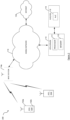
- FIG. 2 shows a block diagram of a system 200 for updating SIMs according to embodiments described herein.
- the system comprises an IP network 114 comprising conventional network elements and including a plurality of base stations 114a (of which only one is shown for illustration purposes) for communicating with host devices 102a.
- a host device 102a is a computing device capable of transmitting data to, and received information from, the network 114.
- the host device 102a may take the form of, for example, a laptop computer, tablet style computer, or mobile phone (which may be referred to as a "smart phone").
- the host device 102a is shown as a mobile device (and is thus referred to herein as a mobile station) however this is merely an example.
- Each of the mobile stations 102a communicate with network 114 via a wireless data communication link and have an associated SIM 102b.
- the network 114 is also coupled to the Internet 116.
- the system 200 also includes a SIM update server 110 (otherwise referred to herein as a network entity) for updating a SIM.
- the SIM update server 110 is configured to send over-the-air (OTA) updates to the SIM and is therefore also referred to herein as an OTA server. As illustrated this is shown as a separate element but in practice this may be implemented as an additional software component running on an existing network device or server.
- the SIM update server 110 includes a processor 111 and memory 112 storing code to derive a pre-shared key, receive an update request message from a host device, and transmit update data to the host device as described in more detail later.
- the SIM update server 110 is coupled to a Home Location Register (HLR) 118, otherwise referred to as a Home Subscriber Server (HSS).
- HLR Home Location Register
- HSS Home Subscriber Server
- the HLR/HSS 118 is a database used for the storage and management information of every subscriber that is authorized to use the network 114.
- the HLR stores subscriber information which may include, for each subscriber, the International Mobile Subscriber Identity (IMSI), service subscription information, location information, service restrictions etc. of the subscriber.
- IMSI International Mobile Subscriber Identity
- the HLR/HSS 118 comprises, or is coupled to, an Authentication Centre (AuC) 119.
- the AuC 119 provides authentication of each subscriber.
- the AuC 119 comprises a database storing, for each subscriber, a shared key Ki for authentication of the subscriber's SIM.
- the AuC 119 may store a plurality of shared keys Ki each in associated with a respective IMSI (or other SIM identifier).
- Figure 2 illustrates one example system whereby the network 114 is a mobile (cellular) communications network
- the network 114 is a mobile (cellular) communications network
- embodiments extend to implementing the OTA update using the methods described herein whereby a host device is coupled to the Internet or the IP network 116 via a WiFi link over a WiFi network. That is, in embodiments, an OTA update can be achieved through any data connection (e.g. WiFi, LAN etc.) even if the SIM 102b cannot authenticate on a cellular network (for example during roaming attempts).
- any data connection e.g. WiFi, LAN etc.
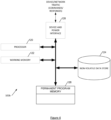
- Figure 3 shows a block diagram of an exemplary mobile station 102a.
- the connections shown in Figure 3 between the various components of the mobile station 102a are merely an example.
- the mobile station 102a comprises a SIM 102b.
- SIM used herein may comprise a SIM card or a so-called eSIM (a module which may be embedded in a device), or a so-called softSIM or virtual SIM (a software SIM which may be stored, for example in a module of a device such as a communication module 202, and optionally downloaded over the air) or so-called secure element.
- eSIM a module which may be embedded in a device
- softSIM or virtual SIM a software SIM which may be stored, for example in a module of a device such as a communication module 202, and optionally downloaded over the air
- secure element so-called secure element.
- a SIM may be embodied in, for example, a UICC (Universal Integrated Circuit Card), eUICC, iUICC, and so forth.
- UICC Universal Integrated Circuit Card
- a communications module 202 acts as an intermediary for communications between the SIM 102b and an agent 204 (described in more detail below).
- the communications module 202 is a modem e.g. an HSPDA modem.
- the communications module 202 may not support the Bearer independent Protocol (BIP), however the agent 204 enables a form of HTTP OTA without requiring support for BIP in the communication module and therefore allows SIM cards inside of legacy communication modules (which do not support BIP) to be able to securely exchange RFM and RAM messages over IP networks.
- BIP Bearer independent Protocol
- the communications module 202 may be external to the mobile station 102a in that it is a separate unit housed in a separate casing, but which is connected or connectable to a processor 206 of the mobile station 102a by means of a wired or wireless connection (as well as being removable or being able to be disconnected from the mobile station 102a).
- the communications module 202 may take the form of a dongle for plugging into the mobile station 102a.
- the communications module may take the form of the MS2131 USB-stick by Huawei.
- the communications module 202 may be internal to the mobile station 102a, e.g. taking the form of a wireless module in the mobile station 102a.
- both the communications module 202 and host processor 206 may be housed within the same casing of the mobile station 102a.
- the mobile station 102a further comprises an agent 204 (an update handler) which is configured to communicate with the communications module 202.
- the agent 204 is further configured to communicate with the OTA server 110 via the network 114. That is, the handling of HTTP over TLS is delegated to the agent 214 on the mobile station 102a.
- the functionality of the agent 204 may be implemented in code (software) stored on a memory (e.g. memory 208) comprising one or more storage media, and arranged for execution on the processor 206 comprising one or more processing units.
- the code is configured so as when fetched from the memory 208 and executed on the processor 206 to perform operations in line with embodiments discussed below.
- An implementation of the software agent 204 would typically consist of a piece of code to be executed on an Operating System (OS) of the mobile station 102a.
- the OS e.g. Windows TM , Mac OS TM and Linux TM
- the agent 204 can come, for example, in the form of a command line tool which can trigger a communication session. Alternatively, it is not excluded that some or all of the functionality of the agent 204 is implemented in dedicated hardware circuitry, or configurable hardware circuitry like an FPGA.
- the agent 204 is in the form of an agent application which is able to be downloaded by a customer onto their computing device. The agent application is then able to trigger a remote update in places where the SMS OTA is not available or in the case that the payload on SMS would require too many concatenated SMS messages (thereby increasing the risk of failure).
- a user living in a remote area has a SIM which is not connecting to the local mobile network, the user can be directed to connect the communication module 202 to their computing device and download the agent application 204 onto their computing device.
- the agent application 204 is able to receive new SIM credentials as updates via a connection to the OTA server 110 via a WiFi internet link which can be then be used to reconfigure the SIM in order to connect to the local mobile network.
- the agent 204 is configured to communicate with the OTA server 110 using a communications interface 210 of the mobile station 102a.
- the communications interface 210 may comprise a wireless transceiver to enable communications between the agent 204 and the network 114.
- the mobile station 102a may further comprise a display 212 such as a screen or touch screen.
- the mobile station 102a may comprise at least one input device 214 for receiving user inputs from a user of the mobile station 102a e.g. a keypad, a microphone, a camera, and touch screen; and/or at least one output device 214 e.g. a speaker.
- FIG. 4 shows a block diagram of an exemplary SIM card of a SIM 102b.
- the SIM card comprises a processor 120 coupled to working memory 122, a non-volatile data store 124, such as EEPROM, and permanent program memory 126 such as ROM.
- the SIM card also has an interface 128 to receive power and to accept commands from and provide responses to the communications module 202.
- the permanent program memory 126 may store network/device interface code, an operating system for example comprising Java Card, and typically though not essentially a Sim Application Toolkit (STK).
- STK Sim Application Toolkit
- the non-volatile data store 124 typically stores user phone directory information, settings data, software patches and the like.
- the non-volatile data store 124 may store the shared key Ki and the IMSI associated with the SIM102b.
- the authentication key Ki is "shared" in that it is stored by both the SIM 102b and the AuC 119.
- the IMSI is publicly accessible whereas the shared key Ki is stored in
- SIM 102b As previously described, although Figure 4 shows SIM 102b as a SIM card its functions could equally be implemented as an eSIM or a softSIM.
- FIG. 5 illustrates a process 500 of a procedure to derive a pre-shared key (PSK).
- the pre-shared key (PSK) is a cryptographic key and the process 500 is carried out at the beginning of a communication session so that both the mobile station 102a and OTA server 110 mutually derive the pre-shared key for use in encrypting communications between the mobile station 102a and OTA server 110. That is, the agent 204 and OTA server 110 share the key (PSK) that they have mutually derived.
- the agent 204 transmits a request for an identifier of the SIM 102b to the communication module 202.
- the requested SIM identifier may be the IMSI associated with SIM 102b or the ICCID, MSISDN or any other identifier associated with SIM 102b that would be known to persons skilled in the art.
- Step 1 may be achieved, for example, by the agent 204 sending an ATtention (AT) Command to a serial interface of the communication module 202.
- AT ATtention
- An "AT Command” is a known message format for serial communication with modems defined in 3GPP TS 07.007.
- the "AT+CIMI" command can be used at step 1 to retrieve the identifier of the SIM 102b.
- step 1 can be achieved is by using an Application Programming Interface (API) provided by the communication module 202 such that the agent 204 can transmit an API call to the communication module 202 to request the SIM identifier.
- API Application Programming Interface
- Step 1 may be triggered by a user of the mobile station 102a providing an input via an input device 214 of the mobile station 102a (e.g. by making a selection in a graphical user interface displayed on the display 212).
- a mobile network operator MNO
- the agent 204 should be programmed to support the necessary triggers, such as SMS processing or some form of network service.
- step 1 may be triggered based on the agent 204 detecting the expiry of a predetermined time interval (e.g. by monitoring an internal timer) such that the process 500 is performed on a periodic basis.
- the communication module 202 In response to receiving the request from the agent 204, the communication module 202 requests the SIM identifier from the SIM 102b at step 2. This may be performed by executing standard application protocol data unit (ADPU) commands.
- ADPU application protocol data unit
- the SIM 102b provides the requested SIM identifier to the communication module 202, the communication module 202 then returns the SIM identifier to the agent 204 at step 4.
- the agent 204 is configured to generate an agent identifier from the SIM identifier.
- the agent identifier is a unique string that identifies the agent 204.
- the agent 204 derives the agent identifier by appending the prefix "agent" to the SIM identifier. It will be appreciated that this is merely an example to illustrate the concept and alternative methods to derive the agent identifier using the SIM identifier may be used.
- the agent 204 transmits the agent identifier and the SIM identifier to the OTA server 110 over the network 114.
- the agent may trigger an API on the IP network 114 (e.g. a Web API), with the agent identifier as a parameter.
- This API is offered through a secure channel, e.g. HTTPS.
- the transmission of the agent identifier to the OTA server 110 at step 5 acts to request a challenge, described in more detail below.
- the OTA server In response to receiving the agent identifier, at step 6 the OTA server generates a random value (RAND), which may for example be 128 bits in length, otherwise referred to herein as a "challenge" and transmits the challenge (RAND) and the SIM identifier to the AuC 119.
- RAND random value
- the AuC 119 retrieves the shared key Ki stored in association with the SIM identifier and generates a signed response (SRES) using a first authentication algorithm (e.g. A3 encryption algorithm) that takes the shared key Ki and challenge (RAND) as inputs, and a cipher key (Kc) using a second authentication algorithm (e.g. A8 encryption algorithm) that also takes the shared key Ki and challenge (RAND) as inputs.
- a first authentication algorithm e.g. A3 encryption algorithm
- RAND shared key Ki and challenge
- Kc cipher key
- A8 encryption algorithm e.g. A8 encryption algorithm
- the OTA server 110 receives the signed response (SRES) and the cipher key (Kc) from the HLR/HSS 118.
- the OTA server 110 derives a pre-shared key (PSK), which may be 128 bits in length, using at least one of the signed response (SRES) and the cipher key (Kc).
- the challenge (RAND) may additionally be used to derive the pre-shared key (PSK).
- PSK pre-shared key
- PSK pre-shared key
- the pre-shared key can be temporary in nature, meaning that it can be forgotten after a communication session between the mobile station 102a and the OTA server 110 has taken place with it.
- the OTA server 110 Once the OTA server 110 has derived the pre-shared key (PSK) it associates the pre-shared key (PSK) with the agent identifier received at step 5 and stores the associated pre-shared key (PSK) and agent identifier in internal memory on the OTA server 110 (it will be appreciated that the associated pre-shared key (PSK) and agent identifier may alternatively be stored in memory that is external to the OTA server 110). This enables the OTA server 110 to know that it is to use the pre-shared key (PSK) for encryption of communications to the agent 204 on mobile station 102a.
- PSK pre-shared key
- the OTA server 110 transmits the challenge (RAND) over the network 114 to the agent 204 on mobile station 102a.
- the agent 204 supplies the random value to the communication module 202 to initiate a SIM authentication procedure, and in reply receives an authentication response from the communication module 202 (at step 13) as described in more detail below.
- the agent 204 may transmit an AT command to the communication module 202.
- the challenge RAND
- the agent 204 may invoke a command in the SIM (AUTHENTICATE command) with this random value as a parameter.
- One way to invoke the AUTHENTICATE APDU at the SIM level is to use the AT+CSIM command and collect the response APDU from the AT+CSIM response (step 13) to the AT command.
- An alternative way that step 10 can be achieved is by using an API provided by the communication module 202 such that the agent 204 can transmit an API call to the communication module 202 to initiate the SIM authentication procedure.
- the communication module 202 supplies the challenge (RAND) to the SIM 102b at step 11 e.g. by executing the Authenticate APDU command received at step 10.
- the SIM 102b retrieves the shared key Ki from the non-volatile data store 124 and generates a signed response (SRES) using a first authentication algorithm (e.g. A3 encryption algorithm) that takes the shared key Ki and challenge (RAND) as inputs, and a cipher key (Kc) using a second authentication algorithm (e.g. A8 encryption algorithm) that also takes the shared key Ki and challenge (RAND) as inputs.
- the SIM 102b supplies the signed response (SRES) and cipher key (Kc) to the communication module 202.
- the communication module 202 supplies the signed response (SRES) and cipher key (Kc) to the agent 204 in an authentication response.
- the agent 204 derives the pre-shared key (PSK) in the same manner as in step 8 (implemented by the OTA server).
- both the agent 204 and OTA server 110 have derived the TLS encryption key (PSK).
- PSK pre-shared key
- the pre-shared key (PSK) is used to encrypt/decrypt the communication packets transmitted between the agent 204 and OTA server 110 as described in more detail below with reference to Figure 6 .
- Figure 6 illustrates a process 600 of a SIM update procedure which is performed once the pre-shared key derivation procedure 500 has completed.
- the agent 204 opens a TLS channel with the OTA server 110.
- the opening of a TLS channel is referred to in the art as a "TLS Handshake" and is described in RFC 4279.
- TLS Handshake a series of messages are exchanged between the agent 204 and the OTA server 110. These messages are known in the art and therefore are not described in detail herein.
- the agent 204 informs the OTA server 110 of the key (the pre-shared key (PSK)) to be used for encrypting/decrypting the communication packets transmitted between the agent 204 and OTA server 110.
- the agent 204 transmits a message (e.g.
- a "Client Key Exchange” message including the agent identifier as the "PSK identity”
- the OTA server 110 queries its associated memory 112 using the agent identifier and retrieves the pre-shared key (PSK) stored in association with the agent identifier.
- PSK pre-shared key
- the host device 102a may comprise a TLS/PSK software module.
- the agent 204 may comprise the TLS/PSK software module (part of the functionality of the agent 204) or alternatively the TLS/PSK software module may be a separate module to the agent 204 and comprise program code sored in memory 208 that performs specified tasks when executed on processor 206.
- the agent 204 supplies the derived PSK to the TLS/PSK software module.
- the TLS/PSK software module is configured to derive session keys from the PSK that are used by the TLS/PSK software module of agent 204 for the encryption of data transmitted from the agent 204 to the OTA server 110, and the decryption of data sent to the agent from the OTA server 110.
- the TLS/PSK module on the host device 102a is responsible for decrypting the HTTP messages and handing them over to the agent 204.
- the operation of the TLS/PSK software module is known to persons skilled in the art and is documented in RFC 4279 and in RFC 2246.
- the TLS/PSK software module derives a "pre-master secret" from the PSK (this is described in RFC 4279 - Section 2).
- the pre-master secret is encrypted and exchanged in the TLS handshake.
- the "pre-master secret” is used to derive a "master secret” (this is described in RFC 2246 - Section 8.1).
- the TLS/PSK software module passes the master key and other pieces of data from the handshake into a pseudo-random function (PRF) to generate the session keys (this is described in RFC 2246 - Sections 5 and 6.3).
- PRF pseudo-random function
- the session keys comprise a "client write encryption key" used by the TLS/PSK software module of agent 204 for the encryption of data transmitted from the agent 204 to the OTA server 110 (and used by the the TLS/PSK software module of the OTA server 110 to decrypt data), and a "server write encryption key” used by the TLS/PSK software module of the OTA server 110 for the encryption of data transmitted from the OTA server 110 to the agent 204 (and used by the TLS/PSK software module of agent 204 to decrypt data). It will be appreciated from the above that these session keys are derived from the PSK.
- the OTA server 110 may also comprise a TLS/PSK software module which is configured to derive the session keys in the same manner as the agent 204 described above.
- the agent 204 transmits an update request message to the OTA server 110 via the TLS channel.
- the update request message comprises the agent identifier (generated by the agent 204 in procedure 500) and may additionally comprise the SIM identifier associated with the SIM 102b.
- the update request message is encrypted using the pre-shared key (PSK) derived during procedure 500. That is, the update request message is encrypted by the TLS/PSK software module of agent 204 with the session key (client write encryption key) that is derived from the PSK.
- PSK pre-shared key
- the update request message may be sent as a first HTTP request comprising the agent identifier as a parameter (conformingly to the SCP81 protocol). That is, the messages which are exchanged through the TLS channel may be wrapped in HTTP packets which are themselves encapsulated in TLS protocol packets.
- the OTA server 110 decrypts the update request message using the pre-shared key (PSK).That is, the TLS/PSK software module of the OTA server 110 decrypts the update request message with the session key (client write encryption key) that is derived from the PSK.
- PSK pre-shared key
- the OTA server 110 transmits an update response message to the agent 204 over the TLS channel.
- the update response message is encrypted using the pre-shared key (PSK) prior to transmission. That is, the update response message is encrypted by the TLS/PSK software module of the OTA server 110 with the session key (server write encryption key) that is derived from the PSK.
- PSK pre-shared key
- the update response message comprises update data.
- the update data may be stored in memory 112 and may be associated with the SIM 102b i.e. be pre-designated as being for delivery to the SIM 102b.
- the update data may comprise at least one envelope APDU.
- the at least one envelope APDU may comprise RFM and/or RAM commands to be executed by SIM 102b.
- the at least one envelope APDU is encrypted by the OTA server 110 using a symmetric OTA key and thus forms Secure Envelope APDU(s).
- the symmetric OTA key is installed on the SIM 102b at manufacture and provisioned on the OTA server 110.
- the symmetric OTA key may correspond to the Ciphering Key Identifier (Klc) specified in standard ETSI TS 102 225.
- FIG. 7 illustrates an update response message 702.
- the update response message 702 is encrypted using the session key (server write encryption key) 704 that is derived from the PSK.
- the update response message 702 comprises update data 706 which is encrypted by the OTA server 110 using a symmetric OTA key 708.
- the update response message upon receiving the update response message the update response message is decrypted using the pre-shared key derived during procedure 500. That is, the TLS/PSK software module of agent 204 decrypts the update response message with the session key (server write encryption key) that is derived from the PSK.
- the session key server write encryption key
- the agent 204 supplies the encrypted update data to the communication module 204.
- the agent 204 may transmit an AT command to the communication module 202 to supply the encrypted update data to the communication module 204.
- the AT+CSIM command may be used.
- An alternative way that step 3 can be achieved is by using an API provided by the communication module 202 such that the agent 204 can transmit an API call to the communication module 202 to supply the encrypted update data to the communication module 204.
- the communication module 204 supplies the encrypted update data to the SIM 102b.
- the SIM 102b decrypts the encrypted update data using the symmetric OTA key 708 and at step 5 executes the update data to update the SIM 102b.
- the update performed on the SIM 102b based on the received update data may comprise installing new data onto the SIM 102b (e.g. installing a new application such as a Javacard applet), updating data previously installed on the SIM 102b, and/or modifying parameter values stored on the SIM 102b.
- results of the execution of the update data are transmitted from the SIM 102b to the communication module 202.
- the communication module 202 relays the execution results to the agent 204.
- the agent 204 transmits a further update request message over the network 114 to the OTA server 110, the update request message conveys the results of the execution of the update data.
- the update request message is encrypted using the pre-shared key (PSK) prior to transmission. That is, the update request message is encrypted with the session key (client write encryption key) that is derived from the PSK.
- PSK pre-shared key
- the OTA server 110 In response to receiving the further update request message from the agent 204, the OTA server 110 is configured to determine if there is further update data to be sent to the agent 204.
- step 600 If there is further update data to be sent to the agent 204, the process 600 proceeds back to step 2 (in the process 600) where a further update response message is transmitted to the agent 204 over the TLS channel.
- Collecting data may be performed in the process 600.
- a first update response message transmitted by the OTA server 110 at step 2 may comprise a read command which is relayed to the SIM 102b for execution and thus the further update request message returned to the OTA server 110 at step 8 may comprise data read results (e.g. SIM parameter values).
- the data read results may be used by the OTA server 110 in determining update data to be transmitted in a further update response message transmitted by the OTA server 110 to the agent 204 when the process 600 loops backs to step 2.
- step 9 a message is transmitted from the OTA server 110 to the agent 204 indicating that there is no further update data.
- the message transmitted at step 9 may be a blank HTTP response (e.g. HTTP response code 200).
- the communication session Upon receiving the message indicating that there is no further update data, the communication session can be successfully terminated.
- the agent 204 provides support for an HTTP OTA mechanism in legacy SIM-enabled communication modules (even in 2G modules), and provides HTTP OTA without the need for SMS support on the host device 102a.
- the APDUs can potentially be examined using a SIM communication logging device (tracer) inspecting the mobile station 102a. Therefore to address this, as noted above, the update data APDUs are wrapped in Secure Envelope APDUs, in the same way as in SMS OTA protocol (SCP80).
- SMS OTA keys are only known by the OTA server 110 and the SIM 102b and therefore the RFM/RAM messages are protected from end to end to provide secure transmission of the update data to the SIM 102b.
- the endpoint of the HTTPS Tunnel is the agent 204 instead of the SIM 102b, the APDUs are considered to be provided externally for execution and therefore would not be executed successfully without a proper authorization system. The fact of wrapping inside of secure envelopes provides for this required authorization.
- the communication protocol with the OTA Server 110 described above with reference to Figures 5 and 6 differs from the SCP 81 protocol (described above) in that the handling of HTTP over TLS is delegated to the software agent 204 on the host device 102a and the SIM 102b is used as secure element to derive the TLS encryption key (PSK).
- PSK TLS encryption key
- the time taken for an OTA update can be reduced because the host hardware (e.g. processing and/or memory resources) on the mobile station 102a is typically more resource rich compared to SIM hardware.
- the host hardware e.g. processing and/or memory resources
- to process HTTPS messages is computationally intensive and the hardware available on the host device provides faster processing of these communications.
Landscapes
- Engineering & Computer Science (AREA)
- Computer Security & Cryptography (AREA)
- Computer Networks & Wireless Communication (AREA)
- Signal Processing (AREA)
- Databases & Information Systems (AREA)
- Mobile Radio Communication Systems (AREA)
- Telephone Function (AREA)
- Telephonic Communication Services (AREA)
Claims (15)
- Procédé de mise à jour d'un module d'identité d'abonné, SIM, (102b) sur un dispositif hôte (102a), dans lequel le procédé est réalisé par un agent (204) sur le dispositif hôte et comprend :
la dérivation d'une clé pré-partagée, ladite dérivation comprenant :la demande d'un identifiant de SIM du SIM via un module de communication (202) du dispositif hôte, dans lequel le module de communication ne supporte pas un protocole indépendant de support ;la réception de l'identifiant de SIM en provenance du SIM via le module de communication et la dérivation d'un identifiant d'agent à partir de l'identifiant de SIM ;l'émission de l'identifiant d'agent et de l'identifiant de SIM via un réseau (114) sur un serveur de mise à jour de SIM (110) ;la réception, via ledit réseau, d'une valeur aléatoire en provenance du serveur de mise à jour de SIM ;la fourniture de la valeur aléatoire au SIM via le module de communication pour initier une procédure d'authentification de SIM et en réponse, pour recevoir une réponse d'authentification en provenance du SIM via le module de communication ; etla dérivation de la clé pré-partagée à partir de la réponse d'authentification ;l'émission d'un message de demande de mise à jour via ledit réseau sur le serveur de mise à jour de SIM, dans lequel le message de demande de mise à jour comprend ledit identifiant d'agent et est crypté avant son émission en utilisant la clé pré-partagée ;la réception d'un message de réponse de mise à jour, via ledit réseau, en provenance du serveur de mise à jour de SIM, dans lequel le message de réponse de mise à jour comprend des données de mise à jour et est crypté en utilisant la clé pré-partagée ; etsuite au décryptage du message de réponse de mise à jour en utilisant la clé pré-partagée dérivée, l'émission des données de mise à jour sur le module de communication pour leur relais sur le SIM pour leur exécution pour mettre à jour le SIM. - Procédé selon la revendication 1, dans lequel la réponse d'authentification comprend une réponse signée et une clé de chiffrement.
- Procédé selon la revendication 2, dans lequel la dérivation de la clé pré-partagée à partir de la réponse d'authentification comprend l'utilisation d'au moins une parmi la réponse signée et la clé de chiffrement pour dériver la clé pré-partagée.
- Procédé selon la revendication 3, dans lequel la dérivation de la clé pré-partagée à partir de la réponse d'authentification comprend l'utilisation de la valeur aléatoire pour dériver la clé pré-partagée.
- Procédé selon la revendication 4, dans lequel la dérivation de la clé pré-partagée à partir de la réponse d'authentification comprend la concaténation de la clé de chiffrement avec elle-même pour générer un résultat concaténé et l'application d'une opération OU EXCLUSIF au niveau des bits sur le résultat concaténé et la valeur aléatoire pour dériver la clé pré-partagée.
- Procédé selon l'une quelconque des revendications précédentes, dans lequel les données de mise à jour sont cryptées à l'aide d'une clé cryptographique symétrique stockée par le SIM.
- Procédé selon l'une quelconque des revendications précédentes, dans lequel le message de demande de mise à jour comprend ledit identifiant de SIM.
- Procédé selon l'une quelconque des revendications précédentes, comprenant en outre, en réponse à l'émission des données de mise à jour sur le module de communication :la réception d'un résultat d'exécution en provenance du SIM via le module de communication ; etl'émission d'un autre message de demande de mise à jour via ledit réseau sur le serveur de mise à jour de SIM, le message de demande de mise à jour étant porteur du résultat d'exécution, dans lequel le message de demande de mise à jour est crypté avant son émission en utilisant la clé pré-partagée.
- Procédé selon l'une quelconque des revendications précédentes, dans lequel une Commande Attention (AT) est utilisée pour au moins une action parmi :ladite demande d'un identifiant de SIM du SIM via un module de communication du dispositif hôte ;ladite fourniture de la valeur aléatoire au module de communication pour initier une procédure d'authentification de SIM ; etladite émission des données de mise à jour sur le module de communication.
- Procédé selon l'une quelconque des revendications 1 à 8, dans lequel une interface de programmation d'applications fournie par le module de communication est utilisée pour au moins une action parmi :ladite demande d'un identifiant de SIM du SIM via un module de communication du dispositif hôte ;ladite fourniture de la valeur aléatoire au module de communication pour initier une procédure d'authentification de SIM ; etladite émission des données de mise à jour sur le module de communication.
- Procédé selon l'une quelconque des revendications précédentes, dans lequel la dérivation d'un identifiant d'agent à partir de l'identifiant de SIM comprend le fait d'annexer un préfixe à l'identifiant de SIM.
- Procédé selon l'une quelconque des revendications précédentes, dans lequel ladite dérivation d'une clé pré-partagée est déclenchée sur la base d'une parmi : (i) la détection d'une entrée d'utilisateur sur le dispositif hôte ; (ii) la réception d'un message d'initiation de session, via ledit réseau, en provenance du serveur de mise à jour de SIM ; et (iii) la détection d'une expiration d'un intervalle temporel prédéterminé.
- Procédé selon l'une quelconque des revendications précédentes, dans lequel l'identifiant de SIM est un parmi : (i) une identité internationale d'abonné mobile associée au SIM, (ii) un identifiant de carte à circuit intégré associé au SIM et (iii) un numéro d'annuaire international des abonnés de station mobile associé au SIM.
- Dispositif (102a) muni d'un processeur (206), ledit processeur étant couplé à un module de communication (202) qui est couplé à un module d'identité d'abonné, SIM, (102b) associé au dispositif, dans lequel le module de communication ne supporte pas un protocole indépendant de support, le processeur étant configuré pour :demander un identifiant de SIM du SIM via le module de communication ;recevoir l'identifiant de SIM en provenance du SIM via le module de communication et dériver un identifiant d'agent à partir de l'identifiant de SIM ;émettre l'identifiant d'agent et l'identifiant de SIM via un réseau (114) sur un serveur de mise à jour de SIM (110) ;recevoir, via ledit réseau, une valeur aléatoire en provenance du serveur de mise à jour de SIM ;fournir la valeur aléatoire au SIM via le module de communication pour initier une procédure d'authentification de SIM et en réponse, pour recevoir une réponse d'authentification en provenance du SIM via le module de communication ; etdériver une clé pré-partagée à partir de la réponse d'authentification ;émettre un message de demande de mise à jour via ledit réseau sur le serveur de mise à jour de SIM, dans lequel le message de demande de mise à jour comprend ledit identifiant d'agent et est crypté avant son émission en utilisant la clé pré-partagée ;recevoir un message de réponse de mise à jour, via ledit réseau, en provenance du serveur de mise à jour de SIM, dans lequel le message de réponse de mise à jour comprend des données de mise à jour et est crypté avec la clé pré-partagée ; etsuite au décryptage du message de réponse de mise à jour en utilisant la clé pré-partagée dérivée, émettre les données de mise à jour sur le module de communication pour leur relais sur le SIM pour leur exécution pour mettre à jour le SIM.
- Progiciel pour mettre à jour un module d'identité d'abonné, SIM, sur un dispositif hôte (102a), le progiciel comprenant un code intégré sur un support lisible par ordinateur non transitoire et configuré de manière à, lorsqu'il est exécuté sur un processeur du dispositif hôte, réaliser le procédé selon l'une quelconque des revendications 1 à 13.
Priority Applications (1)
| Application Number | Priority Date | Filing Date | Title |
|---|---|---|---|
| EP24156915.1A EP4344266B1 (fr) | 2018-07-02 | 2019-07-01 | Mise à jour d'un module d'identité d'abonné |
Applications Claiming Priority (2)
| Application Number | Priority Date | Filing Date | Title |
|---|---|---|---|
| EP18181266.0A EP3592015A1 (fr) | 2018-07-02 | 2018-07-02 | Mise à jour d'un module d'identité d'abonné |
| PCT/SG2019/050326 WO2020009659A1 (fr) | 2018-07-02 | 2019-07-01 | Mise à jour d'un module d'identité d'abonné |
Related Child Applications (2)
| Application Number | Title | Priority Date | Filing Date |
|---|---|---|---|
| EP24156915.1A Division EP4344266B1 (fr) | 2018-07-02 | 2019-07-01 | Mise à jour d'un module d'identité d'abonné |
| EP24156915.1A Division-Into EP4344266B1 (fr) | 2018-07-02 | 2019-07-01 | Mise à jour d'un module d'identité d'abonné |
Publications (2)
| Publication Number | Publication Date |
|---|---|
| EP3785456A1 EP3785456A1 (fr) | 2021-03-03 |
| EP3785456B1 true EP3785456B1 (fr) | 2024-03-20 |
Family
ID=62874573
Family Applications (3)
| Application Number | Title | Priority Date | Filing Date |
|---|---|---|---|
| EP18181266.0A Withdrawn EP3592015A1 (fr) | 2018-07-02 | 2018-07-02 | Mise à jour d'un module d'identité d'abonné |
| EP24156915.1A Active EP4344266B1 (fr) | 2018-07-02 | 2019-07-01 | Mise à jour d'un module d'identité d'abonné |
| EP19735419.4A Active EP3785456B1 (fr) | 2018-07-02 | 2019-07-01 | Mise à jour d'un module d'identité d'abonné |
Family Applications Before (2)
| Application Number | Title | Priority Date | Filing Date |
|---|---|---|---|
| EP18181266.0A Withdrawn EP3592015A1 (fr) | 2018-07-02 | 2018-07-02 | Mise à jour d'un module d'identité d'abonné |
| EP24156915.1A Active EP4344266B1 (fr) | 2018-07-02 | 2019-07-01 | Mise à jour d'un module d'identité d'abonné |
Country Status (5)
| Country | Link |
|---|---|
| US (3) | US11503473B2 (fr) |
| EP (3) | EP3592015A1 (fr) |
| JP (3) | JP7101266B2 (fr) |
| CN (2) | CN117014865A (fr) |
| WO (1) | WO2020009659A1 (fr) |
Families Citing this family (15)
| Publication number | Priority date | Publication date | Assignee | Title |
|---|---|---|---|---|
| CN115362696B (zh) * | 2020-03-27 | 2025-11-04 | 捷德移动安全德国有限责任公司 | 用于远程文件管理的离线脚本 |
| JP7559344B2 (ja) * | 2020-04-15 | 2024-10-02 | 大日本印刷株式会社 | 認可に基づくリソースアクセス制御システム、セキュアなコンポーネント、デバイス及び認可に基づくリソースアクセス制御方法 |
| US11382057B2 (en) | 2020-05-01 | 2022-07-05 | Qualcomm Incorporated | UE optimization to move between wireless communication networks based on SUCI support |
| CN114760031A (zh) * | 2020-12-26 | 2022-07-15 | 西安西电捷通无线网络通信股份有限公司 | 一种身份鉴别方法和装置 |
| DE102021102446A1 (de) * | 2021-02-03 | 2022-08-04 | LinkXess GmbH | Verfahren zum Bereitstellen einer Datenverbindung zum Internet an einem Telekommunikations-Endgerät sowie Serversystem und Mobilfunk-Gateway |
| IL301718B1 (en) * | 2021-07-30 | 2026-04-01 | Jio Platforms Ltd | Method and system for managing a universal integrated circuit card (UICC) without cellular connectivity |
| CN113922989A (zh) * | 2021-09-16 | 2022-01-11 | 深圳市领科物联网科技有限公司 | Soc系统、网络通讯模块及身份认证方法 |
| EP4243346A1 (fr) * | 2022-03-11 | 2023-09-13 | Thales Dis France SAS | Procédé de test d'un terminal comprenant un élément sécurisé inamovible comprenant un naa |
| JP7805628B2 (ja) * | 2022-04-18 | 2026-01-26 | 株式会社三洋物産 | 遊技機 |
| JP7805631B2 (ja) * | 2022-04-18 | 2026-01-26 | 株式会社三洋物産 | 遊技機 |
| JP7805630B2 (ja) * | 2022-04-18 | 2026-01-26 | 株式会社三洋物産 | 遊技機 |
| WO2024023628A1 (fr) * | 2022-07-26 | 2024-02-01 | Jio Platforms Limited | Systèmes et procédés pour permettre une communication sécurisée entre une carte à puce et un serveur applicatif correspondant |
| US20240340631A1 (en) * | 2023-04-04 | 2024-10-10 | T-Mobile Innovations Llc | Subscriber Identity Module Over-The-Air Push Notification |
| US20250374048A1 (en) * | 2024-05-31 | 2025-12-04 | Insight Direct Usa, Inc. | Identity registration for wireless networks |
| EP4694266A1 (fr) * | 2024-08-08 | 2026-02-11 | Giesecke+Devrient Mobile Security Germany GmbH | Procédé de communication entre un élément sécurisé et une entité distante, élément sécurisé et système |
Family Cites Families (25)
| Publication number | Priority date | Publication date | Assignee | Title |
|---|---|---|---|---|
| FI20000760A0 (fi) * | 2000-03-31 | 2000-03-31 | Nokia Corp | Autentikointi pakettidataverkossa |
| WO2005064882A2 (fr) * | 2003-12-29 | 2005-07-14 | Telefonaktiebolaget Lm Ericsson (Publ) | Moyens et procede pour acces par ouverture de session unique a un reseau de service, via un reseau d'acces |
| US7715822B2 (en) * | 2005-02-04 | 2010-05-11 | Qualcomm Incorporated | Secure bootstrapping for wireless communications |
| FR2883115A1 (fr) * | 2005-03-11 | 2006-09-15 | France Telecom | Procede d'etablissement d'un lien de communication securise |
| EP1835688A1 (fr) * | 2006-03-16 | 2007-09-19 | BRITISH TELECOMMUNICATIONS public limited company | Authentification basée sur le SIM |
| FI118841B (fi) * | 2006-09-13 | 2008-03-31 | Eads Secure Networks Oy | Matkaviestimen autentikointi |
| US20080132279A1 (en) * | 2006-12-04 | 2008-06-05 | Blumenthal Steven H | Unlicensed mobile access |
| JP2008210301A (ja) * | 2007-02-28 | 2008-09-11 | Sony Corp | 記憶媒体、通信システム、並びに制御装置。 |
| US20090282251A1 (en) * | 2008-05-06 | 2009-11-12 | Qualcomm Incorporated | Authenticating a wireless device in a visited network |
| US8645695B2 (en) * | 2009-10-07 | 2014-02-04 | Blackberry Limited | System and method for managing security key architecture in multiple security contexts of a network environment |
| EP2461613A1 (fr) * | 2010-12-06 | 2012-06-06 | Gemalto SA | Procédés et système pour la manipulation de données d'une UICC |
| EP2506175B1 (fr) * | 2011-03-30 | 2019-01-30 | Irdeto B.V. | Activation d'une application logicielle à exécuter sur une station mobile |
| EP2704466A1 (fr) * | 2012-09-03 | 2014-03-05 | Alcatel Lucent | Personnalisation de carte à puce avec génération locale des clés |
| EP2731309B1 (fr) * | 2012-11-12 | 2018-04-11 | Alcatel Lucent | Authentification sécurisée pour des services communautaires |
| CN104904248A (zh) * | 2013-12-05 | 2015-09-09 | 华为终端有限公司 | 一种eUICC的安全控制方法和eUICC |
| EP2961207A1 (fr) * | 2014-06-24 | 2015-12-30 | Gemalto SA | Méthode , serveur et système de télécommunications pour l'établissement, par le biais d'un serveur OTA, un canal de communication sécurisé entre un agent administratif comprise dans un dispositif et un serveur tiers |
| CA2964458A1 (fr) * | 2014-10-13 | 2016-04-21 | Sequent Software, Inc. | Securisation d'identifiants d'emulation de carte hote |
| EP3057350A1 (fr) | 2015-02-13 | 2016-08-17 | Gemalto Sa | Procédé de gestion d'abonnement à distance d'un euicc, terminal correspondant |
| WO2016153281A1 (fr) * | 2015-03-25 | 2016-09-29 | 삼성전자 주식회사 | Procédé et appareil de téléchargement de profil dans un système de communication sans fil |
| KR101696860B1 (ko) | 2015-06-17 | 2017-01-16 | 동부대우전자 주식회사 | 제빙기를 포함하는 냉장고 및 이의 제상수 포집 방법 |
| KR102623524B1 (ko) * | 2015-08-31 | 2024-01-10 | 삼성전자 주식회사 | 통신 시스템에서 프로파일 다운로드 방법 및 장치 |
| US10158991B2 (en) * | 2016-03-17 | 2018-12-18 | M2MD Technologies, Inc. | Method and system for managing security keys for user and M2M devices in a wireless communication network environment |
| US10516994B2 (en) * | 2016-07-17 | 2019-12-24 | Qualcomm Incorporated | Authentication with privacy identity |
| US10708768B2 (en) * | 2016-12-01 | 2020-07-07 | Samsung Electronics Co., Ltd. | Automatic self-activation of universal integrated circuit card |
| US9949113B1 (en) | 2017-06-02 | 2018-04-17 | Apple Inc. | Updating profiles for secondary wireless devices |
-
2018
- 2018-07-02 EP EP18181266.0A patent/EP3592015A1/fr not_active Withdrawn
-
2019
- 2019-07-01 EP EP24156915.1A patent/EP4344266B1/fr active Active
- 2019-07-01 CN CN202310983204.0A patent/CN117014865A/zh active Pending
- 2019-07-01 EP EP19735419.4A patent/EP3785456B1/fr active Active
- 2019-07-01 US US15/733,834 patent/US11503473B2/en active Active
- 2019-07-01 CN CN201980045072.9A patent/CN112400334B/zh active Active
- 2019-07-01 WO PCT/SG2019/050326 patent/WO2020009659A1/fr not_active Ceased
- 2019-07-01 JP JP2020566781A patent/JP7101266B2/ja active Active
-
2022
- 2022-02-04 JP JP2022016159A patent/JP7343632B2/ja active Active
- 2022-10-12 US US17/964,745 patent/US11937088B2/en active Active
-
2023
- 2023-08-31 JP JP2023141069A patent/JP7541604B2/ja active Active
-
2024
- 2024-02-28 US US18/590,240 patent/US12615513B2/en active Active
Also Published As
| Publication number | Publication date |
|---|---|
| JP2023162373A (ja) | 2023-11-08 |
| US11503473B2 (en) | 2022-11-15 |
| JP7343632B2 (ja) | 2023-09-12 |
| CN117014865A (zh) | 2023-11-07 |
| WO2020009659A1 (fr) | 2020-01-09 |
| JP2022068225A (ja) | 2022-05-09 |
| US11937088B2 (en) | 2024-03-19 |
| EP4344266A3 (fr) | 2024-05-29 |
| JP2021523651A (ja) | 2021-09-02 |
| CN112400334A (zh) | 2021-02-23 |
| US20230030698A1 (en) | 2023-02-02 |
| US20210219138A1 (en) | 2021-07-15 |
| JP7101266B2 (ja) | 2022-07-14 |
| JP7541604B2 (ja) | 2024-08-28 |
| US12615513B2 (en) | 2026-04-28 |
| EP3592015A1 (fr) | 2020-01-08 |
| CN112400334B (zh) | 2023-08-25 |
| US20240205681A1 (en) | 2024-06-20 |
| EP4344266B1 (fr) | 2025-07-09 |
| EP4344266A2 (fr) | 2024-03-27 |
| EP3785456A1 (fr) | 2021-03-03 |
Similar Documents
| Publication | Publication Date | Title |
|---|---|---|
| US12615513B2 (en) | Updating a subscriber identity module | |
| US10986487B2 (en) | Apparatus and method for profile installation in communication system | |
| US10623944B2 (en) | Method and apparatus for profile download of group devices | |
| KR102231948B1 (ko) | 프로파일 관리서버의 업데이트 방법 및 장치 | |
| US10439823B2 (en) | Technique for managing profile in communication system | |
| US20200186992A1 (en) | Technique for Remote SIM Provisioning | |
| US12127305B2 (en) | Off-line profile provisioning for wireless devices | |
| CN111356124B (zh) | eSIM激活方法、系统以及计算机可读存储介质 | |
| US20220224521A1 (en) | Managing a secure element | |
| EP3806517B1 (fr) | Chargement d'informations de sécurité à accès restreint | |
| EP2731370A1 (fr) | Authentification sécurisée entre un dispositif de communication et un serveur |
Legal Events
| Date | Code | Title | Description |
|---|---|---|---|
| STAA | Information on the status of an ep patent application or granted ep patent |
Free format text: STATUS: UNKNOWN |
|
| STAA | Information on the status of an ep patent application or granted ep patent |
Free format text: STATUS: THE INTERNATIONAL PUBLICATION HAS BEEN MADE |
|
| PUAI | Public reference made under article 153(3) epc to a published international application that has entered the european phase |
Free format text: ORIGINAL CODE: 0009012 |
|
| STAA | Information on the status of an ep patent application or granted ep patent |
Free format text: STATUS: REQUEST FOR EXAMINATION WAS MADE |
|
| 17P | Request for examination filed |
Effective date: 20201127 |
|
| AK | Designated contracting states |
Kind code of ref document: A1 Designated state(s): AL AT BE BG CH CY CZ DE DK EE ES FI FR GB GR HR HU IE IS IT LI LT LU LV MC MK MT NL NO PL PT RO RS SE SI SK SM TR |
|
| AX | Request for extension of the european patent |
Extension state: BA ME |
|
| DAV | Request for validation of the european patent (deleted) | ||
| DAX | Request for extension of the european patent (deleted) | ||
| GRAP | Despatch of communication of intention to grant a patent |
Free format text: ORIGINAL CODE: EPIDOSNIGR1 |
|
| STAA | Information on the status of an ep patent application or granted ep patent |
Free format text: STATUS: GRANT OF PATENT IS INTENDED |
|
| INTG | Intention to grant announced |
Effective date: 20231002 |
|
| GRAS | Grant fee paid |
Free format text: ORIGINAL CODE: EPIDOSNIGR3 |
|
| GRAA | (expected) grant |
Free format text: ORIGINAL CODE: 0009210 |
|
| STAA | Information on the status of an ep patent application or granted ep patent |
Free format text: STATUS: THE PATENT HAS BEEN GRANTED |
|
| P01 | Opt-out of the competence of the unified patent court (upc) registered |
Effective date: 20240124 |
|
| AK | Designated contracting states |
Kind code of ref document: B1 Designated state(s): AL AT BE BG CH CY CZ DE DK EE ES FI FR GB GR HR HU IE IS IT LI LT LU LV MC MK MT NL NO PL PT RO RS SE SI SK SM TR |
|
| REG | Reference to a national code |
Ref country code: GB Ref legal event code: FG4D |
|
| REG | Reference to a national code |
Ref country code: CH Ref legal event code: EP |
|
| REG | Reference to a national code |
Ref country code: IE Ref legal event code: FG4D |
|
| REG | Reference to a national code |
Ref country code: DE Ref legal event code: R096 Ref document number: 602019048599 Country of ref document: DE |
|
| PG25 | Lapsed in a contracting state [announced via postgrant information from national office to epo] |
Ref country code: LT Free format text: LAPSE BECAUSE OF FAILURE TO SUBMIT A TRANSLATION OF THE DESCRIPTION OR TO PAY THE FEE WITHIN THE PRESCRIBED TIME-LIMIT Effective date: 20240320 |
|
| REG | Reference to a national code |
Ref country code: LT Ref legal event code: MG9D |
|
| PG25 | Lapsed in a contracting state [announced via postgrant information from national office to epo] |
Ref country code: GR Free format text: LAPSE BECAUSE OF FAILURE TO SUBMIT A TRANSLATION OF THE DESCRIPTION OR TO PAY THE FEE WITHIN THE PRESCRIBED TIME-LIMIT Effective date: 20240621 |
|
| PG25 | Lapsed in a contracting state [announced via postgrant information from national office to epo] |
Ref country code: HR Free format text: LAPSE BECAUSE OF FAILURE TO SUBMIT A TRANSLATION OF THE DESCRIPTION OR TO PAY THE FEE WITHIN THE PRESCRIBED TIME-LIMIT Effective date: 20240320 Ref country code: RS Free format text: LAPSE BECAUSE OF FAILURE TO SUBMIT A TRANSLATION OF THE DESCRIPTION OR TO PAY THE FEE WITHIN THE PRESCRIBED TIME-LIMIT Effective date: 20240620 |
|
| REG | Reference to a national code |
Ref country code: NL Ref legal event code: MP Effective date: 20240320 |
|
| PG25 | Lapsed in a contracting state [announced via postgrant information from national office to epo] |
Ref country code: RS Free format text: LAPSE BECAUSE OF FAILURE TO SUBMIT A TRANSLATION OF THE DESCRIPTION OR TO PAY THE FEE WITHIN THE PRESCRIBED TIME-LIMIT Effective date: 20240620 Ref country code: NO Free format text: LAPSE BECAUSE OF FAILURE TO SUBMIT A TRANSLATION OF THE DESCRIPTION OR TO PAY THE FEE WITHIN THE PRESCRIBED TIME-LIMIT Effective date: 20240620 Ref country code: LT Free format text: LAPSE BECAUSE OF FAILURE TO SUBMIT A TRANSLATION OF THE DESCRIPTION OR TO PAY THE FEE WITHIN THE PRESCRIBED TIME-LIMIT Effective date: 20240320 Ref country code: HR Free format text: LAPSE BECAUSE OF FAILURE TO SUBMIT A TRANSLATION OF THE DESCRIPTION OR TO PAY THE FEE WITHIN THE PRESCRIBED TIME-LIMIT Effective date: 20240320 Ref country code: GR Free format text: LAPSE BECAUSE OF FAILURE TO SUBMIT A TRANSLATION OF THE DESCRIPTION OR TO PAY THE FEE WITHIN THE PRESCRIBED TIME-LIMIT Effective date: 20240621 Ref country code: FI Free format text: LAPSE BECAUSE OF FAILURE TO SUBMIT A TRANSLATION OF THE DESCRIPTION OR TO PAY THE FEE WITHIN THE PRESCRIBED TIME-LIMIT Effective date: 20240320 Ref country code: BG Free format text: LAPSE BECAUSE OF FAILURE TO SUBMIT A TRANSLATION OF THE DESCRIPTION OR TO PAY THE FEE WITHIN THE PRESCRIBED TIME-LIMIT Effective date: 20240320 |
|
| REG | Reference to a national code |
Ref country code: AT Ref legal event code: MK05 Ref document number: 1668884 Country of ref document: AT Kind code of ref document: T Effective date: 20240320 |
|
| PG25 | Lapsed in a contracting state [announced via postgrant information from national office to epo] |
Ref country code: SE Free format text: LAPSE BECAUSE OF FAILURE TO SUBMIT A TRANSLATION OF THE DESCRIPTION OR TO PAY THE FEE WITHIN THE PRESCRIBED TIME-LIMIT Effective date: 20240320 Ref country code: LV Free format text: LAPSE BECAUSE OF FAILURE TO SUBMIT A TRANSLATION OF THE DESCRIPTION OR TO PAY THE FEE WITHIN THE PRESCRIBED TIME-LIMIT Effective date: 20240320 |
|
| PG25 | Lapsed in a contracting state [announced via postgrant information from national office to epo] |
Ref country code: NL Free format text: LAPSE BECAUSE OF FAILURE TO SUBMIT A TRANSLATION OF THE DESCRIPTION OR TO PAY THE FEE WITHIN THE PRESCRIBED TIME-LIMIT Effective date: 20240320 |
|
| PG25 | Lapsed in a contracting state [announced via postgrant information from national office to epo] |
Ref country code: NL Free format text: LAPSE BECAUSE OF FAILURE TO SUBMIT A TRANSLATION OF THE DESCRIPTION OR TO PAY THE FEE WITHIN THE PRESCRIBED TIME-LIMIT Effective date: 20240320 |
|
| PG25 | Lapsed in a contracting state [announced via postgrant information from national office to epo] |
Ref country code: IS Free format text: LAPSE BECAUSE OF FAILURE TO SUBMIT A TRANSLATION OF THE DESCRIPTION OR TO PAY THE FEE WITHIN THE PRESCRIBED TIME-LIMIT Effective date: 20240720 |
|
| PG25 | Lapsed in a contracting state [announced via postgrant information from national office to epo] |
Ref country code: PT Free format text: LAPSE BECAUSE OF FAILURE TO SUBMIT A TRANSLATION OF THE DESCRIPTION OR TO PAY THE FEE WITHIN THE PRESCRIBED TIME-LIMIT Effective date: 20240722 Ref country code: SM Free format text: LAPSE BECAUSE OF FAILURE TO SUBMIT A TRANSLATION OF THE DESCRIPTION OR TO PAY THE FEE WITHIN THE PRESCRIBED TIME-LIMIT Effective date: 20240320 |
|
| PG25 | Lapsed in a contracting state [announced via postgrant information from national office to epo] |
Ref country code: ES Free format text: LAPSE BECAUSE OF FAILURE TO SUBMIT A TRANSLATION OF THE DESCRIPTION OR TO PAY THE FEE WITHIN THE PRESCRIBED TIME-LIMIT Effective date: 20240320 |
|
| PG25 | Lapsed in a contracting state [announced via postgrant information from national office to epo] |
Ref country code: EE Free format text: LAPSE BECAUSE OF FAILURE TO SUBMIT A TRANSLATION OF THE DESCRIPTION OR TO PAY THE FEE WITHIN THE PRESCRIBED TIME-LIMIT Effective date: 20240320 Ref country code: CZ Free format text: LAPSE BECAUSE OF FAILURE TO SUBMIT A TRANSLATION OF THE DESCRIPTION OR TO PAY THE FEE WITHIN THE PRESCRIBED TIME-LIMIT Effective date: 20240320 |
|
| PG25 | Lapsed in a contracting state [announced via postgrant information from national office to epo] |
Ref country code: AT Free format text: LAPSE BECAUSE OF FAILURE TO SUBMIT A TRANSLATION OF THE DESCRIPTION OR TO PAY THE FEE WITHIN THE PRESCRIBED TIME-LIMIT Effective date: 20240320 |
|
| PG25 | Lapsed in a contracting state [announced via postgrant information from national office to epo] |
Ref country code: PL Free format text: LAPSE BECAUSE OF FAILURE TO SUBMIT A TRANSLATION OF THE DESCRIPTION OR TO PAY THE FEE WITHIN THE PRESCRIBED TIME-LIMIT Effective date: 20240320 |
|
| PG25 | Lapsed in a contracting state [announced via postgrant information from national office to epo] |
Ref country code: SK Free format text: LAPSE BECAUSE OF FAILURE TO SUBMIT A TRANSLATION OF THE DESCRIPTION OR TO PAY THE FEE WITHIN THE PRESCRIBED TIME-LIMIT Effective date: 20240320 |
|
| PG25 | Lapsed in a contracting state [announced via postgrant information from national office to epo] |
Ref country code: SM Free format text: LAPSE BECAUSE OF FAILURE TO SUBMIT A TRANSLATION OF THE DESCRIPTION OR TO PAY THE FEE WITHIN THE PRESCRIBED TIME-LIMIT Effective date: 20240320 Ref country code: SK Free format text: LAPSE BECAUSE OF FAILURE TO SUBMIT A TRANSLATION OF THE DESCRIPTION OR TO PAY THE FEE WITHIN THE PRESCRIBED TIME-LIMIT Effective date: 20240320 Ref country code: RO Free format text: LAPSE BECAUSE OF FAILURE TO SUBMIT A TRANSLATION OF THE DESCRIPTION OR TO PAY THE FEE WITHIN THE PRESCRIBED TIME-LIMIT Effective date: 20240320 Ref country code: PT Free format text: LAPSE BECAUSE OF FAILURE TO SUBMIT A TRANSLATION OF THE DESCRIPTION OR TO PAY THE FEE WITHIN THE PRESCRIBED TIME-LIMIT Effective date: 20240722 Ref country code: PL Free format text: LAPSE BECAUSE OF FAILURE TO SUBMIT A TRANSLATION OF THE DESCRIPTION OR TO PAY THE FEE WITHIN THE PRESCRIBED TIME-LIMIT Effective date: 20240320 Ref country code: IS Free format text: LAPSE BECAUSE OF FAILURE TO SUBMIT A TRANSLATION OF THE DESCRIPTION OR TO PAY THE FEE WITHIN THE PRESCRIBED TIME-LIMIT Effective date: 20240720 Ref country code: ES Free format text: LAPSE BECAUSE OF FAILURE TO SUBMIT A TRANSLATION OF THE DESCRIPTION OR TO PAY THE FEE WITHIN THE PRESCRIBED TIME-LIMIT Effective date: 20240320 Ref country code: EE Free format text: LAPSE BECAUSE OF FAILURE TO SUBMIT A TRANSLATION OF THE DESCRIPTION OR TO PAY THE FEE WITHIN THE PRESCRIBED TIME-LIMIT Effective date: 20240320 Ref country code: CZ Free format text: LAPSE BECAUSE OF FAILURE TO SUBMIT A TRANSLATION OF THE DESCRIPTION OR TO PAY THE FEE WITHIN THE PRESCRIBED TIME-LIMIT Effective date: 20240320 Ref country code: AT Free format text: LAPSE BECAUSE OF FAILURE TO SUBMIT A TRANSLATION OF THE DESCRIPTION OR TO PAY THE FEE WITHIN THE PRESCRIBED TIME-LIMIT Effective date: 20240320 |
|
| PG25 | Lapsed in a contracting state [announced via postgrant information from national office to epo] |
Ref country code: IT Free format text: LAPSE BECAUSE OF FAILURE TO SUBMIT A TRANSLATION OF THE DESCRIPTION OR TO PAY THE FEE WITHIN THE PRESCRIBED TIME-LIMIT Effective date: 20240320 |
|
| REG | Reference to a national code |
Ref country code: DE Ref legal event code: R097 Ref document number: 602019048599 Country of ref document: DE |
|
| PG25 | Lapsed in a contracting state [announced via postgrant information from national office to epo] |
Ref country code: IT Free format text: LAPSE BECAUSE OF FAILURE TO SUBMIT A TRANSLATION OF THE DESCRIPTION OR TO PAY THE FEE WITHIN THE PRESCRIBED TIME-LIMIT Effective date: 20240320 |
|
| PG25 | Lapsed in a contracting state [announced via postgrant information from national office to epo] |
Ref country code: DK Free format text: LAPSE BECAUSE OF FAILURE TO SUBMIT A TRANSLATION OF THE DESCRIPTION OR TO PAY THE FEE WITHIN THE PRESCRIBED TIME-LIMIT Effective date: 20240320 |
|
| PLBE | No opposition filed within time limit |
Free format text: ORIGINAL CODE: 0009261 |
|
| STAA | Information on the status of an ep patent application or granted ep patent |
Free format text: STATUS: NO OPPOSITION FILED WITHIN TIME LIMIT |
|
| PG25 | Lapsed in a contracting state [announced via postgrant information from national office to epo] |
Ref country code: DK Free format text: LAPSE BECAUSE OF FAILURE TO SUBMIT A TRANSLATION OF THE DESCRIPTION OR TO PAY THE FEE WITHIN THE PRESCRIBED TIME-LIMIT Effective date: 20240320 |
|
| PG25 | Lapsed in a contracting state [announced via postgrant information from national office to epo] |
Ref country code: MC Free format text: LAPSE BECAUSE OF FAILURE TO SUBMIT A TRANSLATION OF THE DESCRIPTION OR TO PAY THE FEE WITHIN THE PRESCRIBED TIME-LIMIT Effective date: 20240320 |
|
| 26N | No opposition filed |
Effective date: 20241223 |
|
| REG | Reference to a national code |
Ref country code: CH Ref legal event code: PL |
|
| PG25 | Lapsed in a contracting state [announced via postgrant information from national office to epo] |
Ref country code: LU Free format text: LAPSE BECAUSE OF NON-PAYMENT OF DUE FEES Effective date: 20240701 |
|
| PG25 | Lapsed in a contracting state [announced via postgrant information from national office to epo] |
Ref country code: LU Free format text: LAPSE BECAUSE OF NON-PAYMENT OF DUE FEES Effective date: 20240701 |
|
| PG25 | Lapsed in a contracting state [announced via postgrant information from national office to epo] |
Ref country code: BE Free format text: LAPSE BECAUSE OF NON-PAYMENT OF DUE FEES Effective date: 20240731 Ref country code: CH Free format text: LAPSE BECAUSE OF NON-PAYMENT OF DUE FEES Effective date: 20240731 Ref country code: SI Free format text: LAPSE BECAUSE OF FAILURE TO SUBMIT A TRANSLATION OF THE DESCRIPTION OR TO PAY THE FEE WITHIN THE PRESCRIBED TIME-LIMIT Effective date: 20240320 |
|
| REG | Reference to a national code |
Ref country code: BE Ref legal event code: MM Effective date: 20240731 |
|
| PGFP | Annual fee paid to national office [announced via postgrant information from national office to epo] |
Ref country code: GB Payment date: 20250529 Year of fee payment: 7 |
|
| PGFP | Annual fee paid to national office [announced via postgrant information from national office to epo] |
Ref country code: FR Payment date: 20250610 Year of fee payment: 7 |
|
| PG25 | Lapsed in a contracting state [announced via postgrant information from national office to epo] |
Ref country code: IE Free format text: LAPSE BECAUSE OF NON-PAYMENT OF DUE FEES Effective date: 20240701 |
|
| PGFP | Annual fee paid to national office [announced via postgrant information from national office to epo] |
Ref country code: DE Payment date: 20250528 Year of fee payment: 7 |
|
| PG25 | Lapsed in a contracting state [announced via postgrant information from national office to epo] |
Ref country code: CY Free format text: LAPSE BECAUSE OF FAILURE TO SUBMIT A TRANSLATION OF THE DESCRIPTION OR TO PAY THE FEE WITHIN THE PRESCRIBED TIME-LIMIT; INVALID AB INITIO Effective date: 20190701 |
|
| PG25 | Lapsed in a contracting state [announced via postgrant information from national office to epo] |
Ref country code: HU Free format text: LAPSE BECAUSE OF FAILURE TO SUBMIT A TRANSLATION OF THE DESCRIPTION OR TO PAY THE FEE WITHIN THE PRESCRIBED TIME-LIMIT; INVALID AB INITIO Effective date: 20190701 |