EP3786288A1 - Verfahren zur erweiterung einer menschlichen dc-zelle und dc-zellen-ressourcenbibliothek - Google Patents
Verfahren zur erweiterung einer menschlichen dc-zelle und dc-zellen-ressourcenbibliothek Download PDFInfo
- Publication number
- EP3786288A1 EP3786288A1 EP19791928.5A EP19791928A EP3786288A1 EP 3786288 A1 EP3786288 A1 EP 3786288A1 EP 19791928 A EP19791928 A EP 19791928A EP 3786288 A1 EP3786288 A1 EP 3786288A1
- Authority
- EP
- European Patent Office
- Prior art keywords
- cells
- cell
- expanded
- peripheral blood
- cord blood
- Prior art date
- Legal status (The legal status is an assumption and is not a legal conclusion. Google has not performed a legal analysis and makes no representation as to the accuracy of the status listed.)
- Pending
Links
Images






Classifications
-
- A—HUMAN NECESSITIES
- A61—MEDICAL OR VETERINARY SCIENCE; HYGIENE
- A61P—SPECIFIC THERAPEUTIC ACTIVITY OF CHEMICAL COMPOUNDS OR MEDICINAL PREPARATIONS
- A61P31/00—Antiinfectives, i.e. antibiotics, antiseptics, chemotherapeutics
- A61P31/12—Antivirals
-
- C—CHEMISTRY; METALLURGY
- C12—BIOCHEMISTRY; BEER; SPIRITS; WINE; VINEGAR; MICROBIOLOGY; ENZYMOLOGY; MUTATION OR GENETIC ENGINEERING
- C12N—MICROORGANISMS OR ENZYMES; COMPOSITIONS THEREOF; PROPAGATING, PRESERVING, OR MAINTAINING MICROORGANISMS; MUTATION OR GENETIC ENGINEERING; CULTURE MEDIA
- C12N15/00—Mutation or genetic engineering; DNA or RNA concerning genetic engineering, vectors, e.g. plasmids, or their isolation, preparation or purification; Use of hosts therefor
- C12N15/09—Recombinant DNA-technology
- C12N15/63—Introduction of foreign genetic material using vectors; Vectors; Use of hosts therefor; Regulation of expression
- C12N15/79—Vectors or expression systems specially adapted for eukaryotic hosts
- C12N15/85—Vectors or expression systems specially adapted for eukaryotic hosts for animal cells
- C12N15/86—Viral vectors
-
- A—HUMAN NECESSITIES
- A61—MEDICAL OR VETERINARY SCIENCE; HYGIENE
- A61K—PREPARATIONS FOR MEDICAL, DENTAL OR TOILETRY PURPOSES
- A61K40/00—Cellular immunotherapy
- A61K40/10—Cellular immunotherapy characterised by the cell type used
- A61K40/11—T-cells, e.g. tumour infiltrating lymphocytes [TIL] or regulatory T [Treg] cells; Lymphokine-activated killer [LAK] cells
-
- A—HUMAN NECESSITIES
- A61—MEDICAL OR VETERINARY SCIENCE; HYGIENE
- A61K—PREPARATIONS FOR MEDICAL, DENTAL OR TOILETRY PURPOSES
- A61K40/00—Cellular immunotherapy
- A61K40/10—Cellular immunotherapy characterised by the cell type used
- A61K40/15—Natural-killer [NK] cells; Natural-killer T [NKT] cells
-
- A—HUMAN NECESSITIES
- A61—MEDICAL OR VETERINARY SCIENCE; HYGIENE
- A61K—PREPARATIONS FOR MEDICAL, DENTAL OR TOILETRY PURPOSES
- A61K40/00—Cellular immunotherapy
- A61K40/10—Cellular immunotherapy characterised by the cell type used
- A61K40/19—Dendritic cells
-
- A—HUMAN NECESSITIES
- A61—MEDICAL OR VETERINARY SCIENCE; HYGIENE
- A61K—PREPARATIONS FOR MEDICAL, DENTAL OR TOILETRY PURPOSES
- A61K40/00—Cellular immunotherapy
- A61K40/20—Cellular immunotherapy characterised by the effect or the function of the cells
- A61K40/24—Antigen-presenting cells [APC]
-
- A—HUMAN NECESSITIES
- A61—MEDICAL OR VETERINARY SCIENCE; HYGIENE
- A61K—PREPARATIONS FOR MEDICAL, DENTAL OR TOILETRY PURPOSES
- A61K40/00—Cellular immunotherapy
- A61K40/40—Cellular immunotherapy characterised by antigens that are targeted or presented by cells of the immune system
- A61K40/41—Vertebrate antigens
- A61K40/42—Cancer antigens
- A61K40/4244—Enzymes
- A61K40/4246—Telomerase or [telomerase reverse transcriptase [TERT]
-
- A—HUMAN NECESSITIES
- A61—MEDICAL OR VETERINARY SCIENCE; HYGIENE
- A61P—SPECIFIC THERAPEUTIC ACTIVITY OF CHEMICAL COMPOUNDS OR MEDICINAL PREPARATIONS
- A61P35/00—Antineoplastic agents
-
- C—CHEMISTRY; METALLURGY
- C07—ORGANIC CHEMISTRY
- C07K—PEPTIDES
- C07K14/00—Peptides having more than 20 amino acids; Gastrins; Somatostatins; Melanotropins; Derivatives thereof
- C07K14/005—Peptides having more than 20 amino acids; Gastrins; Somatostatins; Melanotropins; Derivatives thereof from viruses
-
- C—CHEMISTRY; METALLURGY
- C07—ORGANIC CHEMISTRY
- C07K—PEPTIDES
- C07K14/00—Peptides having more than 20 amino acids; Gastrins; Somatostatins; Melanotropins; Derivatives thereof
- C07K14/005—Peptides having more than 20 amino acids; Gastrins; Somatostatins; Melanotropins; Derivatives thereof from viruses
- C07K14/08—RNA viruses
- C07K14/15—Retroviridae, e.g. bovine leukaemia virus, feline leukaemia virus human T-cell leukaemia-lymphoma virus
-
- C—CHEMISTRY; METALLURGY
- C12—BIOCHEMISTRY; BEER; SPIRITS; WINE; VINEGAR; MICROBIOLOGY; ENZYMOLOGY; MUTATION OR GENETIC ENGINEERING
- C12N—MICROORGANISMS OR ENZYMES; COMPOSITIONS THEREOF; PROPAGATING, PRESERVING, OR MAINTAINING MICROORGANISMS; MUTATION OR GENETIC ENGINEERING; CULTURE MEDIA
- C12N5/00—Undifferentiated human, animal or plant cells, e.g. cell lines; Tissues; Cultivation or maintenance thereof; Culture media therefor
- C12N5/06—Animal cells or tissues; Human cells or tissues
- C12N5/0602—Vertebrate cells
- C12N5/0634—Cells from the blood or the immune system
- C12N5/0636—T lymphocytes
-
- C—CHEMISTRY; METALLURGY
- C12—BIOCHEMISTRY; BEER; SPIRITS; WINE; VINEGAR; MICROBIOLOGY; ENZYMOLOGY; MUTATION OR GENETIC ENGINEERING
- C12N—MICROORGANISMS OR ENZYMES; COMPOSITIONS THEREOF; PROPAGATING, PRESERVING, OR MAINTAINING MICROORGANISMS; MUTATION OR GENETIC ENGINEERING; CULTURE MEDIA
- C12N5/00—Undifferentiated human, animal or plant cells, e.g. cell lines; Tissues; Cultivation or maintenance thereof; Culture media therefor
- C12N5/06—Animal cells or tissues; Human cells or tissues
- C12N5/0602—Vertebrate cells
- C12N5/0634—Cells from the blood or the immune system
- C12N5/0636—T lymphocytes
- C12N5/0638—Cytotoxic T lymphocytes [CTL] or lymphokine activated killer cells [LAK]
-
- C—CHEMISTRY; METALLURGY
- C12—BIOCHEMISTRY; BEER; SPIRITS; WINE; VINEGAR; MICROBIOLOGY; ENZYMOLOGY; MUTATION OR GENETIC ENGINEERING
- C12N—MICROORGANISMS OR ENZYMES; COMPOSITIONS THEREOF; PROPAGATING, PRESERVING, OR MAINTAINING MICROORGANISMS; MUTATION OR GENETIC ENGINEERING; CULTURE MEDIA
- C12N5/00—Undifferentiated human, animal or plant cells, e.g. cell lines; Tissues; Cultivation or maintenance thereof; Culture media therefor
- C12N5/06—Animal cells or tissues; Human cells or tissues
- C12N5/0602—Vertebrate cells
- C12N5/0634—Cells from the blood or the immune system
- C12N5/0639—Dendritic cells, e.g. Langherhans cells in the epidermis
-
- C—CHEMISTRY; METALLURGY
- C12—BIOCHEMISTRY; BEER; SPIRITS; WINE; VINEGAR; MICROBIOLOGY; ENZYMOLOGY; MUTATION OR GENETIC ENGINEERING
- C12N—MICROORGANISMS OR ENZYMES; COMPOSITIONS THEREOF; PROPAGATING, PRESERVING, OR MAINTAINING MICROORGANISMS; MUTATION OR GENETIC ENGINEERING; CULTURE MEDIA
- C12N5/00—Undifferentiated human, animal or plant cells, e.g. cell lines; Tissues; Cultivation or maintenance thereof; Culture media therefor
- C12N5/06—Animal cells or tissues; Human cells or tissues
- C12N5/0602—Vertebrate cells
- C12N5/0634—Cells from the blood or the immune system
- C12N5/0646—Natural killers cells [NK], NKT cells
-
- C—CHEMISTRY; METALLURGY
- C12—BIOCHEMISTRY; BEER; SPIRITS; WINE; VINEGAR; MICROBIOLOGY; ENZYMOLOGY; MUTATION OR GENETIC ENGINEERING
- C12N—MICROORGANISMS OR ENZYMES; COMPOSITIONS THEREOF; PROPAGATING, PRESERVING, OR MAINTAINING MICROORGANISMS; MUTATION OR GENETIC ENGINEERING; CULTURE MEDIA
- C12N9/00—Enzymes; Proenzymes; Compositions thereof; Processes for preparing, activating, inhibiting, separating or purifying enzymes
- C12N9/10—Transferases (2.)
- C12N9/12—Transferases (2.) transferring phosphorus containing groups, e.g. kinases (2.7)
- C12N9/1241—Nucleotidyltransferases (2.7.7)
- C12N9/1276—RNA-directed DNA polymerase (2.7.7.49), i.e. reverse transcriptase or telomerase
-
- G—PHYSICS
- G01—MEASURING; TESTING
- G01N—INVESTIGATING OR ANALYSING MATERIALS BY DETERMINING THEIR CHEMICAL OR PHYSICAL PROPERTIES
- G01N33/00—Investigating or analysing materials by specific methods not covered by groups G01N1/00 - G01N31/00
- G01N33/48—Biological material, e.g. blood, urine; Haemocytometers
- G01N33/50—Chemical analysis of biological material, e.g. blood, urine; Testing involving biospecific ligand binding methods; Immunological testing
-
- G—PHYSICS
- G01—MEASURING; TESTING
- G01N—INVESTIGATING OR ANALYSING MATERIALS BY DETERMINING THEIR CHEMICAL OR PHYSICAL PROPERTIES
- G01N33/00—Investigating or analysing materials by specific methods not covered by groups G01N1/00 - G01N31/00
- G01N33/48—Biological material, e.g. blood, urine; Haemocytometers
- G01N33/50—Chemical analysis of biological material, e.g. blood, urine; Testing involving biospecific ligand binding methods; Immunological testing
- G01N33/53—Immunoassay; Biospecific binding assay; Materials therefor
- G01N33/569—Immunoassay; Biospecific binding assay; Materials therefor for microorganisms, e.g. protozoa, bacteria, viruses
- G01N33/56966—Animal cells
- G01N33/56977—HLA or MHC typing
-
- C—CHEMISTRY; METALLURGY
- C12—BIOCHEMISTRY; BEER; SPIRITS; WINE; VINEGAR; MICROBIOLOGY; ENZYMOLOGY; MUTATION OR GENETIC ENGINEERING
- C12N—MICROORGANISMS OR ENZYMES; COMPOSITIONS THEREOF; PROPAGATING, PRESERVING, OR MAINTAINING MICROORGANISMS; MUTATION OR GENETIC ENGINEERING; CULTURE MEDIA
- C12N2501/00—Active agents used in cell culture processes, e.g. differentation
- C12N2501/20—Cytokines; Chemokines
- C12N2501/22—Colony stimulating factors (G-CSF, GM-CSF)
-
- C—CHEMISTRY; METALLURGY
- C12—BIOCHEMISTRY; BEER; SPIRITS; WINE; VINEGAR; MICROBIOLOGY; ENZYMOLOGY; MUTATION OR GENETIC ENGINEERING
- C12N—MICROORGANISMS OR ENZYMES; COMPOSITIONS THEREOF; PROPAGATING, PRESERVING, OR MAINTAINING MICROORGANISMS; MUTATION OR GENETIC ENGINEERING; CULTURE MEDIA
- C12N2501/00—Active agents used in cell culture processes, e.g. differentation
- C12N2501/20—Cytokines; Chemokines
- C12N2501/23—Interleukins [IL]
- C12N2501/2302—Interleukin-2 (IL-2)
-
- C—CHEMISTRY; METALLURGY
- C12—BIOCHEMISTRY; BEER; SPIRITS; WINE; VINEGAR; MICROBIOLOGY; ENZYMOLOGY; MUTATION OR GENETIC ENGINEERING
- C12N—MICROORGANISMS OR ENZYMES; COMPOSITIONS THEREOF; PROPAGATING, PRESERVING, OR MAINTAINING MICROORGANISMS; MUTATION OR GENETIC ENGINEERING; CULTURE MEDIA
- C12N2501/00—Active agents used in cell culture processes, e.g. differentation
- C12N2501/20—Cytokines; Chemokines
- C12N2501/23—Interleukins [IL]
- C12N2501/2304—Interleukin-4 (IL-4)
-
- C—CHEMISTRY; METALLURGY
- C12—BIOCHEMISTRY; BEER; SPIRITS; WINE; VINEGAR; MICROBIOLOGY; ENZYMOLOGY; MUTATION OR GENETIC ENGINEERING
- C12N—MICROORGANISMS OR ENZYMES; COMPOSITIONS THEREOF; PROPAGATING, PRESERVING, OR MAINTAINING MICROORGANISMS; MUTATION OR GENETIC ENGINEERING; CULTURE MEDIA
- C12N2501/00—Active agents used in cell culture processes, e.g. differentation
- C12N2501/50—Cell markers; Cell surface determinants
- C12N2501/59—Lectins
-
- C—CHEMISTRY; METALLURGY
- C12—BIOCHEMISTRY; BEER; SPIRITS; WINE; VINEGAR; MICROBIOLOGY; ENZYMOLOGY; MUTATION OR GENETIC ENGINEERING
- C12N—MICROORGANISMS OR ENZYMES; COMPOSITIONS THEREOF; PROPAGATING, PRESERVING, OR MAINTAINING MICROORGANISMS; MUTATION OR GENETIC ENGINEERING; CULTURE MEDIA
- C12N2501/00—Active agents used in cell culture processes, e.g. differentation
- C12N2501/998—Proteins not provided for elsewhere
-
- C—CHEMISTRY; METALLURGY
- C12—BIOCHEMISTRY; BEER; SPIRITS; WINE; VINEGAR; MICROBIOLOGY; ENZYMOLOGY; MUTATION OR GENETIC ENGINEERING
- C12N—MICROORGANISMS OR ENZYMES; COMPOSITIONS THEREOF; PROPAGATING, PRESERVING, OR MAINTAINING MICROORGANISMS; MUTATION OR GENETIC ENGINEERING; CULTURE MEDIA
- C12N2501/00—Active agents used in cell culture processes, e.g. differentation
- C12N2501/999—Small molecules not provided for elsewhere
-
- C—CHEMISTRY; METALLURGY
- C12—BIOCHEMISTRY; BEER; SPIRITS; WINE; VINEGAR; MICROBIOLOGY; ENZYMOLOGY; MUTATION OR GENETIC ENGINEERING
- C12N—MICROORGANISMS OR ENZYMES; COMPOSITIONS THEREOF; PROPAGATING, PRESERVING, OR MAINTAINING MICROORGANISMS; MUTATION OR GENETIC ENGINEERING; CULTURE MEDIA
- C12N2502/00—Coculture with; Conditioned medium produced by
- C12N2502/11—Coculture with; Conditioned medium produced by blood or immune system cells
-
- C—CHEMISTRY; METALLURGY
- C12—BIOCHEMISTRY; BEER; SPIRITS; WINE; VINEGAR; MICROBIOLOGY; ENZYMOLOGY; MUTATION OR GENETIC ENGINEERING
- C12N—MICROORGANISMS OR ENZYMES; COMPOSITIONS THEREOF; PROPAGATING, PRESERVING, OR MAINTAINING MICROORGANISMS; MUTATION OR GENETIC ENGINEERING; CULTURE MEDIA
- C12N2510/00—Genetically modified cells
-
- C—CHEMISTRY; METALLURGY
- C12—BIOCHEMISTRY; BEER; SPIRITS; WINE; VINEGAR; MICROBIOLOGY; ENZYMOLOGY; MUTATION OR GENETIC ENGINEERING
- C12N—MICROORGANISMS OR ENZYMES; COMPOSITIONS THEREOF; PROPAGATING, PRESERVING, OR MAINTAINING MICROORGANISMS; MUTATION OR GENETIC ENGINEERING; CULTURE MEDIA
- C12N2740/00—Reverse transcribing RNA viruses
- C12N2740/00011—Details
- C12N2740/10011—Retroviridae
- C12N2740/14011—Deltaretrovirus, e.g. bovine leukeamia virus
- C12N2740/14022—New viral proteins or individual genes, new structural or functional aspects of known viral proteins or genes
-
- C—CHEMISTRY; METALLURGY
- C12—BIOCHEMISTRY; BEER; SPIRITS; WINE; VINEGAR; MICROBIOLOGY; ENZYMOLOGY; MUTATION OR GENETIC ENGINEERING
- C12N—MICROORGANISMS OR ENZYMES; COMPOSITIONS THEREOF; PROPAGATING, PRESERVING, OR MAINTAINING MICROORGANISMS; MUTATION OR GENETIC ENGINEERING; CULTURE MEDIA
- C12N2740/00—Reverse transcribing RNA viruses
- C12N2740/00011—Details
- C12N2740/10011—Retroviridae
- C12N2740/15011—Lentivirus, not HIV, e.g. FIV, SIV
- C12N2740/15041—Use of virus, viral particle or viral elements as a vector
- C12N2740/15043—Use of virus, viral particle or viral elements as a vector viral genome or elements thereof as genetic vector
-
- G—PHYSICS
- G01—MEASURING; TESTING
- G01N—INVESTIGATING OR ANALYSING MATERIALS BY DETERMINING THEIR CHEMICAL OR PHYSICAL PROPERTIES
- G01N33/00—Investigating or analysing materials by specific methods not covered by groups G01N1/00 - G01N31/00
- G01N33/48—Biological material, e.g. blood, urine; Haemocytometers
- G01N33/50—Chemical analysis of biological material, e.g. blood, urine; Testing involving biospecific ligand binding methods; Immunological testing
- G01N33/5005—Chemical analysis of biological material, e.g. blood, urine; Testing involving biospecific ligand binding methods; Immunological testing involving human or animal cells
-
- Y—GENERAL TAGGING OF NEW TECHNOLOGICAL DEVELOPMENTS; GENERAL TAGGING OF CROSS-SECTIONAL TECHNOLOGIES SPANNING OVER SEVERAL SECTIONS OF THE IPC; TECHNICAL SUBJECTS COVERED BY FORMER USPC CROSS-REFERENCE ART COLLECTIONS [XRACs] AND DIGESTS
- Y02—TECHNOLOGIES OR APPLICATIONS FOR MITIGATION OR ADAPTATION AGAINST CLIMATE CHANGE
- Y02A—TECHNOLOGIES FOR ADAPTATION TO CLIMATE CHANGE
- Y02A50/00—TECHNOLOGIES FOR ADAPTATION TO CLIMATE CHANGE in human health protection, e.g. against extreme weather
- Y02A50/30—Against vector-borne diseases, e.g. mosquito-borne, fly-borne, tick-borne or waterborne diseases whose impact is exacerbated by climate change
Definitions
- the present disclosure relates to a method for expanding human dendritic cells (DC), and, especially, a method for expanding DC cells by using STLV Tax protein.
- DC dendritic cells
- the disclosure also relates to a human DC cell resource bank constructed by the method.
- Cancer is the number one killer of all centuries and the biggest threat to human health and longevity. China has the largest number of cancer deaths and the fastest increase in tumor incidence in the world.
- a relevant literature CA Cancer J Clin 2016; 66(2): 115-32 PMID: 26808342 ) shows that the number of cancer cases in China in 2015 was 4.29 million, and the death toll was as high as 2.81 million.
- Immunotherapy is a revolutionary new technology after surgery, radiotherapy, and chemotherapy, and it has shown great potential in anti-cancer therapy. The concept of restoring or enhancing T cell function to achieve tumor killing has been validated.
- Antibodies targeting immune checkpoints, such as PD1, PDL1, and CTLA4 are effective in clinical therapy.
- CAR-T and TCR-T cells have shown amazing anti-cancer effects in certain kinds of cancer or case.
- therapies with immune checkpoint antibodies or CAR-T and other cell technologies remain to be modified for improved safety, efficacy and versatility. Issues in treatment, such as immune tolerance, immune escape, etc., remain big concerns in cancer therapy.
- Immunotherapy is not only aimed at cancer research, but it also plays a key role in diseases caused by pathogenic viruses. It is well known that, after a virus infects the body, it attacks host cells in an acute or chronic manner, causing inflammation, tissue and organ damage, and even life-threatening consequences in some cases. Some viruses, such as SARS coronavirus, influenza virus, Ebola virus, Zika and dengue fever virus, etc., spread rapidly after infecting the host. Some viral infections are associated with very high mortality and there are no effective preventive or therapeutic drugs for these viral infections.
- HBV hepatitis B virus
- HIV Human Immunodeficiency Virus
- HPV human papillomavirus
- EBV Epstein-Barr virus
- the immune system is the most important host defense system for recognizing and removing foreign pathogenic microorganisms (such as viruses) and mutated cells (such as tumors) in the body, and the full display of its functions and activities is the key to controlling cancer progression and the aforementioned viral infections.
- the functional units that play a role are various types of immune cells, including macrophages, B lymphocytes, T lymphocytes, natural killer cells (NK), DC cells, etc.
- T lymphocytes, and NK cells mainly mediate cellular immunity
- B lymphocytes prevent the invasion of foreign antigens by producing neutralizing antibodies and mainly participate in humoral immunity
- DC cells are the most capable professional antigen presentation cells (APC), participating in both the cellular immunity and humoral immunity, are the key regulators of the entire immune system, and have a huge impact on the function of the immune system.
- DC cells act as antigen presenting cells (APC), and one of their primary functions is to recognize and present captured antigens to naive T lymphocytes, promote the activation and proliferation of T cells and induce a large number of T lymphocytes that recognize specific antigens and have a strong cytotoxicity, also known as CTL cells (cytotoxic T lymphocytes). Such cells have a direct killing effect on cancer cells and virus-infected cells.
- DC cells have the capacity to activate NK cells. The former can promote the proliferation of NK cells and enhance the activity of NK cells by expressing a variety of membrane proteins and secreting cytokines such as IL12, IL15, and the like.
- DC cells can increase the secretion of IgG and IgA after contacting with B cells.
- DC cells can migrate to the germinal centers of lymph nodes after loaded with antigens, interact with B cells there, and regulate B cell humoral immunity.
- DC cells regulate the host immune response through a variety of mechanisms and are the one of the most valuable cell types in immunotherapy.
- DC-based immunotherapy has been extensively evaluated in clinical trials. These clinical studies provide two aspects of information. First, DC cells are safe to use as cancer therapeutic vaccines. Second, DC cells are effective as cancer vaccines, however the effectiveness is not ideal enough yet. The reason is that the current technologies are difficult to meet the requirements for quantity and activity for the use of DC cell vaccines. First of all, due to the scarcity of primary DC cells and the characteristic of being difficult to culture and expand in vitro, it is impossible to directly use them in treatment with adequate amounts of high quality authentic blood DC cells. Therefore, the DC cells used clinically at this stage are a type of cells with DC cell functions differentiated from monocytes after stimulated by a variety of cytokines. However, a large number of clinical data show that such DC cells have poor efficacy.
- the present disclosure provides a method for expanding DC cells, which comprises contacting a cell sample containing DC cells to be expanded with a Tax protein derived from a simian STLV virus.
- the contacting comprises introducing an expression vector of the Tax protein into the DC cells to be expanded and allowing the Tax protein to be expressed in the DC cells to be expanded.
- the introducing is performed by lentiviral transduction.
- the simian STLV virus is selected from the group consisting of STLV1, STLV2, STLV3, and STLV4 viruses.
- the Tax protein comprises the amino acid sequence as set forth in SEQ ID NO: 1, 2, 3 or 4.
- the cell sample is peripheral blood or cord blood.
- the DC cells to be expanded are obtained by the following steps: a) isolating mononuclear cells from the cell sample; and b) inducing the mononuclear cells to differentiate into DC cells.
- step b) comprises contacting the mononuclear cells with PHA and IL-2 sequentially or simultaneously, or contacting the mononuclear cells with GM-CSF and IL-4.
- the method further comprises introducing an expression vector of a tumor-associated antigen, a tumor-specific antigen or a viral antigen into the expanded DC cells.
- the tumor-associated antigen is hTERT.
- the method further comprises continuing to culture the expanded DC cells in a medium containing IL2 for 3 weeks to 2 months.
- the method does not comprise the step of isolating the DC cells to be expanded from the cell sample.
- the expansion success rate of the method is over 80%.
- the present disclosure provides DC cells obtained by the method described above.
- the DC cells are CD11c+ and CD205+.
- the DC cells are CCR7+, HLA-DR+, and CD83, and/or CD40+, CD70+, 4-1BBL+, CD80+, CD83+, CD86+.
- the present disclosure provides a method for preparing a cell culture with tumor cell or virus-infected cell killing activity from peripheral blood or cord blood mononuclear cells, which comprises allowing the peripheral blood or cord blood mononuclear cells to be co-cultured with DC cells prepared by the expansion method described above.
- the present disclosure provides a cell culture prepared by the method described above.
- the cell culture comprises CTL cells, NK cells, and NKT cells.
- the CTL cells comprise T ⁇ / ⁇ cells and T ⁇ / ⁇ cells.
- the present disclosure provides use of the cell culture described above in the preparation of anti-tumor or anti-viral drugs.
- the present disclosure provides a method for preparing CTL cells from peripheral blood or cord blood mononuclear cells, which comprises allowing the peripheral blood or cord blood mononuclear cells to be co-cultured with DC cells prepared by the expansion method described above, and isolating CD3+ cells from the co-cultured cells.
- the CTL cells comprise T ⁇ / ⁇ cells and T ⁇ / ⁇ cells.
- the present disclosure provides a method for preparing NKT cells from peripheral blood or cord blood mononuclear cells, which comprises allowing the peripheral blood or cord blood mononuclear cells to be co-cultured with DC cells prepared by the expansion method described above, and isolating CD3+ and CD56+ cells from the co-cultured cells.
- the present disclosure provides a method for preparing NK cells from peripheral blood or cord blood mononuclear cells, comprising allowing the peripheral blood or cord blood mononuclear cells to be co-cultured with DC cells prepared by the expansion method described above, and isolating CD3- and CD56+ cells from the co-cultured cells.
- the present disclosure provides a method for establishing a DC cell resource bank, which comprises respectively obtaining expanded DC cells corresponding to each subject from cell samples of multiple subjects by the expansion method described above.
- the number of subjects is greater than 400.
- the method further comprises detecting and recording the surface marker molecules of the expanded DC cells, the activity of the expanded DC cells, and HLA type of the expanded DC cells.
- the detection of the activity is performed by co-cultivating the expanded DC cells and peripheral blood mononuclear cells, and detecting the killing activity of the obtained cells.
- the method further comprises cryopreserving the expanded DC cells corresponding to each subject separately.
- the method further comprises periodically detecting and recording changes in the activity of the cryopreserved DC cells.
- the present disclosure provides a DC cell resource bank prepared by the method described above.
- the present disclosure provides a method for preparing a cell culture with tumor or virus killing activity from peripheral blood or cord blood mononuclear cells of a subject, which comprises:
- the DC cell expansion method provided by the present disclosure can efficiently and highly selectively expand DC cells from peripheral blood or cord blood mononuclear cells, and the expanded DC cells have the ability to induce the generation of CTL cells, NK cells and NKT cells from peripheral blood or cord blood mononuclear cells.
- the human DC cell resource bank provided by the present disclosure can provide highly active DC cell lines for autologous or allogeneic use, which is beneficial for the treatment of tumors or viral infections.
- DC cells to be expanded refers to an object to be expanded by the method of the present disclosure, and it may include immature DC cells and mature DC cells.
- DC cells to be expanded may be purified DC cells or DC cells in peripheral blood or cord blood. That is, it is not necessary to separate DC cells from other cells (such as T cells, B cells) before expansion.
- Simian STLV viruses refer to the form of primate T-cell lymphotropic virus (PTLV) in apes, and are currently only found in a few monkeys and gorillas. In addition to simian viruses (STLVs), PTLV viruses also include human viruses (HTLVs). Both human HTLV viruses and simian STLV viruses have multiple subtypes. Among human HTLV viruses, HTLV1 and HTLV2 are more common. Approximately 5% of people infected with HTLV1 will get sick, including human T-cell leukemia/lymphoma and tropical spastic paralysis. HTLV2 virus infection has little relevance to diseases. The relationship between HTLV3 and HTLV4 virus infection and disease is not yet known.
- STLV viruses 1% of apes infected with STLV1 virus have been found to develop a simian leukemia. The remaining STLV2, STLV3, and STLV4 viruses have not been reported to cause simian diseases, and there is no evidence that they are related to human diseases.
- Tax protein refers to a protein encoded by the simian STLV virus, which has a domain capable of activating the NF- ⁇ B, AP1 and/or STAT signaling pathways, and can promote the expression of viral genes, the transcription of host cellular genes and the transformation of host cells.
- the inventors unexpectedly discovered that the Tax protein of the simian STLV virus can selectively promote the proliferation and activation of DC cells in mononuclear cells derived from peripheral blood or cord blood, with a success rate of over 80%.
- the Tax protein includes the amino acid sequence shown in SEQ ID NO: 1, 2, 3 or 4.
- Tumor-associated antigen refers to an antigen that is abnormally highly expressed in tumor cells and has a rather low expression level in normal tissue cells, such as human telomerase reverse transcriptase (hTERT), tumor-testis antigen (CTA), such as MAGE family protein, NY-ESO-1, gp100, GPC3, AFP protein, etc.
- hTERT human telomerase reverse transcriptase
- CTA tumor-testis antigen
- MAGE family protein such as MAGE family protein, NY-ESO-1, gp100, GPC3, AFP protein, etc.
- Tuor-specific antigen refers to a protein with amino acid change(s) due to gene mutation(s) in tumor cells, such as hRAS, kRAS, etc.
- HLA typing refers to the identification of the major histocompatibility complex (MHC) phenotype of a subject or its cells.
- Methods of HLA typing include traditional serological methods and cytological methods, as well as DNA typing methods developed in recent years, such as PCR-RFLP, PCR-SSO, and so on.
- Commonly used typing loci include HLA-A, HLA-B, HLA-C, HLA-DR, HLA-DP, HLA-DQ, etc.
- a “match” of HLA type herein refers to the identity of the alleles of typing loci, involving a match of HLA types between DC cells and peripheral blood mononuclear cells (PBMC) to be co-cultured with the DC cells to induce the production of a cell populations containing CTL cells and a match of HLA types between CTL cells and the cells to be killed by them (such as tumor cells).
- PBMC peripheral blood mononuclear cells
- a “DC cell resource bank” refers to a cell bank that includes multiple (for example, more than 400, more than 1,000, more than 10,000, or even more than 100,000) separately stored DC cell lines. These cell lines usually originate from healthy individuals. These cell lines can be obtained from the mononuclear cells of the peripheral blood (or cord blood) of healthy individuals using the method of the present disclosure.
- the method for expanding DC cells provided in the present disclosure can selectively and efficiently expand DC cells from the mononuclear cells of each individual, which is very beneficial to the establishment of such DC cell resource bank.
- the cell resource bank also keeps other information about each cell line, such as HLA type, DC cell activity, surface markers, quality control data, preservation records, and so on.
- the DC cell resource bank of the present disclosure is particularly useful for providing HLA-matched active DC cells for allogeneic subjects, which is conducive to solving the clinical problem of HLA matching.
- a “subject” refers to a healthy individual, an individual suffering from or suspected of suffering from a certain disease (preferably a human).
- the term can generally include “healthy volunteer”, “patient”, “test object”, and “treatment object”, etc.
- the present disclosure provides a method for expanding DC cells, which involves the use of a Tax protein from a simian STLV virus.
- a Tax protein from a simian STLV virus.
- the Tax protein may be from STLV1, STLV2, STLV3, or STLV4 virus, and accordingly, may have an amino acid sequence as set forth in SEQ ID NO: 1, 2, 3, or 4. It should be pointed out that, the polypeptides obtained by conservatively substituting one or several amino acids in these sequences, or deleting one or several amino acid residues at the amino or carboxyl end may still have similar functions, so they should also be encompassed within the scope of the present invention.
- the DC cells to be expanded may be primary DC cells in PBMCs, or immature DC cells and mature DC cells (such as monocyte-derived dendritic cells, MoDC) formed by inducing monocytes in PBMCs. Due to the high selectivity of the method provided in the present disclosure, it is generally unnecessary to perform a DC cell separation step with a cell sample containing the DC cells before the expansion.
- Coding nucleotides of the Tax protein can be introduced into DC cells in various ways to achieve the expression of the Tax protein in the DC cells. These introduction methods include, for example, liposome- and other positively charged transduction reagent-mediated transduction, electrotransduction, adenovirus or retrovirus-mediated transduction, and the like. In the Examples of the present disclosure, a method for introducing the coding nucleotide sequence of the Tax by lentiviral transduction is provided (see below).
- coding nucleotide sequences of other target proteins can also be introduced, such as tumor-associated antigens or tumor-specific antigens or viral antigens (such as HBV antigens HBsAg, HBcAg, HBxAg, etc.) HCV antigens NS1, NS2, NS3, NS4, NS5, etc.; HPV antigens such as E6, E7, etc.; EBV antigens such as EBNA1, LAMP2, etc.; HTLV virus antigens such as Tax, HBZ, etc.; HIV virus antigens such as Gag, etc.; conserved core antigens of SARS, Ebola, influenza viruses, etc.).
- DC cells with these antigenic proteins can prime naive T cells to differentiate into CTL cells that are specific for tumor cells or virus-infected cells expressing these target proteins, thereby mediating their antigen-specific killing on target cells.
- the present disclosure provides a method for preparing a cell culture having tumor cell or virus-infected cell killing activity from peripheral blood or cord blood mononuclear cells.
- the method comprises performing a mixed cell culture of the peripheral blood or cord blood mononuclear cells and the above described DC cells carrying corresponding target proteins (tumor antigens or virus antigens).
- the cell culture produced form the mixed culture comprises not only CTL cells (including T ⁇ / ⁇ cells and T ⁇ / ⁇ cells), but also NK cells and NKT (natural killer T) cells, which is able to kill tumor cells or virus-infected cells by MHC- restricted and non-MHC-restricted mechanisms. When applied to patients, different mechanisms can act synergistically and it will have a better therapeutic effect.
- the present disclosure provides a method for preparing a DC cell resource bank, which comprises separately obtaining expanded DC cells (DC cell lines) corresponding to each subject from cell samples of a plurality of subjects (usually healthy individuals) by using the DC cell expansion method disclosed herein.
- the present disclosure provides a method for preparing a cell culture with tumor or virus killing activity from peripheral blood mononuclear cells of a subject (usually a tumor patient or a virus-infected patient), which comprises 1) performing a HLA typing of the subject's peripheral blood mononuclear cells; 2) selecting DC cells which are HLA-matched with the subject's peripheral blood mononuclear cell from the DC cell library provided in the present disclosure; and 3) performing a mixed culture with the subject's peripheral blood mononuclear cells and the DC cells.
- the DC cell resource bank of the present disclosure provides a great convenience for the cell HLA matching in this method.
- Coding nucleotide sequences of the Tax protein were introduced into DC cells through lentiviral vectors and expressed in the DC cells
- the Tax genes from four STLV viruses were cloned into lentiviral vectors.
- the amino acid sequence corresponding to the Tax genes were shown in SEQ ID NO: 1 to 4.
- Synthesis of the nucleotide sequences of the Tax genes were entrusted to a third-party service platform.
- the nucleotide sequences were inserted into lentiviral vectors, bacterial competent cells were transformed, and after confirmation through sequencing, plasmids were extracted and purified with a plasmid purification kit to obtain high-quality plasmids of the recombinant expression vectors, i.e., Tax plasmids.
- 293 cells (or 293T cells or 293FT cells) were co-transfected with the obtained Tax plasmids and the packaging plasmids through transduction reagents (such as calcium phosphate transduction reagent, liposome transduction reagent, high molecular polymer transduction reagent, etc.).
- the packaging plasmids include expression plasmids of VSV-G, Gag-Pol and Rev.
- Tax lentivirus The viruses (hereinafter referred to as Tax lentivirus) could be collected by two centrifugation methods.
- Method 1 Collect the virus supernatant and centrifuge at 25,000 rpm at 4°C for 2 hours.
- Method 2 Add PEG8000 and appropriate concentration of NaCl solution to the virus supernatant, and centrifuge at 1600g or 3000rpm for 30-60 min at room temperature or 4°C. After centrifugation, the supernatant was discarded, the virus pellet was resuspended in RPMI1640 medium or other liquid suitable for virus preservation, and then frozen in a deep-low temperature refrigerator (-80°C). The MOI value was measured before storage or before use.
- a tumor or virus antigen gene was cloned into a suitable lentiviral vector to produce a corresponding lentivirus by using a method similar to that for the preparation of the Tax lentiviruses described above.
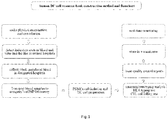
- DC cells could be cultured and expanded from the isolated peripheral blood or cord blood mononuclear cells in two ways.
- Method 1 expansion of mature and highly active DC cells through primary dendritic cells. The general steps were as follows:
- peripheral blood or cord blood mononuclear cells could also be co-stimulated and cultured in a medium containing PHA and IL2, and then processed with the subsequent steps.
- Method 2 Expansion of mature and highly active DC cells through monocyte-derived dendritic cells (MoDC)
- a DC cell resource bank including numerous DC cell lines is established by separately expanding DC cells from cell samples (peripheral blood or cord blood) provided by a large number of individuals.
- the process for establishing the bank is briefly described as follows:
- Active DC cells in the resource bank are co-cultivated with PBMCs (or cord blood mononuclear cells) from tumor or virus-infected patients or healthy volunteers to perform a mixed lymphocyte reaction to produce CTL and NK cells.
- PBMCs cord blood mononuclear cells
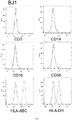
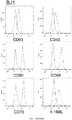
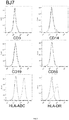
- These cells were CD3-negative, CD14-negative, CD19-negative, CD56-negative, and the possibility that they were T cells, monocytes, B cells, or NK cells was ruled out; these cells expressed DC cell-related marker molecules CD11c and CD205; these cells expressed CCR7 , HLA-DR, CD83 and other marker molecules related to DC cell maturation; at the same time, these cells also expressed CD40, CD70, 4-1BBL, CD80, CD83, CD86 and other marker molecules related to DC cell activation. In addition, it could be observed with a microscope that some single suspended cells had many dendrites on the surfaces; during the culture, some cells had the characteristics of adherent growth and showed the morphology of classic DC cells. Therefore, combining the analysis of a variety of immunophenotypic molecules and morphological observation, it was determined that these cells were DC cells.
- Example 2 The method of the present invention expanded DC cells with a high success rate and a high selectivity
- the method of the present invention successfully expanded active DC cells from 5 out of 6 peripheral blood samples (83% success rate). We judged that the expansion failure of the other one of the samples might be caused by an operational error. To confirm this hypothesis, we found the donor of the blood sample that failed to expand and asked for another donation of 8 mL of peripheral blood. The method of the present invention was used to carry out the culture and expansion again, and after a culture period of at least 4 months or more, the expansion and activation were successful. Therefore, technically speaking, the DC cell expansion method provided by the present disclosure can efficiently achieve the expansion and activation of DC cells, and the success rate is close to 100%.
- DC cell account for only 1% of the number of PBMC cells
- T cells account for about 58%
- B cells account for about 20%
- NK cells and monocytes account for about 10%
- NKT cells account for about 1%.
- DC cell account for only 1% of the number of PBMC cells T cells account for about 58%
- B cells account for about 20%
- NK cells and monocytes each account for about 10%
- NKT cells NKT cells account for about 1%.
- the cells we obtained were basically clumped cells. Without any sorting treatment, it was proved by various marker molecules and morphology that these cells were pure DC cells. This is especially important for allogeneic use to prevent other potentially contaminated cells, such as T cells, from causing graft-versus-host disease.
- Example 3 The ability of expanded DC cells to induce antigen-specific T cells
- telomeres in normal cells progressively shorten as cells divide. When they reach a certain level, the cells will age and die. Activation of the telomerase is able to keep the lengths of telomeres relatively stable, thereby enabling cells to gain the ability to proliferate indefinitely and further develop carcinogenesis. Therefore, the abnormality of telomerase activity is closely related to the occurrence and development of tumors.
- Telomerase is composed of telomerase reverse transcriptase (hTERT), telomerase RNA and a pseudouridine synthase, and hTERT is a restrictive component of the telomerase activity. Studies have found that hTERT is highly expressed in more than 90% of all types of tumor and plays an important role in tumorigenesis and cancer development. Because it is almost not expressed in most normal tissue cells, hTERT is a very ideal tumor target.
- a DC cell line (BJ8, established after transduction with STLV4 Tax protein, HLA phenotypes A0201+ and A2402+) was selected from the DC cell resource bank, and transduced with lentivirus to continuously express hTERT (DC -hTERT).
- DC -hTERT lentivirus to continuously express hTERT
- PBMCs which were HLA-A matched with the DC-hTERT cells, were selected and subject to MLR test to co-culture and stimulate the production of a large number of immune cells. The latter was sorted by CD3 magnetic beads to obtain a separate group of cells.
- T cells were mainly CD8+ T cells, as observed by flow cytometry ( Figure 4 ); according to the type of TCR receptors, it contained T ⁇ / ⁇ cells and also contained T ⁇ / ⁇ cells.
- T ⁇ / ⁇ cells kill target cells in an MHC-restricted manner, while T ⁇ / ⁇ cells kill cells in a non-MHC-restricted manner and may act as coordinated attackers.
- some cells expressed CD56 molecules and NK cell activation related receptor NKG2D, suggesting that this line of DC cells was able to induce the production of NKT-like cells while stimulating the expansion of CTL cells.
- HLA-A0201+/A2402+ PBMC cells were co-cultivated with the parental DC cells and the DC-hTERT of Example 3 to produce T cells. These two types of T cells were tested for their killing effect on tumor cells after sorted out by CD3 magnetic beads.
- HLA-A2/A2 normal human fibroblast NHF
- HLA-A2/A2 normal human fibroblast NHF
- the three tumor cell lines were A375 (HLA-A0101/A0201), SK-MEL-3 (HLA-A2402) and SK-MEL-24 (HLA-A1/A2). All of these three DC cell lines had only one HLA matched with T cell HLA.
- the killing effect of non-specific T cells was less than 40% when the effector-target ratio was 1:1, while the hTERT-specific T cells had a killing effect of more than 90% at an effector-target ratio of 1:1, suggesting that the hTERT-specific T cells could generate targeted killing of TERT-expressing tumor cells at a lower effector-target ratio.
- the killing effect of hTERT-specific T cells on NHF was very weak, suggesting that the TERT-specific T cells could selectively kill tumors and had high safety profile.
- NL20 cells bronchial epidermal cells that could proliferate infinitely after genetic modification, HLA-A1/3), H1299 (lung cancer cells, HLA-A32/A24) and normal human fibroblasts (NHF, HLA-A2/A2) were choose as research objects.
- the three cell lines were genetically modified to allow NL20 cells express HLA-A0201 molecules, which could be recognized by T cells with the same HLA type; to allow H1299 cells express HLA-A0201 molecules, so that the cells were matched with T cells with the same HLA-type (both HLA-A0201 and HLA-A2402 were all matched); to allow NHF cells express the cancer testis antigen MAGEA3, and whether hTERT-specific T cells could kill the cells was observed. From the results shown in Figure 7 , it could be seen that non-antigen-specific T cells had a weak killing effect (less than 10%) on both NL20 and NL20/A2.1 cells at an effector-target ratio of 2:1.
- the hTERT-specific T cells could kill more than 70% of NL20 and NL20/A2.1 cells at an effector-target ratio of 2:1, indicating that the specific killing effect was high.
- non-specific T cells had nearly no killing effect at an effector-target ratio of 2:1; while the hTERT-specific T cells had a killing effect of more than 70% at an effector-target ratio of 2:1.
- H1299 cells only matched with T cells in HLA-A24, and both HLA-A0201 and HLA-A24 in H1299/A2.1 were matched with that in T cells, the T cells had a stronger killing effect on H1299/A2.1 which had a higher matching degree in HLA compared to H1299. It was suggested that the higher the matching degree of HLA, the stronger the killing ability of T cells.
- NHF/MAGEA3 cells although they expressed tumor antigen MAGEA3, the effector T cells had no obvious killing effect on them as they were specific for hTERT, suggesting that the T cells have a high killing specificity.
- Example 5 Stimulation and induction CTL, NK and NKT cells with expanded DC cells induces
- tumor immune escape Due to the heterogeneous characteristics of tumor tissues, tumor cells in the same tissue may exhibit different immune characteristics, and the level of MHC expression may be high or low, or even not expressed at all. In this case, a single treatment with MHC-restricted killer T cells has some effects in the short term, but in the long term, it may not prevent the escape of residual immune cells, leading to tumor recurrence. Therefore, a coordinated treatment with immune cells with different killing mechanisms is a trend in future immunotherapy.
- a major feature of the DC cells in the DC cell resource bank provided by the present disclosure is that they can stimulate the activation and proliferation of CTL cells, and can also induce a certain proportion (25% to 90%) of CD56+ cells, i.e., NK Cells and CD3+CD56+ NKT-like cells. Using this group of mixed immune cells for tumor treatment can achieve a synergistic effect and prevent immune escape.
- DC cell lines were selected from the DC cell resource bank, and they were mixed and cultured with HLA-matched PBMCs:
- a DC cell line code-named BJ3 (established after transduction with STLV3 Tax) was mixed with a collection of PBMC cells, both of which belonged to the HLA-A2 phenotype.
- a DC cell line code-named BJ19 (established after transduction with STLV3 Tax) was mixed with a collection of PBMC cells, both of which belonged to the HLA-A2 phenotype.
- a DC cell line code-named BJ8 (established after transduction with STLV4 Tax) was mixed with a collection of PBMC cells, both of which belonged to the HLA-A0201 and HLA-A2402 phenotypes.
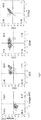
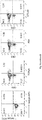
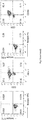
- FIG. 8 A FACS analysis was performed on the cell cultures obtained after culture, and the results were shown in Figure 8 to Figure 10 , respectively. It could be seen from the figures that the cells induced by MLR test were mainly CD8+T cells, CD56+NK cells and CD3+CD56+NKT- like cells. There were two groups of CD3+CD8+ T cells. One group had bright fluorescence intensity, corresponding to relatively high expression of CD8, and the other group had weak fluorescence intensity, corresponding to relatively low expression of CD8.
- the induced T cells were mainly T ⁇ / ⁇ cells, and contained only a small amount of immune suppressive molecules, such as PD1 and CTLA4.
- a DC cell line (BJ9) in the DC resource bank was used to induce PBMC expansion to produce two populations of CD3+ and CD3-CD56+ cells with the method described herein.
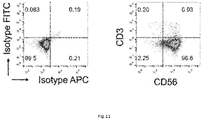
- NK cells After a negative selection with CD3 magnetic bead, a large number of CD3-CD56+ cells were obtained, i.e., NK cells ( Figure 11 ).
- NK cells have non-MHC-restricted killing effects on tumor cells.
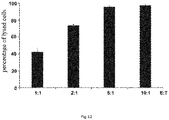
- lung cancer cells A549 as the research object to observe the killing effect of the obtained NK cells on these cells. The results were shown in Figure 12 .
- the killing effect of NK cells on A549 cells was more than 40% at an effector-target ratio 1:1.
- mouse-originated cells are not sensitive to human NK cells theoretically, and are an ideal model for studying the mechanism of NK cells.
- mouse fibroblast cells NIH3T3 were used as the research object. They were genetically modified to express the ligand MICA, which would be determined if human NK cells would specifically kill them. The results were shown in Figure 13 .
- 3T3-Luc cells expressed luciferase
- 3T3-Luc/hMICA cells expressed both luciferase and human MICA protein (hMICA).
- human-originated NK cells had a strong and specific killing effect on murine NIH3T3 cells by recognizing the ligand MICA.
- the killing effect on 3T3-Luc/hMICA cells was as high as about 60%, while the killing effect on 3T3-Luc cells was less than 10%.
- the DC cell expansion method can achieve: in vitro large-scale culture of primary DC cells in a cGMP environment, breaking through the number limit for therapy; ensuring that all DC cells are in a highly activated state; ensuring that DC cells are ready for genetical modification to efficiently and stably present any tumor or viral antigens as needed, achieving the characteristics of high antigen load rate and multiple-indication; effectively expanding DC cells from any individual, that is, a high efficiency of DC cell line establishment; effectively expanding a large number of DC cells via collecting only a small amount of peripheral blood or cord blood ( ⁇ 10mL); the expanded DC cells can be permanently cryopreserved and remain their activity after resuscitation.
- the possibility of Tax protein of ape STLV causing human diseases has not been reported, so the risk of cross infection is extremely low.
- the STLV Tax protein is a foreign protein to the human body and has high immunogenicity. It can also play a function similar to that of an immune adjuvant, stimulating the activity of human immune cells and strengthening anti-tumor or anti-viral effects.
- a human DC cell resource bank that is, through the DC cell expansion method provided in the present invention, DC cells derived from healthy population or early-stage cancer population are engineered to realize their proliferation potential and function; at the same time, data information of each collection of DC cells (including HLA typing, molecular expression profile related to DC cell maturation and activation, in vivo and in vitro activity, etc.) are obtained.
- the human DC cell resource bank has great application value. First of all, it can achieve the goal of strengthening the function of autologous DC cells and serve the future treatment or prevention for cancer or viral diseases.
- the DC resource bank accepts blood samples from healthy population or early-stage cancer patients with non-transmittable diseases, from which DC cells are extracted and activated, and stored in a deep low temperature environment after passing the quality inspection.
- the DC resource bank can provide a sufficient number of DC cells with potent activity.
- allogeneic use of DC cells and resource sharing are realized in a way of HLA matching. All DC cells in the DC cell resource bank are screened by standard procedure and don't carry any transmittable pathogens. When cancer or acute virus infection patients cannot use their own immune cells due to low function, after HLA matching, a DC cell line suitable for the patient can be quickly found in the DC cell resource bank.
- the DC cell line can be thawed out, and applied to patients very quickly to save precious time for them.
- the DC cell resource bank can provide DC cell resources for the national and even global public health and medical technology fields. It is a strategic resources for studying and conquering certain known or unknown acute viral infectious diseases.
Landscapes
- Health & Medical Sciences (AREA)
- Life Sciences & Earth Sciences (AREA)
- Engineering & Computer Science (AREA)
- Chemical & Material Sciences (AREA)
- Biomedical Technology (AREA)
- Organic Chemistry (AREA)
- General Health & Medical Sciences (AREA)
- Genetics & Genomics (AREA)
- Immunology (AREA)
- Zoology (AREA)
- Biotechnology (AREA)
- Bioinformatics & Cheminformatics (AREA)
- Wood Science & Technology (AREA)
- Biochemistry (AREA)
- Public Health (AREA)
- Veterinary Medicine (AREA)
- Animal Behavior & Ethology (AREA)
- Hematology (AREA)
- General Engineering & Computer Science (AREA)
- Microbiology (AREA)
- Cell Biology (AREA)
- Epidemiology (AREA)
- Virology (AREA)
- Molecular Biology (AREA)
- Medicinal Chemistry (AREA)
- Urology & Nephrology (AREA)
- Biophysics (AREA)
- Physics & Mathematics (AREA)
- Pharmacology & Pharmacy (AREA)
- Nuclear Medicine, Radiotherapy & Molecular Imaging (AREA)
- General Chemical & Material Sciences (AREA)
- Chemical Kinetics & Catalysis (AREA)
- Oncology (AREA)
- General Physics & Mathematics (AREA)
- Food Science & Technology (AREA)
- Analytical Chemistry (AREA)
- Plant Pathology (AREA)
- Pathology (AREA)
- Gastroenterology & Hepatology (AREA)
- Proteomics, Peptides & Aminoacids (AREA)
Applications Claiming Priority (2)
| Application Number | Priority Date | Filing Date | Title |
|---|---|---|---|
| CN201810368646.3A CN108546679B (zh) | 2018-04-23 | 2018-04-23 | 在体外大量扩增人类成熟高活性树突状细胞的方法及其应用 |
| PCT/CN2019/075529 WO2019205783A1 (zh) | 2018-04-23 | 2019-02-20 | 人类dc细胞扩增方法和人类dc细胞资源库 |
Publications (2)
| Publication Number | Publication Date |
|---|---|
| EP3786288A1 true EP3786288A1 (de) | 2021-03-03 |
| EP3786288A4 EP3786288A4 (de) | 2021-12-29 |
Family
ID=63512058
Family Applications (1)
| Application Number | Title | Priority Date | Filing Date |
|---|---|---|---|
| EP19791928.5A Pending EP3786288A4 (de) | 2018-04-23 | 2019-02-20 | Verfahren zur erweiterung einer menschlichen dc-zelle und dc-zellen-ressourcenbibliothek |
Country Status (6)
| Country | Link |
|---|---|
| US (1) | US20210371823A1 (de) |
| EP (1) | EP3786288A4 (de) |
| JP (1) | JP7268055B2 (de) |
| CN (2) | CN108546679B (de) |
| CA (1) | CA3098207C (de) |
| WO (1) | WO2019205783A1 (de) |
Families Citing this family (6)
| Publication number | Priority date | Publication date | Assignee | Title |
|---|---|---|---|---|
| CN108546679B (zh) * | 2018-04-23 | 2021-04-16 | 北京翊博普惠生物科技发展有限公司 | 在体外大量扩增人类成熟高活性树突状细胞的方法及其应用 |
| CN111330002B (zh) * | 2020-03-09 | 2020-12-01 | 北京鼎成肽源生物技术有限公司 | 靶向冠状病毒的通用dc细胞疫苗及其制备方法和应用 |
| CN112725281A (zh) * | 2021-01-28 | 2021-04-30 | 广州润生细胞医药科技有限责任公司 | 一种个体化肿瘤新抗原介导抗肿瘤细胞免疫应答的体外预测方法及应用 |
| CN113249331B (zh) * | 2021-06-07 | 2021-10-22 | 北京翊博普惠生物科技发展有限公司 | 负载Tax抗原的DC细胞、CTL细胞及其制备方法和应用 |
| US20240352130A1 (en) * | 2021-08-24 | 2024-10-24 | The Children's Hospital Of Philadelphia | Peptide-centric chimeric antigen receptors to cancer self-peptides |
| CN113881631B (zh) * | 2021-10-11 | 2022-08-02 | 北京翊博普惠生物科技发展有限公司 | 一种扁桃体来源的Tγδ细胞及其制备方法和应用 |
Family Cites Families (7)
| Publication number | Priority date | Publication date | Assignee | Title |
|---|---|---|---|---|
| CN1408850A (zh) * | 2001-09-18 | 2003-04-09 | 王虹 | 人血树突状细胞永生化技术 |
| WO2010009465A2 (en) * | 2008-07-18 | 2010-01-21 | The United States Of America, As Represented By The Secretary, Department Of Health And Human Services | Htlv-ii vector and methods of use |
| CN103013915B (zh) * | 2013-01-09 | 2014-05-28 | 高岱清 | 一种高活性负载抗原的树突状细胞的制备方法 |
| RU2739770C2 (ru) * | 2014-06-11 | 2020-12-28 | полибайосепт ГмбХ | Экспансия лимфоцитов с использованием композиции цитокинов для активной клеточной иммунотерапии |
| CN108289909A (zh) * | 2015-10-19 | 2018-07-17 | 巴尔的摩马里兰大学 | 用于产生工程改造的人原代血液树突细胞系的方法 |
| CN106754685A (zh) * | 2017-01-17 | 2017-05-31 | 四川华皓生物科技有限公司 | 一种人脂肪间充质干细胞库的构建方法 |
| CN108546679B (zh) * | 2018-04-23 | 2021-04-16 | 北京翊博普惠生物科技发展有限公司 | 在体外大量扩增人类成熟高活性树突状细胞的方法及其应用 |
-
2018
- 2018-04-23 CN CN201810368646.3A patent/CN108546679B/zh active Active
-
2019
- 2019-02-20 US US17/050,085 patent/US20210371823A1/en active Pending
- 2019-02-20 CA CA3098207A patent/CA3098207C/en active Active
- 2019-02-20 EP EP19791928.5A patent/EP3786288A4/de active Pending
- 2019-02-20 CN CN201980039835.9A patent/CN112334573B/zh active Active
- 2019-02-20 WO PCT/CN2019/075529 patent/WO2019205783A1/zh not_active Ceased
- 2019-02-20 JP JP2020560313A patent/JP7268055B2/ja active Active
Also Published As
| Publication number | Publication date |
|---|---|
| JP7268055B2 (ja) | 2023-05-02 |
| CN112334573A (zh) | 2021-02-05 |
| WO2019205783A1 (zh) | 2019-10-31 |
| CN108546679A (zh) | 2018-09-18 |
| CA3098207A1 (en) | 2019-10-31 |
| CN112334573B (zh) | 2023-01-06 |
| CN108546679B (zh) | 2021-04-16 |
| CA3098207C (en) | 2024-10-08 |
| EP3786288A4 (de) | 2021-12-29 |
| US20210371823A1 (en) | 2021-12-02 |
| JP2021518767A (ja) | 2021-08-05 |
Similar Documents
| Publication | Publication Date | Title |
|---|---|---|
| CA3098207C (en) | METHOD FOR EXPANSION OF HUMAN DENDRITIC CELLS EX VIVO, CONSTRUCTION OF HUMAN DENDRITIC CELLS AND DATA LIBRARY | |
| Chaux et al. | Estimation of the frequencies of anti‐MAGE‐3 cytolytic T‐lymphocyte precursors in blood from individuals without cancer | |
| EP2279253B1 (de) | Konstruktion und zuführung therapeutischer zusammensetzungen frisch isolierter zellen | |
| CN104321425B (zh) | 用于诱导和扩增源自外周血单个核细胞的自然杀伤细胞的方法 | |
| EP1326961B1 (de) | Zusammensetzungen und verfahren zur auslösung spezifischer zytolytischer t-zellantworten | |
| US9102715B2 (en) | CTL inducer composition | |
| CN109182266A (zh) | 扩大t细胞的方法 | |
| JP5840857B2 (ja) | 細胞傷害性t細胞誘導用組成物 | |
| JP2018531022A (ja) | 改変ヒト初代血液樹状細胞株を生成するための方法 | |
| CN113121676A (zh) | 一种靶向巨细胞病毒抗原的特异性t细胞受体及其应用 | |
| CN108026513A (zh) | 树突状细胞的抗原加载的方法和疫苗 | |
| CN105018427A (zh) | 一种增强ctl免疫反应的dc细胞培养方法 | |
| CN115094034A (zh) | 一种人nkt细胞系及其应用 | |
| CN111978375B (zh) | 具有细胞毒性t细胞诱导能力的蛋白质或多肽 | |
| CN108251370B (zh) | 非细胞来源的多肽致敏的dc-cik细胞、其构建方法及应用 | |
| US20230348856A1 (en) | Pharmaceutical composition, and preparation method therefor and application thereof | |
| CN113999815A (zh) | 靶向hpv16相关宫颈癌的tcr-t细胞建立方法 | |
| CN109136284B (zh) | 一种afft2细胞 | |
| EP2575867B1 (de) | Neuartige interferon-alpha produzierende dentritische retikulumzellen von knochenmark | |
| CN113913386B (zh) | 一种滋养层细胞及其在扩增人nk细胞中的应用 | |
| CN116042528A (zh) | 树突状细胞肿瘤疫苗的制备方法及其应用 | |
| CN113440606A (zh) | 特异性多能干细胞肿瘤疫苗及其制备方法与应用 | |
| CN118028235B (zh) | 人工抗原提呈细胞及其制备方法和应用 | |
| CN113249331B (zh) | 负载Tax抗原的DC细胞、CTL细胞及其制备方法和应用 | |
| AU4226999A (en) | Method for preparation and (in vivo) administration of antigen presenting cell composition |
Legal Events
| Date | Code | Title | Description |
|---|---|---|---|
| STAA | Information on the status of an ep patent application or granted ep patent |
Free format text: STATUS: THE INTERNATIONAL PUBLICATION HAS BEEN MADE |
|
| PUAI | Public reference made under article 153(3) epc to a published international application that has entered the european phase |
Free format text: ORIGINAL CODE: 0009012 |
|
| STAA | Information on the status of an ep patent application or granted ep patent |
Free format text: STATUS: REQUEST FOR EXAMINATION WAS MADE |
|
| 17P | Request for examination filed |
Effective date: 20201123 |
|
| AK | Designated contracting states |
Kind code of ref document: A1 Designated state(s): AL AT BE BG CH CY CZ DE DK EE ES FI FR GB GR HR HU IE IS IT LI LT LU LV MC MK MT NL NO PL PT RO RS SE SI SK SM TR |
|
| AX | Request for extension of the european patent |
Extension state: BA ME |
|
| DAV | Request for validation of the european patent (deleted) | ||
| DAX | Request for extension of the european patent (deleted) | ||
| A4 | Supplementary search report drawn up and despatched |
Effective date: 20211129 |
|
| RIC1 | Information provided on ipc code assigned before grant |
Ipc: A61K 35/17 20150101ALI20211123BHEP Ipc: C07K 14/005 20060101ALI20211123BHEP Ipc: A61P 31/12 20060101ALI20211123BHEP Ipc: A61P 35/00 20060101ALI20211123BHEP Ipc: A61K 35/15 20150101ALI20211123BHEP Ipc: C12N 5/0783 20100101ALI20211123BHEP Ipc: C12N 15/867 20060101ALI20211123BHEP Ipc: C12Q 1/02 20060101ALI20211123BHEP Ipc: C12N 5/0784 20100101AFI20211123BHEP |
|
| STAA | Information on the status of an ep patent application or granted ep patent |
Free format text: STATUS: EXAMINATION IS IN PROGRESS |
|
| 17Q | First examination report despatched |
Effective date: 20240919 |