EP3788143B1 - Verfahren zur bereitstellung einer homogenen lösung eines lyophilisierten mutierten diphtherietoxins in dimethylsulfoxid - Google Patents
Verfahren zur bereitstellung einer homogenen lösung eines lyophilisierten mutierten diphtherietoxins in dimethylsulfoxid Download PDFInfo
- Publication number
- EP3788143B1 EP3788143B1 EP19796107.1A EP19796107A EP3788143B1 EP 3788143 B1 EP3788143 B1 EP 3788143B1 EP 19796107 A EP19796107 A EP 19796107A EP 3788143 B1 EP3788143 B1 EP 3788143B1
- Authority
- EP
- European Patent Office
- Prior art keywords
- mdt
- solution
- polysaccharide
- minutes
- less
- Prior art date
- Legal status (The legal status is an assumption and is not a legal conclusion. Google has not performed a legal analysis and makes no representation as to the accuracy of the status listed.)
- Active
Links
Images



Classifications
-
- C—CHEMISTRY; METALLURGY
- C07—ORGANIC CHEMISTRY
- C07K—PEPTIDES
- C07K14/00—Peptides having more than 20 amino acids; Gastrins; Somatostatins; Melanotropins; Derivatives thereof
- C07K14/195—Peptides having more than 20 amino acids; Gastrins; Somatostatins; Melanotropins; Derivatives thereof from bacteria
- C07K14/34—Peptides having more than 20 amino acids; Gastrins; Somatostatins; Melanotropins; Derivatives thereof from bacteria from Corynebacterium (G)
-
- A—HUMAN NECESSITIES
- A61—MEDICAL OR VETERINARY SCIENCE; HYGIENE
- A61K—PREPARATIONS FOR MEDICAL, DENTAL OR TOILETRY PURPOSES
- A61K39/00—Medicinal preparations containing antigens or antibodies
- A61K39/02—Bacterial antigens
- A61K39/09—Lactobacillales, e.g. aerococcus, enterococcus, lactobacillus, lactococcus, streptococcus
- A61K39/092—Streptococcus
-
- A—HUMAN NECESSITIES
- A61—MEDICAL OR VETERINARY SCIENCE; HYGIENE
- A61K—PREPARATIONS FOR MEDICAL, DENTAL OR TOILETRY PURPOSES
- A61K39/00—Medicinal preparations containing antigens or antibodies
- A61K39/39—Medicinal preparations containing antigens or antibodies characterised by the immunostimulating additives, e.g. chemical adjuvants
-
- C—CHEMISTRY; METALLURGY
- C12—BIOCHEMISTRY; BEER; SPIRITS; WINE; VINEGAR; MICROBIOLOGY; ENZYMOLOGY; MUTATION OR GENETIC ENGINEERING
- C12Y—ENZYMES
- C12Y204/00—Glycosyltransferases (2.4)
- C12Y204/02—Pentosyltransferases (2.4.2)
- C12Y204/02036—NAD(+)--diphthamide ADP-ribosyltransferase (2.4.2.36)
-
- A—HUMAN NECESSITIES
- A61—MEDICAL OR VETERINARY SCIENCE; HYGIENE
- A61K—PREPARATIONS FOR MEDICAL, DENTAL OR TOILETRY PURPOSES
- A61K39/00—Medicinal preparations containing antigens or antibodies
- A61K2039/60—Medicinal preparations containing antigens or antibodies characteristics by the carrier linked to the antigen
- A61K2039/6031—Proteins
- A61K2039/6037—Bacterial toxins, e.g. diphteria toxoid [DT], tetanus toxoid [TT]
Definitions
- the present invention relates to a method for reconstituting lyophilized mutant diphtheria toxin (mDT) in anhydrous dimethyl sulfoxide for use in producing pneumococcal capsular polysaccharide:mDT conjugates.
- mDT diphtheria toxin
- Streptococcus pneumoniae is a significant cause of serious disease world-wide.
- the Centers for Disease Control and Prevention estimated there are 3,000 cases of pneumococcal meningitis, 50,000 cases of pneumococcal bacteremia, 7,000,000 cases of pneumococcal otitis media and 500,000 cases of pneumococcal pneumonia annually in the United States.
- CDC Centers for Disease Control and Prevention
- MMWR Morb Mortal Wkly Rep 1997, 46(RR-8):1-13 the complications of these diseases can be significant with some studies reporting up to 8% mortality and 25% neurologic sequelae with pneumococcal meningitis. See Arditi et al., 1998, Pediatrics 102:1087-97 .
- the multivalent pneumococcal polysaccharide vaccines that have been licensed for many years have proved invaluable in preventing pneumococcal disease in adults, particularly, the elderly and those at high-risk.
- infants and young children respond poorly to unconjugated pneumococcal polysaccharides.
- Bacterial polysaccharides are T-cell-independent immunogens, eliciting weak or no response in infants.
- Chemical conjugation of a bacterial polysaccharide immunogen to a carrier protein converts the immune response to a T-cell-dependent one in infants.
- Diphtheria toxoid DTx
- DT diphtheria toxin
- polysaccharide-protein conjugate vaccines comprising bacterial capsular polysaccharides conjugated to carrier proteins have been developed and additional ones are in development.
- conjugate vaccines include the Haemophilus influenzae type b (Hib) conjugate vaccine (e.g., HIBTITER ® ) as well as conjugate vaccines against Streptococcus pneumoniae (e.g., PREVNAR ® and PREVNAR 13 ® ) and Neisseria meningitidis (e.g., MENJUGATE ® )
- Hib conjugate vaccines against Streptococcus pneumoniae e.g., PREVNAR ® and PREVNAR 13 ®
- Neisseria meningitidis e.g., MENJUGATE ®
- WO2011041003 describes the generation of mDT solutions.
- Schwendemann S. et al., PNAS 92, pp. 11234-11238 (1995 ) disclose methods for
- the present invention provides a method for preparing a homogenous solution of mutant diphtheria toxin (mDT) in anhydrous dimethyl sulfoxide (DMSO) in which there is no detectable beta-sheet mediated aggregation of the mDT as determined by Fourier-transform infrared spectroscopy or dynamic light scattering for up to six hours following preparation of the homogenous solution.
- the homogenous solution is useful for preparing a plurality of Streptococcus pneumoniae polysaccharide-mDT conjugates, each conjugate comprising polysaccharides of a particular serotype and which may be used to produce multivalent pneumococcal immunogenic compositions having particular combinations of conjugates for use in vaccines.
- the present invention provides a method for making a homogeneous solution of mutant diphtheria toxin (mDT) in anhydrous DMSO, the method comprising (a) providing a dried composition of mDT; and (b) reconstituting the dried composition in anhydrous DMSO by adding the anhydrous DMSO to the dried composition over a time period of two minutes or less and mixing for at least 10 seconds to provide the homogenous solution comprising the mDT.
- mDT diphtheria toxin
- the dried composition of the mDT is prepared by a sublimative drying process selected from lyophilization and radiant energy vacuum (REV) dehydration from an aqueous solution of the mDT.
- the sublimative drying process comprises freezing the aqueous solution in the form of cakes or lyosphere beads.
- the sublimative drying is bulk drying performed in a container selected from the group consisting of metal tray, plastic tray, plastic bag, and class I tubing vials.
- the dried composition is prepared by sublimative drying of an aqueous solution comprising the mDT to produce the dried composition, wherein the aqueous solution further comprises sucrose and a buffer, and the sublimative drying is selected from lyophilization and radiant energy vacuum (REV) dehydration.
- the sublimative drying is selected from lyophilization and radiant energy vacuum (REV) dehydration.
- the buffer is a Histidine, Succinate, MES, MOPS, HEPES, or Acetate buffer in a pH range of 5.0-7.0.
- the buffer is a Phosphate or a Citrate buffer in a pH range of 5.0-7.0.
- the aqueous solution comprises about 0.5 % (w/v) or more sucrose. In particular embodiments, the aqueous solution comprises about 4% to 8% (w/v) sucrose.
- the dried composition has a final moisture content of about 6% or less. In particular embodiments, the dried composition has a final moisture content of about 5% or less. In particular embodiments, the dried composition has a final moisture content of about 4% or less. In particular embodiments, the dried composition has a final moisture content of about 3% or less. In particular embodiments, the dried composition has a final moisture content of about 2% or less.
- the aqueous solution comprises the mDT at a concentration of about 6 to 12 mg/mL. In particular embodiments, the aqueous solution comprises the mDT at a concentration of about 6, 9, 10, or 12 mg/mL.
- the reconstituting in step (b) is performed in eight minutes or less. In particular embodiments, the reconstituting is performed in six minutes or less. In particular embodiments, the reconstituting is performed in four minutes or less. In particular embodiments, the reconstituting is performed in two minutes or less. In particular embodiments, the reconstituting is performed in about two minutes. In particular embodiments, the reconstituting is performed in one minute or less.
- the mixing in step (b) is instead performed in 120 minutes or less. In particular embodiments, the mixing is instead performed in 90 minutes or less. In particular embodiments, the mixing is instead performed in 60 minutes or less. In particular embodiments, the mixing is instead performed in 30 minutes or less. In particular embodiments, the mixing is instead performed in 10 minutes or less. In particular embodiments, homogenous solution comprising the mDT is used for conjugation to activated polysaccharides within six hours or less following the reconstituting.
- the present invention further provides a method for providing a homogeneous solution of mutant diphtheria toxin (mDT) in anhydrous dimethyl sulfoxide (DMSO) having no detectable beta-sheet mediated aggregation, the method comprising: (a) providing a dried composition of the mDT; and (b) reconstituting the dried composition in anhydrous DMSO by adding the anhydrous DMSO to the dried composition over a time period of two minutes or less and mixing to provide a homogenous solution comprising the mDT wherein the homogenous solution comprises no detectable beta-sheet mediated aggregation as determined by Fourier-transform infrared spectroscopy or dynamic light scattering.
- mDT mutant diphtheria toxin
- DMSO dimethyl sulfoxide
- the homogenous solution comprises no detectable beta-sheet mediated aggregation for up to one hour following reconstitution. In a further embodiment, the homogenous solution comprises no detectable beta-sheet mediated aggregation for up to two hours following reconstitution. In a further embodiment, the homogenous solution comprises no detectable beta-sheet mediated aggregation for up to three hours following reconstitution. In a further embodiment, the homogenous solution comprises no detectable beta-sheet mediated aggregation for up to four hours following reconstitution. In a further embodiment, the homogenous solution comprises no detectable beta-sheet mediated aggregation for up to five hours following reconstitution. In a further embodiment, the homogenous solution comprises no detectable beta-sheet mediated aggregation for up to six hours following reconstitution.
- the dried composition of the mDT is prepared by a sublimative drying process selected from lyophilization and radiant energy vacuum (REV) dehydration from an aqueous solution of the mDT.
- the sublimative drying process comprises freezing the aqueous solution in the form of cakes or lyosphere beads prior to the sublimative drying process.
- the sublimative drying comprises bulk drying performed in a container selected from the group consisting of metal tray, plastic tray, plastic bag, and class I tubing vials.
- the dried composition has a final moisture content of about 6% or less. In particular embodiments, the dried composition has a final moisture content of about 5% or less. In particular embodiments, the dried composition has a final moisture content of about 4% or less. In particular embodiments, the dried composition has a final moisture content of about 3% or less. In particular embodiments, the dried composition has a final moisture content of about 2% or less.
- the dried composition is prepared by sublimative drying of an aqueous solution comprising the mDT to produce the dried composition, wherein the aqueous solution further comprises sucrose and a buffer, and the sublimative drying is selected from lyophilization and radiant energy vacuum (REV) dehydration.
- the sublimative drying is selected from lyophilization and radiant energy vacuum (REV) dehydration.
- the aqueous solution comprises about 0.5 % (w/v) or more sucrose. In particular embodiments, the aqueous solution comprises about 4% to 8% (w/v) sucrose.
- the buffer is a Histidine, Succinate, MES, MOPS, HEPES, or Acetate buffer in a pH range of 5.0-7.0.
- the buffer is a Phosphate or a Citrate buffer in a pH range of 5.0-7.0.
- the aqueous solution comprises the mDT at a concentration of about 6 to 12 mg/mL. In particular embodiments, the aqueous solution comprises the mDT at a concentration of about 6, 9, 10, or 12 mg/mL.
- the reconstituting in step (b) is instead performed in eight minutes or less. In particular embodiments, the reconstituting is instead performed in six minutes or less. In particular embodiments, the reconstituting is instead performed in four minutes or less. In particular embodiments, the reconstituting is instead performed in two minutes or less. In particular embodiments, the reconstituting is instead performed in about two minutes. In particular embodiments, the reconstituting is instead performed in one minute or less.
- the mixing in step (b) is performed in 120 minutes or less. In particular embodiments, the mixing is performed in 90 minutes or less. In particular embodiments, the mixing is performed in 60 minutes or less. In particular embodiments, the mixing is performed in 30 minutes or less. In particular embodiments, the mixing is performed in 10 minutes or less. In particular embodiments, homogenous solution comprising the mDT is used for conjugation to activated polysaccharides within six hours or less following the reconstituting.
- the present invention further provides a method for making a composition comprising a Streptococcus pneumoniae polysaccharide covalently linked to a mutant diphtheria toxin (mDT), comprising the steps of (a) providing a first dried composition comprising activated Streptococcus pneumoniae polysaccharides from one or more Streptococcus pneumoniae serotypes and a second dried composition comprising mDT; (b) separately reconstituting the first dried composition and the second dried composition in dimethyl sulfoxide (DMSO) and mixing to provide a first homogenous solution comprising the one or more activated polysaccharides and a second homogenous solution comprising the mDT; (c) combining the first homogenous solution with the second homogenous solution to produce a mixture; and (d) adding a reducing agent to the mixture to produce a conjugate solution comprising mDT conjugated to one or more polysaccharides of one or more Streptococcus pneumoniae serotypes,
- the first and second dried compositions are prepared by a sublimative drying process selected from lyophilization and radiant energy vacuum (REV) dehydration.
- the sublimative drying process comprises freezing the first and second aqueous solutions in the form of cakes or lyosphere beads prior to the sublimative drying process.
- the sublimative drying process comprises bulk drying performed in a container selected from the group consisting of metal tray, plastic tray, plastic bag, and class I tubing vials.
- each of the first and second dried compositions has a final moisture content of about 6% or less. In particular embodiments, each of the first and second dried compositions has a final moisture content of about 5% or less. In particular embodiments, each of the first and second dried compositions has a final moisture content of about 4% or less. In particular embodiments, each of the first and second dried compositions has a final moisture content of about 3% or less. In particular embodiments, each of the first and second dried compositions has a final moisture content of about 2% or less.
- the first and second dried compositions are prepared by a sublimative drying of a first aqueous solution comprising activated Streptococcus pneumoniae polysaccharides from one, two, or more Streptococcus pneumoniae serotypes and a second aqueous solution comprising the mDT to produce the first and second dried compositions, wherein the first and second aqueous solutions further comprise about 0.5 % (w/v) or more sucrose and a buffer, and wherein the sublimative drying is selected from lyophilization or radiant energy vacuum (REV) dehydration.
- first aqueous solution comprising activated Streptococcus pneumoniae polysaccharides from one, two, or more Streptococcus pneumoniae serotypes
- a second aqueous solution comprising the mDT
- the buffer is a Histidine, Succinate, MES, MOPS, HEPES, or Acetate buffer in a pH range of 5.0-7.0.
- the buffer is a Phosphate or a Citrate buffer in a pH range of 5.0-7.0.
- the first and second aqueous solutions comprise about 0.5 % (w/v) or more sucrose.
- the first aqueous solution comprises about 4% to 6% (w/v) sucrose and the second aqueous solution comprises about 4% to 8% (w/v) sucrose.
- the first aqueous solution comprises the polysaccharide at a concentration of about 6 to 9 mg/mL and the second aqueous solution comprises the mDT at a concentration of about 6 to 12 mg/mL.
- the first aqueous solution comprises the polysaccharide at a concentration of about 6 or 9 mg/mL and the second aqueous solution comprises the mDT at a concentration of about 6, 9, 10, or 12 mg/mL.
- the reconstituting in step (b) is instead performed in eight minutes or less. In particular embodiments, the reconstituting is instead performed in six minutes or less. In particular embodiments, the reconstituting is instead performed in four minutes or less. In particular embodiments, the reconstituting is instead performed in two minutes or less. In particular embodiments, the reconstituting is instead performed in about two minutes. In particular embodiments, the reconstituting is instead performed in one minute or less.
- the mixing in step (b) is performed in 120 minutes or less. In particular embodiments, the mixing is performed in 90 minutes or less. In particular embodiments, the mixing is performed in 60 minutes or less. In particular embodiments, the mixing is performed in 30 minutes or less. In particular embodiments, the mixing is performed in 10 minutes or less.
- each conjugate solution comprises polysaccharide conjugated to the mDT at a ratio from about 0.6 to about 1.3 polysaccharide to mDT on a weight to weight basis. In particular embodiments, each conjugate solution comprises polysaccharide conjugated to the mDT at a ratio from about 0.9 to about 1.5 polysaccharide to mDT on a weight to weight basis. In particular embodiments, each conjugate solution comprises polysaccharide conjugated to the mDT at a ratio from about 0.6 to about 1.5 polysaccharide to mDT on a weight to weight basis.
- the conjugate solution comprises a free polysaccharide concentration that is less than about 15% of the total polysaccharide in the solution. In particular embodiments, the conjugate solution comprises a free polysaccharide concentration that is less than about 10% of the total polysaccharide in the solution.
- the conjugate has an mDT lysine loss value of greater than five (mole/mole).
- each conjugate solution comprises polysaccharide conjugated to the mDT at a ratio from about 0.6 to about 1.3 polysaccharide to mDT on a weight to weight basis, free polysaccharide concentration that is less than about 15% of the total polysaccharide in the solution, and the conjugate has a mDT lysine loss value of greater than five (mole/mole).
- the one or more Streptococcus pneumoniae serotypes are selected from the group consisting of Streptococcus pneumoniae serotypes 1, 2, 3, 4, 5, 6A, 6B, 6C, 6D, 6E, 6G, 6H, 7F, 7A, 7B, 7C, 8, 9A, 9L, 9N, 9V, 10F, 10A, 10B, 10C, 11F, 11A, 11B, 11C, 11D, 11E, 12F, 12A, 12B, 13, 14, 15F, 15A, 15B, 15C, 16F, 16A, 17F, 17A,18F, 18A, 18B, 18C, 19F, 19A, 19B, 19C, 20A, 20B, 21, 22F, 22A, 23F, 23A, 23B, 24F, 24A, 24B, 25F, 25A, 27, 28F, 28A, 29, 31, 32F, 32A, 33F, 33A, 33B, 33C, 33D, 33E,34, 35F
- the one or more Streptococcus pneumoniae polysaccharides are activated by reacting with an oxidizing agent to provide the activated polysaccharides in step (a).
- the mutant diphtheria toxoid is CRM 197 .
- the conjugate solution is sterile filtered.
- polysaccharide is meant to include any antigenic saccharide element (or antigenic unit) commonly used in the immunologic and bacterial vaccine arts, including, but not limited to, a “saccharide”, an “oligosaccharide”, a “polysaccharide”, a “liposaccharide”, a “lipo-oligosaccharide (LOS)", a “lipopolysaccharide (LPS)", a "glycosylate”, a “glycoconjugate” and the like.
- Ps may singular or plural.
- the term “comprises” when used with the immunogenic composition of the invention refers to the inclusion of any other components (subject to limitations of "consisting of" language for the antigen mixture), such as adjuvants and excipients.
- the term “consisting of” when used with the multivalent polysaccharide-protein conjugate mixture refers to a mixture having those particular S. pneumoniae polysaccharide protein conjugates and no other S. pneumoniae polysaccharide protein conjugates from a different serotype.
- precipitation As defined herein, the terms “precipitation”, “precipitate”, “particulate formation”, “clouding”, and “aggregation” may be used interchangeably and are meant to refer to any physical interaction or chemical reaction which results in the agglomeration of a polysaccharide-protein conjugate.
- the process of aggregation e.g., protein aggregation
- the term "reconstituting” or “reconstitution” refers to adding a liquid to a dried material to dissolve the dried material to provide a solution of the material dissolved therein.
- the solution provided by the reconstitution may have concentration gradients or layers of the dissolved material therein. Therefore, following reconstitution, the solution is physically agitated to provide a homogenous solution of the reconstituted material.
- mixing is use to refer to the physical agitation of a solution by shaking, stirring, rocking, rotating, or the like.
- homogenous solution refers to a solution in which all components are thoroughly mixed such there are no concentration gradients or layers between the components in the solution.
- a "lyosphere” is a discrete particle of lyophilized material, for example, taking the form of a bead or sphere or other shape.
- a lyosphere may also be referred to as a lyoparticle sphereon, or lyobead.
- the lyosphere diameter is from about 2 to about 12 mm, preferably from 2 to 8 mm, such as from 2.5 to 6 mm or 2.5 to 5 mm.
- the volume of the lyosphere is from about 20 to 550 ⁇ L, preferably from 20 to 100 ⁇ L, such as from 20 to 50 ⁇ L.
- the size of the lyosphere can be described with respect to its aspect ratio, which is the ratio of the longer dimension to the shorter dimension.
- the aspect ratio of the lyospheres can be from 0.5 to 2.5, preferably from 0.75 to 2, such as from 1 to 1.5.
- an "immunogenic composition” may be a multivalent composition containing one or more antigens conjugated to one or more mDT, e.g., CRM 197 .
- the antigen is a saccharide from an encapsulated bacteria.
- the saccharides are composed of long chains of sugar molecules that resemble the surface of certain types of bacteria.
- Encapsulated bacteria include, but are not limited to, Streptococcus pneumoniae, Neisseria meningitides and Haemophilus influenzae type b.
- the antigens may be from the same organism or may be from different organisms. In preferred embodiments of the invention, the antigens are Streptococcus pneumoniae capsular polysaccharides.
- radiant energy vacuum (REV) dehydration also refers to microwave vacuum drying (MVD).
- the present invention provides a method or process for producing multivalent pneumococcal polysaccharide-protein conjugates that may be used as anti-pneumococcal vaccines, in which mutant diphtheria toxin (mDT) is reconstituted in anhydrous dimethyl sulfoxide (DMSO) over a rapid time span of 2 minutes or less to provide a homogenous solution that is combined with a homogenous solution of activated polysaccharides reconstituted in anhydrous DMSO under conditions that result in formation of a conjugate composition having low levels of free polysaccharide (e.g., less than 15% free polysaccharide) with no detectable beta-sheet mediated aggregation.
- mDT diphtheria toxin
- DMSO dimethyl sulfoxide
- the inventors discovered that during reconstitution of the mDT, the length of time in which an organic solvent such as DMSO is added to the dried mDT and the length of time the reconstituted mDT is then stored or maintained prior to conjugation have an impact on the secondary structure of the mDT and thus the yield of conjugates having the desired molecular weight and ratio of mDT to polysaccharide conjugated thereto.
- the invention is exemplified herein with CRM 197 , a non-toxic variant (i.e., toxoid) of diphtheria toxin. As shown in Figs.
- the time for reconstituting dried mDT in anhydrous DMSO under fast addition conditions e.g., adding the anhydrous DMSO to the dried mDT within less than eight minutes or about two minutes or less provides a reconstituted mDT solution in which the mDT is completely unfolded and there is no detectable beta-sheet formation as determined by Fourier-transform infrared spectroscopy (FTIR) or dynamic light scattering (DLS). Further discovered was that having any detectable water present in the DMSO and/or having mDT at a final concentration of mDT greater than 12 mg/mL results in beta-sheet mediated aggregation.
- FTIR Fourier-transform infrared spectroscopy
- DLS dynamic light scattering
- anhydrous DMSO is added to the dried mDT over a time period that is less than eight minutes, preferably less than five minutes, and more preferably two minutes or less; and the mDT is maintained at a concentration at or less than 10 mg/mL or 12 mg/mL or less, in particular embodiments, at about 6 mg/mL.
- a first homogenous solution comprising mDT and a second homogenous solution comprising the activated polysaccharides may be mixed for 120 minutes or less.
- the mixing may be 90 minutes or less.
- the mixing may be 60 minutes or less.
- the mixing may be 30 minutes or less.
- the mixing may be 10 minutes or less.
- the second homogenous solution comprising the mDT is in the DMSO solution for about six hours or less prior to combining with the first homogenous solution comprising the polysaccharides.
- the inventors have discovered that maintaining the mDT in DMSO for more than six hours results in detectable beta-sheet mediated aggregation of the mDT.
- the mDT is maintained in the DMSO for six hours or less.
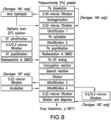
- Fig. 8 shows a general scheme for making mDT polysaccharide conjugates in which the mDT is prepared as taught herein.
- purified pneumococcal capsular polysaccharide (Ps) powder for each of the serotypes is separately dissolved in water to provide a solution that is 045-micron filtered except for solutions comprising Ps from serotype 19A.
- All solutions comprising Ps from any of the serotypes disclosed herein, except serotype 19A, are homogenized to reduce the molecular mass of the Ps.
- Serotype 18C is size-reduced by acid hydrolysis at 90°C or more.
- Serotype 19A is not size reduced due to its relatively low starting size.
- Homogenization pressure and number of passes through the homogenizer are controlled to serotype-specific targets to achieve a serotype-specific molecular mass.
- the polysaccharides are each 0.22-micron filtered and then concentrated and diafiltered against water in Ultrafiltration Step 1 using a 10 kD ultrafiltration membrane with open channel (type 5) to produce diafiltrate 1.
- Diafiltrate 1 may then be adjusted to a serotype-specific temperature (between 4-22°C) and pH (4-5) with a buffer, for example, sodium acetate, to minimize polysaccharide size reduction during the activation step.
- Polysaccharide activation is performed via periodate oxidation. For serotype 4, prior to activation, the solution is incubated at approximately 50°C and pH 4 to partially deketalize the polysaccharide.
- Polysaccharide activation is initiated with the addition of a sodium metaperiodate solution.
- the amount of sodium metaperiodate added is serotype-specific, ranging from approximately 0.1 to 0.5 moles of sodium metaperiodate per mole of polysaccharide repeating unit.
- the serotype-specific charge of sodium metaperiodate is selected to achieve a target level of polysaccharide activation (moles aldehyde per mole of polysaccharide repeating unit).
- the activated polysaccharide may be diafiltered and then concentrated by tangential flow ultrafiltration using a 10 kD ultrafiltration membrane with open channel (type 5) to produce diafiltrate 2.
- the diafiltrate 2 may be concentrated to a target of 15 g Ps/L.
- Solutions comprising serotypes 5 and 7F may be diafiltered against a buffer, for example 10 mM sodium acetate.
- the ultrafiltration for all serotype solutions is conducted at 2-8°C.
- Diafiltrate 2 is then diluted in water with sucrose added to make a solution having a final concentration of about 4 to 12 mg/mL polysaccharide and 0.5% to 6% (w/v) sucrose and subjected to a sublimative drying process to produce dried polysaccharide, preferably having a final moisture content of 6% or less.
- the compositions have final moisture contents of about 5% or less.
- the compositions have final moisture contents of about 4% or less.
- the compositions have final moisture contents of about 3% or less.
- the compositions have final moisture contents of about 2% or less.
- the amount of sucrose that is added to the solution prior to lyophilization is serotype specific and may range from 3.0 to 5.0% (w/v) prior to lyophilization.
- two or more polysaccharides may be dried together to produce a dried polysaccharide mixture.
- Solutions comprising purified mDT are diafiltered against 2 mM phosphate, pH 7.0 buffer using a 5 kDa tangential flow ultrafiltration membrane and then filtered through a 0.22-micron filter.
- the filtered solutions are diluted in water with sucrose for a final concentration of about 6 to 12 mg/mL mDT and 4 to 10% (w/v) sucrose and subjected to a sublimative drying process to produce dried mDT, preferably having a final moisture content of 6% or less.
- the compositions have final moisture contents of about 5% or less.
- the compositions have final moisture contents of about 4% or less.
- the compositions have final moisture contents of about 3% or less.
- the compositions have final moisture contents of about 2% or less.
- the sublimative drying process for the polysaccharide and mDT solutions may include lyophilization or radiant energy vacuum (REV) dehydration.
- REV radiant energy vacuum
- the dried polysaccharide or dried polysaccharide mixture and dried mDT are separately reconstituted or redissoluted in anhydrous dimethyl sulfoxide (DMSO) to provide homogeneous solutions of each.
- DMSO dimethyl sulfoxide
- the mDT is reconstituted at a concentration of about 10 to 20 mg/mL or about 10 mg/mL.
- CRM 197 The inventors discovered using CRM 197 as a model that 1% (v/v) or more moisture in the DMSO will result in beta-sheet formation ( See Fig. 5 ) .
- the present invention provides embodiments in which the moisture content of the DMSO is less than 1% (v/v) or in which the DMSO comprises no detectable moisture, for example, anhydrous DMSO or 100% (v/v) DMSO.
- the dried mDT is reconstituted by adding DMSO to the dried mDT over a time period of less than eight minutes, preferably in less than six minutes or less than four minutes, or most preferably in two minutes or less, or one minute or less.
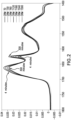
- CRM 197 As a model that the shorter the addition time for adding DMSO to the dried mDT, the less formation of irreversible beta-sheet mediated aggregation based on Fourier-transform infrared spectroscopy (FTIR) and dynamic light scattering (DLS) analysis. As shown in Fig. 1 , anhydrous DMSO addition time of two minutes results in no detectable formation of beta-sheet mediated aggregation.
- FTIR Fourier-transform infrared spectroscopy
- DLS dynamic light scattering
- the present invention provides for the reconstitution of mDT in DMSO containing less than 1% moisture or DMSO containing no detectable moisture, e.g., anhydrous or 100% (v/v) DMSO in which the addition of the said DMSO is added to the dried mDT over a time period of two minutes or less than two minutes to provide the reconstituted mDT at a concentration of 20 mg/mL or less or about 10 mg/mL or less.
- the mixture may be mixed for up to 30 minutes to provide a homogenous solution of the mDT.
- the mixing may occur over time period of 120 minutes or less, 90 minutes or less, 60 minutes or less, 30 minutes or less, or 10 minutes or less.
- 500 mM sodium phosphate, pH 7.2, buffer is added to the homogenous solution comprising the mDT for a final concentration of 1.0 mM sodium phosphate.
- the homogenous solution of mDT and homogenous solution of polysaccharide or two or more different polysaccharides are combined to provide a conjugation solution containing both the mDT and the polysaccharide or two or more different polysaccharide.
- the polysaccharide and mDT homogenous solutions are combined targeting a serotype-specific final polysaccharide concentration and polysaccharide to mDT ratio.
- the mDT and polysaccharide are combined in amounts that will provide a final conjugated polysaccharide to mDT ratio from about 0.6 to 1.3 (w/w).
- a solution of sodium cyanoborohydride in water is prepared and 1.0 meq of sodium cyanoborohydride (1.0 mole of sodium cyanoborohydride per mole of polysaccharide repeating unit) is added to the conjugation solution.
- the molarity of the sodium cyanoborohydride solution is based on a target amount of about 0.5% total water content of the solution during conjugation.
- the conjugation solution is allowed to react at serotype-specific temperature for a serotype-specific duration to produce an mDT:polysaccharide conjugate intermediate.
- a solution of sodium borohydride in water is prepared and 2.0 meq of sodium borohydride (relative to polysaccharide repeating units) is added to the conjugation solution.
- the molarity of the sodium borohydride solution is based on a target amount of about 1.0% total water content in the conjugation solution after borohydride addition.
- the conjugation solution is allowed to react for three hours (except for certain serotypes such as serotype 7F, in which the reaction time is for two hours) at ambient temperature to produce the mDT:polysaccharide conjugate.
- the conjugation solution is diluted in a dilution step to 20% (v/v) or less DMSO by slowly adding the conjugation solution to a solution of 150 mM sodium chloride (150 mM sodium chloride with 0.025% (w/v)) polysorbate 20 for conjugates comprising polysaccharides from particular serotypes to produce a quenched conjugate solution.
- the temperature is maintained at 15°C or less during the dilution step.
- a 1.5 M potassium phosphate, pH 6.0, solution may be added to the solution to a final concentration of 25 mM potassium phosphate.
- Conjugation performance may be assessed by overall polysaccharide and mDT consumption, conjugate polysaccharide to mDT ratio, and conjugate molecular weight.
- the quenched conjugate solution may be concentrated to about 2.5 g/L and diafiltered against up to about 10 diavolumes of 150 mM sodium chloride or 25 mM potassium phosphate in 150 mM sodium chloride at 2-8°C using a 30 kDa tangential flow ultrafiltration membrane to produce diafiltrate 3.
- the polysaccharide concentration in diafiltrate 3 from ultrafiltration step 3 may be determined by high performance size exclusion chromatography (HPSEC) ultraviolet multi-angle light scattering refractive index (UV-MALS-RI).
- diafiltrate 3 may be filtered through a 0.22-micron filter to produce a filtrate that is subsequently incubated at 22°C for about 120 hours.
- diafiltrate 3 or filtrate from Ultrafiltration Step 3 may be concentrated to a polysaccharide concentration of about 2.5 g/L and diafiltered against 20 diavolumes of 10 mM L-histidine in 150 mM sodium chloride, pH 7.0 at 2-8°C using a 300 kDa tangential flow ultrafiltration membrane to produce diafiltrate 4.
- conjugates comprising polysaccharides from certain serotypes, e.g., serotype 7F
- the conjugate may be diafiltered against a 100 kDa tangential flow ultrafiltration membrane; e.g., conjugates comprising serotype 6A, 6B, and 18C polysaccharides, may be concentrated to about 3.5 g/L and diafiltered against a buffer comprising 150 mM sodium chloride and 0.03% (w/v) polysorbate 20, pH 7.0, at 2-8°C using a 300 kDa tangential flow ultrafiltration membrane to produce diafiltrate 4.
- Conjugates comprising serotype 7F, 19A, 19F and 23F polysaccharides may be concentrated to about 2.0 g/L and diafiltered against a buffer comprising 150 mM sodium chloride and 0.015% (w/v) polysorbate 20, pH 7.0, at 2-8°C using a 300 kDa regenerated cellulose tangential flow ultrafiltration membrane to produce diafiltrate 4.
- the polysaccharide concentration in diafiltrate 2 may be determined by HPSEC UV-MALS-RI.
- the buffer may be 10-50 mM acetate, phosphate, TRIS, HEPES, or an amino acid buffer such as a histidine. In particular embodiments, the buffer is 10 mM L-histidine.
- Diafiltrate 4 from Ultrafiltration Step 4 may be filtered through a .22-micron filter to produce a second filtrate.
- the polysaccharide concentration of the second filtrate may be determined by HPSEC UV-MALS-RI. If the polysaccharide concentration of the second filtrate is greater than 1.0 g/L, the second filtrate may be diluted to a polysaccharide concentration of 1.0 g/L with additional 10 mM L-histidine in 150 mM sodium chloride, pH 7.0. This provides a Monovalent Bulk Conjugate intermediate (MBC) or monovalent drug substance.
- MBC Monovalent Bulk Conjugate intermediate
- the MBC may be dispensed into aliquots and frozen at -60°C to -80°C.
- Diafiltrate 4 from Ultrafiltration Step 4 for conjugates comprising serotype 6A, 6B, and 18C polysaccharides may be filtered through a dual-membrane 0.5/0.2-micron filter to produce a second filtrate.
- the polysaccharide concentration of the second filtrate may be determined by HPSEC UV-MALS-RI. If the polysaccharide concentration of the second filtrate is greater than 1.0 g/L, the second filtrate may be diluted to a polysaccharide concentration of 1.0 g/L with additional 10 mM L-histidine in 150 mM sodium chloride, 0.03% (w/v) polysorbate 20, pH 7.0. This provides an MBC or monovalent drug substance. The MBC may be dispensed into aliquots and frozen at -60°C to -80°C.
- Diafiltrate 4 for conjugates comprising serotype 7F, 19A, 19F, and 23F polysaccharides may be filtered through a 0.22-micron filter to produce a second filtrate.
- the polysaccharide concentration of the second filtrate may be determined by HPSEC UV-MALS-RI. If the polysaccharide concentration of the second filtrate is greater than 1.0 g/L, the second filtrate may be diluted to a polysaccharide concentration of 1.0 g/L with additional 10 mM L-histidine in 150 mM sodium chloride, 0.015% (w/v) polysorbate 20, pH 7.0. This provides an MBC or monovalent drug substance. The MBC may be dispensed into aliquots and frozen at -60°C to -80°C.
- Capsular polysaccharides from Streptococcus pneumoniae can be prepared by standard techniques known to those skilled in the art.
- polysaccharides can be isolated from bacteria and may be sized to some degree by known methods (see, e.g., European Patent Nos. EP497524 and EP497525 ); and in particular embodiments, by microfluidisation accomplished using a homogenizer or by chemical hydrolysis.
- S. pneumoniae strains are grown in a soy-based medium.
- the individual polysaccharides are then purified through standard steps including centrifugation, precipitation, and ultra-filtration. See, e.g., U.S. Patent Application Publication No. 2008/0286838 and U.S. Pat. No.
- Polysaccharides can be sized in order to reduce viscosity and/or to improve filterability of subsequent conjugated products.
- capsular polysaccharides are prepared from one or more of serotypes 1, 2, 3, 4, 5, 6A, 6B, 6C, 6D, 7B, 7C, 7F, 8, 9N, 9V, 10A, 11A, 12F, 14, 15A, 15B, 15C, 16F, 17F, 18C, 19A, 19F, 20, 21, 22A, 22F, 23A, 23B, 23F, 24F, 27, 28A, 31, 33F, 34, 35A, 35B, 35F, and 38.
- CRM 197 is used as the mDT.
- CRM 197 is a non-toxic variant (i.e., toxoid) of diphtheria toxin (DT). In one embodiment, it is isolated from cultures of Corynebacterium diphtheria strain C7 ( ⁇ 197) grown in casamino acids and yeast extract-based medium.
- CRM 197 is prepared recombinantly in accordance with the methods described in U.S. Pat. No. 5,614,382 .
- CRM 197 is purified through a combination of ultra-filtration, ammonium sulfate precipitation, and ion-exchange chromatography.
- CRM 197 is prepared in Pseudomonas fluorescens using PFENEX EXPRESSION TECHNOLOGY(Pfenex Inc., San Diego, CA).
- mDTs can be used, such as CRM 176 , CRM 228 , CRM 45 ( Uchida et al., 1973, J Biol Chem 218:3838-3844 ); CRM 9 , CRM 45 , CRM 102 , CRM 103 and CRM 107 and other mutats described by Nicholls and Youle in Genetically Engineered Toxins, Ed: Frankel, Maecel Dekker Inc, 1992 ; deletion or mutation of Glu-148 to Asp, Gln or Ser and/or Ala 158 to Gly and other mutations disclosed in U.S. Pat. No. 4,709,017 or U.S. Pat. No.
- aqueous compositions comprising polysaccharide of a specific Streptococcus pneumoniae serotype and compositions comprising a mDT may be separately dried using a sublimative process to provide a composition comprising dried mDT having a final moisture content of 6% or less and a composition comprising a dried polysaccharide of a specific Streptococcus pneumoniae serotype having a final moisture content of about 6% or less.
- Dried compositions may be prepared, for example, by a sublimative process such as lyophilization or radiant energy vacuum (REV) dehydration (microwave vacuum-drying) in a traveling wave format, Spray freeze-drying, Vacuum Drying, RF Drying etc.
- a sublimative process such as lyophilization or radiant energy vacuum (REV) dehydration (microwave vacuum-drying) in a traveling wave format, Spray freeze-drying, Vacuum Drying, RF Drying etc.
- the lyophilized formulation components may be in the form of a cake or a particle, e.g., a pellet, bead or sphere of lyophilized material, e.g., lyospheres. See e.g., A. S. Mujumdar (2007). Handbook of Industrial Drying. CRC Press .
- Lyospheres can be made, for example, by loading an aliquot of an aqueous solution comprising one or more polysaccharide serotypes in the form of a droplet (e.g., about 20, 50, 100 or 250 microliters) onto a solid, flat surface in such a way that the droplet remains intact.
- the surface is a plate, e.g., a metal plate, e.g. at a temperature of about -180°C to about -196°C or about -180°C to about -273 °C.
- the aqueous solution is loaded onto the surface by way of a dispensing tip.
- the aqueous solution is dispensed at a dispensing speed of about 3 ml/min to about 75 ml/min, about 5 ml/min to about 75 ml/min; about 3ml/min to about 60 ml/min, about 20 ml/min to about 75 ml/min; and about 20 ml/min to about 60 ml/min.
- the aqueous solution that is dispensed is 250 microliters and the dispensing speed is between about 5 mL/min to about 75 mL/min, or wherein the aliquot is 100 microliters and the dispensing speed is between about 3 mL/min to about 60 mL/min.
- the gap between a dispensing tip and the surface onto which the aqueous solution is dispensed is about 0.1 cm or more (e.g., about 0.5 cm or between 0.1 cm and 1 cm or between 0.1 cm and 0.75 cm).
- the aqueous solution is frozen and then subjected to sublimative drying by lyophilization.
- Methods for making lyospheres are known in the art. See e.g., US5656597 ; WO2013066769 ; WO2014093206 ; WO2015057540 ; WO2015057541 or WO2015057548 .
- the aqueous solution is lyophilized by radiant energy vacuum (REV) dehydration (microwave vacuum-drying).
- REV dehydration is a drying method done under reduced pressure, where the boiling point of water and the oxygen content of the atmosphere are lower.
- an aliquot of the aqueous solution is deposited as a single droplet onto a solid surface, wherein the temperature of the surface is at about -90°C or below, in a manner that maintains droplet as a single droplet as it contacts and freezes on the surface as a frozen pellet; and applying microwave radiation to the frozen pellet under a pressure below atmospheric pressure to produce a dried pellet, such as a sphere.
- the aqueous solution is provided on a tray and subjected to microwave radiation under a pressure below atmospheric pressure to produce a dried cake. See, e.g., U.S. Pat. Nos. 4,389,794 ; 4,664,924 ; 4,809,596 ; 4,882,851 .
- the purified polysaccharides are chemically activated to introduce functionalities capable of reacting with the mDT. Once activated, each capsular polysaccharide is separately conjugated to a mDT to form a glycoconjugate according to the method of the present invention.
- the chemical activation of the polysaccharides may be achieved by means described in U.S. Pat. Nos. 4,365,170 ; 4,673,574 ; and, 4,902,506 .
- the pneumococcal polysaccharide is reacted with an oxidizing agent, for example, a periodate-based oxidizing agent such as sodium periodate, potassium periodate, or periodic acid, resulting in random oxidative cleavage of vicinal hydroxyl groups to generate reactive aldehyde groups.
- an oxidizing agent for example, a periodate-based oxidizing agent such as sodium periodate, potassium periodate, or periodic acid, resulting in random oxidative cleavage of vicinal hydroxyl groups to generate reactive aldehyde groups.
- Direct aminative coupling of the oxidized polysaccharide to primary amine groups on the mDT (mainly lysine residues) may be accomplished by reductive amination.
- conjugation may be carried out in an aqueous solution or in an organic solvent such as dimethyl sulfoxide (DMSO).
- DMSO dimethyl sulfoxide
- the chemical activation of the polysaccharides and subsequent conjugation to the mDT are achieved by means described in U.S. Pat. Nos. 4,365,170 , 4,673,574 and 4,902,506 .
- the polysaccharide is reacted with a periodate-based oxidizing agent such as sodium periodate, potassium periodate, or periodic acid resulting in random oxidative cleavage of vicinal hydroxyl groups to generate reactive aldehyde groups.
- a periodate-based oxidizing agent such as sodium periodate, potassium periodate, or periodic acid resulting in random oxidative cleavage of vicinal hydroxyl groups to generate reactive aldehyde groups.
- Direct aminative coupling of the oxidized polysaccharide to primary amine groups on the mDT (mainly lysine residues) may then be accomplished by reductive amination.
- conjugation is carried out by reacting a mixture of the activated polysaccharide and mDT with a reducing agent such as sodium cyanoborohydride in the presence of nickel.
- a reducing agent such as sodium cyanoborohydride
- the conjugation reaction may be carried out in aqueous solution or in an organic solvent such as dimethyl sulfoxide (DMSO).
- DMSO dimethyl sulfoxide
- unreacted aldehydes are optionally reduced by addition of a strong reducing agent, such as sodium borohydride.
- each pneumococcal capsular polysaccharide prior to formulation, is individually purified from S. pneumoniae, activated to form reactive aldehydes, and then covalently conjugated to a mDT using reductive amination with sodium cyanoboroydride in the presence of nickel.
- Nickel forms complexes with residual, interfering cyanide from the sodium cyanoborohydride reducing agent used for reductive amination.
- nickel may be used in the methods herein for greater conjugation reaction efficiency and to aid in free cyanide removal.
- Transition metals are known form stable complexes with cyanide and are known to improve reductive methylation of protein amino groups and formaldehyde with sodium cyanoborohydride. See Gidley et al., Biochem J. 1982, 203: 331-334 ; Jentoft et al. Anal Biochem. 1980, 106: 186-190 . However, Applicants surprisingly found that by complexing residual, interfering cyanide, the addition of nickel increases the consumption of protein during the conjugation of and leads to formation of larger, potentially more immunogenic conjugates.
- Variability in free cyanide levels in commercial sodium cyanoborohydride reagent lots may lead to inconsistent conjugation performance, resulting in variable conjugate attributes, including molecular mass and polysaccharide-to-protein ratio.
- the addition of nickel to the conjugation reaction reduces the level of free cyanide and thus improves the degree of lot-to-lot conjugate consistency.
- the conjugation method may employ activation of polysaccharide with 1-cyano-4-dimethylamino pyridinium tetrafluoroborate (CDAP) to form a cyanate ester.
- CDAP 1-cyano-4-dimethylamino pyridinium tetrafluoroborate
- the activated saccharide may be coupled directly to an amino group on the mDT.
- a reactive homobifunctional or heterobifunctional group may be introduced on the activated polysaccharide by reacting the cyanate ester with any of several available modalities.
- cystamine or cysteamine may be used to prepare a thiolated polysaccharide which could be coupled to the mDT via a thioether linkage obtained after reaction with a maleimide-activated mDT (for example using GMBS) or a haloacetylated mDT (for example using iodoacetimide [e.g. ethyl iodoacetimide HCl] or N-succinimidyl bromoacetate or SIAB, or SIA, or SBAP).
- iodoacetimide e.g. ethyl iodoacetimide HCl
- SIAB succinimidyl bromoacetate or SIAB, or SIA, or SBAP
- conjugation methods use carbodiimides, hydrazides, active esters, norborane, p-nitrobenzoic acid, N-hydroxysuccinimide, S--NHS, EDC, TSTU. Many are described in International Patent Application Publication No. WO98/42721 . Conjugation may involve a carbonyl linker which may be formed by reaction of a free hydroxyl group of the saccharide with CDI (See Bethell et al., 1979, J. Biol. Chem. 254:2572-4 ; Hearn et al., 1981, J. Chromatogr. 218:509-18 ) followed by reaction with mDT to form a carbamate linkage.
- CDI See Bethell et al., 1979, J. Biol. Chem. 254:2572-4 ; Hearn et al., 1981, J. Chromatogr. 218:509-18 .
- This chemistry consists of reduction of the anomeric terminus of a carbohydrate to form a primary hydroxyl group followed by reaction of the primary hydroxyl with CDI to form a carbamate intermediate and subsequent coupling to mDT amino groups.
- the reaction may require optional protection/deprotection of other primary hydroxyl groups on the saccharide.
- pneumococcal capsular polysaccharides are also well known in the art. See, e.g., European Patent No. EP0497524 .
- Isolates of pneumococcal subtypes are available from the American Type Culture Collection (Manassas, VA). The bacteria are identified as encapsulated, non-motile, Gram-positive, lancet-shaped diplococci that are alpha-hemolytic on blood-agar. Subtypes can be differentiated on the basis of Banling reaction using specific antisera. See, e.g., U.S. Pat. No. 5,847,112 .
- Cell banks representing each of the S. pneumococcus serotypes present are obtained from the Merck Culture Collection (Rahway, NJ) in a frozen vial.
- a thawed seed culture is transferred to the seed fermenter containing a pre-sterilized growth media appropriate for S . pneumoniae.
- the culture is grown in the seed fermenter with temperature and pH control.
- the entire volume of the seed fermenter is transferred to a production fermenter containing pre-sterilized growth media.
- the production fermentation is the final cell growth stage of the process. Temperature, pH, and the agitation rate are controlled.
- the fermentation process is terminated via the addition of an inactivating agent.
- the solution is transferred to the inactivation tank where it is held at controlled temperature and agitation.
- Cell debris is removed using a combination of centrifugation and filtration.
- the solution is ultrafiltered and diafiltered.
- the solution is then subjected to solvent-based fractionations that remove impurities and recover polysaccharide.
- Polysaccharide size reduction and activation is performed as follows.
- Ps pneumococcal capsular polysaccharide
- the solution comprising the Ps is diluted to approximately 2.5 g/L and then homogenized to reduce the molecular mass of the Ps using a GEA-Niro Soavi Panda 2K homogenizer.
- Homogenizer pressure and the number of passes through the homogenizer are controlled to serotype-specific values ( Table 1 ).
- Temperature is controlled during homogenization using a chilled water supply to a heat exchanger at the outlet of the homogenizer.
- Acid hydrolysis is used instead of homogenization to reduce the molecular mass of the serotype 18C Ps.
- the temperature of the filtered serotype 18C Ps solution is increased to approximately 96°C for Lot A and 90°C for Lot B.
- the solution is then adjusted with glacial acetic acid (17.4 M) to target a final concentration of 0.2 M and held for approximately 180 minutes for Lot A and 160 minutes for Lot B.
- 1.5 M potassium phosphate, pH 7.0 is added to a final concentration of 0.46 M to stop the acid hydrolysis by increasing the solution pH, and the solution is then cooled to room temperature.
- Solutions comprising serotype 19A are not 0.45-micron filtered or size-reduced. Due to its relatively low starting size, size reduction is not required. Following dissolution, serotype 19A is 0.22-micron filtered as described in the next paragraph.
- Each solution is then filtered using a 0.22-micron filter to reduce bioburden prior to the Ultrafiltration 1 step.
- the filtered Ps is concentrated to approximately 10 g/L using a 10 kDa NMWCO tangential flow ultrafiltration membrane and then diafiltered against 6 diavolumes of WFI at ambient temperature, generating the Ultrafiltration 1 process intermediate (UF1-FR).
- Serotype 18C used a 5 kDa NMWCO membrane instead of a 10 kDa NMWCO membrane to improve Ps recovery by retaining lower molecular weight Ps generated by acid hydrolysis.
- the Ps concentration of the UF1-FR is determined by HPSEC UV-MALS-RI. WFI is added to the UF1-FR to achieve a Ps concentration of approximately 10 g/L prior to Ps activation.
- the periodate activation is initiated by adding a 100 mM sodium metaperiodate solution to the solution on a basis of moles of periodate per mole of PnPs repeating unit (RU). During the activation, vicinal diols are oxidized to reactive aldehydes over a serotype-specific reaction time. This reaction generated the activated product (AP) process intermediate. The amount of sodium metaperiodate charged and the reaction time are controlled to specific values for each serotype ( Table 2 ).
- the solution is diafiltered against 6 diavolumes of 10 mM potassium phosphate, pH 6.4, followed by an additional 6 diavolumes of WFI using a 10 kDa NMWCO tangential flow ultrafiltration membrane at 2-8°C.
- Serotype 18C used a 5 kDa NMWCO membrane instead of a 10 kDa NMWCO membrane to improve Ps recovery by retaining lower molecular weight Ps generated by acid hydrolysis.
- the solution is then concentrated, generating the Ultrafiltration 2 process intermediate (LTF2-FR).
- the Ps concentration of the UF2-FR is determined by HPSEC UV-MALS-RI.
- the extent of activation is determined by derivatizing a UF2-FR sample with thiosemicarbazide, then detecting thiosemicarbazone by HPSEC with UV detection.
- Frozen, purified CRM 197 obtained through expression in Pseudomonas fluorescens as previously described (See International Patent Application Publication No. WO 2012/173876 ), is diafiltered against 10 diavolumes of 2 mM phosphate, pH 7.2 buffer using a 5 kDa NMWCO tangential flow ultrafiltration membrane and 0.22-micron filtered.
- 5 mM potassium phosphate, pH 6.4 5 mM sodium phosphate, pH 7.0 is used when intended to be conjugated to serotype 18C).
- the diafiltered solution is diluted in water with sucrose for a final concentration of between 1.0 and 5.3% (w/v) and lyophilized to produce dried CRM 197 having a final moisture content of 6% or less.
- Table 3 below provides representative sucrose concentrations for CRM197 for conjugation against particular serotype polysaccharides.
- the CRM 197 and Ps solutions Prior to lyophilization, the CRM 197 and Ps solutions are diluted as described below.
- the CRM 197 solution is diluted to a protein concentration of 6.0 mg/mL using WFI, 5 mM sodium phosphate, pH 6.4 (pH 7.0 for serotype 18C), and a freshly prepared 30% (w/v) sucrose solution in WFI.
- the UF2-FR Ps solution is diluted to a Ps concentration of 6.0 mg/mL using WFI and a freshly prepared 30% w/v sucrose solution in WFI.
- the CRM197 solution is diluted to a protein concentration of 6.0 mg/mL using WFI, 2 mM sodium phosphate, pH 7.2, and a freshly prepared 50% (w/v) sucrose solution in WFI.
- the UF2-FR Ps solution is diluted to a Ps concentration of 6.0 mg/mL using WFI and a freshly prepared 50% (w/v) sucrose solution in WFI.
- Serotype-specific sucrose and phosphate concentrations are used (See for example, Table 3 ).
- the diluted CRM 197 and UF2-FR solutions are lyophilized using a Virtis Genesis Freeze Dryer.
- Table 3 Serotype-Specific Lyophilization Parameters Serotype MBC Lot Number Sucrose Concentration in CRM197 Solution Prior to Lyophilization (% w/v) Sodium Phosphate Concentration in CRM197 Solution Prior to Lyophilization (mM) Sucrose Concentration in UF2-FR Ps Solution Prior to Lyophilization (% w/v) 6A Lot A 4.0 3.8 4.0 Lot B 1.0 1.25 5.0 6B Lot A 1.0 2.3 3.5 Lot B 1.25 5.0 7F Lot A 5.3 2.4 5.3 Lot B 1.0 1.25 5.0 18C Lot A 2.4 2.8 4.0 Lot B 1.0 1.25 5.0 19A Lot A 1.0 1.6 3.0 Lot B 1.25 5.0 19F Lot A 1.0 2.3 5.0 Lot B 1.25 23F Lot A 3.0
- Lyophylized CRM 197 that had been lyophilized at 6 mg/mL, 5% (w/v) sucrose, 1.25 mM sodium phosphate, pH 7.2 is reconstituted in DMSO (anhydrous DMSO from Sigma-Aldrich, 27655-100 mL) to a final concentration of 10 mg/mL using either slow (eight minutes) or fast reconstitution (two minutes) and then mixed to produce homogenous solutions. Reconstitution is carried out by adding the appropriate volume of DMSO every 30 seconds until the time point is reached.
- FTIR spectra are collected with a BioTools PROTA-3S at controlled temperature (25°C) using transmission mode with 50mm CaF 2 windows. Fifty scans may be collected with a resolution of 4cm -1 , averaged, buffer subtracted and water vapor corrected.
- Lyophilized CRM 197 reconstituted in DMSO with fast addition shows the expected free carbonyl amide I peak at 1660cm -1 , which demonstrates complete unfolding of CRM 197 in DMSO ( Fig. 1 ).
- a second peak (1626cm -1 ) in the amide I region is present. This second peak is attributed to intermolecular beta-sheet formation.
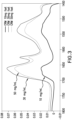
- CRM 197 reconstituted at an intermediate reconstitution time (four minutes) and held for up to 300 minutes leads to an increase in the proportion of intermolecular beta-sheet as the hold time increases.
- Lyophylized CRM 197 that had been lyophilized at 6 mg/mL, 5% (w/v) sucrose, 1.25 mM sodium phosphate, pH 7.2 is reconstituted in DMSO (anhydrous DMSO from Sigma-Aldrich, 27655-100 mL) to a final concentration of 10mg/mL over the course of 4 minutes. Reconstitution is carried out by adding the appropriate volume of DMSO every 30 seconds until the time point is reached. After the initial time point is collected (T0), the sample is held in the FTIR and further time points are collected (30, 60, 120,180, 240, 300 minutes).
- DMSO anhydrous DMSO from Sigma-Aldrich, 27655-100 mL
- FTIR spectra are collected with a BioTools PROTA-3S at controlled temperature (25°C) using transmission mode with 50mm CaF 2 windows. Fifty scans may be collected with a resolution of 4cm -1 , averaged, buffer subtracted and water vapor corrected.
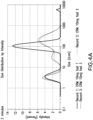
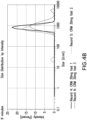
- This example shows formation of intermolecular beta-sheet is concentration dependent.
- Lyophylized CRM 197 that had been lyophilized at 6 mg/mL, 5% (w/v) sucrose, 1.25 mM sodium phosphate, pH 7.2 is reconstituted in DMSO (anhydrous DMSO may be from Sigma-Aldrich, 27655-100 mL) to a final concentration of 10, 30, or 50 mg/mL over the course of two minutes. Reconstitution is carried out by adding the appropriate volume of DMSO every 30 seconds until the time point is reached.
- DMSO anhydrous DMSO may be from Sigma-Aldrich, 27655-100 mL
- FTIR spectra are collected with a BioTools PROTA-3S at controlled temperature (25°C) using transmission mode with 50mm CaF 2 windows. Fifty scans may be collected with a resolution of 4cm -1 , averaged, buffer subtracted and water vapor corrected.
- Dynamic light scattering (DLS) measurements are collected with a Malvern Zetasizer ZS at controlled temperature (25°C) at the prepared concentration using a viscosity of 1.996cP.
- Lyophylized CRM 197 that had been lyophilized at 6 mg/mL, 5% (w/v) sucrose, 1.25 mM sodium phosphate, pH 7.2 is reconstituted in DMSO (anhydrous DMSO may be from Sigma-Aldrich, 27655-100 mL) to a final concentration of 10 mg/mL over the course of two minutes in DMSO/water at 95%, 97%, 99% (v/v) or anhydrous DMSO.
- Anhydrous DMSO may be Sigma-Aldrich D2438-50mL. Reconstitution is carried out by adding the appropriate volume of DMSO every 30 seconds until the time point is reached.
- FTIR spectra are collected with a BioTools PROTA-3S at controlled temperature (25°C) using transmission mode with 50mm CaF 2 windows. 50 scans are collected with a resolution of 4 cm -1 , averaged, buffer subtracted and water vapor corrected.
- CRM 197 is lyophilized in a way to reduce moisture present in the cake (longer dry cycle, lower fill volume) (about 6 mg/mL in 1% (w/v) sucrose with 1.25 mM phosphate, pH 7.2).
- the lyophilized CMR 197 is reconstituted to a final concentration of 10 mg/mL over the course of two or eight minutes in DMSO (e.g., anhydrous DMSO from Sigma-Aldrich D2438-50mL). Reconstitution is carried out by adding the appropriate volume of DMSO every 30 seconds until the time point is reached.
- FTIR spectra are collected with a BioTools PROTA-3S at controlled temperature (25°C) using transmission mode with 50mm CaF 2 windows. Fifty scans are collected with a resolution of 4cm -1 , averaged, buffer subtracted and water vapor corrected.
- CRM 197 that has been lyophilized in a manner to reduce the moisture content are reconstituted in anhydrous DMSO at two different rates, fast (two minutes) and slow (eight minutes).
- the decreased water content of the lyophilized CRM 197 does not decrease the sensitivity of the CRM 197 to the formation of intermolecular beta-sheets over reconstitution time ( Fig. 6 ).
- the lyophilized Ps and CRM 197 are re-dissolved at ambient temperature using equal volumes of anhydrous DMSO to make Ps and Pr homogenous solutions.
- the CRM 197 is redissolved at a fast rate of 2 minutes.
- 500 mM sodium phosphate, pH 7.2 buffer is spiked into the DMSO-redissolved protein solution to a final concentration of 1.0 mM sodium phosphate.
- the Ps and CRM 197 solutions are combined as described above targeting a serotype-specific final Ps concentration and Ps:CRM 197 ratio ( Table 4 ).
- a solution of sodium cyanoborohydride in WFI is prepared, and 1.0 meq of sodium cyanoborohydride (1.0 mole of sodium cyanoborohydride per mole of Ps repeating unit) is added to the solution.
- the molarity of the sodium cyanoborohydride solution ( Table 5 ) is based on the target of approximately 0.5% total water content of the solution during conjugation.
- the solution is allowed to react at serotype-specific temperature for a serotype-specific duration ( Table 5 ), generating the Conjugated Product intermediate (CP).
- a solution of sodium borohydride in WFI is prepared, and 2.0 meq of sodium borohydride (relative to Ps repeating units) is added to the solution.
- the molarity of the sodium borohydride solution (Table 5 ) is based on the target of approximately 1.0% total water content in the solution after borohydride addition.
- the solution is allowed to react for 2-3 hours at ambient temperature, generating the Conjugate Product Quenched intermediate (CPQ).
- Table 4 Serotype-Specific DMSO Conjugation Parameters Seroty pe MBC Lot Number Ps Conc. during Conj. (g/L) Ps:CRM1 97 Mass Ratio during Conjugati on (w/w) Conj. Temp.
- the conjugation solutions are then diluted to 20% or less (v/v) anhydrous DMSO by slowly adding the solution to 150 mM sodium chloride (150 mM sodium chloride with 0.025% w/v polysorbate 20 for conjugates in some embodiments).
- the solution temperature is maintained at less than 15°C during the dilution step.
- 1.5 M potassium phosphate, pH 6.0 is added to the solution to a final concentration of 25 mM potassium phosphate.
- Conjugation performance is assessed by overall Ps and CRM 197 consumption, conjugate Ps to CRM 197 ratio, and conjugate molecular weight.
- the conjugation solutions are concentrated to approximately 2.5 g/L and diafiltered against 10 diavolumes of 150 mM sodium chloride or 25 mM potassium phosphate in 150 mM sodium chloride at 2-8°C using a 30 kDa NMWCO tangential flow ultrafiltration membrane. This generated the Ultrafiltration 3 process intermediate (UF3-FR).
- the Ps concentration of the UF3-FR is determined by HPSEC UV-MALS-RI.
- the UF3-FR is 0.22-micron filtered and subsequently incubated at 22°C for approximately 120 hours.
- the UF3-FR solutions are then processed in the Ultrafiltration 4 step.
- the solutions are concentrated to a Ps concentration of approximately 2.5 g/L and diafiltered against 20 diavolumes of 10 mM L-histidine in 150 mM sodium chloride, pH 7.0 at 2-8°C using a 300 kDa NMWCO Biomax PES tangential flow ultrafiltration membrane.
- Serotype 7F used a 100 kDa NMWCO membrane for the Ultrafiltration 4 step.
- the UF3-FR solutions are concentrated to approximately 3.5 g/L and diafiltered against 10 mM L-histidine in 150 mM sodium chloride, 0.03% w/v PS-20, pH 7.0 at 2-8°C using a 300 kDa NMWCO Biomax PES tangential flow ultrafiltration membrane.
- serotype 7F, 19A, 19F and 23F UF3-FR solutions are concentrated to approximately 2.0 g/L and diafiltered against 10 mM L-histidine in 150 mM sodium chloride, 0.015% w/v PS-20, pH 7.0 at 2-8°C using a 300 kDa NMWCO UltraCel, regenerated cellulose, tangential flow ultrafiltration membrane. This generated the Ultrafiltration 4 process intermediate (UF4-FR).
- the Ps concentration of the UF4-FR is determined by HPSEC UV-MALS-RI.
- the UF4-FR is 0.22-micron filtered through a PVDF filter.
- the Ps concentration of the filtrate is determined by HPSEC UV-MALS-RI. If the Ps concentration of the filtrate is greater than 1.0 g/L, the filtrate is then diluted to a Ps concentration of 1.0 g/L with additional 10 mM L-histidine in 150 mM sodium chloride, pH 7.0. This generated the Monovalent Bulk Conjugate intermediate (MBC).
- MBC Monovalent Bulk Conjugate intermediate
- the MBC is dispensed into aliquots and frozen at -60°C to -80°C.
- the UF4-FR for serotype 6A, 6B, and 18C is 0.5/0.2-micron filtered through a dual-membrane PES filter.
- the Ps concentration of the filtrate is determined by HPSEC UV-MALS-RI. If the Ps concentration of the filtrate is greater than 1.0 g/L, the filtrate is then diluted to a Ps concentration of 1.0 g/L with additional 10 mM L-histidine in 150 mM sodium chloride, 0.03% w/v PS-20, pH 7.0. This generated the Monovalent Bulk Conjugate intermediate (MBC).
- MBC Monovalent Bulk Conjugate intermediate
- the MBC is dispensed into aliquots and frozen at -60°C to -80°C.
- the UF4-FR for serotype 7F, 19A, 19F, and 23F are 0.22-micron filtered through a PVDF filter.
- the Ps concentration of the filtrate is determined by HPSEC UV-MALS-RI. If the Ps concentration of the filtrate is greater than 1.0 g/L, the filtrate is then diluted to a Ps concentration of 1.0 g/L with additional 10 mM L-histidine in 150 mM sodium chloride, 0.015% w/v PS-20, pH 7.0. This generated the Monovalent Bulk Conjugate intermediate (MBC).
- MBC Monovalent Bulk Conjugate intermediate
- the MBC is dispensed into aliquots and frozen at -60°C to -80°C.
- Intermolecular beta-sheets are present after conjugation when CRM 197 is reconstituted in anhydrous DMSO slowly (eight minutes) and is subsequently conjugated to 6B polysaccharide.
- CRM 197 is reconstituted in DMSO fast (two minutes) or slow (eight minutes) and is subsequently conjugated to 6B polysaccharide as discussed previously, purified as discussed previously, and diafiltered to a concentration of about 1mg/mL in (10 mM Histidine, 150 mM NaCl pH7). Samples are then concentrated with Amicon Ultra 11K MWCO filters to enable FTIR measurement. FTIR spectra are collected with a BioTools PROTA-3S at controlled temperature (25°C) using transmission mode with 50 mm CaF 2 windows. Fifty scans are collected with a resolution of 4 cm -1 , averaged, buffer subtracted and water vapor corrected. Data are subsequently analyzed using Omic software (ThermoFisher).
- CRM 197 -6B conjugate that has been made with CRM 197 that had been reconstituted slowly in DMSO shows evidence of intermolecular beta-sheet formation, demonstrating that CRM 197 aggregation is present even after reconstitution.
- This example shows a method for conjugation of Ps from serotypes 1, 2, 3, 4, 5, 6A, 6B, 6C, 6D, 7B, 7C, 7F, 8, 9N, 9V, 10A, 11A, 12F, 14, 15A, 15B, 15C, 16F, 17F, 18C, 19A, 19F, 20, 21, 22A, 22F, 23A, 23B, 23F, 24F, 27, 28A, 31, 33F, 34, 35A, 35B, 35F, or 38 to CRM 197 (Pr) using reductive amination in anhydrous DMSO.
- the different serotype polysaccharides are individually conjugated to purified CRM 197 using a common process flow.
- the dried CRM 197 prepared as previously described is reconstituted in anhydrous DMSO by fast addition of the anhydrous DMSO to the dried CRM 197 over two minutes and the Ps are each separately reconstituted in anhydrous DMSO to make Pr and Ps homogenous solutions.
- the Ps and Pr are each reconstituted in half the total conjugation reaction volume. Therefore, the Ps concentration after DMSO reconstitution is 2x Ps concentration during conjugation range of 2.2 to 7.6 g/L calculated from Table 4.
- Pr concentration after DMSO reconstitution is 2x (Ps concentration during conjugation/Ps:Pr ratio) range of 1.5 to 5.7 g/L.
- the Pr homogenous solution and the Ps homogenous solutions are then combined.
- Sodium cyanoborohydride (1 mole per mole of polysaccharide repeating unit) is then added to the mixture, and conjugation proceeded for a serotype-specific duration (1 to 48 hours) to achieve a targeted conjugate size.
- Sodium borohydride (2 mole per mole of polysaccharide repeating unit) is added following the conjugation reaction and the solution and incubated for 1 hour at 22°C.
- the solution is diluted into 150 mM sodium chloride, 0.025% (w/v) polysorbate 20, at approximately 4°C .
- Potassium phosphate buffer is then added to neutralize the pH.
- the solution is concentrated and diafiltered at approximately 4°C against 150 mM sodium chloride using a 10 kDa NMWCO tangential flow ultrafiltration membrane.
- Each solution is then concentrated and diafiltered against 10 mM histidine in 150 mM sodium chloride, pH 7.0 at 4°C using a 300 kDa NMWCO tangential flow ultrafiltration membrane.
- the retentate solution is 0.22-micron filtered.
- Serotype 19F is incubated for approximately 5 days, diafiltered against 10 mM histidine in 150 mM sodium chloride, pH 7.0 at approximately 4°C using a 300 kDa NMWCO tangential flow ultrafiltration membrane, and 0.22-micron filtered.
- Serotype 18C is diafiltered against 10 mM histidine in 150 mM sodium chloride, pH 7.0 at approximately 4°C using a 300 kDa NMWCO tangential flow ultrafiltration membrane, and 0.22-micron filtered.
- the solutions are diluted with additional 10 mM histidine in 150 mM sodium chloride, pH 7.0 and dispensed into aliquots and frozen at ⁇ -60°C.
- This example shows formulation of a 15-valent Pneumococcal Conjugate Vaccine with different surfactants and stabilizers.
- PCV15 15-valent pneumococcal conjugate vaccine
- the formulations are prepared using pneumococcal polysaccharide-CRM 197 conjugates generated by reductive amination in anhydrous DMSO as discussed previously.
- the required volumes of bulk conjugates needed to obtain the target final concentration of individual serotype are calculated based on the solution volume and the bulk polysaccharide concentrations.
- the 15 conjugates are combined with the excipients selected from sodium chloride, L-histidine, pH 5.8 buffer with polysorbate (PS)-20, PS-80, or poloxamer (P)188.
- the sterile formulated bulk is mixed gently during and following its combining with bulk Aluminum Phosphate Adjuvant (APA) with or without propylene glycol (PG) and polyethylene glycol 400 (PEG 400 ).
- APA Aluminum Phosphate Adjuvant
- PEG 400 polyethylene glycol 400
- Two concentrations of conjugates and APA are studied in the various formulations.
- the other contained 16 ⁇ g/mL serotype 6B polysaccharide, 8 ⁇ g/mL polysaccharide for all other serotypes, and 500 ⁇ g/mL APA.
- the formulated vaccines are stored at 2 - 8°C.
- APA is an aqueous suspension of aluminum hydroxyphosphate.
- APA is manufactured by combining aluminum chloride and sodium phosphate in a 1:1 volumetric ratio to precipitate aluminum hydroxyphosphate. After the combining process, the material is size-reduced with a high-shear mixer to achieve a monodisperse particle size distribution. The product is then diafiltered against physiological saline and steam sterilized.
- 6B polysaccharide (Ps) and CRM 197 (Pr) prepared as discussed above are lyophilized discretely by REV to form dried cakes.
- the dried cakes are reconstituted in anhydrous DMSO and conjugated as discussed herein.
- the target Ps:Pr ratio (w/w) is 0.9 to 1.5 and the target molecular weight (MW) of the conjugate is 1500 to 3500 kD.
- the target free Ps is 15% or less and a free lysine loss of greater the five mole/mole.
- the results are shown in Table 5.
- the REV dried material made according to the present invention has a conjugate MW within the target range, a Ps:Pr ratio within the target range, free Ps within the target range, and free lysine within the target range.
- Molecular weight and concentration analysis of conjugates is determined using HPSEC/UV/MALS/RI assay.
- Conjugate samples are injected and separated by high performance size-exclusion chromatography (HPSEC). Detection is accomplished with ultraviolet (UV), multi-angle light scattering (MALS) and refractive index (RI) detectors in series. Protein concentration is calculated from UV 280 using an extinction coefficient. Polysaccharide concentration is deconvoluted from the RI signal (contributed by both protein and polysaccharide) using the dn/dc factors which are the change in a solution's refractive index with a change in the solute concentration reported in mL/g. Average molecular weight of the samples are calculated by Astra software (Wyatt Technology Corporation, Santa Barbara, CA) using the measured concentration and light scattering information across the entire sample peak.
- the Waters AccQ-Tag amino acid analysis is used to measure the extent of conjugation in conjugate samples. Samples are hydrolyzed using vapor phase acid hydrolysis in the Eldex workstation, to break the mDTs down into their component amino acids. The free amino acids are derivatized using 6-aminoquinolyl-N-hydroxysuccinimidyl carbamate (AQC). The derivatized samples are then analyzed using UPLC with UV detection on a C18 column. The average protein concentration is obtained using representative amino acids other than lysine. Lysine consumption during conjugation (i.e., lysine loss) is determined by the difference between the average measured amount of lysine in the conjugate and the expected amount of lysine in the starting protein.
- AQC 6-aminoquinolyl-N-hydroxysuccinimidyl carbamate
- Free polysaccharide (polysaccharide that is not conjugated with CRM 197 ) is measured by first precipitating free protein and conjugates with deoxycholate (DOC) and hydrochloric acid. Precipitates are then filtered out and the filtrates are analyzed for free polysaccharide concentration by HPSEC/UV/MALS/RI. Free polysaccharide is calculated as a percentage of total polysaccharide measured by HPSEC/UV/MALS/RI.
- Free polysaccharide, polysaccharide-CRM197 conjugate, and free CRM 197 in conjugate samples are separated by capillary electrophoresis in micellar electrokinetic chromatography (MEKC) mode. Briefly, samples are mixed with MEKC running buffer containing 25mM borate, 100mM SDS, pH 9.3, and are separated in a preconditioned bare-fused 20 silica capillary. Separation is monitored at 200 nm and free CRM197 is quantified with a CRM 197 standard curve. Free protein results are reported as a percentage of total protein content determined by the HPSEC/UV/MALS/RI procedure.
- 23F polysaccharide (Ps) and CRM 197 (Pr) samples are prepared and lyophilized separately (discretely) according to the present invention or combined and lyophilized.
- the lyophilized samples are subsequently reconstituted in anhydrous DMSO and conjugated as discussed previously herein.
- the target Ps:Pr ratio (w/w) is 0.9 to 1.5 and the target molecular weight (MW) of the conjugate is 1500 to 3500 kD.
- the results are shown in Table 6, which shows Ps and Pr on average were at the expected target for the separately lyophilized samples except for sample B2, which had a ratio of 2.4.
- This example shows the impact of anhydrous DMSO addition time to lyophilized CRM 197 (Pr) on conjugate size using 6A polysaccharide (Ps).
- anhydrous DMSO was added to lyophilized Pr fast (two minutes) and slow (eight minutes), mixed, and then conjugated to activated Ps reconstituted in anhydrous DMSO.
- Fig. 9 shows the size of conjugate resulting from conjugation reactions using polysaccharides of increasing sizes.
- the usual relationship is that the larger the polysaccharide (UF2 size) used for the conjugation reaction the larger the conjugate resulting therefrom.
- UF2 size polysaccharide
- For each polysaccharide size slow and fast anhydrous DMSO addition rates to the Pr after lyophilization were compared.
- the graph shows that slow anhydrous DMSO addition results in an even larger conjugate from the same sized polysaccharide than fast addition of anhydrous DMSO.
- This example shows development of lyophilizer conditions for producing polysaccharide (Ps) and CRM197 (Pr; CRM) lyospheres.
- Discrete solutions of CRM and activated polysaccharides from serotypes 6A and 23F were prepared as described in Examples 3 and 4 and having Ps, CRM, and sucrose concentrations as shown in the tables in this example.
- a modified Biomek FX pipetting robot (Cryomek) is used to dispense 50 ⁇ L aliquots of the solutions onto the flat freezing surface of the Cryomek.
- a shoveling mechanism may be used to dispense the beads onto a small cold container without causing any fractures.
- the beads are transferred into an intermediate storage container and kept at -70°C until sublimative drying in a lyophilizer or by microwave vacuum drying.
- lyophilizer drying beads are dispensed in a single layer into the drying trays. Cabinet pressure, shelf temperature and cycle time are set up. After drying the beads, the lyospheres are stored at 2-8°C.
- the preliminary drying cycle (Lyo1) took 18 hours, as shown in Table 7.1. Residual moisture content of the lyospheres, determined by Karl Fisher titration, is shown on Table 7.2. Table 7.1 Lyo1 Cycle Parameters Drying Cabinet Pressure (mTorr) Shelf Temperature (°C) Time (hours) Primary 30 15 18 Table 7.2 Karl Fisher Analysis for Lyospheres dried in Lyo1. Sample ID Active material concentration (mg/mL) Sucrose (w/v) Residual moisture (%) 6A Ps 6 4 5.81 CRM for 6A Ps 6 4 6.16 23F Ps 6 3 7.81 CRM for 23F Ps 6 3 10.4
- Residual moisture content from Lyo2 was significantly lower than from Lyo1 due to improved drying cycle. Secondary drying improves removal of bound moisture that is still present in the product even after all ice has sublimated. The secondary drying required a higher temperature (30°C) than primary drying (15°C).
- This example shows development of radiant energy vacuum (REV) dehydration (microwave vacuum drying (MVD)) conditions for producing polysaccharide (Ps) and CRM 197 (Pr; CRM) lyospheres.
- REV radiant energy vacuum
- MWD microwave vacuum drying
- a modified Biomek FX pipetting robot (Cryomek) is used to dispense 50 ⁇ L aliquots of the solution onto the flat freezing surface of the Cryomek.
- a shoveling mechanism may be used to dispense the beads onto a small cold container without causing any fractures.
- the beads are transferred into an intermediate storage container and kept at -70°C until sublimative drying in a lyophilizer or by microwave vacuum drying. For microwave drying, beads were dispensed in single layers into the containers. Power, pressure and cycle time were set up. After drying the beads, lyospheres were stored at 2-8°C. (See Example 6 for specific parameters).
- MVD1 cycle took 4 hours and 30 minutes but it was not enough to reduce residual moisture content up to 2%.
- MVD2 cycle took longer with higher power and, therefore, it provided residual moisture content that was significantly lower.
Landscapes
- Health & Medical Sciences (AREA)
- Chemical & Material Sciences (AREA)
- Life Sciences & Earth Sciences (AREA)
- General Health & Medical Sciences (AREA)
- Organic Chemistry (AREA)
- Medicinal Chemistry (AREA)
- Animal Behavior & Ethology (AREA)
- Veterinary Medicine (AREA)
- Public Health (AREA)
- Pharmacology & Pharmacy (AREA)
- Epidemiology (AREA)
- Microbiology (AREA)
- Immunology (AREA)
- Mycology (AREA)
- Biochemistry (AREA)
- Genetics & Genomics (AREA)
- Biophysics (AREA)
- Proteomics, Peptides & Aminoacids (AREA)
- Molecular Biology (AREA)
- Gastroenterology & Hepatology (AREA)
- Chemical Kinetics & Catalysis (AREA)
- General Chemical & Material Sciences (AREA)
- Engineering & Computer Science (AREA)
- Bioinformatics & Cheminformatics (AREA)
- Wood Science & Technology (AREA)
- Zoology (AREA)
- General Engineering & Computer Science (AREA)
- Medicines Containing Antibodies Or Antigens For Use As Internal Diagnostic Agents (AREA)
- Medicinal Preparation (AREA)
- Peptides Or Proteins (AREA)
- Oil, Petroleum & Natural Gas (AREA)
Claims (15)
- Ein Verfahren zur Herstellung einer homogenen Lösung von mutiertem Diphterietoxin (mDT) in wasserfreiem Dimethylsulfoxid (DMSO), wobei das Verfahren umfasst:(a) Bereitstellen einer getrockneten Zusammensetzung von mDT, und(b) Rekonstituieren der getrockneten Zusammensetzung in wasserfreiem DMSO durch Zugeben des wasserfreien DMSO zur getrockneten Zusammensetzung über einen Zeitraum von zwei Minuten oder weniger und Vermischen für wenigstens 10 Sekunden, um eine homogene Lösung zu ergeben, die das mDT umfasst.
- Das Verfahren nach Anspruch 1, wobei die getrocknete Zusammensetzung durch Sublimationstrocknen einer wässrigen Lösung, die das mDT umfasst, hergestellt wird, wobei das Sublimationstrocknen ausgewählt ist aus Gefriertrocknung und Radiant-Energy-Vacuum(REV)-Dehydratation.
- Das Verfahren nach Anspruch 2, wobei das Sublimationstrocknen das Gefrieren der wässrigen Lösung in Form von Kuchen oder Lyosphere-Perlen umfasst.
- Das Verfahren nach Anspruch 2, wobei das Sublimationstrocknungsverfahren das Massentrocknen umfasst, das in einem Behälter durchgeführt wird, der ausgewählt ist aus der Gruppe bestehend aus Metallschale, Kunststoffschale, Kunststoffbeutel und Schlauchröhrchen der Klasse I.
- Das Verfahren nach Anspruch 1, wobei die getrocknete Zusammensetzung hergestellt wird durch Sublimationstrocknen einer wässrigen Lösung, die mDT umfasst, um die getrocknete Zusammensetzung zu erzeugen, wobei die wässrige Lösung ferner etwa 0,5 % (Gew./Vol.) oder mehr Saccharose und einen Puffer umfasst, und wobei das Sublimationstrocknen ausgewählt ist aus Gefriertrocknung und Radiant-Energy-Vacuum(REV)-Dehydratation.
- Ein Verfahren zur Bereitstellung einer homogenen Lösung von mutiertem Diphterietoxin (mDT) in wasserfreiem Dimethylsulfoxid (DMSO) ohne nachweisbare β-Faltblattvermittelte Aggregation, wobei das Verfahren umfasst:(a) Bereitstellen einer getrockneten Zusammensetzung von mDT, und(b) Rekonstituieren der getrockneten Zusammensetzung in wasserfreiem DMSO durch Zugeben des wasserfreien DMSO zur getrockneten Zusammensetzung über einen Zeitraum von zwei Minuten oder weniger und Vermischen, um eine homogene Lösung zu ergeben, die das mDT umfasst, wobei die homogene Lösung keine nachweisbare Aggregation umfasst, ermittelt durch Fourier-Transformations-Infrarotspektrometrie oder dynamische Lichtstreuung.
- Das Verfahren nach Anspruch 6, wobei die getrocknete Zusammensetzung hergestellt wird durch ein Sublimationstrocknungsverfahren, ausgewählt aus Gefriertrocknung und Radiant-Energy-Vacuum(REV)-Dehydratation.
- Das Verfahren nach Anspruch 7, wobei das Sublimationstrocknen das Gefrieren einer wässrigen Lösung des mDT in Form von Kuchen oder Lyosphere-Perlen vor dem Sublimationstrocknungsverfahren umfasst.
- Das Verfahren nach Anspruch 7, wobei das Sublimationstrocknungsverfahren Massentrocknen ist, das in einem Behälter durchgeführt wird, der ausgewählt ist aus der Gruppe bestehend aus Metallschale, Kunststoffschale, Kunststoffbeutel und Schlauchröhrchen der Klasse I.
- Das Verfahren nach Anspruch 6, wobei die getrocknete Zusammensetzung hergestellt wird durch Sublimationstrocknen einer wässrigen Lösung, die mDT umfasst, um die getrocknete Zusammensetzung zu erzeugen, wobei die wässrige Lösung ferner etwa 0,5 % (Gew./Vol.) oder mehr Saccharose und einen Puffer umfasst, und wobei das Sublimationstrocknen ausgewählt ist aus Gefriertrocknung und Radiant-Energy-Vacuum(REV)-Dehydratation.
- Das Verfahren nach einem der Ansprüche 5 oder 10, wobei der Puffer ein Histidin-, Succinat-, MES-, MOPS-, HEPES- oder Acetatpuffer in einem pH-Bereich von 5,0 - 7,0 ist.
- Das Verfahren nach einem der Ansprüche 5 oder 10, wobei der Puffer ein Phosphat- oder ein Citratpuffer in einem pH-Bereich von 5,0 - 7,0 ist.
- Das Verfahren nach einem der Ansprüche 1-12, wobei die getrocknete Zusammensetzung einen Feuchtigkeitsgehalt von weniger als 6 % besitzt.
- Das Verfahren nach einem der Ansprüche 1-13, wobei das Vermischen in Schritt (b) in 120 Minuten oder weniger durchgeführt wird.
- Das Verfahren nach einem der Ansprüche 1-14, wobei die homogene Lösung, die das mDT umfasst, sechs Stunden oder weniger nach der Rekonstitution an aktivierte Polysaccharide konjugiert wird.
Applications Claiming Priority (2)
| Application Number | Priority Date | Filing Date | Title |
|---|---|---|---|
| US201862664648P | 2018-04-30 | 2018-04-30 | |
| PCT/US2019/029038 WO2019212844A1 (en) | 2018-04-30 | 2019-04-25 | Methods for providing a homogenous solution of lyophilized mutant diptheria toxin in dimethylsulfoxide |
Publications (3)
| Publication Number | Publication Date |
|---|---|
| EP3788143A1 EP3788143A1 (de) | 2021-03-10 |
| EP3788143A4 EP3788143A4 (de) | 2022-02-23 |
| EP3788143B1 true EP3788143B1 (de) | 2023-06-28 |
Family
ID=68386727
Family Applications (1)
| Application Number | Title | Priority Date | Filing Date |
|---|---|---|---|
| EP19796107.1A Active EP3788143B1 (de) | 2018-04-30 | 2019-04-25 | Verfahren zur bereitstellung einer homogenen lösung eines lyophilisierten mutierten diphtherietoxins in dimethylsulfoxid |
Country Status (6)
| Country | Link |
|---|---|
| US (1) | US11896656B2 (de) |
| EP (1) | EP3788143B1 (de) |
| JP (1) | JP7397000B2 (de) |
| KR (1) | KR102827174B1 (de) |
| CN (1) | CN112041435B (de) |
| WO (1) | WO2019212844A1 (de) |
Families Citing this family (9)
| Publication number | Priority date | Publication date | Assignee | Title |
|---|---|---|---|---|
| KR20240169144A (ko) | 2017-01-31 | 2024-12-02 | 머크 샤프 앤드 돔 엘엘씨 | 다당류-단백질 접합체 제조 방법 |
| KR20190121330A (ko) | 2017-02-24 | 2019-10-25 | 머크 샤프 앤드 돔 코포레이션 | 스트렙토코쿠스 뉴모니아에 폴리사카라이드-단백질 접합체의 면역원성의 증진 |
| WO2019050813A1 (en) | 2017-09-07 | 2019-03-14 | Merck Sharp & Dohme Corp. | ANTI-PNEUMOCOCCAL POLYSACCHARIDES AND THEIR USE IN IMMUNOGENIC CONJUGATES POLYSACCHARIDE-PROTEIN CARRIER |
| US11389540B2 (en) | 2017-09-07 | 2022-07-19 | Merck Sharp & Dohme Llc | Pneumococcal polysaccharides and their use in immunogenic polysaccharide-carrier protein conjugates |
| BR112020011414B8 (pt) | 2017-12-06 | 2023-01-31 | Merck Sharp & Dohme | Composições imunogênicas multivalentes compreendendo conjugados de proteína carreadora e polissacarídeo de s. pneumoniae |
| US12144855B2 (en) | 2018-04-30 | 2024-11-19 | Merck Sharp & Dohme Llc | Methods for producing streptococcus pneumoniae capsular polysaccharide carrier protein conjugates from lyospheres |
| JP7397000B2 (ja) | 2018-04-30 | 2023-12-12 | メルク・シャープ・アンド・ドーム・エルエルシー | 凍結乾燥変異ジフテリア毒素のジメチルスルホキシド中均一溶液を提供する方法 |
| US20210252125A1 (en) | 2018-04-30 | 2021-08-19 | Merck Sharp & Dohme Corp. | Methods for producing streptococcus pneumoniae capsular polysaccharide carrier protein conjugates |
| EP3897705A2 (de) | 2018-12-19 | 2021-10-27 | Merck Sharp & Dohme Corp. | Zusammensetzungen mit polysaccharidproteinkonjugaten von streptococcus pneumoniae und verfahren zu deren verwendung |
Family Cites Families (65)
| Publication number | Priority date | Publication date | Assignee | Title |
|---|---|---|---|---|
| US6146902A (en) | 1998-12-29 | 2000-11-14 | Aventis Pasteur, Inc. | Purification of polysaccharide-protein conjugate vaccines by ultrafiltration with ammonium sulfate solutions |
| DK1296715T4 (en) * | 2000-06-29 | 2016-03-07 | Smithkline Beecham Biolog | Multivalent vaccine composition. |
| US6517526B1 (en) * | 2000-12-29 | 2003-02-11 | Yehuda Tamari | Container for lyophilizing biological products |
| US7955605B2 (en) | 2005-04-08 | 2011-06-07 | Wyeth Llc | Multivalent pneumococcal polysaccharide-protein conjugate composition |
| EP2425853A1 (de) | 2005-04-08 | 2012-03-07 | Wyeth LLC | Multivalente Pneumokokken-Polysaccharidproteinkonjugatzusammensetzung |
| DK3466982T3 (da) | 2005-04-08 | 2020-08-03 | Wyeth Llc | Separation af forurenende kontaminanter fra streptococcus pneumoniae-polysaccharid ved ph-manipulation |
| US7709001B2 (en) | 2005-04-08 | 2010-05-04 | Wyeth Llc | Multivalent pneumococcal polysaccharide-protein conjugate composition |
| CN103989633A (zh) | 2005-07-27 | 2014-08-20 | 普洛体维生物治疗公司 | 制造脂质体的系统和方法 |
| BRPI0620460B8 (pt) | 2005-12-22 | 2021-05-25 | Glaxosmithkline Biologicals Sa | uso de composição imunogênica para bebês, e, processo para produzir uma vacina |
| TW200806315A (en) | 2006-04-26 | 2008-02-01 | Wyeth Corp | Novel formulations which stabilize and inhibit precipitation of immunogenic compositions |
| US8808707B1 (en) | 2006-05-08 | 2014-08-19 | Wyeth Llc | Pneumococcal dosing regimen |
| KR101467002B1 (ko) | 2006-10-10 | 2014-12-01 | 와이어쓰 엘엘씨 | 스트렙토코쿠스 뉴모니애 제3형 다당류의 정제 방법 |
| DK2129693T3 (en) | 2007-03-23 | 2017-02-13 | Wyeth Llc | BRIEF PURIFICATION PROCEDURE FOR THE PREPARATION OF STREPTOCOCCUS PNEUMONIAE-Capsule POLYACCHARIDES |
| WO2009014835A2 (en) | 2007-06-21 | 2009-01-29 | Angelica Therapeutics, Inc. | Modified toxins |
| US8540955B2 (en) | 2007-07-10 | 2013-09-24 | Wyeth Llc | Process for producing aluminum phosphate |
| WO2010045431A2 (en) | 2008-10-17 | 2010-04-22 | The Regents Of The University Of Colorado, A Body Corporate | Dry powder formulations, vaccines and methods |
| ES2749952T3 (es) | 2008-12-18 | 2020-03-24 | Wyeth Llc | Procedimiento de control del peso molecular de polisacáridos de Streptococcus pneumoniae usando carbono |
| DK2379734T3 (en) | 2008-12-18 | 2018-04-23 | Wyeth Llc | Method for Controlling the Molecular Weight of Polysaccharide of Streptococcus Pneumoniae Serotype 19A |
| WO2010102222A2 (en) * | 2009-03-05 | 2010-09-10 | Interdigital Patent Holdings, Inc. | METHOD AND APPARATUS FOR H(e)NB INTEGRITY VERIFICATION AND VALIDATION |
| SA114350400B1 (ar) * | 2009-06-22 | 2016-05-26 | ويث ال ال سي | تركيبات وطرق لتحضير تركيبات مولدة للمناعة لمقترن بولي سكاريد كبسولي للنمط المصلي 5 و 8 من المكورات العنقودية الذهبية |
| TW201136603A (en) | 2010-02-09 | 2011-11-01 | Merck Sharp & Amp Dohme Corp | 15-valent pneumococcal polysaccharide-protein conjugate vaccine composition |
| PT3170508T (pt) | 2010-06-04 | 2020-01-16 | Wyeth Llc | Formulações de vacinas |
| CA2819366A1 (en) | 2010-12-10 | 2012-06-14 | Merck Sharp & Dohme Corp. | Novel formulations which mitigate agitation-induced aggregation of immunogenic compositions |
| CN102068690A (zh) | 2010-12-31 | 2011-05-25 | 北京民海生物科技有限公司 | 多价肺炎球菌荚膜多糖结合疫苗及其制备方法 |
| ES2933127T3 (es) | 2012-12-20 | 2023-02-01 | Pfizer | Procedimiento de glucoconjugación |
| HK1220376A1 (zh) * | 2013-03-15 | 2017-05-05 | Angelica Therapeutics, Inc. | 修饰的毒素 |
| CN103495161B (zh) * | 2013-10-08 | 2019-06-18 | 江苏康泰生物医学技术有限公司 | 一种多元肺炎球菌荚膜多糖-蛋白质结合物的混合物及其制备方法 |
| US10429129B2 (en) | 2013-10-16 | 2019-10-01 | Merck Sharp & Dohme Corp. | Method of microwave vacuum drying spherical-shaped pellets of biological materials |
| KR20210032013A (ko) | 2014-01-21 | 2021-03-23 | 화이자 인코포레이티드 | 스트렙토코쿠스 뉴모니아에 피막 폴리사카라이드 및 그의 접합체 |
| PT3096785T (pt) | 2014-01-21 | 2020-10-13 | Pfizer | Composições imunogénicas que compreendem antigénios de sacáridos capsulares conjugados e utilizações das mesmas |
| US11160855B2 (en) | 2014-01-21 | 2021-11-02 | Pfizer Inc. | Immunogenic compositions comprising conjugated capsular saccharide antigens and uses thereof |
| SI3096783T1 (sl) | 2014-01-21 | 2021-09-30 | Pfizer Inc. | Kapsularni polisaharidi streptococcus pneumoniae in njihovi konjugati |
| US10289547B2 (en) | 2014-02-14 | 2019-05-14 | Western Digital Technologies, Inc. | Method and apparatus for a network connected storage system |
| EP3244917B1 (de) | 2015-01-15 | 2023-04-19 | Pfizer Inc. | Immunogene zusammensetzungen zur verwendung in pneumokokkenimpfstoffen |
| TWI807252B (zh) | 2015-05-04 | 2023-07-01 | 美商輝瑞股份有限公司 | B型鏈球菌多醣-蛋白質軛合物、製造軛合物之方法、含軛合物之免疫原性組成物、及其用途 |
| KR102225282B1 (ko) | 2015-07-21 | 2021-03-10 | 화이자 인코포레이티드 | 접합된 캡슐형 사카라이드 항원을 포함하는 면역원성 조성물, 그를 포함하는 키트 및 그의 용도 |
| EP3377613A1 (de) | 2015-11-17 | 2018-09-26 | Pfizer Inc | Medien- und fermentationsverfahren zur herstellung von polysacchariden in der bakteriellen zellkultur |
| CA3005524C (en) | 2015-11-20 | 2023-10-10 | Pfizer Inc. | Immunogenic compositions for use in pneumococcal vaccines |
| SG11201900794PA (en) * | 2016-08-05 | 2019-02-27 | Sanofi Pasteur Inc | Multivalent pneumococcal polysaccharide-protein conjugate composition |
| MX392525B (es) | 2017-01-20 | 2025-03-12 | Pfizer | Composiciones inmunogenicas para su uso en vacunas neumococicas |
| KR20240169144A (ko) | 2017-01-31 | 2024-12-02 | 머크 샤프 앤드 돔 엘엘씨 | 다당류-단백질 접합체 제조 방법 |
| US20200222550A1 (en) | 2017-01-31 | 2020-07-16 | Merck Sharp & Dohme Corp. | Methods for production of capsular polysaccharide protein conjugates from streptococcus pneumoniae serotype 19f |
| KR20190121330A (ko) | 2017-02-24 | 2019-10-25 | 머크 샤프 앤드 돔 코포레이션 | 스트렙토코쿠스 뉴모니아에 폴리사카라이드-단백질 접합체의 면역원성의 증진 |
| KR102701633B1 (ko) | 2017-02-24 | 2024-09-02 | 머크 샤프 앤드 돔 엘엘씨 | 폐렴구균 접합체 백신 제제 |
| WO2018156465A1 (en) * | 2017-02-24 | 2018-08-30 | Merck Sharp & Dohme Corp. | Polysaccharide-protein conjugates utilizing diphtheria toxin fragment b as a carrier |
| WO2018156467A1 (en) | 2017-02-24 | 2018-08-30 | Merck Sharp & Dohme Corp. | Methods for improving filterability of polysaccharide-protein conjugate reactions |
| US10555947B2 (en) | 2017-05-19 | 2020-02-11 | Ocugen, Inc. | Ophthalmic compositions and methods of use |
| US20200360500A1 (en) | 2017-08-16 | 2020-11-19 | Merck Sharp & Dohme Corp. | Pneumococcal conjugate vaccine formulations |
| BR112020004509A8 (pt) | 2017-09-07 | 2023-01-31 | Merck Sharp & Dohme | Conjugado polissacarídeo-proteína carreadora, composição imunogênica compreendendo o mesmo e uso do referido conjugado |
| CA3074706A1 (en) | 2017-09-07 | 2019-03-14 | Merck Sharp & Dohme Corp. | Pneumococcal polysaccharides and their use in immunogenic polysaccharide-carrier protein conjugates |
| US11389540B2 (en) | 2017-09-07 | 2022-07-19 | Merck Sharp & Dohme Llc | Pneumococcal polysaccharides and their use in immunogenic polysaccharide-carrier protein conjugates |
| WO2019050813A1 (en) | 2017-09-07 | 2019-03-14 | Merck Sharp & Dohme Corp. | ANTI-PNEUMOCOCCAL POLYSACCHARIDES AND THEIR USE IN IMMUNOGENIC CONJUGATES POLYSACCHARIDE-PROTEIN CARRIER |
| AU2018328040B2 (en) | 2017-09-07 | 2025-01-16 | Merck Sharp & Dohme Llc | Processes for the formulation of pneumococcal polysaccharides for conjugation to a carrier protein |
| KR20200077538A (ko) | 2017-10-25 | 2020-06-30 | 머크 샤프 앤드 돔 코포레이션 | 아주반트 첨가된 백신 |
| BR112020011414B8 (pt) | 2017-12-06 | 2023-01-31 | Merck Sharp & Dohme | Composições imunogênicas multivalentes compreendendo conjugados de proteína carreadora e polissacarídeo de s. pneumoniae |
| US20210252125A1 (en) | 2018-04-30 | 2021-08-19 | Merck Sharp & Dohme Corp. | Methods for producing streptococcus pneumoniae capsular polysaccharide carrier protein conjugates |
| US12144855B2 (en) | 2018-04-30 | 2024-11-19 | Merck Sharp & Dohme Llc | Methods for producing streptococcus pneumoniae capsular polysaccharide carrier protein conjugates from lyospheres |
| JP7397000B2 (ja) | 2018-04-30 | 2023-12-12 | メルク・シャープ・アンド・ドーム・エルエルシー | 凍結乾燥変異ジフテリア毒素のジメチルスルホキシド中均一溶液を提供する方法 |
| WO2019217183A1 (en) | 2018-05-07 | 2019-11-14 | Merck Sharp & Dohme Corp. | Lyophilization bag |
| WO2019236435A1 (en) | 2018-06-07 | 2019-12-12 | Merck Sharp & Dohme Corp. | Lyosphere critical reagent kit |
| JP7585203B2 (ja) | 2018-12-12 | 2024-11-18 | ファイザー・インク | 免疫原性多重ヘテロ抗原多糖-タンパク質コンジュゲートおよびその使用 |
| EP3897705A2 (de) | 2018-12-19 | 2021-10-27 | Merck Sharp & Dohme Corp. | Zusammensetzungen mit polysaccharidproteinkonjugaten von streptococcus pneumoniae und verfahren zu deren verwendung |
| CA3136278A1 (en) | 2019-04-10 | 2020-10-15 | Pfizer Inc. | Immunogenic compositions comprising conjugated capsular saccharide antigens, kits comprising the same and uses thereof |
| CN114025784A (zh) | 2019-06-05 | 2022-02-08 | 默沙东公司 | 用针对肺炎链球菌血清型29进行保护的免疫原性组合物治疗患者的方法 |
| CN114025790A (zh) | 2019-06-05 | 2022-02-08 | 默沙东公司 | 免疫原性血清型35b肺炎球菌多糖-蛋白缀合物和用于制备其的缀合方法 |
-
2019
- 2019-04-25 JP JP2020556775A patent/JP7397000B2/ja active Active
- 2019-04-25 EP EP19796107.1A patent/EP3788143B1/de active Active
- 2019-04-25 CN CN201980029204.9A patent/CN112041435B/zh active Active
- 2019-04-25 KR KR1020207033927A patent/KR102827174B1/ko active Active
- 2019-04-25 US US17/049,266 patent/US11896656B2/en active Active
- 2019-04-25 WO PCT/US2019/029038 patent/WO2019212844A1/en not_active Ceased
Also Published As
| Publication number | Publication date |
|---|---|
| CN112041435A (zh) | 2020-12-04 |
| JP2021521217A (ja) | 2021-08-26 |
| WO2019212844A1 (en) | 2019-11-07 |
| US20210252126A1 (en) | 2021-08-19 |
| JP7397000B2 (ja) | 2023-12-12 |
| KR20210002641A (ko) | 2021-01-08 |
| KR102827174B1 (ko) | 2025-06-27 |
| CN112041435B (zh) | 2024-05-31 |
| US11896656B2 (en) | 2024-02-13 |
| EP3788143A4 (de) | 2022-02-23 |
| EP3788143A1 (de) | 2021-03-10 |
Similar Documents
| Publication | Publication Date | Title |
|---|---|---|
| US12419943B2 (en) | Methods for producing Streptococcus pneumoniae capsular polysaccharide carrier protein conjugates | |
| US11896656B2 (en) | Methods for providing a homogenous solution of lyophilized mutant diptheria toxin in dimethylsulfoxide | |
| US12144855B2 (en) | Methods for producing streptococcus pneumoniae capsular polysaccharide carrier protein conjugates from lyospheres | |
| CN111050794B (zh) | 将肺炎球菌多糖与载体蛋白缀合的配制方法 | |
| CN111757753B (zh) | 多价肺炎球菌多糖-蛋白质缀合物组合物 | |
| CN111065387B (zh) | 肺炎球菌多糖及其在免疫原性多糖-载体蛋白缀合物中的用途 | |
| CN110392690B (zh) | 肺炎球菌缀合物疫苗制剂 | |
| CA2791926C (en) | Conjugation process | |
| US20220105169A1 (en) | Pneumococcal conjugate vaccine formulations | |
| JP2022515098A (ja) | ストレプトコッカス・ニューモニエ多糖-タンパク質コンジュゲートを含む組成物およびその使用方法 | |
| KR20140145941A (ko) | 컨쥬게이션 방법 |
Legal Events
| Date | Code | Title | Description |
|---|---|---|---|
| STAA | Information on the status of an ep patent application or granted ep patent |
Free format text: STATUS: THE INTERNATIONAL PUBLICATION HAS BEEN MADE |
|
| PUAI | Public reference made under article 153(3) epc to a published international application that has entered the european phase |
Free format text: ORIGINAL CODE: 0009012 |
|
| STAA | Information on the status of an ep patent application or granted ep patent |
Free format text: STATUS: REQUEST FOR EXAMINATION WAS MADE |
|
| 17P | Request for examination filed |
Effective date: 20201130 |
|
| AK | Designated contracting states |
Kind code of ref document: A1 Designated state(s): AL AT BE BG CH CY CZ DE DK EE ES FI FR GB GR HR HU IE IS IT LI LT LU LV MC MK MT NL NO PL PT RO RS SE SI SK SM TR |
|
| AX | Request for extension of the european patent |
Extension state: BA ME |
|
| DAV | Request for validation of the european patent (deleted) | ||
| DAX | Request for extension of the european patent (deleted) | ||
| A4 | Supplementary search report drawn up and despatched |
Effective date: 20220120 |
|
| RIC1 | Information provided on ipc code assigned before grant |
Ipc: C12N 9/10 20060101AFI20220114BHEP |
|
| RAP1 | Party data changed (applicant data changed or rights of an application transferred) |
Owner name: MERCK SHARP & DOHME LLC |
|
| GRAP | Despatch of communication of intention to grant a patent |
Free format text: ORIGINAL CODE: EPIDOSNIGR1 |
|
| STAA | Information on the status of an ep patent application or granted ep patent |
Free format text: STATUS: GRANT OF PATENT IS INTENDED |
|
| INTG | Intention to grant announced |
Effective date: 20230123 |
|
| GRAS | Grant fee paid |
Free format text: ORIGINAL CODE: EPIDOSNIGR3 |
|
| GRAA | (expected) grant |
Free format text: ORIGINAL CODE: 0009210 |
|
| STAA | Information on the status of an ep patent application or granted ep patent |
Free format text: STATUS: THE PATENT HAS BEEN GRANTED |
|
| AK | Designated contracting states |
Kind code of ref document: B1 Designated state(s): AL AT BE BG CH CY CZ DE DK EE ES FI FR GB GR HR HU IE IS IT LI LT LU LV MC MK MT NL NO PL PT RO RS SE SI SK SM TR |
|
| REG | Reference to a national code |
Ref country code: CH Ref legal event code: EP |
|
| REG | Reference to a national code |
Ref country code: AT Ref legal event code: REF Ref document number: 1582728 Country of ref document: AT Kind code of ref document: T Effective date: 20230715 |
|
| REG | Reference to a national code |
Ref country code: IE Ref legal event code: FG4D |
|
| REG | Reference to a national code |
Ref country code: DE Ref legal event code: R096 Ref document number: 602019031824 Country of ref document: DE |
|
| P01 | Opt-out of the competence of the unified patent court (upc) registered |
Effective date: 20230620 |
|
| REG | Reference to a national code |
Ref country code: LT Ref legal event code: MG9D |
|
| PG25 | Lapsed in a contracting state [announced via postgrant information from national office to epo] |
Ref country code: SE Free format text: LAPSE BECAUSE OF FAILURE TO SUBMIT A TRANSLATION OF THE DESCRIPTION OR TO PAY THE FEE WITHIN THE PRESCRIBED TIME-LIMIT Effective date: 20230628 Ref country code: NO Free format text: LAPSE BECAUSE OF FAILURE TO SUBMIT A TRANSLATION OF THE DESCRIPTION OR TO PAY THE FEE WITHIN THE PRESCRIBED TIME-LIMIT Effective date: 20230928 |
|
| REG | Reference to a national code |
Ref country code: NL Ref legal event code: MP Effective date: 20230628 |
|
| REG | Reference to a national code |
Ref country code: AT Ref legal event code: MK05 Ref document number: 1582728 Country of ref document: AT Kind code of ref document: T Effective date: 20230628 |
|
| PG25 | Lapsed in a contracting state [announced via postgrant information from national office to epo] |
Ref country code: RS Free format text: LAPSE BECAUSE OF FAILURE TO SUBMIT A TRANSLATION OF THE DESCRIPTION OR TO PAY THE FEE WITHIN THE PRESCRIBED TIME-LIMIT Effective date: 20230628 Ref country code: NL Free format text: LAPSE BECAUSE OF FAILURE TO SUBMIT A TRANSLATION OF THE DESCRIPTION OR TO PAY THE FEE WITHIN THE PRESCRIBED TIME-LIMIT Effective date: 20230628 Ref country code: LV Free format text: LAPSE BECAUSE OF FAILURE TO SUBMIT A TRANSLATION OF THE DESCRIPTION OR TO PAY THE FEE WITHIN THE PRESCRIBED TIME-LIMIT Effective date: 20230628 Ref country code: LT Free format text: LAPSE BECAUSE OF FAILURE TO SUBMIT A TRANSLATION OF THE DESCRIPTION OR TO PAY THE FEE WITHIN THE PRESCRIBED TIME-LIMIT Effective date: 20230628 Ref country code: HR Free format text: LAPSE BECAUSE OF FAILURE TO SUBMIT A TRANSLATION OF THE DESCRIPTION OR TO PAY THE FEE WITHIN THE PRESCRIBED TIME-LIMIT Effective date: 20230628 Ref country code: GR Free format text: LAPSE BECAUSE OF FAILURE TO SUBMIT A TRANSLATION OF THE DESCRIPTION OR TO PAY THE FEE WITHIN THE PRESCRIBED TIME-LIMIT Effective date: 20230929 |
|
| PG25 | Lapsed in a contracting state [announced via postgrant information from national office to epo] |
Ref country code: FI Free format text: LAPSE BECAUSE OF FAILURE TO SUBMIT A TRANSLATION OF THE DESCRIPTION OR TO PAY THE FEE WITHIN THE PRESCRIBED TIME-LIMIT Effective date: 20230628 |
|
| PG25 | Lapsed in a contracting state [announced via postgrant information from national office to epo] |
Ref country code: SK Free format text: LAPSE BECAUSE OF FAILURE TO SUBMIT A TRANSLATION OF THE DESCRIPTION OR TO PAY THE FEE WITHIN THE PRESCRIBED TIME-LIMIT Effective date: 20230628 |
|
| PG25 | Lapsed in a contracting state [announced via postgrant information from national office to epo] |
Ref country code: ES Free format text: LAPSE BECAUSE OF FAILURE TO SUBMIT A TRANSLATION OF THE DESCRIPTION OR TO PAY THE FEE WITHIN THE PRESCRIBED TIME-LIMIT Effective date: 20230628 |
|
| PG25 | Lapsed in a contracting state [announced via postgrant information from national office to epo] |
Ref country code: IS Free format text: LAPSE BECAUSE OF FAILURE TO SUBMIT A TRANSLATION OF THE DESCRIPTION OR TO PAY THE FEE WITHIN THE PRESCRIBED TIME-LIMIT Effective date: 20231028 |
|
| PG25 | Lapsed in a contracting state [announced via postgrant information from national office to epo] |
Ref country code: SM Free format text: LAPSE BECAUSE OF FAILURE TO SUBMIT A TRANSLATION OF THE DESCRIPTION OR TO PAY THE FEE WITHIN THE PRESCRIBED TIME-LIMIT Effective date: 20230628 Ref country code: SK Free format text: LAPSE BECAUSE OF FAILURE TO SUBMIT A TRANSLATION OF THE DESCRIPTION OR TO PAY THE FEE WITHIN THE PRESCRIBED TIME-LIMIT Effective date: 20230628 Ref country code: RO Free format text: LAPSE BECAUSE OF FAILURE TO SUBMIT A TRANSLATION OF THE DESCRIPTION OR TO PAY THE FEE WITHIN THE PRESCRIBED TIME-LIMIT Effective date: 20230628 Ref country code: PT Free format text: LAPSE BECAUSE OF FAILURE TO SUBMIT A TRANSLATION OF THE DESCRIPTION OR TO PAY THE FEE WITHIN THE PRESCRIBED TIME-LIMIT Effective date: 20231030 Ref country code: IS Free format text: LAPSE BECAUSE OF FAILURE TO SUBMIT A TRANSLATION OF THE DESCRIPTION OR TO PAY THE FEE WITHIN THE PRESCRIBED TIME-LIMIT Effective date: 20231028 Ref country code: ES Free format text: LAPSE BECAUSE OF FAILURE TO SUBMIT A TRANSLATION OF THE DESCRIPTION OR TO PAY THE FEE WITHIN THE PRESCRIBED TIME-LIMIT Effective date: 20230628 Ref country code: EE Free format text: LAPSE BECAUSE OF FAILURE TO SUBMIT A TRANSLATION OF THE DESCRIPTION OR TO PAY THE FEE WITHIN THE PRESCRIBED TIME-LIMIT Effective date: 20230628 Ref country code: CZ Free format text: LAPSE BECAUSE OF FAILURE TO SUBMIT A TRANSLATION OF THE DESCRIPTION OR TO PAY THE FEE WITHIN THE PRESCRIBED TIME-LIMIT Effective date: 20230628 Ref country code: AT Free format text: LAPSE BECAUSE OF FAILURE TO SUBMIT A TRANSLATION OF THE DESCRIPTION OR TO PAY THE FEE WITHIN THE PRESCRIBED TIME-LIMIT Effective date: 20230628 |
|
| PG25 | Lapsed in a contracting state [announced via postgrant information from national office to epo] |
Ref country code: PL Free format text: LAPSE BECAUSE OF FAILURE TO SUBMIT A TRANSLATION OF THE DESCRIPTION OR TO PAY THE FEE WITHIN THE PRESCRIBED TIME-LIMIT Effective date: 20230628 |
|
| REG | Reference to a national code |
Ref country code: DE Ref legal event code: R097 Ref document number: 602019031824 Country of ref document: DE |
|
| PG25 | Lapsed in a contracting state [announced via postgrant information from national office to epo] |
Ref country code: DK Free format text: LAPSE BECAUSE OF FAILURE TO SUBMIT A TRANSLATION OF THE DESCRIPTION OR TO PAY THE FEE WITHIN THE PRESCRIBED TIME-LIMIT Effective date: 20230628 |
|
| PLBE | No opposition filed within time limit |
Free format text: ORIGINAL CODE: 0009261 |
|
| STAA | Information on the status of an ep patent application or granted ep patent |
Free format text: STATUS: NO OPPOSITION FILED WITHIN TIME LIMIT |
|
| PG25 | Lapsed in a contracting state [announced via postgrant information from national office to epo] |
Ref country code: IT Free format text: LAPSE BECAUSE OF FAILURE TO SUBMIT A TRANSLATION OF THE DESCRIPTION OR TO PAY THE FEE WITHIN THE PRESCRIBED TIME-LIMIT Effective date: 20230628 |
|
| 26N | No opposition filed |
Effective date: 20240402 |
|
| PG25 | Lapsed in a contracting state [announced via postgrant information from national office to epo] |
Ref country code: SI Free format text: LAPSE BECAUSE OF FAILURE TO SUBMIT A TRANSLATION OF THE DESCRIPTION OR TO PAY THE FEE WITHIN THE PRESCRIBED TIME-LIMIT Effective date: 20230628 |
|
| PG25 | Lapsed in a contracting state [announced via postgrant information from national office to epo] |
Ref country code: BG Free format text: LAPSE BECAUSE OF FAILURE TO SUBMIT A TRANSLATION OF THE DESCRIPTION OR TO PAY THE FEE WITHIN THE PRESCRIBED TIME-LIMIT Effective date: 20230628 |
|
| PG25 | Lapsed in a contracting state [announced via postgrant information from national office to epo] |
Ref country code: MC Free format text: LAPSE BECAUSE OF FAILURE TO SUBMIT A TRANSLATION OF THE DESCRIPTION OR TO PAY THE FEE WITHIN THE PRESCRIBED TIME-LIMIT Effective date: 20230628 |
|
| PG25 | Lapsed in a contracting state [announced via postgrant information from national office to epo] |
Ref country code: MC Free format text: LAPSE BECAUSE OF FAILURE TO SUBMIT A TRANSLATION OF THE DESCRIPTION OR TO PAY THE FEE WITHIN THE PRESCRIBED TIME-LIMIT Effective date: 20230628 Ref country code: BG Free format text: LAPSE BECAUSE OF FAILURE TO SUBMIT A TRANSLATION OF THE DESCRIPTION OR TO PAY THE FEE WITHIN THE PRESCRIBED TIME-LIMIT Effective date: 20230628 |
|
| REG | Reference to a national code |
Ref country code: CH Ref legal event code: PL |
|
| PG25 | Lapsed in a contracting state [announced via postgrant information from national office to epo] |
Ref country code: LU Free format text: LAPSE BECAUSE OF NON-PAYMENT OF DUE FEES Effective date: 20240425 |
|
| REG | Reference to a national code |
Ref country code: BE Ref legal event code: MM Effective date: 20240430 |
|
| PG25 | Lapsed in a contracting state [announced via postgrant information from national office to epo] |
Ref country code: LU Free format text: LAPSE BECAUSE OF NON-PAYMENT OF DUE FEES Effective date: 20240425 |
|
| PG25 | Lapsed in a contracting state [announced via postgrant information from national office to epo] |
Ref country code: BE Free format text: LAPSE BECAUSE OF NON-PAYMENT OF DUE FEES Effective date: 20240430 |
|
| PG25 | Lapsed in a contracting state [announced via postgrant information from national office to epo] |
Ref country code: BE Free format text: LAPSE BECAUSE OF NON-PAYMENT OF DUE FEES Effective date: 20240430 Ref country code: CH Free format text: LAPSE BECAUSE OF NON-PAYMENT OF DUE FEES Effective date: 20240430 |
|
| PG25 | Lapsed in a contracting state [announced via postgrant information from national office to epo] |
Ref country code: IE Free format text: LAPSE BECAUSE OF NON-PAYMENT OF DUE FEES Effective date: 20240425 |
|
| PGFP | Annual fee paid to national office [announced via postgrant information from national office to epo] |
Ref country code: DE Payment date: 20250317 Year of fee payment: 7 |
|
| PG25 | Lapsed in a contracting state [announced via postgrant information from national office to epo] |
Ref country code: CY Free format text: LAPSE BECAUSE OF FAILURE TO SUBMIT A TRANSLATION OF THE DESCRIPTION OR TO PAY THE FEE WITHIN THE PRESCRIBED TIME-LIMIT; INVALID AB INITIO Effective date: 20190425 |
|
| PG25 | Lapsed in a contracting state [announced via postgrant information from national office to epo] |
Ref country code: HU Free format text: LAPSE BECAUSE OF FAILURE TO SUBMIT A TRANSLATION OF THE DESCRIPTION OR TO PAY THE FEE WITHIN THE PRESCRIBED TIME-LIMIT; INVALID AB INITIO Effective date: 20190425 |
|
| PGFP | Annual fee paid to national office [announced via postgrant information from national office to epo] |
Ref country code: GB Payment date: 20260320 Year of fee payment: 8 |
|
| PGFP | Annual fee paid to national office [announced via postgrant information from national office to epo] |
Ref country code: FR Payment date: 20260317 Year of fee payment: 8 |