EP3789490A1 - Zur durchführung von cyclisierungsverarbeitung an einkettigen nukleinsäuremolekülen verwendetes splint-nukleinsäuremolekül und anwendung davon - Google Patents
Zur durchführung von cyclisierungsverarbeitung an einkettigen nukleinsäuremolekülen verwendetes splint-nukleinsäuremolekül und anwendung davon Download PDFInfo
- Publication number
- EP3789490A1 EP3789490A1 EP18916138.3A EP18916138A EP3789490A1 EP 3789490 A1 EP3789490 A1 EP 3789490A1 EP 18916138 A EP18916138 A EP 18916138A EP 3789490 A1 EP3789490 A1 EP 3789490A1
- Authority
- EP
- European Patent Office
- Prior art keywords
- nucleic acid
- acid molecule
- temperature
- stranded nucleic
- complementary region
- Prior art date
- Legal status (The legal status is an assumption and is not a legal conclusion. Google has not performed a legal analysis and makes no representation as to the accuracy of the status listed.)
- Withdrawn
Links
Images


Classifications
-
- C—CHEMISTRY; METALLURGY
- C12—BIOCHEMISTRY; BEER; SPIRITS; WINE; VINEGAR; MICROBIOLOGY; ENZYMOLOGY; MUTATION OR GENETIC ENGINEERING
- C12N—MICROORGANISMS OR ENZYMES; COMPOSITIONS THEREOF; PROPAGATING, PRESERVING, OR MAINTAINING MICROORGANISMS; MUTATION OR GENETIC ENGINEERING; CULTURE MEDIA
- C12N15/00—Mutation or genetic engineering; DNA or RNA concerning genetic engineering, vectors, e.g. plasmids, or their isolation, preparation or purification; Use of hosts therefor
- C12N15/09—Recombinant DNA-technology
- C12N15/11—DNA or RNA fragments; Modified forms thereof; Non-coding nucleic acids having a biological activity
-
- C—CHEMISTRY; METALLURGY
- C12—BIOCHEMISTRY; BEER; SPIRITS; WINE; VINEGAR; MICROBIOLOGY; ENZYMOLOGY; MUTATION OR GENETIC ENGINEERING
- C12N—MICROORGANISMS OR ENZYMES; COMPOSITIONS THEREOF; PROPAGATING, PRESERVING, OR MAINTAINING MICROORGANISMS; MUTATION OR GENETIC ENGINEERING; CULTURE MEDIA
- C12N15/00—Mutation or genetic engineering; DNA or RNA concerning genetic engineering, vectors, e.g. plasmids, or their isolation, preparation or purification; Use of hosts therefor
- C12N15/09—Recombinant DNA-technology
- C12N15/11—DNA or RNA fragments; Modified forms thereof; Non-coding nucleic acids having a biological activity
- C12N15/113—Non-coding nucleic acids modulating the expression of genes, e.g. antisense oligonucleotides; Antisense DNA or RNA; Triplex- forming oligonucleotides; Catalytic nucleic acids, e.g. ribozymes; Nucleic acids used in co-suppression or gene silencing
-
- C—CHEMISTRY; METALLURGY
- C12—BIOCHEMISTRY; BEER; SPIRITS; WINE; VINEGAR; MICROBIOLOGY; ENZYMOLOGY; MUTATION OR GENETIC ENGINEERING
- C12Q—MEASURING OR TESTING PROCESSES INVOLVING ENZYMES, NUCLEIC ACIDS OR MICROORGANISMS; COMPOSITIONS OR TEST PAPERS THEREFOR; PROCESSES OF PREPARING SUCH COMPOSITIONS; CONDITION-RESPONSIVE CONTROL IN MICROBIOLOGICAL OR ENZYMOLOGICAL PROCESSES
- C12Q1/00—Measuring or testing processes involving enzymes, nucleic acids or microorganisms; Compositions therefor; Processes of preparing such compositions
- C12Q1/68—Measuring or testing processes involving enzymes, nucleic acids or microorganisms; Compositions therefor; Processes of preparing such compositions involving nucleic acids
- C12Q1/6806—Preparing nucleic acids for analysis, e.g. for polymerase chain reaction [PCR] assay
-
- C—CHEMISTRY; METALLURGY
- C12—BIOCHEMISTRY; BEER; SPIRITS; WINE; VINEGAR; MICROBIOLOGY; ENZYMOLOGY; MUTATION OR GENETIC ENGINEERING
- C12Q—MEASURING OR TESTING PROCESSES INVOLVING ENZYMES, NUCLEIC ACIDS OR MICROORGANISMS; COMPOSITIONS OR TEST PAPERS THEREFOR; PROCESSES OF PREPARING SUCH COMPOSITIONS; CONDITION-RESPONSIVE CONTROL IN MICROBIOLOGICAL OR ENZYMOLOGICAL PROCESSES
- C12Q1/00—Measuring or testing processes involving enzymes, nucleic acids or microorganisms; Compositions therefor; Processes of preparing such compositions
- C12Q1/68—Measuring or testing processes involving enzymes, nucleic acids or microorganisms; Compositions therefor; Processes of preparing such compositions involving nucleic acids
- C12Q1/6844—Nucleic acid amplification reactions
- C12Q1/6851—Quantitative amplification
-
- C—CHEMISTRY; METALLURGY
- C12—BIOCHEMISTRY; BEER; SPIRITS; WINE; VINEGAR; MICROBIOLOGY; ENZYMOLOGY; MUTATION OR GENETIC ENGINEERING
- C12Q—MEASURING OR TESTING PROCESSES INVOLVING ENZYMES, NUCLEIC ACIDS OR MICROORGANISMS; COMPOSITIONS OR TEST PAPERS THEREFOR; PROCESSES OF PREPARING SUCH COMPOSITIONS; CONDITION-RESPONSIVE CONTROL IN MICROBIOLOGICAL OR ENZYMOLOGICAL PROCESSES
- C12Q1/00—Measuring or testing processes involving enzymes, nucleic acids or microorganisms; Compositions therefor; Processes of preparing such compositions
- C12Q1/68—Measuring or testing processes involving enzymes, nucleic acids or microorganisms; Compositions therefor; Processes of preparing such compositions involving nucleic acids
- C12Q1/6844—Nucleic acid amplification reactions
- C12Q1/686—Polymerase chain reaction [PCR]
-
- C—CHEMISTRY; METALLURGY
- C40—COMBINATORIAL TECHNOLOGY
- C40B—COMBINATORIAL CHEMISTRY; LIBRARIES, e.g. CHEMICAL LIBRARIES
- C40B40/00—Libraries per se, e.g. arrays, mixtures
- C40B40/04—Libraries containing only organic compounds
- C40B40/06—Libraries containing nucleotides or polynucleotides, or derivatives thereof
-
- C—CHEMISTRY; METALLURGY
- C12—BIOCHEMISTRY; BEER; SPIRITS; WINE; VINEGAR; MICROBIOLOGY; ENZYMOLOGY; MUTATION OR GENETIC ENGINEERING
- C12Q—MEASURING OR TESTING PROCESSES INVOLVING ENZYMES, NUCLEIC ACIDS OR MICROORGANISMS; COMPOSITIONS OR TEST PAPERS THEREFOR; PROCESSES OF PREPARING SUCH COMPOSITIONS; CONDITION-RESPONSIVE CONTROL IN MICROBIOLOGICAL OR ENZYMOLOGICAL PROCESSES
- C12Q2521/00—Reaction characterised by the enzymatic activity
- C12Q2521/50—Other enzymatic activities
- C12Q2521/501—Ligase
-
- C—CHEMISTRY; METALLURGY
- C12—BIOCHEMISTRY; BEER; SPIRITS; WINE; VINEGAR; MICROBIOLOGY; ENZYMOLOGY; MUTATION OR GENETIC ENGINEERING
- C12Q—MEASURING OR TESTING PROCESSES INVOLVING ENZYMES, NUCLEIC ACIDS OR MICROORGANISMS; COMPOSITIONS OR TEST PAPERS THEREFOR; PROCESSES OF PREPARING SUCH COMPOSITIONS; CONDITION-RESPONSIVE CONTROL IN MICROBIOLOGICAL OR ENZYMOLOGICAL PROCESSES
- C12Q2525/00—Reactions involving modified oligonucleotides, nucleic acids, or nucleotides
- C12Q2525/10—Modifications characterised by
- C12Q2525/191—Modifications characterised by incorporating an adaptor
-
- C—CHEMISTRY; METALLURGY
- C12—BIOCHEMISTRY; BEER; SPIRITS; WINE; VINEGAR; MICROBIOLOGY; ENZYMOLOGY; MUTATION OR GENETIC ENGINEERING
- C12Q—MEASURING OR TESTING PROCESSES INVOLVING ENZYMES, NUCLEIC ACIDS OR MICROORGANISMS; COMPOSITIONS OR TEST PAPERS THEREFOR; PROCESSES OF PREPARING SUCH COMPOSITIONS; CONDITION-RESPONSIVE CONTROL IN MICROBIOLOGICAL OR ENZYMOLOGICAL PROCESSES
- C12Q2525/00—Reactions involving modified oligonucleotides, nucleic acids, or nucleotides
- C12Q2525/10—Modifications characterised by
- C12Q2525/204—Modifications characterised by specific length of the oligonucleotides
-
- C—CHEMISTRY; METALLURGY
- C12—BIOCHEMISTRY; BEER; SPIRITS; WINE; VINEGAR; MICROBIOLOGY; ENZYMOLOGY; MUTATION OR GENETIC ENGINEERING
- C12Q—MEASURING OR TESTING PROCESSES INVOLVING ENZYMES, NUCLEIC ACIDS OR MICROORGANISMS; COMPOSITIONS OR TEST PAPERS THEREFOR; PROCESSES OF PREPARING SUCH COMPOSITIONS; CONDITION-RESPONSIVE CONTROL IN MICROBIOLOGICAL OR ENZYMOLOGICAL PROCESSES
- C12Q2527/00—Reactions demanding special reaction conditions
- C12Q2527/101—Temperature
-
- C—CHEMISTRY; METALLURGY
- C12—BIOCHEMISTRY; BEER; SPIRITS; WINE; VINEGAR; MICROBIOLOGY; ENZYMOLOGY; MUTATION OR GENETIC ENGINEERING
- C12Q—MEASURING OR TESTING PROCESSES INVOLVING ENZYMES, NUCLEIC ACIDS OR MICROORGANISMS; COMPOSITIONS OR TEST PAPERS THEREFOR; PROCESSES OF PREPARING SUCH COMPOSITIONS; CONDITION-RESPONSIVE CONTROL IN MICROBIOLOGICAL OR ENZYMOLOGICAL PROCESSES
- C12Q2527/00—Reactions demanding special reaction conditions
- C12Q2527/107—Temperature of melting, i.e. Tm
-
- C—CHEMISTRY; METALLURGY
- C12—BIOCHEMISTRY; BEER; SPIRITS; WINE; VINEGAR; MICROBIOLOGY; ENZYMOLOGY; MUTATION OR GENETIC ENGINEERING
- C12Q—MEASURING OR TESTING PROCESSES INVOLVING ENZYMES, NUCLEIC ACIDS OR MICROORGANISMS; COMPOSITIONS OR TEST PAPERS THEREFOR; PROCESSES OF PREPARING SUCH COMPOSITIONS; CONDITION-RESPONSIVE CONTROL IN MICROBIOLOGICAL OR ENZYMOLOGICAL PROCESSES
- C12Q2527/00—Reactions demanding special reaction conditions
- C12Q2527/113—Time
-
- C—CHEMISTRY; METALLURGY
- C12—BIOCHEMISTRY; BEER; SPIRITS; WINE; VINEGAR; MICROBIOLOGY; ENZYMOLOGY; MUTATION OR GENETIC ENGINEERING
- C12Q—MEASURING OR TESTING PROCESSES INVOLVING ENZYMES, NUCLEIC ACIDS OR MICROORGANISMS; COMPOSITIONS OR TEST PAPERS THEREFOR; PROCESSES OF PREPARING SUCH COMPOSITIONS; CONDITION-RESPONSIVE CONTROL IN MICROBIOLOGICAL OR ENZYMOLOGICAL PROCESSES
- C12Q2533/00—Reactions characterised by the enzymatic reaction principle used
- C12Q2533/10—Reactions characterised by the enzymatic reaction principle used the purpose being to increase the length of an oligonucleotide strand
- C12Q2533/107—Probe or oligonucleotide ligation
Definitions
- the present disclosure relates to the field of biotechnology.
- the present disclosure relates to a splint nucleic acid molecule for cyclizing a single-stranded nucleic acid molecule and the use thereof. More particularly, the present disclosure relates to a splint nucleic acid molecule for cyclizing a single-stranded nucleic acid molecule, a method for cyclizing a single-stranded nucleic acid molecule, a method for constructing a sequencing library, a sequencing library, a method for DNA sequence analysis, a kit, a device for cyclizing a single-stranded nucleic acid molecule, a system for constructing a sequencing library and a system for DNA sequence analysis.
- BGISEQ-500 and MGI2000 as open platforms, provide a one-stop sequencing operation procedure with clarity, which not only include optional library construciton systems and sample loading systems, but also support a plurality of matching library construciton methods.
- the sequencing platforms as the leading high-throughput sequencing platforms in the field have adopted optimized combinatorial probe-anchor synthesis (cPAS) and improved DNA nanoball (DNB) core sequencing technology.
- the library construction procedure based on the existing DNA nanoball (DNB) sequencing technology is characterized in that single-stranded nucleic acid molecules to be cyclized are self-ligated and cyclized when mediated by splint nucleic acid molecules and ligases and the cyclized single-stranded nucleic acid molecules are subjected to rolling circle amplification to form a DNB sequencing library.
- the cyclization reaction is a very important part of the library construction procedure. During the in-depth study of influencing factors of cyclization reaction, the inventors found that the unproperly chosen splint nucleic acid molecule would result in low cyclization efficiency.
- the single-stranded nucleic acid molecules to be cyclized cannot be totally self-ligated into circles, but a large amount of them generate linear complexes of the single-stranded nucleic acid molecules and the splint nucleic acid molecules or renatured double-stranded nucleic acid molecules (i.e., renatured double-stranded structure of the single-stranded nucleic acid molecule), which causes imbalance of positive and negative strands during sequencing and separation of adenine (A) and thymine (T) bases (or guanine (G) and cytosine (C) bases), thereby affecting the accuracy of DNA quantification and SNP determination.
- A adenine
- T thymine
- C cytosine
- the present disclosure aims to solve one of the technical problems in the related art at least to a certain extent.
- the present disclosure in embodiments proposes a new splint nucleic acid molecule (i.e., splint oligo) and a new method for library construction based on the splint oligo.
- Use of the splint nucleic acid molecule according to the present disclosure can effectively improve the cyclization efficiency of single-stranded nucleic acid molecules.
- the present disclosure in embodiments provides a splint nucleic acid molecule for cyclizing a single-stranded nucleic acid molecule.
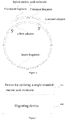
- the splint nucleic acid molecule for cyclizing a single-stranded nucleic acid molecule consists of a 5' terminal fragment and a 3' terminal fragment, wherein the 5' terminal fragment is adapted to form a first complementary region between the 5' terminal fragment and a 5' terminal of the single-stranded nucleic acid molecule, the 3' terminal fragment is adapted to form a second complementary region between the 3' terminal fragment and a 3' terminal of the single-stranded nucleic acid molecule, and a length of the first complementary region is different from a length of the second complementary region.
- the first complementary region and the second complementary region can be formed via annealing at different temperatures because of the length difference between the first complementary region and the second complementary region, thereby effectively avoiding the intermolecular ligation of the single-stranded nucleic acid molecules to be cyclized and effectively improving the self-cyclization efficiency of the single-stranded nucleic acid molecules to be cyclized.
- the present disclosure in embodiments provides a method for cyclizing a single-stranded nucleic acid molecule.
- the method for cyclizing a single-stranded nucleic acid molecule comprises allowing a reaction mixture containing the splint nucleic acid molecule described in the first aspect, the single-stranded nucleic acid molecule described in the first aspect and a ligase to be under a condition suitable for ligation, so as to obtain a cyclized single-stranded nucleic acid molecule.
- the first complementary region and the second complementary region can be formed via annealing at different temperatures because of the length difference between the first complementary region and the second complementary region as described above, thereby effectively avoiding the intermolecular ligation of the single-stranded nucleic acid molecules to be cyclized and effectively improving the self-cyclization efficiency of the single-stranded nucleic acid molecules to be cyclized.
- the present disclosure in embodiments provides a method for constructing a sequencing library.
- the method for constructing a sequencing library comprises subjecting a single-stranded nucleic acid molecule carrying an insert fragment to performing the method as described in the second aspect, thereby obtaining a product containing a cyclized single-stranded nucleic acid molecule carrying an insert fragment; and digesting the product containing a cyclized single-stranded nucleic acid molecule carrying an insert fragment, so as to obtain a cyclized sequencing library, wherein the single-stranded nucleic acid molecule carrying an insert fragment comprises an insert fragment, a first adaptor connected to a 5' terminal of the insert fragment, and a second adaptor connected to a 3' terminal of the insert fragment.
- the embodiment it is possible to effectively avoid the formation of linear complexes of the single-stranded nucleic acid molecules and the splint nucleic acid molecules or renatured double-stranded nucleic acid molecules during the cyclizaiton reaction, thus significantly increasing the intramolecular self-ligation efficiency and self-cyclization efficiency of the single-stranded nucleic acid molecules compared to the prior art.
- the present disclosure in embodiments provides a sequencing library.
- the sequencing library has a base separation rate of 0.5% or below.
- the positive strand and negative strand are balanced, resulting in a low base separation rate for A and T (or a low base separation rate for G and C) such as 0.5% or below, thereby assuring a high accuracy of DNA quantification and SNP determination.
- the present disclosure in embodiments provides a sequencing library.
- the sequencing library is obtained by the method as described in the third aspect.
- the cyclized single-stranded nucleic acid molecules in the sequencing library display a high cyclizaiton rate.
- the present disclosure in embodiments provides a method for DNA sequence analysis.
- the method for DNA sequence analysis comprises sequencing the sequencing library as described in the fourth aspect or the fifth aspect so as to obtain sequencing results containing a plurality of sequencing reads; and aligning the sequencing results with a reference sequence so as to obtain DNA sequence information.
- the DNA sequence information obtained has a high accuracy rate.
- the present disclosure in embodiments provides a kit.
- the kit comprises the splint nucleic acid molecule as described in the first aspect.
- the first complementary region and the second complementary region can be formed via annealing at different temperatures because of the length difference between the first complementary region and the second complementary region, thereby effectively avoiding the intermolecular ligation of the single-stranded nucleic acid molecules to be cyclized and effectively improving the self-cyclization efficiency of the single-stranded nucleic acid molecules to be cyclized.
- the present disclosure in embodiments provides a device for cyclizing a single-stranded nucleic acid molecule.
- the device for cyclizing a single-stranded nucleic acid molecule is configured to allow a reaction mixture containing a splint nucleic acid molecule, a single-stranded nucleic acid molecule and a ligase to be under a condition suitable for ligation such that the single-stranded nucleic acid molecule is cyclized, so as to obtain a cyclized single-stranded nucleic acid molecule.
- the device is suitable to perform the method for cyclizing a single-stranded nucleic acid molecule as described in the second aspect, thus the formation of linear complexes of the single-stranded nucleic acid molecules and the splint nucleic acid molecules or renatured double-stranded nucleic acid molecules can be effectively avoided, thus significantly increasing the intramolecular self-ligation efficiency and self-cyclization efficiency of the single-stranded nucleic acid molecules.
- the present disclosure in embodiments provides a system for constructing a sequencing library.
- the system for constructing a sequencing library comprises:
- the present disclosure in embodiments provides a system for DNA sequence analysis.
- the system for DNA sequence analysis comprises a sequencing device, configured to sequence the sequencing library as described in the forth aspect or the fifth aspect so as to obtain sequencing results containing a plurality of sequencing reads; and an aligning device, connected to the sequencing device and configured to align the sequencing results with a reference sequence so as to obtain DNA sequence information.
- the device is suitable to perform the method for DNA sequence analysis as described in the sixth aspect.
- the DNA sequence information obtained has a high accuracy rate.
- the "splint nucleic acid molecule" used herein refers to a nucleic acid molecule adapted to allow two terminals of a single-stranded nucleic acid molecule to be cyclized closed via two terminal fragments of the nucleic acid molecule, thereby improving the cyclization efficiency.
- the "single-stranded nucleic acid molecule to be cyclized" or “single-stranded nucleic acid molecule” in short used herein refers to a nucleic acid molecule containing a single-stranded region, particularly two terminals of the nucleic acid molecule are single-stranded regions, preferably the entire sequence of the nucleic acid molecule is a single-stranded region.
- the "5' terminal fragment” used herein refers to a region carrying 5'-phosphate group on the splint nucleic acid molecule, which cannot be understood as a free region.
- the "3' terminal fragment” used herein refers to a region carrying 3'-hydroxyl on the splint nucleic acid molecule, which cannot be understood as a free region.
- the "complementary region” used herein refers to a region containing a double-stranded structure formed via complementation of bases.
- the "complementary region" used herein may contain a certain number of mismatched bases.
- the number of mismatched bases as used herein is determined by a complementary region which contains the most number of unmatched bases (not forming a double-stranded structure) among the first and second complementary regions. For example, in a first complementary region formed between a 5' terminal fragment of the splint nucleic acid molecule and a 5' terminal of the single-stranded nucleic acid molecule, if the 5' terminal fragment and the 5' terminal of the single-stranded nucleic acid molecule respectively contain three unmatched bases and one unmatched base (not forming a double-stranded structure), it is considered that the first complementary region contains 3 mismatched bases.
- thermoostable ligase refers to a ligase which has an activity at a high temperature such as 95°C and has the activity being 50%, 60%, 70%, 80%, 90%, 95%, 99% or 100% of the highest activity at a low temperature such as 37°C.
- the base separation refers to the fact that the content of A base occurring in various positions of sequenced reads is different with the content of T base in the same positions (or the content of C base is different with the content of G base) under biased sequencing, that is the so-called base separation.
- the probability of A base occurring in any position of sequenced reads is equal to the probability of T base in the same position (or the probability of C base is equal to the probability of G base) under enough randomness because of the complementation of double-stranded structure and the characters of bases on genome.
- the base separation rate is calculated as follows.
- the length of the sequenced read is L, starting from the base at the 11th position of the Read and ending at a position n (n is within the range of 11 to L), the total number of bases is divided by the absolute value of the number of Abase minus the number of T base and expressed as percentage, Pn
- a splint nucleic acid molecule for cyclizing a single-stranded nucleic acid molecule consists of a 5' terminal fragment and a 3' terminal fragment, in which the 5' terminal fragment is adapted to form a first complementary region between the 5' terminal fragment and a 5' terminal of the single-stranded nucleic acid molecule, the 3' terminal fragment is adapted to form a second complementary region between the 3' terminal fragment and a 3' terminal of the single-stranded nucleic acid molecule, and a length of the first complementary region is different from a length of the second complementary region.
- the splint nucleic acid molecule according to the embodiment is an oligonucleotide sequence (i.e., splint oligo), which is suitable for construction of a cyclized sequencing library.
- the first complementary region and the second complementary region can be formed via annealing at different temperatures because of the length difference between the first complementary region and the second complementary region, thereby effectively avoiding the intermolecular ligation of the single-stranded nucleic acid molecules to be cyclized and effectively improving the self-cyclization efficiency of the single-stranded nucleic acid molecules to be cyclized.
- the first and second complementary regions with different lengths form an asymmetric complementary structure.
- the longer complementary region of the first and second complementary regions is firstly formed via annealing followed by formation of the shorter complementary region, thus facilitating the intramolecular self-ligation of the single-stranded nucleic acid molecules and significantly improving the self-cyclization efficiency of the single-stranded nucleic acid molecules.
- a bridging nucleic acid molecule in the prior art and the single-stranded nucleic acid molecule form a first complementary region and a second complementary region with equal lengths.
- the first and second complementary regions with equal lengths form a symmetric complementary structure, which increases the intermolecular ligation, thereby generating increased mismatched linear complex structures rather than the required cyclized structures.
- the length of the first complementary region is equal to a length of the 5' terminal fragment
- the length of the second complementary region is equal to a length of the 3' terminal fragment.
- the length of the first complementary region is longer than the length of the second complementary region.
- the length of the first complementary region is at least 1.5 times longer than the length of the second complementary region.
- the length of the first complementary region is at least twice longer than the length of the second complementary region.
- the length of the first complementary region is at least 10 bp longer than the length of the second complementary region.
- the length of the first complementary region is at least 13 bp longer than the length of the second complementary region.
- melting temperature (Tm) values of the first complementary region and the second complementary region differ by 10°C.
- Tm difference of 10°C between the first complementary region and the second complementary region facilitates the formation of a two-stage gradient annealing, which improves the self-cyclization efficiency of the single-stranded nucleic acid molecules.
- the 5' terminal fragment is of a length of 25 bp and the 3' terminal fragment is of a length of 11 bp.
- the 5' terminal fragment and the 5' terminal of the single-stranded nucleic acid molecule can be annealed at a higher temperature firstly, followed by annealing between the 3' terminal fragment and the 3' terminal of the single-stranded nucleic acid molecule at a lower temperature.
- Such a two-stage gradient annealing facilitates the intramolecular self-ligation of the single-stranded nucleic acid molecules, thereby significantly improving the self-cyclization efficiency of the single-stranded nucleic acid molecules.
- the single-stranded nucleic acid molecule comprises an insert fragment, a first adaptor connected to a 5' terminal of the insert fragment, and a second adaptor connected to a 3' terminal of the insert fragment.
- the 5' terminal fragment of the splint nucleic acid molecule is adapted to form the first complementary region between the 5' terminal fragment and at least a part of the first adaptor and the 3' terminal fragment of the splint nucleic acid molecule is adapted to form the second complementary region between the 3' terminal fragment and at least a part of the second adaptor.
- the single-stranded nucleic acid molecule after cyclization reaction can be useful in library construction and sequencing analysis.
- the insert fragment can be obtained by interrupting and denaturing genomic DNA.
- the insert fragment can be directly provided in the form of single-stranded DNA or RNA.
- the insert fragment can also be a recombinant nucleic acid molecule obtained by inserting a target nucleic acid molecule into a nucleic acid vector.
- the insert fragment is derived from at least a part of a genomic fragment.
- the genomic fragment is obtained by interrupting and denaturing genomic DNA.
- the single-stranded nucleic acid molecules derived from the genomic DNA can be cyclized by the splint nucleic acid molecule according to the embodiments, thereby obtaining a genomic sequencing library.
- the insert fragment is of a length of 100 to 600 bp.
- the splint nucleic acid molecule according to the embodiments is not only suitable for the construction of a DNA library with an insert fragment of 100 to 300 bp, but also suitable for the construction of a DNA library with a larger insert fragment such as 300 to 600 bp.
- the single-stranded nucleic acid molecules can be cyclized in high cyclization efficiency, with the DNA library in a low base separation rate.
- the single-stranded nucleic acid molecule comprises a first adaptor and a second adaptor.
- the first adaptor is connected to a 5' terminal of the insert fragment and the second adaptor is connected to a 3' terminal of the insert fragment.
- the single-stranded nucleic acid molecule is of a length of 136 to 636 bp.
- the 5' terminal fragment is of the nucleotide sequence of SEQ ID NO: 1.
- AAGTCGGATCGTAGCCATGTCGTTC SEQ ID NO: 1.
- the 5' terminal fragment in the embodiment as described above is capable of complementarily pairing with the 5' terminal of the single-stranded nucleic acid molecule at a temperature of 35 to 65°C.
- the 3' terminal fragment is of the nucleotide sequence of SEQ ID NO: 2.
- TGTGAGCCAAG SEQ ID NO: 2.
- the 3' terminal fragment in the embodiment as described above is capable of complementarily pairing with the 3' terminal of the single-stranded nucleic acid molecule at a temperature of 32 to 42°C.
- the splint nucleic acid molecule is of the nucleotide sequence of SEQ ID NO: 3.
- AAGTCGGATCGTAGCCATGTCGTTCTGTGAGCCAAG SEQ ID NO: 3.
- its 5' terminal fragment can be paired with the single-stranded nucleic acid molecule via annealing at a first temperature and its 3' terminal fragment can be paired with the single-stranded nucleic acid molecule via annealing at a second different temperature, thereby avoiding the formation of linear complexes of the single-stranded nucleic acid molecules and the splint nucleic acid molecules or renatured double-stranded nucleic acid molecules as much as possible, thus significantly increasing the self-cyclization efficiency of the single-stranded nucleic acid molecules.
- the splint nucleic acid molecule is DNA.
- the first complementary region and the second complementary region each independently comprise 5 mismatched bases or below, preferably 4 mismatched bases or below, preferably 3 mismatched bases or below, preferably 2 mismatched bases or below, preferably 1 mismatched base or below, more preferably no mismatched base.
- the present inventors have found that the splint nucleic acid molecule and the single-stranded nucleic acid molecule can be annealed successfully and effectively and the single-stranded nucleic acid molecule can be cyclized in a high self-cyclization efficiency when the number of the mismatched bases of the the first and second complementary regions is five or below.
- a method for cyclizing a single-stranded nucleic acid molecule comprises allowing a reaction mixture containing a splint nucleic acid molecule, a single-stranded nucleic acid molecule and a ligase to be under a condition suitable for ligation, so as to obtain a cyclized single-stranded nucleic acid molecule.
- the method in this embodiment it is possible to effectively avoid the formation of linear complexes of the single-stranded nucleic acid molecules and the splint nucleic acid molecules or renatured double-stranded nucleic acid molecules, thus significantly increasing the intramolecular self-ligation efficiency and self-cyclization efficiency of the single-stranded nucleic acid molecules compared to the prior art.
- the ligase is a thermostable ligase.
- thermostable ligase refers to a ligase which has an activity at a high temperature such as 95°C and has the activity being 50%, 60%, 70%, 80%, 90%, 95% or 99% of the highest activity at a low temperature such as 37°C.
- the thermostable ligase is capable of resisting a temperature of at least 50°C, preferably at least 70°C, preferably at least 80°C, more preferably at least 90°C.
- the complementarily pairing between the single-stranded nucleic acid molecule and the splint nucleic acid molecule can be mediated by the thermostable ligase at a high temperature such as 50°C.
- the thermostable ligase is capable of reducing the generation of DNA secondary structure and facilitates a higher specificity at a high temperature, such as Taq DNA ligase capable of annealing at 50°C.
- original T4 ligase allows an oligonucleotide strand to be annealed with a template strand at 37°C, which more easily generates mismatched secondary structure and causes mismatched ligation.
- the thermostable ligase is Taq DNA ligase.
- a conventional ligase such as T4 DNA ligase
- two DNA molecules can be ligated as long as 5'-phosphate terminal and 3'-hydroxyl terminal are presented.
- Taq DNA ligase is a high-fidelity ligase, with a high fidelity.
- the Taq DNA ligase relies on an oligonucleotide chain (i.e., oligo) for ligation, and the presence of any base mismatched to corresponding complementary strand in the oligo chain would result in failure of ligation.
- use of Taq DNA ligase in the embodiment of the present disclosure significantly reduces the mismatch rate.
- the method for cyclizing a single-stranded nucleic acid molecule comprises steps:
- the method further comprises (5) subjecting the reaction mixture obtained in step (4) to performing steps (3), (1) and (2) in sequence for at least one cycle.
- the ligation reaction is a dynamic process, during which the reactants (i.e., the splint nucleic acid molecule and the single-stranded nucleic acid molecule) in the reaction mixture solution collide with each other to generate a ligated product under the action of driving force and ligase.
- the reactants having different GC contents require different energy and driving force for ligation, and the ligated products would not be increased when arrived at an equilibrium state.
- the method as described above can achieve a maximum cyclization efficiency and significantly reduce the base separation.
- the method for cyclizing a single-stranded nucleic acid molecule further comprises subjecting the reaction mixture obtained in step (4) to performing steps (3), (1) and (2) in sequence for 2 to 18 cycles in step (5).
- the present inventors have found that all the nucleic acid molecules would rearch a relatively equilibrium state after 4 to 20 cycles of the ligation reaction as described above, thus achieving a high cyclization efficiency and significantly reduced base separation.
- the single-stranded nucleic acid molecule is obtained by denaturing a sample containing double-stranded nucleic acid molecules.
- the denaturing is performed at a temperature of 95°C for 3 to 5 minutes, thus the secondary structures of double-stranded nucleic acid molecules are opened and the single-stranded nucleic acid molecules are generated.
- the present inventors have also found that the greater the difference of annealing temperature between the first complementary region and the second complementary region, the less formation of intermolecular ligation of the single-stranded nucleic acid molecules. Meanwhile, it should be noted that the different between the annealing temperature of the second complementary region and the optimal temperature of the ligase is necessary to be in a reasonable range. Thus, the temperatures should be chosen carefully.
- the first temperature is higher than the second temperature.
- an activity of the ligase at the second temperature is 50% or above of the highest activity, preferably 80% or above, preferably 90% or above, preferably 91% or above, preferably 92% or above, preferably 93% or above, preferably 94% or above, preferably 95% or above, preferably 96% or above, preferably 97% or above, preferably 98% or above, preferably 99% or above, more preferably 100% of the highest activity.
- a difference between the second temperature and an optimal temperature of the ligase is 10°C or below, preferably 8°C or below, preferably 5°C or below, preferably 4°C or below, preferably 3°C or below, more preferably 2°C or below.
- the "optimal temperature” refers to a temperature when the ligase exhibits highest activity.
- the optimal temperature of the Taq DNA ligase used in the specific embodiment is 45°C.
- the second temperature is lower than the optimal temperature of the ligase, and the second temperature is 2 to 8°C lower than the optimal temperature of the ligase.
- first temperature and the second temperature within the temperature difference range as described above are suitable to form the first complementary region and the second complementary in two stages, thus preventing the intermolecular ligation of the single-stranded nucleic acid molecules. Further, the difference between the second temperature and the optimal temperature of the ligase is within a reasonable range suitable for the annealing of the second complementary region.
- the first temperature is 35 to 65°C and the first predetermined time is 2 minutes, preferably the first temperature is 50°C.
- the 5' terminal fragment of the splint nucleic acid molecule can be completely complementary to the 5' terminal of the single-stranded nucleic acid molecule and the first complementary region between the 5' terminal fragment and the 5' terminal of the single-stranded nucleic acid molecule is formed.
- the second temperature is 32 to 42°C and the second predetermined time is 30 minutes, preferably the second temperature is 37°C.
- the 3' terminal fragment of the splint nucleic acid molecule can be completely complementary to the 3' terminal of the single-stranded nucleic acid molecule and the second complementary region between the 3' terminal fragment and the 3' terminal of the single-stranded nucleic acid molecule is formed.
- the third temperature is 94 to 98°C and the third predetermined time is 30 seconds, preferably the third temperature is 95°C.
- the method for constructing a sequencing library comprises subjecting a single-stranded nucleic acid molecule carrying an insert fragment to performing the method as described in the second aspect, thereby obtaining a product containing a cyclized single-stranded nucleic acid molecule carrying an insert fragment; and digesting the product containing a cyclized single-stranded nucleic acid molecule carrying an insert fragment, so as to obtain a cyclized sequencing library.
- the single-stranded nucleic acid molecule carrying an insert fragment comprises an insert fragment, a first adaptor connected to a 5' terminal of the insert fragment, and a second adaptor connected to a 3' terminal of the insert fragment.
- the formation of linear complexes of the single-stranded nucleic acid molecules and the splint nucleic acid molecules or renatured double-stranded nucleic acid molecules can be effectively avoided during the cyclizaiton reaction, thereby significantly increasing the self-ligation efficiency and self-cyclization efficiency of the single-stranded nucleic acid molecule compared to the prior art.
- the digesting is performed under the action of DNA exonuclease.
- the uncyclized single-stranded nucleic acid molecules and the renatured double-stranded nucleic acid molecules formed during the cyclization reaction can be digested, thereby increasing the cyclization degree of the sequencing library.
- the DNA exonuclease comprises exonuclease I and exonuclease III.
- the exonuclease I is capable of hydrolyzing the uncyclized single-stranded nucleic acid molecules and the exonuclease III is capable of hydrolyzing single nucleotides at the 3' terminal of the double-stranded nucleic acid molecules, therefore only cyclized single-stranded nucleic acid molecules are retained after the digesting.
- the digesting is performed at 37°C for 30 minutes.
- the uncyclized single-stranded nucleic acid molecules and the renatured double-stranded nucleic acid molecules can be completely digested, avoiding excessive digestion reaction and generation of non-target products.
- the method for constructing a sequencing library further comprises subjecting a digested product to fourth purification after the digesting, thus eliminating the interference of enzymes or ions for the cyclization reaction and the digestion reaction on subsequent library construction or sequencing, thereby further improving the purity of the cyclized sequencing library and the accuracy of the sequencing results.
- the single-stranded nucleic acid molecule carrying an insert fragment is obtained by steps of subjecting a genomic sample to random interruption, first purification, end repair and adaptor addition, in which the adaptor comprises the first adaptor and the second adaptor; subjecting the genomic sample connected with adaptor to second purification and PCR amplification; and subjecting a PCR amplified product to third purification and denaturation, so as to obtain a denatured product, in which the denatured product is the single-stranded nucleic acid molecule carrying an insert fragment.
- the denaturation is performed at a temperature of 95°C for 3 to 5 minutes, thus the PCR amplified product can be completely unwinded and a single-stranded genomic sample is obtained.
- the method for constructing a sequencing library further comprises subjecting the cyclized sequencing library to DNA nanoball (DNB) amplification so as to obtain a DNB sequencing library.
- DNB amplification treatment includes the following steps.
- the cyclized DNA library i.e., cyclized single-stranded nucleic acid molecules
- the cyclized DNA library is supplemented with water and DNA nanoball (DNB) preparation buffer, vortexed to mix, centrifuged briefly and reacted on the PCR machine according to the procedure of 95°C for 1 min, 65°C for 1 min, 40°C for 1 min and holding at 4°C.
- the PCR tube at 4°C is taken out, DNB polymerase mixture I and DNB polymerase mixture II are added, vortexed to mix, centrifuged briefly and then reacted on the PCR machine according to the procedure of 30°C for 20 mins and holding at 4°C.
- the PCR tube at 4°C is transfered into an ice box and DNB stop buffer is added, which is gently pipetted by the pipette and wide-mouth pipette tip to mix.
- the DNB sequencing library is obtained, which is stored at 4°C for use.
- a sequencing library In a fourth aspect of the present disclosure, provided in embodiments is a sequencing library.
- the sequencing library has a base separation rate of 0.5% or below.
- the positive strand and negative strand are balanced, resulting in a low base separation rate for A and T (or a low base separation rate for G and C) such as 0.5% or below, thusassuing a high accuracy of DNA quantification and SNP determination.
- a sequencing library is obtained by the method as described in the third aspect.
- the cyclized single-stranded nucleic acid molecules in the sequencing library display a high cyclizaiton rate and a base separation rate of 0.5% or below.
- the method for DNA sequence analysis comprises sequencing the sequencing library as described in the fourth aspect or the fifth aspect, so as to obtain sequencing results containing a plurality of sequencing reads; and aligning the sequencing results with a reference sequence so as to obtain DNA sequence information.
- the DNA sequence information obtained has a high accuracy rate.
- kits comprising the splint nucleic acid molecule as described in the first aspect.
- the first complementary region and the second complementary region can be formed via annealing at different temperatures because of the length difference between the first complementary region and the second complementary region, thereby effectively avoiding the intermolecular ligation of the single-stranded nucleic acid molecules to be cyclized and effectively improving the self-cyclization efficiency of the single-stranded nucleic acid molecules to be cyclized.
- a device for cyclizing a single-stranded nucleic acid molecule is configured to allow a reaction mixture containing a splint nucleic acid molecule, a single-stranded nucleic acid molecule and a ligase to be under a condition suitable for ligation such that the single-stranded nucleic acid molecule is cyclized, so as to obtain a cyclized single-stranded nucleic acid molecule.
- the formation of linear complexes of the single-stranded nucleic acid molecules and the splint nucleic acid molecules or renatured double-stranded nucleic acid molecules can be effectively avoided, thus significantly increasing the self-ligation efficiency and self-cyclization efficiency of the single-stranded nucleic acid molecules.
- the device as described in the embodiment is suitable to perform the method for cyclizing a single-stranded nucleic acid molecule in the embodiment of the second aspect.
- the additional technical features, advantages and effects of this device are same as those described for the method for cyclizing a single-stranded nucleic acid molecule in the embodiments as described above.
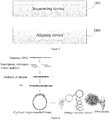
- the system for constructing a sequencing library comprises a device 100 for cyclizing a single-stranded nucleic acid molecule, configured to subject a single-stranded nucleic acid molecule carrying an insert fragment to performing the method for cyclizing a single-stranded nucleic acid molecule as described in the second aspect, thereby obtaining a product containing a cyclized single-stranded nucleic acid molecule carrying an insert fragment; and a digesting device 200, connected to the device 100 for cyclizing a single-stranded nucleic acid molecule and configured to digest the product containing a cyclized single-stranded nucleic acid molecule carrying an insert fragment, so as to obtain a cyclized sequencing library.
- the single-stranded nucleic acid molecule carrying an insert fragment comprises an insert fragment, a first adaptor connected to a 5'
- the system further comprises a device 300 for fourth purification, connected to the digesting device 200 and configured to subject a digested product to fourth purification.
- the system further comprises a device 400 for DNA nanoball (DNB) amplification, configured to subject the cyclized sequencing library to DNB amplification so as to obtain a DNB sequencing library.
- DNB DNA nanoball
- the system as described in the embodiment is suitable to perform the method for constructing a sequencing library in the embodiments of the third aspect.
- the additional technical features, advantages and effects of this system are same as those described for the method for constructing a sequencing library in the embodiments as described above.
- the system for DNA sequence analysis comprises a sequencing device 1000, configured to sequence the sequencing library as described in the forth aspect or the fifth aspect so as to obtain sequencing results containing a plurality of sequencing reads; and an aligning device 2000, connected to the sequencing device 1000 and configured to align the sequencing results with a reference sequence so as to obtain DNA sequence information.
- the device is suitable to perform the method for DNA sequence analysis in the embodiments of the sixth aspect.
- the inventors of the present disclosure provided the following solutions to improve the cyclization efficiency of single-stranded nucleic acid molecules during the library construction, which facilitate more single-stranded nucleic acid molecules to be self-ligated and cyclized.
- the method of the present disclosure increases the ligation reaction rounds for improving cyclization of single-stranded nucleic acid molecules, in which the uncyclized linear complexes of the single-stranded nucleic acid molecules and the splint nucleic acid molecules or renatured double-stranded nucleic acid molecules generated after one round of ligation are unwinded via denaturation reaction, followed by re-annealing with the splint nucleic acid molecule having an asymmetric structure in a new round such that the unwinded single-stranded nucleic acid molecule is re-ligated and cyclized, which is same for subsequent rounds, thus achieving a maximum cyclization efficiency through several rounds of ligation.
- Taq DNA ligase a thermostable ligase and having activity at a high temperature
- T4 DNA ligase which cannot resist the high temperature for the several denaturation reactions is applied in the cyclizaiton reaction for the library construction in the prior art.
- Taq DNA ligase rather than T4 DNA ligase is applied for cyclizaiton of the single-stranded nucleic acid molecules, which not only reduces the mismatch rate, but also allows several rounds of ligation pereformed via denaturation at a high temperature and re-annealing so as to achieve a maximum cyclization efficiency.
- human derived standard DNA (NA12878) was subjected to DNA sequencing library construction followed by sequencing by the present inventors, in which the method for cyclizing a single-stranded nucleic acid molecule provided in the present disclosure was adopted.
- the specific steps are as follows.
- the interruption parameters are below: Duty/cycle (0%) 10 Intensity 5 Cycle/burst 200 Time (s) 60 Cycle (s) 5
- AMPure XP magnetic beads were placed at room temperature for 30 minutes before use, followed by thoroughly shaking and mixing. 80 ⁇ l of the pretreated AMPure XP magnetic beads were transfered into a first PCR tube containing 80 ⁇ l of interrupted DNA obtained in step 1), which was gently pipetted by a pipette for 10 times to thoroughly mix, followed by incubation at room temperature for 5 minutes. Subsequently, the first PCR tube was centrifuged instantaneously, stood on a magnetic stand and stilled for 2 minutes to allow the liquid to be clear. About 160 ⁇ l of supernatant in the first PCR tube was transfered into a second new PCR tube by the pipette while the first PCR tube was kept on the magnetic stand.
- the second PCR tube was added with 40 ⁇ l AMPure XP magnetic beads, gently pipetted by the pipette for 10 times to thoroughly mix, and incubated at room temperature for 5 minutes. Subsequently, the second PCR tube was centrifuged instantaneously, stood on the magnetic stand and stilled for 2 minutes to allow the liquid to be clear, after which the supernatant in this tube was discarded by the pipette while the tube was kept on the magnetic stand. 500 ⁇ l of freshly prepared 80% ethanol was added into each of the first and second PCR tubes, incubated at room temperature for 1 minute and then the supernatant was discarded, while the first and second PCR tubes were kept on the magnetic stand.
- the step was repeated, after which the supernatant was discarded as much as possible.
- the lips of tubes were opened respectively for drying at room temperature for 3 minutes. Subsequently, the tubes were removed from the magnetic stand, 42 ⁇ l of TE buffer was added into each tube for DNA elution, pipetted by the pippte to mix and then incubated at room temperature for 5 minutes for DNA dissolution.
- the first and second PCR tubes were centrifuged instantaneously, stood on the magnetic stand and stilled for 2 minutes to allow the liquid to be clear, after which about 40 ⁇ l of supernatant in each tube was transfered into a new PCR tube while the first and second PCR tubes were kept on the magnetic stand.
- ng of purified DNA fragments obtained in 2) were transfered into a new PCR tube based on the concentration.
- Nuclease-free (NF) water was added to a total volume of 40 ⁇ l, and then 10 ⁇ l of DNA library end repair reaction solution for BGI platforms (BGISEQ500 and MGI2000) was added, which was reacted at 37°C for 30 minutes. After that, the reactants were reacted at 65°C for 15 minutes to deactivate the enzyme, followed by cooling to 4°C at a rate of 0.1°C/second.
- Ampure XP beads in a usage amount of 0.5X (50 ⁇ l) were used for purification.
- PCR reaction solution was added to the purified DNA connected with adaptor obtained in 5), with a total volume of 100 ⁇ l.
- the PCR reaction was performed on the PCR machine according to the procedure: 95°C 3 mins 98°C 20 s 6 cycles 60°C 15 s 72°C 30 s 72°C 5 mins 4°C holding
- Purified PCR product obtained in 7) was subjected to Qubit concentration detection. Subsequently, 330 ng of the PCR product was supplemented with TE buffer to 60 ⁇ l, and then 10 ⁇ l of splint nucleic acid molecule (10 ⁇ M, with a nucleotide sequence shown in SEQ ID NO: 3) was added and mixed. The solution was placed on the PCR machine and incubated at 95°C for 3 to 5minutes to allow the double-stranded DNA to be denatured into single-stranded DNA, immediately transfered into ice and stilled for 2 minutes. AAGTCGGATCGTAGCCATGTCGTTCTGTGAGCCAAG (SEQ ID NO: 3).
- a cyclization reaction mixture containing 12 ⁇ l 10 ⁇ Taq DNA ligation buffer, 2 ⁇ l Taq DNA ligase (NEB, 40 U/ ⁇ l) and 36 ⁇ l NF water was formulated, which was added into 70 ⁇ l of the denatured DNA solution obtained in 8) and performed the cyclization reaction on the PCR machine according to the procedure: 95°C 30 s 4 cycles 50°C 2 mins 37°C 30 mins 4°C holding
- a digestion reaction mixture containing 0.8 ⁇ l 10 ⁇ digestion buffer, 3.9 ⁇ l exonuclease I, 1.3 ⁇ l exonuclease III and 2 ⁇ l NF water was formulated, which was added into 120 ⁇ l of cyclization reaction solution obtained in 9) and performed the digestion reaction on the PCR machine according to the procedure: 37°C 30 mins 4°C holding Addtion of 15 ⁇ l stop buffer to stop the digestion reaction
- Ampure XP beads in a usage amount of 1.2X (170 ⁇ l) were used for purification of the digested product.
- the concentration of cyclized single-stranded nucleic acid molecules was detected by Qubit ssDNA Kit to be higher than 0.78 ng/ ⁇ l.
- the product was stored at -20°C for use.
- cyclized DNA library i.e., cyclized single-stranded nucleic acid molecules obtained in 11
- water was supplemented with water to 20 ⁇ l, followed by addition of 20 ⁇ l of DNA nanoball (DNB) preparation buffer, vortexed to mix, centrifuged briefly and reacted on the PCR machine according to the procedure of 95°C for 1 min, 65°C for 1 min, 40°C for 1 min and holding at 4°C.
- the PCR tube at 4°C was taken out, 40 ⁇ l of DNB polymerase mixture I and 4 ⁇ l of DNB polymerase mixture II were added, vortexed to mix, centrifuged briefly and then reacted on the PCR machine according to the procedure of 30°C for 20 mins and holding at 4°C. After completion of the reaction, the PCR tube at 4°C was transfered into an ice box and 20 ⁇ l of DNB stop buffer was added, which was gently pipetted by the pipette and wide-mouth pipette tip to mix, without shaking or vigorously pipetting. The product was stored at -20°C for use.
- the sequencing strategy is PE100+10+100.
- the present inventors have established two sequencing libraries for the human derived standard DNA (NA12878) according to the steps as described above.
- the two sequencing libraries were tested on the sequencer via the PE100+10+100 strategy.
- the sequencing results are shown in Table 1.
- Table 1 Read 1 AT separation rate Read 1 GC separation rate Read 2 AT separation rate Read 2 GC separation rate Library 1 0.41 0.35 0.35 0.36 Library 2 0.38 0.35 0.37 0.41
- the interruption parameters are below: Duty/cycle (0%) 10 Intensity 5 Cycle/burst 200 Time (s) 60 Cycle(s) 5
- 80 ⁇ l of the pretreated AMPure XP magnetic beads were transfered into a first PCR tube containing 80 ⁇ l of interrupted DNA obtained in step 1), which was gently pipetted by a pipette for 10 times to thoroughly mix, followed by incubation at room temperature for 5 minutes. Subsequently, the first PCR tube was stood on a magnetic stand and stilled for 2 minutes to allow the liquid to be clear. About 160 ⁇ l of supernatant in the first PCR tube was transfered into a second new PCR tube by the pipette while the first PCR tube was kept on the magnetic stand.
- the second PCR tube was added with 40 ⁇ l AMPure XP magnetic beads, gently pipetted by the pipette for 10 times to thoroughly mix, and incubated at room temperature for 5 minutes. Subsequently, the second PCR tube was stood on the magnetic stand and stilled for 2 minutes to allow the liquid to be clear, after which the supernatant in this tube was discarded by the pipette while the tube was kept on the magnetic stand. 500 ⁇ l of freshly prepared 80% ethanol was added into each of the first and second PCR tubes for rinsing twice, after which 42 ⁇ l of TE buffer was added into each tube for DNA elution.
- Ampure XP beads in a usage amount of 0.5X (50 ⁇ l) were used for purification.
- PCR reaction solution was added to the purified DNA connected with adaptor obtained in 5), with a total volume of 100 ⁇ l.
- the PCR reaction was performed on the PCR machine according to the procedure: 95°C 3 mins 98°C 20 s 6 cycles 60°C 15 s 72°C 30 s 72°C 5 mins 4°C holding
- PCR product obtained in 7 was subjected to Qubit concentration detection. Subsequently, 330 ng of the PCR product was supplemented with TE buffer to 60 ⁇ l, and then 10 ⁇ l of original BGISEQ bridging nucleic acid molecule (10 ⁇ M) was added and mixed. The solution was placed on the PCR machine and incubated at 95°C for 3 to 5 minutes to allow the double-stranded DNA molecules to be denatured into single-stranded nucleic acid molecules, immediately transfered into ice and stilled for 2 minutes.
- the original BGISEQ bridging nucleic acid molecule is adapted to form a first complementary region with the 5' terminal of the single-stranded nucleic acid molecule and form a second complementary region with the 3' terminal of the single-stranded nucleic acid molecule, in which the length of the first complementary region is equal to the length of the second complementary region.
- a cyclization reaction mixture containing 12 ⁇ l ligation buffer, 1.2 ⁇ l ligation Enhancer, 0.4 ⁇ l T4 DNA ligase (NEB, 400 U/ ⁇ l) and 36.4 ⁇ l NF water was formulated, which was added into 70 ⁇ l of the denatured DNA solution obtained in 8) and performed the cyclization reaction on the PCR machine according to the procedure of 37°C for 60 mins and holding at 4°C.
- a digestion reaction mixture containing 0.8 ⁇ l 10 ⁇ digestion buffer, 3.9 ⁇ l exonuclease I, 1.3 ⁇ l exonuclease III and 2 ⁇ l NF water was formulated, which was added into 120 ⁇ l of cyclization reaction solution obtained in 9) and performed the digestion reaction on the PCR machine according to the procedure: 37°C 30 mins 4°C holding Addtion of 15 ⁇ l stop buffer to stop the digestion reaction
- Ampure XP beads in a usage amount of 1.2X (170 ⁇ l) were used for purification of the digested product.
- the concentration of cyclized single-stranded nucleic acid molecules was detected by Qubit ssDNA Kit to be higher than 0.78 ng/ ⁇ l.
- the product was stored at -20°C for use.
- cyclized DNA library i.e., cyclized single-stranded nucleic acid molecules obtained in 11
- DNB DNA nanoball
- the PCR tube at 4°C was taken out, 40 ⁇ l of DNB polymerase mixture I and 4 ⁇ l of DNB polymerase mixture II were added, vortexed to mix, centrifuged briefly and then reacted on the PCR machine according to the procedure of 30°C for 20 mins and holding at 4°C. After completion of the reaction, the PCR tube at 4°C was transfered into an ice box and 20 ⁇ l of DNB stop buffer was added, which was gently pipetted by the pipette and wide-mouth pipette tip to mix, without shaking or vigorously pipetting. The product was stored at -20°C for use.
- the sequencing strategy is PE100+10+100.
- the present inventors have established two sequencing libraries for the human derived standard DNA (NA12878) according to the steps as described above.
- the two sequencing libraries were tested on the sequencer via the PE100+10+100 strategy.
- the sequencing results are shown in Table 2.
- Table 2 Read1 AT separation rate Read1 GC separation rate Read2 AT separation rate Read2 GC separation rate Library 3 1.15 1.6 1.23 1.01 Library 4 1 1.49 1.19 1.03
Landscapes
- Chemical & Material Sciences (AREA)
- Life Sciences & Earth Sciences (AREA)
- Health & Medical Sciences (AREA)
- Organic Chemistry (AREA)
- Engineering & Computer Science (AREA)
- Genetics & Genomics (AREA)
- Zoology (AREA)
- Wood Science & Technology (AREA)
- Molecular Biology (AREA)
- General Engineering & Computer Science (AREA)
- Biotechnology (AREA)
- Bioinformatics & Cheminformatics (AREA)
- Proteomics, Peptides & Aminoacids (AREA)
- Biomedical Technology (AREA)
- Biochemistry (AREA)
- General Health & Medical Sciences (AREA)
- Microbiology (AREA)
- Biophysics (AREA)
- Physics & Mathematics (AREA)
- Chemical Kinetics & Catalysis (AREA)
- Analytical Chemistry (AREA)
- Immunology (AREA)
- Plant Pathology (AREA)
- General Chemical & Material Sciences (AREA)
- Medicinal Chemistry (AREA)
- Measuring Or Testing Involving Enzymes Or Micro-Organisms (AREA)
Applications Claiming Priority (1)
| Application Number | Priority Date | Filing Date | Title |
|---|---|---|---|
| PCT/CN2018/085086 WO2019205135A1 (zh) | 2018-04-28 | 2018-04-28 | 用于对单链核酸分子进行环化处理的夹板核酸分子及其应用 |
Publications (1)
| Publication Number | Publication Date |
|---|---|
| EP3789490A1 true EP3789490A1 (de) | 2021-03-10 |
Family
ID=68294711
Family Applications (1)
| Application Number | Title | Priority Date | Filing Date |
|---|---|---|---|
| EP18916138.3A Withdrawn EP3789490A1 (de) | 2018-04-28 | 2018-04-28 | Zur durchführung von cyclisierungsverarbeitung an einkettigen nukleinsäuremolekülen verwendetes splint-nukleinsäuremolekül und anwendung davon |
Country Status (4)
| Country | Link |
|---|---|
| US (2) | US12404506B2 (de) |
| EP (1) | EP3789490A1 (de) |
| CN (1) | CN111742048B (de) |
| WO (1) | WO2019205135A1 (de) |
Cited By (1)
| Publication number | Priority date | Publication date | Assignee | Title |
|---|---|---|---|---|
| US12467081B2 (en) | 2020-11-23 | 2025-11-11 | Pleno, Inc. | Encoded endonuclease assays |
Families Citing this family (8)
| Publication number | Priority date | Publication date | Assignee | Title |
|---|---|---|---|---|
| CN111455469B (zh) * | 2020-04-07 | 2023-08-18 | 深圳易倍科华生物科技有限公司 | 一种单链快速建库方法及建库仪器 |
| CN112111544B (zh) * | 2020-09-23 | 2022-04-01 | 复旦大学附属肿瘤医院 | 提高单链dna连接效率的方法 |
| WO2024036445A1 (zh) * | 2022-08-15 | 2024-02-22 | 深圳华大智造科技股份有限公司 | 一种测序文库的制备方法及用于制备测序文库的试剂盒 |
| CN116064758B (zh) * | 2022-11-17 | 2025-03-07 | 纳昂达(南京)生物科技有限公司 | 选择抑制性环化辅助序列及应用 |
| CN115747304A (zh) * | 2022-11-25 | 2023-03-07 | 上海睿璟生物科技有限公司 | 一种高gc含量文库环化用试剂盒及其用途和方法 |
| CN116497088A (zh) * | 2023-04-26 | 2023-07-28 | 苏州吉因加生物医学工程有限公司 | 一种夹板核酸分子及其试剂盒 |
| CN116287124A (zh) * | 2023-05-24 | 2023-06-23 | 中国农业科学院农业基因组研究所 | 单链接头预连接方法、高通量测序文库的建库方法及试剂盒 |
| CN120678942A (zh) * | 2024-07-03 | 2025-09-23 | 中国科学院杭州医学研究所 | 一种环形功能核酸及其制备方法和应用 |
Family Cites Families (7)
| Publication number | Priority date | Publication date | Assignee | Title |
|---|---|---|---|---|
| CA2370976C (en) * | 1999-04-20 | 2009-10-20 | Illumina, Inc. | Detection of nucleic acid reactions on bead arrays |
| EP1366192B8 (de) * | 2000-10-24 | 2008-10-29 | The Board of Trustees of the Leland Stanford Junior University | Direkte multiplex charakterisierung von genomischer dna |
| US7108976B2 (en) * | 2002-06-17 | 2006-09-19 | Affymetrix, Inc. | Complexity management of genomic DNA by locus specific amplification |
| US7862999B2 (en) * | 2007-01-17 | 2011-01-04 | Affymetrix, Inc. | Multiplex targeted amplification using flap nuclease |
| CN105986324B (zh) * | 2015-02-11 | 2018-08-14 | 深圳华大智造科技有限公司 | 环状小rna文库构建方法及其应用 |
| CN111148847B (zh) * | 2017-10-11 | 2024-05-07 | 深圳华大智造科技有限公司 | 用于改善核酸装载和稳定性的方法 |
| CN109652499B (zh) * | 2017-10-12 | 2022-06-03 | 深圳华大智造科技股份有限公司 | 快速检测dna聚合酶3′-5′外切活性或错配的方法和试剂盒 |
-
2018
- 2018-04-28 EP EP18916138.3A patent/EP3789490A1/de not_active Withdrawn
- 2018-04-28 WO PCT/CN2018/085086 patent/WO2019205135A1/zh not_active Ceased
- 2018-04-28 CN CN201880088455.XA patent/CN111742048B/zh active Active
- 2018-04-28 US US17/043,447 patent/US12404506B2/en active Active
-
2025
- 2025-08-01 US US19/288,211 patent/US20250388904A1/en active Pending
Cited By (2)
| Publication number | Priority date | Publication date | Assignee | Title |
|---|---|---|---|---|
| US12467081B2 (en) | 2020-11-23 | 2025-11-11 | Pleno, Inc. | Encoded endonuclease assays |
| US12497651B2 (en) | 2020-11-23 | 2025-12-16 | Pleno, Inc. | Encoded dual-probe endonuclease assays |
Also Published As
| Publication number | Publication date |
|---|---|
| US12404506B2 (en) | 2025-09-02 |
| CN111742048A (zh) | 2020-10-02 |
| US20210024933A1 (en) | 2021-01-28 |
| US20250388904A1 (en) | 2025-12-25 |
| WO2019205135A1 (zh) | 2019-10-31 |
| CN111742048B (zh) | 2024-02-20 |
Similar Documents
| Publication | Publication Date | Title |
|---|---|---|
| US20250388904A1 (en) | Splint nucleic acid molecule for cyclizing single-stranded nucleic acid molecule and use thereof | |
| US10995367B2 (en) | Vesicular adaptor and uses thereof in nucleic acid library construction and sequencing | |
| EP3910068B1 (de) | Verfahren zur molekularen markierung und sequenzierungsbibliotheken | |
| CN107488656B (zh) | 一种核酸等温自扩增方法 | |
| CN112795620A (zh) | 双链核酸环化方法、甲基化测序文库构建方法和试剂盒 | |
| EP3674419A1 (de) | Sonde und verfahren damit zum anreichern der zielregion in einer hochdurchsatz-sequenzierung | |
| CN111455469B (zh) | 一种单链快速建库方法及建库仪器 | |
| CN115335536A (zh) | 用于即时核酸检测的组合物和方法 | |
| US11926872B2 (en) | Method for isothermal amplification of nucleic acid using primers to generate a tandem repeat sequence of a target gene | |
| WO2021253372A1 (zh) | 一种高兼容性的PCR-free建库和测序方法 | |
| EP4032986A1 (de) | Anreicherungsverfahren und system für genzielregion | |
| CN119570792A (zh) | 基于T型结构协同激活CRISPR/Cas12a系统的方法及其应用 | |
| CN112176421A (zh) | 一种rna建库的方法 | |
| Gamper et al. | Synthesis of long RNA with a site-specific modification by enzymatic splint ligation | |
| WO2021088189A1 (zh) | 一种应用于dna数据存储的寡核苷酸库恒温扩增方法 | |
| CN115747304A (zh) | 一种高gc含量文库环化用试剂盒及其用途和方法 | |
| WO2025111813A1 (zh) | 一种测序文库的制备方法及试剂 | |
| CN112063688A (zh) | 一种制备环状ssDNA的方法及其试剂盒 | |
| CN113981043B (zh) | 一种制备二代测序接头的方法 | |
| WO2023116490A1 (zh) | 小rna的新型检测方法及其应用 | |
| CN116042767A (zh) | 测序文库的构建方法及试剂盒 | |
| JP2020096564A (ja) | Rna検出方法、rna検出用核酸及びrna検出用キット | |
| WO2018073323A1 (en) | Method for complete, uniform and specific amplification of ultra-low amounts of input dna | |
| WO2023222014A1 (zh) | sgRNA测序接头及其应用 | |
| HK40064064A (en) | Molecular tagging methods and sequencing libraries |
Legal Events
| Date | Code | Title | Description |
|---|---|---|---|
| STAA | Information on the status of an ep patent application or granted ep patent |
Free format text: STATUS: THE INTERNATIONAL PUBLICATION HAS BEEN MADE |
|
| PUAI | Public reference made under article 153(3) epc to a published international application that has entered the european phase |
Free format text: ORIGINAL CODE: 0009012 |
|
| STAA | Information on the status of an ep patent application or granted ep patent |
Free format text: STATUS: REQUEST FOR EXAMINATION WAS MADE |
|
| 17P | Request for examination filed |
Effective date: 20201014 |
|
| AK | Designated contracting states |
Kind code of ref document: A1 Designated state(s): AL AT BE BG CH CY CZ DE DK EE ES FI FR GB GR HR HU IE IS IT LI LT LU LV MC MK MT NL NO PL PT RO RS SE SI SK SM TR |
|
| AX | Request for extension of the european patent |
Extension state: BA ME |
|
| DAV | Request for validation of the european patent (deleted) | ||
| DAX | Request for extension of the european patent (deleted) | ||
| STAA | Information on the status of an ep patent application or granted ep patent |
Free format text: STATUS: THE APPLICATION IS DEEMED TO BE WITHDRAWN |
|
| 18D | Application deemed to be withdrawn |
Effective date: 20211103 |