EP3791664B1 - Attributions de pusch gratuites pendant des procédures de connexion rrc lte et de rattachement nas - Google Patents
Attributions de pusch gratuites pendant des procédures de connexion rrc lte et de rattachement nas Download PDFInfo
- Publication number
- EP3791664B1 EP3791664B1 EP19800230.5A EP19800230A EP3791664B1 EP 3791664 B1 EP3791664 B1 EP 3791664B1 EP 19800230 A EP19800230 A EP 19800230A EP 3791664 B1 EP3791664 B1 EP 3791664B1
- Authority
- EP
- European Patent Office
- Prior art keywords
- base station
- grant
- message
- request
- gratuitous
- Prior art date
- Legal status (The legal status is an assumption and is not a legal conclusion. Google has not performed a legal analysis and makes no representation as to the accuracy of the status listed.)
- Active
Links
Images




Classifications
-
- H—ELECTRICITY
- H04—ELECTRIC COMMUNICATION TECHNIQUE
- H04W—WIRELESS COMMUNICATION NETWORKS
- H04W72/00—Local resource management
- H04W72/20—Control channels or signalling for resource management
- H04W72/23—Control channels or signalling for resource management in the downlink direction of a wireless link, i.e. towards a terminal
-
- H—ELECTRICITY
- H04—ELECTRIC COMMUNICATION TECHNIQUE
- H04W—WIRELESS COMMUNICATION NETWORKS
- H04W72/00—Local resource management
- H04W72/12—Wireless traffic scheduling
- H04W72/1263—Mapping of traffic onto schedule, e.g. scheduled allocation or multiplexing of flows
- H04W72/1268—Mapping of traffic onto schedule, e.g. scheduled allocation or multiplexing of flows of uplink data flows
Definitions
- the Physical Uplink Shared Channel is defined as a shared channel for use by user equipment (UE).
- UE user equipment
- a UE requests an uplink transmission opportunity on the PUSCH by sending a scheduling request (SR) to the serving base station (also referred to as an "Evolved Node B” or "eNodeB") on the Physical Uplink Control Channel (PUCCH).
- SR scheduling request
- eNodeB Evolved Node B
- PUCCH Physical Uplink Control Channel
- the serving eNodeB will grant the UE PUSCH resources for transmitting on the PUSCH.
- each SR informs the eNodeB that the UE needs access to the PUSCH but does not indicate how much data the UE has to transmit on the PUSCH.
- the eNodeB will grant the UE a nominal amount of PUSCH resources by sending the UE a DCI0 message on the PDCCH.
- This nominal PUSCH grant includes sufficient PUSCH resources for the UE to send a Buffer Status Report (BSR) and a Power Headroom Report (PHR) on the PUSCH but may not be sufficient to send all of the uplink data buffered at the UE.
- the BSR indicates how much uplink data the UE has buffered for transmission on the PUSCH.
- the eNodeB makes one or more subsequent PUSCH grants to the UE (signaled using DCI0 messages) for transmitting the buffered uplink data on the PUSCH.
- the BSR value is used by the eNodeB to track the amount of buffered data that remains at the UE.
- the tracked BSR value is reduced by the amount of data successfully received.
- the eNodeB stops making PUSCH grants to the UE once the tracked BSR value reaches zero.
- the eNodeB typically assigns the connected UEs periodic PUCCH resources during which the UEs can make SRs. These resources are referred to as "SR occasions" for the UE.
- SR occasions For the UE.
- the UE When uplink data is ready at the UE for uplink transmission and the UE does not already have a PUSCH grant, the UE will send an SR at its next SR occasion. If the serving eNB responds with a PUSCH grant, then the UE will utilize the PUSCH grant to send the uplink data. If the serving eNB does not respond to the SR with a PUSCH grant, then the UE will send another SR at its next SR occasion.
- the UE repeatedly sends SRs until it receives a PUSCH grant or it has made a configurable maximum number of SRs. This configuration parameter is referred to as "dSRTransMax.” Once dSRTransMax is reached by the UE, the UE must use the Random Access Channel (RACH) procedure to get a PUSCH grant. Also, UEs that are not assigned periodic PUCCH resources for making SRs must use the RACH procedure to obtain a PUSCH grant.
- RACH Random Access Channel
- the UE will have to hold (enqueue) uplink packets for a relatively long time if the period between successive SR occasions assigned to that UE is large. Also, the UE will have to hold uplink packets for a relatively long time if the RACH procedure must be used by the UE to make an SR.
- HARQ hybrid automatic repeat request
- LTE data traffic tends to be bursty in nature. Each data-burst usually lasts for a few seconds (for example, 10-15 seconds) followed by relatively long inactivity period (on the order of several tens of seconds).
- the serving eNodeB typically runs an inactivity timer for every connected UE. If there is no uplink or downlink traffic for the amount of time tracked by the inactivity timer, the UE's Radio Resource Control (RRC) connection is released.
- RRC Radio Resource Control
- an RRC connection, Non-Access Stratum (NAS) context, and NAS default bearer must be established for the UE using the LTE RRC connection and NAS attach procedures, which involve the UE, serving eNodeB, and Evolved Packet Core (EPC) exchanging signaling messages on the LTE Signal Radio Bearers (SRBs).
- EPC Evolved Packet Core
- SRBs LTE Signal Radio Bearers
- Uplink latency has a pronounced impact during the Connection and Attach procedures because each such procedure involves a downlink message that is usually a request that the UE acts on and responds to with a corresponding message. Also, the UE must respond to the request within a predetermined amount of time. If the UE does not, the current process of performing the Connection and Attach procedures is terminated and the UE must restart the process of performing the Connection and Attach procedures.
- a UE can include a BSR along with any messages it transmits on the PUSCH during the Connection and Attach procedures.
- a BSR can only be sent for those uplink messages that are ready to be transmitted.
- the Connection and Attach procedures are generally serial in nature and, therefore, successive uplink messages will not be ready until after the current uplink messages have been transmitted. As a result, it is likely that a UE will need to make a SR for each message to be sent by the UE on the PUSCH during the Connection and Attach procedures.
- the initial PUSCH grant resulting from a SR is typically small. It is sufficient for the UE to send a BSR and PHR but may not be sufficient to send all of the uplink data buffered at the UE.
- the RRC and NAS uplink messages sent during the Connection and Attach procedures may undergo Radio Link Control (RLC) segmentation, which can result in RLC Acknowledge Mode (AM) timers expiring and requiring message retransmission.
- RLC Radio Link Control
- the serving eNodeB typically has a configurable maximum number of UEs that can be scheduled to use the PUSCH during any given tick. This limitation is typically determined based on the processing resources in the eNodeB. As noted above, each SR results in a small nominal PUSCH grant; however, each such nominal PUSCH grant, regardless of its small size, requires another UE to be scheduled during the current tick, which counts against the maximum number of UEs that can be scheduled during the current tick. This can result in PUSCH resources being underutilized.
- SRs are communicated without cyclic redundancy check (CRC) protection and, instead, are communicated solely using power detection. If a SR is detected when one was not actually transmitted by a UE, a harmless extra PUSCH grant may result; however, if a SR that was actually transmitted by a UE is not detected, uplink latency will result that may in turn lead to expiration of higher-layer timers.
- CRC cyclic redundancy check
- the serving eNodeB typically assigns frequent SR occasions to the UE so that the UE will be able to transmit a SR shortly after a such a response is ready at the UE. Assigning frequent SR occasions to the UE during Connection and Attach procedures (so that it can send a SR as soon as each reply message is ready) may not help to improve the user experience since most of these procedures are driven by EPC. As a result, many of the SR occasions assigned to the UE will not be used by the UE and therefore will be "wasted" when the UE must wait for the EPC to start the next procedure following the completion of the current one.
- EP 2557882 A1 published 13 February 2013 , relates to a method and apparatus for scheduling radio resources of a terminal device, wherein a scheduler in an access device is extended to proactively schedule uplink grants for anticipated uplink traffic (e.g. acknowledgements), when downlink traffic of a bidirectional dataflow (e.g. acknowledge-based traffic) is being scheduled. Thereby, a delay penalty of the terminal device to ask for uplink resources can be avoided.
- US 2017/019914 A1 published 19 January 2017 , relates to a method for proactive allocation of uplink transmission resources to a wireless device, wherein the wireless device transmits periodic uplink data traffic. The method is performed in a radio access node in a wireless communication system.
- the method includes estimating a transmission phase for the periodic uplink data traffic by, for two or more transmission periods, adjusting the timing of an uplink transmission resource allocation for the wireless device in a subsequent transmission period depending on whether an uplink transmission resource allocated in a previous transmission period was used by the wireless device or not.
- the method further includes proactively allocating uplink transmission resources to the wireless device, such that the timing of the proactively allocated resources matches the estimated transmission phase.
- US 2016/330761 A1 published 10 November 2016 , relates to a method and system for a wireless communication system that provide for transmitting a scheduling grant to a User Equipment (UE) and configuring the UE with a configurable time offset.
- UE User Equipment
- the method and system also provide for transmitting a scheduling grant to a node and configuring the node with a configurable time offset.
- US 2004/174838 A1 published 9 September 2004 , relates to an arrangement in a mobile communication network and a method for controlling network resources for packet data connections in a mobile communication network.
- the method comprises monitoring packets transmitted on at least one packet connection using a Wireless Transaction Protocol (WTP) in the network; analyzing WTP header information of the packets and optimizing the usage of radio access resources on the basis of the header information.
- WTP Wireless Transaction Protocol
- FIG. 1 is a block diagram illustrating one exemplary embodiment of a radio access network (RAN) system 100 in which the techniques described here can be implemented.
- RAN radio access network
- the RAN system 100 comprises one or more base stations 102 (also referred to here as "Evolved Node Bs" or “eNodeBs”).
- Each eNodeB 102 serves at least one cell 104 and includes or is coupled to one or more antennas 106 via which downlink RF signals are radiated to user equipment (UE) 108 and via which uplink RF signals transmitted by UEs 108 are received.
- UE user equipment
- Each eNodeB 102 is coupled to a core network 110 of a wireless network operator over an appropriate back-haul.
- the Internet 112 is used for back-haul between each eNodeB 102 and each core network 110.
- the back-haul can be implemented in other ways.
- LTE Long Term Evolution
- eNodeB 102 implements an LTE Evolved Node B that is used to provide the user equipment 108 with mobile access to the wireless network operator's core network 110 to enable the user equipment 108 to wirelessly communicate data and voice (using, for example, Voice over LTE (VoLTE) technology).
- VoIP Voice over LTE
- each core network 110 is implemented as an LTE Evolved Packet Core (EPC) 110 comprising standard LTE EPC network elements such as, for example, a mobility management entity (MME) (not shown) and a Serving Gateway (SGW) (not shown) and, optionally, a Home eNodeB gateway (HeNB GW) (not shown) and a Security Gateway (SeGW) (not shown).
- EPC Evolved Packet Core
- MME mobility management entity
- SGW Serving Gateway
- HeNB GW Home eNodeB gateway
- SeGW Security Gateway
- Each eNodeB 102 can be implemented in various ways.
- each eNodeB 102 can be implemented using a traditional monolithic macro base station configuration, a microcell, picocell, femtocell or other "small cell" configuration, or a centralized or cloud RAN (C-RAN) configuration.
- C-RAN cloud RAN
- each eNodeB 102 comprises at least one radio 114 configured to wireless communicate with the UE 108 and at least one processor 116 configured to execute software or firmware 118 that causes the eNodeB 102 to perform at least some of the functions described here as being performed by the eNodeB 102.
- the software or firmware 118 comprises program instructions that are stored (or otherwise embodied) on or in an appropriate non-transitory storage medium or media 120 from which at least a portion of the program instructions are read by the programmable processor 116 for execution thereby. Although the storage media 120 is shown in FIG.
- Each eNodeB 102 also includes memory 122 for storing the program instructions (and any related data) during execution by the programmable processor 116.
- the software or firmware 118 implements, among other things, a Media Access Control (MAC) layer (comprising a scheduler) 124 that performs base-station-related MAC processing, a Radio Link Control (RLC) entity 126 that performs base-station-related RLC processing, and a Radio Resource Control (RRC) entity 128 that performs base-station-related RRC processing.
- MAC Media Access Control
- RLC Radio Link Control
- RRC Radio Resource Control
- Each eNodeB 102 can be implemented in other ways.
- FIG. 2 comprises a high-level flow chart illustrating one claimed embodiment of a method 200 of making gratuitous grants of uplink shared channel resources.
- the embodiment of method 200 shown in FIG. 2 is described here as being implemented in the RAN system 100 of FIG. 1 , though it is to be understood that other embodiments can be implemented in other ways.
- the blocks of the flow diagram shown in FIG. 2 have been arranged in a generally sequential manner for ease of explanation; however, it is to be understood that this arrangement is merely exemplary, and it should be recognized that the processing associated with method 200 (and the blocks shown in FIG. 2 ) can occur in a different order (for example, where at least some of the processing associated with the blocks is performed in parallel and/or in an event-driven manner). Also, most standard exception handling is not described for ease of explanation; however, it is to be understood that method 200 can and typically would include such exception handling.
- Method 200 is described here as being performed for each UE 108 when it is performing an exchange of messages that involves a request message that is sent to the UE 108 (for example, a message originating in the base station 102 or the core network 110) and a response message that is sent from the UE 108 on a shared uplink channel.
- the particular UE 108 for which method 200 is being performed is referred to here as the "current" UE 108.
- Method 200 comprises sending a request message from the serving base station 102 to the current UE 108 (block 202).
- the request message is one for which an uplink response message is expected to be wirelessly transmitted by the current UE 108 on a shared uplink channel.
- the request message is transmitted to the current UE 108 on a downlink channel used for wirelessly communicating with the current UE 108.
- the request message can originate from the base station 102 or from elsewhere (for example, from the core network 110).
- Method 200 further comprises making a gratuitous grant of uplink resources to the current UE 108 (block 204).
- This grant of uplink resources is "gratuitous" in that the base station 102 makes this grant without the current UE 108 making, and without the base station 102 receiving, a scheduling request for the uplink resources.
- the base station 102 is configured to make the gratuitous grant so that the current UE 108 will be able to wirelessly transmit the expected response message on the shared uplink channel very close to the time that the current UE 108 is ready to transmit the response message.
- the base station 102 is configured to do this by having the base station 102 make the gratuitous grant in a timely manner and by scheduling appropriate uplink resources for the current UE 108 to transmit the respective response message in a timely manner.
- the base station 102 can be configured to wait an amount of time that is sufficient for the current UE 108 to react to the request message and be ready to send a response message on the uplink channel. Then, after this amount of time has passed, the base station 102 makes the gratuitous grant of uplink resources.
- the current UE 108 provides feedback (for example, HARQ feedback) to the base station 102 indicating that the current UE 108 successfully received the request message.
- the base station 102 can be configured to determine the amount of time that is sufficient for the current UE 108 to react to the request message and be ready to send a response message on the uplink channel as a function of when the base station 102 has successfully received positive feedback for the request message.
- the base station 102 can be configured to wait to start an associated timer until positive feedback is successfully received by the base station 102.
- Method 200 further comprises receiving, by the base station 102, an actual uplink response message transmitted by the current UE 108 on the uplink shared channel in response to the gratuitous grant (block 206).
- the current UE 108 In response to receiving the downlink request message, the current UE 108 will process the received downlink request message (for example, performing an action specified in the request message or obtaining information requested in the request message) and, if appropriate, prepare a response message for transmission on the uplink channel. Then, the current UE 108 wirelessly transmits the response message on the shared uplink channel using the resources specified in the gratuitous grant (for example, using the PRBs and MCS specified in the gratuitous grant).
- the base station 102 is configured to make the gratuitous grant so that the current UE 108 will be able to wirelessly transmit the expected response message on the shared uplink channel very close to the time that the current UE 108 is ready to transmit the response message. Because of this, uplink latency can be reduced. This is because the overhead associated with requesting and being granted shared uplink channel resources can be avoided.
- Embodiments of method 200 can be used in other situations.
- the base station can make gratuitous grants of uplink resources on the uplink shared channel to that UE for the response message.
- gratuitous grants of uplink resources on the uplink shared channel to those UEs for the periodic messages.
- embodiments of method 200 can be used with the Connection and Attach procedures described above.
- a UE 108 establishes an RRC connection with the serving eNodeB 102 using the LTE Connection and Attach procedures.
- Each of the LTE Connection and Attach procedures comprises an exchange of messages that involves a request message that is sent to the UE 108 and a response message that is sent from the UE 108 on the PUSCH.
- the request message can be a message originating at an RRC entity 128 in the eNodeB 102 or a Non-Access Stratum (NAS) 130 entity in the EPC 110).
- NAS Non-Access Stratum
- such an exchange of messages is done for DL-CCCH messages transmitted in connection with the Connection and Attach procedures.
- the LTE specifications specify that a UE 108 must transmit a response message for some DL-CCCH messages transmitted in connection with the Connection and Attach procedures.
- the LTE specifications also specify that a UE does not transmit a response message for other DL-CCCH messages transmitted in connection with the Connection and Attach procedures.
- the UE 108 when a UE 108 is establishing or re-establishing an RRC connection, the UE 108 will use the RACH procedure and send the serving eNodeB 102 a MSG3 containing a RRC Connection Request or a RRC Connection Re-Establishment Request, as the case may be.
- the MAC layer 124 After the RACH procedure is completed at the MAC layer 124 of the serving eNodeB 102, the MAC layer 124 forwards the MSG3 received from the UE 108 to the RRC entity 128 in the eNodeB.
- the RRC entity 128 will consult the RRM entity 132 and do an admission-check for the UE 108.
- the RRM entity 132 will provide configuration parameters for the UE 108 (for example, configuration parameters for SR, Sounding Reference Signal (SRS), Channel Quality Indicator (CQI), and SRB1 RLC Configuration)).
- the RRC entity 132 will prepare an RRC Connection Setup message with the configuration parameters and forward it to the MAC layer 124 for transmission to the UE 108 on the DL-CCCH.
- the UE 108 After the UE 108 successfully receives the RRC Connection Setup message, the UE 108 will apply the configuration parameters, and then respond with a RRC Connection Setup Complete message, which is transmitted on the PUSCH.
- RRM entity 132 does not admit the UE 108, the RRC entity 128 will cause a RRC Connection Reject message to be sent to the UE 108 on the DL-CCCH.
- the RRC Connection Reject message does not require a response from the UE 108.
- the RRC entity 128 will try to fetch a context for the UE 108. If a valid context for the UE 108 is found and there is a MAC-I match, the RRC entity 128 will generate a RRC Connection Re-Establishment message and forward it to the MAC layer 124 for transmission to the UE 108 on the DL-CCCH. After the UE 108 successfully receives the RRC Connection Re-Establishment message, the UE 108 will respond with a RRC Connection Re-Establishment Complete message, which is transmitted on the PUSCH.
- the RRC entity 128 will cause a RRC Re-Establishment Reject message to be sent to the UE 108 on the DL-CCCH.
- the RRC Re-Establishment Reject message does not require a response from the UE 108.
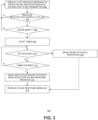
- FIG. 3 comprises a flow chart illustrating one exemplary embodiment of a method 300 of making a gratuitous grant of PUSCH resources in connection with a Downlink Common Control Channel (DL-CCCH) message transmitted in connection with the LTE Connection and Attach procedures.
- DL-CCCH Downlink Common Control Channel
- the blocks of the flow diagram shown in FIG. 3 have been arranged in a generally sequential manner for ease of explanation; however, it is to be understood that this arrangement is merely exemplary, and it should be recognized that the processing associated with method 300 (and the blocks shown in FIG. 3 ) can occur in a different order (for example, where at least some of the processing associated with the blocks is performed in parallel and/or in an event-driven manner). Also, most standard exception handling is not described here for ease of explanation; however, it is to be understood that method 300 can and typically would include such exception handling.
- Method 300 is described here as being performed after a UE 108 has used the RACH procedure to establish or re-establish a RRC connection and the MSG3 contains either a RRC Connection Request or a RRC Connection Re-Establishment Request and the serving eNodeB 102 is ready to send a DL-CCCH message to the UE 108 that the UE 108 is expected to send a response message on the PUSCH (that is, a RRC Connection Setup message or a RRC Connection Re-Establishment message but not a RRC Connection Reject message or a RRC Re-Establishment Reject message).
- the particular UE 108 for which method 300 is being performed is referred to here as the "current" UE 108.
- Method 300 comprises sending, from the eNodeB 102 to the UE 108 on the DL-CCCH, a DL-CCCH message to which the current UE 108 is expected to transmit a response message on the PUSCH (block 302).
- the DL-CCCH message can be a RRC Connection Setup message or a RRC Connection Re-Establishment message.
- each DL-CCCH message can be transmitted using a DL Transport Block (DL TB).
- DL TB DL Transport Block
- the current UE 108 will provide HARQ feedback to the serving eNodeB 102 for each DL TB used for transmitting a DL-CCCH message that indicates whether the current UE 108 successfully received that DL TB.
- the serving eNodeB 102 checks if the DL-CCCH queue for the current UE 108 is empty (block 306).
- the DL-CCCH queue for the current UE 108 will be empty when the entire DL-CCCH message has been transmitted and successfully received by the current UE 108.
- method 300 loops back to block 302.
- method 300 loops back to block 302.
- the eNodeB 102 starts a timer (block 308).
- the timer is initialized with an amount of time that is sufficient for the current UE 108 to apply the configuration included in the DL-CCCH message and be ready to send an expected response message to the eNodeB 102. This amount of time can be determined, for example, based on Section 11 of 3GPP Specification No. 36.311 for LTE.
- the eNodeB 102 sends the current UE 108 a gratuitous grant of PUSCH resources (block 314). If the size of the expected response message is known to the eNodeB 102, the gratuitous grant can include sufficient PUSCH resources for the current UE 108 to send an expected response message. If the size of the expected response message is not known to the eNodeB 102, the gratuitous grant can include a default amount of PUSCH resources.
- this grant is gratuitous in the sense that it is sent without waiting for (and is not in response to) a corresponding SR from the UE.
- the expected response message is the message that would be expected to be transmitted by the current UE 108 to the eNodeB 102 in response to receiving the DL-CCCH and processing it appropriately.
- the expected response message would be a RRC Connection Setup Complete message.
- the expected response message would be a RRC Connection Re-Establishment Complete message
- this grant of PUSCH resources is "gratuitous" in that the eNodeB 102 makes this grant of PUSCH resources without waiting to receive a corresponding SR from the current UE 108.
- the eNodeB 102 acts as if it has received a corresponding SR from the current UE 108 for the expected response message and it makes a grant of PUSCH resources for the current UE 108.
- the PUSCH grant comprises the following main parameters - start PRB Index, number of PRBs, and MCS value.
- the current UE will encode the uplink packet using the given MCS and transmit it on the provided uplink PRBs.
- the eNodeB 102 signals this gratuitous grant by transmitting an appropriate DCI0 message on the PDCCH to the current UE 108.
- the eNodeB 102 sends the gratuitous grant of PUSCH resources at the first opportunity to do so that occurs after the expiration of the timer.
- the eNodeB 102 sends the current UE 108 a grant of PUSCH resources in response to that SR (block 316). This can be done in the standard way.
- Method 300 further comprises receiving, by the eNodeB 102, an actual uplink response message transmitted by the current UE 108 on the PUSCH in response to the grant (block 318). This is done whether the grant is a gratuitous grant or a grant made in response to a SR received from the current UE 108.
- the current UE 108 In response to receiving the downlink request message, the current UE 108 will process the received downlink request message (for example, performing an action specified in the request message or obtaining information requested in the request message) and, if appropriate, prepare a response message for transmission on the PUSCH.
- the current UE 108 continuously monitors PDCCH channel and will receive the gratuitous grant of PUSCH resources.
- the current UE 108 can then wirelessly send the response message (if one has been prepared) to the eNodeB 102 on the PUSCH in accordance with the gratuitous grant (for example, using the PRBs and MCS specified in the gratuitous grant).
- the eNodeB 102 and current UE 108 act as if the current UE 108 had sent a SR for the response message.
- the uplink latency can be reduced. This is because the overhead associated with requesting and being granted PUSCH resources can be avoided.
- Embodiments of method 200 shown in FIG. 2 can also be used with the exchanges of SRB1 or SRB2 messages that occur during the LTE Connection and Attach procedures.
- the exchange of SRB1 or SRB2 messages is worthy of special note because these messages are typically sent using RLC AM Mode.
- FIG. 4 comprises a flow chart illustrating one exemplary embodiment of a method 400 of making a gratuitous grant of PUSCH resources in connection with an exchange of SRB 1 or SRB2 messages during the LTE Connection and Attach procedures.
- the embodiment of method 400 shown in FIG. 4 is described here as being implemented in the RAN system 100 of FIG. 1 , though it is to be understood that other embodiments can be implemented in other ways.
- Method 400 is described here as being performed during the Connection and Attach procedures in the following situation.
- the UE 108 has established or re-established an RRC connection, and the serving eNodeB 102 is ready to send a message on the SRB1 or SRB2.
- the particular message sent by the serving eNodeB 102 is one that the serving eNodeB 102 expects the UE 108 to transmit response to on the PUSCH.
- the particular UE 108 for which method 400 is being performed is referred to here as the "current" UE 108.
- the RRC Connection Setup message can configure the current UE 108 to use transmission mode (TM) 3 or 4 for downlink transmissions.
- TM transmission mode
- the eNodeB 102 can thereafter transmit to the current UE 108 using two code words (CWs). If the current UE is configured to use transmission mode 2, one code word is used for transmitting to the current UE.
- the SRB 1 or SRB2 is configured to use RLC AM Mode during this part of the Connection and Attach procedures This means all such SRB 1 or SRB2 messages must follow RLC AM Mode transmission rules (for example, regarding RLC sequence numbering, poll timing, RLC status reporting, RLC retransmission, etc.).
- the SRB 1 or SRB2 message can be transmitted as a single unit (in a single SRB 1 or SRB2 packet) or can be segmented into multiple RLC segments (in multiple SRB1 or SRB2 packets).
- Method 400 comprises sending, from the eNodeB 102 to the current UE 108, one or more downlink packets for a downlink message to which the current UE 108 is expected to transmit a response message using the PUSCH (block 402).
- the downlink message is a SRB 1 or SRB2 message that is transmitted by the eNodeB 102 as a part of the Connection and Attach procedures that occurs after the RRC connection has been established or re-established. This downlink message is also referred to here as the "current" downlink message.
- the current UE 108 will provide HARQ feedback to the serving eNodeB 102 for each CW used to transmit the current downlink message.
- the HARQ feedback indicates whether the current UE 108 successfully received the respective CW.
- the serving eNodeB 102 checks if the relevant queue for the current UE 108 is empty (block 406).
- the relevant queue for the current UE 108 is the SRB 1 queue if the message being transmitted is a SRB1 message and is the SRB2 queue if the message being transmitted is a SRB2 message.
- the relevant queue for the current UE 108 will be empty when the entire current downlink message has been transmitted and successfully received by the current UE 108. That is, the relevant queue for the current UE 108 will be empty when all of the packets used to transmit the entire current downlink message have been transmitted and successfully received by the current UE 108.
- any of the HARQ feedback indicates that any CW was not successfully received by the current UE 108 (that is, is a "DTX" or a "NACK"), the corresponding packet will be retransmitted as a part of the HARQ process and method 400 loops back to block 402.
- method 400 loops back to block 402 to transmit the rest of the packets for the current downlink message.
- the eNodeB 102 starts a timer (block 408).
- the timer is initialized with an amount of time that is sufficient for the current UE 108 to process the current downlink message and be ready to send the response message to the eNodeB 102. This amount of time can be determined, for example, based on Section 11 of 3GPP Specification No. 36.331 for LTE).
- the eNodeB 102 sends the current UE 108 a gratuitous grant of PUSCH (block 414).
- the expected response message is the SRB1 or the SRB2 message, as the case may be, that would be expected to be transmitted by the current UE 108 to the eNodeB 102 in response to receiving the SRB1 or SRB2 message and processing it appropriately.
- the gratuitous grant can include sufficient PUSCH resources for the current UE 108 to send the expected response message. If the size of the expected response message is not known to the eNodeB 102, the gratuitous grant can include a default amount of PUSCH resources.
- this grant is gratuitous in the sense that it is sent without waiting for (and is not in response to) a corresponding SR from the UE. Sending a gratuitous grant, even if the size of the expected response message is not known, is still since the uplink latency caused by waiting for a SR from the current UE is avoided.
- the PUSCH grant comprises the following main parameters - start PRB Index, number of PRBs, and MCS value.
- the current UE will encode the uplink packet using the given MCS and transmit it on the provided uplink PRBs.
- the eNodeB 102 signals this gratuitous grant by transmitting an appropriate DCI0 message on the PDCCH to the current UE 108.
- SRB 1 or SRB2 is an RLC AM mode logical channel (LCH)
- the uplink transport block size in the gratuitous grant should account for the RLC Control packet along with the uplink response message.
- the eNodeB 102 sends the gratuitous grant of PUSCH resources at the first opportunity to do so that occurs after the expiration of the timer.
- the eNodeB 102 sends the current UE 108 a grant of PUSCH resources in response to the SR (block 416). This can be done in the standard way.
- Method 400 further comprises receiving, by the eNodeB 102, an actual uplink response message transmitted by the current UE 108 on the PUSCH in response to the grant (block 418). This is done whether the grant is a gratuitous grant or a grant made in response to a SR received from the current UE 108.
- the current UE 108 In response to receiving the current downlink request message, the current UE 108 will process the received downlink request message (for example, performing an action specified in the request message or obtaining information requested in the request message) and, if appropriate, prepare a response message for transmission on the PUSCH.
- the current UE 108 continuously monitors PDCCH channel and will receive the gratuitous grant of PUSCH resources.
- the current UE 108 can then wirelessly send the response message (if one has been prepared) to the eNodeB 102 on the PUSCH in accordance with the gratuitous grant (for example, using the PRBs and MCS specified in the gratuitous grant).
- the eNodeB 102 and current UE 108 act as if the current UE 108 had sent a SR for the response message.
- the uplink latency can be reduced. This is because the overhead associated with requesting and being granted PUSCH resources can be avoided.
- the current UE 108 is suffering a heavy BLER in uplink direction alone. As a result, the PUSCH transmissions sent by the current UE 108 using the gratuitous grant may be lost.
- SRB 1 or SRB2 is used in RLC AM Mode LCH. So, the RLC Poll Retransmission Timer procedure will cause the original current downlink message to be retransmitted if the expected response message from the current UE 108 (including an RLC Status Report for the downlink SRB 1 message) is not received by the eNodeB 102 in the time period required for such RLC AM Mode transmissions. In this example, all downlink packets would qualify for having their Poll Bit being set because every packet would be the last packet in the queue at any point in time.
- the retransmission of the current downlink message When the retransmission of the current downlink message is triggered because the RLC Poll Transmission timer expires without having received the expected response message from the current UE 108, the retransmission of the current downlink message would also be monitored, and a gratuitous grant is provided for it, using method 400. In this situation, the relevant "current downlink message" would be the RLC retransmitted downlink message.
- Embodiments of method 400 can be used for any procedure that involves an eNodeB 102 sending a downlink SRB 1 or SRB2 message to which the UE 108 is expected to send an uplink SRB1 or SRB2 response message.
- a downlink RRC Connection Reconfiguration message can be sent to a UE 108 to enable a measurement gap or Discontinuous Reception (DRx) at the UE 108. If either of these things are done, the responsive uplink RRC Connection Reconfiguration Complete message sent by the UE 108 itself must be scheduled by the serving eNodeB 102 such that it does not overlap with measurement gap "ON" state or the DRx "ON" state of the UE. This needs to be reflected in the gratuitous grant of uplink PUSCH resources that is made for the UE 108 to send the uplink RRC Connection Reconfiguration Complete message in response to the downlink RRC Connection Reconfiguration message.
- the method 400 shown in FIG. 4 can be modified to support situations where a measurement gap or DRx is enabled at the UE 108. Such an embodiment is shown in FIG. 5 .
- FIG. 5 comprises a flow chart illustrating one exemplary embodiment of a method 500 of making a gratuitous grant of PUSCH resources in connection with an exchange of SRB 1 or SRB2 messages during the LTE Connection and Attach procedures when a measurement gap or DRx is enabled at the UE 108.
- the embodiment of method 500 shown in FIG. 5 is described here as being implemented in the RAN system 100 of FIG. 1 , though it is to be understood that other embodiments can be implemented in other ways.
- method 500 proceeds as described above in connection with FIG. 4 except as described below.
- features shown in FIG. 5 using reference numerals that have the same last two digits as features shown in FIG. 4 are, except as described below, substantially the same and the associated description of such features set forth above in connection with FIG. 4 applies to the respective features shown in FIG. 5 , the description of which is not repeated for the sake of brevity.
- the current UE 108 When a measurement gap or DRx is enabled at the current UE 108, the current UE 108 continuously monitors the PDCCH channel unless it has entered a measurement Gap "ON" state or has entered the DRx "ON” state.
- a measurement gap or DRx has been enabled at the UE 108, when the eNodeB 102 is ready to send one or more downlink packets for a downlink message to which the current UE 108 is expected to transmit a response message using the PUSCH, those downlink packets (as well as any Physical Hybrid-ARQ Indicator Channel (PHICH) resources) must be scheduled by the serving eNodeB 102 such that they do not overlap with the measurement gap ON state or the DRx ON state of the current UE 108 (block 501). Otherwise, the sending of the downlink packets proceeds above as described above in connection with block 402 of FIG. 4 .
- PHICH Physical Hybrid-ARQ Indicator Channel
- the eNodeB 102 when the eNodeB 102 is ready to send the current UE 108 a gratuitous grant of PUSCH resources to the eNodeB 102, the DCI0 message and PUSCH resources (as well as any PHICH resources) must be scheduled by the serving eNodeB 102 such that they do not overlap with the measurement gap ON state or the DRx ON state of the current UE 108 (block 513). Otherwise, the sending of the gratuitous grant proceeds as described above in connection with block 414 of FIG. 4 .
- method 500 is used for a RRC Connection Reconfiguration message that causes the current UE 108 to that enables a measurement gap or DRx at the UE 108.
- a measurement gap or DRx will not yet have been enabled at the current UE 108 at the time the downlink RRC Connection Reconfiguration message is scheduled for transmission to the current UE 108. Therefore, the scheduler does not need to take into account the measurement gap or DRx states of the current UE 108 when this message is scheduled for transmission.
- the uplink response message is the RRC Connection Reconfiguration Complete message.
- multiple procedures performed as a part of the Connection and Attach procedures can overlap.
- multiple downlink messages to which the UE 102 is expected to send response messages on the PUSCH can be sent "back to back.”
- Such downlink messages are sent "back to back” when a subsequent downlink message is transmitted to the UE 102 before the prior uplink response message has been received from the UE 102.
- the method 400 shown in FIG. 4 can be modified to support this situation. Such an embodiment is shown in FIG. 6 .
- FIG. 6 comprises a flow chart illustrating one exemplary embodiment of a method 600 of making a gratuitous grant of PUSCH resources when back-to-back downlink messages are transmitted during the LTE Connection and Attach procedures.
- the embodiment of method 600 shown in FIG. 6 is described here as being implemented in the RAN system 100 of FIG. 1 , though it is to be understood that other embodiments can be implemented in other ways.
- method 600 proceeds as described above in connection with FIG. 4 except as described below.
- features shown in FIG. 6 using reference numerals that have the same last two digits as features shown in FIG. 4 are, except as described below, substantially the same and the associated description of such features set forth above in connection with FIG. 4 applies to the respectively features shown in FIG. 6 , the description of which is not repeated for the sake of brevity.
- the enhancements to method 400 described here in connection with method 600 and FIG. 6 can also be combined with the enhancements to method 400 described above in connection with method 500 and FIG. 5 .
- the current UE 108 When the eNodeB 102 sends back-to-back downlink messages, the current UE 108 will process the downlink messages in the order the downlink messages are received. As a result, the uplink response messages will become ready for transmission on the PUSCH in the same order the corresponding downlink message is received.
- the eNodeB 102 schedules the gratuitous grant of PUSCH resources based on the last of the back-to-back downlink messages that are sent. That is, the current downlink message that is the subject of FIG. 6 and the associated description is the last of the back-to-back downlink messages.
- the current UE 108 can use a SR to have the eNodeB 102 grant the current UE 108 PUSCH resources for transmitting uplink response messages to earlier downlink messages as they become available for transmission on the PUSCH.
- the eNodeB 102 may not successfully receive such a SR before the eNodeB 102 makes the gratuitous grant of PUSCH resources.
- the current UE 108 may not be able to make a SR before the gratuitous grant is made.
- the eNodeB 102 may not successfully receive a SR that was made by the current UE 108. If the eNodeB 102 does not successfully receive such a SR before the eNodeB 102 makes the gratuitous grant of PUSCH resources, the current UE 108 will still receive the gratuitous grant of PUSCH resources that the eNodeB 102 sent based on the last of the back-to-back downlink messages.
- the current UE 108 when the current UE 108 is transmitting an uplink message in response to the gratuitous grant, the current UE 108 can include a BSR that accounts for all of the uplink response messages that have not yet been transmitted on the PUSCH.
- the BSR will cause the eNodeB 102 to schedule subsequent uplink grants until the BSR becomes zero.
- all the uplink response messages can be transmitted on the PUSCH without the current UE 108 making another SR (and without the associated uplink latency).
- the eNodeB 102 can be configured in many ways to use gratuitous grants described above.
- the MAC layer in the eNodeB 102 is not aware of the contents of the downlink message for which an uplink response message is expected to be sent on the PUSCH. Also, the MAC layer is not aware of the UE's state machine in the RRC layer. So, the MAC layer in the eNodeB 102 is not able to estimate a possible size of the uplink response message. In the absence of this information, the MAC layer in the eNodeB 102 can be configured to provide a configurable default nominal grant of PUSCH resources. Some uplink response messages are very small (for example, RRC Connection Reconfiguration Complete). However, some uplink response messages are larger and may be segmented.
- the RRC and MAC layers of the eNodeB 102 are configured to do the following.
- the RRC layer determines the expected size of the uplink response message for a given downlink message.
- the RRC layer to signals the expected size of the uplink response message to the MAC layer when the RRC layer communicates with the MAC layer in connection with transmitting the downlink message.
- the MAC layer can then appropriately schedule, from a size perspective, uplink resources for the UE 108 to transmit an uplink response message for the associated downlink message.
- the MAC layer does this by providing sufficient PUSCH resources in the gratuitous grant for the expected size and takes into account the UE's current PHR and MCS.
- the signaling of the expected size of the uplink response message can also be used as the mechanism for the RRC layer to signal to the MAC layer whether or not to make a gratuitous grant of uplink resources for a given downlink message.
- the RRC layer and MAC layer can be configured so that the RRC layer will use a predetermined expected size (for example, a size of zero) to signal to the MAC layer that no gratuitous grant of uplink resource should be made.
- the RRC layer communicates with the MAC layer in connection with transmitting a downlink message for which no uplink response message will be transmitted by the UE 108, the RRC layer provides the special expected size to the MAC layer. This signals the MAC layer to not make a gratuitous grant for that downlink message.
- Examples of downlink messages for which no uplink response message will be transmitted by the UE 108 include RRC Connection Release messages and RRC Connection Configuration for handover messages.
- a UE 108 that receives either of these downlink messages will cause the UE 108 to take the associated action (go into the IDLE state or move the target cell, respectively) immediately without sending HARQ or RLC feedback or an uplink response message.
- the RRC and MAC layers of the eNodeB 102 are configured to signal to the MAC layer information that can be used by the MAC layer to appropriately schedule, from a timing perspective, uplink resources for the UE 108 to transmit an uplink response message for the associated downlink message.
- This information can include information indicating when the associated timer expired and/or when the UE 108 will be ready to transmit the associated uplink response message (determined, for example, based on the type of downlink message and estimated state of the UE 108).
- gratuitous grants can be used with exchanges of messages on the SRB2, as well as the SRB0 or SRB1.
- the gratuitous grants of uplink resources can also be extended to data radio bearers (DRBs) and a-periodic Channel Quality Indication (CQI) reports from a UE 108.
- DRBs data radio bearers
- CQI Channel Quality Indication
- gratuitous grants can be relied on in place of SRs when the eNodeB 102 is overloaded with demand for SR resources, thereby freeing up the SR resources for situations where the use of gratuitous grants is not suitable.
- gratuitous grants can be used to implement a type of semi-persistent scheduling for the uplink resources without the overhead associated with semi-persistent scheduling.
- Example of such overhead include overhead associated with Semi-Persistent-Scheduling Radio Network Temporary Identifier (SPS-RNTI), implicit release management, etc.
- SPS-RNTI Semi-Persistent-Scheduling Radio Network Temporary Identifier
- gratuitous grants can provide greater flexibility in configuring PHR and BSR periodicities for the UE 108.
- the base station can make gratuitous grants of uplink resources on the uplink shared channel to those UEs for the periodic messages.
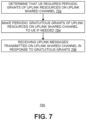
- FIG. 7 comprises a flow chart illustrating one exemplary embodiment of a method 700 of making periodic gratuitous grants of uplink shared channel resources.
- the embodiment of method 700 shown in FIG. 7 is described here as being implemented in the RAN system 100 of FIG. 1 , though it is to be understood that other embodiments can be implemented in other ways.
- the blocks of the flow diagram shown in FIG. 7 have been arranged in a generally sequential manner for ease of explanation; however, it is to be understood that this arrangement is merely exemplary, and it should be recognized that the processing associated with method 700 (and the blocks shown in FIG. 7 ) can occur in a different order (for example, where at least some of the processing associated with the blocks is performed in parallel and/or in an event-driven manner). Also, most standard exception handling is not described here for ease of explanation; however, it is to be understood that method 700 can and typically would include such exception handling.
- Method 700 comprises determining that a UE 108 requires periodic grants of uplink resources on the uplink shared channel (block 702). This is typically done by the serving base station 102. This can be done, for example, by the serving base station 102 determining that a UE 108 is involved in a message exchange that, due to its nature, will involve periodic grants of uplink resources. Also, this can be done by the serving base station 102 detecting a pattern of periodic grants of uplink resources on the uplink shared channel.
- Method 700 further comprises making periodic gratuitous grants of uplink resources to the UE 108 if needed (block 704) and receiving, by the base station 102, uplink messages periodically transmitted by the UE 108 on the uplink shared channel (block 706).
- Each such periodic gratuitous grant is made if a scheduling request is not received from the UE 108 within a given period of time. If a scheduling request is received within a given period of time, then a gratuitous grant is not needed and is not made. Instead, in that situation, the serving base station 102 will have an opportunity make a grant of uplink resource to the UE 108 for the current period in the "normal" manner.
- the methods and techniques described here may be implemented in digital electronic circuitry, or with a programmable processor (for example, a specialpurpose processor or a general-purpose processor such as a computer) firmware, software, or in combinations of them.
- Apparatus embodying these techniques may include appropriate input and output devices, a programmable processor, and a storage medium tangibly embodying program instructions for execution by the programmable processor.
- a process embodying these techniques may be performed by a programmable processor executing a program of instructions to perform desired functions by operating on input data and generating appropriate output.
- the techniques may advantageously be implemented in one or more programs that are executable on a programmable system including at least one programmable processor coupled to receive data and instructions from, and to transmit data and instructions to, a data storage system, at least one input device, and at least one output device.
- a processor will receive instructions and data from a read-only memory and/or a random access memory.
- Storage devices suitable for tangibly embodying computer program instructions and data include all forms of non-volatile memory, including by way of example semiconductor memory devices, such as EPROM, EEPROM, and flash memory devices; magnetic disks such as internal hard disks and removable disks; magneto-optical disks; and DVD disks. Any of the foregoing may be supplemented by, or incorporated in, specially-designed application-specific integrated circuits (ASICs).
- ASICs application-specific integrated circuits
Landscapes
- Engineering & Computer Science (AREA)
- Computer Networks & Wireless Communication (AREA)
- Signal Processing (AREA)
- Mobile Radio Communication Systems (AREA)
Claims (15)
- Procédé exécuté par une station de base (102) en relation avec une communication avec un équipement utilisateur (108), UE, le procédé comprenant les étapes consistant à :envoyer un message de demande à partir de la station de base à l'UE (108) sur un canal de liaison descendante ;réaliser, par l'intermédiaire de la station de base (102), un octroi gratuit, à l'UE (108), de ressources sur un canal de liaison montante pour que l'UE (108) transmette un message de réponse sur le canal de liaison montante, dans lequel le message de réponse répond au message de demande et dans lequel l'octroi gratuit est faite sans attendre une demande de l'UE (108) pour une attribution de ressources sur le canal de liaison montante pour que l'UE (108) transmette le message de réponse sur le canal de liaison montante ; etrecevoir, par l'intermédiaire de la station de base (102), le message de réponse transmis par l'intermédiaire de l'UE (108) sur le canal de liaison montante en réponse à l'octroi gratuit ;dans lequel l'octroi gratuit est réalisé après qu'une durée de temps suffisante pour que l'UE (108) soit prêt à envoyer le message de réponse se soit écoulée sans que la station de base (102) ait reçu une demande de programmation de la part de l'UE (108) ; etdans lequel le message de demande et le message de réponse comprennent des messages de signalisation.
- Procédé selon la revendication 1, dans lequel le message de demande comprend un ensemble de paquets de demande ;
dans lequel la réalisation, par l'intermédiaire de la station de base (102), de l'octroi gratuit, à l'UE (108), des ressources sur le canal de liaison montante pour que l'UE (108) transmette le message de réponse sur le canal de liaison montante comprend les étapes consistant à :déterminer quand la station de base (102) reçoit un retour indiquant que chaque paquet de demande a été reçu avec succès par l'UE (108) ;lorsque la station de base (102) reçoit un retour indiquant que chaque paquet de demande a été reçu avec succès par l'UE (108), déterminer si une file d'attente pour l'UE (108) est vide ; etlorsque la file d'attente pour l'UE (108) est vide, démarrer un minuteur ;
dans lequel l'octroi gratuit est réalisé après l'expiration du minuteur sans que la station de base (102) ait reçu une demande de programmation de la part de l'UE (108) ; etdans lequel le minuteur est initialisé avec la durée de temps suffisante pour que l'UE (108) soit prêt à envoyer le message de réponse. - Procédé selon la revendication 2, dans lequel chaque paquet de demande comprend un ensemble de mots de code ;
dans lequel la détermination du moment où la station de base (102) reçoit un retour indiquant que chaque paquet de demande a été reçu avec succès par l'UE (108) comprend les étapes consistant à :
déterminer quand la station de base (102) reçoit un retour indiquant que tous les mots de code de chaque paquet de demande ont été reçus avec succès par l'UE (108). - Procédé selon la revendication 2, dans lequel la station de base (102) reçoit un retour de demande de répétition automatique hybride, HARQ, indiquant si chaque paquet de demande a été reçu avec succès par l'UE (108).
- Procédé selon la revendication 2, dans lequel le message de demande est retransmis si un minuteur de retransmission expire sans que le message de réponse ait été reçu par la station de base (102).
- Procédé selon la revendication 1, dans lequel la réalisation, par la station de base (102), de l'octroi gratuit, à l'UE (108), des ressources sur le canal de liaison montante pour que l'UE (108) transmette le message de réponse sur le canal de liaison montante comprend les étapes consistant à :
programmer des ressources pour au moins l'un des éléments suivants afin de ne pas chevaucher un état d'écart de mesure ON ou un état de réception discontinue ON de l'UE (108) :transmettre l'octroi gratuit à l'UE (108) ; ettransmettre le message de réponse à partir de l'UE (108) à la station de base (102) sur le canal de liaison montante. - Procédé selon la revendication 1, dans lequel le message de demande comprend un dernier message dans une série de messages de demande consécutifs envoyés à l'UE (108).
- Station de base (102) configurée pour communiquer sans fil avec un équipement utilisateur (108), UE, la station de base (102) comprenant :une radio (114) configurée pour communiquer sans fil avec un UE (108) ; etau moins un processeur (116) est configuré pour amener la station de base (102) à effectuer les étapes suivantes consistant à :envoyer un message de demande à partir de la station de base (102) à l'UE (108) sur un canal de liaison descendante ;réaliser, par l'intermédiaire de la station de base (102), un octroi gratuit, à l'UE (108), de ressources sur un canal de liaison montante pour que l'UE (108) transmette un message de réponse sur le canal de liaison montante, dans laquelle le message de réponse répond au message de demande et dans laquelle l'octroi gratuit est réalisée sans attendre une demande de l'UE (108) pour un octroi de ressources sur le canal de liaison montante pour que l'UE (108) transmette le message de réponse sur le canal de liaison montante ; etrecevoir, par l'intermédiaire de la station de base (102), le message de réponse transmis par l'intermédiaire de l'UE (108) sur le canal de liaison montante en réponse à l'octroi gratuit ;dans laquelle l'octroi gratuit est réalisé après qu'une durée de temps suffisante pour que l'UE (108) soit prêt à envoyer le message de réponse se soit écoulée sans que la station de base (102) ait reçu une demande de programmation de la part de l'UE (108) ; etdans laquelle le message de demande et le message de réponse comprennent des messages de signalisation.
- Station de base (102) selon la revendication 8, dans laquelle le message de demande comprend un ensemble de paquets de demande ;
dans laquelle le au moins un processeur (116) est configuré pour amener la station de base (102) à réaliser, par l'intermédiaire de la station de base (102), l'octroi gratuit, à l'UE (108), des ressources sur le canal de liaison montante pour que l'UE (108) transmette le message de réponse sur le canal de liaison montante en amenant la station de base (102) à réaliser les étapes consistant à :déterminer quand la station de base (102) reçoit un retour indiquant que chaque paquet de demande a été reçu avec succès par l'UE (108) ;lorsque la station de base (102) reçoit un retour indiquant que chaque paquet de demande a été reçu avec succès par l'UE (108), déterminer si une file d'attente pour l'UE (108) est vide ; etlorsque la file d'attente pour l'UE (108) est vide, démarrer un minuteur ;dans laquelle l'octroi gratuit est réalisé après l'expiration du minuteur sans que la station de base (102) ait reçu la demande de programmation de la part de l'UE (108) ; etdans laquelle le minuteur est initialisé avec la durée de temps suffisante pour que l'UE (108) soit prêt à envoyer le message de réponse. - Station de base (102) selon la revendication 9, dans laquelle chaque paquet de demande comprend un ensemble de mots de code ;
dans laquelle au moins un processeur (116) est configuré pour déterminer quand la station de base (102) reçoit un retour indiquant que chaque paquet de demande a été reçu avec succès par l'UE (108) en amenant la station de base (102) à réaliser l'étape consistant à :
déterminer quand la station de base (102) reçoit un retour indiquant que tous les mots de code de chaque paquet de demande ont été reçus avec succès par l'UE (108). - Station de base (102) selon la revendication 10, dans laquelle la station de base (102) reçoit un retour de demande de répétition automatique hybride, HARQ, indiquant si chaque mot de code de chaque paquet de demande a été reçu avec succès par l'UE (108).
- Station de base (102) selon la revendication 9, dans laquelle la station de base (102) reçoit une retour de demande de répétition automatique hybride, HARQ, indiquant si chaque paquet de demande a été reçu avec succès par l'UE (108).
- Station de base (102) selon la revendication 9, dans laquelle le message de demande est retransmis si un minuteur de retransmission expire sans que le message de réponse ait été reçu par la station de base (102).
- Station de base (102) selon la revendication 8, dans laquelle au moins un processeur (116) est configuré pour amener la station de base (102) à réaliser, par l'intermédiaire de la station de base (102), l'octroi gratuit, à l'UE (108), des ressources sur le canal de liaison montante pour que l'UE (108) transmette le message de réponse sur le canal de liaison montante en amenant la station de base (102) à réaliser les étapes consistant à :
programmer des ressources pour au moins l'une des éléments suivants afin de ne pas chevaucher un état d'écart de mesure ON ou un état de réception discontinue ON de l'UE (108) :transmettre l'octroi gratuit à l'UE (108) ;transmettre le message de réponse à partir de l'UE (108) à la station de base (102) sur le canal de liaison montante. - Station de base (102) selon la revendication 8, dans laquelle le message de demande comprend un dernier message dans une série de messages de demande consécutifs envoyés à l'UE (108).
Applications Claiming Priority (2)
| Application Number | Priority Date | Filing Date | Title |
|---|---|---|---|
| US201862668738P | 2018-05-08 | 2018-05-08 | |
| PCT/US2019/031187 WO2019217469A1 (fr) | 2018-05-08 | 2019-05-07 | Attributions de pusch gratuites pendant des procédures de connexion rrc lte et de rattachement nas |
Publications (3)
| Publication Number | Publication Date |
|---|---|
| EP3791664A1 EP3791664A1 (fr) | 2021-03-17 |
| EP3791664A4 EP3791664A4 (fr) | 2022-01-26 |
| EP3791664B1 true EP3791664B1 (fr) | 2024-07-31 |
Family
ID=68464463
Family Applications (1)
| Application Number | Title | Priority Date | Filing Date |
|---|---|---|---|
| EP19800230.5A Active EP3791664B1 (fr) | 2018-05-08 | 2019-05-07 | Attributions de pusch gratuites pendant des procédures de connexion rrc lte et de rattachement nas |
Country Status (4)
| Country | Link |
|---|---|
| US (1) | US11716737B2 (fr) |
| EP (1) | EP3791664B1 (fr) |
| CN (1) | CN112042255A (fr) |
| WO (1) | WO2019217469A1 (fr) |
Families Citing this family (3)
| Publication number | Priority date | Publication date | Assignee | Title |
|---|---|---|---|---|
| US11116000B2 (en) | 2018-05-08 | 2021-09-07 | Commscope Technologies Llc | Proactive PUSCH grants to prevent rate throttling |
| BR112021001479A2 (pt) * | 2018-08-10 | 2021-04-27 | Telefonaktiebolaget Lm Ericsson (Publ) | métodos para transmitir informações e para programar transmissão de informações, equipamento de usuário, meio legível, produto de programa de computador, e, nó de rede |
| WO2020167193A1 (fr) * | 2019-02-15 | 2020-08-20 | Sony Corporation | Procédés pour permettre la communication de données supplémentaires, dispositifs sans fil associés et nœuds de réseau radio |
Family Cites Families (39)
| Publication number | Priority date | Publication date | Assignee | Title |
|---|---|---|---|---|
| JP3821636B2 (ja) | 2000-08-21 | 2006-09-13 | 松下電器産業株式会社 | 通信端末装置、基地局装置および無線通信方法 |
| US20040174838A1 (en) * | 2003-03-04 | 2004-09-09 | Eero Sillasto | Method and arrangement for controlling network resources in mobile communication network |
| KR100668670B1 (ko) * | 2005-11-28 | 2007-01-12 | 한국전자통신연구원 | 휴대 인터넷 시스템에서 기지국의 역방향 스케쥴링 시스템및 방법 |
| EP3048849B1 (fr) | 2006-03-07 | 2017-06-21 | Panasonic Corporation | Réduction de surcharge de signalisation de contrôle de liaison montante dans un système de communication mobile |
| EP2195951A4 (fr) | 2007-10-02 | 2013-01-23 | Ericsson Telefon Ab L M | Inclusion dans l'allocation de liaison montante d'une indication de quantité spécifique de cqi devant être reportée |
| EP2255588B1 (fr) * | 2008-03-20 | 2018-05-09 | Telefonaktiebolaget LM Ericsson (publ) | Programmation de rapports de mesure de liaison montante |
| NZ593644A (en) * | 2009-02-09 | 2014-03-28 | Ericsson Telefon Ab L M | Method and arrangement in a wireless communication system |
| US9055576B2 (en) | 2009-10-08 | 2015-06-09 | Qualcomm Incorporated | Uplink resource allocation for LTE advanced |
| CN102918911B (zh) * | 2010-04-06 | 2015-12-16 | 意大利电信股份公司 | 处理通信网络中的队列的方法和系统、相应的计算机程序产品 |
| CN102387009B (zh) | 2010-09-02 | 2014-07-02 | 中兴通讯股份有限公司 | 一种无线链路控制层上行传输的方法和演进的节点b |
| EP2724584A1 (fr) * | 2011-06-21 | 2014-04-30 | Telefonaktiebolaget LM Ericsson (PUBL) | N ud de réseau et procédé relatif à l'estimation de tampon |
| US10462690B2 (en) | 2011-08-05 | 2019-10-29 | Telefonaktiebolaget Lm Ericsson (Publ) | RLC status reporting for eight-carrier HSDPA |
| EP2557882A1 (fr) | 2011-08-10 | 2013-02-13 | MIMOON GmbH | Procédé et appareil de planification de flux optimisé |
| US8913997B2 (en) * | 2011-09-09 | 2014-12-16 | Nokia Siemens Networks Oy | Application performance improvement in radio networks |
| US8909249B2 (en) * | 2012-02-29 | 2014-12-09 | Keysight Technologies, Inc. | Passive uplink time difference of arrival positioning and tracking system |
| WO2014025292A1 (fr) * | 2012-08-06 | 2014-02-13 | Telefonaktiebolaget L M Ericsson (Publ) | Démarrage de temporisateur d'avance temporelle pour transmissions en liaison montante |
| CN104685955B (zh) | 2012-09-28 | 2019-02-01 | Lg电子株式会社 | 上行链路传输方法和上行链路传输装置 |
| EP2912906B1 (fr) * | 2012-10-29 | 2019-06-12 | Telefonaktiebolaget LM Ericsson (publ) | Procédés et systèmes d'ordonnancement semi-persistant |
| WO2015055238A1 (fr) * | 2013-10-16 | 2015-04-23 | Telefonaktiebolaget L M Ericsson (Publ) | Procédé et appareil dans un système de communications sans fil |
| US10194457B2 (en) * | 2013-12-17 | 2019-01-29 | Telefonaktiebolaget Lm Ericsson (Publ) | Method and device for proactive allocation of uplink resources |
| GB2537064A (en) * | 2014-01-02 | 2016-10-05 | Zte Wistron Telecom Ab | Method and apparatus for cross-node scheduling with non-ideal backhaul |
| CN104811283A (zh) | 2014-01-23 | 2015-07-29 | 夏普株式会社 | 物理上行链路信道配置方法以及基站和用户设备 |
| US9474054B1 (en) | 2014-02-03 | 2016-10-18 | Sprint Spectrum L.P. | Management of resource allocation in a wireless communication system |
| CN106465401B (zh) * | 2014-02-28 | 2019-09-10 | Lg电子株式会社 | 在无线通信系统中发送具有低延迟的上行链路数据的方法和设备 |
| US9854527B2 (en) * | 2014-08-28 | 2017-12-26 | Apple Inc. | User equipment transmit duty cycle control |
| WO2016182342A1 (fr) | 2015-05-12 | 2016-11-17 | Lg Electronics Inc. | Procédé destiné à la transmission de pusch à base de contention dans un système de communication sans fil et dispositif s'y rapportant |
| WO2016185895A1 (fr) | 2015-05-15 | 2016-11-24 | 京セラ株式会社 | Terminal sans fil, station de base, et processeur |
| US10785791B1 (en) * | 2015-12-07 | 2020-09-22 | Commscope Technologies Llc | Controlling data transmission in radio access networks |
| CN105451345B (zh) | 2016-01-18 | 2020-07-14 | 中磊电子(苏州)有限公司 | 一种上行授权信息发送方法及基站 |
| KR101858998B1 (ko) * | 2016-01-25 | 2018-05-18 | 주식회사 큐셀네트웍스 | 이동통신 시스템에서의 상향링크 자원 할당 방법 및 장치 |
| US9820275B2 (en) * | 2016-04-15 | 2017-11-14 | Cisco Technology, Inc. | Proactive upstream scheduling for flows in a point-to-multipoint communications network |
| JP6683849B2 (ja) * | 2016-06-24 | 2020-04-22 | 華為技術有限公司Huawei Technologies Co.,Ltd. | スケジューリング方法及び基地局 |
| US10868655B2 (en) * | 2016-07-13 | 2020-12-15 | Cable Television Laboratories, Inc. | System and method for pipelining HARQ retransmissions for small cell backhaul |
| EP3526920B1 (fr) | 2016-10-28 | 2021-04-07 | Huawei Technologies Co., Ltd. | Station de base, equipement utilisateur et systeme pour communication sans fils et procédés correspondents |
| CN108024366A (zh) * | 2016-11-04 | 2018-05-11 | 北京三星通信技术研究有限公司 | 一种基于免调度的数据传输方法和设备 |
| AU2017405969B2 (en) * | 2017-03-23 | 2021-01-28 | Huawei Technologies Co., Ltd. | Configuration, indication and ACK/NACK for multiple HARQ grant-free transmission |
| WO2019023902A1 (fr) | 2017-07-31 | 2019-02-07 | 深圳市大疆创新科技有限公司 | Procédé et dispositif de commande de mode de communication |
| US10925047B2 (en) * | 2018-02-07 | 2021-02-16 | Huawei Technologies Co., Ltd. | Systems and methods for scheduling wireless communications |
| US11116000B2 (en) | 2018-05-08 | 2021-09-07 | Commscope Technologies Llc | Proactive PUSCH grants to prevent rate throttling |
-
2019
- 2019-05-07 EP EP19800230.5A patent/EP3791664B1/fr active Active
- 2019-05-07 WO PCT/US2019/031187 patent/WO2019217469A1/fr not_active Ceased
- 2019-05-07 CN CN201980028896.5A patent/CN112042255A/zh active Pending
- 2019-05-07 US US16/405,830 patent/US11716737B2/en active Active
Also Published As
| Publication number | Publication date |
|---|---|
| WO2019217469A1 (fr) | 2019-11-14 |
| US11716737B2 (en) | 2023-08-01 |
| EP3791664A1 (fr) | 2021-03-17 |
| EP3791664A4 (fr) | 2022-01-26 |
| CN112042255A (zh) | 2020-12-04 |
| US20190349982A1 (en) | 2019-11-14 |
Similar Documents
| Publication | Publication Date | Title |
|---|---|---|
| US12317291B2 (en) | Conditional uplink radio resource utilization in a cellular network | |
| US11166263B2 (en) | Selective reallocation of previously allocated radio resources | |
| EP3189699B1 (fr) | Évitement de collision pour l'attribution de ressources radio en liaison montante dans des intervalles de temps récurrents | |
| CN102474350A (zh) | 在无线通信系统中控制物理下行链路信道的监视操作的方法 | |
| JP5609990B2 (ja) | 無線通信装置 | |
| US10334621B2 (en) | Buffer status report | |
| EP3791664B1 (fr) | Attributions de pusch gratuites pendant des procédures de connexion rrc lte et de rattachement nas | |
| KR102067865B1 (ko) | 이동통신시스템에서의 스케줄링 요청(Scheduling Request)을 효율적으로 전송하는 방법 | |
| US11723065B2 (en) | Methods and nodes for decoding of contention based uplink transmissions | |
| KR20160140504A (ko) | 이동통신 시스템에서 경쟁기반 상향링크 데이터 송신 방법 및 경쟁기반 상향링크 자원 할당 방법 | |
| WO2025129389A1 (fr) | Procédé et appareil de retransmission de prs sl, dispositif et support de stockage | |
| JP2025537534A (ja) | ハンドオーバ中の時間的制約のある通信のためにデータドロップするための方法 | |
| HK1238842B (zh) | 一种蜂窝网络中无线电传送方法、装置、节点及介质 | |
| HK1238842A1 (en) | Conditional uplink radio resource utilization in a cellular network |
Legal Events
| Date | Code | Title | Description |
|---|---|---|---|
| STAA | Information on the status of an ep patent application or granted ep patent |
Free format text: STATUS: THE INTERNATIONAL PUBLICATION HAS BEEN MADE |
|
| PUAI | Public reference made under article 153(3) epc to a published international application that has entered the european phase |
Free format text: ORIGINAL CODE: 0009012 |
|
| STAA | Information on the status of an ep patent application or granted ep patent |
Free format text: STATUS: REQUEST FOR EXAMINATION WAS MADE |
|
| 17P | Request for examination filed |
Effective date: 20201004 |
|
| AK | Designated contracting states |
Kind code of ref document: A1 Designated state(s): AL AT BE BG CH CY CZ DE DK EE ES FI FR GB GR HR HU IE IS IT LI LT LU LV MC MK MT NL NO PL PT RO RS SE SI SK SM TR |
|
| AX | Request for extension of the european patent |
Extension state: BA ME |
|
| DAV | Request for validation of the european patent (deleted) | ||
| DAX | Request for extension of the european patent (deleted) | ||
| A4 | Supplementary search report drawn up and despatched |
Effective date: 20220107 |
|
| RIC1 | Information provided on ipc code assigned before grant |
Ipc: H04L 1/18 20060101ALI20211223BHEP Ipc: H04W 72/12 20090101ALI20211223BHEP Ipc: H04W 72/14 20090101AFI20211223BHEP |
|
| REG | Reference to a national code |
Ref legal event code: R079 Ref country code: DE Ref legal event code: R079 Ref document number: 602019056196 Country of ref document: DE Free format text: PREVIOUS MAIN CLASS: H04W0072140000 Ipc: H04W0072120000 |
|
| GRAP | Despatch of communication of intention to grant a patent |
Free format text: ORIGINAL CODE: EPIDOSNIGR1 |
|
| RIC1 | Information provided on ipc code assigned before grant |
Ipc: H04L 1/18 20060101ALI20240208BHEP Ipc: H04W 72/12 20090101AFI20240208BHEP |
|
| STAA | Information on the status of an ep patent application or granted ep patent |
Free format text: STATUS: GRANT OF PATENT IS INTENDED |
|
| INTG | Intention to grant announced |
Effective date: 20240314 |
|
| GRAS | Grant fee paid |
Free format text: ORIGINAL CODE: EPIDOSNIGR3 |
|
| GRAA | (expected) grant |
Free format text: ORIGINAL CODE: 0009210 |
|
| STAA | Information on the status of an ep patent application or granted ep patent |
Free format text: STATUS: THE PATENT HAS BEEN GRANTED |
|
| AK | Designated contracting states |
Kind code of ref document: B1 Designated state(s): AL AT BE BG CH CY CZ DE DK EE ES FI FR GB GR HR HU IE IS IT LI LT LU LV MC MK MT NL NO PL PT RO RS SE SI SK SM TR |
|
| REG | Reference to a national code |
Ref country code: CH Ref legal event code: EP Ref country code: GB Ref legal event code: FG4D |
|
| REG | Reference to a national code |
Ref country code: DE Ref legal event code: R096 Ref document number: 602019056196 Country of ref document: DE |
|
| REG | Reference to a national code |
Ref country code: IE Ref legal event code: FG4D |
|
| REG | Reference to a national code |
Ref country code: LT Ref legal event code: MG9D |
|
| REG | Reference to a national code |
Ref country code: NL Ref legal event code: MP Effective date: 20240731 |
|
| PG25 | Lapsed in a contracting state [announced via postgrant information from national office to epo] |
Ref country code: PT Free format text: LAPSE BECAUSE OF FAILURE TO SUBMIT A TRANSLATION OF THE DESCRIPTION OR TO PAY THE FEE WITHIN THE PRESCRIBED TIME-LIMIT Effective date: 20241202 |
|
| REG | Reference to a national code |
Ref country code: AT Ref legal event code: MK05 Ref document number: 1709768 Country of ref document: AT Kind code of ref document: T Effective date: 20240731 |
|
| PG25 | Lapsed in a contracting state [announced via postgrant information from national office to epo] |
Ref country code: PT Free format text: LAPSE BECAUSE OF FAILURE TO SUBMIT A TRANSLATION OF THE DESCRIPTION OR TO PAY THE FEE WITHIN THE PRESCRIBED TIME-LIMIT Effective date: 20241202 |
|
| PG25 | Lapsed in a contracting state [announced via postgrant information from national office to epo] |
Ref country code: NO Free format text: LAPSE BECAUSE OF FAILURE TO SUBMIT A TRANSLATION OF THE DESCRIPTION OR TO PAY THE FEE WITHIN THE PRESCRIBED TIME-LIMIT Effective date: 20241031 |
|
| PG25 | Lapsed in a contracting state [announced via postgrant information from national office to epo] |
Ref country code: NL Free format text: LAPSE BECAUSE OF FAILURE TO SUBMIT A TRANSLATION OF THE DESCRIPTION OR TO PAY THE FEE WITHIN THE PRESCRIBED TIME-LIMIT Effective date: 20240731 Ref country code: FI Free format text: LAPSE BECAUSE OF FAILURE TO SUBMIT A TRANSLATION OF THE DESCRIPTION OR TO PAY THE FEE WITHIN THE PRESCRIBED TIME-LIMIT Effective date: 20240731 Ref country code: PL Free format text: LAPSE BECAUSE OF FAILURE TO SUBMIT A TRANSLATION OF THE DESCRIPTION OR TO PAY THE FEE WITHIN THE PRESCRIBED TIME-LIMIT Effective date: 20240731 Ref country code: GR Free format text: LAPSE BECAUSE OF FAILURE TO SUBMIT A TRANSLATION OF THE DESCRIPTION OR TO PAY THE FEE WITHIN THE PRESCRIBED TIME-LIMIT Effective date: 20241101 |
|
| PG25 | Lapsed in a contracting state [announced via postgrant information from national office to epo] |
Ref country code: BG Free format text: LAPSE BECAUSE OF FAILURE TO SUBMIT A TRANSLATION OF THE DESCRIPTION OR TO PAY THE FEE WITHIN THE PRESCRIBED TIME-LIMIT Effective date: 20240731 |
|
| PG25 | Lapsed in a contracting state [announced via postgrant information from national office to epo] |
Ref country code: LV Free format text: LAPSE BECAUSE OF FAILURE TO SUBMIT A TRANSLATION OF THE DESCRIPTION OR TO PAY THE FEE WITHIN THE PRESCRIBED TIME-LIMIT Effective date: 20240731 |
|
| PG25 | Lapsed in a contracting state [announced via postgrant information from national office to epo] |
Ref country code: AT Free format text: LAPSE BECAUSE OF FAILURE TO SUBMIT A TRANSLATION OF THE DESCRIPTION OR TO PAY THE FEE WITHIN THE PRESCRIBED TIME-LIMIT Effective date: 20240731 Ref country code: IS Free format text: LAPSE BECAUSE OF FAILURE TO SUBMIT A TRANSLATION OF THE DESCRIPTION OR TO PAY THE FEE WITHIN THE PRESCRIBED TIME-LIMIT Effective date: 20241130 |
|
| PG25 | Lapsed in a contracting state [announced via postgrant information from national office to epo] |
Ref country code: HR Free format text: LAPSE BECAUSE OF FAILURE TO SUBMIT A TRANSLATION OF THE DESCRIPTION OR TO PAY THE FEE WITHIN THE PRESCRIBED TIME-LIMIT Effective date: 20240731 |
|
| PG25 | Lapsed in a contracting state [announced via postgrant information from national office to epo] |
Ref country code: ES Free format text: LAPSE BECAUSE OF FAILURE TO SUBMIT A TRANSLATION OF THE DESCRIPTION OR TO PAY THE FEE WITHIN THE PRESCRIBED TIME-LIMIT Effective date: 20240731 Ref country code: RS Free format text: LAPSE BECAUSE OF FAILURE TO SUBMIT A TRANSLATION OF THE DESCRIPTION OR TO PAY THE FEE WITHIN THE PRESCRIBED TIME-LIMIT Effective date: 20241031 |
|
| PG25 | Lapsed in a contracting state [announced via postgrant information from national office to epo] |
Ref country code: RS Free format text: LAPSE BECAUSE OF FAILURE TO SUBMIT A TRANSLATION OF THE DESCRIPTION OR TO PAY THE FEE WITHIN THE PRESCRIBED TIME-LIMIT Effective date: 20241031 Ref country code: PL Free format text: LAPSE BECAUSE OF FAILURE TO SUBMIT A TRANSLATION OF THE DESCRIPTION OR TO PAY THE FEE WITHIN THE PRESCRIBED TIME-LIMIT Effective date: 20240731 Ref country code: NO Free format text: LAPSE BECAUSE OF FAILURE TO SUBMIT A TRANSLATION OF THE DESCRIPTION OR TO PAY THE FEE WITHIN THE PRESCRIBED TIME-LIMIT Effective date: 20241031 Ref country code: NL Free format text: LAPSE BECAUSE OF FAILURE TO SUBMIT A TRANSLATION OF THE DESCRIPTION OR TO PAY THE FEE WITHIN THE PRESCRIBED TIME-LIMIT Effective date: 20240731 Ref country code: LV Free format text: LAPSE BECAUSE OF FAILURE TO SUBMIT A TRANSLATION OF THE DESCRIPTION OR TO PAY THE FEE WITHIN THE PRESCRIBED TIME-LIMIT Effective date: 20240731 Ref country code: IS Free format text: LAPSE BECAUSE OF FAILURE TO SUBMIT A TRANSLATION OF THE DESCRIPTION OR TO PAY THE FEE WITHIN THE PRESCRIBED TIME-LIMIT Effective date: 20241130 Ref country code: HR Free format text: LAPSE BECAUSE OF FAILURE TO SUBMIT A TRANSLATION OF THE DESCRIPTION OR TO PAY THE FEE WITHIN THE PRESCRIBED TIME-LIMIT Effective date: 20240731 Ref country code: GR Free format text: LAPSE BECAUSE OF FAILURE TO SUBMIT A TRANSLATION OF THE DESCRIPTION OR TO PAY THE FEE WITHIN THE PRESCRIBED TIME-LIMIT Effective date: 20241101 Ref country code: FI Free format text: LAPSE BECAUSE OF FAILURE TO SUBMIT A TRANSLATION OF THE DESCRIPTION OR TO PAY THE FEE WITHIN THE PRESCRIBED TIME-LIMIT Effective date: 20240731 Ref country code: ES Free format text: LAPSE BECAUSE OF FAILURE TO SUBMIT A TRANSLATION OF THE DESCRIPTION OR TO PAY THE FEE WITHIN THE PRESCRIBED TIME-LIMIT Effective date: 20240731 Ref country code: BG Free format text: LAPSE BECAUSE OF FAILURE TO SUBMIT A TRANSLATION OF THE DESCRIPTION OR TO PAY THE FEE WITHIN THE PRESCRIBED TIME-LIMIT Effective date: 20240731 Ref country code: AT Free format text: LAPSE BECAUSE OF FAILURE TO SUBMIT A TRANSLATION OF THE DESCRIPTION OR TO PAY THE FEE WITHIN THE PRESCRIBED TIME-LIMIT Effective date: 20240731 |
|
| PG25 | Lapsed in a contracting state [announced via postgrant information from national office to epo] |
Ref country code: RO Free format text: LAPSE BECAUSE OF FAILURE TO SUBMIT A TRANSLATION OF THE DESCRIPTION OR TO PAY THE FEE WITHIN THE PRESCRIBED TIME-LIMIT Effective date: 20240731 Ref country code: SM Free format text: LAPSE BECAUSE OF FAILURE TO SUBMIT A TRANSLATION OF THE DESCRIPTION OR TO PAY THE FEE WITHIN THE PRESCRIBED TIME-LIMIT Effective date: 20240731 Ref country code: DK Free format text: LAPSE BECAUSE OF FAILURE TO SUBMIT A TRANSLATION OF THE DESCRIPTION OR TO PAY THE FEE WITHIN THE PRESCRIBED TIME-LIMIT Effective date: 20240731 |
|
| PG25 | Lapsed in a contracting state [announced via postgrant information from national office to epo] |
Ref country code: EE Free format text: LAPSE BECAUSE OF FAILURE TO SUBMIT A TRANSLATION OF THE DESCRIPTION OR TO PAY THE FEE WITHIN THE PRESCRIBED TIME-LIMIT Effective date: 20240731 |
|
| PG25 | Lapsed in a contracting state [announced via postgrant information from national office to epo] |
Ref country code: CZ Free format text: LAPSE BECAUSE OF FAILURE TO SUBMIT A TRANSLATION OF THE DESCRIPTION OR TO PAY THE FEE WITHIN THE PRESCRIBED TIME-LIMIT Effective date: 20240731 |
|
| PG25 | Lapsed in a contracting state [announced via postgrant information from national office to epo] |
Ref country code: IT Free format text: LAPSE BECAUSE OF FAILURE TO SUBMIT A TRANSLATION OF THE DESCRIPTION OR TO PAY THE FEE WITHIN THE PRESCRIBED TIME-LIMIT Effective date: 20240731 Ref country code: SK Free format text: LAPSE BECAUSE OF FAILURE TO SUBMIT A TRANSLATION OF THE DESCRIPTION OR TO PAY THE FEE WITHIN THE PRESCRIBED TIME-LIMIT Effective date: 20240731 |
|
| REG | Reference to a national code |
Ref country code: DE Ref legal event code: R097 Ref document number: 602019056196 Country of ref document: DE |
|
| PLBE | No opposition filed within time limit |
Free format text: ORIGINAL CODE: 0009261 |
|
| STAA | Information on the status of an ep patent application or granted ep patent |
Free format text: STATUS: NO OPPOSITION FILED WITHIN TIME LIMIT |
|
| 26N | No opposition filed |
Effective date: 20250501 |
|
| PGFP | Annual fee paid to national office [announced via postgrant information from national office to epo] |
Ref country code: GB Payment date: 20250527 Year of fee payment: 7 |
|
| PG25 | Lapsed in a contracting state [announced via postgrant information from national office to epo] |
Ref country code: SE Free format text: LAPSE BECAUSE OF FAILURE TO SUBMIT A TRANSLATION OF THE DESCRIPTION OR TO PAY THE FEE WITHIN THE PRESCRIBED TIME-LIMIT Effective date: 20240731 |
|
| REG | Reference to a national code |
Ref country code: DE Ref legal event code: R119 Ref document number: 602019056196 Country of ref document: DE |
|
| REG | Reference to a national code |
Ref country code: CH Ref legal event code: H13 Free format text: ST27 STATUS EVENT CODE: U-0-0-H10-H13 (AS PROVIDED BY THE NATIONAL OFFICE) Effective date: 20251223 |
|
| PG25 | Lapsed in a contracting state [announced via postgrant information from national office to epo] |
Ref country code: LU Free format text: LAPSE BECAUSE OF NON-PAYMENT OF DUE FEES Effective date: 20250507 |
|
| PG25 | Lapsed in a contracting state [announced via postgrant information from national office to epo] |
Ref country code: CH Free format text: LAPSE BECAUSE OF NON-PAYMENT OF DUE FEES Effective date: 20250531 |
|
| REG | Reference to a national code |
Ref country code: BE Ref legal event code: MM Effective date: 20250531 |
|
| PG25 | Lapsed in a contracting state [announced via postgrant information from national office to epo] |
Ref country code: MC Free format text: LAPSE BECAUSE OF FAILURE TO SUBMIT A TRANSLATION OF THE DESCRIPTION OR TO PAY THE FEE WITHIN THE PRESCRIBED TIME-LIMIT Effective date: 20240731 |
|
| PG25 | Lapsed in a contracting state [announced via postgrant information from national office to epo] |
Ref country code: IE Free format text: LAPSE BECAUSE OF NON-PAYMENT OF DUE FEES Effective date: 20250507 Ref country code: DE Free format text: LAPSE BECAUSE OF NON-PAYMENT OF DUE FEES Effective date: 20251202 |
|
| PG25 | Lapsed in a contracting state [announced via postgrant information from national office to epo] |
Ref country code: BE Free format text: LAPSE BECAUSE OF NON-PAYMENT OF DUE FEES Effective date: 20250531 |
|
| PG25 | Lapsed in a contracting state [announced via postgrant information from national office to epo] |
Ref country code: FR Free format text: LAPSE BECAUSE OF NON-PAYMENT OF DUE FEES Effective date: 20250531 |