EP3792253A1 - Composé ayant une nouvelle structure, complexe le comprenant, composition pharmaceutique anticancéreuse et médicament anticancéreux - Google Patents
Composé ayant une nouvelle structure, complexe le comprenant, composition pharmaceutique anticancéreuse et médicament anticancéreux Download PDFInfo
- Publication number
- EP3792253A1 EP3792253A1 EP19798872.8A EP19798872A EP3792253A1 EP 3792253 A1 EP3792253 A1 EP 3792253A1 EP 19798872 A EP19798872 A EP 19798872A EP 3792253 A1 EP3792253 A1 EP 3792253A1
- Authority
- EP
- European Patent Office
- Prior art keywords
- cancer
- compound
- present disclosure
- chemical formula
- complex
- Prior art date
- Legal status (The legal status is an assumption and is not a legal conclusion. Google has not performed a legal analysis and makes no representation as to the accuracy of the status listed.)
- Pending
Links
- 0 CCN(C1)*(*)(Cl)INC1IC(Nc(cc1)ccc1C1=Nc2ccccc2*1)=O Chemical compound CCN(C1)*(*)(Cl)INC1IC(Nc(cc1)ccc1C1=Nc2ccccc2*1)=O 0.000 description 6
Images





Classifications
-
- C—CHEMISTRY; METALLURGY
- C07—ORGANIC CHEMISTRY
- C07D—HETEROCYCLIC COMPOUNDS
- C07D277/00—Heterocyclic compounds containing 1,3-thiazole or hydrogenated 1,3-thiazole rings
- C07D277/60—Heterocyclic compounds containing 1,3-thiazole or hydrogenated 1,3-thiazole rings condensed with carbocyclic rings or ring systems
- C07D277/62—Benzothiazoles
- C07D277/64—Benzothiazoles with only hydrocarbon or substituted hydrocarbon radicals attached in position 2
- C07D277/66—Benzothiazoles with only hydrocarbon or substituted hydrocarbon radicals attached in position 2 with aromatic rings or ring systems directly attached in position 2
-
- C—CHEMISTRY; METALLURGY
- C07—ORGANIC CHEMISTRY
- C07D—HETEROCYCLIC COMPOUNDS
- C07D417/00—Heterocyclic compounds containing two or more hetero rings, at least one ring having nitrogen and sulfur atoms as the only ring hetero atoms, not provided for by group C07D415/00
- C07D417/14—Heterocyclic compounds containing two or more hetero rings, at least one ring having nitrogen and sulfur atoms as the only ring hetero atoms, not provided for by group C07D415/00 containing three or more hetero rings
-
- A—HUMAN NECESSITIES
- A61—MEDICAL OR VETERINARY SCIENCE; HYGIENE
- A61K—PREPARATIONS FOR MEDICAL, DENTAL OR TOILETRY PURPOSES
- A61K31/00—Medicinal preparations containing organic active ingredients
- A61K31/28—Compounds containing heavy metals
- A61K31/282—Platinum compounds
-
- A—HUMAN NECESSITIES
- A61—MEDICAL OR VETERINARY SCIENCE; HYGIENE
- A61K—PREPARATIONS FOR MEDICAL, DENTAL OR TOILETRY PURPOSES
- A61K31/00—Medicinal preparations containing organic active ingredients
- A61K31/33—Heterocyclic compounds
- A61K31/395—Heterocyclic compounds having nitrogen as a ring hetero atom, e.g. guanethidine or rifamycins
- A61K31/41—Heterocyclic compounds having nitrogen as a ring hetero atom, e.g. guanethidine or rifamycins having five-membered rings with two or more ring hetero atoms, at least one of which being nitrogen, e.g. tetrazole
- A61K31/425—Thiazoles
- A61K31/428—Thiazoles condensed with carbocyclic rings
-
- A—HUMAN NECESSITIES
- A61—MEDICAL OR VETERINARY SCIENCE; HYGIENE
- A61P—SPECIFIC THERAPEUTIC ACTIVITY OF CHEMICAL COMPOUNDS OR MEDICINAL PREPARATIONS
- A61P35/00—Antineoplastic agents
-
- C—CHEMISTRY; METALLURGY
- C07—ORGANIC CHEMISTRY
- C07D—HETEROCYCLIC COMPOUNDS
- C07D209/00—Heterocyclic compounds containing five-membered rings, condensed with other rings, with one nitrogen atom as the only ring hetero atom
- C07D209/02—Heterocyclic compounds containing five-membered rings, condensed with other rings, with one nitrogen atom as the only ring hetero atom condensed with one carbocyclic ring
- C07D209/04—Indoles; Hydrogenated indoles
- C07D209/10—Indoles; Hydrogenated indoles with substituted hydrocarbon radicals attached to carbon atoms of the hetero ring
- C07D209/14—Radicals substituted by nitrogen atoms, not forming part of a nitro radical
-
- C—CHEMISTRY; METALLURGY
- C07—ORGANIC CHEMISTRY
- C07F—ACYCLIC, CARBOCYCLIC OR HETEROCYCLIC COMPOUNDS CONTAINING ELEMENTS OTHER THAN CARBON, HYDROGEN, HALOGEN, OXYGEN, NITROGEN, SULFUR, SELENIUM OR TELLURIUM
- C07F15/00—Compounds containing elements of Groups 8, 9, 10 or 18 of the Periodic Table
- C07F15/0006—Compounds containing elements of Groups 8, 9, 10 or 18 of the Periodic Table compounds of the platinum group
-
- C—CHEMISTRY; METALLURGY
- C07—ORGANIC CHEMISTRY
- C07F—ACYCLIC, CARBOCYCLIC OR HETEROCYCLIC COMPOUNDS CONTAINING ELEMENTS OTHER THAN CARBON, HYDROGEN, HALOGEN, OXYGEN, NITROGEN, SULFUR, SELENIUM OR TELLURIUM
- C07F15/00—Compounds containing elements of Groups 8, 9, 10 or 18 of the Periodic Table
- C07F15/0006—Compounds containing elements of Groups 8, 9, 10 or 18 of the Periodic Table compounds of the platinum group
- C07F15/0086—Platinum compounds
- C07F15/0093—Platinum compounds without a metal-carbon linkage
Definitions
- the present disclosure relates to a compound having a novel structure, and more specifically, to a compound having a novel structure, a complex containing the same, a pharmaceutical composition having anticancer activity containing the compound or the complex, and an anticancer drug containing the compound or the complex or the composition.
- abnormal cells that normally need to be killed do not die, but excessively proliferate, and invades surrounding tissues and organs to form a tumor (lump), thus destroying or transforming an existing structure.
- the tumor composed of undifferentiated cells that disregards an order and proliferates indefinitely within these tissues may be defined as cancer.
- a recent cancer incidence is increasing rapidly compared to the past, due to the rapid development of industry and changes in the global ecosystem and diet. For this reason, various anticancer drugs are being researched and developed.
- cisplatin as a compound in which two chlorine and ammonia are coordinated with a platinum atom, is one of anticancer drugs widely used in cancer treatment.
- Cancer cells are characterized by continuous proliferation as they cannot inhibit cell division thereof. Since cisplatin inhibits cell division by blocking the reproductive ability of cancer cells by changes in the DNA sequence, it may prevent cancer cell proliferation and further prevent cancer from progressing. In other words, cisplatin exhibits anticancer activity.
- cisplatin is an excellent anticancer drug that is effective against many cancers, but unfortunately, it exhibits several side effects such as serious kidney damage. Further, it doesn't dissolve in water.
- One purpose of the present disclosure is to provide a compound with a novel structure with anticancer effect.
- Another purpose of the present disclosure is to provide a pharmaceutical composition containing the compound.
- Another purpose of the present disclosure is to provide a complex in which a compound having a novel structure with anticancer effect and a metal atom are coordinated with each other.
- Another purpose of the present disclosure is to provide a pharmaceutical composition containing the complex.
- Another purpose of the present disclosure is to provide an anticancer drug containing the pharmaceutical composition.
- the present disclosure provides a compound having a structure represented by a following Chemical Formula 1:
- X 1 represents NH, O or S
- A represents one of following Chemical Formulas A-1 to A-3:
- each of R 1 to R 8 independently represents H, OCH3 or F, and in the Chemical Formula A-3, X 2 represents NH, O or S.
- the compound according to the present disclosure may have a structure represented by one of following Chemical Formulas 1-1 to 1-3:
- the present disclosure provides a pharmaceutical composition containing the compound of the Chemical Formula 1, wherein the pharmaceutical composition may contain a pharmaceutically acceptable carrier.
- the composition is characterized by targeting cancer cells of at least one selected from a group consisting of colorectal cancer, breast cancer, liver cancer, brain glioma, lung cancer, prostate cancer, kidney cancer and cervical cancer, and having anticancer activity on the cancer cells.
- the composition is characterized by having anticancer activity against colorectal cancer, breast cancer, liver cancer, brain glioma, lung cancer, prostate cancer and kidney cancer.
- the composition is characterized by having anticancer activity against colorectal cancer, breast cancer, liver cancer, brain glioma, lung cancer, prostate cancer and kidney cancer.
- the composition is characterized by having anticancer activity against colorectal cancer, breast cancer, brain glioma, prostate cancer and kidney cancer.
- the present disclosure provides a complex containing the compound according to the present disclosure having a structure represented by the Chemical Formula 1 as a ligand, and a metal atom coordinated to the ligand.
- the metal atom may be platinum (Pt).
- the complex may have a structure represented by one of following Chemical Formulas 2-1 to 2-3:
- each of R 1 to R 8 independently represents H, OCH 3 or F
- each of X 1 and X 2 independently represents NH, O or S.
- the complex according to the present disclosure may be a complex characterized by having a structure represented by one of following Chemical Formulas 3-1 to 3-3:
- the present disclosure provides a pharmaceutical composition containing the complex.
- the composition is characterized by targeting cancer cells of at least one selected from a group consisting of colorectal cancer, breast cancer, liver cancer, brain glioma, lung cancer, prostate cancer, kidney cancer and cervical cancer, and having anticancer activity on the cancer cells.
- the composition is characterized by having anticancer activity against colorectal cancer, breast cancer, liver cancer, brain glioma, lung cancer, prostate cancer and kidney cancer.
- the composition is characterized by having anticancer activity against colorectal cancer.
- the composition is characterized by having anticancer activity against liver cancer.
- the present disclosure provides an anticancer drug containing, as an active ingredient, a compound according to the present disclosure as described above, the complex according to the present disclosure as described above or a pharmaceutical composition according to the present disclosure as described above.
- the compound having a novel structure, the complex containing the same, the pharmaceutical composition having anticancer activity containing the compound or the complex, and the anticancer drug containing the compound or the complex or the composition are provided.
- the compound has anticancer activity.
- the pharmaceutical composition containing the compound according to the present disclosure may target and kill cells of specific cancers such as colorectal cancer, breast cancer, liver cancer, brain glioma, lung cancer, prostate cancer, kidney cancer, and cervical cancer. That is, the composition has anticancer activity on the cancers.
- the complex according to the present disclosure in which the compound according to the present disclosure is coordinated with the metal atom is provided.
- the pharmaceutical composition containing the complex is provided.
- the complex according to the present disclosure may exhibit a synergistic effect on the anticancer activity based on the novel structure of the compound according to the present disclosure and the metal atom coordinated thereto, thus exhibiting very excellent anticancer activity. Therefore, the pharmaceutical composition containing the complex according to the present disclosure has excellent anticancer activity.
- the pharmaceutical composition containing the complex according to the present disclosure may target cells of specific cancers such as colorectal cancer, breast cancer, liver cancer, brain glioma, lung cancer, prostate cancer, kidney cancer, and cervical cancer, and have anticancer activity thereon.
- the anticancer drug containing the pharmaceutical composition according to the present disclosure has excellent anticancer activity.
- a compound according to the present disclosure has a structure represented by the following Chemical Formula 1:
- X 1 represents NH, O or S
- A represents one of following Chemical Formulas A-1 to A-3:
- each of R 1 to R 8 independently represents H, OCH3 or F
- X 2 represents NH, O or S
- * denotes a binding site
- the Chemical Formula 1-1 is denoted as L1
- Chemical Formula 1-2 is denoted as L2
- Chemical Formula 1-3 is denoted as L3.
- the compound according to the present disclosure may exhibit anticancer activity.
- the compound according to the present disclosure may target cancer cells, inhibits the growth of cancer cells and kills the cancer cells and thus have an anticancer activity.
- the compound according to the present disclosure may have anticancer activity against cancer cells of at least one among colorectal cancer, breast cancer, liver cancer, brain glioma, lung cancer, prostate cancer and kidney cancer. A more specific description thereof will be described later while describing the pharmaceutical composition according to the present disclosure.
- the compound according to the present disclosure may exhibit excellent solubility similar to that of cisplatin as an existing platinum-based anticancer drug.
- the compound according to the present disclosure may chelate to a metal atom.
- the metal atom may be platinum (Pt).
- the chelation of the compound according to the present disclosure may be performed by reacting the compound according to the present disclosure with an aqueous solution of potassium tetrachloroplatinate (II) (K 2 PtCl 4 ).
- the complex according to the present disclosure contains one of the compounds according to the present disclosure as described above as a ligand and a metal atom that coordinates with the ligand.
- the metal atom may be a metal such as platinum.
- the complex according to the present disclosure may have a structure represented by one of following Chemical Formulas 2-1 to 2-3:
- each of R 1 to R 8 independently represents H, OCH 3 or F
- each of X 1 and X 2 independently represents NH, O or S.
- the complex when the ligand is a compound represented by each of the Chemical Formulas 1-1 to 1-3, the complex may be represented by each of following Chemical Formulas 3-1 to 3-3.
- Chemical Formula 3-1 is denoted as L1Pt
- Chemical Formula 3-2 is denoted as L2Pt
- Chemical Formula 3-3 was denoted as L3Pt.
- the complex according to the present disclosure contains the compound according to the present disclosure as described above as a ligand, it may exhibit excellent anticancer activity. Further, the complex according to the present disclosure is soluble in water, even though it contains a hydrophobic benzothiazole unit. Therefore, the complex according to the present disclosure may be used as a water-soluble anticancer substance.
- the complex according to the present disclosure may exhibit a specifically higher anticancer activity by targeting a specific cancer cell, as described referring to the compound according to the present disclosure.
- the complex according to the present disclosure may have anticancer activity on cancer cells of at least any one among colorectal cancer, breast cancer, liver cancer, brain glioma, lung cancer, prostate cancer, and kidney cancer.
- the complex represented by the Chemical Formula 3-1 may have excellent anticancer activity on all of colorectal cancer, breast cancer, liver cancer, brain glioma, lung cancer, prostate cancer and kidney cancer.
- the complex represented by the Chemical Formula 3-1 may have excellent anticancer activity on cancer cells of prostate cancer in that the complex targets cancer cells of prostate cancer more reliably than the ligand compound itself does.
- the complex represented by the Chemical Formula 3-2 may have excellent anticancer activity on colorectal cancer.
- the complex represented by the Chemical Formula 3-1 may have excellent anticancer activity on liver cancer.
- the specific cancer was specifically mentioned and described above. However, this is intended to indicate that the complex according to the present disclosure has a higher anticancer activity on the specific cancer as mentioned above. This is not intended to indicate that the complex according to the present disclosure does not have anticancer activity on cancer other than the cancers as mentioned above.
- the compound according to the present disclosure and the complex containing the compound have excellent anticancer activity and may be used as anticancer substances.
- the compounds and complexes according to the present disclosure may exhibit excellent anticancer activity by specifically targeting the specific cancer cells due to their structure, and thus may be used as anticancer substances targeting the specific cancer cells. Accordingly, due to such characteristics, the pharmaceutical composition containing the compound according to the present disclosure and/or the complex according to the present disclosure containing the compound of the present disclosure as a ligand may be provided.
- the pharmaceutical composition according to the present disclosure contains an effective amount of the compound according to the present disclosure and a pharmaceutically acceptable carrier, and targets the cancer cells and has anticancer activity on the cancer cells.
- the cancer against the composition has anticancer activity may include at least one of colorectal cancer, breast cancer, liver cancer, brain glioma, lung cancer, prostate cancer, and kidney cancer.
- the pharmaceutical composition according to the present disclosure contains a compound of the Chemical Formula 1-1, that is, a compound in which A in Chemical Formula 1 has a structure represented by the Chemical Formula A-1
- the composition targets at least any one of colorectal cancer, breast cancer, liver cancer, brain glioma, lung cancer, prostate cancer, and kidney cancer, and may have excellent anticancer activity thereon.
- the pharmaceutical composition containing the compound of the Chemical Formula 1-1 according to the present disclosure has an excellent anticancer activity against colorectal cancer, breast cancer, liver cancer, brain glioma, lung cancer, prostate cancer and kidney cancer.
- it may have excellent anticancer activity against colorectal cancer, breast cancer, liver cancer, brain glioma, lung cancer, prostate cancer and kidney cancer.
- the pharmaceutical composition according to the present disclosure contains a compound of the Chemical Formula 1-2, that is, a compound in which A in Chemical Formula 1 has a structure represented by the Chemical Formula A-2
- the composition targets at least any one of colorectal cancer, breast cancer, liver cancer, brain glioma, lung cancer, prostate cancer, and kidney cancer, and may have excellent anticancer activity thereon.
- the pharmaceutical composition containing the compound of the Chemical Formula 1-2 according to the present disclosure has superior anticancer activity on colorectal cancer, breast cancer, liver cancer, brain glioma, lung cancer, prostate cancer and kidney cancer, compared to cisplatin and BTA. In particular, it may have excellent anticancer activity against liver cancer, brain glioma, lung cancer, prostate cancer and kidney cancer.
- the pharmaceutical composition according to the present disclosure contains a compound of the Chemical Formula 1-3, that is, a compound in which A in Chemical Formula 1 has a structure represented by the Chemical Formula A-3
- the composition targets at least any one of colorectal cancer, breast cancer, brain glioma, prostate cancer, and kidney cancer, and may have excellent anticancer activity.
- the pharmaceutical composition containing the compound of the Chemical Formula 1-3 according to the present disclosure may have very excellent anticancer activity against brain glioma, compared to cisplatin and BTA.
- the pharmaceutical composition according to the present disclosure contains an effective amount of the complex containing the compound according to the present disclosure as a ligand and a pharmaceutically acceptable carrier.
- the composition targets at least any one of colorectal cancer, breast cancer, liver cancer, brain glioma, lung cancer, prostate cancer, and kidney cancer, and may have excellent anticancer activity thereon.
- the pharmaceutical composition containing the compound of the Chemical Formula 3-1 according to the present disclosure has an excellent anticancer activity against colorectal cancer, breast cancer, liver cancer, brain glioma, lung cancer, prostate cancer and kidney cancer. In particular, it may have excellent anticancer activity against colorectal cancer, breast cancer, liver cancer, brain glioma, lung cancer, prostate cancer and kidney cancer.
- the pharmaceutical composition containing the complex according to the present disclosure contains a compound of the Chemical Formula 3-2, that is, a compound in which A of the ligand of the complex has a structure represented by the Chemical Formula A-2
- the composition targets colorectal cancer, and may have excellent anticancer activity thereon.
- the pharmaceutical composition containing the complex according to the present disclosure contains a compound of the Chemical Formula 3-3, that is, a compound in which A of the ligand of the complex has a structure represented by the Chemical Formula A-3
- the composition targets liver cancer and may have excellent anticancer activity.
- the pharmaceutical composition according to the present disclosure contains the compound according to the present disclosure or the complex according to the present disclosure have been described above.
- the pharmaceutical composition according to the present disclosure may contain both of the compound according to the present disclosure and the complex according to the present disclosure.
- the anticancer drug according to the present disclosure contains at least one of the compounds according to the present disclosure as described above and the complexes according to the present disclosure as described above or the pharmaceutical composition containing the compound and/or the complex as described above.
- the drug targets cancer cells and has anticancer activity on the cancer cells.
- the anticancer drug according to the present disclosure may be an anticancer drug having anticancer activity by targeting at least any one of colorectal cancer, breast cancer, liver cancer, brain glioma, lung cancer, prostate cancer, and kidney cancer.
- Benzothiazole aniline (5.20 g, 23.01 mmol) dissolved in pyridine (20 ml) was slowly added to the compound 1 (7.00 g, 23.01 mmol, 1.0 eq) dissolved in pyridine (40ml). Then, after the mixture was further stirred for 10 minutes, triphenyl phosphite (7.13 ml, 23.01 mmol) was added thereto. Then, the reaction solution was stirred at 80°C for 3 hours, and then stirred at room temperature overnight. Then, the resulting powder was filtered while being washed with distilled water and acetone. Then, the filtered precipitate was recrystallized using anhydrous acetonitrile.
- a light yellow solid that is, a compound according to Example 1 of the present disclosure, that is, 2,3-diamoniumtrifluoroacetate-N-(4-benzothiazol-2-yl-phenyl)-propionamide) (hereinafter, L1) was obtained (yield: 0.82 g, 90 %).
- Reaction Formula 3 The synthesis reaction of the compound L1 according to Example 1 of the present disclosure may be summarized as Reaction Formula 3 below:
- Example 1 of the present disclosure that is, L1 (540 mg, 1 mmol) was dissolved in anhydrous ethanol, and salicylaldehyde (0.270 ml, 2.1 mmol) was slowly dropped thereto while stirring at 40°C. Then, the mixture was stirred at 60° C for 3 hours, and then cooled to room temperature. Then, the resulting suspension was washed with ethanol and diethylether, and then filtered.
- Reaction Formula 4 The synthesis reaction of the compound L2 according to Example 2 of the present disclosure may be summarized as Reaction Formula 4 below:
- Reaction Formula 5 The synthesis reaction of the compound L3 according to Example 3 of the present disclosure may be summarized as Reaction Formula 5 below:
- Reaction Formula 7 The synthesis reaction of the complex L2Pt according to Example 5 of the present disclosure may be summarized as Reaction Formula 7 below:
- Reaction Formula 8 The synthesis reaction of the complex L3Pt according to Example 6 of the present disclosure may be summarized as Reaction Formula 8 below:
- L1, L2, L3, L1Pt, L2Pt, and L3Pt may be summarized and represented as Reaction Formula 9 below:
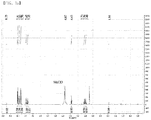
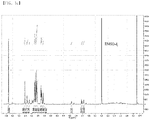
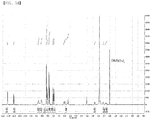
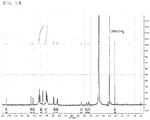
- FIGs. 1a to 1f are diagrams for describing the results of 1 H NMR analysis of the compounds L1, L2, and L3 according to Examples 1 to 3 of the present disclosure, and the complexes L1Pt, L2Pt, and L3Pt according to Examples 4 to 6, respectively.
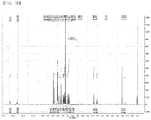
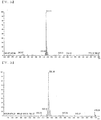
- FIGs. 2a to 2f are diagrams for describing the HR-FABMS analysis results of compounds L1, L2, and L3 according to Examples 1 to 3 of the present disclosure, and the complexes L1Pt, L2Pt, and L3Pt according to Examples 4 to 6, respectively.
- Anticancer effects of compounds and complexes according to the present disclosure L1, L2, L3, L1Pt, L2Pt, and L3Pt
- the cell viability analysis of cancer cells using CCK-8 was performed on several cancer cell lines (colorectal cancer cell line (HT-29 cell line), breast cancer cell line (MCF-7 and MDA-MB-231), cervical cancer cell line (HeLa cell line), liver cancer cell line (Huh-7 and HepG2), brain glioma cell line (C6), lung cancer (A549), prostate cancer (PC3), kidney cancer (Caki-2), normal liver cell line (AML-12), embryonic kidney cell line (HEK-293), neural stem cell line (NE-4C) and normal breast epithelial cell line (MCF10a)).
- cancer cell lines colonrectal cancer cell line (HT-29 cell line), breast cancer cell line (MCF-7 and MDA-MB-231), cervical cancer cell line (HeLa cell line), liver cancer cell line (Huh-7 and HepG2), brain glioma cell line
- CCK-8 Cell counting kit-8
- SST-8 Cell counting kit-8
- [2-(2-methoxy-4-nitrophenyl)-3-(4-nitrophenyl)(2,4-disulfophenyl)-2H-tetrazolium, monosodium salt] is reduced under the presence of an electron medium to produces a water-soluble formazan orange dye.
- the amount of the formazan dye produced by dehydrogenase in a cell is directly proportional to the number of living cells.
- various cancer cell lines derived from humans and normal cell lines of each tissue derived from humans and mice were used in this experiment.
- a complete growth medium corresponding to each cell line and having 10% of heat-inactivated FBS added thereto was used to maintain corresponding cells.
- the maintained cells were suspended in a volume of 200 ⁇ l at a density of 1 or 1.5 x 10 4 cells and planted in each well of a 96 well plate.
- the cells were attached to a 37°C and 5% CO2 incubator for more than 14 hours, and we waited for a stable state. The next day, we removed the medium from the well.
- CCK-8 on colorectal cancer cell line (HT-29), breast cancer cell line (MCF-7 and MDA-MB-231), cervical cancer cell line (HeLa), liver cancer cell line (Huh-7 and HepG2), brain glioma cell line (C6)), lung cancer cell line (A549), prostate cancer cell line (PC3) and renal cancer cell line (Caki-2) as treated with the compounds according to Examples 1 to 3 of the present disclosure and the complexe
- each compound was applied to the cells at 0, 2.5, 5, 10, 20, 30, 40, 50, 100, and 200 ⁇ M, and the cells was cultured in a medium free of serum for 24 hours.
- the measured absorbance value was converted to a % value based on a value of 0, such that a IC 50 value was calculated.
- Each experiment was performed 2 to 3 times and a standard deviation value was obtained.
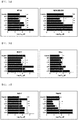
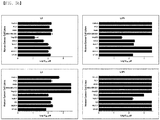
- FIG. 3 shows a graph in which a IC 50 value which is obtained based on 2 to 3 times executions of the cell viability analysis is converted to a Log IC 50 value.
- comparative reliability values for cisplatin via the One-way ANOVA Dunnett test were expressed as * p ⁇ 0.5, ** p ⁇ 0.01, *** p ⁇ 0.001.
- the comparative reliability values for BTA were expressed as # p ⁇ 0.5, ## p ⁇ 0.01, and ### p ⁇ 0.001.
- a red line represents the value of cisplatin.
- a blue line represents the value of BTA.
- cisplatin did not have a great effect on lung cancer, prostate cancer, and kidney cancer.
- BTA did not have greater effect on colorectal cancer, brain glioma, and lung cancer.
- L1 and L1Pt according to the present disclosure exhibited a greater toxic effect against cancer cell lines of colorectal cancer, breast cancer, liver cancer, brain glioma, lung cancer, prostate cancer, and kidney cancer than the cisplatin and BTA did.
- the L1 and L1Pt according to the present disclosure exhibited superior effects on breast cancer, liver cancer, brain glioma, lung cancer, prostate cancer, and kidney cancer than the rest of the compounds did.
- L2 according to the present disclosure had a greater toxic effect on cancer cell lines on lung cancer, prostate cancer, and kidney cancer than cisplatin did. L2 exhibited greater cell toxicity against colorectal cancer, breast cancer, liver cancer, brain glioma, lung cancer, prostate cancer, and kidney cancer than BTA did. Further, it could be identified that L2Pt exhibited greater cell toxicity on colorectal cancer than BTA did.
- L3 according to the present disclosure had greater cell toxicity on prostate cancer and kidney cancer than cisplatin did, and had greater cell toxicity on colorectal cancer breast cancer and brain glioma than BTA did. It could be identified that L3Pt only exerts cell toxicity effects on liver cancer.
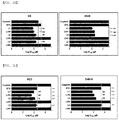
- FIG. 4 shows a graph in which a IC 50 value which is obtained based on 2 to 3 times executions of the cell viability analysis is converted to a Log IC 50 value.
- comparative reliability values for cisplatin via the One-way ANOVA Dunnett test were expressed as *** p ⁇ 0.001.
- the comparative reliability values for BTA were expressed as # p ⁇ 0.5.
- a red line represents the value of cisplatin.
- a blue line represents the value of BTA.
- L1 and L1Pt While cisplatin had the strong toxicity against normal hepatocytes (AML12), L1 and L1Pt according to the present disclosure exhibited the cytotoxicity decrease by more than 10 times. It could be identified that L2, L2Pt, L3, and L3Pt did not exhibit liver cytotoxicity.
- L1, L1Pt and L2 had weak cytotoxicity against breast epithelial cells (MCF10a). However, statistically, there was no significant difference between L1, L1Pt and L2 and cisplatin and BTA in terms of cytotoxicity. L2Pt, L3, and L3Pt exhibited weaker cytotoxicity or no cytotoxicity than cisplatin and BTA did.
- L1, L1Pt, L2, L2Pt, L3, and L3Pt had toxicity on normal kidney cells (HEK-293) similar or weaker than that of cisplatin.
- FIG. 5 shows result of comparing and analyzing effects of each of the compounds according to the present disclosure and cisplatin and BTA as controls in various cancer cell lines and normal cells.
Landscapes
- Chemical & Material Sciences (AREA)
- Organic Chemistry (AREA)
- Health & Medical Sciences (AREA)
- General Health & Medical Sciences (AREA)
- Veterinary Medicine (AREA)
- Medicinal Chemistry (AREA)
- Public Health (AREA)
- Pharmacology & Pharmacy (AREA)
- Life Sciences & Earth Sciences (AREA)
- Animal Behavior & Ethology (AREA)
- Chemical Kinetics & Catalysis (AREA)
- Nuclear Medicine, Radiotherapy & Molecular Imaging (AREA)
- General Chemical & Material Sciences (AREA)
- Epidemiology (AREA)
- Pharmaceuticals Containing Other Organic And Inorganic Compounds (AREA)
Applications Claiming Priority (3)
| Application Number | Priority Date | Filing Date | Title |
|---|---|---|---|
| KR20180053674 | 2018-05-10 | ||
| KR1020190053919A KR102304622B1 (ko) | 2018-05-10 | 2019-05-08 | 신규한 구조를 갖는 화합물, 이를 포함하는 착물, 항암용 약학 조성물 및 항암제 |
| PCT/KR2019/005531 WO2019216653A1 (fr) | 2018-05-10 | 2019-05-09 | Composé ayant une nouvelle structure, complexe le comprenant, composition pharmaceutique anticancéreuse et médicament anticancéreux |
Publications (2)
| Publication Number | Publication Date |
|---|---|
| EP3792253A1 true EP3792253A1 (fr) | 2021-03-17 |
| EP3792253A4 EP3792253A4 (fr) | 2022-02-16 |
Family
ID=68729497
Family Applications (1)
| Application Number | Title | Priority Date | Filing Date |
|---|---|---|---|
| EP19798872.8A Pending EP3792253A4 (fr) | 2018-05-10 | 2019-05-09 | Composé ayant une nouvelle structure, complexe le comprenant, composition pharmaceutique anticancéreuse et médicament anticancéreux |
Country Status (5)
| Country | Link |
|---|---|
| US (1) | US12098147B2 (fr) |
| EP (1) | EP3792253A4 (fr) |
| KR (1) | KR102304622B1 (fr) |
| CN (1) | CN112533907B (fr) |
| WO (1) | WO2019216653A1 (fr) |
Families Citing this family (4)
| Publication number | Priority date | Publication date | Assignee | Title |
|---|---|---|---|---|
| KR102304622B1 (ko) | 2018-05-10 | 2021-09-24 | (주)미래바이오팜 | 신규한 구조를 갖는 화합물, 이를 포함하는 착물, 항암용 약학 조성물 및 항암제 |
| KR102255717B1 (ko) | 2019-12-31 | 2021-05-25 | (주)미래바이오팜 | 간암 치료를 위한 경구용 약학 조성물 |
| CN117088917B (zh) * | 2023-08-19 | 2025-07-08 | 海南师范大学 | 一种高抗肿瘤活性的五元六元环金属铂配合物、其制备方法及其应用 |
| WO2025170438A1 (fr) * | 2024-02-07 | 2025-08-14 | (주)에트노바테라퓨틱스 | Composition pharmaceutique pour la prévention et le traitement de la fibrose et de maladies hépatiques |
Family Cites Families (4)
| Publication number | Priority date | Publication date | Assignee | Title |
|---|---|---|---|---|
| GB0513812D0 (en) | 2005-07-05 | 2005-08-10 | Isis Innovation | Compounds for imaging and therapy |
| KR102252540B1 (ko) * | 2016-11-16 | 2021-05-13 | 경북대학교 산학협력단 | 벤조사이아졸 유도체가 결합된 리간드-금속 복합체 및 이의 제조 방법 |
| KR101836463B1 (ko) * | 2017-01-25 | 2018-03-08 | 경북대학교 산학협력단 | 망간 착물을 함유하는 mri 조영제 |
| KR102304622B1 (ko) | 2018-05-10 | 2021-09-24 | (주)미래바이오팜 | 신규한 구조를 갖는 화합물, 이를 포함하는 착물, 항암용 약학 조성물 및 항암제 |
-
2019
- 2019-05-08 KR KR1020190053919A patent/KR102304622B1/ko active Active
- 2019-05-09 US US17/052,050 patent/US12098147B2/en active Active
- 2019-05-09 WO PCT/KR2019/005531 patent/WO2019216653A1/fr not_active Ceased
- 2019-05-09 EP EP19798872.8A patent/EP3792253A4/fr active Pending
- 2019-05-09 CN CN201980031400.XA patent/CN112533907B/zh active Active
Also Published As
| Publication number | Publication date |
|---|---|
| WO2019216653A1 (fr) | 2019-11-14 |
| CN112533907A (zh) | 2021-03-19 |
| CN112533907B (zh) | 2024-02-06 |
| KR102304622B1 (ko) | 2021-09-24 |
| EP3792253A4 (fr) | 2022-02-16 |
| KR20190129738A (ko) | 2019-11-20 |
| US20220024911A1 (en) | 2022-01-27 |
| US12098147B2 (en) | 2024-09-24 |
Similar Documents
| Publication | Publication Date | Title |
|---|---|---|
| Rogolino et al. | A versatile salicyl hydrazonic ligand and its metal complexes as antiviral agents | |
| US12098147B2 (en) | Compound having novel structure, complex comprising same, anti-cancer pharmaceutical composition, and anti-cancer drug | |
| Lv et al. | Lipophilicity-dependent ruthenium N-heterocyclic carbene complexes as potential anticancer agents | |
| Hayat et al. | Synthesis, biological evaluation and molecular docking study of benzimidazole derivatives as α-glucosidase inhibitors and anti-diabetes candidates | |
| Rotili et al. | Synthesis and structure–activity relationship of new cytotoxic agents targeting human glutathione-S-transferases | |
| Liu et al. | Synthesis and in vitro study of pseudo-peptide thioureas containing α-aminophosphonate moiety as potential antitumor agents | |
| Qiu et al. | Identification of new shikonin derivatives as STAT3 inhibitors | |
| Ahmed et al. | Sulfonamides containing curcumin scaffold: Synthesis, characterization, carbonic anhydrase inhibition and molecular docking studies | |
| Raghav et al. | Synthesis and evaluation of some semicarbazone-and thiosemicarbazone-based cathepsin B inhibitors | |
| Faihan et al. | Promising bio-active complexes of platinum (II) and palladium (II) derived from heterocyclic thiourea: Synthesis, characterization, DFT, molecular docking, and anti-cancer studies | |
| EP3567043B1 (fr) | Dérivés du acide propanoïque 2-[[5-[(4-hydroxy-3-chloro-2-méthyl)-phényl]-thiéno[2,3-d]pyrimidin-4-yl]oxy]-3-(2-méthoxybenzene) en tant qu'inhibiteurs mcl-1 et bcl-2 pour le traitement du cancer | |
| Begum et al. | Synthesis and urease inhibitory potential of benzophenone sulfonamide hybrid in vitro and in silico | |
| Habala et al. | Synthesis and structure-activity relationships of mono-and dialkyl-substituted oxaliplatin derivatives | |
| Hanifa et al. | Three isomeric 4-[(n-bromophenyl) carbamoyl] butanoic acids (n= 2, 3 and 4) as DNA intercalator: Synthesis, physicochemical characterization, antimicrobial activity, antioxidant potential and in silico study | |
| Khan et al. | Identification of 1, 2, 4-triazole-bearing Bis-Schiff base hybrid scaffolds: in vitro and in silico insights to develop promising anti-urease and anti-cancer agents | |
| Guo et al. | Discovery of new benzensulfonamide derivatives as tripedal STAT3 inhibitors | |
| Gül et al. | Design, synthesis and in vitro evaluations of new cyclotriphosphazenes as safe drug candidates | |
| Hamali et al. | Cu (II) complexes based on benzimidazole ligands: synthesis, characterization, DFT, molecular docking & bioactivity study | |
| US20120190874A1 (en) | Metal complexes having dual histone deacetylase inhibitory and dna-binding activity | |
| Mettu et al. | Mechanistic investigations on substituted benzene sulphonamides as apoptosis inducing anticancer agents | |
| Hassan et al. | Cytotoxicity, alpha-glucosidase inhibition and molecular docking studies of hydroxamic acid chromium (III) complexes | |
| Salimath et al. | Homoleptic complexes of titanium (iv) fused with O^ N^ O Schiff base derivatives: design, BSA–DNA interaction, molecular docking, DFT and cytotoxicity | |
| Murthy et al. | Synthesis, HOMO-LUMO analysis and antioxidant activity of novel tetrazole hybrids | |
| KR102252540B1 (ko) | 벤조사이아졸 유도체가 결합된 리간드-금속 복합체 및 이의 제조 방법 | |
| Gu et al. | Design, synthesis and biological evaluation of novel pyrimidine-phenylsulfonylfuroxan hybrids |
Legal Events
| Date | Code | Title | Description |
|---|---|---|---|
| STAA | Information on the status of an ep patent application or granted ep patent |
Free format text: STATUS: THE INTERNATIONAL PUBLICATION HAS BEEN MADE |
|
| PUAI | Public reference made under article 153(3) epc to a published international application that has entered the european phase |
Free format text: ORIGINAL CODE: 0009012 |
|
| STAA | Information on the status of an ep patent application or granted ep patent |
Free format text: STATUS: REQUEST FOR EXAMINATION WAS MADE |
|
| 17P | Request for examination filed |
Effective date: 20201106 |
|
| AK | Designated contracting states |
Kind code of ref document: A1 Designated state(s): AL AT BE BG CH CY CZ DE DK EE ES FI FR GB GR HR HU IE IS IT LI LT LU LV MC MK MT NL NO PL PT RO RS SE SI SK SM TR |
|
| AX | Request for extension of the european patent |
Extension state: BA ME |
|
| DAV | Request for validation of the european patent (deleted) | ||
| DAX | Request for extension of the european patent (deleted) | ||
| A4 | Supplementary search report drawn up and despatched |
Effective date: 20220114 |
|
| RIC1 | Information provided on ipc code assigned before grant |
Ipc: A61P 35/00 20060101ALI20220111BHEP Ipc: C07F 15/00 20060101ALI20220111BHEP Ipc: A61K 31/282 20060101ALI20220111BHEP Ipc: A61K 31/428 20060101ALI20220111BHEP Ipc: C07D 277/66 20060101AFI20220111BHEP |
|
| RAP3 | Party data changed (applicant data changed or rights of an application transferred) |
Owner name: ETNOVA THERAPEUTICS CORP. |