EP3793121B1 - Verfahren zur quasi-kollokationskonfiguration, endgerät und netzwerkgerät - Google Patents
Verfahren zur quasi-kollokationskonfiguration, endgerät und netzwerkgerät Download PDFInfo
- Publication number
- EP3793121B1 EP3793121B1 EP19799963.4A EP19799963A EP3793121B1 EP 3793121 B1 EP3793121 B1 EP 3793121B1 EP 19799963 A EP19799963 A EP 19799963A EP 3793121 B1 EP3793121 B1 EP 3793121B1
- Authority
- EP
- European Patent Office
- Prior art keywords
- signal
- physical
- reference signal
- quasi
- aperiodic
- Prior art date
- Legal status (The legal status is an assumption and is not a legal conclusion. Google has not performed a legal analysis and makes no representation as to the accuracy of the status listed.)
- Active
Links
Images

Classifications
-
- H—ELECTRICITY
- H04—ELECTRIC COMMUNICATION TECHNIQUE
- H04L—TRANSMISSION OF DIGITAL INFORMATION, e.g. TELEGRAPHIC COMMUNICATION
- H04L5/00—Arrangements affording multiple use of the transmission path
- H04L5/003—Arrangements for allocating sub-channels of the transmission path
- H04L5/0048—Allocation of pilot signals, i.e. of signals known to the receiver
-
- H—ELECTRICITY
- H04—ELECTRIC COMMUNICATION TECHNIQUE
- H04B—TRANSMISSION
- H04B17/00—Monitoring; Testing
- H04B17/30—Monitoring; Testing of propagation channels
- H04B17/373—Predicting channel quality or other radio frequency [RF] parameters
-
- H—ELECTRICITY
- H04—ELECTRIC COMMUNICATION TECHNIQUE
- H04L—TRANSMISSION OF DIGITAL INFORMATION, e.g. TELEGRAPHIC COMMUNICATION
- H04L5/00—Arrangements affording multiple use of the transmission path
- H04L5/003—Arrangements for allocating sub-channels of the transmission path
- H04L5/0053—Allocation of signalling, i.e. of overhead other than pilot signals
-
- H—ELECTRICITY
- H04—ELECTRIC COMMUNICATION TECHNIQUE
- H04L—TRANSMISSION OF DIGITAL INFORMATION, e.g. TELEGRAPHIC COMMUNICATION
- H04L5/00—Arrangements affording multiple use of the transmission path
- H04L5/0091—Signalling for the administration of the divided path, e.g. signalling of configuration information
- H04L5/0094—Indication of how sub-channels of the path are allocated
-
- H—ELECTRICITY
- H04—ELECTRIC COMMUNICATION TECHNIQUE
- H04W—WIRELESS COMMUNICATION NETWORKS
- H04W72/00—Local resource management
- H04W72/20—Control channels or signalling for resource management
- H04W72/23—Control channels or signalling for resource management in the downlink direction of a wireless link, i.e. towards a terminal
Definitions
- the present disclosure relates to the field of communications technology, in particular to a quasi co-location configuration method, a terminal and a network device.
- the two groups of signals have approximately the same experience in regard to at least one of a channel Doppler shift, a channel Doppler spread, an channel average delay, a channel delay spread or a channel spatial reception parameter, and a same reference signal may be used for large-scale parameter determination.
- QCL quasi co-location
- aperiodic reference signals are introduced. Some aperiodic reference signals may be triggered by downlink control information (Downlink Control Information, DCI).
- DCI Downlink Control Information
- a network device configures an aperiodic reference signal at a certain time instant, but a terminal fails to detect the DCI configured to trigger the aperiodic reference signal, then the terminal cannot determine parameter information, such as a Doppler shift, a Doppler spread, an average delay and a delay spread, of a physical channel or physical signal for which the aperiodic reference signal is used as a QCL source reference signal, which may lead to a failure in determining a large-scale parameter of the physical channel or physical signal.
- parameter information such as a Doppler shift, a Doppler spread, an average delay and a delay spread
- WO 2018/030849 A1 discloses a method for receiving a user equipment-specific reference signal-based data signal by a user equipment in a wireless communication system.
- WO 2018/038556 A1 discloses a communication method for merging, with an IoT technology, a 5G communication system for supporting a data transmission rate higher than that of a 4G system.
- MEDIATEK INC "Summary #2 for TRS", 3GPP DRAFT; R1-1805694 discusses potential specification refinements related to TRS.
- HUAWEI ET AL "Further discussion on introducing aperiodic TRS", 3GPP DRAFT; R1-1804443 relates to aperiodic TRS.
- MEDIATEK INC "Summary #2 for TRS V2" , 3GPP DRAFT; R1-1803438 discusses issues related to TRS.
- a quasi co-location configuration method, a terminal and a network device are provided in embodiments of the present disclosure, to solve a problem of determining a large-scale parameter of a physical channel or a physical signal.
- a quasi co-location parameter of the physical channel or the physical signal is determined in accordance with the aperiodic reference signal or the target physical signal associated with the aperiodic reference signal, such that it is ensured that a large-scale parameter corresponding to the physical channel or the physical signal is acquired, thereby ensuring normal transmission of the physical channel or the physical signal.
- LTE Long Term Evolution
- LTE-A LTE-Advanced
- FDMA frequency division multiple access
- OFDMA Orthogonal Frequency Division Multiple Access
- SC-FDMA single-carrier Frequency-Division Multiple Access
- SC-FDMA single-carrier Frequency-Division Multiple Access
- the CDMA system may implement such radio technologies as CDMA2000 and universal terrestrial radio access (Universal Terrestrial Radio Access, UTRA).
- UTRA includes wideband code division multiple access (Wideband Code Division Multiple Access, WCDMA) and other CDMA variants.
- the TDMA system may implement such radio technologies as global system for mobile communication (Global System for Mobile Communication, GSM).
- GSM Global System for Mobile Communication
- the OFDMA system may implement such radio technologies as ultra mobile broadband (Ultra Mobile Broadband, UMB), evolution-UTRA (Evolution-UTRA, E-UTRA), IEEE 802.11 (Wi-Fi), IEEE 802.16 (WiMAX), IEEE 802.20, Flash-OFDM.
- UTRA and E-UTRA are parts of universal mobile telecommunications system (Universal Mobile Telecommunications System, UMTS).
- LTE and more advanced LTE are new UMTS versions using E-UTRA.
- UTRA, E-UTRA, UMTS, LTE, LTE-A and GSM are described in literature from an organization called “3rd generation partnership project (3rd Generation Partnership Project, 3GPP)".
- CDMA2000 and UMB are described in literature from an organization called “3rd generation partnership project 2 (3GPP2)”.
- 3GPP2 3rd generation partnership project 2
- the technology described herein not only may be used for the systems and radio technologies mentioned above, but also may be used for other systems and radio technologies.
- a NR system is described for illustrative purpose in the following description, and NR terminologies are used in most of the following description, although these technologies may also be applied to applications other than the NR system.
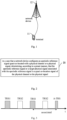
- Fig. 1 is a block diagram illustrating a wireless communication system to which embodiments of the present disclosure may be applied.
- the wireless communication system includes a terminal 11 and a network device 12.
- the terminal 11 may also be called a terminal device or user equipment (User Equipment, UE), and the terminal 11 may be a terminal side device, such as a mobile phone, a tablet personal computer, a laptop computer, a personal digital assistant (Personal Digital Assistant, PDA), a mobile internet device (Mobile Internet Device, MID), a wearable device or a vehicle-mounted device.
- PDA Personal Digital Assistant
- MID mobile internet device
- a wearable device or a vehicle-mounted device.
- the network device 12 may be a base station or a core network.
- the base station may be a base station of 5G or later version (for example, a gNB, a 5g NR NB or the like), or a base station in other communication systems (e.g., an eNB, a WLAN access point, other access points or the like).
- 5G or later version for example, a gNB, a 5g NR NB or the like
- a base station in other communication systems e.g., an eNB, a WLAN access point, other access points or the like.
- the base station may be referred to as a node B, an evolved node B, an access point, a base transceiver station (Base Transceiver Station, BTS), a radio base station, a radio transceiver, a basic service set (Basic Service Set, BSS), an extended service set (Extended Service Set, ESS), a B node, an evolved B node (eNB), a home node B, a home evolved node B, a WLAN access point, a WiFi node or some other suitable term in the field.
- BTS base transceiver Station
- BSS Basic Service Set
- ESS Extended Service Set
- a B node an evolved B node
- eNB evolved B node
- WLAN access point a WiFi node or some other suitable term in the field.
- WiFi node or some other suitable term in the field.
- the base station may communicate with the terminal 11 under the control of a base station controller.
- the base station controller may be a part of a core network or some base stations. Some base stations may communicate control information or user data with the core network via a backhaul. In some examples, some of these base stations may directly or indirectly communicate with each other via a backhaul link, which may be a wired or wireless communication link.
- the wireless communication system may support operations on multiple carriers (waveform signals of different frequencies).
- a multi-carrier transmitter may simultaneously transmit modulated signals on the multiple carriers.
- each communication link may be a multi-carrier signal modulated according to various radio technologies. Each modulated signal may be transmitted on a different carrier and may carry control information (e.g., a reference signal, a control channel, etc.), overhead information, data, etc.
- the base station may wirelessly communicate with the terminal 11 via one or more access point antennas. Each base station may provide communication coverage for its corresponding coverage area. The coverage area of an access point may be divided into sectors that each constitute only a part of the coverage area.
- the wireless communication system may include different types of base stations (for example, macro base stations, micro base stations or pico base stations). The base stations may also utilize different radio technologies, such as cellular or WLAN radio access technologies. The base stations may be associated with a same access network or operator deployment or associated with different access networks or operator deployments. The coverage areas of different base stations (including coverage areas of same type or different types of base stations, coverage areas using the same radio technology or different radio technologies, or coverage areas belonging to the same access network or different access networks) may overlap.
- a communication link in the wireless communication system may include an uplink (Uplink, UL) for carrying an uplink transmission (for example, from the terminal 11 to the network device 12), or a downlink (Downlink, DL) for carrying a downlink transmission (for example, from the network device 12 to the terminal 11).
- the UL transmission may also be referred to as a reverse link transmission, and the DL transmission may also be referred to as a forward link transmission.
- the downlink transmission may be performed by using a licensed frequency band, an unlicensed frequency band, or both.
- the uplink transmission may be performed by using a licensed frequency band, an unlicensed frequency band or both.
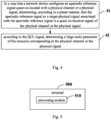
- a quasi co-location configuration method applied to the terminal side is provided in an embodiment of the present disclosure. As shown in Fig. 2 , the method may include the following steps.
- Step 21 in a case that a network device configures an aperiodic reference signal quasi-co-located with a physical channel or a physical signal, determining, according to a preset manner, that the aperiodic reference signal or a target physical signal associated with the aperiodic reference signal is a quasi co-location signal of the physical channel or the physical signal.
- the aperiodic reference signal mentioned here is a quasi co-location source reference signal (QCL source RS) configured by a network device for the physical channel or the physical signal.
- the aperiodic reference signal may include an aperiodic tracking reference signal (Tracking Reference Signal, TRS) and an aperiodic channel state information reference signal (Channel State Information Reference Signal, CSI-RS).
- a frequency offset, a time offset, a Doppler shift, a Doppler spread and a delay spread of a system are accurately estimated, in order to reduce overhead, it is necessary to avoid an always-on cell special reference signal (Cell Special Reference Signal, CRS).
- CRS Cell Special Reference Signal
- TRS tracking reference signal
- a receiving end may accurately estimate channel parameters based on TRS to improve accuracy of demodulation.
- the terminal may be configured with 4 columns of TRS in two consecutive slots.
- the terminal may be configured with 4 columns of TRS in two consecutive slots or 2 columns of TRS in one slot.
- TRS resources in the two consecutive slots or one slot may be referred to as a TRS burst.
- the TRS burst has a same period, bandwidth and sub-carrier position.
- a bandwidth of TRS is a smaller one of a bandwidth occupied by 50 resource blocks (RBs) and a bandwidth occupied by a bandwidth part (Bandwidth Part, BWP).
- TRS may also be a periodic reference signal, and a period of TRS may be 10ms, 20ms, 40ms or 80ms.
- aperiodic TRS are introduced.
- the aperiodic TRS is supported as an optional terminal capability. It should be noted that, only when the terminal is configured with an associated periodic TRS having a same burst length in a same BWP, may an aperiodic TRS be triggered for the terminal; otherwise the terminal will not expect the triggering of the aperiodic TRS.
- the aperiodic TRS and the associated periodic TRS have a same bandwidth, symbol position, subcarrier position and burst length, and satisfy a certain QCL relationship.
- TRS Parameter information such as a Doppler shift, a Doppler spread, an average delay and a delay spread may all be estimated according to TRS. If other physical signals or physical channels are quasi-co-located with TRS, then TRS may be used as a QCL source reference signal (RS) of these physical signals or physical channels. These physical signals or physical channels may use information estimated according to TRS such as a Doppler shift, a Doppler spread, an average delay and a delay spread. As a type of TRS, the aperiodic TRS may also be used as a QCL source reference signal of the physical signal or physical channel.
- RS QCL source reference signal
- CSI-RS for beam management has a function of beam indication. If other physical channels or physical signals are quasi-co-located with this type of CSI-RS, quasi co-location parameters of the CSI-RS may be used in determining large-scale parameters of the physical channels or physical signals.
- CSI-RS for channel state information measurement may also provide, in some scenarios, all the time, frequency and space parameters, such as an average delay, a Doppler shift, a delay spread, a Doppler spread and a spatial reception parameter. If other physical channels or physical signals are quasi-co-located with this type of CSI-RS, quasi co-location parameters of the CSI-RS may also be used in determining large-scale parameters of the physical channels or physical signals.
- Large-scale parameters may also be referred to as large-scale properties, and include one or more of following large-scale channel properties: a delay spread, a Doppler spread, a Doppler shift, an average delay and a spatial RX parameter.
- An original QCL source reference signal of the physical channel or the physical signal is the aperiodic reference signal (such as the aperiodic TRS and/or the aperiodic CSI-RS).
- the network device configures that a physical channel or a physical signal is to be transmitted at a time instant X, and configures an aperiodic reference signal as the QCL source reference signal for the physical channel or the physical signal.
- the terminal fails to detect DCI configured to trigger the aperiodic TRS, the terminal determines according to a preset manner that an aperiodic reference signal or a target physical signal associated with the aperiodic reference signal is a quasi co-location signal of the physical channel or the physical signal.
- That the terminal fails to detect the DCI configured to trigger the aperiodic reference signal may be that the terminal has not detected the DCI, or the terminal has detected the DCI but fails to receive the DCI correctly, i.e., fails to parse information carried by the DCI correctly.
- An association relationship between the aperiodic reference signal and the target physical signal is determined according to a quasi co-location relationship indicated by a high-layer signaling transmitted by the network device.
- the target physical signal is the periodic TRS.
- the association relationship between the aperiodic TRS and the periodic TRS refers to that the two TRS at least meet the following condition: the aperiodic TRS and the periodic TRS have the same bandwidth, symbol position, subcarrier position and burst length, and the aperiodic TRS and the associated periodic TRS satisfy a certain QCL relationship, i.e., QCLtype A+QCL type D.
- the target physical signal is at least one of a periodic TRS, a aperiodic TRS, a synchronization signal and PBCH block (Synchronization Signal and PBCH Block, SSB), a periodic CSI-RS, a semi-persistent CSI-RS and an aperiodic CSI-RS.
- SSB is used for downlink time and frequency synchronization during an initial access stage.
- SSB may provide all the time, frequency and space parameters.
- SSB may still provide time, frequency or space parameters for some channels or signals according to an indication in a signaling.
- SSB may provide a parameter on QCL type D for the aperiodic CSI-RS.
- a quasi co-location type of a quasi co-location relationship between the physical channel or the physical signal and the target physical signal is the same as a quasi co-location type of a quasi co-location relationship between the physical channel or the physical signal and the aperiodic reference signal.
- the quasi co-location type of the quasi co-location relationship between the physical channel or the physical signal and the aperiodic reference signal is QCL type A
- the quasi co-location type of the quasi co-location relationship between the physical channel or the physical signal and the target physical signal is also QCL type A.
- the quasi co-location type of the quasi co-location relationship between the physical channel or the physical signal and the aperiodic reference signal is QCL type D
- the quasi co-location type of the quasi co-location relationship between the physical channel or the physical signal and the target physical signal is also QCL type D.
- the quasi co-location type of the quasi co-location relationship between the physical channel or the physical signal and the aperiodic reference signal is QCL type A+D
- the quasi co-location type of the quasi co-location relationship between the physical channel or the physical signal and the target physical signal is also QCL type A+D.
- the preset manner may be predefined, or indicated by a first signaling received from the network device. That the preset manner may be predefined includes, but is not limited to: the preset manner is pre-defined in a protocol, the preset manner is agreed upon between the terminal and the network device in advance, and the like.
- the first signaling may include, but is not limited to, a DCI signaling, a high-layer signaling (such as an RRC parameter configuration signaling), or a medium access control (Medium Access Control, MAC) layer signaling, etc.
- a first scenario in a case that the aperiodic reference signal is received within a first time window, it is determined that the aperiodic reference signal is the quasi co-location signal of the physical channel or the physical signal.
- the network device configures the aperiodic TRS and the aperiodic CSI-RS as a QCL source reference signal of a certain physical signal.
- a QCL relationship between the aperiodic TRS and the physical signal is QCL type A
- a QCL relationship between the aperiodic CSI-RS and the physical signal is QCL type D.
- the terminal may directly use the aperiodic TRS and the aperiodic CSI-RS as a QCL signal of the physical signal.
- One or more aperiodic reference signals may be received within the first time window.
- the terminal may select an aperiodic reference signal as the QCL signal of the physical channel or the physical signal according to, but not limited to, the following manner: determining that a received aperiodic reference signal closest to the physical channel or the physical signal is the quasi co-location signal of the physical channel or the physical signal.
- the aperiodic reference signal may also include only the aperiodic TRS or aperiodic CSI-RS.
- aperiodic TRS or aperiodic CSI-RS.
- a second scenario in a case that the aperiodic reference signal is not received within the first time window, it is determined that the target physical signal associated with the aperiodic reference signal is the quasi co-location signal of the physical channel or the physical signal.
- the network device configures the aperiodic TRS and the aperiodic CSI-RS as a QCL source reference signal of a certain physical signal.
- a QCL relationship between the aperiodic TRS and the physical signal is QCL type A
- a QCL relationship between the aperiodic CSI-RS and the physical signal is QCL type D.
- the terminal may determine that the periodic TRS associated with the aperiodic TRS is a QCL signal of the physical signal, that is, determine that the periodic TRS associated with the aperiodic TRS is a new QCL source reference signal of the physical signal.
- a QCL relationship between the aperiodic TRS and the periodic TRS is QCL type A+QCL type D
- a QCL relationship between the periodic TRS and the physical signal is QCL type A.
- the terminal may determine that the target physical signal (such as SSB) associated with the aperiodic CSI-RS is the QCL signal of the physical signal, that is, the terminal may use the SSB associated with the aperiodic CSI-RS as a new QCL source reference signal of the physical signal.
- a QCL relationship between the aperiodic CSI-RS and the SSB is QCL type C+QCL type D
- a QCL relationship between the SSB and the physical signal is QCL type D.
- a target TRS that may be used to replace the aperiodic TRS may include, but is not limited to, at least one of the following types.
- Type 1 a periodic TRS associated with the aperiodic TRS.
- the association mentioned here may refer to that: the periodic TRS and the aperiodic TRS have a same bandwidth, symbol position, subcarrier position and burst length, and satisfy a certain quasi co-location relationship, e.g., at least one of QCL type A, QCL type B, QCL type C and QCL type D.
- the target TRS is a periodic TRS having a same bandwidth, symbol position, subcarrier position and burst length as the aperiodic TRS, and satisfying a certain quasi co-location relationship (such as QCL type A+QCL type D) with the aperiodic TRS.
- the terminal determines that the periodic TRS associated with the aperiodic TRS is a new quasi co-location QCL source reference signal of the physical channel or the physical signal.
- an aperiodic TRS last received in a preset time window before the physical channel or physical signal transmission may also be referred to as a search window or some other appropriate term in the field, which is not specifically limited in this embodiment.
- the aperiodic TRS last received in the preset time window mentioned here may refer to one of the aperiodic TRS received by the terminal within the preset time window that is closest to the physical channel or the physical signal. For example, assuming that the terminal receives an A-TRS1, an A-TRS2 and an A-TRS3 within the preset time window, and the A-TRS3 is closest to the physical channel or the physical signal, it is determined that the A-TRS3 is the target TRS.
- the terminal may determine that an aperiodic TRS that is received within the preset time window and is closest to the physical channel or the physical signal is a new QCL source reference signal of the physical channel or the physical signal.
- a TRS last received within the preset time window refers to one of the aperiodic TRS (A-TRS) and a periodic TRS associated with the A-TRS received by the terminal within the preset time window that is closest to the physical channel or the physical signal. For example, assuming that the terminal receives an A-TRS and a P-TRS (periodic TRS) within the preset time window, if the P-TRS is closest to the physical channel or the physical signal, it is determined that the P-TRS is the target TRS.
- A-TRS aperiodic TRS
- P-TRS periodic TRS
- the terminal may determine that a TRS that is received within the preset time window and is closest to the physical channel or the physical signal is a new QCL source reference signal of the physical channel or the physical signal.
- the preset manner is used to indicate which type of target TRS is used by the terminal. For example, the preset manner indicates that the terminal may only use the target TRS of type 1, then the terminal may only determine that the periodic TRS associated with the aperiodic TRS is the new quasi co-location QCL source reference signal of the physical channel or the physical signal in a case that the terminal fails to detect the downlink control information DCI configured to trigger the aperiodic tracking reference signal TRS.
- the preset manner indicates that the terminal may only use the target TRS of type 2, then the terminal may only determine that the aperiodic TRS that is received within the preset time window and is closest to the physical channel or the physical signal is the new quasi co-location QCL source reference signal of the physical channel or the physical signal.
- the preset manner indicates that the terminal may only use the target TRS of type 3, then the terminal may only determine that the TRS that is received within the preset time window and is closest to the physical channel or the physical signal is the new quasi co-location QCL source reference signal of the physical channel or the physical signal.
- the network device configures the aperiodic CSI-RS as a QCL source reference signal of a certain physical signal.
- a QCL relationship between the aperiodic CSI-RS and the physical signal is QCL type A+D.
- the terminal may use the target physical signal associated with the aperiodic CSI-RS as a new QCL source reference signal of the physical signal.
- the associated target physical signal includes the TRS and the SSB
- a QCL relationship between the TRS and the aperiodic CSI-RS is QCL type A
- a QCL relationship between the SSB and the aperiodic CSI-RS is QCL type D.
- the network device configures the aperiodic CSI-RS as a QCL source reference signal of a certain physical signal.
- a QCL relationship between the aperiodic CSI-RS and the physical signal is QCL type A+D.
- the terminal may use a first target physical signal received in a second time window and associated with the aperiodic CSI-RS as a new QCL source reference signal of the physical signal.
- the terminal determines in a preset manner that the second target physical signal associated with the first target physical signal is a quasi co-location signal of the physical channel or the physical signal.
- the terminal may use the aperiodic TRS received in the second time window and associated with the aperiodic CSI-RS as a new QCL source reference signal of the physical signal.
- the terminal determines that the periodic TRS associated with the aperiodic TRS is the quasi co-located signal of the physical channel or the physical signal.
- a QCL relationship between the aperiodic TRS and the periodic TRS is QCL type A+QCL type D
- a QCL relationship between the aperiodic TRS and the aperiodic CSI-RS is QCL type A
- a QCL relationship between the periodic TRS and the physical signal is QCL type A.
- a first time window corresponding to the aperiodic TRS may be different from a first time window corresponding to the aperiodic CSI-RS.
- Parameters of the first time window include, but are not limited to, at least one of a window length (a duration of the window), a start position of the window and an end position of the window.
- parameters of the preset time window only include the window length or the start position of the window, then the end position of the window is a default position, i.e., a time domain start position of a resource corresponding to the physical channel or the physical signal.
- the window length is Y
- the time domain start position of the resource corresponding to the physical channel or the physical signal is X
- the start position of the window is X-Y.
- the window length of the first time window is a period length of a periodic signal associated with the aperiodic reference signal.
- a window length of the first time window corresponding to the aperiodic TRS may be a period length of the periodic TRS associated with the aperiodic TRS.
- a window length of the first time window corresponding to the aperiodic CSI-RS may be a period length of the SSB, the periodic TRS or the periodic CSI-RS associated with the aperiodic CSI-RS.
- the window length of the first time window corresponding to the aperiodic CSI-RS may be selected from period lengths of these two periodic signals.
- the parameters of the first time window may be predefined, or may be indicated by a second signaling received from the network device. That the parameters of the first time window may be predefined includes, but is not limited to: the parameters of the first time window are pre-determined in a protocol, the parameters of the first time window are agreed upon between the terminal and the network device in advance and the like.
- the second signaling may include, but is not limited to: a DCI signaling, a high-layer signaling (such as a RRC parameter configuration signaling), or a medium access control MAC layer signaling, etc.
- the second time window is similar to the first time window, and for the parameter type and parameter configuration manner of the second time window, reference may be made to the embodiment of the first time window, thus a detailed description is not repeated herein.
- a third scenario in a case that the aperiodic reference signal and the target physical signal associated with the aperiodic reference signal are received within the first time window, it is determined that one, closest to the physical channel or the physical signal, of the aperiodic reference signal and the target physical signal is the quasi co-location signal of the physical channel or the physical signal.
- the terminal receives an aperiodic TRS1, an aperiodic TRS2 and an aperiodic TRS3 within the first time window, wherein the aperiodic TRS3 is closest to the physical channel or the physical signal, then the terminal determines that the aperiodic TRS3 is the QCL signal of the physical signal.
- the method in the embodiment of the present disclosure may further include a step 41 and a step 42.
- the step 41 is the same as the step 21, thus a detailed description is not repeated.
- the step 42 includes: according to the QCL signal, determining a large-scale parameter of the resource corresponding to the physical channel or the physical signal.
- the terminal determines in a preset manner that the configured aperiodic reference signal or target physical signal is a new QCL source reference signal of the physical channel or the physical signal. After the new QCL source reference signal is determined, a large-scale estimation parameter is provided through the new QCL source reference signal to ensure the normal transmission of the physical channel or the physical signal.
- the physical channel includes, but is not limited to, at least one of a physical downlink shared channel (Physical Downlink Shared Channel, PDSCH) and a physical downlink control channel (Physical Downlink Control Channel, PDCCH).
- the physical signal includes, but is not limited to, at least one of a de-modulation reference signal (De-Modulation Reference Signal, DMRS), a channel state information reference signal (Channel State Information Reference Signal, CSI-RS) and other types of reference signals.
- DMRS De-Modulation Reference Signal
- CSI-RS Channel State Information Reference Signal
- the aperiodic reference signal and the target physical signal involved in the embodiments of the present disclosure may be on different carriers or in different cells, or the aperiodic reference signal and the target physical signal involved in the embodiments of the present disclosure may be on a same carrier or in a same cell.
- SCell Secondary Cell
- the periodic TRS is still configured for SCell time-frequency tracking
- time-frequency tracking cannot be performed on a SCell downlink channel until a next TRS period (the delay may be up to one TRS period), and the terminal cannot achieve fine synchronization with the SCell until the TRS is received, resulting in a waste of resources.
- the aperiodic TRS is triggered by the DCI, so the terminal may receive the aperiodic TRS in time to perform the time-frequency tracking on the SCell, without having to wait for the next period as in the case of the periodic TRS.
- the aperiodic TRS is associated with a certain periodic TRS, and they have a QCL relationship of QCL type A+D.
- the aperiodic TRS is in an SCell, but the periodic TRS associated therewith may be in a primary cell (Primary Cell, PCell), in this case, the aperiodic TRS and the associated periodic TRS are on different carriers or in different cells.
- the terminal may determine a quasi co-location parameter of the physical channel or the physical signal in accordance with the aperiodic reference signal or the target physical signal associated with the aperiodic reference signal, such that it is ensured that the large-scale parameter corresponding to the physical channel or the physical signal may be acquired, thereby ensuring the normal transmission of the physical channel or the physical signal.
- a terminal 500 may implement details of the method in the foregoing embodiment that: in a case that a network device is configured with an aperiodic reference signal quasi-co-located with a physical channel or a physical signal, determining, according to a preset manner, that the aperiodic reference signal or a target physical signal associated with the aperiodic reference signal is a quasi co-location signal of the physical channel or the physical signal, and may achieve the same effects.
- the terminal 500 specifically includes the following functional module: a processing module 510, configured to, in a case that a network device configures an aperiodic reference signal quasi-co-located with a physical channel or a physical signal, determine, according to a preset manner, that the aperiodic reference signal or a target physical signal associated with the aperiodic reference signal is a quasi co-location signal of the physical channel or the physical signal.
- a processing module 510 configured to, in a case that a network device configures an aperiodic reference signal quasi-co-located with a physical channel or a physical signal, determine, according to a preset manner, that the aperiodic reference signal or a target physical signal associated with the aperiodic reference signal is a quasi co-location signal of the physical channel or the physical signal.
- An association relationship between the aperiodic reference signal and the target physical signal is determined according to a quasi co-location relationship indicated by a high-layer signaling transmitted by the network device.
- a quasi co-location type of a quasi co-location relationship between the physical channel or the physical signal and the target physical signal is the same as a quasi co-location type of a quasi co-location relationship between the physical channel or the physical signal and the aperiodic reference signal.
- the processing module 510 includes: a first processing sub-module, configured to, in a case that the aperiodic reference signal is received within a first time window, determine that the aperiodic reference signal is the quasi co-location signal of the physical channel or the physical signal; or a second processing sub-module, configured to, in a case that the aperiodic reference signal is not received within the first time window, determine that the target physical signal associated with the aperiodic reference signal is the quasi co-location signal of the physical channel or the physical signal; or a third processing sub-module, configured to, in a case that the aperiodic reference signal and the target physical signal associated with the aperiodic reference signal are received within the first time window, determine that one, closest to the physical channel or the physical signal, of the aperiodic reference signal and the target physical signal is the quasi co-location signal of the physical channel or the physical signal.
- a first processing sub-module configured to, in a case that the aperiodic reference signal is
- the processing module 510 further includes: a fourth processing sub-module, configured to determine that a received aperiodic reference signal closest to the physical channel or the physical signal is the quasi co-location signal of the physical channel or the physical signal.
- the preset manner is predefined or indicated by a first signaling received from the network device.
- the first signaling includes: a DCI signaling, a high-layer signaling, or a medium access control MAC layer signaling.
- a parameter of the first time window is predefined or indicated by a second signaling received from the network device.
- the second signaling includes: a DCI signaling, a high-layer signaling or a medium access control MAC layer signaling.
- the parameter of the first time window includes at least one of a window length, a start position and an end position, and the window length is a period length of a periodic signal associated with the aperiodic reference signal.
- the aperiodic reference signal includes: at least one of an aperiodic tracking reference signal TRS and an aperiodic channel state information reference signal CSI-RS.
- the target physical signal is a periodic TRS.
- the target physical signal is at least one of a periodic TRS, an aperiodic TRS, a synchronization signal and PBCH block SSB, a periodic CSI-RS, a semi-persistent CSI-RS and an aperiodic CSI-RS.
- the processing module 510 further includes: a fifth processing sub-module, configured to, when the aperiodic reference signal is the aperiodic CSI-RS and in a case that a first target physical signal associated with the aperiodic CSI-RS is not received within a second time window, determine, according to the preset manner, that a second target physical signal associated with the first target physical signal is the quasi co-location signal of the physical channel or the physical signal.
- a fifth processing sub-module configured to, when the aperiodic reference signal is the aperiodic CSI-RS and in a case that a first target physical signal associated with the aperiodic CSI-RS is not received within a second time window, determine, according to the preset manner, that a second target physical signal associated with the first target physical signal is the quasi co-location signal of the physical channel or the physical signal.
- the aperiodic reference signal and the target physical signal are on different carriers or in different cells, or the aperiodic reference signal and the target physical signal are on a same carrier or in a same cell.
- the physical channel includes at least one of a physical downlink shared channel PDSCH and a physical downlink control channel PDCCH
- the physical signal includes at least one of a demodulation reference signal DMRS and a channel state information reference signal CSI-RS.
- the terminal in the embodiment of the present disclosure instead uses the target TRS as the new QCL source reference signal of the physical channel or the physical signal, which may ensure the normal transmission of the physical channel or the physical signal.
- Fig. 6 is a schematic diagram of a hardware structure of a terminal in which various embodiments of the present disclosure may be implemented.
- the terminal 60 includes, but is not limited to: a radio frequency unit 61, a network module 62, an audio output unit 63, an input unit 64, a sensor 65, a display unit 66, a user input unit 67, an interface unit 68, a memory 69, a processor 610, a power supply 611 and other components.
- a radio frequency unit 61 includes, but is not limited to: a radio frequency unit 61, a network module 62, an audio output unit 63, an input unit 64, a sensor 65, a display unit 66, a user input unit 67, an interface unit 68, a memory 69, a processor 610, a power supply 611 and other components.
- a radio frequency unit 61 includes, but is not limited to: a radio frequency unit 61, a network module 62, an audio output unit 63, an input unit 64
- the terminal 6 does not constitute a limitation on the terminal, and the terminal may include more or fewer components than those shown in the figure, or some components may be combined, or the components may have a different layout.
- the terminal includes, but is not limited to, a mobile phone, a tablet computer, a notebook computer, a palmtop computer, a vehicle-mounted terminal, a wearable device, a pedometer, etc.
- the radio frequency unit 61 is configured to transmit and receive data under the control of the processor 610.
- the processor 610 is configured to, in a case that a network device configures an aperiodic reference signal quasi-co-located with a physical channel or a physical signal, determine according to a preset manner that the aperiodic reference signal or a target physical signal associated with the aperiodic reference signal is a quasi co-location signal of the physical channel or the physical signal.
- the terminal in the embodiment of the present disclosure may determine a quasi co-location parameter of the physical channel or the physical signal in accordance with the aperiodic reference signal or the target physical signal associated with the aperiodic reference signal, such that it is ensured that the large-scale parameter of the physical channel or the physical signal is determined, thereby ensuring the normal transmission of the physical channel or the physical signal.
- the radio frequency unit 61 may be configured to receive and transmit signals during information transmission or during a call. Specifically, the radio frequency unit 61 receives downlink data from a base station, and transfers the downlink data to the processor 610 for processing; and additionally the radio frequency unit 61 sends uplink data to the base station.
- the radio frequency unit 61 includes, but is not limited to, an antenna, at least one amplifier, a transceiver, a coupler, a low noise amplifier, a duplexer, and the like.
- the radio frequency unit 61 may also communicate with a network and other devices through a wireless communication system.
- the terminal provides a user with wireless broadband Internet access through the network module 62, e.g., helps the user send and receive emails, browse web pages, and access streamed media, etc.
- the audio output unit 63 may convert audio data received by the radio frequency unit 61 or the network module 62 or stored in the memory 69 into an audio signal and output the audio signal as sound. Moreover, the audio output unit 63 may also provide audio output related to a specific function performed by the terminal 60 (e.g., a calling signal reception sound, a message reception sound, etc.).
- the audio output unit 63 includes a speaker, a buzzer, a telephone receiver, etc.
- the input unit 64 is configured to receive an audio or video signal.
- the input unit 64 may include a graphics processing unit (Graphics Processing Unit, GPU) 641 and a microphone 642.
- the graphics processor 641 is configured to process image data of a still picture or a video acquired by an image capture device (such as a camera) in a video capturing mode or an image capturing mode. Processed image frame may be displayed on the display unit 66.
- the image frame processed by the graphics processing unit 641 may be stored in the memory 69 (or other storage medium) or transmitted via the radio frequency unit 61 or the network module 62.
- the microphone 642 may receive sound, and be able to process such sound into audio data.
- the processed audio data may be converted, in a case of a telephone call mode, into a format suitable for transmission to a mobile communication base station via the radio frequency unit 61 and output.
- the terminal 60 further includes at least one sensor 65, for example, an optical sensor, a motion sensor, among others.
- the optical sensor includes ambient light sensor and proximity sensor.
- the ambient light sensor may adjust a brightness of a display panel 661 according to the ambient light conditions.
- the proximity sensor may deactivate the display panel 661 and/or a backlight when the terminal 60 is moved close to an ear.
- an acceleration sensor may detect a magnitude of acceleration on each direction (generally, on three axes).
- the acceleration sensor may detect the magnitude and direction of gravity, which may be used in posture identification of the terminal (e.g., switch between portrait and landscape modes, related games, magnetometer posture calibration), vibration identification related function (e.g., pedometer, knock) and the like; the sensor 65 may further include a fingerprint sensor, a pressure sensor , an iris sensor, a molecule sensor, a gyroscope, a barometer, a hygrometer, a thermometer, an infrared sensor and the like, which is not described in detail herein.
- posture identification of the terminal e.g., switch between portrait and landscape modes, related games, magnetometer posture calibration
- vibration identification related function e.g., pedometer, knock
- the sensor 65 may further include a fingerprint sensor, a pressure sensor , an iris sensor, a molecule sensor, a gyroscope, a barometer, a hygrometer, a thermometer, an infrared sensor and the like, which is not described in detail
- the display unit 66 is configured to display information input by or presented to a user.
- the display unit 66 may include a display panel 661.
- the display panel 661 may be constructed in form of liquid crystal display (Liquid Crystal Display, LCD), organic light-emitting diode (Organic Light-Emitting Diode, OLED) and the like.
- the user input unit 67 may be configured to receive input numerical information or character information, and generate key signal inputs related to the user setting and function control of the terminal.
- the user input unit 67 includes a touch panel 671 and other input devices 672.
- the touch panel 671 also known as touch screen, may detect the touches thereon or in the vicinity thereof performed by the user (such as touch operations performed on or in the vicinity of the touch panel 671 by the user using a finger, stylus or any other suitable object or accessory).
- the touch panel 671 may include a touch detector and a touch controller.
- the touch detector detects the position where the user touched and the signal resulting from the touch operation, and conveys the signal to the touch controller; the touch controller receives the touch information from the touch detector, converts the information into coordinates of the touch and conveys the coordinates to the processor 610, as well as receives and executes the commands from the processor 610.
- the touch panel 671 may be implemented in a variety of modes, such as resistance, capacitance, infrared and surface acoustic wave.
- the user input unit 67 may include other input devices 672.
- the other input devices 672 may include, but is not limited to: physical keyboard, functional keys (such as volume control button, switch button, etc.), track ball, mouse, joystick, which is not described in detail herein.
- the touch panel 671 may overlie the display panel 661. Having detected a touch operation thereon or in the vicinity thereof, the touch panel 671 conveys the detected touch signal to the processor 610 to categorize the touch event, and the processor 610 provides corresponding visual output on the display panel 661 in accordance with the category of the touch event.
- the touch panel 671 and the display panel 661 are provided as two separate parts to implement the input and output function of the terminal, the touch panel 671 and the display panel 661 may be integrated to implement the input and output function of the terminal in some embodiments, which is not limited herein.
- the interface unit 68 is an interface by which an external device is connected to the terminal 60.
- the external device may include a wired or wireless headset port, an external power supply (or battery charger) port, a wired or wireless data port, a storage card port, a port configured to be connected to a device having an identification module, an audio input/output (I/O) port, a video I/O port, an earphone port and the like.
- the interface unit 68 may be configured to receive input (e.g., data information, power, etc.) from the external device and transfer the received input to one or more components in the terminal 60, or may be configured to transmit data between the terminal 60 and the external device.
- the memory 69 may be configured to store software program and other data.
- the memory 69 may include generally a program storage area and a data storage area.
- the program storage area may store an operating system, an application required for at least one function (such as an audio playing function and an image playback function) and the like;
- the data storage area may store data (e.g., audio data, phone book, etc.) created according to usage of a mobile phone, and the like.
- the memory 69 may include a cache, as well as a non-volatile storage, such as at least one disk storage device, flash memory or other non-volatile solid-state storage devices.
- the processor 610 is a control center of the terminal.
- the processor 610 is connected to various parts of the entire terminal through various interfaces and lines, and performs various functions of the terminal and processes data by executing or running software programs and/or modules stored in the memory 69 and invoking data stored in the memory 69, so as to achieve an overall monitoring of the terminal.
- the processor 610 may include one or more processing units; optionally, the processor 610 may integrate an application processor and a modem, wherein the application processor is mainly responsible for executing an operating system, a user interface, an application, etc., while the modem is mainly responsible for handling wireless communication. It is understood, the modem may be not integrated in the processor 610.
- the terminal 60 may further include a power supply 611 (e.g., a battery) providing power to various components.
- a power supply 611 e.g., a battery
- the power supply 611 may be logically connected to the processor 610 via a power management system, such that functions such as charging management, discharging management and power management may be achieved through the power management system.
- the terminal 60 includes some functional modules not shown in the figure, which are not described herein.
- a terminal is further provided in an embodiment of the present disclosure.
- the terminal includes a processor 610, a memory 69, and a program stored in the memory 69 and configured to be executed by the processor 610, wherein the processor 610 is configured to execute the program to implement various processes of the embodiments of the foregoing quasi co-location configuration method, and the same technical effect may be achieved.
- the terminal may be a wireless terminal or a wired terminal.
- the wireless terminal may be a device that provides voice and/or other service data connectivity to the user, a handheld device having a wireless connection function, or other processing device connected to a wireless modem.
- the wireless terminal may communicate with one or more core networks via a radio access network (Radio Access Network, abbreviated as RAN).
- the wireless terminal may be a mobile terminal, such as a mobile phone (or called "cellular" phone) and a computer having a mobile terminal, such as a portable, pocket-sized, handheld, computer built-in or vehicle-mounted mobile device, which exchange voice and/or data with the wireless access network.
- the wireless terminal may be a personal communication service (Personal Communication Service, abbreviated as PCS) phone, a cordless phone, a session initiation protocol (Session Initiation Protocol, abbreviated as SIP) phone, a wireless local loop (Wireless Local Loop, abbreviated as WLL) station, a personal digital assistant (Personal Digital Assistant, abbreviated as PDA) and other devices.
- PCS Personal Communication Service
- SIP Session Initiation Protocol
- WLL Wireless Local Loop
- PDA Personal Digital Assistant
- the wireless terminal may also be referred to as a system, a subscriber unit, a subscriber station, a mobile station, a mobile, a remote station, a remote terminal, an access terminal, a user terminal, a user agent, a user device or user equipment, which is not limited herein.
- a computer readable storage medium storing therein a program is further provided in an embodiment of the present disclosure, wherein the program is configured to be executed by a processor to implement various processes of the embodiments of the foregoing quasi co-location configuration method, and the same technical effect may be achieved. To avoid repetition, description thereof is not repeated herein.
- the computer readable storage medium is such as a read-only memory (Read-Only Memory, abbreviated as ROM), a random access memory (Random Access Memory, abbreviated as RAM), a magnetic disk, or an optical disc.
- the quasi co-location configuration method according to the embodiment of the present disclosure is applied to the network device side and includes the following steps 71 and 72.
- Step 71 configuring an aperiodic reference signal quasi-co-located with a physical channel or a physical signal.
- the network device configures that a channel or a signal is to be transmitted at a time instant X, and configures an aperiodic reference signal as a QCL source reference signal for the channel or the signal, then the aperiodic reference signal is an original quasi-co-location QCL source reference signal of the physical channel or the physical signal.
- Step 72 transmitting a first signaling indicating a preset manner.
- the network device configures for the terminal DCI configured to trigger the aperiodic reference signal, it is possible that the terminal cannot receive the DCI correctly due to network performance or other reasons.
- the network device transmits the first signaling indicating the preset manner to the terminal, and the terminal determines, according to the preset manner indicated by the first signaling, that the aperiodic reference signal or a target physical signal associated with the aperiodic reference signal is a quasi co-location signal of the physical channel or the physical signal.
- the aperiodic reference signal includes at least one of an aperiodic tracking reference signal TRS and an aperiodic channel state information reference signal CSI-RS.
- the target physical signal is a periodic TRS.
- the target physical signal is at least one of a periodic TRS, an aperiodic TRS, a synchronization signal and PBCH block SSB, a periodic CSI-RS, a semi-persistent CSI-RS and an aperiodic CSI-RS.
- the first signaling may include, but is not limited to, a DCI signaling, a high-layer signaling (such as a RRC parameter configuration signaling), or a medium access control MAC layer signaling.
- step 71 may be prior to step 72, or step 72 may be prior to step 71, which is not specifically limited in the embodiment of the present disclosure.
- the method further includes: configuring an association relationship between the aperiodic reference signal and the target physical signal through a quasi co-location relationship in a high-layer signaling. That is, the association relationship between the aperiodic reference signal and the target physical signal is determined according to the quasi co-location relationship indicated by the high-layer signaling transmitted by the network device.
- the aperiodic reference signal is the aperiodic TRS
- the target physical signal is the periodic TRS.
- a quasi co-location type of a quasi co-location relationship between the physical channel or the physical signal and the target physical signal is the same as a quasi co-location type of a quasi co-location relationship between the physical channel or the physical signal and the aperiodic reference signal.
- the quasi co-location type of a quasi co-location relationship between the physical channel or the physical signal and the aperiodic reference signal is QCL type A
- the quasi co-location type of a quasi co-location relationship between the physical channel or the physical signal and the target physical signal is also QCL type A.
- the quasi co-location relationship between the aperiodic reference signal and the target physical signal satisfies at least quasi co-location type A.
- the preset manner is such that following step is performed by the terminal:
- Parameters of the first time window include at least one of a window length (a duration of the window), a start position of the window and an end position of the window.
- the window length is a period length of a periodic signal associated with the aperiodic reference signal.
- the parameters of the first time window may be predefined or configured by the network device.
- a configuration process may be implemented with reference to the following manner: transmitting a second signaling for indicating the parameters of the first time window.
- the second signaling includes: a DCI signaling, a high-layer signaling or a medium access control MAC layer signaling.
- the physical channel includes, but is not limited to, at least one of a physical downlink shared channel PDSCH and a physical downlink control channel PDCCH.
- a control resource set is a set of transmission resources for at least one physical downlink control channel PDCCH.
- the physical signal includes, but is not limited to, at least one of a demodulation reference signal DMRS, a channel state information reference signal CSI-RS and other types of reference signals.
- the aperiodic reference signal and the target physical signal involved in the embodiments of the present disclosure may be on different carriers or in different cells, or the aperiodic reference signal and the target physical signal involved in the embodiments of the present disclosure may be on a same carrier or in a same cell.
- the network device configures the aperiodic reference signal for the physical channel or the physical signal
- the terminal may determine a quasi co-location parameter of the physical channel or the physical signal in accordance with the aperiodic reference signal or the target physical signal associated with the aperiodic reference signal, such that it is ensured that the large-scale parameter corresponding to the physical channel or the physical signal may be acquired, thereby ensuring the normal transmission of the physical channel or the physical signal.
- a network device 800 in the embodiment of the present disclosure may implement details of the method in the foregoing embodiment that: configuring an aperiodic reference signal quasi-co-located with a physical channel or a physical signal; and transmitting a first signaling indicating a preset manner, and may achieve the same effects.
- the terminal determines, according to the preset manner indicated by the first signaling, that the aperiodic reference signal or a target physical signal associated with the aperiodic reference signal is a quasi co-location signal of the physical channel or the physical signal.
- the network device 800 specifically includes the following functional modules:
- the network device 800 further includes a second configuration module, configured to configure an association relationship between the aperiodic reference signal and the target physical signal according to a quasi co-location relationship in a high-layer signaling.
- a quasi co-location type of a quasi co-location relationship between the physical channel or the physical signal and the target physical signal is the same as a quasi co-location type of a quasi co-location relationship between the physical channel or the physical signal and the aperiodic reference signal.
- the preset manner is such that following step is performed by the terminal: in a case that the aperiodic reference signal is received within a first time window, determining that the aperiodic reference signal is the quasi co-location signal of the physical channel or the physical signal; or in a case that the aperiodic reference signal is not received within the first time window, determining that the target physical signal associated with the aperiodic reference signal is the quasi co-location signal of the physical channel or the physical signal; or in a case that the aperiodic reference signal and the target physical signal associated with the aperiodic reference signal are received within the first time window, determining that one, closest to the physical channel or the physical signal, of the aperiodic reference signal and the target physical signal is the quasi co-location signal of the physical channel or the physical signal.
- the first signaling includes: a DCI signaling, a high-layer signaling, or a medium access control MAC layer signaling.
- the network device 800 further includes: a second transmission module, configured to transmit a second signaling indicating a parameter of the first time window.
- the second signaling includes: a DCI signaling, a high-layer signaling or a medium access control MAC layer signaling.
- the parameter of the first time window includes at least one of a window length, a start position and an end position, and the window length is a period length of a periodic signal associated with the aperiodic reference signal.
- the aperiodic reference signal includes: at least one of an aperiodic tracking reference signal TRS and an aperiodic channel state information reference signal CSI-RS.
- the target physical signal is a periodic TRS.
- the target physical signal is at least one of a periodic TRS, an aperiodic TRS, a synchronization signal and PBCH block SSB, a periodic CSI-RS, a semi-persistent CSI-RS and an aperiodic CSI-RS.
- the aperiodic reference signal and the target physical signal are on different carriers or in different cells, or the aperiodic reference signal and the target physical signal are on a same carrier or in a same cell.
- the physical channel includes at least one of a physical downlink shared channel PDSCH and a physical downlink control channel PDCCH
- the physical signal includes at least one of a demodulation reference signal DMRS and a channel state information reference signal CSI-RS.
- modules of the above network device and the terminal is only a division of logical functions, and the modules may be entirely or partially integrated into a physical entity in practical implementation, or may be physically separated. And all these modules may be implemented in the form of software invoked by a processing element, or in the form of hardware. Or, some modules may be implemented in the form of software invoked by the processing element, and some modules may be implemented in the form of hardware.
- a determining module may be a separately arranged processing element, or it may be integrated into a certain chip of the above-mentioned device.
- each step of the above method or each of the above modules may be implemented by hardware integrated logic circuits in the processor element or instructions in the form of software.
- the above modules may be one or more integrated circuits configured to implement the above methods, such as one or more application specific integrated circuits (Application Specific Integrated Circuit, abbreviated as ASIC), or one or more microprocessors (digital signal processor, abbreviated as DSP), or, one or more field programmable gate arrays (Field Programmable Gate Array, abbreviated as FPGA).
- ASIC Application Specific Integrated Circuit
- DSP digital signal processor
- FPGA Field Programmable Gate Array
- the processing element may be a general-purpose processor, such as a central processing unit (Central Processing Unit, abbreviated as CPU) or other processors capable of invoking program codes.
- CPU central processing unit
- these modules may be integrated together and implemented in the form of a system-on-a-chip (system-on-a-chip, abbreviated as SOC).
- the network device configures the aperiodic reference signal for the physical channel or the physical signal
- the terminal may determine a quasi co-location parameter of the physical channel or the physical signal in accordance with the aperiodic reference signal or the target physical signal associated with the aperiodic reference signal, such that it is ensured that the large-scale parameter of the physical channel or the physical signal is determined, thereby ensuring the normal transmission of the physical channel or the physical signal.
- a network device is further provided in an embodiment of the present disclosure.
- the network device includes a processor, a memory and a program stored in the memory and configured to be executed by the processor, wherein the processor is configured to execute the program to implement steps of the quasi co-location configuration method described above.
- An embodiment of the present disclosure further provides a computer-readable storage medium storing therein a program, wherein the program is configured to be executed by a processor to implement steps of the quasi co-location configuration method described above.
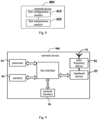
- the network device 900 includes: an antenna 91, a radio frequency device 92 and a baseband device 93.
- the antenna 91 is connected to the radio frequency device 92.
- the radio frequency device 92 receives information via the antenna 91 and transmits the received information to the baseband device 93 for processing.
- the baseband device 93 processes information to be transmitted and transmits the information to the radio frequency device 92, and the radio frequency device 92 processes the received information and transmits it via the antenna 91.
- the frequency band processing device may be arranged in the baseband device 93, and the method performed by the above network device in the embodiments may be implemented in the baseband device 93.
- the baseband device 93 includes a processor 94 and a memory 95.
- the baseband device 93 may include, for example, at least one baseband board on which a plurality of chips are disposed. As shown in Fig.9 , one of the chips is, for example, the processor 94, which is connected to the memory 95 to invoke a program in the memory 95 to perform an operation of the network device as shown in the above method embodiment.
- the baseband device 93 may further include a network interface 96 for performing information interaction with the radio frequency device 92, and the interface is, for example, a common public radio interface (common public radio interface, abbreviated as CPRI).
- CPRI common public radio interface
- the processor here may be a processor or a collective name of a plurality of processing components.
- the processor may be a CPU, an ASIC, or one or more integrated circuits configured to implement the method performed by the above network device, e.g., one or more microprocessors DSP, or one or more field programmable gate arrays FPGA, etc.
- the storage element may be a memory or a collective name of a plurality of storage elements.
- the memory 95 may be either a volatile memory or a non-volatile memory, or may include both a volatile memory and a non-volatile memory.
- the non-volatile memory may be a read-only memory (Read-Only Memory, abbreviated as ROM), a programmable read-only memory (Programmable ROM, abbreviated as PROM), an erasable programmable read-only memory (Erasable PROM, abbreviated as EPROM), an electrically erasable programmable read-only memory (Electrically EPROM, abbreviated as EEPROM) or a flash memory.
- the volatile memory may be a random access memory (Random Access Memory, abbreviated as RAM) that acts as an external cache.
- RAMs such as a static random access memory (Static RAM, abbreviated as SRAM), a dynamic random access memory (Dynamic RAM, abbreviated as DRAM), a synchronous dynamic random access memory (Synchronous DRAM, abbreviated as SDRAM), a double data rate synchronous dynamic random access memory (Double Data Rate SDRAM, abbreviated as DDRSDRAM), an enhanced synchronous dynamic random access memory (Enhanced SDRAM, abbreviated as ESDRAM), a Synchlink dynamic random access memory (Synchlink DRAM, abbreviated as SLDRAM) and a direct rambus random access memory (Direct Rambus RAM, abbreviated as DRRAM).
- SRAM static random access memory
- DRAM dynamic random access memory
- DRAM synchronous dynamic random access memory
- SDRAM synchronous dynamic random access memory
- DDRSDRAM double data rate synchronous dynamic random access memory
- ESDRAM enhanced synchronous dynamic random access memory
- Synchlink dynamic random access memory Synchlink dynamic random access memory
- the network device of the embodiment of the present disclosure further includes: a program stored in the memory 95 and configured to be executed by the processor 94.
- the processor 94 invokes the program in the memory 95 to execute the method performed by various modules as shown in Fig. 8 .
- the program is configured to be invoked by the processor 94 to implement the following steps: configuring an aperiodic reference signal quasi-co-located with a physical channel or a physical signal; and transmitting a first signaling indicating a preset manner; wherein it is determined, by a terminal according to the preset manner indicated by the first signaling, that the aperiodic reference signal or a target physical signal associated with the aperiodic reference signal is a quasi co-location signal of the physical channel or the physical signal.
- the program is configured to be invoked by the processor 94 to implement the following step: configuring an association relationship between the aperiodic reference signal and the target physical signal according to a quasi co-location relationship indicated by a high-layer signaling.
- a quasi co-location type of a quasi co-location relationship between the physical channel or the physical signal and the target physical signal is the same as a quasi co-location type of a quasi co-location relationship between the physical channel or the physical signal and the aperiodic reference signal.
- the preset manner is such that following step is performed by the terminal: in a case that the aperiodic reference signal is received within a first time window, determining that the aperiodic reference signal is the quasi co-location signal of the physical channel or the physical signal; or in a case that the aperiodic reference signal is not received within the first time window, determining that the target physical signal associated with the aperiodic reference signal is the quasi co-location signal of the physical channel or the physical signal; or in a case that the aperiodic reference signal and the target physical signal associated with the aperiodic reference signal are received within the first time window, determining that one, closest to the physical channel or the physical signal, of the aperiodic reference signal and the target physical signal is the quasi co-location signal of the physical channel or the physical signal.
- the first signaling includes: a DCI signaling, a high-layer signaling or a medium access control MAC layer signaling.
- the program is configured to be invoked by the processor 94 to implement the following step: transmitting a second signaling indicating a parameter of the first time window.
- the second signaling includes: a DCI signaling, a high-layer signaling or a medium access control MAC layer signaling.
- the parameter of the first time window includes at least one of a window length, a start position and an end position, and the window length is a period length of a periodic signal associated with the aperiodic reference signal.
- the aperiodic reference signal includes at least one of an aperiodic tracking reference signal TRS and an aperiodic channel state information reference signal CSI-RS.
- the target physical signal is a periodic TRS; and in a case that the aperiodic reference signal is the aperiodic CSI-RS, the target physical signal is at least one of a periodic TRS, an aperiodic TRS, a synchronization signal and PBCH block SSB, a periodic CSI-RS, a semi-persistent CSI-RS and an aperiodic CSI-RS.
- the aperiodic reference signal and the target physical signal are on different carriers or in different cells, or the aperiodic reference signal and the target physical signal are on a same carrier or in a same cell.
- the physical channel includes at least one of a physical downlink shared channel PDSCH and a physical downlink control channel PDCCH
- the physical signal includes at least one of a demodulation reference signal DMRS and a channel state information reference signal CSI-RS.
- the network device may be a base transceiver station (Base Transceiver Station, abbreviated as BTS) in the global system of mobile communication (Global System of Mobile communication, abbreviated as GSM) or the code division multiple access (Code Division Multiple Access, abbreviated as CDMA), a NodeB (NodeB, abbreviated as NB) in the wideband code division multiple access (Wideband Code Division Multiple Access, abbreviated as WCDMA), an evolutional Node B (Evolutional Node B, abbreviated as eNB or eNodeB) in LTE, a relay station or an access point, a base station in future 5G network, or the like, which is not limited herein.
- BTS Base Transceiver Station
- GSM Global System of Mobile communication
- CDMA Code Division Multiple Access
- NodeB NodeB
- WCDMA Wideband Code Division Multiple Access
- eNB evolutional Node B
- eNB evolutional Node B
- the network device configures the aperiodic reference signal for the physical channel or the physical signal
- the terminal may determine the quasi co-location parameter of the physical channel or the physical signal in accordance with the aperiodic reference signal or the target physical signal associated with the aperiodic reference signal, such that it is ensured that the large-scale parameter of the physical channel or the physical signal is determined, thereby ensuring the normal transmission of the physical channel or the physical signal.
- the disclosed device and method may be implemented in other manners.
- the described device embodiment is merely exemplary.
- the unit division is merely logical function division and may be other division in actual implementation.
- a plurality of units or components may be combined or integrated into another system, or some features may be ignored or not performed.
- the displayed or discussed mutual couplings or direct couplings or communication connections may be implemented through some interfaces.
- the indirect couplings or communication connections between the devices or units may be implemented in electric, mechanical, or other forms.
- the units described as separate parts may or may not be physically separate, and parts displayed as units may or may not be physical units, that is, may be located in one position, or may be distributed on a plurality of network units. Apart or all of the units may be selected according to actual needs to achieve the objectives of the solutions of the embodiments.
- the functions may be stored in a computer-readable storage medium.
- the software product is stored in a storage medium, and includes several instructions for instructing a computer device (which may be a personal computer, a server, or a network device) to perform all or a part of the steps of the methods described in the embodiments of the disclosure.
- the foregoing storage medium includes any medium that can store program code, such as a USB flash drive, a removable hard disk, an ROM, an RAM, a magnetic disk, or an optical disc.
- the objective of the present disclosure may also be implemented by running a program or a set of programs on any computing apparatus.
- the computing apparatus may be a known general purpose apparatus.
- the object of the present disclosure may also be implemented merely by providing a program product which contains program code for implementing the methods or apparatuses. That is, such program product also constitutes the present disclosure, and a storage medium in which such a program product is stored also constitutes the present disclosure.
- the storage medium may be any known storage medium or any storage medium that will be developed in the future.
- parts or steps may be divided and/or re-combined.
- steps of the foregoing series of processes may be performed naturally in a time order of description, however the performing sequence is not limited to the time order. Some steps may be performed in parallel or independently.
Landscapes
- Engineering & Computer Science (AREA)
- Signal Processing (AREA)
- Computer Networks & Wireless Communication (AREA)
- Quality & Reliability (AREA)
- Physics & Mathematics (AREA)
- Electromagnetism (AREA)
- Mobile Radio Communication Systems (AREA)
- Position Fixing By Use Of Radio Waves (AREA)
- Cable Transmission Systems, Equalization Of Radio And Reduction Of Echo (AREA)
Claims (12)
- Konfigurationsverfahren für eine Quasi-Kollokation, das von einer Endgeräteseite durchgeführt wird und Folgendes umfasst:wenn ein aperiodisches Referenzsignal, das mit einem physischen Kanal oder einem physischen Signal quasi-kollokalisiert ist, durch ein Netzwerkgerät konfiguriert wird, bestimmen, ob das aperiodische Referenzsignal oder ein physisches Zielsignal, das mit dem aperiodischen Referenzsignal assoziiert ist, ein quasi-kollokalisiertes Signal des physischen Kanals oder des physischen Signals (21) ist;dadurch gekennzeichnet, dass die Bestimmung, dass das aperiodische Referenzsignal oder das physische Zielsignal, das mit dem aperiodischen Referenzsignal assoziiert ist, das Quasi-Kollokationssignal des physischen Kanals oder des physischen Signals ist, umfasst:für den Fall, dass das aperiodische Referenzsignal nicht innerhalb eines ersten Zeitfensters empfangen wird, bestimmen, dass das mit dem aperiodischen Referenzsignal assoziierte physische Zielsignal das Quasi-Kollokationssignal des physischen Kanals oder des physischen Signals ist;
oderin einem Fall, in dem das aperiodische Referenzsignal und das physische Zielsignal, das mit dem aperiodischen Referenzsignal assoziiert ist, innerhalb des ersten Zeitfensters empfangen werden, bestimmen, dass das eine Signal, das in einem Zeitbereich dem physischen Kanal oder dem physischen Signal am nächsten ist, zwischen dem aperiodischen Referenzsignal und dem physischen Zielsignal das Quasi-Kollokationssignal des physischen Kanals oder des physischen Signals ist;wobei die Länge des ersten Zeitfensters gleich einer Periodenlänge des physischen Zielsignals ist, das mit dem aperiodischen Referenzsignal assoziiert ist, und die Länge des ersten Zeitfensters dem Endgerät durch eine erste Signalisierung auf hoher Ebene angezeigt wird, die von der Netzvorrichtung übertragen wird. - Konfigurationsverfahren für eine Quasi-Kollokation nach Anspruch 1, wobei eine Assoziationsbeziehung zwischen dem aperiodischen Referenzsignal und dem physischen Zielsignal gemäß einer Quasi-Kollokationsbeziehung zwischen dem aperiodischen Referenzsignal und dem physischen Zielsignal bestimmt wird, die durch eine zweite Signalisierung auf hoher Ebene angezeigt wird, die von der Netzwerkvorrichtung übertragen wird.
- Konfigurationsverfahren für eine Quasi-Kollokation nach Anspruch 1, wobei ein Quasi-Kollokationstyp einer Quasi-Kollokationsbeziehung zwischen dem physischen Kanal oder dem physischen Signal und dem physischen Zielsignal der gleiche ist wie ein Quasi-Kollokationstyp einer Quasi-Kollokationsbeziehung zwischen dem physischen Kanal oder dem physischen Signal und dem aperiodischen Referenzsignal.
- Konfigurationsverfahren für eine Quasi-Kollokation nach Anspruch 1, wobei ein Parameter des ersten Zeitfensters mindestens eines von einer Fensterlänge, einer Startposition und einer Endposition umfasst.
- Konfigurationsverfahren für eine Quasi-Kollokation nach Anspruch 1, wobei das aperiodische Referenzsignal mindestens eines von einem aperiodischen Tracking-Referenzsignal, TRS, und einem aperiodischen Referenzsignal für eine Kanalzustandsinformation, CSI-RS, umfasst.
- Konfigurationsverfahren für eine Quasi-Kollokation nach Anspruch 5, wobei in dem Fall, dass das aperiodische Referenzsignal das aperiodische TRS ist, das physische Zielsignal ein periodisches TRS ist;
wenn das aperiodische Referenzsignal das aperiodische CSI-RS ist, ist das physische Zielsignal mindestens eines von einem periodischen TRS, einem aperiodischen TRS, einem Synchronisationssignal und PBCH-Block, SSB, einem periodischen CSI-RS, einem semipersistenten CSI-RS und einem aperiodischen CSI-RS. - Konfigurationsverfahren für eine Quasi-Kollokation nach Anspruch 5, wobei
in einem Fall, in dem das aperiodische Referenzsignal das aperiodische CSI-RS ist, die Bestimmung, ob das mit dem aperiodischen Referenzsignal verbundene physische Zielsignal das Quasi-Kollokationssignal des physischen Kanals oder des physischen Signals ist, Folgendes umfasst:
in einem Fall, in dem ein erstes physisches Zielsignal, das mit dem aperiodischen CSI-RS assoziiert ist, nicht innerhalb eines zweiten Zeitfensters empfangen wird, die Bestimmung, ob ein zweites physisches Zielsignal, das mit dem ersten physischen Zielsignal assoziiert ist, das Quasi-Kollokationssignal des physischen Kanals oder des physischen Signals ist. - Konfigurationsverfahren für eine Quasi-Kollokation nach Anspruch 1, wobei der physische Kanal mindestens einen von einem physischen geteilten Downlink-Kanal, PDSCH, und einem physischen Downlink-Steuerkanal, PDCCH, umfasst und das physische Signal mindestens eines von einem Demodulationsreferenzsignal, DMRS, und einem Kanalzustand-Informationsreferenzsignal, CSI-RS, umfasst.
- Endgerät (500), umfassend:ein Verarbeitungsmodul (510), das so konfiguriert ist, dass es, wenn ein aperiodisches Referenzsignal, das mit einem physischen Kanal oder einem physischen Signal quasi-kollokalisiert ist, durch eine Netzwerkvorrichtung konfiguriert wird, bestimmt, ob das aperiodische Referenzsignal oder ein physisches Zielsignal, das mit dem aperiodischen Referenzsignal assoziiert ist, ein Quasi-Kollokationssignal des physischen Kanals oder des physischen Signals ist;dadurch gekennzeichnet, dass das Verarbeitungsmodul (510) fernes Folgendes umfasst:ein zweites Verarbeitungsuntermodul, das so konfiguriert ist, dass es in einem Fall, in dem das aperiodische Referenzsignal nicht innerhalb eines ersten Zeitfensters empfangen wird, bestimmt, dass das dem aperiodischen Referenzsignal zugeordnete physische Zielsignal das Quasi-Kollokationssignal des physischen Kanals oder des physischen Signals ist;
oderein drittes Verarbeitungsuntermodul, das so konfiguriert ist, dass es in einem Fall, in dem das aperiodische Referenzsignal und das physische Zielsignal, das mit dem aperiodischen Referenzsignal assoziiert ist, innerhalb des ersten Zeitfensters empfangen werden, bestimmt, dass das eine Signal, das in einem Zeitbereich dem physischen Kanal oder dem physischen Signal am nächsten ist, zwischen dem aperiodischen Referenzsignal und dem physischen Zielsignal das Quasi-Kollokationssignal des physischen Kanals oder des physischen Signals ist;wobei die Länge des ersten Zeitfensters gleich einer Periodenlänge des physischen Zielsignals ist, das mit dem aperiodischen Referenzsignal assoziiert ist, und die Länge des ersten Zeitfensters dem Endgerät durch eine erste Signalisierung auf hoher Ebene angezeigt wird, die von der Netzvorrichtung übertragen wird. - Konfigurationsverfahren für eine Quasi-Kollokation, das von einer Netzwerkgeräteseite durchgeführt wird und Folgendes umfasst:Konfigurieren eines aperiodischen Referenzsignals, das mit einem physischen Kanal oder einem physischen Signal (71) quasi-kollokalisiert ist;Übertragen einer ersten Signalisierung (72); wobei durch ein Endgerät gemäß der ersten Signalisierung bestimmt wird, dass das aperiodische Referenzsignal oder ein physisches Zielsignal, das mit dem aperiodischen Referenzsignal assoziiert ist, ein Quasi-Kollokationssignal des physischen Kanals oder des physischen Signals ist;dadurch gekennzeichnet, dass die erste Signalisierung so beschaffen ist, dass der folgende Schritt von dem Endgerät durchgeführt wird:für den Fall, dass das aperiodische Referenzsignal nicht innerhalb eines ersten Zeitfensters empfangen wird, bestimmen, dass das mit dem aperiodischen Referenzsignal assoziierte physische Zielsignal das Quasi-Kollokationssignal des physischen Kanals oder des physischen Signals ist;
oderin einem Fall, in dem das aperiodische Referenzsignal und das physische Zielsignal, das mit dem aperiodischen Referenzsignal assoziiert ist, innerhalb des ersten Zeitfensters empfangen werden, bestimmen, dass das eine Signal, das in einem Zeitbereich dem physischen Kanal oder dem physischen Signal am nächsten ist, zwischen dem aperiodischen Referenzsignal und dem physischen Zielsignal das Quasi-Kollokationssignal des physischen Kanals oder des physischen Signals ist;wobei die Länge des ersten Zeitfensters gleich einer Periodenlänge des physischen Zielsignals ist, das mit dem aperiodischen Referenzsignal assoziiert ist, und die Länge des ersten Zeitfensters dem Endgerät durch eine erste Signalisierung auf hoher Ebene angezeigt wird, die von der Netzvorrichtung übertragen wird. - Konfigurationsverfahren für eine Quasi-Kollokation nach Anspruch 10, ferner umfassend:Konfigurieren einer Assoziationsbeziehung zwischen dem aperiodischen Referenzsignal und dem physischen Zielsignal durch eine Quasi-Kollokationsbeziehung zwischen dem aperiodischen Referenzsignal und dem physischen Zielsignal in einer zweiten Signalisierung auf hoher Ebene;
und/oderwobei ein Quasi-Kollokationstyp einer Quasi-Kollokationsbeziehung zwischen dem physischen Kanal oder dem physischen Signal und dem physischen Zielsignal der gleiche ist wie ein Quasi-Kollokationstyp einer Quasi-Kollokationsbeziehung zwischen dem physischen Kanal oder dem physischen Signal und dem aperiodischen Referenzsignal. - Netzwerkvorrichtung (800), umfassend:ein erstes Konfigurationsmodul (810), das so konfiguriert ist, dass es ein aperiodisches Referenzsignal konfiguriert, das mit einem physischen Kanal oder einem physischen Signal quasi-kollokalisiert ist; undein erstes Übertragungsmodul (820), das so konfiguriert ist, dass es eine erste Signalisierung überträgt; wobei durch ein Endgerät gemäß der ersten Signalisierung bestimmt wird, dass das aperiodische Referenzsignal oder ein physisches Zielsignal, das mit dem aperiodischen Referenzsignal assoziiert ist, ein Quasi-Kollokationssignal des physischen Kanals oder des physischen Signals ist;dadurch gekennzeichnet, dass die erste Signalisierung so beschaffen ist, dass der folgende Schritt von dem Endgerät durchgeführt wird:für den Fall, dass das aperiodische Referenzsignal nicht innerhalb eines ersten Zeitfensters empfangen wird, bestimmen, dass das mit dem aperiodischen Referenzsignal assoziierte physische Zielsignal das Quasi-Kollokationssignal des physischen Kanals oder des physischen Signals ist;
oderin einem Fall, in dem das aperiodische Referenzsignal und das physische Zielsignal, das mit dem aperiodischen Referenzsignal assoziiert ist, innerhalb des ersten Zeitfensters empfangen werden, bestimmen, dass das eine Signal, das in einem Zeitbereich dem physischen Kanal oder dem physischen Signal am nächsten ist, zwischen dem aperiodischen Referenzsignal und dem physischen Zielsignal das Quasi-Kollokationssignal des physischen Kanals oder des physischen Signals ist;wobei die Länge des ersten Zeitfensters gleich einer Periodenlänge des physischen Zielsignals ist, das mit dem aperiodischen Referenzsignal assoziiert ist, und die Länge des ersten Zeitfensters dem Endgerät durch eine erste Signalisierung auf hoher Ebene angezeigt wird, die von der Netzvorrichtung übertragen wird.
Applications Claiming Priority (2)
| Application Number | Priority Date | Filing Date | Title |
|---|---|---|---|
| CN201810451283.XA CN110474745B (zh) | 2018-05-11 | 2018-05-11 | 一种准共址配置方法、终端及网络设备 |
| PCT/CN2019/086126 WO2019214663A1 (zh) | 2018-05-11 | 2019-05-09 | 准共址配置方法、终端及网络设备 |
Publications (3)
| Publication Number | Publication Date |
|---|---|
| EP3793121A1 EP3793121A1 (de) | 2021-03-17 |
| EP3793121A4 EP3793121A4 (de) | 2021-06-02 |
| EP3793121B1 true EP3793121B1 (de) | 2023-09-13 |
Family
ID=68467156
Family Applications (1)
| Application Number | Title | Priority Date | Filing Date |
|---|---|---|---|
| EP19799963.4A Active EP3793121B1 (de) | 2018-05-11 | 2019-05-09 | Verfahren zur quasi-kollokationskonfiguration, endgerät und netzwerkgerät |
Country Status (10)
| Country | Link |
|---|---|
| US (1) | US11463214B2 (de) |
| EP (1) | EP3793121B1 (de) |
| JP (1) | JP7090180B2 (de) |
| KR (1) | KR102574215B1 (de) |
| CN (1) | CN110474745B (de) |
| AU (1) | AU2019267977B2 (de) |
| BR (1) | BR112020023022A2 (de) |
| ES (1) | ES2961293T3 (de) |
| MY (1) | MY209461A (de) |
| WO (1) | WO2019214663A1 (de) |
Families Citing this family (21)
| Publication number | Priority date | Publication date | Assignee | Title |
|---|---|---|---|---|
| EP4132057A4 (de) * | 2020-03-30 | 2024-04-24 | Ntt Docomo, Inc. | Endgerät |
| CN113498089B (zh) * | 2020-04-03 | 2023-05-16 | 维沃移动通信有限公司 | 信息配置及确定方法、网络设备和终端设备 |
| CN111867098B (zh) * | 2020-04-10 | 2025-09-16 | 中兴通讯股份有限公司 | 一种参数的获取方法及装置、参数的确定方法及装置 |
| WO2021229820A1 (ja) * | 2020-05-15 | 2021-11-18 | 株式会社Nttドコモ | 端末、無線通信方法及び基地局 |
| CN114070527B (zh) * | 2020-08-07 | 2023-07-14 | 大唐移动通信设备有限公司 | 信息传输方法、网络侧设备、终端及存储介质 |
| CN116261892B (zh) * | 2020-09-16 | 2026-02-17 | 苹果公司 | 用非周期性参考信号发信号通知准共址更新的装置和方法 |
| CN114337947B (zh) * | 2020-09-29 | 2024-11-15 | 维沃移动通信有限公司 | 确定传输模式的方法、装置和通信设备 |
| US20230396346A1 (en) * | 2020-10-20 | 2023-12-07 | Lenovo(Beijing) Limited | Doppler shift estimation and reporting |
| CN114598431B (zh) * | 2020-12-07 | 2024-03-22 | 上海朗帛通信技术有限公司 | 一种被用于无线通信的节点中的方法和装置 |
| CN112865941A (zh) * | 2020-12-31 | 2021-05-28 | 中兴通讯股份有限公司 | 大尺度特性参数测量方法、装置、节点和存储介质 |
| CN112822779A (zh) * | 2020-12-31 | 2021-05-18 | 中兴通讯股份有限公司 | Qcl关系确定方法、装置、节点和存储介质 |
| CN116830756B (zh) | 2021-01-14 | 2025-11-21 | 苹果公司 | 用于利用ue特定参考信号的辅小区激活的系统、方法和设备 |
| US12517208B2 (en) | 2021-06-16 | 2026-01-06 | Qualcomm Incorporated | Adaption of reference signal for positioning based on user equipment (UE) mobility |
| CN115499090B (zh) * | 2021-06-18 | 2024-05-03 | 大唐移动通信设备有限公司 | 在通道节能下提升下行译码性能的方法及网络设备 |
| WO2023272624A1 (zh) * | 2021-06-30 | 2023-01-05 | 北京小米移动软件有限公司 | 一种追踪参考信号的窗口配置方法及装置 |
| US11895049B2 (en) * | 2021-08-18 | 2024-02-06 | Qualcomm Incorporated | Phase noise (PN) mitigation pilot allocation on a single component carrier (CC) for PN mitigation on multiple CCs |
| US20240405942A1 (en) * | 2021-09-09 | 2024-12-05 | Beijing Xiaomi Mobile Software Co., Ltd. | Method for determining tracking reference signal period, communication apparatus, and non-transitory computer-readable storage medium |
| CN115882904A (zh) * | 2021-09-29 | 2023-03-31 | 维沃移动通信有限公司 | 参考信号处理方法、装置、终端及介质 |
| CN117640039A (zh) * | 2022-08-12 | 2024-03-01 | 大唐移动通信设备有限公司 | 信息传输方法、装置、终端及网络侧设备 |
| CN117998653A (zh) * | 2022-11-04 | 2024-05-07 | 华为技术有限公司 | 一种信息处理的方法和装置 |
| CN121753453A (zh) * | 2023-09-07 | 2026-03-27 | 高通股份有限公司 | 用于物理下行链路控制信道的准共址 |
Family Cites Families (13)
| Publication number | Priority date | Publication date | Assignee | Title |
|---|---|---|---|---|
| WO2013119073A1 (ko) * | 2012-02-11 | 2013-08-15 | 엘지전자 주식회사 | 채널상태정보를 보고하기 위한 방법, 이를 지원하기 위한 방법 및 이들을 위한 장치 |
| JP6175187B2 (ja) | 2013-06-19 | 2017-08-02 | エルジー エレクトロニクス インコーポレイティド | 無線通信システムにおいて干渉除去のための方法及びそのための装置 |
| WO2016159673A1 (ko) * | 2015-04-03 | 2016-10-06 | 엘지전자 주식회사 | 무선 통신 시스템에서 비면허 대역을 통하여 하향링크 신호를 수신하는 방법 및 이를 위한 장치 |
| JP6824912B2 (ja) * | 2015-06-17 | 2021-02-03 | エルジー エレクトロニクス インコーポレイティド | 非周期的チャネル状態情報−参照信号を用いたチャネル状態報告のための方法及びそのための装置 |
| CN107294643B (zh) | 2016-03-31 | 2021-07-02 | 中兴通讯股份有限公司 | 一种信道状态信息反馈和配置的方法和装置 |
| CN116131893B (zh) | 2016-08-11 | 2025-10-10 | 中兴通讯股份有限公司 | 分组指示信息的反馈方法、反馈信息的接收方法及设备 |
| WO2018030849A1 (ko) * | 2016-08-11 | 2018-02-15 | 엘지전자 주식회사 | 무선 통신 시스템에서 비주기적 csi-rs에 대한 qcl 정보 지시 방법 및 이를 위한 장치 |
| CN107734514B (zh) * | 2016-08-11 | 2022-11-08 | 中兴通讯股份有限公司 | 分组指示信息的反馈方法、获取方法及装置 |
| WO2018038556A1 (ko) * | 2016-08-24 | 2018-03-01 | 삼성전자 주식회사 | 이동 통신 시스템에서의 기준 신호 송신을 위한 방법 및 장치 |
| CN107888266B (zh) * | 2016-09-30 | 2023-09-12 | 华为技术有限公司 | 一种准共址指示信息指示方法及设备 |
| CN107888236B (zh) * | 2016-09-30 | 2021-06-29 | 华为技术有限公司 | 一种用于数据传输的方法和装置 |
| WO2018152153A1 (en) * | 2017-02-17 | 2018-08-23 | Intel IP Corporation | Physical downlink control channel (pdcch) demodulation reference signal (dmrs) transmission and reception |
| US11239893B2 (en) * | 2018-01-24 | 2022-02-01 | Qualcomm Incorporated | Quasi co-location assumptions for aperiodic channel state information reference signal triggers |
-
2018
- 2018-05-11 CN CN201810451283.XA patent/CN110474745B/zh active Active
-
2019
- 2019-05-09 WO PCT/CN2019/086126 patent/WO2019214663A1/zh not_active Ceased
- 2019-05-09 KR KR1020207035558A patent/KR102574215B1/ko active Active
- 2019-05-09 JP JP2020563723A patent/JP7090180B2/ja active Active
- 2019-05-09 ES ES19799963T patent/ES2961293T3/es active Active
- 2019-05-09 EP EP19799963.4A patent/EP3793121B1/de active Active
- 2019-05-09 AU AU2019267977A patent/AU2019267977B2/en active Active
- 2019-05-09 BR BR112020023022-7A patent/BR112020023022A2/pt unknown
- 2019-05-09 MY MYPI2020005927A patent/MY209461A/en unknown
-
2020
- 2020-11-09 US US17/093,330 patent/US11463214B2/en active Active
Also Published As
| Publication number | Publication date |
|---|---|
| CN110474745B (zh) | 2021-01-22 |
| KR102574215B1 (ko) | 2023-09-01 |
| KR20210008067A (ko) | 2021-01-20 |
| EP3793121A1 (de) | 2021-03-17 |
| AU2019267977A1 (en) | 2020-12-17 |
| EP3793121A4 (de) | 2021-06-02 |
| AU2019267977B2 (en) | 2022-02-17 |
| MY209461A (en) | 2025-07-09 |
| JP7090180B2 (ja) | 2022-06-23 |
| JP2021520759A (ja) | 2021-08-19 |
| BR112020023022A2 (pt) | 2021-02-02 |
| ES2961293T3 (es) | 2024-03-11 |
| US11463214B2 (en) | 2022-10-04 |
| US20210058212A1 (en) | 2021-02-25 |
| WO2019214663A1 (zh) | 2019-11-14 |
| CN110474745A (zh) | 2019-11-19 |
Similar Documents
| Publication | Publication Date | Title |
|---|---|---|
| US11463214B2 (en) | Quasi co-location configuration method, terminal, and network device | |
| JP7369782B2 (ja) | ハイブリッド自動再送要求harqフィードバック方法、端末及びネットワーク機器 | |
| KR102857857B1 (ko) | 채널 검측 지시 방법, 단말 및 네트워크 기기 | |
| US11601902B2 (en) | Synchronization signal block transmission method, network device, and terminal | |
| EP3697011B1 (de) | Verfahren zur übertragung von demodulatiosreferenzsignalen, netzvorrichtung und endgerät | |
| US11463215B2 (en) | Transmission resource indication method, network device, and terminal | |
| US11979217B2 (en) | Method for configuring aperiodic channel state information-reference signal, network device, and terminal | |
| JP7466462B2 (ja) | 情報伝送方法、端末及びネットワーク機器 | |
| CN110858999B (zh) | 探测参考信号srs功率控制方法、终端及网络设备 | |
| KR102542746B1 (ko) | 전송 지시 신호의 전송 방법, 네트워크 장치 및 단말 | |
| US12160889B2 (en) | Unlicensed band information transmission method, terminal and network device | |
| US20210250936A1 (en) | Information transmission method and communications device | |
| US12250705B2 (en) | Physical downlink control channel detection method and apparatus | |
| CN110784873B (zh) | 非授权频段的信息传输方法、终端及网络设备 | |
| EP3905751B1 (de) | Informationsübertragungsverfahren, endgerät und netzwerkvorrichtung | |
| CN110611954A (zh) | 一种带宽部分的处理方法、终端及网络设备 | |
| CN110611955B (zh) | 一种带宽部分处理方法及终端 | |
| HK40072702A (en) | Method and apparatus for detecting physical downlink control channel |
Legal Events
| Date | Code | Title | Description |
|---|---|---|---|
| STAA | Information on the status of an ep patent application or granted ep patent |
Free format text: STATUS: THE INTERNATIONAL PUBLICATION HAS BEEN MADE |
|
| PUAI | Public reference made under article 153(3) epc to a published international application that has entered the european phase |
Free format text: ORIGINAL CODE: 0009012 |
|
| STAA | Information on the status of an ep patent application or granted ep patent |
Free format text: STATUS: REQUEST FOR EXAMINATION WAS MADE |
|
| 17P | Request for examination filed |
Effective date: 20201202 |
|
| AK | Designated contracting states |
Kind code of ref document: A1 Designated state(s): AL AT BE BG CH CY CZ DE DK EE ES FI FR GB GR HR HU IE IS IT LI LT LU LV MC MK MT NL NO PL PT RO RS SE SI SK SM TR |
|
| AX | Request for extension of the european patent |
Extension state: BA ME |
|
| A4 | Supplementary search report drawn up and despatched |
Effective date: 20210503 |
|
| RIC1 | Information provided on ipc code assigned before grant |
Ipc: H04L 5/00 20060101AFI20210426BHEP Ipc: H04W 72/04 20090101ALI20210426BHEP |
|
| DAV | Request for validation of the european patent (deleted) | ||
| DAX | Request for extension of the european patent (deleted) | ||
| GRAP | Despatch of communication of intention to grant a patent |
Free format text: ORIGINAL CODE: EPIDOSNIGR1 |
|
| STAA | Information on the status of an ep patent application or granted ep patent |
Free format text: STATUS: GRANT OF PATENT IS INTENDED |
|
| INTG | Intention to grant announced |
Effective date: 20230508 |
|
| GRAS | Grant fee paid |
Free format text: ORIGINAL CODE: EPIDOSNIGR3 |
|
| GRAA | (expected) grant |
Free format text: ORIGINAL CODE: 0009210 |
|
| STAA | Information on the status of an ep patent application or granted ep patent |
Free format text: STATUS: THE PATENT HAS BEEN GRANTED |
|
| AK | Designated contracting states |
Kind code of ref document: B1 Designated state(s): AL AT BE BG CH CY CZ DE DK EE ES FI FR GB GR HR HU IE IS IT LI LT LU LV MC MK MT NL NO PL PT RO RS SE SI SK SM TR |
|
| REG | Reference to a national code |
Ref country code: CH Ref legal event code: EP |
|
| REG | Reference to a national code |
Ref country code: DE Ref legal event code: R096 Ref document number: 602019037482 Country of ref document: DE |
|
| REG | Reference to a national code |
Ref country code: IE Ref legal event code: FG4D |
|
| REG | Reference to a national code |
Ref country code: NL Ref legal event code: FP |
|
| REG | Reference to a national code |
Ref country code: LT Ref legal event code: MG9D |
|
| PG25 | Lapsed in a contracting state [announced via postgrant information from national office to epo] |
Ref country code: GR Free format text: LAPSE BECAUSE OF FAILURE TO SUBMIT A TRANSLATION OF THE DESCRIPTION OR TO PAY THE FEE WITHIN THE PRESCRIBED TIME-LIMIT Effective date: 20231214 |
|
| PG25 | Lapsed in a contracting state [announced via postgrant information from national office to epo] |
Ref country code: SE Free format text: LAPSE BECAUSE OF FAILURE TO SUBMIT A TRANSLATION OF THE DESCRIPTION OR TO PAY THE FEE WITHIN THE PRESCRIBED TIME-LIMIT Effective date: 20230913 Ref country code: RS Free format text: LAPSE BECAUSE OF FAILURE TO SUBMIT A TRANSLATION OF THE DESCRIPTION OR TO PAY THE FEE WITHIN THE PRESCRIBED TIME-LIMIT Effective date: 20230913 Ref country code: NO Free format text: LAPSE BECAUSE OF FAILURE TO SUBMIT A TRANSLATION OF THE DESCRIPTION OR TO PAY THE FEE WITHIN THE PRESCRIBED TIME-LIMIT Effective date: 20231213 Ref country code: LV Free format text: LAPSE BECAUSE OF FAILURE TO SUBMIT A TRANSLATION OF THE DESCRIPTION OR TO PAY THE FEE WITHIN THE PRESCRIBED TIME-LIMIT Effective date: 20230913 Ref country code: LT Free format text: LAPSE BECAUSE OF FAILURE TO SUBMIT A TRANSLATION OF THE DESCRIPTION OR TO PAY THE FEE WITHIN THE PRESCRIBED TIME-LIMIT Effective date: 20230913 Ref country code: HR Free format text: LAPSE BECAUSE OF FAILURE TO SUBMIT A TRANSLATION OF THE DESCRIPTION OR TO PAY THE FEE WITHIN THE PRESCRIBED TIME-LIMIT Effective date: 20230913 Ref country code: GR Free format text: LAPSE BECAUSE OF FAILURE TO SUBMIT A TRANSLATION OF THE DESCRIPTION OR TO PAY THE FEE WITHIN THE PRESCRIBED TIME-LIMIT Effective date: 20231214 Ref country code: FI Free format text: LAPSE BECAUSE OF FAILURE TO SUBMIT A TRANSLATION OF THE DESCRIPTION OR TO PAY THE FEE WITHIN THE PRESCRIBED TIME-LIMIT Effective date: 20230913 |
|
| REG | Reference to a national code |
Ref country code: AT Ref legal event code: MK05 Ref document number: 1612380 Country of ref document: AT Kind code of ref document: T Effective date: 20230913 |
|
| REG | Reference to a national code |
Ref country code: ES Ref legal event code: FG2A Ref document number: 2961293 Country of ref document: ES Kind code of ref document: T3 Effective date: 20240311 |
|
| PG25 | Lapsed in a contracting state [announced via postgrant information from national office to epo] |
Ref country code: IS Free format text: LAPSE BECAUSE OF FAILURE TO SUBMIT A TRANSLATION OF THE DESCRIPTION OR TO PAY THE FEE WITHIN THE PRESCRIBED TIME-LIMIT Effective date: 20240113 |
|
| PG25 | Lapsed in a contracting state [announced via postgrant information from national office to epo] |
Ref country code: AT Free format text: LAPSE BECAUSE OF FAILURE TO SUBMIT A TRANSLATION OF THE DESCRIPTION OR TO PAY THE FEE WITHIN THE PRESCRIBED TIME-LIMIT Effective date: 20230913 |
|
| PG25 | Lapsed in a contracting state [announced via postgrant information from national office to epo] |
Ref country code: SM Free format text: LAPSE BECAUSE OF FAILURE TO SUBMIT A TRANSLATION OF THE DESCRIPTION OR TO PAY THE FEE WITHIN THE PRESCRIBED TIME-LIMIT Effective date: 20230913 Ref country code: RO Free format text: LAPSE BECAUSE OF FAILURE TO SUBMIT A TRANSLATION OF THE DESCRIPTION OR TO PAY THE FEE WITHIN THE PRESCRIBED TIME-LIMIT Effective date: 20230913 Ref country code: IS Free format text: LAPSE BECAUSE OF FAILURE TO SUBMIT A TRANSLATION OF THE DESCRIPTION OR TO PAY THE FEE WITHIN THE PRESCRIBED TIME-LIMIT Effective date: 20240113 Ref country code: EE Free format text: LAPSE BECAUSE OF FAILURE TO SUBMIT A TRANSLATION OF THE DESCRIPTION OR TO PAY THE FEE WITHIN THE PRESCRIBED TIME-LIMIT Effective date: 20230913 Ref country code: CZ Free format text: LAPSE BECAUSE OF FAILURE TO SUBMIT A TRANSLATION OF THE DESCRIPTION OR TO PAY THE FEE WITHIN THE PRESCRIBED TIME-LIMIT Effective date: 20230913 Ref country code: AT Free format text: LAPSE BECAUSE OF FAILURE TO SUBMIT A TRANSLATION OF THE DESCRIPTION OR TO PAY THE FEE WITHIN THE PRESCRIBED TIME-LIMIT Effective date: 20230913 Ref country code: SK Free format text: LAPSE BECAUSE OF FAILURE TO SUBMIT A TRANSLATION OF THE DESCRIPTION OR TO PAY THE FEE WITHIN THE PRESCRIBED TIME-LIMIT Effective date: 20230913 Ref country code: PT Free format text: LAPSE BECAUSE OF FAILURE TO SUBMIT A TRANSLATION OF THE DESCRIPTION OR TO PAY THE FEE WITHIN THE PRESCRIBED TIME-LIMIT Effective date: 20240115 |
|
| PG25 | Lapsed in a contracting state [announced via postgrant information from national office to epo] |
Ref country code: PL Free format text: LAPSE BECAUSE OF FAILURE TO SUBMIT A TRANSLATION OF THE DESCRIPTION OR TO PAY THE FEE WITHIN THE PRESCRIBED TIME-LIMIT Effective date: 20230913 Ref country code: IT Free format text: LAPSE BECAUSE OF FAILURE TO SUBMIT A TRANSLATION OF THE DESCRIPTION OR TO PAY THE FEE WITHIN THE PRESCRIBED TIME-LIMIT Effective date: 20230913 |
|
| REG | Reference to a national code |
Ref country code: DE Ref legal event code: R097 Ref document number: 602019037482 Country of ref document: DE |
|
| PG25 | Lapsed in a contracting state [announced via postgrant information from national office to epo] |
Ref country code: DK Free format text: LAPSE BECAUSE OF FAILURE TO SUBMIT A TRANSLATION OF THE DESCRIPTION OR TO PAY THE FEE WITHIN THE PRESCRIBED TIME-LIMIT Effective date: 20230913 |
|
| PLBE | No opposition filed within time limit |
Free format text: ORIGINAL CODE: 0009261 |
|
| STAA | Information on the status of an ep patent application or granted ep patent |
Free format text: STATUS: NO OPPOSITION FILED WITHIN TIME LIMIT |
|
| PG25 | Lapsed in a contracting state [announced via postgrant information from national office to epo] |
Ref country code: DK Free format text: LAPSE BECAUSE OF FAILURE TO SUBMIT A TRANSLATION OF THE DESCRIPTION OR TO PAY THE FEE WITHIN THE PRESCRIBED TIME-LIMIT Effective date: 20230913 |
|
| 26N | No opposition filed |
Effective date: 20240614 |
|
| PG25 | Lapsed in a contracting state [announced via postgrant information from national office to epo] |
Ref country code: SI Free format text: LAPSE BECAUSE OF FAILURE TO SUBMIT A TRANSLATION OF THE DESCRIPTION OR TO PAY THE FEE WITHIN THE PRESCRIBED TIME-LIMIT Effective date: 20230913 |
|
| PG25 | Lapsed in a contracting state [announced via postgrant information from national office to epo] |
Ref country code: SI Free format text: LAPSE BECAUSE OF FAILURE TO SUBMIT A TRANSLATION OF THE DESCRIPTION OR TO PAY THE FEE WITHIN THE PRESCRIBED TIME-LIMIT Effective date: 20230913 |
|
| PG25 | Lapsed in a contracting state [announced via postgrant information from national office to epo] |
Ref country code: BG Free format text: LAPSE BECAUSE OF FAILURE TO SUBMIT A TRANSLATION OF THE DESCRIPTION OR TO PAY THE FEE WITHIN THE PRESCRIBED TIME-LIMIT Effective date: 20230913 |
|
| PG25 | Lapsed in a contracting state [announced via postgrant information from national office to epo] |
Ref country code: BG Free format text: LAPSE BECAUSE OF FAILURE TO SUBMIT A TRANSLATION OF THE DESCRIPTION OR TO PAY THE FEE WITHIN THE PRESCRIBED TIME-LIMIT Effective date: 20230913 |
|
| REG | Reference to a national code |
Ref country code: CH Ref legal event code: PL |
|
| PG25 | Lapsed in a contracting state [announced via postgrant information from national office to epo] |
Ref country code: MC Free format text: LAPSE BECAUSE OF FAILURE TO SUBMIT A TRANSLATION OF THE DESCRIPTION OR TO PAY THE FEE WITHIN THE PRESCRIBED TIME-LIMIT Effective date: 20230913 |
|
| PG25 | Lapsed in a contracting state [announced via postgrant information from national office to epo] |
Ref country code: LU Free format text: LAPSE BECAUSE OF NON-PAYMENT OF DUE FEES Effective date: 20240509 |
|
| PG25 | Lapsed in a contracting state [announced via postgrant information from national office to epo] |
Ref country code: MC Free format text: LAPSE BECAUSE OF FAILURE TO SUBMIT A TRANSLATION OF THE DESCRIPTION OR TO PAY THE FEE WITHIN THE PRESCRIBED TIME-LIMIT Effective date: 20230913 Ref country code: LU Free format text: LAPSE BECAUSE OF NON-PAYMENT OF DUE FEES Effective date: 20240509 Ref country code: CH Free format text: LAPSE BECAUSE OF NON-PAYMENT OF DUE FEES Effective date: 20240531 |
|
| REG | Reference to a national code |
Ref country code: BE Ref legal event code: MM Effective date: 20240531 |
|
| PG25 | Lapsed in a contracting state [announced via postgrant information from national office to epo] |
Ref country code: IE Free format text: LAPSE BECAUSE OF NON-PAYMENT OF DUE FEES Effective date: 20240509 |
|
| PG25 | Lapsed in a contracting state [announced via postgrant information from national office to epo] |
Ref country code: BE Free format text: LAPSE BECAUSE OF NON-PAYMENT OF DUE FEES Effective date: 20240531 |
|
| PGFP | Annual fee paid to national office [announced via postgrant information from national office to epo] |
Ref country code: NL Payment date: 20250409 Year of fee payment: 7 |
|
| PGFP | Annual fee paid to national office [announced via postgrant information from national office to epo] |
Ref country code: DE Payment date: 20250402 Year of fee payment: 7 |
|
| PGFP | Annual fee paid to national office [announced via postgrant information from national office to epo] |
Ref country code: ES Payment date: 20250605 Year of fee payment: 7 |
|
| PGFP | Annual fee paid to national office [announced via postgrant information from national office to epo] |
Ref country code: FR Payment date: 20250401 Year of fee payment: 7 |
|
| PG25 | Lapsed in a contracting state [announced via postgrant information from national office to epo] |
Ref country code: CY Free format text: LAPSE BECAUSE OF FAILURE TO SUBMIT A TRANSLATION OF THE DESCRIPTION OR TO PAY THE FEE WITHIN THE PRESCRIBED TIME-LIMIT; INVALID AB INITIO Effective date: 20190509 |
|
| PG25 | Lapsed in a contracting state [announced via postgrant information from national office to epo] |
Ref country code: HU Free format text: LAPSE BECAUSE OF FAILURE TO SUBMIT A TRANSLATION OF THE DESCRIPTION OR TO PAY THE FEE WITHIN THE PRESCRIBED TIME-LIMIT; INVALID AB INITIO Effective date: 20190509 |
|
| PGFP | Annual fee paid to national office [announced via postgrant information from national office to epo] |
Ref country code: GB Payment date: 20260324 Year of fee payment: 8 |