EP3794806B1 - Prise en charge de clients virtuels d'ims dans un environnement multi-opérateurs - Google Patents
Prise en charge de clients virtuels d'ims dans un environnement multi-opérateurs Download PDFInfo
- Publication number
- EP3794806B1 EP3794806B1 EP19725872.6A EP19725872A EP3794806B1 EP 3794806 B1 EP3794806 B1 EP 3794806B1 EP 19725872 A EP19725872 A EP 19725872A EP 3794806 B1 EP3794806 B1 EP 3794806B1
- Authority
- EP
- European Patent Office
- Prior art keywords
- ims
- impu
- virtual
- node
- domain name
- Prior art date
- Legal status (The legal status is an assumption and is not a legal conclusion. Google has not performed a legal analysis and makes no representation as to the accuracy of the status listed.)
- Active
Links
Images






Classifications
-
- H—ELECTRICITY
- H04—ELECTRIC COMMUNICATION TECHNIQUE
- H04L—TRANSMISSION OF DIGITAL INFORMATION, e.g. TELEGRAPHIC COMMUNICATION
- H04L61/00—Network arrangements, protocols or services for addressing or naming
- H04L61/30—Managing network names, e.g. use of aliases or nicknames
- H04L61/301—Name conversion
-
- H—ELECTRICITY
- H04—ELECTRIC COMMUNICATION TECHNIQUE
- H04L—TRANSMISSION OF DIGITAL INFORMATION, e.g. TELEGRAPHIC COMMUNICATION
- H04L65/00—Network arrangements, protocols or services for supporting real-time applications in data packet communication
- H04L65/1066—Session management
- H04L65/1069—Session establishment or de-establishment
-
- H—ELECTRICITY
- H04—ELECTRIC COMMUNICATION TECHNIQUE
- H04L—TRANSMISSION OF DIGITAL INFORMATION, e.g. TELEGRAPHIC COMMUNICATION
- H04L65/00—Network arrangements, protocols or services for supporting real-time applications in data packet communication
- H04L65/10—Architectures or entities
- H04L65/1016—IP multimedia subsystem [IMS]
-
- H—ELECTRICITY
- H04—ELECTRIC COMMUNICATION TECHNIQUE
- H04L—TRANSMISSION OF DIGITAL INFORMATION, e.g. TELEGRAPHIC COMMUNICATION
- H04L65/00—Network arrangements, protocols or services for supporting real-time applications in data packet communication
- H04L65/10—Architectures or entities
- H04L65/1063—Application servers providing network services
-
- H—ELECTRICITY
- H04—ELECTRIC COMMUNICATION TECHNIQUE
- H04L—TRANSMISSION OF DIGITAL INFORMATION, e.g. TELEGRAPHIC COMMUNICATION
- H04L65/00—Network arrangements, protocols or services for supporting real-time applications in data packet communication
- H04L65/1066—Session management
- H04L65/1073—Registration or de-registration
-
- H—ELECTRICITY
- H04—ELECTRIC COMMUNICATION TECHNIQUE
- H04L—TRANSMISSION OF DIGITAL INFORMATION, e.g. TELEGRAPHIC COMMUNICATION
- H04L65/00—Network arrangements, protocols or services for supporting real-time applications in data packet communication
- H04L65/1066—Session management
- H04L65/1101—Session protocols
- H04L65/1104—Session initiation protocol [SIP]
-
- H—ELECTRICITY
- H04—ELECTRIC COMMUNICATION TECHNIQUE
- H04L—TRANSMISSION OF DIGITAL INFORMATION, e.g. TELEGRAPHIC COMMUNICATION
- H04L2101/00—Indexing scheme associated with group H04L61/00
- H04L2101/30—Types of network names
- H04L2101/395—Internet protocol multimedia private identity [IMPI]; Internet protocol multimedia public identity [IMPU]
-
- H—ELECTRICITY
- H04—ELECTRIC COMMUNICATION TECHNIQUE
- H04L—TRANSMISSION OF DIGITAL INFORMATION, e.g. TELEGRAPHIC COMMUNICATION
- H04L61/00—Network arrangements, protocols or services for addressing or naming
- H04L61/45—Network directories; Name-to-address mapping
- H04L61/4505—Network directories; Name-to-address mapping using standardised directories; using standardised directory access protocols
- H04L61/4511—Network directories; Name-to-address mapping using standardised directories; using standardised directory access protocols using domain name system [DNS]
Definitions
- IP Internet Protocol
- IMS Internet Multimedia Subsystem
- Fourth Generation (4G) networks are now widely deployed and the Third Generation Partnership Project (3GPP) is currently developing the standards for Fifth Generation (5G) systems.
- 3GPP Third Generation Partnership Project
- 5G networks become available, network operators are expected to deploy a mixture of 5G core (5GC) networks and Evolved Packet Core (EPC) networks.
- 5GC 5G core
- EPC Evolved Packet Core
- the 5GC network which may be based on an evolution of the current EPC or based on a "clean slate” approach, is defined over the Network Function Virtualization (NFV) and Software Defined Networking (SDN).
- NFV Network Function Virtualization
- SDN Software Defined Networking
- the 5GC must support various access networks including but not limited to:
- UE user equipment
- 4G or other radio access technologies it is expected that most user equipment (UE) that support 5G will also support 4G or other radio access technologies. This is a likely scenario during a transition period to a full 5G deployment, or even on a more long-term basis. It is possible that not all operators will migrate their network to 5G.
- a UE supporting 4G is connected to an EPC network via an LTE eNB, where EPC is specified in 3GPP TS 23.401.
- a 4G/5G UE supports at least 4G and 5G radio access technologies, and may access:
- IMS Interoperability for Mobile communications
- P-CSCF Proxy Call Session Control Function
- IMS operators also referred to herein as "IMS operators” or simply “operators”
- IMS operators also referred to herein as "IMS operators” or simply “operators”
- the example embodiments described in the present disclosure can dynamically handle transitions between these different IMS service providers for client-originating and client-terminating IMS sessions.
- the present disclosure presents techniques for the dynamic management of IMS connections between enterprise virtual IMS clients and multiple available IMS service providers (also referred to herein as "IMS operators" or simply “operators”). Unlike existing techniques, the example embodiments described in the present disclosure can dynamically handle transitions between these different IMS service providers for client-originating and client-terminating IMS sessions. Specifically, the present disclosure describes novel techniques for offering new subscription types that can be utilized for serving IMS clients in enterprise communication systems. In some examples, an improved type of subscription enables compatible IMS service providers to comprehend an enterprise-generated domain name in SIP sessions, where the enterprise-generated domain name is different than the true (i.e. externally registered) domain name corresponding to the IMS service provider.
- an enterprise IMS node/client can obtain an IMS Public User Identity (IMPU/IMP) and use the domain name for a particular IMS service provider that was generated or otherwise obtained by the enterprise to refer to the IMS service provider used for handling the session for the IMPU.
- IMPU/IMP IMS Public User Identity
- the virtual IMS clients utilize these IMPUs in conjuction with a domain name owned and used by the enterprise for all external communication with other clients regardless of the IMS provider.
- the communications environment 10 includes an enterprise computer system 10 owning multiple IMS subscriptions for two or more operator networks, each of which is configured to provide access to one or more IMS service providers IMS-1 16 and IMS-2 18.
- the enterprise communications system includes one or more enterprise nodes (ENs) 12 (e.g., Session Initiation Protocol (SIP) nodes).
- ENs e.g., Session Initiation Protocol (SIP) nodes
- SIP Session Initiation Protocol
- PBX Private Branch Exchange
- such an enterprise system 10 could increase flexibility, throughput, and overall communication speed by having the functionality to select a particular IMS service provider 16, 18 of the available IMS service providers to be utilized by a given virtual IMS client for both client-initiated and client-terminated sessions. According to the present embodiments, this selection can change on a per-session basis.
- the enterprise operating the enterprise system 10 can obtain, for each EN 12 (or PBX), a wild-carded IMS Public User Identity (IMPU or IMP) subscription for each of the one or more IMS service providers 16, 18.
- IMPU IMS Public User Identity
- Any IMPU in that wild card range can be utilized for a given virtual IMS client 14 to start an IMS session with any IMS service provider 16 and/or 18, according to a policy implemented by the enterprise.
- Any IMS terminating session to any IMPU in the wild carded range can also use any IMS service provider 16 and/or 18 for handling that particular session.
- the IMPUs in that wild carded range are owned and used by the enterprise node for external communication, and can be associated with a virtual IMS service provider rather with any explicit IMS service provider. Accordingly, in an aspect of the example embodiments described herein, the network can be configured to manage the proper routing for a particular IMS session depending on the IMS service provider 16, 18 used for that specific IMS session, which is related to an IMPU in the wild card range.
- system 10 can include a dynamic address management application server (AS) 20 (also referred to herein as simply application server 20 or AS 20) that is configured to assist with proper routing of IMS traffic.
- AS dynamic address management application server
- such assistance includes, but is not limited to domain mapping, domain and node/client identification, etc.
- the AS 20, acting as a SIP proxy, may be configured to handle the dynamic aspects related to terminating sessions for handling any IMPU, and in addition, to determine the IMS service provider to be used for the session.
- the AS 20 also can be configured to perform any domain name conversion on the SIP signalling, which will be described further below.
- the AS 20 is managed by the enterprise.
- EN 12 allocates a given IMS service provider 16, 18 to service any originating session. Further, similarly to what AS 20 does for terminating sessions, EN 12 can be configured to perform domain name conversion for terminating sessions (i.e. convert an enterprise-generated domain name to an actual or externally registered domain name, and vice versa). However, this conversion functionality is not required for all embodiments of EN 12. In some embodiments, for example, no domain name conversion is performed for originating sessions.
- the present disclosure provides embodiments for supporting two options. In a first option, no domain name conversion is performed, while in the second option, domain name conversion is performed as described above.
- both the AS 20, and the EN 12 can maintain a binding between the IMPU of a given virtual IMS client 14 and the IMS provider 16 and/or 18 used for the duration of the session.
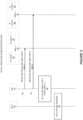
- Figure 2 is a call flow diagram illustrating a method of wildcard registration according to an embodiment of the present disclosure. More particularly, Figure 2 illustrates a first example call flow wherein EN 12 registers a wildcarded IMPU corresponding with two example IMS service providers, IMS-1 16 and IMS-2 18.
- each IMPU is associated with a virtual IMS domain that is chosen by the enterprise. As stated above, this is the domain name that will be used to reach a specific user (e.g. each specific virtual IMS client 14) regardless of the IMS service provider 16, 18 used for that IMPU, and that can change from session to session.
- EN 12 first registers the wild carded IMPU with a first IMS service provider (i.e., IMS-1 16) using regular IMS registration (line 80).
- the EN 12 registers the wildcarded IMPU using the IMS1.com domain name.
- the P-CSCF must also be aware of the virtual IMS domain name (e.g., virtualdomain.com). This can be achieved in numerous ways.
- a particular user device 22 can include the virtual IMS domain name as an additional parameter in the contact header to indicate to P-CSCF1 24 that this is a special subscription.
- This indication together with a SIP 200 OK response, indicates to P-CSCF1 24 that this is a special subscription, and as such, P-CSCF1 24 should ignore the virtual IMS domain name (e.g., virtualdomain.com) when received in SIP initiation requests.
- the UE 22 does not include any such additional parameter. Rather, the SIP 200 OK sent in response to a received SIP Registration Request includes the virtual IMS domain name (e.g., virtualdomain.com) in a new header. The indicated "virtualdomain.com" is maintained by P-CSCF 24, and is associated with an IMS registration record it maintains for the UE 22. Regardless of the embodiment, however, the information is stored in the registration record of UE 22 in P-CSCF1 24.
- an S-CSCF can be configured to perform the same or similar functions as those performed by the P-CSCF.
- an S-CSCF can also be configured to determine that a subscription is special based on a received subscriber profile, as well as store a virtual IMS domain name, and associate that virtual IMS domain name with a UE profile stored in the S-CSCF.
- the present embodiments also configure the S-CSCF to also ignore a virtual IMS domain name (e.g., virtualdomain.com) when that name is present in session initiation requests.
- EN 12 also registers the wild carded IMPU with a second IMS service provider IMS-2 18 using regular IMS registration (line 82). As above, EN 12 registers the wildcarded IMPU using the actual domain name of IMS-2 18 (e.g., IMS2.com). Further, the P-CSCF2 28 and S-CSCF2 30 of IMS-2 18 must also be aware of the virtual IMS domain name (e.g., virtualdomain.com). Making S-CSCF2 30 aware of the virtual domain name can be accomplished in a manner similarly to that described above. Thus, upon receiving a SIP Register request in the IMS2.com domain, S-CSCF2 30 is configured to perform the same roles and functions as S-CSCF1 26 receiving that request in the IMS1.com domain.
- S-CSCF2 30 is configured to perform the same roles and functions as S-CSCF1 26 receiving that request in the IMS1.com domain.
- P-CSCFs and S-CSCFs are not configured to implement the functionality described above.
- the P-CSCFs and S-CSCFs of the present embodiments are configured to perform these functions.
- P-CSCFs and S-CSCFs configured according to the embodiments described herein provide enhancements and benefits that conventionally configured P-CSCFs and S-CSCFs are not able to provide.
- EN 12 can allocate an IMPU for a user (e.g. IMPU1 for user UE 12) (box 84).
- the IMPU for this user is utilized to originate and receive IMS session data regardless of the actual IMS domain (e.g., IMS-1 16 and/or IMS-2 18) utilized for the session.
- a particular user i.e., a virtual IMS client 14, for instance
- a virtual IMS client 14 may have "IMPU1@virtualdomain.com" allocated to it for originating and terminating sessions.
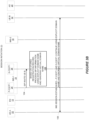
- Figures 3A-3B are call flow diagrams illustrating a method for initiating an IMS session according to an embodiment of the present disclosure.
- Figures 3A-3B illustrate a case of an originating IMS session in which the functionality of the AS 20 is utilized.
- EN 12 is configured to allocate and assign an IMS service provider (e.g., IMS-1 16) to the IMPU used in the originating session (box 90).
- IMS service provider e.g., IMS-1 16
- this allocation and assignment is dynamic and can change on a per-session basis.
- EN 12 sends a message to AS 20 to bind the virtual IMPU (e.g., IMPU1@virtualdomain.com) bind to the actual or explicit domain name for IMS-1 16 (e.g., IMPU1@IMS-1domain.com) that is used for routing (line 92).
- the AS 20 upon receipt of the message, creates the binding and stores the binding in a storage device, such as an internal or external database, for example (box 94).
- the AS 20 then sends the same binding information to EN 12 in a return message (line 96).
- the response is sent to the EN 12 to indicate a positive acknowledgement of the binding.
- the actual binding information need not be included in the response message.
- the EN 12 will already have the information associated with the binding and does not need to receive that information from AS 20. Therefore, in some embodiments of the present disclosure, the AS 20 sends the acknowledgment without the binding information.
- the EN 12 upon receipt of the response message from AS 20, stores the binding information it received with the response message as serving/owning PBX (box 98). In cases where the binding information is not sent by AS 20, the EN 12 will simply store the binding information it already has responsive to receiving the response message from AS 20.
- the EN 12 then sends a SIP Invite message to IMS-1 16 to initiate a session with a destination user UE-B 32 (line 100).
- IMS-1 16 Upon receipt of the SIP Invite, IMS-1 16, and more specifically, P-CSCF 24, locates the registration record for UE-A 22. Based on the information stored in this record, P-CSCF 24 processes the SIP request using the explicit domain name of IMS-1 16 and ignores the virtual IMS domain name (box 102).
- the P-CSCF 24 forwards the SIP Invite message to the S-CSCF 26 in IMS-1 16 (line 104). Responsive to receiving the SIP INVITE message, S-CSCF 26 performs the same functions as the P-CSCF 24. That is, the S-CSCF 26 locates the registration record for UE-A 22, and based on the information stored in that record, processes SIP requests using the explicit domain name of IMS-1 16 and ignoring the virtual IMS domain name (box 106).
- the requested IMS session is established between UE-A 22 and UE-B 32, with the P-CSCF 24 and the S-CSCF 26 using the explicit IMS domain name for IMS-1 16 (in this example, "IMPU1@IMS-1domain.com") and ignoring the virtual IMS domain name (in this example, "IMPU1@virtual domainname.com”) (line 108).
- a "from" field can include the virtual IMS domain name in the SIP universal resource indicator (URI) of the originating IMPU (IMPU@virtualdomain.com, the same for the P-Asserted-ID). This information can be ignored by all IMS nodes processing the session initiation request in the originating IMS service provider (e.g., IMS-1 16). This is based on the fact that the IMS subscription type associated with this wild carded IMPU enables the S-CSCF and P-CSCF to ignore the domain name associated with the originating IMPU and process the session as if their own domain name is in these SIP headers.
- URI SIP universal resource indicator
- an HSS can include some special indicator associated with such special subscriptions to enable the S-CSCF and P-CSCF to ignore the domain name.
- the binding information is not used for originating sessions.
- the binding information i.e., the information that binds the explicit IMS domain name to the virtual IMS domain name
- the binding information is used for terminating sessions, and in particular, for routing purposes. That is, in the event that there is a request to terminate a session to an IMPU while the user is engaged in the session, the binding information can be used to route that termination request to the correct IMS service provider (e.g., IMS-1 16) handling the called IMPU.
- IMS service provider e.g., IMS-1 16
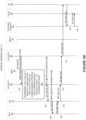
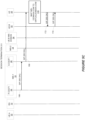
- FIGS 4A-4B are call flow diagrams illustrating a method for terminating an IMS session according to an embodiment of the present disclosure.
- this embodiment illustrates that an IMPU allocated and assigned to, and used by, a remote user device will include the virtual IMS domain name.
- the virtual IMS domain name is the public IMS domain name for the EN 12 clients (e.g. the virtual IMS clients 14) and is used for all communication regardless of the IMS provider.
- the resolution of this virtual IMS domain name at the remote device leads to the enterprise AS 20, which acts as a SIP back-to-back (B2B) proxy (e.g. a B2B user agent (B2BUA proxy).
- B2B SIP back-to-back
- B2BUA proxy B2B user agent
- UE-B 32 begins the session termination to UE-A 22 by sending a SIP INVITE message to its own IMS domain 34 (line 110).
- the SIP INVITE message include the virtual IMPU assigned to UE-A 22 (i.e., IMPU1@virtualdomain.com).
- the IMS domain 34 then performs a DNS query using the virtual IMS domain name in order to locate the appropriate AS 20 (box 112) and sends the SIP INVITE message to that AS 20 (line 114).
- AS 20 attempts to locate the IMS domain associated with the target IMPU (because the user is engaged in a session and an entry exists).
- the target IMPU entry if it is not found it simply allocates any IMS provider domain (i.e., IMS-1 16, IMS-2 18) for that session based on its internal policies. Regardless, AS 20 then routes the SIP INVITE to the S-CSCF of the selected IMS domain (line 116). The the S-CSCF in the target IMS domain (in this embodiment, S-CSCF 26 in IMS-1 16) then checks to determine if the terminating session is associated with an IMS special subscription (box 118). That is, S-CSCF1 26 attempts to locate the virtual domain name in a user profile for UE-A 22.
- IMS provider domain i.e., IMS-1 16, IMS-2 18
- S-CSCF1 26 identifies the appropriate P-CSCF to use for routing, ignores the virtual IMS domain name (after verifying that the virtual IMS domain name received with the SIP INVITE matches the virtual IMS domain name stored in its record), and routes the session normally to the terminating UE.
- the S-CSCF1 26 forwards the SIP INVITE to the P-CSCF 24 (line 120).
- P-CSCF1 24 checks to determine if the terminating session is associated with an IMS special subscription, and if so, locates the virtual domain name in a user profile for UE-A 22.
- the P-CSCF1 24 also identifies, for routing purposes, the appropriate contact point (i.e., the appropriate EN 12) based on the information in the record (box 122). So identified, the P-CSCF1 24 sends the SIP INVITE, which includes the virtual IMS domain name, to the EN 12 (line 124). EN 12, in turn, forwards the SIP INVITE to the UE-A 22 (line 126). Thereafter, a SIP 200 OK message is sent by the various entities to finish terminating the session (lines 128-138).
- the present disclosure does not perform any domain mapping between the virtual IMS domain name and the explicit or actual IMS domain name. Instead, the present disclosure configured the system entities to rely on the target IMS domain having the necessary information stored in the subscriber record both in P-CSCF and S-CSCF to validate the received domain and route the session correctly.
- an AS 20 performs a mapping and conversion between the virtual IMS domain and an explicit IMS domain.
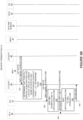
- This example is detailed in the call flow diagrams of Figures 5A-5C .
- AS 20 replaces the virtual IMS domain name of the IMPU allocated and assigned by EN 12 with a selected IMS service provider name.
- the target IMS service provider then processes the call normally until it reaches EN 12.
- the EN 12 then replaces the selected IMS service domain name with the virtual domain name before handing the call to the user.
- the EN 12 would perform the reverse functionality for outgoing SIP signalling by replacing the virtual IMS domain name with the selected service provider name.
- the AS 20 in the session would then replace the selected IMS provider name with the virtual IMS domain name. This ensures that both users in the session see only the virtual domain name.
- the termination scenario begins, in Figure 5A , with UE-B 32 sending a SIP INVITE message to its own IMS domain 34 (line 140).
- the SIP INVITE message includes the virtual IMPU assigned to UE-A 22 (i.e., IMPU1@virtualdomain.com).
- the IMS domain 34 then performs a DNS query using the virtual IMS domain name in order to locate the appropriate AS 20 (box 142) and sends the SIP INVITE message to that AS 20 (line 144).
- AS 20 upon receipt of the SIP INVITE message, attempts to locate the IMS domain associated with the target IMPU.
- AS 20 is further configured to utilize the binding information to identify the explicit IMS domain name based on the virtual IMS domain name received with the SIP INVITE message. So identified, AS 20 replaces the virtual IMS domain name in the SIP INVITE message with the determined explicit IMS domain name (box 146), and sends the SIP INVITE message with the explicit IMS domain name to the S-CSCF 26 in IMS-1 16 (line 148).
- the S-CSCF 26 Upon receiving the SIP INVITE message, the S-CSCF 26 locates the virtual IMS domain name in the user profile record, identifies the corresponding P-CSCF to use for routing (box 150), and routes the session normally to the identified P-CSCF 24 (line 152).
- the SIP INVITE message sent to the P-CSCF 24 includes the explicit IMS domain name (i.e., IMPU1@IMS-1domain.com).
- P-CSCF 24 receives the SIP INVITE message from the S-CSCF 26, it locates the virtual IMS domain name in the user profile records stored at the P-CSCF 24 and identifies the corresponding contact point (i.e., the appropriate EN 12 to which to route the session to) (box 154). The P-CSCF 24 then routes the SIP INVITE message to the identified EN 12 (line 156), which then maps the explicit IMS domain name (i.e., IMPU1@IMS-1domain.com) received with the SIP INVITE message to a corresponding virtual IMS domain name (box 158).
- the explicit IMS domain name i.e., IMPU1@IMS-1domain.com
- EN 12 then replaces the explicit IMS domain name in the received SIP INVITE message and sends the SIP message with the virtual IMS domain name to UE-A (line 160). Additionally, EN 12 then locates the virtual IMS domain name that corresponds to the explicit IMS domain name (box 162), and sends a SIP 200 OK message with the explicit IMS domain name to the P-CSCF 24 (line 164).
- P-CSCF 24 then sends a SIP 200 OK message to the S-CSCF 26 (line 166), which in turn, sends a SIP 200 OK message to the AS 20 (line 168).
- AS 20 maps the explicit IMS domain name to the virtual IMS domain name based on the stored binding information (box 170), and sends a SIP 200 OK message to UE-B 32 (line 172).
- UE-B 32 then sends a SIP 200 OK message back to AS 20 (line 174).
- the AS 20 selects an IMS provider for the session (e.g., IMS-1 16, IMS-2 18), and converts the virtual IMS domain name to the domain name of the selected IMS provider towards the UE. In the other direction(i.e., towards the remote end), it does the reverse conversion by changing the domain name of the IMS provider name to the virtual IMS domain name.
- EN 12 performs the opposite functions. Particularly, EN 12 maps the IMPU associated with a specific IMS service provider name to the actual original virtual IMS domain IMPU SIP URI. EN 12 also performs the opposite functionality in the reverse directions towards the remote end, i.e EN 12 restores the IMS service provider in outgoing signaling.
- FIG. 6 is a schematic diagram illustrating an exemplary IMS node configured to operate according to embodiments of the present disclosure.
- the IMS node is illustrated and described as being a P-CSCF, such as P-CSCF 24. However, this is for illustrative purposes only. It should be noted that the IMS node described in connection with Figure 6 can also be an S-CSCF, as both the P-CSCF and the S-CSCF perform the same functions according to the present embodiments.
- P-CSCF 24 comprises processing circuitry 40, memory circuitry 42, and communications circuitry 46.
- the processing circuitry 40 may comprise one or more microprocessors, microcontrollers, hardware circuits, firmware, or a combination thereof, and controls the operation of the P-CSCF 24 as herein described.
- Memory circuitry 42 stores program instructions and data needed by the processing circuitry 40. Permanent data and program instructions executed by the processing circuitry 40, such as control application 44, for example, may be stored in a non-volatile memory, such as a read only memory (ROM), electronically erasable programmable read only memory (EEPROM), flash memory, or other non-volatile memory device.
- a volatile memory such as a random access memory (RAM), may be provided for storing temporary data.
- the memory circuitry 42 may comprise one or more discrete memory devices, or may be integrated with the processing circuitry 40.
- the communications interface circuitry 46 is configured to send messages to, and receive messages from, one or more other nodes in system 10, such as S-CSCF 26, EN 12, and AS 20, via SIP.
- Figure 7 illustrates the main functional components of an exemplary P-CSCF processing circuitry 40.
- the main functional components of the exemplary P-CSCF processing circuitry 40 may also be the main functional components of the processing circuitry for an exemplary S-CSCF, according to the present embodiments.
- processing circuitry 40 comprises a registration module/unit 50, a SIP processing module/unit 52, a virtual IMS domain name processing module/unit 54, an IMS session module/unit 56, and a communications module/unit 58.
- the registration module/unit 50 is configured to register the wildcard IMPUs received from EN 12, as previously described. Such registration functions include, but are not limited to, updating registration records at the P-CSCF 24 to map a virtual IMS domain name to an explicit IMS domain name.
- the SIP processing module/unit 52 is configured to process SIP messages that are received from other nodes in system 10, as well as those that are being sent to other nodes in system 10, as previously described.
- the virtual IMS domain name processing module/unit 54 is configured to determine whether a virtual IMS domain name received in a message, for example, maps to a corresponding explicit IMS domain name for for a particular IMS domain, as previously described.
- the IMS session module/unit 56 is configured to establish IMS sessions between the virtual IMS clients 14 at EN 12, and an IMS service provider, such as IMS-1 16 and/or IMS-2 18.
- the IMS session module/unit 56 is configured to establish these IMS sessions using a virtual IMS domain name received with a session initiation request, while ignoring the explicit IMS domain name, as previously described.
- the IMS session module/unit 56 is configured to terminate the IMS sessions, as previously described. More particularly, in some embodiments, the IMS session module/unit 56 is configured to terminate IMS sessions using a virtual IMS domain name and ignoring the explicit IMS domain name, while in other embodiments, the IMS session module/unit 56 is configured to terminate IMS sessions using the explicit IMS domain name, as previously described.
- the communications module/unit 58 is configured to send SIP messages to, and receive SIP messages from, one or more other nodes in system 10.
- the registration module/unit 50, SIP processing module/unit 52, virtual IMS domain name processing module/unit 54, IMS session module/unit 56, and communications module/unit 58 may, according to the present embodiments, be implemented by one or more microprocessors, microcontrollers, hardware, firmware, or a combination thereof.
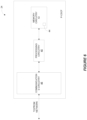
- FIG 8 is a schematic diagram illustrating an exemplary enterprise node, such as EN 12, configured to operate according to embodiments of the present disclosure.
- EN 12 comprises processing circuitry 60, memory circuitry 62, and communications circuitry 66.
- the processing circuitry 60 may comprise one or more microprocessors, microcontrollers, hardware circuits, firmware, or a combination thereof, and controls the operation of the EN 12 as herein described.
- Memory circuitry 62 stores program instructions and data needed by the processing circuitry 60.
- Permanent data and program instructions executed by the processing circuitry 60 may be stored in a non-volatile memory, such as a read only memory (ROM), electronically erasable programmable read only memory (EEPROM), flash memory, or other non-volatile memory device.
- a volatile memory such as a random access memory (RAM) may be provided for storing temporary data.
- the memory circuitry 62 may comprise one or more discrete memory devices, or may be integrated with the processing circuitry 60.
- the communications interface circuitry 66 is configured to send messages to, and receive messages from, one or more other nodes in system 10, such as UE-A 22, P-CSCF 24, and S-CSCF 26.
- FIG. 9 illustrates the main functional components of an exemplary processing circuitry 60 for an enterprise node such as EN 12.
- processing circuitry 60 comprises a registration module/unit 70, an IMS domain allocation module/unit 72, a storage module/unit 74, domain name mapping module/unit 76, and a communications module/unit 78.
- the registration module/unit 70 is configured to register the wildcard IMPUs with both the P-CSCF 24 and the S-CSCF 26, as previously described.
- the IMS domain allocation module/unit 72 is configured to allocate and assign IMPUs to the virtual clients 14, as previously described.
- the IMPUs that are allocated and assigned to the virtual IMS clients 14 are sent to the P-CSCF 24 and the S-CSCF 26 in one or more SIP messages, such as session initiation (e.g., SIP INVITE), as previously described.
- the storage module/unit 74 is configured to store a mapping between the virtual IMS domain names and the explicit IMS domain names, as previously described. In some embodiments, the information and data associated with the mapping is utilized to initiate and terminate the IMS sessions, as previously described.
- the domain name mapping module/unit 76 is configured to map the virtual IMS domain name to the explicit IMS domain name, as previously described, and the communications module/unit 78 is configured to send SIP messages to, and receive SIP messages from, one or more other nodes in system 10, as previously described.
- the registration module/unit 70, an IMS domain allocation module/unit 72, a storage module/unit 74, domain name mapping module/unit 76, and a communications module/unit 78 may, according to the present embodiments, be implemented by one or more microprocessors, microcontrollers, hardware, firmware, or a combination thereof.
- FIG 10 is a schematic diagram illustrating an exemplary application server, such as AS 20, configured to operate according to embodiments of the present disclosure.
- AS 20 comprises processing circuitry 180, memory circuitry 182, and communications circuitry 186.
- the processing circuitry 180 may comprise one or more microprocessors, microcontrollers, hardware circuits, firmware, or a combination thereof, and controls the operation of the AS 20 as herein described.
- Memory circuitry 182 stores program instructions and data needed by the processing circuitry 180.
- Permanent data and program instructions executed by the processing circuitry 180 may be stored in a non-volatile memory, such as a read only memory (ROM), electronically erasable programmable read only memory (EEPROM), flash memory, or other non-volatile memory device.
- a volatile memory such as a random access memory (RAM) may be provided for storing temporary data.
- the memory circuitry 182 may comprise one or more discrete memory devices, or may be integrated with the processing circuitry 180.
- the communications interface circuitry 186 is configured to send messages to, and receive messages from, one or more other nodes in system 10, such as EN 12, and S-CSCF 26, user devices, such as UE-B 32, and the IMS domains of those user devices, such as UE-B IMS domain 34, as previously described.
- FIG 11 illustrates the main functional components of an exemplary processing circuitry 180 for an application server such as AS 20.
- processing circuitry 180 comprises an IMS domain name binding module/unit 190, a storage module/unit 192, an IMS domain name mapping module/unit 194, an IMS domain name conversion module/unit 196, and a communications module/unit 198.
- the IMS domain name binding module/unit 190 is configured to bind virtual IMS domain names to explicit IMS domain names, as previously described.
- the storage module/unit 192 is configured to store those bindings, as previously described.
- the IMS domain name mapping module/unit 194 is configured to determine a mapping between the virtual IMS domain names and the explicit IMS domain names, as previously described.
- the IMS domain name conversion module/unit 196 is configured to convert or replace a virtual IMS domain name received with a SIP message with a corresponding explicit IMS domain name, as previously described.
- the communications module/unit 198 is configured to send SIP messages to, and receive SIP messages from, one or more other nodes in system 10, as previously described.
- the IMS domain name binding module/unit 190, storage module/unit 192, IMS domain name mapping module/unit 194, IMS domain name conversion module/unit 196, and communications module/unit 198 may, according to the present embodiments, be implemented by one or more microprocessors, microcontrollers, hardware, firmware, or a combination thereof.
Landscapes
- Engineering & Computer Science (AREA)
- Multimedia (AREA)
- Computer Networks & Wireless Communication (AREA)
- Signal Processing (AREA)
- Business, Economics & Management (AREA)
- General Business, Economics & Management (AREA)
- Telephonic Communication Services (AREA)
- Mobile Radio Communication Systems (AREA)
Claims (15)
- Procédé de gestion de connexions de sous-système multimédia, IMS, de protocole Internet, IP, entre des UE utilisant des IMPU virtuelles et une pluralité de fournisseurs de services IMS disponibles (16, 18), le procédé comprenant :l'enregistrement (80), par un premier noeud IMS, d'une première identité d'utilisateur public IMS générique, IMPU, dans un premier domaine IMS en réponse à la réception d'un premier message de demande d'enregistrement provenant d'un noeud d'entreprise (12), EN, le noeud d'entreprise étant un noeud de protocole d'initiation de session, SIP, et servant d'autocommutateur privé, PBX ;l'enregistrement, par un deuxième noeud IMS, d'une deuxième identité d'utilisateur public IMS générique, IMPU, dans un deuxième domaine IMS en réponse à la réception d'un deuxième message de demande d'enregistrement provenant dudit EN ;l'attribution, par l'EN, d'un IMPU virtuel à un UE, qui est utilisé par l'UE pour générer et recevoir des données de session IMS indépendamment du domaine IMS réel, l'IMPU virtuel comprenant un nom de domaine virtuel choisi par l'entreprise et une première partie de nom d'utilisateur pour ledit UE ;la réception, par l'EN, d'une demande d'initiation de session envoyée par ledit UE comprenant ledit IMPU virtuel ;l'attribution par l'EN d'un fournisseur de services IMS parmi les premier ou deuxième fournisseurs IMS audit IMPU virtuel utilisé dans la demande d'initiation de session ;le stockage, par l'EN, d'une liaison entre ledit IMPU virtuel et un IMPU explicite, l'IMPU explicite comprenant ladite première partie de nom d'utilisateur dudit IMPU virtuel combinée au nom de domaine du fournisseur IMS attribué ;l'envoi, par l'EN, d'un message d'invitation SIP comprenant l'IMPU virtuel au noeud IMS dudit fournisseur de services IMS attribué pour initier une session avec un UE de destination ;en réponse à la réception dudit message d'invitation SIP, ledit noeud IMS localisant le registre d'enregistrement pour ledit UE, l'enregistrement de localisation comprenant le nom de domaine virtuel de l'IMPU virtuel et sur la base des informations stockées dans cet enregistrement, ledit noeud IMS établissant la session IMS entre ledit UE et l'UE de destination en utilisant ledit IMPU explicite et en ignorant l'IMPU virtuel ;dans lequel le premier et le deuxième noeud IMS sont un P-CSCF ou un S-CSCF.
- Procédé selon la revendication 1, dans lequel l'enregistrement de l'IMPU générique dans le premier domaine IMS comprend le stockage de l'IMPU générique dans un registre d'enregistrement associé à l'UE, dans lequel, éventuellement, le nom de domaine IMPU virtuel est reçu de l'UE dans un en-tête de contact d'un message ou le nom de domaine IMPU virtuel est reçu dans un en-tête du message de demande d'initiation de session.
- Procédé selon l'une quelconque des revendications 1 ou 2, comprenant en outre :
la réception (120, 152) d'un message de demande de fin de session pour l'UE à partir d'un serveur d'application (20). - Procédé selon la revendication 3, dans lequel le message de demande de fin de session comprend l'IMPU attribué à l'UE, et le nom de domaine IMPU virtuel et/ou dans lequel le procédé comprend en outre :la détermination (122) d'informations de routage stockées dans le registre d'enregistrement associé à l'UE sur la base du nom de domaine IMPU virtuel ;l'identification d'un noeud de destination vers lequel le message de fin de session doit être routé sur la base des informations de routage ; etle routage (124) du message de fin de demande de session vers le noeud de destination, dans lequel, éventuellement, le noeud de destination est l'un d'un autre noeud dans le premier domaine IMS et du noeud d'entreprise.
- Procédé selon la revendication 3, dans lequel le message de demande de fin de session comprend l'IMPU attribué à l'UE et le premier nom de domaine IMS, le procédé comprenant en outre éventuellement :la localisation (154) du nom de domaine IMPU virtuel dans le registre d'enregistrement associé au client virtuel sur la base du premier nom de domaine IMS reçu avec le message de demande de fin de session ;l'identification d'un noeud de destination vers lequel le message de fin de session doit être routé sur la base d'informations de routage stockées dans le registre d'enregistrement ; etle routage (156) du message de fin de session vers le noeud de destination, dans lequel, éventuellement, le noeud de destination est l'un d'un autre noeud dans le premier domaine IMS et du noeud d'entreprise.
- Noeud (24, 26) de sous-système multimédia, IMS, de protocole Internet, IP, dans un premier domaine IMS, dans lequel le premier noeud IMS est configuré pour gérer des connexions entre des IMPU virtuels et une pluralité de fournisseurs de services IMS disponibles (16, 18), le noeud IMS comprenant :un circuit de communication (46) configuré pour communiquer avec un ou plusieurs dispositifs via un ou plusieurs réseaux de communication ; etun circuit de traitement (40) connecté de manière opérationnelle au circuit de communication et configuré pour mettre en œuvre le procédé selon l'une quelconque des revendications 1 à 5.
- Noeud IMS selon la revendication 6, dans lequel le noeud IMS comprend une fonction de contrôle de session d'appel proxy, P-CSCF, (24) et une fonction de contrôle de session d'appel de service, S-CSCF (26).
- Système (10) pour gérer une ou plusieurs connexions virtuelles de sous-système multimédia, IMS, de protocole Internet, IP, entre des UE utilisant des IMPU et une pluralité de fournisseurs de services IMS disponibles (16, 18), le système comprenant :un noeud d'entreprise (12) connecté de manière communicative à un premier domaine IMS et à un deuxième domaine IMS, et configuré pour envoyer un premier message de demande d'enregistrement au premier domaine IMS pour enregistrer une première identité d'utilisateur public IMS générique, IMPU, et configuré en outre pour envoyer un deuxième message de demande d'enregistrement au deuxième domaine IMS pour enregistrer une deuxième identité d'utilisateur public IMS générique, IMPU ; etdans lequel le système est configuré pour :enregistrer, par un premier noeud IMS, le premier IMPU générique dans le premier domaine IMS en réponse à la réception du message de demande d'enregistrement provenant du noeud d'entreprise, EN, dans lequel le noeud d'entreprise est un noeud de protocole d'initiation de session, SIP, et sert d'autocommutateur privé, PBX ;enregistrer, par un deuxième noeud IMS, le deuxième IMPU générique dans le deuxième domaine IMS en réponse à la réception du deuxième message de demande d'enregistrement provenant dudit EN ;attribuer, par l'EN, un IMPU virtuel à un UE, qui est utilisé par l'UE pour générer et recevoir des données de session IMS indépendamment du domaine IMS réel, l'IMPU virtuel comprenant un nom de domaine virtuel choisi par l'entreprise et une première partie de nom d'utilisateur pour ledit UE ;recevoir, par l'EN, une demande d'initiation de session envoyée par ledit UE comprenant ledit IMPU virtuel ;attribuer par l'EN un fournisseur de services IMS parmi les premier ou deuxième fournisseurs IMS audit IMPU virtuel utilisé dans la demande d'initiation de session ;stocker, par l'EN, une liaison entre ledit IMPU virtuel et un IMPU explicite, l'IMPU explicite comprenant ladite première partie de nom d'utilisateur dudit IMPU virtuel combinée au nom de domaine du fournisseur IMS attribué,envoyer, par l'EN, un message d'invitation SIP comprenant l'IMPU virtuel au noeud IMS dudit fournisseur de services IMS attribué pour initier une session avec un UE de destination ;en réponse à la réception dudit message d'invitation SIP, ledit noeud IMS est en outre configuré pour localiser le registre d'enregistrement pour ledit UE, l'enregistrement d'emplacement comprenant le nom de domaine virtuel de l'IMPU virtuel et sur la base des informations stockées dans cet enregistrement, établir, par ledit noeud IMS, la session IMS entre ledit UE et l'UE de destination en utilisant ledit IMPU explicite et en ignorant l'IMPU virtuel,dans lequel le premier et le deuxième noeud IMS est un P-CSCF ou un S-CSCF.
- Système selon la revendication 8, dans lequel le noeud IMS comprend une fonction de contrôle de session d'appel proxy (P-CSCF) (24) et une fonction de contrôle de session d'appel de service (S-CSCF) (26).
- Système selon la revendication 8 ou 9, comprenant en outre un serveur d'application de gestion d'adresses dynamiques, AS, (20) connecté de manière communicative au noeud d'entreprise et au noeud IMS dans le premier domaine IMS, dans lequel l'AS est configuré pour :recevoir un indicateur de ressource uniforme virtuel, URI, du noeud d'entreprise, dans lequel l'URI virtuel comprend l'IMPU attribué à l'UE et le nom de domaine IMPU virtuel ;lier l'URI virtuel reçu du noeud d'entreprise à un URI explicite utilisé pour le routage, dans lequel l'URI explicite comprend un nom de domaine IMS du premier domaine IMS ;stocker la liaison dans un circuit de mémoire ; et envoyer la liaison au noeud d'entreprise.
- Système selon la revendication 10, dans lequel l'AS est en outre configuré pour :traduire le nom de domaine IMPU virtuel en nom de domaine IMS du premier domaine IMS ; ettraduire le premier nom de domaine IMS en nom de domaine IMPU virtuel.
- Système selon la revendication 10, dans lequel le noeud IMS est en outre configuré pour recevoir, de l'AS, un message de demande de fin de session pour l'UE, le message de demande de fin de session comprenant l'IMPU attribué à l'UE, et l'un du nom de domaine IMPU virtuel et du nom de domaine IMS.
- Système selon l'une quelconque des revendications 10 à 12, dans lequel si le message de demande de fin de session comprend le nom de domaine IMPU virtuel, le noeud IMS est en outre configuré pour :déterminer les informations de routage stockées dans le registre d'enregistrement associé à l'UE sur la base du nom de domaine IMPU virtuel ; etrouter le message de demande de fin de session vers un noeud de destination sur la base des informations de routage stockées dans le registre d'enregistrement.
- Système selon l'une quelconque des revendications 10 à 12, dans lequel si le message de demande de fin de session comprend le nom de domaine IMS, le noeud IMS est en outre configuré pour :déterminer le nom de domaine IMPU virtuel stocké dans le registre d'enregistrement associé au client virtuel sur la base du premier nom de domaine IMS ; etrouter le message de fin de demande de session vers un noeud de destination sur la base d'informations de routage stockées dans le registre d'enregistrement.
- Système selon la revendication 13 ou 14, dans lequel le noeud de destination est l'un d'un autre noeud du premier domaine IMS et du noeud d'entreprise.
Applications Claiming Priority (2)
| Application Number | Priority Date | Filing Date | Title |
|---|---|---|---|
| US201862672049P | 2018-05-15 | 2018-05-15 | |
| PCT/IB2019/053794 WO2019220274A1 (fr) | 2018-05-15 | 2019-05-08 | Prise en charge de clients virtuels d'ims dans un environnement multi-opérateurs |
Publications (2)
| Publication Number | Publication Date |
|---|---|
| EP3794806A1 EP3794806A1 (fr) | 2021-03-24 |
| EP3794806B1 true EP3794806B1 (fr) | 2024-11-27 |
Family
ID=66630333
Family Applications (1)
| Application Number | Title | Priority Date | Filing Date |
|---|---|---|---|
| EP19725872.6A Active EP3794806B1 (fr) | 2018-05-15 | 2019-05-08 | Prise en charge de clients virtuels d'ims dans un environnement multi-opérateurs |
Country Status (3)
| Country | Link |
|---|---|
| US (1) | US12010154B2 (fr) |
| EP (1) | EP3794806B1 (fr) |
| WO (1) | WO2019220274A1 (fr) |
Families Citing this family (1)
| Publication number | Priority date | Publication date | Assignee | Title |
|---|---|---|---|---|
| WO2022040581A1 (fr) * | 2020-08-20 | 2022-02-24 | Geoverse, LLC | Réseau cellulaire privé permettant une extension continue d'accessibilité de dispositifs autocommutateurs privés (pbx) auprès de dispositifs distants |
Citations (1)
| Publication number | Priority date | Publication date | Assignee | Title |
|---|---|---|---|---|
| US9369430B2 (en) * | 2007-02-16 | 2016-06-14 | Telefonaktiebolaget Lm Ericsson (Publ) | Method and arrangement for allowing enterprise and personal domains in the IMS |
Family Cites Families (4)
| Publication number | Priority date | Publication date | Assignee | Title |
|---|---|---|---|---|
| ATE479288T1 (de) * | 2002-07-16 | 2010-09-15 | Nokia Corp | Optimierte leitweglenkung zwischen telekommunikationsnetzen |
| EP2103035B1 (fr) * | 2006-11-13 | 2012-08-01 | Telefonaktiebolaget LM Ericsson (publ) | Procédé et agencement dans un sous-système multimédia de protocole internet |
| WO2012107082A1 (fr) * | 2011-02-08 | 2012-08-16 | Telefonaktiebolaget L M Ericsson (Publ) | Procédés et appareils pour la gestion d'identités publiques dans un réseau de sous-système multimédia à protocole internet |
| CN105530228A (zh) * | 2014-09-30 | 2016-04-27 | 中兴通讯股份有限公司 | 用户注册处理方法、装置及系统 |
-
2019
- 2019-05-08 US US17/054,834 patent/US12010154B2/en active Active
- 2019-05-08 WO PCT/IB2019/053794 patent/WO2019220274A1/fr not_active Ceased
- 2019-05-08 EP EP19725872.6A patent/EP3794806B1/fr active Active
Patent Citations (1)
| Publication number | Priority date | Publication date | Assignee | Title |
|---|---|---|---|---|
| US9369430B2 (en) * | 2007-02-16 | 2016-06-14 | Telefonaktiebolaget Lm Ericsson (Publ) | Method and arrangement for allowing enterprise and personal domains in the IMS |
Non-Patent Citations (1)
| Title |
|---|
| "3 Generation Partnership Project; Technical Specification Group Services and System Aspects; Service requirements for the Internet Protocol (IP) Multimedia core network Subsystem (IMS); Stage 1 (Release 15)", 3GPP STANDARD ; TECHNICAL SPECIFICATION ; 3GPP TS 22.228, 3RD GENERATION PARTNERSHIP PROJECT (3GPP), MOBILE COMPETENCE CENTRE ; 650, ROUTE DES LUCIOLES ; F-06921 SOPHIA-ANTIPOLIS CEDEX ; FRANCE, vol. SA WG1, no. V15.2.0, 22 September 2017 (2017-09-22), pages 1 - 51, XP051337108 * |
Also Published As
| Publication number | Publication date |
|---|---|
| WO2019220274A1 (fr) | 2019-11-21 |
| US12010154B2 (en) | 2024-06-11 |
| EP3794806A1 (fr) | 2021-03-24 |
| US20210218780A1 (en) | 2021-07-15 |
Similar Documents
| Publication | Publication Date | Title |
|---|---|---|
| US20100290392A1 (en) | Session and Media Binding to Common Control | |
| US7392034B2 (en) | Communication system and method for establishing a connection to a serving network element | |
| EP1988685B1 (fr) | Fourniture de service dans un système de télécommunication | |
| US8750201B2 (en) | Method, system and apparatus for providing access mode selection to multimode terminal | |
| US9363319B2 (en) | Method and system of transferring a message in a session initiation protocol based communications network | |
| US20100217875A1 (en) | Method and apparatus for use in a communications network | |
| JP2006522501A5 (fr) | ||
| EP3542506B1 (fr) | Protection de l'anonymat d'un utilisateur lorsqu'il visite des réseaux étrangers | |
| EP3794806B1 (fr) | Prise en charge de clients virtuels d'ims dans un environnement multi-opérateurs | |
| KR100703426B1 (ko) | 아이피 기반 멀티미디어 서브시스템에서 가입자 정보유실시 발신 및 착신 호를 가능하게 하는 방법 및 장치 | |
| CN101577897A (zh) | Ims获知为ue分配的pdn gw的所属网络的方法 | |
| US9692835B2 (en) | Method and apparatuses for the provision of network services offered through a set of servers in an IMS network | |
| EP4320848B1 (fr) | Procédés et appareils permettant de sélectionner une fonction de ressource multimédia ou une passerelle multimédia dans une session de protocole internet | |
| EP1944945B1 (fr) | Système de communication avec une mobilité d'abonné transparente basée sur l'enregistrement de groupe | |
| KR101075614B1 (ko) | 아이피 기반 멀티미디어 서브시스템에서 가입자 정보유실시 착신호를 가능하게 하는 방법 | |
| CN100442748C (zh) | 一种获取用户网络位置信息的方法及功能实体 | |
| KR20110040151A (ko) | Ims망에서의 pcscf 등록방법 및 이를 이용한 시스템 | |
| HK1140327A1 (en) | Group access to ip multimedia subsystem service |
Legal Events
| Date | Code | Title | Description |
|---|---|---|---|
| STAA | Information on the status of an ep patent application or granted ep patent |
Free format text: STATUS: UNKNOWN |
|
| STAA | Information on the status of an ep patent application or granted ep patent |
Free format text: STATUS: THE INTERNATIONAL PUBLICATION HAS BEEN MADE |
|
| PUAI | Public reference made under article 153(3) epc to a published international application that has entered the european phase |
Free format text: ORIGINAL CODE: 0009012 |
|
| STAA | Information on the status of an ep patent application or granted ep patent |
Free format text: STATUS: REQUEST FOR EXAMINATION WAS MADE |
|
| 17P | Request for examination filed |
Effective date: 20201204 |
|
| AK | Designated contracting states |
Kind code of ref document: A1 Designated state(s): AL AT BE BG CH CY CZ DE DK EE ES FI FR GB GR HR HU IE IS IT LI LT LU LV MC MK MT NL NO PL PT RO RS SE SI SK SM TR |
|
| AX | Request for extension of the european patent |
Extension state: BA ME |
|
| DAV | Request for validation of the european patent (deleted) | ||
| DAX | Request for extension of the european patent (deleted) | ||
| STAA | Information on the status of an ep patent application or granted ep patent |
Free format text: STATUS: EXAMINATION IS IN PROGRESS |
|
| 17Q | First examination report despatched |
Effective date: 20221207 |
|
| REG | Reference to a national code |
Ref country code: DE Ref legal event code: R079 Free format text: PREVIOUS MAIN CLASS: H04L0029120000 Ipc: H04L0065101600 Ref document number: 602019062554 Country of ref document: DE |
|
| GRAP | Despatch of communication of intention to grant a patent |
Free format text: ORIGINAL CODE: EPIDOSNIGR1 |
|
| STAA | Information on the status of an ep patent application or granted ep patent |
Free format text: STATUS: GRANT OF PATENT IS INTENDED |
|
| INTG | Intention to grant announced |
Effective date: 20240625 |
|
| RIC1 | Information provided on ipc code assigned before grant |
Ipc: H04L 101/395 20220101ALN20240618BHEP Ipc: H04L 61/4511 20220101ALN20240618BHEP Ipc: H04L 65/1104 20220101ALI20240618BHEP Ipc: H04L 65/1073 20220101ALI20240618BHEP Ipc: H04L 65/1063 20220101ALI20240618BHEP Ipc: H04L 61/301 20220101ALI20240618BHEP Ipc: H04L 65/1016 20220101AFI20240618BHEP |
|
| GRAS | Grant fee paid |
Free format text: ORIGINAL CODE: EPIDOSNIGR3 |
|
| GRAA | (expected) grant |
Free format text: ORIGINAL CODE: 0009210 |
|
| STAA | Information on the status of an ep patent application or granted ep patent |
Free format text: STATUS: THE PATENT HAS BEEN GRANTED |
|
| AK | Designated contracting states |
Kind code of ref document: B1 Designated state(s): AL AT BE BG CH CY CZ DE DK EE ES FI FR GB GR HR HU IE IS IT LI LT LU LV MC MK MT NL NO PL PT RO RS SE SI SK SM TR |
|
| REG | Reference to a national code |
Ref country code: GB Ref legal event code: FG4D |
|
| REG | Reference to a national code |
Ref country code: CH Ref legal event code: EP |
|
| REG | Reference to a national code |
Ref country code: IE Ref legal event code: FG4D |
|
| REG | Reference to a national code |
Ref country code: DE Ref legal event code: R096 Ref document number: 602019062554 Country of ref document: DE |
|
| REG | Reference to a national code |
Ref country code: LT Ref legal event code: MG9D |
|
| REG | Reference to a national code |
Ref country code: NL Ref legal event code: MP Effective date: 20241127 |
|
| PG25 | Lapsed in a contracting state [announced via postgrant information from national office to epo] |
Ref country code: PT Free format text: LAPSE BECAUSE OF FAILURE TO SUBMIT A TRANSLATION OF THE DESCRIPTION OR TO PAY THE FEE WITHIN THE PRESCRIBED TIME-LIMIT Effective date: 20250327 Ref country code: IS Free format text: LAPSE BECAUSE OF FAILURE TO SUBMIT A TRANSLATION OF THE DESCRIPTION OR TO PAY THE FEE WITHIN THE PRESCRIBED TIME-LIMIT Effective date: 20250327 Ref country code: HR Free format text: LAPSE BECAUSE OF FAILURE TO SUBMIT A TRANSLATION OF THE DESCRIPTION OR TO PAY THE FEE WITHIN THE PRESCRIBED TIME-LIMIT Effective date: 20241127 |
|
| PG25 | Lapsed in a contracting state [announced via postgrant information from national office to epo] |
Ref country code: FI Free format text: LAPSE BECAUSE OF FAILURE TO SUBMIT A TRANSLATION OF THE DESCRIPTION OR TO PAY THE FEE WITHIN THE PRESCRIBED TIME-LIMIT Effective date: 20241127 Ref country code: NL Free format text: LAPSE BECAUSE OF FAILURE TO SUBMIT A TRANSLATION OF THE DESCRIPTION OR TO PAY THE FEE WITHIN THE PRESCRIBED TIME-LIMIT Effective date: 20241127 |
|
| REG | Reference to a national code |
Ref country code: AT Ref legal event code: MK05 Ref document number: 1746832 Country of ref document: AT Kind code of ref document: T Effective date: 20241127 |
|
| PG25 | Lapsed in a contracting state [announced via postgrant information from national office to epo] |
Ref country code: BG Free format text: LAPSE BECAUSE OF FAILURE TO SUBMIT A TRANSLATION OF THE DESCRIPTION OR TO PAY THE FEE WITHIN THE PRESCRIBED TIME-LIMIT Effective date: 20241127 |
|
| PG25 | Lapsed in a contracting state [announced via postgrant information from national office to epo] |
Ref country code: ES Free format text: LAPSE BECAUSE OF FAILURE TO SUBMIT A TRANSLATION OF THE DESCRIPTION OR TO PAY THE FEE WITHIN THE PRESCRIBED TIME-LIMIT Effective date: 20241127 |
|
| PG25 | Lapsed in a contracting state [announced via postgrant information from national office to epo] |
Ref country code: NO Free format text: LAPSE BECAUSE OF FAILURE TO SUBMIT A TRANSLATION OF THE DESCRIPTION OR TO PAY THE FEE WITHIN THE PRESCRIBED TIME-LIMIT Effective date: 20250227 |
|
| PG25 | Lapsed in a contracting state [announced via postgrant information from national office to epo] |
Ref country code: LV Free format text: LAPSE BECAUSE OF FAILURE TO SUBMIT A TRANSLATION OF THE DESCRIPTION OR TO PAY THE FEE WITHIN THE PRESCRIBED TIME-LIMIT Effective date: 20241127 Ref country code: GR Free format text: LAPSE BECAUSE OF FAILURE TO SUBMIT A TRANSLATION OF THE DESCRIPTION OR TO PAY THE FEE WITHIN THE PRESCRIBED TIME-LIMIT Effective date: 20250228 Ref country code: AT Free format text: LAPSE BECAUSE OF FAILURE TO SUBMIT A TRANSLATION OF THE DESCRIPTION OR TO PAY THE FEE WITHIN THE PRESCRIBED TIME-LIMIT Effective date: 20241127 |
|
| PG25 | Lapsed in a contracting state [announced via postgrant information from national office to epo] |
Ref country code: PL Free format text: LAPSE BECAUSE OF FAILURE TO SUBMIT A TRANSLATION OF THE DESCRIPTION OR TO PAY THE FEE WITHIN THE PRESCRIBED TIME-LIMIT Effective date: 20241127 |
|
| PG25 | Lapsed in a contracting state [announced via postgrant information from national office to epo] |
Ref country code: RS Free format text: LAPSE BECAUSE OF FAILURE TO SUBMIT A TRANSLATION OF THE DESCRIPTION OR TO PAY THE FEE WITHIN THE PRESCRIBED TIME-LIMIT Effective date: 20250227 |
|
| PG25 | Lapsed in a contracting state [announced via postgrant information from national office to epo] |
Ref country code: SM Free format text: LAPSE BECAUSE OF FAILURE TO SUBMIT A TRANSLATION OF THE DESCRIPTION OR TO PAY THE FEE WITHIN THE PRESCRIBED TIME-LIMIT Effective date: 20241127 |
|
| PGFP | Annual fee paid to national office [announced via postgrant information from national office to epo] |
Ref country code: DE Payment date: 20250529 Year of fee payment: 7 |
|
| PG25 | Lapsed in a contracting state [announced via postgrant information from national office to epo] |
Ref country code: DK Free format text: LAPSE BECAUSE OF FAILURE TO SUBMIT A TRANSLATION OF THE DESCRIPTION OR TO PAY THE FEE WITHIN THE PRESCRIBED TIME-LIMIT Effective date: 20241127 |
|
| PGFP | Annual fee paid to national office [announced via postgrant information from national office to epo] |
Ref country code: GB Payment date: 20250527 Year of fee payment: 7 |
|
| PG25 | Lapsed in a contracting state [announced via postgrant information from national office to epo] |
Ref country code: EE Free format text: LAPSE BECAUSE OF FAILURE TO SUBMIT A TRANSLATION OF THE DESCRIPTION OR TO PAY THE FEE WITHIN THE PRESCRIBED TIME-LIMIT Effective date: 20241127 |
|
| PG25 | Lapsed in a contracting state [announced via postgrant information from national office to epo] |
Ref country code: RO Free format text: LAPSE BECAUSE OF FAILURE TO SUBMIT A TRANSLATION OF THE DESCRIPTION OR TO PAY THE FEE WITHIN THE PRESCRIBED TIME-LIMIT Effective date: 20241127 |
|
| PG25 | Lapsed in a contracting state [announced via postgrant information from national office to epo] |
Ref country code: SK Free format text: LAPSE BECAUSE OF FAILURE TO SUBMIT A TRANSLATION OF THE DESCRIPTION OR TO PAY THE FEE WITHIN THE PRESCRIBED TIME-LIMIT Effective date: 20241127 |
|
| PG25 | Lapsed in a contracting state [announced via postgrant information from national office to epo] |
Ref country code: CZ Free format text: LAPSE BECAUSE OF FAILURE TO SUBMIT A TRANSLATION OF THE DESCRIPTION OR TO PAY THE FEE WITHIN THE PRESCRIBED TIME-LIMIT Effective date: 20241127 |
|
| PG25 | Lapsed in a contracting state [announced via postgrant information from national office to epo] |
Ref country code: IT Free format text: LAPSE BECAUSE OF FAILURE TO SUBMIT A TRANSLATION OF THE DESCRIPTION OR TO PAY THE FEE WITHIN THE PRESCRIBED TIME-LIMIT Effective date: 20241127 |
|
| REG | Reference to a national code |
Ref country code: DE Ref legal event code: R097 Ref document number: 602019062554 Country of ref document: DE |
|
| PG25 | Lapsed in a contracting state [announced via postgrant information from national office to epo] |
Ref country code: SE Free format text: LAPSE BECAUSE OF FAILURE TO SUBMIT A TRANSLATION OF THE DESCRIPTION OR TO PAY THE FEE WITHIN THE PRESCRIBED TIME-LIMIT Effective date: 20241127 |
|
| PLBE | No opposition filed within time limit |
Free format text: ORIGINAL CODE: 0009261 |
|
| STAA | Information on the status of an ep patent application or granted ep patent |
Free format text: STATUS: NO OPPOSITION FILED WITHIN TIME LIMIT |
|
| REG | Reference to a national code |
Ref country code: CH Ref legal event code: L10 Free format text: ST27 STATUS EVENT CODE: U-0-0-L10-L00 (AS PROVIDED BY THE NATIONAL OFFICE) Effective date: 20251008 |
|
| 26N | No opposition filed |
Effective date: 20250828 |
|
| REG | Reference to a national code |
Ref country code: CH Ref legal event code: H13 Free format text: ST27 STATUS EVENT CODE: U-0-0-H10-H13 (AS PROVIDED BY THE NATIONAL OFFICE) Effective date: 20251223 |
|
| PG25 | Lapsed in a contracting state [announced via postgrant information from national office to epo] |
Ref country code: LU Free format text: LAPSE BECAUSE OF NON-PAYMENT OF DUE FEES Effective date: 20250508 |
|
| PG25 | Lapsed in a contracting state [announced via postgrant information from national office to epo] |
Ref country code: CH Free format text: LAPSE BECAUSE OF NON-PAYMENT OF DUE FEES Effective date: 20250531 |
|
| REG | Reference to a national code |
Ref country code: BE Ref legal event code: MM Effective date: 20250531 |
|
| PG25 | Lapsed in a contracting state [announced via postgrant information from national office to epo] |
Ref country code: MC Free format text: LAPSE BECAUSE OF FAILURE TO SUBMIT A TRANSLATION OF THE DESCRIPTION OR TO PAY THE FEE WITHIN THE PRESCRIBED TIME-LIMIT Effective date: 20241127 |
|
| PG25 | Lapsed in a contracting state [announced via postgrant information from national office to epo] |
Ref country code: IE Free format text: LAPSE BECAUSE OF NON-PAYMENT OF DUE FEES Effective date: 20250508 |
|
| PG25 | Lapsed in a contracting state [announced via postgrant information from national office to epo] |
Ref country code: BE Free format text: LAPSE BECAUSE OF NON-PAYMENT OF DUE FEES Effective date: 20250531 |
|
| PG25 | Lapsed in a contracting state [announced via postgrant information from national office to epo] |
Ref country code: FR Free format text: LAPSE BECAUSE OF NON-PAYMENT OF DUE FEES Effective date: 20250531 |