EP3795656A1 - Verfahren und vorrichtung zur co-umwandlung von kunststoffabfällen in einer verzögerten kokereinheit - Google Patents
Verfahren und vorrichtung zur co-umwandlung von kunststoffabfällen in einer verzögerten kokereinheit Download PDFInfo
- Publication number
- EP3795656A1 EP3795656A1 EP20190674.0A EP20190674A EP3795656A1 EP 3795656 A1 EP3795656 A1 EP 3795656A1 EP 20190674 A EP20190674 A EP 20190674A EP 3795656 A1 EP3795656 A1 EP 3795656A1
- Authority
- EP
- European Patent Office
- Prior art keywords
- waste plastic
- supply vessel
- coke
- waste
- feed
- Prior art date
- Legal status (The legal status is an assumption and is not a legal conclusion. Google has not performed a legal analysis and makes no representation as to the accuracy of the status listed.)
- Pending
Links
Images


Classifications
-
- C—CHEMISTRY; METALLURGY
- C10—PETROLEUM, GAS OR COKE INDUSTRIES; TECHNICAL GASES CONTAINING CARBON MONOXIDE; FUELS; LUBRICANTS; PEAT
- C10G—CRACKING HYDROCARBON OILS; PRODUCTION OF LIQUID HYDROCARBON MIXTURES, e.g. BY DESTRUCTIVE HYDROGENATION, OLIGOMERISATION, POLYMERISATION; RECOVERY OF HYDROCARBON OILS FROM OIL-SHALE, OIL-SAND, OR GASES; REFINING MIXTURES MAINLY CONSISTING OF HYDROCARBONS; REFORMING OF NAPHTHA; MINERAL WAXES
- C10G1/00—Production of liquid hydrocarbon mixtures from oil-shale, oil-sand, or non-melting solid carbonaceous or similar materials, e.g. wood, coal
-
- C—CHEMISTRY; METALLURGY
- C10—PETROLEUM, GAS OR COKE INDUSTRIES; TECHNICAL GASES CONTAINING CARBON MONOXIDE; FUELS; LUBRICANTS; PEAT
- C10G—CRACKING HYDROCARBON OILS; PRODUCTION OF LIQUID HYDROCARBON MIXTURES, e.g. BY DESTRUCTIVE HYDROGENATION, OLIGOMERISATION, POLYMERISATION; RECOVERY OF HYDROCARBON OILS FROM OIL-SHALE, OIL-SAND, OR GASES; REFINING MIXTURES MAINLY CONSISTING OF HYDROCARBONS; REFORMING OF NAPHTHA; MINERAL WAXES
- C10G1/00—Production of liquid hydrocarbon mixtures from oil-shale, oil-sand, or non-melting solid carbonaceous or similar materials, e.g. wood, coal
- C10G1/10—Production of liquid hydrocarbon mixtures from oil-shale, oil-sand, or non-melting solid carbonaceous or similar materials, e.g. wood, coal from rubber or rubber waste
-
- C—CHEMISTRY; METALLURGY
- C10—PETROLEUM, GAS OR COKE INDUSTRIES; TECHNICAL GASES CONTAINING CARBON MONOXIDE; FUELS; LUBRICANTS; PEAT
- C10B—DESTRUCTIVE DISTILLATION OF CARBONACEOUS MATERIALS FOR PRODUCTION OF GAS, COKE, TAR, OR SIMILAR MATERIALS
- C10B53/00—Destructive distillation, specially adapted for particular solid raw materials or solid raw materials in special form
- C10B53/07—Destructive distillation, specially adapted for particular solid raw materials or solid raw materials in special form of solid raw materials consisting of synthetic polymeric materials, e.g. tyres
-
- C—CHEMISTRY; METALLURGY
- C10—PETROLEUM, GAS OR COKE INDUSTRIES; TECHNICAL GASES CONTAINING CARBON MONOXIDE; FUELS; LUBRICANTS; PEAT
- C10B—DESTRUCTIVE DISTILLATION OF CARBONACEOUS MATERIALS FOR PRODUCTION OF GAS, COKE, TAR, OR SIMILAR MATERIALS
- C10B55/00—Coking mineral oils, bitumen, tar, and the like or mixtures thereof with solid carbonaceous material
-
- C—CHEMISTRY; METALLURGY
- C10—PETROLEUM, GAS OR COKE INDUSTRIES; TECHNICAL GASES CONTAINING CARBON MONOXIDE; FUELS; LUBRICANTS; PEAT
- C10B—DESTRUCTIVE DISTILLATION OF CARBONACEOUS MATERIALS FOR PRODUCTION OF GAS, COKE, TAR, OR SIMILAR MATERIALS
- C10B55/00—Coking mineral oils, bitumen, tar, and the like or mixtures thereof with solid carbonaceous material
- C10B55/02—Coking mineral oils, bitumen, tar, and the like or mixtures thereof with solid carbonaceous material with solid materials
-
- C—CHEMISTRY; METALLURGY
- C10—PETROLEUM, GAS OR COKE INDUSTRIES; TECHNICAL GASES CONTAINING CARBON MONOXIDE; FUELS; LUBRICANTS; PEAT
- C10G—CRACKING HYDROCARBON OILS; PRODUCTION OF LIQUID HYDROCARBON MIXTURES, e.g. BY DESTRUCTIVE HYDROGENATION, OLIGOMERISATION, POLYMERISATION; RECOVERY OF HYDROCARBON OILS FROM OIL-SHALE, OIL-SAND, OR GASES; REFINING MIXTURES MAINLY CONSISTING OF HYDROCARBONS; REFORMING OF NAPHTHA; MINERAL WAXES
- C10G1/00—Production of liquid hydrocarbon mixtures from oil-shale, oil-sand, or non-melting solid carbonaceous or similar materials, e.g. wood, coal
- C10G1/002—Production of liquid hydrocarbon mixtures from oil-shale, oil-sand, or non-melting solid carbonaceous or similar materials, e.g. wood, coal in combination with oil conversion- or refining processes
-
- C—CHEMISTRY; METALLURGY
- C10—PETROLEUM, GAS OR COKE INDUSTRIES; TECHNICAL GASES CONTAINING CARBON MONOXIDE; FUELS; LUBRICANTS; PEAT
- C10G—CRACKING HYDROCARBON OILS; PRODUCTION OF LIQUID HYDROCARBON MIXTURES, e.g. BY DESTRUCTIVE HYDROGENATION, OLIGOMERISATION, POLYMERISATION; RECOVERY OF HYDROCARBON OILS FROM OIL-SHALE, OIL-SAND, OR GASES; REFINING MIXTURES MAINLY CONSISTING OF HYDROCARBONS; REFORMING OF NAPHTHA; MINERAL WAXES
- C10G9/00—Thermal non-catalytic cracking, in the absence of hydrogen, of hydrocarbon oils
-
- C—CHEMISTRY; METALLURGY
- C10—PETROLEUM, GAS OR COKE INDUSTRIES; TECHNICAL GASES CONTAINING CARBON MONOXIDE; FUELS; LUBRICANTS; PEAT
- C10L—FUELS NOT OTHERWISE PROVIDED FOR; NATURAL GAS; SYNTHETIC NATURAL GAS OBTAINED BY PROCESSES NOT COVERED BY SUBCLASSES C10G OR C10K; LIQUIFIED PETROLEUM GAS; USE OF ADDITIVES TO FUELS OR FIRES; FIRE-LIGHTERS
- C10L3/00—Gaseous fuels; Natural gas; Synthetic natural gas obtained by processes not covered by subclass C10G, C10K; Liquefied petroleum gas
-
- C—CHEMISTRY; METALLURGY
- C10—PETROLEUM, GAS OR COKE INDUSTRIES; TECHNICAL GASES CONTAINING CARBON MONOXIDE; FUELS; LUBRICANTS; PEAT
- C10G—CRACKING HYDROCARBON OILS; PRODUCTION OF LIQUID HYDROCARBON MIXTURES, e.g. BY DESTRUCTIVE HYDROGENATION, OLIGOMERISATION, POLYMERISATION; RECOVERY OF HYDROCARBON OILS FROM OIL-SHALE, OIL-SAND, OR GASES; REFINING MIXTURES MAINLY CONSISTING OF HYDROCARBONS; REFORMING OF NAPHTHA; MINERAL WAXES
- C10G2300/00—Aspects relating to hydrocarbon processing covered by groups C10G1/00 - C10G99/00
- C10G2300/10—Feedstock materials
- C10G2300/1003—Waste materials
-
- C—CHEMISTRY; METALLURGY
- C10—PETROLEUM, GAS OR COKE INDUSTRIES; TECHNICAL GASES CONTAINING CARBON MONOXIDE; FUELS; LUBRICANTS; PEAT
- C10G—CRACKING HYDROCARBON OILS; PRODUCTION OF LIQUID HYDROCARBON MIXTURES, e.g. BY DESTRUCTIVE HYDROGENATION, OLIGOMERISATION, POLYMERISATION; RECOVERY OF HYDROCARBON OILS FROM OIL-SHALE, OIL-SAND, OR GASES; REFINING MIXTURES MAINLY CONSISTING OF HYDROCARBONS; REFORMING OF NAPHTHA; MINERAL WAXES
- C10G2300/00—Aspects relating to hydrocarbon processing covered by groups C10G1/00 - C10G99/00
- C10G2300/20—Characteristics of the feedstock or the products
- C10G2300/201—Impurities
- C10G2300/202—Heteroatoms content, i.e. S, N, O, P
-
- C—CHEMISTRY; METALLURGY
- C10—PETROLEUM, GAS OR COKE INDUSTRIES; TECHNICAL GASES CONTAINING CARBON MONOXIDE; FUELS; LUBRICANTS; PEAT
- C10G—CRACKING HYDROCARBON OILS; PRODUCTION OF LIQUID HYDROCARBON MIXTURES, e.g. BY DESTRUCTIVE HYDROGENATION, OLIGOMERISATION, POLYMERISATION; RECOVERY OF HYDROCARBON OILS FROM OIL-SHALE, OIL-SAND, OR GASES; REFINING MIXTURES MAINLY CONSISTING OF HYDROCARBONS; REFORMING OF NAPHTHA; MINERAL WAXES
- C10G2300/00—Aspects relating to hydrocarbon processing covered by groups C10G1/00 - C10G99/00
- C10G2300/20—Characteristics of the feedstock or the products
- C10G2300/201—Impurities
- C10G2300/205—Metal content
- C10G2300/206—Asphaltenes
-
- C—CHEMISTRY; METALLURGY
- C10—PETROLEUM, GAS OR COKE INDUSTRIES; TECHNICAL GASES CONTAINING CARBON MONOXIDE; FUELS; LUBRICANTS; PEAT
- C10G—CRACKING HYDROCARBON OILS; PRODUCTION OF LIQUID HYDROCARBON MIXTURES, e.g. BY DESTRUCTIVE HYDROGENATION, OLIGOMERISATION, POLYMERISATION; RECOVERY OF HYDROCARBON OILS FROM OIL-SHALE, OIL-SAND, OR GASES; REFINING MIXTURES MAINLY CONSISTING OF HYDROCARBONS; REFORMING OF NAPHTHA; MINERAL WAXES
- C10G2300/00—Aspects relating to hydrocarbon processing covered by groups C10G1/00 - C10G99/00
- C10G2300/20—Characteristics of the feedstock or the products
- C10G2300/30—Physical properties of feedstocks or products
- C10G2300/308—Gravity, density, e.g. API
-
- C—CHEMISTRY; METALLURGY
- C10—PETROLEUM, GAS OR COKE INDUSTRIES; TECHNICAL GASES CONTAINING CARBON MONOXIDE; FUELS; LUBRICANTS; PEAT
- C10G—CRACKING HYDROCARBON OILS; PRODUCTION OF LIQUID HYDROCARBON MIXTURES, e.g. BY DESTRUCTIVE HYDROGENATION, OLIGOMERISATION, POLYMERISATION; RECOVERY OF HYDROCARBON OILS FROM OIL-SHALE, OIL-SAND, OR GASES; REFINING MIXTURES MAINLY CONSISTING OF HYDROCARBONS; REFORMING OF NAPHTHA; MINERAL WAXES
- C10G2300/00—Aspects relating to hydrocarbon processing covered by groups C10G1/00 - C10G99/00
- C10G2300/40—Characteristics of the process deviating from typical ways of processing
- C10G2300/4006—Temperature
-
- C—CHEMISTRY; METALLURGY
- C10—PETROLEUM, GAS OR COKE INDUSTRIES; TECHNICAL GASES CONTAINING CARBON MONOXIDE; FUELS; LUBRICANTS; PEAT
- C10G—CRACKING HYDROCARBON OILS; PRODUCTION OF LIQUID HYDROCARBON MIXTURES, e.g. BY DESTRUCTIVE HYDROGENATION, OLIGOMERISATION, POLYMERISATION; RECOVERY OF HYDROCARBON OILS FROM OIL-SHALE, OIL-SAND, OR GASES; REFINING MIXTURES MAINLY CONSISTING OF HYDROCARBONS; REFORMING OF NAPHTHA; MINERAL WAXES
- C10G2300/00—Aspects relating to hydrocarbon processing covered by groups C10G1/00 - C10G99/00
- C10G2300/40—Characteristics of the process deviating from typical ways of processing
- C10G2300/4012—Pressure
-
- C—CHEMISTRY; METALLURGY
- C10—PETROLEUM, GAS OR COKE INDUSTRIES; TECHNICAL GASES CONTAINING CARBON MONOXIDE; FUELS; LUBRICANTS; PEAT
- C10G—CRACKING HYDROCARBON OILS; PRODUCTION OF LIQUID HYDROCARBON MIXTURES, e.g. BY DESTRUCTIVE HYDROGENATION, OLIGOMERISATION, POLYMERISATION; RECOVERY OF HYDROCARBON OILS FROM OIL-SHALE, OIL-SAND, OR GASES; REFINING MIXTURES MAINLY CONSISTING OF HYDROCARBONS; REFORMING OF NAPHTHA; MINERAL WAXES
- C10G2400/00—Products obtained by processes covered by groups C10G9/00 - C10G69/14
- C10G2400/06—Gasoil
-
- C—CHEMISTRY; METALLURGY
- C10—PETROLEUM, GAS OR COKE INDUSTRIES; TECHNICAL GASES CONTAINING CARBON MONOXIDE; FUELS; LUBRICANTS; PEAT
- C10G—CRACKING HYDROCARBON OILS; PRODUCTION OF LIQUID HYDROCARBON MIXTURES, e.g. BY DESTRUCTIVE HYDROGENATION, OLIGOMERISATION, POLYMERISATION; RECOVERY OF HYDROCARBON OILS FROM OIL-SHALE, OIL-SAND, OR GASES; REFINING MIXTURES MAINLY CONSISTING OF HYDROCARBONS; REFORMING OF NAPHTHA; MINERAL WAXES
- C10G2400/00—Products obtained by processes covered by groups C10G9/00 - C10G69/14
- C10G2400/26—Fuel gas
Definitions
- the present invention relates to a process for converting the waste plastic along with the petroleum residue feedstock in a Delayed Coker unit employed in refineries.
- waste plastic disposal has been a grave concern worldwide and in India in particular, with staggering 6 million tons of waste plastic being generated in India every year.
- Use of disposal methods such as landfill suffer from issues like groundwater contamination, land use pattern etc. incineration of plastics cause air pollution hampering the health of flora and fauna.
- metal containing Polyethylene and Polypropylene multi-layer plastics films there is no effective recycling or processing option for metal containing Polyethylene and Polypropylene multi-layer plastics films.
- With the increased awareness of public regarding cleanliness of public places and waste segregation it is now becoming increasingly feasible to collect and segregate waste plastics from rest of the waste materials. It is also observed that the liquid and gaseous products of thermal cracking of waste plastics do not meet the complete specifications of end products like gasoline, diesel etc. and require further treatment.
- This aspect makes a petroleum refinery ideal location for waste plastic conversion since the products of plastic conversion can be fed to the product separation and treatment units along with other hydrocarbon products generated from crude oil.
- the collected waste plastics can be co-processed along with residue hydrocarbons in a Delayed Coker Unit and can be converted to useful lighter products.
- PCT application WO 95/14069 describes a process for disposal of waste plastics in Delayed Coker process.
- the waste plastic is dissolved in a highly aromatic solvent such as furfural in a vessel and the plastic solution is mixed with the feedstock which is processed in Delayed Coker drum in the normal processing route.
- US Patent No. 2018/0201847 describes a process for conversion of waste plastics through hydro-treating route. Waste plastics are mixed with heavy crudes and vacuum residues and the resultant mixture is hydro-processed to produce lighter hydrocarbon products.
- US Patent No. 4118281 describes a process wherein the waste plastic material is ground into a slurry form and is mixed with the feedstock being processed in the normal process scheme of Delayed Coker unit, passing through fractionator, furnace and coke drums.
- the waste plastic material are subjected to size reduction or dissolution in reagents or melting and is routed through furnace and into coke drums thereafter. While these schemes may be advantageous in certain categories of plastics, these may not be suitable for all types of plastics like metal additized plastics. In cases of a mixture of waste plastics containing different types of plastics of varying melting points and metal contents, there is a possibility of nonuniform mixing of components as well as enhanced coke formation inside the Delayed Coker furnace tubes. Metallic components may separate from the rest of the matrix and get deposited in the tube walls of Delayed Coker furnace, or also act as active sites for coke formation inside furnace tubes.
- It is the primary objective of the present invention is to provide the thermal cracking process to convert low value plastic waste material into higher value lighter distillate products in a Delayed Coker unit.
- It is the further objective of the present invention is to provide the process for co-conversion of waste plastics along with petroleum residues employing thermal cracking into valuable lighter distillate products.
- It is the further objective of the present invention is to provide unique hardware system/apparatus and method to process waste plastics in Delayed Coker unit.
- the present invention provides a method for thermal cracking of waste plastic into lighter distillate products.
- the waste plastics are supplied from the plastic feeder vessel to the coke drum by using a conveyer such as screw conveyer.
- the waste plastic material is kept in the plastic feeder vessel in the molten form by application of heat and is supplied to the coke drum in liquid form.
- the waste plastic transport from the waste plastic supply vessel to the coke drums is carried out by means selected from pneumatic transport, extrusion or melt injection or combination thereof.
- the waste plastic is selected from the group consisting of polystyrene, polypropylene, polyethylene, PET including metal additized multilayer plastics or combination thereof.
- the physical form of waste plastic is selected from the group consisting of granules, powder, crushed chunks, slurry, melt or combination thereof.
- percentage of waste plastic in comparison with the hydrocarbon feedstock supplied is in the range of 0.01 to 50 wt% preferably between 0.5 to 10 wt%.
- the hydrocarbon feedstock is selected from crude oil, vacuum residue, atmospheric residue, deasphalted pitch, shale oil, coal tar, clarified oil, residual oils, heavy waxy distillates, foots oil, slop oil or mixture thereof.
- the conradson carbon residue content of the hydrocarbon feedstock is in the range of 3 to 30 wt% and density in the range of 0.95 to 1.08 g/cc.
- thermal cracking section of the process is operated at a higher severity with desired operating temperature ranging from 470 to 520 °C, preferably between 480°C to 500°C and desired operating pressure ranging from 0.5 to 5 Kg/cm 2 (g) preferably between 0.6 to 3 Kg/cm 2 (g).
- the secondary feed in step (ii) is heated at a temperature in the range of 470to 520 °C.
- cycle time of the coking and decoking cycles of the coke drums are more than 10 hr.
- product vapors from the coke drums are routed to the main fractionator column for separation into different product fractions like Light Coker Gasoil, Heavy Coker Gasoil, and Coker Fuel Oil.
- the vapor fractions are sent to the Gas concentration and separation section for separation of fuel gas, LPG and naphtha.
- a system for conversion of a waste plastic into light distillate products comprising coke drums in the delayed coking process, fractionators column connected to the coke drums, and a add-on section(s)/ supply vessel(s).
- the present invention also provides an apparatus for conversion of a waste plastic into light distillate products, the system comprising:
- the waste plastic supply vessel is located at higher elevation than coke drums to enable smooth flow of plastics to the coke drums.
- the waste plastic is conveyed into the waste plastic supply vessel from another unloading vessel located at lower elevation compared to the waste plastic supply vessel through pneumatic transport or through conveyer belts.
- the waste plastic from waste plastic supply vessel is conveyed to Coke Drums by means of either pneumatic transport, screw feeder, melt injection or combination of both.
- the waste plastic supply vessel has facility for rousing gas injection and purging.
- the waste plastic supply vessel optionally has facility for heating and melting of waste plastics.
- the waste plastic supply rate from the waste plastic supply vessel is controlled by means of rotary airlock valve or pump.
- the waste plastic supply vessel is kept under pressure higher than the coke drums, controlled by means of pressure control valve, in the range of 0.1 to 1 Kg/cm 2 g.
- the present invention also provides an apparatus for conversion of a waste plastic into light distillate products, the system comprising:
- the waste plastic supply vessel (13, 22,52,81,108,207) is located at higher elevation than coke drums to enable smooth flow of plastics to the coke drums.
- the waste plastic is conveyed into the waste plastic supply vessel (13,22,52,81,108,207) from another unloading vessel (71) located at lower elevation compared to the waste plastic supply vessel through pneumatic transport or through conveyer belts.
- the waste plastic supply vessel has facility for
- the waste plastic from waste plastic supply vessel (13,22,52,81,108,207) is conveyed to Coke Drums by means of either pneumatic transport, screw feeder, melt injection or combination of both.
- the waste plastic supply vessel (13,22,52,81) has facility for rousing gas injection and purging.
- the waste plastic supply vessel (108,207) optionally has facility for heating and melting of waste plastics.
- the waste plastic supply rate from the waste plastic supply vessel (13,22,52,81) is controlled by means of rotary airlock valve or pump.
- the waste plastic supply vessel (13,22,52,81,108,207) is kept under pressure higher than the coke drums, controlled by means of pressure control valve, in the range of 0.1 to 1 Kg/cm 2 g.
- present invention relates to a process to convert low value plastic waste material into higher value lighter distillate products like Fuel gas, LPG, naphtha, Light Coker Gasoil (LCGO), Heavy Coker Gasoil (HCGO) and Coker Fuel Oil (CFO) etc. along with solid petroleum coke by thermally cracking the same in a Delayed Coker unit along with hydrocarbon feedstock.
- lighter distillate products like Fuel gas, LPG, naphtha, Light Coker Gasoil (LCGO), Heavy Coker Gasoil (HCGO) and Coker Fuel Oil (CFO) etc.
- the invented process employs a unique process hardware scheme to feed the waste plastic into the coke drums directly without impacting the operation of other critical hardware like Furnace, which is susceptible to fouling, if there is impurities like metals, particles etc. in the feedstock being heated.
- the crushed waste plastic material is loaded into a fluidized feeder vessel and is supplied pneumatically to the coke drums through pneumatic conveying mechanism after the drum heating step is completed. Inside the coke drum, it undergoes co-conversion along with the hot petroleum residue stream which is being supplied from the bottom of the coke drum.
- the liquid hydrocarbon feedstock to be used in the process is selected from heavy hydrocarbon feedstocks like reduced crude oil, vacuum residue, atmospheric residue, deasphalted pitch, shale oil, coal tar, clarified oil, residual oils, heavy waxy distillates, foots oil, slop oil or blends of such hydrocarbons.
- the Conradson carbon residue content of the feedstock is above 3wt% and minimum density of 0.95 g/cc.
- Plastics are macromolecules, formed by polymerization and having the ability to be shaped by application of reasonable amount of heat and pressure or another form of forces.
- Plastic is a generic term for a wide range of polymers produced using highly refined fractions of crude oil, or chemicals derived from crude oil, known as monomers. Polymers are formed by the reaction of these monomers, which results in chain lengths of tens or hundreds of thousands of carbon atoms. Some polymers also contain oxygen (e.g. polyethylene terephthalate (PET)), whereas others contain chlorine (polyvinyl chloride (PVC)). Due to its non-biodegradable nature, the plastic waste contributes significantly to the problem of waste management.
- PET polyethylene terephthalate
- PVC polyvinyl chloride
- Plastics depending upon their physical properties may be classified into thermoplastic or thermosetting plastic materials.
- the waste plastics are supplied from the plastic feeder vessel to the coke drum by using a conveyer such as screw conveyer.
- the waste plastic material is kept in the plastic feeder vessel in the molten form by application of heat and is supplied to the coke drum in liquid form.
- the waste plastics used for processing in the process of present invention can be in crushed form or as lumps which can be transported through other means like conveyer belts.
- Reactor drums in the thermal cracking section of the process may be operated at a higher severity with desired operating temperature ranging from 470 to 520 °C, preferably between 480°C to 500 °C and desired operating pressure ranging from 0.5 to 5 Kg/cm 2 (g) preferably between 0.6 to 3 Kg/cm 2 (g).
- the cycle time of the coking and decoking cycles of the coke drums are kept more than 10 hr.
- the waste plastic material can be fed to the coke drum such as the percentage of waste plastic in comparison with the hydrocarbon feedstock supplied is in the range of 0.01 to 50 wt% preferably between 0.5 to 10 wt%.
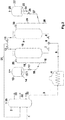
- the process of the present invention is exemplified by, but not limited to Fig 1 .
- the hydrocarbon feed ( 40 ) from the refinery enters the bottom of the main fractionator column ( 41 ) and is mixed with the internal recycle fraction to make the secondary feed ( 42 ).
- the secondary feed is then heated in a furnace ( 43 ) to the desired temperature.
- the hot feed ( 44 ) is then sent to a Delayed Coker drum ( 49 , 48 ) whichever is in the hydrocarbon feeding cycle, through operation of appropriate valves ( 45 , 46 , and 47 ).
- the waste plastic material from a fluidized plastic supply vessel ( 52 ) is pneumatically sent to the coke drum under feeding cycle.
- the hot residue feed is mixed with the waste plastic material supplied in the coke drum and thermal conversion happens for the residue feedstock as well as the waste plastic material.
- the plastic material is thermally decomposed into lighter molecules.
- the waste plastics in the supply vessel ( 52 ) are kept in fluidized condition by supply of fluidizing medium like air ( 54 ) sent through a distributor ( 53 ).
- the flow of plastic material through the standpipes ( 69 , 59 ) is controlled by control valves ( 68, 56 ) which can be rotary airlock valves. Depending upon to which drum the plastic material is to be sent, the valves ( 68, 69, 62, 59 ) are operated.
- fluid transport media ( 60, 57 ) are provided in the lift lines ( 58, 61 ) for waste plastics.
- the product vapors ( 63 ) from the coke drums are routed to the main fractionator column ( 41 ) for separation into different product fractions like Light Coker Gasoil ( 66 ), Heavy Coker Gasoil (65), and Coker Fuel Oil ( 64 ).
- the vapor fraction ( 6 7) is sent to the Gas concentration and separation section for separation of fuel gas, LPG and naphtha.
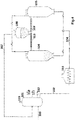
- the embodiment of the process of the present invention is exemplified by, but not limited to Fig 2 .
- the hydrocarbon feed ( 1 ) from the refinery enters the bottom of the main fractionator column ( 2 ) and is mixed with the internal recycle fraction to make the secondary feed ( 3 ).
- the secondary feed is then heated in a furnace ( 4 ) to the desired temperature.
- the hot feed ( 5 ) is then sent to a Delayed Coker drum ( 9, 10 ) whichever is in the hydrocarbon feeding cycle, through operation of appropriate valves ( 6, 7, 8 ) which can be rotary airlock valves.
- the waste plastic material from a fluidized plastic supply vessel ( 13, 22 ) is pneumatically sent to the coke drum under feeding cycle.
- the hot residue feed is mixed with the waste plastic material supplied in the coke drum and thermal conversion happens for the residue feedstock as well as the waste plastic material.
- the plastic material is thermally decomposed into lighter molecules.
- the waste plastics in the supply vessels ( 13, 22 ) are kept in fluidized condition by supply of fluidizing medium like air ( 15, 24 ) sent through a distributor ( 14, 23 ).
- the flows of plastic material through the standpipes ( 16, 27 ) are controlled by control valves ( 17, 26 ) which can be rotary airlock valves.
- the valves ( 17, 20, 26, 30 ) are operated.
- fluid transport media ( 18, 28 ) are provided in the lift lines ( 19, 29 ) for waste plastics.
- the product vapors ( 21 ) from the coke drums are routed to the main fractionator column ( 2 ) for separation into different product fractions like Light Coker Gasoil ( 31 ), Heavy Coker Gasoil ( 32 ) and Coker Fuel Oil ( 33 ).
- the vapor fraction ( 35 ) is sent to the Gas concentration and separation section for separation of fuel gas, LPG and naphtha.
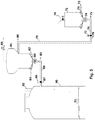
- FIG.3 One embodiment of the invention depicting plastic processing hardware and process is provided in Fig.3 .
- the waste plastic granules are unloaded into the unloading vessel ( 71 ) through a hopper (70), inside which a rousing gas (72) is supplied through a header (73).
- the plastic is withdrawn at a controlled rate through the rotary airlock valve (74) and is pushed by a conveying gas (75) through a horizontal conveying line (76) which then moves vertically (79) to convey the plastic granules into the supply vessel (81) located at a higher elevation compared to the unloading vessel (71).
- Isolation valve (77) and purges (78, 80) are provided in the conveying gas line for additional purging and transport.
- a rousing gas (72) is supplied through a header (73).
- the supply vessel (81) is kept under controlled pressure through PCV (89).
- the plastic is withdrawn from the supply vessel (81) at a controlled rate through the rotary airlock valve (84) and is pushed by a conveying gas (85) through a horizontal conveying line (86) to convey the plastic granules into the coke drum (90).
- Purge flows (87) can be provided in the conveying line and isolation valve (88) in the conveying line.
- the waste plastic granules fall into the hot liquid pool (91) where it cracks into lighter products and the product vapor goes out through the vapor line (92).
- the waste plastic will be carried into the plastic supply vessel (108) in granule or crushed form from where, the plastic is carried into the heated screw conveyers (109, 113) wherein the plastic particles are melted and supplied into the coke drums (105, 106) which is in feeding cycle.
- the fresh feed (100) is supplied into the fractionator column (101) and the secondary feed (102) is withdrawn and is routed through the Furnace (103) to get the hot feed (104).
- the hot feed is then routed to the coke drums (105, 106) whichever is in the feeding cycle.
- the product vapors are routed through overhead product vapor line (107) to the fractionator column (101) where the products are separated into off-gas with unstabilized naphtha (113), LCGO (110), HCGO (111) and CFO (112).
- Coke deposited inside the coke drums are removed by cutting using high pressure water jets after opening of flange in maintenance cycle.
- the waste plastic is loaded into the plastic supply vessel (207) wherein the plastic supplied (209) into the vessel is heated using a heating source (208) which can be either electrical or by a hot stream like superheated steam.
- the plastic supply (209) may be also mixed with a diluent stream for facilitating easy melting and transport.
- the molten liquid or slurry is pumped using a pump (210) and strained by using strainers (211) before supplying into the coke drums (205, 206) through a supply line (219).
- Isolation valves (212, 213) are provided in the plastic supply lines.
- the fresh feed (200) is supplied into the fractionator column (201) and the secondary feed (202) is withdrawn and is routed through the Furnace (203) to get the hot feed (204).
- the hot feed is then routed to the coke drums (205, 206) whichever is in the feeding cycle.
- both the hydrocarbon hot feed as well as the plastic supplied through screw conveying mixes and the waste plastic gets thermally cracked into lighter hydrocarbon molecules.
- the product vapors are routed through overhead product vapor line (214) to the fractionator column (201) where the products are separated into off-gas with unstabilized naphtha (215), LCGO (216), HCGO (217) and CFO (218). Coke deposited inside the coke drums are removed by cutting using high pressure water jets after opening of flange in maintenance cycle.
- Vaccum reside feedstock was arranged from petroleum refinery and characterization was carried out.
- the properties of the vacuum residue feedstock are provided in Table-1.
- Table-3 Product yield data from experiments VR VR + LDPE VR + HDPE VR + Mixed Waste Run Number 1 2 3 4 5 6 7 8 9 10 Waste plastic dosing, wt% 0 10 20 40 10 20 40 10 20 40 Gas yield, wt% 21.5 16.06 17.11 12 18.12 19.29 28.46 18.26 15. 31 25. 86 Liquid yield, wt% 44.3 54.89 58.1 68.6 56.38 55.11 54.03 57.56 62. 55 56. 46 Coke yield, wt% 34.2 29.04 24.78 19.4 25.49 25.59 17.5 24.16 22. 12 17. 66
- Table-4 Properties of multilayer metal additizedwaste plastic granule Composition Mix of PE, PP, PET (multilayer) Form Granules of cylindrical shape Size, mm 2 Bulk density, Kg/m 3 507 Particle density, Kg/m 3 923 Melting temperature, °C 122 °C onwards Metal by ICAP, ppmw Al/Ca 601/2583
- Table-7 A comparison of coke properties are provided in Table-7.lt can be seen that the metal content in the waste plastic has deposited in the coke which is formed during the Delayed Coking reaction and therefore the ash content has increased. The liquid products are devoid of any additional metal due to waste plastic processing.
- Table-7 Comparison of coke properties due to plastic processing Coke Property Base case (without plastic) With plastic processing (2 wt%) Sulfur, wt% 5.1 5.1 Volatile matter, wt% 9.68 9.71 Moisture Content, wt% 0.23 0.2 Ash content, wt% 0.28 0.46 Fixed Carbon, wt% 89.43 89.3
Landscapes
- Chemical & Material Sciences (AREA)
- Oil, Petroleum & Natural Gas (AREA)
- Engineering & Computer Science (AREA)
- Organic Chemistry (AREA)
- Chemical Kinetics & Catalysis (AREA)
- General Chemical & Material Sciences (AREA)
- Wood Science & Technology (AREA)
- Life Sciences & Earth Sciences (AREA)
- Materials Engineering (AREA)
- Physics & Mathematics (AREA)
- Thermal Sciences (AREA)
- Production Of Liquid Hydrocarbon Mixture For Refining Petroleum (AREA)
- Separation, Recovery Or Treatment Of Waste Materials Containing Plastics (AREA)
- Coke Industry (AREA)
Applications Claiming Priority (1)
| Application Number | Priority Date | Filing Date | Title |
|---|---|---|---|
| IN201921038366 | 2019-09-23 |
Publications (1)
| Publication Number | Publication Date |
|---|---|
| EP3795656A1 true EP3795656A1 (de) | 2021-03-24 |
Family
ID=72050717
Family Applications (1)
| Application Number | Title | Priority Date | Filing Date |
|---|---|---|---|
| EP20190674.0A Pending EP3795656A1 (de) | 2019-09-23 | 2020-08-12 | Verfahren und vorrichtung zur co-umwandlung von kunststoffabfällen in einer verzögerten kokereinheit |
Country Status (4)
| Country | Link |
|---|---|
| US (1) | US11421159B2 (de) |
| EP (1) | EP3795656A1 (de) |
| JP (1) | JP7079297B2 (de) |
| CN (1) | CN112538363B (de) |
Cited By (4)
| Publication number | Priority date | Publication date | Assignee | Title |
|---|---|---|---|---|
| US12203039B2 (en) | 2022-03-10 | 2025-01-21 | Amec Foster Wheeler Usa Corporation | Fouling mitigation of delayed coker heaters |
| WO2025109439A1 (en) * | 2023-11-20 | 2025-05-30 | Inamdar Mr Nilesh | An augmented process of converting a polymer to hydrocarbon products |
| US12365839B2 (en) | 2022-09-08 | 2025-07-22 | Exxonmobil Chemical Patents Inc. | Integration of polymeric waste co-processing in cokers to produce circular chemical products from coker gas |
| US12391892B2 (en) | 2022-09-08 | 2025-08-19 | Exxonmobil Chemical Patents Inc. | Integration of polymeric waste co-processing in cokers to produce circular chemical products from coker gas oil |
Families Citing this family (17)
| Publication number | Priority date | Publication date | Assignee | Title |
|---|---|---|---|---|
| US10308896B2 (en) * | 2015-08-10 | 2019-06-04 | The Procter & Gamble Company | Methods for producing alkylbenzenes, paraffins, olefins and oxo alcohols from waste plastic feedstocks |
| CN116848218A (zh) | 2021-01-29 | 2023-10-03 | 多尔夫凯塔尔化学制品(I)私人有限公司 | 用于在原料热解过程中减少焦炭和增加馏出物的添加剂组合物及其使用方法 |
| JPWO2022202632A1 (de) | 2021-03-24 | 2022-09-29 | ||
| JP7626650B2 (ja) * | 2021-04-01 | 2025-02-04 | 出光興産株式会社 | 廃プラスチック分解処理用混合物の製造方法 |
| CN117545823A (zh) * | 2021-06-22 | 2024-02-09 | Sabic环球技术有限责任公司 | 废塑料转化成烃的方法 |
| US11859132B2 (en) * | 2021-08-05 | 2024-01-02 | Indian Oil Corporation Limited | Process and an apparatus for conversion of waste plastic pyrolysis oil into valuable products |
| JP7767085B2 (ja) * | 2021-09-29 | 2025-11-11 | 出光興産株式会社 | 溶解装置、廃プラスチック分解装置、及び溶融廃プラスチック混合油の製造方法 |
| KR20230087004A (ko) * | 2021-12-09 | 2023-06-16 | 한국에너지기술연구원 | 탄화수소화합물을 이용한 폐플라스틱의 연료 또는 화학원료로의 전환 방법 |
| US12359135B2 (en) | 2022-04-01 | 2025-07-15 | Chevron U.S.A. Inc. | Circular economy for plastic waste to polypropylene and base oil via refinery hydrocracking unit |
| CA3255155A1 (en) * | 2022-04-01 | 2023-10-05 | Chevron U.S.A. Inc. | CIRCULAR ECONOMY OF PLASTIC WASTE IN POLYETHYLENE AND BASE OIL THROUGH A CRUSH REFINERY UNIT |
| EP4504857A4 (de) * | 2022-04-01 | 2026-03-25 | Chevron Usa Inc | Kreiswirtschaft für kunststoffabfälle zu polypropylen und basisöl über eine raffinerieroheinheit |
| WO2023215703A1 (en) | 2022-05-04 | 2023-11-09 | Exxonmobil Chemical Patents Inc. | Co-processing plastic waste in cokers for jet fuel production |
| CN119546725A (zh) | 2022-07-08 | 2025-02-28 | 雪佛龙美国公司 | 废塑料与生物进料的共混物和制备方法 |
| KR20250039313A (ko) | 2022-07-20 | 2025-03-20 | 도르프 케탈 케미칼즈 (인디아) 프라이비트 리미티드 | 코크스 감소 첨가제 조성물 및 이의 사용 방법 |
| US12522772B2 (en) | 2022-12-02 | 2026-01-13 | Exxonmobil Chemical Patents Inc. | Methods of recycling end-of-life rubber and oil-fouled plastics |
| KR20250073086A (ko) | 2022-12-12 | 2025-05-27 | 셰브런 유.에스.에이.인크. | 오일 정제소 유닛에 공급하기 위한 폐플라스틱 및 석유 공급물의 안정적인 블렌드를 위한 공정 및 이를 제조하는 공정 |
| CN119522265A (zh) | 2022-12-12 | 2025-02-25 | 雪佛龙美国公司 | 用于进料至炼油厂单元的废塑料与石油进料的稳定共混物的方法及其制备方法 |
Citations (6)
| Publication number | Priority date | Publication date | Assignee | Title |
|---|---|---|---|---|
| US4118281A (en) | 1977-04-15 | 1978-10-03 | Mobil Oil Corporation | Conversion of solid wastes to fuel coke and gasoline/light oil |
| JPH0680970A (ja) * | 1992-09-02 | 1994-03-22 | Japan Energy Corp | 高分子材料の処理方法 |
| WO1995014069A1 (en) | 1993-11-18 | 1995-05-26 | Mobil Oil Corporation | Disposal of plastic waste material |
| CN101230284A (zh) * | 2007-01-25 | 2008-07-30 | 华东理工大学 | 废弃塑料的延迟焦化处理方法及其处理装置 |
| US20140197560A1 (en) * | 2011-09-14 | 2014-07-17 | Sgl Carbon Se | Production of carbon-fiber reinforced coke |
| US20180201847A1 (en) | 2017-01-16 | 2018-07-19 | Council Of Scientific And Industrial Research | Process for upgradation of heavy crude oil/residue using waste plastic as hydrogen donating agent |
Family Cites Families (2)
| Publication number | Priority date | Publication date | Assignee | Title |
|---|---|---|---|---|
| US20020179493A1 (en) * | 1999-08-20 | 2002-12-05 | Environmental & Energy Enterprises, Llc | Production and use of a premium fuel grade petroleum coke |
| JP4154929B2 (ja) * | 2002-06-05 | 2008-09-24 | Jfeスチール株式会社 | プラスチックを原料とする有用物質の製造方法 |
-
2020
- 2020-08-12 EP EP20190674.0A patent/EP3795656A1/de active Pending
- 2020-08-20 JP JP2020139364A patent/JP7079297B2/ja active Active
- 2020-08-26 CN CN202010868490.2A patent/CN112538363B/zh active Active
- 2020-08-27 US US17/005,184 patent/US11421159B2/en active Active
Patent Citations (6)
| Publication number | Priority date | Publication date | Assignee | Title |
|---|---|---|---|---|
| US4118281A (en) | 1977-04-15 | 1978-10-03 | Mobil Oil Corporation | Conversion of solid wastes to fuel coke and gasoline/light oil |
| JPH0680970A (ja) * | 1992-09-02 | 1994-03-22 | Japan Energy Corp | 高分子材料の処理方法 |
| WO1995014069A1 (en) | 1993-11-18 | 1995-05-26 | Mobil Oil Corporation | Disposal of plastic waste material |
| CN101230284A (zh) * | 2007-01-25 | 2008-07-30 | 华东理工大学 | 废弃塑料的延迟焦化处理方法及其处理装置 |
| US20140197560A1 (en) * | 2011-09-14 | 2014-07-17 | Sgl Carbon Se | Production of carbon-fiber reinforced coke |
| US20180201847A1 (en) | 2017-01-16 | 2018-07-19 | Council Of Scientific And Industrial Research | Process for upgradation of heavy crude oil/residue using waste plastic as hydrogen donating agent |
Non-Patent Citations (1)
| Title |
|---|
| "TIRE FED COKING UNIT", RESEARCH DISCLOSURE, KENNETH MASON PUBLICATIONS, HAMPSHIRE, UK, GB, no. 448, 1 August 2001 (2001-08-01), pages 1365 - 1367, XP001128212, ISSN: 0374-4353 * |
Cited By (4)
| Publication number | Priority date | Publication date | Assignee | Title |
|---|---|---|---|---|
| US12203039B2 (en) | 2022-03-10 | 2025-01-21 | Amec Foster Wheeler Usa Corporation | Fouling mitigation of delayed coker heaters |
| US12365839B2 (en) | 2022-09-08 | 2025-07-22 | Exxonmobil Chemical Patents Inc. | Integration of polymeric waste co-processing in cokers to produce circular chemical products from coker gas |
| US12391892B2 (en) | 2022-09-08 | 2025-08-19 | Exxonmobil Chemical Patents Inc. | Integration of polymeric waste co-processing in cokers to produce circular chemical products from coker gas oil |
| WO2025109439A1 (en) * | 2023-11-20 | 2025-05-30 | Inamdar Mr Nilesh | An augmented process of converting a polymer to hydrocarbon products |
Also Published As
| Publication number | Publication date |
|---|---|
| US20210087473A1 (en) | 2021-03-25 |
| CN112538363B (zh) | 2022-10-21 |
| CN112538363A (zh) | 2021-03-23 |
| JP7079297B2 (ja) | 2022-06-01 |
| US11421159B2 (en) | 2022-08-23 |
| JP2021050325A (ja) | 2021-04-01 |
Similar Documents
| Publication | Publication Date | Title |
|---|---|---|
| US11421159B2 (en) | Process and apparatus for co-conversion of waste plastics in Delayed Coker unit | |
| US11421162B2 (en) | Process for co-conversion of waste plastics and hydrocarbon feedstock | |
| EP4055118B1 (de) | Co-verarbeitung von kunststoffabfällen in kokern | |
| US5917102A (en) | Device for depolymerizing used and waste plastics | |
| US10093864B2 (en) | Method and apparatus for continuous recycling of waste plastic into liquid fuels | |
| KR101902307B1 (ko) | 이차 침적물의 에너지-효율적 처리를 위한 방법과 장치 | |
| KR100294809B1 (ko) | 증기 분해기에서의 플라스틱 재생방법 | |
| US20110203968A1 (en) | Method of processing oil refining waste | |
| US12209221B2 (en) | Integrated mixed plastic pyrolysis with heavy oil product thermal cracking | |
| JP2024525488A (ja) | 混合プラスチック廃棄物を処理するためのシステム及び方法 | |
| US20240093102A1 (en) | Integration of Polymeric Waste Co-Processing in Cokers to Produce Circular Chemical Products from Coker Gas Oil | |
| CN108138057A (zh) | 全原油转化成加氢处理的蒸馏物和石油生焦炭的整合沸腾床加氢加工,固定床加氢加工和焦化方法 | |
| JP2024538108A (ja) | 混合プラスチック廃棄物を液体炭化水素生成物に変換するための方法 | |
| CN119403901A (zh) | 在焦化器中共同加工塑料废物用于喷气燃料生产 | |
| CN121399203A (zh) | 用于精炼厂废塑料共加工的新型进料 | |
| EP4130199B1 (de) | Verfahren zum cracken eines polyolefinhaltigen materials | |
| KR20240122517A (ko) | 탄화수소 스트림을 저비점 공급 물질로 업그레이드하기 위한 시스템 및 방법 | |
| CA3008103A1 (en) | Processes and apparatus to produce solid asphaltene products from hydrocarbon feedstocks | |
| WO2016034739A1 (en) | A mineral additive, in particular for application in the continuous processing of waste plastics, a method which uses the said additive and an apparatus for carrying out the method | |
| CN116064071B (zh) | 一种使用延迟焦化装置处理含氯废塑料的方法及系统 | |
| US20250346817A1 (en) | Conversion of waste plastic and oil blend with a contaminant removal step | |
| CN121002148A (zh) | 含痕量金属的焦化方法和焦炭组合物 | |
| Sau et al. | Co-Conversion of Waste Plastic to Light Distillates in Delayed Coking Process |
Legal Events
| Date | Code | Title | Description |
|---|---|---|---|
| PUAI | Public reference made under article 153(3) epc to a published international application that has entered the european phase |
Free format text: ORIGINAL CODE: 0009012 |
|
| STAA | Information on the status of an ep patent application or granted ep patent |
Free format text: STATUS: REQUEST FOR EXAMINATION WAS MADE |
|
| 17P | Request for examination filed |
Effective date: 20200812 |
|
| AK | Designated contracting states |
Kind code of ref document: A1 Designated state(s): AL AT BE BG CH CY CZ DE DK EE ES FI FR GB GR HR HU IE IS IT LI LT LU LV MC MK MT NL NO PL PT RO RS SE SI SK SM TR |
|
| AX | Request for extension of the european patent |
Extension state: BA ME |
|
| P01 | Opt-out of the competence of the unified patent court (upc) registered |
Effective date: 20230712 |
|
| STAA | Information on the status of an ep patent application or granted ep patent |
Free format text: STATUS: EXAMINATION IS IN PROGRESS |
|
| 17Q | First examination report despatched |
Effective date: 20240502 |