EP3796211A1 - Vorrichtung und verfahren zum trainieren eines segmentierungsmodells - Google Patents
Vorrichtung und verfahren zum trainieren eines segmentierungsmodells Download PDFInfo
- Publication number
- EP3796211A1 EP3796211A1 EP19198420.2A EP19198420A EP3796211A1 EP 3796211 A1 EP3796211 A1 EP 3796211A1 EP 19198420 A EP19198420 A EP 19198420A EP 3796211 A1 EP3796211 A1 EP 3796211A1
- Authority
- EP
- European Patent Office
- Prior art keywords
- digital image
- segmentation
- image
- segment
- model
- Prior art date
- Legal status (The legal status is an assumption and is not a legal conclusion. Google has not performed a legal analysis and makes no representation as to the accuracy of the status listed.)
- Granted
Links
Images



Classifications
-
- G—PHYSICS
- G06—COMPUTING OR CALCULATING; COUNTING
- G06T—IMAGE DATA PROCESSING OR GENERATION, IN GENERAL
- G06T11/00—Two-dimensional [2D] image generation
-
- G—PHYSICS
- G06—COMPUTING OR CALCULATING; COUNTING
- G06V—IMAGE OR VIDEO RECOGNITION OR UNDERSTANDING
- G06V10/00—Arrangements for image or video recognition or understanding
- G06V10/20—Image preprocessing
- G06V10/26—Segmentation of patterns in the image field; Cutting or merging of image elements to establish the pattern region, e.g. clustering-based techniques; Detection of occlusion
- G06V10/267—Segmentation of patterns in the image field; Cutting or merging of image elements to establish the pattern region, e.g. clustering-based techniques; Detection of occlusion by performing operations on regions, e.g. growing, shrinking or watersheds
-
- G—PHYSICS
- G06—COMPUTING OR CALCULATING; COUNTING
- G06F—ELECTRIC DIGITAL DATA PROCESSING
- G06F18/00—Pattern recognition
- G06F18/20—Analysing
- G06F18/21—Design or setup of recognition systems or techniques; Extraction of features in feature space; Blind source separation
- G06F18/214—Generating training patterns; Bootstrap methods, e.g. bagging or boosting
- G06F18/2155—Generating training patterns; Bootstrap methods, e.g. bagging or boosting characterised by the incorporation of unlabelled data, e.g. multiple instance learning [MIL], semi-supervised techniques using expectation-maximisation [EM] or naïve labelling
-
- G—PHYSICS
- G06—COMPUTING OR CALCULATING; COUNTING
- G06F—ELECTRIC DIGITAL DATA PROCESSING
- G06F18/00—Pattern recognition
- G06F18/20—Analysing
- G06F18/24—Classification techniques
- G06F18/241—Classification techniques relating to the classification model, e.g. parametric or non-parametric approaches
- G06F18/2413—Classification techniques relating to the classification model, e.g. parametric or non-parametric approaches based on distances to training or reference patterns
-
- G—PHYSICS
- G06—COMPUTING OR CALCULATING; COUNTING
- G06N—COMPUTING ARRANGEMENTS BASED ON SPECIFIC COMPUTATIONAL MODELS
- G06N3/00—Computing arrangements based on biological models
- G06N3/02—Neural networks
- G06N3/04—Architecture, e.g. interconnection topology
- G06N3/045—Combinations of networks
-
- G—PHYSICS
- G06—COMPUTING OR CALCULATING; COUNTING
- G06N—COMPUTING ARRANGEMENTS BASED ON SPECIFIC COMPUTATIONAL MODELS
- G06N3/00—Computing arrangements based on biological models
- G06N3/02—Neural networks
- G06N3/08—Learning methods
- G06N3/088—Non-supervised learning, e.g. competitive learning
-
- G—PHYSICS
- G06—COMPUTING OR CALCULATING; COUNTING
- G06T—IMAGE DATA PROCESSING OR GENERATION, IN GENERAL
- G06T7/00—Image analysis
- G06T7/10—Segmentation; Edge detection
- G06T7/11—Region-based segmentation
-
- G—PHYSICS
- G06—COMPUTING OR CALCULATING; COUNTING
- G06T—IMAGE DATA PROCESSING OR GENERATION, IN GENERAL
- G06T7/00—Image analysis
- G06T7/10—Segmentation; Edge detection
- G06T7/194—Segmentation; Edge detection involving foreground-background segmentation
-
- G—PHYSICS
- G06—COMPUTING OR CALCULATING; COUNTING
- G06V—IMAGE OR VIDEO RECOGNITION OR UNDERSTANDING
- G06V10/00—Arrangements for image or video recognition or understanding
- G06V10/20—Image preprocessing
- G06V10/28—Quantising the image, e.g. histogram thresholding for discrimination between background and foreground patterns
-
- G—PHYSICS
- G06—COMPUTING OR CALCULATING; COUNTING
- G06V—IMAGE OR VIDEO RECOGNITION OR UNDERSTANDING
- G06V10/00—Arrangements for image or video recognition or understanding
- G06V10/70—Arrangements for image or video recognition or understanding using pattern recognition or machine learning
- G06V10/764—Arrangements for image or video recognition or understanding using pattern recognition or machine learning using classification, e.g. of video objects
-
- G—PHYSICS
- G06—COMPUTING OR CALCULATING; COUNTING
- G06V—IMAGE OR VIDEO RECOGNITION OR UNDERSTANDING
- G06V10/00—Arrangements for image or video recognition or understanding
- G06V10/70—Arrangements for image or video recognition or understanding using pattern recognition or machine learning
- G06V10/82—Arrangements for image or video recognition or understanding using pattern recognition or machine learning using neural networks
-
- G—PHYSICS
- G06—COMPUTING OR CALCULATING; COUNTING
- G06V—IMAGE OR VIDEO RECOGNITION OR UNDERSTANDING
- G06V20/00—Scenes; Scene-specific elements
-
- G—PHYSICS
- G06—COMPUTING OR CALCULATING; COUNTING
- G06T—IMAGE DATA PROCESSING OR GENERATION, IN GENERAL
- G06T2207/00—Indexing scheme for image analysis or image enhancement
- G06T2207/20—Special algorithmic details
- G06T2207/20084—Artificial neural networks [ANN]
-
- G—PHYSICS
- G06—COMPUTING OR CALCULATING; COUNTING
- G06V—IMAGE OR VIDEO RECOGNITION OR UNDERSTANDING
- G06V20/00—Scenes; Scene-specific elements
- G06V20/50—Context or environment of the image
- G06V20/56—Context or environment of the image exterior to a vehicle by using sensors mounted on the vehicle
Definitions
- Various embodiments generally relate to a device and a method for training a segmentation model.
- imaging sensors such as camera sensors and/or video sensors
- the digital images may illustrate objects, such as cars, bicycles, pedestrians, street signs etc., and may be segmented and classified by semantic segmentation using a segmentation model and the vehicle may be controlled depending on the segmented and classified digital images.
- the segmentation model is capable of providing segments for the objects in the digital image with sharp boundaries.
- neural networks are applied in the field of computer vision.
- neural networks may be used to generate a segmented image using an image detected by an imaging sensor.
- a segment of the segmented image may also include pixels not belonging to an object shown in the detected image.
- the method and the device with the features of the independent claims 1 (first example) and 11 (twenty-second example) enable a model to be trained to generate a segmented image for a digital image with improved object boundaries of a segmented object.
- a model may be any kind of algorithm, which provides output data for input data.
- a model may be a differential model.
- a model may be a neural network.
- the segmentation image may further include a background of the segment.
- the segmentation image may be a binary segmentation image.
- the segmentation image may include a first binary value "1" for the segment and a second binary value "0" for the background.
- the digital image may be a color image, for example an RGB image.
- the segmentation model may be trained to reduce, for example to minimize, the predictability of the digital image from the segment of the digital image.
- the pixels of the segment of the digital image share higher level of abstractions that are more independent of the other pixels. This has the effect that the segmentation method is trained unsupervised, i.e. using digital images only and no human supervision.
- Determining a predictability of the digital image from the segment of the digital image may include a generative model generating a reconstructed digital image for the segment of the digital image.
- the reconstructed digital image may be a prediction of the digital image.
- the method may further include training the generative model by reducing, for example minimizing, the first loss value.
- Determining a predictability of the digital image from the segment of the digital image may include a generative model generating a reconstructed digital image for the segment of the digital image.
- the reconstructed digital image may be a prediction of the digital image.
- Determining a predictability of the digital image from the segment of the digital image may further include a discriminative model determining a probability for the reconstructed digital image to belong to a class including the digital image.
- the segmentation model may be trained to increase the probability determined by the discriminative model. For example, training the segmentation model to increase the probability determined by the discriminative model may include determining a second loss value using the probability determined by the discriminative model and the segmentation model may be trained by increasing, for example maximizing, the second loss value.
- the method may further include training the generative model by reducing, for example minimizing, the second loss value.
- the method may further include training the discriminative model by increasing, for example maximizing, the second loss value.
- Determining a predictability of the digital image from the segment of the segmentation image may include determining a predictability of the background of the segmentation image from the segment of the segmentation image.
- the segmentation model may be trained to reduce, for example to minimize, the predictability of the background of the segmentation image from the segment of the segmentation image.
- the segmentation model may be trained to reduce, for example to minimize, the predictability of the background of the digital image from the segment of the digital image.
- training the segmentation model to increase the probability determined by the discriminative model may include determining a third loss value using the probability determined by the discriminative model and the segmentation model may be trained by increasing, for example maximizing, the third loss value.
- the segmentation model provides segments that are independent of the background of the segments.
- the method may further include training the discriminative model by reducing, for example minimizing, the third loss value.
- the method may further include a sensor detecting the digital image.
- the sensor may include a camera sensor, a video sensor, a radar sensor, a LiDAR sensor, an ultrasonic sensor, a motion sensor, or a thermal sensor.
- the digital image may include a plurality of objects.
- the segmentation model may generate a segmentation image for each object of the plurality of objects, wherein each segmentation image may include a segment describing the object.
- the method may be performed for each segmentation image of the plurality of segmentation images.
- At least a part of the segmentation model may be implemented by one or more processors.
- the feature mentioned in this paragraph in combination with any one of the first example to the seventeenth provides an eighteenth example.
- the segmentation model may be a neural network.
- the feature mentioned in this paragraph in combination with any one of the first example to the eighteenth provides a nineteenth example.
- the method may further include the trained segmentation model generating training data.
- the method may include training an additional model using the training data.
- a computer program product may store program instructions configured to, if executed, perform the method of any one of the first example to the twentieth example.
- the feature mentioned in this paragraph provides a twenty-first example.
- a device may include an additional model trained by the method of the twentieth example.
- the feature mentioned in this paragraph provides a twenty-third example.
- a system may include a device of the twenty-second example or the twenty-third example.
- the system may further include at least one sensor.
- the at least one sensor may be configured to provide a digital image for the device.
- a system may include a generative adversarial network (GAN).
- the GAN may include a plurality of generator networks, wherein at least one generator network of the plurality of generator networks may include the segmentation model trained by the method of any one of the first example to the nineteenth example.
- the features mentioned in this paragraph provide a twenty-fifth example.
- a system may include a generative adversarial network (GAN).
- GAN may include a plurality of generator networks, wherein at least one generator network of the plurality of generator networks may include the additional model trained by the method of the twentieth example.
- the features mentioned in this paragraph provide a twenty-sixth example.
- a vehicle may include at least one imaging sensor, configured to provide digital images.
- the vehicle may further include a driving assistance system.
- the driving assistance system may include a segmentation model trained by the method of any one of the first example to the nineteenth example.
- the segmentation model may be configured to provide a segmentation image for each digital image.
- the driving assistance system may be configured to control the vehicle using the segmentation images.
- the vehicle is capable of detecting surrounding objects in an improved manner.
- the trained segmentation model is capable to provide segmented images with sharp object boundaries improving the classification of the segmented objects and thus the control of the vehicle.
- a vehicle may include at least one imaging sensor, configured to provide digital images.
- the vehicle may further include a driving assistance system.
- the driving assistance system may include a segmentation model, wherein the segmentation model may be configured to provide a segmentation image for each digital image.
- the driving assistance system may include an additional model trained by the method of the twentieth example.
- the additional model may be configured to process the plurality of segmentation images and the driving assistance system may be configured to control the vehicle using the processed segmentation images.
- a “circuit” may be understood as any kind of a logic implementing entity, which may be hardware, software, firmware, or any combination thereof.
- a “circuit” may be a hard-wired logic circuit or a programmable logic circuit such as a programmable processor, e.g. a microprocessor (e.g. a Complex Instruction Set Computer (CISC) processor or a Reduced Instruction Set Computer (RISC) processor).
- a “circuit” may also be software being implemented or executed by a processor, e.g. any kind of computer program, e.g. a computer program using a virtual machine code such as e.g. Java. Any other kind of implementation of the respective functions which will be described in more detail below may also be understood as a "circuit” in accordance with an alternative embodiment.
- segmentation models are applied for image segmentation and various systems may be controlled based on the segmented images.
- segments of segmented images may also include pixels not belonging to an object shown in the processed image, which may result in an unwanted control of the respective system.
- a segmentation model is trained to provide a segmented image for a digital image, wherein the segments, which describe a respective object in the digital image, represent the object with sharp object boundaries.
- FIG. 1 shows a device 100 according to various embodiments.
- the device 100 may include one or more sensors 102.
- the sensor 102 may be configured to provide (digital) images, for example a plurality of digital images 104 including the digital image 106.
- the sensor 102 may be any kind of sensor, which is capable of providing (digital) images, for example an imaging sensor, such as a camera sensor or a video sensor, a radar sensor, a LiDAR sensor, an ultrasonic sensor, a motion sensor, a thermal sensor, etc.
- the plurality of sensors may be of the same type of sensor or of different sensor types.
- the device 100 may further include a memory device 108.
- the memory device 108 may include a memory which is for example used in the processing carried out by a processor.
- a memory used in the embodiments may be a volatile memory, for example a DRAM (Dynamic Random Access Memory) or a non-volatile memory, for example a PROM (Programmable Read Only Memory), an EPROM (Erasable PROM), EEPROM (Electrically Erasable PROM), or a flash memory, e.g., a floating gate memory, a charge trapping memory, an MRAM (Magnetoresistive Random Access Memory) or a PCRAM (Phase Change Random Access Memory).
- the memory device 108 may be configured to store the plurality of digital images 104, such as the digital image 106, provided by the one or more sensors 102.
- the device 100 may further include at least one processor 110.
- the at least one processor 110 may be any kind of circuit, i.e. any kind of logic implementing entity, as described above. In various embodiments, the processor 110 may be configured to process the digital image 106.
- FIG. 2 shows a processing system 200 for training a segmentation model according to various embodiments.
- the processing system 200 may include the memory device 108.
- the memory device 108 may store the digital image 106.
- the digital image 106 may include at least one object 202.
- the processing system 200 may further include the at least one processor 110.
- the processor 110 may be configured to process the digital image 106.
- the processor 110 may be configured to implement at least a part of a segmentation model 204.
- the segmentation model 204 may be a neural network, wherein the neural network may be any kind of neural network, such as a convolutional neural network.
- the neural network may include any number of layers and the training of the neural network, i.e. adapting the layers of the neural network, may be based on any kind of training principle, such as backpropagation, i.e. the backpropagation algorithm.
- the segmentation model 204 may be configured to process the digital image 106 and may be further configured to generate a segmentation image 206 for the digital image 106.
- the segmentation image 206 may include a segment 208 describing the at least one object 202 in the digital image 106.
- the segmentation image 206 may further include a background 210 of the segment 208.
- the segmentation image 206 may include a segment 208, which describes at least one object 202 in the digital image, and a background 210, which describes a background 212 of the at least one object 202 in the digital image.
- the digital image 106 may be a color image (for example RGB) and the segmentation image 206 may be a binary image.
- the segmentation image 206 may include a first binary value "1" for the segment 208 and a second binary value "0" for the background 210 or may include a first binary value "0" for the segment 208 and a second binary value "1” for the background 210.
- the digital image 106 and the segmentation image 206 may each include a plurality of pixels, wherein the segment 208 of the segmentation image 206 may include a first plurality of pixels associated to a first plurality of pixels in the digital image 106, wherein the first plurality of pixels in the digital image 106 may describe the at least one object 202 in the digital image 106.
- the background 210 of the segmentation image 206 may include a second plurality of pixels associated to a second plurality of pixels in the digital image 106, wherein the second plurality of pixels in the digital image 106 may describe the background of the at least one object 202 in the digital image 106.
- the segment 208 described by the first plurality of pixels in the segmentation image 206 may include the first binary value "1" and the background 210 described by the second plurality of pixels in the segmentation image 206 may include the second binary value "0".
- the processor 110 may be further configured determine a predictability 214 of the digital image 106 from the segment 208 of the segmentation image 206.
- the processor 110 may be configured to adapt, i.e. to train, the segmentation model 204 to reduce, for example to minimize, the predictability 214 of the digital image 106 from the segment 208 of the segmentation image 206.
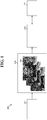
- FIG. 3 shows a processing system 300 for training a segmentation model according to various embodiments.
- the processing system 300 may correspond substantially to the processing system 200, wherein the processor 110 is further configured to generate a segment 302 of the digital image 106.
- the segment 302 of the digital image 106 may be generated using the segment 208 of the segmentation image 206 and the digital image 106.
- the segment 302 ( S ( X ) ⁇ X ) of the digital image 106 may be determined by the Hadamard product of the segmentation image 206 ( S ( x )) for the digital image 106 and the digital image 106 (X), wherein the digital image 106 may be a color image and wherein the segmentation image 206 may include a first binary value "1" for the segment 208 and a second binary value "0" for the background 210. In other words, the segmentation image 206 may include a first binary value "1" for the pixels associated to the segment 208 and a second binary value "0" for the pixels associated to the background 210.
- the segmentation image 206 may be used as a mask and the segment 302 of the digital image 106 may be a part cut out of the digital image.
- the processor 110 may be further configured to determine a predictability 304 of the digital image 106 from the segment 302 of the digital image 106.
- the predictability 304 of the digital image 106 from the segment 302 of the digital image 106 may be determined by equation (1):
- the processor 110 may be configured to train the segmentation model 204 by reducing, for example minimizing, the predictability 304 of the digital image 106 from the segment 302 of the digital image 106, wherein the training may include the objective function given by equation (2): wherein S is the segmentation model 204 generating the segmentation image 206 S(X) for the digital image 106 X.
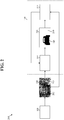
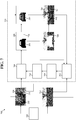
- FIG. 4 shows a processing system 400 for training a segmentation model according to various embodiments.
- the processing system 400 may correspond substantially to the processing system 300, wherein the processor 110 may be further configured to implement at least a part of a generative model 402.
- the generative model 402 may be a neural network, for example a generator.
- the generative model 402 may be configured to process the segment 302 of the digital image 106.
- the generative model 402 may be configured to generate a reconstructed digital image 404 for the segment 302 of the digital image 106.
- the reconstructed digital image 404 may be a prediction of the digital image 106.
- the generative model 402 may presume a background 212 of the digital image 106 using the segment 302 of the digital image 106 to reconstruct the digital image 106.
- the generative model 402 may be an Inpainter model generating a background of the segment 302 of the digital image 106.
- the processor 110 may be configured to determine a first loss value 406 by comparing the reconstructed image 404 with the digital image 106.
- the first loss value 406 may be determined by a mean square error (MSE).
- MSE mean square error
- the processor 110 may be further configured to train the segmentation model 204 by increasing, for example maximizing, the first loss value 406.
- the processor 110 may be configured to train the generative model 402 by reducing, for example minimizing, the first loss value 406.
- the predictability 304 of the digital image 106 from the segment 302 of the digital image 106 is reduced, for example minimized, by increasing, for example maximizing, the first loss value 406.
- the generative model 402 may be trained to reduce, for example minimize, the loss between a generated reconstructed digital image 404 and the digital image 106
- the segmentation model 204 may be trained to increase, for example maximize, the loss between a generated reconstructed digital image 404 and the digital image 106.
- the quality of the segment 208 of the segmentation image 206 generated by the segmentation model 204 is improved by generating a segmentation image 206 for which the generative model 402 fails to reconstruct the digital image 106 from the segment 302 of the digital image 106.
- a part of the digital image 106 for example the background 212 of the digital image 106, may be hidden such that the generative model 402 fails to reconstruct the digital image 106.
- the generative model 402 may fail to reconstruct the digital image 106 from the segment 302 of the digital image 106, if the segment 208 generated by the segmentation model 204 includes sharp object boundaries.
- the generative model 402 may fail to reconstruct the digital image 106 from the segment 302 of the digital image 106, if the segment 208 generated by the segmentation model 204 includes the pixels associated to the at least one object 202 in the digital image 106 and does not include pixels associated to the background 212 of the digital image 106.
- the objective function for training the segmentation model 204 ( S ) and the generative model 402 ( G ) may be described by equation (4): max S min G E X ⁇ P r ⁇ G S X ⁇ X ⁇ X ⁇ 2 2
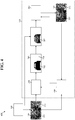
- FIG. 5 shows a processing system 500 for training a segmentation model according to various embodiments.
- the processing system 500 may correspond substantially to the processing system 300, wherein the processor 110 may be further configured to implement at least a part of the generative model 402 and may be configured to implement at least a part of a discriminative model 502.
- the discriminative model 502 may be a neural network, for example a discriminator.
- the generative model 402 may be configured to process the segment 302 of the digital image 106.
- the generative model 402 may be configured to generate a reconstructed digital image 404 for the segment 302 of the digital image 106, wherein the reconstructed digital image 404 may be a prediction of the digital image 106.
- the discriminative model 502 may be configured to determine a probability 504 for the reconstructed digital image 404 to belong to a class including the digital image 106.
- the discriminative model may include a first class and the first class may include the digital image 106.
- the discriminative model 502 may further include a second class, wherein the second class may include at least one image generated by a generative model, such as the generative model 402.
- the first class may be associated to "real" images, such as sensor-detected images
- the second class may be associated to "fake” images, such as generated images.
- the discriminative model 502 may be configured to determine a probability of the reconstructed digital image 404 to be a "real" image, i.e.
- the processing system 500 may include a generative adversarial network (GAN), including the generative model 402 and the discriminative model 502.
- GAN generative adversarial network
- the objective function of a GAN may be described by equation (5): min G max D E X ⁇ P r logD X + E Z ⁇ P z log 1 ⁇ D G Z
- D is a discriminative model, wherein is the distribution of the "real" image, for example the digital image 106, and wherein is a random distribution.
- L D * , G JSD P r ⁇ P g ⁇ 2 log 2
- JSD the Jensen-Shannon-Divergence
- the generative model 402 may be configured to generate the reconstructed digital image 404 for the segment 302 of the digital image 106.
- relative entropy may be used as quantification of the predictability 304 of the digital image 106 from the segment 302 of the digital image 106.
- equation (6) is reduced, for example minimized, if the segmentation model 204 generates the segment 208 of the segmentation image 206 with sharp object boundaries.
- the generative model fails to reconstruct the digital image 106 from the segment 302 of the digital image for a segment 208 of the segmentation image 206 with sharp object boundaries.
- the processor 110 may be configured to determine a second loss value 506 using the probability 504 determined by the discriminative model 502.
- the processor 110 may be further configured to train the segmentation model 204 by increasing, for example maximizing, the second loss value 506.
- the predictability 304 of the digital image 106 from the segment 302 of the digital image 106 is reduced, for example minimized, by training the segmentation model 204 to increase, for example maximize, the second loss value 506.
- the processor 110 may be configured to train the generative model 402 by reducing, for example to minimize, the second loss value 506.
- the second loss value 506 may be minimized using the log D trick.
- the predictability 304 of the digital image 106 from the segment 302 of the digital image 106 may be determined using the Wasserstein distance.
- the processor 110 may be further configured to train the discriminative model 502 by increasing, for example maximizing, the second loss value 506.
- the generative model 402 may be trained to generate a reconstructed digital image 404 from the segment 302 of the digital image 106 for which the discriminative model 502 determines a high probability 504 to belong to the first class associated with "real" images; the discriminative model 502 may be trained to determine a low probability 504 for the reconstructed digital image 404 to belong to the first class; and the segmentation model 204 may be trained to generate a segmentation image 206 for which the discriminative model 502 determines a low probability 504 for the reconstructed digital image 404 to belong to the first class.
- the objective function for training the segmentation model 204 ( S ), the generative model 402 ( G ) and the discriminative model 502 ( D ) may be described by equation (8): max S min G max D E X ⁇ P r logD X + E X ⁇ P r log 1 ⁇ D G S X ⁇ X
- FIG. 6 shows a processing system 600 for training a segmentation model according to various embodiments.
- the processing system 600 may correspond substantially to the processing system 300, wherein the processor 110 may be further configured to generate a background 602 of the digital image 106.
- the background 602 of the digital image 106 may be generated using the background 210 of the segmentation image 206 and the digital image 106.
- the background 602 of the segment 302 ( S ( X ) ⁇ X ) of the digital image 106 may be determined by the Hadamard product of the segmentation image 206 ( S ( x )) for the digital image 106 and the digital image 106 ( X ), wherein the digital image 106 may be a color image and wherein the segmentation image 206 may include a first binary value "0" for the segment and a second binary value "1" for the background.
- the background 602 may be described by 1 -S ( X ) for a first binary value "1" for the segment and a second binary value "0" for the background.
- the pixels associated to the background 210 of the segmentation image 206 may include the first binary value "1" and the pixels associated to the segment 208 of the segmentation image 206 may include the second binary value "0".
- the background 602 of the digital image 106 may be described by 1 -S(X) ⁇ X.
- the segmentation image 206 may be used as a mask and the background 602 of the digital image 106 may be a part cut out of the digital image 106.
- the processor 110 may be further configured determine a predictability 604 of the background 602 of the digital image 106 from the segment 302 of the digital image 106.
- the predictability 604 of the background 602 of the digital image 106 from the segment 302 of the digital image 106 may be determined by equation (9):
- the processor 110 may be configured to train the segmentation model 204 by reducing, for example minimizing, the predictability 304 of the background 602 of the digital image 106 from the segment 302 of the digital image 106, wherein the training may be described by the objective function given by equation (10):
- the predictability 604 of the background 602 of the digital image 106 from the segment 302 of the digital image 106 may be quantified by the mutual information ( I ) of the background 602 of the digital image 106 and the segment 302 of the digital image 106 and may be determined by equation (11): min S I S X ⁇ X ; 1 ⁇ S X ⁇ X
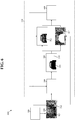
- FIG. 7 shows a processing system 700 for training a segmentation model according to various embodiments.
- the processing system 700 may include the memory device 108.
- the memory device 108 may store the digital image 106.
- the memory device 108 may further store an additional digital image 702.
- the additional digital image702 may be provided by the one or more sensors 102.
- the additional digital image 702 may have the same dimensions, i.e. the same resolution, as the digital image 106.
- the processing system 700 may further include the at least one processor 110.
- the processor 110 may be configured to implement at least a part of the segmentation model 204, wherein the segmentation model 204 may be configured to generate the segmentation image 206 for the digital image 106.
- the processor 110 may be configured to generate the segment 302 of the digital image 106 using the segmentation image 206 and the digital image 106.
- the processor 110 may be further configured to generate a background 704 of the additional digital image 702.
- the processor 110 may be configured to generate the background 704 of the additional digital image 702 using the background 210 of the segmentation image 206 and the additional digital image 702.
- the background 210 of the segmentation image 206 may be described by (1 -S ( X )) ⁇ X, wherein the pixels associated to the background 210 of the segmentation image 206 may include the first binary value "1" and wherein the pixels associated to the segment 208 of the segmentation image 206 may include the second binary value "0".
- the background 704 of the additional image 702 may be determined by the Hadamard product of the background 210 of the segmentation image 206 (1 -S ( X )) and the additional digital image 702, wherein the additional digital image 702 may be described by Y.
- the background 704 of the additional digital image 702 may be described by (1 -S' ( X )) ⁇ Y.
- the segmentation image 206 may be a mask and the background 704 of the digital image 106 may be a part cut out of the additional digital image 702 using the mask.
- the processor 110 may be further configured to generate a combined digital image 706.
- the processor 110 may be configured to generate the combined digital image 706 using the segment 302 of the digital image 106 and the background 704 of the additional digital image 702.
- the combined digital image 706 may include the pixels of the digital image 106 associated to the segment 208 describing the at least one object 202 and may include the pixels of the additional digital image 702 associated to the background 704 of the additional digital image 702.
- the segment 302 of the digital image 106 may be a first part cut out of the digital image 106 using the segmentation image 206 and the background 704 of the additional digital image 702 may be a second part cut out of the additional digital image 702 using the segmentation image 206.
- each pixel of the plurality of pixels of the combined digital image 706 may be either associated to the digital image 106 or to the additional digital image 702.
- the processor 110 may be configured to implement at least a part of the discriminative model 502.
- the discriminative model 502 may be configured to determine a probability 708 for the combined digital image 706 to belong to a class including the digital image 106 and/or the additional digital image 702.
- the discriminative model 502 may include a first class and the first class may include the digital image 106 and/or the additional digital image 702.
- the discriminative model 502 may further include a second class, wherein the second class may include at least one image generated by a generative model.
- the first class may be associated to "real" images, such as sensor-detected images
- the second class may be associated to "fake” images, such as generated images.
- the discriminative model 502 may be configured to determine a probability 708 of the combined digital image 706 to be a "real" image, i.e. a sensor-detected image.
- the processor 110 may be configured to determine a third loss value 710 using the probability 708 determined by the discriminative model 502.
- the processor 110 may be further configured to train the segmentation model 204 by increasing, for example maximizing, the third loss value 710.
- the predictability 604 of the background 602 of the digital image 106 from the segment 302 of the digital image 106 may be quantified by the mutual information ( I ) of the background 602 of the digital image 106 and the segment 302 of the digital image 106.
- the mutual information of the background 602 of the digital image 106 and the segment 302 of the digital image 106 and thus the predictability 604 of the background 602 of the digital image 106 from the segment 302 of the digital image 106 may be reduced, for example minimized, by generating a combined digital image 706 for which the discriminative model 502 determines a high probability 708 to belong to the first class associated with "real" images.
- the segmentation model 204 may be trained by reducing, for example minimizing, the third loss value 710.
- the discriminative model 502 may be trained to determine a low probability 708 for the combined digital image 706 to belong to the first class.
- the discriminative model 502 may be trained by increasing, for example maximizing, the third loss value 710.
- the objective function for training the segmentation model 204 ( S ) and the discriminative model 502 ( D ) may be described by equation (13): max S min D E X ⁇ P r logD X + E X , Y ⁇ P r log 1 ⁇ D S X ⁇ X + 1 ⁇ S X ⁇ Y
- the third loss value 710 has the effect that the segment 208 of the segmentation image 206 generated by the segmentation model 204 includes sharp object boundaries.
- the segment 208 of the segmentation image 206 includes the pixels associated to the at least one object 202 in the digital image 106 and does not include pixels associated to the background 212 of the digital image 106.
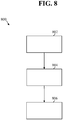
- FIG. 8 shows a method 800 of training a segmentation model according to various embodiments.
- the method 800 may include the segmentation model 204 generating a segmentation image 206 for the digital image 106 (in 802).
- the segmentation image 206 may include a segment 208 describing at least one object 202 in the digital image 106.
- the method 800 may further include determining a predictability 212 of the digital image 106 from the segment 208 in the segmentation image 206 (in 804).
- the method 800 may include training the segmentation model 204 to reduce, for example to minimize, the predictability 212 of the digital image 106 from the segment 208 of the segmentation image 206 (in 806).
- the method 800 may include generating a segment 302 of the digital image 106 using the segment 208 of the segmentation image 206 and the digital image 106.
- the method 800 may include determining a predictability 304 of the digital image 106 from the segment 302 of the digital image 106.
- the method 800 may include training the segmentation model 204 to reduce, for example to minimize, the predictability 304 of the digital image 106 from the segment 302 of the digital image 106.
- the method 800 may include generating a background 602 of the digital image 106 using the segmentation image 206 and the digital image 106.
- the method 800 may include determining a predictability 604 of the background 602 of the digital image 106 from the segment 302 of the digital image 106.
- the method 800 may include training the segmentation model 204 to reduce, for example to minimize, the predictability 604 of the background 602 of the digital image 106 from the segment 302 of the digital image 106.
- the digital image 106 may include a plurality of objects and the method 800 may be performed for each object of the plurality of objects.
- the digital image 106 may be processed by the processing system 400, the processing system 500 and/or the processing system 700, wherein the segmentation model 204 may generate a segmentation image 206 for each object of the plurality of objects in the digital image.
- each segmentation image 206 of the plurality of segmentation images generated by the segmentation model 204 for the plurality of objects may include a segment 208 describing one object of the plurality of objects in the digital image 106 and may further include a background 210 of the segment 208 for the associated object.
- FIG. 9 shows a system 900 including a segmentation model according to various embodiments.
- the system 900 may include a first device 902.
- the first device 902 may be a computer-controlled device like a robot, a vehicle, a domestic appliance, a power tool, a manufacturing machine, a personal assistant, an access control system etc.
- the first device 902 may be a device for conveying information like a surveillance system or a medical (imaging) system.
- the system 900 may further include a sensor 904.
- the sensor 904 may be configured to detect digital images associated to the first device 902.
- the system 900 may include a second device 906.
- the second device 906 may be configured to process the digital images provided by the sensor 904.
- the second device 906 may include a segmentation model, such as the segmentation model 204.
- the second device 906 may be configured to perform the method 800 of training the segmentation model and may use the processing system 400, the processing system 500 and/or the processing system 700.
- the second device 906 may be configured to provide a segmentation image 206 for a digital image 106.
- the system 900 may further include a control device 908.
- the control device 908 may be configured to control the first device 902 using a segmentation image provided by the second device 906.
- the second device 906 includes a trained segmentation model, such as the trained segmentation model 204, trained by the method 800 and the control device 908 may be configured to control the first device 902 using a segmentation image provided by the trained segmentation model.
- a trained segmentation model such as the trained segmentation model 204
- the control device 908 may be configured to control the first device 902 using a segmentation image provided by the trained segmentation model.
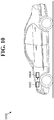
- FIG. 10 shows a vehicle 1000 according to various embodiments.
- the vehicle 1000 may be a vehicle with a combustion engine, an electric vehicle, a hybrid vehicle, or a combination thereof. Further, the vehicle 1000 may be a car, a truck, a ship, a drone, an aircraft or the like.
- the vehicle 1000 may include at least one sensor 1002.
- the sensor 1002 may be an imaging sensor, such as a camera sensor or a video sensor, wherein the sensor 1002 may be configured to provide a plurality of digital images 104, such as the digital image 106, wherein each digital image may include at least one object 202.
- the vehicle 1000 may include a driving assistance system 1004.
- the driving assistance system 1004 may include the memory device 108.
- the driving assistance system 1004 may further include the at least one processor 110.
- the processor 110 may implement a segmentation model.
- the segmentation model may be configured to process the plurality of digital images 104 provided by the sensor 1002 and to generate a plurality of segmentation images, such as the segmentation image 206, for the plurality of digital images 104, wherein each segmentation image may include a segment describing the at least one object 202 in the associated digital image.
- the segmentation model may be the trained segmentation model 204.
- the segmentation model was trained according to the method 800 of training a segmentation model such that the trained segmentation model is capable of providing segmentation images for digital images, wherein segments in a segmentation image describe objects in the associated digital image with sharp object boundaries.
- the driving assistance system 1004 may be configured to control the vehicle 1000 using the processed plurality of digital images 104, i.e. using the generated plurality of segmentation images.
- the driving assistance system 1004 may be configured to process the plurality of digital images 104 and to output a control command to one or more actuators of the vehicle 1000 using the generated plurality of segmentation images.
- the driving assistance system 1004 may influence the current vehicle handling using the processed plurality of digital images 104, for example the current vehicle handling may be maintained or changed. Changing the current vehicle handling may be for example an intervention in the vehicle handling due to safety reasons, such as an emergency braking.
Landscapes
- Engineering & Computer Science (AREA)
- Theoretical Computer Science (AREA)
- Physics & Mathematics (AREA)
- General Physics & Mathematics (AREA)
- Multimedia (AREA)
- Evolutionary Computation (AREA)
- Computer Vision & Pattern Recognition (AREA)
- Artificial Intelligence (AREA)
- Health & Medical Sciences (AREA)
- Computing Systems (AREA)
- Data Mining & Analysis (AREA)
- General Health & Medical Sciences (AREA)
- Software Systems (AREA)
- Medical Informatics (AREA)
- Databases & Information Systems (AREA)
- Life Sciences & Earth Sciences (AREA)
- General Engineering & Computer Science (AREA)
- Bioinformatics & Cheminformatics (AREA)
- Bioinformatics & Computational Biology (AREA)
- Evolutionary Biology (AREA)
- Biomedical Technology (AREA)
- Biophysics (AREA)
- Computational Linguistics (AREA)
- Molecular Biology (AREA)
- Mathematical Physics (AREA)
- Image Analysis (AREA)
Priority Applications (2)
| Application Number | Priority Date | Filing Date | Title |
|---|---|---|---|
| EP19198420.2A EP3796211B1 (de) | 2019-09-19 | 2019-09-19 | Vorrichtung und verfahren zum trainieren eines segmentierungsmodells |
| CN202010985564.0A CN112529000A (zh) | 2019-09-19 | 2020-09-18 | 训练分割模型的设备和方法 |
Applications Claiming Priority (1)
| Application Number | Priority Date | Filing Date | Title |
|---|---|---|---|
| EP19198420.2A EP3796211B1 (de) | 2019-09-19 | 2019-09-19 | Vorrichtung und verfahren zum trainieren eines segmentierungsmodells |
Publications (2)
| Publication Number | Publication Date |
|---|---|
| EP3796211A1 true EP3796211A1 (de) | 2021-03-24 |
| EP3796211B1 EP3796211B1 (de) | 2025-03-19 |
Family
ID=67998181
Family Applications (1)
| Application Number | Title | Priority Date | Filing Date |
|---|---|---|---|
| EP19198420.2A Active EP3796211B1 (de) | 2019-09-19 | 2019-09-19 | Vorrichtung und verfahren zum trainieren eines segmentierungsmodells |
Country Status (2)
| Country | Link |
|---|---|
| EP (1) | EP3796211B1 (de) |
| CN (1) | CN112529000A (de) |
Families Citing this family (1)
| Publication number | Priority date | Publication date | Assignee | Title |
|---|---|---|---|---|
| CN116167959A (zh) * | 2021-11-23 | 2023-05-26 | 广州视源电子科技股份有限公司 | 图像分割模型训练方法、装置、计算机设备和存储介质 |
Family Cites Families (4)
| Publication number | Priority date | Publication date | Assignee | Title |
|---|---|---|---|---|
| CN109902809B (zh) * | 2019-03-01 | 2022-08-12 | 成都康乔电子有限责任公司 | 一种利用生成对抗网络辅助语义分割模型 |
| CN109949317B (zh) * | 2019-03-06 | 2020-12-11 | 东南大学 | 基于逐步对抗学习的半监督图像实例分割方法 |
| CN110008848A (zh) * | 2019-03-13 | 2019-07-12 | 华南理工大学 | 一种基于双目立体视觉的道路可行驶区域识别方法 |
| CN110136163B (zh) * | 2019-04-29 | 2021-02-12 | 中国科学院自动化研究所 | 手部运动模糊自动抠图及在人体软分割和背景更换的应用 |
-
2019
- 2019-09-19 EP EP19198420.2A patent/EP3796211B1/de active Active
-
2020
- 2020-09-18 CN CN202010985564.0A patent/CN112529000A/zh active Pending
Non-Patent Citations (3)
| Title |
|---|
| ARANDJELOVIC ET AL.: "Object Discovery with a Copy-Pasting GAN", ARXIV:1905.11369, 2019 |
| XINMING ZHANG ET AL: "A novel framework for semantic segmentation with generative adversarial network", INTERNET MULTIMEDIA COMPUTING AND SERVICE, ACM, 2 PENN PLAZA, SUITE 701NEW YORKNY10121-0701USA, 17 August 2018 (2018-08-17), pages 1 - 6, XP058415622, ISBN: 978-1-4503-6520-8, DOI: 10.1145/3240876.3240891 * |
| ZHANG XINMING ET AL: "SegGAN: Semantic Segmentation with Generative Adversarial Network", 2018 IEEE FOURTH INTERNATIONAL CONFERENCE ON MULTIMEDIA BIG DATA (BIGMM), IEEE, 13 September 2018 (2018-09-13), pages 1 - 5, XP033424054, DOI: 10.1109/BIGMM.2018.8499105 * |
Also Published As
| Publication number | Publication date |
|---|---|
| CN112529000A (zh) | 2021-03-19 |
| EP3796211B1 (de) | 2025-03-19 |
Similar Documents
| Publication | Publication Date | Title |
|---|---|---|
| US12125298B2 (en) | Efficient three-dimensional object detection from point clouds | |
| US20220381914A1 (en) | Systems and methods for sparse convolution of unstructured data | |
| US12008817B2 (en) | Systems and methods for depth estimation in a vehicle | |
| US11144789B2 (en) | Model parameter learning device, control device, and model parameter learning method | |
| CN116188999B (zh) | 一种基于可见光和红外图像数据融合的小目标检测方法 | |
| EP4511821B1 (de) | System und verfahren zur bewegungsvorhersage beim autonomen fahren | |
| CN111204346A (zh) | 用于自动车辆的控制命令的端对端学习的方法及系统 | |
| EP3965052B1 (de) | Vorrichtung und verfahren zum trainieren eines generativen neuronalen netzes | |
| JP2023530762A (ja) | 3dバウンディングボックスからの単眼深度管理 | |
| CN114973181B (zh) | 多目bev视角的环境感知方法、装置、设备及存储介质 | |
| US12340482B2 (en) | Systems and methods for generating object detection labels using foveated image magnification for autonomous driving | |
| US20210019621A1 (en) | Training and data synthesis and probability inference using nonlinear conditional normalizing flow model | |
| CN113723170B (zh) | 危险检测整合架构系统和方法 | |
| US20200218272A1 (en) | Driver-centric model predictive controller | |
| US20210073646A1 (en) | Device and method for training a model, and a vehicle | |
| Aboah et al. | Ai-based framework for understanding car following behaviors of drivers in a naturalistic driving environment | |
| EP3796211A1 (de) | Vorrichtung und verfahren zum trainieren eines segmentierungsmodells | |
| US12394028B2 (en) | System and method with masking and inpainting strategy for generic defense against patch attacks | |
| US12586225B2 (en) | Apparatus for estimating a depth of image and method thereof | |
| CN112639808B (zh) | 用于机动车辆的纵向和/或横向控制的驾驶辅助 | |
| CN111144361A (zh) | 一种基于二值化cgan网络的公路车道检测方法 | |
| EP3796231A1 (de) | Vorrichtung und verfahren zur erzeugung eines komprimierten netzwerks aus einem trainierten neuronalen netzwerk | |
| EP4517691A1 (de) | Wahrnehmungsverfahren und -vorrichtung für autonomes fahren | |
| US12576883B2 (en) | System and method for embedding uncertainty estimation into deep-neural-network-based autonomous driving perception frameworks | |
| EP4485379B1 (de) | Verfahren zur bestimmung von raum-zeit-mustern im zusammenhang mit der umgebung eines fahrzeugs |
Legal Events
| Date | Code | Title | Description |
|---|---|---|---|
| PUAI | Public reference made under article 153(3) epc to a published international application that has entered the european phase |
Free format text: ORIGINAL CODE: 0009012 |
|
| STAA | Information on the status of an ep patent application or granted ep patent |
Free format text: STATUS: THE APPLICATION HAS BEEN PUBLISHED |
|
| AK | Designated contracting states |
Kind code of ref document: A1 Designated state(s): AL AT BE BG CH CY CZ DE DK EE ES FI FR GB GR HR HU IE IS IT LI LT LU LV MC MK MT NL NO PL PT RO RS SE SI SK SM TR |
|
| AX | Request for extension of the european patent |
Extension state: BA ME |
|
| STAA | Information on the status of an ep patent application or granted ep patent |
Free format text: STATUS: REQUEST FOR EXAMINATION WAS MADE |
|
| 17P | Request for examination filed |
Effective date: 20210924 |
|
| RBV | Designated contracting states (corrected) |
Designated state(s): AL AT BE BG CH CY CZ DE DK EE ES FI FR GB GR HR HU IE IS IT LI LT LU LV MC MK MT NL NO PL PT RO RS SE SI SK SM TR |
|
| STAA | Information on the status of an ep patent application or granted ep patent |
Free format text: STATUS: EXAMINATION IS IN PROGRESS |
|
| 17Q | First examination report despatched |
Effective date: 20230206 |
|
| REG | Reference to a national code |
Ref country code: DE Ref legal event code: R079 Free format text: PREVIOUS MAIN CLASS: G06K0009000000 Ipc: G06F0018241300 Ref country code: DE Ref legal event code: R079 Ref document number: 602019067411 Country of ref document: DE Free format text: PREVIOUS MAIN CLASS: G06K0009000000 Ipc: G06F0018241300 |
|
| GRAP | Despatch of communication of intention to grant a patent |
Free format text: ORIGINAL CODE: EPIDOSNIGR1 |
|
| STAA | Information on the status of an ep patent application or granted ep patent |
Free format text: STATUS: GRANT OF PATENT IS INTENDED |
|
| RIC1 | Information provided on ipc code assigned before grant |
Ipc: G06T 11/00 20060101ALI20241128BHEP Ipc: G06T 7/194 20170101ALI20241128BHEP Ipc: G06V 20/00 20220101ALI20241128BHEP Ipc: G06V 10/82 20220101ALI20241128BHEP Ipc: G06V 10/764 20220101ALI20241128BHEP Ipc: G06V 10/28 20220101ALI20241128BHEP Ipc: G06T 7/11 20170101ALI20241128BHEP Ipc: G06F 18/2413 20230101AFI20241128BHEP |
|
| INTG | Intention to grant announced |
Effective date: 20241212 |
|
| GRAS | Grant fee paid |
Free format text: ORIGINAL CODE: EPIDOSNIGR3 |
|
| GRAA | (expected) grant |
Free format text: ORIGINAL CODE: 0009210 |
|
| STAA | Information on the status of an ep patent application or granted ep patent |
Free format text: STATUS: THE PATENT HAS BEEN GRANTED |
|
| AK | Designated contracting states |
Kind code of ref document: B1 Designated state(s): AL AT BE BG CH CY CZ DE DK EE ES FI FR GB GR HR HU IE IS IT LI LT LU LV MC MK MT NL NO PL PT RO RS SE SI SK SM TR |
|
| REG | Reference to a national code |
Ref country code: GB Ref legal event code: FG4D |
|
| REG | Reference to a national code |
Ref country code: CH Ref legal event code: EP |
|
| REG | Reference to a national code |
Ref country code: IE Ref legal event code: FG4D |
|
| REG | Reference to a national code |
Ref country code: DE Ref legal event code: R096 Ref document number: 602019067411 Country of ref document: DE |
|
| PG25 | Lapsed in a contracting state [announced via postgrant information from national office to epo] |
Ref country code: RS Free format text: LAPSE BECAUSE OF FAILURE TO SUBMIT A TRANSLATION OF THE DESCRIPTION OR TO PAY THE FEE WITHIN THE PRESCRIBED TIME-LIMIT Effective date: 20250619 |
|
| PG25 | Lapsed in a contracting state [announced via postgrant information from national office to epo] |
Ref country code: FI Free format text: LAPSE BECAUSE OF FAILURE TO SUBMIT A TRANSLATION OF THE DESCRIPTION OR TO PAY THE FEE WITHIN THE PRESCRIBED TIME-LIMIT Effective date: 20250319 |
|
| REG | Reference to a national code |
Ref country code: LT Ref legal event code: MG9D |
|
| PG25 | Lapsed in a contracting state [announced via postgrant information from national office to epo] |
Ref country code: NO Free format text: LAPSE BECAUSE OF FAILURE TO SUBMIT A TRANSLATION OF THE DESCRIPTION OR TO PAY THE FEE WITHIN THE PRESCRIBED TIME-LIMIT Effective date: 20250619 |
|
| PG25 | Lapsed in a contracting state [announced via postgrant information from national office to epo] |
Ref country code: HR Free format text: LAPSE BECAUSE OF FAILURE TO SUBMIT A TRANSLATION OF THE DESCRIPTION OR TO PAY THE FEE WITHIN THE PRESCRIBED TIME-LIMIT Effective date: 20250319 |
|
| PG25 | Lapsed in a contracting state [announced via postgrant information from national office to epo] |
Ref country code: LV Free format text: LAPSE BECAUSE OF FAILURE TO SUBMIT A TRANSLATION OF THE DESCRIPTION OR TO PAY THE FEE WITHIN THE PRESCRIBED TIME-LIMIT Effective date: 20250319 |
|
| PG25 | Lapsed in a contracting state [announced via postgrant information from national office to epo] |
Ref country code: BG Free format text: LAPSE BECAUSE OF FAILURE TO SUBMIT A TRANSLATION OF THE DESCRIPTION OR TO PAY THE FEE WITHIN THE PRESCRIBED TIME-LIMIT Effective date: 20250319 Ref country code: GR Free format text: LAPSE BECAUSE OF FAILURE TO SUBMIT A TRANSLATION OF THE DESCRIPTION OR TO PAY THE FEE WITHIN THE PRESCRIBED TIME-LIMIT Effective date: 20250620 |
|
| REG | Reference to a national code |
Ref country code: NL Ref legal event code: MP Effective date: 20250319 |
|
| REG | Reference to a national code |
Ref country code: AT Ref legal event code: MK05 Ref document number: 1777531 Country of ref document: AT Kind code of ref document: T Effective date: 20250319 |
|
| PG25 | Lapsed in a contracting state [announced via postgrant information from national office to epo] |
Ref country code: NL Free format text: LAPSE BECAUSE OF FAILURE TO SUBMIT A TRANSLATION OF THE DESCRIPTION OR TO PAY THE FEE WITHIN THE PRESCRIBED TIME-LIMIT Effective date: 20250319 |
|
| PG25 | Lapsed in a contracting state [announced via postgrant information from national office to epo] |
Ref country code: SE Free format text: LAPSE BECAUSE OF FAILURE TO SUBMIT A TRANSLATION OF THE DESCRIPTION OR TO PAY THE FEE WITHIN THE PRESCRIBED TIME-LIMIT Effective date: 20250319 |
|
| PG25 | Lapsed in a contracting state [announced via postgrant information from national office to epo] |
Ref country code: SM Free format text: LAPSE BECAUSE OF FAILURE TO SUBMIT A TRANSLATION OF THE DESCRIPTION OR TO PAY THE FEE WITHIN THE PRESCRIBED TIME-LIMIT Effective date: 20250319 |
|
| PG25 | Lapsed in a contracting state [announced via postgrant information from national office to epo] |
Ref country code: ES Free format text: LAPSE BECAUSE OF FAILURE TO SUBMIT A TRANSLATION OF THE DESCRIPTION OR TO PAY THE FEE WITHIN THE PRESCRIBED TIME-LIMIT Effective date: 20250319 Ref country code: PT Free format text: LAPSE BECAUSE OF FAILURE TO SUBMIT A TRANSLATION OF THE DESCRIPTION OR TO PAY THE FEE WITHIN THE PRESCRIBED TIME-LIMIT Effective date: 20250721 |
|
| PG25 | Lapsed in a contracting state [announced via postgrant information from national office to epo] |
Ref country code: IT Free format text: LAPSE BECAUSE OF FAILURE TO SUBMIT A TRANSLATION OF THE DESCRIPTION OR TO PAY THE FEE WITHIN THE PRESCRIBED TIME-LIMIT Effective date: 20250319 Ref country code: PL Free format text: LAPSE BECAUSE OF FAILURE TO SUBMIT A TRANSLATION OF THE DESCRIPTION OR TO PAY THE FEE WITHIN THE PRESCRIBED TIME-LIMIT Effective date: 20250319 |
|
| PG25 | Lapsed in a contracting state [announced via postgrant information from national office to epo] |
Ref country code: AT Free format text: LAPSE BECAUSE OF FAILURE TO SUBMIT A TRANSLATION OF THE DESCRIPTION OR TO PAY THE FEE WITHIN THE PRESCRIBED TIME-LIMIT Effective date: 20250319 |
|
| PG25 | Lapsed in a contracting state [announced via postgrant information from national office to epo] |
Ref country code: CZ Free format text: LAPSE BECAUSE OF FAILURE TO SUBMIT A TRANSLATION OF THE DESCRIPTION OR TO PAY THE FEE WITHIN THE PRESCRIBED TIME-LIMIT Effective date: 20250319 Ref country code: EE Free format text: LAPSE BECAUSE OF FAILURE TO SUBMIT A TRANSLATION OF THE DESCRIPTION OR TO PAY THE FEE WITHIN THE PRESCRIBED TIME-LIMIT Effective date: 20250319 |
|
| PG25 | Lapsed in a contracting state [announced via postgrant information from national office to epo] |
Ref country code: RO Free format text: LAPSE BECAUSE OF FAILURE TO SUBMIT A TRANSLATION OF THE DESCRIPTION OR TO PAY THE FEE WITHIN THE PRESCRIBED TIME-LIMIT Effective date: 20250319 |
|
| PG25 | Lapsed in a contracting state [announced via postgrant information from national office to epo] |
Ref country code: SK Free format text: LAPSE BECAUSE OF FAILURE TO SUBMIT A TRANSLATION OF THE DESCRIPTION OR TO PAY THE FEE WITHIN THE PRESCRIBED TIME-LIMIT Effective date: 20250319 |
|
| PG25 | Lapsed in a contracting state [announced via postgrant information from national office to epo] |
Ref country code: IS Free format text: LAPSE BECAUSE OF FAILURE TO SUBMIT A TRANSLATION OF THE DESCRIPTION OR TO PAY THE FEE WITHIN THE PRESCRIBED TIME-LIMIT Effective date: 20250719 |
|
| REG | Reference to a national code |
Ref country code: DE Ref legal event code: R097 Ref document number: 602019067411 Country of ref document: DE |
|
| PGFP | Annual fee paid to national office [announced via postgrant information from national office to epo] |
Ref country code: DE Payment date: 20251121 Year of fee payment: 7 |
|
| PG25 | Lapsed in a contracting state [announced via postgrant information from national office to epo] |
Ref country code: DK Free format text: LAPSE BECAUSE OF FAILURE TO SUBMIT A TRANSLATION OF THE DESCRIPTION OR TO PAY THE FEE WITHIN THE PRESCRIBED TIME-LIMIT Effective date: 20250319 |
|
| PLBE | No opposition filed within time limit |
Free format text: ORIGINAL CODE: 0009261 |
|
| STAA | Information on the status of an ep patent application or granted ep patent |
Free format text: STATUS: NO OPPOSITION FILED WITHIN TIME LIMIT |
|
| REG | Reference to a national code |
Ref country code: CH Ref legal event code: L10 Free format text: ST27 STATUS EVENT CODE: U-0-0-L10-L00 (AS PROVIDED BY THE NATIONAL OFFICE) Effective date: 20260128 |
|
| 26N | No opposition filed |
Effective date: 20251222 |