EP3797887B1 - Vorrichtung und verfahren zur entfernung von kautschuk - Google Patents
Vorrichtung und verfahren zur entfernung von kautschuk Download PDFInfo
- Publication number
- EP3797887B1 EP3797887B1 EP19200217.8A EP19200217A EP3797887B1 EP 3797887 B1 EP3797887 B1 EP 3797887B1 EP 19200217 A EP19200217 A EP 19200217A EP 3797887 B1 EP3797887 B1 EP 3797887B1
- Authority
- EP
- European Patent Office
- Prior art keywords
- rubber
- rubber component
- thickness
- electromagnetic signal
- component
- Prior art date
- Legal status (The legal status is an assumption and is not a legal conclusion. Google has not performed a legal analysis and makes no representation as to the accuracy of the status listed.)
- Active
Links
Images


Classifications
-
- B—PERFORMING OPERATIONS; TRANSPORTING
- B09—DISPOSAL OF SOLID WASTE; RECLAMATION OF CONTAMINATED SOIL
- B09B—DISPOSAL OF SOLID WASTE NOT OTHERWISE PROVIDED FOR
- B09B3/00—Destroying solid waste or transforming solid waste into something useful or harmless
- B09B3/50—Destroying solid waste or transforming solid waste into something useful or harmless involving radiation, e.g. electro-magnetic waves
-
- B—PERFORMING OPERATIONS; TRANSPORTING
- B09—DISPOSAL OF SOLID WASTE; RECLAMATION OF CONTAMINATED SOIL
- B09B—DISPOSAL OF SOLID WASTE NOT OTHERWISE PROVIDED FOR
- B09B3/00—Destroying solid waste or transforming solid waste into something useful or harmless
- B09B3/30—Destroying solid waste or transforming solid waste into something useful or harmless involving mechanical treatment
- B09B3/35—Shredding, crushing or cutting
-
- B—PERFORMING OPERATIONS; TRANSPORTING
- B24—GRINDING; POLISHING
- B24B—MACHINES, DEVICES, OR PROCESSES FOR GRINDING OR POLISHING; DRESSING OR CONDITIONING OF ABRADING SURFACES; FEEDING OF GRINDING, POLISHING, OR LAPPING AGENTS
- B24B49/00—Measuring or gauging equipment for controlling the feed movement of the grinding tool or work; Arrangements of indicating or measuring equipment, e.g. for indicating the start of the grinding operation
- B24B49/10—Measuring or gauging equipment for controlling the feed movement of the grinding tool or work; Arrangements of indicating or measuring equipment, e.g. for indicating the start of the grinding operation involving electrical means
-
- Y—GENERAL TAGGING OF NEW TECHNOLOGICAL DEVELOPMENTS; GENERAL TAGGING OF CROSS-SECTIONAL TECHNOLOGIES SPANNING OVER SEVERAL SECTIONS OF THE IPC; TECHNICAL SUBJECTS COVERED BY FORMER USPC CROSS-REFERENCE ART COLLECTIONS [XRACs] AND DIGESTS
- Y02—TECHNOLOGIES OR APPLICATIONS FOR MITIGATION OR ADAPTATION AGAINST CLIMATE CHANGE
- Y02W—CLIMATE CHANGE MITIGATION TECHNOLOGIES RELATED TO WASTEWATER TREATMENT OR WASTE MANAGEMENT
- Y02W30/00—Technologies for solid waste management
- Y02W30/50—Reuse, recycling or recovery technologies
- Y02W30/62—Plastics recycling; Rubber recycling
-
- Y—GENERAL TAGGING OF NEW TECHNOLOGICAL DEVELOPMENTS; GENERAL TAGGING OF CROSS-SECTIONAL TECHNOLOGIES SPANNING OVER SEVERAL SECTIONS OF THE IPC; TECHNICAL SUBJECTS COVERED BY FORMER USPC CROSS-REFERENCE ART COLLECTIONS [XRACs] AND DIGESTS
- Y10—TECHNICAL SUBJECTS COVERED BY FORMER USPC
- Y10T—TECHNICAL SUBJECTS COVERED BY FORMER US CLASSIFICATION
- Y10T29/00—Metal working
- Y10T29/49—Method of mechanical manufacture
- Y10T29/49815—Disassembling
Definitions
- the present disclosure generally relates to apparatus and methods for removing rubber from a rubber component, preferably a rubber tire, which comprises an outer rubber layer on top of textile components.
- the present disclosure further relates to a system and method for recycling of the removed rubber.
- Systems for reworking of rubber comprised of a first mixer or cracking mill which is used to soften the rubber. Afterwards the rubber is homogenised in a second mixer or mill station.
- those reworking systems imply a big consumption of energy and footprint, due to the need of several mill stations.
- those reworking systems can only rework non-vulcanised rubber.
- EP 1 955 842 A1 relates to a grinding device with an eddy current sensor that detects a distance from the eddy current sensor to an outer peripheral surface of a belt layer in order to determine an eccentricity amount and an eccentricity direction of the tire to be retreaded with respect to a device axial center, when the tire is rotated during grinding.
- a carriage causes a rasp to be moved in a radial direction with respect to the tire and the rasp grinds a tread surface of the rotating tire to be retreaded.
- JP 2008 001017 A relates to a rubber thickness correcting method of a buff processing base tire for a regenerated tire in order to remove irregularities of a residual rubber thickness in the peripheral direction of a tire in a short time regardless of the presence of the axial shift between the tire and the rim, when the tire is rotated.
- US 2019/041200 A1 relates to methods for measuring thickness of individual layers in multi-layer structures using terahertz waves.
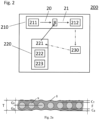
- an apparatus for removing rubber from a rubber component preferably a rubber tire having an outer rubber layer on top of textile components, comprises a sensor configured to transmit an electromagnetic signal with a terahertz frequency onto the rubber component, to receive an electromagnetic signal refracted or reflected at the rubber component, and to determine the thickness of the outer rubber layer on top of the textile components based on the received electromagnetic signal.
- the apparatus for removing rubber from a rubber component furthermore comprises a remover device configured to remove the rubber from the outer rubber layer based on the determined thickness of the outer rubber layer on top of the textile components.
- the senor comprises a transmitter disposed on one side of the rubber component and configured to emit the electromagnetic signal towards the rubber component, and a receiver disposed at another side of the rubber component and configured to receive the electromagnetic signal refracted at the rubber component or a receiver disposed at the one side, i.e. the same side as the transmitter, of the rubber component and configured to receive the electromagnetic signal reflected at the rubber component.
- the terahertz frequency may be between 0.3 and 30 THz, preferably between 0.3 and 10 THz, more preferably between 0.3 and 6 THz and most preferably between 0.3 and 3 THz.
- the senor is configured to continuously determine the thickness of the outer rubber layer on top of the textile components during removing and to cause the remover device to stop removing if the determined thickness of the outer rubber layer is below a predetermined threshold.
- the remover device may comprises a rotor having at least one blade (flight) and one support hub.
- the at least one blade is detachably mounted on the support hub.
- the at least one stainless steel disk is configured to be removably clamped onto the support hub, preferably by conical inserts.
- the at least one blade is preferably provided in plurality of two, three, four, five or more.
- the distance between the blades is between 21 and 2 mm, preferably between 18 and 4 mm, more preferably between 10 and 4 mm, and most preferably about 6 mm.
- the number of blades is between 2 to 25, preferably 5 to 20, more preferably 5-15, even more preferably 5-10 and most preferably 10.
- the apparatus of the present disclosure preferably further comprises a positioning system configured to position the rotor with respect to the outer cirumferencial surface of the rubber component, based on the determined thickness of the outer rubber layer on top of the textile components.
- the system comprises an apparatus for removing rubber from the rubber component, as explained above, and a reworking apparatus configured to produce recycled rubber, preferably using the removed rubber.
- the step of determining the thickness of the outer rubber layer on top of the textile components preferably comprises a continuous determination of the thickness of the outer rubber layer on top of the textile components during removing and stopping the removing if the determined thickness of the outer rubber layer is below a predetermined threshold.
- the predetermined threshold may be 1 mm, preferably 600 ⁇ m, more preferably 300 ⁇ m.
- the step of removing the rubber from the rubber component comprises removing only the rubber from the rubber component.
- RECYCLE the recycle process relates to recovering rubber from end-of-life tires (ELT) or any used rubber components to produce sheeted rubber usable for molded applications, which includes pre-conditioning phases to clear rubber from textile cords.
- EHT end-of-life tires
- the optimal pitch, as described above, between the disk/knives is also a parameter which is appropriately selected.
- the grooves between the disks are the channels where the rubber chips are dragged away of the formation spot. Their dimension determines the capacity to drag away the chips that are quite non-uniform in terms of dimension and physical properties being obtained from end-of-life rubber.
- a configuration with two independent and overlying actuation systems for the X- and Y- axes may preferably be used.
- System integration may include mechanical structures, supporting structure for the THz sensor and a metallic cage to protect the operator. Moreover, system integration may also include electrical wiring, control and command software, and PLC/HMI programming.
- a de-vulcanisation process may follow the peeler and the autoclave for performing de-vulcanization of rubber and conditioning of the rubber chips before entering the gear pump (rework process) in a recycling system or method as disclosed herein.
- the present disclosure provides a sequence of mechanical operations implemented by a compact dedicated line that reworks all type of rubber scraps and non-compliant intermediate components from, for example, tire production and produces rubber that is 100% reusable in the main production process, i.e. for producing new rubber products such as rubber tires.
- the rework apparatus features important improvements with respect to prior art, made by multiple mill stations, which may be:
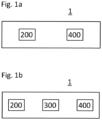
- the reworking apparatus 400 can be fed with de-vulcanised rubber, which has been de-vulcanised by the apparatus 300 for de-vulcanisation, or with rubber that has not been vulcanized before and thus not been de-vulcanised by the apparatus 300 for de-vulcanisation.
- the terahertz frequency is between 0.3 and 30 THz, preferably between 0.3 and 10 THz, more preferably between 0.3 and 6 THz and most preferably between 0.3 and 3 THz.
- the remover device 220 is configured to remove the rubber until a residual thickness of the outer rubber layer of 1 mm, preferably 600 ⁇ m, more preferably 300 ⁇ m.
- the predetermined threshold is 1 mm, preferably 600 ⁇ m, more preferably 300 ⁇ m.
- the measurement system (sensor 210) is based on the properties of electromagnetic waves that, when passing through a sheet of material, may be partially refracted (a variation in the reflection index is detected).
- a transmitter antenna sends a sequence of electromagnetic pulses that are focused as a beam on the surface of the sample to be measured through a set of lenses.
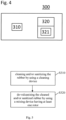
- Fig. 3 shows a flow chart of a method for removing rubber from a rubber component, preferably a rubber tire, having textile components, wherein the rubber component comprises an outer rubber layer on top of textile components.
- the at least one rotor 321 of the mixing device 320 has at least one blade which is configured to apply mechanical stress to the cleaned and/or sanitized rubber to de-vulcanise the cleaned and/or sanitized rubber.
- the blade is configured to apply the mechanical stress to the cleaned and/or sanitized rubber in a substantially tangential direction.
- the at least one rotor 321 has four blades. Preferably, two of the four blades are configured to apply the mechanical stress to the rubber, while the two other blades of the rotor 321 are smaller and configured to support mixing of materials/substances.
- Fig. 5 shows a flow chart of a method for de-vulcanisation of rubber which may be used with the recycling system or method as disclosed herein.
- Fig. 5 shows a method for de-vulcanisation of rubber from a rubber component.
- the rubber component can be, e.g. a used rubber tire and/or rubber production waste.
- the method comprises S310 cleaning and/or sanitizing the rubber by using a cleaning device and S320 de-vulcanising the cleaned and/or sanitized rubber by using a mixing device having at least one rotor 321, as mentioned before.
- the apparatus for reworking non-vulcanised rubber or de-vulcanied rubber enables to directly extrude recycled rubber, without the need of other extraction means.
- the recycled rubber is of high quality enabling a use in various contexts and fields.
Landscapes
- Engineering & Computer Science (AREA)
- Environmental & Geological Engineering (AREA)
- Health & Medical Sciences (AREA)
- General Health & Medical Sciences (AREA)
- Toxicology (AREA)
- Mechanical Engineering (AREA)
- Heating, Cooling, Or Curing Plastics Or The Like In General (AREA)
- Separation, Recovery Or Treatment Of Waste Materials Containing Plastics (AREA)
- Moulds For Moulding Plastics Or The Like (AREA)
Claims (15)
- Vorrichtung (200) zum Entfernen von Gummi von einer Gummikomponente (8), bevorzugt einem Gummireifen, wobei die Gummikomponente (8) eine äußere Gummischicht auf der Oberseite von Textilkomponenten umfasst, wobei die Vorrichtung umfasst:ein Messsensorsystem (210), das eingerichtet ist, ein elektromagnetisches Signal (20) mit einer Terahertz-Frequenz auf die Gummikomponente (8) zu senden, ein elektromagnetisches Signal (21) zu empfangen, das an der Gummikomponente gebrochen oder reflektiert wird, und die Dicke der äußeren Gummischicht auf der Oberseite der Textilkomponenten auf der Grundlage des empfangenen elektromagnetischen Signals zu ermitteln; undeine Abtrageinrichtung (220), die eingerichtet ist, den Gummi von der äußeren Gummischicht auf der Grundlage der ermittelten Dicke der äußeren Gummischicht auf der Oberseite der Textilkomponenten zu entfernen.
- Vorrichtung (200) nach Anspruch 1, wobei das Messsensorsystem (210) umfasst:einen Sender (211), der auf einer Seite der Gummikomponente (8) angeordnet und eingerichtet ist, das elektromagnetische Signal (20) in Richtung der Gummikomponente auszusenden; undeinen Empfänger (212), der auf einer anderen Seite der Gummikomponente (8) angeordnet und eingerichtet ist, das an der Gummikomponente gebrochene elektromagnetische Signal (21) zu empfangen, oder einen Empfänger (212), der auf der einen Seite der Gummikomponente (8) angeordnet und eingerichtet ist, das an der Gummikomponente reflektierte elektromagnetische Signal (21) zu empfangen,wobei die Terahertz-Frequenz bevorzugt zwischen 0,3 und 30 THz, bevorzugt zwischen 0,3 und 10 THz, noch bevorzugter zwischen 0,3 und 6 THz und am meisten bevorzugt zwischen 0,3 und 3 THz liegt.
- Vorrichtung (200) nach Anspruch 1 oder 2, wobei die Abtrageinrichtung (220) eingerichtet ist, den Gummi bis zu einer Restdicke der äußeren Gummischicht von 1 mm, bevorzugt 600 µm, besonders bevorzugt 300 µm, zu entfernen.
- Vorrichtung (200) nach einem der Ansprüche 1 bis 3, wobei das Messsensorsystem (210) eingerichtet ist, Brechungs- oder Reflexionsspitzen in dem empfangenen elektromagnetischen Signal auszuwerten, indem es eine Zeitbereichsanalyse durchführt, um die Dicke der äußeren Gummischicht auf der Oberseite der Textilkomponenten zu ermitteln und/oderwobei das Messsensorsystem (210) eingerichtet ist, die Dicke der äußeren Gummischicht auf der Oberseite der Textilkomponenten während des Entfernens kontinuierlich zu ermitteln und die Abtrageinrichtung zu veranlassen, das Entfernen zu stoppen, wenn die ermittelte Dicke der äußeren Gummischicht unter einem vorbestimmten Schwellenwert liegt, undwobei bevorzugt der vorbestimmte Schwellenwert 1 mm, bevorzugt 600 µm, besonders bevorzugt 300 µm, beträgt.
- Vorrichtung (200) nach einem der Ansprüche 1 bis 4, wobei die Abtrageinrichtung (220) einen Rotor (221) mit zumindest einer Klinge (222) und einer Stütznabe (223) umfasst, wobei bevorzugt die zumindest eine Klinge (222) abnehmbar an der Stütznabe (223) gelagert ist undwobei bevorzugt die zumindest eine Klinge (222) eine Scheibe aus rostfreiem Stahl mit einer Vielzahl von Schneidzähnen entlang ihrer äußeren Umfangsfläche ist undwobei bevorzugt die zumindest eine Scheibe aus rostfreiem Stahl eingerichtet ist, abnehmbar an der Stütznabe (223) festgeklemmt zu werden, bevorzugt durch konische Einsätze.
- Vorrichtung (200) nach Anspruch 5, wobei die zumindest eine Klinge (222) in einer Mehrzahl von zwei, drei, vier, fünf oder mehr vorgesehen ist und/oder der Abstand zwischen den Klingen zwischen 21 und 2 mm, bevorzugt zwischen 18 und 4 mm, besonders bevorzugt zwischen 10 und 4 mm und am meisten bevorzugt etwa 6 mm beträgt und
wobei die Anzahl der Klingen bevorzugt zwischen 2 und 25, bevorzugt zwischen 5 und 20, weiter bevorzugt zwischen 5 und 15, noch weiter bevorzugt zwischen 5 und 10 und am meisten bevorzugt 10 beträgt. - Vorrichtung (200) nach Anspruch 5 oder 6, ferner umfassend ein Positionierungssystem, das eingerichtet ist, den Rotor (221) in Bezug auf die äußere Umfangsfläche der Gummikomponente zu positionieren, und zwar auf der Grundlage der ermittelten Dicke der äußeren Gummischicht auf der Oberseite der Textilkomponenten.
- System (1) zum Recyceln von nichtvulkanisiertem Gummi oder devulkanisiertem Gummi einer Gummikomponente (8), bevorzugt eines Gummireifens, wobei das System umfasst:eine Vorrichtung (200) zum Entfernen von Gummi von der Gummikomponente nach einem der Ansprüche 1 bis 7; undeine Vorrichtung (400) zur Aufbereitung von nichtvulkanisiertem Gummi oder devulkanisiertem Gummi, die eingerichtet ist, recycelten Gummi zu erzeugen.
- System nach Anspruch 8, ferner umfassend eine Vorrichtung (300) zur Devulkanisierung des Gummis.
- Verfahren zum Entfernen von Gummi von einer Gummikomponente (8), bevorzugt einem Gummireifen, mit Textilkomponenten, wobei die Gummikomponente eine äußere Gummischicht auf der Oberseite von Textilkomponenten umfasst, wobei das Verfahren umfasstSenden eines elektromagnetischen Signals mit einer Terahertz-Frequenz auf die Gummikomponente;Empfangen des an der Gummikomponente gebrochenen oder reflektierten elektromagnetischen Signals;Ermitteln der Dicke der äußeren Gummischicht auf der Oberseite der Textilkomponenten auf der Grundlage des empfangenen elektromagnetischen Signals; undEntfernen des Gummis von der Gummikomponente auf der Grundlage der ermittelten Dicke der äußeren Gummischicht auf der Oberseite der Textilkomponenten.
- Verfahren nach Anspruch 10, wobei die Terahertz-Frequenz zwischen 0,3 und 30 THz, bevorzugt zwischen 0,3 und 10 THz, noch bevorzugter zwischen 0,3 und 6 THz und am meisten bevorzugt zwischen 0,3 und 3 THz liegt und/oder wobei das Entfernen des Gummis das Entfernen des Gummis umfasst, bis eine Restdicke der äußeren Gummischicht von 1 mm, bevorzugt 600 µm, noch bevorzugter 300 µm, erreicht ist.
- Verfahren nach Anspruch 10 oder 11, wobei das Ermitteln der Dicke der äußeren Gummischicht auf der Oberseite der Textilkomponenten die Auswertung von Brechungs- oder Reflexionsspitzen in dem empfangenen elektromagnetischen Signal durch Durchführung einer Zeitbereichsanalyse umfasst.
- Verfahren nach einem der Ansprüche 10 bis 12, wobei das Ermitteln der Dicke der äußeren Gummischicht auf der Oberseite der Textilkomponenten das kontinuierliche Ermitteln der Dicke der äußeren Gummischicht auf der Oberseite der Textilkomponenten während des Entfernens und das Stoppen des Entfernens umfasst, wenn die ermittelte Dicke der äußeren Gummischicht unter einem vorbestimmten Schwellenwert liegt undwobei der vorbestimmte Schwellenwert bevorzugt 1 mm, bevorzugt 600 µm, besonders bevorzugt 300 µm beträgt und/oderwobei das Entfernen des Gummis von der Gummikomponente das Entfernen nur des Gummis von der Gummikomponente umfasst.
- Verfahren zum Recyceln von nichtvulkanisiertem oder devulkanisiertem Gummi aus einer Gummikomponente (8), bevorzugt einem Gummireifen, wobei das Verfahren umfasstein Verfahren zum Entfernen von Gummi nach einem der Ansprüche 10 bis 13; undein Verfahren zur Aufbereitung von Gummi zum Herstellen von recyceltem Gummi.
- Verfahren nach Anspruch 14, ferner umfassend ein Verfahren zum Devulkanisieren von Gummi.
Priority Applications (4)
| Application Number | Priority Date | Filing Date | Title |
|---|---|---|---|
| EP19200217.8A EP3797887B1 (de) | 2019-09-27 | 2019-09-27 | Vorrichtung und verfahren zur entfernung von kautschuk |
| PCT/EP2020/076873 WO2021058724A1 (en) | 2019-09-27 | 2020-09-25 | Apparatus and method for removing rubber from a substrate |
| US17/626,392 US20220274144A1 (en) | 2019-09-27 | 2020-09-25 | Apparatus and method for removing rubber |
| EP20775342.7A EP3849719A1 (de) | 2019-09-27 | 2020-09-25 | Vorrichtung und verfahren zum entfernen von gummi von einem substrat |
Applications Claiming Priority (1)
| Application Number | Priority Date | Filing Date | Title |
|---|---|---|---|
| EP19200217.8A EP3797887B1 (de) | 2019-09-27 | 2019-09-27 | Vorrichtung und verfahren zur entfernung von kautschuk |
Publications (2)
| Publication Number | Publication Date |
|---|---|
| EP3797887A1 EP3797887A1 (de) | 2021-03-31 |
| EP3797887B1 true EP3797887B1 (de) | 2024-07-03 |
Family
ID=68295922
Family Applications (2)
| Application Number | Title | Priority Date | Filing Date |
|---|---|---|---|
| EP19200217.8A Active EP3797887B1 (de) | 2019-09-27 | 2019-09-27 | Vorrichtung und verfahren zur entfernung von kautschuk |
| EP20775342.7A Withdrawn EP3849719A1 (de) | 2019-09-27 | 2020-09-25 | Vorrichtung und verfahren zum entfernen von gummi von einem substrat |
Family Applications After (1)
| Application Number | Title | Priority Date | Filing Date |
|---|---|---|---|
| EP20775342.7A Withdrawn EP3849719A1 (de) | 2019-09-27 | 2020-09-25 | Vorrichtung und verfahren zum entfernen von gummi von einem substrat |
Country Status (3)
| Country | Link |
|---|---|
| US (1) | US20220274144A1 (de) |
| EP (2) | EP3797887B1 (de) |
| WO (1) | WO2021058724A1 (de) |
Families Citing this family (2)
| Publication number | Priority date | Publication date | Assignee | Title |
|---|---|---|---|---|
| US11874223B1 (en) | 2022-08-30 | 2024-01-16 | The Goodyear Tire & Rubber Company | Terahertz characterization of a multi-layered tire tread |
| US20240066781A1 (en) * | 2022-08-30 | 2024-02-29 | The Goodyear Tire & Rubber Company | Tire tread production line and method for manufacturing a tire tread |
Family Cites Families (16)
| Publication number | Priority date | Publication date | Assignee | Title |
|---|---|---|---|---|
| US5904305A (en) * | 1997-05-14 | 1999-05-18 | Kaczmarek; Win F. | Rubber reducing and recycling system |
| JP2001301411A (ja) * | 2000-04-20 | 2001-10-31 | Chen Iu-Fuu | 組合せタイヤ |
| US6387966B1 (en) * | 2001-05-21 | 2002-05-14 | Vadim Goldshtein | Method and composition for devulcanization of waste rubber |
| EP1458536B1 (de) * | 2001-12-19 | 2008-02-13 | Pirelli Tyre S.p.A. | Verfahren und vorrichtung zur kontinuierlichen herstellung einer elastomeren zusammensetzung |
| JP4034248B2 (ja) * | 2003-07-11 | 2008-01-16 | 株式会社神戸製鋼所 | 定量供給装置、混練押出し設備及び定量供給方法、混練押出し方法 |
| JP4571572B2 (ja) * | 2005-10-18 | 2010-10-27 | 株式会社ブリヂストン | タイヤの研削方法及び研削装置 |
| JP2008001017A (ja) * | 2006-06-23 | 2008-01-10 | Bridgestone Corp | 更生タイヤ用バフ加工台タイヤの残ゴム厚み修正方法 |
| EP1955842A1 (de) * | 2007-02-06 | 2008-08-13 | CooperVision Inc. | Benetzbare Silikonhydrogel-Kontaktlinsen und damit verbundene Zusammensetzungen und Methoden |
| WO2008121141A1 (en) * | 2007-03-29 | 2008-10-09 | Societe De Technologie Michelin | Retread tire buffing with multiple response curves |
| MY170049A (en) * | 2012-09-12 | 2019-06-28 | Sekhar Res Innovations Sdn Bhd | A method for producing devulcanized rubber and an apparatus therefor |
| EP3438244B1 (de) * | 2014-07-16 | 2023-06-07 | Tyre Recycling Solutions SA | Verfahren zur bakteriellen entvulkanisierung von schwefelvulkanisierten kautschukpartikeln |
| DE102014012095A1 (de) * | 2014-08-13 | 2016-02-18 | Steinbichler Optotechnik Gmbh | Verfahren und Vorrichtung zum Prüfen eines Reifens |
| US11060859B2 (en) * | 2016-04-04 | 2021-07-13 | Tetechs Inc. | Methods and systems for thickness measurement of multi-layer structures |
| CN109111550A (zh) * | 2018-07-11 | 2019-01-01 | 合肥远科服装设计有限公司 | 一种鞋底回收再生橡胶粉的制备方法 |
| CN109176967A (zh) * | 2018-08-25 | 2019-01-11 | 许慧 | 一种废旧橡胶的再生制备装置 |
| CN109867836A (zh) * | 2019-03-26 | 2019-06-11 | 刘辉 | 一种废旧轮胎橡胶增强再利用的方法 |
-
2019
- 2019-09-27 EP EP19200217.8A patent/EP3797887B1/de active Active
-
2020
- 2020-09-25 WO PCT/EP2020/076873 patent/WO2021058724A1/en not_active Ceased
- 2020-09-25 US US17/626,392 patent/US20220274144A1/en active Pending
- 2020-09-25 EP EP20775342.7A patent/EP3849719A1/de not_active Withdrawn
Also Published As
| Publication number | Publication date |
|---|---|
| EP3849719A1 (de) | 2021-07-21 |
| WO2021058724A1 (en) | 2021-04-01 |
| US20220274144A1 (en) | 2022-09-01 |
| EP3797887A1 (de) | 2021-03-31 |
Similar Documents
| Publication | Publication Date | Title |
|---|---|---|
| CN113613820B (zh) | 用于在连续的磨齿加工中进行自动的过程监控的方法 | |
| US20220274144A1 (en) | Apparatus and method for removing rubber | |
| CN102335872B (zh) | 基于人工神经网络的磨床砂轮自动修整方法和修整装置 | |
| JP6114756B2 (ja) | 切断−粉砕ミル | |
| CN202264145U (zh) | 基于人工神经网络的磨床砂轮自动修整装置 | |
| US8317115B2 (en) | Micro-erosion recovery system for tire materials | |
| EP3797955B1 (de) | Vorrichtung und verfahren zur aufarbeitung von kautschuk | |
| KR102283254B1 (ko) | 타이어 생산품질을 제어하는 방법 및 타이어 생산설비 | |
| EP3797799B1 (de) | Vorrichtung und verfahren zur devulkanisierung von kautschuk | |
| RU2429122C1 (ru) | Способ разделки автомобильных и тракторных шин | |
| CN107253300B (zh) | 废旧轮胎老化切条系统及老化切条方法 | |
| CN118305088B (zh) | 一种弹性磨块分拣设备及其分拣方法 | |
| CN117987165A (zh) | 一种环保型废旧橡胶轮胎裂解装置 | |
| JP7107000B2 (ja) | 空気入りタイヤ製造方法 | |
| CN104772664B (zh) | 一种用于pcd/cbn刀具的磨削装置 | |
| JPH0631186A (ja) | ゴム破片の粉砕装置 | |
| CN103273670A (zh) | 一种橡胶轮胎的再制造方法 | |
| JP2010260208A (ja) | 微粉砕ゴムの製造方法および装置並びにゴム組成物 | |
| CN203831619U (zh) | 一种新型废旧轮胎再生利用破碎加工整体设备 | |
| CN221048836U (zh) | 一种废旧轮胎制作再生胶粉的加工预处理装置 | |
| CN214682044U (zh) | 高效颜料研磨装置 | |
| EA023894B1 (ru) | Способ и линия изготовления технических пластин из изношенных шин | |
| WO2025253692A1 (ja) | カーボンブラックの製造方法、ゴム組成物、タイヤ | |
| CN210679271U (zh) | 一种胶料过粉过水切割一体机 | |
| SU1321467A2 (ru) | Устройство дл измельчени материалов |
Legal Events
| Date | Code | Title | Description |
|---|---|---|---|
| PUAI | Public reference made under article 153(3) epc to a published international application that has entered the european phase |
Free format text: ORIGINAL CODE: 0009012 |
|
| STAA | Information on the status of an ep patent application or granted ep patent |
Free format text: STATUS: REQUEST FOR EXAMINATION WAS MADE |
|
| 17P | Request for examination filed |
Effective date: 20201015 |
|
| AK | Designated contracting states |
Kind code of ref document: A1 Designated state(s): AL AT BE BG CH CY CZ DE DK EE ES FI FR GB GR HR HU IE IS IT LI LT LU LV MC MK MT NL NO PL PT RO RS SE SI SK SM TR |
|
| AX | Request for extension of the european patent |
Extension state: BA ME |
|
| STAA | Information on the status of an ep patent application or granted ep patent |
Free format text: STATUS: EXAMINATION IS IN PROGRESS |
|
| 17Q | First examination report despatched |
Effective date: 20220302 |
|
| GRAP | Despatch of communication of intention to grant a patent |
Free format text: ORIGINAL CODE: EPIDOSNIGR1 |
|
| STAA | Information on the status of an ep patent application or granted ep patent |
Free format text: STATUS: GRANT OF PATENT IS INTENDED |
|
| INTG | Intention to grant announced |
Effective date: 20240327 |
|
| GRAS | Grant fee paid |
Free format text: ORIGINAL CODE: EPIDOSNIGR3 |
|
| GRAA | (expected) grant |
Free format text: ORIGINAL CODE: 0009210 |
|
| STAA | Information on the status of an ep patent application or granted ep patent |
Free format text: STATUS: THE PATENT HAS BEEN GRANTED |
|
| P01 | Opt-out of the competence of the unified patent court (upc) registered |
Effective date: 20240521 |
|
| RAP3 | Party data changed (applicant data changed or rights of an application transferred) |
Owner name: ELECTRONIC SYSTEMS S.P.A. |
|
| AK | Designated contracting states |
Kind code of ref document: B1 Designated state(s): AL AT BE BG CH CY CZ DE DK EE ES FI FR GB GR HR HU IE IS IT LI LT LU LV MC MK MT NL NO PL PT RO RS SE SI SK SM TR |
|
| REG | Reference to a national code |
Ref country code: CH Ref legal event code: EP |
|
| REG | Reference to a national code |
Ref country code: DE Ref legal event code: R096 Ref document number: 602019054483 Country of ref document: DE |
|
| REG | Reference to a national code |
Ref country code: LT Ref legal event code: MG9D |
|
| REG | Reference to a national code |
Ref country code: NL Ref legal event code: MP Effective date: 20240703 |
|
| PG25 | Lapsed in a contracting state [announced via postgrant information from national office to epo] |
Ref country code: PT Free format text: LAPSE BECAUSE OF FAILURE TO SUBMIT A TRANSLATION OF THE DESCRIPTION OR TO PAY THE FEE WITHIN THE PRESCRIBED TIME-LIMIT Effective date: 20241104 |
|
| REG | Reference to a national code |
Ref country code: AT Ref legal event code: MK05 Ref document number: 1699296 Country of ref document: AT Kind code of ref document: T Effective date: 20240703 |
|
| PG25 | Lapsed in a contracting state [announced via postgrant information from national office to epo] |
Ref country code: NL Free format text: LAPSE BECAUSE OF FAILURE TO SUBMIT A TRANSLATION OF THE DESCRIPTION OR TO PAY THE FEE WITHIN THE PRESCRIBED TIME-LIMIT Effective date: 20240703 |
|
| PG25 | Lapsed in a contracting state [announced via postgrant information from national office to epo] |
Ref country code: PT Free format text: LAPSE BECAUSE OF FAILURE TO SUBMIT A TRANSLATION OF THE DESCRIPTION OR TO PAY THE FEE WITHIN THE PRESCRIBED TIME-LIMIT Effective date: 20241104 Ref country code: NL Free format text: LAPSE BECAUSE OF FAILURE TO SUBMIT A TRANSLATION OF THE DESCRIPTION OR TO PAY THE FEE WITHIN THE PRESCRIBED TIME-LIMIT Effective date: 20240703 |
|
| PG25 | Lapsed in a contracting state [announced via postgrant information from national office to epo] |
Ref country code: NO Free format text: LAPSE BECAUSE OF FAILURE TO SUBMIT A TRANSLATION OF THE DESCRIPTION OR TO PAY THE FEE WITHIN THE PRESCRIBED TIME-LIMIT Effective date: 20241003 |
|
| PG25 | Lapsed in a contracting state [announced via postgrant information from national office to epo] |
Ref country code: GR Free format text: LAPSE BECAUSE OF FAILURE TO SUBMIT A TRANSLATION OF THE DESCRIPTION OR TO PAY THE FEE WITHIN THE PRESCRIBED TIME-LIMIT Effective date: 20241004 Ref country code: FI Free format text: LAPSE BECAUSE OF FAILURE TO SUBMIT A TRANSLATION OF THE DESCRIPTION OR TO PAY THE FEE WITHIN THE PRESCRIBED TIME-LIMIT Effective date: 20240703 Ref country code: PL Free format text: LAPSE BECAUSE OF FAILURE TO SUBMIT A TRANSLATION OF THE DESCRIPTION OR TO PAY THE FEE WITHIN THE PRESCRIBED TIME-LIMIT Effective date: 20240703 |
|
| PG25 | Lapsed in a contracting state [announced via postgrant information from national office to epo] |
Ref country code: BG Free format text: LAPSE BECAUSE OF FAILURE TO SUBMIT A TRANSLATION OF THE DESCRIPTION OR TO PAY THE FEE WITHIN THE PRESCRIBED TIME-LIMIT Effective date: 20240703 |
|
| PG25 | Lapsed in a contracting state [announced via postgrant information from national office to epo] |
Ref country code: LV Free format text: LAPSE BECAUSE OF FAILURE TO SUBMIT A TRANSLATION OF THE DESCRIPTION OR TO PAY THE FEE WITHIN THE PRESCRIBED TIME-LIMIT Effective date: 20240703 |
|
| PG25 | Lapsed in a contracting state [announced via postgrant information from national office to epo] |
Ref country code: AT Free format text: LAPSE BECAUSE OF FAILURE TO SUBMIT A TRANSLATION OF THE DESCRIPTION OR TO PAY THE FEE WITHIN THE PRESCRIBED TIME-LIMIT Effective date: 20240703 Ref country code: IS Free format text: LAPSE BECAUSE OF FAILURE TO SUBMIT A TRANSLATION OF THE DESCRIPTION OR TO PAY THE FEE WITHIN THE PRESCRIBED TIME-LIMIT Effective date: 20241103 |
|
| PG25 | Lapsed in a contracting state [announced via postgrant information from national office to epo] |
Ref country code: CZ Free format text: LAPSE BECAUSE OF FAILURE TO SUBMIT A TRANSLATION OF THE DESCRIPTION OR TO PAY THE FEE WITHIN THE PRESCRIBED TIME-LIMIT Effective date: 20240703 Ref country code: HR Free format text: LAPSE BECAUSE OF FAILURE TO SUBMIT A TRANSLATION OF THE DESCRIPTION OR TO PAY THE FEE WITHIN THE PRESCRIBED TIME-LIMIT Effective date: 20240703 |
|
| PG25 | Lapsed in a contracting state [announced via postgrant information from national office to epo] |
Ref country code: ES Free format text: LAPSE BECAUSE OF FAILURE TO SUBMIT A TRANSLATION OF THE DESCRIPTION OR TO PAY THE FEE WITHIN THE PRESCRIBED TIME-LIMIT Effective date: 20240703 Ref country code: RS Free format text: LAPSE BECAUSE OF FAILURE TO SUBMIT A TRANSLATION OF THE DESCRIPTION OR TO PAY THE FEE WITHIN THE PRESCRIBED TIME-LIMIT Effective date: 20241003 |
|
| PG25 | Lapsed in a contracting state [announced via postgrant information from national office to epo] |
Ref country code: RS Free format text: LAPSE BECAUSE OF FAILURE TO SUBMIT A TRANSLATION OF THE DESCRIPTION OR TO PAY THE FEE WITHIN THE PRESCRIBED TIME-LIMIT Effective date: 20241003 Ref country code: PL Free format text: LAPSE BECAUSE OF FAILURE TO SUBMIT A TRANSLATION OF THE DESCRIPTION OR TO PAY THE FEE WITHIN THE PRESCRIBED TIME-LIMIT Effective date: 20240703 Ref country code: NO Free format text: LAPSE BECAUSE OF FAILURE TO SUBMIT A TRANSLATION OF THE DESCRIPTION OR TO PAY THE FEE WITHIN THE PRESCRIBED TIME-LIMIT Effective date: 20241003 Ref country code: LV Free format text: LAPSE BECAUSE OF FAILURE TO SUBMIT A TRANSLATION OF THE DESCRIPTION OR TO PAY THE FEE WITHIN THE PRESCRIBED TIME-LIMIT Effective date: 20240703 Ref country code: IS Free format text: LAPSE BECAUSE OF FAILURE TO SUBMIT A TRANSLATION OF THE DESCRIPTION OR TO PAY THE FEE WITHIN THE PRESCRIBED TIME-LIMIT Effective date: 20241103 Ref country code: HR Free format text: LAPSE BECAUSE OF FAILURE TO SUBMIT A TRANSLATION OF THE DESCRIPTION OR TO PAY THE FEE WITHIN THE PRESCRIBED TIME-LIMIT Effective date: 20240703 Ref country code: GR Free format text: LAPSE BECAUSE OF FAILURE TO SUBMIT A TRANSLATION OF THE DESCRIPTION OR TO PAY THE FEE WITHIN THE PRESCRIBED TIME-LIMIT Effective date: 20241004 Ref country code: FI Free format text: LAPSE BECAUSE OF FAILURE TO SUBMIT A TRANSLATION OF THE DESCRIPTION OR TO PAY THE FEE WITHIN THE PRESCRIBED TIME-LIMIT Effective date: 20240703 Ref country code: ES Free format text: LAPSE BECAUSE OF FAILURE TO SUBMIT A TRANSLATION OF THE DESCRIPTION OR TO PAY THE FEE WITHIN THE PRESCRIBED TIME-LIMIT Effective date: 20240703 Ref country code: CZ Free format text: LAPSE BECAUSE OF FAILURE TO SUBMIT A TRANSLATION OF THE DESCRIPTION OR TO PAY THE FEE WITHIN THE PRESCRIBED TIME-LIMIT Effective date: 20240703 Ref country code: BG Free format text: LAPSE BECAUSE OF FAILURE TO SUBMIT A TRANSLATION OF THE DESCRIPTION OR TO PAY THE FEE WITHIN THE PRESCRIBED TIME-LIMIT Effective date: 20240703 Ref country code: AT Free format text: LAPSE BECAUSE OF FAILURE TO SUBMIT A TRANSLATION OF THE DESCRIPTION OR TO PAY THE FEE WITHIN THE PRESCRIBED TIME-LIMIT Effective date: 20240703 |
|
| REG | Reference to a national code |
Ref country code: DE Ref legal event code: R097 Ref document number: 602019054483 Country of ref document: DE |
|
| PG25 | Lapsed in a contracting state [announced via postgrant information from national office to epo] |
Ref country code: DK Free format text: LAPSE BECAUSE OF FAILURE TO SUBMIT A TRANSLATION OF THE DESCRIPTION OR TO PAY THE FEE WITHIN THE PRESCRIBED TIME-LIMIT Effective date: 20240703 Ref country code: RO Free format text: LAPSE BECAUSE OF FAILURE TO SUBMIT A TRANSLATION OF THE DESCRIPTION OR TO PAY THE FEE WITHIN THE PRESCRIBED TIME-LIMIT Effective date: 20240703 Ref country code: SM Free format text: LAPSE BECAUSE OF FAILURE TO SUBMIT A TRANSLATION OF THE DESCRIPTION OR TO PAY THE FEE WITHIN THE PRESCRIBED TIME-LIMIT Effective date: 20240703 |
|
| PG25 | Lapsed in a contracting state [announced via postgrant information from national office to epo] |
Ref country code: EE Free format text: LAPSE BECAUSE OF FAILURE TO SUBMIT A TRANSLATION OF THE DESCRIPTION OR TO PAY THE FEE WITHIN THE PRESCRIBED TIME-LIMIT Effective date: 20240703 Ref country code: MC Free format text: LAPSE BECAUSE OF FAILURE TO SUBMIT A TRANSLATION OF THE DESCRIPTION OR TO PAY THE FEE WITHIN THE PRESCRIBED TIME-LIMIT Effective date: 20240703 |
|
| PG25 | Lapsed in a contracting state [announced via postgrant information from national office to epo] |
Ref country code: SK Free format text: LAPSE BECAUSE OF FAILURE TO SUBMIT A TRANSLATION OF THE DESCRIPTION OR TO PAY THE FEE WITHIN THE PRESCRIBED TIME-LIMIT Effective date: 20240703 |
|
| REG | Reference to a national code |
Ref country code: CH Ref legal event code: PL |
|
| PLBE | No opposition filed within time limit |
Free format text: ORIGINAL CODE: 0009261 |
|
| STAA | Information on the status of an ep patent application or granted ep patent |
Free format text: STATUS: NO OPPOSITION FILED WITHIN TIME LIMIT |
|
| PG25 | Lapsed in a contracting state [announced via postgrant information from national office to epo] |
Ref country code: LU Free format text: LAPSE BECAUSE OF NON-PAYMENT OF DUE FEES Effective date: 20240927 |
|
| 26N | No opposition filed |
Effective date: 20250404 |
|
| GBPC | Gb: european patent ceased through non-payment of renewal fee |
Effective date: 20241003 |
|
| PG25 | Lapsed in a contracting state [announced via postgrant information from national office to epo] |
Ref country code: GB Free format text: LAPSE BECAUSE OF NON-PAYMENT OF DUE FEES Effective date: 20241003 |
|
| REG | Reference to a national code |
Ref country code: BE Ref legal event code: MM Effective date: 20240930 |
|
| PG25 | Lapsed in a contracting state [announced via postgrant information from national office to epo] |
Ref country code: BE Free format text: LAPSE BECAUSE OF NON-PAYMENT OF DUE FEES Effective date: 20240930 Ref country code: IT Free format text: LAPSE BECAUSE OF NON-PAYMENT OF DUE FEES Effective date: 20240927 |
|
| PG25 | Lapsed in a contracting state [announced via postgrant information from national office to epo] |
Ref country code: CH Free format text: LAPSE BECAUSE OF NON-PAYMENT OF DUE FEES Effective date: 20240930 |
|
| PG25 | Lapsed in a contracting state [announced via postgrant information from national office to epo] |
Ref country code: IE Free format text: LAPSE BECAUSE OF NON-PAYMENT OF DUE FEES Effective date: 20240927 |
|
| PG25 | Lapsed in a contracting state [announced via postgrant information from national office to epo] |
Ref country code: SE Free format text: LAPSE BECAUSE OF FAILURE TO SUBMIT A TRANSLATION OF THE DESCRIPTION OR TO PAY THE FEE WITHIN THE PRESCRIBED TIME-LIMIT Effective date: 20240703 |
|
| PGFP | Annual fee paid to national office [announced via postgrant information from national office to epo] |
Ref country code: FR Payment date: 20250924 Year of fee payment: 7 |
|
| PGFP | Annual fee paid to national office [announced via postgrant information from national office to epo] |
Ref country code: DE Payment date: 20250929 Year of fee payment: 7 |
|
| PG25 | Lapsed in a contracting state [announced via postgrant information from national office to epo] |
Ref country code: CY Free format text: LAPSE BECAUSE OF FAILURE TO SUBMIT A TRANSLATION OF THE DESCRIPTION OR TO PAY THE FEE WITHIN THE PRESCRIBED TIME-LIMIT; INVALID AB INITIO Effective date: 20190927 |
|
| PG25 | Lapsed in a contracting state [announced via postgrant information from national office to epo] |
Ref country code: HU Free format text: LAPSE BECAUSE OF FAILURE TO SUBMIT A TRANSLATION OF THE DESCRIPTION OR TO PAY THE FEE WITHIN THE PRESCRIBED TIME-LIMIT; INVALID AB INITIO Effective date: 20190927 |