EP3799334B1 - Verfahren und vorrichtung zur einstellung des formats eines pufferzustandsberichts - Google Patents
Verfahren und vorrichtung zur einstellung des formats eines pufferzustandsberichts Download PDFInfo
- Publication number
- EP3799334B1 EP3799334B1 EP18919873.2A EP18919873A EP3799334B1 EP 3799334 B1 EP3799334 B1 EP 3799334B1 EP 18919873 A EP18919873 A EP 18919873A EP 3799334 B1 EP3799334 B1 EP 3799334B1
- Authority
- EP
- European Patent Office
- Prior art keywords
- format
- amount
- data amount
- buffer
- status report
- Prior art date
- Legal status (The legal status is an assumption and is not a legal conclusion. Google has not performed a legal analysis and makes no representation as to the accuracy of the status listed.)
- Active
Links
Images




Classifications
-
- H—ELECTRICITY
- H04—ELECTRIC COMMUNICATION TECHNIQUE
- H04L—TRANSMISSION OF DIGITAL INFORMATION, e.g. TELEGRAPHIC COMMUNICATION
- H04L1/00—Arrangements for detecting or preventing errors in the information received
- H04L1/0001—Systems modifying transmission characteristics according to link quality, e.g. power backoff
- H04L1/0023—Systems modifying transmission characteristics according to link quality, e.g. power backoff characterised by the signalling
- H04L1/0028—Formatting
- H04L1/003—Adaptive formatting arrangements particular to signalling, e.g. variable amount of bits
-
- H—ELECTRICITY
- H04—ELECTRIC COMMUNICATION TECHNIQUE
- H04L—TRANSMISSION OF DIGITAL INFORMATION, e.g. TELEGRAPHIC COMMUNICATION
- H04L1/00—Arrangements for detecting or preventing errors in the information received
- H04L1/0001—Systems modifying transmission characteristics according to link quality, e.g. power backoff
- H04L1/0023—Systems modifying transmission characteristics according to link quality, e.g. power backoff characterised by the signalling
- H04L1/0027—Scheduling of signalling, e.g. occurrence thereof
-
- H—ELECTRICITY
- H04—ELECTRIC COMMUNICATION TECHNIQUE
- H04L—TRANSMISSION OF DIGITAL INFORMATION, e.g. TELEGRAPHIC COMMUNICATION
- H04L5/00—Arrangements affording multiple use of the transmission path
- H04L5/003—Arrangements for allocating sub-channels of the transmission path
- H04L5/0053—Allocation of signalling, i.e. of overhead other than pilot signals
-
- H—ELECTRICITY
- H04—ELECTRIC COMMUNICATION TECHNIQUE
- H04W—WIRELESS COMMUNICATION NETWORKS
- H04W72/00—Local resource management
- H04W72/20—Control channels or signalling for resource management
- H04W72/21—Control channels or signalling for resource management in the uplink direction of a wireless link, i.e. towards the network
Definitions
- the present invention relates to the field of communication technology, in particular, relates to setting a buffer status format.
- a buffer status report (BSR) sent by a user equipment (UE) is mainly of two formats including a short format and a long format.
- a short-format BSR uses 5 bits to indicate an amount of data buffered in a buffer, while a long-format BSR 8 bits.
- the UE only sent the short-format BSR if only one logical channel group (LCG) has data available for transmission.
- LCG logical channel group
- the maximum BS is 31.
- the difference between the indicated data amount may be more than 1537 bytes even if the difference between the two corresponding BSs is only 1.
- the document 3GPP R2-1710202 "Design of BSR format and BS table", by Huawei et al., 3GPP TSG-RAN WG2 #99bis, 9-13 October 2017 , discloses that: "The one-byte short BSR is only for the case of small amount of data. However, in some cases, it is possible that only one LCG in the UE has data for transmission, but the amount of data is large, e.g. when the UE is watching video. In this case, the one-byte short BSR would be inappropriate, because using the 5 bits BS cannot provide precise information for the network to perform scheduling. Therefore, when the UE has only one logical channel with data available and the LCG has a large amount of data (e.g. larger than a threshold), it is beneficial to report a flexible BSR including only one LCG ID and 8 bits BS value".
- a method of setting a buffer status report format is provided as defined in claim 1.
- a user equipment is provided as defined in claim 13.
- a system is provided as defined in claim 14.
- a number of bits, that are used to indicate the amount of the data buffered in the buffer in the BSR of the set format is positively correlated with the amount of the data buffered in the buffer. That is, the greater the amount of the data buffered in the buffer is, the larger the number of the bits used to indicate the amount of the data buffered in the buffer in the BSR will be; while the less the amount of the data buffered in the buffer is, the smaller the number of the bits used to indicate the amount of the data buffered in the buffer in the BSR will be.
- a span between data amounts corresponding to the values of BS, which correspond to the bits used to indicate the amount of the data buffered in the buffer in the BSR may be relatively narrow, so that the uplink resources, allocated by a base station for a UE based on the BS in the BSR, will never exceed the uplink resources required by the UE by very much, thereby reducing a waste of uplink resources.
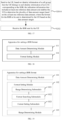
- FIG. 1 is a schematic flowchart illustrating a method of setting a BSR format.
- the method of setting a BSR format is applicable to a UE.
- the UE may be an electronic device such as a mobile and a tablet, and may communicate with a base station.
- the method of setting a BSR format may include the following steps:
- a number of the bits, that are used to indicate the amount of the data format. buffered in the buffer in the BSR of the set format is positively correlated with the amount of the data buffered in the buffer. That is, the greater the amount of the data buffered in the buffer is, the larger the number of the bits used to indicate the amount of the data buffered in the buffer in the BSR will be; while the less the amount of the data buffered in the buffer is, the smaller the number of the bits used to indicate the amount of the data buffered in the buffer in the BSR will be.
- a span between data amounts corresponding to the values of BS, which correspond to the bits used to indicate the amount of the data buffered in the buffer in the BSR maybe relatively narrow, so that the uplink resources, allocated by a base station for a UE based on the BS in the BSR, will never exceed the uplink resources required by the UE by very much, thereby reducing a waste of uplink resources.
- the format for the BSR may be set by determining a relationship between the amount of the data buffered in the buffer and one first reference data amount.
- the first reference data amount may be 1000-bytes.
- the format for the BSR may be set to a short format in a case where the amount of the data buffered in the buffer is less than or equal to 1000 bytes, in which the number of the bits used to indicate the amount of the data buffered in the buffer is 5, while to a long format in a case where the amount of the data buffered in the buffer is greater than 1000 bytes, in which the number of the bits used to indicate the amount of the data buffered in the buffer is 8.
- the format for the BSR may be set to the long format since 3910 is greater than 1000.
- the BS in the BSR of the long format corresponds to one-eighth the data amount span that the BS in the BSR of the short format corresponds to, because the BSR of the long format uses 8 bits, i.e., 256 pieces of BS to indicate the amount of the data buffered in the buffer but the BSR of the short format uses 5 bits, i.e., 32 pieces of BS.
- the data amount span corresponding to the BS in the BSR of the short format is 1537 bytes as described in the background
- the data amount span corresponding to the BS in the BSR of the long format is about 192 bytes, that is, every change of the BS by 1 corresponds to a change of the data amount by 192 bytes.
- FIG. 2 is a schematic flowchart illustrating another method of setting a BSR format.
- the method further includes: at step S103, before setting the format for the BSR based on the amount of the data buffered in the buffer, a plurality of first data amount ranges are determined based on at least one first reference data amount, where the plurality of first data amount ranges respectively correspond to different first formats.
- the step that the format for the BSR is set based on the amount of the data buffered in the buffer includes:
- the plurality of first data amount ranges may be determined based on the at least one first reference data amount.
- the at least one first reference data amount includes a first reference data amount A, and then two first data amount ranges can be determined: 0 to A, and A to positive infinity.
- the at least one first reference data amount includes first reference data amounts A and B and A is smaller than B, then three first data amount ranges can be determined: 0 to A, A to B, and B to positive infinity.
- the number of the first reference data amount s and the value of each first reference data amount may be set as required, and will not be repeated here.
- an association relationship between the first data amount ranges and the first formats may be established.
- the association relationship may be established by the UE, or be established and sent by the base station to the UE.
- the UE may determine the target first format corresponding to the target first data amount range based on the association relationship between the first data amount ranges and the first formats, and then set the format for the BSR to the target first format.
- the target first format is not limited to the short format and the long format. That is, in the BSR, the number of the bits used to indicate the amount of the data buffered in the buffer is not limited to 5 and 8, and may be expanded as required.
- FIG. 3 is a schematic flowchart illustrating another method of setting a BSR format.
- the at least one first reference data amount includes one first reference data amount
- the step that the format for the BSR is set based on the amount of the data buffered in the buffer includes:
- the format for the BSR may be set to the short format in the case where the amount of the data buffered in the buffer is less than or equal to the first reference data amount, while set to the long format in the case where the amount of the data buffered in the buffer is greater than the first reference data amount. Since the short format and the long format currently exist, it is not necessary to expand the BSR formats, which helps simplify the process of setting the BSR format.
- FIG. 4 is a schematic flowchart illustrating another method of setting a BSR format.
- the method further includes: at step S104, before determining the plurality of first data amount ranges based on the at least one first reference data amount, the first reference data amount is determined by receiving information broadcast by the base station, or the first reference data amount is determined by receiving a dedicated signaling sent by the base station, or a pre-stored negotiated value is selected as the first reference data amount.
- the base station may send the first reference data amount to the UE through broadcasting, and the UE may determine the first reference data amount by receiving the information broadcast by the base station.
- the base station may send the dedicated signaling carrying the first reference data amount, and the UE may determine the first reference data amount by receiving the dedicated signaling sent by the base station.
- the dedicated signaling may be sent through a physical downlink control channel, a Radio Resource Control (RRC) message, or a Media Access Control Layer Control Unit (MAC CE).
- RRC Radio Resource Control
- MAC CE Media Access Control Layer Control Unit
- the base station may negotiate the first reference data amount with the UE in advance.
- a negotiated value is set in accordance with a communication protocol and is stored by the UE in advance, and the UE may select the pre-stored negotiated value as the first reference data amount after triggering the BSR.
- FIG. 5 is a schematic flowchart illustrating another method of setting a BSR format.
- the step that the first reference data amount is determined by receiving information broadcast by the base station, or the first reference data amount is determined by receiving a dedicated signaling sent by the base station, or a pre-stored negotiated value is selected as the first reference data amount includes: at step S1041, the pre-stored negotiated value is selected as the first reference data amount if the first reference data amount is not determined based on at least one of: the information broadcast by the base station, a control signaling sent by the base station, or control data sent by the base station.
- the pre-stored negotiated value may be selected as the first reference data amount in a case where the first reference data amount is not determined based on the information broadcast by the base station, or the first reference data amount is not determined based on the control signaling sent by the base station, or the first reference data amount is not determined based on the control data sent by the base station.
- the pre-stored negotiated value may be selected as the first reference data amount in a case where the first reference data amount is not determined based on the information broadcast by the base station, the first reference data amount is not determined based on the control signaling sent by the base station, and the first reference data amount is not determined based on the control data sent by the base station.
- FIG. 6 is a schematic flowchart illustrating another method of setting a BSR format.
- the method further includes: at step S105, the format for the BSR is set to a first preset format if the first reference data amount is not determined based on at least one of: the information broadcast by the base station, the control signaling sent by the base station, or the control data sent by the base station.
- the format for the BSR may be set to a first preset format in a case where the first reference data amount is not determined based on the information broadcast by the base station, or the first reference data amount is not determined based on the control signaling sent by the base station, or the first reference data amount is not determined based on the control data sent by the base station.
- the format for the BSR may be set to the first preset format in a case where the first reference data amount is not determined based on the information broadcast by the base station, the first reference data amount is not determined based on the control signaling sent by the base station, and the first reference data amount is not determined based on the control data sent by the base station.
- the first preset format may be instructed by the base station, or be selected by the UE itself.
- the number of the bits used to indicate the amount of the data buffered in the buffer in the first preset format may be set as required.
- the first preset format may be a format negotiated in advance by the UE and the base station, for example, the short format.
- FIG. 7 is a schematic flowchart illustrating another method of setting a BSR format. As shown in FIG. 7 , on the basis of the example shown in FIG. 2 , the method further includes:
- the step that the format for the BSR is set based on the amount of the data buffered in the buffer includes:
- the BSR may be carried in the message 3 (MSG3) in the random access process. Since the data amount of the MSG3 is mainly associated with a service data unit of common control channel (CCCH SDU) that is not used for data transmission, less uplink resources are requested, that is, the uplink resources requested by the UE to send MSG3 is less than the uplink resources requested by the UE to transmit the data.
- CCCH SDU common control channel
- different standards may be adapted for the UE to set the format for the BSR with or without the BSR carried in the MSG3. That is, compared with the example shown in FIG.
- the plurality of data amount ranges may be determined based on the at least one second reference data amount instead of the at least one first reference data amount.
- the second reference data amount may differ from first reference data amount, as in the claimed invention, so that the plurality of second data amount ranges different from the plurality of first data amount ranges can be obtained.
- the second reference data amount may be smaller than the first reference data amount, so as to set the format for the BSR to the short format, which can avoid too large MSG3 since the number of the bits used to indicate the amount of the data buffered in the buffer in the BSR of the short format is smaller, i.e., the amount of data occupied by the BSR of the short format is less.
- the second reference data amount may have a same source as the first reference data amount.
- the second reference data amount may be determined by receiving the information broadcast by the base station, or the second reference data amount may be determined by receiving the dedicated signaling sent by the base station, or the second reference data amount may be determined based on the value negotiated with the base station.
- FIG. 8 is a schematic flowchart illustrating another method of setting a BSR format. As shown in FIG. 8 , on the basis of the example shown in FIG. 2 , the method further includes:
- the format for the BSR is set based on the amount of the data buffered in the buffer if the BSR is not to be carried in the message 3 in the random access process.
- the format for the BSR may be set to the second preset format in the case where the BSR is carried through MSG3.
- the second preset format may be instructed by the base station or selected by the UE itself.
- the number of the bits used to indicate the amount of the data buffered in the buffer may be set as required, for example, the second preset format may be the short format.
- FIG. 9 is a schematic flowchart illustrating another method of setting a BSR format. As shown in FIG. 9 , on the basis of the example shown in FIG. 1 , the method further includes:
- the base station may instruct the UE the third preset format, and the UE may determine whether the third preset format sent by the base station is received, and set the format for the BSR to the third preset format if the third preset format is received.
- the third preset format may be instructed by the base station or selected by the UE itself.
- the number of the bits used to indicate the amount of the data buffered in the buffer may be set as required, for example, the third preset format may be the short format.
- FIG. 10 is a schematic flowchart illustrating another method of setting a BSR format. As shown in FIG. 10 , on the basis of the example shown in FIG. 9 , the method further includes:
- the base station may send the instruction information for canceling the third preset format, so that the UE will set the format for the BSR according to the example shown in FIG. 1 subsequently, instead of setting the BSR to the third preset format.
- FIG. 11 is a schematic flowchart illustrating another method of setting a BSR format. As shown in FIG. 11 , on the basis of the example shown in FIG. 9 , the method further includes:
- the UE may determine whether the number of BSRs of the third preset format that have been sent reaches the preset number. For example, if the preset number is 1, one BSR will be set to the third preset format only once, and be still set based on the example shown in FIG. 1 when being triggered subsequently.
- FIG. 12 is a schematic flowchart illustrating another method of setting a BSR format. As shown in FIG. 12 , on the basis of the example shown in FIG. 1 , the method further includes:
- the step that the format for the BSR is set based on the amount of the data buffered in the buffer includes:
- a data amount of the BSR of the fifth preset format is less than the data amount of the BSR of the fourth preset format.
- the uplink resources allocated by the base station for the UE are mainly for the UE to upload data. If the data to be uploaded does not fully occupy current uplink resources, the remaining uplink resources may be used to send the BSR. However, since the remaining uplink resources are not necessarily enough to send the BSR, it is feasible to determine the relationship between the allowable transmitting data amount of the remaining uplink resources and the data amount of the BSR of the fourth preset format.
- the format for the BSR may be set to the fourth preset format, so that it is guaranteed to avoid allocating too many uplink resources by the base station and causing a waste of uplink resources.
- the format for the BSR may be set to the fifth preset format with less data amount, i.e., containing fewer bits used to indicate the amount of the data buffered in the buffer, so as to ensure that the UE is capable of transmitting data and sending the BSR to the base station through only one transmission.
- the fourth preset format and the fifth preset format may be instructed by the base station or selected by the UE itself.
- the number of the bits used to indicate the amount of the data buffered in the buffer may be set as required.
- the number of the bits used to indicate the amount of the data buffered in the buffer in the BSR of the fourth preset format is larger than the number of the bits used to indicate the amount of the data buffered in the buffer in the BSR of the fifth preset format.
- the fourth preset format may be the long format while the fifth short.
- the method further includes: when the BSR is triggered by the UE, it is determined whether the BSR is of a preset type.
- the preset type may be a regular type or a periodic type.
- the BSR triggered by the UE is of the regular type if any one of the logical channels of the LCGs gets data available for transmission.
- the BSR triggered by the UE is also of the regular type when data with higher priority, i.e., the data whose corresponding logical channel has higher priority than the logical channels of all the above LCGs, is expected to be transmitted.
- the base station may configure a timer for the UE through a retxBSR-Timer field in IE: the MAC-MainConfig.
- the BSR triggered by the UE is also of the regular type when the timer expires and any one logical channel of any one LCG of the UE has data available for transmission.
- the time when the data arrives in the buffer of the UE and the time when the UE receive the UL grant may be asynchronous. For example, in a case where the UE requests to upload a file with a great amount of data, the UE will constantly fill data into the buffer corresponding to uplink transmission while both sending the BSR and receiving the UL grant. Therefore, the UE has to constantly update the amount of the data to be uplink transmitted and in this case, the BSR triggered by the UE is of the periodic type.
- the preset type is not limited to the Regular or the Periodic described above, and may be configured as required.
- the BSR is of the preset type, it is determined whether a number of the LCG configured to transmit the data is equal to a preset number.
- the amount of the data buffered in the buffer which corresponds to the LCG configured to transmit the data is determined in a case where the number of the LCG is equal to the preset number.
- the amount of the data buffered in the buffer is generally small in the situation that the UE transmits data of a service with small data packets, which usually requires small overhead.
- the overhead can be reduced by adapting the format with fewer bits used to indicate the amount of the data buffered in the buffer.
- the amount of the data buffered in the buffer is generally great in the situation that the UE transmits data of a service with big data packets, which is rarely affected by the size of the overhead.
- a format with more bits used to indicate the amount of the data buffered in the buffer may be adapted, so as to improve an accuracy of uplink resource allocation by the base station and reduce a waste of uplink resources.
- the preset type indicates regular or periodic.
- the preset number is 1.
- FIG. 13 is a schematic flowchart illustrating a method of sending a reference data amount.
- the method of sending a reference data amount according to this example is applicable to a base station, for example, a 4G or 5G base station.
- the base station may communicate with a UE that is described according to any one of the above examples.
- the method of sending a reference data amount may include the following steps.
- indication information is sent to the UE.
- the indication information includes at least one reference data amount and enables the UE to determine a plurality of data amount ranges based on the at least one reference data amount.
- a format for a BSR to be sent is determined by the UE based on the data amount ranges.
- step S202 the BSR sent by the UE is received.
- the base station may send the indication information to the UE, so as to indicate the at least one reference data amount to the UE. Therefore, the UE may determine the plurality of first data amount ranges based on the at least one reference data amount, and then determine the format for the BSR to be sent based on the first data amount ranges.
- the reference data amount in the above embodiments may include the first reference data amount according to the example shown in FIG. 2 , and/or the second reference data amount according to the example shown in FIG. 7 .
- the first reference data amount and the second reference data amount may be configured with different labels, so that after receiving one reference data amount, the UE can distinguish the first reference data amount and the second reference data amount based on its label.
- FIG. 14 is a schematic flowchart illustrating another method of sending a reference data amount.
- the step that the indication information is sent to the UE includes: at step S2011, the indication information is sent to the UE based on identity information of the UE.
- the base station may send the indication information to the UE based on the identity information of the UE. For example, for the UEs corresponding to different identity information, the at least one reference data amount in the indication information sent to one UE may be different from that in the indication information sent to the others. In particular, it may be that the number of the at least one reference data amount is different, and/or the value of the reference data amount is different.
- FIG. 15 is a schematic flowchart illustrating another method of sending a reference data amount.
- the step that the indication information is sent to the UE includes: at step S2012, the indication information is sent to the UE based on identity information of an LCG corresponding to the BSR.
- the base station may send the indication information to the UE based on the identity information of the LCG corresponding to the BSR. For example, for the UEs corresponding to the LCGs with different identity information, the at least one reference data amount in the indication information sent to one UE may be different from that in the indication information sent to the others. In particular, it may be that the number of the at least one reference data amount is different, and/or the value of the reference data amount is different.
- FIG. 16 is a schematic flowchart illustrating another method of sending a reference data amount.
- the step that the indication information is sent to the UE includes: at step S2013, the indication information is sent to the UE based on identity information of a cell group that the UE belongs to.
- the base station may send the indication information to the UE based on the identity information of the cell group that the UE belongs to. For example, for the UEs corresponding to the cells with different identity information, the at least one reference data amount in the indication information sent to one UE may be different from that in the indication information sent to the others. In particular, it may be that the number of the at least one reference data amount is different, and/or the value of the reference data amount is different.
- FIG. 17 is a schematic flowchart illustrating another method of sending a reference data amount.
- the step that the indication information is sent to the UE includes: at step S2014, the indication information is sent to the UE based on identity information of a cell group that the UE belongs to and identity information of an LCG corresponding to the BSR.
- the base station may send the indication information to the UE based on the identity information of the cell group that the UE belongs to and the identity information of the LCG corresponding to the BSR. For example, for the UEs corresponding to the LCGs with identical identity information in the cells with different identity information, i.e., the UEs that are in different cells but correspond to the LCGs whose identity information is identical, the at least one reference data amount in the indication information sent to one UE may be different from that in the indication information sent to the others. In particular, it may be that the number of the at least one reference data amount is different, and/or the value of the reference data amount is different.
- examples are also provided of apparatuses for setting a BSR format and apparatuses for sending a reference data amount.
- FIG. 18 is a schematic block diagram illustrating an apparatus for setting a BSR format.
- the apparatus for setting a BSR format is applicable to a UE.
- the UE may be an electronic device such as a mobile and a tablet, and may communicate with a base station.
- the apparatus for setting a BSR format may include:
- FIG. 19 is a schematic block diagram illustrating another apparatus for setting a BSR format.
- the apparatus further includes: a range determining module 103 that is configured to determine a plurality of first data amount ranges based on at least one first reference data amount, where the plurality of first data amount ranges respectively correspond to different first formats.
- the format setting module 102 includes:
- the at least one first reference data amount includes one first reference data amount
- the range determining submodule 1021 is configured to determine a relationship between the amount of the data buffered in the buffer and the first reference data amount
- the format setting submodule 1023 is configured to set the format for the BSR to a short format in a case where the amount of the data buffered in the buffer is less than or equal to the first reference data amount, and set the format for the buffer status report to a long format in a case where the amount of the data buffered in the buffer is greater than the first reference data amount.
- FIG. 20 is a schematic block diagram illustrating another apparatus for setting a BSR format.
- the apparatus further includes: a reference determining module 104 that is configured to determine the first reference data amount by receiving information broadcast by the base station, or determine the first reference data amount by receiving a dedicated signaling sent by the base station, or selecting a pre-stored negotiated value as the first reference data amount.
- the reference determining module 104 is configured to select the pre-stored negotiated value as the first reference data amount in a case where the first reference data amount is not determined based on the information broadcast by the base station, the first reference data amount is not determined based on a control signaling sent by the base station, and/or the first reference data amount is not determined based on control data sent by the base station.
- the format setting module 102 is configured to set the format for the BSR to a first preset format in a case where the first reference data amount is not determined based on the information broadcast by the base station, the first reference data amount is not determined based on the control signaling sent by the base station, and/or the first reference data amount is not determined based on the control data sent by the base station.
- FIG. 21 is a schematic block diagram illustrating another apparatus for setting a BSR format. As shown in FIG. 21 , on the basis of the example shown in FIG. 19 , the apparatus further includes: a carry determining module 105 that is configured to before determining the plurality of first data amount ranges based on the at least one first reference data amount, determine whether the BSR is to be carried in a message 3 in a random access process.
- a carry determining module 105 that is configured to before determining the plurality of first data amount ranges based on the at least one first reference data amount, determine whether the BSR is to be carried in a message 3 in a random access process.
- the range determining module 103 is configured to determine a plurality of second data amount ranges based on at least one second reference data amount in a case where the BSR is to be carried in the message 3 in the random access process.
- the plurality of second data amount ranges respectively correspond to different second formats.
- the range determining submodule 1021 is configured to determine a target second data amount range, where the amount of the data buffered in the buffer locates in the target second data amount range; the format searching submodule 1022 is configured to search for a target second format corresponding to the target second data amount range; and the format setting submodule 1023 is configured to set the format for the BSR to the target second format.
- the carry determining module 105 is configured to before determining the plurality of first data amount ranges based on the at least one first reference data amount, determine whether the BSR is to be carried in a message 3 in a random access process.
- the format setting module 102 is configured to set the format for the BSR to a second preset format in a case where the BSR is to be carried in the message 3 in the random access process, and set the format for the BSR based on the amount of the data buffered in the buffer in a case where the BSR is not to be carried in the message 3 in the random access process.
- FIG. 22 is a schematic block diagram illustrating another apparatus for setting a BSR format. As shown in FIG. 22 , on the basis of the example shown in FIG. 18 , the apparatus further includes: a receiving determining module 106 that is configured to determine whether a third preset format sent by the base station is received;
- the format setting module 102 is configured to set the format for the BSR to the third preset format in a case where the third preset format is received.
- FIG. 23 is a schematic block diagram illustrating another apparatus for setting a BSR format. As shown in FIG. 23 , on the basis of the example shown in FIG. 22 , the apparatus further includes:
- FIG. 24 is a schematic block diagram illustrating another apparatus for setting a BSR format. As shown in FIG. 24 , on the basis of the example shown in FIG. 22 , the apparatus further includes:
- FIG. 25 is a schematic block diagram illustrating another apparatus for setting a BSR format. As shown in FIG. 25 , on the basis of the example shown in FIG. 18 , the apparatus further includes:
- the format setting module 102 is configured to set the format for the BSR to a fourth preset format in a case where it is determined based on the amount of the data buffered in the buffer that the format for the BSR is the fourth preset format and an allowable transmitting data amount of the remaining uplink resources is greater than or equal to a data amount of the BSR of the fourth preset format, and set the format for the BSR to a fifth preset format in a case where it is determined based on the amount of the data buffered in the buffer that the format for the BSR is the fourth preset format and the allowable transmitting data amount of the remaining uplink resources is less than the data amount of the BSR of the fourth preset format.
- a data amount of the BSR of the fifth preset format is less than the data amount of the BSR of the fourth preset format.
- the apparatus further includes:
- the data amount determining module 101 is configured to in a case where the number of the LCG is equal to the preset number, determine the amount of the data buffered in the buffer which corresponds to the LCG configured to transmit the data.
- the preset type indicates regular or periodic.
- the preset number is 1.
- FIG. 26 is a schematic block diagram illustrating an apparatus for sending a reference data amount.
- the apparatus for sending a reference data amount according to this example is applicable to a base station, for example, a 4G or 5G base station.
- the base station may communicate with a UE that is described according to any one of the above examples.
- the apparatus for sending a reference data amount includes:
- the sending module 201 is configured to send the indication information to the UE based on identity information of the UE.
- the sending module 201 is configured to send the indication information to the UE based on identity information of an LCG corresponding to the B SR.
- the sending module 201 is configured to send the indication information to the UE based on identity information of a cell group that the UE belongs to.
- the sending module 201 is configured to send the indication information to the UE based on identity information of a cell group that the UE belongs to and identity information of an LCG corresponding to the BSR.
- the apparatus examples essentially correspond to the method examples, reference may be made to the description of related parts of the method examples.
- the apparatus examples described above are merely illustrative, where the units described as separate members may be or not be physically separated, and the members displayed as units may be or not be physical units, i.e., may be located in one place, or may be distributed to a plurality of network units. Some or all of the modules may be selected according to actual needs to achieve the objectives of the implementations of the examples. It can be understood and implemented by those of ordinary skill in the art without any creative effort.
- An example also provides an electronic device, including
- the processor is configured to perform the steps of the method of setting a BSR format described in any one of the above examples.
- An example also provides an electronic device, including
- the processor is configured to perform the steps of the method of sending a reference data amount described in any one of the above examples.
- An example also provides a computer-readable storage medium having a computer program stored thereon The program implements, when executed by a processor, the steps of the method of setting a BSR format described in any one of the above examples.
- An example also provides a computer-readable storage medium having a computer program stored thereon.
- the program implements, when executed by a processor, the steps of the method of sending a reference data amount described in any one of the above examples.
- FIG. 27 is a schematic block diagram illustrating a device 2700 for sending a reference data amount.
- the device 2700 may be provided as a base station.
- the device 2700 includes a processing component 2722, a wireless transmission / reception component 2724, an antenna component 2726, and a signal processing part peculiar to the wireless interface.
- the processing component 2722 may further include one or more processors.
- One processor of the processing component 2722 may be configured to perform the steps of the method of sending a reference data amount described in any one of the above examples.
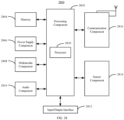
- FIG. 28 is a schematic block diagram illustrating a device 2800 for setting a BSR format.
- the device 2800 may be a mobile phone, a computer, a digital broadcasting terminal, a messaging device, a game console, a tablet device, a medical device, a fitness device, a personal digital assistant, and the like.
- the device 2800 may include one or more of the following components: a processing component 2802, a memory 2804, a power supply component 2806, a multimedia component 2808, an audio component 2810, an input/output (I/O) interface 2812, a sensor component 2814, and a communication component 2816.
- a processing component 2802 may include one or more of the following components: a processing component 2802, a memory 2804, a power supply component 2806, a multimedia component 2808, an audio component 2810, an input/output (I/O) interface 2812, a sensor component 2814, and a communication component 2816.
- the processing component 2802 generally controls overall operations of the device 2800, such as operations associated with display, phone calls, data communications, camera operations, and recording operations.
- the processing element 2802 may include one or more processors 2820 to execute instructions to complete all or part of the steps of the above methods.
- the processing component 2802 may include one or more modules which facilitate the interaction between the processing component 2802 and other components.
- the processing component 2802 may include a multimedia module to facilitate the interaction between the multimedia component 2808 and the processing component 2802.
- the memory 2804 is configured to store various types of data to support the operation of the device 2800. Embodiments of such data include instructions for any application or method operating on the device 2800, contact data, phone book data, messages, pictures, videos, and the like.
- the memory 2804 may be implemented by any type of volatile or non-volatile storage devices or a combination thereof, such as a Static Random Access Memory (SRAM), an Electrically Erasable Programmable Read-Only Memory (EEPROM), an Erasable Programmable Read-Only Memory (EPROM), a Programmable Read-Only Memory (PROM), a Read-Only Memory (ROM), a magnetic memory, a flash memory, a magnetic or compact disk.
- SRAM Static Random Access Memory
- EEPROM Electrically Erasable Programmable Read-Only Memory
- EPROM Erasable Programmable Read-Only Memory
- PROM Programmable Read-Only Memory
- ROM Read-Only Memory
- the power supply component 2806 supplies power for different components of the device 2800.
- the power supply component 2806 may include a power supply management system, one or more power supplies, and other components associated with generating, managing and distributing power for the device 2800.
- the multimedia component 2808 includes a screen providing an output interface between the device 2800 and a user.
- the screen may include a Liquid Crystal Display (LCD) and a Touch Panel (TP). If the screen includes the TP, the screen may be implemented as a touch screen to receive input signals from the user.
- the TP may include one or more touch sensors to sense touches, swipes, and gestures on the TP. The touch sensors may not only sense a boundary of a touch or swipe, but also sense a lasting time and a pressure associated with the touch or swipe.
- the multimedia component 2808 may include a front camera and/or a rear camera. The front camera and/or rear camera may receive external multimedia data when the device 2800 is in an operating mode, such as a photographing mode or a video mode. Each front camera and rear camera may be a fixed optical lens system or have focal length and optical zooming capability.
- the audio component 2810 is configured to output and/or input an audio signal.
- the audio component 2810 includes a microphone (MIC).
- the microphone When the device 2800 is in an operating mode, such as a call mode, a record mode and a voice recognition mode, the microphone is configured to receive an external audio signal.
- the received audio signal may be further stored in the memory 2804 or sent via the communication component 2816.
- the audio component 2810 further includes a speaker for outputting an audio signal.
- the I/O interface 2812 provides an interface between the processing component 2802 and a peripheral interface module.
- the above peripheral interface module may be a keyboard, a click wheel, buttons, or the like. These buttons may include but not limited to, a home button, a volume button, a start button and a lock button.
- the sensor component 2814 includes one or more sensors to provide status assessments of various aspects for the device 2800.
- the sensor component 2814 may detect an open/closed state of the device 2800 and a relative positioning of components such as the display and keypad of the device 2800, and the sensor component 2814 can also detect a change in position of the device 2800 or a component of the device 2800, the presence or absence of user contact with the device 2800, orientation or acceleration/deceleration of the device 2800, and temperature change of the device 2800.
- the sensor component 2814 may include a proximity sensor configured to detect the presence of nearby objects without any physical contact.
- the sensor component 2814 may also include a light sensor, such as a Complementary Metal-Oxide-Semiconductor (CMOS) or Charged Coupled Device (CCD) image sensor, for use in imaging applications.
- CMOS Complementary Metal-Oxide-Semiconductor
- CCD Charged Coupled Device
- the sensor component 2814 may further include an acceleration sensor, a gyroscope sensor, a magnetic sensor, a pressure sensor, or a temperature sensor.
- the communication component 2816 is configured to facilitate wired or wireless communication between the device 2800 and other devices.
- the device 2800 may access a wireless network based on a communication standard, such as Wi-Fi, 2G or 3G, or a combination thereof.
- the communication component 2816 receives broadcast signals or broadcast related information from an external broadcast management system via a broadcast channel.
- the communication component 2816 also includes a near field communication (NFC) module to facilitate short-range communication.
- the NFC module can be implemented based on a radio frequency identification (RFID) technology, an infrared data association (IrDA) technology, an ultra-wideband (UWB) technology, a Bluetooth ® (BT) technology and other technologies.
- RFID radio frequency identification
- IrDA infrared data association
- UWB ultra-wideband
- BT Bluetooth ®
- the device 2800 may be implemented by one or more Application Specific Integrated Circuits (ASICs), Digital Signal Processors (DSPs), Digital Signal Processing Devices (DSPDs), Programmable Logic Devices (PLDs), Field Programmable Gate Arrays (FPGAs), controllers, microcontrollers, microprocessors, or other electronic components, so as to perform the method of setting a BSR format described in any one of the above examples.
- ASICs Application Specific Integrated Circuits
- DSPs Digital Signal Processors
- DSPDs Digital Signal Processing Devices
- PLDs Programmable Logic Devices
- FPGAs Field Programmable Gate Arrays
- controllers microcontrollers, microprocessors, or other electronic components, so as to perform the method of setting a BSR format described in any one of the above examples.
- non-transitory computer-readable storage medium including instructions, such as the memory 2804 including instructions executable by the processor 2820 of the device 2800 to implement the above methods.
- the non-transitory computer-readable storage medium may be a ROM, a random access memory (RAM), a CD-ROM, a magnetic tape, a floppy disk, and an optical data storage device.
Landscapes
- Engineering & Computer Science (AREA)
- Signal Processing (AREA)
- Computer Networks & Wireless Communication (AREA)
- Quality & Reliability (AREA)
- Mobile Radio Communication Systems (AREA)
- Communication Control (AREA)
Claims (14)
- Verfahren zum Einstellen eines Pufferstatusberichtsformats, das auf ein Benutzergerät anwendbar ist, umfassend:als Reaktion auf das Auslösen eines Pufferstatusberichts durch das Benutzergerät, Bestimmen (S101) einer Datenmenge , die in einem Puffer gepuffert ist, der einer logischen Kanalgruppe entspricht, die für die Übertragung der Daten konfiguriert ist;Einstellen (S102) eines Formats für den Pufferstatusbericht auf der Grundlage der Menge der in dem Puffer gepufferten Daten, wobei eine Anzahl von Bits in dem Pufferstatusbericht des Formats positiv mit der Menge der in dem Puffer gepufferten Daten korreliert ist und die Bits die Menge der in dem Puffer gepufferten Daten anzeigen;vor dem Einstellen (S102) des Formats für den Pufferstatusbericht auf der Grundlage der im Puffer gepufferten Datenmenge, Bestimmen (S103) mehrerer erster Datenmengenbereiche auf der Grundlage mindestens einer ersten Referenzdatenmenge, wobei die mehreren ersten Datenmengenbereiche jeweils verschiedenen ersten Formaten entsprechen, wobei das Einstellen (S102) des Formats für den Pufferstatusbericht auf der Grundlage der Menge der in dem Puffer gepufferten Daten umfasst:Bestimmen (S1021) eines ersten Zieldatenmengenbereichs, wobei die Menge der in dem Puffer gepufferten Daten in dem ersten Zieldatenmengenbereich liegt;Suchen (S1022) nach einem ersten Zielformat, das dem ersten Zieldatenmengenbereich entspricht; undEinstellen (S1023) eines Formats für den Pufferstatusbericht auf das erste Zielformat;wobei das Verfahren ferner umfasst: vor dem Bestimmen (S103) der mehreren ersten Datenmengenbereiche auf der Grundlage der mindestens einen ersten Referenzdatenmenge, Bestimmen (S106), ob der Pufferstatusbericht in einer Nachricht 3 in einem Zufallszugriffsverfahren übertragen werden soll; undals Reaktion darauf, dass der Pufferstatusbericht in der Nachricht 3 im Direktzugriffsprozess übertragen werden soll, Bestimmen (S107) einer Vielzahl von zweiten Datenmengenbereichen auf der Grundlage von mindestens einer zweiten Referenzdatenmenge, wobei die Vielzahl von zweiten Datenmengenbereichen jeweils verschiedenen zweiten Formaten entspricht, und das Einstellen (S102) des Formats für den Pufferstatusbericht auf der Grundlage der Menge der im Puffer gepufferten Daten umfasst:Bestimmen (S1027) eines zweiten Ziel-Datenmengenbereichs, wobei die Menge der in dem Puffer gepufferten Daten in dem zweiten Ziel-Datenmengenbereich liegt;Suchen (S1028) nach einem zweiten Zielformat, das dem zweiten Zieldatenmengenbereich entspricht; undEinstellen (S1029) des Formats für den Pufferstatusbericht auf das zweite Zielformat;wobei sich die mindestens eine zweite Referenzdatenmenge von der mindestens einen ersten Referenzdatenmenge unterscheidet.
- Verfahren nach Anspruch 1, wobei die mindestens eine erste Referenzdatenmenge eine erste Referenzdatenmenge umfasst, und das Einstellen (S102) des Formats für den Pufferstatusbericht auf der Grundlage der Menge der in dem Puffer gepufferten Daten weiterhin umfasst:Bestimmen (S1024) einer Beziehung zwischen der Menge der im Puffer gepufferten Daten und der ersten Referenzdatenmenge,als Reaktion darauf, dass die Menge der im Puffer gepufferten Daten kleiner oder gleich der ersten Referenzdatenmenge ist, Einstellen (S 1025) des Formats für den Pufferstatusbericht auf ein Kurzformat; undals Reaktion darauf, dass die Menge der im Puffer gepufferten Daten größer ist als die erste Referenzdatenmenge, Einstellen (S 1026) des Formats für den Pufferstatusbericht auf ein Langformat.
- Verfahren nach Anspruch 1 oder 2, , wobei das Verfahren vor der Bestimmung (S 103) der mehreren ersten Datenmengenbereiche auf der Grundlage der mindestens einen ersten Referenzdatenmenge ferner eines der folgenden umfasst;Bestimmen (S 104) der mindestens einen ersten Referenzdatenmenge durch Empfangen von Informationen, die von einer Basisstation gesendet werden,Bestimmen (104) der mindestens einen ersten Referenzdatenmenge durch Empfangen einer von der Basisstation gesendeten dedizierten Signalisierung, oderAuswahl (S 104) eines vorab gespeicherten ausgehandelten Wertes als eine der mindestens einen ersten Referenzdatenmenge.
- Verfahren nach Anspruch 3,weiter umfassend:
Auswählen (S1041) des vorab gespeicherten ausgehandelten Wertes als eine der mindestens einen ersten Referenzdatenmenge in Reaktion darauf, dass die mindestens eine erste Referenzdatenmenge nicht auf der Grundlage von mindestens einem der folgenden Punkte bestimmt wird:die von der Basisstation gesendeten Informationen,eine von der Basisstation gesendete Kontrollsignalisierung, oderKontrolldaten, die von der Basisstation gesendet werden;oder weiter umfassend:
Einstellen (S105) des Formats für den Pufferstatusbericht auf ein erstes voreingestelltes Format in Reaktion darauf, dass die mindestens eine erste Referenzdatenmenge nicht auf der Grundlage von mindestens einem der folgenden Punkte bestimmt wird:die von der Basisstation gesendeten Informationen,eine von der Basisstation gesendete Kontrollsignalisierung, oderKontrolldaten, die von der Basisstation gesendet werden. - Verfahren nach einem der vorangehenden Ansprüche 1 bis 4, das ferner umfasst:Bestimmen (S110), ob ein drittes voreingestelltes Format, das von einer Basisstation gesendet wird, empfangen wird, bevor die Menge der Daten bestimmt wird (S101), die in dem Puffer gepuffert sind, der der logischen Kanalgruppe entspricht, die für die Übertragung der Daten konfiguriert ist; undals Reaktion darauf, dass das dritte voreingestellte Format empfangen wird, Einstellen des Formats für den Pufferstatusbericht auf das dritte voreingestellte Format (S111).
- Verfahren nach Anspruch 5,weiter umfassend:nach dem Empfangen des dritten voreingestellten Formats, Bestimmen (S112), ob Befehlsinformation zum Löschen des dritten voreingestellten Formats von der Basisstation empfangen wird; undals Reaktion darauf, dass die Befehlsinformation empfangen wird, und als Reaktion auf das Auslösen des Pufferstatusberichts, Bestimmen (S113), ob der Pufferstatusbericht von einem voreingestellten Typ ist;oder weiter umfassend:nach dem Empfangen des dritten voreingestellten Formats, Bestimmen (S114), ob eine voreingestellte Anzahl von Pufferstatusberichten des dritten voreingestellten Formats gesendet worden ist; undals Reaktion darauf, dass die voreingestellte Anzahl von Pufferstatusberichten des dritten voreingestellten Formats gesendet wurde, und als Reaktion auf das Auslösen des Pufferstatusberichts durch das Benutzergerät, Bestimmen (S115), ob der Pufferstatusbericht von einem voreingestellten Typ ist.
- Verfahren nach einem der vorangehenden Ansprüche 1 bis 6, das ferner umfasst:vor dem Bestimmen (S101) der Menge der Daten, die in dem Puffer gepuffert sind, der der logischen Kanalgruppe entspricht, die zum Übertragen der Daten konfiguriert ist, Bestimmen (S116) von Uplink- bzw. Aufwärtsstreckenressourcen, die durch Daten belegt sind, die von der Benutzerausrüstung übertragen werden sollen; undBestimmung (S117) der verbleibenden Uplink-Ressourcen auf der Grundlage der für die Benutzerausrüstung zugewiesenen Uplink-Ressourcen und der von den Daten belegten Uplink-Ressourcen;Wobei das Verfahren ferner umfasst:Einstellen (S102A) des Formats für den Pufferstatusbericht auf ein viertes voreingestelltes Format als Reaktion auf das Bestimmen, basierend auf der Menge der in dem Puffer gepufferten Daten, dass das Format für den Pufferstatusbericht das vierte voreingestellte Format ist und eine zulässige Übertragungsdatenmenge der verbleibenden Uplink-Ressourcen größer als oder gleich einer Datenmenge des Pufferstatusberichts des vierten voreingestellten Formats ist; undEinstellen (S102B) des Formats für den Pufferstatusbericht auf ein fünftes voreingestelltes Format als Reaktion auf die Feststellung, basierend auf der Menge der im Puffer gepufferten Daten, dass das Format für den Pufferstatusbericht das vierte voreingestellte Format ist und die zulässige Übertragungsdatenmenge der verbleibenden Uplink-Ressourcen geringer ist als die Datenmenge des Pufferstatusberichts des vierten voreingestellten Formats;wobei eine Datenmenge des Pufferstatusberichts des fünften voreingestellten Formats geringer ist als die Datenmenge des Pufferstatusberichts des vierten voreingestellten Formats.
- Verfahren nach einem der vorhergehenden Ansprüche 1-7, wobei vor dem Bestimmen (S101) der Datenmenge, die in dem Puffer gepuffert ist, der der logischen Kanalgruppe entspricht, die für die Übertragung der Daten konfiguriert ist, weiterhin Folgendes vorgesehen ist:als Reaktion auf das Auslösen des Pufferstatusberichts durch das Benutzergerät, Bestimmen, ob der Pufferstatusbericht von einem voreingestellten Typ ist;als Reaktion darauf, dass der Pufferstatusbericht vom voreingestellten Typ ist, Bestimmen, ob eine Nummer der logischen Kanalgruppe, die zur Übertragung der Daten konfiguriert ist, gleich einer voreingestellten Nummer ist; undals Reaktion darauf, dass die Anzahl der logischen Kanalgruppe gleich der voreingestellten Anzahl ist, Bestimmen der Datenmenge, die in dem Puffer gepuffert ist, der der logischen Kanalgruppe entspricht, die zum Übertragen der Daten konfiguriert ist.
- Verfahren nach Anspruch 8, wobei der voreingestellte Typ regelmäßig oder periodisch ist.
- Verfahren nach Anspruch 8, wobei die voreingestellte Zahl 1 ist.
- Ein Verfahren, das auf ein System anwendbar ist, das eine Basisstation und ein Benutzergerät umfasst,wobei die Benutzerausrüstung das Verfahren zum Einstellen eines Pufferstatusberichtsformats gemäß einem der Ansprüche 1-10 durchführt, undwobei die Basisstation ein Verfahren zum Senden einer Referenzdatenmenge durchführt, das Folgendes umfasst:Senden (S201) von Anzeigeinformationen an das Benutzergerät; undEmpfangen (S202) eines von der Benutzerausrüstung gesendeten Pufferstatusberichts.
- Verfahren nach Anspruch 11, wobei das Senden (S201) der Anzeigeinformationen an das Benutzergerät umfasst:Senden (S2011) der Anzeigeinformationen an das Benutzergerät auf der Grundlage der Identitätsinformationen des Benutzergeräts;Senden (S2012) der Anzeigeinformationen an das Benutzergerät auf der Grundlage von Identitätsinformationen einer logischen Kanalgruppe, die dem Pufferstatusbericht entspricht;Senden (S2013) der Anzeigedaten an das Benutzergerät basierend auf den Identitätsdaten einer Zellengruppe, zu der das Benutzergerät gehört; oderSenden (S2014) der Anzeigedaten an das Benutzergerät auf der Grundlage der Identitätsdaten der Zellengruppe, zu der das Benutzergerät gehört, und der Identitätsdaten der logischen Kanalgruppe entsprechend dem Pufferstatusbericht.
- Ein Benutzergerät, umfassend:einen Prozessor (2820); undeinen Speicher (2804) zum Speichern von Befehlen, die von dem Prozessor ausgeführt werden können;wobei der Prozessor (2820) so konfiguriert ist, dass er die Schritte des Verfahrens zum Einstellen eines Pufferstatusberichtsformats gemäß einem der Ansprüche 1-10 durchführt.
- System, das eine Basisstation und ein Benutzergerät umfasst und so konfiguriert ist, dass es die Schritte des Verfahrens nach Anspruch 11 oder 12 durchführt.
Applications Claiming Priority (1)
| Application Number | Priority Date | Filing Date | Title |
|---|---|---|---|
| PCT/CN2018/087698 WO2019222884A1 (zh) | 2018-05-21 | 2018-05-21 | 缓存状态报告的格式的设置方法和装置 |
Publications (3)
| Publication Number | Publication Date |
|---|---|
| EP3799334A1 EP3799334A1 (de) | 2021-03-31 |
| EP3799334A4 EP3799334A4 (de) | 2021-05-26 |
| EP3799334B1 true EP3799334B1 (de) | 2024-10-16 |
Family
ID=63841353
Family Applications (1)
| Application Number | Title | Priority Date | Filing Date |
|---|---|---|---|
| EP18919873.2A Active EP3799334B1 (de) | 2018-05-21 | 2018-05-21 | Verfahren und vorrichtung zur einstellung des formats eines pufferzustandsberichts |
Country Status (5)
| Country | Link |
|---|---|
| US (1) | US11546082B2 (de) |
| EP (1) | EP3799334B1 (de) |
| CN (1) | CN108702248B (de) |
| ES (1) | ES2993349T3 (de) |
| WO (1) | WO2019222884A1 (de) |
Families Citing this family (9)
| Publication number | Priority date | Publication date | Assignee | Title |
|---|---|---|---|---|
| CN108702248B (zh) * | 2018-05-21 | 2021-03-23 | 北京小米移动软件有限公司 | 缓存状态报告的格式的设置方法和装置 |
| CN112292900B (zh) * | 2018-06-21 | 2024-09-06 | 上海诺基亚贝尔股份有限公司 | 用于有限业务混合的优化bsr |
| CN113453275A (zh) * | 2020-03-27 | 2021-09-28 | 中国移动通信有限公司研究院 | 一种随机接入方法、终端及网络设备 |
| CN116017556A (zh) * | 2021-10-21 | 2023-04-25 | 华为技术有限公司 | 通信方法、装置以及存储介质 |
| US12120549B2 (en) | 2022-05-06 | 2024-10-15 | Qualcomm Incorporated | User equipment procedure for buffer status report |
| WO2024060191A1 (zh) * | 2022-09-23 | 2024-03-28 | 北京小米移动软件有限公司 | 一种缓存状态报告上报方法、装置、通信设备及存储介质 |
| CN118283696A (zh) * | 2022-12-29 | 2024-07-02 | 华为技术有限公司 | 通信方法、通信装置及通信系统 |
| CN118945715A (zh) * | 2023-05-11 | 2024-11-12 | 荣耀终端有限公司 | 通信方法及设备 |
| CN116389585B (zh) * | 2023-06-06 | 2023-09-26 | 北京紫光青藤微系统有限公司 | 用于nfc数据缓存的方法及装置、电子设备 |
Family Cites Families (18)
| Publication number | Priority date | Publication date | Assignee | Title |
|---|---|---|---|---|
| CN101572652B (zh) | 2008-04-28 | 2012-01-11 | 中兴通讯股份有限公司 | 半持久资源释放的触发方法 |
| JP4976440B2 (ja) | 2008-05-19 | 2012-07-18 | 創新音▲速▼股▲ふん▼有限公司 | 接続を再確立する方法及び通信装置 |
| US20100322086A1 (en) | 2009-06-17 | 2010-12-23 | Motorola, Inc. | Enabling buffer status reports in a communication system |
| CN101697630B (zh) | 2009-10-23 | 2015-04-01 | 中兴通讯股份有限公司 | 一种无线链路扩充缓冲区状态报告的方法及装置 |
| CN105491618B (zh) | 2010-06-18 | 2019-05-14 | 富士通株式会社 | 终端、基站和通信系统 |
| CN102291771B (zh) * | 2010-06-21 | 2015-08-12 | 中兴通讯股份有限公司 | 一种实现缓冲区状态上报的方法及系统 |
| CN102291772B (zh) | 2010-06-21 | 2016-04-13 | 电信科学技术研究院 | Ue上报bsr及基站确定ue上报的缓存数据量的方法 |
| CN103249090A (zh) | 2012-02-14 | 2013-08-14 | 华为技术有限公司 | 一种缓存状态报告方法及装置 |
| EP3122152B1 (de) * | 2014-03-20 | 2019-02-13 | Sharp Kabushiki Kaisha | Endgerätevorrichtung, integrierter schaltkreis und funkkommunikationsverfahren |
| WO2016185896A1 (ja) * | 2015-05-15 | 2016-11-24 | 京セラ株式会社 | 無線端末、基地局、及びプロセッサ |
| CN107889144B (zh) | 2016-09-29 | 2020-04-21 | 华为技术有限公司 | 一种缓冲状态报告的处理方法及装置 |
| KR102367676B1 (ko) * | 2017-09-15 | 2022-02-28 | 삼성전자주식회사 | 무선 통신 시스템에서의 데이터 송수신 방법 및 장치 |
| KR102342692B1 (ko) * | 2017-09-28 | 2021-12-24 | 텔레호낙티에볼라게트 엘엠 에릭슨(피유비엘) | 무선 통신을 위한 방법 및 장치 |
| CN109587726B (zh) * | 2017-09-28 | 2021-08-13 | 华为技术有限公司 | 通信方法、终端设备和接入网设备 |
| CN110741675A (zh) * | 2017-10-24 | 2020-01-31 | Oppo广东移动通信有限公司 | 传输数据的方法、终端设备和网络设备 |
| KR102500134B1 (ko) * | 2017-11-01 | 2023-02-15 | 삼성전자주식회사 | 무선 통신 시스템에서 패킷 데이터 정보를 송수신하기 위한 장치 및 방법 |
| CN108702248B (zh) * | 2018-05-21 | 2021-03-23 | 北京小米移动软件有限公司 | 缓存状态报告的格式的设置方法和装置 |
| CN112292900B (zh) * | 2018-06-21 | 2024-09-06 | 上海诺基亚贝尔股份有限公司 | 用于有限业务混合的优化bsr |
-
2018
- 2018-05-21 CN CN201880000679.0A patent/CN108702248B/zh active Active
- 2018-05-21 US US17/057,642 patent/US11546082B2/en active Active
- 2018-05-21 ES ES18919873T patent/ES2993349T3/es active Active
- 2018-05-21 WO PCT/CN2018/087698 patent/WO2019222884A1/zh not_active Ceased
- 2018-05-21 EP EP18919873.2A patent/EP3799334B1/de active Active
Non-Patent Citations (1)
| Title |
|---|
| HUAWEI ET AL: "Design of BSR format and BS table", vol. RAN WG2, no. Prague, Czech Republic; 20171009 - 20171013, 8 October 2017 (2017-10-08), XP051342254, Retrieved from the Internet <URL:http://www.3gpp.org/ftp/Meetings_3GPP_SYNC/RAN2/Docs/> [retrieved on 20171008] * |
Also Published As
| Publication number | Publication date |
|---|---|
| EP3799334A1 (de) | 2021-03-31 |
| CN108702248B (zh) | 2021-03-23 |
| US20210203436A1 (en) | 2021-07-01 |
| EP3799334A4 (de) | 2021-05-26 |
| US11546082B2 (en) | 2023-01-03 |
| ES2993349T3 (en) | 2024-12-27 |
| CN108702248A (zh) | 2018-10-23 |
| WO2019222884A1 (zh) | 2019-11-28 |
Similar Documents
| Publication | Publication Date | Title |
|---|---|---|
| EP3799334A1 (de) | Verfahren und vorrichtung zur einstellung des formats eines pufferzustandsberichts | |
| US11606804B2 (en) | Method and apparatus for transmitting scheduling request | |
| EP3911067B1 (de) | Verfahren und vorrichtung für ressourcenzuweisung | |
| JP7328994B2 (ja) | 情報多重伝送方法及び装置、情報受信方法及び装置 | |
| US11399383B2 (en) | Method and device for requesting uplink transmission resource | |
| EP3700269B1 (de) | Verfahren und vorrichtung zur konfiguration eines zusätzlichen uplink-trägers sowie verfahren und vorrichtung zur planung der ressourcenzuweisung | |
| US11394515B2 (en) | Information transmission method, device, and system, and storage medium | |
| WO2020062182A1 (zh) | 传输信息的方法、装置、基站及终端 | |
| EP3836455B1 (de) | Verfahren und vorrichtung zur konfigurierung und bestimmung eines übertragungsblockplanungsintervalls und basisstation | |
| US12219565B2 (en) | Buffer indication methods and apparatuses, resource transmission methods and apparatuses and user equipment | |
| US20210144712A1 (en) | Method and apparatus for reporting buffer status report | |
| CN109792747B (zh) | 传输上行信息的方法、装置、基站及终端 | |
| EP3796734B1 (de) | Verfahren und vorrichtung zum senden von nachrichten und verfahren und vorrichtung zum zuweisen von ressourcen | |
| CN111130737B (zh) | 信息指示、解读方法及装置、基站和用户设备 | |
| US12513741B2 (en) | Sub-channel request method, sub-channel indication method and device | |
| CN116195346A (zh) | 信息上报、波束切换方法及装置、存储介质 | |
| EP3873137B1 (de) | Bestimmung, ob eine drx-periode an einem endgerät auf der grundlage einer von einer basisstation empfangenen konfigurationsänderungsantwort angepasst werden soll | |
| CN115336359B (zh) | 辅助信息上报方法、装置、存储介质、终端以及网络侧设备 | |
| EP4615131A1 (de) | Direktzugriffsverfahren und -vorrichtung sowie speichermedium | |
| CN110622551B (zh) | 数据发送方法及装置 | |
| CN109792763B (zh) | 数据传输方法及装置 | |
| CN118556443A (zh) | 确定空闲时机的方法、装置及存储介质 |
Legal Events
| Date | Code | Title | Description |
|---|---|---|---|
| STAA | Information on the status of an ep patent application or granted ep patent |
Free format text: STATUS: THE INTERNATIONAL PUBLICATION HAS BEEN MADE |
|
| PUAI | Public reference made under article 153(3) epc to a published international application that has entered the european phase |
Free format text: ORIGINAL CODE: 0009012 |
|
| STAA | Information on the status of an ep patent application or granted ep patent |
Free format text: STATUS: REQUEST FOR EXAMINATION WAS MADE |
|
| 17P | Request for examination filed |
Effective date: 20201211 |
|
| AK | Designated contracting states |
Kind code of ref document: A1 Designated state(s): AL AT BE BG CH CY CZ DE DK EE ES FI FR GB GR HR HU IE IS IT LI LT LU LV MC MK MT NL NO PL PT RO RS SE SI SK SM TR |
|
| AX | Request for extension of the european patent |
Extension state: BA ME |
|
| REG | Reference to a national code |
Ref country code: DE Ref legal event code: R079 Free format text: PREVIOUS MAIN CLASS: H04L0001000000 Ipc: H04W0072120000 Ref country code: DE Ref legal event code: R079 Ref document number: 602018075645 Country of ref document: DE Free format text: PREVIOUS MAIN CLASS: H04L0001000000 Ipc: H04W0072120000 |
|
| A4 | Supplementary search report drawn up and despatched |
Effective date: 20210429 |
|
| RIC1 | Information provided on ipc code assigned before grant |
Ipc: H04W 72/12 20090101AFI20210422BHEP |
|
| DAV | Request for validation of the european patent (deleted) | ||
| DAX | Request for extension of the european patent (deleted) | ||
| STAA | Information on the status of an ep patent application or granted ep patent |
Free format text: STATUS: EXAMINATION IS IN PROGRESS |
|
| 17Q | First examination report despatched |
Effective date: 20230227 |
|
| REG | Reference to a national code |
Ref country code: DE Ref legal event code: R079 Ref document number: 602018075645 Country of ref document: DE Free format text: PREVIOUS MAIN CLASS: H04W0072120000 Ipc: H04W0072210000 |
|
| GRAP | Despatch of communication of intention to grant a patent |
Free format text: ORIGINAL CODE: EPIDOSNIGR1 |
|
| STAA | Information on the status of an ep patent application or granted ep patent |
Free format text: STATUS: GRANT OF PATENT IS INTENDED |
|
| RIC1 | Information provided on ipc code assigned before grant |
Ipc: H04W 72/21 20230101AFI20240521BHEP |
|
| INTG | Intention to grant announced |
Effective date: 20240607 |
|
| P01 | Opt-out of the competence of the unified patent court (upc) registered |
Free format text: CASE NUMBER: APP_42911/2024 Effective date: 20240722 |
|
| GRAS | Grant fee paid |
Free format text: ORIGINAL CODE: EPIDOSNIGR3 |
|
| GRAA | (expected) grant |
Free format text: ORIGINAL CODE: 0009210 |
|
| STAA | Information on the status of an ep patent application or granted ep patent |
Free format text: STATUS: THE PATENT HAS BEEN GRANTED |
|
| AK | Designated contracting states |
Kind code of ref document: B1 Designated state(s): AL AT BE BG CH CY CZ DE DK EE ES FI FR GB GR HR HU IE IS IT LI LT LU LV MC MK MT NL NO PL PT RO RS SE SI SK SM TR |
|
| REG | Reference to a national code |
Ref country code: GB Ref legal event code: FG4D |
|
| REG | Reference to a national code |
Ref country code: CH Ref legal event code: EP |
|
| REG | Reference to a national code |
Ref country code: IE Ref legal event code: FG4D |
|
| REG | Reference to a national code |
Ref country code: DE Ref legal event code: R096 Ref document number: 602018075645 Country of ref document: DE |
|
| REG | Reference to a national code |
Ref country code: ES Ref legal event code: FG2A Ref document number: 2993349 Country of ref document: ES Kind code of ref document: T3 Effective date: 20241227 |
|
| REG | Reference to a national code |
Ref country code: LT Ref legal event code: MG9D |
|
| REG | Reference to a national code |
Ref country code: NL Ref legal event code: MP Effective date: 20241016 |
|
| REG | Reference to a national code |
Ref country code: AT Ref legal event code: MK05 Ref document number: 1733949 Country of ref document: AT Kind code of ref document: T Effective date: 20241016 |
|
| PG25 | Lapsed in a contracting state [announced via postgrant information from national office to epo] |
Ref country code: NL Free format text: LAPSE BECAUSE OF FAILURE TO SUBMIT A TRANSLATION OF THE DESCRIPTION OR TO PAY THE FEE WITHIN THE PRESCRIBED TIME-LIMIT Effective date: 20241016 |
|
| PG25 | Lapsed in a contracting state [announced via postgrant information from national office to epo] |
Ref country code: NL Free format text: LAPSE BECAUSE OF FAILURE TO SUBMIT A TRANSLATION OF THE DESCRIPTION OR TO PAY THE FEE WITHIN THE PRESCRIBED TIME-LIMIT Effective date: 20241016 |
|
| PG25 | Lapsed in a contracting state [announced via postgrant information from national office to epo] |
Ref country code: HR Free format text: LAPSE BECAUSE OF FAILURE TO SUBMIT A TRANSLATION OF THE DESCRIPTION OR TO PAY THE FEE WITHIN THE PRESCRIBED TIME-LIMIT Effective date: 20241016 Ref country code: PT Free format text: LAPSE BECAUSE OF FAILURE TO SUBMIT A TRANSLATION OF THE DESCRIPTION OR TO PAY THE FEE WITHIN THE PRESCRIBED TIME-LIMIT Effective date: 20250217 Ref country code: IS Free format text: LAPSE BECAUSE OF FAILURE TO SUBMIT A TRANSLATION OF THE DESCRIPTION OR TO PAY THE FEE WITHIN THE PRESCRIBED TIME-LIMIT Effective date: 20250216 |
|
| PG25 | Lapsed in a contracting state [announced via postgrant information from national office to epo] |
Ref country code: FI Free format text: LAPSE BECAUSE OF FAILURE TO SUBMIT A TRANSLATION OF THE DESCRIPTION OR TO PAY THE FEE WITHIN THE PRESCRIBED TIME-LIMIT Effective date: 20241016 |
|
| PG25 | Lapsed in a contracting state [announced via postgrant information from national office to epo] |
Ref country code: BG Free format text: LAPSE BECAUSE OF FAILURE TO SUBMIT A TRANSLATION OF THE DESCRIPTION OR TO PAY THE FEE WITHIN THE PRESCRIBED TIME-LIMIT Effective date: 20241016 |
|
| PG25 | Lapsed in a contracting state [announced via postgrant information from national office to epo] |
Ref country code: NO Free format text: LAPSE BECAUSE OF FAILURE TO SUBMIT A TRANSLATION OF THE DESCRIPTION OR TO PAY THE FEE WITHIN THE PRESCRIBED TIME-LIMIT Effective date: 20250116 |
|
| PG25 | Lapsed in a contracting state [announced via postgrant information from national office to epo] |
Ref country code: LV Free format text: LAPSE BECAUSE OF FAILURE TO SUBMIT A TRANSLATION OF THE DESCRIPTION OR TO PAY THE FEE WITHIN THE PRESCRIBED TIME-LIMIT Effective date: 20241016 Ref country code: GR Free format text: LAPSE BECAUSE OF FAILURE TO SUBMIT A TRANSLATION OF THE DESCRIPTION OR TO PAY THE FEE WITHIN THE PRESCRIBED TIME-LIMIT Effective date: 20250117 Ref country code: AT Free format text: LAPSE BECAUSE OF FAILURE TO SUBMIT A TRANSLATION OF THE DESCRIPTION OR TO PAY THE FEE WITHIN THE PRESCRIBED TIME-LIMIT Effective date: 20241016 |
|
| PG25 | Lapsed in a contracting state [announced via postgrant information from national office to epo] |
Ref country code: PL Free format text: LAPSE BECAUSE OF FAILURE TO SUBMIT A TRANSLATION OF THE DESCRIPTION OR TO PAY THE FEE WITHIN THE PRESCRIBED TIME-LIMIT Effective date: 20241016 |
|
| PG25 | Lapsed in a contracting state [announced via postgrant information from national office to epo] |
Ref country code: RS Free format text: LAPSE BECAUSE OF FAILURE TO SUBMIT A TRANSLATION OF THE DESCRIPTION OR TO PAY THE FEE WITHIN THE PRESCRIBED TIME-LIMIT Effective date: 20250116 |
|
| PG25 | Lapsed in a contracting state [announced via postgrant information from national office to epo] |
Ref country code: SM Free format text: LAPSE BECAUSE OF FAILURE TO SUBMIT A TRANSLATION OF THE DESCRIPTION OR TO PAY THE FEE WITHIN THE PRESCRIBED TIME-LIMIT Effective date: 20241016 |
|
| PG25 | Lapsed in a contracting state [announced via postgrant information from national office to epo] |
Ref country code: DK Free format text: LAPSE BECAUSE OF FAILURE TO SUBMIT A TRANSLATION OF THE DESCRIPTION OR TO PAY THE FEE WITHIN THE PRESCRIBED TIME-LIMIT Effective date: 20241016 |
|
| REG | Reference to a national code |
Ref country code: DE Ref legal event code: R097 Ref document number: 602018075645 Country of ref document: DE |
|
| PG25 | Lapsed in a contracting state [announced via postgrant information from national office to epo] |
Ref country code: EE Free format text: LAPSE BECAUSE OF FAILURE TO SUBMIT A TRANSLATION OF THE DESCRIPTION OR TO PAY THE FEE WITHIN THE PRESCRIBED TIME-LIMIT Effective date: 20241016 |
|
| PGFP | Annual fee paid to national office [announced via postgrant information from national office to epo] |
Ref country code: FR Payment date: 20250528 Year of fee payment: 8 |
|
| PG25 | Lapsed in a contracting state [announced via postgrant information from national office to epo] |
Ref country code: RO Free format text: LAPSE BECAUSE OF FAILURE TO SUBMIT A TRANSLATION OF THE DESCRIPTION OR TO PAY THE FEE WITHIN THE PRESCRIBED TIME-LIMIT Effective date: 20241016 |
|
| PG25 | Lapsed in a contracting state [announced via postgrant information from national office to epo] |
Ref country code: SK Free format text: LAPSE BECAUSE OF FAILURE TO SUBMIT A TRANSLATION OF THE DESCRIPTION OR TO PAY THE FEE WITHIN THE PRESCRIBED TIME-LIMIT Effective date: 20241016 |
|
| PG25 | Lapsed in a contracting state [announced via postgrant information from national office to epo] |
Ref country code: CZ Free format text: LAPSE BECAUSE OF FAILURE TO SUBMIT A TRANSLATION OF THE DESCRIPTION OR TO PAY THE FEE WITHIN THE PRESCRIBED TIME-LIMIT Effective date: 20241016 |
|
| PG25 | Lapsed in a contracting state [announced via postgrant information from national office to epo] |
Ref country code: IT Free format text: LAPSE BECAUSE OF FAILURE TO SUBMIT A TRANSLATION OF THE DESCRIPTION OR TO PAY THE FEE WITHIN THE PRESCRIBED TIME-LIMIT Effective date: 20241016 |
|
| PLBE | No opposition filed within time limit |
Free format text: ORIGINAL CODE: 0009261 |
|
| STAA | Information on the status of an ep patent application or granted ep patent |
Free format text: STATUS: NO OPPOSITION FILED WITHIN TIME LIMIT |
|
| PG25 | Lapsed in a contracting state [announced via postgrant information from national office to epo] |
Ref country code: SE Free format text: LAPSE BECAUSE OF FAILURE TO SUBMIT A TRANSLATION OF THE DESCRIPTION OR TO PAY THE FEE WITHIN THE PRESCRIBED TIME-LIMIT Effective date: 20241016 |
|
| 26N | No opposition filed |
Effective date: 20250717 |
|
| PGFP | Annual fee paid to national office [announced via postgrant information from national office to epo] |
Ref country code: ES Payment date: 20250630 Year of fee payment: 8 |
|
| REG | Reference to a national code |
Ref country code: DE Ref legal event code: R119 Ref document number: 602018075645 Country of ref document: DE |
|
| REG | Reference to a national code |
Ref country code: CH Ref legal event code: H13 Free format text: ST27 STATUS EVENT CODE: U-0-0-H10-H13 (AS PROVIDED BY THE NATIONAL OFFICE) Effective date: 20251223 |
|
| PG25 | Lapsed in a contracting state [announced via postgrant information from national office to epo] |
Ref country code: LU Free format text: LAPSE BECAUSE OF NON-PAYMENT OF DUE FEES Effective date: 20250521 |
|
| PG25 | Lapsed in a contracting state [announced via postgrant information from national office to epo] |
Ref country code: CH Free format text: LAPSE BECAUSE OF NON-PAYMENT OF DUE FEES Effective date: 20250531 |
|
| REG | Reference to a national code |
Ref country code: BE Ref legal event code: MM Effective date: 20250531 |
|
| PG25 | Lapsed in a contracting state [announced via postgrant information from national office to epo] |
Ref country code: MC Free format text: LAPSE BECAUSE OF FAILURE TO SUBMIT A TRANSLATION OF THE DESCRIPTION OR TO PAY THE FEE WITHIN THE PRESCRIBED TIME-LIMIT Effective date: 20241016 |
|
| PGFP | Annual fee paid to national office [announced via postgrant information from national office to epo] |
Ref country code: GB Payment date: 20260331 Year of fee payment: 9 |
|
| PG25 | Lapsed in a contracting state [announced via postgrant information from national office to epo] |
Ref country code: DE Free format text: LAPSE BECAUSE OF NON-PAYMENT OF DUE FEES Effective date: 20251202 Ref country code: IE Free format text: LAPSE BECAUSE OF NON-PAYMENT OF DUE FEES Effective date: 20250521 |
|
| PG25 | Lapsed in a contracting state [announced via postgrant information from national office to epo] |
Ref country code: BE Free format text: LAPSE BECAUSE OF NON-PAYMENT OF DUE FEES Effective date: 20250531 |