EP3800547A1 - Datenverarbeitungsverfahren und -vorrichtung und entsprechendes produkt - Google Patents
Datenverarbeitungsverfahren und -vorrichtung und entsprechendes produkt Download PDFInfo
- Publication number
- EP3800547A1 EP3800547A1 EP20783678.4A EP20783678A EP3800547A1 EP 3800547 A1 EP3800547 A1 EP 3800547A1 EP 20783678 A EP20783678 A EP 20783678A EP 3800547 A1 EP3800547 A1 EP 3800547A1
- Authority
- EP
- European Patent Office
- Prior art keywords
- descriptor
- data
- content
- tensor
- address
- Prior art date
- Legal status (The legal status is an assumption and is not a legal conclusion. Google has not performed a legal analysis and makes no representation as to the accuracy of the status listed.)
- Pending
Links
Images



Classifications
-
- G—PHYSICS
- G06—COMPUTING OR CALCULATING; COUNTING
- G06F—ELECTRIC DIGITAL DATA PROCESSING
- G06F9/00—Arrangements for program control, e.g. control units
- G06F9/06—Arrangements for program control, e.g. control units using stored programs, i.e. using an internal store of processing equipment to receive or retain programs
- G06F9/30—Arrangements for executing machine instructions, e.g. instruction decode
- G06F9/30003—Arrangements for executing specific machine instructions
- G06F9/30007—Arrangements for executing specific machine instructions to perform operations on data operands
-
- G—PHYSICS
- G06—COMPUTING OR CALCULATING; COUNTING
- G06F—ELECTRIC DIGITAL DATA PROCESSING
- G06F9/00—Arrangements for program control, e.g. control units
- G06F9/06—Arrangements for program control, e.g. control units using stored programs, i.e. using an internal store of processing equipment to receive or retain programs
- G06F9/30—Arrangements for executing machine instructions, e.g. instruction decode
- G06F9/30003—Arrangements for executing specific machine instructions
- G06F9/3004—Arrangements for executing specific machine instructions to perform operations on memory
- G06F9/30043—LOAD or STORE instructions; Clear instruction
-
- G—PHYSICS
- G06—COMPUTING OR CALCULATING; COUNTING
- G06F—ELECTRIC DIGITAL DATA PROCESSING
- G06F9/00—Arrangements for program control, e.g. control units
- G06F9/06—Arrangements for program control, e.g. control units using stored programs, i.e. using an internal store of processing equipment to receive or retain programs
- G06F9/30—Arrangements for executing machine instructions, e.g. instruction decode
- G06F9/30003—Arrangements for executing specific machine instructions
- G06F9/30007—Arrangements for executing specific machine instructions to perform operations on data operands
- G06F9/30036—Instructions to perform operations on packed data, e.g. vector, tile or matrix operations
-
- G—PHYSICS
- G06—COMPUTING OR CALCULATING; COUNTING
- G06F—ELECTRIC DIGITAL DATA PROCESSING
- G06F9/00—Arrangements for program control, e.g. control units
- G06F9/06—Arrangements for program control, e.g. control units using stored programs, i.e. using an internal store of processing equipment to receive or retain programs
- G06F9/30—Arrangements for executing machine instructions, e.g. instruction decode
- G06F9/30003—Arrangements for executing specific machine instructions
- G06F9/30076—Arrangements for executing specific machine instructions to perform miscellaneous control operations, e.g. NOP
-
- G—PHYSICS
- G06—COMPUTING OR CALCULATING; COUNTING
- G06F—ELECTRIC DIGITAL DATA PROCESSING
- G06F9/00—Arrangements for program control, e.g. control units
- G06F9/06—Arrangements for program control, e.g. control units using stored programs, i.e. using an internal store of processing equipment to receive or retain programs
- G06F9/30—Arrangements for executing machine instructions, e.g. instruction decode
- G06F9/30145—Instruction analysis, e.g. decoding, instruction word fields
- G06F9/3016—Decoding the operand specifier, e.g. specifier format
-
- G—PHYSICS
- G06—COMPUTING OR CALCULATING; COUNTING
- G06F—ELECTRIC DIGITAL DATA PROCESSING
- G06F9/00—Arrangements for program control, e.g. control units
- G06F9/06—Arrangements for program control, e.g. control units using stored programs, i.e. using an internal store of processing equipment to receive or retain programs
- G06F9/30—Arrangements for executing machine instructions, e.g. instruction decode
- G06F9/30181—Instruction operation extension or modification
- G06F9/30192—Instruction operation extension or modification according to data descriptor, e.g. dynamic data typing
-
- G—PHYSICS
- G06—COMPUTING OR CALCULATING; COUNTING
- G06F—ELECTRIC DIGITAL DATA PROCESSING
- G06F9/00—Arrangements for program control, e.g. control units
- G06F9/06—Arrangements for program control, e.g. control units using stored programs, i.e. using an internal store of processing equipment to receive or retain programs
- G06F9/30—Arrangements for executing machine instructions, e.g. instruction decode
- G06F9/32—Address formation of the next instruction, e.g. by incrementing the instruction counter
-
- G—PHYSICS
- G06—COMPUTING OR CALCULATING; COUNTING
- G06F—ELECTRIC DIGITAL DATA PROCESSING
- G06F9/00—Arrangements for program control, e.g. control units
- G06F9/06—Arrangements for program control, e.g. control units using stored programs, i.e. using an internal store of processing equipment to receive or retain programs
- G06F9/30—Arrangements for executing machine instructions, e.g. instruction decode
- G06F9/38—Concurrent instruction execution, e.g. pipeline or look ahead
- G06F9/3824—Operand accessing
- G06F9/3834—Maintaining memory consistency
-
- G—PHYSICS
- G06—COMPUTING OR CALCULATING; COUNTING
- G06F—ELECTRIC DIGITAL DATA PROCESSING
- G06F9/00—Arrangements for program control, e.g. control units
- G06F9/06—Arrangements for program control, e.g. control units using stored programs, i.e. using an internal store of processing equipment to receive or retain programs
- G06F9/30—Arrangements for executing machine instructions, e.g. instruction decode
- G06F9/38—Concurrent instruction execution, e.g. pipeline or look ahead
- G06F9/3854—Instruction completion, e.g. retiring, committing or graduating
- G06F9/3856—Reordering of instructions, e.g. using queues or age tags
Definitions
- the disclosure relates generally to the field of computer technologies, and more specifically to a data processing method and an apparatus and related products.
- processors usually determine the data address by obtaining parameters of instructions, and then read and use the data according to the data address, which requires those skilled in the art to set relevant parameters for data access (such as the relationship between data and data, or data dimension and data dimension, etc.) when designing parameters, so as to generate instructions and transmit the instructions to the processors to complete the data access.
- relevant parameters for data access such as the relationship between data and data, or data dimension and data dimension, etc.
- the present disclosure provides a data processing technical solution.
- a first aspect of the present disclosure provides a data processing method including: when an operand of a decoded first processing instruction includes an identifier of a descriptor, obtaining content of the descriptor according to the identifier of the descriptor, where the descriptor is configured to indicate a shape of a tensor; and executing the first processing instruction according to the content of the descriptor.
- a second aspect of the present disclosure provides a data processing apparatus including: a content obtaining module configured to, when an operand of a decoded first processing instruction includes the identifier of the descriptor, obtain content of a descriptor according to an identifier of the descriptor, where the descriptor is configured to indicate a shape of a tensor; and an instruction executing module configured to execute the first processing instruction according to the content of the descriptor.
- a third aspect of the present disclosure provides a neural network chip including the data processing apparatus.
- a fourth aspect of the present disclosure provides an electronic device including the neural network chip.
- a fifth aspect of the present disclosure provides a board card including: a storage device, an interface apparatus, a control device, and the above-mentioned neural network chip.
- the neural network chip is connected to the storage device, the control device, and the interface apparatus respectively; the storage device is configured to store data; the interface apparatus is configured to implement data transmission between the neural network chip and an external apparatus; and the control device is configured to monitor a state of the neural network chip.
- the corresponding content of the descriptor can be determined when the identifier of the descriptor is included in the operand of a decoded processing instruction, and the processing instruction can be executed according to the content of the descriptor, which can reduce the complexity of data access and improve the efficiency of data access.
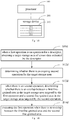
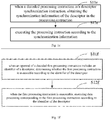
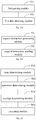
- FIG. 1a shows a flowchart of a data processing method according to an embodiment of the present disclosure. As shown in Fig. 1a , the data processing method includes:
- the corresponding content of the descriptor can be determined when the identifier of the descriptor is included in the operand of a decoded processing instruction, and the processing instruction can be executed according to the content of the descriptor, which can reduce the complexity of data access and improve the efficiency of data access.
- the data processing method can be applied to a processor, where the processor may include a general-purpose processor (such as a CPU (central processing unit), a GPU (graphics processor)) and a dedicated processor (such as an AI processor, a scientific computing processor, or a digital signal processor, etc. ) .
- a general-purpose processor such as a CPU (central processing unit), a GPU (graphics processor)
- a dedicated processor such as an AI processor, a scientific computing processor, or a digital signal processor, etc.
- the shape of a tensor includes dimensions of the tensor and a size of each dimension of each tensor and the like.
- the shape of the tensor can be described by the descriptor as (2, 4), in other words, the tensor is a 2-dimensional tensor represented by two parameters, and a size of a first dimension (column) of the tensor is 2, a size of a second dimension (row) of the tensor is 4. It should be noted that the present disclosure does not limit the manner in which the descriptor indicates the shape of the tensor.
- the shape of the tensor data cannot be determined according to a data address (or storage area) of the tensor, and then related information such as the relationship between a plurality of pieces of tensor data cannot be determined.
- the processor is inefficient in accessing tensor data.
- a descriptor may be introduced to indicate the shape of the tensor (N-dimensional tensor data), where the value of N can be determined according to a count of dimensions (orders) of the tensor data, and can also be set according to the usage of the tensor data. For example, when the value of N is 3, the tensor data is 3-dimensional tensor data, and the descriptor can be used to indicate the shape (such as offset, size, etc. ) of the 3-dimensional tensor data in three dimensions. It should be understood that those skilled in the art can set the value of N according to actual needs, which is not limited in the present disclosure.
- the descriptor may include an identifier and content, and the identifier of the descriptor may be used to distinguish the descriptor, for example, the identifier may be used to number the descriptor and the content of the descriptor may include at least one shape parameter (such as a size of each dimension of the tensor, etc.) representing the shape of the tensor data, and may also include at least one address parameter (such as a base address of a datum point) representing an address of the tensor data.
- shape parameter such as a size of each dimension of the tensor, etc.
- address parameter such as a base address of a datum point
- the shape of the tensor data can be represented, and related information such as the relationship among a plurality of pieces of tensor data can be determined, so as to improve the access efficiency of tensor data.
- the processing instruction when a processing instruction is received, the processing instruction can be decoded first.
- the data processing method further includes: decoding the received first processing instruction to obtain a decoded first processing instruction.
- the decoded first processing instruction includes an operation code and one or more operands, where the operation code is used to indicate a processing type corresponding to the first processing instruction.
- the decoded first processing instruction (microinstruction) can be obtained.
- the first processing instruction may include a data access instruction, an operation instruction, a descriptor management instruction, a synchronization instruction, and/or the like.
- the present disclosure does not limit the specific type of the first processing instruction and the specific manner of decoding.
- the decoded first processing instruction includes an operation code and one or more operands, where the operation code is used to indicate a processing type corresponding to the first processing instruction, and the operand is used to indicate data to be processed.
- the instruction can be represented as: Add; A; B, where Add is an operation code, A and B are operands, and the instruction is used to add A and B.
- the present disclosure does not limit a count of operands of the decoded instruction and a representation form of the instruction.
- a descriptor storage space corresponding to the descriptor can be determined according to the identifier of the descriptor; and the content (including information indicating the shape, the address, etc. , of tensor data) of the descriptor can be obtained from the descriptor storage space; and then the first processing instruction can be executed according to the content of the descriptor.
- the step S12a may include:
- the data address of the data corresponding to the operand of the identifier of the descriptor in the first processing instruction in the data storage space may be computed, and then a corresponding processing can be executed according to the data address.
- the processor may determine descriptor storage spaces corresponding to TR1 and TR2 according to the identifier TR1 and the identifier TR2 of the descriptor, respectively, and the processor may read the content (such as a shape parameter and an address parameter) of the descriptor storage spaces; according to the content of the descriptor, the data addresses of data A and B can be computed, for example, a data address 1 of A in a memory is ADDR64-ADDR127, and a data address 2 of B in the memory is ADDR1023-ADDR1087; and then, the processor can read data from the address 1 and the address 2 respectively, execute an addition (Add) operation, and obtain an operation result (A + B).
- the processor may determine descriptor storage spaces corresponding to TR1 and TR2 according to the identifier TR1 and the identifier TR2 of the descriptor, respectively, and the processor may read the content (such as a shape parameter and an address parameter) of the descriptor storage spaces; according to the content of the descriptor, the data addresses of
- the method according to the embodiment of the present disclosure may be implemented by a hardware structure of related art.
- the processor to which the method is applied may include a control unit and an execution unit.
- the control unit is used for control, for example, the control unit may read an instruction of a memory or an externally input instruction, decode the instruction, and send a micro-operation control signal to corresponding components.
- the execution unit is configured to execute a specific instruction, where the execution unit may be, for example, an ALU (arithmetic and logic unit), an MAU (memory access unit), an NFU (neural functional unit), etc.
- the present disclosure does not limit the specific hardware type of the execution unit.
- the instruction can be decoded by the control unit to obtain the decoded first processing instruction. If the operand of the decoded first processing instruction includes the identifier of the descriptor, the control unit may determine the descriptor storage space corresponding to the descriptor and obtain the content (shape, address, etc. ) of the descriptor from the descriptor storage space; and then, the control unit may send the content of the descriptor and the first processing instruction to the execution unit, so that the execution unit can execute the first processing instruction according to the content of the descriptor.
- the execution unit may compute the data address in the data storage space of the data corresponding to the operand of the identifier of the descriptor in the first processing instruction according to the content of the descriptor, so that the execution unit can execute a corresponding processing according to the data address.
- the control unit may determine the descriptor storage spaces corresponding to TR1 and TR2 respectively, and the control unit may read the content (such as a shape parameter and an address parameter) of the descriptor storage spaces and send the content to the execution unit.
- the execution unit may compute the data addresses of data A and B, for example, a data address 1 of A in a memory is ADDR64-ADDR127, and a data address 2 of B in the memory is ADDR1023-ADDR1087. And then, the execution unit can read data from address 1 and address 2 respectively, execute an addition (Add) operation, and obtain an operation result (A + B).
- a tensor control module can be provided in the control unit to implement operations associated with the descriptor, where the operations may include registration, modification, and release of the descriptor; reading and writing of the content of the descriptor, etc.
- the tensor control module may be, for example, a TIU (Tensor interface Unit).
- TIU Tinsor interface Unit
- the present disclosure does not limit the specific hardware type of the tensor control module. In this way, the operations associated with the descriptor can be implemented by special hardware, which further improves the access efficiency of tensor data.
- the descriptor storage space corresponding to the descriptor may be determined by the tensor control module; after the descriptor storage space is determined, the content (shape, address, etc. ) of the descriptor can be obtained from the descriptor storage space. And then, the control unit may send the content of the descriptor and the first processing instruction to the execution unit, so that the execution unit can execute the first processing instruction according to the content of the descriptor.
- the tensor control module can implement operations associated with the descriptor and the execution of instructions, where the operations may include registration, modification, and release of the descriptor, reading and writing of the content of the descriptor, computation of the data address, and execution of the data access instruction, etc.
- the descriptor storage space corresponding to the descriptor may be determined by the tensor control module; after the descriptor storage space is determined, the content of the descriptor can be obtained from the descriptor storage space; according to the content of the descriptor, the data address in the data storage space corresponding to the operand of the first processing instruction is determined by the tensor control module; and according to the data address, the data processing corresponding to the first processing instruction is executed by the tensor control module.
- the present disclosure does not limit the specific hardware structure adopted for implementing the method provided by the embodiments of the present disclosure.
- the content of the descriptor can be obtained from the descriptor storage space, and then the data address can be obtained. In this way, it is not necessary to input the address through an instruction during each data access, thus improving the data access efficiency of the processor.
- the identifier and content of the descriptor can be stored in the descriptor storage space, where the descriptor storage space can be a storage space in an internal memory (such as a register, an on-chip SRAM, or other medium cache, etc. ) of the control unit.
- the data storage space of the tensor data indicated by the descriptor may be a storage space in the internal memory (such as an on-chip cache) of the control unit or a storage space in an external memory (an off-chip memory) connected to the control unit.
- the data address in the data storage space may be an actual physical address or a virtual address.
- the present disclosure does not limit a position of the descriptor storage space and a position of the data storage space, and the type of the data address.
- the identifier and content of the descriptor and the tensor data indicated by the descriptor can be located in a same area, for example, a continuous area of an on-chip cache can be used to store the related content of the descriptor, where an address of the area is ADDR0-ADDR1023.
- An address ADDR0-ADDR31 can be used to store the identifier of the descriptor
- an address ADDR32-ADDR63 can be used to store the content of the descriptor
- an address ADDR64-ADDR1023 can be used to store the tensor data indicated by the descriptor.
- the address ADDR is not limited to 1 bit or 1 byte, and the ADDR is an address unit used to represent an address. Those skilled in the art can determine the storage area and the address thereof according to actual situations, which is not limited in the present disclosure.
- the identifier, content of the descriptor and the tensor data indicated by the descriptor can be stored separately in different areas of an internal memory.
- a register can be used as the descriptor storage space to store the identifier and content of the descriptor
- an on-chip cache can be used as the data storage space to store the tensor data indicated by the descriptor.
- a special register may be provided for the descriptor, where the data in the descriptor may be immediate data or can be obtained from the special register.
- a serial number of the register can be used to indicate the identifier of the descriptor. For example, if the serial number of the register is 0, the identifier of a descriptor stored in the register is 0.
- an area can be allocated in a caching space (such as creating a tensor cache unit for each tensor data in the cache) according to the size of the tensor data indicated by the descriptor for storing the tensor data. It should be understood that a preset caching space may be also used to store the tensor data, which is not limited in the present disclosure.
- the identifier and content of the descriptor can be stored in an internal memory, and the tensor data indicated by the descriptor can be stored in an external memory.
- on-chip storage of the identifier and content of the descriptor and off-chip storage of the tensor data indicated by the descriptor may be adopted.
- the data address of the data storage space corresponding to the descriptor may be a fixed address.
- a separate data storage space may be divided for the tensor data, and a start address of each tensor data in the data storage space corresponds to the identifier of the descriptor.
- the execution unit can determine the data address of the data corresponding to the operand according to the content of the descriptor, and then execute the first processing instruction.
- the descriptor when the data address of the data storage space corresponding to the identifier of the descriptor is a variable address, the descriptor may be also used to indicate the address of N-dimensional tensor data, where the content of the descriptor may further include at least one address parameter representing the address of the tensor data.
- the content of the descriptor may include an address parameter indicating the address of the tensor data, such as a start address of the tensor data; or the content of the descriptor may include a plurality of address parameters of the address of the tensor data, such as a start address + address offset of the tensor data, or address parameters of the tensor data in each dimension.
- the address parameters can be set according to actual needs, which is not limited in the present disclosure.
- the address parameter of the tensor data includes a base address of the datum point of the descriptor in the data storage space of the tensor data, where the base address may be different according to the change of the datum point.
- the present disclosure does not limit the selection of the datum point.
- the base address may include a start address of the data storage space.
- the base address of the descriptor is the start address of the data storage space.
- the base address of the descriptor is the physical address of the data block in the data storage space.
- the shape parameter of the tensor data includes at least one of the followings: a size of the data storage space of the tensor data in at least one of the N dimensions, a size of the storage area in at least one of the N dimensions, an offset of the storage area in at least one of the N dimensions, a position of at least two vertices at diagonal positions in the N dimensions relative to the datum point, and a mapping relationship between a data description position of the tensor data indicated by the descriptor and the data address of the tensor data indicated by the descriptor.
- the data description position is a mapping position of a point or an area in the tensor data indicated by the descriptor, for example, if the tensor data is 3-dimensional data, the descriptor can use a coordinate (x, y, z) to represent the shape of the tensor data, and the data description position of the tensor data can be represented by the coordinate (x, y , z), and the data description position of the tensor data may be a position of a point or an area where the tensor data is mapped in a 3-dimensional space.
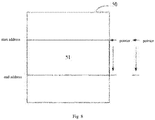
- Fig. 2 shows a schematic diagram of a data storage space according to an embodiment of the present disclosure.
- a data storage space 21 stores a 2-dimensional data in a row-first manner, where the data storage space 21 can be represented by (x, y) (where the X axis extends horizontally to the right, and the Y axis extends vertically down), a size in the X axis direction (a size of each row) is ori_x (which is not shown in the figure), a size in the Y axis direction (a total count of rows) is ori_y (which is not shown in the figure), and a start address PA_start (a base address) of the data storage space 21 is a physical address of a first data block 22.
- a data block 23 is part of the data in the data storage space 21, where an offset 25 of the data block 23 in the X axis direction is represented as offset x, an offset 24 of the data block 23 in the Y axis direction is represented as offset_y, the size in the X axis direction is represented as size_x, and the size in the Y axis direction is represented as size_y.
- the datum point of the descriptor when the descriptor is used to define the data block 23, the datum point of the descriptor may be a first data block of the data storage space 21, the base address of the descriptor is the start address PA_start of the data storage space 21, and then the content of the descriptor of the data block 23 may be determined according to the size ori x of the data storage space 21 in the X axis, the size ori_y of the data storage space 21 in the Y axis, the offset offset_y of the data block 23 in the Y axis direction, the offset offset_x of the data block 23 in the X axis direction, the size size x of the data block 23 in the X axis direction, and the size size_y of the data block 23 in the Y axis direction.
- the following formula (1) may be used to represent the content of the descriptor: ⁇ X direction : ori _ x , offset _ x , size _ x Y direction : ori _ y , offset _ y , size _ y PA _ start
- the content of the descriptor of the tensor data may be determined according to the base address of the datum point of the descriptor in the data storage space and the position of at least two vertices at diagonal positions in N dimensions relative to the datum point.
- the content of the descriptor of the data block 23 in Fig. 2 can be determined according to the base address PA_base of the datum point of the descriptor in the data storage space and the position of two vertices at diagonal positions relative to the datum point.
- the datum point of the descriptor and the base address PA_base in the data storage space are determined, for example, a piece of data (for example, a piece of data at position (2, 2)) in the data storage space 21 is selected as a datum point, and a physical address of the selected data in the data storage space is used as the base address PA base.
- the position of at least two vertices at diagonal positions of the data block 23 relative to the datum point is determined, for example, the position of vertices at diagonal positions from the top left to the bottom right relative to the datum point is used, where the relative position of the top left vertex is (x_min, y_min), and the relative position of the bottom right vertex is (x_max, y_max); and then the content of the descriptor of the data block 23 can be determined according to the base address PA_base, the relative position (x_min, y_min) of the top left vertex, and the relative position (x_max, y_max) of the bottom right vertex.
- the following formula (2) can be used to represent the content of the descriptor: ⁇ X direction : x _ min , x _ max Y direction : y _ min , y _ max PA _ base
- top left vertex and the bottom right vertex are used to determine the content of the descriptor in the above-mentioned example, those skilled in the art may set at least two specific vertices according to actual needs, which is not limited in the present disclosure.
- the content of the descriptor of the tensor data can be determined according to the base address of the datum point of the descriptor in the data storage space and the mapping relationship between the data description position of the tensor data indicated by the descriptor and the data address of the tensor data indicated by the descriptor, where the mapping relationship between the data description position and the data address can be set according to actual needs.
- the function f x, y, z
- mapping relationship between the data description position and the data address can be set according to actual situations, which is not limited in the present disclosure.
- the data description position is set to (x_q, y_q), and then the data address PA2 (x,y) of the data in the data storage space can be determined using the following formula (4):
- PA 2 x y PA _ start + offset _ y + y q ⁇ 1 ⁇ ori _ x + offset _ x + x q
- the execution unit may compute the data address of the tensor data indicated by the descriptor in the data storage space according to the content of the descriptor, and then execute processing corresponding to the processing instruction according to the address.
- the operations of the registration, modification and release of the descriptor can be achieved through management instructions of the descriptor, and corresponding operation codes are set for the management instructions.
- a descriptor can be registered (created) through a descriptor registration instruction (TRCreat); various parameters (shape, address, etc. ) of the descriptor can be modified through the descriptor modification instruction; and the descriptor can be released (deleted) through the descriptor release instruction (TRRelease).
- TRCreat descriptor registration instruction
- various parameters (shape, address, etc. ) of the descriptor can be modified through the descriptor modification instruction
- the descriptor can be released (deleted) through the descriptor release instruction (TRRelease).
- TRRelease descriptor release instruction
- the data processing method further includes:
- the descriptor registration instruction may be used to register a descriptor, and the instruction may include a registration parameter of the descriptor.
- the registration parameter may include at least one of followings: the identifier (ID) of the descriptor, the shape of the tensor, and the content of the tensor data indicated by the descriptor.
- the registration parameter may include an identifier TR0 and the shape of the tensor (a count of dimensions, a size of each dimension, an offset, a start data address, etc. ) .
- the present disclosure does not limit the specific content of the registration parameter.
- the corresponding descriptor can be created according to the registration parameter in the first processing instruction.
- the corresponding descriptor can be created by a control unit or by a tensor control module, which is not limited in the present disclosure.
- the first storage area of the content of the descriptor in the descriptor storage space and the second storage area of the content of the tensor data indicated by the descriptor in the data storage space may be determined first.
- the first storage area and/or the second storage area may be directly determined.
- the content of the descriptor and the content of the tensor data are stored in a same storage space, and the storage address of the content of the descriptor corresponding to the identifier TR0 of the descriptor is ADDR32-ADDR63, and the storage address of the content of the tensor data is ADDR64-ADDR1023, then the two addresses can be directly determined as the first storage area and the second storage area.
- the first storage area may be allocated in the descriptor storage space for the content of the descriptor, and the second storage area may be allocated in the data storage space for the content of the tensor data.
- the storage area may be allocated through the control unit or the tensor control module, which is not limited in the present disclosure.
- the correspondence between the shape of the tensor and the address can be established to determine the content of the descriptor, so that the corresponding data address can be determined according to the content of the descriptor during data processing.
- the content of the descriptor can be stored in the first storage area to complete the registration process of the descriptor.
- the registration parameter may include the start address PA_start (base address) of the data storage space 21, an offset 25 (offset x) in the X-axis direction, and an offset 24 (offset_y) in the Y-axis direction, the size in the X-axis direction (size x), and the size in the Y-axis direction (as size_y).
- the content of the descriptor can be represented as formula (1) and stored in the first storage area, thereby completing the registration process of the descriptor.
- the descriptor can be automatically created according to the descriptor registration instruction, and the correspondence between the tensor indicated by the descriptor and the data address can be realized, so that the data address can be obtained through the content of the descriptor during data processing, and the data access efficiency of the processor can be improved.
- the data processing method further includes:
- the descriptor release instruction may be used to release (delete) the descriptor to free up the space occupied by the descriptor.
- the instruction may include at least the identifier of the descriptor.
- the corresponding descriptor when the instruction is determined to be the descriptor release instruction according to the operation code of the decoded first processing instruction, the corresponding descriptor can be released according to the identifier of the descriptor in the first processing instruction.
- the corresponding descriptor can be released through the control unit or the tensor control module, which is not limited in the present disclosure.
- the storage area of the descriptor in the descriptor storage space and/or the storage area of the content of the tensor data indicated by the descriptor in the data storage space can be freed, so that the occupation of each storage area by the descriptor is released.
- the space occupied by the descriptor can be released after the descriptor is used the limited storage resources can be reused, and the efficiency of resource utilization is improved.
- the data processing method further includes:
- the descriptor modification instruction can be used to modify various parameters of the descriptor, such as the identifier, the shape of the tensor, and the like.
- the descriptor modification instruction may include a modification parameter including at least one of followings: the identifier of the descriptor, the shape of the tensor to be modified, and the content of the tensor data indicated by the descriptor.
- the present disclosure does not limit the specific content of the modification parameter.
- the content to be updated of the descriptor can be determined according to the modification parameter in the first processing instruction.
- the dimension of a tensor may be changed from 3 dimensions to 2 dimensions, and the size of a tensor in one or more dimension directions may be also changed.
- the content of the descriptor in the descriptor storage space and/or the content of the tensor data in the data storage space may be updated in order to modify the tensor data and enable the updated content of the descriptor to indicate the shape of the modified tensor data.
- the present disclosure does not limit the scope of the content to be updated and the specific updating method.
- the descriptor is directly modified to maintain the correspondence between the descriptor and the tensor data, which improves the efficiency of resource utilization.
- the data processing method further includes:
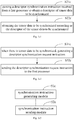
- the dependency relationship between instructions can be determined according to the descriptor. If the operand of the decoded first processing instruction includes the identifier of the descriptor, whether there is an instruction among pre-instructions of the first processing instruction having a dependency relationship with the first processing instruction may be determined.
- the pre-instruction may be regarded as a second processing instruction having a dependency relationship with the first processing instruction.
- the dependency relationship corresponding to each descriptor can be determined respectively, in other words, a pre-instruction corresponding to the identifier of at least one of the plurality of descriptors in the operand is taken as the second processing instruction having a dependency relationship with the first processing instruction.
- a dependency relationship determining module may be provided in the control unit to determine the dependency relationship between processing instructions, which is not limited in the present disclosure.
- the first processing instruction if there is a second processing instruction that has not been executed completely, the first processing instruction has to be executed after the second processing instruction is executed completely.
- the first processing instruction is an operation instruction for the descriptor TR0 and the second processing instruction is a writing instruction for the descriptor TR0
- the second processing instruction has a dependency relationship with the first processing instruction.
- the first processing instruction cannot be executed.
- the second processing instruction includes a synchronization instruction (sync) for the first processing instruction
- the second processing instruction has a dependency relationship with the first processing instruction, and the first processing has to be executed after the second processing instruction is executed completely.
- the first processing instruction can be blocked, in other words, the execution of the first processing instruction and other instructions after the first processing instruction can be suspended until the second processing instruction is executed completely, and then the first processing instruction and other instructions after the first processing instruction can be executed.
- the first processing instruction will be cached, in other words, the first processing instruction is stored in a preset caching space without affecting the execution of other instructions. After the execution of the second processing instruction is completed, the first processing instruction in the caching space is executed.
- the present disclosure does not limit the processing method of the first processing instruction when there is a second processing instruction that has not been executed completely.
- a dependency relationship between instructions generated by the instruction type and a dependency relationship generated by the synchronization instruction are determined, and the first processing instruction is blocked or cached when the pre-instructions with the dependency relationship has not been executed completely, thereby ensuring the execution order of the instructions, and the correctness of data processing.
- the data processing method further includes:
- a correspondence table for the state of the descriptor (for example, a correspondence table for the state of the descriptor may be stored in a tensor control module) may be set to display the current state of the descriptor, where the state of the descriptor includes the operable state or the inoperable state.
- the current state of the descriptor may be set to the inoperable state. Under the inoperable state, the first processing instruction cannot be executed, but may be blocked or cached. Conversely, in the case where there is no pre-instruction that is currently processing the descriptor, the current state of the descriptor may be set to the operable state. Under the operable state, the first processing instruction can be executed.
- the usage of TR may be stored in the correspondence table for the state of the descriptor to determine whether the TR is occupied or released, so as to realize the management of limited register resources.
- the dependency relationship between instructions can be determined according to the state of the descriptor, thereby ensuring the execution order of the instructions, and the correctness of data processing.
- the first processing instruction includes a data access instruction
- the operand includes source data and target data
- the data processing method further includes:
- the operand of the data access instruction includes source data and target data
- the operand of the data access instruction is used to read data from the data address of the source data and write the data to the data address of the target data.
- the first processing instruction is a data access instruction
- the tensor data can be accessed through the descriptor.
- the descriptor storage space of the descriptor may be determined.
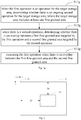
- a first descriptor storage space of the first descriptor and a second descriptor storage space of the second descriptor may be determined, respectively; then the content of the first descriptor and the content of the second descriptor are read from the first descriptor storage space and the second descriptor storage space, respectively; according to the content of the first descriptor and the content of the second descriptor, the first data address of the source data and the second data address of the target data can be computed, respectively; finally, data is read from the first data address and written to the second data address to complete the entire access process.
- the source data may be off-chip data to be read, the identifier of the first descriptor of the source data is 1; the target data is a piece of storage space on the chip, and the identifier of the second descriptor of the target data is 2.
- the content D1 of the first descriptor and the content D2 of the second descriptor can be respectively obtained from the descriptor storage space according to the identifier 1 of the first descriptor of the source data and the identifier 2 of the second descriptor of the target data.
- the content D1 of the first descriptor and the content D2 of the second descriptor can be represented as follows: D 1 : ⁇ X direction : ori _ x 1 , offset _ x 1 , size _ x 1 Y direction : ori _ y 1 , offset _ y 1 , size _ y 1 PA _ start 1 D 2 : ⁇ X direction : ori _ x 2 , offset _ x 2 , size _ x 2 Y direction : ori _ y 2 , offset _ y 2 , size _ y 2 PA _ start 2
- the first data address and the second data address can be determined, respectively, and data is read from the first data address and written to the second data address (via an IO path), so that the process of loading the tensor data indicated by D1 into the storage space indicated by D2 is completed.
- the first descriptor storage space of the first descriptor can be determined; then the content of the first descriptor is read from the first descriptor storage space.
- the first data address of the source data can be determined; and according to the second data address of the target data in the operand of the instruction, data can be read from the first data address and written to the second data address, then the entire access process is finished.
- the second descriptor storage space of the second descriptor can be determined; then the content of the second descriptor is read from the second descriptor storage space.
- the second data address of the target data can be determined; and according to the first data address of the source data in the operand of the instruction, data can be read from the first data address and written to the second data address, then the entire access process is finished.
- the descriptor can be used to complete the data access. In this way, there is no need to transmit in the data address via instructions during each data access, thereby improving data access efficiency.
- the first processing instruction includes an operation instruction
- the step S12a includes:
- the operation of tensor data can be implemented via the descriptor.
- the operand of the operation instruction includes the identifier of the descriptor
- the descriptor storage space of the descriptor can be determined, and then the content of the descriptor is read from the descriptor storage space; according to the content of the descriptor, the data address corresponding to the operand can be determined, and then data is read from the data address to execute operations, finally the entire operation process is completed.
- the descriptor can be used to read data during operations, and there is no need to transmit in the data address via instructions, thereby improving data operation efficiency.
- the descriptor capable of indicating the shape of the tensor is introduced, so that the data address can be determined via the descriptor during the execution of the data processing instruction, and the instruction generation method is simplified from the hardware side, thereby reducing the complexity of data access and improving the data access efficiency of the processor.
- Fig. 3a shows a block diagram of a data processing apparatus according to an embodiment of the present disclosure.
- the present disclosure further provides a data processing apparatus including: a content obtaining module 31a configured to obtain content of a descriptor according to an identifier of the descriptor when an operand of a decoded first processing instruction includes the identifier of the descriptor, where the descriptor is configured to indicate a shape of a tensor; and an instruction executing module 32a configured to execute the first processing instruction according to the content of the descriptor.
- the instruction executing module includes: an address determining sub-module configured to determine a data address of the data corresponding to an operand of the first processing instruction in the data storage space according to the content of the descriptor; and a data processing sub-module configured to execute data processing corresponding to the first processing instruction according to the data address.
- the data processing apparatus further includes: a first parameter obtaining module configured to obtain a registration parameter of the descriptor in the first processing instruction when the first processing instruction is a descriptor registration instruction, where the registration parameter includes at least one of followings: the identifier of the descriptor, the shape of the tensor, and the content of the tensor data indicated by the descriptor; an area determining module configured to determine a first storage area of the content of the descriptor in the descriptor storage space according to the registration parameter of the descriptor, and to determine a second storage area of the content of the tensor data indicated by the descriptor in the data storage space; a content determining module configured to determine the content of the descriptor according to the registration parameter of the descriptor and the second storage area to establish a correspondence between the descriptor and the second storage area; and a content storage module configured to store the content of the descriptor in the first storage area.
- a first parameter obtaining module configured to obtain a registration parameter of the descriptor in the
- the data processing apparatus further includes: an identifier obtaining module configured to obtain an identifier of the descriptor in the first processing instruction when the first processing instruction is a descriptor release instruction; and a space release module configured to respectively release the storage area of the descriptor in the descriptor storage space and the storage area of the content of the tensor data indicated by the descriptor in the data storage space according to the identifier of the descriptor .
- the data processing apparatus further includes: a second parameter obtaining module configured to obtain a modification parameter of the descriptor in the first processing instruction when the first processing instruction is a descriptor modification instruction, where the modification parameter includes at least one of followings: the identifier of the descriptor, the shape of the tensor to be modified, and the content of the tensor data indicated by the descriptor; a content to be updated determining module configured to determine the content of the descriptor to be updated according to the modification parameter of the descriptor; and a content updating module configured to update the content of the descriptor in the descriptor storage space and/or the content of tensor data in the data storage space according to the content to be updated.
- a second parameter obtaining module configured to obtain a modification parameter of the descriptor in the first processing instruction when the first processing instruction is a descriptor modification instruction, where the modification parameter includes at least one of followings: the identifier of the descriptor, the shape of the tensor to be modified, and the content of
- the data processing apparatus further includes: an instruction determining module configured to determine whether there is a second processing instruction that has not been executed completely according to the identifier of the descriptor, where the second processing instruction includes processing instructions in the instruction queue prior to the first processing instruction and having the identifier of the descriptor in the operand; and a first instruction caching module configured to block or cache the first processing instruction when there is a second processing instruction that has not been executed completely.
- the data processing apparatus further includes: a state determining module configured to determine the current state of the descriptor according to the identifier of the descriptor, where the state of the descriptor includes the operable state or the inoperable state; and a second instruction caching module configured to block or cache the first processing instruction when the descriptor is in the inoperable state.
- the first processing instruction includes a data access instruction
- the operand includes source data and target data.
- the content obtaining module includes a content obtaining sub-module configured to obtain the content of the descriptor from the descriptor storage space when at least one of the source data and the target data includes the identifier of the descriptor.
- the instruction executing module includes a first address determining sub-module configured to determine the first data address of the source data and/or the second data address of the target data, respectively, according to the content of the descriptor; and an access sub-module configured to read data from the first data address and write the data to the second data address.
- the first processing instruction includes an operation instruction.
- the instruction executing module includes: a second address determining sub-module configured to determine the data address of the data corresponding to the operand of the first processing instruction in the data storage space according to the content of the descriptor; and an operation sub-module configured to execute an operation corresponding to the first processing instruction according to the data address.
- the descriptor is used to indicate the shape of N-dimensional tensor data, where N is an integer greater than or equal to 0.
- the content of the descriptor includes at least one shape parameter indicating the shape of the tensor data.
- the descriptor is also used to indicate the address of N-dimensional tensor data.
- the content of the descriptor further includes at least one address parameter indicating the address of the tensor data.
- the address parameter of the tensor data includes the base address of the datum point of the descriptor in the data storage space of the tensor data.
- the shape parameter of the tensor data includes at least one of the followings: a size of the data storage space in at least one of N dimensions, a size of the storage area of the tensor data in at least one of N dimensions, an offset of the storage area in at least one of N dimensions, a position of at least two vertices at diagonal positions in N dimensions relative to the datum point, and a mapping relationship between a data description position of the tensor data indicated by the descriptor and the data address of the tensor data indicated by the descriptor.
- the data processing apparatus further includes a decoding module configured to decode the received first processing instruction to obtain a decoded first processing instruction, where the decoded first processing instruction includes an operation code and one or more operands, and the operation code is used to indicate a processing type corresponding to the first processing instruction.
- a decoding module configured to decode the received first processing instruction to obtain a decoded first processing instruction, where the decoded first processing instruction includes an operation code and one or more operands, and the operation code is used to indicate a processing type corresponding to the first processing instruction.
- the present disclosure further provides a neural network chip including the data processing apparatus.
- the present disclosure provides a board card including a storage device, an interface apparatus, a control device, and the above-mentioned neural network chip.
- the neural network chip is connected to the storage device, the control device, and the interface apparatus, respectively; the storage device is configured to store data; the interface apparatus is configured to implement data transmission between the neural network chip and an external equipment; and the control device is configured to monitor the state of the neural network chip.
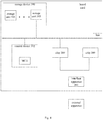
- Fig. 4 shows a block diagram of a board card according to an embodiment of the present disclosure.
- the board card may further include other supporting components, including but not limited to: a storage device 390, an interface apparatus 391, and a control device 392.
- the storage device 390 is connected to the neural network chip through a bus, and is configured to store data.
- the storage device may include a plurality of groups of storage units 393, where each group of the storage units is connected with the neural network chip by the bus. It can be understood that each group of the storage units may be DDR SDRAM (Double Data Rate SDRAM (synchronized dynamic random access memory)).
- the storage device may include 4 groups of the storage unit, where each group of the storage units may include a plurality of DDR4 particles (chips).
- the inner part of the neural network chip may include four 72-bit DDR4 controllers, in which 64 bits of the four 72-bit DDR4 controllers are used for data transmission, and 8 bits of the four 72-bit DDR4 controllers are used for ECC check. It can be understood that when DDR4-3200 particles are used in each group of the storage units, the theoretical bandwidth of data transmission can reach 25600MB/s.
- each group of the storage units may include a plurality of DDR SDRAMs arranged in parallel.
- DDR can transmit data twice in one clock cycle.
- a controller for controlling DDR is provided in the chip, where the controller is used for controlling the data transmission and data storage of each storage unit.
- the interface apparatus is electrically connected to the neural network chip, where the interface apparatus is configured to implement data transmission between the neural network chip and an external apparatus (such as a server or a computer).
- the interface apparatus may be a standard PCIE interface, and data to be processed is transmitted from the server to the chip through the standard PCIE interface to realize data transmission.
- the interface apparatus may further include other interfaces. The present disclosure does not limit the specific types of the interfaces, as long as the interface units can implement data transmission.
- the computation result of the neural network chip is still transmitted back to an external apparatus (such as a server) by the interface apparatus.
- the control device is electrically connected to the neural network chip, where the control device is configured to monitor the state of the neural network chip.
- the neural network chip may be electrically connected to the control device through an SPI interface, where the control device may include an MCU (Micro Controller Unit).
- the neural network chip may include a plurality of processing chips, a plurality of processing cores, or a plurality of processing circuits, and is capable of driving a plurality of loads. Therefore, the neural network chip can be in different working state such as multi-load state and light-load state.
- the regulation of the working states of a plurality of processing chips, a plurality of processing cores and or a plurality of processing circuits in the neural network chip can be implemented by the control device.
- the present disclosure provides an electronic device including the neural network chip.
- the electronic device includes a data processing apparatus, a robot, a computer, a printer, a scanner, a tablet computer, an intelligent terminal, a mobile phone, an automobile data recorder, a navigator, a sensor, a webcam, a cloud server, a camera, a video camera, a projector, a watch, an earphone, a mobile storage, a wearable apparatus, a transportation means, a household electrical appliance, and/or a medical apparatus.
- the transportation means may include an airplane, a ship, and/or a vehicle.
- the household electrical appliance may include a television, an air conditioner, a microwave oven, a refrigerator, an electric rice cooker, a humidifier, a washing machine, an electric lamp, a gas cooker, and a range hood.
- the medical apparatus may include a nuclear magnetic resonance spectrometer, a B-ultrasonic scanner, and/or an electrocardiograph.
- FIG. 1b shows a block diagram of a data processing apparatus according to an embodiment of the present disclosure.
- the data processing apparatus includes a control unit 11b and an execution unit 12b.
- the control unit 11b is configured to:
- control unit obtains the content of the descriptor through the identifier of the descriptor in the operand of the first processing instruction, and sends the content of the descriptor to the execution unit to execute the first processing instruction, so that the operand can be obtained through the descriptor when the processing instruction is executed, which can reduce the complexity of data access, and improve the data access efficiency of the processor.
- the data processing apparatus can be applied to a processor.
- the processor may include a general-purpose processor (for example, a central processing unit (CPU), a graphics processing unit (GPU)) and a dedicated processor (for example, an artificial intelligence processor, a scientific computing processor, or a digital signal processor).
- a general-purpose processor for example, a central processing unit (CPU), a graphics processing unit (GPU)
- a dedicated processor for example, an artificial intelligence processor, a scientific computing processor, or a digital signal processor.
- the present disclosure does not limit the type of processor.
- control unit 11b may be configured to decode the received first processing instruction to obtain a decoded first processing instruction, where the decoded first processing instruction includes an operation code and one or more operands, and the operation code is used to indicate the processing type corresponding to the first processing instruction.
- the first processing instruction may include a data access instruction, an operation instruction, a descriptor management instruction, a synchronization instruction, etc. The present disclosure does not limit the specific type of the first processing instruction.
- the control unit 11b after the control unit 11b decodes the received first processing instruction, when the operand of the instruction includes the identifier of the descriptor, the control unit 11b obtains the content of the descriptor from the descriptor storage space according to the identifier of the descriptor; and then the control unit 11b sends the content and the first processing instruction to the execution unit 12b.
- the execution unit 12b After receiving the content of the descriptor and the first processing instruction, the execution unit 12b first determines the data address of the data corresponding to the operand of the first processing instruction in the data storage space according to the content of the descriptor, and then the execution unit 12b executes the data processing corresponding to the first processing instruction according to the data address.
- the data address of the data storage space may be an actual physical address or a virtual address, and the present disclosure does not limit the types of the data addresses.
- the descriptor storage space may be a storage space in an internal memory of the control unit 11b
- the data storage space may be a storage space in an internal memory of the control unit 11b or may be a storage space in an external memory connected to the control unit 11b, which is not limited in the present disclosure.
- a tensor may have a variety of forms of data composition, and a tensor can have different dimensions, for example, a scalar can be viewed as a 0-dimensional tensor, a vector can be viewed as a 1-dimensional tensor, and a matrix can be viewed as a tensor in 2 dimensions or more dimensions.
- the shape of a tensor includes information such as the dimensions of the tensor and the size of the tensor in each dimension. For example, for a tensor: 1 2 3 4 11 22 33 44 ,
- the shape of the tensor can be described by the descriptor as (2, 4), in other words, the tensor is a two-dimensional tensor indicated by the two parameters, and the size of the tensor in a first dimension (column) is 2, and the size of the tensor in a second dimension (row) is 4. It should be noted that the present disclosure does not limit the manner in which the descriptor indicates the shape of the tensor.
- the value of N can be determined according to the dimensions (orders) of the tensor data, or may be set according to the usage of the tensor data. For example, when the value of N is 3, the tensor data is three-dimensional tensor data, and the descriptor can be used to indicate the shape (such as offset, size, etc. ) of the three-dimensional tensor data in three dimensions. It should be understood that those skilled in the art can set the value of N according to actual needs, which is not limited in the present disclosure.
- the descriptor may be composed of the identifier of the descriptor and the content of the descriptor.
- the identifier of the descriptor is used to identify the descriptor, for example, the identifier of the descriptor is the serial number of the descriptor.
- the content of the descriptor includes at least one shape parameter indicating the shape of the tensor data, for example, tensor data is 3-dimensional data, the shape parameters of two dimensions among the three dimensions of the tensor data are fixed, and the content of the descriptor may include a shape parameter indicating the tensor data in the remaining dimension.
- the identifier and content of the descriptor can be stored in the descriptor storage space (an internal memory), such as a register, an on-chip SRAM or other media caches, etc.
- the tensor data indicated by the descriptor can be stored in the data storage space (an internal memory or an external memory), such as an on-chip cache or an off-chip memory.
- the present disclosure does not limit the specific position of the descriptor storage space and the position of the data storage space.
- the identifier and content of the descriptor and the tensor data indicated by the descriptor can be located in a same area in the internal memory, for example, a continuous area of an on-chip cache can be used to store the related content of the descriptor, where an address of the area is ADDR0-ADDR1023.
- An address ADDR0-ADDR63 can be used as a descriptor storage space to store the identifier and content of the descriptor
- an address ADDR64-ADDR1023 can be used as a data storage space to store the tensor data indicated by the descriptor.
- an address ADDR0-ADDR31 can be used to store the identifier of the descriptor
- an address ADDR32-ADDR63 can be used to store the content of the descriptor.
- the address ADDR is not limited to 1 bit or 1 byte
- the ADDR is an address unit used to represent an address.
- the identifier and content of the descriptor, and the tensor data indicated by the descriptor can be stored in different areas of the internal memory.
- a register may be used as a descriptor storage space to store the identifier and content of the descriptor
- an on-chip cache may be used as a data storage space to store the tensor data indicated by the descriptor.
- the serial number of the register can be taken as the identifier of the descriptor. For example, when the serial number of the register is 0, the identifier of the descriptor stored in the register is set to 0. When the descriptor in the register is valid, an area can be allocated in the caching space for storing the tensor data according to the size of the tensor data indicated by the descriptor.
- the identifier and content of the descriptor can be stored in the internal memory, and the tensor data indicated by the descriptor can be stored in the external memory.
- on-chip storage of the identifier and content of the descriptor and off-chip storage of the tensor data indicated by the descriptor may be adopted.
- the data address of the data storage space corresponding to the identifier of the descriptor may be a fixed address.
- a separate data storage space may be provided for the tensor data, and a start address of each tensor data in the data storage space corresponds to the identifier of the descriptor.
- the execution unit can determine the data address of the data corresponding to the operand in the data storage space according to the content of the descriptor, and then execute the first processing instruction.
- the descriptor when the data address of the data storage space corresponding to the identifier of the descriptor is a variable address, the descriptor may be also used to indicate the address of N-dimensional tensor data, where the content of the descriptor may further include at least one address parameter representing the address of the tensor data.
- the content of the descriptor may include an address parameter indicating the address of the tensor data, such as a start physical address of the tensor data; or the content of the descriptor may include a plurality of address parameters of the address of the tensor data, such as a start address + an address offset of the tensor data, or address parameters of the tensor data in each dimension.
- an address parameter indicating the address of the tensor data
- the content of the descriptor may include a plurality of address parameters of the address of the tensor data, such as a start address + an address offset of the tensor data, or address parameters of the tensor data in each dimension.
- the address parameter of the tensor data includes a base address of the datum point of the descriptor in the data storage space of the tensor data, where the base address may be different according to the change of the datum point.
- the present disclosure does not limit the selection of the datum point.
- the base address may include the start address of the data storage space.
- the base address of the descriptor is the start address of the data storage space.
- the base address of the descriptor is the address of the data block in the data storage space.
- the shape parameter of the tensor data includes at least one of the followings: a size of the data storage space in at least one of N dimensions, a size of the storage area in at least one of N dimensions, an offset of the storage area in at least one of N dimensions, a position of at least two vertices at diagonal positions in N dimensions relative to the datum point, and a mapping relationship between a data description position of the tensor data indicated by the descriptor and the data address of the tensor data indicated by the descriptor.
- the data description position is a mapping position of a point or an area in the tensor data indicated by the descriptor, for example, if the tensor data is a 3-dimensional data, the descriptor can use a coordinate (x, y, z) to represent the shape of the tensor data, and the data description position of the tensor data can be represented by a coordinate (x, y, z), and the data description position of the tensor data may be a position of a point or an area where the tensor data is mapped in a 3-dimensional space. It should be understood that those skilled in the art may select a shape parameter representing tensor data according to actual conditions, which is not limited in the present disclosure.
- the association between data can be established, thereby reducing the complexity of data access and improving the processing efficiency of instructions.
- the content of the descriptor of the tensor data can be determined according to the base address of the datum point of the descriptor in the data storage space of the tensor data, the size of the data storage space in at least one direction of the N dimensions, and the size of the storage area in at least one direction of the N dimensions and/or the offset of the storage area in at least one direction of the N dimensions.
- Fig. 2 shows a schematic diagram of a data storage space according to an embodiment of the present disclosure.
- a data storage space 21 stores a 2-dimensional data in a row-first manner, where the data storage space 21 can be represented by (x, y) (where the x axis extends horizontally to the right, and the y axis extends vertically down), a size in the X axis direction (a size of each row) is ori x (which is not shown in the figure), a size in the Y axis direction (total count of rows) is ori_y (which is not shown in the figure), and a start address PA_start (a base address) of the data storage space 21 is a physical address of a first data block 22.
- a data block 23 is part of the data in the data storage space 21, where an offset 25 of the data block 23 in the X axis direction is represented as offset x, an offset 24 of the data block 23 in the Y axis direction is represented as offset_y, the size in the X axis direction is represented as size_x, and the size in the Y axis direction is represented as size_y.
- the datum point of the descriptor may be a first data block of the data storage space 21, the base address of the descriptor is the start address PA_start of the data storage space 21, and then the content of the descriptor of the data block 23 can be determined according to the size ori x of the data storage space 21 in the X axis, the size ori_y in the Y axis, the offset offset_y of the data block 23 in the Y axis direction, the offset offset x of the data block 23 in the X axis direction, the size size x in the X axis direction, and the size size_y in the Y axis direction.
- the following formula (1) can be used to represent the content of the descriptor: ⁇ X direction : ori _ x , offset _ x , size _ x Y direction : ori _ y , offset _ y , size _ y PA _ start
- the content of the descriptor of the tensor data may be determined according to the base address of the datum point of the descriptor in the data storage space and the position of at least two vertices at diagonal positions in N dimensions relative to the datum point.
- the content of the descriptor of the data block 23 in Fig. 2 can be determined according to the base address PA_base of the datum point of the descriptor in the data storage space and the position of two vertices at diagonal positions relative to the datum point.
- the datum point of the descriptor and the base address PA_base in the data storage space are determined, for example, a piece of data (for example, a piece of data at position (2, 2)) in the data storage space 21 is selected as a datum point, and a physical address of the selected data in the data storage space is used as the base address PA_base.
- the position of at least two vertices at diagonal positions of the data block 23 relative to the datum point is determined, for example, the position of vertices at diagonal positions from the top left to the bottom right relative to the datum point is used, where the relative position of the top left vertex is (x_min, y_min), and the relative position of the bottom right vertex is (x_max, y_max); and then the content of the descriptor of the data block 23 can be determined according to the base address PA_base, the relative position (x_min, y_min) of the top left vertex, and the relative position (x_max, y_max) of the bottom right vertex.
- the following formula (2) can be used to represent the content of the descriptor: ⁇ X direction : x _ min , x _ max Y direction : y _ min , y _ max PA _ base
- top left vertex and the bottom right vertex at diagonal positions are used to determine the content of the descriptor in the above-mentioned example, those skilled in the art may set at least two specific vertices at diagonal positions according to actual needs, which is not limited in the present disclosure.
- the content of the descriptor of the tensor data can be determined according to the base address of the datum point of the descriptor in the data storage space and the mapping relationship between the data description position of the tensor data indicated by the descriptor and the data address of the tensor data indicated by the descriptor, where the mapping relationship between the data description position and the data address can be set according to actual needs.
- the function f x, y, z
- mapping relationship between the data description position and the data address can be set according to actual situations, which is not limited in the present disclosure.
- the execution unit 12 when the execution unit 12 receives the content of the descriptor and the first processing instruction sent by the control unit 11, the data address of the data corresponding to the operand of the first processing instruction in the data storage space can be determined according to the content of the descriptor.
- the computation of the data address is completed automatically by the hardware, and when the content of the descriptor is represented in a different way, the computation method of the data address is also different.
- the present disclosure does not limit the specific computation method of the data address.
- the content of the descriptor in the operand is represented by formula (1)
- the offset of the tensor data indicated by the descriptor in the data storage space is offset_x and offset_y
- the size is size_x ⁇ size_y
- the start data address PA1 (x,y) of the tensor data indicated by the descriptor in the data storage space can be determined using the following formula (4):
- PA 1 x y PA _ start + offset _ y ⁇ 1 ⁇ ori _ x + offset _ x
- the storage area of the tensor data indicated by the descriptor in the data storage space can be determined.
- the execution unit 12 receives the content of the descriptor and the first processing instruction sent by the control unit 11, and when the operand further includes the data description position for the descriptor, the data address of the data corresponding to the operand in the data storage space can be determined according to the content of the descriptor and the data description position. In this way, part of the tensor data (one piece of data or a plurality pieces of data) indicated by the descriptor can be processed.
- the content of the descriptor in the operand is represented by formula (1)
- the offset of the tensor data indicated by the descriptor in the data storage space is offset x and offset_y
- the size is size_x ⁇ size_y
- the data description position for the descriptor contained in the operand is (x q , y q )
- the start data address PA2( x,y ) of the tensor data indicated by the descriptor in the data storage space can be determined using the following formula (5):
- PA 2 x y PA _ start + offset _ y + y q ⁇ 1 ⁇ ori _ x + offset _ x + x q
- the first processing instruction includes a data access instruction
- the operand includes source data and target data
- the control unit 11b is configured to obtain, when the source data includes the identifier of the first descriptor and the target data includes the identifier of the second descriptor, the content of the first descriptor and the content of the second descriptor from the descriptor storage space.
- the control unit 11b is further configured to send the content of the first descriptor, the content of the second descriptor, and the first processing instruction to the execution unit 12b.
- the execution unit 12b is configured to obtain the first data address of the source data and the second data address of the target data according to the content of the received first descriptor and the content of the second descriptor, and to read data from the first data address and write the data to the second data address.
- the source data may be a set of off-chip data to be read, and the identifier of the first descriptor in the source data is 1; and the target data is a piece of on-chip storage space, and the identifier of the second descriptor in the target data is 2.
- the control unit 11b may obtain the content D1 of the first descriptor and the content D2 of the second descriptor from the descriptor storage space according to the identifier 1 of the first descriptor in the source data and the identifier 2 of the second descriptor in the target data, and the control unit 11b may further send the content D1 of the first descriptor, the content D2 of the second descriptor, and the first processing instruction to the execution unit 12b.
- the content D1 of the first descriptor and the content D2 of the second descriptor can be represented as follows: D 1 : ⁇ X direction : ori _ x 1 , offset _ x 1 , size _ x 1 Y direction : ori _ y 1 , offset _ y 1 , size _ y 1 PA _ start 1 D 2 : ⁇ X direction : ori _ x 2 , offset _ x 2 , size _ x 2 Y direction : ori _ y 2 , offset _ y 2 , size _ y 2 PA _ start 2
- the execution unit 12b can determine the first data address and the second data address, and the execution unit 12b may read data from the first data address and write the data to the second data address (via the IO path), so that the process of loading the tensor data indicated by D1 into the storage space indicated by D2 is completed, in other words, the off-chip data is loaded on the chip. It should be understood that the transmission of data from on-chip to off-chip is similar to the above process, and will not be repeated herein.
- the size of loaded data can be set when the data is loaded, where the size of loaded data can be set according to actual needs or the size of the storage space. For example, according to actual needs, when the data is being loaded, the first 10 data loaded in D1 can be set.
- the present disclosure does not limit the specific size of the loaded data.
- the descriptor can be used to complete the data access.
- the content of the descriptor is stored in the descriptor storage space. In this way, there is no need to input the data address through an instruction during each data access, which can improve the data access efficiency of the processor.
- the first processing instruction includes a data access instruction
- the operand includes source data and target data
- the control unit 11b is configured to obtain content of a third descriptor from the descriptor storage space when the source data includes an identifier of the third descriptor, and to send the content of the third descriptor and the first processing instruction to the execution unit 12b.
- the execution unit 12b is configured to obtain a third data address of the source data according to the content of the received third descriptor, and to read data from the third data address and write the data to the data address of the target data.
- the source data may be a set of off-chip data to be read, and the identifier of the first descriptor in the source data is 3; and the target data is a piece of on-chip storage space.
- the control unit 11 may obtain the content D3 of the third descriptor from the descriptor storage space according to the identifier 3 of the third descriptor in the source data, and the control unit 11b may further send the content D3 of the third descriptor and the first processing instruction to the execution unit 12b.
- the content D3 of the third descriptor can be represented as follows: D 3 : ⁇ X direction : ori _ x 3 , offset _ x 3 , size _ x 3 Y direction : ori _ y 3 , offset _ y 3 , size _ y 3 PA _ start 3
- the execution unit 12b may obtain the start physical address of the target data and the data address of the target data according to address information of the target data in the first processing instruction.
- the address information of the target data includes a start address and a general serial number of the register of the offset.
- the start physical address of the target data can be obtained by accessing the general register to obtain the offset, and adding the start address and the offset; and the data address of the target data can be determined according to the size of the target data.
- the execution unit 12b can determine a third data address according to the start physical address PA5 of the source data and the content D3 of the third descriptor, and then read the data from the third data address and write the data to the data address of the target data (via an IO path), thus completing the loading of the tensor data that D3 points to into the storage space of the target data, in other words, the off-chip data is loaded on the chip. It should be understood that transmitting the off-chip data on the chip is similar to the above process, and will not be repeated here.
- the first processing instruction includes a data access instruction
- the operand includes source data and target data
- the control unit 11b is configured to obtain content of a fourth descriptor from the descriptor storage space when the target data includes an identifier of the fourth descriptor, and to send the content of the fourth descriptor and the first processing instruction to the execution unit 12b.
- the execution unit 12b is configured to obtain a fourth data address of the target data according to the content of the received fourth descriptor, and to read data from the data address of the source data and write the data to the fourth data address.
- the source data may be a set of off-chip data to be read, and the target data is a piece of on-chip storage space; and the identifier of the fourth descriptor in the target data is 4.
- the control unit 11b may obtain the content D4 of the fourth descriptor from the descriptor storage space according to the identifier 4 of the fourth descriptor in the target data, and the control unit 11b may further send the content D4 of the fourth descriptor and the first processing instruction to the execution unit 12b.
- the content D4 of the fourth descriptor can be represented as follows: D 4 : ⁇ X direction : ori _ x 4 , offset _ x 4 , size _ x 4 Y direction : ori _ y 4 , offset _ y 4 , size _ y 4 PA _ start 4
- the execution unit 12b may compute the start physical address of the source data and the data address of the source data according to address information of the source data in the first processing instruction.
- the address information of the source data includes a start address and a general serial number of the register of the offset.
- the start physical address of the source data can be obtained by accessing the general register to obtain the offset, and adding the start address and the offset; and the data address of the source data can be determined according to the size of the source data.
- the execution unit 12b can determine a fourth data address according to the start physical address PA6 of the target data and the content D4 of the fourth descriptor, and then read the data from the data address of the source data and write the data to the fourth data address (via an IO path), thus completing the loading of the source data into the storage space that D4 points to, in other words, the off-chip data is loaded on the chip. It should be understood that the transmitting the off-chip data on the chip is similar to the above process, and will not be repeated here.
- the first processing instruction includes an operation instruction
- the execution unit executing data processing corresponding to the first processing instruction according to the data address may include: reading data from the data address and executing an operation corresponding to the operation instruction.
- the control unit 11 may obtain the content of the descriptor from the descriptor storage space according to the identifier of the descriptor, and send the content of the descriptor and the operation instruction to the execution unit 12.
- the execution unit 12 determines the data address of the data to be computed according to the content of the received descriptor, reads the data to be computed from the data address and executes the operation corresponding to the operation instruction.
- the control unit 11 may obtain the content of the descriptor according to the identifier of the descriptor, and send the content of the descriptor and the ADD instruction to the execution unit 12b; and the execution unit 12b may determine the data address of the data to be computed according to the content of the descriptor, and execute an ADD operation.
- the execution unit 12b may load the data on the chip through an IO path according to the data address, then read the data from the on-chip data address of the operand, and execute the ADD operation.
- the descriptor can be used to complete the data transmission, which may improve the data access efficiency of the processor.
- the descriptor capable of describing the shape of the data is introduced, so that the data address can be determined via the descriptor during the execution of the first processing instruction, and the instruction generation method is simplified from the hardware side, thereby reducing the complexity of data access and improving the efficiency of the processor to access data.
- Fig. 3b shows a flowchart of a data processing method according to an embodiment of the present disclosure. As shown in Fig. 3b , the data processing method is applied to a processor, and the data processing method includes:
- the step S42b includes: when the operand further includes a data description position for the descriptor, determining the data address of the data corresponding to the operand in the data storage space according to the content of the descriptor and the data description position.
- the descriptor is used to indicate the shape of N-dimensional tensor data, where N is a positive integer.
- the content of the descriptor includes at least one shape parameter indicating the shape of the tensor data.
- the descriptor is also used to indicate the address of N-dimensional tensor data.
- the content of the descriptor further includes at least one address parameter indicating the address of the tensor data.
- the address parameter of the tensor data includes the base address of the datum point of the descriptor in the data storage space of the tensor data.
- the shape parameter of the tensor data includes at least one of the followings: a size of the data storage space in at least one of N dimensions, a size of the storage area of the tensor data in at least one of N dimensions, an offset of the storage area in at least one of N dimensions, a position of at least two vertices at diagonal positions in N dimensions relative to the datum point, and a mapping relationship between a data description position of the tensor data indicated by the descriptor and the data address of the tensor data indicated by the descriptor.
- the base address may include a start address of the data storage space.
- the first processing instruction includes a data access instruction
- the operand includes source data and target data.
- the step S41b may include: when the source data includes an identifier of the first descriptor and the target data includes an identifier of the second descriptor, obtaining content of the first descriptor and content of the second descriptor from the descriptor storage space.
- the step S42b may include: obtaining the first data address of the source data and the second data address of the target data according to the content of the first descriptor and the content of the second descriptor.
- the step S43b may include: reading data from the first data address and writing the data to the second data address.
- the first processing instruction includes a data access instruction
- the operand includes source data and target data.
- the step S41b may include: when the source data includes an identifier of the third descriptor, obtaining content of the third descriptor from the descriptor storage space.
- the step S42b may include: obtaining the third data address of the source data according to the content of the third descriptor.
- the step S43b may include: reading data from the third data address and writing the data to the data address of the target data.
- the first processing instruction includes a data access instruction
- the operand includes source data and target data.
- the step S41b may include: when the target data includes an identifier of the fourth descriptor, obtaining content of the fourth descriptor from the descriptor storage space.
- the step S42b may include: obtaining the fourth data address of the target data according to the content of the fourth descriptor.
- the step S43b may include: reading data from the data address of the source data and writing the data to the fourth data address.
- the first processing instruction includes an operation instruction.
- the step S43b may further include: reading data from the data address and executing an operation corresponding to the operation instruction.
- the data processing method further includes: decoding the received first processing instruction to obtain the decoded first processing instruction, where the decoded first processing instruction includes an operation code and one or more operands, where the operation code is used to indicate a processing type corresponding to the first processing instruction.
- the descriptor storage space is a storage space in the internal memory of the processor
- the data storage space is a storage space in the internal memory or the external memory of the processor.
- the present disclosure further provides an artificial intelligence chip including the data processing apparatus.
- the present disclosure provides a board card including a storage device, an interface apparatus, a control device, and the above-mentioned artificial intelligence chip.
- the artificial intelligence chip is connected to the storage device, the control device, and the interface apparatus, respectively; the storage device is configured to store data; the interface apparatus is configured to implement data transmission between the artificial intelligence chip and the external equipment; and the control device is configured to monitor the state of the artificial intelligence chip.
- Fig. 4 shows a block diagram of a board card according to an embodiment of the present disclosure.
- the board card may further include other supporting components, including but not limited to: a storage device 390, an interface apparatus 391, and a control device 392.
- the storage device 390 is connected to the artificial intelligence chip through a bus, and is configured to store data.
- the storage device may include a plurality of groups of storage units 393, where each group of the storage units is connected with the artificial intelligence chip by a bus. It can be understood that each group of the storage units may be DDR SDRAM (Double Data Rate SDRAM (synchronized dynamic random access memory)).
- the storage device may include 4 groups of the storage unit, where each group of the storage units may include a plurality of DDR4 particles (chips).
- the inner part of the artificial intelligence chip may include four 72-bit DDR4 controllers, in which 64 bits of the four 72-bit DDR4 controllers are used for data transmission, and 8 bits of the four 72-bit DDR4 controllers are used for ECC check. It can be understood that when DDR4-3200 particles are used in each group of the storage units, the theoretical bandwidth of data transmission can reach 25600MB/s.
- each group of the storage units may include a plurality of DDR SDRAMs arranged in parallel.
- DDR can transmit data twice in one clock cycle.
- a controller for controlling DDR is provided in the chip, where the controller is used for controlling the data transmission and data storage of each storage unit.
- the interface apparatus is electrically connected to the artificial intelligence chip, where the interface apparatus is configured to implement data transmission between the artificial intelligence chip and an external apparatus (such as a server or a computer).
- the interface apparatus may be a standard PCIE interface, and data to be processed is transmitted from the server to the chip through the standard PCIE interface to realize data transmission.
- the interface apparatus may further include other interfaces. The present disclosure does not limit the specific types of the interfaces, as long as the interface units can implement data transmission.
- the computation result of the artificial intelligence chip is still transmitted back to an external apparatus (such as a server) by the interface apparatus.
- the control device is electrically connected to the artificial intelligence chip, where the control device is configured to monitor the state of the artificial intelligence chip.
- the artificial intelligence chip may be electrically connected to the control device through an SPI interface, where the control device may include an MCU (Micro Controller Unit).
- the artificial intelligence chip may include a plurality of processing chips, a plurality of processing cores, or a plurality of processing circuits, and may drive a plurality of loads. Therefore, the artificial intelligence chip can be in different working state such as multi-load state and light-load state.
- the regulation of the working states of a plurality of processing chips, a plurality of processing cores and or a plurality of processing circuits in the neural network chip can be implemented by the control device.
- the present disclosure provides an electronic device including the artificial intelligence chip.
- the electronic device includes a data processing apparatus, a robot, a computer, a printer, a scanner, a tablet computer, an intelligent terminal, a mobile phone, an automobile data recorder, a navigator, a sensor, a webcam, a cloud server, a camera, a video camera, a projector, a watch, an earphone, a mobile storage, a wearable apparatus, a transportation means, a household electrical appliance, and/or a medical apparatus.
- the transportation means may include an airplane, a ship, and/or a vehicle.
- the household electrical appliance may include a television, an air conditioner, a microwave oven, a refrigerator, an electric rice cooker, a humidifier, a washing machine, an electric lamp, a gas cooker, and a range hood.
- the medical apparatus may include a nuclear magnetic resonance spectrometer, a B-ultrasonic scanner, and/or an electrocardiograph.
- FIG. 1c shows a flowchart of a data synchronization method according to an embodiment of the present disclosure.
- the data synchronization method can be applied to a first processor, where the first processor may include a general-purpose processor (such as a CPU (central processing unit), a GPU (graphics processor)) and a dedicated processor (such as an AI processor, a scientific computing processor, or a digital signal processor, etc. ) .
- a general-purpose processor such as a CPU (central processing unit), a GPU (graphics processor)
- a dedicated processor such as an AI processor, a scientific computing processor, or a digital signal processor, etc.
- the data synchronization method includes:
- the shape of a tensor includes dimensions of the tensor and a size of each dimension of each tensor and the like.
- the shape of the tensor can be described by the descriptor as (2, 4), in other words, the tensor is a 2-dimensional tensor represented by two parameters, and a size of a first dimension (column) of the tensor is 2, a size of a second dimension (row) of the tensor is 4. It should be noted that the present disclosure does not limit the manner in which the descriptor indicates the shape of the tensor.
- the shape of the tensor data cannot be determined according to a data address (or storage area) of the tensor, and then related information such as the relationship between a plurality of pieces of tensor data cannot be determined, as a result, the processor is inefficient in accessing tensor data, and the data synchronization is also complicated.
- a descriptor may be set to indicate the shape of the tensor (N-dimensional tensor data), where the value of N can be determined according to a count of dimensions (orders) of the tensor data, and can also be set according to the usage of the tensor data. For example, when the value of N is 3, the tensor data is 3-dimensional tensor data, and the descriptor can be used to indicate the shape (such as offset, size, etc. ) of the 3-dimensional tensor data in three dimensions. It should be understood that those skilled in the art can set the value of N according to actual needs, which is not limited in the present disclosure.
- the descriptor may include an identifier and content, and the identifier of the descriptor may be used to distinguish the descriptor, for example, the identifier may be used to number the descriptor and the content of the descriptor may include at least one shape parameter(such as a size of each dimension of the tensor, etc. ) representing the shape of the tensor data, and may also include at least one address parameter (such as a base address of a datum point) representing an address of the tensor data.
- shape parameter such as a size of each dimension of the tensor, etc.
- the address parameter such as a base address of a datum point
- the shape of tensor data can be represented, and related information such as the relationship among a plurality of pieces of tensor data can be determined, so as to improve the access efficiency of tensor data and reduce the complexity of data synchronization.
- data synchronization between a plurality of processors may be executed, for example, an operation result of a processor A1 may be synchronized to a processor A2 as input data of another operation.
- a data synchronization mechanism based on the descriptor can be used to achieve data synchronization.
- the first processor is a sender for data synchronization
- the second processor is a receiver for data synchronization.
- the first processor may generate the descriptor synchronization instruction according to the descriptor of the tensor data
- the first processor may send the descriptor synchronization instruction to the second processor to be synchronized.
- the second processor may include a general-purpose processor (such as a CPU (central processing unit), a GPU (graphics processor)) and a dedicated processor (such as an AI processor, a scientific computing processor, or a digital signal processor, etc. ) .
- the type of the second processor may be the same as or different from the type of the first processor, and this disclosure does not limit the type of the second processor.
- the first processor can actively execute data synchronization on the second processor. For example, when the first processor completes an operation and obtain an operation result (tensor data), the first processor actively synchronizes data with the second processor that needs to use the operation result.
- the first processor may also synchronize data with the second processor in response to a synchronization request of the second processor, for example, when receiving a synchronization request instruction from the second processor, the first processor starts executing data synchronization on the second processor.
- the present disclosure does not limit the timing of the start of data synchronization.
- the first processor may obtain the descriptor of the tensor data.
- the descriptor may be a registered (created) descriptor indicating the shape of the tensor data, or a new descriptor registered (created) according to the shape parameter of the tensor data, which is not limited in the present disclosure.
- the descriptor synchronization instruction may be generated according to the descriptor of the tensor data, and the descriptor synchronization instruction includes the identifier of the descriptor and/or the content of the descriptor. If a descriptor indicating the tensor data to be synchronized has been registered in the second processor, the descriptor synchronization instruction may only include the identifier of the descriptor (for example, when the identifier of the descriptor is TR1, the descriptor synchronization instruction is represented as Send TR1) to instruct the second processor to synchronize the tensor data according to the identifier of the descriptor (TR1).
- the descriptor synchronization instruction may include the content of the descriptor, or include both the identifier of the descriptor and the content of the descriptor to instruct the second processor to synchronize the tensor data according to the content of the descriptor.
- the present disclosure does not limit the specific content of the descriptor synchronization instruction.
- the descriptor synchronization instruction may be sent to the second processor to instruct the second processor to obtain the tensor data to be synchronized according to the descriptor synchronization instruction.
- the second processor may obtain the content of the descriptor according to the identifier of the descriptor, and then obtain the tensor data indicated by the descriptor according to the content of the descriptor, thereby synchronizing the tensor data.
- the second processor may directly obtain the tensor data indicated by the descriptor according to the content of the descriptor, thereby synchronizing the tensor data.
- a descriptor synchronization instruction can be generated according to the descriptor of the tensor data to be synchronized and sent to the second processor to instruct the second processor to obtain the tensor data to be synchronized according to the descriptor synchronization instruction, thereby reducing synchronization overhead and the complexity of data synchronization, and improving the efficiency of data synchronization.
- the data synchronization method further includes: determining the descriptor of the tensor data to be synchronized according to the descriptor synchronization request instruction received from the second processor.
- the first processor may execute data synchronization on the second processor in response to the synchronization request of the second processor.
- the descriptor synchronization request instruction received from the second processor may include information of the tensor data to be synchronized, such as an identifier indicating the descriptor of the tensor data to be synchronized, data characteristics of the tensor data to be synchronized, and the like, where the data characteristics of the tensor data may include information such as the shape, source, and address of the tensor data.
- the present disclosure does not limit the specific content of the descriptor synchronization request instruction.
- the first processor may determine the descriptor of the tensor data to be synchronized, and then generate the descriptor synchronization instruction.
- the descriptor of the tensor data to be synchronized can be determined according to the synchronization request of the second processor, so as to generate a descriptor synchronization instruction, thereby avoiding unnecessary data synchronization and improving the efficiency of data synchronization.
- the descriptor synchronization request instruction includes the identifier of the descriptor.
- the determining the descriptor of the tensor data to be synchronized according to the descriptor synchronization request instruction received from the second processor includes: parsing the descriptor synchronization request instruction to obtain the identifier of the descriptor; and determining the descriptor of the tensor data to be synchronized according to the identifier of the descriptor.
- the descriptor synchronization request instruction may include the identifiers of the descriptors, for example, when an identifier of a descriptor is TR1, the descriptor synchronization request instruction is represented as Receive TR1.
- the first processor may parse the descriptor synchronization request instruction received from the second processor to obtain the identifier of the descriptor, and then determine the descriptor of the tensor data to be synchronized according to the identifier of the descriptor, so as to generate the descriptor synchronization instruction.
- the descriptor of the tensor data to be synchronized can be determined according to the identifier of the descriptor in the request instruction, so as to achieve synchronization of the tensor data, thereby reducing the amount of data transmitted during synchronization and improving processing efficiency.
- the descriptor synchronization request instruction includes data characteristics of the tensor data to be synchronized.
- the determining the descriptor of the tensor data to be synchronized according to the descriptor synchronization request instruction received from the second processor includes: parsing the descriptor synchronization request instruction to obtain the data characteristics of the tensor data to be synchronized; and determining the descriptor of the tensor data to be synchronized according to the data characteristics of the tensor data to be synchronized.
- the descriptor synchronization request instruction may include the data characteristics of the tensor data to be synchronized.
- the first processor may parse the descriptor synchronization request instruction received from the second processor to obtain the data characteristics of the tensor data to be synchronized, and then determine the tensor data to be synchronized and its descriptor according to the data characteristics of the tensor data to be synchronized in order to generate the descriptor synchronization instruction.
- the data characteristics of the tensor data to be synchronized may include information such as the shape, source, and address of the tensor data.
- the tensor data may be from a K-th sender (a K-th processor), the tensor data may be from an operation result of a convolution operation numbered 200, the address of the tensor data may be a specific address area (for example, an address ADDR0-ADDR127), and the shape of the tensor data may be a specified shape (for example, the tensor data may be a 20*10 two-dimensional tensor).
- Those skilled in the art can set the data characteristics of the tensor data to be synchronized according to the actual situation, which is not limited in the present disclosure.
- the first processor may find the tensor data to be synchronized, and determine the descriptor of the tensor data to be synchronized, for example, the first processor may directly obtain a descriptor or register a corresponding descriptor. According to the descriptor of the tensor data to be synchronized, the first processor may generate and send a descriptor synchronization instruction to instruct the second processor to synchronize the tensor data.
- the descriptor of the tensor data to be synchronized can be determined according to the data characteristics in the request instruction, so as to achieve the synchronization of the tensor data. In this way, there is no need to transmit tensor data itself during synchronization, which reduces the amount of transmitted data and synchronization overhead, and improves processing efficiency.
- the descriptor synchronization instruction includes the content of the descriptor of the tensor data to be synchronized.
- the step S11c may include: when a storage address of the tensor data to be synchronized is in a shared storage space, generating the descriptor synchronization instruction according to the content of the descriptor of the tensor data to be synchronized, to instruct the second processor to obtain the tensor data to be synchronized from the shared storage space according to the content of the descriptor of the tensor data to be synchronized.
- a plurality of processors may have a shared storage space, for example, an off-chip memory that can be accessed by both the first processor and the second processor.
- the shared storage space may be a storage space in which a plurality of cores (a plurality of processors) can access data, or a storage space in which some cores (some processors) can access data.
- the shared storage space for cores may be preset, and the present disclosure does not limit the setting method of the shared storage space.
- the second processor can directly read the tensor data according to the content of the descriptor to synchronize the tensor data.
- the descriptor synchronization instruction may include the content of the descriptor of the tensor data to be synchronized, in other words, the descriptor synchronization instruction may be generated according to the content of the descriptor of the tensor data to be synchronized.
- the second processor may parse the instruction to obtain the content of the descriptor; according to the content of the descriptor, the second processor may determine the data address of the tensor data to be synchronized and obtain the tensor data to be synchronized from the shared storage space, thereby achieving the entire synchronization process.
- the step Sllc may include:
- a plurality of processors may have a storage space of synchronized data which is dedicated to store the synchronized data.
- the storage space of synchronized data may be the above-mentioned shared storage space, or a part of the shared storage space, or a storage space different from the shared storage space, which is not limited in the present disclosure.
- the storage space of synchronized data may be a storage space in which a plurality of cores (a plurality of processors) can access synchronized data, or a storage space in which part of cores (part of processors) can access synchronized data, which is not limited in the present disclosure.
- the first processor may store the content of the descriptor in the storage space of synchronized data, and generate and send the descriptor synchronization instruction according to the address of the content of the descriptor in the storage space of synchronized data.
- the second processor may parse the instruction to obtain the storage address of the content of the descriptor; according to the storage address, the second processor may obtain the content of the descriptor of the tensor data to be synchronized from the storage space of synchronized data, and then determine the data address of the tensor data to be synchronized according to the content of the descriptor, and obtain the tensor data to be synchronized, thereby achieving the entire synchronization process.
- the amount of data transmitted between processors during synchronization can be further reduced, and synchronization efficiency can be improved.
- the step Sllc may include:
- the first processor may have a non-shared storage space in which the first processor may access data, and the second processor cannot access the non-shared storage space of the first processor, so that the second processor cannot access data in the non-shared storage space. If the storage address of the tensor data to be synchronized is in the non-shared storage space, the second processor cannot directly obtain the tensor data. In this case, the first processor may transfer the tensor data to be synchronized and store the tensor data to be synchronized to the shared storage space, so that the second processor can access the tensor data.
- the first processor may generate a descriptor of the tensor data to be synchronized, in other words, the first processor may register a new descriptor to indicate the tensor data in the shared storage space.
- the first processor may generate the descriptor synchronization instruction according to the content of the descriptor.
- the second processor may parse the instruction to obtain the content of the descriptor; according to the content of the descriptor, the second processor may determine the data address of the tensor data to be synchronized, and obtain the tensor data to be synchronized from the shared storage space, thereby achieving the entire synchronization process.
- the tensor data to be synchronized in the non-shared storage space can be actively transferred and stored into the shared storage space, so that the second processor can obtain the tensor data to be synchronized, thereby reducing the amount of data transmitted between processors during synchronization, and improving the synchronization efficiency.
- the step Sllc may include:
- the first processor may transfer the tensor data to be synchronized and store the tensor data to be synchronized into the shared storage space. After the tensor data to be synchronized is transferred and stored into the shared storage space, if a descriptor indicating the tensor data in the non-shared storage space has been registered in the first processor and the descriptor can be modified (for example, the descriptor has not being operated), the first processor may directly modify the descriptor of the tensor data to be synchronized, so that the descriptor indicates the tensor data in the shared storage space.
- the first processor may generate the descriptor synchronization instruction according to the content of the descriptor.
- the second processor may parse the instruction to obtain the content of the descriptor; according to the content of the descriptor, the second processor may determine the data address of the tensor data to be synchronized, and obtain the tensor data to be synchronized from the shared storage space, thereby achieving the entire synchronization process.
- the tensor data to be synchronized in the non-shared storage space can be actively transferred and stored into the shared storage space, which could reduce the amount of data transmitted between processors during synchronization and improve the synchronization efficiency; in addition, the first processor does not need to create a new descriptor, which could save limited descriptor resources.
- Fig. 3c1 shows a flowchart of a data synchronization method according to an embodiment of the present disclosure.
- the data synchronization method includes:
- the first processor can actively execute data synchronization on a second processor (receiver). For example, when the first processor completes an operation and obtain an operation result (tensor data), the first processor actively executes data synchronization on the second processor that needs to use the operation result.
- the second processor may parse the descriptor synchronization instruction to obtain the descriptor of the tensor data to be synchronized (such as the identifier of the descriptor and/or content of the descriptor).
- the second processor may internally search for the content of the descriptor corresponding to the identifier of the descriptor, and then obtain the tensor data to be synchronized according to the content of the descriptor, thereby achieving synchronization of the tensor data.
- the second processor may search for a descriptor corresponding to an identifier of a descriptor, and update original content of the descriptor according to the content of the descriptor in the descriptor synchronization instruction; the second processor may further obtain the tensor data to be synchronized according to the updated content of the descriptor, thereby achieving synchronization of the tensor data.
- the second processor may register a descriptor indicating the tensor data to be synchronized according to the content of the descriptor, and obtain the tensor data to be synchronized according to the content of the descriptor, thereby achieving synchronization of tensor data.
- a descriptor synchronization instruction may be obtained according to a descriptor of tensor data to be synchronized and send to a second processor to instruct the second processor to obtain the tensor data to be synchronized according to the descriptor synchronization instruction, thereby reducing synchronization overhead, reducing the complexity of data synchronization, and improving the efficiency of data synchronization.
- the descriptor synchronization instruction includes the content of the descriptor of the tensor data to be synchronized.
- the step S22c may include: obtaining the tensor data to be synchronized from a shared storage space according to the content of the descriptor of the tensor data to be synchronized.
- the second processor may access the data from the shared storage space.
- the descriptor synchronization instruction may include the content of the descriptor of the tensor data to be synchronized.
- the second processor may parse the instruction to obtain the content of the descriptor; according to the content of the descriptor, the second processor may determine the data address of the tensor data to be synchronized and obtain the tensor data to be synchronized from the shared storage space, thereby achieving the entire synchronization process.
- the descriptor synchronization instruction includes an address of the content of the descriptor of the tensor data to be synchronized in a storage space of synchronized data.
- the step S22c may include:
- the first processor may store the content of the descriptor in the storage space of synchronized data, and generate and send the descriptor synchronization instruction according to the address of the content of the descriptor in the storage space of synchronized data.
- the second processor may parse the instruction to obtain the storage address of the content of the descriptor; according to the storage address, the second processor may obtain the content of the descriptor of the tensor data to be synchronized from the storage space of synchronized data, and then determine the data address of the tensor data to be synchronized according to the content of the descriptor, and obtain the tensor data to be synchronized, thereby achieving the entire synchronization process.
- the amount of data transmitted between processors during synchronization can be further reduced, and synchronization efficiency can be improved.
- Fig. 3c2 shows a flowchart of a data synchronization method according to an embodiment of the present disclosure.
- the data synchronization method is applied to the second processor.
- the data synchronization method includes:
- the descriptor synchronization request instruction may be sent to the first processor, so as to obtain the tensor data to be synchronized.
- the second processor may generate the descriptor synchronization request instruction according to the information of the tensor data to be synchronized, such as an identifier of the descriptor indicating the tensor data to be synchronized, and data characteristics of the tensor data to be synchronized.
- the present disclosure does not limit the specific content of the descriptor synchronization request instruction.
- the first processor may determine the descriptor of the tensor data to be synchronized, and then generate the descriptor synchronization instruction.
- a synchronization request may be initiated when synchronization is needed to improve the efficiency of data synchronization.
- the descriptor synchronization request instruction includes an identifier of the descriptor and/or data characteristics of the tensor data to be synchronized, so that the first processor can determine the tensor data to be synchronized.
- the data characteristics of the tensor data may include information such as the shape, source, and address of the tensor data. Those skilled in the art can set the data characteristics of the tensor data to be synchronized according to the actual situation, which is not limited in the present disclosure.
- the data synchronization method further includes:
- the descriptor synchronization request instruction may include the identifiers of the descriptors, for example, when an identifier of a descriptor is TR1, the descriptor synchronization request instruction is represented as Receive TR1.
- the first processor may parse the descriptor synchronization request instruction received from the second processor to obtain the identifier of the descriptor, and then determine the descriptor of the tensor data to be synchronized according to the identifier of the descriptor, so as to generate the descriptor synchronization instruction.
- the second processor may parse the descriptor synchronization instruction to obtain the descriptor of the tensor data to be synchronized (the identifier of the descriptor and/or the content of the descriptor). If the descriptor synchronization instruction includes only the identifier of the descriptor, the second processor may internally search for the content of the descriptor corresponding to the identifier of the descriptor, and then obtain the tensor data to be synchronized according to the content of the descriptor, thereby achieving synchronization of the tensor data.
- the second processor may search for the descriptor corresponding to the identifier of the descriptor, and update original content of the descriptor according to the content of the descriptor in the descriptor synchronization instruction; the second processor may further obtain the tensor data to be synchronized according to the updated content of the descriptor, thereby achieving synchronization of the tensor data.
- the second processor may register a descriptor indicating the tensor data to be synchronized according to the content of the descriptor, and obtain the tensor data to be synchronized according to the content of the descriptor, thereby achieving synchronization of tensor data.
- the complexity of data synchronization can be reduced and the efficiency of data synchronization can be improved.
- the descriptor synchronization instruction includes the content of the descriptor of the tensor data to be synchronized.
- the step of obtaining the tensor data to be synchronized according to the descriptor of the tensor data to be synchronized may include: obtaining the tensor data to be synchronized from the shared storage space according to the content of the descriptor of the tensor data to be synchronized.
- the second processor may access the data from the shared storage space.
- the descriptor synchronization instruction may include the content of the descriptor of the tensor data to be synchronized.
- the second processor may parse the instruction to obtain the content of the descriptor; according to the content of the descriptor, the second processor may determine the data address of the tensor data to be synchronized and obtain the tensor data to be synchronized from the shared storage space, thereby achieving the entire synchronization process.
- the descriptor synchronization instruction includes an address of the content of the descriptor of the tensor data to be synchronized in a storage space of synchronized data.
- the steps of obtaining the tensor data to be synchronized according to the descriptor of the tensor data to be synchronized may include:
- the first processor may store the content of the descriptor in the storage space of synchronized data, and generate and send the descriptor synchronization instruction according to the address of the content of the descriptor in the storage space of synchronized data.
- the second processor may parse the instruction to obtain the storage address of the content of the descriptor; according to the storage address, the second processor may obtain the content of the descriptor of the tensor data to be synchronized from the storage space of synchronized data, and then determine the data address of the tensor data to be synchronized according to the content of the descriptor, and obtain the tensor data to be synchronized, thereby achieving the entire synchronization process.
- the amount of data transmitted between processors during synchronization can be further reduced, and synchronization efficiency can be improved.
- the identifier and content of the descriptor can be stored in the descriptor storage space, which may be a storage space in an internal memory of the processor (such as a register, an on-chip SRAM or other medium cache, etc. ) .
- the data storage space of the tensor data indicated by the descriptor may be a storage space in an internal memory of the processor (e.g., an on-chip cache) or a storage space in an external memory (an off-chip memory) connected to the processor.
- the data address in the data storage space may be an actual physical address or a virtual address.
- the present disclosure does not limit a position of the descriptor storage space and a position of the data storage space, and the type of the data address.
- the identifier and content of the descriptor and the tensor data indicated by the descriptor can be located in a same area, for example, a continuous area of an on-chip cache can be used to store the related content of the descriptor, where an address of the area is ADDR0-ADDR1023.
- An address ADDR0-ADDR31 can be used to store the identifier of the descriptor
- an address ADDR32-ADDR63 can be used to store the content of the descriptor
- an address ADDR64-ADDR1023 can be used to store the tensor data indicated by the descriptor.
- the address ADDR is not limited to 1 bit or 1 byte, and the ADDR is an address unit used to represent an address. Those skilled in the art can determine the storage area and the address thereof according to actual situations, which is not limited in the present disclosure.
- the identifier, content of the descriptor and the tensor data indicated by the descriptor can be stored separately in different areas of an internal memory.
- a register can be used as the descriptor storage space to store the identifier and content of the descriptor
- an on-chip cache can be used as the data storage space to store the tensor data indicated by the descriptor.
- a special register may be provided for the descriptor, where the data in the descriptor may be immediate data or can be obtained from the special register.
- a serial number of the register can be used to indicate the identifier of the descriptor. For example, if the serial number of the register is 0, the identifier of the stored descriptor is 0.
- an area can be allocated in a caching space (such as creating a tensor cache unit for each tensor data in the cache) according to the size of the tensor data indicated by the descriptor for storing the tensor data. It should be understood that a preset caching space may be also used to store the tensor data, which is not limited in the present disclosure.
- the identifier and content of the descriptor can be stored in an internal memory, and the tensor data indicated by the descriptor can be stored in an external memory.
- on-chip storage of the identifier and content of the descriptor and off-chip storage of the tensor data indicated by the descriptor may be adopted.
- the data address of the data storage space corresponding to the descriptor may be a fixed address.
- a separate data storage space may be provided for the tensor data, and a start address of each tensor data in the data storage space corresponds to the identifier of the descriptor.
- the processor can determine the data address of the tensor data according to the content of the descriptor.
- the descriptor when the data address of the data storage space corresponding to the descriptor is a variable address, the descriptor may be also used to indicate the address of N-dimensional tensor data, where the content of the descriptor may further include at least one address parameter representing the address of the tensor data.
- the content of the descriptor may include an address parameter indicating the address of the tensor data, such as a start address of the tensor data; or the content of the descriptor may include a plurality of address parameters of the address of the tensor data, such as a start address + an address offset of the tensor data, or address parameters of the tensor data in each dimension.
- the address parameters can be set according to actual needs, which is not limited in the present disclosure.
- the address parameter of the tensor data includes a base address of the datum point of the descriptor in the data storage space of the tensor data, where the base address may be different according to the change of the datum point.
- the present disclosure does not limit the selection of the datum point.
- the base address may include a start address of the data storage space.
- the base address of the descriptor is the start address of the data storage space.
- the base address of the descriptor is the physical address of the data block in the data storage space.
- the shape parameter of the tensor data includes at least one of the followings: a size of the data storage space of the tensor data in at least one of N dimensions, a size of the storage area in at least one of N dimensions, an offset of the storage area in at least one of N dimensions, a position of at least two vertices at diagonal positions in N dimensions relative to the datum point, and a mapping relationship between a data description position of the tensor data indicated by the descriptor and the data address of the tensor data indicated by the descriptor.
- the data description position is a mapping position of a point or an area in the tensor data indicated by the descriptor, for example, if the tensor data is a 3-dimensional data, the descriptor can use a coordinate (x, y, z) to represent the shape of the tensor data, and the data description position of the tensor data can be represented by the coordinate (x, y, z), and the data description position of the tensor data may be a position of a point or an area where the tensor data is mapped in a 3-dimensional space.
- Fig. 2 shows a schematic diagram of a data storage space according to an embodiment of the present disclosure.
- a data storage space 21 stores a 2-dimensional data in a row-first manner, where the data storage space 21 can be represented by (x, y) (where the X axis extends horizontally to the right, and the Y axis extends vertically down), a size in the X axis direction (a size of each row) is ori_x (which is not shown in the figure), a size in the Y axis direction (total count of rows) is ori_y (which is not shown in the figure), and a start address PA_start (a base address) of the data storage space 21 is a physical address of a first data block 22.
- a data block 23 is part of the data in the data storage space 21, where an offset 25 of the data block 23 in the X axis direction is represented as offset x, an offset 24 of the data block 23 in the Y axis direction is represented as offset_y, the size in the X axis direction is represented as size_x, and the size in the Y axis direction is represented as size_y.
- the datum point of the descriptor may be a first data block of the data storage space 21, the base address of the descriptor is the start address PA_start of the data storage space 21, and then the content of the descriptor of the data block 23 can be determined according to the size ori x of the data storage space 21 in the X axis, the size ori_y in the Y axis, the offset offset y of the data block 23 in the Y axis direction, the offset offset x of the data block 23 in the X axis direction, the size size x in the X axis direction, and the size size_y in the Y axis direction.
- the following formula (1) can be used to represent the content of the descriptor: ⁇ X direction : ori _ x , offset _ x , size _ x Y direction : ori _ y , offset _ y , size _ y PA _ start
- the content of the descriptor of the tensor data may be determined according to the base address of the datum point of the descriptor in the data storage space and the position of at least two vertices at diagonal positions in N dimensions relative to the datum point.
- the content of the descriptor of the data block 23 in Fig. 2 can be determined according to the base address PA_base of the datum point of the descriptor in the data storage space and the position of two vertices at diagonal positions relative to the datum point.
- the datum point of the descriptor and the base address PA_base in the data storage space are determined, for example, a piece of data (for example, a piece of data at position (2, 2)) in the data storage space 21 is selected as a datum point, and a physical address of the selected data in the data storage space is used as the base address PA_base.
- the position of at least two vertices at diagonal positions of the data block 23 relative to the datum point is determined, for example, the position of vertices at diagonal positions from the top left to the bottom right relative to the datum point is used, where the relative position of the top left vertex is (x_min, y_min), and the relative position of the bottom right vertex is (x_max, y_max); and then the content of the descriptor of the data block 23 can be determined according to the base address PA_base, the relative position (x_min, y_min) of the top left vertex, and the relative position (x_max, y_max) of the bottom right vertex.
- the following formula (2) can be used to represent the content of the descriptor: ⁇ X direction : x _ min , x _ max Y direction : y _ min , y _ max PA _ base
- top left vertex and the bottom right vertex are used to determine the content of the descriptor in the above-mentioned example, those skilled in the art may set at least two specific vertices according to actual needs, which is not limited in the present disclosure.
- the content of the descriptor of the tensor data can be determined according to the base address of the datum point of the descriptor in the data storage space and the mapping relationship between the data description position of the tensor data indicated by the descriptor and the data address of the tensor data indicated by the descriptor, where the mapping relationship between the data description position and the data address can be set according to actual needs.
- the function f x, y, z
- mapping relationship between the data description position and the data address can be set according to actual situations, which is not limited in the present disclosure.
- the data description position is set to (x_q, y_q), and then the data address PA2( x , y ) of the data in the data storage space can be determined using the following formula (4):
- PA 2 x y PA _ start + offset _ y + y q ⁇ 1 ⁇ ori _ x + offset _ x + x q
- the processor may compute the data address of the tensor data indicated by the descriptor in the data storage space according to the content of the descriptor, and then execute processing (data operation, data synchronization, etc. ) according to the address, Therefore, the complexity of data access can be reduced, and the processing efficiency of the processor can be improved.
- Fig. 3c3 shows a block diagram of a data synchronization apparatus according to an embodiment of the present disclosure.
- the data synchronization apparatus is applied to a first processor.
- the data synchronization apparatus may include:
- the data synchronization apparatus may further include: a first descriptor determining module configured to determine the descriptor of the tensor data to be synchronized according to a descriptor synchronization request instruction received from the second processor.
- the descriptor synchronization request instruction includes the identifier of the descriptor, where the first descriptor determining module includes:
- the descriptor synchronization request instruction includes data characteristics of the tensor data to be synchronized, where the first descriptor determining module includes:
- the descriptor synchronization instruction includes the content of the descriptor of the tensor data to be synchronized
- the synchronization instruction generating module includes: a first generating sub-module configured to generate the descriptor synchronization instruction according to the content of the descriptor of the tensor data to be synchronized when the storage address of the tensor data to be synchronized is in the shared storage space to instruct the second processor to obtain the tensor data to be synchronized from the shared storage space according to the content of the descriptor of the tensor data to be synchronized.
- the synchronization instruction generating module includes:
- the synchronization instruction generating module includes:
- the synchronization instruction generating module includes:
- Fig. 3c4 shows a block diagram of a data synchronization apparatus according to an embodiment of the present disclosure.
- the data synchronization apparatus is applied to a second processor.
- the data synchronization apparatus includes:
- the descriptor synchronization instruction includes the content of the descriptor of the tensor data to be synchronized
- the first data obtaining module includes: a first data obtaining sub-module configured to obtain the tensor data to be synchronized from a shared storage space according to the content of the descriptor of the tensor data to be synchronized.
- the descriptor synchronization instruction includes an address of the content of the descriptor of the tensor data to be synchronized in a storage space of synchronized data
- the first data obtaining module includes:
- Fig. 3c5 shows a block diagram of a data synchronization apparatus according to an embodiment of the present disclosure.
- the data synchronization apparatus is applied to a second processor.
- the data synchronization apparatus includes:
- the descriptor synchronization request instruction includes an identifier of the descriptor and/or data characteristics of the tensor data to be synchronized.
- the data synchronization apparatus includes:
- the descriptor synchronization instruction includes the content of the descriptor of the tensor data to be synchronized
- the second data obtaining module includes: a third data obtaining sub-module configured to obtain the tensor data to be synchronized from the shared storage space according to the content of the descriptor of the tensor data to be synchronized.
- the descriptor synchronization instruction includes the address of the content of the descriptor of the tensor data to be synchronized in the storage space of synchronized data
- the second data obtaining module includes:
- the present disclosure further provides an artificial intelligence chip including the above-mentioned data synchronization apparatus.
- the present disclosure further provides a board card including a storage device, an interface apparatus, a control device, and the above-mentioned artificial intelligence chip.
- the artificial intelligence chip is connected to the storage device, the control device, and the interface apparatus, respectively; the storage device is configured to store data; the interface apparatus is configured to implement data transmission between the artificial intelligence chip and an external equipment; and the control device is configured to monitor the state of the artificial intelligence chip.
- FIG. 1d1 shows a schematic diagram of an application scenario according to an embodiment of the present disclosure.
- a processor 100 may be a general-purpose processor (such as a CPU (central processing unit), a GPU (graphics processor)) and a dedicated processor (such as an AI processor, a scientific computing processor, or a digital signal processor, etc. ) .
- the present disclosure does not limit the type of the processor.
- a storage device 200 includes at least one target storage area 210, where the target storage area 210 may be a storage area of the tensor data indicated by the descriptor.
- the processor can access a target storage area 210 by executing a reading operation or a writing operation, where a process of executing a reading operation for a target storage area 210 by the processor may include: the processor obtaining the tensor data in the target storage area 210 through the descriptor; and a process of executing a writing operation for a target storage area 210 by the processor may include: the processor writing the tensor data indicated by the descriptor into the target storage area 210.
- the processor can execute a plurality of operations in parallel, in order to avoid conflicts, when a plurality of operations executed by the processor in parallel are all for a certain target storage area 210, the processor will only execute one of the a plurality of operations, while other operations are blocked, which may reduce the efficiency of the processor.
- the operation method of the processor provided by the present disclosure further divides the target storage area 210 as a plurality of fine-grained areas 211, and when a plurality of operations executed by the processor in parallel are all for a certain target storage area 210, the processor may determine whether the fine-grained areas 211 targeted by the a plurality of operations overlap, and if the fine-grained areas 211 targeted by the respective operations do not overlap, the a plurality of operations can be executed in parallel, which may greatly improve the efficiency of the processor.
- the storage device 200 may be provided inside the processor (for example, an on-chip cache or a register, etc. ), or may be provided outside the processor (for example, an off-chip memory, etc. ) and can execute data communication with the processor.
- the present disclosure does not limit the type of storage device.
- the operations involved in the present disclosure may be basic operations supported by hardware of the processor, or micro-instructions (such as request signals, etc. ) that are obtained after the basic operations are parsed.
- the present disclosure does not limit the specific type of operations.
- the processor in the present disclosure can execute two operations in parallel, and can also execute more than two operations in parallel.
- the present disclosure does not limit the count of operations executed in parallel.
- Fig. 1d2 shows a flowchart of an operation method of a processor according to an embodiment of the present disclosure.
- the operation method of the processor can be applied to a processor.
- the operation method of the processor may include: a step Slid: when a first operation is an operation for a descriptor, obtaining a target storage area of tensor data indicated by the descriptor.
- the first operation may be a reading operation or a writing operation for the descriptor.
- the present disclosure does not limit the specific type of the first operation.
- the descriptor can be used to indicate the shape of the tensor.
- the tensor may have various forms of data composition, and the tensor may have different dimensions, for example, a scalar can be viewed as a 0-dimensional tensor, a vector can be viewed as a 1-dimensional tensor, and a matrix can be a tensor of two or more dimensions.
- the shape of a tensor includes dimensions of the tensor and a size of each dimension of each tensor and the like.
- the shape of the tensor can be described by the descriptor as (2, 4), in other words, the tensor is a 2-dimensional tensor represented by two parameters, and a size of a first dimension (column) of the tensor is 2, a size of a second dimension (row) of the tensor is 4. It should be noted that the present disclosure does not limit the manner in which the descriptor indicates the shape of the tensor.
- an operand of the first operation may be one or more descriptors.
- the target storage area may be a storage area for tensor data indicated by one or more descriptors in the operand of the first operation, or may be a storage area for tensor data indicated by any descriptor in the operand of the first operation.
- a whole storage area where the target storage area is located may be an internal storage of the processor (such as an on-chip cache or a register, etc. ), or an external storage connected to the processor (such as an off-chip storage, etc. ) .
- the target storage area may include at least one fine-grained area.
- a method for determining the size and/or quantity of the fine-grained areas may include one or more of a determining method according to hardware design, a determining method according to related operations of the tensor data indicated by the descriptor, and a defining method according to related parameters in the operations.
- the determining method according to hardware design may refer to determining a size of a fine-grained area during hardware design, for example, one or more rows of the target storage area are determined as a fine-grained area.
- the determining method according to related operations of the tensor data indicated by the descriptor includes: determining according to processing requirements, storage methods, or transmission methods of the tensor data indicated by the descriptor.
- the tensor data indicated by the descriptor is two-dimensional matrix data.
- a size the matrix data is M*Q (M and Q are all positive integers), indicating the count of bytes occupied by the storage, in other words, a row of the matrix data is M bytes and the matrix data has Q rows in total, then it can be determined that M bytes are a fine-grained area, and the target storage area corresponding to the tensor data indicated by the descriptor includes Q fine-grained areas.
- the determining method according to related parameters in the operations includes dividing the target storage area as a plurality of fine-grained areas according to the size and/or quantity of fine granularity carried in the operations. It should be noted that the sizes of the plurality of fine-grained areas may be the same or different. For example, the count of data bits of each fine-grained area may be 64 bits, 256 bits, 512 bits, and the like. The size and/or quantity of each fine-grained area can be determined according to requirements, which is not limited in the present disclosure.
- the target storage area of the tensor data indicated by the descriptor may be obtained through the descriptor targeted by the first operation, thereby determining the target storage area targeted by the first operation.
- the operation method of the processor may further include: a step S12d: determining whether there is an ongoing second operation for the target storage area.
- the second operation may be a reading operation or a writing operation for the descriptor.
- the present disclosure does not limit the specific type of the second operation.
- the second operation may include one or more operands.
- the operands of the second operation may include various data such as descriptors, immediate data, and tensor data.
- the present disclosure does not limit the specific number and type of operands of the second operation.
- the processor may determine whether the target storage area is occupied by querying an occupancy state list, where if the target storage area is occupied, it is determined that there is an ongoing second operation for the target storage area.
- the occupancy state list may be preset and stored in a storage, or may be generated before the processor starts to execute a certain task, and released after the task is completed.
- the processor updates the content of the occupancy state list to record the occupancy state of each storage area.
- the second operation may be an operation for the descriptor.
- the descriptor targeted by the second operation may be same as the descriptor targeted by the first operation, then the storage area of the descriptor targeted by the second operation is same as the target storage area, and when the second operation is not completed, there is a second operation for the target storage area; or if the storage area of the descriptor targeted by the second operation has an overlapping area with the target storage area, and when the second operation is being executed on the overlapping area, there is a second operation for the target storage area.
- the first operation for the target storage area before the first operation for the target storage area is executed, it may be determined whether there is an ongoing second operation for the target storage area.
- the execution of the first operation for the target storage area it may be also determined whether there is an ongoing second operation for the target storage area.
- the operation method of the processor may further include: a step S13d, when there is an second operation, determining whether there is an overlap between a first fine-grained area in the target storage area targeted by the first operation and a second fine-grained area in the target storage area targeted by the second operation.
- the first fine-grained area and the second fine-grained area may be any fine-grained area in the plurality of fine-grained areas in the target storage area.
- the entire storage area where the target storage area is located may be divided as a plurality of fine-grained areas, and the sizes of the fine-grained areas in the entire storage area targeted by the operations are the same.
- the storage area targeted by the operand is divided as a plurality of fine-grained areas according to the fine-grained division information carried in each operation, and during different operations, same storage areas may be divided as a plurality of fine-grained areas with different granularities.
- the first fine-grained area may be an arbitrary fine-grained area among a plurality of fine-grained areas obtained after the target storage area is divided during the first operation; and the second fine-grained area may be an arbitrary fine-grained area among a plurality of fine-grained areas obtained after the storage area where the operand is located is divided during the second operation.
- the size of the first fine-grained area and that of the second fine-grained area may be different.
- the first operation may carry the size of the first fine granularity (the count of data bits of each fine-grained area), and the size of the first fine granularity may be set to 64 bits
- the second operation may carry the size of the second fine granularity (for example, the count of data bits of each fine-grained area), and the size of the second fine granularity may be set to 256 bits.
- every 64 bits are taken as a fine-grained area
- every 256 bits are taken as a fine-grained area.
- both of the size of the fine granularity carried by the first operation and the size of the fine granularity carried by the second operation are 512 bits.
- the first operation may also carry the count of the first fine granularity (for example, the count of the first fine granularity may be set to 4)
- the second operation may also carry the count of the second fine granularity (for example, the count of the second fine granularity may be set to 8).
- the target storage area is divided as 4 fine-grained areas
- the target storage area is divided as 8 fine-grained areas.
- each fine-grained area can be determined according to requirements, which is not limited in the present disclosure.
- the operation for the target storage area is an operation for each fine-grained area in the target storage area.
- a target storage area A is from the first row to the tenth row, each row is a fine-grained area, and the target storage area A includes 10 fine-grained areas.
- the writing operation for the target storage area A can be regarded as a writing operation for the 10 fine-grained areas, where the execution process is: writing the first fine-grained area (in the first row), writing the second fine-grained area (the second row) after the first fine-grained area is written, and writing the third fine-grained area (the third row) after the second fine-grained area is written, and so on, until the tenth fine-grained area (the tenth row) is written, and then the writing operation for the target storage area A is completed.
- the fine-grained areas in the target storage area may include fine-grained areas that have been processed, fine-grained areas that are being processed, and fine-grained areas that have not been processed.
- the state of a fine-grained area currently targeted by the operation is a state of being processed. Therefore, when there is an operation for the target storage area, it may be considered that there is an operation for a fine-grained area in the target storage area, and the fine-grained area being processed is the fine-grained area to which the operation is currently targeted.
- a first fine-grained area in the target storage area targeted by the first operation may include a fine-grained area in the target storage area targeted by the first operation to be executed, which is usually a first fine-grained area.
- the first fine-grained area in the target storage area targeted by the first operation may further include any fine-grained area in the target storage area currently targeted by the first operation which is being executed.
- a second fine-grained area in the target storage area currently targeted by the second operation may be any fine-grained area in the target storage area currently targeted by the second operation which is being executed.
- the first fine-grained area in the target storage area currently targeted by the first operation and the second fine-grained area in the target storage area currently targeted by the second operation can be determined respectively, and then whether there is an overlap between the first fine-grained area and the second fine-grained area can further be determined.
- the physical address may include one or more of a start address of the fine-grained area, an end address of the fine-grained area, an address of a preset position of the fine-grained area, and an address of a real-time operation of the fine-grained area.
- a pointer can be preset for each operation, and the pointer points to the fine-grained area to which the operation is currently targeted. According to the position of the pointer of the first operation, and the position of the pointer of the second operation, the first fine-grained area in the target storage area currently targeted by the first operation and the second fine-grained area in the target storage area currently targeted by the second operation can be determined respectively, and then whether there is an overlap between the first fine-grained area and the second fine-grained area can be further determined.
- an identifier for each fine-grained area may be preset, and then whether there is an overlap between the first fine-grained area and the second fine-grained area can be determined by recording the identifier of the fine-grained area currently targeted by the operation.
- the identifier may include any combination of letters, numbers, or symbols. Other ways may be adopted to determine whether there is an overlap between the first fine-grained area and the second fine-grained area. The present disclosure does not limit the basis for determining whether there is an overlap between the first fine-grained area and the second fine-grained area.
- the operation method of the processor may further include: a step S14d, executing the first operation when there is no overlap between the first fine-grained area and the second fine-grained area.
- the first fine-grained area may be a fine-grained area that has been processed by the second operation, or a fine-grained area that does not need to be processed by the second operation. At this time, the execution of the first operation will not affect the process and result of the second operation, and thus the first operation can be executed.
- the target storage area of the tensor data indicated by the descriptor may be obtained.
- whether there is an overlap between the first fine-grained area in the target storage area currently targeted by the first operation and the second fine-grained area in the target storage area currently targeted by the second operation may be determined. If there is no overlap between the first fine-grained area in the target storage area currently targeted by the first operation and the second fine-grained area in the target storage area currently targeted by the second operation, the first operation will be executed.
- the first operation will be executed if there is no overlap between the fine-grained area currently targeted by the first operation and the fine-grained area currently targeted by the second operation, so that the first operation and the second operation can be executed to process the target storage area at the same time, which improves the processing efficiency of the processor.
- the operation method of the processor further includes: when there is an overlap between the first fine-grained area and the second fine-grained area, blocking the first operation.
- a situation that the first fine-grained area overlaps with the second fine-grained area includes that the first fine-grained area completely overlaps or partially overlaps with the second fine-grained area.
- the operation of the first operation on the overlap may affect the execution of the second operation, resulting in an inaccurate operation result of the second operation, and the operation of the first operation on the overlap may further affect the execution of the first operation, resulting in an inaccurate operation result of the first operation.
- the first operation may be blocked, in other words, the first operation may be suspended, and the first operation may be executed after the second fine-grained area in the target storage area currently targeted by the second operation has been processed. In other words, when there is no overlap between the first fine-grained area and the second fine-grained area, the first operation will be executed.
- FIG. 5a and Fig. 5b show schematic diagrams of application scenarios of an operation method of a processor according to an embodiment of the present disclosure.
- an entire storage area 20d includes a target storage area 21d, where the target storage area 21d is divided as four fine-grained areas: a fine-grained area 22d, a fine-grained area 23d, a fine-grained area 24d, and a fine-grained area 25d.
- a writing pointer wp represents the fine-grained area in the target storage area 21d currently targeted by the writing operation.
- the writing pointer wp points to the fine-grained area 22d, it can be firstly determined whether there is an ongoing second operation for the target storage area 21d, where if there is no second operation, then the writing operation will be executed on the fine-grained area 22d.
- the writing pointer wp increases, that is, wp++, and the writing pointer points to the next fine-grained area 23d, and then it can be determined whether there is an ongoing second operation for the target storage area 22d, where if there is no second operation, then the writing operation will be executed on the fine-grained area 23d.
- the writing pointer wp increases, and the writing pointer points to the next fine-grained area 24d, and then it can be determined whether there is an ongoing second operation for the target storage area 23d, where if there is no second operation, then the writing operation will be executed on the fine-grained area 24d.
- a reading operation and a writing operation are included, where the reading operation is a first operation, and the writing operation is a second operation.
- the writing pointer wp of the writing operation and a reading pointer rp of the reading operation represent the fine-grained areas currently targeted by the writing operation and the reading operation, respectively.
- the reading operation (the first operation) it needs to be determined whether there is an ongoing second operation for the target storage area 21d. It is determined that there is an ongoing second operation (the writing operation) for the target storage area 21d, and it is further determined whether there is an overlap between the first fine-grained area (the fine-grained area 22d in Fig. 5b ) in the target storage area 21d currently targeted by the reading operation (the first operation) and the second fine-grained area (the fine-grained area 24d in Fig. 5b ) in the target storage area 21d currently targeted by the writing operation (the second operation).
- the first fine-grained area the fine-grained area 22d in Fig. 5b
- the second fine-grained area the fine-grained area 24d in Fig. 5b
- the reading operation (the first operation) will be executed.
- the reading pointer rp increases, that is, rp++, and the reading pointer points to the next fine-grained area 23d, and then it can be determined whether there is an overlap between the first fine-grained area and the second fine-grained area, where if there is no overlap between the first fine-grained area and the second fine-grained area, then the first operation will be executed on the fine-grained area 23d.
- the writing pointer wp increases, and the writing pointer points to the next fine-grained area 25d. If the serial numbers of the fine-grained areas are different (24d and 25d) or the pointer rp ⁇ wp, the first operation can be executed.
- At least one of the first operation and the second operation may be a writing operation.
- the method provided in the embodiment of the present disclosure may be adopted when the operation on the operands is a write-modify-read operation (the second operation is the writing operation and the first operation is the reading operation), a read-modify-write operation (the second operation is the reading operation and the first operation is the writing operation), or a write-modify-write operation (both the second operation and the first operation are writing operations).
- the first operation is a reading operation for a descriptor and the second operation is a writing operation
- the tensor data indicated by the descriptor read by the first operation needs to be data after the second operation (the writing operation) is executed; and the serial number of the second fine-grained area in the target storage area targeted by the second operation is 8, then the first operation can only read the data in the fine-grained area with a serial number smaller than 8.
- the first fine-grained area in the target storage area to which the first operation is currently targeted is any one of the fine-grained areas numbered 1 to 7, the first operation can be executed.
- the first operation and the second operation are both reading operations, the relationship between the fine-grained areas of the first operation and the second operation will not affect the operation result, and the method provided in the embodiment of the present disclosure may be adopted, or the first operation may be executed directly without determining the fine-grained areas.
- the first operation and the second operation is a writing operation
- the method provided in the embodiment of the present disclosure by dividing the target storage area of the tensor data indicated by the descriptor as one or more fine-grained areas, and executing operations in units of fine-grained areas, operations such as reading-writing, writing-reading, and a write-modify-write operation can be executed correctly to obtain accurate results, besides, the waiting time between operations can be reduced and the efficiency of the processor can be improved.
- the size and/or quantity of the fine-grained areas may be determined according to at least one of the area where the data with set length is located and the area where the data with set dimension is located.
- the size and/or quantity of the fine-grained areas may be preset before the operation is generated, or may be determined in real time when each operation is generated.
- the presetting the size and/or quantity of the fine-grained areas before the operation may include: determining the size and/or quantity of the fine-grained areas according to at least one of the area where the data with preset length is located and the area where the data with preset dimension is located.
- the data with preset length and the data with preset dimension may be independent of the operands of each operation, or may be comprehensively determined according to the operands of each operation in advance, which may be determined according to actual requirements.
- the determining the size and/or quantity of the fine-grained areas in real time when each operation is generated may include determining data with preset length or data with preset dimension according to the operands of each operation, in other words, at least one of the area where the data with preset length is located and the area where the data with preset dimension is located can be determined in real time according to the operands of each operation, and then the size and/or quantity of the fine-grained areas may be determined.
- the size and/or quantity of the fine-grained areas can be determined according to the size of the area where the data with preset length is located.
- the size of the fine-grained area can be set according to the size of the target storage area where the data with preset length among the tensor data indicated by the descriptor is located, and the area may have a fixed bit width.
- tensor data B indicated by the descriptor is 20*10*5 three-dimensional data
- the tensor data B is stored in 40*25 manner (that is, there are 40 bits of data in each row, and there are total 25 rows) in the target storage area
- the length may be set as 40 bits
- each row of the target storage area is set as a fine-grained area
- the target storage area of tensor data B indicated by the descriptor may be divided as 25 fine-grained areas; or every 5 rows of the target storage area may be set as a fine-grained area
- the target storage area of tensor data B indicated by the descriptor may be divided as 5 fine-grained areas, which is not limited in the present disclosure.
- the size and/or quantity of the fine-grained areas can be determined in the target storage area according to at least one of the area where the data with preset length is located and the area where the data with preset dimension is located, or the size and/or quantity of the fine-grained areas can be determined in the target storage area in a whole storage area, or the size and/or quantity of the fine-grained areas can be determined in other areas in the whole storage area.
- the above-mentioned embodiment only gives one of the cases.
- the present disclosure does not limit the determining the applicable division range of the size and/or quantity of the fine-grained areas based on at least one of the area where the data with preset length is located and the area where the data with preset dimension is located.
- the size and/or quantity of the fine-grained areas may also be determined according to the size of the area where the data with preset dimension is located.
- tensor data C indicated by the descriptor is 20*10 two-dimensional data.
- a target storage area of the tensor data C indicated by the descriptor may be divided as 10 fine-grained areas according to data with preset 1 dimension and preset length of 20.
- the size and/or quantity of the fine-grained areas may also be determined according to the size of the area where the data with preset length is located in the target storage area of the tensor data indicated by the descriptor and the size of the area where the data with preset dimension is located in the target storage area of the tensor data indicated by the descriptor. For example, for the tensor data C indicated by the descriptor, fine-grained areas may be divided according to data with preset 2 dimensions and preset size of 4*2, thereby dividing the target storage area of the tensor data C indicated by the descriptor as 25 fine-grained areas.
- the size and/or quantity of the fine-grained areas can be determined according to the size of the area where the data with preset length is located and/or the size of the area where the data with preset dimension is located, where the fine-grained areas may be divided according to data characteristics, which can improve the flexibility of dividing the fine-grained areas, thereby improving the efficiency of the execution of a plurality of operations, and the division results of the fine-grained areas can be more in line with the characteristics of different operands, thereby adapting to the processing requirements of different types of operands, and then the overall execution efficiency of a plurality of operations can be improved.
- the size and/or quantity of the fine-grained areas may be determined according to at least one of the computing capability of the hardware and the bandwidth of the hardware.
- the computing capability of the hardware may refer to the amount of data processed in parallel by the hardware in one computing cycle, and the bandwidth of the hardware may refer to the data transmission capability, such as the amount of data transmitted per unit time.
- the computing capability of the hardware of the processor may be: processing 100-bit of data in parallel in one computing cycle, and the bandwidth of the hardware of the processor may be: transmitting 200-bit of data per unit time.
- a target storage area with a size of 1000-bit data may be divided as 10 fine-grained areas according to the computing capability of the hardware, where each fine-grained area includes 100-bit data; or the target storage area with a size of 1000-bit data may be divided as 5 fine-grained areas according to the bandwidth of the hardware, where each fine-grained area includes 200-bit data.
- processor may have different computing capability of the hardware and the bandwidth of the hardware, and the present disclosure does not limit the computing capability of the hardware and the bandwidth of the hardware.
- the size and/or quantity of the fine-grained areas in the target storage area may be determined according to at least one of the computing capability of the hardware and the bandwidth of the hardware, or the size and/or quantity of the fine-grained areas can be determined in the target storage area in a whole storage area, or the size and/or quantity of the fine-grained areas can be determined in other areas in the whole storage area.
- the above-mentioned embodiment only gives one of the cases.
- the present disclosure does not limit the determining the applicable division range of the size and/or quantity of the fine-grained areas based on at least one of the computing capability of the hardware and the bandwidth of the hardware.
- the size and/or quantity of the fine-grained areas may be determined according to the processing capability of the processor (the computing capability of the hardware and/or the bandwidth of the hardware, so that the division results of the fine-grained area are more in line with the requirements of different operating environment of the hardware, and the operation executed based on the fine-grained areas is synchronized with the processing power of the processor, and the execution efficiency of the hardware can be brought into play as much as possible, and then the processing efficiency of the processor may be improved.
- the first operation may be an operation in a first processing instruction
- the second operation may be an operation in a second processing instruction
- the second processing instruction may be a processing instruction prior to the first processing instruction in the instruction queue.
- the first processing instruction and the second processing instruction may include one or more of a data access instruction, an operation instruction, a synchronization instruction, and a communication instruction.
- an instruction is a Reading And Writing operation instruction.
- the present disclosure does not limit the specific types of the first processing instruction and the second processing instruction.
- the first instruction may have a dependency relationship with the second instruction, for example, the first instruction needs to use a computation result of the second instruction.
- the first instruction may also have no dependency relationship with the second instruction.
- the first operation and the second operation may be operations in different instructions.
- the instruction execution efficiency can be improved.
- the first operation and the second operation may also be two operations in a same processing instruction, where the second operation may be independent of the first operation, or the second operation may be based on the result of the first operation.
- the processing instruction may include one or more of a data access instruction, an operation instruction, a synchronization instruction, and a communication instruction, for example, if the instruction is a "reading and adding" operation instruction, the first operation is a reading operation, and the second operation is an addition operation.
- the present disclosure does not limit the specific type of the processing instruction.
- the operation method of the processor further includes: recording a first position information of a first fine-grained area currently operated by the first operation and a second position information of a second fine-grained area currently operated by the second operation.
- the step S14d may include: when the first position information is inconsistent with the second position information, executing the first operation.
- position information may include identification information of the fine-grained areas.
- the identification information may include any combination of numbers, letters and symbols, which is not limited in the present disclosure.
- the position information can be represented by the serial numbers of the fine-grained areas.
- the target storage area can be divided as 6 fine-grained areas, which are sequentially numbered 0-5.
- the first position information for example, the serial number is 2 of the first fine-grained area currently operated by the first operation
- the second position information for example, the serial number is 5
- the first position information is not consistent with the second position information according to the relationship between the serial numbers (2 ⁇ 5); at this time, the first operation can be executed.
- the position information may include address information of the fine-grained areas.
- the address information may include one or more of a start address of the fine-grained area, an end address of the fine-grained area, an address of a preset position of the fine-grained area, and an address offset.
- the position information of a fine-grained area is ADDR1515-ADDR1531.
- the position information can be used to directly and efficiently determine whether there is an overlap between the first fine-grained area and the second fine-grained area, and determine whether to execute the first operation, which can improve the execution efficiency of the processor.
- the first position information may include a first count of fine-grained areas that have been processed by the first operation
- the second position information may include a second count of fine-grained areas that have been processed by the second operation.
- the first operation may be executed, which may include: when the first operation is an operation after the second operation, and the first count is less than the second count, the first operation is executed.
- the first operation is an operation after the second operation
- the target storage area of the first operation is divided as 6 fine-grained areas
- the position information of the 6 fine-grained areas can be represented by the count of fine-grained areas that have been completed.
- a first count of fine-grained areas for example, the first count is 3
- a second count of fine-grained areas for example, the second count is 5
- the first operation is an operation after the second operation
- the first count 3 is less than the second count 5, at this time, the first operation can be executed.
- the target storage area may include an operable area and an inoperable area.
- the step S13d may include: when there is a second operation and the first fine-grained area in the target storage area currently targeted by the first operation is located in the operable area, determining whether there is an overlap between the first fine-grained area in the target storage area currently targeted by the first operation and the second fine-grained area in the target storage area currently targeted by the second operation.
- the target storage area may include one or more inoperable areas, and may also include continuous or discontinuous inoperable areas.
- the target storage area may include one or more operable areas, and may also include continuous or discontinuous operable areas, which is not limited in the present disclosure.
- the target storage area of the tensor data indicated by the descriptor can be obtained firstly, and then it is determined whether there is an ongoing second operation for the target storage area; when there is a second operation, it is determined whether the first fine-grained area in the target storage area targeted by the first operation is located in the operable area; and when there is a second operation, and the first fine-grained area in the target storage area targeted by the first operation is located in the operable area, then it is determined whether there is an overlap between the first fine-grained area in the target storage area targeted by the first operation and the second fine-grained area in the target storage area targeted by the second operation; and when there is no overlap between the first fine-grained area and the second fine-grained area, the first operation will be executed.
- the inoperable area may include areas where operations are prohibited and areas where operations are not prohibited. If the first operation is a writing operation for the descriptor, when part of the tensor data indicated by the descriptor cannot be modified, the storage area of the part of the tensor data can be set as an area where operations are prohibited to avoid accidentally modifying the part of tensor data. If the ongoing second operation is a reading operation (reading-writing operation) to read data before the first operation, one or more fine-grained areas where the second operation is located can be set as an area where operations are not prohibited; after the data in the area where operations are not prohibited has been read by adopting the second operation, the area where operations are not prohibited area can be changed to an operable area.
- the present disclosure does not limit the classification and division of inoperable area.
- whether the fine-grained area of the first operation is operable can be determined firstly, and then the relationship between the fine-grained areas of different operations may be determined, which improves the efficiency of determination, and protects the specified data to prevent wrong operations.
- the inoperable area may be a plurality of fine-grained areas including the second fine-grained area, and the position of the second fine-grained area in the inoperable area is updated with the operating position of the second operation.
- the operation method of the processor further includes: after the second fine-grained area in the target storage area targeted by the second operation is moved out of the inoperable area, updating the position of the inoperable area.
- the inoperable area (a plurality of fine-grained areas including the second fine-grained area) may not be updated with the update of the second fine-grained area in the target storage area targeted by the second operation; after the second fine-grained area in the target storage area is moved out of the inoperable area, the position of the inoperable area is updated.
- the inoperable area may be R fine-grained areas (R is an integer greater than 1) including the second fine-grained area, and the current inoperable area includes a second fine-grained area to a 2+R-1-th fine-grained area.
- the updated inoperable area includes a 2+R-th fine-grained area to a 2+R+R-1-th fine-grained area, where the value of R can be determined arbitrarily according to the demands.
- a target storage area 30d includes 8 fine-grained areas, where the operable area includes 5 fine-grained areas (a fine-grained area 31d, a fine-grained area 35d, a fine-grained area 36d, a fine-grained area 37d, and a fine-grained area 38d); an inoperable area M0 includes 3 fine-grained areas (a fine-grained area 32d, a fine-grained area 33d, and a fine-grained area 34d).
- the second fine-grained area in the target storage area 30d currently targeted by the second operation is the fine-grained area 32d.
- the second fine-grained area in the target storage area 30d currently targeted by the second operation is the fine-grained area 33d, at this time, the second fine-grained area (the fine-grained area 33d) in the target storage area 30d currently targeted by the second operation is not moved out of the inoperable area, and the position of the inoperable area is not updated.
- the second fine-grained area in the target storage area 30d currently targeted by the second operation is the fine-grained area 34d, at this time, the second fine-grained area (the fine-grained area 34d) in the target storage area 30d currently targeted by the second operation is not moved out of the inoperable area, and the position of the inoperable area is not updated.
- the second fine-grained area in the target storage area 30d currently targeted by the second operation is the fine-grained area 35d
- the second fine-grained area (the fine-grained area 35d) in the target storage area 30d currently targeted by the second operation has been moved out of the inoperable area, and then the position of the inoperable area is updated to the fine-grained areas 35d, 36d, and 37d.
- the present disclosure does not limit the size of the inoperable area.
- the operable area includes 5 fine-grained areas (the fine-grained area 31d, the fine-grained area 32d, the fine-grained area 33d, the fine-grained area 34d, and the fine-grained area 38d), and the inoperable area M0 includes 3 fine-grained areas (the fine-grained area 35d, the fine-grained area 36d, and the fine-grained area 37d).
- the inoperable area may include a plurality of fine-grained areas including the second fine-grained area, and the second fine-grained area is located at a set position in the inoperable area, and the position of the inoperable area is updated with the operating position of the second operation.
- the inoperable area when the inoperable area includes a plurality of fine-grained areas including the second fine-grained area, the position of the second fine-grained area in the inoperable area (such as a middle position and a lowest position) can be set, and the position of the inoperable area is updated with the operating position of the second operation.
- the inoperable area may include R fine-grained areas including the second fine-grained area, and the current inoperable area includes a second fine-grained area to a 2+R-1-th fine-grained area, and the set position of the second fine-grained area in the inoperable area is the S-th (S ⁇ R) fine-grained area.
- the second operation is executed on the next fine-grained area, at this time, the position of the inoperable area is updated with the operating position of the second operation, and the updated inoperable area includes a 2+1-th fine-grained area to a 2+R-th fine-grained area, where the value of R and S may be determined according to requirements.
- the present disclosure does not limit the count of fine-grained areas included in the inoperable area and the position of the second fine-grained area in the inoperable area.
- Fig. 7a and Fig. 7b show schematic diagrams of application scenarios of an operation method of a processor according to an embodiment of the present disclosure.
- the target storage area 40 includes 8 fine-grained areas, where the operable area includes 5 fine-grained areas (a fine-grained area 41, a fine-grained area 45, a fine-grained area 46, a fine-grained area 47, and a fine-grained area 48), and the inoperable area M1 includes 3 fine-grained areas (a fine-grained area 42, a fine-grained area 43, and a fine-grained area 44).
- the second fine-grained area in the target storage area 40 currently targeted by the second operation is set as a second fine-grained area located in the inoperable area M1, in other words, the fine-grained area 43.
- the second fine-grained area in the target storage area 40 currently targeted by the second operation is the fine-grained area 44, at this time, the position of the inoperable area is updated with the operating position of the second operation, so that the second fine-grained area in the target storage area 40 currently targeted by the second operation is located in the second fine-grained area in the inoperable area M1.
- the operable area includes 5 fine-grained areas (the fine-grained area 41, the fine-grained area 42, the fine-grained area 46, the fine-grained area 47, and the fine-grained area 48), and the inoperable area M1 includes 3 fine-grained areas (the fine-grained area 43, the fine-grained area 44, and the fine-grained area 45).
- the position of the inoperable area can be updated in real time, and the degree of synchronization of fine-grained processing can be improved, thereby further improving the efficiency of data synchronization.
- the target storage area may include a circular buffer and storage area.
- the circular buffer and storage area can be used to store data cyclically.
- Fig. 8 shows a schematic diagram of a circular buffer and storage area of an operation method of a processor according to an embodiment of the present disclosure.
- a target storage area 50 includes a circular buffer and storage area 51, and the address of the circular buffer and storage area 51 is start_addr ⁇ end_addr.
- the second operation is a writing operation
- the operands may be written into the circular buffer and storage area 51, and the address pointer point starts from pointing to the start address start_addr, and then the data is stored sequentially until the address pointer point points to the end address end_addr, in other words, the storage space of the circular buffer 51 is fully occupied, at this time, the address pointer point jumps back to start addr to determine whether the address is used by the first operation that needs to be synchronized.
- the data is stored into this address to cover the original data, and then the address pointer point moves downward in turn until the address pointer point points to the end_addr, at this time, the data may be covered again, and the above process is repeated.
- the circular buffer and storage area is used to store data, which can save data storage space and improve the utilization of storage space.
- the circular buffer and storage area can be divided as a plurality of fine-grained areas. For each fine-grained area, whether the data in the fine-grained area can be covered can be managed through a list or flag bit or other methods. For example, a coverage flag bit can be set to indicate whether the data in the fine-grained area can be covered.
- the first operation is a reading operation
- the second operation is a writing operation, in other words, reading is performed after writing.
- a writing pointer wp and a reading pointer rp can be used to indicate fine-grained areas currently targeted by the second operation and the first operation, respectively.
- the circular buffer and storage area is divided as a plurality of fine-grained areas, so that a plurality of operations can be simultaneously executed on the circular buffer and storage area, thereby improving the processing efficiency of the processor.
- the fine-grained area may include a state indicator, and the state indicator may show whether an operation executed on the fine-grained area is completed or not completed.
- the operation method of the processor further includes: a step S14d, when there is no overlap between the first fine-grained area and the second fine-grained area, determining whether the state indicator of the first fine-grained area shows that the operation executed on the first fine-grained area is completed; if the operation executed on the fine-grained area is completed, executing the first operation.
- the fine-grained area may include a state indicator, where the state indicator may show whether an operation executed on the fine-grained area is completed or not.
- the state indicator can be represented by 0 and 1, where 0 represents that the operation executed on the fine-grained area is not completed, 1 represents that the operation executed on the fine-grained area is completed; or 0 represents that the operation executed on the fine-grained area is completed, 1 represents that the operation executed on the fine-grained area is not completed.
- the present disclosure does not limit the way of representing the state indicator.
- the second operation may be executed to set the state indicator of the fine-grained area that has been processed in the target storage area to a completed state, and set the state indicator of the fine-grained area that is not processed or the fine-grained area that is being processed to an incomplete state.
- the second operation may be executed to set the state indicator of some fine-grained areas in the fine-grained areas that have been processed to the completed state, and set the state indicator of other fine-grained areas to the incomplete state. For example, when 5 fine-grained areas have been processed in the second operation, the state indicator of the first 3 fine-grained areas can be set to the completed state, and the state indicator of other fine-grained areas can be set to the incomplete state.
- whether the first fine-grained area has been processed can be determined after it is determined that there is no overlap between the first fine-grained area and the second fine-grained area; if the first fine-grained area has been processed, the first operation will be executed.
- the fine-grained area may include a state indicator.
- whether the first operation can be executed may be determined according to the state indicator of the first fine-grained area, which can improve the accuracy of data processing while improving the processing efficiency of the processor.
- the fine-grained area may include a state indicator, where the state indicator may show whether an operation executed on the fine-grained area is completed or not.
- the step S14d further includes: determining whether the state indicator of the first fine-grained area is a completed state; if the state indicator of the first fine-grained area is a completed state, executing the first operation when there is no overlap between the first fine-grained area and the second fine-grained area.
- whether the first operation can be executed may be determined according to whether there is an overlap between the first fine-grained area and the second fine-grained area; if there is no overlap between the first fine-grained area and the second fine-grained area, the first operation will be executed.
- the fine-grained area may include a state indicator, after the state indicator of the first fine-grained area is determined as the completed state, whether the first operation can be executed may be determined according to whether there is an overlap between the first fine-grained area and the second fine-grained area, which can improve the processing efficiency of the processor while improving the accuracy of data processing.
- the second operation is an operation for the descriptor.
- the operand of the second operation is the same as the operand of the first operation, that is, the second operation and the first operation are operations for a same descriptor.
- the storage area of the operand of the second operation completely overlaps with the target storage area.
- the first fine-grained area and the second fine-grained area can be determined respectively according to the process of the operation.
- the first fine-grained area in the target storage area currently targeted by the first operation is the fine-grained area in the target storage area to be processed in the first operation.
- the first fine-grained area in the target storage area currently targeted by the first operation is usually a first fine-grained area of the target storage area.
- the first operation on the first fine-grained area has not been executed, and the second fine-grained area in the target storage area currently targeted by the ongoing second operation may be related to the process of the second operation.
- the second fine-grained area may also be the first fine-grained area of the target storage area, at this time, there is an overlap between the first fine-grained area and the second fine-grained area. If the second operation has been executed on the first fine-grained area, the second fine-grained area in the target storage area currently targeted is a P-th fine-grained area (P is an integer greater than 1), and there is no overlap between the first fine-grained area and the second fine-grained area.
- P is an integer greater than 1
- the first fine-grained area when determining whether there is an ongoing second operation for the target storage area during the process of the first operation executed on the target storage area, can be determined according to the execution process of the first operation, and the second fine-grained area can be determined according to the execution process of the second operation, and then it can be determined whether there is an overlap between the first fine-grained area and the second fine-grained area. When there is no overlap between the first fine-grained area and the second fine-grained area, the first operation will be executed.
- the cycle of the execution process of each operation is the same, it can be determined whether there is an ongoing second operation for the target storage area only before the first operation for the target storage area is executed, and it can be determined whether there is an overlap between the first fine-grained area and the second fine-grained area, where the same cycle means that when the sizes of the fine-grained areas are the same, two operations have the same operation duration for a fine-grained area.
- the method provided in the embodiment of the present disclosure may be adopted to realize the parallel execution of two or more operations for a same descriptor; or the fine-grained area currently targeted by each operation may be determined according to the execution process of each operation.
- the first operation will be performed, so that two or more operations for the same descriptor can be executed in parallel without affecting the execution effect of each operation, thereby improving the execution efficiency of the processor.
- the storage area of the operand of the second operation and the target storage area may be divided as a plurality of fine-grained areas, respectively, or the whole storage area where the target storage area is located may be divided as a plurality of fine-grained areas, and then according to the method provided in the embodiment of the present disclosure, the fine-grained area in the overlap is determined whether the first operation can be performed, so that two operations on the operands whose storage areas have an overlap may be executed in parallel without affecting the execution result of each operation.
- whether there is an overlap between the storage area of the operand of the second operation with the target storage area can be determined according to whether it is allowed that there is an overlap between the storage areas of tensor data indicated by the descriptor when the descriptor is created.
- the descriptor when the descriptor is created, if the storage areas of the tensor data indicated by the descriptor are not allowed to overlap, when the descriptor targeted by the second operation is different from the descriptor targeted by the first operation, there is no overlap between the storage area of the tensor data indicated by the descriptor targeted by the second operation and the target storage area, and there is no overlap between the fine-grained area of the first operation and the fine-grained area of the second operation, in this way, there is no need to determine the fine-grained areas targeted by operations with different descriptors.
- the method when the descriptor is created, if the storage areas of the tensor data indicated by the descriptor are allowed to overlap, when the descriptor targeted by the second operation is different from the descriptor targeted by the first operation, there may be an overlap between the fine-grained area of the first operation and the fine-grained area of the second operation, at this time, the method provided in the embodiment of the present disclosure can be adopted, so that two operations for different descriptors with an overlap can be executed in parallel.
- the method provided by the embodiment of the present disclosure can be used to implement parallel execution of two or more operations, thereby improving the execution efficiency of the processor.
- the operation method of the processor further includes: dividing the whole storage area where the target storage area is located as a plurality of fine-grained areas.
- the target storage area may be a part of the storage area or the whole storage area of the storage device, and the whole storage area may include a plurality of preset fine-grained areas.
- the whole storage area where the target storage area is located is RAM1, where RAM1 may include m preset fine-grained areas (m is a positive integer).
- the target storage area may also include a part of a fine-grained area.
- each fine-grained area is a row in the whole storage area RAM1, and each row is 100 bits.
- the target storage area may include the first (n-1) complete fine-grained areas and part of the last fine-grained area, such as the first 80 bits in the n-th row (the n-th fine-grained area) in RAM1.
- the fine-grained areas in the target storage area of the tensor data indicated by the descriptor targeted by the first operation may be determined according to the division result of the fine-grained areas of the whole storage area, and the fine-grained areas in the overlap between the storage area of the operand of the second operation and the target storage area may be also determined according to the division result of the fine-grained areas of the whole storage area.
- the size and/or quantity of fine-grained areas of the whole storage area can be determined according to hardware characteristics of a storage device; in other words, the size and/or quantity of fine-grained areas of the whole storage area can be determined according to at least one of the hardware computing capability of the storage device and the hardware bandwidth of the storage device.
- the whole storage area where the target storage area is located is divided as a plurality of fine-grained areas, and any operation on any target storage area in the whole storage area may be executed in a same fine-grained size.
- Different operations may be executed in parallel by adopting the method provided in the embodiment of the present disclosure, which facilitates synchronization, improves the parallelism of operations, and thereby improves the processing efficiency of the processor.
- the operation method of the processor further includes:
- the division information of the fine-grained areas may be carried in operations, where the division information of the fine-grained areas may include the size and/or quantity of the fine-grained areas. Different operations may carry different division information of the fine-grained areas, and the same type of operation may carry the same different division information of the fine-grained areas.
- the division information of the fine-grained areas may be carried in a set position of the operand of the operation, and the identification information of whether to execute division of the fine-grained areas can also be carried in the operation code or the operand.
- the present disclosure does not limit the content and representation methods in the division information of the fine-grained areas.
- the target storage area is divided as a plurality of first fine-grained areas according to the division information of the first fine-grained area carried in the first operation.
- Other areas in the whole storage area where the tensor data indicated by the descriptor targeted by the first operation is located may not be divided as a plurality of fine-grained areas, or may be divided as a plurality of fine-grained areas according to the division information of the fine-grained areas carried in other operations, which is not limited in the present disclosure.
- the storage area of the operand of the second operation completely overlaps the target storage area.
- the division information of the first fine-grained area and the division information of the second fine-grained area may be the same or different.
- the target storage area may be divided as a plurality of fine-grained areas according to the division information of the second fine-grained area at the same time. In other words, different operations may be adopted to divide the target storage area as a plurality of fine-grained areas with different sizes or quantity.
- whether there is an overlap between the first fine-grained area and the second fine-grained area can be determined according to the physical address of the first fine-grained area in the target storage area currently targeted by the first operation and the physical address of the second fine-grained area in the target storage area currently targeted by the second operation; and then, the first operation and the second operation may be executed in parallel according to the determination result.
- the division information of fine-grained areas carried in each operation may include the size and/or quantity of the fine-grained areas which are determined according to at least one of the area where the operand with preset length is located and the area where the operand with preset dimension is located, so that the division result of the fine-grained areas may be more in line with the type or attribute of the operands of the operations.
- the target storage area is divided as a plurality of fine-grained areas; and according to the division information of the second fine-grained area carried in the second operation, the storage area of the operand of the second operation is divided as a plurality of fine-grained areas.
- Division of fine-grained areas according to the division information of the fine-grained areas carried in operations can make the division result of the fine-grained areas more in line with the requirements of each operation, and therefore, operations may be executed in parallel more flexible.
- the descriptor may be used to indicate the shape of N-dimensional tensor data, where N is an integer greater than or equal to 0, where the content of the descriptor may include at least one shape parameter representing the shape of the tensor data.
- the descriptor can be used to indicate the shape of N-dimensional tensor data, where the value of N can be determined according to a count of dimensions (orders) of the tensor data, and can also be set according to the usage of the tensor data. For example, if the tensor data is 3-dimensional tensor data, the value of N is taken as 3 (the value is determined according to the count of dimensions), and the descriptor can be used to indicate the shape (such as offset, size, etc.) of the 3-dimensional tensor data in three dimensions. It should be understood that those skilled in the art can set the value of N according to actual needs, which is not limited in the present disclosure.
- the descriptor may include an identifier, content, and the like, and the identifier of the descriptor may be used to distinguish the descriptor, for example, the identifier may be used to number the descriptor; and the content of the descriptor may include at least one shape parameter (such as a size of each dimension of the tensor, etc. ) representing the shape of the tensor data.
- shape parameter such as a size of each dimension of the tensor, etc.
- the descriptor can be used to indicate the shape of tensor data, and the relationship among a plurality of pieces of tensor data can be determined through the shape of the tensor data indicated by the descriptor, thereby improving the access efficiency of the processor.
- the identifier and content of the descriptor can be stored in the descriptor storage space, where the descriptor storage space can be a storage space in an internal memory (such as a register, an on-chip SRAM, or other medium caches, etc. ) of the control unit.
- the target storage area of the tensor data indicated by the descriptor may be a storage space in the internal memory (such as an on-chip cache) of the control unit or a storage space in an external memory (an off-chip memory) connected to the control unit.
- the data address in the target storage area may be an actual physical address or a virtual address.
- the present disclosure does not limit a position of the descriptor storage space and a position of the target storage area, and the type of the data address.
- the identifier and content of the descriptor and the tensor data indicated by the descriptor can be located in a same area in the internal memory.
- a continuous area of an on-chip cache can be used to store related content of the descriptor, where an address of the area is ADDR0-ADDR1023.
- An address ADDR0-ADDR31 can be used to store the identifier of the descriptor, and an address ADDR32-ADDR63 can be used to store the content of the descriptor, and an address ADDR64-ADDR1023 can be used as a data storage space to store the tensor data indicated by the descriptor.
- the address ADDR is not limited to 1 bit or 1 byte, and is an address unit used to represent an address. Those skilled in the art can determine the storage space and the addresses thereof according to actual situations, which is not limited in the present disclosure.
- the identifier and content of the descriptor, and the tensor data indicated by the descriptor can be stored separately in different areas of an internal memory.
- a register can be used as the descriptor storage space to store the identifier and content of the descriptor
- an on-chip cache can be used as the whole storage area to store the tensor data indicated by the descriptor.
- a special register may be provided for the descriptor, where the data in the descriptor may be immediate data or can be obtained from the special register.
- a serial number of the register may be used to indicate the identifier of the descriptor. For example, if the serial number of the register is 0, the identifier of the stored descriptor is 0.
- an area can be allocated in a caching space (such as creating a tensor cache unit for each tensor data in the cache) according to the size of the tensor data indicated by the descriptor for storing the tensor data. It should be understood that a preset caching space may be also used to store the tensor data, which is not limited in the present disclosure.
- the identifier and content of the descriptor can be stored in an internal memory, and the tensor data indicated by the descriptor can be stored in an external memory.
- on-chip storage of the identifier and content of the descriptor and off-chip storage of the tensor data indicated by the descriptor may be adopted.
- the data address of the storage area corresponding to the descriptor may be a fixed address.
- a separate storage area can be divided as the tensor data, and a start address of each tensor data in the data storage space corresponds to the identifier of the descriptor.
- the target storage area of the tensor data indicated by the descriptor can be directly determined.
- the descriptor may be also used to indicate the address of N-dimensional tensor data, where the content of the descriptor may further include at least one address parameter representing the address of the tensor data.
- the descriptor may be also used to indicate the address of N-dimensional tensor data, where the address may include, for example, a start address, an address offset, a register address, or other addresses of tensor data.
- the address may include, for example, a start address, an address offset, a register address, or other addresses of tensor data.
- the present disclosure does not limit the type of the address.
- the address can be a start address of the tensor data, when the data address of the storage area corresponding to the identifier of the descriptor is a fixed address, the start address of the N-dimensional tensor data indicated by the descriptor is a fixed address; when the data address of the storage area corresponding to the identifier of the descriptor is a variable address, the start address of the N-dimensional tensor data indicated by the descriptor can be determined according to a specific storage area, which is not limited in the present disclosure.
- the content of the descriptor may also include at least one address parameter representing the address of tensor data.
- the tensor data is 3-dimensional data, and the descriptor can be used to indicate the address of the tensor data, the content of the descriptor may include an address parameter indicating the address of the tensor data, such as a start physical address of the tensor data; or the content of the descriptor may include a plurality of address parameters of the address of the tensor data, such as a start address + address offset of the tensor data, or address parameters of the tensor data in each dimension.
- Those skilled in the art can set the address parameters according to actual needs, which is not limited in the present disclosure.
- the descriptor can be used to indicate the address of the tensor data, and the relationship among a plurality of pieces of tensor data can be determined through the shape of the tensor data indicated by the descriptor, thereby improving the access efficiency of the processor.
- the address parameter of the tensor data includes a base address of the datum point of the descriptor in the whole storage area of the tensor data.
- the shape parameter of the tensor data includes at least one of the followings: a size of the whole storage area of the tensor data in at least one of N dimensions, a size of the storage area of the tensor data in at least one of N dimensions, an offset of the storage area of the tensor data in at least one of N dimensions, a position of at least two vertices at diagonal positions in N dimensions relative to the datum point, and a mapping relationship between a data description position of the tensor data indicated by the descriptor and the data address of the tensor data indicated by the descriptor.
- the address parameter of the tensor data includes a base address of the datum point of the descriptor in the whole storage area of the tensor data, where the base address may be different according to the change of the datum point.
- the present disclosure does not limit the selection of the datum point.
- the base address may include a start address of the whole storage area.
- the base address of the descriptor is the start address of the whole storage area.
- the base address of the descriptor is the physical address of the data block in the whole storage area.
- the shape parameter of the tensor data includes at least one of the followings: a size of the whole storage area of the tensor data in at least one of N dimensions, a size of the storage area of the tensor data in at least one of N dimensions, an offset of the storage area of the tensor data in at least one of N dimensions, a position of at least two vertices at diagonal positions in N dimensions relative to the datum point, and a mapping relationship between a data description position of the tensor data indicated by the descriptor and the data address of the tensor data indicated by the descriptor.
- the data description position is a mapping position of a point or an area in the tensor data indicated by the descriptor, for example, if the tensor data is a 3-dimensional data, the descriptor can use a coordinate (x, y, z) to represent the shape of the tensor data, and the data description position of the tensor data can be represented by the coordinate (x, y , z), and the data description position of the tensor data may be a position of a point or an area where the tensor data is mapped in a 3-dimensional space.
- a whole storage area 21 stores a piece of 2-dimensional data in a row-first manner, where the whole storage area 21 can be represented by (x, y) (where the x axis extends horizontally to the right, and the y axis extends vertically down), a size in the x axis direction (a size of each row) is ori_x (which is not shown in the figure), a size in the y axis direction (total count of rows) is ori_y (which is not shown in the figure), and a start address PA_start (a base address) of the whole storage area 21 is a physical address of a first data block 22.
- a data block 23 is tensor data in the whole storage area 21, where an offset 25 of the data block 23 in the x axis direction is represented as offset x, an offset 24 of the data block 23 in the y axis direction is represented as offset_y, the size in the x axis direction is represented as size x, and the size in the y axis direction is represented as size_y.
- the datum point of the descriptor may be a first data block of the whole storage area 21, the base address of the descriptor is the start address PA_start of the whole storage area 21, and then the content of the descriptor of the data block 23 can be determined according to the size ori_x of the whole storage area 21 in the x axis, the size ori_y in the y axis, the offset offset y of the data block 23 in the y axis direction, the offset offset x of the data block 23 in the x axis direction, the size size x in the x axis direction, and the size size_y in the y axis direction.
- the following formula (1) can be used to represent the content of the descriptor: ⁇ X direction : ori _ x , offset _ x , size _ x Y directio : ori _ y , offset _ y , size _ y PA _ start
- the content of the descriptor of the tensor data may be determined according to the base address of the datum point of the descriptor in the whole storage area and the position of at least two vertices at diagonal positions in N dimensions relative to the datum point.
- the content of the descriptor of the data block 23 in Fig. 2 can be determined according to the base address PA_base of the datum point of the descriptor in the entire storage area and the position of two vertices at diagonal positions relative to the datum point.
- the datum point of the descriptor and the base address PA_base in the whole storage area are determined, for example, a piece of data (for example, a piece of data at position (2, 2)) in the whole storage area 21 is selected as a datum point, and a physical address of the selected data in the whole storage area is used as the base address PA base.
- the position of at least two vertices at diagonal positions of the data block 23 relative to the datum point is determined, for example, the position of vertices at diagonal positions from the top left to the bottom right relative to the datum point is used, where the relative position of the top left vertex is (x_min, y_min), and the relative position of the bottom right vertex is (x_max, y_max); and then the content of the descriptor of the data block 73 can be determined according to the base address PA_base, the relative position (x_min, y_min) of the top left vertex, and the relative position (x_max, y_max) of the bottom right vertex.
- the following formula (2) can be used to represent the content of the descriptor: ⁇ X direction : x _ min , x _ max Y direction : y _ min , y _ max PA _ base
- top left vertex and the bottom right vertex at diagonal positions are used to determine the content of the descriptor in the above-mentioned example, those skilled in the art may set at least two specific vertices at diagonal positions according to actual needs, which is not limited in the present disclosure.
- the content of the descriptor of the tensor data can be determined according to the base address of the datum point of the descriptor in the whole storage area and the mapping relationship between the data description position of the tensor data indicated by the descriptor and the data address of the tensor data indicated by the descriptor, where the mapping relationship between the data description position and the data address can be set according to actual needs.
- the function f x, y, z
- mapping relationship between the data description position and the data address can be set according to actual situations, which is not limited in the present disclosure.
- the base address of the tensor data and at least one shape reference can be used to determine the content of the descriptor, so that different descriptors can be used according to actual needs of each operation.
- the position of the descriptor in the descriptor storage space can be determined, and then the content of the descriptor can be obtained from the descriptor storage space; in this way, according to the content of the descriptor, the data address of the tensor data indicated by the descriptor in the whole storage area can be determined, where the determination of the data address can be completed automatically by hardware or be implemented by software.
- the determination method of the data address of the tensor data indicated by the descriptor in the whole storage area may be different.
- the offsets of the tensor data indicated by the descriptor in the whole storage area are offset_x and offset_y, and the size is size_x*size_y, and then a start data address PA1(x,y) of the tensor data indicated by the descriptor in the whole storage area can be determined using the following formula (4):
- PA 1 x y PA _ start + offset _ y ⁇ 1 ⁇ ori _ x + offset _ x
- the data description position is set to(x q , y q ), and then the data address PA2( x,y ) of the data in the whole storage area can be determined using the following formula (5):
- PA 2 x y PA _ start + offset _ y + y q ⁇ 1 ⁇ ori _ x + offset _ x + x q
- the content of the descriptor can be obtained according to the identifier of the descriptor; and according to the content of the descriptor, the data address of the tensor data indicated by the descriptor in the whole storage area can be determined; according to the data address, the target storage area of the tensor data indicated by the descriptor can be determined.
- the descriptor can be used during the data access process, thereby reducing the complexity of data access and improving the processing efficiency of the processor.
- Fig. 3d shows a block diagram of an operation apparatus of a processor according to an embodiment of the present disclosure.
- the operation apparatus of the processor includes:
- the operation apparatus of the processor further includes an execution control module configured to block the first operation when there is an overlap between the first fine-grained area and the second fine-grained area.
- At least one of the first operation and the second operation is a writing operation.
- the size and/or quantity of fine-grained areas may be determined according to at least one of the area where the data with a preset length is located and the area where the data with a preset dimension is located.
- the size and/or quantity of the fine-grained areas may be determined according to at least one of the hardware computing capability and the hardware bandwidth.
- the first operation is an operation in a first processing instruction
- the second operation is an operation in a second processing instruction
- the second processing instruction may be a processing instruction prior to the first processing instruction in an instruction queue
- the operation apparatus of the processor further includes a position recording module configured to record a first position information of a first fine-grained area currently operated in the first operation and a second position information of a second fine-grained area currently operated in the second operation.
- the executing module 84 includes a first executing sub-module configured to execute the first operation when the first position information is inconsistent with the second position information.
- the first position information may include a first count of fine-grained areas that have been processed in the first operation
- the second position information may include a second count of fine-grained areas that have been processed in the second operation.
- the first executing sub-module is further configured to execute the first operation when the first operation is an operation after the second operation and the first count is less than the second count.
- the target storage area may include an operable area and an inoperable area.
- the overlap determining module 83 includes a determining sub-module configured to, when there is a second operation and the first fine-grained area in the target storage area currently targeted by the first operation is located in the operable area, determine whether there is an overlap between the first fine-grained area in the target storage area currently targeted by the first operation and the second fine-grained area in the target storage area currently targeted by the second operation.
- the inoperable area may include a plurality of fine-grained areas including the second fine-grained area, and the position of the second fine-grained area in the inoperable area is updated with the operating position of the second operation.
- the operation apparatus of the processor further includes an updating module configured to update the position of the inoperable area after the second fine-grained area in the target storage area targeted by the second operation is moved out of the inoperable area.
- the inoperable area may include a plurality of fine-grained areas including the second fine-grained area, and the second fine-grained area is located at a set position in the inoperable area, and the position of the inoperable area is updated with the operating position of the second operation.
- the target storage area may include a circular buffer and storage area.
- the fine-grained area may include a state indicator, and the state indicator may show whether an operation executed on the fine-grained area is completed or not completed.
- the executing module 84 includes:
- the fine-grained area may include a state indicator, and the state indicator may show whether an operation executed on the fine-grained area is completed or not completed.
- the executing module 84 further includes:
- the second operation may be an operation for the descriptor.
- the operation apparatus of the processor further incudes a first setting module configured to divide the whole storage area where the target storage area is located as a plurality of fine-grained areas.
- the operation apparatus of the processor further incudes:
- the descriptor may be used to indicate the shape of the N-dimensional tensor data, where N is an integer greater than or equal to 0, where the content of the descriptor may include at least one shape parameter representing the shape of the tensor data.
- the descriptor may be also used to indicate the address of N-dimensional tensor data, where the content of the descriptor may further include at least one address parameter representing the address of the tensor data.
- the address parameter of the tensor data includes a base address of the datum point of the descriptor in the whole storage area of the tensor data.
- the shape parameter of the tensor data includes at least one of the followings: a size of the whole storage area of the tensor data in at least one of N dimensions, a size of the storage area of the tensor data in at least one of N dimensions, an offset of the storage area of the tensor data in at least one of N dimensions, a position of at least two vertices at diagonal positions in N dimensions relative to the datum point, and a mapping relationship between a data description position of the tensor data indicated by the descriptor and the data address of the tensor data indicated by the descriptor.
- the present disclosure further provides an artificial intelligence chip including the operation apparatus of the processor.
- the present disclosure further provides a board card including a storage device, an interface apparatus, a control device, and the above-mentioned artificial intelligence chip.
- the artificial intelligence chip is connected to the storage device, the control device, and the interface apparatus, respectively; the storage device is configured to store data; the interface apparatus is configured to implement data transfer between the artificial intelligence chip and the external equipment; and the control device is configured to monitor the state of the artificial intelligence chip.
- the storage device includes a plurality of groups of storage units, where each group of the storage units is connected with the neural network chip by a bus, and the storage units are DDR SDRAM; the chip includes a DDR controller configured to control data transfer and data storage of each storage unit; and the interface apparatus is a standard PCIE interface.
- a data synchronization method is provided.
- Fig. 1e shows a flowchart of a data synchronization method according to an embodiment of the present disclosure.
- the data synchronization method is applied to a processor, where the processor may include a general-purpose processor (such as a CPU (central processing unit), a GPU (graphics processor)) and a dedicated processor (such as an AI processor, a scientific computing processor, or a digital signal processing, etc. ) .
- a general-purpose processor such as a CPU (central processing unit), a GPU (graphics processor)
- a dedicated processor such as an AI processor, a scientific computing processor, or a digital signal processing, etc.
- This disclosure does not limit the type of the processor.
- the data synchronization method includes:
- a scalar can be viewed as a 0-dimensional tensor
- a vector can be viewed as a 1-dimensional tensor
- a matrix can be a tensor of two or more dimensions.
- the shape of a tensor includes dimensions of the tensor and a size of each dimension of each tensor and the like.
- the shape of the tensor can be described by the descriptor as (2, 4), in other words, the tensor is a 2-dimensional tensor represented by two parameters, and a size of a first dimension (column) of the tensor is 2, a size of a second dimension (row) of the tensor is 4. It should be noted that the present disclosure does not limit the manner in which the descriptor indicates the shape of the tensor.
- the shape of the tensor data cannot be determined according to a data address (or storage area) of the tensor, and then related information such as the relationship among a plurality of pieces of tensor data cannot be determined, as a result, the processor is inefficient in accessing tensor data, and the data synchronization is also complicated.
- a descriptor may be set to indicate the shape of the tensor (N-dimensional tensor data), where the value of N can be determined according to a count of dimensions (orders) of the tensor data, and can also be set according to the usage of the tensor data. For example, when the value of N is 3, the tensor data is 3-dimensional tensor data, and the descriptor can be used to indicate the shape (such as offset, size, etc. ) of the 3-dimensional tensor data in three dimensions. It should be understood that those skilled in the art can set the value of N according to actual needs, which is not limited in the present disclosure.
- the descriptor may include an identifier, content, and the like, where the identifier of the descriptor may be used to distinguish the descriptor, for example, the identifier may be used to number the descriptor; and the content of the descriptor may include at least one shape parameter (such as a size of each dimension of the tensor, etc. ) representing the shape of the tensor data, and may also include at least one address parameter (such as a base address of a datum point) representing an address of the tensor data.
- shape parameter such as a size of each dimension of the tensor, etc.
- address parameter such as a base address of a datum point
- the shape of tensor data can be represented, and related information such as the relationship among a plurality of pieces of tensor data can be determined, so as to improve the access efficiency of tensor data and reduce the complexity of data synchronization.
- data synchronization for the tensor data in a current processor A1 may be executed, for example, an operation result of another processor A0 may be synchronized to the processor A1 as input data of another operation.
- the descriptor synchronization instruction may be used to achieve data synchronization.
- a sender for data synchronization (such as another processor A0) may send the descriptor synchronization instruction to the processor A1 to instruct the current processor A1 to synchronize the data.
- the data synchronization method before the step S11e, further includes: decoding the received processing instruction to obtain a decoded processing instruction, where the decoded processing instruction includes an operation code used to instruct to perform synchronization processing.
- the processor A1 decodes (parses) the processing instruction to obtain the decoded processing instruction.
- the decoded processing instruction may include at least an operation code to indicate a processing type corresponding to the processing instruction and an operand to indicate data to be processed.
- the processing instruction may include a data access instruction, an operation instruction, a descriptor management instruction, a synchronization instruction, and/or the like. The present disclosure does not limit the specific type of the processing instruction and the specific manner of decoding.
- the processing instruction is determined to be a descriptor synchronization instruction.
- the processor may obtain the synchronization information of the descriptor in the processing instruction in the step S11e to synchronize the tensor data to be synchronized indicated by the descriptor.
- the synchronization information of the descriptor may include at least one of the identifier of the descriptor and the content of the descriptor. If a descriptor indicating the tensor data to be synchronized has been registered in the processor and does not need to be modified, the synchronization information in the descriptor synchronization instruction may only include the identifier of the descriptor (for example, when the identifier of the descriptor is TR1, the descriptor synchronization instruction is represented as Send TR1), and the processor may synchronize the tensor data according to the identifier (TR1) of the descriptor in the processing instruction.
- the synchronization information in the descriptor synchronization instruction may include the content of the descriptor, and the processor may synchronize the tensor data according to the content of the descriptor in the processing instruction. If the descriptor indicating the tensor data to be synchronized has been registered in the processor and the content of the descriptor needs to be modified, the synchronization information in the descriptor synchronization instruction may include both the identifier of the descriptor and the content of the descriptor, and the processor may synchronize the tensor data according to the identifier of the descriptor and the content of the descriptor in the processing instruction.
- the present disclosure does not limit the specific content of the synchronization information of the descriptor.
- the processor may execute the processing instruction (the descriptor synchronization instruction) according to the synchronization information in the step S12e to achieve the synchronization of the tensor data.
- the synchronization information of the descriptor in the processing instruction may be obtained, and the processing instruction may be executed according to the synchronization information of the descriptor to achieve the synchronization of the tensor data, thereby reducing synchronization overhead, and improving the efficiency of data synchronization.
- the step S12e may include: when the storage area of the tensor data indicated by the descriptor is in a shared storage space, obtaining the tensor data from the shared storage space according to the synchronization information.
- a plurality of processors may have a shared storage space, such as an off-chip memory that can be accessed by both the processor A0 and the processor A1.
- the shared storage space may be a storage space in which a plurality of cores (a plurality of processors) can access data, or a storage space in which some cores (some processors) can access data.
- the shared storage space for cores may be preset, and the present disclosure does not limit the setting method of the shared storage space.
- the processor A1 can directly read the tensor data according to the content of the descriptor to synchronize the tensor data.
- the processor A1 may internally search for the content of the descriptor corresponding to the identifier of the descriptor, and then obtain the tensor data to be synchronized from the shared storage space according to the content of the descriptor, thereby achieving the entire synchronization process.
- the processor A1 may search for a descriptor corresponding to an identifier of a descriptor, and update original content of the descriptor according to the content of the descriptor in the descriptor synchronization instruction; and then the processor A1 may further obtain the tensor data to be synchronized from the shared storage space according to the updated content of the descriptor, thereby achieving synchronization of the tensor data.
- the processor A1 may register a descriptor indicating the tensor data to be synchronized according to the content of the descriptor, and obtain the tensor data to be synchronized from the shared storage space according to the content of the descriptor, thereby achieving synchronization of tensor data.
- the tensor data to be synchronized can be obtained, and the synchronization of the tensor data can be realized, so as to avoid unnecessary data transfer, reduce the times of accessing the tensor data, and improve the processing efficiency of synchronization.
- a plurality of processors may have a shared storage space which is dedicated to store the synchronized data.
- the storage space of synchronized data may be the above-mentioned shared storage space, or a part of the shared storage space, or a storage space different from the shared storage space, which is not limited in the present disclosure.
- the storage space of synchronized data may be a storage space in which a plurality of cores (a plurality of processors) can access synchronized data, or a storage space in which part of cores (part of processors) can access synchronized data, which is not limited in the present disclosure.
- the processor A1 may obtain the content of the descriptor of the tensor data to be synchronized from the storage space of the synchronized data according to the address, and then register the descriptor according to the content of the descriptor and determine the data address of the tensor data to be synchronized, after that, the processor A1 may obtain the tensor data to be synchronized, thereby achieving the entire synchronization process.
- the identifier and content of the descriptor can be stored in the descriptor storage space, which may be a storage space in an internal memory of the processor (such as a register, an on-chip SRAM, or other medium cache, etc. ) .
- the data storage space of the tensor data indicated by the descriptor may be a storage space in an internal memory of the processor (e.g., an on-chip cache) or a storage space in an external memory (an off-chip memory) connected to the processor.
- the data address in the data storage space may be an actual physical address or a virtual address.
- the present disclosure does not limit a position of the descriptor storage space and a position of the data storage space, and the type of the data address.
- the identifier and content of the descriptor and the tensor data indicated by the descriptor can be located in a same area.
- a continuous area of an on-chip cache can be used to store the related content of the descriptor, where an address of the area is ADDR0-ADDR1023.
- An address ADDR0-ADDR31 can be used to store the identifier of the descriptor
- an address ADDR32-ADDR63 can be used to store the content of the descriptor
- an address ADDR64-ADDR1023 can be used to store the tensor data indicated by the descriptor.
- the address ADDR is not limited to 1 bit or 1 byte, and the ADDR is an address unit used to represent an address. Those skilled in the art can determine the storage area and the address thereof according to actual situations, which is not limited in the present disclosure.
- the identifier, content of the descriptor and the tensor data indicated by the descriptor can be stored separately in different areas of an internal memory.
- a register can be used as the descriptor storage space to store the identifier and content of the descriptor
- an on-chip cache can be used as the data storage space to store the tensor data indicated by the descriptor.
- a special register may be provided for the descriptor, where the data in the descriptor may be immediate data or can be obtained from the special register.
- a serial number of the register can be used to indicate the identifier of the descriptor. For example, if the serial number of a register is 0, the identifier of the stored descriptor is 0.
- an area can be allocated in a caching space (such as creating a tensor caching unit for each tensor data in the cache) according to the size of the tensor data indicated by the descriptor for storing the tensor data. It should be understood that a preset caching space may be also used to store the tensor data, which is not limited in the present disclosure.
- the identifier and content of the descriptor can be stored in an internal memory, and the tensor data indicated by the descriptor can be stored in an external memory.
- on-chip storage of the identifier and content of the descriptor and off-chip storage of the tensor data indicated by the descriptor may be adopted.
- the data address of the data storage space corresponding to the descriptor may be a fixed address.
- a separate data storage space may be provided for the tensor data, and a start address of each tensor data in the data storage space corresponds to the identifier of the descriptor.
- the processor can determine the data address of the tensor data according to the content of the descriptor.
- the descriptor when the data address of the data storage space corresponding to the descriptor is a variable address, the descriptor may be also used to indicate the address of N-dimensional tensor data, where the content of the descriptor may further include at least one address parameter representing the address of the tensor data.
- the content of the descriptor may include an address parameter indicating the address of the tensor data, such as a start address of the tensor data; or the content of the descriptor may include a plurality of address parameters of the address of the tensor data, such as a start address + address offset of the tensor data, or address parameters of the tensor data in each dimension.
- the address parameters can be set according to actual needs, which is not limited in the present disclosure.
- the address parameter of the tensor data includes a base address of the datum point of the descriptor in the data storage space of the tensor data, where the base address may be different according to the change of the datum point.
- the present disclosure does not limit the selection of the datum point.
- the base address may include a start address of the data storage space.
- the base address of the descriptor is the start address of the data storage space.
- the base address of the descriptor is the physical address of the data block in the data storage space.
- the shape parameter of the tensor data includes at least one of the followings: a size of the data storage space of the tensor data in at least one of N dimensions, a size of the storage area in at least one of N dimensions, an offset of the storage area in at least one of N dimensions, a position of at least two vertices at diagonal positions in N dimensions relative to the datum point, and a mapping relationship between a data description position of the tensor data indicated by the descriptor and the data address of the tensor data indicated by the descriptor.
- the data description position is a mapping position of a point or an area in the tensor data indicated by the descriptor, for example, if the tensor data is a piece of 3-dimensional data, the descriptor can use a coordinate (x, y, z) to represent the shape of the tensor data, and the data description position of the tensor data can be represented by the coordinate (x, y , z), and the data description position of the tensor data may be a position of a point or an area where the tensor data is mapped in a 3-dimensional space.
- Fig. 2 shows a schematic diagram of a data storage space according to an embodiment of the present disclosure.
- a data storage space 21 stores a piece of 2-dimensional data in a row-first manner, where the data storage space 21 can be represented by (x, y) (where the x axis extends horizontally to the right, and the y axis extends vertically down), a size in the x axis direction (a size of each row) is ori x (which is not shown in the figure), a size in the y axis direction (total count of rows) is ori_y (which is not shown in the figure), and a start address PA_start (a base address) of the data storage space 21 is a physical address of a first data block 22.
- a data block 23 is part of the data in the data storage space 21, where an offset 25 of the data block 23 in the x axis direction is represented as offset x, an offset 24 of the data block 23 in the y axis direction is represented as offset_y, the size in the x axis direction is represented as size x, and the size in the y axis direction is represented as size_y.
- the datum point of the descriptor may be a first data block of the data storage space 21, the base address of the descriptor is the start address PA_start of the data storage space 21, and then the content of the descriptor of the data block 23 can be determined according to the size ori x of the data storage space 21 in the x axis, the size ori_y in the y axis, the offset offset y of the data block 23 in the y axis direction, the offset offset x of the data block 23 in the x axis direction, the size size x in the x axis direction, and the size size_y in the y axis direction.
- the following formula (1) can be used to represent the content of the descriptor: ⁇ X direction : ori _ x , offset _ x , size _ x Y direction : ori _ y , offset _ y , size _ y PA _ start
- the content of the descriptor of the tensor data may be determined according to the base address of the datum point of the descriptor in the data storage space and the position of at least two vertices at diagonal positions in N dimensions relative to the datum point.
- the content of the descriptor of the data block 23 in Fig. 2 can be determined according to the base address PA_base of the datum point of the descriptor in the data storage space and the position of two vertices at diagonal positions relative to the datum point.
- the datum point of the descriptor and the base address PA_base in the data storage space are determined, for example, a piece of data (such as a piece of data at position (2, 2)) in the data storage space 21 is selected as a datum point, and a physical address of the selected data in the data storage space is used as the base address PA_base.
- the position of at least two vertices at diagonal positions of the data block 23 relative to the datum point is determined, for example, the position of vertices at diagonal positions from the top left to the bottom right relative to the datum point is used, where the relative position of the top left vertex is (x_min, y_min), and the relative position of the bottom right vertex is (x_max, y_max); and then the content of the descriptor of the data block 23 can be determined according to the base address PA_base, the relative position (x_min, y_min) of the top left vertex, and the relative position (x_max, y_max) of the bottom right vertex.
- the following formula (2) can be used to represent the content of the descriptor: ⁇ X direction : x _ min , x _ max Y direction : y _ min , y _ max PA _ base
- top left vertex and the bottom right vertex are used to determine the content of the descriptor in the above-mentioned example, those skilled in the art may set at least two specific vertices according to actual needs, which is not limited in the present disclosure.
- the content of the descriptor of the tensor data can be determined according to the base address of the datum point of the descriptor in the data storage space and the mapping relationship between the data description position of the tensor data indicated by the descriptor and the data address of the tensor data indicated by the descriptor, where the mapping relationship between the data description position and the data address can be set according to actual needs.
- the function f x, y, z
- mapping relationship between the data description position and the data address can be set according to actual situations, which is not limited in the present disclosure.
- the data description position is set to (x q , y q ), and then the data address PA2 (x,y) of the data in the data storage space can be determined using the following formula (4):
- PA 2 x y PA _ start + offset _ y + y q ⁇ 1 ⁇ ori _ x + offset _ x + x q
- the processor may compute the data address of the tensor data indicated by the descriptor in the data storage space according to the content of the descriptor, and then execute processing (data operation, data synchronization, etc. ) according to the address, Therefore, the complexity of data access can be reduced, and the processing efficiency of the processor can be improved.
- Fig. 3e shows a block diagram of a data synchronization apparatus according to an embodiment of the present disclosure.
- the data synchronization apparatus may be applied to a processor.
- the data synchronization apparatus may include:
- the synchronization information includes at least one of the followings: an identifier of the descriptor and content of the descriptor.
- the instruction executing module includes a data obtaining sub-module configured to, when a storage area of the tensor data indicated by the descriptor is in a shared storage space, obtain the tensor data from the shared storage space according to the synchronization information.
- the descriptor is used to indicate the shape of N-dimensional tensor data, where N is an integer greater than or equal to 0.
- the content of the descriptor includes at least one shape parameter indicating the shape of the tensor data.
- the descriptor is also used to indicate the address of N-dimensional tensor data.
- the content of the descriptor further includes at least one address parameter indicating the address of the tensor data.
- the address parameter of the tensor data includes a base address of a datum point of the descriptor in a data storage space of the tensor data.
- the shape parameter of the tensor data includes at least one of the followings: a size of the data storage space in at least one of N dimensions, a size of the storage area of the tensor data in at least one of N dimensions, an offset of the storage area in at least one of N dimensions, a position of at least two vertices at diagonal positions in N dimensions relative to the datum point, and a mapping relationship between a data description position of the tensor data indicated by the descriptor and the data address of the tensor data indicated by the descriptor.
- the data synchronization apparatus further includes a decoding module configured to decode a received processing instruction to obtain a decoded processing instruction, where the decoded processing instruction includes an operation code which is used to instruct synchronization processing.
- the present disclosure further provides an artificial intelligence chip including the data synchronization apparatus.
- the present disclosure provides a board card including a storage device, an interface apparatus, a control device, and the above-mentioned artificial intelligence chip.
- the artificial intelligence chip is connected to the storage device, the control device, and the interface apparatus, respectively; the storage device is configured to store data; the interface apparatus is configured to implement data transfer between the artificial intelligence chip and the external equipment; and the control device is configured to monitor the state of the artificial intelligence chip.
- a processor usually determines a data address by obtaining a parameter of an instruction, and then determines a dependency relationship between instructions according to the data address.
- the way of determining the dependency relationship between instructions by first computing the data address of the operand reduces the processing efficiency of the processor.
- a data processing method is provided.
- Fig. If shows a flowchart of a data processing method according to an embodiment of the present disclosure. As shown in Fig. If, the data processing method includes:
- the data processing method may be applied to a processor, where the processor may include a general-purpose processor (such as a CPU (central processing unit), a GPU (graphics processor)) and a dedicated processor (such as an AI processor, a scientific computing processor, or a digital signal processing, etc.).
- a general-purpose processor such as a CPU (central processing unit), a GPU (graphics processor)
- a dedicated processor such as an AI processor, a scientific computing processor, or a digital signal processing, etc.
- the decoded first processing instruction includes an operation code and one or more operands, where the operation code is used to indicate a processing type corresponding to the first processing instruction.
- the first processing instruction may include a data access instruction, an operation instruction, a descriptor management instruction, a synchronization communication instruction, and/or the like. The present disclosure does not limit the specific type of the first processing instruction.
- the tensor may have various forms of data composition, and the tensor may have different dimensions.
- a scalar can be viewed as a 0-dimensional tensor
- a vector can be viewed as a 1-dimensional tensor
- a matrix can be a tensor of two or more dimensions.
- the shape of a tensor includes dimensions of the tensor and a size of each dimension of each tensor and the like.
- the shape of the tensor can be described by the descriptor as (2, 4), in other words, the tensor is a 2-dimensional tensor represented by two parameters, and a size of a first dimension (column) of the tensor is 2, a size of a second dimension (row) of the tensor is 4. It should be noted that the present disclosure does not limit the manner in which the descriptor indicates the shape of the tensor.
- the shape of the tensor data cannot be determined according to a data address (or storage area) of the tensor, and then related information such as the relationship between a plurality of pieces of tensor data cannot be determined, as a result, the processor is inefficient in accessing tensor data.
- the descriptor can be used to indicate the shape of N-dimensional tensor data, where N is an integer greater than or equal to 0, and the value of N can be determined according to a count of dimensions (orders) of the tensor data, and can also be set according to the usage of the tensor data. For example, when the value of N is 3, the tensor data is 3-dimensional tensor data, and the descriptor can be used to indicate the shape (such as offset, size, etc.) of the tensor data in three dimensions. It should be understood that those skilled in the art can set the value of N according to actual needs, which is not limited in the present disclosure.
- the descriptor may include the identifier and the content, and the identifier of the descriptor may be used to distinguish the descriptor, for example, the identifier may be used to number the descriptor; and the content of the descriptor may include at least one shape parameter (such as a size of each dimension of the tensor, etc.) representing the shape of the tensor data, and may also include at least one address parameter (such as a base address of a datum point) representing an address of the tensor data.
- shape parameter such as a size of each dimension of the tensor, etc.
- address parameter such as a base address of a datum point
- the identifier and content of the descriptor can be stored in a descriptor storage space, which may be a storage space in an internal memory of a control unit (such as a register, an on-chip SRAM, or other medium cache, etc.).
- the data storage space of the tensor data indicated by the descriptor may be a storage space in an internal memory of the control unit (e.g., an on-chip cache) or a storage space in an external memory (an off-chip memory) connected to the control unit.
- the data address in the data storage space may be an actual physical address or a virtual address.
- the present disclosure does not limit a position of the descriptor storage space and a position of the data storage space, and the type of the data address.
- the identifier and content of the descriptor and the tensor data indicated by the descriptor can be located in a same area.
- a continuous area of an on-chip cache can be used to store the related content of the descriptor, where an address of the area is ADDR0-ADDR1023.
- An address ADDR0-ADDR31 can be used to store the identifier of the descriptor
- an address ADDR32-ADDR63 can be used to store the content of the descriptor
- an address ADDR64-ADDR1023 can be used to store the tensor data indicated by the descriptor.
- the address ADDR is not limited to 1 bit or 1 byte, and the ADDR is an address thereof according to actual situations, which is not limited in the present disclosure. Those skilled in the art can determine the storage area and the address thereof according to actual situations, which is not limited in the present disclosure.
- the identifier, content of the descriptor and the tensor data indicated by the descriptor can be stored separately in different areas of an internal memory.
- a register may be used as a descriptor storage space to store the identifier and content of the descriptor
- an on-chip cache may be used as a data storage space to store the tensor data indicated by the descriptor.
- a special register may be provided for the descriptor, where the data in the descriptor may be immediate data or can be obtained from the special register.
- a serial number of the register can be used to indicate the identifier of the descriptor. For example, if the serial number of the register is 0, the identifier of the stored descriptor is 0.
- an area can be allocated in a caching space (such as creating a tensor caching unit for each tensor data in the cache) according to the size of the tensor data indicated by the descriptor for storing the tensor data. It should be understood that a preset caching space may be also used to store the tensor data, which is not limited in the present disclosure.
- the identifier and content of the descriptor can be stored in an internal memory, and the tensor data indicated by the descriptor can be stored in an external memory.
- on-chip storage of the identifier and content of the descriptor and off-chip storage of the tensor data indicated by the descriptor may be adopted.
- the data address of the data storage space corresponding to the descriptor may be a fixed address.
- a separate data storage space may be provided for the tensor data, and a start address of each tensor data in the data storage space corresponds to the identifier of the descriptor.
- the control unit may determine the data address of the data corresponding to the operand through a tensor control module, and then the control unit executes the first processing instruction.
- the descriptor when the data address of the data storage space corresponding to the identifier of the descriptor is a variable address, the descriptor may be also used to indicate the address of N-dimensional tensor data, where the content of the descriptor may further include at least one address parameter representing the address of the tensor data.
- the content of the descriptor may include an address parameter indicating the address of the tensor data, such as a start address of the tensor data; or the content of the descriptor may include a plurality of address parameters of the address of the tensor data, such as a start address + address offset of the tensor data, or address parameters of the tensor data in each dimension.
- the address parameters can be set according to actual needs, which is not limited in the present disclosure.
- the address parameter of the tensor data includes a base address of the datum point of the descriptor in the data storage space, where the base address may be different according to the change of the datum point.
- the present disclosure does not limit the selection of the datum point.
- the base address may include a start address of the data storage space.
- the base address of the descriptor is the start address of the data storage space.
- the base address of the descriptor is the physical address of the data block in the data storage space.
- the shape parameter of the tensor data includes at least one of the followings: a size of the data storage space in at least one of N dimensions, a size of the storage area of the tensor data in at least one of N dimensions, an offset of the storage area in at least one of N dimensions, a position of at least two vertices at diagonal positions in N dimensions relative to the datum point, and a mapping relationship between a data description position of the tensor data indicated by the descriptor and the data address of the tensor data indicated by the descriptor.
- the data description position is a mapping position of a point or an area in the tensor data indicated by the descriptor.
- the descriptor can use a coordinate (x, y, z) to represent the shape of the tensor data
- the data description position of the tensor data can be represented by the coordinate (x, y , z)
- the data description position of the tensor data may be a position of a point or an area where the tensor data is mapped in a 3-dimensional space.
- step S11f when the operand of the decoded first processing instruction includes the identifier of the descriptor, it is determined whether the first processing instruction is executable according to the identifier of the descriptor. Whether the identifiers of the descriptors are the same may indicate whether pieces of tensor data indicated by the descriptors are the same.
- the identifier of the descriptor is simpler, therefore, the process of determining whether there is a pre-order instruction that also operates this descriptor through the identifier of the descriptor is simpler and more efficient than the process of determining whether there is a pre-order instruction through the storage address of the data, where the pre-order instruction may be a processing instruction that has a dependency relationship with the first processing instruction.
- whether the first processing instruction is executable may be determined according to the identifier of the descriptor and the preset execution conditions. For example, when a register is used to store the identifier of the descriptor, each register stores a descriptor identifier, and a plurality of instructions accessing a same register can be executed in the order in which the instructions are submitted, therefore, it can be determined whether all the instructions that access the same register prior to the first processing instruction in the instruction queue have been completed; and after all the instructions accessing the same register are executed, it is determined that the first processing instruction is executable.
- the preset execution conditions may include that a required descriptor is registered first, and the descriptor cannot be released after being used. The present disclosure does not limit the preset execution conditions.
- the step S11f may include: according to the identifier of the descriptor, determining whether there is a second processing instruction that has not been executed completely, where the second processing instruction includes a processing instruction that is prior to the first processing instruction in the instruction queue and has the identifier of the descriptor in the operand thereof; and when there is no second processing instruction, determining that the first processing instruction is executable.
- the operand of the first processing instruction when the operand of the first processing instruction includes the identifier of the descriptor, it can be determined whether there is a second processing instruction that is prior to the first processing instruction in the instruction queue and has the identifier of the descriptor in the operand thereof according to the identifier of the descriptor, and the found second processing instruction is used as a processing instruction having a dependency relationship with the first processing instruction.
- the dependency relationship corresponding to each descriptor can be determined respectively, in other words, a pre-instruction corresponding to the identifier of at least one of the plurality of descriptors in the operand is taken as the second processing instruction having a dependency relationship with the first processing instruction.
- the first processing instruction When there is a second processing instruction that has not been executed completely, the first processing instruction is not executable; when there is no second processing instruction, the first processing instruction is executable.
- the identifiers of all the descriptors included in the operand can be determined, where when there is an identifier of at least one descriptor in the operand of the first processing instruction is the same as an identifier of a descriptor in the operand of the second processing instruction, the first processing instruction has a dependency relationship with the second processing instruction.
- the second processing instruction has not been executed completely, the first processing instruction cannot be executed.
- the first processing instruction is ADD, TRIO, TR11, and TR12
- the second processing instruction is ADD, TRIO, TR11, and TR12
- the identifiers of the descriptors in the operand of the first processing instruction are the same as the identifiers of the descriptors in the operand of the second operation instruction, then the first processing instruction has a dependency relationship with the second processing instruction.
- the second processing instruction has not been executed completely, the first processing instruction cannot be executed.
- the first processing instruction is ADD, TRIO, TR11, and TR13
- the second processing instruction is ADD, TRIO, TR11, and TR12
- two identifiers (TRIO and TR11) of the descriptors in the operand of the first processing instruction are the same as two identifiers (TRIO and TR11) of the descriptors in the operand of the second operation instruction, then the first processing instruction has a dependency relationship with the second processing instruction.
- the second processing instruction has not been executed completely, the first processing instruction cannot be executed.
- the first processing instruction is ADD, TRIO, TR12, and TR13
- the second processing instruction is ADD, TRIO, TR14, and TR15
- one identifier (TRIO) of the descriptor in the operand of the first processing instruction is the same as the identifier (TRIO) of the descriptor in the operand of the second operation instruction
- the first processing instruction has a dependency relationship with the second processing instruction.
- the second processing instruction has not been executed completely, the first processing instruction cannot be executed.
- the first processing instruction is ADD, TRIO, TR11, and TR12
- the second processing instruction is ADD, TR13, TR14, and TR15
- the identifiers of the descriptors in the operands of the first processing instruction and the second operation instruction are completely different, then there is no dependency between the first processing instruction and the second processing instruction.
- the second processing instruction has not been executed completely, the first processing instruction can be executed.
- the first processing instruction is SUM and TRIO
- the second processing instruction is SUM and TRIO
- the identifiers of the descriptors in the operand of the first processing instruction are the same as the identifiers of the descriptors in the operand of the second operation instruction, then the first processing instruction has a dependency relationship with the second processing instruction.
- the second processing instruction has not been executed completely, the first processing instruction cannot be executed.
- whether an instruction is executable may be determined directly according to the identifier of the descriptor, it is no need to obtain the base address and operation range of the operand involved in the instruction more than once, and the data address and operation range of the operand in the instruction may be obtained by computing, which may reduce the complexity of the processor in determining whether the instruction is executable, simplify the analysis process of the data address of the operand in the instruction, and improve the execution efficiency of the processor.
- At least one of the first processing instruction and the second processing instruction includes a writing operation for the descriptor.
- the first processing instruction is a reading instruction for the descriptor TR2
- the second processing instruction is also a reading instruction for the descriptor TR2
- neither the first processing instruction nor the second processing instruction includes a writing operation for the descriptor TR2
- the first processing instruction is executable. If the second processing instruction is a writing instruction for the descriptor TR2, when the second processing instruction has not been executed completely, the first processing instruction cannot be executed.
- a descriptor may be operated by a plurality of instructions at the same time, which may improve the execution efficiency of instructions in parallel, thereby improving the processing efficiency of the processor.
- the operand of the first processing instruction may include an identifier of at least one descriptor.
- the step S11f may include: according to the identifier of the at least one descriptor, respectively determining a first state of each descriptor, where the first state includes a registered state or an unregistered state; when the first state of each descriptor is the registered state, determining that the first processing instruction is executable, in other words, when all the descriptors included in the operand are registered, the first processing instruction is executable.
- the operand of the first processing instruction includes identifiers (TR3 and TR4) of two descriptors.
- the state of TR3 and TR4 (registered or unregistered) can be determined.
- the descriptor registration instruction can be called to register TR3 and/or TR4, and the state of TR3 and/or TR4 may be changed to the registered state after the TR3 and/or TR4 is successfully registered.
- the first processing instruction is executable.
- the first state of the descriptor can be represented in a plurality of ways.
- a first flag bit may be set in the descriptor to indicate the first state, for example, the identifier of the descriptor is stored in the register, the highest bit of the register is taken as the first flag bit, and the relevant information of the descriptor is stored starting from the second highest bit.
- a state correspondence table may be set, and the first state of the descriptor may be written into the state correspondence table.
- Those skilled in the art can set the way of representing the first state according to actual needs, which is not limited in the present disclosure.
- whether the instruction is executable may be determined according to the first state of the descriptor, so that the complexity of the processor determining whether the instruction is executable may be reduced.
- a release operation Take a release operation as an example, when the descriptor is about to be released, only the state needs to be changed to complete the operation, and there is no need to clear the related storage area of the descriptor; when other descriptors need to use the storage area, it is only needed to cover the area.
- the operation as an example, firstly, the state of the operator can be directly determined; when the operator is invalid, the first state can be used to determine that the instruction cannot be executed, so that the instruction will be blocked without further determination.
- the operand of the first processing instruction may include an identifier of at least one descriptor.
- the step S11f may include: according to the identifier of the at least one descriptor, respectively determining a second state of each descriptor, where the second state includes an operable state or an inoperable state; when the second state of each descriptor is the operable state, determining that the first processing instruction is executable.
- the current state of the descriptor is an inoperable state, at this time, the first processing instruction cannot be executed, and the first processing instruction maybe be blocked or cached.
- the current state of the descriptor may be set to an operable state, at this time, the first processing instruction can be executed.
- the operable state when there are more than two pre-order instructions performing the operation on the descriptor, the operable state is represented by "0", and the inoperable state is represented by "1". After all the pre-order instructions have performed operations, the flag bit of the second state is "0"; if not all the pre-order instructions have performed operations, the flag bit of the second state is "1".
- the operable state may be also represented by "0”, and the inoperable state may be represented by "N", where N is the count of pre-order instructions performing operations on the descriptor, when each pre-order instruction has performed the operation, the count is updated to N-, until the value of the flag bit is 0, and the second state of the descriptor is the operable state.
- the second state of the descriptor includes an operable state or an inoperable state, where the second state may be represented in many ways.
- a second flag bit may be set in the descriptor to indicate the second state, or the second state of the descriptor may be written into the state correspondence table.
- the state correspondence table may be stored in a register, and the determination of the first state and the second state in the state correspondence table may be realized by hardware. Those skilled in the art can set the way of representing the second state according to actual needs, which is not limited in the present disclosure.
- whether the instruction is executable may be determined according to the second state of the descriptor, which reduces the complexity of determining whether the instruction is executable by the processor.
- the second state of the descriptor involved in the instruction is an operable state may be determined directly, while there is no need to obtain the base address and operation range of the operand, thereby obtaining the actual operation area, and then whether there is an overlap between the areas may be determined, finally, whether the instruction is in an operable state will be determined.
- step S12f data processing corresponding to the first processing instruction may be executed according to the identifier of the descriptor.
- the data address of the tensor data indicated by the descriptor may be obtained by computing according to the identifier of the descriptor, and then the tensor data is read from the data address, and the data processing corresponding to the first processing instruction will be executed.
- the data address of the tensor data indicated by the descriptor may be directly obtained.
- the data address may be read directly from the descriptor storage space, the tensor data may be read from the data address, and the data processing corresponding to the first processing instruction may be executed.
- the step S12f may include: according to the identifier of the descriptor, obtaining content of the descriptor from the descriptor storage space; according to the content of the descriptor, determining the data address of the data corresponding to the operand in the data storage space; and according to the data address, executing data processing corresponding to the first processing instruction.
- the content of the descriptor may be obtained from the descriptor storage space according to the identifier of the descriptor in the operand.
- the position of the descriptor in the descriptor storage space may be determined, and then the content of the descriptor may be obtained from the descriptor storage space.
- the complexity of software programming may be reduced, and there is no need to know how the data on the hardware side is stored on the software side, and the actual storage address of the hardware may be computed; at the same time, the complexity of the instruction may be reduced, and there is no need to write the parameters (such as the content of the descriptor) used a plurality of times into the instruction each time it is used.
- the data address of the data corresponding to the operand in the data storage space may be determined according to the content of the descriptor, where the computation of the data address may be realized automatically by hardware or realized by software.
- the computation method of the data address of the data corresponding to the operand in the data storage space may also be different. The present disclosure does not limit the computation method of the data address.
- the data description position is set to (x q , y q ), and then the data address PA2 (x,y) of the data in the data storage space can be determined using the following formula (4):
- PA 2 x y PA _ start + offset _ y + y q ⁇ 1 ⁇ ori _ x + offset _ x + x q
- the data processing corresponding to the first processing instruction may be executed according to the data address.
- the contents (such as the shape parameter and address parameter) of the descriptor TR5 and the descriptor TR6 may be obtained from the descriptor storage space according to TR5 and TR6; then, according to the contents of the descriptor TR5 and the descriptor TR6, the data addresses of data A and B are computed, respectively, where the address 1 of data A in the data storage space is ADDR64-ADDR127, and the address 2 of data B in the data storage space is ADDR1023-ADDR1087; and then, data is read from address 1 and address 2 to perform addition (ADD) operation, and finally, the operation result (A+B) is obtained.
- the address 1 of data A in the data storage space is ADDR64-ADDR127
- the address 2 of data B in the data storage space is ADDR1023-ADDR1087
- the data processing method further includes: when the first processing instruction is a descriptor registration instruction, obtaining the registration parameters of the descriptor in the first processing instruction, where the registration parameters include at least one of followings: the identifier of the descriptor, the shape of the tensor, and the content of the tensor data indicated by the descriptor; determining whether the first processing instruction is executable according to the registration parameters of the descriptor; and executing the first processing instruction when he first processing instruction is executable.
- the registration parameters of the descriptor may be obtained from the first processing instruction, where the registration parameters include at least one of followings: the identifier of the descriptor, the shape of the tensor, and the content of the tensor data indicated by the descriptor; whether the first processing instruction is executable may be determined according to the registration parameters of the descriptor, in other words, whether the descriptor can be registered may be determined according to the registration parameters of the descriptor, where when the identifier of the descriptor is occupied or the descriptor storage space is insufficient, the descriptor cannot be successfully registered. It should be understood that those skilled in the art can set the determination of the registration parameters according to the actual situation, which is not limited in the present disclosure.
- the determining whether the first processing instruction is executable according to the registration parameters of the descriptor may include: determining that the first processing instruction is executable when at least one of three conditions is satisfied: the identifier of the descriptor is not occupied, the first storage area for storing the content of the descriptor is not occupied, and the second storage area for storing the tensor data indicated by the descriptor is not occupied.
- the first processing instruction is executable when the registration parameters satisfy at least one of three conditions: the identifier of the descriptor is not occupied, the first storage area is not occupied, and the second storage area is not occupied.
- the first processing instruction (the descriptor registration instruction) is executed.
- the first storage area in the descriptor storage space for storing the content of the descriptor and the second storage area in the descriptor storage space for storing the content of the tensor data indicated by the descriptor may be determined firstly; then, the content of the descriptor may be determined according to the registration parameters and the second storage area, in other words, the correspondence between the descriptor and the second storage area may be established; and then, the content of the descriptor is stored in the first storage area to complete the registration of the descriptor.
- the data processing method further includes: when the first processing instruction is a descriptor release instruction, determining whether there is a fourth processing instruction that has not been executed according to the identifier of the descriptor in the first processing instruction, where the fourth processing instruction is a processing instruction in the instruction queue and the operand thereof includes the identifier of the descriptor; executing the first processing instruction when there is no fourth processing instruction that has not been executed.
- the first processing instruction when the first processing instruction is the descriptor release instruction, it can be determined according to the identifier of the descriptor whether there is a fourth processing instruction whose operand includes the identifier of the descriptor in the instruction queue may be determined according to the identifier of the descriptor.
- the first processing instruction cannot be executed; when there is no fourth processing instruction that has not been executed, the first processing instruction (the descriptor release instruction) will be executed, at this time, the storage area of the descriptor in the descriptor storage space and the storage area of the data indicated by the descriptor in the data storage space may be released respectively.
- a fourth processing instruction whose operand includes TR7 in the instruction queue may be looked up firstly. For example, when there are two fourth processing instructions in the instruction queue: an operation instruction and a reading instruction for TR7, whether the two fourth processing instructions (the operation instruction and the reading instruction for TR7) have been executed may be determined, where when both the two fourth processing instructions have not been executed, the first processing instruction (the descriptor release instruction) cannot be executed; when both the two fourth processing instructions have been executed, the first processing instruction is executable. After that, the first processing instruction (the descriptor release instruction) is executed to release the storage area of TR7 in the descriptor storage space and the storage area of the data indicated by TR6 in the data storage space, respectively.
- the first processing instruction when the first processing instruction is the descriptor release instruction, whether the first state of the descriptor is registered state may be determined according to the identifier of the descriptor.
- the first processing instruction (the descriptor release instruction) is executable; when the first state of the descriptor is not registered state, the first processing instruction (the descriptor release instruction) cannot be executed. In other words, when the descriptor in the operand is in the registered state, the descriptor release instruction can be executed.
- the data processing method further includes: when the first processing instruction is non-executable, blocking or caching the first processing instruction.
- the first processing instruction when the first processing instruction is non-executable, the first processing instruction may be blocked, and the execution of the first processing instruction and other subsequent instructions may be suspended until the second processing instruction is executed completely, and then the first processing instruction and other subsequent instructions may be executed; or the first processing instruction may be cached, the first processing instruction may be stored in a preset caching space without affecting the execution of other instructions, after the execution of the second processing instruction is completed, the first processing instruction in the caching space will be executed.
- the present disclosure does not limit the processing method when the first processing instruction is non-executable.
- the operand of the decoded processing instruction includes the identifier of the descriptor
- whether the instruction is executable may be determined according to the identifier of the descriptor
- the data processing corresponding to the instruction may be executed according to the identifier of the descriptor, therefore, the complexity of the processor to determine whether the instruction is executable may be reduced, and the processing efficiency of the processor may be improved.
- Fig. 3f shows a block diagram of a data processing apparatus according to an embodiment of the present disclosure.
- the data processing apparatus may include:
- the executing module 32f includes: a content obtaining sub-module configured to obtain the content of the descriptor from the descriptor storage space according to the identifier of the descriptor; an address determining sub-module configured to determine the data address of the data corresponding to the operand in the data storage space according to the content of the descriptor; and a first executing sub-module configured to execute data processing corresponding to the first processing instruction according to the data address.
- the determining module 3 If includes: an instruction determining sub-module configured to determine whether there is a second processing instruction that has not been executed completely according to the identifier of the descriptor, where the second processing instruction includes a processing instruction that is prior to the first processing instruction in the instruction queue and has the identifier of the descriptor in the operand thereof; and a first execution determining sub-module configured to determine that the first processing instruction is executable when there is no the second processing instruction.
- At least one of the first processing instruction and the second processing instruction includes a writing operation for the descriptor.
- the operand of the first processing instruction includes an identifier of at least one descriptor
- the determining module 3 If includes: a first state determining sub-module configured to determine, according to the identifier of the at least one descriptor, a first state of each descriptor, where the first state includes a registered state or an unregistered state; and a second execution determining sub-module configured to determine, when the first state of each descriptor is the registered state, that the first processing instruction is executable.
- the operand of the first processing instruction includes an identifier of at least one descriptor
- the determining module 3 If includes: a second state determining sub-module configured to determine, according to the identifier of the at least one descriptor, a second state of each descriptor, where the second state includes an operable state or an inoperable state; and a third execution determining sub-module configured to determine, when the second state of each descriptor is the operable state, that the first processing instruction is executable.
- the data processing apparatus further includes: a release determining module configured to determine, when the first processing instruction is a descriptor release instruction, whether there is a fourth processing instruction that has not been executed according to the identifier of the descriptor in the first processing instruction, where the fourth processing instruction is a processing instruction in the instruction queue and the operand thereof includes the identifier of the descriptor; and a release executing module configured to execute the first processing instruction when there is no fourth processing instruction that has not been executed.
- a release determining module configured to determine, when the first processing instruction is a descriptor release instruction, whether there is a fourth processing instruction that has not been executed according to the identifier of the descriptor in the first processing instruction, where the fourth processing instruction is a processing instruction in the instruction queue and the operand thereof includes the identifier of the descriptor
- a release executing module configured to execute the first processing instruction when there is no fourth processing instruction that has not been executed.
- the data processing apparatus further includes: a parameter obtaining module configured to obtain, when the first processing instruction is a descriptor registration instruction, the registration parameters of the descriptor in the first processing instruction, where the registration parameters include at least one of followings: the identifier of the descriptor, the shape of the tensor, and the content of the tensor data indicated by the descriptor; a registration determining module configured to determine whether the first processing instruction is executable according to the registration parameters of the descriptor; and a registration executing module configured to execute the first processing instruction when the first processing instruction is executable.
- a parameter obtaining module configured to obtain, when the first processing instruction is a descriptor registration instruction, the registration parameters of the descriptor in the first processing instruction, where the registration parameters include at least one of followings: the identifier of the descriptor, the shape of the tensor, and the content of the tensor data indicated by the descriptor
- a registration determining module configured to determine whether the first processing instruction is executable according to the registration
- the registration determining module includes a condition determining sub-module configured to determine that the first processing instruction is executable when at least one of three conditions is satisfied: the identifier of the descriptor is not occupied, the first storage area for storing the content of the descriptor is not occupied, and the second storage area for storing the tensor data indicated by the descriptor is not occupied.
- the data processing apparatus further includes an execution control module configured to block or cache, when the first processing instruction is non-executable, the first processing instruction.
- the descriptor is used to indicate the shape of N-dimensional tensor data, where N is an integer greater than or equal to 0.
- the content of the descriptor includes at least one shape parameter indicating the shape of the tensor data.
- the descriptor is also used to indicate the address of N-dimensional tensor data.
- the content of the descriptor further includes at least one address parameter indicating the address of the tensor data.
- the address parameter of the tensor data includes the base address of the datum point of the descriptor in the data storage space of the tensor data.
- the shape parameter of the tensor data includes at least one of the followings: a size of the data storage space in at least one of N dimensions, a size of the storage area of the tensor data in at least one of N dimensions, an offset of the storage area in at least one of N dimensions, a position of at least two vertices at diagonal positions in N dimensions relative to the datum point, and a mapping relationship between a data description position of the tensor data indicated by the descriptor and the data address of the tensor data indicated by the descriptor.
- the present disclosure further provides an artificial intelligence chip including the above-mentioned data processing apparatus.
- An embodiment of the present disclosure provides an operation method of a processor.
- Fig. 1g shows a flowchart of an operation method of a processor according to an embodiment of the present disclosure.
- the operation method of the processor may be applied to a processor.
- the operation method of the processor includes: a step S11g, when the first operation is an operation for the target storage area, determining whether there is an ongoing second operation for the target storage area, where the target storage area includes at least one fine-grained area.
- the first operation may be a reading operation or a writing operation
- the second operation may be a reading operation or a writing operation.
- An operation may include one or more operands.
- the target storage area may be a storage area corresponding to one or more operands of the first operation and the second operation.
- the whole storage area where the target storage area is located may be an internal memory of the processor (such as an on-chip cache or a register, etc. ) , or may be an external memory connected to the processor (such as an off-chip memory, etc. ) .
- the first operation and/or the second operation may include one or more operands
- the target storage area may be a storage area corresponding to any operand of the first operation and the second operation.
- the target storage area is a storage area corresponding to at least one operand of the first operation and at least one operand of the second operation.
- the first operand may be any operand of the first operation
- the second operand may be any operand of the second operation.
- the target storage area may be the storage area of the first operand or the storage area of the second operation.
- the target storage area is the overlap.
- the target storage area includes at least one fine-grained area.
- a method for determining the size and/or quantity of the fine-grained areas may include one or more of a determining method according to hardware design, a determining method according to related operations of the target operands, and a determining method according to related parameters in the operations.
- the determining method according to hardware design may refer to determining a size of a fine-grained area during hardware design, for example, one or more rows of the storage area are determined as a fine-grained area.
- the determining method according to related operations of the target operands includes: determining methods according to processing requirements, storage methods, or transmission methods of the target operands, for example, a target operand is a two-dimensional matrix data with a size of M ⁇ N (M and N are all positive integers), indicating the count of bytes occupied by the storage, in other words, there are M bytes in a row, and there are N rows in total, then it can be determined that M bytes is a fine-grained area, and the target storage area corresponding to the target operand includes N fine-grained areas.
- the determining method according to related parameters in the operations includes dividing the target storage area as a plurality of fine-grained areas according to the size and/or quantity of fine granularity carried in the operations.
- the first operand of the first operation and the second operand of the second operation jointly correspond to the target storage area, according to a plurality of fine-grained areas divided in the target storage area, the first operation and the second operation may adopt the method provided in the embodiment of the present disclosure.
- the sizes of the plurality of fine-grained areas may be the same or different.
- the first operation may carry the size of the first fine granularity (the count of data bits of each fine-grained area), and the size of the first fine granularity may be set to 64 bits
- the second operation may carry the size of the second fine granularity (such as the count of data bits of each fine-grained area), and the size of the second fine granularity may be set to 256 bits.
- every 64 bits are taken as a fine-grained area
- every 256 bits are taken as a fine-grained area.
- the size of the fine granularity carried by the first operation and the second operation (such as the count of data bits of each fine-grained area) is 512 bits.
- the first operation may also carry the count of the first fine granularity (for example, the count of the first fine granularity may be set to 4), and the second operation may also carry the count of the second fine granularity (for example, the count of the second fine granularity may be set to 8).
- the target storage area is divided as 4 fine-grained areas
- the target storage area is divided as 8 fine-grained areas.
- each fine-grained area can be determined according to requirements, which is not limited in the present disclosure.
- the processor may determine whether the target storage area is occupied by querying an occupancy state list, where if the target storage area is occupied, it is determined that there is an ongoing second operation for the target storage area.
- the occupancy state list may be preset and stored in a memory, or may be generated before the processor starts to execute a certain task, and be released after the task is completed.
- the processor updates the content of the occupancy state list to record the occupancy state of each storage area.
- the first operation for the target storage area before the first operation for the target storage area is executed, it may be determined whether there is an ongoing second operation for the target storage area.
- the execution of the first operation for the target storage area it may be also determined whether there is an ongoing second operation for the target storage area.
- the operation method of the processor may further include: a step S12g, when there is a second operation, determining whether there is an overlap between a first fine-grained area targeted by the first operation and a second fine-grained area targeted by the second operation.
- the first fine-grained area and the second fine-grained area may be any fine-grained area in the plurality of fine-grained areas in the target storage area. It can be understood that the operation for the target storage area is an operation for each fine-grained area in the target storage area.
- a target storage area A is from the first row to the tenth row, each row is a fine-grained area, and the target storage area A includes 10 fine-grained areas.
- the writing operation for the target storage area A can be regarded as a writing operation for the 10 fine-grained areas, where the execution process is: writing the first fine-grained area (in the first row), writing the second fine-grained area (in the second row) after the first fine-grained area is written, and writing the third fine-grained area (in the third row) after the second fine-grained area is written, and so on, until the tenth fine-grained area (in the tenth row) is written, and then the writing operation for the target storage area A is completed.
- the fine-grained areas in the target storage area may include fine-grained areas that have been processed, fine-grained areas that are being processed, and fine-grained areas that have not been processed.
- the state of a fine-grained area currently targeted by the operation is a state of being processed. Therefore, when there is an operation for the target storage area, it may be considered that there is an operation for a fine-grained area in the target storage area, and the fine-grained area being processed is the fine-grained area currently targeted by the operation.
- a first fine-grained area targeted by the first operation may include a fine-grained area targeted by the first operation to be executed, which is usually a first fine-grained area.
- the first fine-grained area targeted by the first operation may further include any fine-grained area currently targeted by the first operation which is being executed.
- a second fine-grained area currently targeted by the second operation may be any fine-grained area currently targeted by the second operation which is being executed.
- the first fine-grained area currently targeted by the first operation is the fine-grained area to be processed in the first operation.
- the first fine-grained area currently targeted by the first operation is usually a first fine-grained area of the target storage area.
- the first operation on the first fine-grained area has not been executed, and the second fine-grained area currently targeted by the ongoing second operation may be related to the process of the second operation.
- the second fine-grained area may also be the first fine-grained area of the target storage area, at this time, there is an overlap between the first fine-grained area and the second fine-grained area. If the second operation has been executed on the first fine-grained area, the second fine-grained area currently targeted is a P-th fine-grained area (P is an integer greater than 1), and there is no overlap between the first fine-grained area and the second fine-grained area.
- P is an integer greater than 1
- the first fine-grained area when determining whether there is an ongoing second operation for the target storage area during the process of the first operation executed on the target storage area, can be determined according to the execution process of the first operation, and the second fine-grained area can be determined according to the execution process of the second operation, and then whether there is an overlap between the first fine-grained area and the second fine-grained area can be determined.
- the cycle of the execution process of each operation is the same, it can be determined whether there is an ongoing second operation for the target storage area only before the first operation for the target storage area is executed, and it can be determined whether there is an overlap between the first fine-grained area and the second fine-grained area, where the same cycle means that when the sizes of the fine-grained areas are the same, two operations have the same operation duration for a fine-grained area.
- the cycle of the execution process of each operation is not the same or it cannot be determined whether it is the same, during the process of the first operation performed on the target storage area, after the operation on the first fine-grained area currently targeted is completed, it is determined whether there is an ongoing second operation for the target operation area, and then it is determined whether there is an overlap between the first fine-grained area and the second fine-grained area to determine whether to perform the first operation.
- the current physical address of each operation can be recorded.
- the first fine-grained area currently targeted by the first operation, and the second fine-grained area currently targeted by the second operation can be determined respectively, and then whether there is an overlap between the first fine-grained area and the second fine-grained area can be determined.
- the physical address may include one or more of a start address of the fine-grained area, an end address of the fine-grained area, an address of a preset position of the fine-grained area, and an address of a real-time operation of the fine-grained area.
- a pointer can be preset for each operation, and the pointer points to the fine-grained area to which the operation is currently targeted. According to the position of the pointer of the first operation, and the position of the pointer of the second operation, the first fine-grained area currently targeted by the first operation and the second fine-grained area currently targeted by the second operation can be determined respectively, and then whether there is an overlap between the first fine-grained area and the second fine-grained area can be determined.
- an identifier for each fine-grained area may be preset, and then whether there is an overlap between the first fine-grained area and the second fine-grained area can be determined by recording the identifier of the fine-grained area currently targeted by the operation.
- the identifier may include any combination of letters, numbers, or symbols. Other ways may be adopted to determine whether there is an overlap between the first fine-grained area and the second fine-grained area. The present disclosure does not limit the basis for determining whether there is an overlap between the first fine-grained area and the second fine-grained area.
- the operation method of the processor may further include: a step S13g, executing the first operation when there is no overlap between the first fine-grained area and the second fine-grained area.
- the first fine-grained area may be a fine-grained area that has been processed in the second operation, or a fine-grained area that does not need to be processed in the second operation. At this time, executing the first operation will not affect the process and result of the second operation, and the first operation can be executed.
- the target storage area targeted by the first operation includes at least one fine-grained area, and there is an ongoing second operation for the target storage area
- whether there is an overlap between the first fine-grained area currently targeted by the first operation and the second fine-grained area currently targeted by the second operation may be determined. If there is no overlap between the first fine-grained area currently targeted by the first operation and the second fine-grained area currently targeted by the second operation, the first operation will be executed. In this way, the first operation will be executed if there is no overlap between the fine-grained area currently targeted by the first operation and the fine-grained area currently targeted by the second operation, so that the first operation and the second operation can be executed to process the target storage area at the same time, which improves the processing efficiency of the processor.
- the operation method of the processor further includes: when there is an overlap between the first fine-grained area and the second fine-grained area, blocking the first operation.
- the first fine-grained area overlaps with the second fine-grained area, including that the first fine-grained area completely overlaps or partially overlaps with the second fine-grained area.
- the operation of the first operation on the overlap may affect the execution of the second operation, resulting in an inaccurate operation result of the second operation, and the operation of the first operation on the overlap may further affect the execution of the first operation, resulting in an inaccurate operation result of the first operation.
- the first operation may be blocked, in other words, the first operation may be suspended, and the first operation may be executed after the second fine-grained area currently targeted by the second operation has been processed. In other words, when there is no overlap between the first fine-grained area and the second fine-grained area, the first operation will be executed.
- the blocking the first operation when there is an overlap between the first fine-grained area and the second fine-grained area may avoid operation errors and inaccurate operation results caused by the overlap between the fine-grained areas of each operation, and ensure the correctness of each operation.
- FIG. 5a and Fig. 5b show schematic diagrams of application scenarios of an operation method of a processor according to an embodiment of the present disclosure.
- an entire storage area 20d includes a target storage area 21d, where the target storage area 21d is divided as four fine-grained areas, followed by a fine-grained area 22d, a fine-grained area 23d, a fine-grained area 24d, and a fine-grained area 25d.
- a writing pointer wp represents the fine-grained area currently targeted by the writing operation.
- the writing pointer wp points to the fine-grained area 22d, it can be firstly determined whether there is an ongoing second operation for the target storage area 2Id, where if there is no second operation, the writing operation will be executed on the fine-grained area 22d.
- the writing pointer wp increases, in other words, wp++, and the writing pointer points to the next fine-grained area 23d, and then it can be determined whether there is an ongoing second operation for the target storage area 22d, where if there is no second operation, the writing operation will be executed on the fine-grained area 23d.
- the writing pointer wp increases, and the writing pointer points to the next fine-grained area 24d, and then it can be determined whether there is an ongoing second operation for the target storage area 23d, where if there is no second operation, the writing operation will be executed on the fine-grained area 24d.
- a reading operation and a writing operation are included, where the reading operation is a first operation, and the writing operation is a second operation.
- the writing pointer wp of the writing operation and a reading pointer rp of the reading operation represent the fine-grained areas currently targeted by the writing operation and the reading operation, respectively.
- the reading operation (the first operation) it is determined whether there is an ongoing second operation for the target storage area 21d. It is determined that there is an ongoing second operation (the writing operation), and it is further determined whether there is an overlap between the first fine-grained area (the fine-grained area 22d in Fig. 5b ) currently targeted by the reading operation (the first operation) and the second fine-grained area (the fine-grained area 24d in Fig. 5b ) currently targeted by the writing operation (the second operation).
- the reading operation (the first operation) will be executed.
- the reading pointer rp increases, in other words, rp++, and the reading pointer points to the next fine-grained area 23d, and then it can be determined whether there is an overlap between the first fine-grained area and the second fine-grained area, where if there is no overlap between the first fine-grained area and the second fine-grained area, then the first operation will be executed on the fine-grained area 23d.
- the writing pointer wp increases, and the writing pointer points to the next fine-grained area 25d, and rp ⁇ wp, the first operation can be executed.
- At least one of the first operation and the second operation may be a writing operation.
- the method provided in the embodiment of the present disclosure may be adopted when the operation on the target operands is writing-reading (the second operation is the writing operation and the first operation is the reading operation), a read-modify-write operation (the second operation is the reading operation and the first operation is the writing operation), or a write-modify-write operation (both the second operation and the first operation are writing operations).
- the first operation is a reading operation and the second operation is a writing operation
- the target operands read by the first operation need to be data after the second operation (the writing operation) is executed; and the serial number of the second fine-grained area targeted by the second operation is 8, then the first operation can only read the data in the fine-grained area with a serial number smaller than 8.
- the first fine-grained area targeted by the first operation is any one of the fine-grained areas numbered 1 to 7, the first operation can be executed.
- the first operation and the second operation are both reading operations, the relationship between the fine-grained areas of the first operation and the second operation will not affect the operation result, and the method provided in the embodiment of the present disclosure may be adopted, or the first operation may be executed directly without determining the fine-grained areas.
- the first operation and the second operation is a writing operation
- the method provided in the embodiment of the present disclosure by dividing the target storage area as one or more fine-grained areas, and executing operations in units of fine-grained areas, operations such as a read-modify-write operation, a write-modify-read operation, and a write-modify-write operation can be executed correctly to obtain accurate results, besides, the waiting time between operations can be reduced and the efficiency of the processor can be improved.
- the size and/or quantity of the fine-grained areas may be determined according to at least one of the area where the data with a set length is located and the area where the data with a set dimension is located.
- the size and/or quantity of the fine-grained areas may be preset before the operation is generated, or may be determined in real time when each operation is generated.
- the presetting the size and/or quantity of the fine-grained areas before the operation may include: determining the size and/or quantity of the fine-grained areas according to at least one of the area where the data with preset length is located and the area where the data with preset dimension is located.
- the data with a preset length and the data with a preset dimension may be independent of the operands of each operation, or may be comprehensively determined according to the operands of each operation in advance, which may be determined according to actual requirements.
- the determining the size and/or quantity of the fine-grained areas in real time when each operation is generated may include determining data with a preset length or data with a preset dimension according to the operands of each operation, in other words, at least one of the area where the data with a preset length is located and the area where the data with a preset dimension is located can be determined in real time according to the operands of each operation, and then the size and/or quantity of the fine-grained areas may be determined.
- the size and/or quantity of the fine-grained areas can be determined according to the size of the area where the data with a preset length is located.
- the size of the fine-grained area can be set according to the size of the storage area where the data with a preset length among the target operands is located, and the area may have a fixed bit width.
- a target operand B is 20 ⁇ 10 ⁇ 5 three-dimensional data
- the tensor data B is stored in a 40 ⁇ 25 manner (that is, there are 40 bits of data in each row, and there are total 25 rows) in the target storage area
- the length may be set as 40 bits
- each row of the target storage area is set as a fine-grained area
- the storage area of the target operand B may be divided as 25 fine-grained areas; or every 5 rows of the storage area may be set as a fine-grained area
- the target storage area of the target operand B may be divided as 5 fine-grained areas, which is not limited in the present disclosure.
- the size and/or quantity of the fine-grained areas can be determined in the target storage area according to at least one of the area where the data with a preset length is located and the area where the data with a preset dimension is located, or the size and/or quantity of the fine-grained areas can be determined in the target storage area in a whole storage area, or the size and/or quantity of the fine-grained areas can be determined in other areas in the whole storage area.
- the above-mentioned embodiment only gives one of the cases.
- the present disclosure does not limit the determining the size and/or quantity of the fine-grained areas based on at least one of the area where the data with preset length is located and the area where the data with preset dimension is located.
- the size and/or quantity of the fine-grained areas may also be determined according to the size of the area where the data with preset dimension is located.
- a target operand C is 20 ⁇ 10 two-dimensional data.
- a target storage area of the target operand C may be divided as 10 fine-grained areas according to data with preset 1 dimension and preset length of 20.
- the size and/or quantity of the fine-grained areas may also be determined according to the size of the area where the data with preset length is located in the storage area of the target operand and the size of the area where the data with preset dimension is located in the storage area of the target operand. For example, for the target operand C, fine-grained areas may be divided according to data with preset 2 dimensions and a preset size of 4 ⁇ 2, thereby dividing the storage area of the target operand C as 25 fine-grained areas.
- the size and/or quantity of the fine-grained areas can be determined according to the size of the area where the data with a preset length is located and/or the size of the area where the data with a preset dimension is located, where the fine-grained areas can be divided according to data characteristics, which can improve the flexibility of dividing the fine-grained areas, thereby improving the efficiency of the execution of a plurality of operations, and the division results of the fine-grained areas can be more in line with the characteristics of different operands, thereby adapting to the processing requirements of different types of operands, and then the overall execution efficiency of a plurality of operations can be improved.
- the size and/or quantity of the fine-grained areas may be determined according to at least one of the computing capability of the hardware and the bandwidth of the hardware.
- the computing capability of the hardware may refer to the amount of data processed in parallel by the hardware in one computing cycle, and the bandwidth of the hardware may refer to the data transfer capability, such as the amount of data transmitted per unit time.
- the computing capability of the hardware of the processor may include: processing 100-bit of data in parallel in one computing cycle, and the bandwidth of the hardware of the processor may include: transferring 200-bit of data per unit time.
- a target storage area with a size of 1000-bit data may be divided as 10 fine-grained areas according to the computing capability of the hardware, where each fine-grained area includes 100-bit data; or the target storage area with a size of 1000-bit data may be divided as 5 fine-grained areas according to the bandwidth of the hardware, where each fine-grained area includes 200-bit data.
- computing capability of the hardware and the bandwidth of the hardware may be different because the processors are different, and the present disclosure does not limit the computing capability of the hardware and the bandwidth of the hardware.
- the size and/or quantity of the fine-grained areas in the target storage area may be determined according to at least one of the hardware computing capability and the hardware bandwidth, or the size and/or quantity of the fine-grained areas can be determined in the target storage area in a whole storage area, or the size and/or quantity of the fine-grained areas can be determined in other areas in the whole storage area.
- the above-mentioned embodiment only gives one of the cases.
- the present disclosure does not limit the determining the size and/or quantity of the fine-grained areas based on at least one of the computing capability of the hardware and the bandwidth of the hardware.
- the size and/or quantity of the fine-grained areas may be determined according to the processing capability of the processor (the computing capability of the hardware and/or the bandwidth of the hardware, so that the division results of the fine-grained area are more in line with the requirements of different operating environment of the hardware, and the operation executed based on the fine-grained areas is synchronized with the processing power of the processor, and the execution efficiency of the hardware can be brought into play as much as possible, and then the processing efficiency of the processor may be improved.
- the first operation may be an operation in a first processing instruction
- the second operation may be an operation in a second processing instruction
- the second processing instruction may be a processing instruction prior to the first processing instruction in the instruction queue.
- the first processing instruction and the second processing instruction may include one or more of a data access instruction, an operation instruction, a synchronization instruction, and a communication instruction.
- an instruction is a Reading And Writing operation instruction.
- the present disclosure does not limit the specific types of the first processing instruction and the second processing instruction.
- the first instruction may have a dependency relationship with the second instruction, for example, the first instruction needs to use a computation result of the second instruction.
- the first instruction may also have no dependency relationship with the second instruction.
- the first operation and the second operation may be operations in different instructions.
- the instruction execution efficiency can be improved.
- the first operation and the second operation may be also two operations in a same processing instruction, where the second operation may be independent of the first operation, or the second operation may be based on the result of the first operation.
- the processing instruction may include one or more of a data access instruction, an operation instruction, a synchronization instruction, and a communication instruction. For example, if the instruction is a "Reading And Adding" operation instruction, the first operation is a reading operation, and the second operation is an addition operation.
- the present disclosure does not limit the specific type of the processing instruction.
- the operation method of the processor further includes: recording a first position information of a first fine-grained area currently operated by the first operation and a second position information of a second fine-grained area currently operated by the second operation.
- the step S13g includes: when the first position information is inconsistent with the second position information, executing the first operation.
- position information may include identification information of the fine-grained areas.
- the identification information may include any combination of numbers, letters, and symbols, which is not limited in the present disclosure.
- the position information can be represented by the serial numbers of the fine-grained areas.
- the target storage area can be divided as 6 fine-grained areas, which are sequentially numbered 0-5.
- the first position information for example, the serial number is 2 of the first fine-grained area currently operated by the first operation
- the second position information for example, the serial number is 5
- the first position information is not consistent with the second position information according to the relationship between the serial numbers (2 ⁇ 5); at this time, the first operation can be executed.
- the position information may include address information of the fine-grained areas.
- the address information may include one or more of a start address of the fine-grained area, an end address of the fine-grained area, an address of a preset position of the fine-grained area, and an address offset.
- the position information of a fine-grained area is ADDR15-ADDR31.
- the position information can be used to directly and efficiently determine whether there is an overlap between the first fine-grained area and the second fine-grained area, and determine whether to execute the first operation, which can improve the execution efficiency of the processor.
- the first position information may include a first count of fine-grained areas that have been processed in the first operation
- the second position information may include a second count of fine-grained areas that have been processed in the second operation.
- the first operation When the first position information is inconsistent with the second position information, the first operation will be executed.
- the first operation is an operation after the second operation, and the first count is less than the second count, the first operation will be executed.
- the first operation is an operation executed after the second operation
- the target storage area of the first operation is divided as 6 fine-grained areas, and the position information of the 6 fine-grained areas can be represented by the count of fine-grained areas that have been completed.
- a first count of fine-grained areas for example, the first count is 3
- a second count of fine-grained areas for example, the second count is 5
- the first operation is an operation executed after the second operation, and the first count 3 is less than the second count 5, at this time, the first operation can be executed.
- the target storage area may include an operable area and an inoperable area.
- the operation method of the processor further includes a step S12g: when there is a second operation and the first fine-grained area currently targeted by the first operation is located in the operable area, determining whether there is an overlap between the first fine-grained area currently targeted by the first operation and the second fine-grained area currently targeted by the second operation.
- the target storage area may include one or more inoperable areas, and may also include continuous or discontinuous inoperable areas.
- the target storage area may include one or more operable areas, and may also include continuous or discontinuous operable areas, which is not limited in the present disclosure.
- the first operation when the first operation is an operation for the target storage area, whether there is an ongoing second operation for the target storage area is determined firstly; when there is a second operation, it is determined whether the first fine-grained area targeted by the first operation is located in the operable area; when there is a second operation, and the first fine-grained area targeted by the first operation is located in the operable area, then it is determined whether there is an overlap between the first fine-grained area targeted by the first operation and the second fine-grained area targeted by the second operation; and when there is no overlap between the first fine-grained area and the second fine-grained area, the first operation will be executed.
- the inoperable area may include prohibited operation areas and non-prohibited operation areas.
- the first operation is a writing operation
- the storage area of the part of the tensor data can be set as a prohibited operation area to avoid accidentally modifying the part of tensor data.
- the ongoing second operation is a reading operation (a read-modify-write operation) to read data before the first operation
- one or more fine-grained areas where the second operation is located can be set as non-prohibited operation areas; after the data in the non-prohibited operation area has been read by adopting the second operation, the non-prohibited operation area can be changed to an operable area.
- the present disclosure does not limit the classification and division of inoperable area.
- whether the fine-grained area of the first operation is operable can be determined firstly, and then the relationship between the fine-grained areas of different operations may be determined, which improves the efficiency of determination, and protects the specified data to prevent wrong operations.
- the inoperable area may be a plurality of fine-grained areas including the second fine-grained area, and the position of the second fine-grained area in the inoperable area is updated with the operating position of the second operation.
- the operation method of the processor further includes: after the second fine-grained area targeted by the second operation is moved out of the inoperable area, updating the position of the inoperable area.
- the inoperable area including the second fine-grained area may not be updated with the update of the second fine-grained area targeted by the second operation; after the second fine-grained area is moved out of the inoperable area, the position of the inoperable area is updated.
- the inoperable area may be Q fine-grained areas (Q is an integer greater than 1) including the second fine-grained area, and the current inoperable area includes a second fine-grained area to a 2+Q-1-th fine-grained area.
- the updated inoperable area includes a 2+Q-th fine-grained area to a 2+Q+Q-1-th fine-grained area, where the value of Q can be determined arbitrarily according to the demands.
- a target storage area 30d includes 8 fine-grained areas, where the operable area includes 5 fine-grained areas (a fine-grained area 31d, a fine-grained area 35d, a fine-grained area 36d, a fine-grained area 37d, and a fine-grained area 38d); an inoperable area M0 includes 3 fine-grained areas (a fine-grained area 32d, a fine-grained area 33d, and a fine-grained area 34d).
- the second fine-grained area currently targeted by the second operation is the fine-grained area 32.
- the second fine-grained area currently targeted by the second operation is the fine-grained area 33d, at this time, the second fine-grained area (the fine-grained area 33d) currently targeted by the second operation is not moved out of the inoperable area, and the position of the inoperable area is not updated.
- the second fine-grained area currently targeted by the second operation is the fine-grained area 34d, at this time, the second fine-grained area (the fine-grained area 34d) currently targeted by the second operation is not moved out of the inoperable area, and the position of the inoperable area is not updated.
- the second fine-grained area currently targeted by the second operation is the fine-grained area 35d
- the second fine-grained area (the fine-grained area 35d) currently targeted by the second operation has been moved out of the inoperable area, and then the position of the inoperable area is updated to the fine-grained areas 35d, 36d, and 37d. It should be noted that the present disclosure does not limit the size of the inoperable area.
- the operable area includes 5 fine-grained areas (the fine-grained area 31d, the fine-grained area 32d, the fine-grained area 33d, the fine-grained area 34d, and the fine-grained area 38d), and the inoperable area M0 includes 3 fine-grained areas (the fine-grained area 35d, the fine-grained area 36d, and the fine-grained area 37d).
- the inoperable area may include a plurality of fine-grained areas including the second fine-grained area, and the second fine-grained area is located at a set position in the inoperable area, and the position of the inoperable area is updated with the operating position of the second operation.
- the inoperable area when the inoperable area includes a plurality of fine-grained areas including the second fine-grained area, the position of the second fine-grained area in the inoperable area (such as a middle position and a lowest position) can be set, and the position of the inoperable area is updated with the operating position of the second operation.
- the inoperable area may include Q fine-grained areas including the second fine-grained area, and the current inoperable area includes a second fine-grained area to a 2+Q-1-th fine-grained area, and the set position of the second fine-grained area in the inoperable area is the R-th (R ⁇ Q) fine-grained area.
- the second operation is executed on the next fine-grained area, at this time, the position of the inoperable area is updated with the operating position of the second operation, and the updated inoperable area includes a 2+1-th fine-grained area to a 2+Q-th fine-grained area, where the value of Q and R may be determined according to requirements.
- the present disclosure does not limit the count of fine-grained areas included in the inoperable area and the position of the second fine-grained area in the inoperable area.
- Fig. 7a and Fig. 7b show schematic diagrams of application scenarios of an operation method of a processor according to an embodiment of the present disclosure.
- the target storage area 40 includes 8 fine-grained areas, where the operable area includes 5 fine-grained areas (a fine-grained area 41, a fine-grained area 45, a fine-grained area 46, a fine-grained area 47, and a fine-grained area 48), and the inoperable area M1 includes 3 fine-grained areas (a fine-grained area 42, a fine-grained area 43, and a fine-grained area 44).
- the second fine-grained area currently targeted by the second operation is set as a second fine-grained area located in the inoperable area M1, in other words, the fine-grained area 43.
- the second fine-grained area currently targeted by the second operation is the fine-grained area 44, at this time, the position of the inoperable area is updated with the operating position of the second operation, so that the second fine-grained area currently targeted by the second operation is located in the second fine-grained area in the inoperable area M1.
- the operable area includes 5 fine-grained areas (the fine-grained area 41, the fine-grained area 42, the fine-grained area 46, the fine-grained area 47, and the fine-grained area 48), and the inoperable area M1 includes 3 fine-grained areas (the fine-grained area 43, the fine-grained area 44, and the fine-grained area 45).
- the position of the inoperable area can be updated in real time, and the degree of synchronization of fine-grained processing can be improved, thereby further improving the efficiency of data synchronization.
- the target storage area may include a circular buffer and storage area.
- the circular buffer and storage area can be used to store data cyclically.
- Fig. 8 shows a schematic diagram of a circular buffer and storage area of an operation method of a processor according to an embodiment of the present disclosure.
- a target storage area 50 includes a circular buffer and storage area 51, and the address of the circular buffer and storage area 51 is start_addr ⁇ end_addr.
- the second operation is a writing operation
- the target operands may be written into the circular buffer and storage area 51, and the address pointer point starts from pointing to the start address start_addr, and then the data is stored sequentially until the address pointer point points to the end address end_addr, in other words, the storage space of the circular buffer 51 is fully occupied, at this time, the address pointer point jumps back to start addr to determine whether the address is used by the first operation that needs to be synchronized. If the address is used, the data is stored into this address to cover the original data, and then the address pointer point moves downward in turn until the address pointer point points to the end_addr, at this time, the data may be covered again, and the above process is repeated.
- the circular buffer and storage area is used to store data, which can save data storage space and improve the utilization of storage space.
- the circular buffer and storage area can be divided as a plurality of fine-grained areas. For each fine-grained area, whether the data in the fine-grained area can be covered can be managed through a list or flag bit or other methods. For example, the coverage flag bit can be set to indicate whether the data in the fine-grained area can be covered.
- the first operation is a reading operation
- the second operation is a writing operation, in other words, reading is performed after writing
- a writing pointer wp and a reading pointer rp can be used to indicate fine-grained areas currently targeted by the second operation and the first operation, respectively.
- the circular buffer and storage area is divided as a plurality of fine-grained areas, so that a plurality of operations can be simultaneously executed on the circular buffer and storage area, thereby improving the processing efficiency of the processor.
- the fine-grained area may include a state indicator, and the state indicator may show whether an operation executed on the fine-grained area is completed or not completed.
- the operation method of the processor further includes: a step S13g, when there is no overlap between the first fine-grained area and the second fine-grained area, determining whether the state indicator of the first fine-grained area shows that the operation executed on the first fine-grained area is completed, where if the operation executed on the fine-grained area is completed, executing the first operation.
- the fine-grained area may include a state indicator, and the state indicator may show whether an operation executed on the fine-grained area is completed or not completed.
- the state indicator can be represented by 0 and 1, where 0 may represent that the operation executed on the fine-grained area is not completed, 1 may represent that the operation executed on the fine-grained area is completed; or 0 may represent that the operation executed on the fine-grained area is completed, 1 may represent that the operation executed on the fine-grained area is not completed.
- the present disclosure does not limit the way of representing the state indicator.
- the second operation may be executed to set the state indicator of the fine-grained area that has been processed in the target storage area to a completed state, and set the state indicator of the fine-grained area that is not processed or the fine-grained area that is being processed to an incomplete state.
- the second operation may be executed to set the state indicator of some fine-grained areas in the fine-grained areas that have been processed to the completed state, and set the state indicator of other fine-grained areas to the incomplete state. For example, when 5 fine-grained areas have been processed in the second operation, the state indicator of the first 3 fine-grained areas can be set to the completed state, and the state indicator of other fine-grained areas can be set to the incomplete state.
- whether the first fine-grained area has been processed can be determined after that there is no overlap between the first fine-grained area and the second fine-grained area is determined; if the first fine-grained area has been processed, the first operation will be executed.
- the fine-grained area may include a state indicator.
- whether the first operation can be executed may be determined according to the state indicator of the first fine-grained area, which can the accuracy of data processing while improving the processing efficiency of the processor.
- the fine-grained area may include a state indicator, and the state indicator may show whether an operation executed on the fine-grained area is completed or not completed.
- the step S13g further includes: determining whether the state indicator of the first fine-grained area is a completed state; if the state indicator of the first fine-grained area is a completed state, executing the first operation when there is no overlap between the first fine-grained area and the second fine-grained area.
- whether the first operation can be executed may be determined according to whether there is an overlap between the first fine-grained area and the second fine-grained area after the state indicator of the first fine-grained area is determined as the completed state; if there is no overlap between the first fine-grained area and the second fine-grained area, the first operation will be executed.
- the fine-grained area may include a state indicator, after the state indicator of the first fine-grained area is determined as the completed state, whether the first operation can be executed may be determined according to whether there is an overlap between the first fine-grained area and the second fine-grained area, which can improve the processing efficiency of the processor while improving the accuracy of data processing.
- the target operands of the first operation and the second operation are the same, and the target storage area is a storage area of the target operands.
- the target storage area may be a storage area of a target operand, where the storage area of the target operand is the target storage area.
- the target storage area is divided as a plurality of fine-grained areas, according to the method provided in the embodiment of the present disclosure, two operations on the same target operands may be executed in parallel without affecting the execution result of each operation
- the target storage area is an overlap between the first storage area of the first operand of the first operation and the second storage area of the second operand of the second operation
- the target storage area is the overlap.
- the overlap of the storage areas of the two operands may be divided as a plurality of fine-grained areas. According to the method provided in the embodiment of the present disclosure, two operations on the operands whose storage areas have an overlap may be executed in parallel without affecting the execution result of each operation.
- the two operations when there is an overlap between the storage areas of the operands in the two operations, by adopting the method provided in the embodiment of the present disclosure, the two operations may be executed in parallel, which may improve the execution efficiency of the processor.
- the operation method of the processor further includes: dividing the whole storage area where the target storage area is located as a plurality of fine-grained areas.
- the target storage area may be a part of the storage area or the whole storage area of the storage device, and the whole storage area may include a plurality of preset fine-grained areas.
- the whole storage area where the target storage area is located is RAM1, which may include m preset fine-grained areas (m is a positive integer).
- the target storage area may also include a part of a fine-grained area.
- each fine-grained area is a row in the whole storage area RAM1, and each row is 100 bits.
- the target storage area may include the first (n-1) complete fine-grained areas and part of the last fine-grained area, such as the first 80 bits in the n-th row (the n-th fine-grained area) in RAM1.
- the fine-grained areas in the target storage area may be determined according to the division result of the fine-grained areas of the whole storage area. There is a fine-grained area with the same size in the storage area of any operand executed by any operation in the whole storage area.
- the size and/or quantity of fine-grained areas of the whole storage area can be determined according to the hardware characteristics of the storage device, in other words, the size and/or quantity of fine-grained areas of the whole storage area can be determined according to at least one of the computing capability of the hardware of the storage device and the bandwidth of the hardware of the storage device.
- the whole storage area where the target storage area is located is divided as a plurality of fine-grained areas, and any operation on any target storage area in the whole storage area may be executed in a same fine-grained size.
- Different operations may be executed in parallel by adopting the method provided in the embodiment of the present disclosure, which facilitates synchronization, improves the parallelism of operations, and thereby improves the processing efficiency of the processor.
- the operation method of the processor further includes:
- the division information of the fine-grained areas may be carried in operations, where the division information of the fine-grained areas may include the size and/or quantity of the fine-grained areas. Different operations may carry different division information of the fine-grained areas, and the same type of operation may carry the same different division information of the fine-grained areas.
- the division information of the fine-grained areas may be carried in a set position of the operand of the operation, and the identification information of whether to execute division of the fine-grained areas can also be carried in the operation code or the operand.
- the present disclosure does not limit the content and representation methods in the division information of the fine-grained areas.
- the first storage area of the first operand is divided as a plurality of first fine-grained areas according to the division information of the first fine-grained area carried in the first operation.
- Other areas in the whole storage area where the first operand is located may not be divided as a plurality of fine-grained areas, or may be divided as a plurality of fine-grained areas according to the division information of the fine-grained areas carried in other operations, which is not limited in the present disclosure.
- the first storage area completely overlaps the second storage area.
- the division information of the first fine-grained area and the division information of the second fine-grained area may be the same or different.
- the division information of the first fine-grained area is different from the division information of the second fine-grained area
- the first storage area may be divided as a plurality of fine-grained areas according to the division information of the second fine-grained area at the same time. In other words, different operations may be adopted to divide a same storage area as a plurality of fine-grained areas with different size or quantity.
- whether there is an overlap between the first fine-grained area and the second fine-grained area may be determined according to the physical address of the first fine-grained area currently targeted by the first operation and the physical address of the second fine-grained area currently targeted by the second operation; and then, the first operation and the second operation may be executed in parallel according to the determination result.
- the division information of fine-grained areas may be carried in each operation.
- the size and/or quantity of the fine-grained areas may be determined according to at least one of the area where the operand with a preset length is located and the area where the operand with a preset dimension is located, so that the division result of the fine-grained areas may be more in line with the type or attribute of the operands of the operations.
- the first storage area of the first operand of the first operation is divided as a plurality of fine-grained areas; and according to the division information of the second fine-grained area carried in the second operation, the second storage area of the second operand of the second operation is divided as a plurality of fine-grained areas.
- Dividing fine-grained areas according to the division information of the fine-grained areas carried in operations can make the division result of the fine-grained areas more in line with the requirements of each operation, and therefore, operations may be executed in parallel more flexible.
- Fig. 3g shows a block diagram of an operation apparatus of a processor according to an embodiment of the present disclosure.
- the operation apparatus of the processor includes:
- the operation apparatus of the processor further includes an execution control module configured to block the first operation when there is an overlap between the first fine-grained area and the second fine-grained area.
- At least one of the first operation and the second operation is a writing operation.
- the size and/or quantity of fine-grained areas may be determined according to at least one of the area where the data with preset length is located and the area where the data with preset dimension is located.
- the size and/or quantity of the fine-grained areas may be determined according to at least one of the computing capability of hardware and the bandwidth of the hardware.
- the first operation is an operation in a first processing instruction
- the second operation is an operation in a second processing instruction
- the second processing instruction may be a processing instruction prior to the first processing instruction in the instruction queue.
- the operation apparatus of the processor further includes a position recording module configured to record a first position information of a first fine-grained area currently operated by the first operation and a second position information of a second fine-grained area currently operated by the second operation.
- the executing module 73 includes a first executing sub-module configured to execute the first operation when the first position information is inconsistent with the second position information.
- the first position information may include a first count of fine-grained areas that have been processed in the first operation
- the second position information may include a second count of fine-grained areas that have been processed in the second operation.
- the first executing sub-module is further configured to execute the first operation when the first operation is an operation after the second operation, and the first count is less than the second count.
- the target storage area may include an operable area and an inoperable area.
- the overlap determining module 72 includes a determining sub-module configured to, when there is a second operation, and the first fine-grained area in the target storage area currently targeted by the first operation is located in the operable area, determine whether there is an overlap between the first fine-grained area currently targeted by the first operation and the second fine-grained area currently targeted by the second operation.
- the inoperable area may include a plurality of fine-grained areas including the second fine-grained area, and the position of the second fine-grained area in the inoperable area is updated with the operating position of the second operation.
- the operation apparatus of the processor further includes an updating module configured to update the position of the inoperable area after the second fine-grained area targeted by the second operation is moved out of the inoperable area.
- the inoperable area may include a plurality of fine-grained areas including the second fine-grained area, and the second fine-grained area is located at a set position in the inoperable area, and the position of the inoperable area is updated with the operating position of the second operation.
- the target storage area may include a circular buffer and storage area.
- the fine-grained area may include a state indicator, and the state indicator may show whether an operation executed on the fine-grained area is completed or not completed.
- the executing module 73g includes:
- the fine-grained area may include a state indicator, and the state indicator may show whether an operation executed on the fine-grained area is completed or not completed.
- the executing module 73g further includes:
- the target operands of the first operation and the second operation are the same, and the target storage area is a storage area of the target operands.
- the target storage area is an overlap between the first storage area of the first operand of the first operation and the second storage area of the second operand of the second operation.
- the operation apparatus of the processor further includes a first setting module configured to divide the whole storage area where the target storage area is located as a plurality of fine-grained areas.
- the operation apparatus of the processor further incudes:
- the present disclosure further provides an artificial intelligence chip including the operation apparatus of the processor.
- the present disclosure further provides a board card including a storage device, an interface apparatus, a control device, and the above-mentioned artificial intelligence chip.
- the artificial intelligence chip is connected to the storage device, the control device, and the interface apparatus, respectively; the storage device is configured to store data; the interface apparatus is configured to implement data transfer between the artificial intelligence chip and the external equipment; and the control device is configured to monitor the state of the artificial intelligence chip.
- the storage device includes a plurality of groups of storage units, where each group of the storage units is connected with the neural network chip by a bus, and the storage units are DDR SDRAM; the artificial intelligence chip includes a DDR controller configured to control data transfer and data storage of each storage unit; and the interface apparatus is a standard PCIE interface.
Landscapes
- Engineering & Computer Science (AREA)
- Theoretical Computer Science (AREA)
- Software Systems (AREA)
- Physics & Mathematics (AREA)
- General Engineering & Computer Science (AREA)
- General Physics & Mathematics (AREA)
- Mathematical Physics (AREA)
- Biophysics (AREA)
- Life Sciences & Earth Sciences (AREA)
- Biomedical Technology (AREA)
- Health & Medical Sciences (AREA)
- Executing Machine-Instructions (AREA)
- Information Retrieval, Db Structures And Fs Structures Therefor (AREA)
- Complex Calculations (AREA)
- Data Mining & Analysis (AREA)
- Evolutionary Computation (AREA)
- General Health & Medical Sciences (AREA)
- Molecular Biology (AREA)
- Computing Systems (AREA)
- Computational Linguistics (AREA)
- Artificial Intelligence (AREA)
- Neurology (AREA)
- Advance Control (AREA)
Priority Applications (6)
| Application Number | Priority Date | Filing Date | Title |
|---|---|---|---|
| EP20217333.2A EP3825848A1 (de) | 2019-04-04 | 2020-04-01 | Datenverarbeitungsverfahren und -vorrichtung und zugehöriges produkt |
| EP20217328.2A EP3825842B1 (de) | 2019-04-04 | 2020-04-01 | Datenverarbeitungsverfahren und -vorrichtung und zugehöriges produkt |
| EP20217331.6A EP3825847B1 (de) | 2019-04-04 | 2020-04-01 | Datenverarbeitungsverfahren und -vorrichtung und zugehöriges produkt |
| EP20217329.0A EP3825843B1 (de) | 2019-04-04 | 2020-04-01 | Datenverarbeitungsverfahren und -vorrichtung und zugehöriges produkt |
| EP20217332.4A EP3828698B1 (de) | 2019-04-04 | 2020-04-01 | Datenverarbeitungsverfahren und -vorrichtung und zugehöriges produkt |
| EP20217330.8A EP3825846A1 (de) | 2019-04-04 | 2020-04-01 | Datenverarbeitungsverfahren und -vorrichtung und zugehöriges produkt |
Applications Claiming Priority (8)
| Application Number | Priority Date | Filing Date | Title |
|---|---|---|---|
| CN201910272625.6A CN111782577B (zh) | 2019-04-04 | 2019-04-04 | 数据处理装置及方法以及相关产品 |
| CN201910272660.8A CN111782267B (zh) | 2019-04-04 | 2019-04-04 | 数据处理方法及装置以及相关产品 |
| CN201910272411.9A CN111782133A (zh) | 2019-04-04 | 2019-04-04 | 数据处理方法及装置以及相关产品 |
| CN201910320091.XA CN111831337B (zh) | 2019-04-19 | 2019-04-19 | 数据同步方法及装置以及相关产品 |
| CN201910319165.8A CN111831722A (zh) | 2019-04-19 | 2019-04-19 | 数据同步方法及装置以及相关产品 |
| CN201910340177.9A CN111857828B (zh) | 2019-04-25 | 2019-04-25 | 处理器操作方法及装置以及相关产品 |
| CN201910341003.4A CN111857829B (zh) | 2019-04-25 | 2019-04-25 | 处理器操作方法及装置以及相关产品 |
| PCT/CN2020/082775 WO2020200244A1 (zh) | 2019-04-04 | 2020-04-01 | 数据处理方法及装置以及相关产品 |
Related Child Applications (12)
| Application Number | Title | Priority Date | Filing Date |
|---|---|---|---|
| EP20217331.6A Division-Into EP3825847B1 (de) | 2019-04-04 | 2020-04-01 | Datenverarbeitungsverfahren und -vorrichtung und zugehöriges produkt |
| EP20217331.6A Division EP3825847B1 (de) | 2019-04-04 | 2020-04-01 | Datenverarbeitungsverfahren und -vorrichtung und zugehöriges produkt |
| EP20217332.4A Division EP3828698B1 (de) | 2019-04-04 | 2020-04-01 | Datenverarbeitungsverfahren und -vorrichtung und zugehöriges produkt |
| EP20217332.4A Division-Into EP3828698B1 (de) | 2019-04-04 | 2020-04-01 | Datenverarbeitungsverfahren und -vorrichtung und zugehöriges produkt |
| EP20217330.8A Division-Into EP3825846A1 (de) | 2019-04-04 | 2020-04-01 | Datenverarbeitungsverfahren und -vorrichtung und zugehöriges produkt |
| EP20217330.8A Division EP3825846A1 (de) | 2019-04-04 | 2020-04-01 | Datenverarbeitungsverfahren und -vorrichtung und zugehöriges produkt |
| EP20217329.0A Division-Into EP3825843B1 (de) | 2019-04-04 | 2020-04-01 | Datenverarbeitungsverfahren und -vorrichtung und zugehöriges produkt |
| EP20217329.0A Division EP3825843B1 (de) | 2019-04-04 | 2020-04-01 | Datenverarbeitungsverfahren und -vorrichtung und zugehöriges produkt |
| EP20217328.2A Division-Into EP3825842B1 (de) | 2019-04-04 | 2020-04-01 | Datenverarbeitungsverfahren und -vorrichtung und zugehöriges produkt |
| EP20217328.2A Division EP3825842B1 (de) | 2019-04-04 | 2020-04-01 | Datenverarbeitungsverfahren und -vorrichtung und zugehöriges produkt |
| EP20217333.2A Division-Into EP3825848A1 (de) | 2019-04-04 | 2020-04-01 | Datenverarbeitungsverfahren und -vorrichtung und zugehöriges produkt |
| EP20217333.2A Division EP3825848A1 (de) | 2019-04-04 | 2020-04-01 | Datenverarbeitungsverfahren und -vorrichtung und zugehöriges produkt |
Publications (2)
| Publication Number | Publication Date |
|---|---|
| EP3800547A1 true EP3800547A1 (de) | 2021-04-07 |
| EP3800547A4 EP3800547A4 (de) | 2022-03-23 |
Family
ID=72664648
Family Applications (7)
| Application Number | Title | Priority Date | Filing Date |
|---|---|---|---|
| EP20217329.0A Active EP3825843B1 (de) | 2019-04-04 | 2020-04-01 | Datenverarbeitungsverfahren und -vorrichtung und zugehöriges produkt |
| EP20217331.6A Active EP3825847B1 (de) | 2019-04-04 | 2020-04-01 | Datenverarbeitungsverfahren und -vorrichtung und zugehöriges produkt |
| EP20217333.2A Pending EP3825848A1 (de) | 2019-04-04 | 2020-04-01 | Datenverarbeitungsverfahren und -vorrichtung und zugehöriges produkt |
| EP20217328.2A Active EP3825842B1 (de) | 2019-04-04 | 2020-04-01 | Datenverarbeitungsverfahren und -vorrichtung und zugehöriges produkt |
| EP20783678.4A Pending EP3800547A4 (de) | 2019-04-04 | 2020-04-01 | Datenverarbeitungsverfahren und -vorrichtung und entsprechendes produkt |
| EP20217330.8A Pending EP3825846A1 (de) | 2019-04-04 | 2020-04-01 | Datenverarbeitungsverfahren und -vorrichtung und zugehöriges produkt |
| EP20217332.4A Active EP3828698B1 (de) | 2019-04-04 | 2020-04-01 | Datenverarbeitungsverfahren und -vorrichtung und zugehöriges produkt |
Family Applications Before (4)
| Application Number | Title | Priority Date | Filing Date |
|---|---|---|---|
| EP20217329.0A Active EP3825843B1 (de) | 2019-04-04 | 2020-04-01 | Datenverarbeitungsverfahren und -vorrichtung und zugehöriges produkt |
| EP20217331.6A Active EP3825847B1 (de) | 2019-04-04 | 2020-04-01 | Datenverarbeitungsverfahren und -vorrichtung und zugehöriges produkt |
| EP20217333.2A Pending EP3825848A1 (de) | 2019-04-04 | 2020-04-01 | Datenverarbeitungsverfahren und -vorrichtung und zugehöriges produkt |
| EP20217328.2A Active EP3825842B1 (de) | 2019-04-04 | 2020-04-01 | Datenverarbeitungsverfahren und -vorrichtung und zugehöriges produkt |
Family Applications After (2)
| Application Number | Title | Priority Date | Filing Date |
|---|---|---|---|
| EP20217330.8A Pending EP3825846A1 (de) | 2019-04-04 | 2020-04-01 | Datenverarbeitungsverfahren und -vorrichtung und zugehöriges produkt |
| EP20217332.4A Active EP3828698B1 (de) | 2019-04-04 | 2020-04-01 | Datenverarbeitungsverfahren und -vorrichtung und zugehöriges produkt |
Country Status (4)
| Country | Link |
|---|---|
| EP (7) | EP3825843B1 (de) |
| JP (7) | JP7073580B2 (de) |
| KR (7) | KR102550451B1 (de) |
| WO (1) | WO2020200244A1 (de) |
Cited By (1)
| Publication number | Priority date | Publication date | Assignee | Title |
|---|---|---|---|---|
| WO2024081077A1 (en) * | 2022-10-14 | 2024-04-18 | Microsoft Technology Licensing, Llc | Program accelerators with multidimensional nested command structures |
Families Citing this family (8)
| Publication number | Priority date | Publication date | Assignee | Title |
|---|---|---|---|---|
| US12265915B2 (en) | 2019-06-27 | 2025-04-01 | Advanced Micro Devices, Inc. | Composable neural network kernels |
| US12190225B2 (en) * | 2019-06-27 | 2025-01-07 | Advanced Micro Devices, Inc. | Composable neural network kernels |
| CN114489789A (zh) * | 2020-11-13 | 2022-05-13 | 中科寒武纪科技股份有限公司 | 处理装置、处理方法及相关产品 |
| CN114489788A (zh) * | 2020-11-13 | 2022-05-13 | 中科寒武纪科技股份有限公司 | 指令处理装置、指令处理方法及相关产品 |
| CN114489802B (zh) * | 2020-11-13 | 2025-10-31 | 中科寒武纪科技股份有限公司 | 数据处理装置、数据处理方法及相关产品 |
| CN115630691A (zh) * | 2021-07-14 | 2023-01-20 | 华为技术有限公司 | 一种数据处理方法、系统及相关设备 |
| KR102640910B1 (ko) * | 2023-08-11 | 2024-02-23 | 리벨리온 주식회사 | 인공지능 연산과 연관된 데이터 복구 방법 및 시스템 |
| CN118260213A (zh) * | 2024-04-03 | 2024-06-28 | 北京地平线信息技术有限公司 | 数据访存方法、装置、存储介质及电子设备 |
Family Cites Families (38)
| Publication number | Priority date | Publication date | Assignee | Title |
|---|---|---|---|---|
| JPS63311450A (ja) * | 1987-06-12 | 1988-12-20 | Fujitsu Ltd | ファイルアクセス排他制御方式 |
| JPH0353320A (ja) * | 1989-07-21 | 1991-03-07 | Nec Corp | マイクロプログラム制御方式 |
| JP2643110B2 (ja) * | 1991-06-03 | 1997-08-20 | 日本電気株式会社 | 補助記憶装置を利用した連立1次方程式の解の高速計算方式 |
| JP3644959B2 (ja) * | 1992-09-29 | 2005-05-11 | セイコーエプソン株式会社 | マイクロプロセッサシステム |
| US6292879B1 (en) * | 1995-10-25 | 2001-09-18 | Anthony S. Fong | Method and apparatus to specify access control list and cache enabling and cache coherency requirement enabling on individual operands of an instruction of a computer |
| US6023530A (en) * | 1995-11-13 | 2000-02-08 | Applied Intelligent Systems, Inc. | Vector correlation system for automatically locating patterns in an image |
| JP4227218B2 (ja) * | 1997-04-30 | 2009-02-18 | キヤノン株式会社 | 動的メモリ管理装置及びその制御方法 |
| US6212628B1 (en) * | 1998-04-09 | 2001-04-03 | Teranex, Inc. | Mesh connected computer |
| US6192384B1 (en) * | 1998-09-14 | 2001-02-20 | The Board Of Trustees Of The Leland Stanford Junior University | System and method for performing compound vector operations |
| US6662280B1 (en) * | 1999-11-10 | 2003-12-09 | Advanced Micro Devices, Inc. | Store buffer which forwards data based on index and optional way match |
| JP4060639B2 (ja) * | 2002-05-15 | 2008-03-12 | 日本電信電話株式会社 | データ管理装置 |
| US6944747B2 (en) * | 2002-12-09 | 2005-09-13 | Gemtech Systems, Llc | Apparatus and method for matrix data processing |
| JP3646137B2 (ja) | 2003-03-25 | 2005-05-11 | 独立行政法人科学技術振興機構 | 命令発行方法及び装置、中央演算装置、命令発行プログラム及びそれを記憶したコンピュータ読み取り可能な記憶媒体 |
| US7315932B2 (en) * | 2003-09-08 | 2008-01-01 | Moyer William C | Data processing system having instruction specifiers for SIMD register operands and method thereof |
| US8443169B2 (en) * | 2005-03-28 | 2013-05-14 | Gerald George Pechanek | Interconnection network connecting operation-configurable nodes according to one or more levels of adjacency in multiple dimensions of communication in a multi-processor and a neural processor |
| US8108625B1 (en) * | 2006-10-30 | 2012-01-31 | Nvidia Corporation | Shared memory with parallel access and access conflict resolution mechanism |
| US10547698B2 (en) * | 2006-11-08 | 2020-01-28 | Cricket Media, Inc. | Dynamic characterization of nodes in a semantic network for desired functions such as search, discovery, matching, content delivery, and synchronization of activity and information |
| US7930504B2 (en) * | 2008-02-01 | 2011-04-19 | International Business Machines Corporation | Handling of address conflicts during asynchronous memory move operations |
| US20100325395A1 (en) * | 2009-06-19 | 2010-12-23 | Doug Burger | Dependence prediction in a memory system |
| KR101270763B1 (ko) * | 2011-02-21 | 2013-06-03 | 서울대학교산학협력단 | 재구성형 프로세싱 어레이 구조 생성 방법 |
| EP2929434B1 (de) * | 2012-12-06 | 2019-01-16 | Coherent Logix Incorporated | Verarbeitungssystem mit synchronisationsbefehlen |
| US9710150B2 (en) * | 2014-01-07 | 2017-07-18 | Qualcomm Incorporated | System and method for context-based touch processing |
| EP3191984B1 (de) * | 2014-09-10 | 2021-03-10 | Amazon Technologies Inc. | Skalierbare protokollbasierte transaktionsverwaltung |
| US9898292B2 (en) * | 2015-02-25 | 2018-02-20 | Mireplica Technology, Llc | Hardware instruction generation unit for specialized processors |
| US20170177358A1 (en) * | 2015-12-20 | 2017-06-22 | Intel Corporation | Instruction and Logic for Getting a Column of Data |
| ES2933675T3 (es) * | 2016-12-31 | 2023-02-13 | Intel Corp | Sistemas, métodos y aparatos para informática heterogénea |
| US10387298B2 (en) | 2017-04-04 | 2019-08-20 | Hailo Technologies Ltd | Artificial neural network incorporating emphasis and focus techniques |
| WO2018193352A1 (en) * | 2017-04-17 | 2018-10-25 | Cerebras Systems Inc. | Dataflow triggered tasks for accelerated deep learning |
| WO2018193380A1 (en) * | 2017-04-17 | 2018-10-25 | Cerebras Systems Inc. | Fabric vectors for deep learning acceleration |
| US10817293B2 (en) * | 2017-04-28 | 2020-10-27 | Tenstorrent Inc. | Processing core with metadata actuated conditional graph execution |
| US10338925B2 (en) * | 2017-05-24 | 2019-07-02 | Microsoft Technology Licensing, Llc | Tensor register files |
| US10248908B2 (en) * | 2017-06-19 | 2019-04-02 | Google Llc | Alternative loop limits for accessing data in multi-dimensional tensors |
| JP6870527B2 (ja) * | 2017-08-04 | 2021-05-12 | 富士通株式会社 | 部品見積もりプログラム、部品見積もりシステム及び部品見積もり方法 |
| GB2568776B (en) * | 2017-08-11 | 2020-10-28 | Google Llc | Neural network accelerator with parameters resident on chip |
| CN108364065B (zh) | 2018-01-19 | 2020-09-11 | 上海兆芯集成电路有限公司 | 采布斯乘法的微处理器 |
| US11307977B2 (en) * | 2018-09-27 | 2022-04-19 | Intel Corporation | Technologies for direct matrix read and write operations |
| CN109522052B (zh) * | 2018-11-27 | 2020-05-08 | 中科寒武纪科技股份有限公司 | 一种计算装置及板卡 |
| CN109543832B (zh) * | 2018-11-27 | 2020-03-20 | 中科寒武纪科技股份有限公司 | 一种计算装置及板卡 |
-
2020
- 2020-04-01 KR KR1020207036505A patent/KR102550451B1/ko active Active
- 2020-04-01 KR KR1020207036494A patent/KR102569336B1/ko active Active
- 2020-04-01 EP EP20217329.0A patent/EP3825843B1/de active Active
- 2020-04-01 KR KR1020207036500A patent/KR102579192B1/ko active Active
- 2020-04-01 WO PCT/CN2020/082775 patent/WO2020200244A1/zh not_active Ceased
- 2020-04-01 EP EP20217331.6A patent/EP3825847B1/de active Active
- 2020-04-01 KR KR1020207036496A patent/KR102522416B1/ko active Active
- 2020-04-01 EP EP20217333.2A patent/EP3825848A1/de active Pending
- 2020-04-01 EP EP20217328.2A patent/EP3825842B1/de active Active
- 2020-04-01 EP EP20783678.4A patent/EP3800547A4/de active Pending
- 2020-04-01 KR KR1020207036508A patent/KR102379406B1/ko active Active
- 2020-04-01 EP EP20217330.8A patent/EP3825846A1/de active Pending
- 2020-04-01 JP JP2021510522A patent/JP7073580B2/ja active Active
- 2020-04-01 EP EP20217332.4A patent/EP3828698B1/de active Active
- 2020-04-01 KR KR1020207032006A patent/KR102936543B1/ko active Active
- 2020-04-01 KR KR1020207036492A patent/KR102519470B1/ko active Active
- 2020-11-30 JP JP2020198158A patent/JP7121101B2/ja active Active
- 2020-11-30 JP JP2020198079A patent/JP7121100B2/ja active Active
- 2020-11-30 JP JP2020198177A patent/JP7121102B2/ja active Active
- 2020-11-30 JP JP2020198102A patent/JP7150802B2/ja active Active
- 2020-11-30 JP JP2020198041A patent/JP7788211B2/ja active Active
- 2020-11-30 JP JP2020198021A patent/JP7239547B2/ja active Active
Cited By (1)
| Publication number | Priority date | Publication date | Assignee | Title |
|---|---|---|---|---|
| WO2024081077A1 (en) * | 2022-10-14 | 2024-04-18 | Microsoft Technology Licensing, Llc | Program accelerators with multidimensional nested command structures |
Also Published As
Similar Documents
| Publication | Publication Date | Title |
|---|---|---|
| EP3800547A1 (de) | Datenverarbeitungsverfahren und -vorrichtung und entsprechendes produkt | |
| US12417098B2 (en) | Data processing method and apparatus, and related product for increased efficiency of tensor processing | |
| US12346697B2 (en) | Data processing apparatus and related products | |
| US20210150325A1 (en) | Data processing method and apparatus, and related product | |
| CN111857828A (zh) | 处理器操作方法及装置以及相关产品 | |
| CN111782274B (zh) | 数据处理装置及相关产品 | |
| CN111857829B (zh) | 处理器操作方法及装置以及相关产品 |
Legal Events
| Date | Code | Title | Description |
|---|---|---|---|
| STAA | Information on the status of an ep patent application or granted ep patent |
Free format text: STATUS: THE INTERNATIONAL PUBLICATION HAS BEEN MADE |
|
| PUAI | Public reference made under article 153(3) epc to a published international application that has entered the european phase |
Free format text: ORIGINAL CODE: 0009012 |
|
| STAA | Information on the status of an ep patent application or granted ep patent |
Free format text: STATUS: REQUEST FOR EXAMINATION WAS MADE |
|
| 17P | Request for examination filed |
Effective date: 20201228 |
|
| AK | Designated contracting states |
Kind code of ref document: A1 Designated state(s): AL AT BE BG CH CY CZ DE DK EE ES FI FR GB GR HR HU IE IS IT LI LT LU LV MC MK MT NL NO PL PT RO RS SE SI SK SM TR |
|
| AX | Request for extension of the european patent |
Extension state: BA ME |
|
| A4 | Supplementary search report drawn up and despatched |
Effective date: 20220222 |
|
| RIC1 | Information provided on ipc code assigned before grant |
Ipc: G06F 9/30 20180101AFI20220216BHEP |
|
| DAV | Request for validation of the european patent (deleted) | ||
| DAX | Request for extension of the european patent (deleted) | ||
| STAA | Information on the status of an ep patent application or granted ep patent |
Free format text: STATUS: EXAMINATION IS IN PROGRESS |
|
| 17Q | First examination report despatched |
Effective date: 20221124 |