EP3800564B1 - Verfahren zum betreiben eines automatischen regalbediensystems - Google Patents
Verfahren zum betreiben eines automatischen regalbediensystems Download PDFInfo
- Publication number
- EP3800564B1 EP3800564B1 EP18857521.1A EP18857521A EP3800564B1 EP 3800564 B1 EP3800564 B1 EP 3800564B1 EP 18857521 A EP18857521 A EP 18857521A EP 3800564 B1 EP3800564 B1 EP 3800564B1
- Authority
- EP
- European Patent Office
- Prior art keywords
- socket
- proxy
- access
- user
- protected
- Prior art date
- Legal status (The legal status is an assumption and is not a legal conclusion. Google has not performed a legal analysis and makes no representation as to the accuracy of the status listed.)
- Active
Links
Images



Classifications
-
- H—ELECTRICITY
- H04—ELECTRIC COMMUNICATION TECHNIQUE
- H04L—TRANSMISSION OF DIGITAL INFORMATION, e.g. TELEGRAPHIC COMMUNICATION
- H04L63/00—Network architectures or network communication protocols for network security
- H04L63/02—Network architectures or network communication protocols for network security for separating internal from external traffic, e.g. firewalls
- H04L63/0281—Proxies
-
- H—ELECTRICITY
- H04—ELECTRIC COMMUNICATION TECHNIQUE
- H04L—TRANSMISSION OF DIGITAL INFORMATION, e.g. TELEGRAPHIC COMMUNICATION
- H04L63/00—Network architectures or network communication protocols for network security
- H04L63/16—Implementing security features at a particular protocol layer
- H04L63/168—Implementing security features at a particular protocol layer above the transport layer
-
- G—PHYSICS
- G06—COMPUTING OR CALCULATING; COUNTING
- G06F—ELECTRIC DIGITAL DATA PROCESSING
- G06F21/00—Security arrangements for protecting computers, components thereof, programs or data against unauthorised activity
- G06F21/60—Protecting data
- G06F21/606—Protecting data by securing the transmission between two devices or processes
-
- H—ELECTRICITY
- H04—ELECTRIC COMMUNICATION TECHNIQUE
- H04L—TRANSMISSION OF DIGITAL INFORMATION, e.g. TELEGRAPHIC COMMUNICATION
- H04L63/00—Network architectures or network communication protocols for network security
- H04L63/02—Network architectures or network communication protocols for network security for separating internal from external traffic, e.g. firewalls
- H04L63/0227—Filtering policies
- H04L63/0236—Filtering by address, protocol, port number or service, e.g. IP-address or URL
-
- H—ELECTRICITY
- H04—ELECTRIC COMMUNICATION TECHNIQUE
- H04L—TRANSMISSION OF DIGITAL INFORMATION, e.g. TELEGRAPHIC COMMUNICATION
- H04L63/00—Network architectures or network communication protocols for network security
- H04L63/02—Network architectures or network communication protocols for network security for separating internal from external traffic, e.g. firewalls
- H04L63/0227—Filtering policies
- H04L63/0263—Rule management
-
- H—ELECTRICITY
- H04—ELECTRIC COMMUNICATION TECHNIQUE
- H04L—TRANSMISSION OF DIGITAL INFORMATION, e.g. TELEGRAPHIC COMMUNICATION
- H04L63/00—Network architectures or network communication protocols for network security
- H04L63/04—Network architectures or network communication protocols for network security for providing a confidential data exchange among entities communicating through data packet networks
- H04L63/0428—Network architectures or network communication protocols for network security for providing a confidential data exchange among entities communicating through data packet networks wherein the data content is protected, e.g. by encrypting or encapsulating the payload
-
- H—ELECTRICITY
- H04—ELECTRIC COMMUNICATION TECHNIQUE
- H04L—TRANSMISSION OF DIGITAL INFORMATION, e.g. TELEGRAPHIC COMMUNICATION
- H04L63/00—Network architectures or network communication protocols for network security
- H04L63/20—Network architectures or network communication protocols for network security for managing network security; network security policies in general
-
- H—ELECTRICITY
- H04—ELECTRIC COMMUNICATION TECHNIQUE
- H04L—TRANSMISSION OF DIGITAL INFORMATION, e.g. TELEGRAPHIC COMMUNICATION
- H04L67/00—Network arrangements or protocols for supporting network services or applications
- H04L67/01—Protocols
- H04L67/02—Protocols based on web technology, e.g. hypertext transfer protocol [HTTP]
-
- H—ELECTRICITY
- H04—ELECTRIC COMMUNICATION TECHNIQUE
- H04L—TRANSMISSION OF DIGITAL INFORMATION, e.g. TELEGRAPHIC COMMUNICATION
- H04L9/00—Cryptographic mechanisms or cryptographic arrangements for secret or secure communications; Network security protocols
- H04L9/32—Cryptographic mechanisms or cryptographic arrangements for secret or secure communications; Network security protocols including means for verifying the identity or authority of a user of the system or for message authentication, e.g. authorization, entity authentication, data integrity or data verification, non-repudiation, key authentication or verification of credentials
- H04L9/3263—Cryptographic mechanisms or cryptographic arrangements for secret or secure communications; Network security protocols including means for verifying the identity or authority of a user of the system or for message authentication, e.g. authorization, entity authentication, data integrity or data verification, non-repudiation, key authentication or verification of credentials involving certificates, e.g. public key certificate [PKC] or attribute certificate [AC]; Public key infrastructure [PKI] arrangements
Definitions
- the present invention relates to the sector of telecommunications and particularly to the telematics area.
- the loT communications' security is generally presented as a function that must be provided by each device's software/firmware together with the loT platform software in charge of management, from which resources and services derive.
- the current general solution involves embedding the authentication and encryption software of the communications in the firmware of the device or the main application that the device uses. Said software provides cryptographic protection of the communication channel to prevent security attacks, thus avoiding, among others:
- This type of cryptographic protection is usually achieved by using a security framework in the development of applications including Transport Layer Security (TLS) or some other proprietary security protocol.
- TLS Transport Layer Security
- a modification that requires updating algorithms or certain security settings often requires an update of the entire application and, in many cases, the firmware of the device.
- Some examples of this type of implementation are found in devices using COAP, MQTT, HTTP, and HTTP/2 with security.
- US 2015/143504A1 discloses methods and systems that can forward traffic from devices to cloud based network security systems. These methods are transparent to applications and may be used as well for security decoupling strategies.
- these schemes in which the security protocol is integrated into the software, or in application-dependent proxies require software teams supporting the device models and versions using such integrated security.
- relaying security in full to traditional tunneling or proxying may increase security risks by using local unprotected sockets, exploitable by any other local application. Therefore, manufacturers tend to limit the time to support such products, as this support includes providing upgraded versions of firmware or providing the application to include upgraded security.
- loT devices with limited lifespan do not often represent a useful solution to the end consumer. Not only are there costs related to the new devices, but there are also costs for replacing old devices with the new ones, employee training expenses, and costs for upgrading internal business processes.
- loT business foresight in these costs causes that consumers continue to use obsolete devices in terms of safety. Oftentimes, these devices are not built to handle sensitive information (e.g., certain sensor networks) and thus, even if such devices are vulnerable to attack, the end user opts to maintain them since they do not assume any real risk. All of this leads to a complex scenario in which external critical IT infrastructures end up being threatened (commonly by Denial of Service Attacks (DoS)) by botnets created thanks to these vulnerable loT devices. These devices are infected with malicious code, but appear to function normally.
- DoS Denial of Service Attacks
- the present inventive method and system provide solutions to the problems of the state of the art by providing a communication method and system that allow the device applications to delegate security functionalities in independent and standalone software modules that can be updated without affecting the rest of the software of the devices.
- This objective is achieved by combining a secure communication based on proxies between devices together with a control of the local communications, by using security contexts that allow the access to said proxies to be restricted based on the origin of the communication.
- This strategy allows to greatly simplify the development of applications and security maintenance for mid and long term, even when the support of said applications is no longer provided. This is possible because the system described in the invention does not form part of the applications and can be updated without affecting them.
- This invention allows processes to establish communication between them using proxies without having to directly rely on security protocols. In this way, processes that require communicating with each other can perform local forms of communication in a security context, which enables said communication to be further transparent thanks to the proxy.
- the communication between the processes by proxy between two devices comprises three segments: the intermediate segment, which communicates with both devices and is protected by the communication session between the agent and the proxy-firewall server; and the two local segments, which communicate each end of the proxy with the respective processes.
- Each of these two segments is vulnerable if no security context is applied since any process can access the sockets that are listening, which is unsafe since the applications that communicate delegate all of the security responsibility in the agent and the proxy-firewall server. For that reason, the invention defines the concept of a protected socket and security context.
- Security contexts consist of rules applied via the network framework of two types: network traffic marking and filtering rules.
- the rules may be general or priority and their combinations allow to protect local communications between processes and proxies.
- These contexts are a sandbox-jail type that prevents communications from being processed with foreign sockets to those found within it.
- the definition of the marking and filtering rules that configure the protected sockets and the security contexts use two elements: the local socket destination of the communication and the user or group whose process is the origin of the communication using network packets.
- the identity of the user must be included somehow into the network traffic by marking the packets since, in most network protocols, there is no translation of this data thereto. Thus, it is necessary to use a network framework that configures the operating system to enter that data in the form of marking.
- attempting to identify the origin of the communication by the origin socket is usually complex because the applications use a different socket each time a process requests to establish a communication.
- the security context is thereby defined with the destination socket and the originating user ID or group of users of the source of the communication. That information translates into a connection identifier as a mark added to each network packet, which can be used together with the destination socket to identify the communication flow.
- the filtering method is simple: the protected sockets must only be accessible by communications marked by the operating system based on rules of the network framework, and such communications may only be local and belong to a range of local and protected local addresses.
- the vulnerability of the communications is restricted to the possibility that a user or process can obtain privileges, enabling it to control the network framework.
- a pool of local addresses of device_A is reserved in profile_A specifically for this system. These addresses are protected since the booting of the operating system of device_A by the network framework, which is requested by the proxy-firewall server by way of the following general rules:
- each access_record and permission_Au must be suppressed from the database related to each socket_entry whose socket_type is socket-proxy, together with the socket_entry itself; since these access_records and socket_entries are related to proxies between devices_A and are considered temporary.
- the protected sockets are initially established in device_B and device_A comprising the following actions:
- the sockets_A lacking a corresponding entry in the database are registered with one, and the pertinent marking rules are applied to define the wide security contexts to grant permanent access to the user groups of device_A which are defined in profile_A, all comprising the following actions:
- the proxy-firewall server verifies through the connection-broker that in the database there are no granted accesses regarding any socket_entry of socket_proxy type. If any, each access_record associated with said socket_entry would be deleted, including the socket_entry itself. These records, related to proxies between device_A and devices_AF, are considered temporary and during the boot process of the operating system of device_A, all must be suppressed.
- proxy-firewall server of device_A receives a session setup request from agent_B to perform proxies, all of which comprises the following actions:
- the processes of device_B can access each socket_A proxied locally and the processes of device_A having permission_Au can access the reverse socket-proxies once the resolution is requested to the proxy-firewall server of device_A and the pertinent strict security contexts are configured.
- FIG. 1 An embodiment of the invention can be found in Figure 1 .
- This embodiment is oriented to an Internet of Things (loT) ecosystem.
- device_B (101) corresponds to all loT devices that are considered nodes thereof.
- the devices can function with firmware or operating systems (102) that are POSIX-like (Portable Operating System Interface).
- firmware or operating systems may be of the Linux family or some of its variants.
- POSIX-like Portable Operating System Interface
- An example of these kind of operating systems may be of the Linux family or some of its variants.
- they have a kernel that can make use of a network framework such as Netfilter, which may be in the kernel or be loadable by external modules and through which device_B marking and filtering rules (103) are entered.
- device_B (101) has at least one process_B (104) that develops the main functionality of the device and requires communication with management software such as a platform (105) of device_A (106).
- an example of device_A (106) would correspond to the host loT to which the loT nodes communicate.
- device_A is equipped with an operating system POSIX-like as well and also of the Linux family. This is not mandatory since interoperability between POSIX systems is feasible.
- the operating system of device_A by being also of the Linux family in this instance, also counts with a kernel with the Netfilter framework (107) by which marking and filtering rules (108) are also addressed.
- the operating system of device_A as it is used in a loT host, is required to be multi-user and with the capability of privileges separation.
- each device_B that is connected to it would be able to use a different operating system account in device_A. This enables Netfilter to differentiate communication flows and create security contexts that extend the protection of communications in the local area for each device.
- the security communicating between device_A and device_B is provided by agent_B (109) of device_B, establishing a secure session (110) with a proxy-firewall server (111) of device_A.
- a security protocol may be executed between a stand-alone proxy client (112) and a stand-alone proxy server (113).
- the former may form part of agent_B and the latter may form part of the proxy-firewall server.
- the session deployed between them may establish proxies between device_A and device_B.
- An example of this type of protocols is SSH, which includes implementations that function as a stand-alone proxy client and stand-alone proxy server. Some examples of such implementations are Openssh and Dropbear.
- agent_B uses its established session to proxify connections between both devices as specified in profile_B A .
- agent_B creates the direct socket-proxies (114) in device_B and the reverse socket-proxies (115) in device_A.
- proxies therefore, can be performed in both directions, although the session between the agent and the proxy-firewall is initiated by agent_B.
- both process_B and the loT platform can be communicated using the socket-proxies. If the communication is initiated by process_B, it will use the local direct socket-proxy (114) that generates agent_B to communicate with socket_A (123). Said secure communication may have three parts:
- the loT platform When the loT platform initiates communication with socket_B (118) of process_B at device_B, it uses one of the reverse socket_proxies (115) generated in device_A; the one corresponding to the alias of socket_B and the id_B of device_B (id_DispSocket), to which the loT platform is intended to access.
- This communication may also comprise of three parts. The first one (119), between the loT platform and the reverse socket-proxy, is protected by a strict security context configured by Netfilter in device_A. The second one, between device_B and device_A, is protected by a secure session (110). Finally, the third one (120), between agent_B and socket_B (118) of process_B of device_B is protected by another strict security context of device_B.
- connection-broker (121) and its database (122) to instances of the proxy-firewall server.
- Access to either socket_B in device_B or to the protected sockets of device_A is facilitated by priority marking rules that define the respective strict security contexts.
- the marking rules in this embodiment are applied including the con_ld in the TOS field of the IP protocol.
- the traffic marking following this strategy facilitates the operation of the network framework and the implementation of the proxy-firewall server but is limited to 255 different security contexts applicable to each protected socket.
- This figure, in the case of reverse socket-proxies, is sufficient because the loT devices are usually resource-constrained devices that are not typically made to allow multiple simultaneous connections: the information and services provided are usually presented only to the end-user or to the end application through resources of the platform to which they are connected.
- socket_A which is also considered protected socket, requires access permissions for the accounts of each device_B with processes in device_A that need to be connected.
- the number of strict security contexts needed in this case for each socket_A would be as large as the number of devices_B requiring communication with the said socket. In most of the loT projects, 255 simultaneous communications are easily exceeded. Therefore, a single wide security context is applied to an entire group of users of device_A, so that the user accounts of device_A using each device_B when connected, share permission_A G . for which these user accounts are included in the same group with said permission.
- Example 1 The establishment of a direct proxification of socket A into device B and a reverse proxification of socket B into device A
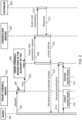
- FIG. 2 a sequence diagram is described in which, in an embodiment of the invention, device_B requires proxifying two ports: socket_A directly and socket_B in a reverse manner.
- device_B is provided with agent_B (201) and device_A with a proxy-firewall server (202), a connection-broker (203) and a database (204).
- agent_B (201)
- device_A with a proxy-firewall server (202), a connection-broker (203) and a database (204).
- This example is generalizable to establish any number of direct and/or reverse proxies in the same session without the need to be performed recursively.
- agent_B initiates the session (205) on the proxy-firewall server using the configuration defined in profile_B A .
- the proxy-firewall server determines which type and number of proxies detailed in profile_B A are to be established by agent_B in the session establishment.
- the proxy-firewall server performs a fork of itself (207) on the user_As account. In this way, a new instance of the proxy-firewall server is generated as a fork (208) in that account, enabling separation of privileges.
- This fork requests (209) to the connection-broker the reservation of a free socket to establish the reverse socket-proxy for socket_B.
- this request also includes a socket_A resolution request for obtaining the protected socket assigned to socket_A.
- the connection-broker queries (210) in the database if permission_A G exists to socket_A, and inserts or updates the corresponding socket_entry for socket_B according to profile_B A . If this socket_entry existed previously, it is checked whether any previous access_record regarding that socket_entry exists. In the event of an existing socket_entry, the socket value allocated in the socket_entry is maintained. If not, the socket value for the socket_entry is updated with a new one, belonging either way to the pool of reserved addresses for this method and that the local socket has available. In the event that there is no socket_entry or related access_records, the socket is also randomly chosen between those that are free in the pool of reserved addresses.
- This response includes the resolution of the socket_proxy (the value of the socket allocated for the socket_entry of the socket_B) and the resolution of socket_A (the value assigned in the socket_entry relative to socket_A).
- the fork is notified (212) and this, in turn, proceeds with the response for the agent_B (213).
- This prompts the fork a request (214) to initiate a protected socket in listening status corresponding to the previously assigned reverse socket-proxy (215).
- agent_B starts a protected local socket in listening status in device_B (101) corresponding to the direct socket-proxy (216).
- Example 2 Request of a resource of a protected socket of device A by process A
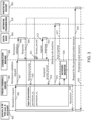
- Process_A executes a request (305) to the proxy-firewall server (306) to proceed with the resolution of the protected socket from the socket alias and its id_DispSocket to find out which local socket address the request goes to.
- Said request (305) is produced in this example by a system call. This request does not require handling user credentials of user_A to the proxy-firewall server in the request itself since it takes advantage of the separation of privileges of the POSIX type system by which the proxy-firewall server can uniquely identify the source account of the communication.
- the request is validated (307) by the connection-broker, which initially performs a query (308) in the database to verify with its response (309) if the user_A has permission. If the permission is a permission_A G type, it is not required to grant any further access and the connection-broker addresses a response (310) to the proxy-firewall server in which it is stated the resolved protected socket and that access is available. However, if the permission is a Permission_Au, the connection-broker must grant user_A access to the protected socket. For this, the connection-broker generates an access_record (311) and it is registered into the database (312). Once the confirmation response (313) is received from the database that the record was stored correctly and that there was no previous one, the connection-broker requests (314) to the proxy-firewall server to configure the strict security context for user_A.
- the connection-broker requests (314) to the proxy-firewall server to configure the strict security context for user_A.
- the proxy-firewall server uses the access_record information to define the required marking rule that provides the user_A with communication access to the protected socket.
- This marking rule (315) is inserted into the operating system via the network framework (316). If there is a valid previous record, it is not necessary to generate another access_record for user_A because the user_A already has access.
- the proxy-firewall server Upon receiving confirmation (317) of the rule being inserted (in the event of being required), the proxy-firewall server instantiates an access monitor (318) for periodically updating the status of the last_activity value of the access_record. In this example, the monitoring is done at 5-minute intervals.
- the access monitor like the marking rules and the access_record is only deployed if there was no other previous valid access_record.
- the proxy-firewall server notifies (319) the process_A informing the resolved protected socket to access to allow sending its request for the protected socket resource (320), and get its response (321).
- Example 3 Access to a reverse socket-proxy by a remote process through a local proxy of the device A which converts HTTPS application protocol requests to HTTP transparently.
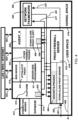
- FIG. 4 An example of an embodiment of device_A is shown in figure 4 where it is allowed access (401) (402) (403) to the socket-proxies (404) in device_A (405) from a process in a different device, by proxied connections (406) in sessions (407) established with remote devices.
- the first case (401) is an example of this type of communication in which applications using HTTPS can access socket_B resources, without requiring socket_B process of device_B to have support HTTPS or any authentication scheme. This access is performed by a reverse socket-proxy in device_A of a device_B socket_B with a session established with device_A.
- the communication as such between the application and the process of device_B is transparent and is performed through an intermediate proxy (410) which also converts HTTPS based communications into HTTP.
- the final application requests a resource from device_B offered by socket_B provisioned in device_A and addresses this request (401) to the intermediate proxy.
- This software which converts the HTTPS to HTTP request (501), can be implemented in a multitude of server-side programming languages (411) such as PHP, NodeJS, Go, Python, etc.
- the proxy receives the destination of the communication via subdomains (502) and also receives the credentials required by the final application to be able to gain access to the socket-proxy, with such credentials included in headers of the request.
- the web server (412) must be configured to redirect all requests in all possible subdomains of the proxy to the main URL of this intermediate proxy, including the subdomains as parameters.
- the intermediate proxy gets the credentials that are attached by the end-application and that allows the intermediate proxy to validate the request and require access to the socket-proxy.
- the credentials are protected by HTTPS as they are sent in the headers.
- the request received by the intermediate proxy comprises:
- the credentials that are in the headers are used by the intermediate proxy to validate access to the socket-proxy for the user account in which the intermediate proxy is executed according to the permissions in the database (414) for that user account.
- This access may be directly requested to the connection-broker (415) through the proxy-firewall server (416) or requiring prior validation of the platform.
- the HTTP web request (417) is sent to the corresponding socket-proxy.
- This request upon passing from the user space (418) to the kernel space (419) is marked by the network framework (420) if the access was correctly granted and the corresponding marking rule was inserted. Thereafter, this request is routed and directed (421) to the socket-proxy and will be processed or discarded according to the filtering rules, determining that it may only enter again into the user space if it has a valid marking.
- Both the marking and filtering rules are configured through the network framework of the operating system by the initiative of the proxy-firewall server following the indications described in examples 1 and 2. Finally, the request is received by the socket-proxy of the stand-alone proxy server (422) and transmitted as a proxified communication towards device_B.
- Example 4 Access to a socket-proxy by a remote process through an intermediate proxy of device A in which the proxy converts incoming requests from the secure version of an application protocol to its insecure version.
- example 3 is a generalization of previous example. Following the same scheme, example 3 can be applied to other application-level protocols used by programs of device_B that require security but do not have it implemented. Some examples of these protocols include HTTP/2, MQTT, and COAP. All these protocols also have a secure version, and with a proxy that transparently converts secure requests to unsafe requests, it is feasible that device_B may use the insecure version of the protocol together with the invention to achieve a secure end to end communication.
- Example 5 Access to socket-proxies by a platform that collects information from them, processes it, stores, and then provides it to the end applications in the form of its resources
- the communication (424) represents a very common mode of operation in loT ecosystems.
- the final application does not require "direct access” to the resources of the proxified sockets, but to the information and services that the platform elaborates autonomously from those resources.
- the platform for this purpose, establishes periodic communication with the protected sockets to which it has access permissions.
- the platform collects information with which it produces its own resources and services. These services can be offered even when all sessions (407) are temporarily dropped.
- the mode of operating the system proposed by the invention in this case, is analogous to that of example 2.
- process_A (302) is that which executes the platform to communicate with the local socket required at each time.
- the platform must be provided for an account of device_A with permissions_Au sufficient to be able to access all of the socket-proxies relative to the devices configured on the platform and from which the resources are obtained periodically.
- the platform may also offer information needed by other devices employing protected sockets of the socket_A type (425).
- Example 6 Request procedure of protected socket access in device AF through direct proxy by request of process A.
- process_A makes a resolution request (606) to the proxy-firewall server by providing the alias, the id_DispSocket and the id_DispProxy of each protected socket to which it desires access.
- the proxy-firewall server determines that those sockets are required to be made direct proxy from other devices_AF.
- all sockets to make proxy come from the same device, but do not need to be this way in other cases.
- the direct proxy request made by process_A to the proxy-firewall server is carried out using a system call emitted by the proxy-firewall server as a process of that user environment.
- the proxy-firewall server makes a reservation (607) to the connection-broker (608) to create a register (609) in the database (610), with free local sockets belonging to the protected address pool for the direct socket-proxies.
- the reservation of these sockets further involves the insertion of a socket_entry of socket-proxy type, and an access_record for each reserved socket if it has permissions_Au for each of them.
- the proxy-firewall server receives the reserved sockets answer (612) from the connection-broker, and requests (613) to agent_A to set up a session (614) with device_AF to resolve the protected sockets required to make proxies.
- the agent will use a profile_UA AF supplied by the proxy-firewall server and relative to the user_A, authenticated on the user_A AF account of the device_AF.
- device_AF performs the pertinent actions (615) described in example 7 to process the received authentication request.
- device_AF makes a response (616) to agent_A with the protected sockets resolved, agent_A makes a notification (617) to the proxy-firewall server and proceeds to establish the direct proxies (604).
- Example 7 Example of communication in which device AF gains access to protected sockets of device A by direct proxy.
- device_A is connected to device_AF to require direct proxy and this example illustrates what happens in device_AF.
- device_AF will be referred to as device_A and the device connecting to device_A will be referred to as device_AF.
- the first part of the process is similar to that described in example 1, with the exception that the device initiating the session is, in turn, device_AF (rather than being device_B) and that the request consists only of direct proxies.
- device_AF has agent_AF and a connection profile for connecting to device_A which enables a session to be established in which the resolution of the protected sockets required by device_AF is requested.
- device_AF uses its credentials of the profile_UA AF to connect to the account of the user_A AF in the operating system of device_A. This account must have permission to access the protected sockets that are intended to be made proxies. Once the credentials are authenticated by the proxy-firewall server of device_A, this software is instantiated as a fork of itself under the account of the user_A AF .
- the fork of the proxy-firewall server must evaluate whether user_A AF of the device_A is provided with the necessary permissions to access the protected sockets required by agent_AF.
- the evaluation, marking and assignment procedure of each access_record is equal to that described in example 2 and comprising the sequence diagram of Figure 3 from (307) up to (319).
- an access monitor is instantiated to periodically update all of the accesses to the socket-proxies, even if there has been no traffic. This will be performed while the session between device_AF and device_A is running.
- Example 8 Setup of a proxy of protected sockets from device A to device AF in a reverse manner to instances of process A of device A.
- device_AF requires access to proxified resources of devices_B with which it does not maintain a session, or that these devices_B require resources of a foreign device with which they do not maintain a session.
- device_A which holds the session with devices_B, takes the initiative and initiates a reverse proxy process of local protected sockets towards device_AF, either by any process request or by some type of pre-configured network configuration setup. With the reverse proxy, the protected sockets that device_A proxifies are made available to device_AF. To do this, agent_A establishes a communication session with device_AF using profile_UA AF , supplied by the proxy-firewall server to process_A.
- process_A requests the reverse proxy to the proxy-firewall server of device_A.
- the proxy-firewall server of device_A must be assured that user_A, which executes the process, is to account for the necessary permissions to be able to access the protected sockets that are intended for proxy, and when appropriate, grant and input the pertinent access and make and insert the appropriate marking rules.
- the method is identical to that described in example 2 in the sequence diagram comprising from (307) to (319).
- the proxy-firewall server is also required to communicate with an access monitor which verifies that the sockets remain open while running process_A, periodically updating the status of each access_record to prevent them from being automatically closed by inactivity.
- the proxy-firewall server communicates to process_A the resolved protected sockets, so that any process of user_A AF from device_AF can access the protected sockets of device_A through the established reverse socket-proxies.
- the proxy-firewall server is instantiated in the account of user_A and thus can launch agent_A using profile_UA AF , which initiates the reverse proxy procedure of the already accessible protected sockets.
- Example 9 Proxy of protected sockets from device AF to device A in a reverse manner to instances of agent AF of device AF
- Example 9 is closely linked to example 8.
- device_A by request of process_A begins the setup of reverse proxy towards device_AF.
- device_AF will be referred to as a device_A and vice versa.
- the proxy-firewall server of device_A receives a session setup request from device_AF using a profile_UA AF by which is required the establishment of a reverse proxy of certain protected sockets of device_AF towards device_A.
- This request forces the proxy-firewall server to be instantiated as a fork_A AF in the account of user_A AF of device_A whose credentials use agent_AF of device_AF to connect to device_A.
- the fork_A AF requests that the connection-broker reserve local protected sockets in device_A to proceed with the reverse proxy.
- the proxy-firewall server instantiates an access monitor to ensure that the access_records regarding each proxy maintain low inactivity that prevents its automatic closing while the process continues in execution.
- the proxy-firewall server when instantiated from the account of the user_A AF , forms part of the security context configured by inserting the marking rules and, therefore, this instance has access to the protected sockets reserved in this example for reverse proxy. Once these actions are completed, the proxy-firewall server proceeds with the reverse proxy requested by agent_AF using the sockets reserved for this.
- One of the main advantages of the invention is the decoupling of the security functionalities of the applications of device_B and its corresponding simplification in its design and maintenance.
- the processes making use of the system proposed by the invention do not require security frameworks, but they must incorporate in its programming the method described herein for allowing communication with the protected sockets.
- the communication interface is based on system calls and marking of packets, whereby it is independent of the security protocols and, therefore, it is also feasible to update in device_A the system described in the invention without affecting the applications of device_A.
- device_A and device_B similar to those proposed in the preferred embodiment of the invention, it is possible to update the agent of device_B from device_A without affecting the rest of the software.
- device_B must have a simplified version of the proxy-firewall server that has the stand-alone proxy server and an adequate configuration in profile_B A , which allows device_A to use a reverse socket-proxy for updating the agent of device_B.
- This strategy can be generalised to provide updating services to other foreign software elements to the system described by the invention.
- the process comprises:
Landscapes
- Engineering & Computer Science (AREA)
- Computer Security & Cryptography (AREA)
- Computer Networks & Wireless Communication (AREA)
- Signal Processing (AREA)
- Computer Hardware Design (AREA)
- General Engineering & Computer Science (AREA)
- Computing Systems (AREA)
- Theoretical Computer Science (AREA)
- General Business, Economics & Management (AREA)
- Business, Economics & Management (AREA)
- Bioethics (AREA)
- Physics & Mathematics (AREA)
- General Physics & Mathematics (AREA)
- Software Systems (AREA)
- General Health & Medical Sciences (AREA)
- Health & Medical Sciences (AREA)
- Data Exchanges In Wide-Area Networks (AREA)
- Computer And Data Communications (AREA)
Claims (15)
- Verfahren zur sicheren Kommunikation unter Verwendung von netzwerk-Socket-Proxies:• einrichten einer sicheren Kommunikationssitzung (110) zwischen zwei Geräten Gerät_A (106) und Gerät_B (101). Gerät_A enthält einen Proxy-Firewall-Server und Gerät_B einen Agenten des Proxy-Firewall-Server (111) namens agent_B. Agent_B initiiert den Aufbau der sicheren Kommunikationssitzung mit Hilfe eines eigenständigen Proxy-Clients (112), der ein sicheres Kommunikationsprotokoll implementiert, das Konfigurationsdaten und Anmeldeinformationen eines benutzerkontos namens Benutzer_AG verwendet. Das Benutzerkonto wird durch ein Konfigurationsprofil von Gerät_B definiert, das als profile_B bezeichnet wird, wobei das Konfigurationsprofil eine verbindung mit dem Benutzerkonto A von Gerät_A ermöglicht;• einrichtung von Proxys mit der Bezeichnung "Direct Socket Proxys" (114) von Socket_A-Sockets (123), wie in Profil_BA beschrieben;• einrichtung von Proxies mit der Bezeichnung "Reverse Socket Proxies" (115) von Socket_B-Sockets (118), wie in Profil_BA beschrieben;• schütz der Kommunikation der Socket_A- und Reverse-Socket-Proxies in Vorrichtung A auf Anfrage des Proxy-Firewall-Servers durch Schutz der lokalen Sockets des Proxy-Firewall-Servers und der Sockets_A, die an der Kommunikation beteiligt sind, und konfiguration von Sicherheitskontexten, die durch netzwerkpaketmarkierungs und Filterregeln für diese lokalen kommunikationen, wobei als kontext-Einschränkungsparameter der Prozess-Benutzer des betriebssystems der Vorrichtung_A verwendet wird, der die Quelle jeder lokalen Kommunikation ist;• schütz der Kommunikation von Socket B und direkten Socket-Proxies in Gerät_B auf Anfrage des Agenten von Gerät_B. Dies wird durch den Schutz der lokalen sockets von Prozess_B und der lokalen Sockets des an der Kommunikation beteiligten Standalone-Proxy-Clients und Konfiguration von Sicherheitskontexten, die durch Regeln für die Markierung und Filterung von Netzwerkpaketen für diese lokalen kommunikationen festgelegt werden. Als kontextbeschränkende Parameter solcher kontexte ist der Benutzer des Betriebssystems des Gerätes _B, der die Quelle jeder lokalen Kommunikation ist.
- Verfahren nach Anspruch 1, wobei Sicherheitskontexte für direkte und umgekehrte Socket-Proxys eingerichtet werden, ferner umfassend:• aufzeichnen der Reverse-Socket-Proxys in einer Datenbank (122) eines Verbindungs-Brokers (121) von Vorrichtung A als einen Datensatz mit der mit der Bezeichnung "socket_entry", in welchem Informationen über die Reverse-Socket-Proxys gespeichert sind, und Folgendes enthält:∘ eine Variable namens "id_DispSocket", welche die Identifizierung des Geräts mit der Steckdose speichert, und die auf die Id des Geräts_B mit der Bezeichnung "id_B" entspricht∘ eine Variable mit dem Namen "id_DispProxy", die das Gerät identifiziert, mit dem eine Sitzung zur Aktivierung des geschützten Sockets entsprechend diesem socket_entry unterhalten wird und die der Bezeichnung "id_B" entspricht;∘ eine Variable namens "alias", die den Alias des Sockets speichert, der von id_DispSocket proxyseitig angesprochen werden soll;∘ eine Variable mit dem Namen "socket", die einen unbenutzten lokalen Socket speichert, der vom Betriebssystem von Gerät_A für den Proxy reserviert wurde und einen Netzwerkadresswert hat, der auf einen Pool reservierter lokaler Netzwerkadressen von Gerät A für diese Methode gehört; und∘ eine Variable namens "socket_type", die eine Socket-Klasse angibt, auf die der Datensatz verweist, und die gleich "socket B" ist;• eingabe einer allgemeinen Paketmarkierungsregel während einer Startsequenz des Betriebssystems von Gerät A durch ein Netzwerk-Framework (107) durch den Proxy-Firewall-Server, der jede mögliche Markierung von Netzwerkpaketen in jeder Kommunikation zwischen beliebigen lokalen Sockets von Gerät_A mit einer lokalen Adresse, die zum Pool der für diese Methode reservierten lokalen Adressen gehört;• eingabe einer generischen Paketfilterregel während der Boot-Sequenz des Betriebssystems von Gerät_A durch den Proxy-Firewall-Server, die jedes Paket mit Quell- oder Zielinformationen von den lokalen Sockets von Gerät A ohne Markierung verwirft, wenn diese Sockets eine lokale Netzwerkadresse verwenden, die zum Pool der für diese Methode reservierten lokalen Adressen gehört;• eingabe während der Boot-Sequenz des Betriebssystems (102) von Gerät B und durch dessen Netzwerkrahmen eine allgemeine Regel der Filterung für jeden Socket_B und direkten Socket-Proxy in Gerät B, die das Verwerfen eingehender Pakete mit diesem Ziel und einer nicht-lokalen Netzwerkadresse als Quelle zurückweist;• eingabe einer generellen Paketfilterregel durch Proxy-Firewall-Server während der Boot-Sequenz des Betriebssystems von Gerät_A und durch das Netzwerk-Framework von Gerät_A, die das Verwerfen von Paketen, deren Quelle oder Ziel eine lokale Adresse aus dem für diese Methode reservierten lokalen Adressen, die als Quelle oder Ziel eine nicht-lokale Adresse haben;• eintragen, falls nicht vorhanden, eines Socket-Eintrags in die für jeden Socket_A des Gerätes_A, wie in dem als Profil_A bezeichneten Konfigurationsprofil angegeben ist, wobei jeder Socket-Eintrag folgende Informationen enthälto die id_DispSocket, die gleich der ID von Gerät_A ist, bezeichnet als "id_A";∘ die id_DispProxy, die gleich der id_A ist;∘ der Alias des Sockets_A, der registriert werden soll:∘ der lokale Socket, den der Prozess_A für den im Profil_A definierten Socket_A verwendet; und∘ der Socket-Typ "Socket A";• eingabe, falls nicht vorhanden, während der Bootsequenz des Betriebssystems von Gerät_A mindestens ein Datensatzes mit der Bezeichnung "Socket A" in die Datenbank von Gerät A in Bezug auf zu jedem Socket A von Gerät A, wie in Profil_A angegeben, wobei jeder Zutrittsdatensatz_A Informationen enthält:∘ eine Variable mit dem Namen "con_id", die eine Kennung für den Zugriffs mit demselben Namen;∘ eine Variable namens "socket", die socket A speichert, und∘ eine Variable mit dem Namen "group_id", die die Kennung der Benutzergruppe des Betriebssystems von Gerät_A gespeichert ist, die dem Benutzer_A des Prozess_A entspricht, von dem die Kommunikationsanfrage stammt, zu der der Zugriff gewährt wurde;• eingeben von Berechtigungen_Ac in die Datenbank (122) während der Boot-Sequenz des Betriebssystems von Gerät_A durch den Connection Broker (121) auf Anforderung des Proxy-Firewall-Servers und entsprechend der im Profil_A detaillierten Konfiguration, bestehend aus:oder group_id, die die Kennung der Benutzergruppe des Betriebssystems von Gerät_A enthält, die für die Zugriffsberechtigung vergeben wird;∘ dem Alias, der den Alias von socket_A speichert; und∘ der Socket, der den Wert von socket_A speichert;• eingabe von Prioritätsmarkierungsregeln während der Startsequenz des Betriebssystems von Gerät_A durch das Netzwerk-Framework (107) auf Anforderung des Proxy-Firewall-Servers, die den allgemeinen Regeln entsprechen, die den in dieser Anforderung für jeden Socket A eingegebenen Berechtigungen_Ac für die Benutzergruppen von Gerät A in Bezug auf die oben in Profil_A definierten Berechtigungen permanenten Zugriff zu gewähren; und• unterdrückung während der Boot-Sequenz des Betriebssystems des Geräts A, jeden Zugriffseintrag, seine jeweiligen Berechtigungen in der Datenbank in Bezug auf Socket-Einträge des Socket-Typs "Socket-Proxy und die Unterdrückung des Socket-Eintrags selbst.
- Verfahren nach den obigen Ansprüchen, bei dem eine sichere Kommunikation zwischen Netzwerk-Sockets hergestellt wird, bei der eine Netzwerkressource, die von SocketB eines Prozesses namens Prozess B (118) von Gerät B angeboten wird, von einem Prozess namens Prozess A (302) eines Benutzers namens Benutzer A des Betriebssystems von Gerät A angefordert wird und auf deren Ressource über einen Reverse-Socket-Proxy (301) zugegriffen werden kann, wobei das Verfahren ferner Folgendes umfasst:• anforderung (305) des Proxy-Firewall-Servers durch Prozess_A über einen Systemaufruf zum Auflösen eines geschützten Sockets aus id_B und dem Alias von Socket_B, um einen lokalen Reverse-Socket-Proxy zu erhalten, über den auf Socket B zugegriffen werden kann;• anforderung (307) des Verbindungs-Brokers durch den Proxy-Firewall- Server zur Überprüfung der Zugriffsberechtigung des sogenannten " Benutzer_A permission_Au", die den Zugriff auf den Reverse-Socket-Proxy ermöglicht, die Reverse-Socket-Proxy-Auflösung und einen Zugriff auf den Reverse-Socket-Proxy namens "access_record";• Überprüfung (308) des Vorhandenseins einer "Permission_Au" durch den Verbindungsbroker in der Datenbank und Durchführung einer Auflösung des Reverse-Socket-Proxys;• generierung (311) des access_record (Zugangsprotokoll), falls dieser nicht in der Datenbank vorhanden ist, in der dem Reverse-Socket-Proxy durch den Connection-Broker eine Kommunikationszugangskennung zugewiesen wird, die "con_Id" in Bezug auf den Benutzer_A und den geschützten Socket;• speichern (312) oder Aktualisieren des erzeugten Zugangsdatensatzes in der in der Datenbank durch den Connection Broker, was folgendes beinhaltet:∘ die con_Id in Bezug auf den gewährten Zugang;∘ den Socket, zu dem der Zugang gewährt wird, der aus der lokalen Netzwerkadresse und einem Port besteht;∘ eine Variable mit der Bezeichnung id Benutzer, die eine Benutzeridentifikation des Betriebssystems des Geräts A speichert, die dem Benutzer A des Prozesses A entspricht, von dem die Kommunikationsanfrage stammt, zu der der Zugang gewährt wurde; und∘ eine Variable namens "letzte_Aktivität", die den Zeitpunkt speichert, zu dem der Zugriff gewährt wurde, die von einem Zugriffsmonitor aktualisiert wird, die den Status der Aktivität wiedergibt;• aktiviere (315) eine prioritätsspezifische Regel, die die allgemeinen Paketmarkierungsregeln des Betriebssystems von Gerät_A mit dem Proxy-Firewall-Server übersteuert und festlegt, dass alle lokalen Kommunikationspakete zwischen dem Benutzer A, der Prozess_A und dem Reverse-Socket-Proxy eine zugewiesene Zugriffskennung con_Id erhalten, die in dem Reverse-Socket-Proxy und dem Benutzer_A entsprechenden access_record definiert ist;• starten (318) eines Zugriffsmonitors durch den Proxy-Firewall-Server, der in regelmäßigen Abständen überprüft, ob über den Zugang zum Socket-Proxy Verkehr stattfindet und den Wert letzte_Aktivität aktualisiert; und• fortsetzen der Kommunikation (320) zwischen Prozess A und Socket B, der die Ressource über den in Gerät A eingesetzten Reverse-Socket-Proxy anbietet.
- Das Verfahren nach den obigen Ansprüchen, wobei der Prozess A des Benutzers A in Gerät A einen direkten Proxy in Gerät A von mehreren geschützten Sockets eines fremden Geräts A, genannt Gerät AF, anfordert, ferner umfassend:• aufforderung (606) des Proxy-Firewall-Servers durch Prozess_A zur Auflösung der direkten Proxys, die eine Antwort einschließlich der zugewiesenen lokalen Sockets erfordert;• anforderung (607), dass der Verbindungsbroker durch den Proxy-Firewall-Server eine Reservierung ungenutzter lokaler Sockets zurVerwendung als direkte Socket-Proxys vornimmt, sobald die geschützten Sockets von Gerät_AF, die mittels des Agenten_A direkt proxysiert werden sollen, aufgelöst sind;• eintrag (609) in die Datenbank, durch den Connection Broker, permissions_Au und entsprechende access_records, die dem Benutzer_A Zugriff auf die direkten Socket-Proxies erlauben;• aufzeichnung (609) jedes socket_entry in der Datenbank, der von jedem Socket erzeugt wird, der zu einem direkten Proxy wird, was folgendes beinhaltet:oder "id_DispSocket', die die ID des Geräts des dem entsprechenden geschützten Socket mit dem Namen Prozess_A enthält∘ die "id_DispProxy", die die ID des AF-Geräts, bezeichnet als "id_AF";∘ der "Alias", der den Alias des Sockets speichert, und process_A speichert, wird als Prozess_A bezeichnet;∘ der "Socket", der den freien lokalen Socket speichert, der zur Ausführung jedes direkten Proxys verwendet wird, hat einen Netzwerkadresswert, der zum Pool reservierter lokaler Netzwerkadressen von Gerät_A, die für diese Methode reserviert sind; und∘ den Socket-Typ "Socket-Proxy":• aufforderung (613) an Agent_A, eine Kommunikationssitzung mit Gerät_AF aufzubauen Verwendung der Zugangsdaten zum Gerät_AF von Benutzer_A, die vom Proxy-Firewall-Server bereitgestellt werden, die Sitzung, über die die Auflösung der geschützten Sockets von Gerät AF erfolgt, wird direkt an Gerät_A übertragen,• anforderung (614) von Gerät_AF über die aufgebaute Session zur Auflösung und Einrichtung des Zugriffs auf die von Gerät_AF benötigten und in der Anforderung spezifizierten geschützten Sockets;• bestimmen (618) der entsprechenden Markierungsregel durch den Proxy-Firewall-Server die jeder permission_Au entspricht, unter Verwendung des Netzwerkrahmens, der dem Benutzer_A auf die direkten Socket-Proxys zuzugreifen;• anforderung der Einrichtung jedes direkten Proxys (604) in Gerät_A zu jedem entsprechenden geschützten Socket von Gerät_AF, wie von Prozess_A angefordert;• beantworten (620) von Prozess_A durch den Proxy-Firewall-Server mit der Auflösung des angeforderten Sockets; und• instanziieren (621) eines Zugriffsmonitors durch den Proxy-Firewall-Server, der periodisch den Wert von letzte Aktivität jedes in die Datenbank eingefügten access Record in diesem Anspruch aktualisiert.
- Verfahren nach den vorstehenden Ansprüchen, bei dem eine Anzahl geschützter Sockets von Gerät_A wiederum durch einen als "Agent" bezeichneten Gerät_AF, der als "Agent_AF" bezeichnet wird, unter Verwendung von konfigurationsdaten und Anmeldeinformationen eines als "Benutzer_AAF" bezeichneten Benutzers, der durch ein Konfigurationsprofil von Gerät_A mit der Bezeichnung "profile_UAAF" definiert ist, dass es Agent_AF ermöglicht, sich mit dem Benutzerkonto Benutzer_AAF von Gerät A anzumelden, und das Folgendes umfasst:• aufbau einer sicheren Sitzung zwischen agent_AF und dem Proxy-Server Firewall-Server von Gerät_A auf Initiative Agent_AF;• anforderung des Sitzungsaufbaus mit einer Auflösung von jedem geschützten Socket von Gerät_A, der von agent_AF benötigt wird;• instanziieren einer Verzweigung des Proxy-Firewall-Servers im Konto Benutzer_AAF mit dem Namen Gabel_AAF;• auffordern des Verbindungsbrokers durch Gabel_AAF Auflösung der geschützten Sockets unter Verwendung des Alias und der id_A jedes Sockets_A und des Alias und der id_B jedes Sockets_B die vom agent_AF angegeben werden;• Überprüfung, ob ausreichende Berechtigungen vorhanden sind durch den Connection Broker von Gerät_A für den Benutzer_AAF in der Datenbank, um auf die geschützten Sockets zugreifen zu können;• anfrage an den Connection Broker durch Gabel_AAF für den Kommunikationszugang zu jedem geschützten Socket für den Account der Benutzer_AAF des Betriebssystems von Gerät_A für die vom Agent_AF benötigten geschützten Sockets, auf die der Benutzer_AAF keinen Zugriff hat;• aufzeichnung jedes Zugriffs_Aufzeichnung jedes gewährten in der Datenbank des Connection Brokers;• setzen der Markierungsregel für jeden Zugriffsdatensatz durch den Gabel_AAF über den Netzwerkrahmen des Betriebssystems von Gerät_A, das dem Benutzer_AF dem agent_AF den Zugriff auf jeden geschützten Socket ermöglicht;• antwort an agent_AF mit dem Wert jedes geschützten Sockets, der erforderlich ist, damit agent_AF anschließend die direkten Proxies ausführen kann; Und• instanziierung eines Zugriffsmonitors durch Gabel_AAF, um regelmäßige Aktualisierung des letzte_Aktivität-Wertes jedes in die Datenbank eingefügten Zugriffsdatensatzes zu aktualisieren.
- Verfahren nach den Ansprüchen 1 bis 3, wobei mehrere geschützte Sockets der Vorrichtung Gerät_A durch eine Anforderung von Prozess_A des Benutzers_A des Gerät_A durch agent_A in das Gerät_AF umgepolt werden, ferner umfassend:• anforderung eines Teils von Prozess_A an den Proxy-Firewall-Server um einen Reverse der geschützten lokalen Sockets, auf die zugegriffen werden kann möglich ist;• die Auflösung der im Proxy benötigten lokalen Sockets beim Connection-Broker von Prozess_A anfordern;• prüfung durch den Connection-Broker, ob Benutzer_A über die erforderlichen Berechtigungen für den Zugriff auf die lokalen Sockets verfügt, die in der Proxy-Anfrage benötigt werden;• einfügen der Zugriffsregister auf die geschützten Sockets für das Konto von Benutzer_A auf Anfrage des Verbindungsbrokers, eines für jeden der geschützten Sockets, auf die Benutzer_A noch keinen Zugang hat;• aufzeichnung der Kommunikationszugriffe in der Datenbank des Connection Brokers als Datenbank als access_records;• festlegung der Markierungsregel für jeden in die Datenbank eingefügten Access Records durch die Instanzen des Proxy-Firewall-Servers, die dem Benutzer_A den Zugriff auf alle Quell-Sockets von den Reverse-Proxys erlaubt;• aufforderung des Proxy-Firewall-Servers an Agent_A, eine Kommunikationssitzung mit dem Gerät AF unter Verwendung der vom Proxy-Firewall-Server bereitgestellten Proxy-Firewall-Server zur Verfügung gestellten Credentials eine Kommunikationssitzung mit dem Gerät_AF von Prozess A herzustellen;• anforderung der Reservierung eines geschützten Sockets von Gerät_AF durch Agent_A beim Aufbau der Sitzung für jeden Socket, der in Richtung dieses Geräts weitergeleitet werden soll;• instanziierung eines Zugriffsmonitors durch den Proxy-Firewall-Server, um den Wert letzte_Aktivität aller für diese Methode erforderlichen Zugriffseinträge des Benutzers_A, die für diese Methode erforderlich sind; und• senden einer Anforderung zum Einrichten des umgekehrten Proxys durch Agent_A an Gerät_AF.
- Verfahren nach den Ansprüchen 1 bis 3 und 6, wobei mehrere geschützte Sockets von Gerät_AF durch die Aktion von agent_AF unter Verwendung von Konfigurationsdaten und Konfigurationsdaten und Anmeldeinformationen eines Kontos zu Gerät_A umgeleitet werden. "Benutzer_AAF", definiert durch ein "profile_UAAF", das die Verbindung zum Konto Benutzer_AAF von Gerät_A definiert, und folgendes beinhaltet:• aufbau einer sicheren Sitzung zwischen Agent AF und dem Proxy-Server Firewall-Server von Gerät_A durch Agent_AF;• während des Aufbaus der Sitzung die Reservierung lokaler geschützter Sockets von Gerät_A für die Entwicklung von Reverse-Proxies in Gerät_A für die Sockets von Gerät_AF anzufordern;• instanziieren eines Gabel_AAF des Proxy-Firewall-Servers im Account von Benutzer_AAF;• anfrage an den Connection Broker durch Gabel_AAF für eine Reservierung ungenutzter lokaler Sockets, die als Reverse-Sockets Proxies verwendet werden sollen, wie in der empfangenen Anfrage angegeben;• aufzeichnen der Socket-Einträge und der access_records, die sich auf die reservierten Sockets für jeden Reverse Proxy beziehen, in der Datenbank durch den Connection Broker;• hinzufügen eines permission_Au zur Datenbank für jeden Socket, der für den Benutzer Benutzer_AAF reserviert ist, durch den Connection Broker;• einfügen einer Markierungsregel für jede permission_Au in das System durch den Gabel_AAF über den Netzwerkrahmen;• instanziierung eines Zugriffsmonitors durch das Gabel_AAF, um Aufrechterhaltung aktiver Zugriffe auf den Reverse Proxy; und• instanziierung des Reverse Proxy durch den Gabel_AAF unter Verwendung der reservierten sockets.
- Verfahren nach einem der Ansprüche 3 bis 7, wobei der Zugriffsmonitor die Variable letzte_Aktivität jedes an dem Verfahren beteiligten Zugriffsdatensatzes in verschiedenen Szenarien aktualisiert:• wenn der Zugriffsdatensatz gemäß Anspruch 3 erzeugt wird, die letzte Aktivität des Zugriffsdatensatzes auf Instanzen des Zugriffsmonitors aktualisiert, die vom Proxy-Firewall-Server instanziiert werden, wenn es Verkehr vom Konto des Benutzers_A zum Socket-Proxy gibt;• wenn der Zugriffsdatensatz gemäß einem der Ansprüche 4, 5, 6 oder 7 erzeugt wird, die Variable letzte_Aktivität jedes Datensatzes mit den Werten des Zugriffsmonitors aktualisiert, der durch den Proxy-Firewall-Server instanziiert wird, wenn der Prozess, der den Proxy angefordert hat, der die Erzeugung jedes Zugriffsdatensatzes in der Datenbank verursacht hat, ausgeführt wird.
- Verfahren nach einem der Ansprüche 1 bis 3, wobei ein Prozess mit dem Namen "Prozess_C" eines Geräts mit dem Namen "Gerät_C" eine sichere Anfrage für die Ressource, die von Socket B von Gerät_B angeboten wird über einen Socket-Proxy, der von Benutzer_A betrieben wird, und umfasst weiter:• verwendung von Netzwerk-Subdomänen einer Hauptdomäne eines Socket-Proxy als Parameter der Anfrage, was erfordert, dass der Socket-Proxy in der Lage sein muss, die Auflösung des geschützten Sockets mit Unterstützung des Connection Brokers zu adressieren;• konfiguration eines X.509-Wildcard-Zertifikats, um die Sicherheit der Subdomänen des Socket-Proxys zu gewährleisten;• empfang der Anmeldeinformationen von process_C als Header des Requests, die es dem Socket-Proxy ermöglichen, die Identität von process_C zu verifizieren und festzustellen, ob er das zur Bearbeitung der Anfrage erforderliche permission_Au besitzt;• aufbau einer sicheren Kommunikation zwischen Prozess_C und dem Socket-Proxy unter Verwendung eines sicheren Kommunikationsprotokolls, das von Prozess_C und dem Socket-Proxy verwendet werden kann;• löschen der Request-Header; und• herstellen einer Kommunikation zwischen dem Socket-Proxy und dem geschützten Socket, der zu Socket_B führt, gemäß Anspruch 3.
- Verfahren nach den Ansprüchen 3-9, wobei der Zugriff auf die Kommunikation bezüglich des access_record geschlossen wird, wenn die Inaktivität einen Schwellwert des Profils A überschreitet, weiterhin umfassend:• entfernen der Markierungsregel des Betriebssystems der Vorrichtung A in Bezug auf den access_record,• entfernen des access_records aus der Datenbank des Connection Brokersvon Gerät A; und• entfernen des mit dem access_record verknüpften permission_Au, wenn dieser mit einem direkten Socket-Proxy verbunden ist.
- Verfahren nach Anspruch 3, wobei die Aktualisierung der Kommunikation zwischen dem Standalone-Proxy-Client und dem Stand Alone-Proxy-Server erforderlich ist, weiter umfassend:• anforderung der Einleitung eines Prozesses zur Aktualisierung des Proxy-Clients von Agent_B durch den Proxy-Firewall-Server über eine zwischen Agent B und dem Proxy-Firewall-Server eingerichtete kommunikationssitzung;• empfang einer neuen Version des Proxy-Clients durch agent_B und Aktualisierung des Profils_BA;• testen der neuen Version des Proxy-Clients mit dem aktualisierten Profil_BA durch agent_B, um eine neue Kommunikationssitzung aufzubauen; Und• bei korrekter Einstellung der neuen Kommunikationssitzung wird die vorherige Version des Proxy-Clients gelöscht und durch die neue Version ersetzt.
- System mit einem Gerät A und einem Gerät B zur sicheren Kommunikation mit Netzwerkknoten, umfassend:• einem Softwaremodul mit der Bezeichnung "Proxy-Firewall"-Server, das sich in dem Gerät A befindet und so konfiguriert ist, dass:∘ sitzungsaufbauanfragen von anderen Geräten über ein sicheres Protokoll durch einen eigenständigen Proxyserver empfangen,∘ durch Systemaufrufe an das Netzwerk-Framework des Betriebssystems von Gerät_A strikte und weite Sicherheitskontexte konfigurieren,∘ verarbeitung von Proxys oder Socket-Proxy-Anfragen über bestehende Sitzungen oder Systemaufrufe von lokalen Prozessen,∘ zugriffe auf lokale Sockets durch Zugriffsmonitore überwachen,∘ verwaltung von Sicherheitsupdates für Geräte, zu denen eine Verbindung besteht, und∘ durch Systemaufrufe an das Netzwerk-Framework einen Schutz der lokalen Sockets, die in den Socket-Proxys in Gerät_A verwendet werden;• eine Art von Konfigurationsprofil des Proxy-Firewall-Servers zur Festlegung von Aspekten im Zusammenhang mit dem Betrieb des Proxy-Firewall-Servers und eines Verbindungs-Brokers, genannt Gerät_A,• ein Softwaremodul Agent_B in Gerät_B der als Agent des Proxy-Firewall-Servers fungiert und wie folgt konfiguriert ist:∘ die Sitzungsaufbauanfragen an den Proxy-Firewall-Server über ein Softwaremodul namens "eigenständiger Proxy-Client", der ein sicheres Protokoll implementiert,∘ anfragen für direkte und umgekehrte Proxy-Sockets von Sockets, Und∘ lokale Sockets zu schützen;• eine Art Agentenkonfigurationsprofil, welches als:∘ Profil_BA, wenn das Profil für die Konfiguration der Sitzung verwendet wird das der Agent von Gerät_B zu Gerät_A aufbaut, oder∘ Profile_UAAF, wenn das Profil zum Konfigurieren der Sitzung verwendet wird, die der Agent von Gerät_A mit Gerät_AF durch Benutzer_A aufgebaut wird;• ein Softwaremodul mit der Bezeichnung "Access Monitor", das zur Aufzeichnung verwendet wird und Kontrolle über die eingerichteten Proxys und die Zugriffe auf sie in Gerät A;• eine Art von Register von Gerät A, das sich auf eine geschützte Steckdose namens ‴socket_entryʺʺ, bezieht:∘ eine Variable mit dem Namen "socket", die den geschützten Socket speichert, für den der socket_entry einen der drei Typen annehmen kann:▪ Socket_B, wenn der zu registrierende Socket ein Socket-Proxy ist, der eine Ressource von Gerät_B darstellt;▪ Socket_A, wenn der zu registrierende Socket eine Ressource eines Prozesses von Gerät_A ist und nicht das Ergebnis eines Proxy ist, und▪ Socket-Proxy;∘ eine Variable namens "alias", die den Alias des geschützten Sockets enthält., der in zwei Varianten existiert:▪ den Alias eines Socket_B mit dem Namen "alias_B" und▪ den Alias eines Socket_A mit der Bezeichnung "alias_A";∘ eine Variable mit dem Namen "id_DispSocket", der die ID des Gerätes mit dem geschützten Socket enthält und drei Typen haben kann:▪ die ID eines Gerät_B, bezeichnet als "id_B", wenn der Socket-Eintrag vom Typ Socket B ist,▪ die Kennung eines Gerät_AF, bezeichnet als "id_AF", wenn der Socket-Eintrag vom Typ Socket-Proxy ist, und▪ die Kennung eines Geräts A, bezeichnet als "id_A", wenn der Socket-Eintrag vom Typ Socket_A ist;∘ eine Variable mit dem Namen‴id_DispProxy", die den Bezeichner des Geräts angibt, zu dem der geschützte Socket führt; und∘ eine Variable mit dem Namen "socket_type", die den Typ des geschützten Sockets angibt auf den sich dieser Datensatz bezieht socket_A, socket_B und socket-proxy;• einen Datensatztyp namens "access_record" eines Benutzers des Betriebssystems von Gerät A, der für jeden Zugriff erzeugt wird, der auf einen geschützten Socket des Typs "direkt" oder "umgekehrter Socket-Proxy gewährt wird, und der folgendes enthält:o eine Variable mit dem Namen "con_ld", die eine Zugriffskennung speichert für die Kommunikation mit dem Socket-Proxy von Benutzer_A speichert,∘ eine Variable namens "socket", die den geschützten Socket speichert, der von einem lokalen Netzwerkadresse gebildet wird und den Zugriff gewährt∘ eine Variable namens "id_Benutzer", die eine Kennung des Benutzer_A des Prozesses speichert, von dem die von dem die Kommunikatiosanforderung stammt, auf die er Zugriff erhalten hat, und∘ eine Variable mit dem Namen " letzte_Aktivität", die den Zeitpunkt speichert, zu der der Zugriff gewährt wurde, und die vom Zugriffsmonitor aktualisiert wird, um den Status der Aktivität wiederzugeben;• einen Datensatz mit der Bezeichnung "access_record_A" für eine Gruppe von Benutzern des Betriebssystems Gerät_A, der bei jedem Zugriff auf einen geschützten Socket vom Typ Socket_A erzeugt wird, und der Folgendes enthält:∘ eine Variable namens "con_Id", die eine Kennung für den Zugriff mit dem gleichen Namen speichert,∘ eine Variable namens "socket", die socket_A speichert, und∘ eine Variable mit dem Namen "id_Group", die Identifikation der Benutzergruppe des Betriebssystems von Gerät_A speichert, die dem Benutzer_A des Prozesses entspricht, von dem die Kommunikationsanfrage stammt und dem der Zugriff gewährt wurde;• ein Datensatz zur Definition der Zugriffsberechtigung mit der Bezeichnung "permission_Au", der einen strengen Sicherheitskontext definiert, indem er dem Benutzer_A von Gerät_A den Zugriff auf einen geschützten Socket vom Typ Direct oder Reverse Socket Proxy der folgendes enthält:∘ eine Variable mit dem Namen "id_Benutzer", die die Benutzerkennung des Benutzers_A von dem Betriebssystem von Gerät_A beinhaltet,∘ eine Variable namens "alias", die den Alias des geschützten Sockets eines anderen Alias des geschützten Sockets eines anderen Geräts, das als Socket-Proxy in Gerät_A fungiert, und∘ eine Variable mit dem Namen "id_DispSocket", die die ID des Geräts mit Socket_B oder Socket_A in Bezug auf den Alias des Sockets gespeichert ist, der die Ressource über den Socket-Proxy bietet,• einen Datensatz zur Definition der Zugriffsberechtigung mit dem Namen permission_AG", der einen breiten Sicherheitskontext spezifiziert, indem er einer Gruppe von Gerät_A-Benutzern die Möglichkeit gibt Zugriff auf einen socket_A zu gewähren:∘ eine Variable namens "id_Group", die die Identifikation der Gruppe von Benutzern des Betriebssystems von Gerät_A, speichert∘ eine Variable namens "alias", die den Alias von socket_A speichert, und∘ eine Variable namens "socket", die den Wert von socket_A speichert,• ein Softwaremodul mit der Bezeichnung "Connection Broker", das für die Aufzeichnung und Kontrolle der erstellten Proxys und der Zugriffe auf die Proxys in Gerät-A verwendet wird und das berechtigt ist, solche Zugriffe zu schließen, wenn sie als inaktiv angesehen werden• ein Pool lokaler Adressen von Gerät_A, die speziell für dieses System reserviert sind und während einer Boot-Sequenz des Betriebssystems von Gerät_A über das durch den Proxy-Firewall-Server nach den folgenden allgemeinen Regeln geschützt werden:∘ eine allgemeine Regel zur Markierung von Paketen, die die Unterdrückung aller möglichen Markierungen von Netzwerkpaketen in jeder Kommunikation die zwischen jedem lokalen Socket von Gerät_A mit einer lokalen Adresse aus dem Pool reservierter lokaler Adressen stattfindet,∘ eine allgemeine Paketfilterregel, die das Verwerfen aller Pakete verwirft, dass keine Markierung enthält und dessen Ursprung und Ziel ein lokaler Socket von Gerät_A ist, vorausgesetzt, einer der beteiligten Sockets eine lokale Netzwerkadresse verwendet, die zum Pool reservierten lokalen Adressen gehört; und∘ eine allgemeine Paketfilterregel, die besagt, dass jedes Paket mit einer lokalen Adresse als Quelle oder Ziel aus dem Pool der für dieses System reservierten lokalen Adressen, das als Quelle oder Ziel eine nicht-lokale Adresse hat, verworfen wird;• ein Sicherheitskontext vom Typ "Strikter Sicherheitskontext", der von einer Netzwerkrahmenkonfiguration verwendet wird, die Verkehrspakete unter Verwendung der con_Id markiert, die dem Zugriffsdatensatz zugewiesen ist, der sich auf den geschützten Zielsocket in Gerät A, die Benutzerquelle der Kommunikation ebenfalls von Gerät A und die Berechtigung AU bezieht, die den Zugriffsdatensatz aktiviert.• ein Sicherheitskontext vom Typ "Wide Security Context", der von der Netzwerkrahmenkonfiguration verwendet wird und die Markierung von Verkehrspaketen unter Verwendung der im Zugriffsdatensatz zugewiesenen con-ld in Bezug auf das geschützte Socket-Ziel von Gerät A, die Benutzergruppe als Quelle der Kommunikation auch von Gerät A und die den Zugriff erlaubende permission_Ag durchführt, und• eine Verbindungs-Broker-Datenbank, die so konfiguriert ist, dass sie verschiedene Arten von Datensätzen speichert; bestehend aus: Socket-Eintrag, Zugriffsprotokoll, Zugriffsprotokoll_A, permission_Au und permission_Ac.
- System nach Anspruch 12, bei dem die Geräte ein Betriebssystem vom POSIX-Typ verwenden, wobei ferner ein Proxy-Client und ein eigenständiger Proxy-Server auf Basis des sicheren Protokolls SSH verwendet werden und wobei Netfilter, das verwendete Netzwerk-Framework, die Markierung und Filterung von Paketen unter Verwendung des TOS-Feldes des IP-Protokolls durchführt.
- System nach den Ansprüchen 12 und 13, wobei die Vorrichtung B einen Proxy-Firewall-Server aufweisen kann, der es ermöglicht, in das Profil_B Konfigurationsaspekte aufzunehmen, die die durch den Proxy-Firewall-Server der Vorrichtung A ausgeübte Kontrolle über die Softwaremodule der Vorrichtung B erweitern, um die Entwicklung von Diensten zu erleichtern, die Systemaufrufe wie das Aktualisieren der Softwaremodule der Vorrichtung B umfassen.
- System nach den Ansprüchen 12 und 13, wobei die Buchse_B der Vorrichtung Bein HTTP-Protokoll verwendet, und Vorrichtung_A ein Softwaremodul vom Typ HTTPS-HTTP-Proxy verwendet, um externe Kommunikationsanfragen an den geschützten Socket zu akzeptieren und zu verarbeiten adressiert in HTTPS, und Folgendes enthält:• eine Konfiguration eines Wildcard-SSL-Zertifikats zum Schutz einer Hauptdomäne des HTTPS-HTTP-Proxys von Gerät_A mit allen möglichen Subdomänen;• eine Konfiguration eines Webservers in Gerät_A, um Kommunikationsanfragen für die Socket _B Ressource transparent an die Haupt-URL des HTTPS-HTTP-Proxys umzuleiten, indem die Subdomänen als Felder zur Identifizierung des Ziel-Socket-Proxys einer solchen Anfrage verwendet werden, indem für Subdomains der Alias von Socket B und die Kennung von Gerät_B verwendet werden; und• eine geeignete Konfiguration des HTTPS-HTTP-Proxys, die es ermöglicht aus den Request-Headern die zur Validierung des Requests benötigten Credentials zu extrahieren und die Header zu entfernen, bevor die Anfrage an den Socket-Proxy übermittelt wird.
Applications Claiming Priority (1)
| Application Number | Priority Date | Filing Date | Title |
|---|---|---|---|
| PCT/MX2018/050013 WO2019059754A1 (es) | 2018-06-03 | 2018-06-03 | Método y sistema de comunicación segura por proxificación de sockets de red |
Publications (4)
| Publication Number | Publication Date |
|---|---|
| EP3800564A1 EP3800564A1 (de) | 2021-04-07 |
| EP3800564A4 EP3800564A4 (de) | 2021-06-02 |
| EP3800564B1 true EP3800564B1 (de) | 2023-06-21 |
| EP3800564C0 EP3800564C0 (de) | 2023-06-21 |
Family
ID=65811486
Family Applications (1)
| Application Number | Title | Priority Date | Filing Date |
|---|---|---|---|
| EP18857521.1A Active EP3800564B1 (de) | 2018-06-03 | 2018-06-03 | Verfahren zum betreiben eines automatischen regalbediensystems |
Country Status (5)
| Country | Link |
|---|---|
| US (1) | US11050716B1 (de) |
| EP (1) | EP3800564B1 (de) |
| ES (1) | ES2794723B2 (de) |
| MX (1) | MX2020012311A (de) |
| WO (1) | WO2019059754A1 (de) |
Families Citing this family (11)
| Publication number | Priority date | Publication date | Assignee | Title |
|---|---|---|---|---|
| FR3086821A1 (fr) * | 2018-09-28 | 2020-04-03 | Orange | Procedes de collaboration et de demande de collaboration entre services de protection associes a au moins un domaine, agents et programme d’ordinateur correspondants. |
| EP4420300B1 (de) | 2021-10-18 | 2025-05-07 | Sophos Limited | Netzwerkgeräte für sichere unternehmensressourcen |
| US11373000B1 (en) | 2021-10-22 | 2022-06-28 | Akoya LLC | Systems and methods for managing tokens and filtering data to control data access |
| US11641357B1 (en) | 2021-10-22 | 2023-05-02 | Akoya LLC | Systems and methods for managing tokens and filtering data to control data access |
| WO2023069624A1 (en) * | 2021-10-22 | 2023-04-27 | Akoya LLC | Systems and methods for managing tokens and filtering data to control data access |
| US20240031334A1 (en) * | 2022-07-19 | 2024-01-25 | Vmware, Inc. | Identity firewall with context information tracking |
| CN115914340B (zh) * | 2022-11-04 | 2025-05-02 | 山东云海国创云计算装备产业创新中心有限公司 | 一种bmc通信方法、系统、设备以及存储介质 |
| CN115623079B (zh) * | 2022-12-19 | 2023-06-02 | 中科政汇(北京)科技有限公司 | 一种数据访问处理方法 |
| US20250124092A1 (en) * | 2023-10-17 | 2025-04-17 | MOLAR SOLUTIONS, INC. d/b/a COUNTER HEALTH | Systems and methods for querying databases of claims |
| CN117914935B (zh) * | 2024-03-05 | 2024-05-28 | 北京长亭科技有限公司 | 一种基于重路由技术的隐蔽通信方法及系统 |
| CN118449783B (zh) * | 2024-07-05 | 2024-10-29 | 支付宝(杭州)信息技术有限公司 | 一种账户操作控制方法、装置、介质及设备 |
Family Cites Families (5)
| Publication number | Priority date | Publication date | Assignee | Title |
|---|---|---|---|---|
| US10637724B2 (en) * | 2006-09-25 | 2020-04-28 | Remot3.It, Inc. | Managing network connected devices |
| US9350644B2 (en) * | 2012-04-13 | 2016-05-24 | Zscaler. Inc. | Secure and lightweight traffic forwarding systems and methods to cloud based network security systems |
| EP3094283A4 (de) | 2013-12-20 | 2018-01-24 | Biomet 3i, LLC | Zahnärztliches system zur entwicklung von angepassten prothesen durch abtasten von codierten elementen |
| US9985930B2 (en) * | 2016-09-14 | 2018-05-29 | Wanpath, LLC | Reverse proxy for accessing local network over the internet |
| US10659433B2 (en) * | 2016-11-30 | 2020-05-19 | Salesforce.Com, Inc. | Encrypting and securing data with reverse proxies across frames in an on-demand services environment |
-
2018
- 2018-06-03 MX MX2020012311A patent/MX2020012311A/es unknown
- 2018-06-03 ES ES201990044A patent/ES2794723B2/es active Active
- 2018-06-03 EP EP18857521.1A patent/EP3800564B1/de active Active
- 2018-06-03 US US15/734,167 patent/US11050716B1/en active Active
- 2018-06-03 WO PCT/MX2018/050013 patent/WO2019059754A1/es not_active Ceased
Also Published As
| Publication number | Publication date |
|---|---|
| US20210218708A1 (en) | 2021-07-15 |
| ES2794723B2 (es) | 2022-04-21 |
| EP3800564A4 (de) | 2021-06-02 |
| EP3800564A1 (de) | 2021-04-07 |
| MX2020012311A (es) | 2021-03-25 |
| US11050716B1 (en) | 2021-06-29 |
| ES2794723A1 (es) | 2020-11-18 |
| WO2019059754A9 (es) | 2020-05-22 |
| WO2019059754A1 (es) | 2019-03-28 |
| EP3800564C0 (de) | 2023-06-21 |
Similar Documents
| Publication | Publication Date | Title |
|---|---|---|
| EP3800564B1 (de) | Verfahren zum betreiben eines automatischen regalbediensystems | |
| US11647003B2 (en) | Concealing internal applications that are accessed over a network | |
| US11595385B2 (en) | Secure controlled access to protected resources | |
| US10630725B2 (en) | Identity-based internet protocol networking | |
| US9258308B1 (en) | Point to multi-point connections | |
| US10185963B2 (en) | Method for authentication and assuring compliance of devices accessing external services | |
| US8572676B2 (en) | System, method, and device for mediating connections between policy source servers, corporate repositories, and mobile devices | |
| EP3494682B1 (de) | Architektur für sicherheit auf verlangen | |
| US8230480B2 (en) | Method and apparatus for network security based on device security status | |
| EP1713231B1 (de) | Öffentliche- und private Netzwerksdienst -Verwaltungsysteme und Verfahren | |
| US20110167470A1 (en) | Mobile data security system and methods | |
| US20180198786A1 (en) | Associating layer 2 and layer 3 sessions for access control | |
| EP3811590B1 (de) | System und verfahren zur erzeugung eines sicheren hybriden überlagerungsnetzes | |
| US9100369B1 (en) | Secure reverse connectivity to private network servers | |
| JP7383145B2 (ja) | ネットワークサービス処理方法、システム及びゲートウェイデバイス | |
| Liu | Residential Network Security: Using Software-defined Networking to Inspect and Label Traffic | |
| Djin | Managing Access Control in Virtual Private Networks | |
| Djin | Technical Report TR2005-544 Department of Computer Science | |
| Real et al. | Designing an open source IoT Hub: bridging interoperability and security gaps with MQTT and your Android device |
Legal Events
| Date | Code | Title | Description |
|---|---|---|---|
| STAA | Information on the status of an ep patent application or granted ep patent |
Free format text: STATUS: THE INTERNATIONAL PUBLICATION HAS BEEN MADE |
|
| PUAI | Public reference made under article 153(3) epc to a published international application that has entered the european phase |
Free format text: ORIGINAL CODE: 0009012 |
|
| STAA | Information on the status of an ep patent application or granted ep patent |
Free format text: STATUS: REQUEST FOR EXAMINATION WAS MADE |
|
| 17P | Request for examination filed |
Effective date: 20210101 |
|
| AK | Designated contracting states |
Kind code of ref document: A1 Designated state(s): AL AT BE BG CH CY CZ DE DK EE ES FI FR GB GR HR HU IE IS IT LI LT LU LV MC MK MT NL NO PL PT RO RS SE SI SK SM TR |
|
| AX | Request for extension of the european patent |
Extension state: BA ME |
|
| STAA | Information on the status of an ep patent application or granted ep patent |
Free format text: STATUS: EXAMINATION IS IN PROGRESS |
|
| A4 | Supplementary search report drawn up and despatched |
Effective date: 20210506 |
|
| RIC1 | Information provided on ipc code assigned before grant |
Ipc: G06F 21/00 20130101AFI20210429BHEP Ipc: H04L 9/00 20060101ALI20210429BHEP Ipc: G06F 21/60 20130101ALI20210429BHEP Ipc: H04L 29/06 20060101ALI20210429BHEP Ipc: H04W 4/70 20180101ALI20210429BHEP Ipc: H04W 12/088 20210101ALI20210429BHEP |
|
| 17Q | First examination report despatched |
Effective date: 20210519 |
|
| DAV | Request for validation of the european patent (deleted) | ||
| DAX | Request for extension of the european patent (deleted) | ||
| GRAP | Despatch of communication of intention to grant a patent |
Free format text: ORIGINAL CODE: EPIDOSNIGR1 |
|
| STAA | Information on the status of an ep patent application or granted ep patent |
Free format text: STATUS: GRANT OF PATENT IS INTENDED |
|
| RIC1 | Information provided on ipc code assigned before grant |
Ipc: H04L 67/02 20220101ALI20230109BHEP Ipc: H04W 12/088 20210101ALI20230109BHEP Ipc: H04W 4/70 20180101ALI20230109BHEP Ipc: H04L 9/40 20220101ALI20230109BHEP Ipc: H04L 9/00 19680901ALI20230109BHEP Ipc: G06F 21/60 20130101ALI20230109BHEP Ipc: G06F 21/00 20060101AFI20230109BHEP |
|
| INTG | Intention to grant announced |
Effective date: 20230202 |
|
| GRAS | Grant fee paid |
Free format text: ORIGINAL CODE: EPIDOSNIGR3 |
|
| GRAA | (expected) grant |
Free format text: ORIGINAL CODE: 0009210 |
|
| STAA | Information on the status of an ep patent application or granted ep patent |
Free format text: STATUS: THE PATENT HAS BEEN GRANTED |
|
| AK | Designated contracting states |
Kind code of ref document: B1 Designated state(s): AL AT BE BG CH CY CZ DE DK EE ES FI FR GB GR HR HU IE IS IT LI LT LU LV MC MK MT NL NO PL PT RO RS SE SI SK SM TR |
|
| REG | Reference to a national code |
Ref country code: CH Ref legal event code: EP |
|
| REG | Reference to a national code |
Ref country code: DE Ref legal event code: R096 Ref document number: 602018052220 Country of ref document: DE |
|
| REG | Reference to a national code |
Ref country code: AT Ref legal event code: REF Ref document number: 1581406 Country of ref document: AT Kind code of ref document: T Effective date: 20230715 |
|
| REG | Reference to a national code |
Ref country code: IE Ref legal event code: FG4D |
|
| U01 | Request for unitary effect filed |
Effective date: 20230704 |
|
| U07 | Unitary effect registered |
Designated state(s): AT BE BG DE DK EE FI FR IT LT LU LV MT NL PT SE SI Effective date: 20230714 |
|
| REG | Reference to a national code |
Ref country code: LT Ref legal event code: MG9D |
|
| PG25 | Lapsed in a contracting state [announced via postgrant information from national office to epo] |
Ref country code: NO Free format text: LAPSE BECAUSE OF FAILURE TO SUBMIT A TRANSLATION OF THE DESCRIPTION OR TO PAY THE FEE WITHIN THE PRESCRIBED TIME-LIMIT Effective date: 20230921 |
|
| PG25 | Lapsed in a contracting state [announced via postgrant information from national office to epo] |
Ref country code: RS Free format text: LAPSE BECAUSE OF FAILURE TO SUBMIT A TRANSLATION OF THE DESCRIPTION OR TO PAY THE FEE WITHIN THE PRESCRIBED TIME-LIMIT Effective date: 20230621 Ref country code: HR Free format text: LAPSE BECAUSE OF FAILURE TO SUBMIT A TRANSLATION OF THE DESCRIPTION OR TO PAY THE FEE WITHIN THE PRESCRIBED TIME-LIMIT Effective date: 20230621 |
|
| PG25 | Lapsed in a contracting state [announced via postgrant information from national office to epo] |
Ref country code: SK Free format text: LAPSE BECAUSE OF FAILURE TO SUBMIT A TRANSLATION OF THE DESCRIPTION OR TO PAY THE FEE WITHIN THE PRESCRIBED TIME-LIMIT Effective date: 20230621 |
|
| PG25 | Lapsed in a contracting state [announced via postgrant information from national office to epo] |
Ref country code: ES Free format text: LAPSE BECAUSE OF FAILURE TO SUBMIT A TRANSLATION OF THE DESCRIPTION OR TO PAY THE FEE WITHIN THE PRESCRIBED TIME-LIMIT Effective date: 20230621 |
|
| PG25 | Lapsed in a contracting state [announced via postgrant information from national office to epo] |
Ref country code: IS Free format text: LAPSE BECAUSE OF FAILURE TO SUBMIT A TRANSLATION OF THE DESCRIPTION OR TO PAY THE FEE WITHIN THE PRESCRIBED TIME-LIMIT Effective date: 20231021 |
|
| PG25 | Lapsed in a contracting state [announced via postgrant information from national office to epo] |
Ref country code: SM Free format text: LAPSE BECAUSE OF FAILURE TO SUBMIT A TRANSLATION OF THE DESCRIPTION OR TO PAY THE FEE WITHIN THE PRESCRIBED TIME-LIMIT Effective date: 20230621 Ref country code: SK Free format text: LAPSE BECAUSE OF FAILURE TO SUBMIT A TRANSLATION OF THE DESCRIPTION OR TO PAY THE FEE WITHIN THE PRESCRIBED TIME-LIMIT Effective date: 20230621 Ref country code: RO Free format text: LAPSE BECAUSE OF FAILURE TO SUBMIT A TRANSLATION OF THE DESCRIPTION OR TO PAY THE FEE WITHIN THE PRESCRIBED TIME-LIMIT Effective date: 20230621 Ref country code: IS Free format text: LAPSE BECAUSE OF FAILURE TO SUBMIT A TRANSLATION OF THE DESCRIPTION OR TO PAY THE FEE WITHIN THE PRESCRIBED TIME-LIMIT Effective date: 20231021 Ref country code: ES Free format text: LAPSE BECAUSE OF FAILURE TO SUBMIT A TRANSLATION OF THE DESCRIPTION OR TO PAY THE FEE WITHIN THE PRESCRIBED TIME-LIMIT Effective date: 20230621 Ref country code: CZ Free format text: LAPSE BECAUSE OF FAILURE TO SUBMIT A TRANSLATION OF THE DESCRIPTION OR TO PAY THE FEE WITHIN THE PRESCRIBED TIME-LIMIT Effective date: 20230621 |
|
| PG25 | Lapsed in a contracting state [announced via postgrant information from national office to epo] |
Ref country code: PL Free format text: LAPSE BECAUSE OF FAILURE TO SUBMIT A TRANSLATION OF THE DESCRIPTION OR TO PAY THE FEE WITHIN THE PRESCRIBED TIME-LIMIT Effective date: 20230621 |
|
| REG | Reference to a national code |
Ref country code: DE Ref legal event code: R097 Ref document number: 602018052220 Country of ref document: DE |
|
| PLBE | No opposition filed within time limit |
Free format text: ORIGINAL CODE: 0009261 |
|
| STAA | Information on the status of an ep patent application or granted ep patent |
Free format text: STATUS: NO OPPOSITION FILED WITHIN TIME LIMIT |
|
| 26N | No opposition filed |
Effective date: 20240322 |
|
| U20 | Renewal fee for the european patent with unitary effect paid |
Year of fee payment: 7 Effective date: 20240503 |
|
| PG25 | Lapsed in a contracting state [announced via postgrant information from national office to epo] |
Ref country code: MC Free format text: LAPSE BECAUSE OF FAILURE TO SUBMIT A TRANSLATION OF THE DESCRIPTION OR TO PAY THE FEE WITHIN THE PRESCRIBED TIME-LIMIT Effective date: 20230621 |
|
| REG | Reference to a national code |
Ref country code: CH Ref legal event code: PL |
|
| PG25 | Lapsed in a contracting state [announced via postgrant information from national office to epo] |
Ref country code: CH Free format text: LAPSE BECAUSE OF NON-PAYMENT OF DUE FEES Effective date: 20240630 |
|
| U20 | Renewal fee for the european patent with unitary effect paid |
Year of fee payment: 8 Effective date: 20250508 |
|
| PGFP | Annual fee paid to national office [announced via postgrant information from national office to epo] |
Ref country code: GB Payment date: 20250508 Year of fee payment: 8 |
|
| PGFP | Annual fee paid to national office [announced via postgrant information from national office to epo] |
Ref country code: IE Payment date: 20250508 Year of fee payment: 8 |
|
| PG25 | Lapsed in a contracting state [announced via postgrant information from national office to epo] |
Ref country code: CY Free format text: LAPSE BECAUSE OF FAILURE TO SUBMIT A TRANSLATION OF THE DESCRIPTION OR TO PAY THE FEE WITHIN THE PRESCRIBED TIME-LIMIT; INVALID AB INITIO Effective date: 20180603 |
|
| PG25 | Lapsed in a contracting state [announced via postgrant information from national office to epo] |
Ref country code: HU Free format text: LAPSE BECAUSE OF FAILURE TO SUBMIT A TRANSLATION OF THE DESCRIPTION OR TO PAY THE FEE WITHIN THE PRESCRIBED TIME-LIMIT; INVALID AB INITIO Effective date: 20180603 |