EP3802012B1 - Technik zur steuerung einer drahtlosen befehlsübertragung an einen roboter - Google Patents
Technik zur steuerung einer drahtlosen befehlsübertragung an einen roboter Download PDFInfo
- Publication number
- EP3802012B1 EP3802012B1 EP18731059.4A EP18731059A EP3802012B1 EP 3802012 B1 EP3802012 B1 EP 3802012B1 EP 18731059 A EP18731059 A EP 18731059A EP 3802012 B1 EP3802012 B1 EP 3802012B1
- Authority
- EP
- European Patent Office
- Prior art keywords
- qoc
- level
- controller
- action
- control
- Prior art date
- Legal status (The legal status is an assumption and is not a legal conclusion. Google has not performed a legal analysis and makes no representation as to the accuracy of the status listed.)
- Active
Links
Images



Classifications
-
- B—PERFORMING OPERATIONS; TRANSPORTING
- B25—HAND TOOLS; PORTABLE POWER-DRIVEN TOOLS; MANIPULATORS
- B25J—MANIPULATORS; CHAMBERS PROVIDED WITH MANIPULATION DEVICES
- B25J9/00—Program-controlled manipulators
- B25J9/16—Program controls
- B25J9/1674—Program controls characterised by safety, monitoring, diagnostic
-
- B—PERFORMING OPERATIONS; TRANSPORTING
- B25—HAND TOOLS; PORTABLE POWER-DRIVEN TOOLS; MANIPULATORS
- B25J—MANIPULATORS; CHAMBERS PROVIDED WITH MANIPULATION DEVICES
- B25J13/00—Controls for manipulators
- B25J13/006—Controls for manipulators by means of a wireless system for controlling one or several manipulators
-
- B—PERFORMING OPERATIONS; TRANSPORTING
- B25—HAND TOOLS; PORTABLE POWER-DRIVEN TOOLS; MANIPULATORS
- B25J—MANIPULATORS; CHAMBERS PROVIDED WITH MANIPULATION DEVICES
- B25J9/00—Program-controlled manipulators
- B25J9/16—Program controls
- B25J9/1602—Program controls characterised by the control system, structure, architecture
-
- G—PHYSICS
- G05—CONTROLLING; REGULATING
- G05B—CONTROL OR REGULATING SYSTEMS IN GENERAL; FUNCTIONAL ELEMENTS OF SUCH SYSTEMS; MONITORING OR TESTING ARRANGEMENTS FOR SUCH SYSTEMS OR ELEMENTS
- G05B19/00—Program-control systems
- G05B19/02—Program-control systems electric
- G05B19/18—Numerical control [NC], i.e. automatically operating machines, in particular machine tools, e.g. in a manufacturing environment, so as to execute positioning, movement or co-ordinated operations by means of program data in numerical form
- G05B19/4155—Numerical control [NC], i.e. automatically operating machines, in particular machine tools, e.g. in a manufacturing environment, so as to execute positioning, movement or co-ordinated operations by means of program data in numerical form characterised by program execution, i.e. part program or machine function execution, e.g. selection of a program
-
- G—PHYSICS
- G05—CONTROLLING; REGULATING
- G05B—CONTROL OR REGULATING SYSTEMS IN GENERAL; FUNCTIONAL ELEMENTS OF SUCH SYSTEMS; MONITORING OR TESTING ARRANGEMENTS FOR SUCH SYSTEMS OR ELEMENTS
- G05B19/00—Program-control systems
- G05B19/02—Program-control systems electric
- G05B19/418—Total factory control, i.e. centrally controlling a plurality of machines, e.g. direct or distributed numerical control [DNC], flexible manufacturing systems [FMS], integrated manufacturing systems [IMS] or computer integrated manufacturing [CIM]
- G05B19/41815—Total factory control, i.e. centrally controlling a plurality of machines, e.g. direct or distributed numerical control [DNC], flexible manufacturing systems [FMS], integrated manufacturing systems [IMS] or computer integrated manufacturing [CIM] characterised by the cooperation between machine tools, manipulators and conveyor or other workpiece supply system, workcell
-
- G—PHYSICS
- G05—CONTROLLING; REGULATING
- G05B—CONTROL OR REGULATING SYSTEMS IN GENERAL; FUNCTIONAL ELEMENTS OF SUCH SYSTEMS; MONITORING OR TESTING ARRANGEMENTS FOR SUCH SYSTEMS OR ELEMENTS
- G05B2219/00—Program-control systems
- G05B2219/30—Nc systems
- G05B2219/31—From computer integrated manufacturing till monitoring
- G05B2219/31076—Controller for cell, for robot motion, for supervision
-
- G—PHYSICS
- G05—CONTROLLING; REGULATING
- G05B—CONTROL OR REGULATING SYSTEMS IN GENERAL; FUNCTIONAL ELEMENTS OF SUCH SYSTEMS; MONITORING OR TESTING ARRANGEMENTS FOR SUCH SYSTEMS OR ELEMENTS
- G05B2219/00—Program-control systems
- G05B2219/30—Nc systems
- G05B2219/31—From computer integrated manufacturing till monitoring
- G05B2219/31087—Transmission device between workcell and central control
-
- G—PHYSICS
- G05—CONTROLLING; REGULATING
- G05B—CONTROL OR REGULATING SYSTEMS IN GENERAL; FUNCTIONAL ELEMENTS OF SUCH SYSTEMS; MONITORING OR TESTING ARRANGEMENTS FOR SUCH SYSTEMS OR ELEMENTS
- G05B2219/00—Program-control systems
- G05B2219/30—Nc systems
- G05B2219/31—From computer integrated manufacturing till monitoring
- G05B2219/31094—Data exchange between modules, cells, devices, processors
-
- G—PHYSICS
- G05—CONTROLLING; REGULATING
- G05B—CONTROL OR REGULATING SYSTEMS IN GENERAL; FUNCTIONAL ELEMENTS OF SUCH SYSTEMS; MONITORING OR TESTING ARRANGEMENTS FOR SUCH SYSTEMS OR ELEMENTS
- G05B2219/00—Program-control systems
- G05B2219/30—Nc systems
- G05B2219/33—Director till display
- G05B2219/33149—Publisher subscriber, publisher, leader broadcasts data to followers, subscriber
-
- G—PHYSICS
- G05—CONTROLLING; REGULATING
- G05B—CONTROL OR REGULATING SYSTEMS IN GENERAL; FUNCTIONAL ELEMENTS OF SUCH SYSTEMS; MONITORING OR TESTING ARRANGEMENTS FOR SUCH SYSTEMS OR ELEMENTS
- G05B2219/00—Program-control systems
- G05B2219/30—Nc systems
- G05B2219/42—Servomotor, servo controller kind till VSS
- G05B2219/42033—Kind of servo controller
-
- G—PHYSICS
- G05—CONTROLLING; REGULATING
- G05B—CONTROL OR REGULATING SYSTEMS IN GENERAL; FUNCTIONAL ELEMENTS OF SUCH SYSTEMS; MONITORING OR TESTING ARRANGEMENTS FOR SUCH SYSTEMS OR ELEMENTS
- G05B2219/00—Program-control systems
- G05B2219/30—Nc systems
- G05B2219/50—Machine tool, machine tool null till machine tool work handling
- G05B2219/50391—Robot
-
- Y—GENERAL TAGGING OF NEW TECHNOLOGICAL DEVELOPMENTS; GENERAL TAGGING OF CROSS-SECTIONAL TECHNOLOGIES SPANNING OVER SEVERAL SECTIONS OF THE IPC; TECHNICAL SUBJECTS COVERED BY FORMER USPC CROSS-REFERENCE ART COLLECTIONS [XRACs] AND DIGESTS
- Y02—TECHNOLOGIES OR APPLICATIONS FOR MITIGATION OR ADAPTATION AGAINST CLIMATE CHANGE
- Y02P—CLIMATE CHANGE MITIGATION TECHNOLOGIES IN THE PRODUCTION OR PROCESSING OF GOODS
- Y02P90/00—Enabling technologies with a potential contribution to greenhouse gas [GHG] emissions mitigation
- Y02P90/02—Total factory control, e.g. smart factories, flexible manufacturing systems [FMS] or integrated manufacturing systems [IMS]
Definitions
- the present disclosure generally relates to industrial automation.
- a technique for controlling wireless command transmission to a robotic device is presented.
- the technique may be implemented in the form of a controller, a method, a computer program product and a computing cloud system.
- robot cells In industrial automation, there are considerations to build robot cells from multiple robotic devices (such as collaborative robot arms) and to control these robot cells from a remote site.
- the remote control functionalities are, for example, deployed in a computing cloud, and control commands generated in the computing cloud are wirelessly transmitted to the robotic devices in the robot cells.
- Field buses thus provide a comparatively deterministic behaviour with low command transmission delay and are not impacted by the challenges and uncertainties of wireless command transmission, including packet loss, jitter, wireless spectrum availability, re-transmission delay, and proper resource allocation.
- wireless command transmission negatively impacts the deterministic behaviour of robot cell control compared to wire-based solutions.
- QoS Quality of Service
- LI YIYING ET AL "Toward QoS-Aware Cloud Robotic Applications: A Hybrid Architecture and Its Implementation", 2016 INTL IEEE CONFERENCES ON UBIQUITOUS INTELLIGENCE & COMPUTING, ADVANCED AND TRUSTED COMPUTING, SCALABLE COMPUTING AND COMMUNICATIONS, CLOUD AND BIG DATA COMPUTING, INTERNET OF PEOPLE, AND SMART WORLD CONGRESS , discloses integration of robots with a task-specified mission cloud with controllable resources, predictable behavior for object recognition applications.
- a controller for controlling wireless command transmission to a robotic device is provided.
- the controller is configured to obtain an action that is to be performed by a robotic device, to determine a quality of control, QoC, level associated with the obtained action, and to trigger a setting of at least one transmission parameter for a wireless transmission of a command pertaining to the action, wherein the setting is dependent on the QoC level determined for the action.
- the transmission parameter setting for transmission of an individual command can temporarily relax QoS requirements for a wireless transmission channel dependent on the QoC level associated with the corresponding action.
- wireless resource usage can be optimized in dependence on the command that currently needs to be transmitted to the robotic device. In this manner, the technical insight is exploited that different actions permit the usage of different transmission parameter settings.
- the transmission parameter setting strategy implements a QoC level-based wireless resource allocation for command transmission.
- the controller may be configured to determine a control tolerance setting for the robotic device dependent on at least one of the action, the associated QoC level, the associated command and the associated transmission parameter setting.
- the control tolerance setting may pertain to a feedback-based control loop.
- the controller may trigger application of the determined control tolerance setting for execution of the command.
- the command relates to a movement of the robotic device.
- the control tolerance setting may thus relate to a control tolerance of at least one of a movement goal path (i.e., a target path) a movement goal position (i.e., a target position) and a movement goal time (i.e., a target time when the movement position is to be reached).
- the control tolerance setting may influence an inverse kinematics-based control of the robotic device.
- the robotic device could alternatively be controlled using direct kinematics.
- a proportional-integral-derivative (PID) control loop may be provided for the robotic device.
- the control tolerance setting may be configured to influence the PID control loop.
- One or more parameters of the PID control loop may be controlled dependent on at least one of the control tolerance setting and the QoC level determined for the action.
- PID control may, for example, pertain to velocity of a movement of a robotic device.
- the control tolerance setting determined for execution of the command may belong to one of multiple control tolerance settings.
- the determined QoC level may belong to one of multiple QoC levels.
- a control tolerance setting pertaining to a higher control tolerance may be associated with a QoC level pertaining to a lower QoC, and vice versa.
- the QoC level may generally be indicative of a key performance indicator (KPI) requirement for execution of the associated command by the robotic device (e.g., for a movement of the robotic device).
- KPI key performance indicator
- a QoC level associated with a higher QoC may be associated with a higher KPI requirement, and vice versa.
- the obtained command may belong to at least one of multiple QoC levels associated with different KPI requirement levels for the robotic device.
- Exemplary KPI requirements include movement accuracy (e.g., in regard to a target position or a target path), movement speed, and so on.
- the setting of the at least one transmission parameter may be defined by at least one of an associated transmission resource consumption level and an associated QoS level of a wireless transmission channel.
- the QoS level may, for example, pertain to QoS control at a service data flow level, at a QoS flow level, or at a packet data unit session level (see, e.g., section 4.3.3 of 3 rd Generation Partnership Project (3GPP) Technical Specification (TS) 23.503 V15.1.0 (2018-03)).
- 3GPP 3 rd Generation Partnership Project
- TS Technical Specification
- a KPI requirement level pertaining to a lower KPI requirement may correspond to at least one of a lower transmission resource consumption level and a lower QoS level, and vice versa.
- the robotic device may comprise a robot arm.
- the action and, thus, the command may relate to a movement of the robot arm.
- the command may result in a specific movement action of the robot arm.
- the robot arm may comprise multiple independently actuatable joints.
- the command may comprise two or more sub-commands for actuation of different ones of the actuatable joints.
- the controller may be implemented using cloud computing resources.
- the controller may thus be realized in a could computing domain.
- the cloud computing domain may communicatively be coupled to a wireless access domain for wireless command transmission towards a robot cell domain.
- the transmission parameter setting may be based on QoS control in accordance with 3GPP TS 23.501 (see, e.g., section 4.3 of V15.1.0 (2018-03 )).
- QoS control mechanisms for wireless transmission channels could be implemented as well.
- a method of controlling wireless command transmission to a robotic device comprises obtaining an action that is to be performed by a robotic device, determining a QoC level associated with the action, and triggering a setting of at least one transmission parameter for a wireless transmission of a command pertaining to the action, wherein the setting is dependent on the QoC level determined for the action.
- the method presented therein may be performed by a controller as generally described above and as described below in more detail.
- a computer program product comprising program code portions for performing the steps of any of the method aspects presented herein when executed by one or more processors.
- the computer program product may be stored on a computer-readable recording medium.
- the computer program product may also be provided for download via a network connection.
- the cloud computing system may comprise distributed cloud computing resources that jointly perform the method aspects presented herein under control of one or more computer program products.
- a controller for controlling command execution by a robotic device is provided.
- the controller is configured to obtain an action that is to be performed by a robotic device, to determine a quality of control, QoC, level associated with the obtained action, and to trigger a setting of at least one control parameter for execution of a command pertaining to the action, wherein the setting is dependent on the QoC level determined for the action and wherein the control parameter is configured to control a feedback loop that optionally includes a wireless transmission of the command and/or a feedback parameter.
- the feedback loop may belong to a PID-based control strategy, wherein also a subset of PID control parameters (e.g., only P and I, only D, etc.) can be implemented according to the present disclosure.
- the control parameter can comprise only on or more of a P parameter, an I parameter and a D parameter.
- the control parameter may comprise a parameter defining a control tolerance setting, as generally explained herein.
- radio access network types such as 5 th Generation (5G) networks
- the present disclosure can also be implemented in connection with other radio access network types.
- certain aspects in the following description will exemplarily be described in connection with cellular networks, particularly as standardized by 3GPP, the present disclosure is not restricted to any specific wireless access type.
- Fig. 1A illustrates an embodiment of a network system 100 for computing cloud-based robot cell control.
- the network system 100 comprises a robot cell domain 100A, a wireless access domain 100B as well as a cloud computing domain 100C.
- the robot cell domain 100A comprises at least one robot cell 101 with multiple robotic devices 102 each having a dedicated robot controller 102A in association therewith.
- the robotic devices 102 can comprise various actuators such as robot arms movable within various degrees of freedom.
- the various robotic devices 102 within the robot cell 101 may collaboratively work on the same task (e.g., on the same work product).
- the robot cell domain 100A further comprises multiple sensors 104 such as cameras, position sensors, orientation sensors, angle sensors, and so on.
- the sensors 104 generate sensor data indicative of a state of the robot cell 101 (i.e., cell state data).
- the sensors 104 can be freely distributed in the robot cell 101.
- One or more of the sensors 104 can also be integrated into one or more of the robotic devices 102.
- the wireless access domain 100B may be a cellular or non-cellular network, such as a cellular network specified by 3GPP. In some implementations, the wireless access domain 100B may be compliant with the 3GPP standards according to Release R15, such as TS 23.503 V15.1.0 (2018-3 ) or later.
- the wireless access domain 100B may comprise a base station or a wireless access point (not shown) that enables a wireless communication between components of the robot cell 101 on the one hand and the cloud computing domain 100C on the other via the wireless access domain 100B.
- the robotic devices 102 with their associated robot controllers 102A are configured to receive control commands generated in the cloud computing domain 100C via wireless transmissions from the wireless access domain 100B.
- the sensor data as acquired by the sensors 104 are wirelessly communicated via the wireless access domain 100B to the cloud computing domain 100C to inform same about the state of the robot cell 101.
- Processing of the sensor data e.g., in the context of inverse kinematics at least partially takes place in the cloud computing domain 100C.
- the processed sensor data may then form the basis for control command generation in the computing cloud domain 100C.
- control command generation in the cloud computing domain 100C is based on actions defined in an action plan for one or more of the robotic devices 102.
- the cloud computing domain 100C comprises a robot cell controller 106 composed of could computing resources.
- the robot cell controller 106 is configured to receive the sensor data (i.e., cell state data) from the sensors 104 via the wireless access domain 100B.
- the robot cell controller 106 is further configured to generate control commands for the robotic devices 102, optionally on the basis of the sensor data, and to forward the control commands via the wireless access domain 100B to the robot controllers 102A of the robotic devices 102.
- the robot controllers 102A are configured to wirelessly receive the control commands and to control one or more individual actuators of the respective robotic device 102 based thereon.
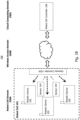
- Fig. 1B illustrates an embodiment of a further network system 100 similar to the one shown in Fig. 1A .
- the local robot controllers 102A of Fig. 1A are replaced by a central gateway controller 102B.
- This gateway controller 102B is configured to wirelessly receive the control commands from the wireless access domain 100B and to control one or more individual actuators of each of the robotic devices 102 in the robot cell 101 based thereon.
- the connections between the gateway controller 102B and the robotic devices 102 may be wire-based (e.g., based on field buses).
- a central gateway controller 102B a synchronous control of interworking robotic devices 102 becomes easier.
- the gateway controller 102B also collects the sensor data from the sensors 104 and wirelessly transmits same to the computing cloud domain 100C.
- the connections between the gateway controller 102B and the sensors 104 may be wire-based (e.g., based on field buses).
- each robotic device 102 may comprise an associated robot controller 102A as illustrated in Fig. 1A , and the robot controllers 102A may be attached to the gateway controller 102B of Fig. 1B using wire-based connections (e.g., field buses).
- wire-based connections e.g., field buses
- Figs. 2A and 2B illustrate two embodiments of the computing cloud-based robot cell controller 106 of Figs. 1A and 1B .
- the cloud-based robot cell controller 106 comprises a processor 202 and a memory 204 coupled to the processor 202.
- the controller 106 further comprises one or more interfaces for communication with other components of the network system 100 of Figs. 1A and 1B , in particular with the wireless access domain 100B.
- the processor 202 is configured to obtain an action that is to be performed by one of the robotic devices 102 illustrated in Figs. 1A and 1B , to determine a QoC level associated with the obtained action, and to trigger a setting of at least one transmission parameter for a wireless transmission of a command targeted at performing the obtained action via the wireless access domain 100B.
- the transmission parameter setting is dependent on the QoC level determined for the action associated with the command.
- Fig. 2B shows an embodiment in which the computing cloud-based robot cell controller 106 is implemented in a modular configuration.
- the controller 106 comprises a obtaining module 206 configured to obtain an action that is to be performed by one of the robotic devices 102 and a determining module 208 configured to determine a QoC level associated with the obtained action.
- the controller 106 further comprises a triggering module 210 configured to trigger a setting of at least one transmission parameter for a wireless transmission of a command corresponding to the obtained action, wherein the setting is dependent on QoC level determined for the action.
- Fig. 3 illustrates in a flow diagram 300 a method embodiment of controlling wireless command transmission to a robotic de device 102.
- the method embodiment may be performed by any of the controllers 106 of Figs. 2A or 2B , or by a controller having a different configuration.
- step S302 the controller 106 obtains an action that is to be performed by one of the robotic devices 102 within the robot cell 101 of Figs. 1A and 1B .
- the action may be obtained within the cloud computing domain 100C from an order or an action plan associated with one or more of the robotic devices 102.
- the action may be obtained based on an evaluation of sensor data received from the sensors 104 in the robot cell 101 (e.g., in the context of inverse kinematics).
- the action may directly be obtained as a command that is to be wirelessly transmitted to one of the robotic devices 102.
- the action obtained in step S302 may be associated with a specific movement that needs to be performed by a specific robotic device 102 in the robot cell 101.
- this movement may, for example, be a movement of a robotic arm or a movement of a gripper of the robotic arm.
- a QoC level associated with the action obtained in step S302 is determined.
- QoC levels There may exist multiple predefined QoC levels, wherein each QoC is, for example, indicative of an accuracy requirement or other KPI requirement associated with execution of a specific action (e.g., a movement) of one of the robotic devices 102.
- different QoC levels may be associated with different KPI requirement levels as now will now be explained in more detail with exemplary reference to a robotic device 102 in the form of a robot arm.
- a robot arm may comprise multiple joints that define individual degrees of freedom for robot arm movement.
- a control command may pertain to the robot arm as a whole (and may thus comprise multiple sub-commands for the individual joint actuators), or it may pertain to an individual joint actuator of a multi-joint robot arm.
- a control command pertaining to a robot arm movement may thus result in an action corresponding to a particular robot arm movement.
- Actions associated with low QoC do not significantly influence the final performance of the robot cell 101. Their execution speed (in terms of movement velocity) is important, so they should be fast, but they need not be accurate and can tolerate a certain overshooting upon execution.
- arm control commands and associated actions can be mentioned:
- a mapping between actions and QoC levels (i.e., the categorization of actions in regard to their QoC level or the associated tagging of actions) as exemplarily described above may be predefined and stored in a database in the cloud computing domain 100C. Based on such a mapping, the action obtained in step S302 will be categorized in step S304 to determine the associated QoC level.
- the mapping may be generated based on one or more KPIs associated with the individual actions. As mentioned above, there exist actions for which a KPI can deteriorate compared to other actions without any negative impact on the performance of the robot cell 101 as a whole.
- step S302 the controller 106 also determines at least one command associated with the action. This determination could be performed independently from step S304.
- step S306 the controller 106 triggers a setting of at least one transmission parameter for wireless command transmission in dependence on the QoC level that was determined in step S304.
- the controller 106 communicates with a controller in the wireless access domain 100B (e.g., a controller integrated into a base station) to suitably set one or more transmission parameters for wireless transmission of the command towards the robot cell domain 100A.
- the wireless access domain 100B may configure a wireless transmission channel for command transmission to assume a dedicated QoS level representative of the transmission parameter setting.
- a low QoS level may be selected to save wireless transmission resources compared to a high QoS level command. Transmission resource requirements may thus temporarily be relaxed for commands not associated with the highest QoC level. This relaxation will not have any effect on robot cell performance as a whole because high QoC level actions will still be transmitted using a transmission channel providing a high QoS.
- the command may wirelessly be transmitted in one or more data packets with standardized QoS marking information to inform QoS enforcement functions in the wireless access domain 100B which QoS needs to be enforced. As such, separate QoS signaling is not necessary.
- a further embodiment of a network system 100 will be described with reference to Fig. 4 .
- the same reference numerals as in Figs. 1A and 1B will denote the same or similar components.
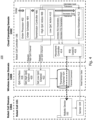
- the robot cell controller 106 in the cloud computing domain 100C comprises an order processor 402 configured to receive orders to be implemented by one or more robotic devices 102 in the robot cell 101.
- the orders may comprise a series of one or more actions to be taken by one or more robotic devices 102 in the robot cell domain 100A.
- the robot cell controller 106 Based on the one or more actions defined in an order, the robot cell controller 106 generates one on or more associated control commands for a particular robotic device 102.
- the control commands will typically be different from the actions as defined in the orders, but there will exist a correspondence between actions on the one hand and control commands on the other hand.
- the order processor 402 comprises an order scheduler 404 configured to coordinate scheduling of the orders (and of the actions contained therein) for transmission towards the robot cell domain 100A. Moreover, the order processor 402 comprises a transmission controller 406 configured to control wireless command transmission by triggering QoC-dependent transmission parameter settings in the wireless access domain 100B. In the present, exemplary embodiment, it will be assumed that each action contained in the orders received by the transmission controller 406 can be categorized into either a high QoC action 408 or a low QoC action 410.
- the order processor 402 further comprises an inverse kinematics component 412.
- the inverse kinematics component 412 is in charge of performing an inverse kinematics-based control of the one or more robotic devices 102 in the robot cell 101. This control may at least partially be based on sensor data gathered by one or more of the sensors 104 that monitor movements and states of the one or more robotic devices 102 in the robot cell 101.
- the robot cell controller 106 further comprises a movement controller 414 configured to generate commands corresponding to the actions as received by the order processor 402 and to send the generated commands via the wireless access domain 100B towards the robot cell 101.
- a movement controller 414 configured to generate commands corresponding to the actions as received by the order processor 402 and to send the generated commands via the wireless access domain 100B towards the robot cell 101.
- one action could be a robot arm movement along a trajectory from A to B, which movement is translated by the movement controller 414 into one or more control commands for locally controlling one or more robot arm joint actuators to execute the trajectory from A to B.
- one command may relate to exactly one actuator of one robotic device 102.
- the movement controller 414 is configured to maintain one or more PID loops 416 for controlling execution of the commands.
- the movement controller 414 is configured to control the one or more robotic devices 102 in accordance with a PID-based control strategy.
- a feedback loop including the movement controller 414, an individual robotic device 102 and one or more sensors 104 returning sensor data pertaining to the robotic device 102 to be controlled is established.
- the control frequency and/or command transmission frequency may be in the order of 50 to 500 kHz.
- the wireless access domain 100B comprises a QoS interface 418 that is configured to enforce the transmission parameter setting triggered (e.g., requested) by the robot cell controller 106.
- the QoS interface 118 may be implemented in a base station serving the robot cell 101 with the one or more robotic devices 102 and the one or more sensors 104.
- the QoS interface 418 is in particular configured to selectively implement one of a first transmission parameter setting associated with a high QoS channel (function 420) and a second transmission parameter setting associated with a low QoS channel (function 422).
- a suitable transmission channel 424 for triggering either a high QoC action 408 in the robot cell 101 (via the high QoS channel setting function 420) or a low QoC action (via the low QoS channel setting function 422) can be selected.
- the transmission controller 406 determines that a command that is about to be dispatched to the robotic device 102 pertains to a high QoC action 408, it will request a high QoS channel 424 from the QoS interface 418. In a similar manner, when the transmission controller 406 determines that the command about to be dispatched is associated with a low QoC action 410, it will request the QoS interface 418 that the associated command is transmitted via a low QoS channel 424.
- Using a low QoS channel 424 for command transmission may introduce a control delay (i.e., latency) in regard to the robotic device 102 to be controlled.
- This control delay may be lead to an error condition in the movement controller 414.
- the movement controller 414 may thus stop the robotic device 102 during execution of a planned trajectory associated with a low QoC action 410 because an increased latency generally also increases a deviance from the planned trajectory.
- various variants for avoiding such unwanted error conditions in case of a control delay intentionally introduced by a particular transmission parameter setting will be discussed.
- a control tolerance setting for the robotic device 102 is set dependent on the QoC level associated with a specific action or the corresponding command.
- a goal tolerance setting may be increased in regard to the inverse kinematics component 412 in case of a low QoC action 410. Additionally, or as an alternative, the goal tolerance setting may be decreased in case of a high QoC action 408.
- the goal tolerance setting may generally relate to one or more of a movement goal path, a movement goal position and a movement goal time associated with execution of a specific command by the robotic device 102.
- a specific control tolerance setting triggered by the transmission controller 406 in regard to the inverse kinematics module 412 may lead to an associated control of the movement controller 414 by the inverse kinematics component 412.
- one or more PID parameters are adjusted dependent on the QoC level associated with a specific action or the corresponding command.
- the transmission controller 406 is configured to increase one or more PID parameters applied by the movement controller 414 in case of a low QoC action 410.
- the transmission controller 406 is configured to decrease one or more PID parameters in case of a high QoC action 408.
- a less aggressive PID parameter setting may be used for the implementation of high QoC actions 408 compared to the implementation of low QoC actions 410.
- the movement controller 414 may implement a P-based control only, meaning that the I and D parameters are not affected.
- the robot cell controller 106 is configured to control command execution by the robotic device 102 as follows. Initially, the order processor 402 obtains an action (via an order) that is to be performed by the robotic device 102 and determines the QoC level associated with the obtained action (see reference numerals 408 and 410 in Fig. 4 ). The order processor 402 then triggers a setting of at least one control parameter (e.g., the P parameter of a PID loop 416 and/or a goal tolerance parameter associated therewith) of the movement controller 414 for execution of a command pertaining to the action. This setting is dependent on the QoC level determined by the order processor 402 for the action. The corresponding control parameter will control one of the PID loops 416 that include a wireless transmission of the command to the robotic device 102 and of a feedback parameter detected by the sensor back to the movement controller 414.
- the order processor 402 obtains an action (via an order) that is to be performed by the robotic device 102 and determines the QoC level associated with the obtained action
- more than two QoC levels are defined, more than two associated PID parameter settings and and/or control tolerance settings may be defined as well. For example, there may exist one defined control tolerance setting for each of three or more QoC levels.
- the technique presented herein may be implemented using a variety of robot programming tools and languages.
- the robot programming language may be based on C++.
- the technique presented herein permits to more efficiently use wireless transmission resources by intentionally relaxing transmission parameter settings for robot control actions that are less sensitive to delays.
- the overall performance of the robot cell 101 will not be negatively affected. As such, the same level of overall robot cell performance can be realized at a lower utilization of wireless resources.
- legacy communication protocols in particular those previously used in wire-based control systems, can remain unchanged. As such, a cost effective and efficient solution for the transition from wire-based to wireless command transmission technologies in industrial environments can be realized.
- the present disclosure suggests a switching between transmission channels providing different levels of QoS depending on the different QoC requirements associated with different commands. In this way, differentiated data services may be provided to support varying QoC requirements.
Landscapes
- Engineering & Computer Science (AREA)
- Automation & Control Theory (AREA)
- Robotics (AREA)
- Mechanical Engineering (AREA)
- Manufacturing & Machinery (AREA)
- Physics & Mathematics (AREA)
- General Physics & Mathematics (AREA)
- Human Computer Interaction (AREA)
- Computer Networks & Wireless Communication (AREA)
- General Engineering & Computer Science (AREA)
- Quality & Reliability (AREA)
- Manipulator (AREA)
Claims (11)
- Steuerung (106) zum Steuern einer drahtlosen Befehlsübertragung an einen Roboter (102), wobei die Steuerung (106) zu Folgendem konfiguriert ist:Erlangen (206) einer Aktion, die von einem Roboter (102) durchzuführen ist;Bestimmen (208) eines Steuerungsqualitätslevels, QoC-Levels, das mit der Aktion verknüpft ist, wobei das QoC-Level ein Beispiel für eine Key-Performance-Indicator-Anforderung, KPI-Anforderung, zur Ausführung eines Befehls ist, welcher der Aktion zugehörig ist, wobei die Aktion zu mindestens einem von mehreren QoC-Levels gehört, die mit verschiedenen KPI-Anforderungslevels für den Roboter (102) verknüpft sind; undAuslösen (210) einer Einstellung von mindestens einem Übertragungsparameter für eine drahtlose Übertragung des Befehls, welcher der Aktion zugehörig ist, wobei die Einstellung von dem QoC-Level abhängig ist, das für die Aktion bestimmt ist, wobei die Einstellung des mindestens einen Übertragungsparameters durch zumindest eines der Folgenden definiert wird: ein Übertragungsressourcen-Verbrauchslevel und ein Quality-of-Service-Level, QoS-Level, eines drahtlosen Übertragungskanals (424), wobei ein KPI-Anforderungslevel, das einer niedrigeren KPI-Anforderung zugehörig ist, mindestens einem aus einem niedrigeren Übertragungsressourcen-Verbrauchslevel und einem niedrigeren QoS-Level entspricht.
- Steuerung (106) nach Anspruch 1, wobei die Steuerung (106) ferner zu Folgendem konfiguriert ist:Bestimmen einer Steuertoleranzeinstellung für den Roboter (102), die von mindestens einem aus der Aktion, dem verknüpften QoC-Level, dem verknüpften Befehl und der verknüpften Einstellung des Übertragungsparameters abhängig ist; undAuslösen einer Anwendung der bestimmten Steuertoleranzeinstellung zur Ausführung des Befehls.
- Steuerung (106) nach Anspruch 2, wobei
die Steuertoleranzeinstellung sich auf eine Steuertoleranz von mindestens einem aus einem Bewegungszielpfad, einer Bewegungszielposition und einer Bewegungszielzeit bezieht und/oder wobei die Steuertoleranzeinstellung einer Steuerung basierend auf inverser Kinematik zugehörig ist. - Steuerung (106) nach einem der Ansprüche 2 bis 3, wobei
ein Proportional-Integral-Differential-Regelkreis für den Roboter (102) bereitgestellt wird, und wobei die Steuertoleranzeinstellung dazu konfiguriert ist, den Proportional-Integral-Differential-Regelkreis zu beeinflussen. - Steuerung (106) nach einem der Ansprüche 2 bis 4, wobei
die Steuertoleranzeinstellung, die für die Ausführung des Befehls bestimmt ist, zu einer aus mehreren Steuertoleranzeinstellungen gehört, wobei das bestimmte QoC-Level zu einem aus mehreren QoC-Levels gehört, und wobei eine Steuertoleranzeinstellung, die einer höheren Steuertoleranz zugehörig ist, mit einem QoC-Level verknüpft ist, das einer niedrigeren QoC zugehörig ist. - Steuerung (106) nach einem der vorhergehenden Ansprüche, wobei
ein Proportional-Integral-Differential-Regelkreis für den Roboter (102) bereitgestellt ist, und wobei die Steuerung (106) dazu konfiguriert ist, einen oder mehrere Parameter des Proportional-Integral-Differential-Regelkreises abhängig von dem QoC-Level zu steuern, das für die Aktion bestimmt wurde. - Steuerung (106) nach einem der vorhergehenden Ansprüche, wobei
der Roboter (102) einen Roboterarm umfasst und wobei sich der Befehl auf eine Bewegung des Roboterarms bezieht. - Steuerung (106) nach Anspruch 7, wobei
der Roboterarm mehrere unabhängig betätigbare Gelenke umfasst und wobei der Befehl zwei oder mehrere Unterbefehle zur Betätigung verschiedener der betätigbaren Gelenke umfasst. - Steuerung (106) nach einem der vorhergehenden Ansprüche, wobei
die Steuerung (106) unter Verwendung von Cloud-Computing-Ressourcen (100C) implementiert wird. - Steuerung (106) nach einem der vorhergehenden Ansprüche, wobei
die Einstellung des mindestens einen Übertragungsparameters auf QoS-Steuerung gemäß der 3rd Generation Partnership Project Technical Specification 3GPP TS 23.501 basiert. - Verfahren (300) zum Steuern der drahtlosen Befehlsübertragung an einen Roboter (102), wobei das Verfahren (300) Folgendes umfasst:Erlangen (S302) einer Aktion, die von einem Roboter (102) durchzuführen ist;Bestimmen (S304) eines Steuerungsqualitätslevels, QoC-Levels, das mit der Aktion verknüpft ist, wobei das QoC-Level ein Beispiel für eine Key-Performance-Indicator-Anforderung, KPI-Anforderung, zur Ausführung eines Befehls ist, welcher der Aktion zugehörig ist, wobei die Aktion zu mindestens einem aus mehreren QoC-Levels gehört, die mit verschiedenen KPI-Anforderungslevels für den Roboter (102) verknüpft sind; undAuslösen (S306) einer Einstellung von mindestens einem Übertragungsparameter für eine drahtlose Übertragung des Befehls, welcher der Aktion zugehörig ist, wobei die Einstellung von dem QoC-Level abhängig ist, das für die Aktion bestimmt ist, wobei die Einstellung des mindestens einen Übertragungsparameters durch zumindest eines der Folgenden definiert wird: ein Übertragungsressourcen-Verbrauchslevel und ein Quality-of-Service-Level, QoS-Level, eines drahtlosen Übertragungskanals (424), wobei ein KPI-Anforderungslevel, das einer niedrigeren KPI-Anforderung zugehörig ist, mindestens einem aus einem niedrigeren Übertragungsressourcen-Verbrauchslevel und einem niedrigeren QoS-Level entspricht.
Applications Claiming Priority (1)
| Application Number | Priority Date | Filing Date | Title |
|---|---|---|---|
| PCT/EP2018/065388 WO2019238215A1 (en) | 2018-06-11 | 2018-06-11 | Technique for controlling wireless command transmission to a robotic device |
Publications (2)
| Publication Number | Publication Date |
|---|---|
| EP3802012A1 EP3802012A1 (de) | 2021-04-14 |
| EP3802012B1 true EP3802012B1 (de) | 2024-08-21 |
Family
ID=62599603
Family Applications (1)
| Application Number | Title | Priority Date | Filing Date |
|---|---|---|---|
| EP18731059.4A Active EP3802012B1 (de) | 2018-06-11 | 2018-06-11 | Technik zur steuerung einer drahtlosen befehlsübertragung an einen roboter |
Country Status (3)
| Country | Link |
|---|---|
| US (1) | US12042927B2 (de) |
| EP (1) | EP3802012B1 (de) |
| WO (1) | WO2019238215A1 (de) |
Families Citing this family (9)
| Publication number | Priority date | Publication date | Assignee | Title |
|---|---|---|---|---|
| US11829795B2 (en) * | 2019-12-30 | 2023-11-28 | UiPath, Inc. | Trigger service management for robotic process automation (RPA) |
| JP7327225B2 (ja) * | 2020-03-13 | 2023-08-16 | オムロン株式会社 | ロボット制御システムおよび制御方法 |
| US11494203B2 (en) * | 2020-05-13 | 2022-11-08 | UiPath, Inc. | Application integration for robotic process automation |
| WO2022105992A1 (en) | 2020-11-18 | 2022-05-27 | Telefonaktiebolaget Lm Ericsson (Publ) | TECHNIQUE FOR PERFORMING QoS CONTROL IN A CLOUD ROBOTICS SYSTEM |
| US20240098775A1 (en) | 2021-02-05 | 2024-03-21 | Telefonaktiebolaget Lm Ericsson (Publ) | Method and network node for applying machine learning in a wireless communications network |
| CN117796026A (zh) * | 2021-07-15 | 2024-03-29 | 瑞典爱立信有限公司 | 作为网络qos抽象的度量和测量 |
| US12192790B2 (en) | 2021-10-27 | 2025-01-07 | T-Mobile Usa, Inc. | Predicting an attribute of a wireless telecommunication network, such as a 5G network |
| US11800398B2 (en) | 2021-10-27 | 2023-10-24 | T-Mobile Usa, Inc. | Predicting an attribute of an immature wireless telecommunication network, such as a 5G network |
| WO2023136757A1 (en) * | 2022-01-17 | 2023-07-20 | Telefonaktiebolaget Lm Ericsson (Publ) | Distribution of data packets for controlling of industrial devices |
Family Cites Families (6)
| Publication number | Priority date | Publication date | Assignee | Title |
|---|---|---|---|---|
| US8947522B1 (en) | 2011-05-06 | 2015-02-03 | Google Inc. | Systems and methods to adjust actions based on latency levels |
| US9628384B2 (en) * | 2013-09-19 | 2017-04-18 | Avago Technologies General Ip (Singapore) Pte. Ltd. | Adaptive industrial network |
| US9144907B2 (en) * | 2013-10-24 | 2015-09-29 | Harris Corporation | Control synchronization for high-latency teleoperation |
| JP2017199077A (ja) * | 2016-04-25 | 2017-11-02 | ファナック株式会社 | 複数台の産業機械を有する生産システムの動作を最適化するセルコントローラ |
| US11734595B2 (en) * | 2016-10-03 | 2023-08-22 | The Johns Hopkins University | Apparatus and method for synthesizing quantum controls |
| JP6724831B2 (ja) * | 2017-03-16 | 2020-07-15 | 株式会社安川電機 | コントロールシステム、コントローラ及び制御方法 |
-
2018
- 2018-06-11 EP EP18731059.4A patent/EP3802012B1/de active Active
- 2018-06-11 US US16/962,864 patent/US12042927B2/en active Active
- 2018-06-11 WO PCT/EP2018/065388 patent/WO2019238215A1/en not_active Ceased
Also Published As
| Publication number | Publication date |
|---|---|
| US12042927B2 (en) | 2024-07-23 |
| US20200346353A1 (en) | 2020-11-05 |
| WO2019238215A1 (en) | 2019-12-19 |
| EP3802012A1 (de) | 2021-04-14 |
Similar Documents
| Publication | Publication Date | Title |
|---|---|---|
| EP3802012B1 (de) | Technik zur steuerung einer drahtlosen befehlsübertragung an einen roboter | |
| US20220063097A1 (en) | System for Emulating Remote Control of a Physical Robot | |
| Rank et al. | Predictive communication quality control in haptic teleoperation with time delay and packet loss | |
| US20200189100A1 (en) | Technique for Providing Reliable Control in a Cloud Robotics System | |
| Delgado et al. | An EtherCAT-based real-time motion control system in mobile robot application | |
| EP4204187A1 (de) | Verfahren und systeme zur verbesserung der steuerung eines roboters | |
| Chen et al. | Goal-oriented Semantic Communication for Robot Arm Reconstruction in Digital Twin: Feature and Temporal Selections | |
| US20220118628A1 (en) | Technique for Controlling Wireless Command Transmission to a Robotic Device | |
| Olaya et al. | Communication abstraction supports network resource virtualisation in automation | |
| Szabó et al. | Quality of control-aware resource allocation in 5G wireless access networks | |
| US20220193904A1 (en) | Technique for Determining Control Information to be Wirelessly Transmitted to a Robotic Device | |
| US20150149398A1 (en) | Method and apparatus for decision migration in a multi-component robot | |
| Feist et al. | A comprehensive approach of a middleware for adaptive mixed-critical cyber-physical networking | |
| Szabó et al. | Information gain regulation in reinforcement learning with the digital twins’ level of realism | |
| Kiesel et al. | Evaluation of ICT for Networked Control Systems of Latency-Critical Applications in Production | |
| EP4247596A1 (de) | Verfahren zur durchführung von qos-steuerung in einem cloud-robotersystem | |
| Paikan et al. | A best-effort approach for run-time channel prioritization in real-time robotic application | |
| Rosenthal et al. | Cocpn–towards flexible and adaptive cyber-physical systems through cooperation | |
| EP4045236B1 (de) | Steuerung von robotervorrichtungen über ein drahtloses netzwerk | |
| CN120660051A (zh) | 用于机器人设备的优化运动规划的方法 | |
| CN113993668B (zh) | 用于选择传输模式以用于无线地发送包括用于机器人设备控制的控制信息的消息的技术 | |
| WO2025145912A1 (en) | Apparatus and method using new network transmission protocol for internet-based telerobotic operation | |
| Niebuhr et al. | Distributed real-time control service framework for human-robot interaction applications | |
| Walter et al. | Catering to real-time requirements of cloud-connected mobile manipulators | |
| US20250110506A1 (en) | Optimization of planned movement of industrial devices |
Legal Events
| Date | Code | Title | Description |
|---|---|---|---|
| STAA | Information on the status of an ep patent application or granted ep patent |
Free format text: STATUS: UNKNOWN |
|
| STAA | Information on the status of an ep patent application or granted ep patent |
Free format text: STATUS: THE INTERNATIONAL PUBLICATION HAS BEEN MADE |
|
| PUAI | Public reference made under article 153(3) epc to a published international application that has entered the european phase |
Free format text: ORIGINAL CODE: 0009012 |
|
| STAA | Information on the status of an ep patent application or granted ep patent |
Free format text: STATUS: REQUEST FOR EXAMINATION WAS MADE |
|
| 17P | Request for examination filed |
Effective date: 20200826 |
|
| AK | Designated contracting states |
Kind code of ref document: A1 Designated state(s): AL AT BE BG CH CY CZ DE DK EE ES FI FR GB GR HR HU IE IS IT LI LT LU LV MC MK MT NL NO PL PT RO RS SE SI SK SM TR |
|
| AX | Request for extension of the european patent |
Extension state: BA ME |
|
| DAV | Request for validation of the european patent (deleted) | ||
| DAX | Request for extension of the european patent (deleted) | ||
| STAA | Information on the status of an ep patent application or granted ep patent |
Free format text: STATUS: EXAMINATION IS IN PROGRESS |
|
| 17Q | First examination report despatched |
Effective date: 20221123 |
|
| GRAP | Despatch of communication of intention to grant a patent |
Free format text: ORIGINAL CODE: EPIDOSNIGR1 |
|
| STAA | Information on the status of an ep patent application or granted ep patent |
Free format text: STATUS: GRANT OF PATENT IS INTENDED |
|
| INTG | Intention to grant announced |
Effective date: 20240508 |
|
| GRAS | Grant fee paid |
Free format text: ORIGINAL CODE: EPIDOSNIGR3 |
|
| GRAA | (expected) grant |
Free format text: ORIGINAL CODE: 0009210 |
|
| STAA | Information on the status of an ep patent application or granted ep patent |
Free format text: STATUS: THE PATENT HAS BEEN GRANTED |
|
| AK | Designated contracting states |
Kind code of ref document: B1 Designated state(s): AL AT BE BG CH CY CZ DE DK EE ES FI FR GB GR HR HU IE IS IT LI LT LU LV MC MK MT NL NO PL PT RO RS SE SI SK SM TR |
|
| REG | Reference to a national code |
Ref country code: GB Ref legal event code: FG4D |
|
| REG | Reference to a national code |
Ref country code: CH Ref legal event code: EP |
|
| REG | Reference to a national code |
Ref country code: IE Ref legal event code: FG4D |
|
| REG | Reference to a national code |
Ref country code: DE Ref legal event code: R096 Ref document number: 602018073330 Country of ref document: DE |
|
| REG | Reference to a national code |
Ref country code: LT Ref legal event code: MG9D |
|
| REG | Reference to a national code |
Ref country code: NL Ref legal event code: MP Effective date: 20240821 |
|
| PG25 | Lapsed in a contracting state [announced via postgrant information from national office to epo] |
Ref country code: NO Free format text: LAPSE BECAUSE OF FAILURE TO SUBMIT A TRANSLATION OF THE DESCRIPTION OR TO PAY THE FEE WITHIN THE PRESCRIBED TIME-LIMIT Effective date: 20241121 |
|
| REG | Reference to a national code |
Ref country code: AT Ref legal event code: MK05 Ref document number: 1715095 Country of ref document: AT Kind code of ref document: T Effective date: 20240821 |
|
| PG25 | Lapsed in a contracting state [announced via postgrant information from national office to epo] |
Ref country code: NL Free format text: LAPSE BECAUSE OF FAILURE TO SUBMIT A TRANSLATION OF THE DESCRIPTION OR TO PAY THE FEE WITHIN THE PRESCRIBED TIME-LIMIT Effective date: 20240821 Ref country code: PL Free format text: LAPSE BECAUSE OF FAILURE TO SUBMIT A TRANSLATION OF THE DESCRIPTION OR TO PAY THE FEE WITHIN THE PRESCRIBED TIME-LIMIT Effective date: 20240821 Ref country code: GR Free format text: LAPSE BECAUSE OF FAILURE TO SUBMIT A TRANSLATION OF THE DESCRIPTION OR TO PAY THE FEE WITHIN THE PRESCRIBED TIME-LIMIT Effective date: 20241122 Ref country code: FI Free format text: LAPSE BECAUSE OF FAILURE TO SUBMIT A TRANSLATION OF THE DESCRIPTION OR TO PAY THE FEE WITHIN THE PRESCRIBED TIME-LIMIT Effective date: 20240821 Ref country code: PT Free format text: LAPSE BECAUSE OF FAILURE TO SUBMIT A TRANSLATION OF THE DESCRIPTION OR TO PAY THE FEE WITHIN THE PRESCRIBED TIME-LIMIT Effective date: 20241223 |
|
| PG25 | Lapsed in a contracting state [announced via postgrant information from national office to epo] |
Ref country code: BG Free format text: LAPSE BECAUSE OF FAILURE TO SUBMIT A TRANSLATION OF THE DESCRIPTION OR TO PAY THE FEE WITHIN THE PRESCRIBED TIME-LIMIT Effective date: 20240821 |
|
| PG25 | Lapsed in a contracting state [announced via postgrant information from national office to epo] |
Ref country code: LV Free format text: LAPSE BECAUSE OF FAILURE TO SUBMIT A TRANSLATION OF THE DESCRIPTION OR TO PAY THE FEE WITHIN THE PRESCRIBED TIME-LIMIT Effective date: 20240821 |
|
| PG25 | Lapsed in a contracting state [announced via postgrant information from national office to epo] |
Ref country code: AT Free format text: LAPSE BECAUSE OF FAILURE TO SUBMIT A TRANSLATION OF THE DESCRIPTION OR TO PAY THE FEE WITHIN THE PRESCRIBED TIME-LIMIT Effective date: 20240821 Ref country code: IS Free format text: LAPSE BECAUSE OF FAILURE TO SUBMIT A TRANSLATION OF THE DESCRIPTION OR TO PAY THE FEE WITHIN THE PRESCRIBED TIME-LIMIT Effective date: 20241221 |
|
| PG25 | Lapsed in a contracting state [announced via postgrant information from national office to epo] |
Ref country code: HR Free format text: LAPSE BECAUSE OF FAILURE TO SUBMIT A TRANSLATION OF THE DESCRIPTION OR TO PAY THE FEE WITHIN THE PRESCRIBED TIME-LIMIT Effective date: 20240821 |
|
| PG25 | Lapsed in a contracting state [announced via postgrant information from national office to epo] |
Ref country code: ES Free format text: LAPSE BECAUSE OF FAILURE TO SUBMIT A TRANSLATION OF THE DESCRIPTION OR TO PAY THE FEE WITHIN THE PRESCRIBED TIME-LIMIT Effective date: 20240821 Ref country code: RS Free format text: LAPSE BECAUSE OF FAILURE TO SUBMIT A TRANSLATION OF THE DESCRIPTION OR TO PAY THE FEE WITHIN THE PRESCRIBED TIME-LIMIT Effective date: 20241121 |
|
| PG25 | Lapsed in a contracting state [announced via postgrant information from national office to epo] |
Ref country code: RS Free format text: LAPSE BECAUSE OF FAILURE TO SUBMIT A TRANSLATION OF THE DESCRIPTION OR TO PAY THE FEE WITHIN THE PRESCRIBED TIME-LIMIT Effective date: 20241121 Ref country code: PT Free format text: LAPSE BECAUSE OF FAILURE TO SUBMIT A TRANSLATION OF THE DESCRIPTION OR TO PAY THE FEE WITHIN THE PRESCRIBED TIME-LIMIT Effective date: 20241223 Ref country code: PL Free format text: LAPSE BECAUSE OF FAILURE TO SUBMIT A TRANSLATION OF THE DESCRIPTION OR TO PAY THE FEE WITHIN THE PRESCRIBED TIME-LIMIT Effective date: 20240821 Ref country code: NO Free format text: LAPSE BECAUSE OF FAILURE TO SUBMIT A TRANSLATION OF THE DESCRIPTION OR TO PAY THE FEE WITHIN THE PRESCRIBED TIME-LIMIT Effective date: 20241121 Ref country code: NL Free format text: LAPSE BECAUSE OF FAILURE TO SUBMIT A TRANSLATION OF THE DESCRIPTION OR TO PAY THE FEE WITHIN THE PRESCRIBED TIME-LIMIT Effective date: 20240821 Ref country code: LV Free format text: LAPSE BECAUSE OF FAILURE TO SUBMIT A TRANSLATION OF THE DESCRIPTION OR TO PAY THE FEE WITHIN THE PRESCRIBED TIME-LIMIT Effective date: 20240821 Ref country code: IS Free format text: LAPSE BECAUSE OF FAILURE TO SUBMIT A TRANSLATION OF THE DESCRIPTION OR TO PAY THE FEE WITHIN THE PRESCRIBED TIME-LIMIT Effective date: 20241221 Ref country code: HR Free format text: LAPSE BECAUSE OF FAILURE TO SUBMIT A TRANSLATION OF THE DESCRIPTION OR TO PAY THE FEE WITHIN THE PRESCRIBED TIME-LIMIT Effective date: 20240821 Ref country code: GR Free format text: LAPSE BECAUSE OF FAILURE TO SUBMIT A TRANSLATION OF THE DESCRIPTION OR TO PAY THE FEE WITHIN THE PRESCRIBED TIME-LIMIT Effective date: 20241122 Ref country code: FI Free format text: LAPSE BECAUSE OF FAILURE TO SUBMIT A TRANSLATION OF THE DESCRIPTION OR TO PAY THE FEE WITHIN THE PRESCRIBED TIME-LIMIT Effective date: 20240821 Ref country code: ES Free format text: LAPSE BECAUSE OF FAILURE TO SUBMIT A TRANSLATION OF THE DESCRIPTION OR TO PAY THE FEE WITHIN THE PRESCRIBED TIME-LIMIT Effective date: 20240821 Ref country code: BG Free format text: LAPSE BECAUSE OF FAILURE TO SUBMIT A TRANSLATION OF THE DESCRIPTION OR TO PAY THE FEE WITHIN THE PRESCRIBED TIME-LIMIT Effective date: 20240821 Ref country code: AT Free format text: LAPSE BECAUSE OF FAILURE TO SUBMIT A TRANSLATION OF THE DESCRIPTION OR TO PAY THE FEE WITHIN THE PRESCRIBED TIME-LIMIT Effective date: 20240821 |
|
| PG25 | Lapsed in a contracting state [announced via postgrant information from national office to epo] |
Ref country code: SM Free format text: LAPSE BECAUSE OF FAILURE TO SUBMIT A TRANSLATION OF THE DESCRIPTION OR TO PAY THE FEE WITHIN THE PRESCRIBED TIME-LIMIT Effective date: 20240821 Ref country code: RO Free format text: LAPSE BECAUSE OF FAILURE TO SUBMIT A TRANSLATION OF THE DESCRIPTION OR TO PAY THE FEE WITHIN THE PRESCRIBED TIME-LIMIT Effective date: 20240821 Ref country code: DK Free format text: LAPSE BECAUSE OF FAILURE TO SUBMIT A TRANSLATION OF THE DESCRIPTION OR TO PAY THE FEE WITHIN THE PRESCRIBED TIME-LIMIT Effective date: 20240821 |
|
| PG25 | Lapsed in a contracting state [announced via postgrant information from national office to epo] |
Ref country code: EE Free format text: LAPSE BECAUSE OF FAILURE TO SUBMIT A TRANSLATION OF THE DESCRIPTION OR TO PAY THE FEE WITHIN THE PRESCRIBED TIME-LIMIT Effective date: 20240821 |
|
| PG25 | Lapsed in a contracting state [announced via postgrant information from national office to epo] |
Ref country code: CZ Free format text: LAPSE BECAUSE OF FAILURE TO SUBMIT A TRANSLATION OF THE DESCRIPTION OR TO PAY THE FEE WITHIN THE PRESCRIBED TIME-LIMIT Effective date: 20240821 |
|
| PG25 | Lapsed in a contracting state [announced via postgrant information from national office to epo] |
Ref country code: IT Free format text: LAPSE BECAUSE OF FAILURE TO SUBMIT A TRANSLATION OF THE DESCRIPTION OR TO PAY THE FEE WITHIN THE PRESCRIBED TIME-LIMIT Effective date: 20240821 Ref country code: SK Free format text: LAPSE BECAUSE OF FAILURE TO SUBMIT A TRANSLATION OF THE DESCRIPTION OR TO PAY THE FEE WITHIN THE PRESCRIBED TIME-LIMIT Effective date: 20240821 |
|
| REG | Reference to a national code |
Ref country code: DE Ref legal event code: R097 Ref document number: 602018073330 Country of ref document: DE |
|
| PLBE | No opposition filed within time limit |
Free format text: ORIGINAL CODE: 0009261 |
|
| STAA | Information on the status of an ep patent application or granted ep patent |
Free format text: STATUS: NO OPPOSITION FILED WITHIN TIME LIMIT |
|
| PGFP | Annual fee paid to national office [announced via postgrant information from national office to epo] |
Ref country code: DE Payment date: 20250627 Year of fee payment: 8 |
|
| PGFP | Annual fee paid to national office [announced via postgrant information from national office to epo] |
Ref country code: GB Payment date: 20250627 Year of fee payment: 8 |
|
| 26N | No opposition filed |
Effective date: 20250522 |
|
| PG25 | Lapsed in a contracting state [announced via postgrant information from national office to epo] |
Ref country code: SE Free format text: LAPSE BECAUSE OF FAILURE TO SUBMIT A TRANSLATION OF THE DESCRIPTION OR TO PAY THE FEE WITHIN THE PRESCRIBED TIME-LIMIT Effective date: 20240821 |
|
| REG | Reference to a national code |
Ref country code: CH Ref legal event code: H13 Free format text: ST27 STATUS EVENT CODE: U-0-0-H10-H13 (AS PROVIDED BY THE NATIONAL OFFICE) Effective date: 20260127 |
|
| PG25 | Lapsed in a contracting state [announced via postgrant information from national office to epo] |
Ref country code: MC Free format text: LAPSE BECAUSE OF FAILURE TO SUBMIT A TRANSLATION OF THE DESCRIPTION OR TO PAY THE FEE WITHIN THE PRESCRIBED TIME-LIMIT Effective date: 20240821 |
|
| PG25 | Lapsed in a contracting state [announced via postgrant information from national office to epo] |
Ref country code: LU Free format text: LAPSE BECAUSE OF NON-PAYMENT OF DUE FEES Effective date: 20250611 |
|
| REG | Reference to a national code |
Ref country code: BE Ref legal event code: MM Effective date: 20250630 |
|
| PG25 | Lapsed in a contracting state [announced via postgrant information from national office to epo] |
Ref country code: IE Free format text: LAPSE BECAUSE OF NON-PAYMENT OF DUE FEES Effective date: 20250611 |
|
| PG25 | Lapsed in a contracting state [announced via postgrant information from national office to epo] |
Ref country code: BE Free format text: LAPSE BECAUSE OF NON-PAYMENT OF DUE FEES Effective date: 20250630 |
|
| PG25 | Lapsed in a contracting state [announced via postgrant information from national office to epo] |
Ref country code: FR Free format text: LAPSE BECAUSE OF NON-PAYMENT OF DUE FEES Effective date: 20250630 |
|
| PG25 | Lapsed in a contracting state [announced via postgrant information from national office to epo] |
Ref country code: CH Free format text: LAPSE BECAUSE OF NON-PAYMENT OF DUE FEES Effective date: 20250630 |